1. Introduction
Urban public transportation systems face dual pressures: stringent greenhouse gas regulations alongside operational cost constraints. While full battery–electric buses promise zero tailpipe emissions, they remain limited by high traction-battery cost, operational range constraints under severe duty cycles, and charging infrastructure requirements. In this context, 48 V mild-hybrid systems can provide meaningful efficiency gains at significantly lower complexity and cost, representing a practical transitional technology for near-term fleet decarbonization [
1].
The architecture of a mild-hybrid system strongly influences its effectiveness under transient-heavy bus cycles. Among common configurations, a crankshaft starter–generator (CSG) in a P1 topology provides a stiffer mechanical torque path than belt-driven P0 systems [
2,
3]. Prior studies report that P0 architectures are constrained by belt compliance and slip losses, which reduce torque transmissibility during rapid transients, whereas P1 systems provide direct coupling, minimizing torsional deflection and enabling precise torque intervention during high-inertial launch events typical of heavy-duty operation [
2]. This rigid coupling can also help moderate crankshaft load excursions under stop–go driving and support more responsive torque intervention during transient operation.
Energy storage selection is equally critical in heavy-duty stop–start applications. Conventional 48 V mild-hybrid designs frequently employ Li-ion batteries whose charge acceptance limits may restrict recuperation under aggressive regenerative braking and repeated stop–go events [
2]. Supercapacitors, with high power density and rapid response, are better suited to capture short-duration, high-power braking bursts associated with heavy vehicles [
4,
5]. Finally, accurate quantification of mild-hybrid benefits requires modeling that resolves transient inertial loads: map-based steady-state approaches may underestimate fuel penalties associated with acceleration spikes in heavy-duty cycles, motivating longitudinal dynamics models that explicitly represent vehicle inertia and resistive forces [
6].
Despite the growing body of research on hybrid powertrains, comprehensive field-data-based studies on crankshaft starter–generator operation in heavy-duty urban buses remain limited. In particular, the direct comparison of KSG Active and KSG Passive operation on the same vehicle platform under controlled and repeatable conditions has not been sufficiently documented. In addition, many published studies rely primarily on simulation-based evaluations or standardized cycles that do not explicitly isolate the incremental contribution of KSG activation during repeated stop–go events. Such approaches are valuable for preliminary assessment, but they do not always capture the signal variability, control interaction, and transient disturbance structure observed in real CAN-based vehicle operation.
Accordingly, the present study addresses this gap through a controlled same-vehicle A/B comparison based on synchronized high-resolution CAN data collected from a 48 V mild-hybrid urban bus, together with a forward longitudinal dynamics model validated against measured KSG Active-mode signals. The main contributions of the work are threefold: (i) a real-vehicle comparison of KSG Active and Passive operating states on the same heavy-duty platform under repeatable stop–go conditions; (ii) a quantitative assessment of their effects on engine load, torque-related behavior, and fuel-consumption-related indicators; and (iii) a field-supported simulation framework used to interpret the dominant transient trends observed in hybrid-assisted operation.
2. Materials and Methods
2.1. 48 V P1 Mild-Hybrid Architecture
The investigated test vehicle is a 17.8-ton urban bus equipped with a 48 V P1 mild-hybrid powertrain architecture [
7,
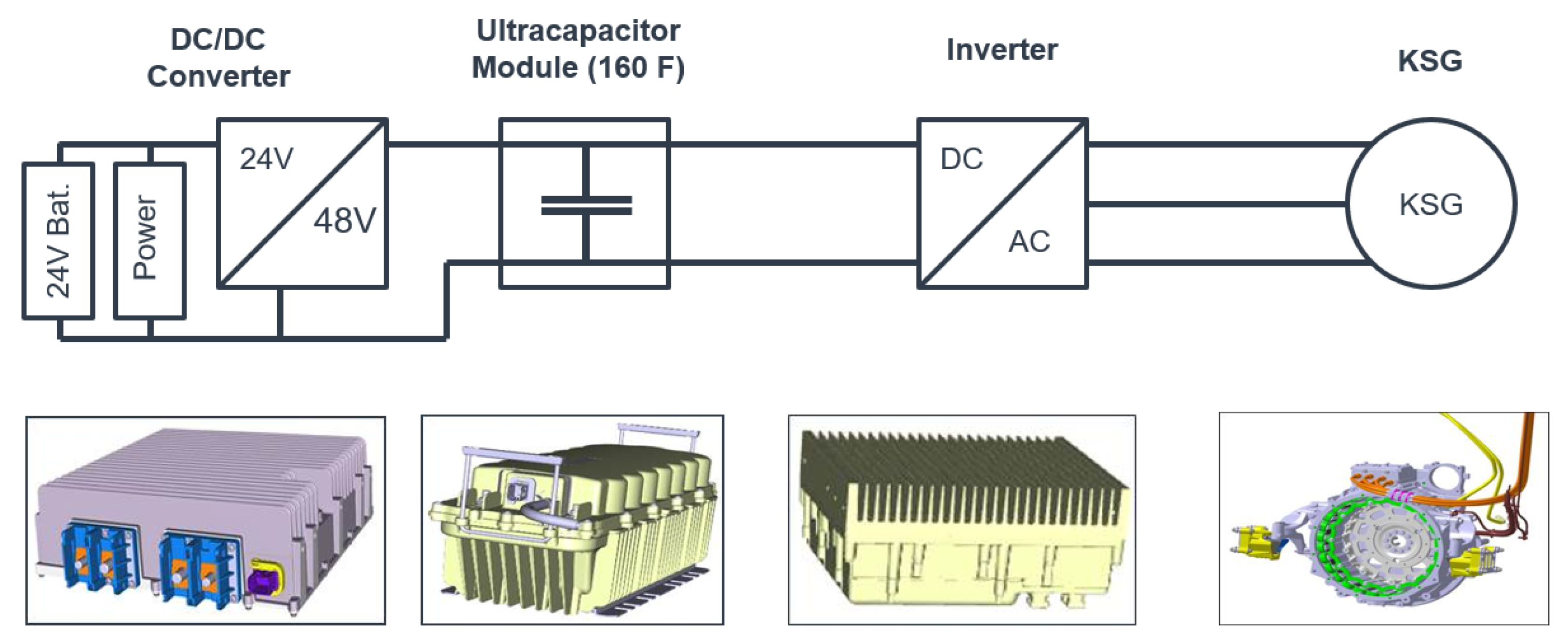
8]. The system topology is illustrated in
Figure 1.
The architecture comprises a bidirectional 24 V/48 V DC/DC converter that links the conventional 24 V onboard electrical network to the 48 V hybrid bus [
9]. Electrical energy is buffered by a 160 F ultracapacitor module operating within a controlled DC voltage window to ensure stable power delivery under transient load conditions. A three-phase DC/AC inverter interfaces the 48 V DC bus with the crankshaft-mounted starter–generator (KSG).
The use of an ultracapacitor-based storage unit is particularly suitable for the present application because the dominant hybrid events are short in duration but high in power demand, such as launch assistance, regenerative braking, and restart-related transients. In this operating context, the ultracapacitor functions primarily as a short-term power buffer rather than as a long-duration energy source.
From an operational perspective, the 48 V subsystem can be interpreted through a small number of recurring energy-flow phases. During braking, kinetic energy is converted by the KSG in generator mode and directed through the inverter to the ultracapacitor module. During launch and short acceleration events, the stored 48 V energy is returned through the inverter to provide torque support at the crankshaft. Under some conditions, the ICE can also charge the 48 V storage indirectly via generator operation, while the conventional 24 V system remains responsible for supplying legacy low-voltage vehicle loads and ensuring auxiliary-system continuity. This phase-based interpretation clarifies that the investigated architecture is optimized primarily for transient power buffering rather than sustained electric propulsion.
In the P1 configuration, the KSG is mechanically coupled directly to the internal combustion engine (ICE) crankshaft [
2,
8]. This mechanical integration enables the following functionalities [
2,
9]:
Torque assist during acceleration, where the electric machine supplements combustion torque to reduce instantaneous engine load and improve launch response;
Regenerative braking during deceleration, allowing kinetic energy recovery through generator operation and temporary storage in the ultracapacitor module;
Smoothing of transient load fluctuations at the crankshaft level, moderating abrupt torque demand under stop–go operation.
From a dynamic power-flow perspective, the interaction between the internal combustion engine and the KSG can be interpreted as a superposition of torque components acting on the crankshaft. The electric machine introduces a controllable torque term that may either add to or subtract from the combustion torque depending on the driving phase. During acceleration, the additional electric torque reduces the required combustion torque gradient, potentially lowering peak fuel injection demand and smoothing engine load transitions. During deceleration, the torque sign reverses, enabling kinetic energy recovery while simultaneously increasing effective engine braking.
This bidirectional torque capability alters the transient torque balance equation at the shaft level, particularly under high-inertia launch conditions typical of heavy-duty vehicles. Because the vehicle mass and rotational inertias impose significant transient load requirements, even moderate electric torque contributions can influence the rate of engine speed variation and the distribution of power between mechanical and electrical domains. As a result, the P1 architecture directly affects the instantaneous traction force transmitted through the drivetrain.
Furthermore, the rigid crankshaft coupling characteristic of the P1 topology ensures that torque intervention occurs without intermediate compliance losses, thereby improving the responsiveness of the hybrid assistance function [
10]. This mechanical rigidity is especially relevant in repeated 0–50–0 km/h transient cycles, where rapid torque modulation is required. The combined electro-mechanical architecture therefore serves not only as an auxiliary energy buffer but also as an active element in transient load management at the powertrain level.
Figure 1 illustrates the system architecture and the physical integration of the major 48 V components (bidirectional 24/48 V DC/DC converter, 160 F ultracapacitor module, three-phase inverter, and crankshaft-mounted KSG) into a compact modular assembly.
2.2. Physical Integration of the 48 V Power Electronics
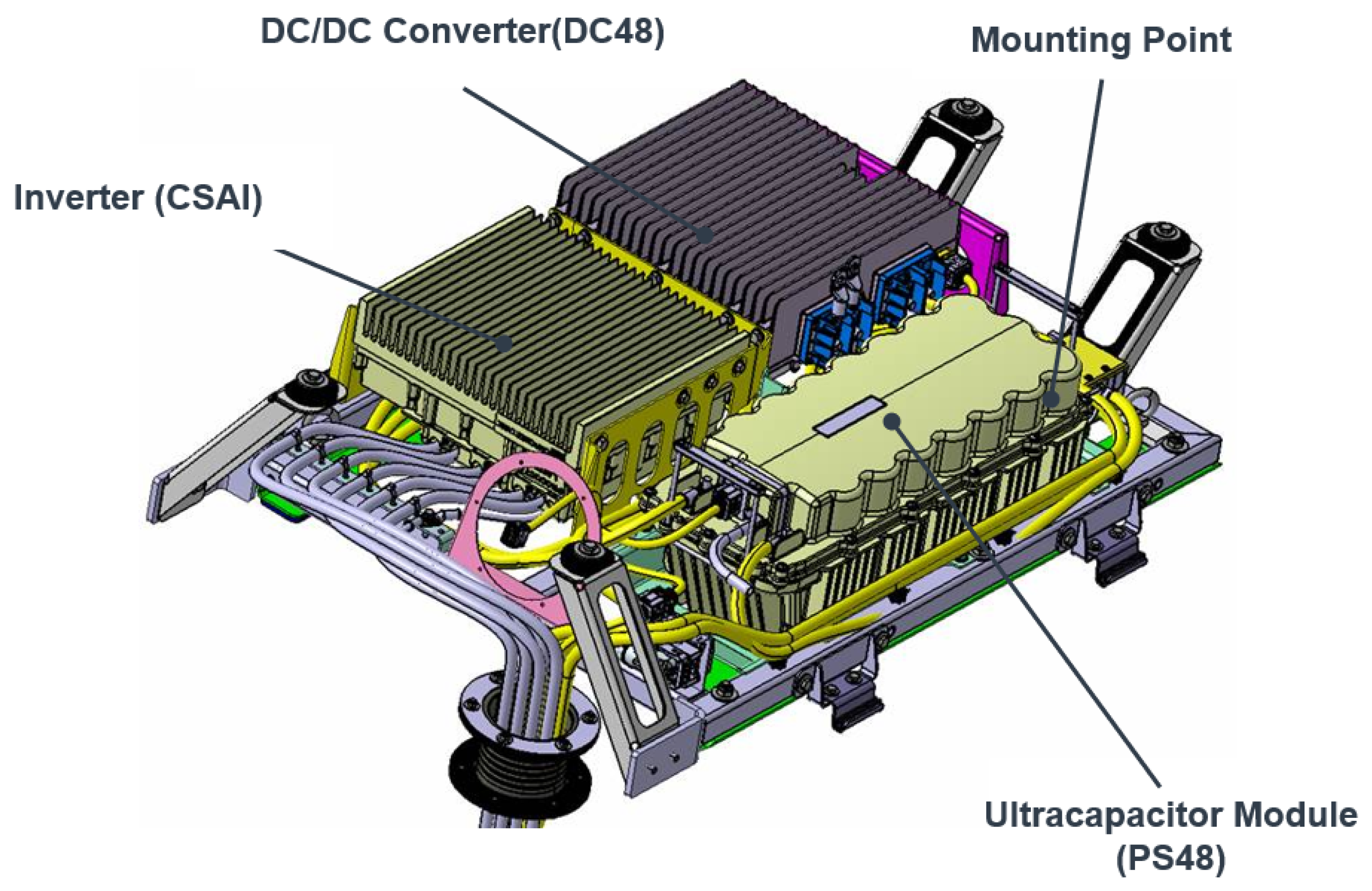
The physical layout of the 48 V subsystem integrated into the vehicle chassis is shown in
Figure 2. The assembly comprises three main units: (i) the bidirectional 24/48 V DC/DC converter (DC48), (ii) the three-phase inverter (CSAI), and (iii) the ultracapacitor module (PS48). The components are mounted on a shared structural frame via dedicated mounting points to provide mechanical robustness and to improve vibration isolation under heavy-duty operating conditions. High-current copper busbars and shielded power cables interconnect the units to enable low-impedance, bidirectional power transfer during transient events.
This modular packaging supports compact installation within the vehicle and facilitates heat rejection during repeated high-power transients typical of urban stop–go duty cycles.
Functionally, the DC/DC converter manages bidirectional energy exchange between the conventional 24 V boardnet and the 48 V hybrid bus, whereas the inverter governs the electro-mechanical conversion required for both torque assist and regenerative operation. The ultracapacitor is therefore used as the primary fast-response storage element for short, high-power events, while the 24 V battery maintains continuity of conventional auxiliary loads and low-voltage subsystems.
2.3. Operating Strategy and Control Logic (KSG Active vs. Passive Modes)
The operational behavior of the 48 V P1 mild-hybrid system was evaluated under two distinct configurations in order to quantify the mechanical and energetic contribution of the crankshaft starter–generator (KSG). These configurations are hereafter referred to as KSG Passive mode and KSG Active mode.
2.3.1. KSG Passive Mode (Baseline Configuration)
In the passive mode, the torque assist and regenerative functions of the KSG are disabled. The internal combustion engine (ICE) alone provides the traction torque required to satisfy the longitudinal force balance of the vehicle:
where
represents the road-grade component of the longitudinal load.
Under this configuration:
The ICE supplies the entire propulsion torque demand.
No electrical torque contribution is provided during acceleration.
No regenerative braking energy is recovered.
The 48 V subsystem remains electrically inactive in propulsion support.
Consequently, the engine operates at higher instantaneous torque levels during acceleration phases and experiences larger load fluctuations under transient urban driving conditions. This mode serves as the mechanical baseline for A/B comparison.
2.3.2. KSG Active Mode (Hybrid Assist Configuration)
In the active mode, the KSG operates bidirectionally under supervisory control logic integrated within the vehicle energy management system (EMS). The operating strategy includes two primary functions:
- (a)
Torque Assist During Acceleration
When positive traction demand exceeds a calibrated threshold, the KSG delivers additional torque directly to the crankshaft. The resulting engine torque requirement becomes
where:
is the effective ICE torque;
is the total torque required for traction;
is the assist torque provided by the electric machine.
This torque sharing mechanism reduces peak ICE loading, mitigates rapid torque transients, and shifts the engine operating point toward more favorable efficiency regions. From a longitudinal dynamics standpoint, this results in:
Reduced exposure to high engine-load events and moderated torque demand during repeated launches;
Lower mean engine mechanical power;
Smoother acceleration profiles.
- (b)
Regenerative Braking During Deceleration
During deceleration phases, when wheel torque becomes negative, the KSG operates as a generator. Mechanical energy from the drivetrain is converted into electrical energy and stored in the ultracapacitor module. The regenerative power can be expressed as
This process reduces friction braking demand and enables partial recovery of vehicle kinetic energy:
Urban stop–go operation provides frequent deceleration events, making regenerative functionality particularly effective in this application.
2.3.3. Load Smoothing and Transient Behavior
A key mechanical effect of the active hybrid strategy is load smoothing at the crankshaft. By absorbing high transient torque demand during acceleration and recharging during deceleration, the KSG reduces the amplitude of ICE torque fluctuations.
This load-leveling effect is consistent with:
Reduced average engine percent load;
Lower distance-normalized fuel consumption;
Decreased peak shaft speed excursions;
Improved mechanical stability of drivetrain operation.
The comparison between passive and active modes therefore isolates the hybrid system’s influence on the:
2.3.4. Energy Management Constraints
The assist and regeneration capabilities are constrained by:
Ultracapacitor state-of-charge (SoC) limits;
48 V DC bus voltage window;
Maximum allowable KSG torque;
Thermal limits of the inverter and power electronics.
Within these constraints, the energy management system prioritizes torque assist during high transient demand and regeneration during deceleration.
2.4. CAN-Based Data Acquisition and Analysis Methodology
Experimental data were collected during a controlled vehicle test campaign conducted in Ankara, Türkiye, on 18 April 2025. Vehicle data were acquired using an external CAN data logger integrated into the test vehicle. The data logger was connected directly to the vehicle’s Controller Area Network (CAN) bus, enabling acquisition of signals transmitted by the engine control unit (ECU), energy management system (EMS), and associated drivetrain control modules.
During data acquisition, all recorded timestamps were aligned to a GNSS-referenced time source available through the tachograph system. This common timing reference was used to synchronize the CAN-derived variables before post-processing and comparison. Post-test consistency checks did not indicate observable time drift, missing samples, or inter-signal mismatch within the analyzed measurement set. This synchronization strategy was particularly important because the evaluated variables originated from multiple control units with different transmission behaviors on the CAN network. Using the tachograph-based common time reference allowed direct signal-to-signal comparison between load, speed, shaft-speed, and fuel-related variables during subsequent processing in CANalyzer and Vector vSignalyzer 19.0 (Vector Informatik GmbH, Stuttgart, Germany) and MATLAB/Simulink R2020a (The MathWorks, Inc., Natick, MA, USA).
Data recording was performed on a closed test track without traffic-light interruptions to isolate powertrain effects from urban traffic variability while preserving repeatable operating conditions. Although the route was selected for controlled testing, it included limited local slope variations and was therefore not perfectly level.
Each operating mode was tested over 15 repeated test cycles using the same vehicle, driver, and test facility. A typical cycle consisted of an initial 10 s standstill at the start point, acceleration to 50 km/h, a short constant-speed segment, continued driving up to a predefined track marker, deceleration/braking back toward the stop region, and a subsequent 10 s standstill before the next cycle. The same cycle structure was applied in both KSG Passive and KSG Active modes to ensure comparability of the A/B evaluation. Each test scenario covered approximately 710 s of driving. The repeated-test structure was used to support cycle-aggregated matched-condition comparisons and to reduce the influence of isolated run-specific deviations.
In total, the experimental campaign comprised 30 repeated test cycles, including 15 cycles in KSG Passive mode and 15 cycles in KSG Active mode. The repeated use of the same route structure and operating sequence was intended to minimize uncontrolled variability and to provide a robust basis for direct mode-to-mode comparison under matched test conditions.
To reduce uncontrolled auxiliary-load variability during the comparison, the HVAC system was kept switched off throughout the test campaign. The vehicle was operated without passengers; however, ballast in the form of sandbags was added to approximate passenger-related payload under controlled and repeatable conditions, resulting in a total test mass of approximately 17,820 kg. The use of static ballast mass instead of freely varying passenger occupancy was specifically intended to eliminate payload-related variability between repeated runs, thereby ensuring a controlled and repeatable basis for the Active–Passive comparison.
The present study was not designed as a homologation-type evaluation using standardized cycles such as WLTP or SORT. While these protocols are essential for cross-vehicle certification because they cover a wide range of urban, suburban, and highway conditions, the objective here was different: to isolate the incremental effect of KSG activation on the same vehicle platform under matched and repeatable conditions. A repeated 0–50–0 km/h stop–go schedule was therefore selected, as it enables direct and controlled observation of launch assistance, regenerative braking response, and crankshaft-level load smoothing under transient operation representative of dense urban bus service.
Standardized protocols such as WLTP or SORT cover a broader combination of urban, suburban, and higher-speed operating dynamics than the present repeated 0–50–0 km/h schedule. Therefore, the selected test protocol should be interpreted as a controlled transient comparison designed to isolate KSG-related launch-assist and recuperation effects on the same vehicle, rather than as a direct surrogate for certification-cycle performance.
The recorded raw CAN data were subsequently decoded, synchronized, and analyzed using CANalyzer and Vector vSignalyzer 19.0 (Vector Informatik GmbH, Stuttgart, Germany). Within the vSignalyzer environment:
Raw CAN messages were decoded into physical units using DBC files;
Time synchronization was verified;
Noise and invalid data points were filtered;
Relevant signals were examined both graphically and numerically.
The primary CAN signals used in the analysis include:
ActualEngPercentTorque (%)
ActMaxAvailableEngPercentTorque (%);
EngFuelRate (L/h);
EngTotalFuelUsed (L);
TachographVehicleSpeed (km/h);
TachographOutputShaftSpeed (rpm);
HighResolutionTotalVehicleDistance (km).
Following pre-processing and signal validation in vSignalyzer, the processed datasets were exported in Excel format and prepared for subsequent analysis and model validation in the MATLAB/Simulink environment.
This multi-stage data processing workflow ensured the reliable characterization of:
ICE load behavior under controlled transient driving conditions;
Differences between KSG Active and Passive configurations;
Fuel consumption characteristics;
Output shaft speed and reconstructed mechanical power profiles.
2.5. Fuel-Consumption Calculation and Cross-Validation
Because the cumulative fuel counter available on the vehicle increases in 0.5 L steps, cycle-level fuel consumption was evaluated primarily through numerical integration of the instantaneous fuel-rate signal. The integrated value was obtained by discrete-time numerical integration of the 20 Hz CAN-based fuel-rate signal over the analyzed cycle window, while the cumulative fuel counter was retained as an independent consistency check at the cycle level. Both the 0.5 L cumulative-counter resolution and the 20 Hz instantaneous fuel-rate update rate are fixed properties of the vehicle’s onboard CAN/ECU reporting architecture and were therefore not adjustable within the present field-test setup. Over the analyzed runs, the discrepancy between the integrated estimate and the cumulative counter remained limited to 4.1% in Passive mode and 7.3% in Active mode, which was considered sufficient for matched-condition comparative interpretation, although not equivalent to certification-grade fuel metrology. The relative deviations reported in
Table 1 were computed from the unrounded cycle-integrated fuel values; the fuel quantities shown in the table are rounded for presentation.
The integrated fuel quantity was calculated from the instantaneous fuel-rate signal according to
where
denotes the instantaneous fuel-rate signal in L/h and
T is the cycle duration in seconds.
Although the present test design was controlled, several sources of experimental uncertainty remain. These include the finite resolution of the cumulative fuel counter, residual run-to-run variability in tracking the transient schedule, possible local road-slope effects, and unmeasured environmental influences such as ambient thermal conditions. For this reason, the study emphasizes matched-condition comparative analysis between KSG operating modes rather than absolute generalization to all real-route urban service conditions. Accordingly, the repeated-cycle dataset should be interpreted as a descriptive support for repeatability under matched test conditions, rather than as a basis for population-level statistical inference.
2.6. Vehicle and 48 V Mild-Hybrid System Parameters
The longitudinal vehicle model was parameterized to reflect the real-world operating conditions of the 17.8-ton Euro VI urban bus test platform. The key physical and geometric quantities required to compute road-load forces and drivetrain traction demand are summarized in
Table 2. The corresponding 48 V P1 mild-hybrid subsystem specifications implemented in the model (e-machine limits, energy buffer, and power–electronic interfaces) are listed in
Table 3. Unless otherwise stated, all parameters were treated as fixed inputs throughout the simulations.
As shown in
Table 2, the road-load model combines rolling resistance (
), aerodynamic drag (
and
), and drivetrain ratio (
) to estimate the traction demand over the reference speed trace. These quantities directly influence the instantaneous wheel force requirement and, consequently, the engine torque demand in both KSG operating modes.
The hybrid parameters in
Table 3 define the available electric assist and regenerative capability via the rated e-machine power and the usable supercapacitor energy window, while the DC/DC converter and inverter characterize the power-flow interfaces between the 24 V boardnet and the 48 V bus.
3. Results
Since the compared test cycles were performed under a repeatable but not perfectly identical stop-and-go schedule and resulted in slightly different average speed and covered distance, normalized fuel metrics such as L/100 km are used as the primary basis for comparison, whereas absolute fuel volume is reported only as a secondary consistency check.
3.1. Cycle Dynamics and Repeatability Validation
The validity of the comparative analysis depends largely on the repeatability of the applied drive cycles. To verify this, a time-series analysis of the vehicle’s kinematic state was performed. Vehicle speed was reconstructed from recorded telemetry data and time-synchronized to enable a direct comparison of the driving profiles.
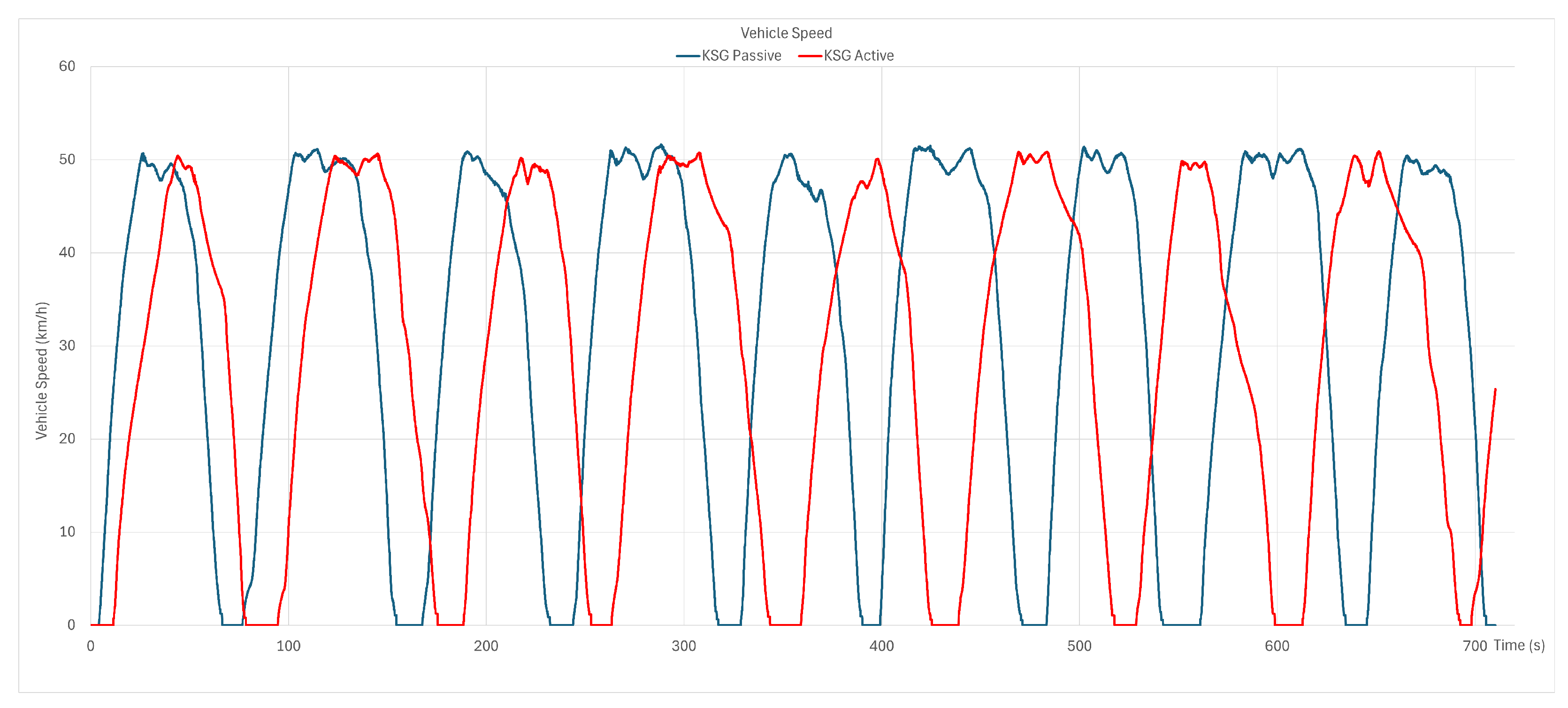
As illustrated in
Figure 3, the velocity profiles for both KSG Active (red) and Passive (blue) modes exhibit consistent dynamic behavior over the approximately 710 s test duration. The schedule consists of repeated acceleration–deceleration transients with a peak speed of approximately 50 km/h. The observed discrepancy in total traveled distance (6.21 km vs. 5.61 km) is attributed to field-induced operational variability and minor differences in manual driver tracking of the reference transient speed profile. To ensure an objective performance assessment despite this variance, all fuel and energy indicators are reported as distance-normalized metrics (e.g.,
). Cycle similarity was quantified using the Normalized Root Mean Square Error (NRMSE), defined as
where
and
denote the maximum and minimum values of the measured reference signal over the evaluation window. The high kinematic similarity between the runs is confirmed by a speed-profile NRMSE of 3.2%.
3.2. Drivetrain Dynamics and Output Shaft Analysis
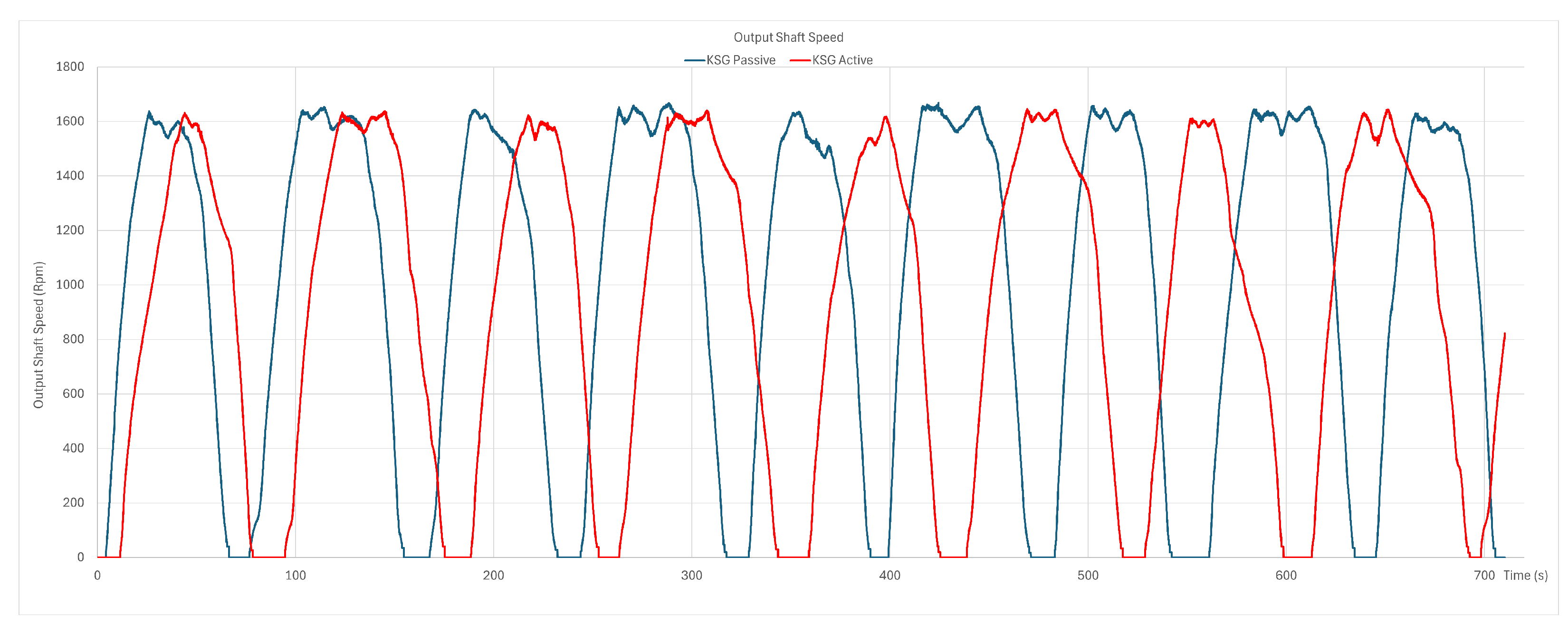
The output shaft speed profiles obtained under KSG Active (red) and KSG Passive (blue) modes, as shown in
Figure 4, exhibit strong agreement in overall cycle structure, indicating comparable kinematic demand across the two runs. This structural consistency is quantitatively supported by an NRMSE of 2.8%, supporting the methodological basis for the Active–Passive performance comparison.
A notable dynamic distinction emerges during transient events. The KSG Active mode demonstrates reduced high-frequency rotational speed fluctuations and smoother acceleration gradients compared to the Passive configuration. Specifically, the KSG Active trace exhibits visibly smaller short-duration shaft-speed excursions during acceleration phases, suggesting attenuation of driveline speed ripple under hybrid torque support. This behavior is consistent with closed-loop torque assistance of the KSG system, which can attenuate transient load excursions during high-demand events.
Table 4 summarizes the cycle-level statistics for both test scenarios. The total test durations are nearly identical (≈710 s), ensuring comparable temporal windows. Differences in mean vehicle speed and total distance reflect run-to-run variability in tracking the transient schedule and may also be influenced by the torque-assist response during acceleration phases. Despite these differences, the cyclic transient structure remains consistent, allowing a robust evaluation of energy-management performance metrics relative to the distance traveled.
3.3. Engine Load Distribution and Operating Regime Analysis
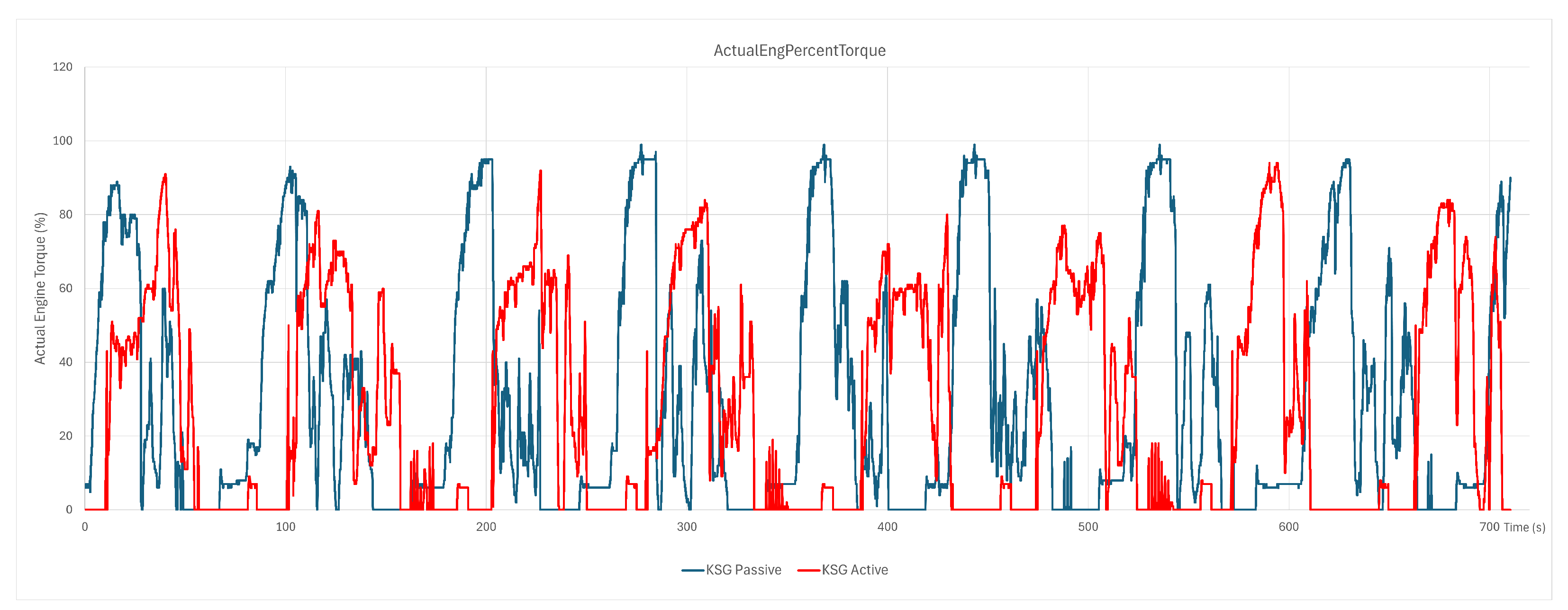
To characterize the impact of the KSG system on engine loading, torque demand was evaluated using the CAN-bus signal
ActualEngPercentTorque (sampled at 20 Hz). For improved trend readability, a 1 s moving-average filter was applied (window length: 20 samples). Unless otherwise stated, the reported statistics are computed over the full cycle from the filtered signal.
Figure 5 shows the resulting time histories for KSG Passive (blue) and KSG Active (red) modes.
Cycle-level statistics indicate a downward shift in the operating regime under KSG assistance. The cycle-mean torque demand decreased from 30.1% (Passive) to 26.7% (Active). In addition, the fraction of time spent above the 80% threshold decreased from 13.9% (Passive) to 3.9% (Active), corresponding to a 72% reduction in high-demand exposure. These metrics were computed directly from the time-series using a threshold-based dwell-time calculation.
This reduction in high-demand operation is consistent with transient torque support during acceleration, which alleviates short-duration load peaks on the internal combustion engine and promotes operation in a moderate-demand region [
11].
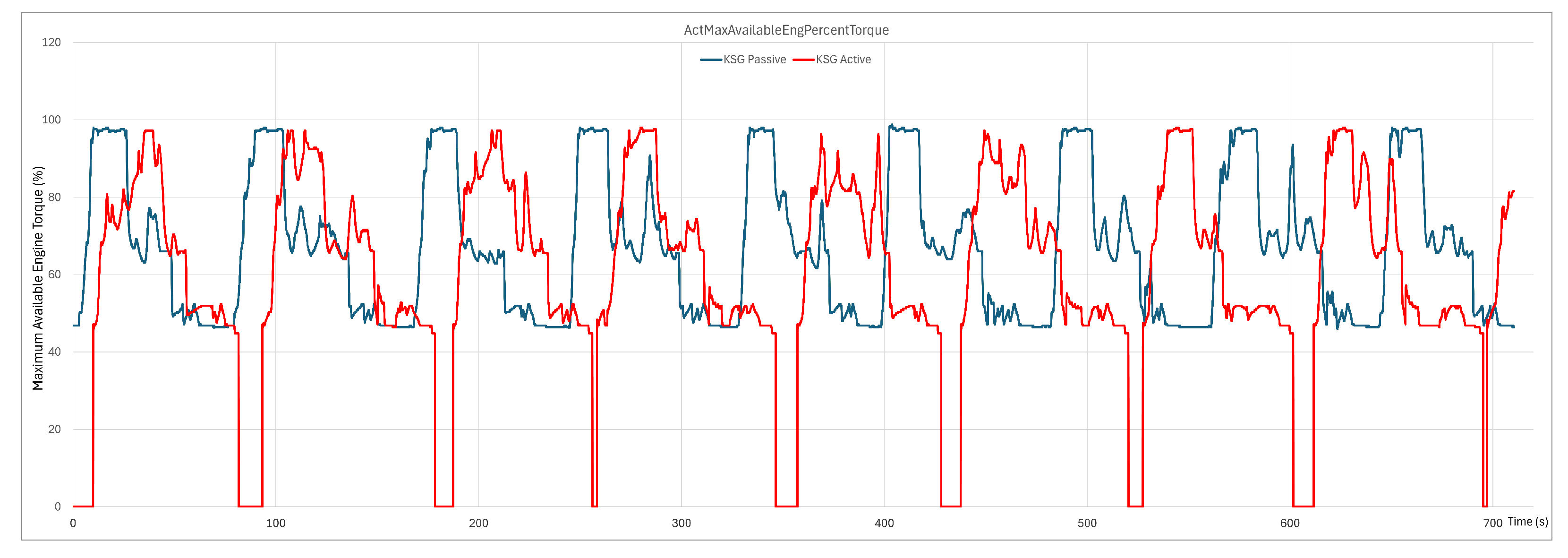
In addition, the maximum available engine percent torque (
ActMaxAvailableEngPercentTorque) was examined under both operating modes. As shown in
Figure 6, the KSG Active mode exhibits markedly lower values and intermittent drops toward zero, indicating intervals where the electric machine assumes a substantial share of the traction demand and the engine operates well below its full torque capacity. The cycle-mean value decreased from 66.7% (Passive) to 59.6% (Active), corresponding to a 10.6% reduction. This behavior is consistent with the load-smoothing effect described above and provides additional evidence that the KSG system reduces the engine’s peak utilization envelope under transient urban operation.
3.4. Instantaneous Fuel Rate (EngFuelRate)
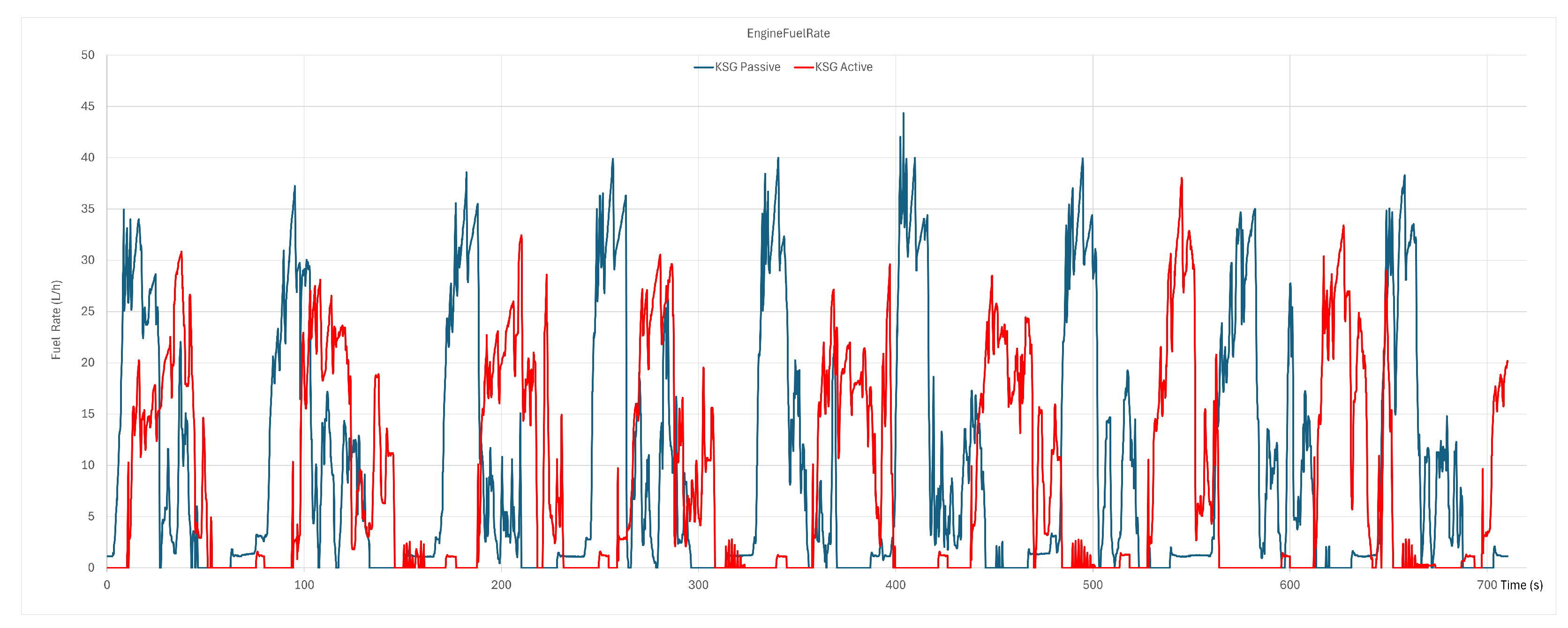
Instantaneous engine fuel rate was evaluated using the CAN signal
EngFuelRate, which reports the fuel flow rate of the internal combustion engine in liters per hour (L/h). This parameter provides a high-resolution representation of fuel use intensity over the drive cycle and enables computation of cumulative fuel consumption when integrated over time.
Figure 7 compares the time histories for KSG Passive and KSG Active modes.
Across the test cycle, the mean fuel rate was 9.75 L/h in KSG Passive mode and 8.19 L/h in KSG Active mode, representing a 16.0% reduction. This reduction is more pronounced during transient acceleration and low-speed transition phases, where hybrid torque assistance alleviates the required combustion torque and mitigates short-duration load peaks. Overall, the lower time-averaged fuel-rate level in KSG Active mode is consistent with the cycle-level fuel consumption results reported in
Table 5.
3.5. Instantaneous Fuel Economy Analysis
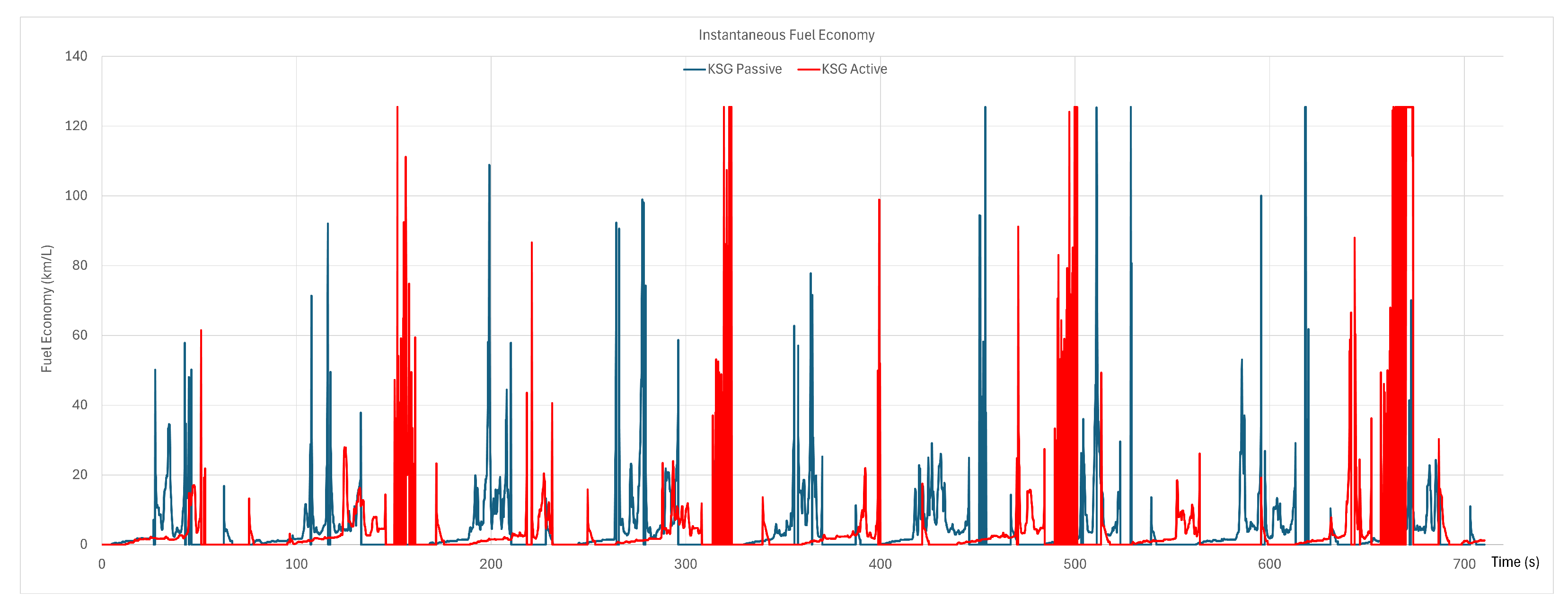
Instantaneous fuel economy was derived as the ratio of vehicle speed (km/h) to instantaneous fuel rate (
EngFuelRate, L/h), yielding an efficiency metric in km/L. This time-resolved measure enables short-interval inspection of the speed–fuel-use relationship over the driving cycle and is especially informative during stop–go operation, acceleration transients, and quasi-steady cruising.
Figure 8 compares the instantaneous fuel economy of the two operating modes.
It should be noted that the instantaneous ratio can exhibit sharp spikes when the fuel-rate signal approaches very low values (e.g., near-idle or fuel cut-off), which mathematically amplifies the km/L estimate. Therefore, the cycle-level comparison is based on the time-averaged fuel economy over the full test cycle rather than on isolated peak values. Over the test cycle, the mean fuel economy increased from 4.21 km/L in KSG Passive mode to 4.49 km/L in KSG Active mode, corresponding to an approximate 6.7% improvement. The observed improvement is consistent with the transient assistance role of the KSG during stop–go operation.
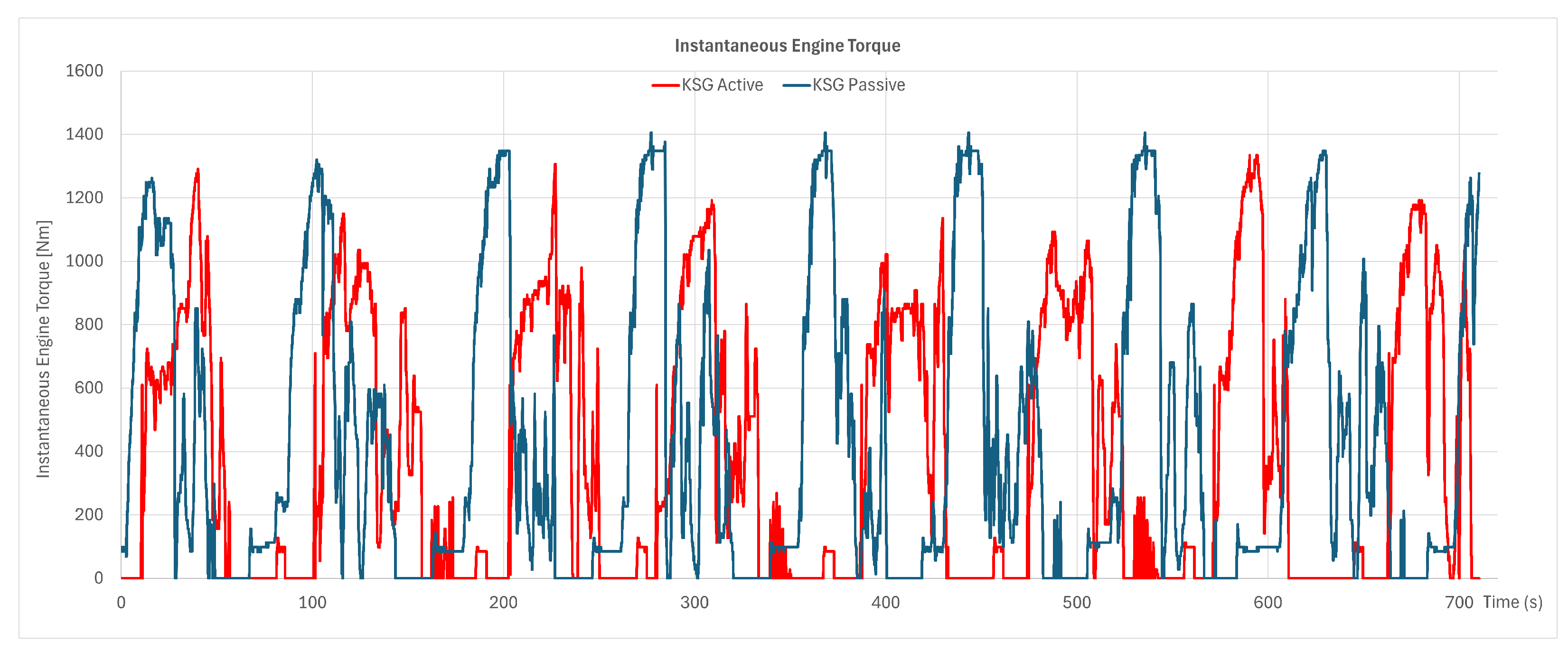
3.6. Instantaneous Engine Torque
Instantaneous engine torque was evaluated to quantify the real-time combustion torque demand imposed on the internal combustion engine (ICE) over the reference drive cycle (
Figure 9). The torque signal was obtained from the vehicle CAN measurements and post-processed consistently for both operating modes.
In the KSG Passive mode, the ICE delivered a mean torque of 426.9 N·m, with a peak value of 1405.8 N·m. The trace exhibits repeated high-torque plateaus during launch and acceleration events, indicating that the ICE accommodates a larger fraction of the transient propulsion demand. In contrast, KSG Active operation reduced the mean ICE torque to 379.2 N·m (an 11.2% decrease) and lowered the peak to 1334.8 N·m. The reduced torque level and moderated high-torque excursions are consistent with hybrid torque assistance providing partial traction support during transients, thereby smoothing the ICE load profile.
Overall, the lower average and peak ICE torque in KSG Active mode indicate a load-leveling effect, consistent with the reductions in fuel rate and cycle fuel consumption reported in
Table 5.
3.7. Model Validation
The forward-facing longitudinal dynamics model was parameterized a priori using the technical specifications and physical vehicle constants detailed in
Table 2 and
Table 3. To preserve the physical integrity of the digital twin and test its predictive capability, no case-specific post-calibration or empirical “tuning” of road-load coefficients (such as aerodynamic drag or rolling resistance) was performed against the measurement data.
The validation focus is placed on the KSG Active mode to verify the system’s performance under transient hybrid assistance. The quantitative accuracy of the model in reproducing the powertrain dynamics is summarized in
Table 6. The high fidelity of the simulation is evidenced by the Normalized Root Mean Square Error (NRMSE) remaining below 5% for all primary drivetrain variables.
The results in
Table 6 demonstrate that the model successfully captures the dominant longitudinal load mechanisms and transient power-loading behavior observed in the field. The minor discrepancies in torque and power metrics are primarily attributed to lumped-parameter modeling assumptions and the inherent discretization effects of the CAN acquisition chain, which do not compromise the cycle-level validity of the analysis. Among the validated variables, engine torque exhibits the lowest correlation (
), which is consistent with the fact that the CAN-reported torque is an indirect estimate derived from fuel injection parameters and is therefore more susceptible to quantization effects, accessory load transients, and high-frequency noise than purely kinematic variables such as speed or distance.
3.8. Comparative Analysis
Under the controlled stop-and-go schedule, KSG Active operation was associated with lower average engine load, lower mean engine torque, and lower normalized fuel consumption than the corresponding Passive run. On a distance-normalized basis, the specific fuel consumption decreased from 32.21 L/100 km to 26.70 L/100 km, corresponding to an improvement of approximately 17.1%. Because the compared runs were carried out on the same vehicle and closed track with nearly identical duration, these findings should be interpreted as a controlled comparative result rather than as a certification-grade figure.
The 17.1% fuel saving compares favorably with the existing literature (
Table 7), where belt-driven (P0) systems show belt compliance limitations that reduce instantaneous torque delivery [
10].
3.9. Simulation Framework Used for Validation
To corroborate the experimental observations and enable a controlled assessment of the 48 V crankshaft starter–generator (CSG/KSG) system, a numerical model was implemented in the MATLAB/Simulink environment. While field measurements provide direct evidence of system behavior, a physics-based simulation framework supports repeatable analyses by isolating key parameters and tracking energy-flow variables that are not always measurable in situ [
9]. The simulation architecture represents the longitudinal dynamics of a heavy-duty urban bus and integrates (i) vehicle physical characteristics, (ii) ambient and road-load assumptions, and (iii) the measured reference driving schedule.
The purpose of this model is not to reproduce all component-level electrochemical or electromagnetic phenomena in full detail, but to provide a system-level digital twin capable of capturing the dominant longitudinal and powertrain dynamics observed in the field data. Accordingly, the model is validated against measured Active-mode field data and used as an analysis and interpretation tool within the scope of the present work. More specifically, the present validation objective is to reproduce the measured shaft-speed, engine-torque, mechanical-power, and cumulative-distance responses of the KSG Active vehicle over the same transient drive-cycle window.
The model is driven by the recorded reference speed and the corresponding acceleration , imported via a Drive Cycle Source block. These signals are used as the primary excitation to reproduce the transient operating conditions observed during testing and to enable time-synchronous comparison between simulated outputs and field measurements.
3.10. Vehicle Parameters and Physical Constraints
Road grade was not instrumented during the test campaign. The physical test route was not perfectly flat and included local uphill and downhill segments. Therefore, road grade was not explicitly parameterized as a measured model input, and its effect is reflected only indirectly in the recorded vehicle response. As a result, residual grade-induced load variations may appear as unmodeled disturbance in the validation results.
The simulation was parameterized using the vehicle constants listed in
Table 2. The rotational mass factor
and gravitational acceleration
, both listed in
Table 2, complete the vehicle parameterization.
3.11. Mathematical Formulation of Longitudinal Dynamics
The general longitudinal force balance can be written as
where
v is the vehicle speed and
is the longitudinal acceleration. The equivalent mass is defined as
, accounting for rotational inertia effects of driveline components in a lumped manner.
The grade term is retained in the general formulation for completeness, but was not prescribed as a measured time-varying input in the implemented model.
The crankshaft mechanical power,
(kW), is computed from the engine torque
(Nm) and engine speed
n (rpm) as
To relate vehicle speed to engine speed, wheel rotational speed is obtained from the linear speed and wheel radius:
where
is in rpm when
v is in
and
is in
. Engine speed is then computed using the combined driveline ratio:
where
, with
denoting the time-varying transmission ratio and
the final-drive ratio.
3.12. Input Data and Model Validation Strategy
The simulation inputs are derived from measured driving data rather than synthetic standard cycles (e.g., NEDC or WLTP), ensuring that the simulated excitation reflects the transient characteristics of the recorded schedule. CAN-bus signals were acquired and post-processed in Vector vSignalyzer at a sampling frequency of 20 Hz. The simulation duration was set to 710.3 s to match the analyzed drive-cycle segment.
Model validation was performed by comparing the simulated outputs with time-aligned CAN-based field measurements over the same driving window. The comparison focused on variables that directly reflect vehicle dynamic response and powertrain loading, namely shaft speed, engine torque, engine mechanical power, and cumulative distance. Agreement was quantified using RMSE, NRMSE, and correlation-based measures after time alignment of simulated and measured signals on a common time base, in order to assess whether the model reproduced the dominant transient trends of the physical system with sufficient fidelity for comparative interpretation as illustrated in
Figure 10.
Model outputs—including engine torque, shaft/engine speed, engine mechanical power, and cumulative distance—were time-aligned with the corresponding field channels and evaluated using quantitative error metrics (e.g., RMSE/NRMSE) and correlation-based measures. This procedure was used to assess whether the model reproduced the measured transient trends under the same reference driving schedule with sufficient fidelity for comparative analysis.
3.13. Electrical Subsystem Modeling
To simulate the energy flow within the 48 V mild-hybrid architecture with low computational burden, the electrical subsystem was represented using a zeroth-order equivalent-circuit model parameterized in the initialization script. The net electrical power at the 48 V bus was computed as the sum of the KSG electromagnetic power and the auxiliary loads:
where
denotes the assumed constant onboard accessory demand, set to 4000 W in the present simulations.
The supercapacitor pack was modeled by a capacitor (open-circuit) voltage
in series with an internal resistance
. The storage current
was obtained by enforcing the instantaneous power balance at the terminals,
, which yields
The physically admissible root was selected to ensure continuity of and real-valued solutions, i.e., . Positive denotes discharge (power delivery), whereas negative values correspond to charging during regenerative operation.
The supercapacitor energy state was then updated from the storage current using , where represents the equivalent capacitance of the pack. A state variable representing the energy-storage condition is included in the model to preserve transient power-flow consistency during assist and recuperation events; however, detailed electrochemical aging and thermal effects are outside the scope of the present paper. Within the scope of the present study, the priority is not a detailed SOC, efficiency, or loss decomposition, but validation of the KSG Active vehicle model against measured CAN-based transient responses. Future work will extend this framework toward energy-state-oriented comparison, including SOC-related behavior and a more detailed assessment of electrical conversion losses. This formulation enables dynamic tracking of voltage and energy variations under transient urban operation (with ).
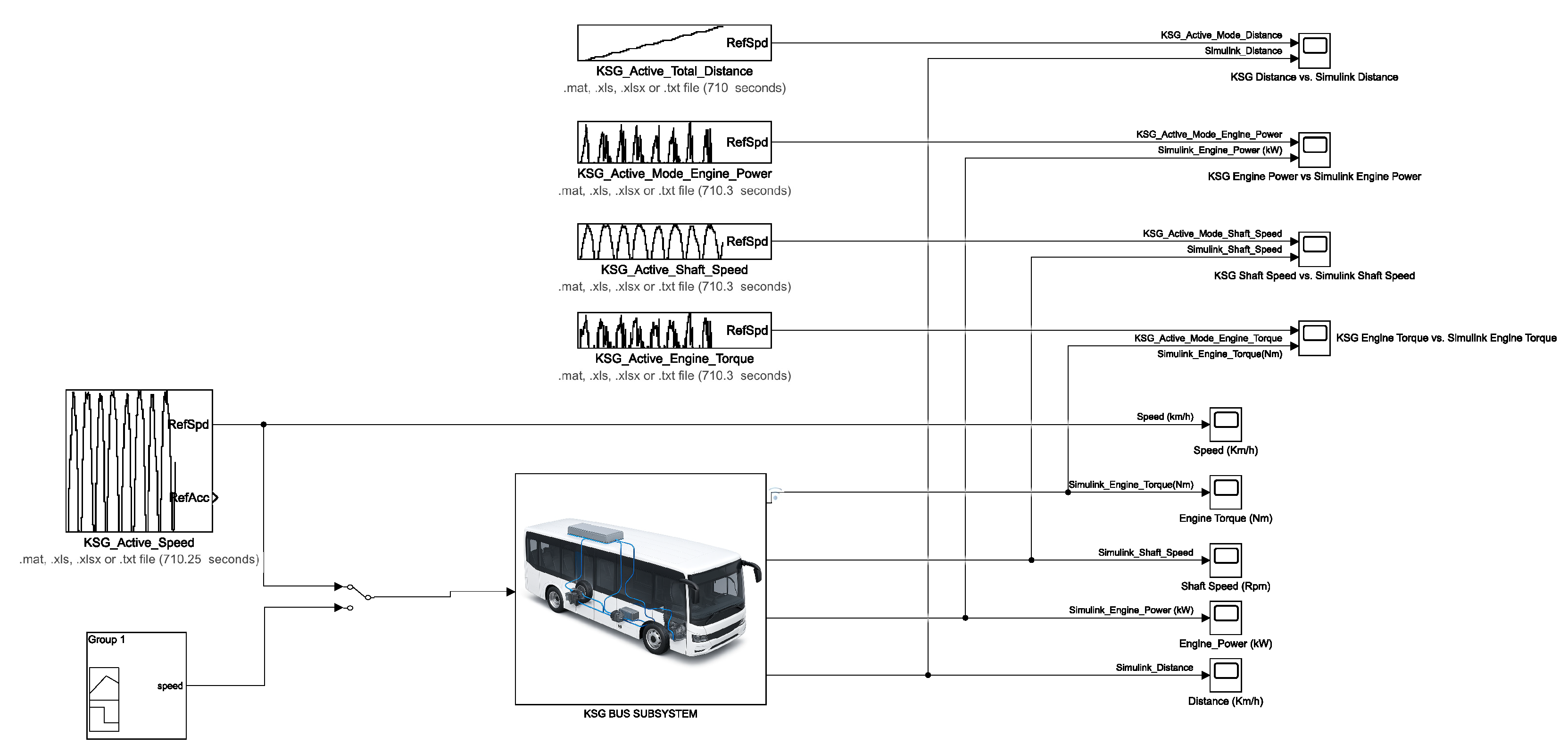
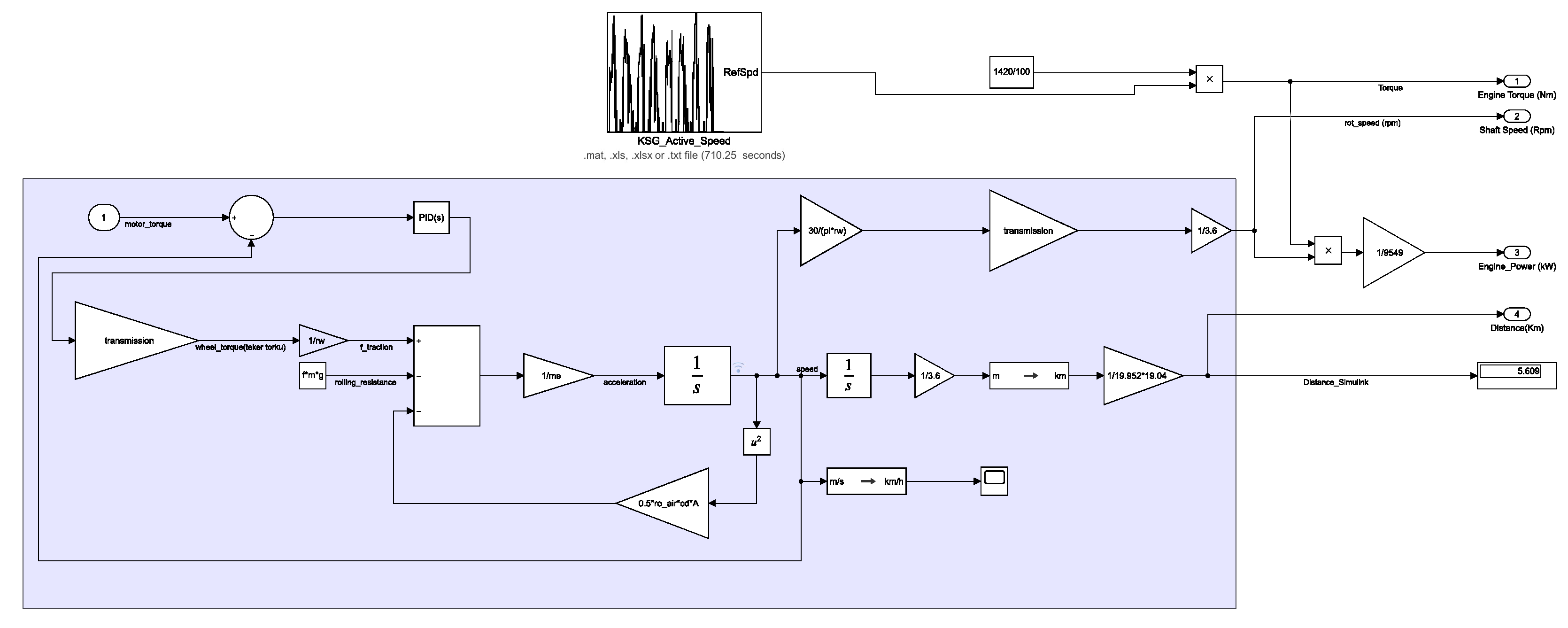
The mathematical models for longitudinal dynamics and the electrical subsystem were integrated into a unified simulation environment using MATLAB/Simulink, as illustrated in
Figure 11. This block-diagram architecture enables simultaneous evaluation of the vehicle dynamic response and the associated power/energy flow of the KSG-equipped powertrain under realistic driving constraints.
The simulation framework was configured to generate time-series outputs consistent with the available CAN-bus telemetry, providing a basis for the subsequent validation stage through time-aligned, signal-to-signal comparisons. A broader model-based comparison between KSG Active and KSG Passive operation, including more detailed powertrain-state reconstruction, is reserved for future work. Key variables monitored during the simulation include:
Vehicle speed (v, km/h) and acceleration profiles;
Engine torque (, N·m) and mechanical power (, kW);
Drivetrain rotational speeds (e.g., engine/output shaft speed, rpm);
Cumulative distance traveled (km).
These outputs enable a direct comparison between the digital twin and the physical test vehicle, supporting assessment of the model’s ability to reproduce the transient behavior observed during the controlled test campaign.
For validation, the digital twin was driven by the measured reference velocity profile , with the corresponding acceleration derived as . The simulated responses—namely instantaneous engine torque (, N·m), output shaft speed (, rpm), and engine mechanical power (, kW)—were time-aligned with the corresponding CAN signals on a common timebase. This configuration enables transient-level assessment by directly overlaying simulated and measured trajectories over the same urban driving window.
In the present work, the electrical subsystem is represented at a lumped-parameter, control-oriented level rather than as a detailed component-loss model. Therefore, converter switching losses, detailed inverter/machine efficiency maps, and temperature-dependent electrical behavior are not explicitly resolved in the present vehicle-level model.
3.14. Model Validation: Speed Tracking and Dynamic Response
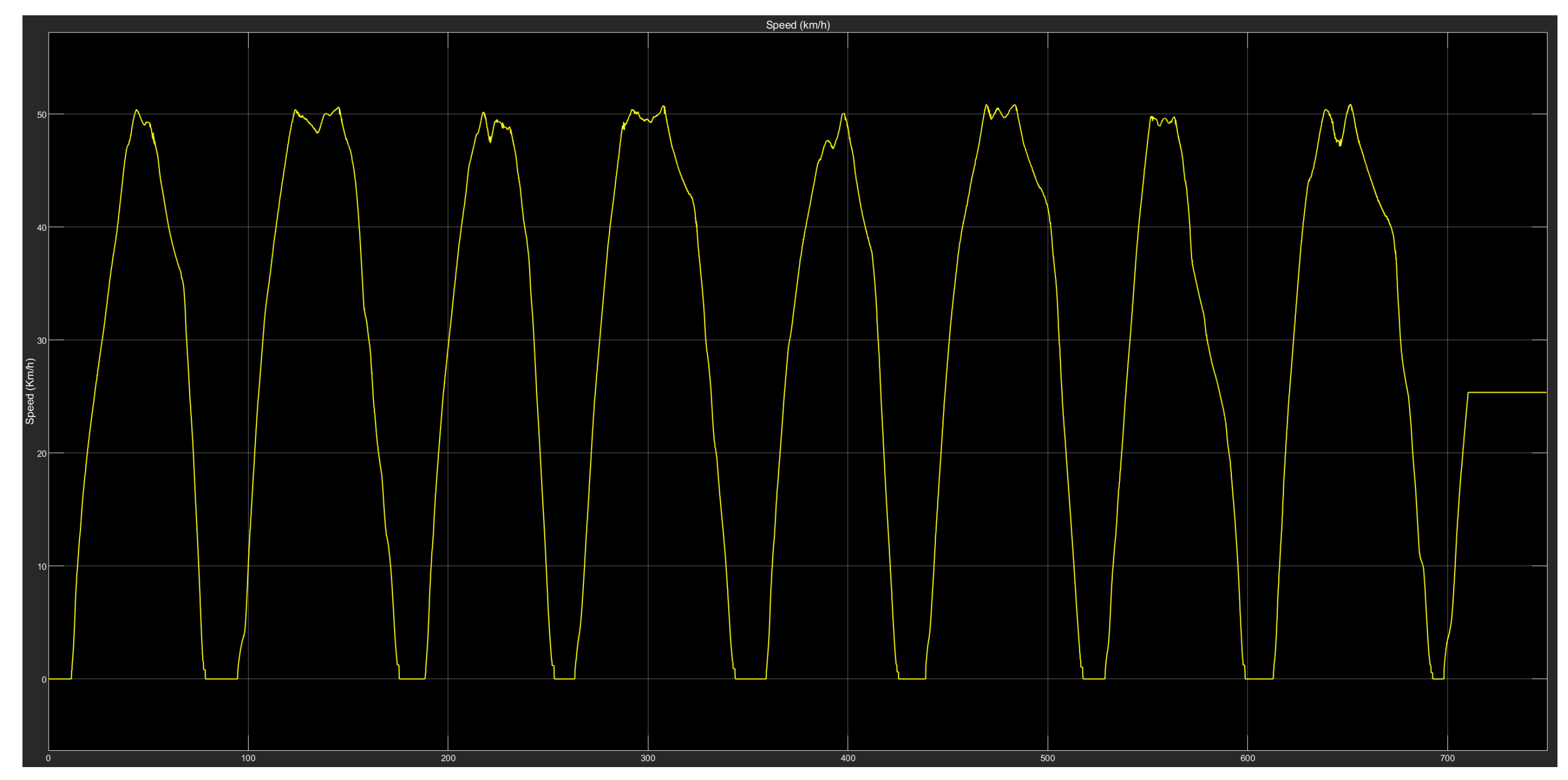
The simulation output for the instantaneous vehicle speed is presented in
Figure 12. The velocity profile reproduces the characteristic stop–go pattern of the reference schedule, featuring repeated 0–50–0 km/h transients and consistent peak-speed plateaus. This close agreement indicates that the longitudinal model and the speed-tracking structure provide the intended kinematic excitation for validation.
In parallel with the kinematic response, the simulated engine torque varies in accordance with the acceleration demand. Distinct torque peaks are observed during launch events, reflecting the inertial loads inherent to the heavy-duty platform. Overall, the results support that the implemented model captures the expected transient load behavior under the applied driving excitation.
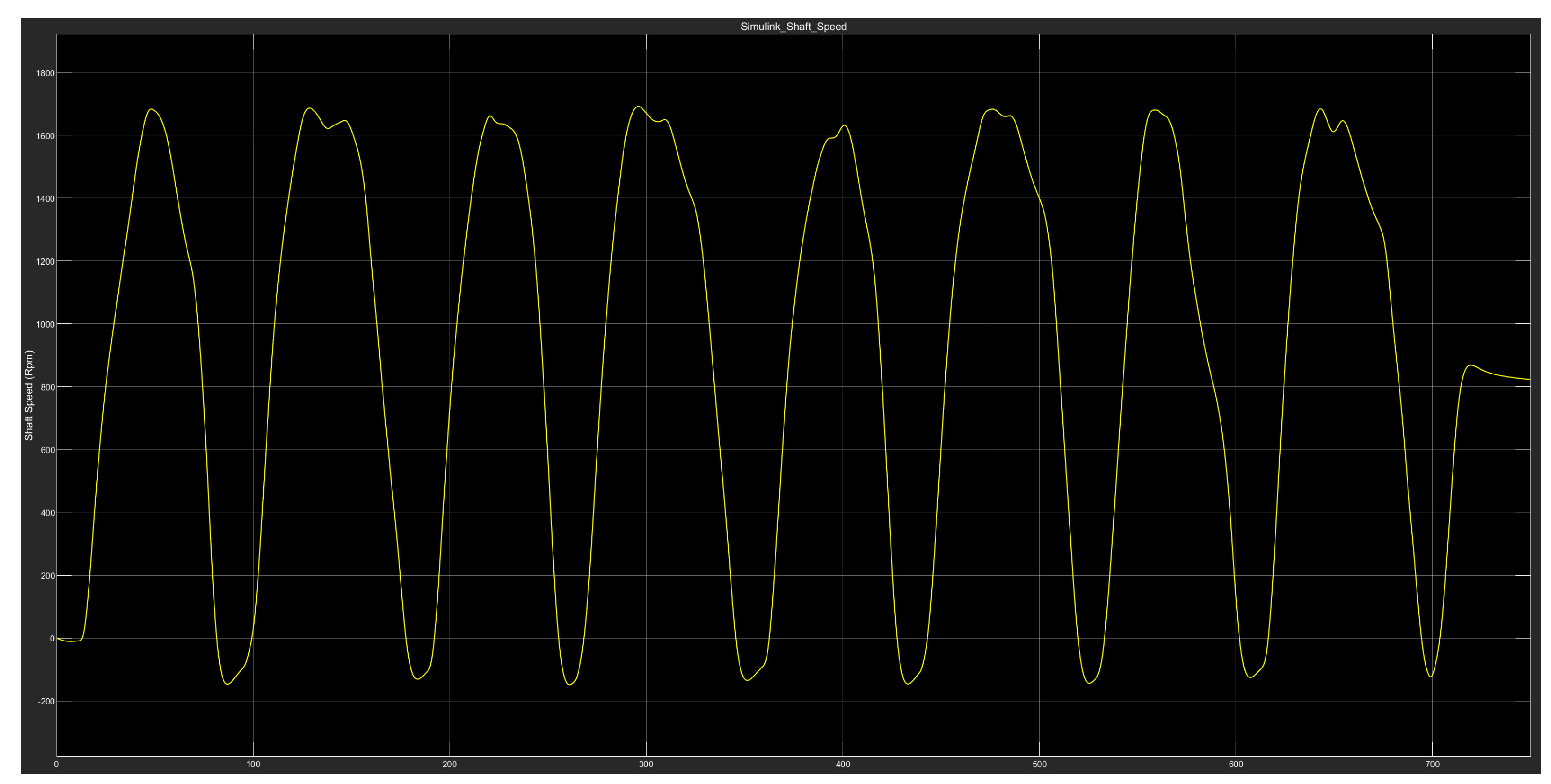
Figure 13 presents the time-domain evolution of the output shaft rotational speed. As expected from the driveline kinematics, the profile mirrors the vehicle velocity trajectory and evolves consistently with the effective wheel radius and the combined gear and final-drive ratios.
This rotational-speed trace characterizes the mechanical operating frequency throughout the drive cycle. Together with the corresponding torque response, it defines the instantaneous operating point used for mechanical power calculation and supports subsequent assessments of engine load and efficiency trends under transient operation.
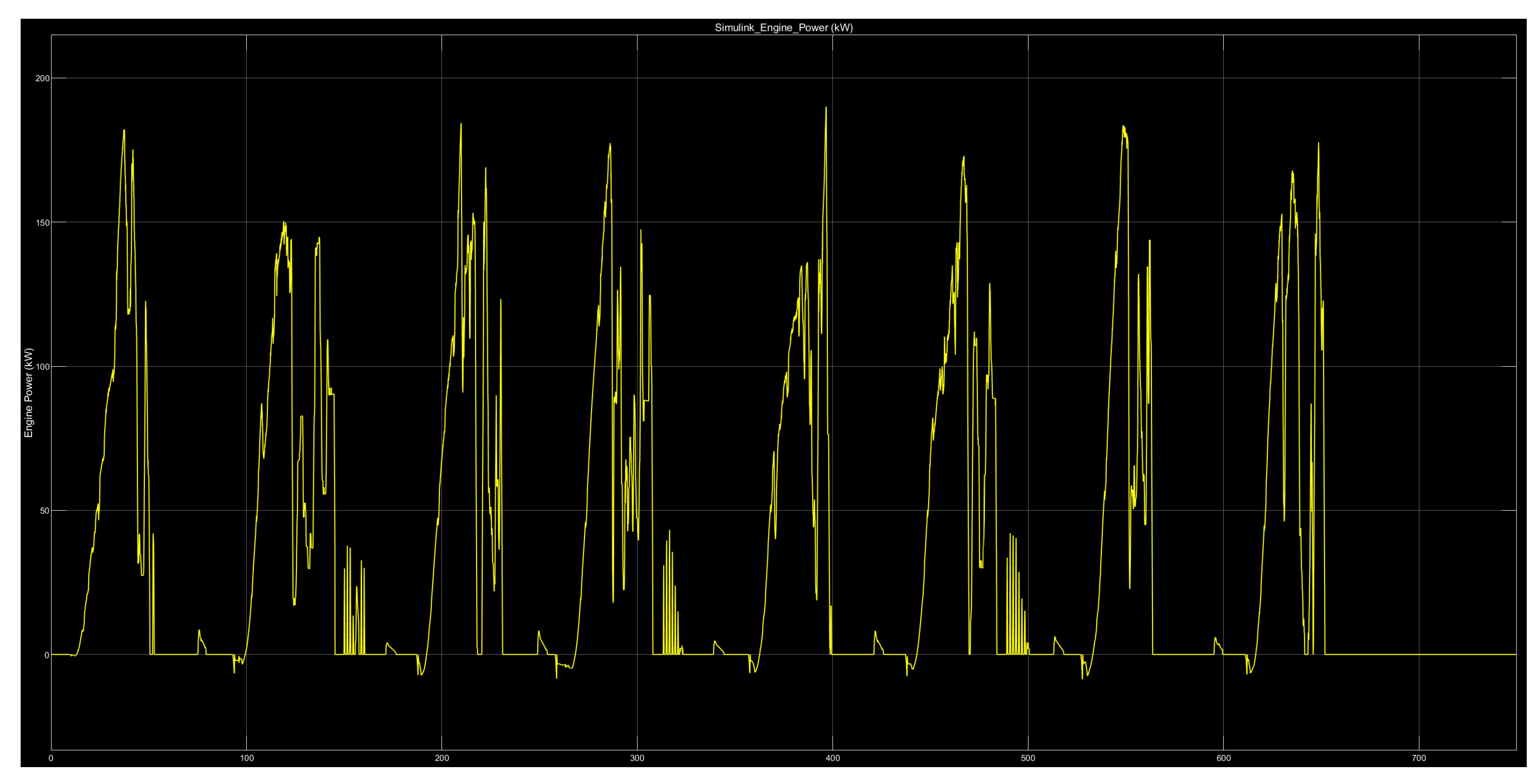
Figure 14 presents the simulated engine mechanical power–time history, computed from the instantaneous torque and rotational speed (Equation (
8)). The power demand features pronounced, short-duration peaks aligned with the acceleration phases of the stop–go drive cycle. These excursions indicate the elevated mechanical power required to overcome vehicle inertia during repeated launch events, whereas low-power intervals correspond to deceleration and near-idle segments. Overall, the profile confirms that the model captures the transient loading characteristics that dominate urban bus operation.
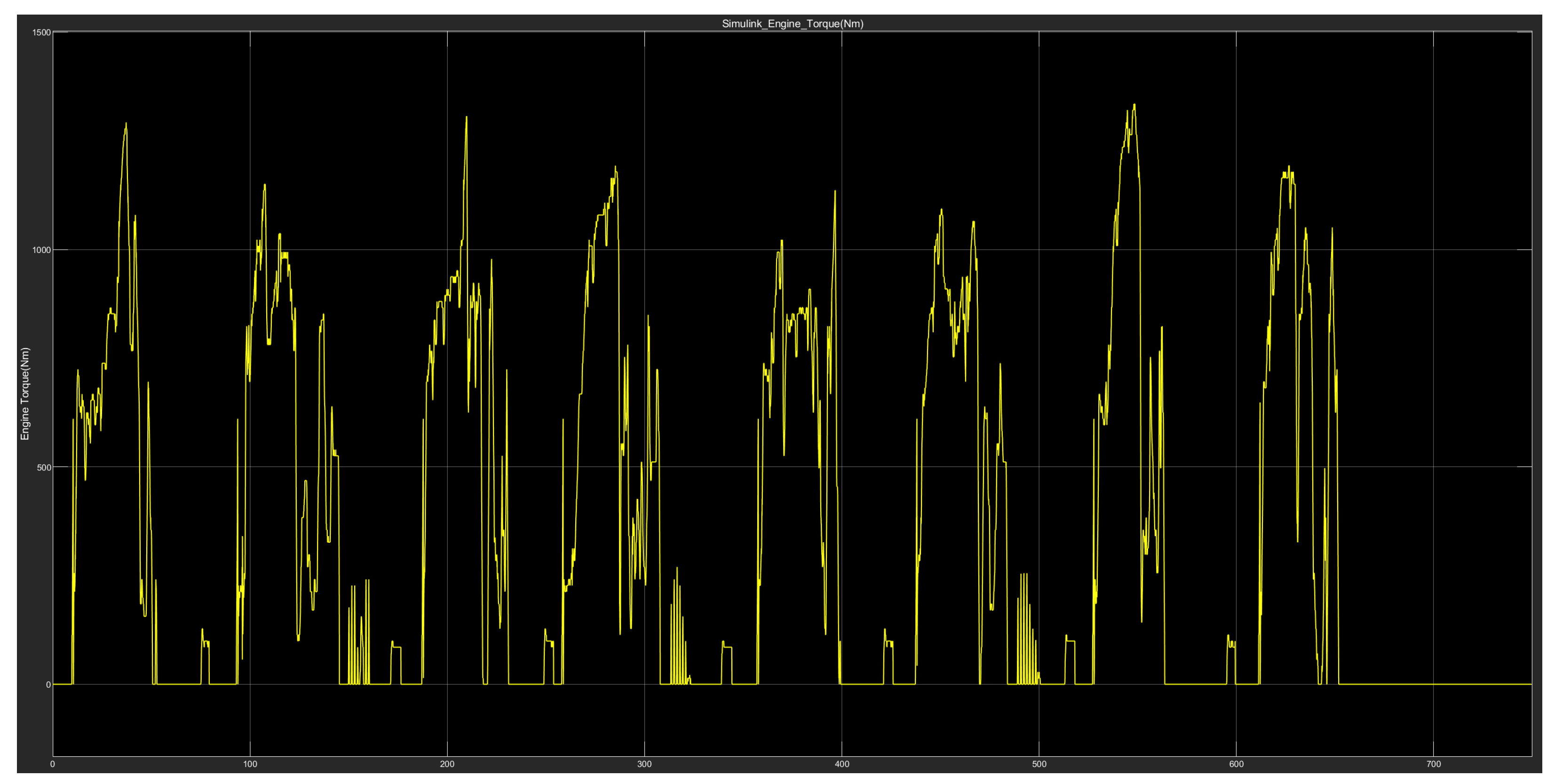
Figure 15 shows the simulated instantaneous engine torque response over the reference drive cycle. The torque trace exhibits repeated high-torque plateaus and sharp peaks that coincide with the acceleration portions of the stop–go schedule, reflecting the elevated tractive effort required to overcome vehicle inertia during launch events in a heavy-duty bus platform. During deceleration and dwell intervals, the torque demand decreases markedly, consistent with reduced propulsion demand. Overall, the profile confirms that the longitudinal control structure produces physically plausible transient torque loading under the prescribed kinematic excitation.
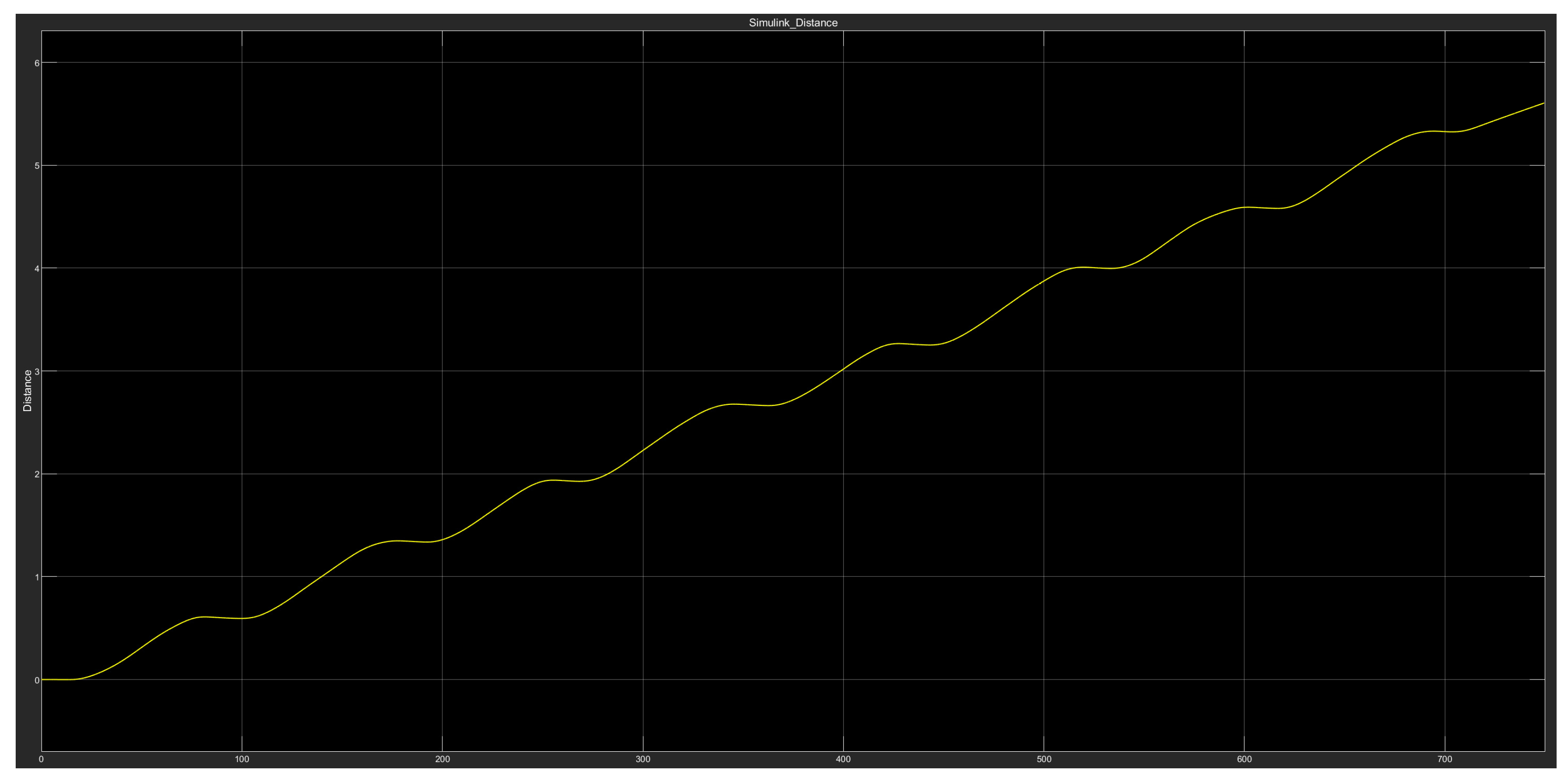
Figure 16 illustrates the cumulative distance traveled during the simulation, obtained via numerical integration of the instantaneous vehicle velocity. By the end of the reference drive cycle, the total distance reaches approximately
.
The smooth, monotonic increase indicates consistent operation of the integration and unit-conversion blocks within the Simulink environment. This distance trace is subsequently used to compute distance-normalized performance metrics, such as fuel consumption in , for the KSG performance evaluation.
3.15. Field–Simulation Comparison and Validation in KSG Active Mode
In this section, KSG Active CAN signals preprocessed in CANalyzer 15 and Vector vSignalyzer 19.0 (Vector Informatik GmbH, Stuttgart, Germany) are time-aligned with the MATLAB/Simulink R2020a (The MathWorks, Inc., Natick, MA, USA) digital-twin outputs to enable signal-to-signal validation over the same drive-cycle window. Key variables (output shaft speed, engine torque, mechanical power, and cumulative distance) are overlaid on a common time base and assessed using quantitative metrics (RMSE/NRMSE), and the resulting comparisons are reported as plots.
3.15.1. Validation of Output Shaft Speed Tracking
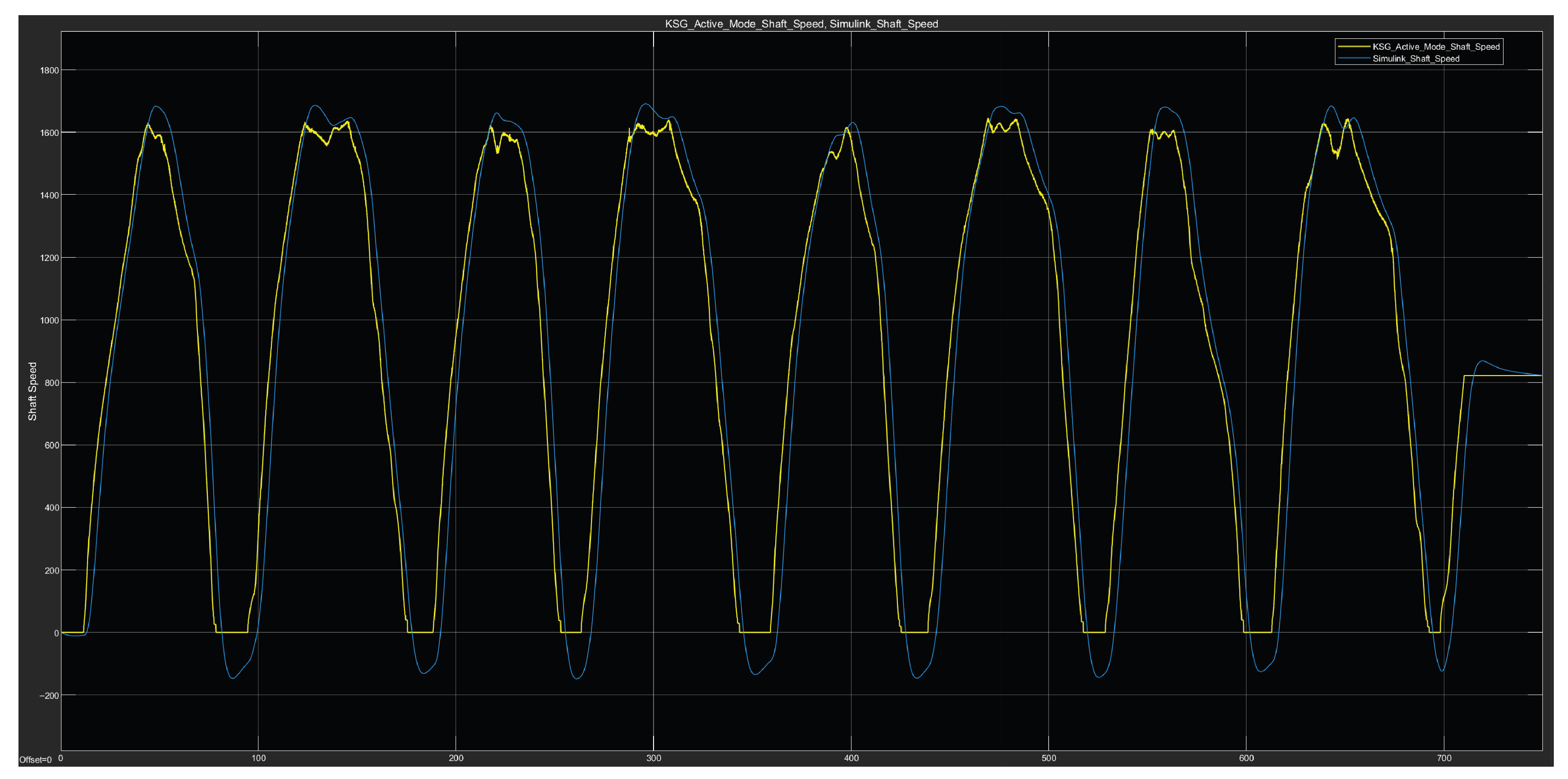
Figure 17 compares the output shaft speed profiles derived from the field-recorded CAN telemetry and the developed Simulink digital twin. The simulated shaft speed shows close agreement with the measured trajectory across the full stop–go sequence, reproducing both the peak-speed plateaus and the deceleration-to-idle transitions.
Minor transient deviations occur primarily during rapid speed ramps and may be attributed to signal discretization, sensor-side filtering, and unmodeled driveline dynamics. Small undershoots during abrupt stops are also observed in the simulated trace, which may arise from numerical integration artifacts and filtering-induced phase lag. Overall, the strong time-domain correspondence indicates that the model captures the dominant kinematic coupling between vehicle motion and driveline rotational speed (), providing a robust foundation for subsequent torque and power consistency checks.
3.15.2. Validation of Engine Torque Tracking
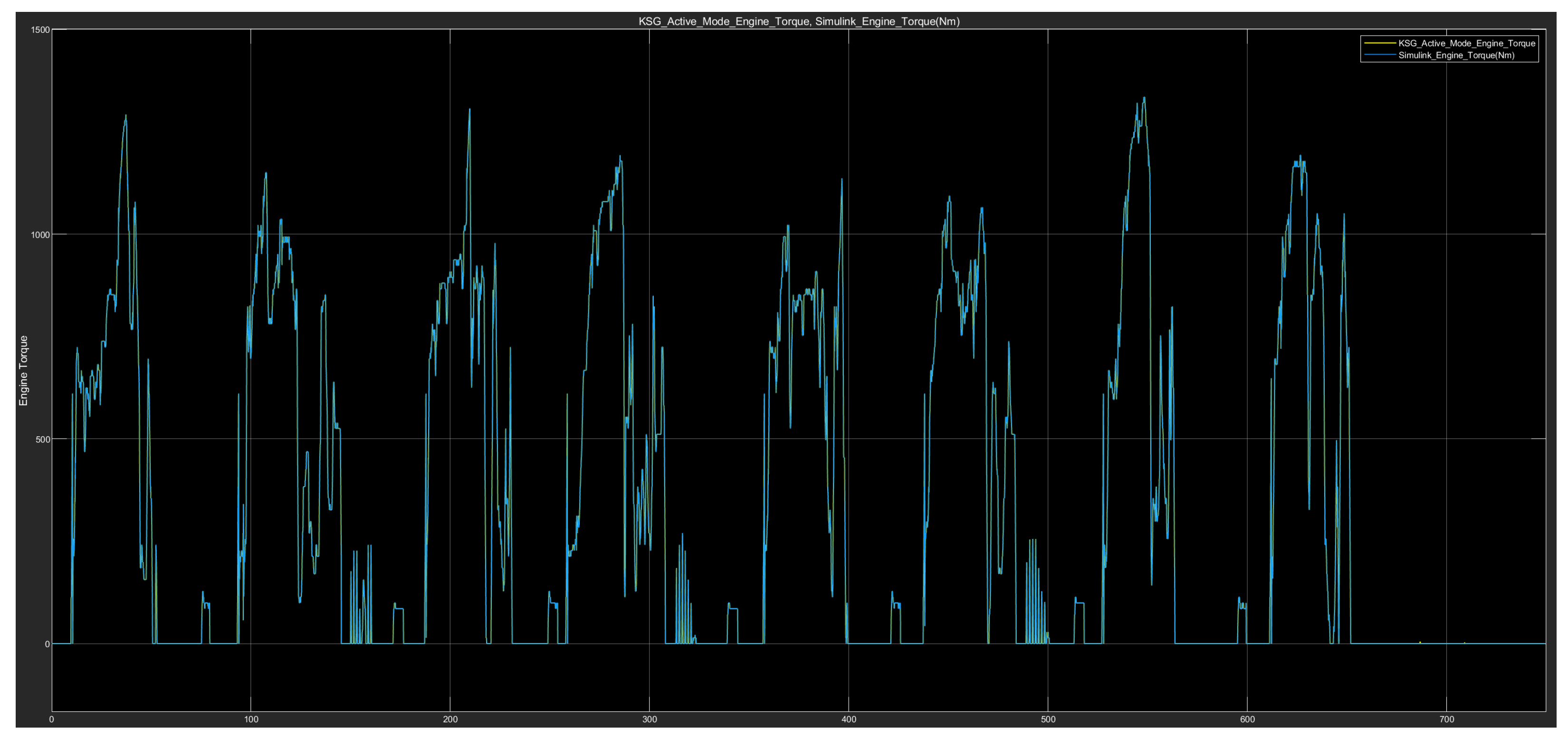
Figure 18 compares the engine torque profiles obtained from the field-recorded CAN telemetry and the developed Simulink digital twin. The simulated torque (blue) shows close time-domain agreement with the measured trajectory (yellow) across the full validation drive cycle, reproducing both the peak load excursions during acceleration events and the near-zero torque intervals during deceleration and dwell phases.
The strong correspondence indicates that the model captures the dominant longitudinal load mechanisms and the resulting tractive torque demand under the prescribed stop–go excitation. Minor high-frequency fluctuations in the CAN-derived signal can be attributed to sampling/quantization effects, sensor-side filtering, and the torque estimation chain in the measurement path, which are not fully represented in the lumped-parameter simulation. Overall, the observed agreement supports the torque-domain fidelity of the digital twin, providing a consistent basis for subsequent power and efficiency evaluations.
3.15.3. Validation of Engine Power Tracking
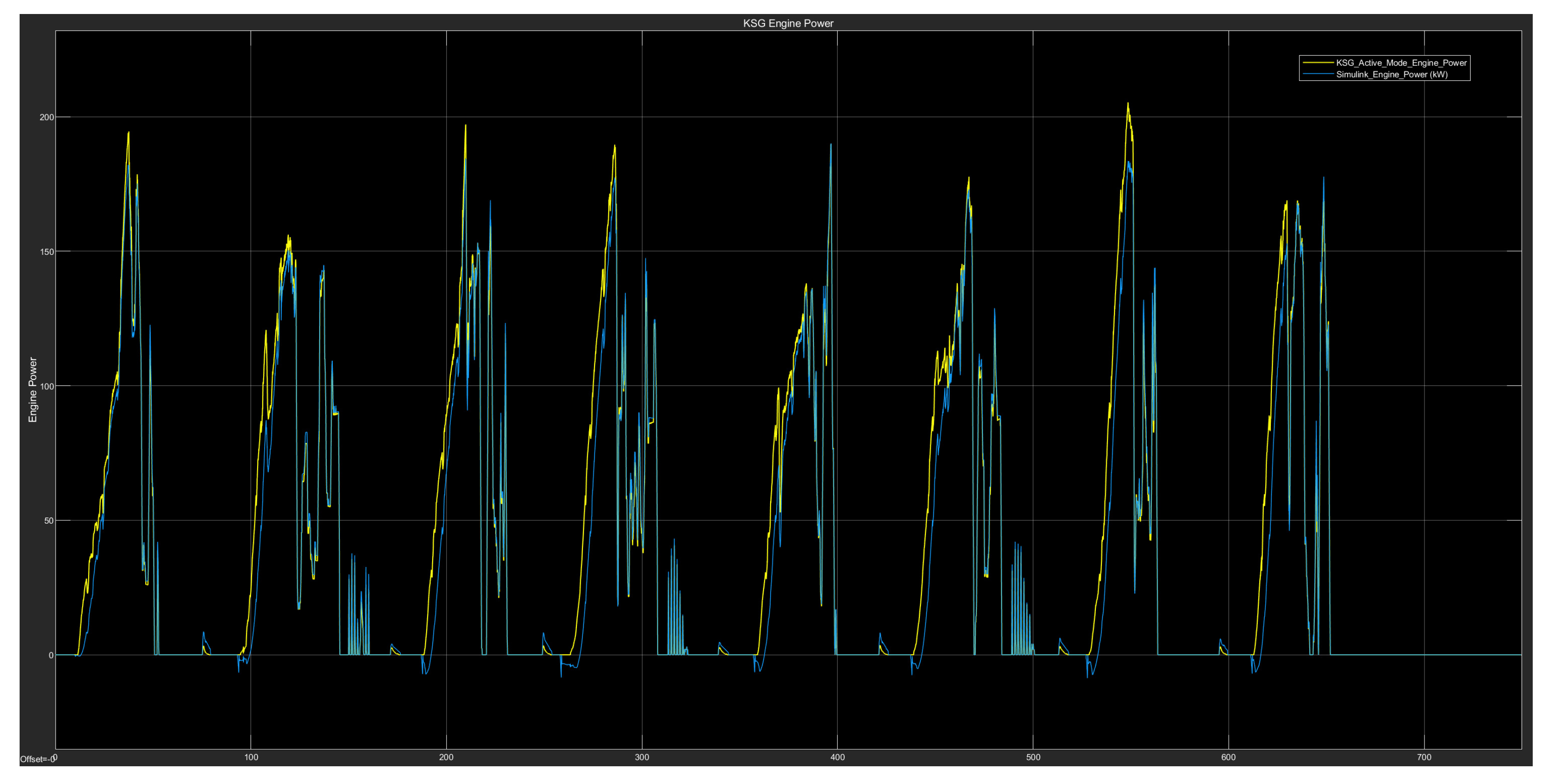
Figure 19 compares the engine mechanical power predicted by the Simulink digital twin with the corresponding CAN-derived power (computed from measured torque and rotational speed) over the validation drive cycle. The simulated profile shows strong time-domain agreement with the measured trajectory, capturing the dominant power bursts during acceleration events as well as the low-power intervals during deceleration and dwell phases.
Minor discrepancies are mainly observed around sharp peaks and rapid ramps. These differences can be attributed to sampling and filtering of CAN signals, time-alignment uncertainty, and the fact that power is computed as the product of torque and rotational speed, which tends to amplify high-frequency fluctuations. Overall, the close correspondence validates the model’s ability to reproduce transient power-loading behavior, providing a robust basis for subsequent efficiency and fuel-consumption comparisons.
3.15.4. Cumulative Distance Validation and Time-Base Consistency
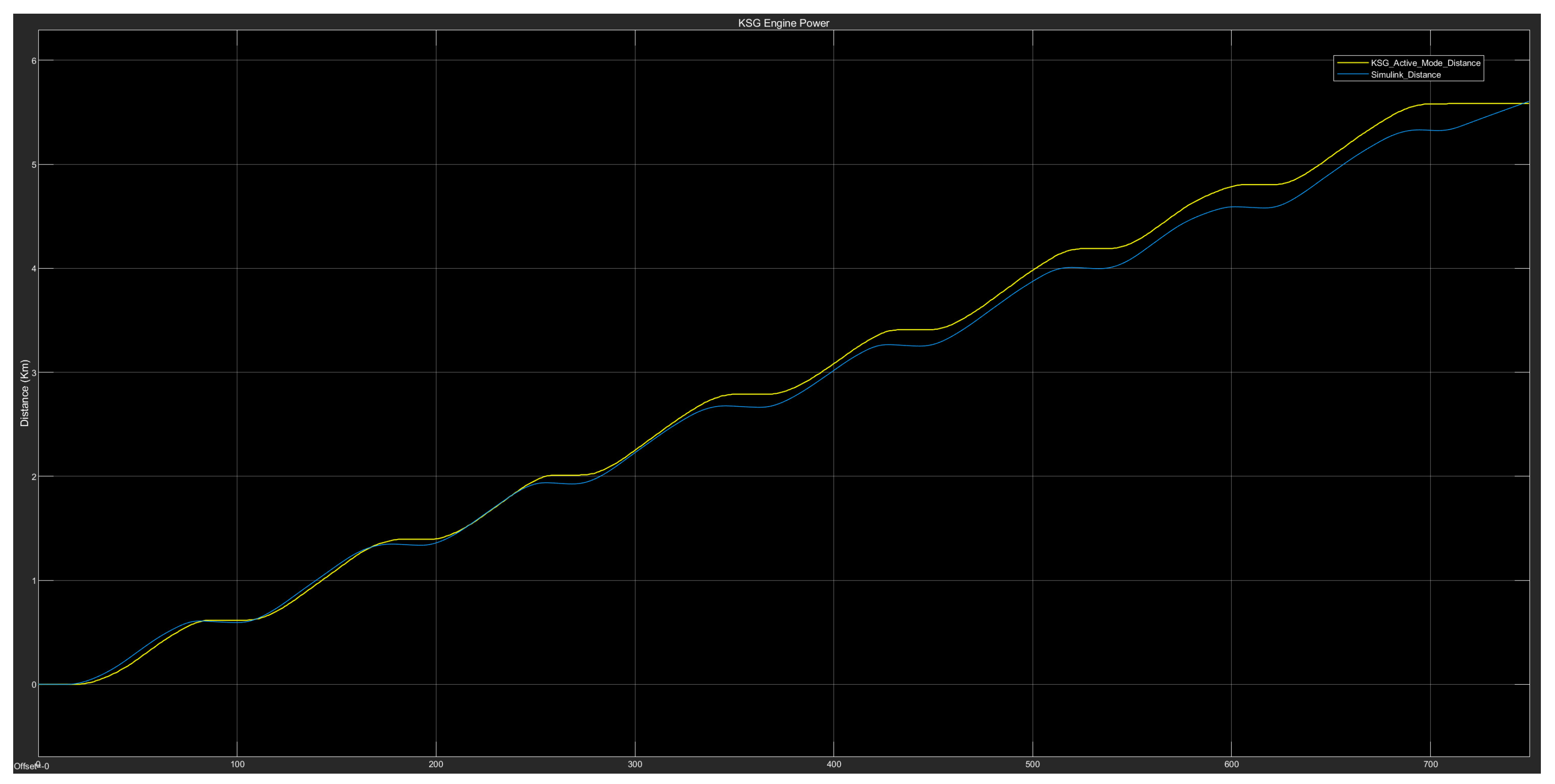
Figure 20 compares (i) the cumulative distance profile derived from field-recorded CAN telemetry and converted into a MATLAB-compatible time-series format with (ii) the cumulative distance computed in the Simulink environment by numerically integrating the digital twin vehicle-speed output. The close overlap of the two traces throughout the validation window indicates that the simulation model reproduces the total distance traveled over the drive cycle in strong agreement with the physical measurements.
Overall, the observed correspondence confirms that the numerical integration, unit-conversion/scaling chain, and time-base alignment procedures are implemented consistently across the measurement and simulation domains. This validated distance trajectory provides a reliable reference for subsequent distance-normalized performance indicators (e.g., fuel consumption in ).
For completeness,
Table 8 summarizes the cycle-level indicators. Metrics primarily related to cycle kinematics and driving-profile tracking (mean vehicle speed, total traveled distance, and mean output shaft speed) are reported without percentage change, as they reflect run-to-run variability and cycle realization rather than a direct hybrid-effect metric.
Additional descriptive statistics from the analyzed time series further support the transient interpretation of the Active-mode response. In the KSG Active case, the maximum engine torque reached 1334.8 N·m, the median engine torque was 198.8 N·m, the maximum engine mechanical power was approximately 205 kW, the maximum output-shaft speed reached 1646 rpm, and the maximum vehicle speed was 51 km/h. The gap between the mean and median torque values indicates that the cycle was dominated by low-to-moderate torque operation interrupted by relatively short high-demand events.
4. Discussion
4.1. Interpretation of Active–Passive Comparison
The observed 17.1% reduction in distance-normalized fuel consumption under KSG Active operation is consistent with two complementary mechanisms: (i) transient torque assistance during acceleration, which reduces peak ICE loading and shifts the engine operating point toward higher-efficiency regions, and (ii) regenerative braking during deceleration, which partially recovers vehicle kinetic energy via the supercapacitor buffer. The 30.4% reduction in time-averaged ICE mechanical power and the 72% decrease in high-load dwell time (fraction of cycle above 80% engine load: 13.9% → 3.9%) further support this load-smoothing interpretation.
4.2. Comparison with the Existing Literature
As summarized in
Table 7, the 17.1% fuel saving is consistent with the range reported for P1 topologies by Lampalzer and Lechner [
7] (up to 16%) and falls within the lower bound of simulation-based estimates by Zembi et al. [
8] (20–25%). The higher savings reported in simulation studies may reflect idealized control strategies and the absence of real-world losses such as auxiliary consumption, thermal derating, and driver variability. Compared with P0 architectures [
2,
3], the P1 topology demonstrates superior transient torque delivery owing to the elimination of belt compliance losses, which is particularly advantageous for the high-inertia launch events characteristic of 17.8-ton urban buses.
Although the directional benefit of hybrid assistance is qualitatively expected, the practical importance of the present study lies in quantifying its magnitude on a real heavy-duty bus platform under controlled field conditions. This emphasis on real-world bus operation is consistent with previous on-road studies showing that hybrid-bus fuel consumption and emissions are strongly influenced by operating conditions such as traffic pattern, average speed, load, and auxiliary usage [
12,
13]. Thus, the contribution of the present work is not merely to confirm that KSG assistance is beneficial in principle, but to determine the extent to which it affects fuel-related and load-related indicators in a same-vehicle Active–Passive comparison supported by synchronized CAN measurements.
4.3. Role and Limitations of the Supercapacitor Energy Buffer
Unlike Li-ion-based 48 V systems, the 160 F supercapacitor module employed in this study offers high instantaneous power capability and excellent charge acceptance, which are advantageous for repeated stop–go transients and short regenerative braking events. This makes the architecture particularly suitable for launch assistance and rapid energy buffering in urban bus operation. This behavior is consistent with the intended function of the storage unit as a high-power, short-duration buffer rather than a high-energy reservoir: it is well suited to repeated launch assist and regenerative capture, but not to long-duration assist comparable to battery-dominant hybrid architectures. However, the limited usable energy window (≈40 Wh) constrains the duration of sustained electric assist and may reduce effectiveness on routes with longer inter-stop distances, prolonged gradients, or extended high-load operation. Accordingly, the present findings should be interpreted as strongest for transient-heavy operation, where short-duration power buffering is more critical than long-duration energy supply. The present test protocol was intentionally structured around repeated transient stop-and-go events; therefore, extended route segments requiring sustained electric assist were not part of the validation scope in this study. This limitation is particularly relevant for longer inter-stop distances or extended gradient operation, where the available assist duration may become energy-constrained. In addition, because standardized protocols such as WLTP include a wider range of acceleration, braking, cruising, and higher-speed segments than the present stop–go schedule, the hybrid-system response under those conditions may differ from the behavior observed here. In such cases, instantaneous electric-machine torque demand, regenerative current, and storage-system loading may evolve differently, and the present fuel-saving margin should therefore not be interpreted as a direct predictor of certification-cycle performance.
From a comparative energy-storage perspective, this also implies an important trade-off relative to Li-ion-based 48 V systems. While the ultracapacitor offers excellent charge acceptance and transient power capability, its lower energy density limits the duration over which electric assist can be sustained. Therefore, the present architecture is particularly advantageous for repeated stop–go urban operation, but it is less suited to applications requiring longer-duration assist, extended engine-off operation, or route segments dominated by prolonged gradients. A direct experimental benchmark against a Li-ion-based storage architecture was outside the scope of the present study and is identified as a relevant direction for future work. In the present architecture, the use of a supercapacitor rather than a Li-ion battery mitigates this constraint to a significant extent, owing to the substantially higher charge-acceptance capability of supercapacitors and the absence of the same electrochemical charging-current limitations typical of lithium-based cells. Nevertheless, recuperation remains bounded by the DC-bus voltage window, inverter/KSG current ratings, and supervisory control thresholds, which collectively define the effective energy-recovery ceiling under the investigated operating conditions.
4.4. Model Fidelity and Performance Tracking
The Simulink digital twin reproduced the measured KSG Active powertrain behavior with NRMSE below 5% for all primary variables. Among the validated variables, engine torque exhibits the lowest correlation (); however, this is expected. Torque estimation in the CAN measurement path involves indirect calculation from fuel injection parameters, making it inherently more susceptible to high-frequency noise, quantization effects, and unmodeled accessory load transients (e.g., HVAC or air compressor activations) compared to purely kinematic variables such as speed or distance.
4.5. Effect of Distance Discrepancy on Normalized Metrics
The 10.7% difference in total cycle distance ( km vs. km) arises from two sources: (i) inherent run-to-run variability in the manually tracked transient schedule, and (ii) a possible interaction between KSG torque assist and driver pedal modulation, whereby the supplementary electric torque alters the acceleration profile. Despite this discrepancy, the kinematic similarity of the speed traces (NRMSE = 3.2%) confirms that the instantaneous driving demand was comparable. Expressing all performance indicators as distance-normalized quantities (e.g., L/100 km) eliminates the absolute distance bias and ensures an energetically fair comparison.
A dedicated validation study for KSG Passive mode would broaden the model scope and enable a fully model-based Active–Passive comparison across a wider operating envelope. However, in the present work, the digital twin was developed primarily to reproduce and validate the hybrid-assisted transient behavior observed in KSG Active operation, which constitutes the main focus of the simulation component. Extending the same validation framework to Passive mode is therefore identified as a relevant next step rather than a prerequisite for the present controlled field-based comparison. The Simulink digital twin developed in this study was validated exclusively against the KSG Active-mode field data collected during the same test campaign. It serves as a physics-based tool to interpret the measured transient hybrid-assisted behavior and is not claimed to be universally validated for all duty cycles or operating conditions.
Beyond the present Active–Passive comparison, the validated digital twin provides a practical platform for future what-if analyses without requiring a physical vehicle test for each configuration. In particular, it can be used to investigate the influence of alternative supercapacitor energy windows (e.g., 40 Wh versus 80 Wh), different driveline ratios, or modified supervisory control settings on fuel consumption and transient powertrain behavior under comparable operating conditions.
4.6. Limitations and Scope Boundaries
Several limitations should be considered when interpreting the results:
The A/B comparison was conducted on a single controlled test route with a single driver; therefore, inter-driver variability and route-to-route variability were not assessed.
The route did not include traffic-light interruptions or mixed urban traffic interaction, because the objective was controlled isolation of KSG functionality rather than full-route service replication.
Although the vehicle was not tested in a fully unloaded state, full passenger occupancy was not evaluated. Passenger-related payload was approximated using ballast mass in the form of sandbags.
The HVAC system was kept switched off during testing to reduce auxiliary-load variability. Consequently, the reported results do not include the effect of variable cabin thermal loads.
Environmental conditions were not treated as dedicated experimental control variables, and road grade was not instrumented explicitly. Limited local slope variations on the route may therefore contribute to unmodeled uncertainty.
The cumulative fuel counter (EngTotalFuelUsed) has finite resolution; therefore, cycle-level fuel consumption was cross-checked using numerical integration of the instantaneous fuel-rate signal.
Although repeated test cycles were performed in each mode, the present manuscript emphasizes cycle-aggregated matched-condition comparison. The repeated-test structure provides descriptive support for repeatability under the investigated test conditions; however, the reported percentage differences should not be interpreted as statistically significant estimates intended for population-level generalization across heterogeneous routes, drivers, vehicles, or environmental conditions.
The digital twin was validated for KSG Active mode only. Since the main modeling objective of the present study was to verify hybrid-assisted transient behavior, a separate Passive-mode validation was not included in the present work and remains an important direction for future study.
The present study was designed as a controlled same-vehicle comparison on a closed test track. Therefore, the findings are particularly suitable for isolating the effect of KSG activation under repeatable conditions, but they should not be interpreted as a full representation of route-to-route urban fleet variability.
The present work should therefore be interpreted as a controlled same-vehicle comparative and Active-mode validation study, rather than as a full-route, full-population, or fully component-resolved hybrid-system assessment.
A direct experimental benchmark against alternative 48 V storage technologies, such as Li-ion-based systems, was not included. Accordingly, the conclusions regarding the suitability of the ultracapacitor are limited to the investigated architecture and duty-cycle context.
The electrical subsystem model was intentionally kept low-order, and the supercapacitor and electrical conversion stages were evaluated primarily at the system level through their macroscopic influence on engine load smoothing and fuel-consumption trends. A detailed empirical extraction or high-fidelity simulation of component-level efficiency maps and electrothermal losses (e.g., for the DC/DC converter, inverter, and KSG machine) was beyond the scope of this vehicle-level study.
5. Conclusions
In this study, a controlled A/B test campaign was conducted under the same test setup to quantify the impact of the crankshaft starter–generator (KSG) system, considering two operating conditions: KSG Active and KSG Passive. Vehicle signals were recorded from the CAN network; the raw data were decoded and converted into analysis-ready form using CANalyzer 15 and Vector vSignalyzer 19.0 (Vector Informatik GmbH, Stuttgart, Germany) through DBC-based signal interpretation, unit conversion, and basic data-consistency checks. The processed datasets were subsequently exported to Excel, and graphical outputs were generated to visualize the KSG Active–Passive comparisons.
In addition to the field measurements, a longitudinal digital twin was developed in MATLAB/Simulink for KSG Active operation and driven by the measured speed profile. Comparison with time-aligned CAN signals showed good agreement in output shaft speed, engine torque, engine mechanical power, and cumulative distance, indicating that the model reproduced the dominant transient longitudinal behavior of the vehicle with sufficient fidelity for comparative interpretation.
Under the investigated matched stop–go test conditions, the 48 V P1 mild-hybrid system was associated with a 17.1% reduction in distance-normalized fuel consumption (from 32.21 to 26.70 L/100 km) and an 11.2% reduction in average engine torque demand (from 426.9 to 379.2 N·m) relative to the corresponding Passive case. The forward-facing model supported the physical interpretation of the observed transient trends, while the field measurements indicate that the investigated P1 mild-hybrid configuration can reduce fuel consumption and engine load under controlled urban-bus stop–go operation [
7,
14].
These results should be interpreted as descriptive same-vehicle comparative findings under the investigated controlled test scenario, rather than as universally generalizable or certification-equivalent fuel-saving values.
Overall, when the A/B field measurements and the Simulink-based digital twin for the KSG Active case are considered together, the adopted data acquisition–processing–plotting workflow and the model-validation approach provide a consistent and practical analysis framework to quantitatively investigate the effects of the KSG function on engine loading and fuel usage over the drive cycle.
Future work should extend the validation framework to KSG Passive mode, incorporate higher-resolution fuel metrology and broader operating conditions, and evaluate the behavior of the present architecture under longer inter-stop distances, gradients, and alternative 48 V energy-storage configurations.