1. Introduction
Industrialization has long been a major driver of global economic growth and has played its role in lifting millions out of poverty, apart from helping build infrastructure and creating jobs. It has also helped in the creation of jobs, transition from primary to higher-value manufacturing and remained at the forefront of innovation [
1,
2,
3,
4]. However, this journey of industrialization has largely hinged on traditional fossil fuels. The heavy reliance on traditional carbon-intensive fuels has resulted in carbon emissions, which have become a major concern for economies in recent times. Apart from the detrimental effects on the environment, the increase in energy costs has also become a major concern. This is especially true in the case of emerging economies, where countries are concerned about economic growth at increased energy costs and are also required to keep pace with the green transition. Economic systems are further grappling with the heavy investments required to transition from fossil fuels to renewable energy. Sustainable industrialization has emerged as a predominant consideration in such circumstances, as it underscores the significance of environment and industrial productivity simultaneously. Sustainable industrialization is central to SDG 9, which is concerned about industry, innovation and infrastructure. It is specifically focused on industrial growth in a way that benefits all and protects the planet at the same time by promoting social inclusiveness and minimizing environmental degradation. The main lead agency for sustainable industrialization is the UNIDO (United Nations Industrial Development Organization). Sustainable industrialization is also closely linked to other Sustainable Development Goals, which include technology and skills development, green technologies, gender equality, climate change and sustainable livelihoods. According to the UNIDO, SDG 9 aims to “build resilient infrastructure, promote inclusive and sustainable industrialization and foster innovation”. Therefore, sustainable industrialization not only encompasses the sustainability in the industrial process but also stresses the importance of innovation and infrastructural aspects of the economy. Inclusive growth is one of the key components of SDG 9, which centers on the creation of jobs and raising incomes for all, specifically for vulnerable groups such as women, youth and labor in developing countries. It aims to increase the share of employment and double it by 2030 in the least-developed economies. SDG 9 also emphasizes the affordability of finance for small businesses and upgrading processes and factories to employ fewer resources, cut emissions and adopt clean technologies. Sustainable industrialization also includes the shift towards higher-tech industries, encouraging innovation and boosting research and development in order to create a supportive environment. It is also an integral part of the 2030 Agenda for Sustainable Development, which is necessary to achieve the Sustainable Development Goals (SDG 9). However, it is important to note that sustainable industrialization is heavily reliant on energy as input and, therefore, remains vulnerable to energy prices.
Being an important consideration for the environment and industry, energy prices are a significant challenge for sustainable industrialization. Higher energy costs motivate firms to transition to renewable energy sources as they provide an economic signal for production decisions [
5]. A noteworthy aspect for the industry and environment is the phenomenon that energy-intensive processing industries are the major contributors of GHG emissions in comparison with the low-energy-intensive industry [
6]. Hence, the role of energy increases manifold for industry and the environment. Increasing global concerns about energy security, efficient utilization of resources, and climate change have led the debate on industrial development to sustainable industrialization, which combines both economic development and sustainability [
7]. Moreover, the industrial sector in recent times has been highly vulnerable to carbon pricing, which increases the relative price of fossil energy. This increase in price encourages firms to internalize the costs of greenhouse gas emissions, thereby motivating necessary investment in low-carbon energy and technologies [
8,
9]. They further observed that higher prices also reduce energy consumption in high-energy-consuming industrial sectors, such as ferrous metals, petroleum processing, chemicals, non-metal products, and power and heat. An increase in the energy prices through fiscal instruments like a tax or charge on carbon can also help in moving towards a sustainable economy. Gunningham [
10] suggested that these price-based instruments that influence energy prices are a cost-effective way of improving energy efficiency in the economy, as they not only increase energy efficiency but also accelerate development in the renewable energy sector. Renewable energy is equally important for the SDG 9 goal as it reduces environmental harm and is an essential component of sustainability [
11]. Although renewable energy offers respite for industrial sustainability, it is important to consider investments in the renewable energy sector. The cost of renewables is also an important factor for decarbonization, as identified by Wesseling et al. [
12]. Hence, we observe that factors related to energy can be consequential for industrial costs and the environment simultaneously.
Energy plays a crucial role as it is the main driver of industrial development, and, therefore, its price structure can influence the industrial sector. Rising energy prices contribute to increased production costs [
13,
14]. In the case of economies, the effects of energy prices are not limited to energy-importing countries, but resource-rich economies are also affected, as energy prices can worsen fiscal deficits, reduce industrial output, and slow structural transformation [
15,
16,
17]. Developing countries are especially vulnerable to energy costs as they undermine industrial expansion and widen inequality [
18,
19,
20]. Energy prices also shape strategic decisions concerning technology adoption, investment and global value chain at the firm level [
21]. Green economic efficiency is also negatively affected by the distortion in energy prices [
22]. It is important to note that even investors’ concerns about energy prices act as a leading indicator of forthcoming economic scenarios, as observed by Li [
23], thus indicating the importance of energy prices for the industrial sector. The imbalance between short-term increasing costs and long-term innovation goals is a concern in current discussions on energy prices and industrial sustainability, as economies around the world today are more concerned with energy transition. Energy prices affect the sustainability of the industry, as they create incentives to produce cleaner energy, increase adoption of renewable energy, and reduce carbon emissions [
24,
25]. While energy is a fundamental driver of industrial expansion, conversely, it can act as a major impediment to that growth when energy costs increase substantially. Energy costs constitute a significant portion of overall production costs as industries remain highly energy-intensive in the cases of many emerging economies. Resultantly, energy prices directly affect firms’ cost structures, investment decisions, and ability to adopt cleaner technologies. Lower energy prices ease production and increase growth, on the one hand, but also result in delaying a shift towards sustainable practices and discouraging efficiency improvement. On the other hand, higher energy prices incentivize technological innovation and resource efficiency but also reduce competitiveness and exacerbate social inequalities if poorly managed.
Energy affordability is a crucial consideration in the quest to achieve sustainable industrialization because the literature reveals that the dynamics of the changes in energy prices define the competitiveness, the feasibility of low-carbon transitions, and the rate of technological upgradation [
26,
27,
28]. Recent times have seen energy prices rise several times over, particularly following the COVID-19 period, as a wider economic recovery was experienced during that time, and it resulted in a sudden demand for energy. This positive trend was particularly worsened in early 2022 following the invasion of Ukraine, which worked as a catalyst for energy prices, particularly in European economies. Apart from the developed world, the path towards sustainable industrialization is further complicated in the cases of emerging economies, as increasing energy demands and environmental degradation interact in such a way that energy prices become a determining factor of industrial competitiveness and sustainability. Renewable and sustainable energy sources have become important as the relative cost evaluation between renewable energy and fossil fuels dominates the discourse on sustainable industrialization. Traditionally, fossil fuels prevailed as they had lower upfront costs and established infrastructure. The levelized cost of energy (LCOE) has, however, shown a paradigm shift with technological advancement and economies of scale, making renewable energy sources, such as solar and wind power, increasingly cost-competitive, often even cheaper, installations than fossil fuels. In the recent past, renewable energy has gained momentum, and its proportion in the total pie is rising among industries and economies [
29,
30,
31]. It is, however, relevant to mention that even with the advances in the deployment of renewable energy sources, industries are still heavily reliant on the use of coal, oil, and natural gas, which makes them very sensitive to the prices of energy. The largest part of global energy consumption and energy markets is central to the development of industry and is still fossil-fuel-based.
Our research is driven by the acknowledgment of the rising importance of energy prices in the industrial sector because energy prices play a vital role in the growth of the industrial sector and can influence the process of transition of an economy to a green and energy-efficient economy. Meanwhile, energy is also a major contributing factor to carbon emissions independently and jointly with the industrial sector. Understanding the dynamics of energy prices, therefore, is of vital significance as countries are aiming to foster industrial growth while navigating the transition to low-carbon economies. Another major motivation for this study is the growing need for and importance of sustainable goals, as these goals establish a framework to coordinate and accelerate global efforts to advance the energy transformation [
32]. Our study addresses the sustainable industrialization goal SDG 9, which emphasizes modernizing economies in such a way that the industrial process is not only productive but is also environmentally sound and inclusive in nature. Energy prices can either accelerate or hinder this transition and are, therefore, an important consideration for sustainable industrialization. Our study, therefore, addresses this core tension in energy and environmental economics about the balance between economic growth and environmental sustainability by employing linear and non-linear econometric methodologies. We have also witnessed major transitions in the dynamics of energy prices and industrialization in recent times, owing to technological developments in the industry and the introduction of renewable energy. The costs of renewables have plummeted a lot and have, thus, reshaped industrial investments. Meanwhile, the volatility in fossil fuel prices has also increased manifold in recent times due to geopolitical events. In the wake of this geopolitical uncertainty, the role of energy prices has grown exponentially and, therefore, requires an understanding of its implications for the industry. Moreover, this study is also driven by the urgent need to decarbonize the industry, as it is a major source of carbon emissions. The operational decisions in the industrial sector are being reshaped by a growing sentiment that industrial infrastructure, which is highly dependent on fossil fuels, can become unviable with the acceleration of the energy transition. Therefore, determining the impact of energy uncertainty on the sustainability of industry has become one of the most important issues for world economies.
This study contributes to the existing literature related to energy, industrial output and sustainability, as it does not just look at energy prices and industrial output but also investigates specifically the influence of energy prices on the sustainability dimension of industrialization. By moving beyond the traditional view of energy prices as a simple cost factor, this study develops a framework that conceptualizes energy prices as a dynamic signal for industrial structural transformation. This is necessary in the wake of an era where countries are not only concerned about the costs of energy as input but are also concerned about its environmental impacts. Second, our study utilizes non-linear models apart from linear models in order to have a better understanding of this relationship. This study not only answers whether cheap energy boosts industry but also provides an environmental perspective at the same time. This study will help policymakers in designing energy price structures that will foster an energy transition that is not only economically robust but also environmentally sustainable. Our study will also provide insight into fuel subsidies, and it will highlight the potential industrial benefits or hazards of using energy pricing as a deliberate tool for building a clean, competitive industrial economy. Much of the previous research has investigated the effect of energy prices through the lens of renewable adoption, green finance or energy efficiency, but it is hard to find any study that has addressed the impact of energy prices on industrialization from a sustainability perspective. This study fills this gap by providing a comprehensive review of the relationship between energy prices and sustainable industrialization and provides evidence of whether energy prices can support or hinder the achievement of SDG 9. The results of our study will help in formulating well-designed energy-pricing policies that will provide incentives for efficiency and decarbonization. International climate commitments, such as the Paris Agreement, are pushing governments to integrate every aspect of the economy in such a way that they achieve their goal of carbon reductions. Energy prices can also play a significant role in this regard, as they are a major concern for industries around the world, especially in the manufacturing sector, and the findings from this study will provide an important understanding of this role.
The rest of this paper is organized as follows:
Section 2 contains a brief relevant literature survey. This is followed by a description of and a brief discussion about the methodologies in
Section 3. The results and a comprehensive discussion are presented in
Section 4, followed by the conclusion in
Section 5.
2. Literature Review
The nexus between energy prices and sustainable industrialization is rooted in the premise that energy costs can either propel or impede the shift toward environmentally friendly industrial practices. Therefore, sustainable industrialization can be realized by altering energy prices through mechanisms like efficiency gains, technological adoption, and emissions reductions. Balanced economic expansion and ecological preservation make sustainable industrialization sensitive to energy prices, as increased costs incentivize resource-efficient processes. Nasseh and Elyasiani [
33] provided an early empirical lens by modeling the 1973 energy price shock’s inflationary and productivity-dampening effects across industrialized economies. They included some OECD economies, such as the US, Canada, the UK, Germany, and France, in their investigation and observed widespread changes in economic growth in the form of a shift in production methods in response to energy prices. Kremer et al. [
34] found the macroeconomic impacts of energy prices to be inflationary with redistributive effects on economic activity. Furthermore, they also found that energy price shocks can lead to increased defaults and bankruptcies. Energy prices affect industry and the environment by not only putting pressure on the industrial sector but also influencing the environment by hampering technological innovation. An important study in this regard was conducted by Åhman and Arens [
35], who found that higher energy prices significantly harm the competitiveness of an industry, and they actively discourage investment in cleaner technologies and push the industry to rely on fossil fuels. Rising energy prices and inflation also threaten economic growth, which is further amplified by geopolitical issues, taxes, and restrictions on the usage of certain energy sources. An asymmetric impact of energy prices on economies and industries has also been observed, as positive shocks accelerate green shifts, but negative ones can entrench fossil dependencies, thereby making it challenging to achieve sustainable industrialization. Investigating the Chinese industrial structure, Deng and Xu [
36] demonstrated that oil price shocks have an asymmetric effect on labor-intensive sectors, as measured by the Producer Price Index (PPI). Levinson [
37] investigated deindustrialization narratives in US states and attributed energy intensity variations to prices and policies rather than structural shifts.
Energy prices play a dual role for the environment, as observed by scholars. They can play a beneficial role for the environment and, sometimes, can adversely affect it. According to Xu et al. [
38], it was established that the consumption of renewable energy and the costs of energy decrease the deterioration of the environment, but the consumption of fossil fuels greatly deteriorates the environment. They also pointed out that the pricing mechanisms of energy should be taken into consideration in a bid to ensure that industrialization conforms to sustainable development pathways, since access to cheap energy is crucial in maintaining production levels, but at the same time, high-cost fossil fuels are compromising environmental performance and sustainability. A complementary view was provided by Dong et al. [
39], who investigated the connection between oil, gold, and energy prices and pointed out that elevated prices lead to adverse effects on ecological footprints, since they also emphasized the absence of integration between price mechanisms and regulation in ensuring sustainable industrial patterns. Unlike the current emphasis on the negative impact of energy prices, other scholars believe that these pricing mechanisms can actually become a trigger for favorable change in the environment. Collectively, this evidence paints a compelling picture of the environmental costs of energy consumption and highlights the role of energy prices in the environment. Therefore, it is necessary to also examine the literature exploring potential solutions, namely, the transition to renewable energy sources and green industrialization.
Industries are naturally prone to seek cost-effective alternatives, and, therefore, it is expected that volatile and rising energy prices may accelerate the adoption of cleaner technologies, as Jin and Kim [
40] noted that volatility in oil prices drives renewable energy expansion and hedges economic risks and fosters sustainable industrial practices. Razzaq et al. [
41] also pointed out that electricity price distortions can hinder green transformation by limiting R&D, as they significantly affect industrial green transformation, thereby affecting the path to sustainable economic growth. Li et al. [
42] investigated the impact of energy consumption, generation and pricing on industrialization in Sub-Saharan Africa from 1990 to 2022 and found a significant long-term relationship with regional industrial growth. They further found the negative effects of energy consumption and pricing on industrialization, while the positive contribution of energy generation was noted for industrialization. Luan et al. [
43] suggested that industrialization can play a vital role in furthering sustainable practices, specifically when supported with clean energy initiatives, as renewable shifts help to mitigate industrialization’s environmental toll. Energy prices can impact sustainable industrialization by influencing innovation in the green economy, as shown by Ley et al. [
8], who supported the notion that higher energy costs can drive industries toward more sustainable technologies. While the case of the renewable sector illustrates a direct channel of influence, the impact of energy prices on investment decisions spreads across the entire industrial landscape through numerous channels.
The industrial sector is also at the mercy of energy prices, as there are numerous ways in which energy prices play a key role in investments in the industrial sector. Energy prices affect industries by altering investment decisions, as shown by Saussay and Sato [
21], who analyzed global investment across 41 countries and showed that a 10% difference in relative energy prices has increased cross-border acquisitions by 3.2%. They further found that the effect was stronger in the case of energy-intensive industries. Rising energy prices hurt industrial competitiveness by increasing operating costs and reducing profitability, as shown by González and Alonso [
44], who noted that higher-than-average industrial electricity prices hinder competitiveness. The influence of energy prices on industry is deepened as it also affects how industries operate. Bielefeld et al. [
45] explored how electricity prices influence the optimal size and selection of power-to-heat and storage technologies and found that the mean and variance in electricity prices significantly affect the sizing of heat pumps, electric boilers, and thermal energy storage. Based on these studies, we observe that energy prices not only directly affect industrialization but also have significant indirect effects. Energy prices may impact industrialization sustainability by influencing energy consumption patterns and the adoption of renewable energy, as indicated by the literature above. They can also influence by encouraging industrial practices that prioritize sustainability. It is pertinent to note that research has not shed light on the direct impact of energy prices on sustainable industrialization, which can aid in providing a better understanding of the relationship to meet the Sustainable Development Goals. Therefore, the subsequent investigation about this relationship possesses considerable importance, as it will introduce a foundational element that has been absent from the prior scholarly discourse by addressing this notable gap.
According to the above literature, we find that the effects of energy prices have been discussed in relation to their role as a major input cost for the industrial ecosystem. A substantial volume of the literature on industry and energy prices revolves around the inflationary pressure and cost dynamics due to the increase in energy prices. However, the sustainability aspect of industrialization with respect to energy prices has largely been ignored. Given that there are no previous studies examining the relationship between energy prices and sustainable industrialization, this study aims to fill this research gap by investigating the impact of energy prices on sustainable industrialization. Energy prices play a vital role in the industrial sector, which is responsible for the majority of carbon emissions, and their role deserves to be explored in greater depth. Recent shifts in the industrial sector due to the increased share of renewable energy and industrial innovation have drastically changed the dynamics of the cost structure for the industry. Yet we find hardly any studies that unify energy prices with green industrial metrics. It is of particular significance that the goal of sustainable industrialization also incorporates the equitable and just transition concept, which has received scant scholarly attention. Therefore, the following study aims to investigate the role of energy prices in industry from the perspective of growth and equitable and just industrialization, which integrates the environment and cleaner technologies. We also observe that energy prices are generally linked to energy efficiency and economic stability in the past literature, but notable gaps persist in analyses about sustainable industrialization. There is also sparse research about the role of energy prices in the Sustainable Development Goals, given their significance for the economy as a whole. Therefore, this paper aims to fill the research void by quantifying the relationship between energy, industry and sustainability and provides valuable information in order to achieve the Sustainable Development Goals.
4. Empirical Results and Their Discussion
Our Results Section begins with the results of the preliminary check of the data in order to have reliable outcomes. We begin by conducting a cross-sectional dependence analysis, as presented in
Table 2. The results indicate the presence of cross-sectional dependence, and, therefore, we opt for a second-generation unit root test. The results of the CIPS and CADF unit root tests are reported in
Table 3. Both of these tests show that most of the series in our analysis exhibit stationarity, with the exception of a few, which are stationary at the first difference I (1). The results for slope heterogeneity are presented in
Table 4, and both reject the null hypothesis of slope homogeneity, thus implying that the relationship between the dependent and independent variables is not the same across all individuals in the panel.
Table 5 further demonstrates the results for the cointegration test, supporting cointegration in both the group and panel statistics by rejecting the null of no cointegration.
After the initial assessment of the data, we examine the relationship by employing four different estimation methods, namely, Driscoll–Kraay Standard Errors, Panel-Corrected Standard Errors (PCSE), Feasible Generalized Least Squares (FGLS), and Method-of-Moments Quantile Regression (MMQR), in order to obtain robust results.
Table 6 shows the results for three distinct models, namely, Driscoll–Kraay, FGLS, and PCSE estimations. Energy prices consistently displayed a negative and statistically significant coefficient in all of the methodologies, indicating that higher energy prices result in a lower level of sustainable industrialization. Meanwhile, the results demonstrate that trade openness and GDP are positively associated, and, therefore, an increase in these factors will have positive repercussions for sustainable industrialization in OECD economies. The inverse relationship between energy prices and sustainable industrialization highlights that industries are still highly sensitive to energy prices, which lowers their competitive advantages and discourages the use of greener production processes. The negative association is manifested by the increase in production costs owing to the higher energy prices, which hampers industrial output and economic growth. The negative consequences of higher energy prices have been observed by Huntington and Liddle [
68], who found that a 10% increase in energy prices dampens economic growth by about 0.15% in OECD nations, a concern echoed in the Sub-Saharan African (SSA) region, also where Li et al. [
42] observed negative effects of higher energy prices. Energy prices also put negative pressure on industry by driving migration from the host country or the relocation of firms, as shown by Saussay and Sato [
21], who observed that higher relative energy prices in a country can lead to a 3.2% rise in cross-border acquisitions as firms seek a more favorable cost environment. In the case of developing economies, layoffs in manufacturing firms pose another hindrance to industry, as shown by Hille and Angerpointner [
69], who pointed out the negative consequences of energy prices for the labor market. Sustainable industrialization also requires substantial investments in the renewable energy sector; however, surging energy costs increase operational costs for industries, particularly in energy-intensive sectors like manufacturing and heavy industry. Recent studies have also found that a greater share of renewable energy can reduce extreme price volatility, meaning that in the absence of coordinated investment and regulatory responses, volatile prices will continue to impose a drag on sustainable industrialization [
70]. Higher energy prices also stifle innovation and environmentally friendly processes. It has also been reported that while energy generation bolsters industrialization, elevated energy pricing directly curtails industrial output by inflating production expenses and discouraging capital allocation toward sustainable upgrades [
43]. Industries are sensitive to increases in energy prices as industries relocate in response to the exacerbation of energy prices, as observed by Santamouris et al. [
71]. The dual role of energy prices cannot be refuted in industrialization, as a price hike might trigger a shift to solar in a capital-constrained setting, but it might just trigger a shutdown in some economies, resulting in low levels of spare cash. Although higher energy prices negatively influence sustainable industrialization, it is critical to understand that higher energy costs can induce innovation at the same time. In the event of higher prices, some firms opt to invent new ways to use less energy, which drives innovation, which catalyzes efficiency. Kong et al. [
72] observed that energy prices drive innovation, and the effect is more pronounced in the case of firms that face cost pressures amid rising energy shocks. The same is true for innovation in renewable energy technologies, as higher electricity prices have favorable effects on renewable energy innovation in the long run [
73,
74]. Given the role of energy prices in the innovation of green technologies, it is important to understand that sustainable industrialization is composed of numerous factors in addition to green innovation and requires massive physical capital, including machinery, factories and grids. Higher energy prices also result in the drainage of operating margins for firms, which can be utilized to finance the infrastructure for transition. If we dig deep into the literature, then we shall also find that innovation is more of a technical process in the form of patents and designs. Meanwhile, sustainable industrialization tracks industrial output and green manufacturing at the same time, which requires huge funds to deploy at the industrial scale.
The results also demonstrate the positive and significant association between trade openness and economic development, as shown in
Table 6. Access to global markets encourages industries to learn from global industrial benchmarks and adopt green technologies, thus facilitating the shift towards sustainable production practices. This evidence also shows that trade openness improves sustainability and quality in the manufacture of industrial products, hence addressing environment-related issues and industrial growth [
75,
76]. The positive and statistically significant correlation of trade openness is evident in the adoption of greener production technologies since trade opens pathways for technologies, promotes access to global markets, and strengthens economies of scale. The positive association with trade is also in agreement with other prior studies, which provide evidence that the internationalization of markets enhances the development of sustainable technologies and standard operating procedures [
77,
78]. The fact that open-market economies are more willing to adopt greener industries, which are less polluting and more efficient in resource use, is also important to note due to access to greener intermediates and competition. Meanwhile, policies aiming to hamper trade can have negative effects, as recently noted by Li et al. [
79], trade restrictions lead to environmental degradation owing to the relaxation in regulatory standards. They further provided evidence that economies with weak environmental laws, when faced with protectionist policies, may “race to the bottom” in regulatory standards, thus resulting in environmental degradation.
From
Table 6, we also observe that economic development has a significant positive relationship with sustainable industrialization for all the estimation models, as it evidently supports industrialization improvements towards greener production processes. The positive effect of GDP is evident as economic growth enhances the institutional and fiscal abilities of nations to engage in green research and development, sustainable infrastructure, and technologies. The positive statistically significant influence of GDP supports the Environmental Kuznets Curve and Porter Hypothesis, as higher economic development expands the resource base, enabling both the fiscal liquidity and technological innovation necessary for the transition toward sustainable industrial frameworks [
52,
80]. Countries that have a high GDP are better able to handle transitional costs as they can employ new infrastructures and technologies to support sustainable industrialization. Economic growth also promotes industrialization efforts in funding greener transition activities, increasing productivity, and driving the move to low-carbon production, hence addressing environmental issues and promoting economic sustainability. This evidence shows that GDP has a positive effect on the sustainability of industries by improving sustainable development capacity [
81,
82,
83,
84].
We also find a significant positive relationship between energy intensity and sustainable industrialization. Energy intensity is positively associated with sustainable industrialization as it facilitates industrial growth for energy-dependent manufacturing processes that increase productivity and economic growth during the initial development phases. It is also important to add that the correlation between industrialization and energy intensity is differentiated by the degree of development and institutional background [
85]. The results of MMQR confirm this, as we observe a heterogeneous impact of energy intensity. The findings are contrary to those of Degirmenci et al. [
86], who discovered that the energy intensity is negatively associated with environmental sustainability, but they did not examine the aspect of industrialization in their study. The nexus of energy intensity, environment and industry is an intricate system since energy intensity is positively connected to both economic growth and environmental degradation. Industrialization fundamentally shifts an economy from low-energy-intensity economic sectors like agriculture to high-energy-intensity manufacturing. This shift creates physical capital, a technological base and productive capacity, which provides a base for future economic development. OECD economies in our study are industrial economies in nature, and, therefore, we witness that along the path to higher energy intensity, these economies effectively invest in efficient technologies, thus enabling sustainable industrial development. Higher energy intensity forces governments to devise policies for sustainable practices, as shown by Xing [
87], who observed that there is often a greater frequency of environmental policies in higher-energy-intensity regions. These policies drive firms to pursue green innovation, which is necessary for sustainable industrialization. Interestingly, he observed that although there is a negative relationship between energy intensity and green innovation, he found a positive impact in the case of cities with higher per capita GDP. This not only confirms our results but also points out that the economic development stage plays a key role while investigating the impact of energy intensity. Manufacturing value added is a determinative element of sustainable industrialization. OECD economies are transitioning towards advanced and high-value manufacturing; therefore, they are characterized by being capital- and energy-intensive, coupled with higher value addition. The impact of energy intensity also varies with the energy mix used by an economy. The chunk of renewable energy in the overall energy mix in the case of OECD economies has increased manifold in recent times. Therefore, we also expect that an economy that has higher industrial energy intensity but is powered by clean energy technology can result in a positive relationship with sustainable industrialization, as it not only reduces carbon footprints but also maintains industrial output. It is also important to note that the results are significant at lower and higher quantiles only, thereby highlighting that a higher energy intensity might be a sign of development “kickstarting” the industrial base, while it also represents the re-industrialization of developed economies through environmentally clean and energy-intensive Industry 4.0 technologies.
Distributional Heterogeneity
We also employ the MMQR (Moment-by-Moment Quantile Regression) methodology for robustness purposes, as in contrast with prior approaches that employed linear models, the implementation of the MMQR methodology offers a more comprehensive understanding of the heterogeneous impact of energy prices across the entire performance distribution. In the presence of a long-run cointegration association between variables, MMQR, proposed by Machado and Silva [
61], presents itself as a suitable approach to address this. The MMQR findings reported in
Table 7 suggest that energy prices are consistently negative and statistically significant at the lower, median, and higher quantiles for sustainable industrialization (τ = 0.25–0.90). Moreover, trade openness and GDP per-capita remain positive and statistically significant at all the quantiles (τ = 0.25–0.90).
The findings from MMQR also confirm the results in the previous section, thus giving robustness to our linear models. The results show that more wealthy and progressive economies have an advantage from trade and income in the context of sustainability, as also observed by Antweiler et al. and Grossman and Krueger [
77,
80], but higher energy prices adversely affect sustainable industrialization. At higher conditional quantiles of sustainable industrialization, the negative association weakens, probably because wealthy countries may respond through enhanced energy efficiency and green energy deployment. However, a strong association for trade and income effects in rich countries indicates that advanced industrial systems could more effectively exploit globalization and wealth resources to promote sustainable transition. For FDI, we find a significant negative impact at the lower quantile, which becomes insignificant at the higher quantiles.
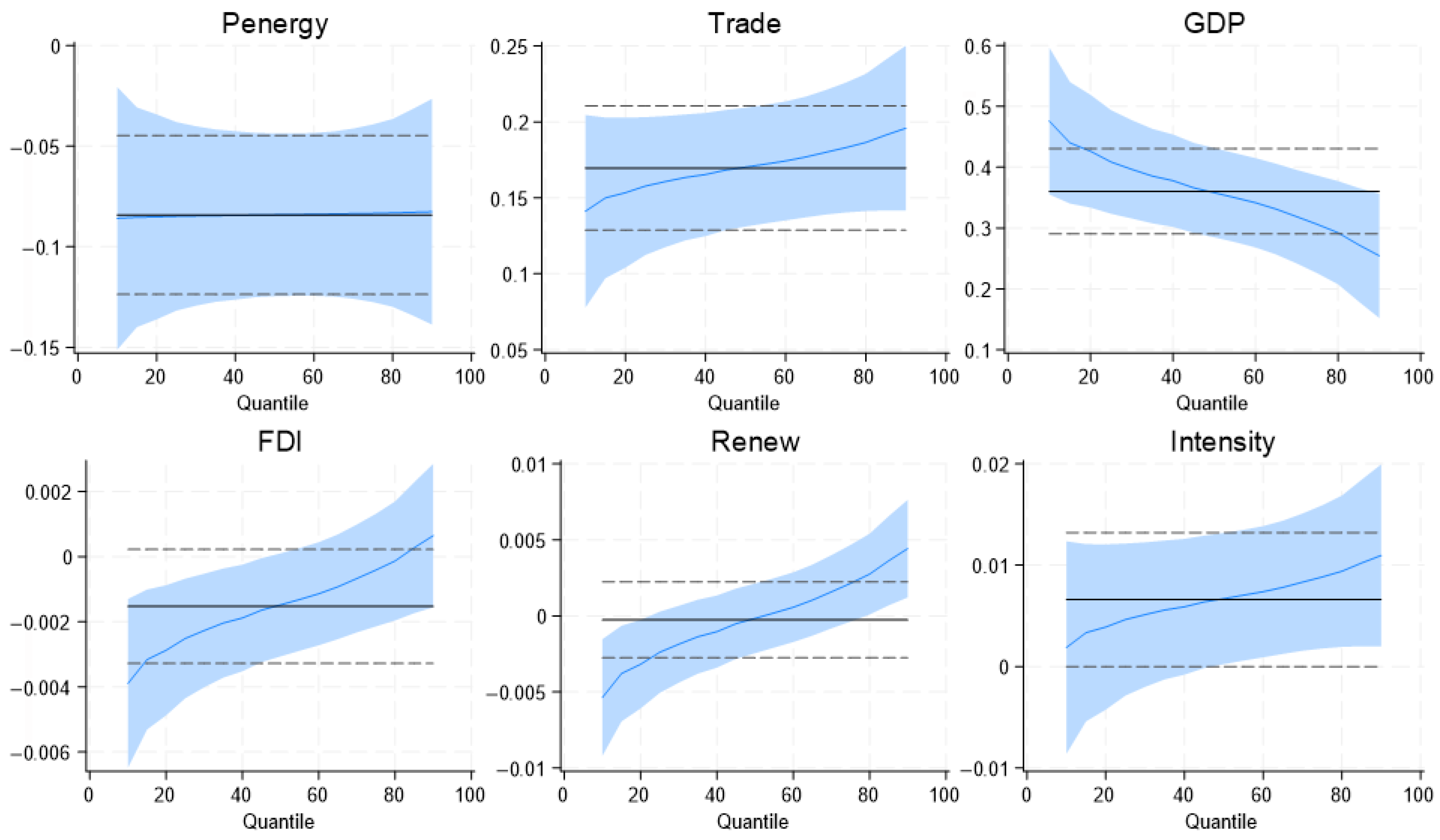
The results of MMQR are also displayed in
Figure 2. The figure provides a better understanding of the relationship between sustainable industrialization and the variables considered in our study, as it shows the relationship across all quantiles. We observe that the association with energy prices remains detrimental for sustainable industrialization, as indicated by the consistent negative relationship across all quantiles. Unlike other variables in our study, the persistent negative relationship indicates that economies across different levels of sustainable industrialization are equally susceptible to energy prices. We also observe the widening of the confidence interval at lower and higher quantiles for energy prices, indicating lower precision at the tails of the outcome distribution. This finding also highlights the importance of further investigation in the case of the least- and most-industrialized economies. In the case of economic growth, the association remains fairly positive for all the quantiles but follows a downward trajectory. The downward sloping trend in the case of economic growth points out that economic growth is of particular importance for economies at the bottom, as it provides the necessary capital to begin the transition process. With the development of sustainable industrialization, they are less dependent on raw GDP growth. At this stage, they are more dependent on innovation and specialized efficiency. In the case of trade, the impact remains fairly positive across all quantiles, but it gets stronger as we move from lower to higher quantiles. This indicates that higher trade openness has a more favorable impact on sustainable industrialization. Unlike economic growth, the association with trade slopes upwards, which points out that as the economies become highly industrialized, they are better able to harness the benefits of green value from the global markets. We recognize a similar pattern for FDI and renewable energy; however, it is important to note that, in contradiction to the trade openness, the relationship turns from negative to positive with the increase in quantiles.
We also observe heterogeneous impacts of renewable energy consumption, as we observe at lower quantiles, where the impact is negative and significant (τ = 0.25: −0.00240;
p < 0.10), suggesting that in economies with nascent sustainable industrialization, renewable energy adoption may impose transitional costs, hindering progress toward sustainability goals. Conversely, in higher quantiles, the effects become positive, which suggests that advanced industrial environments use renewables as an innovation and efficiency source, thereby promoting sustainability [
88]. This imbalance is consistent with the literature that highlights context-specific advantages of renewables in the transition of the industry [
89]. We observe a threshold effect in the case of renewable energy, which also highlights the initial sunk cost and infrastructure overhauls at lower quantiles. The association turns positive at a later stage of sustainable industrialization when an economy achieves industrial maturity and becomes a driver of sustainable industrialization owing to the established green infrastructure. The findings imply minimal effects at the earlier stages in the event of the non-linear effect of energy intensity on sustainable industrialization. Conversely, at the median and higher quantiles, the association is positive and significant and increases in strength, suggesting that the association of high energy intensity with sustainable industrialization gets stronger in the case of advanced industrial economies. One of the factors to consider is that even though high energy intensity is a catalyst for industrialization, it makes the environment worse, thus requiring efficiency improvement. This is the positive impact of the energy intensity of the higher quantiles, which is explained by the economic development due to industrialization.
Addressing the negative outcomes of energy prices requires a multifaceted approach. The introduction of renewable energy is one of the strongest strategies that can be used to compensate adverse effects brought about by industrialization. According to Nulambeh and Jaiyeoba [
90], industrialization that takes place through the use of renewable energy has the potential to improve environmental sustainability. To supplement this, Onwe et al. [
91] opine that energy efficiency should be incorporated with industrialization in order to mitigate the negative consequences for the environment. However, our study demonstrates the negative implications of energy prices for sustainable industrialization. Nevertheless, the state of affairs is not so simple because the efforts of Bielefeld et al. [
45] show that energy prices can be an incentive for green transition since energy price signals can facilitate a technological change towards decarbonization. Hence, this needs a fine-tuned policy system that will motivate green structural change. In general, the results underline formidable issues for policymakers since they must resolve energy price issues in the industry and, at the same time, promote economic development and trade to foster sustainable industrialization. The goal of sustainable industrialization can be achieved by devising a policy that incorporates the positive effects of energy prices for industry, emphasizes a shift toward cleaner energy sources, prefers investing in green industries and adopts trade policies that encourage green industrialization at home and abroad.
5. Conclusions and Policy Implications
This study explored the relationship between energy prices and sustainable industrialization in 32 OECD countries from 2000 to 2021 by employing a battery of econometric models. We employed advanced panel data methodologies, including Driscoll–Kraay, FGLS and PCSE. Furthermore, we also investigated the non-linear relationship of energy prices with sustainable industrialization by using MMQR, which not only gave robustness to the linear models but also captured the marginal effects on different quantiles of the conditional distribution of sustainable industrialization. Our findings show that higher energy prices have a negative and statistically significant relationship with sustainable industrialization, while GDP and trade openness have a positive and significant association and support sustainable industrialization. The relationship with the energy prices indicates the continuous vulnerability of industrialization to energy prices as higher energy prices can raise production costs, lower their competitiveness, and impede investment in greener and technology-advanced industries. Meanwhile, the positive relation of trade openness highlights the significance of economic integration globally in promoting the adoption of green technologies, sustainable processes, and innovation. In this study, we also investigated the heterogeneous impact of energy prices. The results indicated that at higher quantiles, the strength of the negative association is strengthened as wealthy economies may respond through green energy deployment or enhanced energy efficiency. However, we found that trade openness and economic development are positively associated with sustainable industrialization, and the association is stronger for more globalized and developed economies. This positive relationship with GDP indicates that rich-income economies have a greater opportunity to invest in sustainable industrialization.
Based on our research findings, we hereby propose actionable policy recommendations. Owing to the negative association between energy prices and sustainable industrialization, we recommend that economies with an energy-intensive industrial base should be watchful while raising energy prices. They need to devise a predictable, long-term plan to calibrate energy price increases in such a way that it does not hamper productive capacity before efficiency gains materialize. The negative association of energy prices with sustainable industrialization also warrants a cautious approach during geopolitical tensions due to the increases in prices. The role of energy prices increases manifold during heightened geopolitical disruptions. Therefore, the development of strategic industrial energy reserves to stabilize supply during geopolitical or market disruptions is not only necessary for industrialization but also a prerequisite for sustainable industrialization in the wake of rising geopolitical tensions. We also recommend providing a framework for tiered energy pricing for certified green manufacturers, along with targeted subsidies for the transition from energy-intensive machinery to efficient high-tech machinery. Owing to the volatility in energy markets, sustainable industries are also prone to volatility in the energy market; therefore, price stabilization funds should be established to shield the sustainable industry from fossil fuel volatility. We also propose to accelerate the depreciation schedules for tax purposes on corporate investments in energy-saving industrial technologies. Government funding is suggested for fuel-switching technologies that allow plants to alternate between energy sources based on cost and sustainability. Another actionable recommendation is the promotion of industrial symbiosis, where the waste heat from one factory serves as the energy input for another, thus lowering the total energy bill of the industrial park.
Our results indicate a positive relationship between trade, economic development and sustainable industrialization. These findings suggest that the benefits of economic development and trade should be harnessed and incorporated into green industrial policies in order to move towards sustainable industrialization. Given the positive relationship of trade with sustainable industrialization, we recommend actions to be taken at the import and export phases. In the case of imported green technologies, strategic tariff reductions ought to be given, coupled with the strengthening of international trade agreements to facilitate the transfer of clean technologies. Furthermore, governments need to provide accessible green funding opportunities, especially to expanding manufacturers. Embedding knowledge transfer clauses should be mandatory in new trade deals to localize green manufacturing expertise. In the case of domestic manufacturing, it is also necessary to reduce raw material energy footprints for industrial exports. The industrial sector should be encouraged to employ renewable energy sources for sustainable production of goods for export purposes, thus transforming economic growth into a driver of demand for green industrialization. Trade policies should strategically employ export credit for low-carbon industrial goods, forging international partnerships for sharing technology and innovation. The investments in the manufacturing hubs in OECD economies by the government should be increased, as they result in affordable and renewable energy infrastructure. Energy-efficient industrial upgrades should be subsidized or provided with tax incentives. Preferential procurement should be provided for domestic firms meeting international eco-labels. Our results suggest a negative association with energy prices, while we observe a positive relationship with trade and economic growth. These findings collectively suggest that policymakers should try to decouple the adverse cost effect of energy prices from their potential role as a positive signal for innovation, while leveraging the enabling forces of economic growth and trade openness at the same time. The integration of energy prices into the overall economic environment can transform energy prices from a cost instrument into a strategic asset, thus ensuring that industrialization is both economically resilient and environmentally sustainable. Subsequent studies could investigate the role of energy prices for sustainable industrialization by comparing the effects in developing and developed economies. We observed the strongest association of sustainable industrialization with economic growth, suggesting policymakers should actively use industrial policies to channel GDP growth into sectors that accelerate the transition. Policymakers should pay special attention to the issuance of GDP-linked green bonds to fund large-scale circular infrastructure, and reinvestment mandates should be in place for a percentage of industrial growth in R&D. In the case of developed economies, a strategic wealth fund should be allocated toward domestic sustainable manufacturing.
Our paper has certain limitations that future research may address. First, the analysis was constrained by the availability of the data for recent years. Although the Sustainable Industrialization Index has been recently developed, recent years have not been included due to the unavailability of all the indicators to build the index for certain countries. Future research can include the most recent data upon availability and investigate if the relationship still holds. Second, this study did not explicitly address endogeneity, as a bidirectional relationship is expected between energy prices and sustainable industrialization. Therefore, we suggest that future research could explore instrumental variables to address this bidirectional concern. Third, the energy prices were made up of both household and industrial prices. Future studies based on the industrial energy prices only can provide a deep understanding of the relationship between energy prices and sustainable industrialization. Subsequent studies could investigate the role of energy prices for sustainable industrialization by comparing the effects in developing and developed economies. The roles of other variables, such as energy taxes, subsidies and environmental laws, can also be considered for industrial sustainability. A comparative study of the fossil fuel cost and renewable energy investments can also be carried out to observe whether the impact differs with changes in price across different energy sources.