1. Introduction
Greenhouse gas management constitutes a critical component of an integrated ecological and energy transition strategy. A wide range of human activities and industrial processes contribute significantly to atmospheric pollution, with carbon dioxide (CO
2) representing the dominant share of anthropogenic greenhouse gas emissions [
1]. Among the available mitigation options, Carbon Capture and Storage (CCS) has been widely discussed as a technological approach to capture CO
2 from point sources and prevent its release into the atmosphere [
1,
2]. Beyond permanent geological storage, Carbon Capture, Utilization, and Storage (CCUS) introduces an additional pathway by enabling the conversion of captured CO
2 into value-added products, such as carbon monoxide (CO) and oxygen (O
2), which may serve as intermediate feedstocks for chemical synthesis or alternative fuel production [
2,
3,
4].
The relevance of CCS and CCUS has increased substantially in response to global climate change mitigation efforts and Indonesia’s national commitment to greenhouse gas emission reduction, as articulated in its Nationally Determined Contribution (NDC) [
5]. The energy sector, particularly power generation and upstream oil and gas activities, remains a major contributor to national CO
2 emissions. Accordingly, the deployment of carbon capture technologies is increasingly viewed as a strategic element in Indonesia’s decarbonization agenda, supporting emission reduction while maintaining energy security and system reliability. Indonesia also possesses considerable geological potential for CCS deployment, including depleted oil and gas reservoirs and sedimentary basin formations across regions such as the Java Sea, Kalimantan, and Sumatra [
5,
6,
7]. This potential has been reinforced by recent policy developments, notably Presidential Regulation No. 14 of 2024, which establishes regulatory frameworks covering technical standards, storage licensing, fiscal incentives, and monetization mechanisms for CCS activities [
8]. Several CCS and CCUS initiatives are currently under development, indicating that these technologies have become integral to Indonesia’s long-term low-carbon development strategy [
9].
Within this evolving policy and technological landscape, attention has also been directed toward emerging CO2 conversion approaches that remain at an early stage of development. One such approach is cold plasma technology, a non-thermal plasma system that enables molecular activation of CO2 under relatively low temperature conditions. Cold plasma processes have been discussed in the literature for their ability to generate products such as CO and O2, offering conceptual links to future energy and chemical value chains. However, when evaluated against key performance indicators such as energy efficiency, conversion rate, and technology readiness level, cold plasma systems currently exhibit significant limitations and are not comparable to mature CCS or CCUS technologies.
Despite these constraints, cold plasma has been associated with several conceptual attributes that may be relevant from a long-term research and policy perspective, including operational flexibility, potential compatibility with diverse energy sources, modular reactor configurations, and reduced dependence on critical materials [
10,
11,
12]. Rather than positioning cold plasma as a near-term deployment option, this paper adopts a policy and technology perspective to examine its potential role within Indonesia’s broader CCUS discourse. The objective is to synthesize existing knowledge, identify research gaps, and discuss strategic policy considerations that may inform future investigations into cold plasma-based CO
2 technologies under Indonesian-specific conditions.
The novelty and contribution of this study lie in its contextualized policy-oriented perspective, which repositions cold plasma technology from a deployment-focused narrative to a long-term research and innovation discourse within Indonesia’s CCS/CCUS framework. By integrating the selected scientific literature with national emission characteristics, regulatory developments, and infrastructure considerations, this paper contributes a critical synthesis that highlights research gaps, governance implications, and strategic directions, while explicitly avoiding premature claims regarding technical or economic feasibility.
Recent studies reflect the expanding research attention toward plasma-based CO
2 conversion and carbon management. Examples include plasma-assisted CO
2 desorption from carbonate materials [
13], emerging low-carbon plasma catalysis concepts [
14], plasma-modified carbon materials [
15], numerical investigations of dielectric barrier discharge systems [
16], plasma–sorbent integrated CCU systems [
17], as well as recent developments in glow discharge reactors with hollow electrode configurations for enhanced CO
2 decomposition [
18]. These contributions illustrate the growing scientific interest in electrified plasma pathways, although challenges related to scalability, energy efficiency, and system integration remain significant.
2. Indonesia’s Electricity Infrastructure and Diesel Power Plant Emission Footprint: A Policy and Strategic Perspective
Indonesia’s power plant electricity system plays a central role in supporting national socio-economic development, providing energy services to households, industries, and transportation sectors across a highly dispersed archipelagic geography. Power generation assets in Indonesia are operated by both PLN (the State Electricity Company, Jakarta, Indonesia) and non-PLN independent power producers, reflecting a hybrid governance and investment structure within the national electricity sector.
According to the Electricity Statistics 2023, Indonesia’s installed power generation capacity expanded significantly from 65,573 MW in 2018 to 91,164 MW in 2023 [
19]. This growth was predominantly driven by non-PLN power producers, whose capacity more than doubled during the same period, while PLN’s installed capacity remained relatively stable. From a policy perspective, this trend indicates increasing private sector participation and diversification of generation assets, but it also introduces new challenges for emission governance, monitoring, and decarbonization alignment across heterogeneous power plant types and ownership structures.
Within this evolving electricity landscape, fossil fuel-based power generation remains a dominant contributor to Indonesia’s anthropogenic CO2 emissions, alongside hydrocarbon processing and energy-intensive industrial activities such as petrochemicals, fertilizers, and methanol production. These emission sources are spatially distributed and technologically diverse, complicating the implementation of uniform mitigation strategies and reinforcing the need for context-sensitive policy instruments.
Diesel-based power generation, particularly small to medium-scale diesel generators and diesel power plants (PLTD), continues to play a critical role in Indonesia’s electricity supply, especially in remote, islanded, and 3T (terdepan, terluar, tertinggal) regions. From a policy standpoint, diesel generators persist not because they are environmentally optimal, but because they offer operational flexibility, relatively low upfront investment, and proven reliability in areas with limited grid access. Similar patterns are observed across the Asia-Pacific region, where diesel generators remain widely deployed despite growing environmental concerns [
20]. In addition, in several isolated and islanded regions of Indonesia, access to the national electricity grid (PLN) remains limited, leading to continued reliance on diesel power plants (PLTD) as the main decentralized energy source. This condition is important to consider when discussing realistic emission mitigation pathways in off-grid areas. In this context, plasma technology is not proposed as an immediate replacement for diesel systems, but rather as a potential complementary option that could be gradually integrated in the future.
Globally, the installed base of diesel generator units is estimated to reach tens of millions, although exact figures vary across sources [
21]. While such estimates are subject to uncertainty, they nonetheless highlight the structural reliance on diesel-based generation as a transitional energy solution, rather than a long-term sustainable option. It is worth noting that the characterization of emerging mitigation technologies reflects the existing gap between laboratory-scale research and practical large-scale deployment. Existing studies indicate that small diesel generators, typically below 100 kW and often lacking advanced emission control systems, contribute not only to CO
2 emissions but also to local air pollutants such as NO
x, SO
x, CO, particulate matter (PM), and unburned hydrocarbons (HC) [
22,
23].
From a policy and environmental governance perspective, these emission profiles raise two interrelated concerns. First, diesel-based power generation presents a dual challenge of climate mitigation and local air quality management, particularly in densely populated or environmentally sensitive regions. Second, the continued reliance on diesel systems exposes regulatory gaps related to emission standards, monitoring capabilities, and retrofit feasibility, especially for small and decentralized generation units.
Rather than serving as a detailed techno-economic assessment, the emission characteristics of diesel generators presented in this paper are intended to contextualize the policy relevance of emerging carbon mitigation approaches, including non-conventional technologies such as cold plasma-assisted CCUS. The persistence of diesel generation within Indonesia’s electricity mix underscores the importance of exploring modular, decentralized, and policy-adaptive mitigation options, while simultaneously acknowledging the limitations and uncertainties associated with early stage technologies.
In this context, diesel power plants are not positioned as ideal candidates for immediate technological intervention, but rather as policy-relevant reference points that illustrate the complexity of Indonesia’s emission landscape. As shown in
Table 1, which presents typical exhaust emissions from a diesel power plant [
23]. This perspective supports the broader objective of the paper: to stimulate informed policy dialogue on how emerging carbon mitigation technologies may, in the future, complement existing regulatory frameworks, infrastructure constraints, and national decarbonization strategies.
3. Developments in CCUS Technology
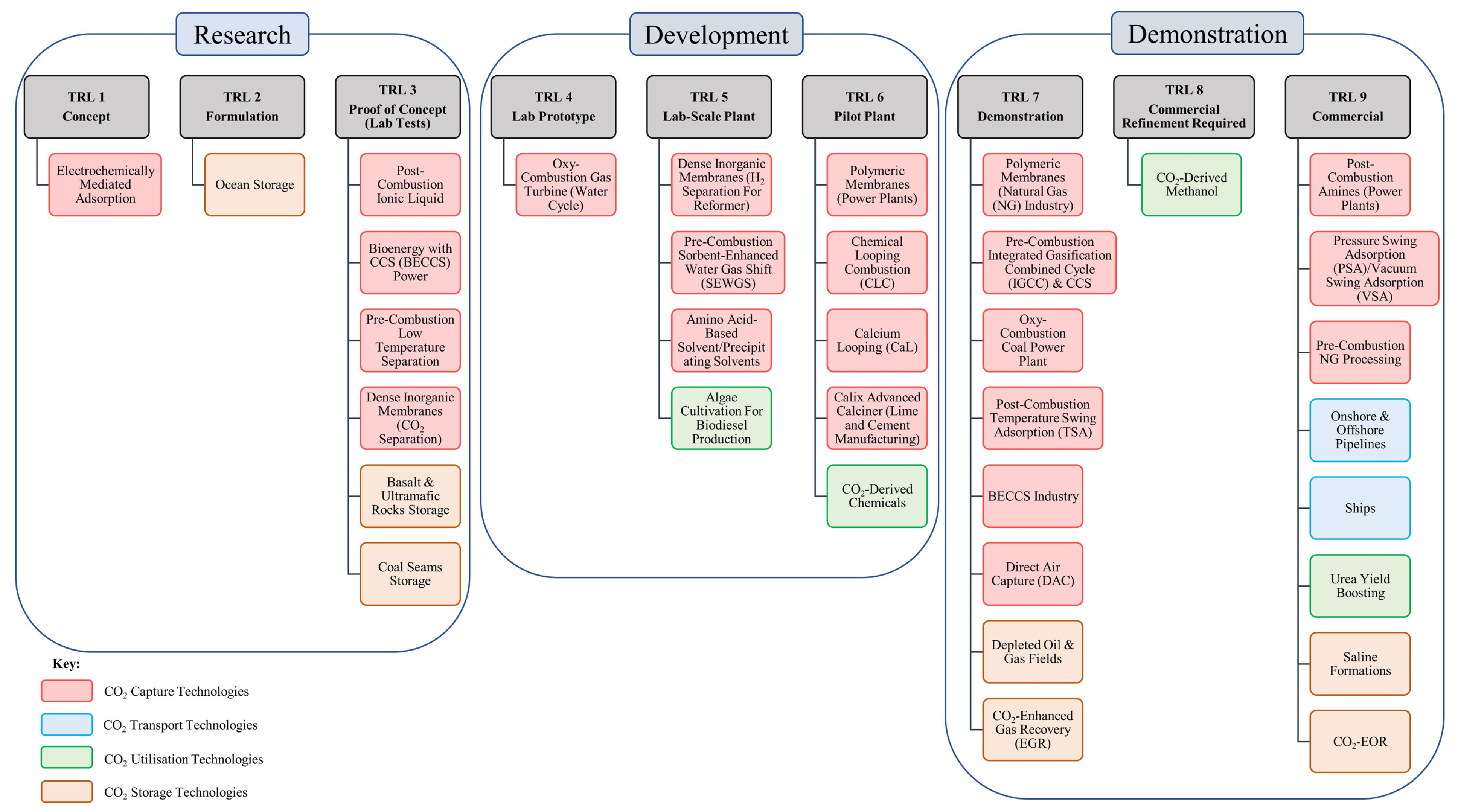
The development of Carbon Capture, Utilization, and Storage (CCUS) technologies is commonly framed using the Technology Readiness Level (TRL) concept, which provides a high-level indication of technological maturity rather than a guarantee of economic or operational viability. As illustrated in
Figure 1, CCUS-related technologies can be broadly grouped into three stages: research (TRL 1–3), development (TRL 4–6), and demonstration to early commercialization (TRL 7–9) [
24].
From a policy perspective, this classification is important not to rank technologies as “ready” or “not ready,” but to inform decision-makers about the types of policy instruments, incentives, and risk-sharing mechanisms required at each stage of technological evolution.
At the research stage, CCUS-related approaches remain largely conceptual or laboratory-based, including exploratory studies on CO2 storage in geological formations and oceans, as well as novel capture media such as ionic liquids. These approaches primarily require research funding, international collaboration, and academic–industry partnerships, rather than immediate regulatory frameworks. At the development stage, technologies such as chemical looping combustion, calcium looping, polymeric membranes, and selected CO2 utilization pathways begin to move toward pilot-scale validation, where demonstration support, regulatory sandboxes, and early-stage risk mitigation policies become increasingly relevant.
In contrast, technologies that have reached the demonstration or early commercial stage, such as amine-based CO2 capture, pressure swing adsorption (PSA), CO2 transportation via pipelines or ships, direct air capture (DAC), storage in saline aquifers, and enhanced oil recovery (EOR), are typically the focus of regulatory frameworks, permitting systems, and investment incentives. From a governance standpoint, it is notable that while CO2 transportation, utilization, and storage have achieved relatively higher levels of maturity, CO2 capture technologies remain the primary bottleneck in CCUS deployment, both globally and nationally. This asymmetry has important implications for policy sequencing and priority setting.
3.1. Global CCUS Technology Benchmarking
Global commitment to climate change mitigation has intensified, with more than 130 countries, including Indonesia, announcing net-zero emission targets, and approximately 30 countries adopting formal carbon neutrality policies. These commitments were consolidated through the Glasgow Climate Pact (2021) under the UNFCCC, which emphasized accelerated mitigation action, strengthened adaptation planning, and enhanced international cooperation [
25].
Within this global policy landscape, CCUS is increasingly recognized not merely as a technical option for fossil fuel mitigation but as a strategic enabler for hard-to-abate sectors and a transitional instrument in pathways toward net-zero emissions. Scenario-based assessments by international organizations suggest that CCUS could play a non-negligible role in long-term decarbonization strategies, while simultaneously highlighting that the absence of CCUS could significantly increase overall mitigation costs [
26,
27].
From a policy and governance standpoint, experiences from North America and Europe demonstrate that regulatory clarity, long-term liability frameworks, and stable financial support mechanisms are decisive factors for CCUS deployment. Kapetaki and Scowcroft (2017), for example, emphasize that clear regulation underpins investor confidence, efficient permitting processes, and public acceptance—elements that are often more decisive than technological performance alone [
28]. These international experiences provide valuable reference points for countries such as Indonesia, where CCUS is still at an early stage of institutionalization.
In considering the broader regional landscape, developments in countries such as China and Japan provide useful contextual reference [
29,
30,
31,
32]. While China has advanced CCUS through pilot and demonstration initiatives and Japan has incorporated CCU into industrial decarbonization planning alongside active plasma research programs, plasma-based CCUS applications in both countries remain largely at research or pilot scale. This observation reinforces that, for Indonesia, plasma-assisted CCUS should be approached as an emerging pathway requiring further research and careful policy alignment rather than near-term deployment.
3.2. Analysis of CCUS Development in Indonesia
Indonesia is often cited as having favorable geological conditions for CCUS, including depleted oil and gas reservoirs and deep coal seams, positioning the country as one of the more promising candidates for CCUS deployment in Southeast Asia. Nevertheless, from a policy and implementation perspective, CCUS development in Indonesia remains nascent and exploratory. Existing initiatives, such as the Gundih pilot project and the planned CCUS development at the Tangguh Gas Field in West Papua, primarily serve as learning platforms rather than indicators of near-term large-scale deployment [
33].
Most CCUS initiatives in Indonesia are still situated at the feasibility or early development stage, reflecting broader structural challenges. These include limited CO2 transportation infrastructure, high capital requirements, and regulatory uncertainties related to long-term liability and cross-sectoral coordination. Moreover, integration of CCUS with power generation infrastructure, whether through retrofit or rebuild options, raises additional policy questions regarding cost allocation, asset lifetime, and alignment with national energy transition goals.
Rather than viewing these challenges solely as technical barriers, they can also be interpreted as governance and policy design issues, highlighting the need for coordinated planning across energy, industrial, and environmental policy domains.
3.3. Supporting Regulations and Policies
In recent years, Indonesia has taken significant steps to establish a legal and institutional foundation for CCS and CCUS development. A key milestone is Minister of Energy and Mineral Resources Regulation (Permen ESDM) No. 2 of 2023, which provides formal definitions, scope, and implementation guidelines for CCS and CCUS within upstream oil and gas activities, including provisions for CO
2 transportation and secure geological storage [
34].
This framework was further expanded through Presidential Regulation (Perpres) No. 14 of 2024, which broadens the applicability of CCS/CCUS beyond oil and gas working areas and introduces mechanisms for carbon storage permits, cooperation schemes, and cross-border CO
2 transportation [
8]. Complementary regulations, such as Ministerial Regulation No. 16 of 2024, further specify carbon storage permit areas and business arrangements [
35]. Collectively, these instruments aim to enhance legal certainty, clarify institutional responsibilities, and integrate safety and environmental considerations into CCUS governance.
Beyond formal regulation, Indonesia is also advancing supporting policy instruments, including the development of carbon pricing mechanisms and the revision of national energy planning documents such as the National Energy Policy (KEN) and the National Energy General Plan (RUEN) [
36,
37]. These policy processes signal an intention to align CCUS development with broader climate mitigation and energy transition strategies. At the same time, inputs from research institutions and civil society organizations, such as IESR, underscore the importance of derivative regulations, streamlined permitting, and the integration of social and environmental safeguards to ensure that CCUS policies are both implementable and publicly acceptable [
38]. While several countries have initiated research and development programs on plasma technologies for CCUS, publicly documented international joint projects involving Indonesia remain limited. This reflects the early-stage positioning of plasma-based CCUS within the national research and policy landscape.
4. Plasma Technology: An Emerging Option in Carbon Policy and Technology Discourse
In addition to conventional carbon capture and utilization pathways, a number of non-conventional and emerging CO2 conversion approaches have been explored in recent years. Among these, plasma-based technologies have begun to appear in academic and policy-oriented discussions as a potential long-term option for carbon management, particularly in contexts where conventional CCUS deployment faces technical, spatial, or infrastructural constraints.
From a policy and strategic perspective, plasma technology should not be viewed as a mature or near-commercial solution, but rather as an early-stage technological concept whose relevance lies in its distinctive operating principles and potential compatibility with decentralized or modular systems. Plasma technology remains largely confined to laboratory-scale and pilot-scale research, and its current development trajectory reflects exploratory research rather than deployment readiness.
Plasma is commonly described as the fourth state of matter, consisting of ionized gas composed of electrons, ions, and neutral species [
10]. One of its defining characteristics is the ability to generate highly energetic electrons while maintaining relatively low bulk gas temperatures, particularly in non-thermal (cold) plasma systems. This non-equilibrium condition enables chemical activation pathways that differ fundamentally from those in conventional thermochemical processes. From a governance standpoint, these unique characteristics are relevant not because they guarantee superior performance, but because they open alternative conceptual routes for CO
2 activation that may complement, rather than replace, established CCUS technologies in the long term.
In the context of this paper, plasma technology is discussed not to advocate immediate adoption, but to situate it within the broader policy conversation on future carbon mitigation options, especially for applications where centralized, large-scale CCUS infrastructure may be difficult to implement.
4.1. Cold Plasma Technologies in Context: A Comparative Policy Perspective
From an industrial and economic policy viewpoint, any CO2 conversion technology, regardless of its underlying mechanism, must ultimately address three overarching considerations: conversion effectiveness, energy demand, and scalability. Plasma-based approaches are no exception. However, at the current stage of development, most plasma technologies remain far from satisfying these criteria simultaneously, underscoring their status as research-oriented rather than deployment-ready options.
A variety of plasma systems have been investigated in the context of CO
2 conversion, including dielectric barrier discharge (DBD), microwave (MW) plasma, gliding arc (GA) plasma, atmospheric pressure glow discharge (APGD), nanosecond pulsed discharges, and corona or spark discharges [
10,
12]. Within the academic literature, DBD, MW, and GA plasmas are most frequently discussed, largely due to their relative experimental accessibility and conceptual diversity.
From a policy and strategic lens, the distinction between cold (non-thermal) plasma and warm plasma systems is particularly relevant. DBD systems are typically categorized as cold plasmas, characterized by near ambient gas temperatures and highly energetic electrons driven by strong electric fields. In contrast, MW and GA plasmas operate at significantly higher gas temperatures, often exceeding 1000 K, and exhibit characteristics that overlap with thermal processing routes. These differences have implications not only for reactor design and power supply requirements but also for infrastructure compatibility, operational complexity, and regulatory oversight.
Rather than ranking plasma technologies based on technical superiority, this paper treats these plasma categories as conceptually distinct pathways with different policy implications. Cold plasma systems, such as DBD, are often discussed in relation to modularity and atmospheric pressure operation, while warm plasma systems raise questions related to energy intensity, system complexity, and capital investment. At present, none of these approaches can be considered mature enough to support firm conclusions regarding large-scale implementation or economic viability.
Consequently, plasma-based CO2 conversion should be interpreted as a long-term exploratory option within the broader CCUS landscape. Its relevance lies in informing future research agendas, regulatory foresight, and technology monitoring frameworks, rather than in serving as an immediate solution for national emission reduction targets.
4.1.1. Dielectric Barrier Discharge (DBD): Policy-Relevant Characteristics and Strategic Considerations
Discharge Dielectric Barrier Discharge (DBD), often referred to as silent discharge, is one of the most extensively studied non-thermal plasma configurations and has been well documented since the seminal work of Kogelschatz [
39]. From a historical and industrial perspective, DBD has achieved commercial relevance in specific applications such as ozone generation, which explains its frequent appearance in the broader plasma literature. Its emergence in CO
2 conversion research, however, should be understood as part of an exploratory extension of existing plasma knowledge, rather than as evidence of technological readiness for large-scale carbon mitigation.
In CO
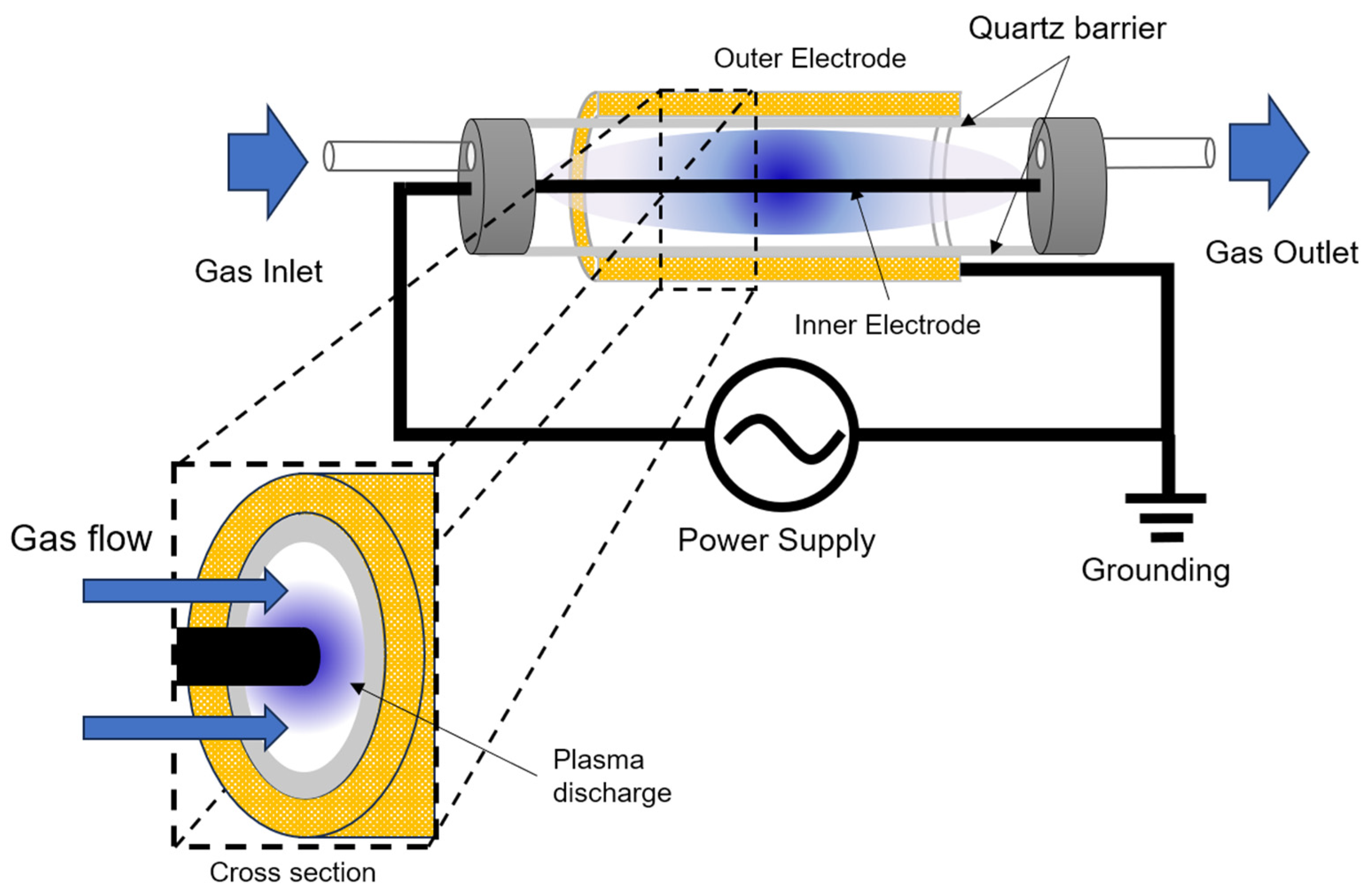
2-related studies, DBD plasma reactors are commonly designed in tubular configurations operating at atmospheric pressure, where a dielectric material, typically quartz, acts as a barrier between electrodes, as illustrated in
Figure 2. This configuration enables plasma generation without arc formation, resulting in a non-thermal plasma regime characterized by energetic electrons and relatively low bulk gas temperatures [
12]. From a policy and governance standpoint, these operational features are relevant not because they guarantee superior performance, but because they shape system complexity, safety considerations, and potential regulatory treatment when compared with high-temperature or high-pressure alternatives. Additionally, recent studies, such as those by Marcantonio et al. (2017), highlight the potential of non-thermal plasma technologies like DBD for CO
2 conversion, though these technologies still face challenges related to energy efficiency and scalability [
40].
The DBD plasma systems offer several advantages, including relatively simple reactor design, operation under atmospheric pressure, and the generation of energetic electrons and reactive species capable of activating stable CO
2 molecules [
41]. In addition, recent studies have shown that the performance of DBD reactors strongly depends on reactor design parameters such as electrode configuration, dielectric materials, discharge power, and gas flow conditions. The integration of plasma with catalytic materials in DBD systems has also demonstrated improved CO
2 conversion efficiency and enhanced product selectivity for the production of value-added chemicals [
42].
From a policy-oriented perspective, DBD systems are frequently characterized in the literature as structurally straightforward and adaptable. In policy-oriented discussions, this perceived simplicity is often associated with notions of modularity, atmospheric pressure operation, and potential compatibility with decentralized systems. However, such attributes should be interpreted cautiously. While laboratory-scale DBD reactors can be readily assembled and modified, scaling these systems to industrially meaningful throughputs introduces engineering, energy, and cost challenges that remain largely unresolved at present.
One recurring theme in DBD-related research is its compatibility with plasma catalyst configurations, particularly in packed bed arrangements where catalyst-coated particles are placed within the discharge zone [
10,
12]. From a strategic perspective, this feature has attracted interest because it aligns with broader policy narratives on process intensification and selective conversion. At the same time, the reliance on catalysts introduces additional considerations related to material availability, degradation, system maintenance, and regulatory oversight, especially in contexts where operational conditions differ substantially from controlled laboratory environments.
Importantly, the current body of evidence indicates that DBD-based CO2 conversion systems face persistent limitations in energy efficiency, which remains well below levels typically associated with industrial competitiveness. While relatively high conversion rates have been reported under certain experimental conditions, these outcomes are accompanied by high specific energy consumption. From a policy perspective, this trade-off underscores a key governance challenge: technologies that are attractive in terms of conceptual simplicity or modularity may still impose substantial energy and cost penalties, limiting their near-term relevance for emission reduction targets.
Recent conceptual developments have also explored the integration of CO
2 capture and conversion within DBD-based systems. One example is the patented approach by Gallucci and Li (US 2023/0219031 A1), which proposes the use of DBD plasma to simultaneously desorb CO
2 from sorbent materials and activate it for subsequent conversion [
43]. While such concepts are noteworthy from an innovation and intellectual property standpoint, they remain early-stage propositions. At present, there is insufficient empirical evidence regarding their energy balance, sorbent durability, system lifetime, or overall environmental performance. Consequently, their relevance lies primarily in informing future research directions and policy foresight, rather than supporting immediate deployment decisions.
In summary, DBD plasma should be viewed as a policy-relevant research platform rather than a deployment-ready CCUS solution. Its significance within the CCUS discourse stems from its conceptual distinctiveness and flexibility, which may be valuable in shaping long-term technology monitoring, regulatory anticipation, and research prioritization. However, given its current limitations, particularly with respect to energy efficiency and scale, DBD-based CO2 conversion remains firmly situated within the domain of exploratory and pre-commercial innovation, requiring cautious interpretation in policy and strategic planning contexts.
4.1.2. Gliding Arc Discharge
Gliding Arc Discharge (GAD) is a plasma configuration that occupies an intermediate position between non-thermal and thermal plasma regimes and typically operates at atmospheric pressure. Originally patented by Lesueur et al. in 1988 [
44], GAD has since been investigated across various applications due to its distinctive discharge dynamics and ability to sustain plasma under continuous gas flow. From a policy and strategic perspective, GAD is best understood as an evolving technological concept whose relevance lies in its hybrid operational characteristics rather than in its immediate applicability for carbon mitigation.
Conventional GAD systems employ electrode arrangements in which an electrical arc is initiated at a narrow gap and subsequently elongated and displaced by the flowing gas stream. This repetitive formation and extinction of the arc produce a highly dynamic plasma environment. In governance-oriented discussions, such operational behavior is significant because it introduces greater system complexity, higher thermal loads, and more demanding control requirements compared to cold plasma systems. These attributes have implications for safety regulation, system monitoring, and maintenance standards should such technologies ever be considered beyond laboratory environments.
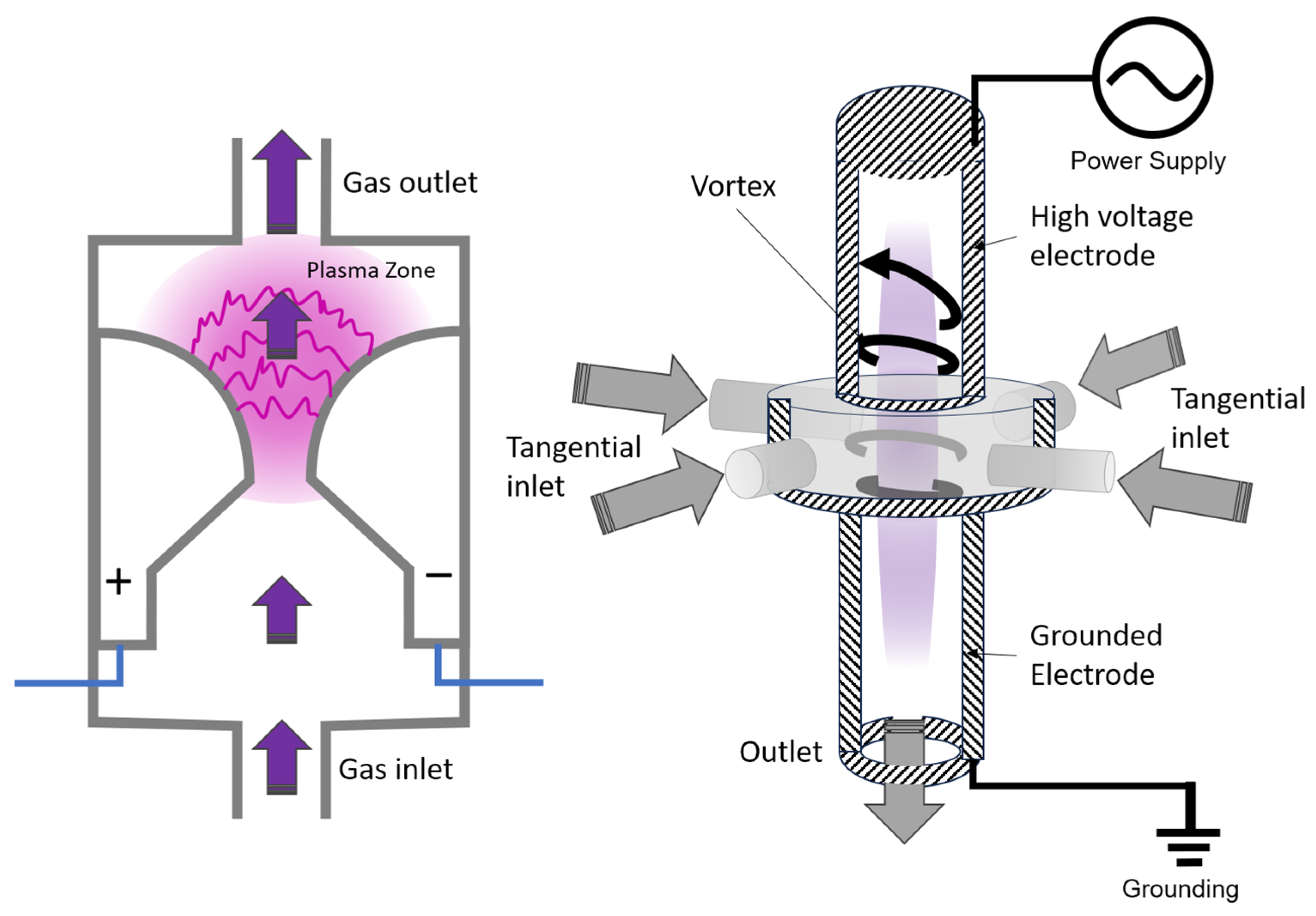
More recent GAD configurations, including designs based on hollow cylindrical electrodes and vortex-induced gas flow, reflect ongoing efforts within the research community to address fundamental physical limitations inherent to gliding arc systems, as illustrated in
Figure 3. These configurations are often cited in the literature as conceptual advances aimed at increasing plasma gas interaction [
10,
45]. From a policy lens, however, such developments underscore the experimental and iterative nature of GAD research, rather than signaling readiness for industrial-scale deployment.
Complementing these configuration developments, several experimental studies have examined GAD plasma systems for CO
2 conversion. Recent investigations have explored different discharge configurations and reactor geometries to improve plasma performance. For example, modifications of GAD systems, including magnetic stabilization and optimized gas channel geometries, have been reported to enhance CO
2 conversion rates and energy efficiency [
46]. In addition, magnetic field–assisted arc stabilization can increase plasma–gas interaction and extend the residence time of CO
2 molecules within the active plasma region, thereby improving overall conversion performance [
47].
GAD-based CO
2 conversion studies typically operate at atmospheric pressure with relatively high-power input and substantial gas flow rates, resulting in plasma conditions that are classified as warm plasma. This regime is associated with elevated gas temperatures and short gas residence times within the active plasma zone [
48]. While these characteristics differentiate GAD from cold plasma systems, they also raise policy-relevant considerations related to energy demand, thermal management, and material durability, all of which are critical factors in assessing long-term sustainability and regulatory acceptability.
A recurring limitation identified in the literature is the trade-off between maintaining arc stability and achieving extended gas plasma interaction. The requirement for high gas flow rates to sustain the gliding motion inherently constrains residence time, which in turn influences conversion outcomes. Although various three-dimensional and vortex-based GAD concepts, such as rotating gliding arcs and gliding arc plasmatron (GAP) systems, have been proposed to address this issue, these approaches remain largely experimental and system-specific. Their broader implications for scalability, cost, and operational robustness have yet to be demonstrated in real-world settings.
From a policy and strategic standpoint, GAD should therefore be viewed not as a candidate technology for near-term CCUS implementation, but as a reference point within the spectrum of plasma-based approaches. Its hybrid plasma characteristics highlight the inherent tensions between energy intensity, system complexity, and operational control that policymakers must consider when evaluating emerging carbon mitigation options. As such, GAD contributes to the CCUS discourse primarily by informing technology foresight, regulatory anticipation, and research prioritization, rather than by offering an immediately deployable solution.
4.1.3. Microwave Discharge: Strategic Characteristics and Policy Considerations
Microwave (MW) discharge represents a plasma generation approach that differs fundamentally from electrode-based systems, as it relies on electromagnetic radiation typically in the frequency range of several hundred megahertz to a few gigahertz to transfer energy directly into the gas phase. From a policy and governance perspective, this electrode-free configuration is noteworthy not because it ensures superior performance, but because it introduces distinct operational, safety, and infrastructure implications compared to conventional plasma systems.
Recent studies have further highlighted the potential of microwave plasma systems for CO
2 conversion. Microwave plasma systems have received considerable attention due to their ability to generate highly ionized non-equilibrium plasma environments that effectively activate stable molecules such as CO
2. The experimental studies demonstrate that microwave plasma torches can achieve relatively high energy efficiencies and stable operation, highlighting their potential for industrial CO
2 utilization processes [
49]. In addition, microwave plasma reactors provide strong electron excitation and high ionization degrees, enabling efficient dissociation of CO
2 into CO and O
2 under controlled operating conditions. Several review studies also emphasize that microwave plasma setups offer promising scalability and flexibility across a wide range of operating pressures and power inputs, making them attractive for future plasma-based CO
2 conversion technologies [
50]. Furthermore, various MW plasma configurations have been explored in research contexts, including cavity-induced plasmas, atmospheric plasma torches, electron cyclotron resonance systems, and surface-wave discharges [
51,
52,
53]. Among these, surface-wave discharge has received particular attention in CO
2-related studies due to its ability to sustain plasma over extended regions. However, this prominence in the literature should be interpreted as a reflection of research tractability rather than technological maturity.
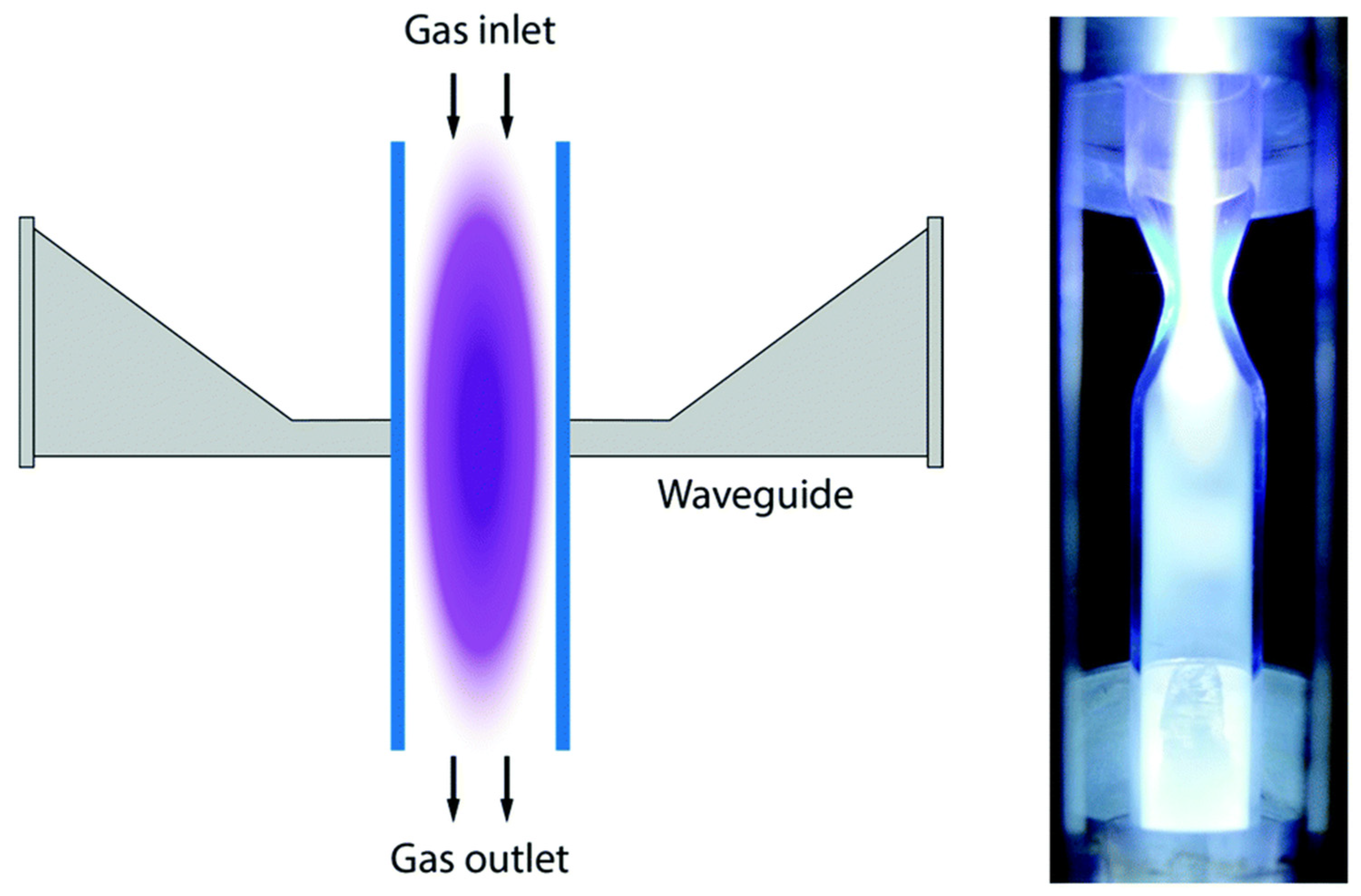
In surface-wave MW systems, plasma is typically generated within a dielectric tube often quartz that is transparent to microwave radiation. Microwave energy is coupled into the system through waveguides or cavities, enabling plasma formation along the gas flow path as illustrated in
Figure 4 [
24]. From a policy lens, such configurations highlight several governance-relevant issues, including electromagnetic compatibility, shielding requirements, and operational safety standards, which may become significant considerations if these systems were ever evaluated beyond experimental environments.
MW plasma systems can operate across a range of pressures, from low-pressure regimes to atmospheric conditions. However, as pressure increases, the plasma behavior tends to shift toward thermal equilibrium, resulting in higher gas temperatures. This operational flexibility, while scientifically interesting, also complicates regulatory assessment, as different operating regimes may fall under distinct safety, environmental, and energy efficiency classifications. Consequently, MW plasma technologies currently reside within the domain of advanced research and technology monitoring, rather than policy-driven deployment planning.
From a strategic standpoint, MW discharge contributes to the CCUS discourse by illustrating the trade-offs between system complexity, energy intensity, and controllability that characterize many high-energy plasma-based approaches. Its relevance lies primarily in informing long-term research agendas and regulatory foresight, rather than in supporting near-term emission reduction measures.
4.1.4. Radio Frequency Discharge: Lessons from Long-Term Research Trajectories
Research Radio frequency (RF) discharge represents one of the earliest plasma-based approaches investigated for CO
2 activation, with foundational studies dating back to the 1970s and 1980s [
51]. Historically, RF plasma research played a significant role in advancing the scientific understanding of non-equilibrium energy transfer mechanisms, particularly those involving molecular vibrational excitation. From a policy perspective, this long research history provides valuable insights into how technological promise may evolve over time without necessarily translating into scalable industrial solutions.
RF discharge systems typically operate at standardized frequencies (commonly around 13.56 MHz), which has facilitated experimental reproducibility and cross-study comparison. Early studies reported highly optimistic outcomes under specific laboratory conditions, particularly at low pressures and controlled flow regimes. However, subsequent research has demonstrated that such results are strongly condition-dependent, with performance characteristics deteriorating as systems move closer to atmospheric pressure or industrially relevant operating conditions [
54,
55].
This sensitivity to operating pressure represents a central governance challenge for RF-based approaches. Technologies that rely on low-pressure environments introduce additional infrastructure requirements, including vacuum systems, sealing mechanisms, and enhanced process control. From a policy and regulatory standpoint, these requirements translate into higher capital intensity, increased operational complexity, and more stringent safety oversight, all of which affect the feasibility of large-scale deployment.
Contemporary RF plasma research continues to focus on optimizing operating conditions and exploring parameter spaces that may reconcile energy efficiency with system stability [
56]. However, such efforts remain firmly situated within the research and development domain. As with other advanced plasma technologies, RF discharge should therefore be viewed as a knowledge-generating platform, contributing to the broader understanding of plasma molecule interactions, rather than as a ready-to-implement CCUS solution.
4.2. CO2 Conversion, Energy Efficiency, and Energy Consumption: Policy-Relevant Trade-Offs
The relationship between CO
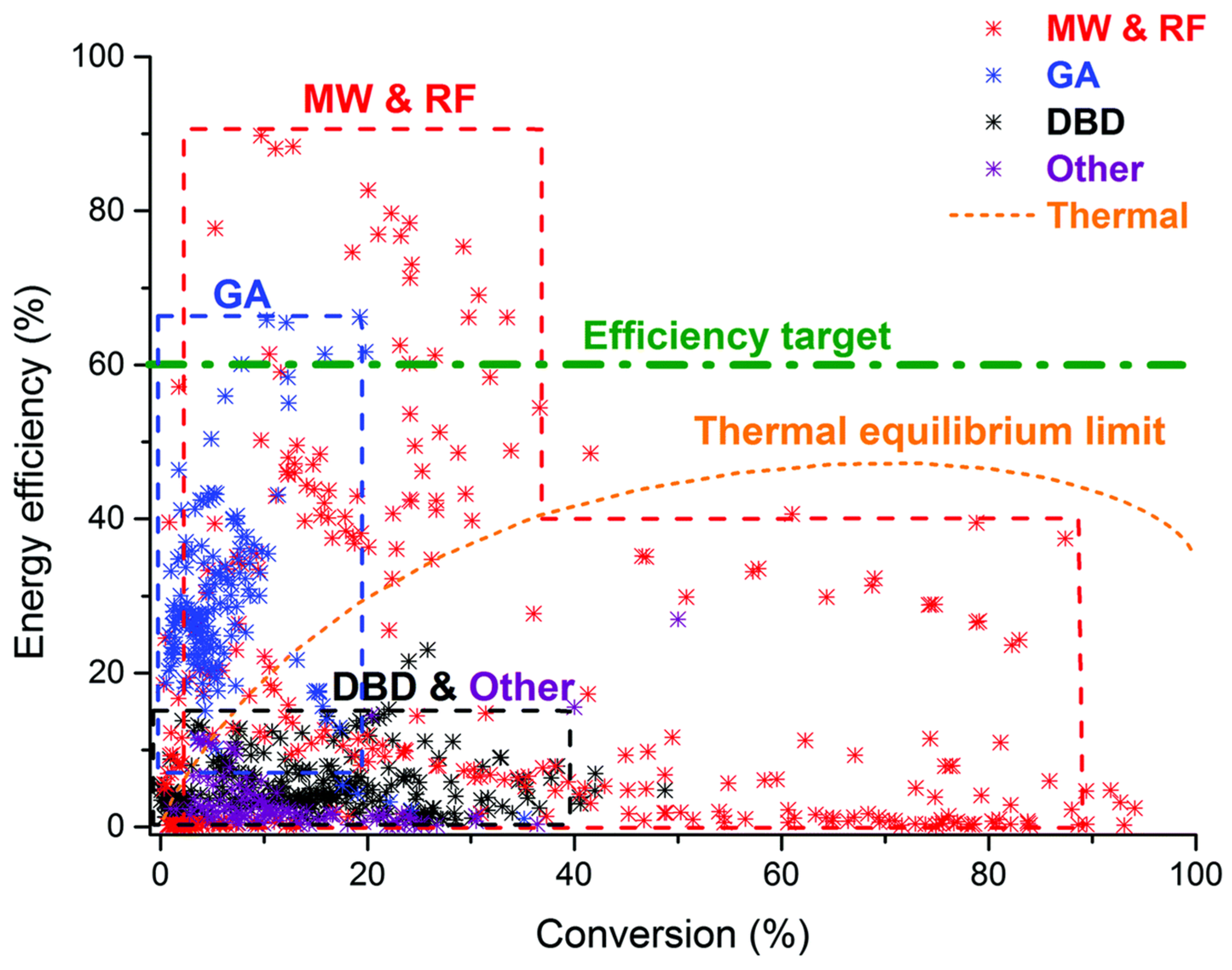
2 conversion, energy efficiency, and energy consumption is frequently used in the plasma literature to illustrate the fundamental trade-offs inherent in plasma-based conversion processes. As summarized in
Figure 5, which synthesizes data from multiple plasma reactor configurations reported by Snoeckx and Bogaerts (2017) [
10], no single plasma technology simultaneously achieves high conversion, high energy efficiency, and operational conditions compatible with large-scale industrial deployment.
From a methodological standpoint, energy efficiency in plasma-based CO2 conversion is commonly expressed as a function of conversion rate, reaction enthalpy, and specific energy input (SEI), defined as the ratio of plasma power to gas flow rate. While such metrics are useful for scientific comparison, their interpretation in a policy and strategic context requires caution. High energy efficiency values reported in the literature are often obtained under highly controlled laboratory conditions, including low-pressure operation, limited gas throughput, and optimized reactor geometries that are not readily transferable to real-world applications.
Indeed, microwave (MW) and radio-frequency (RF) plasma systems are frequently cited as achieving comparatively high energy efficiencies at modest conversion levels. However, these outcomes are typically associated with low-pressure regimes and system configurations that entail additional infrastructure requirements, such as vacuum systems and complex control mechanisms. From a policy perspective, these dependencies translate into higher capital costs, increased operational complexity, and more stringent safety and regulatory considerations, all of which constrain near-term applicability.
At or near atmospheric pressure, plasma systems generally exhibit a different balance between conversion and energy efficiency. Reported results indicate that higher conversion levels can be achieved, but often at the expense of significantly increased energy consumption. This pattern reflects a broader structural issue in plasma-based CO2 conversion: improvements in conversion are frequently accompanied by disproportionate increases in energy demand, raising questions about net climate benefits when electricity supply remains carbon-intensive.
Gliding arc (GA) plasma systems operating at atmospheric pressure illustrate this trade-off clearly. While some configurations demonstrate moderate energy efficiency under specific conditions, conversion rates remain constrained by short residence times and the need to sustain arc stability. Conversely, dielectric barrier discharge (DBD) systems, despite achieving relatively higher conversion rates in some studies, exhibit persistently low energy efficiencies, which limit their relevance in policy discussions focused on energy system optimization and emissions reduction.
From a policy and governance standpoint, these findings suggest that plasma-based CO2 conversion technologies should not be evaluated solely on peak performance metrics, but rather on their systemic implications within broader energy and climate strategies. Energy efficiency figures reported in isolation do not capture upstream electricity emissions, infrastructure requirements, or opportunity costs associated with alternative mitigation pathways.
Accordingly, within the context of this paper, quantitative performance data are not used to identify a “best” plasma technology. Instead, they serve to highlight structural constraints and trade-offs that policymakers must consider when assessing emerging carbon mitigation options. These constraints reinforce the interpretation of plasma-based CO2 conversion as a long-term exploratory pathway, whose potential relevance depends not only on technological progress, but also on parallel developments in clean electricity supply, regulatory frameworks, and integrated energy climate planning.
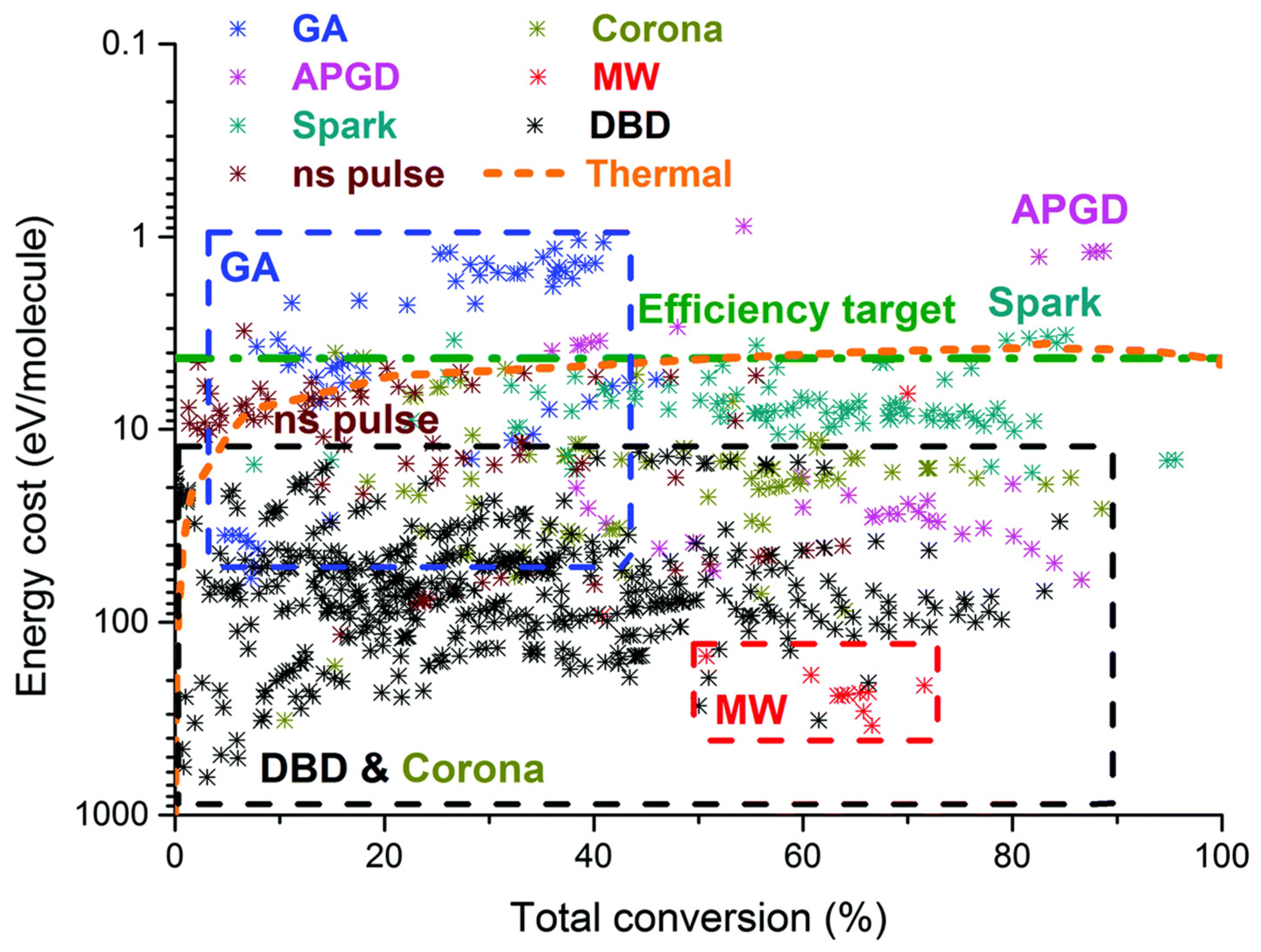
In contrast to
Figure 5,
Figure 6 presents energy consumption rather than energy efficiency, with lower energy consumption positioned at the upper part of the axis to facilitate conceptual comparison across studies. From a policy and strategic perspective, this representation is particularly relevant because energy efficiency metrics cannot always be derived consistently from the literature, as many experimental studies do not comprehensively report product distributions. In such cases, energy consumption expressed as the ratio between specific energy input (SEI) and CO
2 conversion serves as a proxy indicator that enables high-level comparison, albeit with inherent limitations.
It is important to emphasize that reference thresholds shown in
Figure 6, including the indicative benchmark corresponding to an efficiency equivalent value of 60%, should not be interpreted as performance targets or deployment criteria. Rather, these reference lines reflect theoretical or process-optimized conditions, such as those associated with syngas formation, which are useful for framing long-term research ambitions and technology monitoring.
Reported instances of low energy consumption in certain plasma configurations, including gliding arc systems under specific experimental conditions, illustrate the range of outcomes observed in controlled research environments. However, from a policy standpoint, such results should be interpreted with caution, as they do not account for system-scale factors, such as electricity sourcing, infrastructure requirements, operational stability, or scalability. Consequently, these data are employed in this paper not to identify superior technologies, but to highlight the variability and uncertainty that characterize plasma-based CO2 conversion pathways, reinforcing their current positioning as exploratory options within broader climate and energy policy discussions.
From a policy and strategic standpoint, current evidence suggests that microwave (MW) plasma systems remain relatively underexplored, with available studies indicating substantial energy demand under the investigated conditions. This observation highlights not a technological shortcoming, but rather the early-stage nature of MW plasma research, underscoring the need for continued investigation before any policy-relevant conclusions regarding CO2 separation or conversion can be drawn.
Across the broader plasma literature, dielectric barrier discharge (DBD) reactors, often including packed-bed configurations, are the most extensively studied. Their prevalence reflects experimental accessibility and flexibility rather than industrial competitiveness. The energy-intensive character of many DBD-based systems, as reported in existing studies, suggests that their relevance lies primarily in research and concept development, rather than near-term deployment considerations. Importantly, commonly cited efficiency benchmarks are typically derived from synthesis gas formation pathways. From a policy perspective, this framing warrants careful interpretation, as alternative product pathways such as the selective formation of higher-value chemicals may alter the underlying performance criteria, economic assumptions, and regulatory considerations.
The frequent discussion of catalyst integration in DBD systems further illustrates this point. While catalyst-assisted plasma processes are often highlighted in the literature, their significance for policy analysis lies not in implied technological promise but in their potential to reshape evaluation metrics and research priorities, contingent on advances in catalyst design, durability, and selectivity. At present, such developments remain speculative and are best regarded as long-term research directions.
Other plasma configurations, including corona, nanosecond pulsed, spark discharges, and atmospheric pressure glow discharge (APGD), have also been reported in the literature. However, data availability remains limited and highly context-specific. From a governance perspective, isolated performance figures reported under laboratory conditions should be interpreted as indicative research outcomes rather than validation of practical feasibility. Accordingly, the comparative overview presented in
Table 2 is intended to provide a descriptive mapping of reported research ranges, rather than a basis for technology ranking or selection. In this case, cold plasma primarily refers to non-thermal systems such as dielectric barrier discharge (DBD). Gliding arc (GA), in contrast, is generally categorized as a warm plasma due to its elevated gas temperature, while microwave and radio-frequency plasmas may operate under varying thermal regimes depending on operating conditions.
5. Policy Outlook and Strategic Directions for Cold Plasma Technology in CCS/CCUS
Carbon Capture and Storage (CCS) and Carbon Capture, Utilization, and Storage (CCUS) have gained increasing attention within global climate policy discussions, particularly in relation to long-term net-zero emission (NZE) commitments. In the Indonesian context, CCUS is often framed as a complementary mitigation option for sectors where rapid decarbonization through electrification or fuel switching remains challenging, including power generation and selected industrial processes. Beyond emission reduction, CCUS is also discussed in relation to broader policy objectives such as carbon utilization, industrial competitiveness, and the development of a circular carbon economy.
Within this evolving policy landscape, cold plasma technology should be interpreted as an emerging and exploratory concept rather than a deployable mitigation solution. Its relevance lies primarily in its potential alignment with specific structural characteristics of Indonesia’s energy system, including the coexistence of centralized power plants and highly distributed generation assets, as well as geographical constraints that complicate large-scale CO2 transport and storage infrastructure. From a policy perspective, these characteristics justify continued observation and research into modular and decentralized mitigation approaches, without presupposing their near-term feasibility.
Cold plasma concepts have been discussed in the literature in relation to potential integration at different points in the emission management chain, including post-combustion treatment and on-site conversion. In policy terms, such discussions highlight alternative system architectures that differ from conventional CCUS models centered on centralized capture, pipeline transport, and geological storage. However, these concepts remain largely conceptual and face substantial challenges related to energy demand, throughput capacity, system durability, and integration with existing plant operations. As such, their relevance is primarily exploratory and conditional, rather than prescriptive.
From a governance and planning standpoint, several cross-cutting challenges define the current boundary of cold plasma applicability. These include the need to reconcile reactor energy consumption with emission reduction objectives, uncertainties related to scalability under continuous flue gas conditions, and the absence of robust evidence regarding long-term operational reliability. Additionally, discussions on plasma-assisted CO2 conversion often assume the possibility of producing higher value chemical products, yet such assumptions remain contingent on advances in plasma catalyst systems, downstream separation, and market integration. Until these aspects are addressed, product valorization pathways should be treated as research hypotheses rather than policy-ready options.
Within the broader family of cold plasma configurations, dielectric barrier discharge (DBD) systems are frequently referenced in academic studies due to their experimental accessibility and atmospheric pressure operation. From a policy and perspective-oriented viewpoint, this prevalence should not be interpreted as an indication of technological suitability or preference. Instead, DBD serves as a representative research platform through which issues of integration, selectivity, and modularity can be examined. While its relatively simple reactor configuration facilitates laboratory experimentation and conceptual system integration, persistent limitations in energy efficiency and scale underscore the need for cautious interpretation in policy discussions.
Comparisons between cold plasma approaches and conventional CCUS pathways further reinforce this need for restraint. Conventional CCUS technologies benefit from higher technological maturity, clearer regulatory frameworks, and established project experience, albeit with significant infrastructure and cost requirements. In contrast, cold plasma-based approaches remain at an early stage of development and should be viewed as complementary research trajectories, potentially relevant in niche or future scenarios rather than as substitutes for established CCUS strategies.
Accordingly, the policy relevance of cold plasma technology at present lies in informing long-term research agendas, technology monitoring mechanisms, and regulatory foresight, rather than guiding deployment decisions. Strategic directions for future work include systematic evaluation of energy and material flows, investigation of integration constraints within existing power generation assets, and the development of standardized assessment frameworks that link plasma research outcomes to policy relevant indicators. Such efforts would enable more informed judgment on whether, and under what conditions, cold plasma technologies could eventually contribute to Indonesia’s broader climate and energy transition objectives.
6. Conclusions
This study examines the role of cold plasma technology within the broader CCS/CCUS landscape in Indonesia from a policy-oriented perspective. The analysis shows that, despite increasing academic interest, cold plasma-based CO2 conversion technologies remain at an early stage of development and are characterized by significant uncertainties related to energy efficiency, scalability, and system integration. Across the plasma configurations discussed dielectric barrier discharge (DBD), gliding arc (GA), microwave (MW), and radio frequency (RF) no technology currently demonstrates a balanced combination of high conversion performance, low energy consumption, and industrial-scale applicability under realistic operating conditions.
While Indonesia’s energy system presents structural characteristics such as geographically dispersed generation assets and limited CO2 transport infrastructure that motivate interest in alternative and modular mitigation concepts, the present analysis does not support conclusions regarding the technological readiness or deployment suitability of cold plasma for CCS or CCUS applications. Performance metrics reported in the literature are largely derived from laboratory-scale studies under controlled conditions and cannot yet be extrapolated to real-world emission sources without comprehensive system-level evaluation.
Comparisons with conventional CCUS pathways further highlight this gap. Established CCUS technologies benefit from higher technology readiness levels, clearer regulatory frameworks, and accumulated operational experience, whereas cold plasma approaches remain exploratory. Claims regarding capture and conversion schemes, plasma catalyst integration, or decentralized applications should therefore be interpreted as research hypotheses rather than deployment strategies, pending rigorous life cycle assessment, techno-economic analysis, and validation under representative industrial conditions.
Accordingly, the contribution of this study lies in clarifying the current boundary conditions under which cold plasma research may inform long-term CCUS innovation and policy foresight. Future work should prioritize standardized evaluation frameworks, integration of quantitative performance indicators, and explicit consideration of energy system context to enable more robust assessment of whether cold plasma technologies can meaningfully contribute to emission mitigation objectives. In particular, future investigations should examine the interaction between plasma systems and renewable electricity sources, given Indonesia’s growing renewable energy potential, as well as the role of hybrid configurations such as plasma–catalyst and plasma–membrane systems that may help address current performance limitations. At present, cold plasma should be regarded as a long-term research pathway rather than an implementable solution for CCS or CCUS in Indonesia.