Article

Fruit-Vegetable Food Industry Waste as Biocomponents of Liquid Fuels

by
Aneta Sienkiewicz
1,*,
Małgorzata Kowczyk-Sadowy
1,
Paweł Cwalina
1,
Sławomir Obidziński
1,
Małgorzata Krasowska
1,
Alicja Piotrowska-Niczyporuk
2 and
Andrzej Bajguz
2
1
Department of Agri-Food Engineering and Environmental Management, Bialystok University of Technology, Wiejska 45E, 15-351 Bialystok, Poland
2
Department of Plant Biology and Ecology, Faculty of Biology, University of Bialystok, Ciolkowskiego 1J, 15-245 Bialystok, Poland
*
Author to whom correspondence should be addressed.
Energies 2026, 19(7), 1685; https://doi.org/10.3390/en19071685
Submission received: 24 February 2026 / Revised: 16 March 2026 / Accepted: 28 March 2026 / Published: 30 March 2026

Abstract

This study explores the potential of seeds from fruit and vegetable processing waste as feedstocks for biodiesel biocomponent production. Fatty acid methyl esters (FAMEs), obtained through a transesterification reaction, were extracted using ultrasound-assisted extraction and identified by gas chromatography–mass spectrometry (GC–MS) in selected ion monitoring (SIM) mode. A total of 31 to 34 individual FAME compounds were identified across all samples. The fatty acid profiles varied both quantitatively and qualitatively depending on the raw material; however, unsaturated FAMEs predominated over saturated ones in all cases. The highest proportions were observed for γ-linolenic acid (C18:3n6), particularly in apple, melon, lemon, and pumpkin seeds. Substantial contributions of oleic acid (C18:1n9c) were found in apple, quince, cherry, and melon seeds, while linolelaidic acid (C18:2n6t) dominated in melon, pumpkin, quince, and cherry seeds. The highest total FAME contents were recorded for apple, melon, lemon, and pumpkin seeds, while the lowest values were observed in apricot and pepper seeds. Among the materials studied, grape seeds proved to be the most promising feedstock, exhibiting a favorable cetane number and a beneficial fatty acid profile characterized by high monounsaturated fatty acid (MUFA) content, low polyunsaturated fatty acid (PUFA) content, and a moderate fraction of saturated fatty acids (SFAs). Plum and peach seeds also showed significant potential, but their higher PUFA levels may compromise oxidative stability and could require antioxidant supplementation or blending with MUFA-rich feedstocks.

1. Introduction

In the face of escalating challenges associated with the depletion of fossil fuel resources and the urgent need to mitigate greenhouse gas emissions, the transformation of the energy sector toward renewable sources has become a cornerstone of global climate and energy policy. Consequently, the search for renewable, low-emission energy carriers has emerged as one of the most critical areas of contemporary scientific and technological research. Among alternative fuels, biodiesel—defined as fatty acid methyl esters (FAMEs)—represents one of the most promising liquid biofuels capable of partially substituting conventional diesel fuel. Biodiesel offers several advantages, including biodegradability and reduced emissions of sulfur oxides and particulate matter, thereby contributing to the mitigation of greenhouse gas emissions [1,2].
Conventional biodiesel production relies predominantly on first-generation feedstocks (e.g., vegetable oils) and second-generation feedstocks (e.g., waste oils and animal fats). However, large-scale commercialization remains constrained by economic challenges, particularly those associated with feedstock availability and cost [3]. In response, increasing attention has been directed toward the utilization of agri-food industry residues—including waste cooking oils, residual fats, and other organic fractions—as low-cost substrates for liquid biofuel production, in alignment with circular economy principles [4].
Lipids derived from food waste and used cooking oils have demonstrated considerable potential as substrates for biodiesel production. Karmee et al. [5] reported that lipids extracted from food waste could be efficiently transesterified to FAMEs with yields approaching 100% using an alkaline catalyst (KOH), while biocatalytic systems employing the lipase Novozyme 435 achieved conversion efficiencies of approximately 90%. Comparable results have been reported for used cooking oils, where methyl ester contents of approximately 95.3% and overall process yields of about 92% were achieved, confirming the feasibility of large-scale biodiesel production from such waste streams [6]. Although the quality of used frying fats is highly variable, detailed analyses have demonstrated that FAME composition and polymeric degradation products can be effectively characterized, which is essential for evaluating their industrial applicability [7].
Biodiesel research focuses not only on traditional sources, such as used cooking oils, but also on unconventional waste streams like sewage sludge and dairy industry residues. Lipids extracted from sewage sludge generated during dairy wastewater treatment have been successfully recovered using solvent extraction methods and converted into biodiesel, while studies using green solvents for lipid extraction showed high recovery efficiency and effective FAME production, maintaining the biodegradability of the residual sludge [8,9]. Seasonal variations also affect lipid extraction efficiency and biodiesel yield, which is an important aspect in designing large-scale processes [10].
Expanding research to microbial lipid sources, the potential of microorganisms and microalgae cultivated in wastewater treatment systems as biodiesel feedstocks has been demonstrated. Although lipid yields from these sources may be lower than those from conventional waste oils, they still represent a promising alternative [11]. Oleaginous microorganisms, such as Rhodosporidium toruloides, can utilize food waste hydrolysates for lipid accumulation. Chen et al. [12] demonstrated that microbial lipids obtained through this method, after transesterification, comply with BS EN 14214 [13] and ASTM D6751 [14] biodiesel standards, confirming their suitability for biodiesel production. The fatty acid profile analyses of microalgae show the predominance of palmitic acid (C16:0), oleic acid (C18:1), and linoleic acid (C18:2) [15].
In addition to conventional catalytic transesterification, innovative conversion methods such as biocatalysis are being explored, where enzymes or microorganisms catalyze transesterification reactions, which can improve process efficiency and selectivity while reducing the need for traditional catalysts [16].
Specific agri-food waste streams, such as herbal processing residues, have also become an interesting source of lipids for biodiesel production. Studies have shown that the fatty acid profiles of FAMEs from these residues meet established biodiesel quality standards, supporting their role in sustainable biofuel systems [17].
Comprehensive valorization of agri-food residues is essential for assessing their suitability for biofuel conversion processes. Mukherjee and Gupta [18] demonstrated that converting agri-food waste into biodiesel and bioethanol can simultaneously address waste management challenges, enhance energy security, and support the development of a circular economy. Numerous studies further confirm that food waste can serve as a versatile feedstock for the production of biofuels and biochemicals, thereby contributing to environmental protection and resource efficiency [19]. The conversion of these residues into liquid biofuel components aligns with the principles of a circular economy, zero-waste bioeconomy, and sustainable resource management, while reducing landfill disposal, lowering greenhouse gas emissions, and enabling the development of local, cost-effective biofuel sources [20,21].
Despite extensive research on biodiesel production from food processing residues, a knowledge gap remains regarding the comprehensive evaluation of diverse waste fractions—such as peels, pulp, seeds, and pomace—with respect to their fatty acid composition, transesterification susceptibility, and compliance of the resulting FAMEs with applicable fuel standards. Among these fractions, seeds and pomace are of particular interest, as they represent lipid-rich materials with significant potential for the production of high-quality biofuel components.
For instance, previous studies have shown that seeds of fruits such as watermelon (Citrullus lanatus) and honeydew melon (Cucumis melo) contain substantial amounts of oil that can be converted via transesterification into biodiesel exhibiting fuel properties comparable to those specified in the ASTM D6751 standard [14,22]. Furthermore, analyses of seed oils from nine industrial fruit species—including sea buckthorn (Hippophae rhamnoides), red currant (Ribes rubrum), pomegranate (Punica granatum), Japanese quince (Chaenomeles japonica), grape (Vitis vinifera), gooseberry (Ribes uva-crispa), and apple (Malus domestica)—have reported lipid contents ranging from approximately 11.8% to 28.5%. The fatty acid profiles of these oils, characterized by high proportions of unsaturated fatty acids, indicate their promising potential as alternative feedstocks for FAME production [23].
These findings suggest that fruit seed fractions generated by the fruit and vegetable processing industry represent valuable and underutilized feedstocks for biodiesel production. At the same time, they highlight the need for detailed valorization studies and comprehensive evaluation of the fuel properties of the resulting FAMEs to fully assess their industrial applicability and compliance with established quality standards.
Accordingly, the aim of the present study was to quantitatively determine the FAME content of seeds derived from selected fruit and vegetable processing residues, identify the dominant fatty acids, estimate the cetane number, and compare their composition with literature data for other plant-based feedstocks, in order to evaluate their suitability as biofuel components for biodiesel production.

2. Materials and Methods

2.1. Seed Materials

Samples of sixteen seed materials derived from fruits and vegetables—sour cherry (Prunus cerasus), European plum (Prunus domestica), common quince (Cydonia oblonga), common pumpkin (Cucurbita pepo), peach (Prunus persica), melon (Cucumis melo), grape (Vitis vinifera), watermelon (Citrullus lanatus), common apricot (Prunus armeniaca), common lemon (Citrus limon), avocado (Persea americana), apple (Malus domestica), common pear (Pyrus communis), bell pepper (Capsicum annuum), sweet cherry (Prunus avium), and sweet orange (Citrus sinensis)—were obtained from food-processing companies located in the Podlaskie Voivodeship, Poland.

2.2. Fatty Acid Methyl Ester (FAME) Analysis

All reactants used in the transesterification reaction were purchased from Avantor Performance Materials (Gliwice, Poland). Solvents for gas chromatography–mass spectrometry (GC–MS) analysis, as well as the Supelco 37 Component FAME Mix standard, were obtained from Merck (Darmstadt, Germany) (Table 1).
For FAME analysis, a 0.5 g seed sample was subjected to extraction with hexane in the presence of a methanol–potassium hydroxide (KOH) solution acting as a catalyst. The reaction mixture was prepared by adding hexane to initiate the transesterification process. A detailed description of the transesterification procedure, including optimized extraction conditions and analytical parameters, is provided in the study by Sienkiewicz et al. [17].

2.3. Statistical Analysis

All results are expressed as mean values ± standard deviations (SDs) calculated from four independent replicates. Differences between mean values were evaluated using Tukey’s honest significant difference (HSD) post hoc test at a significance level of p < 0.05.
Hierarchical cluster analysis (HCA) was applied to classify the samples and visualize similarities among them in the form of a dendrogram. Clustering was performed using Euclidean distance as the measure of dissimilarity and Ward’s method as the agglomerative criterion. The optimal number of clusters was determined using Sneath’s criterion at 66% of the maximum linkage distance.
Subsequently, principal component analysis (PCA) was employed to explore the relationships among the analyzed variables. The first fifteen principal components were initially considered in the biplot analysis. The final biplot was constructed using the first two principal components (PC1 and PC2), which together accounted for 52.86% of the total variance in the dataset.
All statistical analyses were conducted using Statistica 13.3 software (TIBCO Software Inc., Palo Alto, CA, USA).

2.4. Cetane Number Prediction

To estimate the approximate cetane number (CN) of biodiesel derived from seed wastes based on their FAME compositions, a multiple linear regression model equation, proposed by Gopinath et al. [24], was applied:
C N = 62.2 + 0.017 × P C 12 : 0 + 0.074 × P C 14 : 0 + 0.115 × P C 16 : 0 + 0.177 × P C 18 : 0 0.103 × P C 18 : 1 n 9 c 0.279 × P C 18 : 2 n 6 c 0.366 × P C 18 : 3 n 3 ,
where P n represents the weight percentage of the corresponding FAME component n .
It is important to note that Equation (1) can be used to predict the CN of both pure FAMEs and biodiesel blends. Additionally, the approximated error in the CN was calculated using the transformed relative error Equation (2):
C N ε = C N 1 ± ε ,
where ε represents the assumed percentage error, for instance, 8%, which is the maximum relative estimation error of the model developed by Gopinath et al. [24].

3. Results and Discussion

Identification and Composition of Fatty Acid Methyl Esters

Analysis of the fatty acid composition isolated from seeds constituting waste from the fruit and vegetable processing industry, performed using gas chromatography coupled with mass spectrometry operating in selected ion monitoring mode (GC–MS/SIM), revealed the presence of 34 out of the 37 targeted fatty acid methyl esters (FAMEs). The detected compounds comprised 15 saturated fatty acids (SFAs), 9 monounsaturated fatty acids (MUFAs), and 10 polyunsaturated fatty acids (PUFAs).
The monounsaturated fatty acid content of the investigated seeds exhibited pronounced species-dependent variability (Table 2). Oleic acid (C18:1n9c) was the dominant MUFA in most samples, with the highest concentrations observed in apple (97.99 mg g−1dry weight, dw), quince (39.04 mg g−1dw), cherry (32.93 mg g−1dw), and melon (21.51 mg g−1dw) seeds. A high proportion of oleic acid is particularly advantageous for biodiesel production, as it enhances both the cetane number and oxidative stability of the resulting methyl esters. Notably, significant amounts of the trans isomer C18:1n9t were detected in cherry (28.70 mg g−1dw), plum (24.22 mg g−1dw), and melon (13.46 mg g−1dw) seeds, suggesting species-specific lipid metabolism pathways.
Long-chain MUFAs (C20:1, C22:1, and C24:1) were generally present at low levels; however, exceptionally high concentrations of C20:1 were recorded in watermelon seeds (50.61 mg g−1dw), which may positively influence the cetane number of biodiesel. In contrast, apricot and pepper seeds exhibited the lowest total MUFA contents, indicating their limited suitability as feedstocks for producing oxidatively stable biofuel components.
The PUFA fraction was dominated by linoleic (C18:2n6) and linolenic (C18:3) acids (Table 3). The highest total PUFA concentrations were found in apple (540.36 mg g−1dw), melon (356.76 mg g−1dw), lemon (241.11 mg g−1dw), and pumpkin (205.79 mg g−1dw) seeds. Elevated PUFA levels are associated with improved low-temperature properties of biodiesel; however, they also imply reduced oxidative stability, in accordance with the relationships defined in the BS EN 14214 standard [13]. Particularly high concentrations of γ-linolenic acid (C18:3n6) were observed in apple, melon, lemon, and pumpkin seeds, indicating the predominance of PUFA biosynthesis pathways typical of oilseed plants.
In contrast, grape seeds were characterized by a low total PUFA content; the value of 641.02 µg g−1dw refers exclusively to C18:3n6. Although the cumulative PUFA content was higher, it remained substantially lower than that observed in most other seeds, suggesting improved oxidative stability of the resulting fuel. Long-chain PUFAs (C20–C22) were detected only in trace amounts in all samples and therefore did not significantly affect fuel properties, although elevated concentrations of these compounds are known to adversely influence oxidative stability [25].
Among the saturated fatty acids, palmitic acid (C16:0) was the predominant component (Table 4), reaching the highest concentrations in melon (6.71 mg g−1dw), lemon (4.46 mg g−1dw), quince (4.06 mg g−1dw), and watermelon (4.00 mg g−1dw) seeds. Stearic acid (C18:0) constituted the second most abundant SFA, particularly in pumpkin (977.26 µg g−1dw) and melon (933.57 µg g−1dw) seeds.
Additionally, unusually high concentrations of heptadecanoic acid (C17:0) were detected in watermelon (17.89 mg g−1dw) and lemon (25.12 mg g−1dw) seeds, representing a distinctive feature of the lipid profiles of these materials. Although increased SFA content generally enhances the cetane number of biodiesel, it may simultaneously deteriorate low-temperature properties by increasing the cloud point [26]. Overall, however, the SFA content in most analyzed seeds was lower than that of MUFAs and PUFAs, indicating a favorable fatty acid composition for biodiesel applications.
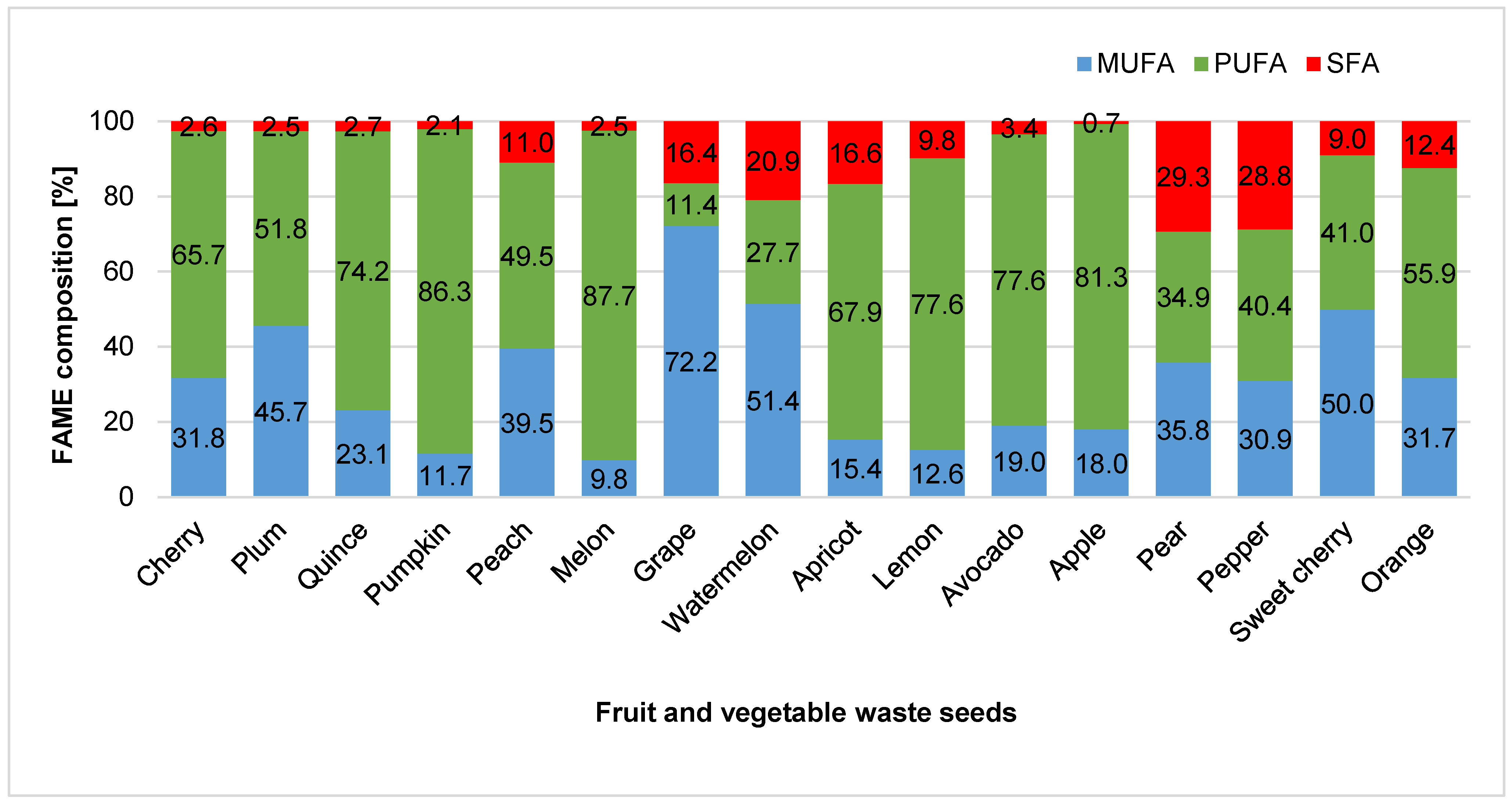
Additionally, quantitative analysis demonstrated a clear predominance of unsaturated fatty acids (MUFAs and PUFAs) over saturated fatty acids (SFAs) in all analyzed samples. The MUFA content ranged from 9.84% in melon seeds to 72.19% in grape seeds, while the PUFA fraction varied from 11.40% in grape seeds to 87.65% in melon seeds (Figure 1). In contrast, the SFA content was relatively low, ranging from 0.67% in apple seeds to 29.32% in pear seeds.
From the perspective of biodiesel quality, as defined by the BS EN 14214 standard [13], key parameters such as oxidative stability, cetane number, and low-temperature properties are directly influenced by the fatty acid profile of the methyl esters. A high content of monounsaturated fatty acids (MUFAs), particularly C18:1, contributes to enhanced oxidative stability and an increased cetane number, both crucial for optimal biodiesel performance. For example, grape seeds, with their high MUFA content (72.19%), are expected to produce biodiesel with superior oxidative stability and a higher cetane number, making them an ideal feedstock for high-quality biodiesel production. Conversely, a high polyunsaturated fatty acid (PUFA) content, such as that found in melon seeds (87.65%), improves low-temperature fluidity but reduces oxidative stability, making these feedstocks more susceptible to degradation over time. While melon and other high-PUFA seeds may enhance biodiesel’s cold-weather performance, their use may require antioxidant additives or blending with more stable feedstocks, such as those rich in MUFAs, to improve oxidative stability and overall fuel performance. The low saturated fatty acid (SFA) content in most of the seeds analyzed, particularly in apple seeds (0.67%), is consistent with biodiesel standards, as lower SFA content typically correlates with improved fuel properties, such as reduced cloud points and enhanced fuel flow characteristics. However, higher SFA levels, as seen in pear seeds (29.32%), could negatively affect biodiesel performance by increasing the cloud point and decreasing fuel flowability at lower temperatures.
Górnaś and Rudzińska [23] analyzed the fatty acid and phytosterol profiles of oils obtained from the seeds of nine species constituting by-products of the fruit and vegetable processing industry, including watermelon, melon, sea buckthorn, red currant, pomegranate, Japanese quince, grape, gooseberry, and apple. The oil yield varied markedly, ranging from 11.8% in sea buckthorn seeds to 28.5% in watermelon seeds, indicating substantial diversity in the potential of these raw materials. In all analyzed oils, β-sitosterol was the dominant phytosterol, with concentrations ranging from 0.5 to 3.1 mg g−1 of oil. Fatty acid profiles were species-specific, with linoleic acid predominating in most samples (38.0–70.7%). A distinctive feature of pomegranate seed oil was its exceptionally high punicic acid content (86.2%), which confers particularly high biological activity. Oil obtained from Japanese quince seeds was identified as the most promising for biodiesel production due to a favourable balance of mono- and polyunsaturated fatty acids, supporting the formation of methyl esters with good oxidative stability. In contrast, pomegranate seed oil, owing to its unique bioactive lipid composition, was considered more suitable for cosmetic and pharmaceutical applications.
According to Muthai et al. [27], baobab seed oil contains 17–22% saturated fatty acids (SFAs), 32–38% monounsaturated fatty acids (MUFAs), and 22–26% polyunsaturated fatty acids (PUFAs). Palmitic acid (C16:0) was reported as the predominant SFA, while oleic acid (C18:1) and linoleic acid (C18:2) were the dominant MUFA and PUFA, respectively.
Ferreira et al. [28] identified grape pomace (72.7% PUFA), grape stems (42.5% PUFA), grape bunches (54.3% PUFA), and brewer’s spent grain (59.0% PUFA) as the most promising agri-food by-products due to their high polyunsaturated fatty acid content. In contrast, white wine lees (74.1% SFA), red wine lees (50.8% SFA), and potato peels (77.2% SFA) were considered less favourable feedstocks because of the predominance of saturated fatty acids.
Table 5 presents the total contents of monounsaturated and polyunsaturated fatty acids, as well as the overall content of fatty acid methyl esters (FAMEs), in seeds derived from fruit and vegetable by-products. Considerable variability in lipid content was observed among the analyzed raw materials. The highest fat contents, expressed as FAME, were recorded for apple (664.57 mg g−1dw), melon (407.02 mg g−1dw), lemon (310.68 mg g−1dw), and pumpkin (238.53 mg g−1dw) seeds, whereas the lowest values were observed for apricot (1.23 mg g−1dw) and pepper (3.99 mg g−1dw) seeds, indicating limited oil potential for these by-products.
In most samples, polyunsaturated fatty acids constituted the dominant fraction, particularly in apple, melon, lemon, and pumpkin seeds, reflecting a high degree of lipid unsaturation and potentially elevated iodine values for oils derived from these materials. The MUFA content was generally lower; high MUFA proportions were observed in watermelon and grape seeds, while cherry seeds exhibited a moderate share. In contrast, melon and lemon seeds were characterised by low MUFA proportions. Notably, in watermelon and grape seeds, the MUFA fraction was comparable to or higher than the PUFA fraction, indicating a more oleic character of the lipids and potentially enhanced oxidative stability.
The FAME profile of cherry seed by-products was characterised by a high ratio of unsaturated to saturated fatty acids [29]. A similar pattern has been reported for by-products derived from herbal plants, in which the content of unsaturated fatty acid methyl esters exceeded that of saturated ones; linoleic acid was identified as the dominant PUFA, while palmitic acid remained the main SFA [17].
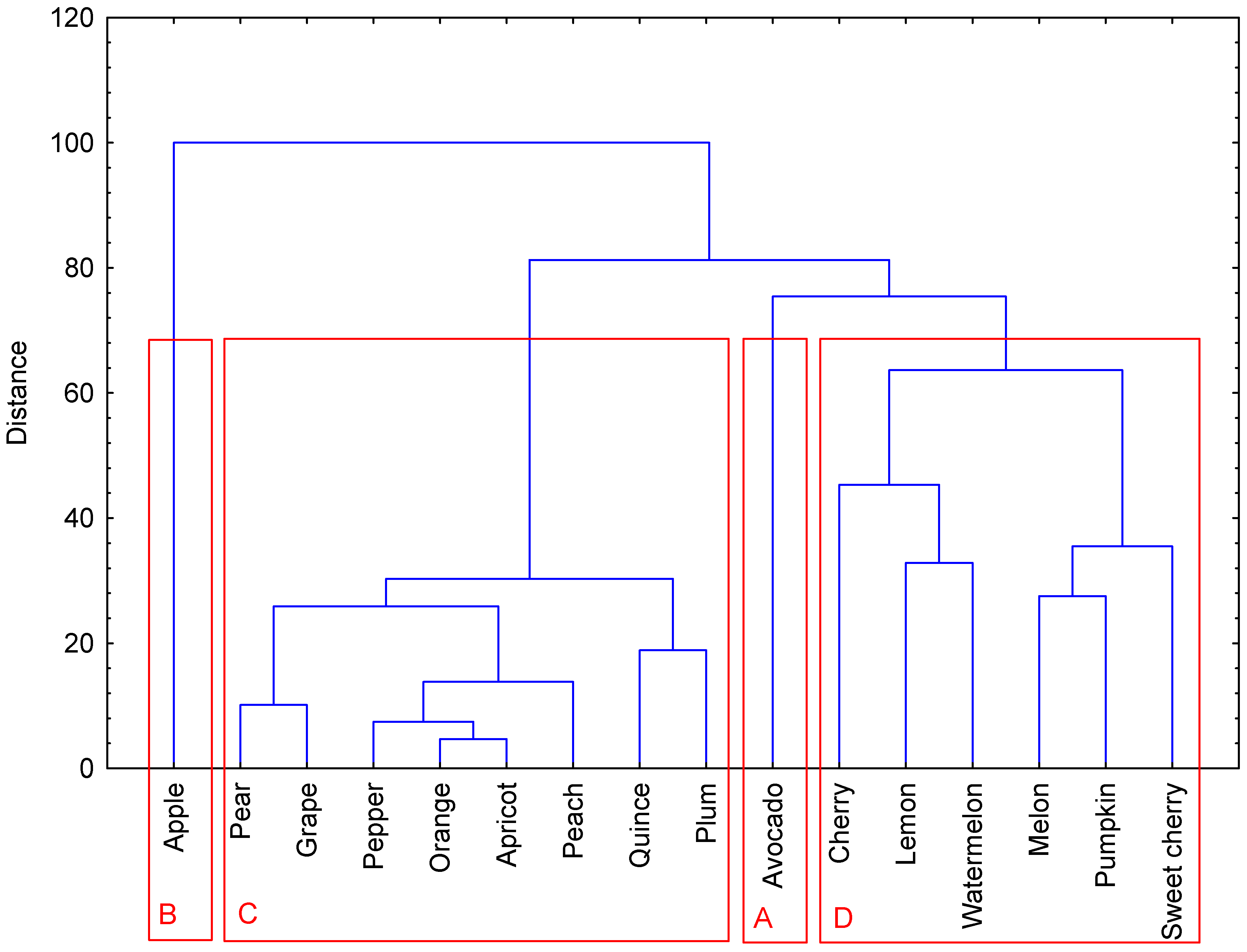
Cluster analysis based on the fatty acid methyl ester (FAME) composition of seeds derived from fruit and vegetable processing waste enabled the identification of four distinct clusters (A–D) (Figure 2). Cluster A, represented exclusively by avocado seeds, is characterised by a moderate proportion of monounsaturated fatty acids (MUFAs), a high content of polyunsaturated fatty acids (PUFAs), and a low share of saturated fatty acids (SFAs). The predominance of PUFAs in this cluster may positively influence fuel fluidity and calorific value; however, the oxidative stability of the resulting biodiesel may be limited due to the high degree of unsaturation.
Cluster B, comprising apple seeds, is likewise dominated by polyunsaturated fatty acids. The MUFA fraction remains at a moderate level, whereas saturated fatty acids are nearly absent. This lipid profile ensures excellent cold-flow properties and a high energy value. Nevertheless, the very high PUFA content (>80%) indicates that biodiesel produced solely from these seeds would be highly susceptible to rapid oxidation. Therefore, blending with MUFA-rich oils is recommended to enhance oxidative stability and improve overall fuel performance.
Cluster C includes pear, grape, pepper, orange, apricot, peach, quince, and plum seeds and exhibits a more diversified fatty acid composition. The MUFA content in this group ranges from 23.12% in quince seeds to 45.67% in plum seeds, while the PUFA content varies between 49.49% in peach seeds and 74.20% in quince seeds. The proportion of saturated fatty acids spans from a low level (2.55% in plum seeds) to a relatively high value (29.32% in pear seeds). The balanced fatty acid profile observed in this cluster provides a favourable compromise between oxidative stability, fluidity, and energy value, indicating that seeds within this group represent the most promising biocomponents for biodiesel production.
Cluster D, comprising cherry, lemon, watermelon, melon, pumpkin, and sweet cherry seeds, is characterised by a high proportion of polyunsaturated fatty acids, particularly in pumpkin (86.27%), melon (87.65%), and lemon (77.61%) seeds. The MUFA fraction is relatively low (e.g., 11.67% in pumpkin seeds and 9.85% in melon seeds), while saturated fatty acids account for only a minor share of the total composition, confirming the dominance of PUFAs in this cluster. Such a lipid profile favours the production of biodiesel with excellent cold-flow properties and low cloud and pour points. However, the high PUFA content is associated with reduced oxidative stability. Consequently, seeds from Cluster D are best utilised in blends with MUFA-rich oils to obtain a more oxidation-resistant and technologically stable biofuel component.
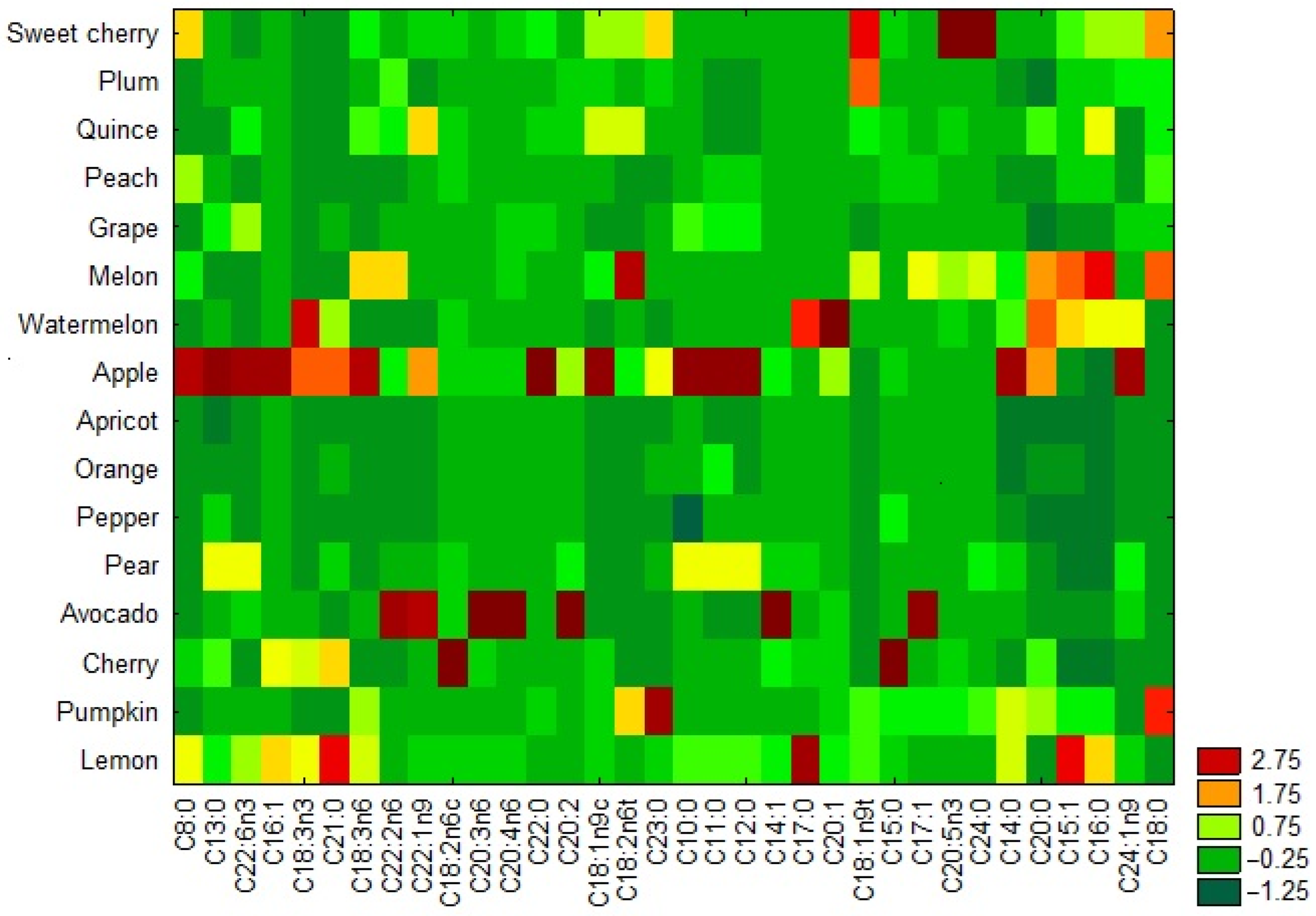
Cluster analysis, complemented by visualisation in the form of a heat map (Figure 3), enabled the grouping of seeds derived from the analyzed fruit and vegetable processing waste according to the contents of individual fatty acid methyl esters (FAMEs). The heat map revealed four principal clusters of samples, reflecting distinct fatty acid distribution patterns.
Avocado seeds formed a separate cluster owing to their highest concentrations of unsaturated fatty acids (indicated by red coloration), including cis-13,16-docosadienoic acid (C22:2n6), dihomo-γ-linolenic acid (C20:3n6), arachidonic acid (C20:4n6), and eicosadienoic acid (C20:2), accompanied by relatively low levels of short-chain saturated fatty acids (C8:0–C12:0) (green coloration). This distinctive fatty acid profile explains their isolated position in the hierarchical structure.
Apple seeds constituted another distinct group, characterised by the predominance of unsaturated fatty acids, particularly oleic acid (C18:1n9c) and nervonic acid (C24:1n9), together with a low contribution of short-chain saturated fatty acids. The dominance of long-chain unsaturated compounds clearly differentiates this cluster from the remaining groups.
The third cluster comprised pear, grape, pepper, orange, apricot, peach, quince, and plum seeds, which exhibited moderate concentrations of saturated and monounsaturated fatty acids. A notable feature within this group was the pronounced presence of caprylic acid (C8:0) in peach seeds, alongside moderate levels of polyunsaturated fatty acids, such as linoleic acid (C18:2n6c) and linolenic acid (C18:3n3). The relatively balanced fatty acid distribution observed in this cluster supports its previously identified suitability for biodiesel production.
The fourth cluster included cherry, lemon, watermelon, melon, pumpkin, and sweet cherry seeds. These samples were characterised by relatively high contents of polyunsaturated fatty acids, particularly linoleic acid (C18:2n6c) and linolenic acid (C18:3n3), combined with low concentrations of saturated and monounsaturated fatty acids. The strong predominance of PUFAs explains their grouping and suggests favourable cold-flow properties of the derived biodiesel, albeit with potentially limited oxidative stability.
Overall, the heat map analysis confirms the differentiation observed in the cluster analysis and provides a comprehensive visualisation of the variability in FAME composition among seed fractions derived from fruit and vegetable processing residues.
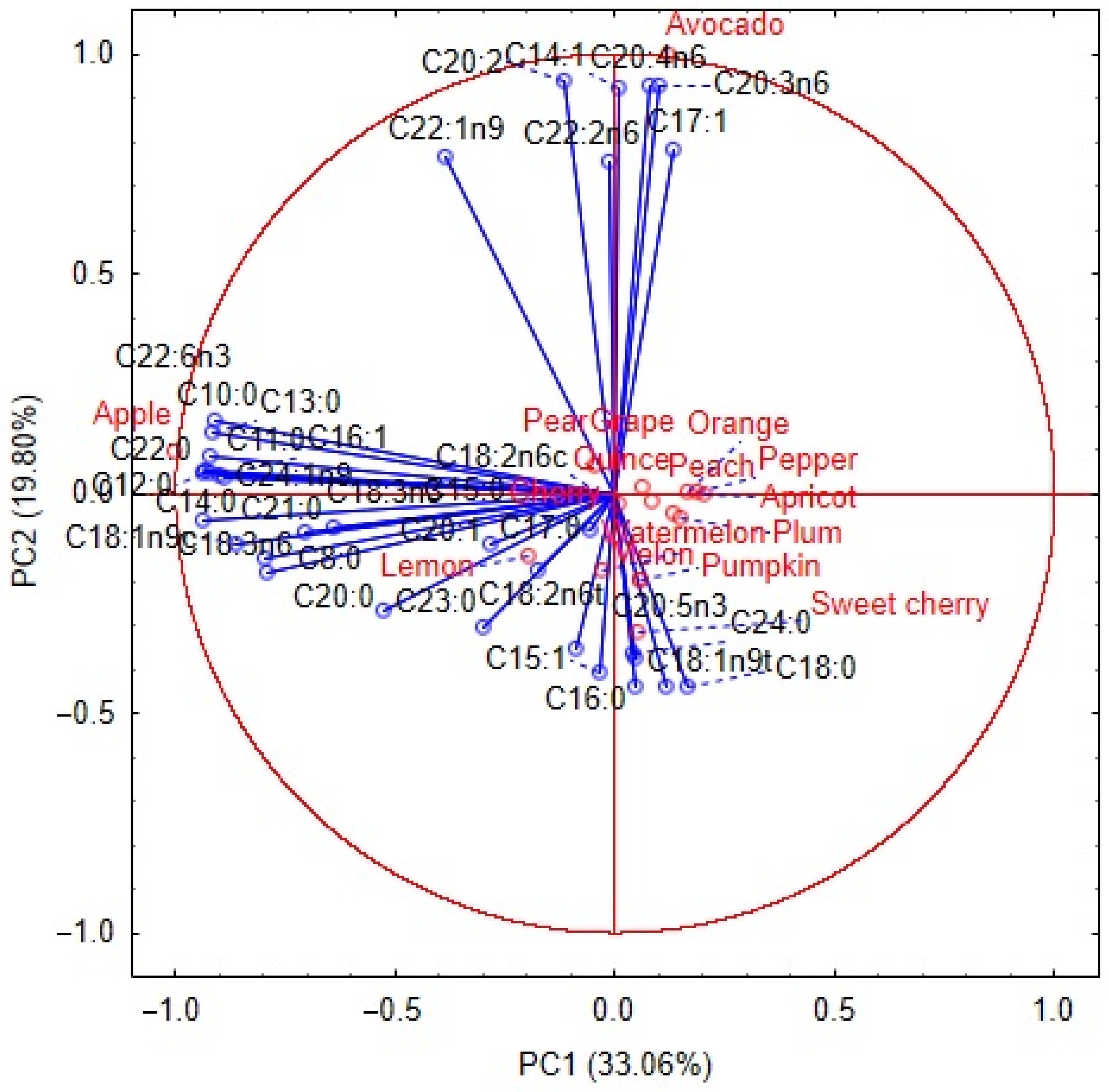
Principal component analysis indicated that the first two principal axes jointly explained 52.86% of the total variability in the dataset (Factor 1: 33.06%; Factor 2: 19.80%) (Figure 4). Factor 1 represents the primary gradient in fatty acid composition, ranging from PUFA-dominated profiles to those relatively enriched in SFAs and MUFAs. Negative loadings along Factor 1 are therefore associated with a high degree of polyunsaturation, whereas positive loadings reflect a greater contribution of saturated and monounsaturated fatty acids. Factor 2 differentiates the samples according to the contribution of long-chain MUFAs and selected less abundant fractions (vectors located in the upper half-plane), in contrast to profiles more strongly associated with lower-carbon-number saturated fractions and/or n-6 and n-3 PUFAs (lower half-plane).
The spatial distribution of individual samples is consistent with this interpretation. Apple seeds are positioned on the negative side of Factor 1, reflecting their high PUFA content and low SFA contribution. Avocado seeds are distinctly shifted towards positive values of Factor 2, indicating a relatively higher contribution of long-chain MUFAs. Most of the remaining seeds, including pear, grape, pepper, orange, apricot, peach, quince, and plum, cluster near the origin of the coordinate system, suggesting a balanced distribution of SFAs, MUFAs, and PUFAs without a single dominant fraction.
In contrast, pumpkin, melon, watermelon, cherry, and sweet cherry seeds are located in the lower-right quadrant of the plot, indicating a moderate SFA contribution combined with a lower share of long-chain MUFAs along the Factor 2 dimension. From the perspective of their application as liquid biofuel components, the distribution of samples along Factor 1 confirms that PUFA-rich profiles (left side of the plot) favour improved fluidity and enhanced low-temperature properties, but may compromise oxidative stability. Conversely, profiles with higher MUFA and SFA contributions (right side of the plot) ensure greater oxidative resistance, albeit with slightly reduced fluidity.
The position of avocado seeds along the positive direction of Factor 2 suggests their potential suitability as blending components due to their contribution of long-chain MUFAs. Meanwhile, the clustering of numerous seed types near the centre of the plot confirms their intermediate and balanced fatty acid composition, which is advantageous for the formulation of biodiesel fuels combining adequate stability with favourable performance characteristics.
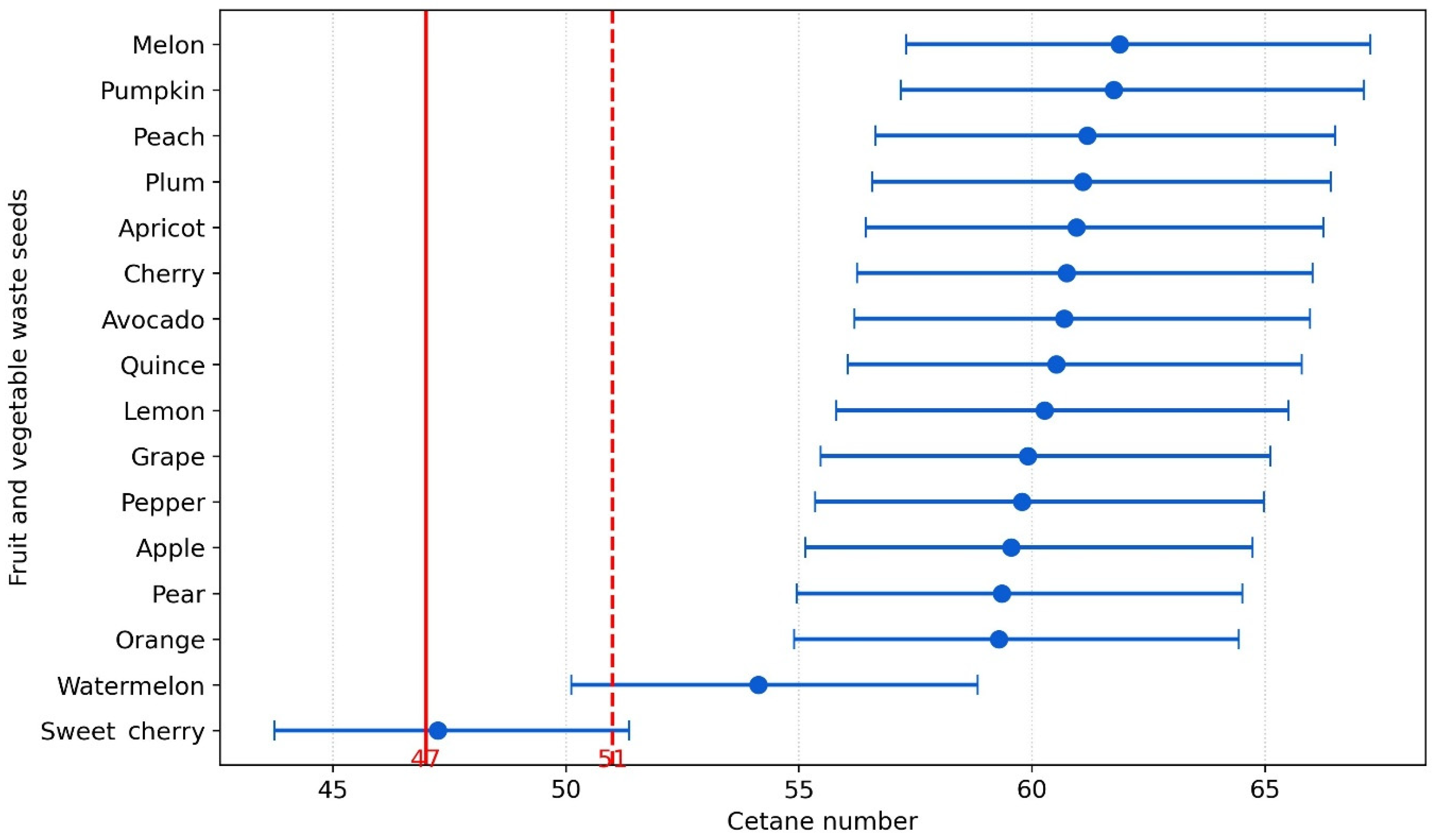
Based on the calculated cetane number (CN) and its comparison with the requirements of ASTM D6751 (CN ≥ 47) [14] and BS EN 14214 (CN ≥ 51) [13], all analyzed feedstocks—except for cherry and watermelon seeds—may be considered suitable biocomponents for biodiesel production (Figure 5). The watermelon sample meets the standard requirements only at its nominal CN value; however, when model uncertainty is taken into account (CN_min), the value falls below the threshold of 51, classifying it as a borderline feedstock. Cherry seeds exhibit the lowest CN and do not meet the quality requirements for biodiesel.
Among the analyzed materials, grape seeds appear to be the most promising biodiesel biocomponent. They combine a favourable cetane number (CN ≈ 59.91) with a particularly advantageous fatty acid distribution, characterised by a very high MUFA content (72.19%), low PUFA content (11.40%), and a moderate SFA share (16.41%). Such proportions are beneficial for both ignition quality and oxidative stability, making this waste stream a highly promising candidate for fuel applications.
Plum and peach seeds also demonstrate considerable potential owing to their favourable CN values (61.10 and 61.18, respectively). However, their applicability may be constrained by a markedly higher PUFA content (51.78% and 49.49%, respectively). This elevated degree of polyunsaturation may reduce the oxidative stability of the resulting biodiesel, necessitating the use of stabilising additives or blending with MUFA-rich fractions to obtain a fuel that fully complies with quality standards.

4. Conclusions

This study demonstrates that seeds derived from fruit and vegetable processing waste possess fatty acid profiles suitable for biodiesel production. The wide variation in the content of monounsaturated fatty acids (MUFAs), polyunsaturated fatty acids (PUFAs), and saturated fatty acids (SFAs) indicates that these raw materials offer diverse feedstock options for biodiesel production. Specifically, the study identifies both monounsaturated-rich materials, similar to rapeseed oil, and polyunsaturated materials, comparable to sunflower oil, which can be strategically utilized depending on the desired biodiesel properties. The generally low SFA content in most seeds further enhances the low-temperature properties of the resulting methyl esters.
The physicochemical analysis of fruit seed oils highlighted grape seeds as the most promising raw material for biodiesel production, owing to their favorable cetane number and beneficial fatty acid composition, which ensures good ignition quality and oxidative stability. Other seeds, such as those from plum and peach, also show potential, but their higher PUFA content suggests that antioxidant additives or blending with MUFA-rich feedstocks may be necessary to mitigate potential oxidative stability issues.
The broader significance of these findings lies in their potential for contributing to the development of more sustainable and diverse feedstocks for biodiesel production. By utilizing food industry waste, this approach not only helps reduce environmental impact but also supports the circular economy by turning waste into a valuable resource.
Future research should focus on a comprehensive characterization of the physicochemical properties of FAME mixtures derived from these feedstocks, including acid value, carbon residue, cloud point, density, flash point, viscosity, and methanol content, and on their comparison with conventional petroleum diesel. Additionally, efforts should be directed toward developing efficient and scalable extraction methods that can be implemented at an industrial scale. This includes optimizing processes to reduce energy consumption, minimize waste, and lower production costs, which are crucial for the economic feasibility of using waste-derived feedstocks in biodiesel production. Furthermore, long-term stability studies are needed to evaluate the oxidative stability and storage conditions of biodiesel produced from these alternative feedstocks. It will also be important to understand how seasonal variations in raw material composition affect biodiesel performance, ensuring consistent fuel quality year-round. Lastly, future research should explore the potential for blending these FAME mixtures with conventional diesel to enhance fuel properties, particularly in terms of cold-weather performance and oxidative stability, thus broadening their practical applications in the transportation and energy sectors. Addressing these challenges will be pivotal for the large-scale adoption of biodiesel produced from fruit-vegetable food industry waste, contributing to a more sustainable and circular biofuels industry.

Author Contributions

Conceptualization, A.S.; data curation, A.S., A.P.-N., P.C. and M.K.-S.; formal analysis, A.S. and A.B.; investigation, M.K.-S., P.C. and M.K.; methodology, S.O., P.C., A.S. and A.P.-N.; resources, M.K. and A.B.; supervision, S.O. and A.S.; validation, S.O., A.P.-N., A.S., M.K.-S. and A.B.; visualization, A.S., M.K.-S. and P.C.; writing—original draft, M.K.-S., M.K. and P.C.; writing—review and editing, M.K.-S. and A.S. All authors have read and agreed to the published version of the manuscript.

Funding

The work was carried out as part of a team project no. WZ/WB-IIS/4/2026 and was financed by the Ministry of Science and Higher Education as part of a grant for maintaining research potential awarded to the Faculty of Civil Engineering and Environmental Sciences, Bialystok University of Technology.

Data Availability Statement

Data are contained within the article.

Conflicts of Interest

The authors declare no conflicts of interest.

References

  1. Wang, W.; Liu, H.; Li, F.; Wang, H.; Ma, X.; Li, J.; Zhou, L.; Xiao, Q. Effects of Unsaturated Fatty Acid Methyl Esters on the Oxidation Stability of Biodiesel Determined by Gas Chromatography-Mass Spectrometry and Information Entropy Methods. Renew. Energy 2021, 175, 880–886. [Google Scholar] [CrossRef]
  2. Atabani, A.E.; Silitonga, A.S.; Badruddin, I.A.; Mahlia, T.M.I.; Masjuki, H.H.; Mekhilef, S. A Comprehensive Review on Biodiesel as an Alternative Energy Resource and Its Characteristics. Renew. Sustain. Energy Rev. 2012, 16, 2070–2093. [Google Scholar] [CrossRef]
  3. Karmee, S.K.; Lin, C.S.K. Valorisation of Food Waste to Biofuel: Current Trends and Technological Challenges. Sustain. Chem. Process 2014, 2, 22. [Google Scholar] [CrossRef]
  4. Caldeira, C.; De Laurentiis, V.; Corrado, S.; van Holsteijn, F.; Sala, S. Quantification of Food Waste per Product Group along the Food Supply Chain in the European Union: A Mass Flow Analysis. Resour. Conserv. Recycl. 2019, 149, 479–488. [Google Scholar] [CrossRef]
  5. Karmee, S.K.; Linardi, D.; Lee, J.; Lin, C.S.K. Conversion of Lipid from Food Waste to Biodiesel. Waste Manag. 2015, 41, 169–173. [Google Scholar] [CrossRef]
  6. Sahar; Sadaf, S.; Iqbal, J.; Ullah, I.; Bhatti, H.N.; Nouren, S.; Rehman, H.U.; Nisar, J.; Iqbal, M. Biodiesel Production from Waste Cooking Oil: An Efficient Technique to Convert Waste into Biodiesel. Sustain. Cities Soc. 2018, 41, 220–226. [Google Scholar] [CrossRef]
  7. Ruiz-Méndez, M.V.; Marmesat, S.; Liotta, A.; Dobarganes, M.C. Analysis of Used Frying Fats for Biodiesel Production. Grasas Y Aceites 2008, 59, 45–50. [Google Scholar] [CrossRef]
  8. Abreu-Jaureguí, C.; Reynel-Ávila, H.E.; Bonilla-Petriciolet, A. Biodiesel Production from Wastewater Scum of Dairy Industry: Lipid Extraction Studies and Reaction Routes. Fuel 2023, 342, 127868. [Google Scholar] [CrossRef]
  9. D’Ambrosio, V.; di Bitonto, L.; Angelini, A.; Gallipoli, A.; Braguglia, C.M.; Pastore, C. Lipid Extraction from Sewage Sludge Using Green Biosolvent for Sustainable Biodiesel Production. J. Clean. Prod. 2021, 329, 129643. [Google Scholar] [CrossRef]
  10. Villalobos-Delgado, F.d.J.; Reynel-Avila, H.E.; Mendoza-Castillo, D.I.; Bonilla-Petriciolet, A. Lipid Extraction in the Primary Sludge Generated from Urban Wastewater Treatment: Characteristics and Seasonal Composition Analysis. Water Sci. Technol. 2023, 87, 2930–2943. [Google Scholar] [CrossRef]
  11. Al Shehhi, A.; Souissi, Y.; Nair, A.S.; Usmani, Z.; Sharma, M.; Sivakumar, N. Microbial Lipid-Based Biodiesel Production Using Wastewater: Opportunities and Challenges. Bioresour. Bioprocess. 2025, 12, 70. [Google Scholar] [CrossRef]
  12. Chen, N.; Xie, Y.; Liang, Z.; Shim, H. Biodiesel Production and Properties Estimation from Food Waste and Domestic Wastewater by Rhodosporidium toruloides. J. Environ. Manag. 2023, 348, 119368. [Google Scholar] [CrossRef] [PubMed]
  13. BS EN 14214:2012+A2:2019; Liquid Petroleum Products—Fatty Acid Methyl Esters (FAME) for Use in Diesel Engines and Heating Applications—Requirements and Test Methods. BSI Group: London, UK, 2019.
  14. ASTM D6751–20; Standard Specification for Biodiesel Fuel Blend Stock (B100) for Middle Distillate Fuels. ASTM International: West Conshohocken, PA, USA, 2020.
  15. Vasistha, S.; Balakrishnan, D.; Manivannan, A.; Rai, M.P. Microalgae on Distillery Wastewater Treatment for Improved Biodiesel Production and Cellulose Nanofiber Synthesis: A Sustainable Biorefinery Approach. Chemosphere 2023, 315, 137666. [Google Scholar] [CrossRef] [PubMed]
  16. Ghaly, A.; Dave, D.; Brooks, M.; Budge, S. Production of Biodiesel by Enzymatic Transesterification: Review. Am. J. Biochem. Biotechnol. 2010, 6, 54–76. [Google Scholar] [CrossRef]
  17. Sienkiewicz, A.; Piotrowska-Niczyporuk, A.; Bajguz, A. Fatty Acid Methyl Esters from the Herbal Industry Wastes as a Potential Feedstock for Biodiesel Production. Energies 2020, 13, 3702. [Google Scholar] [CrossRef]
  18. Mukherjee, J.; Gupta, M.N. Biocatalysis for Biomass Valorization. Sustain. Chem. Process 2015, 3, 7. [Google Scholar] [CrossRef]
  19. Dhiman, S.; Mukherjee, G. Utilization of Food Waste for Biofuel Production: A Biorefining Perspective. Mater. Today Proc. 2022; in press. [CrossRef]
  20. Zielińska, M.; Bułkowska, K. Agricultural Wastes and Their By-Products for the Energy Market. Energies 2024, 17, 2099. [Google Scholar] [CrossRef]
  21. Palm, M.O.; Pavani, L.Y.; Senff, L.; Duarte, D.A.; Catapan, R.C. A Novel Liquid-Phase Plasma Discharge Process for Single-Step Emulsification and Continuous Biodiesel Production. Fuel 2025, 400, 135686. [Google Scholar] [CrossRef]
  22. Salam, R.; Bibi, T.; Lal, T. Biodiesel production from Citrullus lanatus and Cucumis melo seed oil blends: A sustainable alternative feedstock. Spectr. Eng. Sci. 2025, 3, 981–991. [Google Scholar]
  23. Górnaś, P.; Rudzińska, M. Seeds Recovered from Industry By-Products of Nine Fruit Species with a High Potential Utility as a Source of Unconventional Oil for Biodiesel and Cosmetic and Pharmaceutical Sectors. Ind. Crops Prod. 2016, 83, 329–338. [Google Scholar] [CrossRef]
  24. Gopinath, A.; Puhan, S.; Nagarajan, G. Relating the Cetane Number of Biodiesel Fuels to Their Fatty Acid Composition: A Critical Study. Proc. Inst. Mech. Eng. Part. D J. Automob. Eng. 2009, 223, 565–583. [Google Scholar] [CrossRef]
  25. Sacha, D. Wpływ dodatków antyoksydacyjnych na stabilność paliw do silników ZS poddanych działaniu miedzi. Naft.-Gaz 2020, nr 6, 419–426. [Google Scholar] [CrossRef]
  26. Pobłocki, K.; Walczak, J.; Drzeżdżon, J.; Jacewicz, D. Katalizatory Wykorzystywane w Syntezie Biodiesla. Wiadomości Chem. 2022, 76, 129–144. [Google Scholar] [CrossRef]
  27. Muthai, U.K.; Indieka, A.S.; Muchugi, A.; Karori, S.M.; Mng’omba, S.; Ky-Dembele, C.; Jamnadass, R. Quantitative Variation of Fatty Acid Composition in Seed Oil from Baobab (Adansonia digitata L.) Wild Populations in Sub-Sahara Africa. S. Afr. J. Bot. 2019, 123, 1–8. [Google Scholar] [CrossRef]
  28. Ferreira, R.; Lourenço, S.; Lopes, A.; Andrade, C.; Câmara, J.S.; Castilho, P.; Perestrelo, R. Evaluation of Fatty Acids Profile as a Useful Tool towards Valorization of By-Products of Agri-Food Industry. Foods 2021, 10, 2867. [Google Scholar] [CrossRef]
  29. Kniepkamp, K.; Errico, M.; Yu, M.; Roda-Serrat, M.C.; Eilers, J.-G.; Wark, M.; van Haren, R. Lipid Extraction of High-Moisture Sour Cherry (Prunus cerasus L.) Stones by Supercritical Carbon Dioxide. J. Chem. Technol. Biotechnol. 2024, 99, 810–819. [Google Scholar] [CrossRef]
Figure 1. Fatty acid methyl ester composition of the fruit and vegetable waste seeds.
Energies 19 01685 g001
Figure 2. Dendrogram of the hierarchical cluster analysis of sixteen types of fruit and vegetable waste seeds showing four distinct clusters (A–D).
Energies 19 01685 g002
Figure 3. Graphical result of the simultaneous grouping of objects (tested fruit and vegetable waste seeds) and features (fatty acid methyl ester content). This plot shows how the samples group based on their fatty acid profiles, with clusters representing different seed types.
Energies 19 01685 g003
Figure 4. Biplot of fatty acid methyl ester (FAME) content for each repetition (n = 4) in sixteen types of fruit and vegetable waste seeds, showing the first two principal components (PC1 and PC2) of the PCA model that together explain 52.86% of the total variance, i.e., 33.06% and 19.80% for PC1 and PC2, respectively. Blue biplot vectors indicate the strength and direction of factor loadings for all analyzed FAME variables.
Energies 19 01685 g004
Figure 5. Predicted cetane number (CN) of fruit and vegetable waste seeds with minimum and maximum error ranges, for an assumed estimation error of 8%. The solid vertical line indicates CN = 47 (ASTM D6751 [14]), while the dashed line represents CN = 51 (BS EN 14214 standard [13]).
Energies 19 01685 g005
Table 1. FAMEs standards used in the GC-MS analysis of seed samples.
Type
of FAME
Systematic NameThe Common Name
of FAME
Abbreviation
MUFAMyristoleic acid methyl esterMyristoleic acidC14:1
cis-10-Pentadecanoic acid methyl esterPentadecanoic acidC15:1
9-Hexadecenoic acid methyl esterPalmitoleic acidC16:1
cis-10-Heptadecenoic acid methyl esterHeptadecenoic acidC17:1
trans-9-Octadecenoic acid methyl ester (Z)Elaidic acidC18:1n9t
9-Octadecenoic acid methyl ester (E)Oleic acidC18:1n9c
cis-11-Eicosenoic acid methyl esterGondoic acidC20:1
13-Docosenoic acid methyl ester (Z)Erucic acidC22:1n9
15-Tetracosenoic acid methyl ester (Z)Nervonic acidC24:1n9
PUFA9,12-Octadecadienoic acid methyl ester (E, E)Linolelaidic acidC18:2n6t
9,12-Octadecadienoic acid methyl ester (Z, Z)Linoleic acidC18:2n6c
all-cis-6,9,12-Octadecatrienoic acidγ-Linolenic acidC18:3n6
9,12,15-Octadecatrienoic acid methyl ester (Z, Z, Z)Linolenic acidC18:3n3
cis-11,14-Eicosadienoic acid methyl esterEicosadienoic acidC20:2
cis-11,14,17-Eicosatrienoic acid methyl esterEicosatrienoic acidC20:3n3
cis-8,11,14-Eicosatrienoic acid methyl esterDihomo-γ-linolenic acidC20:3n6
5,8,11,14-Eicosatetraenoic acid methyl ester (all-Z)Arachidonic acidC20:4n6
cis-5,8,11,14,17-Eicosapentaenoic acid methyl esterEicosapentaenoic acidC20:5n3
cis-13,16-Docasadienoic acid methyl esterDocosadienoic acidC22:2n6
4,7,10,13,16,19-Docosahexaenoic acid methyl ester (all-Z)Cervonic acidC22:6n3
SFAButyric acid methyl esterButyric acidC4:0
Hexanoic acid methyl esterCaproic acidC6:0
Octanoic acid methyl esterCaprylic acidC8:0
Decanoic acid methyl ester Capric acidC10:0
Undecanoic acid methyl esterUndecylic acidC11:0
Dodecanoic acid methyl esterLauric acidC12:0
Tridecanoic acid methyl esterTridecylic acidC13:0
Tetradecanoic acid methyl esterMyristic acidC14:0
Pentadecanoic acid methyl esterPentadecylic acidC15:0
Hexadecanoic acid methyl esterPalmitic acidC16:0
Heptadecanoic acid methyl esterMargaric acidC17:0
Octadecanoic acid methyl esterStearic acidC18:0
Eicosanoic acid methyl esterArachidic acidC20:0
Heneicosanoic acid methyl esterHeneicosylic acidC21:0
Docosanoic acid methyl esterBehenic acidC22:0
Tricosanoic acid methyl esterTricosylic acidC23:0
Tetracosanoic acid methyl esterLignoceric acidC24:0
MUFA—monounsaturated fatty acid, PUFA—polyunsaturated fatty acid, SFA—saturated fatty acid.
Table 2. The content of monounsaturated fatty acids (MUFA) (mean ± SD, n = 4) in fruit and vegetable waste seeds. Means with the same letters are not significantly different (p ≥ 0.05) according to Tukey’s post hoc test.
Fruit and Vegetable Waste Seeds[µg g−1dw]
C14:1C15:1C16:1C17:1C18:1n9tC18:1n9cC20:1C22:1n9C24:1n9
Cherry37.89 ± 0.39 e1611.34 ± 27.34 c23.82 ± 0.88 gh146.28 ± 2.01 e28,701.90 ± 522.90 a32,927.03 ± 547.85 c49.22 ± 0.93 g21.07 ± 0.90 c46.01 ± 8.33 b
Plum34.98 ± 0.25 ef763.44 ± 9.09 f191.60 ± 3.14 d18.97 ± 0.14 hi24,216.43 ± 328.01 b10,399.22 ± 130.82 g34.37 ± 0.62 g4.60 ± 5.88 ef36.49 ± 2.38 bc
Quince34.89 ± 0.34 ef864.42 ± 3.56 f14.15 ± 4.79 h157.41 ± 1.79 de8131.43 ± 218.41 f39,037.22 ± 167.14 b49.27 ± 8.71 g91.81 ± 2.66 b16.94 ± 0.40 ef
Pumpkin33.53 ± 0.05 f1145.81 ± 12.09 e65.83 ± 1.59 f538.60 ± 24.29 b9063.43 ± 87.76 e14,439.76 ± 31.39 f2531.67 ± 48.16 c11.97 ± 1.55 de16.18 ± 0.76 ef
Peach42.08 ± 0.21 d828.30 ± 15.61 f8.77 ± 0.27 h249.52 ± 5.53 d2759.78 ± 50.91 h4460.79 ± 83.09 h61.29 ± 0.82 g10.36 ± 1.35 de16.98 ± 0.39 ef
Melon37.91 ± 0.35 e3505.51 ± 36.76 b55.40 ± 1.86 f1330.54 ± 13.79 a13,455.68 ± 312.83 d21,508.22 ± 208.66 d143.88 ± 7.41 f16.05 ± 4.17 cd25.24 ± 0.30 de
Grape59.39 ± 0.24 c268.28 ± 2.96 g13.57 ± 0.16 h134.08 ± 1.78 e1675.45 ± 9.28 i2734.63 ± 18.86 i416.41 ± 12.12 e14.58 ± 1.09 cd27.50 ± 0.06 cd
Watermelon35.23 ± 0.07 ef2935.51 ± 209.64 b5.27 ± 0.24 h11.63 ± 0.54 i3403.56 ± 0.54 g3265.34 ± 40.65 hi50,612.58 ± 579.99 a2.79 ± 0.03 f57.68 ± 9.41 a
ApricotND3.63 ± 0.08 h2.54 ± 0.73 h0.70 ± 0.06 i7.10 ± 0.43 j35.81 ± 5.56 k123.93 ± 0.94 f1.74 ± 0.88 f14.10 ± 0.41 f
Lemon217.86 ± 3.64 b4016.31 ± 305.33 a3611.56 ± 66.27 b16.85 ± 0.37 hi9914.07 ± 82.26 e15,991.39 ± 120.02 e5241.87 ± 38.61 b21.39 ± 0.87 c30.64 ± 2.60 cd
Avocado1666.77 ± 14.12 a249.09 ± 11.21 g289.20 ± 10.22 c3239.54 ± 292.68 a84.71 ± 0.52 j370.57 ± 1.23 k2684.01 ± 15.20 c161.54 ± 1.57 a31.20 ± 0.46 cd
Apple176.65 ± 0.20 b29.50 ± 0.29 h6592.61 ± 66.12 a78.13 ± 0.51 fg1054.36 ± 7.39 i97,987.14 ± 336.12 a13,604.24 ± 33.78 b106.37 ± 1.17 b114.57 ± 0.80 a
Pear86.95 ± 1.11 cND360.32 ± 9.41 c50.48 ± 3.26 gh29.79 ± 2.57 j1544.62 ± 14.46 j599.45 ± 36.45 e8.53 ± 0.32 ef34.77 ± 0.18 bc
Pepper36.47 ± 1.22 ef9.11 ± 1.98 h165.44 ± 5.99 d4.64 ± 0.25 i32.48 ± 9.41 j613.61 ± 22.09 jk353.83 ± 13.88 e3.19 ± 0.40 f13.31 ± 0.02 f
Sweet cherry211.32 ± 1.06 b8.13 ± 0.18 h2791.15 ± 29.12 b8.09 ± 0.61 i39.07 ± 6.23 j14,002.33 ± 400.95 f4543.25 ± 64.06 b14.95 ± 0.22 cd14.14 ± 0.47 f
Orange35.41 ± 0.15 ef79.24 ± 3.36 h233.35 ± 13.52 cd48.25 ± 1.44 gh14.03 ± 0.56 j1264.73 ± 40.10 j848.96 ± 30.33 d4.24 ± 0.20 ef13.70 ± 3.05 f
ND, not detected.
Table 3. The content of polyunsaturated fatty acids (PUFA) (mean ± SD, n = 4) in fruit and vegetable waste seeds. Means with the same letters are not significantly different (p ≥ 0.05) according to Tukey’s post hoc test.
Fruit and Vegetable Waste Seeds[µg g−1dw]
C18:2n6tC18:2n6cC18:3n6C18:3n3C20:2C20:3n6C20:4n6C20:5n3C22:2n6C22:6n3
Cherry15,552.89 ± 268.82 c15.56 ± 0.29 cd115,106.67 ± 1845.13 e48.37 ± 1.64 f6.08 ± 0.35 f5.46 ± 1.76 b23.66 ± 1.10 bc664.41 ± 8.02 a32.31 ± 1.38 e20.92 ± 0.29 d
Plum4769.94 ± 59.64 e14.53 ± 0.49 d35,517.38 ± 464.96 g28.55 ± 0.23 f17.48 ± 4.84 ef3.00 ± 0.82 b22.74 ± 0.16 bc6.04 ± 0.25 f76.97 ± 12.63 cd24.03 ± 0.77 cd
Quince18,947.23 ± 324.07 b17.05 ± 0.85 c136,179.13 ± 2355.71 dND 25.54 ± 0.53 de5.35 ± 1.04 b18.16 ± 0.86 cd34.60 ± 6.67 d59.57 ± 14.44 d30.72 ± 3.14 bc
Pumpkin24,488.10 ± 40.23 a13.30 ± 0.42 de181,102.07 ± 262.10 c8.85 ± 0.29 g2.67 ± 2.74 f5.17 ± 1.28 b13.56 ± 4.06 de102.88 ± 17.02 c27.29 ± 2.88 ef21.34 ± 1.28 d
Peach1248.40 ± 25.83 g15.82 ± 0.71 cd9234.66 ± 195.54 h9.80 ± 3.55 g2.24 ± 0.20 f5.02 ± 1.17 b16.86 ± 0.39 cd1.83 ± 0.10 f14.27 ± 0.50 f20.51 ± 0.18 d
Melon42,887.93 ± 424.35 a 14.23 ± 0.38 d313,475.37 ± 312.83 b0.88 ± 0.08 g7.34 ± 2.36 f4.86 ± 0.95 b24.22 ± 0.64 bc175.06 ± 2.57 b148.18 ± 2.71 b21.12 ± 0.30 d
Grape95.89 ± 3.58 h2.93 ± 0.05 f641.02 ± 4.48 i1.38 ± 0.04 g2.55 ± 0.55 f5.61 ± 0.06 b27.01 ± 0.06 b3.76 ± 0.19 f23.05 ± 0.01 ef40.37 ± 0.08 b
Watermelon4030.26 ± 88.74 e15.74 ± 0.12 cd2149.72 ± 123.66 i26,241.21 ± 579.99 aND 2.13 ± 0.64 b11.55 ± 3.42 e66.72 ± 12.21 cd10.07 ± 2.99 f20.27 ± 0.44 d
Apricot11.89 ± 2.31 h1.71 ± 0.04 f731.85 ± 3.23 i37.43 ± 0.39 f1.49 ± 0.04 f2.03 ± 0.60 b15.53 ± 3.89 de1.35 ± 0.40 f12.40 ± 3.10 f19.78 ± 0.07 d
Lemon2921.05 ± 107.47 f18.41 ± 0.40 c224,738.00 ± 125.20 c13,310.98 ± 589.01 c1.05 ± 0.56 f7.80 ± 0.50 b25.69 ± 0.43 b20.42 ± 4.52 e20.75 ± 0.09 f42.77 ± 2.33 b
Avocado344.30 ± 17.31 h16.79 ± 0.38 c27,739.90 ± 238.33 g1868.39 ± 5.12 e266.96 ± 3.88 a2882.83 ± 285.47 a2370.34 ± 29.15 a10.43 ± 3.31 ef269.75 ± 1.93 a29.05 ± 6.01 bc
Apple10,904.87 ± 97.71 d31.55 ± 0.19 b508,488.33 ± 554.41 a20,548.58 ± 671.51 b70.57 ± 2.64 b36.80 ± 5.77 b101.78 ± 1.27 b18.88 ± 0.29 e68.73 ± 0.59 cd91.14 ± 0.09 a
Pear187.11 ± 1.72 h27.14 ± 0.19 b2153.35 ± 133.84 i156.00 ± 10.07 f30.81 ± 2.10 cd5.12 ± 0.58 bND 3.00 ± 0.35 f31.69 ± 0.10 e50.13 ± 0.05 b
Pepper65.82 ± 1.86 h12.19 ± 0.36 e1384.74 ± 44.11 i93.05 ± 5.60 f2.62 ± 0.57 f2.64 ± 0.01 b15.96 ± 0.35 de1.49 ± 0.04 f12.53 ± 0.10 f19.88 ± 0.11 d
Sweet cherry164.87 ± 3.78 h1095.44 ± 44.40 a3467.61 ± 82.24 i12,931.00 ± 258.56 c2.04 ± 0.07 f13.65 ± 2.47 b15.98 ± 0.59 de31.25 ± 0.37 de12.36 ± 0.12 f19.79 ± 0.29 d
Orange173.65 ± 4.41 h14.38 ± 0.23 d3968.63 ± 106.55 i280.84 ± 9.30 f1.04 ± 0.32 f2.90 ± 0.49 b15.75 ± 0.45 de1.85 ± 0.09 f12.53 ± 0.08 f19.26 ± 0.05 d
ND, not detected.
Table 4. The content of saturated fatty acids (SFA) (mean ± SD, n = 4) in fruit and vegetable waste seeds. Means with the same letters are not significantly different (p ≥ 0.05) according to Tukey’s post hoc test.
Fruit and Vegetable Waste Seeds[µg g−1dw]
C8:0C10:0C11:0C12:0C13:0C14:0C15:0C16:0C17:0C18:0C20:0C21:0C22:0C23:0C24:0
Cherry97.80 ± 1.99 c26.10 ± 0.27cd11.90 ± 0.10 fg23.93 ± 0.21 de9.79 ± 0.09 c37.57 ± 0.45 ef11.53 ± 0.24 c3041.21 ± 51.72 e131.95 ± 2.51 f821.02 ± 13.71 c300.53 ± 4.17 e16.38 ± 0.17 cd77.86 ± 0.96 b35.49 ± 0.49 b473.49 ± 5.41 a
PlumND25.23 ± 0.04 de11.13 ± 0.03 g22.27 ± 0.06 e9.59 ± 0.03 c28.35 ± 0.18 f4.53 ± 0.08 e1428.20 ± 16.58 g44.70 ± 1.15 h312.77 ± 3.49 e54.57 ± 0.26 h18.33 ± 0.35 bc18.81 ± 0.11 de6.91 ± 0.90 de5.41 ± 1.75 f
QuinceND24.47 ± 0.09 e10.94 ± 0.04 g21.88 ± 0.08 e9.44 ± 0.01 c39.88 ± 0.86 e10.40 ± 0.46 cd4064.16 ± 562.21 cd97.72 ± 4.59 g301.33 ± 15.59 e984.55 ± 15.12 dND 34.02 ± 3.50 c2.16 ± 0.01 f1.39 ± 1.23 f
Pumpkin2.67 ± 0.11 d25.97 ± 0.05 cd13.68 ± 0.02 ef27.37 ± 0.04 cd9.58 ± 0.04 c101.27 ± 0.86 b23.02 ± 0.10 b2218.74 ± 26.73 f35.82 ± 2.88 h977.26 ± 35.58 b1274.71 ± 3.61 c11.89 ± 3.46 e23.51 ± 1.96 d62.00 ± 2.52 a95.24 ± 4.30 c
Peach64.61 ± 1.61 c25.39 ± 0.06 de15.11 ± 0.08 e30.22 ± 0.17 c9.56 ± 0.04 c32.26 ± 0.29 ef9.43 ± 0.20 d1584.46 ± 201.80 g58.00 ± 0.45 h368.43 ± 3.50 e97.35 ± 1.35 h16.58 ± 0.29 cd12.91 ± 0.19 e1.51 ± 0.08 f23.46 ± 0.82 e
Melon32.66 ± 0.36 cd24.59 ± 0.25 e12.10 ± 0.12 fg24.20 ± 0.24 de9.45 ± 0.09 c59.90 ± 0.65 d1.27 ± 0.04 gh6711.92 ± 71.55 a32.67 ± 0.35 h933.57 ± 26.71 b2151.38 ± 208.66 b15.86 ± 0.60 cd18.23 ± 2.37 de5.50 ± 0.30 e150.13 ± 0.65 b
GrapeND42.92 ± 0.07 b19.09 ± 0.04 d38.18 ± 0.08 b16.47 ± 0.04 b44.76 ± 0.10 e7.79 ± 0.94 de681.77 ± 4.44 h47.29 ± 0.63 h175.57 ± 0.99 f63.54 ± 0.10 h27.16 ± 0.07 a22.93 ± 0.90 d4.15 ± 0.06 ef23.35 ± 0.80 e
WatermelonND25.49 ± 0.03 de12.93 ± 0.05 f25.85 ± 0.10 d9.58 ± 0.02 c69.94 ± 7.92 c2.23 ± 0.05 fg4000.04 ± 111.63 d17,885.03 ± 542.38 b4.83 ± 1.11 g2363.15 ± 197.35 b126.85 ± 8.44 a 1.73 ± 0.54 f1.42 ± 0.46 f8.02 ± 1.56 f
ApricotND24.48 ± 0.04 e10.37 ± 0.01 g20.74 ± 0.02 e7.11 ± 2.06 d19.09 ± 0.03 f0.03 ± 0.01 h6.44 ± 3.22 i54.54 ± 15.08 hND35.25 ± 0.18 h15.46 ± 0.03 cd6.64 ± 0.01 f0.90 ± 0.02 f3.70 ± 0.14 f
Lemon80.94 ± 2.39 c42.50 ± 0.13 b21.51 ± 0.12 c43.01 ± 0.23 b15.61 ± 1.21 b101.06 ± 1.64 b14.86 ± 0.21 c4460.98 ± 306.21 c25,116.34 ± 407.64 a5.52 ± 0.11 g265.94 ± 38.48 e300.50 ± 6.72 a 12.28 ± 0.05 e6.68 ± 0.66 de23.20 ± 0.85 e
AvocadoND26.35 ± 1.76c11.19 ± 0.06 g22.37 ± 0.13 e11.79 ± 0.71 bc38.20 ± 0.17 ef1.51 ± 0.07 gh249.07 ± 26.63 hi1111.28 ± 6.37 e2.07 ± 0.03 g73.52 ± 0.42 h17.46 ± 1.59 cd7.33 ± 0.22 f0.67 ± 0.02 f12.90 ± 3.95 f
Apple162.75 ± 1.79 a120.71 ± 0.09 a52.49 ± 0.38 a104.98 ± 0.76 a44.79 ± 0.08 a211.68 ± 0.94 a14.64 ± 0.04 c60.87 ± 3.37 i471.96 ± 13.06 f36.20 ± 0.37 g2175.28 ± 44.86 b249.32 ± 9.72 b704.86 ± 33.46 a28.98 ± 0.11 c21.63 ± 0.58 e
PearND61.69 ± 5.28 b27.99 ± 0.09 b55.98 ± 0.17 b24.60 ± 0.17 b49.19 ± 2.68 e2.35 ± 0.16 fg2.95 ± 0.35 i1721.97 ± 73.10 d15.78 ± 0.69 g128.09 ± 4.27 g51.97 ± 2.20 c17.13 ± 0.07 de2.42 ± 0.02 f61.30 ± 4.46 d
PepperNDND12.67 ± 0.65 f25.34 ± 1.31 d12.56 ± 1.38 bc31.17 ± 0.46 ef16.83 ± 0.57 bc4.78 ± 0.66 i950.28 ± 35.24 e5.36 ± 0.60 g42.69 ± 0.31 h21.75 ± 1.66 c18.69 ± 4.06 de1.19 ± 0.40 f5.25 ± 0.88 f
Sweet cherry22.29 ± 0.34 d25.18 ± 0.42 de13.16 ± 0.92 f26.32 ± 1.84 d17.53 ± 1.81 b31.78 ± 10.68 ef133.16 ± 29.84 a6.71 ± 2.23 i2238.83 ± 96.41 c47.66 ± 4.27 g1094.59 ± 28.04 d205.92 ± 0.93 b10.14 ± 2.80 ef1.68 ± 0.22 f17.70 ± 0.27 ef
OrangeND25.61 ± 1.27 de18.91 ± 7.72 d20.73 ± 0.30 e9.43 ± 0.16 c19.41 ± 0.41 f0.28 ± 0.02 h6.42 ± 0.17 i656.57 ± 21.76 f3.86 ± 0.08 g190.66 ± 3.83 f31.12 ± 0.45 c6.62 ± 1.22 f2.65 ± 0.35 f6.15 ± 0.78 f
ND, not detected.
Table 5. Sum of mean FAMEs content ± standard deviation (SD) in fruit and vegetable waste seeds both with and without distinction for MUFAs, PUFAs, and SFAs.
Fruit and Vegetable Waste Seeds∑MUFAs ± SD∑PUFAs ± SD∑SFAs ± SD∑FAMEs ± SD
[µg g−1dw]
Cherry63,564.56 ± 12,743.95131,476.33 ± 34,297.605116.55 ± 754.09200,157.44 ± 51,634.37
Plum35,700.10 ± 7842.8540,480.64 ± 10,584.781990.80 ± 364.7378,171.55 ± 17,129.05
Quince48,397.54 ± 12,158.91155,317.34 ± 40,609.625602.33 ± 1047.08209,317.21 ± 62,961.94
Pumpkin27,846.78 ± 4859.25205,785.26 ± 54,002.674902.70 ± 628.63238,534.77 ± 89,778.94
Peach8437.88 ± 1504.0110,569.41 ± 2750.772349.27 ± 391.5221,356.56 ± 3483.06
Melon40,078.41 ± 7297.40356,759.20 ± 93,476.4810,183.41 ± 1706.20407,021.03 ± 156,806.75
Grape5343.89 ± 905.56843.56 ± 187.591214.97 ± 165.607402.43 ± 2039.58
Watermelon60,329.60 ± 15,592.3632,547.67 ± 7768.7624,537.09 ± 4482.14117,414.36 ± 15,337.35
Apricot189.55 ± 37.89835.46 ± 216.37204.74 ± 14.861229.75 ± 300.97
Lemon39,061.96 ± 5176.62241,106.93 ± 66,992.2630,510.95 ± 6265.53310,679.84 ± 97,323.03
Avocado8776.63 ± 1165.9635,798.73 ± 8118.071585.70 ± 275.4646,161.07 ± 14,728.79
Apple119,743.56 ± 30,254.52540,361.24 ± 151,625.384461.13 ± 535.10664,565.94 ± 230,313.36
Pear2714.91 ± 479.392644.41 ± 632.632223.41 ± 421.887582.72 ± 217.00
Pepper1232.07 ± 200.851610.92 ± 408.901148.55 ± 233.813991.55 ± 201.19
Sweet cherry21,632.42 ± 4978.5817,753.98 ± 3859.323892.66 ± 592.5443,279.06 ± 7614.88
Orange2541.91 ± 430.384490.81 ± 1176.57998.40 ± 164.118031.12 ± 1428.97
Disclaimer/Publisher’s Note: The statements, opinions and data contained in all publications are solely those of the individual author(s) and contributor(s) and not of MDPI and/or the editor(s). MDPI and/or the editor(s) disclaim responsibility for any injury to people or property resulting from any ideas, methods, instructions or products referred to in the content.