1. Introduction
Fractures are among the more prevalent geological features found in the upper layer of the Earth’s crust. They can be identified in the outcrops as well as in subsurface data like seismic and well log records, and it is highly probable that most reservoirs contain some degree of natural fracturing [
1]. The development of naturally fractured reservoirs typically necessitates a different strategy than that employed for conventional reservoirs. A major challenge in managing fractured reservoirs is the variability in rock properties, such as porosity and permeability, between the matrix and the fractures. Consequently, these fractured reservoirs are often classified as dual porosity reservoirs, where the matrix (first medium) and fractures (second medium) exhibit distinctly different capacitive and conductive characteristics [
2].
Naturally fractured reservoirs (NFRs) are important for the evaluation and exploration of oil and gas reservoirs with abundant unconventional oil and rich experience in shale gas production. The difficulty in developing and investigating these NFRs is related to their complex fracture structure and variable fracture intensity features. The casing and cementing program, hydraulic test, and production program of wells will be designed based on fracture features, so it is very important to know the distribution of the fracture features precisely. There are many methods to define fracture features, and the seismic method or the logging method is widely used. However, the application of the logging method has a high cost, and the resolution is limited. The spatial resolution of the seismic method is commonly less than 10 m, so the fracture feature is also not clear. Additionally, the logging method and the seismic method need to be well spaced, and the interval will result in missing data. The advanced logging method can provide a high-resolution, well-spaced fracture feature, but the cost is extremely high [
3].
Natural fractures in a reservoir may have positive and adverse impacts on the fluid movement. Fractures enhance permeability through extra routes for the flow of fluids, hence increasing hydrocarbon production. On the other hand, the fracture may act either as a conduit or barrier for water breakthrough, impeding oil production and changing the efficiency of the reservoir [
1,
2]. Such a dual role calls for an advanced approach in fracture modeling to capture the variability and randomness in fracture distribution within the reservoir [
4]. For instance, in most instances, fractures provide secondary porosity and permeability in rock matrices that tend to exhibit low porosity, as in the case of carbonate and clastic reservoirs. The other features involved the fluid movements of matrix-dominated production zones, which also act as conduits to early water breakthrough [
5].
Fracture properties can be affected by several geological factors, which are often referred to as “fracture drivers.” These factors include lithology, structural features, proximity to faults, stress regimes, and tectonic history. Fracture drivers are generally inferred from seismic and well log data, allowing geologists to estimate the location, orientation, and intensity of fractures across the reservoir. However, Formation MicroImager (FMI) log techniques, which can be effective at capturing detailed fracture data, are prohibitively expensive and thus limited to a small number of wells. Reservoir-wide fracture formation documentation remains incomplete, and there is a strong need for predictive models that can extrapolate fracture properties beyond the limited scopes of FMI data [
6,
7,
8].
In high heterogeneous reservoirs, traditional characterization methods frequently lose the precise location and orientation of fractures. However, the recent integration of artificial intelligence into reservoir characterization has turned this challenge into a feasible task. Artificial intelligence can integrate various tools from multiple sources, thus overcoming uncertainty. The most widely recognized artificial intelligence techniques include Artificial Neural Networks (ANN) and Fuzzy Logic [
9].
The study area is the Teapot Dome region in central Wyoming, USA, which was chosen because it contains a naturally fractured reservoir and its data set is available, especially the 3D seismic cube. The Teapot Dome is an important geological structure characterized by a complex fracture network, particularly within the sandstone reservoir known as Tensleep. Numerous studies have focused on characterizing and modeling these fractures in this area. Cooper and others [
10,
11,
12,
13] identified three sets of fractures, striking perpendicularly, parallel, and obliquely to the fold axis. Valerie [
14] and Thomas [
15] employed volumetric seismic features as a guide for characterizing and modeling the fractures. Some researchers, such as Ouenes et al. [
16], integrated post-stack seismic attributes (e.g., curvature, inversion, and spectral imaging) with fracture drivers to generate continuous fracture models for the Tensleep reservoir. While valuable, their approach is limited by seismic resolution, deterministic correlations, and dependence on costly FMI data, which restricts its applicability across the reservoir. Similarly, Thachaparambil [
17] extracted discrete 3D fracture networks from seismic data using volumetric attributes, providing insights into fracture geometry, but remained constrained by data resolution and the inability to capture nonlinear relationships. In contrast, our proposed machine learning workflow employs Artificial Neural Networks to integrate multiple seismic attributes and well log data, capturing complex nonlinear interactions and offering a more scalable, cost-effective solution for reservoir-wide fracture characterization. Cooper et al. [
18] identified a dominant NW-WNW fracture set that plays a significant role in fluid movement within the reservoir. Thomas et al. [
15] confirmed this through their study in which they developed a model of the discrete fracture network based on integrated field data, image probes, and three-dimensional seismic data. Characterizing the discrete fracture network in this reservoir is not only important for hydrocarbon recovery but also for understanding the nature of the dual-porosity reservoir. In addition, Teapot Dome was classified by Spooner et al. [
19] as a Type II fractured reservoir. In this type of reservoir, fractures play a primary role in permeability, while the matrix plays a secondary role. This classification gives great importance to the accuracy of discrete fracture network modeling in improving the recovery factor, which is often low in naturally fractured reservoirs due to the high uncertainty in fracture characterization and modeling [
20].
The paper tries to develop an integrated approach for characterizing fractures in the naturally fractured Tensleep Formation, Wyoming, USA. A scheme using the Artificial Neural Network technique is presented, incorporating seismic attributes along with the well log data, so that fracture intensity variations could be quantified for the whole reservoir. By using the strengths of DFN modeling, we will build a 3D fracture intensity cube that optimally approximates fracture distribution, orientation, and density within the Tensleep Formation.
The results from our paper offer a cost-effective and scalable approach to fractured characterization that has the potential to develop reservoir management and recovery strategies around the world in fractured reservoirs. This research has integrated artificial intelligence techniques into conventional reservoir characterization procedures to address the complexities related to modeling fractured reservoirs, furthering an improved understanding of fracture dynamics and their impact on reservoir performance using data-driven methodologies.
Despite the progress achieved by traditional interpolation and geostatistical methods, their ability to represent the heterogeneity of fractures in Teapot Dome remains limited. These approaches often oversimplify fracture variability and fail to capture nonlinear interactions between geological drivers and fracture intensity. Such shortcomings highlight the necessity of adopting advanced machine learning workflows, which can integrate diverse seismic and well log data to provide more accurate, scalable, and cost-effective fracture characterization. This study, therefore, introduces an ANN-based approach designed to overcome these limitations and improve reservoir-wide fracture modeling in the Tensleep Formation.
2. Materials and Methods
The major steps involved in this study include data preparation, fracture characterization, seismic attribute analysis, ANN and PNN model development, and the construction of a 3D fracture intensity cube together with DFN modeling. These steps were developed to introduce an appropriate workflow regarding the characterization and prediction of fracture intensity within the Teapot Dome Tensleep Formation.
2.1. Data Preparation and Fracture Characterization
2.1.1. Dataset Collection
The dataset employed in this research was provided by the RMOTC and includes one 3D seismic cube and well log data from four wells located within the Tensleep Formation: 25-1-X-14, 48-X-28, 67-1-TPX-10, 71-1-X-14. One 3D seismic cube at the surface is about 70 km2. The maximum two-way time is 3000 ms. Each well had Formation MicroImager logs, fracture measurement logs, and well tops that were very important in model calibration and validation because of the essential fracture data they possessed.
2.1.2. Fracture Classification and Intensity Logs
Fractures from the four wells were initially classified into dip angle and azimuth classes based on the FMI log data; such a classification enabled the development of a fracture intensity log for each fracture set corresponding to different fracture orientations. These fracture intensity logs were necessary to train and validate the ANN model. Subsequently, they were combined with seismic attributes to build the 3D fracture intensity cube.
2.2. Seismic Attribute Interpretation
2.2.1. Seismic Horizon Interpretation and Structural Modeling (Time and Depth Domains)
Major seismic horizons within the Teapot Dome were interpreted on a 3D post-stack migrated seismic volume. Identified reflectors from previous studies were picked with the aid of Petrel software. Then, an auto-tracking function in the software was used to produce continuous horizons across each seismic line that formed the basic constituent of a 3D structural model developed in the time domain.
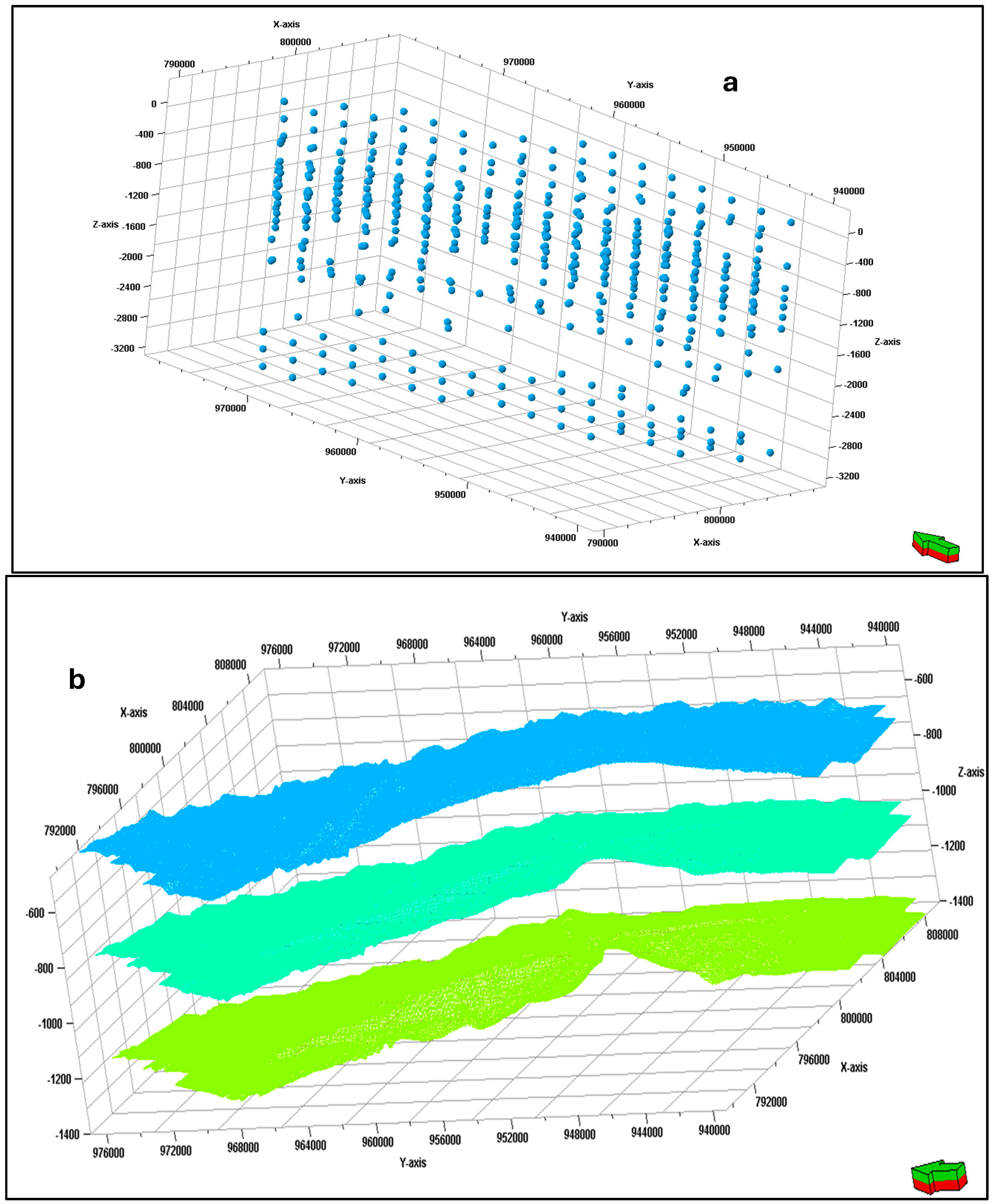
This data was afterwards converted to depth by creating a velocity model. It was built using velocity points provided by the processing center and distributed on interpreted horizons. The cell dimensions in this model were set to 50 × 50 m, while the model itself was divided into eight different layers vertically. The velocity model is a key tool used for converting data between time and depth, and vice versa. It is designed to handle various types of data, including volumetric (VOLUME) and surface-based (SURFACE) data.
2.2.2. Structural Model of Tensleep Reservoir in the Depth Domain
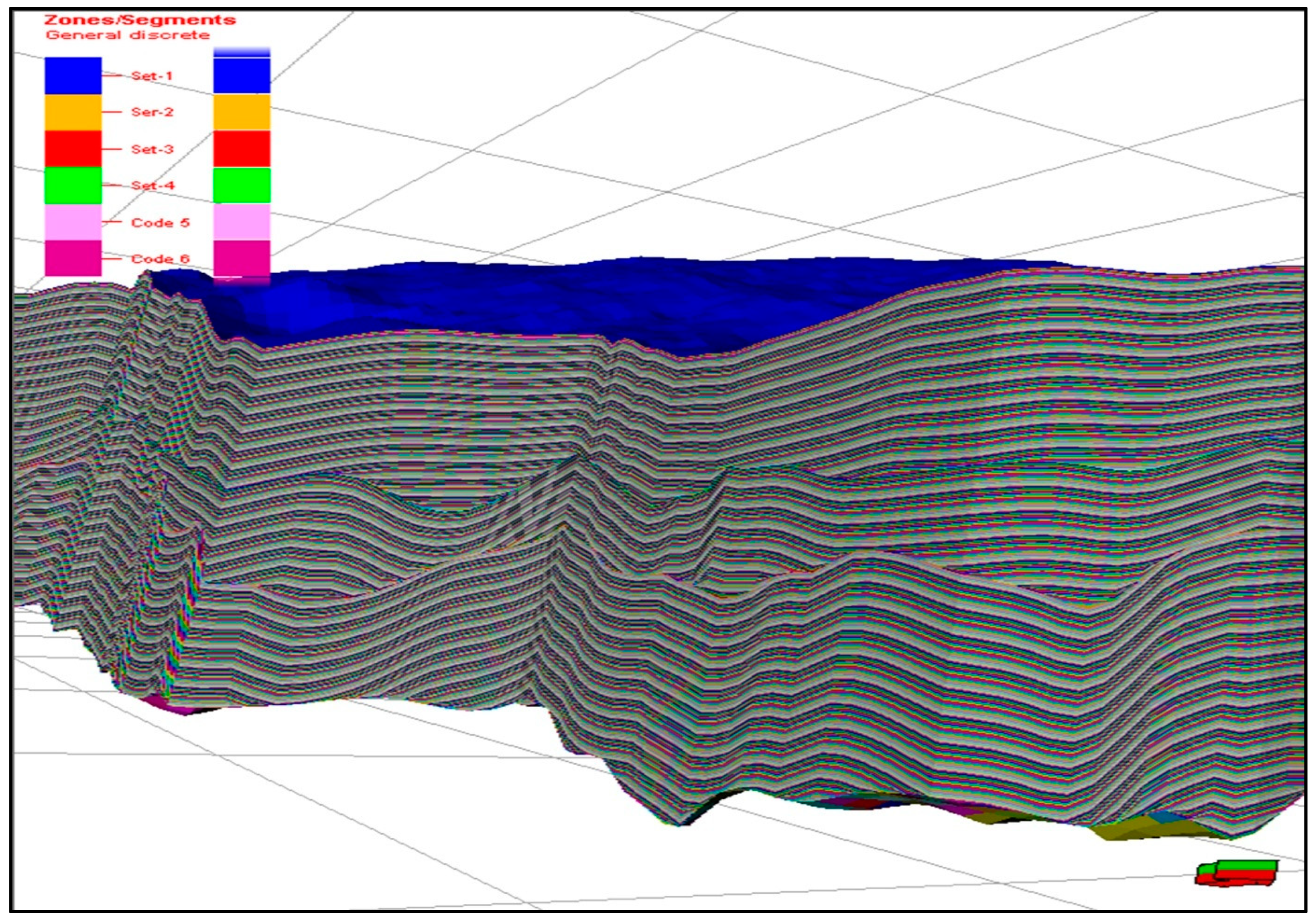
The structural model of Tensleep Reservoir in the depth domain was constructed from the top and bottom horizons of the Tensleep Formation. The model was split into 720 vertical layers, and each grid cell was 400 × 400 m. The number of layers, determined through iterative adjustments, was found to be optimal for accurately representing fracture data, including dip angles and azimuths. The model was subsequently utilized to generate seismic attributes aimed at detecting fractures within the formation.
2.3. Construction of Seismic Attributes
Seismic attributes computed from the 3D post-stack seismic volume enhanced fracture detection within the Tensleep Formation. Of the myriad attributes tried, only two were used, Volume Curvature and Ant Tracking, since they showed the greatest correlation with fracture intensity from the preliminary analysis. These were imported into Hampson Russell’s software as external attributes and were used to train the ANN and PNN models to estimate secondary porosity and fracture intensity.
2.4. Secondary Porosity and Fracture Intensity Estimation Using ANN
2.4.1. ANN Model Architecture for Secondary Porosity
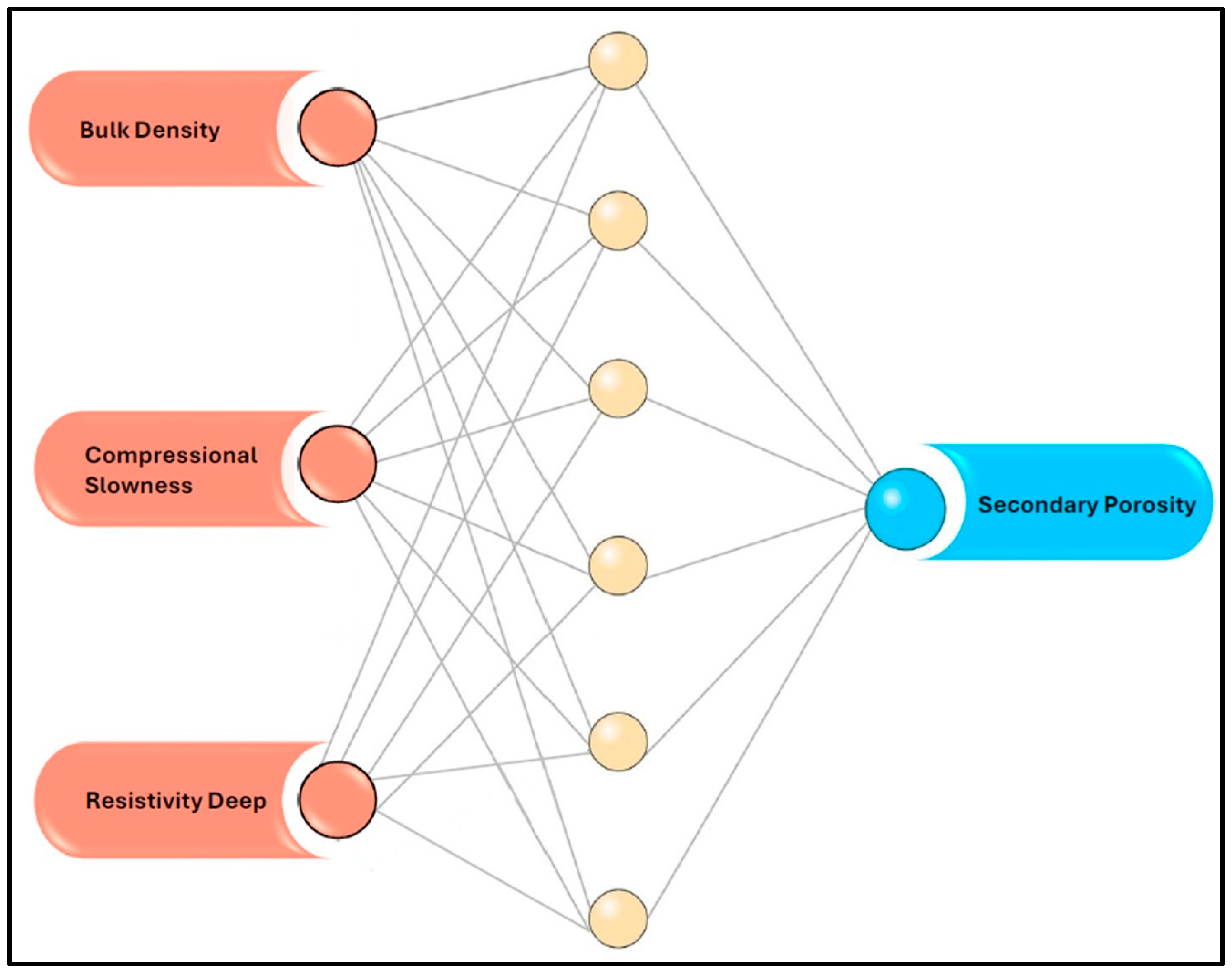
As secondary porosity is a key proxy for fracture intensity, an ANN model that estimated secondary porosity was established. The general structure of the ANN contained one input layer, six hidden layers, and one output layer. In this work, the input data involved density logs, deep resistivity logs, and compressional slowness logs of three wells: 25-1-X-14, 48-X-28, and 71-1-X-4. Well 67-1-TPX-10 was used herein to validate the model.
In this respect, the ANN model was used to iteratively adjust the weight of connections between neurons, applying a backpropagation and a gradient descent algorithm. This would, in effect, minimize the error between the predicted and the actual porosity values. The model accurately predicted porosity for the input of secondary porosity into the fracture intensity model.
2.4.2. ANN Model for Fracture Intensity Estimation
An ANN model with a hidden layer of ten neurons was also developed to estimate fracture intensity for wells with no direct availability of FMI data. This ANN model took the estimated secondary porosity along with the density logs, compressional slowness logs and deep resistivity logs as inputs and provided fracture intensity estimates from its output. The ANN was trained on data from three wells-67-1-TPX-10, 48-X-28, and 71-1-X-4-and tested on well 25-1-X-14.
The results obtained from the ANN model showed a high correlation between predicted and actual fracture intensity, thereby proving its capability for generalization across the data and predicting fracture characteristics in wells lacking FMI logs.
2.5. 3D Fracture Intensity Cube Construction Using PNN
2.5.1. Multiple Attribute Regression for Seismic Attribute Selection
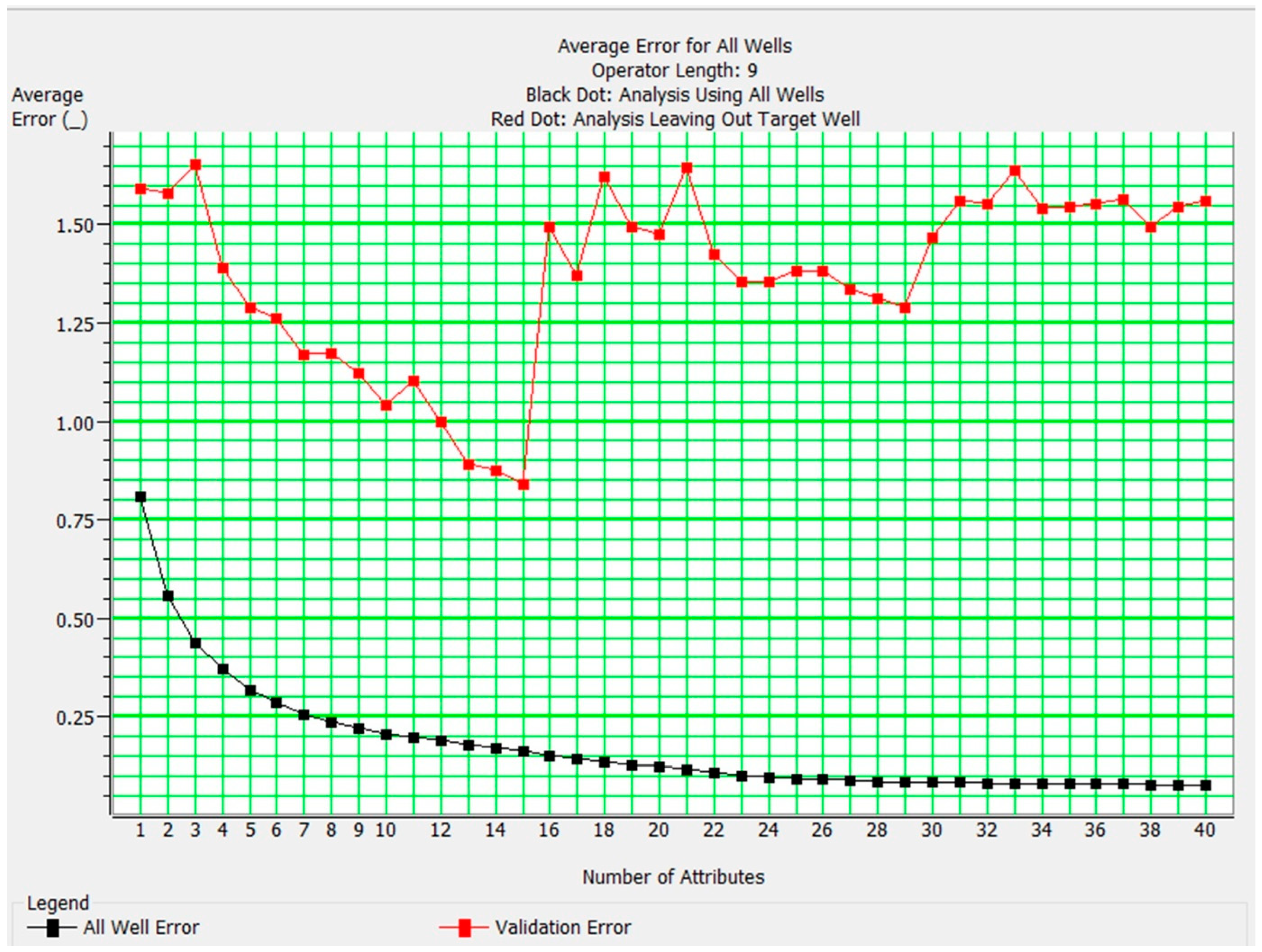
Multiple regressions were done on a total of forty seismic attributes to establish which seismic attributes best described fracture intensity. Based on these regressions, the capability of the HRS software was utilized to analyze, for each attribute, the correlation with fracture intensity and hence chose the best fifteen with the highest predictability accuracy. A validation curve showed that more than fifteen attributes produced overfitting, so the model was limited to only the better attributes.
2.5.2. Probabilistic Neural Network (PNN) Model for Fracture Intensity Prediction
In this respect, the PNN was trained using the chosen seismic attributes through the 3D seismic cube for fracture intensity modeling. Generally, the PNN consists of four layers comprising input, hidden, pattern, and output. The network approximates the probability density functions of fracture intensity from the training data integrated with seismic attribute inputs for a likely estimation of fracture intensity.
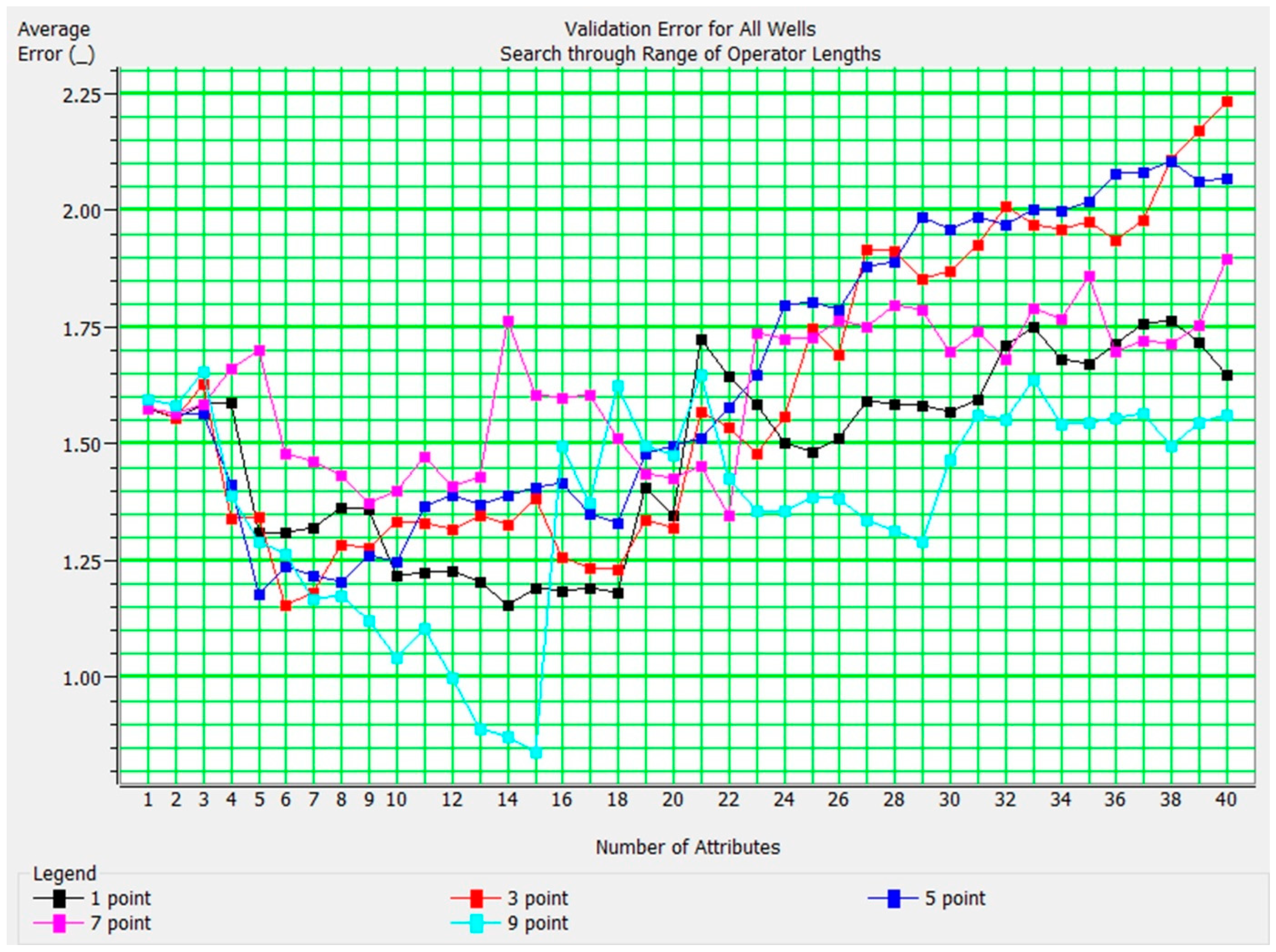
Cross-validation analysis favored an operator length of nine in the PNN model, which balanced the granularity and computational efficiency of predictions. The PNN model showed a training correlation coefficient of 0.93 while the validation error rate was less than 4% in most wells, further confirming the reliability of this model to predict the fracture intensity over the seismic data set.
2.6. Discrete Fracture Network (DFN) Model Construction
The fracture intensity cube generated by the PNN model was transformed into a 3D geocellular model representing fracture distribution across the Tensleep Formation. Sequential Gaussian simulation was used to create a fracture intensity property for each fracture set (class0, class1, class2, and class3), which served as inputs for constructing the Discrete Fracture Network (DFN).
Then, the DFN model was created using the fracture sets defined above. Herein, the Fisher distribution for the fracture orientation was employed to decrease the variability around the mean orientation. Power law was considered for fracturing length and normal for aperture. Permeability was derived accordingly using the cubic law.
Table 1 summarizes the statistical distribution parameters for the main geometric properties (length, aperture, and orientation) applied in DFN modeling.
Upscaling was done to convert the data obtained from the DFN model into properties that were usable for either dual-porosity or -permeability flow simulation. Fracture porosity, permeability, sigma factor, and spacing were calculated and assigned to each grid cell comprising the reservoir simulation model. Upscaled properties enabled the correct simulation of fluid movement within a fractured reservoir and helped with dynamic reservoir management strategies.
2.7. Validation and Application of the 3D Fracture Intensity Model
The final 3D fracture intensity cube was verified by comparing the predicted fracture intensities against independent well data with known fracture properties. The model was validated by cross-correlation analysis, with the acceptable correlation coefficient being greater than 0.8 for all wells used in the validation. Strong validation of the model confirmed its applicability to predict fracture intensity at locations where data is sparse; hence, a scalable method was developed for future fractured reservoir characterization.
3. Results
This work used Artificial Neural Networks (ANN) and Probabilistic Neural Networks (PNN) for fracture intensity prediction in the Tensleep Formation at the Teapot Dome. Integrating seismic attribute analyses, ANN and PNN modeling, and Discrete Fracture Network (DFN) construction, this workflow established a rigorous and detailed reservoir fracture representation. All the steps of the workflow are substantiated across 18 figures, which visually validate the accuracy of the model and give insight into the reservoir fracture characteristics.
3.1. Geological Setting and Dataset Overview
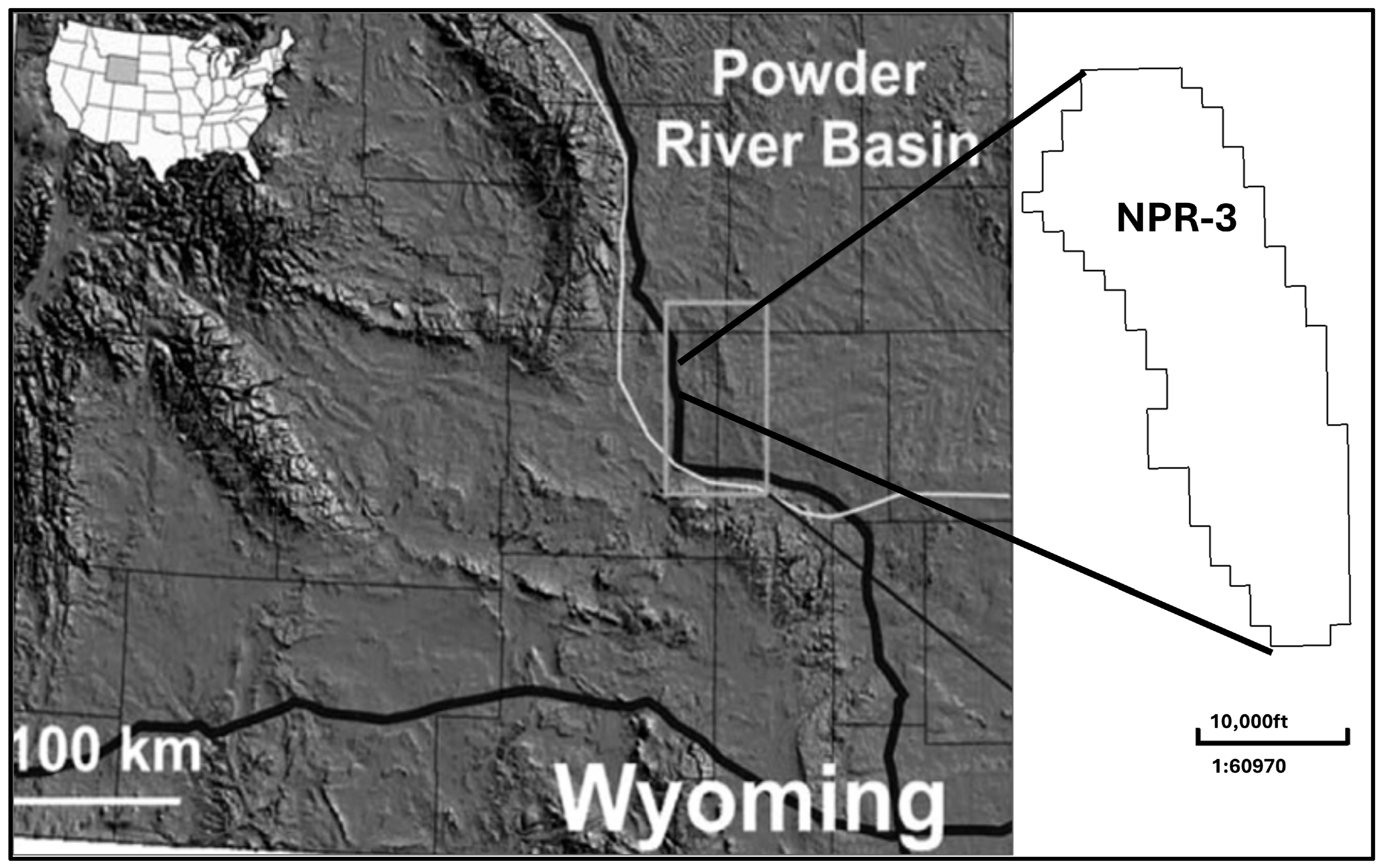
The Teapot Dome is in the Laramide structural belt of Wyoming (
Figure 1), which describes the geographical location.
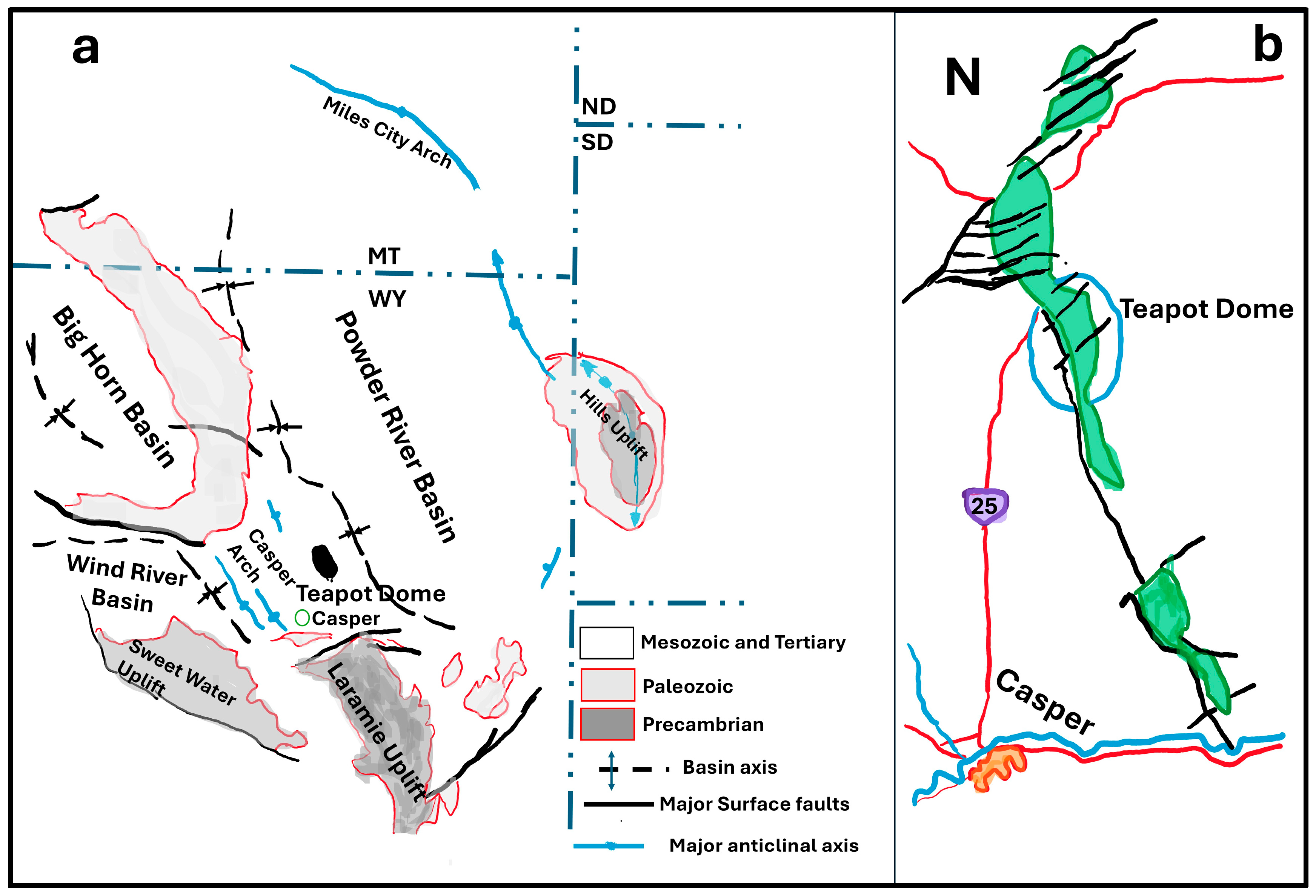
Figure 2a shows the structural relationship of the Teapot Dome with respect to other Laramide uplifts, and
Figure 2b illustrates the segmentation of the Teapot Dome by faults within the Salt Creek structural complex. These tectonics features, like the spatial distribution and intensity of fractures across the reservoir, provide the geologic framework in which the fracture characterization is constructed.
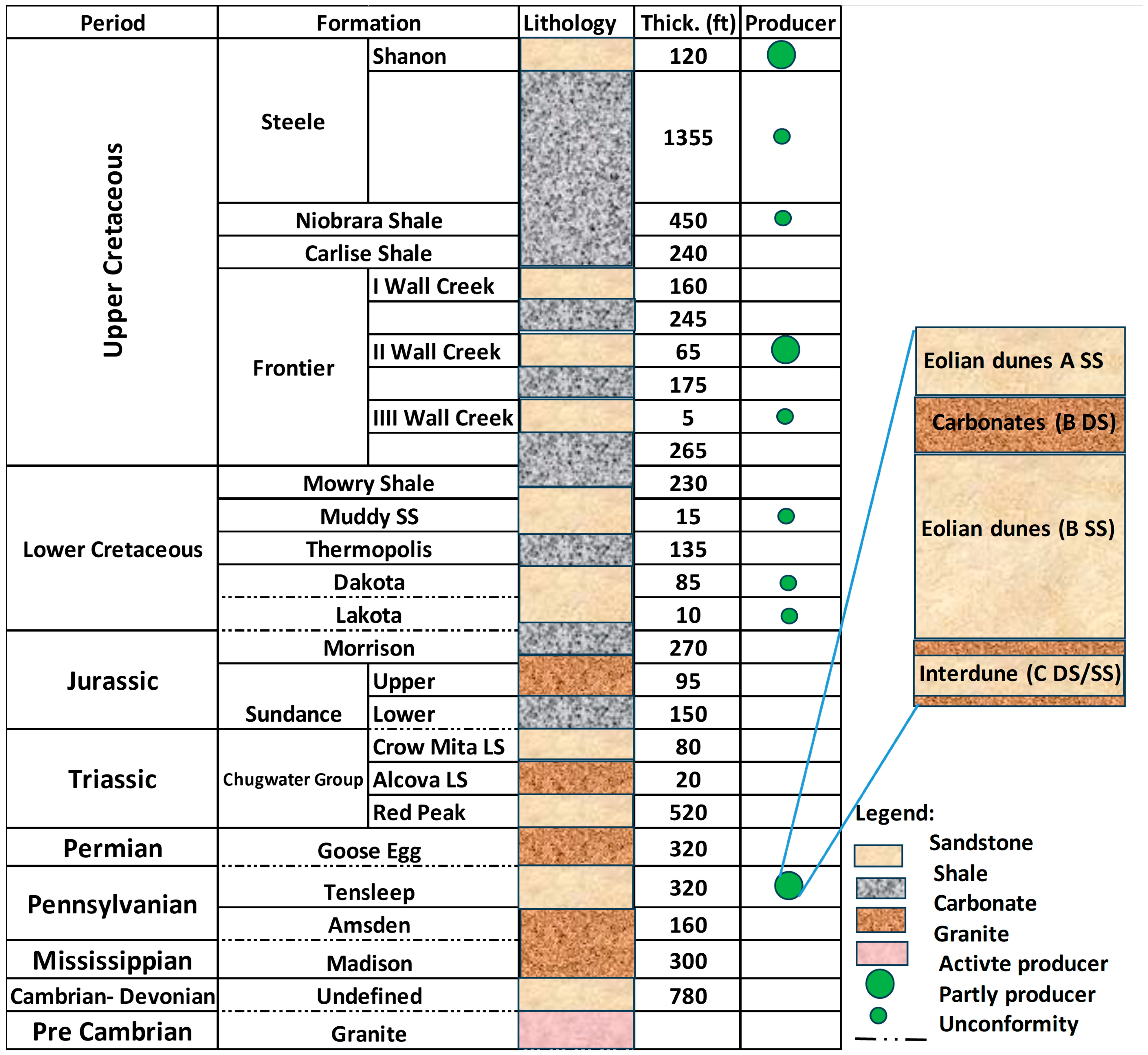
The Tensleep Formation is a hydrocarbon-bearing unit composed primarily of aeolian sandstone interbedded with marine dolomites.
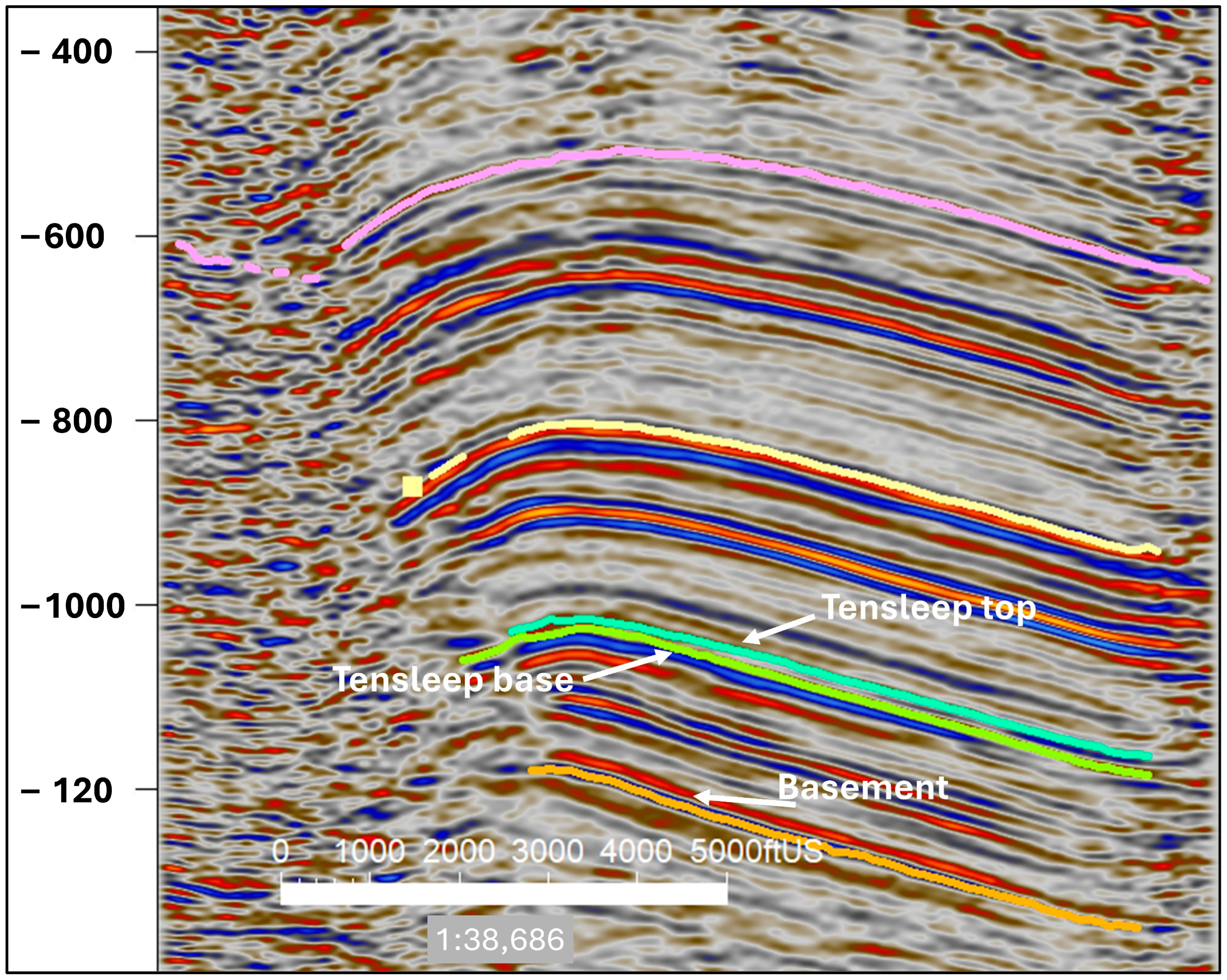
Figure 3 shows the stratigraphic column with the lithological units and hydrocarbon-rich layers that require reservoir productivity. Seismic interpretation visualized in
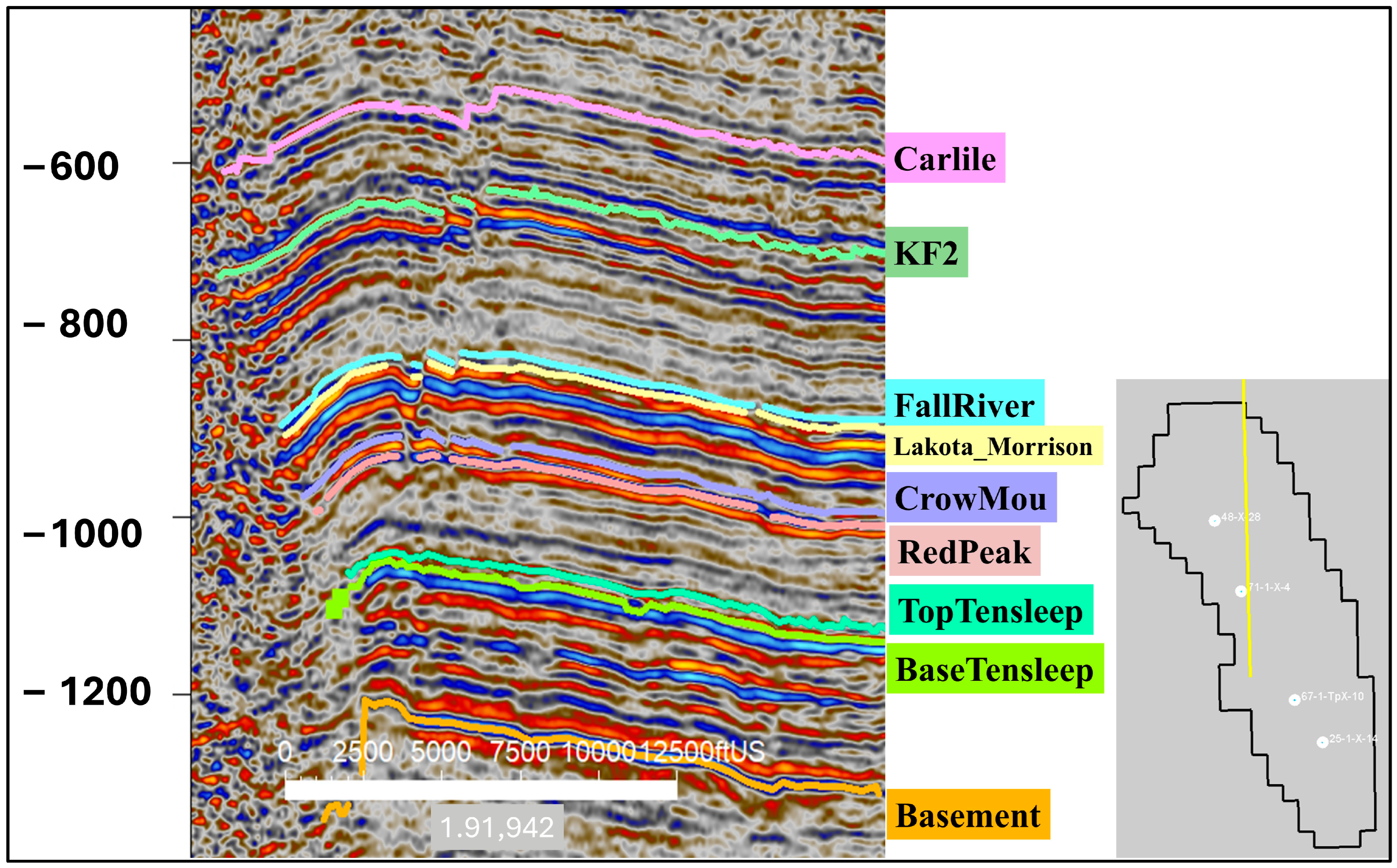
Figure 4 delineates key reservoir horizons within a framework for integrating seismic attributes into fracture prediction models.
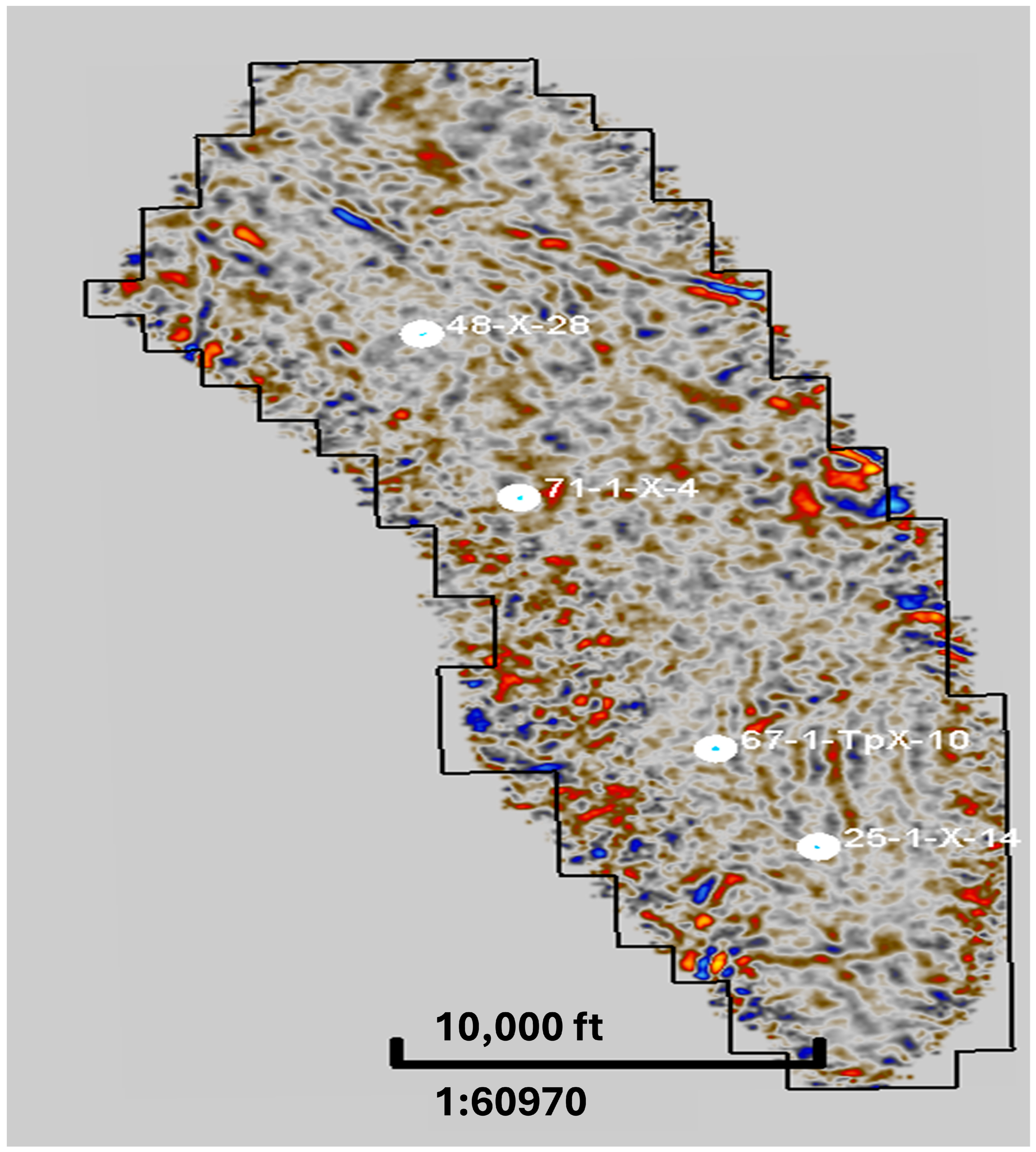
Available data from four wells, 48-X-28, 71-1-X-4, 67-1-TPX-10, and 25-1-X-14, whose locations are shown in
Figure 5, were selected for model calibrations and their validation. These wells also had FMI logs, which provided the necessary fracture intensity data and were the reference points used to train the ANN and PNN models.
3.2. Structural Modeling and Seismic Attribute Interpretation
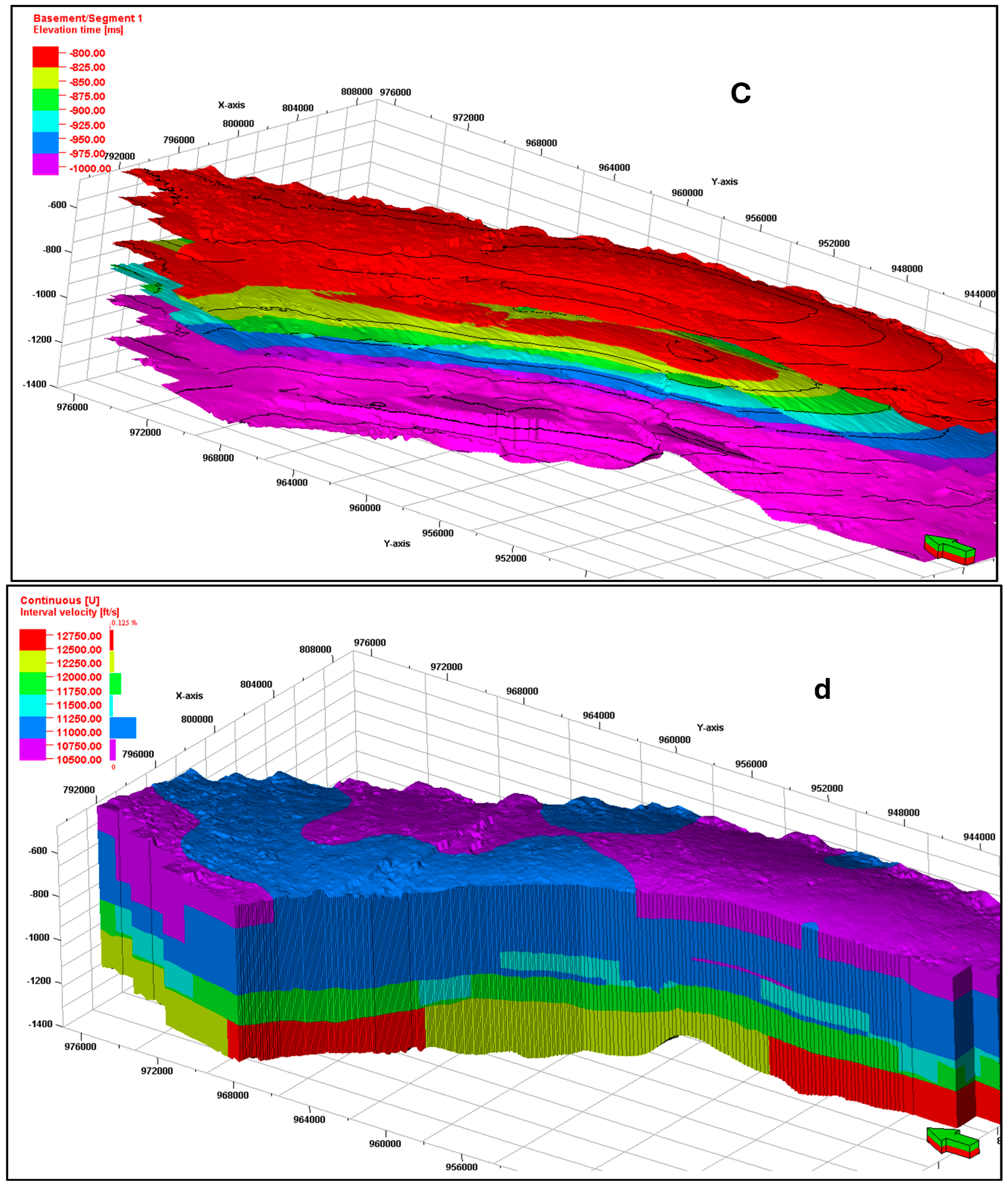
The 3D seismic dataset notes nine primary reflectors, which were auto-tracked to generate a structural model. The velocity model construction process is explained in
Figure 6, which illustrates:
Interpreted seismic horizons (
Figure 6c);
The finalized velocity model used for time-to-depth conversion (
Figure 6d).
The structural model, visualized in
Figure 7, captures the reservoir’s stratigraphic and structural complexity. The model consists of 720 vertical layers with a grid resolution of 400 × 400 m, providing a foundation for analyzing fractures and integrating seismic attributes.
Seismic attributes, particularly Volume Curvature and Ant Tracking, are computed to detect fractures by highlighting structural discontinuities and subtle subsurface features. The interpretation of seismic data and integration of attributes into fracture analysis workflows are illustrated in
Figure 8, showing seismic crossline X-line 94 with interpreted horizons.
3.3. Fracture Set Distribution and Orientation Analysis
Fracture orientations and intensity analyses for individual wells provided insights into the spatial variability of fractures within the reservoir.
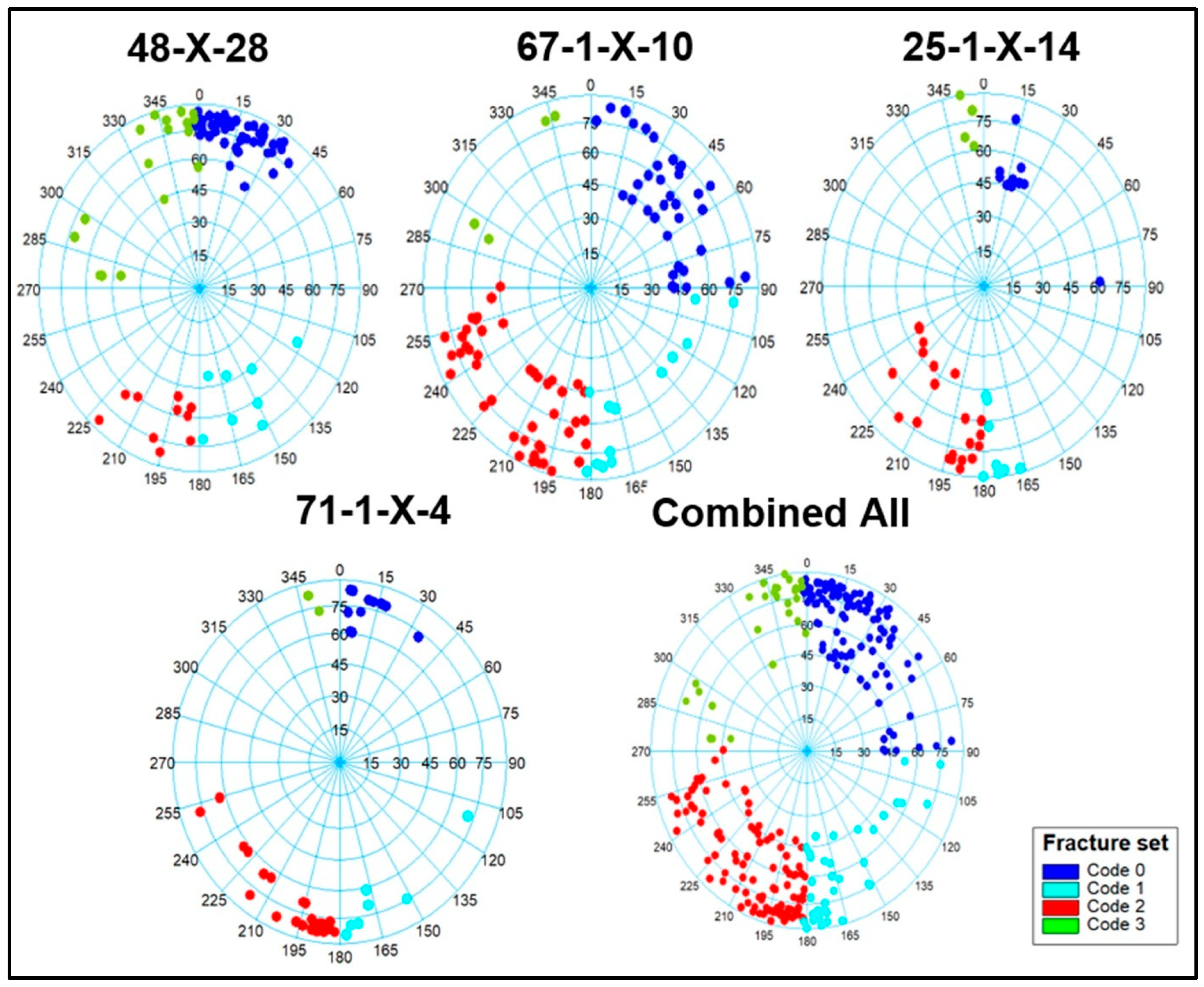
Figure 9 presents polar plots of fracture orientation and intensity for the following wells: 48-X-28, 67-1-X-10, 25-1-X-14, and 71-1-X-4. Fractures were grouped into four sets (Codes 0 to 3), with color-coded representations bringing out variability. The combined view across all wells showed high heterogeneity, important for understanding fracture dynamics, fluid, and reservoir management.
3.4. ANN Model Development and Validation for Secondary Porosity and Fracture Intensity
3.4.1. Secondary Porosity Estimation
The ANN model of secondary porosity predictions uses bulk density, compressional slowness, and resistivity logs as input parameters. The model architecture, illustrated in
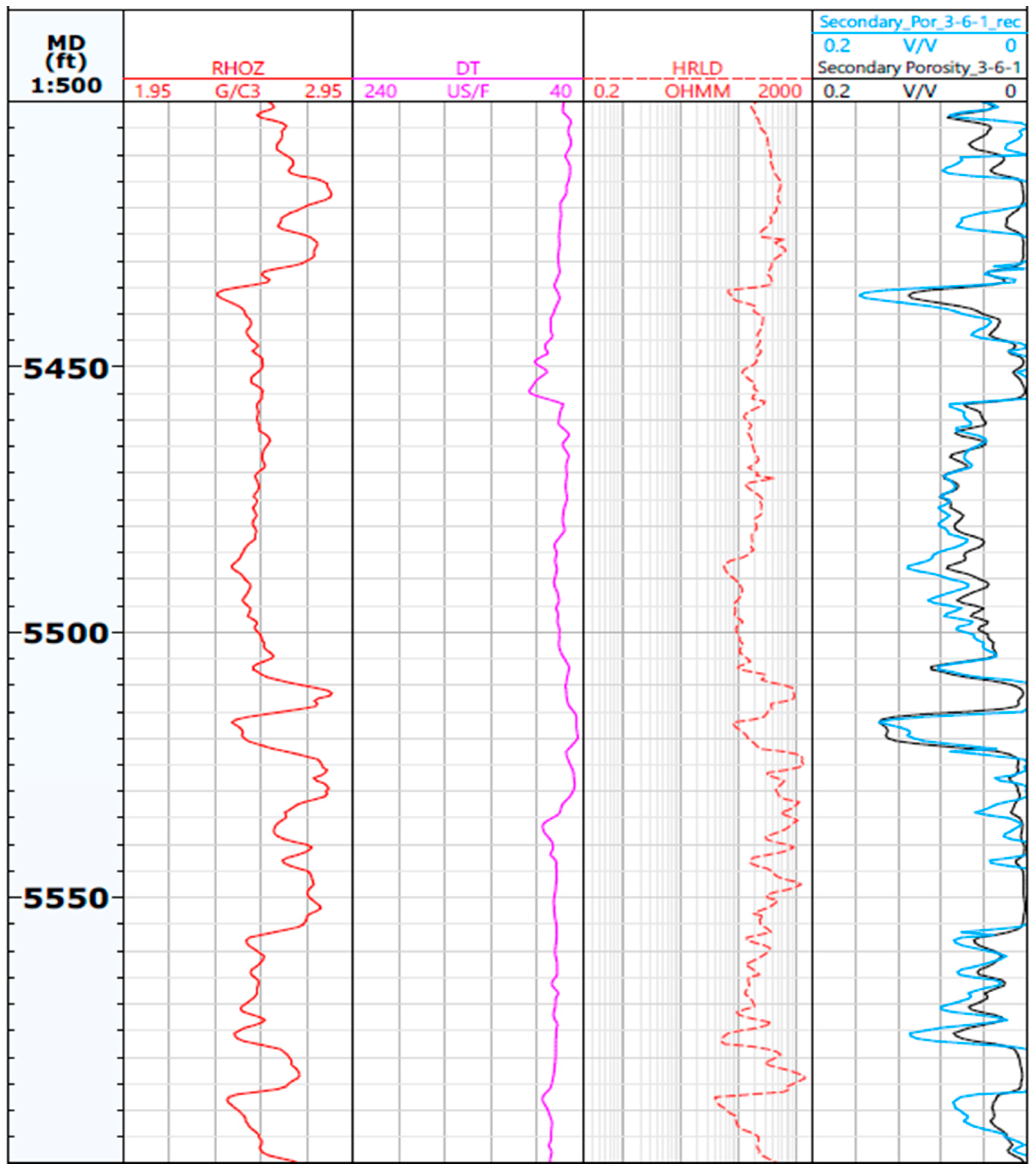
Figure 10, features six hidden layers with 10 neurons in each layer. Each hidden layer applies a non-linear activation function (ReLU was selected to capture complex relationships between petrophysical parameters), while the output layer employs a linear activation function to predict continuous porosity values. Validation against well 67-1-TPX-10 showed a high correlation between the observed and predicted porosity values, as presented in
Figure 11, confirming the predictive accuracy of the model.
3.4.2. Fracture Intensity Estimation
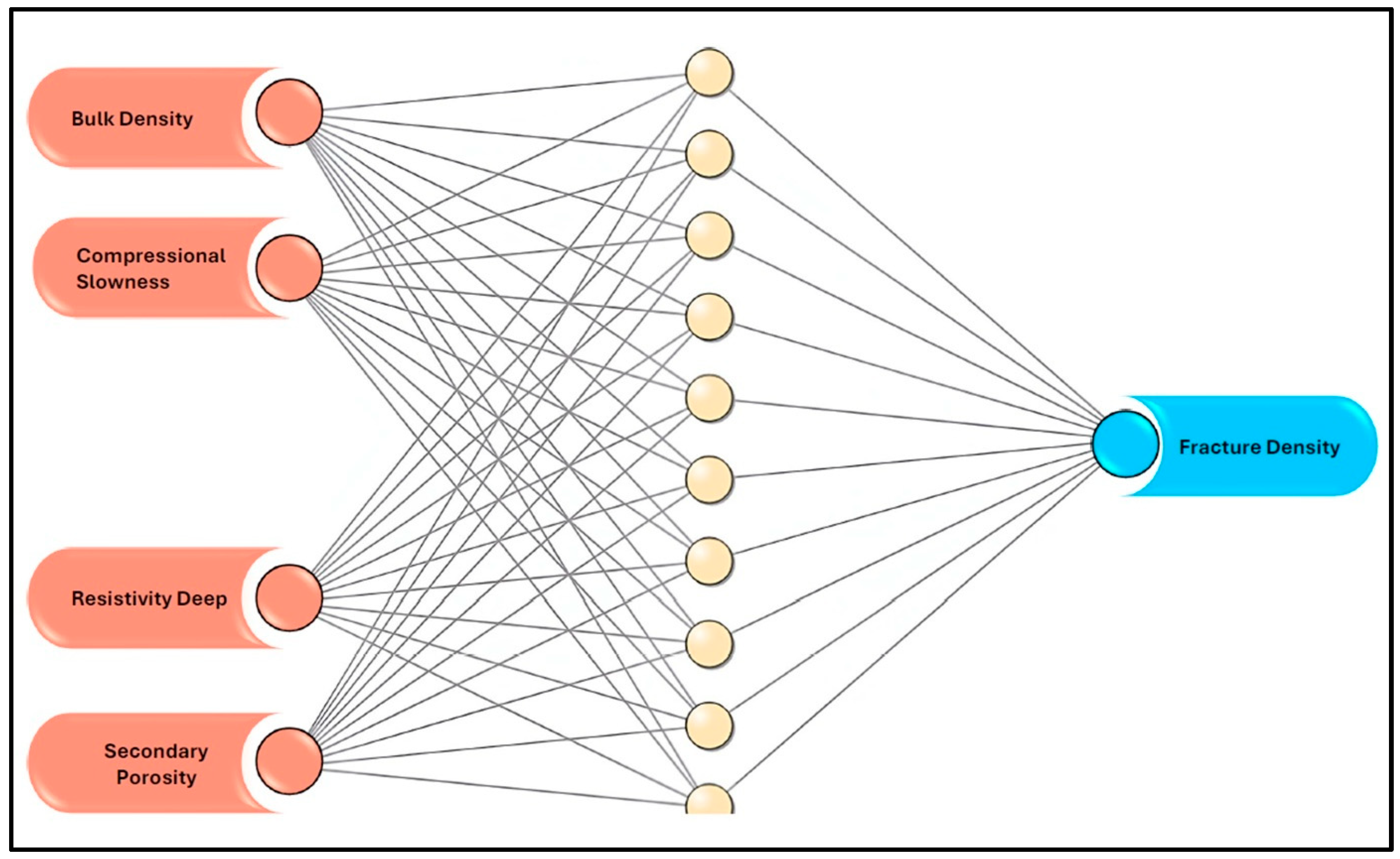
The ANN model for fracture intensity prediction incorporates four input parameters: bulk density, compressional slowness, deep resistivity, and secondary porosity,
Figure 12. These inputs are connected to a hidden structure consisting of ten hidden layers, each comprising approximately 12 neurons. The hidden layers employ a non-linear activation function (ReLU) to capture the complex relationships between petrophysical parameters and fracture intensity. The output layer consists of a single neuron with a linear activation function, which provides continuous predictions of fracture density. Validation against well 25-1-X-14 demonstrated excellent agreement between predicted and observed fracture intensities, as shown in
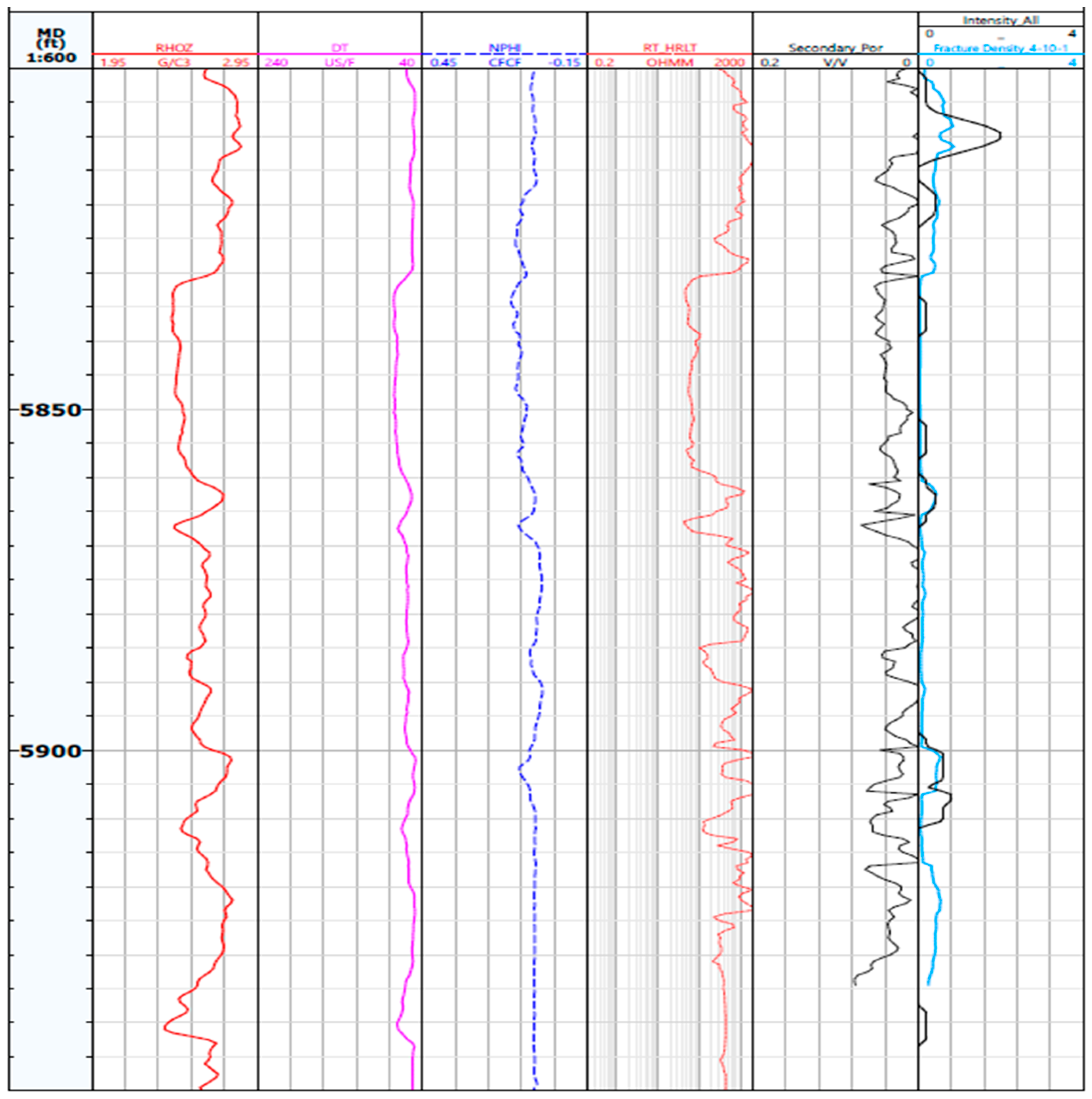
Figure 13, confirming the robustness and predictive accuracy of the model.
3.5. Selection of Seismic Attributes and PNN Model Training
We optimized the seismic attribute selection by employing multiple regression analysis. The error curve in
Figure 14 indicates that the model achieved optimal performance with 15 attributes. Adding more attributes increased the risk of over-fitting, highlighting the importance of precise attribute selection. These 15 attributes are listed in
Table 2 along with their physical meaning. In the multiple regression analysis, a fast process called stepwise regression was applied. This procedure identified the best single attribute first, followed by the best pair, then the best triplet, and so on. At each stage, the criterion for selecting the “best” group was based on the RMS prediction error, meaning that the optimal group was the one that predicted the target logs with the least RMS error. This systematic approach ensured that the selected attributes contributed effectively to fracture intensity mapping while minimizing redundancy and over-fitting.
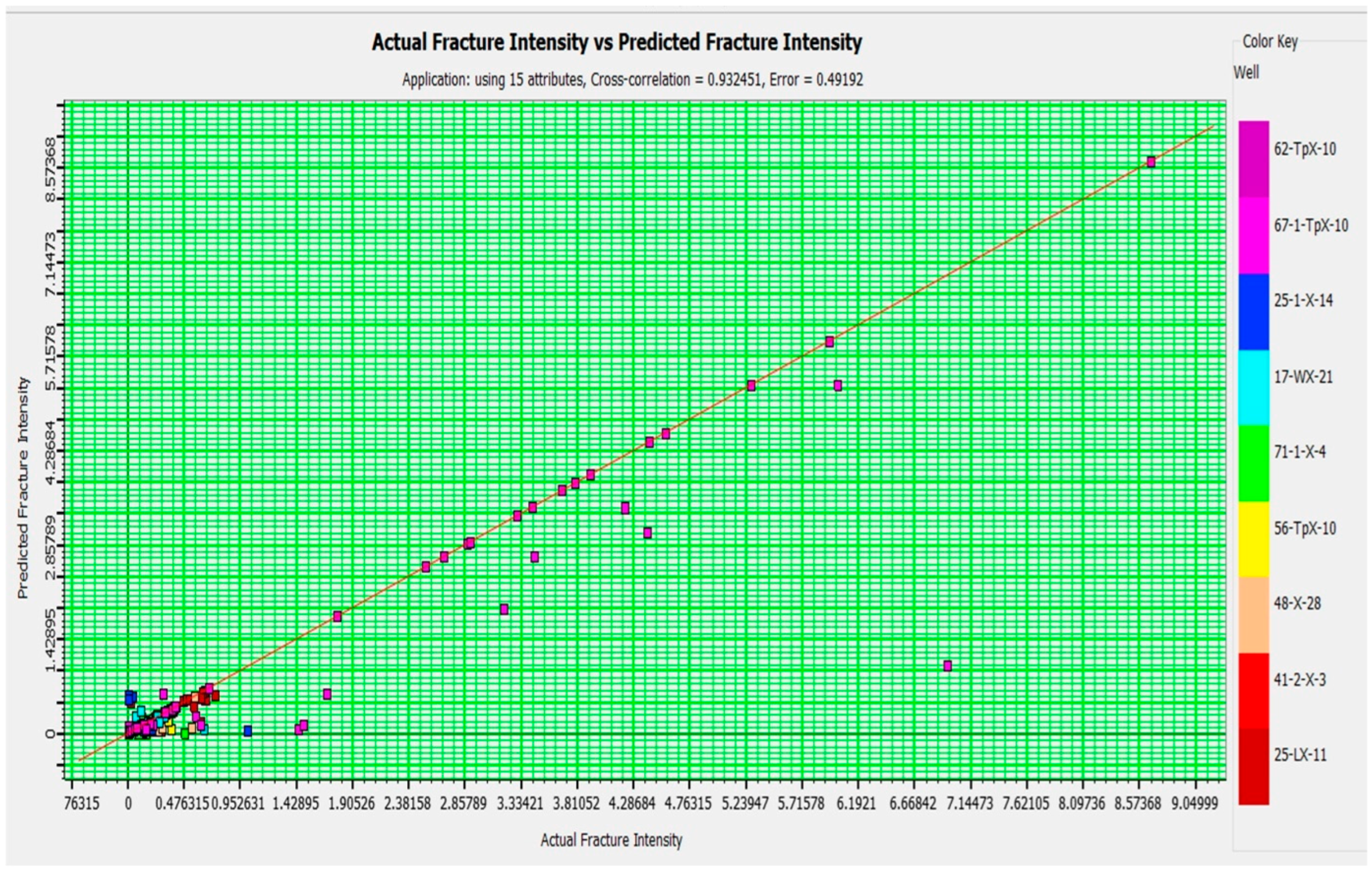
The PNN model, trained with the selected attributes, achieves a training correlation of 0.93 and validation errors below 4%.
Figure 15 presents a scatter plot comparing actual and predicted fracture intensities, confirming the model’s reliability. The operator length for the PNN model, provided in
Figure 16, was determined to be nine, ensuring a balance between prediction accuracy and computational efficiency.
In this study, the Probabilistic Neural Network (PNN) was applied not for classification purposes, but as a mapping tool to predict fracture intensity. The PNN employs a Gaussian radial basis activation function, where each neuron computes an exponential function of the squared distance between the input vector and a training sample. This kernel function enables the network to estimate probability density functions and capture similarity measures, which are then translated into continuous probabilistic maps of fracture intensity. By adopting this non-parametric approach, the PNN provides smooth and reliable spatial predictions, making it particularly effective for reservoir characterization and fracture mapping compared to conventional feedforward ANNs.
3.6. Construction of the 3D Fracture Intensity Cube and DFN Model
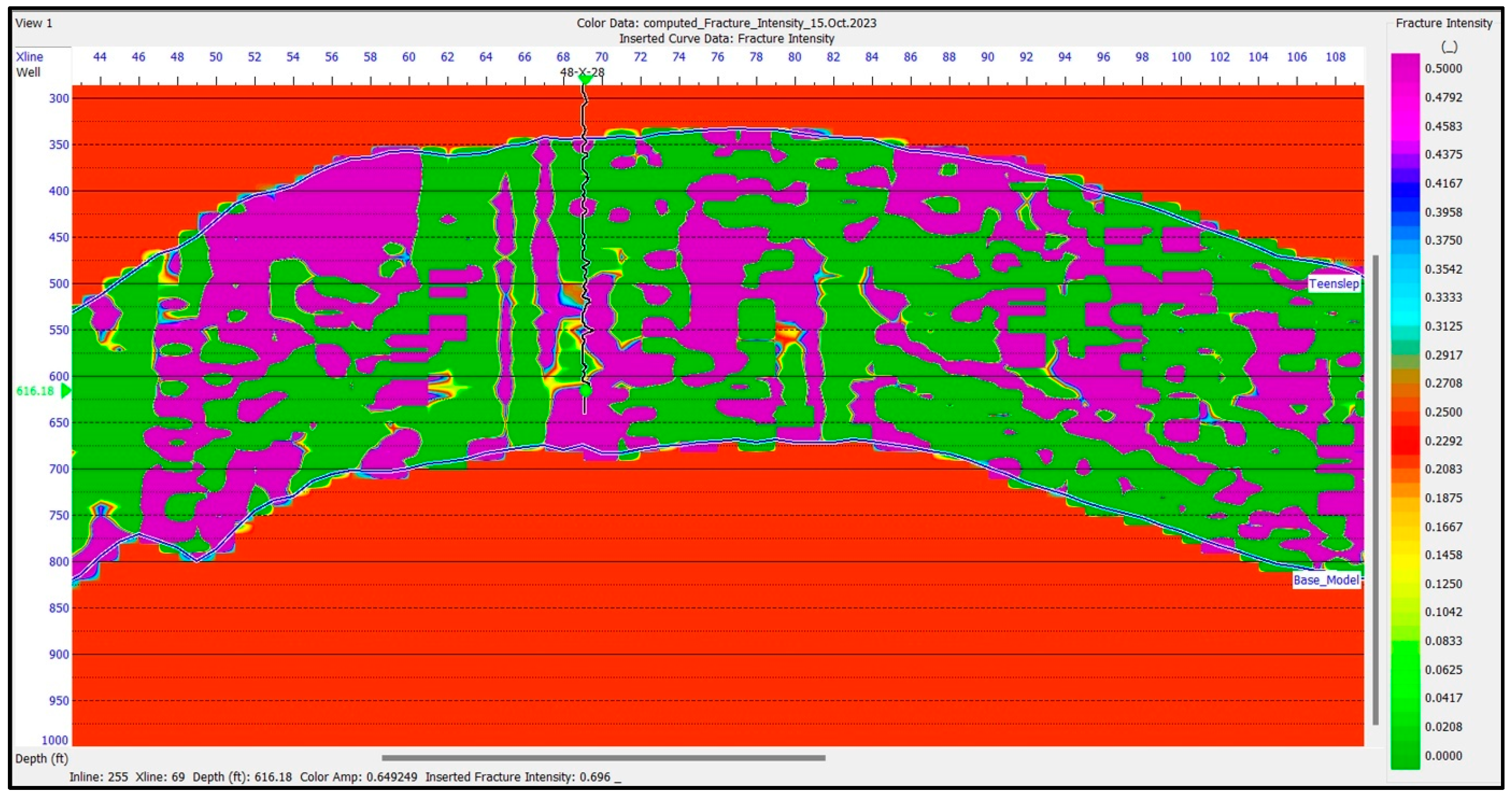
The PNN outputs were used to construct a 3D fracture intensity cube, which provided a spatially detailed representation of fracture intensity across the reservoir.
Figure 17 illustrates the spatial distribution of fracture intensity, with color-coded zones representing varying intensity levels. This cube served as the foundation for constructing the DFN model.
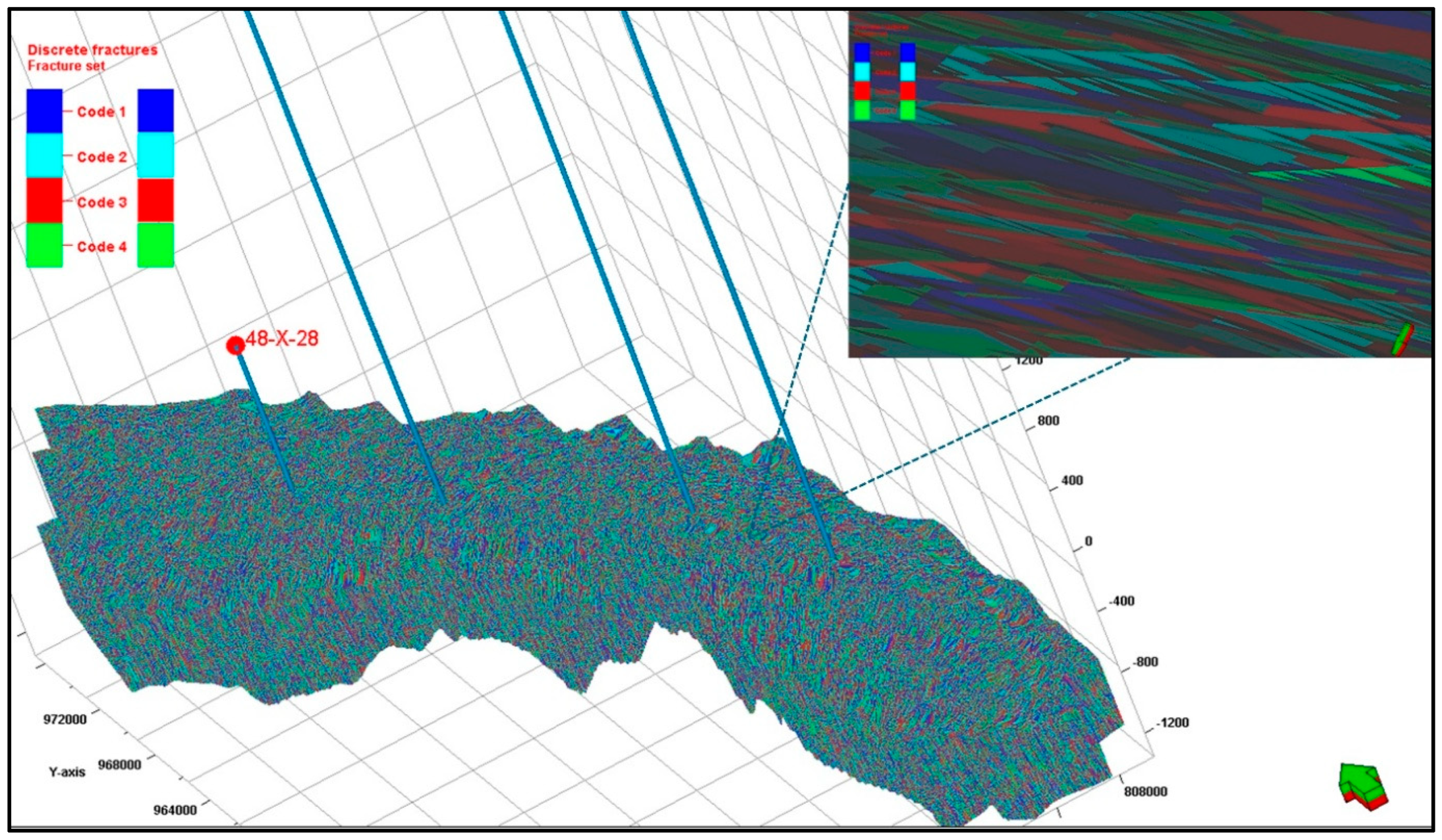
The DFN model, depicted in
Figure 18, incorporates fracture geometry and density for four fracture sets (Codes 1 to 4). Sequential Gaussian simulation was employed by assigning intensity properties to the DFN model, enabling realistic and detailed fracture characterization across the Tensleep Formation.
3.7. DFN Upscaling for Dynamic Simulation
Permeability and sigma factor were upscaled for dual-permeability flow simulations. The Discrete Fracture Network (DFN) model (
Figure 18) provided a detailed representation of fracture distribution, orientation, and density across the Tensleep Formation, which served as the foundation for these upscaling processes.
The cubic law was used to calculate permeability. This law correlates fracture aperture with fluid flow, enabling the accurate estimation of fracture permeability within the network. Using the cubic law, fracture permeability was derived and assigned to individual grid cells in the simulation model. These permeability values were then statistically analyzed to ensure consistency with theoretical predictions.
In addition, fracture porosity, sigma factor, and spacing were calculated and integrated into the reservoir simulation grid. The upscaled properties allowed for dynamic simulations of fluid flow, providing insights into fluid migration pathways and supporting strategies for enhanced oil recovery (EOR) and secondary recovery. This approach underscores the importance of integrating detailed discrete fracture network (DFN) modeling with robust mathematical frameworks, such as the cubic law, to enhance predictions and optimize reservoir performance.
5. Conclusions
Our study confirms the potential of AI-driven fracture characterization methods, particularly in naturally fractured reservoirs where traditional approaches often face limitations. By integrating seismic data with ANN and PNN models, we developed a workflow capable of predicting fracture intensity in a robust and scalable manner. The resulting 3D fracture intensity cube, incorporated into the DFN model, provides reservoir engineers with high-resolution maps that support well placement, optimize drilling paths, and help mitigate water breakthroughs.
While the development stage requires investment in high-quality data and computational resources, the cost-effectiveness of the workflow is primarily realized during its application phase. Once trained and validated, the model can be applied to new wells or nearby areas using conventional logs, thereby reducing reliance on additional costly FMI acquisitions.
This framework offers practical value for reservoir management, especially in mature fields where secondary recovery strategies are critical. Future research may further enhance the methodology by incorporating real-time geomechanical information and advanced AI techniques, leading to more flexible models that can adapt to the evolving challenges of fractured reservoir management.