Article

Performance Analysis of Small-Scale Milk Processing Using a Photovoltaic System with Heat Recovery for Off-Grid Areas


by
Fikadu Geremu Bodena
1,*,
Demiss Alemu Amibe
1,
Ole Jorgen Nydal
2 and
Trygve Magne Eikevik
2
1
School of Mechanical and Industrial Engineering, College of Technology and Built Environment, Addis Ababa University, Addis Ababa 1000, Ethiopia
2
Department of Energy and Process Engineering, Norwegian University of Science and Technology (NTNU), 7491 Trondheim, Norway
*
Author to whom correspondence should be addressed.
Energies 2026, 19(7), 1642; https://doi.org/10.3390/en19071642
Submission received: 28 January 2026 / Revised: 27 February 2026 / Accepted: 4 March 2026 / Published: 27 March 2026

Abstract

Moving toward sustainable energy in small-scale dairies is an indispensable requirement and a significant challenge in developing countries. This study investigates a solar-powered refrigeration system with heat recovery designed to address the energy challenges faced by small-scale dairy farmers in off-grid areas of developing nations. It presents a novel solar-powered refrigeration system with integrated heat recovery, experimentally optimized to simultaneously deliver heating and cooling while valorizing waste heat and synergistically integrating solar energy to establish a decentralized and energy-autonomous milk preservation system for off-grid applications. The proposed system successfully recovers an average of 55% of the heat rejected by the condenser, thereby delivering more than 1000 W of usable thermal energy necessary for milk pasteurization. The experimental findings showed a coefficient of performance of 4.7, representing a 43% improvement over conventional systems, and achieved a Carnot efficiency of 42%. In addition, the system yields an annual energy savings of 3650 kWh and reduces carbon emissions by 971 kg per year for a 50 L unit. These findings underscore the system’s substantial potential to enhance energy efficiency, promote sustainability, reduce spoilage, improve incomes, mitigate carbon emissions, and enhance local milk preservation capabilities within small-scale dairy operations, minimizing reliance on diesel or firewood, particularly in regions that are distant from access to grid energy.

1. Introduction

Energy optimization plays a significant role in lowering energy expenses, offering considerable environmental benefits, lowering greenhouse gas emissions, and reducing reliance on fossil fuels [1]. The food processing industry is highly energy-intensive, consuming about 200 EJ annually, with 45% of energy used in processing and distribution worldwide. This has led to a growing focus on energy efficiency and environmental impact within the sector [2]. The dairy sector in the food processing industry requires significant energy for heating and cooling processes to maintain product quality. This process involves heating milk to either 63 °C for 30 min or 72 °C for 15 s, followed by rapid cooling to prevent the growth of harmful microorganisms in the milk [3]. In developing countries’ remote areas, traditional methods or diesel are commonly used for milk preservation, either leading to considerable spoilage or high environmental and economic costs due to high fuel consumption [4]. Over 90% of Ethiopia’s milk production comes from small-scale farmers and pastoralists, which is primarily consumed at home or sold in informal markets. However, 20–35% of dairy products suffer post-harvest losses due to their reliance on traditional processing and poor milk collection systems [5,6,7]. Applying sustainable milk processing methods that employ alternative energy sources is critical for small-scale milk producers operating in remote regions. These approaches not only reduce milk spoilage but also enhance production and energy efficiency. One effective strategy involves recovering heat from refrigeration systems, which can be accomplished by incorporating additional heat exchangers between the compressor and condenser. This allows surplus heat to be repurposed for heating, reducing energy consumption, improving performance, and minimizing environmental impact in dairy facilities [8,9,10]. Thus, it is imperative to develop energy-efficient alternative energy solutions for small-scale farmers to preserve milk [11]. Implementing solar-powered simultaneous milk pasteurization and cooling from single refrigeration systems utilizing heat recovery methods enhances dairy efficiency by reducing fuel consumption and emissions while meeting the necessary heating and cooling requirements for milk preservation in remote areas [12]. This approach not only decreases spoilage, facilitates milk preservation, and increases farmers’ earnings, but also promotes environmental sustainability and energy efficiency improvements [13,14,15].
Multiple studies on simultaneous heating and cooling with heat recovery systems indicate significant advancements in solar-powered milk preservation. A study evaluates a solar-powered milk-cooled chiller featuring a waste heat recovery heat exchanger, achieving a compressor power reduction from 12.42 kW to 7.68 kW, a 37.9% decrease in energy consumption, and a 91.7% reduction in greenhouse gas emissions, with a coefficient of performance of 4.1 [16,17]. A model utilizing waste heat from a steel plant can replace gas boilers, achieving a 75% reduction in non-renewable energy use and carbon emissions while recovering about 90% of waste heat [18]. Also, recovering waste heat from flue gas temperatures in refinery heating leads to energy savings of 12.5–16.9% and carbon emissions reductions of 13.7–18.3% with [19]. A study using two coil heat exchangers from the refrigeration cycle revealed that increasing the flow rate of deionized water enhanced the system’s performance coefficient by 15%, optimizing energy efficiency from 12 to 34% [20]. Another study evaluates a CO2 refrigeration system in a supermarket, revealing that heat recovery can reduce gas-heating needs by at least 47% with slight operational adjustments, achieving superior system efficiency to conventional methods [21]. Zhou et al. [22] demonstrate effective waste heat recovery through a heat pump, enabling year-round hot water supply and efficient space heating for residential buildings during colder months, showcasing substantial energy savings ranging from 12 to 34% [23]. Recovering waste heat from an Organic Rankine Cycle (ORC) with a recuperator and heat pump powered by photovoltaic modules improves the overall performance coefficient from 3.10 to 3.54, resulting in net electricity savings of 1.41 kW, thus increasing the ORC’s viability for renewable district heating and cooling systems [24,25,26,27]. A system design integrates solar energy and heat recovery to provide energy directly to buildings and a centralized heating/cooling system, maximizing reliability and efficiency of heat sources by matching thermal load demands [28]. Mancinelli et al. [29], incorporating a water tank for heat storage and heat recovery cycles, achieved a 4.43% COP improvement. Thanasoulas et al. [30] highlights two-stage heat recovery methods, which enhance the seasonal performance factor by 17%, resulting in annual energy savings of up to 4% and 25% improvement in heat export efficiency in cold climates.
The performance evaluation of photovoltaics and waste heat recovery across various systems indicates that a hybrid energy system achieves energy savings of 72.98% and 21.3% while reducing carbon emissions by 68.34% and 19.52% [31]. A photovoltaic-powered thermoelectric cooling system with a desuperheater increased its COP from 17% to 32%, resulting in greenhouse gas emissions savings of 0.234 and 15.277 gCO2eq/Wh [32]. Wu et al. [33] found that an air conditioning system combining solar energy with heat recovery achieved a COP of 6.08. Shin et al. [34] simultaneous cooling and heating systems for buildings, with thermal heat storage tanks, achieve about a 60% reduction in energy use, while waste heat recovery of air conditioning results show a coefficient of performance of 8.85 [35]. Chen et al. [36] used a multi-heat pump system that recovers waste heat from data center equipment, achieving energy savings of 15.11% in winter, 14.68% in transition seasons, and 12.91% in summer, with a coefficient of performance of 1.19, 1.21, and 1.13, respectively. Davies et al. [37] evaluation of waste heat technology for cooling via an absorption chiller results in a cost saving of 15,610 USD/kW-year compared to traditional chillers. Zhao et al. [38] examine high-temperature ammonia twin-screw compressors for heat recovery and domestic hot water generation, achieving temperatures over 80 °C and a coefficient of performance between 3.0 and 7.0 [39]. Liu et al. [40] conducted an experimental study on waste heat recovery, examined various technologies, achieved an average heat recovery efficiency of 61.64%, and, with the two-stage heat pipe technology, notably improved net heat recovery by 6.9% to 21.5%. Moreover, configurations using CO2 heat pumps for concurrent heating and cooling, integrating ejector-based loops and heat recovery, showed an increase of 14.69% in performance coefficient compared to standard setups [41]. A novel energy system utilizing a compression heat pump achieves a 75% water vapor recovery and boasts a COP of 4.48 [42].
A thermodynamic analysis revealed that replacing the ejector in a solar-assisted heating and cooling system improved the overall COP by 12% for dairy applications [43]. The performance evaluation of a novel compound waste heat-photovoltaic thermal collector-driven ejector-solar-assisted heat pump showed an increase in the coefficient of performance from 3.7 to 4 [44]. In another study on the dairy industry, a transcritical CO2 system featuring an ejector with internal heat exchange achieved a 6.4% increase in the COP and a 4.5% improvement in exergy efficiency [45]. Additionally, a novel ejector-based CO2 transcritical refrigeration system with mechanical sub-cooling can heat water to 80 °C and has an overall COP of 4.15 at 40 °C, presenting a cleaner alternative to conventional systems [46]. Liu et al. [47] examine the energy use and operational costs of NH3 and CO2 heat pumps in food processes, with potential annual energy savings of 32%, 44%, and 35% in food pasteurization, beer brewing, and fluid milk processing, respectively. Singha et al. [48] showed that mechanical sub-cooling and evaporative cooling in milk processing were shown to improve the coefficient of performance by 62.3% by heat recovery. Ahammed et al. [49] demonstrated that a refrigeration cycle with an ejector recycling waste heat for milk pasteurization achieved 13% greater efficiency and 29% energy savings, emphasizing the system’s potential for sustainable energy solutions and thermal management [50,51]. Sapali et al. [52] discussed a technique that recovered superheat lost to the atmosphere from milk cooler condensers, using it to heat water for cleaning milk-processing equipment, resulting in energy savings and increasing the system’s coefficient of performance from 3 to 4.8. Başaran et al. [53] analyzed the thermodynamic cycle for pasteurization, optimized energy efficiency, recovered 2.328 kW of heat, and maintained a target temperature of 65 ± 5 °C, resulting in an overall exergy efficiency of approximately 7.2% and a 33% decrease in carbon emissions.
Numerous studies have focused on the implementation of hybrid renewable energy systems in off-grid regions for farm cooling [54,55,56,57]. These systems integrate biomass, biogas, solar photovoltaics, solar thermal collectors, wind energy, and battery storage to improve food preservation in remote rural areas. While numerous studies have focused on waste heat recovery in industrial settings, utilizing photovoltaic energy for the simultaneous pasteurization and chilling of milk from a single refrigeration system with heat recovery is understudied. This approach specifically addresses the performance of combined heating and cooling, as well as heat recovery in refrigeration cycles pertinent to milk preservation in off-grid areas of developing countries. Consequently, there is a clear need for an energy-efficient solar-powered solution that can provide both heating and cooling from a single refrigeration unit with heat recovery. This study aims to enhance milk preservation by leveraging local renewable energy sources and energy optimization, enabling pastoral and small-scale farmers to generate revenue, minimize milk loss, protect the environment, and boost the marketability of dairy products. It seeks to conduct an experimental performance analysis of small-scale PV-powered refrigeration systems that incorporate heat recovery from condensers, facilitating simultaneous milk pasteurization and cooling requirements in off-grid regions.

2. System Description and Experimental Setup

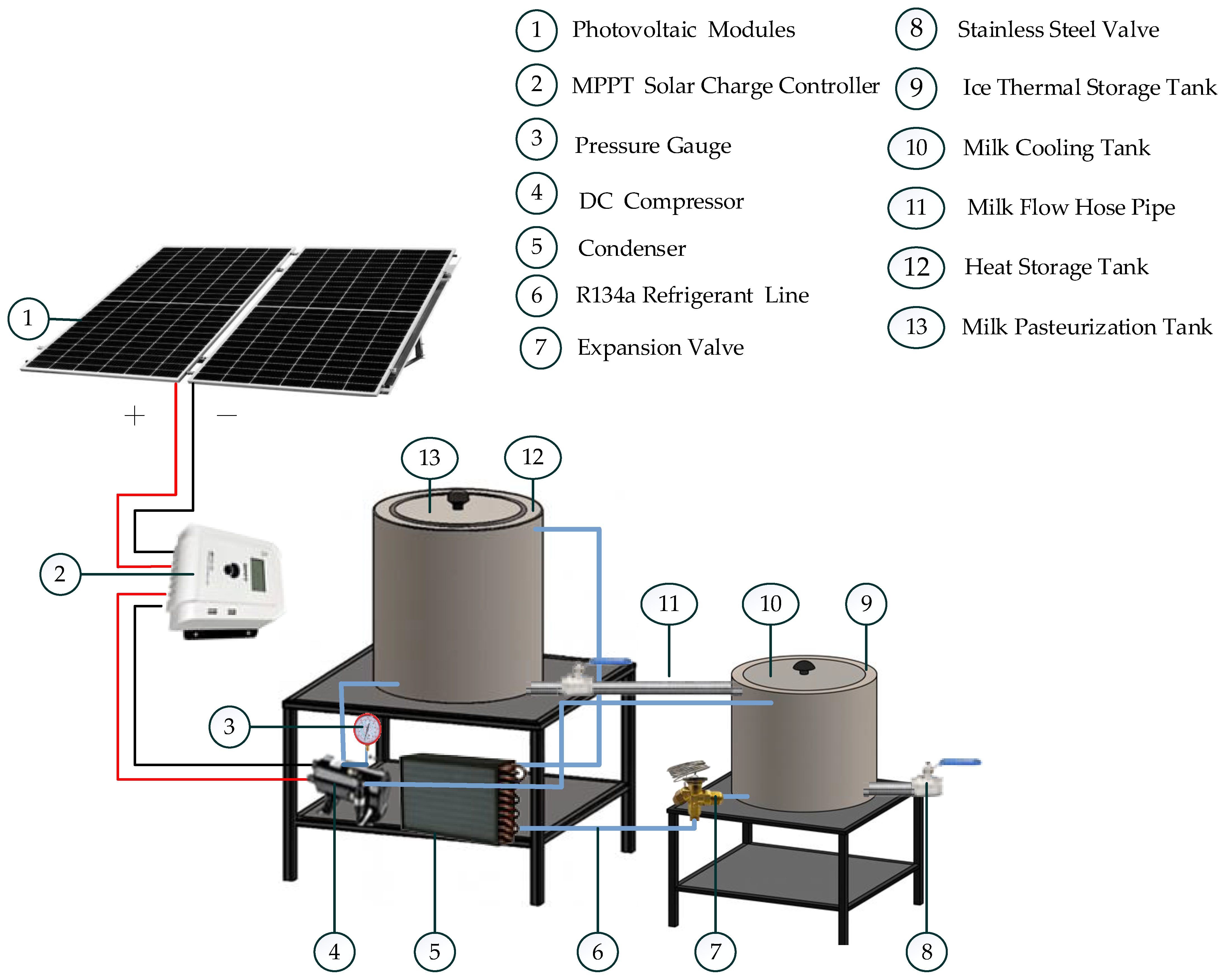
An experimental analysis was conducted to evaluate a photovoltaic-powered system designed for the simultaneous preservation of milk, incorporating a heat-recovery mechanism for both pasteurization and cooling. This novel approach was facilitated by strategically positioning a helical coil heat exchanger between the compressor and the condenser within the system. The overall configuration includes a vapor compression refrigeration cycle, solar photovoltaic panels, and concentrically arranged milk pasteurization and cooling tanks, as illustrated in Figure 1. The chilling process is driven by an inverter-controlled variable-speed DC compressor, complemented by an evaporator coil situated within an ice thermal storage unit, a condenser, and an expansion valve. The compressor operates at adjustable speeds ranging from 900 to 4500 rpm. At lower speeds, its power consumption is approximately 250 W, while at maximum speed, it rises to 590 W. The compressor is powered by 1000 W monocrystalline solar photovoltaic panels, which account for essential month-specific energy consumption. The refrigeration cycle utilizes R134a as the refrigerant and includes a pressure gauge at the outlet of the refrigeration compressor to monitor discharge pressure. Additionally, the milk pasteurization tank features a helically arranged heat exchanger integrated into a thermal storage unit, strategically positioned between the compressor and condenser to enhance the effectiveness of heat recovery. When the compressor is in operation, milk chilling and pasteurization occur concurrently, effectively handling a capacity of 50 L for both processes.
The experimental setup was installed at Addis Ababa University’s College of Technology and Built Environment and performed in the solar radiation intensity condition. Temperature measurements were taken during the heating and cooling processes using National Instruments data loggers with K-type thermocouples. In this study, water was used as a milk substitute only for testing related to process design, equipment sizing, heating and cooling times, energy demands, temperature gradients, scaling, and model validity. The inlet temperatures for heat thermal storage and milk pasteurization were approximately 20 °C, while the inlet temperature for milk cooling was 63 °C. A stainless steel hose connected the milk pasteurization and chilling tanks with natural flow to allow for immediate transfer. Table 1 describes in detail the key parameters and instruments used in this study. Robust data quality control measures were implemented, including steady-state data collection, monitoring stabilization times, and sensor calibration. Measurements were taken once the system had reached a steady state, as indicated by stable temperatures at critical points. The reliability of the instruments, such as thermocouples and pressure gauges, was calibrated before use, and redundant measurements were taken at various operating points using multiple sensors to improve reliability. This thorough methodology ensures the integrity and credibility of the data collected for the study.

Thermodynamic Analysis of the System

In experimental settings, the rate at which heat is removed from the system is calculated by applying the energy balance equation to the secondary fluid [58]. This equation utilizes the secondary fluid’s mass flow rate by dividing the total mass of the batch by the total time of the process through the heat exchanger, along with the measured inlet and outlet temperatures of the fluid.
Q ˙ e = m ˙ C p m T m , i n T m , o u t
The condenser rejects the total heat available, which includes heat extracted from the evaporator (from the refrigerated space) as well as work input to the compressor over the course of a refrigeration cycle [59]. The superheated vapor transports this heat from the compressor to the condenser, where it then releases heat to the heat sink during the condensation process, as determined as follows:
Q ˙ c o n = Q ˙ e + W c
The heating capacity of the heat recovery system or rate of heat extraction, which is determined based on measurements of the milk pasteurization temperature follow [52]:
Q ˙ H R = m ˙ C p m T m , o u t T m , i n
The percentage of heat recovered from the available heat that is rejected through the condenser is calculated to know the amount of heat recovered, and by comparing the actual recovered heat to the total heat rejected by the system. It is the ratio of heat extracted by the heat exchanger to the total system heat input from the evaporator load, suction heat gain, and compressor work input, as calculated by the subsequent equation [52]:
% H R = Q ˙ H R Q ˙ e + W ˙ c
The performance of refrigeration systems is evaluated using the coefficient of performance. This coefficient relates the total amount of heat supplied, either from heat recovered during milk pasteurization or extracted from a cooling system, to the total amount of work required to achieve that effect. This relationship indicates the efficiency of the refrigeration system:
C O P c o o l i n g = Q ˙ e W c
C O P h e a t i n g = Q ˙ H R W c
The overall System COP is the ratio of combined heating and cooling loads to total electricity consumption, utilizing the equation below:
C O P s y s t e m = Q ˙ H R + Q ˙ e W c
The theoretical maximum for the COP of a refrigeration system operating between a heat source and sink with constant temperatures is defined by the Carnot process, which is given by:
C O P C a r n o t   c o o l i n g = T L T H T L
C O P C a r n o t   h e a t i n g = T H T H T L
The evaluation of system performance efficiency involves calculating the Carnot efficiency. This efficiency is determined by dividing the coefficient of performance of the actual system by the theoretical Carnot COP [17].
η C a r n o t = C O P C O P C a r n o t × 100
Exergy, which is grounded in the Second Law of Thermodynamics, is used to assess the quality of energy and to measure the actual loss or destruction of useful energy (exergy) during the heating and cooling processes in a refrigeration system with heat recovery [60]. The exergetic coefficient of performance, or second-law efficiency of cooling and heating in a refrigeration system, can be calculated using the following formula:
E C O P c o o l i n g = E x Q , e v a p W = Q e   T H T L 1 W
E C O P h e a t i n g = E x Q , h e a t   r e c o v e r y W = Q H R   1 T L T H W
E C O P s y s t e m = E C O P c o o l i n g + E C O P h e a t i n g
Annual energy saved through the utilization of heat recovery was determined as [61]:
Es = QHR × Hy × (1/ηhx)
The annual carbon emission savings from a refrigeration heat recovery system can be determined by multiplying the annual energy saved by heat recovery by the CO2 emissions generated by the conventional energy source, or by calculating the difference between the emissions of the traditional heating system and the heat recovery system.
Annual CO2 Savings = (Annual energy saved by heat recovery) × (CO2 emissions produced by existing energy source)

3. Result and Discussion

3.1. Energy Analysis

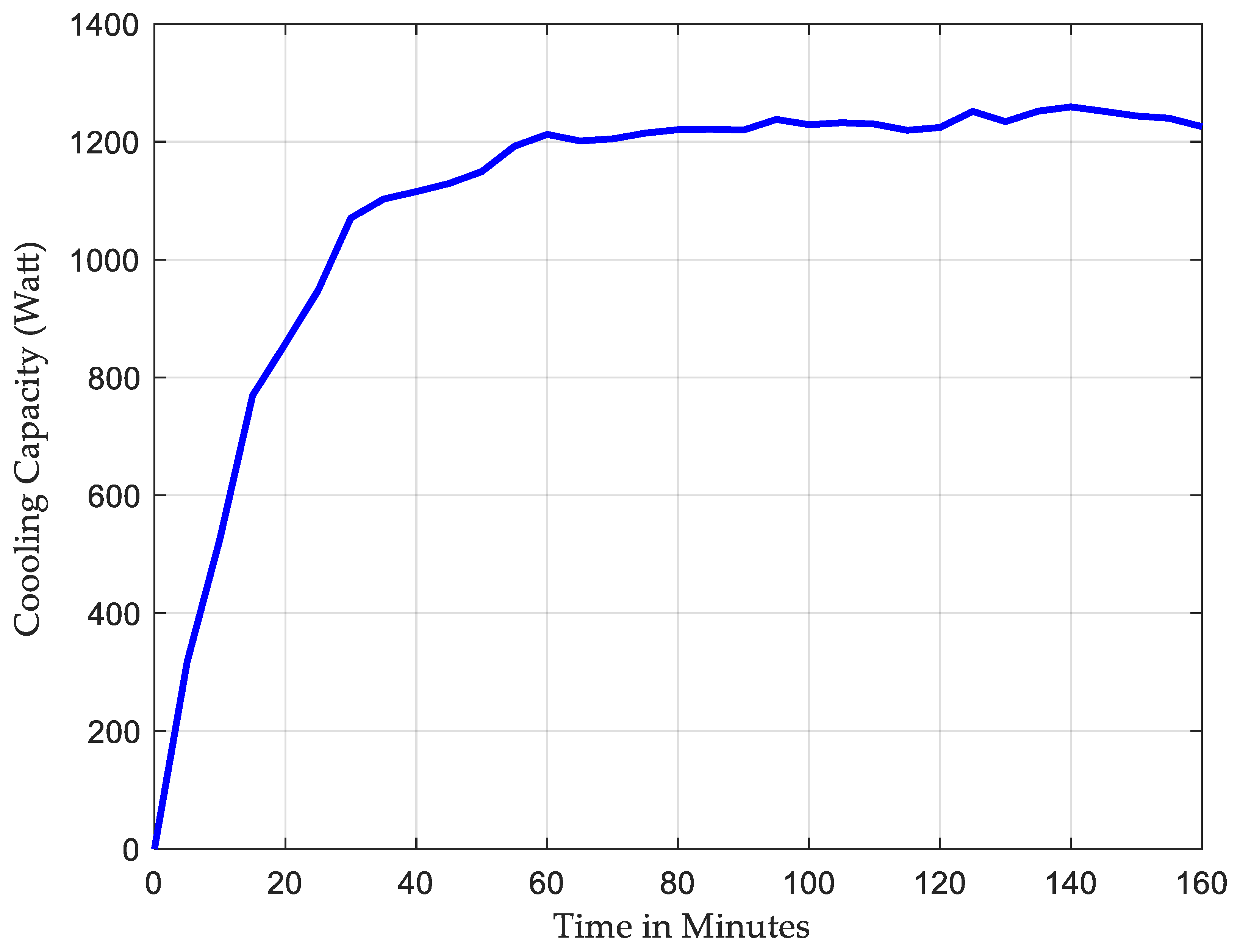
An experimental test was conducted using photovoltaic technology to pasteurize milk, followed by chilling utilizing heat recovered from the condenser. A 25 kg ice thermal storage system was also installed to allow for nighttime cooling and optimize the compressor’s semi-optimal rpm operation. In this batch process, water was heated from 20 °C to 63 °C during milk pasteurization, then chilled to 4 °C to extend the milk’s shelf life. The system demonstrated a cooling capacity of about 1200 W, as shown in Figure 2, which was determined using Equation (1).
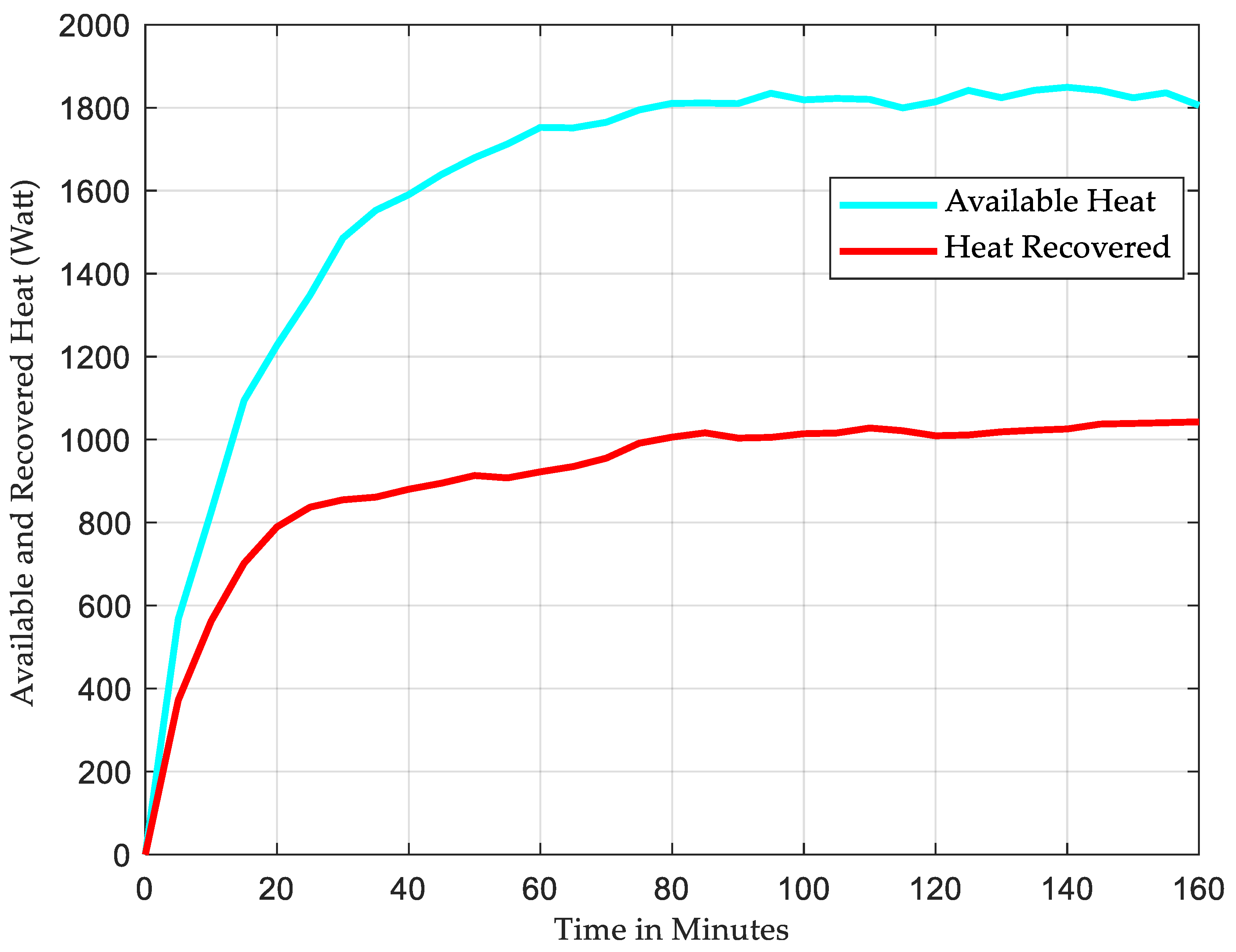
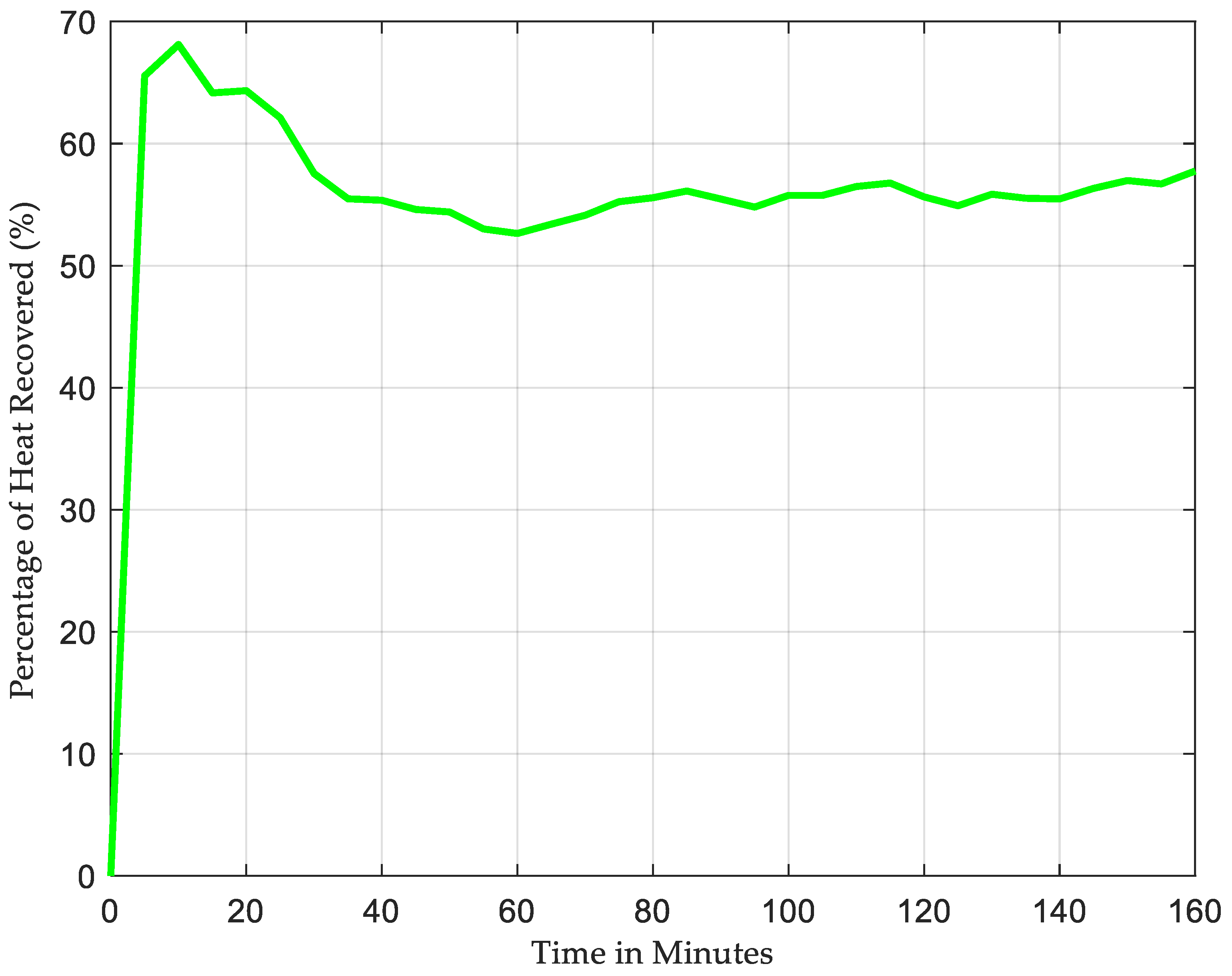
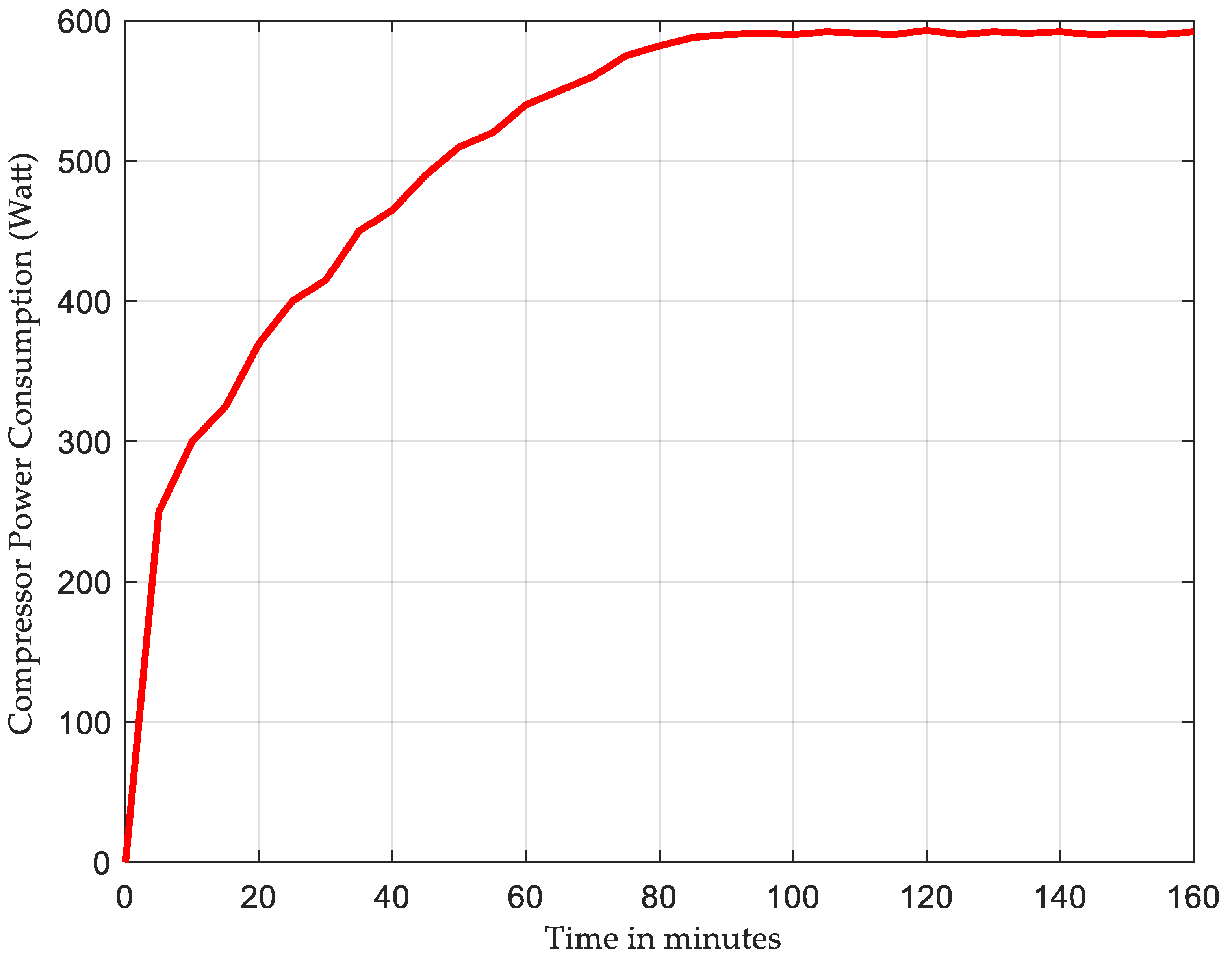
Based on Equations (2) and (3), the practical heat recovered from the milk pasteurization process is approximately 1000 W. This was accomplished by utilizing an average heat rejection of 1800 W from the condenser, which releases surplus heat into the surrounding environment, as illustrated in Figure 3. This finding indicates that a substantial amount of heat generated within the system was effectively captured for productive use, thus minimizing waste that would otherwise be dissipated into the atmosphere through the condenser. In contrast, traditional milk pasteurization methods require a minimum power input of 1000 W to reach the required temperature of 63 °C, utilizing an auxiliary heater, which is typically employed for a capacity of 50 L. The findings indicate that between 52% and 68% of the rejected heat was effectively utilized, as demonstrated in Figure 4. This effective utilization of heat recovery and energy management significantly advances milk processing by enhancing operational efficiency and demonstrating a commitment to sustainability. Moreover, the system employs a DC variable-speed compressor that begins operations with a minimum power output of 250 W. When operating at full capacity, this compressor can draw up to 595 W, as indicated in Figure 5.
In this study, solar radiation fluctuations, ice thermal storage capacity, refrigerant type, ambient temperature, compressor discharge temperature, condenser temperature, and condenser fan operation have an impact on heat recovery efficiency. Solar radiation fluctuation affects the compressor’s power supply, resulting in heat recovery inefficiencies. In this experiment, a 25 kg ice thermal storage system assists in increasing discharge pressure and temperature while charging. However, compared to traditional cooling methods, this increased compressor load reduces suction pressure and raises condenser temperature; determine the importance of ice thermal storage capacity in heat recovery efficiency [62]. Ambient temperature has a significant impact on sensible heat recovery efficiency, inextricably linked to the temperature differential between indoor and outdoor environments. The refrigerant used has a significant impact on operating pressures, temperature lifts, and heat transfer capabilities for effective heat recovery. The condenser fan also plays an important role; as it runs, the cooling load temperature rises while the heat recovery temperature drops. Managing fan operations to maintain higher condensation temperatures can improve recovery temperatures while potentially lowering the cooling coefficient of performance. Although higher condensation temperatures are better for hot water production, a variable condensation temperature adjusts to ambient conditions, balancing energy consumption but potentially limiting heat recovery capacity [63].

3.2. Performance Analysis

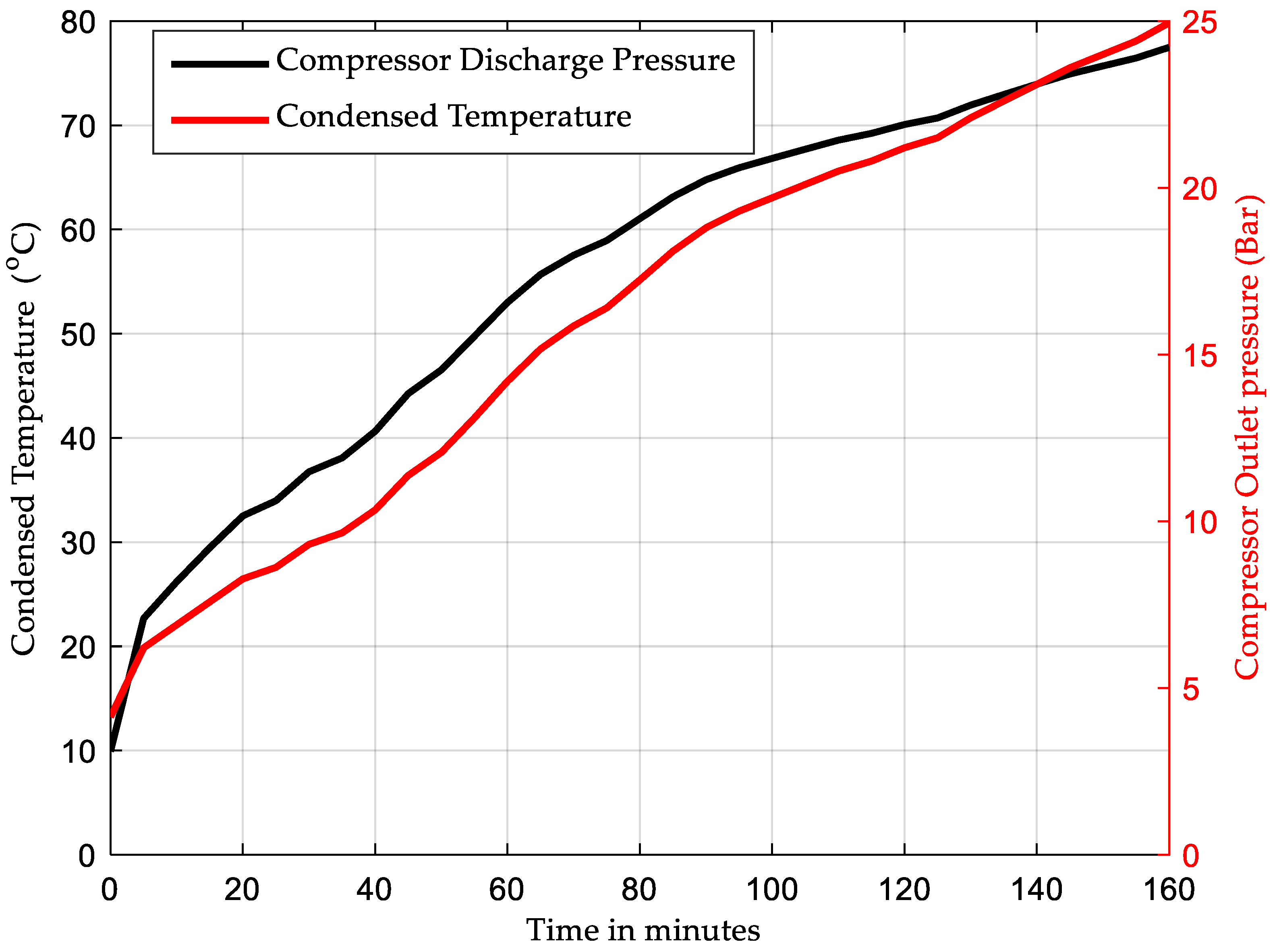
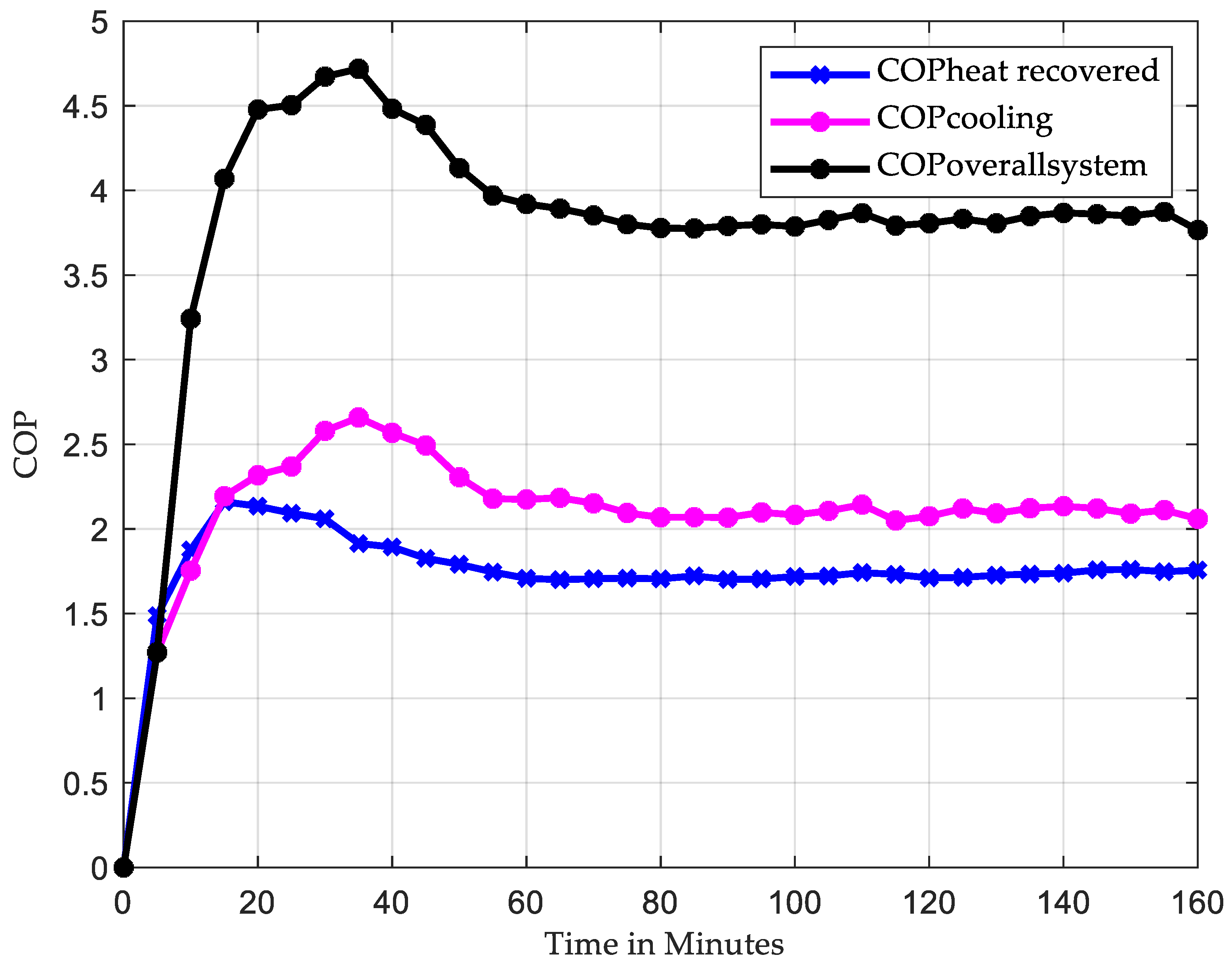
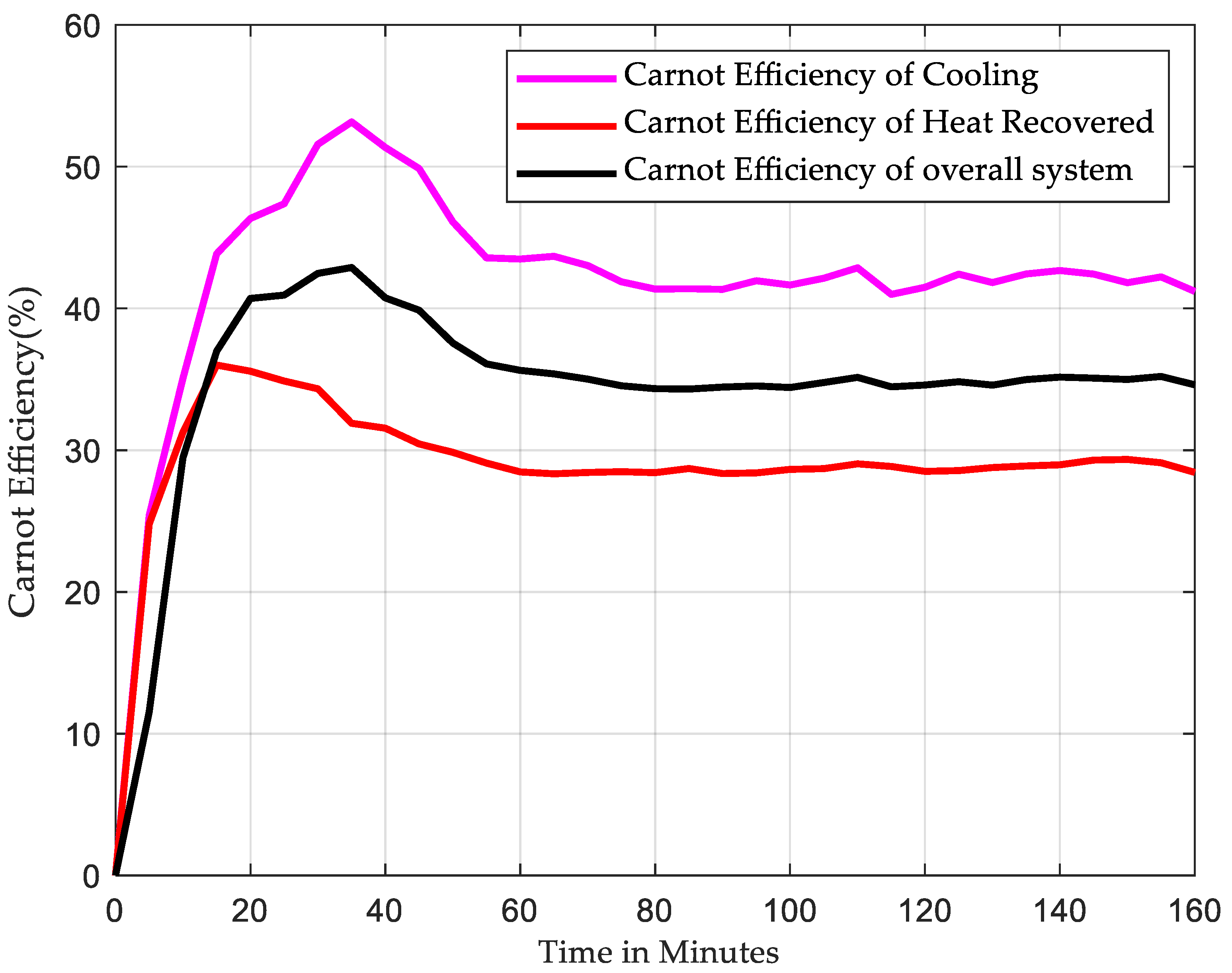
An examination of both the compressor exit pressure and the condensing temperature is crucial for optimizing heat recovery and ascertaining the secondary fluid’s temperature [64]. These parameters directly influence the temperature and quantity of recoverable heat, as well as the overall energy efficiency and coefficient of performance of the system. Figure 6 shows that the maximum compressor exit pressure reached approximately 25 bar, with a condensing temperature of about 80 °C. This result demonstrates that sufficient thermal energy can be extracted from the compressor discharge, enabling milk pasteurization through desuperheating of waste heat. Controlling discharge temperatures and adjusting condensing pressure, which allows heat recovery, can achieve temperatures above 60 °C. In transcritical systems, raising discharge pressure effectively maximizes both heat recovery and COP. The introduction of an additional heat exchanger between the compressor and condenser yielded an improvement in overall COP compared to baselines relying solely on cooling capacity. The integration of heat recovery resulted in a maximum COP of approximately 4.7. However, the maximum COPs achieved in separate heating and cooling modes were 2.2 and 2.6, as illustrated in Figure 7. These findings highlight that incorporating heat recovery substantially enhances system efficiency. The recovered heat contributes valuable energy, resulting in an average COP improvement of 43% during simultaneous heating and cooling compared to a single cooling operation. This configuration is particularly advantageous for milk preservation in remote areas where concurrent thermal demands exist. Moreover, a notable correlation was observed between evaporator temperature and COP: as the evaporator temperature decreases, the COP also declines in the experimental test. This trend underscores the critical balance between operating temperature and system efficiency, indicating that lower evaporator temperatures reduce the effectiveness of energy conversion and heat recovery. The experiments confirmed that continuous utilization of recovered heat significantly boosts COP. When heat demand aligns with refrigeration load, most rejected heat is recaptured, thereby optimizing the refrigeration cycle. System performance was further assessed using Carnot efficiency, as described in Equation (10), enabling comparison between actual and theoretical maximum efficiencies. The maximum Carnot efficiencies achieved for cooling, heat recovery, and overall system operation were 52%, 36%, and 42%, respectively, as shown in Figure 8. These results highlight the system’s potential for enhanced energy efficiency and demonstrate its effectiveness in transforming energy inputs into practical, beneficial outputs. In a nutshell, the findings confirm that incorporating heat recovery into a single refrigeration system enables simultaneous heating and cooling with maximum COP. This approach is particularly beneficial for milk preservation in remote regions, where concurrent thermal demands exist. The results highlight the importance of balancing compressor discharge conditions, condensing pressure, and evaporator temperature to optimize both heat recovery and overall system efficiency.
The study affirmed the findings of a previous investigation, which indicated that between 30% and 70% of the heat generated by the refrigeration system is practically recoverable [65]. This recovery process successfully elevates the water temperature from a baseline of 25 °C to well above 70 °C. In the current research, the recovery of heat specifically for milk pasteurization was found to be between 52% and 68% of the rejected heat, thus providing robust verification of earlier results. A related study conducted by Liu et al. [47] focused on waste heat recovery from refrigeration systems and reported an average recovery rate of 61.64%. The findings from this study align closely, yielding an average heat recovery of 60.6%. The discrepancy noted in the verified results was a mere 1.7%, which demonstrates a strong correlation between the results. Furthermore, the coefficient of performance was examined in the context of system efficiency. Research by Sapali et al. [52] investigated the recovery of superheat loss released into the atmosphere by milk cooler condensers, utilizing this recovered heat to warm water for cleaning milk-processing equipment. Their findings revealed a maximum overall system COP of 4.8, while this study achieved a commendable COP of around 4.7. The average error calculated was approximately 2%, reinforcing the reliability of the results. Collectively, these findings indicate a good agreement and validate the effectiveness of the heat recovery processes employed.
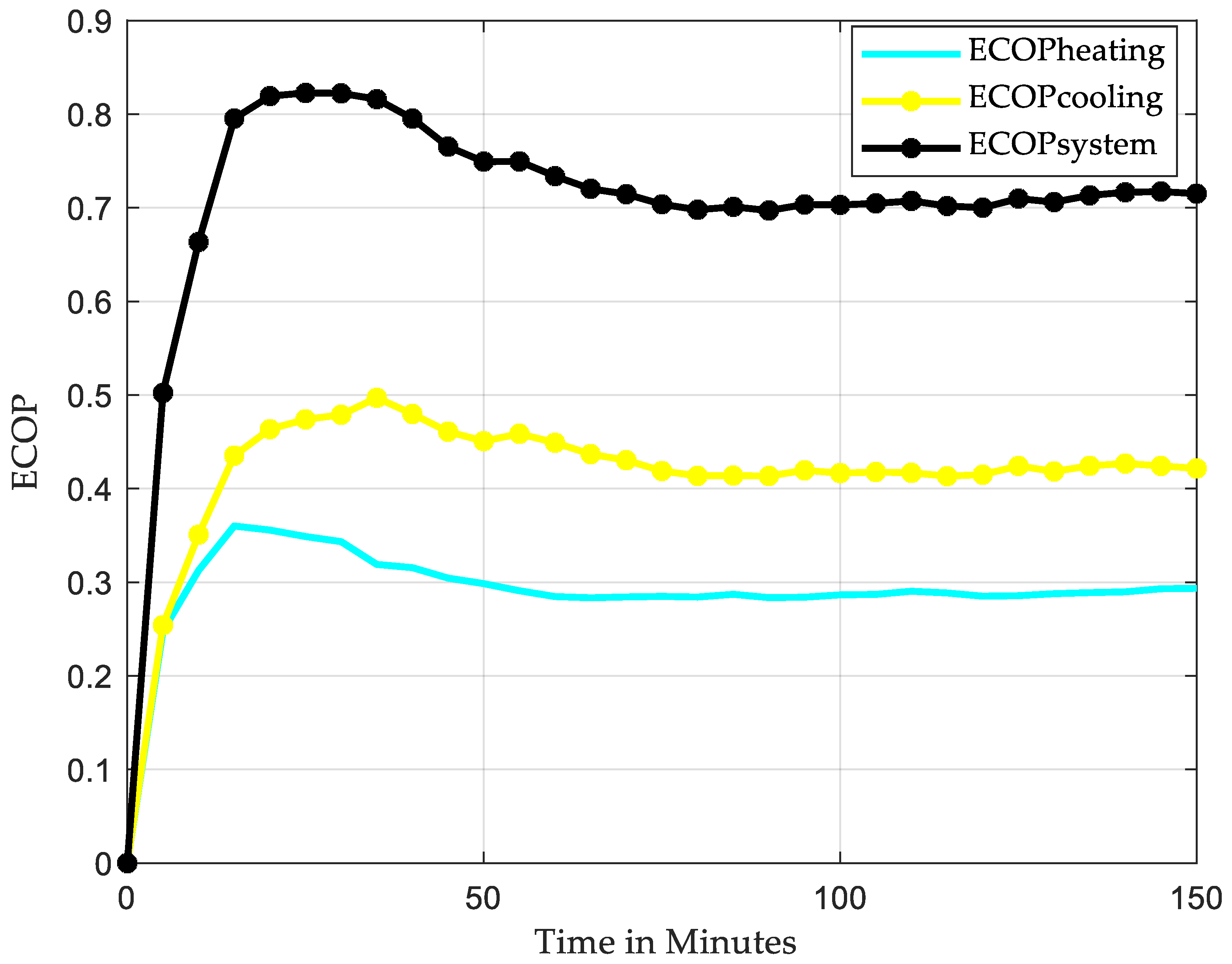
Exergy coefficient of performance analysis of second-law efficiency was conducted for cooling, heating, and overall system performance using Equations (11)–(13). The results, presented in Figure 9, indicate that the average exergy coefficient of performance for the system is approximately 75%, whereas the average ECOP associated with heat recovery from the refrigeration process was found to be around 33%. In contrast, the cooling system achieved an ECOP of approximately 42%, highlighting its superior capability in energy preservation and utilization relative to the heat recovery subsystem. This demonstrates the system’s effectiveness in capturing and utilizing waste heat, though with lower efficiency compared to cooling. However, the combined operation of cooling and heat recovery significantly enhanced exergy system performance. This integration underscores the importance of coupling thermal recovery with refrigeration processes to maximize efficiency. The second-law efficiency assessment demonstrates that optimized heat recovery strategies can further enhance energy utilization and reduce irreversibilities in refrigeration systems.
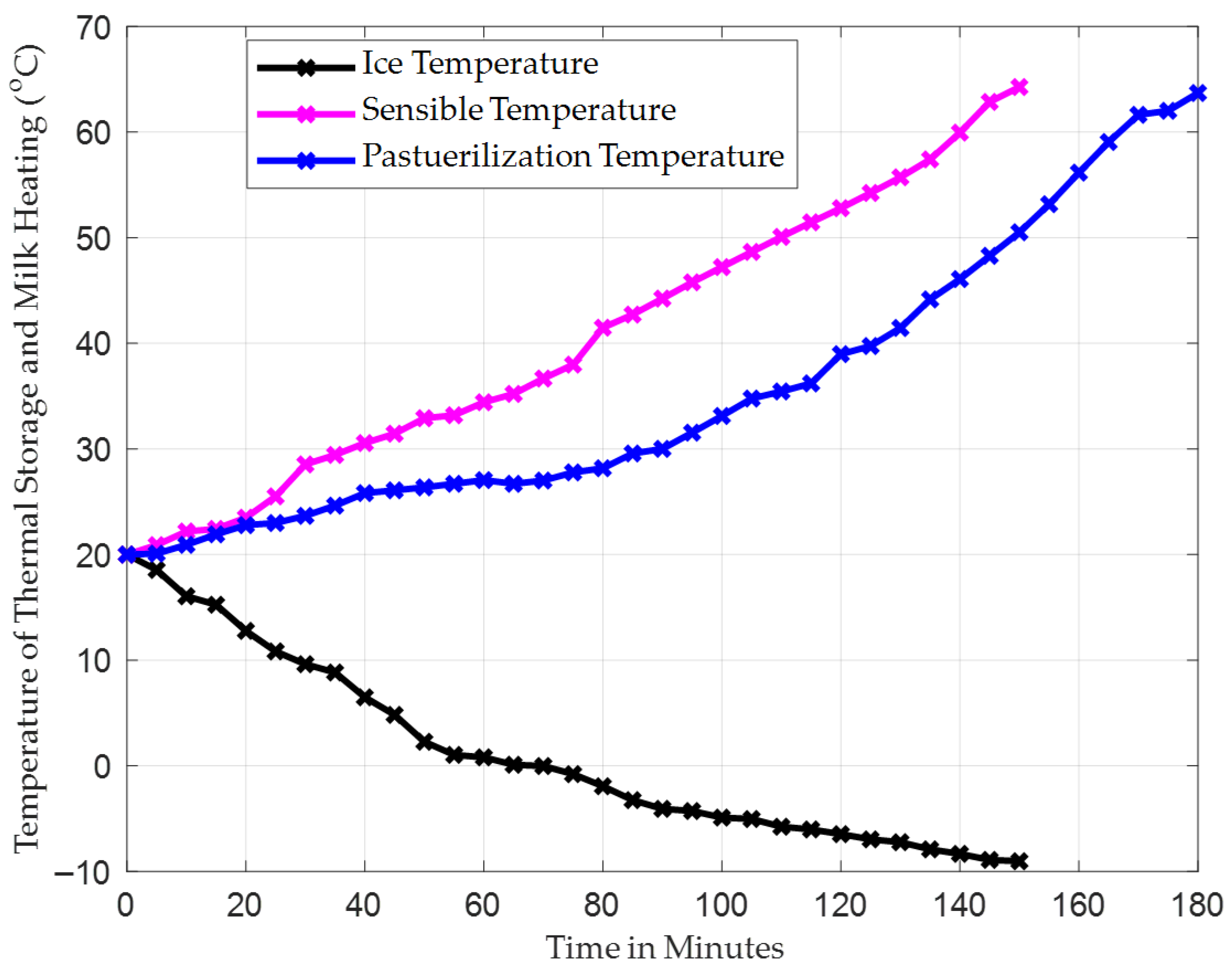
In the simultaneous heating and cooling system as illustrated in Figure 10, the temperature of the sensible thermal storage increased steadily, reaching a maximum of 64 °C within 2 h and 30 min. Once the storage temperature exceeded the critical threshold of 63 °C, fresh milk was put in place into the pasteurization tank. The milk underwent a complete pasteurization process lasting 30 min, ensuring consumer safety by destroying pathogenic bacteria while preserving the taste and nutritional quality of the milk. Concurrently, the ice thermal storage system began to freeze around the evaporator coil. During operation, the ice formed reached a chilling temperature of −9 °C. This stored cooling capacity was subsequently utilized during nighttime operation, maintaining optimal freshness and extending preservation capability. The combined use of sensible and ice thermal storage systems enabled efficient energy utilization. Sensible storage provided reliable heat for pasteurization, while ice storage ensured effective cooling during off-peak hours. Together, these processes demonstrate the system’s ability to balance heating and cooling demands, thereby enhancing overall energy efficiency and product preservation.

3.3. Environmental and Energy Sustainability Benefits of Heat Recovery

The integration of heat recovery within the refrigeration system resulted in substantial annual energy savings. Using Equation (14) and assuming continuous operation throughout the year, a single small-scale unit conserves approximately 3650 kWh of energy annually. This recovered energy effectively replaces fossil fuel consumption for milk pasteurization, thereby improving environmental sustainability in off-grid communities powered by solar photovoltaics and supporting the transition toward cleaner energy alternatives. As for milk, pasteurization in off-grid areas relies on tradition and diesel generators for milk preservation. Utilizing CO2 emission factor of diesel kg per kWh of CO2, about 0.5 CO2 per kWh, the standard carbon emission rate for diesel fuel in Equation (15), the application of heat recovery in this preservation system is estimated to mitigate approximately 971 kg of carbon emissions per year. This reduction underscores the environmental significance of energy conservation measures, as it directly lowers the carbon footprint associated with milk pasteurization in remote regions. These findings highlight the dual benefits of heat recovery systems: enhancing energy efficiency while reducing greenhouse gas emissions. By capturing and reusing waste heat, the system not only improves operational performance but also contributes to broader sustainability goals. The results demonstrate that small-scale heat recovery can play a pivotal role in promoting cleaner energy practices and protecting environmental resources while ensuring the preservation of product freshness.

4. Conclusions

The study conducted an experimental performance analysis of a solar PV-powered system for simultaneous milk pasteurization and chilling, employing a single refrigeration cycle with heat recovery. The findings present an innovative solution that utilizes heat recovery to meet the heating and cooling needs of milk in off-grid areas. This method achieves notable energy efficiency and improves system performance when compared to traditional dairy systems operating in remote locations.
The optimal performance for milk pasteurization was achieved by successfully recovering about 55% of the average heat rejected by the condenser from a single refrigeration system. This recovery saved a minimum of approximately 1000 W of heat, which was then utilized separately for milk pasteurization by an auxiliary heater. The coefficient of performance of the system can reach a maximum value of 4.7 with a Carnot efficiency of 42%. In simultaneous heating and cooling mode, the system demonstrates an average COP improvement of 43% compared to the cooling capacity of the baseline system. Furthermore, the adoption of the heat recovery approach results in annual energy savings of 3650 kWh, considering the solar radiation fluctuation, thereby enhancing sustainability efforts and promoting energy conservation initiatives.
Beyond its technical breakthroughs, this system addresses the problem of milk spoilage and food safety by offering solar-powered pasteurization and chilling in remote off-grid areas, enabling farmers to avoid the low prices associated with selling raw milk while participating in value-added processing. This approach has the potential to enhance household income and decrease dependence on fossil fuels, thereby reducing operational expenses and mitigating environmental harm. In essence, the proposed experimental work successfully pasteurized and cooled milk using heat recovery under the weather conditions of Addis Ababa, Ethiopia. This system is beneficial for small-scale dairies located in pastoral and remote areas that experience high solar irradiance but have limited access to the on-grid system.
While this study makes significant contributions, it is essential to acknowledge its limitations. Specifically, the analysis substitutes water for milk in the test and does not include a thorough economic analysis. Future research should focus on conducting field tests using milk instead of water, as well as an economic evaluation of the system. This approach will improve the practical implementation of these technologies and promote their wider adoption for milk preservation.

Author Contributions

F.G.B.: Writing—original draft, Writing—review & editing, Methodology, Investigation, Formal analysis, Conceptualization. T.M.E., O.J.N. and D.A.A.: Review & editing, supervision, resources, funding acquisition, and conceptualization. All authors have read and agreed to the published version of the manuscript.

Funding

This work was supported by the Norwegian Programme for Capacity Development in Higher Education and Research for Development (NORHED), under the NORHED II EnergyNET Project (Funding Number: 68583). The authors gratefully acknowledge the financial support from the partners of NORHED EnergyNET Project for funding.

Data Availability Statement

The original contributions presented in this study are included in the article. Further inquiries can be directed to the corresponding author.

Conflicts of Interest

The authors state that they have no known financial conflicts of interest or personal relationships that may have affected the work presented in this paper.

Nomenclature

Abbreviations and Symbols
CpSpecific heat capacity [J⋅kg−1⋅°C −1]
COPCoefficient of performance
ECOPExergetic coefficient of performance
EEnergy [J]
HOperating hours (s)
LLiter
m ˙ Mass Flow Rate [kg⋅s−1]
ORCOrganic Rankine Cycle
Q ˙ c o n Heat capacity of the condenser
Q ˙ e Cooling capacity
Q ˙ H R Heat capacity of heat recovery
rpmRevolutions per minute
THigh Temperature Source [°C]
Δ T Change in temperature
WPower [W]
ηEfficiency
%HRPercentage of heat recovery ratio
Subscripts
cCompressor
CarnotCarnot cycle
HSource
hxHeat exchanger
inInlet
LSink
mMilk
outOutlet
ssaving
yPer year

References

  1. Van Tung, T.; Nga, N.T.T.; Van, H.T.; Vu, T.H.; Kuligowski, K.; Cenian, A.; Tuan, N.Q.; Le, P.C.; Tran, Q.B. Energy Efficiency and Environmental Benefits of Waste Heat Recovery Technologies in Fishmeal Production Plants: A Case Study in Vietnam. Sustainability 2023, 15, 12712. [Google Scholar] [CrossRef]
  2. Ayou, D.S.; Coronas, A. Comparative Analysis of Solar-Powered Heat Pump Systems for Decarbonization of Process Heating and Cooling Applications: Case of Milk Pasteurization. Therm. Sci. Eng. Prog. 2024, 53, 102774. [Google Scholar] [CrossRef]
  3. Vutukuru, R.; Giri, J.; Amir, M.; Chadge, R.; Sathish, T. Solar Energy-Assisted CCHP Cycles for Dairy Applications in Rural Sector with Effect Assessment of Reheating on Novel CO2 Working Fluid. Cogent Eng. 2024, 11, 2327568. [Google Scholar] [CrossRef]
  4. Egas, D.; Ponsá, S.; Llenas, L.; Colón, J. Towards Energy-Efficient Small Dairy Production Systems: An Environmental and Economic Assessment. Sustain. Prod. Consum. 2021, 28, 39–51. [Google Scholar] [CrossRef]
  5. Temesgen, M.; Haji, J.; Negassa, A.; Galmessa, U. Exploring Policy Options to Transform Traditional Dairy System in Ethiopia: A System Dynamics Approach. Heliyon 2023, 9, e22286. [Google Scholar] [CrossRef]
  6. Duguma, B. Milk Composition, Traditional Processing, Marketing, and Consumption among Smallholder Dairy Farmers in Selected Towns of Jimma Zone, Oromia Regional State, Ethiopia. Food Sci. Nutr. 2022, 10, 2879–2895. [Google Scholar] [CrossRef] [PubMed]
  7. Gebreyohanes, G.; Yilma, Z.; Moyo, S.; Mwai, O.A. Dairy Industry Development in Ethiopia: Current Status, Major Challenges and Potential Interventions for Improvement. In ILRI Position Paper Dairy; International Livestock Research Institute (ILRI): Addis Ababa, Ethiopia, 2021; pp. 1–39. [Google Scholar]
  8. Kaushik, S.C.; Panwar, N.L.; Reddy, V.S. Thermodynamic Evaluation of Heat Recovery through a Canopus Heat Exchanger for Vapor Compression Refrigeration (VCR) System. J. Therm. Anal. Calorim. 2012, 110, 1493–1499. [Google Scholar] [CrossRef]
  9. Byrne, P.; Miriel, J.; Lenat, Y. Design and Simulation of a Heat Pump for Simultaneous Heating and Cooling Using HFC or CO2 as a Working Fluid. Int. J. Refrig. 2009, 32, 1711–1723. [Google Scholar] [CrossRef]
  10. Marchi, B.; Zanoni, S. Heat Pumps for Simultaneous Heating and Cooling in the Dairy Sector. In Proceedings of the ECEEE’s Zero Carbon Industry 2024, Antwerp, Belgium, 30–31 January 2024. [Google Scholar]
  11. Aslan, N.; Salman, O.; Konakci, R.; Akan, A.P. Circular Economy Approach to Promote Sustainable Energy from Waste. Sustain. Futur. 2025, 10, 101238. [Google Scholar] [CrossRef]
  12. Toppi, T.; Abrami, G.; Aprile, M. Compressor-Assisted Heat Transformer for Low-Grade Heat Recovery. Int. J. Refrig. 2025, 175, 118–127. [Google Scholar] [CrossRef]
  13. Eramo, V.; Di Cristofaro, M.; Botondi, R. Environmental Sustainability in Dairy Production: A Comparative Life Cycle Assessment of Conventional and Ozone-Based Ripening for ‘Toma Piemontese’ Raw Milk Cheese. J. Environ. Chem. Eng. 2025, 13, 117667. [Google Scholar] [CrossRef]
  14. Minoofar, A.; Gholami, A.; Eslami, S.; Hajizadeh, A.; Gholami, A.; Zandi, M.; Ameri, M.; Kazem, H.A. Renewable Energy System Opportunities: A Sustainable Solution toward Cleaner Production and Reducing Carbon Footprint of Large-Scale Dairy Farms. Energy Convers. Manag. 2023, 293, 117554. [Google Scholar] [CrossRef]
  15. Wang, J.F.; Brown, C.; Cleland, D.J. Heat Pump Heat Recovery Options for Food Industry Dryers. Int. J. Refrig. 2018, 86, 48–55. [Google Scholar] [CrossRef]
  16. Bhattacharyya, S.; Kumar, N.; Nirmalendu, S. Design and Performance Evaluation of a Solar—Powered Milk Chilling System Using Eco—Friendly Refrigerants for Rural Dairy Applications. J. Therm. Anal. Calorim. 2025, 150, 18803–18815. [Google Scholar] [CrossRef]
  17. Ahrens, M.U.; Foslie, S.S.; Moen, O.M.; Bantle, M.; Eikevik, T.M. Integrated High Temperature Heat Pumps and Thermal Storage Tanks for Combined Heating and Cooling in the Industry. Appl. Therm. Eng. 2021, 189, 116731. [Google Scholar] [CrossRef]
  18. Anania, D.; Russo, G.; Palombo, A.; Orizio, F.; Fedrizzi, R.; Cozzini, M. Thermal-Hydraulic Modelling of a Flexible Substation Layout for Low-Temperature Waste Heat Recovery into District Heating. Energy 2025, 328, 136386. [Google Scholar] [CrossRef]
  19. Mu, L.; Wang, S.; Lu, J.; Liu, G.; Zhao, L.; Lan, Y. Effect of Flue Gas Condensing Waste Heat Recovery and Its Pressure Drop on Energy Saving and Carbon Reduction for Refinery Heating Furnace. Energy 2023, 279, 128081. [Google Scholar] [CrossRef]
  20. Ali, S.M.; Theeb, M.A. Utilizing Waste Heat From the Refrigeration Cycle By Using a Two-Stage Heat Exchanger. J. Eng. Sustain. Dev. 2022, 26, 18–26. [Google Scholar] [CrossRef]
  21. Li, W.; Korolija, I.; Tang, R.; Mumovic, D. Performance Analysis of Heat Recovery in CO2 Refrigeration Systems for Heating Electrification in Supermarkets. Appl. Energy 2025, 384, 125461. [Google Scholar] [CrossRef]
  22. Zhou, F.; Tian, X.; Song, Y.; Ma, G. Dynamic Performance of an Integrated Heat Pump System Coupled Free Cooling and Waste Heat Recovery in Data Centers. Energy 2025, 323, 135838. [Google Scholar] [CrossRef]
  23. Andersen, M.P.; Zühlsdorf, B.; Markussen, W.B.; Jensen, J.K.; Elmegaard, B. Heat Pumps for Combined Heating and Cooling in Industrial Applications: A Generalised Approach. Appl. Therm. Eng. 2025, 264, 125454. [Google Scholar] [CrossRef]
  24. Diah, P.; Paramita, P.; Daniarta, S.; Imre, A.R. Techno-Economic Analysis of Waste Heat Recovery in Automotive Manufacturing Plants. Appl. Sci. 2025, 15, 569. [Google Scholar] [CrossRef]
  25. Asim, M.; Leung, M.K.H.; Shan, Z.; Li, Y.; Leung, D.Y.C.; Ni, M. Thermodynamic and Thermo-Economic Analysis of Integrated Organic Rankine Cycle for Waste Heat Recovery from Vapor Compression Refrigeration Cycle. Energy Procedia 2017, 143, 192–198. [Google Scholar] [CrossRef]
  26. Wieland, C.; Schifflechner, C.; Braimakis, K.; Kaufmann, F.; Dawo, F.; Karellas, S.; Besagni, G.; Markides, C.N. Innovations for Organic Rankine Cycle Power Systems: Current Trends and Future Perspectives. Appl. Therm. Eng. 2023, 225, 120201. [Google Scholar] [CrossRef]
  27. Fuchs, N.; Yanez, G.; Nkongdem, B.; Thomsen, J. Evaluating Low-Temperature Heat Sources for Large-Scale Heat Pump Integration: A Method Using Open-Source Data and Indicators. Appl. Energy 2025, 377, 124487. [Google Scholar] [CrossRef]
  28. Tokar, A.; Bisorca, D.; Muntean, D.; Tokar, D.; Adam, M.; Păcurar, C.; Dorca, A.; Căinicianu, A.-N. Considerations Regarding the Recovery of Residual Energy for the Heating/Cooling of Buildings and the Preparation of Domestic Hot Water. Rev. Rom. Ing. Civila/Rom. J. Civ. Eng. 2024, 15, 318–324. [Google Scholar] [CrossRef]
  29. Mancinelli, C.; Manno, M.; Salvatori, M.; Zaccagnini, A. Thermal Energy Storage as a Way to Improve Transcritical CO2 Heat Pump Performance by Means of Heat Recovery Cycles. Energy Storage Sav. 2023, 2, 532–539. [Google Scholar] [CrossRef]
  30. Thanasoulas, S. Investigation of Heat Recovery in CO2 Refrigeration Cycles for Supermarkets: A Mechanism for Determining Optimal Discharge Pressure. Appl. Therm. Eng. 2025, 274, 126728. [Google Scholar] [CrossRef]
  31. Zou, S.; Liu, J.; Dai, Y. Performance of a Multi-Cooling Sources Cooling System with Photovoltaics and Waste Heat Recovery in Data Center. Energy Convers. Manag. 2025, 324, 119319. [Google Scholar] [CrossRef]
  32. Attar, A.; Rady, M.; Abuhabaya, A.; Albatati, F.; Hegab, A.; Almatrafi, E. Performance Assessment of Using Thermoelectric Generators for Waste Heat Recovery from Vapor Compression Refrigeration Systems. Energies 2021, 14, 8192. [Google Scholar] [CrossRef]
  33. Wu, F.; Huang, X.; Zhang, L.; Gao, J.; Sun, Y.; Zhao, Y.; Zhang, X. Performance Evaluation of Solar and Condensing Heat Recovery Systems for Air Reheating and Humidification in Industrial Buildings. Energy Convers. Manag. 2025, 341, 120057. [Google Scholar] [CrossRef]
  34. Shin, D.U.; Jeong, C.H. Energy Savings of Simultaneous Heating and Cooling System According to Indoor Set Temperature Changes in the Comfort Range. Energies 2021, 14, 7691. [Google Scholar] [CrossRef]
  35. Huang, G.; Xie, M.; Zhao, Y.; Jia, T.; Dai, Y. Energy & Buildings Experimental Study on Waste Heat Recovery Process in a Water-Cooled Data Center for Dehumidification Application Using Desiccant-Coated Heat Exchangers. Energy Build. 2025, 346, 116196. [Google Scholar] [CrossRef]
  36. Chen, S.; Zhang, Q.; Zhai, J.; Liu, H.; Chen, G.; Lei, J.; Liao, S. MILP Optimization of the Multi-Heat Pump Waste Heat Recovery System Integrated with Full-Free Cooling Data Center through Lake Water. Energy 2025, 318, 134823. [Google Scholar] [CrossRef]
  37. Davies, G.; Boot-handford, N.; Curry, D.; Dennis, W.; Ajileye, A.; Revesz, A.; Maidment, G. Combining Cooling of Underground Railways with Heat Recovery and Reuse. Sustain. Cities Soc. 2019, 45, 543–552. [Google Scholar] [CrossRef]
  38. Zhao, Z.; Xing, Z.; Hou, F.; Tian, Y.; Jiang, S. Theoretical and Experimental Investigation of a Novel High Temperature Heat Pump System for Recovering Heat from Refrigeration System. Appl. Therm. Eng. 2016, 107, 758–767. [Google Scholar] [CrossRef]
  39. Liew, P.Y.; Walmsley, T.G.; Wan Alwi, S.R.; Abdul Manan, Z.; Klemeš, J.J.; Varbanov, P.S. Integrating District Cooling Systems in Locally Integrated Energy Sectors through Total Site Heat Integration. Appl. Energy 2016, 184, 1350–1363. [Google Scholar] [CrossRef]
  40. Liu, C.; Ma, H.; Liu, S.; Zhang, H.; Ma, D. Energy & Buildings Heat Recovery Technology and Energy-Saving Effect Analysis Apply to Cleanroom Exhaust Waste Heat Characteristics. Energy Build. 2024, 306, 113935. [Google Scholar] [CrossRef]
  41. Yuan, Z.; He, J.; Zhang, Y.; Yao, Y.; Tian, H.; Shi, L. Improving the Efficiency of a CO 2 Heat Pump for Simultaneous Heating and Cooling Coupled with an Ambient Source. Int. J. Refrig. 2025, 175, 128–145. [Google Scholar] [CrossRef]
  42. Zhang, Q.; Liu, T.; Cheng, X.; Guo, S.; Zhang, L.; Lü, X. Experimental Investigation on Flue Gas Condensation Heat Recovery System Integrated with Heat Pump and Spray Heat Exchanger. Therm. Sci. Eng. Prog. 2024, 49, 102454. [Google Scholar] [CrossRef]
  43. Vutukuru, R.; Pegallapati, A.S.; Maddali, R. Thermodynamic Studies on a Solar Assisted Transcritical CO2-Based Tri-Generation System with an Ejector for Dairy Applications. Int. J. Refrig. 2019, 108, 113–123. [Google Scholar] [CrossRef]
  44. Khalid Shaker Al-Sayyab, A.; Mota-Babiloni, A.; Navarro-Esbrí, J. Novel Compound Waste Heat-Solar Driven Ejector-Compression Heat Pump for Simultaneous Cooling and Heating Using Environmentally Friendly Refrigerants. Energy Convers. Manag. 2021, 228, 113703. [Google Scholar] [CrossRef]
  45. Dasi, K.; Singh, S.; Guruchethan, A.M.; Maiya, M.P.; Hafner, A.; Banasiak, K.; Neksa, P. Performance Evaluation of Ejector-Based CO2 System for Simultaneous Heating and Cooling Application in an Indian Dairy Industry. Therm. Sci. Eng. Prog. 2020, 20, 100626. [Google Scholar] [CrossRef]
  46. Somasundaram, V.; Singha, P.; Dasgupta, M.S.; Hafner, A.; Bhattacharyya, S. Performance Analysis of an Ejector Based CO2 transcritical Refrigeration System with Integrated Mechanical Subcooling for Dairy Application. AIP Conf. Proc. 2024, 2960, 040006. [Google Scholar] [CrossRef]
  47. Liu, Y.; Groll, E.A.; Yazawa, K.; Kurtulus, O. Energy-Saving Performance and Economics of CO2 and NH3 Heat Pumps with Simultaneous Cooling and Heating Applications in Food Processing: Case Studies. Int. J. Refrig. 2017, 73, 111–124. [Google Scholar] [CrossRef]
  48. Singha, P.; Das, C.; Dasgupta, M.S.; Bhattacharyya, S.; Hafner, A. New Approach to Improve COP and Heat Recovery in Transcritical CO2 Refrigeration System for Milk Processing Application. Sci. Rep. 2025, 15, 5502. [Google Scholar] [CrossRef]
  49. Ahammed, M.E.; Bhattacharyya, S.; Ramgopal, M. Analysis of CO2-Based Refrigeration Systems with and without Ejector for Simultaneous Pasteurization and Chilling of Milk. Int. J. Refrig. 2018, 95, 61–72. [Google Scholar] [CrossRef]
  50. Singh, A.; Neyaz, A.; Khan, A.; Ansari, I. Simultaneous Utilization of Refrigeration and Heat Pump Processes for Enhanced Efficiency and Waste Heat Utilization in a Combined Cooling and Heating System. In International Conference on Recent Advances in Metallurgy and Mechanical Engineering; EasyChair: Stockport, UK, 2023. [Google Scholar]
  51. Gong, G.; Chen, F.; Su, H.; Zhou, J. Thermodynamic Simulation of Condensation Heat Recovery Characteristics of a Single Stage Centrifugal Chiller in a Hotel. Appl. Energy 2012, 91, 326–333. [Google Scholar] [CrossRef]
  52. Sapali, S.N.; Pise, S.M.; Pise, A.T.; Ghewade, D.V. Investigations of Waste Heat Recovery from Bulk Milk Cooler. Case Stud. Therm. Eng. 2014, 4, 136–143. [Google Scholar] [CrossRef]
  53. Başaran, A.; Yılmaz, T.; Çivi, C. Experimental Investigation and Evaluation of the Thermodynamical Performance of a Novel Hybrid Design for Milk Pasteurization. Therm. Sci. Eng. Prog. 2023, 44, 102028. [Google Scholar] [CrossRef]
  54. Chaomuang, N.; Laguerre, O.; Flick, D.; Duret, S. Thermal Performance Evaluation of Water-Based Gel Packs and Insulating Covers: A Case Study on Raw Milk Preservation for Local Transport. Appl. Food Res. 2025, 5, 101257. [Google Scholar] [CrossRef]
  55. Edwin, M.; Joseph Sekhar, S. Thermo-Economic Assessment of Hybrid Renewable Energy-Based Cooling System for Food Preservation in Hilly Terrain. Renew. Energy 2016, 87, 493–500. [Google Scholar] [CrossRef]
  56. Hosouli, S.; Gomes, J.; Loris, A.; Pazmiño, I.A.; Naidoo, A.; Lennermo, G.; Mohammadi, H. Evaluation of a Solar Photovoltaic Thermal (PVT) System in a Dairy Farm in Germany. Sol. Energy Adv. 2023, 3, 100035. [Google Scholar] [CrossRef]
  57. Dean, J.; Vogel, E.; Murphy, F. Modelling Solar Photovoltaic Systems on Dairy Farms for Cost Savings and GHG Emission Reduction. Sci. Total Environ. 2024, 948, 174874. [Google Scholar] [CrossRef]
  58. Quenel, J.; Atakan, B. An Experimental Investigation of Secondary Fluid Parameters on Heat Pumps with Higher Temperature Lift and Zeotropic Working Fluid. Int. J. Refrig. 2025, 170, 302–313. [Google Scholar] [CrossRef]
  59. Kumar, A.; Gullo, P.; Modi, A. Performance and Economic Analysis of a Novel Hybrid Compression–Absorption–Resorption Cooling Cycle for Data Centre Waste Heat Utilisation. Appl. Therm. Eng. 2025, 280, 128350. [Google Scholar] [CrossRef]
  60. Yang, D.; Li, Y.; Xie, J.; Wang, J. Exergy Destruction Characteristics of a Transcritical Carbon Dioxide Two-Stage Compression/Ejector Refrigeration System for Low-Temperature Cold Storage. Energy Rep. 2022, 8, 8546–8562. [Google Scholar] [CrossRef]
  61. Bao, M.; Ding, Y.; Sang, M.; Li, D.; Shao, C.; Yan, J. Modeling and Evaluating Nodal Resilience of Multi-Energy Systems under Windstorms. Appl. Energy 2020, 270, 115136. [Google Scholar] [CrossRef]
  62. Liu, Z.; Quan, Z.; Zhao, Y.; Zhang, W.; Yang, M.; Shi, J.; Bai, Z. Dynamic Modelling and Performance Prediction of a Novel Direct-Expansion Ice Thermal Storage System Based Multichannel Flat Tube Evaporator plus Micro Heat Pipe Arrays Storage Module. Renew. Energy 2023, 217, 119153. [Google Scholar] [CrossRef]
  63. Arias, J.; Lundqvist, P. Heat Recovery and Floating Condensing in Supermarkets. Energy Build. 2006, 38, 73–81. [Google Scholar] [CrossRef]
  64. Gasmi, H.; Abed, A.M.; Dutta, A.K.; Alhomayani, F.M.; Mahariq, I.; Alturise, F.; Alkhalaf, S.; Alkhalifah, T.; Elmasry, Y.; Khan, B. Heat Recovery Integration in a Hybrid Geothermal-Based System Producing Power and Heating Using Machine Learning Approach to Maximize Outputs. Case Stud. Therm. Eng. 2024, 63, 105210. [Google Scholar] [CrossRef]
  65. Lamrani, B.; El Marbet, S.; Rehman, T.-U.; Kousksou, T. Comprehensive Analysis of Waste Heat Recovery and Thermal Energy Storage Integration in Air Conditioning Systems. Energy Convers. Manag. X 2024, 24, 100708. [Google Scholar] [CrossRef]
Figure 1. Overall system description utilized in the test rig.
Energies 19 01642 g001
Figure 2. Cooling capacity of a refrigeration system.
Energies 19 01642 g002
Figure 3. Available heat and actual heat recovered from a single refrigeration unit.
Energies 19 01642 g003
Figure 4. Percentage of heat recovered from the total amount of heat rejected from the refrigeration system.
Energies 19 01642 g004
Figure 5. Compressor power consumption of the system.
Energies 19 01642 g005
Figure 6. Compressor discharge temperature and condensation temperature.
Energies 19 01642 g006
Figure 7. Coefficient of performance of the system with time analysis.
Energies 19 01642 g007
Figure 8. Carnot efficiency analyses for comparison of the actual with the maximum possible efficiency.
Energies 19 01642 g008
Figure 9. ECOP of the cooling and heating system from the heat recovery.
Energies 19 01642 g009
Figure 10. Simultaneous heating and cooling from a single refrigeration unit.
Energies 19 01642 g010
Table 1. Key parameters and instruments used in the test ring system.
ItemsSpecificationQuantity
Solar PV panel250 W monocrystalline4
MPPT solar charge controller12 V/24 V, 50 A1
Balance of system25 L ice thermal storage for milk chilling1
29 L sensible thermal storage for milk pasteurization1
Expansion valve1400 W thermostatic expansion valve1
Condenser4000 W cooling capacity1
Condenser fan30 W powered DC Fan1
Compressor1175 DC variable speed compressor1
RefrigerantR134a1 kg
Milk cooling and heat recovery pasteurization tankers50 L capacity Stainless steel tanker2
Insulation5 cm polystyrene foam1
5 cm fiberglass1
Instruments used for measurement
National Instrument data logger model of 2017 with 8 slot moduleNI cDAQ-9178, a high-speed USB compact DAQ chassis
Features 4 × 32-bit general-purpose counters/timers and 7 high-performance data streams
Operating Temp: −20 °C to 55 °C
Power input: 9 V to 30 V DC (Maximum 15 W)
National Instrument data logger temperature Modules k-type thermocouple modules, and voltage Modules, standard accuracy ±0.45 °C and absolute accuracy of ±0.02% to ±0.1%
K-type thermocoupleTemperature range: −200 °C to +1260 °C
Standard Accuracy: ±2.2 °C to ±0.75 °C
Fluke clamp meter325 True-RMS technology for accurate, non-linear signal measurement, with ranges of 400 A and 600 V AC/DC voltage
Measurement Fluke clab meter standard accuracy and precision ± 1.5% for voltage and ±2% for current and DC voltage
Compressor discharge refrigerant pressure gaugesRefrigerant pressure gauges are specialized, often liquid-filled (glycerin or silicone) tools
Compressor discharge pressure gauge measurement ± 1.0% to 1.6% at full-scale deflection
Disclaimer/Publisher’s Note: The statements, opinions and data contained in all publications are solely those of the individual author(s) and contributor(s) and not of MDPI and/or the editor(s). MDPI and/or the editor(s) disclaim responsibility for any injury to people or property resulting from any ideas, methods, instructions or products referred to in the content.