Article

Strain-Based Hydrogen Quantification in a Metal Hydride Vessel

1
Hydrogen Research Department, Korea Institute of Energy Research (KIER), Daejeon 34129, Republic of Korea
2
Department of Chemical and Biological Engineering, Korea University, Seoul 02841, Republic of Korea
*
Authors to whom correspondence should be addressed.
These authors contributed equally to this work.
Energies 2026, 19(7), 1617; https://doi.org/10.3390/en19071617
Submission received: 10 February 2026 / Revised: 18 March 2026 / Accepted: 20 March 2026 / Published: 25 March 2026
(This article belongs to the Special Issue Advances in Hydrogen Energy and Fuel Cell Technologies)

Abstract

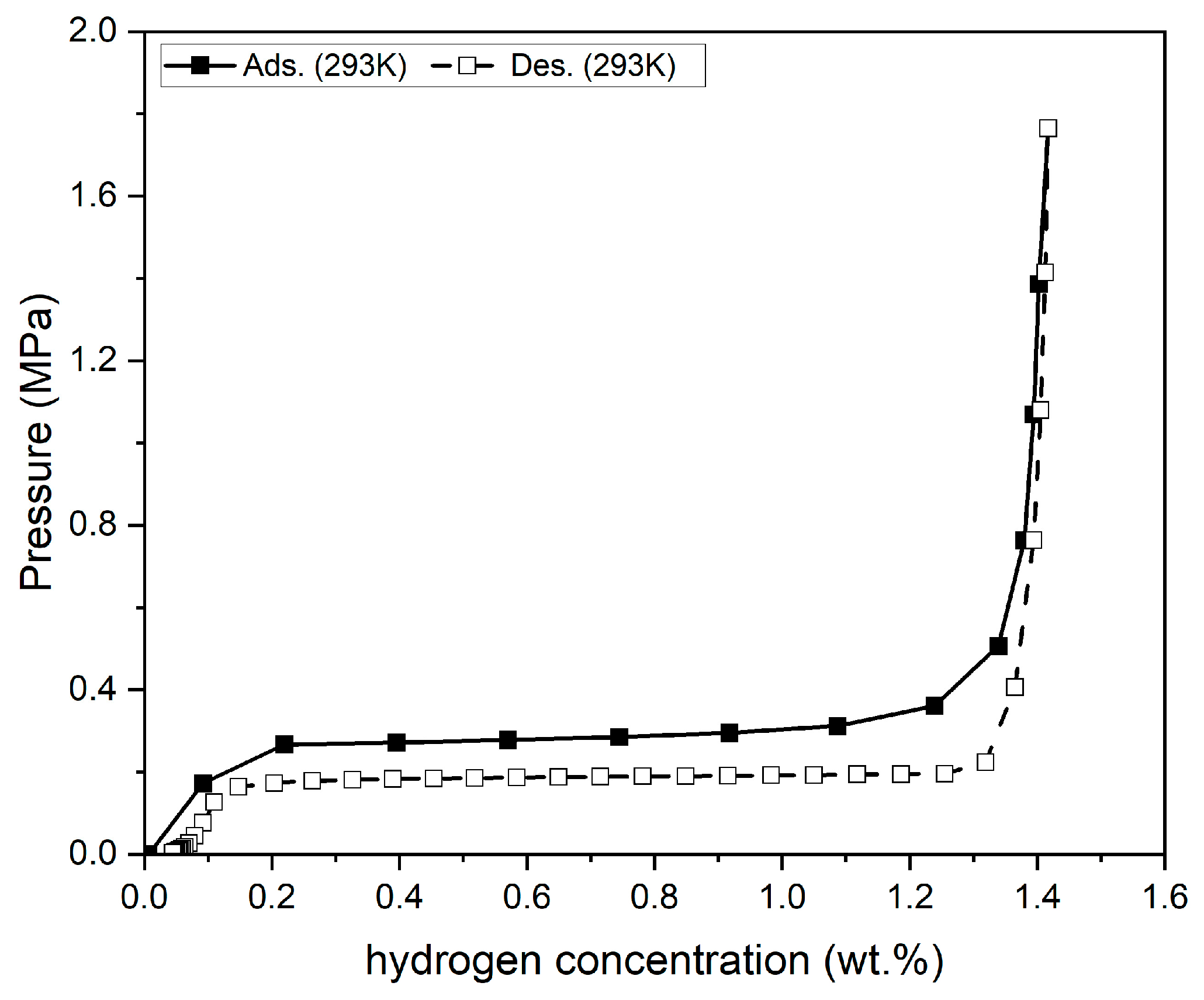
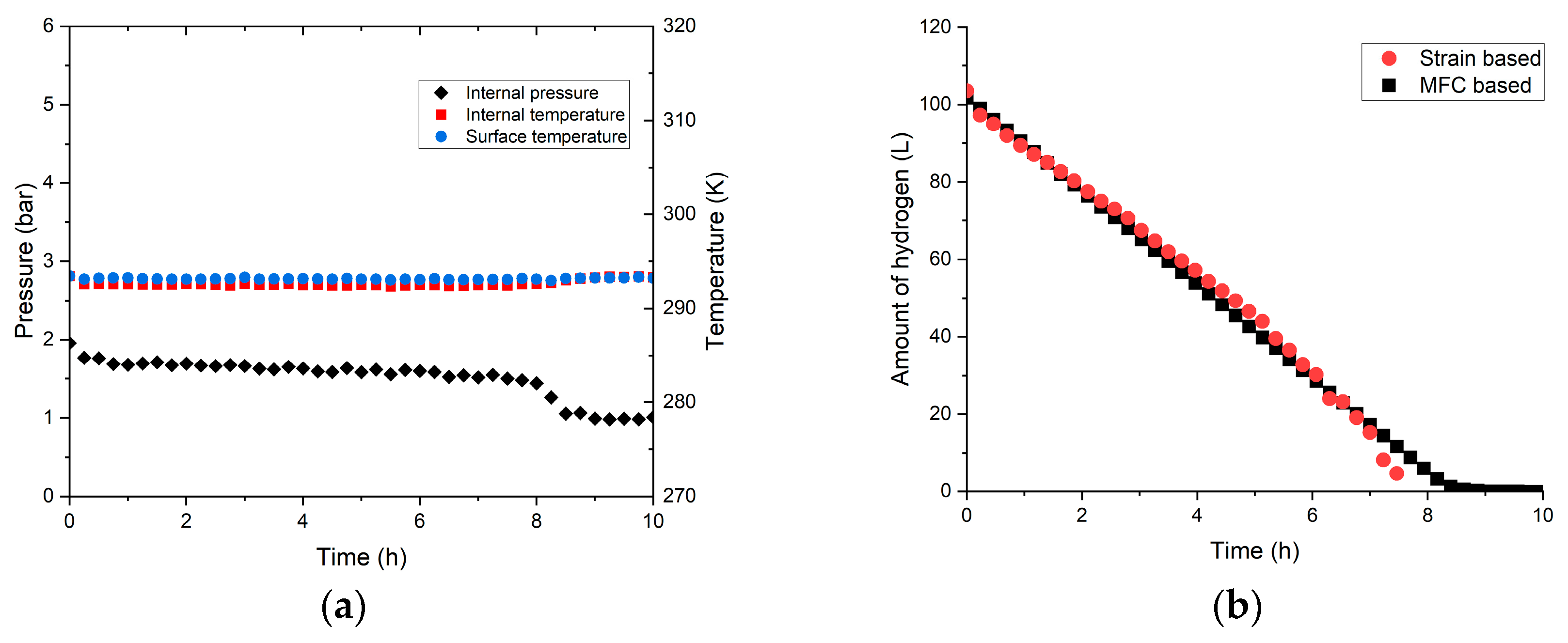
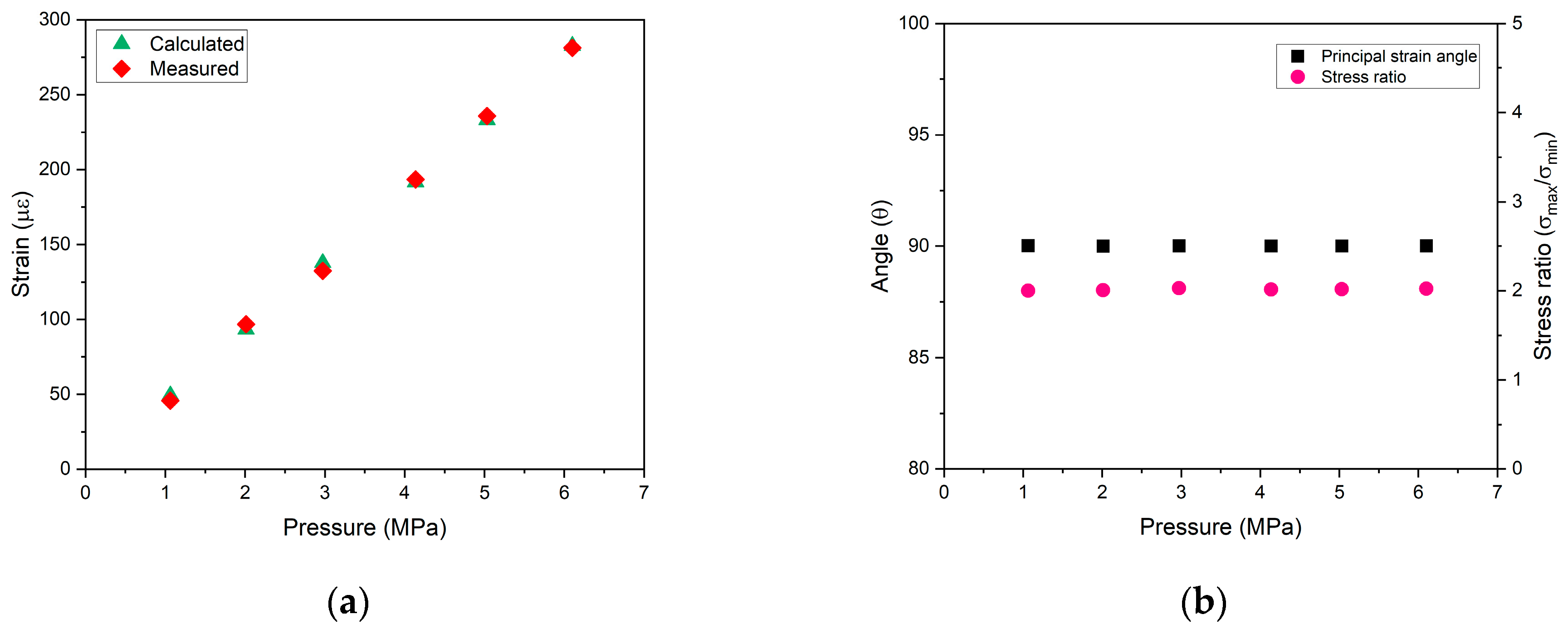
Metal hydrides store hydrogen in the solid state with high density and inherent safety, and their thermodynamic characteristics are typically described by the pressure–composition–isotherm (PCI) curve. In the plateau pressure region of the PCI curve, the equilibrium pressure remains nearly constant over a wide hydrogen concentration range, making conventional pressure-based methods unsuitable for quantifying the hydrogen amount in metal hydride vessels. This study proposes a strain-based method to quantify the hydrogen amount in a metal hydride vessel by measuring the strain induced on the metal hydride vessel surface due to the volumetric change of the metal hydride during hydrogen adsorption and desorption. The installation of strain gauges on the metal hydride vessel was verified using argon pressurization tests. The metal hydride was activated prior to controlled hydrogen desorption experiments aimed at quantifying the amount of hydrogen remaining in the vessel. A correlation between strain and hydrogen amount was obtained from experiments conducted at discrete measurement points. The hydrogen amount estimated using the strain-based method was further evaluated through continuous time-series desorption tests and showed good agreement with the results obtained from the mass flow controller (MFC)-based method, with a maximum difference of 4.5%. These results demonstrate that the proposed method provides a simple and reliable approach for quantifying the hydrogen amount in metal hydride vessels.
Keywords: hydrogen; metal hydride; strain; metal hydride vessel; plateau pressure region; volumetric change; argon pressurization test; desorption test hydrogen; metal hydride; strain; metal hydride vessel; plateau pressure region; volumetric change; argon pressurization test; desorption test