Expanded Polystyrene for Building Insulation: Effect of Graphite and Moisture on Thermophysical Properties
 , ,
, ,
Abstract
1. Introduction
2. Materials and Methods
2.1. Materials
2.2. Experimental Methodologies
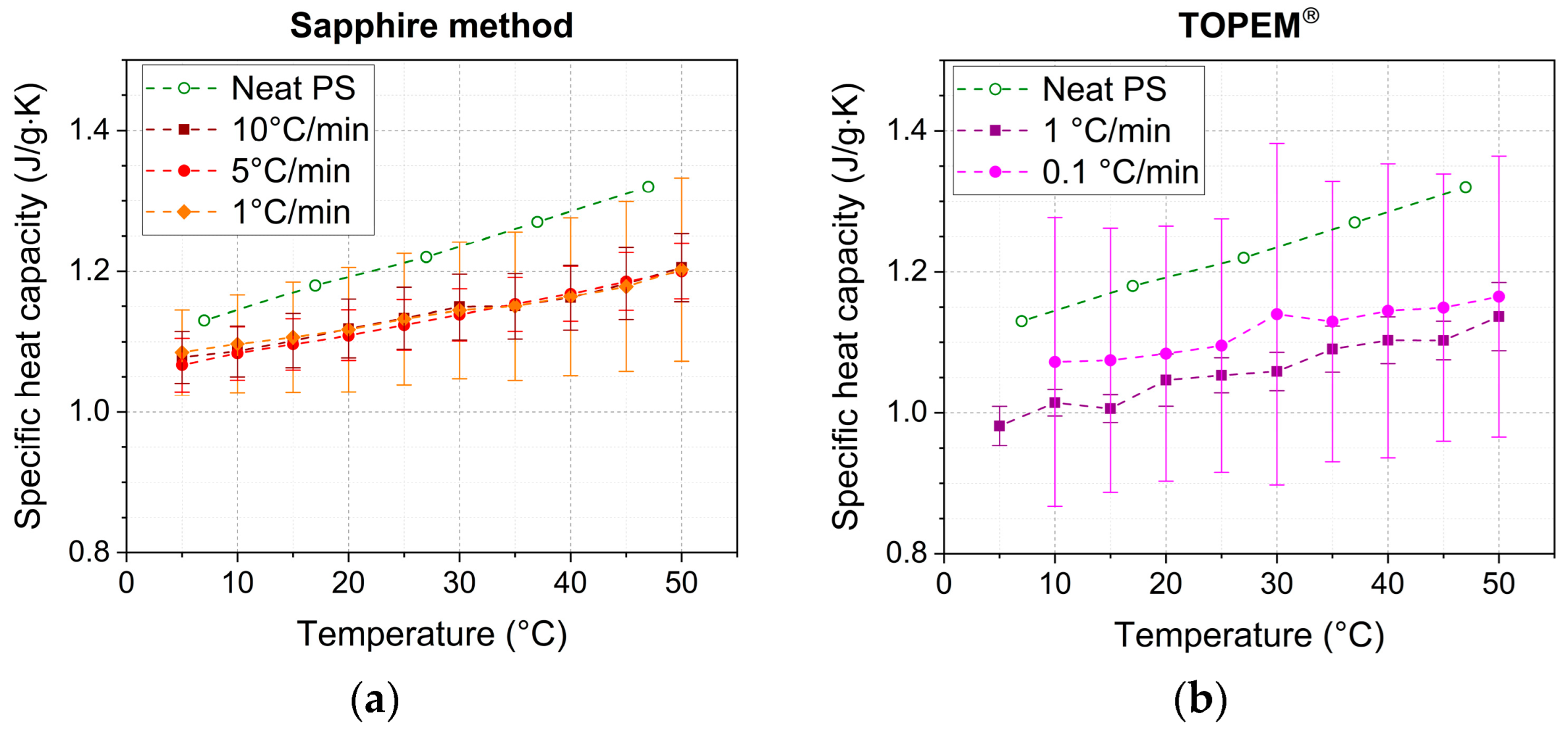
- Sapphire Method: performed according to the ASTM-E1269-11 standard [39] at heating rates of 1, 5, and 10 °C/min. This method required three distinct runs per sample: a baseline (empty crucibles), a reference run (sapphire standard), and the specimen measurement;
- Temperature-modulated Order-based Parameter Estimation Method (TOPEM®): conducted at heating rates of 0.1 and 1 °C/min, with pulse heights of 0.05 and 0.1 °C, respectively. For this stochastic modulation technique, only the baseline and specimen were measured, as the software directly calculates the quasi-static cp from the reversing heat flow.
3. Results and Discussion
3.1. Physical and Microstructural Properties of Graphite-Enhanced EPS
3.2. Thermal Characterization
3.3. Thermophysical Properties
3.3.1. Specific Heat Capacity
3.3.2. Thermal Diffusivity
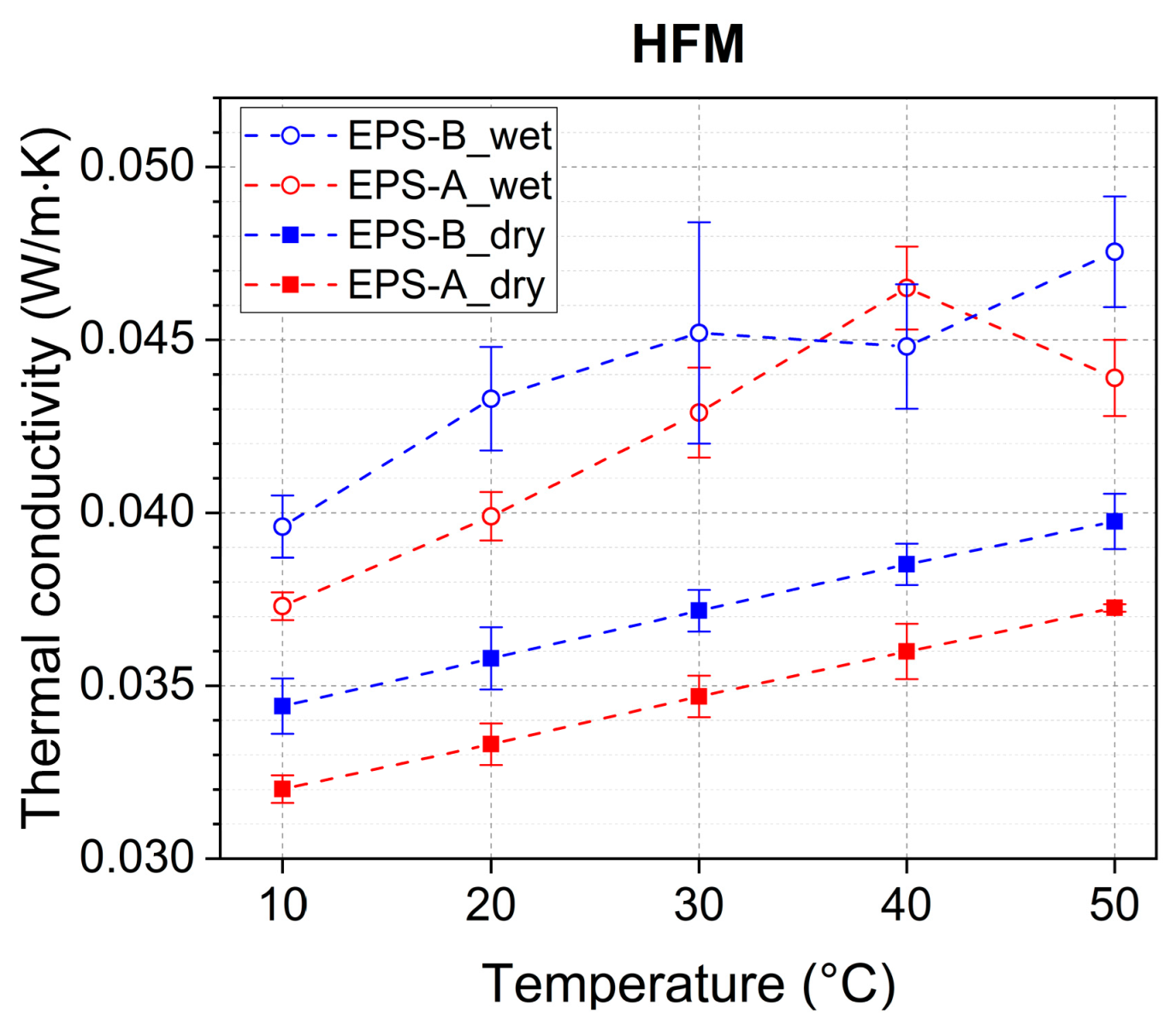
3.3.3. Thermal Conductivity
4. Conclusions
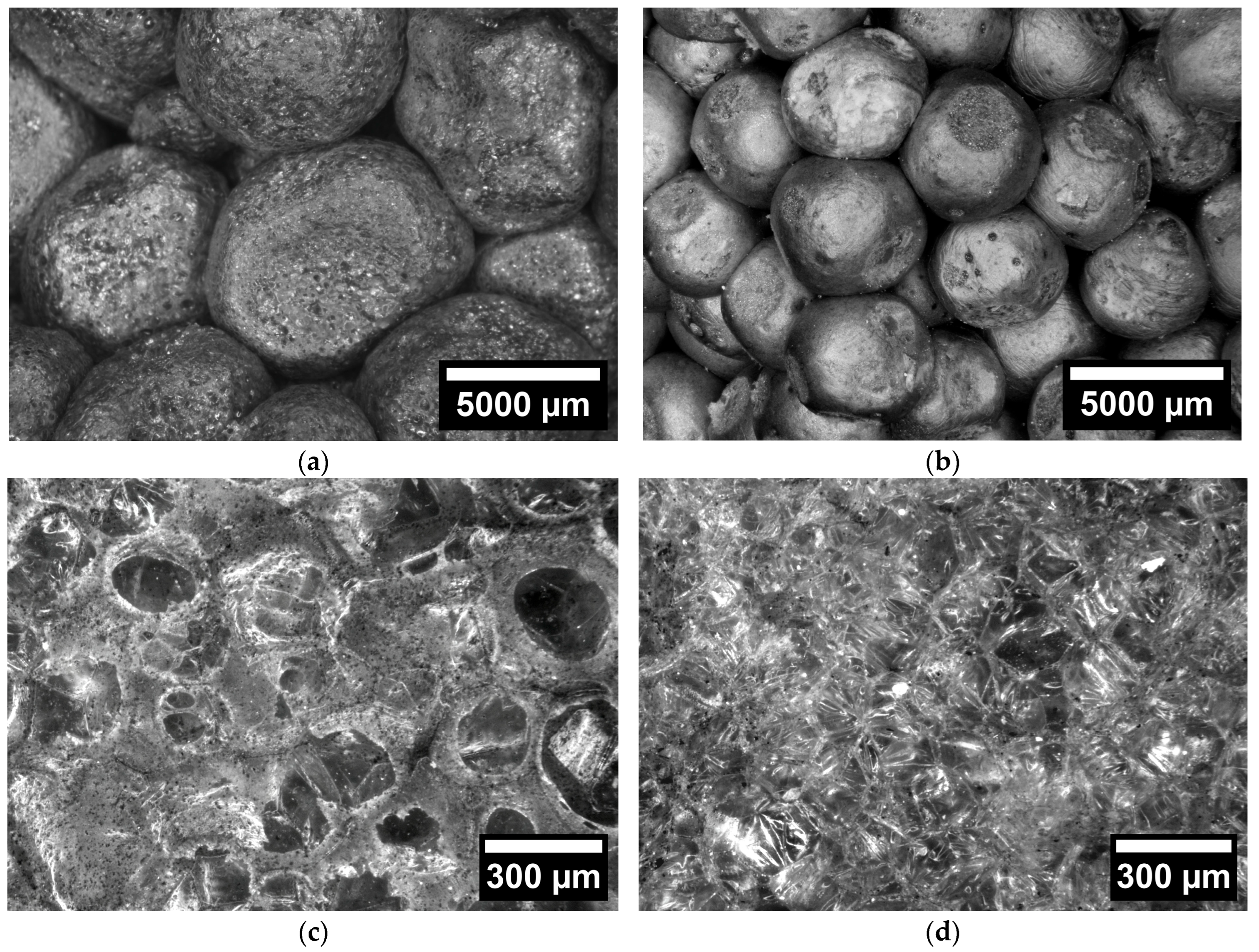
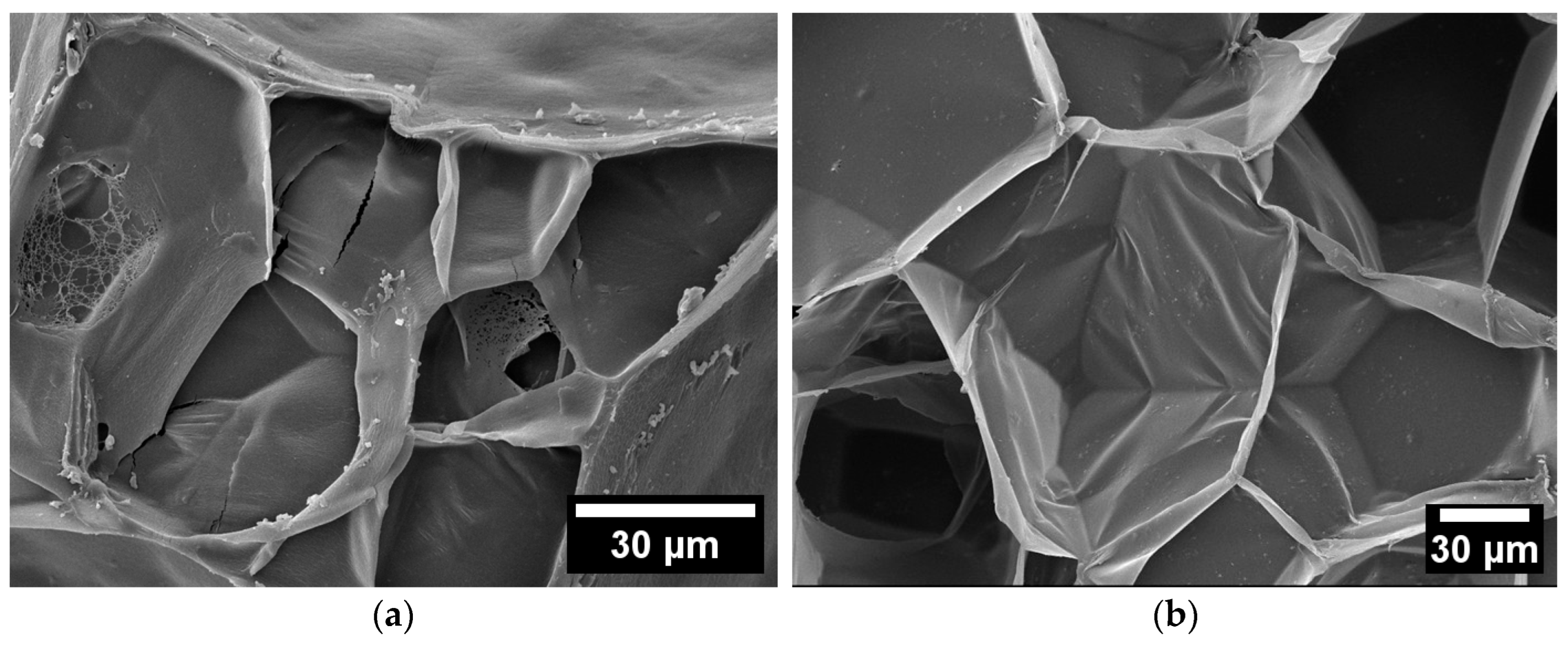
- Optical and SEM observations reveal a fine distribution of the carbonaceous filler without evidence of a percolative network.
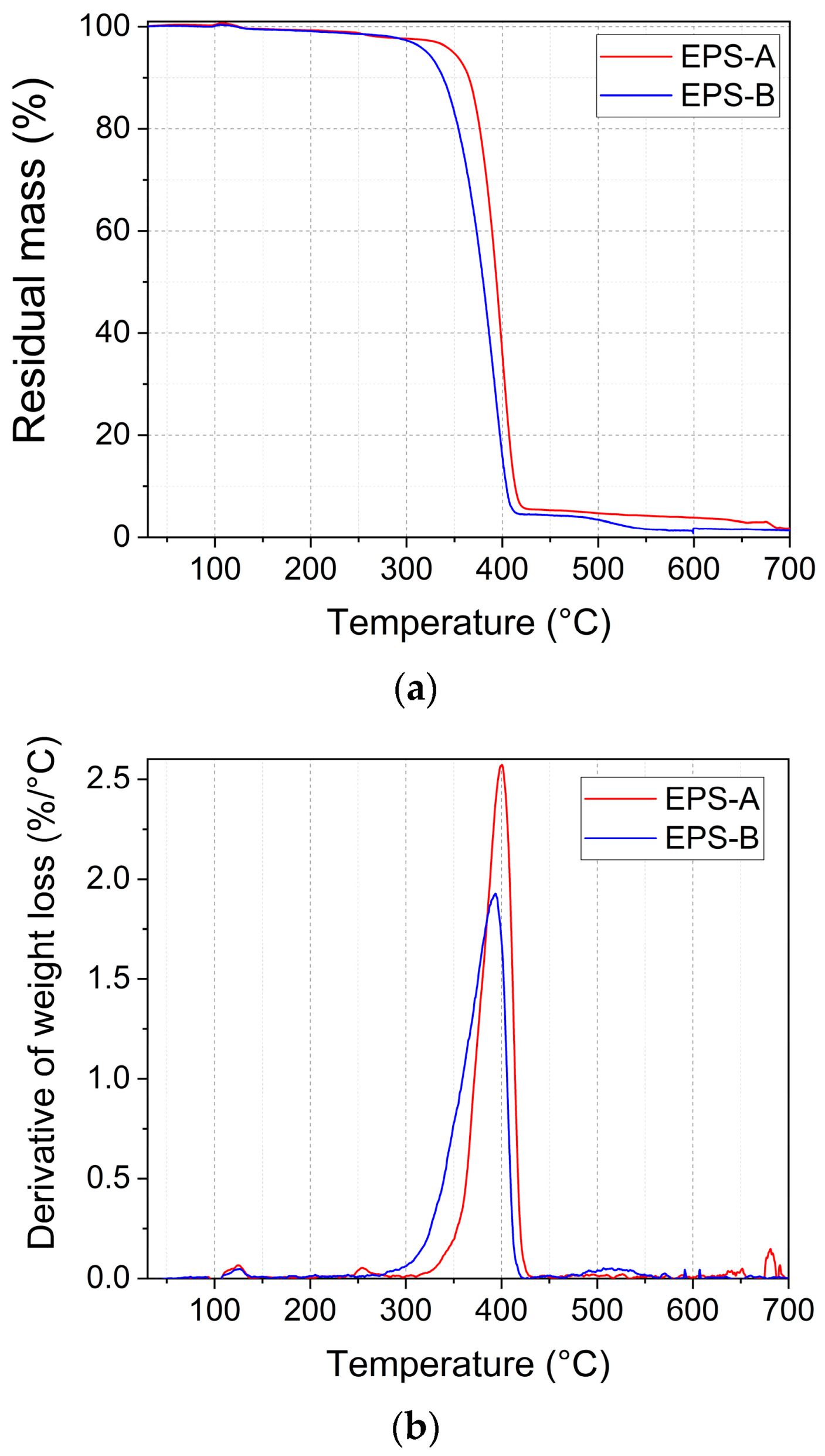
- TGA and microstructural analyses confirmed that both EPS-A and EPS-B share a common chemical origin, with an estimated graphite content of 1–2 wt.%.
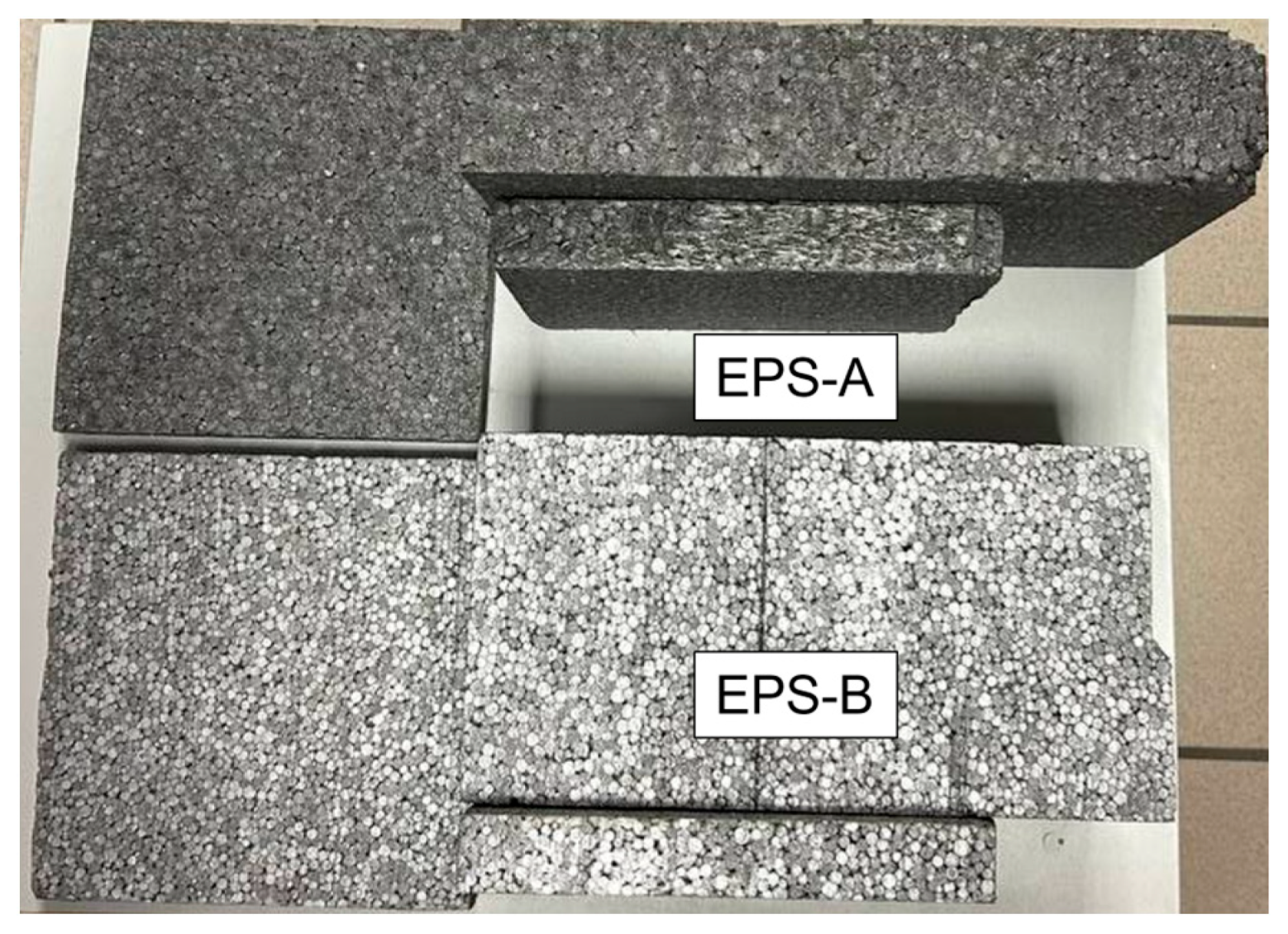
- EPS-A achieved a more extensive expansion, yielding a lower geometric density of 12.7 ± 0.5 kg/m3 and a higher open porosity fraction of 70% compared to EPS-B, which exhibited a bulk density of 16.0 ± 1.1 kg/m3 and an open porosity of 63%.
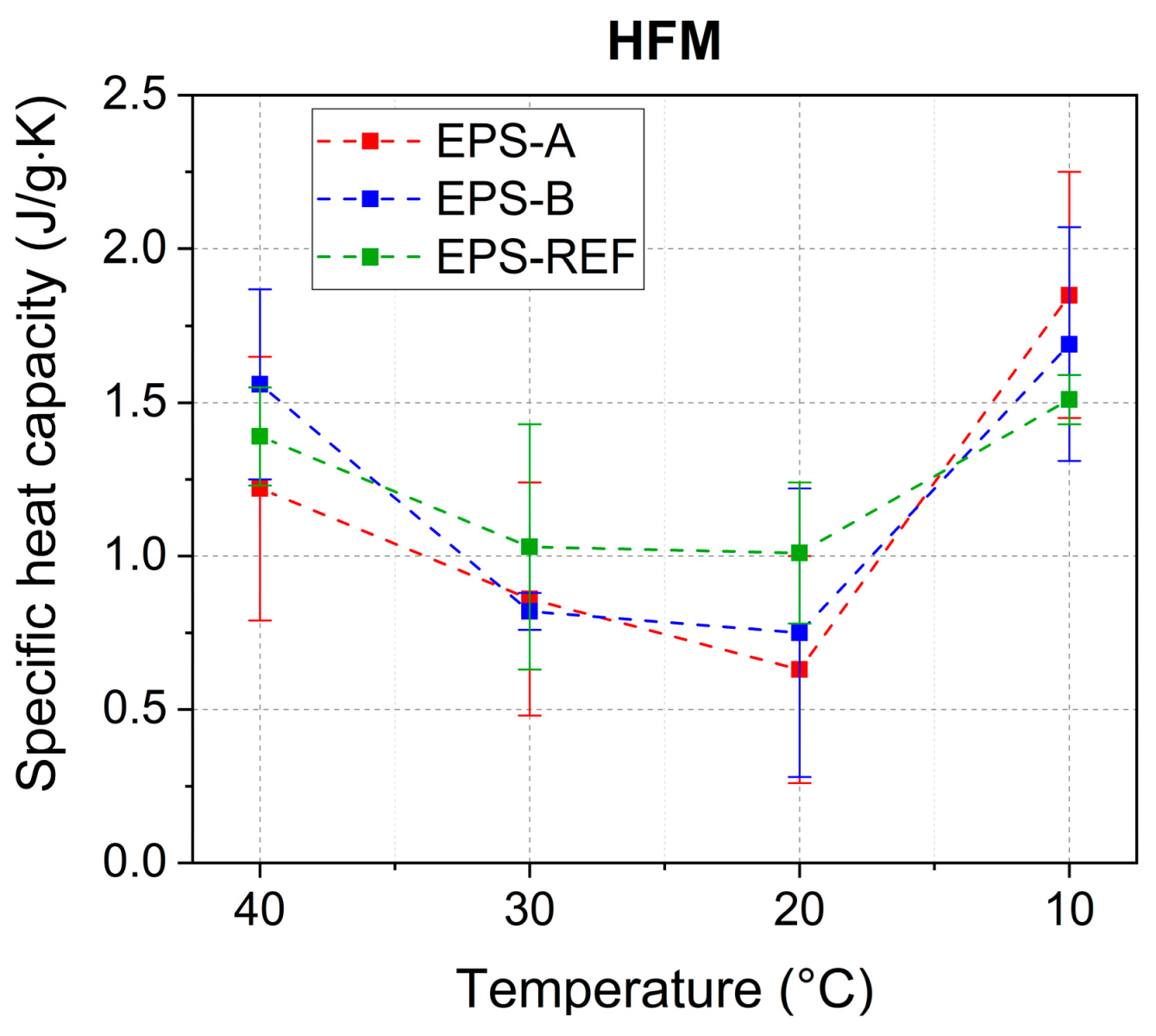
- HFM was found to be ineffective for measuring the specific heat capacity of low-density expanded polymers, yielding a high average relative error of 29%. However, DSC provided a reliable alternative after thermal densification at 120 °C. Among the protocols tested, the Sapphire comparison method yielded the highest accuracy relative to theoretical values, while the TOPEM technique resulted in a valid alternative adopting a heating rate of 1 °C/min.
- Following 30 days of water immersion, the geometric densities of the two EPS grades converged. This is attributed to the larger open porosity of EPS-A, which allows for a significantly higher moisture uptake of 144 ± 17 wt.% relative to the 97 ± 7 wt.% observed for EPS-B, thereby fundamentally altering the thermal transport of the material.
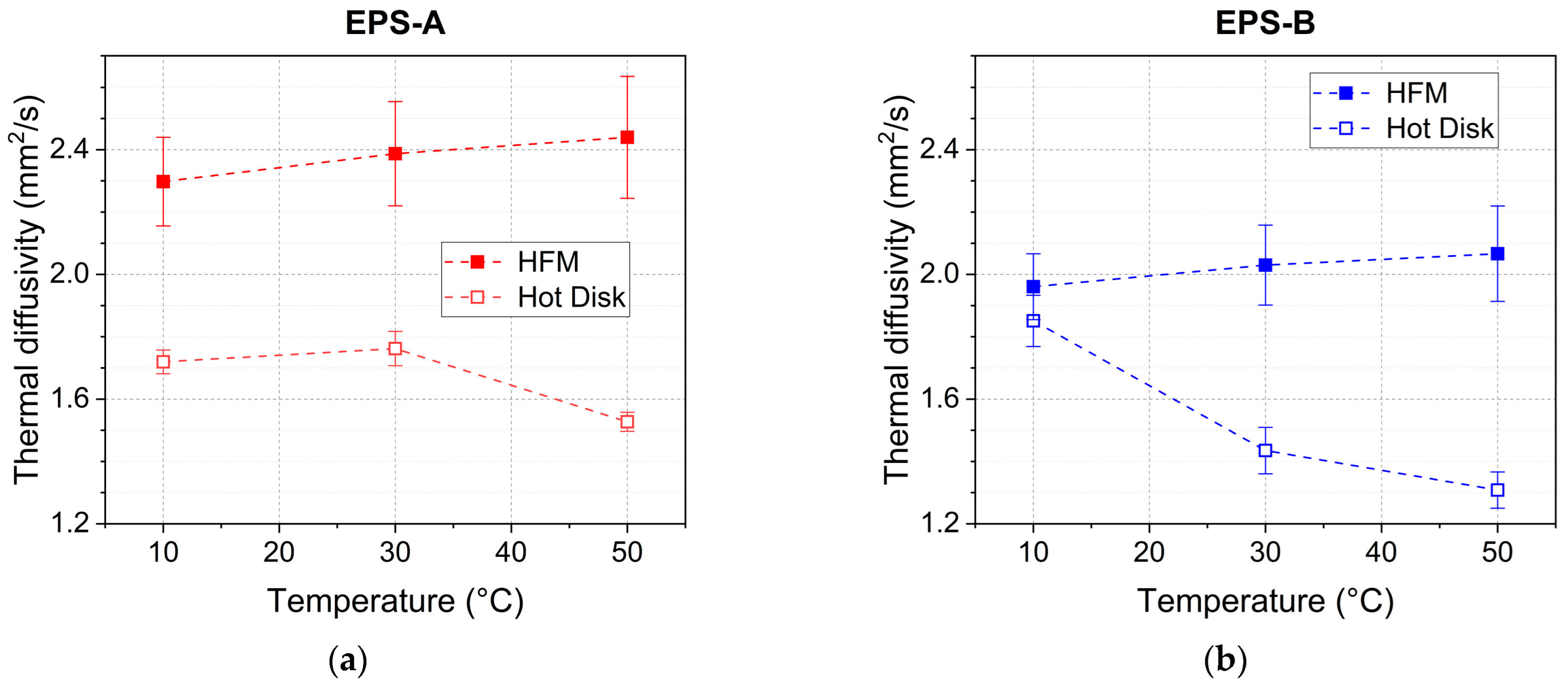
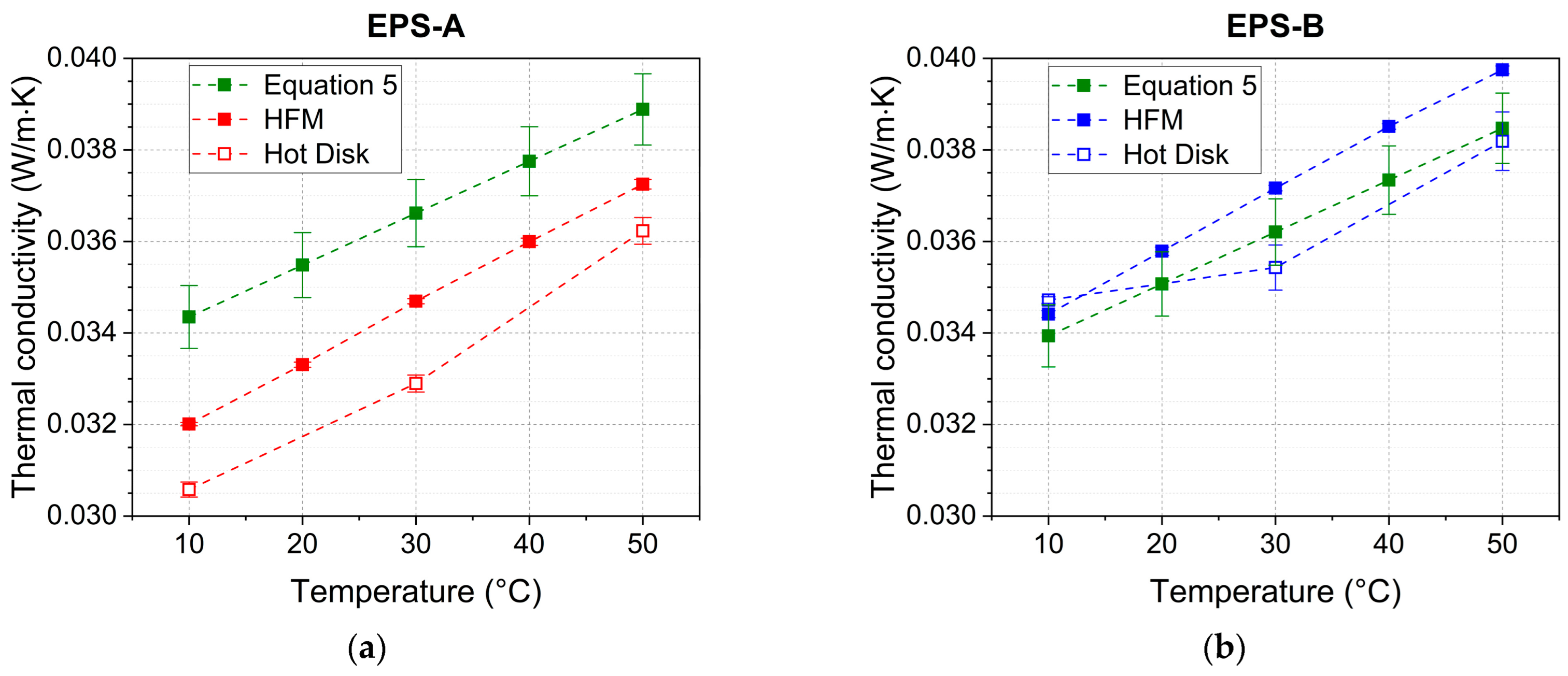
- The Transient Plane Source (Hot Disk) method proved to be a reliable technique for determining thermal diffusivity and conductivity, with results converging with steady-state HFM measurements.
- The temperature dependence of the thermophysical properties was confirmed, showing consistent shifts relative to the neat PS baseline.
- Comparative analysis against theoretical models for neat EPS successfully quantified the thermal performance enhancement provided by graphite. The findings indicate that graphite integration is not universally effective; its ability to reduce radiative heat transfer is significantly more pronounced in the grade with the higher expansion ratio (EPS-A), whereas the reduction is less substantial at higher densities.
Author Contributions
Funding
Data Availability Statement
Acknowledgments
Conflicts of Interest
Appendix A. HFM Specific Heat Capacity

| Temperature (°C) | Specific Heat Capacity (J/g·K) | ||
|---|---|---|---|
| EPS-REF | EPS-A | EPS-B | |
| 10 | 1.004 | 0.707 | 0.999 |
| 20 | 0.804 | 0.553 | 0.824 |
| 30 | 1.418 | 1.296 | 1.157 |
| 40 | 2.438 | 1.983 | 1.598 |
| 50 | 1.423 | 1.724 | 1.748 |
| Temperature (°C) | Specific Heat Capacity (J/g·K) |
|---|---|
| EPS-REF | |
| 10 | 0.916 |
| 20 | 1.020 |
| 30 | 1.222 |
| 40 | 1.317 |
| 50 | 1.601 |
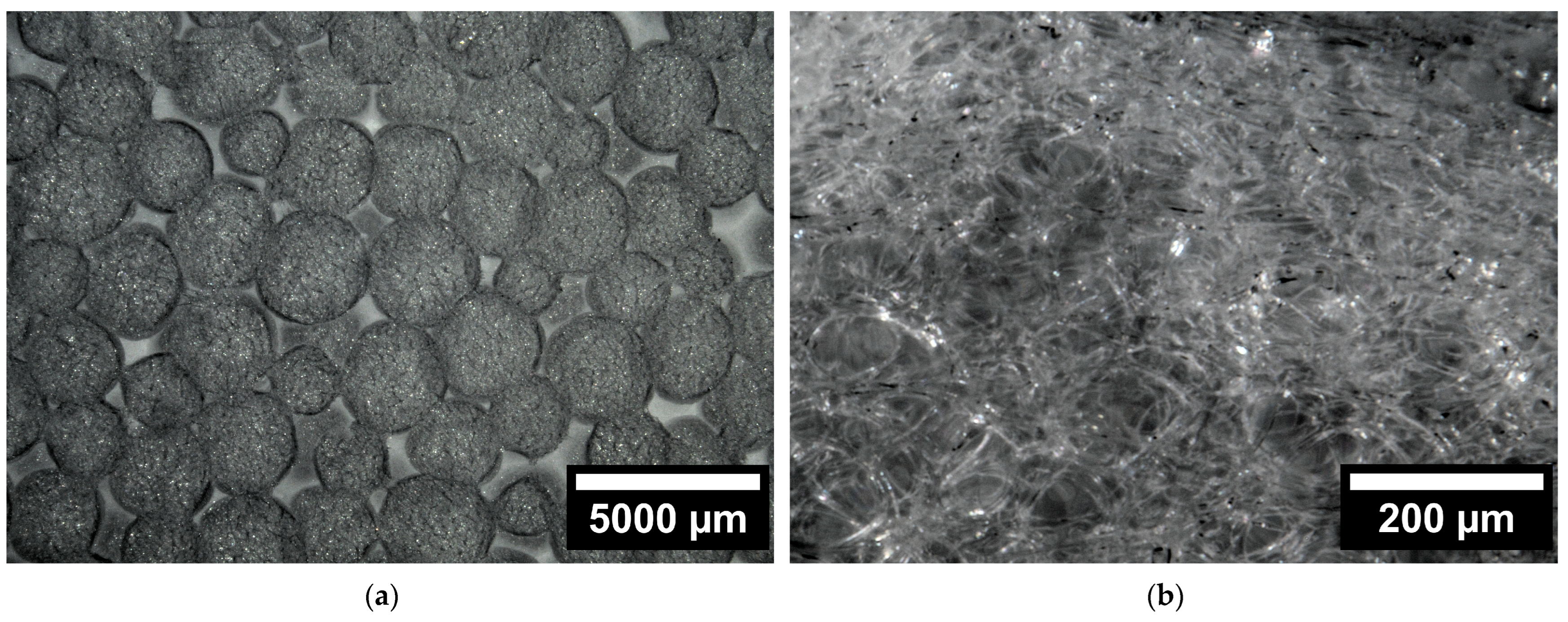
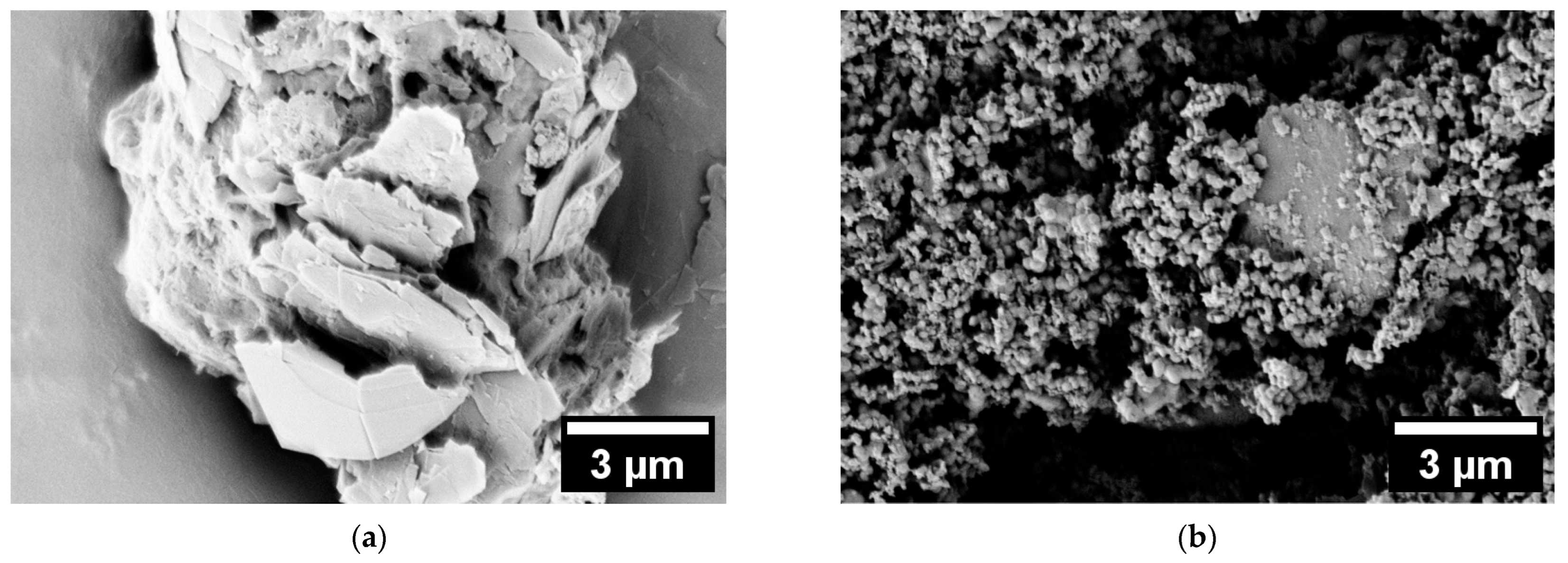
Appendix B. Optical Observation of EPS-REF and Scanning Electron Microscopy (SEM) of Carbon Residues


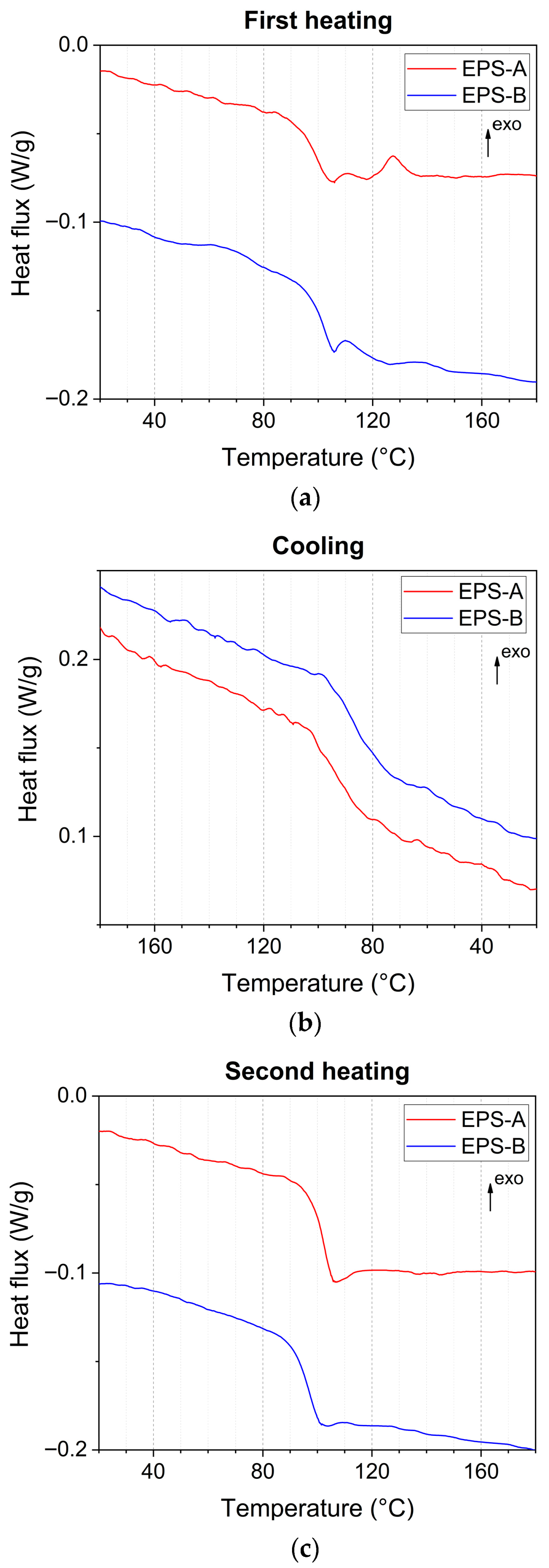
Appendix C. Differential Scanning Calorimetry (DSC)

Appendix D. Specific Heat Capacity Results
| Temperature (°C) | Specific Heat Capacity (J/g·K) | ||
|---|---|---|---|
| EPS-REF | EPS-A | EPS-B | |
| 10 | 1.51 ± 0.08 | 1.85 ± 0.40 | 1.69 ± 0.38 |
| 20 | 1.01 ± 0.23 | 0.63 ± 0.37 | 0.75 ± 0.47 |
| 30 | 1.03 ± 0.40 | 0.86 ± 0.38 | 0.82 ± 0.06 |
| 40 | 1.39 ± 0.16 | 1.22 ± 0.43 | 1.56 ± 0.31 |
| Temperature (°C) | Specific Heat Capacity (J/g·K) | ||
|---|---|---|---|
| 10 °C/min | 5 °C/min | 1 °C/min | |
| 5 | 1.08 ± 0.04 | 1.07 ± 0.04 | 1.08 ± 0.06 |
| 10 | 1.09 ± 0.04 | 1.08 ± 0.04 | 1.10 ± 0.07 |
| 15 | 1.10 ± 0.04 | 1.10 ± 0.04 | 1.11 ± 0.08 |
| 20 | 1.12 ± 0.04 | 1.11 ± 0.04 | 1.12 ± 0.09 |
| 25 | 1.13 ± 0.04 | 1.12 ± 0.04 | 1.13 ± 0.09 |
| 30 | 1.15 ± 0.05 | 1.14 ± 0.04 | 1.14 ± 0.11 |
| 35 | 1.15 ± 0.05 | 1.15 ± 0.04 | 1.15 ± 0.11 |
| 40 | 1.16 ± 0.05 | 1.17 ± 0.04 | 1.16 ± 0.11 |
| 45 | 1.18 ± 0.05 | 1.19 ± 0.04 | 1.18 ± 0.12 |
| 50 | 1.20 ± 0.05 | 1.20 ± 0.04 | 1.20 ± 0.13 |
| Temperature (°C) | Specific Heat Capacity (J/g·K) | |
|---|---|---|
| 1 °C/min | 0.1 °C/min | |
| 5 | 1.08 ± 0.04 | N/A |
| 10 | 1.09 ± 0.04 | 1.07 ± 0.20 |
| 15 | 1.10 ± 0.04 | 1.07 ± 0.19 |
| 20 | 1.12 ± 0.04 | 1.08 ± 0.18 |
| 25 | 1.13 ± 0.04 | 1.10 ± 0.18 |
| 30 | 1.15 ± 0.05 | 1.14 ± 0.24 |
| 35 | 1.15 ± 0.05 | 1.13 ± 0.20 |
| 40 | 1.16 ± 0.05 | 1.14 ± 0.21 |
| 45 | 1.18 ± 0.05 | 1.15 ± 0.19 |
| 50 | 1.20 ± 0.05 | 1.16 ± 0.20 |
| Method | Average Relative Percentual Error |
|---|---|
| HFM | ±29.1% |
| Sapphire 1 °C/min | ±8.3% |
| Sapphire 5 °C/min | ±3.4% |
| Sapphire 10 °C/min | ±3.8% |
| TOPEM 1 °C/min | ±2.8% |
| TOPEM 0.1 °C/min | ±17.8% |
Appendix E. Thermal Diffusivity and Conductivity
| Temperature (°C) | Thermal Diffusivity (mm2/s) | |||
|---|---|---|---|---|
| EPS-A | EPS-B | |||
| Hot Disk | HFM | Hot Disk | HFM | |
| 10 | 1.72 ± 0.04 | 2.30 ± 0.14 | 1.85 ± 0.08 | 1.96 ± 0.11 |
| 30 | 1.76 ± 0.05 | 2.39 ± 0.17 | 1.44 ± 0.07 | 2.03 ± 0.13 |
| 50 | 1.53 ± 0.03 | 2.44 ± 0.20 | 1.31 ± 0.06 | 2.07 ± 0.15 |
| Sample—Temperature | Imposed cp (kJ/m3·K) | Derived cp (kJ/m3·K) |
|---|---|---|
| EPS-A—10 °C | 14.0 | 17.8 |
| EPS-A—30 °C | 14.5 | 18.7 |
| EPS-A—50 °C | 15.3 | 23.7 |
| EPS-B—10 °C | 17.5 | 18.8 |
| EPS-B—30 °C | 18.3 | 24.7 |
| EPS-B—50 °C | 19.2 | 29.2 |
| Temperature (°C) | Thermal Conductivity (mW/m·K) | |||||
|---|---|---|---|---|---|---|
| EPS-A | EPS-B | |||||
| Hot Disk | HFM | Equation (5) | Hot Disk | HFM | Equation (5) | |
| 10 | 30.58 ± 0.16 | 32.01 ± 0.03 | 34.4 ± 0.7 | 34.69 ± 0.07 | 34.41 ± 0.08 | 33.9 ± 0.7 |
| 20 | N/A | 33.31 ± 0.06 | 35.5 ± 0.7 | N/A | 35.79 ± 0.09 | 35.1 ± 0.7 |
| 30 | 32.90 ± 0.18 | 34.69 ± 0.06 | 36.6 ± 0.7 | 35.67 ± 0.43 | 37.17 ± 0.06 | 36.2 ± 0.7 |
| 40 | N/A | 35.99 ± 0.08 | 37.8 ± 0.8 | N/A | 38.51 ± 0.06 | 37.3 ± 0.7 |
| 50 | 36.23 ± 0.29 | 37.25 ± 0.10 | 38.9 ± 0.8 | 38.70 ± 0.52 | 39.75 ± 0.08 | 38.5 ± 0.8 |
| Temperature (°C) | Thermal Conductivity (mW/m·K) | |
|---|---|---|
| EPS-A | EPS-B | |
| 10 | 37.3 ± 0.04 | 39.6 ± 0.04 |
| 20 | 39.9 ± 0.07 | 43.3 ± 0.15 |
| 30 | 42.9 ± 0.13 | 45.2 ± 0.32 |
| 40 | 46.5 ± 0.12 | 44.8 ± 0.18 |
| 50 | 43.9 ± 0.11 | 47.6 ± 0.16 |
References
- Berardi, U. A cross-country comparison of the building energy consumptions and their trends. Resour. Conserv. Recycl. 2017, 123, 230–241. [Google Scholar] [CrossRef]
- Eurostat. Energy Consumption in Households. Available online: https://ec.europa.eu/eurostat/statistics-explained/index.php?title=Energy_consumption_in_households (accessed on 5 December 2025).
- Building Performance Institute Europe (BPIE), 97% of Buildings in the EU Need to be Updated. Available online: https://bpie.eu/wp-content/uploads/2017/12/State-of-the-building-stock-briefing_Dic6.pdf (accessed on 9 December 2025).
- Mazzarella, L. Energy retrofit of historic and existing buildings. The legislative and regulatory point of view. Energy Build. 2015, 95, 23–31. [Google Scholar] [CrossRef]
- Valentini, F.; Maracchini, G.; di Filippo, R.; Dorigato, A.; Bursi, O. A prospective life cycle assessment of insulation and window systems under evolving electricity and recycling scenarios for building energy retrofit in Italy. Energy Build. 2025, 347, 116245. [Google Scholar] [CrossRef]
- IEA. RePowerEU Plan: Joint European Action on Renewable Energy and Energy Efficiency. Available online: https://www.iea.org/policies/15691-repowereu-plan-joint-european-action-on-renewable-energy-and-energy-efficiency (accessed on 9 December 2025).
- European Commission. Supporting REPowerEU: Affordable, Secure and Sustainable Energy for Europe—Final Synthesis Report; European Commission: Brussels, Belgium, 2024; Available online: https://reform-support.ec.europa.eu/document/download/c58a5fce-0504-4852-89bb-f51a16131c5a_en?filename=REPowerEU%20TSI_Final%20synthesis%20report_0.pdf (accessed on 9 December 2025).
- Haller, M.; Ludig, S.; Bauer, N. Decarbonization scenarios for the EU and MENA power system: Considering spatial distribution and short term dynamics of renewable generation. Energy Policy 2012, 47, 282–290. [Google Scholar] [CrossRef]
- Klemczak, B.; Kucharczyk-Brus, B.; Sulimowska, A.; Radziewicz-Winnicki, R. Historical Evolution and Current Developments in Building Thermal Insulation Materials—A Review. Energies 2024, 17, 5535. [Google Scholar] [CrossRef]
- Cai, S.; Deng, X.; Beiyuan, J.; Chen, X.; Liu, D.; Lv, D.; Duan, C.; Lin, L.; Cha, R.; Xie, W.; et al. Review of synthetic polymer-based thermal insulation materials in construction and building. J. Build. Eng. 2024, 97, 110846. [Google Scholar] [CrossRef]
- Raps, D.; Hossieny, N.; Park, C.B.; Altstädt, V. Past and present developments in polymer bead foams and bead foaming technology. Polymer 2015, 56, 5–19. [Google Scholar] [CrossRef]
- Mohajerani, A.; Ashdown, M.; Abdihashi, L.; Nazem, M. Expanded polystyrene geofoam in pavement construction. Constr. Build. Mater. 2017, 157, 438–448. [Google Scholar] [CrossRef]
- Ramli Sulong, N.H.; Mustapa, S.A.S.; Abdul Rashid, M.K. Application of expanded polystyrene (EPS) in buildings and constructions: A review. J. Appl. Polym. Sci. 2019, 136, 47529. [Google Scholar] [CrossRef]
- Doğan, B.; Tan, H. The Numerical and Experimental Investigation of the Change of the Thermal Conductivity of Expanded Polystyrene at Different Temperatures and Densities. Int. J. Polym. Sci. 2019, 2019, 6350326. [Google Scholar] [CrossRef]
- Kuhnigk, J.; Standau, T.; Dörr, D.; Brütting, C.; Altstädt, V.; Ruckdäschel, H. Progress in the development of bead foams—A review. J. Cell. Plast. 2022, 58, 707–735. [Google Scholar] [CrossRef]
- Seid, A.M.; Adimass, S.A.; Salilew, W.M.; Vignesh, K.; Paramasivam, V.; Fentaw, B.A. Recent Progress on the Physical, Thermal, and Mechanical Properties of Expanded Polystyrene Waste–Based Composites. Int. J. Polym. Sci. 2025, 2025, 9285040. [Google Scholar] [CrossRef]
- Turk, K.; Kalčikova, G.; Kokalj, A.J.; Mušič, B. From plastic use in the construction and built environment to state-of-the-art circular economy solutions to combat microplastic pollution. Environ. Sci. Eur. 2025, 37, 185. [Google Scholar] [CrossRef]
- Lee, S.; Tsuruda, Y.; Honda, M.; Mukai, K.; Hirasawa, T.; Wijaya, D.C.; Takai, Y.; Simasaki, Y.; Oshima, Y. Fragmentation of expanded polystyrene to microplastics by wharf roach Ligia spp. Mar. Pollut. Bull. 2025, 214, 117769. [Google Scholar] [CrossRef] [PubMed]
- Papparotto, M.; Gavazza, C.; Matteotti, P.; Fambri, L. Seasonal Comparative Monitoring of Plastic and Microplastic Pollution in Lake Garda (Italy) Using Seabin During Summer–Autumn 2024. Microplastics 2025, 4, 44. [Google Scholar] [CrossRef]
- Gaidhani, A.; Tribe, L.; Charpentier, P. Polystyrene carbon composite foam with enhanced insulation and fire retardancy for a sustainable future: Critical review. J. Cell. Plast. 2023, 59, 419–453. [Google Scholar] [CrossRef]
- Blazejczyk, A.; Jastrzebski, C.; Wierzbicki, M. Change in Conductive–Radiative Heat Transfer Mechanism Forced by Graphite Microfiller in Expanded Polystyrene Thermal Insulation—Experimental and Simulated Investigations. Materials 2020, 13, 2626. [Google Scholar] [CrossRef]
- Naveira-Cotta, C.P.; Cotta, R.M.; Orlande, H.R.B. Inverse analysis with integral transformed temperature fields: Identification of thermophysical properties in heterogeneous media. Int. J. Heat Mass Transf. 2011, 54, 1506–1519. [Google Scholar] [CrossRef]
- Fraga, I.; Montserrat, S.; Hutchinson, J.M. TOPEM, a new temperature modulated DSC technique. J. Therm. Anal. Calorim. 2007, 87, 119–124. [Google Scholar] [CrossRef]
- Lakatos, Á.; Kalmár, F. Examination of the change of the overall heat transfer coefficients of building structures in function of water content. Build. Serv. Eng. Res. Technol. 2013, 35, 507–515. [Google Scholar] [CrossRef]
- Cai, S.; Zhang, B.; Cremaschi, L. Review of moisture behavior and thermal performance of polystyrene insulation in building applications. Build. Environ. 2017, 123, 50–65. [Google Scholar] [CrossRef]
- Khoukhi, M.; Hassan, A.; Abdelbaqi, S. The impact of employing insulation with variant thermal conductivity on the thermal performance of buildings in the extremely hot climate. Case Stud. Therm. Eng. 2019, 16, 100562. [Google Scholar] [CrossRef]
- Nowoświat, A.; Miros, A.; Krause, P. Change in the Properties of Expanded Polystyrene Exposed to Solar Radiation in Real Aging Conditions. Sustainability 2024, 16, 7320. [Google Scholar] [CrossRef]
- Yan, L.; Xu, Z.; Zhang, J. Influence of nanoparticle geometry on the thermal stability and flame retardancy of high-impact polystyrene nanocomposites. J. Therm. Anal. Calorim. 2017, 130, 1987–1996. [Google Scholar] [CrossRef]
- Faniyi, I.O.; Olofinjana, B.; Fasakin, O.; Ajenifuja, E.; Alo, F.I.; Eleruja, M.A.; Ajayi, E.O.B. Effects of graphene oxide and reduced graphene oxide on thermal and mechanical properties of expanded polystyrene-based composites. Bull. Mater. Sci. 2021, 44, 164. [Google Scholar] [CrossRef]
- Ji, W.; Yao, Y.; Guo, J.; Fei, B.; Gu, X.; Li, H.; Sun, J.; Zhang, S. Toward an understanding of how red phosphorus and expandable graphite enhance the fire resistance of expandable polystyrene foams. J. Appl. Polym. Sci. 2020, 137, 49045. [Google Scholar] [CrossRef]
- Krause, P.; Nowoświat, A. Experimental Studies Involving the Impact of Solar Radiation on the Properties of Expanded Graphite Polystyrene. Energies 2020, 13, 75. [Google Scholar] [CrossRef]
- Lakatos, Á.; Kalmár, F. Investigation of thickness and density dependence of thermal conductivity of expanded polystyrene insulation materials. Mater. Struct. 2013, 46, 1101–1105. [Google Scholar] [CrossRef]
- Rydzkowski, T.; Reszka, K.; Szczypiński, M.; Szczypiński, M.M.; Kopczyńska, E.; Thakur, V.K. Manufacturing and Evaluation of Mechanical, Morphological, and Thermal Properties of Reduced Graphene Oxide-Reinforced Expanded Polystyrene (EPS) Nanocomposites. Adv. Polym. Technol. 2020, 2020, 3053471. [Google Scholar] [CrossRef]
- Akolkar, A.; Rahmatian, N.; Unterberger, S.; Petrasch, J. Modeling the Effect of Infrared Opacifiers on Coupled Conduction-Radiation Heat Transfer in Expanded Polystyrene. J. Heat Transf. 2018, 140, 112005. [Google Scholar] [CrossRef]
- EN 12667; Thermal Performance of Building Materials and Products-Determination of Thermal Resistance by Means of Guarded Hot Plate and Heat Flow Meter Methods-Products of High and Medium Thermal Resistance. European Committee for Standardization: Brussels, Belgium, 2001.
- EN 13163; Thermal Insulation Products for Buildings-Factory Made Expanded Polystyrene (EPS) Products-Specification. European Committee for Standardization: Brussels, Belgium, 2016.
- UNI EN 10456; Building Materials and Products-Hygrothermal Properties-Tabulated Design Values and Procedures for Determining Declared and Design Thermal Values. Ente Nazionale Italiano di Unificazione: Milan, Italy, 2008.
- Brandrup, J.; Immergut, E.H.; Grulke, E.A.; Abe, A.; Bloch, D.R. Polymer handbook; Wiley: New York, NY, USA, 1999; Volume 89. [Google Scholar]
- ASTM E1269-11; Standard Test Method for Determining Specific Heat Capacity by Differential Scanning Calorimetry. ASTM International: West Conshohocken, USA, 2011.
- ISO 22007-2; Plastics—Determination of Thermal Conductivity and Thermal Diffusivity—Part 2: Transient Plane Heat Source (Hot Disc) Method. International Organization for Standardization: Geneva, Switzerland, 2022.
- Baer, E. Advanced polymers. Sci. Am. 1986, 255, 4. [Google Scholar] [CrossRef]
- Sacchet, S.; Lolato, G.P.; Valentini, F.; Grigiante, M.; Fambri, L. Thermophysical properties of High Density Polyethylene and Phase Change Materials: A systematic study in the evaluation of specific heat capacity and thermal diffusivity. J. Therm. Anal. Calorim. 2025; submitted. [Google Scholar]
- Lakatos, Á.; Lucchi, E. Thermal performances of Super Insulation Materials (SIMs): A comprehensive analysis of characteristics, heat transfer mechanisms, laboratory tests, and experimental comparisons. Int. Commun. Heat Mass Transf. 2024, 152, 107293. [Google Scholar] [CrossRef]
- Vohler, O.; von Sturm, F.; Wege, E.; Frohs, W. Graphite*. In Industrial Carbon and Graphite Materials; Wiley: Hoboken, NJ, USA, 2021; Volume 1, pp. 89–103. [Google Scholar]
- Ruuska, T.; Vinha, J.; Kivioja, H. Measuring thermal conductivity and specific heat capacity values of inhomogeneous materials with a heat flow meter apparatus. J. Build. Eng. 2017, 9, 135–141. [Google Scholar] [CrossRef]
- Ma, A.; Cai, C.; Yang, J.; Zhou, T. Measuring thermophysical properties of building insulation materials using transient plane heat source method. Energy Build. 2021, 240, 110891. [Google Scholar] [CrossRef]


| Sample | Bulk Density (kg/m3) | Thermal Conductivity 1 (W/m·K) | Specific Heat Capacity 2 (J/g·K) |
|---|---|---|---|
| EPS-A | 14–16 | 0.031 | 1.45 |
| EPS-B | 15–22 | 0.030 | 1.45 |
| EPS-REF | 26 | 0.033 | N/A |
| Sample | (kg/m3) | (kg/m3) | Popen (vol.%) | Pclosed (vol.%) | Ptot (vol.%) | (kg/m3) |
|---|---|---|---|---|---|---|
| EPS-A | 12.7 ± 0.5 | 42.7 ± 1.2 | 70.2 | 28.6 | 98.8 | 31.0 ± 1.4 |
| EPS-B | 16.0 ± 1.1 | 43.1 ± 1.9 | 62.9 | 35.5 | 98.5 | 31.0 ± 1.9 |
| Sample | Tg,h1 (°C) | Tg,c (°C) | Tg,h2 (°C) | Tonset (°C) | Tpeak (°C) | m150 (wt.%) | m700 (wt.%) |
|---|---|---|---|---|---|---|---|
| EPS-A | 100.5 | 93.0 | 102.6 | 313.2 | 399.1 | 99.5 | 1.4 |
| EPS-B | 102.0 | 87.2 | 97.0 | 274.3 | 393.4 | 99.5 | 1.8 |
Disclaimer/Publisher’s Note: The statements, opinions and data contained in all publications are solely those of the individual author(s) and contributor(s) and not of MDPI and/or the editor(s). MDPI and/or the editor(s) disclaim responsibility for any injury to people or property resulting from any ideas, methods, instructions or products referred to in the content. |
© 2026 by the authors. Licensee MDPI, Basel, Switzerland. This article is an open access article distributed under the terms and conditions of the Creative Commons Attribution (CC BY) license.
Share and Cite
Sacchet, S.; Lolato, G.P.; Valentini, F.; Grigiante, M.; Fambri, L. Expanded Polystyrene for Building Insulation: Effect of Graphite and Moisture on Thermophysical Properties. Energies 2026, 19, 1558. https://doi.org/10.3390/en19061558
Sacchet S, Lolato GP, Valentini F, Grigiante M, Fambri L. Expanded Polystyrene for Building Insulation: Effect of Graphite and Moisture on Thermophysical Properties. Energies. 2026; 19(6):1558. https://doi.org/10.3390/en19061558
Chicago/Turabian StyleSacchet, Sereno, Giovanni Paolo Lolato, Francesco Valentini, Maurizio Grigiante, and Luca Fambri. 2026. "Expanded Polystyrene for Building Insulation: Effect of Graphite and Moisture on Thermophysical Properties" Energies 19, no. 6: 1558. https://doi.org/10.3390/en19061558
APA StyleSacchet, S., Lolato, G. P., Valentini, F., Grigiante, M., & Fambri, L. (2026). Expanded Polystyrene for Building Insulation: Effect of Graphite and Moisture on Thermophysical Properties. Energies, 19(6), 1558. https://doi.org/10.3390/en19061558