Impact of Cascaded and Series/Parallel Configurations on the Thermal Performance of Flat-Plate Phase-Change Thermal Energy Storage Systems

Abstract
1. Introduction
2. Experimental and Simulation Methods
2.1. Numerical Simulation Method
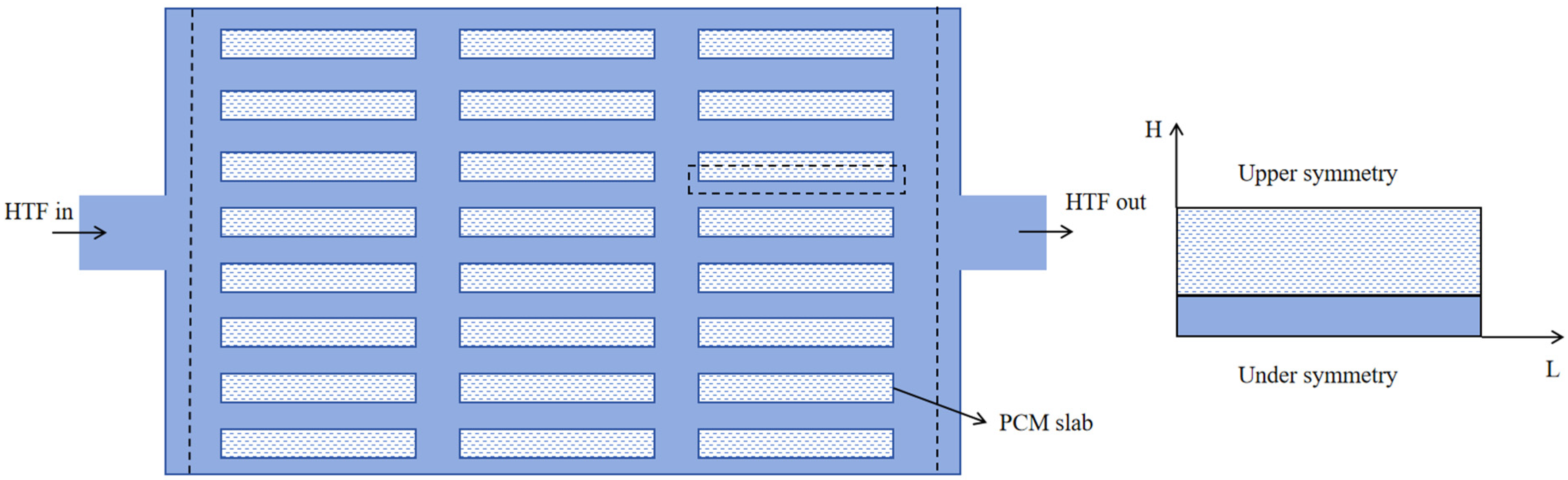
2.1.1. Physical Model
- (1)
- Uniform mass flow rate and identical inlet temperature for all heat transfer fluid (HTF) channels;
- (2)
- Negligible natural convection within the liquid PCM due to the confinement by thin, horizontal plate geometry;
- (3)
- Adiabatic boundary conditions, neglecting any heat loss to the ambient environment;
- (4)
- Homogeneous and isotropic PCM with constant thermophysical properties;
- (5)
- Uniform initial temperature for all PCM, HTF, and the container walls.
2.1.2. Mathematical Model
2.1.3. Boundary Conditions and Parameter Settings
- (a)
- Solver and Model: Employ a transient (non-steady) solver, enabling the energy equation, laminar flow model, and solidification/melting model.
- (b)
- Algorithm and Discretization Scheme: Pressure–velocity coupling utilizes the SIMPLE algorithm, with the pressure term discretized using the PRESTO scheme.
- (c)
- Convergence and Initialization: Set the convergence tolerance criteria for the continuity equation, momentum equation, and energy equation to 10−5, 10−5, and 10−7, respectively. During computational initialization, the initial temperature of the phase-change material (PCM) is determined by the operating mode: 12 °C for the cooling storage process and 2 °C for the heat release process.
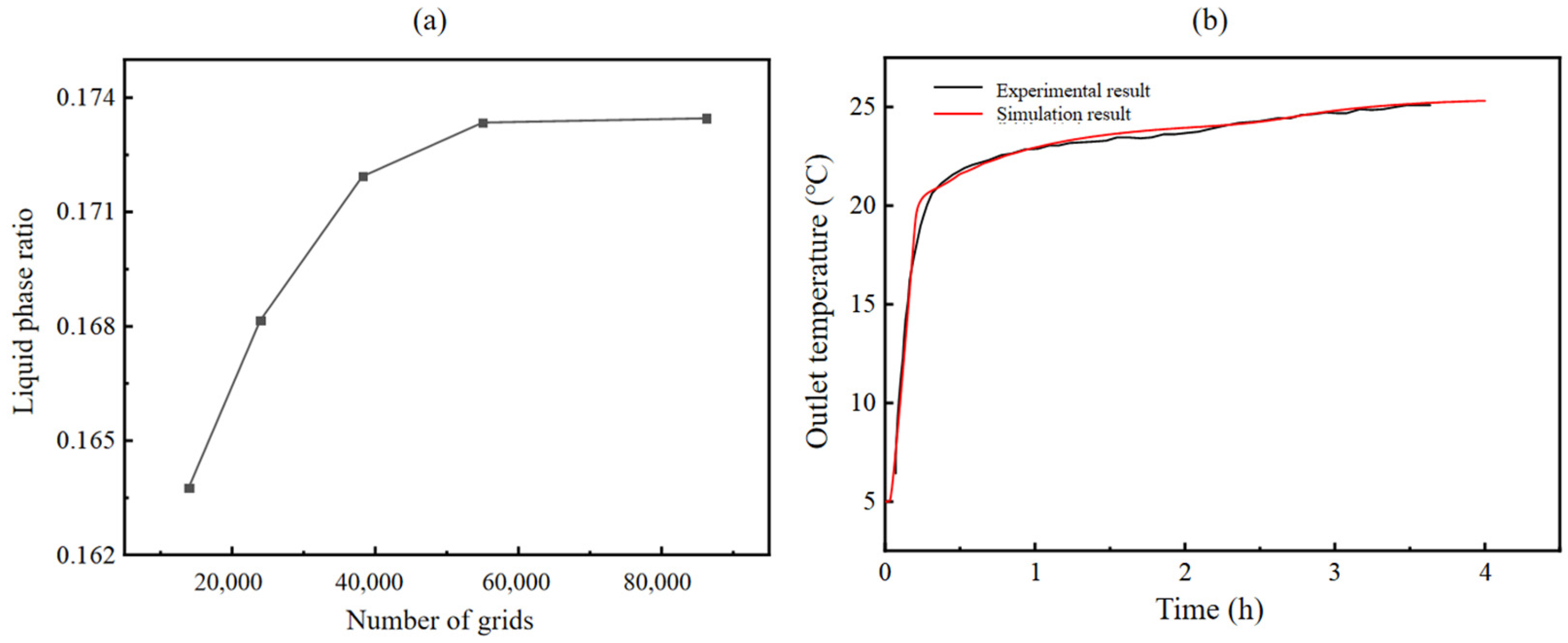
2.1.4. Grid Independence Verification and Model Verification
2.1.5. Evaluation Index
2.2. Phase-Change Cold Storage Experiment
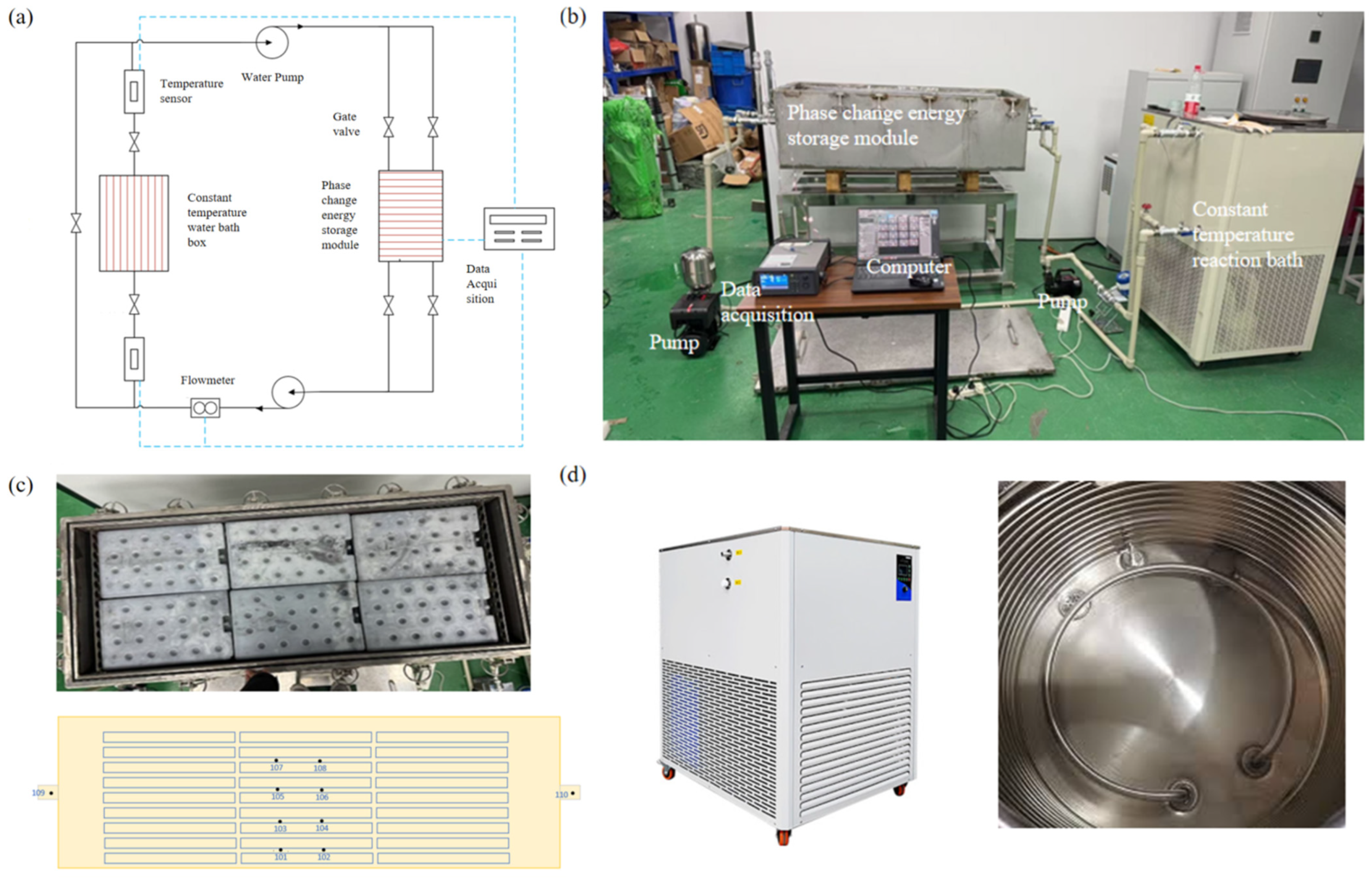
2.2.1. Experimental Bench System Principle
2.2.2. Experimental Content
- (1)
- Experimental Preparation
- (2)
- Cold storage experiment
- (3)
- Cold release experiment
3. Results and Discussions
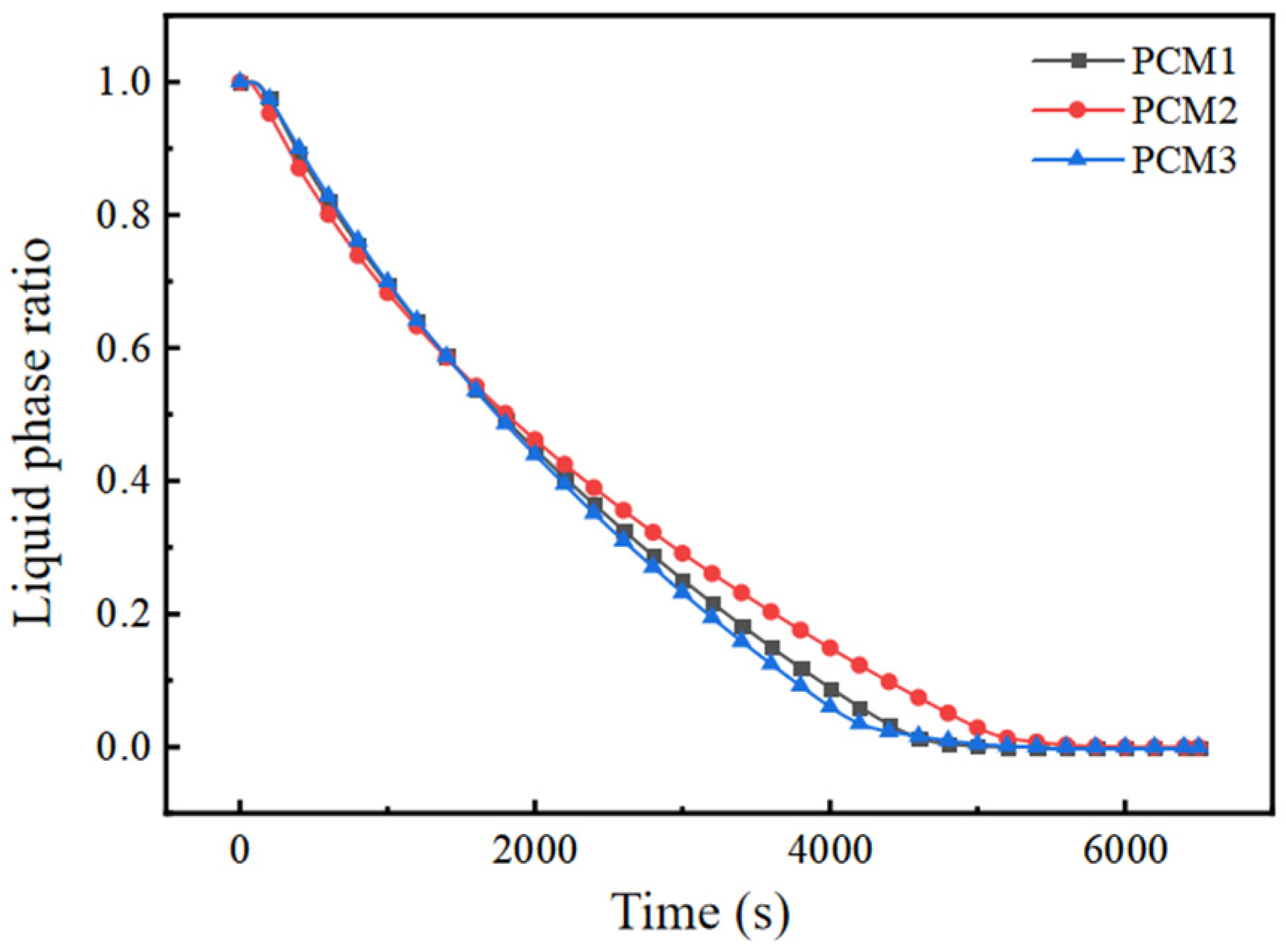
3.1. The Impact of Cascade Configuration on the Comprehensive Performance of the Device’s Cold Storage Process
3.2. The Effect of Cascade Configuration on the Comprehensive Performance of the Device’s Heat Dissipation Process
3.3. The Effect of Series/Parallel Configuration on the Comprehensive Performance of the Device’s Cold Storage Process
3.4. The Effect of Series/Parallel Configuration on the Comprehensive Performance of the Device’s Heat Dissipation Process
3.5. Experimental Study of Flat-Panel Phase-Change Energy Storage Device
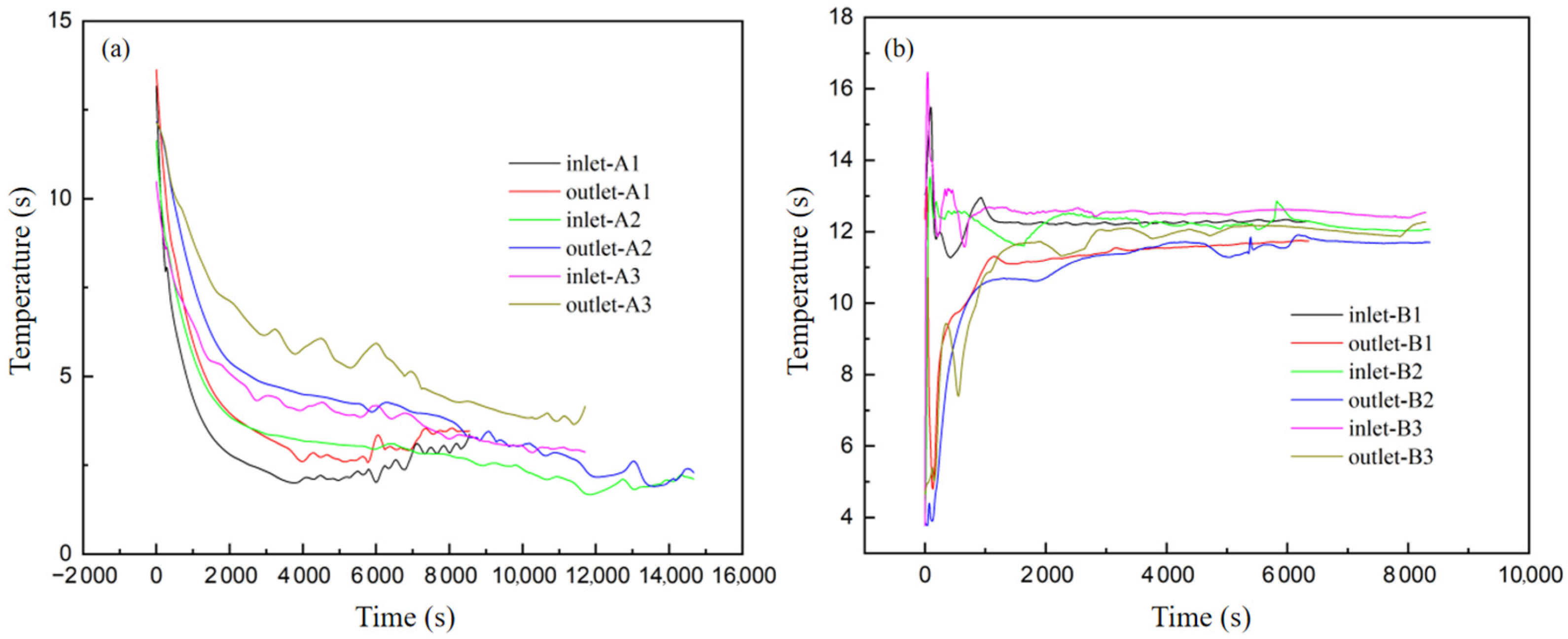
3.5.1. Analysis of Heat Transfer Performance
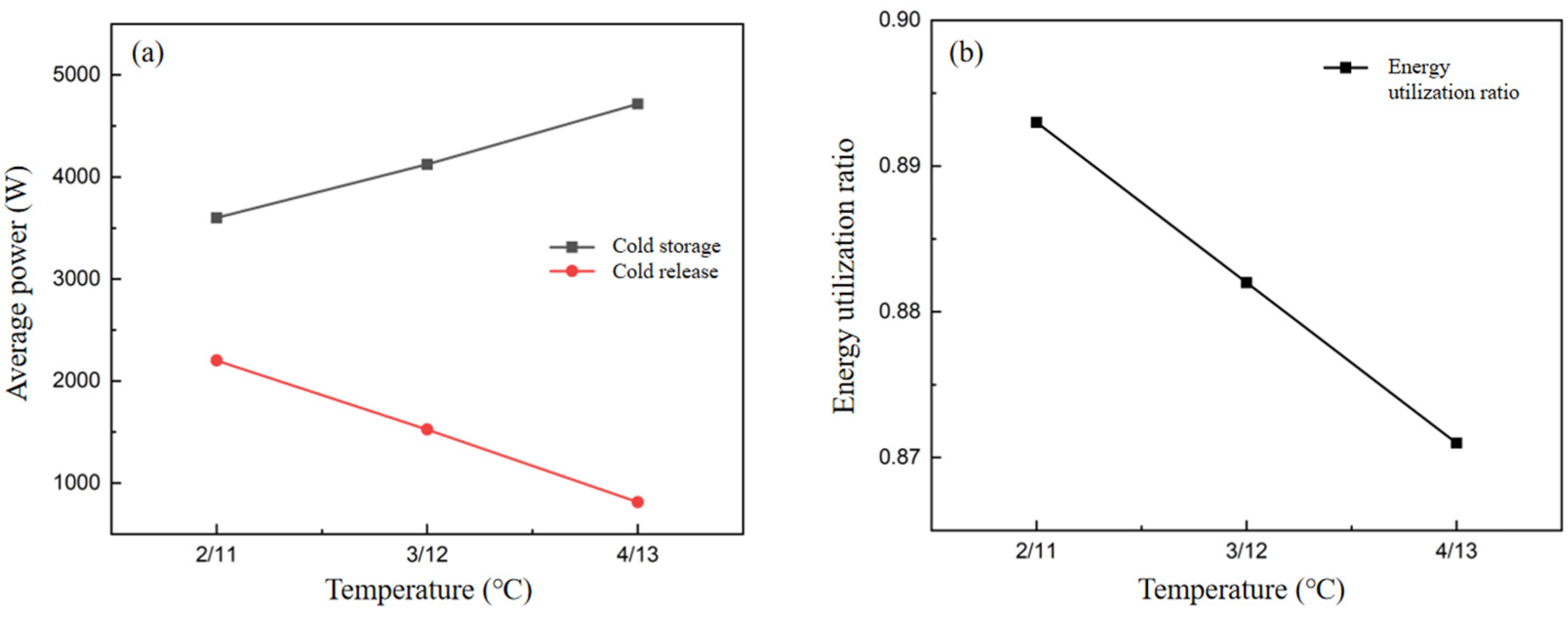
3.5.2. Effect of Inlet Temperature on the Cold Storage and Release Performance of the Unit
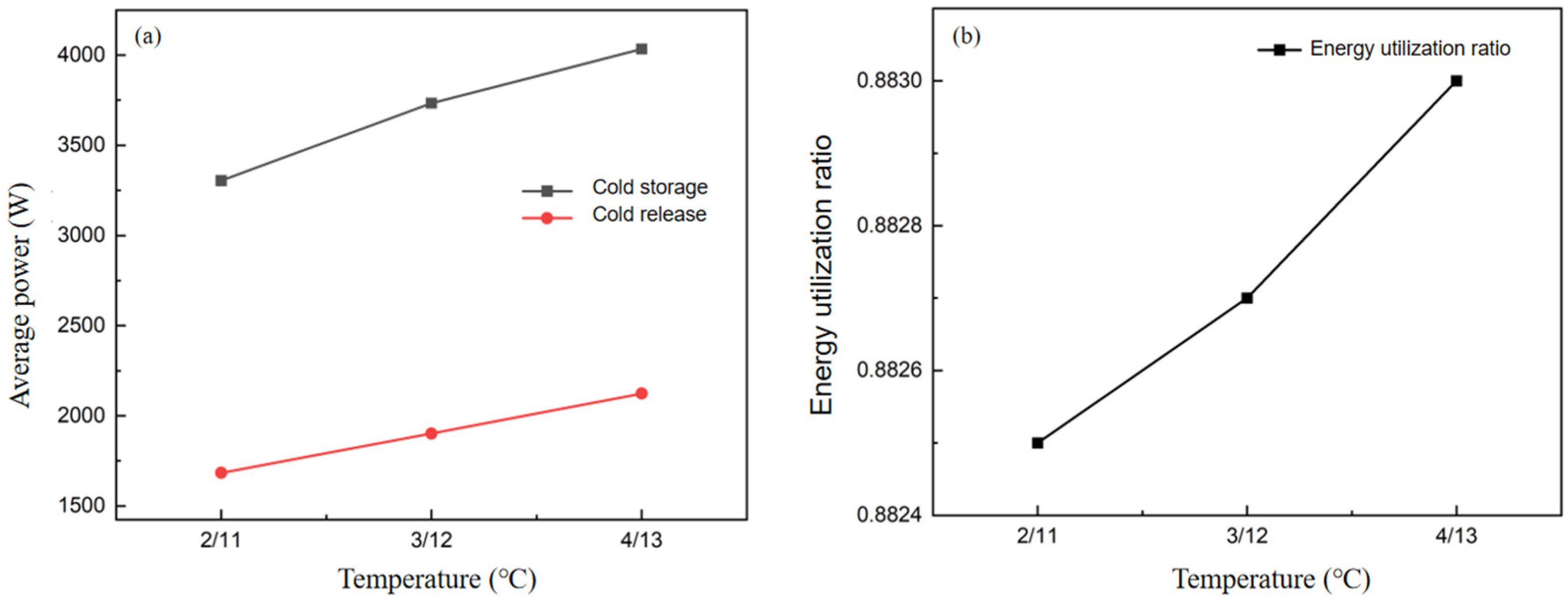
3.5.3. Effect of Import Flow Rate on the Cold Storage and Release Performance of the Unit
4. Conclusions
- (1)
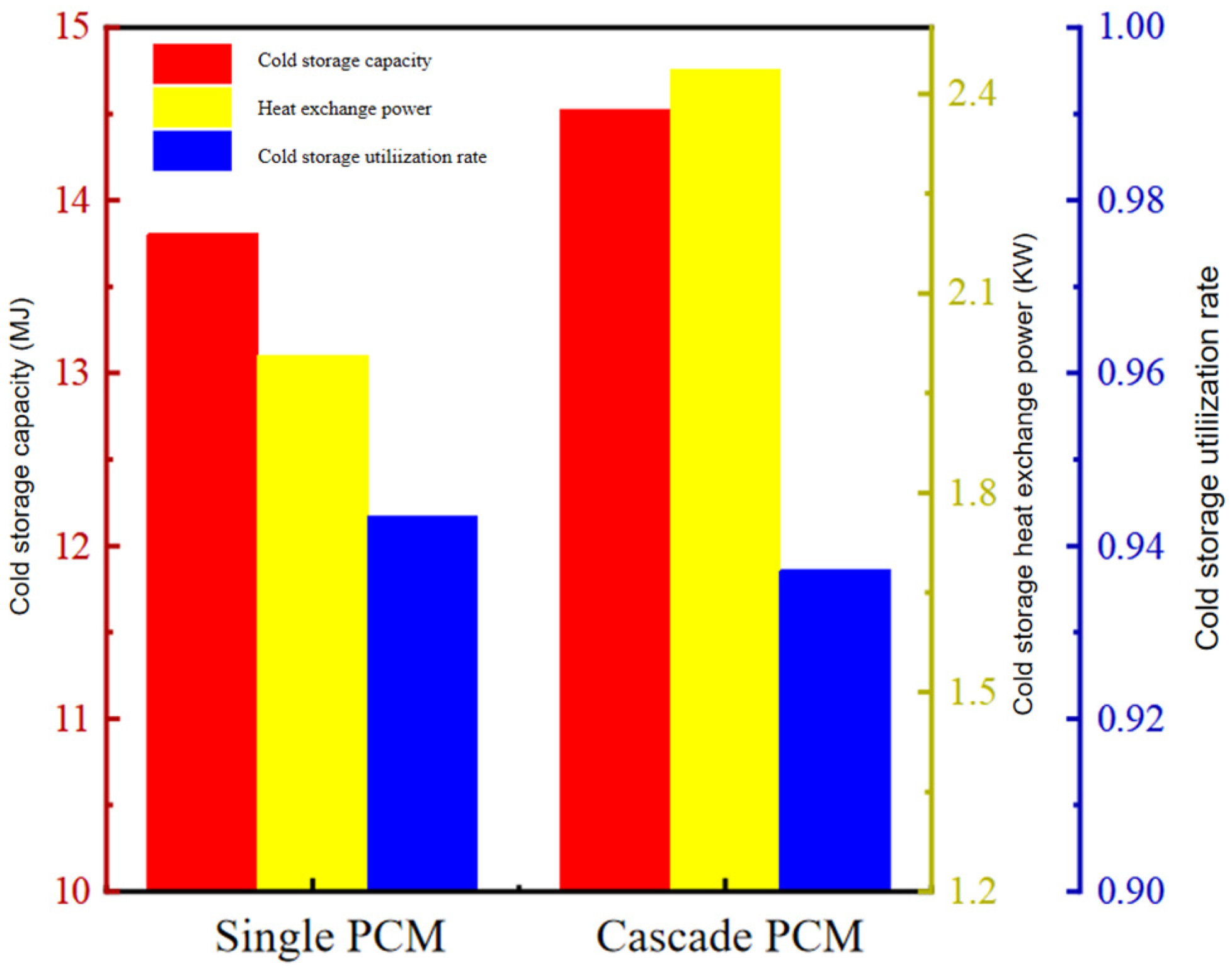
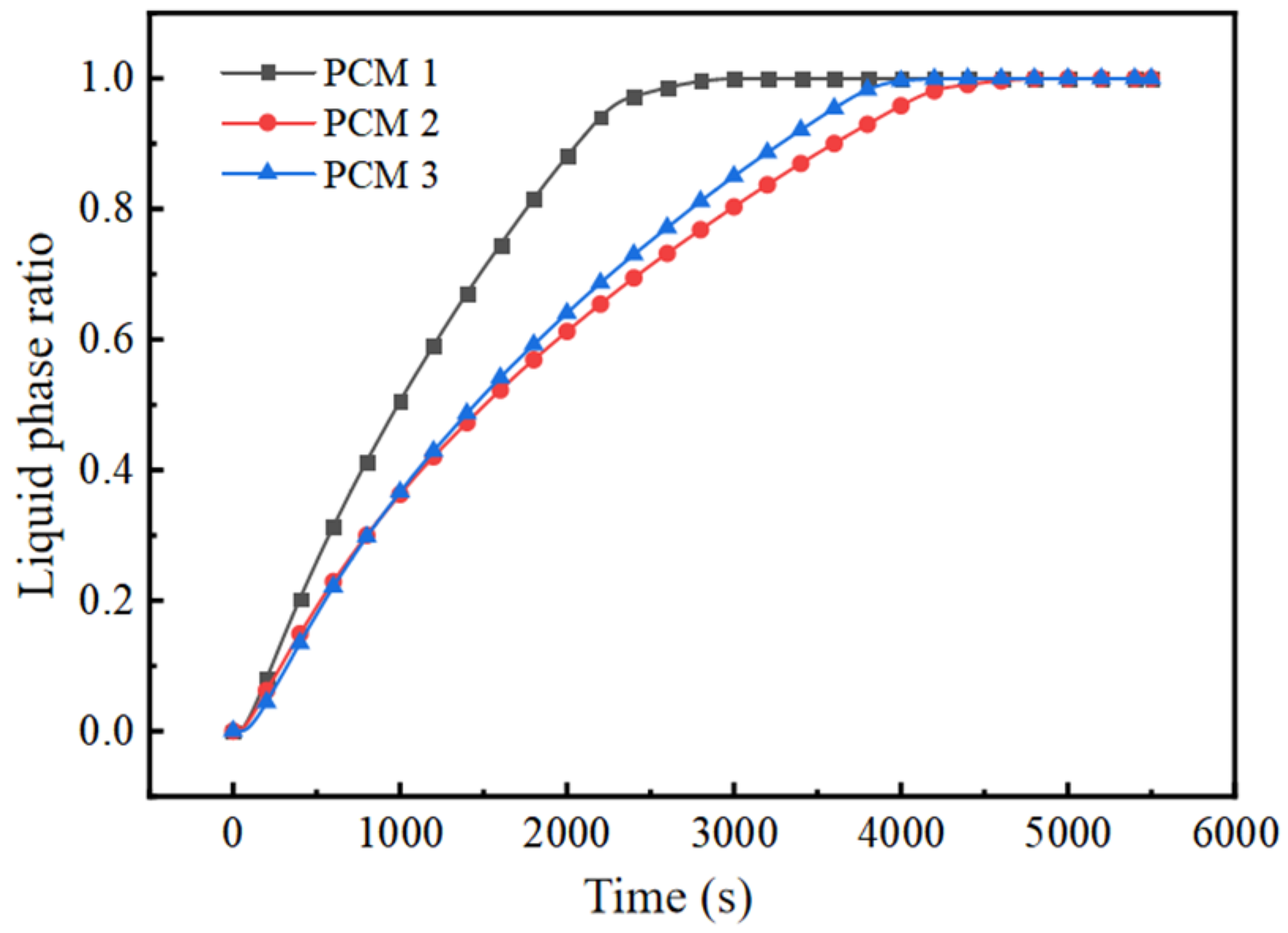
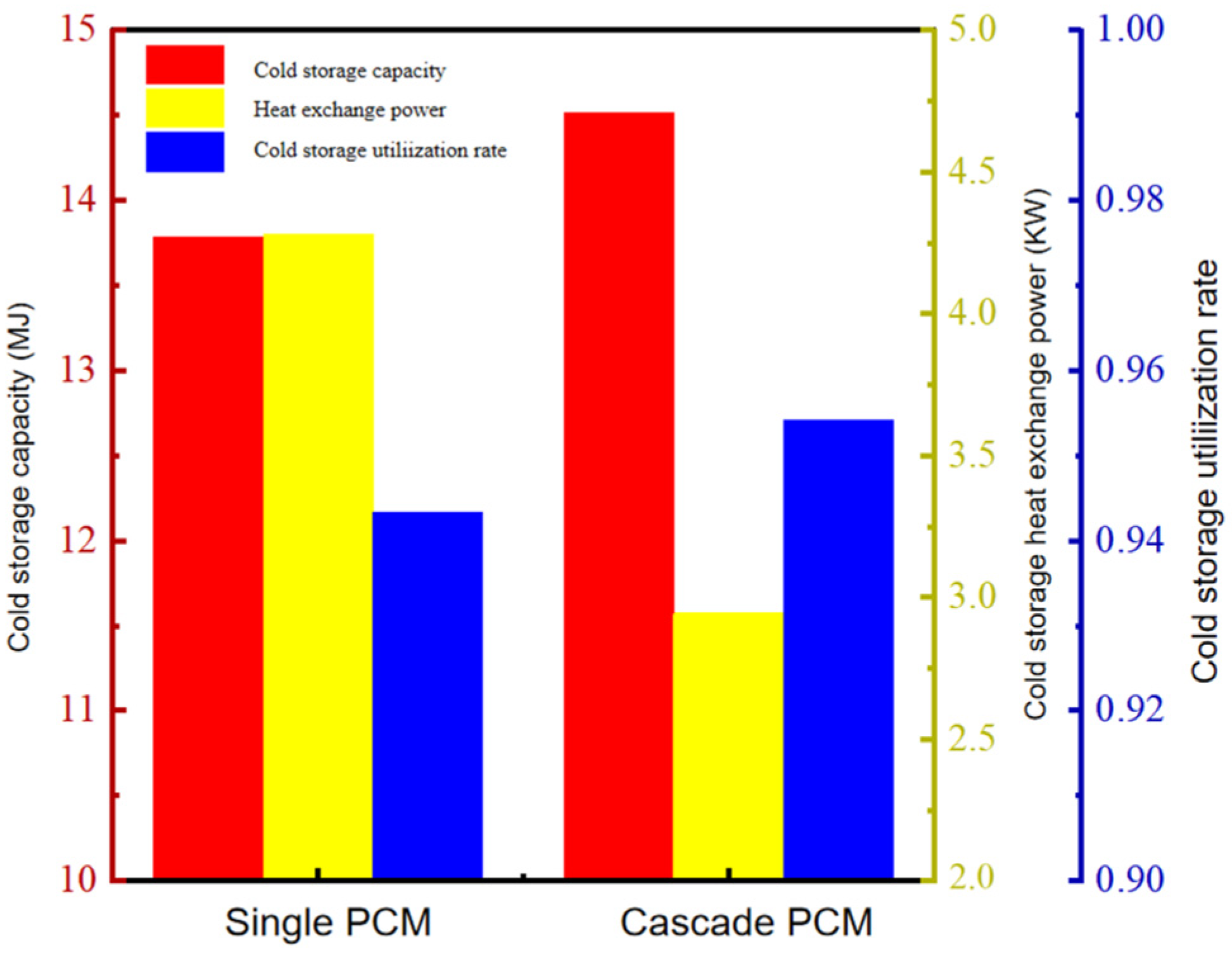
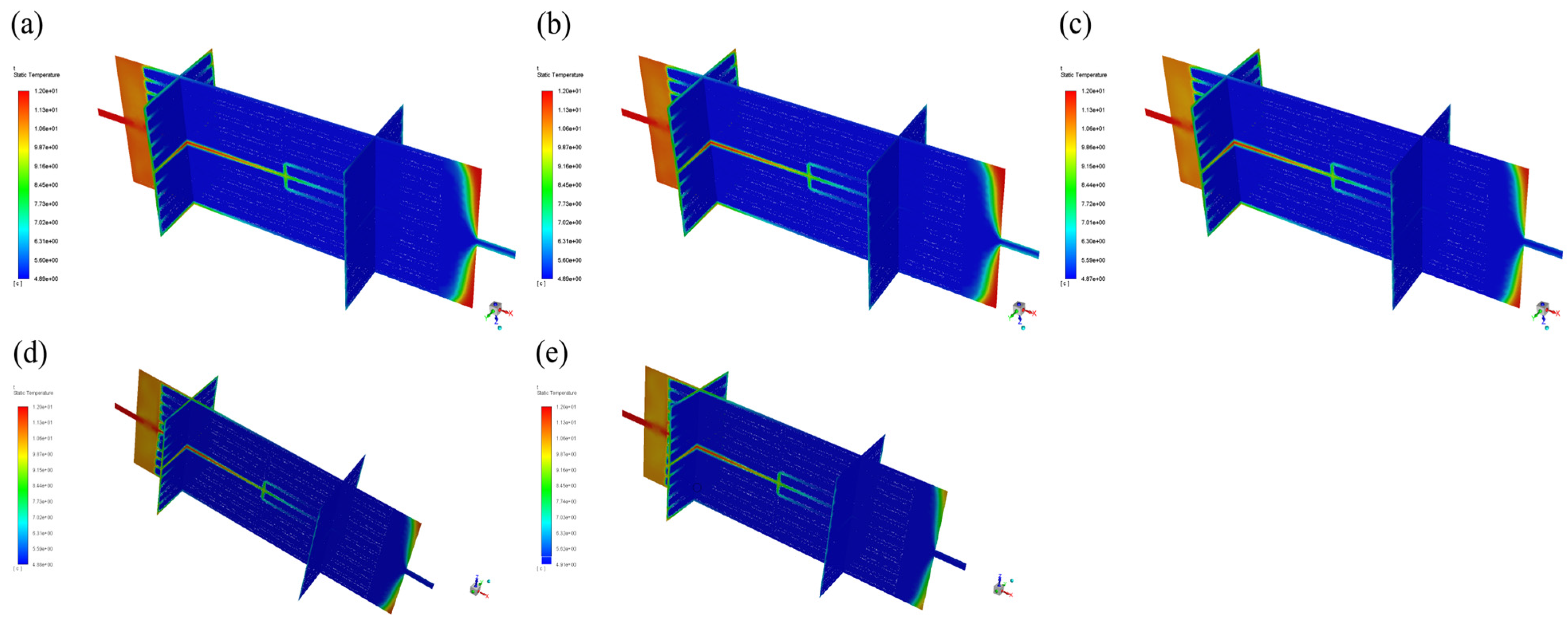
- The cascaded PCM configuration significantly enhanced charging performance. Compared to a single PCM1 unit, the three-PCM cascade reduced phase-change completion time by 13%, increased cooling storage power from 2.00 kW to 2.43 kW, and boosted total storage capacity due to PCM3’s higher volumetric energy density. This charging advantage was maximized when the flow path aligned with the cascade order, demonstrating the coupled benefit of material and flow design.
- (2)
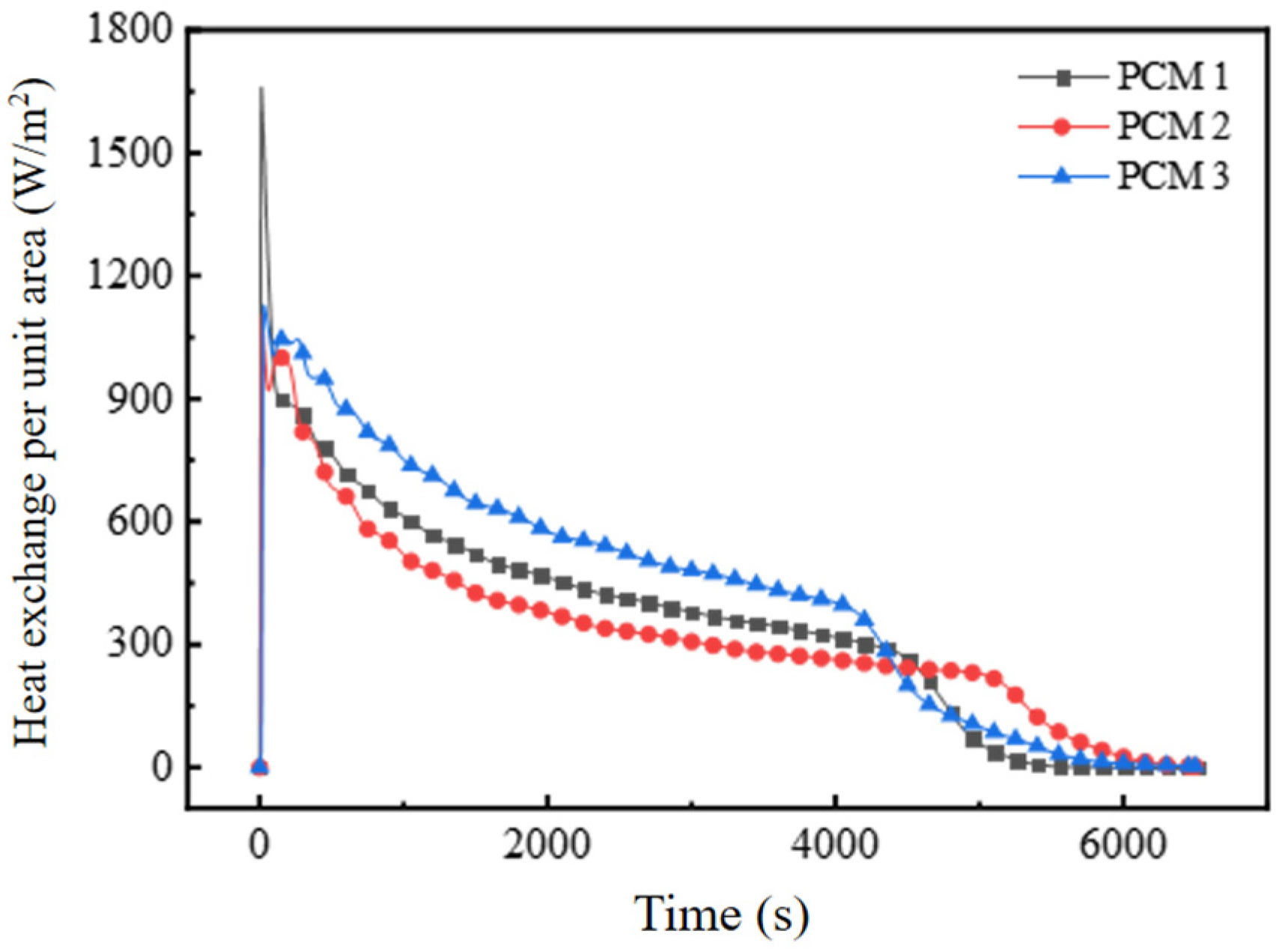
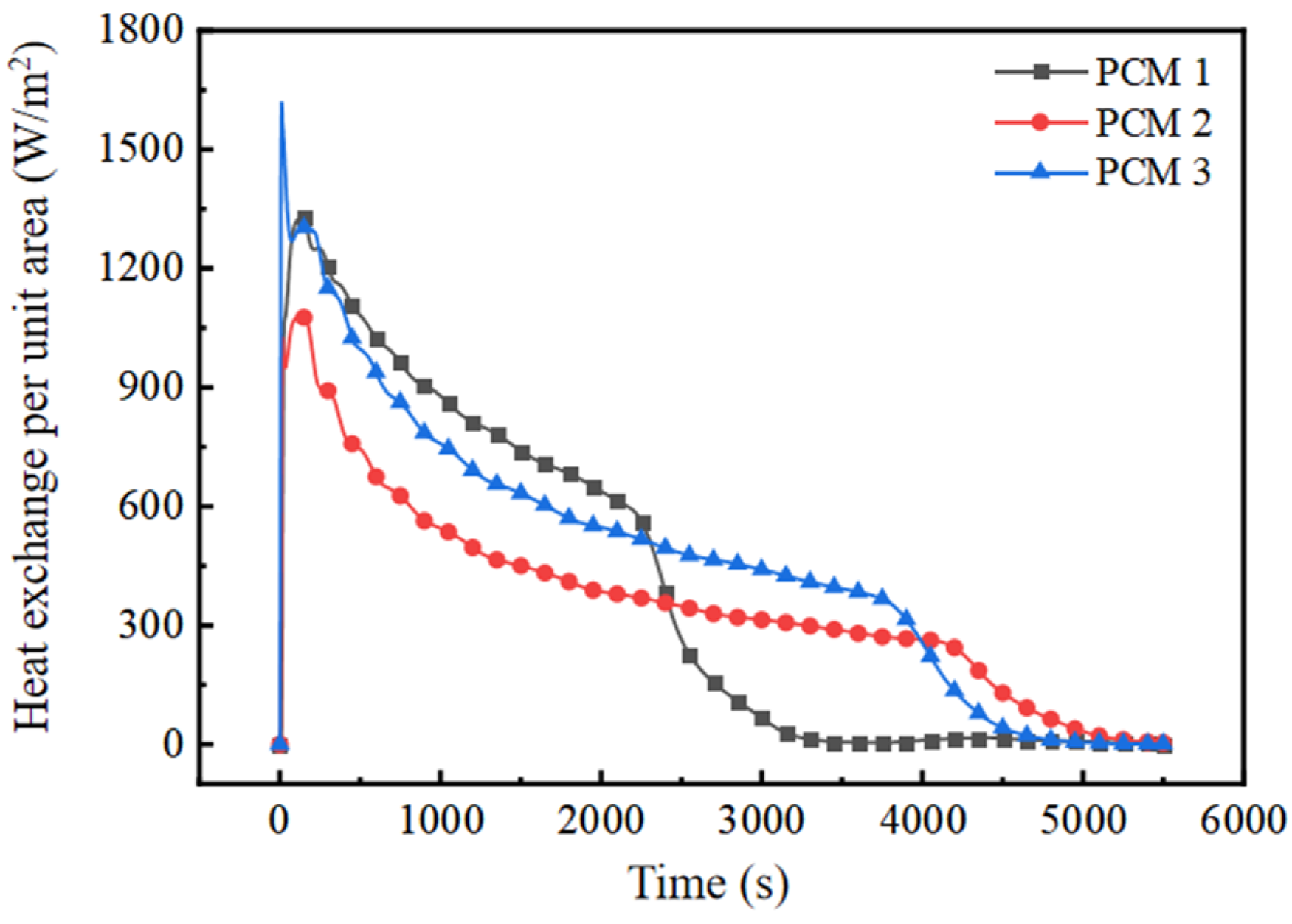
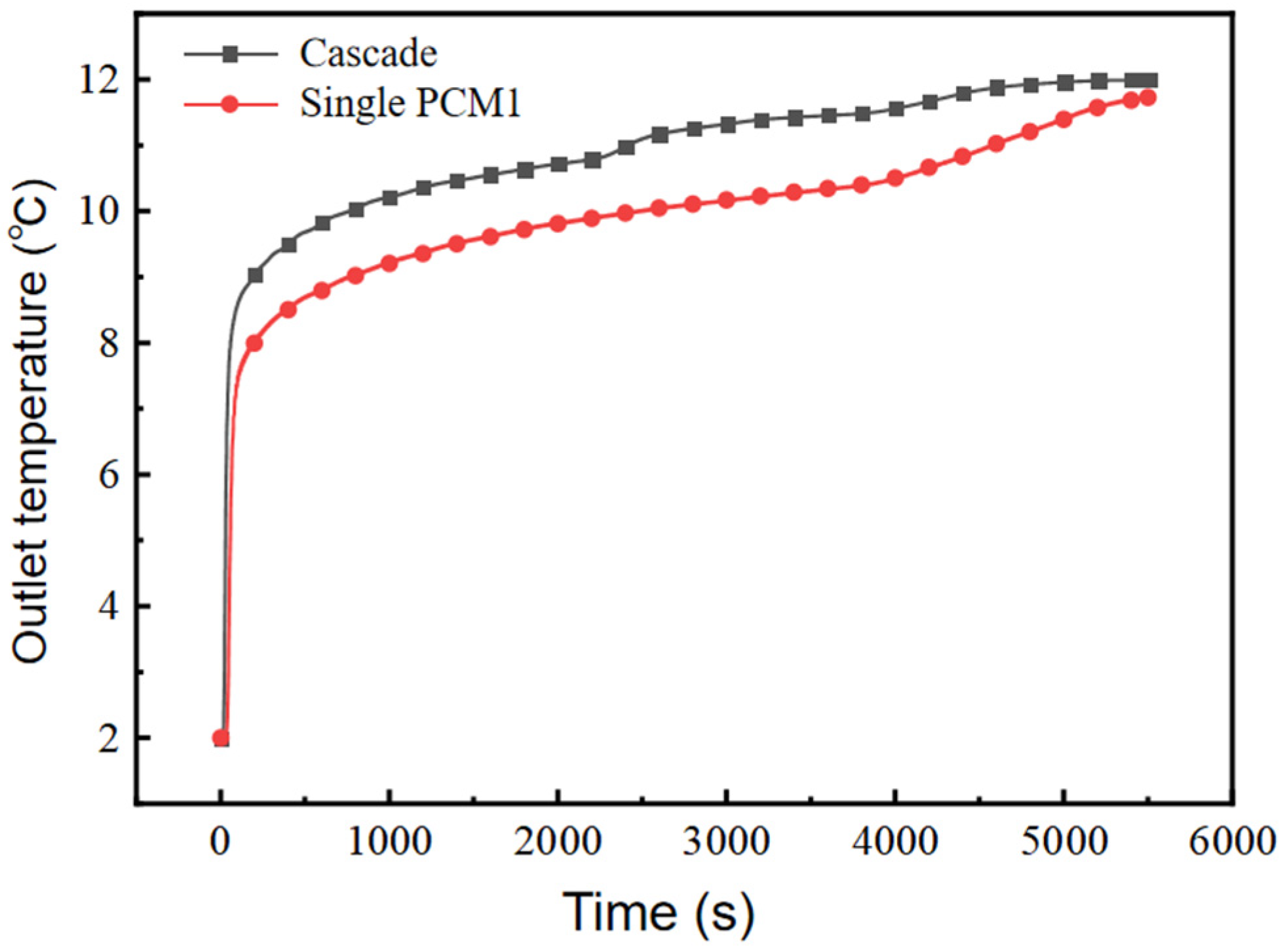
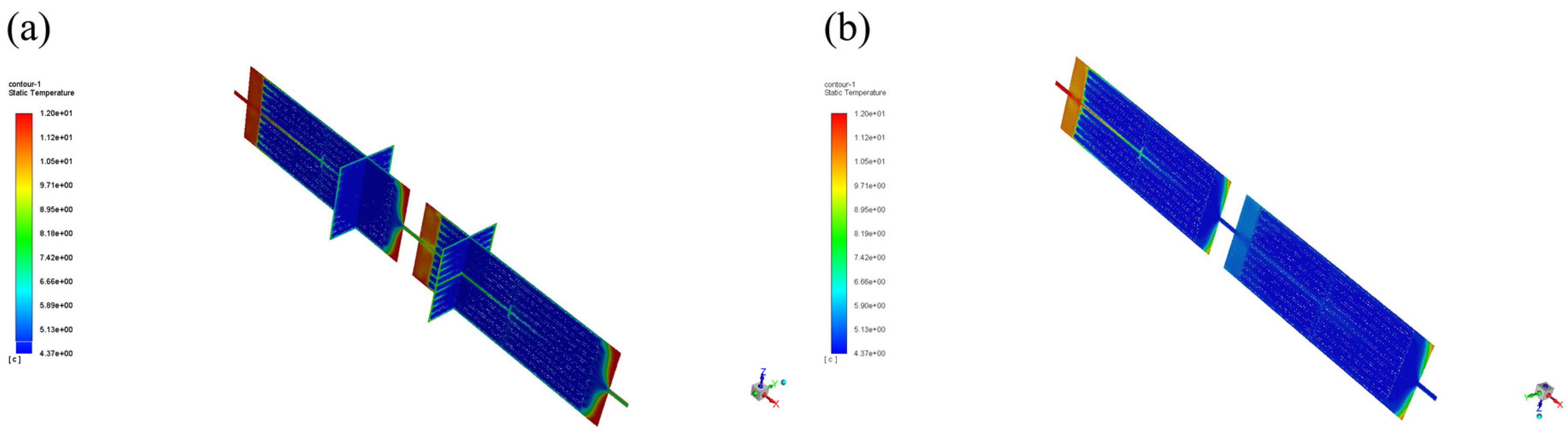
- During discharging, the same cascade structure reduced discharge power from 4.28 kW (single PCM1) to 2.94 kW and prolonged discharge time by 53%. The impact of material cascade on discharge performance is modulated by flow topology: parallel configurations can distribute the discharge load more evenly, mitigating the power drop and improving temperature uniformity—a critical trade-off for application-specific design.
- (3)
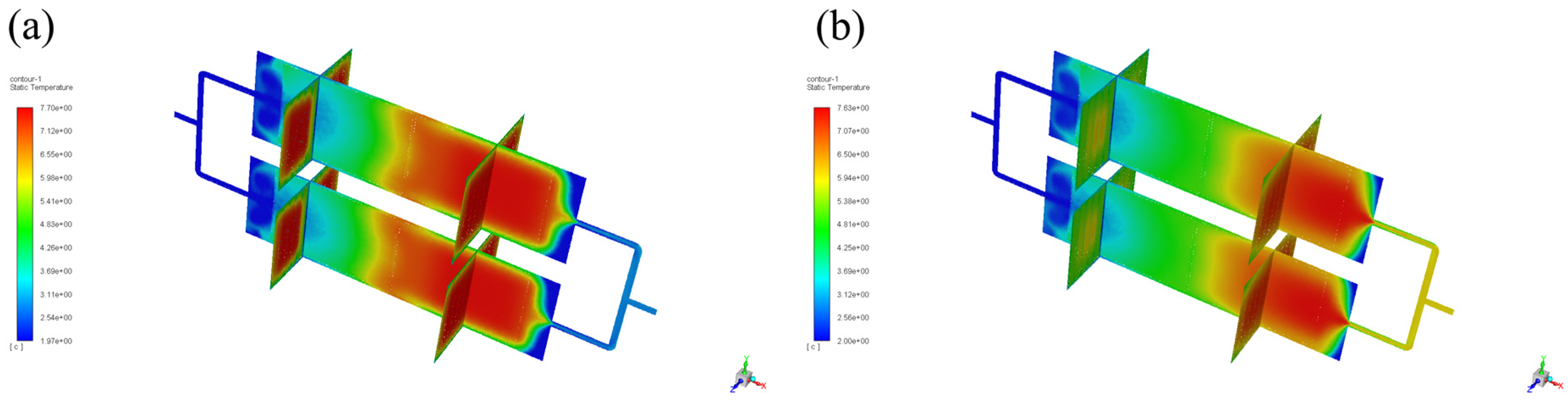
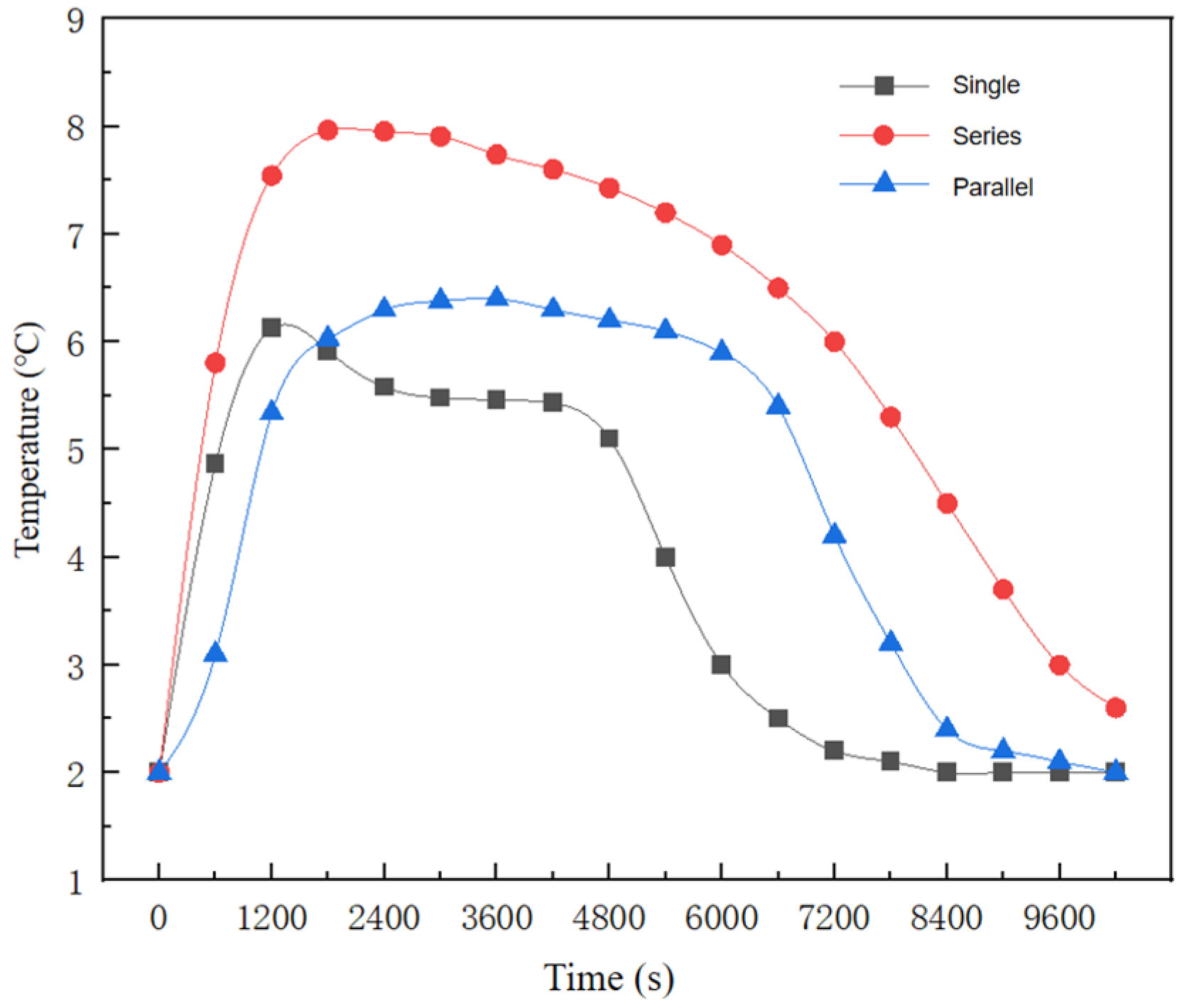
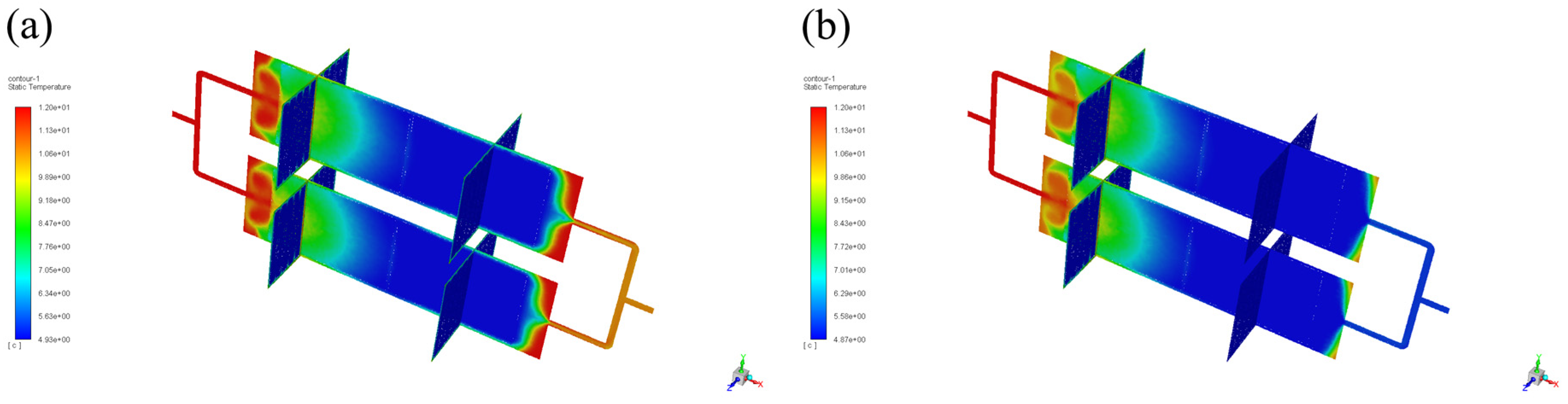
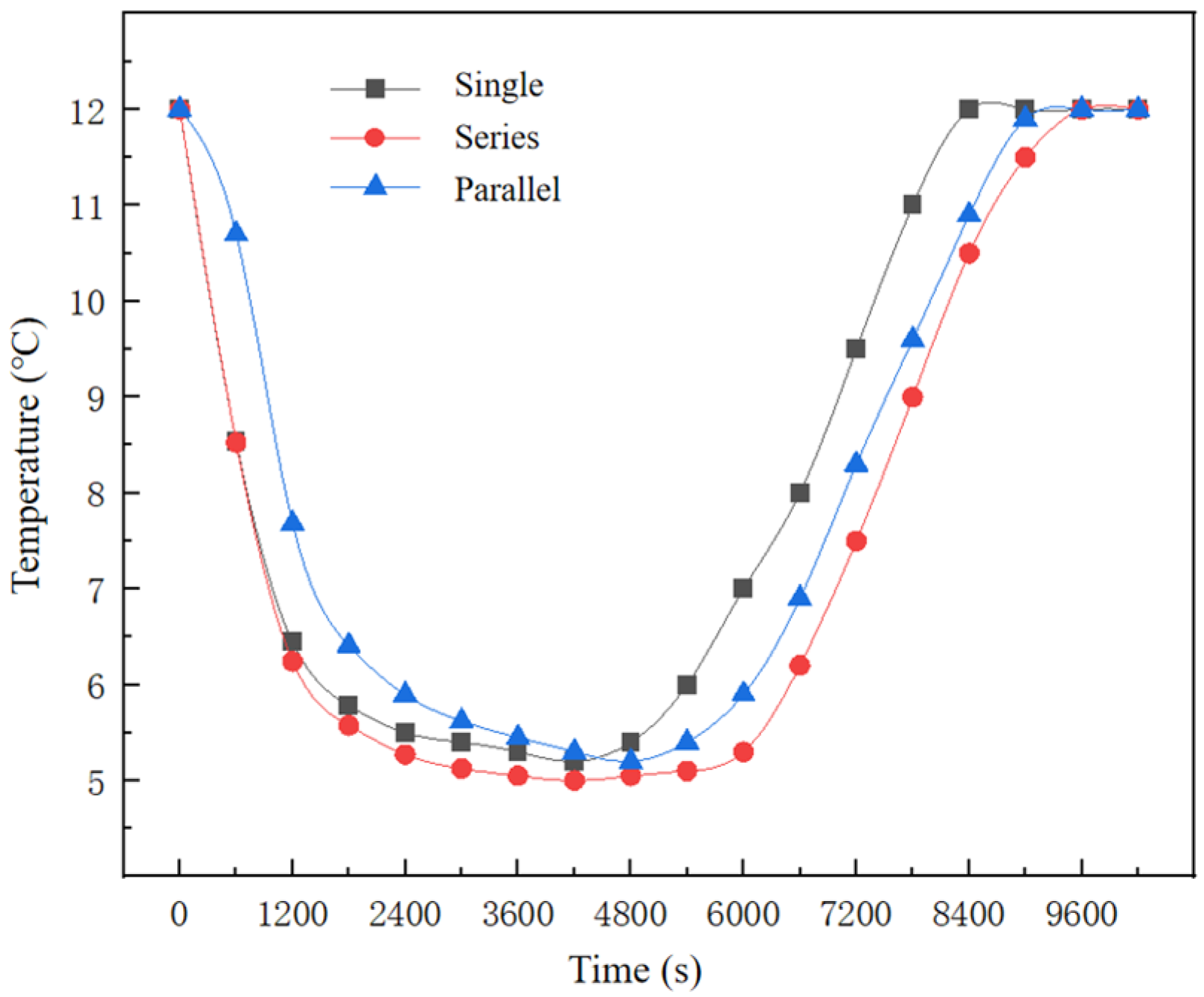
- Series and parallel configurations exhibited distinct thermal responses that interacted with the cascaded PCM arrangement. Series flow achieved faster initial cooling (reaching 6.24 °C within 1200 s, 31% faster than parallel), suitable for rapid cooling scenarios, while parallel flow provided more sustained and stable cooling output through synchronized phase change. The choice between series and parallel must therefore consider both the cascaded PCM layout and the target application requirements.
- (4)
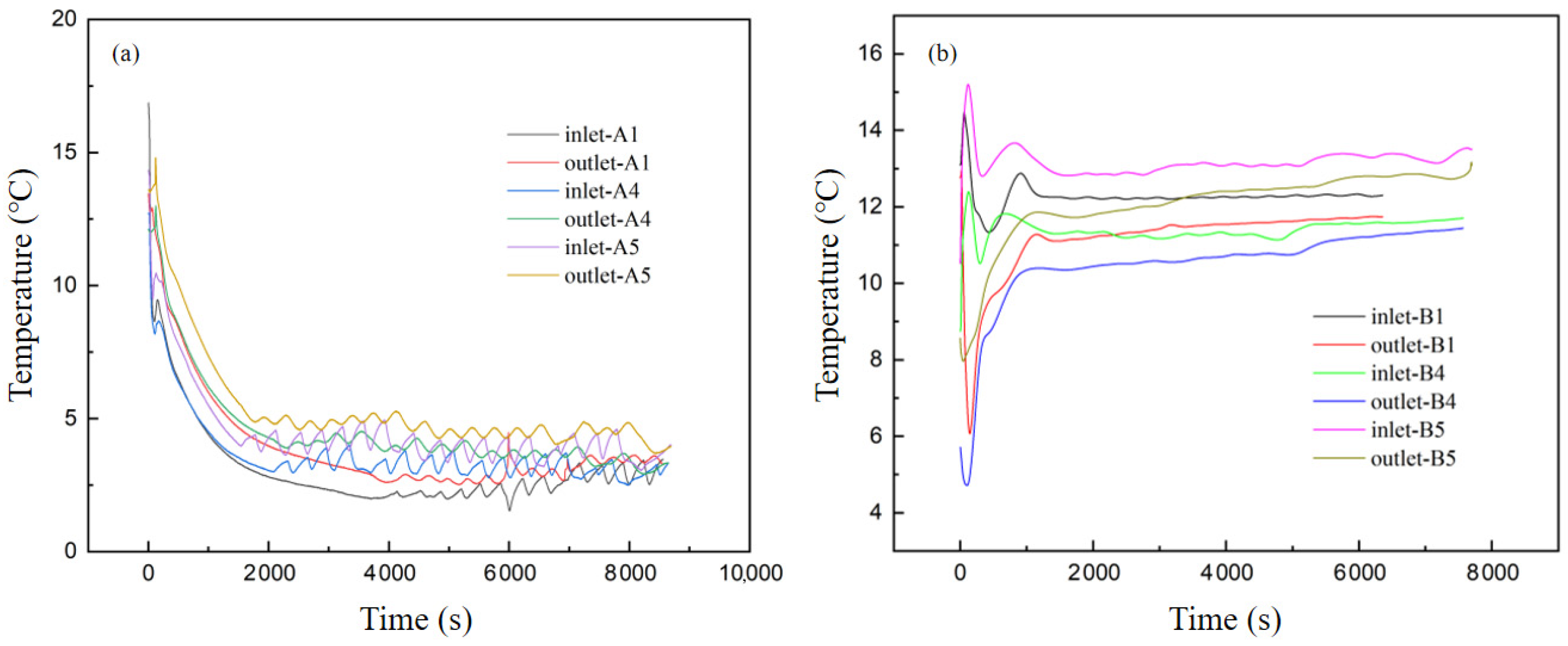
- Operational parameters also play critical roles within this system-level framework. Inlet temperature was the most influential factor: a 2 °C increase significantly prolonged charging time and reduced charging power, but shortened discharging time and increased discharging power. Flow rate accelerated the phase-change process but had minimal impact on energy utilization efficiency. Additionally, vertical position affected heat exchange due to non-uniform velocity distribution, with mid-height units exhibiting the most effective thermal interaction.
Author Contributions
Funding
Data Availability Statement
Conflicts of Interest
Nomenclature
| English alphabet | |||
| A | inlet cross-sectional area (m3) | T | temperature (K) |
| Amush | the continuous number of partially solidified regions in a phase transition | T1 | melting point (K) |
| cp | isobaric heat capacity (J·kg−1·K−1) | Tin | inlet temperature (K) |
| H | heat content (kJ·kg−1) | Tref | reference temperature (K) |
| Href | reference enthalpy value (kJ/kg) | Tpcm | reference temperature for the PCM (K) |
| mpcm | mass of phase-change material (kg) | ΔT | HTF inlet and outlet temperature difference (K) |
| P | pressure (Pa) | v | fluid velocity (m·s−1) |
| Pin | constant inlet power (W) | V | capacity (m3) |
| Q | total storage energy (kJ) | Vin | inlet velocity (m·s−1) |
| t | time (s) | W | heat transfer power (W) |
| Vp | the entrainment velocity (m·s−1) | Cref | reference specific heat capacity (J/(kg·K)) |
| Greek alphabet | |||
| β | liquid-phase ratio | µ | dynamic viscosity (Pa·s) |
| ε | A number less than 0.0001 | ρ | density (kg·m−3) |
| η | energy utilization efficiency | ||
References
- Tang, B.-J.; Guo, Y.-Y.; Yu, B.; Harvey, L.D.D. Pathways for Decarbonizing China’s Building Sector under Global Warming Thresholds. Appl. Energy 2021, 298, 117213. [Google Scholar] [CrossRef]
- Zhang, C.; Li, J.; Chen, Y. Improving the Energy Discharging Performance of a Latent Heat Storage (LHS) Unit Using Fractal-Tree-Shaped Fins. Appl. Energy 2020, 259, 114102. [Google Scholar] [CrossRef]
- Song, X.; Liu, L.; Zhu, T.; Chen, S.; Cao, Z. Study of Economic Feasibility of a Compound Cool Thermal Storage System Combining Chilled Water Storage and Ice Storage. Appl. Therm. Eng. 2018, 133, 613–621. [Google Scholar] [CrossRef]
- Ding, Y.; Lyu, Y.; Lu, S.; Wang, R. Load Shifting Potential Assessment of Building Thermal Storage Performance for Building Design. Energy 2022, 243, 123036. [Google Scholar] [CrossRef]
- Tripathi, B.M.; Shukla, S.K.; Rathore, P.K.S. A Comprehensive Review on Solar to Thermal Energy Conversion and Storage Using Phase Change Materials. J. Energy Storage 2023, 72, 108280. [Google Scholar] [CrossRef]
- Lin, J.; Feng, X.; Huang, J.; Liu, Y.; Xiao, Y.; Li, Y.; Min, Y.; Tang, B.Z. Flexible AIE/PCM Composite Fiber with Biosensing of Alcohol, Fluorescent Anti-Counterfeiting and Body Thermal Management Functions. Biosens. Bioelectron. 2025, 267, 116799. [Google Scholar] [CrossRef]
- Huang, Y.; Zou, M.; Chen, W.; Luo, W.; Hu, X.; Zhu, G.; Tan, S.; Jiang, X. A Novel Room-Temperature Flexible Phase Change Material for Solar Energy Photothermal Conversion and Battery Thermal Management. ACS Sustain. Chem. Eng. 2024, 12, 4662–4675. [Google Scholar] [CrossRef]
- Wang, L.; Guo, L.; Ren, J.; Kong, X. Using of Heat Thermal Storage of PCM and Solar Energy for Distributed Clean Building Heating: A Multi-Level Scale-up Research. Appl. Energy 2022, 321, 119345. [Google Scholar] [CrossRef]
- Ding, Z.; Wu, W.; Leung, M. Advanced/Hybrid Thermal Energy Storage Technology: Material, Cycle, System and Perspective. Renew. Sustain. Energy Rev. 2021, 145, 111088. [Google Scholar] [CrossRef]
- Ji, M.; Lv, L.; Huang, S.; Zhang, A.; Zhou, H. Experimental Study of Thermal Energy Storage System for Solid Particles/ Heat Transfer Oil in Shell and Tube Heat Exchangers with H-Shaped Fins. J. Clean. Prod. 2024, 434, 139943. [Google Scholar] [CrossRef]
- Gautam, A.; Saini, R.P. A Review on Technical, Applications and Economic Aspect of Packed Bed Solar Thermal Energy Storage System. J. Energy Storage 2020, 27, 101046. [Google Scholar] [CrossRef]
- Stathopoulos, N.; El Mankibi, M.; Issoglio, R.; Michel, P.; Haghighat, F. Air–PCM Heat Exchanger for Peak Load Management: Experimental and Simulation. Sol. Energy 2016, 132, 453–466. [Google Scholar] [CrossRef]
- Marín, J.M.; Zalba, B.; Cabeza, L.F.; Mehling, H. Improvement of a Thermal Energy Storage Using Plates with Paraffin–Graphite Composite. Int. J. Heat Mass Transf. 2005, 48, 2561–2570. [Google Scholar] [CrossRef]
- Halawa, E.; Saman, W.; Bruno, F. A Phase Change Processor Method for Solving a One-Dimensional Phase Change Problem with Convection Boundary. Renew. Energy 2010, 35, 1688–1695. [Google Scholar] [CrossRef]
- Ding, C.; Niu, Z.; Li, B.; Hong, D.; Zhang, Z.; Yu, M. Analytical Modeling and Thermal Performance Analysis of a Flat Plate Latent Heat Storage Unit. Appl. Therm. Eng. 2020, 179, 115722. [Google Scholar] [CrossRef]
- Liao, Z.; Xu, C.; Xu, C.; Ju, X.; Gao, F.; Wei, G. Cyclic Performance Analysis of a High Temperature Flat Plate Thermal Energy Storage Unit with Phase Change Material. Appl. Therm. Eng. 2018, 144, 1126–1136. [Google Scholar] [CrossRef]
- Aldoss, T.K.; Rahman, M.M. Comparison between the Single-PCM and Multi-PCM Thermal Energy Storage Design. Energy Convers. Manag. 2014, 83, 79–87. [Google Scholar] [CrossRef]
- Li, Y.Q.; He, Y.L.; Song, H.J.; Xu, C.; Wang, W.W. Numerical Analysis and Parameters Optimization of Shell-and-Tube Heat Storage Unit Using Three Phase Change Materials. Renew. Energy 2013, 59, 92–99. [Google Scholar] [CrossRef]
- Christopher, S.; Parham, K.; Mosaffa, A.H.; Farid, M.M.; Ma, Z.; Thakur, A.K.; Xu, H.; Saidur, R. A Critical Review on Phase Change Material Energy Storage Systems with Cascaded Configurations. J. Clean. Prod. 2021, 283, 124653. [Google Scholar] [CrossRef]
- Khandelwal, N.; Sharma, M.; Singh, O.; Shukla, A.K. Comparative Evaluation of Integrated Solar Combined Cycle Plant with Cascade Thermal Storage System for Different Heat Transfer Fluids. J. Clean. Prod. 2022, 353, 131519. [Google Scholar] [CrossRef]
- Yang, S.; Shao, X.-F.; Luo, J.-H.; Baghaei Oskouei, S.; Bayer, Ö.; Fan, L.-W. A Novel Cascade Latent Heat Thermal Energy Storage System Consisting of Erythritol and Paraffin Wax for Deep Recovery of Medium-Temperature Industrial Waste Heat. Energy 2023, 265, 126359. [Google Scholar] [CrossRef]
- Bagherzadeh, K.; Piroozmand, V.; Ahmadi, R. Cascading Latent Heat Thermal Energy Storage in Parabolic Trough Solar Collector as a Promising Solution: An Experimental Investigation. Energy Convers. Manag. 2024, 300, 117942. [Google Scholar] [CrossRef]
- Yang, S.; Shao, X.-F.; Shi, H.-Y.; Luo, J.-H.; Fan, L.-W. Bubble-Injection-Enabled Significant Reduction of Supercooling and Controllable Triggering of Crystallization of Erythritol for Medium-Temperature Thermal Energy Storage. Sol. Energy Mater. Sol. Cells 2022, 236, 111538. [Google Scholar] [CrossRef]
- Li, X.-Y.; Yang, L.; Wang, X.-L.; Miao, X.-Y.; Yao, Y.; Qiang, Q.-Q. Investigation on the Charging Process of a Multi-PCM Latent Heat Thermal Energy Storage Unit for Use in Conventional Air-Conditioning Systems. Energy 2018, 150, 591–600. [Google Scholar] [CrossRef]
- Xu, H.J.; Zhao, C.Y. Thermal Efficiency Analysis of the Cascaded Latent Heat/Cold Storage with Multi-Stage Heat Engine Model. Renew. Energy 2016, 86, 228–237. [Google Scholar] [CrossRef]
- Peng, X.; Zhang, G.; Rui, Z.; Qu, A.; Li, J.; Peng, H. Numerical Simulation and Optimization of Phase Change Heat Storage Units Using Slag-Based Composite Phase Change Materials. Appl. Therm. Eng. 2024, 243, 122612. [Google Scholar] [CrossRef]
- Hou, Y.; Qiu, J.; Wang, W.; He, X.; Ayyub, M.; Shuai, Y. Preparation and Performance Improvement of Chlorides/MgO Ceramics Shape-Stabilized Phase Change Materials with Expanded Graphite for Thermal Energy Storage System. Appl. Energy 2022, 316, 119116. [Google Scholar] [CrossRef]
- Ma, S.; Yang, Q.; Li, Y.; Yan, C.; Wang, X. A Review on Preparation, Thermal Transport Properties, Phase-Change Characteristics, and Thermal Stability of Molten Salts. J. Clean. Prod. 2024, 444, 141272. [Google Scholar] [CrossRef]
- Zhang, T.; Huo, D.; Wang, C.; Shi, Z. Review of the Modeling Approaches of Phase Change Processes. Renew. Sustain. Energy Rev. 2023, 187, 113724. [Google Scholar] [CrossRef]
- Ye, W.-B.; Arıcı, M. Exploring Mushy Zone Constant in Enthalpy-Porosity Methodology for Accurate Modeling Convection-Diffusion Solid-Liquid Phase Change of Calcium Chloride Hexahydrate. Int. Commun. Heat Mass Transf. 2024, 152, 107294. [Google Scholar] [CrossRef]
- Ye, W.-B.; Arıcı, M. False Diffusion, Asymmetrical Interface, and Equilibrious State for Pure Solid-Gallium Phase Change Modeling by Enthalpy-Porosity Methodology. Int. Commun. Heat Mass Transf. 2023, 144, 106746. [Google Scholar] [CrossRef]



| Physical Properties | PCM1 | PCM2 | PCM3 | HDPE |
|---|---|---|---|---|
| Density (kg·m−3) | 945 | 910 | 1350 | 940 |
| Specific heat capacity (J·kg−1·K−1) | 1935 | 1905 | 1930 | 1900 |
| Thermal conductivity (W·m−1·K−1) | 2.23 | 0.9975 | 1.876 | 0.48 |
| Phase-change latent heat (kJ·kg−1) | 143 | 136.3 | 117.4 | -- |
| Phase-change temperature (°C) | 5.2 | 6.5 | 7.3 | -- |
| Serial Number | Fluid Inlet Temperature (°C) | Fluid Inlet Flow (L·h−1) |
|---|---|---|
| A1 | 2 | 1500 |
| A2 | 2 | 1200 |
| A3 | 2 | 900 |
| A4 | 3 | 1500 |
| A5 | 4 | 1500 |
| Serial Number | Fluid Inlet Temperature (°C) | Fluid Inlet Flow (L·h−1) |
|---|---|---|
| B1 | 12 | 1500 |
| B2 | 12 | 1200 |
| B3 | 12 | 900 |
| B4 | 11 | 1500 |
| B5 | 13 | 1500 |
Disclaimer/Publisher’s Note: The statements, opinions and data contained in all publications are solely those of the individual author(s) and contributor(s) and not of MDPI and/or the editor(s). MDPI and/or the editor(s) disclaim responsibility for any injury to people or property resulting from any ideas, methods, instructions or products referred to in the content. |
© 2026 by the authors. Licensee MDPI, Basel, Switzerland. This article is an open access article distributed under the terms and conditions of the Creative Commons Attribution (CC BY) license.
Share and Cite
Yan, S.; Shi, J.; Chen, Z. Impact of Cascaded and Series/Parallel Configurations on the Thermal Performance of Flat-Plate Phase-Change Thermal Energy Storage Systems. Energies 2026, 19, 1559. https://doi.org/10.3390/en19061559
Yan S, Shi J, Chen Z. Impact of Cascaded and Series/Parallel Configurations on the Thermal Performance of Flat-Plate Phase-Change Thermal Energy Storage Systems. Energies. 2026; 19(6):1559. https://doi.org/10.3390/en19061559
Chicago/Turabian StyleYan, Shizhao, Juan Shi, and Zhenqian Chen. 2026. "Impact of Cascaded and Series/Parallel Configurations on the Thermal Performance of Flat-Plate Phase-Change Thermal Energy Storage Systems" Energies 19, no. 6: 1559. https://doi.org/10.3390/en19061559
APA StyleYan, S., Shi, J., & Chen, Z. (2026). Impact of Cascaded and Series/Parallel Configurations on the Thermal Performance of Flat-Plate Phase-Change Thermal Energy Storage Systems. Energies, 19(6), 1559. https://doi.org/10.3390/en19061559