1. Introduction
The European Union Action Plan (EUAP), aligned with European Union policies since 2015, has incorporated circular economy principles to reinforce the EU’s commitment to achieving the United Nations Sustainable Development Goals (SDGs) [
1]. The EU’s shift towards a circular economy aims to alleviate the strain on natural resources, foster sustainable economic growth and employment, and is crucial for meeting the EU’s 2050 climate neutrality goal as well as preventing biodiversity decline. A report by UNEP [
2] indicates that nearly 90% of biodiversity loss stems from resource extraction and processing. Furthermore, up to 80% of a product’s environmental footprint is determined during the design phase, while the current rate of circular material use in the EU stands at 11.8% [
1]. The circular economy (CE) refers to an industrial framework characterized by its restorative or regenerative nature, both in intent and design. This paradigm seeks to supplant the traditional ‘end-of-life’ notion with that of restoration, emphasizes a transition toward renewable energy sources, eradicates the utilization of toxic chemicals that hinder reuse, and strives for the obliteration of waste through the optimization of materials, products, systems, and, within this context, business models [
3]. The World Green Building Council [
4], in its annual report, affirmed that the built environment markedly contributes to the exhaustion of global resources and adverse environmental impacts, constituting 50% of all extracted raw materials and approximately 40% of energy-related CO
2 emissions.
Integrating circular economy principles presents significant prospects for lowering emissions within the construction industry. This approach encourages efficient resource use, the incorporation of renewable materials, and the adaptive reuse of current structures. Ruokamo et al. [
5] highlights that circular economy strategies in the construction and real estate sectors can mitigate biodiversity pressures by reducing virgin raw material extraction, improving material efficiency, and extending building lifetimes. However, the study emphasizes that some circular actions such as increased use of wood-based materials may negatively affect biodiversity if not accompanied by biodiversity-enhancing forest management, underscoring the need for improved assessment methods and indicators. According to Pikoń et al. [
6], circular construction allows for the creation of buildings that are both energy-efficient and recyclable, as well as adaptable to evolving functional requirements. On a global scale, the construction sector accounts for approximately 40% of all extracted raw materials [
7], highlighting the urgent necessity for a systemic shift.
In line with international climate targets, the European Union (EU) has committed to reducing domestic GHG emissions by 90% by 2040 compared to 1990 levels [
8]. Reducing the carbon footprint in construction is therefore not only crucial for meeting these targets but also supports innovation and encourages sustainable practices among policymakers and stakeholders. However, global adoption of low-emission strategies is hindered by inconsistent methodological approaches used in life cycle emissions assessments [
9]. Global greenhouse gas (GHG) emissions reached an all-time high of 57.1 GtCO
2e in 2023, representing a 1.3% increase (0.7 GtCO
2e) compared to the previous year, as reported in the Emissions Gap Report by [
10]. The Global Status Report [
10] indicates that in 2022, emissions of CO
2 from both building operations and construction activities reached the highest peak, contributing roughly 37% to the global CO
2 emissions total. This amounted to almost 10 GtCO
2, stemming from the energy use in buildings and the manufacturing of construction materials. The persistent increase in CO
2 emissions, especially from construction, highlights the critical necessity for implementing robust mitigation strategies to avert the irreversible impacts of climate change. Achieving net-zero emissions by 2050, as outlined in the 2015 Paris Agreement, requires a comprehensive evaluation of CO
2 emissions associated with construction and mining activities. A deeper understanding of the embodied carbon in construction materials is critical in this process. Nearly zero energy buildings (NZEBs) play a key role in the strategy, combining energy efficiency with the deployment of renewables. A major policy is decarbonizing the energy sector by ensuring buildings are more efficient [
11]. The significance of carbon footprints in buildings life cycle has grown immensely, capturing widespread attention and becoming a pivotal consideration in sustainable construction practices. According to [
12], embodied energy accounts for approximately 40–50% of a typical single-family home’s total primary energy consumption throughout its life cycle. This underscores the necessity of precisely assessing carbon emissions at every stage of a building’s life cycle, starting from material extraction to end-of-life processes [
13].
Life Cycle Assessment (LCA) is an established method for evaluating the environmental impacts of buildings, including stages such as manufacturing, construction, operation, and demolition (“cradle-to-grave”) [
14]. By integrating Building Information Modeling (BIM) with Life Cycle Assessment (LCA), it is possible to automatically extract building materials and evaluate their environmental effects [
15]. BIM models enriched with LCA-related data (e.g., environmental impact categories) allow for rapid assessment of embodied carbon, defined as the GHG emissions associated with material production, transportation, construction, and disposal [
16]. Over a decade, commercial tools integrating BIM and LCA have been developed to assess embodied environmental impacts efficiently. However, current tools generally lack the capacity to fully account for operational emissions incurred during a building’s usage phase [
15]. The use of BIM and LCA to support sustainability shows that BIM can play a key role in the revitalization of the existing buildings and in promoting material circularity. Lovrenčić Butković et al. [
17] noticed that Life Cycle Assessment (LCA) was the most widely used assessment method to support decisions for carbon footprint and circular economy in construction projects.
Digital models, among other approaches, also facilitate the reduction in carbon emissions throughout the lifecycle of buildings and infrastructure. It contributes to the attainment of goals within the energy sector, enabling sustainable energy management and the optimization of building energy efficiency, thereby reducing carbon emissions and ultimately minimizing economic and environmental costs [
18]. Regenerative building design (RBD) adoption marks a fundamental shift from conventional methods that focus mainly on reducing environmental harm and improving resource efficiency. Instead of merely limiting negative impacts, it seeks to design, build, and continually adapt the built environment in ways that actively restore, enhance, and sustain the health, resilience, and well-being of both human communities and the broader ecosystems they inhabit [
19]. Regenerative design is a key strategy for reducing the building sector’s environmental impacts. The widely accepted definition of regenerative buildings in the context of sustainability conceptualizes it as a mode of development that meets present needs without compromising the ability of future generations to meet their own needs [
20].
Furthermore, sensitivity analysis (SA) helps identify key variables in LCA outcomes and guides data collection. SA differs from uncertainty analysis (UA), which evaluates the impact of data uncertainties by propagating them through model [
14]. It involves replacing high-emission components with low-carbon alternatives and promoting the reuse and recycling of existing materials, including the adaptive reuse of current building materials. This article aims to assess the carbon footprint associated with regenerative building through a detailed life cycle assessment (LCA) accompanied by sensitivity analysis (SA), within the framework of a circular economy.
This paper analyzes and assesses the carbon emissions associated with key construction materials, such as concrete, steel, and wood, while determining the life cycle stage and materials that most significantly impact overall emissions. It investigates how BIM–LCA strategies can optimize materials selection and develop a framework for reducing carbon footprint. The focus lies on the regeneration and revitalization of buildings, emphasizing practices like material reuse, recycling, and adaptive design. The expected outcomes aim to evaluate emissions at each LCA stage and determine which materials should be reused, recycled, or replaced during the embodied carbon phase. BIM–LCA and circularity integration in buildings is a major part of the digital twin of the building (e.g., dynamic material tracking, IFC data, LCA, energy simulation, optimizations). The result is relevant for the optimization of smart grids and smart buildings, including the ability to integrate with the Internet of Things (IoT) and energy monitoring systems. Ultimately, this study intends to guide sustainable decision-making in the construction and mining industries by providing practical insights into low-carbon materials for regenerative building design and holistic environmental assessment approaches.
Despite the rapid development of BIM–LCA tools and the growing body of research on embodied carbon in buildings, current studies often remain limited to single-building assessments, static life-cycle scenarios, or isolated material substitutions, with insufficient integration of circular economy principles at the district or regenerative design level. Moreover, methodological complexity and fragmented data workflows continue to hinder the practical adoption of embodied carbon assessment in early design decision-making, where the mitigation potential is the greatest. This study addresses these gaps by proposing an integrated BIM–LCA framework, complemented by sensitivity analysis, to systematically quantify embodied carbon and evaluate circular material strategies within a regenerative building context. By combining detailed BIM-based material take-off, EPD-driven LCA, and scenario-based optimization, the research provides a structured and transferable approach that supports informed, data-driven decisions for low-carbon and circular building design. As such, this study responds to both scientific and practical needs, contributing to the advancement of regenerative construction practices aligned with net-zero and climate-neutral objectives. The novelty of this study lies in the development of a structured BIM-LCA workflow that integrates BIM-based material extraction, a transparent BIM–EPD mapping procedure, and scenario-based sensitivity evaluation within a consistent life-cycle assessment framework. Unlike many existing studies that apply BIM–LCA tools primarily as calculation platforms, this work formalizes the methodological workflow linking BIM elements, IFC classification, environmental datasets, and scenario evaluation. The proposed framework improves transparency, reproducibility, and transferability of BIM-driven embodied carbon assessments in regenerative building design.
2. Literature Review
To better understand the scope of integrated carbon footprint assessment in regenerative building design,
Section 2 presents a focused review of relevant literature. It examines circular economy principles, embodied carbon, and Life Cycle Assessment as key frameworks for reducing environmental impacts in buildings. The chapter also highlights the role of digital tools such as BIM, EPDs, and digital models in enabling data-driven, low-carbon design decisions.
2.1. Circular Economy and Tools for Environmental Assessment in the Building Sector
The circular economy in the construction sector is gaining traction globally. There is a growing emphasis on reusing products to prolong their lifespans and maintain their value. Unlike the linear economy, which burdens natural systems and communities by manufacturing, using, and discarding resources without recovering them at the end of their lifecycle, the circular economy seeks to change this approach. Circular economy (CE) in the construction sector is defined as an economic model that seeks to reduce waste and optimize the reuse, recycling, and recovery of materials across the entire lifecycle of the built environment. A typical example is designing buildings for disassembly, in contrast to the linear economy (LE), in which natural resources are extracted, turned into products, used, and ultimately discarded as waste without planned reuse or recovery. For instance, in a linear system, when a building is demolished, the concrete rubble is often just crushed and used as low-grade backfill material. It has also been estimated that a typical home deconstruction can result in the recycling of up to 70% and the reuse of up to 25% of the materials. Reusing building components yields a variety of benefits, specifically in economic, environmental, and societal terms. Salvaging building materials can reduce project costs, and using products on-site minimizes transportation and disposal expenses. Keeping building products in circulation through reuse may involve extra steps such as assessing, recovering, and sorting materials, which not only create jobs but also support the local economy [
21]. The circular economy offers a means to attain sustainability, especially in the construction industry, by transforming resource utilization and minimizing environmental effects [
22]. Implementing a circular economy encompasses strategies such as designing adaptability, flexibility, disassembly or demolition, and deconstruction, which facilitate the dismantling, replacement, or repair of building components [
23]. Among the major technical obstacles that hamper circularity strategies in buildings are building complexity, lack of building data management, and knowledge of the quality and quantities of reclaimed materials [
24]. The integration of regenerated building materials within the context of Life Cycle Analysis (LCA) constitutes a vital strategy for markedly reducing the environmental impact linked to construction projects. The reuse of construction components aids in decreasing the quantity of construction and demolition waste (C&D waste) [
21]. To effectively implement CE, careful selection of materials with low embodied carbon and energy is essential. These materials should also possess high quality and can accommodate reversibility or adaptability while maintaining optimal building performance and user comfort [
25].
The National Institute of Building Sciences (NIBS) [
26] defined BIM as a digital representation of the physical and functional characteristics of a facility. As such, it serves as a shared knowledge resource for information about a facility, forming a reliable basis for decisions during its life cycle from inception onward. BIM serves as a digital representation that consolidates every discipline and system of a facility into a single model, thereby improving precision and collaboration efficiency among all members of the design team. This virtual approach includes all facets, disciplines, and systems of a facility within one model, facilitating more accurate and efficient collaboration among team members such as owners, architects, engineers, contractors, subcontractors, and suppliers, compared to traditional methods. Throughout the model creation process, team members continuously refine and adjust their respective sections according to project specifications and design alterations to ensure maximum accuracy before construction starts [
27,
28].
Building Information Modeling (BIM) facilitates the development of comprehensive digital representations, which can be utilized to quantify material quantities, monitor material consumption, evaluate environmental implications, and strategize for the reutilization and recycling of materials. For example, BIM can be employed to produce material inventories, which are crucial for identifying materials that can be repurposed or recycled upon the conclusion of a building’s lifecycle [
29].
Life Cycle Assessment (LCA) constitutes a pivotal methodological framework for the thorough evaluation of environmental impacts associated with building materials and processes across their entire life cycle. The implementation of an LCA enables stakeholders to discern potential areas for the optimization of material reuse and the minimization of waste, thereby advancing the objectives of a circular economy. For instance, LCA facilitates comparative analysis of the environmental impacts of employing recycled materials in contrast to virgin materials, thus aiding in the identification of the most sustainable alternatives [
29]. Implementing CE design strategies in buildings remains challenging due to several barriers. The most cited barriers found in the literature are a lack of practical guidelines and design-support tools that facilitate CE implementation, a lack of understanding/skills on how to apply the principles of the circular economy [
26]. Rios et al. [
30] carried out a study to identify potential barriers to designing circular buildings in the United States and to comprehend the barriers and differences between the United States and European countries. AlJaber et al. [
21] identified 14 ways through which Building Information Modeling (BIM) can facilitate overcoming obstacles related to the circular economy. These methods include conducting circularity assessments, utilizing digital tools, employing materials banks, simulating circular design strategies, and providing stakeholders with access to material tracking information. BIM functions as a material passport; through this capacity, it assists stakeholders in recognizing opportunities for material recovery and reuse. This level of transparency engenders trust in reused materials by delivering dependable information regarding their properties, condition, and historical usage. Furthermore, BIM supports Life Cycle Assessment (LCA) and Life Cycle Costing (LCC) analyses by supplying comprehensive data on building materials, design, and structural components. This wealth of information enables precise cost estimations, thereby aiding circular initiatives in managing financial and resource allocation processes effectively. Additionally, BIM facilitates integration with other software applications, such as energy simulation tools.
BIM provides accurate cost estimates for materials, labor, equipment, and risks by using precise data and automatically updating estimates with changes. It enhances quantity take-off efficiency and serves as a unified information resource for stakeholders. BIM integrates design, construction, and facility management, offering a complete building lifecycle view. It allows stakeholders to visualize and optimize space, aiding in informed decision-making [
22]. Zoghi and Kim [
31] investigated the benefits of BIM in reducing construction waste and improving LCC analyses in their article. Marrucci et al. (2025) [
32] concluded that recycled materials reduce environmental effects, though the production phases remain the major contributors to emission footprints. Their study analyzes products made with secondary raw materials (SRM) versus those made with conventional virgin raw materials. This analysis emphasizes the advantages of incorporating recycled materials in construction, showing that SRM products can achieve notable reductions in environmental impacts [
32].
In BIM-LCA workflows, Environmental Product Declarations (EPDs) function as the essential data conduit between design models and impact assessment tools, facilitating designers in making informed, low-carbon material selections. Nonetheless, the absence of standardized naming conventions poses significant issues: BIM objects may not correspond accurately with EPD classifications in the LCA (for instance, “Reinforced Concrete Type Grade A” versus “Concrete C30/37). Misalignments in data mapping between BIM and LCA inventories represent primary challenges in BIM–LCA carbon footprint analysis. Material mapping misalignment in BIM models is addressed by assigning standardized classification codes to validate LCA datasets via a centralized material mapping register. In addition, OneClick LCA expert version has a Model Checker toolkit and AI powered recognition system designed specifically to review and validate BIM models before and during the LCA process. This automatically identifies geometry issues, missing quantities, or classification errors before LCA is finalized. Automated rules in the LCA software ensured consistent mapping across imports. Before analysis, quality control checks identified materials that were unmapped or mapped multiple times. The Regenerative Design paradigm characterizes a transition from approaches focused solely on mitigating environmental degradation to those aimed at actively generating net-positive ecological and social impacts, thereby facilitating the renewal, enhancement, and long-term resilience of both built and natural systems [
33]. A digital model is characterized as a virtual representation of physical objects, associated with functional and technical outcomes, and is involved in the monitoring of real-time conditions of the corresponding processes, activities, or operations [
34].
Digital model frameworks help to improve the simulation of performance, offering pathways to substantial decarbonization [
35]. Smart building (SB) plays a crucial role in greenhouse gases and emission reduction, and near zero energy buildings (NZEB). SB harnesses advanced digital technologies, algorithms, and analytics to provide advantages to tenants, building owners, and operators. These applications are categorized into six domains: energy, mobility, well-being, security, water, and waste management [
36]. Research emphasizes the examination of intelligent residential and commercial buildings, demonstrating that Artificial Neural Network (ANN)-based artificial intelligence can forecast operating emission and energy consumption with an accuracy of 99.9%, thereby facilitating real-time optimization without compromising comfort [
37]. By integrating Building Information Modeling–Life Cycle Assessment (BIM–LCA) approaches with comprehensive digital models, stakeholders and engineers are able to systematically analyze the state and dynamic behavior of buildings, optimize energy and resource utilization, and reduce associated carbon emissions [
38].
2.2. Embodied Carbon Background
The term embodied carbon refers to the total lifecycle greenhouse gas (GHG) emissions expressed in carbon dioxide equivalents (CO
2e) that occur during the extraction, processing, manufacturing, and transportation of construction materials, as well as during the construction and end-of-life phases of a building [
39]. In recent years, the term embodied carbon has often been used interchangeably with carbon footprint when discussing the environmental impacts of building materials. Embodied carbon assessments typically form a subset of life cycle analysis (LCA), focusing exclusively on GHG emissions as the impact category.
The embodied carbon of construction materials is commonly assessed in stages A1 to A3 of the LCA framework, which includes raw material extraction (e.g., quarrying or mining), manufacturing, and transportation to the factory gate. Overall, the carbon life cycle of a building is divided into two major components: embodied carbon and operational carbon [
39]. Selecting low-carbon solutions depends not only on choosing products and materials with low-embodied carbon, but also on effective structural design, in which engineers and architects have a crucial role [
40]. Previous research indicates that approximately 6.13 billion square meters of buildings are constructed each year globally, resulting in roughly 3729 million metric tons of embodied carbon emissions associated with new construction [
39,
41]. Several research findings on carbon emissions related to buildings and the environment have been assessed. Some of their research findings are shown in
Table 1.
2.3. Life Cycle Assessment
The Life Cycle Assessment (LCA) is a recognized methodology aimed at assessing environmental effects across all phases of a product’s existence. Specifically relevant to the construction industry, LCA offers an in-depth analysis of greenhouse gas (GHG) emissions linked to various stages, such as raw material extraction, transportation, production, construction, usage, maintenance, and disposal [
47,
48]. It is a crucial tool for measuring the carbon footprint associated with materials employed in both new constructions and renovation efforts. Applications like One-Click LCA are regularly utilized to simplify this evaluation procedure. LCA is increasingly being incorporated into the design and planning stages of construction projects to mitigate environmental impacts. An LCA furnishes an extensive environmental profile of a building, covering aspects like energy consumption, global warming potential, habitat disturbance, resource depletion, and harmful emissions. Within the construction field, process-based LCA methods are predominantly used [
49].
The scope of LCA carbon footprint can be categorized into four main stages:
Cradle to Grave: Covers the full life cycle of a product, from raw material extraction through manufacturing, use, and final disposal.
Cradle to Gate: Encompasses processes from raw material extraction to the factory gate, excluding the use and end-of-life stages.
Gate to Gate: Focuses on a single phase within the product lifecycle, typically a specific production or manufacturing stage.
Cradle to Cradle: Includes raw material extraction, use, and recycling processes, aligning with circular economy principles.
To avoid ambiguity in the interpretation of life cycle modules, the terminology used for LCA system boundaries is clarified in this study. In line with EN 15978 [
50] and common building-LCA practice, the product stage (A1–A3) represents a cradle-to-gate scope, covering raw material supply, transport to manufacturing, and product manufacturing up to the factory gate. In contrast, a cradle-to-grave scope includes the full building life cycle from production through construction, use, and end-of-life processes, typically represented as A1–C4. According to ISO 14044:2006 [
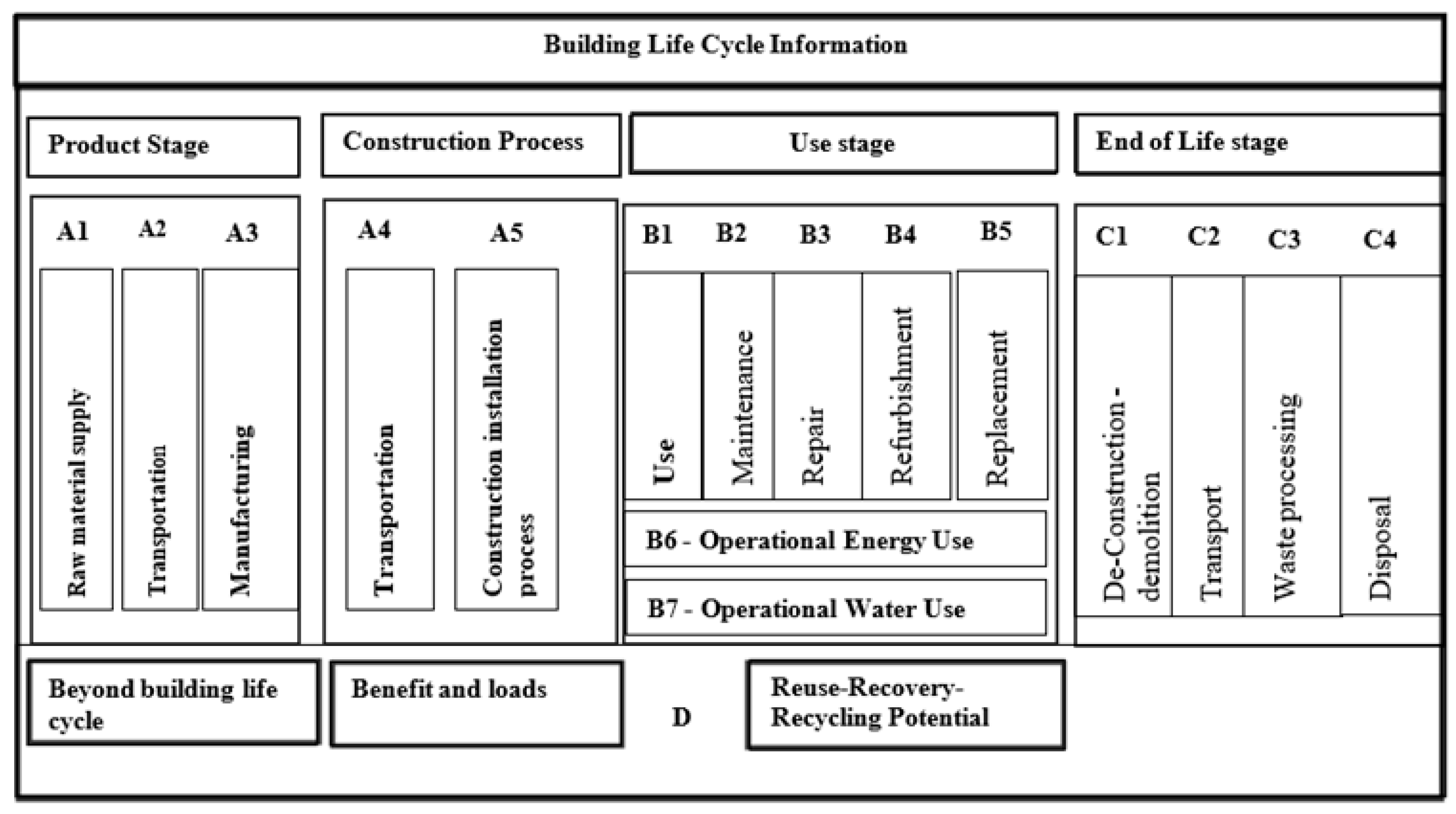
51] and guidance from the British Standards Institution (BSI), a complete LCA framework is divided into four life cycle stages: Production (A1–A3): Raw material supply, transport, and manufacturing, Construction (A4–A5): Material transport to site and installation, Use (B1–B7): Building operation, maintenance, and repair, End-of-Life (C1–C4): Deconstruction, waste processing, and disposal.
Production Stage (A1–A3)
The production stage represents the embodied carbon emissions associated with raw material extraction, transport, and manufacturing processes, commonly referred to as cradle-to-gate (A1–A3). Embodied carbon at this stage EC
A1–A3 is calculated using the Formula (1).
where EC
prod is mass or quantity of the i-th material (kg) and ECC
i means Embodied Carbon coefficient for the i-th material (kg CO
2e/kg).
Transportation Stage (A4)
Stage A4 accounts for the environmental impact of transporting materials from the manufacturing facility to the construction site—this is often referred to as gate-to-site. The embodied carbon in this stage is calculated by multiplying the mass of each component (including waste, if applicable) by the transportation distance and an emission factor corresponding to the mode of transport:
where EC
transport is embodied by carbon during transportation (kg CO
2e) and ECC
transport,i is the embodied carbon factor for the transportation per unit distance (kgCO
2e/kg·km). This phase is critical for materials sourced internationally or transported over long distances, as the carbon impact may be substantial [
52].
Use Stage (B1–B7)
The phase of a building covers its operational period, capturing emissions linked to functionality, upkeep, repairs, and future refurbishments. While it may not always factor into embodied carbon assessments, this phase accounts for operational carbon, which refers to the greenhouse gas emissions produced via energy and resource utilization throughout the building’s lifespan. Operational energy use (B6) typically accounts for the largest share of GHG emissions in conventional buildings. However, with improvements in energy efficiency and the use of renewable sources, embodied carbon is becoming increasingly significant in total life cycle emissions.
End-of-Life Stage (C1–C4)
This phase captures the environmental impacts associated with the deconstruction, transport, processing, and disposal of building materials at the end of their service life.
The end-of-life stage is essential in understanding the full environmental cost of a building, especially materials that cannot be reused or recycled. Accurate modeling of this phase is also crucial in cradle-to-cradle and circular economy approaches.
In this article, the analysis focuses primarily on assessing the embodied carbon emissions at each life cycle stage of the case study building, encompasses cradle-to-grave (A1–C4) assessment, spanning material manufacturing (A1–A3), transportation (A4), construction (A5), operation energy (B6) during the service life), maintenance, and end-of-life disposal (C1–C4). It is crucial to clearly define what lies beyond the system boundary, based on the building LCA objective. Some life cycle stages may be excluded if data are insufficient or the stages are considered insignificant. Module D, addressing reuse, recovery, and recycling processes, was incorporated into the building LCA primarily to enable the simulation of circularity strategies. Its inclusion thereby defines and extends the assessment framework from a conventional cradle-to-grave approach to a cradle-to-cradle life cycle assessment. This study focused on those life cycle phases that contribute most substantially to initial carbon emissions and material-related environmental impacts. The carbon footprint is commonly calculated using the LCA framework in the international standard ISO 14044:2006, as depicted in
Figure 1.
According to the Intergovernmental Panel on Climate Change (IPCC), the carbon emission coefficient represents the amount of carbon dioxide emitted per unit of energy consumed, typically through combustion or material usage. Building upon this concept, the carbon emission factor extends the idea by incorporating emissions related to specific materials and their associated processes, particularly transportation. This approach, referred to as the carbon emission coefficient method, was previously employed by [
46] and has been further refined in the present study to account for the specific characteristics of the case study area.
Table 2 provides a summary of carbon emission factors for selected construction materials, derived from Environmental Product Declarations (EPDs) obtained via the One Click LCA database (the EPD selection is in accordance with EN 15978 and EN 15804 + A1 methodology). The assessment explicitly incorporates average transportation distances into the calculation of these emission factors. These data provide essential inputs for life cycle carbon assessments, enabling accurate estimation of embodied emissions across different material categories.
Environmental Product Declarations (EPDs) provide standardized, third-party verified documentation that communicates the environmental performance of a product based on a Life Cycle Assessment (LCA). In the construction industry, EPDs play a crucial role in promoting carbon emission reductions by enabling the comparison of materials and products across consistent environmental indicators, thus supporting informed decision-making and the selection of more sustainable options.
An EPD discloses key information about a product’s environmental impacts throughout its life cycle, from raw material extraction, manufacturing, and use to end-of-life. These declarations are typically valid for five years and must conform to internationally recognized standards such as ISO 14040/14044 [
51,
55], EN 15804 [
53], and ISO 21930 [
56].
In the context of green building certification, EPDs contribute toward gaining LCA-related credits in schemes such as LEED, BREEAM, and others. They support transparency and facilitate sustainability assessments by providing quantitative data on environmental categories, including global warming potential (GWP), ozone depletion, acidification, eutrophication, and resource use. EPDs are increasingly regarded as essential tools in evaluating and comparing the carbon footprint of buildings. Software platforms such as One Click LCA
® help automate the generation and analysis of EPDs, making them a practical benchmark in sustainable construction. A valid EPD allows all stakeholders, architects, engineers, developers, and certifiers, to access consistent and internationally accepted information on product sustainability. By offering insights into a material’s environmental profile and technical characteristics, EPDs form the basis for a Whole Building Life Cycle Assessment (WBLCA). This makes it indispensable for assessing sustainability potential and reducing the environmental impact of construction materials at both the component and building levels [
11].
Circularity in buildings requires various initiatives such as policies that promote deconstruction and reuse rather than demolition, the use of assessment methods like LCA, and ensuring reliable digital information such as material passports for reusing building materials [
57]. A material passport (MP) is a digital document containing detailed information about materials, a product or a system used in the construction of a building. MPs compile data from multiple sources, making them accessible to stakeholders, and aid in integrating sustainability and circular economic initiatives within the construction sector [
58].
3. Materials and Methods
3.1. Case Study
The case study building for the design investigates the carbon footprint associated with a two-storey building in Krakow, Poland, with the objective of demonstrating how material selection and modeling techniques can support the reduction in environmental impact in alignment with the IPCC’s net-zero emission goals. The case study applies an integrated Building Information Modeling (BIM) and Life Cycle Assessment (LCA) approach, using a 3D model and Industry Foundation Classes (IFC) data exchange supported by the One Click LCA plugin Version: 0.50.5, developed by Bionova Ltd. (Helsinki, Finland).
The case-study building has a total gross internal floor area of 1308.25 m
2 and comprises two storeys above ground level. The structure has been designed for a service life of 60 years. The building is situated in the southern Poland region with climatic zone III according to the Polish national annex of PN-EN 12831 [
59]. The building comprises cast-in-situ reinforced concrete pile foundations and floor slabs constructed of concrete and glue-laminated timber (glulam). While the columns and beams are primarily made of cast-in-place concrete, the first-floor columns are constructed using glulam to minimize embodied emissions. Roof trusses are predominantly composed of steel members, whereas floor and wall systems feature prefabricated wood-based sandwich elements manufactured by Lättelement (Örnsköldsvik, Sweden).
The carbon footprint assesses the major construction materials: concrete, steel, and wood, with attention to their respective quantities and structural roles. Concrete materials under the analysis include pile foundations and frame structures, i.e., slabs, columns, and beams. Steel materials are approximately 10% of the roof structure and 20% of the column structure. The wooden materials, including floor slabs, 80% of roof trusses, and selected columns, were incorporated to enhance material circularity and reduce carbon footprint.
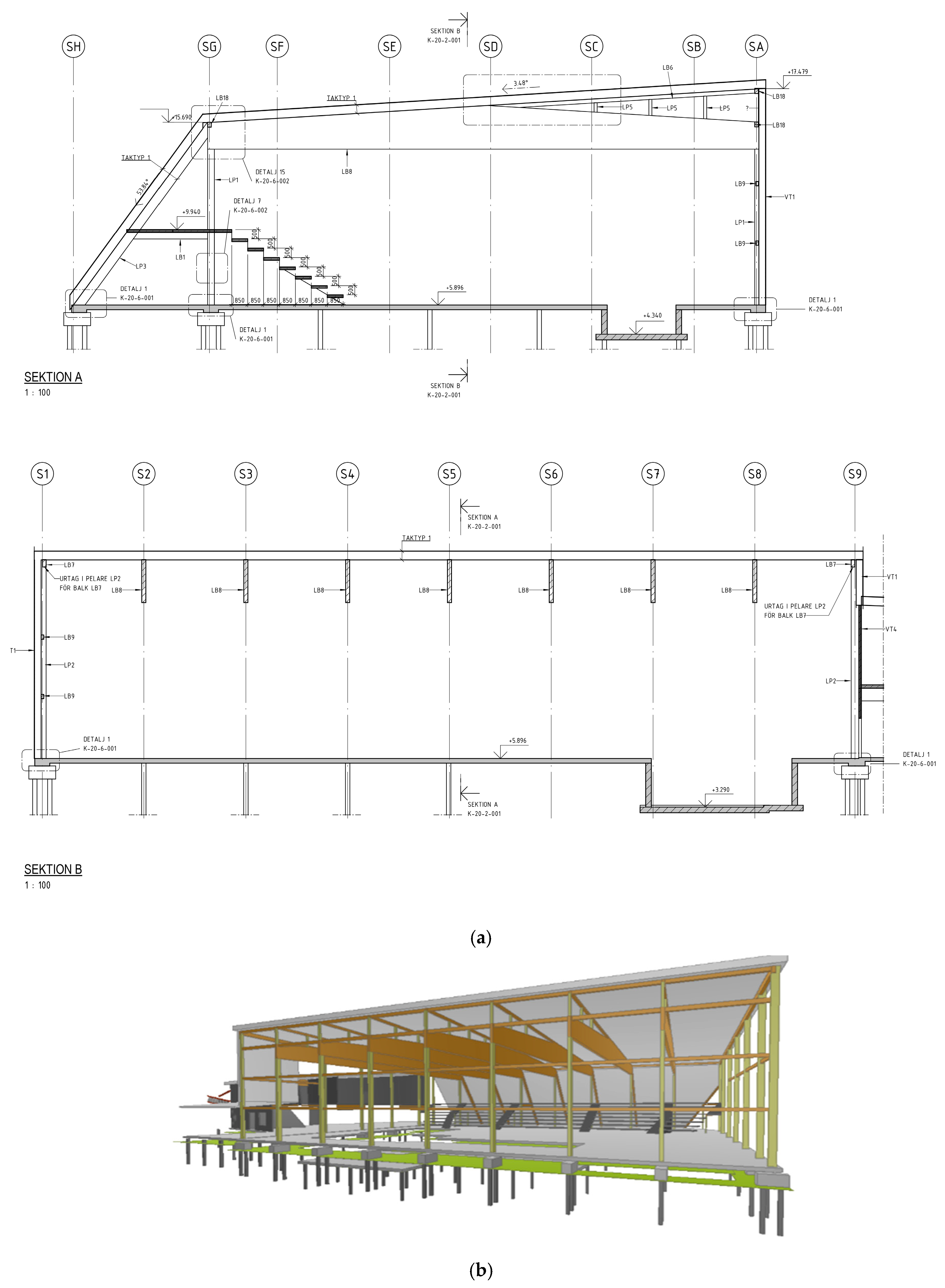
Figure 2a shows the architectural plan of the case study building, while
Figure 2b presents a 3D BIM model with a view of the internal structural arrangement used for the material take-off and carbon accounting of substructure and superstructure elements.
3.2. Model Assumption and Data Collection
The primary data used in this study was obtained from a renowned multinational engineering consultancy firm; the name is withheld for data protection and privacy. The case study building is a public municipal complex. A detailed 3D model of the building was created using Revit Autodesk 2024, and the LCA simulations were conducted using One Click LCA Version: 0.46.0, Database version: 7.6.
For the purposes of carbon footprint analysis, benchmarking, and environmental impact assessment, the following assumptions and boundary conditions were set within for the analysis: This framework ensures a focused evaluation of embodied carbon associated with construction materials and processes, enabling comparative analysis and sensitivity testing of material substitution strategies.
Building Information Modeling (BIM) was utilized to streamline the gathering, structuring, and evaluation of building data relevant to the carbon footprint analysis. The BIM model in Industry Foundation Classes (IFC) format was exported into carbon tools. Quantities of selected construction materials, specifically structural materials, concrete, steel, and wood, were extracted from the model’s Bill of Quantities (BoQ). These quantities served as input parameters for calculating the carbon footprint of each LCA phase, using appropriate carbon emission factors derived from Environmental Product Declarations (EPDs) and referenced literature sources. This data-driven approach ensured consistency in evaluating material contributions to the overall carbon footprint across different life cycle stages. The design scenarios’ boundary conditions are shown in
Table 3.
3.3. Proposed BIM–LCA Workflow
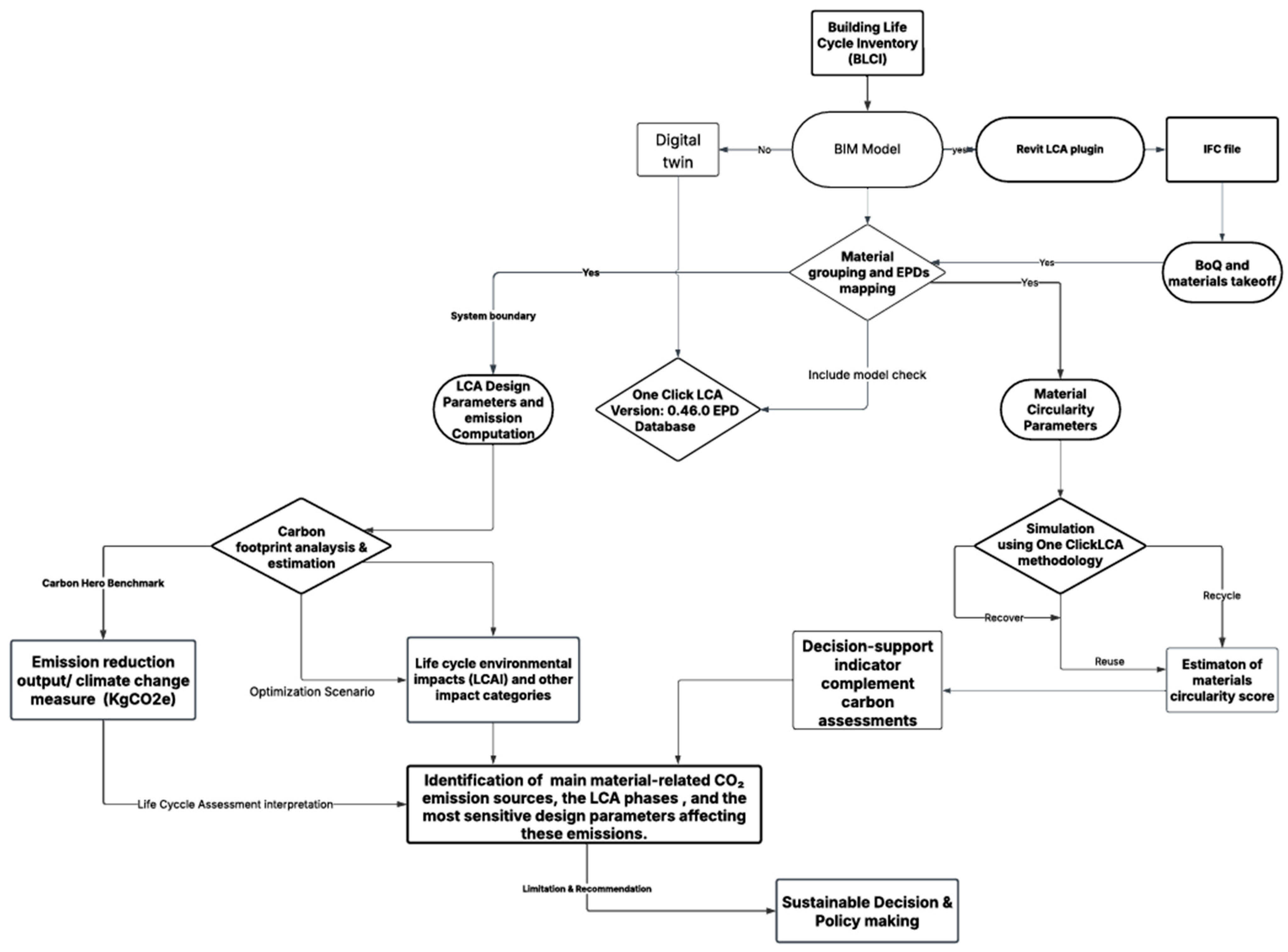
To improve the transparency and reproducibility of the methodology, a structured BIM–LCA workflow was developed in this study. The carbon assessment process follows a structured LCA flow as shown in the methodological life cycle assessment process in
Figure 3, beginning with material take-off from the BIM model, followed by the generation of Environmental Product Declarations (EPDs), parameter input, and result interpretation using the One-Click LCA tool. Modeling output enables precise quantification of embodied carbon across structural systems and helps identify emission reduction opportunities and material circularity assessments.
The process integrates BIM modeling with environmental assessment using the One Click LCA platform. It enables the systematic evaluation of embodied carbon and allows different design scenarios to be compared within a consistent analytical framework. The proposed BIM–LCA workflow could be divided into seven main steps, beginning with BIM model preparation and ending with sensitivity analysis of the carbon results. The structure of the workflow is summarized in
Table 4 and described below in detail.
3.4. LCA System Boundary
The analysis follows the EN 15978 framework for whole-building life cycle assessment and applies a cradle-to-grave approach covering stages from raw material extraction to end-of-life processes. In addition to the standard life cycle modules, operational energy use (B6) was included to capture the impact of building energy consumption during the use phase. Furthermore, Module D was incorporated to account for potential environmental benefits associated with material reuse, recycling, and recovery.
The selected system boundary, therefore, includes the product stage (A1–A3), transportation (A4), construction processes (A5), operational energy use (B6), and end-of-life stages (C1–C4). Module D was added to represent the potential circularity benefits related to material recovery and recycling pathways. The inclusion of these stages ensures a comprehensive evaluation of embodied and operational carbon impacts across the building life cycle. The adopted system boundary and the rationale for including each life cycle stage are summarized in
Table 5.
3.5. BIM–EPD Mapping Procedure
A systematic mapping procedure was applied to link BIM elements with Environmental Product Declaration (EPD) datasets. BIM objects exported from the IFC model were first classified according to their structural function and material type. Each classified BIM element was then assigned to a corresponding environmental dataset from the One Click LCA database. Because BIM models often contain multiple elements corresponding to the same material category, elements were grouped into representative material classes. For example, structural slabs were mapped to reinforced concrete datasets, while reinforcement elements were linked to steel rebar datasets. This grouping approach allows for consistent environmental data assignment and reduces ambiguity during LCA calculations. The mapping rules applied in this study are summarized in
Table 6, which presents the relationship between BIM elements, their IFC classification, the corresponding EPD dataset category, and the selection rule used in the LCA analysis.
3.6. Sensitivity Analysis Method
Sensitivity analysis was conducted to evaluate the robustness of the Life Cycle Assessment (LCA) results and to determine how variations in key input parameters influence the calculated carbon footprint. In building life cycle assessments, uncertainties may arise from several sources, including differences in Environmental Product Declaration (EPD) datasets, variations in transportation distances, and assumptions related to building operation and service life. The sensitivity analysis was therefore designed to assess the extent to which these uncertainties affect the final environmental impact results and the comparative ranking of the analyzed design scenarios.
The analysis focused primarily on parameters that have the greatest influence on embodied carbon results in BIM–LCA workflows. These parameters include material emission factors derived from EPD datasets, transportation distances for construction materials, and scenario assumptions related to material substitution and circularity strategies. Variations in EPD emission factors were considered within a range of ±5–10%, reflecting potential differences between manufacturer-specific datasets, regional average values, and generic environmental datasets commonly used in LCA software databases. Transportation distances were varied within a smaller range of ±2% to represent possible variations in supply chain logistics and construction site delivery conditions.
The sensitivity analysis was implemented within the One Click LCA platform by modifying the relevant input parameters while keeping the overall system boundary and modeling framework constant. Each parameter variation was propagated through the BIM–LCA workflow to evaluate its influence on the total Global Warming Potential (GWP) of the building. This approach allows for the identification of parameters that contribute most significantly to variations in the embodied carbon results. To support the interpretation of the results, the sensitivity analysis produced minimum, baseline, and maximum carbon footprint values for each analyzed design scenario. These values represent the potential variation in total emissions resulting from the defined uncertainty ranges. By comparing these values across scenarios, it is possible to determine whether the relative ranking of decarbonization strategies remains consistent under varying assumptions.
The results of the sensitivity analysis are presented in
Section 5.1, where the variation ranges of embodied carbon are compared for the baseline model and the alternative design scenarios. This evaluation provides additional confidence in the robustness of the proposed BIM–LCA framework and confirms that the identified decarbonization strategies remain effective even when uncertainties in the input parameters are considered.
4. Results
4.1. Carbon Footprint and Material Classification
To enable a detailed assessment of the carbon footprint, the major building materials of the case study building were categorized into functional subgroups. This classification supports a comprehensive analysis of the carbon footprint and the potential for emission reductions across key construction systems. Material quantities were extracted using Building Information Modeling (BIM) tools, specifically Autodesk Revit, through automated material take-off processes. Each building element was assigned to a specific subgroup based on its structural function and material type. The areas (in m
2) and volumes (in m
3) were calculated directly from the BIM model, providing a reliable and consistent dataset for carbon footprint analysis. The results are presented in
Table 7.
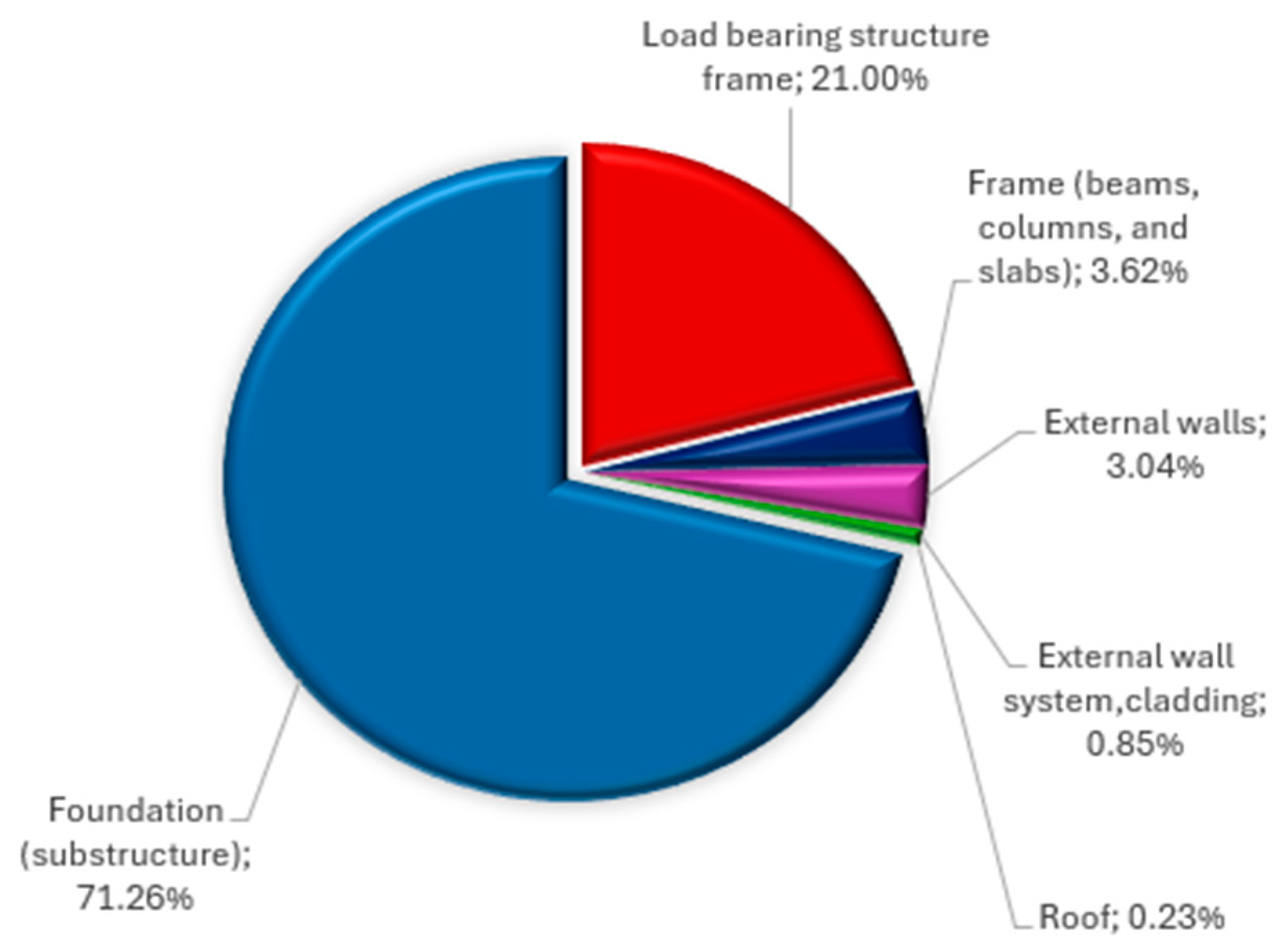
This framework ensures a focused evaluation of embodied carbon associated with construction materials and processes, enabling comparative analysis and sensitivity testing of material substitution strategies. The percentage contribution of individual building components to the total carbon footprint as generated from the OneClick LCA [
54] is presented in
Figure 4.
4.2. Sensitivity Analysis & Scenario Modeling
A sensitivity analysis was conducted to evaluate the effect of material transportation distance, material EPD types and sourcing on the building’s overall carbon footprint. This analysis aimed to simulate the effects of varying key parameters, such as material type and the material’s EPD carbon content, on embodied carbon emissions and their environmental impact. By altering input boundary condition and carbon coefficients for major materials, this study explored how design decisions can contribute to or mitigate CO2 emissions.
Table 8 summarizes the modeling scenarios developed to evaluate the impact of different design strategies on the building’s embodied carbon using the One Click LCA carbon tool. The scenarios compare material decarbonization, transportation-related emissions, and circularity-oriented strategies to quantify how material selection, sourcing, and end-of-life considerations influence overall carbon performance. Together, these scenarios provide a structured basis for assessing alternative pathways toward low-carbon and circular building design.
To ensure that the material substitutions used in Scenario 1 were realistic and environmentally justified, the selection of alternative construction systems was based on Environmental Product Declaration (EPD) datasets available in the One Click LCA database and supported by findings reported in previous research. Engineered timber systems such as cross-laminated timber (CLT), laminated veneer lumber (LVL), and glulam have been widely identified as lower-embodied-carbon alternatives to conventional reinforced concrete and steel structures. These materials can significantly reduce greenhouse gas emissions due to lower production energy requirements and the potential for biogenic carbon storage. Several studies have demonstrated that replacing concrete or steel structural components with engineered timber systems can lead to substantial reductions in embodied carbon in building structures. For example, Gustavsson et al. [
13] reported that timber structural systems can significantly reduce life-cycle carbon emissions compared to conventional concrete buildings, while Hu [
12] highlighted the major contribution of concrete and steel production to embodied carbon in buildings. Based on these findings and the EPD datasets available in the One Click LCA database. The material substitutions presented in
Table 9 were selected as representative low-carbon alternatives for the scenario analysis.
This analysis highlights the potential for decarbonization through material substitution and encourages the adoption of low-emission construction systems, particularly in the early conceptual design phase. The Scenario 2 results (carbon by location) are presented and discussed in
Section 5.
4.3. WBLCA Materials Carbon Footprint (MCF)
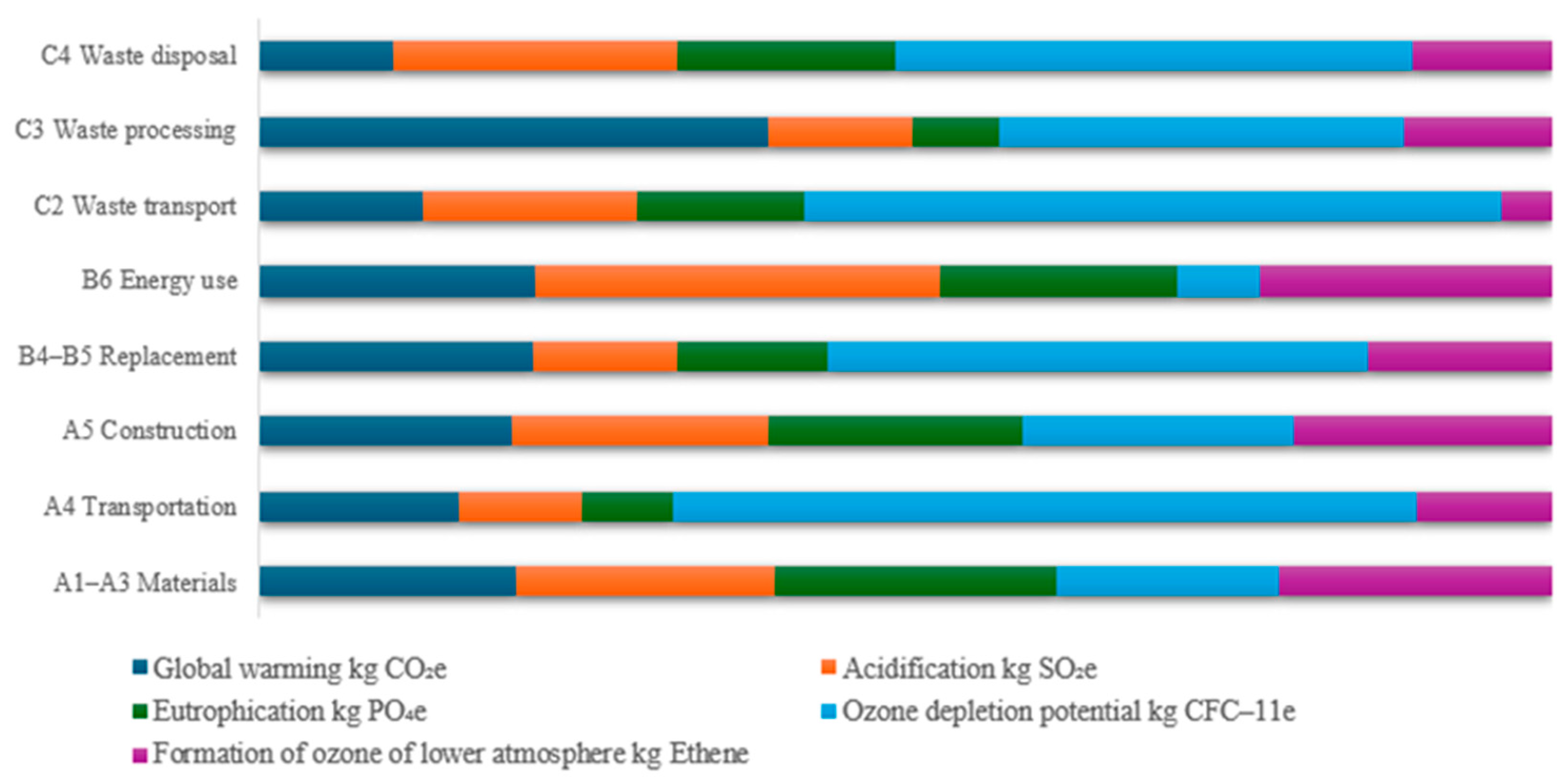
The carbon footprint (GHG) emissions associated with individual building materials were assessed across different life cycle stages in accordance with the LCA framework. The evaluation focused primarily on stages A1–A3, A4, A5, B4–B5, B6, B7, and C1–C4, while stages B1–B3 were excluded due to insufficient data for the analysis. For stage B6 (operational energy use), an electricity consumption of 1500 kWh was applied to reflect average usage during the usage stage. As presented in
Figure 5, the environmental impacts were analyzed based on multiple categories, including: global warming potential (kg CO
2e), acidification potential (kg SO
2e), eutrophication potential (kg PO
4e), ozone depletion potential (kg CFC–11e), and formation of ozone in the lower atmosphere (kg Ethene equivalents).
The results indicate that the material extraction and production stage (A1–A3) is the most carbon-intensive, contributing:
73.33% of total CO2e emissions.
73.32% of SO2e (acidification).
80.33% of PO4e (eutrophication).
63.30% of CFC–11e (ozone depletion).
77.72% of the formation of ozone of lower atmosphere (POCP).
These findings highlight material manufacturing and processing stages in the overall environmental footprint of the building as the major contributors of greenhouse gases and CO2, contributing to global warming. Conversely, the transportation stage (A4), installation stage (A5), B7, and decommissioning stage (C2–C4) contribute relatively lower amounts of carbon emissions to the total carbon footprint impact, ranging from 0.1% to 14.43%, depending on the impact category.
The quantified results of these assessments are summarized in
Table 10, where the total global warming potential was calculated at 545,180 kg CO
2e, corresponding to 416.73 kg CO
2e/m
2 based on a gross internal floor area of 1308.25 m
2. Similarly, emissions per square meter were found to be:
1.47 kg SO2e/m2 (acidification).
0.40 kg PO4e/m2 (eutrophication).
1.24 kg Ethene/m2 (ozone formation).
The effect of ozone depletion was found to be negligible across all stages. These results confirm the significance of conducting whole-building LCA (WBLCA) in assessing environmental performance and identifying high-impact construction phases, particularly when considering carbon-intensive materials.
4.4. Embodied Carbon Benchmark Sensitivity
The Embodied Carbon Heroes Benchmark represents a standardized classification system used to evaluate the carbon intensity of buildings based on their life cycle emissions. In this study, the benchmark was employed to set performance targets for reducing embodied carbon and to compare outcomes across different design and material configurations. Two simulations were conducted with a building service life of 60 years.
The embodied carbon results were simulated for Poland and two other EU countries Germany and Sweden, to evaluate the influence of local energy grids, material sourcing, and transport distances on emission performance.
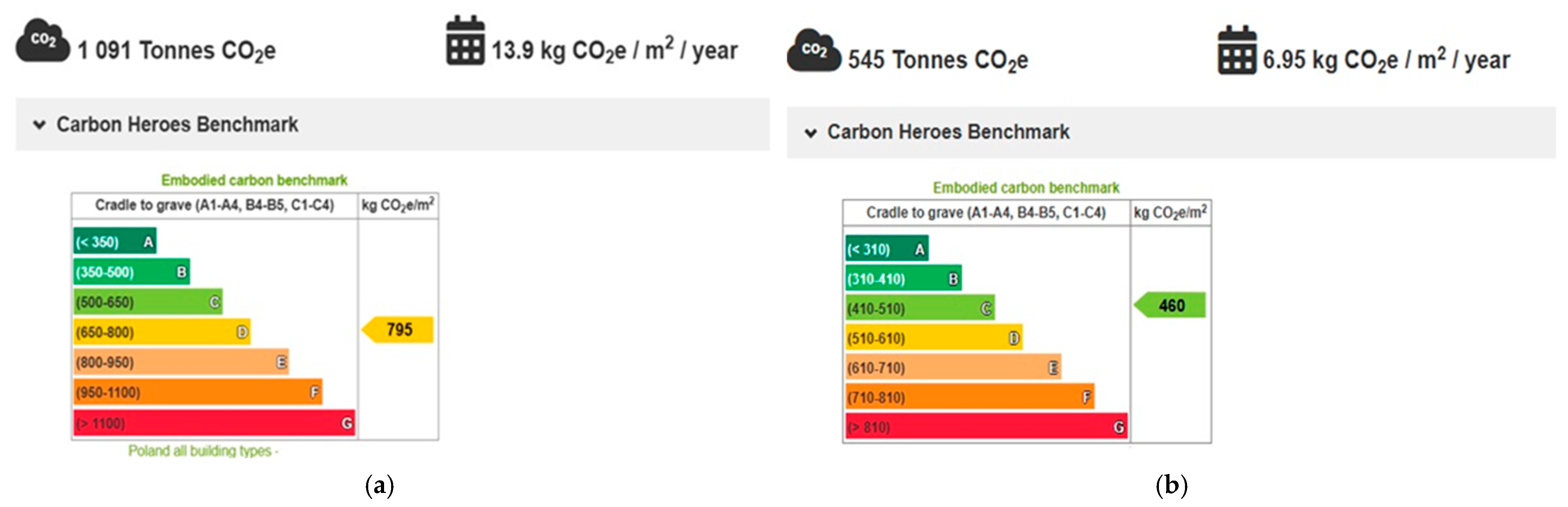
In the baseline scenario, the building’s embodied carbon was calculated at 1091 tons CO
2e, corresponding to 13.9 kg CO
2e/m
2/year, approximately 795 kg CO
2e/m
2 over service life. As shown in
Figure 6a, this value falls into Class D on the Carbon Heroes Benchmark scale, which ranges from Class A (≤250 kg CO
2e/m
2) to Class G (≥900 kg CO
2e/m
2). Following the material substitution strategies, described in
Section 4.3, specifically the reduction in high-CO
2 emission generated materials, such as in-place concrete with low-carbon concrete alternatives, also woods were replaced with sustainable materials with low EPD CLT panels and glulam, a significant reduction in embodied carbon was achieved. The total carbon emissions decreased to 545 tons CO
2e, equivalent to 6.95 kg CO
2e/m
2/year, approximately 460 kg CO
2e/m
2, improving the building’s classification to Class B in the benchmark scale (
Figure 6b).
These results demonstrate the effectiveness of low-carbon sustainable design interventions and underscore the importance of material optimization in achieving carbon reduction goals aligned with the Paris Agreement and IPCC net-zero pathways.
4.5. Material Building Circularity
The Building Circularity tool helps in overseeing, measuring, and optimizing the circularity of materials throughout a building’s lifecycle and at its end. It provides a comprehensive overview and detailed analysis by material type, facilitating the application of Design for Disassembly (DfD) and Design for Adaptability (DfA) principles. The BC methodological boundary is limited to quantify material inflows and outflows by mass and predefined recovery pathway but does not adequately capture material quality losses and functional performance. In addition, assumptions about material service life, recycling rates, and standardized end-of-life conditions introduce uncertainty and may impact the circular performance.
In this study, the BCS is calculated from material-level data extracted from the BIM model and analyzed in One Click LCA. It builds on three circularity criteria aligned with One Click LCA’s indicators: (a) content of reused and reusable materials, (b) recycled or secondary material content, and (c) recyclability and recovery potential at the end of life. Each criterion is expressed per unit mass and normalized to a value between 0 and 1. The total BCS is obtained by aggregating these normalized values for all building materials, yielding a single, comparable circularity metric for each design scenario. The BCS applies One Click LCA’s scenario-based methodology, using predefined assumptions on material reuse, recycling rates, and end-of-life routes. However, like other One Click LCA circularity indicators, it does not fully capture qualitative aspects such as material degradation, economic viability, or future market dynamics. The BCS should therefore be used as a decision-support indicator that complements embodied carbon assessments, offering practice-oriented guidance for selecting scenarios suited to the project context.
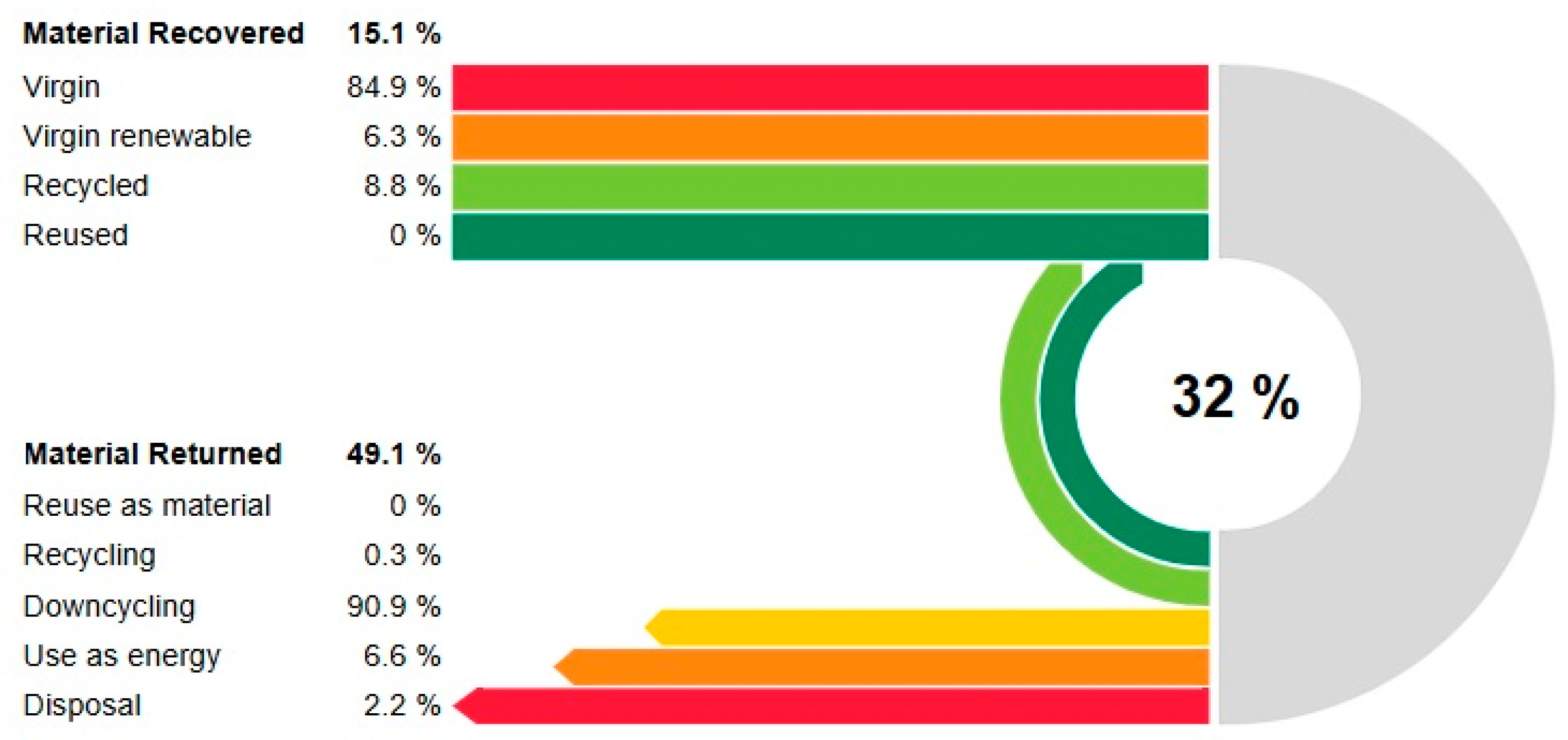
The analysis result presented in
Figure 7 and
Table 11 shows that the building’s circularity score (BCS) is 32% of the total material input phase.
The 32% circularity score suggests a moderate but insufficient circularity score. Building Circularity Score (BSC) in the range of approximately 20–35% is typically indicative of conventional buildings characterized by predominantly linear material flows. By contrast, higher-performing circular buildings generally attain scores exceeding 60–90%, contingent upon the implemented design strategies, the extent of material reuse, and the degree of adaptability integrated into the building. This comparison clearly indicates that the reported score reflects an intermediate level of circularity rather than a best-practice benchmark. The high dependence on virgin inputs (84.9%) indicates significant reliance on newly extracted resources, despite 15.1% recovery. The absence of reuse and low recycling rate (8.8%) point to shortcomings in retaining and reintegrating materials. Although 49.1% of materials are re-entered into the system, the high rate of downcycling (90.9%) indicates a limited capacity for closed-loop material retention and underscores the necessity of better design strategies, more appropriate material choices, and reversible construction methods to facilitate reuse and high-quality recycling. Downcycling maintains mass circulation but limits recovery potential, while the lack of reuse in both recovered and returned materials marks a failure in design for disassembly. The low recycling rate (0.3%) and reliance on energy recovery (6.6%) reveal possible issues with waste management and material recovery viability. These insights stress the need for stronger circular design implementation, enhanced reuse strategies, and better end-of-life material handling.
5. Discussion
The section presents the results of the regenerative building carbon footprint evaluation and the sensitivity analysis performed on selected structural elements using the One Click LCA carbon tool. The analysis compares the environmental impacts of the baseline model with three alternative design scenarios developed to assess embodied carbon, material localization effects, and circularity performance within a regenerative building concept.
The baseline building design, which utilizes conventional construction materials such as in situ ready-mix concrete, steel, and glulam wood, generated a total embodied carbon footprint of approximately 795 kg CO2e/m2. Among the analyzed structural components, the foundations and substructure (including pile caps and reinforced concrete slabs) were identified as the dominant contributors to total emissions. Additional significant impacts were associated with load-bearing structural frames and steel roof members, as well as external walls composed of composite sandwich panels and timber-based elements.
The results clearly indicate that ready-mix concrete and steel are the main sources of embodied carbon emissions, particularly during the A1–A3 life cycle stages (material extraction, processing, and manufacturing). These stages contributed over 85% of the total GWP (Global Warming Potential). The A5 stage (construction activities) and A4 stage (transportation) also accounted for notable but secondary contributions due to energy-intensive on-site operations and logistics.
When compared with the findings reported in previous studies, the results of this research align well with the broader scientific consensus. Hu [
12] demonstrated that production and manufacturing phases contribute between 80–90% of the total embodied carbon in typical building structures, while Santos et al. [
16] confirmed that early-stage material selection and optimization within BIM–LCA workflows can reduce emissions by up to 20%. Similarly, Li [
37] reported that integrating AI-enhanced digital twins for material optimization in smart building frameworks achieved approximately 25–30% reductions in energy and carbon intensity. The reductions observed in this study, up to 58% in optimized scenarios, fall within this range, indicating consistency with contemporary research and validating the proposed modeling framework as an effective tool for achieving decarbonization targets.
In addition to material substitution, localization of material sources was found to exert a strong influence on total embodied carbon. Scenario analyses revealed that reducing transportation distances and shifting supply chains to low-carbon electricity grids (e.g., Sweden’s predominantly renewable mix) can reduce total emissions by an additional 10–15%, compared to scenarios dominated by coal-based grids such as in Poland. These results underscore the importance of aligning construction practices with regional energy transition policies and supply chain optimization strategies.
The material circularity assessment conducted using the One Click LCA Circularity module demonstrated a Building Circularity Score (BCS) of 32%, indicating moderate adoption of regenerative design principles. Approximately 15.1% of materials were recovered, 8.8% incorporated recycled content, and 6.3% originated from renewable sources. However, no direct reuse of components was observed, highlighting the need for improved Design for Disassembly (DfD) and Design for Adaptability (DfA) principles to enhance circular performance. These results align with Lovrenčić Butković et al. (2023) [
17], who emphasized that the lack of material traceability and standardized reuse guidelines remains a major barrier to achieving circular construction objectives.
The analysis also demonstrated that the use of BIM–LCA integration facilitates a more accurate quantification of embodied emissions and enables early-stage decision-making for decarbonization. The implementation of Environmental Product Declarations (EPDs) allowed for precise comparisons between material categories and production pathways, improving data transparency. Although digital model concepts are frequently discussed in the literature as a promising framework for integrated building performance management, the present study focuses specifically on BIM–LCA integration. The proposed workflow can serve as a methodological basis for future digital twin implementations, but does not implement such systems directly. The outcomes highlight the necessity of considering both material substitution and supply chain optimization as complementary pathways toward achieving net-zero and regenerative construction. The alignment of this study’s findings with established literature further reinforces the credibility and transferability of the proposed methodology to broader applications in smart energy districts and carbon-resilient urban environments.
To further explore potential decarbonization strategies, three optimization scenarios were developed and analyzed. Each scenario was designed to test the impact of different design and material choices on the total embodied carbon, in line with circular economy and net-zero building principles. The scenarios included: (1) material substitution and decarbonization, (2) localization and transportation optimization, and (3) circularity enhancement through material recovery and reuse.
To clarify the individual contribution of each design intervention, the emission reduction potential of the analyzed scenarios was separated and evaluated independently. Each scenario focuses on a different decarbonization strategy, including material substitution, transportation optimization, and circularity improvements. By isolating the primary design modification introduced in each scenario, it is possible to estimate the relative contribution of each intervention to the overall reduction in embodied carbon.
The results indicate that material substitution has the largest impact on carbon reduction, primarily due to replacing high-emission materials such as reinforced concrete with lower-carbon alternatives such as engineered timber systems (CLT and LVL). Transportation optimization through local material sourcing also contributes to emission reduction by decreasing transport-related emissions. Finally, circularity strategies such as recycling and recovery provide additional but smaller improvements in overall carbon performance. The relative contribution of each intervention to total carbon reduction is summarized in
Table 12.
5.1. Sensitivity Analysis Methodology
The sensitivity analysis confirmed that the model’s robustness is strongly dependent on the quality and completeness of the input datasets. To account for potential variability, a qualitative analysis was performed. The overall sensitivity range was estimated at ±5–10% for material EPD data, primarily due to manufacturer-specific differences and regional energy mix assumptions. For transportation distances, a lower sensitivity range of approximately ±2% was observed, reflecting consistent logistics data across the analyzed scenarios. These margins are consistent with those reported by Zhou et al. [
14], who identified similar variability ranges for embodied carbon assessments in complex building systems.
The sensitivity analysis focuses mainly on changes in material type and localization, but additional uncertainties arise from the LCA methodology itself. A key uncertainty is the choice of impact assessment categories. Here, the analysis focused on embodied carbon using the global warming potential (GWP) indicator, following EN 15978 and the standard One Click LCA methodology. However, using other categories (e.g., resource depletion, primary energy, water consumption, or abiotic impacts) could lead to different conclusions about material performance and the benefits of circular strategies.
Another source of uncertainty is the functional unit, defined here at the building scale by total material quantities. This allows for consistent comparison across optimization scenarios but may not reflect differences in service life, performance, or functional equivalence among materials. Changes in assumed service life or replacement intervals could therefore alter the relative embodied carbon results. Uncertainties in background datasets, system boundaries, and scenario assumptions (e.g., end-of-life recycling rates) can also affect absolute impact values. These uncertainties do not invalidate the comparative findings but should be considered when interpreting the magnitude of the reported reductions.
To evaluate the influence of uncertainty ranges on the final carbon footprint results, the sensitivity analysis was extended to include minimum and maximum outcome values for each scenario. The ranges applied to the key parameters (primarily EPD emission factors and transportation distances) were propagated through the LCA model to assess their effects on total Global Warming Potential (GWP). This approach allows for the evaluation of whether the comparative ranking of design scenarios remains stable under varying assumptions. The results of this analysis are summarized in
Table 13, which presents the minimum, baseline, and maximum values of total embodied carbon for the analyzed scenarios.
The results indicate that although the absolute carbon values vary within the defined uncertainty ranges, the relative ranking of scenarios remains unchanged. This confirms the robustness of the proposed design interventions and demonstrates that the identified carbon reduction strategies remain valid even when variations in input parameters are considered. The ranking of scenarios remained unchanged across the sensitivity ranges, indicating that the proposed design strategies are robust to variations in the input parameters.
5.1.1. Scenarios 1
Scenario 1 involved replacing EPD materials with high CO2 emissions with EPD materials with lower CO2 emissions based on available EPD data. Significant material changes included a reduction in the quantity of ready-mix concrete slabs while substituting and increasing the cross-laminated timber (CLT) and laminated veneer lumber (LVL) steel-glulam roof structures with 80% glulam in-situ concrete foundations with precast concrete elements.
These substitutions resulted in a drastic reduction of approximately 58% in the total embodied carbon compared to the baseline. The most significant improvement was observed in the floor system, where CLT and LVL replacement reduced emissions by over 460 kg CO2e/m2. The substitution of precast instead of ready-mix concrete also contributed to reductions due to lower transportation energy, Improved manufacturing efficiency and reduced on-site waste.
5.1.2. Scenario 2
In the second scenario the impact of material source localization was assessed by comparing embodied emission benchmarks from three countries: Poland, Germany, and Sweden. The analysis showed clear variation in embodied carbon values depending on:
Transportation proximity and infrastructure efficiency.
Local energy mix used in material extraction and production (e.g., Sweden’s low-emission grid vs. Poland’s coal-based grid).
Regional manufacturing standards and efficiencies.
The Swedish benchmark resulted in the lowest overall carbon footprint, while Polish benchmarks showed higher emissions due to higher carbon intensity in both manufacturing and transportation stages. Differences of up to 335 kg CO2e/m2 were observed across scenarios for the same materials, emphasizing the significance of local context in sustainable material sourcing. The results demonstrate that embodied carbon can be significantly reduced through early-stage design interventions, including material selection and sourcing strategies. CLT and glulam are highly effective in reducing emissions compared to concrete and steel, particularly in superstructure applications. Precast concrete offers measurable improvements and overcast-in-place alternatives. Localization of material production and shorter transportation distances can further minimize carbon impact, especially when paired with cleaner national energy grids.
5.1.3. Scenario 3
In scenario three, the impact of material circularity was analyzed to evaluate how material optimization and circular economy strategies in the construction sector can promote adaptive reuse of existing materials instead of sourcing new materials to lower embodied carbon. The simulation gives a building circularity score of 32%, with 15.1% of the materials recovered, while 49.1% of the materials can be returned.
The circularity performance analysis in this simulation highlights several crucial insights when considered in the context of the EU Taxonomy Regulation (2020/852) and its connection with technical weighting standards for the transition to a circular economy. The result shows that primary materials with concrete, brick, tiles, and ceramic is very high accounting for 90%, with 10% material recovery in this category, material recovery remains moderate which is quite better compared to traditional recycling, while the hazardous and waste disposal 0% show the compliance with EU taxonomy standard, future studies will focus more on the improvement of circular design.
The result of the simulation shows that circularity performance of the assessed building materials can be further improved to meet the EU Taxonomy’s specification for substantial contribution to a circular economy. This will be considered in future work. In summary, while some circularity exists, the quality falls short, with most material flows ending with reduced reuse potential. Policy changes, better material tracking, and recovery incentives could greatly improve future construction circularity outcomes. To assess how the three optimization scenarios performed relative to one another, we examined their performance along several dimensions: embodied carbon reduction, circularity performance, applicability, and practical feasibility. The comparative results are summarized in
Table 14.
6. Conclusions
This study provided a comprehensive evaluation of the environmental impacts associated with regenerative building design through the integration of Building Information Modeling, Life Cycle Assessment, and Sensitivity Analysis within a circular economy framework. The main methodological contribution of this research is the formalization of a reproducible BIM–EPD mapping and BIM–LCA workflow enabling transparent scenario-based embodied carbon assessment. The results clearly demonstrated that the production phase (LCA stages A1–A3), covering material extraction, processing, and manufacturing, dominates the total environmental burden of buildings, accounting for over 85% of global warming potential. These findings confirm that embodied carbon emissions are primarily driven by material type, production methods, and geographic sourcing, underscoring the need for a systematic transition toward low-carbon materials and localized supply chains.
By coupling BIM and LCA, this study established a robust digital workflow capable of quantifying embodied carbon with high accuracy, facilitating real-time environmental feedback in early design stages. The integration of Environmental Product Declarations (EPDs) and the One Click LCA platform enabled a transparent assessment of decarbonization scenarios and provided an evidence-based approach for decision-making. Sensitivity analysis further revealed that material substitution and sourcing strategies have a strong leverage effect on total carbon performance. Specifically, replacing conventional reinforced concrete and structural steel with cross-laminated timber (CLT), laminated veneer lumber (LVL), and glulam reduced embodied carbon by up to 58%, improving the building’s benchmark classification from Class D to Class B according to the Carbon Heroes standard.
Beyond material selection, this study demonstrated that digital models, as dynamic, data-driven representations of buildings, can play a transformative role in monitoring embodied and operational carbon over the entire building lifecycle. Although digital twins are not fully implemented within the scope of this study, the proposed BIM–LCA workflow provides a structured and systematic foundation that can support their future integration. By linking design, assessment, and operational data, this workflow facilitates continuous optimization, predictive maintenance, and adaptive control, establishing a core pathway toward the realization of smart, decarbonized building ecosystems. In this way, this study not only highlights the immediate benefits of BIM–LCA integration but also positions the workflow as a critical enabler for the gradual adoption of digital twin technologies in sustainable and regenerative building practices.
From a policy perspective, this research supports the objectives of the European Green Deal and EU Taxonomy Regulation (2020/852) by aligning with key principles of circularity, material reuse, and transparency of environmental data. The proposed methodology provides actionable insights for architects, engineers, and policymakers seeking to comply with sustainability certification systems such as BREEAM, LEED, and Level(s). Overall, the proposed framework fosters collaborative responsibility among key stakeholders, designers, manufacturers, contractors, building owners, and regulators, thereby facilitating informed, evidence-based decisions that enhance material circularity, reduce carbon emissions, and accelerate the transition toward net-zero and regenerative built environments. Architects and engineers are enabled to evaluate material efficiency, structural optimization, and renewability at early design stages, where carbon reduction potential is greatest. Material manufacturers and suppliers benefit from the transparent integration of Environmental Product Declarations, which incentivizes the development of low-carbon products, improved manufacturing processes, and increased use of recycled and bio-based content. Contractors and construction managers can use the framework to compare procurement and sourcing strategies, minimize material waste, and support off-site and prefabrication approaches aligned with circular economy principles. For building owners, developers, and investors, the quantified carbon benchmarks offer a reliable basis for setting performance targets, managing climate-related risks, and aligning projects with sustainability certifications and regulatory requirements. Policymakers and regulators can leverage such data-driven assessments to inform carbon standards, material regulations, and incentives that promote reuse, recycling, and localized supply chains. Moreover, it demonstrates how digital integration can accelerate compliance with emerging carbon accounting standards and net-zero building targets.
This study recommends several strategic directions for both practice and research:
Localization of material sources to minimize transportation-related emissions and improve supply chain resilience.
Adoption of low-embodied carbon structural systems, especially engineered timber solutions, to significantly reduce GHG intensity.
Improvement in design for circularity, emphasizing disassembly, reuse, and material traceability through BIM-based material passports.
Implementation of continuous carbon monitoring using AI-assisted digital twins to support adaptive management of carbon and energy flows.
Inclusion of socio-economic dimensions in future studies, evaluating how circular design strategies affect local employment, cost efficiency, and community well-being.
In summary, this research reinforces the role of BIM–LCA integration as a cornerstone of data-driven decarbonization in the built environment. It contributes to a broader understanding of how digitalization, automation, and circularity can be harnessed to achieve net-zero carbon construction. The developed workflow demonstrates a scalable approach for future research and industry applications, bridging the gap between digital engineering, sustainability analytics, and policy implementation.
Beyond the environmental impact and technical performance, regenerative building design and circular economy strategies provide wide-ranging socio-economic advantages. On the social side, these methods can enhance occupant well-being by fostering healthier indoor conditions and encouraging the adaptive reuse of materials. From an economic standpoint, circular approaches lower operational costs by extending the lifespan of building components, cutting waste management expenses, and creating value from reused or recycled materials. In addition, prioritizing locally sourced materials can boost regional economies by supporting nearby suppliers and the workforce. Together, these wide-ranging benefits reinforce the importance of regenerative and circular strategies in sustainable building design that go beyond merely reducing embodied carbon.
Despite the valuable insights generated, this study is subject to several limitations. The analysis is based on a BIM model and on application-oriented, generic, and manufacturer EPDs, as well as predefined simulation scenarios and static assumptions for material properties, reuse rates, and end-of-life scenarios, rather than on empirical data, which may not capture the real-world variation. The Building Circularity Score (BCS) and embodied carbon indicators mainly address material cycles and carbon emissions, and do not comprehensively account for other environmental, financial, social, or broader economic dimensions. Furthermore, the availability and quality of data, especially on recycled content and regional sourcing, may influence the accuracy of the findings.
Future work should extend this approach by integrating carbon cost analysis and multi-objective optimization algorithms to compare adaptive reuse against new construction and to balance environmental, economic, and social sustainability indicators. Furthermore, embedding human-centered artificial intelligence within digital twin ecosystems will enhance predictive capabilities, enabling smarter, self-learning building environments. Such advancements will accelerate the transition toward regenerative, decarbonized, and climate-resilient cities, core to achieving global sustainability targets by 2050.