1. Introduction
Decentralized energy trading based on Multi-Agent Systems (MAS) has attracted significant research interest due to its potential to improve operational and economic efficiency of the utility grid. By enabling autonomous decision-making and peer-to-peer coordination, MAS-based approaches can contribute to reducing costs, improving system reliability, supporting the integration of distributed energy resources (DERs), and implementing a demand–response program.
Multi-Agent Systems (MAS) are characterized by intelligence, autonomy, scalability, modularity, adaptability, robustness, and social interaction capabilities, including communication, coordination, and negotiation. These features, combined with distributed control and goal-oriented behavior, have led to their widespread adoption in the design of complex and dynamic systems with the supply chain [
1,
2,
3]. Decentralized energy trading driven by blockchain aims to enhance system efficiency, sustainability, cost-effectiveness, and resilience [
4,
5]. Furthermore, it supports energy democratization, reduces transmission losses, and improves overall reliability of the grid by enabling local energy trading and integration of distributed energy resources (DERs) [
6]. These properties have contributed to a paradigm shift towards decentralized and blockchain-enabled energy management frameworks [
7].
MAS can solve problems with a single agent or system but are also well suited to manage the complexity of these energy systems [
8,
9].
Blockchain technology originated from peer-to-peer computing and was initially designed as the core technology that underlies cryptocurrencies. Due to its inherent properties such as cryptographic security, trustworthiness, immutability, and auditable transactions in distributed environments, blockchain has since been adopted beyond digital currencies in various application domains. These include, but are not limited to, the security of Internet of Things (IoT) systems [
10], access control [
11], supply chain management [
12], energy trading [
13] and data sharing platforms [
14], where decentralized trust and tamper-resistant records are essential.
The primary innovation of blockchain technology in energy management is its ability to enable decentralized agreement among untrusted agents, thus establishing peer-to-peer (P2P) energy markets within local communities [
4,
15,
16,
17]. By integrating blockchain and smart contracts, energy systems can transition from DSO-centric control to consumer-oriented distributed electricity grid management. Decentralized energy trading driven by blockchain aims to improve system efficiency, sustainability, cost-effectiveness, and resilience [
4,
5]. Furthermore, it supports energy democratization, reduces transmission losses, and improves overall reliability of the grid by enabling local energy trading and integration of distributed energy resources (DERs), [
6,
18]. Collectively, these attributes have contributed to a paradigm shift in the research and industrial communities toward decentralized and blockchain-enabled energy management frameworks.
The main innovation that blockchain technologies offer with respect to energy management is the decentralized agreement between non-trusting agents to compromise a peer-to-peer energy market in the community [
9]. There is no central system to coordinate participants; rather, the blockchain provides trust among them. A blockchain is a shared digital ledger of transactions that records duplicated and distributed information throughout the network. Blockchain technology contributes to a smart grid with energy trading and big data analysis by addressing security issues and trust challenges that previous technologies did not offer [
19]. Hasankhani [
20] highlighted a peer-to-peer blockchain approach for smart grids that enables consumers to trade renewable energy locally, thus enhancing their economic benefits. The author of [
21] discussed the interactions among users, decision-making processes, and exchange processing, as well as access to large-scale energy resources and the criteria for adopting blockchain technology.
According to a recent market report [
22], the market share of blockchain technology in the energy industry is expected to exceed USD 162 billion by 2035. The EU Blockchain Observatory and Forum designates blockchain as a key enabling technology for Europe’s energy transition towards a Digital Green Shift, focusing its role around the 5 Ds: deregulation, decarbonization, decentralization, digitization and democratization [
23]. Examples are the Microsoft–Eneco–FlexiDAO 24/7 renewable energy matching initiative in The Netherlands, the Australian Project EDGE to integrate distributed energy resources into flexibility markets, the Blockchain Machine Identity Ledger (BMIL) project led by the German Energy Agency for decentralized device identity management, a BMW Group-sponsored blockchain-based payment and validity check system for electric vehicle services, Powerledger’s peer-to-peer energy trading platform in Uttar Pradesh, India, and the Energy Web Foundation’s Energy Web Zero global renewables hub aimed at improving transparency in renewable energy certificate markets.
Unlike conventional systems, where electricity flows in a single direction from central power plants to end users, smart grids enable bidirectional energy flows and real-time electricity exchange among all participants. Microgrids further expand energy access, particularly in remote regions with limited infrastructure, and enhance resilience to outages and cyber attacks by reducing dependence on a single central node. Policy makers around the world are recognizing these benefits and developing regulations that promote localized energy production and consumption. However, decentralized energy trading still faces significant barriers—including trust, security, scalability, and transaction efficiency—that impede large-scale deployment [
24].
This systematic review examines the integration of blockchain technology and Multi-Agent Systems (MAS) for energy trading in microgrids, with three specific objectives: (i) exploring how blockchain and MAS enable decentralized, transparent, and secure energy trading; (ii) reviewing current implementations and associated challenges; and (iii) analyzing real-world deployments across different countries. Prior reviews have examined blockchain-based energy trading or MAS-based microgrid control largely in isolation, either overlooking the role of autonomous agents or treating blockchain as an optional security layer rather than a core architectural component. The present review addresses this gap by providing a unified analysis of both technologies, classifying integration levels based on the functional distribution between agents and smart contracts and evaluating study quality using PRISMA 2020 and an adapted JBI checklist.
The remainder of this paper is structured as follows.
Section 2 outlines the methodology used for study selection.
Section 3 introduces the foundational concepts of blockchain and MAS.
Section 4 details how blockchain and MAS are integrated in the context of energy trading.
Section 5 reviews representative pilot projects and real-world implementations of BC and MAS.
Section 6 examines the challenges associated with adopting and implementing BC–MAS.
Section 7 discusses recent work on integrating BC and MAS for microgrid security.
Section 8 address the limitations of this study.
Section 9 outlines future research directions. Finally,
Section 10 concludes this paper.
2. Methodology
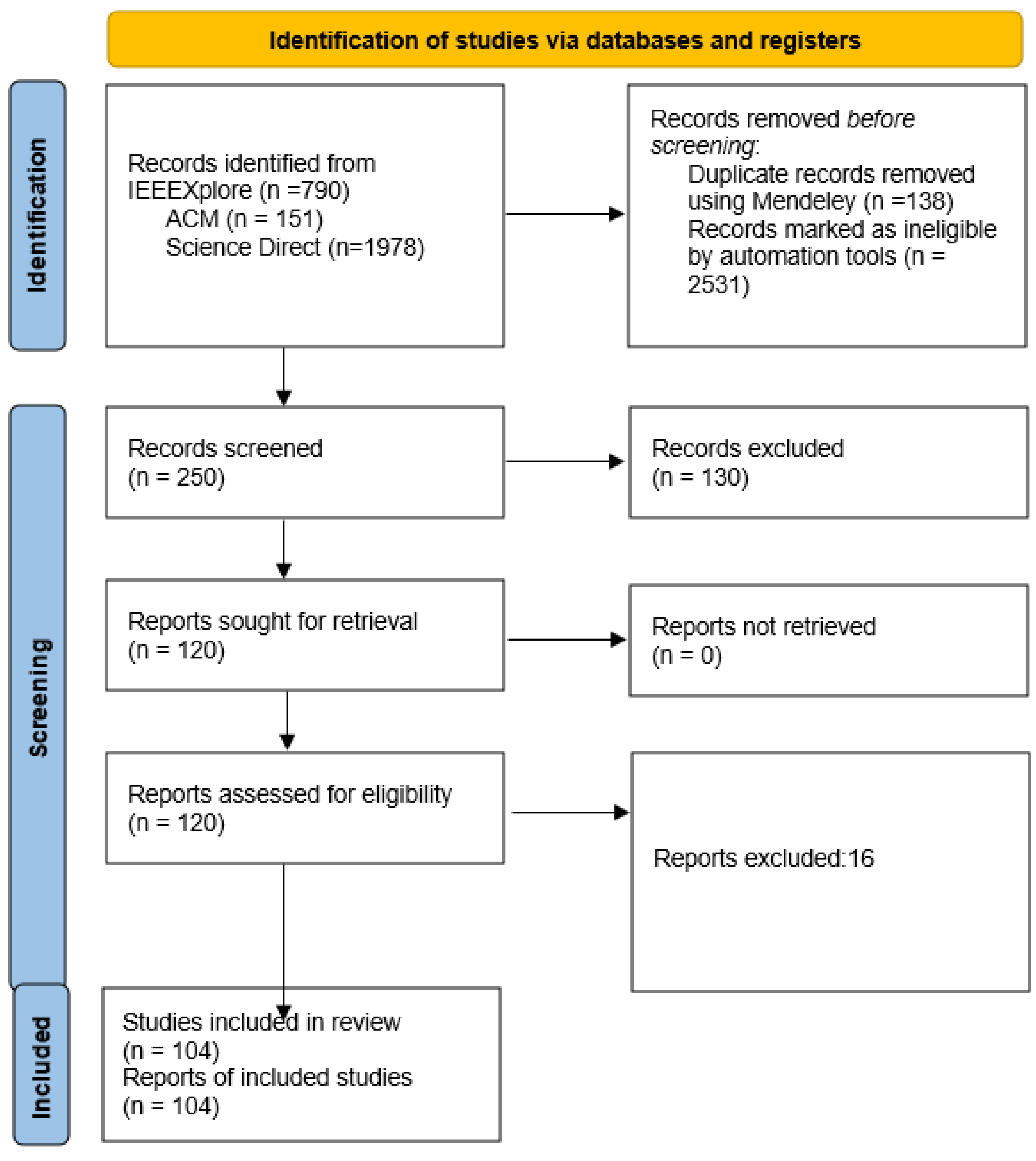
This systematic review was conducted and reported according to the Preferred Reporting Items for Systematic Reviews and Meta-Analyses (PRISMA) 2020 guidelines [
25]. A PRISMA 2020 flow diagram that illustrates the study selection process is provided in
Figure 1. The review protocol was not registered in a public database.
The objective was to rigorously identify, select, and synthesize the peer-reviewed literature related to the integration of Blockchain and MAS in microgrid energy trading environments.
2.1. SLR Overview and Research Objectives
Unlike traditional narrative reviews, this SLR adopts a transparent, reproducible, and structured approach to evaluate relevant studies. The process aims to:
identify recurring themes and architectural trends in MAS–blockchain integration;
highlight unresolved issues and technical limitations;
reveal regional or regulatory constraints in current implementations;
provide a holistic understanding of the technological and operational landscape.
To guide the review process, we define the following research questions.
RQ1: What are the key principles and objectives of integrating blockchain technology and MAS for microgrid energy trading?
RQ2: What architectural and operational components are involved in this integration, including blockchain platforms, integration levels, and agent roles?
RQ3: What insights and lessons can be derived from existing case studies and real-world implementations of blockchain- and MAS-based energy trading systems in different geographical and regulatory contexts?
RQ4: What are the main technical, regulatory, and operational challenges associated with the deployment of blockchain and MAS in microgrid energy trading systems?
RQ5: Which security vulnerabilities in traditional microgrid energy trading systems can be mitigated through the integration of blockchain and MAS?
2.2. Search Strategy
A structured and reproducible search strategy was designed to identify peer-reviewed studies addressing the integration of blockchain and Multi-Agent Systems (MAS) for microgrid energy trading. The search covered publications from January 2019 to January 2025. The year 2019 was selected as the starting point because research on the architectural integration at the system-level between blockchain and MAS in decentralized energy markets began to mature during this period. Earlier foundational studies were cited where necessary to provide a conceptual background but were not included in the systematic screening process. The final database search was conducted on 10 January 2025.
The literature search was performed using the following electronic databases: IEEE Xplore, ACM Digital Library, and ScienceDirect. These databases were selected because they index the majority of peer-reviewed engineering and computer science research relevant to blockchain technologies, distributed systems, and intelligent energy management. Broader indexing platforms such as Scopus and Web of Science were not searched separately in order to avoid duplication of records, as the selected databases already comprehensively cover the primary publication venues in this domain. Additional references were identified through citation tracking and cross-referencing of included studies from publishers not systematically searched, including MDPI, Springer, Wiley, Taylor & Francis, Frontiers, and IOP Publishing, as well as relevant grey literature such as industry reports and technical white papers.
The search strategy was developed around three main conceptual domains: (i) blockchain technologies in energy systems, (ii) MAS-based energy trading mechanisms, and (iii) architectural integration frameworks. Thematic keyword groups included:
Blockchain and Microgrids:“blockchain in microgrids”, “smart grid blockchain”, “blockchain microgrid architecture”
MAS and Energy Trading: “multi-agent systems for energy trading”, “MAS-based energy trading”, “agent-based energy market”
Integration Topics: “blockchain and MAS integration”, “decentralized energy market architecture”
Implementation and Validation: “blockchain MAS case study”, “prototype implementation”, “peer-to-peer energy trading”
Boolean operators (AND, OR) and database-specific advanced search syntax were applied to combine keywords within and across thematic groups. A representative search string was structured as follows:
(“blockchain” AND “microgrid”) AND (“multi-agent system” OR “MAS”) AND (“energy trading” OR “decentralized market” OR “architecture”)
Search filters were applied to include only peer-reviewed journal articles and conference proceedings published in English.
Duplicate records were removed using reference management software (Mendeley version 2.142.0), and additional automated filtering tools were used to eliminate clearly irrelevant records before manual screening. All remaining records were subjected to a structured multi-stage review process.
2.3. Eligibility Criteria
A predefined set of inclusion and exclusion criteria was applied to ensure relevance, technical quality, and methodological consistency. The criteria were established prior to screening and are summarized in
Table 1.
2.4. Data Extraction
A standardized data extraction form was developed to collect the following fields:
Author(s) and Year of Publication
Country or region of implementation
Blockchain platform and consensus mechanism
MAS architecture and integration level (basic, intermediate, advanced)
Security/privacy features implemented
Technical outcomes or performance metrics
2.5. Outcomes
In this review, the main outcomes of interest from each selected study were conceptual and technical characteristics describing how blockchain and MAS are integrated in microgrid energy trading. These outcomes comprised (i) the blockchain platform used (e.g., Ethereum, Hyperledger) and the consensus mechanism adopted; (ii) the MAS architecture, including agent categories and their decision-making responsibilities; (iii) the degree of blockchain–MAS integration (classified as basic, intermediate, or advanced); (iv) the reported security, scalability, and interoperability capabilities; and (v) the implementation setting, indicating whether the work was based on simulation, a prototype, or a real-world deployment. All results pertinent to these predefined outcome categories were collected. Where multiple descriptions were provided, the most comprehensive and technically informative version was chosen.
2.6. Handling of Missing or Ambiguous Data
For studies in which essential technical aspects—such as consensus mechanisms, agent communication protocols, or smart contract behavior—were not fully specified, we collected all available details and coded any missing components as “not reported”. We did not apply any data imputation procedures. When definitions or explanations were partial, we inferred details using standard terminology from the blockchain and MAS literature, explicitly documenting these assumptions during data extraction. We did not contact authors, as each included paper contained adequate information for qualitative synthesis.
2.7. Quality Assessment
To systematically assess the methodological robustness and technical sophistication of the studies examined in this review, each article was evaluated using a modified version of the Joanna Briggs Institute (JBI) checklist, tailored to technical systems and blockchain–MAS integration research. Although the JBI checklist was originally designed for healthcare studies, its focus on methodological rigor, clearly defined objectives, transparent implementation, and credible results is broadly transferable to the engineering and computer science domains [
26].
For blockchain–MAS research, the checklist was adapted to emphasize criteria linked to technical implementation, system architecture, and empirical evaluation, thereby enabling a structured and reproducible quality assessment procedure.
Each study’s quality was determined based on the number of indicators met, as summarized in
Table 2:
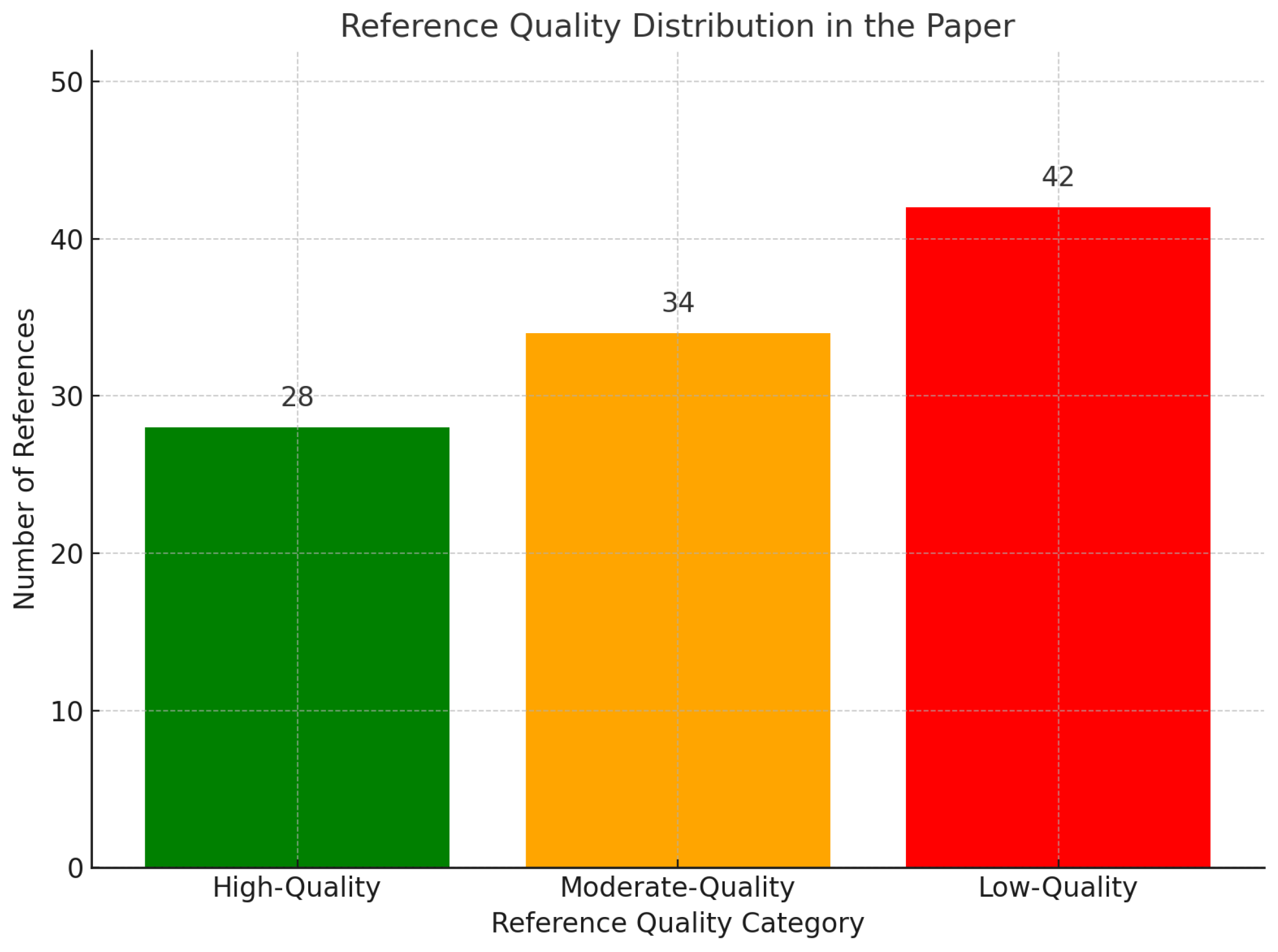
Applying these criteria, the 104 studies included in this review were grouped as follows: High-Quality (28 studies), Moderate-Quality (34 studies), and Low-Quality (42 studies). The distribution is shown in
Figure 2.
The quality labels used here do not measure the intrinsic scientific value, novelty, or correctness of the contributions. Rather, they indicate how comprehensively each study reports implementation details and empirical evidence in a way that supports systematic comparison. In particular, studies categorized as low quality should not be interpreted as flawed or invalid; instead, they typically provide insufficient implementation information, architectural description, or validation data to enable rigorous cross-study analysis.
High-quality studies usually report a full-system implementation, extensive empirical validation, and a clearly articulated architecture and are generally published in peer-reviewed venues. Moderate-quality studies tend to include partial implementations and evaluations—often based on simulations—with more limited architectural descriptions. Low-quality studies are predominantly conceptual or exploratory, with little implementation detail and minimal or no empirical validation.
This structured evaluation underscores both the expanding body of applied work on blockchain–MAS integration in energy systems and the ongoing need for more comprehensive, empirically grounded, high-quality studies in this area.
2.8. Effect Measures
Because this review synthesizes heterogeneous engineering studies without quantitative effect estimates, traditional statistical effect measures (e.g., odds ratios or mean differences) were not applicable. Instead, effect measures were qualitatively operationalized by comparing technical outcomes such as integration depth, MAS negotiation or coordination strategies, consensus mechanisms, and blockchain functionalities. These conceptual effect measures support consistent comparisons across diverse study designs.
2.9. Data Synthesis
A narrative synthesis approach was adopted to identify cross-study themes and categorize implementation models. Comparative tables were used to summarize:
integration levels (basic, intermediate, advanced);
blockchain platforms (e.g., Ethereum, Hyperledger);
MAS agent roles and configurations;
case study contexts (geography, scale, architecture).
This structured synthesis informed conclusions about the state of the art, implementation patterns, and open research challenges.
2.10. PRISMA Flow Diagram
3. Fundamentals of Blockchain and MAS in Microgrid Energy Trading
This section introduces the fundamental concepts underlying the trading of microgrid energy based on blockchain and multi-agent systems. It provides the necessary background on microgrids, blockchain technologies, and MAS architectures to support the subsequent analysis of their integration models, implementation strategies, and real-world applications discussed in later sections.
During the full-text screening stage, several studies that initially appeared relevant were excluded for specific reasons. The most common reasons included the following: (i) the study did not integrate both blockchain and MAS, (ii) the study did not address microgrid energy trading, (iii) insufficient methodological detail to support extraction, and (iv) duplicate or derivative publications.
RQ.1. What are the key principles and objectives of integrating blockchain technology and MAS for microgrid energy trading?
3.1. Microgrid Energy Trading Overview
Microgrid energy trading refers to a decentralized system in which energy is generated, consumed, and traded within a localized network, independently of the main power grid. A microgrid is a small-scale power system that integrates distributed energy resources (DERs), such as solar panels, wind turbines, and battery storage, to serve a specific community, industrial complex, or campus [
1,
27]. A comprehensive edited volume that addresses the architecture, algorithms, applications, and enabling technologies of DC microgrids enabled by the IoT is presented in [
28,
29].
Unlike traditional energy systems, which rely on large centralized power plants, microgrids operate autonomously or in coordination with the main grid, enhancing scalability, flexibility, and resilience. The key characteristics of microgrid energy trading include bidirectional energy flows, peer-to-peer (P2P) transactions, real-time pricing, and integration with digital technologies like blockchain, machine learning techniques (ML) and artificial intelligence (AI). A recent systematic review covering 94 studies further highlights advances in multi-agent optimization, blockchain, and smart contracts as key pillars for efficient and resilient decentralized P2P energy management in microgrids [
30].
The benefits of decentralized energy trading through microgrids are significant, as stated by [
31]. It enhances security, reduces the risks of large-scale power outages, provides uninterrupted power during grid failure, promotes sustainability, and reduces greenhouse gas emissions. In addition, it offers economic advantages by lowering consumer electricity costs and enabling consumers to monetize excess energy production. In addition, microgrid trading fosters competition and price transparency, allowing users to access real-time market-driven energy prices instead of fixed tariffs imposed by centralized utilities.
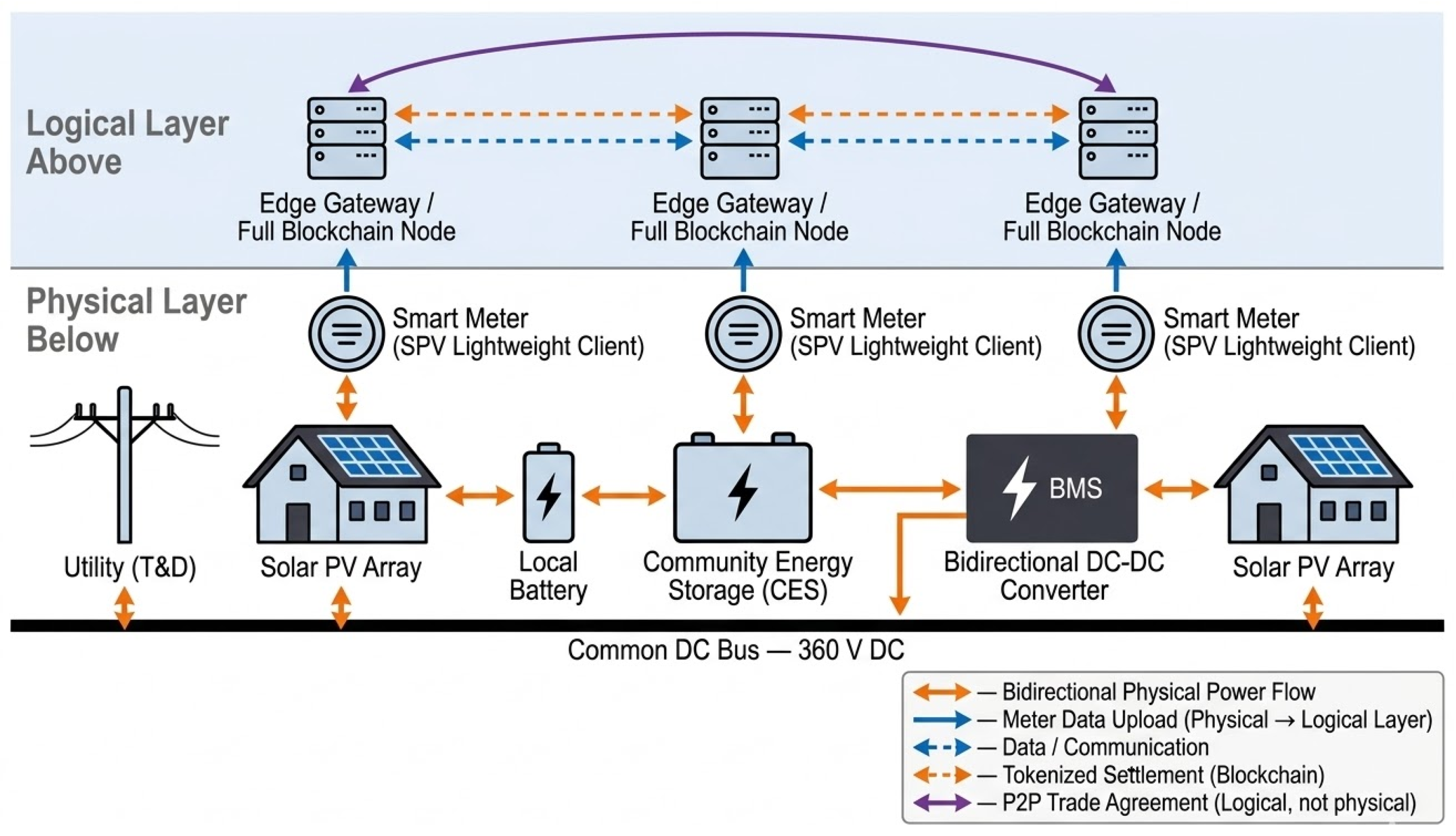
Figure 3 depicts the solar-driven system in a decentralized manner where consumers and prosumers exchange electricity. These are the key stakeholders who participate in energy trading. Prosumers generate renewable energy from hybrid renewable energy resources (RES), such as solar panels or wind turbines, and consumers purchase energy directly from the prosumers. Utilities companies still monitor grid stability, theft, attacks, integration of microgrids with other energy networks and ensure regulatory compliance.
3.2. Blockchain Technologies for Energy Trading
Blockchain technology has gained increasing attention as an enabling layer for decentralized energy trading in microgrids, particularly when integrated with a multi-agent system (MAS) for control and monitoring frameworks. In such systems, autonomous agents representing distributed energy resources (DERs), loads, and consumers can cover the blockchain to securely negotiate and verify the energy transactions for peer-to-peer systems in smart grid environments [
7,
32,
33,
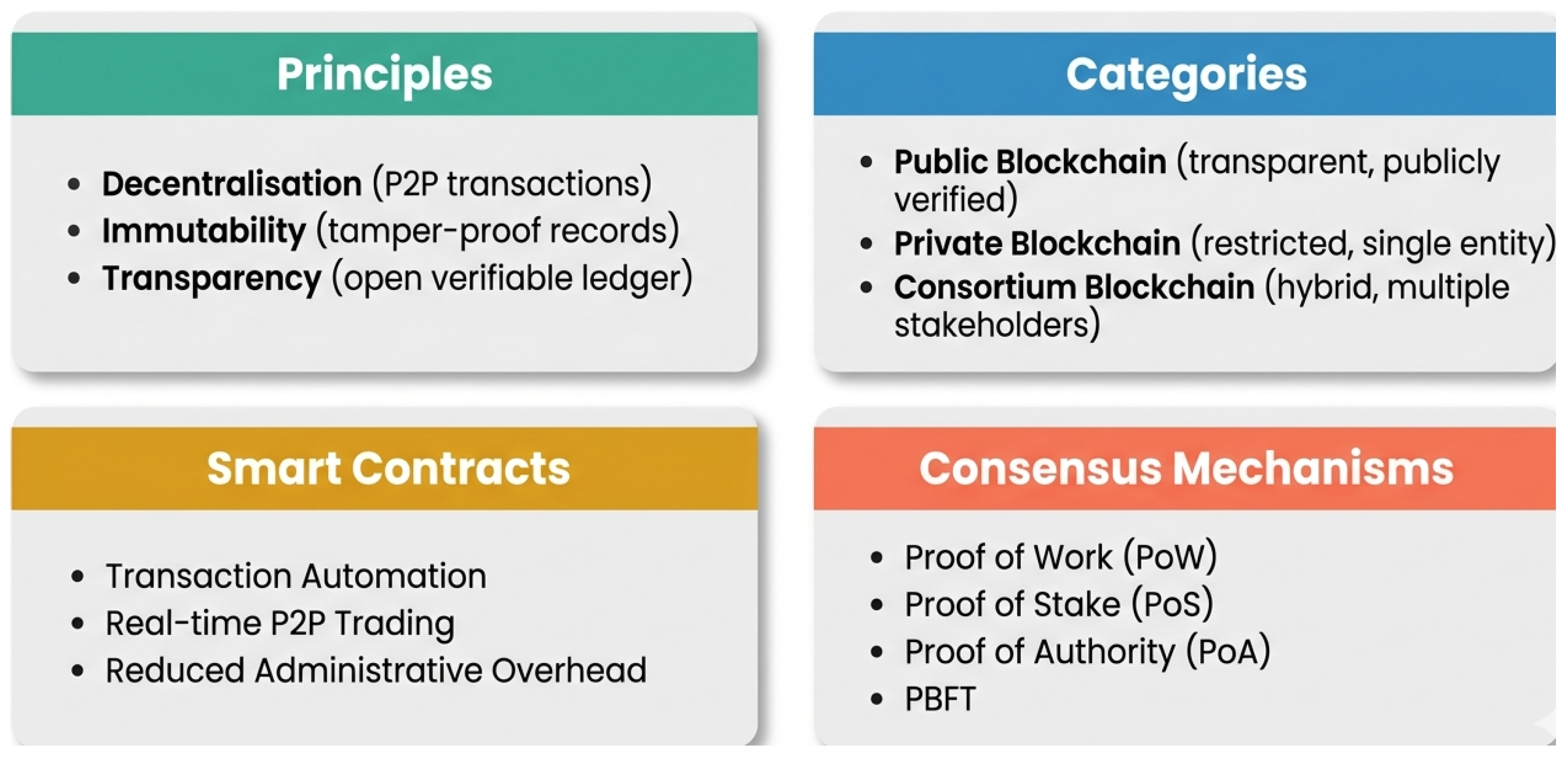
34]. In addition, the technology is formed with three core principles: (i) decentralization, which complements the distributed decision-making capabilities of MAS-based microgrids; (ii) immutability, which ensures the integrity and auditability of the metering, bidding, and transaction records; and (iii) smart contracts, which enable the automated execution of energy trading, pricing, and settlement policies based on predefined rules and real-time grid conditions [
35,
36].
Despite these significances, the deployment of blockchain in MAS-based microgrids and P2P energy markets may introduce several technical challenges. For example, public blockchain platforms can suffer from high transaction latency and limited throughput, which can affect the real-time energy trading and fast control actions required in microgrid operations. Additionally, the computational overhead and energy consumption associated with consensus mechanisms during the proofing can conflict with the sustainability objectives of smart grid systems. The issue of private and consortium blockchain architectures is normally favored in microgrid and smart grid applications due to its improved scalability, lower latency, and enhanced privacy while maintaining sufficient decentralization for secure distributed energy trading.
Figure 4 describes blockchain technologies, including their principles, categories, smart contracts, and consensus mechanisms. The blockchain has four key characters as described by [
37,
38]. These are (1) distributed decentralized nodes and storage; (2) consensus, smart contracts, and asymmetric encryption; (3) the information economy and postal economy (investment and securities); (4) the shared health-care data framework; generation and distribution in the citizen-level microgrid, which is beneficial for blockchain transactions. These key features assert that all blockchain applications possess different aspects that contribute to the country’s economy and sustainability.
3.3. MAS in Microgrid Energy Trading
MAS play a crucial role in microgrid energy trading by enabling intelligent, autonomous decision making among distributed energy resources. MAS consist of multiple independent agents (software or hardware entities) that interact to achieve specific goals, such as optimizing energy distribution, balancing supply and demand, and reducing costs. Each agent in the system represents an entity, such as a consumer, an energy aggregator, or a grid operator, to achieve the desired objective [
39]. Using agent-based control allows decentralized decision-making, improving flexibility and scalability compared to traditional centralized energy management systems [
9,
40].
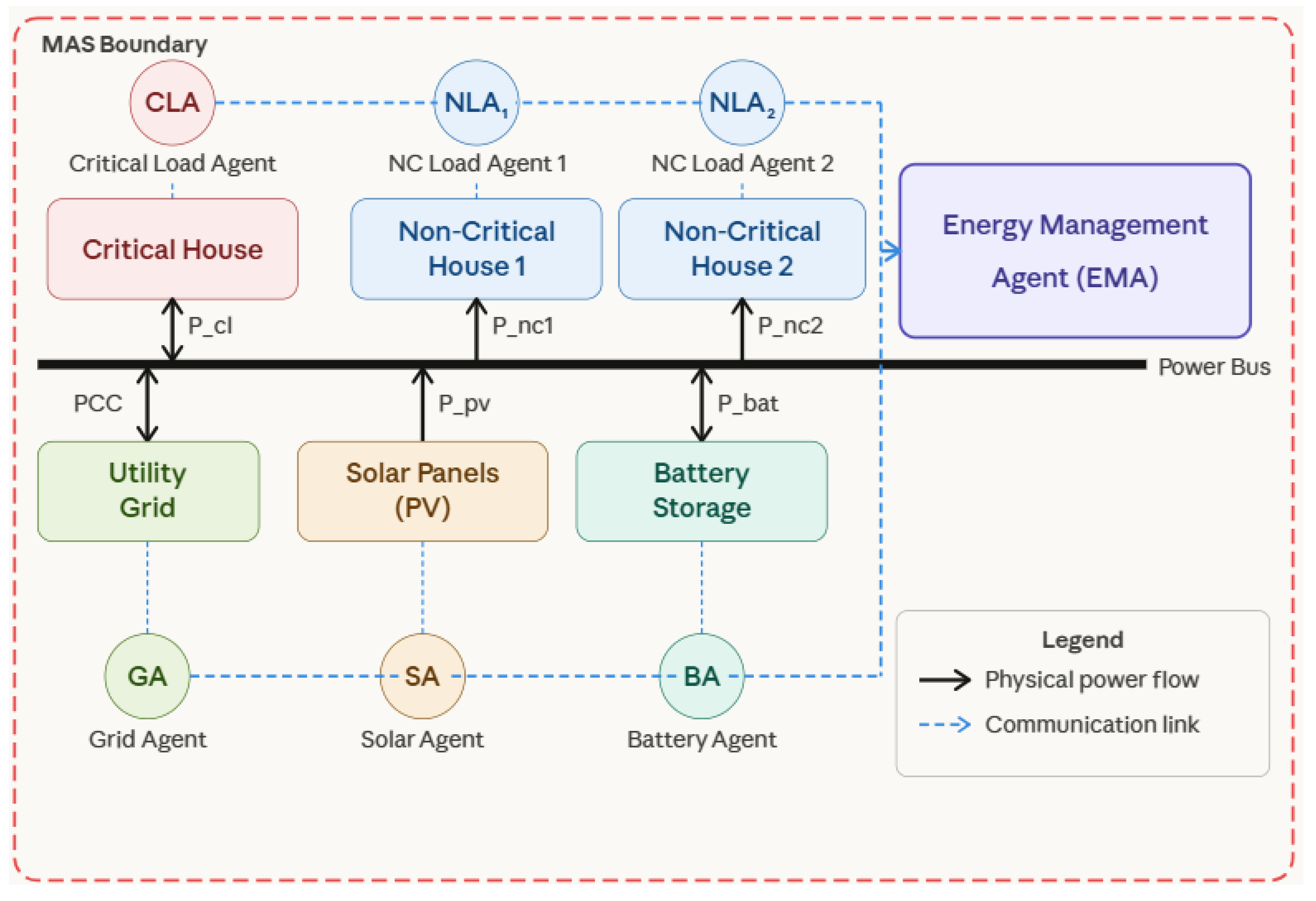
Figure 5 illustrates a multi-agent systems (MAS) architecture developed for energy management in a residential microgrid. The framework comprises six autonomous agents interconnected via a communication network and a shared power bus. The Solar Agent (SA) oversees and adjusts the operation of the photovoltaic (PV) generation, while the Battery Agent (BA) manages the charging and discharging processes of the energy storage system. The Grid Agent (GA) is responsible for monitoring and controlling the bidirectional power exchange between the microgrid and the main utility grid at the Point of Common Coupling (PCC). On the demand side, the Critical Load Agent (LA
c) ensures uninterrupted supply to priority loads, such as medical or emergency equipment, whereas the Non-Critical Load Agents (LA
1 and LA
2) manage flexible household loads—such as a washing machine or EV charging station—that can be curtailed or rescheduled when necessary. All agents are connected to a central Energy Management Agent (EMA), which acts as the overall system coordinator by aggregating real-time measurements from each agent and issuing optimized control commands to preserve the supply–demand balance within the microgrid. Solid lines denote physical power flows, and dashed blue lines indicate communication links between agents.
In addition, multi-agent systems (MAS) offer capabilities that improve the efficiency, scalability, and reliability of energy trading in microgrids [
41,
42]. In particular, MAS support distributed decision-making by employing autonomous agents to represent distributed energy resources, loads, and storage units, each operating according to its local conditions and assigned functions. Through agent-based negotiation, coordination, and cooperation, MAS enable dynamic energy pricing, real-time supply and demand balance, and adaptive load scheduling when required [
43]. In addition, MAS improve fault tolerance and overall system resilience by allowing local control actions and reconfiguration in the event of component failures, communication latencies, or grid disturbances.
Automation and optimization are the key features for executing energy trades, managing contracts, and ensuring better power consumption analysis using artificial intelligence (AI) and machine learning (ML) algorithms. In addition, MAS improve security by detecting anomalies, preventing cyber threats, and ensuring the integrity of energy transactions when integrated with blockchain technology, [
44]. By decentralizing control, MAS mitigate risks associated with a single point of failure, making microgrid energy trading more resilient and adaptive.
Effective agent-based communication and negotiation are fundamental to the successful deployment of multi-agent systems (MAS) in microgrid energy trading applications [
39]. Agents typically communicate using standardized interaction protocols such as the Foundation for Intelligent Physical Agents Agent Communication Language (FIPA-ACL), that enables the exchange of information regarding markets, demand forecasting, bid prices, etc. It supports all the necessary protocols and auction-based models for negotiation processes. These negotiation processes employ dynamic pricing algorithms that adapt to real-time supply–demand conditions, prosumer preferences, and network constraints, often incorporating optimization techniques, game-theoretic models, or reinforcement learning to improve convergence and economic efficiency. By enabling transparent, decentralized, and near real-time energy trading, MAS support efficient resource allocation, enhance system responsiveness, and improve both the economic and environmental performance of microgrids. Consequently, MAS have become an increasingly prominent enabling technology for decentralized peer-to-peer energy markets, facilitating autonomous, secure, intelligent, and scalable energy trading in the context of a smart grid [
45,
46]. These works [
47,
48] present decentralized energy trading architectures in microgrids using blockchain and multi-agent systems. It proposes distributed settlement mechanisms and criteria, such as electrical proximity and agent reputation, to organize P2P exchanges reliably and efficiently. These contributions lay the technical foundation for blockchain-MAS coupling in decentralized energy trading.
4. Integration of Blockchain and MAS for Energy Trading
This section presents an in-depth analysis of Research Question 2 (RQ2), which investigates the architectural and operational components involved in integrating blockchain technology with multi-agent system–based microgrids. The discussion focuses on the selection of blockchain platforms and their suitability for decentralized energy trading applications. In addition, it examines the different levels of system integration between the blockchain and MAS frameworks. Finally, the roles and interactions of agents within the integrated architecture are analyzed to clarify their contributions to secure, autonomous, and efficient peer-to-peer energy markets. Specifically, we explore which blockchain platforms are commonly used, at what levels the integration between blockchain and MAS occurs, and what types of agents participate, including their roles and interactions in the energy trading process. This analysis aims to clarify how these components work together to enable secure, decentralized, and autonomous energy transactions in microgrid environments.
Beyond basic decentralized architectures, recent work [
49,
50,
51,
52] has delved deeper into optimization and distributed coordination mechanisms in interconnected microgrids. These contributions propose advanced consensus algorithms integrated into the blockchain to ensure convergence toward an optimal solution while preventing the risk of collusion between agents. Some studies introduce reinforcement learning-based approaches to manage stochastic uncertainties, while others model decentralized auctions combined with demand management. These models simultaneously aim to maximize social welfare, network robustness, and operational cost reduction, while maintaining decentralized and transparent governance.
In addition to these approaches, distributed model predictive control (DMPC) schemes integrated with the blockchain have been explored as an additional coordination strategy. In [
53], a blockchain-based P2P platform is proposed in which a DMPC scheme manages the energy dispatch of a residential microgrid while smart contracts enforce trade settlement. An extension using hierarchical and stochastic DMPC deployed in a blockchain smart contract acting as a fully distributed coordinator is presented in [
54], demonstrating improved handling of the uncertainty of renewable generation across interconnected microgrids.
Beyond control-based approaches, Ref. [
55] proposes a dynamic pricing strategy for demand response in microgrids that combines blockchain-based data reliability with a cooperative game framework and an LSTM-based energy forecasting techniques to improve demand response profits and market stability. A blockchain-based secure framework for optimal energy management of hybrid AC/DC microgrids using multi-agent distributed structures was proposed in [
56], where the multiplier alternating direction method and the whale optimization algorithm are combined with blockchain to secure data exchanges and ensure consensus among agents. Blockchain has also been applied to secure the optimal scheduling of dispatchable units in smart grids connected to the Internet of Things, where technology prevents unauthorized access to renewable generation data and supports stochastic reconfiguration under high uncertainty [
57].
Extending this body of work towards security, several studies [
58,
59,
60] have specifically addressed strengthening microgrid security through the joint integration of blockchain and multi-agent systems. These contributions highlight the mitigation of critical vulnerabilities such as data manipulation, information injection and falsification attacks, and malicious agent behavior. Some approaches leverage smart contracts-based permissioned blockchains to guaranty the integrity of energy transactions and the traceability of exchanges. Other work integrates dynamic mechanisms for assessing agent credibility and reputation, combined with cryptographic techniques to ensure the confidentiality and resilience of the system against cyberattacks. Together, these models demonstrate that the synergy between blockchain and multi-agent systems constitutes a structuring lever for securing decentralized energy markets while preserving the autonomy and coordination of actors.
4.1. Transformation of Blockchain and MAS for Energy Trading
Integrating Blockchain and MAS in energy trading represents a transformative approach to providing decentralized, secure, and efficient energy markets. Blockchain provides a robust platform for managing and securing energy transactions by offering immutability, transparency, and management of decentralized control [
44,
61]. MAS, on the other hand, facilitates autonomous decision-making by enabling agents to interact, negotiate, and optimize energy distribution within microgrids [
45,
62]. Combining these technologies allows for the automation and optimization of energy trades while ensuring that transactions are secure, transparent, and executed according to pre-defined agreements.
In addition, the integration of blockchain and MAS enhances energy trading by ensuring real-time agent communication and negotiation [
63,
64,
65]. Features such as smart contracts embedded in the blockchain system facilitate the negotiation process between buyers and sellers, allowing them to set the terms and conditions for the trade, such as price and delivery time using different algorithms and contracts agreed. MAS focuses on improving the scalability, efficiency, and flexibility of the system by supporting various agents, from individual consumers to large-scale aggregators, making it adaptable to different market structures [
19]. In terms of security, the combination of blockchain and MAS ensures that transaction data and decision-making are protected from cyber threats [
66]. The table of negotiations is normally updated over time with respect to the number of users and the agreed price. Using cryptographic techniques and consensus mechanisms, this integration provides a high level of security, making energy trading systems resistant to fraud and hacking. However, as noted by Mollah et al. [
21], blockchain and smart contracts introduce their own security challenges, including vulnerabilities in smart contract code, susceptibility to 51% attacks in public chains, and privacy risks arising from transaction pattern analysis. Full resistance to fraud and hacking therefore depends critically on the choice of blockchain architecture, consensus mechanism, and implementation quality.
The blockchain provides a secure record of all transactions, while MAS algorithms, when integrated with the blockchain, enable real-time detection of anomalies and potential attacks [
67]. These features make significant usage of the combination for the community despite the several challenges. Furthermore, the synergy between blockchain and MAS creates a trading ecosystem within the local microgrid. Countries with renewable energy resources (wind, solar, etc.) should seek sustainable grid management solutions and realize a decentralized, green, intelligent energy future.
Table 3 highlights that most existing architectures rely on hybrid and hierarchical MAS models combined with permissioned or consortium blockchains, reflecting a clear preference for scalability and regulatory compatibility. Meanwhile,
Table 4 indicates that security, trust management, and transaction efficiency remain tightly coupled challenges, particularly when public blockchains are used.
4.2. Common Blockchain Platforms for MAS-Based Microgrid Energy Trading
The choice of blockchain platform has a major impact on system architecture, decentralization, scalability, and regulatory compliance when integrating blockchain with MAS for energy management in microgrids. Numerous blockchain platforms with unique operational and technical features have surfaced as potential candidates for this kind of integration.
The most popular public blockchain for smart contracts and decentralized applications is Ethereum. Peer-to-peer energy trading between prosumers is made possible by its open and permissionless nature, eliminating the need for intermediaries. Solidity, which enables the on-chain implementation of agent-based pricing, negotiation, and contract enforcement mechanisms, is a tool that Ethereum supports to create sophisticated smart contracts. However, Ethereum may have latency and scalability issues due to its consensus algorithm and network congestion, particularly in situations involving high-frequency energy trading.
The Linux Foundation hosts the Hyperledger project, which serves as an umbrella for enterprise blockchain frameworks. Hyperledger Fabric, a permissioned blockchain platform, was originally contributed primarily by IBM. In contrast to Ethereum, Fabric provides private channels for private transactions, fine-grained access control, and modular consensus mechanisms. These characteristics make it especially appropriate for utility-owned or regionally grid-operated microgrids where operational security, data privacy, and compliance with energy regulations are critical. More integration flexibility with current MAS frameworks is made possible by the fact that Fabric’s smart contract logic, also known as “chaincode”, can be written in general-purpose languages like Go or JavaScript.
Originally created for financial institutions, Corda is also becoming more popular in applications related to the energy sector. It is a distributed ledger that facilitates peer-to-peer transactions with legal contract enforcement, not a blockchain in the conventional sense. Despite having less expressive smart contract capabilities than Ethereum or Fabric, Corda may provide safe agent-to-agent interactions with regulatory alignment in MAS-integrated microgrids.
Although their integration with MAS logic is still primarily experimental, other platforms such as IOTA and EOS have also been investigated, particularly in scenarios requiring high transaction throughput (EOS) or feeless micropayments (IOTA).
Table 5 and
Table 6 provide a detailed comparison of the integration levels and blockchain platforms used in microgrid energy trading systems that combine MAS and blockchain technologies. The classification in the table follows the integration level definitions below:
Basic integration uses blockchain only for passive log or auditing, with all MAS logic executed off-chain.
Intermediate integration relies on MAS for negotiation and optimization, while the blockchain enforces transactions, identities, or settlements.
Advanced integration embeds most of the MAS logic (typically >70%) directly on the chain, enabling smart contracts to execute negotiation, pricing, trust, and market enforcement.
As shown in
Table 5 and
Table 6, the majority of the reviewed studies fall within the intermediate integration level, indicating that the fully in-chain MAS logic remains largely experimental. This suggests that future research should prioritize scalable hybrid designs that balance MAS flexibility with selective blockchain enforcement before moving toward fully autonomous on-chain agent architectures.
To reduce subjectivity in classification, integration levels are defined using measurable architectural indicators, including the proportion of MAS logic executed on-chain, the location of negotiation and market clearing (on-chain vs. off-chain), and the role of smart contracts in pricing, trust management, and settlement. A threshold of approximately 70% on-chain execution is used to distinguish advanced integration, as systems above this level embed core market intelligence and decision-making directly within blockchain smart contracts rather than using blockchain primarily for enforcement or logging.
The selection of the blockchain platform has a significant impact on the architecture, performance, and decentralization guaranties of MAS-integrated microgrids.
Authors in [
68,
70] both make use of Hyperledger Fabric, a permissioned framework designed for enterprise systems. With support for auditability, privacy, and access control, it creates safe, regulated environments. This makes it suitable for microgrids that are regulated or consortium-based, where privacy-preserving coordination and off-chain MAS logic are prioritized.
The authors in [
62,
75] use Ethereum, a public, permissionless blockchain with powerful smart contract capabilities. It facilitates direct on-chain agent interactions, including budgeting, negotiation, and reputation systems, as well as complete decentralization. Despite potential latency and scalability problems in high-frequency environments, this makes it more suitable for open peer-to-peer energy trading between prosumers.
Authors in [
76] implement an agent-based energy trading system in which the core MAS logic, including negotiation and pricing, is executed off-chain within an ABM framework. Blockchain technology is employed mainly for transaction logging and settlement, using Hyperledger Fabric and Ethereum-based smart contracts.
Other works, like those written by authors in [
62,
71,
72,
74], either make use of custom or unidentified platforms. Trade-offs between decentralization objectives, performance requirements, and integration complexity are reflected in their design decisions. For instance, the study in Ref. [
74] balances secure transaction logging and coordination efficiency by combining federated reinforcement learning with a likely private or hybrid blockchain.
A clear trade-off is reflected in this variety of platforms: permissioned chains provide control, privacy, and compliance, while public chains allow transparency and autonomy. The choice of platform closely corresponds with each microgrid system’s operational and governance limitations.
4.3. Classification of Integration Between Blockchain and MAS
There are various levels of complexity in the relationship between blockchain technology and MAS. These levels aid in evaluating the differences in responsibility distribution between the two merging technologies. There are three levels of integration: basic, intermediate, and advanced. Each level explains how blockchain participates in or assigns agent coordination, negotiation, and transactional tasks. These levels are described in the following paragraphs, with examples drawn from energy resource trading systems.
4.4. Basic Integration
Blockchain is merely used to record the outcomes of energy trade transactions in this kind of integration. In the MAS, all scheduling, negotiating, and decision-making take place off-chain. The blockchain does not affect the system logic; it exists merely as a safe audit trail. For instance, the producer and consumer agents locally and algorithmically negotiate prices for microgrids. After they settle, the transaction is carried out and recorded on the blockchain for audit, traceability, and transparency purposes, without the blockchain getting in the way of the transaction.
Key criteria for basic integration:
Off-chain decision-making: all energy scheduling, negotiation, and control logic are performed by MAS agents without blockchain intervention.
Blockchain as a ledger only: the blockchain serves exclusively for transaction recording, providing immutability, transparency, and traceability.
Minimal system impact: the integration does not affect the MAS operational flow, decision latency, or transaction execution; blockchain functions passively.
4.5. Intermediate Integration
Smart contracts are introduced in intermediate integration to automate process steps such as payments, verifications, and penalties. Although the blockchain follows predetermined rules once conditions are met, the MAS still handles negotiation and optimization. A smart contract, for example, can automatically manage the financial transaction and update energy balances according to an energy trade that the agents have agreed upon. The system blends automation, blockchain trust, and MAS flexibility.
Key criteria for intermediate integration:
Automated transactional processes: smart contracts check all the predefined steps, such as payments, verifications, or penalties, once conditions are satisfied.
Hybrid control: MAS maintain the responsibility for negotiation, scheduling, and optimization, while blockchain handles the automated execution of agreed outcomes.
Enhanced trust and transparency: blockchain enforces agreed rules, providing immutability and reducing manual intervention while maintaining MAS flexibility.
4.6. Advanced Integration
The majority of the MAS logic must be embedded into the blockchain in order to fully integrate it. Smart contracts manage rules, payments, validation, and negotiation while agents are on the chain. Everything can be completely autonomous and decentralized. Energy producers and consumers can post offers and demand deals on the blockchain in a fully integrated setup. Smart contracts ensure transparency, security, and real-time operation for all agents by settling and matching all trades without the need for outside parties.
Key criteria for advanced integration:
On-chain MAS logic: MAS perform the negotiation, scheduling, and optimization, which are later implemented within smart contracts.
Fully autonomous operations: agents operate entirely on-chain, with trades executed, validated, and settled automatically in real time.
Maximum transparency and security: the blockchain enforces rules, matches trades, and maintains immutable records, eliminating the reliance on external systems.
The architectural complexity, autonomy, and capabilities of the microgrid energy management solutions are directly affected by the degree of integration between MAS and blockchain technology, as demonstrated by a comparative analysis of the reviewed studies summarized in
Table 5 and
Table 6. The blockchain component has a minor or passive role at the basic integration level, such as in the Multi-Agents for Microgrids study [
72], where MAS are primarily in charge of local real-time control, fault detection, and emergency operations. This loose coupling represents a system in which the fundamental operations of the agents do not require decentralization or cryptographic guaranties. If there is a blockchain, it is an additional tool rather than a functional requirement.
On the other hand, a closer connection between MAS and the blockchain is represented by intermediate-level integration. Although blockchain platforms manage crucial backend functions like identity management, transaction validation, and smart contract execution, works such as [
62,
68,
70] and the Efficient Integration Model [
64,
71] show how MAS coordinate agent negotiation, market-clearing optimization, and peer-to-peer energy trading, while blockchain smart contracts ensure transaction settlement. Ref. [
68], for example, use agents to negotiate off-chain and then Hyperledger Fabric to complete trusted transactions using smart contracts. Similarly, MAS-led orchestration within a permissioned blockchain that enforces contract enforcement and access control is highlighted by [
70]. Although agent logic is not entirely integrated into blockchain infrastructure by these systems, they achieve functional interdependence where each technology reinforces the other.
With agent decision-making, learning, and economic interaction closely linked to blockchain mechanisms, the advanced level of integration is distinguished by a profound fusion of MAS and blockchain functionalities. In [
69], Hyperledger Fabric chaincodes are used to decentralize transaction governance by enabling agents to submit bids and call-for-proposals on-chain, enforce service contracts via smart contracts, and update reputation scores automatically upon validated voltage violation resolution, while pricing optimisation is performed off-chain. Ref. [
76] supports agent-based pricing and optimization executed off-chain in a fully tokenized transactive energy marketplace, with trust and settlements ensured on-chain via a Hyperledger Fabric blockchain. Federated Multi-Agent Reinforcement Learning (MARL) and blockchain-based incentive tracking are combined in the most recent work from 2024 [
74]. This demonstrates an advanced, distributed architecture that facilitates collaborative learning and records all actions in a decentralized transaction log.
In general, the comparative trajectory shows a gradual transition from loosely coupled systems with little blockchain involvement to fully integrated architectures where blockchain and MAS are interdependent. The chosen level of integration impacts the governance, scalability, and suitability of the system for open versus consortium-based energy ecosystems, in addition to its technical implementation.
4.7. Reporting Bias Assessment Results
A qualitative assessment of potential reporting bias showed that several simulation-based studies lacked complete descriptions of agent behaviors, consensus mechanisms, or smart contract logic. However, no clear patterns of selective reporting were identified in all included studies. In most cases, incomplete reporting appeared to be related to space limitations or prototype immaturity rather than intentional omission.
5. Case Studies and Implementation from Different Countries
This section addresses Research Question 3 (RQ3), which investigates the insights and lessons emerging from existing case studies and real-world deployments of energy trading systems that integrate blockchain and multi-agent system technologies. The discussion encompasses implementations across a range of geographical locations and regulatory settings. Particular attention is given to identifying best practices, evaluating system performance, and uncovering implementation challenges. The resulting insights offer actionable guidance for designing and deploying scalable, context-aware, and decentralized energy trading architectures.
Research Question 3: What insights and lessons can be drawn from existing case studies and real-world implementations of blockchain- and MAS-based energy trading systems across diverse geographical and regulatory settings?
Multiple countries across various continents have adopted this technology with the aim of improving community living standards. End users benefit from energy trading that spans the entire value chain, from generation to distribution.
Table 7 presents the applications deployed in different countries and highlights the barriers encountered during their implementation. It is evident that Ethereum and Hyperledger are the most commonly employed platforms. The main constraints on this technology arise from regulatory requirements that must be authorized by governments or relevant regulatory bodies. Moreover, the table shows that most practical deployments are still at the prototype or simulation level and are significantly limited by regulatory and policy hurdles. This empirical finding underscores the importance of future work progressing beyond simulation-focused assessments toward pilot and full-scale field implementations that actively involve regulators and grid operators.
6. Challenges in Implementations
This section addresses Research Question 4 (RQ4), which focuses on the key technical, regulatory, and operational challenges associated with deploying blockchain and multi-agent systems in microgrid energy trading applications. The discussion examines technical constraints related to scalability, latency, interoperability, and cybersecurity. Regulatory and policy-related barriers that affect decentralized energy markets are also analyzed. Finally, operational challenges are highlighted with respect to system integration, market participation, and real-time control to provide a comprehensive assessment of deployment limitations.
RQ 4: What are the main technical, regulatory, and operational challenges associated with the deployment of blockchain and MAS in microgrid energy trading systems?
6.1. Scalability and Efficiency Issues
The issue of scalability and efficiency is a major challenge in the implementation of blockchain and MAS in smart grid technologies. Public blockchains such as Bitcoin and pre-Merge Ethereum (prior to September 2022) exhibit very limited base-layer throughput, achieving approximately 5 transactions per second (TPS) for Bitcoin and under 15 TPS for Ethereum, leading to high latency and constrained transaction capacity [
86,
87]. Although Ethereum’s transition to Proof-of-Stake in September 2022 (the “Merge”) reduced its energy consumption by an estimated 99.95%, it did not increase base-layer throughput, which remains capped at roughly the same ∼15 TPS range. Consequently, unmodified public blockchains remain poorly suited to the high-frequency and low-latency requirements of microgrid energy-trading environments.
Emerging Layer-2 (L2) scaling solutions—such as Optimism, Arbitrum, and zkSync—claim to support substantially higher throughput, with theoretical upper bounds reaching into the thousands of TPS for some rollup designs. However, empirical analysis by Neiheiser et al. shows that these figures reflect vendor-reported theoretical limits achievable only when the L2 system is considered in isolation, ignoring the costly synchronization required with the Ethereum main chain. In practice, current L2 systems impose a significant load on the main chain, preventing them from reaching their advertised maximum throughput levels [
88]. Their integration into MAS-based microgrid energy-trading architectures also remains largely unexplored in the reviewed literature.
Moreover, the high frequency and volume of transactions characteristic of peer-to-peer (P2P) microgrid energy markets risk overwhelming blockchain networks, leading to transaction delays, increased fees, and reduced overall system efficiency [
89]. Moreover, legacy Proof-of-Work (PoW) consensus mechanisms—historically dominant in public blockchains such as pre-Merge Ethereum and Bitcoin—impose considerable computational overhead, raising concerns about energy inefficiency and environmental sustainability [
90]. Although Ethereum’s 2022 transition to Proof-of-Stake significantly reduced its energy footprint, PoW remains relevant in this context because a non-trivial portion of the reviewed studies pre-date this transition or employ custom blockchain platforms that still rely on PoW-derived mechanisms.
In addition, MAS in energy trading face challenges in real-time optimization and decision-making efficiency, especially when dealing with many distributed agents (e.g., in microgrids with hundreds or thousands of participants) [
91]. This has led to a performance bottleneck. Coordination overhead and communication delays between agents can slow decision-making, leading to performance bottlenecks. Additionally, the computational load for agent learning algorithms (e.g., machine learning for predictive optimization) can lead to scalability issues, especially in dynamic market conditions where energy prices and demand fluctuate rapidly.
Interoperability and Standardization
Another concern is interoperability and standardization. Although blockchain can enable decentralized markets, there are no universally accepted standards for data formats, energy pricing models, or transaction protocols. This results in interoperability issues between different blockchain platforms, making cross-border or multi-market energy trading difficult [
87]. The Energy Web Foundation and other organizations have been working on blockchain standards for energy trading, which are still in the early stages [
34,
92].
6.2. Integration with Legacy Grid Systems
Moreover, most current grid systems were designed for centralized control and top-down distribution, making the integration of decentralized energy trading platforms like blockchain difficult [
91]. Legacy grid infrastructures are often incompatible with smart grid technologies and decentralized agents, which may require extensive upgrades or retrofits. Moreover, ensuring data consistency and security between old and new blockchain-based systems is complex and costly. There is a challenge in implementing a low/medium voltage market. In addition, there are voltage and frequency fluctuations during high generation periods.
6.3. Regulatory and Policy Challenges
Despite all these challenges, regulatory challenges are a major obstacle to the widespread adoption of blockchain and MAS in energy trading. In many countries, decentralized markets for energy trading are not clearly defined under national regulations. This regulatory gap leads to uncertainty about the legal status of smart contracts, energy tokenization, and P2P trading. Existing regulations are designed for centralized utility models and do not account for the complexities of Decentralized systems [
86].
6.4. Compliance and Taxation Issues
The emergence of blockchain-based tokenized energy and P2P trading raises complex questions about taxation, trading fees, and compliance with financial regulations. Many countries lack clear rules about the tax status of energy tokens, whether they are treated as currency or energy commodities. Furthermore, the AML (Anti-Money Laundering) and KYC (Know Your Customer) regulations need to be adapted to accommodate the pseudonymous nature of the blockchain, ensuring compliance with existing financial laws.
6.5. Potential Future Technologies: AI and IoT-Enhanced MAS for Adaptive Control
Furthermore, Integrating Artificial Intelligence (AI) and the Internet of Things (IoT) with MAS will be critical in optimizing energy trading in future decentralized markets [
93]. AI can provide predictive analytics for energy demand and supply, while IoT devices can gather real-time data from various energy sources and consumers [
64,
91,
94].
6.6. Certainty of Evidence Assessment Results
Using an adapted GRADE framework, the certainty of the evidence in the main outcome domains was judged moderate. Certainty was reduced primarily due to (i) a heavy reliance on simulation-based validation, (ii) heterogeneity in experimental setups and evaluation metrics, and (iii) limited real-world deployment. The certainty was higher for outcomes related to integration levels and platform characteristics, which were consistently reported in all studies.
7. Integration of Blockchain into MAS for Security in Microgrids
This section addresses Research Question 5 (RQ5), which examines the security vulnerabilities present in traditional microgrid energy trading systems. The discussion focuses on how the integration of blockchain technology and multi-agent systems can mitigate these vulnerabilities. Key issues such as data manipulation, single point failure, unauthorized access, and lack of transaction transparency are analyzed. This section highlights how decentralized ledgers and autonomous agent coordination enhance trust, resilience, and security in peer-to-peer energy trading environments.
(RQ 5): Which security vulnerabilities in traditional microgrid energy trading systems can be mitigated through the integration of blockchain and MAS?
A revolutionary method for improving the security of decentralized microgrid environments is introduced by incorporating blockchain technology into MAS.
Table 8 summarizes the key security contributions of blockchain-integrated MAS frameworks.
Conventional microgrids frequently depend on semi-distributed or centralized control systems, which are susceptible to limited auditability, illegal access, data manipulation, and single points of failure. Several crucial security features are greatly strengthened by integrating blockchain as a foundational layer into MAS architectures.
The decentralization and immutability of blockchain ledgers are fundamental to this integration. Energy usage information, identity credentials, and access policies cannot be changed after the fact because every transaction or access request that an agent manages is permanently documented on a distributed ledge.
This feature directly combats threats such as data falsification, unauthorized privilege escalation, and log manipulation, all of which are prevalent problems in older SCADA-based energy control systems [
95].
Trust evaluation mechanisms also benefit from blockchain’s transparency. Novel blockchain-based trust management systems have been proposed that detect dishonest or inconsistent agents by evaluating dynamic trust credibility through multi-source feedback recorded on the ledger [
96]. Several studies have proposed the joint integration of blockchain and multi-agent systems to strengthen security and distributed regulation in microgrids. These contributions notably cover voltage regulation via a permissioned blockchain based on smart contracts and agent credibility mechanisms, the protection of data exchanged in AC microgrids organized in an IIoT environment against cyberattacks, and the implementation of blockchain-based trust suites integrating dynamic agent evaluation, cooperation mechanisms, and cryptographic techniques ensuring confidentiality and resilience [
97,
98,
99]. However, there are some trade-offs associated with this technology. Blockchain layers can introduce latency, computational overheads, and scalability limitations, especially in real-time microgrids. To resolve these issues, lightweight consensus protocols must be employed along with optimized smart contract execution frameworks.
The blockchain functions as a shared trust anchor from an MAS point of view. Agents can communicate independently and securely without relying on centralized authority because they each represent a distributed entity (such as a consumer, prosumer, or storage node) [
100]. When untrusted or dishonest actors are present, the use of distributed consensus mechanisms such as Proof of Authority and Practical Byzantine Fault Tolerance ensures that system state is agreed upon by most participants in a network. Consequently, it makes the system more resistant to faults and more reliable.
Additionally, smart contracts that offer automated and cryptographically secure policy enforcement within the MAS can be implemented thanks to blockchain. With the help of dynamic attributes like identity, privilege level, and contextual factors like peak-hour constraints, these contracts can be programmed to validate agent actions (like energy trades and access to energy during peak hours). This enables transparent, non-repudiable, fine-grained access control that is impervious to manipulation [
77].
Moreover, blockchain provides the ability to trace and audit every decision or transaction relating to power. This proves instrumental in regulatory and forensic discussions, as it enables interested parties to verify the origin of energy, settle disputes, and detect abnormal activities without controversies [
101].
In summary, linking blockchain with MAS architectures enormously boosts the security status of microgrids using decentralized trust systems; immutable records; policy administration; and auditable trails that can withstand manipulation. Thus, not only does it mitigate age-old weaknesses within energy networks but also sets precedence for secure self-sustaining energy ecosystems that operate on fair grounds.
Table 8.
Security-focused implementations of blockchain with MAS.
Table 8.
Security-focused implementations of blockchain with MAS.
| No. | Reference | Main Contribution | Method/Case Study | Security Impact |
|---|
| 1 | [62] | MAS architecture for P2P energy trading with blockchain | Simulation of a distributed microgrid without a central operator | Distributed authentication, transaction traceability, tamper prevention |
| 2 | [96] | Trust management system between agents in blockchain-based MAS | Dynamic reputation model with multi-source feedback | Detection of malicious agents, control of on–off attacks |
| 3 | [102] | Secure energy management in blockchain-based AC microgrid | Simulation with network attack scenarios | Cyberattack resistance, agent stability maintenance |
| 4 | [81] | Transactive energy market using MAS and blockchain smart contracts | Agent-based modeling of automated P2P market | Secure automation of exchanges, price transparency, non-repudiation |
| 5 | [101] | MAS middleware with secure event logging via blockchain | Implementation of an immutable event log | Log integrity, auditability, tamper-proof timestamping |
8. Limitations of This Study
Despite the comprehensive and systematic nature of this review, several limitations should be acknowledged. First, most of the included studies are simulation-based, prototype-based, or conceptual in nature, with relatively few large-scale, real-world deployments of blockchain–MAS-based microgrid energy-trading systems. This creates challenges when translating proposed solutions into practical implementations. In addition, system performance may be constrained by factors such as scalability, interoperability with existing grid infrastructure, and the additional energy overhead associated with blockchain consensus mechanisms. Human and institutional factors can also hinder peer-to-peer energy markets, particularly when participants lack sufficient technical, regulatory, or digital knowledge needed to operate and trust blockchain-enabled trading platforms. Furthermore, the absence of clear regulatory frameworks to guide users and service providers in adopting technological innovations limits the wider deployment and slows the economic and socioeconomic feasibility of the regulatory feasibility of microgrid energy solutions based on blockchain–MAS.
Second, the literature reports on the positive issues regarding blockchain and MAS and very few on the negative side, hence biasing the studies. The issue of securities and vulnerabilities during deployment is not explicitly described, in addition to evaluation metrics such as increased latency, higher computational overhead, or reduced flexibility under dynamic grid conditions. Addressing these issues in reports will provide great confidence to many users in the ability to easily assess blockchain–MAS-based energy trading systems in diverse contexts.
The concern about the rapid evolution of MAS technologies, machine learning techniques, blockchain platforms, and big data analytics provides high and significant risks of technological artifacts. New protocols that are introduced may cause a conflict, or failure to adapt, and self-organizing agents during implementations. Similarly, advances in blockchain technology can alter the system by adding latency, cost, and security, which in turn affect agent decision-making and interaction patterns. All of these technologies should run at the same speed for better performance of the microgrid system.
The issue of integration levels, agent roles, experimental assumptions, etc., are among the important areas that the literature should be relied upon for. This methodological diversity is evident in the wide range of applied consensus mechanisms, from Proof of Work to more novel energy-aware protocols, and in the varying assignment of agent roles, such as prosumers, aggregators, and distribution system operators. There are no standard indicators that fit all, hence the users/technical people should also test and evaluate which parameters fit from their countries/fields, as the grid stability depends on the environment as well. This variability, while reflective of an innovative and exploratory research field, significantly limits direct comparability between studies and precludes rigorous quantitative synthesis or meta-analysis. Moving forward, benchmarking is crucial to avoid any confusion.
Finally, the scope of this review was intentionally restricted to peer-reviewed English-language publications indexed in major academic databases. Although this ensured methodological rigor and a focus on validated research, there could be other research, reports, and industry white papers that explain this area of research. Therefore, these findings are more focused on published research work that narrows the scope.
9. Future Research Directions
The future of blockchain with the integration of MAS has become popular in energy trading and other sectors, including the financial and agricultural sectors. AI and ML are the leading technologies for forecasting and deployment processes. This will provide more historical data and Iot-based sensors for more accurate energy forecasting. Hence, decision-making will be a key area for future research.
The issue of developing quantum-safe blockchain protocols and integrating them with energy trading platforms will be a potential for long-term security and privacy issues. The impact of quantum computing on decentralized energy trading needs to be studied in detail to include aspects such as demand response and energy management systems. Establishing greater transparency in technology generates more incentives and sustainability in the community.
With concern for scalability and energy efficiency, adopting Proof-of-Stake (PoS) and Proof-of-Authority (PoA) consensus mechanisms could accelerate the process, engage more customers in the energy trading business, and increase throughput while maintaining decentralization.
Moreover, improving the scalability of MAS involves developing multi-level agent architectures and distributed learning techniques. Using cloud and edge computing can significantly reduce latency by enabling localized computing, which allows agents to make faster and more informed decisions.
Establishing open-source global standards for energy trading protocols and creating interoperability frameworks that integrate blockchain technology with existing trading infrastructures are important steps forward. Standardizing interoperable smart contract templates will further ensure seamless communication and execution across different blockchain platforms.
Exploring hybrid architectures that combine legacy systems with blockchain-based modules offers a promising path towards scalable and adaptable energy trading solutions. Blockchain-based middleware can serve as a critical integration layer in this context, bridging traditional infrastructures with decentralized technologies.
In addition, it is imperative to formulate legal and regulatory frameworks to accommodate decentralized energy systems. This includes adapting existing contract law, market regulations, and governance mechanisms to support decentralized models. Research on compliance frameworks adapted to blockchain-based energy markets is also needed, especially those that enable automated enforcement of tax, reporting, and regulatory obligations through smart contracts.
Operational latency remains a significant challenge. Future research should address this through advances in software (lighter smart contracts, more efficient agent logic) and hardware architecture (edge computing, faster nodes, specialized processors) [
103], optimization of storage solutions, and improvements to operational models. In addition, key issues related to network dynamics—such as the ability of participants to freely join or leave the system, the governance of these transitions, and strategies to mitigate malicious behavior—warrant further exploration.
10. Conclusions
Blockchain can be an important technology in the evolution of smart grids. MAS technology provides automation and intelligent actions on the smart grid. Combining the two technologies adds value and integrity to the energy-trading sector. This article explores the use of blockchain with MAS in energy trading. The integration of these technologies has caused a huge change in many places that have implemented them. The adoption of this technology must be emphasized, especially in remote areas where electricity is still a challenge. However, this article addresses challenges such as scalability, interoperability, regulation, and emerging technologies, which are critical to realizing their potential in energy trading as blockchain and MAS technologies evolve. Despite the challenges, the technology is suitable for facilitating peer-to-peer exchange of power, promoting local power production, and reducing unnecessary consumption.
For the case of security threats in the smart grid, blockchain-based verification mechanisms have demonstrated measurable improvements in transaction traceability, tamper resistance, and distributed trust management. However, as evidenced by the reviewed literature, operational cost reduction and throughput improvement remain open challenges, particularly for public blockchain deployments, and are contingent on the choice of consensus mechanism and integration architecture. Future research must focus on developing standardized protocols, adaptive control systems, and quantum-resistant blockchain solutions to overcome these barriers and enable more efficient, secure, and decentralized energy markets.
Based on synthesized evidence, future research directions can be prioritized into three stages. In the short term, the primary focus should be on scalability, performance optimization, and real-world validation of blockchain–MAS architectures, as most existing studies remain simulation-based. In the medium term, research should focus on standardization and interoperability, including common data models, agent communication protocols, and regulatory-aligned blockchain frameworks to enable cross-platform and cross-border energy trading. In the long term, the integration of artificial intelligence and IoT-enabled MAS, together with adaptive and co-designed regulatory frameworks, represents a critical research frontier for achieving fully autonomous, resilient, and large-scale decentralized energy markets.