1. Introduction
The planet’s weather and climate systems are undergoing drastic changes due to global warming driven by increasing greenhouse gas concentrations over the past two centuries. In particular, carbon dioxide (CO
2) generated by human activities, such as burning fossil fuels (coal, oil, or natural gas), has contributed to an imbalance and warming in the near-surface layers [
1]. Among the main global actions to combat climate change and adapt to its effects are the use of electricity generated by renewable energy sources, such as photovoltaic cells and wind turbines. However, some industrial equipment or processes require large amounts of energy; therefore, this alternative is not the most appropriate, particularly for heavy transport equipment, high-temperature metal-heating processes, or fertilizer production [
2]. A valuable option is to use hydrogen as a fuel, which has a Wobbe index of 48.23 MJ/Nm
3, very similar to that of natural gas (53.71 MJ/Nm
3), so it can replace natural gas without causing contaminant effects.
Although hydrogen is the most abundant element in the universe, it is not usually found in its free form on our planet. On Earth, it is found in molecules, with water and methane being the most common. Therefore, it must be split using other forms of energy, such as light, heat, and electricity, as well as their combinations. Because methane is a component of natural gas, oil, or coal, obtaining hydrogen from these fossil fuels is highly polluting. The most appropriate method to avoid this is electrolysis of water, which separates hydrogen and oxygen using an electric current [
3]. Conventionally, the electrical energy used in electrolysis is supplied by a rectified AC supply. Therefore, it is well regulated, with the disadvantage of the greenhouse effect it produces during its generation, since a large part of this energy is generated by fossil fuels in coal-fired, thermoelectric, combined-cycle, etc., power plants [
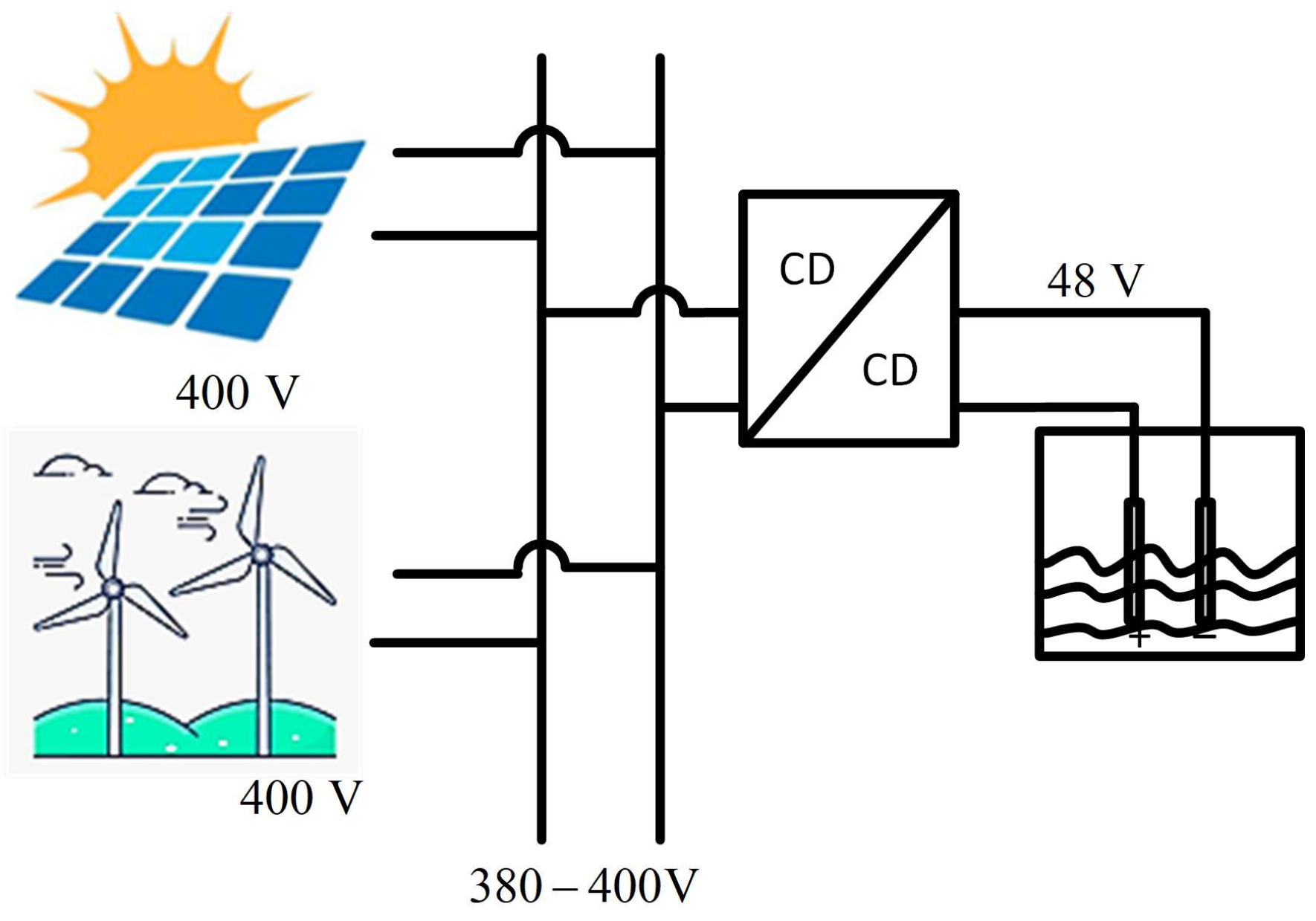
4]. An approach to avoid any class of contamination is to use electrical energy from alternative power sources, such as photovoltaic cells or wind generators, combined in microgrids with an electrolyzer [
5], as shown in
Figure 1.
An electrolyzer is similar to a fuel cell and consists of an anode and a cathode separated by an electrolyte. Currently, four technologies are used for its operation: Alkaline Water Electrolyzer (AWE), Proton Exchange Membrane Electrolyzer (PEMEL), Solid Oxide Electrolyzer (SOE), and Anion Exchange Membrane Water Electrolyzer (AEMWE). The technology on which an AWE is based has been known since the beginning of the last century and is used in large-scale hydrogen production, with an efficiency of around 70%. AWEs use nickel-based catalysts, have a long service life, and have a low investment cost. However, using a high-inertia liquid electrolyte results in slow response to changes, so start-up can take up to 20 min. AWEs are suitable for applications between 10 and 20 MW, but their dynamic behavior makes them unsuitable for renewable energy systems with frequent changes, such as solar irradiance or wind speed.
The PEM electrolyzer [
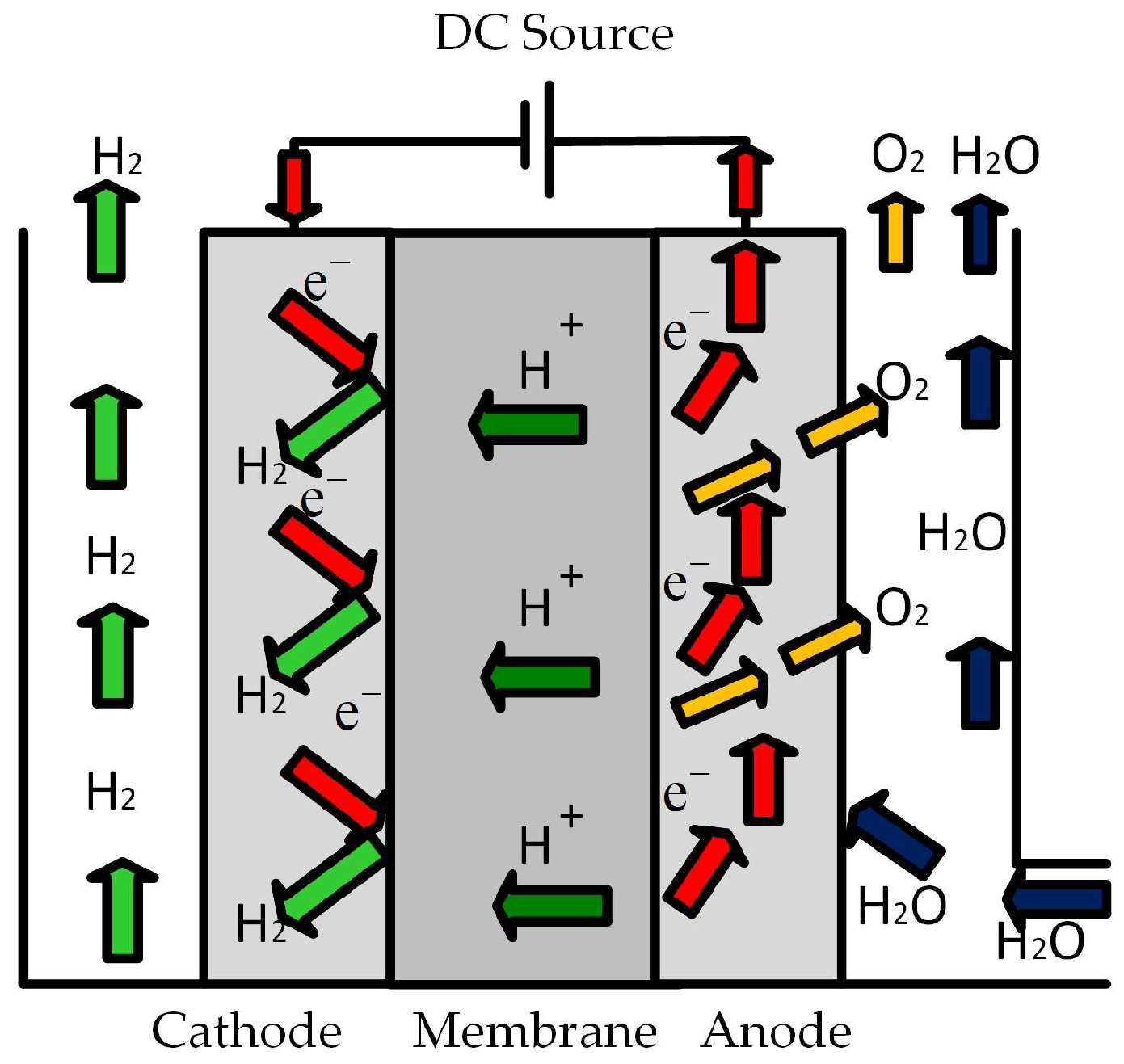
6], introduced in the 1960s by General Electric and operating at around 80% efficiency, is used to produce hydrogen on a small scale. Common anode and cathode materials include platinum, iridium, ruthenium, and platinum on carbon. It is not a low-cost technology, but it is widely commercialized. In this type of electrolyzer, whose operating principle is shown in
Figure 2, water reacts at the anode to form oxygen and positive hydrogen ions. Electrons flow through the external circuit, and the hydrogen ions move through the polymer membrane to the cathode. When they arrive, the hydrogen combines with the electrons in the external circuit, producing hydrogen in gaseous form. Due to its thin polymeric membrane, it can handle high-density electric current, respond quickly to dynamic changes, and be connected in series to form a multi-cell electrolyzer, yielding a large-scale hydrogen generator system.
The AEMWE technology [
7] combines the best characteristics of AWE and PEM technologies to produce high-purity, low-cost hydrogen. In this class of electrolyzers, a low-concentration alkaline solution is combined with a solid-polymer electrolyte membrane. The anodes are made from Ni foams or titanium, and the cathodes are made from Ni or Ni-Fe. Thus, AEMWE addresses some of the drawbacks of the first- and second-type electrolyzers described earlier. Unfortunately, this technology remains in development and exhibits limitations, including low ionic conductivity and stability, which constrain performance and durability. Reported efficiency ranges from 57% to 69%. Finally, the SOE [
8] operates at high temperature; in contrast to a low-temperature electrolyzer, the electricity required to drive the process is significantly reduced, and it uses inexpensive thermal energy or waste heat. The cathode material is made from a mixture of lanthanum strontium manganite and yttrium-stabilized zirconia, and the anode and electrolyte materials are cermets and ceramics, respectively. However, it is not a commercial technology, and further research and development are needed in areas such as catalyst and electrode materials. According to the IRENA report [
3], efficiency ranges from 45% to 55%. Thus, at present, PEM electrolyzers are the most suitable technology for interfacing with renewable energy sources due to their dynamic performance and commercial accessibility.
A major drawback of renewable energy sources is their variable output voltage and intermittent power supply to the electrolyzer, which have been documented to affect the electrolyzer’s life cycle [
9,
10]. Therefore, an efficient interface between renewable energy sources and electrolyzers is necessary, such as a DC-DC converter-based switching regulator [
11]. Based on the required output-to-input voltage ratio, the conversion ratios are 4:1 or 6:1. In the technical literature [
12], several electrolyzer-compatible topologies, such as conventional buck (BC) or buck–boost converter (BBC), interleaved buck converter (IBC) or buck–boost converters (IBBC), and quadratic buck (QBC) or n-stage buck converters are included. In [
13], additionally, the control strategies used, voltage or current control using proportional–integral (PI), proportional–integral–derivative (PID), or sliding-mode control (SMC) for different converter–PEM configurations are compared. In [
14], state-space models of fault-tolerant topologies are derived using reconfigurable quadratic buck converters, with the electrolyzer treated as a purely resistive load. Guilbert in [
15] presents an interleaved DC-DC buck converter that incorporates a PEM electrolyzer, represented by a dynamic model, as the output load. Other buck converters proposed include interleaved types with continuous current and low-voltage ripple [
16] or fault-tolerant control, as developed in [
17]. In [
18], a combined model of an interleaved step-down converter and a PEM electrolyzer, represented by its static model, is used to develop adaptive sliding-mode control, as in [
19], where an integral sliding-mode control is derived for the stacked interleaved step-down converter (SIBC).
This work aims to develop a model that combines a converter and electrolyzer dynamics, enabling the design of control schemes tailored to the set based on the switching regulator’s design parameters. Unlike [
15,
16,
17], a combined model of DC-DC converter and PEM electrolyzer system is proposed, and, in addition to the combined nonlinear static model analyzed by Koundi et al. [
18] and Makineni et al. [
19]. An experimental RC dynamic model was introduced and experimentally identified, yielding in both cases a switched, nonlinear, and linearized model. A frequency-domain analysis of both was performed, which had not previously been presented in the technical literature, enabling the design of appropriate controllers for the set.
The remainder of the paper is organized as follows:
Section 2 describes the electrical models proposed in the current technical literature to represent a PEM electrolyzer.
Section 3 presents the mathematical procedure and experimental characterization of an electrolyzer, which enable determination of its behavior and the values of the electrical parameters, as well as a model representing it. In
Section 4, the switched linear and linearized average models of the combined QSD converter–PEM electrolyzer system are developed for static and dynamic analysis. In
Section 5, the comparative results obtained by simulating their dynamic behavior in the frequency domain are presented. This paper concludes with some final remarks in
Section 6.
3. Characterization of the Electrolyzer’s Electrical Parameters
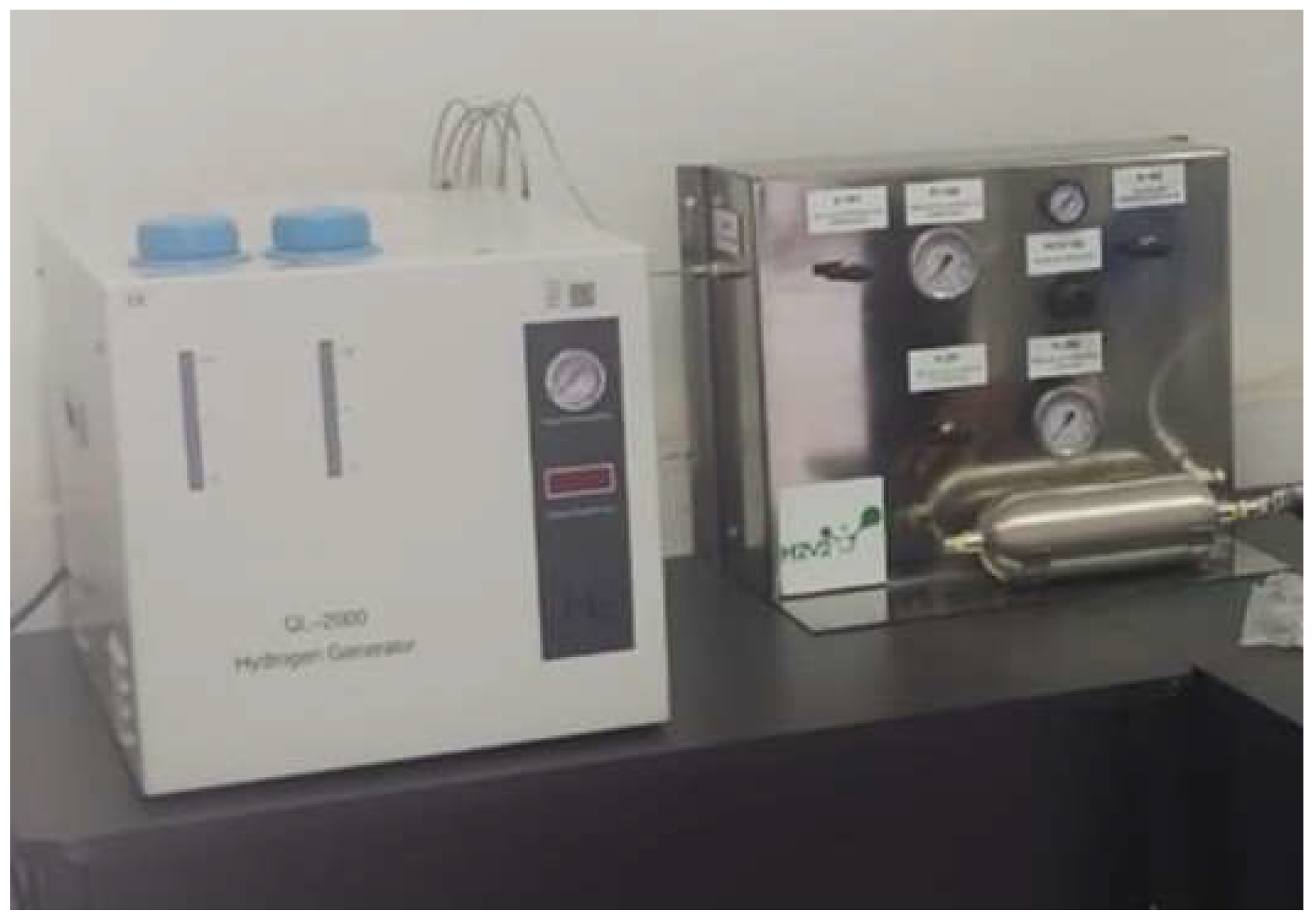
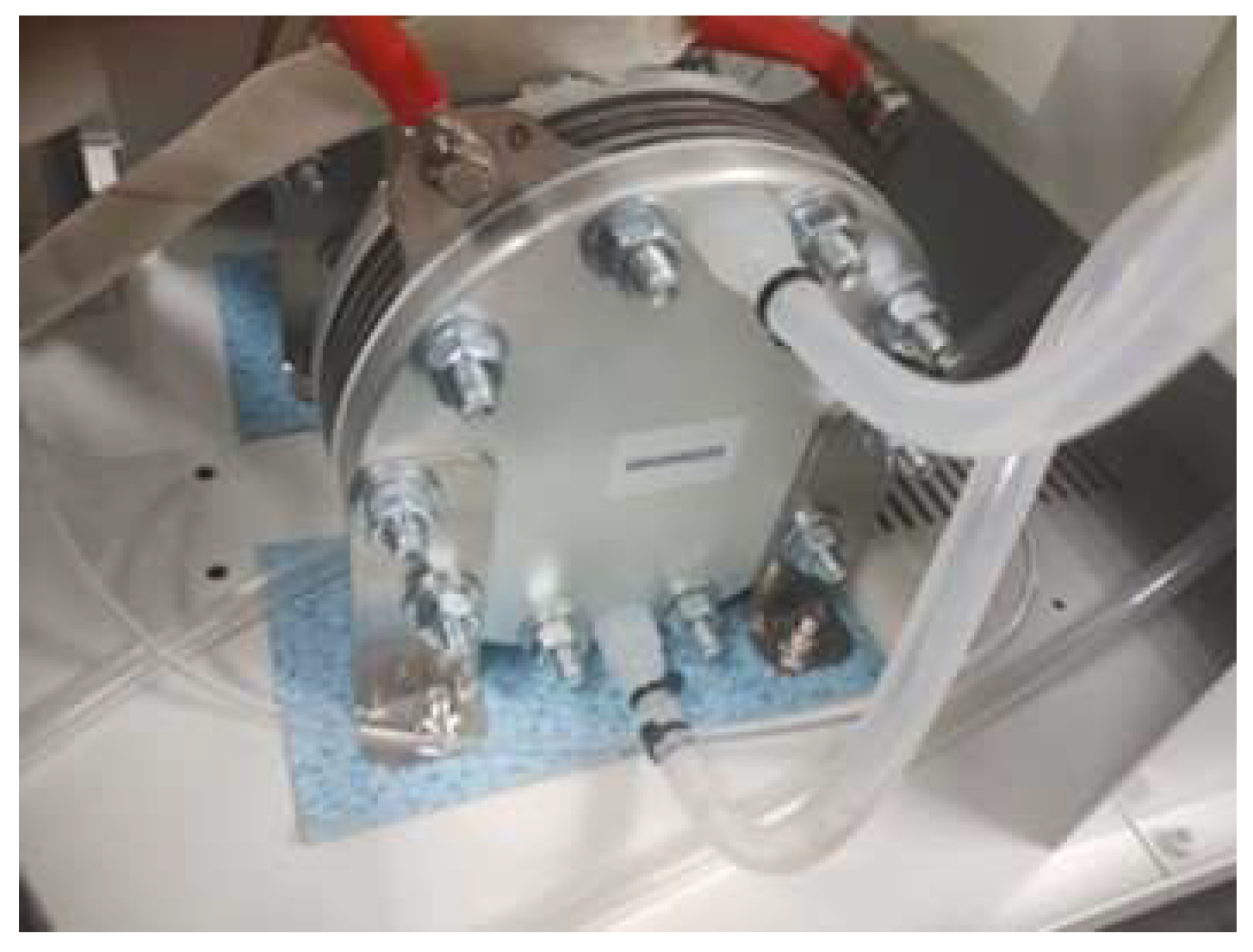
The PEM electrolyzer used in this experimental research is found in the QL-2000 Hydrogen Generator from Saikesaisi Hydrogen Energy Co., Ltd. (Jinan, China). The hydrogen generator is depicted in
Figure 7, including a low-pressure metal hydride storage hydrogen and the required instrumentation to operate it. The main features are given in
Table 1.
There are two procedures to determine the values of electric elements of the electrolyzer model: In the first one, the electrical equivalent parameters are obtained from experimental Nyquist plots results obtained via the Electrochemical Impedance Spectroscopy (EIS) Test through frequency sweeps at different voltages and currents [
25]. The second one, the Current Interruption (CI) technique, is described in [
13]. In this work, the CI technique was selected to determine the values of the electrical elements representing the electrolyzer; both static and dynamic response tests were conducted.
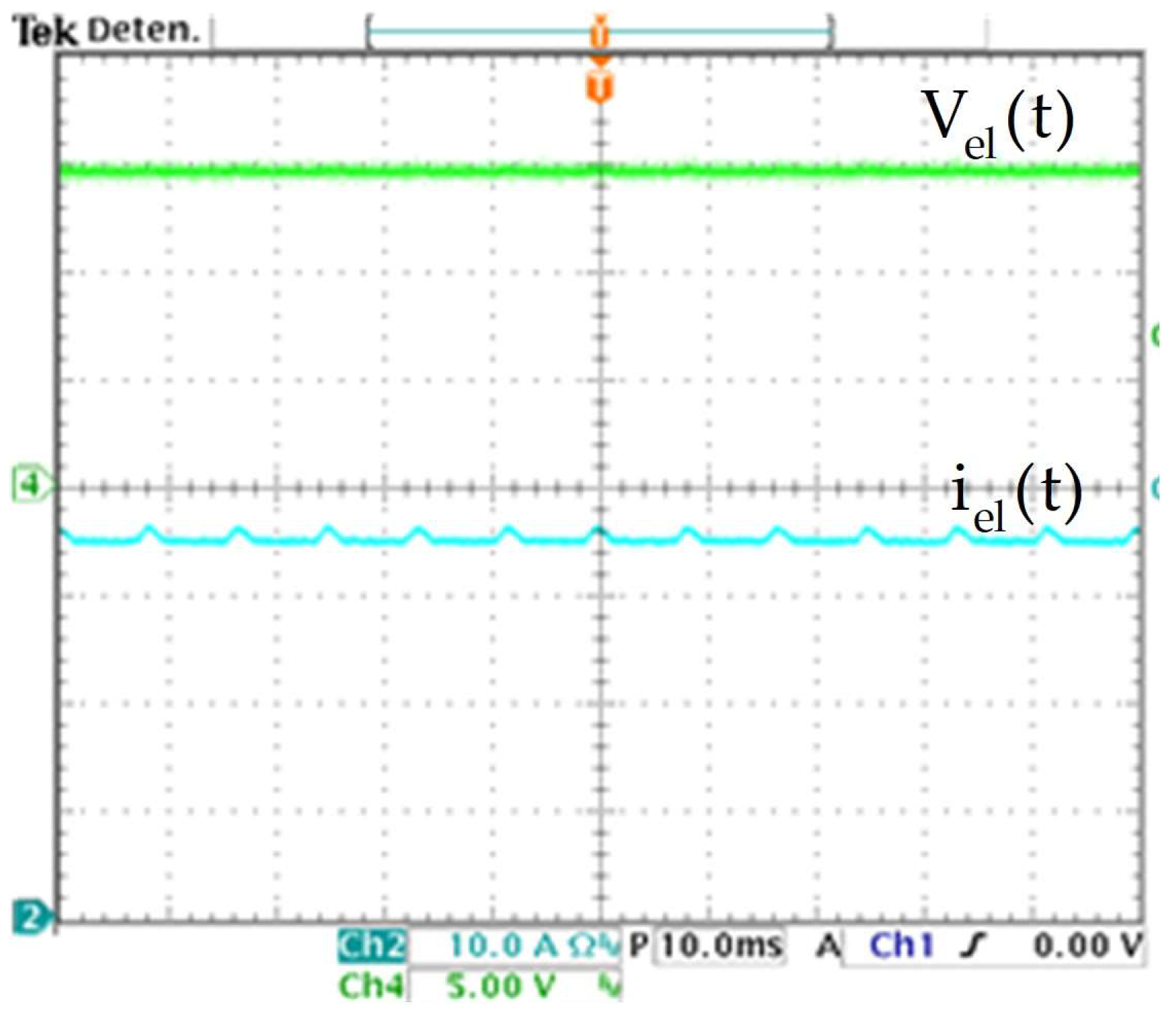
Initially, static characteristics were obtained by applying a voltage to the electrolyzer. In this stage, the voltage and current at the electrolyzer terminals were measured, yielding V
el = 14.5 V and I
el = 35 A, corresponding to a power of approximately P
el = 500 W, as shown in
Figure 8.
To determine the value of
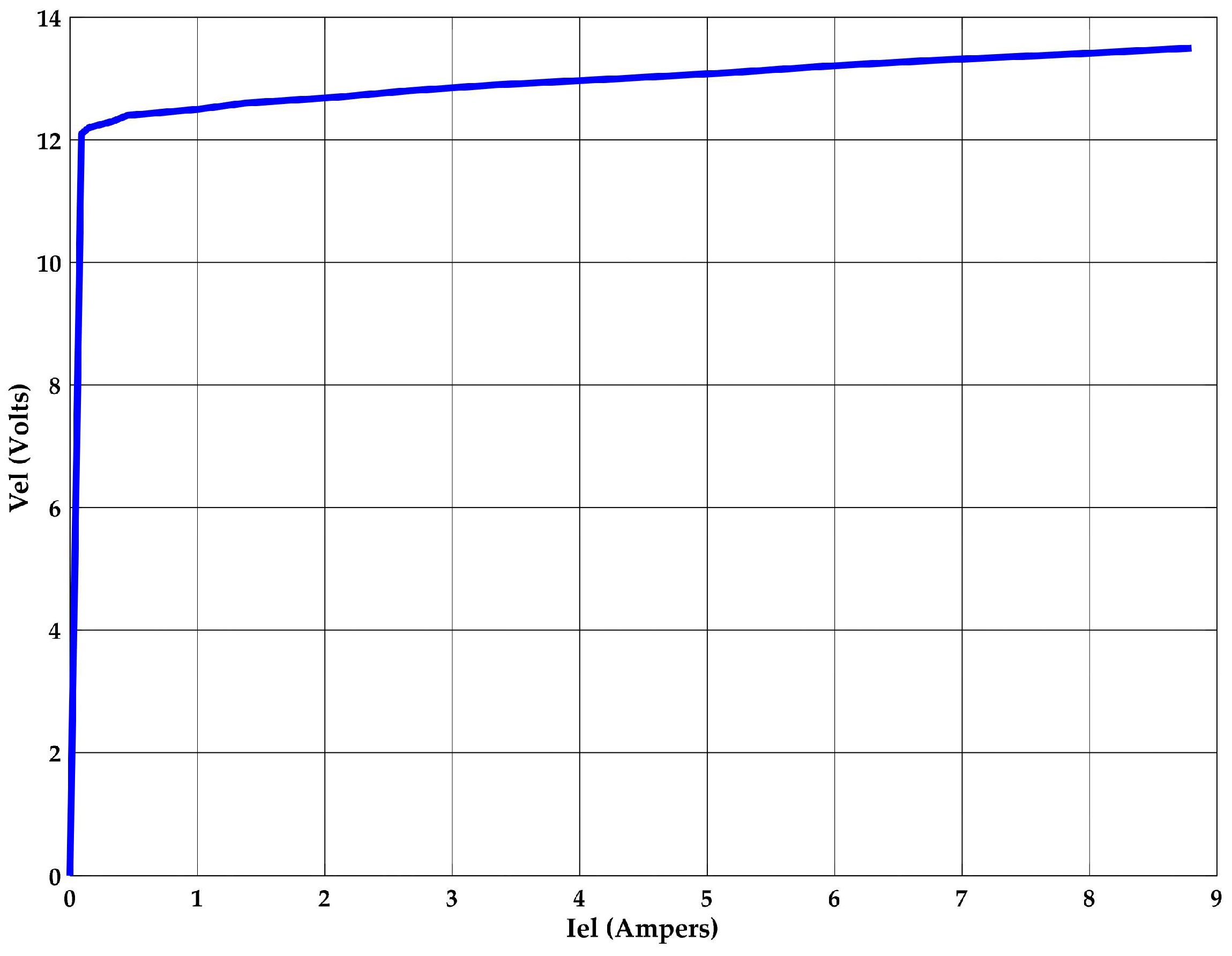
, the DC voltage applied to the electrolyzer terminals was varied in 0.1 volt increments from 0 volts until current flow was established, then increased in the same manner. The resulting currents are illustrated graphically in
Figure 9. For values between 0 and 12 V, there is no current. When a 12.1 V voltage and a 90 mA current are established, the current increases gradually.
From this result, it is found that
= 12.1 V, and using the relationship
, the
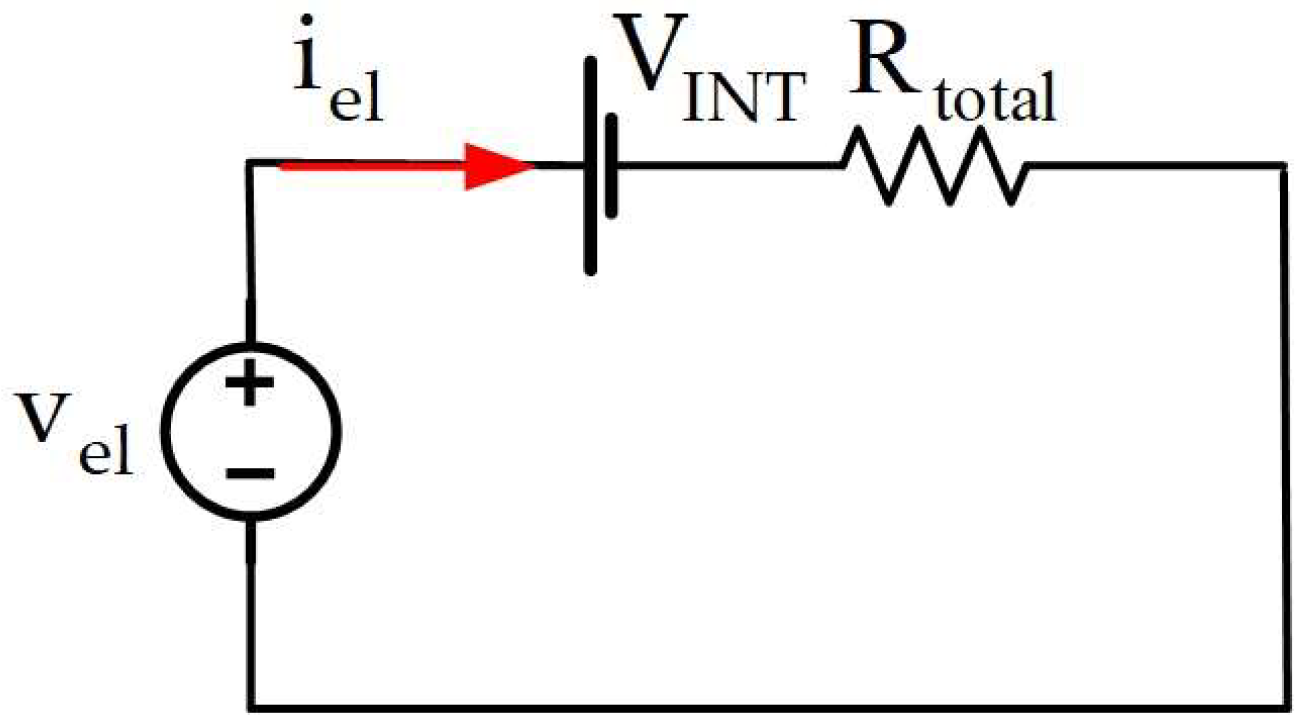
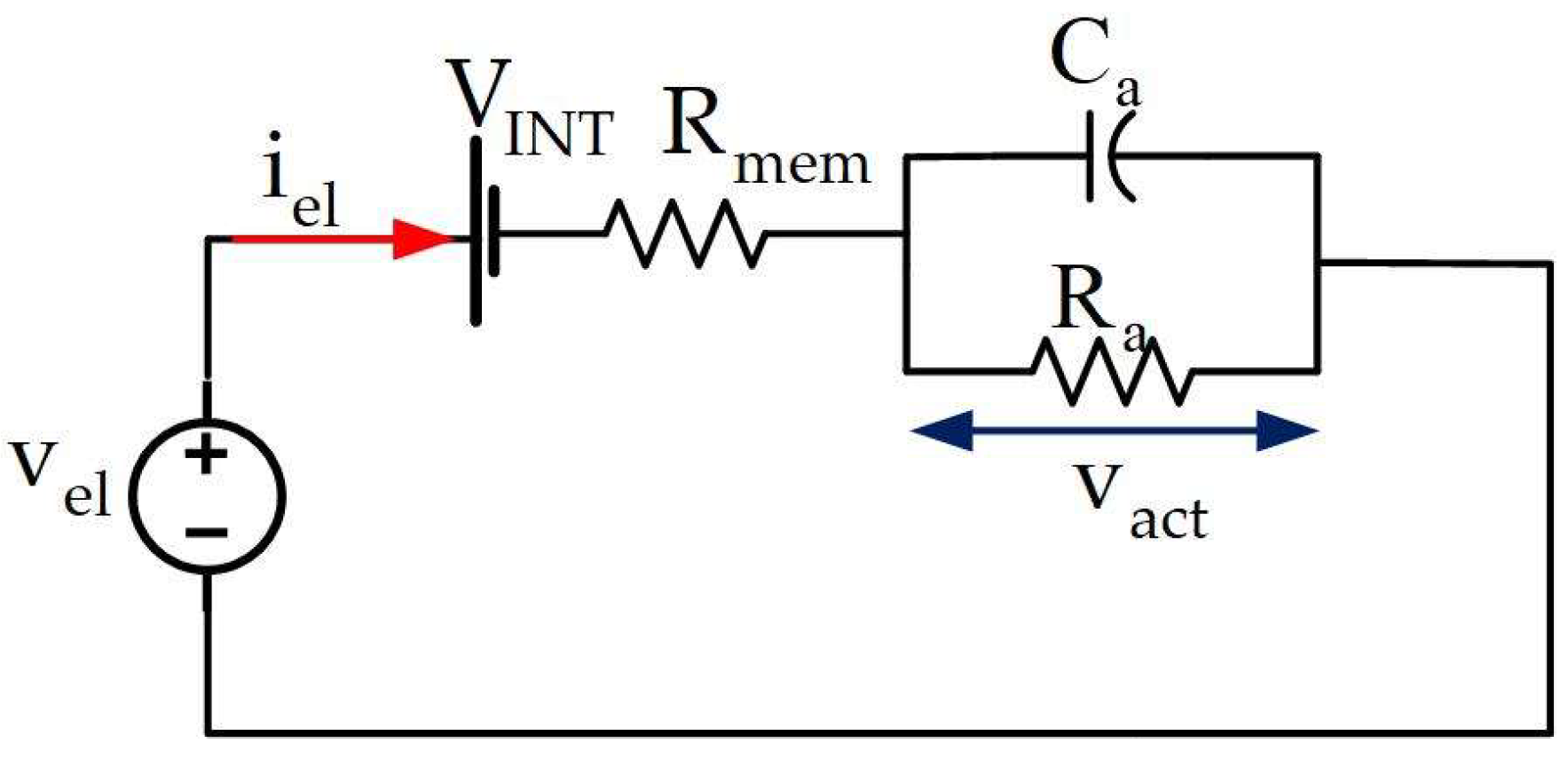
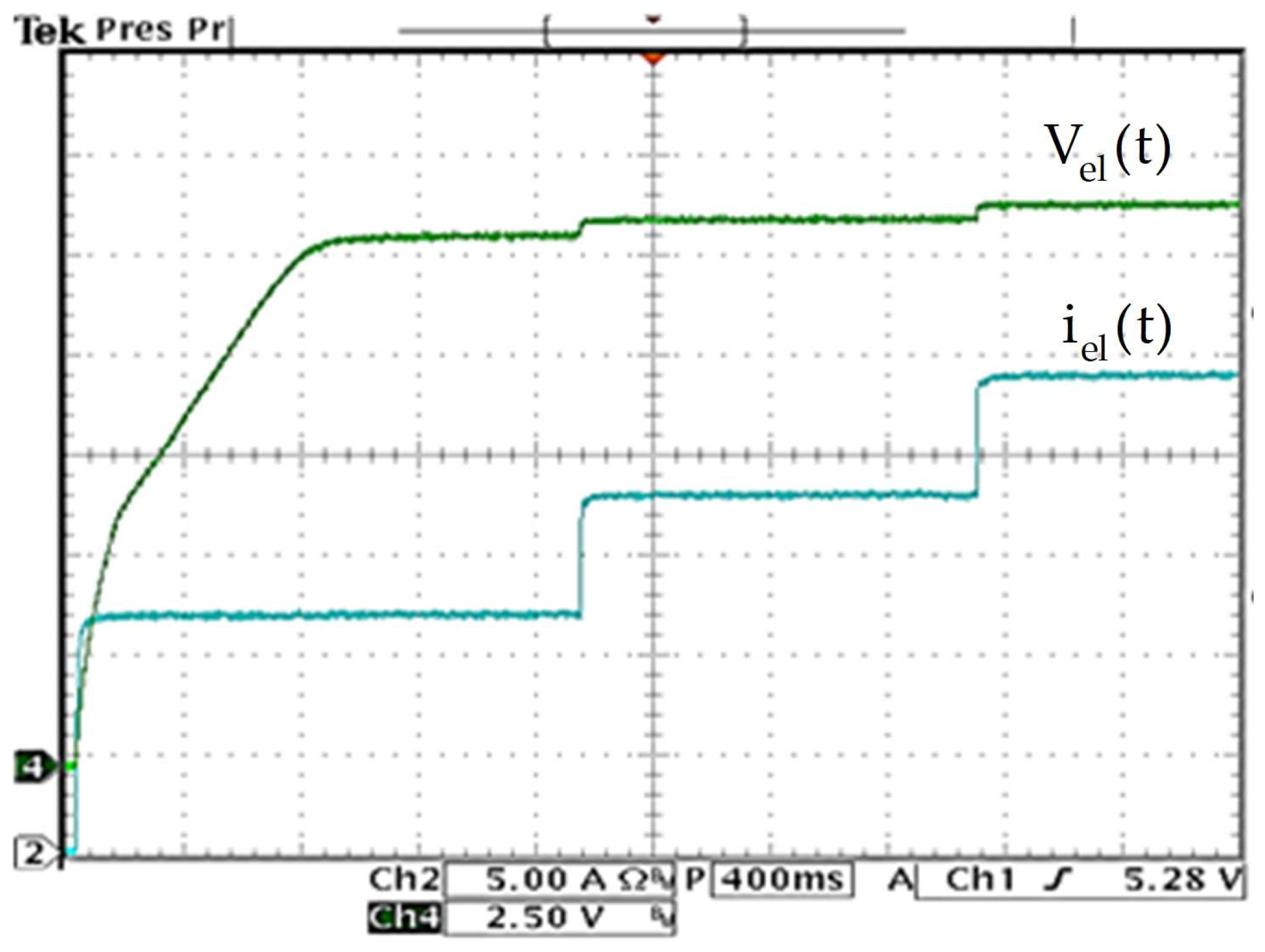
value for the static model at a power of 500 W is 0.06857Ω. Later, the transient and steady-state responses of the dynamic model were measured on a test bench to determine the parameters of the PEM electrolyzer shown in
Figure 10.
Now, the
connection plus
is studied in the frequency domain using Laplace transforms. The equivalent electrical circuit impedance of this model is given by the following:
When a current step is applied to the PEM electrolyzer’s input, the corresponding output voltage can be expressed as follows:
Now, using the initial value theorem of the Laplace transform on the last expression results in the following:
The value of
is obtained from the transition observed in
Figure 11, resulting in R
mem = 0.0046 Ω. From
Figure 10, it is possible to obtain the parameters of the RC circuit; given that
, it is found that
Ω.
In the behavior of a first-order RC system, the slope of the response is given by the relationship . By obtaining the slope of the curve for the first section of the exponential response, a time constant is found, and then the value of the capacitance is obtained.
4. Static and Dynamic Models of the Combined QSD Converter–PEM Electrolyzer System
As indicated in the introduction, the converter used as an interface between the renewable source and the PEM electrolyzer must have a wide conversion ratio. By analyzing the topologies mentioned in
Section 2, it is found that a one-stage buck or buck–boost converter has a simple structure and is not very complex to control, but, as a drawback, its conversion ratio is very limited, and its power-handling capacity is limited as well. As for interleaved or parallel step-down converters, although they can handle high currents and power, their application is limited by their linear conversion range. Using more than one switch also makes them difficult to control. In this latter aspect, nonlinear techniques are typically used, which are more complex to implement than linear ones. Finally, although the quadratic step-down converter can handle moderate currents, it provides non-pulsating input and output currents with a high reduction ratio, making it very suitable for applications that require a high conversion ratio and avoid the use of intermediate reduction stages, which increase system efficiency. As it normally has only one active switch, its control is simpler, and it is even possible to implement it using linear techniques with very good results.
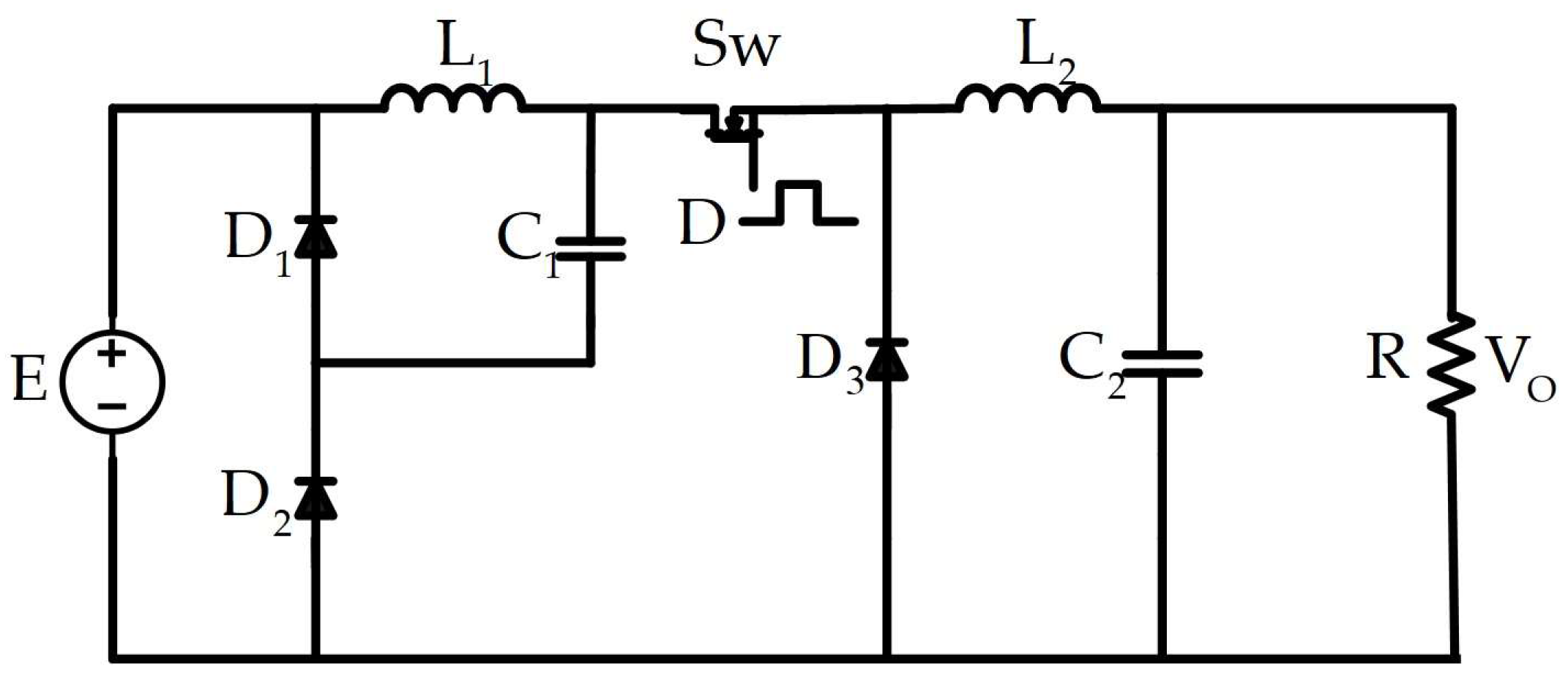
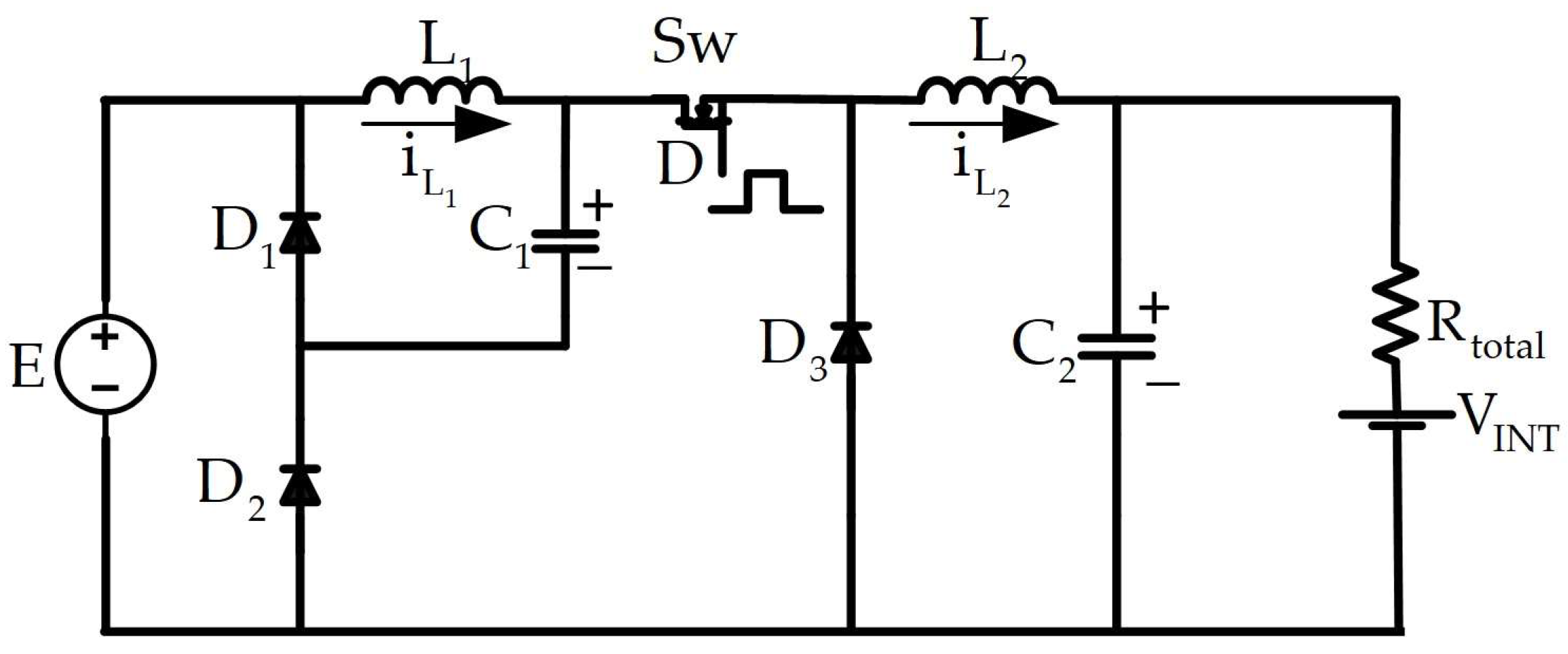
Therefore, the proposed converter to be used as an interface should be a QSD converter with a single active switch [
27], as shown in
Figure 12.
In this electrical diagram, E represents the DC voltage source, the output voltage , and the diodes are to , and the converter’s inductors and capacitors are , , , . The active switch is Sw, the nominal duty cycle is D, and R represents the converter’s load. For this converter, the relationship between output and input voltage is given by . To obtain a comparison of dynamic behavior that allows selection of the most appropriate representation of the combined CSD converter–PEM electrolyzer assembly, which will subsequently be used as the basis for proposing a suitable regulator for its operation, two models are developed.
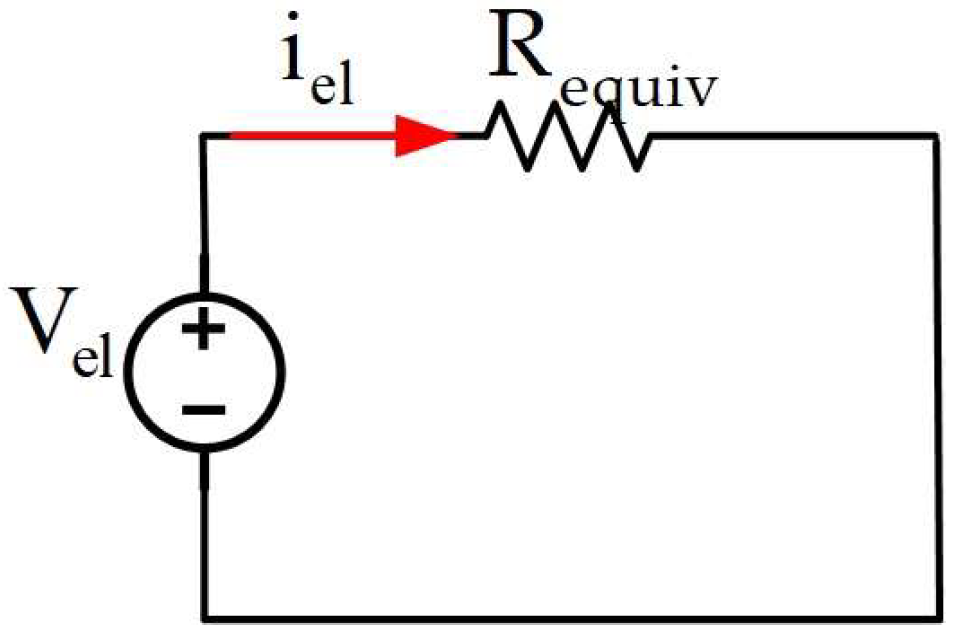
In the first case, the PEM electrolyzer is modeled as a converter load using its static model, as shown in
Figure 13. In this representation, there are four state-space variables: the current of inductors
and
, and the voltage of capacitors
and
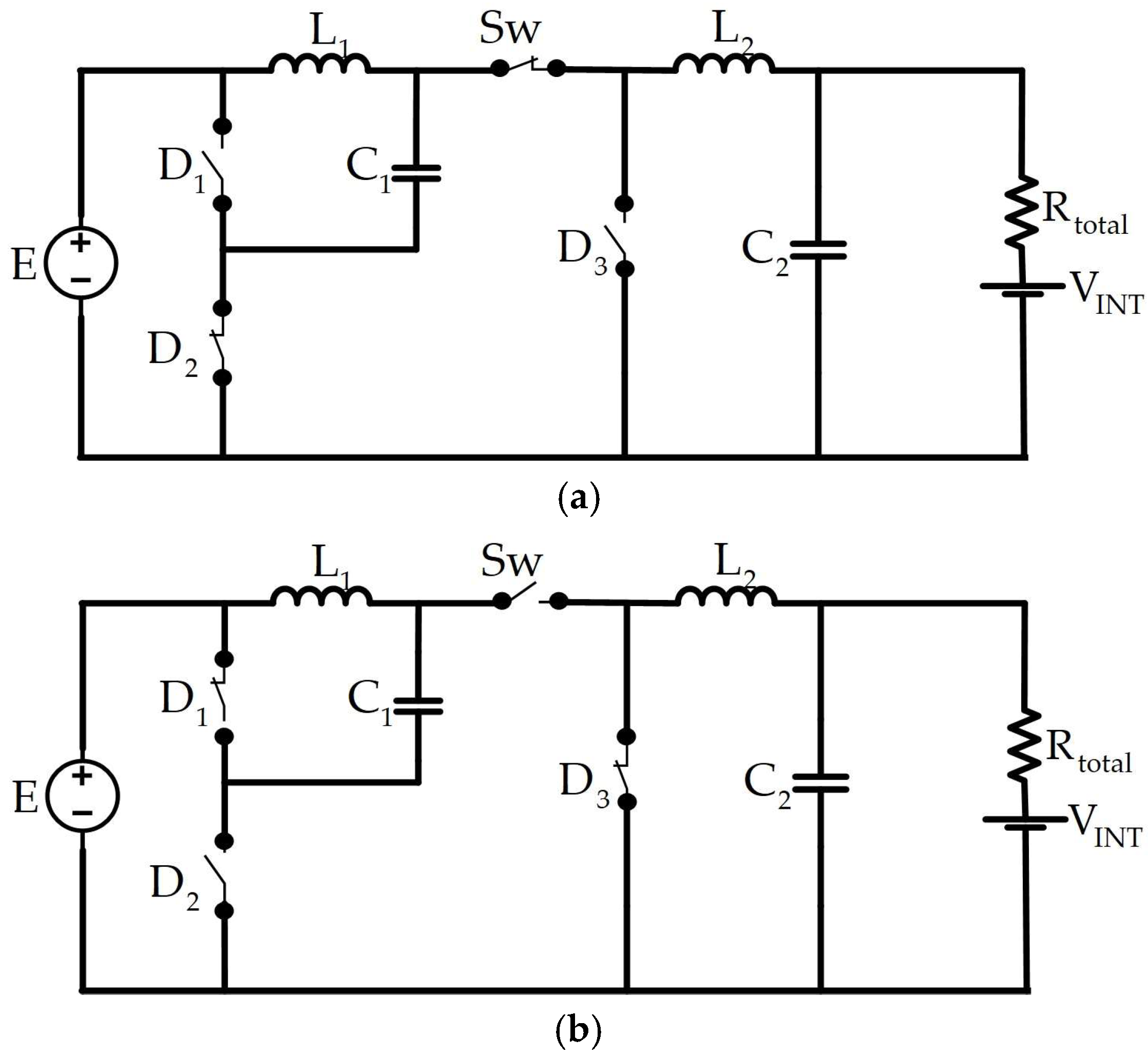
. Initially, the switched state-space model was obtained by applying Kirchhoff’s voltage and current laws to the electrical paths that result when the converter’s active switch is ON and OFF, as shown in
Figure 14, and by defining a binary switching function q which has a value of 1 when the switch is turned ON and a value of 0 when it is turned OFF.
The resulting bilinear switched model is as follows:
Then, based on this model, the average model of the combined QBC-PEM electrolyzer system is obtained. The main objective of the averaging technique is to find an approximate circuit that allows the average local behavior of the circuit variables to be analyzed, even during a transient, a condition with non-periodic characteristics. It provides important information about the operation of a converter at both DC and low frequencies, ignoring ripple, switching, and any other fast effects. Even when ripple is not present in the averaged output, this average is very useful for determining transient response and steady-state regulation. The average model also allows tracking large-scale changes in source and load voltages and currents, changes in control inputs, and robustness studies under component parameter variations.
By using the average value of the switching function q represented by the duty cycle d, as well as the average value of each state variable represented by a superscript “¯” [
28], a matrix system of the form as follows:
is obtained, where
x ϵ
R4 is the state vector, e is the input voltage,
Ā is a 4 × 4 matrix, and d(t) is the duty cycle. As shown, both the state and the input are multiplied by the duty ratio, rendering the resulting system nonlinear, as follows:
These models can be linearized about the operating point corresponding to the steady-state values given by (10)–(13). The procedure is as follows. The input voltage, control signal, and four state variables are separated into two parts: the nominal average values, denoted by upper-case letters, and variations from their nominal values, denoted by lower-case letters with a superscript “~”.
The resulting average linear model is given by the following:
Also, the ripple of current and voltage in inductors and capacitors, represented by
and
, allow us to design the appropriate values of the converter according to the following expressions:
where
is the switching frequency, and the voltage across the switching devices is negligible.
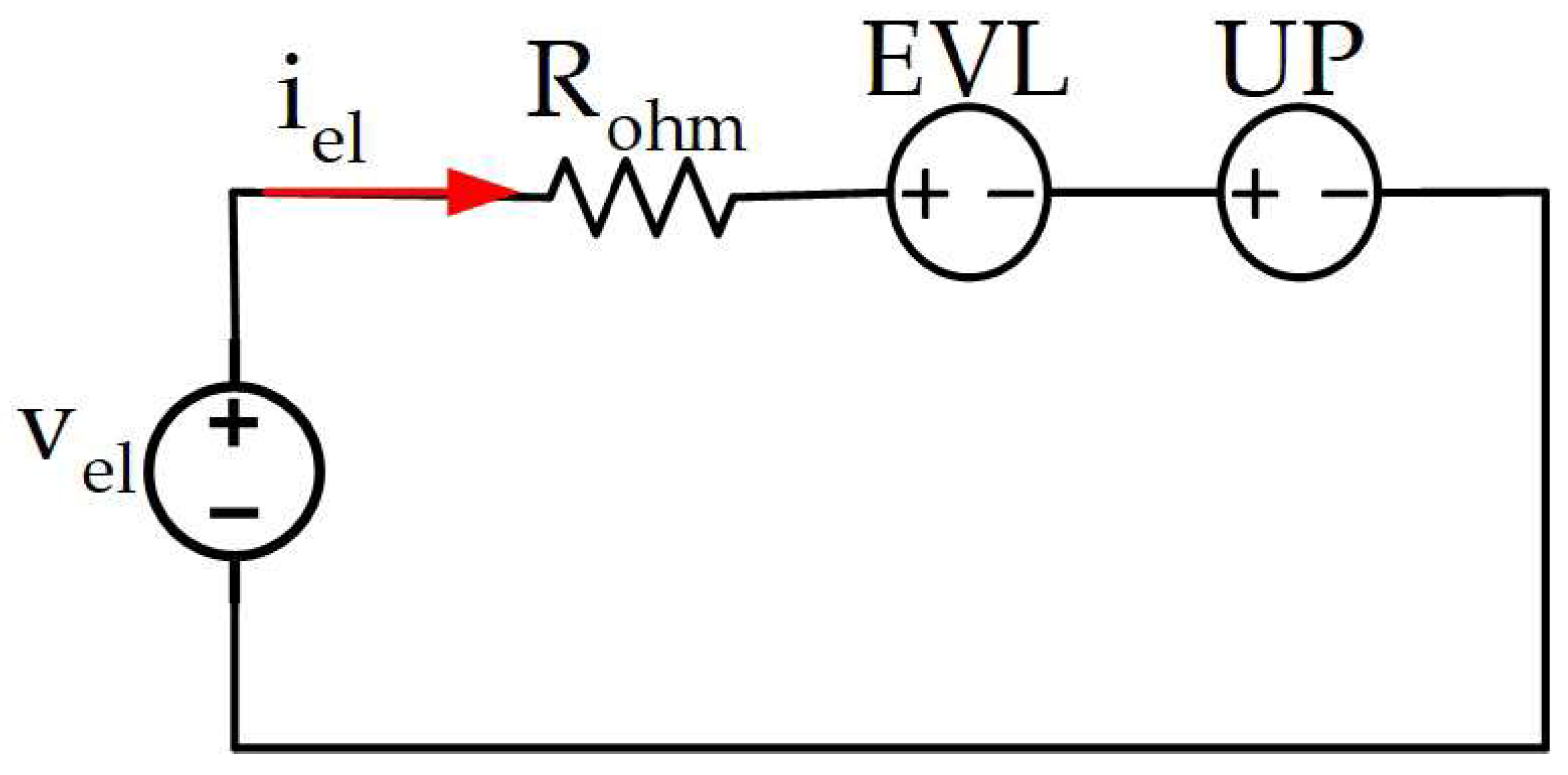
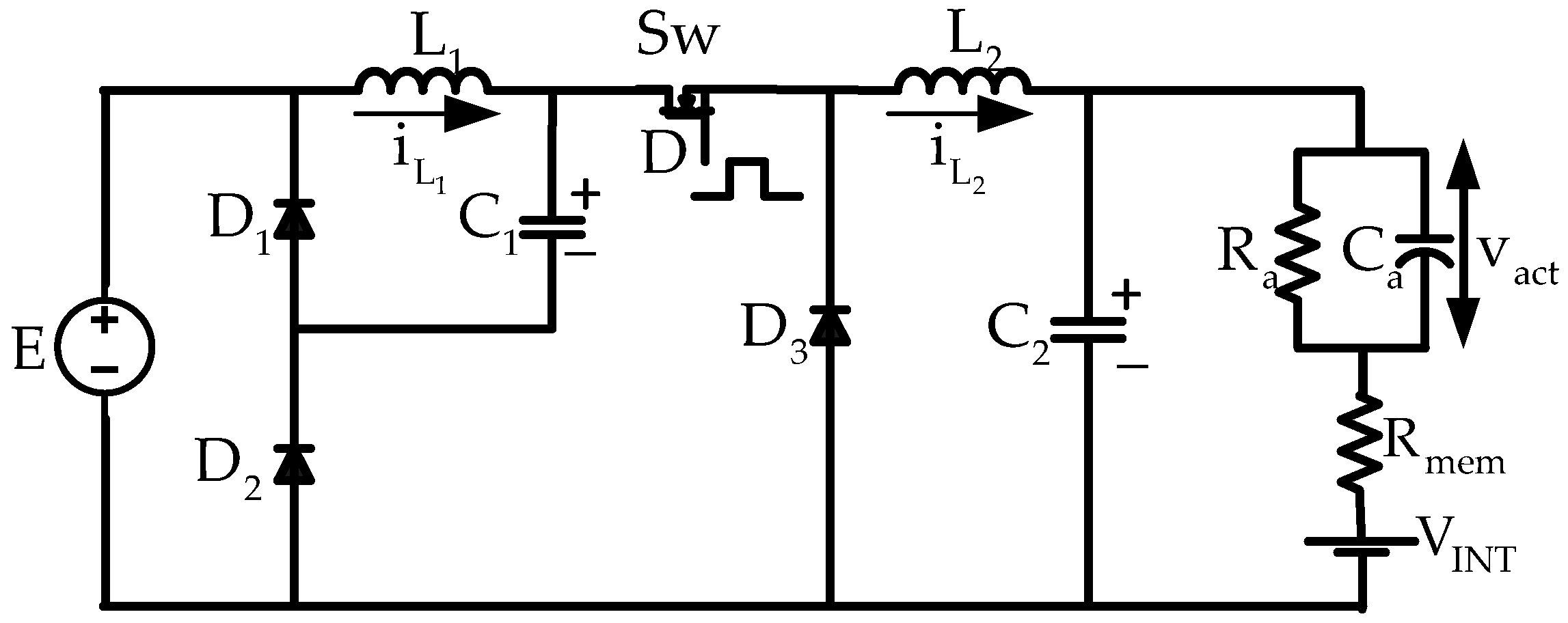
In the second proposed option, the equivalent dynamic model of the PEM electrolyzer serves as the load, as shown in
Figure 15.
In this representation, there are five state-space variables: the current of inductors
and
, the voltage of capacitors
and
, as well as the voltage applied to activate the anode
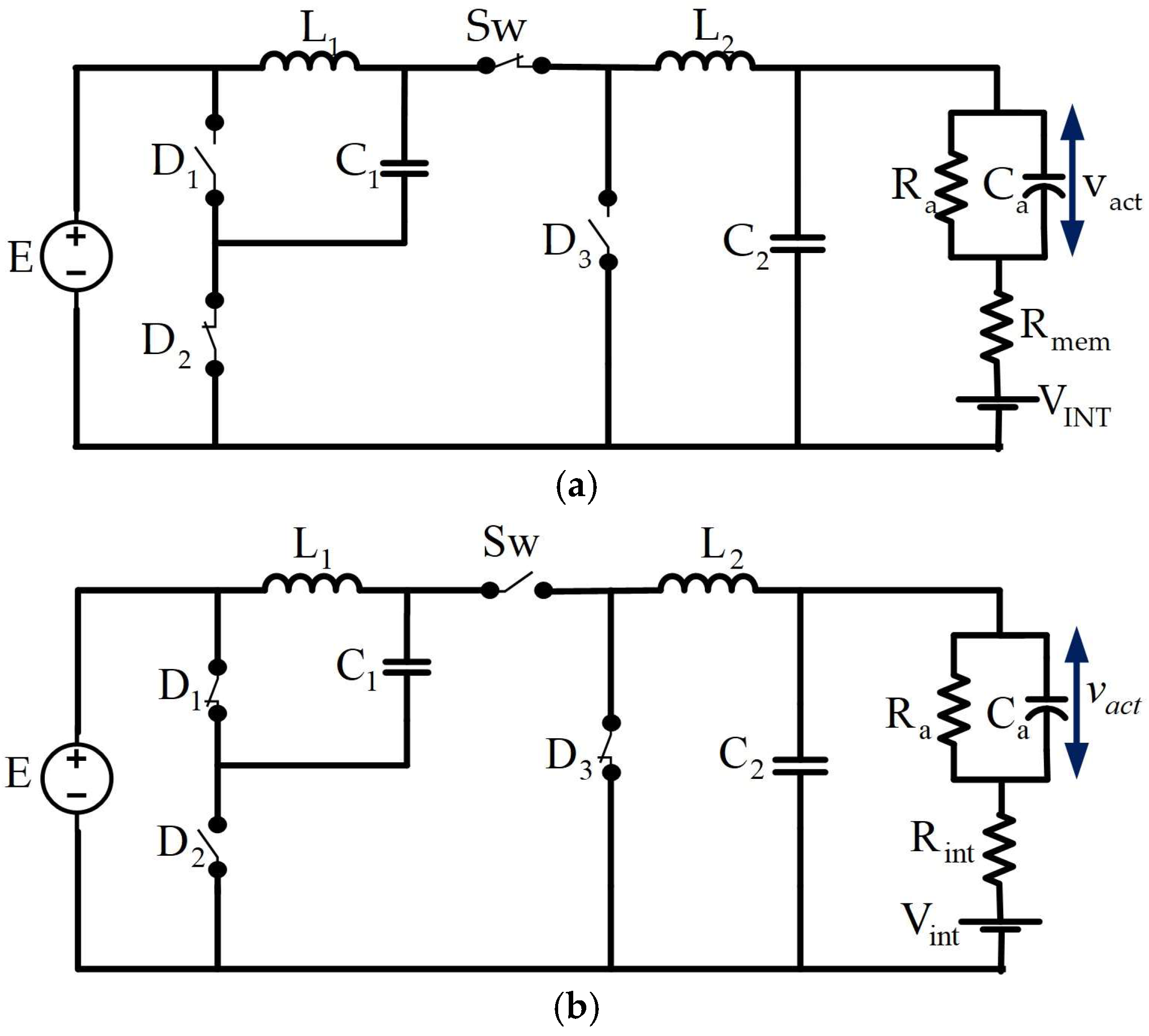
. The procedure described in the former was applied to the combined QSD converter–PEM electrolyzer, with the active switch ON and OFF, as shown in
Figure 16.
The resulting bilinear switched model is as follows:
where
is the parallel connection of
and
, with
.
Meanwhile, the nonlinear model is given as follows:
This model can be linearized around the operating point given by the steady-state values:
The resulting linear system is given by the following:
Also, the ripple of current and voltage of inductors and capacitors, represented by
and
, allows the appropriate values of the converter to be calculated using the following expressions:
Using the state-space representation, it is possible to define the electrolyzer current, which is the main variable to control, and it is given as follows:
where
.
Laplace transforms were applied to the linear models in (14) and (20) to analyze the dynamic behavior of the combined QSD converter–PEM electrolyzer. The analysis focuses on the transfer functions that relate the electrolyzer current to the duty ratio, which take the following form:
where a
n, b
m, and c
i are the coefficients of the static and dynamic model transfer functions, with i = 2, m = 3, and n = 4 for the static model and i = 3, m = 4, and n = 5 for the dynamic model. The expressions for the coefficients are too large to include, so they are omitted due to space limitations; however, numerical results are shown in
Section 5. Based on these results, the three functions are stable and exhibit non-minimum-phase behavior, as they have zeros on the right-hand side (RHS) of the s-plane.
The single-state buck converter is minimum-phase; however, in the QSD converter, when the active switch is OFF, the source forms a circuit independent of the load. So, an increase in duty cycle that demands more voltage results in an initial decrease in the output voltage, creating non-minimum-phase behavior. Due to the RHP zeros, the maximum achievable bandwidth for stability is limited, leading to a slow controller response. This condition also causes high sensitivity to load variations and components that affect regulation, and a high tendency to oscillation. For control purposes, when this type of transfer function is fed back into a closed-loop system, it may lead to instability. The transfer function
was also obtained:
where f
j are the coefficients of transfer functions, with j = 3 for the numerator terms of the static model transfer function, and j = 4 for the dynamic model. This transfer function has the same denominator as (32), (33), and (34), but differs in that it exhibits minimum-phase behavior. For this reason,
is a suitable feedback variable for implementing a control system.
5. Comparative Analysis of Static and Dynamic Models
Based on the electrolyzer parameter values in
Section 2 (
Table 2), the steady-state conditions and appropriate electrical elements for the QSD converter were determined for the two proposed models, as shown in
Table 3 and
Table 4.
Using these values, MATLAB R2024a™ was used to obtain the Bode diagrams of the frequency response and the locations of the zeros and poles of the transfer functions (32)–(35).
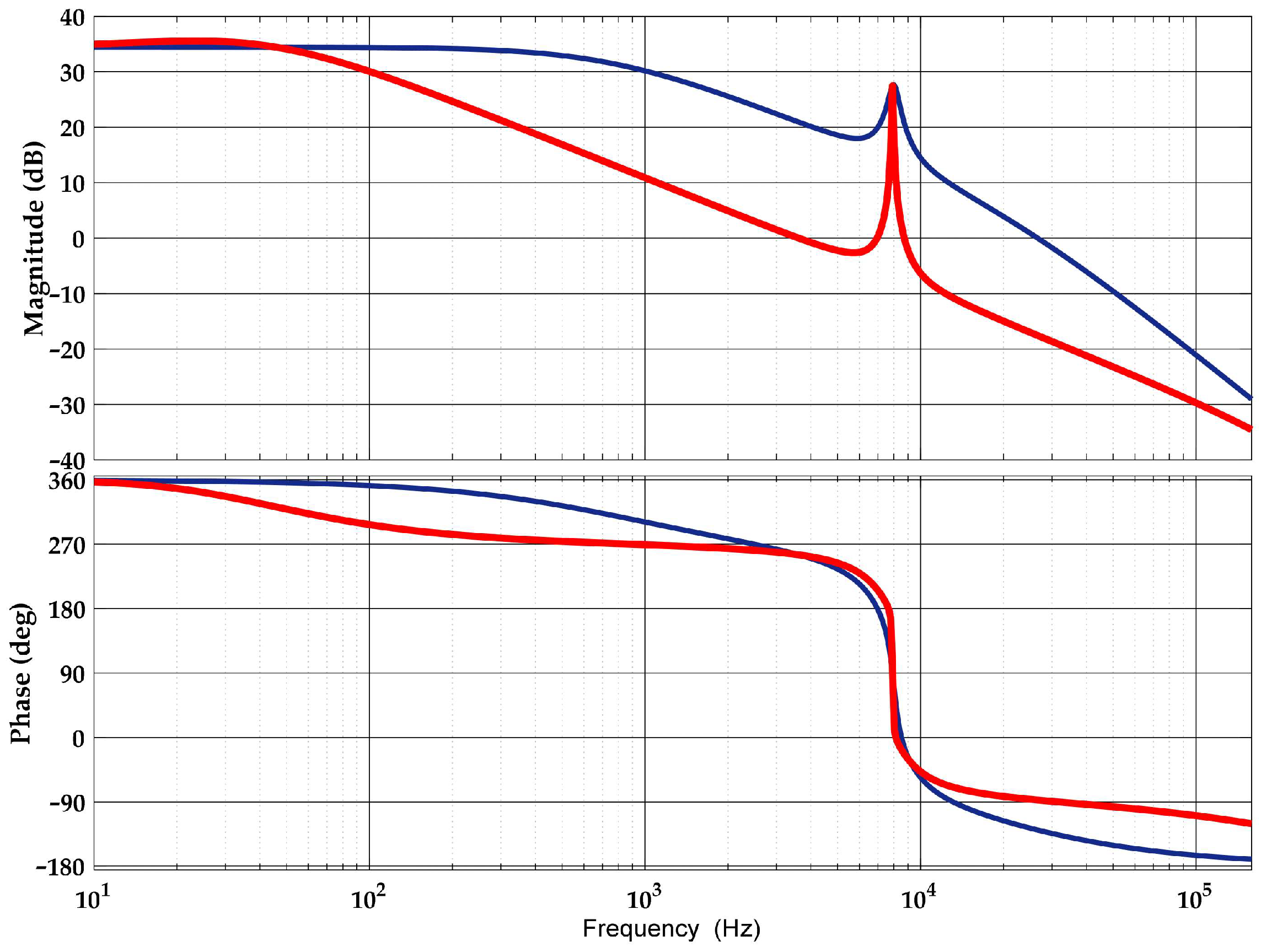
The comparative Bode diagram of the transfer function between the electrolyzer voltage and duty ratio is shown in
Figure 17 for the combined QSD converter–PEM electrolyzer static and dynamic models. Both functions are stable, with poles at {−136,124.6, −2245.3 ± j 50,245.7, −4839.4} and {−1,617,387.1, −208.4 ± j 49,743.2, −237.4, −189.4}, respectively. The zeros are at {11,111.1 ± j 48,437.9} and {11,123.7 ± j 48,476.6, −107.8}, respectively, indicating non-minimum-phase behavior in both cases.
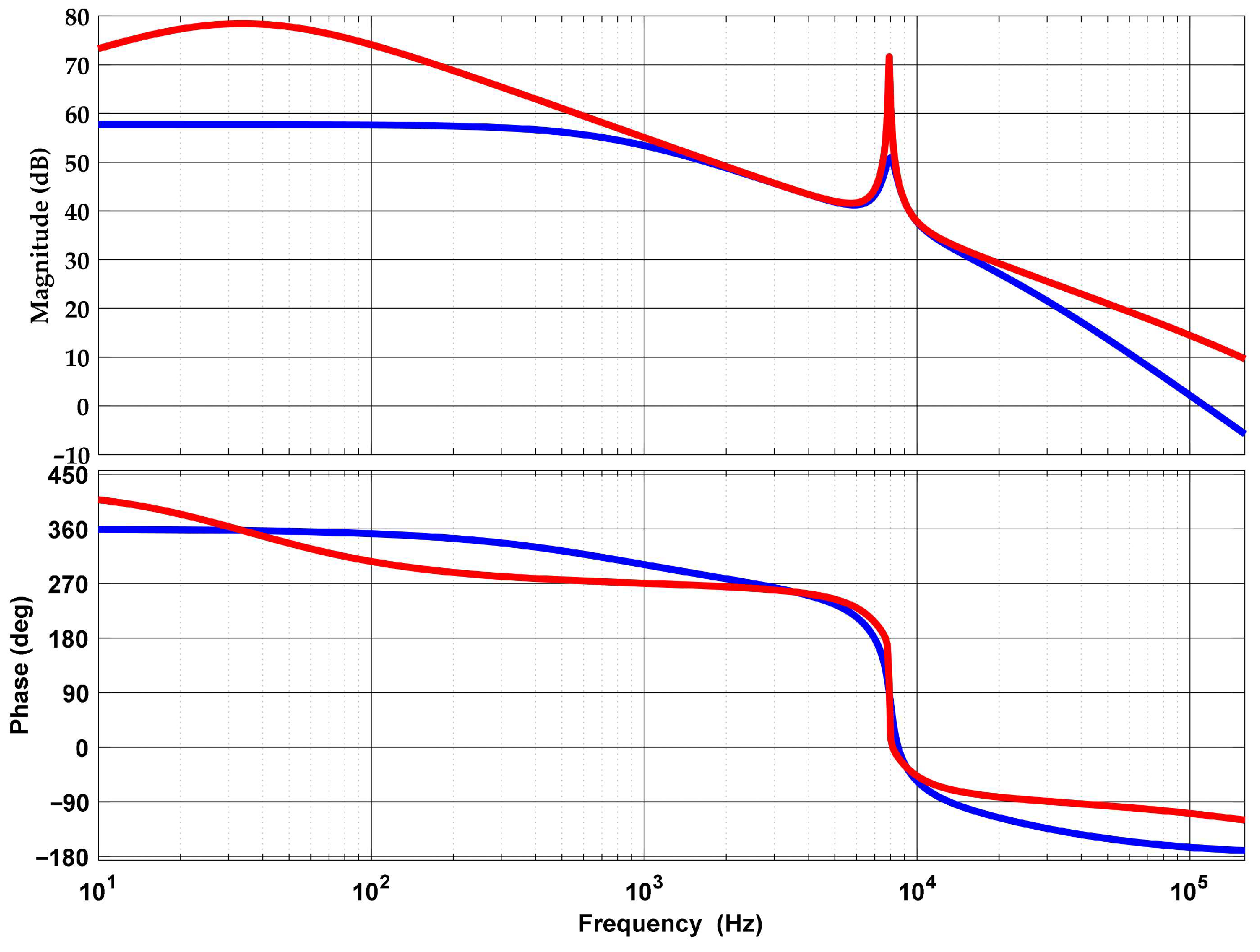
The comparative Bode diagram of the transfer function for the electrolyzer current to duty ratio was also obtained and is shown in
Figure 18. Both functions are stable and have the same pole location. The zeros are located at {11,112.3 ± j 48,439.7} and {11,123.8 ± j 48,477.4, −9.7}, respectively, indicating non-minimum-phase behavior in both cases. If a control scheme is implemented using a single variable, such as the electrolyzer current, instabilities may occur; thus, a two-loop feedback control scheme is necessary.
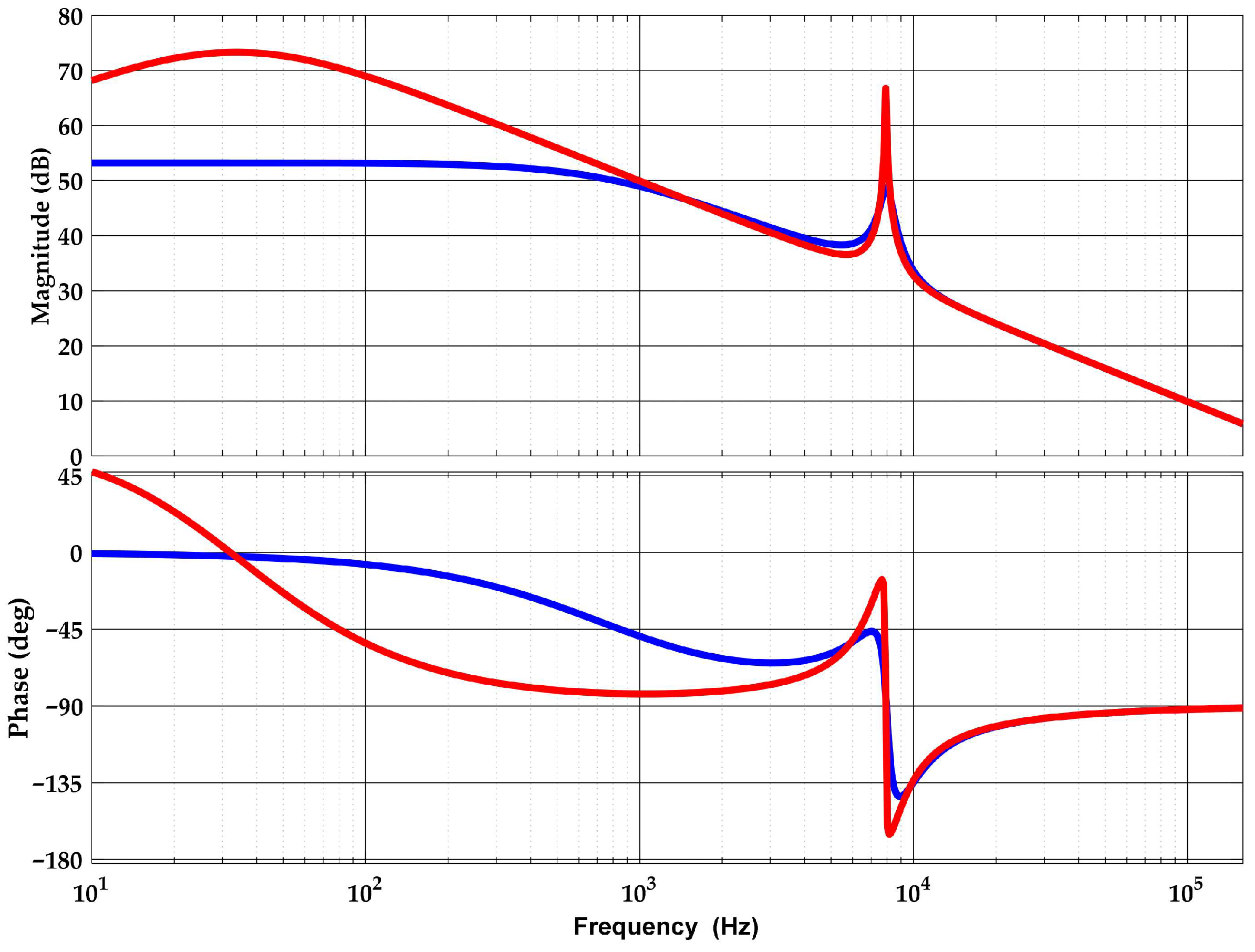
In this class of schemes, a typical variable selected is the first inductor current, which is also useful for protecting against short circuits. To analyze its dynamic behavior, the comparative Bode diagram of the transfer function for the first inductor current to duty ratio was obtained, as shown in
Figure 19.
6. Concluding Remarks
Although several electrolyzer types can produce hydrogen from water, the most suitable for renewable energy applications is the PEM electrolyzer. It is a mature technology that can handle high-density electric currents and respond rapidly to dynamic changes. It can be series-connected to form a multi-cell electrolyzer, yielding a large-scale hydrogen generation system. A model is developed that integrates the dynamics of the QSD converter with those of the PEM electrolyzer, enabling the selection of the most suitable parameters for the subsequent design of the switching regulator. Two electrical models of the PEM electrolyzer are used to represent its behavior. In the first model, a static model, the electrolyzer is represented by a series of connections, including a resistive load that represents the membrane resistance and the resistive losses of the anode and cathode, and a DC electromotive force (reverse voltage). The second model is a dynamic model that adds an RC circuit to the previous circuit to simulate anode and cathode losses and dynamics during current transitions.
The time response of the PEM electrolyzer in the QL-2000 Hydrogen Generator was used to obtain the model parameters. These models can be incorporated into the load model of a single-switch QSD converter, thereby enabling a wide range of DC conversion ratios. By analyzing the electrical paths for active switch ON and OFF, the state-space average switched linear models were obtained. Subsequently, linearization techniques and steady-state operating points were applied to obtain the results. Based on these linear models, the transfer functions were obtained and analyzed using frequency response techniques, finding that both transfer functions, input voltage of the electrolyzer to duty cycle of the converter, and input current of the electrolyzer to duty cycle of the converter, show non-minimum phase behavior. For the controller, it is important to feed back the electrolyzer input current; however, this scheme may cause instability. Another signal appropriate for feedback in a two-loop control scheme is the converter’s first inductor current. The corresponding transfer function exhibits minimum phase behavior. The model of the combined QSD converter–PEM electrolyzer system will be used in subsequent work to implement switching regulators to control the PEM electrolyzer’s input current, enabling the hydrogen generation.