


Abstract
Absorption chillers are key installations for recovering waste heat on offshore oil platforms. However, experimental data remain insufficient regarding how marine-induced vibration and sway affect lithium bromide (LiBr) chiller performance, which limits reliable design and operation in offshore environments. In this work, we establish a comprehensive performance-testing system for a LiBr absorption chiller and experimentally investigate the effects of heat source temperature, cooling source temperature, and marine-induced vibration and sway on unit performance. The results show that cooling capacity and COP increase with heat source temperature and decrease with cooling source temperature. When the heat source temperature exceeds 120 °C, both cooling capacity and COP decrease abruptly. In addition, vibration and sway conditions resulted in a measurable reduction in the unit’s cooling capacity. This study provides practical experimental evidence and guidance for high-efficiency waste heat utilization on offshore oil platforms.
1. Introduction
The primary energy demands on offshore oil platforms encompass electricity, diesel, and natural gas [1]. However, the overall recovery rate of the waste heat resources remains low, and natural gas is often vented under certain conditions. Notably, energy losses from gas turbine flue gas emissions on offshore oil platforms account for approximately 60% of the total energy consumption [2]. The recoverable waste heat generated during the operation of various systems and equipment on offshore oil platforms, if harnessed from the industrial processes on the platform as a heat source for absorption chillers [3], can significantly enhance the overall energy utilization efficiency. LiBr–H2O absorption chillers are attractive in this context because they can convert low- to medium-grade heat into cooling with low electrical demand and a mature engineering basis [4,5].
Zhou et al. [6] experimentally investigated the performance of a lithium bromide absorption chiller driven by waste heat using ammonia/salt as the working fluid. The results demonstrated the potential feasibility of applying the ammonia/salt absorption refrigeration system in oceangoing vessels, using three types of ammonia/salt working fluids, which collectively cover a broad range of operating temperatures, including high/low-temperature heat source conditions and refrigeration applications. Salmi et al. [7] investigated the feasibility of utilizing exhaust gas or jacket water as the heat source for absorption refrigeration under the ship’s annual operating conditions defined by the ISO standard. The study demonstrated that this solution could reduce compressor power consumption by 70%, equivalent to an annual fuel savings of 46.8 tons. Consequently, integrating absorption refrigeration into offshore energy systems has been proposed as a practical route to reduce fuel consumption and improve overall energy utilization [8,9,10].
You et al. [11] investigated the influence of various factors, including evaporator outlet temperature, on the performance of a lithium-bromide absorption refrigeration system. Salilih et al. [12] employed an absorption refrigeration system to recover waste heat from industrial flue gases and investigated the effects of flue gas temperature and mass flow rate on the performance of the absorption refrigeration cycle. The results indicate that the system’s cooling capacity and COP increase with rising flue gas flow rate and temperature. In contrast, Lizarte et al. [13] concluded through simulation that the COP initially increases with the heat source temperature, then slightly decreases, indicating the existence of an optimal value. Hu et al. [14] conducted a simulation analysis on the influence of cooling water inlet temperature on the performance of a lithium-bromide absorption heat pump. The results demonstrate that reducing the cooling water temperature can improve the unit’s COP, with the lower limit constrained by crystallization risks. Manu et al. [15] also investigated the influence of cooling water inlet temperature on the unit’s COP and concluded that this phenomenon is attributed to an increase in the circulation ratio. Zhang et al. [16] and Xu et al. [17], through experimental studies, demonstrated that within the tested operating range, both the cooling capacity and COP of the absorption chiller increase with rising heat source temperature. Evidently, the lithium bromide absorption refrigeration system represents a key technology for recovering and utilizing waste heat resources on offshore oil platforms and enhancing overall energy utilization efficiency.
Furthermore, extensive research has clarified that the performance of LiBr–H2O absorption chillers is governed not only by the driving heat source grade but also by the heat-rejection boundary conditions at the condenser/absorber. In waste heat applications using flue gas or turbine exhaust, absorption refrigeration has been widely recognized as a practical route for improving the energy efficiency of oil-and-gas and process plants, where the available exhaust heat can be converted into useful cooling with limited electrical demand [18,19]. However, the achievable cooling capacity and COP are strongly coupled to both (i) the heat source temperature/heat input and (ii) the cooling-medium temperature and flow conditions, because insufficient heat rejection elevates the condensing/absorbing pressure and compresses the feasible operating window. For instance, a 50 kW LiBr–H2O prototype tested under varying external-loop temperatures showed that COP can increase markedly within a moderate generator-temperature range (e.g., from 0.69 to 1.08 as the generation temperature rises from 95~120 °C), highlighting the benefit of upgrading the driving temperature when heat rejection remains adequate [17]. In contrast, studies explicitly targeting industrial flue gas-driven absorption refrigeration indicate that the cycle performance depends on both flue gas temperature and mass flow rate, with higher values generally enhancing cooling capacity and COP—yet the benefit is ultimately constrained by the refrigeration system’s ability to reject heat at the condenser/absorber [12]. This “driving-rejection” coupling is also evident in industrial waste heat utilization practices; field testing of a large-capacity seawater-cooled LiBr–H2O absorption chiller reported stable performance (average COP ≈ 0.77) under hot-water temperatures of 80.7~98.7 °C and seawater temperatures of 30.2~34.2 °C, underscoring that cooling-side conditions can be a decisive limiter even when sufficient driving heat is available [20]. Collectively, these studies demonstrate that, for offshore waste heat recovery, increasing heat-source temperature alone does not guarantee monotonic performance improvement; rather, the chiller performance is bounded by the matched design of both the waste heat recovery path and the heat-rejection system.
Offshore oil platforms operate in a marine environment and are subjected to environmental loads such as wind, waves, currents, and ice, in addition to operational loads from drilling and production equipment [21]. Guan et al. [22] measured the sway angles of an offshore wind turbine support platform induced by marine environmental conditions. Under the coupled effects of wind, wave, and ice loads, the platform’s transverse sway angle ranged from −0.4° to +0.5°, while the longitudinal sway angle was approximately ±0.1°. Cheng et al. [23] experimentally investigated the influence mechanism of different sway amplitudes (15°, 24°) and periods (8 s, 14 s) on thermal stratification in an offshore floating nuclear power plant (OFNP). More critically, the additional inertial forces introduced by ocean motion alter the flow patterns and phase-change heat transfer processes within the equipment, potentially resulting in both enhanced and degraded heat transfer performance simultaneously. For example, Hu et al. [24] observed in experiments simulating six-degree-of-freedom ocean motion that “rocking” conditions such as roll/pitch/yaw significantly alter the two-phase boiling heat transfer coefficient and affect its periodic average behavior. Regarding condensation heat transfer, Zhuang et al. [25] conducted experimental and quantitative research on condensation heat transfer in enhanced tubes under sea-swaying conditions, noting that the swaying angle and frequency alter condensate drainage behavior and consequently affect condensation heat transfer performance. Klaczak [26] conducted an experimental study on the effect of mechanical vibration on heat transfer in gas–liquid two-phase flow. The results indicate that in a non-resonant laminar flow system, when horizontal vibration parallel to the flow direction is applied during fluid heating, the heat transfer efficiency decreases by nearly 20%. In summary, the unique low-frequency vibration and sway environment of offshore oil platforms may inhibit the cooling performance of absorption chillers by affecting the internal working fluid’s flow and heat transfer processes, thereby limiting waste heat recovery efficiency.
Most existing studies on LiBr absorption chillers focus on steady-state performance under controlled laboratory conditions, with limited consideration of offshore operating environments. In particular, there is a lack of experimental data that quantifies the impact of marine-induced vibration and sway on cooling capacity and COP, making it difficult to assess performance margins and crystallization risk in practice. To address this gap, this paper constructs a single-effect LiBr absorption refrigeration test platform. The experiment investigated the influence patterns of different heat sources, cold sources, and vibration and sway on the performance of the unit.
2. Experimental Setup and Methodology
2.1. Experimental System
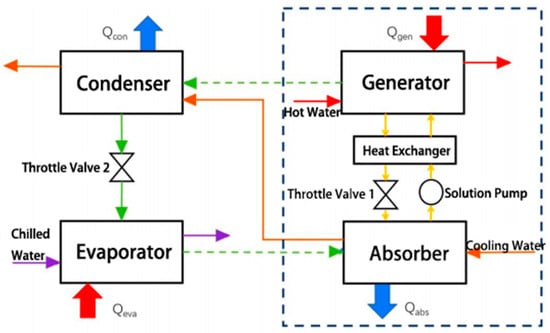
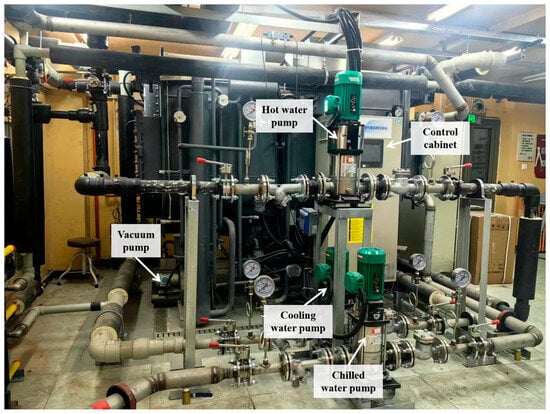
The experimental system mainly comprises a single-effect lithium bromide absorption refrigeration unit with a rated power of 10 kW, a vacuum pump, a heating system, a circulation power system, and a data acquisition system. The system schematic diagram of the single-effect lithium bromide absorption refrigeration unit is shown in Figure 1, and the experimental system is presented in Figure 2. The heating apparatus includes an electric heating water tank and a heating oil tank, which provide heat sources at temperatures of 70~80 °C and 80~140 °C for the unit. The exterior of the electric heating water tank and heating oil tank are fitted with a 10 mm-thick insulation layer. Heat losses to the ambient from the tanks and piping were minimized through this insulation and considered negligible in the energy balance calculations, as the experiments were conducted in a controlled indoor environment with ambient temperatures maintained at 20~25 °C. For the highest heat-source temperature (140 °C), preliminary estimates based on insulation properties indicated potential losses below 5% of the total heat input, which did not significantly impact the overall uncertainty. Each unit houses a 6 kW electric heater internally, with a thermocouple temperature sensor positioned on the side. These sensors connect to a thermostat for real-time temperature monitoring and control the heater’s activation and deactivation. Specifications of the major equipment and instruments are provided in Table 1.
Figure 1.
Schematic of the single-effect LiBr absorption refrigeration system.
Figure 2.
Single-effect LiBr absorption refrigeration system experimental device.
Table 1.
Experimental equipment and testing instruments.
2.2. Experimental Material
The lithium bromide solution and distilled water required for the experiments were supplied by Sinopharm Chemical Reagent Co., Ltd. (Shanghai, China). The PDMS (methyl silicone oil) was provided by Dow Corning Corporation (Midland, MI, USA). Detailed parameters are presented in Table 2.
Table 2.
Experimental material information.
2.3. Experimental Conditions
The experimental test conditions were set with a heat source temperature range of 70~140 °C, (where heat sources between 70~80 °C are supplied by an electrically heated water tank, and those between 80~140 °C are supplied by thermal oil), a cooling water temperature range of 25~30 °C, and a chilled water temperature of 7 °C. Detailed operational parameters are provided in Table 3. During the experiment, real-time temperature values at each measurement point were recorded using the MT-X multi-channel temperature recorder, with a measurement error of ±0.5 °C~0.6 °C. Pressure was measured using a general-purpose pressure transmitter with a range of 0~26.6 kPa. The LWGY-15 liquid turbine flowmeter measured flow rates at the hot water/hot oil inlet and outlet, with a measurement range of 0.6~6 m3/h and an accuracy of ±1.0%. The SLD-K3/DN25 ultrasonic flowmeter measured cooling water flow, achieving an accuracy of ±2.0% (±0.5 m/s).
Table 3.
Experimental test conditions.
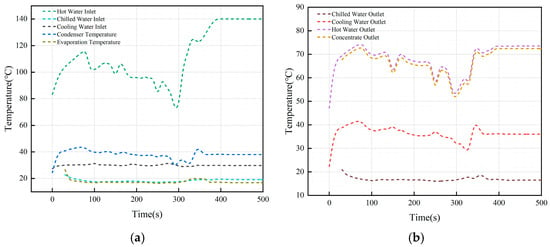
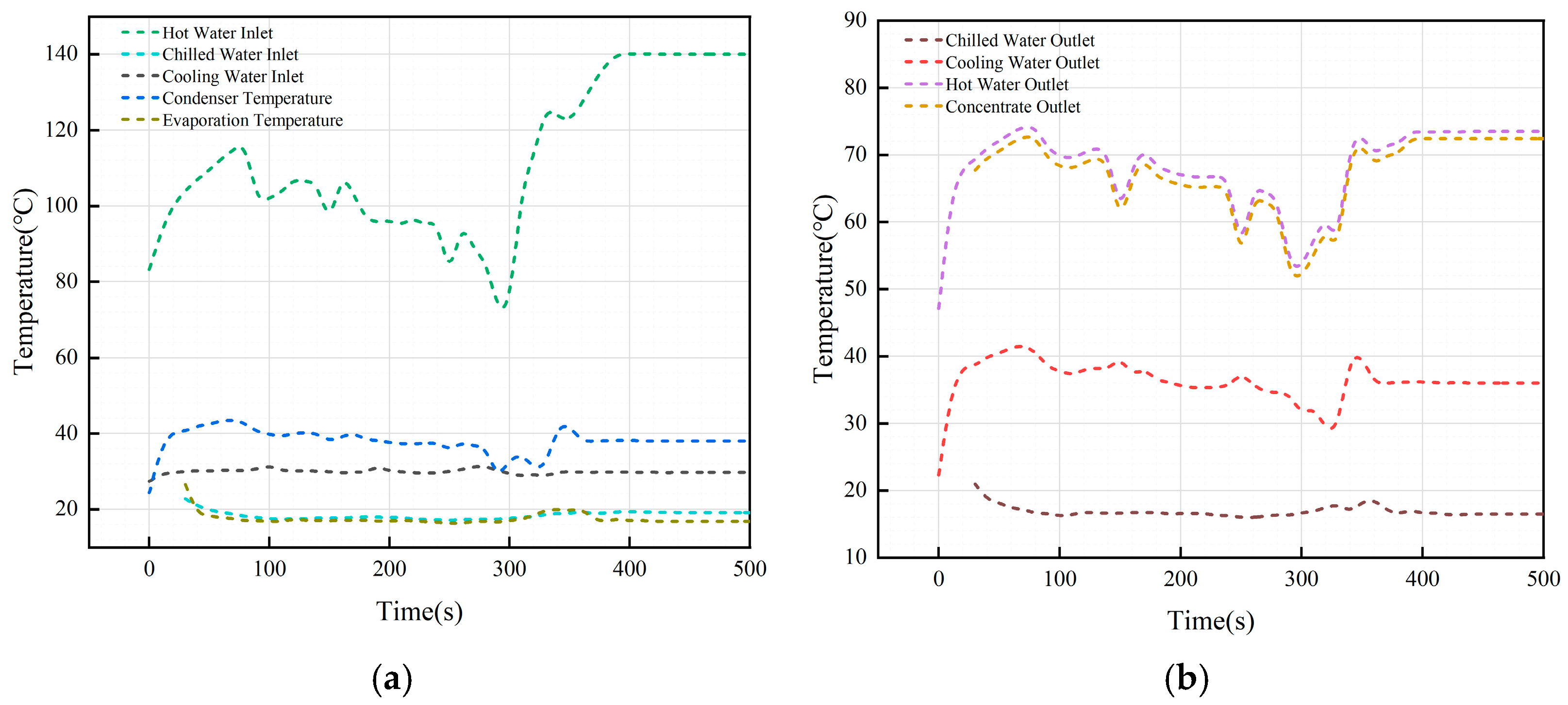
After initiating the experiment, the solution pump flow rate was regulated by adjusting the frequency of the frequency converter. The hot water pump, chilled water pump, and cooling tower pump were sequentially activated. Various valves within the system were adjusted to ensure that the temperature and pressure of the generator met the predetermined requirements. Once the refrigerant water level in the evaporator liquid storage vessels reached a sufficient height, the refrigerant pump was started to commence the refrigeration process. Once the chilled water inlet temperature reached the required operating condition, the chilled water flow rate was appropriately adjusted to stabilize the system and maintain a stable chilled water inlet temperature. Figure 3 displays the dynamic temperature change curves over time at different measurement points (corresponding to a heat source temperature of 140 °C). After 400 s, the curves stabilize with only minor deviations, which fall within the ±0.5 °C~0.6 °C uncertainty range of the temperature sensors. After the unit stabilized, experimental operating parameters were measured at 15 min intervals. The average values from no fewer than three consecutive recordings were used as the basis for calculation. The allowable deviations of the experimental parameters are presented in Table 4.
Figure 3.
Dynamic temperature changes over time at different measurement points when the heat source temperature is 140 °C. (a) Solution inlet temperature; (b) solution outlet temperature.
Table 4.
Permissible deviation of experimental parameters.
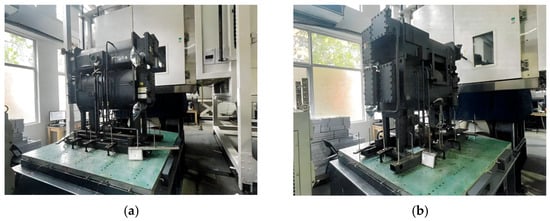
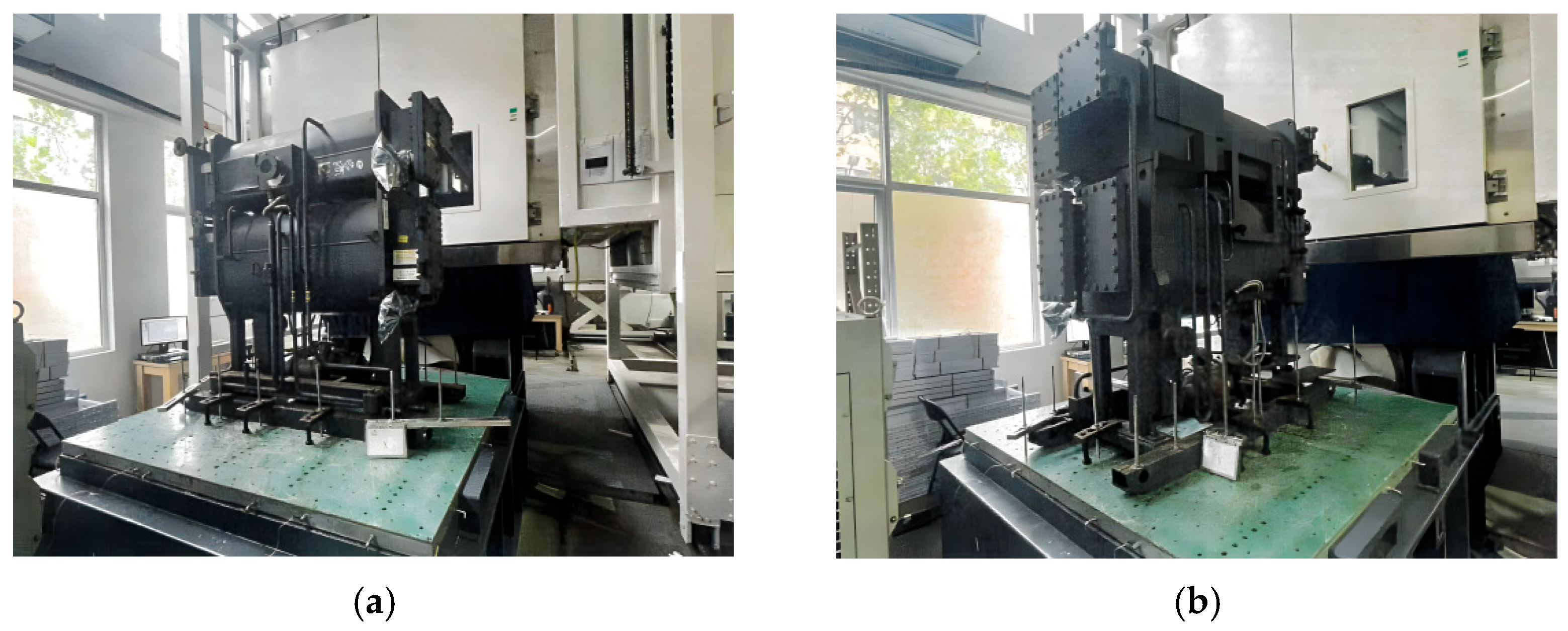
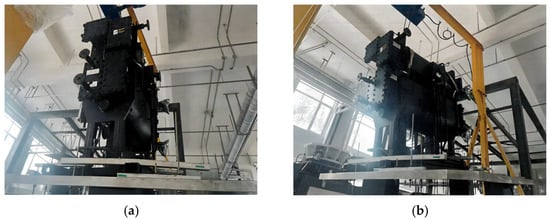
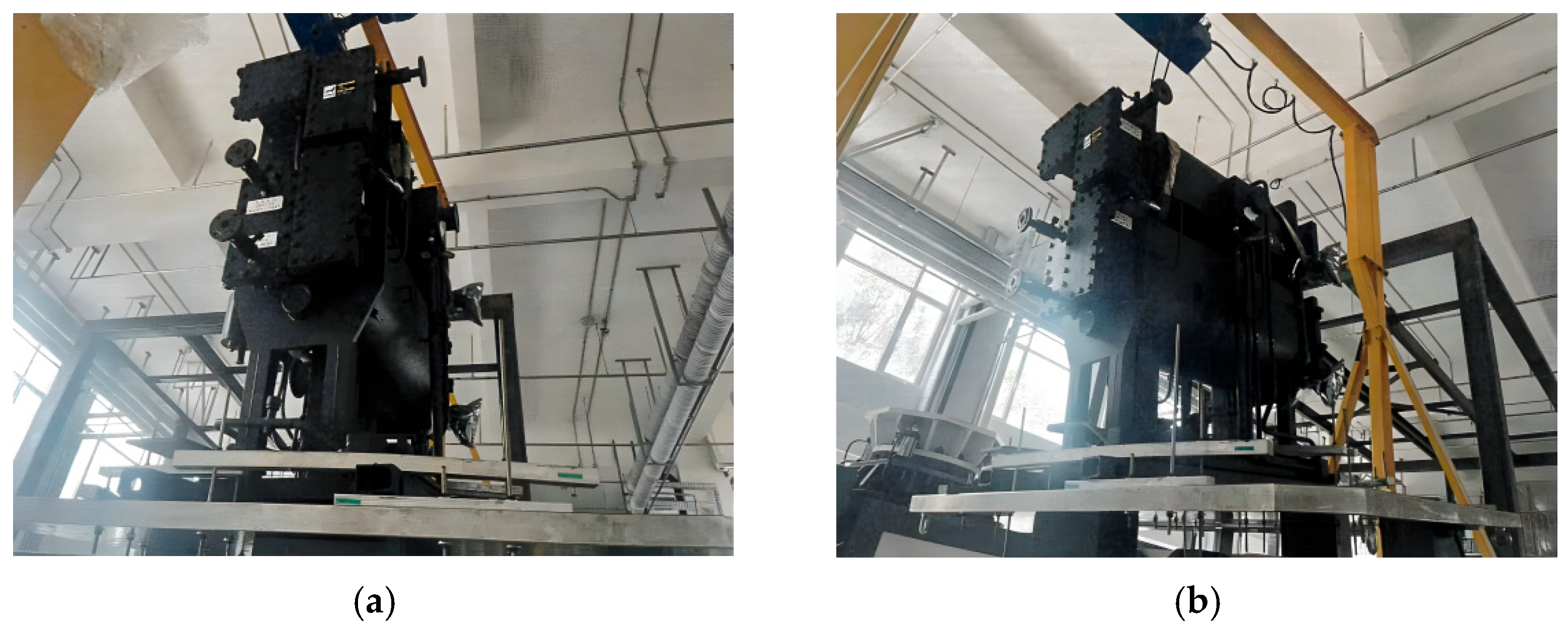
Based on the measured vibration amplitude data from offshore platforms [22,23], this experiment established vibration and sway parameters with engineering representativeness. Vibration testing was conducted in accordance with [27], as illustrated in Figure 4. While swing tests followed [28], as illustrated in Figure 5. Detailed experimental conditions and indicators are shown in Table 5.
Figure 4.
Vibration testing of LiBr absorption refrigeration units. (a) X-axis vibration; (b) Y-axis vibration.
Figure 5.
Tilt and sway testing of LiBr absorption refrigeration units. (a) Roll ±5°; (b) pitch ±5°.
Table 5.
Vibration and sway test conditions.
3. Experimental Data Processing and Uncertainty Analysis
The cooling capacity, heat input and coefficient of performance (COP) of the unit were calculated as follows:
- (1)
- Cooling capacity
The cooling capacity of the unit can be obtained from Equation (1):
where Qc is the cooling capacity/kW, qvc is the cold water volume flow/m3·h−1, Cc is the specific heat capacity of cold water at mean temperature/kJ·(kg·°C)−1, ρc is the density of cold water/kg·m−3, tc1 is the cold water inlet temperature/°C, tc2 is the cold water outlet temperature/°C.
- (2)
- Coefficient of performance
The COP is calculated as follows:
In the above equation, Qc is the cooling capacity/kW, P is the power consumption/kW, Qi is the heat input from the heat source/kW, and its calculation formula is (3).
where qvk is the hot water volume flow/m3·h−1, Ck is the specific heat capacity of hot water at mean temperature/kJ·(kg·°C)−1, ρk is the density of hot water/kg·m−3, tk1 is the hot water inlet temperature/°C, tk2 is the hot water outlet temperature/°C.
In this experiment, direct uncertainty analysis was adopted for direct parameters such as flow rate, temperature and pressure, and indirect uncertainty analysis was used for indirect measurements such as cooling capacity and COP. The direct uncertainty analysis can be obtained by Equation (4), the indirect uncertainty analysis can be obtained by Equation (5):
where is the number of data tests; is the data value; and is the arithmetic average of each group’s experimental data measurement. Assuming , the uncertainties of the direct measurements of parameter are respectively.
The parameters and uncertainties tested in this paper are shown in Table 6.
Table 6.
Uncertainty of the experiment.
4. Results and Discussion
4.1. Effect of Heat Source Temperature
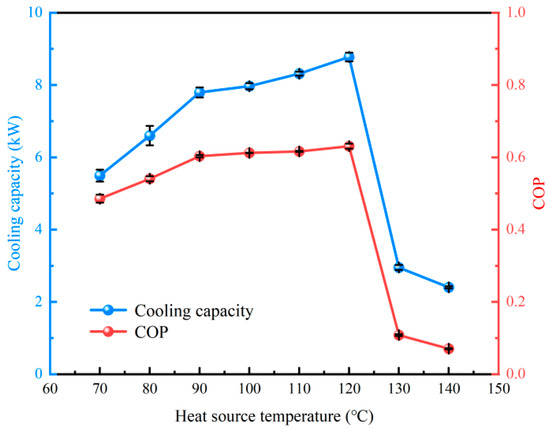
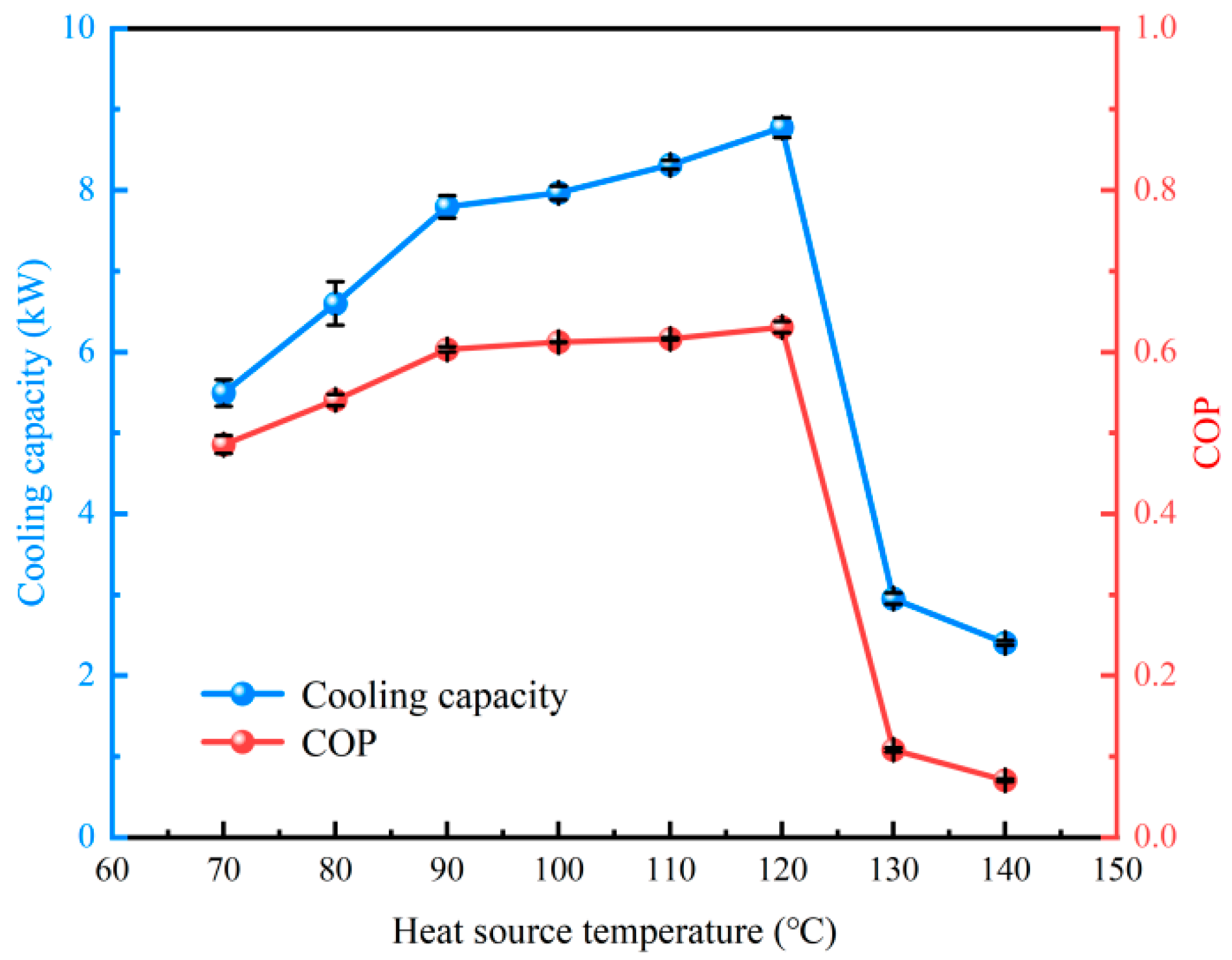
This study experimentally investigated a single-effect lithium bromide absorption chiller unit under a range of heat source inlet temperatures from 70~140 °C. The variations in the cooling capacity and the COP of the unit with heat source temperature are presented in Figure 6, respectively. When the heat source temperature is below 120 °C, the cooling capacity and COP of the unit significantly increase with the rise in heat source temperature. The reason is that a higher heat source temperature enhances the mass transfer driving force in the generator, leading to the production of more refrigerant vapor, which consequently improves the overall cycle performance. However, when the heat source temperature exceeds 120 °C, both the cooling capacity and the COP exhibit a sharp decline. As shown in Figure 6, the COP decreases by approximately 89.2% within the temperature range of 120~130 °C. It should be emphasized that this sudden drop more likely reflects the constraints imposed by the system’s cooling capacity on high thermal load conditions, rather than being determined solely by the generator side’s principle of “the higher the heat supply, the better.” As the heat source temperature continues to rise, the heat discharged by the condenser and absorber into the cooling water system increases accordingly. If the heat exchange and dissipation capacity of the cooling tower is insufficient, the cooling water temperature will struggle to remain at the target level, resulting in a weakened temperature difference driving force for the condensation and absorption processes. Restrictions on the cooling side will directly elevate the condensation temperature and corresponding condensation pressure, further increasing the high-pressure side pressure of the system. This creates higher back pressure in the generator, thereby reducing its effective driving force. At the same time, insufficient absorber cooling reduces absorption capacity and increases evaporation pressure, causing evaporation temperature to rise. This ultimately results in simultaneous deterioration of cooling capacity and COP.
Figure 6.
Variation in cooling capacity and COP with heat source temperature.
Furthermore, this experiment observed a distinct “performance inflection point” when the heat source temperature was extended to 140 °C. From a systems engineering perspective, this indicates that once the generator-side heating capacity reaches a certain threshold, unit performance becomes dominated by the cooling-side capacity (cooling tower—cooling water circuit—condenser/absorber heat exchanger). Consequently, the system transitions from being “heat source-limited” to “cooling-limited”. Therefore, the abrupt performance drop above 120 °C in Figure 4 can be regarded as an operational mismatch response under insufficient cooling capacity; increased thermal load input fails to translate into effective cooling output, instead manifesting as a sharp performance decline characterized by elevated system pressure and reduced heat exchange driving force.
Therefore, for engineering applications, it is essential to determine and operate at the optimal heat source temperature rather than indiscriminately increasing the temperature. Considering that the cooling tower serves as the critical heat dissipation equipment for this test system, it is recommended that future selection and design of similar waste heat-driven absorption refrigeration systems for offshore platforms incorporate a reasonable margin in cooling tower capacity: the cooling tower’s design cooling capacity should be selected at 1.2 times the calculated demand. This approach enhances the stability of condensation and absorption processes under high heat source conditions, reduces the risk of abnormal system pressure surges, and prevents abrupt degradation of COP and cooling capacity within high-temperature ranges.
4.2. Effect of Cooling Source Temperature
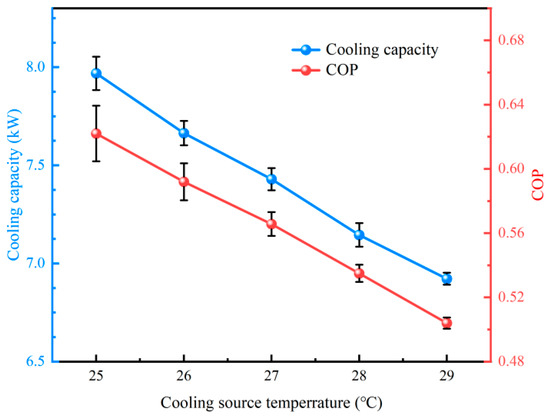
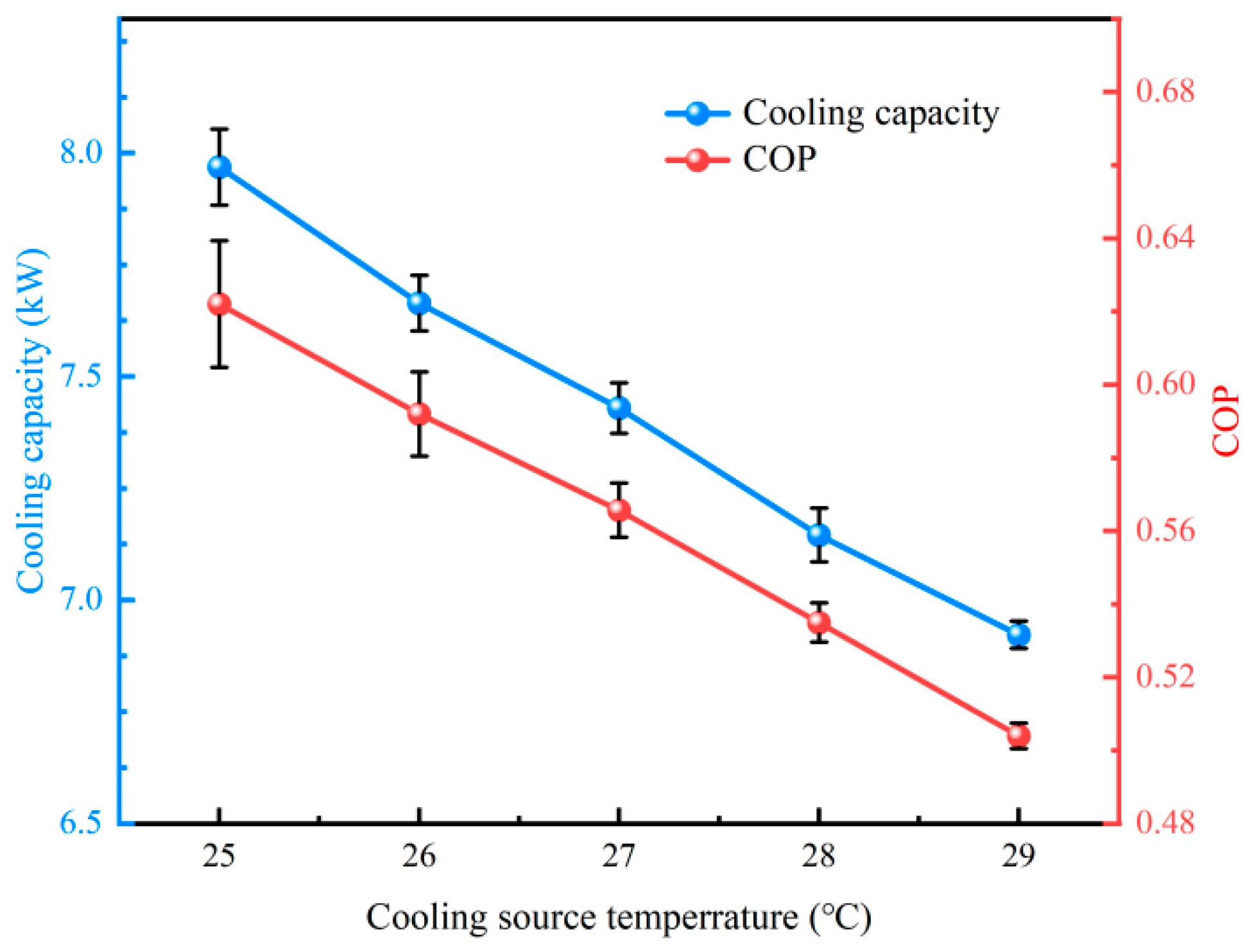
This study measured the cooling capacity and COP of the unit when the inlet temperature of the cooling water varied within the range of 25~30 °C. As illustrated in Figure 7, both the cooling capacity and COP exhibit a significant decreasing trend with the rise in cooling water temperature, demonstrating a pronounced negative linear correlation. For every 1 °C increase in cooling water temperature, the cooling capacity decreases by approximately 0.265 kW on average, while the COP declines by an average of 0.03. As explicitly revealed in the literature [8,9], a negative correlation exists between the cooling water inlet temperature and the unit performance, indicating that the cooling capacity and COP decrease significantly with the rise in cooling water temperature. The present study experimentally validates this correlation, further confirming that the temperature of the cooling water serves as one of the critical external parameters influencing the performance of the lithium bromide absorption chiller. The increase in cooling water temperature mainly deteriorates the circulation performance in two aspects: (1) For the condenser, an increase in cooling water temperature leads to a rise in condensation temperature and corresponding condensing pressure, thereby increasing back pressure and reducing the generator’s driving force. This results in a decrease in the amount of refrigerant vapor generated. (2) For the absorber, the increase in cooling water temperature caused a temperature rise in the dilute solution at the absorber outlet, with a corresponding increase in its mass fraction. Concurrently, due to the diminished driving force of the generator, the mass fraction of the concentrated solution at the generator outlet decreased. The combined effect of these two aspects resulted in a significant reduction in the unit’s concentration difference (the mass fraction difference between the concentrated and dilute solutions), leading to a decrease in both the cooling capacity and COP of the unit. However, while reducing the cooling water temperature could improve performance, operational risks required careful avoidance. When the temperature was excessively low, the overly low temperature of the dilute solution in the absorber led to an excessively low mass fraction, while the mass fraction of the concentrated solution on the generator side became excessively high due to thorough refrigerant vapor generation. Under this operating condition, on one hand, there was a risk of crystallization of the high-concentration concentrated solution; on the other hand, the dilute solution in the generator could experience entrainment due to excessive boiling, causing solution droplets to be carried into the condenser with the refrigerant vapor. This resulted in contamination of the refrigerant water and ultimately led to performance degradation of the unit.
Figure 7.
Variation in cooling capacity and COP with cooling source temperature.
Therefore, in practical engineering applications, the lower limit of the cooling water inlet temperature must be strictly controlled to achieve safe, efficient, and stable operation.
4.3. Effect of Vibration and Sway
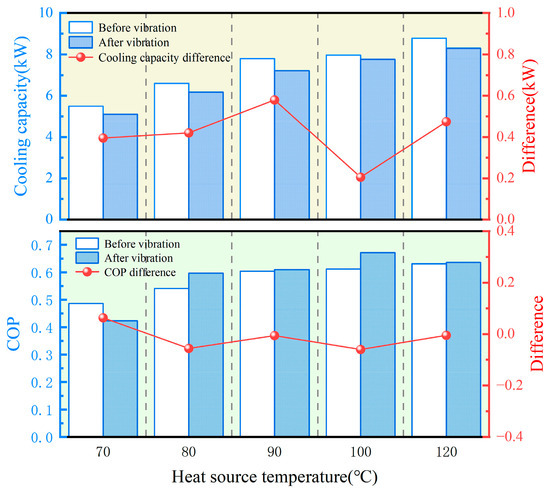
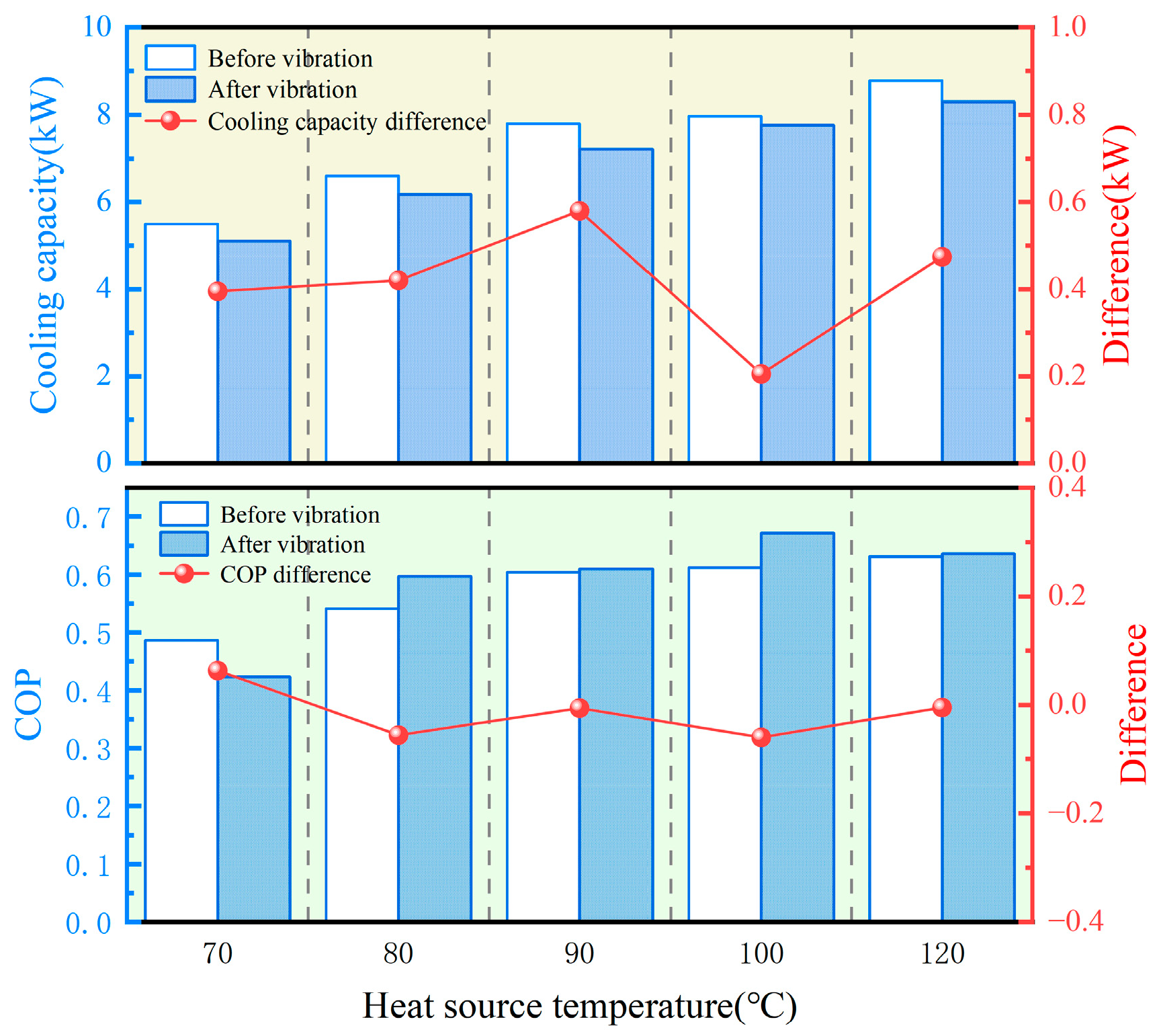
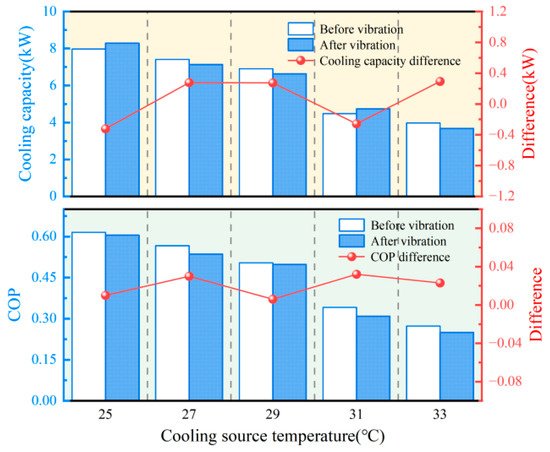
This study conducted two sets of performance tests before and after the vibration and sway experiments: (1) with the cooling water temperature fixed at 25 °C and the heat source temperature varied from 70~120 °C; (2) with the heat source temperature fixed at 100 °C, and the cooling water temperature varied from 25~33 °C. As shown in Figure 8, under variable heat source conditions, a 3.5% to 7.8% reduction in cooling capacity was recorded following vibration and sway, with an average reduction rate of 5.73% and standard deviation of 1.42%. However, the COP varied between −1.2% and +1.5%, with no significant change in the average value. In contrast, as illustrated in Figure 9, the cooling capacity and COP curves under variable cooling water conditions were nearly identical before and after vibration and sway exposure, with variations remaining within ±2%, indicating that the unit performance is insensitive to vibration and sway under such operating conditions.
Figure 8.
Variation and sway in cooling capacity and COP with heat source temperature after vibration.
Figure 9.
Variation and sway in cooling capacity and COP with cooling source temperature after vibration.
It is evident that the disturbance to the unit’s performance caused by vibration and sway is primarily concentrated within the solution circulation subsystem, rather than affecting all processes uniformly. On one hand, vibration and sway are prone to disrupt key components, leading to an operating point deviation of the solution pump, uneven liquid film distribution in the generator distributor, and liquid level fluctuations in internal storage vessels. Collectively, these disruptions cause the actual solution circulation volume to fall below the design value. Since the cooling capacity is directly proportional to the product of the solution circulation volume and the concentration difference, it is established that a reduction in the solution circulation volume directly results in a linear attenuation of the cooling capacity. Since the heat input decreased correspondingly, the COP remained stable. On the other hand, vibration and sway may induce micro-leakages or release non-condensable gases adsorbed on material surfaces, thereby slightly compromising the vacuum. However, experiments indicate that this effect is not the primary cause of performance degradation in the short term. Therefore, under variable heat source conditions, where the system aims to maximize the concentration difference, it is extremely sensitive to changes in solution flow rate, amplifying the impact of vibration and sway. Under variable cooling water conditions, the system performance is inherently constrained by the absorption and condensation capabilities, where the solution circulation rate does not serve as the primary constraint. Consequently, its fluctuations do not produce a significant impact on the overall unit performance.
Therefore, to ensure the long-term reliable and efficient operation of lithium bromide units in environments subject to vibration and sway, structural anti-vibration design may be employed. This includes structural reinforcement of key components such as monolithic vibration-damping bases, solution pump, and solution distributors. Internal system process redundancy and optimization, such as installing multi-channel redundant liquid distribution devices atop the generator and incorporating pressure-stabilizing reservoirs with flexible diaphragms within the solution circuit, combined with intelligent precision operational control—including composite feedforward–feedback control algorithms based on heat source parameters—constitute a comprehensive strategy. This effectively enhances the unit’s vibration resistance, ensuring its reliability in practical applications.
5. Conclusions
This study established a comprehensive performance testing system for single-effect lithium bromide absorption chillers used on offshore oil platforms. Through experimentation, the variation patterns of the chiller’s cooling capacity and COP were obtained. The effects of heat source temperature, cooling source temperature, and vibration on the chiller’s performance were investigated. The principal conclusions are as follows:
- (1)
- Within the 70~120 °C range, increasing the heat source temperature significantly enhances cooling capacity and COP. However, as the heat source temperature continues to rise, the system exhibits a distinct “performance inflection point.” Unit operation shifts from “heat-source-limited” to “cooling-limited,” characterized by elevated system pressure and weakened heat transfer driving force. This results in a sharp deterioration of cooling capacity and COP at high temperatures. This result indicates that in the context of waste heat recovery on offshore platforms, simply increasing the quality of the heat source does not necessarily lead to higher energy efficiency. It is essential to simultaneously match the cooling capacity and control strategy to achieve a stable improvement in the conversion efficiency between thermal energy and cooling capacity.
- (2)
- The cooling capacity and COP of the unit decrease as the cooling source temperature rises. An increase in the cooling water temperature narrows the system’s concentration difference by adversely affecting both the condenser and the absorber, resulting in performance deterioration. However, excessively low temperatures entail the risk of crystallization and refrigerant contamination. In engineering applications, the upper and lower limits of cooling water temperature must be constrained and managed to maintain the effective driving force and operational stability of the condensation/absorption process. Real-time monitoring and intelligent control ensure stable and efficient operation.
- (3)
- Under variable heat source conditions, refrigeration capacity decreased by 3.5% to 7.8% after vibration, with an average reduction rate of 5.73%, while the overall COP showed minimal fluctuation. Under variable cooling water conditions, performance differences before and after vibration were insignificant. This phenomenon indicates that ocean motion does not uniformly affect all heat-exchange components. Instead, disturbances are more likely introduced through solution circulation and distribution processes. Therefore, it is recommended to prioritize structural vibration resistance, process redundancy, and control optimization for critical aspects such as solution pump operating stability, uniform liquid distribution, and liquid level fluctuations in engineering applications.
Author Contributions
Conceptualization, W.A. and D.J.; methodology, F.W.; software, D.J.; validation, H.Z. and W.A.; formal analysis, D.J.; investigation, F.W.; resources, M.Z. and D.J.; data curation, G.W.; writing—original draft preparation, F.W. and D.J.; writing—review and editing, H.Z., M.Z. and G.W.; visualization, D.J.; supervision, W.A.; project administration, W.A.; funding acquisition, M.Z. and W.A. All authors have read and agreed to the published version of the manuscript.
Funding
This research received no external funding.
Data Availability Statement
The original contributions presented in the study are included in the article, further inquiries can be directed to the corresponding author.
Acknowledgments
The authors thank the CNOOC Research Institute Ltd. and Beijing University of Civil Engineering and Architecture, for support of research infrastructure. The authors have reviewed and edited the output and take full responsibility for the content of this publication.
Conflicts of Interest
Author Fei Wang was employed by the company China National Offshore Oil Corporation. Authors Heshan Zhao, Weizheng An, Ming Zhang and Dan Jin were employed by the company CNOOC Research Institute Ltd. The remaining authors declare that the research was conducted in the absence of any commercial or financial relationships that could be construed as a potential conflict of interest.
Abbreviations
The following abbreviations are used in this manuscript:
| LiBr | Lithium bromide |
| COP | Coefficient of performance |
| Qc | Cooling capacity(kW) |
| qvc | Cold water volume flow(m3·h−1) |
| Cc | Specific heat capacity of cold water at mean temperature (kJ·(kg·°C)−1) |
| ρc | Density of cold water (kg·m−3) |
| tc1 | Cold water inlet temperature (°C) |
| tc2 | Cold water outlet temperature (°C) |
| P | Power consumption (kW) |
| Qi | Heat input from the heat source (kW) |
| qvk | Hot water volume flow (m3·h−1) |
| Ck | Specific heat capacity of hot water at mean temperature (kJ·(kg·°C)−1) |
| ρk | Density of hot water (kg·m−3) |
| tk1 | Hot water inlet temperature (°C) |
| tk2 | Hot water outlet temperature (°C) |
| σ | Direct uncertainty |
| σY | Indirect uncertainty |
| n | Number of data tests |
| xi | Data value |
| Arithmetic average of each group’s experimental data measurement |
References
- Lou, Q.H.; Niu, H.H.; Chen, J.; Gao, Y.; Geng, X.; Li, B. Research on the analysis and optimization method of offshore oil-platforms energy system. IOP Conf. Ser. Earth Environ. Sci. 2019, 267, 062052. [Google Scholar] [CrossRef] [Scilit]
- Nguyen, T.V.; Pierobon, L.; Elmegaard, B.; Haglind, F.; Breuhaus, P.; Voldsund, M. Exergetic assessment of energy systems on North Sea oil and gas platforms. Energy 2013, 62, 23–36. [Google Scholar] [CrossRef] [Scilit]
- Nguyen, T.V.; Voldsund, M.; Breuhaus, P.; Elmegaard, B. Energy efficiency measures for offshore oil and gas platforms. Energy 2016, 117, 325–340. [Google Scholar] [CrossRef] [Scilit]
- Lu, D.; Chen, G.; Gong, M.; Bai, Y.; Xu, Q.; Zhao, Y.; Dong, X.; Shen, J. Thermodynamic and economic analysis of a gas-fired absorption heat pump for district heating with cascade recovery of flue gas waste heat. Energy Convers. Manag. 2019, 185, 87–100. [Google Scholar] [CrossRef] [Scilit]
- Du, Y.; Peng, H.; Xu, J.; Tian, Z.; Zhang, Y.; Han, X.; Shen, Y. Performance analysis of ocean thermal energy conversion system integrated with waste heat recovery from offshore oil and gas platform. Case Stud. Therm. Eng. 2024, 54, 104027. [Google Scholar] [CrossRef] [Scilit]
- Zhou, S.; He, G.; Liang, X.; Li, Y.; Pang, Q.; Cai, D. Experimental performance evaluation and comparison of an absorption refrigeration prototype driven by exhaust heat operating with NH3/LiNO3 and NH3/LiNO3 + H2O. Int. J. Refrig. 2021, 132, 172–186. [Google Scholar] [CrossRef] [Scilit]
- Salmi, W.; Vanttola, J.; Elg, M.; Kuosa, M.; Lahdelma, R. Using waste heat of ship as energy source for an absorption refrigeration system. Appl. Therm. Eng. 2017, 115, 501–516. [Google Scholar] [CrossRef] [Scilit]
- Shin, Y.; Seo, J.A.; Cho, H.W.; Nam, S.C.; Jeong, J.H. Simulation of dynamics and control of a double-effect LiBr–H2O absorption chiller. Appl. Therm. Eng. 2009, 29, 2718–2725. [Google Scholar] [CrossRef] [Scilit]
- Chahartaghi, M.; Golmohammadi, H.; Shojaei, A.F. Performance analysis and optimization of new double effect lithium bromide–water absorption chiller with series and parallel flows. Int. J. Refrig. 2019, 97, 73–87. [Google Scholar] [CrossRef] [Scilit]
- Jeong, S.; Kang, B.H.; Karng, S.W. Dynamic simulation of an absorption heat pump for recovering low grade waste heat. Appl. Therm. Eng. 1998, 18, 1–12. [Google Scholar] [CrossRef] [Scilit]
- You, D.; Metghalchi, H. Analysis of aqueous lithium bromide absorption refrigeration systems. J. Energy Resour. Technol. 2022, 144, 012105. [Google Scholar] [CrossRef] [Scilit]
- Salilih, E.M.; Bamaga, O.; Almatrafi, E.; Abulkhair, H.; Alhumade, H.; Bamasag, A.; Ahmed, I.; Alsaiari, A.; Nurrohman; Albeirutty, M. Performance analysis of a novel absorption-refrigeration driven membrane condenser system for recovery of water and waste heat from flue gas. Int. J. Refrig. 2023, 156, 219–231. [Google Scholar] [CrossRef] [Scilit]
- Lizarte, R.; Marcos, J.D. COP optimisation of a triple-effect H2O/LiBr absorption cycle under off-design conditions. Appl. Therm. Eng. 2016, 99, 195–205. [Google Scholar] [CrossRef] [Scilit]
- Hu, X.; Zhang, S.; Peng, Z.; Tang, S.; Liu, N. Dynamic Modeling and Operation Characteristics Analysis of LiBr Absorption Heat Pump. E3S Web Conf. 2021, 257, 01022. [Google Scholar] [CrossRef] [Scilit]
- Manu, S.; Chandrashekar, T.K.; Girisha, C. Effect of Cooling Water on the Performance of Lithium Bromide–Water (LiBr–H2O) Absorption Based Heat Pump. IOP Conf. Ser. Mater. Sci. Eng. 2018, 376, 012007. [Google Scholar] [CrossRef] [Scilit]
- Heng, Z.; Feipeng, C.; Yang, L.; Haiping, C.; Kai, L.; Boran, Y. The performance analysis of a LCPV/T assisted absorption refrigeration system. Renew. Energy 2019, 143, 1852–1864. [Google Scholar] [CrossRef] [Scilit]
- Xu, Z.Y.; Wang, R.Z.; Wang, H.B. Experimental evaluation of a variable effect LiBr–water absorption chiller designed for high-efficient solar cooling system. Int. J. Refrig. 2015, 59, 135–143. [Google Scholar] [CrossRef] [Scilit]
- Popli, S.; Rodgers, P.; Eveloy, V. Gas turbine efficiency enhancement using waste heat powered absorption chillers in the oil and gas industry. Appl. Therm. Eng. 2013, 50, 918–931. [Google Scholar] [CrossRef] [Scilit]
- Talukdar, K.; Gogoi, T.K. Exergy analysis of a combined vapor power cycle and boiler flue gas driven double effect water–LiBr absorption refrigeration system. Energy Convers. Manag. 2016, 108, 468–477. [Google Scholar] [CrossRef] [Scilit]
- Du, S.; Xu, Z.; Wang, R.; Yang, C. Development of direct seawater-cooled LiBr–H2O absorption chiller and its application in industrial waste heat utilization. Energy 2024, 294, 130816. [Google Scholar] [CrossRef] [Scilit]
- Hajinezhadian, M.; Behnam, B. A probabilistic approach to lifetime design of offshore platforms. Sci. Rep. 2023, 13, 7101. [Google Scholar] [CrossRef] [Scilit]
- Guan, X.; Yu, H.; Yuan, Y.; Kong, D.; Liu, B.; Tang, H. Study on structural dynamic response of offshore wind turbine under floating ice load. Sci. Rep. 2025, 15, 17050. [Google Scholar] [CrossRef] [Scilit] [PubMed]
- Cheng, J.; Zhang, Y.; Wu, D.; Zeng, X.; Han, X.; Wang, J. Experimental study on thermal stratification characteristics of C-shaped heat exchanger under stationary and rolling conditions. Nucl. Eng. Des. 2025, 442, 114213. [Google Scholar] [CrossRef] [Scilit]
- Hu, H.; Li, J.; Li, Y.; Xie, Y. Experimental investigation on flow boiling characteristics in offset strip fin channels under different sloshing conditions. Exp. Therm. Fluid Sci. 2023, 145, 110880. [Google Scholar] [CrossRef] [Scilit]
- Zhuang, D.; Zhou, F.; Ding, G. Effects of sloshing motions on condensation heat transfer characteristics of integral-fin tubes under sea conditions. ASME J. Heat Mass Transf. 2023, 145, 021601. [Google Scholar] [CrossRef] [Scilit]
- Klaczak, A. Report from experiments on heat transfer by forced vibrations of exchangers. Heat Mass Transf. 1997, 32, 477–480. [Google Scholar] [CrossRef] [Scilit]
- GJB150.16A—2009; General Armament Department of the People’s Liberation Army, Electronic Information Infrastructure Department. Environmental Test Methods for Military Equipment Laboratories. Part 16: Vibration Test. Military Standards Publishing and Distribution Department of the General Armament Department: Beijing, China, 2009.
- GJB150.23A—2009; General Armament Department of the People’s Liberation Army, Electronic Information Infrastructure Department. Military Equipment Laboratory Environmental Test Methods Part 23: Tilt and Sway Tests. Military Standards Publishing and Distribution Department of the General Armament Department: Beijing, China, 2009.

Disclaimer/Publisher’s Note: The statements, opinions and data contained in all publications are solely those of the individual author(s) and contributor(s) and not of MDPI and/or the editor(s). MDPI and/or the editor(s) disclaim responsibility for any injury to people or property resulting from any ideas, methods, instructions or products referred to in the content. |
© 2026 by the authors. Licensee MDPI, Basel, Switzerland. This article is an open access article distributed under the terms and conditions of the Creative Commons Attribution (CC BY) license.