Review

Review of Contact-Point State Monitoring Technologies for Spring-Energy-Storage Circuit Breakers

1
State Grid Jiangsu Electric Power Research Institute, Nanjing 211103, China
2
Shenzhen International Graduate School, Tsinghua University, Shenzhen 518055, China
*
Author to whom correspondence should be addressed.
Energies 2026, 19(5), 1239; https://doi.org/10.3390/en19051239
Submission received: 2 February 2026 / Revised: 24 February 2026 / Accepted: 27 February 2026 / Published: 2 March 2026
(This article belongs to the Special Issue Advances in High-Voltage Engineering and Insulation Technologies)

Abstract

Spring-energy-storage circuit breakers are critical switching devices in power systems, and their operating reliability directly affects the safety and stability of the grid. In practical operations of transmission equipment, contacts may experience degradation such as poor contact, overheating, etc., due to multiple factors, including contact arcing erosion, mechanical wear, oxidation aging, and reduced contact pressure. Developing contact-point health monitoring and assessment enables prognostic maintenance, improves power supply reliability, and reduces operation and maintenance costs. This paper surveys the related research on health monitoring technologies for contact-point state in spring-energy-storage circuit breakers, systematically sorting out the operating principles and application characteristics, vibration and acoustic emissions monitoring, as well as electrical and mechanical parameter monitoring. It further analyzes the key bottlenecks faced by current monitoring technologies in online measurement accuracy, anti-interference capability, and engineering applicability, and finally discusses the future development trends of intelligent monitoring integrated with artificial intelligence, multi-source data fusion, and digital twin technologies. The research results provide theoretical reference and practical guidance for the upgrading of contact-point state monitoring technologies and the construction of intelligent operation and maintenance systems for spring-energy-storage circuit breakers.

1. Introduction

Under the guidance of the “dual carbon” goals, the structure of the new power system is increasingly complex, imposing stricter requirements on the safety and stability of electrical equipment. As core control and protection devices of the power system, spring-energy-storage circuit breakers offer advantages such as simple structure, controllable cost, easy maintenance, and high operating reliability, resulting in broad applications in medium- and high-voltage power systems [1]. Their operating state has a significant impact on the power system’s reliability of supply.
As the key components for current conduction and interruption, the performance of contacts directly affects the breaker’s conductivity, breaking capacity, and electrical lifetime. Over long service life, contacts are subjected to multi-physical-field coupling (electrical, thermal, mechanical, etc.), leading to performance degradation and various faults. Arc erosion causes material melting/evaporation [2] and mechanical wear accelerates material loss [3]; together they alter the surface morphology [4]. Oxidation and chemical corrosion form low-conductivity products; spring fatigue can reduce contact pressure. These degradations can raise contact resistance, cause contact overheating and temperature rise anomalies, accelerating insulation degradation in the surrounding region and, in severe cases, lead to contact welding and breaker failure [5].
Therefore, effective monitoring of contact-point states is of great importance for ensuring secure grid operation. To mitigate contact-fault risks, both domestic and international groups have developed diverse state monitoring technologies. Contact resistance measurement directly reflects the contact status and is the core monitoring method; temperature rise monitoring via infrared thermography or fiber-optic sensing enables non-contact or direct temperature measurements, adaptable to different application scenarios; vibration and acoustic emissions monitoring, as well as electrical and mechanical parameter monitoring, provide fault identification via indirect signals, with arc energy accumulation methods able to assess the contact’s electrical lifetime directly [6].
However, traditional maintenance models still rely mainly on Time-Based Maintenance (TBM), which struggles to accurately capture early fault signals and may lead to missed faults or unnecessary inspections. Current monitoring technologies also have limitations: some contact resistance methods require de-energization; infrared imaging for internal contact monitoring is indirect; and vibration signals can be susceptible to environmental noise, and thus cannot fully meet precise monitoring under complex operating conditions.
Against the backdrop of increasing reliability requirements in modern power systems, there is an urgent need to overcome bottlenecks of TBM and existing technologies, enabling a transition from TBM to Condition-Based Maintenance and Predictive Maintenance. Real-time or periodic collections of physical quantities reflecting contact-health status allow a timely identification of early defects, such as wear and poor contact, preventing escalation to catastrophic faults and improving equipment and grid reliability. Trend analysis and life prediction based on state data can optimize maintenance planning, reduce non-schedule outages and associated costs, while avoiding unnecessary disassembly and replacement, thus extending equipment life and saving manpower and resources [7].
This paper focuses on health monitoring technologies for contacts in spring-energy-storage circuit breakers, discussing their operating principles and fault mechanisms, and reviewing mainstream monitoring methods, including contact resistance, temperature rise, vibration, electrical, and mechanical parameters. It also analyzes the main challenges faced by current monitoring technologies and finally discusses future research directions and development trends.
While this review focuses on spring-energy-storage circuit breakers, it also draws on relevant studies from related devices such as vacuum and SF6 circuit breakers, on-load tap changers, contactors, and GIS components, where the underlying contact mechanisms and monitoring techniques are analogous. This narrative review is based on a survey of literature published between 2015 and 2025, retrieved from major databases including IEEE Xplore, Scopus, and Web of Science, with an emphasis on recent advances in sensing, signal processing, and diagnostic modeling.

2. Contact-Point Working Principle and Fault Mechanisms

2.1. Contact Structure and Arc Erosion Mechanism

High-voltage circuit breakers commonly adopt a main-arcing dual-contact structure. The main contact is typically made of highly conductive silver-plated copper or copper alloys, providing a very low contact resistance in the closed state and reliably carrying the rated operating current while minimizing the temperature rise during conduction. The arcing contact is usually fabricated from arc-eroding-resistant materials such as copper–tungsten (CuW) alloys to withstand the direct arc exposure during opening and prevent direct damage to the main contact that would compromise conductivity.
During the closing operation, the movable contact moves rapidly toward the stationary contact to a critical gap. The electric field between the contacts exceeds the breakdown strength of the insulating medium, initiating a pre-breakdown and forming a pre-breakdown arc. This arc pre-emptively closes the circuit and concurrently causes initial surface erosion on the surfaces of the approaching contacts. Subsequently, mechanical collision occurs between the movable and stationary contacts. Owing to the substantial collision energy, the movable contact experiences multiple micro-separations and re-closures, i.e., contact bounce [8]. Each bounce re-ignites a transient arc in the contact gap. Although these brief arcs have very short durations, they exhibit high energy density and cause intense localized heating and melting of the contact surface, which is a key mechanism for contact material erosion [9,10].
During the opening operation, when the movable and stationary contacts separate, the current does not instantly cause an interruption. Instead, a high-temperature, high-pressure plasma column forms in the separating gap, i.e., the main arc [11]. The quenching of this main arc directly determines whether the breaker can successfully interrupt the fault current. The breaker must employ arc-extinction principles to rapidly extinguish the arc after current zero crossing and promptly restore the insulation strength of the contact gap to withstand recovery voltage and prevent re-ignition [12]. During arcing, the arc core temperature can exceed several thousand degrees Celsius, causing substantial melting, evaporation, and even spattering of the contact materials, leading to notable material loss, i.e., arc erosion [13].
In closing, the main contact tends to separate before the arcing contact, whereas in opening, the arcing contact closes before the main contact. Such sequencing ensures that the arc always forms and extinguishes between the arcing contacts, thereby protecting the main contacts, which have excellent conductivity but relatively weaker arc resistance, from direct arc damage [14]. The main-contact material requires extremely high electrical and thermal conductivities, whereas the arcing-contact material must not only maintain adequate conductivity but also exhibit a high melting point, high hardness, and superior arc-eroding and anti-welding properties, both of which are critical for the reliable operation of the breaker.

2.2. Main Fault Modes and Mechanisms of Contacts

2.2.1. Electrical Wear

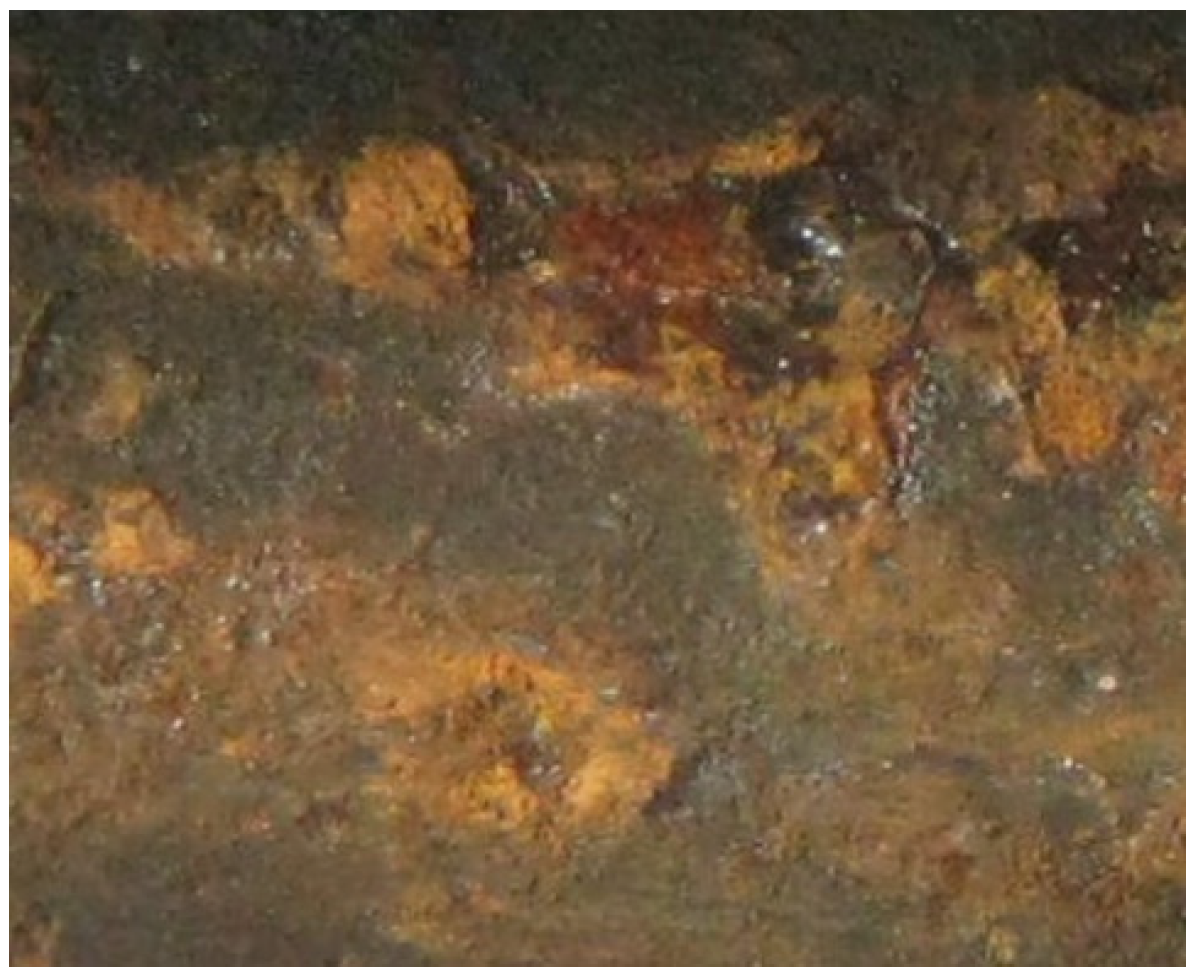
Electrical wear, also known as arc erosion, is the core failure mode of contacts. Figure 1 illustrates the erosion morphology; arc erosion is essentially irreversible material loss from the contact due to the thermal and electromagnetic effects of the arc [15]. The pre-breakdown arc during closing, the contact bounce arc, and the main arc during opening all share the common feature of a high-temperature plasma. Arc energy is transferred to the contact surface via conduction, convection, and radiation, driving local temperatures to well above the material melting or even boiling points, causing melting and substantial evaporation. After arc extinction, some vapor may re-condense on the contact surface with altered morphology, while most of it escapes into the arc-extinguishing medium [16]. Simultaneously, the high-velocity arc plasma flow and electromagnetic forces can mobilize the liquid metal in the surface pools, resulting in droplet ejection and pronounced material loss.
Electrical wear magnitude is closely related to arc energy, E arc , which can be quantified by integrating the instantaneous arc power during arcing:
E arc = 0 t arc u ( t ) i ( t ) d t
where u ( t ) is the instantaneous arc voltage in volt, i ( t ) denotes the instantaneous arc current in ampere, and t arc is the arc duration in millisecond. All parameters are physical test data without empirical fitting terms. A large body of work shows a strong positive correlation between contact mass loss and the accumulated arc energy. Therefore, larger opening current amplitudes and longer arc durations lead to more severe electrical wear.
Feizifar and colleagues [18] proposed an online wear-monitoring algorithm based on arc power. They perform a high-frequency synchronous acquisition of the contact-end voltages and the through-current during breaker opening to precisely compute the arc duration and arc energy. Experimental results demonstrate that accumulating the arc energy of each opening provides accurate estimates of cumulative wear, in good agreement with offline mass-loss measurements. Similarly, many domestic studies focus on accurately detecting arc duration and applying a weighted accumulation method on the opening current to assess the electrical life of vacuum interrupters.
Hu Qiusheng’s team [15] designed an online monitoring system based on DSP. By analyzing the current waveform, the onset and cessation of the arc can be identified, and the wear of contacts can be dynamically predicted using an improved LM-BP neural network with high accuracy.

2.2.2. Mechanical Wear

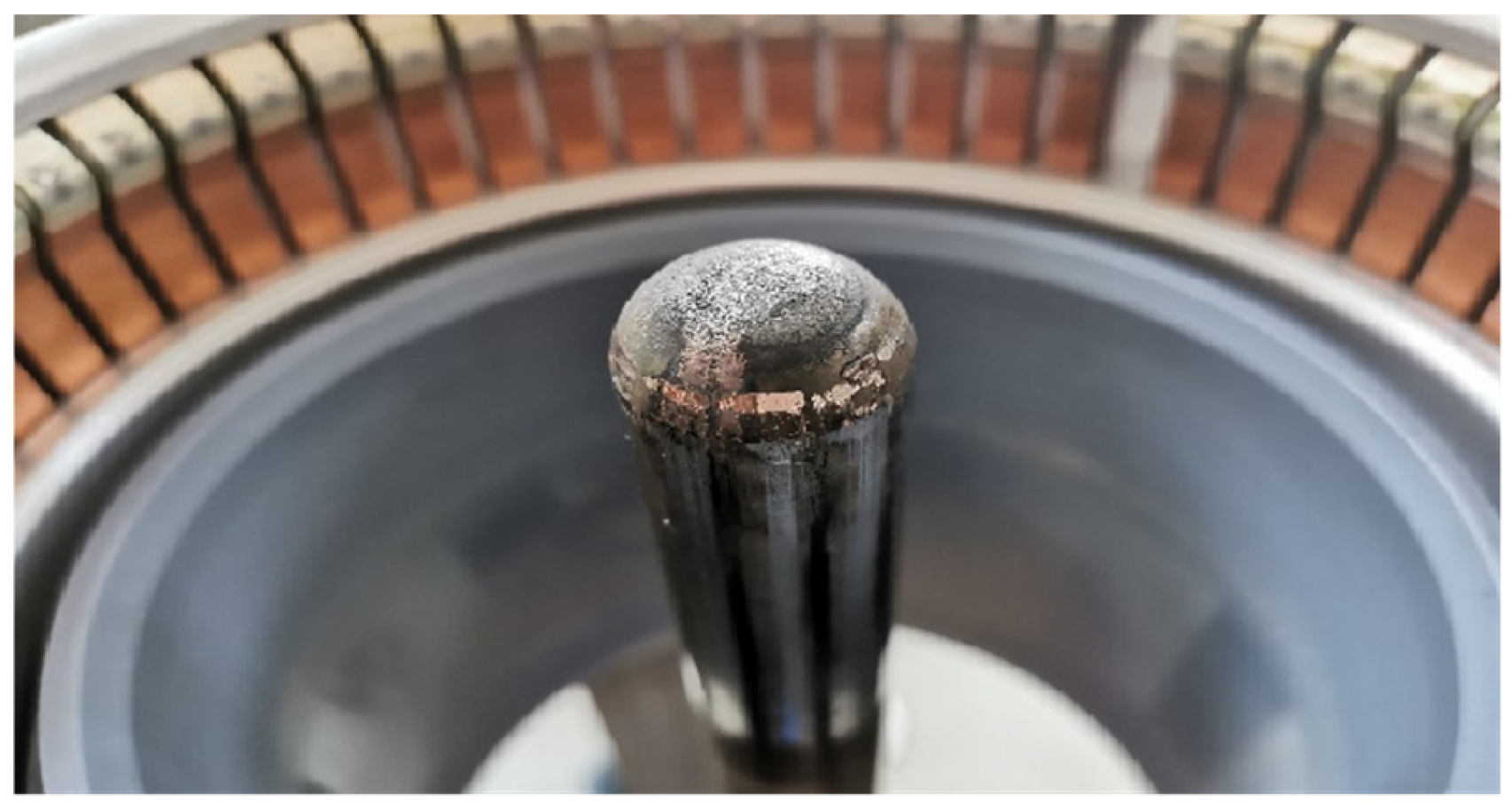
Mechanical wear refers to material loss and surface damage of the contacts caused by relative motion, impact, and friction during opening and closing, which is particularly pronounced in breakers with high operating frequencies [13]. Figure 2 shows a worn contact. During closing, the movable and stationary contacts collide at velocities of several meters per second, and the large impact force can induce local plastic deformation, work hardening, or microcracking on the contact surfaces, resulting in impact wear. Some structural contacts experience relative sliding during insertion and separation, leading to friction wear. Hard oxide particles or metal debris generated by arc erosion on the contact surface can act as abrasives, causing abrasive wear. Under high contact pressure, microscopic asperities on the contacts may undergo cold welding, and upon separation may be torn apart, causing material transfer and adhesive wear [19].
The team led by Fu Zhong [16] conducted multiple closing and opening tests on SF6-type arc contacts, and SEM and EDS analyses revealed that even in pure mechanical operations without energizing the circuit, clear scratches and material flaking appeared on the contact surface, confirming the presence of mechanical wear. Meanwhile, Ding Cans research group found that in energized operations, the mechanical-wear region interacts with the arc-erosion region; the physical images show that arc erosion and mechanical wear jointly render the contact-surface morphology more complex [2].

2.2.3. Poor Contact and Overheating

Poor contact refers to an abnormal increase in contact resistance between contacts when the breaker is in the closed state, leading to severe overheating at the rated current. Figure 2 shows the contact wear morphology formed by severe overheating due to poor contact. Ideally, clean contact with sufficient contact pressure exhibits very low contact resistance, but with service time, contact materials exposed to air or impure arc-extinguishing media oxidize to form high-resistivity oxide films. The high arc temperature accelerates oxidation, and dust, oils, and other contaminants can further contaminate the contact surfaces, increasing contact resistance. Meanwhile, fatigue, creep, and fracture of the closing and contact springs in the spring mechanism reduce contact pressure [20]. According to contact resistance theory, the contact resistance is inversely proportional to the square root of the contact pressure. As pressure decreases, the number and area of conductive patches shrink, causing a sharp rise in contact resistance [21]. The roughness caused by electrical and mechanical wear further reduces the effective contact area, exacerbating the resistance increase.
The increase in contact resistance leads to greater ohmic heating, raising the contact temperature, which further accelerates surface oxidation and may anneal and soften the contact materials, reducing mechanical strength and further decreasing contact pressure. This positive feedback can ultimately lead to contact welding or breaker failure [22]. Therefore, monitoring contact resistance or related temperature changes is a key means of assessing contact health.

2.2.4. Effects of Spring-Mechanism Faults on Contacts

The spring-driven actuation in SES circuit breakers forms a tightly coupled system with the electrical contacts; any anomaly in the mechanism can directly or indirectly affect contact operation [23]. From the perspective of spring performance degradation, closing springs and opening springs are the core dynamic energy sources of the mechanism. Long-term exposure to cyclic high-stress environments will induce material fatigue, creep deformation, and stress relaxation effects, leading to a 5–20% reduction in spring stiffness or a permanent shortening of free length [20,24]. An insufficient closing spring energy will reduce the closing speed by a range of 0.3–0.5 m/s and weaken the contact impact force, resulting in inadequate contact stroke usually less than 63 mm for 126 kV SES circuit breakers and ultimately a 12–15% reduction in contact pressure [20,25]. For opening springs, insufficient energy will slow the opening speed by more than 0.4 m/s, prolong the arcing time by 3–8 ms, and intensify the arc erosion of the arcing contacts; spring fracture is a fatal fault, usually showing a brittle fracture surface with a clear fatigue source area at the coil root, which may cause breaker misclosing or misopening and even threaten grid safety [24].
In terms of drive components, lubrication failure, corrosion, or excessive wear of journals, bearings, and linkages will increase the mechanism’s motion resistance, where the friction coefficient of worn bearings can increase from 0.0035 to 0.1 or higher [25], which will consume 10–30% of the energy released by the spring, leading to abnormal opening/closing speeds and ultimately insufficient contact pressure [23]. Meanwhile, mechanism faults will accelerate contact wear through multiple paths: a reduced closing speed prolongs the pre-breakdown arc duration by 2–5 ms; an insufficient closing speed near the end of the closing stroke and failure of the cushioning system increase the contact bounce frequency up to 3–5 times and bounce duration; reduced the opening speed significantly increases the main-arc burning time, and these factors collectively accelerate the electrical wear of contacts, shortening their service life by 20–40% [20,23,25].
The team led by Zhang Xiaorui [24] established a multibody dynamics model of the high-voltage circuit-breaker spring-actuation mechanism to simulate typical faults such as closing spring relaxation stiffness reduction of 5–10 N/mm and mechanism jamming friction coefficient increase to a range of 0.1–0.3. Their simulation results indicate that these faults can markedly alter the displacement–time curves of the moving contacts: the peak travel of the contact decreases by 3–8 mm under spring relaxation fault, and the motion time increases by 10–20 ms under mechanism jamming fault. By comparing the simulated curves with the measured curve, the deviation between the simulation and measured results is less than 5%, the fault type and severity of the mechanism can be effectively diagnosed, and then the potential threat to the contact state, such as whether the contact pressure is lower than the threshold of 20 kN, can be indirectly assessed [25].

3. Contact-Point State Monitoring Methods

The contact-point state monitoring technologies for spring-energy-storage circuit breakers are categorized into two dimensions by the monitoring principle and application mode: direct monitoring, measuring the physical parameters of contacts directly such as contact resistance and temperature, and indirect monitoring, inferring a contact state via the associated parameters of the actuation mechanism or arc such as vibration, electrical, and mechanical parameters; and offline monitoring, requiring power cut-off, and online monitoring, performing real-time detection without power interruption. This section systematically analyzes the operating principles, quantitative technical indicators, engineering applicability, and inherent limitations of mainstream monitoring methods. A critical comparison is provided to guide the method selection for different application scenarios in SES circuit breakers.

3.1. Contact Resistance Measurement Method

Contact resistance is the most direct core parameter characterizing the contact state. Measuring the contact resistance can precisely reflect key states, such as the surface morphology and contact pressure, forming the basis for monitoring the contacts. According to the measurement scenario and method, it is mainly divided into static contact resistance measurement (SCRM), dynamic contact resistance measurement (DRM), and online measurement, with the effective measurement range at the micro-ohm level as the common technical characteristic.
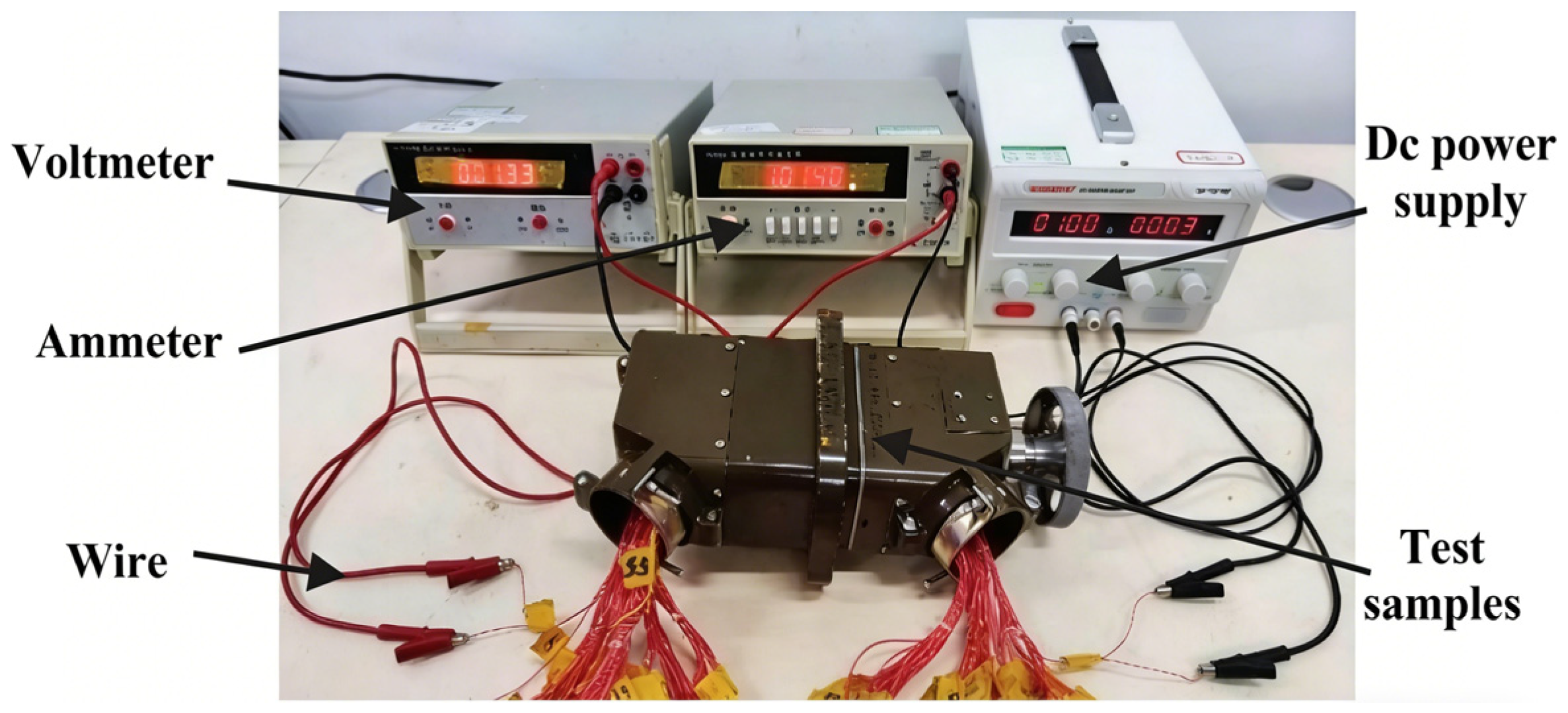
SCRM is also known as loop-resistance measurement. It requires the breaker to be closed with no load current and uses a specialized loop-resistance tester for measurements. This method typically employs Kelvin’s four-wire (four-terminal) method, as shown in Figure 3 [26]. By injecting a large DC current of 100 A or more into the circuit under test and measuring the voltage drop across the two ends of the contacts with an independently high-precision voltmeter, the resistance can be computed from Ohm’s law. The four-wire method eliminates errors due to lead resistance and contact resistance [27]. For example, Ping Qian’s team [26] proposed a deformation of Ohm’s law: using a standard resistor, R, with a known resistance in series with the contact resistance, R c , and by measuring the voltage drops across both, the contact resistance is calculated with the following formula:
R c = R s × U c U s
In the equation, R c is the contact resistance of the tested contact with the unit of micro-ohm, U c represents the voltage drop across the tested contact measured in millivolt, U s is the voltage drop across the standard resistor in millivolt, and R s denotes the nominal resistance value of the standard resistor with the unit of micro-ohm.
This method has the advantage of enabling the precise measurement of resistances at the micro-ohm level. Some Japanese companies have developed devices capable of automatic measurement, and manufacturers such as Megger provide specialized contact resistance testing equipment.
Although the static contact resistance measurement method is technically mature, its applications face certain limitations. First, it is an offline measurement method that requires the breaker to be de-energized and taken out of service, making online monitoring infeasible. Second, static resistance can only reflect the contact state when the breaker is in a fully closed condition and cannot reveal wear information during the opening/closing travel, particularly for breakers with main and arc contacts; static measurements mainly reflect the resistance of the well-contacting main contact, while the more worn arc contacts’ state can be masked [28].
Some researchers have attempted to develop more refined contact resistance models. For example, J. A. Greenwood [29] derived a calculation equation for contact resistance based on the similarity between charge distribution and current-field distribution. Jianwei Cheng [30] approached the problem from a micro-perspective, using fractal theory to describe the conductive properties of rough contact surfaces and deriving a contact resistance model based on the fractal dimension. These theoretical studies provide deep insights into the formation mechanisms of contact resistance, but directly applying them to on-site state assessment remains challenging.
DRM technology complements static measurements. During the full opening and closing process of the breaker, this technique continuously injects a constant DC current into the contacts while we high-speed synchronize the voltage drop across the contacts with the travel signal of the moving contact, thereby obtaining resistance as a function of time or travel—the dynamic resistance curve is used as the diagnostic basis [31,32]. Curve features such as the resistance rise rate, k R , can be used to identify bouncing and wear:
k R = R max R min t R
In the equation, R max is the maximum resistance value during the contact travel, R min is the minimum resistance value, and t R is the contact time during which the resistance change occurs.
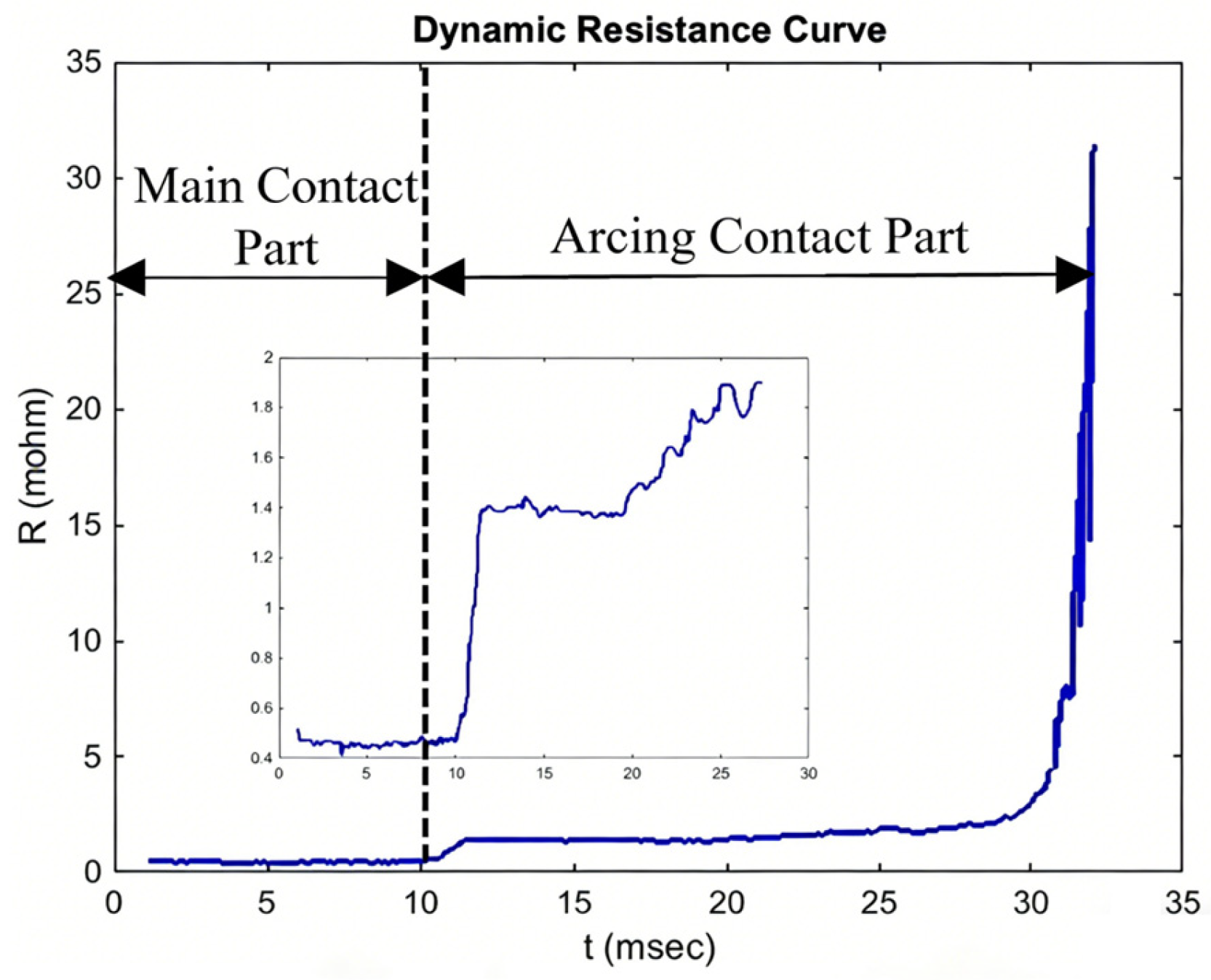
The dynamic resistance waveform of a normal contact is shown in Figure 4; this curve clearly distinguishes the contact and separation moments for the main contact and the arc contact, allowing the determination of the static contact condition by the magnitude of the resistance. When the contacts are damaged, the curve’s smoothness and fluctuation characteristics change markedly, enabling the detection of contact chatter, friction, and other anomalies. Compared with historical curves, DRM can also assess the extent of arc erosion, wear, and changes in the main-arc contact travel [31,33].
Establishing a quantitative relationship between the DRM curve and the actual physical wear of the contacts is the key to achieving precise life predictions. Currently, this area is still exploratory, but there have been pioneering efforts. Ronimack Trajano and colleagues [28] conducted in-depth investigations into the relationship between contact wear in vacuum interrupters (VIs) and DRM curves. They carried out accelerated aging experiments on several vacuum interrupters of the same model by repeatedly opening and closing with different current levels, causing the contacts to wear to different extents. After a certain number of switching operations, DRM tests were performed on the contacts. The interrupters were then disassembled to directly observe and measure physical wear, for example, by measuring the carburization depth on contact surfaces, mass loss, or using X-ray imaging to assess internal wear. DRM curves corresponding to different wear levels were compared, and three key quantitative correlation indicators were identified to characterize the relationship between DRM curves and contact wear. This study reveals a strong positive correlation between the DRM curve and the cumulative wear of contacts. Among the indicators, the resistance value during the arc current-carrying phase shows the most significant correlation with the wear state. This trend is directly related to the degradation of conductivity caused by the surface erosion of the arc contact and the attachment of arc-generated deposits, as summarized in Table 1.
The second indicator is the resistance rise rate at the moment of arc contact separation. When the rise rate exceeds 0.8 mΩ/ms, it exhibits a high correlation with an erosion depth greater than 0.3 mm on the contact surface, serving as a key criterion for determining whether significant material loss has occurred.
The third indicator is the arc contact conduction duration. In the DRM curve, the conduction time of the arc contact shows a linear decreasing trend with cumulative wear. A 20% reduction in the conduction time corresponds to a 10% decrease in the remaining electrical life of the contact, providing a quantitative reference standard for life assessment.
Although they noted that, as of the time of their publication, there was no universal mathematical model that directly maps DRM curves to remaining useful life (RUL), their work validated DRM as an effective, non-invasive diagnostic tool with great potential. By building a DRM database that includes healthy, moderately worn, and severely worn samples, an effective assessment of in-service breaker contact states could be performed.
Both traditional DRM and SCRM require offline de-energization of the breaker, which disrupts power supply continuity and increases the workload. To enable online monitoring, existing schemes include using the power-system load current or injecting specific signals for indirect measurement, such as precisely measuring the secondary voltage difference of the transformer (PT) and the line current of the current transformer (CT) while applying Ohm’s law to infer the contact resistance [34]. However, online measurement currently faces significant challenges in accuracy, reliability, and noise immunity [35], and the injected current magnitude can influence the measurement results [17].
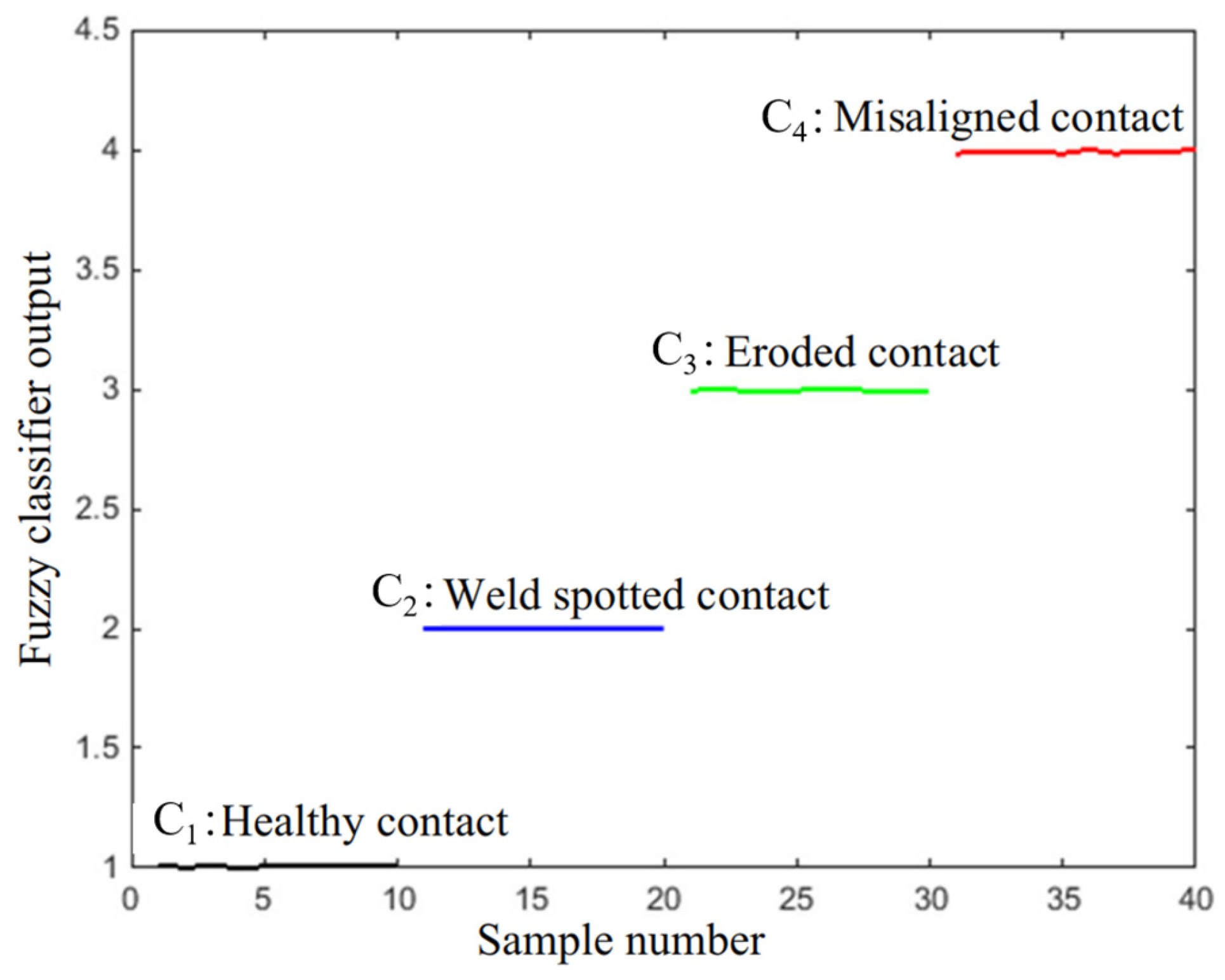
M. Khoddam and colleagues extracted seven characterization indicators from historical data, including the average resistance of the arc contact segment and the resistance variability. They constructed a fuzzy logic classifier based on a Gaussian membership function to precisely classify the contact state into categories such as “Good,” “Moderate,” and “Severe” [17]:
u A ( x ) = e ( x μ ) 2 2 σ 2
uA(x) represents the membership degree of feature x to fuzzy set A, u is the mean of the set, and σ is the standard deviation. The trigger strength of each rule is calculated as:
τ j ( x ) = i = 1 7 μ A j i ( x i )
where τ j ( x ) is the trigger strength of the j -th fuzzy rule, and u A j i ( x i ) is the membership degree of the i -th feature value x i to the fuzzy set A j i of the j -th rule. The final category is determined by the maximum membership principle. Using this assessment method to evaluate 40 contacts, the results shown in Figure 5 indicate that normal points were correctly identified, and the defect types of the remaining points were categorized, validating the accuracy of the proposed method.
The core conclusions and technical approaches for the dynamic and static contact resistance measurement methods described in this section originate from relevant research on high-voltage vacuum circuit breakers and SF6 circuit breakers [17,26,28]. Given the high consistency between spring-energy-storage circuit breakers and the aforementioned equipment in terms of electrical contact physics and contact structure, the relevant measurement principles, feature extraction methods, and fault diagnosis logic can be directly applied to contact condition monitoring in spring-energy-storage circuit breakers. Specifically, the dynamic resistance curve feature indicators proposed for vacuum circuit breakers have been validated in engineering practice to effectively characterize defects such as erosion and poor contact in spring-energy-storage circuit breaker contacts. Only minor adjustments are required to the sampling frequency and current injection amplitude of dynamic resistance testing, based on mechanical parameters like contact travel and the operating speed of the spring-energy-storage circuit breakers.

3.2. Temperature Rise Monitoring Technology

According to Joule’s law, when a current flows through a contact that has contact resistance, heat is generated, causing the temperature of the contact and surrounding components to rise. As the contact degrades and the contact resistance increases, the heat-generation power increases significantly under the same load current, leading to abnormal temperature rise. Therefore, monitoring the temperature at key points of the contact can indirectly assess the quality of its contact state.
Under steady-state conditions, the contact heating power equals its heat-dissipation power. A widely cited simplified thermal model formula is as follows [36]:
T h = Δ T max I I r n + T 0
Among them, T h is the theoretical healthy temperature of the contact; Δ T max is the maximum allowable temperature rise of the contact relative to the environment under rated current I r and standard environmental temperature; I is the actual measured load current; n is the thermal exponent, which is usually taken as ranging from 1.6 to 2.0 for copper-based contacts; and T 0 is the measured ambient temperature.
This model considers the two main influencing factors: load current and ambient temperature. In practical applications, the monitoring system continuously collects the load current, I m , and ambient temperature, T a , computes the theoretical “healthy temperature”, T c o n t a c t , and compares it with the temperature actually measured by temperature sensors. If the measured temperature remains significantly higher than the theoretical healthy temperature, a warning can be issued.
However, for rapidly developing issues, such as loose connections, temperature-based steady-state monitoring methods may respond with a delay and fail to provide timely early warnings for faults in their initial stage. To address this, Mohsen Taghizadeh Kejani and colleagues [37] proposed a dynamic monitoring method based on the Temperature Rise Index (TRI), with a core formula as follows:
T R I = γ T ( I r I ) 2
where T R I is the dimensionless temperature rise index; γ T is the real-time heating rate in kelvin per minute; I r is the rated current; and I is the actual load current.
When the connection condition deteriorates suddenly, even if the load current does not change much, the temperature rise rate can increase abnormally. Through normalization, TRI can more sensitively capture abnormal temperature rise rates caused by abrupt changes in the contact resistance, enabling the rapid detection of urgent defects, such as loose connections.
Currently, the mainstream technical paths for rise-in-temperature monitoring fall mainly into two categories: Infrared Thermography (IRT) and Fiber Optic Temperature Sensing (FOTS).
IRT uses the infrared radiation characteristics of objects to convert radiant energy into a visual temperature distribution map via an infrared camera, enabling non-contact temperature measurements during equipment operation [38]. The relationship between contact temperature rise, Δ T ; contact resistance, R c ; and current, I , can be described by the Joule heat formula:
Δ T = I 2 R c t C m
where C is the material’s specific heat, m is the contact mass, and t is the energizing time. This method is convenient to operate and does not require modifying the device structure, but due to the breaker’s interior structure, it cannot directly measure the temperature of the movable arc contact inside the arc-extinguishing chamber. It must infer temperature indirectly through the temperatures of external components, such as conductive rods and bushings, which introduces thermal conduction delays and path attenuation, limiting measurement accuracy [39,40].
FOTS relies on the temperature-sensitive optical properties of special fiber materials, such as fluorescence lifetime, Bragg grating wavelength, and Raman scattering [41]. The sensor probe is made of insulating material and connected to a remote demodulation device via optical fiber, offering strong immunity to EMI and suitability for high-voltage, strong-electromagnetic-field environments [42]. Its advantage is that it can be directly installed near the switchgear busbars, contact arms, and even near the contacts themselves to achieve the direct, accurate online monitoring of temperatures at critical points. However, sensors require pre-installation within the equipment, making retrofitting of in-operation devices challenging.
The monitoring principles and technical solutions of IRT and FOTS were initially validated in temperature rise monitoring applications for GIS equipment and high-voltage disconnectors [38,42]. When migrating these technologies to spring-energy-storage circuit breakers, targeted optimizations must be implemented considering the structural characteristics of the equipment: For IRT, due to the stronger enclosure of the arc-extinguishing chamber in spring-energy-storage circuit breakers, it is recommended to select external measurement points with high thermal coupling to the contacts, such as conductive rods and contact seats, and to perform ambient temperature and emissivity compensation on the monitoring results; For FOTS, the sensor arrangement scheme can draw on the installation method used in SF6 circuit breakers, where sensors are placed in proximity to the contacts [42]. By embedding fiber Bragg grating sensors at the contact arm and stationary contact seat of spring-energy-storage circuit breakers, the direct monitoring of contact temperature rise can be achieved. This solution has completed engineering trials in 10 kV spring-energy-storage circuit breakers, with temperature measurement errors controllable within ±2 °C.

3.3. Vibration and Acoustic Monitoring

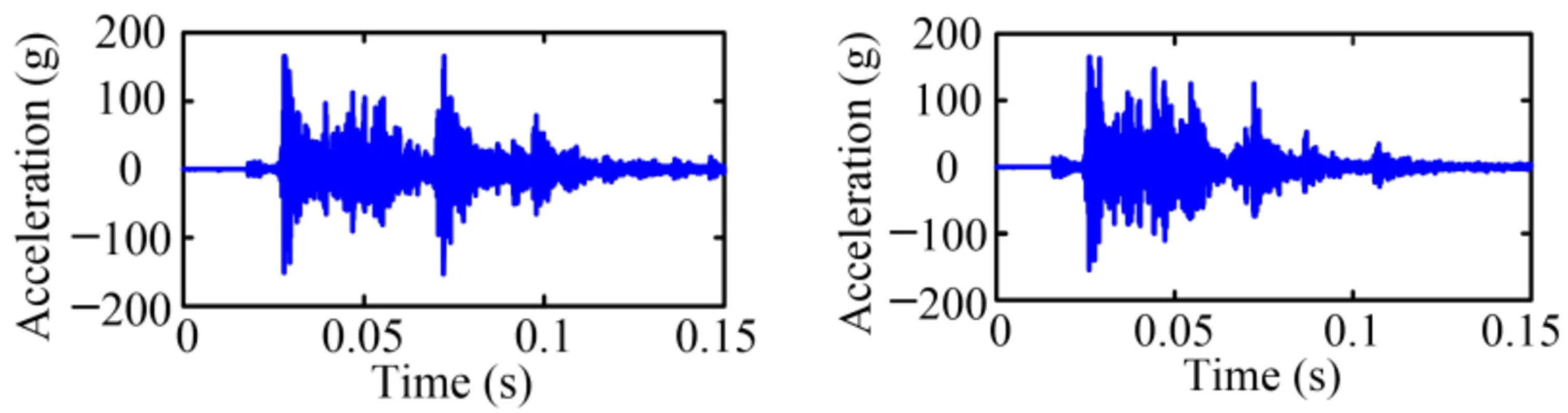
The time-domain waveforms of the vibration signals under normal operation and closing-spring relaxation are shown in Figure 6. The operation of a breaker involves violent mechanical movement during opening and closing, and the resulting vibration and acoustic signals contain rich information about the actuator mechanism and the movement of the contacts. Such signals can be used to indirectly assess the contact state [43].
Breaker operation vibration signals can be viewed as a transient response. The acceleration signal, a ( t ) , can be transformed into frequency-domain features by Fourier transform:
A ( f ) = + a ( t ) e j 2 π f t d t
In the equation, A ( f ) is the frequency-domain acceleration amplitude in g per hertz, a ( t ) represents the time-domain acceleration signal in g, f denotes the frequency in hertz, t is the time in second, and j is the imaginary unit.
Vibration monitoring is achieved by installing accelerometers on the breaker base or the actuator housing to collect vibration signals during the opening and closing processes. In the normal state, the vibration signal of the breaker is highly repeatable. When internal issues such as bolt looseness, component wear, spring fracture, or abnormal contact occur, the system’s quality, stiffness, or damping characteristics change, causing differences in the waveform, amplitude, and spectrum of the vibration signal [44]. By extracting fault features through a time-domain analysis, frequency-domain analysis (FFT), or time–frequency analysis, one can diagnose faults related to the spring-energy-storage mechanism and contacts [45]. However, vibration signals are non-stationary transient signals with complex components and low signal-to-noise ratios, requiring advanced signal processing and feature extraction techniques. Moreover, vibration signals vary significantly across different breaker models and installation foundations, challenging the generalization of diagnostic models.
Researchers M. Landry and colleagues [46] described a method to detect mechanical abnormalities in the breaker drive mechanism using an improved Dynamic Time-Warping (DTW) algorithm. The core of DTW is to construct an accumulated distance matrix, D , where element D ( i , j ) represents the minimum warping distance between the first i points of the test sequence T and the first j points of the reference sequence R . The recurrence relation is:
D ( i , j ) = d ( t i , t j ) + min { D ( i 1 , j ) , D ( i 1 , j 1 ) }
where d ( t i , t j ) is the local distance between sequence points i and j , typically the Euclidean distance t i t j . The final DTW value is D ( n , m ) , with n and m being the lengths of the two sequences. This study improved DTW by introducing weighted sums and slope constraints to enhance sensitivity to small but crucial deviations. Experiments showed that this method could effectively detect early anomalies caused by increased mechanical friction or misalignment, with diagnostic flexibility and sensitivity superior to traditional fixed-time-window feature analysis methods.
Zhao Shutao and colleagues [45] extracted time-domain entropy H t and frequency-domain entropy from vibration signals as features:
H t = p i log p i , p i = a i 2 a i 2
In the equation, p i denotes the probability density of the i -th interval, and a i is the vibration signal amplitude of the i -th interval, where the probability density is calculated based on the squared amplitude.
Combined with an SVM classifier, the spring fault diagnosis accuracy reached 94.2%. The Feizifar B. team [18] demonstrated the effectiveness of vibration monitoring: multiple accelerometers were installed on the spring-energy-storage housing to collect vibration signals under normal storage, fully charged storage, and simulated spring fracture states. Wavelet packet transform was used to extract energy in different frequency bands as feature vectors, and SVM classification achieved over 95% accuracy in distinguishing different states.
Acoustic Emission (AE) technology uses high-frequency sensors attached to the equipment’s surface to capture elastic waves released during plastic deformation and crack propagation, offering high sensitivity to microscopic damage (e.g., crack initiation) and enabling the monitoring of contact fatigue or local insulation partial discharge. However, in breaker contact monitoring, AE faces challenges such as weak signals and strong environmental noise, and has not yet achieved a breakthrough in engineering applications.
Vibration and acoustic emissions monitoring technologies have been extensively studied, primarily for mechanism fault diagnosis in medium-voltage vacuum circuit breakers and SF6 circuit breakers [44,46]. Their signal acquisition and feature extraction methods are directly applicable to spring-energy-storage circuit breakers. Furthermore, since the operating mechanism of spring-energy-storage circuit breakers is spring-driven, the vibration signals contain more pronounced characteristics of spring fatigue and mechanism jamming, making this approach one of the preferred methods for the indirect monitoring of contact conditions in this type of circuit breaker. Although acoustic emissions technology has been applied in partial discharge monitoring of high-voltage equipment [45], its application in contact monitoring for spring-energy-storage circuit breakers remains in the laboratory research stage and has not yet achieved engineering implementation. This is because the acoustic emissions signals generated by contact ablation and wear are weak in intensity and highly susceptible to interference from equipment mechanical vibration and on-site environmental noise. Further optimization of sensor selection and signal denoising algorithms is required.

3.4. Electrical Parameter Monitoring

When a breaker interrupts current, it generates an arc. Characteristics of the arc, such as arc voltage, arc energy, and extinguishing time, are closely related to the magnitude of the interrupted current, the contact materials, and the wear state of the contacts [3]. By monitoring these electrical parameters, one can indirectly assess the electric wear of the contacts. Electrical parameter monitoring is one of the core means of contact-state monitoring, comprising two main categories: key electrical waveform monitoring and arc-characteristic monitoring.
Key electrical waveform monitoring involves high-precision sensors to collect waveforms such as coil current and bus voltage during the opening/closing process. For example, the operating coil current waveform can indirectly reflect the movement trajectory of the electromagnet core and mechanical load changes, aiding in the detection of abnormal binding in the mechanism [47], thereby providing a mechanical correlation for contact-state assessment. Hu Qiu-sheng and colleagues [15] discussed the properties of the integral current coefficient. Given that different current levels contribute differently to contact wear, simple accumulation by the number of operations cannot accurately assess life. They proposed an improved weighted current-disruption accumulation method, defining the total wear of the contact, W t o t a l , as the cumulative sum of wear from each interruption:
W t o t a l = i = 1 N W i ω i
with W i being the wear at the i -th operation, N the total number of operations, and ω i the weight associated with the i -th interruption current. By combining theory, experiments, and the LMM-BP neural network algorithm, they performed a dynamic prediction of contact wear with good performance.
Arc-characteristic monitoring directly relates to contact electrical life: contact life is mainly determined by arc erosion, and the extent of erosion is directly related to the accumulated arc energy. Arc power can be computed by simultaneously measuring the arc voltage and arc current [48]. In practical applications, online monitoring of the arc voltage and current for each opening/closing operation allows the precise calculation of arc energy and extinguishing time. By accumulating past energy and comparing it to the contact failure energy threshold, one can scientifically assess remaining useful life (RUL). This approach is targeted and directly links to the core physical process of contact failure, but the direct measurement of the arc voltage on-site is challenging, especially in high-voltage side scenarios, where measurement accuracy can be limited by environment and equipment structure.
The vacuum circuit-breaker arcing time detection device designed by Hu Qiusheng’s research team [15] provides an engineering reference for monitoring arc characteristics. The system uses a Hall current sensor to measure the main circuit current, analyzing current waveform changes to identify the ignition and extinction moments of the arc. When the opening current waveform transitions from a mains-frequency sine wave to a non-sinusoidal waveform with high-frequency components, arc ignition is indicated; after the current crosses zero and does not reignite, the waveform returns to zero, indicating arc extinction. The burn time is calculated from the time difference between these two moments.
The arc parameter monitoring and operating coil current waveform monitoring methods described in this subsection originate from the research on electrical life assessment and mechanism fault diagnosis in vacuum circuit breakers and SF6 circuit breakers [15,18]. When migrating these methods to spring-energy-storage circuit breakers, the core technical elements can be directly reused, requiring only adaptations to the opening/closing arc characteristics and the electrical control parameters of the operating mechanism specific to spring-energy-storage circuit breakers: For arc energy calculation, the arcing duration of spring-energy-storage circuit breakers is typically in the range of 10–30 ms, necessitating an increase in the sampling frequency to above 50 kHz to ensure synchronous acquisition accuracy of the arc voltage and current; For operating coil current monitoring, the range and sampling resolution of the current sensor need to be adjusted according to the coil’s rated voltage and resistance parameters of the spring-energy-storage circuit breaker, in order to accurately identify features such as “jamming” and “poor engagement” within the coil current waveform.

3.5. Mechanical Property Monitoring

The opening and closing speeds, over-travel, gap, and other parameters are core indicators of the breaker’s mechanical performance. Abnormal variations in these parameters typically arise from issues such as the poor lubrication of the actuation mechanism, component wear, or degradation of spring performance [49], ultimately affecting the contact state and breaking performance.
Mechanical property monitoring is an important means of indirectly assessing the contact state, and the travel-time curve, s ( t ) , is the foundation of mechanical property analysis. The travel-time curve is typically measured online by installing a displacement sensor on the linkage of the breaker’s actuating mechanism or on the moving contact side, though it can also be obtained by analyzing sequences of images captured by a high-speed camera during operation. The opening (disengagement) speed v o p e n is defined as:
v o p e n = d s d t | S = 0.8 S max
where S max is the maximum opening travel. By differentiating the s-t curve, velocity–time (v-t) curves can be obtained, enabling the extraction of key parameters such as the opening/closing speed and over-travel. Monitoring of overload, δ , can be achieved by integrating the velocity curve:
δ = t c o n t a c t t s t o p v ( t ) d t
In the equation, J is the contact motion impulse in meter, v ( t ) represents the instantaneous velocity of the contact in meter per second, and t denotes the motion time of the contact in second.
Zhang Xiaorui and colleagues [25] investigated storage faults in spring-energy-storage mechanisms. Through simulation and experiments, they found that faults such as closing-spring relaxation and actuator binding significantly alter the travel signals of the moving contact and the spring force signal of the closing spring. They extracted the time-domain features of these signals as inputs, trained a diagnostic model, and achieved the accurate detection of multiple energy-storage faults and assessment of their severity.
Niu Weihua and colleagues [50] utilized the moving contact trajectory to obtain the travel-time curve and computed mechanical-characteristic parameters. They then employed a model based on sparse representation and Extreme Learning Machine (M-ELM) for fault diagnostics, achieving good classification performance, with the fault diagnosis accuracy of SES circuit breaker mechanical mechanisms reaching 95%. These studies indicate that combining dynamic simulation with machine learning is an effective approach for precise mechanical fault diagnosis.
However, monitoring via mechanical characteristics requires an internal modification of the breaker mechanism, making on-site implementation more challenging.
Mechanical property monitoring research has largely focused on the operating mechanisms of high-voltage SF6 circuit breakers and vacuum circuit breakers [25,50]. Their travel-time curve acquisition and feature parameter extraction methods are fully transferable to spring-energy-storage circuit breakers. Moreover, the mechanical properties of spring-energy-storage circuit breakers are more closely coupled with the contact state—faults such as spring relaxation and mechanism jamming directly lead to abnormalities in the contact opening/closing speed and over-travel. Therefore, the approach of indirectly assessing contact status through mechanical property monitoring demonstrates higher applicability in spring-energy-storage circuit breakers. In engineering applications of this method, it is necessary to optimize the installation position of displacement sensors based on the mechanism type of the spring-energy-storage circuit breaker and to establish mechanical property threshold standards specifically for spring-energy-storage circuit breakers.

3.6. Comprehensive Comparison of Monitoring Technologies

To provide direct engineering technical selection guidance for SES circuit breaker contact-point state monitoring, the advantages, limitations, and application status of all monitoring methods are summarized in Table 2, which integrates the quantitative indicators, and engineering applicability.
Combined with the above quantitative comparative analysis, the engineering technical selection principles for the contact-point state monitoring of spring-energy-storage circuit breakers are clearly defined as follows.
For the offline detection scenario, the combined method of SCRM and DRM is preferred. SCRM enables the rapid screening of the overall contact resistance of contacts, while DRM further identifies defects in the movement process of the main and arcing contacts. The combination of the two methods can realize a full-dimensional offline assessment of the contact-point state [51].
For the online real-time monitoring scenario, the multi-sensor fusion scheme of FOTS combined with vibration monitoring is the first choice. FOTS achieves direct and high-precision monitoring of the contact-point temperature rise, and vibration monitoring realizes the indirect identification of coupling faults between the operating mechanism and contacts, making up for the limitations of single-parameter monitoring [52].
For the electrical life assessment scenario, the combined method of arc energy accumulation and DRM curve analysis is prioritized. Arc energy accumulation directly characterizes the degree of electrical wear of contacts, and the DRM curve features quantify the physical state of contact-point arc erosion. The integration of the two methods realizes the quantitative assessment of the remaining electrical life of contacts in spring-energy-storage circuit breakers.
For the fault diagnosis scenario of spring mechanism-contact point coupling, the method of mechanical property monitoring combined with vibration monitoring is adopted preferentially. The types of mechanism faults are identified through the travel-time curve and velocity characteristics, and the influence path of mechanism faults on the contact-point state is accurately located by combining the time–frequency-domain characteristics of vibration signals.
In terms of the overall priority of method selection in engineering practice, direct monitoring methods are preferred over indirect ones when funds and installation conditions permit, as they offer high precision and are directly related to the state of the contacts. For multi-sensor fusion strategies, Kalman filtering and D-S evidence theory are the most suitable methods for SES circuit breakers: Kalman filtering is applicable to the real-time fusion of time-series data and has strong anti-interference capabilities for dynamic data; D-S evidence theory is more suitable for the fusion of heterogeneous static data and can effectively reduce the uncertainty of single-parameter diagnosis [52]. For in-service SES circuit breakers without reserved monitoring interfaces, non-invasive indirect monitoring methods are the first choice to avoid power supply interruptions and high retrofit costs [51].

4. Future Research

As the new power system transitions to a high penetration of renewables and power electronics, the operating conditions of spring-energy-storage circuit-breaker contacts become increasingly complex, imposing higher demands on the accuracy, intelligence, and practicality of state-monitoring technologies. Current contact monitoring faces numerous challenges in data acquisition, fault diagnosis, life prediction, and real-world application. This section synthesizes the future research trends distilled from the systematic analysis of contact fault mechanisms and mainstream monitoring technologies in this paper, and further clarifies the open engineering challenges and technical landing stages for each research direction for spring-energy-storage circuit breakers. Future research should focus on multi-dimensional technological innovations and integrated applications.

4.1. AI-Enabled Intelligent Monitoring Upgrading

Deep application of artificial intelligence and machine learning drives intelligent upgrading of monitoring technologies, fundamentally changing data processing and interpretation. Algorithms such as support vector machines, random forests, and neural networks learn multi-dimensional data patterns for normal and faulty states, building more robust fault-classification models and effectively reducing false alarms and missed detections from traditional thresholding. For example, Shuguang Sun’s research team has demonstrated significant improvement in the online assessment accuracy of arcing-contact wear status using unsupervised clustering and ensemble learning [53]. Recurrent neural networks (RNNs) and long short-term memory networks (LSTMs) excel at handling time-series data; by learning contact-performance degradation trajectories, they can accurately predict remaining useful life (RUL). Yunqi Xing’s team successfully applied LSTM models to predict the health deterioration of contact probes [54]. Techniques such as deep autoencoders can also extract early, weak fault features from low signal-to-noise ratio data [55,56]. For example, approaches based on variational mode decomposition (VMD) and Hilbert marginal spectrum energy entropy have surpassed the limitations of traditional signal processing and demonstrated excellent performance in GIS electrical contact state diagnosis [57,58,59]. The integration of physical mechanisms with data-driven advantages can further enhance the generalization capability of the models.
For SES circuit breakers, the key open challenges lie in the scarcity of labeled on-site fault data and poor model generalization across different voltage levels and models. Compared with other research directions, supervised learning models for simple fault classification have entered laboratory verification for 10/35 kV SES circuit breakers, showing the closest proximity to engineering deployment; in contrast, unsupervised learning for weak fault detection and LSTM-based RUL prediction are still in the early research stage, lacking sufficient on-site validation data. Future efforts should focus on constructing cross-scenario labeled datasets and developing transfer learning algorithms to improve model adaptability, thereby bridging the gap between laboratory research and industrial application.

4.2. Multi-Source Data Fusion for Reliable Assessment

Multi-source data fusion has become a key path to improving assessment reliability, effectively compensating for the limitations of single-parameter monitoring. By employing data fusion techniques such as Kalman filtering, Bayesian inference, and Dempster–Shafer (D-S) evidence theory to integrate information from multiple sensors, including temperature, resistance, vibration, and acoustics, data validity can be cross-validated and uncertainties due to environmental interference and single-sensor faults can be reduced. In breaker state monitoring, multi-sensor fusion approaches have been shown to significantly enhance the reliability of contact status assessment [60,61]. For example, Zheng Wang’s work on online monitoring of breaker contact resistance adopts a non-contact multi-sensor fusion approach to overcome the errors and randomness of traditional methods [62].
For SES circuit breakers, the main technical difficulties are the unsolved asynchronous problem of multi-sensor data and the lack of physical model-based sensor weight assignment; dual-parameter fusion, such as temperature and vibration, has been tested in on-site pilots, while multi-parameter fusion involving three or more parameters is still in the simulation stage and requires optimization for real-time performance. Developing adaptive data-driven fusion strategies helps address key issues such as the weighting of different sensor information, data asynchrony, and linking with physical degradation processes.

4.3. Innovation in Non-Intrusive and Miniaturized Sensing Technology

Ongoing breakthroughs in sensing technology toward non-intrusive, online, and miniaturized solutions provide higher-quality data to monitoring systems. Non-contact monitoring techniques can effectively avoid the safety hazards and installation interference associated with traditional contact measurements, and have been validated in practice: infrared thermography is widely used for diagnosing equipment overheating [39,63]; fully passive monitoring systems based on radio frequency have been proposed for transmission line monitoring [64]; and laser technologies enable the remote, non-contact, and precise detection of the position of high-voltage isolation switch contacts [65]. With MEMS technology, micro-intelligent sensors that integrate sensing elements, signal conditioning circuitry, and wireless communication modules can process data directly at the node and output device health information, substantially reducing data transmission and processing burdens [66,67,68]. Such systems have been applied and validated in scenarios like high-voltage circuit-breaker vibration monitoring [69].
For SES circuit breakers in high-voltage strong electromagnetic field environments, the core challenges are to improve the anti-interference ability of miniaturized sensors and develop on-site energy harvesting technologies for wireless nodes; non-contact sensing for external parameters is already mature, while MEMS sensors are still in prototype testing due to cost and environmental adaptability constraints.

4.4. Digital Twin and Virtual Modeling for Full-Life-Cycle Monitoring

Digital twins and virtual modeling technologies enable precise mapping between the virtual and physical worlds and the creation of high-fidelity virtual models that are in real-time synchronization with the physical electric contacts [70,71]. By integrating real-time data from sensors to drive model state updates, this technology has been successfully applied to high-voltage circuit-breaker contact status monitoring and fault prediction [72]. Predictive outputs can be used to optimize equipment operation strategies and maintenance planning, achieving true predictive and prescriptive maintenance. For SES circuit breaker contacts, the key bottlenecks are the lack of accurate material degradation parameters for multi-physical field coupling modeling and the real-time synchronization delay of on-site monitoring data; at present, only simple mechanical motion virtual models have been established in laboratories, and the multi-physical field coupled digital twin model remains unrealized due to technical complexity. Although digital-twin research for electrical contacts is still in its early stages, this approach represents the long-term development direction of the field as an ultimate solution that combines modeling, sensing, data, and AI.

5. Conclusions

In view of the complex fault characteristics of electrical contacts, current monitoring technologies have formed a multi-dimensional coverage framework. Contact resistance measurement directly reflects the contact state; temperature rise monitoring, by infrared thermography or fiber-optic sensing, enables non-contact or direct temperature measurement; vibration and acoustic monitoring, as well as electrical and mechanical parameter monitoring, capture fault signals from indirect correlations, with arc energy accumulation in electrical-parameter monitoring providing a direct assessment of contact life. Each technology has its strengths and weaknesses: contact resistance measurements offer high accuracy but some methods require de-energization; infrared thermography is user-friendly but monitors interiors indirectly; and vibration signal analysis is susceptible to environmental interference. In practical engineering, a scenario-based combination of multiple technologies is the optimal choice, and targeted technical selection recommendations can be made for different monitoring demands of SES circuit breakers: offline detection prioritizes the combination of static and dynamic contact resistance measurement to characterize the full state of main and arc contacts; online real-time monitoring is recommended to adopt FOTS combined with vibration monitoring based on multi-sensor fusion; contact RUL prediction relies on arc energy accumulation combined with LSTM neural network for quantitative assessment; and spring mechanism fault monitoring uses the improved DTW algorithm for early anomaly identification.
Meanwhile, current contact-state monitoring technologies still face challenges such as scarce fault data, limited generalization of models, and constrained engineering adaptation. These challenges are specifically manifested in the scarcity of labeled fault data for actual SES circuit breakers leading to poor model cross-type generalization, insufficient anti-interference ability of online monitoring methods in strong electromagnetic fields, high retrofitting difficulty and cost of direct monitoring technologies for in-service equipment, and immature quantitative mapping between monitoring indicators and RUL. In addition, the current monitoring is mostly single-point parameter-oriented, lacking system-level coordinated monitoring of the contact-spring mechanism coupling system. Future research could advance through multidisciplinary technology integration, moving the field from “passive fault response” to “proactive risk warning” and from “single-point monitoring” to “system-level coordination”. The deep application of artificial intelligence and machine learning will solve the problem of weak fault feature extraction; multi-source data fusion technology will further improve the reliability of state assessment; non-intrusive and miniaturized sensing innovation will reduce engineering implementation costs; and digital twin technology will realize precise mapping and dynamic simulation of contact degradation, becoming the ultimate technical solution for full-life-cycle predictive maintenance. This evolution would provide a solid foundation for the safe and stable operation of power grids and help improve the intelligent operation and maintenance framework for electrical equipment, and lay a more solid technical support for the safe and stable operation of the new power system under the “dual carbon” development goals.

Author Contributions

Conceptualization, L.S. and H.M.; methodology, H.X.; software, K.Z.; validation, S.G. and Z.Z.; formal analysis, X.L.; investigation, Z.Z.; resources, H.M.; writing—review and editing, Z.Z.; funding acquisition, L.S. All authors have read and agreed to the published version of the manuscript.

Funding

This research was funded by the Science and Technology Project of State Grid Jiangsu Electric Power Company Limited (J2025132).

Data Availability Statement

The data presented in this study are available on request from the first author.

Acknowledgments

We sincerely appreciate the valuable comments and suggestions provided by the editors and reviewers to enhance this research. The authors would like to acknowledge the copyright holders of the reproduced figures for providing permission under Creative Commons licenses (CC BY/CC BY-NC) to use their work in this open access review.

Conflicts of Interest

The authors Lei Sun, Hanyan Xiao, Ke Zhao, Shan Gao, and Xuning Li were employed by the State Grid Jiangsu Electric Power Research Institute. The remaining authors declare that this research was conducted in the absence of any commercial or financial relationships that could be construed as a potential conflict of interest. The authors declare that this study received funding from State Grid Jiangsu Electric Power Company Limited. The funder was not involved in the study design, collection, analysis, interpretation of data, the writing of this article or the decision to submit it for publication.

Nomenclature

SymbolPhysical MeaningUnit
E arc Arc energyJ
u ( t ) Instantaneous arc voltageV
i ( t ) Instantaneous arc currentA
t arc Arc durationms
R c Contact resistanceμΩ/mΩ
R s Standard resistanceμΩ
U c Voltage drop across contactmV
U s Voltage drop across standard resistancemV
k R Resistance rise ratemΩ/ms
T h Theoretical healthy temperature°C
T 0 Ambient temperature°C
Δ T max Maximum allowable temperature rise°C
I Actual load currentA
I r Rated operating currentA
n Thermal exponent
T R I Temperature rise index
γ T Temperature rise rateK/min
A ( f ) Frequency-domain acceleration amplitudeg/Hz
a ( t ) Time-domain acceleration signalg
W t o t a l Total contact wearmg
ω i Weight coefficient of interrupting current
v o p e n Opening speedm/s
S max Maximum opening travelmm
J Contact motion impulsem

References

  1. Liu, Y.; Zhang, G.; Zhao, C.; Lei, S.; Qin, H.; Yang, J. Mechanical Condition Identification and Prediction of Spring Operating Mechanism of High Voltage Circuit Breaker. IEEE Access 2020, 8, 209951–209963. [Google Scholar] [CrossRef]
  2. Ding, C.; Yuan, X.; Li, Z.; Yuan, Z.; Pan, Y.; He, J. Contact Erosion Characteristics in Making Process of SF6 Circuit Breakers. High Volt. Eng. 2014, 40, 3228–3234. [Google Scholar] [CrossRef]
  3. Li, L.; Wang, B.; Liu, Y.; Yu, H.; Zhang, S.; Huang, M. Early Detection of Health Condition Degradation of Circuit Breaker Based on Electrical Quantity Monitoring. Energies 2023, 16, 5581. [Google Scholar] [CrossRef]
  4. Ismail, F.B.; Mazwan, M.; Al-Faiz, H.; Marsadek, M.; Hasini, H.; Al-Bazi, A.; Yang Ghazali, Y.Z. An Offline and Online Approach to the OLTC Condition Monitoring: A Review. Energies 2022, 15, 6435. [Google Scholar] [CrossRef]
  5. Ullah, I.; Yang, F.; Khan, R.; Liu, L.; Yang, H.; Gao, B.; Sun, K. Predictive Maintenance of Power Substation Equipment by Infrared Thermography Using a Machine-Learning Approach. Energies 2017, 10, 1987. [Google Scholar] [CrossRef]
  6. Li, D.; Yin, Q. Electrical Life Assessment Technology for Interrupter Arc Quench Chambers in 500 kV Circuit Breakers. Hubei Electr. Power 2021, 45, 13–19. [Google Scholar] [CrossRef]
  7. Souza, R.T.; Lira, G.R.S.; Costa, E.G.; Oliveira, A.C.; Leite Neto, A.F. Methodology for Circuit Breaker Contact Diagnosis through Dynamic Resistance Measurements and Fuzzy-Logic-Based Analysis. Energies 2024, 17, 1869. [Google Scholar] [CrossRef]
  8. Zhang, Y.; Fu, X.; Wang, Z.; Lin, H.-C.; Wang, F.; Yang, S. Dynamic Fault Analysis Model Development for Vacuum Circuit Breaker Action. J. Power Electron. 2024, 24, 1966–1978. [Google Scholar] [CrossRef]
  9. Wang, Z. Experimental Study on Electrical Contact Characteristics of Silver Metal Oxide Contact Materials. Master’s Thesis, Jiangsu University of Science and Technology, Zhenjiang, China, 2020. [Google Scholar] [CrossRef]
  10. Guo, F.Y.; Wang, Q.P.; Sun, H.X. Study on Crack Types and Formation Mechanism of Silver-Based Contact Materials. Trans. China Electrotech. Soc. 1998, 13, 47–51. [Google Scholar] [CrossRef]
  11. Smugala, D.; Bonk, M. Switching Arc Energy Limitation Approach for LV Circuit Breakers. Energies 2021, 14, 6774. [Google Scholar] [CrossRef]
  12. Sun, Y.; Liu, J.; Zheng, X.; Li, J.; Xu, Y.; Shi, D. Influence of UHV GIL Access on Circuit Breaker Transient Recovery Voltage. Electr. Eng. Technol. 2022, 41, 240–245. [Google Scholar]
  13. Lee, J.-G.; Koo, J.-H. Mechanical Wear Characteristics of 170 kV Gas-Insulated Switchgear Circuit-Breaker Contacts Before Arc Initiation: An Accelerated Lifetime Test Approach. IEEE Access 2025, 13, 24287–24294. [Google Scholar] [CrossRef]
  14. Weerasekera, K.; Bandara, K.; Kumara, S.; Fernando, M. Condition Assessment of HV Circuit Breaker Contacts Using Dynamic Resistance Measurements. In Proceedings of the 2019 IEEE 14th International Conference on Industrial and Information Systems (ICIIS), Peradeniya, Sri Lanka, 18–20 December 2019; pp. 101–105. [Google Scholar]
  15. Hu, Q.S.; He, J.M.; Zhang, X.; Fan, X.M. The On-Line Monitoring Application Study of Vacuum Circuit Breakers Contact System. J. Electr. Eng. 2018, 13, 44–48. [Google Scholar] [CrossRef]
  16. Fu, Z.; Chen, W.J.; Li, Z.B.; Zhao, Y.S.; Bian, K.; Cheng, D.F. Wear Behavior of Arcing Contacts in SF6 Circuit Breakers Used for Capacitor Banks. High Volt. Eng. 2018, 44, 2953–2962. [Google Scholar] [CrossRef]
  17. Khoddam, M.; Sadeh, J.; Pourmohamadiyan, P. Assessing Circuit Breaker’s Electrical Contact Condition through Dynamic Resistance Signature Using Fuzzy Classifier. Iran. J. Electr. Electron. Eng. 2017, 13, 57–67. [Google Scholar]
  18. Feizifar, B.; Usta, O. A Novel Arcing Power-Based Algorithm for Condition Monitoring of Electrical Wear of Circuit Breaker Contacts. IEEE Trans. Power Del. 2019, 34, 1060–1068. [Google Scholar] [CrossRef]
  19. Fu, Z. Erosion Study of Arc Contacts in SF6 Circuit Breakers for Capacitor Banks. Ph.D. Thesis, North China Electric Power University, Beijing, China, 2018. [Google Scholar]
  20. Cheng, Y.Z.; Xu, Z.X.; Weng, D.M.; Pan, Q.D.; Xie, P.; Chen, K.S.; Chen, S.; Lin, J.L.; Chen, J.H.; Wang, W.M. Dynamic Monitoring of Spring Strain and Fatigue in High Voltage Circuit Breakers. J. Phys. Conf. Ser. 2024, 2819, 012067. [Google Scholar] [CrossRef]
  21. Cai, Y.; Zhou, K. A Novel Method for Detecting Pressure of Universal Circuit Breaker Contacts and Its Applications. Electr. Appl. Energy Effic. Manag. Technol. 2017, 10, 48–51. [Google Scholar] [CrossRef]
  22. Natti, S.; Jirutitijaroen, P.; Kezunovic, M.; Singh, C. Circuit Breaker and Transformer Inspection and Maintenance: Probabilistic Models. In Proceedings of the 8th International Conference on Probabilistic Methods Applied to Power Systems, Ames, IA, USA, 12–16 September 2004. [Google Scholar]
  23. Razi-Kazemi, A.A.; Niayesh, K.; Nilchi, R. A Probabilistic Model-aided Failure Prediction Approach for Operating Mechanism of High Voltage Circuit Breakers. IEEE PES Trans. Power Del. 2019, 34, 1280–1290. [Google Scholar] [CrossRef]
  24. Wang, J.; Huang, R.; Hu, H.; Cao, X.; Chen, J.; Feng, C.; Liu, W.; Hu, Y. Fracture Failure Analysis of the Energy Storage Spring of the Circuit Breaker in the 110kV Substation. J. Phys. Conf. Ser. 2021, 2076, 012094. [Google Scholar] [CrossRef]
  25. Zhang, X.R. Research on Energy Storage Fault Diagnosis Method of Spring Operating Mechanism of High Voltage Circuit Breaker. Master’s Thesis, Southwest Jiaotong University, Chengdu, China, 2022. [Google Scholar]
  26. Qian, P.; Ma, Z.; Chen, W.; Zhang, T.; Wang, Z. Contact Reliability Modeling and Assessment of Electrical Connectors with Multi-Aperture Slotted Leaf Spring Contacts. Adv. Mech. Eng. 2023, 15, 16878132231180799. [Google Scholar] [CrossRef]
  27. Hoosen, G.N. Controlled Switching of 11 kV Vacuum Circuit Breaker for Fault Interruption. Master’s Thesis, Durban University of Technology, Durban, South Africa, 2022. [Google Scholar]
  28. Souza, R.T.; Costa, E.G. Analysis of the Correlation between the Level of Contact Degradation and the Dynamic Resistance Curve in Circuit Breakers. J. Energy Power Eng. 2014, 8, 1104–1111. [Google Scholar] [CrossRef]
  29. Greenwood, J.A. Constriction Resistance and the Real Area of Contact. Br. J. Appl. Phys. 1966, 17, 1621–1632. [Google Scholar] [CrossRef]
  30. Cheng, J.; Zhao, L.; Zhou, X.; Ren, T.; Jin, S.; Xie, T.; Liu, P.; Peng, Z.; Wang, Q. Research on the Characteristic of the Electrical Contact Resistance of Strap Contacts Used in High Voltage Bushings. Energies 2023, 16, 4702. [Google Scholar] [CrossRef]
  31. Banaszczyk, J.; Oramus, P.; Domurad, Z.; Piekarski, P. Dynamic Resistance Measurements of MV Switch-Disconnector Contacts. Zesz. Nauk. Wydziału Elektrotechniki I Autom. Politech. Gdańskiej 2015, 46, 17–20. [Google Scholar]
  32. Lu, Y.; Su, Y.; Liang, Z.; Lu, Y. Influence of the Test Current on Dynamic Resistance Measurements of SF6 Circuit Breakers. IOP Conf. Ser. Earth Environ. Sci. 2019, 310, 042006. [Google Scholar] [CrossRef]
  33. Bhole, A.A.; Gandhare, W.Z. An Overview of Dynamic Contact Resistance Measurement of HV Circuit Breakers. J. Inst. Eng. India Ser. B 2016, 97, 219–226. [Google Scholar] [CrossRef]
  34. Chen, X.; Cheng, H.; Peng, P.; Xian, J. On-Line Measurement of Circuit Breaker Contact Resistance. Electr. Eng. Autom. 2015, 4, 46–48+52. [Google Scholar] [CrossRef]
  35. Sun, J.; Sun, D.; Lai, C.; Du, G.; Yu, B.; Tong, Y. Circuit Breaker Contact State Assessment Method Based on Live Dynamic Resistance Measurement. In Proceedings of the 6th International Conference on Artificial Intelligence and Computer Applications (ICAICA), Dalian, China, 28–30 November 2024; IEEE: Piscataway, NJ, USA, 2024; pp. 285–288. [Google Scholar]
  36. Mensah, F.K. Condition Assessment of Electrical Contacts of Disconnectors. Master’s Thesis, Delft University of Technology, Delft, The Netherlands, 2011. [Google Scholar]
  37. Taghizadeh Kejani, M.; Razi-Kazemi, A.A.; Hamid Khalkhali, S.; Heidary, P. An Approach to Monitor Medium Voltage Switchgear Plum Contact Connections Based on Temperature Rise Index. IEEE Trans. Instrum. Meas. 2024, 73, 3527510. [Google Scholar] [CrossRef]
  38. Balakrishnan, G.K.; Yaw, C.T.; Koh, S.P.; Abedin, T.; Raj, A.A.; Tiong, S.K.; Chen, C.P. A Review of Infrared Thermography for Condition-Based Monitoring in Electrical Energy: Applications and Recommendations. Energies 2022, 15, 6000. [Google Scholar] [CrossRef]
  39. Ullah, I.; Khan, R.U.; Yang, F.; Wuttisittikulkij, L. Deep Learning Image-Based Defect Detection in High Voltage Electrical Equipment. Energies 2020, 13, 392. [Google Scholar] [CrossRef]
  40. Guo, C.; Liu, L.; Mei, H.; Tu, Y.; Wang, L. Nondestructive Evaluation of Composite Bonding Structure Used in Electrical Insulation Based on Active Infrared Thermography. Polymers 2022, 14, 3373. [Google Scholar] [CrossRef] [PubMed]
  41. Chai, Q.; Luo, Y.; Ren, J.; Zhang, J.; Yang, J.; Yuan, L.; Peng, G. Review on Fiber-Optic Sensing in Health Monitoring of Power Grids. Opt. Eng. 2019, 58, 072007. [Google Scholar] [CrossRef]
  42. Shan, X.Y.; Hong, J.F.; Xie, Z.P.; Wang, X.F.; Chen, W.X. Fiber Temperature Sensor for Contact Terminal of High-Voltage Circuit Breaker. J. Xiamen Univ. (Nat. Sci.) 2015, 54, 575–580. [Google Scholar]
  43. Xu, Z.N.; Guo, Y.F.; Li, X.F.; Zhao, L.J.; Jin, H.; Hu, W.T. Influence of Mechanical Defects on GIS Enclosure Vibration. Electr. Eng. Technol. 2022, 41, 156–164. [Google Scholar]
  44. Wu, Y.; Zhang, J.; Yuan, Z.; Chen, H. Fault Diagnosis of Medium Voltage Circuit Breakers Based on Vibration Signal Envelope Analysis. Sensors 2023, 23, 8331. [Google Scholar] [CrossRef]
  45. Zhao, S.; Li, Y.; Wang, E.; Zhu, J.; Ma, L.; Wang, K. Fault Diagnosis Method for Circuit Breaker Energy Storage Mechanism Based on Entropy-Weight Features of Electrical Vibration Signals. High Volt. Appar. 2019, 55, 204–210. [Google Scholar] [CrossRef]
  46. Landry, M.; Leonard, F.; Landry, C.; Beauchemin, R.; Turcotte, O.; Brikci, F. An Improved Vibration Analysis Algorithm as a Diagnostic Tool for Detecting Mechanical Anomalies on Power Circuit Breakers. IEEE Trans. Power Deliv. 2008, 23, 1986–1994. [Google Scholar] [CrossRef]
  47. Razi-Kazemi, A.A. Circuit Breaker Condition Assessment Through a Fuzzy-Probabilistic Analysis of Actuating Coil’s Current. IET Gener. Transm. Distrib. 2016, 10, 48–56. [Google Scholar] [CrossRef]
  48. Li, Q.; Dan, S. Monitoring Algorithm for Electrical Wear State of Circuit Breaker Contacts Based on Arc Power. Hydropower Energy Sci. 2020, 38, 189–193. [Google Scholar] [CrossRef]
  49. Xu, X.Q.; Guo, B.W.; Li, M.T.; Li, P.F.; Bai, S.Q.; Zhou, W.J. State Diagnosis for Closing/Opening Spring in the Spring Operating Mechanism of Circuit Breaker. In Proceedings of the 2016 International Conference on Electrical Engineering and Automation (ICEEA), Prague, Czech Republic, 20–22 May 2016; IEEE: Piscataway, NJ, USA, 2016; pp. 1–6. [Google Scholar]
  50. Niu, W.H.; Liang, G.S.; Zhao, P. Fault Diagnosis Model of Circuit Breaker Based on Sparse Representation and M-ELM. J. Syst. Simul. 2017, 29, 2828–2839. [Google Scholar] [CrossRef]
  51. Lu, Y.; Li, Y.L. Predictive Maintenance Strategy for High-Voltage Circuit Breakers Based on Real-Time State Assessment and Remaining Life Calculation. High Volt. Eng. 2022, 48, 2716–2726. [Google Scholar] [CrossRef]
  52. Bao, W.C.; Su, H.; Li, L.; Li, H.; Xu, W. Fault Diagnosis Method for Operating Mechanism of High-Voltage Circuit Breakers Based on Joint Analysis of Current and Vibration Signals. High Volt. Appar. 2023, 59, 164–172. [Google Scholar] [CrossRef]
  53. Sun, S.G.; Zhao, Y.H.; Wang, J.Q.; Zhang, Z.; Qiu, W.J. Assessment of Electrical Wear State in AC Contactor Contacts Utilizing Unsupervised Clustering and Composite Model. IEEE Trans. Instrum. Meas. 2025, 74, 3506215. [Google Scholar] [CrossRef]
  54. Xing, Y.Q.; Yang, G.Y.; Li, K.; Bao, Z.Z.; Zhao, C.C. Multi-Deep Learning Models for AC Contactor Life Prediction. Electr. Power Syst. Res. 2026, 252, 112341. [Google Scholar] [CrossRef]
  55. Zhao, R.; Yan, R.; Chen, Z.; Mao, K.; Wang, P.; Gao, R.X. Deep Learning and Its Applications to Machine Health Monitoring. Mech. Syst. Signal Process. 2019, 115, 213–237. [Google Scholar] [CrossRef]
  56. Jia, F.; Lei, Y.; Lin, J.; Zhou, X.; Lu, N. Deep Neural Networks: A Promising Tool for Fault Characteristic Mining and Intelligent Diagnosis of Rotating Machinery with Massive Data. Mech. Syst. Signal Process. 2016, 72–73, 303–315. [Google Scholar] [CrossRef]
  57. Li, Y.; Liang, X.; Yang, Y.; Xu, G. Early Fault Diagnosis of Rolling Bearings Based on VMD and Hilbert Marginal Spectrum Entropy. IEEE Access 2020, 8, 185899–185913. [Google Scholar]
  58. Wang, Z.; Zhang, Q.; Xiong, J.; Xiao, M.; Sun, G.; He, J. Fault Diagnosis of a High-Voltage Circuit Breaker Based on Variational Mode Decomposition and Multi-Scale Entropy. IET Gener. Transm. Distrib. 2021, 15, 319–330. [Google Scholar]
  59. Liu, H.; Wang, X.; Lu, C. GIS Mechanical Fault Diagnosis Using VMD-Based Energy Entropy and Deep Belief Network. Electr. Power Syst. Res. 2022, 213, 108694. [Google Scholar]
  60. Zhang, G.B.; Wang, C.T.; Huang, W.M.; Yang, W.; Yuan, H.; Wang, X.H. Fault Diagnosis Method of Circuit Breaker Based on Multi-Source Sensor Data Fusion. High Volt. Eng. 2025, 51, 660–668. [Google Scholar] [CrossRef]
  61. Guo, Z.; Li, L.; Han, W.; Guo, Z. SF6 High-Voltage Circuit Breaker Contact Status Detection at Different Currents. Sensors 2022, 22, 8490. [Google Scholar] [CrossRef]
  62. Wang, Z.; Zhang, H.; Zhang, Y.; Zhang, H.; Chen, J.; Feng, S.; Guo, J.; Lv, Y. A Study on Non-Contact Multi-Sensor Fusion Online Monitoring of Circuit Breaker Contact Resistance for Operational State Awareness. Energies 2025, 18, 2667. [Google Scholar] [CrossRef]
  63. Kumar, S.; Sharma, A.; Mishra, S.K. Infrared Thermography-Based Online Monitoring and Fault Diagnosis of High-Voltage Switchgear Contacts. IEEE Trans. Instrum. Meas. 2023, 72, 3506311. [Google Scholar]
  64. He, J.; Yuan, Y.; Li, Z.; Li, Y.; Wang, L. A Fully Passive and Non-Contact Electrical Monitoring System for Overhead Transmission Lines Based on RFID Sensing. IEEE Sens. J. 2021, 21, 16696–16705. [Google Scholar]
  65. Yuan, L.; Guo, S.; Wang, J.; Dong, Z. Isolation Switch on State of Non-Contact Automatic Detection Method. In Proceedings of the 5th International Conference on Clean Energy and Electric Power Engineering (ICCEPE), Yangzhou, China, 9–11 August 2024; pp. 1163–1168. [Google Scholar] [CrossRef]
  66. Uhlmann, E.; Laghmouchi, A.; Geisert, C.; Hohwieler, E. Smart Wireless Sensor Network and Configuration of Algorithms for Condition Monitoring Applications. J. Mach. Eng. 2017, 17, 46–55. [Google Scholar]
  67. Yi, W.-J.; Gilliland, S.; Saniie, J. Wireless Sensor Network for Structural Health Monitoring Using System-on-Chip with Android Smartphone. In Proceedings of the IEEE International Conference on Wireless Sensor Networks for Structural Health Monitoring, Chicago, IL, USA, 3–6 November 2013; pp. 990–993. [Google Scholar]
  68. Elbouchikhi, E.; Zia, M.F.; Benbouzid, M.; El Hani, S. Overview of Signal Processing and Machine Learning for Smart Grid Condition Monitoring. Electronics 2021, 10, 2725. [Google Scholar] [CrossRef]
  69. Dong, Y.; Xiao, D.M. Development of an Overall Condition Monitoring System of High Voltage SF6 Circuit Breaker. In Proceedings of the 2006 IASME/WSEAS International Conference on Energy & Environmental Systems, Chalkida, Greece, 8–10 May 2006; pp. 367–372. [Google Scholar]
  70. Tao, F.; Zhang, H.; Liu, A.; Nee, A.Y.C. Digital Twin in Industry: State-of-the-Art. IEEE Trans. Ind. Inform. 2019, 15, 2405–2415. [Google Scholar] [CrossRef]
  71. Rasheed, A.; San, O.; Kvamsdal, T. Digital Twin: Values, Challenges and Enablers from a Modeling Perspective. IEEE Access 2020, 8, 21980–22012. [Google Scholar] [CrossRef]
  72. Jiang, Y.; Li, X.; Wang, S.; Li, H. Digital Twin-Driven Fault Prediction and Condition Monitoring for High-Voltage Circuit Breakers. IEEE Trans. Ind. Inform. 2022, 18, 5821–5830. [Google Scholar]
Figure 1. Erosion view [17]. Reproduced with permission from Ref. [17]. Copyright 2017, Ferdowsi University of Mashhad.
Energies 19 01239 g001
Figure 2. The contact wear morphology formed by severe overheating due to poor contact.
Energies 19 01239 g002
Figure 3. Static contact resistance measurement device [26]. Reproduced with permission from Ref. [26]. Copyright 2023, SAGE Publications.
Energies 19 01239 g003
Figure 4. Dynamic contact resistance waveform of a normal contact [17]. Reproduced with permission from Ref. [17]. Copyright 2017, Ferdowsi University of Mashhad.
Energies 19 01239 g004
Figure 5. Evaluation results for 40 contact-point states [17]. Reproduced with permission from Ref. [17]. Copyright 2017, Ferdowsi University of Mashhad.
Energies 19 01239 g005
Figure 6. Time-domain vibration signals under normal and relaxed opening springs [44].
Energies 19 01239 g006
Table 1. Quantitative correlation between resistance during arc current phase and wear level.
Wear LevelMass Loss RangeResistance Quantification Standard
Mild Degradation<5%Maintained at 1–2 mΩ
Moderate Degradation5%–15%Increased to 3–5 mΩ
Severe Degradation>15%Exceeds 5 mΩ with irregular fluctuations
Table 2. Comparison of contact-point state monitoring technologies for SES circuit breakers.
Monitoring MethodAdvantagesLimitationsApplication Status
SCRMHigh accuracy, direct measurementOffline, requires de-energizationMature offline method
DRMReveals contact wear during motionOffline, requires disassemblyMature offline, emerging online
Online resistance Real-time monitoringLow accuracy, interferenceExperimental
Temperature (IRT)Non-contact, safeIndirect measurement, thermal delayWidely used
Temperature (FOTS)High EMI immunity, direct sensingRequires pre-installationApplied in HV equipment
Vibration/AESensitive to mechanical faultsLow SNR, model generalization issuesApplied with ML
Electrical Param.Directly related to arc erosionHigh-voltage measurement difficultyApplied in research
Mechanical Param.Reflects mechanism healthRequires internal modificationApplied in diagnostics
Disclaimer/Publisher’s Note: The statements, opinions and data contained in all publications are solely those of the individual author(s) and contributor(s) and not of MDPI and/or the editor(s). MDPI and/or the editor(s) disclaim responsibility for any injury to people or property resulting from any ideas, methods, instructions or products referred to in the content.