Renewable Energy as a Strategic Mechanism for Achieving the Sustainable Development Goals: A Bibliometric Review


Abstract
1. Introduction
Research Objective and Research Questions
2. Materials and Methods
2.1. Data Selection and Scientific Mapping Approach
- Size refers to the amount of accumulated knowledge;
- Time covers trends in publications in a given field;
- Space covers the geographical origin of documents within a specific knowledge base;
- Composition refers to the organization of the intellectual knowledge framework.
2.2. Database Selection and Structural Bias
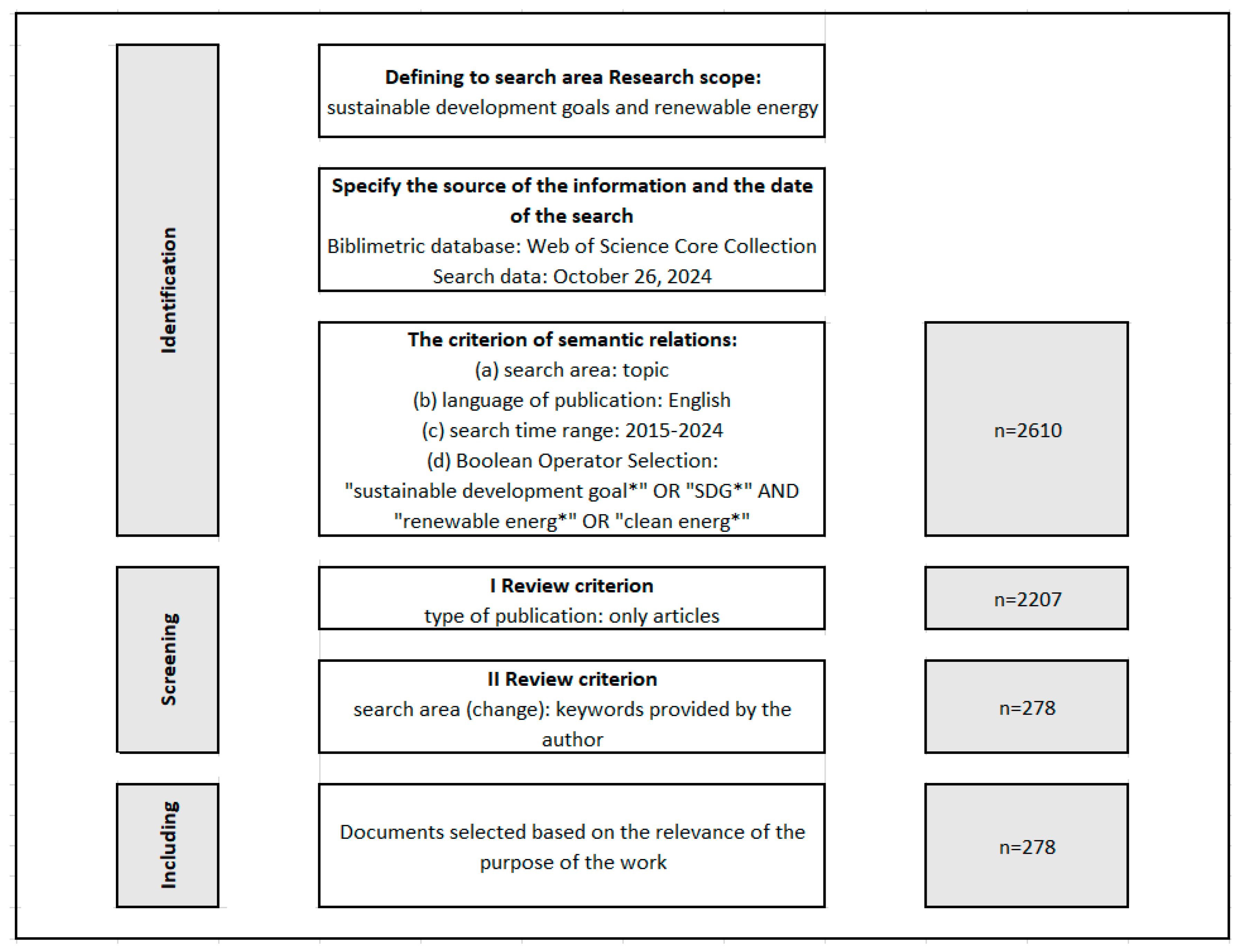
2.3. Search Strategy, PRISMA-Informed Screening, and Bibliometric Analysis

- Citation analysis: This allows researchers to detect the popularity of sources, publications, and authors;
- Co-citation analysis: This provides an understanding of the extended impact of citations on a specific topic of knowledge and can occur in various variants, e.g., as journal co-citation analysis (JCA), author co-citation analysis (ACA), and document co-citation analysis (DCA);
- Bibliographic coupling: This allows researchers to view related documents, authors, and even journals based on the number of standard references;
- Co-authorship analysis: This allows researchers to find articles they have co-authored.

| Type of Analysis | Description of the VOSviewer Instructions |
|---|---|
| Contributor analysis | The connection between elements is defined by how many documents they have co-authored together |
| Citation analysis | The connection between the elements is defined by the frequency with which they reference one another |
| Co-citation analysis | The connection between elements is established based on the frequency of their mutual references |
| Bibliographic join | The element binding is based on the quantity of references they have in common |
2.4. Methodological Logic and Research Questions
3. Results and Discussion
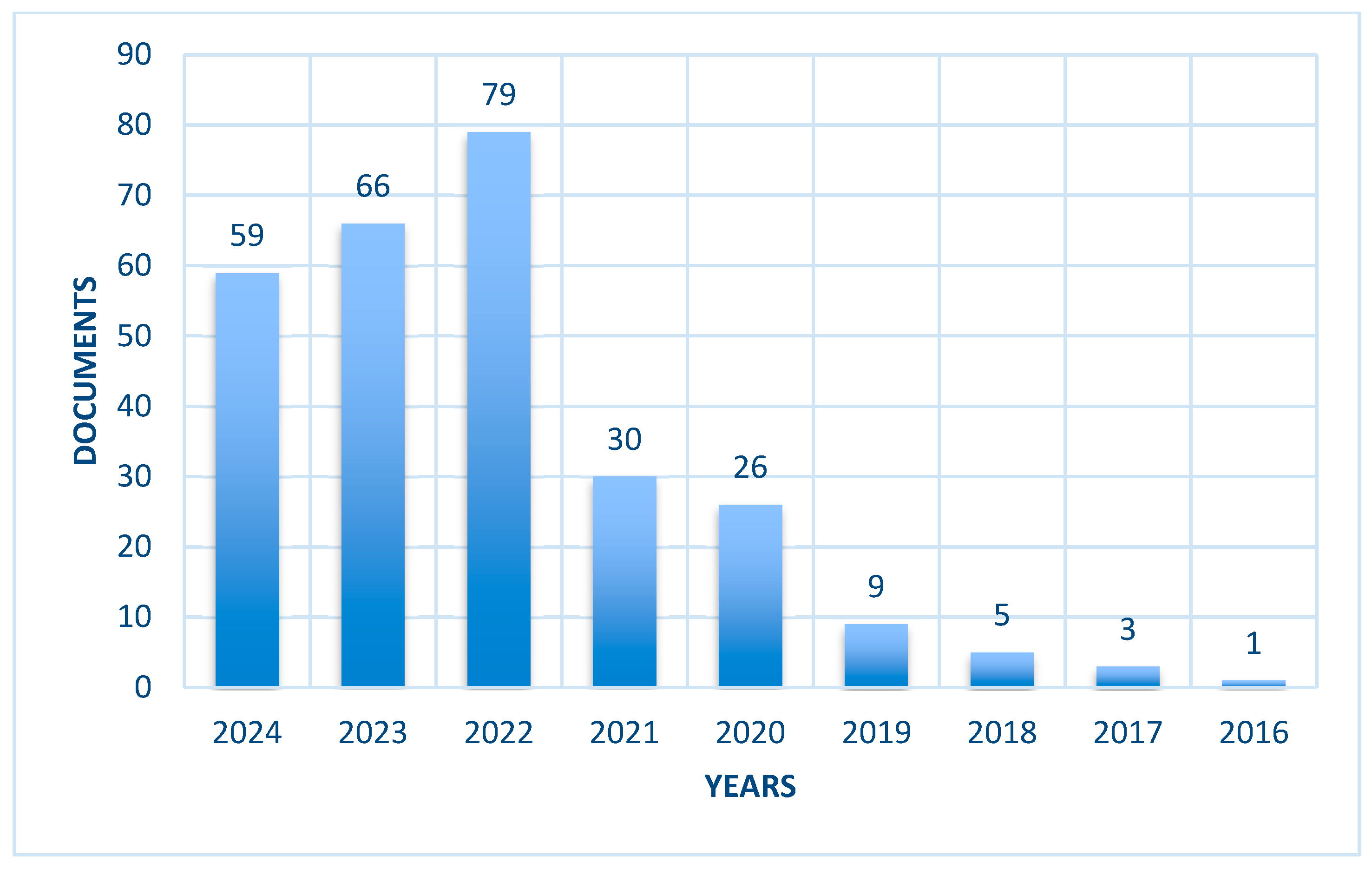
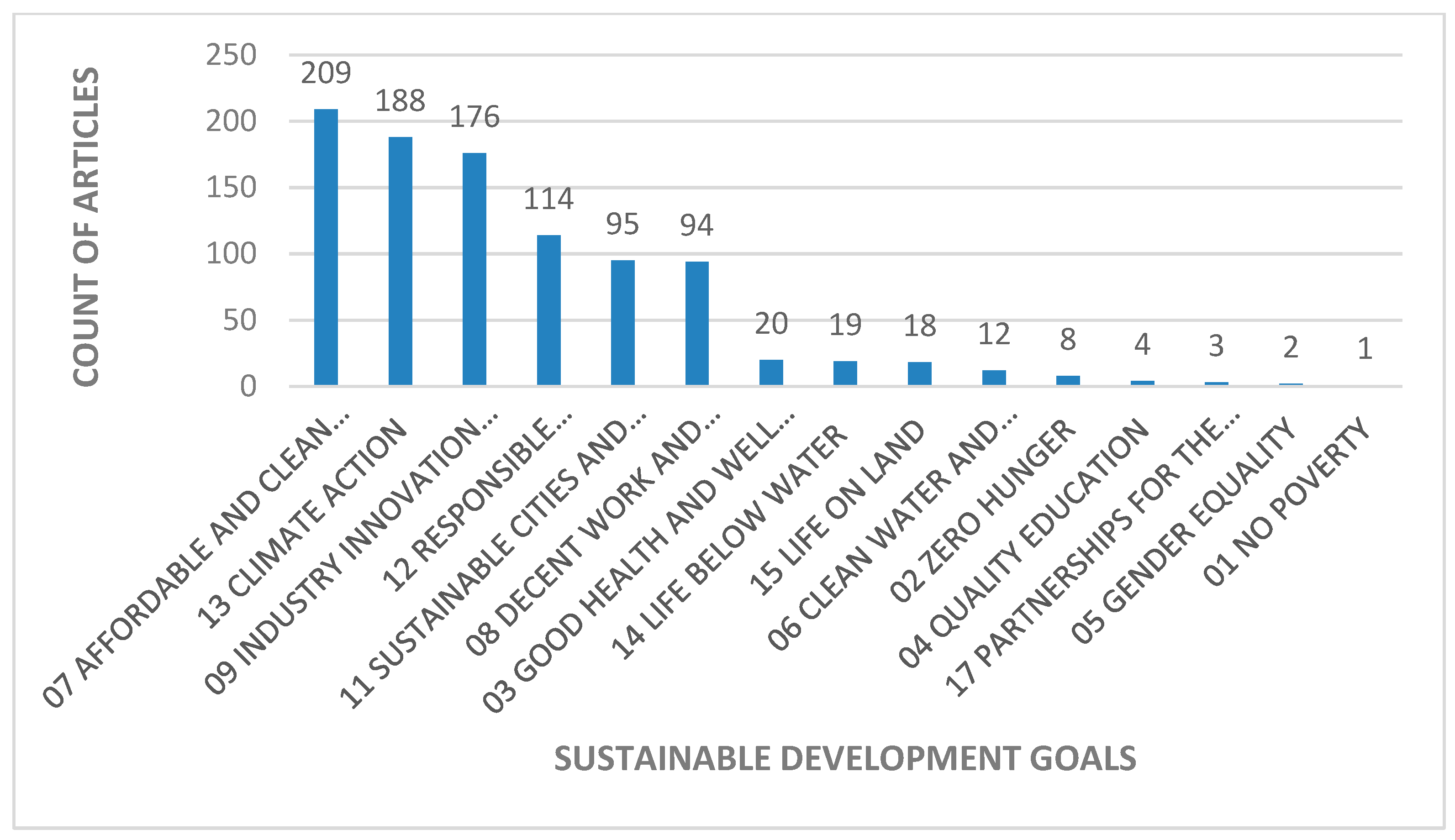
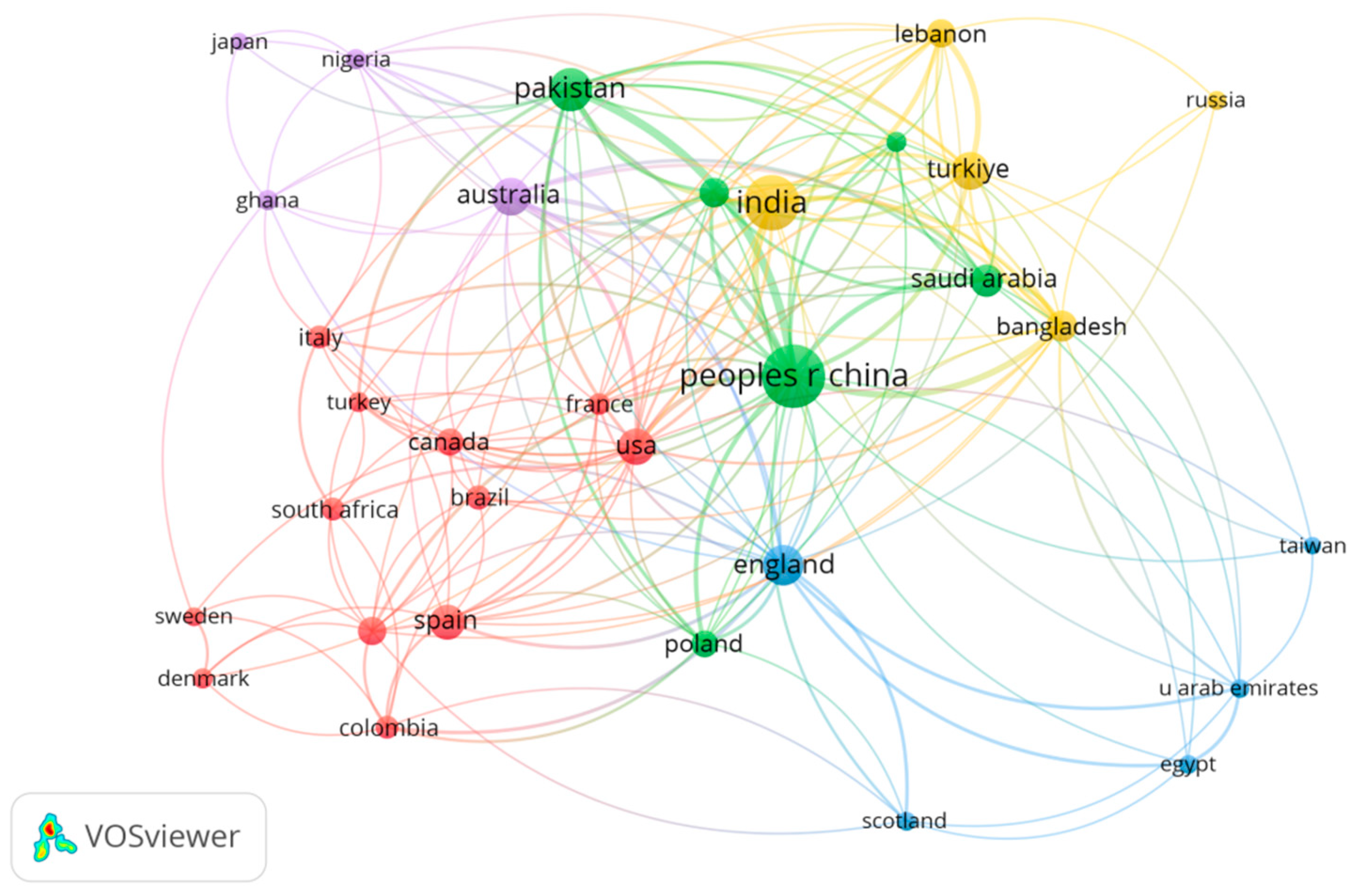
3.1. How Has the Volume and Geographical Distribution of Research on SDGs and RE Been Changing over Time?
3.2. Who Are the Most Significant, Impactful Contributors (Authors, Institutions, and Journals) in the Field of SDGs and RE Research, and What Is the Impact of Citation of Their Work?
3.3. What Are the Main Thematic Clusters and Conceptual Structures Within the Research Literature on SDG and RE?
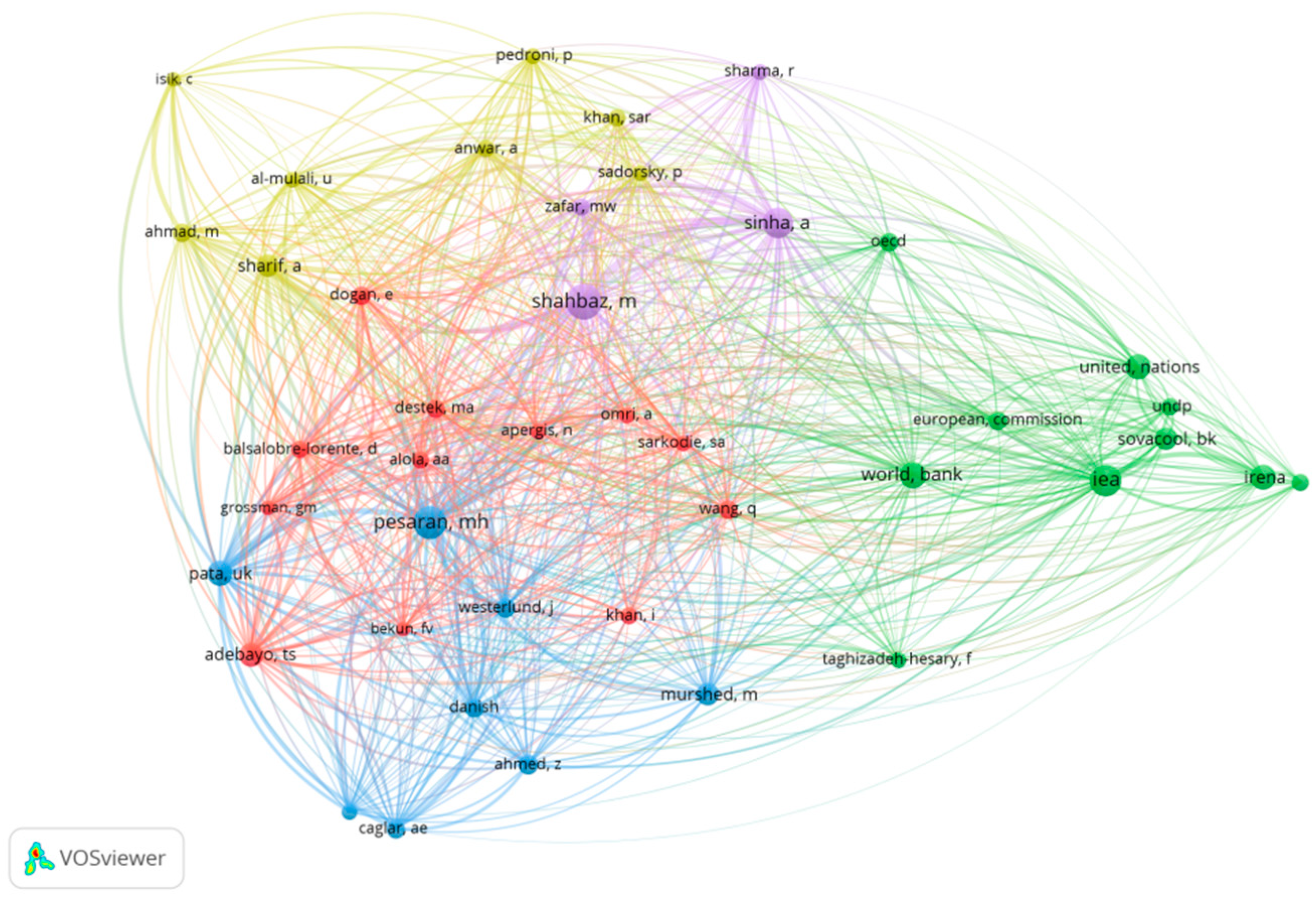
- The purple cluster represents a mechanism-testing research stream, in which renewable energy is examined through economic and technological transmission channels affecting sustainable development and climate-related outcomes. Studies in this cluster predominantly focus on how energy transitions interact with macroeconomic performance, technological progress, and environmental quality, thereby providing empirical evidence on the pathways linking renewable energy deployment with SDGs. In the cluster, the most influential author is Shahbaz, but there are scientists such as Sinha, Sharma, and Zafir. Their papers belong to the seventeen most co-cited papers in the analyzed set of articles. The topics raised by these scientists concern the relationship between economic and technological indicators and the development of renewable energy or climate change [85,88,90];
- The green cluster captures the institutional and regulatory mechanism, encompassing foundational policy documents and strategic frameworks that define the governance architecture for integrating renewable energy into the SDG agenda. This cluster provides the normative and institutional context within which technological and economic mechanisms operate. The green cluster brings together legal documents that are the basis for many analyses on this topic [82,93,94];
- The blue cluster reflects a methodological and analytical mechanism, centered on econometric modeling and advanced panel data techniques used to identify long-running relationships, heterogeneity, and transmission channels between renewable energy variables and sustainable development outcomes. This is a cluster in which Pesaran is the most influential author. It brings together scientists in the field of econometrics and econometric modeling [75,78,92];
- The red cluster represents the integrative sustainability mechanism, where renewable energy is analyzed as a core component of sustainable development systems, interacting simultaneously with economic growth, environmental protection, and social objectives across multiple SDGs. The red cluster is the most numerous cluster, in which Adebayo is the most influential author, but other authors include Balsalobre-Lorente, Bekun, Alola, and Sarkodie, whose papers belong to the most co-cited papers in the analyzed set of articles. The authors discuss topics including sustainable development and energy from renewable sources. What is more, they elaborate on the subject matter closely related to the subject of this work [20,21,23].
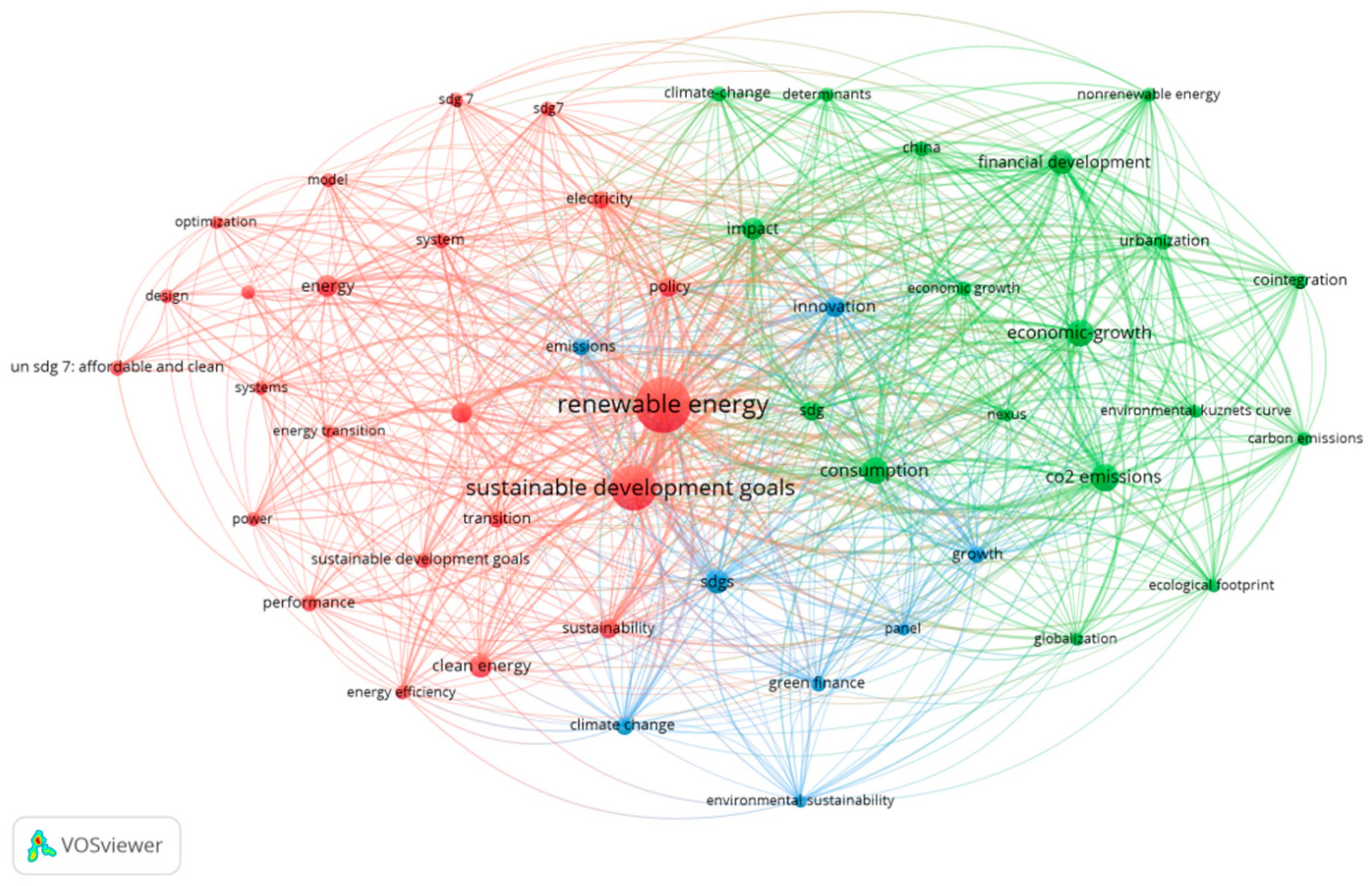
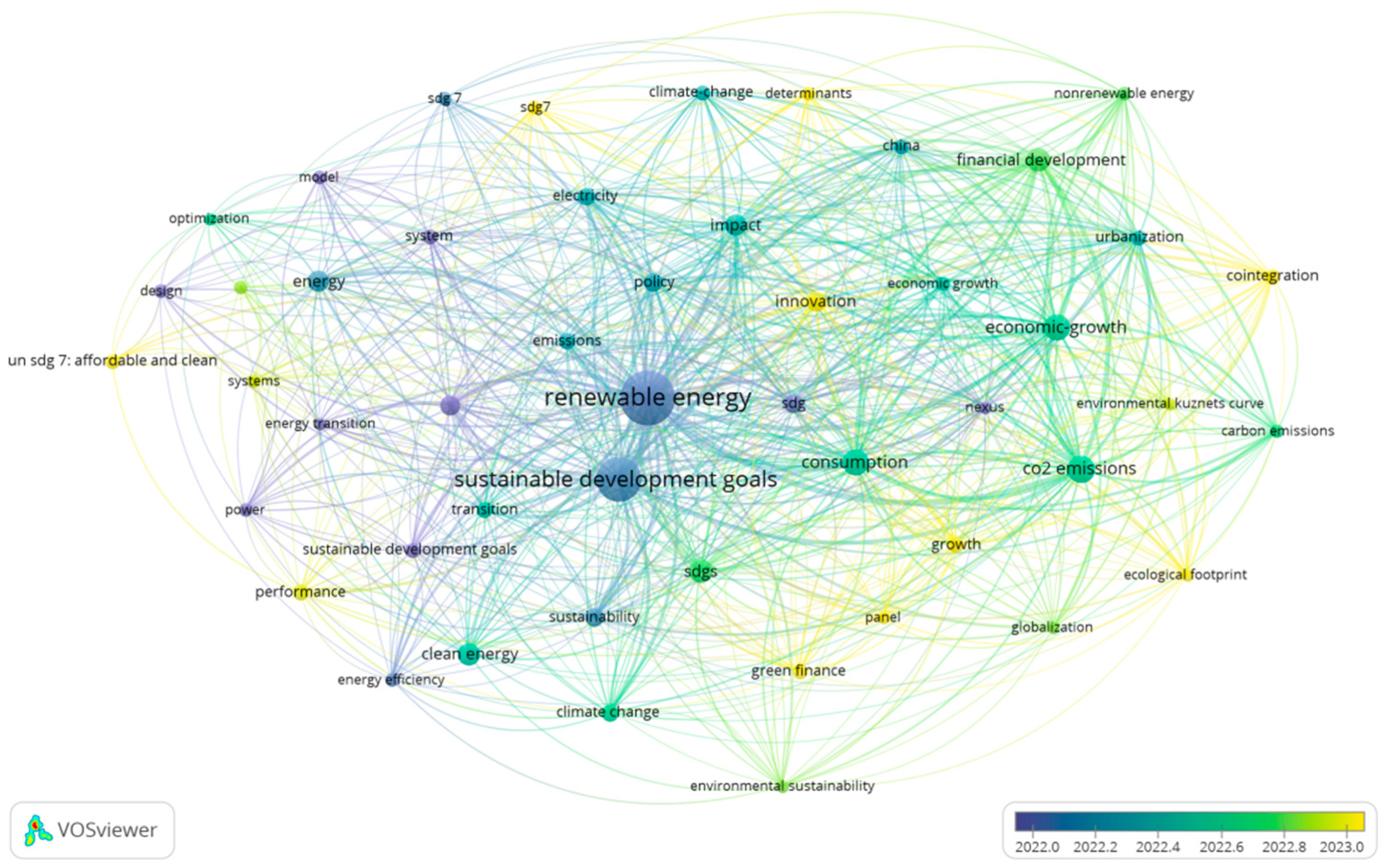
- The red cluster represents the technological–energy mechanism, through which renewable energy deployment directly supports SDG 7 and indirectly enables progress toward SDGs 9 and 13 via innovation, energy efficiency improvements, and emission reduction. In this cluster (23 keywords), the 2 most common co-occurring keywords, “renewable energy” and the Sustainable Development Goals, together occur 83 times. Other keywords include “energy”, climate change”, “clean energy”, “electricity”, “sustainability”, and “energy efficiency”. In summary, all these keywords form a cohesive system in which the transition to renewable energy plays a fundamental role in achieving sustainable development, reducing emissions, and counteracting climate change, while simultaneously providing safe and clean sources of electricity. The relevance of these interconnections is well-documented in strategic frameworks developed by international institutions, such as the International Renewable Energy Agency and the International Energy Agency [79,90], and is further substantiated by recent bibliometric and review studies [24,95];
- The green cluster captures the financial–economic mechanism, highlighting how renewable energy interacts with economic growth, financial development, and globalization, shaping investment patterns and influencing the environmental impact of economic activity. Green cluster—a cluster containing 18 keywords, where “economic growth”, “carbon emissions”, “consumption”, “financial development”, and “globalization” are most often co-founded. The cluster focuses on linking economic factors with climate change. In summary, while economic growth driven by consumption, financial development, and globalization can lead to increased carbon emissions, these same drivers also offer opportunities to invest in sustainable practices. The challenge lies in managing this growth in a way that minimizes environmental harm while leveraging financial and global interconnectedness to promote cleaner technologies and more responsible consumption practices. This dynamic reflects the broader challenge of aligning economic systems with environmental goals, as widely discussed in the sustainability literature [92,93]. Promoting green innovation, sustainable finance, and global cooperation is essential to mitigate climate impacts while maintaining growth trajectories [94];
- The blue cluster reflects the innovation–finance–governance mechanism, in which green finance and technological innovation act as intermediary channels linking renewable energy development with emission reduction, economic resilience, and long-term SDG implementation. This cluster is the smallest cluster, containing eight keywords, where the word “SDG” is the most common, which occurred 35 times with other words. Other keywords of this cluster are “climate change”, “green finance”, growth”, “innovation”, “emission”, and “environmental sustainability”. In the context of achieving Sustainable Development Goals and combating climate change, support for green finance, which enables investments in modern, eco-friendly solutions, is of utmost importance. These financial instruments facilitate economic growth by channeling investments into innovative technologies that simultaneously help reduce the emissions of harmful greenhouse gases. A key issue here is to achieve a balance between dynamic development and environmental protection—innovations are essential for creating efficient energy systems, smart transportation networks, and the management of natural resources that minimize the negative impact of human activity on the planet. This combination of sustainable economic growth, emission reduction, and environmental care forms the foundation for building a lasting future in which development and environmental protection go hand in hand. Studies indicate that green finance policies influence the reduction of direct emissions, among others, by decreasing managerial short-termism and reducing information asymmetry [96]. Moreover, green finance fosters the development of technological innovations and industrial modernization, which translates into more efficient energy systems and sustainable resource management [95]. The key challenge lies in finding a balance between dynamic economic growth and environmental protection. It is essential to promote green innovations and sustainable financial instruments that enable the achievement of Sustainable Development Goals, particularly SDG 13 related to climate action, while simultaneously building a resilient and low-carbon economy [97].
3.4. Mechanism-Oriented Synthesis of the SDG–RE Literature
3.4.1. Technological–Energy Mechanism
3.4.2. Financial–Economic Mechanism
3.4.3. Institutional and Regulatory Mechanism
3.4.4. Governance and Coordination Mechanism
3.4.5. Generalizability of the Mechanism-Based Inference
4. Conclusions
4.1. Theoretical and Practical Implications
4.2. Limitations and Possible Generalization
4.3. Future Research Directions
4.4. Policy Implications
Author Contributions
Funding
Data Availability Statement
Conflicts of Interest
References
- Kluczek, A.; Woźniak, A.; Żegleń, P. Uncovering Economic Impacts and Dynamics of European Energy Policy: Evidence from DEMATEL, Panel Data, and Cluster Analysis. PLoS ONE 2025, 20, e0322525. [Google Scholar] [CrossRef] [Scilit]
- Andersen, A.S.; Hulgård, L. Affirmative and Critical Perspectives on the 2030 Agenda of Sustainable Development and the Sustainable Development Goals. In Interdisciplinary Perspectives on Socioecological Challenges; Andersen, A.S., Hauggaard-Nielsen, H., Christensen, T.B., Hulgaard, L., Eds.; Routledge Studies in Sustainable Development; Routledge: Oxfordshire, UK, 2023; pp. 93–114. [Google Scholar]
- Serger, S.S.; Palmberg, C. Towards Transformative Policy in Finland and Sweden: Some Viewpoints from Practice. In Smart Policies for Societies in Transition; Edward Elgar Publishing: Cheltenham, UK, 2022; pp. 143–188. [Google Scholar]
- Udeagha, M.C.; Ngepah, N. Towards Climate Action and UN Sustainable Development Goals in BRICS Economies: Do Export Diversification, Fiscal Decentralisation and Environmental Innovation Matter? Int. J. Urban Sustain. Dev. 2023, 15, 172–200. [Google Scholar] [CrossRef] [Scilit]
- Dubis, D.; Chochół, A.; Czerniak, J. Towards More Sustainable Consumption via Quality Management of Glassware Washing. Entrep. Sustain. Issues 2025, 13, 356–371. [Google Scholar] [CrossRef] [Scilit]
- Kochanek, A.; Zacłona, T.; Pietrucha, I.; Petryk, A.; Ziemiańczyk, U.; Basak, Z.; Guzdek, P.; Akbulut, L.; Atılgan, A.; Woźniak, A.D. Renewable Energy Integration in Sustainable Transport: A Review of Emerging Propulsion Technologies and Energy Transition Mechanisms. Energies 2025, 18, 6610. [Google Scholar] [CrossRef] [Scilit]
- Bharti, M. The European Union Development Policy and Achieving Sustainable Development Goals (SDGs) of the United Nations. In Global Trends in Governance and Policy Paradigms; IGI Global: Hershey, PA, USA, 2024; pp. 349–366. [Google Scholar]
- Allen, C.; Metternicht, G.; Wiedmann, T. Initial Progress in Implementing the Sustainable Development Goals (SDGs): A Review of Evidence from Countries. Sustain. Sci. 2018, 13, 1453–1467. [Google Scholar] [CrossRef] [Scilit]
- Chakravorty, N.; Pal, S.; Kayal, D.S.; Abdullahi, D.M.; Umar, M.A.; Chutia, D.R.; Keswani, M.; Khedlekar, U.K.; Otuya-Asohro, E.O.; Abdelhadi, D.A.; et al. Sustainable Development Goals: A Handbook Based on Media Perspective; Sayak Pal: Kolkata, India, 2024. [Google Scholar]
- Yumnam, G.; Gyanendra, Y.; Singh, C.I. A Systematic Bibliometric Review of the Global Research Dynamics of United Nations Sustainable Development Goals 2030. Sustain. Futures 2024, 7, 100192. [Google Scholar] [CrossRef] [Scilit]
- Sorooshian, S. The Sustainable Development Goals of the United Nations: A Comparative Midterm Research Review. J. Clean. Prod. 2024, 453, 142272. [Google Scholar] [CrossRef] [Scilit]
- Khorram-Manesh, A. Global Transition, Global Risks, and the UN’s Sustainable Development Goals—A Call for Peace, Justice, and Political Stability. Glob. Transit. 2023, 5, 90–97. [Google Scholar] [CrossRef] [Scilit]
- Pizzi, S.; Caputo, A.; Corvino, A.; Venturelli, A. Management Research and the UN Sustainable Development Goals (SDGs): A Bibliometric Investigation and Systematic Review. J. Clean. Prod. 2020, 276, 124033. [Google Scholar] [CrossRef] [Scilit]
- Ciuła, J.; Generowicz, A.; Oleksy-Gębczyk, A.; Gronba-Chyła, A.; Wiewiórska, I.; Kwaśnicki, P.; Herbut, P.; Koval, V. Technical and Economic Aspects of Environmentally Sustainable Investment in Terms of the EU Taxonomy. Energies 2024, 17, 2239. [Google Scholar] [CrossRef] [Scilit]
- Ciuła, J.; Generowicz, A.; Gronba-Chyła, A.; Kwaśnicki, P.; Makara, A.; Kowalski, Z.; Wiewiórska, I. Energy Production from Landfill Gas, Emissions and Pollution Indicators–Opportunities and Barriers to Implementing Circular Economy. Energy 2024, 308, 132951. [Google Scholar] [CrossRef] [Scilit]
- Mhlanga, D. (Ed.) FinTech and Artificial Intelligence for Sustainable Development: The Role of Smart Technologies in Achieving Development Goals; Springer Nature: Cham, Switzerland, 2023; pp. 3–13. [Google Scholar]
- Astobiza, A.M.; Toboso, M.; Aparicio, M.; López, D. AI Ethics for Sustainable Development Goals. IEEE Technol. Soc. Mag. 2021, 40, 66–71. [Google Scholar] [CrossRef] [Scilit]
- Bilalova, S.; Newig, J.; Tremblay-Lévesque, L.-C.; Roux, J.; Herron, C.; Crane, S. Pathways to Water Sustainability? A Global Study Assessing the Benefits of Integrated Water Resources Management. J. Environ. Manag. 2023, 343, 118179. [Google Scholar] [CrossRef] [Scilit]
- Gielen, D.; Boshell, F.; Saygin, D.; Bazilian, M.D.; Wagner, N.; Gorini, R. The Role of Renewable Energy in the Global Energy Transformation. Energy Strategy Rev. 2019, 24, 38–50. [Google Scholar] [CrossRef] [Scilit]
- Bekun, F.V.; Alola, A.A.; Sarkodie, S.A. Toward a Sustainable Environment: Nexus between CO2 Emissions, Resource Rent, Renewable and Nonrenewable Energy in 16-EU Countries. Sci. Total Environ. 2019, 657, 1023–1029. [Google Scholar] [CrossRef] [Scilit]
- Sarkodie, S.A.; Strezov, V. Effect of Foreign Direct Investments, Economic Development and Energy Consumption on Greenhouse Gas Emissions in Developing Countries. Sci. Total Environ. 2019, 646, 862–871. [Google Scholar] [CrossRef] [Scilit]
- Schroeder, P.; Anggraeni, K.; Weber, U. The Relevance of Circular Economy Practices to the Sustainable Development Goals. J. Ind. Ecol. 2019, 23, 77–95. [Google Scholar] [CrossRef] [Scilit]
- Alola, A.A.; Bekun, F.V.; Sarkodie, S.A. Dynamic Impact of Trade Policy, Economic Growth, Fertility Rate, Renewable and Non-Renewable Energy Consumption on Ecological Footprint in Europe. Sci. Total Environ. 2019, 685, 702–709. [Google Scholar] [CrossRef] [Scilit]
- Marco-Lajara, B.; Martínez-Falcó, J.; Sánchez-García, E.; Millan-Tudela, L.A. Analyzing the Role of Renewable Energy in Meeting the Sustainable Development Goals: A Bibliometric Analysis. Energies 2023, 16, 3137. [Google Scholar] [CrossRef] [Scilit]
- Zupic, I.; Čater, T. Bibliometric Methods in Management and Organization. Organ. Res. Methods 2015, 18, 429–472. [Google Scholar] [CrossRef] [Scilit]
- Hallinger, P.; Suriyankietkaew, S. Science Mapping of the Knowledge Base on Sustainable Leadership, 1990–2018. Sustainability 2018, 10, 4846. [Google Scholar] [CrossRef] [Scilit]
- Schaller, A.-A.; Vatananan-Thesenvitz, R. Business Model Innovation (BMI) Process: A Systematic Literature Review with Bibliometric Analysis. In Proceedings of the 2019 Portland International Conference on Management of Engineering and Technology (PICMET); IEEE: Portland, OR, USA, 2019; pp. 1–12. [Google Scholar]
- Moher, D.; Liberati, A.; Tetzlaff, J.; Altman, D.G. Preferred Reporting Items for Systematic Reviews and Meta-Analyses: The PRISMA Statement. Int. J. Surg. 2010, 8, 336–341. [Google Scholar] [CrossRef] [Scilit]
- O’Dea, R.E.; Lagisz, M.; Jennions, M.D.; Koricheva, J.; Noble, D.W.A.; Parker, T.H.; Gurevitch, J.; Page, M.J.; Stewart, G.; Moher, D.; et al. Preferred Reporting Items for Systematic Reviews and Meta-Analyses in Ecology and Evolutionary Biology: A PRISMA Extension. Biol. Rev. 2021, 96, 1695–1722. [Google Scholar] [CrossRef] [Scilit]
- Pereira, P.; Zhao, W.; Symochko, L.; Inacio, M.; Bogunovic, I.; Barcelo, D. The Russian-Ukrainian Armed Conflict Will Push Back the Sustainable Development Goals. Geogr. Sustain. 2022, 3, 277–287. [Google Scholar] [CrossRef] [Scilit]
- Mohamed, A.-M.O.; Mohamed, D.; Fayad, A.; Al Nahyan, M.T. Environmental Management and Decarbonization Nexus: A Pathway to the Energy Sector’s Sustainable Futures. World 2025, 6, 13. [Google Scholar] [CrossRef] [Scilit]
- Gajdzik, B.; Wolniak, R.; Nagaj, R.; Žuromskaitė-Nagaj, B.; Grebski, W.W. The Influence of the Global Energy Crisis on Energy Efficiency: A Comprehensive Analysis. Energies 2024, 17, 947. [Google Scholar] [CrossRef] [Scilit]
- Gan, K.E.; Taikan, O.; Gan, T.Y.; Weis, T.; Yamazaki, D.; Schüttrumpf, H. Enhancing Renewable Energy Systems, Contributing to Sustainable Development Goals of United Nation and Building Resilience Against Climate Change Impacts. Energy Technol. 2023, 11, 2300275. [Google Scholar] [CrossRef] [Scilit]
- Talaat, F.M.; Kabeel, A.E.; Shaban, W.M. The Role of Utilizing Artificial Intelligence and Renewable Energy in Reaching Sustainable Development Goals. Renew. Energy 2024, 235, 121311. [Google Scholar] [CrossRef] [Scilit]
- Madurai Elavarasan, R.; Nadarajah, M.; Pugazhendhi, R.; Sinha, A.; Gangatharan, S.; Chiaramonti, D.; Abou Houran, M. The Untold Subtlety of Energy Consumption and Its Influence on Policy Drive towards Sustainable Development Goal 7. Appl. Energy 2023, 334, 120698. [Google Scholar] [CrossRef] [Scilit]
- Sinha, A.; Sengupta, T. Impact of Energy Mix on Nitrous Oxide Emissions: An Environmental Kuznets Curve Approach for APEC Countries. Environ. Sci. Pollut. Res. 2019, 26, 2613–2622. [Google Scholar] [CrossRef] [Scilit]
- Sheraz, M.; Deyi, X.; Sinha, A.; Mumtaz, M.Z.; Fatima, N. The Dynamic Nexus among Financial Development, Renewable Energy and Carbon Emissions: Moderating Roles of Globalization and Institutional Quality across BRI Countries. J. Clean. Prod. 2022, 343, 130995. [Google Scholar] [CrossRef] [Scilit]
- Zhao, J.; Sinha, A.; Inuwa, N.; Wang, Y.; Murshed, M.; Abbasi, K.R. Does Structural Transformation in Economy Impact Inequality in Renewable Energy Productivity? Implications for Sustainable Development. Renew. Energy 2022, 189, 853–864. [Google Scholar] [CrossRef] [Scilit]
- Sinha, A.; Ghosh, V.; Hussain, N.; Nguyen, D.K.; Das, N. Green Financing of Renewable Energy Generation: Capturing the Role of Exogenous Moderation for Ensuring Sustainable Development. Energy Econ. 2023, 126, 107021. [Google Scholar] [CrossRef] [Scilit]
- Abbas, S.; Sinha, A.; Saha, T.; Shah, M.I. Response of Mineral Market to Renewable Energy Production in the USA: Where Lies the Sustainable Energy Future. Energy Policy 2023, 182, 113749. [Google Scholar] [CrossRef] [Scilit]
- Sinha, A.; Tiwari, S.; Saha, T. Modeling the Behavior of Renewable Energy Market: Understanding the Moderation of Climate Risk Factors. Energy Econ. 2024, 130, 107290. [Google Scholar] [CrossRef] [Scilit]
- Sharma, R.; Sinha, A.; Kautish, P. Does Renewable Energy Consumption Reduce Ecological Footprint? Evidence from Eight Developing Countries of Asia. J. Clean. Prod. 2021, 285, 124867. [Google Scholar] [CrossRef] [Scilit]
- Murshed, M.; Khan, S.; Rahman, A.K.M.A. Roadmap for Achieving Energy Sustainability in Sub-Saharan Africa: The Mediating Role of Energy Use Efficiency. Energy Rep. 2022, 8, 4535–4552. [Google Scholar] [CrossRef] [Scilit]
- Ahmed, Z.; Cary, M.; Ali, S.; Murshed, M.; Ullah, H.; Mahmood, H. Moving toward a Green Revolution in Japan: Symmetric and Asymmetric Relationships among Clean Energy Technology Development Investments, Economic Growth, and CO2 Emissions. Energy Environ. 2022, 33, 1417–1440. [Google Scholar] [CrossRef] [Scilit]
- He, X.; Khan, S.; Ozturk, I.; Murshed, M. The Role of Renewable Energy Investment in Tackling Climate Change Concerns: Environmental Policies for Achieving SDG-13. Sustain. Dev. 2023, 31, 1888–1901. [Google Scholar] [CrossRef] [Scilit]
- Siddik, A.B.; Khan, S.; Khan, U.; Yong, L.; Murshed, M. The Role of Renewable Energy Finance in Achieving Low-Carbon Growth: Contextual Evidence from Leading Renewable Energy-Investing Countries. Energy 2023, 270, 126864. [Google Scholar] [CrossRef] [Scilit]
- Zheng, Y.; Wei, W.; Murshed, M.; Khan, S.; Mahmood, H.; Das, N. Repercussions of Hydroelectricity Use on Carbon Emissions in Bangladesh: Evidence Using Novel Fourier-Bootstrapped ARDL and Fourier-Gradual Shift Causality Analyses. Eval. Rev. 2023, 47, 1025–1065. [Google Scholar] [CrossRef] [Scilit] [PubMed]
- Arnaut, M.; Dada, J.T. Exploring the Nexus between Economic Complexity, Energy Consumption and Ecological Footprint: New Insights from the United Arab Emirates. Int. J. Energy Sect. Manag. 2022, 17, 1137–1160. [Google Scholar] [CrossRef] [Scilit]
- Saqib, N.; Mahmood, H.; Murshed, M.; Duran, I.A.; Douissa, I.B. Harnessing Digital Solutions for Sustainable Development: A Quantile-Based Framework for Designing an SDG Framework for Green Transition. Environ. Sci. Pollut. Res. 2023, 30, 110851–110868. [Google Scholar] [CrossRef] [Scilit]
- Guang-Wen, Z.; Murshed, M.; Siddik, A.B.; Alam, M.S.; Balsalobre-Lorente, D.; Mahmood, H. Achieving the Objectives of the 2030 Sustainable Development Goals Agenda: Causalities between Economic Growth, Environmental Sustainability, Financial Development, and Renewable Energy Consumption. Sustain. Dev. 2023, 31, 680–697. [Google Scholar] [CrossRef] [Scilit]
- Cai, Y.; Xu, J.; Ahmad, P.; Anwar, A. What Drives Carbon Emissions in the Long-Run? The Role of Renewable Energy and Agriculture in Achieving the Sustainable Development Goals. Econ. Res.-Ekon. Istraživanja 2022, 35, 4603–4624. [Google Scholar] [CrossRef] [Scilit]
- Jiang, Y.; Sharif, A.; Anwar, A.; The Cong, P.; Lelchumanan, B.; Thi Yen, V.; Thi Thuy Vinh, N. Does Green Growth in E-7 Countries Depend on Economic Policy Uncertainty, Institutional Quality, and Renewable Energy? Evidence from Quantile-Based Regression. Geosci. Front. 2023, 14, 101652. [Google Scholar] [CrossRef] [Scilit]
- Zhang, R.; Sharma, R.; Tan, Z.; Kautish, P. Do Export Diversification and Stock Market Development Drive Carbon Intensity? The Role of Renewable Energy Solutions in Top Carbon Emitter Countries. Renew. Energy 2022, 185, 1318–1328. [Google Scholar] [CrossRef] [Scilit]
- Payab, A.H.; Kautish, P.; Sharma, R.; Siddiqui, A.; Mehta, A.; Siddiqui, M. Does Human Capital Complement Sustainable Development Goals? Evidence from Leading Carbon Emitter Countries. Util. Policy 2023, 81, 101509. [Google Scholar] [CrossRef] [Scilit]
- Madurai Elavarasan, R.; Pugazhendhi, R.; Jamal, T.; Dyduch, J.; Arif, M.T.; Manoj Kumar, N.; Shafiullah, G.; Chopra, S.S.; Nadarajah, M. Envisioning the UN Sustainable Development Goals (SDGs) through the Lens of Energy Sustainability (SDG 7) in the Post-COVID-19 World. Appl. Energy 2021, 292, 116665. [Google Scholar] [CrossRef] [Scilit]
- Manoj Kumar, N.; Chopra, S.S.; Chand, A.A.; Elavarasan, R.M.; Shafiullah, G.M. Hybrid Renewable Energy Microgrid for a Residential Community: A Techno-Economic and Environmental Perspective in the Context of the SDG7. Sustainability 2020, 12, 3944. [Google Scholar] [CrossRef] [Scilit]
- Caglar, A.E.; Daştan, M.; Rej, S. A New Look at China’s Environmental Quality: How Does Environmental Sustainability Respond to the Asymmetrical Behavior of the Competitive Industrial Sector? Int. J. Sustain. Dev. World Ecol. 2024, 31, 16–28. [Google Scholar] [CrossRef] [Scilit]
- Caglar, A.E.; Daştan, M.; Avci, S.B. Persistence of Disaggregate Energy RD&D Expenditures in Top-Five Economies: Evidence from Artificial Neural Network Approach. Appl. Energy 2024, 365, 123216. [Google Scholar] [CrossRef] [Scilit]
- Caglar, A.E.; Yavuz, E. The Role of Environmental Protection Expenditures and Renewable Energy Consumption in the Context of Ecological Challenges: Insights from the European Union with the Novel Panel Econometric Approach. J. Environ. Manag. 2023, 331, 117317. [Google Scholar] [CrossRef] [Scilit] [PubMed]
- Caglar, A.E.; Askin, B.E. A Path towards Green Revolution: How Do Competitive Industrial Performance and Renewable Energy Consumption Influence Environmental Quality Indicators? Renew. Energy 2023, 205, 273–280. [Google Scholar] [CrossRef] [Scilit]
- Caglar, A.E.; Gökçe, N.; Şahin, F. Sustaining Environment through Municipal Solid Waste: Evidence from European Union Economies. Environ. Sci. Pollut. Res. 2024, 31, 6040–6053. [Google Scholar] [CrossRef] [Scilit]
- Wali, S.B.; Hannan, M.A.; Ker, P.J.; Rahman, M.S.A.; Tiong, S.K.; Begum, R.A.; Mahlia, T.M.I. Techno-Economic Assessment of a Hybrid Renewable Energy Storage System for Rural Community towards Achieving Sustainable Development Goals. Energy Strategy Rev. 2023, 50, 101217. [Google Scholar] [CrossRef] [Scilit]
- Hannan, M.A.; Al-Shetwi, A.Q.; Begum, R.A.; Jern Ker, P.; Rahman, S.A.; Mansor, M.; Mia, M.S.; Muttaqi, K.M.; Dong, Z.Y. Impact Assessment of Battery Energy Storage Systems towards Achieving Sustainable Development Goals. J. Energy Storage 2021, 42, 103040. [Google Scholar] [CrossRef] [Scilit]
- Hannan, M.A.; Al-Shetwi, A.Q.; Ker, P.J.; Begum, R.A.; Mansor, M.; Rahman, S.A.; Dong, Z.Y.; Tiong, S.K.; Mahlia, T.M.I.; Muttaqi, K.M. Impact of Renewable Energy Utilization and Artificial Intelligence in Achieving Sustainable Development Goals. Energy Rep. 2021, 7, 5359–5373. [Google Scholar] [CrossRef] [Scilit]
- Olabi, A.G.; Shehata, N.; Sayed, E.T.; Rodriguez, C.; Anyanwu, R.C.; Russell, C.; Abdelkareem, M.A. Role of Microalgae in Achieving Sustainable Development Goals and Circular Economy. Sci. Total Environ. 2023, 854, 158689. [Google Scholar] [CrossRef] [Scilit]
- Yousef, B.A.A.; Mahmoud, M.; Aljaghoub, H.; Abdelkareem, M.A.; Alami, A.H.; Olabi, A.G. Phase Change Materials in Solar Photovoltaics: Bibliometric Analysis, Role in Achieving Sustainability, Challenges and Barriers. Therm. Sci. Eng. Prog. 2023, 45, 102082. [Google Scholar] [CrossRef] [Scilit]
- Bekun, F.V.; Uzuner, G.; Meo, M.S.; Yadav, A. Another Look at Energy Consumption and Environmental Sustainability Target through the Lens of the Load Capacity Factor: Accessing Evidence from MINT Economies. Nat. Resour. Forum 2025, 49, 2349–2366. [Google Scholar] [CrossRef] [Scilit]
- Adedoyin, F.F.; Bekun, F.V.; Hossain, M.E.; Ofori, E.K.; Gyamfi, B.A.; Haseki, M.I. Glasgow Climate Change Conference (COP26) and Its Implications in Sub-Sahara Africa Economies. Renew. Energy 2023, 206, 214–222. [Google Scholar] [CrossRef] [Scilit]
- Agozie, D.Q.; Afful-Dadzie, A.; Gyamfi, B.A.; Bekun, F.V. Does Psychological Empowerment Improve Renewable Energy Technology Acceptance and Recommendation? Evidence from 17 Rural Communities. Renew. Energy 2023, 219, 119449. [Google Scholar] [CrossRef] [Scilit]
- Dam, M.M.; Kaya, F.; Bekun, F.V. How Does Technological Innovation Affect the Ecological Footprint? Evidence from E-7 Countries in the Background of the SDGs. J. Clean. Prod. 2024, 443, 141020. [Google Scholar] [CrossRef] [Scilit]
- Nhamo, G.; Nhamo, S.; Nhemachena, C.; Nhemachena, C.R. Africa and the 2030 Sustainable Energy Goal: A Focus on Access to Renewables and Clean Fuels for Cooking. In Scaling up SDGs Implementation: Emerging Cases from State, Development and Private Sectors; Nhamo, G., Odularu, G.O.A., Mjimba, V., Eds.; Springer International Publishing: Cham, Switzerland, 2020; pp. 39–57. [Google Scholar]
- Casati, P.; Moner-Girona, M.; Khaleel, S.I.; Szabo, S.; Nhamo, G. Clean Energy Access as an Enabler for Social Development: A Multidimensional Analysis for Sub-Saharan Africa. Energy Sustain. Dev. 2023, 72, 114–126. [Google Scholar] [CrossRef] [Scilit]
- Casati, P.; Moner-Girona, M.; Shehu, I.K.; Szabó, S.; Nhamo, G. Datasets for a Multidimensional Analysis Connecting Clean Energy Access and Social Development in Sub-Saharan Africa. Data Brief 2023, 47, 108948. [Google Scholar] [CrossRef] [Scilit]
- Hashem Pesaran, M.; Yamagata, T. Testing Slope Homogeneity in Large Panels. J. Econom. 2008, 142, 50–93. [Google Scholar] [CrossRef] [Scilit]
- Westerlund, J. Testing for Error Correction in Panel Data. Oxf. Bull. Econ. Stat. 2007, 69, 709–748. [Google Scholar] [CrossRef] [Scilit]
- Breusch, T.S.; Pagan, A.R. The Lagrange Multiplier Test and Its Applications to Model Specification in Econometrics. Rev. Econ. Stud. 1980, 47, 239–253. [Google Scholar] [CrossRef] [Scilit]
- Dumitrescu, E.-I.; Hurlin, C. Testing for Granger Non-Causality in Heterogeneous Panels. Econ. Model. 2012, 29, 1450–1460. [Google Scholar] [CrossRef] [Scilit]
- Pesaran, M.H. Estimation and Inference in Large Heterogeneous Panels with a Multifactor Error Structure. Econometrica 2006, 74, 967–1012. [Google Scholar] [CrossRef] [Scilit]
- IRENA. 2022 Year in Review: Climate-Driven Global Renewable Energy Potential Resources and Energy Demand; IRENA: Masdar City, United Arab Emirates, 2023. [Google Scholar]
- Pesaran, M.H. General Diagnostic Tests for Cross-Sectional Dependence in Panels. Empir. Econ. 2021, 60, 13–50. [Google Scholar] [CrossRef] [Scilit]
- Pesaran, M.H. A Simple Panel Unit Root Test in the Presence of Cross-Section Dependence. J. Appl. Econom. 2007, 22, 265–312. [Google Scholar] [CrossRef] [Scilit]
- Transforming Our World: The 2030 Agenda for Sustainable Development|Department of Economic and Social Affairs. Available online: https://sdgs.un.org/publications/transforming-our-world-2030-agenda-sustainable-development-17981 (accessed on 6 November 2024).
- Fuso Nerini, F.; Tomei, J.; To, L.S.; Bisaga, I.; Parikh, P.; Black, M.; Borrion, A.; Spataru, C.; Castán Broto, V.; Anandarajah, G.; et al. Mapping Synergies and Trade-Offs between Energy and the Sustainable Development Goals. Nat. Energy 2018, 3, 10–15. [Google Scholar] [CrossRef] [Scilit]
- Sinha, A.; Sengupta, T.; Alvarado, R. Interplay between Technological Innovation and Environmental Quality: Formulating the SDG Policies for next 11 Economies. J. Clean. Prod. 2020, 242, 118549. [Google Scholar] [CrossRef] [Scilit]
- Balsalobre-Lorente, D.; Shahbaz, M.; Roubaud, D.; Farhani, S. How Economic Growth, Renewable Electricity and Natural Resources Contribute to CO2 Emissions? Energy Policy 2018, 113, 356–367. [Google Scholar] [CrossRef] [Scilit]
- Sharif, A.; Baris-Tuzemen, O.; Uzuner, G.; Ozturk, I.; Sinha, A. Revisiting the Role of Renewable and Non-Renewable Energy Consumption on Turkey’s Ecological Footprint: Evidence from Quantile ARDL Approach. Sustain. Cities Soc. 2020, 57, 102138. [Google Scholar] [CrossRef] [Scilit]
- Destek, M.A.; Sinha, A. Renewable, Non-Renewable Energy Consumption, Economic Growth, Trade Openness and Ecological Footprint: Evidence from Organisation for Economic Co-Operation and Development Countries. J. Clean. Prod. 2020, 242, 118537. [Google Scholar] [CrossRef] [Scilit]
- Shahbaz, M.; Nasir, M.A.; Roubaud, D. Environmental Degradation in France: The Effects of FDI, Financial Development, and Energy Innovations. Energy Econ. 2018, 74, 843–857. [Google Scholar] [CrossRef] [Scilit]
- Zafar, M.W.; Shahbaz, M.; Sinha, A.; Sengupta, T.; Qin, Q. How Renewable Energy Consumption Contribute to Environmental Quality? The Role of Education in OECD Countries. J. Clean. Prod. 2020, 268, 122149. [Google Scholar] [CrossRef] [Scilit]
- IEA. Global Energy Review 2025; IEA: Paris, France, 2025. [Google Scholar]
- García-Lillo, F.; Sánchez-García, E.; Marco-Lajara, B.; Seva-Larrosa, P. Renewable Energies and Sustainable Development: A Bibliometric Overview. Energies 2023, 16, 1211. [Google Scholar] [CrossRef] [Scilit]
- Sachs, J.D.; Schmidt-Traub, G.; Mazzucato, M.; Messner, D.; Nakicenovic, N.; Rockström, J. Six Transformations to Achieve the Sustainable Development Goals. Nat. Sustain. 2019, 2, 805–814. [Google Scholar] [CrossRef] [Scilit]
- Shahbaz, M.; Sinha, A. Environmental Kuznets Curve for CO2 emissions: A Literature Survey. J. Econ. Stud. 2019, 46, 106–168. [Google Scholar] [CrossRef] [Scilit]
- Zhang, D.; Rong, Z.; Ji, Q. Green Innovation and Firm Performance: Evidence from Listed Companies in China. Resour. Conserv. Recycl. 2019, 144, 48–55. [Google Scholar] [CrossRef] [Scilit]
- Yang, T.; Wang, R. Research on the Impact of Green Finance and the Digital Economy on the Energy Consumption Structure in the Context of Carbon Neutrality. Sustainability 2023, 15, 15874. [Google Scholar] [CrossRef] [Scilit]
- Lyu, Y.; Xiao, X.; Zhang, J. Green Finance Policy and Corporate Carbon Emissions: Advancing Corporate Sustainability. Humanit. Soc. Sci. Commun. 2025, 12, 1143. [Google Scholar] [CrossRef] [Scilit]
- Climate Finance and the USD 100 Billion Goal. Available online: https://www.oecd.org/en/publications/climate-finance-and-the-usd-100-billion-goal_5f1f4182-en.html (accessed on 23 July 2025).
- Haykel, T. Exploring the Impact of Financial Development on Ecological Footprint: Insights from a Decade of Bibliometric Evidence. Int. J. Energy Econ. Policy 2025, 15, 452–465. [Google Scholar] [CrossRef] [Scilit]
- Wence, Y.; Wang, C.; Zhao, X.; Zhang, H. Greening the Globe: A Multi-Stage Analysis of Human Capital, Innovation-Policy Interactions, and Renewable Energy in Driving Environmental Sustainability. Front. Environ. Sci. 2025, 13, 1522528. [Google Scholar] [CrossRef] [Scilit]


| Clusters | Country | Number of Publications | Number of Citations |
|---|---|---|---|
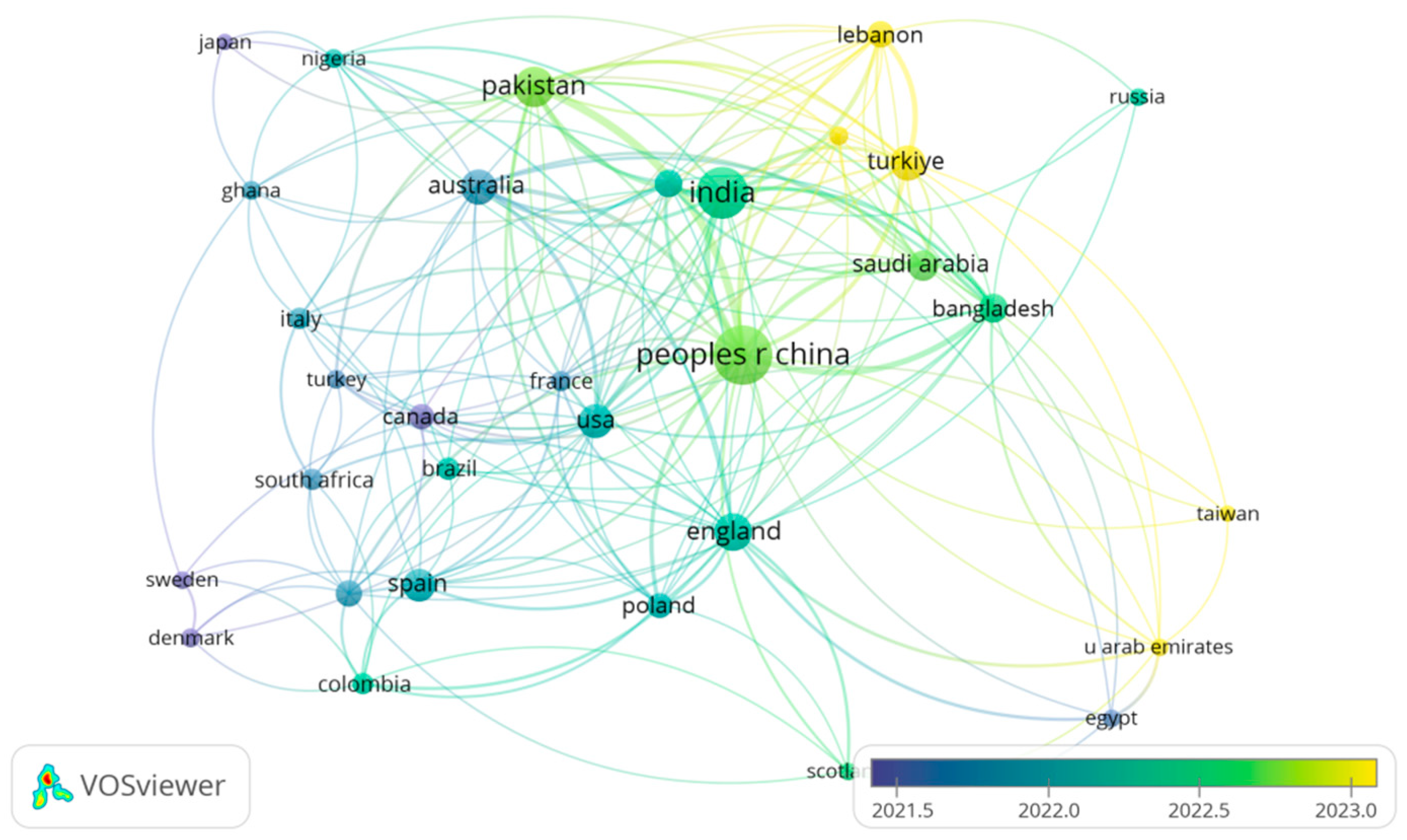
| Red cluster | Brazil, Canada, Colombia, Denmark, France, Germany, Italy, South Africa, Spain, Sweden, Turkey, USA | 124 | 2518 |
| Green cluster | Malesia, Pakistan, China, Poland, Saudi Arabia, Vietnam | 143 | 4617 |
| Blue cluster | Egypt, England, Scotland, Taiwan, United Arab Emirates, | 49 | 890 |
| Yellow cluster | Bangladesh, India, Lebanon, Russia, Turkey | 103 | 3104 |
| Fillet cluster | Australia, Ghana, Japan, Nigeria | 41 | 1016 |
| Journal | Number of Publications | Number of Citations |
|---|---|---|
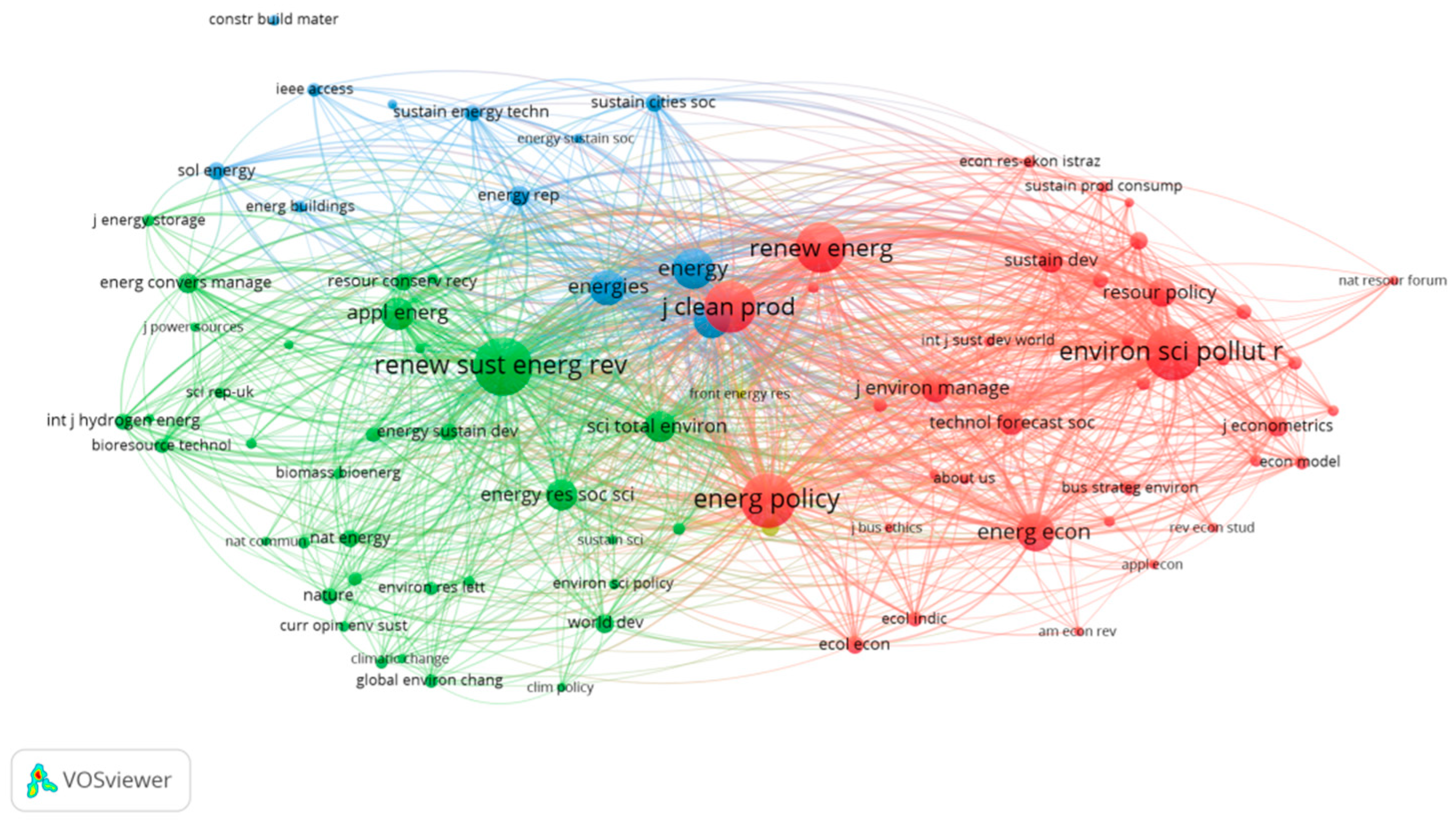
| Journal of Cleaner Production | 9 | 466 |
| Energies | 23 | 388 |
| Environmental Science and Pollution Research | 17 | 338 |
| Renewable Energy | 11 | 314 |
| Sustainability | 18 | 286 |
| Applied Energy | 4 | 223 |
| Renewable & Sustainable Energy Reviews | 5 | 203 |
| Resources Policy | 4 | 189 |
| Sustainable Development | 9 | 175 |
| Energy | 4 | 161 |
| Authors | Documents | Citations |
|---|---|---|
| Avik Sihna [35,36,37,38,39,40,41,42] | 10 | 821 |
| Murshed Muntasir [43,44,45,46,47,48,49,50] | 9 | 420 |
| Anwar Ahsan [51,52] | 3 | 346 |
| Pradeep Kautish [42,53,54] | 3 | 308 |
| Rajesh Sharma [42,53] | 3 | 308 |
| Rajvikram Madurai Elavarasan [35,55,56] | 4 | 262 |
| G. M. Shafiullah [55,56] | 3 | 233 |
| Haider Mahmood [49] | 4 | 174 |
| Mithulananthan Nadarajah [35,55] | 3 | 164 |
| Abdullah Emre Caglar [57,58,59,60,61] | 6 | 156 |
| Samiha Khan [43,45,46,47] | 4 | 153 |
| Zahoor Ahmed [44] | 3 | 139 |
| Rawshan Ara Begum [62,63,64] | 3 | 102 |
| M.A. Hannan [62] | 3 | 102 |
| Pin Jern Ker [62,63,64] | 3 | 102 |
| Mohammad Ali Abdelkareem [65,66] | 3 | 82 |
| Muhammet Dastan [57,58] | 3 | 52 |
| Festus Victor Bekun [67,68,69,70] | 4 | 34 |
| Godwell Nhamo [71,72,73] | 3 | 24 |
| Bibliography Cited | Title | Number of Citations in the Analysed Group of 278 Publications |
|---|---|---|
| (Pesaran, 2021) [80] | General diagnostic tests for cross-sectional dependence in panels | 22 |
| (Pesaran, 2007) [81] | A simple panel unit root test in the presence of cross-section dependence | 21 |
| (Pesaran and Yamagata, 2008) [74] | Testing slope homogeneity in large panels | 19 |
| (Westerlund, 2007) [75] | Testing for Error Correction in Panel Data | 19 |
| (Transforming our World: The 2030 Agenda for Sustainable Development, 2024) [82] | Transforming our World: The 2030 Agenda for Sustainable Development | 15 |
| (Breusch and Pagan, 1980) [76] | The Lagrange Multiplier Test and its Applications to Model Specification in Econometrics | 14 |
| (Gielen et al., 2019) [19] | The role of renewable energy in the global energy transformation | 13 |
| (Nerini et al., 2018) [83] | Mapping synergies and trade-offs between energy and the Sustainable Development Goals | 13 |
| (Dumitrescu and Hurlin, 2012 ) [77] | Testing for Granger non-causality in heterogeneous panels | 12 |
| (Dumitrescu and Hurlin, 2020) [84] | Interplay between technological innovation and environmental quality: Formulating the SDG policies for next 11 economies | 12 |
| (Balsalobre-Lorente et al., 2017) [85] | How economic growth, renewable electricity and natural resources contribute to CO2 emissions? | 11 |
| (Sharif et al., 2020) [86] | Revisiting the role of renewable and non-renewable energy consumption on Turkey’s ecological footprint: Evidence from Quantile ARDL approach | 11 |
| (Bekun et al., 2019) [20] | Toward a sustainable environment: Nexus between CO2 emissions, resource rent, renewable and nonrenewable energy in 16-EU countries | 10 |
| (Destek and Sinha, 2020) [87] | Renewable, non-renewable energy consumption, economic growth, trade openness and ecological footprint: Evidence from organisation for economic Co-operation and development countries | 10 |
| (Pesaran, 2006) [78] | Estimation and Inference in Large Heterogeneous Panels with a Multifactor Error Structure | 10 |
| (Shahbaz et al., 2018) [88] | Environmental degradation in France: The effects of FDI, financial development, and energy innovations | 10 |
| (Zafar et al., 2020) [89] | How renewable energy consumption contribute to environmental quality? The role of education in OECD countries | 10 |
| Mechanism/Cluster | Core Research Focus | Primary SDGs | Secondary/Cross-Cutting SDGs | Underrepresented SDGs | Bibliometric Origin (Figures) |
|---|---|---|---|---|---|
| Technological–energy mechanism (renewable energy, clean energy, energy efficiency, electricity, climate change) | This research stream focuses on the restructuring of energy systems through the deployment of renewable energy technologies. The literature highlights efficiency improvements, decarbonization, and technological modernization as direct technological pathways linking renewable energy development with sustainability outcomes. | SDG 7, SDG 13 | SDG 9 (innovation and infrastructure), SDG 11 (sustainable cities through clean electricity and air-quality co-benefits), SDG 12 (sustainable production and consumption driven by efficiency gains) | SDG 3 (health), SDG 6 (water), SDGs 14–15 (ecosystems), SDG 10 (inequality) | Keyword co-occurrence cluster (Figure 8); temporal overlay (Figure 9) |
| Financial–economic mechanism (economic growth, financial development, consumption, globalization, emissions) | This mechanism emphasizes renewable energy as part of broader capital allocation and investment processes shaping long-term economic growth. Studies in this cluster examine trade-offs between growth, consumption, and emissions, as well as macro-financial channels through which renewable energy influences SDG-related outcomes. | SDG 8, SDG 13 | SDG 7 (investment enabling clean energy deployment), SDG 9 (innovation financing), SDG 12 (consumption patterns and resource intensity) | SDGs 1–2 (poverty and food security), SDG 5 (gender), SDG 10 (distributional outcomes), SDG 16 (institutions) | Keyword co-occurrence cluster (Figure 8) |
| Institutional and regulatory mechanism (policy frameworks, regulatory quality, institutional capacity) | This stream concentrates on governance structures and regulatory capacity as key enablers of renewable energy effectiveness. The literature addresses policy design, institutional quality, and the alignment of renewable energy policies with the broader SDG agenda. | SDG 16, SDG 7 | SDG 13 (policy-driven decarbonization), SDG 9 (regulation supporting innovation), SDG 12 (policy instruments for sustainable production) | SDG 4 (education and skills), SDG 5 (gender), SDG 10 (equity), SDGs 14–15 (biodiversity) | Author co-citation cluster (Figure 7) |
| Governance and coordination mechanism (systems, governance, innovation, green finance, ESG) | This emerging mechanism highlights multi-level coordination across sectors and actors. It focuses on integrating renewable energy with sustainable finance, innovation systems, and cross-sector SDG implementation, emphasizing the importance of systemic policy coherence. | SDG 17, SDG 13 | SDG 7 (system integration), SDG 9 (innovation systems), SDG 11 (urban transitions), SDG 12 (system-level resource governance) | SDG 3 (health co-benefits remain underexplored), SDG 6 (water–energy nexus), SDG 10 (justice and equity), SDGs 14–15 (ecosystem impacts) | Temporal keyword overlay (Figure 9) |
Disclaimer/Publisher’s Note: The statements, opinions and data contained in all publications are solely those of the individual author(s) and contributor(s) and not of MDPI and/or the editor(s). MDPI and/or the editor(s) disclaim responsibility for any injury to people or property resulting from any ideas, methods, instructions or products referred to in the content. |
© 2026 by the authors. Licensee MDPI, Basel, Switzerland. This article is an open access article distributed under the terms and conditions of the Creative Commons Attribution (CC BY) license.
Share and Cite
Woźniak, A.D.; Ciuła, J.; Kochanek, A.; Guzal-Dec, D. Renewable Energy as a Strategic Mechanism for Achieving the Sustainable Development Goals: A Bibliometric Review. Energies 2026, 19, 1201. https://doi.org/10.3390/en19051201
Woźniak AD, Ciuła J, Kochanek A, Guzal-Dec D. Renewable Energy as a Strategic Mechanism for Achieving the Sustainable Development Goals: A Bibliometric Review. Energies. 2026; 19(5):1201. https://doi.org/10.3390/en19051201
Chicago/Turabian StyleWoźniak, Agnieszka Dorota, Józef Ciuła, Anna Kochanek, and Danuta Guzal-Dec. 2026. "Renewable Energy as a Strategic Mechanism for Achieving the Sustainable Development Goals: A Bibliometric Review" Energies 19, no. 5: 1201. https://doi.org/10.3390/en19051201
APA StyleWoźniak, A. D., Ciuła, J., Kochanek, A., & Guzal-Dec, D. (2026). Renewable Energy as a Strategic Mechanism for Achieving the Sustainable Development Goals: A Bibliometric Review. Energies, 19(5), 1201. https://doi.org/10.3390/en19051201