Review

The Status of Marine Energy of Costa Rica: Challenges and Opportunities for Grid Integration

by
Jose Rodrigo Rojas-Morales
1,
Christopher Vega-Sánchez
2,
Juan Luis Guerrero-Fernández
2,*,
Rodney Eduardo Mora-Escalante
3,4,
Pablo César Mora-Céspedes
5,
Michelle Chavarría-Brenes
6,
Manuel Corrales-Gonzalez
7,
Julio César Rojas-Gómez
2,
Rolando Madriz-Vargas
1 and
Leonardo Suárez-Matarrita
8
1
Sede Regional Chorotega, Universidad Nacional, Liberia 50101, Costa Rica
2
Escuela de Ingeniería Electromecánica, Instituto Tecnológico de Costa Rica, Cartago 30101, Costa Rica
3
Escuela de Física, Universidad de Costa Rica, San José 11501, Costa Rica
4
Centro de Investigación en Ciencias del Mar y Limnología, Universidad de Costa Rica, San José 11501, Costa Rica
5
Sede del Atlántico, Universidad de Costa Rica, Turrialba 30501, Costa Rica
6
Department of Maritime Transportation Law and Politics, Faculty of Social Sciences, AÜ Tandoğan Campus, Ankara University, 06560 Ankara, Turkey
7
Marine Offshore Renewable Energy Lab (MOREnergy Lab), Department of Mechanical and Aerospace Engineering (DIMEAS), Politecnico di Torino, Corso Duca degli Abruzzi 24, 10129 Turin, Italy
8
Sede Guanacaste, Ingeniería Energética, Universidad Técnica Nacional, Cañas 50601, Costa Rica
*
Author to whom correspondence should be addressed.
Energies 2026, 19(5), 1189; https://doi.org/10.3390/en19051189
Submission received: 9 December 2025 / Revised: 20 January 2026 / Accepted: 30 January 2026 / Published: 27 February 2026
(This article belongs to the Special Issue Advanced Technologies for the Integration of Marine Energies)

Abstract

Marine renewable energy could support Costa Rica’s decarbonization pathway, but its offshore resource base and enabling conditions remain poorly characterized in the body of knowledge. This study provides the first integrated assessment of marine energy resources, grid integration opportunities, and governance challenges in Costa Rica. A meta-analysis of 76 technical, legal, and policy sources is combined with qualitative doctrinal analysis, GIS-based multi-criteria evaluation for Ocean Thermal Energy Conversion (OTEC), and satellite and reanalysis data for winds, waves, currents, and sea surface temperature to estimate power densities and extractable energy. Results show a contrast between the Pacific and Caribbean coasts. For instance, on the Northern Pacific coast, there are strong Papagayo winds, and persistent swells yield high offshore wind and wave energy potentials, with technical offshore wind resources of around 14.4 GW and Pacific wave power frequently exceeding 20–25 kW/m with relatively low seasonal variability. Furthermore, twelve OTEC-suitable zones are identified with two priority areas in the southern Pacific that combine steep bathymetry and strong thermal gradients with limited environmental conflicts, but they overlap with sensitive conservation and Indigenous territories. Current energy potential is more localized and modest in the Caribbean coast. The analysis highlights major infrastructural, legal, and social barriers but concludes that marine energy can play a pivotal role in diversifying Costa Rica’s renewable-dominated electricity market.

1. Introduction

The current global crisis clearly demonstrates the rapid energy transition, which has become increasingly relevant. In addition, geopolitical agendas have created uncertainty about the security of the global energy supply. The impacts of climate change are also becoming more visible, with prolonged heatwaves, droughts, wildfires, and storms that harm people and ecosystems around the world [1]. Providing affordable energy to citizens and limiting the global temperature rise to no more than 1.5 °C of pre-industrial levels requires a rapid shift away from centralized energy systems highly dependent on fossil fuels [2]. For this reason, the global energy industry is entering an unprecedented period of transformation, as states and international institutions continue to prioritize decarbonization, climate resilience, and sustainable grid integration. Marine renewable energy (MRE) is positioned at the core of the ongoing transition of energy systems and the reduction in dependency on fossil fuels. MREs usually include energy from waves, tides, and ocean currents, as well as salinity and temperature differences, and a broader definition also encompasses marine biomass, offshore wind, and offshore solar energy that utilize the ocean’s surface [3]. MRE has proven to be the fastest-growing sector in the renewable energy market due to advances in technology, decreasing production costs, and robust regulatory schemes implemented in leading nations in Asia, Europe, and North America [4,5]. With a global market potential of 350 GW, by 2050, ocean energy provides clean, local, and predictable electricity to coastal countries and island communities around the world [6].
The further deployment of ocean energy technologies can create new revenue streams and increase cash flows for coastal territories (e.g., Costa Rica), thus reducing the levelized cost of electricity (LCOE) in these locations. The business case for ocean energy can be based on the mitigation of climate change, the creation of new employment opportunities, and the support of the resilience of the grid [6]. New renewable energy technologies must be brought to market to balance grids powered by an increasing amount of low-cost variable renewable energy. The energy coming from oceanic forces complements wind and solar power, bringing the highly requested grid flexibility and securing the energy supply. To achieve appropriate volumes and LCOE at industrial scale, we will need to develop utility-scale projects connected to main electricity grids for ocean energy [4]. In addition, ocean energy has the potential to create approximately 680,000 direct jobs globally by 2050 [7]. Many of these positions might be located near relevant resources and may support new livelihoods in coastal communities with historical ties to shipbuilding, the oil and gas industry, and fishery.
Costa Rica is well known worldwide as an example of energy transition. Located in the middle of the tropical belt of Central America, Costa Rica represents a core zone with produced energy ranging from 15 to 21 gigawatts [8] of non-conventional offshore energy available on the Pacific and Caribbean coasts. This small, middle-income economy has shown a commitment to renewable energy and environmental protection. In recent years, nearly 100% of the nation’s electricity generation has been sourced from onshore low-emission energy technologies, and according to the Electrical System Operation and Control Division of the Costa Rican Institute of Electricity (2025) [9], the total electricity demand in the first portion of 2025 is as follows: 70.6% hydropower, 14.1% onshore wind, 12.2% geothermal energy, and 1.8% biomass plus solar photovoltaic technology, with fuels generating only 1.6% of electricity. In 2024, national electricity consumption reached 12,791 GWh, representing a 4.1% increase compared to the demand recorded in 2023 [9].
In addition, in accordance with the Paris Agreement, Costa Rica has been working to develop a strategy for the generation of electricity from clean energy sources and to support the economy to achieve net-zero carbon dioxide emissions by 2050. To achieve this, the country is using a long-term decarbonization approach through the green economy route, electro-mobility, energy efficiency, waste management, sustainable production, smart cities and low carbon territorial management [10]. Consequently, the combined actions of this plan will allow the reduction in primary energy production and are projected to install about double the current renewable power capacity by the mid-20th century [11]. However, this pathway will require an expansion of renewable electrification into end-use sectors such as public and private transportation, use of residual heating, cooling districts, and the industrial sector. Therefore, this method will entail a corresponding growth of electricity generation capacity to meet the projected increase in demand while safeguarding system reliability and advancing long-term energy sustainability.
Despite a long history of success with onshore renewable energy, the marine energy power capacity remains unexplored, and research on this topic is in its infancy [12,13,14]. Existing studies, coupled with international experience, indicate promising conditions for its development [15,16,17]. Given this context, offshore renewable energy is expected to play an increasingly important role in diversifying Costa Rica’s electricity mix—not only as a strategy to mitigate the impacts of global warming but also as a means of integrating marine energy solutions capable of stimulating coastal economic development and generating innovative employment opportunities. Achieving this goal will require scaling up efforts in the coming years to explore and deploy emerging clean energy technologies, such as wave, tidal, and ocean current energy, ocean thermal conversion, and offshore wind. Costa Rica has approximately 574,725 km2 of marine territory wherein significant marine energy potential has been estimated. Integrating this resource into the national grid would not only help reduce the carbon footprint of the country’s energy system but also advance the blue economy agenda and promote the sustainable development of economically disadvantaged coastal regions [18].
This study presents Costa Rica’s marine energy status through a collaborative approach, and it is structured as follows: Section 1 presents the introduction; the methodology is presented in Section 2; and an extended overview of different state-of-the-art technologies used to produce marine energy, in addition to their challenges and opportunities for grid integration in Costa Rica, is presented in Section 3. Then, Section 4 presents the main findings in respect to the environmental, social and legal aspects of the MRE. Finally, Section 5 highlights the mains conclusions.

2. Materials and Methods

The meta-analysis comprises 76 scientific publications produced between 2000 and 2025, including approximately 9 peer-reviewed journal articles, 3 conference proceedings, 1 book, and more than 60 technical reports, institutional documents, and working papers. Based on the information gathered and estimations related to both marine energy potential and energy production through MRE, the methodology was based on an extensive SWOT (Strengths, Weaknesses, Opportunities, Threats) study, which allowed for the extraction of integrative findings that had not been defined until now. The characterization of MRE in Costa Rica is presented through state-of-the-art studies regarding marine energy sources such as OTEC (Ocean Thermal Energy Conversion), wave, tidal current energy, and offshore wind.
From a technical perspective, this study employs a qualitative and interpretive approach grounded in doctrinal social and legal analysis. The information was gathered through a comprehensive review of multidisciplinary databases covering academic reports, national legislation, decrees, policy documents, and other technical instruments relevant to marine energy development. The analysis further draws on reports from authoritative institutions such as the Costa Rican Institute of Electricity, the Ministry of Environment and Energy of Costa Rica, and the International Renewable Energy Agency (IRENA), as well as on broader policy instruments shaping the sustainable use of marine energy resources in this Central American nation [19].
In the case of OTEC, a mixed-methods approach was applied to identify suitable deployment areas using Geographic Information Systems (GISs) [20]. A comprehensive classification framework was subsequently developed, integrating social, environmental, oceanographic, and engineering variables. These criteria were incorporated into a weighted matrix to assess site suitability, resulting in three categories: optimal, medium-quality, and low-quality sites. Satellite data obtained from microwave sensors aboard multiple orbiting missions, integrated within the Cross-Calibrated Multi-Platform (CCMP) product [21], were utilized in this study. This database provides wind information at a height of 10 m above the ocean surface, with a temporal resolution of 6 h and a spatial resolution of 0.25°. The analysis considered the seasonal averages of the zonal ( u w ) and meridional ( v w ) wind components over the period of 1990–2019. It is important to emphasize that the seasonality indicated throughout this study refers to the seasons that occur in the Northern Hemisphere.
The wind power density was subsequently estimated using the following expression [22]:
P w i n d = 1 2 ρ a i r u w i n d 3 ,
where ρ a i r corresponds to the density of air, considered to be 1.225   k g / m 3 , and u w i n d represents the wind speed measured at a specified height. As wind speed is measured at a height of 10 m above sea level ( u 10 = u w 2 + v w 2 ) and the power from the wind is estimated at the wind turbine hub height, for this work, the value of 80 m is chosen as an international standard height. It is necessary to apply the following conversion to the wind speed:
u w i n d = u 10 ln z 80 z 0 ln z 10 z 0 ,
where z 0 = 0.002 denotes the sea surface roughness, and z 10 and z 80 are the reference heights at 10 m and 80 m, respectively.
In the case of surface currents, reanalysis fields provided by the Copernicus Marine Environment Monitoring Service (CMEMS) [23] were employed. The dataset corresponds to monthly averages of the zonal ( u c ) and meridional ( v c ) components of the current velocity at a depth of 0.5 m, covering the period of 1993–2020, with a spatial resolution of 0.083 ° × 0.083 ° .
The power associated with ocean currents was estimated using the following relationship [22]:
P c u r = 1 2 ρ s e a u c u r 3 ,
where ρ s e a represents the density of seawater, assumed to be 1025 k g / m 3 , and u c u r = ( u c 2 + v c 2 ) is the magnitude of the current.
Furthermore, wave energy estimations are derived from the kinetic and potential energy of ocean waves. This marine energetic source is widely recognized as one of the most promising renewable energy sources due to its high energy density, persistence, and predictability compared to other renewable energy sources [24,25,26]. For the waves, data from numerical wave simulations forced with ERA5 winds and CMEMS-GLOBCURRENT surface currents [27] were used. This database covers the period of 1993–2024, with hourly temporal resolution and a spatial resolution of 10’ in the Pacific domain. The wave power is estimated according to the following expression [28]:
P w a v e = C g E ,
where C g represents the group velocity of the wind waves, E = 1 16 ρ s e a g H s 2 corresponds to the wave energy density and g = 9.81   m / s 2 represents the acceleration due to gravity, and significant wave height is denoted by H s . For sea surface temperature (SST) information, data from the NOAA Coral Reef Watch program [29] were utilized. Monthly SST records covering the period of 1985–2024 were analyzed. From these data, seasonal temperature averages were derived for winter, spring, summer, and fall in the Northern Hemisphere, with a spatial resolution of 5 k m .

3. Status of Marine Energy Resources Across Costa Rica

The evaluation of wave energy, tidal currents, offshore wind, and OTEC enables the identification of suitable deployment areas and highlights the complementary nature of these technologies within diversified offshore energy capabilities. The geographic location of Costa Rica, between the Eastern Tropical Pacific and the Caribbean Sea, provides favorable meteo-oceanic conditions for such development, including persistent trade winds, long-period ocean swells, identifiable tidal currents, and stable vertical thermal gradients. These natural features create an enabling environment for marine energy exploitation, positioning the country as a representative case for integrated offshore renewable energy assessment in tropical regions.

3.1. Meteo-Oceanic Conditions in Costa Rica

The main meteo-oceanic features evaluated here are wind, ocean currents, average wave conditions, and conditions conducive to marine energy from thermal gradients.
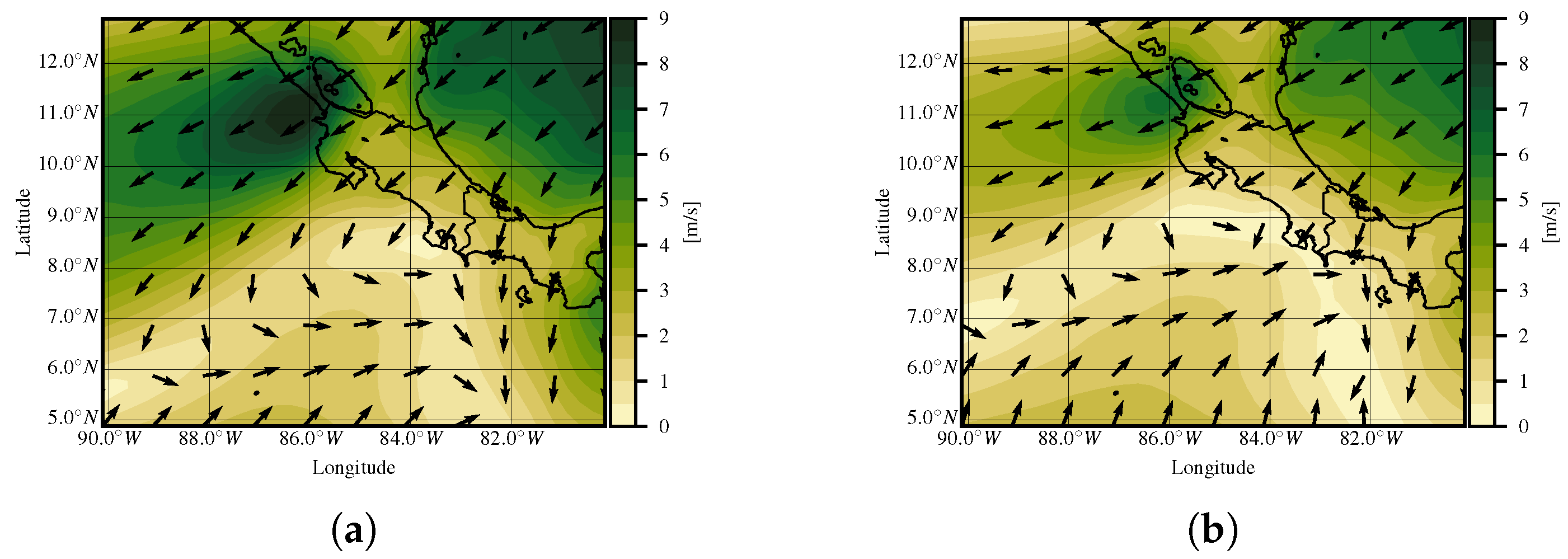
Figure 1 illustrates the seasonal averages of the wind field. The trade winds are prominent north of 8° N, whereas westerly winds prevail south of 9° N, particularly during summer (Figure 1c) and fall (Figure 1d). During winter, maximum wind speeds are observed over the Pacific Ocean, reaching approximately 11 m / s around 11° N, between Nicaragua and Costa Rica. As the region transitions from winter to spring and summer, wind intensity in this area gradually decreases, reaching a minimum of about 4 m / s in autumn. In the central and southern Pacific off Costa Rica, average wind speeds remain below 4 m / s throughout the seasonal cycle. In contrast, in the Caribbean sector, a pronounced offshore wind gradient is observed, with speeds reaching up to 8 m / s . This gradient weakens progressively from winter to fall, indicating a distinct seasonal transition pattern.
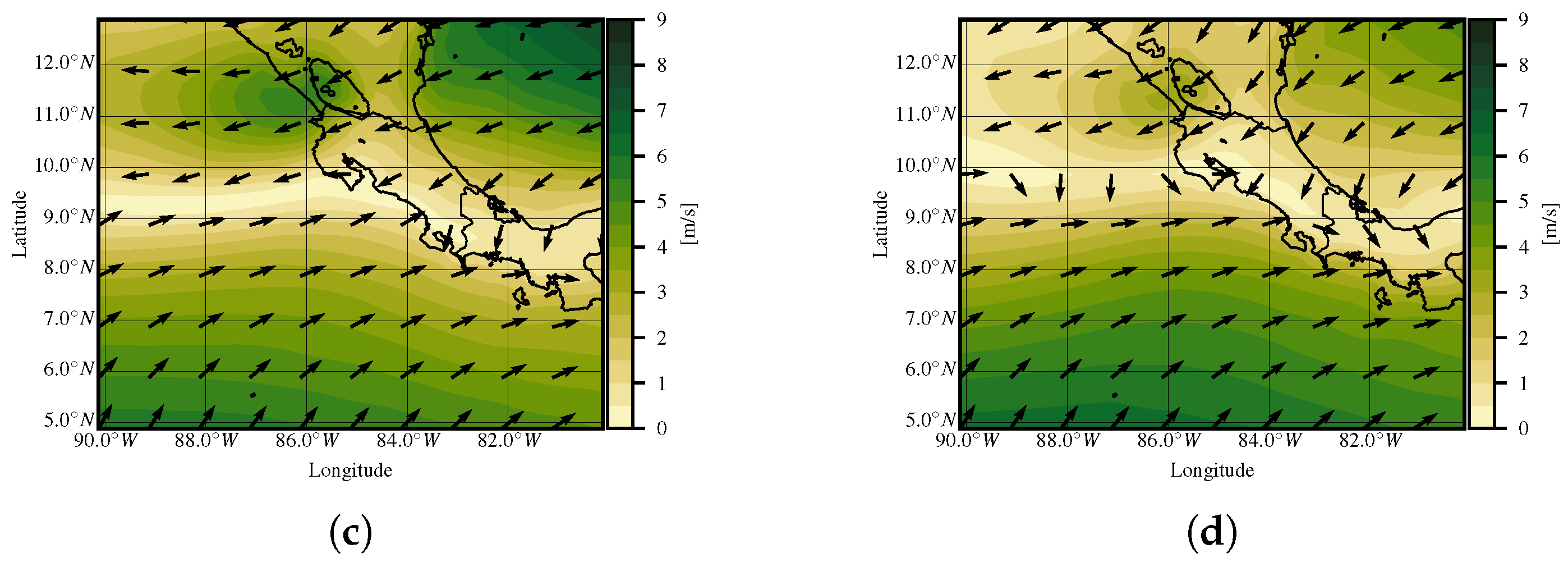
On the other hand, Figure 2 depicts the seasonal distribution of the average wave field. Overall, waves reaching the Pacific coast of Costa Rica predominantly originate from the southwest, a pattern that remains consistent year-round. The mean H s is approximately 1 m , with slightly higher values in the Northern Hemisphere during summer and fall. In contrast, during winter, the central and southern Pacific experience lower wave heights—typically below 1 m —while in the Papagayo region, H s values exceeding 1.6   m are recorded, particularly in offshore areas.
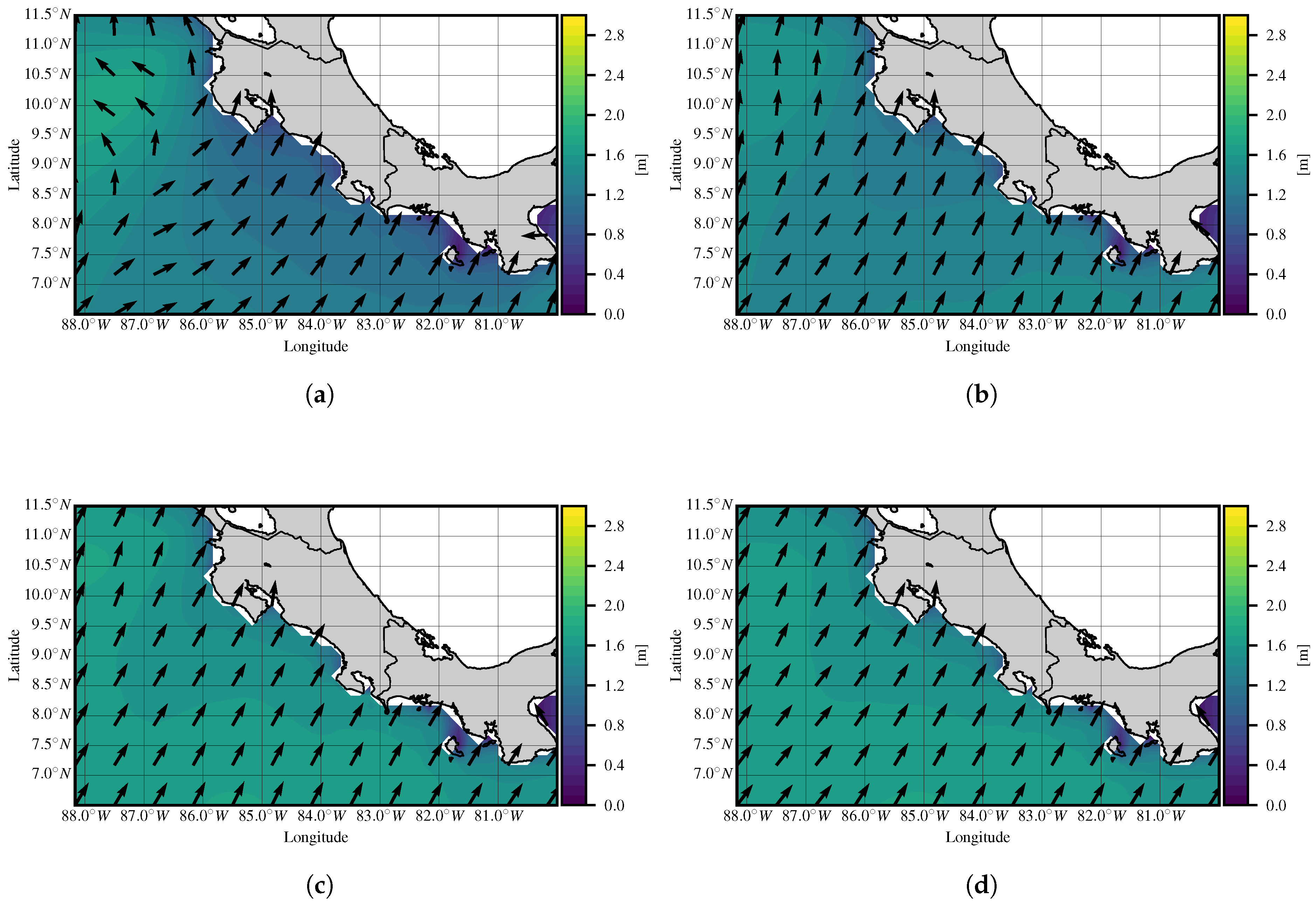
Figure 3 presents the seasonal averages of the surface current field. In the Caribbean Sea off Costa Rica, a cyclonic eddy is observed year-round, reaching its maximum intensity during the northern autumn, with velocities of up to 0.9   m / s near the continental coast. The eddy weakens during the northern spring, when minimum current speeds are recorded (Figure 3b). In the Pacific region, two dominant flow patterns are identified: a westerly current south of 9° N that persists year-round, and a coastal current flowing northward along the coast, originating near the Osa Peninsula in southern Costa Rica. During winter, this coastal current shifts westward around 10.5° N, reflecting a seasonal change in circulation. On average, surface current velocities in both winter and spring reach approximately 0.6   m / s .
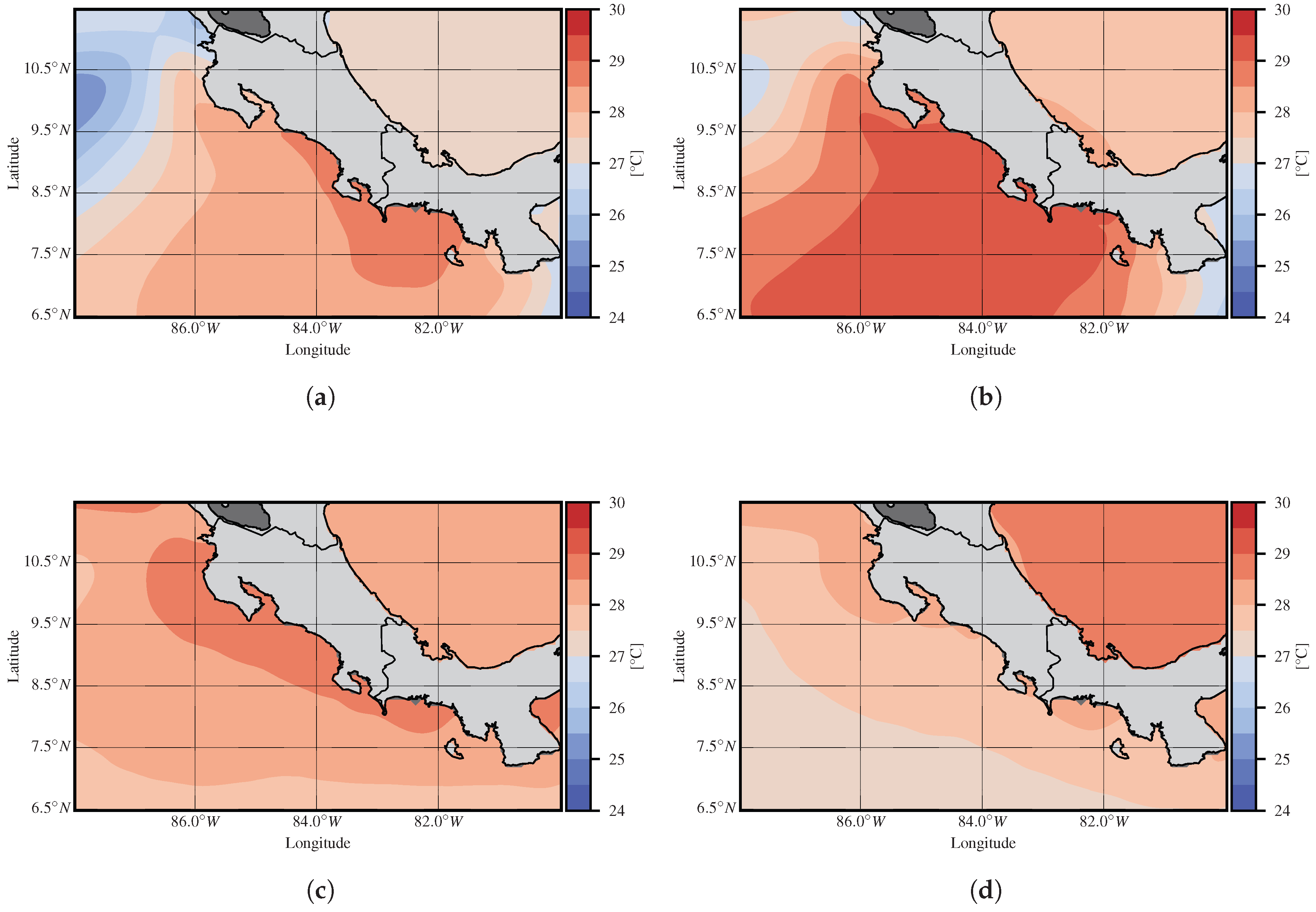
Additionally, Figure 4 illustrates the seasonal average of sea surface temperature (SST) in the Costa Rican maritime zones. The highest SST values are recorded during the boreal spring in the central and southern Pacific, reaching up to 29.5 °C across an extensive area of approximately 300   k m   ×   200   k m . In contrast, in the Caribbean region, maximum surface temperatures occur in the boreal fall, with average values of around 28.5 °C.
A pronounced thermal gradient is observed in the northern Pacific of Costa Rica during the boreal winter, where minimum temperatures approach 25 °C between 8° N and 10° N. This seasonal cooling is associated with upwelling processes driven by intensified trade winds, which displace surface waters offshore and promote the vertical advection of colder subsurface waters. Such thermal variability plays a key role in regulating marine productivity and may influence the feasibility of OTEC applications in the region.

3.2. Offshore Wind Energy

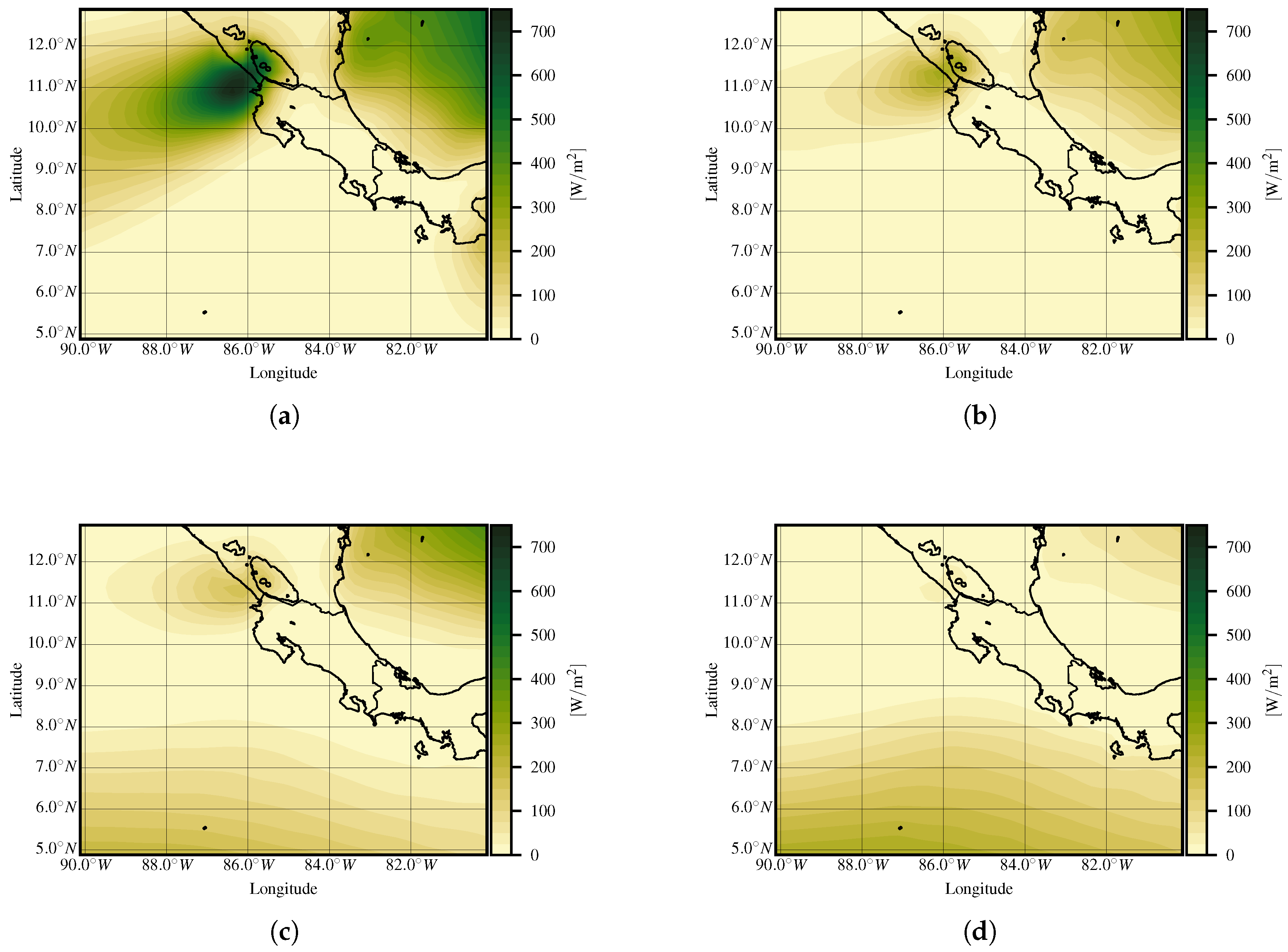
Figure 5 presents the average seasonal distribution of wind energy potential across Costa Rica’s maritime domains. Two dominant patterns emerge from the analysis. First, the Caribbean region exhibits very low to negligible wind energy potential year-round, reflecting the relatively weak and stable trade winds in that basin. In contrast, the Pacific region, particularly the northern sector between Nicaragua and Costa Rica, has markedly higher values, reaching up to 750 W / m 2 during the boreal winter. This seasonal peak is linked to the intensification of offshore trade winds and regional pressure gradients. As the region transitions into the boreal fall (Figure 5d), these values decline sharply, approaching near-zero conditions, consistent with the weakening of the Papagayo jet and reduced synoptic wind forcing.
In turn, the Costa Rican Institute for Electricity and World Bank Group-ESMAP report additional information (Instituto Costarricense de Electricidad, internal technical report, 2021) [30,31]; Costa Rica has around 14.4   G W of technical potential for offshore wind across 1 G W of fixed foundation potential at water depths of up to 50 m and the rest of floating foundation potential at water depths in the range of 50–1000 m.
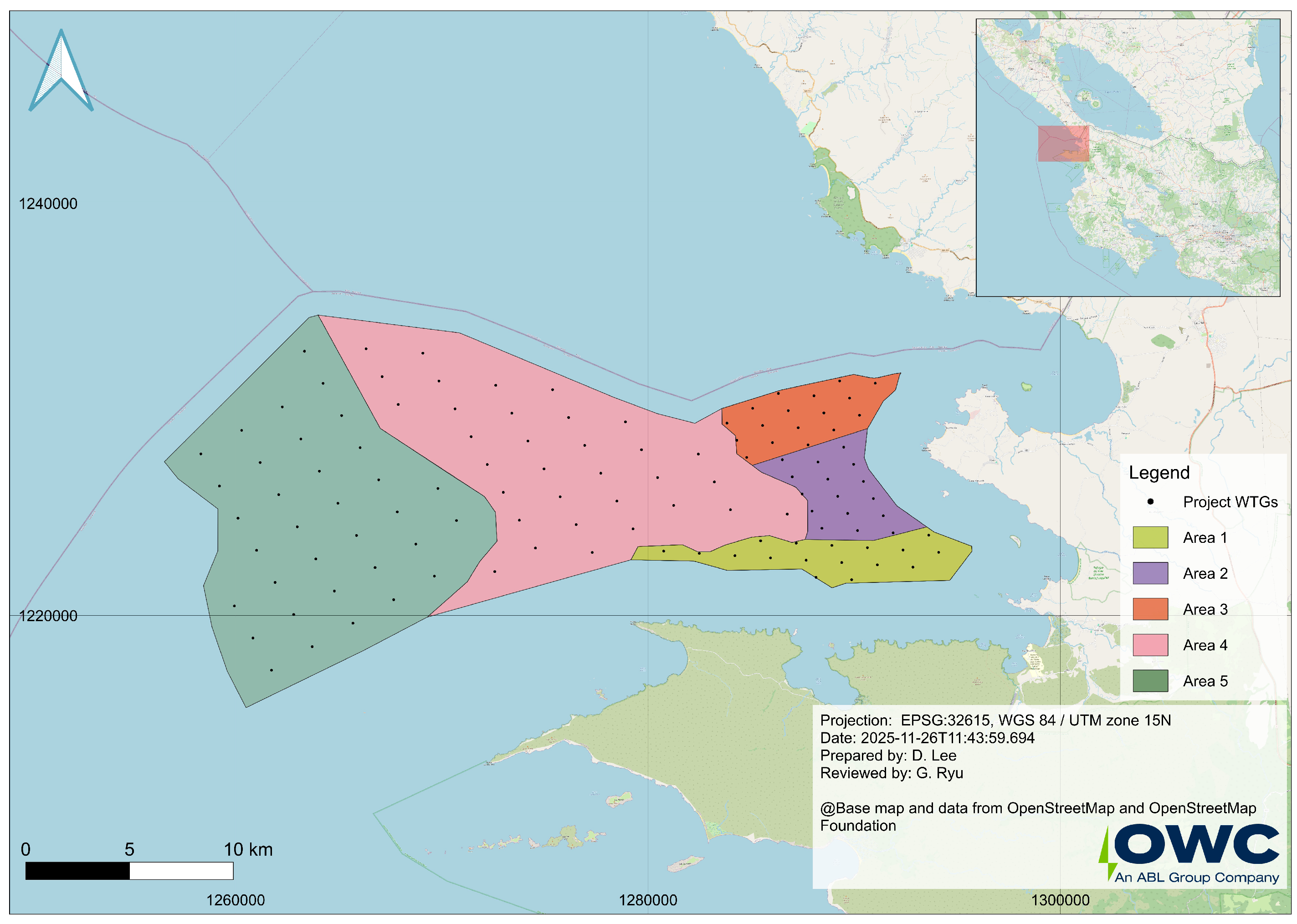
The study area is located off Punta Descartes in the north Pacific of Costa Rica, within the Province of Guanacaste, covering the coastal marine front of Santa Elena Bay (see Figure 6). Available data indicate that this corridor exhibits high wind speeds in the range of 10–10.5 m / s [32]. This phenomenon is known as the Papagayos jet wind. This strong permanent wind blows approximately 70 k m north of the Gulf of Papagayo.
Due to a unique combination of synoptic-scale meteorology and orographic phenomena, jet winds may blow as far as 500 k m off the Pacific coast and have a time scale in the order of weeks [33]. Water depths in the area are in the range of 50–70 m, suitable for bottom-fixed offshore wind systems (see Table 1). Significant wave heights were in the range of 1.86–3.58 m, and the annual average maximum wave height was 2.90   m [34].
Figure 6. Sitingand bathymetry within the defined scenarios for feasibility of offshore wind farms [34].
Energies 19 01189 g006

3.3. Energy from the Ocean Thermal Gradient

OTEC has emerged as one of the most promising renewable energy options for the coming decades, owing to its broad environmental and socioeconomic benefits. This technology exploits the natural thermal gradient between warm surface seawater and cold deep seawater to generate electricity via a closed or open cycle heat exchange process. Despite its versatility and considerable theoretical potential, the technological development and deployment of OTE facilities have been limited to a few regions of the world. In tropical countries such as Costa Rica, there remains a lack of technical expertise, field data, and localized assessments related to this technology, despite the fact that these regions offer ideal oceanographic conditions for its deployment, characterized by sea surface temperatures typically exceeding 25 °C and access to cold deep waters at relatively short distances from the coast [35].
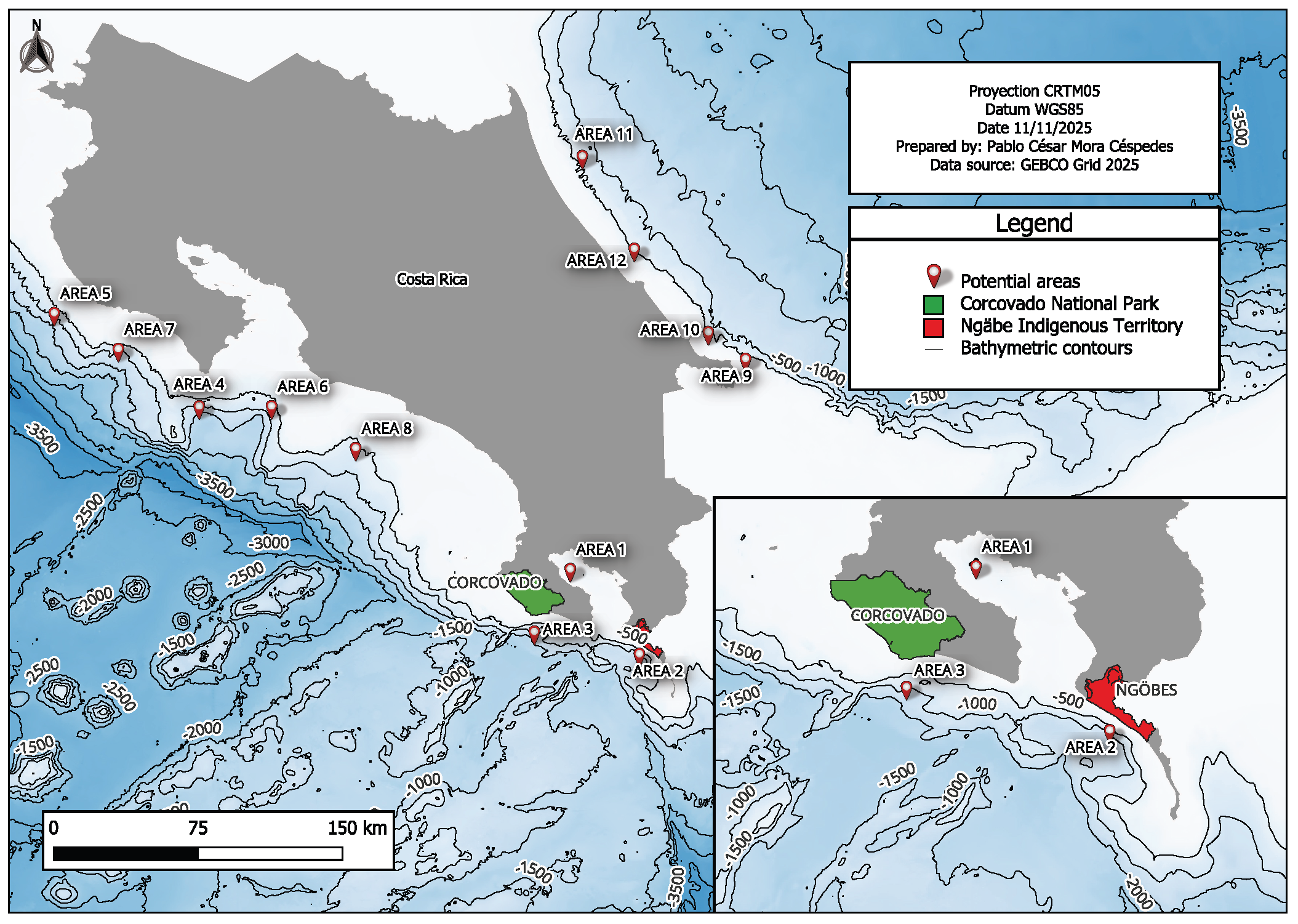
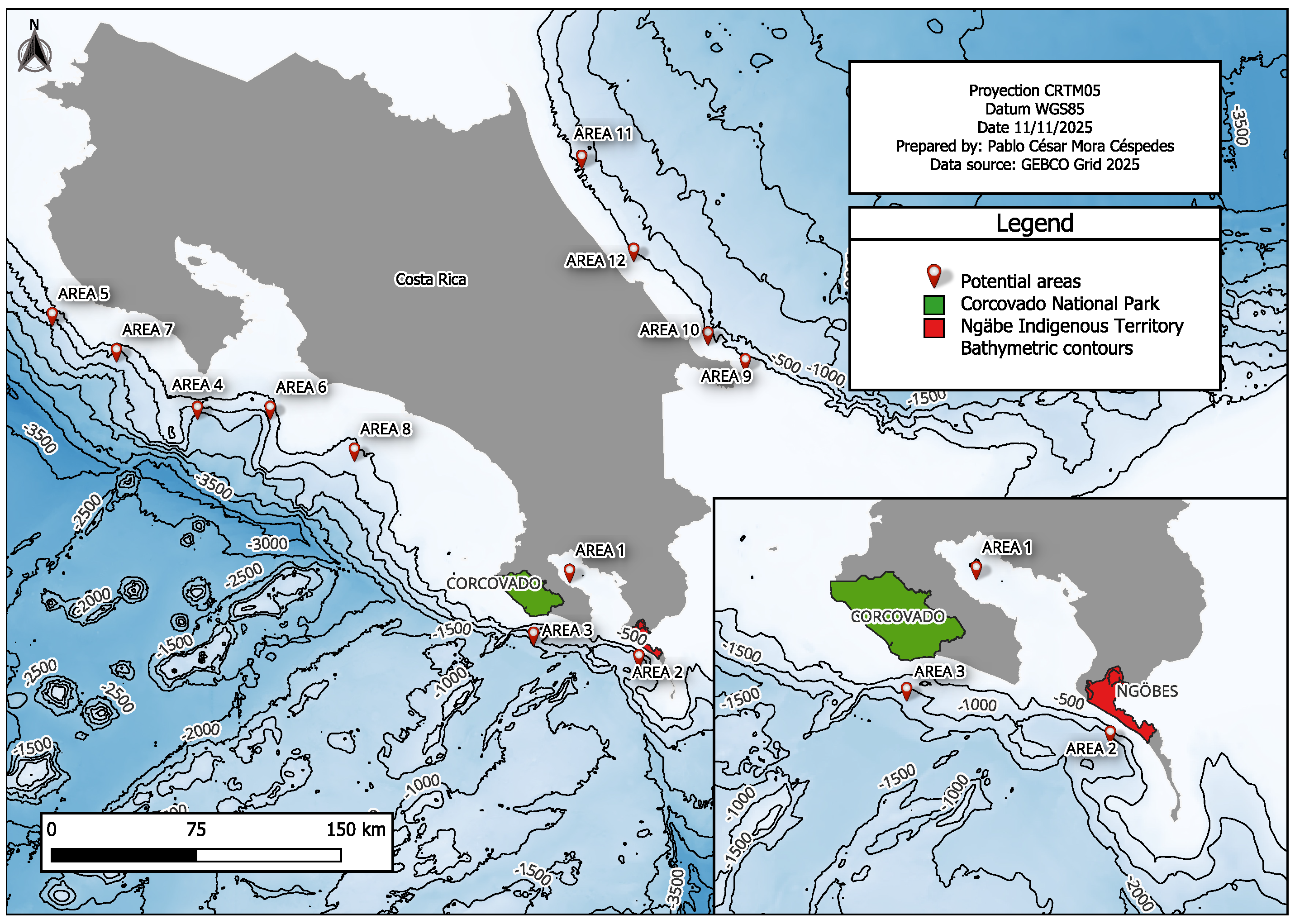
The multicriteria analysis identified zones with favorable conditions for harnessing ocean thermal energy in Costa Rica. The assessment revealed 12 potential areas, classified according to thermal gradient values, oceanographic context, human activities, environmental conservation priorities, and ecological connectivity. Based on these criteria, two areas exhibited the highest suitability for OTEC deployment, both located in the southern Pacific region: one off the coast of Corcovado National Park and the other near Punta Banco. These areas present thermal gradients exceeding 21 °C throughout the year, regardless of Costa Rica’s seasonal variations (dry, rainy, and transition periods) (see Figure 7).
The observed suitability for OTEC is primarily associated with coastal proximity and the strong thermal gradients resulting from local geotectonic activity. These conditions are linked to the subduction of the Cocos Plate beneath the Caribbean Plate, a tectonic process that extends from Guatemala to Costa Rica and intensifies in the southern Pacific region and parts of Panama, where the Cocos Ridge is located [36]. This tectonic interaction generates abrupt bathymetry variations, with depths reaching approximately 1000 m within less than 20 k m from the coast, thereby fostering steep thermal gradients that are highly favorable for OTEC development [37].
Beyond the favorable physical conditions, the high-potential zones identified in the southern Pacific region exhibited environmental performance scores above 67%, reflecting strong compatibility with existing conservation areas and sufficient distance from ecologically sensitive habitats, including mangroves, coral reefs, and seagrass beds [38]. These results indicate that OTEC deployment in these areas could be achieved in harmony with the natural dynamics of the marine environment. However, these environmental indices do not fully capture potential impacts on biodiversity dynamics or levels of social acceptance. The nearest high-potential site lies approximately 17 k m from Corcovado National Park, one of Costa Rica’s most important protected areas and a key ecotourism destination, hosting roughly 2.5% of global biodiversity, including marine species such as dolphins, whales, sharks, and sea turtles [39] (see Figure 8).
Additionally, the Punta Banco area lies less than 6 k m from the Ngöbe indigenous territory, representing an important cultural place. This territory is protected under Convention No. 169 on Indigenous and Tribal Peoples, to which Costa Rica is a signatory. The convention mandates transparent and participatory consultation processes when resource utilization is proposed within or in proximity to indigenous lands [40] (see Figure 8).
Overall, the findings indicate that Costa Rica has substantial OTEC potential along its Pacific coast, warranting further exploration through technical and environmental prefeasibility studies. Such analyses would support diversification of the national energy matrix by incorporating clean, continuous, ocean-based renewable energy sources. Finally, the integration of social and environmental criteria highlights the need for comprehensive planning frameworks that align technological innovation with the sustainable use of marine resources. This approach ensures that future OTEC developments contribute meaningfully to national electricity generation while minimizing potential impacts on the social and ecological dynamics of Costa Rica’s southern Pacific, a region distinguished by its exceptional biodiversity, migratory marine species, recreational fisheries, and ecotourism activities.

3.4. Wave Energy

The two shores of Costa Rica have very different wave dynamics, with the Pacific offering much more wave energy potential than the Caribbean Sea. The wave energy potential overview is based on data from numerical wave simulations forced with ERA5 wind fields, and CMEMS-Globcurrent surface currents [27] were used. This database spans the period of 1993–2024, with an hourly temporal resolution and a spatial resolution of 10′ in the Pacific domain. The analysis considered the H s , the direction of maximum spectral energy, and the group velocity ( C s ).
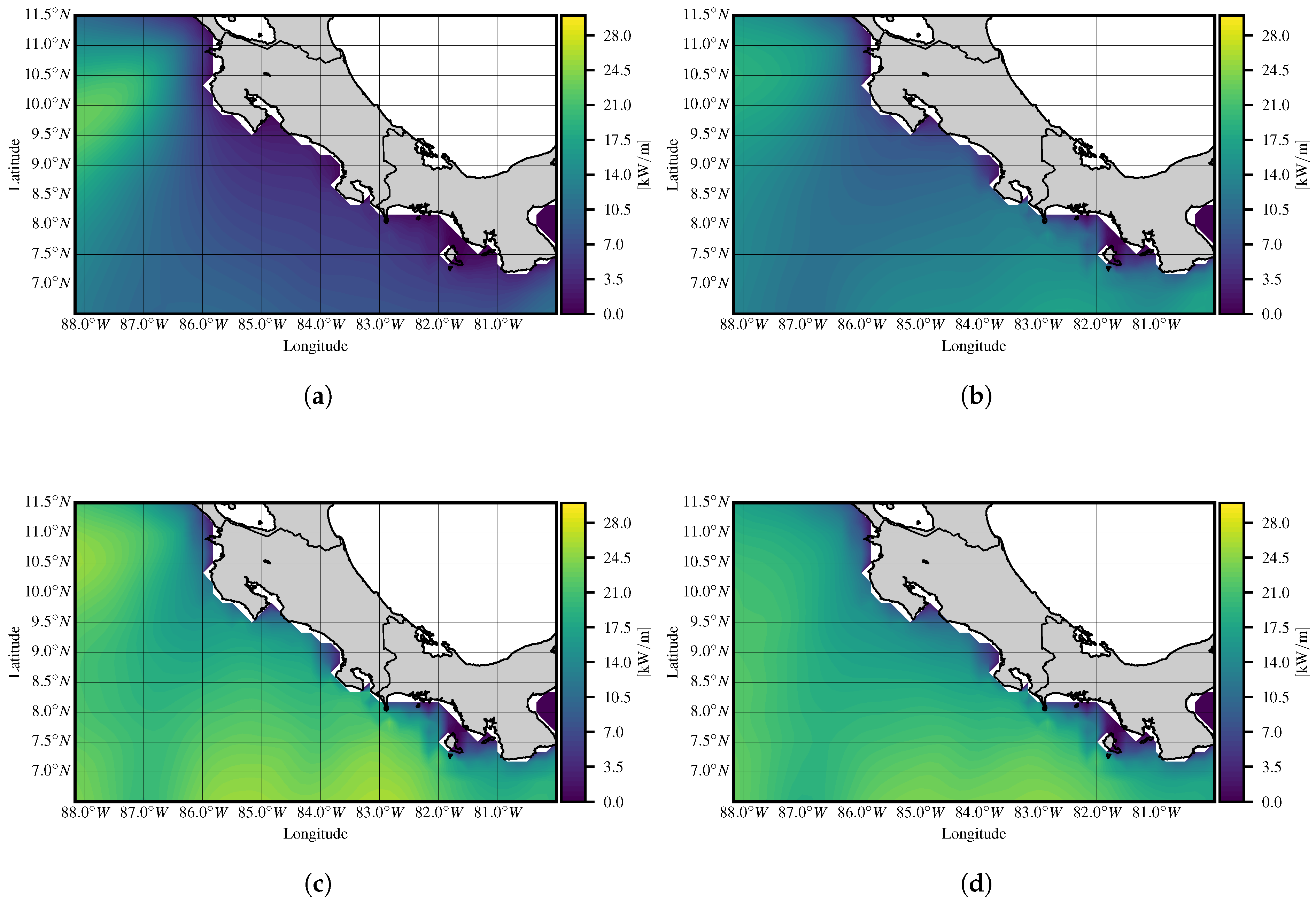
Figure 9 presents the seasonal distribution of average wave energy potential along Costa Rica’s Pacific coast. Three key patterns can be identified. First, during the boreal winter (Figure 9a), the northern Pacific region exhibits average wave energy fluxes of approximately 24 k W / m . Second, during the boreal summer and fall, the Pacific domain shows the highest energy levels, with average values exceeding 25 k W / m , driven by persistent swells originating in the southern hemisphere. Third, during the boreal spring, mean energy fluxes decrease, marking the lowest seasonal values of the annual cycle. It is important to note that the available dataset does not include the Caribbean region, and therefore, no wave energy estimates are presented for that area.
Wave energy is the most evaluated marine energy source in Costa Rica, with the most publications on this subject. Costa Rica has a significant potential for wave energy, with an estimated total theoretical potential of approximately 15.5   G W across both coasts, of which the Pacific accounts for 13.8   G W and the Caribbean 1.7   G W . The average wave power along the Pacific coast has been estimated at 15.9   k W / m , compared to 9.1   k W / m in the Caribbean, with the Pacific considered more suitable for energy exploitation due to its prevailing swell conditions generated in the south Pacific [15,41].
A more detailed regional study of the north Pacific coast (between Puerto Carrillo and the Nicaraguan border) reported an average multiannual potential of 8.5   k W / m , with the southern part of this region reaching up to 10.3   k W / m ; the total theoretical annual energy available along this coastline was estimated at 6824 GWh for a 20 m depth and 9200 GWh for a 50 m depth, indicating favorable conditions due to both high energy potential and accessibility [18,42].
Interestingly, the higher-resolution assessment conducted in this work shows higher energy potential values than those reported by Brito e Melo [15] and recently by Zumbado et al. [42]. This recent study indicates that waves along the Pacific coast predominantly originate from the southwest (in accordance with findings presented in [15]), maintaining a consistent directional pattern throughout the year, with average significant wave heights of approximately 1 m and values exceeding 1.6   m in the Papagayo region, particularly offshore. The corresponding average wave power potential ranges from about 24 k W / m during the boreal winter to values equal to or exceeding 25 k W / m in summer and fall. The coefficient of variation (COV) for the north Pacific coast ranges between 0.4 and 0.7, reflecting a relatively stable and low temporal variability that enhances the reliability of wave energy as a complementary renewable source [42,43].
Regarding the wave energy exploitation technologies, research in this field has expanded considerably over the last two decades, with nearly 100 countries contributing and valuable developments occurring in Europe, the United States of America, and Asia [24,44]. The reader could find relevant information in these references regarding the main types of Wave Energy Converters (WECs), classified by orientation, location, and working principle, and their respective advantages and challenges [25,45,46,47,48,49].
Although several devices have reached prototype or pre-commercial stages, large-scale implementation remains limited due to the absence of a dominant WEC design, the complexity of scaling technologies to real-sea conditions, high operational costs, and the strong dependence of device performance on local wave climates [15,26,46,50,51,52].
Likewise, Costa Rica has ventured into the creation from scratch of WEC [14], which seeks to adapt to the conditions of the Pacific coast of Costa Rica, as described in Section Building the Foundations for Wave Energy Harvesting in Costa Rica.

Building the Foundations for Wave Energy Harvesting in Costa Rica

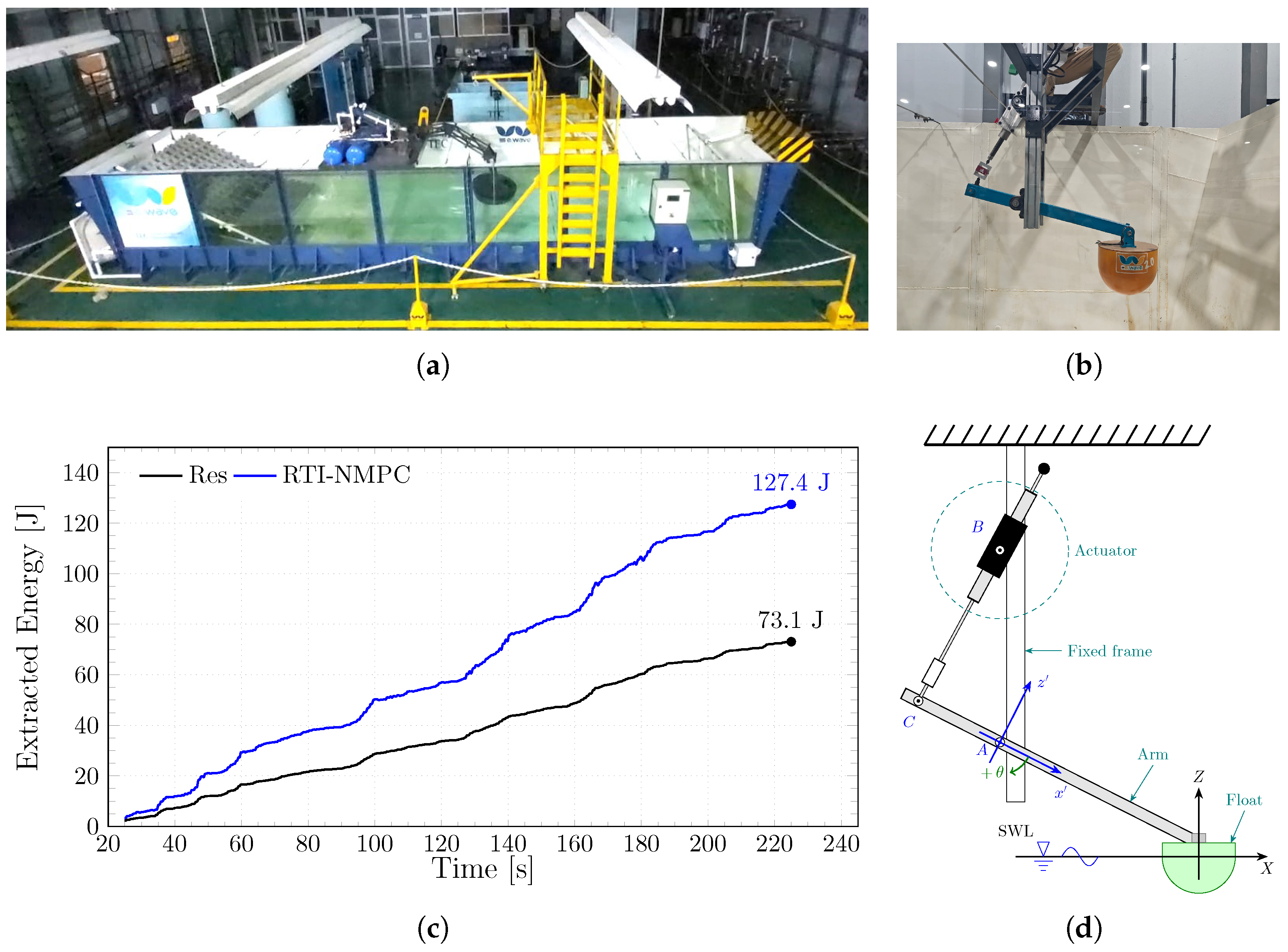
There is growing interest in harnessing wave energy in Costa Rica, with the Costa Rican Institute of Electricity (ICE) and academic institutions leading initial efforts to assess it. The Costa Rican Institute of Technology (TEC) hosts eWave, one of the first local initiatives dedicated to the development of WECs [14]. TEC has established facilities for controlled testing of WECs in a wave flume and researches hydrodynamic modeling, control strategies, and device tuning to optimize WEC performance under Costa Rican sea conditions.
Figure 10 illustrates TEC’s experimental facilities and the eWave prototype, which are presented here as examples of the research infrastructure and experimental capabilities currently available in Costa Rica for wave energy research, rather than as a grid-scale or performance-assessed energy technology. The eWave prototype has been used for the first experimental validation of a Real-Time Iteration Nonlinear Model Predictive Control (RTI-NMPC) framework applied to WECs.
The eWave system, conceptually similar to the WaveStar device, was selected for its prior use as a benchmark platform in the Wave Energy Control Competition (WECCCOMP), confirming its suitability for evaluating energy-maximizing control strategies. Numerical simulations under representative Costa Rican sea conditions demonstrated a 75% increase in extracted energy compared to standard control approaches, consistent with experimental results. These findings validate the effectiveness of RTI-NMPC in enhancing WEC performance and constitute a substantial contribution from Costa Rica to advancing wave energy research. The University of Costa Rica (UCR), through the River, Estuarine and Maritime Engineering Unit (IMARES by its acronym in Spanish), contributes expertise in numerical and experimental wave modeling, coastal hydrodynamics, and the characterization of local wave conditions, key aspects for the evaluation and deployment of ocean energy technologies in the country.
Wave energy has the potential to contribute significantly to the objectives of the VII National Energy Plan (PNE) [53], an ambitious government agenda aimed at decarbonizing the national energy matrix and reducing reliance on fossil fuels. In particular, it supports diversifying the energy portfolio and incorporating non-conventional renewable sources to complement Costa Rica’s established hydroelectric and wind resources. According to the data presented by Brito and Melo [15], the exploitation of merely 10% of the country’s theoretical wave energy potential could meet approximately 17% of the current national electricity demand [42]. Moreover, the PNE highlights the importance of advancing research on emerging energy technologies, a priority closely aligned with the exploration and development of Costa Rica’s wave energy potential.

3.5. Ocean Current Energy Potential

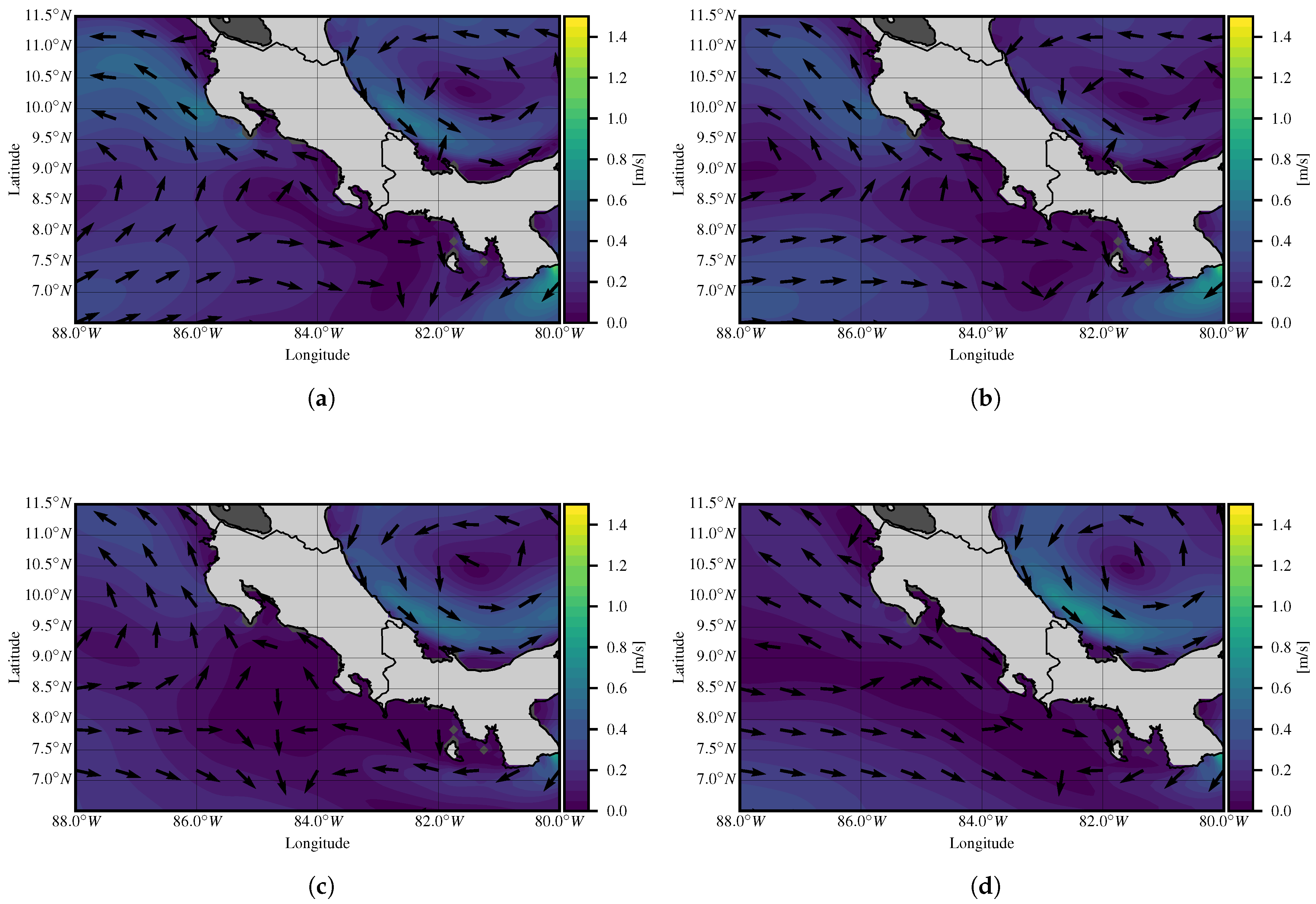
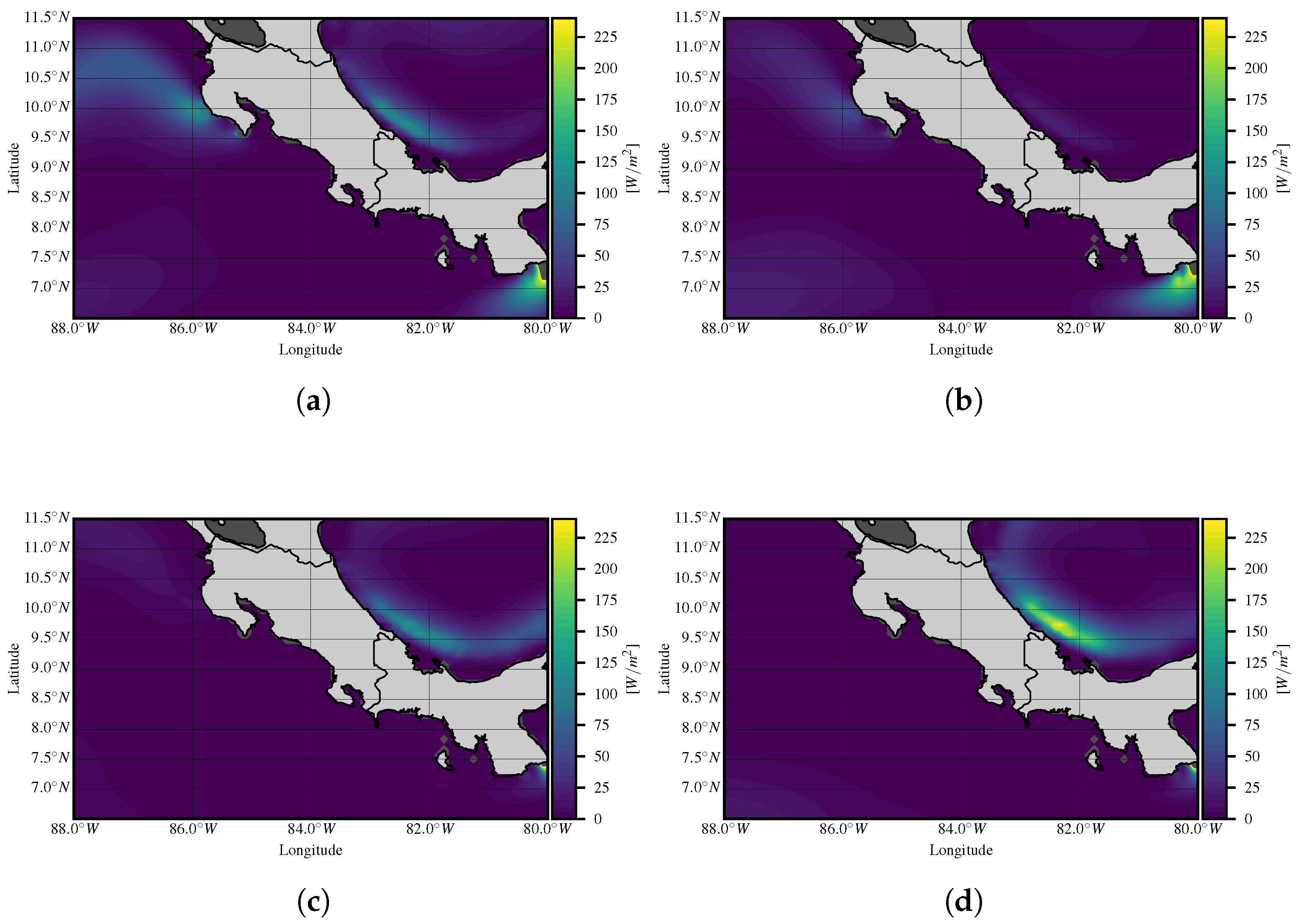
Figure 11 illustrates the seasonal distribution of kinetic energy potential associated with surface currents across Costa Rican waters.
During the boreal winter, current energy potential values remain below 200 W / m 2 , concentrated mainly in the northern Pacific and within the Caribbean cyclonic gyre, particularly near the continental margin. Comparable patterns are observed during the summer and fall, although in the latter, localized increases exceeding 200 W / m 2 and reaching up to 240 W m 2 are recorded. In contrast, during the boreal spring (Figure 11b), current energy potential in the Caribbean basin essentially diminishes, while in the northern Pacific, values are lower and spatially restricted compared to winter, reflecting the seasonal weakening of current intensity and circulation patterns.

3.6. Grid Integration Challenges

Costa Rica has demonstrated strong leadership in renewable energy development worldwide, achieving an electricity matrix predominantly supplied by hydroelectric, wind, geothermal, and solar sources [54]. However, diversifying this matrix by integrating marine energy, including wave, current, OTEC, and offshore wind technologies, remains an emerging frontier. The country’s Pacific coast exhibits highly favorable conditions for marine energy exploitation, characterized by persistent wind regimes, strong surface currents, and pronounced thermal gradients associated with local geotectonic activity [34]. Integrating marine energy into Costa Rica’s energy planning requires a comprehensive, multi-criteria approach that balances technological feasibility, environmental sustainability, and social acceptance.
Recent spatial analyzes using GIS tools and multi-parameter weighted models have identified zones in the southern Pacific with high OTEC potential and minimal overlap with critical habitats or indigenous territories [55]. Advancing from these assessments toward pre-feasibility studies, demonstration projects, and regional cooperation would enable Costa Rica to position itself as a leader in ocean-based renewable energy in Latin America. Such integration aligns with the country’s long-term decarbonization goals. It exemplifies how marine energy systems can contribute to a sustainable, resilient, and inclusive energy transition in tropical developing nations [4,6].
As demonstrated throughout this study, ocean energy represents a promising alternative for harnessing a largely untapped resource while delivering multiple strategic benefits. Its development could play a decisive role in diversifying Costa Rica’s energy matrix and accelerating national decarbonization efforts. Nonetheless, realizing this potential requires overcoming several critical barriers that may constrain its deployment and large-scale operation. Accordingly, Table 2 presents a comparative summary of the main strengths and weaknesses associated with integrating ocean energy into the actual national grid.

4. Challenges

4.1. Environmental Aspects

The environmental dimension represents one of the main challenges for the implementation of ocean energy in Costa Rica. The country, recognized for its long-standing commitment to conservation and environmental protection policies, faces the challenge of integrating these emerging technologies without compromising the integrity of marine ecosystems [61]. Costa Rica has international commitments to maintain at least 30% of its marine area as marine-protected areas [62], which represents a synergistic challenge in the development of other marine socioeconomic activities, including marine energy harvesting.
In this regard, ecological impact assessments must consider the particular characteristics of the Costa Rican marine environment, an area that remains underexplored and exhibits significant scientific information gaps. Likewise, it is necessary to strengthen public information and participation processes so that coastal communities can understand the scope, benefits, and potential risks associated with ocean energy development.
In this same context, Costa Rica’s geographic location within a tropical zone endows it with a high richness of marine species, both seasonal and migratory [63]. Moreover, a noteworthy portion of the country’s income is derived from the tourism sector, which is closely linked to the conservation of its natural resources [64]. Therefore, ocean energy projects should prioritize a sustainability-oriented approach that balances technological development with the protection of marine biodiversity and the preservation of natural attractions that sustain the national tourism economy.

4.2. Social Aspects

The social dimension of marine energy development in Costa Rica is as essential as the legal and technical aspects. In addition to engineering feasibility and environmental concerns, the implementation of OTEC, offshore wind or wave energy systems will require a thorough assessment of their social consequences. These social implications include: local coastal communities, opportunities for the generation of jobs and training, equity and distributional justice in access to energy, and levels of education. In addition, such aspects within coastal communities play a central role in the national identity and economic base, heavily dependent on fisheries, tourism, and small-scale maritime activities [65].
The introduction of marine energy projects in these regions may generate social tensions if perceived as conflicting with traditional livelihoods or affecting marine ecosystems. Ensuring community acceptance thus requires inclusive consultation mechanisms and transparent communication. International experience shows that excluding local populations from project planning often leads to social resistance and delays [66]. In the Costa Rican context, this need for participation aligns with the principle of environmental democracy enshrined in national legislation, which mandates public access to information and consultation for environmentally significant projects [67].
Marine energy development offers significant socioeconomic opportunities for Costa Rica by generating employment and stimulating local economies through the construction, operation, and maintenance of offshore facilities. According to the International Renewable Energy Agency, renewable energy expansion in Latin America could create thousands of skilled jobs, and Costa Rica’s substantial human capital in engineering and environmental sciences positions it to benefit substantially [68]. Institutions such as the University of Costa Rica (UCR), National University of Costa Rica (UNA) and TEC certainly provide the technical expertise required for offshore wind and wave energy projects. Additionally, smaller-scale technologies such as wave power offer opportunities for community-based renewable initiatives, enhancing local energy resilience and reducing dependence on fossil fuels in remote coastal areas. However, realizing these benefits depends on targeted training and capacity-building to ensure that local workers and enterprises are effectively integrated into the emerging marine energy sector rather than displaced by external actors [69].
Costa Rica generates over 98% of its electricity from renewable sources, positioning it among the global leaders in clean energy production [70]. However, disparities in energy access persist in certain rural and island regions where infrastructure remains limited, leading to higher costs and less reliable supply. Marine energy contributes to mitigating socioeconomic inequities by enabling decentralized renewable generation closer to rural communities [68]. At the same time, equity considerations must guide the sector’s expansion, as local populations could face disproportionate environmental or social burdens, such as disruptions to fishing activities or restricted coastal access, without corresponding benefits. The social dimension of marine energy development in Costa Rica underscores that technological feasibility alone does not ensure social legitimacy. Genuine community participation, fair benefit distribution, and culturally informed decision-making are essential for project success.

4.3. Legal Framework

The regulatory structure supporting the deployment of marine energy in Costa Rica encompasses three distinct dimensions: the regime governing the maritime terrestrial zone and national waters, the energy sector laws that regulate generation and integration into the electrical system, and the permitting process governing environmental concerns and social impact. Collectively, these arrangements provide both opportunities and limitations to the development of emerging marine technologies, such as OTEC, offshore wind and wave power.
The Ministry of Environment and Energy (MINAE, by its acronym in Spanish) is the leading authority responsible for environmental and energy policies in Costa Rica. It has a mandate to plan strategically, approve energy markets, and coordinate with functional-specialized agencies [71]. Within this structure, the National Technical Secretary for the Environment (SETENA, by its acronym in Spanish) operates as the technical organization responsible for environmental evaluation of projects with significant ecological relevance [72]. These institutions operate within Costa Rica’s constitutional environmental framework, which recognizes the right to an adequate environment and requires the state to impose restrictions on the use of natural resources in accordance with the law.
A fundamental component of the legal framework for marine energy in Costa Rica is the regime related to the maritime terrestrial zone (ZMT). Law No. 6043 establishes that the ZMT is a public domain property of the state, divided into a restricted area ( 50 m from the highest tide line) and a concession area (up to 150 m inland). Any use of the ZMT requires authorization and, in the case of a concession, approval at the municipal level and is subject to national oversight [73]. The electricity sector in Costa Rica is primarily regulated by the General Electricity Law and special laws such as Law No. 7200, which allows for autonomous or parallel generation. This law allowed for private players to contribute renewable energy to the national grid under defined contracts with the Instituto Costarricense de Electricidad (ICE), the state-operated utility [74].
Environmental permitting in Costa Rica is based on the Organic Environmental Law (Law No. 7554), which created SETENA as the competent authority for environmental evaluations. Projects to be developed in the marine environment are required to go through environmental impact assessments (EIAs), which is mandated in the case of projects with potential significant biological impacts [72]. With marine energy projects, this means conducting full environmental studies that address marine biodiversity, hydrodynamic change, and socio-economic impacts on coastal communities. Apart from environmental permits, marine energy developers need to obtain many cross-sectoral authorizations. In addition to the shore, Costa Rica’s international maritime law emphasizes its authority over ocean energy activities. Indeed, “the Coastal States have sovereign rights in the exclusive economic zone (EEZ) for the purpose of exploring and exploiting natural resources, and concerning the production of energy from the water, currents and winds” [75]. The United Nations Convention on the Law of the Sea (UNCLOS) also grants the state the exclusive right to construct, authorize and regulate artificial islands, installations, and structures, as well as to establish safety zones (normally 500 m ) around those structures [75].
At the policy and planning level, Costa Rica’s VII PNE (period of 2015–2030) emphasizes reliability, diversification, and regulatory modernization, historically hydro-focused but increasingly opening towards new resources and grid optimization [67]. In line with this, the Plan Nacional de Descarbonización of 2018–2050 (PND) commits the country to achieve net-zero emissions by 2050 and considers goals revolving around innovation, electrification, and sector coupling—areas to which marine energy pilots can fit as R & D for resilience, as well as opportunities to support a diversified low-carbon portfolio [67].
In this investigation, the definition of marine governance follows that of [76], which describes it as “the capacity to develop and implement decisions concerning specific policies within an institution or governmental body, at either a regional or national level”. Consistent with [77], renewable energy policy constitutes the primary driver for the expansion of renewable energy use. The analysis encompasses a set of key policies and addresses the bottlenecks hindering progress in marine energy development. For the marine governance area, the Política Nacional del Mar 2013–2028 and the country initiatives regarding Marine Spatial Planning (MSP), funded by the Intergovernmental Oceanographic Commission of UNESCO (IOC-UNESCO), have appeared with methodologies and participatory spaces to identify testing sites, cablestick zones and rules for coexistence with marine governance sectors and other uses [78,79].

Legal Gaps and Regulatory Barriers

A particularly concerning hurdle is the absence of a permitting system specifically for offshore marine energy projects. While the Ley sobre la Zona Marítimo Terrestre (Law No. 6043) governs the use of the maritime terrestrial zone, it does not provide a straightforward method of allocating ocean space for offshore wind farms, floating OTEC platforms, or any other large marine energy scheme [73]. Furthermore, stakeholders face a complex permitting process that involves several institutions, including SETENA, Ministry of Public Works of Costa Rica, ICE, and local municipalities, without a centralized authority. This fragmented system leads to bureaucratic delays, higher transaction costs, and uncertainty regarding overlapping regulations [68].
In addition to institutional challenges, Costa Rica lacks technical standards and grid codes tailored to marine energy technologies. Current regulations are designed for land-based renewables, which differ substantially from offshore systems that require subsea transmission, corrosion-resistant floating structures, and specialized maintenance in marine environments. The absence of standards increases operational uncertainty and serves as a barrier to integration into the national electricity grid [68]. The practical realization of Costa Rica’s marine energy potential requires establishing a comprehensive offshore energy licensing framework, complemented by coherent maritime spatial planning that balances environmental protection with sustainable development objectives.

5. Conclusions

Costa Rica’s Pacific coast offers promising conditions for marine energy development, combining persistent swells for wave power, seasonal winds regimens for offshore wind and thermal gradients suitable for ocean thermal energy conversion (OTEC). Wave energy stands out as the marine resource with the greatest spatial coverage and energy potential; studies estimate roughly 8–15 k W / m , with average values of 8–12 k W / m near the Nicaraguan border, while tidal currents along both the Pacific and Caribbean coasts are weak (≤ 0.8   m / s ), and OTEC resource values are not yet quantified, though the underlying conditions appear favorable.
Costa Rica currently lacks operational marine energy devices, with no in situ converters installed to date. The eWave prototype, by TEC, is in laboratory testing and slated for deployment on the north Pacific coast in the coming years. The implementation of marine energy converters is a technological challenge, and Costa Rica aims to continue to follow this development route to pursue the Sustainable Development Goals. Significant environmental, social, legal and infrastructural barriers, including sensitive marine ecosystems, indigenous territories, limited port and grid infrastructure and a nascent regulatory framework make large-scale marine energy development unlikely in the near term, yet it remains a viable long-term component of a diversified energy transition.
To unlock this potential, several complementary actions are required: (i) continued resource assessments based on high-resolution, long-term measurements along both coasts to validate numerical models and identify energy-dense hotspots for waves, wind, currents and OTEC [15,42]; (ii) sustained investment in research, development and human capital to strengthen national expertise in areas like maritime engineering, oceanography and renewable energy control systems, building on existing academic and institutional initiatives, and the promotion of international collaborations [24]; (iii) the establishment of a clear governmental roadmap for marine renewable energy, supported by coherent maritime spatial planning, streamlined permitting procedures and policies aimed at reducing investment risk [46]; (iv) the adaptation and optimization of conversion technologies to Costa Rica’s specific sea states and environmental conditions, as devices and design criteria developed for other ocean basins (e.g., the Northern Atlantic) will require significant modifications to operate efficiently and responsibly in local waters [15,44]; and (v) the evaluation and reinforcement of national grid and coastal infrastructure to ensure the reliable integration of variable marine energy sources, in line with the objectives of the PNE and broader decarbonization strategies [53].
Overall, Costa Rica’s marine energy resources offer a valuable opportunity to diversify its largely renewable electricity mix, with wave energy standing out for its moderate power levels and high temporal stability [15,42]. This makes it an attractive candidate for diversifying the country’s largely renewable electricity matrix, but marine technologies are still pre-commercial and face high LCOE, technological scalability challenges and harsh operating environments [24,46]. Systematically addressing these technological, institutional and socio-environmental hurdles will be essential to integrate marine energy into Costa Rica’s renewable-dominated electricity mix.

Author Contributions

Conceptualization, J.R.R.-M., C.V.-S., J.L.G.-F. and M.C.-B.; methodology, J.R.R.-M., C.V.-S., P.C.M.-C., R.E.M.-E. and M.C.-B.; validation, J.C.R.-G., R.M.-V. and L.S.-M.; formal analysis, J.R.R.-M., C.V.-S.; investigation, J.R.R.-M., C.V.-S., J.L.G.-F., J.C.R.-G., R.M.-V., L.S.-M. and M.C.-B.; data curation, P.C.M.-C., R.E.M.-E. and J.L.G.-F.; writing—original draft preparation, J.R.R.-M., C.V.-S., J.L.G.-F., M.C.-G., J.C.R.-G., R.M.-V., L.S.-M. and M.C.-B.; writing—review and editing, M.C.-G., J.C.R.-G., R.M.-V. and L.S.-M.; supervision, J.R.R.-M., C.V.-S. and J.L.G.-F.; project administration, J.R.R.-M., C.V.-S. and J.L.G.-F.; funding acquisition, C.V.-S., J.L.G.-F. and J.C.R.-G. All authors have read and agreed to the published version of the manuscript.

Funding

The authors acknowledge the financial support provided by the Instituto Tecnológico de Costa Rica (ITCR), which covered the publication costs of this article.

Data Availability Statement

Data used to create the figures in Section 3.1 are available in [21,23,27,29]. Further inquiries can be directed to the corresponding author.

Acknowledgments

During the preparation of this study, the authors used generative artificial intelligence (GenAI) tools, specifically ChatGPT (OpenAI, GPT-5.2 model, paid ChatGPT version available in December 2025), to refine the English of the manuscript. GenAI was also used to draft the abstract and to help polish the conclusions. The authors reviewed, edited, and take full responsibility for all content presented in this publication.

Conflicts of Interest

The authors declare no conflicts of interest.

Abbreviations

The following abbreviations were employed in this manuscript:
COVCoefficient of variation
CCMPCross-calibrated multi-platform
C g Wave group celerity
C p Coefficient of wind turbine efficiency
EEZExclusive economic zone
EIAEnvironmental impact assessment
GISGeographic information system
H s Significant wave height
ICECosta Rican Institute of Electricity
ILOInternational Labour Organization
IMARESRiver Estuarine and Maritime Engineering Unit of the University of Costa Rica
IOC-UNESCOIntergovernmental Oceanographic Commission
IRENAInternational Renewable Energy Agency
LCOELevelized cost of energy
MREMarine renewable energies
MSPMarine spatial planning
MINAEMinistry of Environment and Energy
OTECOcean thermal energy conversion
PNENational energy plan
P c u r Current tidal power
P w a v e Wave power
P w i n d Offshore wind power
ρ s e a Density of sea water
RTI-NMPCReal-time iteration nonlinear model predictive control
SDGsSustainable Development Goals of the United Nations
SETENANational Technical Secretary for the Environment
SSTSea surface temperature
TECCosta Rican Institute of Technology
UCRUniversity of Costa Rica
UNANational University of Costa Rica
UNCLOSUnited Nations Convention on the Law of the Sea of United Nations
WECWave energy converter
WECCCOMPWave energy control competition
ZMTMaritime terrestrial zone

References

  1. Hidalgo, H.; Chou-Chen, S.; McKinnon, K.; Pascale, S.; Quesada-Chacón, D.; Alfaro, E.; Bautista-Solís, P.; Pérez-Briceño, P.; Diaz, H.; Maldonado, T.; et al. Detection and attribution of trends of meteorological extremes in Central America. Clim. Change 2025, 178, 1–25. [Google Scholar] [CrossRef]
  2. International Renewable Energy Agency. Ocean Energy. Available online: https://www.irena.org/Energy-Transition/Technology/Ocean-energy (accessed on 27 February 2023).
  3. Taveira-Pinto, F.; Rosa-Santos, P.; Fazeres-Ferradosa, T. Marine renewable energy. Renew. Energy 2020, 150, 1160–1164. [Google Scholar] [CrossRef]
  4. International Renewable Energy Agency. Offshore Renewables: An Action Agenda for Deployment; Technical Report; International Renewable Energy Agency: Abu Dhabi, United Arab Emirates, 2021. [Google Scholar]
  5. International Energy Agency. Climate Impacts on Latin American Hydropower; Technical Report; International Energy Agency: Paris, France, 2021. [Google Scholar]
  6. International Renewable Energy Agency. Scaling up Investments in Ocean Energy Technologies; Technical Report; International Renewable Energy Agency: Abu Dhabi, United Arab Emirates, 2023. [Google Scholar]
  7. Ocean Energy Systems (OES). An International Vision for Ocean Energy; Technical Report; IEA Technology Network; International Energy Agency: Paris, France, 2017. [Google Scholar]
  8. Teske, S.; Morris, T.; Nagrath, K. 100% Renewable Energy for Costa Rica: A Decarbonization Roadmap; Institute for Sustainable Futures, University of Technology Sydney: Sydney, Australia, 2020; Prepared for the World Future Council (Germany) and the One Earth Foundation (USA). [Google Scholar]
  9. Instituto Costarricense de Electricidad (ICE). Generación y Demanda: Informe Anual 2025; Technical Report; Instituto Costarricense de Electricidad: San José, Costa Rica, 2025. [Google Scholar]
  10. Godínez-Zamora, G.; Gallardo, L.; Angulo-Paniagua, J.; Ramos, E.; Howells, M.; Usher, W.; De León, F.; Meza, A.; Quiros-Tortós, J. Decarbonising the transport and energy sectors: Technical feasibility and socioeconomic impacts in Costa Rica. Energy Strategy Rev. 2020, 32, 100573. [Google Scholar] [CrossRef]
  11. Cornick, J.; Lara, J. The Regulations of Distributed Solar Panel Generation in Costa Rica: Status, Challenges, and Options for the Future; Technical Report; Inter-American Development Bank: Washington, DC, USA, 2020. [Google Scholar] [CrossRef]
  12. Baldi, L.C. Aprovechamiento de Energía Marina en Las Zonas maríTimo Costeras de Costa Rica Entre la Frontera Norte y la Desembocadura Del ríO Barranca. Master’s Thesis, Universidad de Costa Rica, San José, Costa Rica, 2014. [Google Scholar]
  13. Alfaro, G.; Govaere, G.; Zumbado, J. Approaching the wave energy potential in a coastline section of the Nicoya Peninsula. In Proceedings of the 1st Pan American Marine Energy Conference (PAMEC), San José, Costa Rica, 26–28 January 2020. [Google Scholar]
  14. Hernández, A.; Rojas, J.; Gomez, J.; Guerrero, J.; Vega, C. e.Wave: Maximization of wave energy harvesting through the integration of an adaptive mechanical system regulated by sea conditions for point absorber wave energy converters. In Proceedings of the 1st Pan American Marine Energy Conference (PAMEC), San José, Costa Rica, 26–28 January 2020. [Google Scholar]
  15. Brito, A. Determinación del potencial de energía marina para generación eléctrica en Costa Rica; Technical Report; WAVEC Offshore Renewables: Lisbon, Portugal, 2013; Available online: https://www.wavec.org/contents/innovationreportslist/informe-final-energia-marina-nov-2013.pdf (accessed on 6 November 2025).
  16. Dutton, A.; Fiestas, R.; Lee, J. Ocean Energy Pathway Workshop: Final Report for Costa Rica; Grey Literature; Final Technical Report Prepared by GWEC for the Instituto Costarricense de Electricidad (ICE); GWEC: San José, Costa Rica, 2021. [Google Scholar]
  17. BIOMATEC. Development of a Social Awareness Strategy to Create Consensus Among Local Actors for the Future Use of Offshore Wind Energy in Costa Rica; Final Technical Report; BIOMATEC Engineering Ltda.: San José, Costa Rica, 2024; Unpublished Report, Available from the Publisher Upon Reasonable Request. [Google Scholar]
  18. Corrales-Gonzalez, M.; Lavidas, G.; Lira-Loarca, A.; Besio, G. Wave energy assessment and wave converter applicability at the Pacific coast of Central America. Front. Energy Res. 2024, 12, 1454275. [Google Scholar] [CrossRef]
  19. United Nations Conference on Trade and Development (UNCTAD). Ocean Governance in Costa Rica: An Overview on the Legal and Institutional Framework in Ocean Affairs; United Nations Conference on Trade and Development (UNCTAD): Geneva, Switzerland, 2019; Available online: https://unctad.org/publication/ocean-governance-costa-rica-overview-legal-and-institutional-framework-ocean-affairs (accessed on 6 November 2025).
  20. Tian, F.; Li, X.; Liu, M.; Xia, C.; Guo, X.; Fang, X.; Huang, L. Application of a GIS-Based Multi-Criteria Decision-Making Approach to the Siting of Ocean Thermal Energy Conversion Power Plants: A Case Study of the Xisha Sea Area, China. Energies 2024, 17, 5097. [Google Scholar] [CrossRef]
  21. Copernicus Marine Service. Global Ocean Physics Reanalysis. Marine Data Store, 2023. Product ID: GLOBAL_MULTIYEAR_ PHY_001_030. Available online: https://data.marine.copernicus.eu/product/GLOBAL_MULTIYEAR_PHY_001_030/description (accessed on 29 January 2026).
  22. Neill, S.P.; Hashemi, M.R. Fundamentals of Ocean Renewable Energy: Generating Electricity from the Sea; Academic Press: London, UK, 2018. [Google Scholar] [CrossRef]
  23. Mears, C.; Lee, T.; Ricciardulli, L.; Wang, X.; Wentz, F. RSS Cross-Calibrated Multi-Platform (CCMP) 6-Hourly Ocean Vector Wind Analysis on 0.25 Degree Grid, Version 3.0; Remote Sensing Systems: Santa Rosa, CA, USA, 2022. [Google Scholar] [CrossRef]
  24. Khojasteh, D.; Shamsipour, A.; Huang, L.; Tavakoli, S.; Haghani, M.; Flocard, F.; Farzadkhoo, M.; Iglesias, G.; Hemer, M.; Lewis, M.; et al. A large-scale review of wave and tidal energy research over the last 20 years. Ocean Eng. 2023, 282, 114995. [Google Scholar] [CrossRef]
  25. Bouhrim, H.; Marjani, A.E.; Nechad, R.; Hajjout, I. Ocean Wave Energy Conversion: A review. J. Mar. Sci. Eng. 2024, 12, 1922. [Google Scholar] [CrossRef]
  26. Li, H.; Shi, X.; Kong, W.; Kong, L.; Hu, Y.; Wu, X.; Pan, H.; Zhang, Z.; Pan, Y.; Yan, J. Advanced wave energy conversion technologies for sustainable and smart sea: A comprehensive review. Renew. Energy 2025, 238, 121980. [Google Scholar] [CrossRef]
  27. Alday, M.; Accensi, M.; Ardhuin, F.; Dodet, G. A Global Wave Parameter Database for Geophysical Applications. Part 3: Improved Forcing and Spectral Resolution. Ocean Model. 2022, 166, 101848. [Google Scholar] [CrossRef]
  28. Holthuijsen, L.H. Waves in Oceanic and Coastal Waters; Cambridge University Press: Cambridge, UK, 2007. [Google Scholar] [CrossRef]
  29. NOAA Coral Reef Watch. NOAA Coral Reef Watch Homepage. Available online: https://coralreefwatch.noaa.gov/index.php (accessed on 25 November 2025).
  30. Instituto Costarricense de Electricidad (ICE). Determinación del Potencial Eólico Marino para Generación Eléctrica de Costa Rica. Technical Report, Dirección Corporativa de Electricidad, Planificación y Desarrollo Eléctrico; Instituto Costarricense de Electricidad (ICE): San José, Costa Rica, 2019. [Google Scholar]
  31. World Bank. Offshore Wind Technical Potential for Central America; Technical Report; World Bank Group: Washington, DC, USA, 2020. [Google Scholar]
  32. Instituto Costarricense de Electricidad (ICE). Estudio de Identificación: Proyecto Eólico Punta Descartes; Technical Report; Instituto Costarricense de Electricidad (ICE): San José, Costa Rica, 2021. [Google Scholar]
  33. Alfaro, E.; Cortés, J. Atmospheric Forcing of Cool Subsurface Water Events in Bahía Culebra, Gulf of Papagayo, Costa Rica. Rev. Biol. Trop. 2012, 60, 173–186. [Google Scholar] [CrossRef]
  34. Offshore Wind Consultants (OWC). Building Offshore Wind Capacity in Costa Rica; Technical Report Prepared for the Instituto Costarricense de Electricidad (ICE); Offshore Wind Consultants (OWC): London, UK, 2023. [Google Scholar]
  35. Garduño Ruiz, E.P.; García Huante, A.; Rodríguez Cueto, Y.; Bárcenas Graniel, J.F.; Alatorre Mendieta, M.A.; Cerezo Acevedo, E.; Tobal Cupul, J.G.; Romero Medina, V.M.; Silva Casarín, R. Conversión de Energía Térmica Oceánica (OTEC). Estado del Arte; Colección Energías Renovables del Océano; CEMIE-Océano, Universidad Autónoma de Campeche: Campeche, Mexico, 2017. [Google Scholar]
  36. DeMets, C. A new estimate for present-day Cocos-Caribbean Plate motion: Implications for slip along the Central American Volcanic Arc. Geophys. Res. Lett. 2001, 28, 4043–4046. [Google Scholar] [CrossRef]
  37. Álvarez Gómez, J.A.; Alonso Henar, J.; Martínez Díaz, J.J. Evolución Tectónica de Centroamérica. Ensen. Las Cienc. Tierra 2020, 27, 350–355. [Google Scholar]
  38. Calleja Apéstegui, F.; López-Arias, F. Wetland Inventory for Coastal Protection (IHPC): A tool for coastal management in Costa Rica. Ingeniería 2022, 32, 32–51. [Google Scholar]
  39. Wehrtmann, I.S.; Cortés, J. Marine Biodiversity of Costa Rica, Central America; Springer: Berlin/Heidelberg, Germany, 2009; p. 538. [Google Scholar]
  40. Consejo de Administración de la Oficina Internacional del Trabajo. Convenio N° 169 sobre Pueblos Indígenas y Tribales en Países Independientes; Organización Internacional del Trabajo (OIT): Geneva, Switzerland, 1992. [Google Scholar]
  41. Govaere, G.; Alfaro, H. Spectral Wave Characterization of the Pacific Coast of Costa Rica. In Proceedings of the CoastLab 2024: Physical Modelling in Coastal Engineering and Science, Delft, The Netherlands, 13–16 May 2024; Delft University of Technology: Delft, The Netherlands, 2024. [Google Scholar]
  42. Zumbado-González, J.; Alfaro-Chavarría, H. Determinación del Potencial Teórico de Energía Undimotriz en la Costa Pacífico Norte de Costa Rica. Ph.D. Thesis, University of Costa Rica, San Pedro, Costa Rica, 2021. [Google Scholar]
  43. Cornett, A.M. A Global Wave Energy Resource Assessment. In Proceedings of the 18th International Offshore and Polar Engineering Conference (ISOPE), Vancouver, BC, Canada, 6–11 July 2008; International Society of Offshore and Polar Engineers (ISOPE): Mountain View, CA, USA, 2008. [Google Scholar]
  44. Arrosyid, W.A.; Sari, W.R.; Waskito, K.T.; Yanuar; Utama, I.K.A.P.; Soesanto, Q.M.B.; Bramantya, A.; Nugroho, B. Recent advancements in wave energy converter technologies: A comprehensive review on design and performance optimization. Ocean Eng. 2025, 340, 122328. [Google Scholar] [CrossRef]
  45. Guerrero-Fernández, J.L. Optimal Control for Wave Energy Converters: Non-Linear Model Predictive Control Approach. Ph.D. Thesis, University of Sheffield, Sheffield, UK, 2022. [Google Scholar]
  46. Guo, B.; Ringwood, J.V. A review of wave energy technology from a research and commercial perspective. IET Renew. Power Gener. 2021, 15, 3065–3090. [Google Scholar] [CrossRef]
  47. Falnes, J. A review of wave-energy extraction. Mar. Struct. 2007, 20, 185–201. [Google Scholar] [CrossRef]
  48. Falcão, A.F.O.; Henriques, J.C.C. Oscillating-water-column wave energy converters and air turbines: A review. Renew. Energy 2016, 85, 1391–1424. [Google Scholar] [CrossRef]
  49. Cascajo, R.; García, E.; Quiles, E.; Correcher, A.; Morant, F. Integration of marine wave energy converters into seaports: A case study in the port of Valencia. Energies 2019, 12, 787. [Google Scholar] [CrossRef]
  50. Garcia-Teruel, A.; Forehand, D.I.M. A review of geometry optimisation of wave energy converters. Renew. Sustain. Energy Rev. 2021, 139, 110593. [Google Scholar] [CrossRef]
  51. Wan, L.; Moan, T.; Gao, Z.; Shi, W. A review on the technical development of combined wind and wave energy conversion systems. Energy 2024, 294, 130885. [Google Scholar] [CrossRef]
  52. Majidi, A.G.; Ramos, V.; Rosa-Santos, P.; das Neves, L.; Taveira-Pinto, F. Power production assessment of wave energy converters in mainland Portugal. Renew. Energy 2025, 243, 122540. [Google Scholar] [CrossRef]
  53. Ministerio de Ambiente y Energía (MINAE). VII Plan Nacional de Energía 2015–2030; Ministerio de Ambiente y Energía (MINAE): San José, Costa Rica, 2015. [Google Scholar]
  54. Instituto Costarricense de Electricidad (ICE). Plan de Expansión de la Generación Eléctrica 2024–2040 (PEG); Grupo ICE: San José, Costa Rica, 2025. [Google Scholar]
  55. Mora-Céspedes, P.C. Análisis Prospectivo del Potencial de Aprovechamiento de la Energía por Gradiente Térmico Oceánico en Costa Rica. Bachelor’s Thesis, Universidad de Costa Rica, Turrialba, Costa Rica, 2025. [Google Scholar]
  56. Alvarado, J.J.; Cortés, J.; Esquivel, M.F.; Salas, E. Costa Rica’s Marine Protected Areas: Status and Perspectives. Rev. Biol. Trop. 2012, 60, 129–142. [Google Scholar] [CrossRef] [PubMed]
  57. Instituto Costarricense de Electricidad (ICE). Generación y Demanda–Informe Anual 2023; Instituto Costarricense de Electricidad (ICE): San José, Costa Rica, 2023. [Google Scholar]
  58. Apolonia, M.; Fofack-Garcia, R.; Noble, D.R.; Hodges, J.; Correia da Fonseca, F.X. Legal and Political Barriers and Enablers to the Deployment of Marine Renewable Energy. Energies 2021, 14, 4896. [Google Scholar] [CrossRef]
  59. International Renewable Energy Agency (IRENA). Ocean Thermal Energy Conversion: Technology Brief; International Renewable Energy Agency: Abu Dhabi, United Arab Emirates, 2014. [Google Scholar]
  60. Ali, S.W.; Sadiq, M.; Terriche, Y.; Naqvi, S.A.R.; Hoang, L.Q.N.; Mutarraf, M.U.; Hassan, M.A.; Yang, G.; Su, C.-L.; Guerrero, J.M. Offshore wind farm-grid integration: A review on infrastructure, challenges, and grid solutions. IEEE Access 2021, 9, 102811–102827. [Google Scholar] [CrossRef]
  61. Ministerio de Planificación Nacional y Política Económica (MIDEPLAN). Plan Estratégico Nacional 2050; Ministerio de Planificación Nacional y Política Económica: San José, Costa Rica, 2022. [Google Scholar]
  62. MINAE. Corredor Marino del Pacífico Este Tropical (CMAR) Duplica su Número Áreas Núcleo. 2023. Available online: https://www.minae.go.cr/noticias/2023/DECI%20107%20CORREDOR%20MARINO%20DEL%20PACIFICO%20ESTE%20TROPICAL%20(CMAR)%20DUPLICA%20SU%20NUMERO%20DE%20AREAS%20NUCLEO.aspx (accessed on 23 August 2025).
  63. Cortés, J. Marine Biodiversity of an Eastern Tropical Pacific Oceanic Island, Isla del Coco, Costa Rica. Rev. Biol. Trop. 2012, 60, 131–185. [Google Scholar] [CrossRef]
  64. Benavides Vindas, S.; Salas Pinel, F. Una ruta hacia los servicios modernos, creativos e innovadores como aporte al desarrollo sostenible: El caso del turismo en Costa Rica. Rev. Geogr. Am. Cent. 2024, 2, 263–286. [Google Scholar] [CrossRef]
  65. Food and Agriculture Organization. The State of World Fisheries and Aquaculture 2020: Sustainability in Action; FAO: Rome, Italy, 2021. [Google Scholar] [CrossRef]
  66. Saidur, R.; Rahim, N.A.; Islam, M.R.; Solangi, K.H. Environmental impact of wind energy. Renew. Sustain. Energy Rev. 2010, 15, 2423–2430. [Google Scholar] [CrossRef]
  67. Ministerio de Ambiente y Energía (MINAE). Plan Nacional de Descarbonización 2018–2050; Ministerio de Ambiente y Energía: San José, Costa Rica, 2019. [Google Scholar]
  68. International Renewable Energy Agency (IRENA). Renewable Energy Prospects for Central America; International Renewable Energy Agency: Abu Dhabi, United Arab Emirates, 2022. [Google Scholar]
  69. Grajales Navarrete, I. Científicos del TEC buscan generar electricidad a partir de las olas del mar. Hoy en el TEC, 1 August 2024. Available online: https://www.tec.ac.cr/hoyeneltec/2024/08/01/cientificos-tec-buscan-generar-electricidad-partir-olas-mar (accessed on 7 December 2025).
  70. Instituto Costarricense de Electricidad (ICE). Informe Anual de Electricidad 2022–2023; Instituto Costarricense de Electricidad: San José, Costa Rica, 2023. [Google Scholar]
  71. Ministerio de Ambiente y Energía (MINAE). Ministerio de Ambiente y Energía. Available online: https://www.minae.go.cr/ (accessed on 6 November 2025).
  72. Secretaría Técnica Nacional Ambiental (SETENA). Secretaría Técnica Nacional Ambiental. Available online: https://www.setena.go.cr/ (accessed on 6 November 2025).
  73. Asamblea Legislativa de la República de Costa Rica. Ley sobre la Zona Marítimo-Terrestre (Ley No. 6043); Asamblea Legislativa de la República de Costa Rica: San José, Costa Rica, 1977. [Google Scholar]
  74. Asamblea Legislativa de la República de Costa Rica. Ley que autoriza la generación eléctrica autónoma o paralela (Ley No. 7200); Asamblea Legislativa de la República de Costa Rica: San José, Costa Rica, 1990. [Google Scholar]
  75. United Nations. United Nations Convention on the Law of the Sea (UNCLOS); United Nations: New York, NY, USA, 1982. [Google Scholar]
  76. Mayorga, F.; Córdova, E. Gobernabilidad y Gobernanza en América Latina; NCCR North-South IP8: Geneva, Switzerland, 2007. [Google Scholar]
  77. Dung, N. Legal and policy framework for renewable energy and energy efficiency development in Vietnam. Vietnam. J. Leg. Sci. 2020, 4, 33–47. [Google Scholar] [CrossRef]
  78. Intergovernmental Oceanographic Commission of UNESCO (IOC-UNESCO). MSPglobal International Guide on Marine/Maritime Spatial Planning; UNESCO: Paris, France, 2021. [Google Scholar]
  79. Samper-Villarreal, J.; Mora-Rodríguez, F.D.; Morales-Ramírez, A. Gestión integrada marina y costera en Costa Rica. Rev. Costas 2020, 1, 67–94. [Google Scholar] [CrossRef]
Figure 1. Mean wind speed and mean direction of wind. (a) December– January–February (winter). (b) March–April–May (spring). (c) June–July–August (summer). (d) September–October–November (fall). Wind speed is shown in colors, and vectors represent wind direction.
Energies 19 01189 g001aEnergies 19 01189 g001b
Figure 2. Mean significant wave height and mean wave direction for the Pacific coast of Costa Rica. (a) December–January–February (winter). (b) March–April–May (spring). (c) June–July–August (summer). (d) September–October–November (fall). Wave height is shown in colors, and vectors represent wave direction.
Energies 19 01189 g002
Figure 3. Mean ocean surface current speed and direction. (a) December–January–February (winter). (b) March–April–May (spring). (c) June–July–August (summer). (d) September–October–November (fall). Current speed is shown in colors, and vectors represent direction.
Energies 19 01189 g003
Figure 4. Mean sea surface temperature. (a) December–January–February (winter). (b) March–April–May (spring). (c) June–July–August (summer). (d) September–October–November (fall).
Energies 19 01189 g004
Figure 5. Average wind power density. (a) December–January–February (winter). (b) March–April–May (spring). (c) June–July–August (summer). (d) September–October–November (fall).
Energies 19 01189 g005
Figure 7. Bathymetry and spatial distribution of suitable sites for OTEC energy exploitation in Costa Rica (indicated with a circle on the map). Location 1 to location 8 correspond to sites on the Pacific coast, and location 9 to location 12 correspond to sites on the Caribbean coast. The depths are obtained from GEBCO, the latest version of the dataset, with a spatial resolution of 15″.
Energies 19 01189 g007
Figure 8. Environmental and social restrictions for OTEC development in selected areas.
Energies 19 01189 g008
Figure 9. Average [34] wave energy potential for the Pacific coast of Costa Rica. (a) December–January–February (winter). (b) March–April–May (spring). (c) June–July–August (summer). (d) September–October–November (fall).
Energies 19 01189 g009
Figure 10. (a) Wave flume at Costa Rica Institute of Technology. (b) Wave energy converter model. (c) Experimental setup. (d) Results of a numerical model of a Real-Time Iteration Nonlinear Model Predictive Control (RTI-NMPC) of a point absorber wave energy converter developed in [45].
Energies 19 01189 g010
Figure 11. Average power density due to surface currents. (a) December–January–February (winter). (b) March–April–May (spring). (c) June–July–August (summer). (d) September–October–November (fall).
Energies 19 01189 g011
Table 1. Project location within the defined scenarios. Hypothetical 15MW wind turbine generator, with a 240 m rotor diameter and 150 m hub height [34].
ScenariosLayoutFoundation
Technology
Target Installed
Capacity (MW)
Capacity
Density (MW/km2)
Area (km2)Average Water
Depth (m)
Fixed scenario 1Area 1Fixed25510.225.065.2
Fixed scenario 2Area 1 + Area 2Fixed49510.646.765.3
Floating scenario 1AreaFloating4953.2153.484.4
Floating scenario 2AreaFloating10053.2315.493.6
Fixed scenario 3Area 1 + Area 2 + Area 3Fixed75011.068.364.3
Table 2. Comparison of strengths and weaknesses for ocean energy development in Costa Rica.
StrengthsWeaknesses
Abundant Oceanic Potential

Costa Rica possesses a marine territory nearly ten times larger than its land area, with about 89,000 k m 2 of national waters [40], which, combined with its strategic geographic location, makes it a country with high potential and abundant resources for the development of ocean energy technologies such as OTEC, wave, and offshore wind systems.
Lack of Electrical and Maritime Infrastructure

Large-scale development of ocean energy in Costa Rica is currently limited by significant infrastructure and capacity constraints, particularly in maritime logistics, port infrastructure, and the availability of specialized human capital for marine energy at the country’s main ports—Puerto Caldera, Puerto Limón, and Puerto Moín—which are strategic nodes in the national infrastructure network; however, they may be located long distances from potential areas and lack the capacity to manage these types of ocean technologies [56]. Additionally, the absence of a major port on the northern Pacific coast creates further challenges due to the long distances to prospective offshore and wave energy sites.
Alignment with Sustainable Development Goals

Costa Rica is among the countries committed to achieving the Sustainable Development Goals (SDGs). In this context, ocean energy projects contribute directly to SDG 7 (Affordable and Clean Energy) and SDG 13 (Climate Action), supporting the nation’s transition toward a diversified and low-emission energy system.
High Economic Costs and Low Competitiveness

Establishing the necessary infrastructure for production, storage, and transmission entails high capital costs [15]. Specialized materials resistant to seawater corrosion and imported components further increase costs, reducing competitiveness compared to the existing renewable energy matrix, which is dominated by hydropower.
Energy Diversification

The integration of ocean energy into the national energy matrix offers an attractive solution to the dependence on hydroelectric plants [57], which represent Costa Rica’s energy pillar and whose production is exposed during periods of drought.
Significant Distance from Population and Industrial Centers

Potential sites for ocean energy are located far from the Central Valley, where most electricity demand is concentrated. This distance increases transmission infrastructure costs and could create logistical and social challenges during project implementation.
Renewable National Grid

Costa Rica’s national grid, powered by a predominantly renewable energy matrix, simplifies the technical integration of ocean energy [57]. Nevertheless, its implementation is contingent upon strict adherence to social and environmental compliance, with emphasis placed on the welfare of coastal dynamics.
Limited Technical and Scientific Knowledge

Despite this institutional framework, technical expertise and research specific to ocean energy systems are still scarce [58]. Few professionals and institutions possess the necessary knowledge to design, simulate, and maintain such systems efficiently.
Constant-Flow Energy as a Grid Stabilizer

Ocean energy technologies such as OTEC, along with the geothermal energy already operating in Costa Rica, provide a constant and continuous energy supply, functioning as an energy buffer that helps stabilize the national power system [59]. Their steady operation contributes to mitigating the variability associated with intermittent renewable resources, thereby strengthening overall grid reliability.
Intermittency of Climate-Dependent Marine Energies

In contrast, some ocean energy sources—such as wave energy and offshore wind—depend directly on variable climatic and oceanographic conditions, which can lead to important fluctuations when integrated into the national grid [26,60].
Disclaimer/Publisher’s Note: The statements, opinions and data contained in all publications are solely those of the individual author(s) and contributor(s) and not of MDPI and/or the editor(s). MDPI and/or the editor(s) disclaim responsibility for any injury to people or property resulting from any ideas, methods, instructions or products referred to in the content.