Virtual Synchronous Machine Testing and System Split Resilience: A Comparative Analysis with Grid-Following PV Inverters



Abstract
1. Introduction
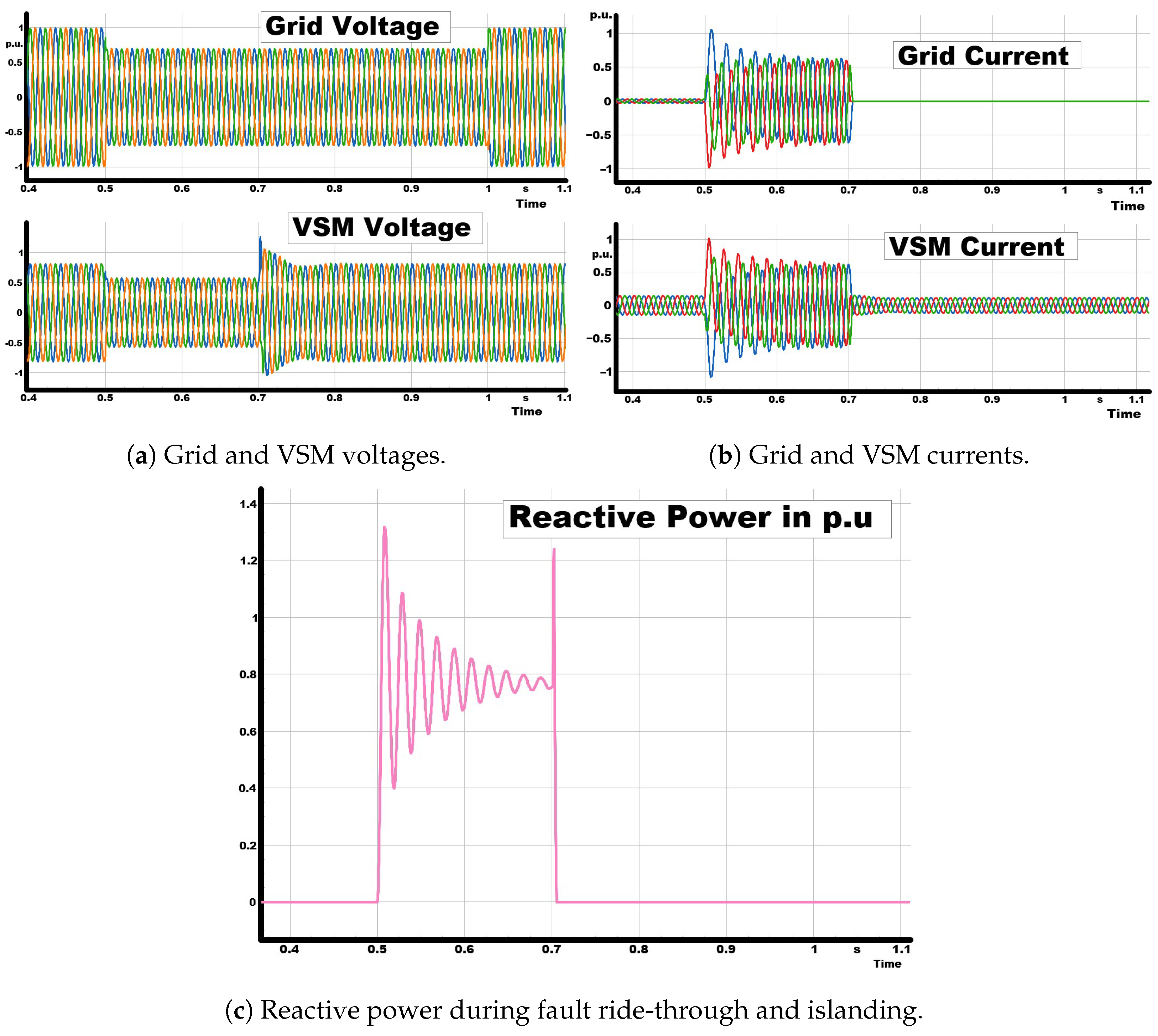
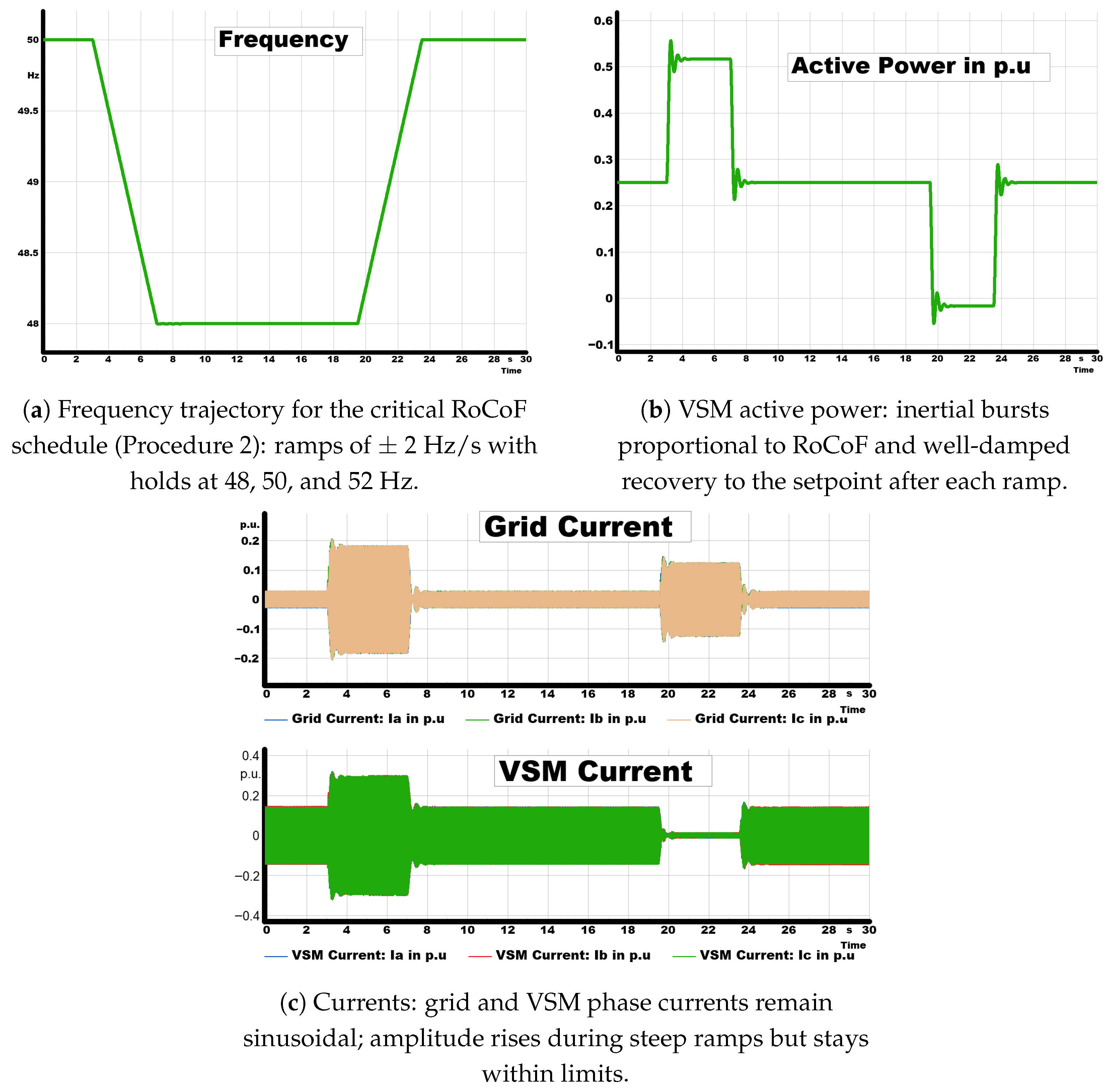
- Benchmark testing of the VSM: A Virtual Synchronous Machine (VSM) was implemented and rigorously benchmarked against standardized protocols (Fraunhofer ISE, Kersic), including inertia response, LFSM-U, fault ride-through (FRT), and critical RoCoF [24,27]. The VSM delivered an equivalent inertia constant of ∼15 s, provided sustained LFSM-U support, injected reactive current during FRT, and maintained synchronization under ±2 Hz/s RoCoF.
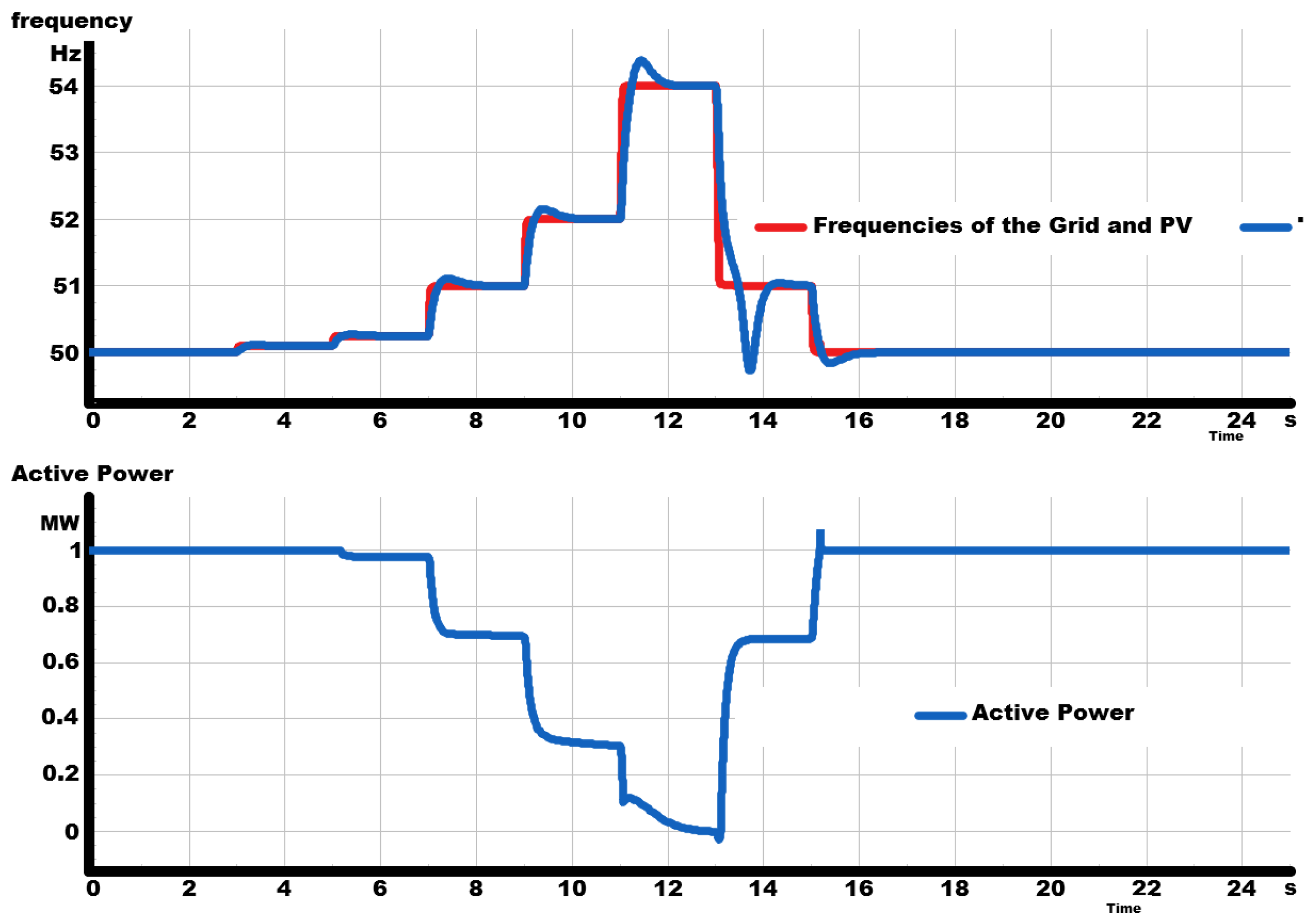
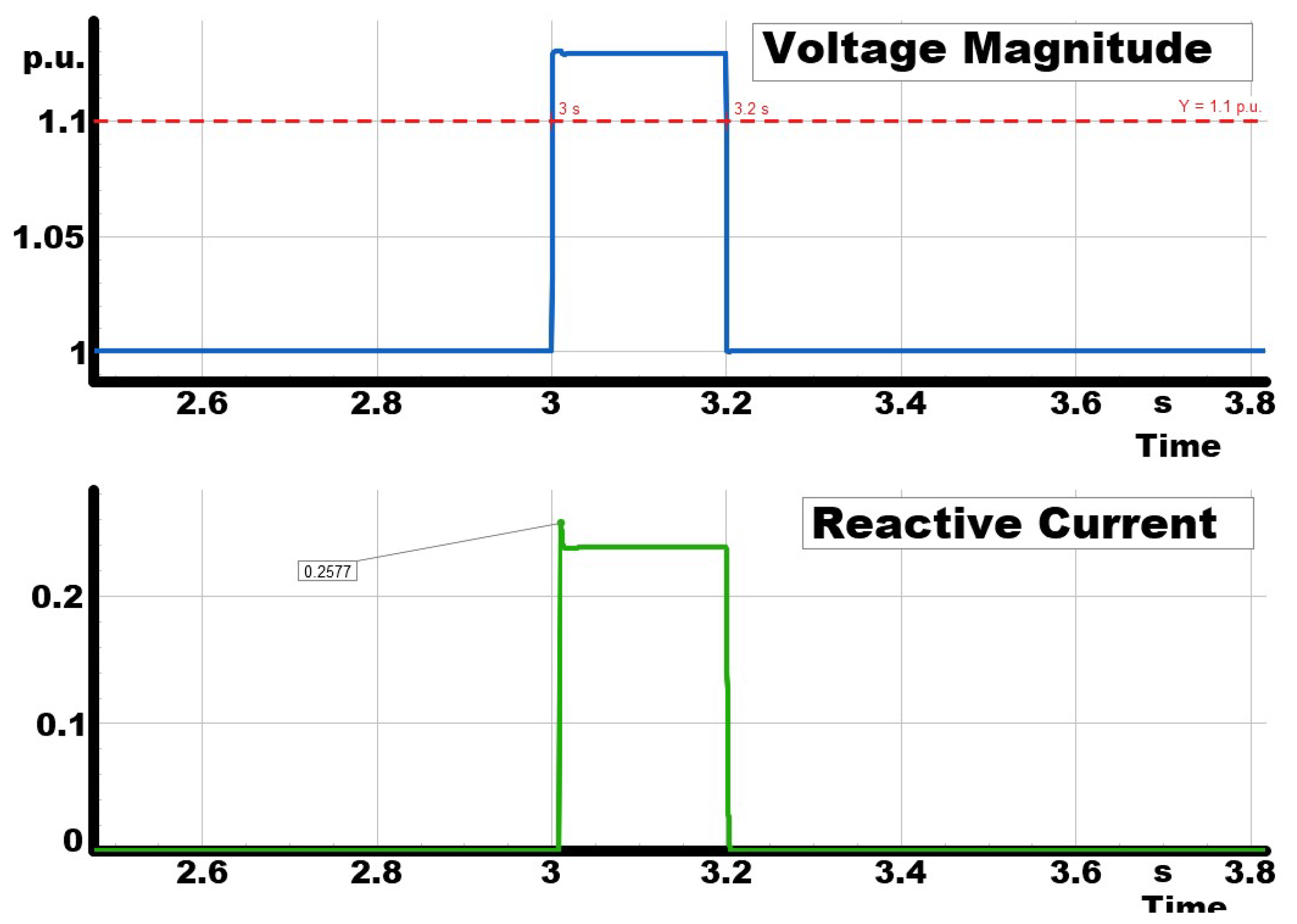
- Testing of the PV inverter: A grid-following photovoltaic (PV) inverter was evaluated against compliance-oriented functions. It curtailed active power via LFSM-O during overfrequency, injected reactive current during FRT, and supported voltage recovery. However, as expected for a GFL unit, it was unable to regulate frequency or sustain islanded operation.
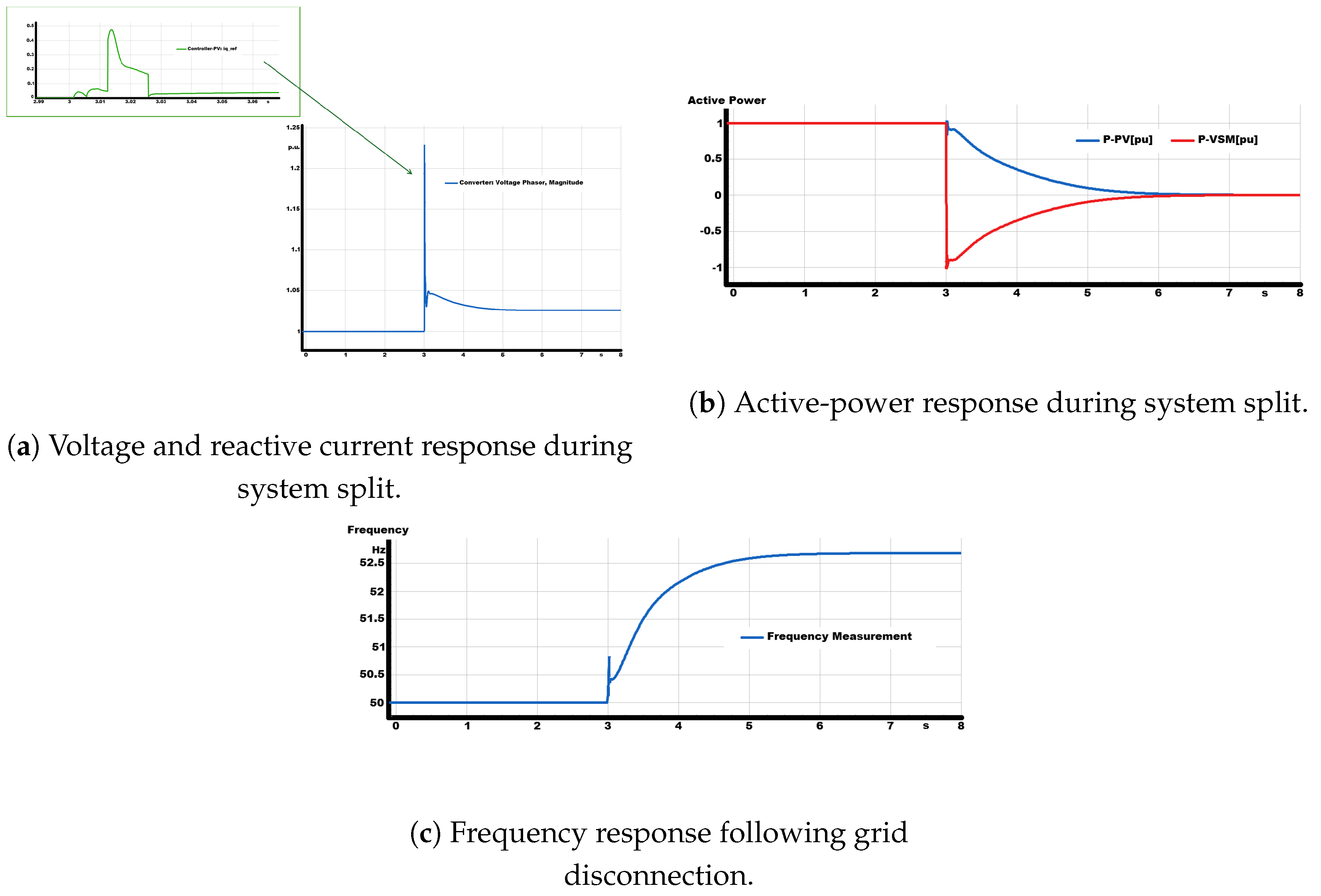
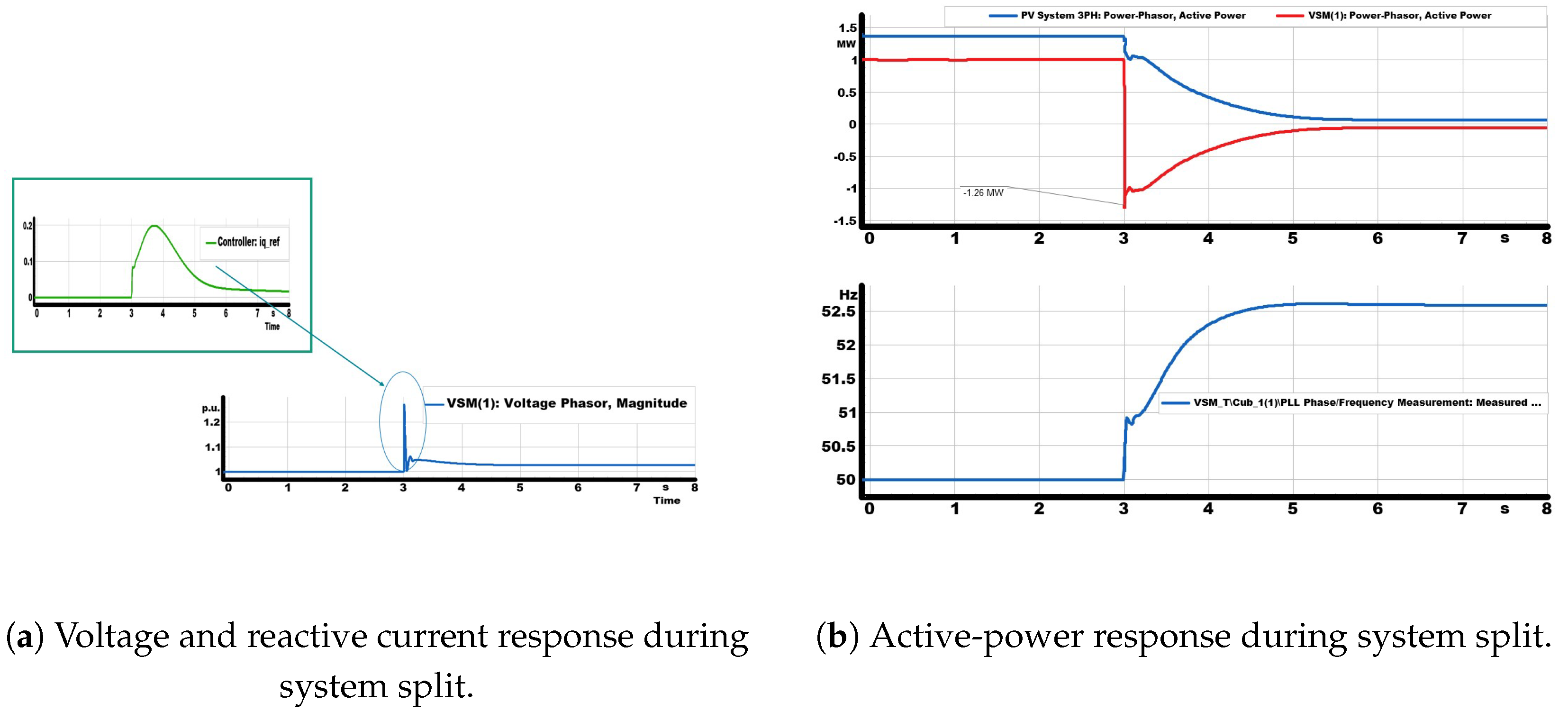
- System split and comparative analysis: A novel islanding test case was developed to evaluate resilience beyond compliance. Results showed that while the PV inverter provided reactive voltage support, only the VSM maintained frequency stability and ensured secure islanded operation, even under overload stress.
- Novelty: While compliance test procedures exist in MIGRATE [28], UNIFI [23], Kersic et al. [24,27] and related frameworks, these verify performance under grid-connected conditions with a stiff external reference. A critical gap exists: converters passing all compliance tests may fail during system splits when the reference disappears entirely. This work provides three contributions: (i) a unified framework combining compliance and resilience testing within a single evaluation methodology; (ii) direct comparison of grid-forming and grid-following converters under identical disturbance sequences; and (iii) demonstration that compliance alone is insufficient—converters must be tested under islanding conditions to ensure resilience, thereby identifying qualification gaps that inform future grid code development.
2. Methodology
Rating Basis Summary
3. VSM Benchmark Distribution Grid
3.1. System Description
3.2. Virtual Synchronous Machine (VSM) Control
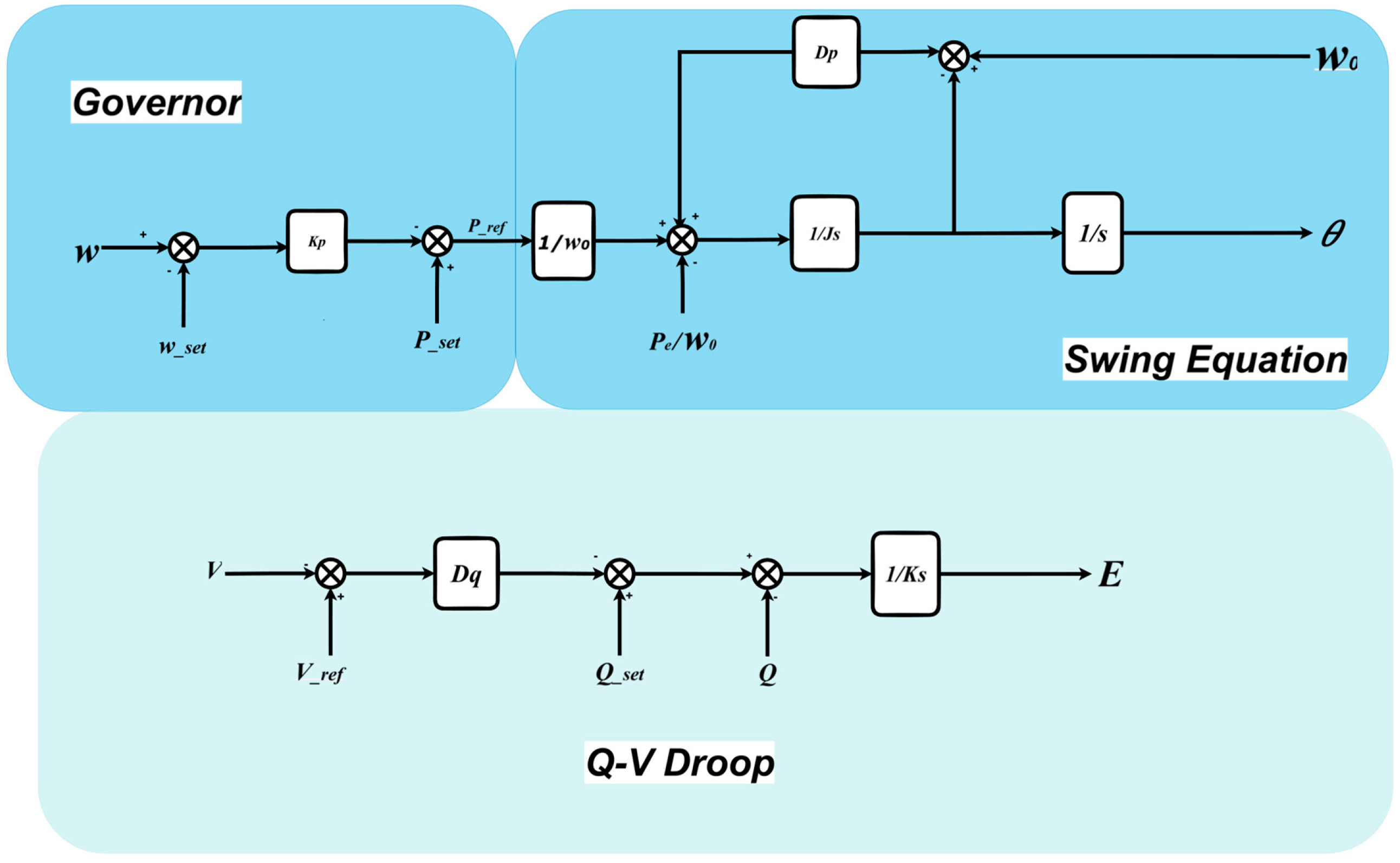
3.2.1. Swing Equation Representation
3.2.2. Governor and Active-Power–Frequency Droop
3.2.3. Reactive-Power–Voltage Droop Control
3.2.4. Control Architecture and Features
3.3. Implementation in PowerFactory
DIgSILENT Simulation Language (DSL) Implementation
- Swing equation core: inertia J, damping , and frequency/angle tracking.
- Governor action: active-power–frequency droop for primary regulation.
- Voltage-dependent power limiting: reduces under low-voltage conditions.
- Stabilizing filters: lead–lag and low-pass filtering on P, Q, and for EMT stability.
- Overload protection: corrective frequency shift for ride-through.
- Reference: generates generated to set frequency and phase.
3.4. Standardized Testing Protocol
- Fault ride-through (FRT): evaluates stability during voltage dips and post-fault recovery in both grid-connected and islanded modes.
- Voltage source properties: assesses whether the VSM establishes a stiff terminal voltage, including impedance shaping and setpoint tracking.
- Inertial response: quantifies the synthetic inertia contribution through the swing equation under applied frequency deviations.
- Overload conditions: examines current limiting and overload protection functions.
- Combined event: superimposes multiple disturbances (e.g., fault and load step) to test coordinated response and recovery.
3.5. Standardized Testing Results and Discussions
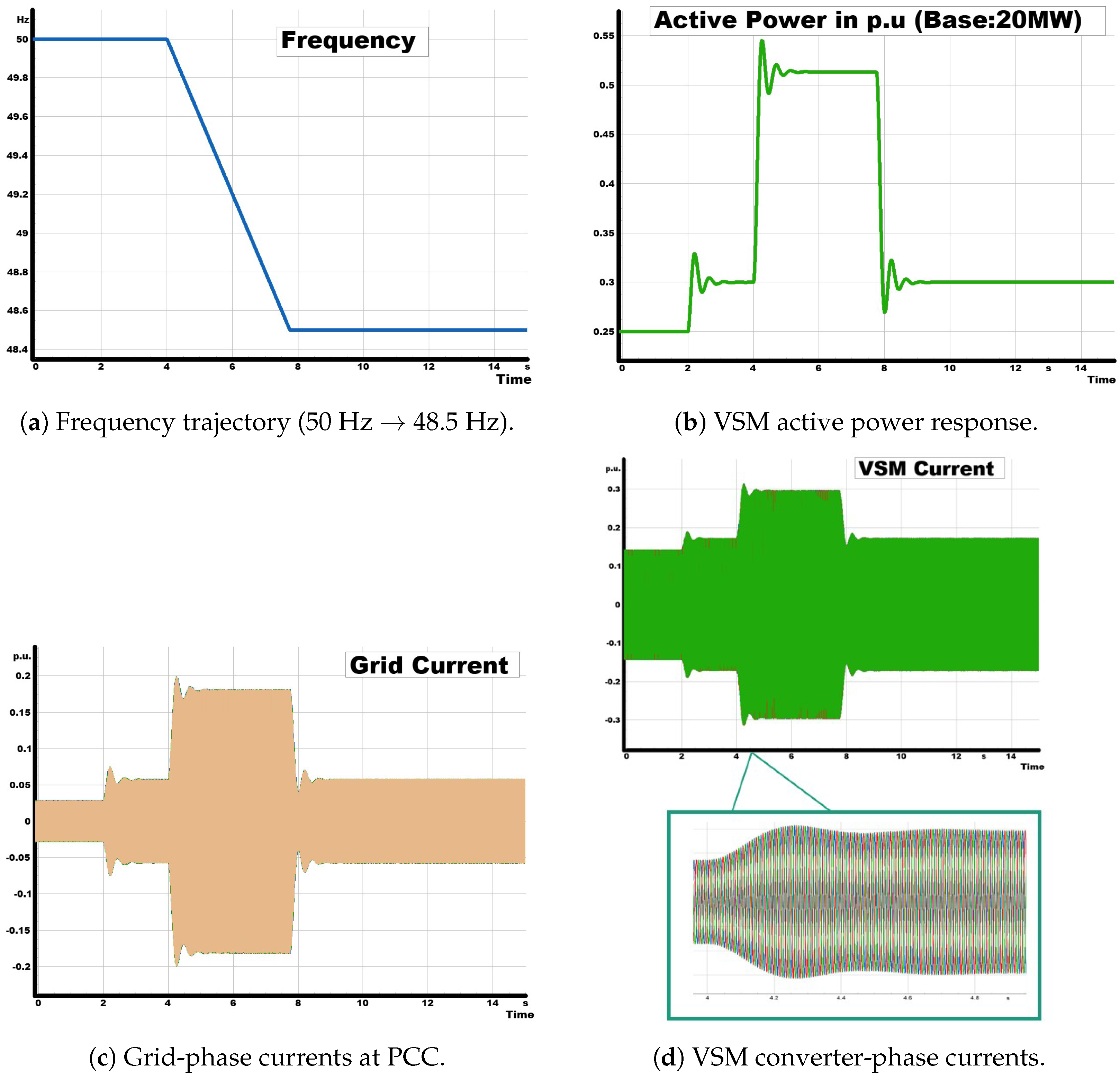
3.5.1. Inertia Response Test

- 1.
- Converter current limits, which may clip the response during severe RoCoF events;
- 2.
- DC-side energy availability, where finite storage capacity limits sustained power exchange;
- 3.
- Available power headroom, which decreases as the VSM approaches rated capacity.
- For the test conditions employed (VSM at 30% loading, ideal DC source), these constraints did not limit the observed inertial response. Future work should systematically vary these parameters to map the operational envelope.
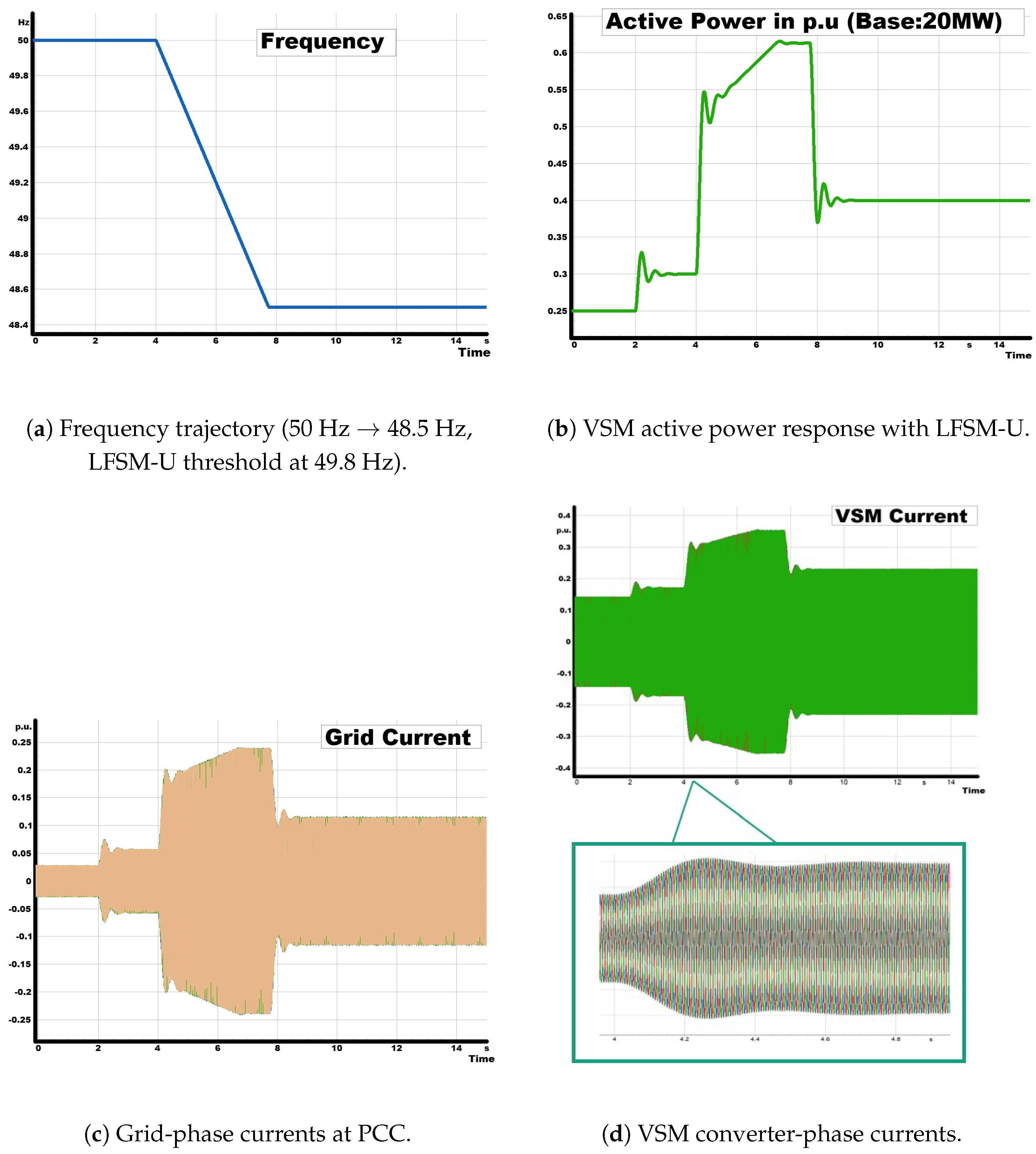
3.5.2. Inertia Response with LFSM-U Test
Control Law Implemented
Observed Behavior and Compliance
3.5.3. Fault Ride-Through (FRT) and Islanding Test

3.5.4. Critical RoCoF Test


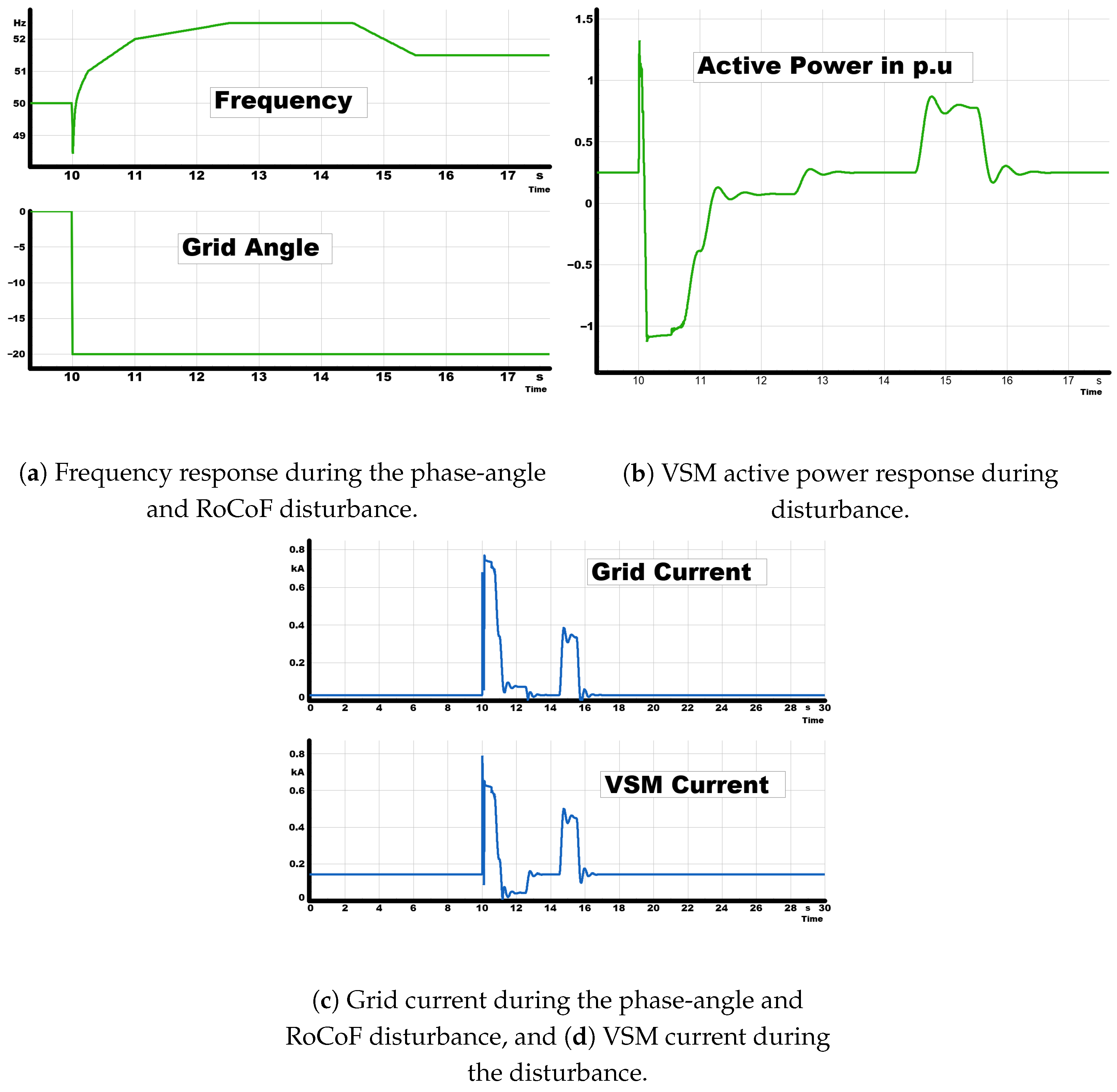
3.5.5. Combined Event: Phase-Angle Change and RoCoF

4. System Split Case with VSM and PV Inverter
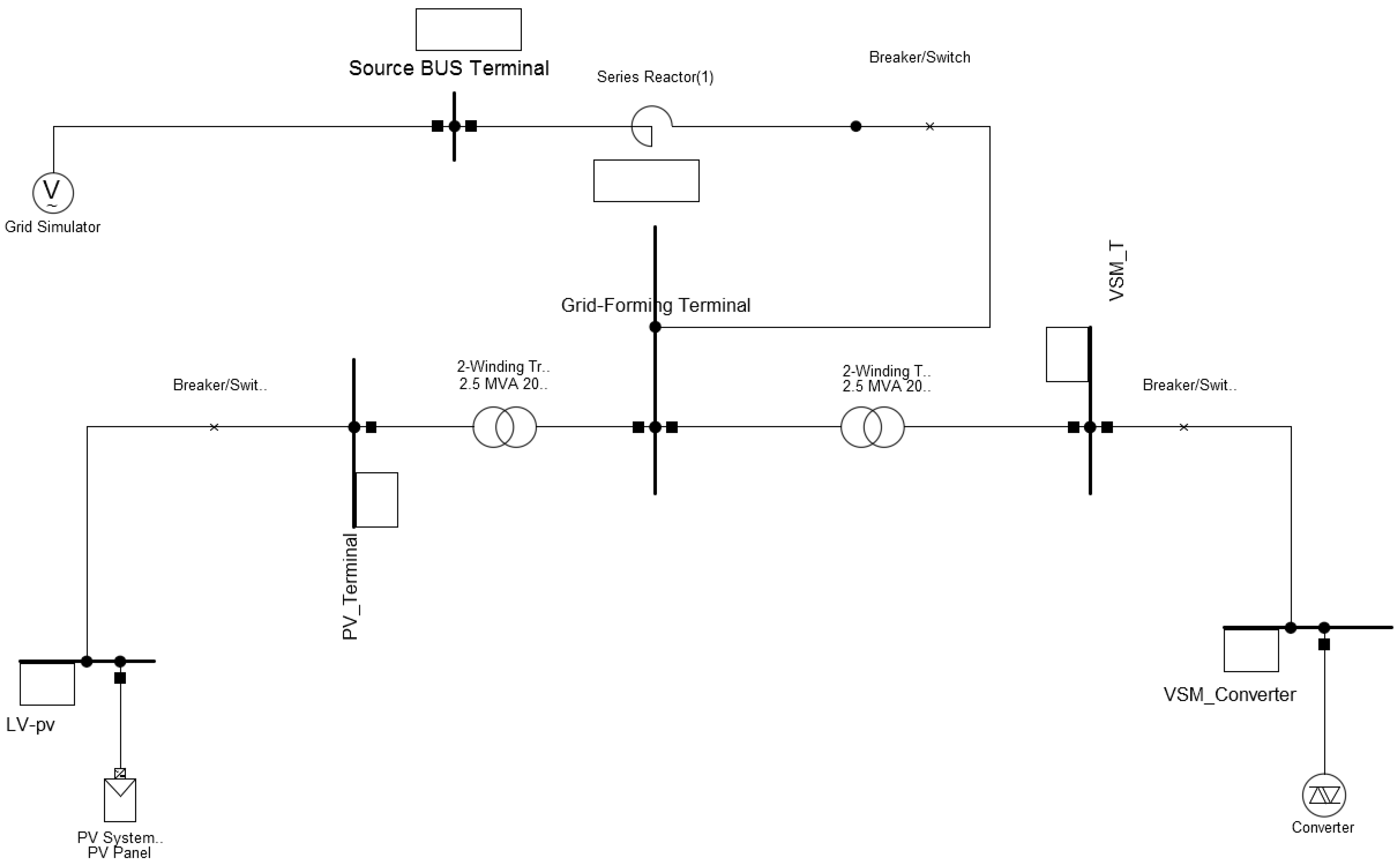
4.1. System Description
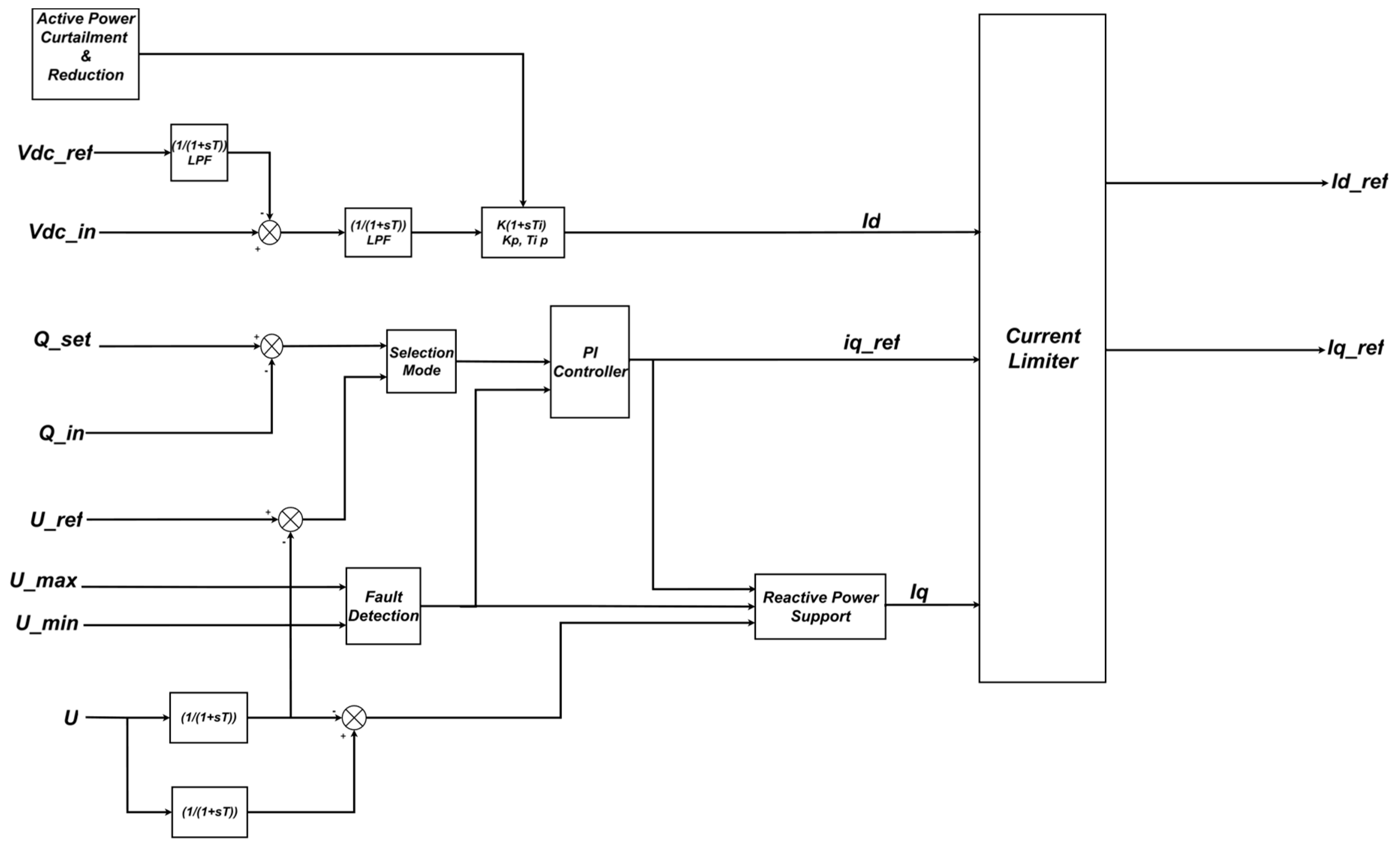
4.2. Grid-Following PV Inverter Control
- PLL-based synchronization: tracks grid phase and frequency for current injection in synchronism with the grid voltage.
- Low-voltage fault ride-through (FRT): injects reactive current during voltage dips, supporting post-fault voltage recovery in accordance with ENTSO-E requirements.
- Limited frequency-sensitive mode (LFSM-O): reduces active-power output proportionally during overfrequency events, contributing to primary frequency control.
- Current limitation and power curtailment: enforces operational limits and prevents overcurrent conditions.
5. Results and Discussion
5.1. PV Inverter Implementation Parameters
5.1.1. LFSM-O Test of the PV Inverter

5.1.2. Fault Ride-Through (FRT) Test of the PV Inverter
5.1.3. System Split Test: Island Test

5.1.4. Power Imbalance During Island Mode and Converter Stress

5.2. Practical Acceptability of Observed Excursions
6. Conclusions
6.1. Recommendations for Grid Code Development
- ENTSO-E Requirements for Generators (RfG)—Proposed Enhancements
- Enhanced Fault Ride-Through (Related to Article 13)
- Recommendation: Extend fault ride-through requirements to explicitly include “island ride-through” capability, which means the ability to transition to stable islanded operation if a fault results in system separation.
- Rationale: Current FRT requirements focus on remaining connected during faults with eventual grid restoration, but do not explicitly address the case where the fault leads to permanent system separation.
- Gap Addressed: System split events demonstrated that converters passing standard FRT tests may still fail during islanding scenarios.
- Synthetic Inertia Quantification (Complementary to Article 15)
- Recommendation: Specify minimum equivalent inertia constant (e.g., s) with standardized RoCoF test verification for grid-forming units.
- Rationale: While Article 15(2)(c) addresses LFSM-U (frequency-sensitive mode for underfrequency), explicit synthetic inertia requirements with quantified H values and standardized testing procedures would provide clearer performance benchmarks.
- Gap Addressed: Current requirements specify frequency response but do not mandate specific inertial performance metrics.
- Island Operation Capability (Complementary to Article 16)
- Recommendation: Make island operation capability mandatory for grid-forming units (Type C and D power park modules) with defined test procedures.
- Rationale: Article 15(5)(b) makes island operation capability optional (“if required by the relevant system operator”), but system split testing demonstrates this is a critical resilience function.
- Gap Addressed: The optional nature of island operation in current regulations means many grid-forming units may not be tested for this critical capability.
- IEEE 1547-2018—Proposed EnhancementsIntentional Islanding Category (Related to Clause 8.2)
- Recommendation: Add enhanced specifications within Category III or create supplementary requirements for DERs specifically designed for intentional island operation.
- Current Status: Clause 8.2 addresses intentional islanding but does not create a distinct performance category.
- Proposed Enhancement: Establish clear performance benchmarks distinguishing DERs capable of autonomous island formation and stabilization from those only capable of participating in pre-established islands.
- Gap Addressed: Current standard permits intentional islanding but does not distinguish between passive island participation and active island formation capabilities.
- Inertial Response Requirements (Related to Clause 6.5.2.8)
- Recommendation: Require grid-forming DERs to demonstrate inertial response (proportional to ) as a mandatory function in addition to frequency-droop response.
- Current Status: IEEE 1547-2018 Clause 6.5.2.8 defines inertial response as an optional capability.
- Proposed Enhancement: Make inertial response mandatory for DERs designated as grid-forming, with specific performance metrics (e.g., minimum H equivalent, maximum response time).
- Gap Addressed: Distinction between frequency droop (proportional to ) and inertial response (proportional to ) is not clearly mandated.
- Proposed System Split Resilience Test
- Pre-Conditions
- Grid connection via impedance giving SCR = 3–10.
- Converter operating at 30–70% loading.
- Generation-load mismatch of ±20–50%.
- Procedure
- 1.
- Establish stable grid-connected operation.
- 2.
- Open upstream breaker to simulate system separation.
- 3.
- Monitor system behavior for a minimum of 60 s.
- Pass Criteria
- Frequency stabilizes within ±2.5 Hz within 5 s.
- Voltage remains within 0.85–1.15 p.u. after 1 s transient.
- Continuous energization maintained throughout the test period.
- No protection system false trips or instability.
- Rationale
6.2. Recommendations for Supervisory Control
6.2.1. Fast Generation Curtailment
- LFSM-O response time should be minimized (<200 ms) to reduce grid-forming converter overload duration during overfrequency islands.
- Coordinate curtailment actions across multiple generation sources within the island.
6.2.2. Pre-Planned Load Shedding
- Island-capable feeders should have automated underfrequency load shedding coordinated with grid-forming converter droop settings.
- Establish clear priority levels for load disconnection.
6.2.3. Energy Storage Integration
- Co-located storage can absorb transient imbalances more rapidly than generation curtailment, reducing grid-forming converter stress.
- Size storage to handle expected maximum imbalance for 5–10 s (bridge to supervisory control activation).
6.3. Limitations and Future Work
- Multi-VSM coordination with heterogeneous inertia constants
- Parametric sensitivity studies across SCR, load levels, and control parameters
- Integration of detailed thermal models for overload duration assessment
- Hybrid GFM/GFL control strategies for enhanced weak-grid operation
6.4. Important Note on Regulatory Framework References
- 1.
- Stakeholder consultation processes as specified in the relevant regulations;
- 2.
- Cost–benefit analysis to justify enhanced requirements;
- 3.
- Coordination with national regulatory authorities;
- 4.
- Development of standardized testing protocols;
- 5.
- Consideration of technology-specific limitations and capabilities.
Author Contributions
Funding
Data Availability Statement
Conflicts of Interest
Appendix A. LFSM-U Implementation Details
Appendix A.1. Control Law Definitions
Appendix A.2. Activation Gate (Piecewise)
Appendix A.3. Gated Droop Request (Unlimited)
Appendix A.4. Amplitude Limit
Appendix A.5. Slew Limit
Appendix A.6. Smoothing Filter (PT1)
Appendix A.7. Plant Reference
References
- Saleh, A.M.; István, V.; Khan, M.A.; Waseem, M.; Ali Ahmed, A.N. Power system stability in the Era of energy Transition: Importance, Opportunities, Challenges, and future directions. Energy Convers. Manag. X 2024, 24, 100820. [Google Scholar] [CrossRef]
- He, C.; Geng, H.; Rajashekara, K.; Chandra, A. Analysis and Control of Frequency Stability in Low-Inertia Power Systems: A Review. IEEE/CAA J. Autom. Sin. 2024, 11, 2363–2383. [Google Scholar] [CrossRef]
- Saeedian, M.; Pournazarian, B.; Seyedalipour, S.S.; Eskandari, B.; Pouresmaeil, E. Emulating Rotational Inertia of Synchronous Machines by a New Control Technique in Grid-Interactive Converters. Sustainability 2020, 12, 5346. [Google Scholar] [CrossRef]
- van der Vleuten, E.; Lagendijk, V. Transnational infrastructure vulnerability: The historical shaping of the 2006 European “Blackout”. Energy Policy 2010, 38, 2042–2052. [Google Scholar] [CrossRef]
- Yan, R.; Masood, N.A.; Kumar Saha, T.; Bai, F.; Gu, H. The Anatomy of the 2016 South Australia Blackout: A Catastrophic Event in a High Renewable Network. IEEE Trans. Power Syst. 2018, 33, 5374–5388. [Google Scholar] [CrossRef]
- Bell, K.; Hawker, G.; UKERC. Preparing for a Resilient Energy Future: Learning from Texas’ Rolling Blackouts. 2021. Available online: https://ukerc.ac.uk/news/preparing-for-a-resilient-energy-future-learning-from-texas-rolling-blackouts/ (accessed on 1 January 2026).
- Zeb, K.; Islam, S.U.; Khan, I.; Uddin, W.; Ishfaq, M.; Curi Busarello, T.D.; Muyeen, S.; Ahmad, I.; Kim, H. Faults and Fault Ride Through strategies for grid-connected photovoltaic system: A comprehensive review. Renew. Sustain. Energy Rev. 2022, 158, 112125. [Google Scholar] [CrossRef]
- Rodrigues, J.; Moreira, C.; Lopes, J.P. Fault-Ride-Through Approach for Grid-Tied Smart Transformers without Local Energy Storage. Energies 2021, 14, 5622. [Google Scholar] [CrossRef]
- ENTSO-E. ENTSO-E Requirements for Generators—Interpretation. 2016. Available online: https://www.entsoe.eu/network_codes/rfg/ (accessed on 1 January 2026).
- IEEE 1547-2018; Introduction to IEEE 1547 Standard for Interconnecting Distributed Energy Resources with Electric Power Systems. IEEE Standards Association: Piscataway, NJ, USA, 2023. Available online: https://www.sandia.gov/app/uploads/sites/273/2023/11/2023_Vermont_Webinar_Vartanian1.pdf (accessed on 1 January 2026).
- Ilija, I.; Paul, W.; Wanda, A.; EASY-SRI. Report on the Contribution to Standardization. 2024. Available online: https://www.easysri.eu/en/Project%20Results%20%20Documents/D6.6%20Report%20on%20the%20contribution%20to%20standardization%20v1.pdf (accessed on 1 January 2026).
- Geng, S.; Hiskens, I.A. Unified Grid-Forming/Following Inverter Control. IEEE Open Access J. Power Energy 2022, 9, 489–500. [Google Scholar] [CrossRef]
- Chatterjee, D. From Grid Following to Grid Forming: Modeling, Control and Applications to Inverter-Based Resources. Master’s Thesis, The University of Texas, Austin, TX, USA, 2022. [Google Scholar] [CrossRef]
- Liu, Y.; Zhu, L.; Xu, X.; Li, D.; Liang, Z.; Ye, N. Transient Synchronization Stability in Grid-Following Converters: Mechanistic Insights and Technological Prospects—A Review. Energies 2025, 18, 1975. [Google Scholar] [CrossRef]
- Lasseter, R.H.; Chen, Z.; Pattabiraman, D. Grid-Forming Inverters: A Critical Asset for the Power Grid. IEEE J. Emerg. Sel. Top. Power Electron. 2020, 8, 925–935. [Google Scholar] [CrossRef]
- Ahmed, F.; Al Kez, D.; McLoone, S.; Best, R.J.; Cameron, C.; Foley, A. Dynamic grid stability in low carbon power systems with minimum inertia. Renew. Energy 2023, 210, 486–506. [Google Scholar] [CrossRef]
- Shadoul, M.; Ahshan, R.; AlAbri, R.S.; Al-Badi, A.; Albadi, M.; Jamil, M. A Comprehensive Review on a Virtual-Synchronous Generator: Topologies, Control Orders and Techniques, Energy Storages, and Applications. Energies 2022, 15, 8406. [Google Scholar] [CrossRef]
- Unruh, P.; Nuschke, M.; Strauß, P.; Welck, F. Overview on Grid-Forming Inverter Control Methods. Energies 2020, 13, 2589. [Google Scholar] [CrossRef]
- Chen, Z.; Yao, J.; He, W.; Luo, Y.; Xie, H.; Zou, Z. Transient stability enhancement control strategy based on grid dispatching for multi-paralleled grid forming inverters during LVRT. Int. J. Electr. Power Energy Syst. 2024, 157, 109836. [Google Scholar] [CrossRef]
- Villada-Leon, C.A.; Posada Contreras, J.; Rosas-Caro, J.C.; Núñez-Rodríguez, R.A.; Valencia, J.C.; Valdez-Resendiz, J.E. Control Algorithm for an Inverter-Based Virtual Synchronous Generator with Adjustable Inertia. Eng 2025, 6, 231. [Google Scholar] [CrossRef]
- Alassi, A.; Feng, Z.; Ahmed, K.; Syed, M.; Egea-Alvarez, A.; Foote, C. Grid-forming VSM control for black-start applications with experimental PHiL validation. Int. J. Electr. Power Energy Syst. 2023, 151, 109119. [Google Scholar] [CrossRef]
- MIGRATE. MIGRATE – Massive Integration of Power Electronic Devices. 2018. Available online: https://der-lab.net/wp-content/uploads/2018/11/Munzel_MIGRATE_at_IRED_2018-%E2%80%93.pdf (accessed on 1 January 2026).
- Kroposki, B.; National Renewable Energy Laboratory (NREL). UNIFI Specifications for Grid-Forming Inverter-Based Resources: Version 2. 2024. Available online: https://docs.nrel.gov/docs/fy24osti/89269.pdf (accessed on 1 January 2026).
- Kersic, M.; Müller, T.; Lewis, E.; Schaupp, T.; Denninger, R.; Ernst, P.; Reichert, S.; Rogalla, S.; Singer, R.; Ise, T.; et al. Testing Characteristics of Grid-Forming Converters—Part I: Specification and Definition of Behaviour. 2020. Available online: https://www.researchgate.net/publication/349041906_Testing_Characteristics_of_Grid_Forming_Converters_Part_I_Specification_and_Definition_of_Behaviour (accessed on 1 January 2026).
- Dsilva, S.; Zare, A.; Shadmand, M.B.; Bayhan, S.; Abu-Rub, H. Towards resiliency enhancement of network of grid-forming and grid-following inverters. IEEE Trans. Ind. Electron. 2024, 71, 1547–1558. [Google Scholar] [CrossRef]
- Matouš, H.; Libra, M.; Poulek, V.; Kouřím, P. Analysis of Output Signal Distortion of Galvanic Isolation Circuits for Monitoring the Mains Voltage Waveform. Sensors 2022, 22, 7769. [Google Scholar] [CrossRef]
- Rogalla, S.; Greulich, A.; Lehner, J.; Lens, H.; Ernst, P.; Schaupp, T.; Singer, R.; Ungerland, J.; Schöll, C.; Denninger, R.; et al. Grid-forming converters in interconnected systems—final results from the joint research project VerbundnetzStabil. In Proceedings of the 20th International Workshop on Large-Scale Integration of Wind Power into Power Systems as well as on Transmission Networks for Offshore Wind Power Plants (WIW 2021), Berlin, Germany, 29–30 September 2021; pp. 135–140. [Google Scholar] [CrossRef]
- Denis, G.; Prevost, T. MIGRATE D3.6: Requirement Guidelines for Operating a Grid with 100% Power Electronic Devices; Réseau de Transport d’Électricité (RTE): Paris, France, 2019. [Google Scholar] [CrossRef]
- Quintero-Durán, M.J.; Candelo-Becerra, J.E.; González-Niño, M.E.; Hernández-Moreno, S.A.; Váz, R.F. Synchronverter Control Strategy: A Review of Different Improvements and Applications. Energies 2025, 18, 3574. [Google Scholar] [CrossRef]
- Anttila, S.; Döhler, J.S.; Oliveira, J.G.; Boström, C. Grid Forming Inverters: A Review of the State of the Art of Key Elements for Microgrid Operation. Energies 2022, 15, 5517. [Google Scholar] [CrossRef]



| Abbreviation | Definition |
|---|---|
| DER | Distributed Energy Resource |
| DSL | DIgSILENT Simulation Language |
| EMT | Electromagnetic Transient |
| ENTSO-E | European Network of Transmission System Operators for Electricity |
| FRT | Fault Ride-Through |
| GFL | Grid-Following |
| GFM | Grid-Forming |
| IGBT | Insulated-Gate Bipolar Transistor |
| LFSM-O | Limited Frequency-Sensitive Mode–Overfrequency |
| LFSM-U | Limited Frequency-Sensitive Mode–Underfrequency |
| LV | Low Voltage |
| MV | Medium Voltage |
| PCC | Point of Common Coupling |
| PHIL | Power Hardware-in-the-Loop |
| PLL | Phase-Locked Loop |
| PV | Photovoltaic |
| RoCoF | Rate of Change of Frequency |
| SCR | Short-Circuit Ratio |
| TSO | Transmission System Operator |
| VSM | Virtual Synchronous Machine |
| Symbol | Description | Unit |
|---|---|---|
| H | Inertia constant | s |
| J | Virtual moment of inertia | kgm2 |
| Damping coefficient | p.u. | |
| Reactive-power droop coefficient | p.u./p.u. | |
| Active-power–frequency droop | % | |
| Angular frequency | rad/s | |
| Nominal angular frequency | rad/s | |
| Rotor/voltage angle | rad | |
| P | Active power | W or p.u. |
| Q | Reactive power | var or p.u. |
| Active-power reference | p.u. | |
| V | Voltage magnitude | V or p.u. |
| E | Internal EMF magnitude | p.u. |
| I | Current magnitude | A or p.u. |
| Virtual resistance | p.u. | |
| Virtual reactance | p.u. | |
| f | Frequency | Hz |
| Nominal frequency (50 Hz) | Hz | |
| Base apparent power | MVA |
| Test | Section | VSM Rating | Peak Value | Status |
|---|---|---|---|---|
| Inertia response | Section 3.5.1 | 20 MVA | 0.545 p.u. (10.9 MW) | Normal operation (54.5%) |
| LFSM-U | Section 3.5.2 | 20 MVA | 0.61 p.u. (12.2 MW) | Normal operation (61%) |
| Critical RoCoF | Section 3.5.4 | 20 MVA | 0.55–0.60 p.u. | Normal operation |
| System split | Section 5.1.4 | 1.0 MW | 1.266 MW | Transient overload (126.6%) |
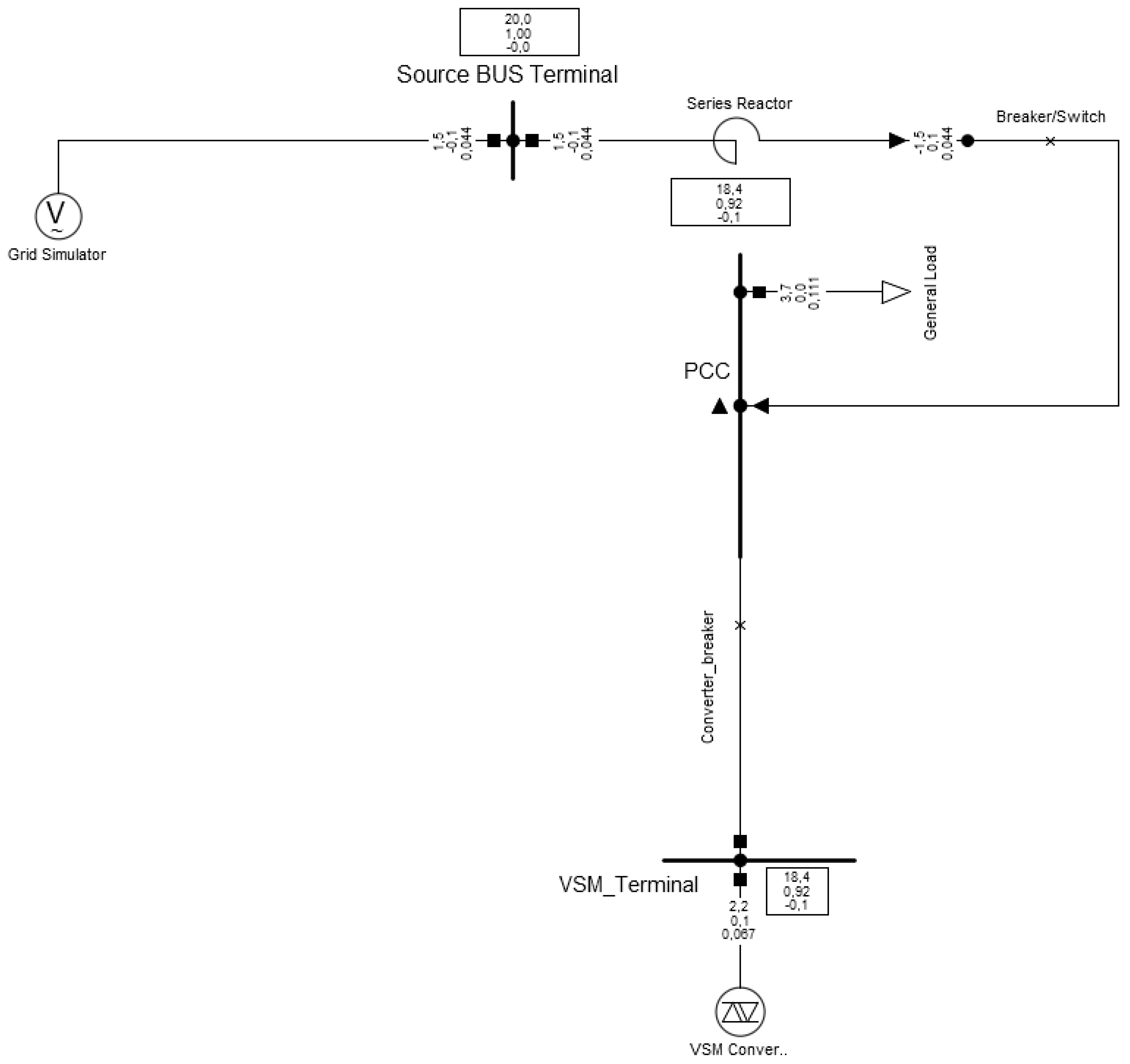
| Parameter | Value |
|---|---|
| VSM Converter | |
| Rated apparent power | 20 MVA |
| Dispatch setpoint | 5 MW (0.25 p.u.) |
| Power factor | Unity |
| Virtual inertia constant H | 15 s |
| Damping coefficient | 40 p.u. |
| P–f droop | 5% |
| Grid Simulator | |
| Voltage | 20 kV, 3-phase |
| Frequency | 50 Hz (programmable) |
| Short-circuit capacity | ≈120 MVA |
| Series Reactor | |
| Rating | 3 MVA |
| Resistance R | 0.15 |
| Reactance X | 1.5 |
| X/R ratio | 10 |
| Network Conditions | |
| SCR at PCC | ≈6 |
| Breaker | Controllable PCC disconnection |
| Load | Generic PCC load (variable) |
| Parameter | Value |
|---|---|
| VSM Inverter | |
| Rated power | 1.15 MVA (1.0 MW dispatch) |
| Inertia constant H | 15 s |
| Damping coefficient | 40 p.u. |
| Virtual impedance | p.u. |
| Over-current threshold | 1.01 p.u. |
| LFSM-U threshold/droop | 49.8 Hz/0.05 p.u./Hz |
| PV Inverter | |
| Rated power | 1.15 MVA (1.0 MW dispatch) |
| PLL bandwidth/damping | 20 Hz/0.707 |
| FRT gain | 2 |
| LVRT/HVRT threshold | 0.9/1.91 p.u. |
| Max. current | 1.1 p.u. |
| LFSM-O threshold | 50.2 Hz |
| Network | |
| Transformer | 2.5 MVA, Dyn11, grounded LV |
| Series impedance | (X/R = 10) |
| SCR at PCC | ≈6–7 |
Disclaimer/Publisher’s Note: The statements, opinions and data contained in all publications are solely those of the individual author(s) and contributor(s) and not of MDPI and/or the editor(s). MDPI and/or the editor(s) disclaim responsibility for any injury to people or property resulting from any ideas, methods, instructions or products referred to in the content. |
© 2026 by the authors. Licensee MDPI, Basel, Switzerland. This article is an open access article distributed under the terms and conditions of the Creative Commons Attribution (CC BY) license.
Share and Cite
Lawal, I.O.; Schulte, H.; Salman, A. Virtual Synchronous Machine Testing and System Split Resilience: A Comparative Analysis with Grid-Following PV Inverters. Energies 2026, 19, 1027. https://doi.org/10.3390/en19041027
Lawal IO, Schulte H, Salman A. Virtual Synchronous Machine Testing and System Split Resilience: A Comparative Analysis with Grid-Following PV Inverters. Energies. 2026; 19(4):1027. https://doi.org/10.3390/en19041027
Chicago/Turabian StyleLawal, Ibrahim Okikiola, Horst Schulte, and Ammar Salman. 2026. "Virtual Synchronous Machine Testing and System Split Resilience: A Comparative Analysis with Grid-Following PV Inverters" Energies 19, no. 4: 1027. https://doi.org/10.3390/en19041027
APA StyleLawal, I. O., Schulte, H., & Salman, A. (2026). Virtual Synchronous Machine Testing and System Split Resilience: A Comparative Analysis with Grid-Following PV Inverters. Energies, 19(4), 1027. https://doi.org/10.3390/en19041027