


Abstract
Amid increasing demand for energy efficiency and reduced CO2 emissions in the building sector, natural fibres such as sheep wool are gaining attention as a sustainable raw material for low-impact insulation materials. This review summarises the current state of research on the thermal and acoustic properties of sheep wool-based composites and their applications in low-carbon construction. The fibre structure, thermal conductivity, hygroscopicity, heat storage capacity, and sound absorption coefficient are discussed, highlighting the competitiveness of sheep wool compared to conventional synthetic and mineral materials. The review also addresses the use of wool fibres in cement composites, insulation panels, sound-absorbing materials, and sorption mats, emphasising their potential in humidity regulation, acoustic comfort, and circular economy strategies. A literature analysis indicates that utilising sheep wool waste can reduce environmental impact, lower the carbon footprint of building materials, and enhance local agricultural value. The review provides an overview of current knowledge on sustainable sheep wool-based insulation materials and focuses on an interdisciplinary and quantitative approach to the thermal, acoustic, and environmental performance of composites based on waste sheep wool, combined with an analysis of their applicability in low-carbon construction and circular economy frameworks. Future research should focus on assessing long-term durability, material ageing under real service conditions, and standardised life cycle assessment (LCA) methodologies to enable reliable comparison with conventional insulation materials.
1. Introduction
Today’s building industry faces two key challenges: reducing energy consumption associated with building operation and limiting the negative impact of building materials on the climate and environment. The building sector accounts for a significant proportion of energy consumption and greenhouse gas emissions, with figures of 40% and 36% respectively in the EU [1,2]. One of the most important aspects of improving the energy efficiency of buildings is the right selection of used materials. Thermal and acoustic insulation is a key element in reducing heat loss and improving indoor comfort without increasing the demand for energy needed for heating or cooling. In response to growing regulations, the building materials sector is focusing its research on raw materials and technologies with a low environmental footprint. Traditional insulation materials, such as polyurethane foams and mineral wool, despite their excellent thermal insulation properties, often have high emissions associated with their production and disposal issues. As a result, there is a growing trend towards research into sustainable materials—derived from natural raw materials or waste—that combine energy efficiency with reduced environmental impact [3,4,5].
An example of the search for such solutions are building materials using natural fibres, both plant and animal. They offer thermal conductivity values and good acoustic properties that are competitive with traditional materials while also having a low carbon footprint and being biodegradable. Their use results in a closed loop, in which local and renewable materials replace conventional raw materials with high energy consumption [6]. Wood is a popular natural material for construction, but it mainly serves as a load-bearing material, and in order to improve its properties, it is essential to process it appropriately, taking into account the efficient exploitation of wood resources [7,8]. Studies [9,10] have shown that plant fibres such as jute, hemp, and reed can form composites with a thermal conductivity coefficient comparable to that of mineral wool or polystyrene (approx. 0.03–0.05 W/m·K). A comparison of thermal properties of natural materials is shown in Table 1. Furthermore, natural fibres such as flax or sheep wool, with their porous, heterogeneous structure, exhibit better sound absorption due to the increased dispersion of acoustic waves and energy loss within the material, making them particularly attractive for sound-absorbing panels and wall insulation [4,11,12]. Sheep wool is a waste material with a very low thermal coefficient and good acoustic properties, so its use in construction can be very profitable in terms of the circular economy. It does not require additional production or livestock costs, and is beneficial for farmers.
Table 1.
Comparison of the thermal insulation properties of sheep wool and other natural fibres [9,13].
Wool is a natural raw material obtained mainly from sheep, but also from other animal species such as llamas, alpacas, vicuñas, cashmere and angora goats, camels, and angora rabbits [14,15]. Sheep wool is one of the oldest natural fibres used by mankind and remains an important subject of research in both a historical context and in relation to its current industrial applications [16]. For thousands of years, this material has been considered one of the most versatile natural resources and plays an important role in the clothing and textile industries. However, the crisis and decline in sheep numbers in the 1990s led to problems with the rational use of sheep wool. Today, the annual production of this raw material in the European Union exceeds 200,000 tonnes, with an average yield of 1.5 to 3 kg per sheep, and sheep wool is increasingly treated as a by-product of sheep farming [17]. Traditionally, sheep wool has been used in the manufacture of clothing, but in recent years, it has gained new significance as an ecological and functional raw material used in innovative solutions in the fields of construction, acoustics, and thermal insulation [18,19,20]. This is because it is a renewable resource and is therefore considered a sustainable building material. The concept of sustainable development also includes the valorisation of local building materials, including unwashed sheep wool, as a way to reduce waste and protect the areas where it is sourced, such as rural areas and their landscapes. The use of sheep wool waste as a natural, renewable and biodegradable building material is an important part of efforts to reduce CO2 emissions and limit environmental degradation. In practice, much of the unwashed wool has no practical or industrial use and is not covered by recycling systems. As a result, it is often treated as problematic waste, the disposal of which requires complex and costly measures. According to available data, only a small percentage of sheep wool meets the market criteria (approximately 5%), which means that annual shearing generates more costs than profits for producers. An additional difficulty is the need for mandatory sterilisation at a high temperature (i.e., 130 °C) before disposal [21]. In accordance with European environmental regulations (Regulation EC 1069 (2009), Regulation EU 142 (2011)), raw sheep wool must be sent to specialised facilities for incineration or landfill, and only after prior washing or disinfection may it be buried or incinerated without a permit [21]. Therefore, the use of sheep wool waste in the production of building materials can contribute to reducing the amount of waste generated and the pressure on the environment, increasing the profitability of sheep farming, strengthening local supply chains, and implementing the principles of the circular economy while also contributing to the objectives of the European Green Deal [21,22].
In Poland, problems related to sheep wool management are particularly acute in mountainous areas, where the Polish mountain sheep breed, well adapted to harsh environmental conditions, is predominant. The wool obtained from this breed is classified as mixed wool and has a three-fraction structure, comprising down, transitional, and hair fractions, with the hair fraction accounting for the majority of the mass. The average fibre diameter is between 50 and 70 µm, which classifies it as coarse and long-fibre wool compared to other types of wool [23]. The specific properties of mixed wool significantly limit its suitability for processing as it requires advanced technologies, appropriate infrastructure, and high levels of expertise in cleaning, dyeing and weaving processes, which significantly increases the production costs [24]. As a result, the European textile industry mainly relies on the use of fine-fibre merino wool, imported primarily from Australia and New Zealand. For this reason, the search for alternative uses and methods of recycling coarse-fibre wool is becoming increasingly important [25]. This review aims to provide a comprehensive and structured overview of the current state of knowledge on the valorisation of sheep wool fibres as bio-based components for sustainable, energy-efficient building materials. The paper systematically addresses the origin and physicochemical properties of sheep wool, followed by an analysis of its thermal, acoustic, hygroscopic, and environmental performance in comparison with conventional insulation materials. Particular attention is given to the application of sheep wool in cement-based composites, thermal and acoustic insulation systems, and protective and sorptive materials, highlighting both functional performance and environmental benefits. By integrating material engineering aspects with circular economy principles and life cycle considerations, this review identifies key knowledge gaps and outlines future research directions necessary to support the wider implementation of sheep wool-based materials in low-carbon construction.
2. Properties of Sheep Wool as a Construction Material
Sheep wool is primarily composed of keratin, a protein rich in sulphur compounds, which gives it its characteristic elasticity, flexibility, and ability to respond to changes in temperature and humidity. Its fibres have a three-layer structure, and the scales covering them are responsible for both the ease of felting and the self-cleaning properties of the material [26,27,28]. The characteristic crimped structure of sheep wool fibres and the presence of microscopic air pockets trapped between them give this material very high thermal insulation properties [29,30,31]. Research results indicate that sheep wool fibres have high thermal insulation properties, which allows them to be used effectively in the production of biodegradable packaging, including packaging dedicated to wine transport. An important indicator confirming the suitability of sheep wool as an insulating material is its low thermal conductivity coefficient (λ), which in a dry state ranges from 0.035 to 0.045 W/(m·K), which places it at a level comparable to traditional insulation materials such as mineral wool or polystyrene. It also reduces body heat loss by 20–30% compared to cotton fabrics while maintaining the ability to protect against excessive heating [32,33]. Various types of sheep wool fibre composites combined with natural binders achieve a thermal conductivity index of 0.0324 to 0.0436 W/(m·K), which classifies them as highly effective thermal insulation materials [30]. Furthermore, it has been demonstrated that adding 30% sheep wool fibres to polylactide (PLA) in composite biodegradable packaging reduces the thermal conductivity of the material by 15–20% compared to pure PLA. In addition, the biodegradation time of such composites in a composting environment is reduced by more than 30% compared to packaging made exclusively from PLA, confirming the beneficial effect of sheep wool fibres on the functional and ecological properties of the material [33]. Commercial sheep wool packaging, such as Woolcool® (Stone, UK), has been shown in independent studies to maintain the temperature of refrigerated products between 2 and 8 °C for over 72 h, meeting the requirements for transporting food and pharmaceutical products. In comparative tests, it demonstrated approximately 25% better insulation efficiency than polystyrene packaging of the same thickness. In addition, thanks to their ability to absorb moisture at a level of 35–40% of their own weight, they retain their thermal insulation properties even in conditions of variable temperature and humidity, which is important in the logistics of food and alcoholic beverages [32]. Clean sheep wool fabric (without natural oils) is characterised by high moisture absorption capacity (hygroscopicity), allowing it to bind up to 30% of water vapour in relation to its own weight without any noticeable effect of dampness. Moisture penetrates the fibre structure, and the accompanying heat release process helps to maintain favourable thermal conditions for the user [34]. Sheep wool is naturally resistant to high temperatures and fire—it does not melt or adhere to the skin. The material ignites only at temperatures between 560 and 600 °C, and this process does not involve the emission of toxic gases. Meeting the criteria for fire reaction class B1 qualifies sheep wool as a flame-retardant material, which also allows it to be used in the construction sector [35]. In addition, sheep wool absorbs air pollutants (it can bind up to 92% of formaldehyde from the air within the first 24 h of exposure), thereby improving the air quality in residential and commercial spaces [36]. In addition, sheep wool is sound-absorbing. Depending on the thickness and density of the composite made from it, its sound absorption coefficient is αw = 0.60–0.90, which means very good acoustic parameters—comparable to mineral wool [30].
In the context of the circular economy, the use of sheep wool as a new raw material for the production of building components is an important challenge. Sheep wool as a building material has a significantly lower carbon footprint compared to conventional mineral or synthetic insulation materials [21,37]. Life cycle assessments (LCAs) have shown that sheep wool insulation produces approximately 5.4 kg of CO2 equivalent per 1 m3, while a comparable amount of mineral wool generates approximately 135 kg of CO2 equivalent [38]. This low carbon footprint is primarily due to the fact that sheep wool is a renewable resource, whose fibres regenerate naturally after each shearing, and the carbon contained in these fibres comes indirectly from the plants consumed by sheep [39,40].
3. The Use of Sheep Wool in Composite Building Materials
Sheep wool as a raw material is becoming increasingly popular in materials engineering due to its unique physical, ecological, and functional properties and the possibility of creating sustainable building composites. As a natural protein fibre, it is competitive with traditional synthetic and mineral materials. Research on cement composites with added sheep wool fibres has shown that these fibres can improve resistance to crack development and influence the thermal and acoustic properties of the cement matrix [41,42]. Research by Yousif et al. [43] showed that concrete with added sheep wool exhibited increased compressive strength compared to concrete without additives, and Maldonado-Alameda et al. [44] obtained results showing that the addition of wool fibre improved the insulating and acoustic properties while maintaining competitive mechanical parameters compared to commercial building materials. Saaidia et al. [45] showed that sheep wool insulation has high thermal insulation efficiency compared to standard materials, and simulations showed a reduction in the annual heating demand of approximately 15% when such insulation was used in practice. Furthermore, work on thermal insulation composites based on sheep wool combined with resins has shown that these materials can combine low thermal conductivity with low density [42]. The structure of sheep wool contributes to high sound absorption coefficients [46]. Furthermore, its biodegradability and local availability are additional advantages in the design of environmentally friendly building materials that are in line with current trends in ‘green construction’ and circular economy strategies.
3.1. Cement Composites
Sheep wool fibres can be added to cement mortar and concrete, improving the elasticity modulus and flexural strength and reducing water absorption and the chloride penetration depth. Studies show that modified fibres can improve the properties of concrete without compromising other performance parameters. Sheep wool fibres exhibit exceptional mechanical properties compared to synthetic fibres, as shown in Table 2 [42,45,47].
Table 2.
Mechanical properties of sheep wool fibres compared to synthetic fibres.
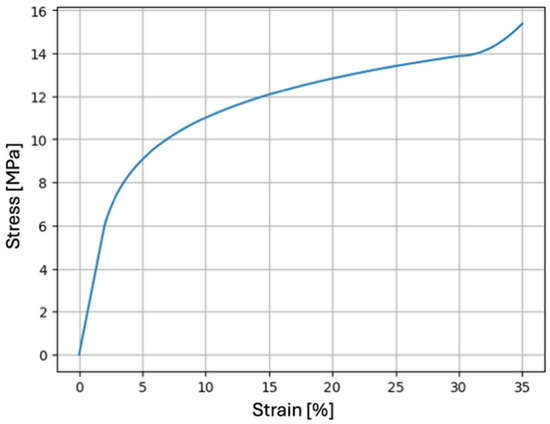
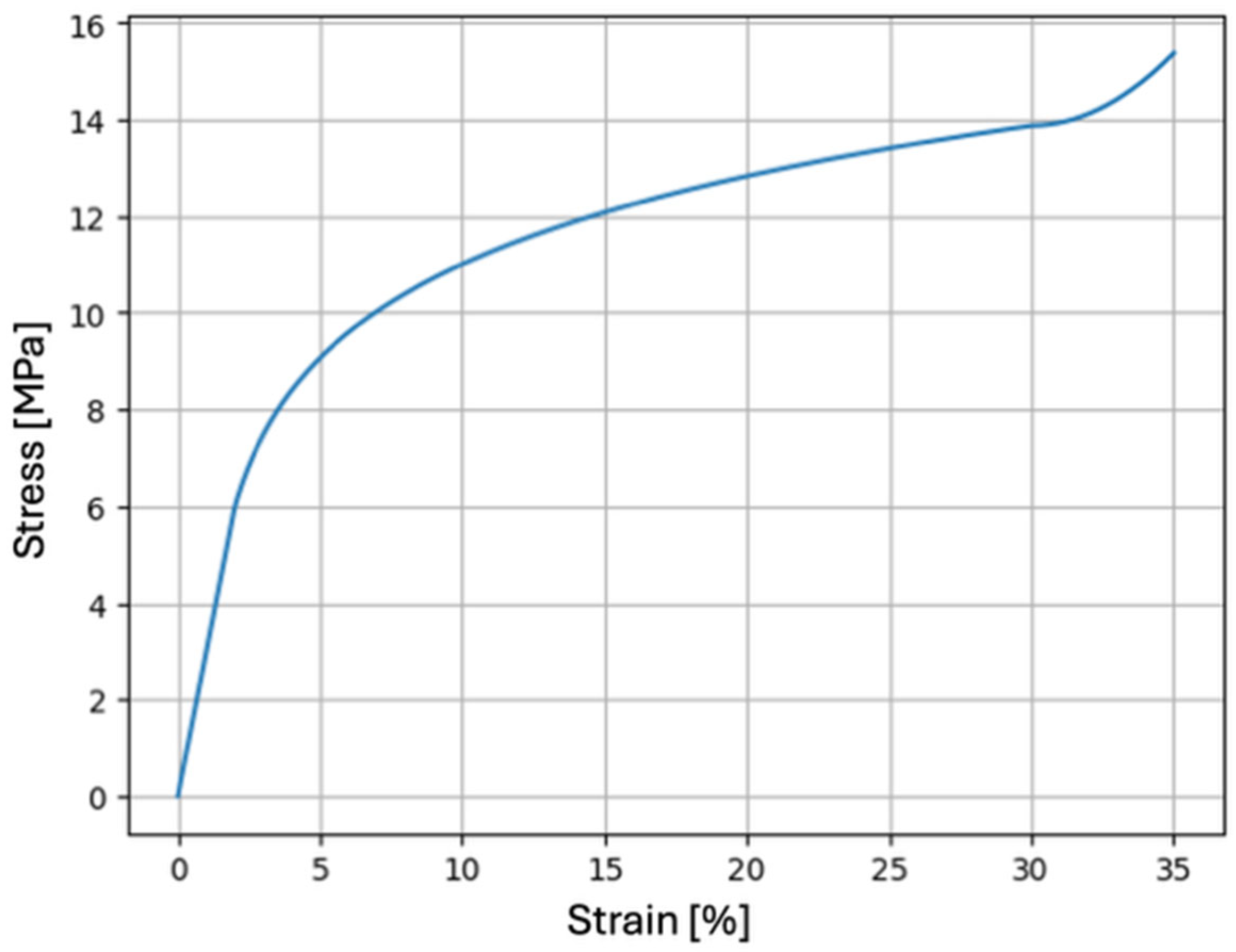
The stress–strain curve of sheep wool fibre (Figure 1) shows three characteristic regions: the linear region (stress increases linearly to a strain of 1–2%), a plastic region (strain increases rapidly in relation to small increases in stress, up to approximately 25–30% elongation), and a strengthening region (up to fibre breakage) [47].
Figure 1.
Stress–strain curve of sheep wool fibre (own work by Jakub Barwinek).
The use of sheep wool fibres as dispersed reinforcement in cement composites leads to varying effects on compressive strength, depending on the fibre content, their length, and curing time. Studies have shown a general tendency for compressive strength to decrease with increasing sheep wool fibre content. Cardinale and colleagues conducted tests on cement mortars with a constant water/cement ratio (w/c = 0.4) and varying sheep wool fibre content (2%, 5%, 7% by dry weight). The results showed a 9.1% decrease in compressive strength for mortar with 2% sheep wool fibres, and for higher contents, the decrease exceeded 80% [45,48]. Table 3 presents the properties of sheep wool-based composites obtained by them. Despite the decrease in compressive strength, sheep wool fibres significantly improve the flexural strength and ductility of cement composites, especially in the post-fracture phase. Alyousef and colleagues showed that sheep wool fibres (up to 1.5% with a length of 70 mm) could reduce the compressive strength of concrete but significantly improve its tensile and flexural strength as well as its ductility (with higher energy absorption capacity). The results showed that the maximum flexural strength was achieved at a content of 1.5%, and a further increase in fibre content led to a decrease in strength due to the uneven distribution of fibres in the cement matrix [46,49]. Literature studies [50] clearly indicate the existence of optimal ranges of sheep wool fibre content, which vary depending on the nature and application requirements of a given material:
Table 3.
Change in the properties of composites after adding sheep wool as reinforcement.
- For insulation panels: 20% sheep wool fibres by mortar weight,
- For load-bearing materials: 0.5–1.5% reinforcement fibres by weight of cement,
- For semi-load-bearing materials: 7% sheep wool fibres, best compression properties: 4.9 MPa, thermal conductivity: 0.061 W/(m·K)).
3.2. Thermal Insulation Materials
Sheep wool is used to produce mats, panels, and insulation fillings used in residential and industrial construction. Thanks to its low thermal conductivity coefficient (0.035–0.042 W/mK) and moisture regulation properties, it is an ecological alternative to mineral wool and polyurethane foam. The thermal conductivity of sheep wool is a key parameter determining its thermal insulation capacity. Experimental studies have shown that the thermal conductivity coefficient of sheep wool-based materials ranges from 0.032 to 0.054 W/(m·K) on average, with values varying depending on the density of the material, moisture content, and processing methodology. The most optimal results were observed for samples with the lowest density, where the thermal conductivity value was 0.0324 W/(m·K) at a density of 116.27 kg/m3. Compared to traditional insulation materials, such as mineral wool with a conductivity of 0.040 W/(m·K), sheep wool has comparable or better thermal insulation properties. The thermal conductivity of sheep wool composites was determined in accordance with ISO 17749:2018 [51] using a heat flow meter (HFM) apparatus compliant with ISO 8301:1991 [52]. Table 4 presents a comparison of the thermal insulation properties of individual materials currently used for building insulation [53].
Table 4.
Comparison of the thermal insulation properties of sheep wool and other insulation materials available on the market [13].
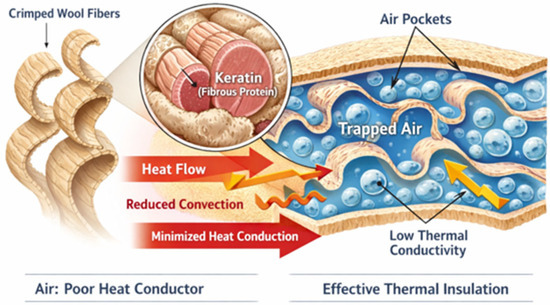
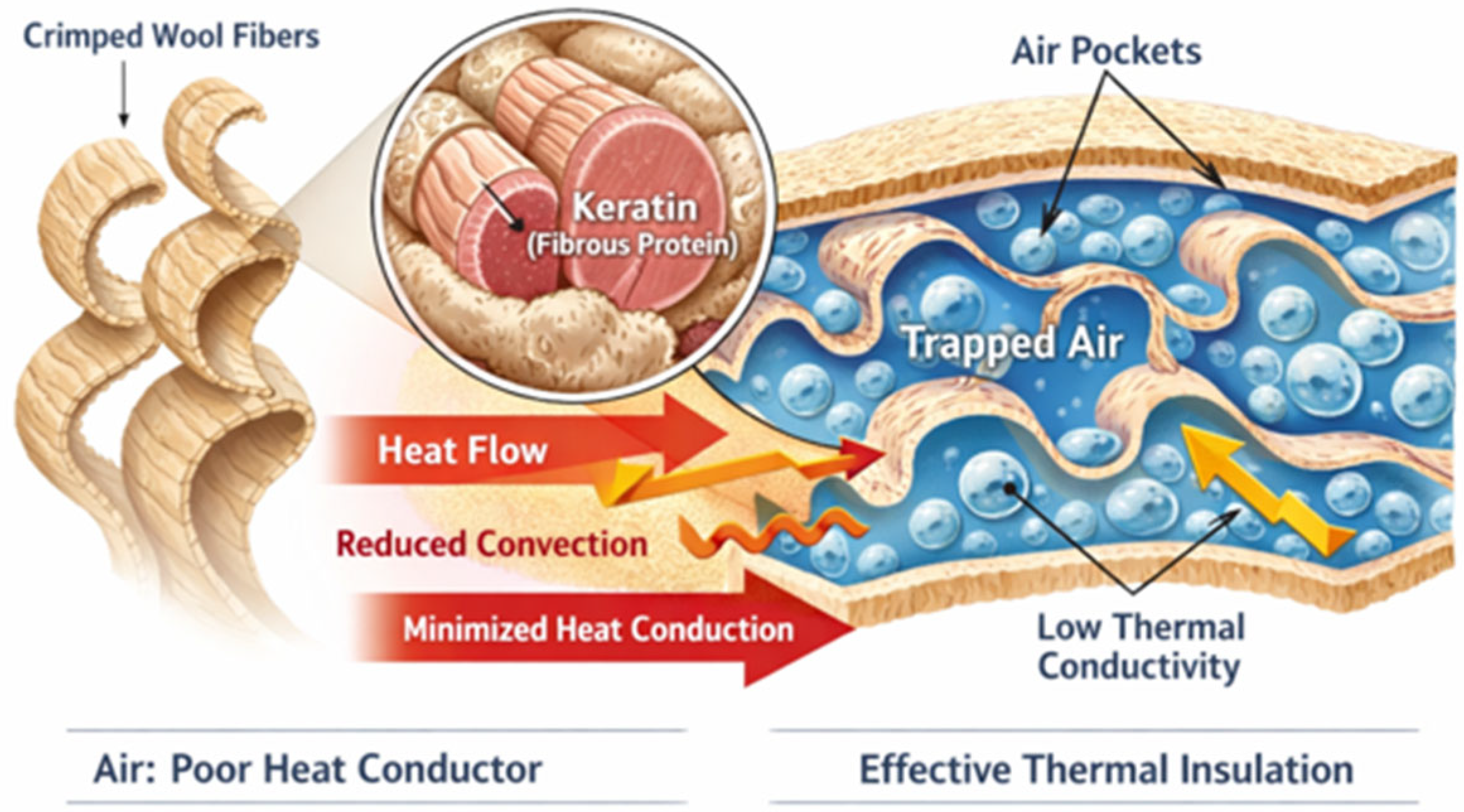
As shown in the table, sheep wool has a thermal conductivity comparable to other natural insulation materials and mineral wool. Despite slightly higher λ values compared to PUR/PIR foams, its ability to regulate humidity and low environmental footprint make it an attractive alternative in the context of sustainable construction. The fibrous structure of sheep wool, shown in Figure 2, is composed of 60% keratin (fibrous protein), which is responsible for its unique thermal insulation properties [54,55]. The natural crimp (wave) of the fibres and the complex microstructure create a network of pores in which trapped air acts as an effective barrier to heat transfer. Air, which is a poor heat conductor, acts as an insulator by minimising convection and heat conduction through the material [42].
Figure 2.
Cross-section of the fibrous structure of sheep wool (own work by Jakub Barwinek with the use of GPT-5.2 (from OpenAI)).
Studies have shown that as the density of the material increases, the thermal conductivity coefficient changes depending on the fibre configuration. In studies by Zach and colleagues, conducted on samples with densities ranging from 20 to 40 kg/m3, a change in thermal conductivity of 15–21% was observed in the temperature range from 10 to 40 °C. Moisture content significantly affects conductivity—as the water content increases from 2% to 18%, the thermal conductivity coefficient increases from 0.045 to 0.06 W/(m·K). This phenomenon is a consequence of the hygroscopic capacity of sheep wool, which can absorb moisture equivalent to 30% of its weight without significantly impairing its insulating properties [56].
The thermal resistance of sheep wool materials is strongly dependent on the thickness of the sample. In tests where samples with a thickness of 30 to 40 mm were analysed, the maximum thermal resistance value was 1.171 m2 K/W for a sample with a thickness of 40 mm and a density of 138.74 kg/m3. For practical construction applications where specific U-values are required, sheep wool materials meet the national standards for thermal insulation materials [53]. The volumetric heat capacity of sheep wool ranges from 250,000 to 350,000 J/(m3·K) depending on moisture content, indicating good heat storage capacity. This property is particularly advantageous in passive applications, where the material can store heat during the day and release it at night, contributing to a reduction in the need for mechanical air conditioning systems [57].
Keratin, the main component of sheep wool, has a natural ability to absorb water vapour, which makes wool a hygroscopic material. The moisture buffer value (MBV) for materials containing natural fibres is over 2 g/(% RH·m2), with optimal values achieved with the addition of 5% natural fibres. This property is a critical advantage in building applications where variable humidity conditions can lead to condensation and mould growth. Unlike synthetic insulation materials, which can degrade in high humidity conditions, sheep wool regulates indoor relative humidity through the passive absorption and desorption of water vapour. The water vapour permeability of sheep wool materials is approximately 1.07–1.19 (mg/(m·h·Pa)), indicating very good diffusion capacity. This characteristic allows the structural integrity of the material to be maintained over a long period of time, even in conditions of increased humidity, without the need for vapour barriers—a function naturally performed by sheep wool [45].
3.3. Sound-Absorbing Materials
The sound absorption capacity of sheep wool is a consequence of its porous fibrous structure and natural ability to disperse sound waves. The sound absorption coefficient (SAC) for hot-pressed sheep wool is above 0.7 in the frequency range of 800–3150 Hz. Particularly high SAC values were obtained for samples with the lowest density: sample WH240_0.05 (pressed at 0.05 MPa and 80 °C) showed an absorption coefficient of 0.84 at a frequency of 1000 Hz and 0.91 at 2500 Hz [58].
Material thickness is the dominant factor affecting sound absorption, especially in the low frequency range. In comparative tests, a 50 mm thick sample achieved an absorption coefficient of over 0.72 in the 800–3150 Hz range, while a 25 mm thick sample showed values of 0.59 under the same pressing parameters. This phenomenon results from the elongation of the sound wave propagation path through the material, which leads to greater energy losses through friction and the conversion of acoustic energy into heat [59]. Counterintuitively, materials with lower density (0.01 g/cm3) showed better absorption properties than materials with higher density (0.61 g/cm3) when pressed at lower pressures. The WH240_0.05 material (density 0.01 g/cm3) exhibited better sound absorption properties in the frequency range below 2000 Hz compared to WH240_4 (density 0.61 g/cm3). This relationship is due to the higher porosity and air permeability of lower density materials, which allows for better propagation and dispersion of sound waves [60]. Sheep wool has comparable or better sound absorption properties than commonly used insulation materials. In a direct comparison study, seven sheep wool samples of varying thickness and density were analysed, showing that all samples achieved a sound absorption rating of at least class C (SAC 0.6–0.75) according to ISO 11654 [61], with many samples achieving class B (SAC 0.8–0.85). When compared to mineral wool (density 30 kg/m3), polyurethane foam (density 80 kg/m3) and PET fibres (density 35 kg/m3), sheep wool showed equivalent or higher absorption coefficients in the mid- and high-frequency range (above 1000 Hz). A comparison of the acoustic properties of insulation materials is presented in Table 5 [59]. The table presents the sound absorption coefficient (SAC) values measured at 1000 Hz, a frequency commonly used to evaluate building materials. This choice reflects its position in the mid-frequency range typical of speech and traffic noise, where most materials demonstrate optimal absorption properties. Acoustic standards such as ISO 10534 [62] and relevant PN-EN norms prescribe measurements across octave bands from 125 Hz to 4000 Hz, positioning 1000 Hz as the central frequency of the critical 500–2000 Hz spectrum essential for realistic assessments in construction applications. The sound absorption coefficient of sheep wool composites was determined in accordance with ISO 10534-2:2023 [62] (two-microphone transfer-function method) using an impedance tube (internal diameter 100 mm, Kundt tube configuration). Measurements were performed at normal incidence for 1/3-octave frequency bands, with primary reporting at 1000 Hz (centre frequency) as per ISO 266 [63]. The weighted absorption coefficient (α_w) was calculated from 1/3-octave values (125–4000 Hz) in accordance with ISO 11654 [64]. It is particularly important to show that the 20 mm thick material with sheep wool achieved a higher absorption coefficient than the 40 mm thick flexible polyurethane foam in the frequency range above 1200 Hz, which proves the acoustic efficiency of sheep wool per unit thickness [58].
Table 5.
Comparison of the sound absorptionproperties of sheep wool and other insulation materials available on the market [59].
Sheep wool was the absolute leader among the analysed materials in terms of sound absorption at 1000 Hz. At a thickness of 30–50 mm, it achieved SAC values of 0.80–0.85, which makes it competitive with synthetic materials and significantly superior to its natural origin. Sheep wool exhibited particularly excellent properties at medium and high frequencies (above 1000 Hz), where it achieved coefficients above 0.90 [65].
The sound absorption capacity of sheep wool results from several mechanisms [65,66]:
- Sound wave dispersion: The natural structure of keratin and the complex fibre architecture create a tortuous path for sound propagation. Fibre networks cause multiple collisions of sound waves with fibre surfaces, leading to the dispersion of acoustic energy.
- Internal friction: The viscosity of the air in the pores of the material causes the conversion of acoustic energy into heat through friction during air movements induced by the sound wave. This conversion is particularly effective in materials with high air permeability and complex pore morphology.
- Acoustic resonance: The size and distribution of pores in sheep wool naturally resonates at specific frequencies, with the material exhibiting the most effective absorption in the mid- (500–2000 Hz) and high (>2000 Hz)-frequency ranges. In the low-frequency range (<500 Hz), where the sound wavelength is significant, absorption efficiency decreases unless the material is of sufficient thickness.
3.4. Protective and Absorbent Mats
The protein structure and surface of the fibres make sheep wool suitable for use in the production of water and air filters, as well as sorption mats for removing contaminants and oils. The protein structure of sheep wool, composed of 60% keratin, and the unique properties of the fibre surface make sheep wool a highly promising material for the production of water and air filters as well as sorption mats for removing contaminants and oils. Unlike synthetic alternatives, sheep wool fibres have inherent characteristics that make them particularly suitable for filtration applications [67]. The adsorption capacity of sheep wool fibres is fundamentally linked to their protein-based structure and surface chemistry. Keratin, the main structural component, provides active binding sites that interact with various contaminants through chemisorption and physisorption. The complex microstructure of the sheep wool fibre surface, characterised by interlocking scales and microscopic roughness, significantly increases the material’s ability to capture and retain particles. It is noteworthy that the hydrophobic nature of sebum residues in raw sheep wool can be beneficial in oil sorption applications, while modifying this surface chemistry can improve the water filtration efficiency [68,69].
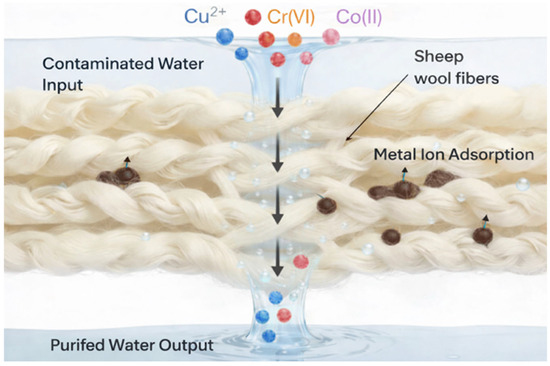
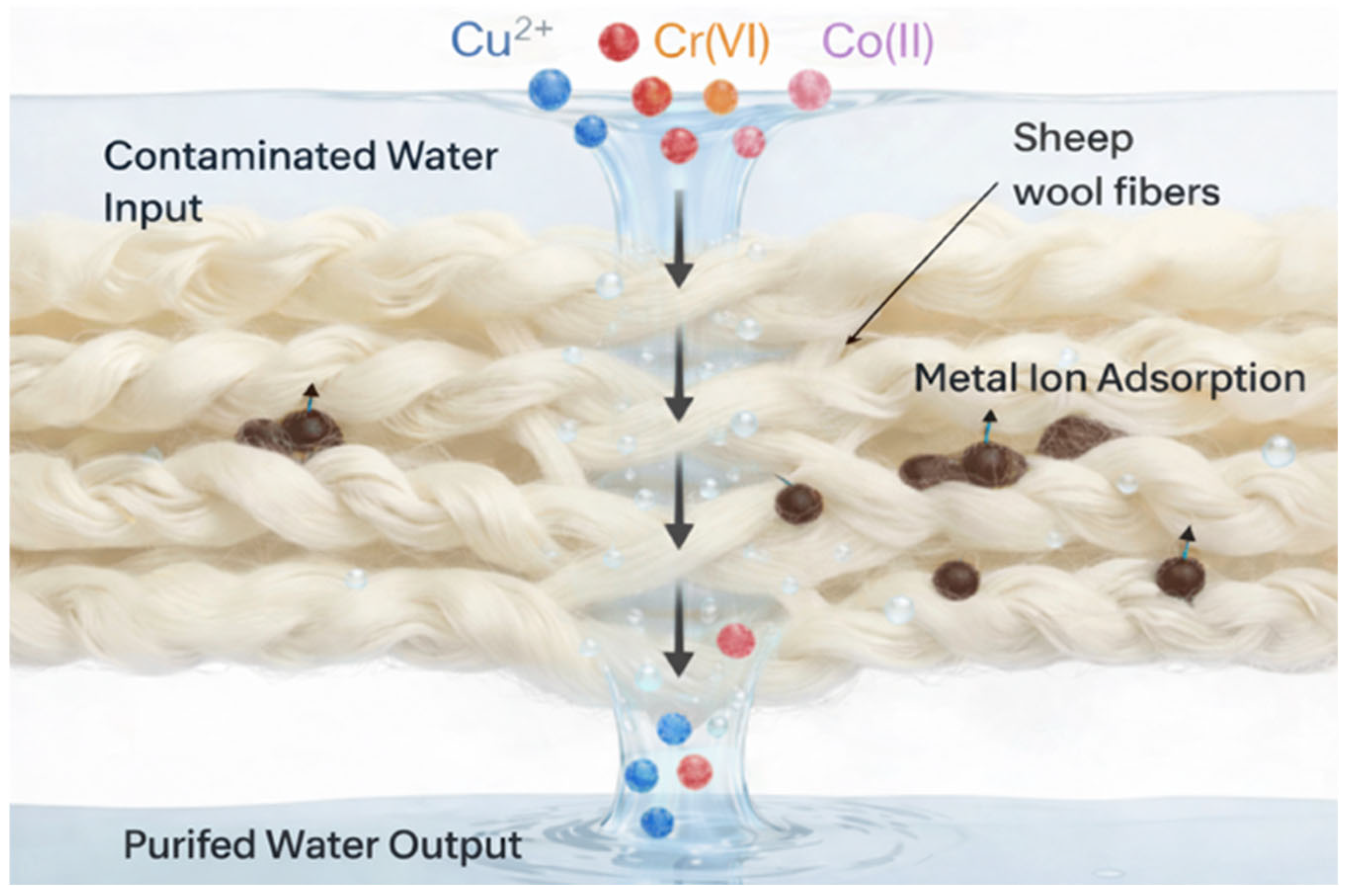
Sheep wool has a remarkable ability to remove dissolved contaminants from aqueous solutions. Studies have documented the removal of copper (Cu2+), chromium(VI), and cobalt(II) ions from industrial wastewater, with the sorption rate depending on the wettability characteristics of the fibres and the contact time. Preliminary wetting of sheep wool fibres significantly accelerates the adsorption process by facilitating water diffusion and preparing binding sites, reducing the time needed to reach sorption equilibrium—a critical factor for practical water purification applications. In addition, sheep wool-based filters have shown better performance in removing viruses from drinking water compared to conventional synthetic filters such as polyester and polypropylene, with potential applications in point-of-use water treatment systems in resource-constrained regions. The operating principle of a sheep wool-based filter for aqueous solutions is shown in Figure 3 [70], where brown particles of absorbed metal ions are visible.
Figure 3.
Diagram of the structure of a sheep wool-based filter for purifying aqueous solutions from metal ions (own work by Jakub Barwinek with use of GenAI).
The use of sheep wool for oil sorption is one of its most promising commercial applications. Raw waste sheep wool fibres, without chemical modification or activation, can absorb exceptionally large amounts of oil—up to 8.23 ± 0.27 g of oil/g of sheep wool fibre—making it an inexpensive and readily available alternative to synthetic sorbents. The roughness of the fibre surface plays a critical role in sorption capacity. The material is reusable and completely biodegradable, solving the environmental problems associated with synthetic oil sorbents, which remain in landfills and contribute to microplastic pollution [71].
Sheep wool fibres have natural bacteriostatic properties and passively absorb volatile organic compounds (VOCs), making them suitable for advanced air filtration systems. Sheep wool acts as a natural air filter, neutralising formaldehyde and other volatile pollutants. Commercial sheep wool-based filter media achieve a filtration efficiency comparable to synthetic materials while offering better air permeability and reduced pressure drop, which is particularly valuable in respiratory protection applications. In addition, the nature of raw sheep wool prevents water saturation and filter clogging, making it particularly effective in high-humidity environments [36].
4. Limitations and Challenges of Sheep Wool-Based Composites
Despite significant advantages in sustainability and multifunctional performance, sheep wool-reinforced composites face considerable technical and commercial barriers, limiting competitive viability against established synthetic fibre systems. A critical evaluation of these limitations is essential for advancing practical deployment in construction applications.
The foremost limitation stems from wool’s susceptibility to alkaline degradation in cementitious environments. Wool keratin’s disulfide bonds (–S–S–) undergo hydrolysis in alkaline pore solutions (pH 12–13 typical in hydrating Portland cement), causing progressive fibre embrittlement. Studies have quantified this degradation: tensile strength retention drops to 30–40% after 90 days of accelerated aging in saturated Ca(OH)2 solutions (pH 12.4, 60 °C) compared to negligible loss in polypropylene (PP) or glass fibres [72]. This durability shortfall necessitates protective pre-treatments—alkali stabilisation via 5% NaOH immersion, silane coupling agents (γ-aminopropyltriethoxysilane), or plasma surface modification—each adding a 15–25% processing cost and introducing supply-chain complexity absent in commodity synthetics. Without intervention, wool-reinforced concrete matrices exhibit compressive strength loss exceeding 50% within 12 months under field-like conditions (cyclic wetting/drying, 20–60 °C), rendering them unsuitable for load-bearing structural applications without matrix modification (e.g., pozzolanic supplementation) [41].
A secondary but critical barrier is wool’s intrinsic combustibility. Although wool’s nitrogen content (15–18% wt.) promotes self-extinguishing behaviour and ignition temperatures exceed 560 °C—well above synthetic polymers—untreated wool fails stringent European and North American building standards requiring Class A1 (EN 13501-1 [73] or ASTM E84 [74]) or non-combustibility classifications. Pure wool achieves only Class B–C ratings, necessitating fire-retardant (FR) treatments using ammonium polyphosphate, boric acid, or boron compounds [75]. These treatments introduce several complications: (1) durability concerns—flame retardants leach under humid conditions, reducing effectiveness over time; (2) environmental toxicity—some boron-based FR agents raise ecotoxicological concerns in aqueous systems; (3) cost—FR impregnation adds 20–35% to the fibre cost, eroding the economic advantage of wool’s low embodied carbon (5.4 kg CO2e/m3 vs. 135 kg CO2e/m3 for mineral wool). Consequently, wool composites remain restricted to non-structural or secondary applications (e.g., cavity fill, panel backing) where fire codes are less stringent, unlike glass or mineral-wool alternatives approved for structural load paths [76].
Unlike synthetics governed by rigorous ISO/ASTM protocols (e.g., ISO 6101 [77] for glass-fibre properties), wool fibre characteristics exhibit significant batch-to-batch variability influenced by breed, age, processing conditions, and natural contamination (vegetable matter, lanolin residues). Tensile strength ranges from 120 to 180 MPa, the Young’s modulus is 2.3–3.4 GPa, and the diameter is 20–40 μm—wider distributions than comparable synthetics (±5–10% tolerance). This variability, combined with a scarcity of standardised durability test protocols for wool–cement systems, complicates performance prediction and regulatory approval. Most studies employ ad-hoc accelerated ageing (ASTM C920 [78], EN 196-1 extensions [79]), yielding non-comparable datasets and hindering industry standardisation [80].
5. Summary and Conclusions
The building sector is one of the most energy-intensive industries and is responsible for a substantial share of global CO2 emissions, material consumption, and waste generation. Consequently, the development of low-carbon, resource-efficient construction materials has become a key challenge in the context of sustainable development and the circular economy. Sheep wool, particularly coarse and low-grade waste wool currently treated as agricultural waste, represents a valuable bio-based resource with significant potential for valorisation in construction materials. The results discussed in this study demonstrate that sheep wool-based composites exhibit good thermal insulation properties, with thermal conductivity values comparable to conventional insulation materials while offering a considerably lower environmental footprint due to their renewable origin, low energy production, and biodegradability. Additionally, the hygroscopic nature of cleaned sheep wool fibres enables moisture buffering and contributes to improved indoor thermal comfort and energy efficiency of buildings. From a materials engineering perspective, sheep wool fibres can be effectively used as a dispersed reinforcement in cement composites, where they enhance flexural strength, ductility, and cracking behaviour, despite a potential reduction in compressive strength at higher fibre contents. When appropriately designed, sheep wool-reinforced cement composites are suitable for non-load-bearing and semi-structural applications. Furthermore, the porous fibrous structure of sheep wool provides excellent sound absorption performance, making sheep wool-based materials competitive with mineral and polymer-based acoustic insulators. Beyond structural and insulation applications, sheep wool also demonstrates high potential in protective and sorptive mats due to its ability to adsorb oils, heavy metals, and volatile organic compounds, thereby contributing to environmental protection and improved indoor air quality. While sheep wool shows great potential as a sustainable material for thermal and acoustic applications, future research should focus on the experimental verification of wool biopolymer composite properties, the optimisation of composite formulations, and long-term durability assessments under real environmental conditions. Additionally, systematic studies on scaling-up production processes and life cycle assessment are recommended to guide practical implementation in low carbon building projects. Material research should focus on standardising and ensuring the repeatability of material properties, as the use of waste presents a challenge for introduction into the highly rigorous and heavily regulated construction sector. Overall, the valorisation of sheep wool fibres in bio-based composites offers a technically adequate and environmentally sustainable alternative to conventional construction materials. The use of locally available sheep wool waste can reduce carbon emissions, support rural economies, and strengthen regional supply chains. Future research should focus on optimising composite formulations, assessing long-term durability, and performing comprehensive life cycle assessments (LCAs) to support the broader implementation of sheep wool-based materials in low-carbon construction. In summary, sheep wool demonstrates numerous advantages across different applications including excellent thermal insulation, sound absorption, hygroscopic regulation, biodegradability, and low environmental footprint. However, its use is also limited by technical challenges such as variability in fibre quality, coarse fibre structure, potential reductions in compressive strength when used in cement composites, and the need for appropriate pre-treatment or processing. To promote the wider adoption of sheep wool in practical construction projects, it is essential to address these technical barriers and develop supportive policies including the standardisation of material specifications, incentives for local wool utilisation, and integration within circular economy frameworks. The use of wool should focus on local production sites and cooperation between sectors, so as to simultaneously reduce transport costs for the construction industry and the disposal costs imposed on farmers by policy.
Author Contributions
Conceptualisation, J.S., P.S. and J.B.; Methodology, E.S.; Software, J.S.; Validation, E.S. and J.B.; Formal analysis M.N.; Investigation E.M. and P.S.; Resources, J.S. and E.S.; Data curation P.S.; Writing—original draft preparation, J.S., E.S. and J.B.; Writing—review and editing, E.M. and M.N.; Visualisation, J.B.; Supervision, E.M. and P.S.; Project administration, E.M. All authors have read and agreed to the published version of the manuscript.
Funding
This research received no external funding.
Data Availability Statement
The original contributions presented in this study are included in the article. Further inquiries can be directed to the corresponding author.
Acknowledgments
During the preparation of this manuscript/study, the authors used GPT-5.2 (from OpenAI) for the purposes of generating graphics. The authors have reviewed and edited the output and take full responsibility for the content of this publication.
Conflicts of Interest
The authors declare no conflicts of interest.
References
- Buratti, C.; Merli, F. Sustainable Materials for the Thermal and Noise Insulation of Buildings: An Editorial. Sustainability 2022, 14, 4961. [Google Scholar] [CrossRef] [Scilit]
- Li, Y.L.; Han, M.Y.; Liu, S.Y.; Chen, G.Q. Energy Consumption and Greenhouse Gas Emissions by Buildings: A Multi-Scale Perspective. Build. Environ. 2019, 151, 240–250. [Google Scholar] [CrossRef] [Scilit]
- Soussi, N.; Ammar, M.; Mokni, A.; Mhiri, H. Thermophysical Properties and Energy Efficiency of a Sustainable Construction Materials Produced from Local Natural Waste. Energy Rep. 2024, 12, 2283–2296. [Google Scholar] [CrossRef] [Scilit]
- Ouda, M.; Abu Sanad, A.A.; Abdelaal, A.; Krishna, A.; Kandah, M.; Kurdi, J. A Comprehensive Review of Sustainable Thermal and Acoustic Insulation Materials from Various Waste Sources. Buildings 2025, 15, 2876. [Google Scholar] [CrossRef] [Scilit]
- Wu, J.; Ye, X.; Cui, H. Recycled Materials in Construction: Trends, Status, and Future of Research. Sustainability 2025, 17, 2636. [Google Scholar] [CrossRef] [Scilit]
- Przybek, A. The Role of Natural Fibers in the Building Industry—The Perspective of Sustainable Development. Materials 2025, 18, 3803. [Google Scholar] [CrossRef] [Scilit] [PubMed]
- Cong, R.; Cai, T.; Ge-Zhang, S.; Yang, H.; Zhang, C. Fabrication of PVA–Silica Sol Wood Composites via Delignification and Freezing Pretreatment. Polymers 2024, 16, 1949. [Google Scholar] [CrossRef] [Scilit]
- Yang, H.; Wang, H.; Cai, T.; Ge-Zhang, S.; Mu, H. Light and Wood: A Review of Optically Transparent Wood for Architectural Applications. Ind. Crops Prod. 2023, 204, 117287. [Google Scholar] [CrossRef] [Scilit]
- Bravo-Moncayo, L.; Argotti-Gómez, M.; Jara, O.; Puyana-Romero, V.; Ciaburro, G.; Guerrero, V.H. Thermo-Acoustic Properties of Four Natural Fibers, Musa Textilis, Furcraea Andina, Cocos Nucifera, and Schoenoplectus Californicus, for Building Applications. Buildings 2024, 14, 2265. [Google Scholar] [CrossRef] [Scilit]
- Kosiński, P.; Patyna, K. Practical Use of Materials of Natural Origin as Loose-Fill Insulations in Open-Diffusion Constructions—Observation and Numerical Simulation. Sustainability 2024, 16, 4593. [Google Scholar] [CrossRef] [Scilit]
- Lakshmaiya, N.; Udhayakumar, G.; Sathiyamurthy, S.; Nadh, V.S.; Maranan, R.; Mammo, W.D. Multi-Functional Natural Fiber Composites Using Flaxseed and Cotton: Tailoring Acoustic, Mechanical, and Thermal Properties for Eco-Friendly Applications. Discov. Appl. Sci. 2025, 7, 906. [Google Scholar] [CrossRef] [Scilit]
- Majumder, A.; Achenza, M.; Mastino, C.C.; Baccoli, R.; Frattolillo, A. Thermo-Acoustic Building Insulation Materials Fabricated with Recycled Fibers—Jute, Wool and Loofah. Energy Build. 2023, 293, 113211. [Google Scholar] [CrossRef] [Scilit]
- Porzuczek, J. Comparative Study on Selected Insulating Materials for Industrial Piping. Materials 2024, 17, 1601. [Google Scholar] [CrossRef] [Scilit] [PubMed]
- Litwińczuk, A. Surowce Zwierzęce: Ocena i Wykorzystanie; Litwińczuk, Z., Ed.; Państ. Wydawnictwo Rolnicze i Leśne: Warszawa, Poland, 2004; pp. 471–481. ISBN 8309017839. [Google Scholar]
- Molik, E.; Potocka, A. Wybrane Zagadnienia Związane z Możliwością Wykorzystania Wełny Owczej. Przegląd Hod. 2019, 87, 31–33. [Google Scholar]
- Doyle, E.K.; Preston, J.W.V.; McGregor, B.A.; Hynd, P.I. The Science behind the Wool Industry. The Importance and Value of Wool Production from Sheep. Anim. Front. 2021, 11, 15–23. [Google Scholar] [CrossRef] [Scilit] [PubMed]
- Altin, M.; Yildirim, G.Ş. Investigation of Usability of Boron Doped Sheep Wool as Insulation Material and Comparison with Existing Insulation Materials. Constr. Build. Mater. 2022, 331, 127303. [Google Scholar] [CrossRef] [Scilit]
- Milewski, S. Walory Prozdrowotne Produktów Owczych. Med. Weter. 2006, 62, 516–519. [Google Scholar]
- Cholewińska, P.; Iwaszkiewicz, M.; Łuczycka, D.; Wysoczański, T.; Nowakowski, P.; Czyż, K.; Wyrostek, A.; Bodkowski, R. Electrical Characteristics Based on Resistance and Impedance of Polish Olkuska Sheep Lambs Wool. J. Nat. Fibers 2020, 17, 1366–1377. [Google Scholar] [CrossRef] [Scilit]
- Szatkowski, P. The Influence of Various Chemical Modifications of Sheep Wool Fibers on the Long-Term Mechanical Properties of Sheep Wool/PLA Biocomposites. Materials 2025, 18, 3056. [Google Scholar] [CrossRef] [Scilit]
- Parlato, M.C.M.; Porto, S.M.C.; Valenti, F. Assessment of Sheep Wool Waste as New Resource for Green Building Elements. Build. Environ. 2022, 225, 109596. [Google Scholar] [CrossRef] [Scilit]
- Camilli, F.; Focacci, M.; Dal Prà, A.; Bortolu, S.; Ugolini, F.; Vagnoni, E.; Duce, P. Turning Waste Wool into a Circular Resource: A Review of Eco-Innovative Applications in Agriculture. Agronomy 2025, 15, 446. [Google Scholar] [CrossRef] [Scilit]
- Molik, E.; Szatkowski, P.; Flis, Z.; Suchorowiec, K.; Szczepanik, E.; Niemiec, M.; Komorowska, M.; Matusevičius, P. Tradition and Innovative in the Protection of the Natural Environment of Mountain Regions. Acta Sci. Pol. Form. Circumiectus 2023, 22, 33–40. [Google Scholar] [CrossRef] [Scilit]
- Cholewinska, P.; Michalak, M.; Wyrostek, A.; Czyż, K. Badanie Impedancji, Ciepłochronności i Naprężenia Zrywającego Wełny Jednolitej i Mieszanej. Wiadomości Zootech. 2018, 2, 50–55. [Google Scholar]
- Bhavsar, P.; Zoccola, M.; Patrucco, A.; Montarsolo, A.; Mossotti, R.; Rovero, G.; Giansetti, M.; Tonin, C. Superheated Water Hydrolysis of Waste Wool in a Semi-Industrial Reactor to Obtain Nitrogen Fertilizers. ACS Sustain. Chem. Eng. 2016, 4, 6722–6731. [Google Scholar] [CrossRef] [Scilit]
- Andrew, J.J.; Dhakal, H.N. Sustainable Biobased Composites for Advanced Applications: Recent Trends and Future Opportunities—A Critical Review. Compos. Part C Open Access 2022, 7, 100220. [Google Scholar] [CrossRef] [Scilit]
- Gonçalves, S.; dos Santos Vieira, P.C.; Esteves, J.L. Mechanical Characterisation of Woll Fibres for Reinforcing of Composite Materials. In 11th European Conference on Composite Materials-ECCM11; University of Patras: Patras, Greece, 2004. [Google Scholar]
- Zhou, H.; Bai, L.; Li, S.; Wang, J.; Hickford, J.G.H. Wool: From Properties and Structure to Genetic Insights and Sheep Improvement Strategies. Animals 2025, 15, 2790. [Google Scholar] [CrossRef] [Scilit] [PubMed]
- Akcagun, E.; Bogus#ławska-B#ączek, M.; Hes, L. Thermal Insulation and Thermal Contact Properties of Wool and Wool/PES Fabrics in Wet State. J. Nat. Fibers 2019, 16, 199–208. [Google Scholar] [CrossRef] [Scilit]
- Mao, N.; Russell, S.J. The Thermal Insulation Properties of Spacer Fabrics with a Mechanically Integrated Wool Fiber Surface. Text. Res. J. 2007, 77, 914–922. [Google Scholar] [CrossRef] [Scilit]
- Isolena—Sheep Wool Insulation—Technical Data and Environmental Advantages. Available online: https://www.isolena.com/en/sheepwool-insulation/ (accessed on 1 April 2025).
- Ba, L.; Trabelsi, A.; Ngo, T.T.; Pliya, P.; El Abbassi, I.; Kane, C.S.E. Thermal Performance of Bio-Based Materials for Sustainable Building Insulation: A Numerical Study. Fibers 2025, 13, 52. [Google Scholar] [CrossRef] [Scilit]
- Szatkowski, P.; Suchrowiec, K.; Tadla, A.; Flis, Z.; Szatkowska, M.; Molik, E. Możliwości Zastosowania Wełny Owczej Jako Elementu Kompozytu Nawozowego. Przegląd Hod. 2021, 6, 9–12. [Google Scholar]
- Porubská, M.; Koóšová, K.; Braniša, J. The Application of Sheep Wool in the Building Industry and in the Removal of Pollutants from the Environment. Processes 2024, 12, 963. [Google Scholar] [CrossRef] [Scilit]
- Madhu, P.; Praveenkumara, J.; Sanjay, M.R.; Siengchin, S.; Gorbatyuk, S. Introduction to Bio-Based Fibers and Their Composites. In Advances in Bio-Based Fiber; Elsevier: Amsterdam, The Netherlands, 2022; pp. 1–20. [Google Scholar]
- Hegyi, A.; Bulacu, C.; Szilagyi, H.; Lăzărescu, A.-V.; Meiţă, V.; Vizureanu, P.; Sandu, M. Improving Indoor Air Quality by Using Sheep Wool Thermal Insulation. Materials 2021, 14, 2443. [Google Scholar] [CrossRef] [Scilit] [PubMed]
- Hetimy, S.; Megahed, N.; Eleinen, O.A.; Elgheznawy, D. Exploring the Potential of Sheep Wool as an Eco-Friendly Insulation Material: A Comprehensive Review and Analytical Ranking. Sustain. Mater. Technol. 2024, 39, e00812. [Google Scholar] [CrossRef] [Scilit]
- Korjenic, A.; Klarić, S.; Hadžić, A.; Korjenic, S. Sheep Wool as a Construction Material for Energy Efficiency Improvement. Energies 2015, 8, 5765–5781. [Google Scholar] [CrossRef] [Scilit]
- Szczecina, J.; Szczepanik, E.; Barwinek, J.; Szatkowski, P.; Niemiec, M.; Zhakypbekovich, A.I.; Molik, E. Sheep Wool as Biomass: Identifying the Material and Its Reclassification from Waste to Resource. Energies 2025, 18, 5185. [Google Scholar] [CrossRef] [Scilit]
- Cascione, V.; Roberts, M.; Allen, S.; Charbel, C.; Maskell, D.; Dams, B.; Shea, A.; Walker, P.; Emmitt, S. Evaluating Environmental Impacts of Bio-Based Insulation Materials through Scenario-Based and Dynamic Life Cycle Assessment. Int. J. Life Cycle Assess. 2025, 30, 601–620. [Google Scholar] [CrossRef] [Scilit]
- Jóźwiak-Niedźwiedzka, D.; Fantilli, A.P. Wool-Reinforced Cement Based Composites. Materials 2020, 13, 3590. [Google Scholar] [CrossRef] [Scilit]
- Patrucco, A.; Zoccola, M.; Anceschi, A. Exploring the Potential Applications of Wool Fibers in Composite Materials: A Review. Polymers 2024, 16, 2360. [Google Scholar] [CrossRef] [Scilit]
- Yousif, H.F.; Salih, O.A. An Experimental Comparison of the Mechanical Properties of Concrete Using Waste Sheep, Goat Wool, and Industrial Fibres. Civ. Environ. Eng. 2025, 21, 1166–1180. [Google Scholar] [CrossRef] [Scilit]
- Maldonado-Alameda, A.; Alfocea-Roig, A.; Huete-Hernández, S.; Giro-Paloma, J.; Chimenos, J.M.; Formosa, J. Magnesium Phosphate Cement Incorporating Sheep Wool Fibre for Thermal Insulation Applications. J. Build. Eng. 2023, 76, 107043. [Google Scholar] [CrossRef] [Scilit]
- Saaidia, R.; Ben Othmane, A.; Ayed, L.; Boumediene, N.; Bouabidi, A. Thermal, Acoustic, and Mechanical Characterization of Sheep Wool-Based Bio-Composites for Sustainable Construction. Energy Build. 2026, 350, 116602. [Google Scholar] [CrossRef] [Scilit]
- Alyousef, R. Enhanced Acoustic Properties of Concrete Composites Comprising Modified Waste Sheep Wool Fibers. J. Build. Eng. 2022, 56, 104815. [Google Scholar] [CrossRef] [Scilit]
- Starkova, O.; Sabalina, A.; Voikiva, V.; Osite, A. Environmental Effects on Strength and Failure Strain Distributions of Sheep Wool Fibers. Polymers 2022, 14, 2651. [Google Scholar] [CrossRef] [Scilit]
- Cardinale, T.; Arleo, G.; Bernardo, F.; Feo, A.; De Fazio, P. Thermal and Mechanical Characterization of Panels Made by Cement Mortar and Sheep’s Wool Fibres. Energy Procedia 2017, 140, 159–169. [Google Scholar] [CrossRef] [Scilit]
- Vasina, M.; Straznicky, P.; Hrbacek, P.; Rusnakova, S.; Bosak, O.; Kubliha, M. Investigation of Physical Properties of Polymer Composites Filled with Sheep Wool. Polymers 2024, 16, 690. [Google Scholar] [CrossRef] [Scilit] [PubMed]
- Parlato, M.C.M.; Porto, S.M.C. Organized Framework of Main Possible Applications of Sheep Wool Fibers in Building Components. Sustainability 2020, 12, 761. [Google Scholar] [CrossRef] [Scilit]
- ISO 17749:2018; Thermal Insulation Products—Sheep Wool Mat and Board—Specification. ISO: Geneva, Switzerland, 2018.
- ISO 8301:1991; Thermal Insulation—Determination of Steady-State Thermal Resistance and Related Properties—Heat Flow Meter Apparatus. ISO: Geneva, Switzerland, 1991.
- Dénes, T.-O.; Iştoan, R.; Tǎmaş-Gavrea, D.R.; Manea, D.L.; Hegyi, A.; Popa, F.; Vasile, O. Analysis of Sheep Wool-Based Composites for Building Insulation. Polymers 2022, 14, 2109. [Google Scholar] [CrossRef] [Scilit]
- He, H.; Zhou, X.; Lai, Y.; Wang, R.; Hao, H.; Shen, X.; Zhang, P.; Ji, J. Chain Entanglement Enhanced Strong and Tough Wool Keratin/Albumin Fibers for Bioabsorbable and Immunocompatible Surgical Sutures. Nat. Commun. 2025, 16, 3004. [Google Scholar] [CrossRef] [Scilit]
- Mattiello, S.; Guzzini, A.; Del Giudice, A.; Santulli, C.; Antonini, M.; Lupidi, G.; Gunnella, R. Physico-Chemical Characterization of Keratin from Wool and Chicken Feathers Extracted Using Refined Chemical Methods. Polymers 2022, 15, 181. [Google Scholar] [CrossRef] [Scilit]
- Vėjelis, S.; Vaitkus, S.; Skulskis, V.; Kremensas, A.; Kairytė, A. Performance Evaluation of Thermal Insulation Materials from Sheep’s Wool and Hemp Fibres. Materials 2024, 17, 3339. [Google Scholar] [CrossRef] [Scilit]
- Bhuvaneswari, V.; Devarajan, B.; Arulmurugan, B.; Mahendran, R.; Rajkumar, S.; Sharma, S.; Mausam, K.; Li, C.; Eldin, E.T. A Critical Review on Hygrothermal and Sound Absorption Behavior of Natural-Fiber-Reinforced Polymer Composites. Polymers 2022, 14, 4727. [Google Scholar] [CrossRef] [Scilit]
- Borlea, S.I.; Tiuc, A.-E.; Nemeş, O.; Vermeşan, H.; Vasile, O. Innovative Use of Sheep Wool for Obtaining Materials with Improved Sound-Absorbing Properties. Materials 2020, 13, 694. [Google Scholar] [CrossRef] [Scilit]
- Del Rey, R.; Uris, A.; Alba, J.; Candelas, P. Characterization of Sheep Wool as a Sustainable Material for Acoustic Applications. Materials 2017, 10, 1277. [Google Scholar] [CrossRef] [Scilit]
- Kobiela-Mendrek, K.; Bączek, M.; Broda, J.; Rom, M.; Espelien, I.; Klepp, I. Acoustic Performance of Sound Absorbing Materials Produced from Wool of Local Mountain Sheep. Materials 2022, 15, 3139. [Google Scholar] [CrossRef] [Scilit] [PubMed]
- ISO 11654:1997; Acoustics—Sound Absorbers for Use in Buildings—Rating of Sound Absorption. ISO: Geneva, Switzerland, 1997.
- ISO 10534-2:2023; Acoustics—Determination of Acoustic Properties in Impedance Tubes. Part 2: Two-Microphone Technique for Normal Sound Absorption Coefficient and Normal Surface Impedance. ISO: Geneva, Switzerland, 2023.
- ISO 266:1997; Acoustics—Preferred frequencies. ISO: Geneva, Switzerland, 1997.
- Oancea, I.; Bujoreanu, C.; Budescu, M.; Benchea, M.; Grădinaru, C.M. Considerations on Sound Absorption Coefficient of Sustainable Concrete with Different Waste Replacements. J. Clean. Prod. 2018, 203, 301–312. [Google Scholar] [CrossRef] [Scilit]
- Urdanpilleta, M.; Leceta, I.; Guerrero, P.; de la Caba, K. Sustainable Sheep Wool/Soy Protein Biocomposites for Sound Absorption. Polymers 2022, 14, 5231. [Google Scholar] [CrossRef] [Scilit] [PubMed]
- Urdanpilleta, M.; del Rey, R.; Leceta, I.; Rodríguez, J.C.; Alba, J.; Guerrero, P. Empirical Modelling of the Acoustic Behavior of Sheep Wool/Soy Protein Biocomposites. J. Build. Eng. 2024, 89, 109290. [Google Scholar] [CrossRef] [Scilit]
- Condurache, B.-C.; Cojocaru, C.; Pascariu, P.; Samoila, P.; Harabagiu, V. Innovative Nanostructured Magnetite/Wool/Polysiloxane Composite as Magnetic Adsorbent for Oil Spill Removal. Comptes Rendus Chim. 2022, 25, 245–260. [Google Scholar] [CrossRef] [Scilit]
- Koóšová, K.; Braniša, J.; Dubec, A.; Porubská, M. Prewetting Electron Beam Irradiated and Native Sheep Wool Can Affect Their Sorptivity. Polymers 2023, 15, 4267. [Google Scholar] [CrossRef] [Scilit]
- Braniša, J.; Koóšová, K.; Porubská, M. Selective Modifications of Sheep Wool Usable in Non-Textile Applications. Polymers 2024, 16, 1380. [Google Scholar] [CrossRef] [Scilit]
- Pang, L.; Lin, S.; Krakowiak, J.; Yu, S.; Hewitt, J. Performance Analysis of Sheep Wool Fibres as a Water Filter Medium for Human Enteric Virus Removal. J. Water Process Eng. 2022, 47, 102800. [Google Scholar] [CrossRef] [Scilit]
- Sulyman, M.; Namiesnik, J.; Gierak, A. Greener Cleaner: Sheep Wool Fiber as Renewable Sources for Oil Spill Cleanup. Int. J. Adv. Sci. Eng. Technol. (IJASEAT) 2017, 5, 77–85. [Google Scholar]
- Kong, Y.K.; Alterman, D.; Murakami, H.; Tokoro, C. Assessing the Usability of Biomass-Derived Sheep Wool Fibers in Sustainable Construction: A Comprehensive Review. Dev. Built Environ. 2025, 23, 100730. [Google Scholar] [CrossRef] [Scilit]
- EN 13501-1:2008; Fire Classification of Construction Materials and Building Elements. Part 1: Classification Using Data from Reaction to Fire Tests. iTeh Standards: San Francisco, CA, USA, 2018.
- ASTM E84-21a; Standard Test Method for Surface Burning Characteristics of Building Materials. ASTM International: West Conshohocken, PA, USA, 2022.
- Guo, S.; Shi, J.; Wang, H.; Zhu, P. Facile Fabrication of Efficient Flame Retardant-Modified Wool Fabrics with Antibacterial Properties by Zinc-based Coating. Thermochim. Acta 2023, 724, 179488. [Google Scholar] [CrossRef] [Scilit]
- Wang, H.; Guo, S.; Zhang, C.; Qi, Z.; Li, L.; Zhu, P. Flame Retardancy and Thermal Behavior of Wool Fabric Treated with a Phosphorus-Containing Polycarboxylic Acid. Polymers 2021, 13, 4111. [Google Scholar] [CrossRef] [Scilit] [PubMed]
- ISO 610:1990; High-Tensile Steel Chains (Round Link) for Chain Conveyors and Coal Ploughs. ISO: Geneva, Switzerland, 1990.
- ASTM C920-18(2024); Standard Specification for Elastomeric Joint Sealants. ASTM International: West Conshohocken, PA, USA, 2024.
- EN 196-1:2016; Methods of Testing Cement—Part 1: Determination of Strength. iTeh Standards: San Francisco, CA, USA, 2016.
- Chang, B.P.; Mohanty, A.K.; Misra, M. Studies on Durability of Sustainable Biobased Composites: A Review. RSC Adv. 2020, 10, 17955–17999. [Google Scholar] [CrossRef] [Scilit] [PubMed]

Disclaimer/Publisher’s Note: The statements, opinions and data contained in all publications are solely those of the individual author(s) and contributor(s) and not of MDPI and/or the editor(s). MDPI and/or the editor(s) disclaim responsibility for any injury to people or property resulting from any ideas, methods, instructions or products referred to in the content. |
© 2026 by the authors. Licensee MDPI, Basel, Switzerland. This article is an open access article distributed under the terms and conditions of the Creative Commons Attribution (CC BY) license.