Article

Experimental and Numerical Investigation of Heat and Mass Transfer During Solar Drying of Corn Cobs in Flexible Bulk Containers

1
Institute of Energy and Green Technologies, Almaty University of Power Engineering and Telecommunications Named After Gumarbek Daukeyev, Almaty 050000, Kazakhstan
2
Faculty of Information Technology, Al-Farabi Kazakh National University, Almaty 050000, Kazakhstan
3
School of Applied Mathematics, Kazakh British Technical University, Almaty 050000, Kazakhstan
4
Faculty of Engineering and Technology, Kazakh National Agrarian Research University, Almaty 050000, Kazakhstan
5
Rear Support of the Criminal Executive System of Economics Faculty, Academy of Law Management of the Federal Penal Service of Russia, Ryazan 390000, Russia
*
Author to whom correspondence should be addressed.
Energies 2026, 19(3), 849; https://doi.org/10.3390/en19030849
Submission received: 6 January 2026 / Revised: 1 February 2026 / Accepted: 3 February 2026 / Published: 5 February 2026

Abstract

This paper presents a simulation of the heat exchange process in a solar dryer designed for corn cobs placed in flexible bulk containers (Big-Bag type). The distinctive feature of this drying system is the use of soft load-bearing containers, which simplify loading, unloading, and transportation, while also reducing mechanical damage to the corn cobs. The bottom of each container is perforated to allow the free flow of heated drying agent into the chamber. The study aims to improve the efficiency of the solar drying process to reduce the moisture content of corn cobs below 15%, thereby ensuring the required quality during storage and transport. To validate the drying regimes and parameters, heat and mass transfer processes were simulated using numerical modeling and experimental design methods based on a laboratory-scale physical model of the drying chamber. Numerical simulations were performed using the Reynolds-averaged equations coupled with the heat conduction equation for three porosity coefficients: 0.35, 0.45, and 0.55. The models provided contours of temperature and humidity distribution within the confined boundaries of the drying chamber and individual corn cobs, positioned both vertically and horizontally within the airflow zone, for varying drying durations. The core novelty of this research is the development of an optimized framework for solar drying corn in flexible containers, which integrates numerical simulation with experimental validation to establish key efficient parameters. Specifically, the study provides the following: (1) a validated regression model linking moisture content to airflow rate, drying time, and layer thickness at 45 °C; and (2) a detailed analysis of thermo-hydraulic contours within both the chamber and individual cobs for different porosities, offering practical insights for system design and operation.

1. Introduction

Corn is one of the most widely cultivated agricultural crops, and its safe post-harvest storage critically depends on effective moisture reduction. Drying prevents microbiological spoilage, limits mass losses, and preserves both seed and commercial quality [1,2,3]. In Kazakhstan, maize is mainly grown in the southern and southeastern regions, where harvesting often occurs at high moisture content. Without timely drying, corn cobs are prone to mold development, self-heating, and significant storage losses [4].
Conventional drying technologies based on fossil fuels are characterized by high energy consumption and operating costs, which restricts their applicability, particularly for small and medium-sized farms [5]. In this context, solar energy represents an attractive alternative due to its environmental sustainability, low operating costs, and high availability in regions with favorable climatic conditions [6,7,8]. Solar dryers utilize solar radiation to heat the drying air while protecting the product from environmental contamination [9]. However, their performance strongly depends on variable climatic factors such as solar radiation intensity, air temperature, and relative humidity [10].
To improve process stability, hybrid solar dryers and auxiliary heating systems have been proposed [11], while numerous studies have demonstrated the potential of solar drying to reduce fossil fuel consumption in agricultural processing [12,13,14]. Solar dryers have been extensively investigated for various crops, and different designs with forced and natural convection have been reported [15,16,17,18]. Although forced-convection systems enable better control of drying conditions, they require additional energy input, increasing operating costs. Modern drying methods are divided into hot air drying, vacuum drying, alternating temperature drying, infrared and vacuum IR drying [19,20,21,22,23]. Despite the great variety, many methods are not theoretically justified, and hot air drying remains the most common method [24,25,26]. Depending on the heat transfer mode, such drying units are divided into direct-acting [27], indirect-acting [28] and combined-type systems [29]. In addition, solar dryers are classified according to the nature of air movement on installations with forced ventilation [30] and natural convection [31]. In contrast, natural-convection solar dryers are characterized by simple design, low energy consumption, and suitability for rural and off-grid applications [31,32,33].
Drying efficiency is primarily governed by airflow temperature and velocity, as well as by dryer geometry and airflow organization [27,34]. Advanced approaches such as heat recovery and infrared-assisted drying have shown improved drying rates and reduced energy consumption, but their technical complexity limits large-scale adoption [35,36,37,38,39,40]. A direct-type solar tunnel dryer utilizing forced convection was developed at the University of Hohenheim, initially for fruit dehydration [41] and subsequently adapted for grain drying [42]. Findings indicated that the inflatable architecture of the dryer is highly effective in mitigating product spoilage risks during sudden precipitation events [43]. Therefore, optimizing low-energy solar drying systems remains an important research challenge.
Numerical modeling has become an effective tool for analyzing heat and mass transfer processes in solar dryers, optimizing design parameters, and selecting rational operating modes [44]. Empirical and diffusion-based models are widely used, while computational fluid dynamics (CFD) allows detailed prediction of airflow patterns, temperature fields, and moisture transport inside drying chambers [45,46,47]. CFD studies have revealed non-uniform airflow distribution, heat losses, and local drying inefficiencies in solar dryers operating under natural convection [48,49,50].
Despite extensive research on maize grain drying, limited attention has been given to corn cobs as heterogeneous porous bodies with complex geometry. In many existing studies, material properties are oversimplified, and the influence of dryer configuration on non-uniform heat and mass transfer is insufficiently addressed, limiting the practical applicability of simulation results. Nevertheless, the structural similarity of key solar dryer components, particularly air collectors, allows reasonable transferability of modeling outcomes [51,52,53].
In southern Kazakhstan, a solar drying system based on a load-bearing flexible container has been developed for small-scale agricultural applications [54]. This approach reduces handling operations, minimizes mechanical damage, and enables combined transportation, drying, and storage without reloading [55,56]. Drying air is heated in a solar collector, supplied through a perforated container bottom, and removed by photovoltaic-powered fans.
The novelty of this study lies in the integration of CFD-based numerical modeling with experimental validation to optimize the operating parameters and geometric configuration of a solar dryer for corn cobs in flexible containers. The objective of this research is to enhance the energy efficiency and drying performance of solar drying systems intended for small agricultural enterprises. The study focuses on the justification of rational drying modes, experimental evaluation of moisture reduction under controlled parameters, and comparative assessment with traditional hanging drying methods.

2. Materials and Methods

Traditional on-farm drying of corn cobs is commonly performed by suspending the cobs at a certain height or placing them on heated indoor surfaces [57]. In regions with dry climatic conditions, corn is often left in the field and harvested in late autumn, when the moisture content of the cobs naturally decreases to approximately 35%. In contrast, large agricultural enterprises typically employ thermal drying units that ensure intensive moisture removal but require substantial capital investment and continuous long-term operation [58].
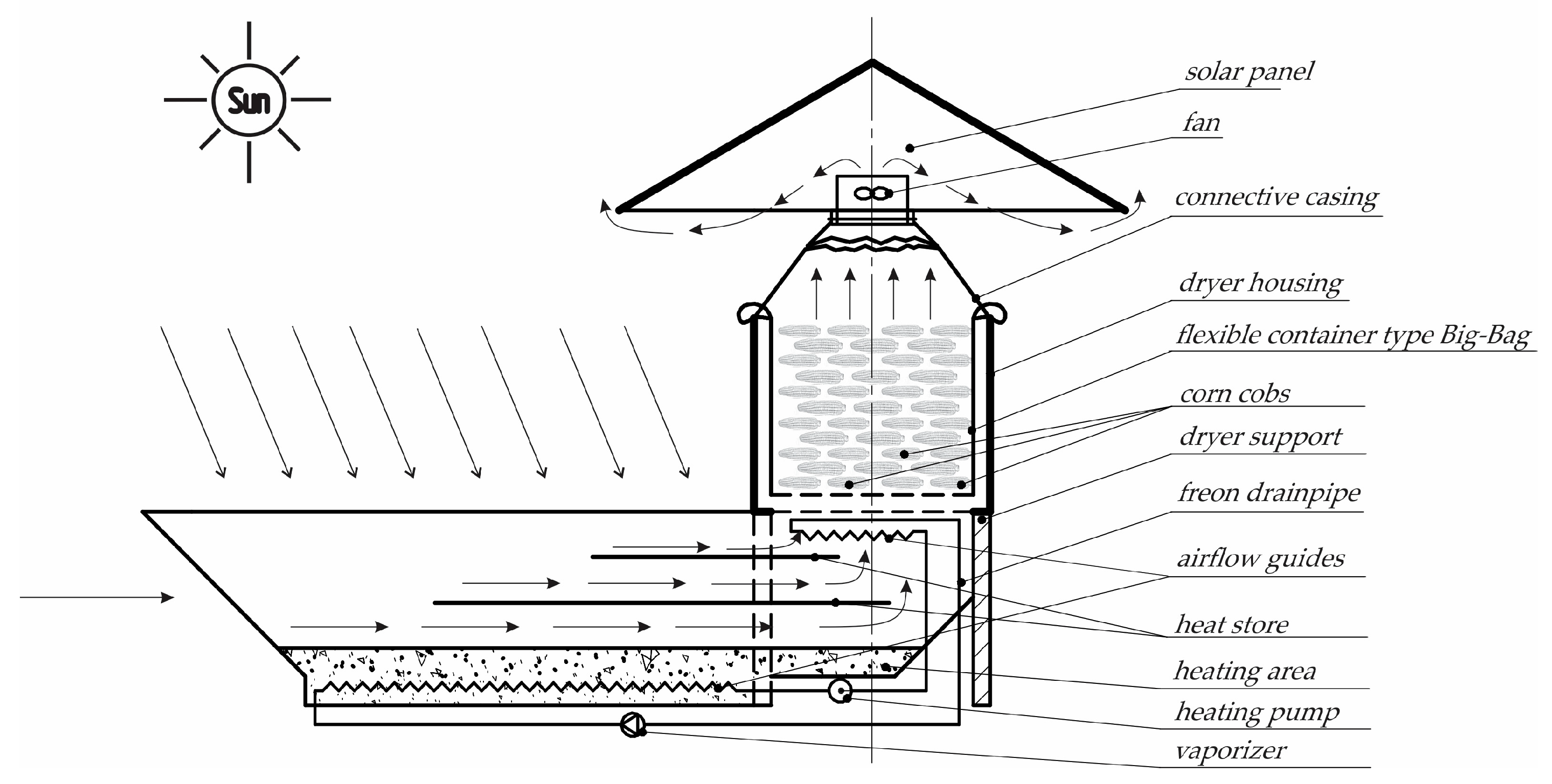
The combined solar dryer developed in this study integrates solar air collectors with an absorber for operation under clear-sky conditions and a heat pump system to provide auxiliary heating during cloudy periods and nighttime operation (Figure 1). The drying chamber serves as the primary consumer of thermal energy; therefore, the required capacity of the solar collectors and the heat pump system is determined by the thermal and mass transfer demands of the drying process. Accordingly, the initial stage of the study focuses on investigating the drying behavior of corn cobs.
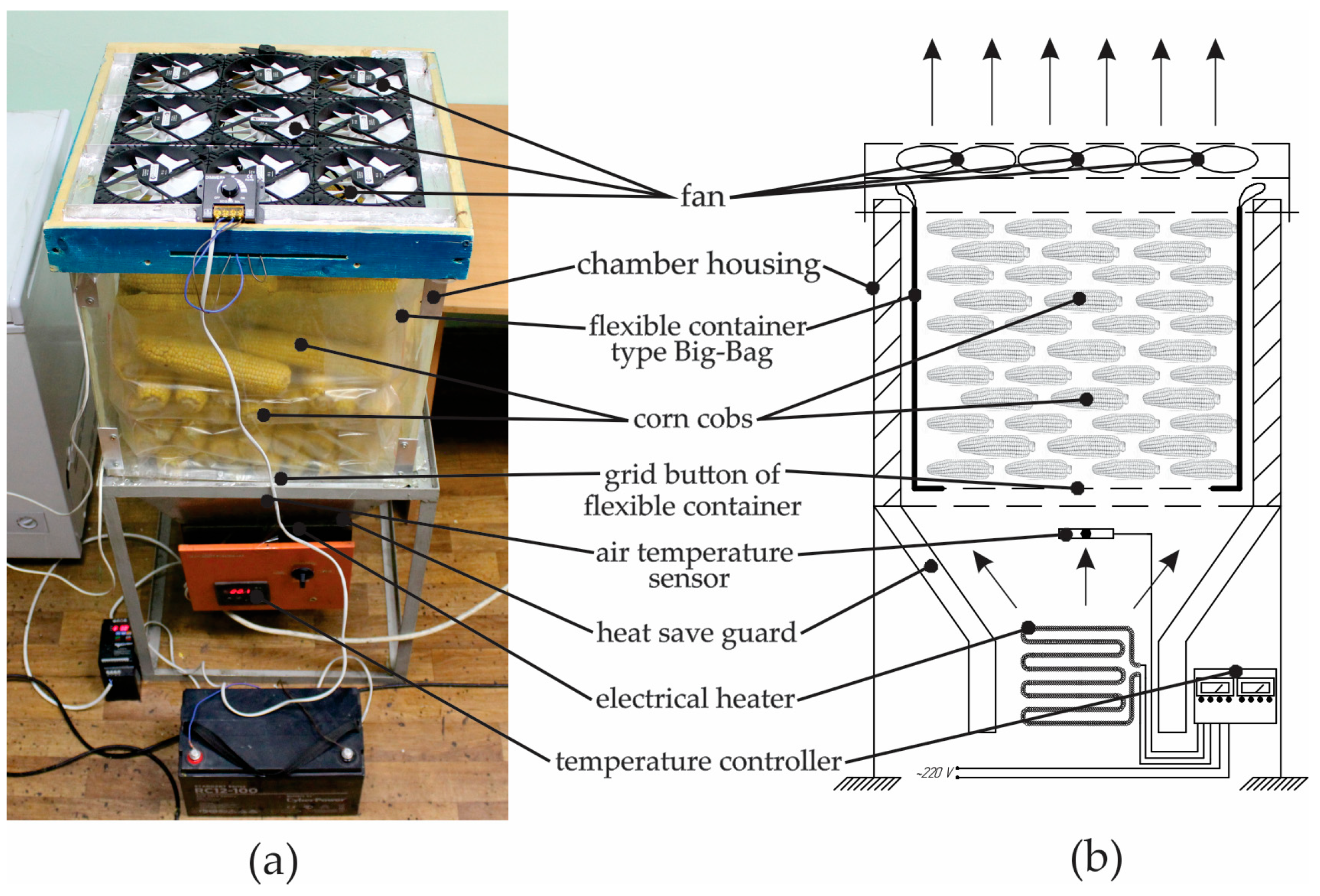
To analyses the drying process under controlled conditions, a laboratory-scale physical model simulating the drying chamber was constructed (Figure 2). The air temperature inside the chamber was maintained at 45 °C, corresponding to typical operating conditions of a solar dryer, using an electric heater installed at the bottom of the chamber. A flexible polymer bulk container (Big-Bag type) filled with freshly harvested corn cobs was placed inside the chamber.
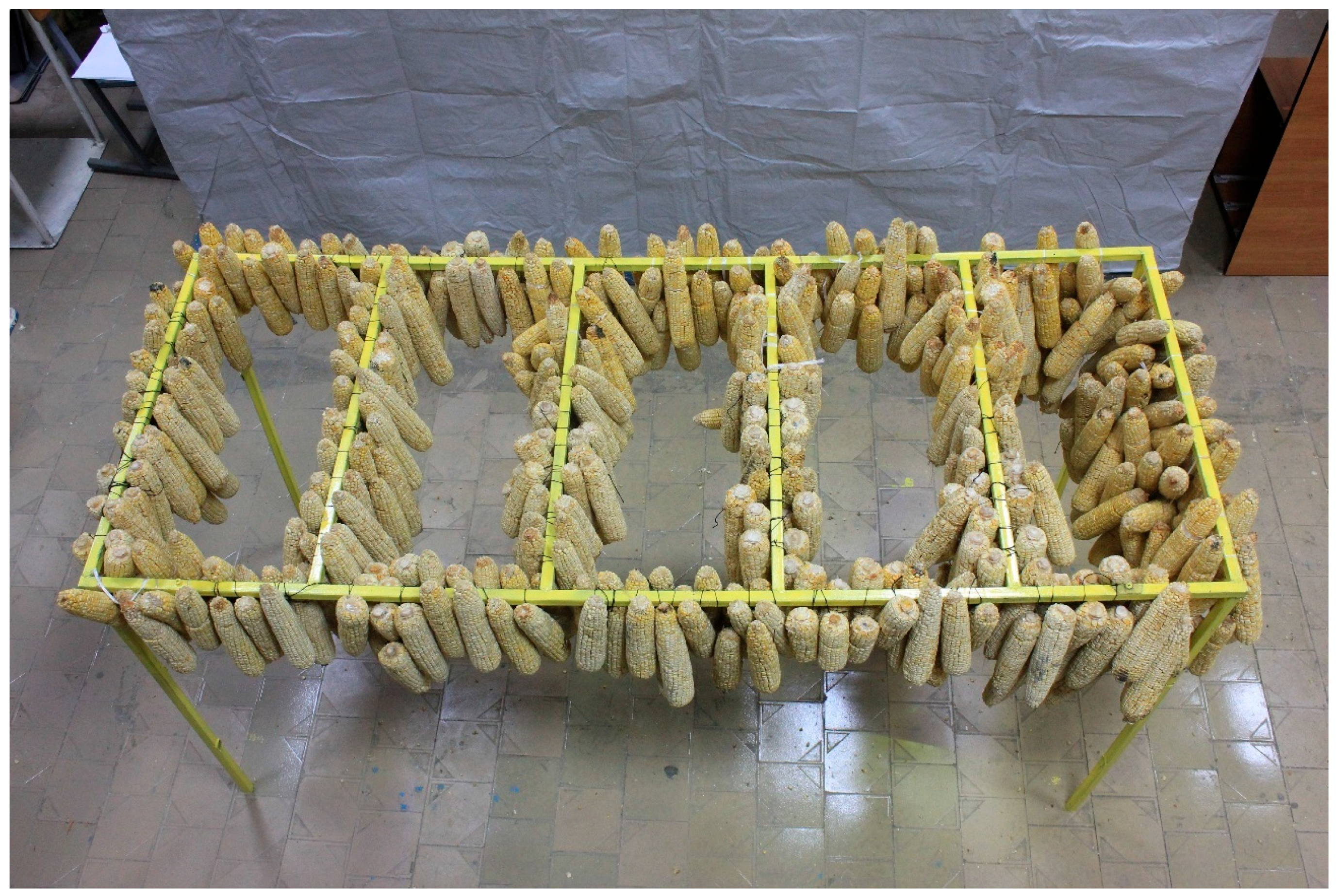
For comparative purposes, a parallel experiment was conducted to examine heat and mass transfer during natural drying. In this case, corn cobs were suspended on dedicated supports under a shelter, replicating conventional on-farm drying conditions (Figure 3).
To compare the drying process of the proposed method with that of natural drying, a parallel study was carried out on the heat-mass exchange processes when dried naturally by hanging corn cobs on special supports under cover (Figure 3).
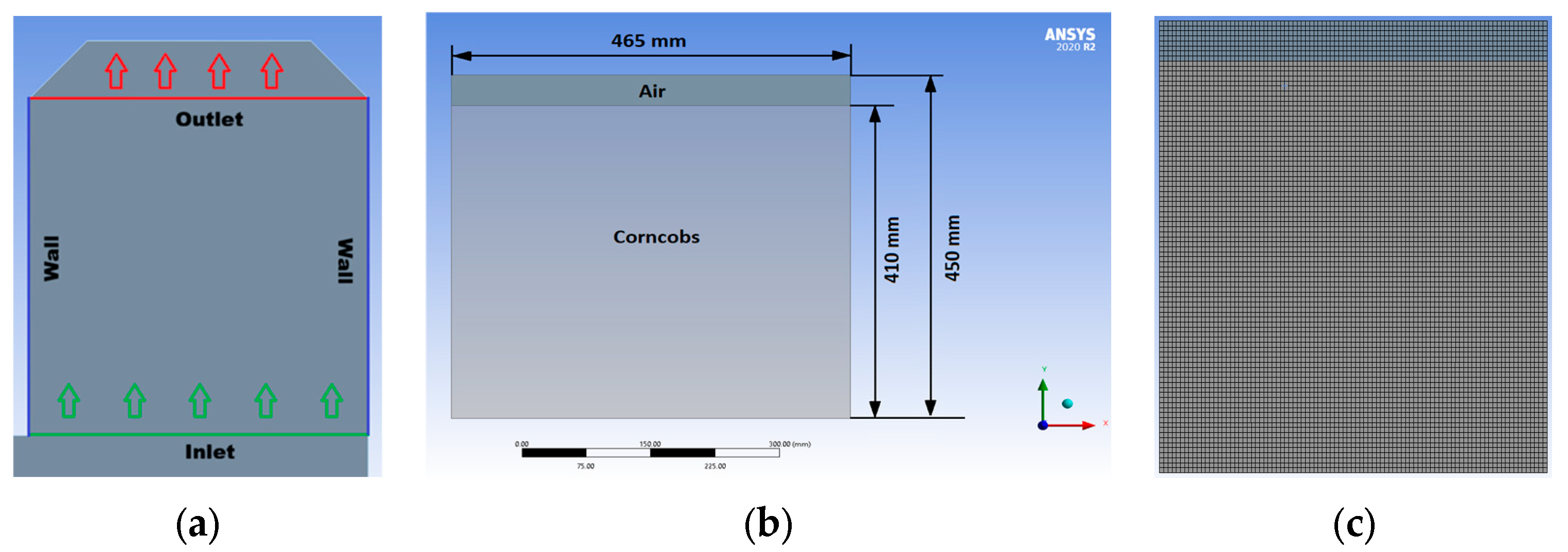
Numerical modelling of the drying chamber was performed using the computational domain illustrated in Figure 4. Heated air enters through the inlet, flows through the channel, rises into the drying chamber, and exits through the outlet. The inlet boundary was specified with an air temperature of 45 °C, while a vacuum outlet condition was applied at the top to simulate forced air extraction by a fan. All remaining boundaries were treated as impermeable walls. The computational domain was discretized using a uniform structured quadrilateral mesh with a spatial resolution of 0.005 m in both directions. The final grid consisted of 8370 control volumes (93 × 90), providing an optimal balance between numerical accuracy and computational efficiency. Given the relatively low air velocities, this mesh resolution was sufficient to capture the dominant flow and heat transfer characteristics.
The region occupied by the corn cobs was modelled as a porous medium, while the upper part of the chamber was considered as a free air zone. Warm air rising from the bottom passes through the porous layer, resulting in moisture evaporation and drying of the crop. The initial moisture content of the corn cobs was 73.8%, and the initial air temperature inside the chamber was set to 20 °C. The detailed boundary conditions applied in the numerical simulations are summarized in Table 1.
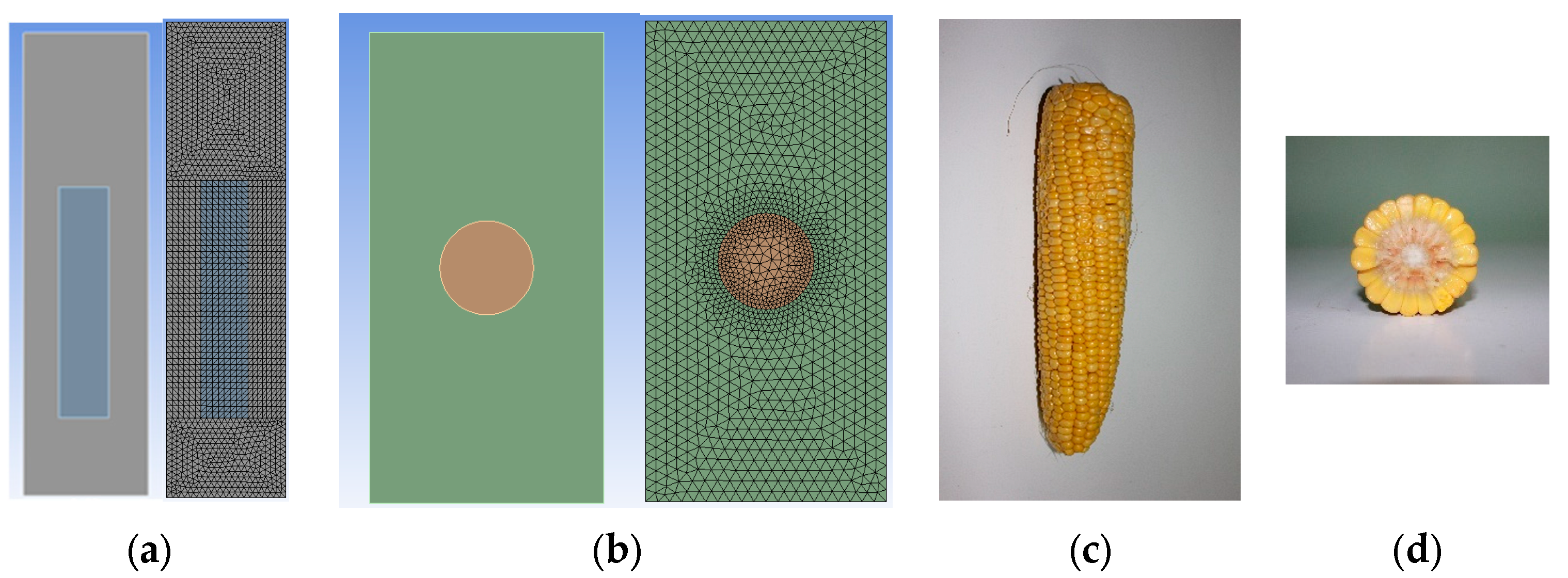
In addition to the chamber-scale model, heat and moisture transfer around a single corn cob was investigated using two two-dimensional configurations: (i) a vertically suspended cob with upward air flow and (ii) a horizontally positioned cob placed on a solid surface. Due to the complex geometry of the corn cob, it was approximated by a simplified rectangular body with dimensions of 40 mm × 200 mm, enclosed within an outer computational domain of 100 mm × 400 mm (Figure 5). An unstructured mesh was employed to accurately represent curved and irregular surfaces. The characteristic mesh size was set to 0.005 m, consistent with the chamber-scale model, ensuring adequate resolution for low-velocity flow conditions.
The drying process was described using a system of governing equations comprising the Reynolds-Averaged Navier–Stokes (RANS) equations coupled with the energy conservation equation [51,52,53]:
u i x i = 0 ,
u i t + ρ u i u j x j = ρ u i u j ¯ x P x i + x j μ u i x j + u j x i + β g ( T T 0 )
T t + ρ u j T x j = ρ u j T ¯ x j + x j ( D T x j ) ,
where
  • u i —velocity;
  • ρ —density;
  • T —temperature;
  • P —pressure;
  • D —diffusion coefficient;
  • u i u j ¯ and u j T ¯ —Reynolds-averaged speeds and turbulent thermal stress streams.
Turbulence effects were modelled using the standard k–ε turbulence model:
k t + x j u j k = x j μ + μ t σ k k x j + P k ρ ε + P k b ,
ε t + x j u j ε = x j μ + μ t σ ε ε x j + ε k ( C ε 1 P k C ε 2 ρ ε + C ε 3 P k b ) ,
where
  • k—turbulent kinetic energy;
  • ε —turbulent dissipation;
  • P k —formation of turbulence due to viscous forces:
    P k = μ t u i x j + u j x j u i x j 2 3 u k x k ( 3 μ t u k x k + ρ k ) ,
    where P k b = μ t σ ρ β g i T x j and P ε b = C 3 max (0, P k b ) represent the buoyancy forces.
Here, β is the thermal expansion coefficient σ ρ = 0.09 ,   C ε 1 ,   C ε 2 ,   σ k ,   σ ε are constants.
Numerical simulations were carried out using the ANSYS Fluent 2020 software package based on the finite volume method. Computational geometry was created in ANSYS Design Modeler and consisted of a porous region representing the corn cob, surrounded by an air domain. Airflow was modelled as a transient laminar process, and heat transfer was simulated by solving the energy equation. Moisture transport was described using the Species Transport model, with water vapour treated as a component of the gas mixture. The porous medium was modelled using the Porous Media approach. The inlet air temperature was fixed at the lower boundary, while the outlet condition was applied at the upper boundary. The initial temperature of the computational domain was set to 20 °C. Post-processing and data analysis were performed using ANSYS Fluent tools 2020 and Python scripts 3.11.9.
To identify optimal drying conditions, a multifactor experimental design was implemented in accordance with the theory of experimental planning [59,60], using the laboratory-scale physical model of the drying chamber. The controlled factors included the air flow velocity of the drying agent (m/s), drying duration (h), and the height of the loaded corn cob layer (mm). The factor levels and variation intervals are presented in Table 2, while the experimental design matrix is shown in Table 3.
The selected ranges of the independent variables were determined based on preliminary experiments and practical operating limits of the drying system.
The air velocity at the outlet of the drying chamber was regulated by adjusting the rotational speed of the fan motors. Air velocity was measured using a Testo Smart 405i anemometer (Testo SE & Co. KGaA, Titisee-Neustadt, Germany) in accordance with standard measurement procedures. The moisture content of the drying air was monitored using Testo 605i and HOBO U23-002 Pro v2 sensors (Testo SE & Co. KGaA) [61]. The air temperature was automatically controlled at 45 °C ± 2 °C using a feedback controller that regulated the operation of the electric heater based on temperature sensor readings.

3. Results

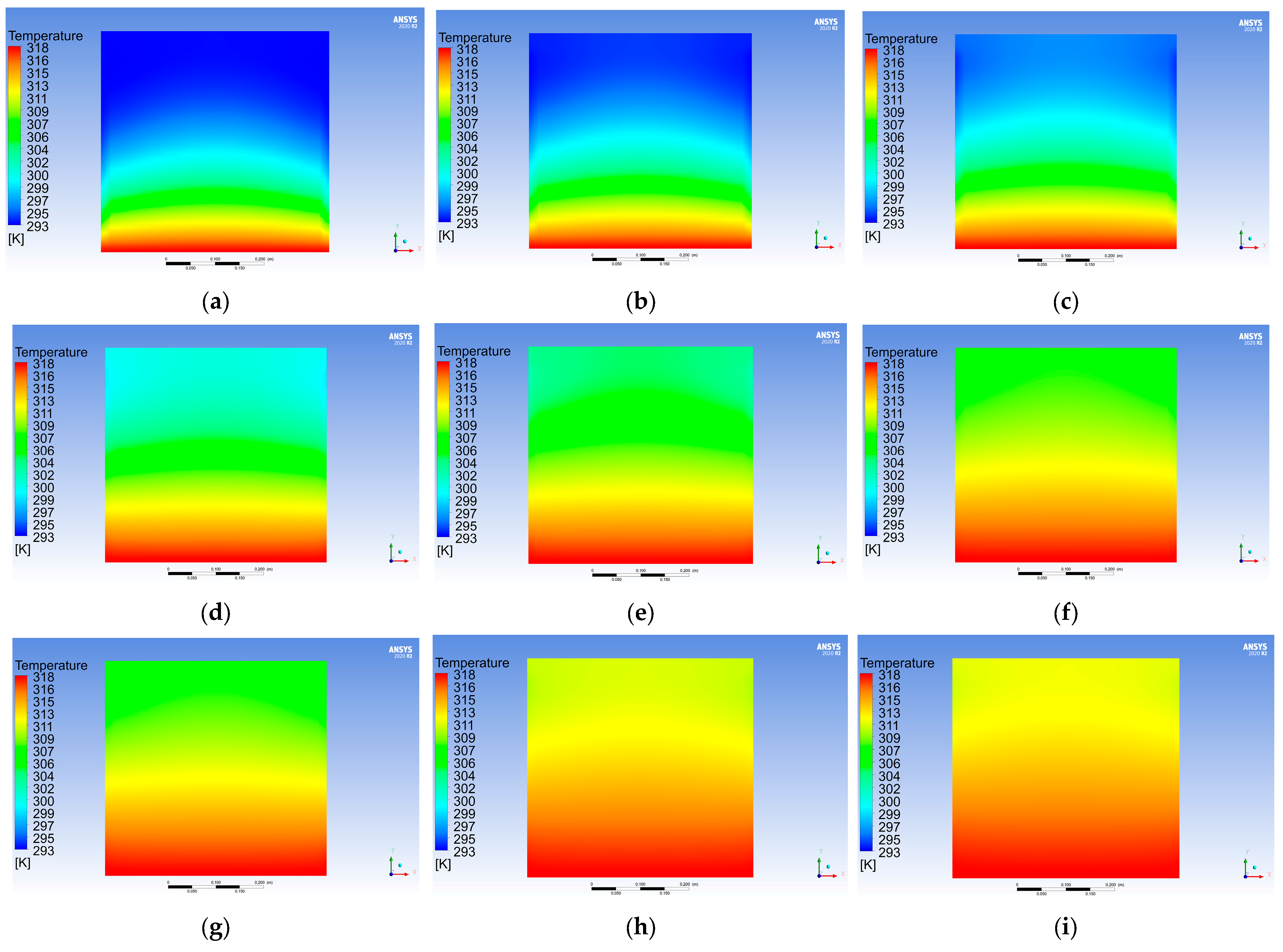
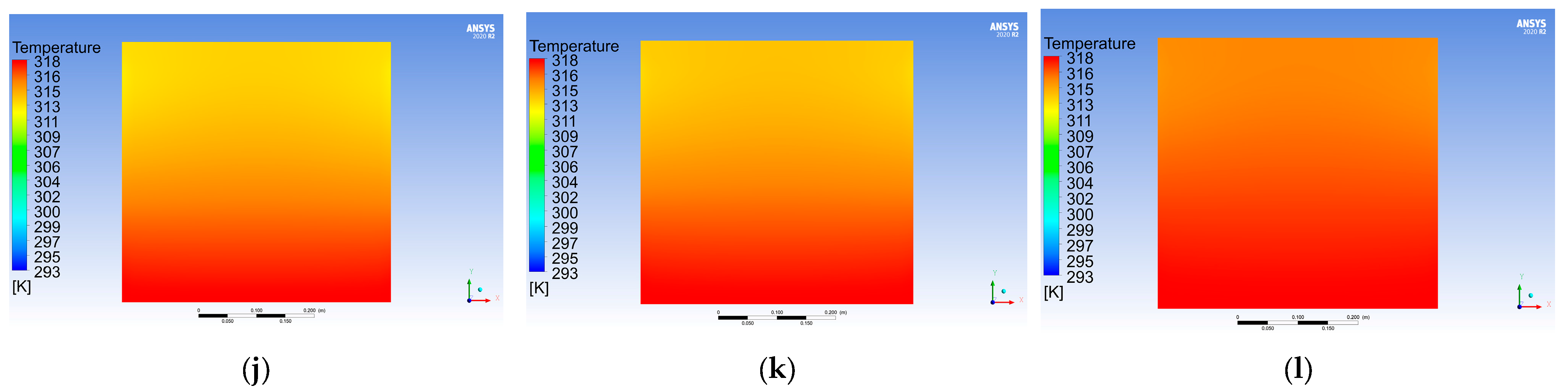
Figure 6 presents the contours of temperature evolution inside the drying chamber over one hour for three porosity coefficients of the bulk material (0.35, 0.45, and 0.55). At the initial stage of the process, the temperature field is nearly uniform. As heated air is supplied from the lower boundary, a pronounced vertical temperature gradient develops, with higher temperatures concentrated near the inlet region. With increasing drying time, heat propagates upward due to convective transport, and the temperature distribution gradually becomes more uniform throughout the porous layer.
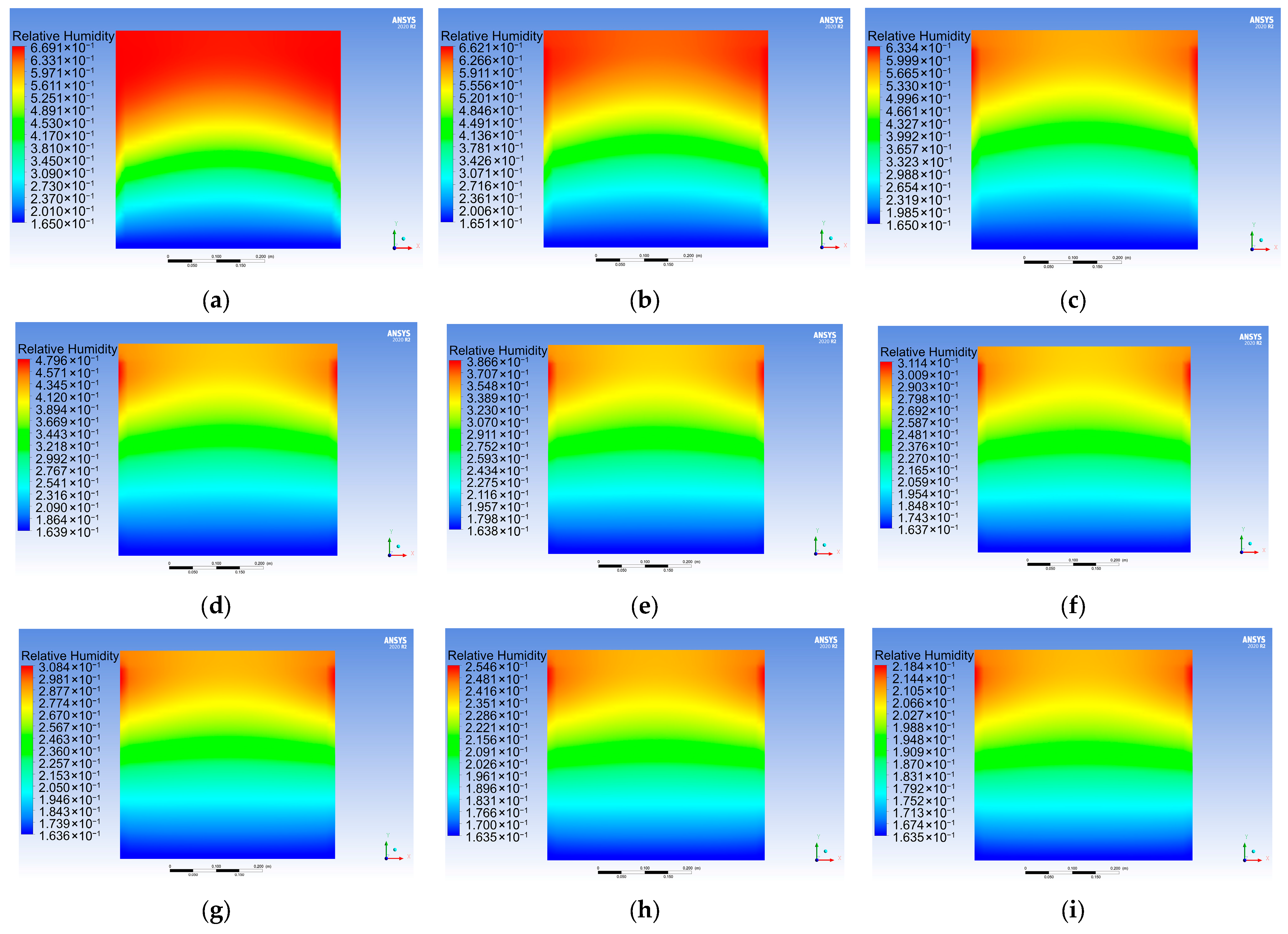
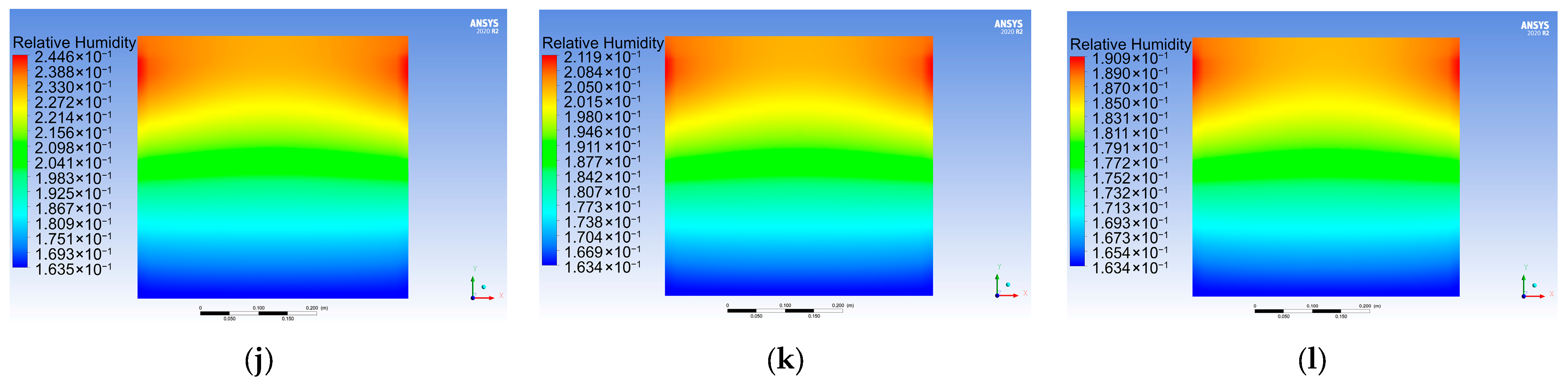
Figure 7 illustrates the distribution in plane of moisture content in the corn cob layer for the same porosity coefficients and time intervals. At the beginning of drying, the moisture content remains high across the entire volume. As drying proceeds, zones of reduced moisture content form near the air inlet and progressively expand upward, indicating intensified moisture removal by convective mass transfer. Higher porosity values facilitate more uniform moisture reduction due to decreased flow resistance and enhanced air penetration through the material layer.
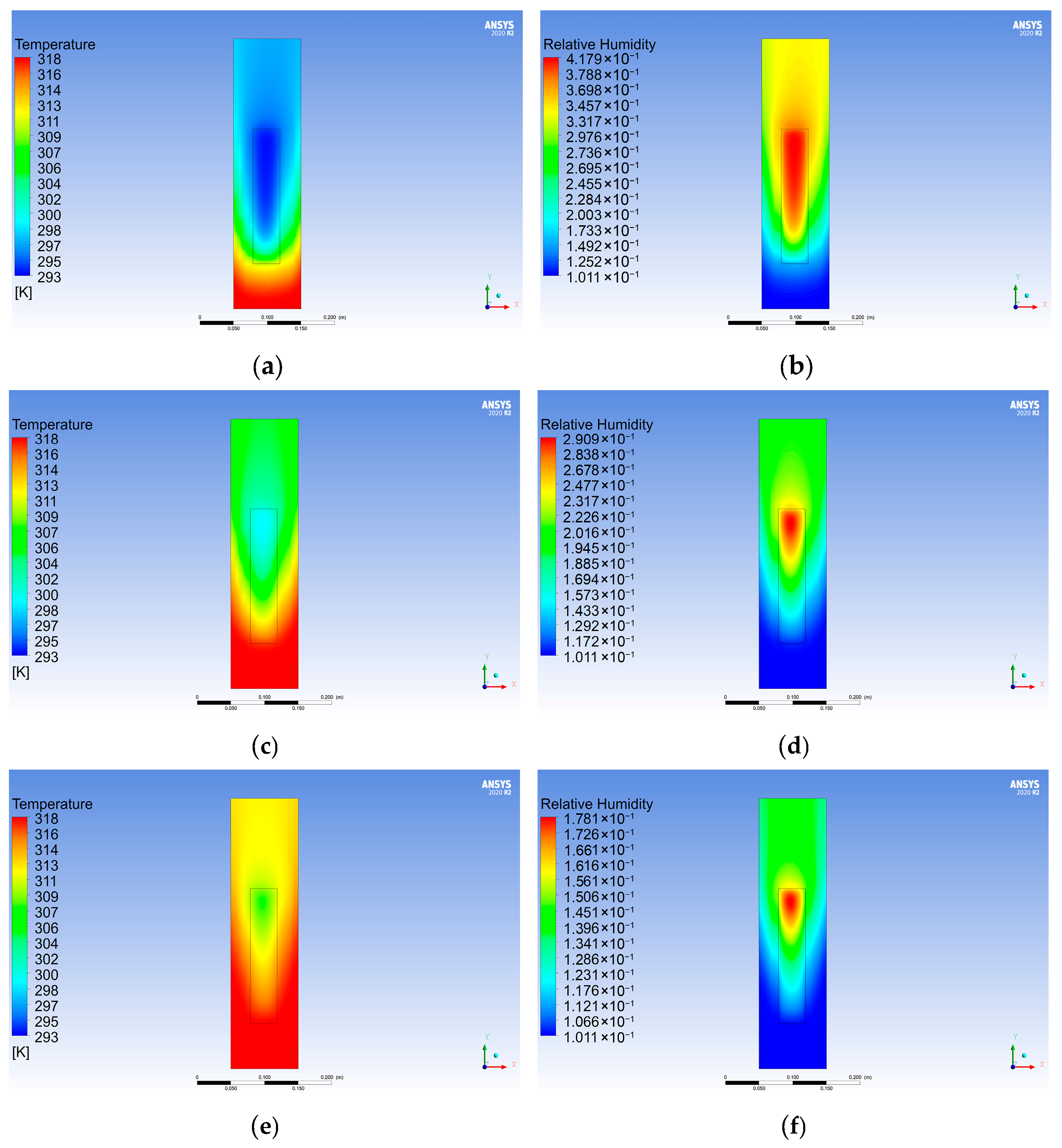
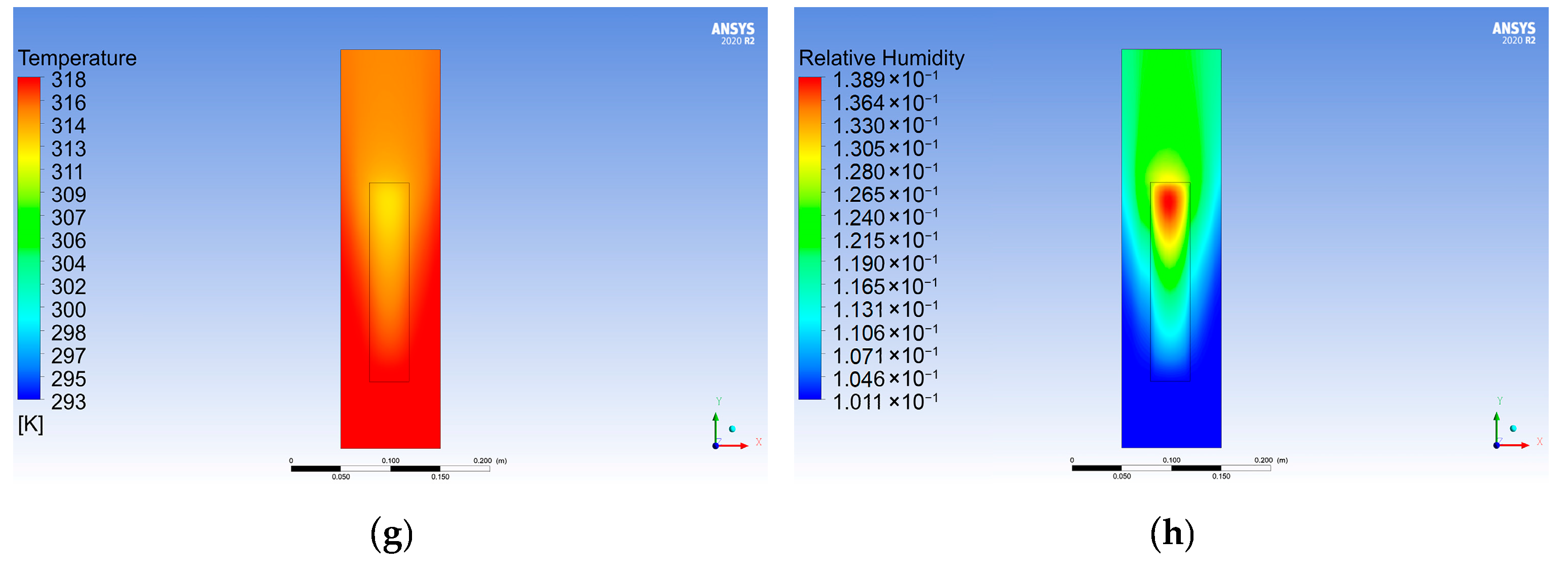
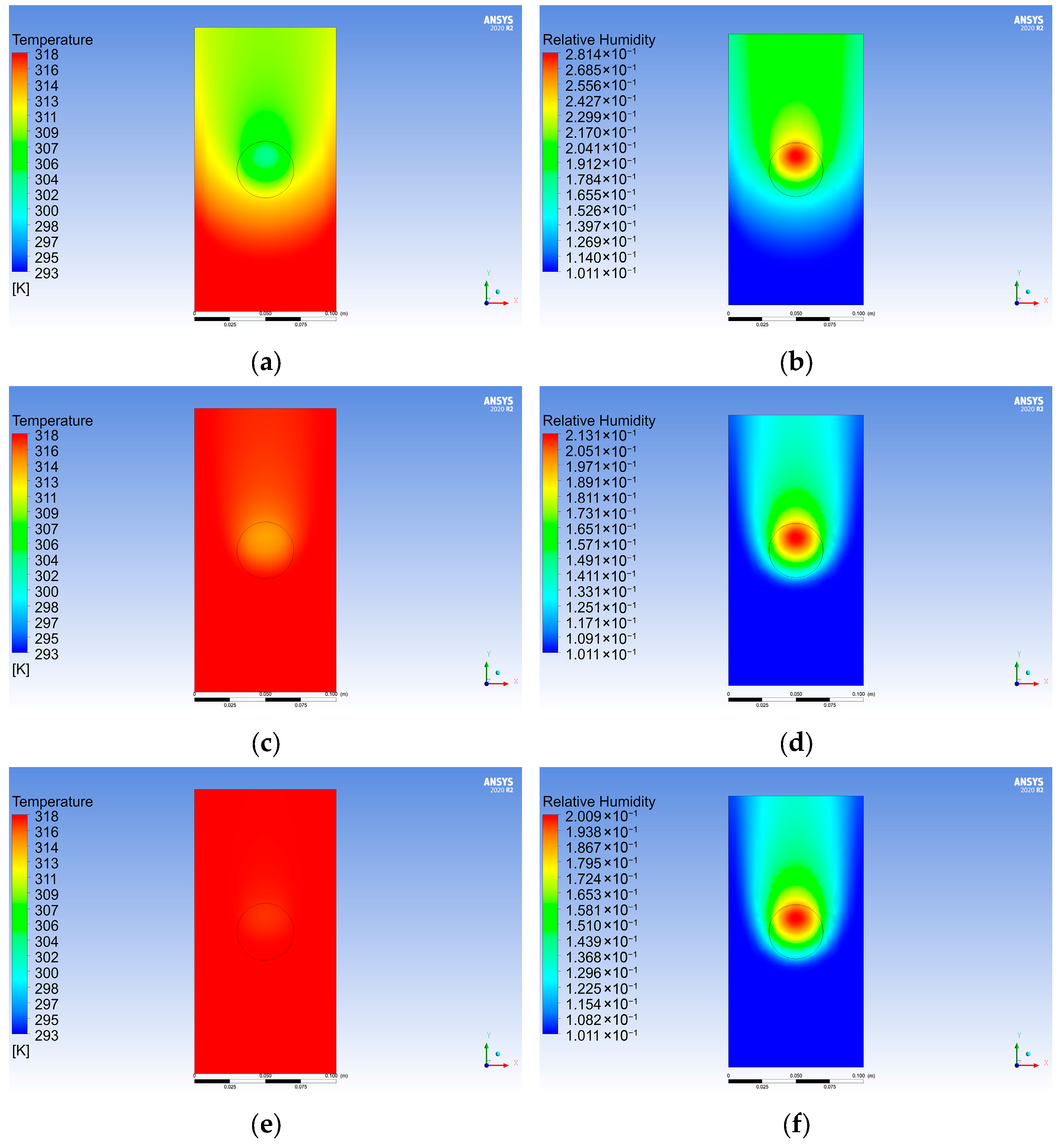
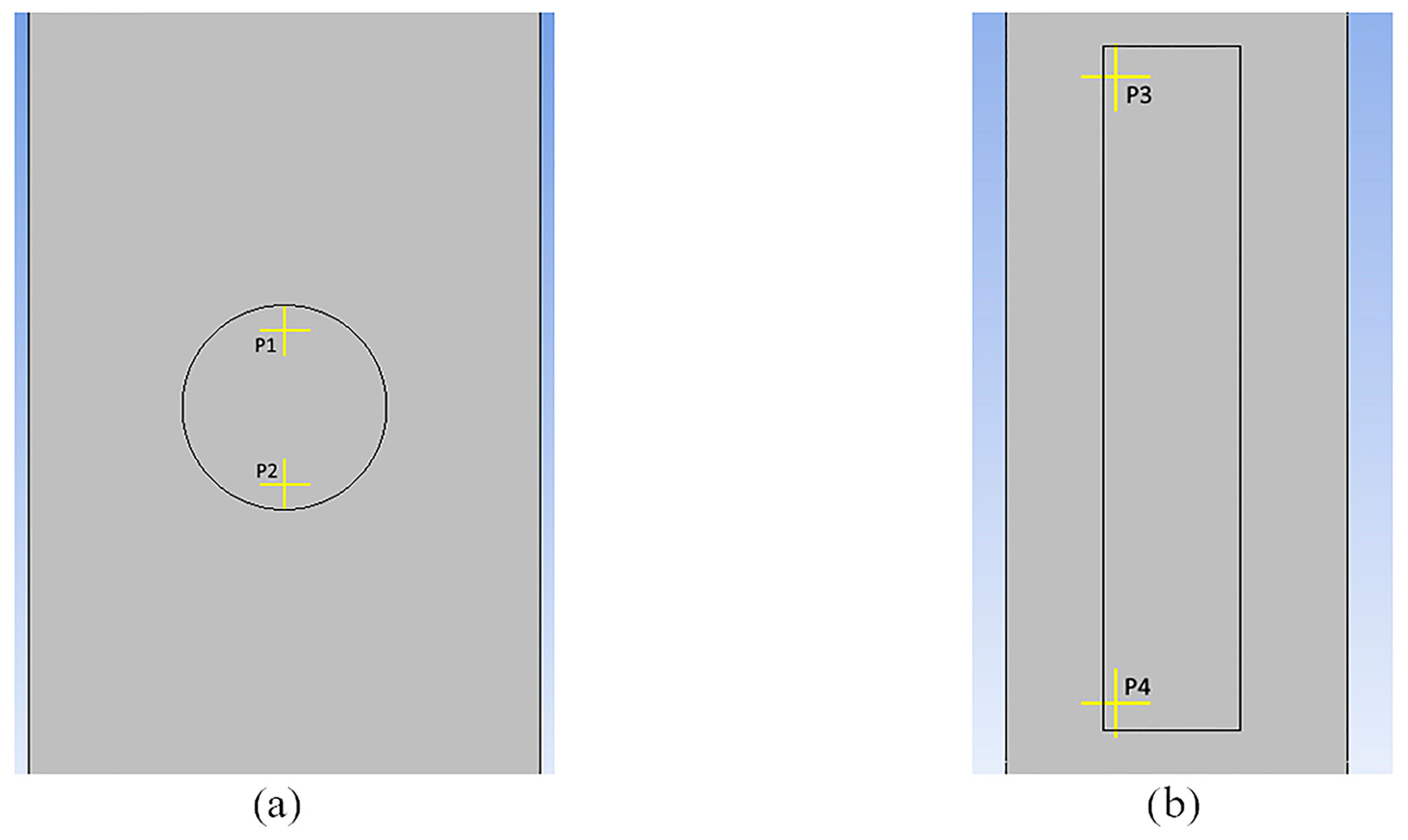
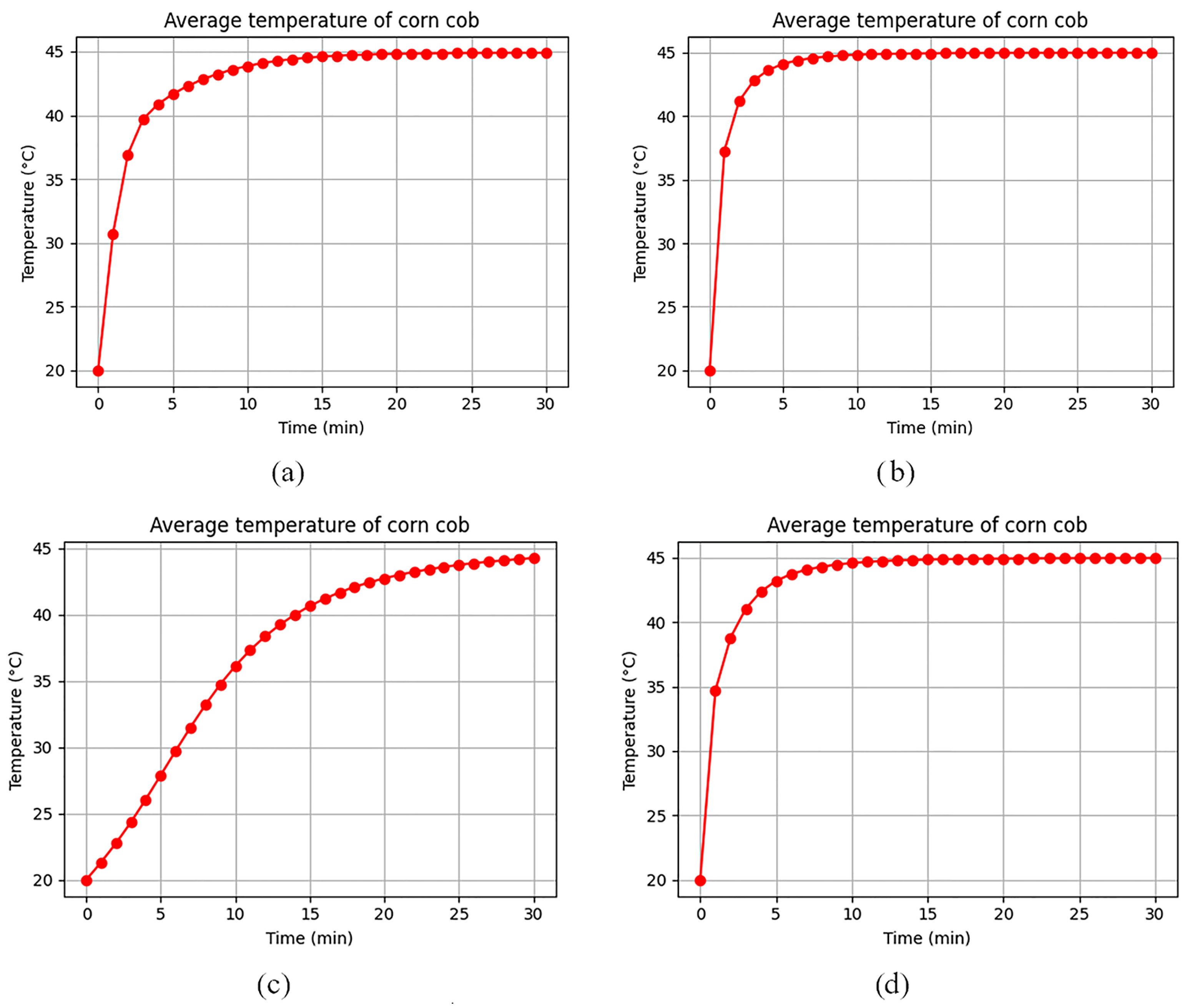
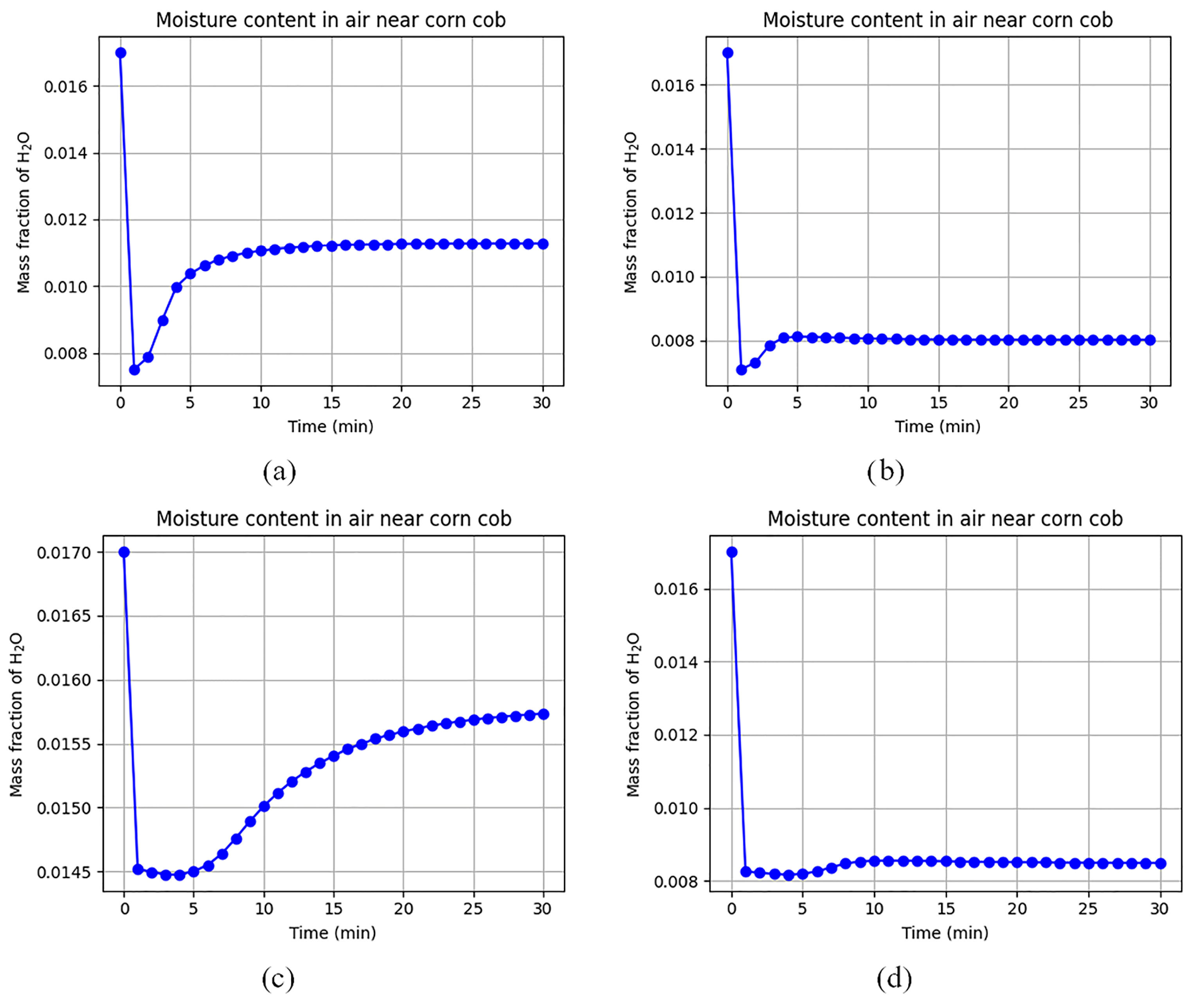
Figure 8 and Figure 9 show the simulated temperature and moisture content contours for a single corn cob positioned vertically and horizontally, respectively. These simulations provide a more detailed representation of local heat and mass transfer processes within an individual cob during drying. The temporal evolution of temperature and moisture at selected control points (P1–P4), shown in Figure 10, is summarized in Figure 11 and Figure 12.
For horizontally oriented cobs, the temperature at control point P1 reaches a quasi-steady value within approximately 15 min, while at point P2 stabilization occurs after about 10 min (Figure 11). In contrast, for vertically positioned cobs, temperature stabilization is achieved after approximately 30 min at the upper control point P3 and after 15 min at the lower point P4. These differences are attributed to variations in airflow interaction length and contact surface area.
The temporal variation in moisture content at the control points (Figure 12) indicates that moisture removal is more pronounced at the upper points (P1 and P3), particularly for the vertically oriented cob. This effect is associated with prolonged contact between the drying air and the cob surface, as well as increased effective evaporation area. At the lower points (P2 and P4), the difference in moisture reduction is less significant.
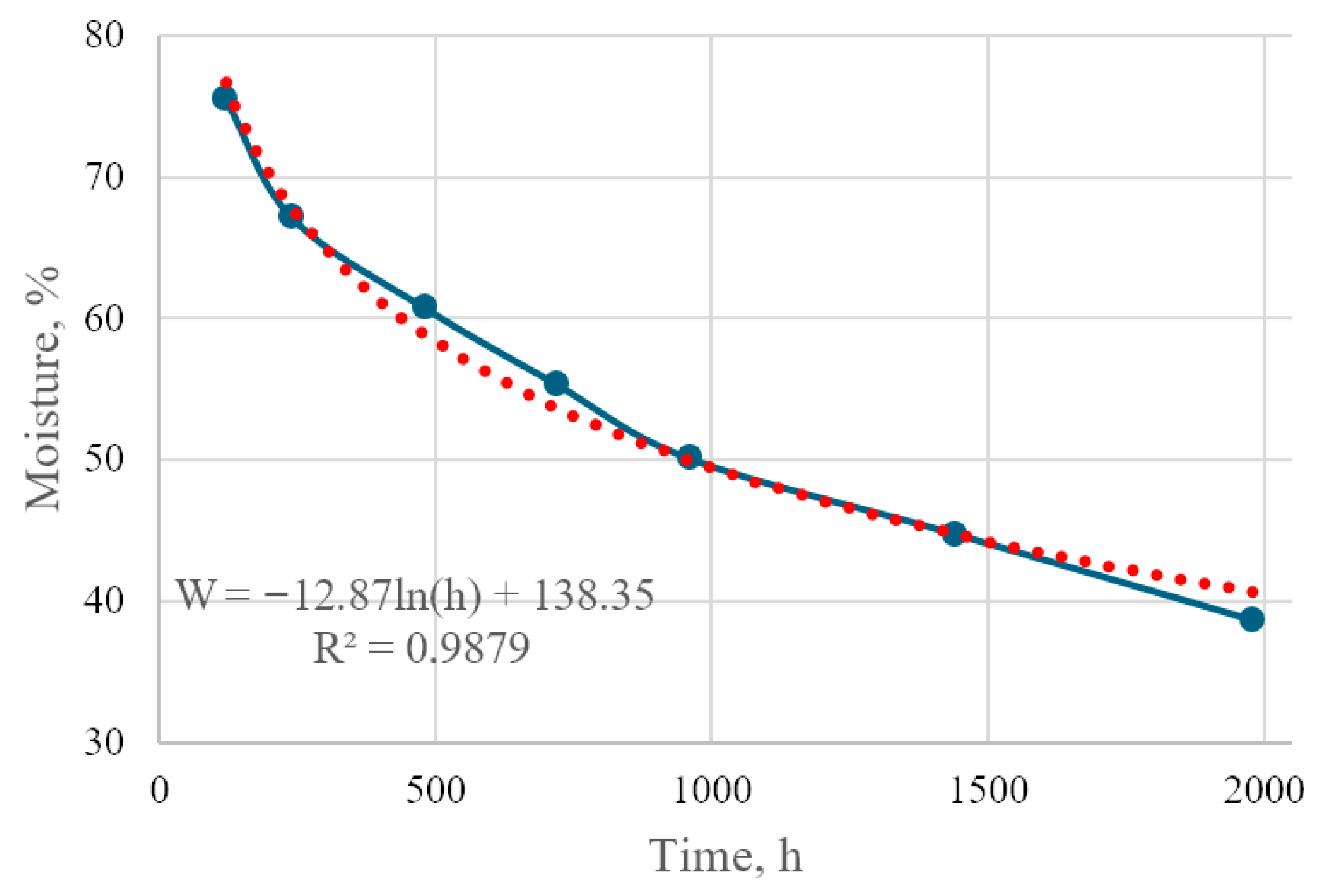
Figure 13 presents the experimental results of natural drying of corn cobs under suspended conditions. The decrease in moisture content follows a logarithmic trend, which is consistent with previously reported data indicating slow and weather-dependent natural drying rates, especially during autumn periods.
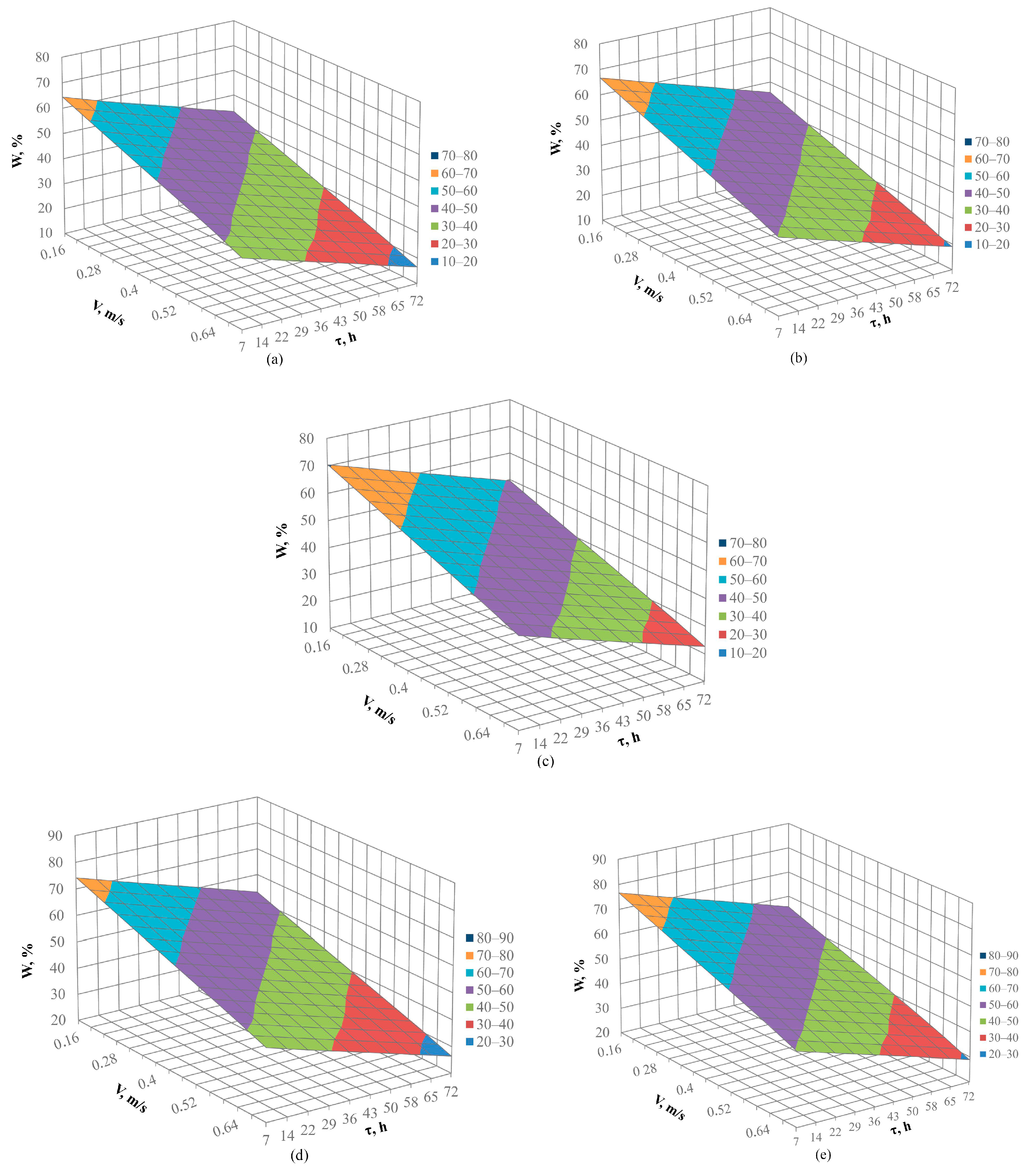
Based on laboratory experiments conducted using the experimental design method, the change in moisture content of corn cobs in the drying chamber was approximated by a multiple linear regression equation as a function of drying time (τ), air velocity (v), and layer thickness (h):
W = 61.059 − 47.204 v − 0.322 τ + 0.062 h.
Statistical analysis of the regression model shows that absolute and relative approximation errors remain within acceptable limits. The residual variance is small compared to the explained variance, and no systematic deviations were detected, indicating adequate model accuracy for engineering and analytical applications.
A graphical representation of the regression model at fixed layer thickness values (210–410 mm) is shown in Figure 14. The results demonstrate that air velocity has the most significant effect on moisture reduction, followed by drying time, while the influence of layer thickness is less pronounced within the investigated range.
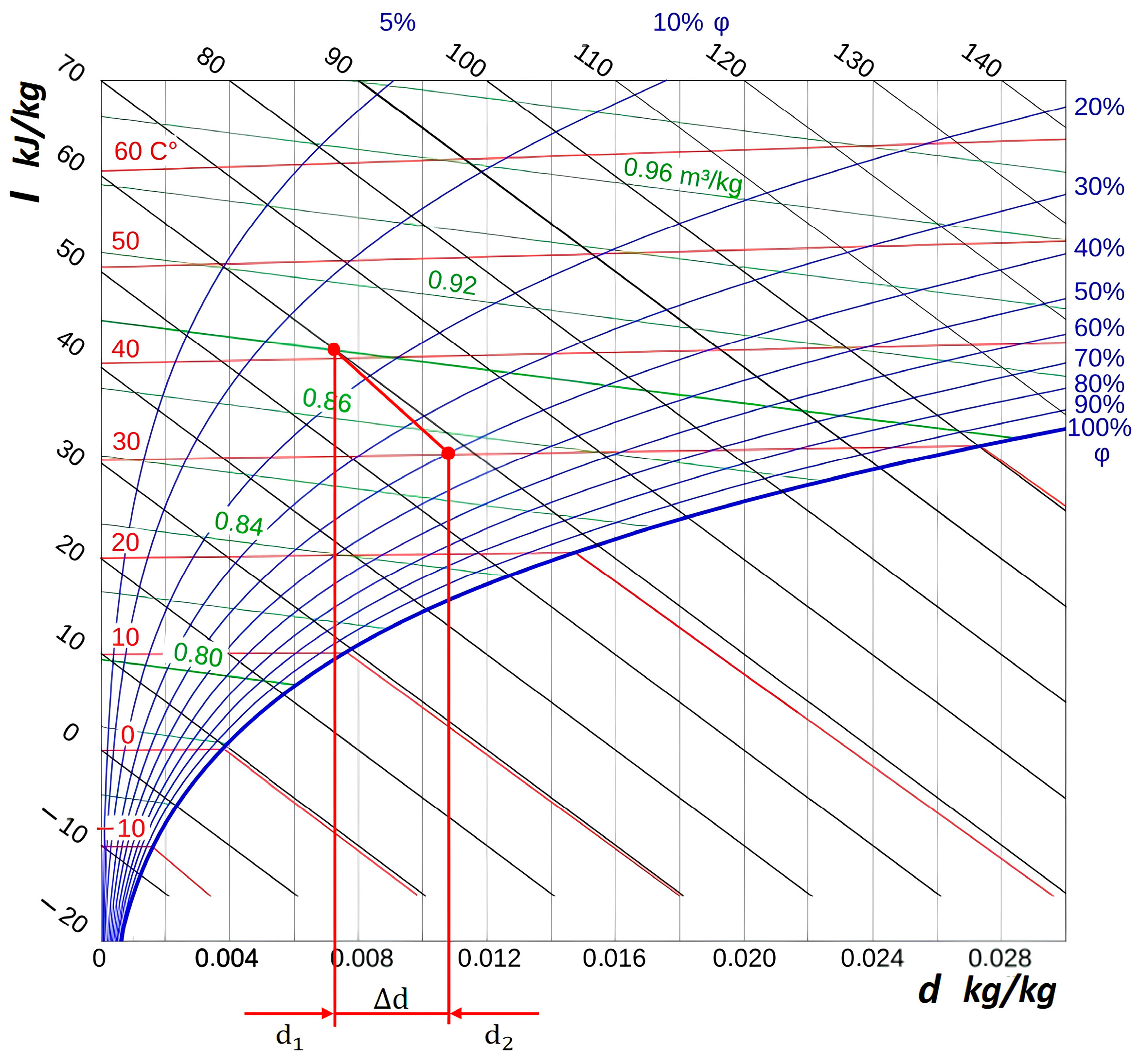
The moisture content of the drying air at the inlet and outlet of the chamber, evaluated using the I–d diagram (Figure 15), confirms effective moisture removal during the drying process [62,63,64].

4. Discussion of Study Results

The application of a combined solar dryer for convective drying of corn cobs under farm conditions demonstrates significant potential in terms of both energy efficiency and process intensification. In comparison with natural drying, the proposed system provides a reduction in drying duration by approximately one order of magnitude, depending on air velocity and operating regime. This improvement is achieved through controlled heat and mass transfer conditions, which are difficult to realize under ambient drying.
The numerical simulation of coupled heat and mass transfer processes in a porous medium allowed the identification of key physical mechanisms governing the drying kinetics. At the initial stage, the temperature field inside the drying chamber is relatively uniform and corresponds to ambient conditions. Upon supplying heated air from the lower boundary, a pronounced vertical temperature gradient is formed. The rapid temperature increase near the air inlet is followed by a delayed temperature response within the porous corn cob layer, which can be attributed to thermal inertia and internal heat transfer resistance. As drying progresses, the temperature field becomes more homogeneous; however, a slight temperature depression in the central region of the layer persists, indicating the continuing influence of internal thermal resistance.
The evolution of moisture content fields confirms the diffusion-limited nature of moisture removal. High initial relative humidity values correspond to the initial moisture state of the biological material. During drying, zones of reduced relative humidity appear near the surface of the porous medium due to intensive evaporation and convective mass transfer. These zones gradually expand toward the upper regions of the layer, while elevated humidity levels persist within the internal structure of the cobs. After approximately one hour of drying, stabilization of both temperature and moisture fields is observed for all considered porosity coefficients, indicating a quasi-steady drying regime.
The analysis of single-cob simulations highlights the influence of geometric orientation on drying efficiency. Horizontal placement of corn cobs results in faster thermal stabilization and more effective moisture removal at upper control points, whereas vertical placement increases the effective path length for moisture diffusion and enhances contact between the drying air and the material surface. These findings emphasize the importance of geometric arrangement when optimizing dryer loading and airflow distribution.
Experimental investigations of natural drying confirm a logarithmic decrease in moisture content over time, consistent with literature data and reflecting the low driving force for mass transfer under ambient conditions. In contrast, regression analysis of controlled drying experiments indicates that air velocity is the dominant factor affecting moisture removal, followed by drying time at a constant air temperature of 45 °C, while layer thickness plays a secondary role. The obtained regression model demonstrates sufficient accuracy for engineering analysis and supports the numerical simulation results.
A thermodynamic interpretation of the drying process was carried out using the Mollier (I–d) diagram (Figure 15). The shift in the drying air state from the inlet to the outlet reflects an increase in specific humidity accompanied by a corresponding change in specific enthalpy. This enthalpy difference represents the useful portion of the supplied thermal energy that is expended on moisture evaporation from the material. The analysis confirms effective moisture extraction by the drying air and highlights the presence of residual thermal energy in the exhaust air at approximately 30 °C.
From an energy perspective, this residual enthalpy represents an unused energetic potential of the system. The ratio between the energy utilized for moisture evaporation and the total supplied solar energy may be interpreted as the gross (brutto) thermal efficiency of the dryer. When accounting for thermal losses associated with heating of structural elements and incomplete utilization of the exhaust air enthalpy, a net (netto) efficiency can be defined. As expected for low-temperature convective drying systems operating under non-cyclic and irreversible conditions, the actual efficiency remains significantly below the theoretical Carnot limit, which serves only as an upper thermodynamic boundary.
Based on the experimental measurements, the inlet and outlet air temperatures were 45 °C and 30 °C, respectively, while the humidity ratio increased from 0.007 to 0.011 kg/kg. The air mass flow rate during the drying process was 2.4 kg/h, and the supplied thermal power was 3.0 kW.
The useful thermal power of the drying process (ΔP) was determined by accounting for both sensible heat transfer due to air cooling and latent heat associated with moisture evaporation. The calculated useful power amounted to ΔP = 0.016 kW. Consequently, the gross efficiency of the drying system was 0.53%.
The calculated thermodynamic performance indicators are summarized in Table 4.
The Carnot efficiency, evaluated using the inlet and outlet air temperatures, was found to be 4.7%, which corresponds to a maximum theoretically achievable power of 0.14 kW. When compared with this thermodynamic upper limit, the relative net efficiency of the system reached 11.4%.
Although the absolute value of the gross efficiency is relatively low, this result is characteristic of low-temperature solar drying systems operating under natural convection conditions. In such systems, energy efficiency is intentionally constrained to preserve the quality of thermally sensitive biological materials. The obtained results demonstrate that the proposed drying system utilizes a meaningful fraction of the available thermodynamic potential while maintaining gentle drying conditions.
The difference between the theoretically available energy potential ( P m a x ) associated with the inlet air state and the useful energy effectively employed in the drying process (ΔP) characterizes the scope for further system optimization. In particular, the exhaust air leaving the chamber at moderate temperatures retains sufficient thermal potential to justify the integration of heat recovery solutions. This observation provides a physical basis for considering auxiliary energy recovery technologies, such as heat pumps or regenerative heat exchangers, in future system designs.
Overall, the combined analysis of numerical modeling, experimental data, and thermodynamic interpretation demonstrates that the proposed solar drying system ensures favorable drying conditions for corn intended for food and seed purposes, while substantially reducing energy consumption through the utilization of renewable solar energy.

5. Conclusions

The present study demonstrates that the application of a combined solar dryer represents an effective and energy-efficient solution for reducing the moisture content of corn cobs to below 15% under the climatic conditions of southern Kazakhstan. Compared to natural drying, the proposed system significantly shortens drying time and provides improved control over the drying process.
Numerical simulation of coupled heat and mass transfer in a porous medium revealed the formation of characteristic temperature and moisture gradients that govern drying kinetics. Convective heat and mass transfer were identified as the dominant mechanisms influencing moisture removal, while internal thermal resistance and diffusion limitations within the biological material play a significant role at later drying stages.
Experimental investigations confirmed that air velocity is the primary operational parameter affecting drying intensity, followed by drying duration at a fixed air temperature of 45 °C. The developed regression model demonstrates sufficient accuracy for engineering calculations and preliminary design of solar drying equipment.
Thermodynamic analysis based on the Mollier diagram provided insight into the energetic efficiency of the drying process. The results indicate that a portion of the supplied thermal energy is effectively utilized for moisture evaporation, while a noticeable amount of residual energy remains in the exhaust air. Although the process operates far from the theoretical Carnot efficiency due to its irreversible and non-cyclic nature, the identified energy losses highlight opportunities for further improvement.
The integration of drying equipment with optimized operating parameters can increase productivity by reducing drying time by up to an order of magnitude while maintaining low energy costs. Future research should focus on scaling the system to pilot and industrial levels, as well as on enhancing energy efficiency through the recovery of exhaust air enthalpy. In this context, the incorporation of auxiliary heat recovery technologies, such as heat pumps, represents a promising direction for further development of solar-assisted drying systems.

Author Contributions

Methodology, validation, B.U.; Software, Formal analysis, A.M.; Formal analysis, data curation, D.T.; Resources, Investigation, I.D. and R.M.; Supervision, Methodology, Project administration, M.K. All authors have read and agreed to the published version of the manuscript.

Funding

The authors express their gratitude to the Science Committee of the Ministry of Science and Higher Education of the Republic of Kazakhstan for funding the project No. AP26199873 “Development of energy and resource-saving hybrid technology for the transport, storage and warehousing of corn cobs with simultaneous drying in containers using helio-air collectors and heat pumps”.

Data Availability Statement

The data presented in this study are available on request from the corresponding author. All data are not publicly available due to limited publication space in the journal.

Conflicts of Interest

The authors declare that there is no conflict of interest regarding the publication of this paper.

Nomenclature

Latin Symbols
mMeter
SSecond
t Time
P Pressure (Pa)
T Temperature (°C)
T 0 Reference temperature (°C)
x , y , z Spatial coordinates
u , v , w Velocity components
DDiffusion coefficient
g Gravitational acceleration (m/s2)
c p Heat capacity (J/K)
u i u j ¯ and u j T Reynolds-averaged speeds and turbulent thermal stress streams
WMoisture
Greek Symbols
εRange
ρ Density (kg/m3)
μ Dynamic viscosity
β Thermal expansion coefficient
Subscripts
kgKilogram
KKelvin
RHRelative humidity
Acronyms
TestoMeasuring instruments
HOBOData Logger
GOSTState Standard of the Soviet Union
ANSYSAnalysis systems
PythonProgramming language

References

  1. Suherman, F.B.; Satriadi, H.; Yuariski, O.; Nugroho, R.S.; Shohib, A. Thin layer drying kinetics of roselle. Adv. J. Food Sci. Technol. 2012, 4, 51–55. [Google Scholar]
  2. Sanghi, A.; Ambrose, R.P.K.; Maier, D. CFD simulation of corn drying in a natural convection solar dryer. Dry. Technol. 2017, 36, 859–870. [Google Scholar] [CrossRef]
  3. Mendoza, J.R.; Sabillon, R.; Martinez, W.; Campabadal, C.; Hallen-Adams, H.E.; Bianchini, A. Traditional maize post-harvest management practices amongs smallholder farmers in Guatemala. J. Stored Prod. Res. 2017, 71, 14–21. [Google Scholar] [CrossRef]
  4. Suleiman, R.; Bern, C.J.; Brumm, T.J.; Rosentrater, K.A. Impact of moisture content and maize weevils on maize quality during hermetic and non-hermetic storage. J. Stored Prod. Res. 2018, 78, 1–10. [Google Scholar] [CrossRef]
  5. Yassen, T.A.; Hussain, H.A. Experimental investigation and evaluation of hybrid solar/thermal dryer combined with supplementary recovery dryer. Sol. Energy 2016, 134, 284–293. [Google Scholar] [CrossRef]
  6. Fudholi, A.; Kamaruzzaman, S.; Mohd, Y.O.; Mohd, H.R. Energy and exergy analyses of solar drying system of red seaweed. Energy Build. 2014, 68, 121–129. [Google Scholar] [CrossRef]
  7. Kumar, M.; Sunil, K.S.; Pankaj, K. Progress in solar dryers for drying various commodities. Renew. Sustain. Energy Rev. 2016, 55, 346–360. [Google Scholar] [CrossRef]
  8. Simate, I.N.; Ahrné, L.M. Dehydration of Tropical Fruits. In Handbook of Food Technology and Food Engineering; Hui, Y.H., Ed.; Marcel Dekker: New York, NY, USA, 2006; pp. 104-1–104-18. [Google Scholar] [CrossRef]
  9. Suherman, S.; Djaeni, M.; Wardhani, D.H.; Dzaki, M.R.; Bagas, M.N.F. Performance analysis of solar tray dryer for cassava starch. MATEC Web Conf. 2018, 156, 05008. [Google Scholar] [CrossRef]
  10. El Hage, H.; Herez, A.; Ramadan, M.; Bazz, H.; Khaled, M. An investigation on solar drying: A review with economic and environmental assessment. Energy 2018, 157, 815–829. [Google Scholar] [CrossRef]
  11. Suherman, S.; Hadiyanto, H.; Yahya, H.F.; Rahayu, E.; Asy-Syaqiq, M.A.; Prasetiyono, B.W.H.E.; Setiadi, A. A study on the performance of corn grain dryer using hybrid solar drying with liquefied petroleum gas. Food Res. 2024, 8, 24–32. [Google Scholar] [CrossRef]
  12. Hashim, G.A.; Sidik, N.C. Numerical study of harvesting solar energy from small-scale asphalt solar collector. J. Adv. Res. Des. 2014, 2, 10–19. [Google Scholar]
  13. Maia, C.B.; André, G.F.; Sérgio, M.H. Evaluation of a tracking flat-plate solar collector in Brazil. Appl. Therm. Eng. 2014, 73, 953–962. [Google Scholar] [CrossRef]
  14. Maia, C.B.; Felipe, V.M.S.; Vinícius, L.C.O.; Lawrence, L.K. An overview of the use of solar chimneys for desalination. Sol. Energy 2019, 183, 83–95. [Google Scholar] [CrossRef]
  15. Wang, W.; Li, M.; Hassanien, R.H.E.; Wang, Y.; Yang, L. Thermal performance of indirect forced convection solar dryer and kinetics analysis of mango. Appl. Therm. Eng. 2018, 134, 310–321. [Google Scholar] [CrossRef]
  16. Fterich, M.H.; Chouikhi, H.B.; Maalej, A. Experimental parametric study of a mixed-mode forced convection solar dryer equipped with a PV/T air collector. Sol. Energy 2018, 171, 751–760. [Google Scholar] [CrossRef]
  17. Chaouch, W.B.; Abdellah, K.; Ahmed, M.; Mohamed El, A.S.; Akil, L.; Abdelkader, H. Experimental investigation of an active direct and indirect solar dryer with sensible heat storage for camel meat drying in Saharan environment. Sol. Energy 2018, 174, 328–341. [Google Scholar] [CrossRef]
  18. Rabha, D.K.; Muthukumar, P.; Somayaji, C. Energy and exergy analyses of the solar drying processes of ghost chilli pepper and ginger. Renew. Energy 2017, 105, 764–773. [Google Scholar] [CrossRef]
  19. Amjad, W.; Oliver, H.; Anjum, M.; Albert, E.; Barbara, S. Thermodynamic analysis of drying process in a diagonal-batch dryer developed for batch uniformity using potato slices. J. Food Eng. 2016, 169, 238–249. [Google Scholar] [CrossRef]
  20. Castro, M.; Celia, R.; Marcelo, E.; Germán, M.; Rosa, R. Exergy analyses of onion drying by convection: Influence of dryer parameters on performance. Entropy 2018, 20, 310. [Google Scholar] [CrossRef]
  21. Sadjad, A.; Saeid, M. Effect of drying temperature on mechanical properties of dried corn. Dry. Technol. 2014, 32, 774–780. [Google Scholar] [CrossRef]
  22. Chen, J.Y.; Wu, W.F.; Chen, R.M.; Jin, Y.; Liu, Z. Optimization of hot air-drying process of corn using genetic algorithm and response surface methodology. Int. J. Food Prop. 2020, 23, 753–764. [Google Scholar] [CrossRef]
  23. Yao, L.; Zhang, Y.; Qiao, Y.; Wang, C.; Wang, X.; Chen, B.; Kang, J.; Cheng, Z.; Jiang, Y. A comparative evaluation of nutritional characteristics, physical properties, and olatile profiles of sweet corn subjected to different drying methods. Cereal Chem. 2022, 99, 405–420. [Google Scholar] [CrossRef]
  24. Xi, H.H.; Liu, Y.H.; Guo, L.G.; Hu, R.R. Effect of ultrasonic power on drying process and quality properties of far-infrared radiation drying on potato slices. Food Sci. Biotechnol. 2020, 29, 93–101. [Google Scholar] [CrossRef] [PubMed]
  25. Chen, H.T.; Hsieh, Y.L.; Chen, P.C.; Lin, Y.F.; Liu, K.C. Numerical simulation of natural convection heat transfer for annular elliptical finned tube heat exchanger with experimental data. Int. J. Heat Mass Transfer. 2018, 127, 541–554. [Google Scholar] [CrossRef]
  26. Chen, P.; Tian, G.; Jiang, M.; Zhu, W.; Wu, J.; Zhang, R.; Dai, Z. Effects of drying methods on the drying kinetics and quality of maize. Int. J. Agric. Biol. Eng. 2024, 17, 275–283. [Google Scholar] [CrossRef]
  27. Chavan, A.; Vitankar, V.; Mujumdar, A.; Thorat, B. Natural convection and direct type (NCDT) solar dryers: A review. Dry. Technol. 2020, 39, 1969–1990. [Google Scholar] [CrossRef]
  28. Hussain, F.; Ahmad, M.; Ghafoor, A.; Tanvir, A. A Developmental Study of a Solar-Assisted Maize Dryer for Quality Drying. J. Anim. Plant Sci. 2020, 30, 742–748. [Google Scholar] [CrossRef]
  29. Andharia, J.K.; Solanki, J.B.; Maiti, S. Performance evaluation of a mixed-mode solar thermal dryer with black pebble-based sensible heat storage for drying marine products. J. Energy Storage 2023, 57, 106186. [Google Scholar] [CrossRef]
  30. Salve, S.; Fulambarkar, A.M. A solar dryer for drying green chili in a forced convection for increasing the moisture removing rate. Mater. Today Proc. 2021, 45, 3170–3176. [Google Scholar] [CrossRef]
  31. Simate, I.N. Air Flow Model for Mixed-Mode and Indirect-Mode Natural Convection Solar Drying of Maize. Energy Environ. Res. 2020, 10, 1–12. [Google Scholar] [CrossRef]
  32. Shimpy, K.M.; Kumar, A. Performance assessment and modelling techniques for domestic solar dryers. Food Eng. Rev. 2023, 15, 525–547. [Google Scholar] [CrossRef]
  33. Rulazi, E.L.; Marwa, J.; Kichonge, B.; Kivevele, T. Development and Performance Evaluation of a Novel Solar Dryer Integrated with Thermal Energy Storage System for Drying of Agricultural Products. ACS Omega 2023, 8, 43304–43317. [Google Scholar] [CrossRef]
  34. Hikmatov, B.; Mavlonov, U.; Juraev, K. Results of tomato drying in a greenhouse type solar dryers with natural convection. E3S Web Conf. 2024, 587, 04016. [Google Scholar] [CrossRef]
  35. Golman, B.; Julklang, W. Analysis of heat recovery from a spray dryer by recirculation of exhaust air. Energy Convers. Manag. 2014, 88, 641–649. [Google Scholar] [CrossRef]
  36. Zhang, X.R.; Zheng, Q.Y.; Gao, J.Z.; Shi, X.H. Technology and application of waste heat recovery from tail gas of grain drying system. Energy Conserv. Environ. Prot. 2015, 11, 74–75. [Google Scholar]
  37. Bai, J.W.; Luo, S.Q.; Ye, J.; Liu, L.; Niu, M.J.; Deng, X.M. Design of the Waste Heat Utilizing System on Multifunctional Tractor. J. Agric. Mech. Res. 2008, 12, 195–197. [Google Scholar]
  38. Tuncel, N.B.; Yilmaz, N.; Kocabiyik, H.; Öztürk, N.; Tunçel, M. The effects of infrared and hot air drying on some properties of corn (zea mays). J. Food Agric. Environ. 2010, 8, 63–68. [Google Scholar]
  39. Pan, Z.; Khir, R.; Bett-Garber, K.L. Drying characteristics and quality of rough rice under infrared radiation heating. Trans. ASABE 2011, 54, 203–210. [Google Scholar] [CrossRef]
  40. Li, B.; Zeng, Z.; Zhang, X.; Zhang, Y. Study on the Variable-Temperature Drying Process of Corn Drying in an Industrial Corn-Drying System Equipped with a Self-Adaptive Control Heat Exchanger. Appl. Sci. 2021, 11, 2772. [Google Scholar] [CrossRef]
  41. Lutz, K.; Mühlbauer, W.; Müller, J.; Reisinger, G. Development of a multi-purpose solar crop dryer for arid zones. Sol. Wind. Technol. 1987, 4, 417–424. [Google Scholar] [CrossRef]
  42. Lutz, K.; Mühlbauer, W. Solar tunnel dryer with integrated collector. Dry. Technol. 1986, 4, 583–603. [Google Scholar] [CrossRef]
  43. Ntwali, J.; Schock, S.; Romuli, S.; Chege, C.G.K.; Banadda, N.; Aseru, G.; Müller, J. Performance Evaluation of an Inflatable Solar Dryer for Maize and the Effect on Product Quality Compared with Direct Sun Drying. Appl. Sci. 2021, 11, 7074. [Google Scholar] [CrossRef]
  44. Neves, E.; das Geraldi, C.A.Q.; Franz, G.M. Adjustments of mathematical models for drying maize seeds on cobs. Sci. Electron. Arch. 2024, 17, 1–7. [Google Scholar] [CrossRef]
  45. Coradi, P.C.; Maldaner, V.; Lutz, É.; da Silva Daí, P.V.; Teodoro, P.E. Influences of drying temperature and storage conditions for preserving the quality of maize postharvest on laboratory and field scales. Sci. Rep. 2020, 10, 22006. [Google Scholar] [CrossRef] [PubMed]
  46. Román-Roldán, N.I.; Yudonago, J.I.; López-Ortiz, A.; Rodríguez-Ramírez, J.; Sandoval-Torres, S. A new air recirculation system for homogeneous solar drying: Computational fluid dynamics approach. Renew. Energy 2021, 179, 1727–1741. [Google Scholar] [CrossRef]
  47. Natarajan, S.K.; Elavarasan, E. A review on computational fluid dynamics analysis on greenhouse dryer. IOP Conf. Ser. Earth Environ. Sci. 2019, 312, 012033. [Google Scholar] [CrossRef]
  48. Mukanema, M.; Simate, I.N. CFD Simulation of Temperature and Air Flow in a Natural Convection Solar Tunnel Dryer with a Bare Flat-Plate Chimney. Energy Environ. Res. 2023, 13, 1–15. [Google Scholar] [CrossRef]
  49. Abdi, S.A.W.; Ahmad, N. Performance Analysis of Mixed Mode Solar Dryer for Tobacco Leaves. Eng. Proc. 2022, 12, 102. [Google Scholar] [CrossRef]
  50. Simate, I.N.; Mukwangole, M.; Mukanema, M. Natural Convection Solar Tunnel Dryer for Maize: Design Process, CFD Simulation, Drying, Exergy and Economic Performance. Mod. Appl. Sci. 2025, 19, 1–18. [Google Scholar] [CrossRef]
  51. Urmashev, B.A.; Khazimov, K.M.; Temirbekov, A.N. Drying of Vegetable Products in Mobile Solar Dryer with Movable Shelving. J. Eng. Thermophys. 2021, 30, 145–162. [Google Scholar] [CrossRef]
  52. Toibazar, D.; Urmashev, B.; Tursynzhanova, A.; Nekrashevich, V.; Daurenova, I.; Niyazbayev, A.; Khazimov, K.; Pegna, F.; Khazimov, M. Bee Bread Drying Process Intensification in Combs Using Solar Energy. Energies 2025, 18, 226. [Google Scholar] [CrossRef]
  53. Daurenova, I.; Mustafayeva, A.; Khazimov, K.; Pegna, F.; Khazimov, M. Bee Bread Granule Drying in a Solar Dryer with Mobile Shelves. Energies 2025, 18, 5472. [Google Scholar] [CrossRef]
  54. Pogulyaev, A.D.; Khazimov, M.Z.; Khazimov, K.M.; Ultanova, I.B.; Akhmetkanova, G.A. A Solar Dryer for Drying Agricultural Products in Flexible Containers, and a Flexible Container for Drying Agricultural Products. KZ Patent 33282, 16 November 2018. [Google Scholar]
  55. Nekrashevich, V.; Mamonov, R.; Torzhenova, T.; Vorobyova, I.; Khazimov, M. Theory and practice of feed silage in containers made of airtight film. Bio Web Conf. Opensourcepreview 2020, 17, 00041. [Google Scholar] [CrossRef][Green Version]
  56. Khazimov, K.; Sagyndykova, Z.; Khazimov, Z.; Umbetkulov, Y.; Khazimov, M. Thermal Welding in the Neck of Vacuum Flexible Containerwith Self-propelled Welding Module. Int. J. Technol. Open-Source Preview 2024, 15, 1088–1101. [Google Scholar]
  57. Permyakov, V.N.; Masalimov, I.K.h.; Ganeev, I.R.; Efimov, A.V. Advanced technology for drying wet corn grain. Mach. Technol. Agro-Ind. Complex. Bull. FSBEI HPE MSAU 2009, 2, 49–51. [Google Scholar]
  58. McNeill, S.; Montross, M.; Stombaugh, T.A. Corn Harvesting, Drying, and Storage. In Comprehensive Guide to Corn Management in Kentucky; University of Kentucky Cooperative Extension Service: Lexington, KY, USA, 2016; pp. 86–95. [Google Scholar]
  59. Kudasheva, A.B.; Khazimov, M.Z.; Niyazbayev, A.K.; Tursynzhanova, A.A.; Borsikbayeva, A.B.; Urmashev, B.A.; Gorburov, V.D.; Khazimov, K.M. Efficient Combustion of the Fixed Coal Layer in an Advanced Combustion Chamber Design for Low-Power Boilers. Trans. Tianjin Univ. 2024, 30, 471–487. [Google Scholar] [CrossRef]
  60. Sidnyaev, N.I. Theory of experimental planning and analysis of statistical data. In Textbook and Workshop for Universities, 2nd ed.; Sidnyaev, N.I., Ed.; Yurait Publishing House: Moscow, Russia, 2025; p. 495. [Google Scholar]
  61. Testo, S.E. Testo Smart Probes Instruction Manual. 2024. Available online: https://www.testo.com/en-UK/testo-smart-probes-vac-kit/p/0563-0003-10#tab-downloads (accessed on 13 May 2024).
  62. Didenko, A. Late Harvesting of Corn: Drying and Storage. Available online: https://direct.farm/post/pozdnyaya-uborka-kukuruzy-sushka-i-khraneniye-25954 (accessed on 19 December 2023).
  63. GOST-55262-2012; Drying Machines and Agricultural Installations. Test Methods; Standartinform: Moscow, Russia, 2015.
  64. GOST-13634-1990; Corn: Requirements for Harvesting and Supplies. Standartinform: Moscow, Russia, 2010.
Figure 1. General view of the solar dryer for drying corn cobs in flexible Bulk Containers.
Energies 19 00849 g001
Figure 2. General view (a) and diagram (b) of the solar dryer camera simulation.
Energies 19 00849 g002
Figure 3. Corncobs drying by hanging.
Energies 19 00849 g003
Figure 4. Simulation scheme for numerical modelling (a) and computational modeling area (b) and computational grid (c).
Energies 19 00849 g004
Figure 5. Adopted models of the object (a—vertical position; b—horizontal state) and real pictures of corn stalks when positioned vertically (c), also horizontally (d).
Energies 19 00849 g005
Figure 6. Contours of the change in temperature in the layer of corn cobs at different porosity coefficients (0.35—(a,d,g,j); 0.45—(b,e,h,k); 0.55—(c,f,i,l)) and time (5 min—(a,b,c); 20 min—(d,e,f); 40 min—(g,h,i); 60 min—(j,k,l)).
Energies 19 00849 g006aEnergies 19 00849 g006b
Figure 7. Contours of the change in moisture in the layer of corn cobs at different porosity coefficients (0.35—(a,d,g,j); 0.45—(b,e,h,k); 0.55—(c,f,i,l)) and time (5 min—(a,b,c); 20 min—(d,e,f); 40 min—(g,h,i); 60 min—(j,k,l)).
Energies 19 00849 g007aEnergies 19 00849 g007b
Figure 8. Contours of the change in temperature ((a)—1 min; (c)—5 min; (e)—10 min; (g)—15 min) and moisture ((b)—1 min; (d)—5 min; (f)—10 min; (h)—15 min) content when simulating a vertically positioned corn cob.
Energies 19 00849 g008aEnergies 19 00849 g008b
Figure 9. Contours of the change in temperature ((a)—1 min; (c)—5 min; (e)—15 min) and moisture ((b)—1 min; (d)—5 min; (f)—15 min) content when simulating a horizontally positioned corn cob.
Energies 19 00849 g009
Figure 10. Placement of control points for the horizontal (a) corn cob and for the vertical (b) corn cob.
Energies 19 00849 g010
Figure 11. Temperature changes over time at control points: (a) at point P1; (b) at point P2; (c) at point P3; (d) at point P4.
Energies 19 00849 g011
Figure 12. Change in moisture over time at control points: (a) at point P1; (b) at point P2; (c) at point P3; (d) at point P4.
Energies 19 00849 g012
Figure 13. Change in corn cobs in natural drying.
Energies 19 00849 g013
Figure 14. Graph of the moisture relationships of the corn cobs after drying when changing the controlled factors—drying time, drying agent flow velocity, thickness of the cobs in the “Big-Bag” flexible container: (a) at 210 mm; (b) at 250 mm; (c) at 310 mm; (d) at 370 mm; (e) at 410 mm.
Energies 19 00849 g014
Figure 15. Air moisture content assessment.
Energies 19 00849 g015
Table 1. Boundary conditions for numerical heat mass transfer modelling.
Inlet Velocity :   u = 0 ,     v y = 0
T e m p e r a t u r e :   T = T 0
Outlet Velocity :   u = 0 ,   v = V 0
Temperature: T n = 0 (Adiabatic)
Walls Velocity :   u = v = 0
Temperature: T = T e n v
Table 2. Independent factor levels and intervals.
IndicatorsFactor CodingDrying Agent
Flow Rate, m/s
Drying Time, HourLoading Mass (Loading Height) of the Corn Cobs, mm
Basic level00.4842250
Range of variation ε 0.251860
Upper level+10.6360370
Bottom level−10.3324250
Upper star point+1.680.7372410
Bottom Star Point−1.680.2312210
Code mark x i x 1 x 2 x 3
Table 3. Planned matrix for multi-factor experiment.
Experiment NumberDrying Agent Flow VelocityHold Time for DryingLoaded Layer Height
x 1 v , m/s x 2 τ , hour x 3 h , mm
1−10.33−124−1250
2+10.63−124−1250
3−10.33+160−1250
4+10.63+160−1250
5−10.33−124+1370
6+10.63−124+1370
7−10.33+160+1370
8+10.63+1600310
9−1.680.230420310
10+1.680.730420310
1100.48−1.68120310
1200.48+1.6872−1.68210
1300.48042+1.68410
1400.480420310
1500.480420310
1600.480420310
1700.480420310
1800.480420310
1900.480420310
2000.480420310
Table 4. Thermodynamic performance indicators of the solar drying system.
ParameterSymbolValueUnit
Inlet air temperature T i n 45°C
Outlet air temperature T o u t 30°C
Inlet humidity ratio d i n 0.007kg/kg
Outlet humidity ratio d o u t 0.011kg/kg
Air mass flow rate G a i r 2.4kg/h
Supplied thermal power Q 3.0kW
Useful thermal power Δ P 0.016kW
Gross efficiency η g r o s s 0.53%
Carnot efficiency η C a r n o t 4.7%
Maximum theoretical power P m a x 0.14kW
Net efficiency η n e t 11.4%
Disclaimer/Publisher’s Note: The statements, opinions and data contained in all publications are solely those of the individual author(s) and contributor(s) and not of MDPI and/or the editor(s). MDPI and/or the editor(s) disclaim responsibility for any injury to people or property resulting from any ideas, methods, instructions or products referred to in the content.