Article

Management and Optimization of Bio-Resource Decentralized Energy Generation Under Political Instability

by
Valerii Fedoreiko
1,
Oleg Kravchenko
2,
Dariusz Sala
3,
Roman Zahorodnii
1,
Michał Pyzalski
3,* and
Roman Dychkovskyi
3,4,*
1
Department of Mechanical Engineering and Transport, Ternopil Volodymyr Hnatyuk National Pedagogical University, 12 Vynnychenka St., 46027 Ternopil, Ukraine
2
Anatolii Pidhornyi Institute of Power Machines and Systems of the National Academy of Sciences of Ukraine, 2/10 Komunalnykiv St., 61046 Kharkiv, Ukraine
3
Faculty of Management, AGH University of Krakow, 30 Mickiewicza Ave., 30-059 Krakow, Poland
4
Department of Mining Engineering and Education, Dnipro University of Technology, 19 Yavornytskoho Ave., 49005 Dnipro, Ukraine
*
Authors to whom correspondence should be addressed.
Energies 2026, 19(3), 737; https://doi.org/10.3390/en19030737
Submission received: 19 December 2025 / Revised: 22 January 2026 / Accepted: 26 January 2026 / Published: 30 January 2026
(This article belongs to the Special Issue Biomass Power Generation and Gasification Technology)

Abstract

This study addresses the management and optimization of decentralized bioresource energy generation under conditions of political instability, using Ukraine as a representative case. The research aims to enhance energy security and operational resilience where centralized energy infrastructure is vulnerable to disruption. A high-efficiency technology for decentralized heat generation is proposed, based on the direct combustion of non-standard agricultural biomass with a one-year renewal cycle. The methodology combines experimental and statistical analysis of biomass feeding processes with advanced three-dimensional modeling of mixture formation and combustion, as well as the development of an artificial intelligence-driven automated control system. The system enables the use of sunflower, rapeseed, wheat, corn, and other agricultural residues with variable particle size and moisture content of up to 40%, without the need for pre-drying or pelletization. An original jet–vortex bioheat generator and optimized dosing systems were designed to ensure continuous and stable combustion. An operational algorithm allowing stable performance within 25–100% of nominal capacity was formulated based on statistical evaluation of screw feeder behavior and optimization of adjustable electric drive parameters, ensuring thermal carrier temperature stability within ±1–2 °C. The main novelty lies in the integrated optimization framework combining unconventional biomass utilization, adaptive electric drive control, and AI-based automation to achieve high energy efficiency and environmental performance. The results indicate that such decentralized systems can substantially strengthen national energy security and support sustainable energy supply in unstable political environments.

1. Introduction

Ukraine’s energy sector is currently experiencing continuous functional turbulence due to the full-scale war on its territory. These circumstances require urgent organizational and technical measures aimed at stabilizing the energy market through a comprehensive transformation of the sector, including the accelerated adoption of non-traditional and renewable energy sources [1]. In this context, the decentralization of energy generation systems, supported by an increasing share of green and renewable energy, offers a crucial opportunity to enhance the resilience and operational sustainability of the energy sector during wartime [1,2].
Expanding the use of solar, wind, and bioenergy, as well as various low-reactivity solid and liquid biofuels, allows for diversification of supply sources and gradual reduction in dependence on conventional centralized energy systems, which remain highly vulnerable to targeted attacks across the country [1,3]. However, such a transformation is feasible only with the availability of innovative technologies for producing and combusting energy resources with variable and heterogeneous energy and thermophysical properties [1,2,3,4].
The optimization of decentralized bioenergy systems has become increasingly relevant in the context of global energy transitions, driven by the urgent need to reduce greenhouse gas emissions and strengthen energy security [5]. Unlike centralized energy systems, decentralized bioenergy allows flexible, local, and resilient energy production, particularly in regions where conventional infrastructure is vulnerable to political, economic, or environmental disruptions [6]. These systems utilize locally available biomass residues, including agricultural and organic waste, transforming them into reliable thermal and electrical energy [7]. Optimization through advanced control strategies, statistical modeling, and artificial intelligence ensures efficient biomass utilization, high energy output, and consistent operation, while minimizing environmental impacts and operational costs [5,7,8].
Compared with other renewable energy sources such as solar, wind, and hydropower, decentralized bioenergy offers unique advantages in terms of continuous energy supply and adaptability to local conditions [5,9]. Solar and wind energy are inherently intermittent and often require large-scale storage or grid support to maintain stability, whereas bioenergy systems can operate continuously and adjust output according to demand [10]. Furthermore, bioenergy contributes to circular economic principles by valorizing agricultural and industrial residues that would otherwise remain underutilized [11,12]. Recent global trends emphasize integrating decentralized bioenergy into smart energy networks, combining it with other renewables to enhance system reliability, reduce dependency on imported fuels, and support sustainable rural development [13]. These trends underscore the importance of developing optimized management strategies to maximize energy efficiency, environmental performance, and socio-economic benefits [1,2,3,4,14].
Among the three pillars of renewable green energy, solid biofuel-based generation remains comparatively underestimated, despite its independence from meteorological conditions and its capacity to stabilize decentralized energy systems. As of 2021, Ukraine possessed over 30 million tons of agro-technically available biomass residues annually, equivalent to more than 10 billion cubic meters of natural gas [2,15]. Yet only a small fraction of this potential has been used for energy production, primarily through preprocessing techniques such as briquetting and pelletizing, which significantly increase energy costs [16].
The primary cause of underutilization of agricultural residues and other heterogeneous biomass resources has been the lack of efficient energy complexes capable of directly converting inexpensive biomass into thermal energy. Conventional energy systems often require pre-processing, which raises costs and limits the practical use of locally available resources. Therefore, the development of novel technologies and the optimization of existing combustion systems for non-standard agricultural biomass with a one-year renewal cycle represent a critical research priority. Improving energy efficiency, operational reliability, and environmental performance is essential to ensure the competitiveness of these systems compared with other renewable energy sources. Addressing these challenges not only advances decentralized bioenergy generation but also supports sustainable rural development and contributes to national energy security and climate change mitigation.

2. Reference Background on Optimizing Bio-Resource Decentralized Energy Generation

The energy sector in Ukraine and other politically unstable regions faces unprecedented challenges due to infrastructure vulnerability, ongoing conflicts, and disruptions in centralized energy supply [1,17]. These circumstances underscore the urgent need for resilient and decentralized energy generation systems capable of maintaining operational continuity under volatile conditions. Decentralized bio-resource energy systems offer a promising approach to enhance energy security, reduce dependence on centralized grids, and ensure uninterrupted electricity and heat supply to critical facilities even during periods of political instability [17,18].
Bio-resource energy generation, particularly from agricultural residues and low-reactivity biomass, remains an underutilized and highly promising segment of renewable energy [2,15]. Conventional utilization methods, such as briquetting and pelletizing, are limited due to high processing costs and the lack of advanced combustion technologies capable of handling non-standardized biomass [2,19]. To address these challenges, globally and in Ukraine, innovative technologies are being developed based on fundamentally new processes and methods for intensifying and controlling combustion. For instance, methods of physicochemical activation have been proposed and implemented for producing synthetic liquid furnace and boiler fuels from substandard hydrocarbons, industrial, and municipal wastes [15,20]. Studies have shown that such activation methods can improve energy and environmental performance by enhancing evaporation, ignition, and mixing dispersed fuel particles with oxidizers [21], and by using hydro-cavitation activation to reduce harmful emissions during combustion [22]. These approaches demonstrate the potential for applying similar principles to biomass energy systems, creating opportunities for efficient, environmentally friendly energy production.
Recent advances in combustion technology, including jet–vortex bioheat generators, intelligent biomass dosing systems, and AI-based automated control mechanisms, allow efficient and continuous conversion of non-standardized biomass into thermal and electrical energy [2,23]. These technologies enable stable operation across a wide load range (25–100% of nominal capacity) while maintaining precise control of energy output, thereby addressing both efficiency and environmental performance. Statistical and computational modeling, including 3D simulations, further facilitates the optimization of combustion processes for variable biomass properties, which is essential under conditions of uncertain fuel quality and supply [24]. Technical and economic feasibility studies conducted in various countries have confirmed the effectiveness of bio-resource systems. For example, biomass resources in Pakistan have the potential to produce 610 GWh annually, exceeding the country’s current annual electricity consumption by over four times, with generation costs approximately 2.5 times lower than conventional sources and a payback period of about one year [25]. Multi-generation systems utilizing biomass for simultaneous electricity, freshwater, and hydrogen production have also been proposed, demonstrating enhanced exergy efficiency, increased freshwater production, and reduced harmful emissions through optimization methods combining neural networks and genetic algorithms [26].
The potential for biomass gasification has been widely investigated as an effective method for producing syngas and improving energy conversion efficiency. Conceptually, biomass gasification processes are like established coal gasification technologies implemented for various coal grades worldwide [20,26]. Both fixed-bed and fluidized-bed gasifiers can be adapted to handle heterogeneous biomass feedstocks with variable moisture content and particle sizes. Thermal and chemical transformation mechanisms, including pyrolysis, oxidation, and reduction, closely mirror those in coal gasification, allowing the use of analogous reactor designs and operational strategies [26,27]. Moreover, advanced control and monitoring techniques developed for coal gasification, such as feedstock dosing optimization and temperature regulation, can be directly applied to biomass systems, improving process stability and energy yield [28]. These findings indicate that biomass gasification is technically feasible and can leverage existing coal-based technological solutions, enabling faster deployment and higher reliability [20,26,27,28,29].
In Ukraine, a high-efficiency technology for energy generation from non-standardized, hard-to-handle agricultural biomass with a one-year renewal cycle has been developed using jet–vortex bioheat generators [2,15]. This system combusts residues from sunflower, rapeseed, wheat, and corn processing with variable particle sizes and moisture content up to 40%, without prior drying or conversion into briquettes, pellets, or granules. Energy efficiency is achieved through unique dosing systems, original generator designs ensuring uninterrupted combustion cycles, and AI-based automated control [2,23,30]. Comparative analysis demonstrates the advantages of this technology over domestic and foreign analogs: it is the only system capable of burning unprocessed high-moisture biomass continuously, providing smooth control of output power from 25% to 100% of nominal capacity. Temperature regulation at the heat exchanger outlet is highly precise (±1–2 °C), and the cost of heat production is 5–7 times lower than conventional hydrocarbon fuels, outperforming most foreign technologies [24,31]. These performance indicators are achieved through advanced screw-belt dosing systems, jet–vortex generator design, and AI-based automated control.
The novelty of this research lies in the development of a decentralized bio-resource energy system capable of efficiently combusting non-standardized, high-moisture agricultural biomass with a one-year renewal cycle. The system integrates jet–vortex bioheat generators and intelligent screw-belt dosing mechanisms, enabling continuous operation across 25–100% of nominal load while minimizing harmful emissions. It applies optimization principles from coal gasification to biomass, bridging established energy technologies with renewable energy applications. To the best of authors knowledge, no existing model integrates non-standard biomass utilization, adaptive electric drive control, and comprehensive management systems within a single framework as presented in our study. This unique combination distinguishes our approach and highlights its contribution to the development of efficient and resilient decentralized bio-resource energy systems. The study provides a scalable and resilient approach to decentralized energy generation, enhancing both energy efficiency and environmental performance under conditions of political instability.
The primary objective of this research is to enhance the efficiency and stability of thermal energy generation from non-standardized, loose agricultural biomass by determining optimal operating parameters for the adjustable electric drive of the screw-belt biomass feeding system, taking into account its current properties and energy–environmental performance during jet–vortex combustion. In summary, the study on management and optimization of bio-resource decentralized energy generation addresses a critical intersection of technological innovation, renewable energy adoption, and political resilience. It provides a timely and practical framework for harnessing local biomass resources efficiently, improving energy and environmental performance, and ensuring continuous and stable energy supply under politically unstable conditions. The research is highly relevant for policy makers, engineers, and energy system designers, contributing to the broader goal of sustainable, decentralized, and resilient energy infrastructure.

3. Methods and Methodology for the Management and Optimization of Bio-Resource Decentralized Energy Generation

The methodology of this research combines experimental, analytical, and computational approaches to investigate and optimize bio-resource decentralized energy generation systems [24,32]. The study focuses on identifying the key parameters affecting continuous biomass feeding, combustion efficiency, and thermal energy generation, with particular attention to non-standardized agricultural residues [2,33]. The methods include mathematical modeling of material flow, statistical analysis of fluctuations in continuous dosing processes, and the development of automated control strategies using artificial intelligence. Experimental testing of dosing equipment and combustion units is complemented by analytical derivation of performance indicators, ensuring that the methodology captures both practical and theoretical aspects of system optimization [15,34].
Currently, a wide range of machinery and equipment exists for uniform and continuous feeding of raw materials into mixers, drying chambers, granulators, presses, and other processing units [15,35]. In most dosing systems, a regulated asynchronous electric drive is employed, which provides a positive foundation for process automation [16,36]. However, a common limitation of these systems is the significant unevenness in volumetric dosing of shredded stem biomass, with coefficients of variation up to 35%, leading to reduced product quality and increased energy consumption [37]. This issue arises from the indeterminacy of the biomass flow process and the lack of comprehensive methods for mathematical analysis of the stochastic fluctuations inherent in these technologies [38]. Therefore, developing rational mathematical tools that accurately describe continuous material dosing as a stochastic process is essential for designing control systems for thermal energy generation technologies. The control algorithms were developed directly, using the AQLogic programming environment, which allows simple and intuitive programming of programmable relays. The operational algorithm is implemented in the relay memory through functional blocks, and the program is loaded into the device using a standard Type-C cable.
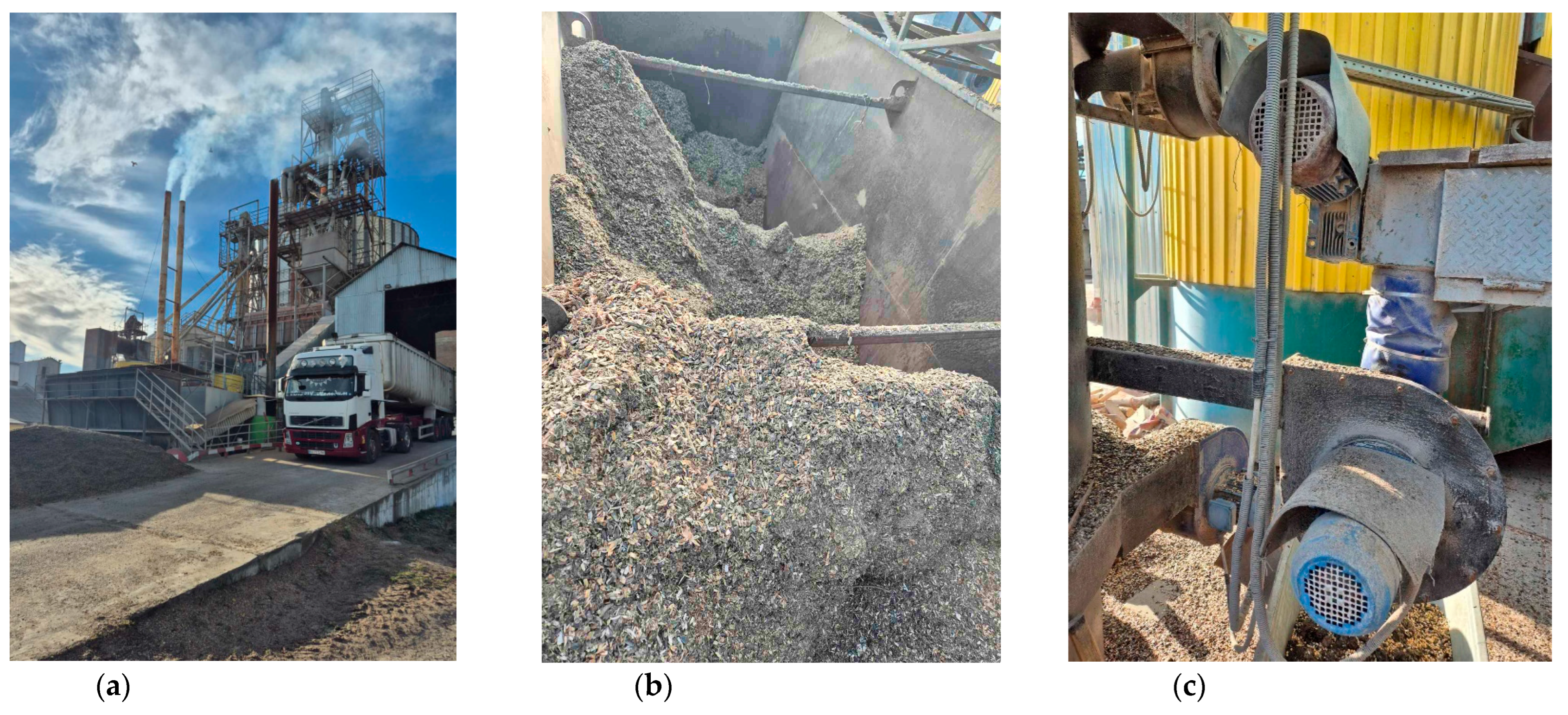
The conversion of waste agricultural species into non-standard biomass fuels involves the collection, sorting, and preparation of various types of agricultural residues to ensure their suitability for energy generation. As illustrated in Figure 1b, this process includes a range of raw materials such as chopped wheat straw, corn cobs, sunflower husks, and other crop processing residues. These materials are first segregated according to type, particle size, and moisture content, allowing for uniform feeding and stable combustion in the bioenergy system. Minimal preprocessing is applied, avoiding the need for pelletizing or briquetting, which reduces both energy consumption and operational costs. By transforming locally available waste into a usable fuel form, the process not only provides a renewable energy source but also supports waste valorization and contributes to circular economy principles, making decentralized bio-resource energy generation more sustainable and efficient.

3.1. Research Site and Equipment

The experimental research was conducted using a specially designed bioenergy grain-drying complex constructed based on Sukup-type grain dryers. This facility was developed to evaluate the performance, stability, and energy efficiency of decentralized bio-resource heat generation systems under real operating conditions. The integration of a jet–vortex bioheat generator and an intelligent biomass dosing system allowed us to obtain reliable data on combustion processes, thermal output regulation, and equipment response to fluctuating biomass properties.
The grain-drying complex is in Ternopil Region, Ukraine, a region characterized by intensive agricultural production and a substantial supply of biomass residues. This location was chosen deliberately, as it represents a typical operational environment where decentralized bioenergy solutions can directly support local agricultural and industrial needs. The presence of an existing elevator infrastructure made it possible to integrate the system into a functioning technological chain and to evaluate its performance during continuous, large-scale grain-drying cycles.
The Sukup-based installation is designed to ensure controlled drying of various grain crops, including wheat, corn, rapeseed, and sunflower. Unlike traditional heating systems that rely on natural gas or liquid fuels, the modified setup utilizes non-standardized agricultural biomass with high moisture content as the primary energy source. This allowed us to test the system’s capability to maintain stable thermal conditions while processing biomass with varying granulometry and density.
To assess the effectiveness of the innovative energy generation system, detailed instrumentation and diagnostic equipment were installed at key nodes of the dryer. Measurements included thermal output, fuel feed rate, temperature stability of the heat carrier, and electrical parameters of the adjustable drive. Sensors were strategically positioned to monitor the behavior of the screw-belt dosing mechanism, the combustion chamber, and the airflow pathways inside the jet–vortex bioheat generator.
A general view of the bioenergy grain-drying complex, along with the main structural elements involved in the experiments, is presented in Figure 1. The figure illustrates the arrangement of the Sukup-type dryer, the integrated bioheat generator, the biomass storage and feeding system, and the monitoring equipment used throughout the research. This visual reference supports a clear understanding of the technological environment within which the optimization studies were performed.
The operating principle of the drying equipment is based on a two-stage beater-screw biomass dosing system and an original jet–vortex method for fuel mixing and injection into the combustion chamber. Within the chamber, biomass particles remain in a suspended state and, at temperatures of approximately 450 °C, undergo sequential laminar gasification and combustion, like the behavior of conventional hydrocarbons.
In the two-stage dosing scheme, the beater mechanism forms a controlled biomass flow from the storage hopper to the operational hopper. From there, the screw feeder ensures stable and uniform fuel supply to the process fan, which delivers the biomass into the furnace via a jet stream and creates the conditions required for intense vortex combustion (Figure 1b,c).
In the industrial experimental setup, an automatic control system continuously monitors the flue gas temperature, the furnace temperature, and the heat carrier temperature at the heat exchanger outlet; these parameters are currently used as boundary and validation conditions for the numerical model. Comprehensive, continuous measurements of flue gas composition require complex and costly instrumentation; therefore, periodic measurements are conducted by certified environmental inspection authorities. In addition, previously obtained results demonstrate the relationship between combustion efficiency and flue gas composition, particularly excess air coefficients measured using a lambda probe, indirectly supporting the validity of the applied simulation approach.
Based on numerical 3D simulations of thermal destruction and combustion processes in jet–vortex heat generators, the most efficient and environmentally safe operating modes were identified for fuels with varying thermophysical and thermoenergetic properties. It was established that for a 3.0 MW heat generator, the limiting stable operating regime corresponds to the thermochemical decomposition of biomass with a lower heating value of 18.5 MJ/kg and a moisture content of 40%. The use of numerical modeling of the thermochemical destruction of biomass in the furnace enabled the optimization of the adjustable electric drive of the screw feeder, ensuring complete combustion of the fuel.

3.2. Numerical and Experimental Analysis of Screw Feeder Performance

Numerical modeling serves as a fundamental tool for analyzing and optimizing decentralized bio-resource energy generation systems that incorporate gasification technologies [39]. By simulating thermochemical conversion processes, heat and mass transfer, and system-level interactions, numerical models enable the identification of optimal operating parameters that minimize energy losses and improve overall efficiency [40]. Optimization procedures based on modeling results support the rational selection of gasifier design, feedstock properties, and control strategies, leading to reduced fuel consumption and enhanced energy savings [41]. Consequently, the integration of numerical modeling with optimization techniques contributes to the development of energy-efficient, reliable, and economically viable decentralized bioenergy systems [39,42,43,44].
The primary characteristic of a continuous-action feeder is its productivity, defined as the integral of the instantaneous mass flow rate over a given time interval. Analytically, this can be expressed as [21]:
Π = χ t t + t 1 Q t d t = χ t t + t 1 S 0 t V 0 t ρ t d t
where χ is integration time interval coefficient; S 0 ( t ) is the cross-sectional area of the feeder, m2; V 0 ( t ) is the material velocity, m·s−1; and ρ ( t ) is density of the material, kg·m−3. In first approximation, S 0 ( t ) and V 0 ( t ) are determined by the feeder design, and variability in productivity primarily depends on fluctuations in material density. The mass flow rate Π m can be obtained by multiplying the volumetric flow by the average material density ρ :
Π m = Π V ρ ¯
where Π V = X S 0 · V 0 is the volumetric productivity, and ρ ¯ is the mean value of the material flow density, kg·m−3.
Considering the above and taking into account that the density ρ ¯ fluctuates continuously around its mean value, expression (1) can be rewritten in the form:
Π ¯ 1   =   χ t t + t 1 Q ( t ) d t   =   t t + t 1 Π V ( t ) ρ ¯ ( t ) d t
where Π ¯ is the mean productivity.
If we consider Π ¯ as a random variable and compute its expected value, we obtain:
Π ¯ 2 = 0 t + l 1 Π V t ρ ¯ t + Π V σ ρ
where σ ρ is the standard deviation of the density relative to its mean value.
Comparing expressions (3) and (4), it becomes evident that the deviation Π V σ ρ represents the error introduced, which leads to an underestimation of the actual productivity of the dosing device. In this case, the error increases as the deviation in the instantaneous productivity Πm—and consequently the flow rate Q(t)—from its mean value grows. Thus, variations in both Πm and Q(t) exhibit a stochastic character over time. For this reason, the random flow-rate function Q(t) defined over the interval T, can be represented with a high degree of fidelity by a Fourier series expansion:
x t = a 0 + k = 1 k a K cos ω k t + b k sin ω k t
where coefficients a 0 , a k and b k are determined based on discrete-time measurements, and k corresponds to the number of significant spectral components needed to approximate the initial function with sufficient accuracy. In our case, we will determine the coefficients from the dependence:
a 0 = 1 T 0 T Q t d t ;     a k = 2 T 0 T Q t cos ω k t   d t ;     b k = 2 T 0 T Q t sin ω k t   d t
The greater the number of terms included in expression (6), the more accurately the spectral analysis of x(t) represents the original function Q(t). Since the coefficients a k and b k tend to zero as n , the Fourier series in expression (5) can be approximated using a finite number of terms. Based on this condition, it can be concluded that:
Q t x t
During the investigation of continuous-operation feeders, the values of the function Q(t) are recorded at equal time intervals Δ t . Given this, to determine the coefficients a k and b k the Bessel coefficients can be used:
a 0 = 1 N l = 1 N x l ;     a k = 2 N 1 l = 1 N 1 x l cos 2 π N 1 k l i b k = 2 N 1 l = 1 N 1 x l sin 2 π N 1 k l
where N is the number of recorded points, ( k = 1 , , N 1 ).
The coefficients determined using expressions (8) define a trigonometric polynomial:
x l * = a 0 + k = 1 n a k cos 2 π N 1 k l + b k sin 2 π N 1 k l
which, according to the least-squares method, provides the best approximation of the function x(t), represented by a discrete set of ordinates x l , recorded at equal time intervals Δ t , i.e.,
l = 1 N 1 x t x l * 2 m i n .
If n = ( N 1 ) / 2 , then the sum in expression (9) evaluated at t = l Δ t exactly reproduces the original sampled values x l . Prior to each evaluation of the function, it is necessary to define the frequency interval under consideration, f m i n f m a x . The highest frequency (the Nyquist frequency) is determined in accordance with the Kotelnikov–Nyquist sampling theorem.
f m a x = 1 2 Δ t
The lowest frequency, which serves as the quantization step of the frequency axis, is given by
f m i n = 1 T
where T = Δ t N 1 is the total observation (realization) time with sampling at N discrete points.
To calculate the characteristics of the random function describing the flow of shredded biomass (such as straw, corn cobs, or grain-elevator processing residues) during continuous feeding, the process must be stationary; that is, its statistical properties should not vary significantly over time.
One sufficient condition for stationarity is that the normalized mean value and the normalized standard deviation of the random process satisfy m = 0 and σ 1 , respectively. The stationarity of the process is most effectively verified by analyzing the temporal behavior of the correlation function. If the correlation function R ( τ ) tends to zero within a specified time interval, this condition is sufficient to consider the process stationary [21].
After confirming the stationarity of the continuous biomass feeding process, the statistical estimates of the function Q(t) are calculated, including the mathematical expectation mx, the variance Dx of the function x(t), the standard deviation σ, the coefficient of variation c, the spectral density S ω , the correlation function R τ , the third central moment (skewness) M 3 , and the fourth central moment M 4 .
These statistical estimates provide a comprehensive characterization of continuous-flow biomass dosing and yield a rigorous mathematical description of the process that is valid across all operating modes. Furthermore, by applying the theory of random functions in combination with experimental data obtained from technological equipment tests [22], it becomes possible, at a preliminary stage, to predict the requirements for the automatic control system of the biomass dosing line supplying fuel to the generator furnace.
The uniform delivery of a prescribed amount of material with the required accuracy is ensured by the following conditions:
t 1 t 1 + Δ t Q t d t t 1 t 1 + Δ t Q s e t t d t ± Δ t 1 t 1 + Δ t Q t d t Q s e t Δ t ± Δ
where Q t is the realization of the material flow rate over the time interval Δ t ; Q set ( t ) is the prescribed (set-point) productivity of the feeder; Δ is the allowable deviation.
Taking into account expression (10), the integration interval can be written as:
Δ t = π ω m a x
where ω m a x is the maximum frequency characterizing the material flow.
Since, in the present case, the velocity of the feeding screw conveyor (V = 0.1 m·s−1) is the dominant factor determining the flow frequency, the value Δ t = 5   s was selected in accordance with [21]. This value is commonly adopted for the analysis of similar continuous dosing devices.
The proposed methodological framework forms the basis for analyzing and controlling continuous biomass dosing processes under real operating conditions. The application of statistical and spectral analysis, combined with stationarity verification and correlation-based assessment, enables accurate characterization of flow fluctuations and provides a reliable foundation for selecting appropriate control parameters. Experimental validation made it possible to demonstrate stable and predictable behavior of the screw feeder over a wide range of operating speeds, confirming the adequacy of the adopted assumptions and control intervals. Moreover, the linear productivity characteristics and the decay of correlation functions substantiate the feasibility of applying standard PI-based control strategies.

4. Results and Discussion on the Optimization of Bio-Resource Decentralized Energy Generation

The precise control of biomass feeding and the optimization of bioheat generation are critical for achieving stable combustion, high energy efficiency, and environmentally safe operation in decentralized bio-resource energy systems. Variability in the flow of non-standard biomass, caused primarily by screw-feeder mechanisms, can significantly affect the thermal input to combustion chambers and challenge the performance of automatic control systems. To address these issues, this section presents a comprehensive investigation combining experimental measurements, spectral and statistical analysis, and numerical modeling. The study focuses on characterizing the stochastic behavior of continuous biomass dosing, evaluating the dynamic response of dosing and measurement equipment, and developing control strategies for jet–vortex bioheat generators. These analyses enable the identification of optimal operating regimes, provide guidance for the design and tuning of adjustable electric drives and PI-based regulators, and support the effective utilization of heterogeneous biomass fuels in industrial-scale energy systems.

4.1. Spectral Analysis and Control Optimization of Continuous Biomass Dosing Processes

The accurate regulation of biomass dosing is a critical prerequisite for ensuring stable combustion conditions and high energy efficiency in decentralized bio-resource energy systems. Continuous-feed mechanisms, particularly screw-based dosing units, inherently generate fluctuations in material flow that manifest as dispersion and frequency-dependent variability, which can compromise the uniformity of thermal input to the combustion chamber. Therefore, a detailed spectral analysis of biomass flow and an evaluation of the dynamic characteristics of the dosing system are essential for selecting appropriate control strategies and tuning adjustable electric drives. This part of the research presents an investigation into the dispersion properties of shredded biomass, the spectral distribution of dosing-induced fluctuations, and the corresponding requirements for effective regulation within closed-loop control systems.
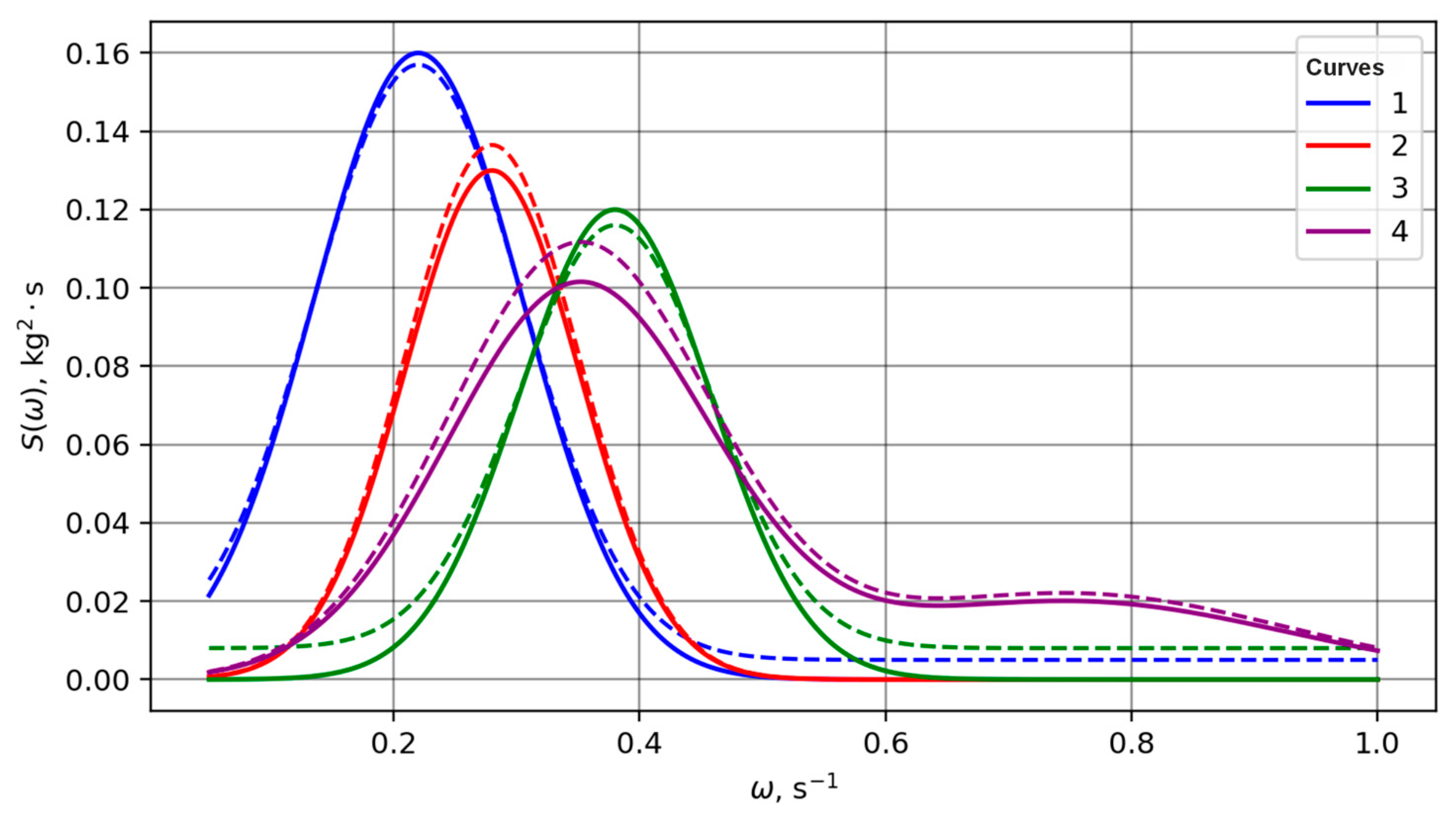
Based on the methodological approach and the mathematical framework given in Formulas (1)–(14), as well as on our experimental investigation of the continuous dosing of shredded biomass, it was established that the screw mechanism is the primary source of flow dispersion. The resulting spectral density function S ( ω ) (Figure 2) is well approximated by an exponential–cosine expression of the form:
S ω = α 1 D x π 1 α 1 2 + ω β 1 2 + 1 α 1 2 + ω + β 1 2
where D x is the variance, kg2; where α 1 and β 1 are the parameters of the autocorrelation function (ACF), and ω is the angular frequency, rad·s−1.
The studies conducted using the methodology [25] also confirmed the favorable control characteristics of the screw feeder. The productivity scale of the equipment for two-component raw materials (chopped wheat straw and corn cobs) exhibits a linear behavior. Correlation functions constructed from experimental data for material flow at three screw rotational speeds showed a gradual decay over time τ. This behavior is consistent with the stationarity hypothesis [21].
The correlation functions of the material flow, constructed from experimental data for three screw feeder rotational speeds ω 1 = 75.0   s 1 ( ω 1 = 75.0   s 1 ; 2— ω 2 = 95.0   s 1 ; 3— ω 3 = 147.0   s 1 ) exhibit a clear decay over time τ . This decay indicates a gradual loss of correlation between successive flow fluctuations as the time lag increases. Such behavior is a characteristic feature of stationary stochastic processes and reflects the stability of the dosing dynamics under steady operating conditions. Therefore, the obtained results confirm the stationarity hypothesis and support the applicability of the adopted statistical analysis framework [21].
Analysis of the dispersion spectra (Figure 1) shows that as frequency increases, the spectral density S ( ω ) decreases and approaches zero for ω 0.95 rad·s−1. The spectra within the frequency range 0.05–0.95 rad·s−1 encompass 85–95% of the total variance D x . Under these conditions, the maximum frequency of the elementary harmonics of the material flow does not exceed 0.95 rad·s−1. Accordingly, the corresponding oscillation period is Tmax = 2π/0.95 = 6.6 s. Within such a period, the productivity of the dosing device may require adjustment, indicating the need for active control of the continuous fuel-feeding process into the combustion chamber. Biomass with such frequency-distribution properties and approximation (15) requires regulators whose frequency responses resemble selective band-pass filters [21]. Spectra 1–3 (Figure 1) are approximated by (15) with a variance error of up to 5%. The corresponding ACF parameters for each spectrum are:
α 1 = 0.11 ,   α 2 = 0.12 ,   α 3 = 0.15 ;   β 1 = 0.21 ,   β 2 = 0.27 ,   β 3 = 0.41
Since the oscillatory parameter β varies only slightly (within 0.21–0.41), the attenuation parameter α plays the dominant role in shaping the disturbance acting on the control system. As α increases, the spectral density tends toward S ω = c o n s t , and the productivity fluctuations resemble “white noise.” For lower α values, high-frequency components are suppressed, and the flow variability is dominated by infralow frequencies (0.05–0.95 rad·s−1), which are effectively manageable using industrial proportional–integral (PI) controllers [21].
Effective regulation of biomass dosing requires real-time measurement of feeder productivity. For this purpose, an acoustic flowmeter was used. Its experimental evaluation demonstrated that the measurement error does not exceed 5% for shredded straw of cereal and legume crops.
The quality of biomass dosing was assessed by minimizing the following objective function:
D Q A = 1 π S Δ Q ω W H p 2 d ω
where D Q A is the variance of the material flow rate during controller operation; S Δ Q ω is the spectral density of the dosed biomass flow; and W H p is the transfer function with respect to the load disturbance signal.
Optimization was conducted by minimizing the ratio
m = D Δ G A Δ t D Δ G Δ t
where D Δ G A Δ t , D Δ G Δ t are the variances of material dosing with and without controller operation, respectively.
Since D Δ G A Δ t = D Δ G i f α i , β i , Δ t , for any practical implementation, the criterion m can be regarded as a comprehensive characteristic of the stochastic processes Q ( t ) and G ( t ) for any value of Δ t .
The function α i , β i , Δ t depends on the magnitude of S Δ Q ω . During regulation, the spectrum shape S Δ Q ω is assumed to remain unchanged, while only the amplitudes of its components decrease—effectively corresponding to a modification of the attenuation parameter α i with minimal influence on β i .
The value of D Δ G A Δ t is determined primarily by the transfer function of the screw feeder:
W p = K ¯
where K ¯ = π d 2 s 2 / 4 ( d and s 2 are the diameter and pitch of the screw, respectively).
As material passes through the screw mechanism, high-frequency components of the biomass-flow spectrum S Δ Q ω are significantly attenuated, as the active dosing elements inherently shape the flow according to their natural frequency response. The cutoff frequency of the screw feeder according (18) ( ω p = 1.53 rad·s−1) and that of the acoustic flowmeter ( ω p = 5 rad·s−1) provide the baseline values required for determining regulator limits.
For the experimentally derived biomass-flow spectrum within the frequency domain ω 1 rad·s−1, the condition ω p ω f is satisfied, where ω f represents the fluctuation frequency of the material flow. This confirms that both the acoustic flowmeter and the screw feeder possess adequate dynamic characteristics for use in closed-loop dosing control systems [21].
Following the recommendations [22], the selection of the adjustable electric drive is based on the attenuation parameters of spectra 1–3. For materials with α i   0.1, standard PI regulators are recommended, as D G A Δ t significantly reduce variance due to the elimination of static error. Therefore, in our case, where α 1 , 2 , 3   0.1, the use of a PI controller integrated with a frequency-controlled electric drive is technically justified and provides substantial reduction in biomass flow dispersion during screw-feeder operation.
The conducted analysis demonstrates that the screw-based continuous dosing mechanism is the dominant source of biomass flow dispersion, with its spectral characteristics accurately approximated by exponential–cosine functions. The identified frequency range of 0.05–0.95 rad·s−1 captures up to 95% of the total variance, confirming the necessity of employing regulators with selective band-pass filtering properties. The dynamic assessment of both the screw feeder and the acoustic flowmeter shows that their cutoff frequencies meet the requirements for closed-loop control, enabling effective compensation of low-frequency disturbances. Consequently, the use of a PI-regulator integrated with a frequency-controlled electric drive is technically justified and ensures a significant reduction in biomass dosing variability, thereby improving the stability and efficiency of the combustion process.

4.2. Development and Control of Jet–Vortex Bioheat Generators for Efficient Utilization of Non-Standardized Biomass Fuels

The authors’ development of a series of jet–vortex bioheat generators for energy-intensive technologies has enabled the efficient utilization of non-standardized, locally sourced bio-waste that does not require preliminary preparation and can be stored in open areas for up to three years. This innovation addresses a critical limitation of conventional bioenergy systems, which typically rely on pretreated or standardized fuels.
The ambitious objective of creating highly efficient, automated bioheat generators incorporating artificial intelligence (AI) elements was implemented in energy-intensive grain-drying technologies with the aim of eliminating the use of traditional hydrocarbon fuels such as natural gas and furnace oil. The developed systems allow 2.5–3.0 tonnes of bio-waste to be converted into thermal energy equivalent to the combustion of approximately 1000 m3 of natural gas. In addition, the generators are equipped with heat exchangers that enable grain drying using warm, clean air rather than combustion products, thereby improving both environmental performance and product quality.
The jet–vortex generators operate in a manner analogous to internal combustion engines, with smooth power regulation in the range of 0.25–1.0 P n ( P n —nominal or rated thermal power). This capability allows precise control of the outlet air temperature for drying processes, achieving an accuracy of 1–2 °C within the operating range. Such performance ensures stable technological conditions even under variable fuel properties.
To ensure reliable and stable operation of the bioheat generator, an integrated automatic control system was developed for the entire complex. The key control variable is the required thermal power output of the generator, which is achieved by regulating the productivity of the fuel-feeding screw while accounting for the current moisture content of the biomass.
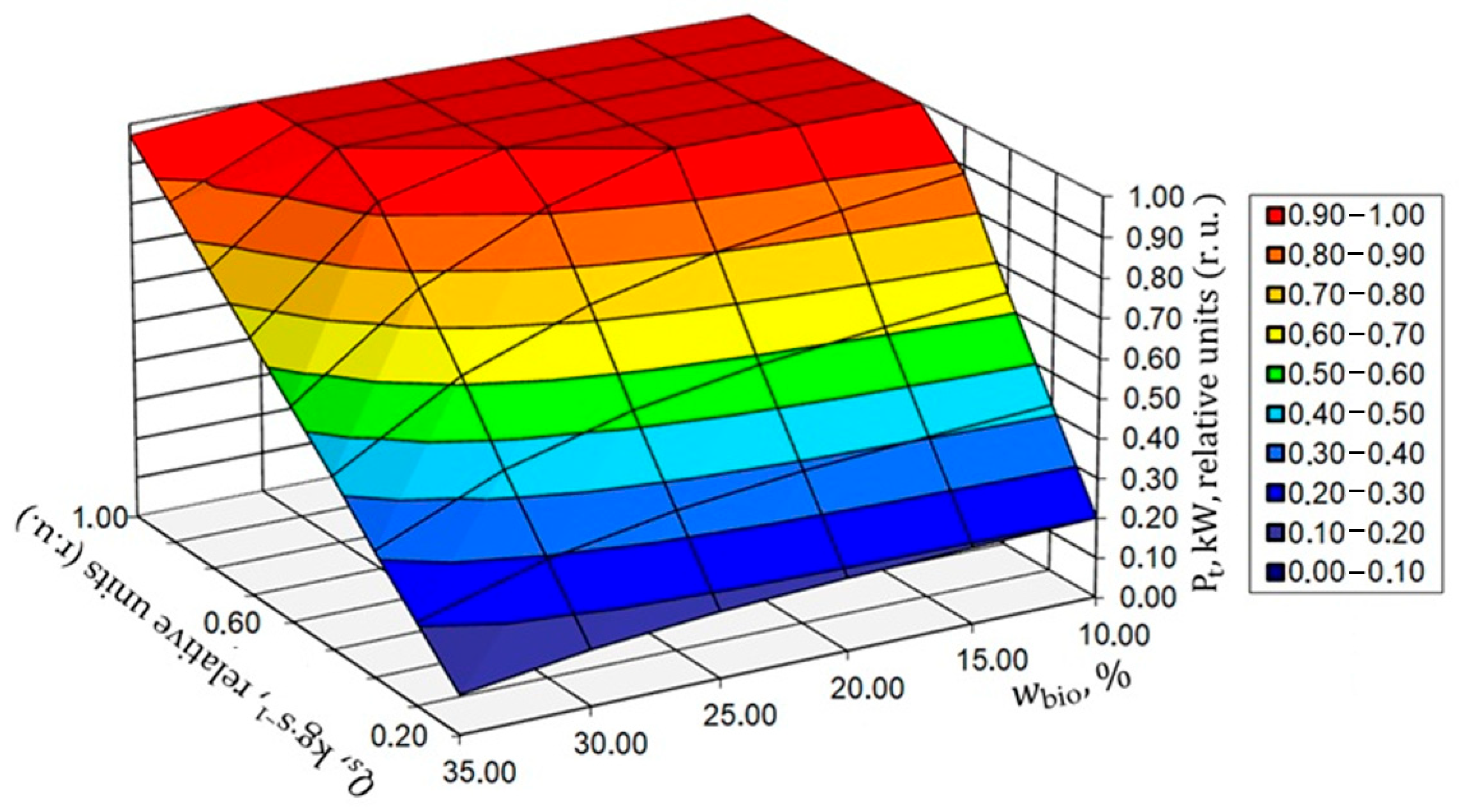
The developed control system provides a controlled thermochemical decomposition process of the biomass fuel. One of the fundamental functional relationships employed in the automatic control system of the bioheat generator operation is illustrated in Figure 3.
The presented relationship confirms the feasibility of effective control of the heat generator power P t as a function of the screw feeder productivity Q s and the current biomass moisture content w bio . The quality of the biomass combustion process is monitored by measuring temperature parameters and the excess air coefficient. This data is also taken into account by the automatic control system, which accordingly adjusts the air supply to ensure stable and efficient operation.
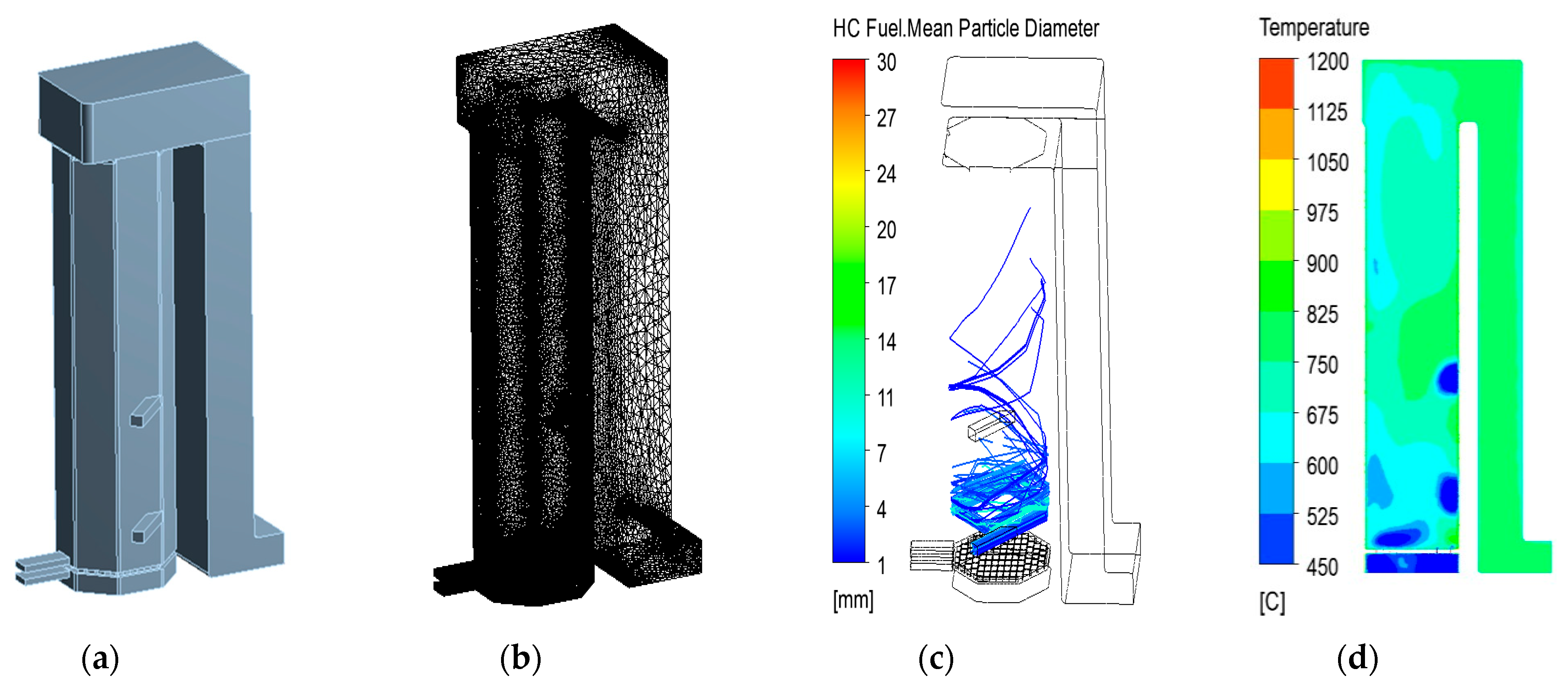
Three-dimensional numerical modeling of thermochemical biomass conversion in a vortex bioheat generator is presented in Figure 4. The simulations illustrate the key processes of biomass particle transport, mixing, gasification, and combustion within the generator flow domain. The obtained results provide insight into temperature distribution and particle behavior, enabling the identification of efficient and environmentally safe operating regimes.
It should be noted that improvements in the energy and environmental performance of the vortex bioheat generator were achieved by optimizing the biomass mixing and combustion processes using numerical methods. The geometry of the flow path of the jet–vortex bioheat generator was developed in a three-dimensional AutoCAD 2021 environment (Figure 4a). The calculations were performed using the finite volume method. For numerical simulation of mixing, combustion, and combustion product formation processes (including harmful emissions) a computational mesh of the vortex heat generator flow domain was generated (Figure 4b), comprising more than 3.8 million computational cells. In the numerical modeling of biomass combustion, not only the particle trajectories (Figure 4c) but also the particle size distribution, initial moisture content, and the formation of free carbon and ash were taken into account. Model verification was carried out by comparing the results of numerical simulations with data obtained from industrial-scale experimental tests.
Figure 4c,d present examples of numerical modeling results. Figure 4c illustrates the visualization of biomass particle size distribution and their motion trajectories throughout the complete residence cycle within the combustion chamber—from entry into the combustion zone to complete gasification or conversion into ash. Figure 4d shows the temperature field during biomass combustion for fuels with specific thermophysical and energy characteristics. Analysis of the numerical simulation results made it possible to identify pathways for design improvement and to determine optimal, environmentally safe operating regimes for jet–vortex biomass combustion in solid biofuel heat generators.
Analysis of the numerical simulation results provided detailed insight into the complex processes of biomass particle transport, mixing, gasification, and combustion within the jet–vortex bioheat generator. These results allowed for the identification of specific pathways for design optimization, including improvements in flow geometry, fuel distribution, and residence time of particles in the combustion zone. The simulations also enabled the determination of optimal operating regimes that maximize energy efficiency while minimizing harmful emissions, ensuring environmentally safe performance. Additionally, the study highlighted how variations in particle size, moisture content, and thermophysical properties influence combustion dynamics and heat transfer, informing practical adjustments to the generator design. Overall, the findings offer a comprehensive framework for enhancing both the technical performance and ecological sustainability of solid biofuel heat generation systems.
The proposed bioenergy system has been continuously operated for over a decade under industrial conditions at a grain-drying facility, confirming its technological maturity and practical reliability. The jet–vortex bioheat generator is designed to utilize heterogeneous, non-standardized biomass fuels of various agricultural origins without the need for complex pre-treatment procedures, except for mechanical size reduction for certain feedstocks such as corn cobs. Experimental and operational validation was carried out using locally available biomass resources characterized by an annual renewable cycle, encompassing a broad range of moisture contents, particle sizes, and compositional properties.
The improvement compared to conventional bioheat generators is achieved through continuous monitoring of temperature fields in multiple zones of the bioheat generator and the heat exchanger. Based on these measurements, the automatic control system generates real-time operational recommendations, including timely cleaning of heat-exchange surfaces, which mitigates fouling effects and ensures stable and efficient heat transfer under variable operating conditions.
The automatic control system, incorporating AI elements, ensures efficient fuel combustion and maintains the outlet temperature of the bioheat generator’s heat exchanger within ±0.5 °C. Combustion-related parameters were continuously monitored during several years of operation, confirming the system’s stability. For comparison, conventional control systems operating on a fixed time-based fuel feed (on–off cycles) were evaluated, which were unable to respond rapidly to variations in fuel moisture, calorific value, or particle size. These results demonstrate that the AI-based system provides significantly improved combustion stability under variable fuel conditions.
Extended industrial operation has demonstrated that elevated fuel moisture levels do not adversely affect the stability of the combustion process or the overall performance of the equipment. The integrated automatic control system provides adaptive regulation of fuel supply and air flow, ensuring efficient thermochemical conversion across varying fuel characteristics while maintaining the outlet temperature of the heat exchanger within ±0.5 °C. Potential issues associated with ash deposition and slagging are effectively mitigated through the jet–vortex combustion mechanism and controlled temperature fields, which suppress localized overheating and limit excessive ash accumulation during long-term continuous operation.

5. Conclusions

This research demonstrates that precise regulation of biomass dosing is critical for maintaining stable combustion and achieving high energy efficiency in decentralized bioenergy systems. The screw-based continuous dosing mechanism was identified as the primary source of flow dispersion, with its spectral characteristics accurately captured by exponential–cosine functions, enabling the implementation of effective PI-regulator control strategies integrated with frequency-controlled electric drives to ensure uniform fuel supply and stable thermal input.
The developed jet–vortex bioheat generators effectively utilize non-standardized, locally sourced agricultural biomass with annual renewal cycles and moisture content up to 40%, without requiring prior fuel preparation. These generators provide precise thermal regulation, maintaining outlet air temperatures within 1–2 °C and allowing power control across 0.25–1.0 Pn, while the integrated AI-assisted control system optimizes screw feeder performance based on statistical analysis, ensuring reliable operation under variable biomass properties.
Three-dimensional numerical simulations of thermochemical biomass conversion guided the optimization of particle transport, mixing, gasification, and combustion, enabling the identification of environmentally safe operating regimes and supporting design improvements that enhance combustion efficiency, fuel mixing, and emission control. The developed technology allows the conversion of 2.5–3.0 t of biomass into thermal energy equivalent to approximately 1000 m3 of natural gas, with a payback period of less than one year and energy costs 5–7 times lower than conventional hydrocarbon fuels. Overall, the integration of advanced dosing regulation, automated control, and jet–vortex combustion provides a robust, high-performance, and sustainable solution for decentralized bioenergy generation.
Future research will focus on further enhancing the efficiency, adaptability, and intelligence of decentralized bioenergy systems. Key directions include the integration of real-time optimization algorithms and advanced machine learning techniques to enable predictive control of biomass dosing and combustion under highly variable fuel properties. Additional studies will explore the use of hybrid fuels combining agricultural residues with other renewable feedstocks, the long-term impact of fuel heterogeneity on equipment durability, and the minimization of emissions through improved thermochemical conversion. Furthermore, scaling the developed jet–vortex bioheat generators to larger industrial applications and integrating them into smart energy networks will be investigated to maximize energy efficiency, system resilience, and environmental sustainability.

Author Contributions

Conceptualization, V.F., O.K., D.S., R.Z., M.P. and R.D.; methodology, V.F., O.K., D.S., R.D., R.Z. and M.P.; software, D.S., V.F., O.K., R.Z., M.P. and R.D.; validation, V.F., O.K., D.S., R.Z., M.P. and R.D.; formal analysis, V.F., O.K., D.S., R.Z., M.P. and R.D.; investigation, V.F., O.K., R.Z., D.S., M.P. and R.D.; writing—original draft preparation, V.F., D.S., R.Z., M.P., R.D. and O.K.; writing—review and editing, V.F., O.K., D.S., R.Z., M.P. and R.D.; visualization, V.F., O.K., D.S., R.Z., M.P. and R.D.; supervision, R.D.; project administration, D.S., R.D. and M.P.; funding acquisition, D.S., R.D. and M.P. All authors have read and agreed to the published version of the manuscript.

Funding

This study was conducted under a research project funded by a statutory grant of the AGH University of Krakow for maintaining research potential and research project supported by program “Excellence Initiative—Research University” for the AGH University of Krakow.

Data Availability Statement

The original contributions presented in this study are included in the article. Further inquiries can be directed to the corresponding authors.

Acknowledgments

The presented work contains the results of the research project DT-530 “Scientific substantiation and development of georeactor systems for the integrated processing of coal preparation waste with a focus on the recovery of critical raw materials”, carried out with the support of the Ministry of Education and Science of Ukraine.

Conflicts of Interest

The authors declare no conflicts of interest. The funders had no role in the design of the study; in the collection, analyses, or interpretation of data; in the writing of the manuscript; or in the decision to publish the results.

References

  1. Polyanska, A.; Pazynich, Y.; Petinova, O.; Nesterova, O.; Mykytiuk, N.; Bodnar, G. Formation of a Culture of Frugal Energy Consumption in the Context of Social Security. J. Int. Comm. Hist. Technol. 2024, 29, 60–87. [Google Scholar] [CrossRef]
  2. Fedoreiko, V.; Zahorodnii, R.; Lutsyk, I.; Rutylo, M.; Bureha, N. Modelling of resource-saving control modes of a bioheat generator using neuro-fuzzy controllers. IOP Conf. Ser. Earth Environ. Sci. 2025, 1457, 012005. [Google Scholar] [CrossRef]
  3. Humentyk, M.Y.; Bordus, O.Y.; Fuchylo, Y.D.; Atamanyuk, O.M.; Zatserkovna, N.S.; Yakymenko, O.G.; Humentyk, V.M. Prospects for the Cultivation of Paulownia under the Conditions of the Right-Bank Forest-Steppe of Ukraine. Bull. Educ. Inst. Curr. Issues Mag. 2023, 2, 1–10. [Google Scholar] [CrossRef]
  4. Bashynska, I.; Niekrasova, L.; Ivliev, D.; Dudek, M.; Kosenkov, V.; Yakimets, A. Justification for Transitioning Equipment to Direct Current for Smart Small Enterprises with Sustainable Solar Power Autonomy. In Proceedings of the 2024 IEEE 5th KhPI Week on Advanced Technology (KhPIWeek), Kharkiv, Ukraine, 7–11 October 2024; pp. 1–6. [Google Scholar] [CrossRef]
  5. Beshta, O.S.; Beshta, O.O.; Beshta, D.; Tkachenko, S.; Khalaimov, T.; Skliar, D. Technologies for Increasing the Energy Efficiency of Electric Vehicles. In Proceedings of the 2023 IEEE 5th International Conference on Modern Electrical and Energy System (MEES), Kremenchuk, Ukraine, 27–30 October 2023; pp. 1–5. [Google Scholar] [CrossRef]
  6. Olishevskyi, H.; Olishevskyi, I.; Lutsenko, I.; Koshelenko, Y.; Pazynich, Y. Substantiation of Optimal Parameters for Managing a Hybrid Heat Pump Scheme. Inżynieria Miner. 2026, 4. [Google Scholar] [CrossRef]
  7. Saqib, N.; Ozturk, I.; Sharif, A.; Cichoń, D. Enhancing sustainable energy: Mineral exports, financial development, and foreign investment can build a greener future? Resour. Policy 2024, 97, 105249. [Google Scholar] [CrossRef]
  8. Golovchenko, A.; Pazynich, Y.; Potempa, M. Automated Monitoring of Physical Processes of Formation of Burden Material Surface and Gas Flow in Blast Furnace. Solid State Phenom. 2018, 277, 54–65. [Google Scholar] [CrossRef]
  9. Lewicka, D. The impact of HRM on creating proinnovative work environment. Int. J. Innov. Learn. 2010, 7, 430. [Google Scholar] [CrossRef]
  10. Hobson, P.N. Energy from biomass and wastes. Agric. Wastes 1982, 4, 489. [Google Scholar] [CrossRef]
  11. Viscusi, G.; Ahmad, M.M.; Gorrasi, G. Biomass Wastes for Adsorbent and Waste Treatment Applications. In Biomass Wastes for Sustainable Industrial Applications; CRC Press: Boca Raton, FL, USA, 2024; pp. 253–304. [Google Scholar] [CrossRef]
  12. Ryś, K.; Chmura, D.; Dyczko, A.; Woźniak, G. The Biomass Amount of Spontaneous Vegetation Concerning the Abiotic Habitat Conditions in Coal Mine Heaps as Novel Ecosystems. J. Ecol. Eng. 2024, 25, 79–100. [Google Scholar] [CrossRef]
  13. Ryś, K.; Chmura, D.; Prostański, D.; Woźniak, G. Biomass Amounts of Spontaneous Vegetation on Post-Coal Mine Novel Ecosystem in Relation to Biotic Parameters. Energies 2023, 16, 7513. [Google Scholar] [CrossRef]
  14. Gopalakrishnan, C.; Kasturi, P. The economics of biomass energy: A study of two agricultural wastes. Agric. Wastes 1980, 2, 83–91. [Google Scholar] [CrossRef][Green Version]
  15. Fedoreiko, V. Distributed energy generation based on jet-vortex bioheat generators. In E3S Web of Conferences; EDP Sciences: Les Ulis, France, 2024; Volume 567, p. 01001. [Google Scholar] [CrossRef]
  16. Kyrylenko, O.; Denysiuk, S.; Bielokha, H.; Dyczko, A.; Stecuła, B.; Pazynich, Y. Smart Monitoring and Management of Local Electricity Systems with Renewable Energy Sources. Energies 2025, 18, 4434. [Google Scholar] [CrossRef]
  17. Burlaka, S.; Boretska, T. Economic Aspects and Directions for the Development of the Energy Sector in Ukraine. Her. Khmelnytskyi Natl. Univ. Econ. Sci. 2022, 306, 7–14. [Google Scholar] [CrossRef]
  18. Dreshpak, N. Ukrainian Experience in Implementing Energy Management Systems in the Industrial Sector; Universitas Publishing: Hudson, QC, Canada, 2024; pp. 563–584. [Google Scholar] [CrossRef]
  19. Polyanska, A.; Sala, D.; Psyuk, V.; Pazynich, Y. A Multicriteria Approach to the Study of the Energy Transition Results for EU Countries. Energies 2025, 18, 5406. [Google Scholar] [CrossRef]
  20. Lysyi, N.; Helesh, A.; Popovych, V.; Saik, P.; Dmytruk, O. Thermodynamic Research of Coal Mining Waste Gasification Processes. Min. Miner. Depos. 2025, 19, 132–143. [Google Scholar] [CrossRef]
  21. Kravchenko, O.; Homan, V.; Suvorova, I.; Baranov, I. Using Pneumo-Hydrovortex Nozzles for Effective Combustion of Liquid Boiler Fuels. In Advances in Mechanical and Power Engineering; Springer: Berlin/Heidelberg, Germany, 2022; pp. 67–77. [Google Scholar] [CrossRef]
  22. Suvorova, I.; Kravchenko, O.; Goman, V.; Baranov, I. Criteria for Assessing the Energy-Ecological Effectiveness of using the Sludge of Waste Treatment Plants as Components of Liquid Composite Fuels. Eur. J. Sustain. Dev. 2020, 9, 328. [Google Scholar] [CrossRef]
  23. Bashynska, I. Ethical aspects of AI use in the circular economy. AI Soc. 2025, 1–19. [Google Scholar] [CrossRef]
  24. Hassan, Q.; Viktor, P.; Al-Musawi, T.J.; Ali, B.M.; Algburi, S.; Alzoubi, H.M.; Al-Jiboory, A.K.; Sameen, A.Z.; Salman, H.M.; Jaszczur, M. The renewable energy role in the global energy Transformations. Renew. Energy Focus 2024, 48, 100545. [Google Scholar] [CrossRef]
  25. Ali, S.U.; Nadeem, T.B.; Naqvi, S.M.A.A.; Kamran, M. Comprehensive techno-economic assessment of biomass power generation for sustainable solution of Pakistan’s energy crisis. Energy Sustain. Dev. 2025, 89, 101856. [Google Scholar] [CrossRef]
  26. Lozynskyi, V.H.; Falshtynskyi, V.S. Analytical Justification of the Thermochemical Interaction between Blast Reagents and Carbon-Containing Products under the Influence of Magnetic Fields. Nauk. Visn. Natsionalnoho Hirnychoho Universytetu 2024, 5, 30–36. [Google Scholar] [CrossRef]
  27. Dychkovskyi, R.O. Determination of the rock subsidence spacing in the well underground coal gasification. Nauk. Visnyk Natsionalnoho Hirnychoho Universytetu 2015, 6, 30–36. [Google Scholar]
  28. Bondarenko, V.; Dychkovskiy, R.; Falshtynskiy, V. Synthetic Stowing of Rockmass at Borehole Underground Coal Gasification (BUCG). In Deep Mining Challenges, Proceedings of the International Mining Forum 2009, Krakow, Poland, 18–21 February 2009; CRC Press: Boca Raton, FL, USA, 2009; pp. 169–177. [Google Scholar] [CrossRef]
  29. Lozynskyi, V. Critical Review of Methods for Intensifying the Gas Generation Process in the Reaction Channel during Underground Coal Gasification (UCG). Min. Miner. Depos. 2023, 17, 67–85. [Google Scholar] [CrossRef]
  30. de Jong, S.; Hoefnagels, R.; Wetterlund, E.; Pettersson, K.; Faaij, A.; Junginger, M. Cost optimization of biofuel production—The impact of scale, integration, transport and supply chain configurations. Appl. Energy 2017, 195, 1055–1070. [Google Scholar] [CrossRef]
  31. Lin, T.; Rodríguez, L.F.; Davis, S.; Khanna, M.; Shastri, Y.; Grift, T.; Long, S.; Ting, K.C. Biomass feedstock preprocessing and long-distance transportation logistics. GCB Bioenergy 2015, 8, 160–170. [Google Scholar] [CrossRef]
  32. Diachenko, G.; Laktionov, I.; Sala, D.; Pyzalski, M.; Balakhontsev, O.; Pazynich, Y. Substantiation of a Rational Model of an Induction Motor in a Predictive Energy-Efficient Control System. Energies 2025, 18, 4628. [Google Scholar] [CrossRef]
  33. Siwal, S.S.; Zhang, Q.; Devi, N.; Saini, A.K.; Saini, V.; Pareek, B.; Gaidukovs, S.; Thakur, V.K. Recovery processes of sustainable energy using different biomass and wastes. Renew. Sustain. Energy Rev. 2021, 150, 111483. [Google Scholar] [CrossRef]
  34. Dychkovskyi, R.O. Forming the bilayer artificially created shell of georeactor in underground coal well gasification. Nauk. Visnyk Natsionalnoho Hirnychoho Universytetu 2015, 5, 37–42. [Google Scholar]
  35. Kieush, L.; Koveria, A.; Schenk, J.; Rysbekov, K.; Lozynskyi, V.; Zheng, H.; Matayev, A. Investigation into the Effect of Multi-Component Coal Blends on Properties of Metallurgical Coke via Petrographic Analysis under Industrial Conditions. Sustainability 2022, 14, 9947. [Google Scholar] [CrossRef]
  36. Pazynich, Y.; Kolb, A.; Korcyl, A.; Buketov, V.; Petinova, O. Mathematical model and characteristics of dynamic modes for managing the asynchronous motors at voltage asymmetry. Polityka Energetyczna Energy Policy J. 2024, 27, 39–58. [Google Scholar] [CrossRef]
  37. Sun, L.; Basem, A.; Alhumaid, S.; Ayadi, M.; Dahari, M.; Alharbi, T.; Khairy, Y.; Alansari, A.; Babiker, S.G.; Mahariq, I. Thermal energy integration and optimization in a biomass-fueled multi-generation system for power, hydrogen, and freshwater production. Case Stud. Therm. Eng. 2025, 76, 107394. [Google Scholar] [CrossRef]
  38. Shokri, A.; Shakibi, H.; Azizi, S.; Yari, M.; Mahmoudi, S.M.S. Optimization of biomass-fueled multigeneration system using SOFC for electricity, hydrogen, and freshwater production. Int. J. Hydrogen Energy 2024, 88, 1293–1320. [Google Scholar] [CrossRef]
  39. Lozynskyi, V. Numerical Simulation of Carbonaceous Raw Material Combustion in a Coal Seam Channel. Min. Miner. Depos. 2024, 18, 109–124. [Google Scholar] [CrossRef]
  40. Shcherba, A.; Podoltsev, O.; Kucheriava, I.; Hutorova, M.; Petryshyn, L.; Pazynich, Y. Computer simulation and management of partial discharges in XLPE insulation of high-voltage power cable. Polityka Energetyczna Energy Policy J. 2025, 28, 5–26. [Google Scholar] [CrossRef]
  41. Falshtynskyi, V.; Dychkovskyi, R.; Zasedatelev, O. Economic indicators of BUCG on an experimental station in the SC “Pavlogradvugillia” conditions. Tech. Geoinformational Syst. Min. 2011, 2011, 201–206. [Google Scholar]
  42. Abanades, S.; Abbaspour, H.; Ahmadi, A.; Das, B.; Ehyaei, M.A.; Esmaeilion, F.; Assad, M.E.H.; Hajilounezhad, T.; Jamali, D.H.; Hmida, A.; et al. A critical review of biogas production and usage with legislations framework across the globe. Int. J. Environ. Sci. Technol. 2021, 19, 3377–3400. [Google Scholar] [CrossRef] [PubMed]
  43. Sala, D.; Richert, M. Perspectives of Additive Manufacturing in 5.0 Industry. Materials 2025, 18, 429. [Google Scholar] [CrossRef] [PubMed]
  44. Pyzalski, M.; Brylewski, T.; Sujak, A.; Durczak, K. Changes in the Phase Composition of Calcium Aluminoferrites Based on the Synthesis Condition and Al2O3/Fe2O3 Molar Ratio. Materials 2023, 16, 4234. [Google Scholar] [CrossRef] [PubMed]
Figure 1. Photographic documentation of the research site: (a) general view of the bio-heat energy complex for grain drying with a capacity of 6 MW; (b) the beater mechanism for forming the biomass fuel flow; (c) screw feeder equipped with a process fan for supplying biomass fuel to the furnace.
Energies 19 00737 g001
Figure 2. Spectral densities of shredded biomass flows formed by the screw feeder at engine rotation frequencies: 1— ω 1 = 75.0   s 1 ; 2— ω 2 = 95.0   s 1 ; 3— ω 3 = 147.0   s 1 ; curve 4—approximated dependence.
Energies 19 00737 g002
Figure 3. Control characteristics of the bioheat generator.
Energies 19 00737 g003
Figure 4. 3D numerical modeling of thermochemical biomass conversion in a vortex bioheat generator: (a) flow-domain geometry; (b) computational mesh; (c) biomass particle trajectories and size distribution; (d) temperature field during combustion.
Energies 19 00737 g004
Disclaimer/Publisher’s Note: The statements, opinions and data contained in all publications are solely those of the individual author(s) and contributor(s) and not of MDPI and/or the editor(s). MDPI and/or the editor(s) disclaim responsibility for any injury to people or property resulting from any ideas, methods, instructions or products referred to in the content.