Figure Legend
(1) In the original publication [
1], there was a mistake in the legend for Figure 4. The capitalization of the first letters in the title “Electrical Load Distribution Before Optimization.” was incorrect. The correct legend appears below.
Figure 4. Electrical load distribution before optimization.
(2) There was a mistake in the legend for Figure 5. The capitalization of the first letters in the title “Thermal Load Distribution Before Optimization.” was incorrect. The correct legend appears below.
Figure 5. Thermal load distribution before optimization.
(3) There was a mistake in the legend for Figure 6. The capitalization of the first letters in the title “Electrical Load Distribution After Optimization.” was incorrect. The correct legend appears below.
Figure 6. Electrical load distribution after optimization.
(4) There was a mistake in the legend for Figure 7. The capitalization of the first letters in the title “Thermal Load Distribution After Optimization.” was incorrect. The correct legend appears below.
Figure 7. Thermal load distribution after optimization.
(5) There was a mistake in the legend for Figure 8. The capitalization of the first letters in the title “Comparison of the Electrical Load Profiles Before and After Optimization.” was incorrect. The correct legend appears below.
Figure 8. Comparison of the electrical load profiles before and after optimization.
(6) There was a mistake in the legend for Figure 9. The capitalization of the first letters in the title “Comparison of Thermal Load Profiles Before and After Optimization.” was incorrect. The correct legend appears below.
Figure 9. Comparison of the thermal load profiles before and after optimization.
(7) There was a mistake in the legend for Figure 10. The capitalization of the first letters in the title “Electrical Power Balance Diagram after Low-Carbon Economic Dispatch.” was incorrect. The correct legend appears below.
Figure 10. Electrical power balance diagram after low-carbon economic dispatch.
(8) There was a mistake in the legend for Figure 11. The capitalization of the first letters in the title “Thermal Power Balance Diagram after Low-Carbon Economic Dispatch.” was incorrect. The correct legend appears below.
Figure 11. Thermal power balance diagram after low-carbon economic dispatch.
(9) There was a mistake in the legend for Figure 13. The capitalization of the first letters in the title “Comparison of Electrical Load Profiles Before and After Optimization.” was incorrect. The correct legend appears below.
Figure 13. Comparison of electrical load profiles before and after optimization.
(10) There was a mistake in the legend for Figure 14. The capitalization of the first letters in the title “Comparison of Thermal Load Profiles Before and After Optimization in scenario 4.” was incorrect. The correct legend appears below.
Figure 14. Comparison of thermal load profiles before and after optimization in scenario 4.
(11) There was a mistake in the legend for Figure 15. The capitalization of the first letters in the title “Electrical Power Balance Diagram after Low-Carbon Economic Dispatch in scenario 4.” was incorrect. The correct legend appears below.
Figure 15. Electrical power balance diagram after low-carbon economic dispatch in scenario 4.
(12) There was a mistake in the legend for Figure 16. The capitalization of the first letters in the title “Thermal Power Balance Diagram after Low-Carbon Economic Dispatch in scenario 4.” was incorrect. The correct legend appears below.
Figure 16. Thermal power balance diagram after low-carbon economic dispatch in scenario 4.
Table Legend
(1) There was a mistake in the legend for Table 8. An error occurred in the simulation data of Table 10. Additionally, to maintain the overall coherence of the manuscript, the authors have reassigned the tables as follows: Table 8 has been removed and Table 9 has been renumbered as Table 8.
Table 8. Extreme scenario of wind and photovoltaic output.
(2) There was a mistake in the legend for Table 9. An error occurred in the simulation data of Table 10. Additionally, to maintain the overall coherence of the manuscript, the authors have reassigned the tables as follows: Table 10 has been renumbered as Table 9. The correct legend appears below.
Table 9. Total output of wind and photovoltaic units in scenario 6.
(3) There was a mistake in the legend for Table 10. An error occurred in the simulation data of Table 10. Additionally, to maintain the overall coherence of the manuscript, the authors have reassigned the tables as follows: Table 8 has been removed and renumbered as Table 10. The correct legend appears below. The authors state that the scientific conclusions are unaffected. This correction was approved by the Academic Editor. The original publication has also been updated.
Table 10. Analysis of dispatch results for the six scenarios.
Error in Table
There was a mistake in Tables 8–10 as published. An error occurred in the simulation data of Table 10. To maintain the overall coherence of the manuscript, the authors have reassigned the tables as follows: Table 8 has been removed and renumbered as Table 10, Table 9 has been renumbered as Table 8, and Table 10 has been renumbered as Table 9. The corrected table appears below.
Table 8.
Extreme scenario of wind and photovoltaic output.
Table 8.
Extreme scenario of wind and photovoltaic output.
| Time/h | Wind/kW | Photovoltaic/kW | Time/h | Wind/kW | Photovoltaic/kW | Time/h | Wind/kW | Photovoltaic/kW |
|---|
| 1 | 60 | 0 | 9 | 125 | 40 | 17 | 140 | 20 |
| 2 | 65 | 0 | 10 | 50 | 60 | 18 | 60 | 10 |
| 3 | 70 | 0 | 11 | 30 | 15 | 19 | 80 | 5 |
| 4 | 75 | 0 | 12 | 110 | 10 | 20 | 200 | 0 |
| 5 | 80 | 0 | 13 | 100 | 20 | 21 | 175 | 0 |
| 6 | 85 | 5 | 14 | 120 | 20 | 22 | 160 | 0 |
| 7 | 90 | 10 | 15 | 125 | 30 | 23 | 155 | 0 |
| 8 | 100 | 20 | 16 | 30 | 25 | 24 | 150 | 0 |
Table 9.
Total output of wind and photovoltaic units in scenario 6.
Table 9.
Total output of wind and photovoltaic units in scenario 6.
| Time/h | Wind/kW | Photovoltaic/kW | Time/h | Wind/kW | Photovoltaic/kW | Time/h | Wind/kW | Photovoltaic/kW |
|---|
| 1 | 122 | 0 | 9 | 253 | 147 | 17 | 278 | 88 |
| 2 | 132 | 0 | 10 | 292 | 217 | 18 | 318 | 43 |
| 3 | 138 | 0 | 11 | 258 | 272 | 19 | 358 | 32 |
| 4 | 153 | 0 | 12 | 222 | 293 | 20 | 398 | 1 |
| 5 | 162 | 0 | 13 | 202 | 249 | 21 | 347 | 0 |
| 6 | 165 | 31 | 14 | 238 | 295 | 22 | 222 | 0 |
| 7 | 182 | 47 | 15 | 253 | 148 | 23 | 307 | 0 |
| 8 | 198 | 76 | 16 | 258 | 122 | 24 | 298 | 0 |
Table 10.
Analysis of dispatch results for the six scenarios.
Table 10.
Analysis of dispatch results for the six scenarios.
| Scenario | Operating Cost/CNY | Carbon Transaction Cost/CNY | Total Cost/CNY | Total Renewable Energy Output/kWh | Total Carbon Emissions Traded/t | Total Carbon Emissions/t |
|---|
| 1 | 84,812.92 | 0 | 84,812.92 | 2768.07 | 0 | 0.765 |
| 2 | 89,085.47 | 183.38 | 89,268.85 | 2770 | 0.761 | 0.761 |
| 3 | 48,277.24 | 58.56 | 48,335.80 | 3598 | 0.320 | 0.320 |
| 4 | 144,783.26 | 224.14 | 144,787.40 | 10,831 | 0.846 | 0.846 |
| 5 | 61,880.39 | 143.46 | 62,023.85 | 2703 | 0.628 | 0.628 |
| 6 | 24,405.31 | 395.64 | 24,800.95 | 6464.88 | 1.468 | 1.468 |
Text Correction
There was an error in the original publication. An error occurred in the simulation data of Table 10. To maintain the overall coherence of the manuscript, a reassignment of the tables is required as follows: Table 8 has been removed and renumbered as Table 10, Table 9 has been renumbered as Table 8, and Table 10 has been renumbered as Table 9.
Therefore, aside from Figure 12, the entire content of Section 6.2.2 has been correspondingly updated to ensure consistency with the new table references. The corrected content is as follows:
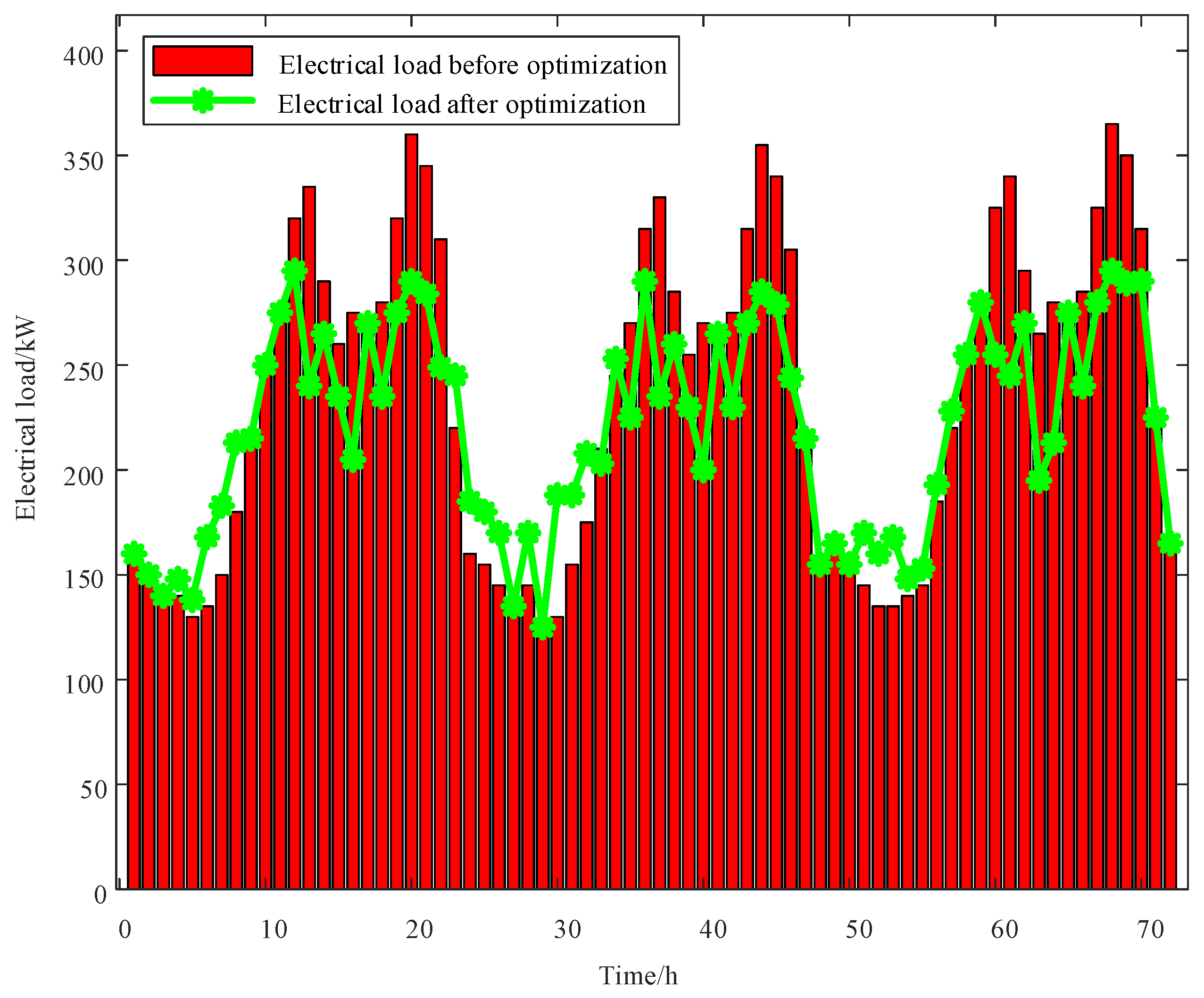
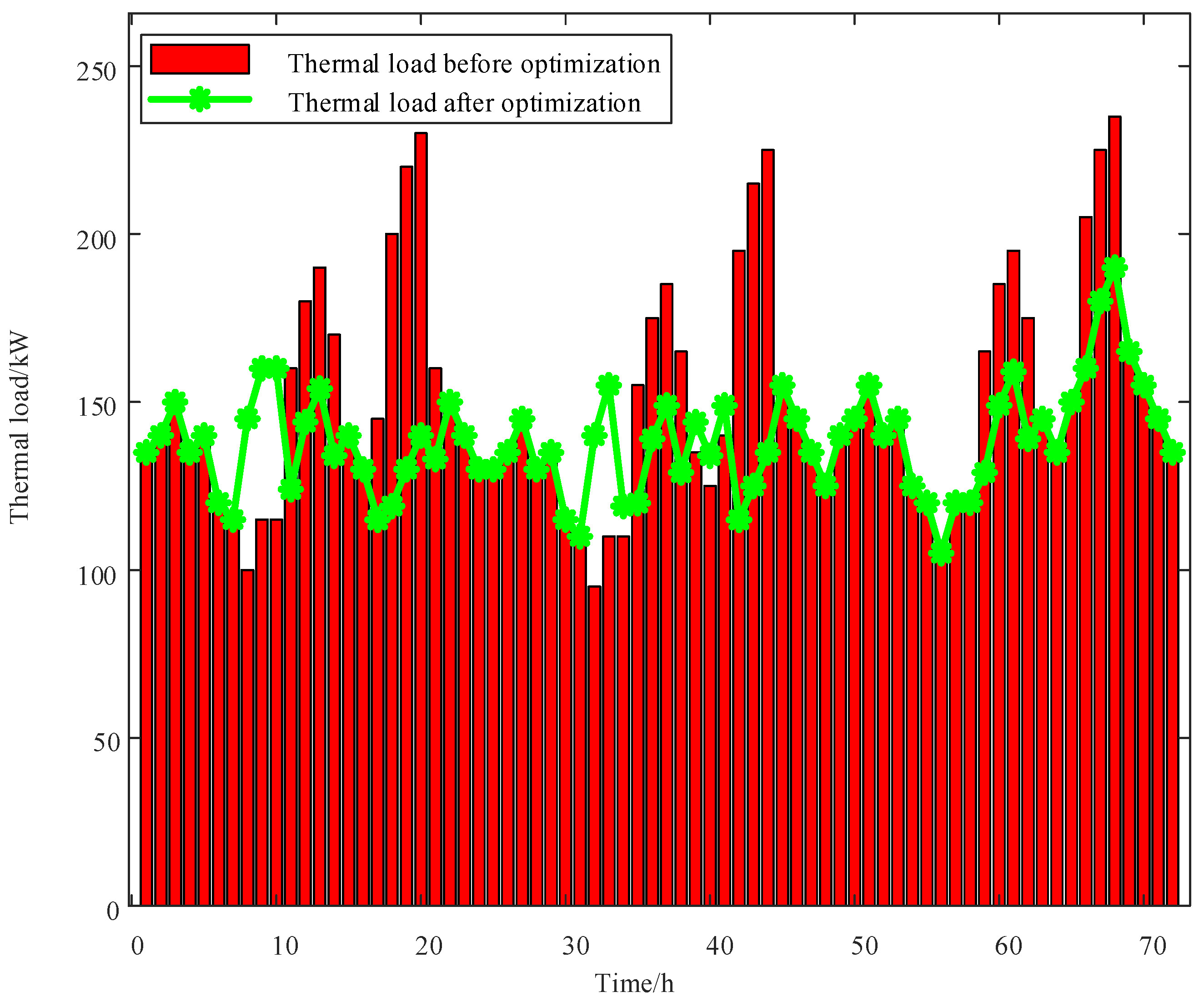
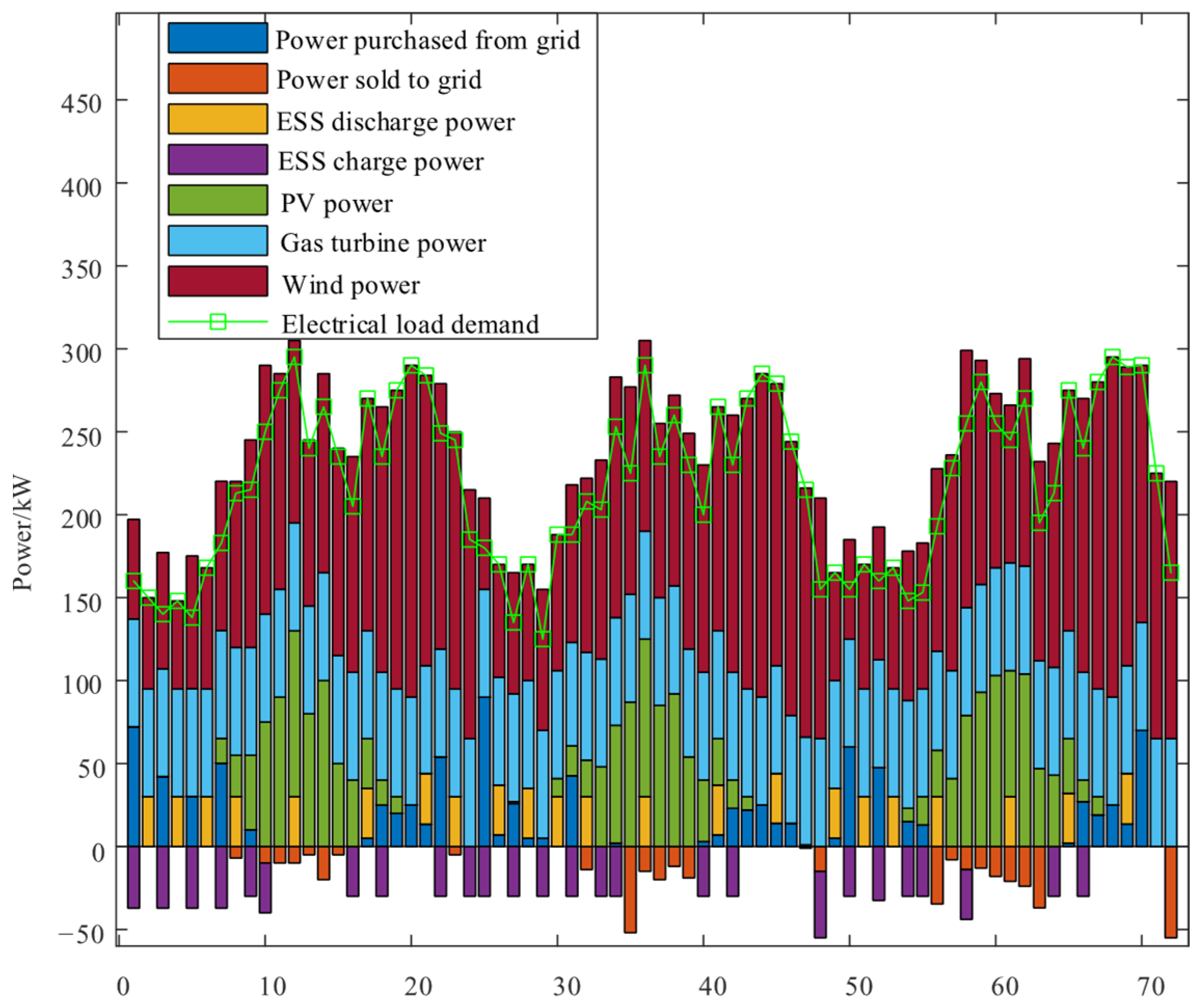
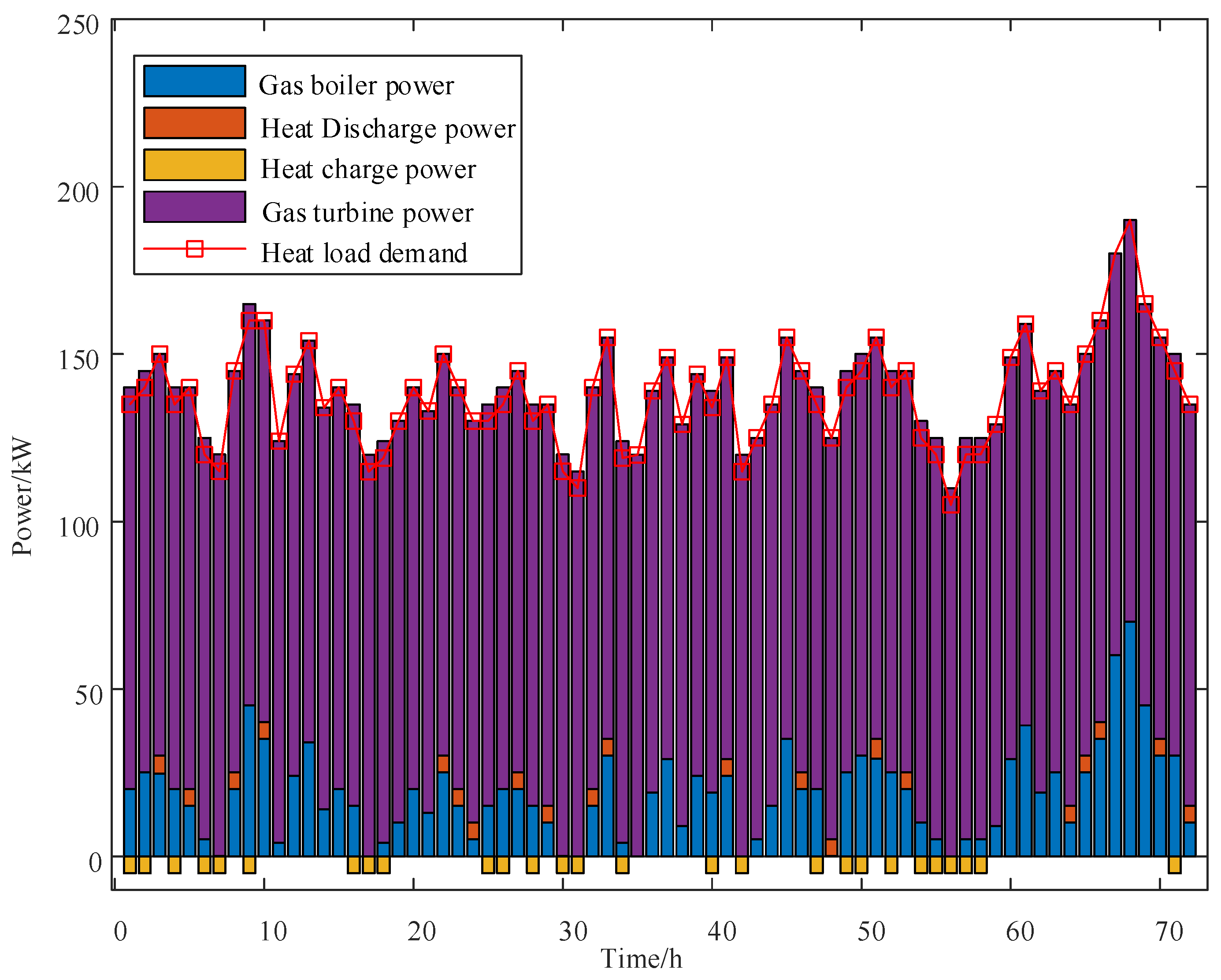
To further investigate the optimization effect of the proposed model on the MEVPP dispatch operation, five additional models are established for comparative analysis against the model presented in this paper. Six distinct scenarios are defined for this comparison: Scenario 1: Considering shared electrical energy storage system and shared thermal energy storage system, but carbon trading is not considered, and flexible electrical/thermal loads are not incorporated. Scenario 2: Considering shared electrical energy storage system and shared thermal energy storage system, but carbon trading is considered, but flexible electrical/thermal loads are not incorporated. Scenario 3: Both shared electrical energy storage system, shared thermal energy storage system, carbon trading and flexible electrical/thermal loads are considered. Scenario 4: Both shared electrical energy storage system, shared thermal energy storage system, carbon trading and flexible electrical/thermal loads are considered; the optimization horizon is extended from one day to three days; the comparison of electrical load and thermal load before and after optimization is shown in Figure 13 and Figure 14, respectively; and the electrical power balance and thermal power balance after low-carbon economic dispatch is shown in Figure 15 and Figure 16, respectively. Scenario 5: Both shared electrical energy storage system, shared thermal energy storage system, carbon trading and flexible electrical/thermal loads are considered; however, wind power and photovoltaic output are extreme scenarios. The extreme scenarios of wind and photovoltaic output are shown in Table 8. Scenario 6: Both shared electrical energy storage system, shared thermal energy storage system, carbon trading and flexible electrical/thermal loads are considered; the number of wind turbines is increased from one to two; and the number of photovoltaic units from one to three. The charge/discharge power limit and capacity of the energy storage equipment are expanded by a factor of 2, the total output of the wind turbines and photovoltaic units in Scenario 6 at each time interval is presented in Table 9. Analysis of Dispatch Results for the Six Scenarios are shown in Table 10.
Figure 13.
Comparison of electrical load profiles before and after optimization.
Figure 13.
Comparison of electrical load profiles before and after optimization.
Figure 14.
Comparison of thermal load profiles before and after optimization in scenario 4.
Figure 14.
Comparison of thermal load profiles before and after optimization in scenario 4.
Figure 15.
Electrical power balance diagram after low-carbon economic dispatch in scenario 4.
Figure 15.
Electrical power balance diagram after low-carbon economic dispatch in scenario 4.
Table 8.
Extreme scenario of wind and photovoltaic output.
Table 8.
Extreme scenario of wind and photovoltaic output.
| Time/h | Wind/kW | Photovoltaic/kW | Time/h | Wind/kW | Photovoltaic/kW | Time/h | Wind/kW | Photovoltaic/kW |
|---|
| 1 | 60 | 0 | 9 | 125 | 40 | 17 | 140 | 20 |
| 2 | 65 | 0 | 10 | 50 | 60 | 18 | 60 | 10 |
| 3 | 70 | 0 | 11 | 30 | 15 | 19 | 80 | 5 |
| 4 | 75 | 0 | 12 | 110 | 10 | 20 | 200 | 0 |
| 5 | 80 | 0 | 13 | 100 | 20 | 21 | 175 | 0 |
| 6 | 85 | 5 | 14 | 120 | 20 | 22 | 160 | 0 |
| 7 | 90 | 10 | 15 | 125 | 30 | 23 | 155 | 0 |
| 8 | 100 | 20 | 16 | 30 | 25 | 24 | 150 | 0 |
Figure 16.
Thermal power balance diagram after low-carbon economic dispatch in scenario 4.
Figure 16.
Thermal power balance diagram after low-carbon economic dispatch in scenario 4.
Table 9.
Total output of wind and photovoltaic units in scenario 6.
Table 9.
Total output of wind and photovoltaic units in scenario 6.
| Time/h | Wind/kW | Photovoltaic/kW | Time/h | Wind/kW | Photovoltaic/kW | Time/h | Wind/kW | Photovoltaic/kW |
|---|
| 1 | 122 | 0 | 9 | 253 | 147 | 17 | 278 | 88 |
| 2 | 132 | 0 | 10 | 292 | 217 | 18 | 318 | 43 |
| 3 | 138 | 0 | 11 | 258 | 272 | 19 | 358 | 32 |
| 4 | 153 | 0 | 12 | 222 | 293 | 20 | 398 | 1 |
| 5 | 162 | 0 | 13 | 202 | 249 | 21 | 347 | 0 |
| 6 | 165 | 31 | 14 | 238 | 295 | 22 | 222 | 0 |
| 7 | 182 | 47 | 15 | 253 | 148 | 23 | 307 | 0 |
| 8 | 198 | 76 | 16 | 258 | 122 | 24 | 298 | 0 |
Table 10.
Analysis of dispatch results for the six scenarios.
Table 10.
Analysis of dispatch results for the six scenarios.
| Scenario | Operating Cost/CNY | Carbon Transaction Cost/CNY | Total Cost/CNY | Total Renewable Energy Output/kWh | Total Carbon Emissions Traded/t | Total Carbon Emissions/t |
|---|
| 1 | 84,812.92 | 0 | 84,812.92 | 2768.07 | 0 | 0.765 |
| 2 | 89,085.47 | 183.38 | 89,268.85 | 2770 | 0.761 | 0.761 |
| 3 | 48,277.24 | 58.56 | 48,335.80 | 3598 | 0.320 | 0.320 |
| 4 | 144,783.26 | 224.14 | 144,787.40 | 10,831 | 0.846 | 0.846 |
| 5 | 61,880.39 | 143.46 | 62,023.85 | 2703 | 0.628 | 0.628 |
| 6 | 24,405.31 | 395.64 | 24,800.95 | 6464.88 | 1.468 | 1.468 |
Table 10 shows the operating costs, new energy consumption, and total carbon emissions of the six scenarios. Comparing Scenario 1 and Scenario 2, when the system considers carbon trading, the MEVPP will adjust the output of the equipment to comprehensively consider the economy and low carbon emissions, which will increase the operating cost of the system and increase the consumption of new energy. A comparison of Scenario 2 and Scenario 3 reveals that when the system considers the demand-side response of electricity and heat, the operating cost of the system is greatly reduced to approximately 54.2% of that when the demand response is not considered. Moreover, the carbon emissions decrease accordingly, which is 42% of that without considering the demand response, and the consumption of new energy further increases by 130%. This represents the upper limit of improvement under ideal conditions. In practice, however, the improvement capability will deteriorate when extreme scenarios of renewable energy output occur or when changes in energy storage capacity take place. Nevertheless, compared to scenarios without participation in demand response or carbon market trading, the operational costs will still be reduced. Scenarios 4 and 6 verify the scalability of the proposed model in this paper. Even when the optimization horizon is extended and the number of distributed generation (DG) units is increased, the proposed model still achieves excellent optimization performance.
In summary, the model proposed in this paper can reduce the carbon emissions of the system while improving the economy such that the entire system can achieve low-carbon economic operations.
The authors state that the scientific conclusions are unaffected. This correction was approved by the Academic Editor, and the original publication has also been updated.