Article

Sustainability in the Healthcare Sector: Nearly Zero-Energy Building Strategies for Hospitals

Laboratory of Environmental and Energy Design of Buildings and Settlements, Department of Environmental Engineering, Democritus University of Thrace, 67 132 Xanthi, Greece
*
Author to whom correspondence should be addressed.
Energies 2026, 19(3), 732; https://doi.org/10.3390/en19030732
Submission received: 5 January 2026 / Revised: 21 January 2026 / Accepted: 23 January 2026 / Published: 30 January 2026
(This article belongs to the Section G: Energy and Buildings)

Abstract

Hospitals are the most energy-intensive buildings in the tertiary sector because they have continuous and high demand for heating and cooling (to meet strict thermal comfort conditions), hot water, kitchen facilities, electricity, etc. Investigation of the energy performance of hospital buildings is crucial for defining energy savings and developing benchmarks and design guidelines for nearly Zero-Energy Hospitals (nZenHs). This study investigates the energy efficiency of hospital buildings in Greece and the necessary retrofit strategies to transform them to nearly Zero-Energy Buildings (nZEBs). Six building typologies were recognized, based on the building’s floor plan, and energy upgrade scenarios were investigated for each typology. The first scenarios aimed at improving the building’s energy efficiency, and the last one exploited the use of renewable energy source (RES) systems to minimize energy consumption. More specifically, a rooftop photovoltaic system was examined. The results showed differences in hospitals’ energy performance according to typology and climatic zone. They strongly confirm that hospitals can be transformed into buildings with nearly zero-energy consumption, irrespective of their design. The significant energy savings achieved by transforming hospitals into NZEBs highlight the crucial role in enhancing energy efficiency in tertiary sector buildings.

1. Introduction

Hospital buildings are energy-intensive facilities as they must ensure uninterrupted operation 24 h, every day of the year, meeting different operational needs within the building according to the varying medical care requirements of patients and space use [1]. The healthcare sector shows the third-highest energy consumption in the tertiary sector, with offices and commercial buildings ranking first ahead of education and hospitality [2]. Recent studies have examined HVAC retrofits and comprehensive strategies for improving energy performance [3]. Hospital engineering is crucial in managing a hospital [4] and thus focuses on the energy and environmental efficiency of the building, as well as maintaining the building’s environmental conditions to ensure patient safety [5].
Hospital buildings, compared with conventional public buildings, present a complicated energy consumption pattern. Healthcare buildings need to ensure access to energy, as hospitals need a reliable supply of electricity and thermal energy for space heating and cooling, ventilation, domestic hot water, and lighting. In addition, a reliable power source for medical equipment is required. Hospitals are considered significant energy consumers, and the number of health centers is increasing due to rising patient numbers and the emergence of new diseases. Electricity for medical equipment, lights, elevators, air conditioning, and ventilation systems accounts for the highest proportion of energy consumption. Different types of medical equipment have varied operational requirements, long operating hours, and need flexible control [6]. Ensuring the stable operation of heating, air conditioning (HVAC), ventilation, lighting, and all medical devices in operating rooms, intensive care units, and common wards is essential. Internal environmental parameters must be regulated and strictly adhered to by the appropriate control system to ensure hygiene and comfort for users [7]. Research on thermal comfort in hospitals is steadily increasing, showing that requirements differ across climatic zones and according to physical characteristics, clothing thermal resistance, and levels of activity [8].
The establishment of technical specifications and directives aims to provide guidelines and promote measures to reduce hospitals’ energy consumption. These measures concern the integration of advanced energy-efficient technologies and renewable energy source systems in the construction of new buildings, renovation, the operation of systems and equipment, and maintenance [9]. Studies are being conducted to investigate these critical parameters, ensuring optimal conditions in hospitals, preventing the growth and transmission of pathogens, and rationalizing the use of energy systems. According to these studies, ideal humidity should range between 30 and 60%, temperature between 20 and 24 °C, and the air exchange rate should be four to six air changes per hour (ACH) [10].
Hospital buildings present significant scientific interest, as the exploration of methods for their energy upgrade and conversion into nearly Zero-Energy Buildings (nZEBs) represents a field of scientific and technological study. Many studies approach the energy behavior of hospital buildings, examining them as sustainable, green, or smart buildings, focusing on related technologies and practices. Sustainable healthcare buildings are designed to reduce the use of natural resources, ensure public well-being and health, promote economic growth, and reduce environmental pollution. Green healthcare buildings are customized sustainable solutions that minimize environmental impact and promote occupant health and well-being. Smart healthcare buildings use building management systems and advanced technology to improve building performance, operational efficiency, and patient care [10]. It is established that in all three hospital building approaches, energy performance is a primary factor in evaluating the building. Therefore, it is extremely important for a hospital’s architectural design to optimize its energy performance [11,12].
The energy upgrade of hospital buildings and their conversion into nZEBs can contribute effectively to the overall reduction in both buildings’ energy consumption and carbon emissions [13]. It is documented that 4.4% of total greenhouse gas emissions are attributed to the healthcare sector [14]. Various studies have explored energy-efficient proposals for hospital buildings and concluded that external weather conditions, internal environmental requirements, and appropriate building insulation play a significant role [15]. The exploitation of renewable energy sources (RESs) minimizes dependence on conventional energy sources, contributing to achieving the goal of reducing carbon emissions [16] and zero-energy hospitals. Rooftop photovoltaic (PV) systems are among the RES technologies that can be applied in hospital buildings, and they can achieve a reduction from 16.6 to 13.27% in the energy consumption of hospitals [17]. Also, parabolic concentrating collectors (CPCs) were examined for domestic hot water (DHW) [9] and space cooling [18] in hospital buildings.
Bioclimatic design and investments in renewable technology systems are strategies that can reduce energy consumption and meet some of the specific energy needs of hospitals [19]. A study in a heritage hospital building showed that the best retrofit measures include double-reflective glass in windows and the use of XPS insulation on facades and roof, leading to up to 53% energy savings in medical offices [7]. In Italy, studies have shown that rehabilitating the building envelope and replacing air conditioning systems can lead to energy savings of up to 79%. Implementing insulation panels and intelligent rotary windows in hospitals in Genova can save 930 MWh/year in heating and 1119 MWh/year in cooling. Refurbishing hospital building envelopes in Naples reduced thermal transmission by 44% and led to significant energy savings [14,20]. In a study conducted in Turkey on the energy efficiency of hospital buildings, it was found that rotating the building by 270° clockwise and reducing the roof thermal resistance coefficient significantly increased the CO2 emissions, by 3.81% and 18.33%, respectively, highlighting the need for appropriate insulation. The lack of wall thermal insulation led to a 10.09% increase in emissions. Depending on orientation, window-to-wall ratios affect CO2 emissions differently, with the highest increase observed in northern facades at 17.10% [21].
Finally, user behavior significantly impacts energy consumption in all building types, including hospitals. Users may often show low interest in energy issues, as their professional focus is not on energy conservation. Health and safety concerns in healthcare spaces are paramount compared to building energy consumption, and incentives are lacking since users do not benefit financially from energy savings, information on consumption is limited or non-existent, and there is a perception that individual impact is limited [22]. Thus, educating staff and informing patients and visitors, as well as implementing the “8 Rs” (rethink, refuse, reduce, reuse, recycle, refurbish, repair, and repurpose), can cumulatively and effectively contribute to achieving zero-energy buildings [23]. A study in healthcare facilities in Italy concluded that environmental sustainability is only partially considered in the design, management, and evaluation of hospital facilities, and there is limited empirical evidence in this area [24]. By re-evaluating procedures and practices and better understanding electrical system loads, hospitals can identify areas for improvement and adopt more environmentally friendly and less energy-intensive approaches.
Renovating existing buildings with energy-efficient solutions and implementing revolutionary management and operation approaches in hospitals can lead to significant environmental and economic benefits. Implementing sustainable strategies for upgrading buildings to nZEB involves interventions in the building envelope and improving energy behavior, raising awareness about environmental and energy behavior among staff, and managing hospital operations [25]. Overall, the combined application of these strategies promotes the development of energy-efficient hospitals, contributing to environmental protection and improving the quality of life for patients and staff.

2. Methodology

2.1. Building Typologies

Six basic typologies of hospital buildings were identified, based on floor plan configurations of existing structures in Greece. These typologies provide a systematic approach to investigating the efficiency and applicability of energy-efficient measures.
The six typologies arise from three basic hospital building types, which differ primarily in floor plan layout and are initially designed as two-story buildings. For each of these basic types, the four-story variant is also examined. In this way, a total of six distinct typologies were defined, representing characteristic examples of the Greek hospital building stock. Accordingly, the following six typologies were defined (Table 1) as:
A. Linear Typology (I-shaped Floor Plan). A rectangular building representing the letter “I”:
  • I1: Two floors, 2000 m2;
  • I2: Four floors, 4000 m2.
Β. Centralized Wing Typology (T-shaped Floor Plan with Centered Medical Offices). Two connected rectangular buildings, representing the letter “T”. This variant includes a centrally placed perpendicular wing, primarily housing administrative and medical offices.
  • T1: Two floors, 2600 m2;
  • T2: Four floors, 5200 m2.
C. Lateral Wing Typology (L-shaped Floor Plan with Lateral Medical Offices). Two connected rectangular buildings representing the letter “L”. This variant features a perpendicular wing at the end of the main block, primarily housing administrative and medical offices.
  • L1: Two floors, 2600 m2;
  • L2: Four floors, 5200 m2.
The building design follows standardized dimensions to address the functional requirements of hospital facilities (Table 2). A floor height of 3.5 m ensures adequate clearance, 2.5 m wide corridors support smooth circulation, and patient rooms with a width of 6.5 m enhance comfort and accessibility. Natural lighting and ventilation are provided through strategically placed openings, varying from 15% of the façade area in laboratories to 50% on upper floors, with intermediate values in clinics and offices. These design choices ensure functionality, comfort, and efficiency, establishing a coherent framework for hospital operations.

2.2. Thermal Zones and Indoor Conditions

In energy simulation modeling, it is essential to define the building thermal zones properly. Each thermal zone has comparable utilization, operational patterns, and electromechanical systems. For the division of the building into thermal zones, the number of zones was minimized to improve efficiency, and their definition is aligned with actual operational dynamics, and segments under 10% of the total volume were merged with adjacent zones of similar characteristics unless operational conditions require independence.
The thermal zones that emerged for the six typologies of hospital buildings, in accordance with the technical instructions of the Technical Chamber of Greece (ΤOΤΕΕ_20701-1/2017, Chapter 3), are patient rooms, external clinics, waiting rooms, offices, corridors, other common utility areas, and restrooms. Table 3 summarizes the thermal zones.
The operational parameters for each zone within the hospital building were defined in accordance with the TOTEE 20701-1/2017, which sets the minimum requirements for thermal comfort, ventilation, lighting, and hygiene (Table 4). These values are tailored to the specific function and occupancy patterns of hospital spaces to ensure both patient comfort and energy efficiency.
It was assumed, in the baseline case building, that heating is provided by a conventional oil-fired system (thermal efficiency coefficient, n = 0.64) with fan-coil terminal units, and cooling by a standard air-conditioning system (Seasonal Energy Efficiency Ratio, SEER = 2.2) and domestic hot water (DHW) by the boiler, with a standardized consumption of 0.6 L/m2/day. Lighting is provided by fluorescent lamps.
The technical specifications and performance data of the mechanical systems used for lighting, heating, cooling, and domestic hot water are incorporated into the building’s energy simulation model, in accordance with the TOTEE 20701-1/2017.

3. Energy Upgrade Scenarios

The present study investigates alternative energy-efficiency scenarios for hospital buildings and the potential to meet their energy demands through renewable energy sources. The proposed scenarios follow a two-step approach: firstly, measures aimed at reducing energy consumption are evaluated, focusing on improving the building’s energy efficiency and minimizing operational loads. Subsequently, the integration of RES-based systems is examined to meet the reduced energy demand. Based on this methodology, nine distinct energy upgrade scenarios were developed, each incorporating different combinations of energy-efficient interventions and RES technologies.
For each of the six typologies, ten scenarios were assessed for energy performance. The first scenario concerns a baseline condition representing buildings constructed before the Building Thermal Insulation Regulation, BTIR, (before 1979), without thermal insulation. The second one represents insulated buildings, built during the BTIR period (1979–2010) and before the Building Energy Performance Regulation (KENAK) (2010). The characteristics of each building element and construction materials for these scenarios are summarized in Table 5. The next seven scenarios applying specific energy-efficient measures were chosen to meet the minimum requirements of the existing energy building regulation in Greece (KENAK) and compared to the baseline condition. The tenth scenario combines all proposed interventions while evaluating the potential contribution of rooftop photovoltaic systems.
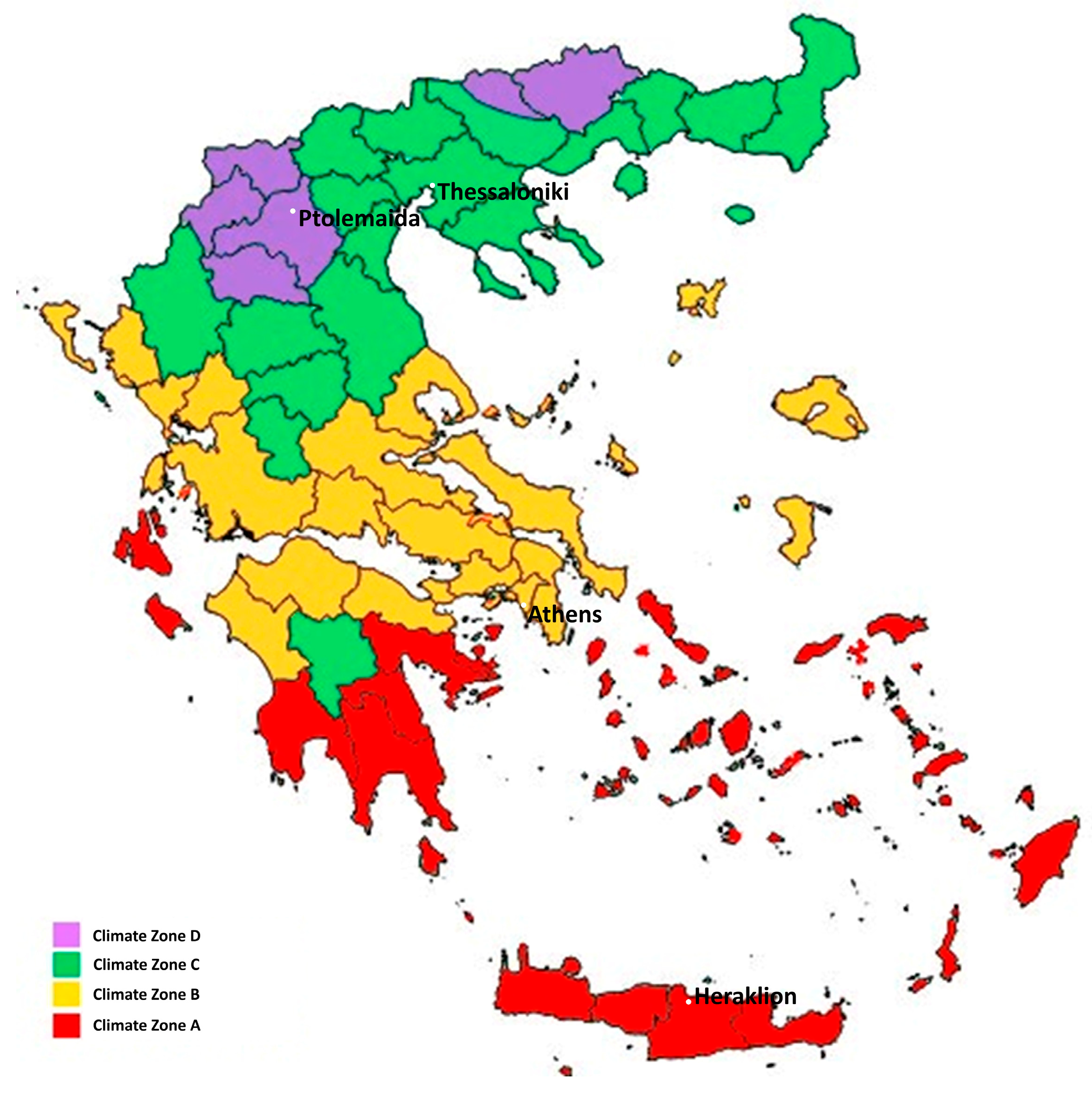
The energy simulations were conducted with the DesignBuilder software (Version 5), which enabled the calculation of energy consumption under standardized boundary conditions. All scenarios were examined for the four climatic zones (CZs) into which Greece is divided according to the Building Energy Performance Regulation (KENAK). Using the ‘Meteonorm 8′ software for meteorological data analysis, climate data files compatible with the ‘DesignBuilder’ energy simulation software were created for one representative city in each climatic zone: Heraklion (Climatic Zone A), Athens (Climatic Zone B), Thessaloniki (Climatic Zone C), and Ptolemaida (Climatic Zone D), as illustrated in Figure 1.
The scenarios were grouped into:
  • Energy efficiency scenarios aimed to reduce building energy consumption (scenarios 3 to 9);
  • RES application scenarios aimed to cover buildings’ reduced energy needs with renewable energy sources, namely with the application of photovoltaic systems (Scenario 10a, 10b, 10c, 10d).
The simulations were conducted for the following scenarios:
  • Scenario BASELINE: Baseline—Uninsulated building (Pre-BTIR) (Table 5);
  • Scenario BTIR: Basic Compliance—Minimum thermal insulation (BTIR) (Table 5);
  • Scenario WALLS: Wall insulation upgrade according to the minimum requirements of the Greek Energy Legislation Standards (KENAK) (Table 6);
  • Scenario WALLS+: Enhanced wall insulation above KENAK requirements (Table 6);
  • Scenario ROOF: Roof insulation upgrade according to minimum KENAK requirements (Table 6);
  • Scenario WINDOWS: Windows upgrade according to minimum KENAK requirements (Table 6);
  • Scenario ENVELOPE: Combined envelope upgrade for walls, roof, and windows (Scenarios 3, 5, and 6);
  • Scenario ENVELOPE-LIGHT: Scenario 7 plus LED lighting with a power density of 2.5 W/m2 per 100 lux, in accordance with KENAK and external horizontal shading devices, to reduce the building’s demand for cooling and ensure indoor thermal comfort;
  • Scenario HVAC: Scenario 8 plus heating and air-conditioning system upgrade (Heating, thermal efficiency coefficient, η = 0.9, Cooling, SEER = 2.7, according to KENAK minimum requirements);
  • Scenario RES: Scenario 9 combined with rooftop PV system (for four cases: 20%, 40%, 60%, 80% energy demand cover).
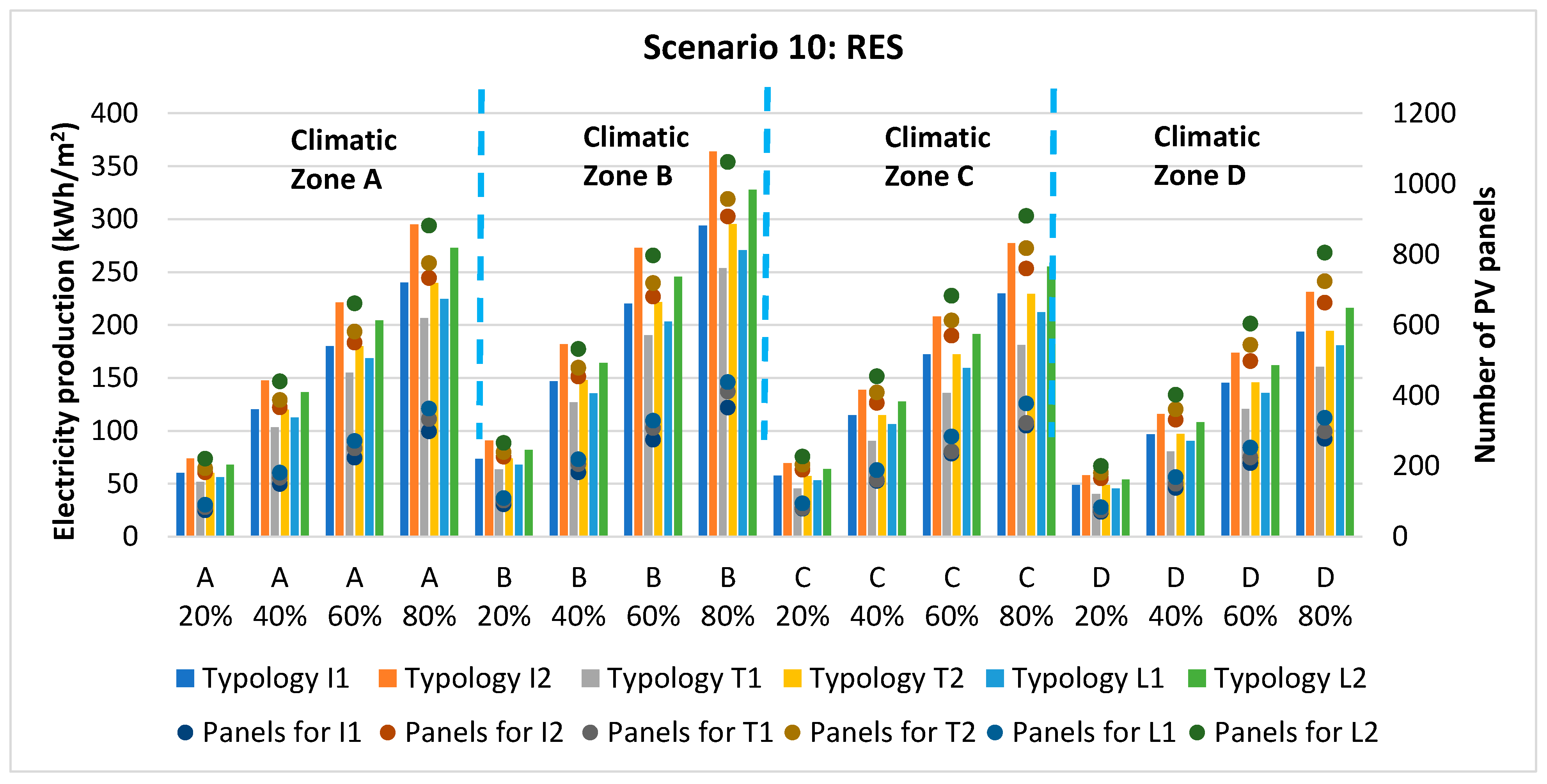
In Scenario 10, for each hospital building typology, the number of photovoltaic panels and the generated electrical energy were assessed for different scenarios in each climatic zone, to meet 20%, 40%, 60%, and 80% of the total electricity demand of each building, as derived from Scenario 9. The estimation of PV output was performed using the Photovoltaic Geographical Information System (PVGIS), developed by the European Commission (https://re.jrc.ec.europa.eu/pvg_tools/en/, accessed on 1 September 2024). PVGIS provides climate-specific generation data for a standard 1 kWp PV system. Table 7 presents the annual production of a 1 kWp photovoltaic panel in each of the four climatic zones in Greece.

4. Results

In this section, the results for all building typologies and scenarios are presented, based on the assumptions previously described. To facilitate grouping and comparison of the results, the respective energy consumption was converted into primary energy. This conversion is performed using the energy-source-to-primary energy conversion factors according to TOTEE 20701-1.

4.1. Energy Upgrade Scenarios Results

4.1.1. Energy Consumption Sectors

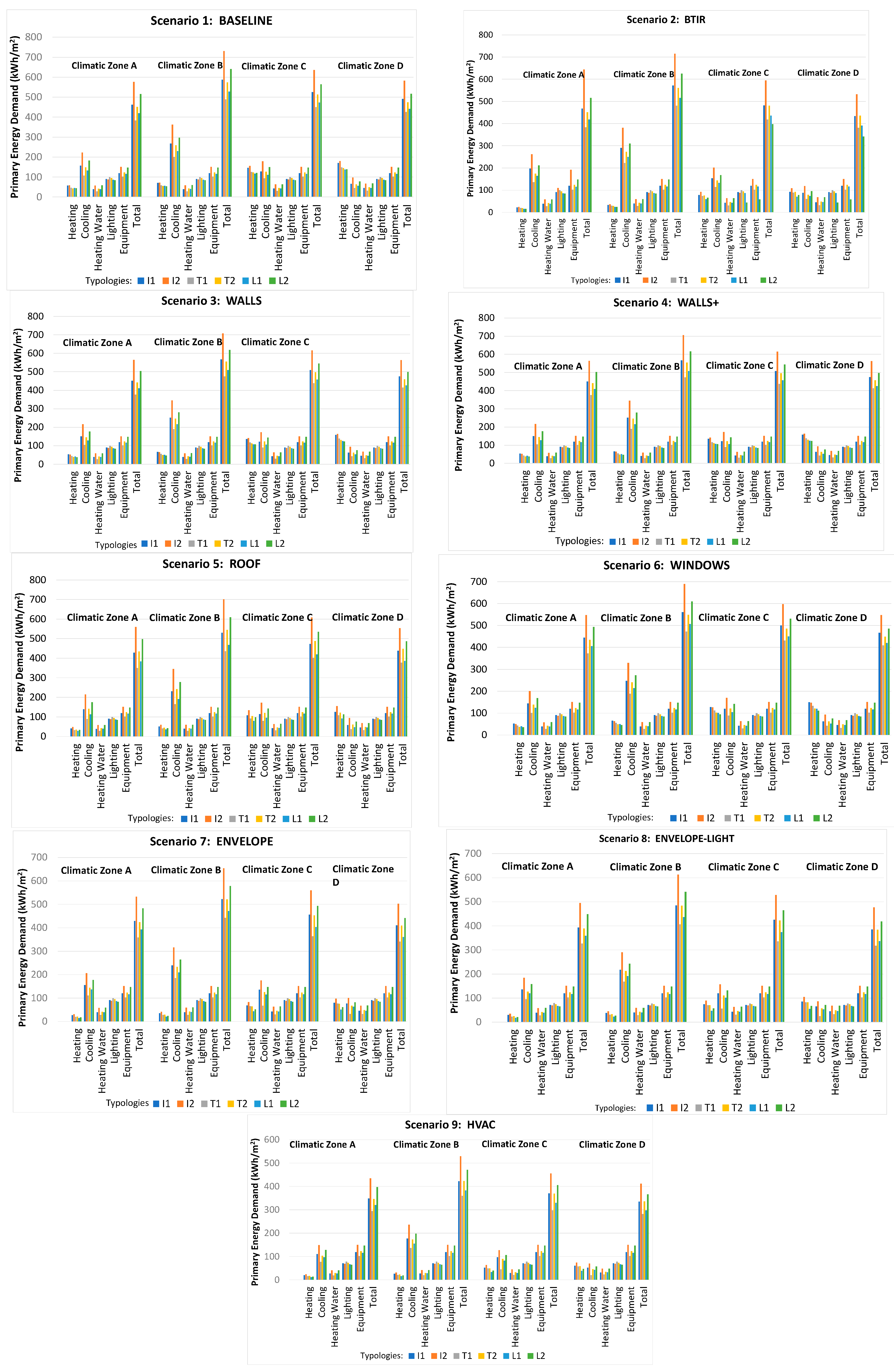
A consolidated overview of the results for all typologies, considering the four distinct climatic zones, is examined. The energy demand for medical equipment and lighting, across the nine scenarios, remains consistent regardless of typology and climatic zone. Only minor variations are noted in hot water usage. However, significant differences are observed in heating and cooling demands. Specifically, climatic zones A (Heraklion, Crete) and B (Athens) consistently show lower heating demand compared with zones C (Thessaloniki) and D (Ptolemaida) (Figure 2).

4.1.2. Heating Demand

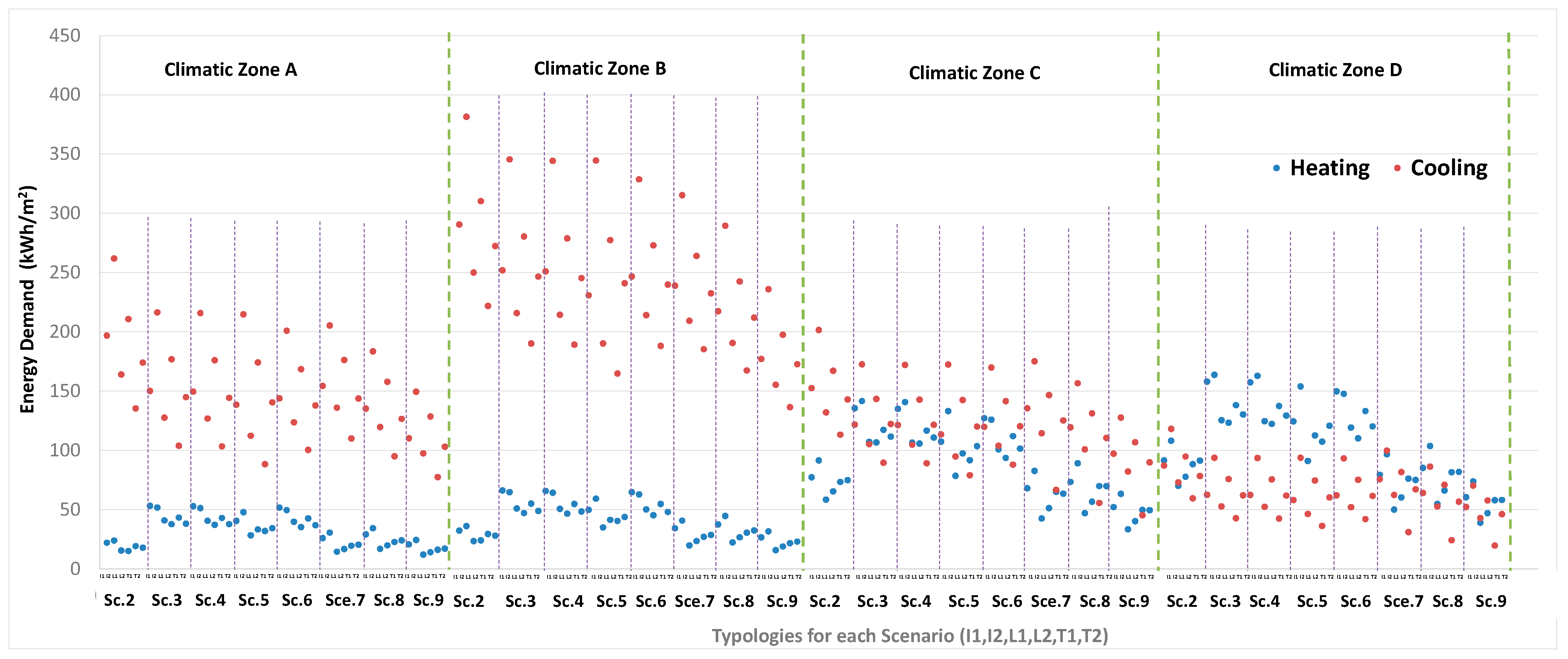
In scenario 1 (Baseline) (Figure 2), heating requirements range from 43 to 72 kWh/m2 in the warm climatic zones A and B and from 117 to 180 kWh/m2 in the colder climatic zones C and D. In scenario 2 (BTIR), heating demands are reduced to 15–36 kWh/m2 in zones A and B accordingly, and 59–108 kWh/m2 for zones C and D. In scenarios 3 and 4 (wall insulation upgrading), heating demands for zones A and B are about 37–66 kWh/m2, while for C and D, they are about 106–164 kWh/m2. In Scenarios 5 (roof insulation) and 6 (window replacement), heating is about 27–59 kWh/m2 in the warmer zones and 75–154 kWh/m2 in the colder ones. Scenarios 7 (combined envelope upgrades) and 8 (envelope measures with LED lighting and external shading) demonstrate further reduction in heating requirements, which range from 17 to 44 kWh/m2 for zones A and B, and from 47 to 115 kWh/m2 for zones C and D. The minimum heating requirements are observed in scenario 9 (scenario 8 and HVAC systems), where they are about 12–29 kWh/m2 for zones A and B and 39–94 kWh/m2 for zones C and D.

4.1.3. Cooling Demand

Conversely, cooling requirements present an inverse relationship, with climatic zones A and B experiencing higher energy demand compared with zones C and D (Figure 2). In scenario 1, the cooling demand range, for the different building typologies, is 107–222 kWh/m2 in climatic zone A and 200–362 kWh/m2 in zone B, while in zones C and D, it is much lower, 193–178 kWh/m2 and 44–97 kWh/m2 in C and D, respectively. In scenario 2 (application of the minimum insulation), cooling demand increases to 135–262 kWh/m2 in zone A and 222–381 kWh/m2 in B. Due to the existing thermal insulation and the absence of shading devices, solar and internal thermal heat are trapped inside the building, increasing the cooling loads. Similarly, increases are estimated in zones C and D, at 113–202 and 60–118 kWh/m2, respectively. In scenarios 3 and 4, the cooling demand for zones A and B slightly reduces, 103–216 kWh/m2 in Zone A and 189–345 kWh/m2 in Zone B, while zones C and D are about 90–173 and 43–94 kWh/m2, respectively. In scenario 5, the cooling demand is about 88–215 kWh/m2 for zone A, 79–173 kWh/m2 for zone C, and 36–94 kWh/m2 for zone D. Zone B still records very high values of 165–345 kWh/m2. The implementation of scenario 6 slightly improves the results, particularly in zone A (101–201 kWh/m2), though zone B continues to present high cooling loads (188–329 kWh/m2). In zone C, the cooling demand is 88–170 kWh/m2, and in D it is 42–93 kWh/m2. More substantial reductions are achieved in scenario 7, where values fall to 110–205 kWh/m2 in zone A and 185–315 kWh/m2 in zone B, while zones C and D benefit more significantly (67–175 kWh/m2 and 31–100 kWh/m2). The combined scenario 8 leads to sharper reductions, with values as low as 95–184 kWh/m2 and 168–290 kWh/m2 in zones A and B, and 56–157 and 24–86 kWh/m2 in zones C and D, respectively. In scenario 9, the greatest reduction in cooling energy demand is observed at 78–150 kWh/m2 and 137–236 kWh/m2 in zones A and B respectively and 45–128 kWh/m2 for C and 20–70 kWh/m2 for zone D. Notably, the climatic zone B consistently exhibits a higher demand for cooling than zone A, which can be attributed to the extreme temperatures experienced in Athens compared to Heraklion, highlighting the impact of the ‘urban heat island’ in larger and densely populated metropolitan areas (Figure 3).

4.1.4. Effect of Building Typology

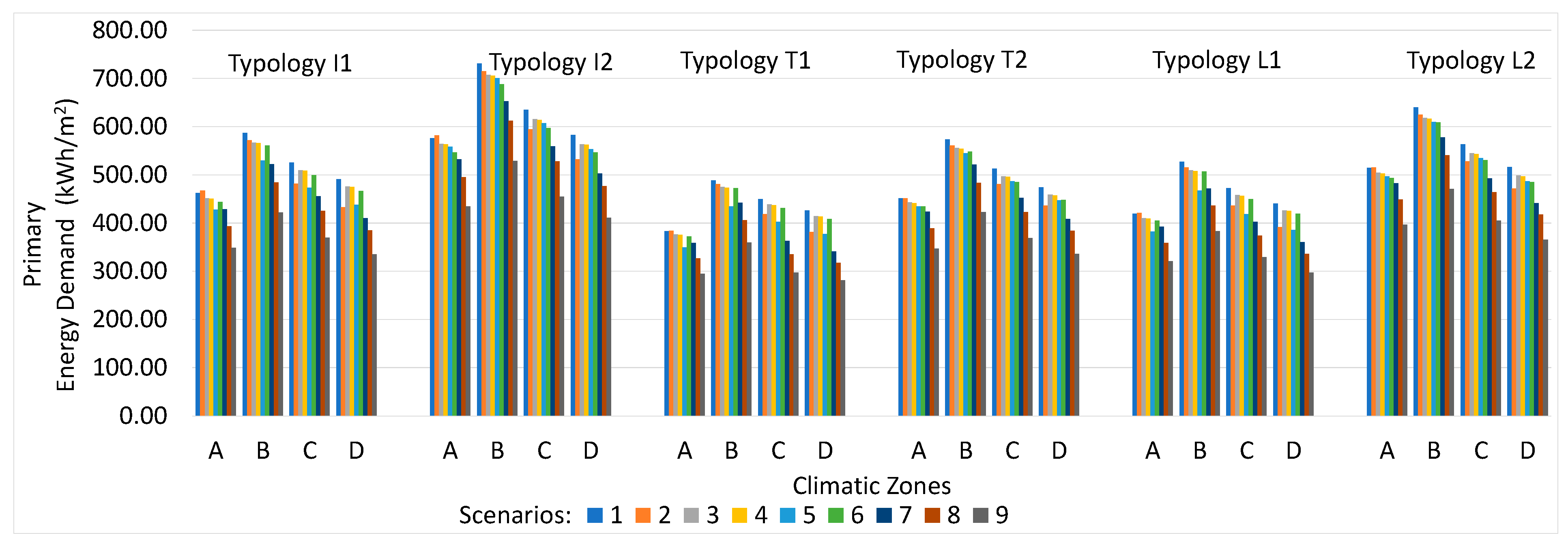
The effect of building typology in each climatic zone and scenario, expressed as total primary energy demand, is summarized in Figure 4. Typology T1 is the most efficient typology, achieving the lowest minimum consumptions in all zones: 294.11 kWh/m2 in zone A, 359.05 in Zone B, 297.40 in zone C, and 281.53 in zone D. Typology T2 follows a similar behavior, with significantly higher values (e.g., 423.55 kWh/m2 in zone A and 422.57 in zone B), confirming its consistent performance.
The L typologies show intermediate performance. In zone A, their minimum consumption is 358.74 and 448.36 kWh/m2, respectively, while in zone B, they are 382.64 and 471.06 kWh/m2. In the cold climatic zones C and D, L typologies range between 329 and 404 kWh/m2 in zone C and 297–366 kWh/m2 in zone D, demonstrating moderate performance compared to T typologies.
On the contrary, typologies I1 and especially I2 record the highest levels of energy demand. Indicatively, I2 peaks at 644.29 kWh/m2 in zone A, 730.79 in zone B, 635.19 in zone C, and 582.61 in zone D, constituting the worst typology in terms of energy performance. Even I1, although better, remains higher than T1, with the maximum reaching 586.92 and 567.12 kWh/m2 in warm and cold zones respectively.
Overall, the linear I typologies benefit from their compact form in warm climates but exhibit high energy demand. T typologies achieve the lowest overall energy demand in all zones, while L typologies offer a middle performance, more efficient in warm zones (A–B) due to self-shading, but less efficient in cold zones, where the winter losses dominate.

4.1.5. PV System Assessment

The first nine scenarios focused on energy-efficient measures for hospital energy upgrade. Based on the improved energy performance of Scenario 9, Scenario 10 investigates the potential to cover the reduced energy demand through the integration of RESs. Figure 5 presents the required energy production from photovoltaics for each building typology, in each climatic zone, to cover different percentages (20%, 40%, 60%, 80%) of the energy needs for the cases under examination. For the calculations of the annual electrical energy production, a 1 kWp photovoltaic panel was considered, which in climatic zone A produces 1607.6 kWh; in climatic zone B, 1603.2 kWh; in climatic zone C, 1458.6 kWh; and in climatic zone D, 1394.0 kWh.
Additionally, on the secondary axis, the number of photovoltaic panels required to meet the corresponding coverage percentages of the energy demand is shown.
Typology I2 presents the highest energy production coverage across all climatic zones, for all coverage percentage scenarios, reaching electricity production of 290–360 kWh/m2 (80% coverage), requiring 750–900 PV panels. Also, in terms of system sizing, the typology L2 requires the highest number of PV panels to meet the examined percentage of energy needs in all climatic zones (270–330 kWh/m2 of production). On the contrary, the I1 typology, which presents slightly less energy production than I2 (240–300 kWh/m2), requires the fewest panels, about 600–750 across all climatic zones.
This scenario highlights the significant potential of integrating renewable energy sources into hospital energy systems, showcasing how solar energy can substantially reduce reliance on conventional energy sources. By achieving such a high percentage of energy coverage from solar power (up to 80%), hospitals have the potential to be transformed into nZEBs.

4.2. Scenarios Comparison

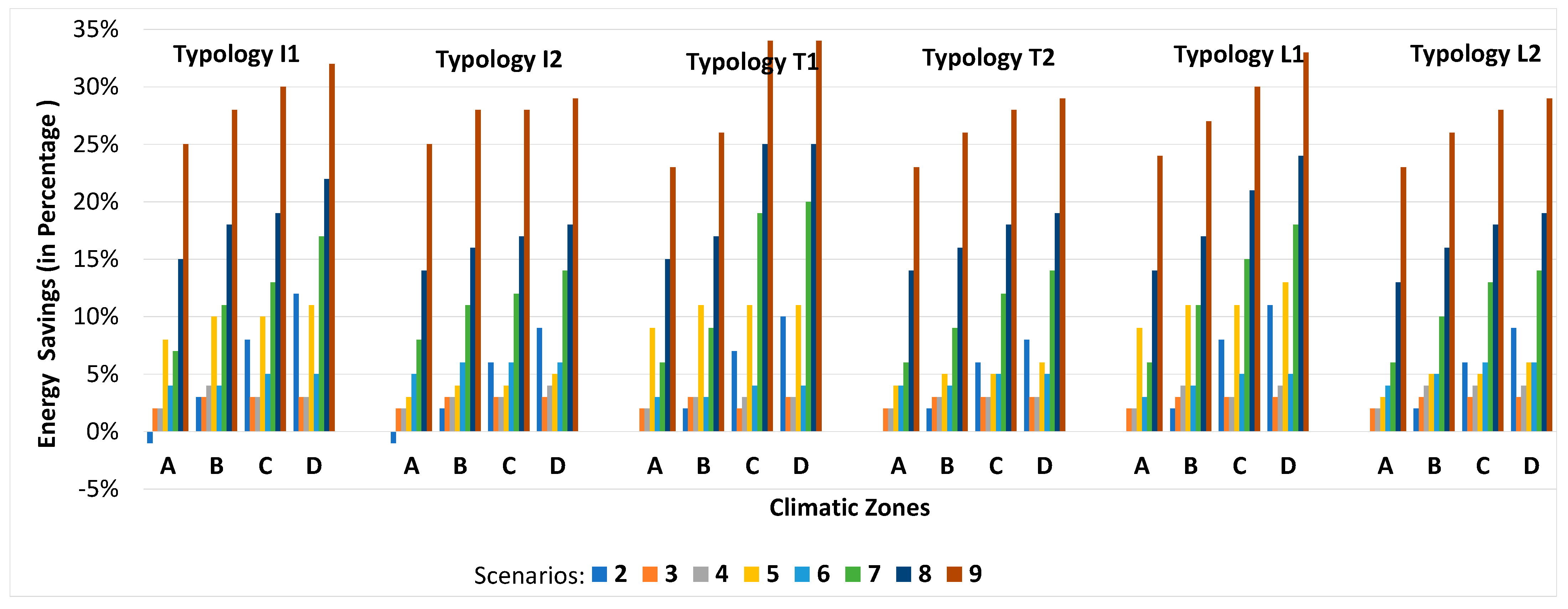
Figure 6 shows the percentage of total energy demand savings for scenarios 2 to 9 compared to the baseline scenario 1. When only the minimum thermal insulation thickness according to BTIR is applied (Scenario 2), the typologies show negative values, meaning an increase in total energy consumption compared to the baseline scenario. This is, as previously outlined, due to the absence of appropriate shading systems and efficient glazing, which increases cooling needs and offsets heating savings. Thereafter, the addition of a higher insulation thickness (Scenarios 3 to 8) shows the progressive contribution of passive interventions to the reduction in energy consumption of hospital buildings. Adding thermal insulation to external walls (Scenarios 3–4) leads to savings of approximately 2–3% in Zone A and up to 3.5–3.7% in colder Zones B–D. L-type typologies show slightly higher gains in cold zones due to their larger exposed surfaces. Roof insulation (Scenario 5) proves to be particularly efficient, with average savings of 8.8% in Zone A and up to 12.5% in Zone D, with L1 showing the highest percentage due to its larger roof area. Window replacement (Scenario 6) offers savings of 5–6% in all zones, with I-type typologies showing the most benefits. The combination of envelope interventions (Scenario 7) results in energy savings of 7.6% in Zone A, 11% in Zone B, and up to 20% in zones C and D. In cold zones, T-type typologies achieve higher energy savings (e.g., T1 reaching 19–20%), as insulation effectively reduces the losses associated with their more articulated geometry. Finally, the addition of LED lighting and external shading devices (Scenario 8) further reduces the cooling loads in warm zones, with savings of 14.1% in Zone A and 16.5% in Zone B. In cold zones, the savings are even higher (19.6% in Zone C and 21.2% in Zone D). The I-typologies consistently present higher efficiency in the warm zones due to their compact form, whereas the T-types perform exceptionally well in colder zones (up to 25.4%).
The implementation of active interventions in Scenario 9 (high-efficiency HVAC systems) results in a significant increase in energy savings, reducing discrepancies between typologies and climatic zones. The average savings reach 23.7% in Zone A (with I-typologies showing the highest savings), 27.1% in Zone B, 29.8% in Zone C (with the maximum performance for T1), and 31.0% in Zone D (with T1 at the highest level). Linear (I) typologies remain particularly efficient in warm zones due to their compact form, whereas the more modular (T and L) benefit markedly in cold zones, achieving savings above 33% (Table 8).
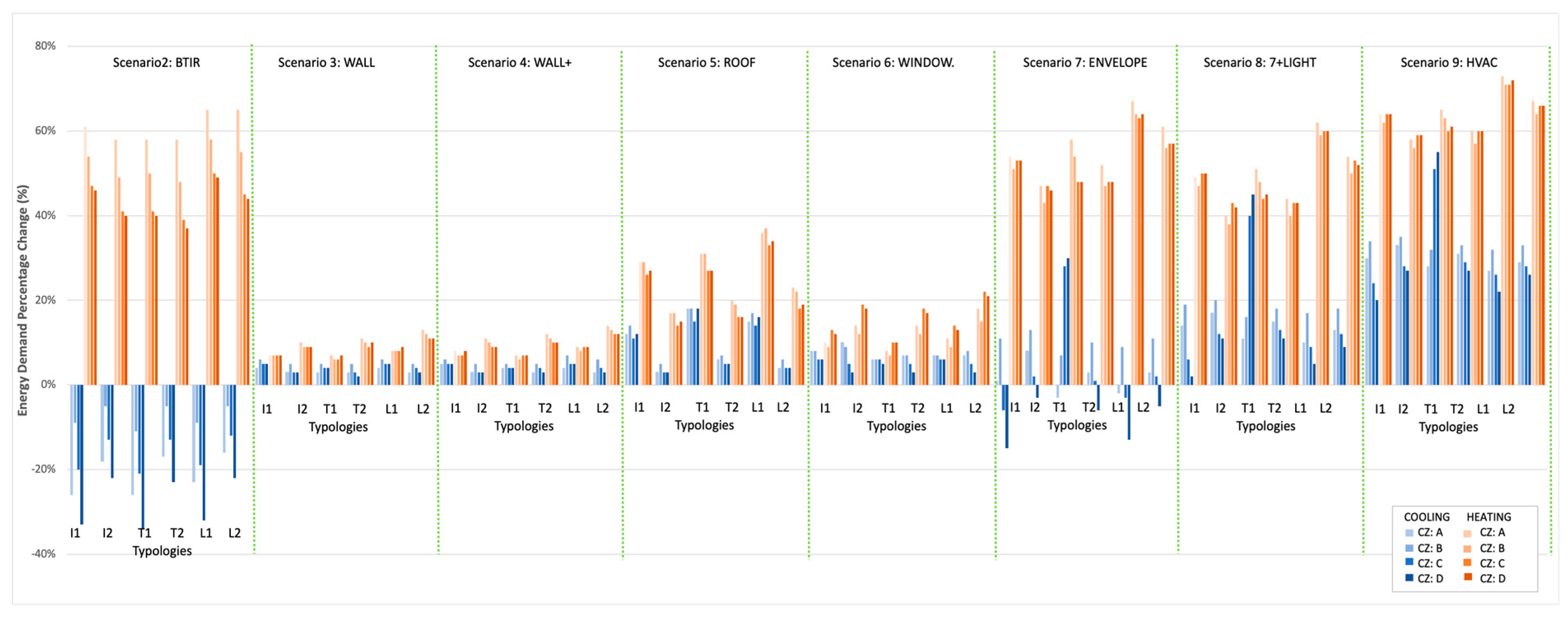
Figure 7 presents, for all scenarios, the percentage of energy savings for the two most significant energy consumption categories in hospital buildings, namely heating and cooling.
Scenario 2 presents significant savings in heating (about 50% across all typologies), while an increase in cooling energy consumption (from 25% to 30%) is observed. Adding insulation to the building, heat produced in its interior (e.g., lighting, equipment) is retained.
Scenarios 3, 4, and 6 (insulation on external walls, additional insulation on external walls, and window replacement) provide similar energy savings regarding heating (10%) and cooling (5–10%) for typologies I1, T1, and L1. For these typologies, scenario 5 (roof insulation) offers energy savings of 30–35% in heating and 15% in cooling. For typologies I2, T2, and L2, scenarios 3 and 4 provide 10% energy savings for heating and 5% for cooling, and scenarios 5 and 6 provide 20% for heating and 10% for cooling.
In scenario 7 (building envelope insulation and window replacement), energy savings in heating and cooling are like those in scenario 2 across all typologies. However, the overall energy savings are greater, as the building’s insulation is improved.
The combined scenario 8 (building envelope insulation, lamp change, window shading devices) also shows excellent savings, but slightly higher primary heating energy demand due to shading devices. In typology I1, the savings are up to 50% in heating and 20% in cooling, in I2 up to 40% in heating and 20% in cooling, in T1 up to 50% in heating and 45% in cooling, in T2 up to 45% in heating and 20% in cooling, in L1 up to 60% in heating and 20% in cooling, and in L2 up to 50% in heating and 20% in cooling.
Finally, scenario 9 (building envelope insulation, lamp change, window shading devices, and energy-efficient mechanical equipment) shows the lowest primary energy demand of all scenarios and the highest savings percentage. The energy savings for I1 are up to 65% in heating and up to 35% in cooling, in I2 and T2 up to 60% and up to 35% in heating and cooling, respectively, in T1 up to 65% and 55% in heating and cooling, respectively, in L1 up to 70% and 35% in heating and cooling, respectively, and in L2 up to 65% and 35% in heating and cooling, respectively.
Overall, the scenarios indicate potential for considerable heating and cooling savings, with reductions ranging from 5% to 65% compared to the baseline, depending on scenarios and climatic conditions. These findings highlight the critical need for tailored energy strategies that consider local climatic conditions and urban planning to optimize energy efficiency and sustainability in building operations.

5. Conclusions

The examination of different building scenarios (nine scenarios) highlights the significant impact of energy upgrade measures in hospital buildings. The present study identifies the most energy-efficient typologies for each climatic zone and quantifies energy savings associated with each scenario.
The analysis of the nine scenarios reveals that the most substantial differences in energy demand are observed for heating and cooling, with the hotter zones A (Heraklion, Crete) and B (Athens) consistently exhibiting lower heating requirements compared to colder zones C (Thessaloniki) and D (Ptolemaida).
For buildings constructed after the enactment of the ‘Building Thermal Insulation Regulation (BTIR)’, typology L2 resulted in up to 33.7% gains in cold climatic zones. Further interventions, such as adding insulation to the wall and roof or replacing windows with high-thermal-performance units, generally led to incremental savings of 2–6%. Implementing combined interventions in the building envelope produced the most substantial enhancements, up to 20% for typology T1 in colder zones (Scenario 7), and integrating energy-efficient lighting further increased performance by up to 25% (Scenario 8). Scenario 9 achieved a remarkable 34% gain in colder zones and 28% in warmer ones. This scenario highlights the advantages of comprehensive retrofit strategies in reducing energy consumption and enhancing sustainability in built environments.
Among the building typologies examined, the most energy-efficient are the linear ones (I-type) in warm zones, as their compact form reduces heat losses and cooling loads. By contrast, T and L typologies show greater improvements in warm zones, due to self-shading, which reduces solar gains. In cold zones, this feature becomes a disadvantage because of limited passive gains in winter. Finally, with the application of combined interventions (Scenario 9), deviations are reduced, and typologies with more complex geometries (T, L) can reach even higher energy performance. Table 9 summarizes the energy savings per scenario.
By applying RES systems, the I2 typology demonstrates the highest efficiency in all climatic zones, achieving the highest electricity production per m2 on demand with fewer PV panels. Typology L2 has the highest PV panel requirements across all zones, due to the greater energy demand in relation to the available roof area. Therefore, the I2 typology is the most advantageous typology for achieving high levels of RES integration and covering 80% of hospital electricity needs.
It is important in an energy renovation program, from an environmental point of view and occupants’ indoor thermal comfort, to firstly plan measures that improve energy efficiency in the building, aiming to reduce building energy requirements and consumption. The energy needs can then be covered by mechanical systems and RES systems that are not oversized.
These findings underscore the feasibility and importance of adopting comprehensive energy upgrading measures to reduce energy consumption in hospital buildings. By applying thermal insulation, thermally efficient windows, energy-efficient lighting, highly efficient mechanical systems, and RES systems, hospital buildings can achieve or even exceed the targeted savings rates, moving closer to the goal of nearly zero-energy consumption and nearly zero-carbon buildings.
It should be stressed that users’ behavior is important for ensuring the success of building energy upgrades to achieve a ‘nearly zero-energy’ building. The predicted energy savings can be ensured, depending on users’ behavior, as a gap may be reported between actual energy consumption and predicted consumption.

Author Contributions

Conceptualization, A.D.; methodology, A.D. and S.Z.; software, G.M. and P.V.; validation, P.V. and A.D.; investigation, G.M., P.V. and A.D.; data curation, P.V., G.M. and A.D.; writing—original draft preparation, G.M. and A.D.; writing—review and editing, A.D., A.K. and S.Z.; visualization, G.M. and A.K.; supervision, A.D.; project administration, A.D. All authors have read and agreed to the published version of the manuscript.

Funding

This research received funding from the ‘ZenH Balkan’ project, co-funded by the INTERREG Balkan-Mediterranean Programme and National Funds.

Data Availability Statement

The data presented in this study are available within the article.

Acknowledgments

The simulation work was conducted within the framework of the ‘ZenH Balkan’ project, co-funded by the INTERREG Balkan-Mediterranean Programme and National Funds. We wish to acknowledge the suggestions of Christos Kostadimas, Technical Director of the 3rd Regional Health Authority (Greece), with regard to the definition of hospital building typologies and their characteristics.

Conflicts of Interest

The authors declare no conflicts of interest.

References

  1. Balali, A.; Valipour, A. Prioritization of passive measures for energy optimization designing of sustainable hospitals and health centres. J. Build. Eng. 2021, 35, 101992. [Google Scholar] [CrossRef]
  2. Fernández, F.J.; Díaz, J.; Suárez, I.; Zueco, J. The integration of heat pumps into the thermal systems of hospital facilities to advance their transformation towards Zero-Emission Buildings. J. Build. Eng. 2025, 111, 113531. [Google Scholar] [CrossRef]
  3. Psillaki, M.; Apostolopoulos, N.; Makris, I.; Liargovas, P.; Apostolopoulos, S.; Dimitrakopoulos, P.; Sklias, G. Hospitals’ energy efficiency in the perspective of saving resources and providing quality services through technological options: A systematic literature review. Energies 2023, 16, 755. [Google Scholar] [CrossRef]
  4. Chyu, M.C.; Austin, T.; Calisir, F.; Chanjaplammootil, S.; Davis, M.J.; Favela, J.; Gan, H.; Gefen, A.; Haddas, R.; Hahn-Goldberg, S.; et al. Healthcare engineering defined: A white paper. J. Healthc. Eng. 2015, 6, 635–648. [Google Scholar] [CrossRef] [PubMed]
  5. García-Sanz-Calcedo, J.; Gómez-Chaparro, M. Quantitative analysis of the impact of maintenance management on the energy consumption of a hospital in Extremadura (Spain). Sustain. Cities Soc. 2017, 30, 217–222. [Google Scholar] [CrossRef]
  6. Matera, N.; Mazzeo, D.; Congedo, P.M. Energy-sustainable hospitals: Integration of a novel compound parabolic concentrator system with two storage tanks for domestic hot water production at high and low temperatures. Appl. Therm. Eng. 2023, 221, 119773. [Google Scholar] [CrossRef]
  7. Gomes, M.G.; Rodrigues, A.M.; Natividade, F. Thermal and energy performance of medical offices of a heritage hospital building. J. Build. Eng. 2021, 40, 102349. [Google Scholar] [CrossRef]
  8. Zhen, M.; Liu, J.; Xia, W.; Sun, M.; Dong, Q.; Li, Y.; Liang, H. Thermal comfort differences among patients with different orthopaedic diseases: A case study of Shaanxi Provincial People’s Hospital, China. Build. Environ. 2025, 283, 113407. [Google Scholar] [CrossRef]
  9. Ascione, F.; Bianco, N.; De Stasio, C.; Mauro, G.M.; Vanoli, G.P. Multi-stage and multi-objective optimization for energy retrofitting a developed hospital reference building: A new approach to assess cost-optimality. Appl. Energy 2016, 174, 37–68. [Google Scholar] [CrossRef]
  10. Silva, B.V.F.; Holm-Nielsen, J.B.; Sadrizadeh, S.; Teles, M.P.R.; Kiani-Moghaddam, M.; Arabkoohsar, A. Sustainable, green, or smart? Pathways for energy-efficient healthcare buildings. Sustain. Cities Soc. 2024, 100, 105013. [Google Scholar] [CrossRef]
  11. Reddy, S.; Sandbhor, S.; Dabir, V. Bringing energy efficiency for hospital building through the conservative and preventive measures. Int. J. Innov. Technol. Explor. Eng. 2019, 8, 2278–3075. [Google Scholar] [CrossRef]
  12. Kolokotsa, D.; Tsoutsos, T.; Papantoniou, S. Energy conservation techniques for hospital buildings. Adv. Build. Energy Res. 2012, 6, 159–172. [Google Scholar] [CrossRef]
  13. Dimoudi, A.; Kantzioura, A.; Toumpoulides, P.; Zoras, S.; Dimitriou, S.; Thravalou, S.; Metaj, M.; Mara, E.; Dorri, A.; Serghides, D. The Energy Performance of Hospital Buildings in the South Balkan Region: The Prospects for Zero-Energy Hospitals. In Sustainable Energy Development and Innovation; Sayigh, A., Ed.; Innovative Renewable Energy; Springer: Cham, Switzerland, 2022. [Google Scholar] [CrossRef]
  14. Silenzi, F.; Priarone, A.; Fossa, M. Hourly simulations of a hospital building for assessing the thermal demand and the best retrofit strategies for consumption reduction. Therm. Sci. Eng. Prog. 2018, 6, 388–397. [Google Scholar] [CrossRef]
  15. Cristiano, S.; Ulgiati, S.; Gonella, F. Systemic sustainability and resilience assessment of health systems, addressing global societal priorities: Learnings from a top nonprofit hospital in a bioclimatic building in Africa. Renew. Sustain. Energy Rev. 2021, 141, 110765. [Google Scholar] [CrossRef]
  16. Mustafa, M.B.; Keatley, P.; Huang, Y.; Agbonaye, O.; Ademulegun, O.O.; Hewitt, N. Evaluation of a battery energy storage system in hospitals for arbitrage and ancillary services. J. Energy Storage 2021, 43, 103183. [Google Scholar] [CrossRef]
  17. Shahriar, K.; Ali, M.H.; Mahmud, M.K.; Hossain, M.R. Optimization of combined electricity generation and cooling load reduction by incorporating roof top photovoltaic module: An approach to energy consumption reduction in a hospital building. Energy Convers. Manag. X 2025, 26, 100948. [Google Scholar] [CrossRef]
  18. Vavalos, P.; Drosou, V.; Christodoulaki, R.; Zoras, S.; Dimoudi, A. The application of concentrating solar thermal systems in hospital buildings. In Proceedings of the EUROSUN 2022—ISES and IEA SHC Intern. Conference on ‘Solar Energy for Buildings and Industry’, Kassel, Germany, 25–29 September 2022. [Google Scholar]
  19. Beccali, M.; Strazzeri, V.; Germana, M.L.; Melluso, V.; Galatioto, A. Vernacular and bioclimatic architecture and indoor thermal comfort implications in hot-humid climates: An overview. Renew. Sustain. Energy Rev. 2018, 82, 1726–1736. [Google Scholar] [CrossRef]
  20. Carbonari, A.; Fioretti, R.; Lemma, M.; Principi, P. Managing energy retrofit of acute hospitals and community clinics through EPC contracting: The MARTE Project. Energy Procedia 2015, 78, 1033–1038. [Google Scholar] [CrossRef]
  21. As, M.; Bilir, T. Enhancing energy efficiency and cost-effectiveness while reducing CO2 emissions in a hospital building. J. Build. Eng. 2023, 78, 107792. [Google Scholar] [CrossRef]
  22. Christiansen, N.; Kaltschmitt, M.; Dzukowski, F. Electrical energy consumption and utilization time analysis of hospital departments and large-scale medical equipment. Energy Build. 2016, 131, 172–183. [Google Scholar] [CrossRef]
  23. Asamoto, S.; Sawada, H.; Muto, J.; Arai, T.; Kawamata, T. Green Hospital as A New Standard in Japan: How far can Neurosurgery go in Japan? World Neurosurg. 2024, 187, 150–155. [Google Scholar] [CrossRef] [PubMed]
  24. Brambilla, A.; Poli, R.; Dolcini, M.; Pattaro, B.; Capolongo, S. Assessing Environmental Sustainability in Acute Care Hospitals: A Survey-based Snapshot from an Italian Regional Health System. Int. J. Environ. Res. Public Health 2026, 23, 20. [Google Scholar] [CrossRef] [PubMed]
  25. Unger, S.R.; Campion, N.; Bilec, N.M.; Landis, A.E. Evaluating quantifiable metrics for hospital green checklists. J. Clean. Prod. 2016, 127, 134–142. [Google Scholar] [CrossRef]
Figure 1. Illustration of climatic zones in Greece (KENAK) (P. Vavalos archive).
Energies 19 00732 g001
Figure 2. Primary energy demand for each energy category and climatic zone for the different building typologies (Scenarios 1 to 9).
Energies 19 00732 g002
Figure 3. Heating and cooling energy demands for each climatic zone per typology (scenarios 2 to 9).
Energies 19 00732 g003
Figure 4. Primary energy demand by typology for all scenarios and climate zones.
Energies 19 00732 g004
Figure 5. PV energy production for each building typology and climatic zone, to cover different energy needs percentages (20%, 40%, 60%, 80%).
Energies 19 00732 g005
Figure 6. Percentage of total energy demand savings for each typology, for all scenarios and climate zones.
Energies 19 00732 g006
Figure 7. Heating and cooling energy savings (%) across scenarios, by climatic zone and typology.
Energies 19 00732 g007
Table 1. Building typologies.
Linear Typology I: I1, I2Energies 19 00732 i001
Centralized Wing Typology Τ: T1, T2Energies 19 00732 i002
Lateral Wing Typology L: L1, L2Energies 19 00732 i003
Table 2. Design characteristics of hospital typologies.
Building ElementCharacteristics
Floor Height3.5 m (incl. 0.25 m reinforced concrete slab thickness + 0.45 m false ceiling + 2.8 m clear height)
Corridors width2.5 m
Patient RoomsWidth: 6.5 m
Laboratories (Microbiology, Radiology, Axial, Magnetic, etc.)50% of the total ground floor area
Regular Clinics15% of the total ground floor area
Offices50 m2/floor
Restroom25 m2/floor
OpeningsClinics: 30% of the wall area
Laboratories: 15% of the wall area
Ground floor: 30% of the wall area
Floors: 50% of the wall area
Administrative offices (Τ1, Τ2): 35% of the wall area
Table 3. The thermal zones for each building typology.
TypeGround FloorFloors
I1, I2Energies 19 00732 i004Energies 19 00732 i005
T1, T2Energies 19 00732 i006Energies 19 00732 i007
L1, L2Energies 19 00732 i008Energies 19 00732 i009
Table 4. Building operating conditions (TOTEE_20701-1/2017).
SpaceOperation Hours/DaysWinter Temperature (°C)Summer Temperature (°C)Required Fresh Air (l/s/Person)Population Density (People/m2)
Patient rooms24/7222570.22
Outpatient department (OPD) for scheduled visits *8/52026140.10
Offices10/5202690.10
Corridors24/71826--
Bathrooms24/72226--
SpaceLighting Level (lx)Lighting Power (W/m2)Domestic Hot Water (l/d/m2)Thermal Power per Person (W/Person)Equipment Power (W/m2)
Patient rooms1003.20.6708
Outpatient department (OPD) for scheduled visits *500160.69015
Offices50016-8015
Corridors1003.2---
Bathrooms2006.40.6--
* Provision of medical services beyond the hospital’s public operation.
Table 5. Properties of construction materials in building elements.
ElementElement CompositionThickness (m)U-Value (W/m2K)Umax (W/m2K)
Before BTIR
Scenario 1
After BTIR
Scenario 2
Exterior WallLime-cement plaster0.021.960.70 1
Rockwool-
Brick masonry0.15
Ground FloorReinforced concrete0.152.740.70 (Climate zone C),
1.90 (Climate zone B),
3.00 (Climate zone A) 1
Expanded Polystyrene (XPS)-
Lightweight concrete for slope0.01
Cement mortar0.02
Ceramic tiles0.04
RoofRoof tiles0.022.900.50 1
Asphalt surfacing-
Smoothing cement mortar-
Lightweight concrete for slope0.02
Expanded Polystyrene (XPS)-
Reinforced concrete0.15
Lime-cement plaster0.02
WindowsAluminum frame, double glazing 4.1 23.0 2
1 Table 3.6, TOTEE 20701-1/2017. 2 Table 3.13a, TOTEE 20701-1/2017.
Table 6. Thermal and design inputs for envelope components by climatic zone (CZ) and scenarios.
WallRoofWindows
CZUmax (W/(m2·K)

Scenario 3, 4
Insulation Thickness (cm)
Scenario 3
Enhanced Insulation Thickness (cm)
Scenario 4
Umax (W/(m2·K)Insulation Thickness (cm)
Scenario 5
Umax (W/(m2·K)

Scenario 6
A0.60570.5063.2
B0.50680.4583.0
C0.45680.4082.8
D0.40790.3592.6
Table 7. Annual production of a 1 kWp photovoltaic panel, in each climatic zone in Greece.
Climatic ZoneABCD
Annual electricity production (kWh)1607.61603.21458.61394.0
Table 8. Summary of the overall energy savings for the most energy-efficient typology, for each scenario and climatic zone.
Scenario/Climatic ZoneABCD
Scenario 2L1 (0.1%)I1 (2.6%)L2 (29.4%)L2 (33.7%)
Scenario 3I1 (2.3%)L1 (3.4%)L2 (3.3%)L2 (3.4%)
Scenario 4I1 (2.5%)L1 (3.7%)L2 (3.6%)L2 (3.7%)
Scenario 5L1 (8.8%)L1 (11.3%)L1 (11.5%)L1 (12.5%)
Scenario 6I2 (5.1%)I2 (5.8%)I2 (6.0%)I2 (6.2%)
Scenario 7I2 (7.6%)I1 (11.0%)T1 (19.3%)T1 (20.0%)
Scenario 8I1 (15.0%)I1 (17.5%)T1 (25.4%)T1 (25.4%)
Scenario 9I1 (24.6%)I1 (28.1%)T1 (33.9%)T1 (33.9%)
Table 9. Summary of the reduction in energy consumption per scenario.
Scenario/DescriptionResults
1. BASELINE: Building constructed before the BTIRScenario 1 served as the reference case for comparison of the results.
2. BTIR: Building constructed after the BTIRTypology L2 shows the highest performance improvement in colder climatic zones C (29.4%) and D (33.7%).
3. WALLS: Insulation on the external walls according to the energy regulation KENAKAll typologies, in all climatic zones, show similar improvement rates of 1.7–3.4%.
4. WALLS+: Additional insulation on the external walls above KENAKAll typologies, in all climatic zones, show similar improvement rates of 1.9–3.7%.
5. ROOF: Roof insulation according to KENAKTypology L1 shows the highest performance improvement, reaching 12.5%.
6. WINDOWS: Window upgrade according to KENAK.Typology I2 shows the greatest performance improvement in all climatic zones, ranging from 5.1 to 6.2%.
7. ENVELOPE: Combined Scenarios 3, 5 and 6Typology T1 shows the highest performance improvement in colder climatic zones C (19.3%) and D (20%).
8. ENVELOPE—LIGHT: Scenario 7, plus LED lighting and external shading devicesTypology T1 shows the highest improvement in colder climatic zones C and D with a rate of 25%.
Typology I1 shows the greatest improvement in warmer climatic zones A (15%) and B (17.5%).
9. HVAC: Scenario 8 + Improved heating and air-conditioning systemTypology T1 shows the highest improvement in colder climatic zones C and D with a rate of 33.9%.
Typology I1 shows the best performance in warmer climatic zones A (24.6%) and B (28.1%).
Disclaimer/Publisher’s Note: The statements, opinions and data contained in all publications are solely those of the individual author(s) and contributor(s) and not of MDPI and/or the editor(s). MDPI and/or the editor(s) disclaim responsibility for any injury to people or property resulting from any ideas, methods, instructions or products referred to in the content.