1. Introduction
The modeling and analysis of electromechanical systems using the finite element method (FEM) have played a significant role in the study of electromagnetic phenomena for many years. FEM-based field models have become a standard and well-established tool in the design and analysis of electrical machines, as they allow detailed evaluation of magnetic field distributions and the influence of design parameters without the need for constructing costly physical prototypes.
In recent years, research efforts have focused predominantly on brushless DC (BLDC) motors and permanent magnet synchronous machines (PMSMs). Numerous scientific publications have addressed the development and improvement of field-based and coupled models for these machine types, driven by their increasing popularity in industrial, automotive, and consumer applications, where high efficiency, compact design, and precise control are essential [
1,
2,
3,
4,
5,
6]. In contrast, traditional commutator machines, such as permanent magnet DC motors, have received relatively limited attention in recent literature due to their design constraints, shorter service life, and lower energy efficiency. Nevertheless, PMDC motors are still widely used in many applications where simplicity of the control system, low cost, ease of speed regulation, and independence from complex power electronics are of primary importance [
7,
8].
In PMDC motors equipped with mechanical commutators, the commutation process is a critical phenomenon that directly affects machine performance, reliability, and lifetime. The switching of current between successive sections of the rotor winding, realized by the interaction of brushes and the commutator, is inherently associated with transient electromagnetic and mechanical effects. Improper commutation can lead to excessive sparking, accelerated wear of brushes and commutator segments, increased losses, reduced efficiency, and, in extreme cases, severe damage to the machine. Consequently, accurate modeling and analysis of commutation phenomena—on both the electromagnetic and mechanical sides—are essential for improving reliability and optimizing the design of PMDC motors.
Purely electromagnetic field models are well suited for analyzing the spatial distribution of magnetic fields within electrical machines; however, they are insufficient for capturing the dynamic phenomena occurring during commutation. The commutation process is strongly nonlinear and depends not only on the magnetic field distribution but also on the properties of the armature circuit, the power supply system, and the interaction between brushes and the commutator. To realistically represent the actual operating conditions of a PMDC motor, it is therefore necessary to employ a coupled field–circuit modeling approach that simultaneously accounts for electromagnetic field effects and time-varying currents and voltages in the armature circuit. Such models enable the analysis of transient phenomena and their impact on the overall behavior of the electromechanical system [
9,
10].
Despite the extensive development of FEM-based models for electrical machines, a research gap remains in the realistic field–circuit modeling of the commutation process in PMDC motors. In particular, limited attention has been paid to machines with non-standard magnetic circuit topologies, where the interaction between the electromagnetic field, segmented armature windings, and the supply circuit plays a decisive role during commutation transients.
The aim of this paper is to develop and experimentally validate a coupled field–circuit model of a PMDC motor equipped with a non-standard magnetic circuit based on rectangular NdFeB permanent magnets. The proposed approach combines a two-dimensional finite element electromagnetic model with a segmented armature circuit and dynamic commutator switching, enabling coil-resolved analysis of electromotive force and current transients during commutation.
The main contributions of this work can be summarized as follows:
Development of a coupled field–circuit model of a PMDC motor featuring a rectangular permanent magnet topology;
Implementation of a coil-resolved commutation model allowing transient analysis of short-circuited armature windings;
Experimental validation of the proposed modeling approach using a laboratory motor prototype.
2. Materials and Methods
2.1. Commutation Phenomena in DC Motor
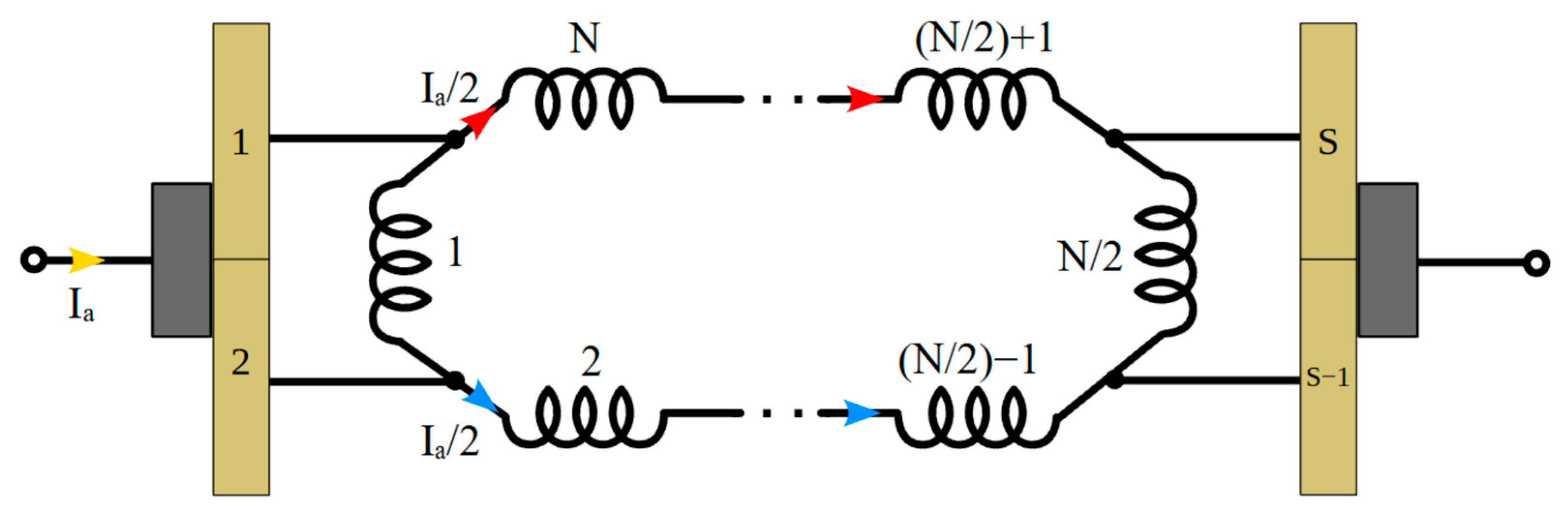
The commutation mechanism is essential for the seamless functioning of a DC motor. As the rotor moves and the brush transitions across different commutator segments, each coil in the rotor winding, linked to the commutator, experiences a reversal in current direction. As shown in
Figure 1, the total armature current Ia splits into two branches. The windings are arranged in such a way that the coils between points 1–S and 2–S-1 conduct current through multiple commutator segments.
In the short-circuited part of the winding (at the moment of switching), the current does not change instantaneously due to the inductance of the coil, which counteracts sudden changes in current. Instead, the direction and value of the current changes gradually—from Ia/2 to −Ia/2—as the brush moves across the commutator segments. This process describes the phenomenon of self-induction, in which an electromotive force (SEM) is induced in the winding to counteract the change in current, according to the law:
Correct commutation prevents sparking (arcing) at the contact between brushes and commutator and enables continuous and stable motor operation.
2.2. Design Overview of a PMDC Motor with Rectangular Neodymium Magnets
The authors undertook the development of a new commutator motor design based on earlier research conducted in [
11,
12] that uses rectangular neodymium magnets to excite the magnetic field. The design was based on the solution presented in utility model PL72924Y1 [
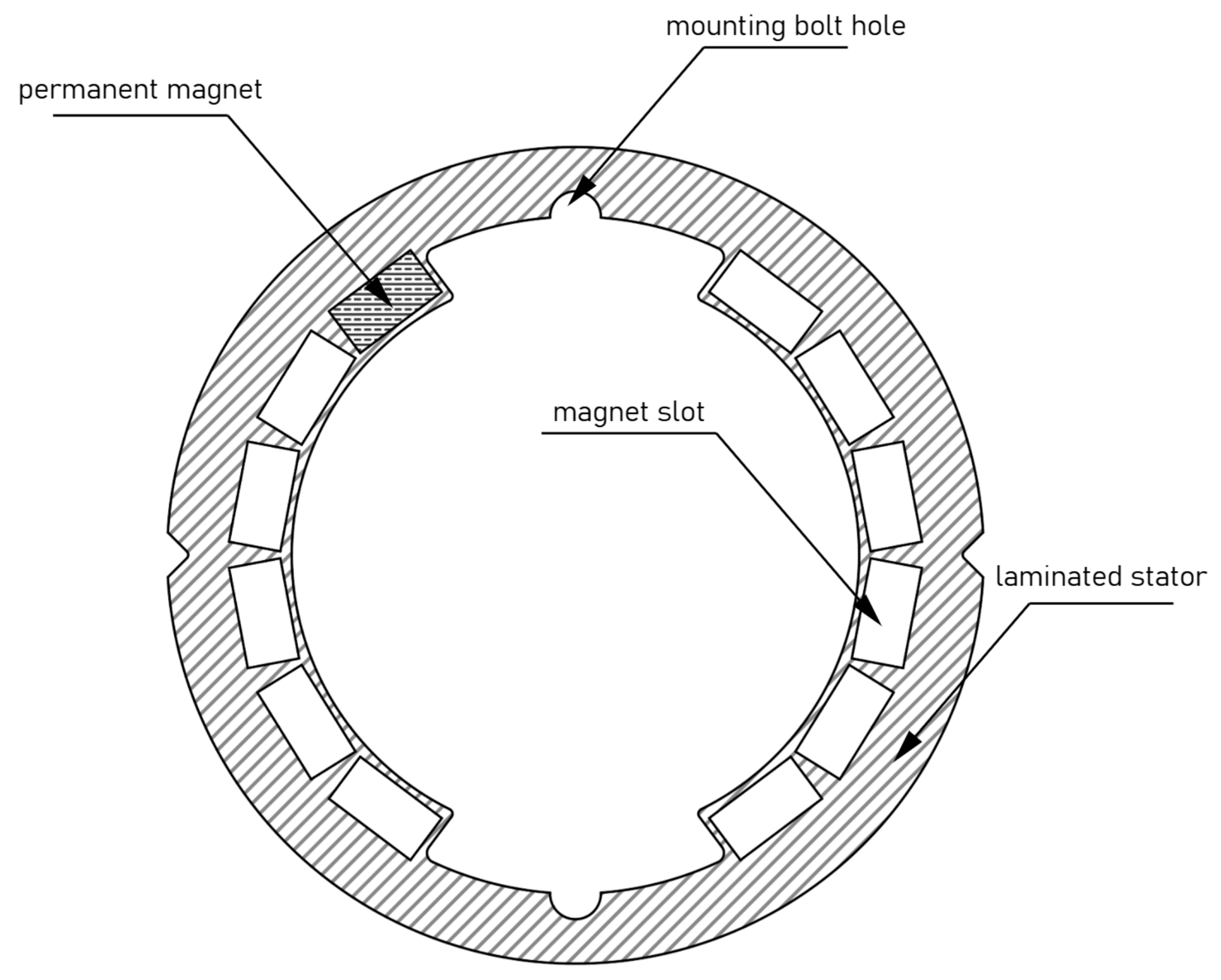
13]. The cross-section of the stator is shown in
Figure 2. The aim was to create a small but efficient DC motor that could be used to drive horns at level crossings—such a machine should therefore be characterized by reliability, simplicity of construction and low production cost.
Typical PMDC motors usually use ferrite magnets in the shape of ring cut-outs. Ferrite magnets, made from iron oxides and barium or strontium carbonates, are cheap and easy to manufacture—they are formed into the correct shapes at the production stage. This makes them ideal for many simple applications [
14]. The main disadvantage of this type of motor is the low magnetic energy density. Neodymium magnets (NdFeB), which belong to the group of rare-earth magnets, have a much higher energy density—from 200 to even 400 kJ/m
3. This makes it possible to reduce the size and weight of the motors in which they are used [
15]. They are more expensive to produce, mainly due to the need to cut the magnet to the correct shape. It is estimated that the waste of an NdFeB magnet can be as high as 20–30% [
16].
The designed motor uses rectangular neodymium magnets (NdFeB), which are placed in special holes in the stator. This makes the assembly much easier and the whole design more reliable, as there is no need to use glue to fix the magnets. Furthermore, rectangular magnets are produced on a large scale and are much cheaper than arc-shaped ones, which have to be custom-made. This significantly reduces the cost of the entire motor. The advantages of using rectangular permanent magnets—including, among other things, reduced cogging torque, simplified assembly and improved mechanical stability [
17]—were analyzed in detail in the author’s doctoral dissertation [
11], where they were compared with a classical design with ring-shaped slice magnets.
2.3. Field–Circuit Model of a PMDC Motor
A common simplification in electromagnetic field modeling of electrical machines is the use of imposed current excitation in the windings [
18]. Although this approach reduces computational effort, it prevents realistic representation of commutation phenomena, as the current is forced to change instantaneously and independently of inductive effects. This limitation is particularly critical in PMDC motors, where commutation quality strongly depends on transient current behavior.
In the Ansys Maxwell 2025R2 environment, it is possible to task the coils with forcing from an external circuit. The field–circuit model created in this way can use the built-in Maxwell Circuit Editor, in which the coils are supplied with voltage from a real circuit. As a result, this provides a much more accurate picture of the actual operation of the commutation process in a PMDC machine. In this approach, the currents in the windings result from the solutions of the field equations and the circuit parameters—such as resistances and inductances. This gives a much more accurate picture of the actual operation of the PMDC, especially under dynamic conditions such as start-up or load changes [
19]. As a result, this provides a much more accurate picture of the actual operation.
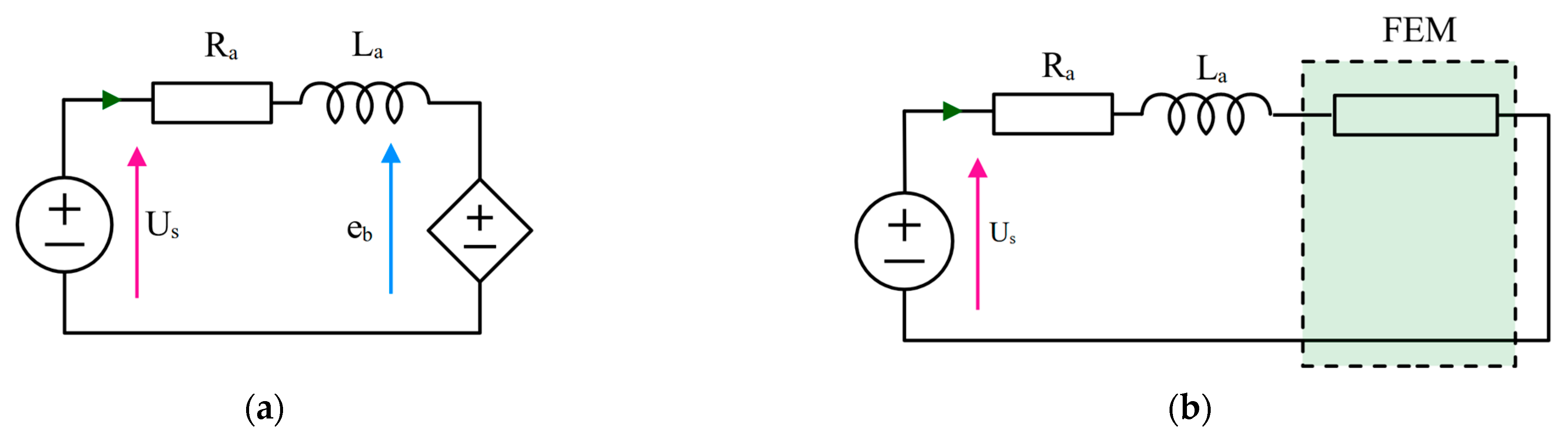
The electrical circuit equation for a DC machine excited by permanent magnets is reduced only to the armature circuit (
Figure 3a) equation:
where
—supply voltage;
—armature winding resistance;
La—armature winding inductance;
—armature current;
eb—back electromotive force (back-EMF), given by:
where
is the back-EMF constant and ω is the angular velocity of the rotor.
Figure 3.
Electrical circuit model of a permanent magnet DC motor: (
a) classic equivalent circuit with back-EMF represented as a voltage source; (
b) coupled field–circuit model with FEM block used to compute back-EMF and electromagnetic torque—based on [
11].
Figure 3.
Electrical circuit model of a permanent magnet DC motor: (
a) classic equivalent circuit with back-EMF represented as a voltage source; (
b) coupled field–circuit model with FEM block used to compute back-EMF and electromagnetic torque—based on [
11].
Figure 3 shows two circuit models of a permanent magnet DC motor (PMDC).
Figure 3a shows a classical circuit model in which the electromotive force (back-EMF) e
b is represented as an ideal voltage source. This model consists of the winding resistance R
a, the self-inductance L
a and the supply voltage
The back-EMF is assumed here as a known function of rotor speed, which means that the effect of changes in the magnetic field or machine geometry is not considered.
Figure 3b, on the other hand, shows a field–circuit model in which the source of back-EMF and electromagnetic torque information is a FEM field solver block. The machine coil is connected to an FEM that dynamically calculates the back-EMF voltage and torque values based on the magnetic field distribution, geometry and material properties. This approach allows magnetic nonlinearities, saturation effects and true commutation to be taken into account, making the model much more accurate—especially when analyzing the dynamic operation of the machine.
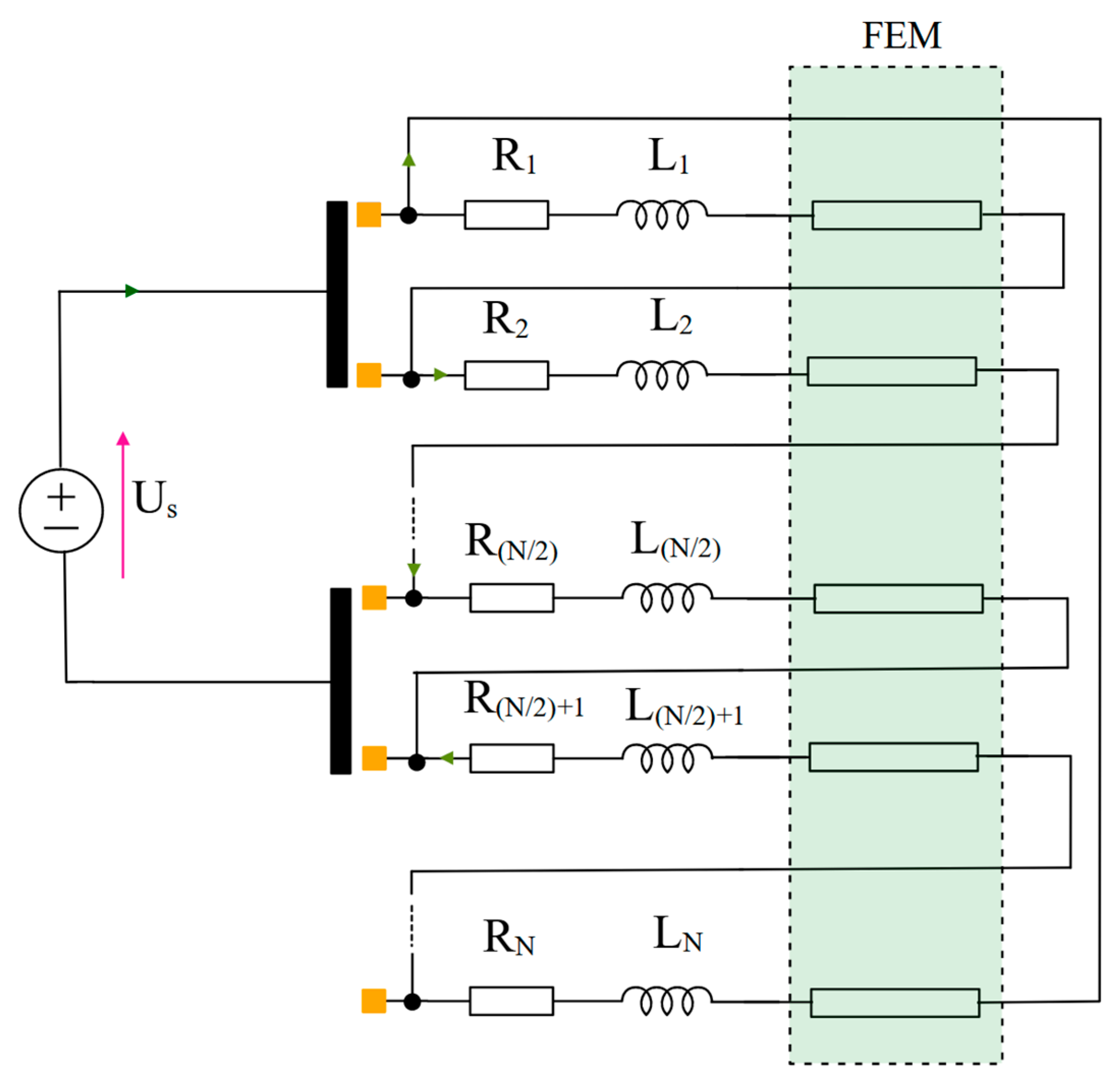
To accurately simulate the commutation process in PMDC motors, a more detailed circuit model is required. In the proposed extended model (
Figure 4), the rotor winding is divided into multiple segments, each described by individual resistance and inductance values. These segments represent the coil between the commutator cut-outs and are connected to the power source via brushes, respectively. This approach allows the time-varying current distribution to be represented. Each armature coil in the extended circuit model is represented by a series combination of resistance R
i, inductance L
i and back-EMF voltage, which is determined directly from the electromagnetic field analysis using the finite element method. This method enables an accurate depiction of motor function during commutation by considering dynamic changes in field distribution, flux behavior, and local magnetic saturation in each coil. The comprehensive field–circuit model, therefore, permits a highly precise analysis of electromagnetic and transient phenomena, essential for evaluating the quality of commutation and the drive system’s efficiency under actual operating conditions.
The model shown assumes the presence of one pair of brushes. The brushes are in contact with the corresponding segments of the commutator. As a result, the rotor winding system forms two parallel branches through which the supply current flows. Each of these branches contains a corresponding number of coils, each of which is represented by a series combination of resistance, inductance and a back-EMF source calculated from a field model.
2.4. Ansys Maxwell Model of PMDC Motor with Rectangular NdFeB Permanent Magnet
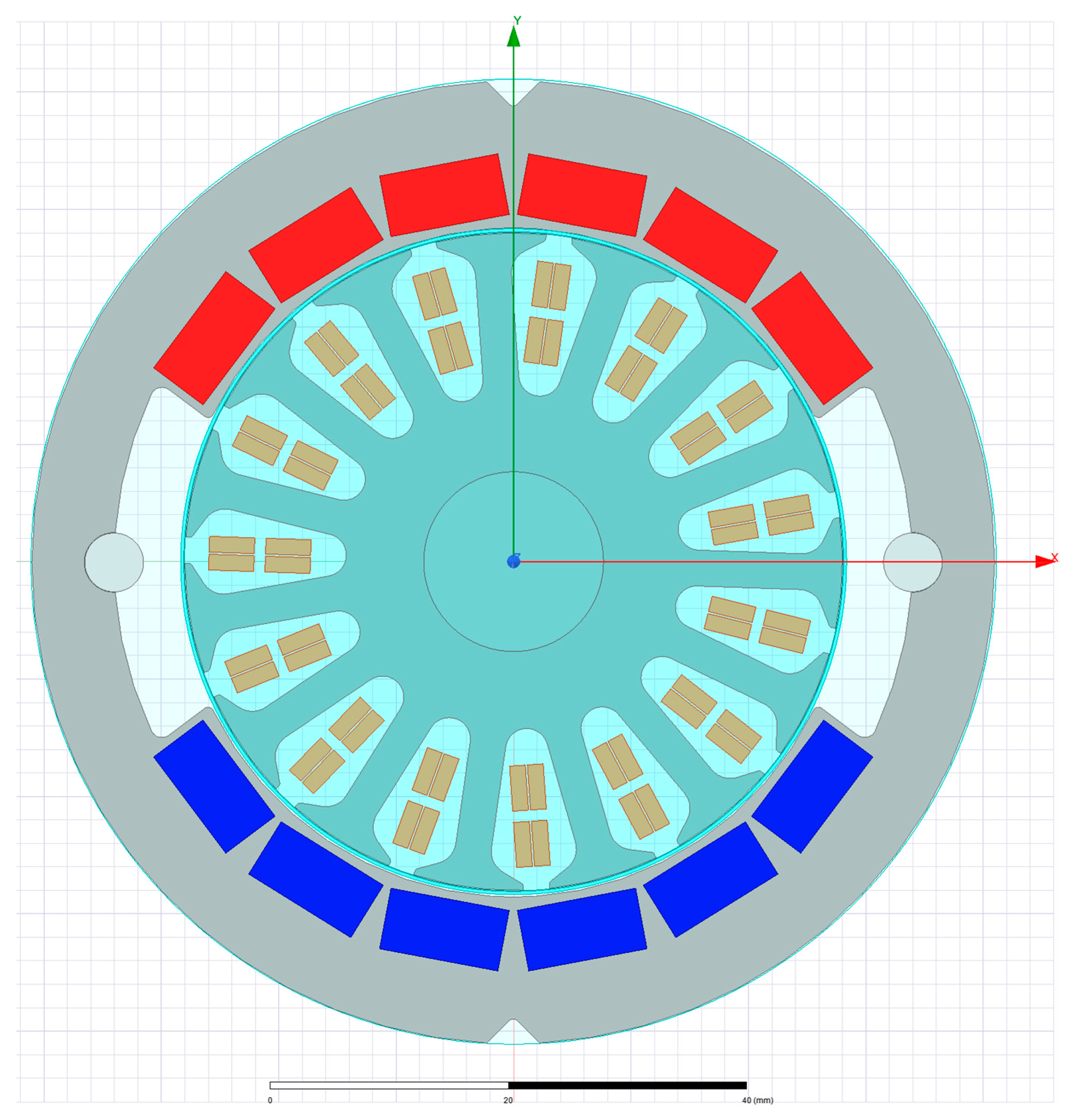
In order to analyze the electromagnetic properties of the designed PMDC motor, a two-dimensional field model was developed in the Ansys Maxwell 2D environment, as shown in
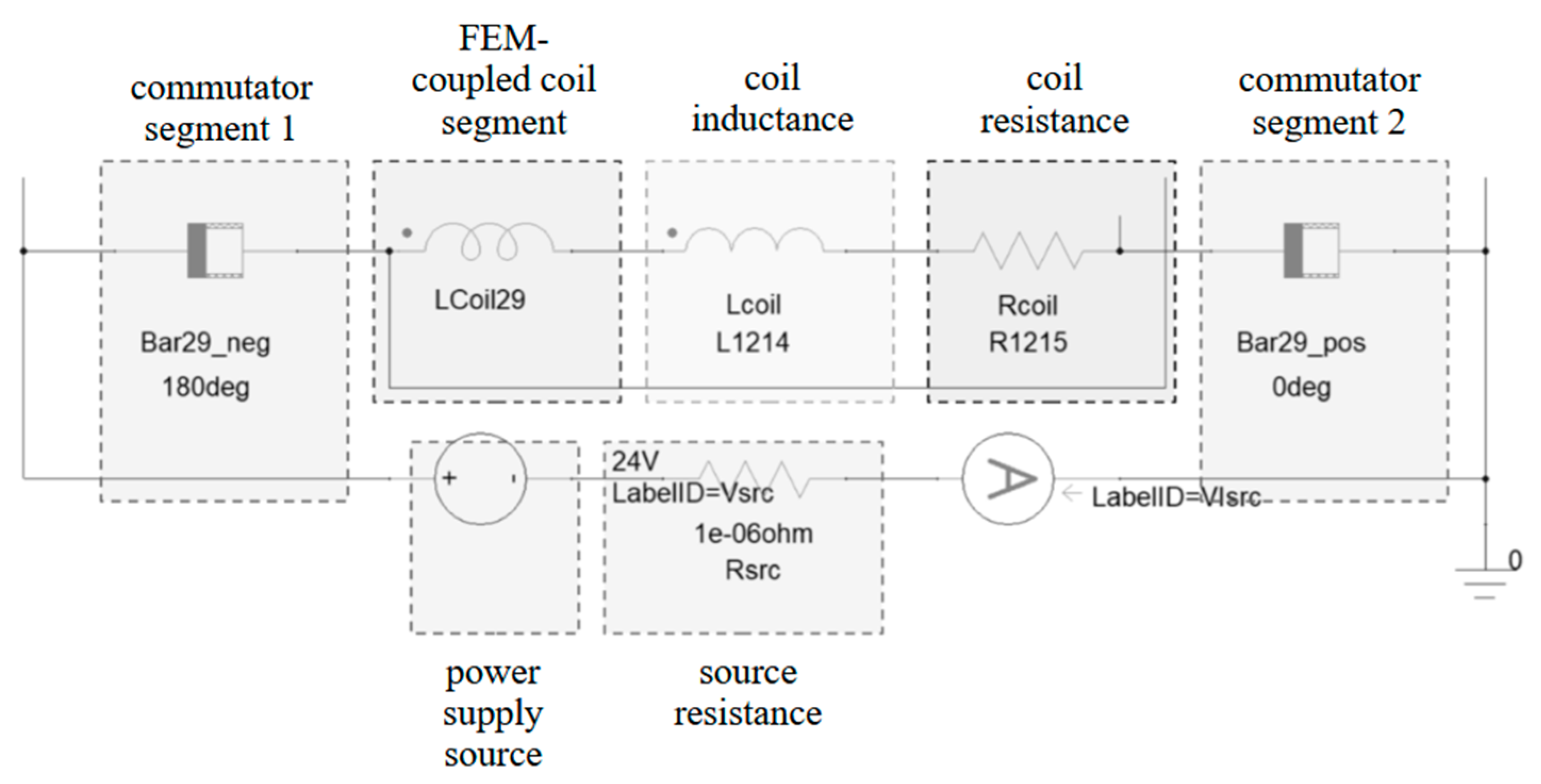
Figure 5. The field model was integrated with the circuit model using the Maxwell Circuit Editor, and a fragment of the circuit is shown in
Figure 6. The geometrical model reflects the actual design, including a wound rotor with 15 slots and a stator equipped with rectangular NdFeB permanent magnets.
The stator of the analyzed PMDC motor consists of two salient poles with embedded rectangular NdFeB permanent magnets. As a result, the air-gap length is not uniform along the circumference. In the numerical model, the minimum air-gap length was equal to δ = 0.5 mm and occurred in the region of the stator poles, while larger local air-gap values were present outside the pole regions.
By using External Excitation, it was possible to combine the field model with the power system and the focused elements representing the coils. This approach allows an integrated field–circuit simulation to be realized without the need for an additional environment (e.g., Simplorer).
Each winding coil was mapped in the circuit model as an R-L element and coupled to the FEM model, which calculates the generated back-EMF voltage. The commutator was realised as a set of switchable segments (Bars) that dynamically change the way the coils are connected depending on the rotor rotation angle. The model is supplied from an idealised 24 V voltage source, taking into account the low internal resistance, with the entire circuit analysed using a Triansient solver. The rotor movement was set via the Rotational Motion Setup function at a specific angular velocity.
The simulation assumes a Vector Potential = 0 boundary condition on the outer geometric envelope of the motor model. This means that the vector potential (and thus the magnetic flux) does not cross the boundary of the calculation area. This assumption simplifies the calculation and at the same time ensures a correct representation of the magnetic field line closure inside the machine. The finite element mesh has been compacted in the air gap—where the largest field gradient is expected. This allows results of a desirable accuracy to be obtained with a reasonable simulation time. The mesh parameters are shown in
Table 1.
The developed model forms the basis for a detailed analysis of dynamic phenomena in the machine, such as commutation, torque pulsations or loss analysis. The use of an integrated field–circuit approach in the Ansys Maxwell environment provides high accuracy and flexibility without the need for additional simulation tools.
3. Results
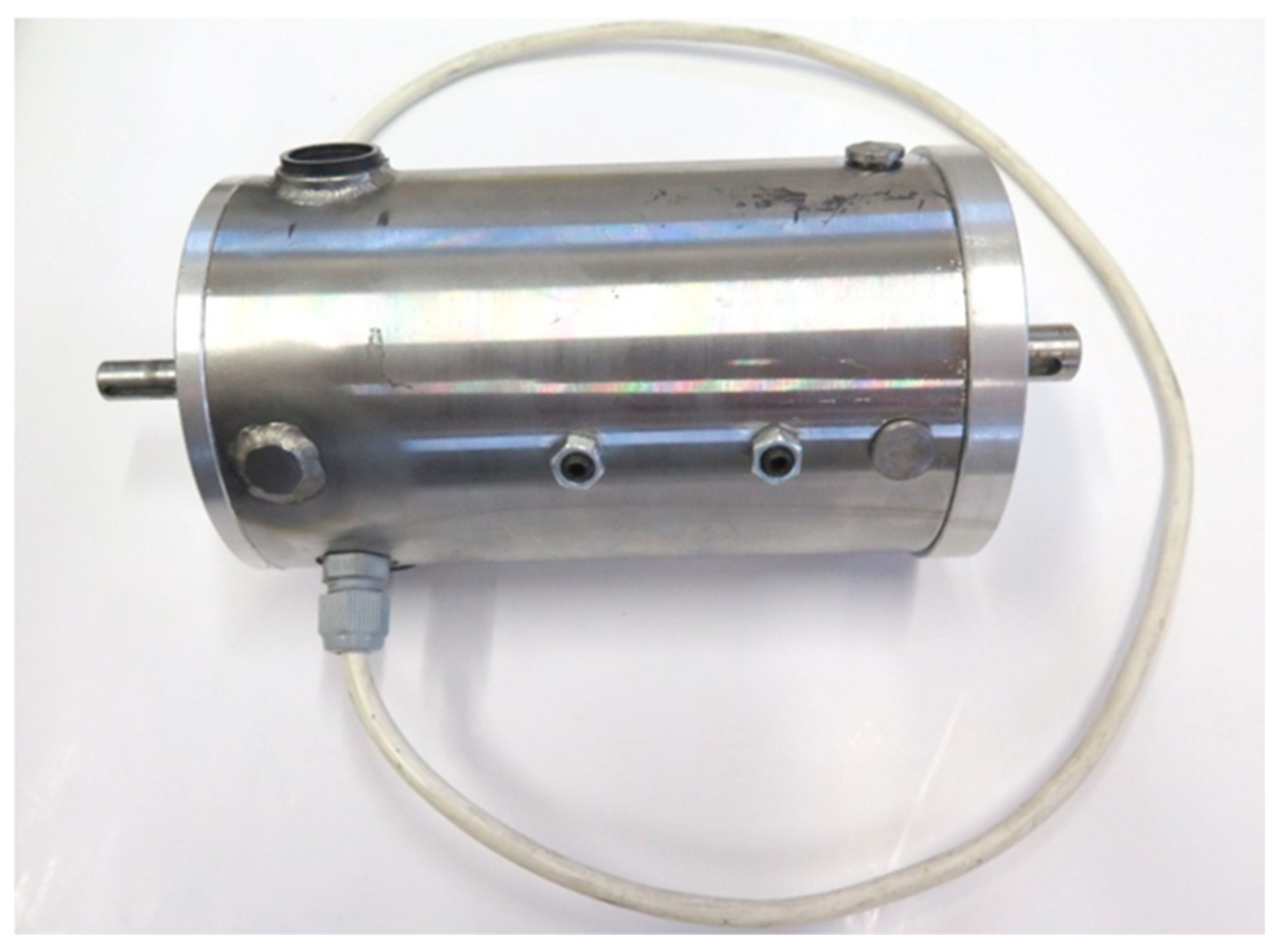
In order to verify the developed model, an motor prototype was made in accordance with the presented concept and the developed computational model. The motor was tested on an electromechanical dynamometer [
11]. The execution of the prototype made it possible to compare the results obtained from simulations with actual measurements of electromagnetic torque and winding current. The completed motor prototype is shown in
Figure 7.
The parameters of the motor coil (between the commutator cut-outs are shown in
Table 2). The rated (nameplate) parameters of the tested PMDC motor used for both simulation and experimental validation are summarized in
Table 3. The machine has a double-layer loop winding with variable pitch.
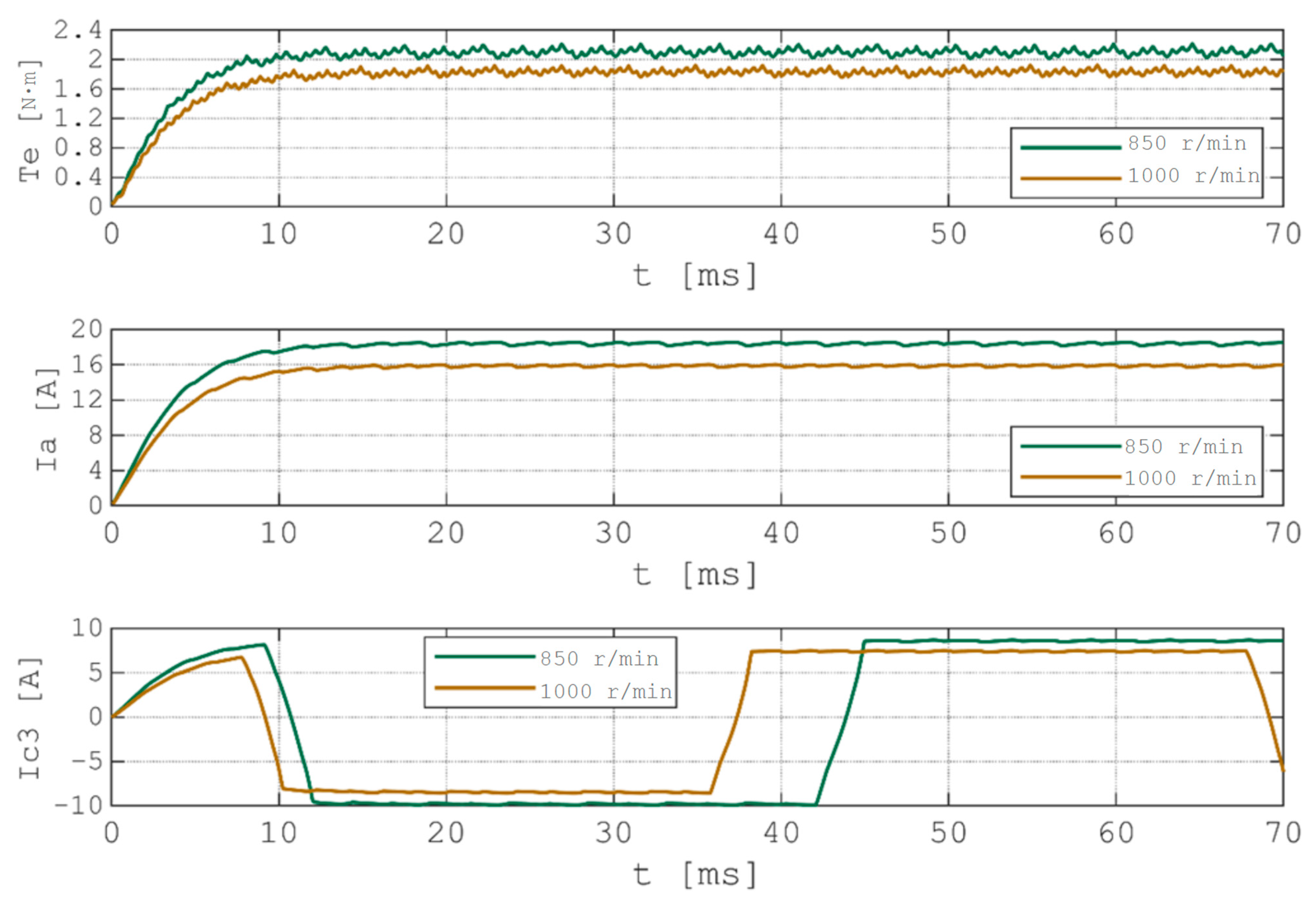
In order to verify the correctness of the developed field–circuit model, a series of simulations and laboratory measurements were carried out. The electromagnetic torque and armature current waveforms were analysed under fixed operating conditions for two rotational speeds: 1000 r/min and 850 r/min. The speed of 850 r/min corresponds to the rated operating condition of the tested PMDC motor and was therefore selected as the primary validation point. The additional operating point at 1000 r/min was considered to validate the model at a different, yet practically relevant, steady-state operating condition beyond the rated speed.
Figure 8 shows the time courses of electromagnetic torque, armature current, and selected coil current obtained from the simulations. Characteristic torque pulsations related to the occurrence of commutation torque ripple and current ripples, typical of commutator machines, are visible. The current waveform I
c3 clearly illustrates the commutation process, including the rapid current reversal occurring during the short-circuit interval when the coil is simultaneously connected to adjacent commutator segments by the brushes. Although the presented I
c3 waveform does not allow direct extraction of the complete commutation spectrum, the time scale of the observed current transitions is consistent with the commutation frequency determined by the number of commutator segments and the rotational speed of the motor (on the order of a few hundred hertz for the analyzed operating points). These commutation-related current variations directly contribute to the torque and armature current ripples observed in
Figure 8.
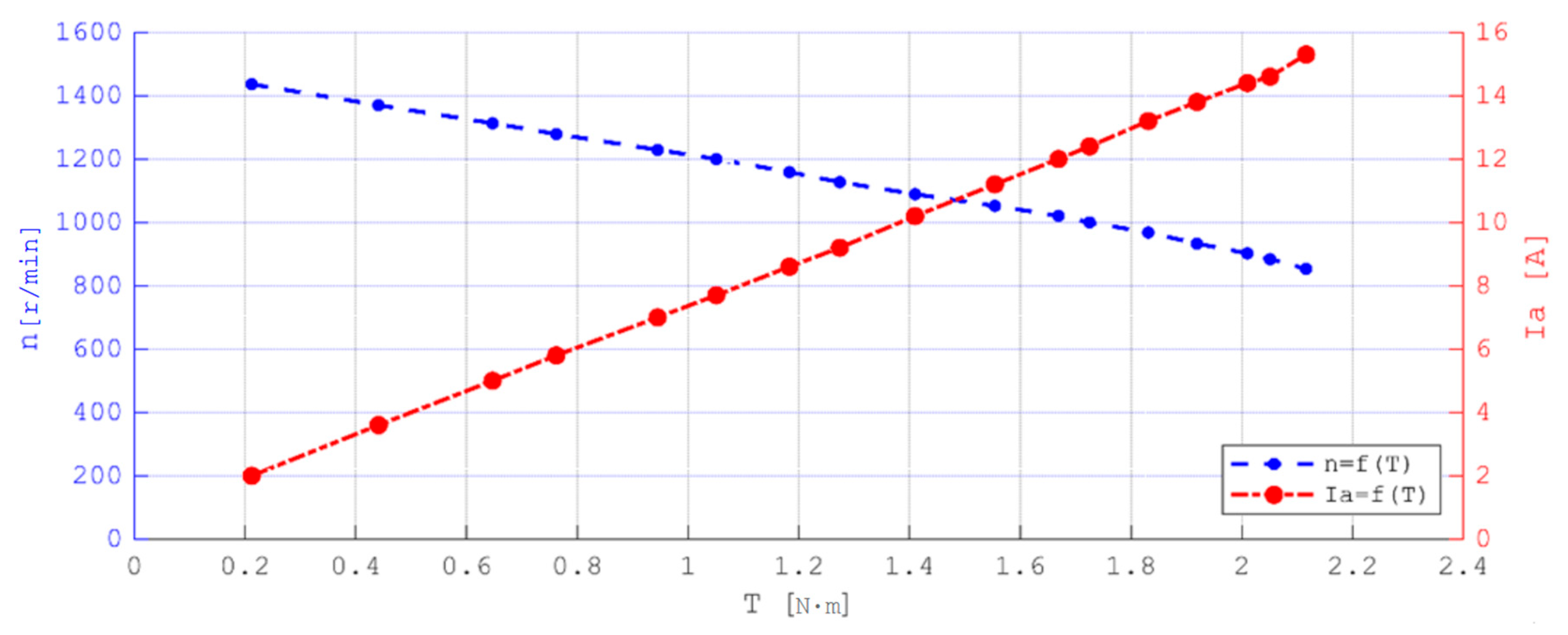
The experimental steady-state speed–torque and armature current–torque characteristics of the tested motor are presented in
Figure 9. The results obtained from the numerical simulations were compared with measurements carried out on the actual prototype motor—shown in
Table 4. The values of electromagnetic torque (Tₑ) and armature current (Iₐ) were tabulated for two rotational speeds: 1000 r/min and 850 r/min. The differences in torque estimates do not exceed 5% and indicate good agreement with reality. In the case of armature current, larger deviations were observed—up to about 20%. The higher discrepancy observed for the armature current, reaching approximately 20%, can be attributed to several factors:
Simplified representation of brush–commutator contact resistance;
Omission of temperature-dependent winding resistance variation;
Neglect of detailed brush dynamics and contact voltage drop;
Uncertainties related to measurement conditions under dynamic commutation;
Use of a two-dimensional model, which does not account for three-dimensional end-winding effects and axial flux components that may influence current distribution during commutation.
Despite these differences, the model shows satisfactory accuracy and can be useful at the design stage of similar structures [
20].
4. Discussion
The results obtained confirm that the developed field–circuit model accurately reproduces the key phenomena occurring in a PMDC commutator motor equipped with rectangular NdFeB magnets. Particularly important is the very good representation of the electromagnetic torque, with an error not exceeding 5%. This means that the model correctly reflects the flux distribution in the innovative magnetic circuit and the nature of the segmented winding operation during commutation. Larger differences in current waveforms can be explained by simplifications in the electrical circuit and manufacturing tolerances of the prototype, which has also been pointed out in the literature on PMDC models.
Compared to classic circuit models commonly used in the analysis of commutator motors, the presented model offers significantly greater accuracy in mapping commutation phenomena. Circuit models are usually based on an ideal change in the direction of current in the coils, while the actual commutation process is highly nonlinear and depends on inductance, magnetic excitation, and rotational speed. The results show that the electromagnetic field generated by rectangular magnets significantly affects local SEM values, which is impossible to capture using simplified models.
Another important element of the work is the analysis of the impact of the unusual geometry of the magnets on the behavior of the machine. Rectangular NdFeB magnets cause a different flux distribution than classic arc magnets, which on the one hand simplifies the design and reduces production costs, but on the other hand requires the use of more complex models. The results indicate that such a design can be effective, but details regarding the impact of different magnet configurations, air gaps, and pole shoe shapes on operating parameters are discussed in more detail in Paweł Strączyński’s doctoral dissertation, which contains a comprehensive study of many design variants.
It is also worth emphasizing the practical significance of the results in the context of railroad crossing drives. In an earlier article by the authors published in the journal Energies, it was shown that the choice of the right motor is crucial for the reliability and energy efficiency of railroad traffic safety systems. This paper builds on that research, providing a tool for detailed analysis of the phenomena occurring in the new motor design intended for use in such systems. This makes it possible not only to improve the motor design, but also to improve the reliability of the entire barrier drive system.
However, the developed model has certain limitations. In particular, the thermal phenomena model has been omitted, the brush and commutator model has been simplified, and a 2D analysis has been used, which does not take into account the phenomena at the ends of the windings. In the future, it is planned to extend the model with a three-dimensional analysis, a loss model, and a full thermal analysis under dynamic conditions.
5. Conclusions
The article presents a comprehensive field–circuit model of a PMDC commutator motor featuring a non-standard magnetic circuit based on rectangular NdFeB permanent magnets. The proposed modeling approach explicitly accounts for armature winding segmentation, dynamic commutator switching, and the determination of electromotive force in individual coils based on the actual magnetic field distribution. As a result, the model enables a realistic representation of commutation phenomena and electromagnetic torque production.
The simulation results demonstrate good agreement with laboratory measurements performed on the motor prototype, particularly with respect to the electromagnetic torque characteristics. This confirms the correctness and practical applicability of the adopted field–circuit modeling methodology for PMDC motors with unconventional magnetic circuit topologies.
The developed model constitutes a practical tool for the analysis and optimization of PMDC motor designs. It can be used to assess commutation quality, support the selection of armature winding geometry and permanent magnet parameters, and predict the steady-state operating characteristics of machines under various operating conditions.
Despite its effectiveness, the proposed model involves certain simplifications. In particular, thermal effects, detailed brush–commutator contact phenomena, and three-dimensional end-winding effects are not considered, which may influence the accuracy of current prediction under specific operating conditions.
Future research will focus on extending the model to include thermal coupling and power loss analysis, developing a three-dimensional formulation, and performing further experimental validation over a wider range of load and speed conditions. These extensions will enable a more comprehensive assessment of the efficiency and performance of PMDC motors equipped with non-standard magnetic circuits.




 ,
,