From SiGe Solidification to Flexible Photovoltaic Fibers for Military Applications: Current Status and Development Prospects

 ,
,  , , , , , , and
Abstract
1. Introduction
1.1. Lightweight Materials for Defense Applications
1.2. Challenges and Future Directions
- Cost-effectiveness: Many advanced materials, such as titanium alloys and carbon fiber-reinforced polymers (CFRPs), are expensive and resource-intensive to produce.
- Manufacturability: Processing techniques, joining methods, and repair strategies must be optimized for complex military systems.
- Durability and survivability: Materials must withstand extreme environmental conditions, long service lives, and hostile actions (e.g., ballistic impacts, high temperatures, corrosion).
- Life-cycle sustainability: Consideration of recyclability and environmental impact is becoming increasingly important in material selection.
- ➢
- Compositional segregation and constitutional undercooling;
- ➢
- Thermal gradient and interface stability control;
- ➢
- Dopant diffusion and profile maintenance;
- ➢
- Structural defect suppression;
- ➢
- Crystal quality control through recrystallization;
- ➢
- Intrinsic phase behavior of SiGe alloys.
2. Results and Discussion
2.1. Selected Properties and Applications of Germanium
- ➢
- It is an intrinsic semiconductor that can conduct electricity in its pure form, with particularly strong performance at high frequencies and low operating voltages;
- ➢
- It is transparent to certain wavelengths in the infrared spectrum;
- ➢
- It possesses a very high refractive index;
- ➢
- Similar to silicon, germanium is a glass-forming material, capable of creating extended three-dimensional networks composed of irregularly arranged germanium–oxygen tetrahedra;
- ➢
- It shows low chromatic dispersion.
- ➢
- Higher efficiency than silicon-based solar cells (over 25% compared to silicon-based solar cells), so fewer cells are required in a panel to produce equivalent amounts of power;
- ➢
- Smaller size;
- ➢
- High strength with minimal size;
- ➢
- Lower weight.
2.2. Production of Germanium
- Czochralski (CZ) growth: this is a common method for producing silicon crystals, where a crystal seed is slowly withdrawn from a molten material in a crucible, allowing atoms to attach to the seed. While primarily for silicon, the principles regarding thermal gradients and impurity incorporation are applicable.
- Bridgman–Stockbarger (vertical and horizontal) and float zone (FZ) growth are other directional resolidification techniques used for compound semiconductor materials and are relevant to understanding molten core drawing and post-processing of semiconductor core fibers [8].
- The molten core draw method (MCD) is widely used to fabricate semiconductor core fibers, in which a fluid melt core is contained by a glass cladding and drawn to fiber dimensions. As-drawn fibers are often polycrystalline, and post-processing treatments, such as directional recrystallization, are crucial to improve performance by reducing defects and impurity segregation at grain boundaries. Techniques like laser-heated pedestal growth (LHPG) and the traveling solvent FZ method are also employed, offering controlled recrystallization through moving thermal gradients. These advanced methods aim to produce single-crystal cores with high aspect ratios and reduced energy consumption compared to traditional wafer production [8].
2.3. Life Cycle of SiGe Photovoltaic Fabrics and Environmental Exposure
2.4. Ecotoxicological and Human Health Implications
- ➢
- Soldier exposure: Low likelihood during wear/use, unless materials degrade.
- ➢
- Localized contamination: Possible during manufacturing, especially without closed-loop recycling.
- ➢
- Waste management: Improper storage of discarded textiles may lead to groundwater contamination.
- Green extraction and sourcing: (i) Recovery of Ge from fly ash and e-waste; (ii) use of byproduct Ge from industrial waste streams.
- Recycling technologies: (i) Fabric disassembly and Ge fiber extraction; (ii) pyrolysis or chemical stripping to recover alloys.
- Regulatory outlook: Military procurement policies must incorporate life-cycle impact assessments. Environmental management plans should address the safe use and disposal of Ge-containing PV systems.
2.5. Germanium Status and Analytical Challenges Due to Low Environmental Concentrations
2.6. Environmental Flows, Biogeochemical Cycles, and Interactions with Natural Matrices
2.7. The Overemphasis on Ge/Si Ratios
2.8. Selected Properties and Applications of Silicon
2.9. Electronics Based on SiGe for Operation in Extreme Conditions
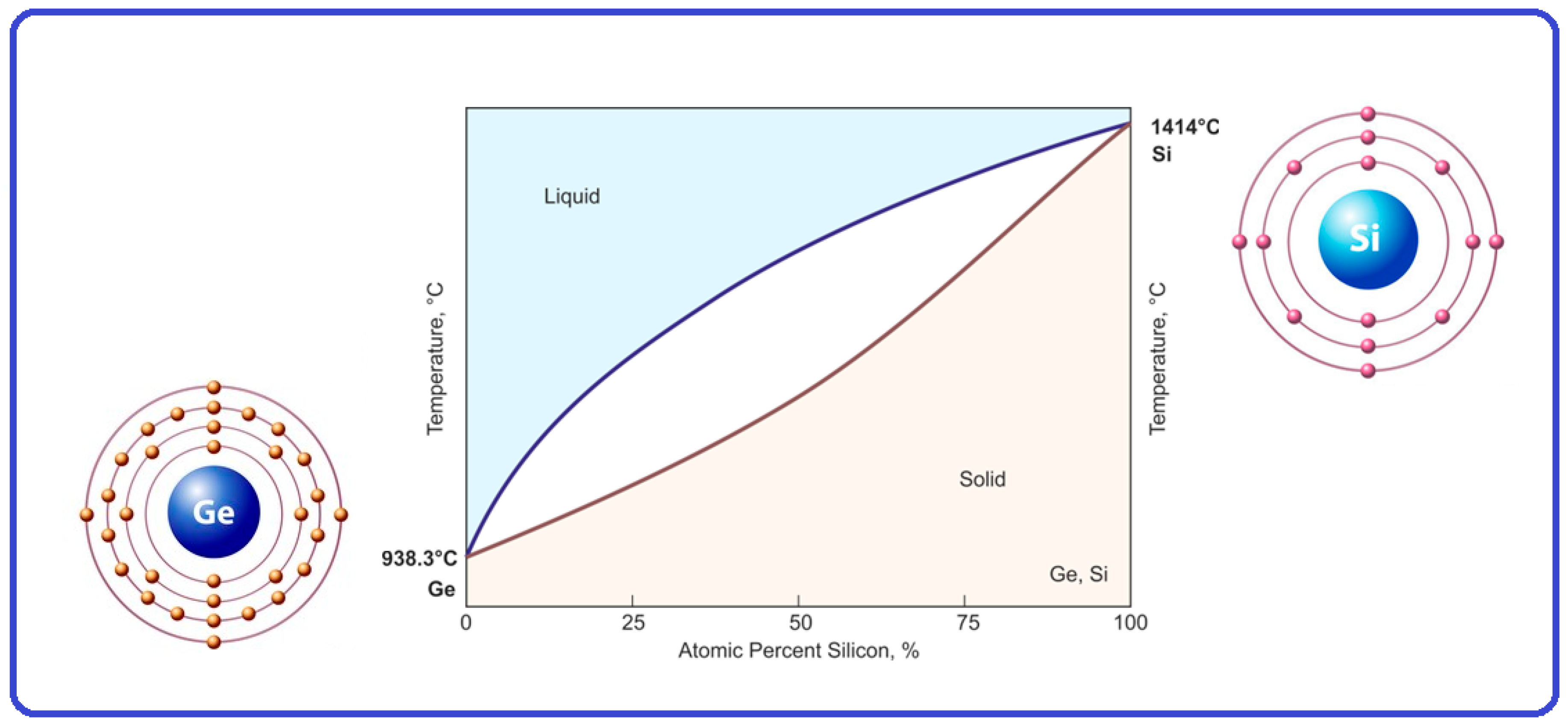
2.10. Phase Diagrams and Solidification of SiGe
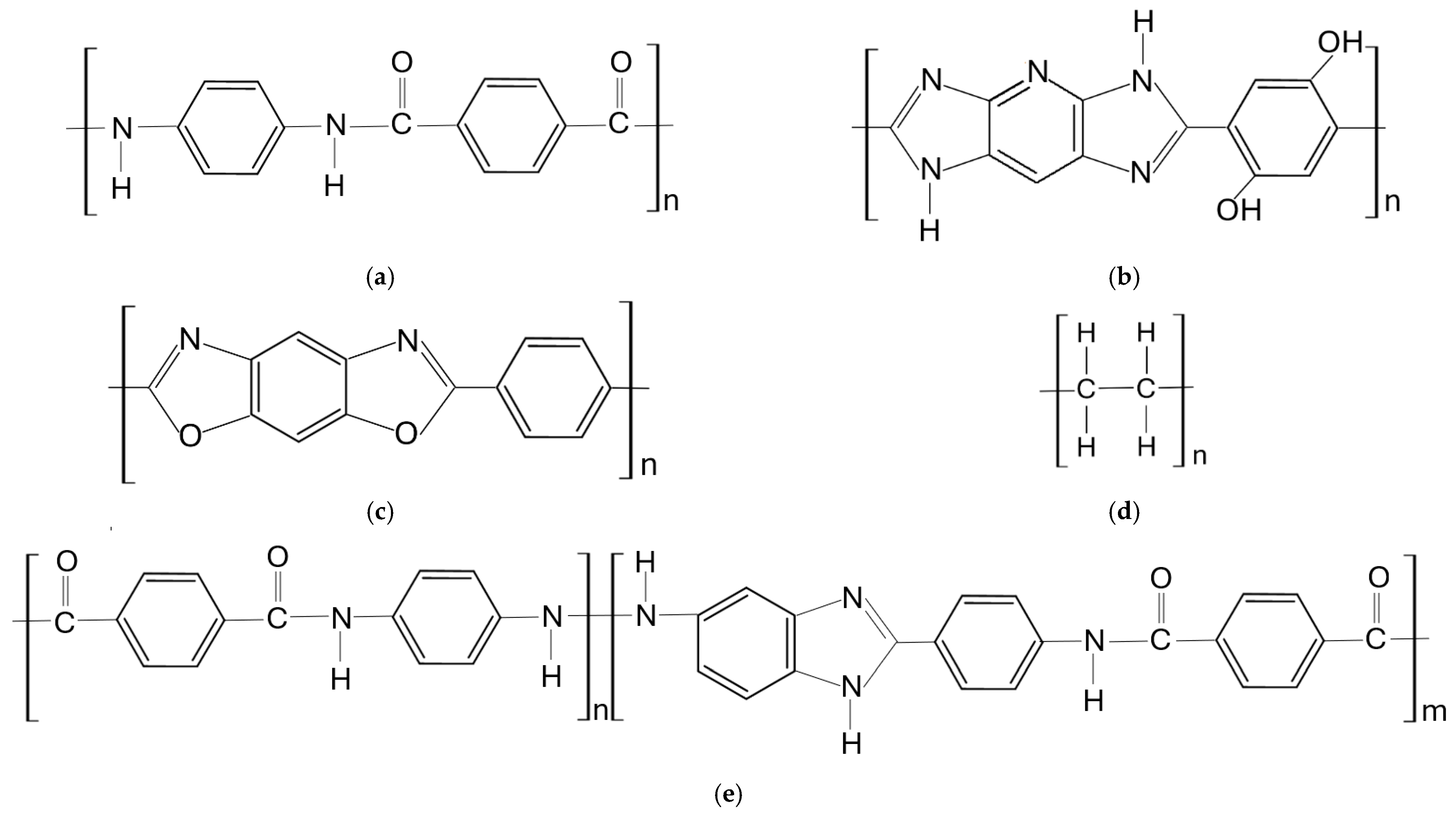
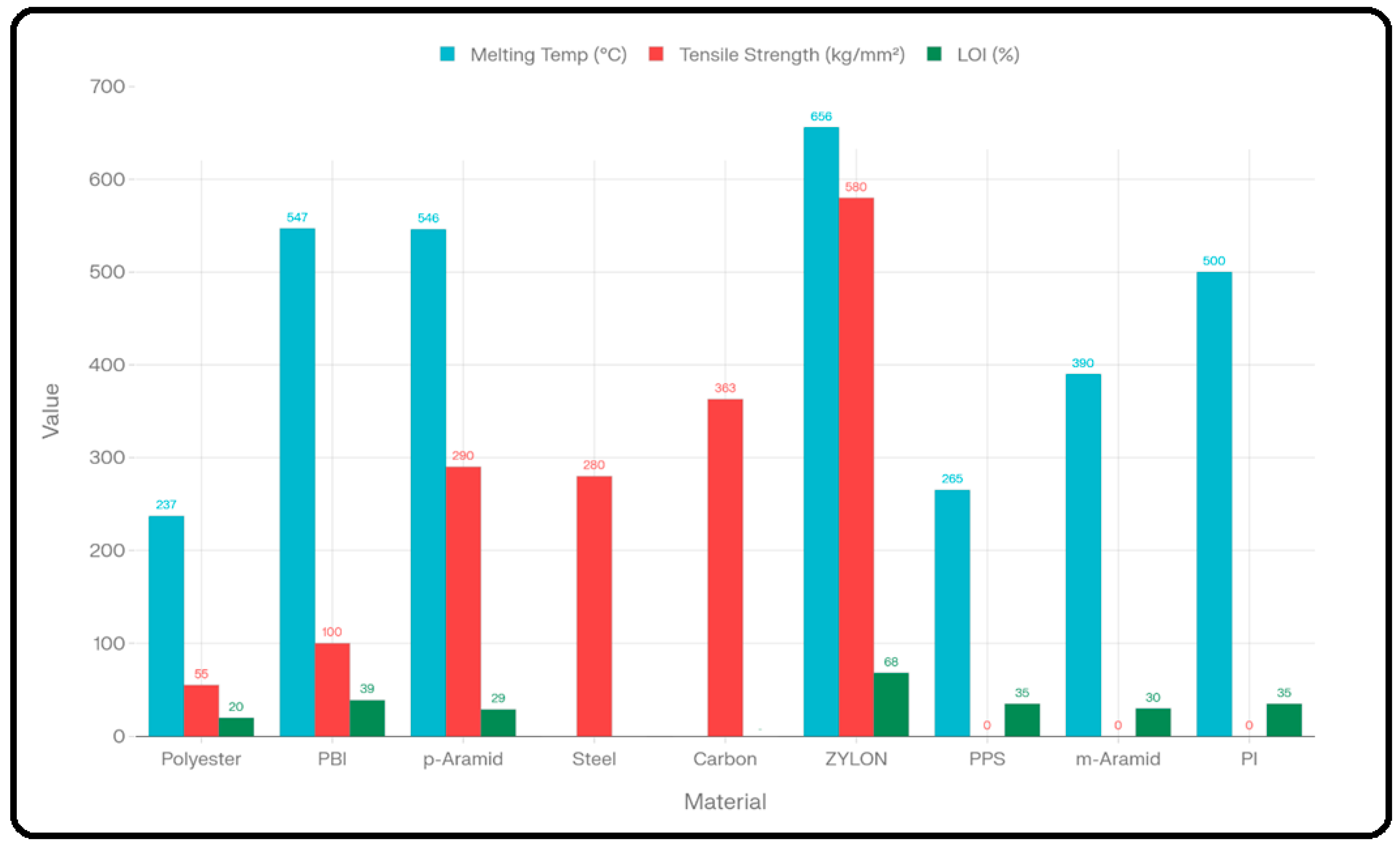
2.11. High-Performance Fibers
2.12. Semiconductor Core Fibers
- High-Pressure Chemical Vapor Deposition (HPCVD): Some of the earliest semiconductor core optical fibers were made using HPCVD inside a pre-drawn micron-sized pore of a glass capillary. This method offers high purity from gas precursor reactants and the ability to deposit materials that might vaporize in conventional MCD processes. It uses lower temperatures, resulting in amorphous or small-grain polycrystalline materials, and typically produces fibers tens of centimeters long with substantial growth times [8].
- Pressure-Assisted Melt Filling (PAMF): This technique involves forcing a molten core material into a smaller diameter pore of a spliced fiber. It has been frequently used for fabricating germanium core materials [8].
- Germanium (Ge): Germanium was among the earliest semiconductor core fiber materials explored using HPCVD. Its accessible melting point (~940 °C) has led to extensive study. Studies on crystallized Ge cores have shown potential for mid-IR devices. MCD draws of Ge core fibers have been made with both borosilicate and silica cladding glasses. Post-fabrication processing, including tapering, oven annealing, and laser annealing, has improved mechanical and optical properties.
- Silicon (Si): Silicon is the most studied core material due to its transparency at telecom wavelengths and expertise gained from planar silicon photonics. Most MCD fabrication uses bulk silica cladding. Post-processing significantly improves optical losses and grain size. Stress caused by silicon’s nearly 10% volume expansion upon solidification is a key consideration, limiting maximum core size.
- Selenium (Se) and Tellurium (Te): These elements also demonstrate phase behavior relevant to single-component cores. Phosphate glass-clad fibers with crystalline SeTe cores have been studied and used as stress sensors and photoconductors.
- SiGe: Fibers are typically drawn at temperatures around 1950 °C, using silica as the cladding. Compositional variations are observed in as-drawn material due to preferential solidification of silicon from the melt, but laser annealing can create a more homogeneous structure. Germanium’s lower melting point allows it to act as a solvent, promoting large single-crystalline core regions.
- Si/GaSb: This pseudo-eutectic ternary system has been reported as a core material, where GaSb acts as a low-temperature solvent for silicon, leading to highly crystalline cores with classic eutectic features.
2.13. Multifunctional Fiber Devices
2.14. SiGe Fiber as a Solar Cell
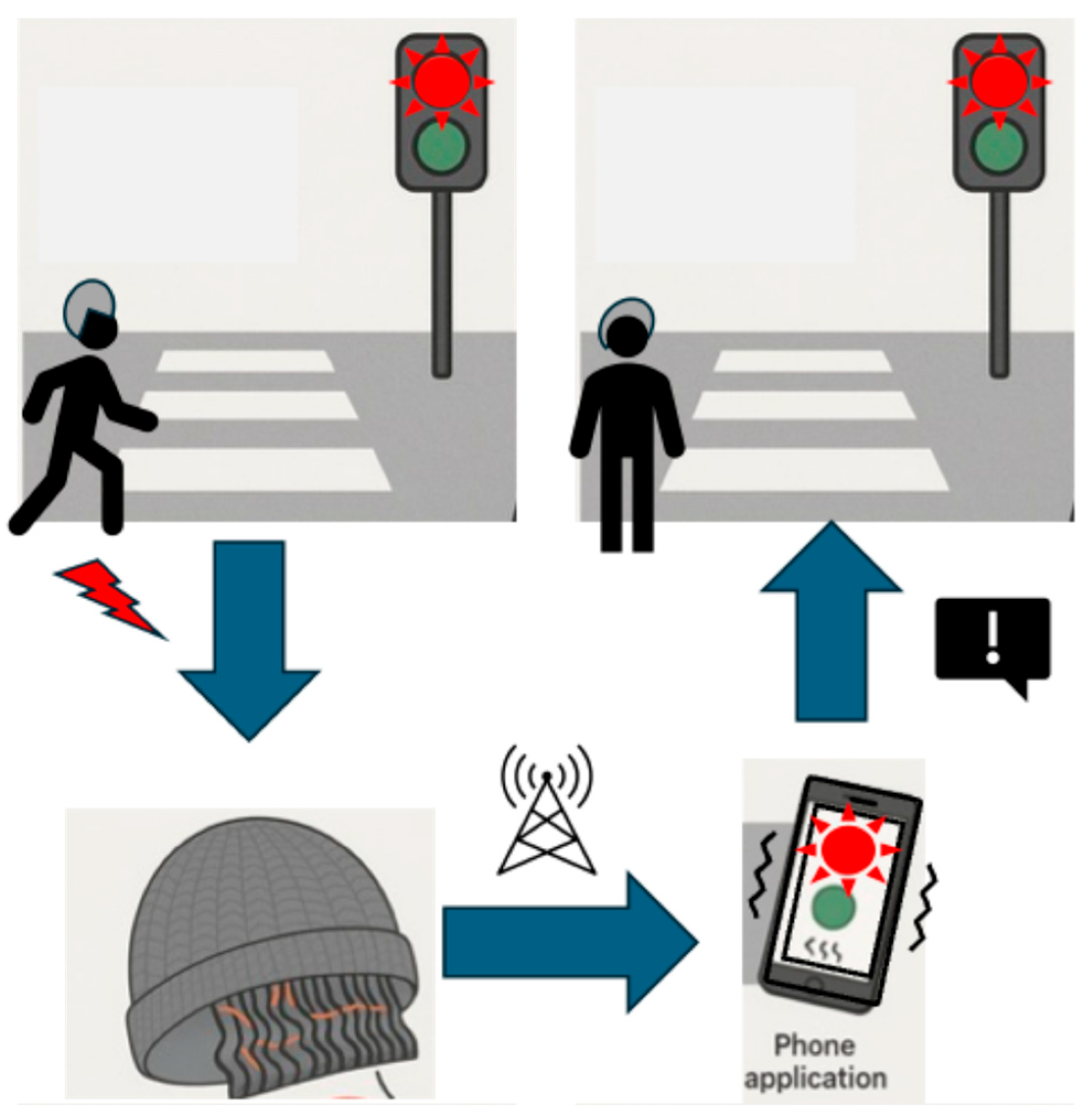
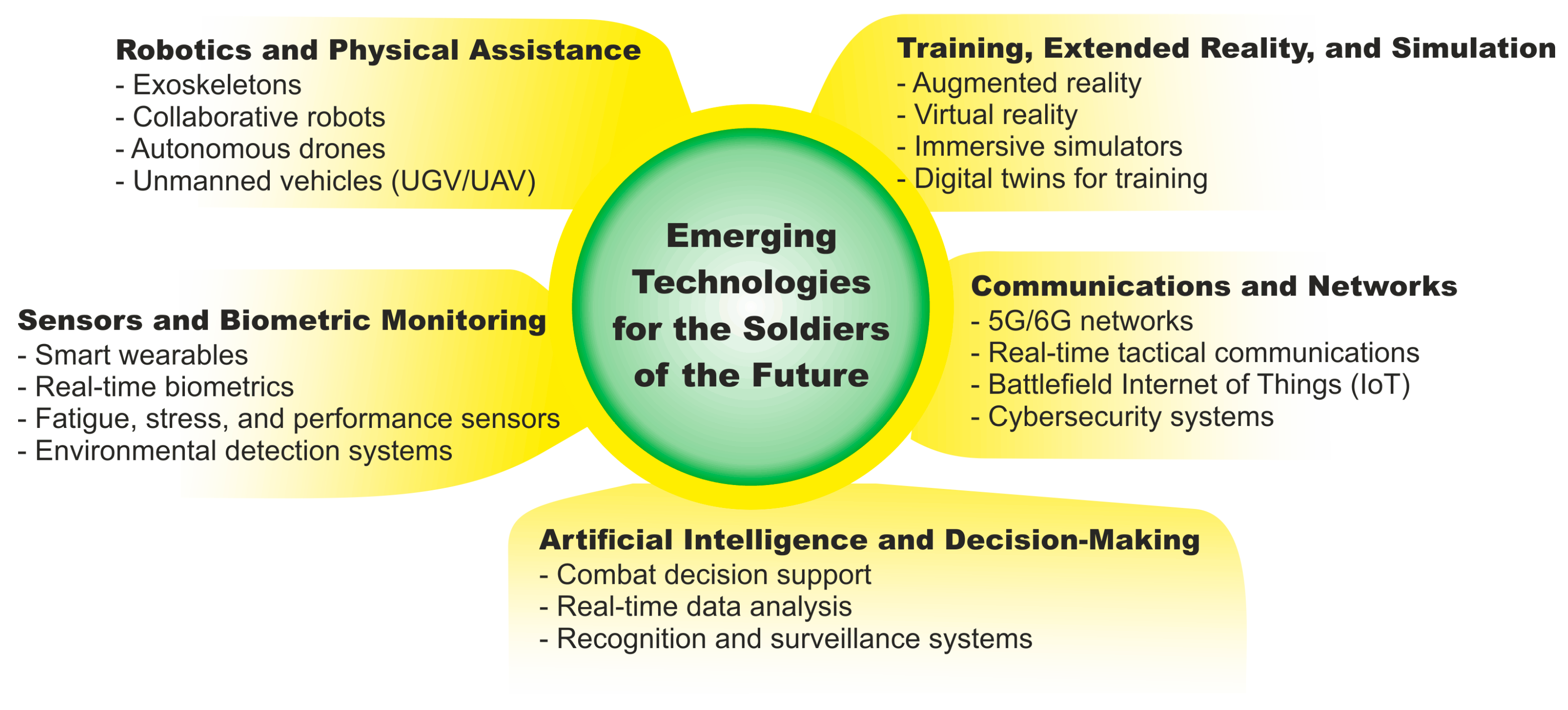
2.15. Soldier of the Future
- Durability under field conditions (temperature, humidity, radiation),
- Optimization of energy efficiency and autonomous power supply,
- Ecological and health issues related to germanium processing,
- Biocompatibility of body-assisting systems, and
- Ethical aspects of human–machine integration.
- Hybrid SiGe nanofiber architectures,
- Energy recovery systems based on body movement and thermal gradients,
- Biocompatible protective coatings, and
- Cybersecurity of biological and physiological data acquired from soldiers.
- ➢
- Predict optimal parameters;
- ➢
- Fabricate fibers;
- ➢
- Characterize outcomes;
- ➢
- Retrain models automatically.
- ➢
- Integrates fragmented datasets;
- ➢
- Bridges modeling and experiments;
- ➢
- Accelerates convergence toward scalable fabrication.
3. Conclusions
Author Contributions
Funding
Data Availability Statement
Acknowledgments
Conflicts of Interest
References
- Sze, S.M.; Li, Y.; Ng, K.K. Physics of Semiconductor Devices; Wiley: New York, NY, USA, 2021. [Google Scholar]
- Kasap, O.; Capper, P. Springer Handbook of Electronic and Photonic Materials, 2nd ed.; Springer: Cham, Switzerland, 2017. [Google Scholar] [CrossRef]
- Madelung, O. Semiconductors: Data Handbook, 3rd ed.; Springer: Berlin, Germany, 2004. [Google Scholar] [CrossRef]
- Theeuwes, R.J.; Kessels, W.M.M.; Macco, B. Surface passivation approaches for silicon, germanium, and III–V semiconductors. J. Vac. Sci. Technol. A 2024, 42, 060801. [Google Scholar] [CrossRef]
- Shen, L.; Teng, C.; Wang, Z.; Bai, H.; Kumar, S.; Min, R. Semiconductor multimaterial optical fibers for biomedical applications. Biosensors 2022, 12, 882. [Google Scholar] [CrossRef]
- Ballato, J.; Hawkins, T.; Foy, P.; Yazgan-Kokuoz, B.; McMillen, C.; Burka, L.; Morris, S.; Stolen, R.; Rice, R. Advancements in semiconductor core optical fiber. Opt. Fiber Technol. 2010, 16, 399–408. [Google Scholar] [CrossRef]
- Peacock, A.C.; Sparks, J.R.; Healy, N. Semiconductor optical fibres: Progress and opportunities. Laser Photonics Rev. 2014, 8, 53–72. [Google Scholar] [CrossRef]
- Gibson, U.J.; Wei, L.; Ballato, J. Semiconductor core fibres: Materials science in a bottle. Nat. Commun. 2021, 12, 3990. [Google Scholar] [CrossRef]
- Park, S.; Loke, G.; Fink, Y.; Anikeeva, P. Flexible fiber-based optoelectronics for neural interfaces. Chem. Soc. Rev. 2019, 48, 1826–1852. [Google Scholar] [CrossRef] [PubMed]
- Yan, W.; Page, A.; Nguyen-Dang, T.; Qu, Y.; Sordo, F.; Wei, L.; Sorin, F. Advanced Multimaterial Electronic and Optoelectronic Fibers and Textiles. Adv. Mater. 2019, 31, 1802348. [Google Scholar] [CrossRef]
- Ren, H.; Shen, L.; Runge, A.F.J.; Hawkins, T.W.; Ballato, J.; Gibson, U.; Peacock, A.C. Low-loss silicon core fibre platform for mid-infrared nonlinear photonics. Light Sci. Appl. 2019, 8, 105. [Google Scholar] [CrossRef] [PubMed]
- Park, S.; Guo, Y.; Jia, X.; Choe, H.K.; Grena, B.; Kang, J.; Park, J.; Lu, C.; Canales, A.; Chen, R.; et al. One-step optogenetics with multifunctional flexible polymer fibers. Nat. Neurosci. 2017, 20, 612–619. [Google Scholar] [CrossRef]
- Zhou, B.; Liu, B.; Zhang, S. The Advancement of 7XXX Series Aluminum Alloys for Aircraft Structures: A Review. Materials 2022, 11, 718. [Google Scholar] [CrossRef]
- Modupeola, D.; Popoola, P. Recent Advances in Joining Technologies of Aluminum Alloys: A Review. Discov. Mater. 2024, 4, 86. [Google Scholar] [CrossRef]
- Erkan, T.; Öztürk, F. AZ31 Magnesium Alloy in the Aerospace Industry: A Review on the Effect of Composition, Microstructure, and Mechanical Properties on Alloy Performance. Kocaeli J. Sci. Eng. 2024, 7, 109–130. [Google Scholar] [CrossRef]
- Jiang, Z.; Hu, B.; Li, Z.; Yao, F.; Han, J.; Li, D.; Zeng, X. A Review of Magnesium Alloys as Structure-Function Integrated Materials. Acta Metall. Sin. (Engl. Lett.) 2024, 37, 1301–1338. [Google Scholar] [CrossRef]
- Wang, H.; Luo, X.C.; Zhang, D.T.; Qiu, C.; Chen, D.L. High-Strength Extruded Magnesium Alloys: A Critical Review. J. Mater. Sci. Technol. 2024, 199, 27–52. [Google Scholar] [CrossRef]
- Tamjid, M.I.; Abtew, M.A.; Kopot, C. Lightweight Textile and Fiber-Reinforced Composites for Soft Body Armor (SBA): Advances in Panel Design, Materials, and Testing Standards. J. Compos. Sci. 2025, 9, 337. [Google Scholar] [CrossRef]
- Lyujia, G. Advancements and Challenges of Smart Materials in Aerospace: Applications, Mechanisms, and Future Prospects. Appl. Comput. Eng. 2025, 147, 7–13. [Google Scholar] [CrossRef]
- Ravi, V. A Comprehensive Review of Advanced Armor Materials and Emerging Technologies in Ballistic Protection for the Next Generation: Factors, Applications, and Future Prospects. Int. Adv. Res. J. Sci. Eng. Technol. 2025, 12, 76–90. [Google Scholar] [CrossRef]
- Jackson, C. Titanium Alloys 2025 Defense—Applications and Alloy Index Signals. AlloyIndex News, 25 September 2025. [Google Scholar]
- Chen, J.; Chen, B. Progress in Additive Manufacturing of Magnesium Alloys: A Review. Materials 2024, 17, 3851. [Google Scholar] [CrossRef] [PubMed]
- Shuvodeep, D.; Zhao, W.; Yuan, Z. Editorial: Lightweight Mechanical and Aerospace Structures and Materials. Front. Mech. Eng. 2024, 10, 1459814. [Google Scholar] [CrossRef]
- Resego, P.; Rangappa, S.M.; Siengchin, S.; Oladijo, O.P.; Ozbakkaloglu, T. Advances in Lightweight Composite Structures and Manufacturing Technologies: A Comprehensive Review. Heliyon 2024, 10, e39661. [Google Scholar] [CrossRef]
- Voron, M.; Skorobagatko, Y.; Tymoshenko, A.; Semenko, A.; Schwab, S.; Smirnov, O. The Potential of Lightweight Steels Application for the Production of Armor Elements for Military Technique. Soc. Dev. Secur. 2024, 14, 106–112. [Google Scholar] [CrossRef]
- Bianchi, I.; Forcellese, A.; Mignanelli, C.; Simoncini, M.; Verdini, T. Development and Life Cycle Analyses of Carbon Fiber Reinforced Polymer Tubular Parts for Metal Replacement in Aerospace Applications. J. Mater. Eng. Perform. 2025, 34, 15324–15335. [Google Scholar] [CrossRef]
- Shetty, R.; Gracias, G.A.; Hegde, A.; Bagade, S.M.; Supriya, J.P.; Shashwat Raman, V. Titanium Alloy and Its Composites: Machinability Review. Int. J. Syst. Assur. Eng. Manag. 2025. [Google Scholar] [CrossRef]
- Coucheron, D.A.; Fokine, M.; Patil, N.; Breiby, D.W.; Buset, O.T.; Healy, N.; Peacock, A.C.; Hawkins, T.; Jones, M.; Ballato, J.; et al. Laser recrystallization and inscription of compositional microstructures in crystalline SiGe-core fibres. Nat. Commun. 2016, 7, 13265. [Google Scholar] [CrossRef]
- Gibson, U.J. Making Silicon-Germanium Core Fibers a Reality. ScienceDaily, 28 October 2016. Available online: https://www.sciencedaily.com/releases/2016/10/161025130101.htm (accessed on 1 December 2025).
- Jens, K.; Jörg, B.; Katrin, W.; Claudia, A.; Zhiwen, P.; Sonja, U.; Kay, S.; Hartmut, B. Diffusion and Interface Effects during Preparation of All-Solid Microstructured Fibers. Materials 2014, 7, 6879. [Google Scholar] [CrossRef]
- Gumennik, A.; Levy, E.C.; Grena, B.; Hou, C.; Rein, M.; Abouraddy, A.F.; Joannopoulos, J.D.; Fink, Y. Confined in-fiber solidification and structural control of silicon and silicon–germanium microparticles. Proc. Natl. Acad. Sci. USA 2017, 114, 7240–7245. [Google Scholar] [CrossRef] [PubMed]
- Shanks, W.C.P., III; Kimball, B.E.; Tolcin, A.C.; Guberman, D.E. Germanium and Indium. In Critical Mineral Resources of the United States-Economic and Environmental Geology and Prospects for Future Supply; U.S. Geological Survey: Reston, VA, USA, 2017; Chapter I; Volume 1022, pp. I1–I27. [Google Scholar] [CrossRef]
- USGS MYB 1994-2017, U.S. Geological Survey, Minerals Yearbook 1994–2017: Germanium. Available online: https://www.usgs.gov/centers/nmic/germanium-statistics-and-information (accessed on 1 December 2025).
- European Commission. Study on the Review of the List of Critical Raw Materials—Critical Raw Materials Factsheets; Publications Office of the European Union: Luxembourg, 2020. [Google Scholar] [CrossRef]
- Patel, M.; Karamalidis, A.K. Germanium: A review of its US demand, uses, resources, chemistry, and separation technologies. Sep. Purif. Technol. 2021, 275, 118981. [Google Scholar] [CrossRef]
- Guberman, D.E. Germanium: U.S. Geological Survey Mineral Commodity Summaries; U.S. Geological Survey: Reston, VA, USA, 2013; pp. 64–65. Available online: https://minerals.usgs.gov/minerals/pubs/commodity/germanium/mcs-2013-germa.pdf (accessed on 1 December 2025).
- European Commission: Directorate-General for Internal Market, Industry, Entrepreneurship and SMEs. Study on the EU’s List of Critical Raw Materials (2020)—Final Report; Publications Office of the European Union: Luxembourg, 2020; Available online: https://data.europa.eu/doi/10.2873/11619 (accessed on 1 December 2025).
- Rosenberg, E. Germanium: Environmental occurrence, importance and speciation. Rev. Environ. Sci. Bio/Technol. 2009, 8, 29–57. [Google Scholar] [CrossRef]
- Yandem, G.; Jabłońska-Czapla, M. Review of indium, gallium, and germanium as emerging contaminants: Occurrence, speciation and evaluation of the potential environmental impact. Arch. Environ. Prot. 2024, 50, 84–99. [Google Scholar] [CrossRef]
- Haller, E.E. Germanium: From its discovery to SiGe devices. Mater. Sci. Semicond. Process. 2006, 9, 408–422. [Google Scholar] [CrossRef]
- Wilson, G.M.; Al-Jassim, M.; Metzger, W.K.; Glunz, S.W.; Verlinden, P.; Xiong, G.; Mansfield, L.M.; Stanbery, B.J.; Zhu, K.; Yan, Y.; et al. The 2020 photovoltaic technologies roadmap. J. Phys. D Appl. Phys. 2020, 53, 493001. [Google Scholar] [CrossRef]
- Curtolo, D.C.; Friedrich, S.; Friedrich, B. High Purity Germanium, a Review on Principle, Theories and Technical Production Methodologies. J. Cryst. Process Technol. 2017, 7, 65–84. [Google Scholar] [CrossRef]
- Srivastava, R.R.; Ilyas, S. Harnessing Germanium from Industrial Residues and Electronic Waste for a Sustainable Energy Future. Green Chem. 2025, 27, 14744–14768. [Google Scholar] [CrossRef]
- Rudnik, E. Challenges and Opportunities in Hydrometallurgical Recovery of Germanium from Coal By-Products. Molecules 2025, 30, 1695. [Google Scholar] [CrossRef]
- Current State of Germanium Supply. Quest Metals Blog, 18 June 2025.
- Jabłońska-Czapla, M.; Grygoyć, K.; Rachwał, M.; Fornalczyk, A.; Willner, J. Assessment of Contamination, Mobility and Application of Selected Technology-Critical Elements as Indicators of Anthropogenic Pollution of Bottom Sediments. Environ. Sci. Pollut. Res. 2024, 31, 49694–49714. [Google Scholar] [CrossRef]
- Cai, J.; Zhang, B.; Dang, J.; Zhao, Y.; Liang, D.; Xie, Q.; Fan, M.; Liu, J. Insights into critical metal element migration and enrichment in coal gasification. RSC Adv. 2025, 15, 8169–8179. [Google Scholar] [CrossRef]
- Pitzke, K.; Wippich, C.; Woznica, A.; Hebisch, R.; Brock, T.; Hartwig, A.; MAK Commision. Germanium—Determination of germanium and its non-volatile inorganic compounds in workplace air using inductively coupled plasma mass spectrometry (ICP-MS). MAK Collect. Occup. Health Saf. 2024, 9, Doc041. [Google Scholar] [CrossRef]
- Wölfer, E.; Burkhardt, C.; Kleine, T. Germanium stable isotope measurements by double-spike MC-ICPMS. J. Anal. At. Spectrom. 2025, 40, 1023–1036. [Google Scholar] [CrossRef]
- Alguacil, F.J.; Robla, J.I. Some Recent Advances in Germanium Recovery from Various Resources. Metals 2024, 14, 559. [Google Scholar] [CrossRef]
- Smith, A.J.; Brown, L.M.; Lee, H.K. Elemental Speciation Update: Germanium. J. Anal. At. Spectrom. 2024, 39, 205–217. [Google Scholar] [CrossRef]
- Zohar, I.; Ganem, H.E.; DiSegni, D.M.; Jonas-Levi, A. Effect of Sewage Sludge and Digestate from Anaerobic Fermentation on the Accumulation of Cadmium (Cd), Gallium (Ga), Germanium (Ge), and Rare Earth Elements (REEs) in Soil and Uptake by Plants with Different Nutrition Strategies. Front. Environ. Sci. 2025, 13, 1628175. [Google Scholar] [CrossRef]
- López-Urzúa, S.; Derry, L.A.; Bouchez, J. Quantifying the Agricultural Footprint on the Silicon Cycle: Insights from Silicon Isotopes and Ge/Si Ratios. Biogeosciences 2025, 22, 6067–6095. [Google Scholar] [CrossRef]
- Montserrat, F.; Rodríguez-Murillo, J.-C. Germanium in the Environment: Current Knowledge and Identification of Gaps. Soil Environ. Health 2025, 3, 100132. [Google Scholar]
- Villani, M.; Hirst, C.; du Bois d’Aische, E.; Thomas, M.; Lundin, E.; Giesler, R.; Mörth, C.-M.; Opfergelt, S. Lengthening of Biogeochemical Processes during Winter in Degraded Permafrost Soils. Geochem. Perspect. Lett. 2025, 34, 36–42. [Google Scholar] [CrossRef]
- Dobrzyński, D.; Tetfejer, K.; Stępień, M.; Karasiński, J.; Tupys, A.; Słaby, E. Geochemistry of Germanium in Thermal Waters of the Jelenia Góra Geothermal System (Sudetes, Poland): Solute Relationships and Aquifer Mineralogy. Ann. Soc. Geol. Pol. 2023, 93, 323–344. [Google Scholar] [CrossRef]
- Huston, D.L.; Bastrakov, E. Germanium, Indium, Gallium and Cadmium in Zinc Ores. Aust. J. Earth Sci. 2024, 71, 1125–1155. [Google Scholar] [CrossRef]
- Fraunhofer Institute for Solar Energy Systems, ISE. Photovoltaics Report; ISE: Freiburg, Germany, 2023. [Google Scholar]
- Di Sabatino, M.; Hendawi, R.; Garcia, A.S. Silicon Solar Cells: Trends, Manufacturing Challenges, and AI Perspectives. Crystals 2024, 14, 167. [Google Scholar] [CrossRef]
- Green, M.A.; Dunlop, E.D.; Hohl-Ebinger, J.; Yoshita, M.; Kopidakis, N.; Bothe, K.; Hinken, D.; Rauer, M.; Hao, X. Solar cell efficiency tables (Version 60). Prog. Photovoltaics Res. Appl. 2022, 30, 687–701. [Google Scholar] [CrossRef]
- Tuan Le, A.H.; Basnet, R.; Yan, D.; Chen, W.; Nandakumar, N.; Duttagupta, S.; Seif, J.P.; Hameiri, Z. Temperature-dependent performance of silicon solar cells with polysilicon passivating contacts. Sol. Energy Mater. Sol. Cells 2021, 225, 111020. [Google Scholar] [CrossRef]
- Green, M.A. General temperature dependence of solar cell performance and implications for device modelling. Prog. Photovolt. Res. Appl. 2003, 11, 333–340. [Google Scholar] [CrossRef]
- Osterwald, C.R.; Campanelli, M.; Moriarty, T.; Emery, K.A.; Williams, R. Temperature-dependent spectral mismatch corrections. IEEE J. Photovolt. 2015, 5, 1692–1697. [Google Scholar] [CrossRef]
- Müllejans, H.; Wagner, T.; Merli, F.; Jäger-Waldau, A.; Dunlop, A.E.D. Changes in spectra response with temperature and irradiance intensity. Thin Solid Film. 2004, 451–452, 145–151. [Google Scholar] [CrossRef]
- Jordan, D.C.; Kurtz, S.R.; Van Sant, K.; Newmiller, J. Compendium of photovoltaic degradation rates. Prog. Photovolt. Res. Appl. 2016, 24, 978–989. [Google Scholar] [CrossRef]
- Arruti, O.A.; Virtuani, A.; Ballif, C. Long-term performance and reliability of silicon heterojunction solar modules. Prog. Photovolt. Res. Appl. 2023, 31, 664–677. [Google Scholar] [CrossRef]
- Louwen, A.; van Sark, W.; Schropp, R.; Faaij, A. A cost roadmap for silicon heterojunction solar cells. Sol. Energy Mater. Sol. Cells 2016, 147, 295–314. [Google Scholar] [CrossRef]
- Mdallal, A.; Yasin, A.; Mahmoud, M.; Ali Abdelkareem, M.; Hai Alami, A.; Ghani Olabi, A. A comprehensive review on solar photovoltaics: Navigating generational shifts, innovations, and sustainability. Sustain. Horiz. 2025, 13, 100137. [Google Scholar] [CrossRef]
- McCann, M.J.; Catchpole, K.R.; Weber, K.J.; Blakers, A.W. A review of thin-film crystalline silicon for solar cell applications. Part 1: Native substrates. Sol. Energy Mater. Sol. Cells 2001, 68, 135–171. [Google Scholar] [CrossRef]
- Liu, W.; Liu, Y.; Yang, Z.; Xu, C.; Li, X.; Huang, S.; Shi, J.; Du, J.; Han, A.; Yang, Y.; et al. Flexible solar cells based on foldable silicon wafers with blunted edges. Nature 2023, 617, 717–723. [Google Scholar] [CrossRef]
- Yadav, N.; Khare, A. Resolving interfacial challenges in perovskite solar cells: From defect control to energy band optimization. Surf. Interfaces 2025, 56, 105593. [Google Scholar] [CrossRef]
- Sun, G.; Chang, F.; Soref, R.A. High efficiency thin-film crystalline Si/Ge tandem solar cell. Opt. Express 2010, 18, 3746–3753. [Google Scholar] [CrossRef]
- Kayes, B.M.; Atwater, H.A.; Lewis, N.S. Comparison of the device physics principles of planar and radial p–n junction nanorod solar cells. J. Appl. Phys. 2005, 97, 114302. [Google Scholar] [CrossRef]
- Stoppa, M.; Chiolerio, A. Wearable Electronics and Smart Textiles: A Critical Review. Sensors 2014, 14, 11957–11992. [Google Scholar] [CrossRef] [PubMed]
- National Research Council. Energy-Efficient Technologies for the Dismounted Soldier; The National Academies Press: Washington, DC, USA, 1997; Available online: https://www.nationalacademies.org/read/5905/chapter/1 (accessed on 1 December 2025).
- Schubert, M.B.; Werner, J.H. Flexible solar cells for clothing. Mater. Today 2006, 9, 42–50. [Google Scholar] [CrossRef]
- Gui, H.; Zhang, Z.; Blalock, B.J. Review of Power Electronics Components at Cryogenic Temperatures. IEEE Trans. Power Electron. 2020, 35, 5144–5156. [Google Scholar] [CrossRef]
- Aishwarya, K.; Lakshmi, B. TCAD simulation study of heavy ion radiation effects on hetero junctionless tunnel field effect transistor. Sci. Rep. 2024, 14, 7643. [Google Scholar] [CrossRef]
- Lide, D.R. (Ed.) CRC Handbook of Chemistry and Physics; Internet Version 2005; CRC Press: Boca Raton, FL, USA, 2005; pp. 4–28. Available online: https://books.google.pl/books?id=q2qJId5TKOkC&printsec=frontcover&hl=pl&source=gbs_ge_summary_r&cad=0#v=onepage&q&f=false (accessed on 1 December 2025).
- Olesinski, R.W.; Abbaschian, G.J. The Ge-Si (Germanium-Silicon) System. Bull. Alloy Phase Diagr. 1984, 5, 180–183. [Google Scholar] [CrossRef]
- Soma, T.; Matsuo, H.; Katoh, T. The Heat of Mixing in Liquid Si-Ge, Si-Sn, and Ge-Sn Mixtures. Phys. Status Solidi (B) 1981, 106, K5–K7. [Google Scholar] [CrossRef]
- Soma, T.; Iwanami, H.; Matsuo, H. Phase Transition under Pressure of Si-Ge Solid Solutions. Solid State Commun. 1982, 42, 469–471. [Google Scholar] [CrossRef]
- Soma, T.; Iwanami, H.; Matsuo, H. Equation of State of Si-Ge Solid Solution. Phys. Status Solidi (B) 1982, 110, 75–79. [Google Scholar] [CrossRef]
- Soma, T.; Iwanami, H.; Matsuo Kagaya, H. Pressure-Volume Relation Under High Pressure for Si-Ge Solid Solution. Phys. Status Solidi (B) 1982, 111, K23–K26. [Google Scholar] [CrossRef]
- Mogaddam, N.A.P.; Alagoz, A.S.; Yerci, S.; Turan, R.; Foss, S.; Finstad, T.G. Phase separation in SiGe nanocrystals embedded in SiO2 matrix during high temperature annealing. J. Appl. Phys. 2008, 104, 124309. [Google Scholar] [CrossRef]
- Gotoh, R.; Fujiwara, K.; Yang, X.; Koizumi, H.; Nozawa, J.; Uda, S. Formation mechanism of cellular structures during unidirectional growth of binary semiconductor Si-rich SiGe materials. Appl. Phys. Lett. 2012, 100, 021903. [Google Scholar] [CrossRef]
- Littlejohns, C.G.; Nedeljkovic, M.; Mallinson, C.F.; Watts, J.F.; Mashanovich, G.Z.; Reed, G.T.; Gardes, F.Y. Next generation device grade silicon-germanium on insulator. Sci. Rep. 2015, 5, 8288. [Google Scholar] [CrossRef]
- Su, H.; Hurd Price, C.-A.; Jing, L.; Tian, Q.; Liu, J.; Qian, K. Janus particles: Design, preparation, and biomedical applications. Mater. Today Bio 2019, 4, 100033. [Google Scholar] [CrossRef]
- Sun, Y.; Thompson, S.E.; Nishida, T. Physics of strain effects in semiconductors and metal-oxide-semiconductor field-effect transistors. J. Appl. Phys. 2007, 101, 104503. [Google Scholar]
- Healy, N.; Mailis, S.; Bulgakova, N.M.; Sazio, P.J.A.; Day, T.D.; Sparks, J.R.; Cheng, H.Y.; Badding, J.V.; Peacock, A.C. Extreme electronic bandgap modification in laser-crystallized silicon optical fibres. Nat. Mater. 2014, 13, 1122–1127. [Google Scholar] [CrossRef] [PubMed]
- Mehringer, C.; Wagner, R.; Jakuttis, T.; Butz, B.; Spiecker, E.; Peukert, W. Gas phase synthesis of anisotropic silicon germanium hybrid nanoparticles. J. Aerosol Sci. 2014, 67, 119–130. [Google Scholar] [CrossRef]
- Avci, H.; Hassanin, A.; Hamouda, T.; Kiliç, A. High performance fibers: A review on current state of art and future challenges. J. Eng. Archit. Fac. Eskiseh. Osman. Univ. 2019, 27, 130–155. [Google Scholar] [CrossRef]
- Lyu, J.; Liu, Z.; Wu, X.; Li, G.; Fang, D.; Zhang, X. Nanofibrous Kevlar Aerogel Films and Their Phase-Change Composites for Highly Efficient Infrared Stealth. ACS Nano 2019, 13, 2236–2245. [Google Scholar] [CrossRef]
- Kerr, M.; Chawla, N.; Chawla, K. The cyclic fatigue of high-performance fibers. JOM 2005, 57, 67–71. [Google Scholar] [CrossRef]
- Hearle, J.W.S. High-Performance Fibres; Woodhead Publishing: Cambridge, UK, 2001; ISBN 9781855735392 (hbk), 9781855737549 (ebk). [Google Scholar]
- Substituent Effects. 2019. Available online: http://www.mhhe.com/physsci/chemistry/carey/student/olc/graphics/carey04oc/ref/ch12substituenteffects.html (accessed on 1 December 2025).
- World Health Organization. Ultraviolet Radiation and Health. 2019. Available online: http://www.who.int/uv/uv_and_health/en/ (accessed on 1 December 2025).
- Lei, X.; Xiao, K.; Wu, X.; Huang, C. Dynamic Mechanical Properties of Several High-Performance Single Fibers. Materials 2021, 14, 3574. [Google Scholar] [CrossRef]
- Kuryliuk, V.; Popiuk, K.; Belyavina, N.; Kuryliuk, A. Atomistic study of mechanical properties of SiGe hollow-core nanowires. Mater. Res. Express 2025, 12, 085006. [Google Scholar] [CrossRef]
- Wang, Z.; Wang, Z.; Li, D.; Yang, C.; Zhang, Q.; Chen, M.; Gao, H.; Wei, L. High-quality semiconductor fibres via mechanical design. Nature 2024, 626, 72–78. [Google Scholar] [CrossRef] [PubMed]
- Rahmana, M.H.; Haque Chowdhurya, E.; Islam, M.M. Understanding Mechanical Properties and Failure Mechanism of Germanium-Silicon Alloy at Nanoscale. arXiv 2020, arXiv:2004.13445. [Google Scholar] [CrossRef]
- Luna, E.; Catana, P.; Calderon, J.; Ponce, M. Advances in Technologies for the Soldiers of the Future. Athenea J. 2025, 6, 29–42. [Google Scholar] [CrossRef]
- Fan, B.; Liu, G.; Dai, Y.; Dong, Z.; Luan, R.; Gong, L.; Zhang, Z.; Wang, Z.L.; Zhang, C. A wearable DC tribovoltaic power textile woven by P/N-type organic semiconductor fibers. Energy Environ. Sci. 2024, 17, 8621–8632. [Google Scholar] [CrossRef]
- Kim, H.; Choi, J.G.; Oh, T.; Lee, I.; Lee, H.; Jin, H.; Hong, C.-H.; Kim, H.J.; Kim, T.-W.; Park, S. Waterproof and conductive tough fibers for washable e-textile. npj Flex. Electron. 2025, 9, 28. [Google Scholar] [CrossRef]
- Stachewicz, U. Emerging Trends in Electrospinning: From Nanofibers to Applications. Macromol. Rapid Commun. 2025, 46, 2500394. [Google Scholar] [CrossRef] [PubMed]
- Wang, X.; Chen, G.; Cai, L.; Li, R.; He, M. Weavable Transparent Conductive Fibers with Harsh Environment Tolerance. ACS Appl. Mater. Interfaces 2021, 13, 7. [Google Scholar] [CrossRef] [PubMed]
- Bai, X.; Zhu, M.; Pan, S. Fiber electronics for wearable interactive systems. J. Mater. Chem. C 2025, 13, 17396–17415. [Google Scholar] [CrossRef]



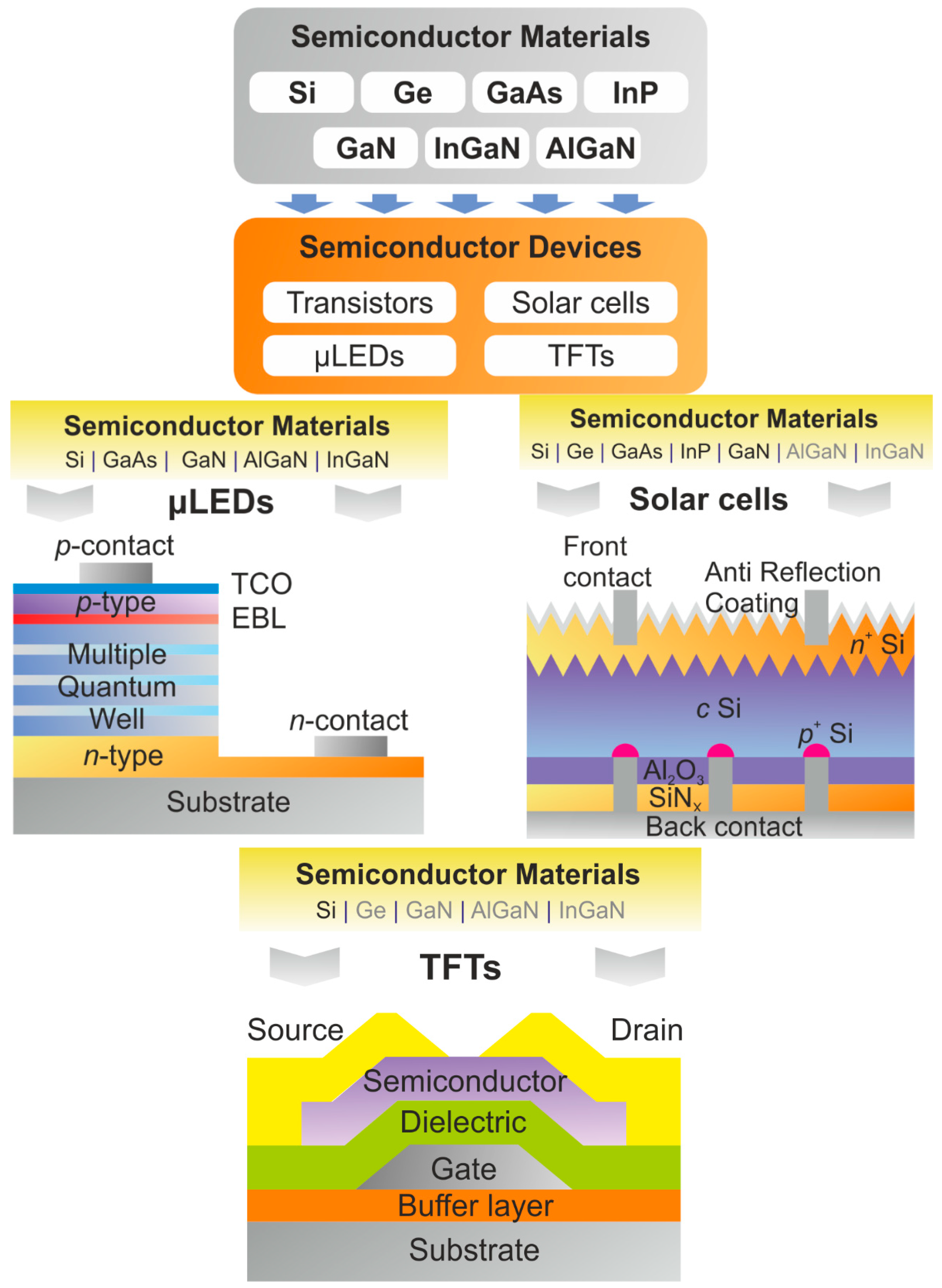
| Material | Device Applications | |||
|---|---|---|---|---|
| Transistors | μLEDs | Solar Cells | TFTs | |
| Si | ✔✔✔ | ◐ | ✔✔✔ | ✔✔✔ |
| Ge | ✔ | ✖ | ✔ | ◐ |
| GaAs | ✔✔ | ◐ | ✔✔ | ✖ |
| InP | ✔ | ✖ | ✔ | ✖ |
| GaN | ✔✔✔ | ✔✔✔ | ◐ | ◐ |
| InGaN | ◐ | ✔✔✔ | ◐ | ◐ |
| AlGaN | ✔ | ✔✔ | ◐ | ◐ |
| Parameters | Si | Ge |
|---|---|---|
| bandgap energy [eV] | 1.12 | 0.66 |
| density [g/cm3] | 2.33 | 5.32 |
| lattice parameter [Å] | 5.43 | 5.66 |
| refractive index | 3.9 | 5.6 |
| melting point [K] | 1687 | 1210 |
| electron mobility [cm2/Vs] | 1450 | 3800 |
| hole mobility [cm2/Vs] | 370 | 1800 |
| intrinsic carrier concentration [cm−3] | 1.02·× 1010 | 2.33 × 10¹³ |
| thermal conductivity [W cm−1 K−1] | 1.56 | 0.6 |
| dielectric constants | 11.9 | 16 |
| Factor/Material | Description and Practical Significance |
|---|---|
| Importance of lightweighting in defense Reducing the weight of defense systems gives multiple strategic and tactical advantages. For armored vehicles, lighter materials mean lower fuel consumption, greater agility, and the ability to traverse challenging terrains. In aerospace, weight savings translate directly into increased range and maneuverability, while for soldiers, lightweight armor and equipment reduce fatigue and enhance endurance. However, these advantages must be balanced with requirements for ballistic protection, structural strength, durability, and environmental resistance. | |
| Metallic lightweight materials | |
| Aluminum alloys | Aluminum and its alloys are extensively used in aerospace and vehicular defense platforms due to their low density (~2.7 g/cm3), high specific strength, corrosion resistance, and ease of fabrication. Advanced aluminum alloys, such as the 7xxx and 2xxx series, offer enhanced mechanical properties through heat treatment and alloying with elements such as zinc, magnesium, and copper. Research continues to improve fatigue performance, joining methods (e.g., friction stir welding), and damage tolerance. |
| Magnesium alloys | Magnesium is the lightest structural metal (density ~1.7 g/cm3), making it a strong candidate for weight-sensitive applications. However, its limited corrosion resistance and lower mechanical strength compared to aluminum limit its use. Recent developments focus on corrosion-resistant coatings, grain refinement techniques, and alloying strategies (e.g., with rare earth elements) to overcome these limitations. |
| Titanium alloys | Titanium alloys offer an excellent balance of strength-to-weight ratio, corrosion resistance, and high-temperature performance. Although titanium is more expensive and difficult to process than aluminum and magnesium, it is widely used in aerospace, armor plating, and naval applications. Ti6Al4V is a common choice due to its high strength and relatively low density (~4.5 g/cm3). |
| Polymer matrix composites (PMCs) Polymer matrix composites combine high-strength fibers (e.g., carbon, aramid, glass) with polymer matrices (e.g., epoxy, polyester, PEEK) to create materials with exceptional specific strength and stiffness. Their anisotropic properties and design flexibility make them suitable for aircraft structures, helmets, body armor, and vehicle panels. | |
| Carbon fiber composites | Carbon fiber-reinforced polymers (CFRPs) are widely used in defense aviation and unmanned aerial vehicles (UAVs) due to their high modulus and fatigue resistance. The challenges are high cost, limited impact resistance, and difficulty in repair. |
| Aramid fiber composites | Aramid fibers (e.g., Kevlar®) are prized for their high toughness and energy absorption capabilities, making them ideal for ballistic protection in personal armor and vehicle armor systems. |
| Ceramic materials | Ceramics are inherently brittle but offer outstanding hardness, thermal resistance, and compressive strength, making them suitable for armor applications. Lightweight ceramics such as boron carbide (B4C), silicon carbide (SiC), and alumina (Al2O3) are commonly used in body armor, vehicle plating, and transparent armor. |
| Boron carbide | With a density of ~2.5 g/cm3 and extremely high hardness, boron carbide is one of the most efficient materials for stopping high-velocity projectiles. However, its brittleness and sensitivity to impact-induced failure limit its use under multi-hit conditions. |
| Silicon carbide | SiC offers a good balance of hardness, density, and fracture toughness and is used in lightweight vehicle armor and satellite shielding. Advances in sintering techniques and ceramic-metal composites are expanding its usability. |
| Metal matrix composites (MMCs) MMCs consist of metal matrices (such as aluminum or titanium) reinforced with ceramic particles, fibers, or whiskers. These materials aim to combine the ductility and toughness of metals with the hardness and thermal resistance of ceramics. Applications include wear-resistant coatings, thermal management systems, and structural components for aircraft and armored vehicles. | |
| Multifunctional and smart materials The next generation of lightweight materials incorporates smart functionalities such as self-healing, damage sensing, and adaptive responses to environmental stimuli. | |
| Structural energy storage materials | Efforts are underway to develop structural batteries and supercapacitors that can simultaneously carry mechanical loads and store energy—an especially valuable feature for electric military vehicles and drones. |
| Self-healing materials | Self-healing polymers and composites can autonomously repair micro-cracks and minor damage, extending the service life of components and reducing maintenance costs. |
| Shape memory alloys and polymers | Materials like Nitinol (NiTi) and shape memory polymers can revert to a predetermined shape upon heating, useful for deployable structures, actuators, and morphing wings. |
| Integration of multifunctional materials | |
|---|---|
| Structural batteries | These materials act as both load-bearing components and energy storage devices, beneficial for electric vehicles and drones. |
| Electromagnetic shielding | Lightweight composites with embedded conductive fillers (e.g., carbon nanotubes) can shield sensitive electronics from electromagnetic pulses (EMPs). |
| Stealth and adaptive camouflage | Materials that dynamically change thermal or optical properties (e.g., thermo-responsive coatings) can enhance survivability on the battlefield. |
| Nanomaterials and nanoscale engineering | |
| Carbon-based nanomaterials | Graphene and carbon nanotubes offer exceptional strength-to-weight ratios, electric conductivity, and thermal properties. Research focuses on scalable integration into composites and coatings. |
| Nano-reinforcements | Nanoparticles or nanofibers embedded in metals, polymers, or ceramics improve toughness, impact resistance, and thermal stability without significant weight gain. |
| Metamaterials | Engineered structures with unique electromagnetic and acoustic properties can provide enhanced stealth capabilities while remaining lightweight. |
| Additive manufacturing and topology optimization | |
| Lattice and cellular structures | AM enables the creation of internal geometries that reduce weight while maintaining high mechanical performance, mimicking natural materials like bone or coral. |
| Topology optimization | AI-driven design tools can optimize the placement of material to achieve the best performance-to-weight ratio for specific loads and stress conditions. |
| Integrated multimaterial printing | The ability to simultaneously print metals, ceramics, and polymers allows for the fabrication of hybrid components tailored for multifunctionality. |
| Advanced ceramics and ultra-light armor systems | |
| Functionally graded materials (FGMs) | These materials have gradual changes in composition or microstructure, reducing stress concentrations and improving impact resistance. |
| Flexible ceramics | Thin, layered ceramics with polymer interfaces can combine flexibility and hardness, useful for wearable body armor or UAV skins. |
| Transparent ceramics | Materials like spinel and aluminum oxynitride are being explored for lightweight, bullet-resistant windows and optical components. |
| Smart and self-healing materials | |
| Self-healing composites | Inspired by biological systems, these materials can autonomously repair micro-cracks through embedded healing agents or dynamic bonding. |
| Shape memory materials | These materials return to a predefined shape when triggered (e.g., by heat or electricity), enabling deployable structures or damage recovery. |
| Embedded sensing | Lightweight materials with built-in strain or damage sensors enable real-time monitoring of the status of critical defense assets. |
| Sustainable and recyclable lightweight materials | |
| Bio-based composites | Polymers reinforced with natural fibers (e.g., flax, hemp) offer biodegradability and a reduced environmental footprint. |
| Recyclable thermoplastics | Unlike thermoset composites, thermoplastics can be reprocessed, supporting circular life cycles and field reparability. |
| Low-energy production methods | Techniques such as cold spray, friction stir processing, and solid-state joining help reduce energy input and material waste during manufacturing. |
| AI-driven material discovery and modeling | |
| Predictive modeling | AI models can simulate material behavior under diverse conditions, reducing the time and cost of physical testing. |
| High-throughput screening | Data-driven platforms rapidly identify optimal material compositions and processing parameters to achieve target performance goals. |
| Digital twins | Virtual replicas of components allow simulation of performance, wear, and failure, supporting predictive maintenance and design optimization. |
| Compositional segregation and constitutional undercooling | A fundamental limitation arises from inherent segregation during non-equilibrium solidification. In alloy systems like SiGe, silicon and germanium have differing melting points and solidification behaviors: silicon typically solidifies earlier, leaving residual melt enriched in germanium. This leads to spatial composition gradients that cause refractive index non-uniformity and light scattering in optical fibers [28,29,30,31]. The classic Tiller model of constitutional undercooling predicts that without sufficiently high thermal gradients or controlled growth velocities, dendritic and cellular microstructures form, preventing homogeneous composition along the fiber length [28,31]. |
| Thermal gradient control and interface stability | Scaling directional solidification over meter lengths requires maintaining a stable solid–liquid interface under tightly controlled thermal gradients. Variations in temperature profiles during fiber drawing or post-processing significantly influence segregation and grain structure. Achieving planar solidification fronts at high growth velocities remains difficult: although suppression of constitutional undercooling has been demonstrated at micro-scale with laser recrystallization, these conditions are currently not scalable to continuous in-line processing due to equipment and heat management constraints [28,31]. |
| Diffusion and dopant broadening | During high-temperature processing, thermal diffusion can lead to dopant profile broadening. For example, germanium dopants in preforms may diffuse during drawing, altering the intended core composition relative to the preform design [30]. This effect becomes more pronounced for very small core diameters or high Ge concentrations, where diffusion lengths approach the scale of the fiber core itself [30]. Because solid diffusion coefficients are orders of magnitude lower than liquid-phase coefficients, maintaining sharp dopant gradients over long lengths is a persistent challenge. |
| Structural defects and mechanical integrity | Mechanical stresses arising from thermal gradients, phase transformations, and compositional inhomogeneity can produce cracks, dislocations, and grain boundaries [28]. These defects degrade both optical and electronic properties and limit achievable fiber length and uniformity. The mismatch in thermal expansion between SiGe cores and surrounding glass claddings further exacerbates stress accumulation, increasing the likelihood of structural failures during both solidification and cooling. |
| Recrystallization and grain control | Even when fibers are successfully drawn, cores often remain polycrystalline. Targeted post-draw laser recrystallization has been shown to improve core crystal quality and optical performance; however, this adds complexity and limits throughput [28]. Uniform recrystallization requires precise control of laser positioning, thermal gradients, and cooling rates, which are difficult to implement in a high-volume manufacturing context. |
| Materials phase behavior | The SiGe phase diagram inherently presents a large miscibility gap and high sensitivity to composition, impacting solidification dynamics [29]. During solidification, the distribution of germanium and resultant local variations in the lattice parameter can lead to internal stress and phase separation tendencies that are difficult to eliminate using conventional growth methods. |
| Silicon Solar Cells | |
|---|---|
| Advantages | Disadvantages |
| High efficiency—The highest laboratory-achieved efficiencies to date are 26.7% for monocrystalline silicon solar cells and 24.4% for multicrystalline silicon solar cells. | Weather dependence—The performance of silicon-based solar cells decreases at higher temperatures due to bandgap narrowing. However, it is important to note that the parameters describing the spectral properties of PV cells do not change uniformly with temperature; the effects depend on the type of solar cell. For instance, Osterwald studied the quantum efficiency of crystalline silicon cells over a temperature range of 15 °C to 70 °C and found that quantum efficiency slightly increases at wavelengths above 900 nm as temperature rises. In contrast, Mullejans examined the current sensitivity of amorphous silicon and CIS (copper-indium-selenium) cells between 25 °C and 65 °C. For CIS cells, current sensitivity remained largely unaffected by temperature, whereas for amorphous silicon cells, sensitivity at wavelengths above 600 nm increased with higher temperatures. |
| Long lifespan—Solar modules generally have a service life of 25 to 30 years, during which their efficiency slowly decreases. A common way to define the “lifetime” of a module or system is the point at which its output drops to 80% of its original rated power. For conventional crystalline silicon (c-Si) modules, the typical median degradation rate is 0.5–0.6%/year, with an average in the range of 0.8–0.9%/year. High-efficiency silicon heterojunction modules, which are anticipated to reach gigawatt-scale production, exhibit a median annual performance degradation of 0.80% and an average loss rate of 0.83% per year. | Cost—The production of silicon solar cells, especially those crafted with monocrystalline or polycrystalline silicon, may entail relatively high manufacturing costs. Despite the decrease in costs over time, they remain at a high level compared to certain alternative technologies. For example, Louwen reported that silicon heterojunction (SHJ) technology has the potential to lower the cost of photovoltaic production compared to traditional crystalline silicon solar cells and modules, particularly for next-generation PV modules. The production cost of heterojunction modules was estimated to be between 0.48 and 0.56 USD per watt-peak, compared to approximately 0.50 USD per watt-peak for conventional monocrystalline silicon modules. Mdallal compared PV technologies, including a-Si, polycrystalline silicon, and monocrystalline silicon. Taking into account life-cycle cost, average annual energy output and degradation rate, he calculated a levelized cost of electricity (LCOE) of $0.14/kWh for a-Si systems, $0.10/kWh for polycrystalline silicon, and $0.11/kWh for monocrystalline silicon. |
| Mature technology—The technology for silicon solar cells is well established, with ongoing advancements in manufacturing and efficiency improvements. | Fragility—Traditional silicon photovoltaic panels are not flexible, being made of rigid silicon wafers that are brittle and prone to cracking when bent, limiting their widespread use for flexible applications. However, thinner silicon wafers and advancements in materials and manufacturing techniques enable the development of flexible silicon solar cells. |
| Defects and impurities—Defects and impurities in silicon solar cells can significantly reduce their efficiency and lifespan. These imperfections, present in the silicon material, can interfere with the flow of electric current generated by sunlight, leading to lower power output and potential degradation of the solar cell. In SiGe cells, both defects and impurities can serve as recombination centers, causing the loss of charge carriers, or they can trap charge carriers, resulting in increased scattering and a corresponding reduction in carrier mobility. | |
| Clarification of intent | The discussion of the SiGe phase diagram and dendritic solidification is intended to explain solute partitioning, constitutional supercooling, and defect formation during fiber drawing, not to promote compositional asymmetry as a functional feature for photovoltaics. The reference to Janus dendrimers/Janus morphologies was meant as a general illustration of how dendritic growth can produce spatially asymmetric compositions, but this morphology is not the target for PV fibers. |
| Relevance to PV fibers | For photovoltaic applications, compositional inhomogeneity (including Janus-like segregation) is indeed undesirable, as it
|
| Fiber | Young’s Modulus GPA | Tensile Strength GPA | Diameter µm | Applications |
|---|---|---|---|---|
| Steel | 200 | 2.8 | 90–400 | Tire cords, piano wire |
| Ceramic (Al2O3-based; SiC-based) | 350–380 | 1.7–5 | 42–297 | Ceramic matrix composite, high-temperature application |
| Aramid | 65–130 | 2.8–3.4 | 12 | Body armor, bulletproof vest |
| Nylon | 6 | 1 | 20–40 | Tire cords, polymer matrix composites |
| Carbon | 180–600 | 2.2–3.8 | 42–195 | Automotive, aerospace, sporting equipment |
| Glass (silica-based) | 70 | 1.8–3.4 | 42–230 | Fiber optics, polymer matrix composites |
| Kevlar Fibers | PV Fiber |
|---|---|
|
|
| Properties | Kevlar-like Target Fiber | SiGe Fibers |
|---|---|---|
| Tensile strength | ~2–3 GPa range (Kevlar) | ~0.34–0.51 GPa |
| Specific strength (strength/weight) | Very high (lightweight and high strength) | Moderate—improved by cladding, but heavier semiconductors |
| Bend flexibility | High flexibility suitable for textiles | Sensitive but functional down to ~2.5–5 mm bend radius |
| Impact/torsion | Good energy absorption expected | Impact ~MJ/m2, torsional stress ~250 MPa |
| Application readiness | High for wearable textiles | Good for embedding in fabrics but needs mechanical optimization |
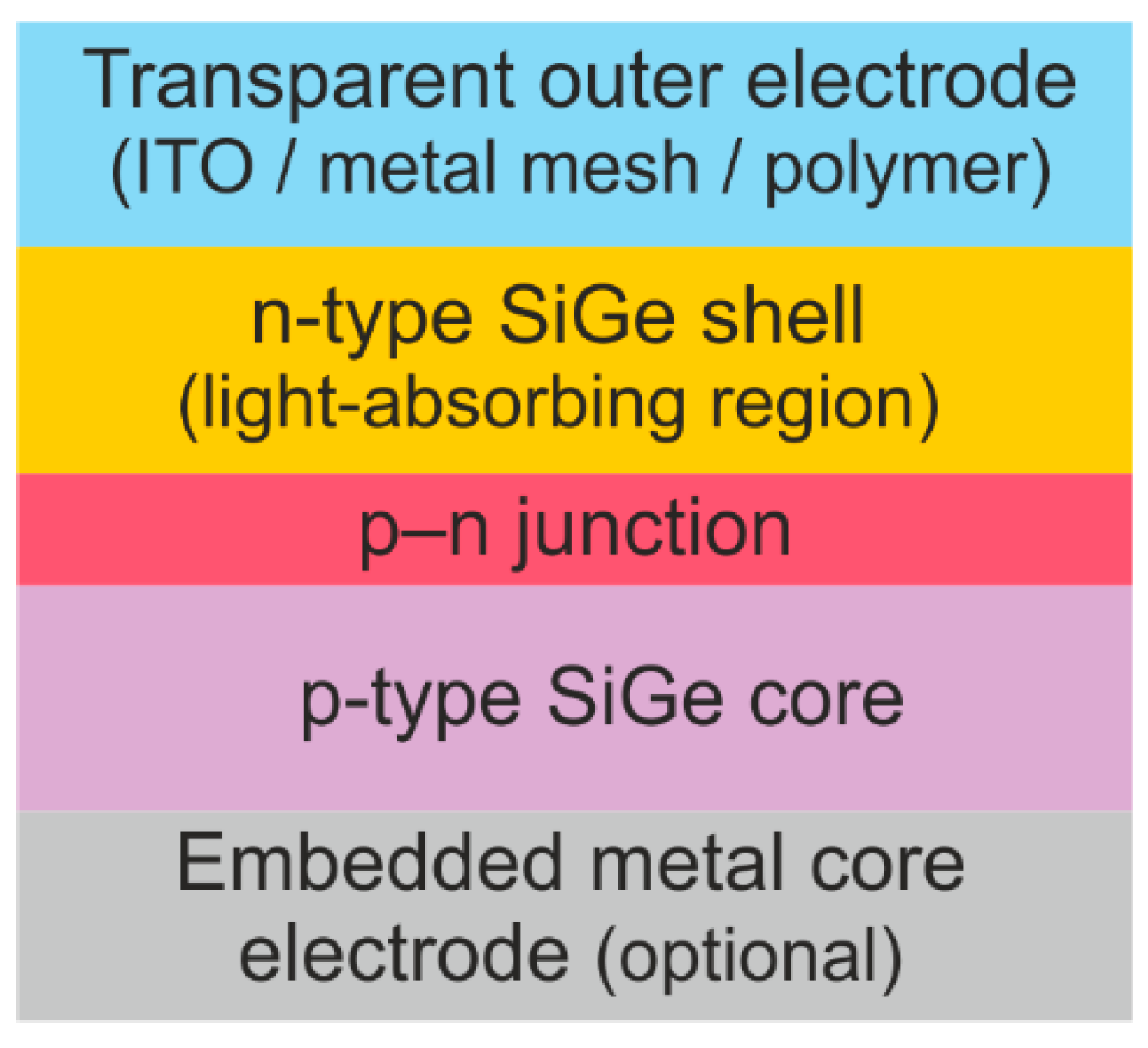
| Radial (Core–Shell) p-n Junction SiGe | Longitudinal (Axial) p-n Junction SiGe |
|---|---|
Structure
| Structure
|
| Feature | |
| Junction continuity: Continuous Carrier collection: Short, efficient Mechanical robustness: High Textile compatibility: Excellent Fabrication maturity: Demonstrated | Junction continuity: Discrete Carrier collection: Long, inefficient Mechanical robustness: Low Textile compatibility: Poor Fabrication maturity: Largely conceptual |
| Practical robustness and system integration of flexible photovoltaic fibers | For photovoltaic fibers to transition from laboratory demonstrations to wearable, resilient, and fully integrated systems, key practical performance criteria must be satisfied. These include maintaining functionality through wash cycles and mechanical abrasion common in textiles and enabling reliable interfacing with electronics for power and data transmission. |
| Washability and environmental resilience | One of the main challenges for integrating photovoltaic fibers into wearable systems is ensuring washability—the ability to withstand repeated laundering without significant deterioration of electrical or optical performance. Research in advanced fiber electronics demonstrates that textile electronic systems can maintain robust performance over multiple wash cycles when protective and conductive fiber architectures are engineered appropriately. For instance, advanced e-textile power textiles based on organic semiconductor fibers retain 70% of output after 15 wash cycles and extended humidity exposure, demonstrating moisture resilience and sustained performance useful for wearable integration [103]. Recent developments in fiber electronics also highlight the importance of waterproof and mechanically robust fiber designs tailored to textile applications. Waterproof and conductive tough fibers developed for washable e-textile systems offer a model for encapsulating PV fibers to achieve both liquid resistance and mechanical durability necessary for repeated laundering. These fibers are specifically engineered to withstand the mechanical stresses and environmental exposure typical of clothing and regularly laundered garments [104]. |
| Abrasion resistance and mechanical durability | Beyond washability, fibers integrated into textiles experience continuous friction, bending, and abrasion, all of which can degrade electrical contacts and active materials. Research on wear-resistant smart textiles underscores strategies that can be applied to photovoltaic fiber designs, such as triboelectric yarns and mechanically optimized fiber coatings that enhance resistance to wear and tear. For example, triboelectric polymer fiber coatings have been shown to significantly improve durability for mechanical and energy harvesting applications, a principle equally applicable to PV fibers requiring long-term mechanical integrity [105]. Materials research into transparent conductive fibers suitable for harsh environments also illustrates approaches that yield fibers capable of maintaining conductivity and mechanical function under repeated mechanical stress and damage. These advances help inform protective cladding and composite fiber architectures for photovoltaic fibers, enhancing abrasion resistance while preserving electrical pathways [106]. |
| Interfacing with electronic components | Effective integration of photovoltaic fibers with power management, storage, and sensor electronics requires robust interfacing strategies. Contemporary smart textile research emphasizes fiber electronics that can interface seamlessly with processing units and external devices. Reviews on fiber electronics note that multimodal textiles often comprise sensing, processing, and feedback modules that require coherent integration of electrical pathways along fiber or woven network structures. Such architectures provide design principles essential for interfacing PV fibers with control electronics, energy storage systems, and wearable sensors [107]. For example, strategies developed for woven textile electronics that embed sensors and conductive interconnects highlight the feasibility of embedding electrical contacts and signal pathways into textile structures without compromising flexibility or comfort—an approach directly translatable to photovoltaic fiber systems seeking electrical integration with other components [107]. |
| Washability and moisture resistance |
|
| Abrasion and mechanical durability |
|
| Interfacing and integration |
|
| Composition and phase-field optimization (pre-fabrication) | Problem: SiGe directional solidification is highly sensitive to
| AI/ML role: Supervised ML surrogate models trained on
|
| Directional solidification process control | Problem: Key bottlenecks include
| AI/ML role: Reinforcement learning (RL) agents can optimize
|
| Defect prediction and mitigation | Problem: Extended defects (dislocations, twins, micro-cracks) often emerge stochastically and are difficult to detect early. | AI/ML role: Computer vision + deep learning applied to
Outcome: Predictive defect suppression and higher crystalline yield. |
| Post-processing optimization (annealing, passivation, coatings) | Problem: Post-processing steps (thermal annealing, hydrogenation, surface passivation, encapsulation) strongly affect
| AI/ML role: Bayesian optimization and active learning can
|
| Multiphysics device co-design | Problem: PV fiber performance depends on tightly coupled
| AI/ML role: Multitask learning frameworks can co-optimize
|
| Quality control and scaling readiness | Problem: Scaling to industrial production requires
| AI/ML role: ML models trained on
|
Disclaimer/Publisher’s Note: The statements, opinions and data contained in all publications are solely those of the individual author(s) and contributor(s) and not of MDPI and/or the editor(s). MDPI and/or the editor(s) disclaim responsibility for any injury to people or property resulting from any ideas, methods, instructions or products referred to in the content. |
© 2026 by the authors. Licensee MDPI, Basel, Switzerland. This article is an open access article distributed under the terms and conditions of the Creative Commons Attribution (CC BY) license.
Share and Cite
Pellowski, W.; Gonciarz, A.; Miedziak, J.; Bogdanowicz, K.A.; Krysiak, P.; Śliwakowski, M.; Szczepaniak, M.; Przybyl, W.; Marzec, M.; Iwan, A. From SiGe Solidification to Flexible Photovoltaic Fibers for Military Applications: Current Status and Development Prospects. Energies 2026, 19, 654. https://doi.org/10.3390/en19030654
Pellowski W, Gonciarz A, Miedziak J, Bogdanowicz KA, Krysiak P, Śliwakowski M, Szczepaniak M, Przybyl W, Marzec M, Iwan A. From SiGe Solidification to Flexible Photovoltaic Fibers for Military Applications: Current Status and Development Prospects. Energies. 2026; 19(3):654. https://doi.org/10.3390/en19030654
Chicago/Turabian StylePellowski, Witalis, Agnieszka Gonciarz, Jacek Miedziak, Krzysztof A. Bogdanowicz, Piotr Krysiak, Maciej Śliwakowski, Marcin Szczepaniak, Wojciech Przybyl, Monika Marzec, and Agnieszka Iwan. 2026. "From SiGe Solidification to Flexible Photovoltaic Fibers for Military Applications: Current Status and Development Prospects" Energies 19, no. 3: 654. https://doi.org/10.3390/en19030654
APA StylePellowski, W., Gonciarz, A., Miedziak, J., Bogdanowicz, K. A., Krysiak, P., Śliwakowski, M., Szczepaniak, M., Przybyl, W., Marzec, M., & Iwan, A. (2026). From SiGe Solidification to Flexible Photovoltaic Fibers for Military Applications: Current Status and Development Prospects. Energies, 19(3), 654. https://doi.org/10.3390/en19030654