1. Introduction
Asset management (AM) is a strategic process that optimizes the performance of assets throughout their lifespan by including planning, economics, engineering, and risk management methodologies [
1]. AM strengthens maintenance strategy and planning to ensure the reliable operation of equipment and systems [
2,
3]. The Provincial Electricity Authority (PEA) is a state-owned business tasked with managing distribution systems in 74 provinces of Thailand, functioning under the Ministry of Interior; it operates over 400,000 distribution transformers throughout 74 regions in Thailand. Distribution transformers are essential in the power distribution system, transforming electrical energy from 22/33 kV to 0.416/0.24 kV, as a defective distribution transformer may result in power outages affecting many users [
4]. As a result, several electrical utilities have initiated programs to assess various parameters of the transformer, including physical inspections, Health Index (HI) evaluations, oil quality testing, insulation testing, and winding resistance measurements. The evaluation of these reflects the condition of the distribution transformer, guiding decisions about its ongoing operation and need for maintenance or replacement. Thereby, ensuring effective and cost-efficient maintenance [
5].
In order to improve the distribution system’s reliability, preventive maintenance (PM) and corrective maintenance (CM) are widely used to keep distribution transformers operable and extend service life; however, excessive or misdirected maintenance can incur significant costs [
6]. Time-based maintenance (TBM) is a simple and transparent maintenance strategy in which interventions are scheduled based on the elapsed time since the last service, and it is commonly applied in conjunction with CM, particularly for assets with predictable service intervals or limited condition information. In practice, distribution transformers are typically serviced on an annual basis, which may result in avoidable expenditure, while additional unplanned maintenance may still be required if a transformer is damaged or fails before the scheduled service interval [
7,
8].
Generally, a maintenance strategy a utility adopts depends on operational requirements and budget. Certain approaches require the installation of sensors to monitor equipment and acquire real-time data. Widely adopted data-driven strategies include Condition-based maintenance (CBM) and reliability-centered maintenance (RCM), both of which aim to improve operational efficiency and reliability [
9]. Although CBM and RCM have significantly improved system performance, they only rely on a single facet of data, highlighting the need for a more comprehensive approach. Moreover, rapid advances in sensing, communications, and analytics have reduced costs, enabling a shift toward predictive maintenance (PdM), which leverages large volumes of data and high-speed computational methods, offering greater effectiveness than traditional maintenance approaches [
10].
Recent advances in Machine Learning (ML) and Artificial Intelligence (AI) have made computational tools more capable, leading to higher accuracy and efficiency in maintenance practices. PdM differs from conventional approaches, as it uses historical data to train ML algorithms that then forecast potential failures, thereby enabling timely maintenance and more efficient maintenance scheduling [
11]. However, PdM is essentially a predictive approach that focuses on forecasting when failures might occur; it does not provide recommendations or root-cause analysis, functioning more like a monitoring tool than a diagnostic system [
12]. Consequently, utilities should strengthen maintenance strategies by addressing underlying causes through proactive maintenance (PaM). With sufficient and high-quality transformer data, researchers advocate Risk-Based Maintenance (RBM) [
13], a form of PaM that not only flags emerging issues but also uses extensive data to assess condition, reduce failure risk, shorten repairs, and target the most appropriate maintenance actions [
14].
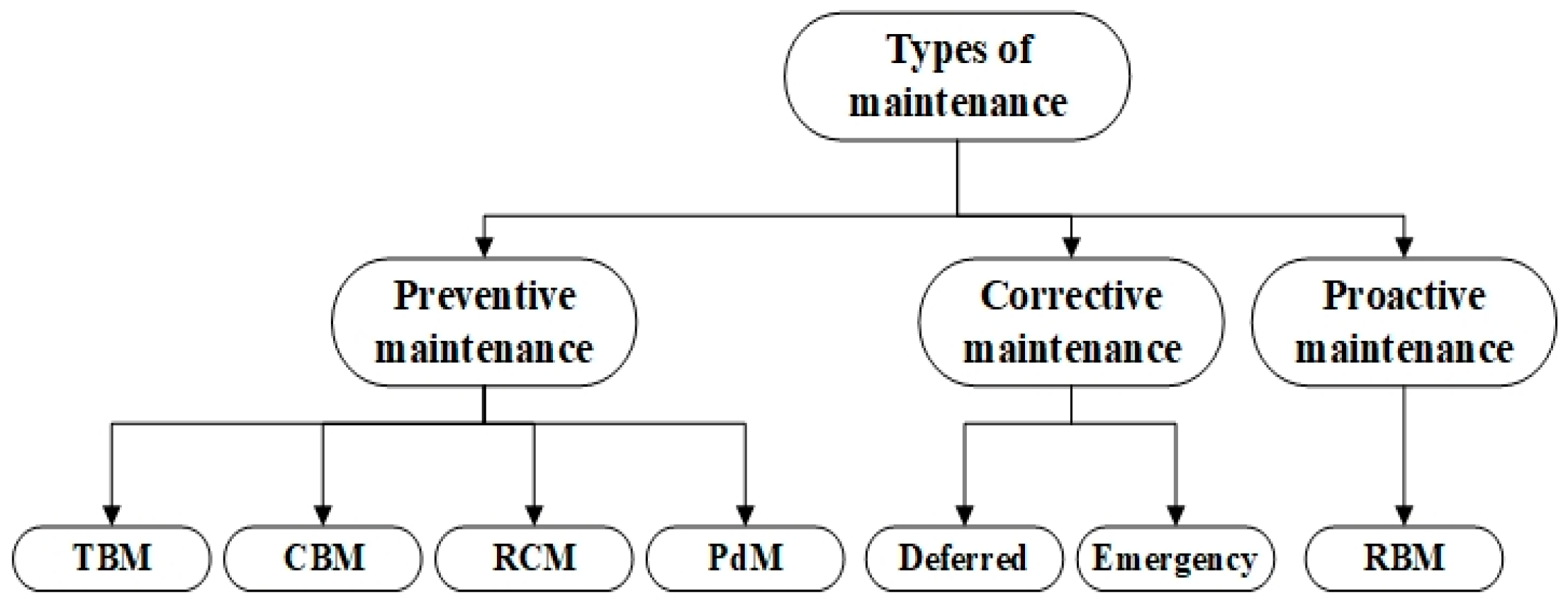
Figure 1 illustrates the different types of maintenance approaches, and a detailed summary of previous studies related to transformer maintenance is presented in
Table 1.
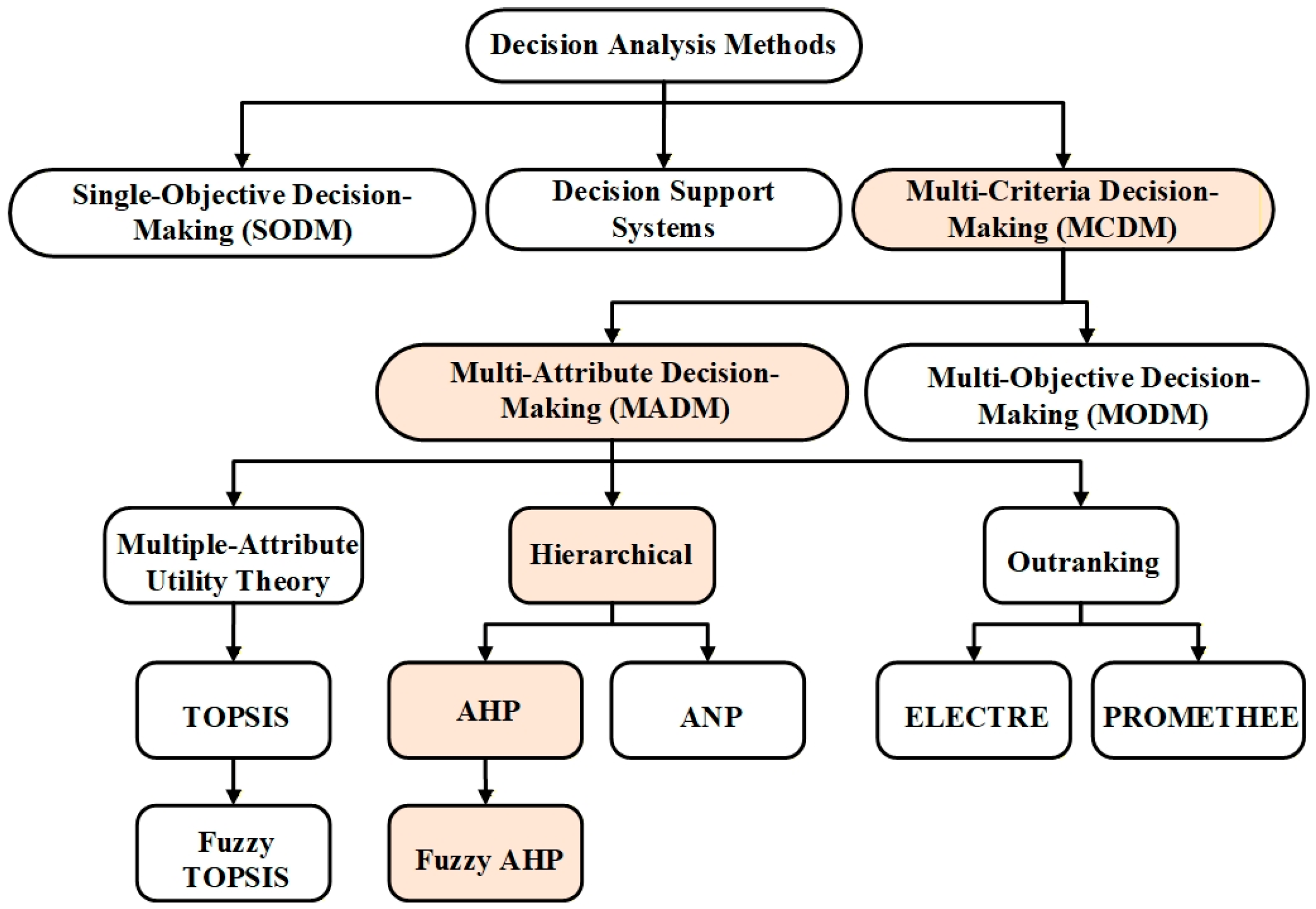
Despite several efforts to employ AI technology to analyze and evaluate the health of distribution transformers, the absence of precise expert assessments prior to AI training is likely to result in erroneous AI evaluations, even with substantial data sets [
22]. Consequently, in the analysis and assessment of distribution transformers, professional consultation is necessary to establish and choose criteria for assessing a transformer’s condition. Recent transformer studies increasingly adopt the Fuzzy Analytic Hierarchy Process (FAHP) to derive criterion weights that better capture the linguistic and uncertain nature of expert pairwise judgments than the crisp Analytic Hierarchy Process (AHP). In a representative multi-criteria decision-making (MCDM) framework, FAHP-based weighting was combined with a modified weighted-averaging scheme to integrate multi-attribute condition evidence and reduce inter-indicator conflicts, yielding more interpretable condition grades for engineering decisions [
23]. Moreover, an enhanced multi-attribute model that integrates FAHP with complementary weighting and fusion mechanisms to improve robustness under uncertain or partially conflicting information and to mitigate inconsistencies across experts and between subjective and objective weighting was proposed in [
24]. Additional research stresses that credible prioritization also depends on a comprehensive indicator system and rigorous information fusion. In [
25], fuzzy evidence fusion was applied to obtain consistent overall condition classifications from multiple indicators, while in [
26], a multifactorial approach based on fuzzy sets and factor-space reasoning that additionally quantifies factor influence to strengthen interpretability for prioritization was developed. Extending these principles to distribution transformers, a comprehensive evaluation framework incorporating internal operation, external environment, and load operation, using data-informed weighting and uncertainty modeling, was proposed to enhance decision credibility under practical constraints [
27]. Therefore, this work introduces a novel and comprehensive multi-criteria decision framework that systematically establishes robust weighting criteria for distribution transformer maintenance prioritization using the FAHP to reduce bias and confusion from expert assessment based on the AHP [
28]. It not only identifies and validates a comprehensive set of health and impact criteria, based on expert knowledge and extensive data, but also effectively overcomes the inherent inconsistencies in expert judgments often observed in such assessments [
29]. Ultimately, this transparent, systematic, and defensible methodology provides utilities with a practical decision-support tool to optimize resource allocation, reduce operational risks, and significantly enhance distribution network reliability, while simultaneously laying a crucial foundation for more precise and interpretable AI-driven maintenance strategies. Upon establishing the assessment criteria, a MCDM method training is employed to allocate consistent and rational weights to the evaluation.
The main contributions of this work are as follows:
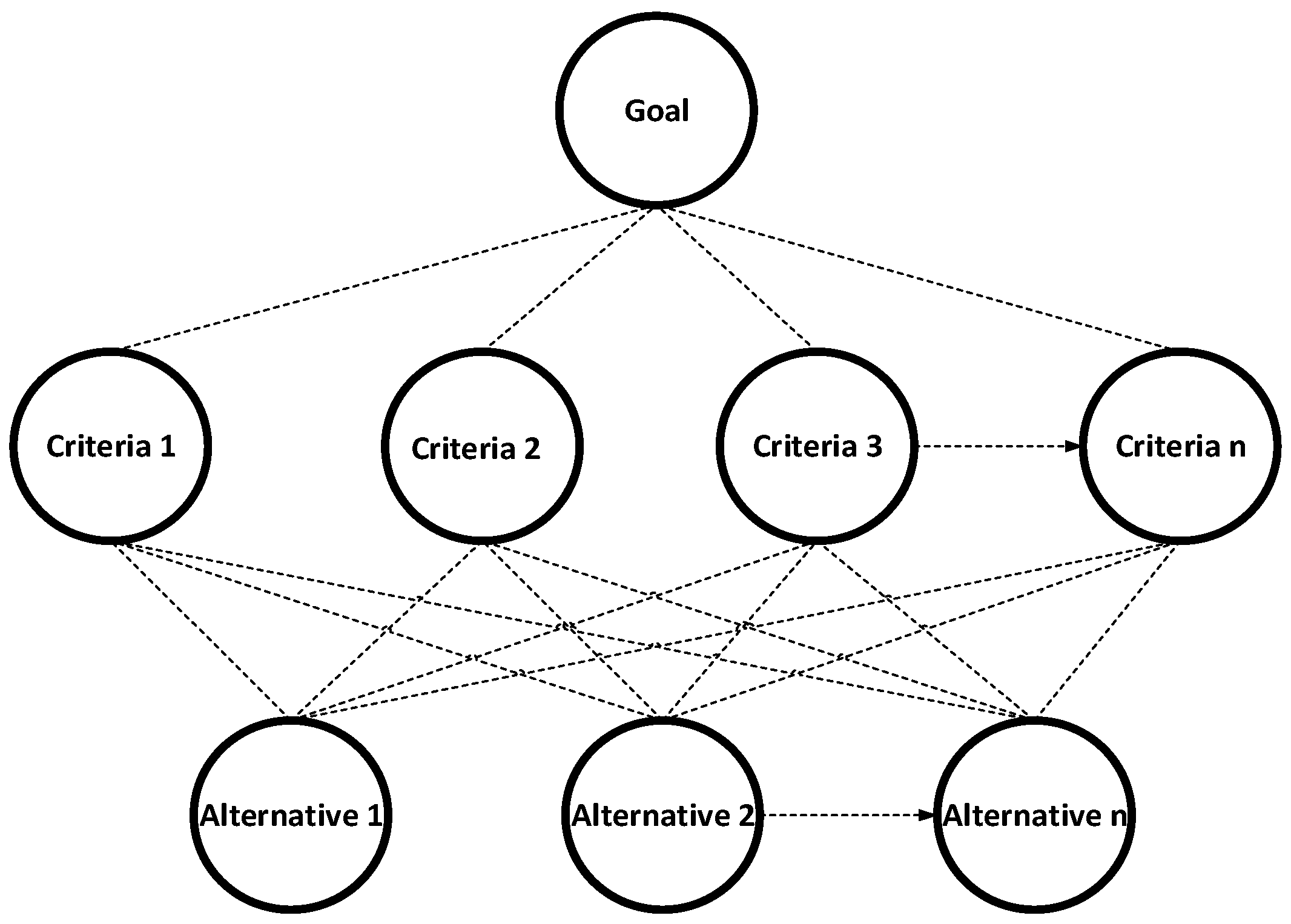
A novel and comprehensive multi-criteria decision framework is proposed to systematically establish robust weighting criteria for distribution transformer maintenance prioritization using the FAHP, where the MCDM approach is adopted to select rational weights for assessing distribution transformers.
A comprehensive set of health and impact criteria was established by integrating expert knowledge elicited through AHP with large-scale PEA operational data, thereby reducing the inconsistencies typically associated with expert judgments in AHP.
A practical decision-support tool has been developed and demonstrated that optimizes resource allocation, reduces operational risks, and improves distribution network reliability. This has been demonstrated using actual data collected from the PEA system.
The remainder of this paper is organized as follows:
Section 2 provides an overview of MCDM. The feature choices for evaluating distribution transformers are introduced in
Section 3.
Section 4 presents the results and discussions, and the conclusions from this work are given in
Section 5.
3. Assessment for Distribution Transformers Features
Assessment of distribution transformers can range from simple checklists to advanced analytics, depending on a utility’s data availability and operational constraints. Consequently, maintenance plans must be designed to identify and prioritize the assets that have the greatest impact on risk and performance. The HI is a widely used framework for assessing the overall condition of distribution transformers and other power system equipment. It integrates laboratory tests, field inspections, and operational data to produce an index that allows decisions to be made [
42]. Moreover, HI serves as a decision-support tool for AM, informing maintenance planning and the prioritization of capital investments and work programs. Furthermore, although numerous studies have examined failure modes in distribution transformers using a variety of methodologies, direct extrapolation from power transformer models may yield misleading results, as the component configurations and operating environments differ substantially.
Table 4 provides a comparative summary of the component configurations and predominant failure modes specific to distribution transformers.
Building on this framework, prior studies have estimated failure probability using indicators such as Dissolved-Gas Analysis (DGA), insulating oil quality, and thermal condition, and they have defined criteria for evaluating transformer condition and likelihood of failure. Accordingly, the quantification of failure consequences for end users can be determined [
44]. However, to extend conventional transformer-centric analyses, impact variables, which are the number of customers, serviced area, nature of load, cost of maintenance, etc., derived from customer demographics and customer-level assessments, are incorporated, thereby capturing effects beyond equipment condition alone [
20]. To implement the approach, an optimal set of criteria for assessing the health of distribution transformers is identified by drawing on literature, practitioner expertise, and relevant IEC/IEEE standards. By using MCDM, specifically the FAHP, the weights for each factor to support subsequent assessments of transformer health and customer impact are derived. Consequently, the evaluation framework comprises two dimensions: the HI and the Impact Index dimensions [
45].
3.1. Likelihood Assessment
The probability of failure (PoF) is a key factor in assessing distribution transformer condition and planning the transitions toward condition-based or predictive maintenance. Accordingly, high-quality condition data are essential for assessing transformer performance and forecasting failures.
The literature indicates that distribution transformer failure modes align with those observed in the PEA; therefore, assessment factors were derived from PEA operational data. An analysis of more than 100,000 PEA distribution transformers identified seven parameters for condition evaluation. These parameters were extracted from the most recent maintenance and inspection records within a maximum look-back period of one year, consistent with PEA practice to ensure transformer availability. In accordance with PEA standards, distribution transformers are inspected and maintained at least annually. Although established using PEA data, the proposed parameter set can be readily tailored to other national contexts and can support data-driven decision-making based on each organization’s available information. This section summarizes the parameters used to assess the condition of distribution transformers in the PEA service area [
46].
3.1.1. Load History
Load history represents the temporal variation in demand from customers connected to a distribution transformer. Transformer loading is generally expressed in terms of apparent power (S), as electrical losses, primarily
I2R, increase with loading, resulting in higher internal heat generation and a corresponding increase in winding temperature [
47]. To ensure reliable operation, the loading of a distribution transformer is typically restricted to 80% of its rated capacity; for example, a 100 kVA transformer should normally carry no more than 80 kVA. Nonetheless, transformers are designed to withstand short-term overloads of up to 120%, and field inspections occasionally reveal loading conditions exceeding 100% of rated capacity.
For this study, historical load data was compiled and categorized into peak and average values for HI evaluation of distribution transformers within the PEA network. At present, the PEA retains only peak and average apparent power statistics, though future initiatives aim to integrate real-time load monitoring. Approximately 600 devices capable of real-time measurement are currently operational; however, this is a very small sample of the fleet of transformers [
45].
3.1.2. Temperature of Distribution Transformers
Distribution transformers are typically of the oil-immersed type and, under standard operating conditions, are designed to withstand temperatures of around 50 °C, with the capability to endure short-term thermal excursions up to 120 °C. Ambient temperatures generally range between 30 and 40 °C. However, excessive loading or winding defects can lead to internal overheating, which accelerates the degradation of paper and winding insulation, thereby reducing the transformer’s lifespan. This concern has motivated extensive research into estimating internal heat or hot-spot temperature using analytical formulas [
48].
In practice, distribution transformers are often operated at more than 80% of their rated capacity, which accelerates the deterioration of insulation until eventual failure occurs [
49]. Consequently, operating temperature is considered a critical factor in determining insulation aging and the remaining lifespan of distribution transformers. In accordance with IEC 60076-2, the corresponding reference temperature (thermal) limits are summarized in
Table 5.
3.1.3. Insulation Resistance
Insulation resistance is a critical parameter in distribution transformers, representing the resistance between the high-voltage winding, low-voltage winding, and ground, thereby ensuring protection against internal short circuits in the main tank. It is typically evaluated using insulation resistance testing instruments that measure the resistance between windings. Standard practice for oil-immersed involves three measurements: (i) between the high-voltage and low-voltage windings, (ii) between the high-voltage winding and ground, and (iii) between the low-voltage winding and ground [
51,
52].
The test duration is usually one minute, with acceptable values specified of at least 250 MΩ at 40 °C [
51,
53].
Table 6 summarizes the minimum insulation resistance values for different voltage levels as a function of temperature level.
3.1.4. Dielectric Strength
Oil insulation plays a critical role in distribution transformers, serving both as an insulating medium and as a coolant by transferring heat from the windings to the transformer tank. The condition of transformer oil is commonly assessed through dielectric strength testing in accordance with ASTM D877 [
57] or IEC 60156 [
58], which ensures compliance with breakdown voltage requirements. Dielectric strength is widely regarded as an indicator of oil quality and its ability to provide effective insulation. According to ASTM D877 and IEC 60156, the breakdown voltage measured with spherical electrodes spaced 2.5 mm apart must exceed 26 kV/2.5 mm and 30 kV/2.5 mm, respectively, under test conditions of 40 °C and 50–60 Hz [
59,
60,
61,
62].
3.1.5. Grounding Resistance
Several standards define acceptable limits for grounding resistance. IEC 62305-3 [
63] specifies a maximum resistance of 10 Ω for effective lightning protection, while IEEE 142 [
64] (“The Green Book”) recommends a maximum of 5 Ω for industrial and electrical distribution systems. The National Electrical Code (NEC, NFPA 70) stipulates a maximum of 25 Ω for low-voltage systems. According to PEA standards, the ground resistance at distribution transformer installation sites must not exceed 5 Ω; however, if this requirement cannot be achieved, an upper limit of 25 Ω is permitted.
Ground resistance plays a critical role in determining transformer vulnerability to overvoltage caused by lightning or switching events. Excessive resistance reduces the effectiveness of fault dissipation, forcing the transformer to absorb the energy surge. This condition can lead to insulation degradation in paper and oil or, in severe cases, physical damage to the transformer [
32]. Therefore, ground resistance at the installation site is a key parameter in assessing the distribution transformer condition [
65].
3.1.6. Distribution Transformers Life Span
According to IEEE standards, a typical distribution transformer has an expected lifespan of approximately 180,000 h (20.5 years) under normal operating conditions. In comparison, the IEC standard specifies an operational lifespan of about 262,800 h (30 years). Actual service life, however, may vary depending on factors such as loading conditions, ambient temperature, and harmonics generated by nonlinear loads. The age of a transformer is defined as the number of years since its installation, with most distribution transformers exhibiting a reliable lifetime of around 25 years. With proper maintenance, service life can often be extended beyond 30 years.
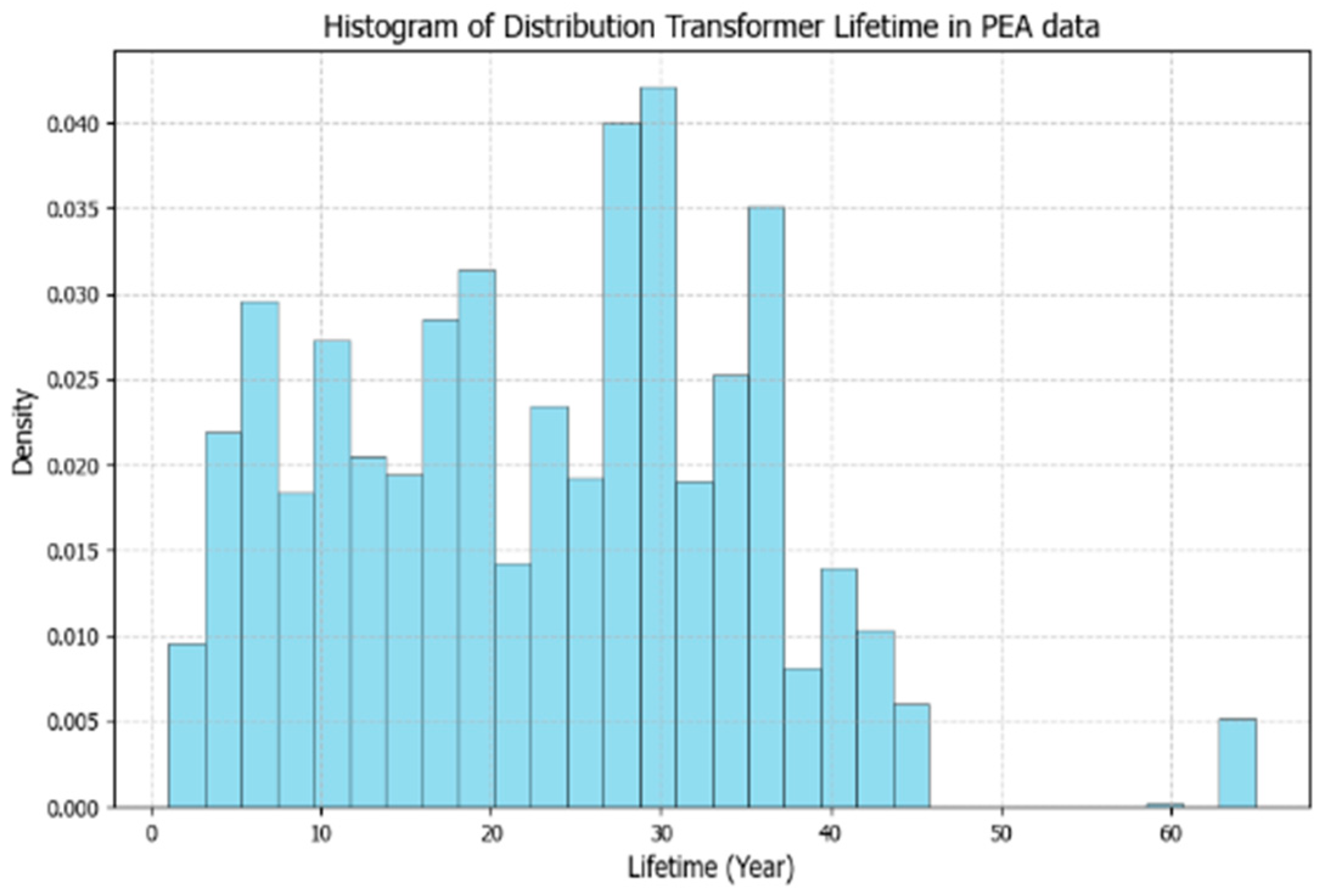
Figure 7 presents a histogram of transformer lifespans based on PEA data on 3096 distribution transformer failures collected for 5 years from 2020 to 2025 [
66].
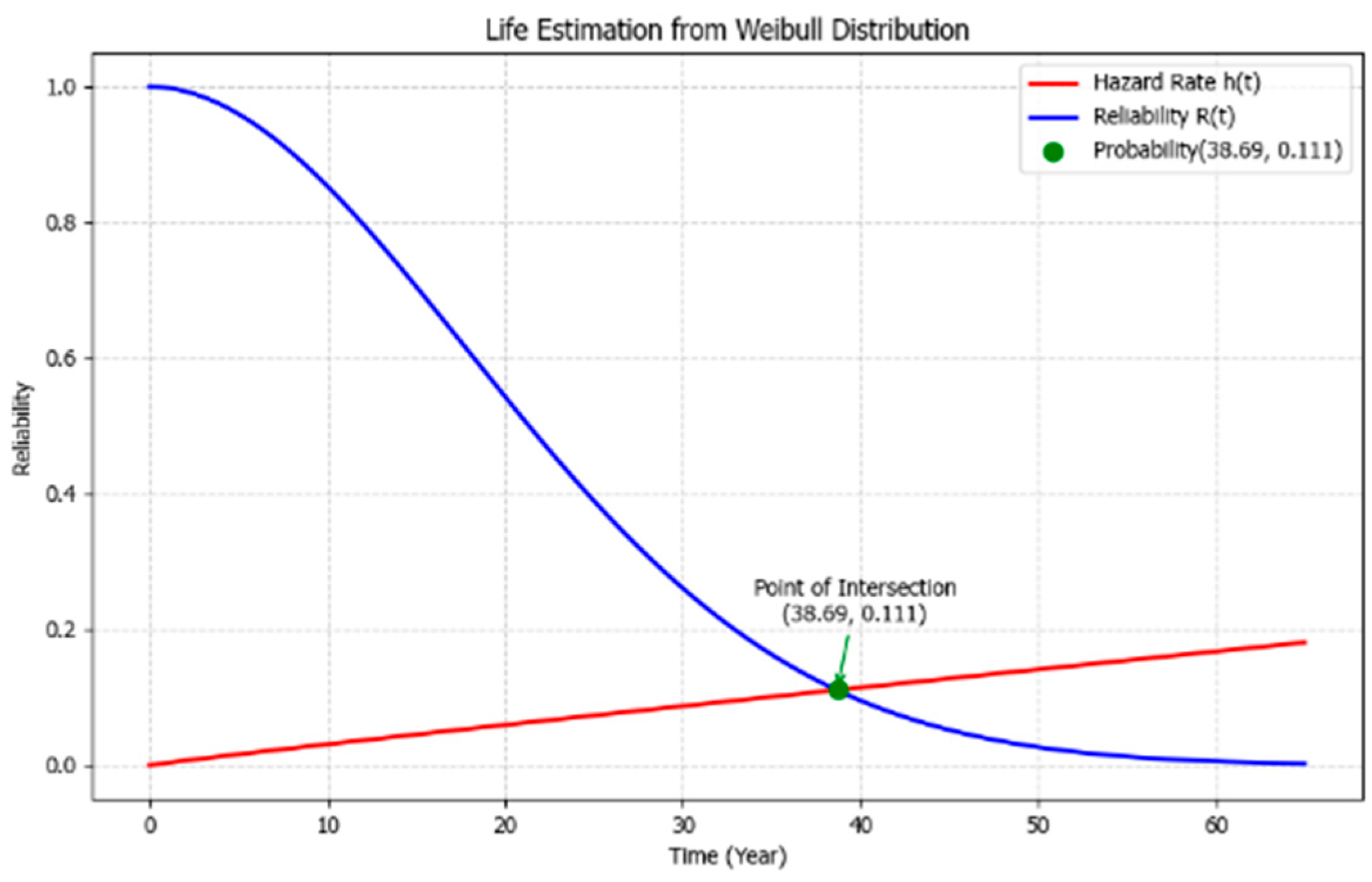
Analysis of failure age using the Weibull distribution [
67] shows that the convergence point between reliability and failure rate occurs at an average transformer age of 39 years, representing the peak probability of failure. This result closely corresponds with the observed histogram values. As illustrated in
Figure 8, the failure rate of distribution transformers increases significantly without adequate maintenance, with age-related degradation further accelerating this trend and causing a sharp decline in reliability [
68].
Analysis shows that the reliability curve reaches 0.10 at approximately 38.7 years, indicating only a 10% probability of survival under continuous, unmaintained operation. This finding underscores the critical role of maintenance in sustaining the long-term reliability of the system [
69]. Furthermore, the intersection of reliability and failure rate suggests that transformer age estimation is consistent with the IEC standard when evaluated from a reliability perspective [
66].
3.1.7. Lightning Statistics
Overhead power distribution systems make up more than 90% of the network, making them highly vulnerable to overvoltage from lightning strikes and switching surges. Transformer windings and insulation are particularly at risk, as transient surges that coincide with the resonance frequency of the windings can amplify voltages and impose abnormal electrical stress [
65]. Statistical analyses show that rural power systems experience significantly higher failure rates during adverse weather conditions [
70], and geographically correlated lightning data reveal that some transformers fail at rates up to 45 times above average [
65,
71].
To mitigate these risks, IEC 62305 provides the principal international standard for lightning protection, addressing risk management, structural protection, internal system protection, and surge protective devices. Its application enhances safety, ensures regulatory compliance, and strengthens the long-term reliability of critical infrastructure [
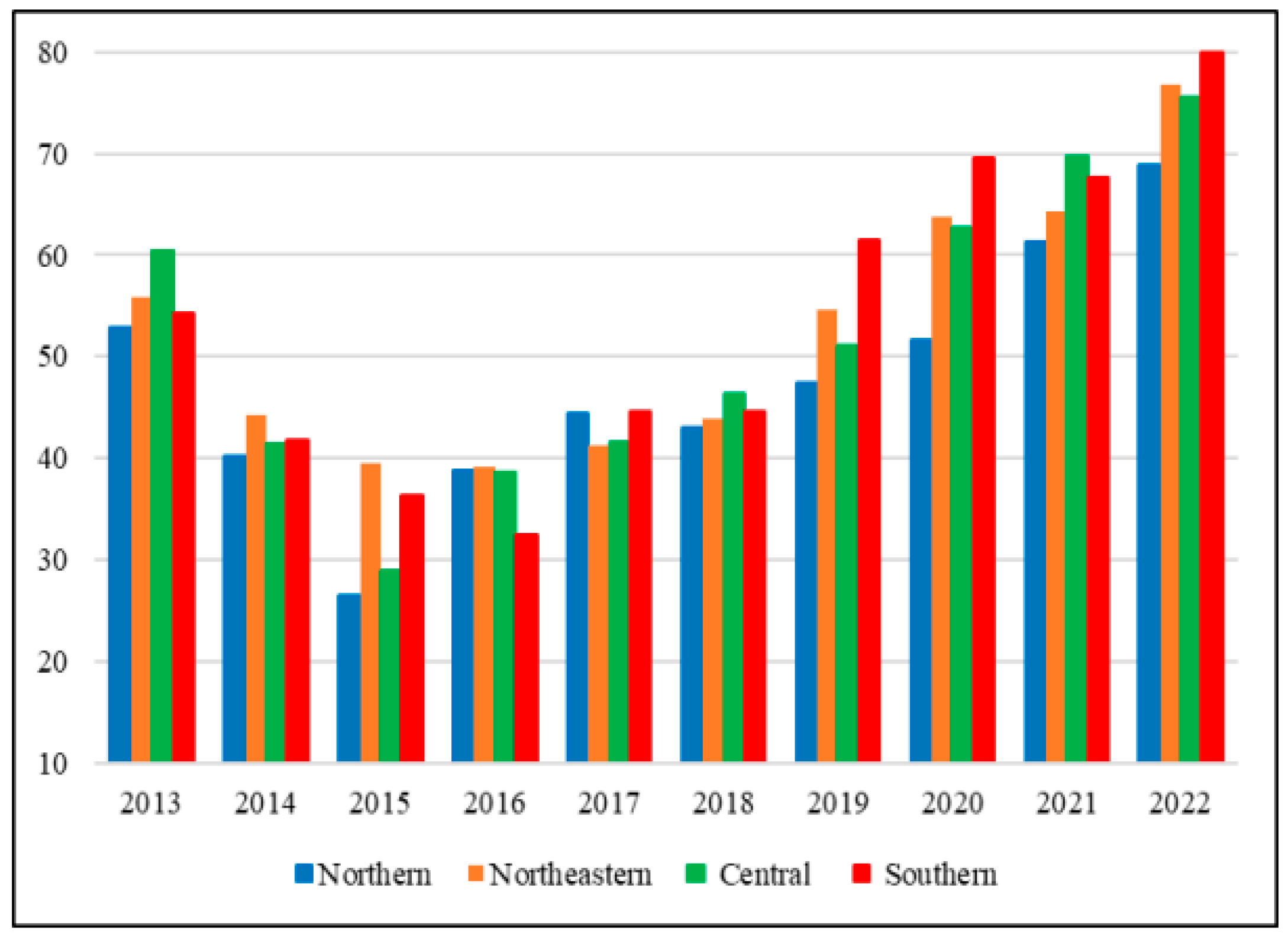
70]. In Thailand, thunderstorm statistics from 2013 to 2022 (shown in
Figure 9) highlight the considerable regional variation in storm frequency, with pronounced extremes and a significant standard deviation [
72,
73].
The IEC 62305 aligned lightning-risk classification framework for medium-voltage (MV) distribution assets is summarized in
Table 7.
3.2. Consequence Assessment
The probability of distribution transformer failure has a significant impact on both a company’s reputation and its customers. Numerous studies have focused on estimating the remaining lifespan of transformers and forecasting failures to support proactive maintenance planning. However, scheduling alone is insufficient; integrated engineering and economic decisions are needed to evaluate the risk impact on occurrence. Moreover, relatively few studies have addressed both the probability of failure and its broader consequences. From the literature review, five key indicators commonly used to evaluate the impact of transformer failures are identified. This section outlines the factors to assess the probability and potential consequences of distribution transformer failures [
75].
3.2.1. Number of Customers
Distribution transformers serve a wide range of power consumers, including households and small commercial users. When a transformer fails, the impact on consumers is immediate. The number of customers connected is a key factor in evaluating the consequences of such failures. A larger customer base reflects higher electricity demand and directly correlates with PEA’s revenue. Prolonged transformer outages not only disrupt energy sales but also erode consumer confidence [
76].
3.2.2. Distribution Transformers Service Areas
The service area of a distribution transformer reflects the local pattern of electricity consumption, which corresponds to the area of electricity consumption and is a critical factor in its assessment. The PEA provides electricity to diverse regions, including rural, industrial, urban, and metropolitan areas. Geographic context plays a decisive role, as consumer expectations and demand patterns vary significantly across locations. For instance, consumers in metropolitan areas or those near Bangkok, particularly in densely populated zones, generally have higher expectations for service reliability compared to rural users. Moreover, installation sites must account for environmental risks such as lightning because rural areas with open space and higher lightning incidence present an elevated likelihood of transformer damage compared to urban areas [
77].
3.2.3. Customer Complaints
Customer complaints serve as an important indicator of service quality and the consequences of service deficiencies. These complaints are submitted through various channels, such as websites, mobile applications, call centers, and walk-in offices, and may address issues beyond power outages. However, a substantial share of interruptions arises from faults in distribution transformers, which often require removing the failed unit and installing a replacement. Limited inventory of spare transformers can significantly extend restoration times, leading to prolonged outages, operational disruptions, and economic losses for customers [
78,
79].
3.2.4. Maintenance Costs
Maintenance costs stem from both the planning and execution of maintenance activities, encompassing direct expenditures and indirect or hidden costs [
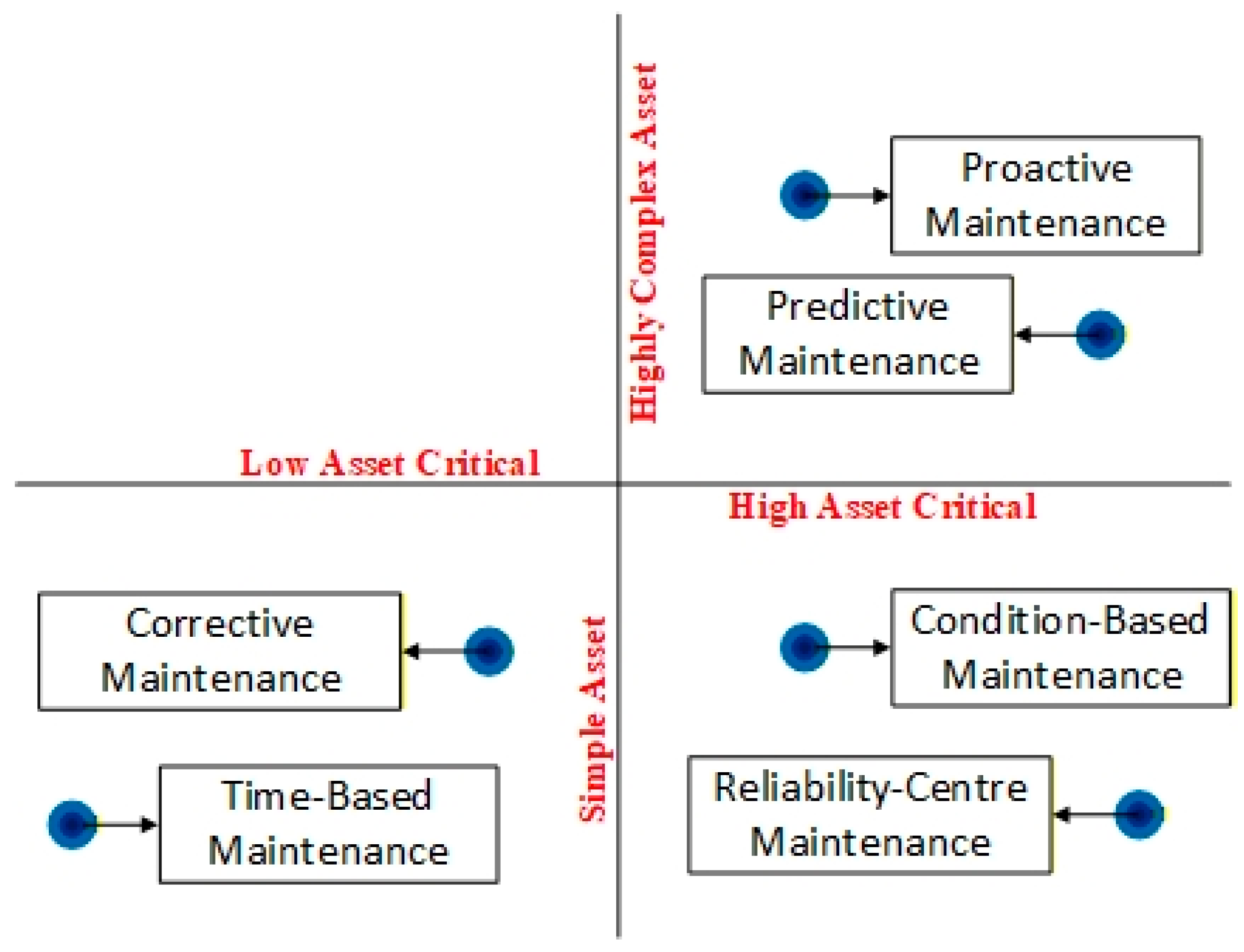
80]. The choice of maintenance strategy depends on an organization’s operational context, technical capabilities, and overall maintenance philosophy, with each approach carrying a distinct cost structure. Excessive analysis or frequent changes in maintenance strategy may introduce decision-making and coordination overhead, thereby inflating hidden costs. Commonly adopted strategies include time-based and condition-based maintenance. However, what proves optimal for one utility may not be suitable for another. Utilities must therefore evaluate, select, and optimize maintenance strategies in alignment with their specific objectives, constraints, and asset portfolios [
1,
81,
82].
Figure 10 illustrates a maintenance strategy selection for each asset type.
3.2.5. Transformer Rated
The capacity of a distribution transformer, typically expressed as its kVA rating, serves as a proxy for local load intensity, reflecting both the number of connected customers and aggregate power demand. Larger-capacity units are therefore more common in urban areas, where customer density and demand are higher than in rural areas, Failures of high-capacity transformers generally have more severe consequences, including greater interrupted energy and wider service impacts. However, capacity is not perfectly correlated with customer count. Some feeders with few customers host energy-intensive facilities (e.g., industrial or commercial loads) that necessitate a large transformer despite a small number of connections [
84].
4. Results and Discussion
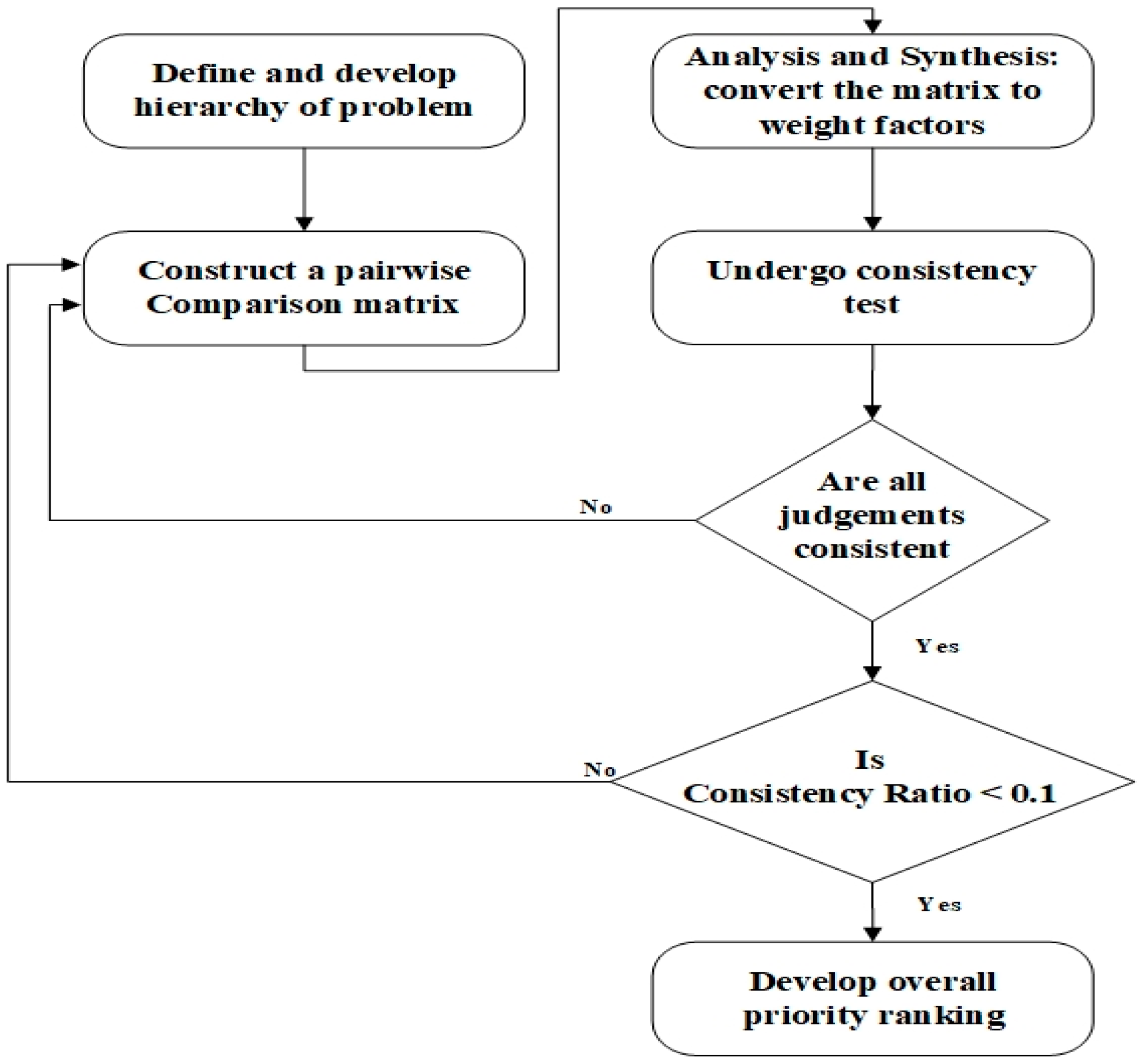
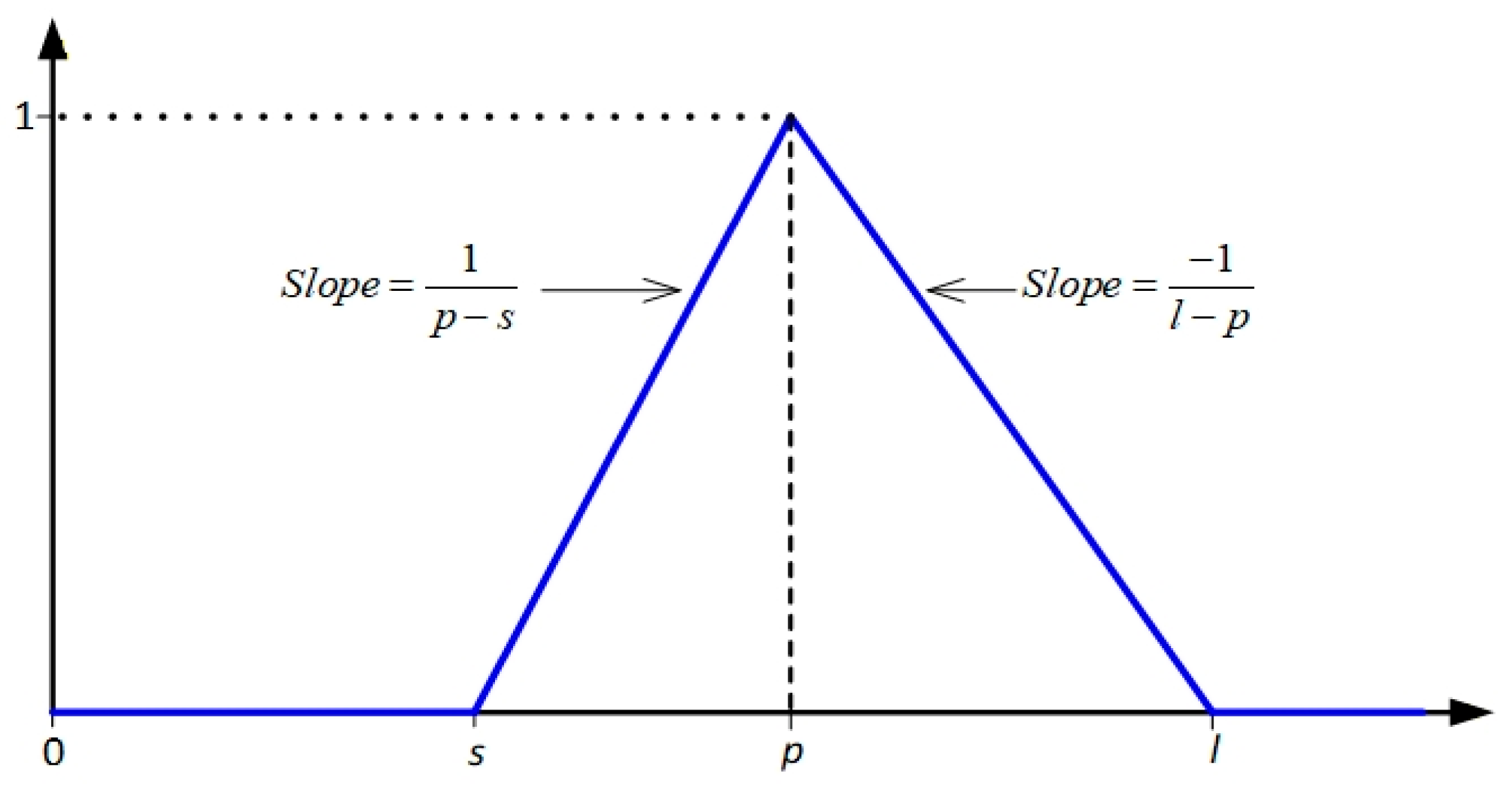
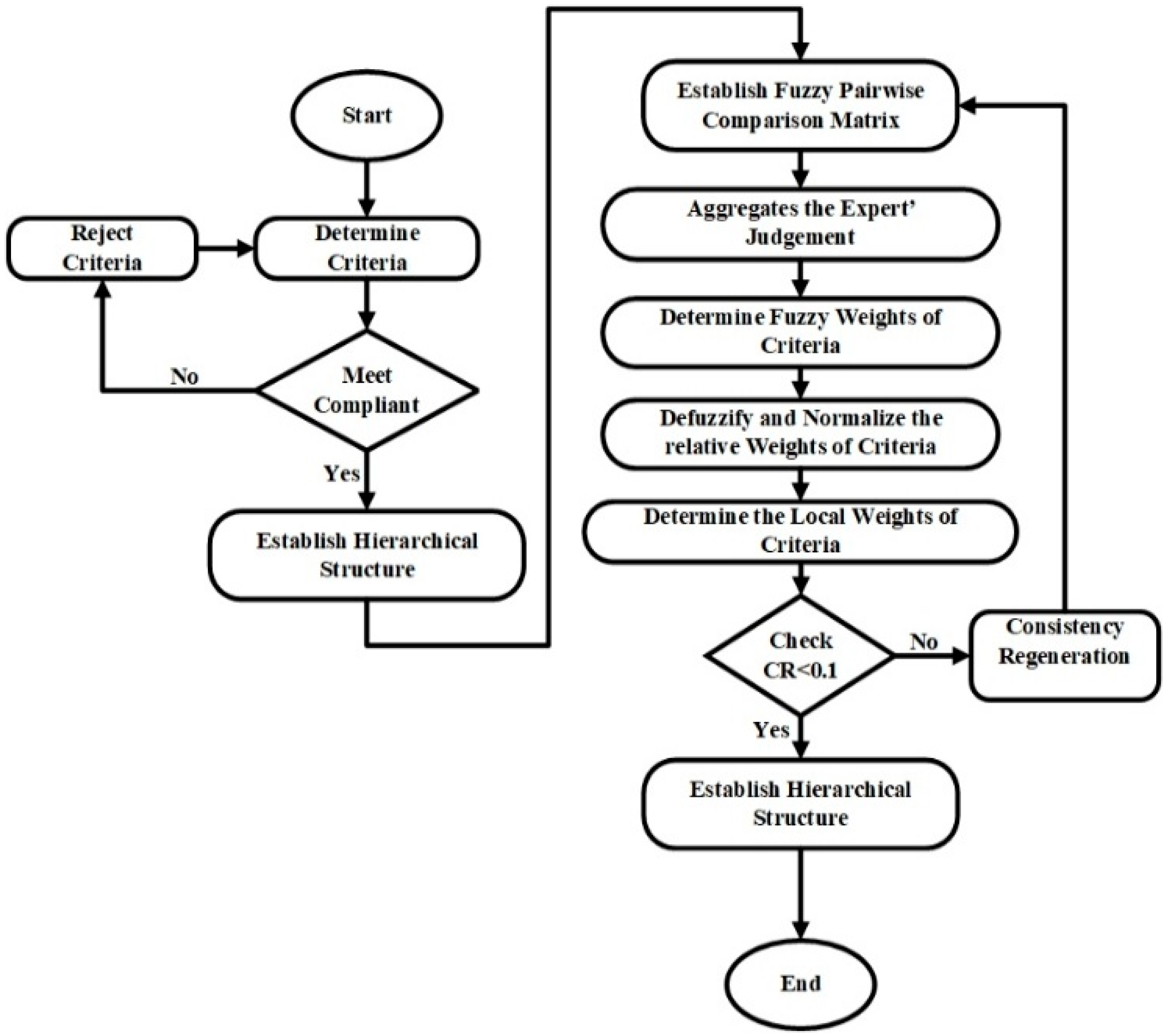
This study derived evaluation factors for distribution transformers from experts through AHP-based judgments and subsequently enhanced them using the FAHP. Experts from the PEA and other relevant specialists in the distribution transformer field participated in selecting and weighing these factors, ensuring a diverse and multidimensional perspective. The methodology encompasses several factors, including literature analysis, local requirements, and pertinent data for the assessment of distribution transformers. FAHP inputs were derived from AHP pairwise reviews conducted by the PEA transformer experts and the field specialists. Each expert compared all variables in pairs. The aggregated AHP results were then converted to FAHP to obtain weighting factors.
Before the conversion, it is verified that each expert’s AHP CR met the required threshold (e.g., ≤0.10) to limit bias and reduce ambiguity. Examples of the unadjusted FAHP pairwise comparison matrices for the HI and Impact Index are shown in
Table 5 and
Table 6, respectively, where C1 is the load history, C2 is the temperature of distribution transformers, C3 is the insulation resistance, C4 is the dielectric strength, C5 is the grounding resistance, C6 is the distribution transformer lifespan, C7 is the lightning statistics, C8 is the number of customers, C9 is the distribution transformers service areas, C10 is the customer complaints, C11 is the maintenance activity cost, and C12 is the distribution transformer rated.
Depiction of a pairwise comparison matrix with FAHP. Prior to the execution of the CR correction, the initial pairwise evaluation values evaluated by the experts were meticulously scrutinized to verify the inaccuracy of the pre-adjustment results. A comparison table of this nature was created for each evaluated expert until the total number of examined experts was attained.
Table 8 and
Table 9 are examples of pairwise matrices converted from the AHP to FAHP before improving the CR [
85].
It can be seen from
Table 8 and
Table 9 that many experts’ pairwise comparison matrices lack adequate consistency, and the consistency ratio for most assessors exceeded the commonly accepted threshold of 0.10, reflecting the uncertainty and potential bias inherent in human judgments. Additionally, only two CR values in
Table 8 and four in
Table 9 were at or close to the acceptable limit. These results indicate that the underlying judgments should be refined or recalibrated before finalizing the weights.
The preliminary data, prior to adjustment, produced results that were both inconsistent and unreasonable. Specifically, all CR values exceeded the accepted threshold of CR < 0.1 (10%), indicating insufficient reliability of the judgments. This might lead to potential errors in the evaluation if the weight values were utilized. Consequently, the CR values were assessed prior to the enhancement to verify that the findings were erroneous and prejudiced before the improvement.
Table 10 summarizes the evaluation results of the HI parameters before the FAHP adjustment, while
Table 11 presents the impact factors prior to FAHP modification.
When a pairwise comparison matrix fails to meet the consistency criterion, the underlying judgments must be iteratively revised and the weights recalculated. In this study, the procedure was implemented in Python version 3.14, and the weights were recomputed using the FAHP method. The transformer evaluation was further refined to ensure non-zero weights and to achieve a verified consistency ratio of ≤0.10. Following these adjustments,
Table 12 presents the CR values for the health-index assessment, while
Table 13 reports the CR values for the impact assessment.
As presented in
Table 12 and
Table 13, the refined judgments met the criteria of non-zero weights and a consistency ratio of ≤0.10, thereby ensuring methodological rigor and robustness. Consequently, the resulting weights are considered valid for subsequent evaluation and prioritization of distribution transformers.
The derived factor weights for evaluating distribution transformers using the FAHP method. Candidate factors were identified through a targeted literature review, prior studies, and expert consultations, and refined using PEA service-area data. Unlike many existing approaches, which often extrapolate from power-transformer models, rely solely on monitoring-based feature selection, or lack methodological transparency, this work explicitly discloses the weighting process. After iteratively verifying expert assessments until all CR values met the threshold (
Table 12 and
Table 13), the factor weights are finalized. These weights were then used to evaluate distribution transformers and construct the risk matrix using the HI-based assessment method. The resulting weights are reported in
Table 14 (health factors) and
Table 15 (impact factors).
The weights obtained from
Table 14 and
Table 15 were applied in assessing the distribution transformers by combining them with the parameter-level scores assigned under each DSO’s operational criteria. The results show that the optimized weights for grounding resistance and lightning exposure increased markedly relative to the expert-elicited AHP weights, whereas the remaining health-related factors decreased moderately. Similarly, customer complaints gained greater significance in the impact assessment, whereas transformer capacity exhibited a marked decrease in weight. All adjusted weights in
Table 14 and
Table 15 satisfied the consistency (conformity) requirements, with the CR not exceeding 0.10 and no parameter weight being zero, indicating acceptable consistency and mitigating bias associated with the initial expert judgments. In contrast, the original expert assessments assigned zero weight to some parameters, suggesting bias and/or uncertainty in judging the relative importance of individual factors.
To validate the hypothesis that the derived weights can effectively assess distribution transformer risk, they were applied to construct evaluation criteria based on a risk metric. This metric quantifies the probability of transformer failure, thereby supporting condition-based maintenance scheduling and prioritization of repair activities. After completing the conditional risk assessment, the resulting scores are compared with the HI criteria, and risk-prioritized transformers that meet these thresholds are identified and assigned maintenance activity as expressed in
Table 16.
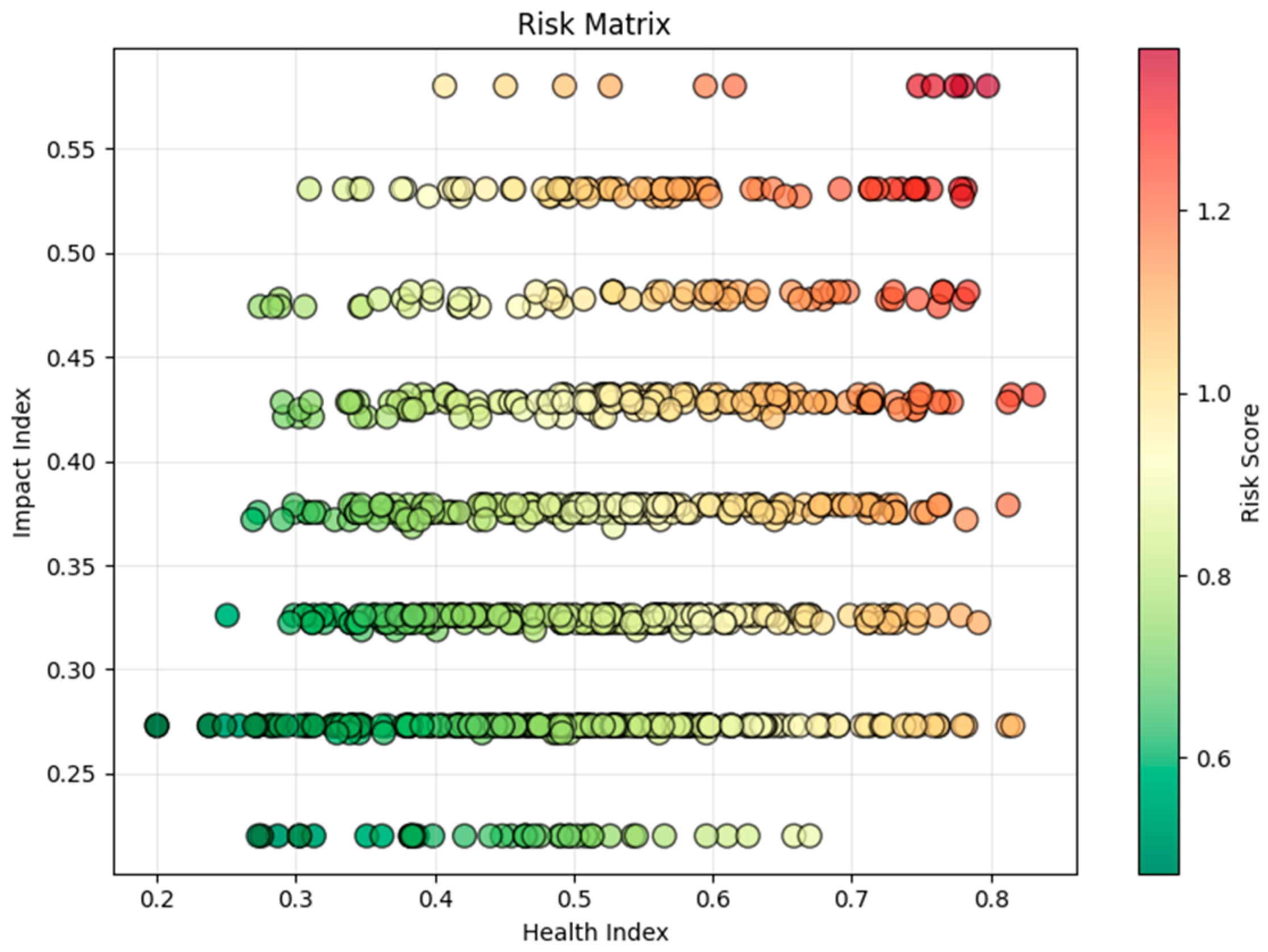
Figure 11 illustrates the proposed risk model developed using FAHP-based weighting and integrating the HI and Impact Index to quantify the risk level of distribution transformers. The model is validated using maintenance and operational data collected from 1000 transformers for hypothesis testing. The approach is scalable to much larger fleets when sufficient DSO data are available; however, a sample of 1000 units was selected to provide a clear and interpretable visual presentation. The model categorizes units into three tiers: 10 high risks, 640 medium risks, and 350 low risks. These classifications support a tiered maintenance strategy: high-risk (red-zone) transformers are prioritized for immediate intervention to reduce failure probability; medium-risk (yellow zone) units are scheduled for subsequent maintenance; and low-risk (green zone) units undergo routine visual inspections for obvious defects. Transformers located in the upper-right region of the matrix exhibit the highest risk, whereas those in the lower-left region represent assets in the best health condition. The remaining transformers are ordered according to gradually decreasing risk from the upper-right to the lower-left of the matrix.
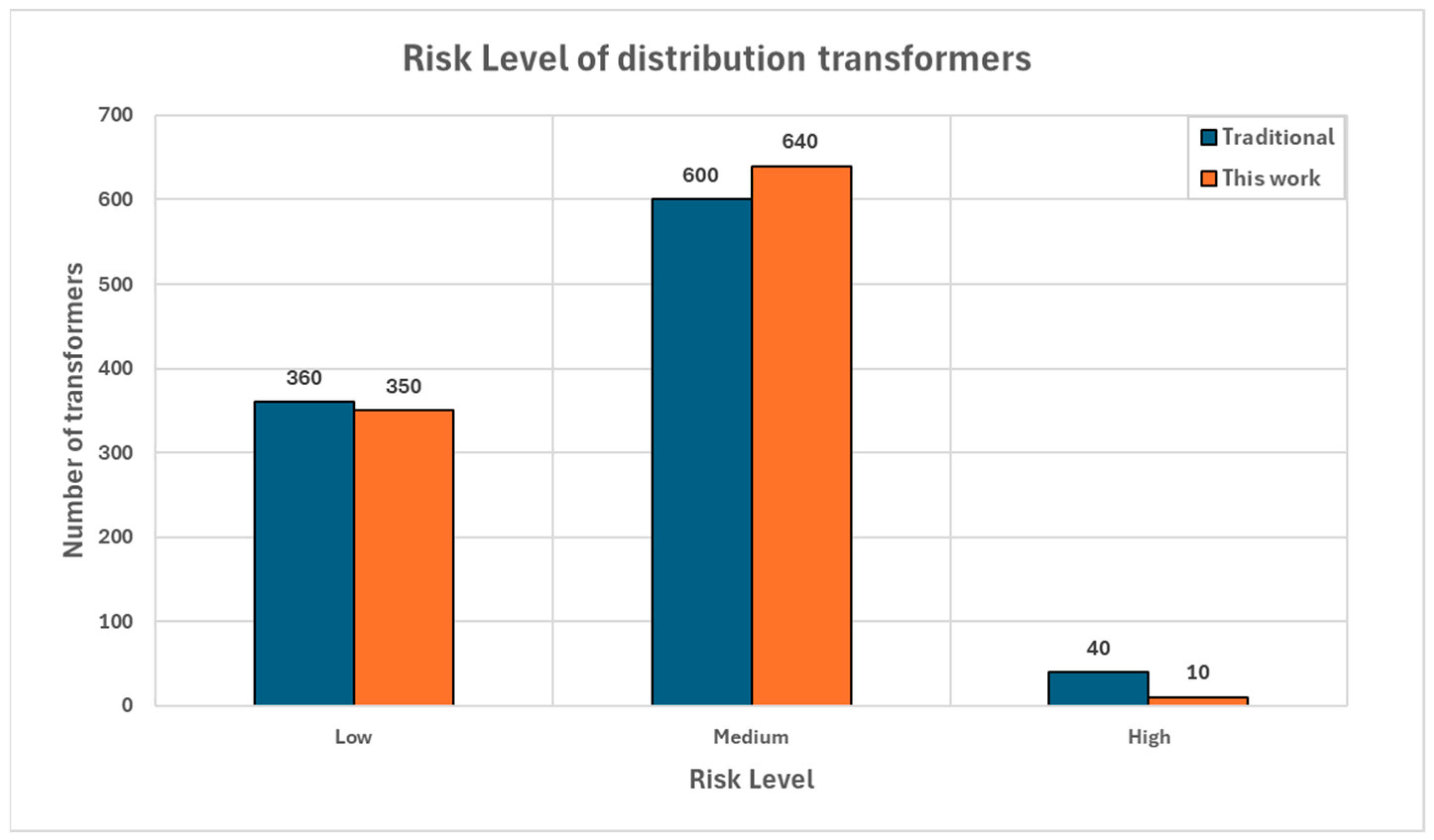
In order to validate the results provided by the proposed approach, a comparison of risk level between the traditional and proposed approaches is presented in
Figure 12. It shows that, compared with the previous PEA maintenance-planning approach based on TBM, the number of transformers requiring immediate action decreased by 10 units (75%), the number placed under monitoring increased by 40 units (6.67%), and the number requiring no action decreased by 10 units (2.78%).
To further validate this effort, risk assessment frameworks may be applied to the data model to ensure ideas are correctly integrated as intended, while also identifying possible stress spots or failures. The data model is anticipated to perform effectively when subjected to risk assessment frameworks, as the technique employed in this work was designed to ensure comprehensiveness. It is worth noting that weighting variables should be established through expert judgment before applying AI to transformer evaluation. Since AI depends on the quality and scale of training data, its reliability diminishes when facing unfamiliar scenarios. Accordingly, large and comprehensive datasets are essential to enhance the accuracy and robustness of AI-based transformer assessments.
Although the proposed method reduces the risk of expert-induced bias, it also has practical limitations. The evaluation data must be as current as possible to minimize assessment errors. Moreover, the dataset used in this study was collected offline; for example, load measurements may not coincide with peak operating periods, and thermal information was obtained indirectly. If online monitoring data were available, assessment accuracy would likely improve substantially because the inputs would more closely reflect actual operating conditions. In order to use the proposed method as a practical tool, utilities should determine the particular conditions, such as ambient temperature, oil quality, and lightning statistics.
5. Conclusions
This study employed the FAHP within a robust MCDM framework to derive defensible criterion weights for prioritizing maintenance of distribution transformers. The proposed approach evaluates assets along two complementary dimensions, HI (likelihood of failure) and Impact Index (consequence of failure), thereby integrating technical condition with operational and customer-facing implications and advancing beyond single-dimension or experience-only prioritization practices. The assessment criteria were first identified through a systematic literature review and subsequently refined through extensive expert elicitation and service-area evidence from the PEA, ensuring both methodological grounding and practical relevance.
A key contribution of the FAHP in this context is its ability to reduce ambiguity and improve the consistency of expert pairwise judgments. In the initial, crisp AHP elicitation, expert comparison matrices repeatedly produced CR values above the accepted threshold (0.10), implying that substantial iterative revision would be required to achieve admissible consistency. By incorporating fuzzy set theory, the FAHP enabled experts to express preferences using linguistic uncertainty while providing a structured mechanism to consolidate and refine judgments. As a result, the finalized matrices achieved verified CR values of ≤0.10 across all assessments. Importantly, the FAHP-derived weights produced meaningful shifts in factor salience—most notably increasing the influence of grounding resistance and lightning exposure within the HI dimension, and customer complaints within the impact dimension—supporting the robustness of the resulting weighting scheme under realistic uncertainty.
The resulting weights provide utilities with a practical, systematic, transparent, and defensible decision-support mechanism to optimize resource allocation, mitigate operational risk, and improve distribution reliability. To demonstrate operational utility, the weights were applied to construct a risk assessment matrix that quantifies transformer failure probability and maps assets into three decision-oriented tiers: high (red), medium (yellow), and low (green). Each tier is linked to an actionable response (immediate intervention, scheduled preventive maintenance, and routine monitoring, respectively). The deliberate use of three tiers reduces boundary ambiguity, improves interpretability for field implementation, and supports consistent decision-making across operational units.
This work also reinforces the continuing importance of domain expertise in maintenance planning, particularly as utilities increasingly adopt ML and AI. Reliable AI outputs remain contingent on credible labels, well-defined criteria, and rigorously curated training datasets—inputs that, in practice, require structured expert judgment and strong alignment with established literature. Accordingly, the study positions expert-driven MCDM not as an alternative to AI, but as a necessary foundation for developing valid weighting variables and trustworthy supervisory signals prior to AI deployment.
Future research should develop AI-assisted, multi-criteria factor selection and weighting support tools and benchmark their performance, interpretability, and governance properties directly against expert-driven FAHP/MCDM baselines, and validation across additional service territories and operating conditions to further contextualize the framework relative to the broader literature can be expanded. In addition, the computational burden of fleet-scale deployment should be explicitly addressed: while expert elicitation and FAHP weight derivation are performed infrequently, the end-to-end assessment workload (data cleansing, feature extraction, HI/Impact scoring, and tier assignment) increases with the number of transformers and the number of criteria. For large fleets, computation time and data handling become non-trivial, motivating scalable implementations (vectorized computation, incremental re-scoring, and/or distributed processing) and clear update policies (e.g., periodic recalibration of weights versus continuous asset-level score updates) to ensure timely decision support as fleet size grows.




 ,
,