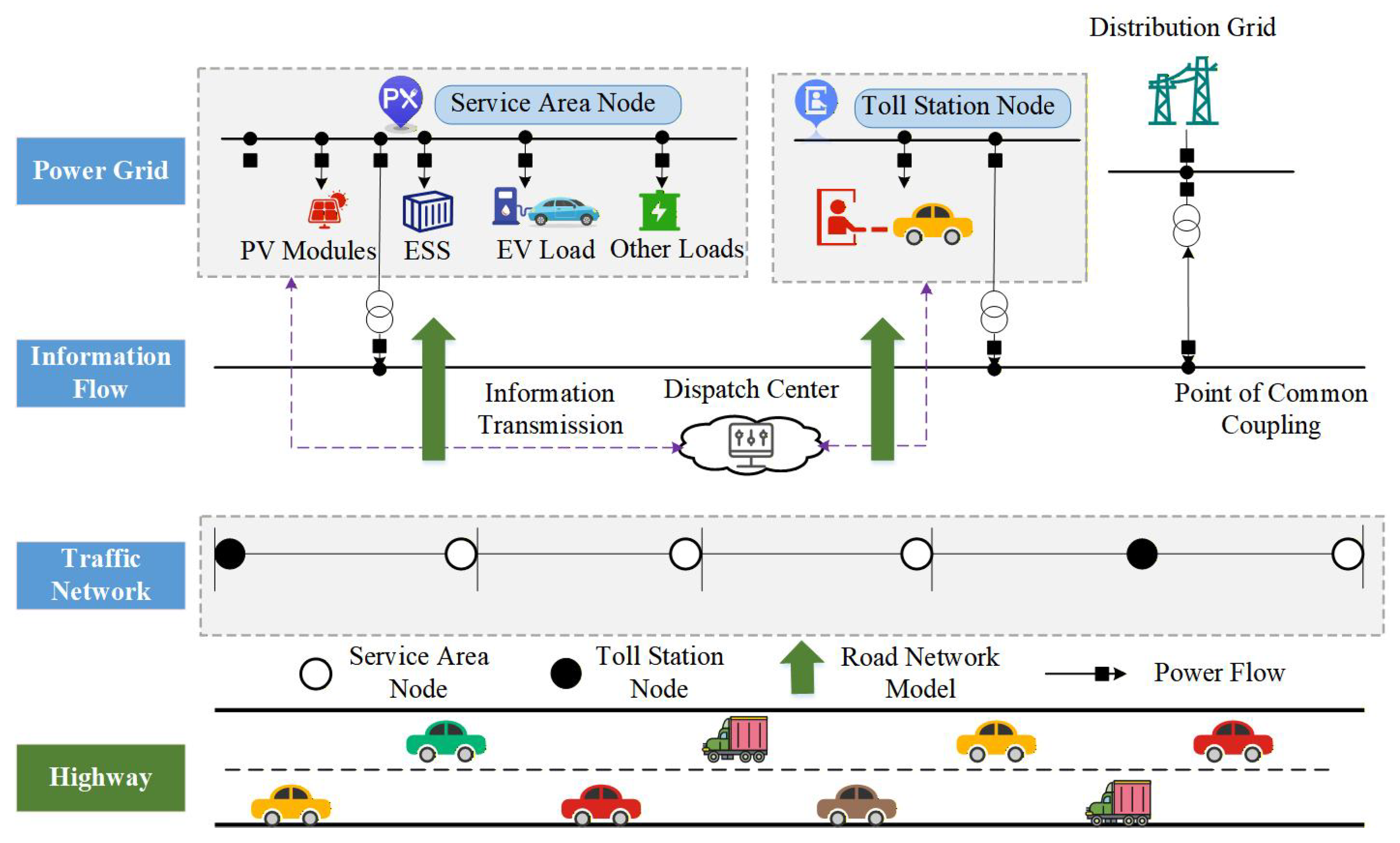
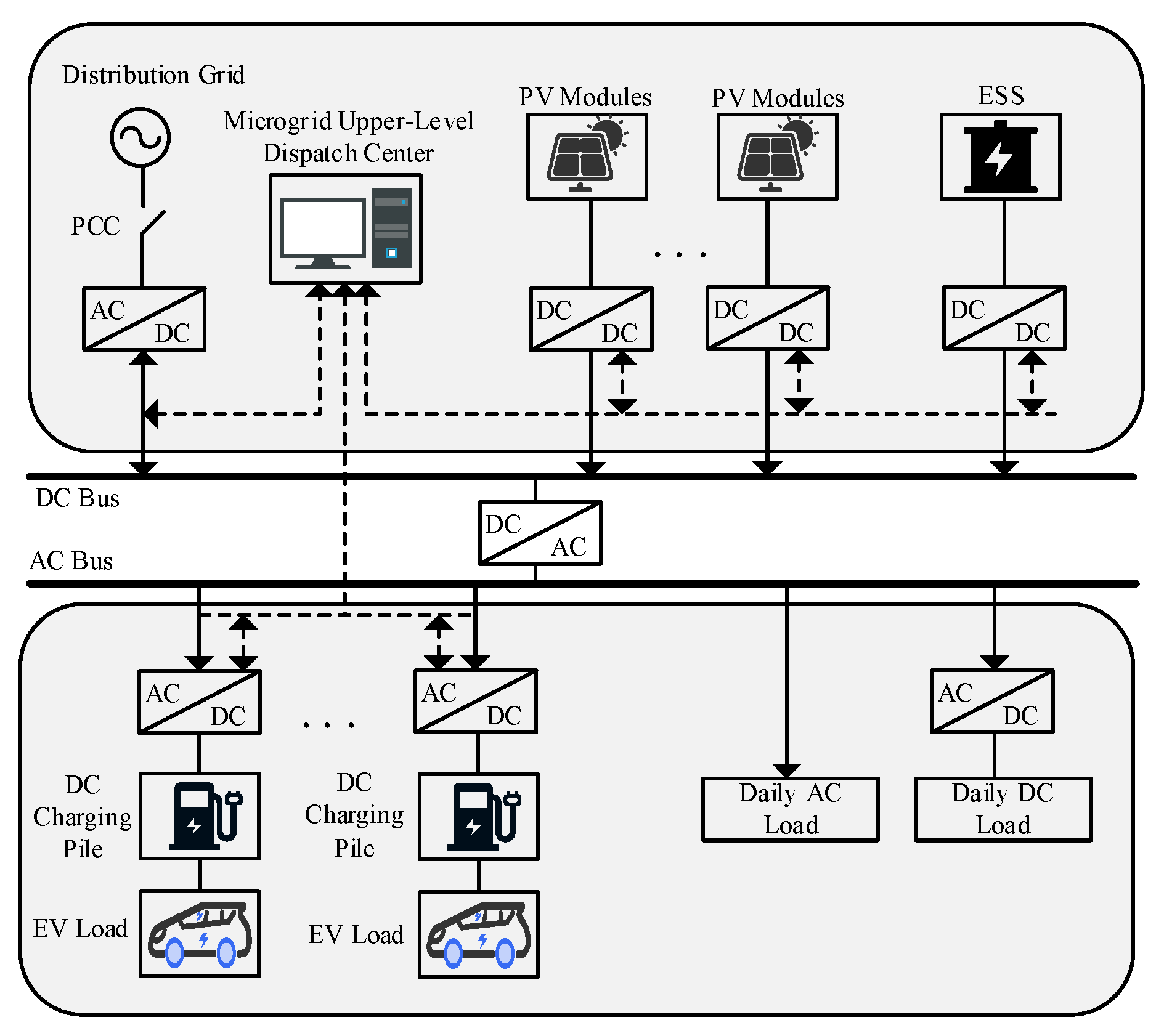
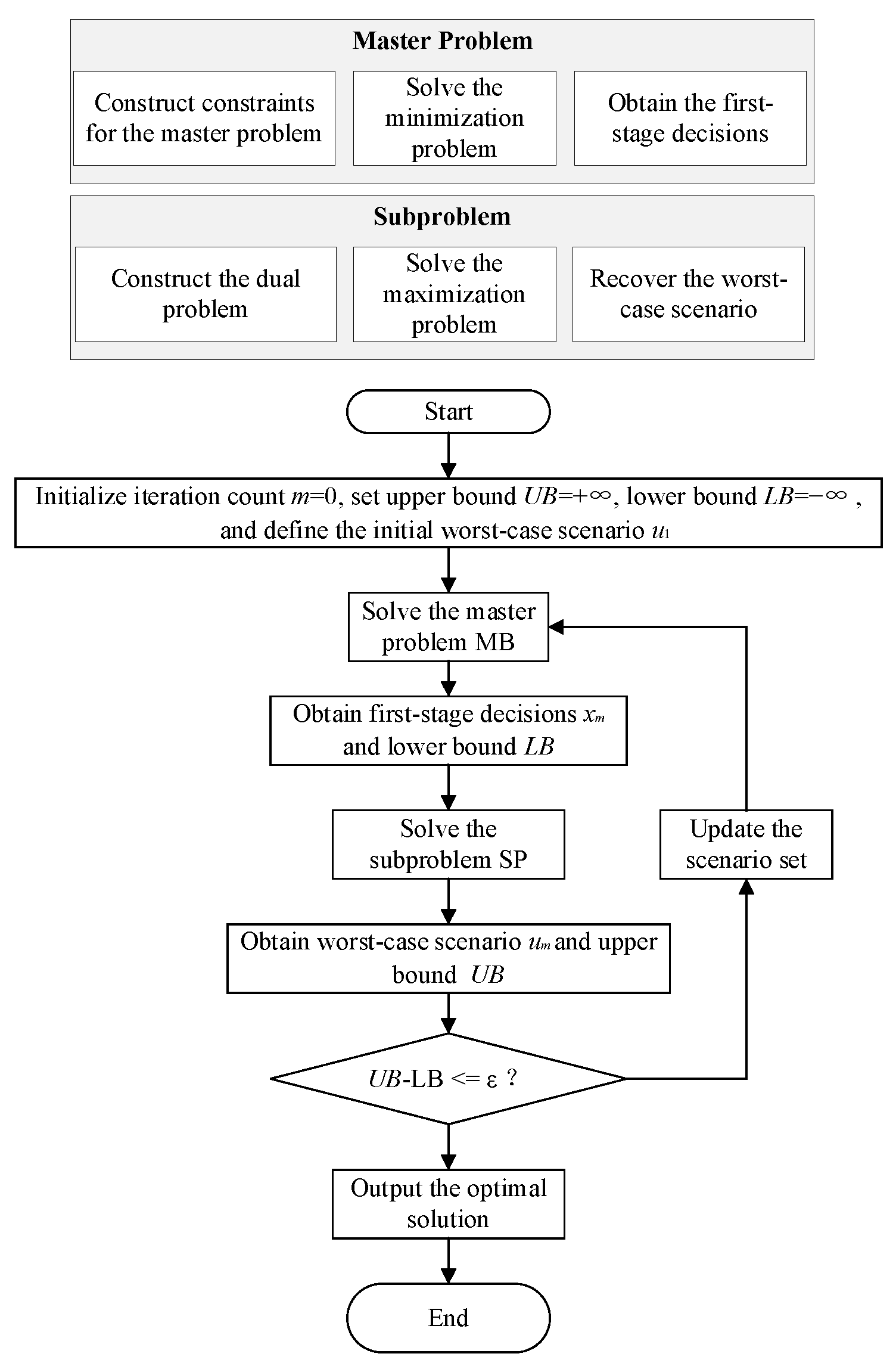
In this chapter, considering the dual uncertainties of PV output and EV load, a two-stage robust optimization model based on the C&CG algorithm is established and solved for the PV-energy storage-charging system of the Highway service areas.
Simulations are conducted based on the MATLAB 2018b platform and GUROBI solver. Through detailed simulation analysis, the operating characteristics and cooperative effects of each service area are systematically explored, the performance differences between robust optimization and deterministic optimization are compared, and the adaptability and system robustness of the proposed scheme under different harsh conditions are verified.
5.1. Case Parameters
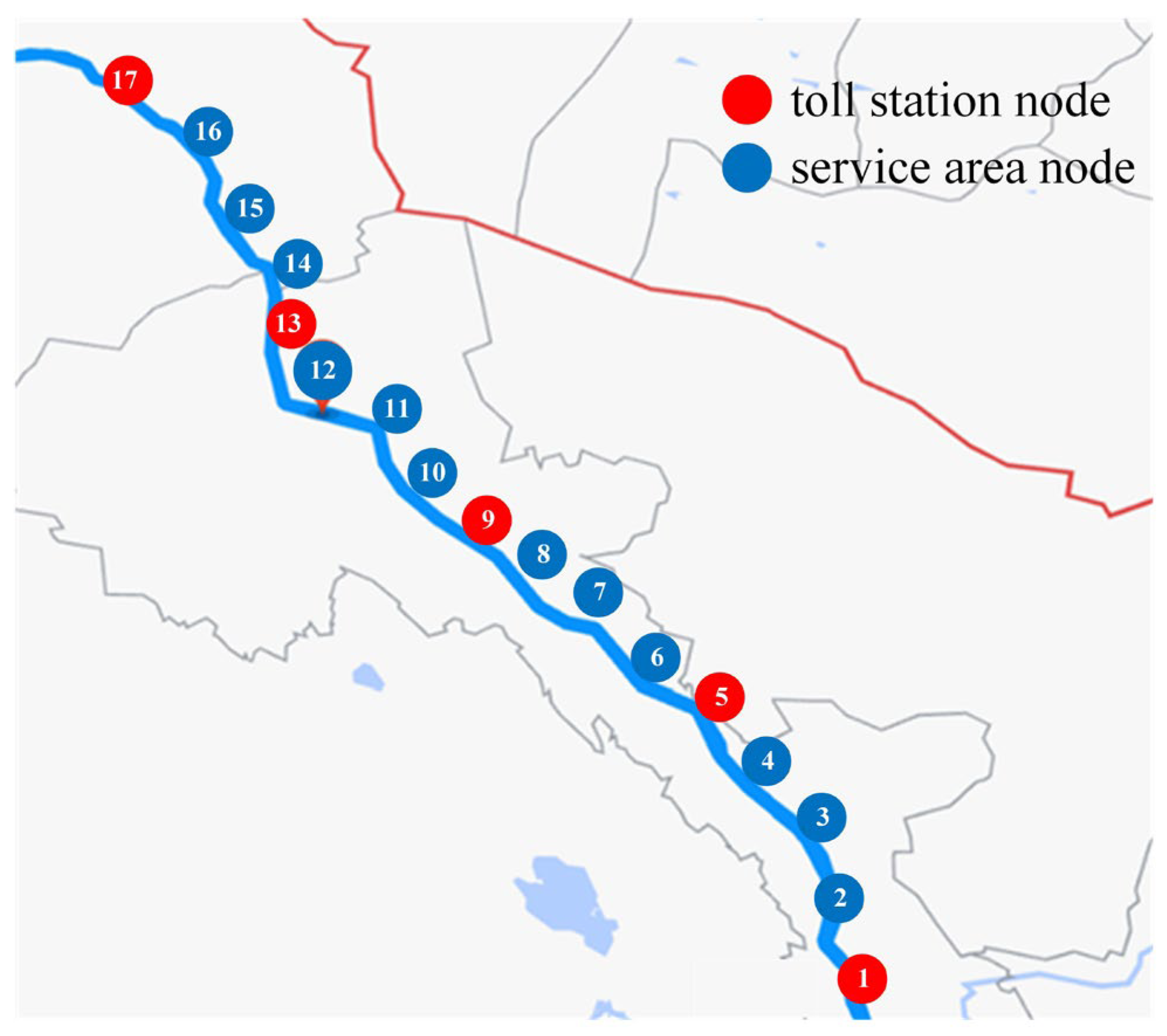
The specific highway section selected in this study is shown in
Figure 4. It has a total of 17 nodes, including 12 service area nodes and 5 toll station nodes, with an overall length of approximately 640 km. The distance between each pair of adjacent nodes is about 40 km.
The configurations of PV, energy storage, and charging piles in each service area are shown in
Table 1. In the budgeted uncertainty set,
and
denote the maximum numbers of hours (out of 24) during which PV generation and EV load, respectively, are allowed to take their interval boundaries (worst-case deviations); in this study, we set
, meaning that at most 6 h (about one quarter of the day) can reach extreme deviations, representing a moderate risk level that balances economy and robustness.
The relevant calculation parameters of the PV-energy storage-charging system are shown in
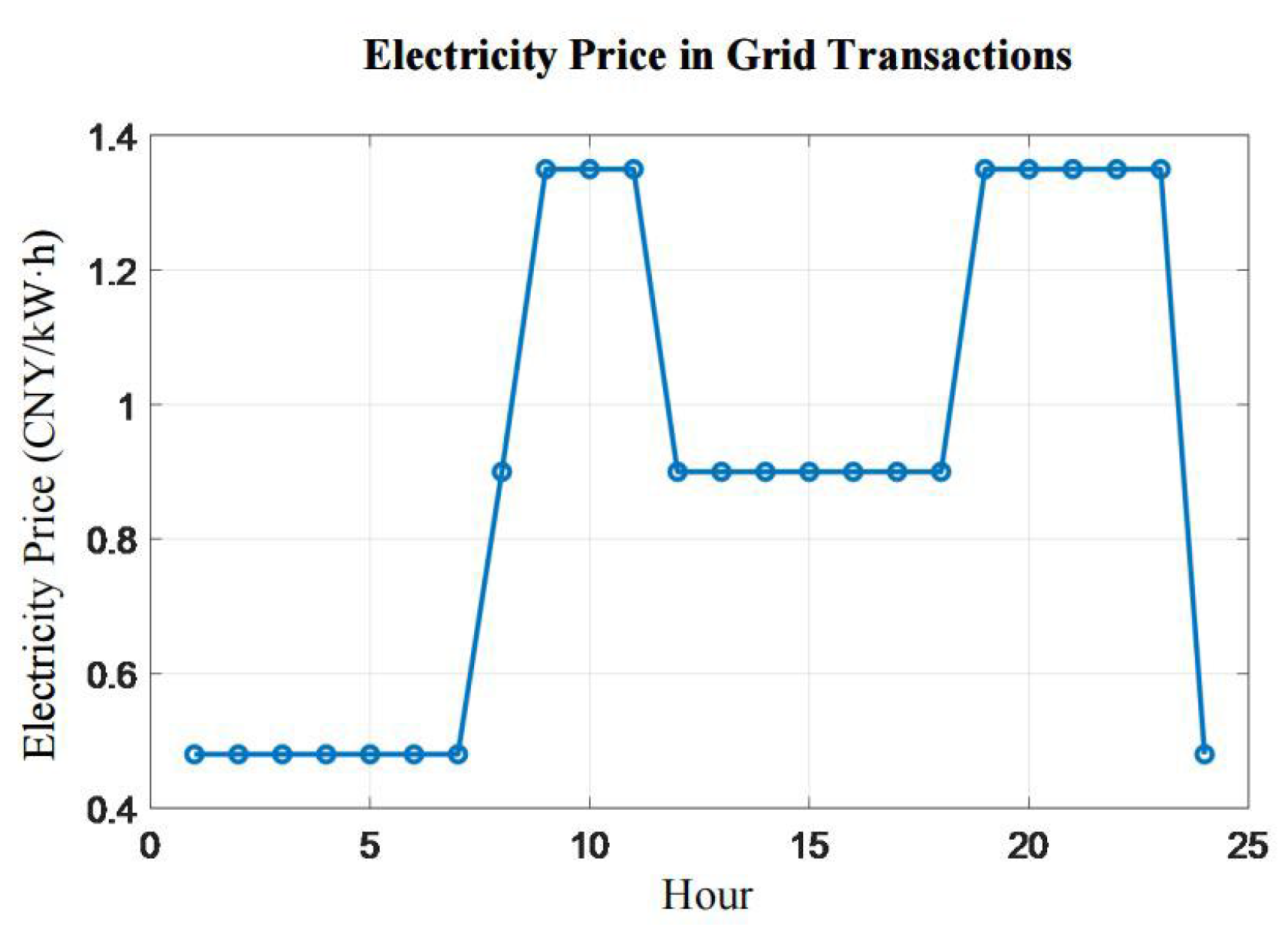
Table 2. The transaction electricity prices between the system and the distribution grid are shown in
Figure 5 [
15].
The relevant parameter information of photovoltaic (PV) modules, electric vehicle (EV) charging piles, and EV charging is shown in the
Table 3.
In the case study, on the PV side, hourly meteorological data provided by the NASA Langley Research Center’s Prediction Of Worldwide Energy Resources (POWER) project (including solar irradiance and ambient temperature) are used. The meteorological time series corresponding to the location of the case expressway are extracted and, together with the installed PV capacity of each service area, substituted into the PV power calculation model presented in
Section 3 to obtain the forecast PV generation profiles for each service area.
On the EV-load side, based on expressway traffic-flow data and the OD matrix, the EV load dynamic calculation model in
Section 3 is used to simulate vehicle charging behaviors at service areas, thereby deriving the hourly forecast EV charging-load profiles for the service areas. The EV OD distribution is given in
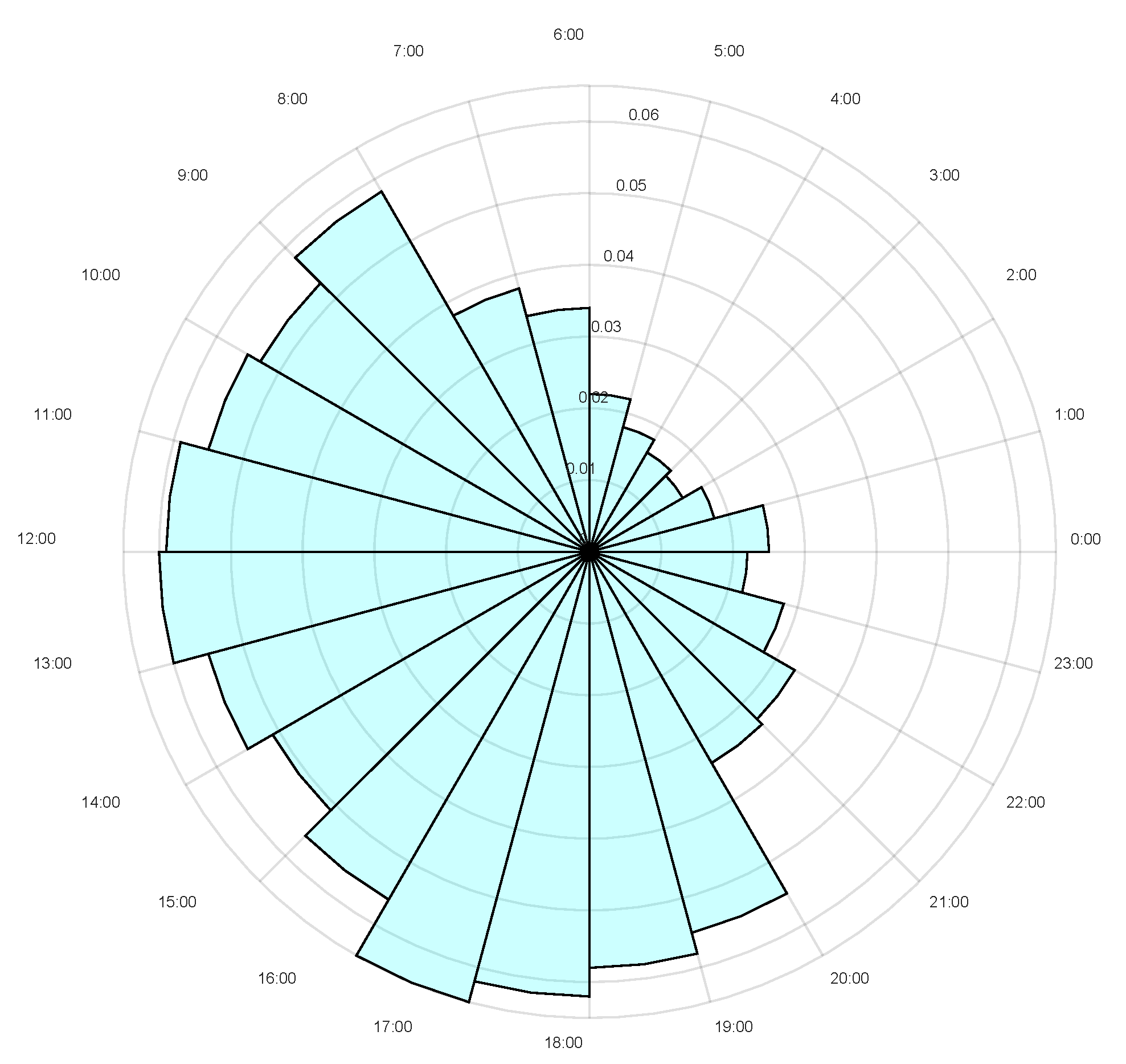
Table 4, and the time-of-day traffic proportion is shown in
Figure 6 (reflecting the share of EVs in each time period within a day) [
9].
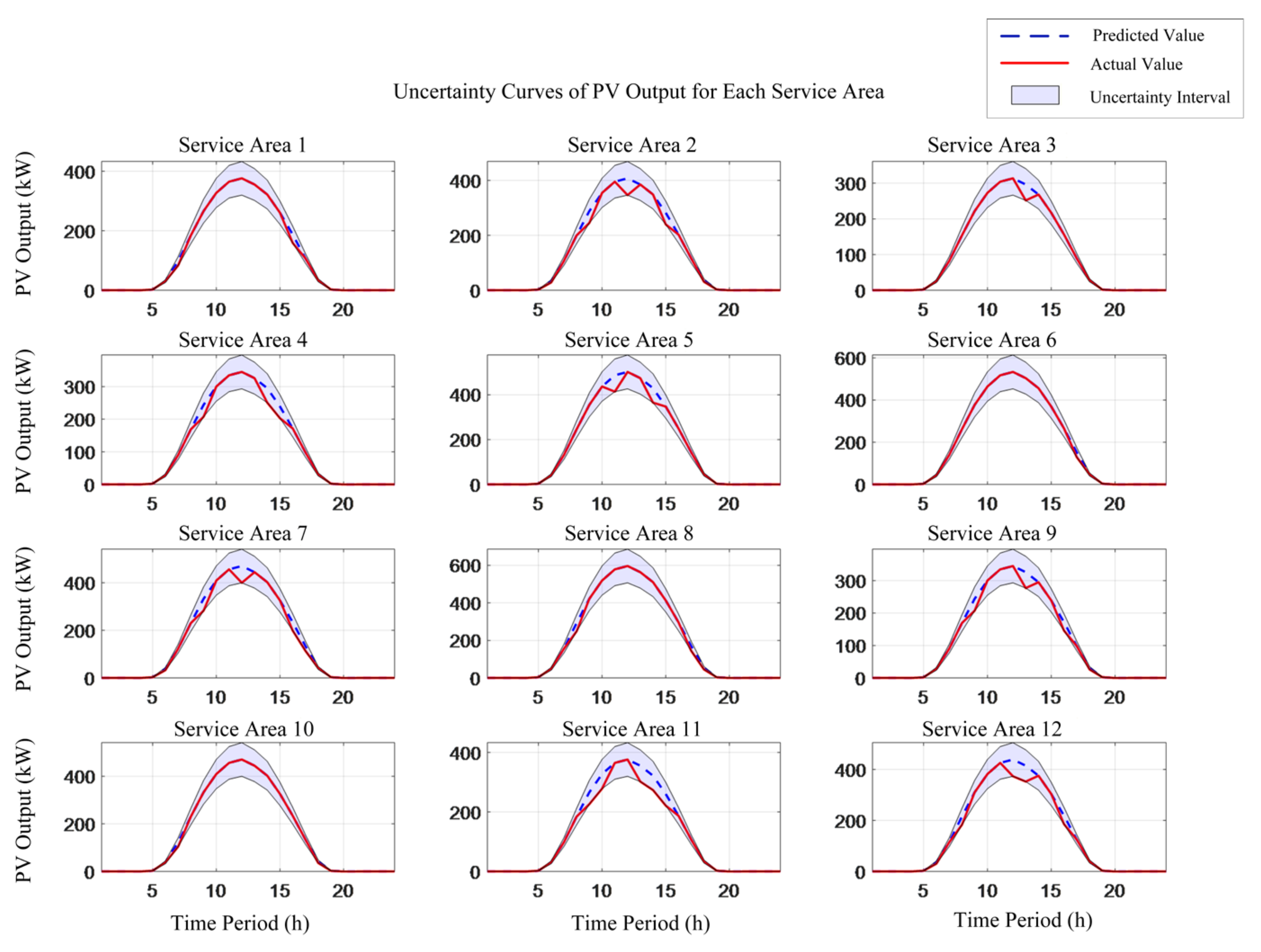
Assuming a PV output deviation of 15%, the corresponding PV uncertainty profile (with the red curve representing the optimized realized PV output) is shown in
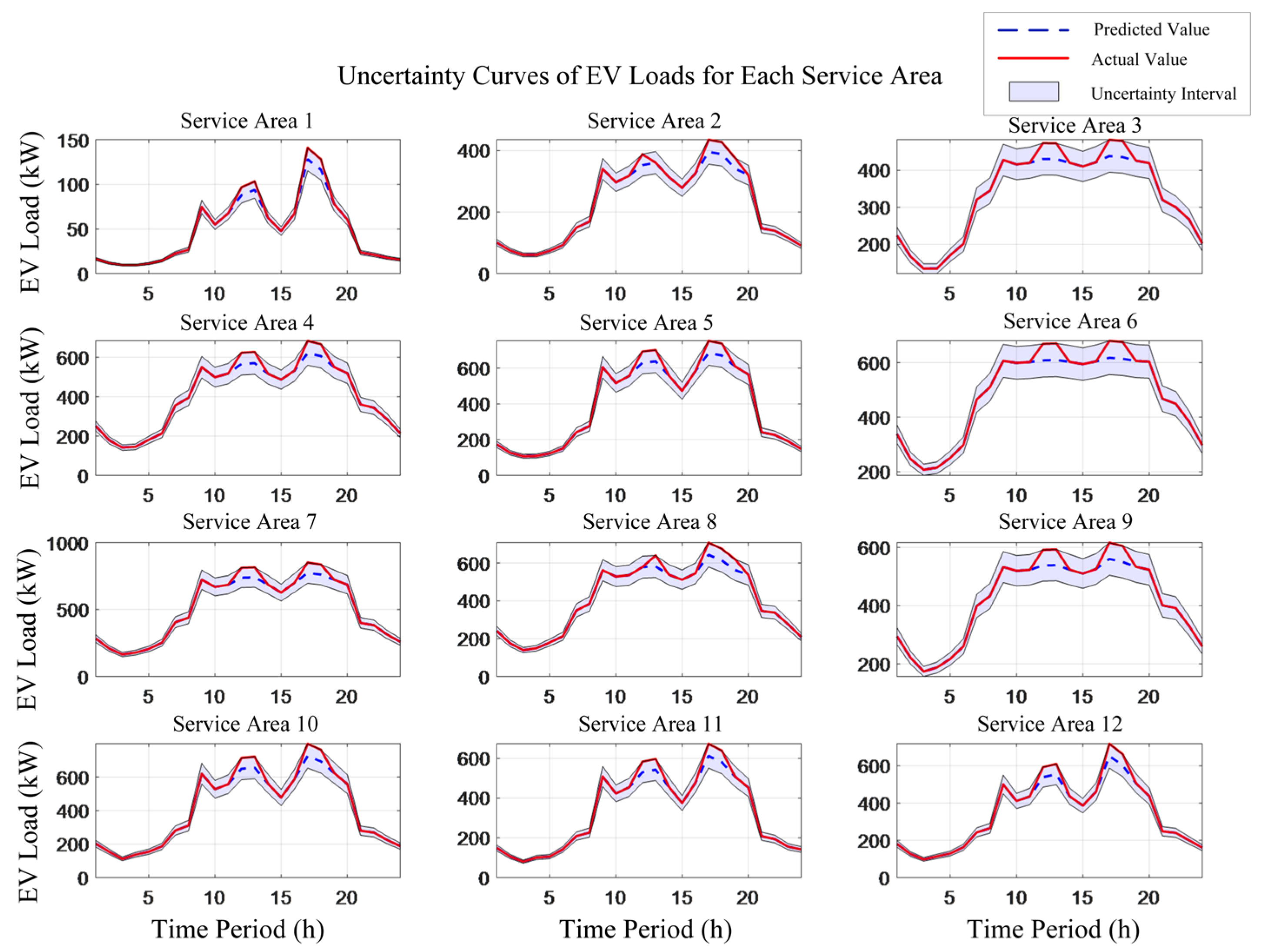
Figure 7. Assuming an EV-load deviation of 10% for each service area, the corresponding EV-load uncertainty profiles (with the red curve representing the optimized realized EV load) are shown in
Figure 8. The uncertainty budget parameter
for both PV output and EV load is set to 6, meaning that within a day the realized PV output reaches the lower bound of the uncertainty set in six time periods, while the EV load reaches the upper bound of the uncertainty set in six time periods.
5.2. Simulation Result Analysis
- (1)
Optimization Result Analysis of All Service Areas Along the Highway
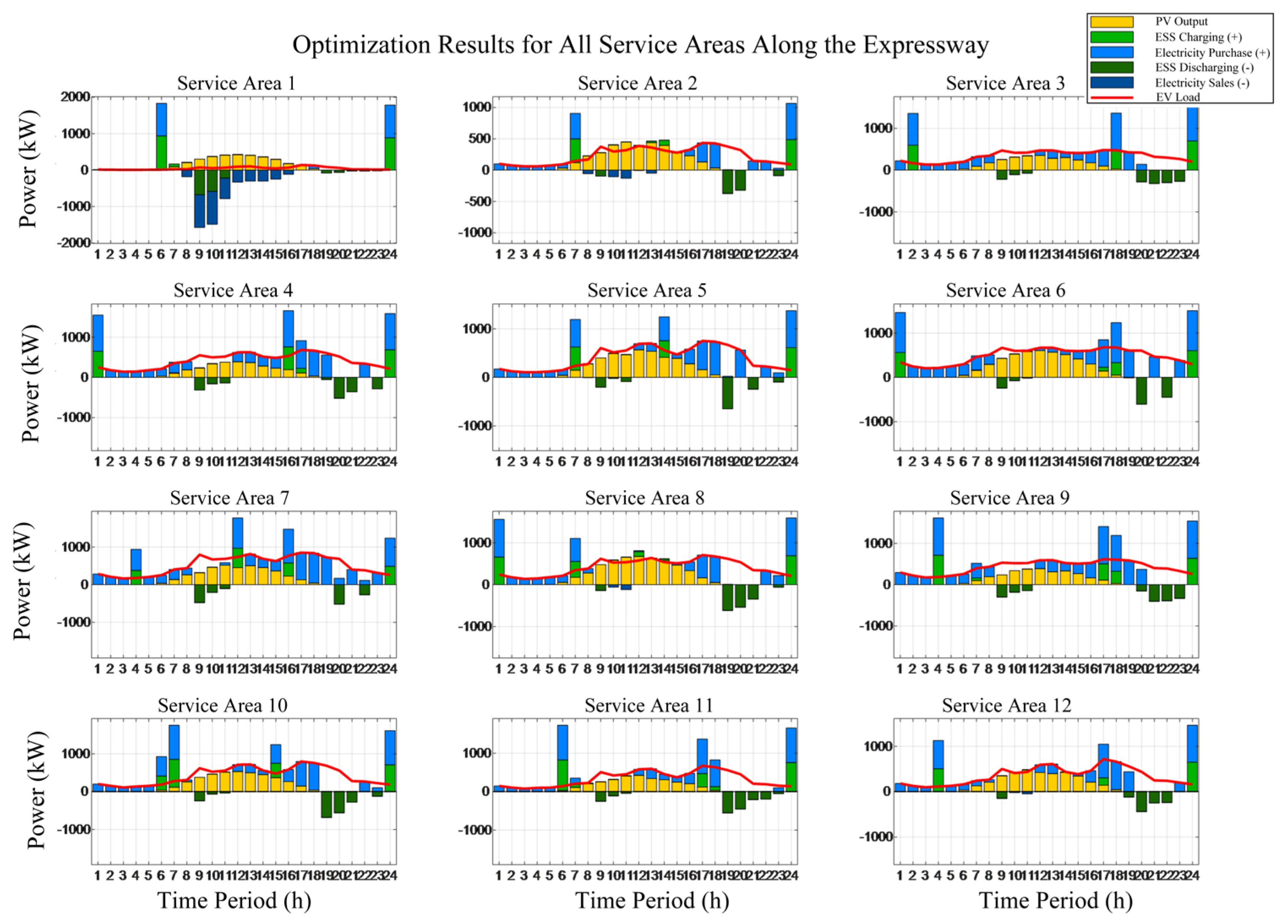
Figure 9 presents the optimal power dispatch results of the PV–energy storage–charging systems in 12 highway service areas under uncertainty considerations. It can be observed that the PV power generation in all service areas mainly concentrates on daytime hours (6:00–18:00), consistent with the variation law of solar irradiance intensity.
Meanwhile, all service areas generally adopt economically driven dispatch strategies. During low-electricity-price periods such as nighttime and early morning (0:00–6:00), most service areas choose to purchase electricity from the grid to charge their energy storage systems, reducing the system operation costs. During daytime periods with sufficient PV output and high electricity prices (10:00–16:00), the systems prioritize using PV electricity to meet load demands and sell surplus electricity to the grid, improving economic benefits. During evening and nighttime peak electricity price periods (18:00–22:00), PV output decreases while load demands increase. At this time, the systems prioritize using energy storage discharge (dark green downward bars) to meet loads, avoiding purchasing electricity from the grid during high-price periods and thus reducing operation costs.
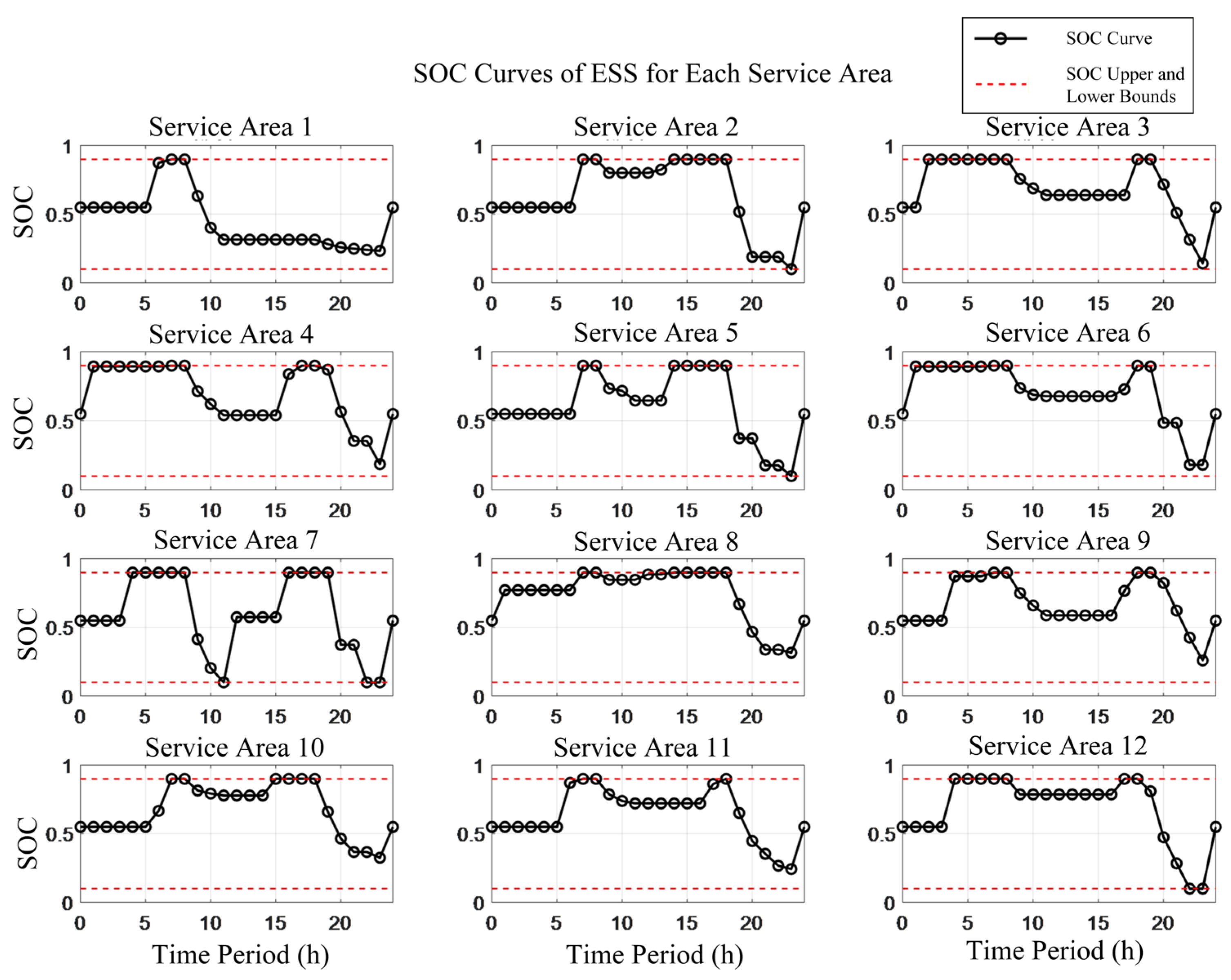
The ESS charging and discharging curves of each service area are shown in
Figure 10. Different service areas exhibit differences in ESS dispatch strategies due to variations in their PV installed capacities, ESS scales, and load characteristics. For service areas with sufficient PV output (e.g., Service Area 2), the ESS charges extensively during low electricity price periods, fully leveraging the price advantage. During nighttime when electricity prices are high, the ESS discharges to sustain the load, reducing the need for high-cost electricity purchase. Moreover, there are obvious intervals in the ESS charging and discharging processes, avoiding frequent charge–discharge switching and contributing to extending the ESS lifespan. For service areas with insufficient PV output (e.g., Service Area 7), the resulting dispatch strategy follows a more conventional operating pattern. The ESS conducts preventive charging during low electricity price periods to cope with harsh scenarios such as insufficient PV output or increased load. During peak load periods with high electricity prices, the ESS discharges instead of relying on the grid, saving electricity purchase costs. The dispatch strategy balances economic efficiency and the ability to handle uncertainties.
The robust-optimized dispatch strategy can maximize economic value while ensuring self-supply needs through “charging at off-peak times and discharging at peak times.” After considering uncertainties, the strategy is preventive: the ESS charging and discharging are more conservative, and the interaction with the grid is more flexible; service areas of different scales implement differentiated dispatch strategies. Overall, this strategy achieves a good balance between economic efficiency and reliability, significantly enhancing the system’s ability to handle uncertainties.
- (2)
Comparison with Deterministic Optimization
To verify the effectiveness and superiority of the robust optimization method proposed in this chapter, a comparative analysis is conducted between it and the deterministic optimization method. Deterministic optimization uses the predicted values of PV output and EV load as input parameters, without considering their uncertainties, and the objective function can be directly solved using the Mixed Integer Linear Programming (MILP) method. In contrast, robust optimization considers the fluctuations of these parameters within the box uncertainty set.
To compare the operational impacts of robust scheduling and deterministic scheduling,
Table 5 summarizes the average equivalent full charge–discharge cycles of ESSs across all service areas and the total energy exchanged with the distribution grid.
Compared with the deterministic solution, the robust solution yields lower average equivalent full cycles and lower total grid-exchanged energy, indicating that robust scheduling can suppress excessive ESS cycling under uncertainty, extend ESS lifetime, and reduce reliance on the grid, thereby improving overall operational performance.
By selecting different and , the operating costs of the day-ahead PV–energy storage–charging system obtained from simulations are as follows.
It can be seen that when the uncertain parameters of power sources and loads are all 0, robust optimization is equivalent to deterministic optimization. Moreover, the larger the values of the uncertain parameters, the higher the operating costs of the PV-energy storage-charging system. That is, when formulating dispatch plans, the more uncertainties are considered, the more conservative the developed plans will be.
According to the comparative analysis in
Table 6, although the deterministic optimization strategy shows better economic efficiency in day-ahead dispatch plans, this does not directly equate to the overall superiority of this strategy. Specifically, the deterministic scheme corresponds to the power generation and consumption plans declared by the microgrid to the day-ahead market; however, prediction deviations in actual operation will cause a discrepancy between the actual power generation/consumption and the planned values on the next day, and such deviations must be balanced by electricity in the real-time market [
22]. Since real-time transaction electricity prices usually have a premium margin—i.e., the electricity purchase price is higher than that in the day-ahead market, while the electricity sales price is relatively lower [
23]—such deviation adjustment will increase the system’s comprehensive transaction costs.
Assuming a 10% prediction error for PV output and EV load, during the real-time dispatch stage, it is necessary to compensate for this part of the power difference through electricity purchase and sale with the grid. The real-time electricity purchase and sales prices are set to 1.5 times and 0.5 times the day-ahead electricity price [
15], respectively, and real-time compensation cost calculations are performed for the different optimization models in
Table 7.
Through comparative analysis, it can be seen that although the day-ahead economic indicators of the robust optimization model are relatively high, when prediction deviations occur on both the power source and load sides, the total expenditure required for intra-day electricity compensation is significantly reduced, resulting in a lower full-cycle operating cost. This indicates that when formulating dispatch plans, robust optimization can effectively cope with electricity price fluctuations in the real-time market by constructing a more abundant safety adjustment space (considering multiple uncertainty scenarios).
The above involves calculating a 10% prediction error for the predicted values of all time periods. To further analyze the impact of prediction errors on the comprehensive cost, the Monte Carlo method is used to randomly calculate the prediction errors for different time periods under the same certainty parameters.
Taking the optimization model with
and
as an example, the prediction error time periods are set as
. If
= 6,
= 3, it means that the predicted values of PV in each service area have a 10% prediction error in 6 time periods, and the predicted values of EV loads have a 10% prediction error in 3 time periods. Through multiple (100 times) simulations using the Monte Carlo method, the average intra-day compensation under different prediction error time periods is calculated. The variation in intra-day compensation costs with the number of prediction error time periods
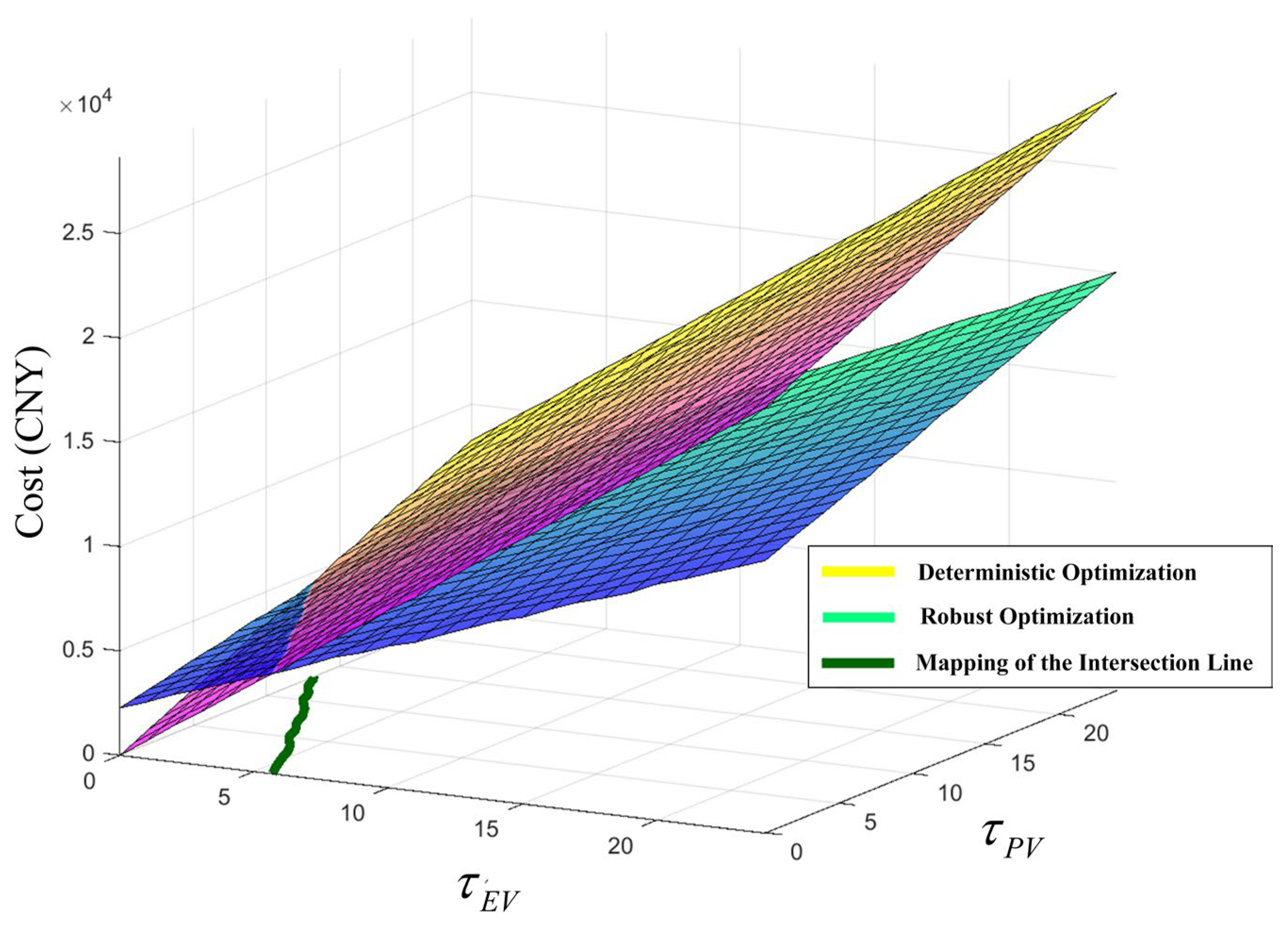
under the two optimization methods is shown in
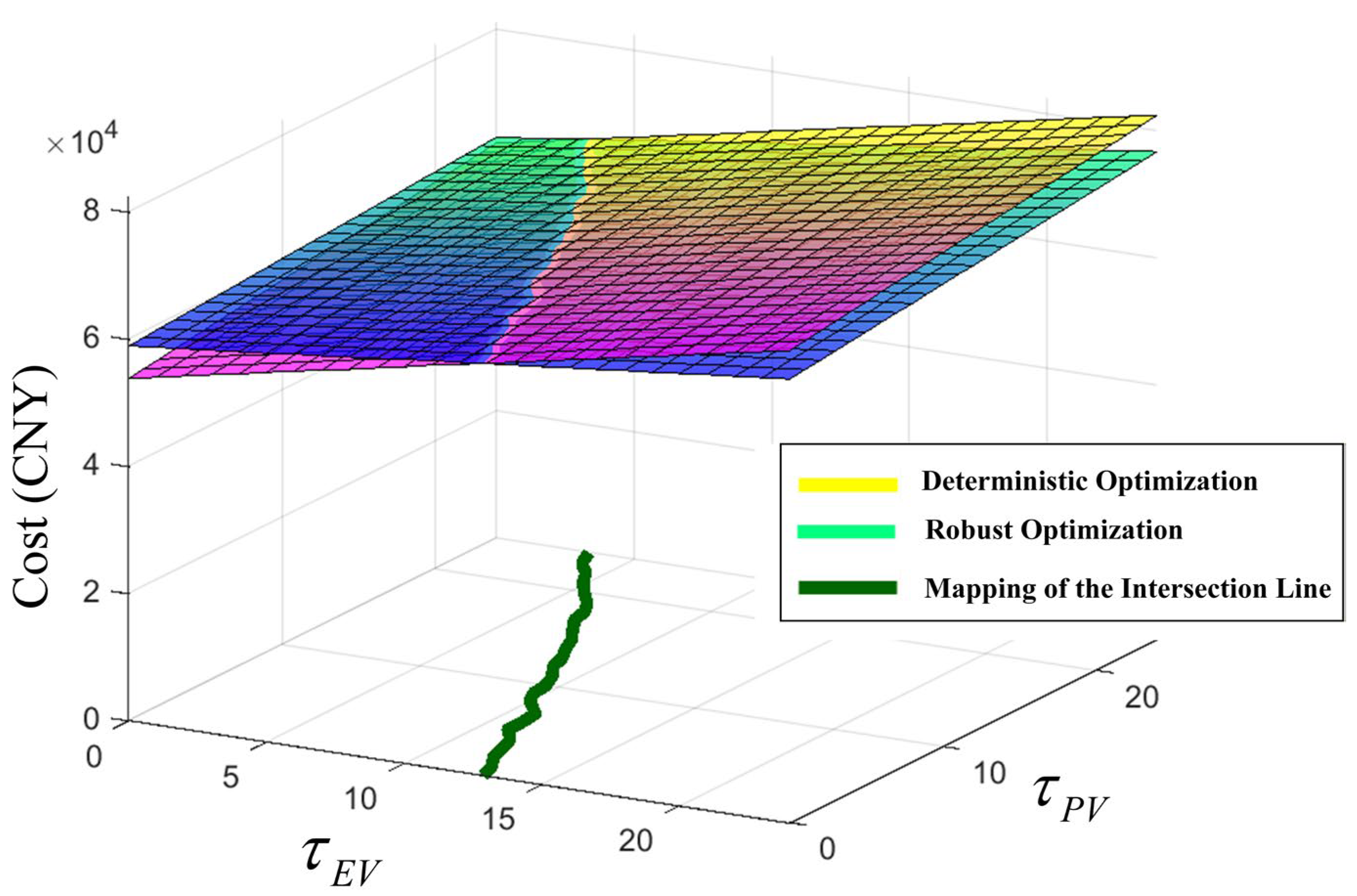
Figure 11, and the comprehensive costs are shown in
Figure 12. Several typical data points are selected and shown in
Table 8.
It can be seen that as the number of time periods with prediction errors increases, the intra-day compensation costs under both robust optimization and deterministic optimization increase. However, due to insufficient risk resistance capability, as the number of time periods with actual prediction errors increases, the deterministic optimization method requires more intra-day compensation, and its cost grows faster than that of the robust optimization method. In
Figure 11, the intersection line of the two surfaces is shown as the green curve. When the prediction error
is smaller than this curve, the intra-day compensation cost of deterministic optimization is lower. When the prediction error
is larger than this curve, the intra-day compensation cost of robust optimization is lower. The same applies to the comprehensive costs in
Figure 12. It can be seen that when there is significant uncertainty in the system (i.e., a large number of time periods with prediction errors), the comprehensive cost advantage of the robust optimization method becomes more prominent, demonstrating its effectiveness in dealing with the uncertainties of photovoltaic power generation and EV loads.