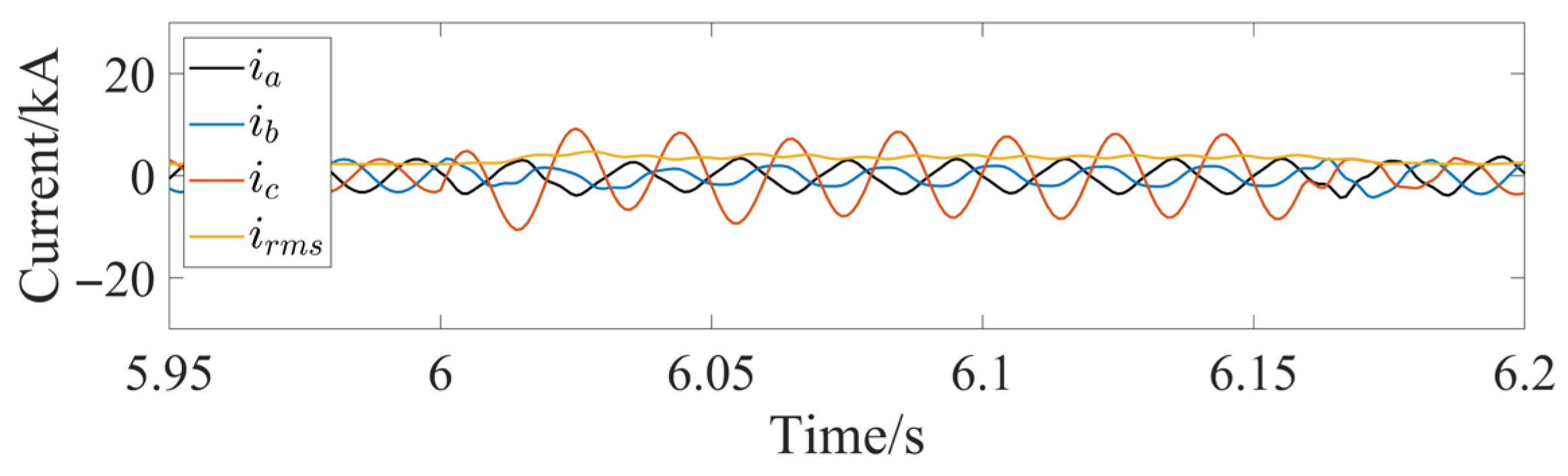
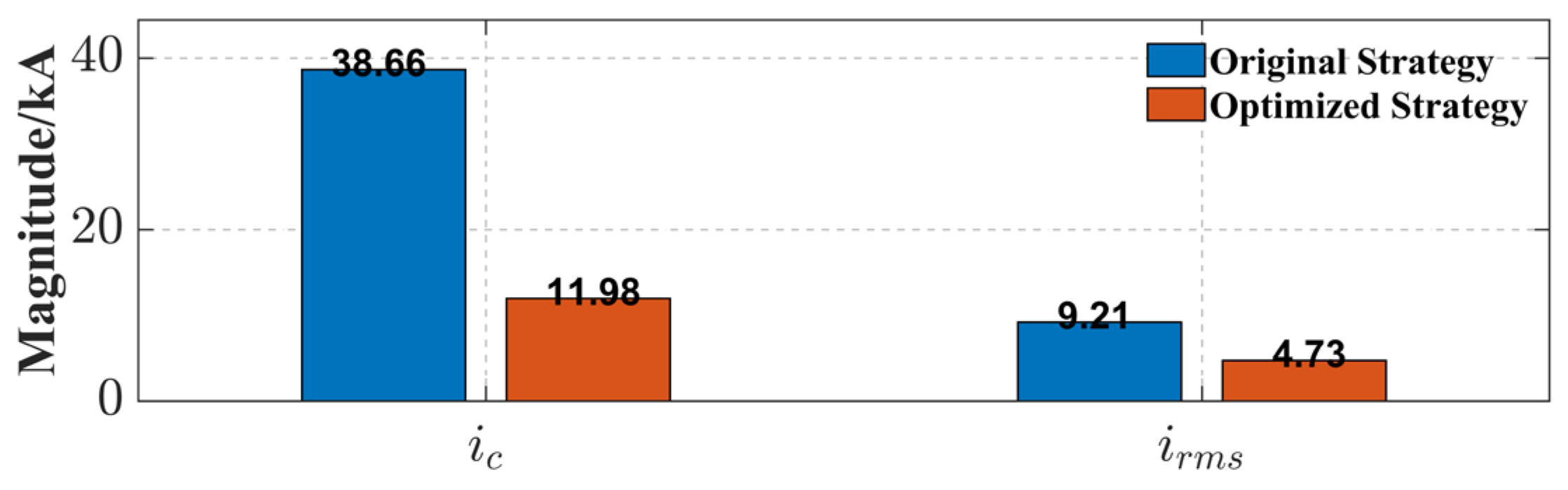
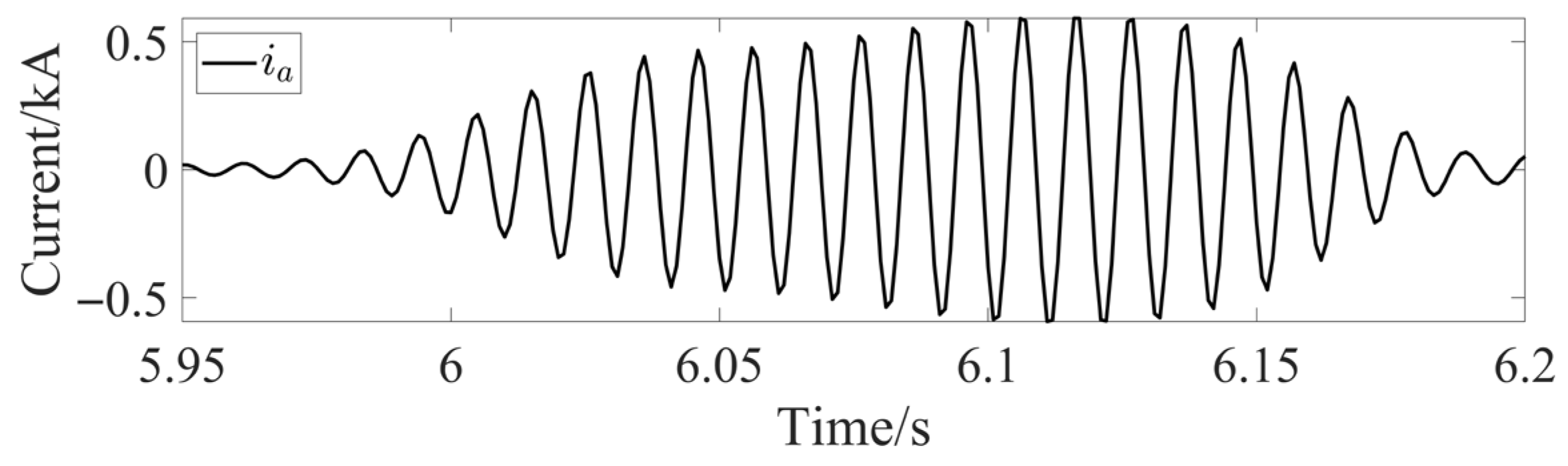
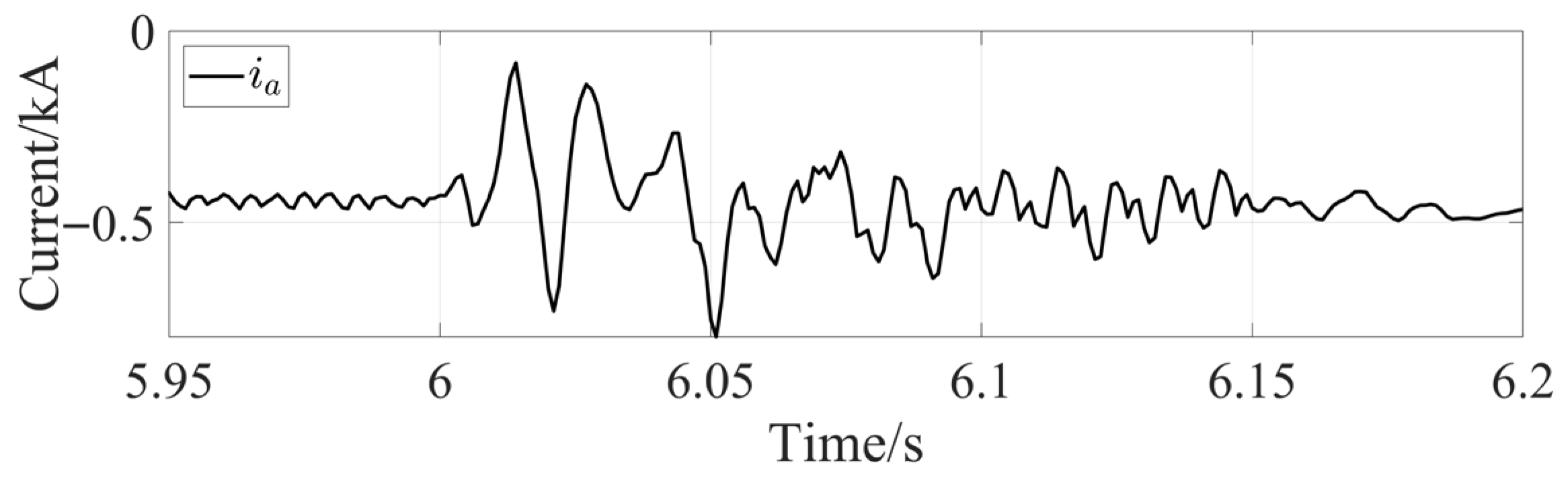
The AC asymmetric fault in offshore wind power MMC-HVDC systems exhibits a third-order evolutionary characteristic: strong initial impact, significant dynamic fluctuations, and persistent circulating current in the steady-state phase. The consequences of this fault are closely related to the operational requirements of the offshore wind power. This study proposes a three-level collaborative composite control strategy to address core issues at different fault stages: rapid overcurrent suppression during the initial impact stage, voltage support and suppression of negative-sequence components during the dynamic stage, and precise circulating current control during the steady-state phase. The three levels of control are complementary in function and sequentially linked, forming a complete control system covering the entire fault process and effectively improving the fault ride-through capability and operational reliability of the system.
2.1. Generalized Virtual Impedance Control
This study proposes a generalized virtual impedance control strategy to address the current suppression problem in offshore wind power MMC-HVDC systems during the AC asymmetric fault impact phase. This strategy aims to effectively limit the current peak at the moment of fault occurrence through a microsecond-level rapid response, thereby providing a critical buffer time for the subsequent control stages.
To address the shortcomings of traditional fixed-parameter virtual impedance in balancing the current-limiting effectiveness and operational efficiency, this study designs a generalized virtual impedance structure with low positive-sequence impedance and high negative-sequence impedance to achieve frequency-domain differentiated control of positive and negative-sequence currents. As shown in
Table 1, the positive-sequence impedance uses a low inductive reactance to minimize the impact on the active power transmission and maintain a stable positive-sequence voltage at the point of common coupling. To limit the fault current magnitude at the source, a high inductive reactance is employed to increase the path impedance of the negative-sequence current. This approach effectively reduces the stress on the bridge arm current and prevents excessive damage to the insulated-gate bipolar transistor (IGBT).
As shown in
Figure 4, when an asymmetrical fault is detected, the positive- and negative-sequence components of the three-phase AC current are collected and separated. The voltage drops generated by the positive-and negative-sequence virtual impedances are then calculated.
These two voltage components are combined to form a compensation signal for voltage support and current suppression. This signal is then superimposed on the inner-loop controller output and modulated by pulse width modulation (PWM) to generate a switching signal. Based on the determination of the operating condition, the virtual impedance returns to zero during normal system operation without affecting the transmission efficiency.
2.2. Positive and Negative Sequence Cooperative Feedforward Control
This section investigates the prerequisites for dynamic stability during the fault-transition phase. The primary aim is to actively mitigate negative-sequence disturbances and accurately support the Point of Common Coupling (PCC) voltage, thereby facilitating the rapid mitigation of system voltage and current fluctuations. This approach seeks to address issues related to excessive voltage sags and the increased risk of wind turbine disconnection due to response delays inherent in traditional feedback control mechanisms. In offshore wind farms, the PCC voltage sag is a critical factor contributing to wind turbine disconnection. When the voltage sag is excessively large or prolonged, the low-voltage ride-through protection of the wind turbine is activated, leading to widespread turbine disconnections and resulting in substantial power and economic losses. Concurrently, traditional control strategies exhibit response delays in suppressing negative-sequence currents, complicating the swift resolution of dynamic system fluctuations and further elevating the risk of turbine disconnection. Consequently, it is imperative to design a coordinated control mechanism that integrates rapid sequence-component separation, adaptive voltage support, and feedforward negative-sequence suppression to achieve prompt system stability during the transition phase.
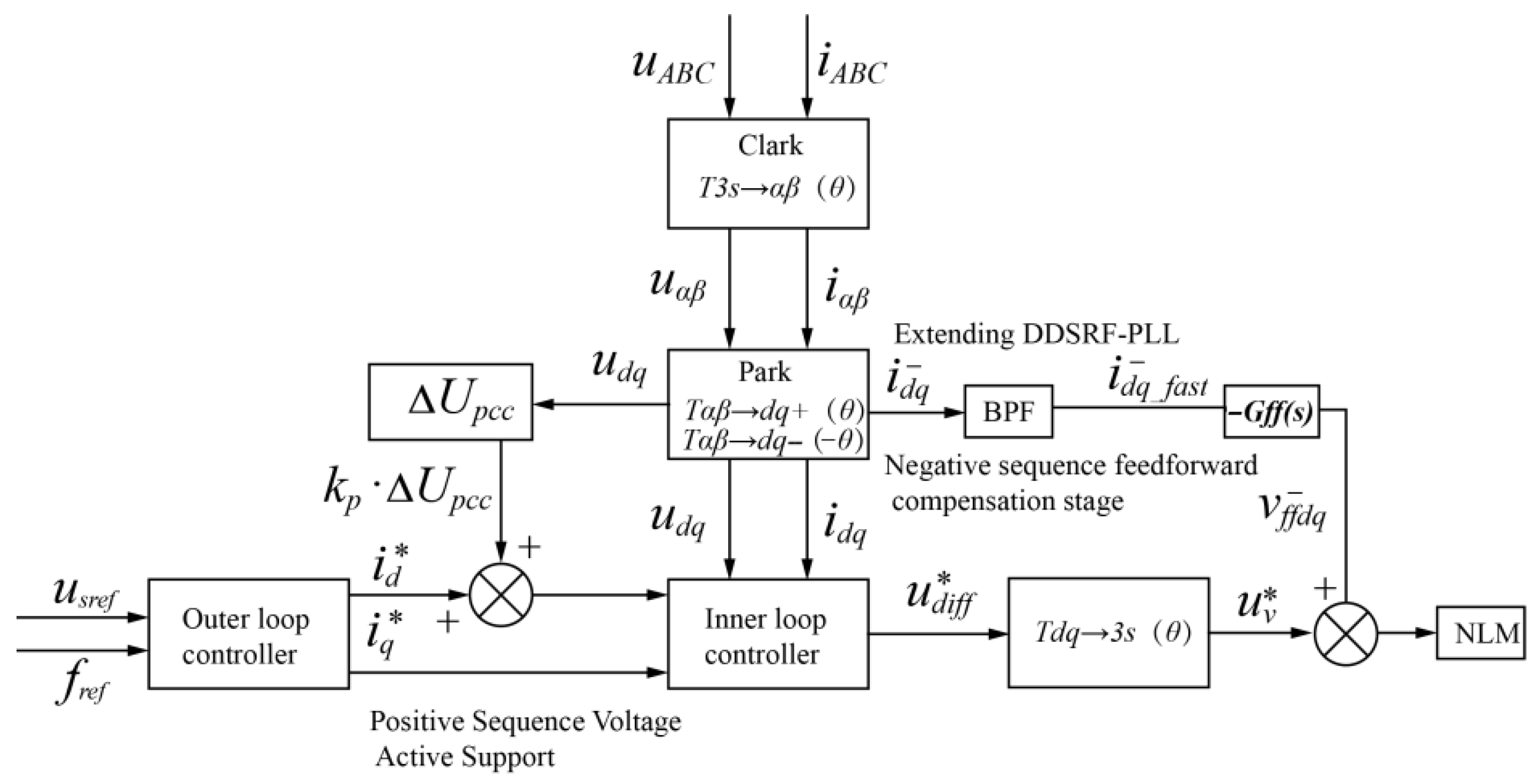
2.2.1. Extending DDSRF-PLL
To address the issue of delayed negative-sequence component separation in a conventional DDSRF-PLL under asymmetrical faults, an optimized enhancement was proposed.
First, the collected three-phase current signals are transformed into a two-phase stationary coordinate system via Clark transformation, yielding the components
and
. The transformation formula is as follows:
Next,
and
undergo a negative-sequence Park transformation, converting them into the negative-sequence synchronous rotating coordinate system
, yielding the original negative-sequence current component
. This transformation uses the negative-sequence rotation angle
, expressed as
Under asymmetrical faults, not only contains DC components but is also coupled with a 100 Hz second harmonic ripple generated by the positive-sequence component rotating in the negative-sequence coordinate system. To quickly extract the amplitude and phase information of the negative-sequence component, the conventional approach uses a low-pass filter to eliminate this double-frequency ripple, however, this introduces an additional phase delay.
To reduce this delay, the enhanced method superimposes a bandpass filter with a center frequency of 100 Hz after the negative-sequence Park transformation. This filter is designed to rapidly attenuate low-frequency DC components and high-frequency noise while allowing high transmission of components around its 100 Hz center frequency. Its transfer function can adopt a second-order band-pass form:
where
and
are bandwidth parameters. By appropriately designing
, the filter can establish a stable output for the 100 Hz component.
The filter output of is a fast approximation of the negative-sequence current amplitude and phase information. Because the filter directly extracts the 100 Hz oscillatory component, whose amplitude and phase correspond directly to the original negative-sequence component information, it bypasses the long delay associated with conventional low-pass filters.
2.2.2. Positive Sequence Voltage Active Support
Considering the voltage sensitivity of offshore wind turbines, an adaptive voltage sag compensation term is introduced into the d-axis of the MMC current inner loop. The formula for calculating the reference current is as follows:
where
is the reference value of the positive-sequence d-axis current under normal operating conditions;
is the rated voltage at the PCC;
is the actual voltage at the PCC; and
is the adaptive gain.
The adaptive gain design fully considers the dynamic characteristics of offshore wind power faults. Based on the sum signal quickly extracted by
using the extended DDSRF-PLL, the approximate amplitude of the positive sequence current is first calculated as follows:
The value is dynamically adjusted based on the calculated values. When a severe fault is identified, a value of 1.2 to 1.5 is used to inject reactive current into the grid through strong reactive power support, raising the PCC voltage. When a moderate fault is identified, a value of 1.0 is used to provide stable voltage support. When a minor fault is identified or the system is in the recovery phase, the value is reduced to 0.8 to avoid overcompensation causing voltage overshoot or oscillation, while simultaneously creating a stable operating environment for the third-level MPC circulating current suppression control.
2.2.3. Negative-Sequence Feedforward Compensation Stage
To overcome the inherent delay in traditional feedback control, a negative-sequence feedforward path is introduced directly into the voltage modulation stage. The compensation voltage is expressed as:
where
is the negative sequence impedance, and high-pass filter (HPF) is a high-pass filter with a cutoff frequency of 5 Hz, used to filter out steady-state deviations and only to quickly compensate for dynamic negative sequence disturbances caused by faults.
The control system for the positive- and negative-sequence coordinated feedforward control is shown in
Figure 5. These three components form a collaborative control architecture through signal interaction, which ensures the stable operation of the system during fault transition.
2.3. MPC Arm Energy-Circulation Predictive Control
As the system enters the quasi-steady state, the second harmonic circulating current becomes a critical factor affecting the long-term safe operation of an MMC. Traditional PI controllers, which depend on error feedback, exhibit response delays, demonstrate sensitivity to variations in model parameters, and encounter challenges in managing the constraints. This paper introduces model predictive control after the system enters the quasi-state phase. This method predicts future dynamics based on the system model and solves for the optimal control variable in real time through rolling optimization, thereby achieving forward-looking and precise suppression of circulating current.
For the topology and operating characteristics of offshore wind power MMCs, arm circulation
and total arm energy
were selected as state variables. The arm circulation
directly reflects the suppression target, and its calculation formula is as follows
; the total arm energy reflects the operating state of the MMC, and its calculation formula is as follows:
where
is the capacitance value of the submodule,
and
are the capacitor voltages of the upper and lower bridge arm submodules, respectively, and
N is the number of individual bridge arm submodules. The selection of
and
prioritizes dynamic decoupling and computational efficiency. Unlike total arm current, using
isolates internal circulation from AC power output to prevent control interference. Unlike individual submodule voltages, using
avoids high-dimensional computation by aggregating submodule dynamics. Crucially, these variables directly capture the fault-induced second harmonic energy ripples, enabling precise MPC suppression using a simplified low-order model.
Damping voltage
was selected as the control input, and measurable negative-sequence current
was selected as the disturbance input. By linearizing the differential equations of the MMC at the operating point to eliminate the influence of nonlinear factors and then using a discretization method to convert the continuous system model into a discrete state-space model, the final result is
where
is the state variable,
is the control input,
is the disturbance input,
is the output variable
A,
B,
C,
D, and are the system matrices that reflect the dynamic evolution of the MMC bridge arm circulation and energy.
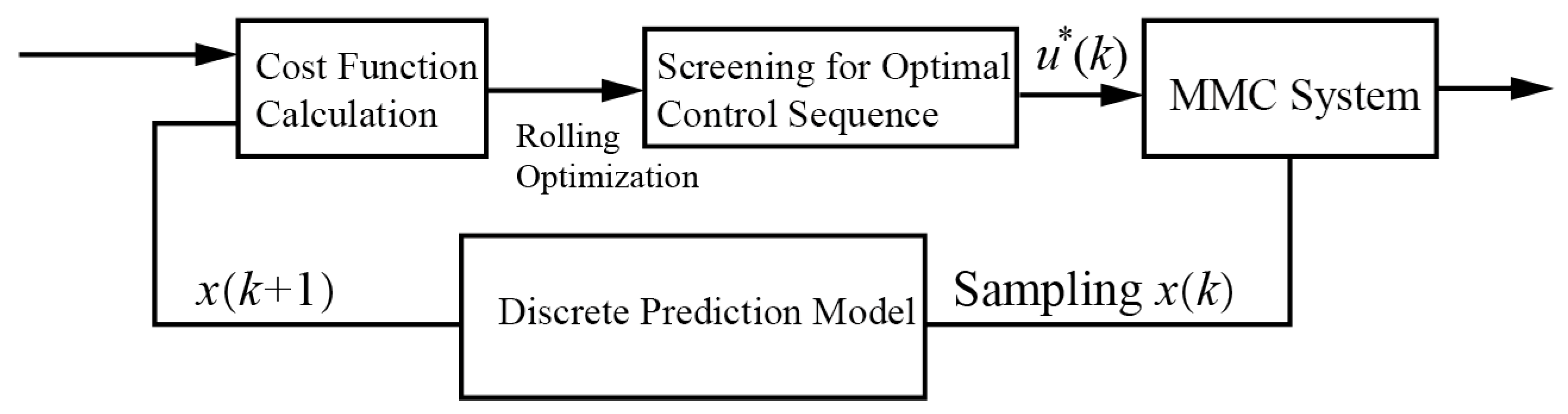
At each sampling time, the MPC controller solves for the optimal control variable through rolling optimization. The specific process is as follows:
Obtain the current system status and disturbances.
Based on the established discrete state-space prediction model, the system’s state and output trajectory are predicted under different control sequences within future steps.
Solve a constrained optimization problem to find the optimal control sequence
.
where
is the prediction time domain,
is the control time domain (
).
is the control sequence to be optimized.
and
are weight matrices used to balance the accuracy of circulation tracking with the aggressiveness of control actions. The constraints ensure that the control input and its rate of change are within physically permissible limits.
The first element of the optimal sequence,
, is considered to be the damping voltage at the current moment and superimposed on the original modulation wave to suppress the circulating current. At the next sampling moment,
, the above measurement, prediction, and optimization processes were repeated to achieve rolling control. The flow of the MPC controller is shown in
Figure 6.
The MPC controller demonstrated advantages in terms of circulating-current suppression. The model-based look-ahead characteristic significantly accelerates the dynamic response, effectively suppresses overshoot, and accelerates the convergence process. The controller exhibits strong robustness to variations in the system parameters and adapts to operational fluctuations in offshore wind power systems. Furthermore, the method possesses constraint-handling capabilities, explicitly coordinating constraints between control inputs and state variables to enhance system safety. Based on these advantages, the MPC controller can achieve stable suppression of second harmonic circulating currents, significantly improve the arm stress and capacitor voltage fluctuations, and enhance the long-term operational reliability of the system.
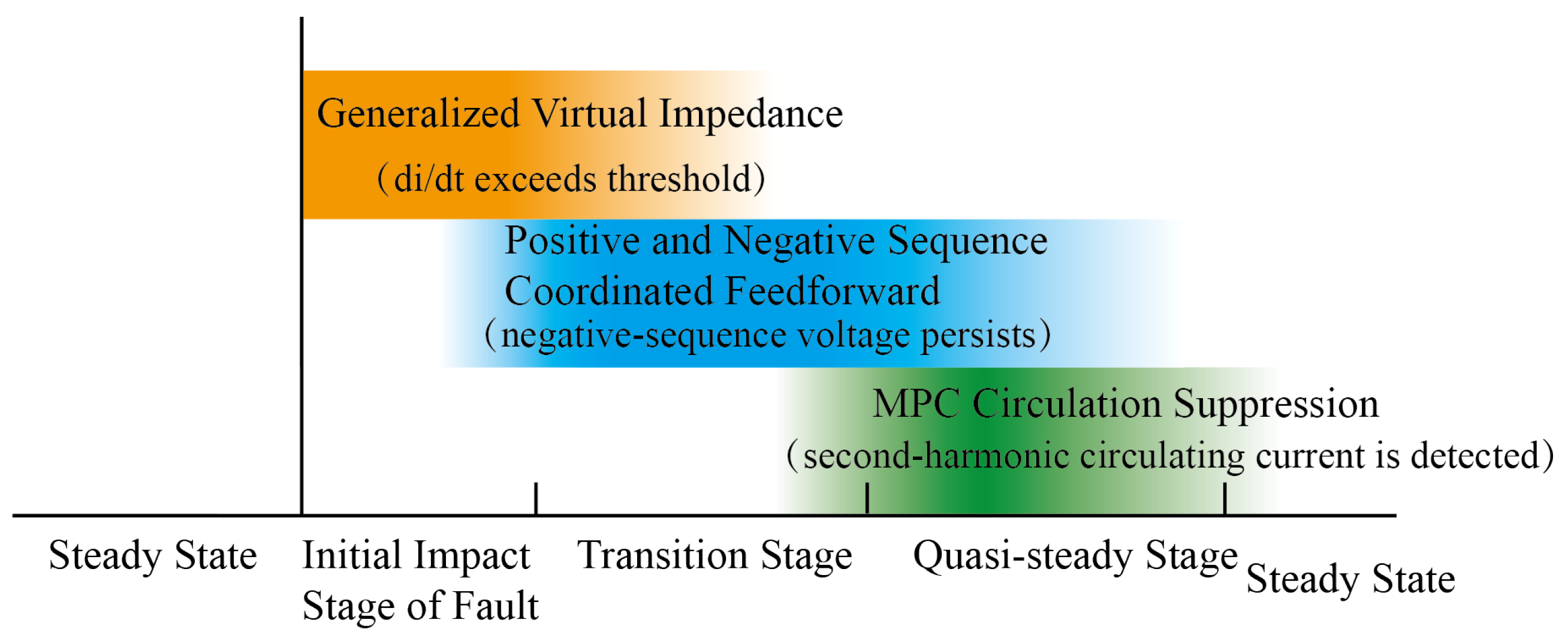
As shown in
Figure 7, the proposed three-level cooperative control strategy is synchronously activated upon detecting an asymmetric fault and dynamically adjusts the dominance and control parameters according to the transient evolution of the fault. In the initial stage of the fault, the generalized virtual impedance dominates owing to its microsecond-level response characteristics. Its negative-sequence impedance adaptively increases with the rate of change of the fault current to enhance the current-limiting effect, while maintaining a low positive-sequence impedance to sustain power transmission. Upon entering the dynamic transition stage, positive and negative-sequence cooperative feedforward control gradually becomes the core: the positive-sequence voltage support gain is dynamically adjusted based on the real-time voltage drop depth to achieve a seamless transition from strong excitation to stable recovery; the negative-sequence feedforward channel optimizes the high-pass filtering characteristics in real-time based on the voltage imbalance to ensure rapid compensation for dynamic disturbances. After the fault enters the quasi-steady-state stage, model predictive control becomes dominant. Its cost function weight matrix is reconstructed online based on the circulating current amplitude and its gradient, enhancing the suppression capabilities when the circulating current is significant, and ensuring control smoothness when the system stabilizes.
This parameter-adaptive mechanism enables three-level control to automatically switch between primary and secondary roles according to the time sequence, but also to optimize control performance in real time based on system dynamics. This achieves a full-process coordination of fault current suppression, transient voltage stabilization, and steady-state circulating current management, significantly improving the ride-through capability and operational reliability of the system under asymmetrical faults.
2.4. Fault Detection and Stage Transition Logic
To ensure the synchronized activation of the proposed three-level strategy, a logic-based fault detection and state machine mechanism is employed to continuously monitor the three-phase AC voltage at the Point of Common Coupling. The detection algorithm is explicitly designed to capture the voltage asymmetry characteristic of the grid. Unlike symmetric fault detection approaches that rely solely on voltage magnitude dips, this strategy prioritizes the identification of unbalance by calculating the negative-sequence voltage component in real time. An asymmetric fault state is confirmed and flagged at the initial moment when the amplitude of the negative-sequence voltage exceeds a distinct threshold set to 0.1 per unit, thereby isolating asymmetric incidents from balanced voltage sags or normal grid operations.
Upon the confirmation of an asymmetric fault, the transition between the three cooperative control levels is governed by a time-sequence state machine. The initial impact stage is triggered immediately at , where the generalized virtual impedance is instantly enabled to suppress the surge current. This phase persists for a duration determined by the convergence speed of the extended DDSRF-PLL, typically lasting 10 ms, which ensures equipment safety before accurate sequence separation is available. Once the DDSRF-PLL achieves stable locking and sequence separation at time , the system transitions to the dynamic stage where the positive- and negative-sequence collaborative feedforward control is activated to provide adaptive voltage support. The final transition to the quasi-steady stage occurs when the transient DC offset in the fault current has sufficiently decayed. This condition is detected when the rate of change of the circulating current falls below a predefined stability threshold. In this study, control dominance is handed over to the MPC algorithm at approximately 60 ms after fault inception, denoted as time , to precisely eliminate second harmonic ripples for the remainder of the fault duration.