


Abstract
Swine manure, a heterogeneous livestock waste composed of solid and liquid excreta, can be sustainably converted through Chemical Looping Gasification (CLG) to produce syngas and bioenergy. Integrated with CO2 capture, the process enables high-purity hydrogen generation and offers a potential route toward net-negative carbon emissions. The experimental campaign was conducted at 900 °C in a continuously operated 0.5 kWth CLG unit consisting of two interconnected fluidized bed reactors (fuel and air). Ilmenite was employed as the oxygen carrier to provide the oxygen required for gasification. This study focuses on the gasification of raw swine manure, comprising both solid and liquid fractions. The solid fraction was introduced via a screw feeder, while the liquid fraction was simulated by injecting an ammonia–water solution as gasifying agents (water or ammonia + water). The effect of the liquid fraction on syngas composition, carbon conversion, and nitrogen species (N2, NH3, N2O, NO2, and NO) was evaluated at ammonia concentrations typical of swine manure (800–5600 mg/L). Results showed an average syngas composition for solid and liquid fraction feeding of ~31% CO2, 20% CO, 41% H2, 7% CH4, and 0.5% C2 hydrocarbons, with 91–96% carbon conversion. Benzene and naphthalene dominated the tar compounds. CO2 capture potential reached 60%, with nitrogen mainly converted to N2.
1. Introduction
Intensive swine production generates large amounts of waste, which pose potential environmental problems. Swine waste management systems typically involve handling, collection, treatment, storage, and land application [1,2]. Each stage can lead to environmental impacts if not properly managed. The main impacts include the contamination of water bodies through eutrophication, emission of greenhouse gases, soil contamination, ammonia release, and odor generation, among others [3,4,5]. Proper management and reuse of these residues should be prioritized to minimize such impacts and ensure the environmental sustainability of production systems.
Currently, the conversion of solid waste into energy can be achieved through different technological routes. Among them, biological methods such as anaerobic digestion, esterification, and fermentation, as well as physicochemical methods including gasification, incineration, and sanitary landfills with energy recovery, are widely employed [6]. Among the possible strategies for using these residues for energy recovery we highlight pyrolysis, combustion, biochar production, and gasification [7,8,9].
When focusing on the gasification of solid residues, chemical looping technologies offer advantages over other alternatives [10], particularly in terms of energy efficiency, syngas quality, and control of nitrogenous emissions. Furthermore, these technologies can be integrated with CO2 capture processes, making them even more beneficial compared to conventional approaches, as they can be classified as zero-emission processes. Another relevant aspect is their ability to operate with a wide variety of fuels, demonstrating significant flexibility, including the handling of complex and heterogeneous waste such as swine manure.
In general, the composition of swine manure contains approximately 90% moisture, which may vary depending on the developmental stage of the animal [1]. The liquid fraction is primarily composed of feces, urine, and wash water and has a high concentration of ammonium ions NH4+. The ammoniacal nitrogen (NH4+-N) can be readily converted into ammonia gas and lost through volatilization from the surface of lagoons and storage reservoirs at swine farms. In contrast, organic nitrogen (organic N) and phosphorus (P2O5) tend to concentrate in the solids that settle at the bottom of the lagoons [11,12]. This solid residue has a high content of carbon (>50% on an ash-free dry basis), nitrogen (4–5% daf), sulfur (~1% daf), and ash (~30%).
In the regulatory context, the European Union establishes guidelines for the sustainable management of waste—Directive (EU) 2018/851 [13]. Specifically, regarding livestock waste, Regulation (EC) N° 1774/2002 and Directive 2018/2001/EU (RED II) [14,15] promote its recovery as a resource and also incentivize its use in the production of advanced biofuels, recognizing these as strategic raw materials for energy transition.
The thermochemical valorization of waste, especially through the Chemical Looping Gasification (CLG) process, is configured as a promising alternative for the conversion of renewable fuels with low carbon emissions. Although the use of swine waste stands out for its energy potential, its rich composition of nitrogen and ash presents challenges when applied in thermochemical conversion technologies.
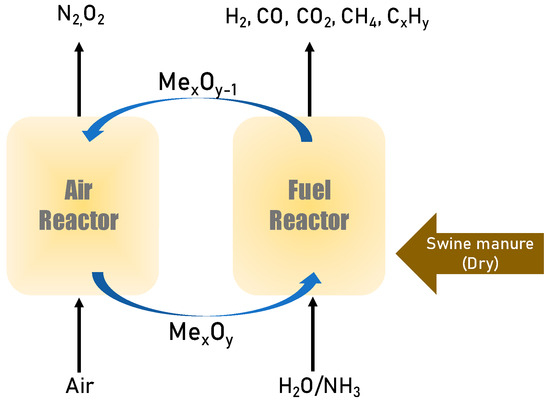
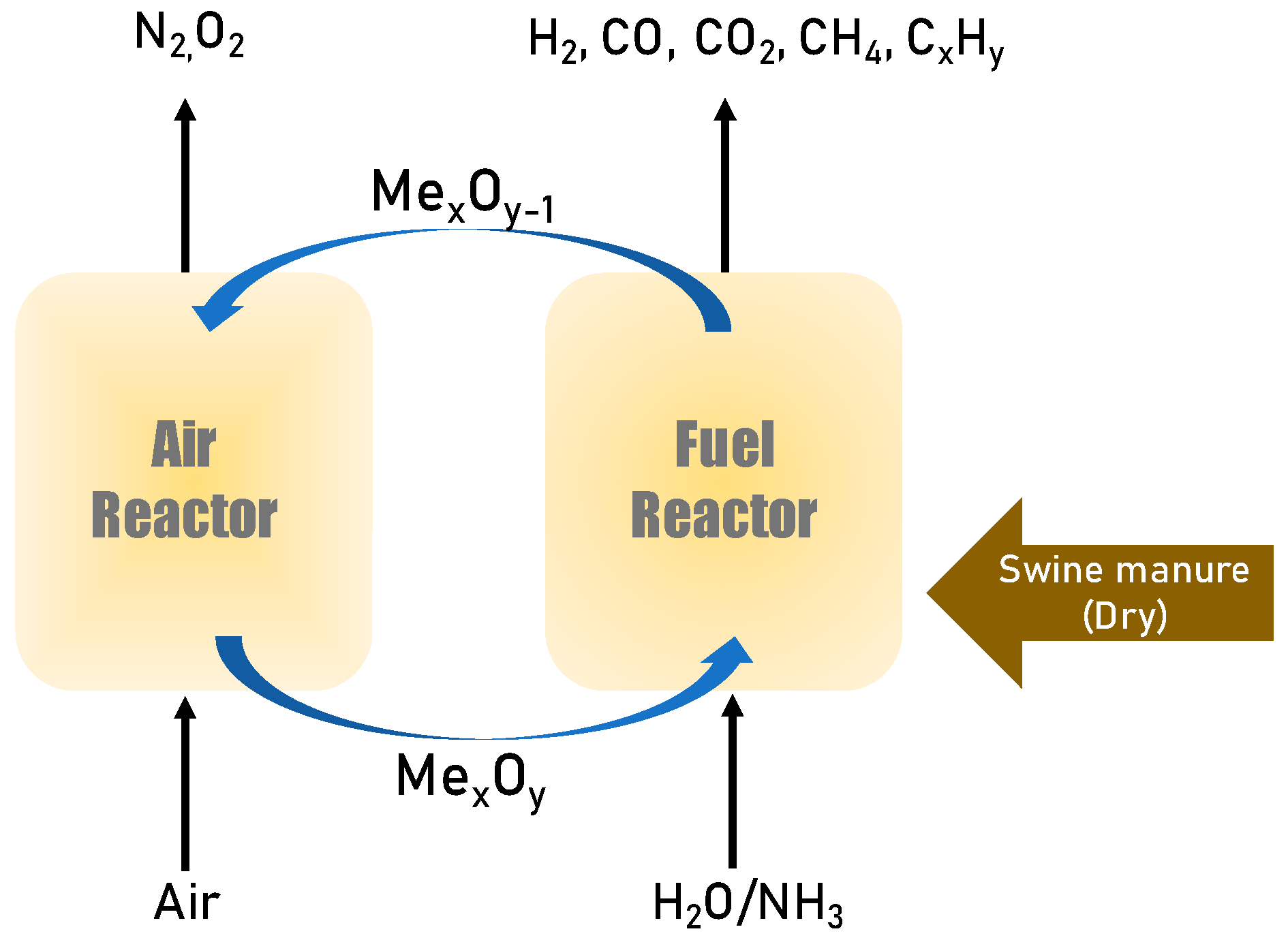
In the CLG process, high-quality and undiluted syngas (H2 and CO) is produced through the incomplete combustion of solid residues with the possibility of capturing CO2 associated with the process. In CLG, the solid fuel is introduced into the fuel reactor, where it undergoes pyrolysis and gasification reactions without direct contact with oxygen from air—see Figure 1. Instead, oxygen is supplied via an oxygen carrier that circulates between the air reactor and the fuel reactor, enabling the conversion of the solid residue under controlled conditions [16].
Figure 1.
Chemical Looping Gasification (CLG) process diagram.
The main reactions responsible for fuel conversion, as well as those involving the oxygen carrier, are presented in reactions (1) and (9). The regeneration or reoxidation of the oxygen carrier, which takes place in the air reactor, is described in reactions (10) and (11).
Oxygen availability in the Chemical Looping Gasification process can be controlled either by partial oxidation of the oxygen carrier in the air reactor or by regulating the amount of oxygen carrier fed into the fuel reactor [17]. The goal is to maintain the oxygen-to-fuel ratio below the stoichiometric value required for complete fuel conversion, thereby operating under reducing conditions, and as low as possible to maximize syngas yield. The minimum oxygen-to-fuel ratio is determined by the degree of combustion required to achieve the autothermal operation of a CLG unit [18].
The oxygen carrier employed must exhibit high-oxygen transport capacity and reactivity. Particular attention is given to carriers containing metals such as nickel (Ni), copper (Cu), manganese (Mn), and iron (Fe), due to their favorable redox properties [19,20,21,22]. Among iron-based oxygen carriers, ilmenite stands out due to its favorable thermodynamic properties and high mechanical strength [23,24,25]. Ilmenite is a natural ore mainly composed of FeTiO3, which is oxidized to Fe2TiO5 as the active compound. It has been widely applied in chemical looping technologies for both combustion [26,27,28] and gasification processes [29,30].
To the best of our knowledge, no previous studies have investigated the use of raw swine manure, encompassing both solid and liquid fractions, in chemical looping technologies. Existing research has focused primarily on the solid fraction of this waste, including combustion and gasification processes [31], employing copper-based oxygen carriers, as well as chemical looping systems with oxygen uncoupling using magnetic copper-based carriers [32].
These processes could further mitigate the environmental impacts associated with the inadequate disposal of this type of waste by enabling, for instance, the incorporation of the liquid fraction of swine manure into the gasification process, thereby eliminating the need for prior water evaporation and ensuring its complete use in the thermochemical conversion, thereby underscoring the innovative character of this research.
The present study aims to evaluate the thermochemical conversion of swine manure, considering its solid and liquid fractions (simulated with a commercial ammonia solution, through the Chemical Looping Gasification process using ilmenite as an oxygen carrier. Continuous experiments were performed in a 0.5 kWth chemical looping unit to investigate the effect of using swine manure as a solid fuel, with water steam as a gasifying agent and with ammonia to simulate the liquid fraction of the waste, on synthesis gas production of. In addition, the presence of tar and nitrogen compounds (N2, NH3, N2O, NO2, and NO) was analyzed.
2. Materials and Methods
Ilmenite (FeTiO3) has demonstrated strong performance as an oxygen carrier in various chemical looping processes (iG-CLC, OCAC, and CLG) due to its low cost, wide availability, and favorable physicochemical properties, including high mechanical strength and good reactivity [23,25,29,30,33,34]. Ilmenite was selected as the reference oxygen carrier in this study, enabling an evaluation of the effects of raw swine manure on the CLG process. For application in a pilot-scale plant with a nominal thermal power of 0.5 kWth, the material was ground, sieved to a particle size range of 100–300 µm, and calcined at 950 °C for 2 h. Subsequently, it was activated through successive redox cycles to enhance its reactivity [26]. The main physicochemical properties of the material are summarized in Table 1.
Table 1.
Physical and chemical properties of the fresh oxygen carrier.
In this study, the solid fraction of swine manure from a closed-cycle farm located in northern Spain was used. The solid fraction of swine manure underwent a pre-treatment process to remove moisture and inactivate existing pathogens at 75 °C for 24 h. It presents an average particle diameter of 2.7 mm and a bulk density of 330 kg/m3. This process is described in detail in the work by Domingos et al. (2024) [32]. The ultimate analysis of swine manure was determined using an LECO 628 Series analyzer in compliance with ISO 16948:2015 [35]. Proximate analysis was conducted according to ISO 18134:2016 [36], ISO 18122:2016 [37], and ISO 18123:2016 [38] standards, while ash composition was analyzed by inductively coupled plasma optical emission spectrometry (ICP-OES). The corresponding results are presented in Table 2.
Table 2.
Proximate and ultimate analyses, and ash composition by ICP-OES of the swine manure.
In the liquid fraction of swine manure, nitrogen is predominantly present as urea, ammonium ion (NH4+), ammonia (NH3), and organic nitrogen compounds, with NH3/NH4+ accounting for approximately 50–70% of the total nitrogen in this fraction [11,39]. Moreover, NH3 is one of the main products formed during the thermochemical conversion of urea at 900 °C. Due to laboratory safety concerns related to pathogen handling and practical limitations associated with evaporating raw manure in our facility, a commercial 30% ammonia solution (Panreac Applichem, Barcelona, Spain) was used in this work to simulate a simplified liquid fraction of raw swine manure and enable evaluation of its effect on the CLG process. This solution was diluted to achieve ammonia concentrations typically reported in the literature for raw swine manure: 800, 2400, 4000, and 5600 mg/L [40,41,42].
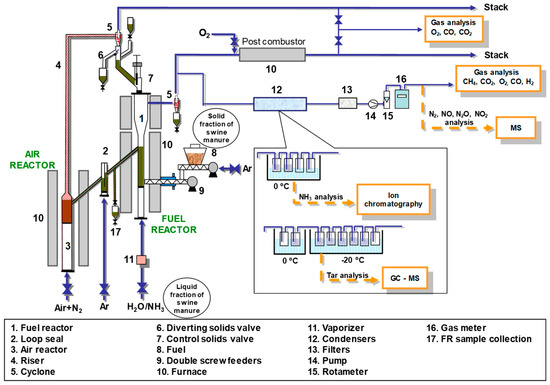
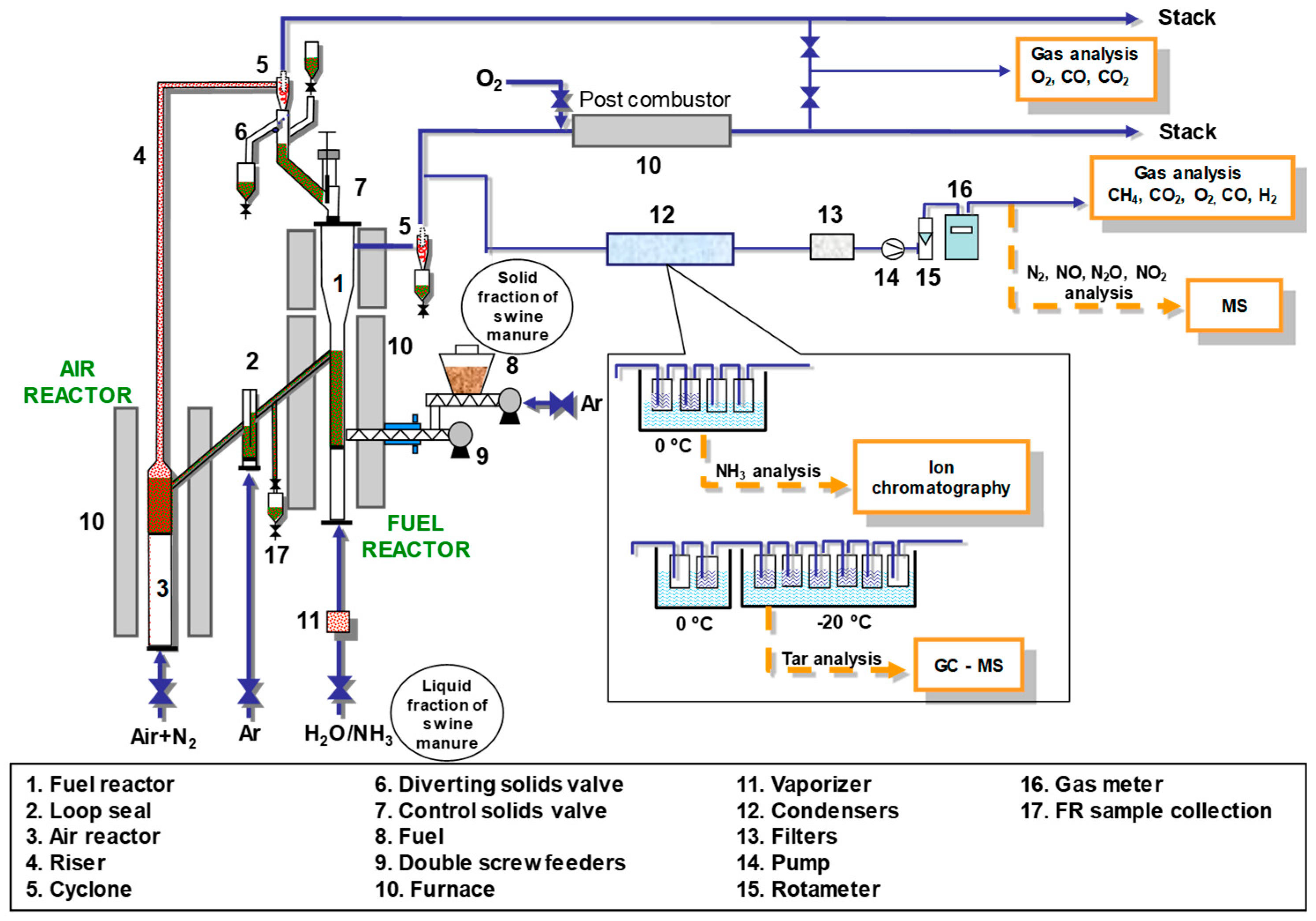
Figure 2 shows the diagram of the 0.5 kWth chemical looping unit used in this work, which is located at the ICB-CSIC. The chemical looping unit consists of two interconnected fluidized bed reactors: an air reactor (AR)—(3) in Figure 2—with an internal diameter of 0.08 m and a fuel reactor (FR)—(1) in Figure 2—with an internal diameter of 0.05 m. These reactors are connected via a loop seal (0.03 m i.d.)—(2) in Figure 2—which prevents gas mixing between them.
Figure 2.
Diagram of the 0.5 kWth chemical looping unit at ICB-CSIC for solid fuels.
The solid fraction of swine manure was introduced into the fuel reactor using two screw feeders (8). To assist the feeding process, an auxiliary argon stream at 18 L/h (STP) was supplied to the system. The steam-to-biomass ratio (S/B), defined as the ratio between the total amount of water fed into the fuel reactor, including the moisture content of the biomass, and the amount of dry biomass, was maintained at about 0.9 kg/kg.
In the fuel reactor, solid fuel undergoes devolatilization and is subsequently gasified. The resulting gasification products are then oxidized by the oxygen carrier. The gasifying agent used in the gasification process—either water or ammonia solution—was pre-evaporated at 150 °C (11) before being introduced into the FR at a gas flow rate of 140 L/h (STP).
A flow of 90 L/h (STP) of argon was introduced into the loop seal (2). Argon was used instead of nitrogen to avoid interference with nitrogen chemistry and equilibrium within the fuel reactor, thereby ensuring that the nitrogen in the fuel reactor only came from the fuel.
The oxygen-to-fuel ratio in the CLG tests was controlled by adjusting the air flow supplied to the air reactor (3), which was maintained constant at 153.2 L/h (STP) for all experiments to ensure an air equivalence ratio (λ) of 0.3 and 0.35. Thus, to determine the air flow, the air equivalence ratio was employed. This parameter represents the ratio of the actual oxygen supplied to the amount of oxygen theoretically required for complete combustion of the fuel.
In CLG, syngas yield is maximized under autothermal conditions, maintained by partial fuel combustion in the fuel reactor. Thus, the air-to-fuel ratio (λ) was set at 0.3 and 0.35 according to theoretical calculations to ensure autothermal operation in the CLG unit [18]. The experimental conditions employed and the parameters used to evaluate the performance of the CLG process are presented in Table 3.
Table 3.
Chemical Looping Gasification tests carried out in the 0.5 kWth unit. Operating variables: gasification temperature—900 °C, steam-to-biomass ratio (S/B), power ~570 W, and oxygen-to-biomass ratio (λ). Gasification parameters: solid fuel conversion (Xf), char conversion (Xchar), carbon conversion efficiency (), syngas yield (Ysg), hydrocarbons yield (YHC), and CO2 capture potential ().
At the exit of the air reactor, a riser (4) with an inner diameter of 3 cm facilitates the entrainment of solids from the air reactor to the fuel reactor. The required solids circulation rate (~17 kg/h) was guaranteed by using a gas flow in the riser of 2100 L/h (STP). For this purpose, nitrogen was added to the air flow in the AR to maintain the oxygen-to-fuel ratio while providing the required gas flow.
The oxygen carrier particles circulate continuously between the reactors, regulated by a valve located at the top section (7), which controls the flow and ensures the supply of oxygen required for fuel conversion. Fines elutriated from the reactors were collected by cyclones (5) and filters located downstream of the reactors.
The gas exiting the fuel reactor (FR) was split into two streams: one directed to the collection system for tar and nitrogenous compounds, and the other one to the post-combustion chamber to convert unburnt products to CO2 and H2O (10). Gas monitoring and the evaluation of tar and nitrogenous compounds distribution under different experimental conditions were performed using sampling methods detailed in Table 4.
Table 4.
Analysis of the product gases in this study.
To evaluate the CLG process, the fuel conversion factor, syngas yield, and hydrocarbons yield were determined [44]. The fuel conversion factor, denoted as Xf, is quantitatively defined as the ratio of the carbon content converted into product gas within both the fuel and air reactors to the total carbon input supplied via the feedstock.
where FC,FR,out and FC,AR,out represent the total molar flow rates of carbon contained in gaseous species at the outlets of the fuel and air reactors, respectively. FC,f denotes the molar flow rate of carbon in the solid fuel, determined based on the carbon mass fraction in the fuel, denoted as xC,f.
To evaluate the carbon converted in the fuel reactor, expressed as , the fraction of carbon detected at the outlet of the fuel reactor relative to the total carbon measured at the outlets of both reactors (AR and FR) was calculated. This parameter is defined by Equation (17).
The CO2 capture potential in the CLG system accounts for the CO2 present in the syngas and is expressed by Equation (18). Note that carbon contained in CO or CH4 may be used depending on the syngas utilization pathway and is therefore not captured [45]
The efficiency of carbon capture is intrinsically linked to the transformation of char within the fuel reactor. The determination of char conversion is based on the proportion of char converted inside the fuel reactor relative to the char introduced as fixed carbon, under the assumption that this fraction is not elutriated from the system. The char conversion was calculated as follows:
Syngas yield in the gasification process, denoted as Ysg (Nm3/kg of dry biomass), was calculated as the volumetric flow of hydrogen (GH2) and carbon monoxide (GCO) produced per unit of dry biomass fed into the system.
The hydrocarbons yield, YHC (Nm3/kg of dry biomass), refers to the volume of hydrocarbons—primarily CH4, along with minor C2 and C3 species—produced in the CLG unit, and is expressed as follows:
Table 3 compiles the different operational conditions evaluated together with the main results obtained in the experimental campaign.
3. Results
3.1. Gasification of Solid and Liquid Fraction of Swine Manure
A previous study conducted by Domingos et al. (2025) [31] evaluated the potential of CLG for the gasification of the solid fraction of swine manure, in which steam/CO2 was used as gasification agents. In this work, with the aim of studying the gasification of raw swine manure, in addition to the solid fraction, an ammonia solution simulating the liquid fraction was added to the fuel reactor as a gasifying agent using ilmenite as an oxygen carrier. This approach aimed to achieve complete conversion of the swine manure and generate high-quality CO and H2 (syngas), free from N2 dilution and with minimal tar content.
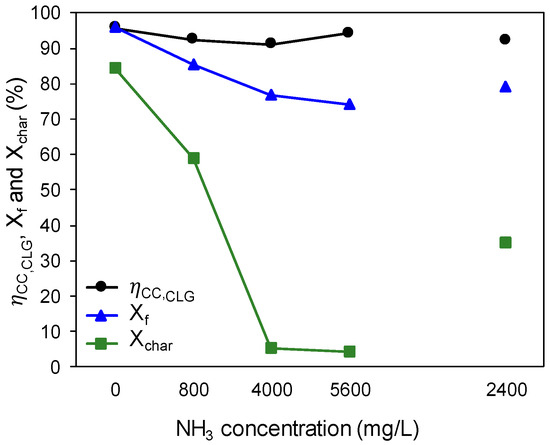
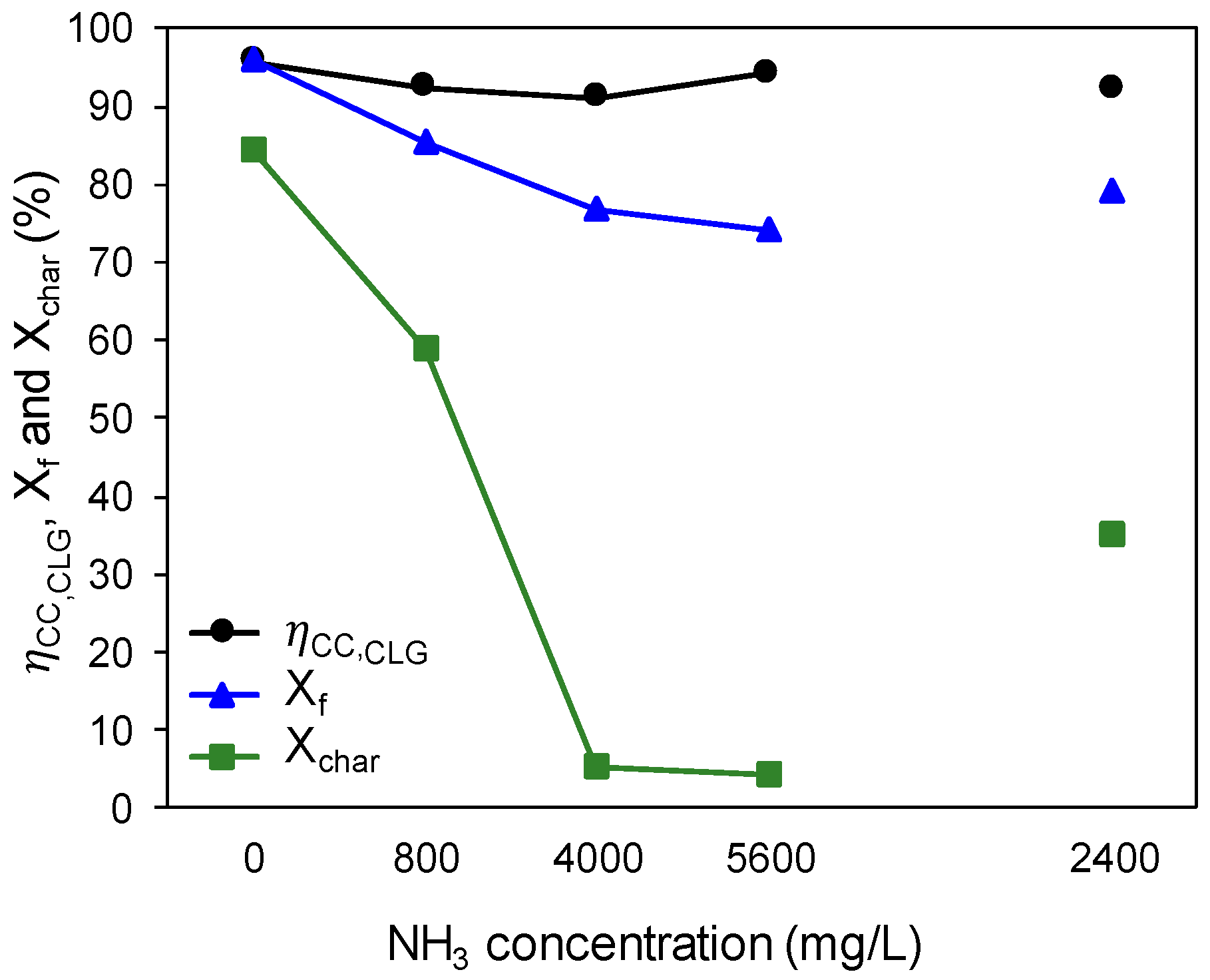
In all cases, the FR temperature was maintained constant at 900 °C. The oxygen-to-fuel ratio was kept to λ = 0.3 for the experiments conducted with H2O and ammonium solution with concentrations of 800, 4000, and 5600 mg/L. These values correspond to the amount of oxygen supplied to the CLG process for autothermal operation. However, for the condition at 2400 mg/L, λ = 0.35 was applied, and this data point was presented separately from the others to allow a comparative assessment of the results under a higher oxygen-to-fuel ratio. Figure 3 presents the fuel conversion (Xf), carbon conversion efficiency (), and char conversion inside the FR using steam and different concentrations of ammonia solution. It can be observed that feeding ammonia in the FR led to slightly lower conversion of carbon from the fuel.
Figure 3.
Fuel conversion (Xf), carbon conversion efficiency (), and char conversion (Xchar) using ilmenite as an oxygen carrier at 900 °C, λ = 0.3 and 0.35, and for different ammonia concentrations.
During the experimental campaign conducted under CLG mode, carbon conversion of swine manure ranged from 74% to 96%. The data point corresponding to 2400 mg/L of NH3 followed the same trend of decreasing conversion. This behavior is mainly attributed to the significantly higher carbon elutriation (4.2%, 14.5%, 23.0%, 26.0%, and 21.0% to 2400 mg/L), as well as to the unconverted carbon in the fuel reactor, which can be seen in the decrease in Xchar.
Regarding carbon conversion efficiency, , the values ranged from 95.8% to 91.0%, as shown in Table 3. The highest efficiency was observed when steam was employed as the gasifying agent. An increase in the concentration of the ammonia solution led to a decrease in CO2 capture efficiency, attributed to reduced oxygen availability for fuel oxidation. The oxidation reactions of gases produced during gasification and pyrolysis were enhanced, resulting in a higher fraction of CO2 and H2O and lower fractions of CO and H2 when steam was used as the gasifying agent.
The highest conversion values were observed in experiments using H2O. This outcome suggests that elevated NH3 concentrations may promote the formation of secondary compounds, such as [HNC or NH+4], or shift the equilibrium of gasification reactions [46], thereby reducing the efficiency of carbon conversion from the fuel.
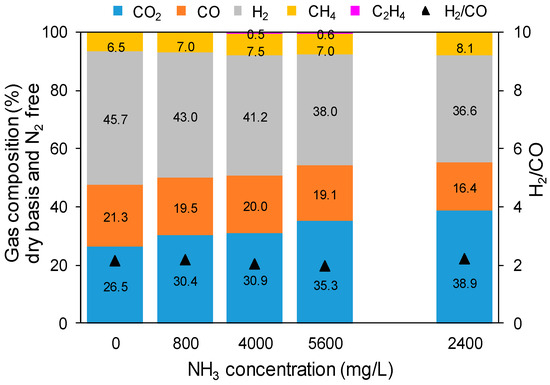
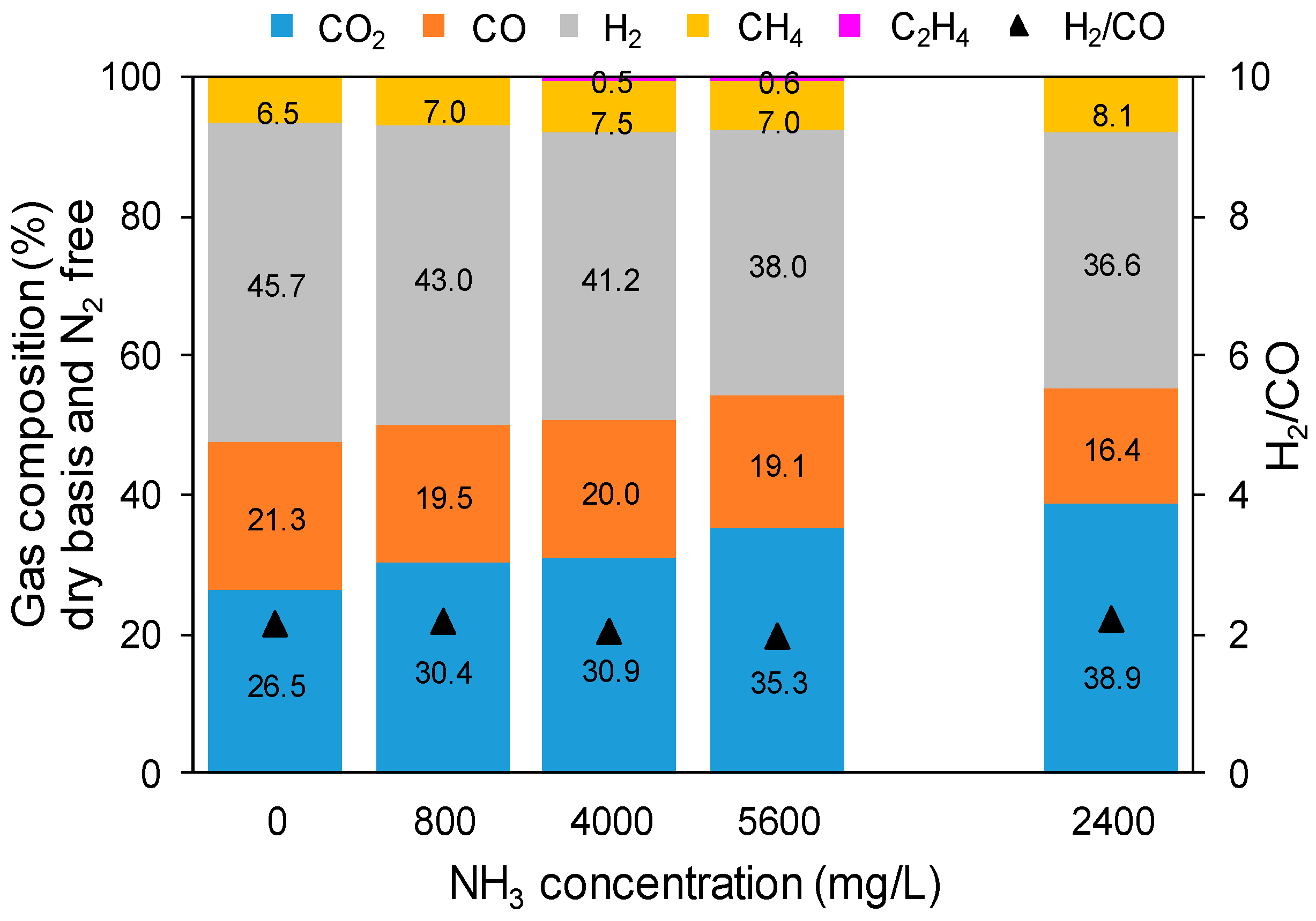
The primary objective of solid fuel gasification is to produce high-quality syngas, namely H2 and CO. The composition of syngas can vary depending on the feedstock and operating conditions but typically includes carbon monoxide, hydrogen, carbon dioxide, methane, and other compounds such as tar, along with trace amounts of sulfur- and nitrogen-containing species [47]. The composition of the synthesis gas generated in the fuel reactor is illustrated in Figure 4.
Figure 4.
Gas composition and H2/CO ratio as a function of NH3 concentration at 900 °C and λ = 0.3 and 0.35.
Regarding the chemical profile of the syngas during the Chemical Looping Gasification process, it was observed that the choice between water vapor and ammonia solution as gasifying agents has a different influence on the final gas composition. In general, a slight increase in hydrogen and decrease in CO2 production was observed when using steam compared to different concentrations of ammonia solutions. Under the experimental condition with λ = 0.35 and 2400 mg/L of NH3, the overall syngas composition followed the expected trend, exhibiting increased levels of CO2 and CH4. The H2/CO molar ratio presented values between 2.2 (with the use of water) and 2.0 (with the use of ammonia solution), both of which are considered adequate for the production of biofuels via Fischer–Tropsch synthesis [48].
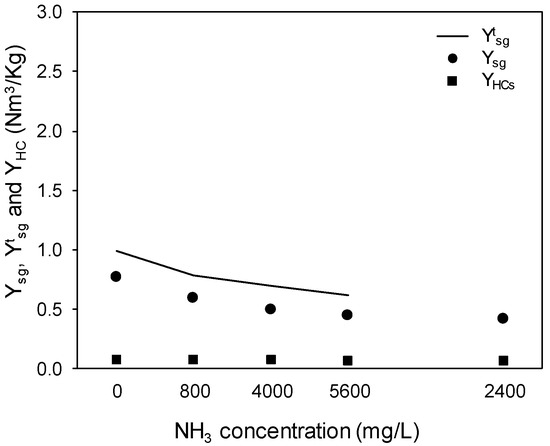
Regarding the syngas yield in the CLG process (denoted as Ysg), a decreasing trend was observed with increasing NH3 concentration. As illustrated in Figure 5, the syngas yield ranged approximately from 0.8 to 0.6 Nm3/kg, with higher yields occurring at lower NH3 concentrations.
Figure 5.
Effect of NH3 concentration on the syngas yield (Ysg) and HCs yield (YHC) for tests performed at 900 °C and λ = 0.3 and 0.35.
The theoretical synthesis gas yield (Ytsg) was calculated by making a mass balance and assuming complete conversion of biomass to CO and H2. The values obtained at 0, 800, 2400, 4000, and 5600 NH3 mg/L were 1.0, 0.8, 0.6, 0.7, and 0.6 Nm3/kg, respectively.
Under all experimental conditions, the syngas yields were consistently lower than the theoretical values due to the unconverted fraction of carbon in the fuel reactor, which was mainly due to the presence of light hydrocarbons, such as methane. In this sense, it was observed that the NH3 concentration did not have a significant effect on HC yield, with values between 0.06 and 0.07 Nm3/kg.
3.2. Tars in the CLG Process
Tar is a complex mixture of condensable hydrocarbons comprising mono- to pentacyclic aromatic compounds, along with oxygenated hydrocarbons and high-molecular-weight polycyclic aromatic hydrocarbons (PAHs) [49]. Tar formation during biomass gasification is a critical issue that affects both process efficiency and operational costs [50].
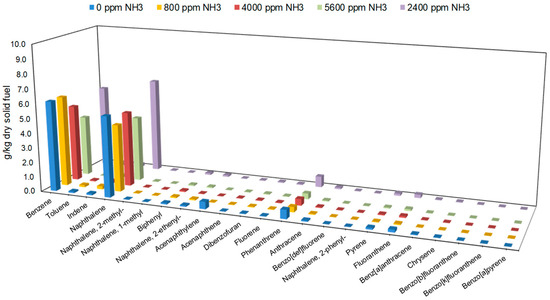
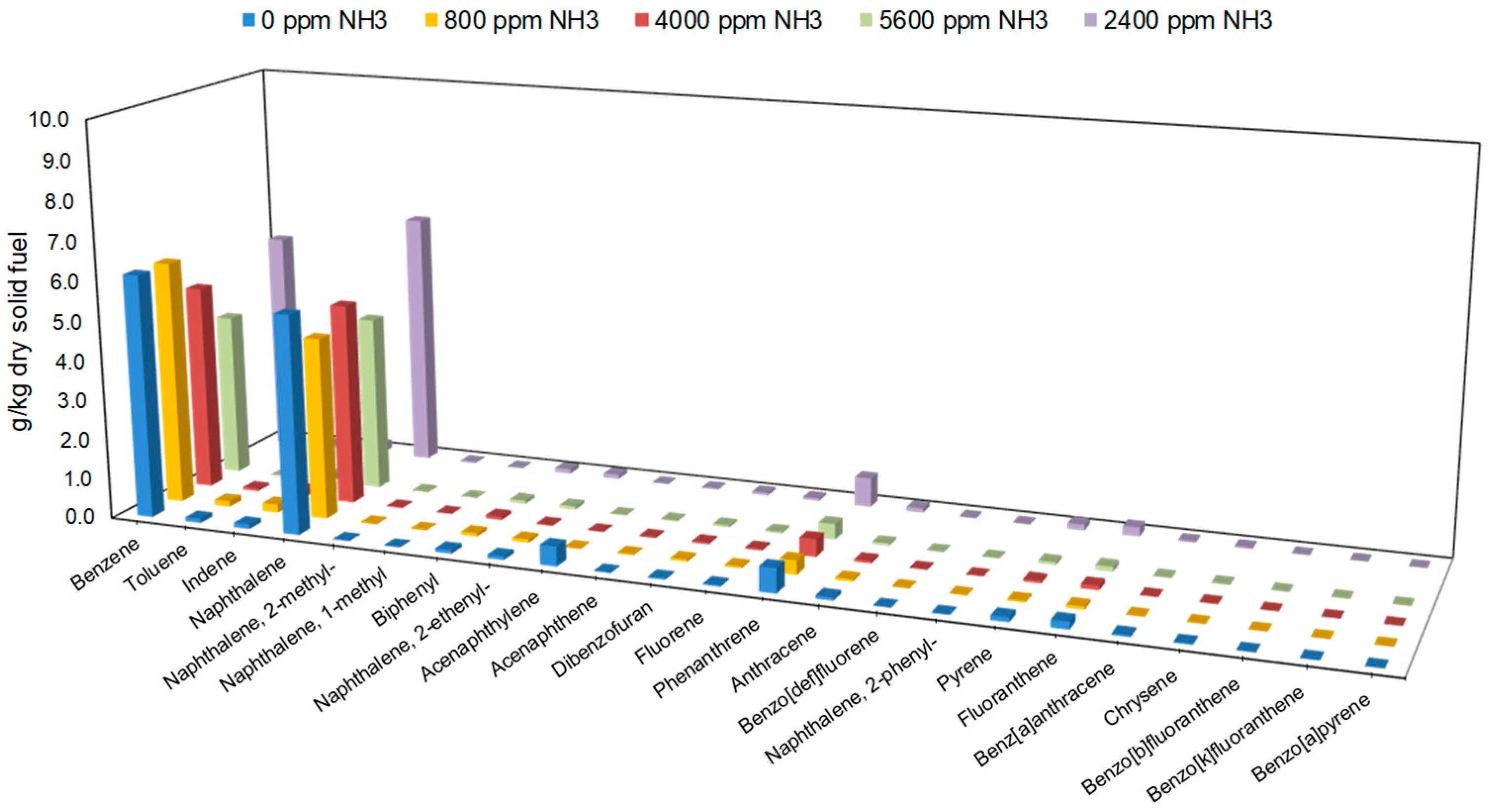
Figure 6 presents the most abundant tar compounds identified in this study as a function of ammonia concentration in the system at 900 °C and λ = 0.3. A total of twenty-three compounds were detected, with naphthalene and benzene being the most prevalent. Thus, it is observed that tar compounds distribution was similar across all tests carried out under different operating conditions.
Figure 6.
Distribution of tars compounds in CLG using ilmenite as the oxygen carrier at 900 °C with λ = 0.3 and 0.35.
The absolute tar concentrations were 13.8, 12.0, 14.1, 11.5, and 9.7 g/kg for dry swine manure (H2O) and NH3 solutions at concentrations of 800, 2400, 4000, and 5600 mg/L, respectively. In all cases, the major compounds detected were benzene (40–52%), naphthalene (38–45%), phenanthrene (3–5%), and fluoranthene (0.6–1.6%).
By comparing different concentrations of the ammonia solution used as the gasifying agent, a reduction in tar formation was observed at higher ammonia levels with λ = 0.3. For instance, naphthalene concentration decreased from 5.5 g/kg of dry swine manure at 0 mg/L NH3 to 4.4 g/kg of dry swine manure at 5600 mg/L. The use of a higher oxygen-to-fuel ratio (λ = 0.35), corresponding to the condition with 2400 mg/L NH3, primarily favored the formation of naphthalene and phenanthrene.
3.3. Fate of N-Fuel in the CLG Process
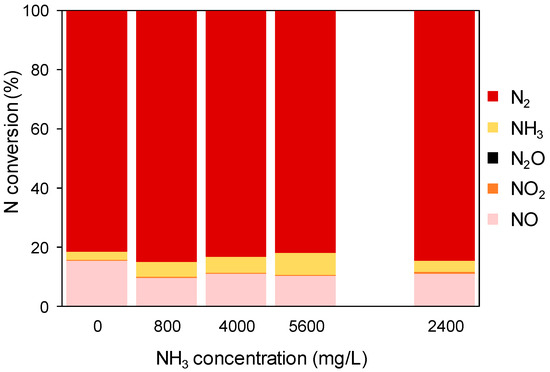
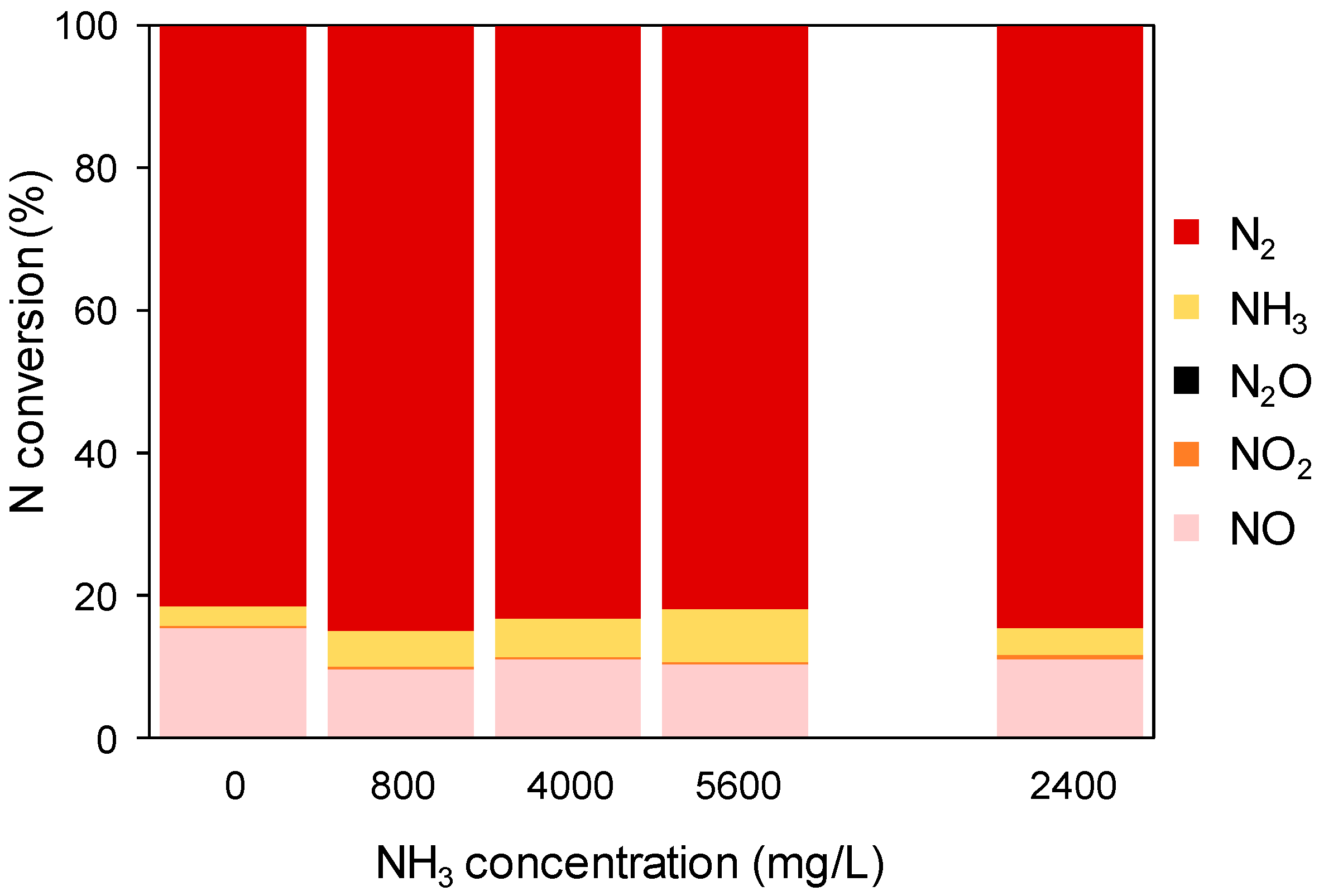
To analyze the fate of nitrogen compounds derived from the fuel, a solution of ammonia was used to simulate raw swine manure feeding. In CLG tests conducted at 900 °C and λ = 0.3 and 0.35, molecular nitrogen (N2) was identified as the predominant product, with conversion rates consistently exceeding 80% across all experimental conditions. As indicated in Figure 7, nitrogen conversion followed the following order: N2 ≫ NO > NH3 ≫ NO2 > N2O.
Figure 7.
Distribution of nitrogen compounds in CLG using ilmenite as the oxygen carrier at 900 °C with λ = 0.3 and 0.35.
As shown in Figure 7, a decrease in oxidized nitrogen species, such as NO, was detected at the expense of increasing the NH3 levels when ammonia solution was supplied as the gasifying agent. It can be observed that increasing the oxygen-to-fuel ratio (at the point corresponding to 2400 mg/L) resulted in a higher conversion of NH3 to N2. The percentage of N-fuel exiting as NH3 varies from 3.5% to 9.3%, with higher values observed when using more concentrated ammonia solutions were used as the gasifying agent.
4. Discussion
The introduction of NH3 into the system negatively affects the thermochemical gasification of swine manure, considering fuel conversion, carbon conversion efficiency, and syngas composition. In contrast, the use of steam enhances the energy efficiency of the process and can effectively reduce tar and char formation, producing a hydrogen-rich syngas, as observed in this study [51,52].
The nitrogen assessed in the conversion of nitrogen-containing compounds—Figure 7—may be originated from either organic or inorganic sources. Inorganic nitrogen is associated with species such as NH4+, NO2−, and NO3−, which can generate NH3 during the gasification process. In contrast, organic nitrogen is bound to protein structures, and its thermal decomposition leads to the formation of species such as HCN and NH3 [53].
At the conditions where the ammonia solution was applied, an additional amount of inorganic nitrogen was introduced into the system compared to the conditions where only water vapor was used. This addition may significantly affect the conversion reactions of nitrogen-containing precursors and also influence reaction competition and selectivity, primarily due to the formation of hydrogen free radicals [53,54]. The reactions converting N-fuel into other nitrogenous species are inherently complex. Some previous studies have investigated the formation of these precursors and the selectivity of nitrogen conversion reactions, reporting effects similar to those observed in the present work.
Fang et al. (2021) [55] investigated nitrogen migration from sewage sludge during the CLG process using a fixed reactor and nickel- and iron-based oxygen carriers. They observed that during sludge gasification at 900 °C, NOx precursors, such as NH3, were the predominant nitrogenous gaseous pollutants, representing approximately 40% of the total. The overall nitrogen yield in the charcoal and tar phases was around 10%. Furthermore, the high reactivity of the oxygen carriers used contributed to the oxidation of NOₓ precursors derived from nitrogen in tar and charcoal to N2.
According to Tian et al. (2007) [46], who investigated the conversion of N-fuel into HCN and NH3 during the pyrolysis and gasification of coal and biomass with steam in fluidized bed and fixed bed reactors, the selectivity of char-N toward HCN and NH3 is largely governed by the stability of char-N and/or the availability of hydrogen and other reactive radicals during the gasification process. In our study, hydrogen availability originated from two sources: steam, via reactions (2) and (5), and ammonia (22), with the latter favoring the formation of molecular nitrogen. The reducing atmosphere was intensified, promoting the reduction of NOx to N2, as also reported by Fang et al. (2021) [55].
This finding is consistent with the distribution of nitrogenous compounds observed in this study, where molecular nitrogen was the predominant conversion product under all experimental conditions. Furthermore, iron alters the distribution of nitrogen in the gas phase by promoting the degradation of NH3, which increases the yield of N2 by promoting reaction pathways that favor its formation [56,57].
The influence of oxygen carriers on tar reduction is well established and represents one of the key advantages of biomass catalytic looping gasification (BCLG) compared to conventional gasification technologies. While biomass gasification can produce up to 150 g/Nm3 of tar in fixed or moving beds, and about 40 g/Nm3 when inert bed material is employed in fluidized beds [58,59], oxygen carriers not only transfer oxygen to the reactor but also promote tar combustion and cracking, as indicated by reactions (17) and (20). In previous studies using swine manure, Domingos et al. (2025) [31] reported tar yields ranging from 0.6 to 1.0 g/kg of dry feedstock under CLG conditions at 900 °C and λ = 0.3 and 0.35, with water steam as the fluidizing gas. In that study, a synthetic Cu-based carrier was employed. Although the values reported in this study (2.5–4.0 g/Nm3) are considerably higher than those found in previous works with swine manure (0.5–0.7 g/Nm3), this discrepancy can be attributed to the catalytic properties exhibited by the oxygen carriers. The presence of metallic phases (Ni0, Cu0, and Fe0) enhances tar cracking more effectively than their oxidized (metal oxides) [60]. In a study conducted by Samprón et al. (2023b) [59], the catalytic performance of various oxygen carriers in hydrocarbon conversion was investigated. The results revealed that a copper-based oxygen carrier significantly enhanced the near-complete conversion of compounds such as benzene and ethylene at temperatures around 900 °C. The higher tar yields with ilmenite compared to copper-based oxygen carriers are due to differences in catalytic properties and surface chemistry [61,62]. The copper-based carrier not only supplies oxygen for tar conversion but also promotes cracking, providing additional advantages in the chemical looping process. In contrast, iron-based oxygen carriers did not achieve similarly high levels of hydrocarbon removal, particularly under gasification conditions, because ilmenite lacks catalytic cracking properties.
5. Conclusions
This study evaluates the thermochemical potential of swine manure to produce synthesis gas. The performance of gasification by chemical looping was assessed using both the solid and liquid fraction of swine manure. The innovative aspect of this research lies in the complete utilization of swine waste for the generation of CO and H2, thus promoting the total reuse of this waste, which would otherwise represent a significant environmental challenge. For this purpose, a 0.5 kWth pilot plant was used and operated continuously at 900 °C with ilmenite as the oxygen carrier and oxygen/fuel ratios of 0.3 and 0.35.
Gasification with steam demonstrated superior carbon conversion compared to the results obtained using ammonium solution as the fluidizing agent. Syngas yield ranged from 0.8 to 0.6 Nm3/kg when using steam and ammonium solution, respectively. More than 80% of N-fuel was converted to molecular nitrogen (N2) under all experimental conditions. Regarding tar formation, the main compounds identified were benzene and naphthalene. The total tar yield varied from 13.8 g/kg when steam was used to 9.7 g/kg when ammonium solution was used as the gasifying agent.
It is worth mentioning that the use of raw swine manure, simulated in this study by using concentrations ranging from 800 to 5600 mg/L NH3, had a negative effect on carbon conversion. This would restrict the application of the liquid fraction of slurry with concentrations above 800 mg/L as a gasifying agent in Chemical Looping Gasification processes. Further studies are required to elucidate the complex reactions of nitrogen-containing compounds occurring within the fuel reactor.
Author Contributions
Y.D.: Methodology, Formal Analysis, Writing—Original Draft, Data Curation, and Investigation. M.d.L.O.L.: Conceptualization, Methodology, Writing—Review and Editing, and Supervision. M.T.I.: Writing—Review and Editing, Supervision, Methodology, and Conceptualization. A.A.: Project Administration, Funding Acquisition, Writing—Review and Editing, Conceptualization, Methodology, Resources, Investigation, and Supervision. All authors have read and agreed to the published version of the manuscript.
Funding
This research was funded by the AGENCIA ESTATAL DE INVESTIGACIÓN, grant number PID2019-106441RB-I00 (SWINELOOP project) funded by MCIN/AEI/10.13039/501100011033.
Data Availability Statement
The original contributions presented in this study are included in the article. Further inquiries can be directed to the corresponding author.
Acknowledgments
Yldeney Domingos thanks the grant PRE-092769 funded by MCIN/AEI/10.13039/501100011033 and by ESF Investing in Your Future.
Conflicts of Interest
The authors declare no conflicts of interest.
Abbreviations
| CL | Chemical Looping |
| CLG | Chemical Looping Gasification |
| T | Temperature |
| OC | Oxygen Carrier |
| FR | Fuel Reactor |
| AR | Air Reactor |
| HCs | Hydrocarbons |
| sg | Syngas |
| elut | Elutriate |
References
- Varma, V.S.; Parajuli, R.; Scott, E.; Canter, T.; Teeh Lim, T.; Popp, J.; Thoma, G. Dairy and swine manure management—Challenges and perspectives for sustainable treatment technology. Sci. Total Environ. 2021, 778, 146319. [Google Scholar] [CrossRef] [Scilit]
- Yuan, Z.; Pan, X.; Chen, T.; Liu, X.; Zhang, Y.; Jiang, S.; Sheng, H.L.; Zhang, L. Evaluating environmental impacts of pig slurry treatment technologies with a life-cycle perspective. J. Clean. Prod. 2018, 188, 840–850. [Google Scholar] [CrossRef] [Scilit]
- Ministry of the Environment and Rural and Marine Environment. Bases Zootécnicas para el Cálculo del Balance Alimentario de N y P en Porcino Ibérico. Available online: https://www.mapa.gob.es/dam/mapa/contenido/ganaderia/temas/ganaderia-y-medio-ambiente/balance-de-nitrogeno-e-inventario-de-emision-de-gases/porcino_iberico_2020_web_.pdf (accessed on 8 December 2025).
- Philippe, F.-X.; Nicks, B. Review on greenhouse gas emissions from pig houses: Pro-duction of carbon dioxide, methane and nitrous oxide by animals and manure. Agric. Ecosyst. Environ. 2015, 199, 10–25. [Google Scholar] [CrossRef] [Scilit]
- Wang, Y.; Dong, H.; Zhu, Z.; Gerber, P.J.; Xin, H.; Smith, P.; Opio, C.; Steinfeld, H.; Chadwick, D. Mitigating Greenhouse Gas and Ammonia Emissions from Swine Manure Management: A System Analysis. Environ. Sci. Technol. 2017, 51, 4503–4511. [Google Scholar] [CrossRef] [Scilit] [PubMed]
- Bhatia, S.K.; Joo, H.; Yang, Y. Biowaste-to-bioenergy using biological methods—A mini-review. Energy Convers. Manag. 2018, 177, 640–660. [Google Scholar] [CrossRef] [Scilit]
- Adhikari, S.; Nam, H.; Chakraborty, J.P. Chapter 8—Conversion of Solid Wastes to Fuels and Chemicals Through Pyrolysis. In Waste Biorefinery; Elsevier: Amsterdam, The Netherlands, 2018; pp. 239–263. [Google Scholar] [CrossRef] [Scilit]
- Pstrowska, K.; Łużny, R.; Fałtynowicz, H.; Jaroszewska, K.; Postawa, K.; Pyshyev, S.; Witek-Krowiak, A. Unlocking sustainability: A comprehensive review of up-recycling biomass waste into biochar for environmental solutions. Chem. Chem. Technol. 2024, 18, 211–231. [Google Scholar] [CrossRef] [Scilit]
- Srivastava, R.K.; Shetti, N.P.; Reddy, K.R.; Nadagouda, M.N.; Badawi, M.; Bonilla-Petriciolet, A.; Aminabhavi, T.M. Valorization of biowastes for clean energy production, environmental depollution and soil fertility. J. Environ. Manag. 2023, 332, 117410. [Google Scholar] [CrossRef] [Scilit]
- Mendiara, T.; García-Labiano, F.; Abad, A.; Gayán, P.; de Diego, L.F.; Izquierdo, M.T.; Adánez, J. Negative CO2 emissions through the use of biofuels in chemical looping technology: A review. Appl. Energy 2018, 232, 657–684. [Google Scholar] [CrossRef] [Scilit]
- Chastain, J.P.; Camberato, J.J.; Albrecht, J.E.; Adams, J. Swine Manure Production and Nutrient Content, 3rd ed.; Clemson University Cooperative Extension Service: Clemson, SC, USA, 2003; pp. 3–18. [Google Scholar]
- Adelekun, M.; Akinremi, O.; Nikièma, P.; Sparling, B.; Tenuta, M. Nitrous oxide fluxes from liquid pig manure and urea fertilizer applied to annual crops. Agric. Ecosyst. Environ. 2021, 313, 107393. [Google Scholar] [CrossRef] [Scilit]
- European Union. Directive (EU) 2018/851 of the European Parliament and of the Council of 30 May 2018 Amending Directive 2008/98/EC on Waste (Text with EEA Relevance); OJ L 150, 14.6.2018; European Union: Brussels, Belgium, 2018; pp. 109–140. Available online: https://eur-lex.europa.eu/eli/dir/2018/851/oj/eng (accessed on 2 September 2025).
- European Union. Regulation (EC) No 1774/2002 of the European Parliament and of the Council of 3 October 2002 Laying down Health Rules Concerning Animal By-Products Not Intended for Human Consumption; OJ L 273, 10.10.2002; European Union: Brussels, Belgium, 2002; pp. 1–95. Available online: https://eur-lex.europa.eu/eli/reg/2002/1774/oj/eng (accessed on 2 September 2025).
- European Union. Directive (EU) 2018/2001 of the European Parliament and of the Council of 11 December 2018 on the Promotion of the Use of Energy from Renewable Sources (Recast) (Text with EEA Relevance); OJ L 328, 21.12.2018; European Union: Brussels, Belgium, 2018; pp. 82–209. Available online: https://eur-lex.europa.eu/eli/dir/2018/2001/oj/eng (accessed on 2 September 2025).
- Mattisson, T.; Keller, M.; Linderholm, C.; Moldenhauer, P.; Rydén, M.; Leion, H.; Lyngfelt, A. Chemical-looping technologies using circulating fluidized bed systems: Status of development. Fuel Process. Technol. 2018, 172, 1–12. [Google Scholar] [CrossRef] [Scilit]
- Dieringer, P.; Marx, F.; Alobaid, F.; Ströhle, J.; Epple, B. Process Control Strategies in Chemical Looping Gasification—A Novel Process for the Production of Biofuels Allowing for Net Negative CO2 Emissions. Appl. Sci. 2020, 10, 4271. [Google Scholar] [CrossRef] [Scilit]
- Samprón, I.; de Diego, L.F.; García-Labiano, F.; Izquierdo, M.T. Optimization of synthesis gas production in the biomass chemical looping gasification process operating under auto-thermal conditions. Energy 2021, 226, 120317. [Google Scholar] [CrossRef] [Scilit]
- Huang, Z.; Zheng, A.; Deng, Z.; Wei, G.; Zhao, K.; Chen, D.; He, F.; Zhao, Z.; Li, H.; Li, F. In-situ removal of toluene as a biomass tar model compound using NiFe2O4 for application in chemical looping gasification oxygen Carrier. Energy 2020, 190, 116360. [Google Scholar] [CrossRef] [Scilit]
- Samprón, I.; Cabello, A.; García-Labiano, F.; Izquierdo, M.T.; de Diego, L.F. An innovative Cu-Al oxygen carrier for the biomass chemical looping gasification process. Chem. Eng. J. 2023, 465, 142919. [Google Scholar] [CrossRef] [Scilit]
- Mattison, T.; Hildor, F.; Li, Y.; Linderholm, C. Negative emissions of carbon dioxide through chemical-looping combustion (CLC) and gasification (CLG) using oxygen carriers based on manganese and iron. Mitig. Adapt. Strat. Glob. Chang. 2020, 25, 497–517. [Google Scholar] [CrossRef] [Scilit]
- Yu, Z.; He, T.; Yang, G.; Song, H.; Hu, Q.; Yang, Y.; Yang, H.; Chen, H. Unveiling the oxidation and catalytic roles of Fe-Based oxygen carriers in biomass chemical looping gasification. Energy Convers. Manag. 2025, 346, 120430. [Google Scholar] [CrossRef] [Scilit]
- Bartocci, P.; Abad, A.; Cabello Flores, A.; de las Obras Loscertales, M. Ilmenite: A promising oxygen carrier for the scale-up of chemical looping. Fuel 2023, 337, 126644. [Google Scholar] [CrossRef] [Scilit]
- Liu, F.; Zhang, Y.; Chen, L.; Qian, D.; Neathery, J.K.; Kozo, S.; Liu, K. Investigation of a Canadian Ilmenite as an Oxygen Carrier for Chemical Looping Combustion. Energy Fuels 2013, 27, 5987–5995. [Google Scholar] [CrossRef] [Scilit]
- Adánez, J.; Cuadrat, A.; Abad, A.; Gayán, P.; de Diego, L.F.; García-Labiano, F. Ilmenite Activation during Consecutive Redox Cycles in Chemical-Looping Combustion. Energy Fuels 2010, 24, 1402–1413. [Google Scholar] [CrossRef] [Scilit]
- Cuadrat, A.; Abad, A.; Adánez, J.; de Diego, L.F.; García-Labiano, F.; Gayán, P. Behavior of ilmenite as oxygen carrier in chemical-looping combustion. Fuel Process. Technol. 2012, 94, 101–112. [Google Scholar] [CrossRef] [Scilit]
- Wang, P.; Leion, H.; Yang, H. Oxygen-Carrier-Aided Combustion in a Bench-Scale Fluidized Bed. Energy Fuels 2017, 31, 6463–6471. [Google Scholar] [CrossRef] [Scilit]
- Kuhn, A.; Graf, C.; Ströhle, J.; Epple, B. Experimental study on oxyfuel-combustion of solid recovered fuel using ilmenite as bed material in a 1 MWth fluidized bed reactor. Carbon Capture Sci. Technol. 2025, 15, 100436. [Google Scholar] [CrossRef] [Scilit]
- Condori, O.; García-Labiano, F.; de Diego, L.F.; Izquierdo, M.T.; Abad, A.; Adánez, J. Biomass chemical looping gasification for syngas production using ilmenite as oxygen carrier in a 1.5 kWth unit. Chem. Eng. J. 2021, 405, 126679. [Google Scholar] [CrossRef] [Scilit]
- Li, Z.; Li, J.; Wang, Y.; Li, W.; Wei, G.; Liu, X.; Lin, S.; Sun, Q.; Yang, Y.; Zhao, A.; et al. Demonstration of biomass chemical looping gasification in a 5 MWth pilot unit using ilmenite as oxygen carrier. Fuel 2026, 405, 136472. [Google Scholar] [CrossRef] [Scilit]
- Domingos, Y.; Abad, A.; De Las Obras Loscertales, M.; Izquierdo, M.T.; Cabello, A. Chemical looping combustion and gasification of swine manure with a Cu-Based oxygen carrier. Chem. Eng. J. 2025, 503, 158503. [Google Scholar] [CrossRef] [Scilit]
- Domingos, Y.; Abad, A.; De Las Obras Loscertales, M.; Izquierdo, M.T.; Gayán, P.; Adánez-Rubio, I. Chemical looping with oxygen uncoupling of swine manure for energy production with reduction of greenhouse gas emissions. Powder Technol. 2024, 436, 119413. [Google Scholar] [CrossRef] [Scilit]
- Dieringer, P.; Marx, F.; Lebendig, F.; Müller, M.; Di Giuliano, A.; Gallucci, K.; Ströhle, J.; Epple, B. Fate of ilmenite as oxygen carrier during 1 MWth chemical looping gasification of biogenic residues. Appl. Energy Combust. Sci. 2023, 16, 100227. [Google Scholar] [CrossRef] [Scilit]
- Leion, H.; Lyngfelt, A.; Johansson, M.; Jerndal, E.; Mattisson, T. The use of ilmenite as an oxygen carrier in chemical-looping combustion. Chem. Eng. Res. Des. 2008, 86, 1017–1026. [Google Scholar] [CrossRef] [Scilit]
- ISO 16948:2015; Solid Biofuels. Determination of Total Content of Carbon, Hydrogen and Nitrogen. International Standard: Geneva, Switzerland, 2015. Available online: https://www.iso.org/standard/58004.html (accessed on 16 December 2025).
- ISO 18134-1:2015; Solid Biofuels. Determination of Moisture Content. Oven Dry Method. Part 1: Total Moisture. Reference Method. International Standard: Geneva, Switzerland, 2015. Available online: https://www.iso.org/standard/61538.html (accessed on 16 December 2025).
- ISO 18122:2015; Solid Biofuels. Determination of Ash Content. International Standard: Geneva, Switzerland, 2015. Available online: https://www.iso.org/standard/61515.html (accessed on 16 December 2025).
- ISO 18123:2015; Solid Biofuels. Determination of the Content of Volatile Matter. International Standard: Geneva, Switzerland, 2015. Available online: https://www.iso.org/standard/61516.html (accessed on 16 December 2025).
- Vázquez, M.A.; de la Varga, D.; Plana, R.; Soto, M. Integrating liquid fraction of pig manure in the composting process for nutrient recovery and water re-use. J. Clean. Prod. 2015, 104, 80–89. [Google Scholar] [CrossRef] [Scilit]
- Karakashev, D.; Schmidt, J.E.; Angelidaki, I. Innovative process scheme for removal of organic matter, phosphorus and nitrogen from pig manure. Water Res. 2008, 42, 4083–4090. [Google Scholar] [CrossRef] [Scilit]
- Higgins, S.F.; Coyne, M.S.; Shearer, S.A.; Crutchfield, J.D. Determining nitrogen fractions in swine slurry. Bioresour. Technol. 2005, 96, 1081–1088. [Google Scholar] [CrossRef] [Scilit]
- Xie, S.; Lawlor, P.G.; Frost, P.; Dennehy, C.D.; Hu, Z.; Zhan, X. A pilot scale study on synergistic effects of co-digestion of pig manure and grass silage. Int. Biodeterior. Biodegrad. 2017, 123, 244–250. [Google Scholar] [CrossRef] [Scilit]
- Simell, P.; Ståhlberg, P.; Kurkela, E.; Albrecht, J.; Steven Deutsch, S.; Sjöström, K. Provisional protocol for the sampling and anlaysis of tar and particulates in the gas from large-scale biomass gasifiers. Version 1998. Biomass Bioenergy 2000, 18, 19–38. [Google Scholar] [CrossRef] [Scilit]
- Adánez, J.; Abad, A.; Mendiara, T.; Gayán, P.; de Diego, L.F.; García-Labiano, F. Chemical looping combustion of solid fuels. Prog. Energy Combust. Sci. 2018, 65, 6–66. [Google Scholar] [CrossRef] [Scilit]
- Saeed, M.N.; Shahrivar, M.; Surywanshi, G.D.; Kumar, T.R.; Mattisson, T.; Soleimanisalim, A.H. Production of aviation fuel with negative emissions via chemical looping gasification of biogenic residues: Full chain process modelling and techno-economic analysis. Fuel Process. Technol. 2023, 241, 107585. [Google Scholar] [CrossRef] [Scilit]
- Tian, F.; Yu, J.; McKenzie, L.J.; Hayashi, J.; Li, C. Conversion of Fuel-N into HCN and NH3 During the Pyrolysis and Gasification in Steam: A Comparative Study of Coal and Biomass. Energy Fuels 2007, 21, 517–521. [Google Scholar] [CrossRef] [Scilit]
- 47; Nguyen, N.M.; Alobaid, F.; Dieringer, P.; Epple, B. Biomass-Based Chemical Looping Gasification: Overview and Recent Developments. Appl. Sci. 2021, 11, 7069. [Google Scholar] [CrossRef] [Scilit]
- Ostadi, M.; Rytter, E.; Hillestad, M. Boosting carbon efficiency of the biomass to liquid process with hydrogen from power: The effect of H2/CO ratio to the Fischer-Tropsch reactors on the production and power consumption. Biomass Bioenergy 2019, 127, 105282. [Google Scholar] [CrossRef] [Scilit]
- Devi, L.; Ptasinski, K.J.; Janssen, F.J.J.G. A review of the primary measures for tar elimination in biomass gasification processes. Biomass Bioenergy 2003, 24, 125–140. [Google Scholar] [CrossRef] [Scilit]
- Hildor, F.; Soleimanisalim, A.H.; Seemann, M.; Mattisson, T.; Leion, H. Tar characteristics generated from a 10 kWth chemical-looping biomass gasifier using steel converter slag as an oxygen carrier. Fuel 2023, 331, 125770. [Google Scholar] [CrossRef] [Scilit]
- Tezer, Ö.; Karabağ, N.; Öngen, A.; Çolpan, C.Ö.; Ayol, A. Biomass gasification for sustainable energy production: A review. Int. J. Hydrogon Energy 2022, 47, 15419–15433. [Google Scholar] [CrossRef] [Scilit]
- Gao, Y.; Wang, M.; Raheem, A.; Wang, F.; Wei, J.; Xu, D.; Song, X.; Bao, W.; Huang, A.; Zhang, S.; et al. Syngas Production from Biomass Gasification: Influences of Feedstock Properties, Reactor Type, and Reaction Parameters. ACS Omega 2023, 8, 31620–31631. [Google Scholar] [CrossRef] [Scilit] [PubMed]
- Li, H.; Li, M.; Wang, H.; Tan, M.; Zhang, G.; Huang, Z.; Yuan, X. A review on migration and transformation of nitrogen during sewage sludge thermochemical treatment: Focusing on pyrolysis, gasification and combustion. Fuel Process. Technol. 2023, 240, 107562. [Google Scholar] [CrossRef] [Scilit]
- Chen, H.; Wang, Y.; Xu, G.; Yoshikawa, K. Fuel-N Evolution during the Pyrolysis of Industrial Biomass Wastes with High Nitrogen Content. Energies 2012, 5, 5418–5438. [Google Scholar] [CrossRef] [Scilit]
- Fang, S.; Deng, Z.; Lin, Y.; Huang, Z.; Ding, L.; Deng, L.; Huang, H. Investigation of the nitrogen migration characteristics in sewage sludge during chemical looping gasification. Energy 2021, 216, 119247. [Google Scholar] [CrossRef] [Scilit]
- Hu, M.; Ma, J.; Jiang, Z.; Wang, J.; Pan, Z.; Hu, Z.T.; Tang, S.; Beims, R.; Xu, C. New insights into nitrogen control strategies in sewage sludge pyrolysis toward environmental and economic sustainability. Sci. Total Environ. 2023, 882, 163326. [Google Scholar] [CrossRef] [Scilit] [PubMed]
- Xu, C.; Donald, J.; Byambajav, E.; Ohtsuka, Y. Recent advances in catalysts for hot-gas removal of tar and NH3 from biomass gasification. Fuel 2010, 89, 1784–1795. [Google Scholar] [CrossRef] [Scilit]
- Cortazar, M.; Santamaria, L.; Lopez, G.; Alvarez, J.; Zhang, L.; Wang, R.; Bi, X.; Olazar, M. A comprehensive review of primary strategies for tar removal in biomass gasification. Energy Convers. Manag. 2023, 276, 116496. [Google Scholar] [CrossRef] [Scilit]
- Samprón, I.; Purnomo, V.; Mattisson, T.; Leion, H.; de Diego, L.F.; García-Labiano, F. Catalytic Activity of Oxygen Carriers on the Removal of Tar Byproducts for Biomass Chemical Looping Gasification Application. Energy Fuels 2023, 37, 16629–16638. [Google Scholar] [CrossRef] [Scilit]
- Nordgreen, T.; Nemanova, V.; Engvall, K.; Sjöström, K. Iron-based materials as tar depletion catalysts in biomass gasification: Dependency on oxygen potential. Fuel 2012, 95, 71–78. [Google Scholar] [CrossRef] [Scilit]
- Guo, F.; Li, X.; Liu, Y.; Peng, K.; Guo, C.; Rao, Z. Catalytic cracking of biomass pyrolysis tar over char-supported catalysts. Energy Convers. Manag. 2018, 167, 81–90. [Google Scholar] [CrossRef] [Scilit]
- Zhang, J.; Wang, X.; Jin, H.; Wang, J.; Yang, H.; Dong, C.; Li, G.; Tang, Y.; Liu, H.; Ye, C. Efficient hydrogen conversion of toluene via biochar-supported Fe-Cu bimetallic catalyst under CO2-steam synergistic conditions. Environ. Chem. Eng. 2025, 13, 116401. [Google Scholar] [CrossRef] [Scilit]

Disclaimer/Publisher’s Note: The statements, opinions and data contained in all publications are solely those of the individual author(s) and contributor(s) and not of MDPI and/or the editor(s). MDPI and/or the editor(s) disclaim responsibility for any injury to people or property resulting from any ideas, methods, instructions or products referred to in the content. |
© 2026 by the authors. Licensee MDPI, Basel, Switzerland. This article is an open access article distributed under the terms and conditions of the Creative Commons Attribution (CC BY) license.