Influence of Blending Model n-Butanol Alcoholysis Derived Advanced Biofuel Blends with Diesel on the Regulated Emissions from a Diesel Hybrid Vehicle †


Abstract
1. Introduction
2. Materials and Methods
2.1. Test Vehicle
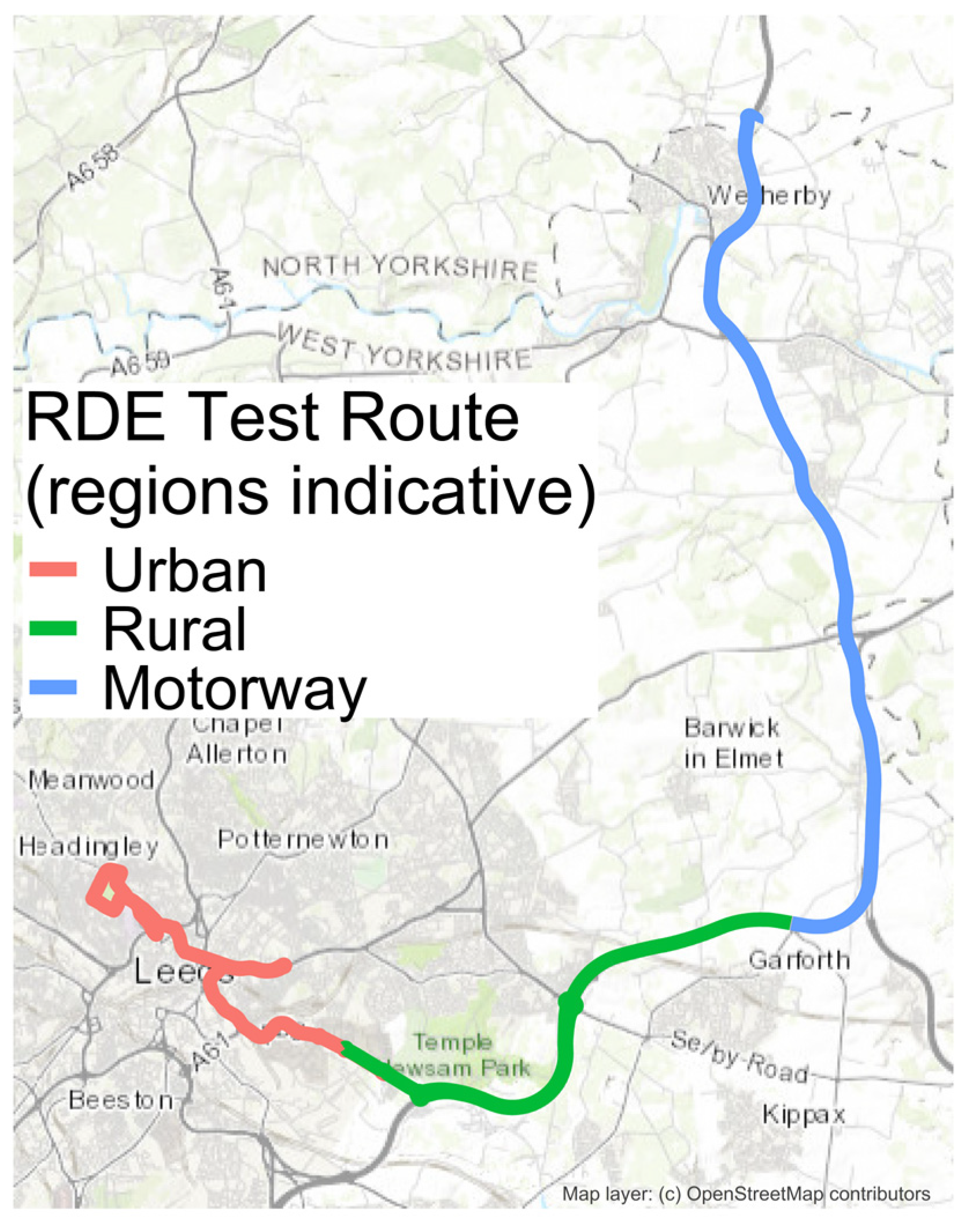
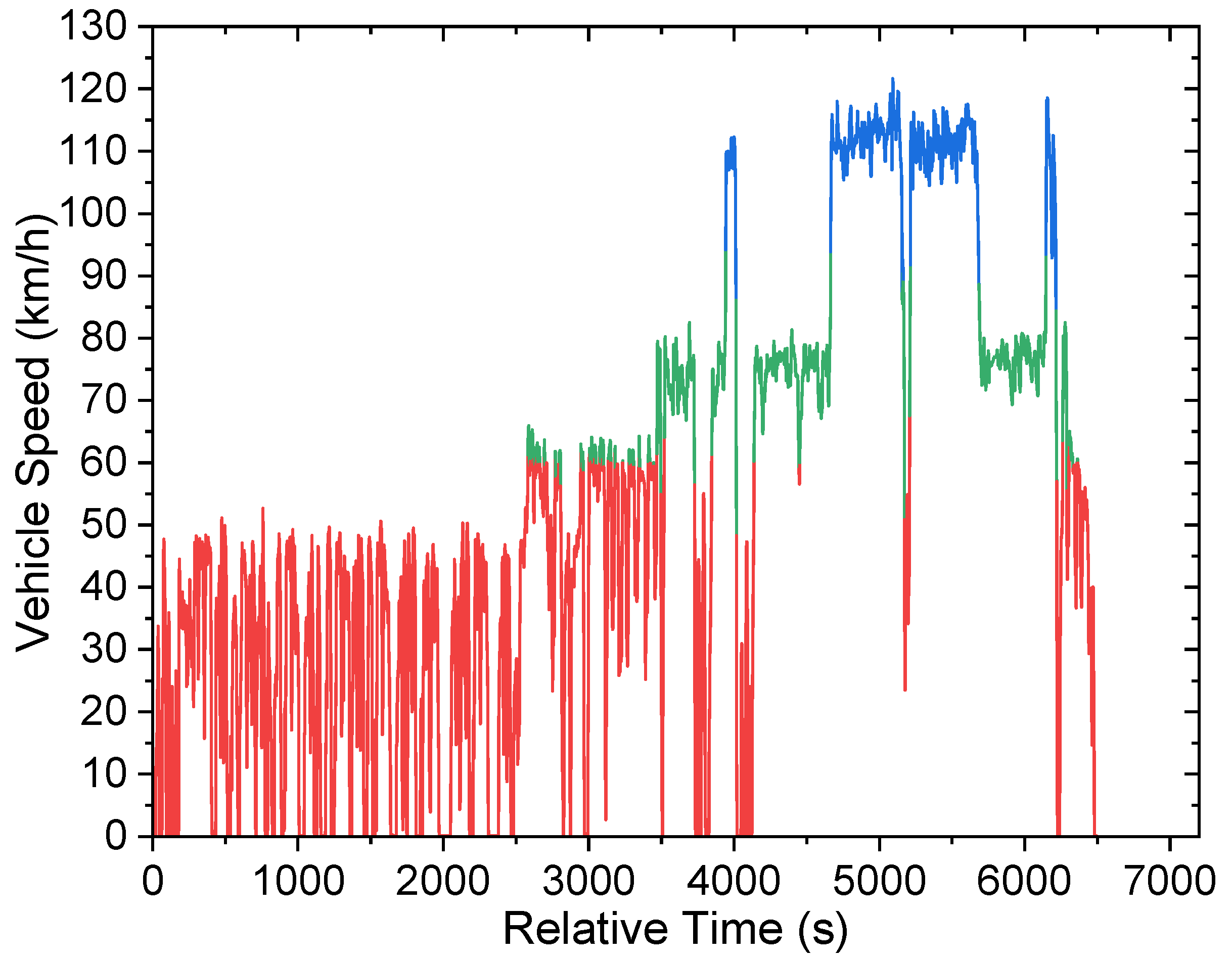
2.2. Test Route
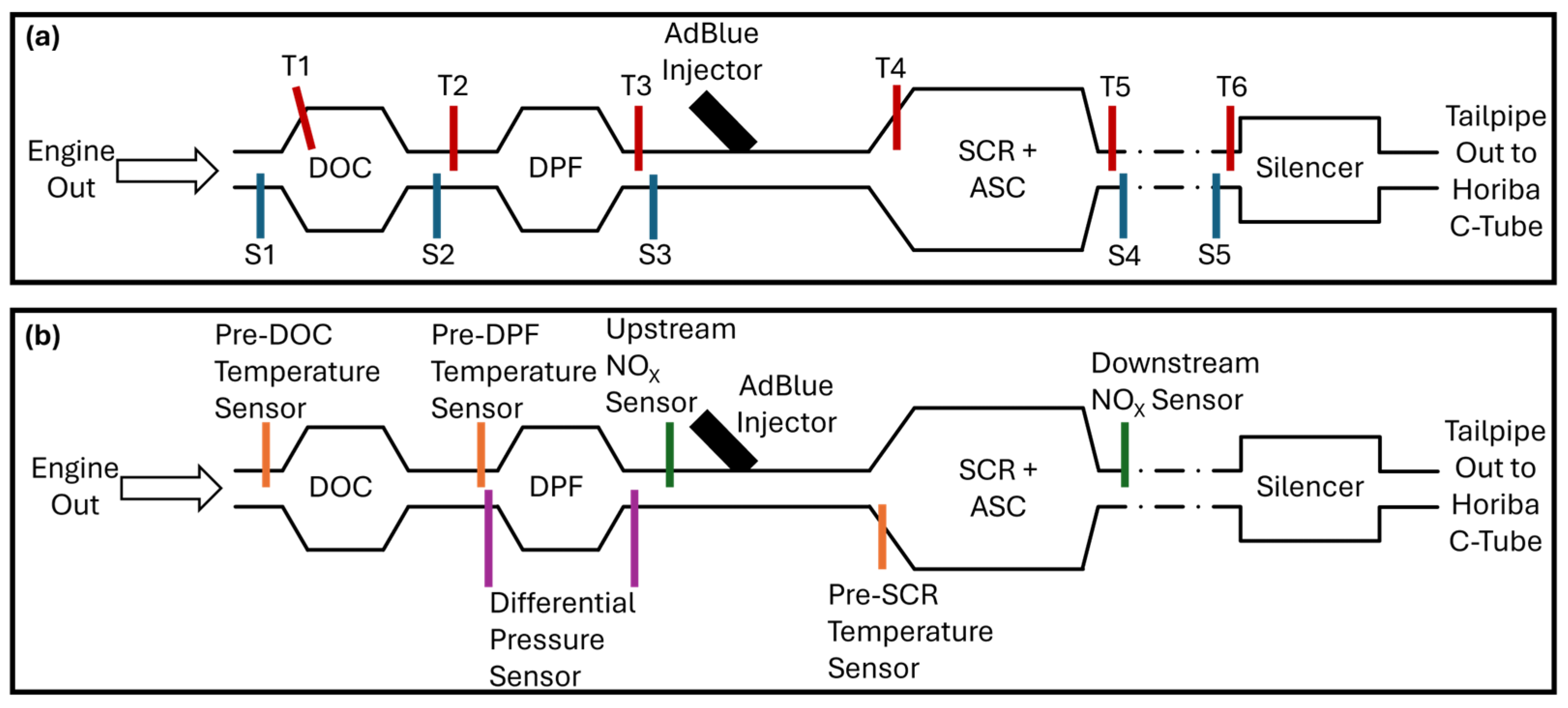
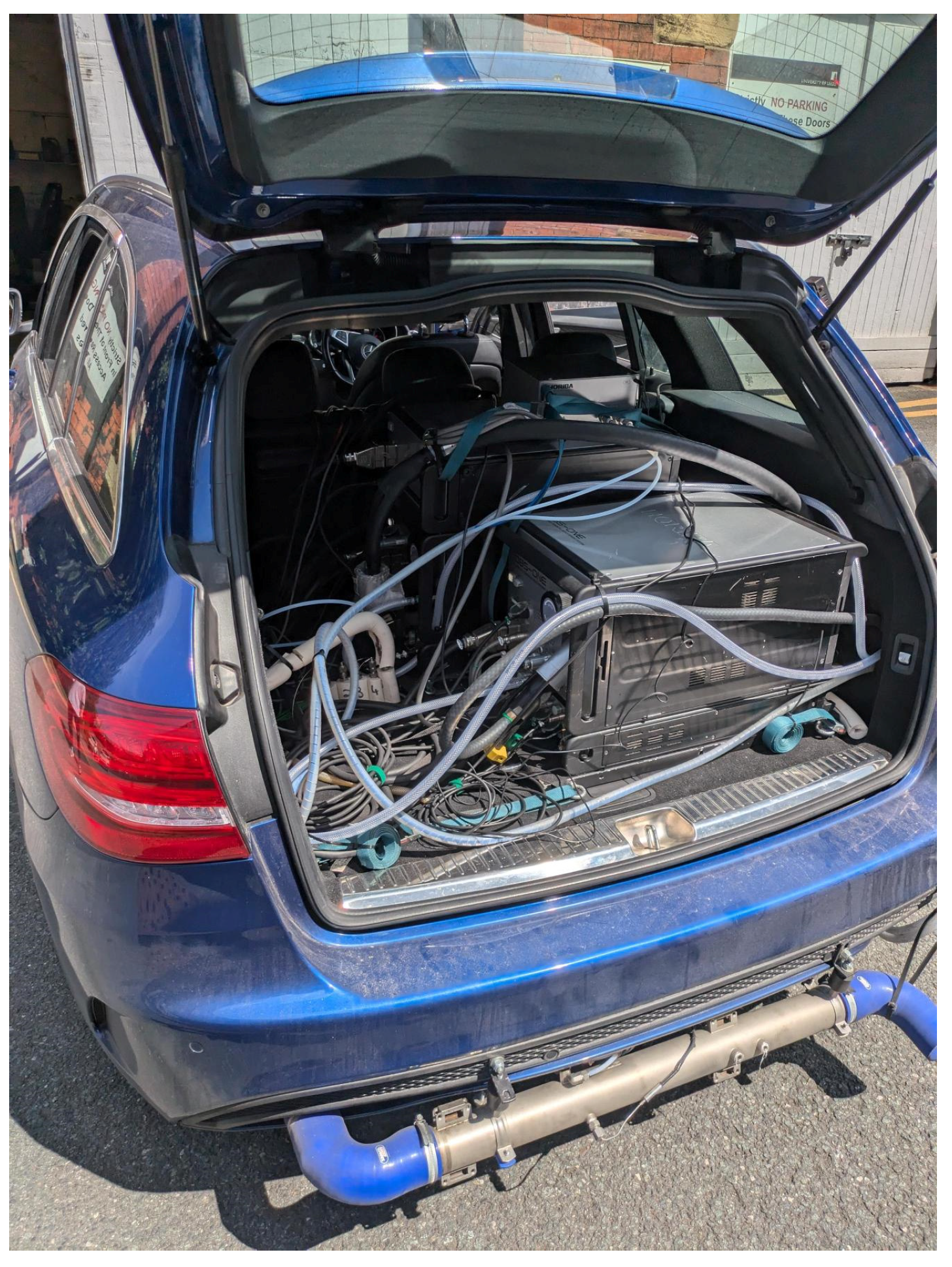
2.3. On-Board Equipment and Analysers
2.4. Fuel Blend Preparation
2.5. Data Processing
3. Results and Discussion
3.1. Fuel Economy and Vehicle Drivability
3.2. Influence of Biofuel Blends on Cold Start Emissions
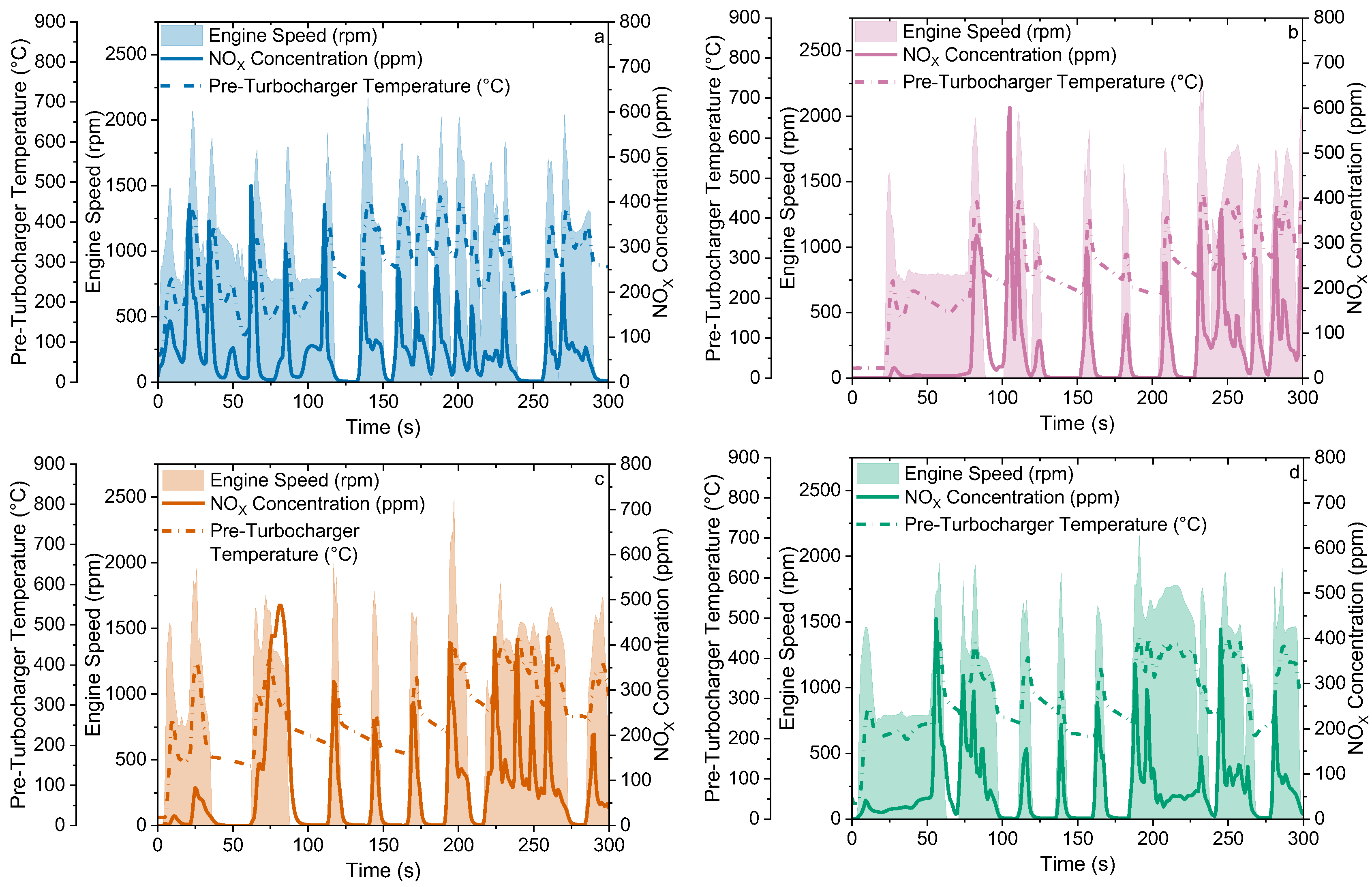
- Different amounts of time spent during each test with the engine-off, due to switching between electric only and combined ICE and electric motor driving.
- Varying distances covered during the initial five minutes of each test due to differing traffic conditions. These distances ranged from 1.16 to 2.09 km. Therefore, depending on the distance covered, different junctions would have been included within the cold start period leading to differences in total gradients and traffic signal waits and accelerations. These would result in different emissions profiles due to different loads on the powertrain.
- Different traffic conditions, resulting in different driver responses to other road users and traffic. Whilst the same driver conducted each test to reduce the influence of driving style, there were still differences in the nature of the traffic from day to day and from test to test.
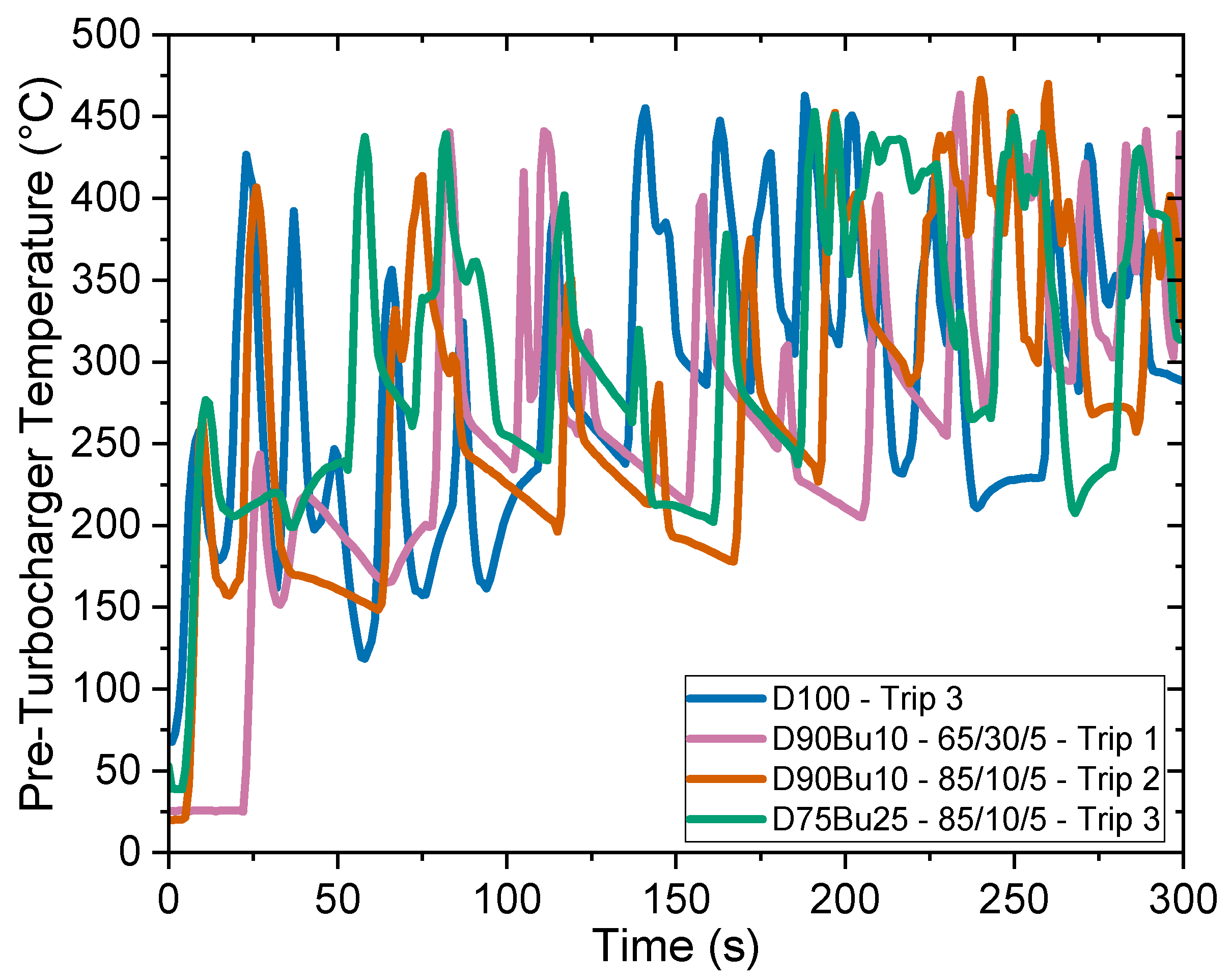
- Different ambient temperatures, as these would affect combustion due to air density changes as well as changes to exhaust temperatures and catalyst activation.
3.2.1. Influence of Biofuel Blends on Cold Start CO Emissions


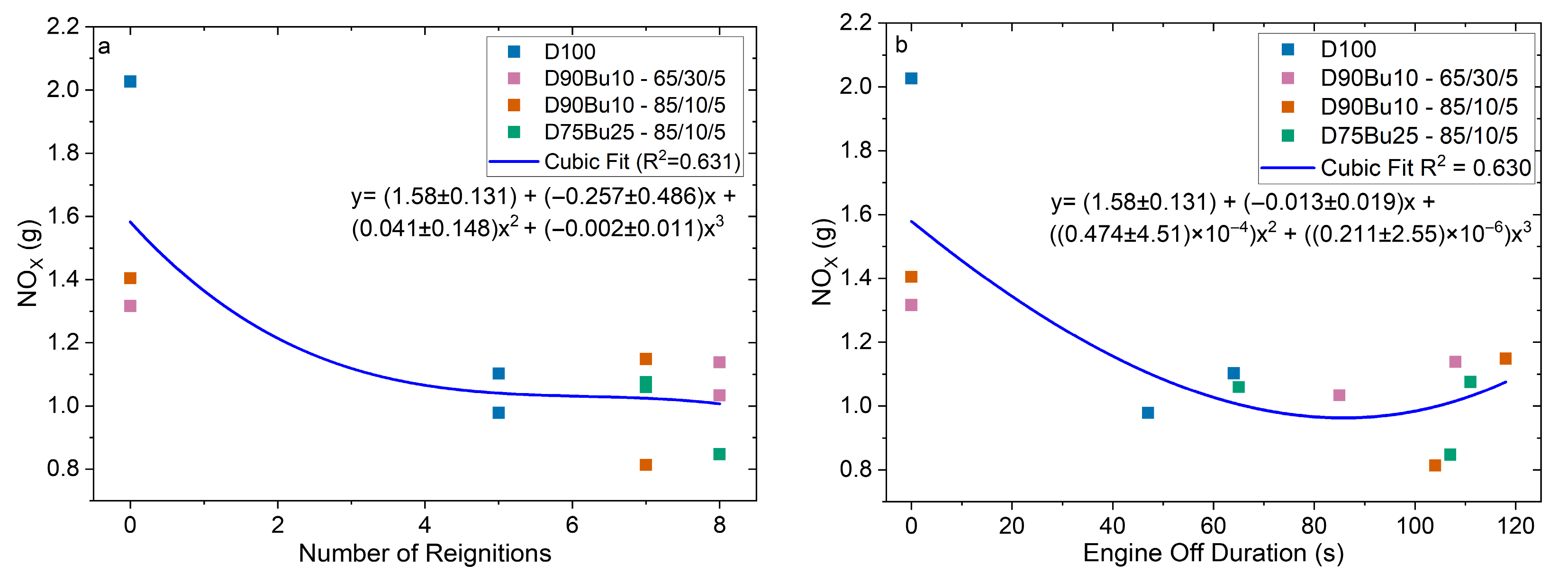
3.2.2. Influence of Biofuel Blends on Cold Start NOX Emissions

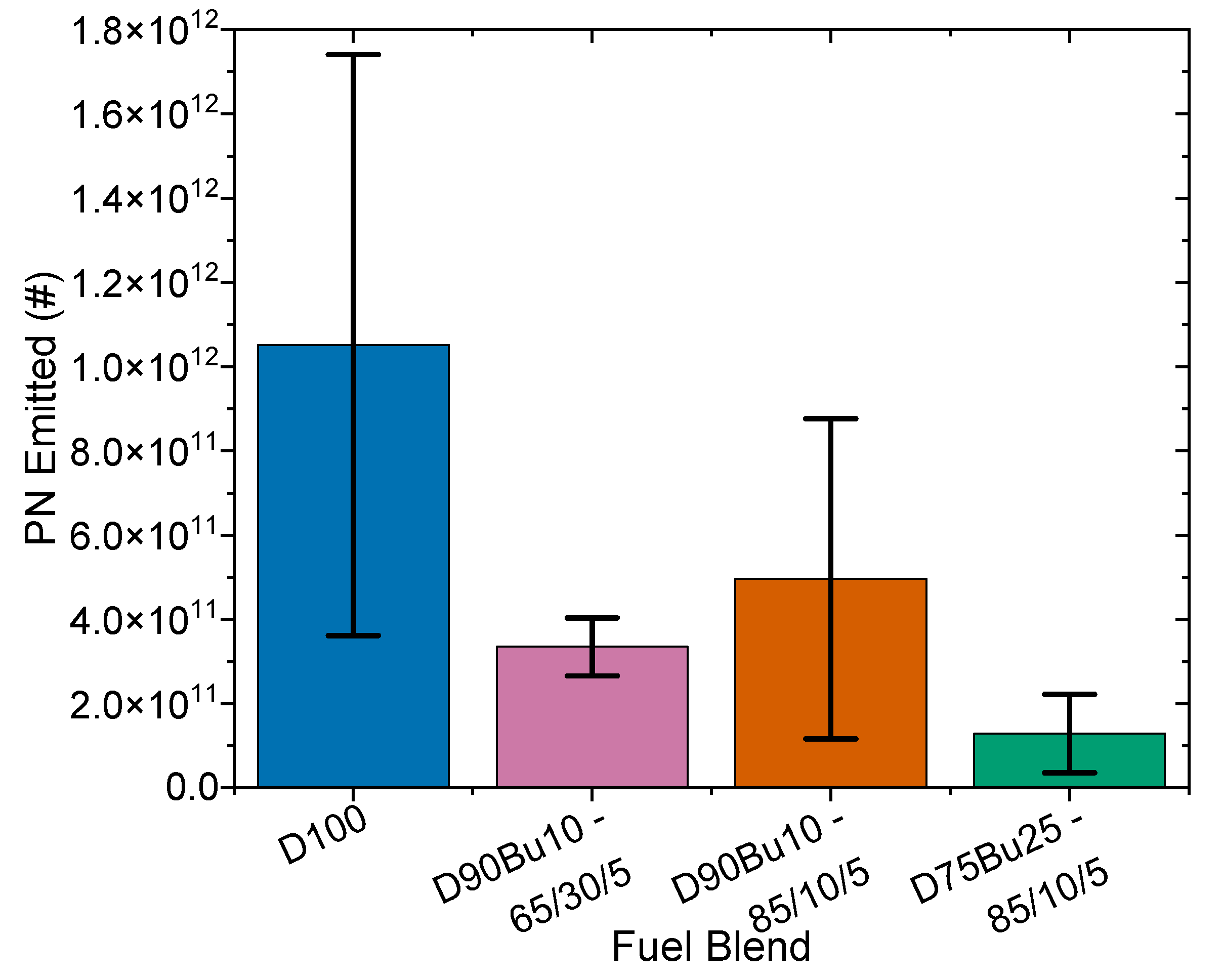
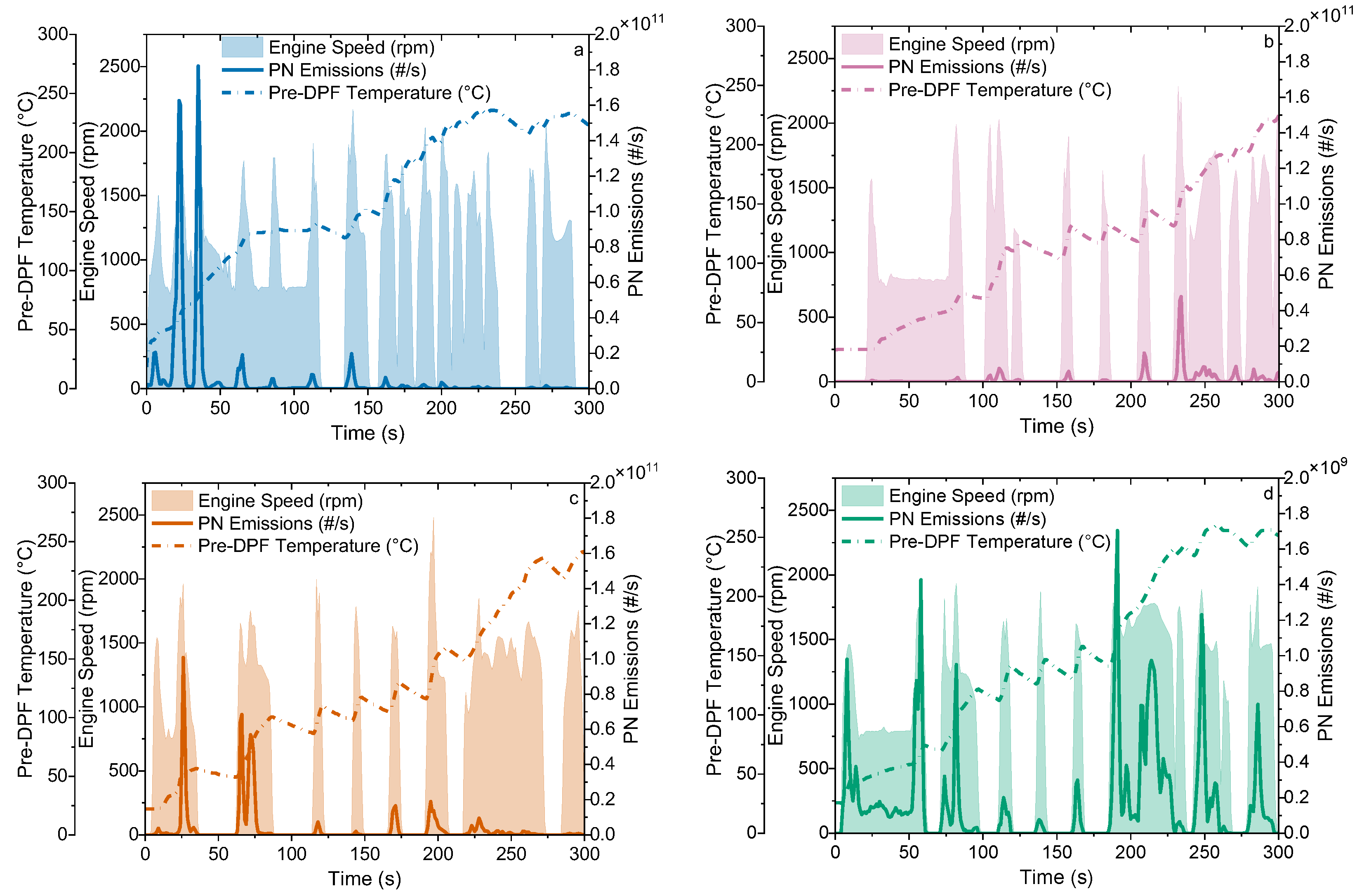
3.2.3. Influence of Biofuel Blends on Cold Start PN Emissions


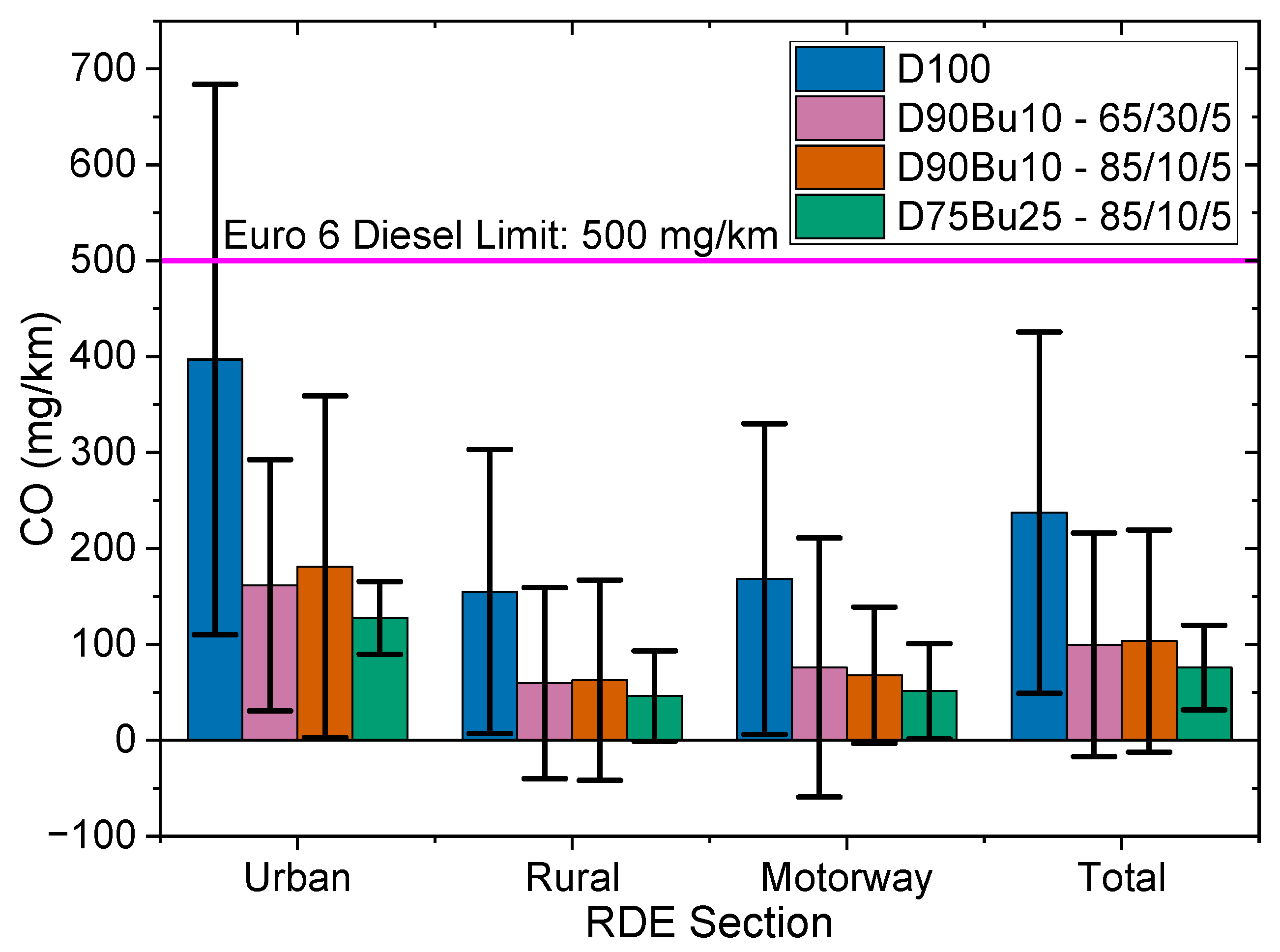
3.3. Influence of Biofuel Blends on Distance-Based CO Emission Factors for the Whole Trip
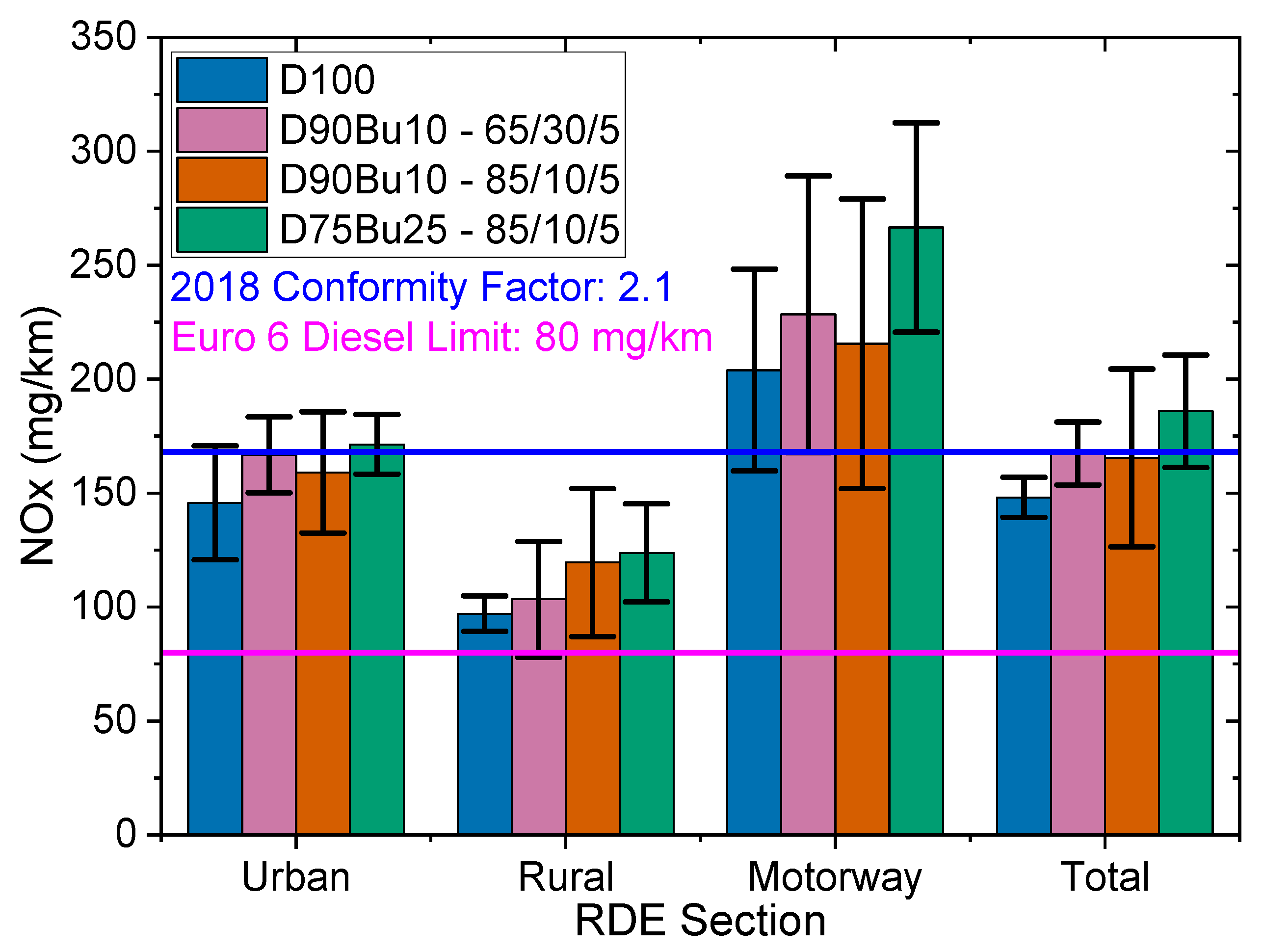
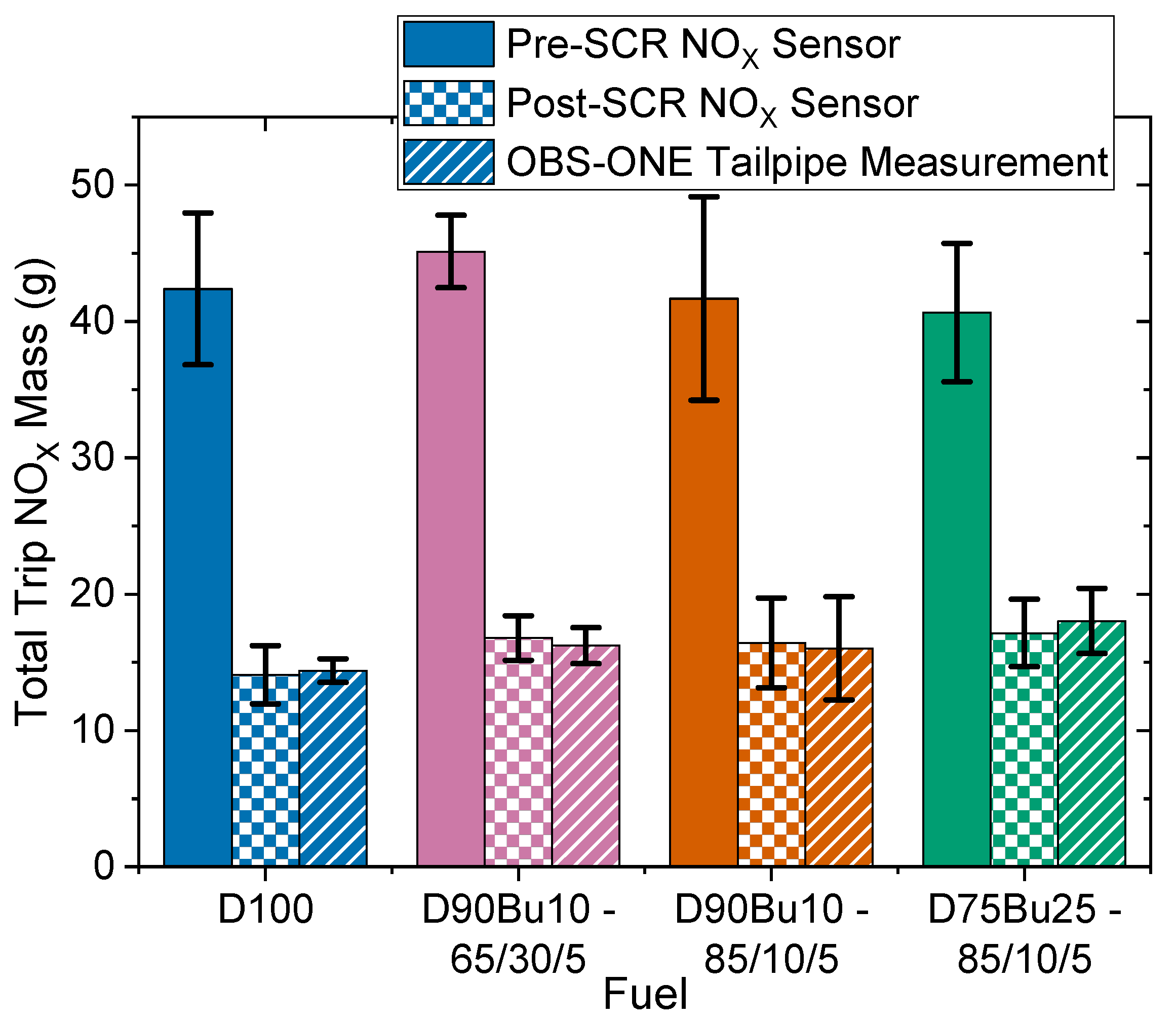
3.4. Influence of Biofuel Blends on Distance-Based NOX Emission Factors for the Whole Trip
3.5. Influence of Biofuel Blends on Distance-Based PN Emission Factors for the Whole Trip
4. Conclusions
- Ensuring that fuel blends were within the physical property limits for diesel, and were compatible with fuel system materials, ensured safe operation and reduced the likelihood of fuel system faults. This was evident by driving over 600 km on each fuel blend without any issues.
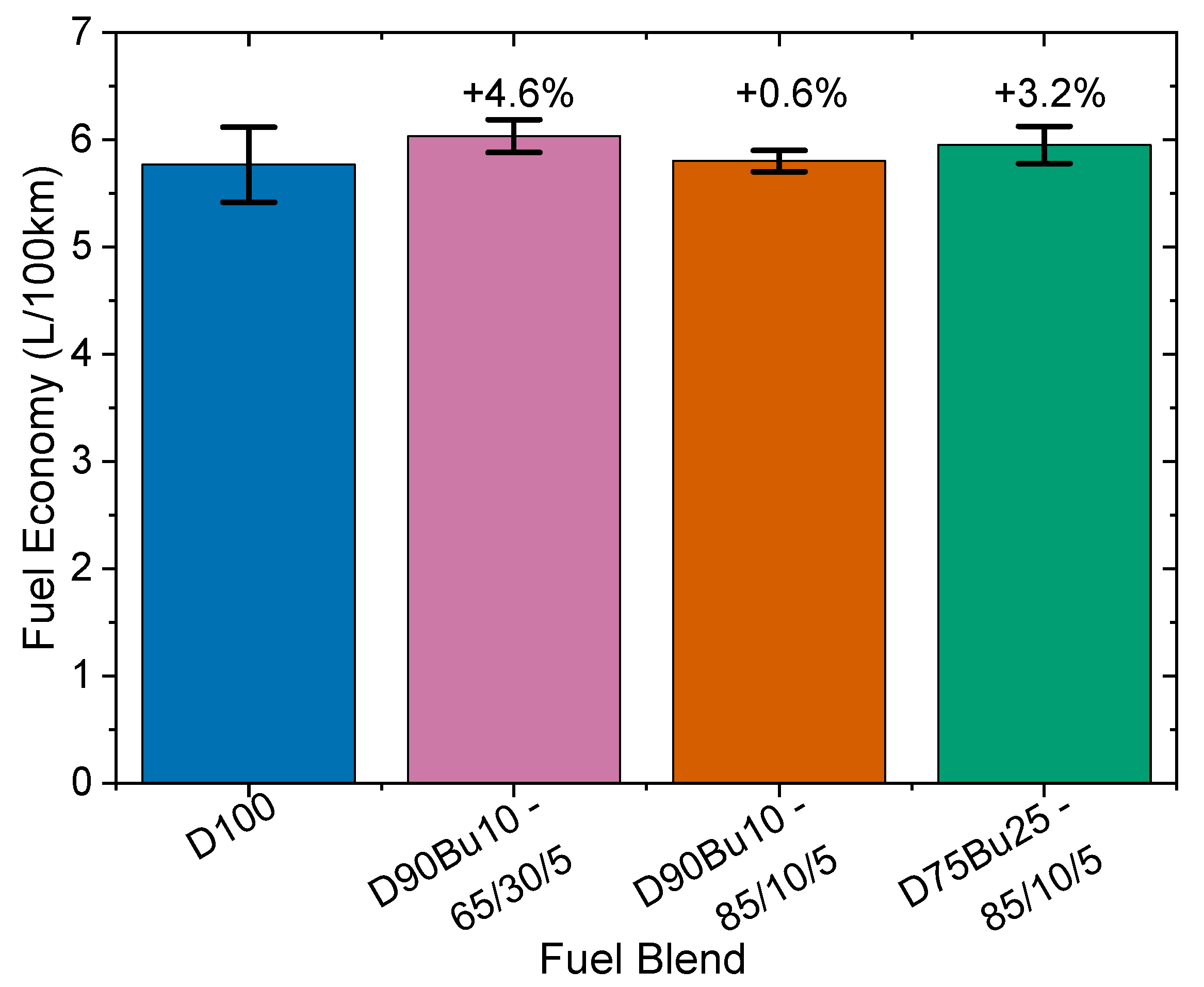
- Using the biofuel blends resulted in small fuel economy penalties of <5% relative to D100. Therefore, the use of the advanced biofuel blends should not cause a noticeable increase in refuelling frequency, alleviating potential concerns of end users.
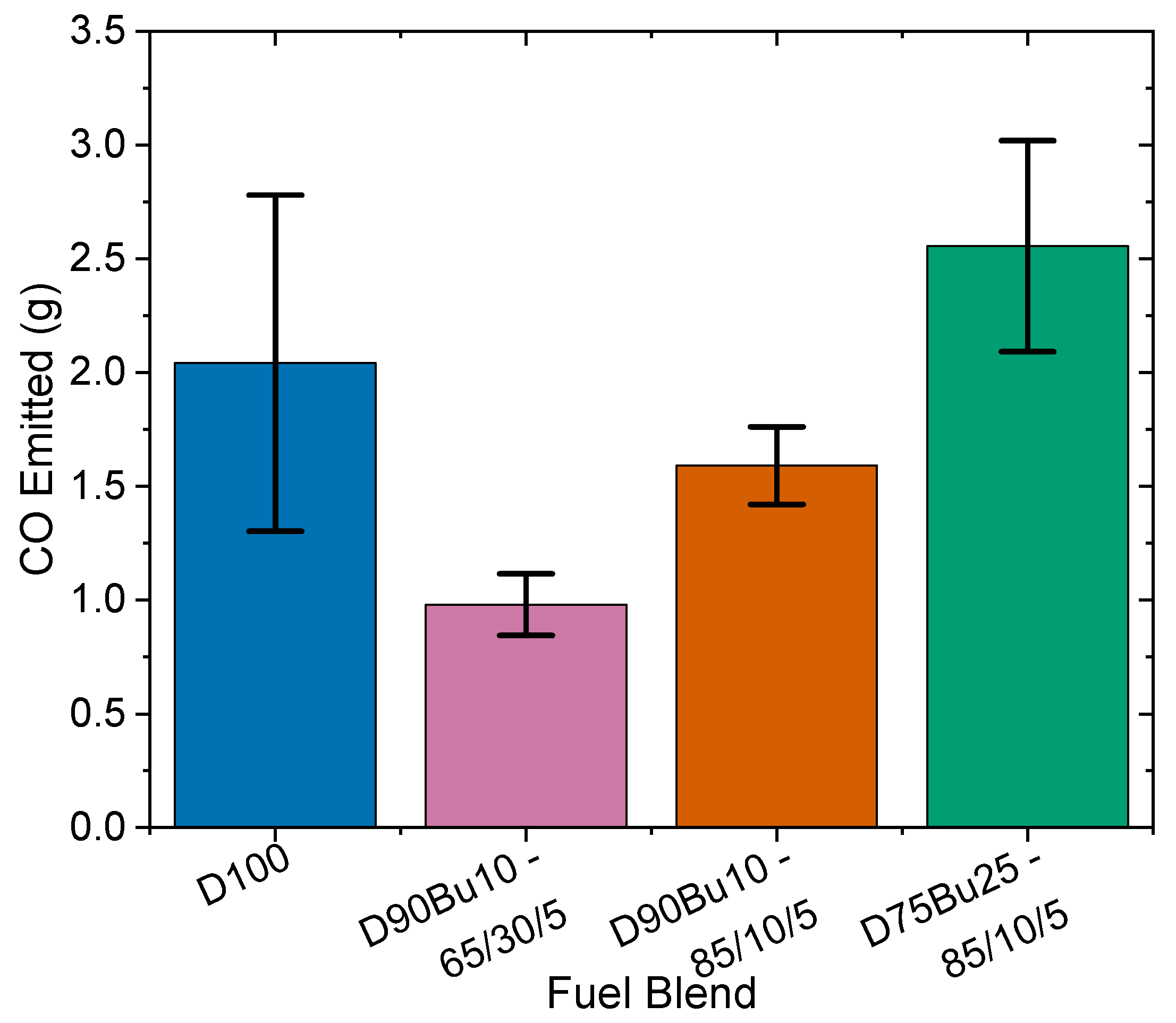
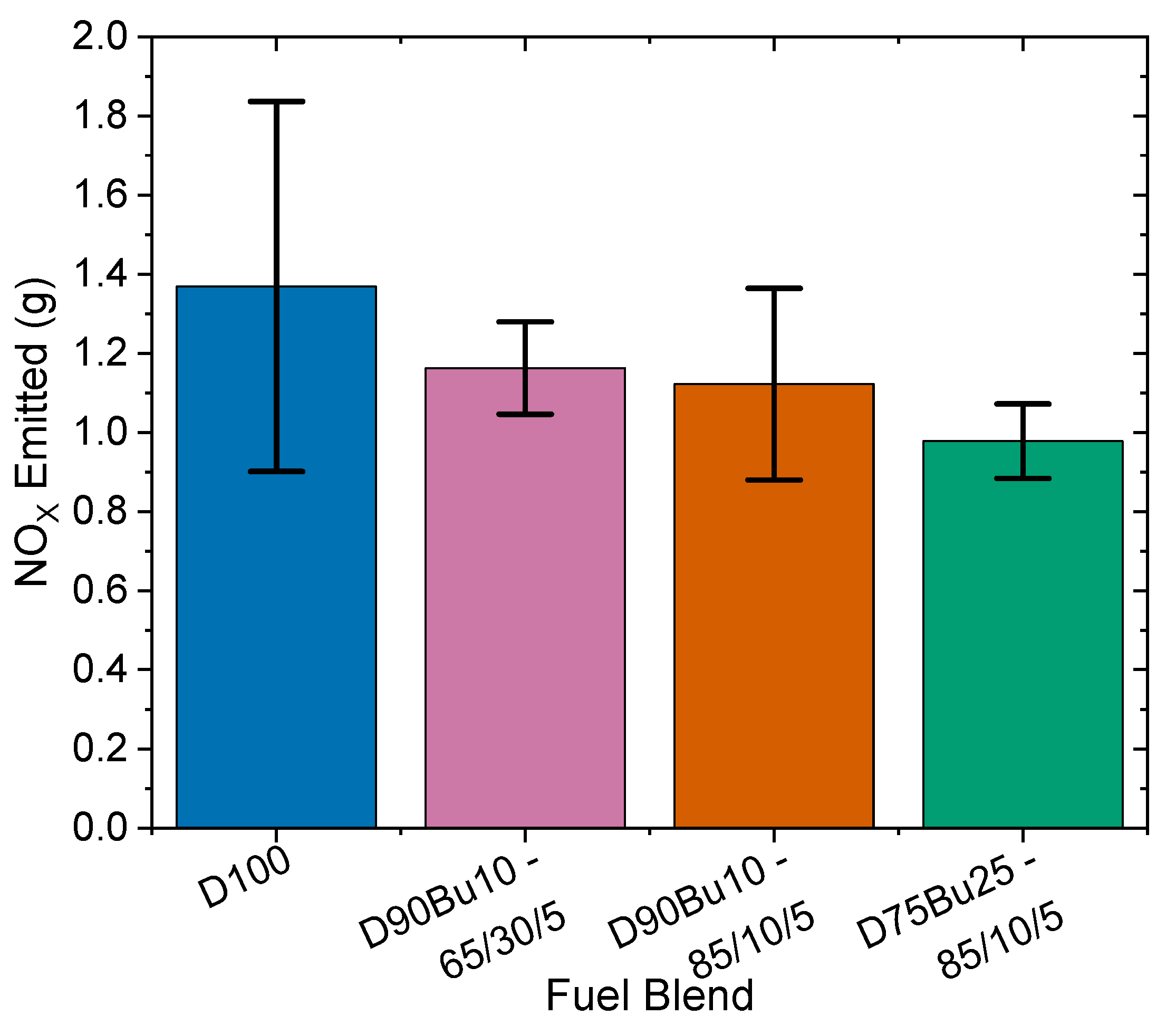
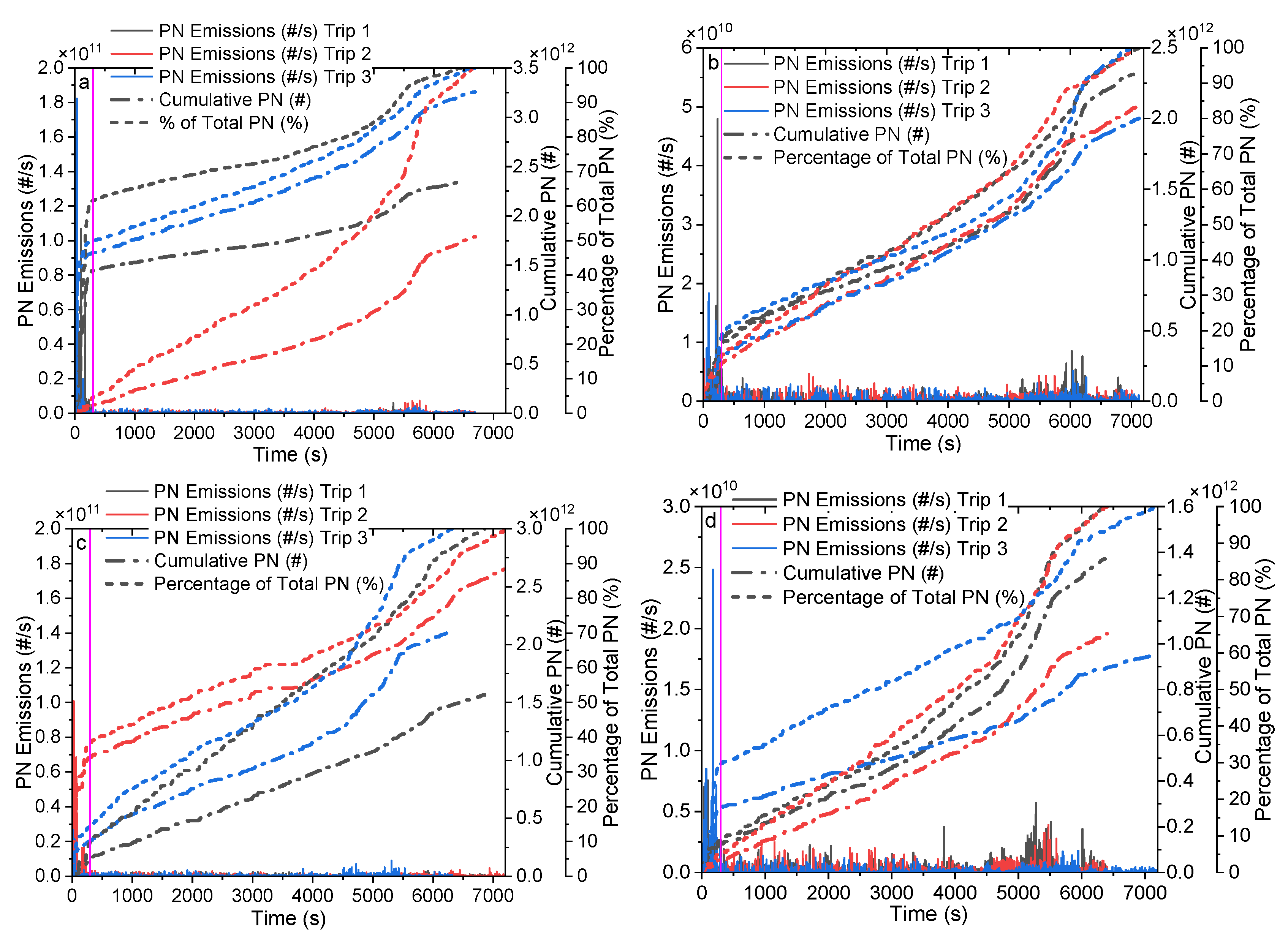
- The use of the biofuel blends caused reductions in cold start PN and NOX emissions relative to D100, making them attractive advanced biofuel blends to potentially displace diesel, since urban emissions of PN and NOX have a significant impact on public health.
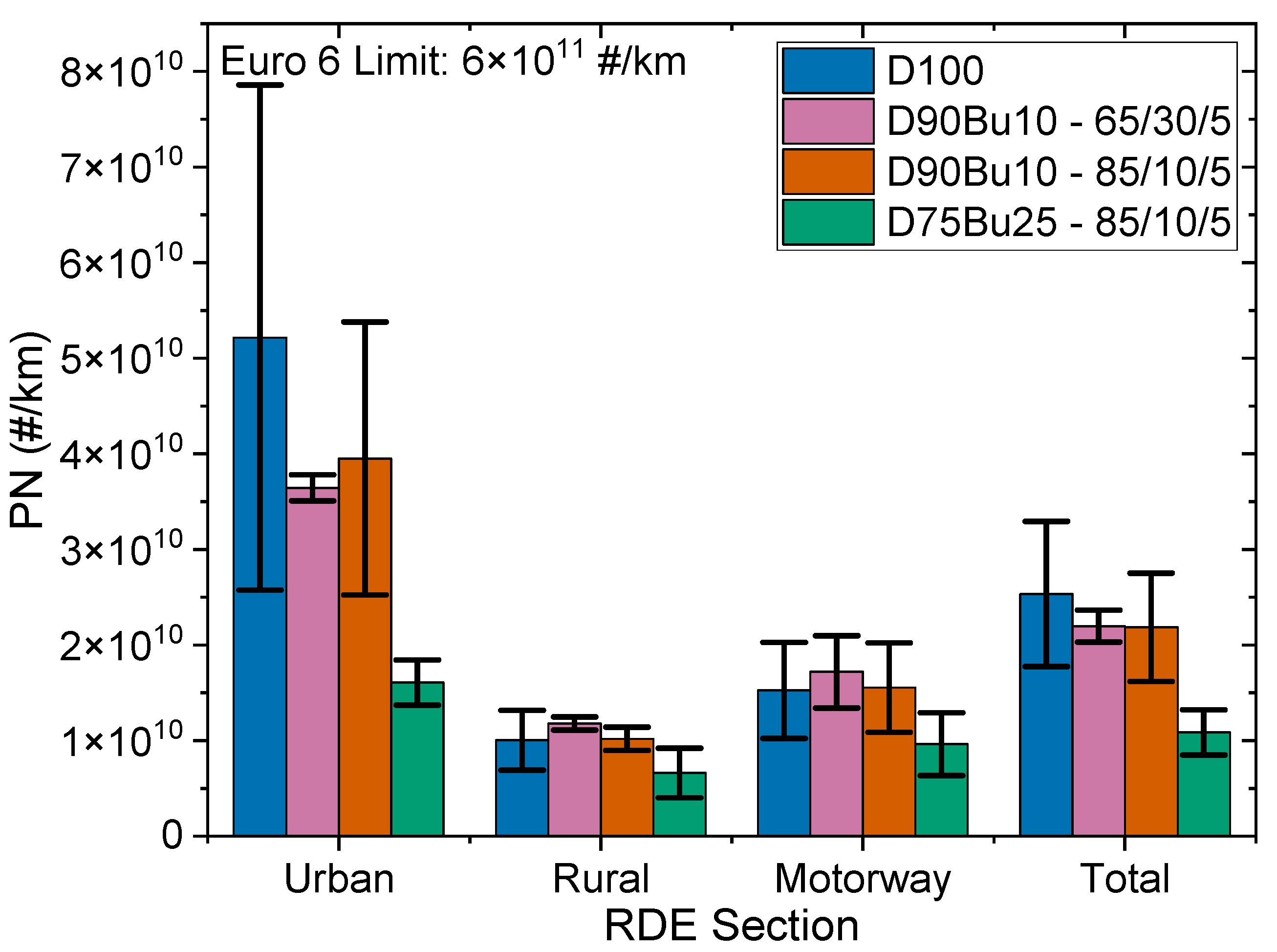
- Use of the biofuel blends led to reductions in trip total CO and PN emissions by up to 72% and 57%, respectively, when running with D75Bu25 – 85/10/5, which showed the largest reduction in all the blends relative to D100. The changes in CO and PN emissions, whilst using a DOC and DPF designed for the use of EN 590 diesel, highlights that the additional oxygen content, and the net reduction in the fuel aromatic content, was likely to have contributed to these reductions.
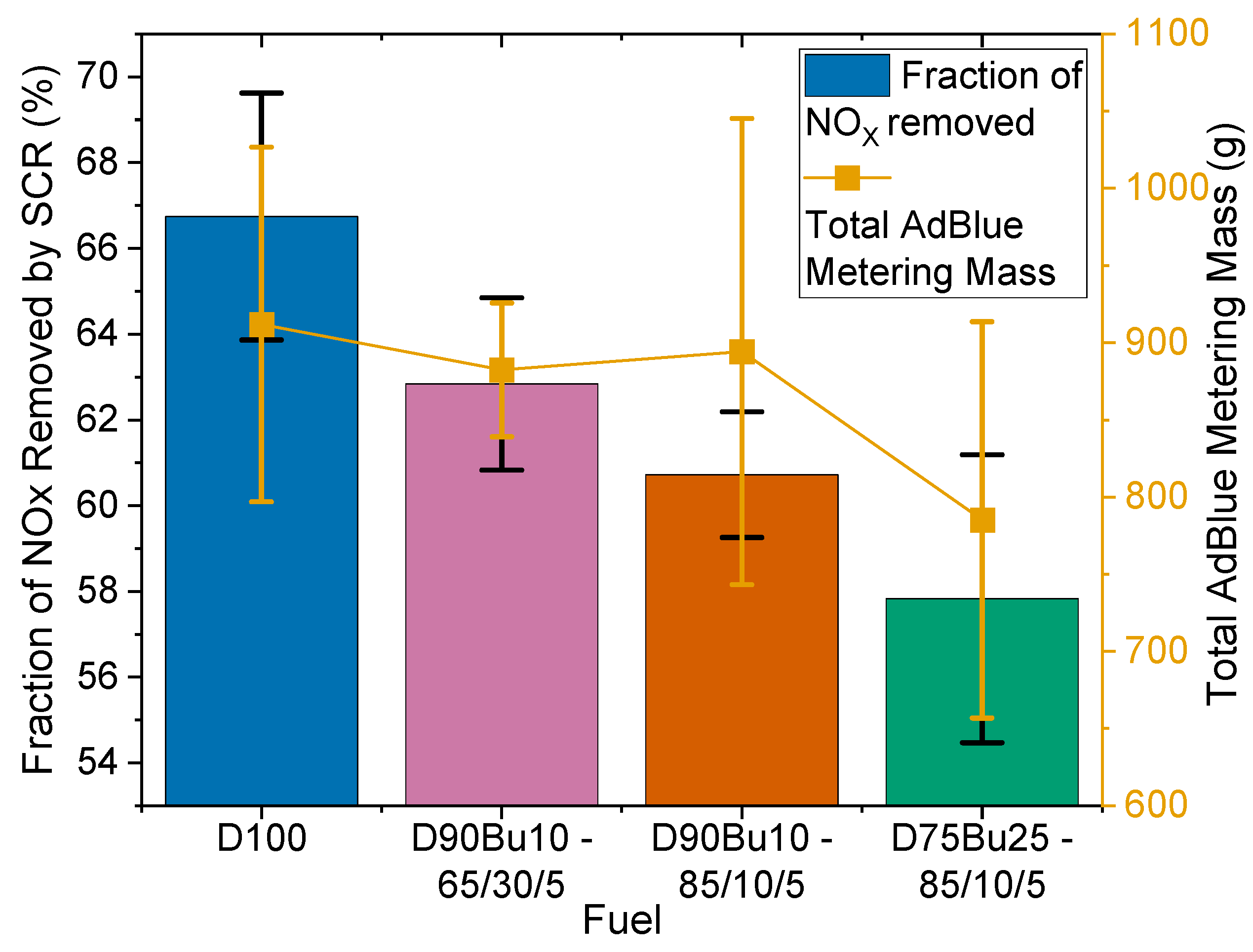
- The addition of the butyl blends to diesel caused some SCR deactivation, leading to an increase in total NOX emission factors relative to D100 by up to 26% with D75Bu25 – 85/10/5. The average NOx removal fraction by the SCR reduced from 67% with D100 to 58% with D75Bu25 – 85/10/5, whereas the pre-SCR NOX emissions were similar to or lower than those of D100 when running with the biofuel blends. Improved optimisation of SCR reagent injection strategies may therefore be required when running with advanced biofuels. For the vehicle used in this work, the DOC and SCR catalyst brick sizes would have been selected based on the engine-out emissions when using EN 590 diesel fuels and, hence, may need redesigning for use with advanced biofuels. Investigation of material changes to the after-treatment system, potentially including the utilisation of more chemically and hydrothermally resilient materials, would also be useful.
- For the sample size of 12 used in this work, the total engine-off duration and the number of reignitions did not show statistically significant correlations with the total emissions of CO, NOX, or PN. There was, however, a statistically significant correlation between the total NOX emitted during the cold start period and the number of reignitions and the engine-off duration. These results indicate that the use of the electric motor over the whole trip may not have had a strong influence on the tailpipe emissions due to the presence of the exhaust after-treatment systems.
- Since the fuel blends tested here are shown to be compatible with an existing vehicle, and their properties can be tailored to meet selected existing fuel property limits, the utilisation of the butyl blends as drop-in fuels is a potential option that would help to decarbonise the existing diesel-based vehicle fleet, assuming that sustainable production methods were used. Because of current limitations on the types of permitted blending agents, without a new fuel standard, or changes to EN 590, it could be difficult to meet the mandated RED III advanced biofuel utilisation requirements [8,22].
Supplementary Materials
Author Contributions
Funding
Data Availability Statement
Acknowledgments
Conflicts of Interest
Abbreviations
| Bu | Butyl Blend |
| CAZ | Clean Air Zone |
| CF | Conformity Factor |
| CN | Cetane Number |
| CO | Carbon Monoxide |
| CO2 | Carbon Dioxide |
| D | Diesel |
| DCN | Derived Cetane Number |
| DNBE | Di-n-butyl Ether |
| DOC | Diesel Oxidation Catalyst |
| DPF | Diesel Particulate Filter |
| ECU | Engine Control Unit |
| EGR | Exhaust Gas Recirculation |
| EU | European Union |
| FTIR | Fourier Transform Infrared |
| HC | Hydrocarbon |
| ICE | Internal Combustion Engine |
| LEZ | Low Emission Zone |
| MAW | Moving Average Window |
| nBL | n-Butyl Levulinate |
| nBuOH | n-Butanol |
| NO | Nitric Oxide |
| NO2 | Nitrogen Dioxide |
| NOVC | Not Off Vehicle Charging |
| NOX | Nitrogen Oxides (NO + NO2) |
| OVC | Off Vehicle Charging |
| PEMS | Portable Emissions Measurement System |
| PM2.5 | Particulate Matter with aerodynamic dynameters < 2.5 µm |
| PN | Particle Number |
| RDE | Real Driving Emissions |
| RED | Renewable Energy Directive |
| rpm | Revolutions per Minute |
| SCR | Selective Catalytic Reduction |
| UK | United Kingdom |
| ULEZ | Ultra-Low Emission Zone |
| WLTP | World Harmonised Light-Duty Test Procedure |
References
- International Energy Agency. Trucks and Buses. Available online: https://www.iea.org/ (accessed on 9 June 2025).
- International Energy Agency. Transport. Available online: https://www.iea.org/ (accessed on 9 June 2025).
- Suarez, J.; Tansini, A.; Ktistakis, M.A.; Marin, A.L.; Komnos, D.; Pavlovic, J.; Fontaras, G. Towards zero CO2 emissions: Insights from EU vehicle on-board data. Sci. Total Environ. 2025, 1001, 180454. [Google Scholar] [CrossRef] [Scilit]
- Zacharof, N.; Bitsanis, E.; Broekaert, S.; Fontaras, G. Reducing CO2 Emissions of Hybrid Heavy-Duty Trucks and Buses: Paving the Transition to Low-Carbon Transport. Energies 2024, 17, 286. [Google Scholar] [CrossRef] [Scilit]
- Tansini, A.; Marin, A.L.; Suarez, J.; Aguirre, N.F.; Fontaras, G. Learning from the real-world: Insights on light-vehicle efficiency and CO2 emissions from long-term on-board fuel and energy consumption data collection. Energy Convers. Manag. 2025, 335, 119816. [Google Scholar] [CrossRef] [Scilit]
- (EU) 2023/851; Regulation (EU) 2023/851 of the European Parliament and of the Council of 19 April 2023 Amending Regulation (EU) 2019/631 as Regards Strengthening the CO2 Emission Performance Standards for New Passenger Cars and New Light Commercial Vehicles in Line with the Union’s Increased Climate Ambition (Text with EEA Relevance). European Parliament: Strasbourg, France, 2023.
- Department for Transport; Driver and Vehicle Licensing Agency. VEH1111: Licensed Vehicles at the End of the Year by Body Type and Year of First Use. 2025. Available online: https://www.gov.uk/ (accessed on 15 October 2025).
- (EU) 2023/2413; Directive (EU) 2023/2413 of the European Parliament and of the Council of 18 October 2023 Amending Directive (EU) 2018/2001, Regulation (EU) 2018/1999 and Directive 98/70/EC as Regards the Promotion of Energy from Renewable Sources, and Repealing Council Directive (EU) 2015/652. European Parliament: Strasbourg, France, 2023. Available online: http://eur-lex.europa.eu/ (accessed on 23 April 2025).
- Blasshofer, T.; Reichert, T. EU to Scrap Planned Ban on Combustion Engines, EPP’s Weber Says. Available online: https://www.reuters.com/ (accessed on 14 December 2025).
- (EU) 2024/1610; Regulation (EU) 2024/1610 of the European Parliament and of the Council of 14 May 2024 Amending Regulation (EU) 2019/1242 as Regards Strengthening the CO2 Emission Performance Standards for New Heavy-Duty Vehicles and Integrating Reporting Obligations, Amending Regulation (EU) 2018/858 and Repealing Regulation (EU) 2018/956 (Text with EEA Relevance). European Parliament: Strasbourg, France, 2024.
- Bergthorson, J.M.; Thomson, M.J. A Review of the Combustion and Emissions Properties of Advanced Transportation Biofuels and Their Impact on Existing and Future Engines. Renew. Sustain. Energy Rev. 2015, 42, 1393–1417. [Google Scholar] [CrossRef] [Scilit]
- Huseynov, S.; Palma, M.A. Does California’s Low Carbon Fuel Standards reduce carbon dioxide emissions? PLoS ONE 2018, 13, e0203167. [Google Scholar] [CrossRef] [Scilit]
- Hooftman, N.; Messagie, M.; Van Mierlo, J.; Coosemans, T. A review of the European passenger car regulations—Real driving emissions vs local air quality. Renew. Sustain. Energy Rev. 2018, 86, 1–21. [Google Scholar] [CrossRef] [Scilit]
- García-Contreras, R.; Soriano, J.A.; Fernández-Yáñez, P.; Sánchez-Rodríguez, L.; Mata, C.; Gómez, A.; Armas, O.; Cárdenas, M.D. Impact of regulated pollutant emissions of Euro 6d-Temp light-duty diesel vehicles under real driving conditions. J. Clean. Prod. 2021, 286, 124927. [Google Scholar] [CrossRef] [Scilit]
- Park, Y.-K.; Kim, B.-S. Catalytic removal of nitrogen oxides (NO, NO2, N2O) from ammonia-fueled combustion exhaust: A review of applicable technologies. Chem. Eng. J. 2023, 461, 141958. [Google Scholar] [CrossRef] [Scilit]
- Wiseman, S.; Michelbach, C.A.; Li, H.; Tomlin, A.S. Predicting the physical properties of three-component lignocellulose derived advanced biofuel blends using a design of experiments approach. Sustain. Energy Fuels 2023, 7, 5283–5300. [Google Scholar] [CrossRef] [Scilit]
- Alamgir Ahmad, K.; Haider Siddiqui, M.; Pant, K.K.; Nigam, K.D.P.; Shetti, N.P.; Aminabhavi, T.M.; Ahmad, E. A critical review on suitability and catalytic production of butyl levulinate as a blending molecule for green diesel. Chem. Eng. J. 2022, 447, 137550. [Google Scholar] [CrossRef] [Scilit]
- Raspolli Galletti, A.M.; Lorè, R.; Licursi, D.; Di Fidio, N.; Antonetti, C.; Fulignati, S. Insights on butyl levulinate bio-blendstock: From model sugars to paper mill waste cellulose as feedstocks for a sustainable catalytic butanolysis process. Catal. Today 2023, 418, 114054. [Google Scholar] [CrossRef] [Scilit]
- Nahil, M.A.; Aboelazayem, O.; Wiseman, S.; Herar, N.; Dupont, V.; Alazzawi, A.; Tomlin, A.S.; Ross, A.B. Production and Optimisation of Oxygenated Biofuel Blend Components via the Ethanolysis of Lignocellulosic Biomass: A Response Surface Methodology. Energies 2025, 18, 2985. [Google Scholar] [CrossRef] [Scilit]
- O’Shea, A.; McNamara, C.; Rao, P.; Howard, M.; Ghanni, M.R.; Dooley, S. A hierarchical surrogate approach to biomass ethanolysis reaction kinetic modelling. React. Chem. Eng. 2025, 10, 344–359. [Google Scholar] [CrossRef] [Scilit]
- Antonetti, C.; Gori, S.; Licursi, D.; Pasini, G.; Frigo, S.; Lopez, M.; Parajo, J.C.; Galletti, A.M.R. One-Pot Alcoholysis of the Lignocellulosic Eucalyptus nitens Biomass to n-Butyl Levulinate, a Valuable Additive for Diesel Motor Fuel. Catalysts 2020, 10, 509. [Google Scholar] [CrossRef] [Scilit]
- BS EN 590:2022; Automotive Fuels—Diesel—Requirements and Test Methods. BSI: Milton Keynes, UK, 2022. Available online: https://bsol.bsigroup.com/ (accessed on 12 October 2022).
- Wiseman, S.; Li, H.; Tomlin, A.S. Combustion and Emission Performance from the use of Acid-catalysed Butanol Alcoholysis Derived Advanced Biofuel Blends in a Compression Ignition Engine. In Proceedings of the WCX SAE World Congress Experience, Detroit, MI, USA, 8–10 April 2025. SAE Technical Paper 2025-01-8445, 2025. [Google Scholar] [CrossRef] [Scilit]
- Reif, K.; Dietsche, K.-H. Automotive Handbook, 9th ed.; Reif, K., Dietsche, K.-H., Eds.; Robert Bosch GmbH: Karlsruhe, Germany, 2014. [Google Scholar]
- (EU) No 459/2012; Commission Regulation (EU) No 459/2012 of 29 May 2012 Amending Regulation (EC) No 715/2007 of the European Parliament and of the Council and Commission Regulation (EC) No 692/2008 as Regards Emissions from Light Passenger and Commercial Vehicles (Euro 6) Text with EEA Relevance; 32012R0459. European Commission: Brussels, Belgium, 2012.
- (EC) No 715/2007; Regulation (EC) No 715/2007 of the European Parliament and of the Council of 20 June 2007 on Type Approval of Motor Vehicles with Respect to Emissions from Light Passenger and Commercial Vehicles (Euro 5 and Euro 6) and on Access to Vehicle Repair and Maintenance Information. European Parliament: Strasbourg, France, 2007.
- DieselNet. EU: Cars and Light Trucks. Available online: https://dieselnet.com (accessed on 24 October 2025).
- Reşitoğlu, İ.A.; Altinişik, K.; Keskin, A. The pollutant emissions from diesel-engine vehicles and exhaust aftertreatment systems. Clean Technol. Environ. Policy 2015, 17, 15–27. [Google Scholar] [CrossRef] [Scilit]
- Franco, V.; Zacharopoulou, T.; Hammer, J.; Schmidt, H.; Mock, P.; Weiss, M.; Samaras, Z. Evaluation of Exhaust Emissions from Three Diesel-Hybrid Cars and Simulation of After-Treatment Systems for Ultralow Real-World NOx Emissions. Environ. Sci. Technol. 2016, 50, 13151–13159. [Google Scholar] [CrossRef] [Scilit]
- Tipanluisa, L.; Prati, M.V.; Costagliola, M.A. Impact of diesel/renewable fuels blend on gaseous and particle emissions of a light-duty vehicle under real driving emissions. Renew. Energy 2024, 230, 120819. [Google Scholar] [CrossRef] [Scilit]
- Wiseman, S.; Ropkins, K.; Li, H.; Tomlin, A.S. Influence of Blending n-Butanol Alcoholysis Derived Advanced Biofuels with Diesel on the Regulated Emissions from a Diesel Hybrid Vehicle. In Proceedings of the European Combustion Meeting 2025, Edinburgh, Scotland, 7–10 April 2025. [Google Scholar]
- Horiba. OBS-ONE GS Unit. Available online: https://www.horiba.com (accessed on 5 February 2024).
- Horiba. OBS-ONE PN Unit. Available online: https://www.horiba.com (accessed on 5 February 2024).
- McNamara, C.; O’Shea, A.; Rao, P.; Ure, A.; Ayarde-Henríquez, L.; Ghaani, M.R.; Ross, A.; Dooley, S. Steady states and kinetic modelling of the acid-catalysed ethanolysis of glucose, cellulose, and corn cob to ethyl levulinate. Energy Adv. 2024, 3, 1439–1458. [Google Scholar] [CrossRef] [Scilit] [PubMed]
- Flannelly, T.; Dooley, S.; Leahy, J.J. Reaction Pathway Analysis of Ethyl Levulinate and 5-Ethoxymethylfurfural from d-Fructose Acid Hydrolysis in Ethanol. Energy Fuels 2015, 29, 7554–7565. [Google Scholar] [CrossRef] [Scilit]
- BS 2869:2017 + A1:2022; Fuel Oils for Agricultural, Domestic and Industrial Engines and Boilers. BSI: Milton Keynes, UK, 2022. Available online: https://bsol.bsigroup.com/ (accessed on 12 October 2022).
- EN ISO 3838:2004 + A1:2023; Crude Petroleum and Liquid or Solid Petroleum Products—Determination of Density or Relative Density—Capillary-Stoppered Pyknometer and Graduated Bicapillary Pyknometer Methods. BSI: Milton Keynes, UK, 2024. Available online: https://bsol.bsigroup.com/ (accessed on 5 March 2024).
- Yanowitz, J.; Ratcliff, M.A.; McCormick, R.L.; Taylor, J.D.; Murphy, M.J. Compendium of Experimental Cetane Numbers; National Renewable Energy Laboratory (NREL): Golden, CO, USA, 2017.
- Linstrom, P.J.; Mallard, W.G. (Eds.) NIST Chemistry WebBook, NIST Standard Reference Database Number 69; 20899; National Institute of Standards and Technology: Gaithersburg, MD, USA, 2025.
- Nikitin, E.D.; Popov, A.P.; Bogatishcheva, N.S.; Faizullin, M.Z. Critical temperatures and pressures, heat capacities, and thermal diffusivities of levulinic acid and four n-alkyl levulinates. J. Chem. Thermodyn. 2019, 135, 233–240. [Google Scholar] [CrossRef] [Scilit]
- Christensen, E.; Williams, A.; Paul, S.; Burton, S.; McCormick, R.L. Properties and Performance of Levulinate Esters as Diesel Blend Components. Energy Fuels 2011, 25, 5422–5428. [Google Scholar] [CrossRef] [Scilit]
- Çelebi, Y.; Aydın, H. An overview on the light alcohol fuels in diesel engines. Fuel 2019, 236, 890–911. [Google Scholar] [CrossRef] [Scilit]
- Wang, J.; Sun, L.; Luan, P.; Wu, Y.; Cheng, Z.; Zhang, Z.; Kong, X.; Liu, H.; Chen, G. Effect of diesel blended with di-n-butyl ether/1-octanol on combustion and emission in a heavy-duty diesel engine. Environ. Pollut. 2022, 311, 119976. [Google Scholar] [CrossRef] [Scilit]
- National Renewable Energy Laboratory. Co-Optimization of Fuels & Engines: Fuel Properties Database; National Renewable Energy Laboratory: Golden, CO, USA, 2016.
- (EU) 2018/1832; Commission Regulation (EU) 2018/1832 of 5 November 2018 Amending Directive 2007/46/EC of the European Parliament and of the Council, Commission Regulation (EC) No 692/2008 and Commission Regulation (EU) 2017/1151 for the Purpose of Improving the Emission Type Approval Tests and Procedures for Light Passenger and Commercial Vehicles, Including Those for in-Service Conformity and Real-Driving Emissions and Introducing Devices for Monitoring the Consumption of Fuel and Electric Energy (Text with EEA Relevance) Text with EEA Relevance. European Commission: Brussels, Belgium, 2018.
- Ropkins, K. pems.utils: Data Handling, Analysis and Visualisation Tools for Data from Portable Emissions Monitoring Systems and Other Mobile Sources, R package version 0.3.0.8. 2025. [CrossRef] [Scilit]
- R Core Team. R: A Language and Environment for Statistical Computing, 4.4; R Foundation for Statistical Computing: Vienna, Austria, 2024. Available online: https://www.R-project.org (accessed on 30 November 2024).
- Akita, M. Real-time Fuel Consumption Measurement Using Raw Exhaust Flow Meter and Zirconia AFR Sensor. Readout Horiba Tech. Rep. 2014, 42, 70–75. [Google Scholar] [CrossRef] [Scilit]
- Thomas, D.; Li, H.; Ropkins, K.; Wang, X.; Ge, Y. Investigating the engine behavior of a hybrid vehicle and its impact on regulated emissions during on-road testing. In Proceedings of the JSAE/SAE 2019 Powertrains, Fuels and Lubricants, Kyoto, Japan, 26–29 August 2019. SAE Technical Paper 2019-01-2199, 2019. [Google Scholar] [CrossRef] [Scilit]
- (EU) 2024/1257; Regulation (EU) 2024/1257 of the European Parliament and of the Council of 24 April 2024 on Type-Approval of Motor Vehicles and Engines and of Systems, Components and Separate Technical Units Intended for Such Vehicles, with Respect to Their Emissions and Battery Durability (Euro 7), Amending Regulation (EU) 2018/858 of the European Parliament and of the Council and Repealing Regulations (EC) No 715/2007 and (EC) No 595/2009 of the European Parliament and of the Council, Commission Regulation (EU) 582/2011, Commission Regulation (EU) 2017/1151, Commission Regulation (EU) 2017/2400 and Commission Implementing Regulation (EU) 2022/1362. European Parliament: Strasbourg, France, 2024.
- Wang, X.-R.; Li, H.-M.; Li, G.-X.; Gao, Y.; Huo, H.-B.; Zhang, X.-Q.; Wang, Z.-G.; Bai, H.-L. Experimental investigation of atomization characteristics at low temperature environments during diesel engine cold start. J. Energy Inst. 2024, 113, 101544. [Google Scholar] [CrossRef] [Scilit]
- Zeldovich, J. The Oxidation of Nitrogen in Combustion and Explosions. Acta Physiochem 1946, 21, 577–628. [Google Scholar]
- Frigo, S.; Pasini, G.; Caposciutti, G.; Antonelli, M.; Galletti, A.M.R.; Gori, S.; Costi, R.; Arnone, L. Utilisation of advanced biofuel in CI internal combustion engine. Fuel 2021, 297, 120742. [Google Scholar] [CrossRef] [Scilit]
- Chen, H.; Kwong, J.C.; Copes, R.; Tu, K.; Villeneuve, P.J.; van Donkelaar, A.; Hystad, P.; Martin, R.V.; Murray, B.J.; Jessiman, B.; et al. Living near major roads and the incidence of dementia, Parkinson’s disease, and multiple sclerosis: A population-based cohort study. Lancet 2017, 389, 718–726. [Google Scholar] [CrossRef] [Scilit]
- Gmbh, R.B. (Ed.) Diesel-Engine Management, 4th ed.; Completely Revised and Extended; Robert Bosch Gmbh: Plochingen, Germany, 2005. [Google Scholar]
- Thomas, D.B. Real World Driving Emissions from Hybrid Electric Vehicles and the Impact of Biofuels. Ph.D. Thesis, University of Leeds, Leeds, UK, 2020. [Google Scholar]
- Kitamura, T.; Ito, T.; Senda, J.; Fujimoto, H. Mechanism of smokeless diesel combustion with oxygenated fuels based on the dependence of the equivalence ration and temperature on soot particle formation. Int. J. Engine Res. 2002, 3, 223–248. [Google Scholar] [CrossRef] [Scilit]
- Zhang, S.; Pang, L.; Chen, Z.; Ming, S.; Dong, Y.; Liu, Q.; Liu, P.; Cai, W.; Li, T. Cu/SSZ-13 and Cu/SAPO-34 catalysts for deNOx in diesel exhaust: Current status, challenges, and future perspectives. Appl. Catal. A Gen. 2020, 607, 117855. [Google Scholar] [CrossRef] [Scilit]
- Jin, M.; Wang, P.; Li, Z.; Li, K.; Liu, Y. Deactivation mechanism of Cu-based zeolites (AEI, SSZ-13, ZSM-5, BEA) for NH3-SCR by hydrocarbons deposition species. Fuel 2024, 365, 131215. [Google Scholar] [CrossRef] [Scilit]
- Kobashi, Y.; Oooka, S.; Jiang, L.; Goto, J.; Ogawa, H.; Shibata, G. An Investigation of the Transient DPF Pressure Drop under Cold Start Conditions in Diesel Engines. In Proceedings of the International Powertrains, Fuels & Lubricants Meeting, Beijing, China, 16–19 October 2017. SAE Technical Paper 2017-01-2372, 2017. [Google Scholar] [CrossRef] [Scilit]
- Wirojsakunchai, E.; Schroeder, E.; Kolodziej, C.; Foster, D.E.; Schmidt, N.; Root, T.; Kawai, T.; Suga, T.; Nevius, T.; Kusaka, T. Detailed Diesel Exhaust Particulate Characterization and Real-Time DPF Filtration Efficiency Measurements During PM Filling Process. In Proceedings of the SAE World Congress & Exhibition, Detroit, MI, USA, 16–19 April 2007. SAE Technical Paper 2007-01-0320, 2007. [Google Scholar] [CrossRef] [Scilit]
- Kampa, M.; Castanas, E. Human health effects of air pollution. Environ. Pollut. 2008, 151, 362–367. [Google Scholar] [CrossRef] [Scilit]



| Item | Detail |
|---|---|
| Model Year | 2015 |
| Year of Registration | 2018 |
| Engine Model | OM651 DE22 LA |
| Number of Cylinders | 4 in-line |
| Displacement (cm3) | 2143 |
| Maximum Power (kW) | 150 |
| Maximum Torque (Nm) | 750 |
| Transmission | 7-speed automatic |
| Electric Motor Power (kW) | 20 |
| Hybrid Battery Capacity (kWh) | 0.7 |
| After-treatment Systems | DOC, DPF, SCR |
| Type Approval Test | NEDC |
| Approximate Mileage before Testing (km) | 150,000 |
| Curb Weight (kg) | 1765 |
| Description (Units) | Value |
|---|---|
| Total Trip Distance (km) | 97.2 |
| Urban Distance Share (%) | 31.5–37.7 |
| Rural Distance Share (%) | 29–35.6 |
| Motorway Distance Share (%) | 29.6–35.2 |
| Urban Speed Range (km/h) | 0–60 |
| Rural Speed Range (km/h) | 60–90 |
| Motorway Speed Range (km/h) | >90 |
| Average Test Duration | 1 h 54 min |
| Altitude Range (m) | 24–103 |
| Cumulative Elevation Gain (m/100 km) | 563 |
| Emission | Measurement Technique | Calibrated Range |
|---|---|---|
| CO | Non-Dispersive Infrared | 0–10 vol% |
| CO2 | 0–20 vol% | |
| NOX | Chemiluminescence | 0–3000 ppm |
| PN (23–1000 nm) | Condensation Particle Counter—Isopropanol Working Fluid | 0–5 × 10⁷ #/cm3 |
| Exhaust Flow Rate | Pitot Flow Metre | 0.3–10 m3/min |
| Blend | Diesel:Biofuel Ratio (vol%) | nBL:DNBE:nBuOH Ratio (vol%) | Density at 15 °C (kg/m3) | Calculated Lower Heating Value (MJ/kg) |
|---|---|---|---|---|
| D100 | 100:0 | 0 | 835 | 42.7 |
| D90Bu10 – 65:30:5 | 90:10 | 65:30:5 | 843 | 41.4 |
| D90Bu10 – 85:10:5 | 90:10 | 85:10:5 | 847 | 41.1 |
| D75Bu25 – 85:10:5 | 75:25 | 863 | 38.8 |
| Fuel Component | Density at 15 °C (kg/m3) a | Kinematic Viscosity at 40 °C (mm2/s) a | Derived Cetane Number (DCN) c | Heat Capacity (J/kg K) d | Lower Heating Value (MJ/kg) f | Boiling Point (°C) g |
|---|---|---|---|---|---|---|
| EN 590 Limits [22] | 820–845 | 2.00–4.50 | >51 | None specified | None specified | None specified |
| BS 2869–2022 Limits [36] | >820 | 2.00–5.00 | >45 | None specified | None specified | None specified |
| Diesel | 835 b | 2.00–4.50 h | 51 h | - | 42.7 h | 160–360 h |
| nBL | 973 | 2.017 | 14 | 1962 e | 27.4 | 232 |
| DNBE | 768 | 0.736 | 100–115 | 2135 | 38.3 | 142 |
| nBuOH | 811 | 2.261 | 12–16 | 2401 | 33.1 | 117 |
Disclaimer/Publisher’s Note: The statements, opinions and data contained in all publications are solely those of the individual author(s) and contributor(s) and not of MDPI and/or the editor(s). MDPI and/or the editor(s) disclaim responsibility for any injury to people or property resulting from any ideas, methods, instructions or products referred to in the content. |
© 2026 by the authors. Licensee MDPI, Basel, Switzerland. This article is an open access article distributed under the terms and conditions of the Creative Commons Attribution (CC BY) license.
Share and Cite
Wiseman, S.; Ropkins, K.; Li, H.; Tomlin, A.S. Influence of Blending Model n-Butanol Alcoholysis Derived Advanced Biofuel Blends with Diesel on the Regulated Emissions from a Diesel Hybrid Vehicle. Energies 2026, 19, 308. https://doi.org/10.3390/en19020308
Wiseman S, Ropkins K, Li H, Tomlin AS. Influence of Blending Model n-Butanol Alcoholysis Derived Advanced Biofuel Blends with Diesel on the Regulated Emissions from a Diesel Hybrid Vehicle. Energies. 2026; 19(2):308. https://doi.org/10.3390/en19020308
Chicago/Turabian StyleWiseman, Scott, Karl Ropkins, Hu Li, and Alison S. Tomlin. 2026. "Influence of Blending Model n-Butanol Alcoholysis Derived Advanced Biofuel Blends with Diesel on the Regulated Emissions from a Diesel Hybrid Vehicle" Energies 19, no. 2: 308. https://doi.org/10.3390/en19020308
APA StyleWiseman, S., Ropkins, K., Li, H., & Tomlin, A. S. (2026). Influence of Blending Model n-Butanol Alcoholysis Derived Advanced Biofuel Blends with Diesel on the Regulated Emissions from a Diesel Hybrid Vehicle. Energies, 19(2), 308. https://doi.org/10.3390/en19020308