1. Introduction
The development of transport, including air transport, has driven efforts to reduce or even stop greenhouse gas (GHG) emissions for more than two decades. The initial measures focused on road transport and involved the introduction of biofuels such as bioethanol and fatty acid methyl esters (FAMEs). Subsequent activities concentrated on technologies for producing biofuels from waste biomass feedstocks. Over the past decade, emphasis has shifted toward the implementation of e-mobility [
1], alternative energy carriers [
2], and hydrogen [
3].
In parallel, sustained efforts have been undertaken to mitigate GHG emissions in aviation through the use of fuels derived from biomass feedstocks [
4,
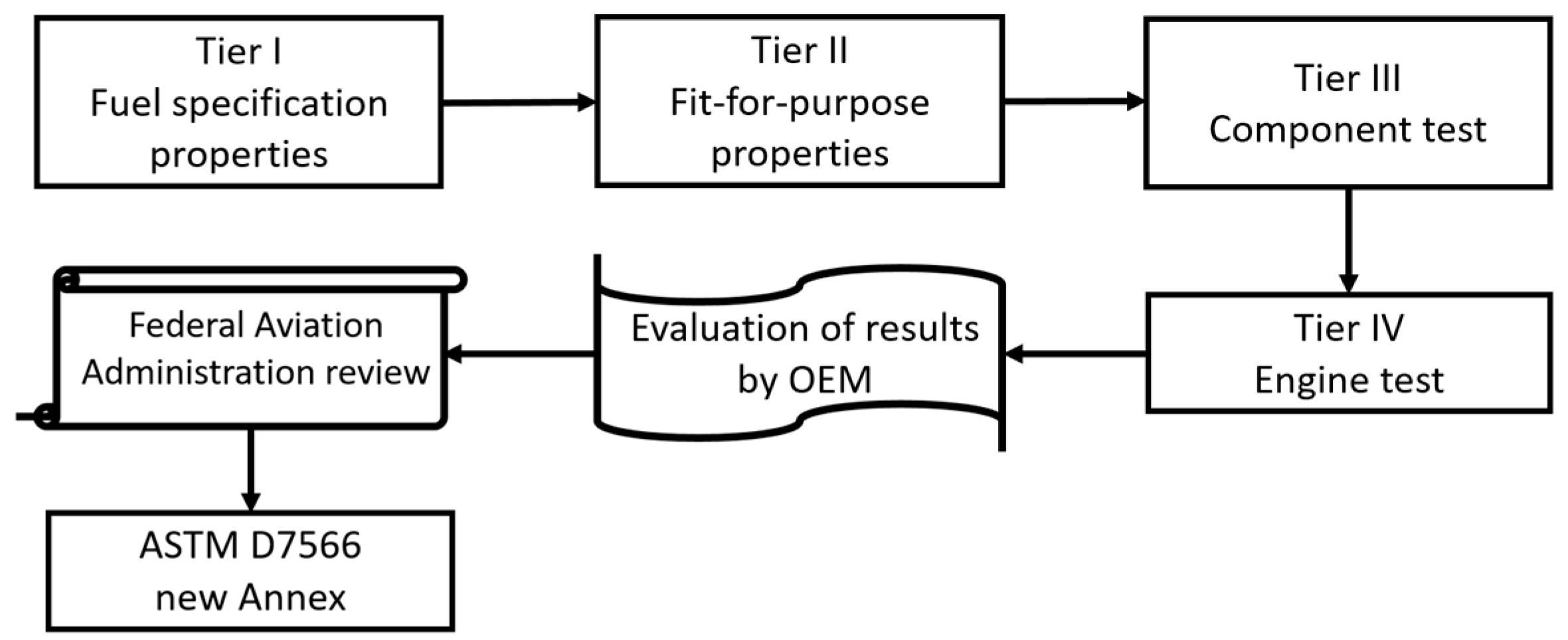
5]. Aviation, however, represents a sector in which the adoption of any new technological solutions necessitates comprehensive testing by aircraft and engine manufacturers, particularly in the case of turbine fuels. The first component produced from non-conventional sources using Fischer–Tropsch (FT) technology was introduced in 2007. To enable its approval for aviation use, ASTM developed a dedicated certification pathway comprising laboratory analyses, component-level testing, and ultimately flight trials. This process, codified in ASTM as D4054 Standard Practice, remains in force to date [
6,
7] (
Figure 1).
According to the current evaluation algorithm, eight technologies for producing jet fuel components from non-petroleum sources have already received approval and are listed in ASTM D7566 [
8]. These components were obtained from pilot-scale installations developed during research projects. The approval procedure is costly and time-consuming, which was acceptable in the early stages of developing biomass-derived jet fuel components, but becomes a significant limitation as their use becomes more widespread. Furthermore, the literature describes numerous fuel components that improve exhaust emissions but cannot be applied in aviation due to their physicochemical properties [
9,
10].
The approved products correspond to specific technological pathways, defined by raw materials, catalysts, and process parameters such as temperature and pressure. In contrast, the annexes to ASTM D7566 refer to process routes more generally, e.g., hydroprocessed esters and fatty acids (HEFAs), FT, etc. This raises the question of whether generalizing test results obtained from a single technology to all fuels derived by a given process pathway is fully justified. The ASTM D7566 procedure assumes that if a product manufactured via the HEFA route meets the annex requirements, it may be used as a jet fuel component. These annexes specify ranges of physicochemical properties based on products from specific pilot technologies. Review papers, such as [
11], emphasize the relationship between production technology and the physicochemical properties of synthetic components approved by the original equipment manufacturer (OEM). The issue of variability in sustainable aviation fuel (SAF) physicochemical properties has also been highlighted in [
12], where correlations of thermophysical properties for fossil jet fuels and SAFs were proposed, alongside the efforts to streamline the approval procedures and reduce associated costs. Similarly, ref. [
13] concluded that it is difficult to correlate the physicochemical properties of jet fuel blends and synthetic components with the engine performance and emissions. Statistical approaches have not yielded satisfactory explanations, but intermolecular interactions—responsible for non-additive behavior—have been suggested as one possible cause, with implications for combustion processes, including kinetics of chemical reactions.
While verifying compliance of fuel components with standard physicochemical requirements is justified for product quality control, it raises doubts when assessing their suitability as jet fuel ingredients [
14,
15]. Another challenge concerns the determination of permissible concentrations of biomass-derived components in aviation turbine fuels. ASTM D7566 annexes specify maximum blending limits for each component. According to ASTM reports, approval testing is conducted on both the neat component and its blend with Jet A-1 at the maximum allowable concentration, while blends containing lower concentrations are not routinely evaluated [
16]. This is sufficient to determine the safety of SAF use, but it seems insufficient to predict the impact of SAF on a number of operational parameters of aircraft engines.
It is also recognized that the key parameters used to assess fuel quality belong to the category of non-additive properties. For certain blends, values deviate from the expected theoretical linear relationships based on component properties and blend composition [
17]. Such deviations are generally considered acceptable if specification limits are not exceeded. Non-additive behavior arises from intermolecular interactions that influence viscosity, distillation characteristics, and density [
18].
Modeling studies further illustrate the importance of this issue. For example, ref. [
19] developed HyChem models for the combustion kinetics of a bio-derived jet fuel and its blends with Jet A. Their results showed good agreement between experiments and model predictions, suggesting additive behavior of the HyChem models. However, measurable deviations were also reported, which became critical when analyzing combustion kinetics.
An increasing body of evidence suggests that intermolecular interactions can influence the kinetics of chemical reactions [
20]. More recent works suggest as well that energy transfer through the molecular structure of the surrounding medium may also affect reaction rates [
21]. Consequently, the intermolecular interactions responsible for deviations from additivity in the physicochemical properties of Jet A-1–synthetic component blends may likewise affect fuel combustion kinetics in turbine engines. The parameters selected in this study, which belong to the non-additive group, influence the physical processes important for combustion, such as atomization, mixing, and evaporation. The research methodology presented below is intended to provide preliminary confirmation of the influence of changes in intermolecular interactions (caused by SAF) in the fuel on the combustion process.
Such effects would directly influence engine performance parameters, including thrust, combustion temperature, and emissions. Although this issue has not been extensively discussed in the literature, it appears to be of considerable significance for both flight safety and engine durability.
This work is novel in linking deviations from additivity in physicochemical properties with combustion kinetics, assessed through activation energy—like parameters in two different turbine engines. The aim of the research described in this paper was to initially confirm that:
Intermolecular interactions that determine deviations from additivity of physicochemical parameters also influence the chemistry of the fuel combustion process in aircraft turbine engines.
Synthetic components alter the intermolecular interactions in fuels.
These changes are responsible for deviations from additivity in the fuel physicochemical parameters and the engine operating parameters. The results of this study may be useful in the future development of a predictive model of the effect of SAF on the engine characteristics. However, such a model is not the subject of this study.
2. Materials and Methods
2.1. Materials
The fuels investigated in this study were prepared using fossil Jet A-1 and synthetic components produced by two different technologies approved under ASTM D7566. The samples were designated as follows:
Conventional jet fuel (batch No. 1)—Jet A-1 (A);
Conventional jet fuel (batch No. 2)—Jet A-1 (B);
Synthetic blending component derived from an ASTM D7566–approved technology—component A;
Synthetic blending component derived from another ASTM D7566–approved technology—component B;
Blend of Jet A-1 (A) with component A (95:5)—A5;
Blend of Jet A-1 (A) with component A (80:20)—A20;
Blend of Jet A-1 (A) with component A (70:30)—A30;
Blend of Jet A-1 (B) with component B (95:5)—B5;
Blend of Jet A-1 (B) with component B (80:20)—B20;
Blend of Jet A-1 (B) with component B (70:30)—B30.
The physicochemical properties with expanded uncertainty of the fuel components used for blend preparation are summarized in
Table 1. The tested fuels were characterized only by those properties that were directly considered in the model calculations and which are known to be non-additive parameters. Moreover, these properties influence the combustion process. The studies included blends containing 0%, 5%, 20% and 30% SAF, which corresponds to the concentration range specified in the ASTM D7566 standard.
Components A and B originated from different technological pathways. Component A consisted of n-paraffinic and iso-paraffinic hydrocarbons. Component B consisted of n-paraffinic, iso-paraffinic, and cyclo-paraffinic hydrocarbons. The components did not contain aromatic hydrocarbons. When introduced into Jet A-1 petroleum fuel, they change the proportions between individual hydrocarbon groups, including a reduction of the aromatic hydrocarbon content proportionally to the synthetic component. This influences the strength and type of intermolecular interactions, but a more in-depth analysis of this phenomenon is beyond the scope of the research described in this paper.
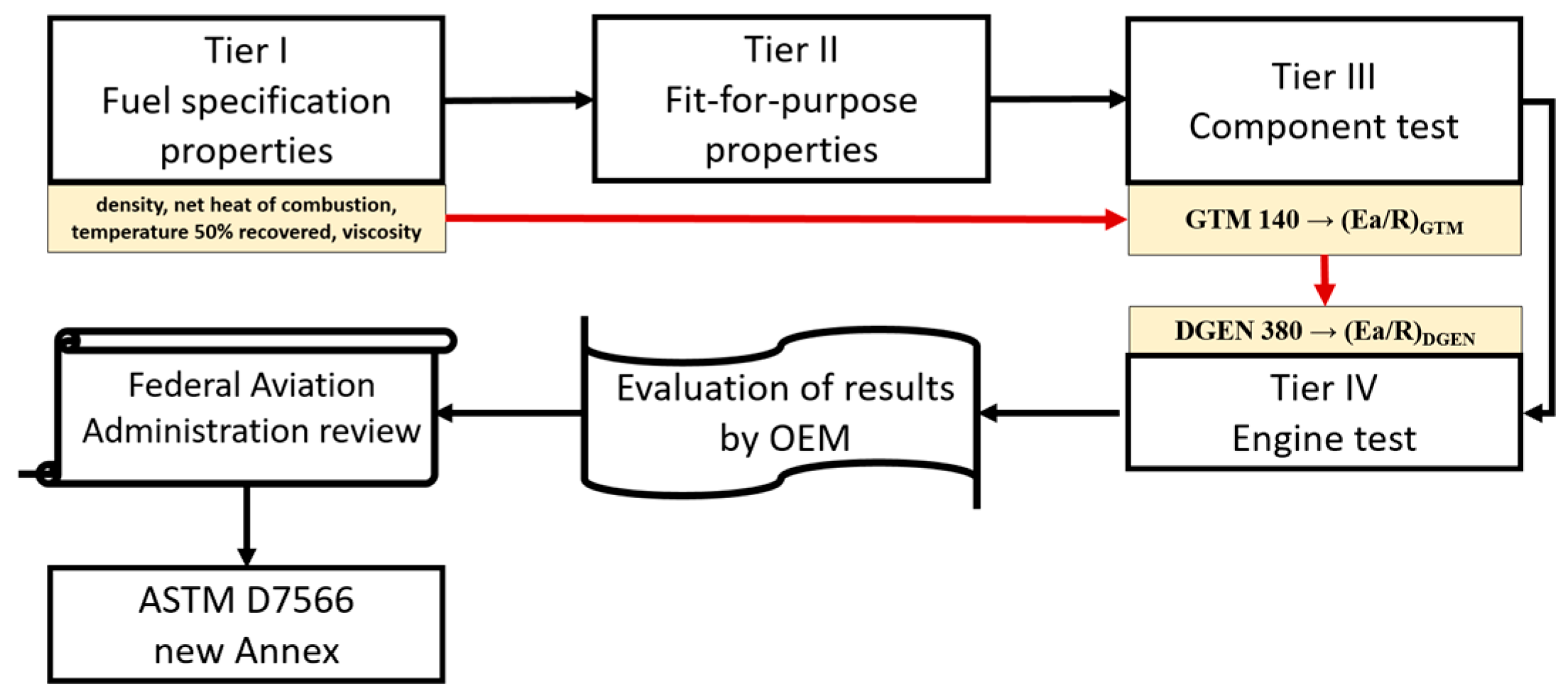
2.2. Methodology of Engine Tests
The research methodology was based on the ASTM algorithm [
3] and is presented in
Figure 2.
In Tier I, physicochemical properties of the prepared blends were determined. Laboratory tests were conducted in accordance with the ASTM D1655 [
22] and ASTM D7566 standards. Non-additive parameters such as viscosity at −20 °C, density at 15 °C, and 50% recovery temperature (T50) were selected. These parameters are representative models of the physical processes governing fuel flow and evaporation.
Although some authors do not classify the net heat of combustion as a physicochemical property, it should be emphasized that this parameter represents a model of chemical reactions during fuel combustion (in contrast to parameters such as viscosity) that describe physical processes. For this reason, the net heat of combustion was also determined. Despite involving combustion, the strict test conditions typically result in its classification as a laboratory property, similar to density or viscosity.
The values of these parameters generally vary in proportion to the concentration of synthetic components in the tested fuels. However, for certain blends, significant deviations were observed, which serve as an indicator of intermolecular interactions. Blending synthetic components with conventional Jet A-1 alters the internal structure of the fuel proportionally to their content.
It was hypothesized that the concentration of the synthetic component should influence the kinetics of the combustion process in turbine engines, with the kinetic parameters expected to vary proportionally with the concentration. Nevertheless, intermolecular interactions within the blends—manifested as deviations in physicochemical parameters—were assumed to be responsible for the corresponding deviations in combustion kinetic parameters such as the activation energy (Ea). Turbine engine tests were performed to validate this hypothesis.
The combustion tests were performed on rigs equipped with the following engines: a miniature GTM 140 engine and a DGEN 380 turbofan engine. The design of the test rigs used for fuel evaluation has been described in detail in the authors’ earlier work [
23,
24]. In accordance with Tier III of the ASTM procedure, both a miniature turbine engine (GTM 140) and a small turbofan engine (DGEN 380) were employed. The methodology for aviation turbine fuel testing has likewise been presented in previous publications [
23].
These engines differ significantly in design, which impacts airflow, fuel consumption, and, consequently, thrust. From the perspective of the research described in this paper, the difference in the fuel system design is significant—the GTM 140 engine is equipped with vaporizers, while the DGEN 380 engine has an injector system.
Thus, deviations from additivity for fuel density and viscosity could affect fuel atomization in the DGEN 380 engine, but this process did not occur in the GTM 140 engine. The only process occurring in both engines was fuel vaporization, but there were also significant differences there: in the GTM 140 engine, vaporization occurred in the vaporizer, while in the DGEN 380 engine, the fuel droplets vaporized in the combustion chamber. These differences were used to develop the methodology of additivity evaluation.
During testing, the engines were operated under defined modes corresponding to selected phases of aircraft engine certification in the Landing/Take-Off (LTO) cycle (e.g., taxi, approach, climb) [
25]. The following parameters were recorded:
The fuel flow in tests on both engines was adjusted to the selected engine speed and was an independent variable. Combustion chamber temperature T, on the other hand, was the result of the heat of combustion of the fuel and was treated as a dependent variable. The measurements of the above parameters for both engines were made during steady-state engine operation, where the stabilization criterion was assumed to be the invariance of engine operating parameters and, additionally, emission parameters over time. Tests on both engines were conducted for each fuel as two independent engine runs. Average values of the measured parameters were used for analysis. Average values were calculated based on 150 results recorded for the engine start-up. The fuel flow error for the GTM-140 engine was ±2% [
26], while the accuracy of this parameter for the DGEN 380 engine was ±0.4 g/s [
27].
2.3. Methodology of Additivity Evaluation
For each parameter, the relationship between its value and the concentration of the synthetic component in the fuel blends was determined. If, for a given parameter, the result corresponding to only one concentration of the synthetic component deviated from the linear dependence established for the other concentrations, the deviation was quantified as the difference between the measured and predicted values.
The non-additive parameters selected for this study were density, 50% recovery temperature, and kinematic viscosity at −20 °C. Each of these properties is influenced by intermolecular interactions; therefore, the detection of non-additivity in each blend indicates the occurrence of interaction effects different from those present in other blends.
The net heat of combustion of the tested blends was assessed analogically to the physicochemical properties. Also in this case, if the result corresponding to only one concentration of the synthetic component differed from the linear dependence established for the other concentrations, the deviation was determined as the difference between the measured and predicted values.
The kinetics of the combustion process of the fuels tested in the GTM 140 and DGEN 380 turbine engines were characterized by determining the activation energy associated with the chain of chemical reactions governing combustion. This approach, which links the complexity of chemical reaction networks to the overall process observed in turbine engine operation, has been described previously [
19].
For the case of complete combustion in the GTM 140 and DGEN 380 engines, the kinetic equation can be expressed as
where mf is the fuel consumption, which can be treated as the fuel combustion rate, k is the reaction rate constant, and C is the fuel concentration in the reaction mixture.
It was assumed that combustion can be treated as a zero-order reaction with respect to fuel. Applying the Arrhenius equation, Equation (1) can be expressed as
where A
mf—entropy term of the Eyring equation, Ea
mf—activation energy of the combustion process, R—universal gas constant, and T—combustion chamber temperature.
Formally, activation energy only makes physical sense for elementary reactions. Complex processes such as fuel combustion in a turbine engine are a set of many elementary reactions, the identification of which is very difficult or even impossible. Therefore, in this study, fuel combustion was assumed to be a single-stage reaction:
Consequently, (Ea/R)mf should be treated as an apparent, empirical combustion-sensitivity parameter rather than a true activation energy, and it should be noted that it captures collective physical and chemical effects. Similar assumptions are used in various computer programs where the fuel is treated as a single chemical compound with a formula derived from its carbon and hydrogen content. This enables the analysis of the combustion process and prediction of, for example, exhaust gas emissions.
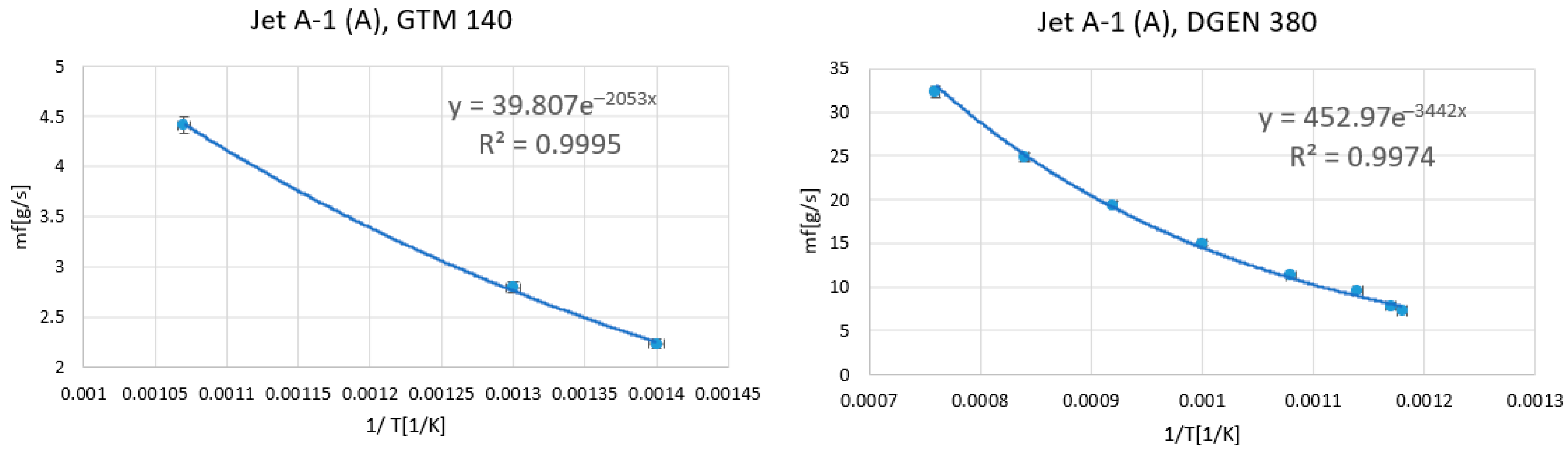
The raw engine test data, mf and T, were determined for each tested fuel and each rotational speed of the engine, each determined for the steady states of engine operation. According to the engine testing methodology for the GTM 140 engine, there were three rotational speeds and eight for DGEN 380. For each fuel, the relationship between m
f and 1/T was determined by the exponential trend line:
where A and b are the constant values for the given fuel and engine test.
Based on Equation (3), these constant values were treated as appropriate for the quantities in the Arrhenius equation: A = A
mf and b = (Ea/R)
mf. These quantities were used in the present research to describe the influence of the fuel chemistry on the kinetics of the combustion process.
Figure 3 below shows examples of trend lines determined for Jet A1 mineral fuel in the tests performed on the GTM 140 and DGEN 380 engines.
A similar methodology has been described in the authors’ previous publications [
19]. For both engines, the relationship was evaluated between (Ea/R)
mf and the concentration of synthetic components in the tested blends. If, for a given parameter, the result corresponding to only one concentration of the synthetic component deviated from the linear dependence established for the other concentrations, the deviation was quantified as the difference between the measured and predicted values.
The assessment of intermolecular interactions on the kinetics of chemical combustion reactions was conducted in three stages:
- -
In the first stage, the effect of the SAF component concentration on the (Ea/R)mf value was determined.
- -
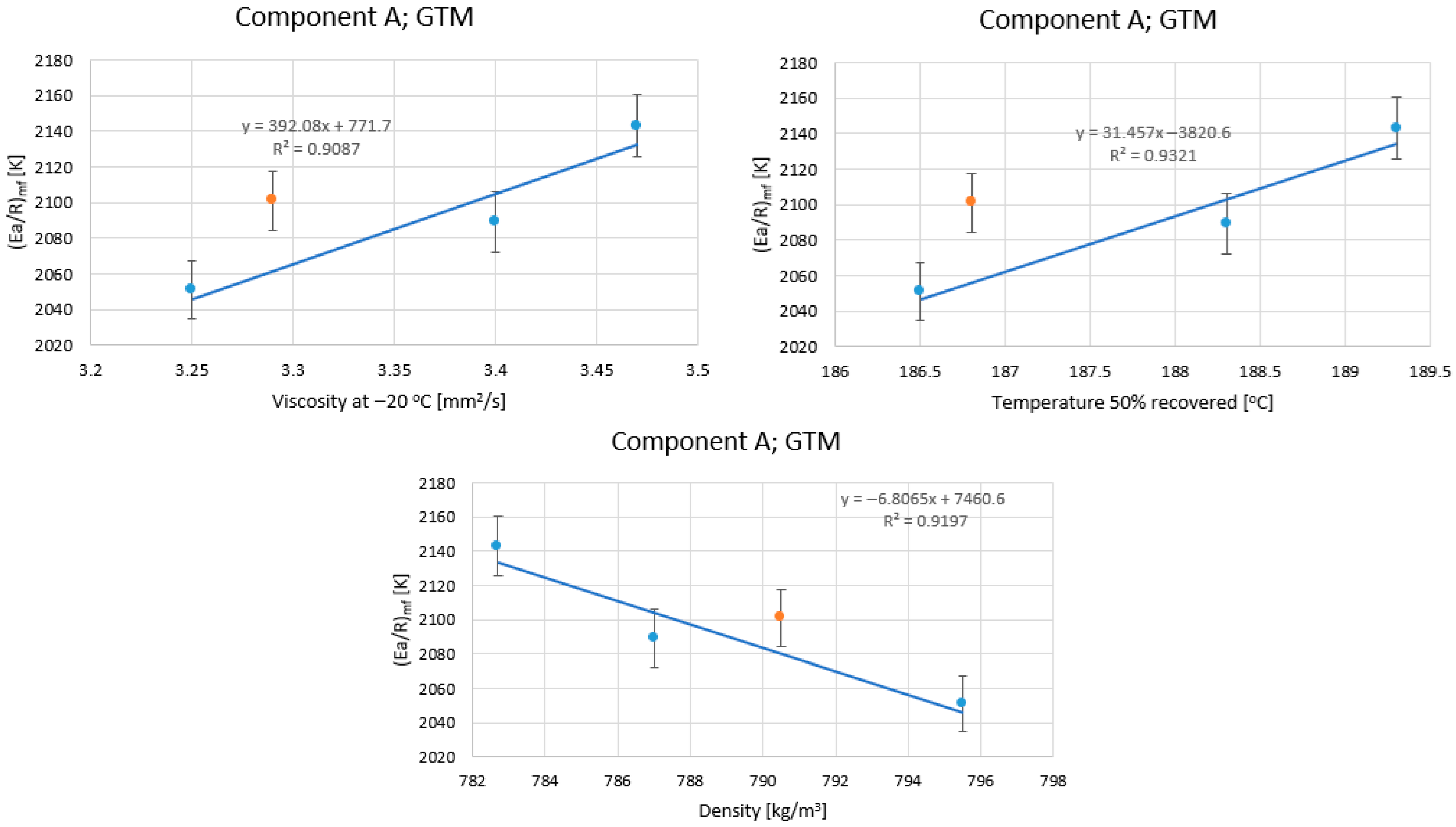
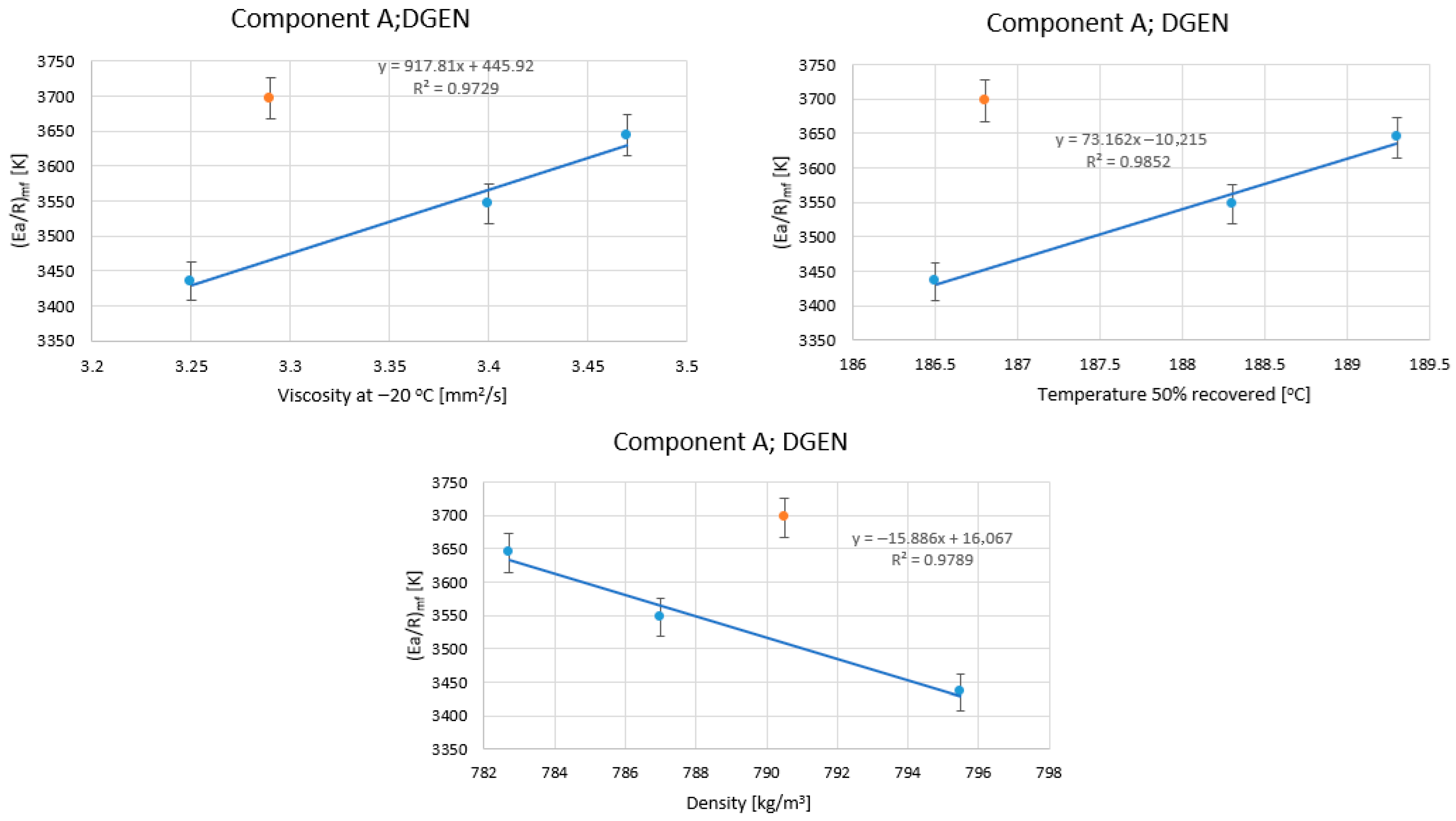
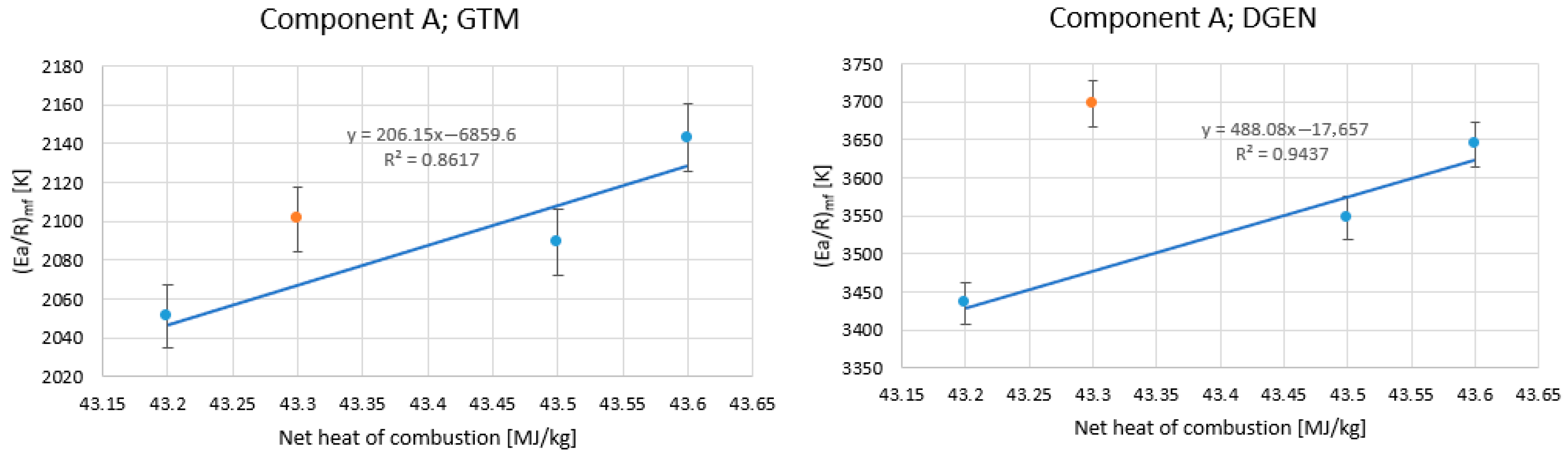
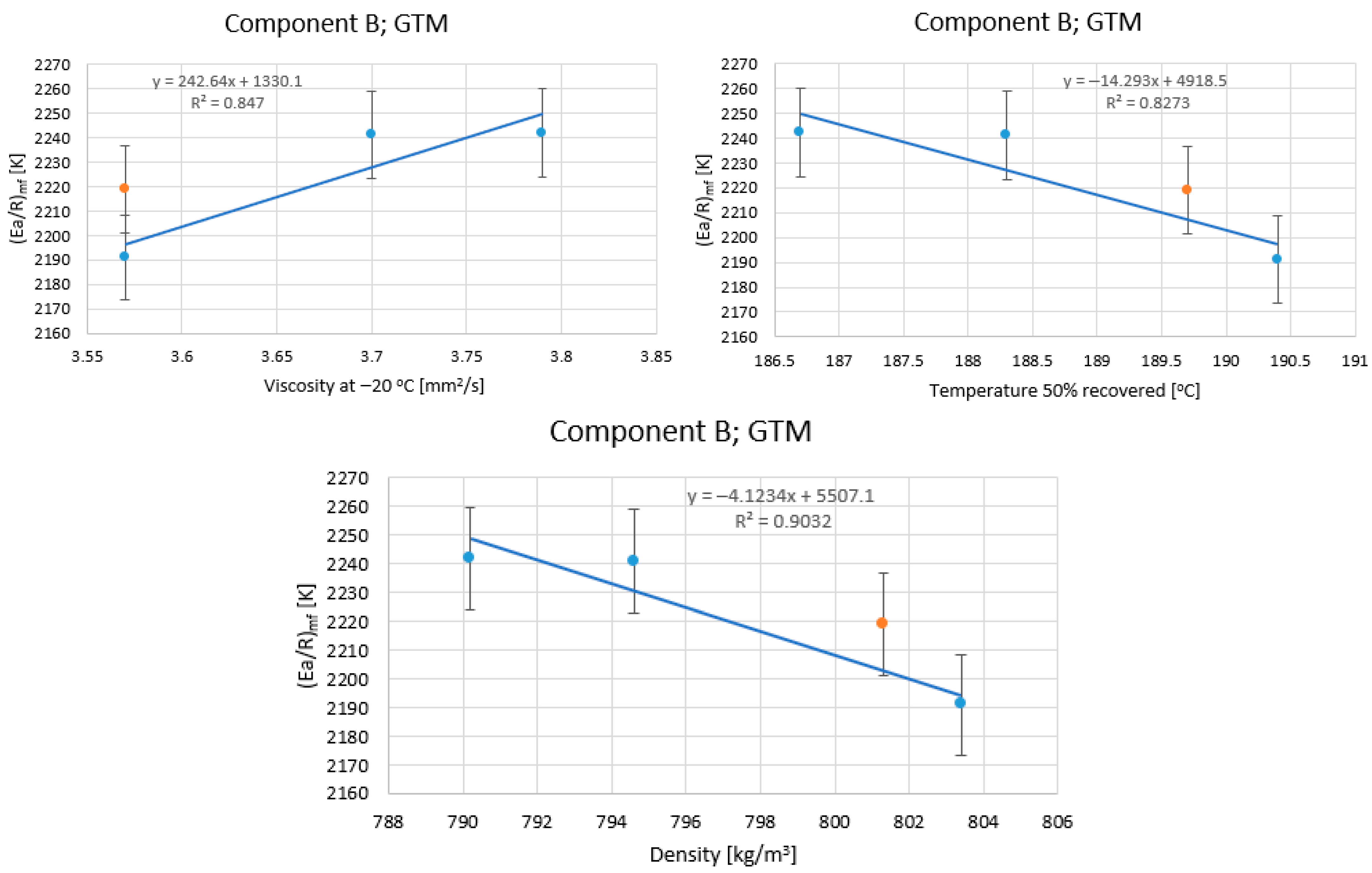
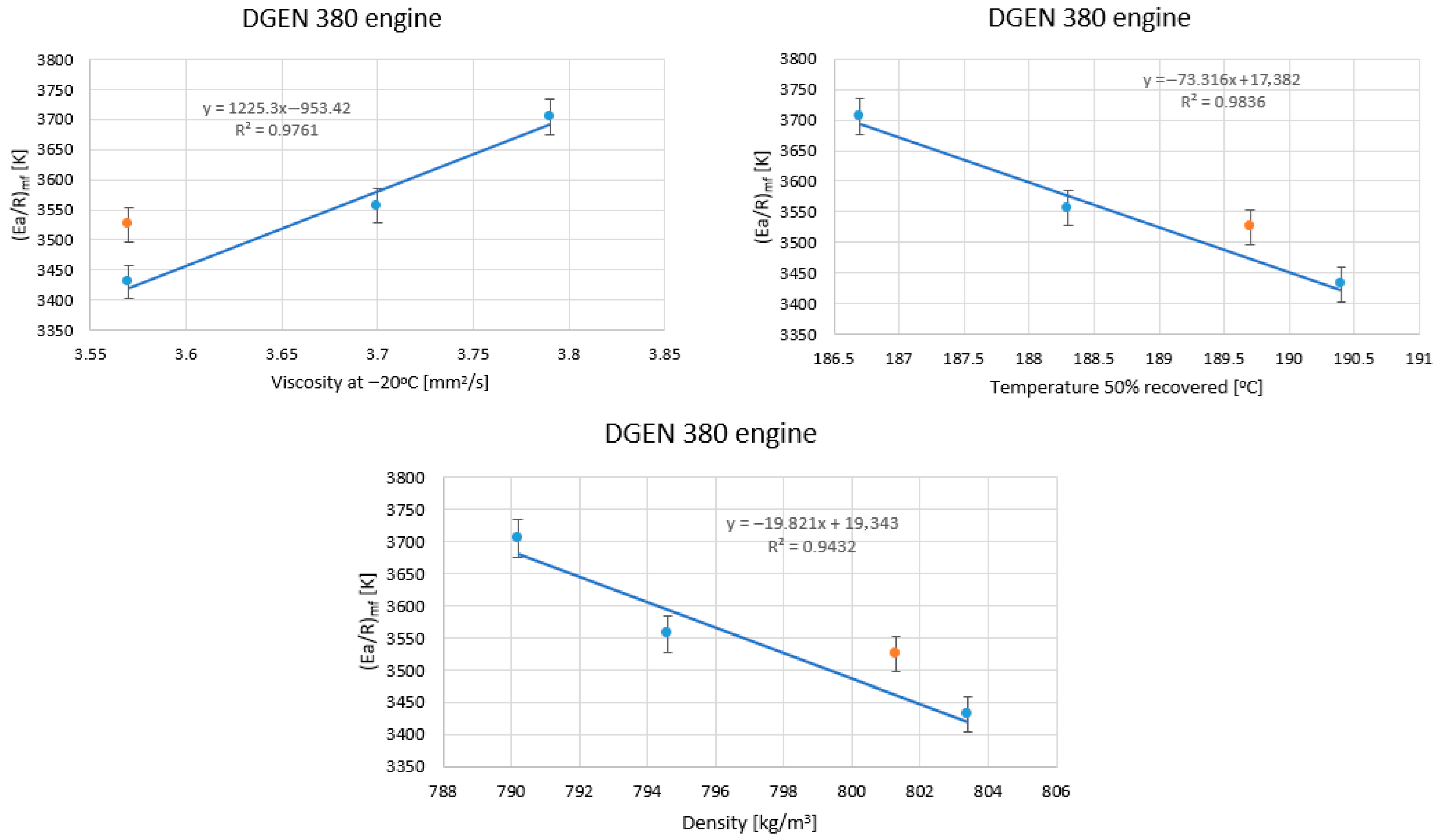
In the second stage, the effect of the physicochemical parameters selected for this study on the (Ea/R)mf value was examined. These parameters undoubtedly influence the physical processes, i.e., atomization in the DGEN 380 engine and fuel evaporation in both engines. It was assumed that if a linear relationship between the (Ea/R)mf value and a given parameter was obtained, then the (Ea/R)mf value was significantly influenced by the physical processes preceding the chemical combustion reactions. However, if a deviation from the linear relationship was observed for a given fuel, this can be considered a strong argument in favor of the thesis that the SAF component introduced in a specific concentration into Jet A1 fuel disrupted the course of the chemical combustion reactions.
- -
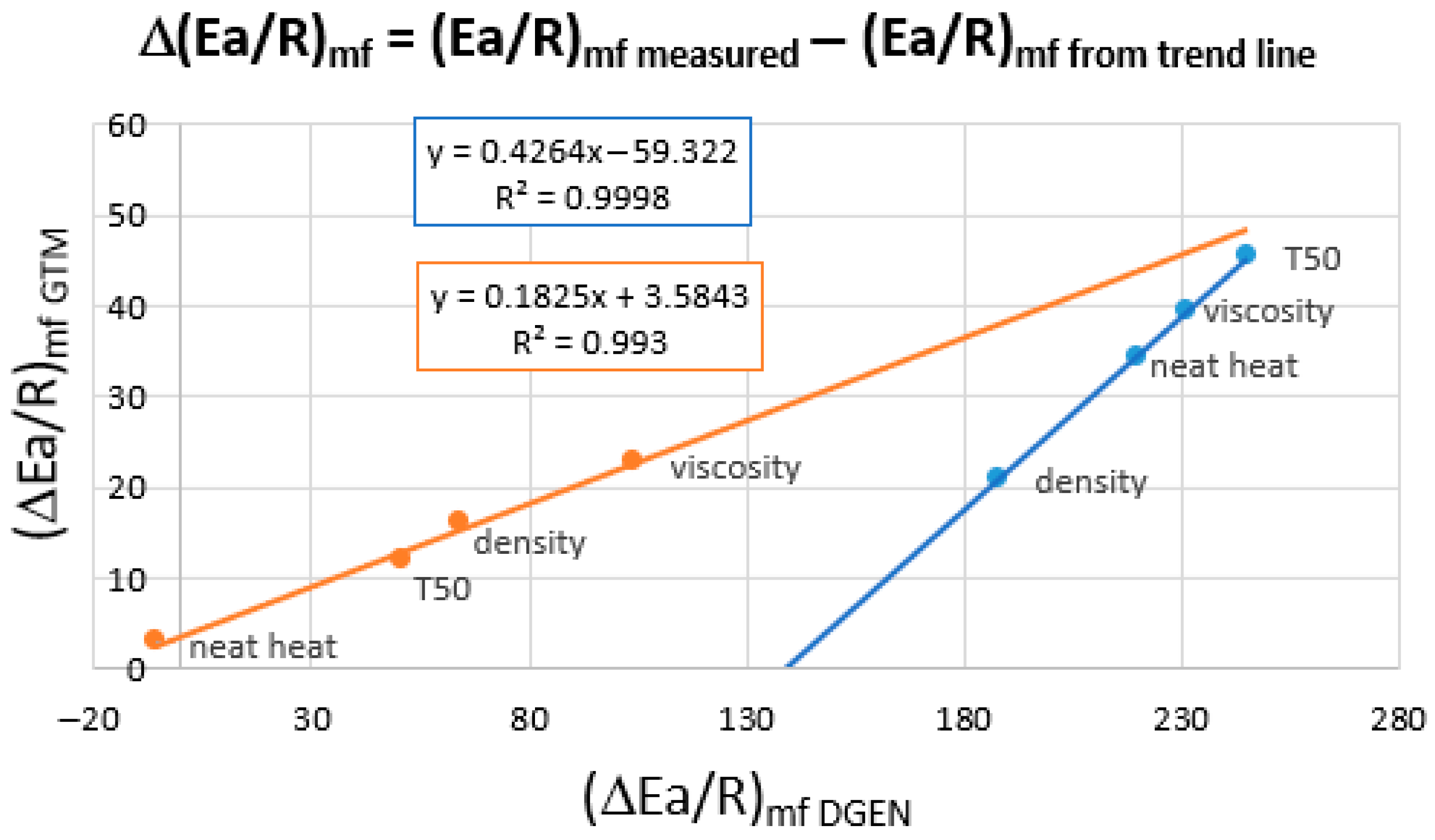
The third stage was a comparison of deviations from linearity for (Ea/R)mf determined for the GTM 140 and DGEN 380 engines. Obtaining a linear relationship between the deviation for the GTM 140 engine and that obtained for the DGEN380 engine was considered a strong argument confirming the thesis that the observed deviations from additivity for fuel containing a specific concentration of the SAF component indicated disturbance in the chemical combustion reactions.
A complete assessment of the influence of intermolecular interactions on the chemical course of combustion reactions would require significantly more in-depth research into the degree of non-ideality of the liquid phase. However, this is beyond the scope of the research described here. At this stage, it has been deemed sufficient that certain blends of synthetic and mineral fuels may exhibit the characteristics of non-ideal fluids, with all the consequences for engine operation.
A complete assessment of the influence of intermolecular interactions on the combustion process, however, would require obtaining data on the chemical composition and degree of non-ideality of the tested liquids (fuel blends). However, the adopted methodology allows preliminary conclusions regarding the impact of the interaction of components A and B on the combustion process.
3. Results
Table 2 shows the results of the selected physicochemical properties of the tested fuel blends. The physicochemical properties presented in
Table 2 were tested in an accredited laboratory in accordance with the following standards: density—ASTM D 4052 [
28], viscosity at −20 °C—ASTM D 445 [
29], distillation—ASTM D 86 [
30], net heat of combustion—ASTM D 3338 [
31]. The uncertainty of a given parameter was given in the relevant standard.
The results of the engine tests (
Table 3 and
Table 4) for the fuel blends are presented below. The values of the measured parameters, fuel flow and combustion chamber temperature, for both engines come from the steady-state engine operation.
4. Discussion
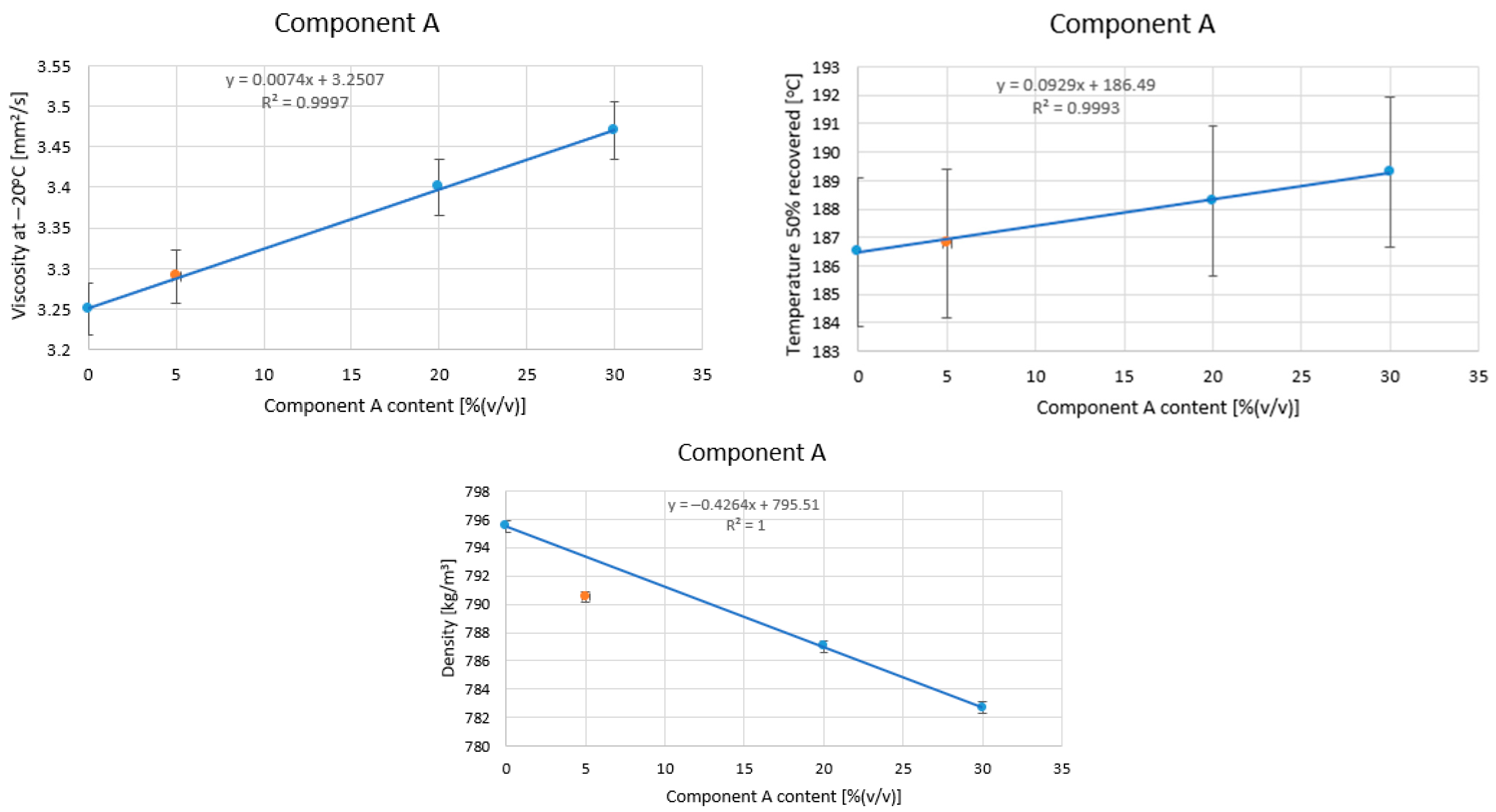
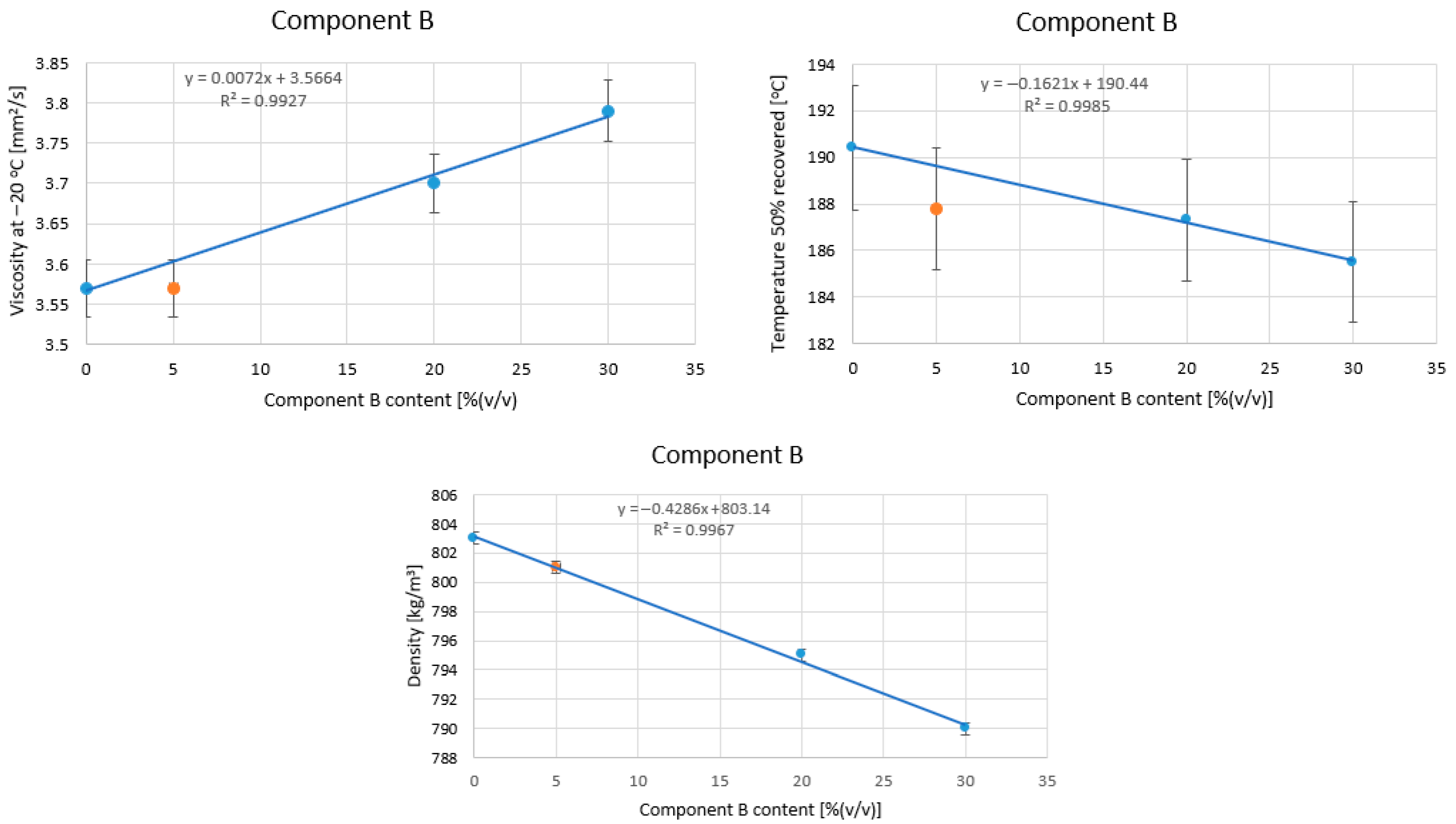
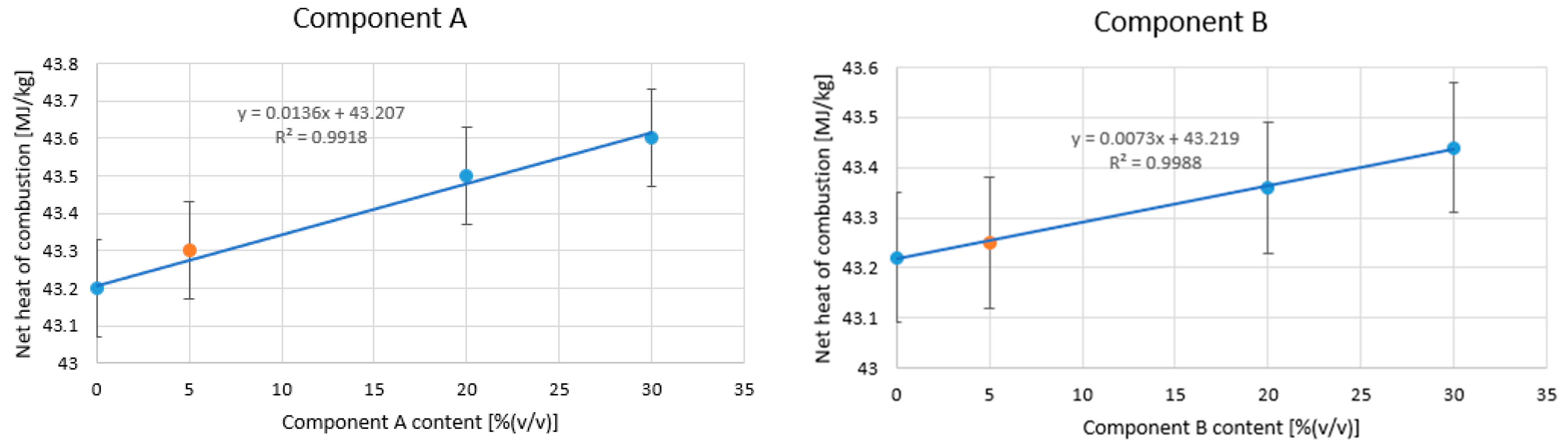
In accordance with the described methodology, the measurement results of the physicochemical properties were presented as a function of the synthetic component content in the blends. The resulting relationships have been shown in
Figure 4,
Figure 5 and
Figure 6. The values obtained for blends containing 5% components A and B are marked in orange.
The presented results indicate a deviation from additivity observed for the A5 blend, which was particularly conspicuous for the parameter of density.
The dependence of the tested physicochemical parameters on the synthetic component indicates the following:
In the case of component A, the values obtained for the A5 deviate from the linear dependency obtained for the other blends of this component; this is particularly visible for density.
In the case of component B, the values obtained for the B5 deviate from the linear dependency obtained for the other blends of this component; this is particularly visible for 50% recovery temperature.
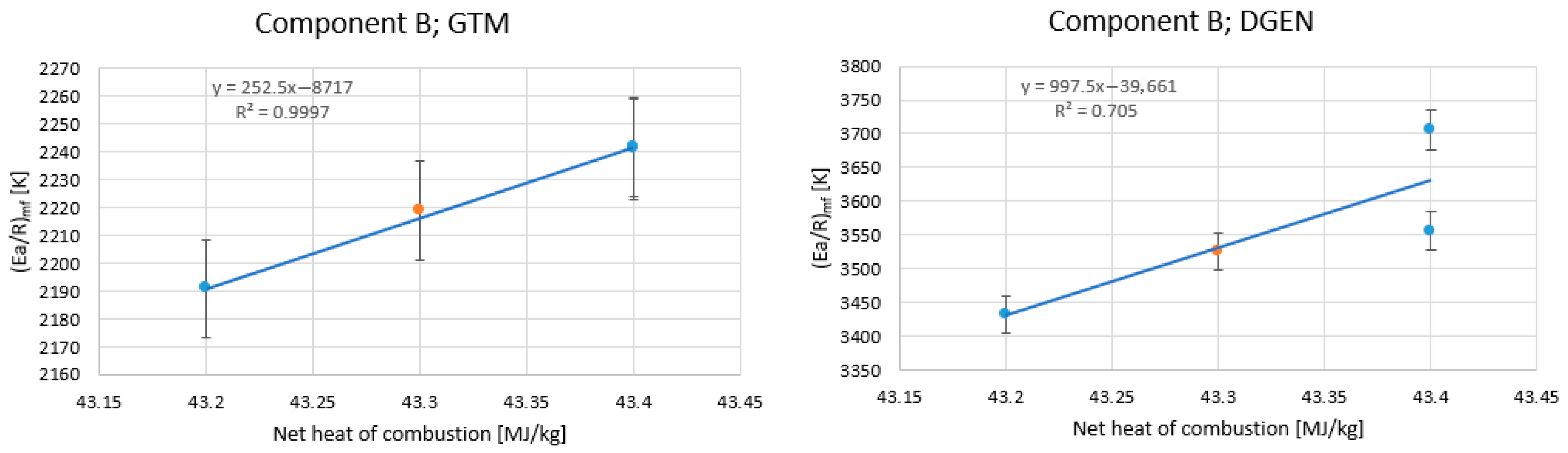
Similar dependences were obtained for the net heat of combustion.
The dependence of the net heat of combustion on the synthetic component shows the following:
For component A, the values obtained for the A5 blend deviate from the linear relationship established for the other blends containing this component.
For component B, the values obtained for the B5 blend deviate from the linear relationship established for the other blends containing this component.
The same blends, i.e., A5 and B5, exhibited deviations from additivity with respect to both net heat of combustion and physicochemical properties.
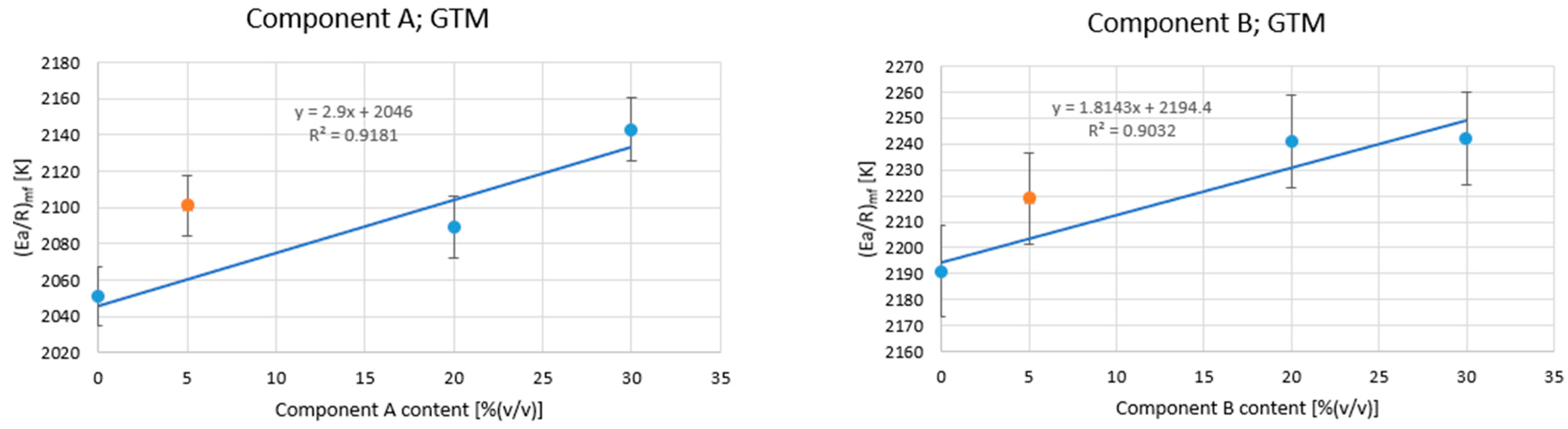
According to the research methodology described above, the GTM 140 engine tests enabled the determination of the activation energy of the combustion process, expressed as (Ea/R)
mf, for each tested blend. The dependence of the activation energy on the content of component A in the fuel was established. The results of this analysis are presented in
Figure 7.
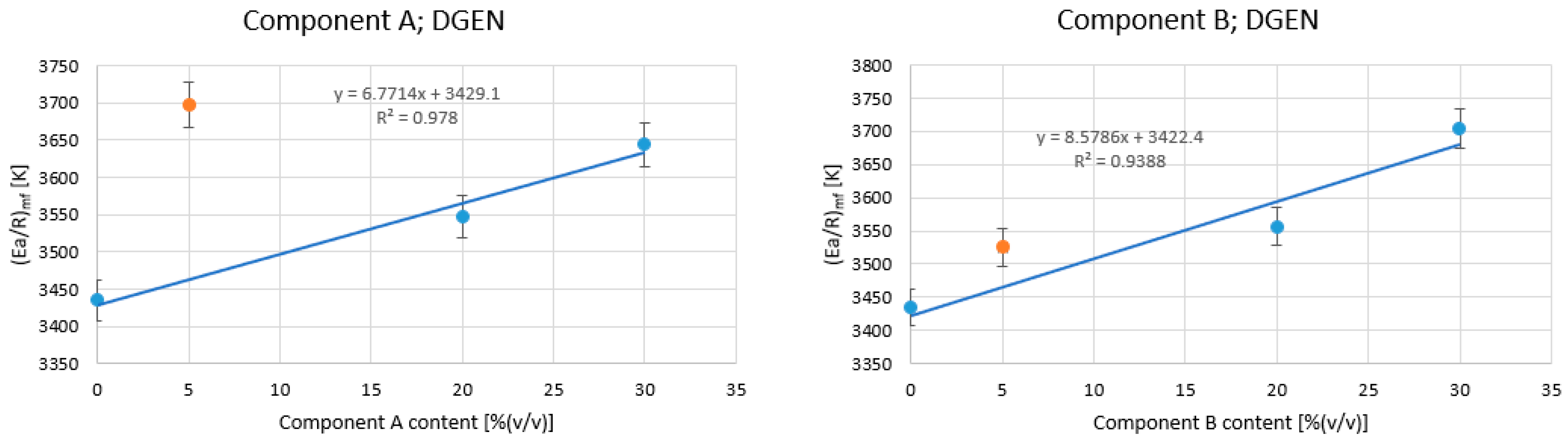
Similarly, based on the DGEN 380 engine tests, the values of the activation energy of the combustion process, expressed as (Ea/R)
mf, were determined for each tested blend. The dependence of the activation energy on the content of component A in the fuel was assessed. The results of the study on the relationship between the activation energy and the content of the synthetic component in the fuel are presented in
Figure 8.
The blend containing 5% (v/v) of component B deviated from the linear relationship observed for the other blends. This finding was consistent with the deviations identified for the same blend in the analysis of physicochemical properties and the net heat of combustion.
The magnitude of deviation from linearity can be treated as a measure of intermolecular interactions. To validate the hypothesis that these interactions (which drive non-additive behavior in physicochemical properties) also influence the deviation in activation energy during combustion in GTM 140 and DGEN 380 engines, the relationships between (Ea/R)mf and physicochemical properties were analyzed. If structural changes induced by the synthetic component affect both physicochemical properties and the combustion behavior in a similar manner, a linear relationship between these properties and (Ea/R)mf should be observed. Conversely, deviations from linearity would indicate distinct structural effects in the blends.
For Jet A-1 (A), A20, A30 and Jet A-1 (B), B20, B30 linear trend lines were established. The measured results for A5 and B5 were compared against these baselines, and the deviations Δ(Ea/R)
mf were determined accordingly.
It should be emphasized, however, that the obtained results were determined for a limited number of mixtures. Further research aimed at gradually increasing the content of sustainable components in aviation fuels (up to 100%) should confirm this across a wider range of component A and B concentrations.
Then, the Δ(Ea
mf/R)
mf values determined for the GTM 140 engine were compared with the values obtained for the DGEN 380 engine. The result is shown in
Figure 15.
The following relationships were derived:
Both dependencies were linear; however, for component A, the impact of intermolecular interactions on the combustion process in GTM 140 and DGEN 380 engines differed from that observed for component B.
These results confirmed the hypothesis that intermolecular interactions, which lead to deviations from additivity in physicochemical properties, also determine the magnitude of deviations in the activation energy of the combustion process in both turbine engines. Consequently, the study demonstrated that introducing synthetic components into conventional Jet A-1 fuel alters the internal structure of the blends through modifications in the nature and intensity of intermolecular interactions. For most blending ratios, these changes were proportional to the content of the synthetic component. However, at certain concentrations, notably 5% (v/v) for both component A and component B, the interactions become disproportionate to the component concentration. This manifests as deviations from linearity observed in non-additive physicochemical properties, net heat of combustion, and combustion kinetics in GTM 140 and DGEN 380 turbine engines.
The above conclusions, supplemented with a broader analysis of the composition of the tested fuels, will enable a deeper interpretation of the obtained results, primarily by assessing the impact of intermolecular interactions on the combustion process.
5. Conclusions
The results of the current study provide preliminary validation of the hypothesis that intermolecular interactions influencing selected physicochemical properties also affect the kinetics of the fuel combustion process. This applies both to the net heat of combustion determined under laboratory conditions and to the operation of the GTM 140 miniature turbine engine and the DGEN 380 turbofan engine.
The intention of the paper was to signal the importance of the influence of synthetic components on changes in intermolecular interactions in the fuel and, consequently, on combustion kinetics.
It was demonstrated that the addition of synthetic components into Jet A-1 fuel modified its internal structure by altering intermolecular interactions. In most blends, these changes were proportional to the concentration of the synthetic component, whereas at specific concentrations—most notably at 5% (v/v)—the response deviated from proportionality.
A kinetic description of the combustion process, expressed in terms of the activation energy—like parameter (Ea/R)mf, was determined experimentally for each tested blend. In general, (Ea/R)mf varied proportionally with the content of the synthetic component, but clear deviations were observed for blends containing 5% (v/v). These deviations corresponded with those identified for physicochemical properties and net heat of combustion. Furthermore, for both turbine engines, the activation energy values were proportional to the values of the physicochemical properties, except for the 5% (v/v) blends. The deviations obtained for the GTM 140 and DGEN 380 engines were found to follow distinct linear dependencies, differing between the synthetic components.
The study highlights the usefulness of kinetic parameters—particularly (Ea/R)mf—in evaluating the impact of synthetic components on turbine engine performance. These parameters constitute a practical and informative tool for identifying unexpected combustion behaviors in blends of petroleum-derived and synthetic fuels.
It should be emphasized that the present investigation is preliminary. The conclusions drawn here require validation through studies involving a broader range of synthetic components. Moreover, future research should seek to directly link turbine engine operating parameters with kinetic descriptors of the combustion process.
This paper does not determine the structure and strength of intermolecular interactions, but the authors see the need to continue research in this direction. Additionally, for future research, the Eyring–Polany equation seems more appropriate, where the activation energy will be replaced by the activation enthalpy, and the constant value A will contain the entropic factor.