Article

From Grid Burden to Grid Resource: A Monte Carlo Framework for Vehicle-to-Building-to-Grid Flexibility in a Regional Distribution Network


1
Research Center in Business and Economics (CICEE), Universidade Autónoma de Lisboa, 1169-023 Lisboa, Portugal
2
Higher Institute of Business and Tourism Sciences, 4050-180 Porto, Portugal
3
School of Engineering, Polytechnic Institute of Porto, 4249-015 Porto, Portugal
4
Centro de Inovação em Engenharia e Tecnologia Industrial School of Engineering (CIETI), Polytechnic Institute of Porto, 4249-015 Porto, Portugal
*
Author to whom correspondence should be addressed.
Energies 2026, 19(18), 4413; https://doi.org/10.3390/en19184413 (registering DOI)
Submission received: 28 August 2026 / Revised: 9 September 2026 / Accepted: 10 September 2026 / Published: 18 September 2026

Abstract

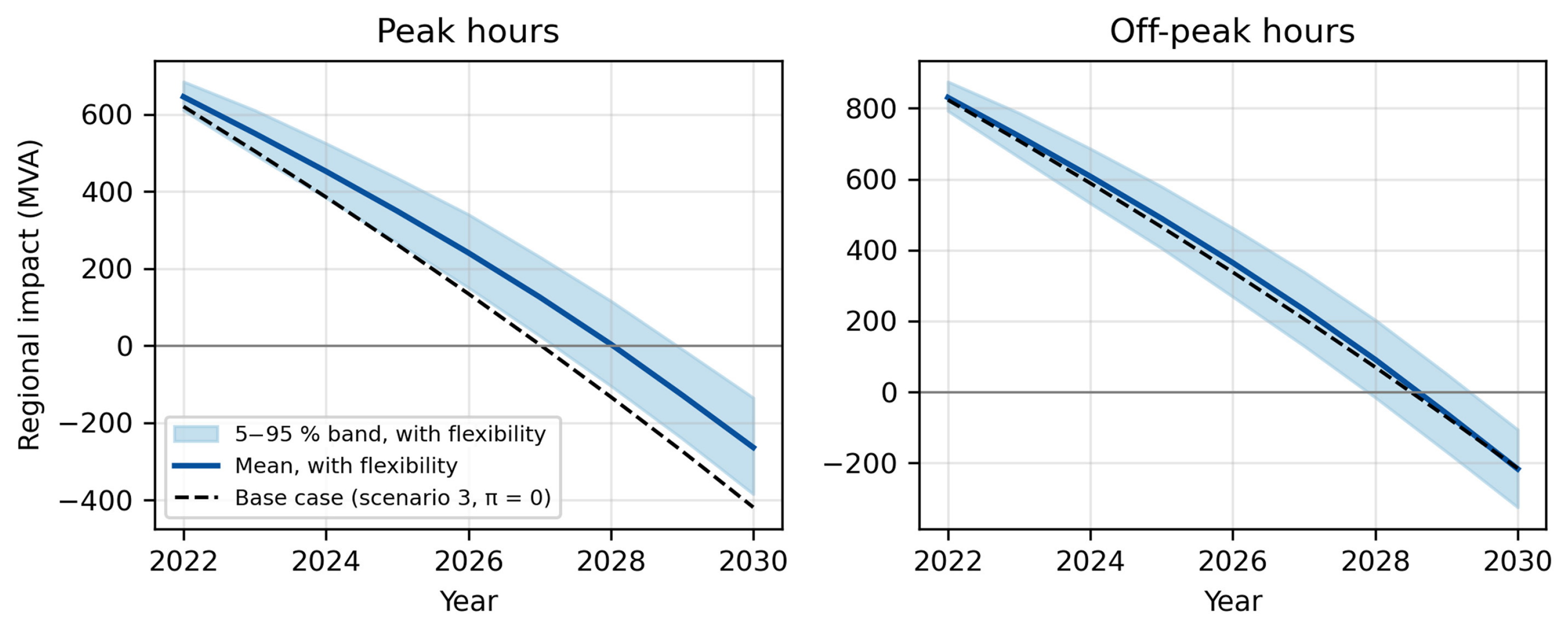
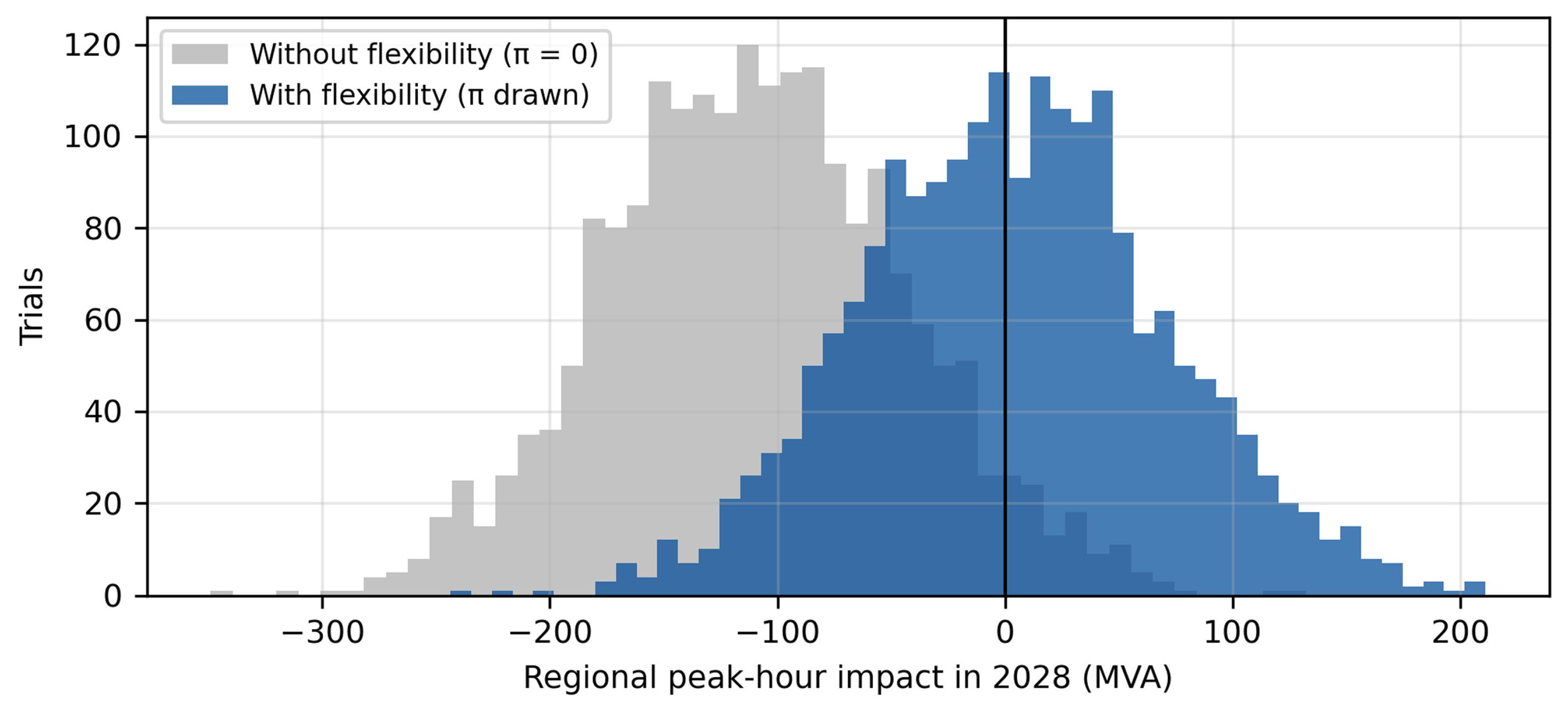
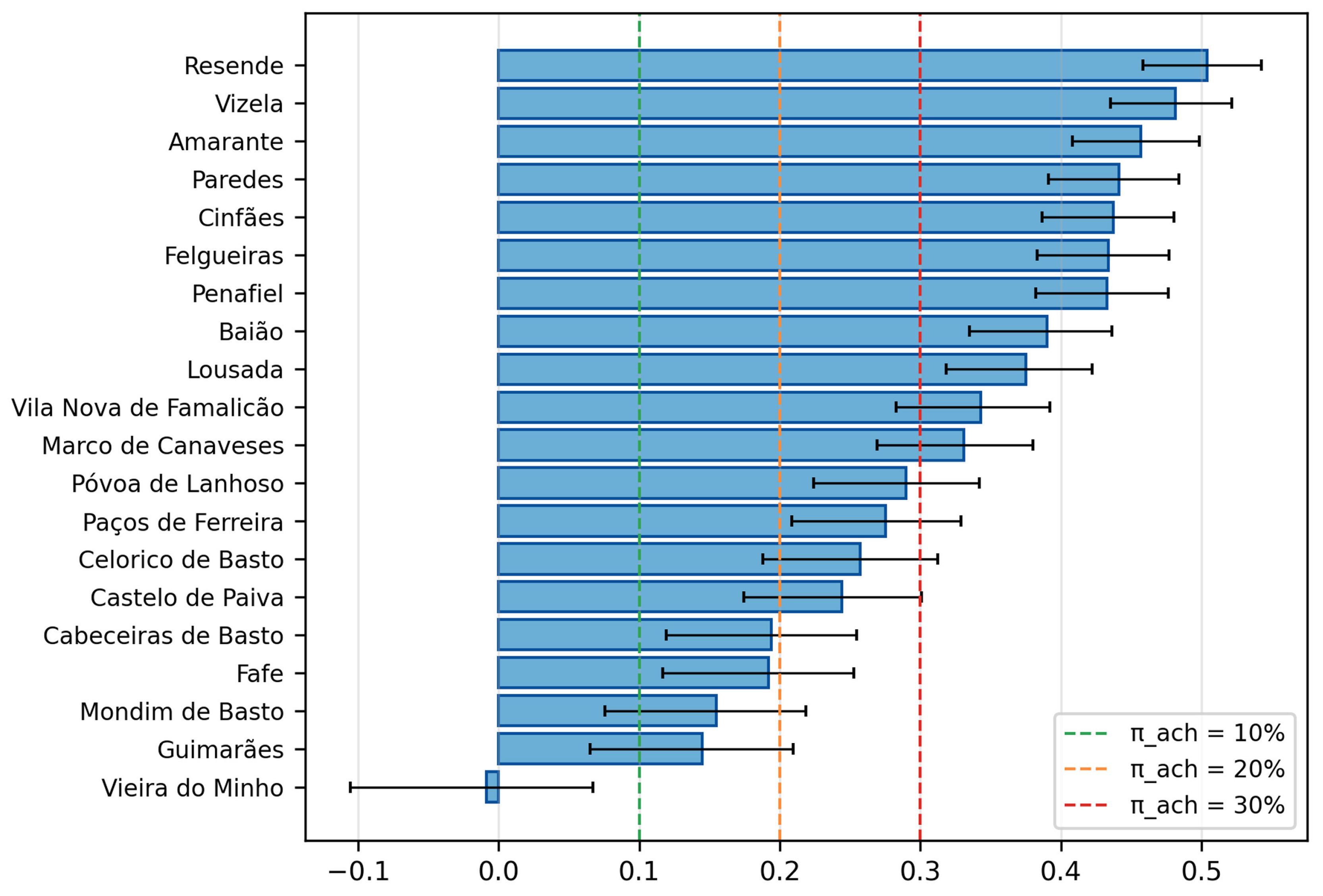
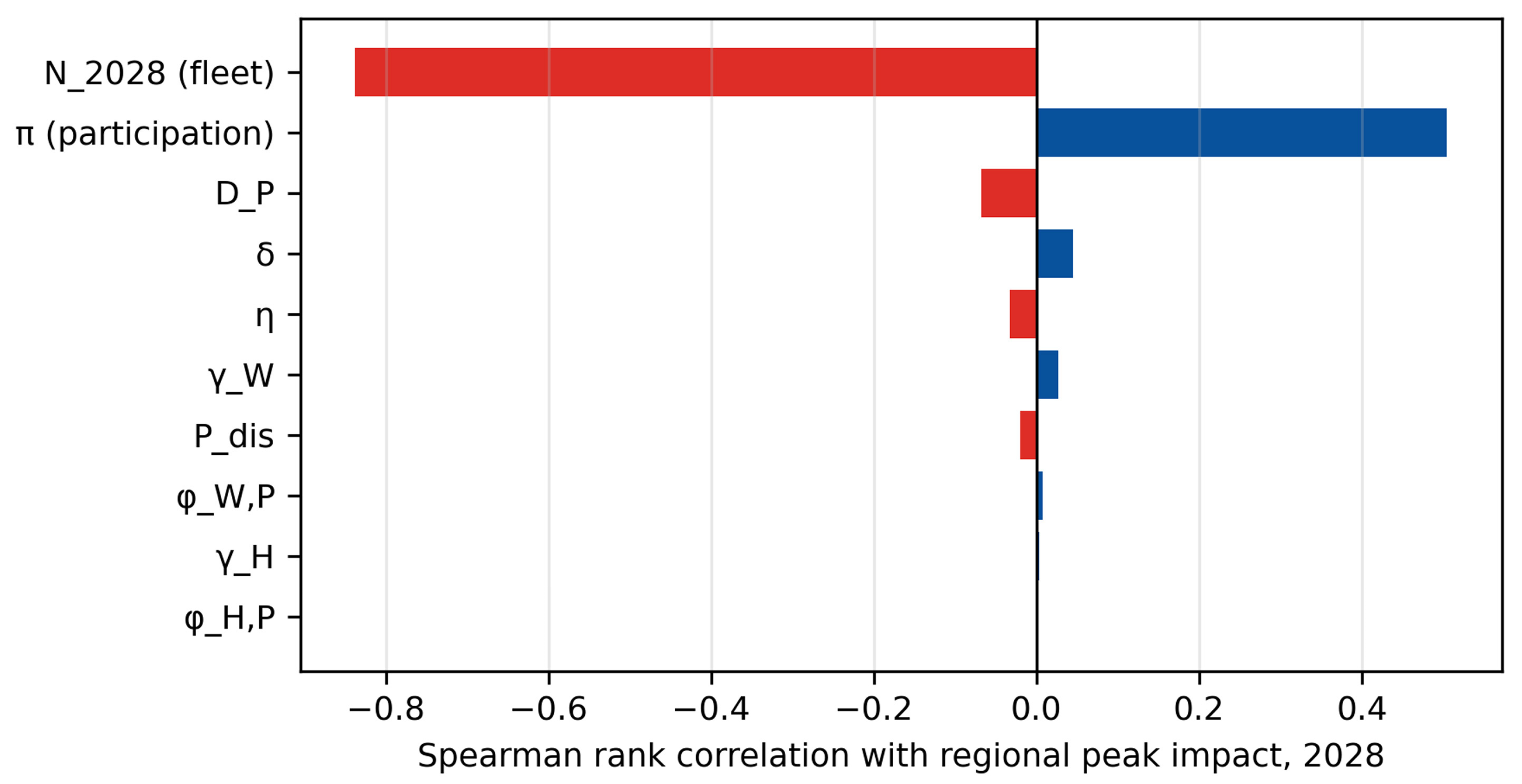
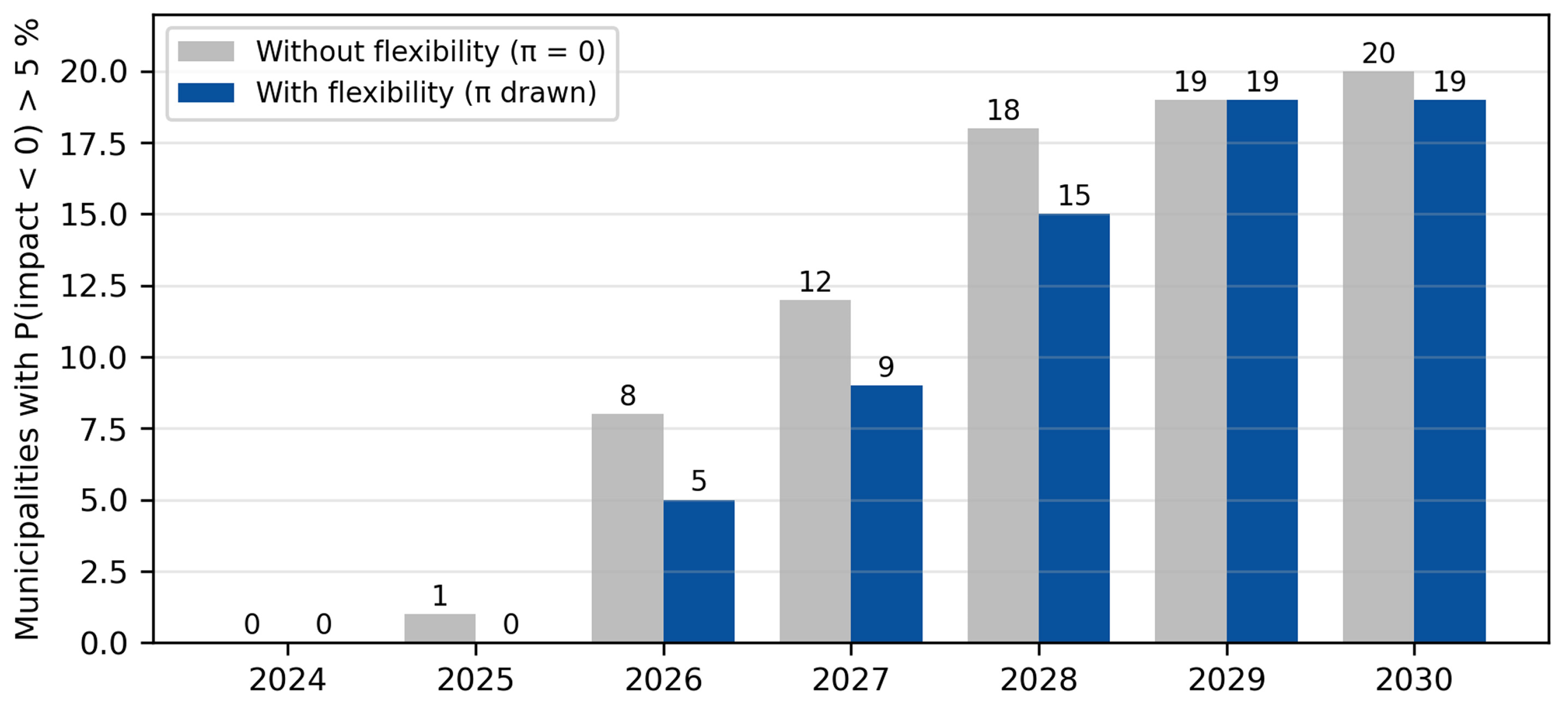
Grid-impact studies treat battery electric vehicles as loads, and ask when network capacity will be exhausted. This paper reverses the question: how much of the fleet must operate bidirectionally, and with what probability will an achievable participation rate suffice, for the network to remain within its limits? A conceptual framework adds a vehicle-to-grid and vehicle-to-building flexibility term to the balance between available and required power, nests the authors’ earlier deterministic model for twenty municipalities in Northern Portugal as its zero-flexibility special case, derives a closed-form break-even participation rate per municipality and year, and keeps the simultaneity assumption of that model explicit as a coincidence factor. Participation, location, plug-in and export parameters follow beta-PERT distributions calibrated on published trials and surveys, propagated by Monte Carlo simulation without new field data. The framework is an apparent-power balance per municipality, so its outputs are an upper bound on usable flexibility, not a feeder-level feasibility check. An enrolled vehicle provides about 11 kVA of peak relief, over nine tenths from not charging rather than exporting. Under worst-case simultaneity, observed participation rates, if in place from the outset, halve the 2028 shortfall probability but cannot prevent shortfall by 2030; under realistic coincidence the regional network is not constrained and only eight of twenty municipalities remain critical. The network balance is replicable wherever municipal substation data exist; behavioural parameters require local calibration.
Keywords: vehicle-to-building-to-grid; V2G; V2B; battery electric vehicles; distribution grid; Monte Carlo simulation; energy management; digital twin; smart buildings vehicle-to-building-to-grid; V2G; V2B; battery electric vehicles; distribution grid; Monte Carlo simulation; energy management; digital twin; smart buildings