Article

Seasonal Soiling Rates and Cleaning Optimization for PV Systems in Saudi Arabia: Arar Desert Climate


by
Fahad Radhi Alharbi
Department of Electrical Engineering, College of Engineering, Northern Border University, Arar 73222, Saudi Arabia
Energies 2026, 19(18), 4373; https://doi.org/10.3390/en19184373
Submission received: 30 July 2026 / Revised: 9 September 2026 / Accepted: 11 September 2026 / Published: 15 September 2026
(This article belongs to the Section A2: Solar Energy and Photovoltaic Systems)

Abstract

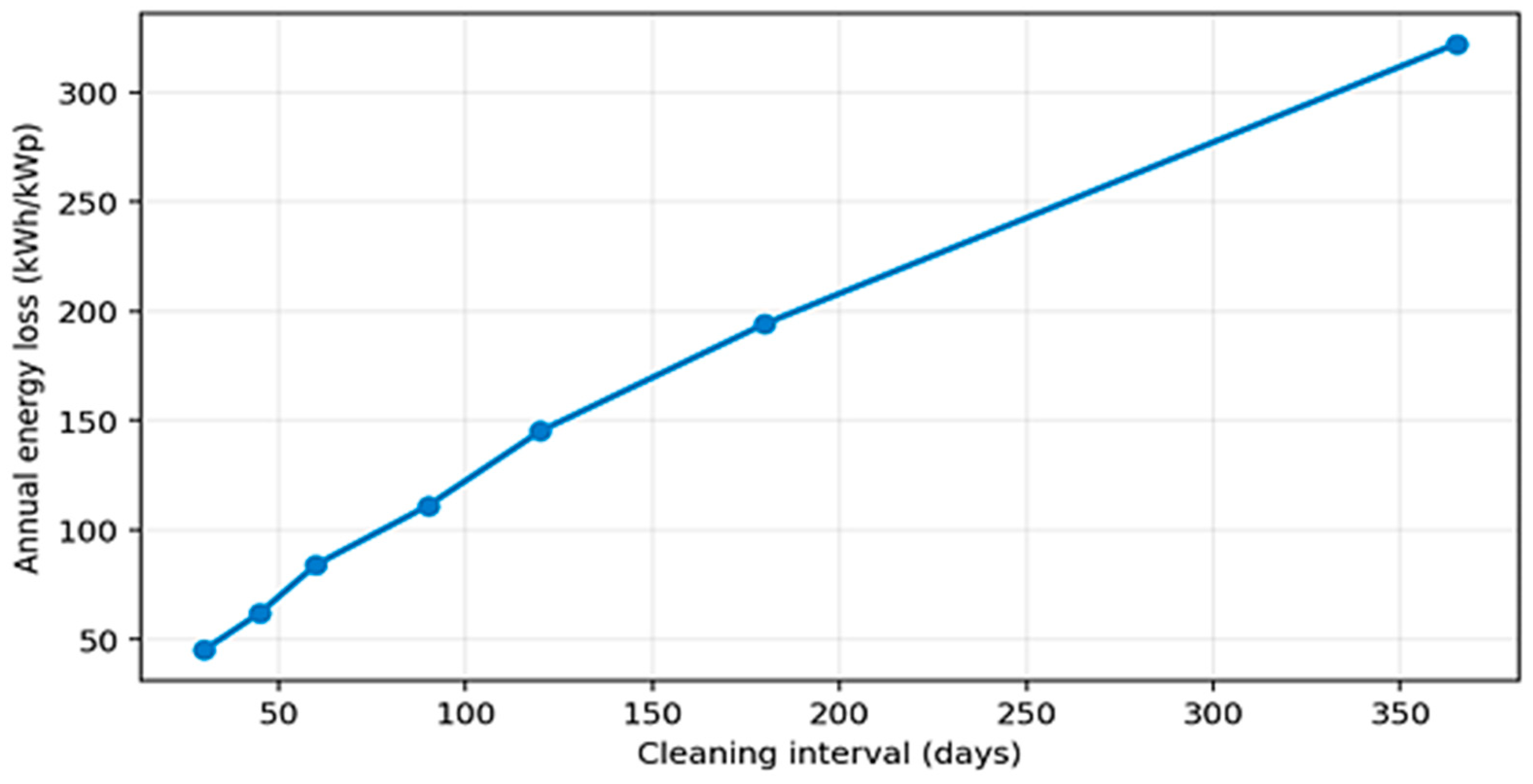
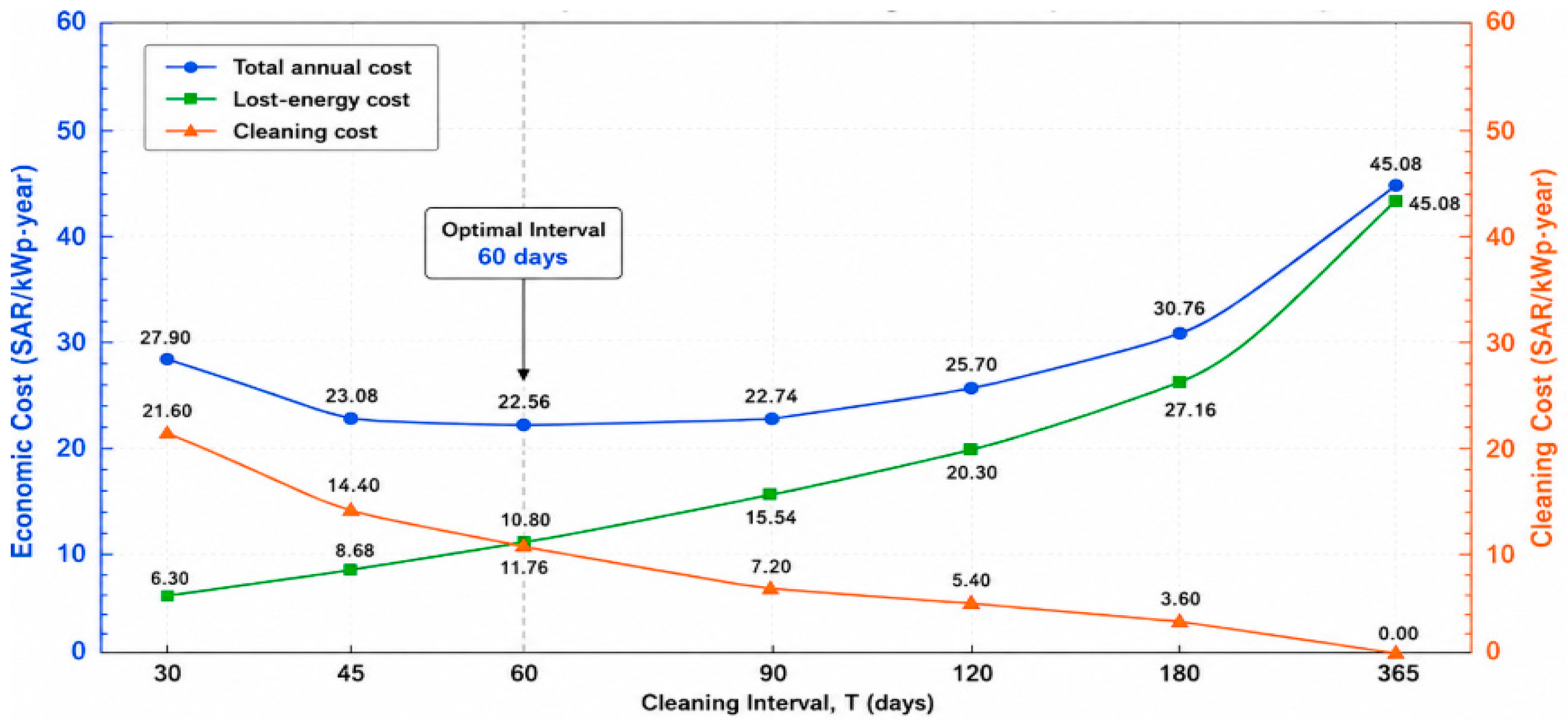
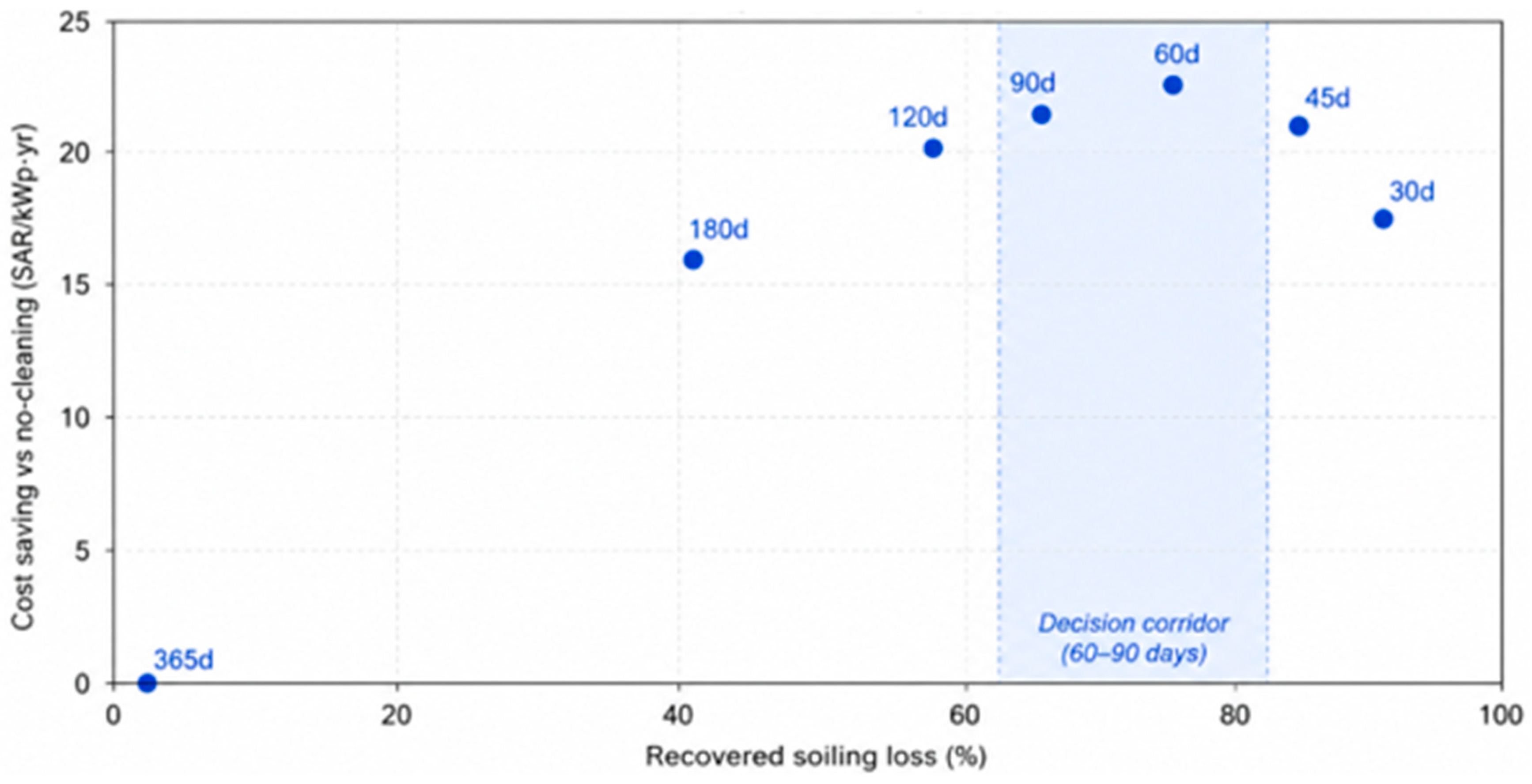
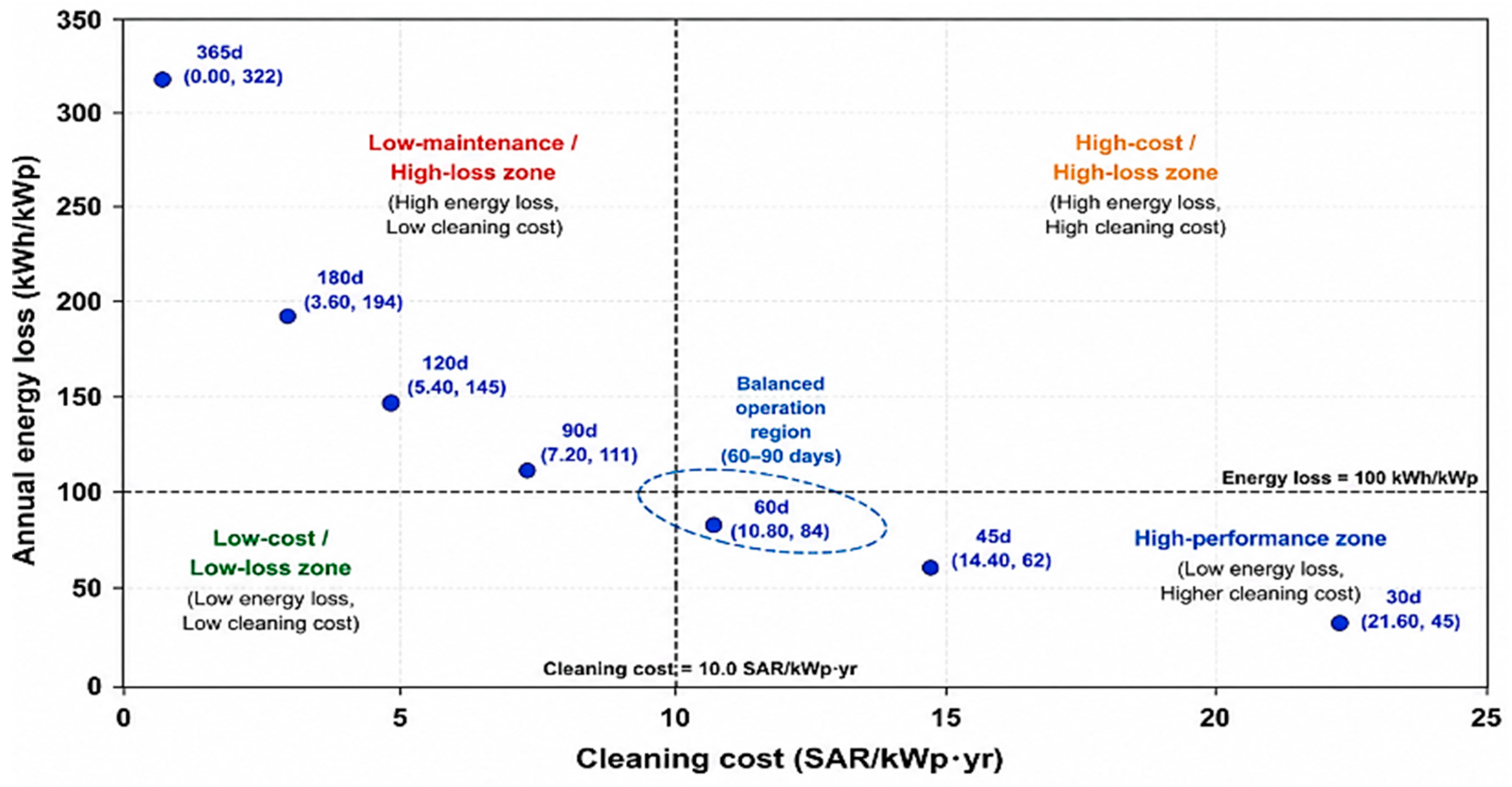
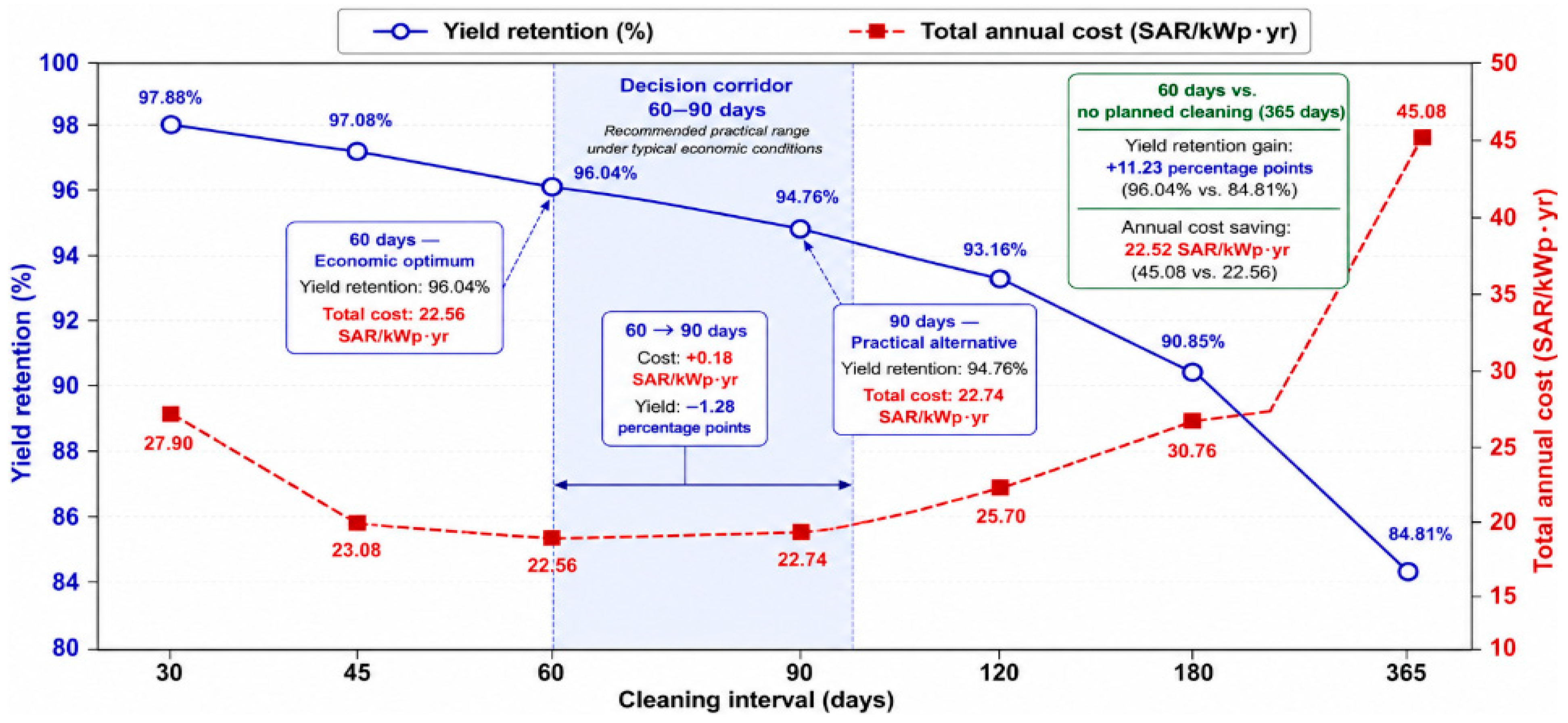
Dust accumulation has a substantial impact on photovoltaic (PV) power generation in desert environments, and soiling losses also cause significant operational difficulty for large-scale PV systems in desert countries like Saudi Arabia. This study describes a simulation-based approach for evaluating seasonal PV soiling losses and identifying the most economical cleaning interval for PV systems operating in desert conditions. The analysis was conducted as a literature-constrained, climate-informed scenario study representing Arar-like desert conditions using PVsyst and externally applied soiling assumptions. PV system performance was assessed under various cleaning scenarios, and seasonal soiling profiles were included as monthly loss factors based on desert environmental conditions. A nonlinear climate-informed scenario model incorporating wind speed and relative humidity was used to illustrate how these environmental drivers can be incorporated into the representation of dust adhesion and accumulation, while a Monte Carlo uncertainty analysis was employed to quantify the variability associated with the adopted seasonal soiling severity ranges and its effect on annual energy production. Under the base case economic assumptions, the 60-day interval produced the minimum total annual cost. Using a predefined near-optimality threshold of 1% above the minimum cost, the 90-day interval was also classified as a near-optimal operational alternative, resulting in a conditional base case range of 60–90 days. However, the sensitivity analysis reveals that the optimum is economically sensitive to the tariff and cleaning cost assumptions: under a high-power tariff, it moves to 45 days as the value of recovered energy grows; when the cleaning cost doubles, it moves to 90 days, as reducing maintenance frequency becomes more economically advantageous.
Keywords: photovoltaic; soiling; cleaning optimization; desert climate; PVsyst; Saudi Arabia; wind speed; relative humidity photovoltaic; soiling; cleaning optimization; desert climate; PVsyst; Saudi Arabia; wind speed; relative humidity