Article

Carrier Bed Characteristics and Numerical Simulation of Hydrocarbon Accumulation in the Ediacaran Dengying 2nd Member, Sichuan Basin, China


by
Luya Wu
1,
Benjian Zhang
1,
Yuqiang Jiang
2,
Xiaorong Luo
3 and
Yifan Gu
2,*
1
Exploration and Development Research Institute, PetroChina Southwest Oil and Gas Field Company, Chengdu 610041, China
2
School of Geoscience and Technology, Southwest Petroleum University, Chengdu 610500, China
3
Department of Geology, Northwestern University, Xi’an 710075, China
*
Author to whom correspondence should be addressed.
Energies 2026, 19(13), 3066; https://doi.org/10.3390/en19133066 (registering DOI)
Submission received: 5 January 2026 / Revised: 19 May 2026 / Accepted: 23 June 2026 / Published: 29 June 2026

Abstract

The Ediacaran Dengying Formation 2nd Member (hereafter 2nd Member) in the Sichuan Basin is influenced by major tectonic events including the Caledonian, Indosinian, and Himalayan orogenies and this strata has experienced a complex hydrocarbon accumulation history, resulting in inconsistent gas–water contacts. To elucidate this complex history, this study investigates the diagenetic mineral filling sequence within the Dengying 2nd Member in the Penglai area. We integrated data from analytical techniques such as cathodoluminescence (CL), in situ trace element analysis, U–Pb geochronology, and fluid-inclusion microthermometry. Based on these analyses, this study established the paragenetic sequence, incorporating both diagenesis and hydrocarbon accumulation, for the Dengying 2nd Member. This sequence comprises eight distinct phases of mineral precipitation and hydrocarbon emplacement: fibrous dolomite, granular dolomite, fine crystalline dolomite, first-phase bitumen, medium crystalline dolomite, saddle dolomite, second-phase bitumen, and quartz. From this sequence, we propose a four-stage hydrocarbon accumulation model for the Dengying Formation: (1) primary migration and accumulation during the Indosinian period; (2) oil cracking to gas during the Yanshanian period; and (3) and (4) two distinct stages of gas pool adjustment during the Himalayan period. Corresponding to these stages, this study developed distinct accumulation models and simulated migration and accumulation processes during key stages. The results indicate that the distribution of paleo-oil pools exerts significant control over the location of present-day gas accumulations. Initial oil charge was controlled by the distribution of carrier beds and hydrocarbon charging pathways, with water zones observed more frequently in the lower intervals of the Dengying 2nd Member. Subsequently, gas generated from oil-cracking filled these carrier beds, with areas of gas enrichment correlating with zones of high paleo-oil saturation. Finally, during the later adjustment stages, fault activity induced gas remigration and leakage, significantly impacting the final trapping configuration and preservation of gas accumulations.

1. Introduction

The migration of oil and gas reflects the nature of petroleum and natural gas as fluid resources and serves as a critical geological process within hydrocarbon systems [1,2]. By linking various fundamental elements and geological processes in petroleum geology through oil and gas migration, geologists can quantitatively analyze the dynamics of migration and accumulation from a kinetic perspective [3]. Traditional petroleum geology studies assume that hydrocarbon migration pathways can be considered as relatively uniform geological bodies [3]. The heterogeneity of reservoirs at the basin scale does not alter the direction of fluid potential for oil and gas [4,5]. Recent experiments and simulations confirm that even in uniform porous media, hydrocarbon migration occurs only along restricted pathways [6,7,8]. In contrast, migration within heterogeneous media is even more complex [9,10]. This heterogeneity primarily results from the internal structural variability of the geological formations acting as migration pathways [11,12]. Therefore, accurate characterization of hydrocarbon migration requires quantifying the heterogeneity of migration pathways [13,14,15]. Carrier bed and reservoirs, as primary migration pathways, share key characteristics: both possess fluid storage capacity and permeability [16,17,18]. Their primary difference is that carrier beds must maintain connectivity over larger spatial scales to ensure effective fluid transport [1,2]. Because permeability and connectivity evolve during diagenesis and hydrocarbon accumulation [19,20], it is critical to assess the carrier capacity of carrier bed during key accumulation stages [20,21].
The Ediacaran Dengying Formation in the Sichuan Basin is a primary target for marine carbonate gas reservoir exploration in China. Significant discoveries such as the Weiyuan and Anyue gas fields have brought proven reserves close to one trillion cubic meters [12,13]. Recently, several wells in the Penglai area have produced high-yield industrial gas from the 2nd and 4th members of the Dengying Formation, demonstrating substantial exploration potential. Although the Dengying reservoirs are well developed, pronounced heterogeneity in porosity and permeability complicates hydrocarbon migration [14,15]. Despite being near the Cambrian hydrocarbon generation center—and possessing more favorable source rock conditions than the Anyue area—the Dengying Formation lacks underlying source rocks [9,16]. Consequently, the mechanisms of hydrocarbon migration—whether through updip backflow or lateral contact—remain uncertain. Exploration results indicate that gas and water coexist within the reservoir, with irregular gas–water contacts [7]. These factors introduce risks and uncertainties for future large-scale exploration and development. Building on mineral paragenesis analysis and techniques such as in situ U–Pb dating, previous research has identified four critical stages of hydrocarbon accumulation in this region: oil charging (Late Middle Triassic), oil cracking and gas generation (Cretaceous), the first adjustment stage (Paleogene), and the second adjustment stage (Neogene). Previous studies on hydrocarbon accumulation have primarily focused on source rock conditions and current porosity, neglecting the dynamic changes in various conditions throughout the accumulation process [7,8,9]. There are four primary methods for numerical simulation of oil and gas migration: streamline method, multiphase Darcy flow method, invasion percolation method, and hybrid method. This study employs the invasion percolation method, which is characterized by its simplicity, high simulation efficiency, and reduced computation time.
Building on previous studies into key stages of hydrocarbon accumulation, this study classifies carrier bed reservoir facies using core descriptions and responses from both conventional and image logs. Pore restoration techniques are used to reconstruct porosity evolution curves for each reservoir facies. These curves are integrated with the hydrocarbon generation history and accumulation timeline to evaluate carrier bed conductivity during key stages. Three-dimensional geological models based on geophysical data are constructed to characterize the spatial distribution of carrier bed. Numerical simulation tools are subsequently used to simulate three-dimensional hydrocarbon migration and accumulation.

2. Geological Setting

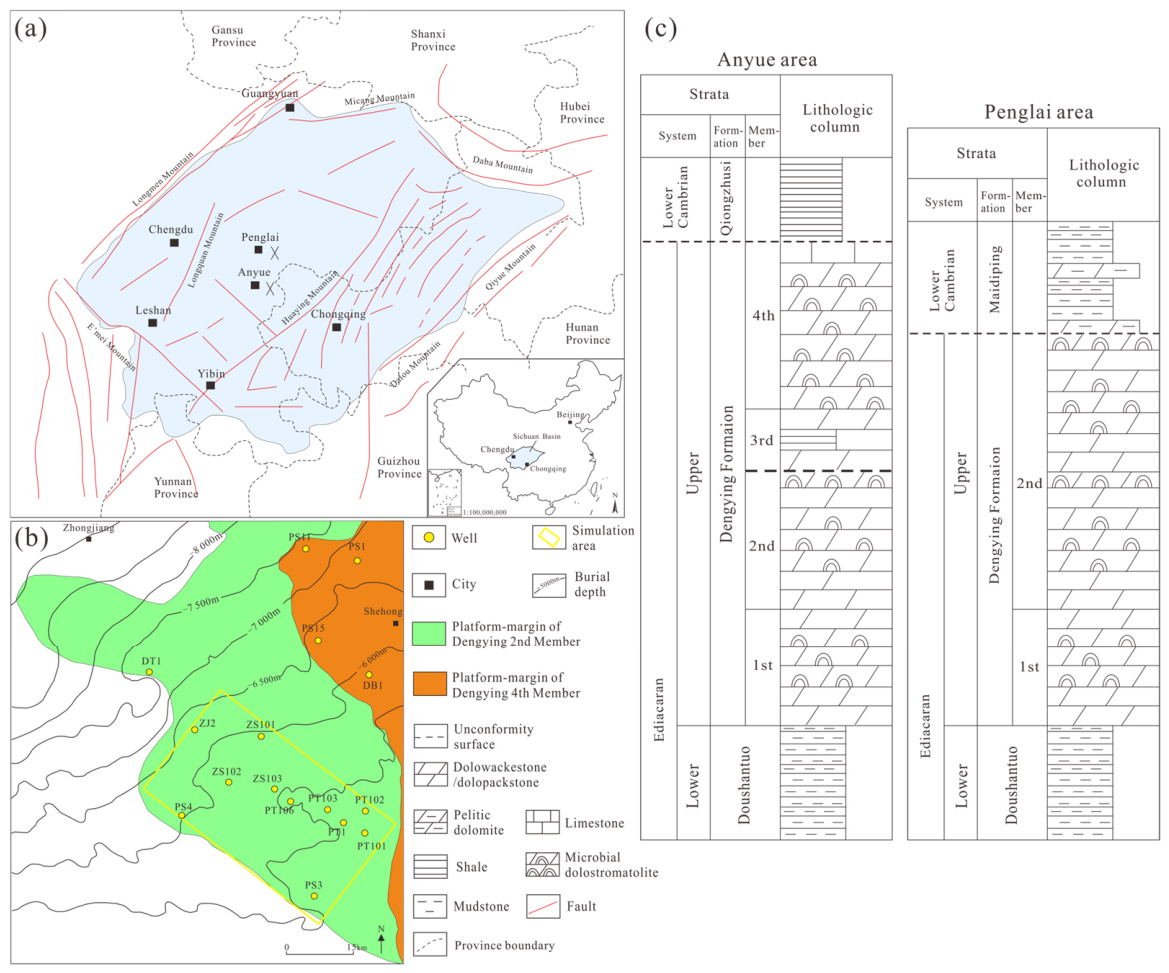
The Sichuan Basin is located in southwestern China, with an area of over 200,000 square kilometers (Figure 1a). During geological history, the Sichuan Basin underwent multiple tectonic movements and transformations [9,10]. The sedimentary environment in the Sichuan Basin has also undergone significant changes with tectonic movements. Before the mid Triassic period, the Sichuan Basin was in a marine environment, forming rich carbonate rock formations [12]. After the mid Triassic period, the Sichuan Basin evolved into a terrestrial environment. The study area is located in the Central Sichuan Basin (Figure 1b). The Dengying Formation of the Ediacaran System is subdivided into four members based on algal content and lithology: 2nd Member and 4th Member are primarily composed of algal dolostone (Figure 1c), 1st Member consists mainly of micritic and fine-crystalline dolostone, and 3rd Member is dominated by black silty shale [14,15]. During the Late Ediacaran Tongwan movement, tectonic uplift caused significant erosion and widespread karstification at the tops of 2nd Member and 4th Member, forming a pronounced unconformity surface (Figure 1b). In contrast to the Anyue area, most of 3rd Members and 4th Membet are missing in the Penglai Area, where Member 2 lies unconformably above the Cambrian strata [3]. These geological conditions facilitated the development of widespread algal mound-shoals in 2nd Member and 4th Member, which evolved into large, high-quality reservoirs. The Dengying gas pools are associated with three primary sets of source rocks: the Qiongzhusi Formation (Lower Cambrian), Dengying 3rd Member, and the Doushantuo Formation shale. These source rocks are highly overmature and are categorized as Type I–II based on pyrolysis data [9]. Recent quantitative analyses of reservoir bitumen indicate that the Cambrian Qiongzhusi shale is the principal source rock in the study area [7].
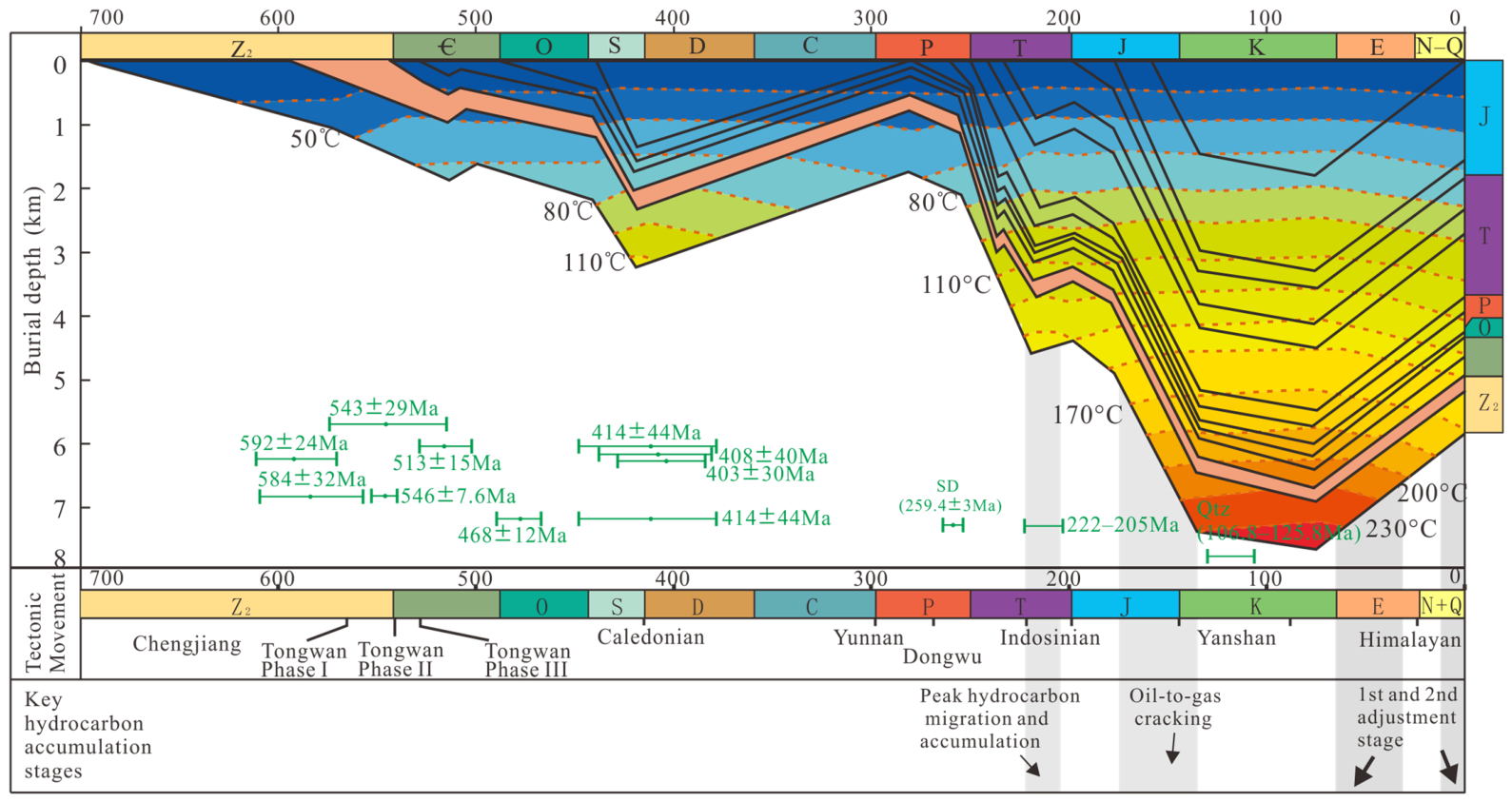
The Dengying Formation reservoir in Sichuan Basin formed paleo-oil pools during the Late Silurian Period, which were later disrupted by early uplift and erosion during the Hercynian orogeny [20]. As the Cambrian source rocks underwent rapid burial and heating, extensive oil and gas charging led the Dengying Formation reservoir to experience three key stages of hydrocarbon accumulation [12]. The first stage involved the formation of large paleo oil pools from the Late Triassic to the Early Jurassic (Figure 2). The second stage occurred in the mid-Cretaceous, when these large paleo-oil pools cracked and transformed into gas. The third stage comprised two periods of gas reservoir adjustments during the Paleogene to Neogene [4]. The minimum porosity required for the migration and accumulation of crude oil is higher than that for natural gas. Crude oil cannot accumulate in carbonate reservoirs with porosity below 2.6% [21].

3. Methods

This study employed numerical simulation methods. DMatlas (2026 Version), a newly developed geological modeling software, was used to construct a 3D model of the carrier bed. The platform defines geometric parameters for individual modeling units (e.g., algal mound-shoals) to accurately represent the true geometry of geological bodies. It incorporates depositional constraints to reflect geoscientists’ interpretations of stratigraphy, lithology, and structural features. DMatlas effectively visualizes the spatial geometry, internal properties, and interrelationships of these geological features, providing a robust representation of the multi-scale heterogeneity within the carrier bed system. The temperature, pressure, and time conditions in numerical simulation are strictly set according to Figure 2. The restoration method of paleo-porosity is achieved through thin-sections and image recognition software (Image J 1.8.0 Version).

4. Reservoir Facies Types in Carrier Bed

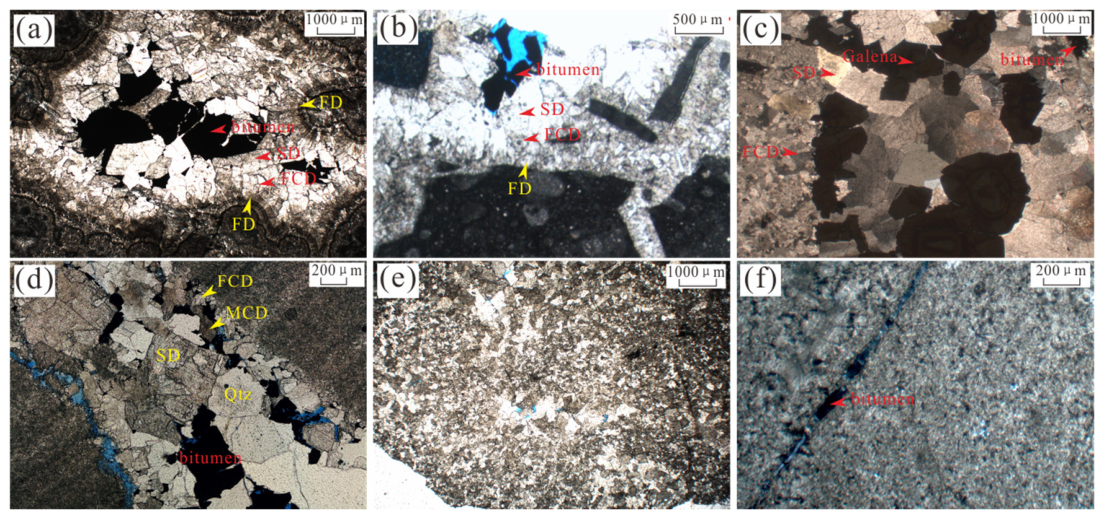
The internal structure of carrier bed, which form migration pathways for hydrocarbons, often exhibits significant heterogeneity. This study classifies the carrier bed in the Dengying Formation into six reservoir facies based on the relationship and origin of pores, fractures, and vuggys (Figure 3): fracture–vuggy type, pore–vuggy type (1), pore–vuggy type (2), porosity type (1), porosity type (2), and tight type (Table 1). The fracture–vuggy type reservoir facies is characterized by laminated or brecciated dolostone as the parent rock (Figure 3a), with fractures, fracture-type vuggys, and vuggy development observed in the core (Figure 3b). The pore–vuggy type (1) reservoir facies is derived from brecciated dolostone (Figure 3c), while pore–vuggy type (2) consists of tectonic breccia dolostone (Figure 3d), with residual pores and vuggys between the tectonic clasts). The parent rock does not belong to a specific type. The porosity type (1) reservoir facies is characterized by karstified breccia dolostone, with residual pores unfilled between the karst breccias. The porosity type (2) reservoir facies consists of fine-crystalline dolostone (Figure 3e), with the original rock features altered by intense recrystallization. The tight type reservoir facies is composed of micritic-crystalline dolostone (Figure 3f). Although tight and unable to store hydrocarbons, it can still serve as a carrier bed due to the presence of structural fractures.
The diagenetic evolution of the carrier bed in Dengying 2nd Member was reconstructed using cement mineral types, spatial relationships, in situ U–Pb dating and isotopic signatures reported by previous studies. Eight distinct phases of mineral cementing were identified within these beds. Phase 1 consists of fibrous dolomite (FD), commonly referred to as “grape fringe” or “grape-rim” cement (Table 1). The FD gives δ13C and 87Sr/86Sr ratios in the range from +1.12 to +2.34‰ V-PDB and 0.708645 to 0.708832, respectively, which are nearly identical to the ranges recorded for the host rock [12], reflecting early synsedimentary marine conditions. The presence of FD reflects the evolving Mg/Ca ratio of seawater during Dengying deposition and represents a product of the “dolomite sea” event in upper 2nd Member karst cavities and fractures. This phase provides direct evidence of Ediacaran seawater chemistry [23]. These early cements typically show unidirectional elongation (Table 1) and are interpreted as products of early dolomitization of aragonite. Frequent sea-level changes resulted in multiple generations of seafloor cementation before and after synsedimentary exposure. In the Dengying Formation, cements formed during the marine cementation stage, early meteoric diagenesis, and subsequent weathering crust development. These stages are chronologically distinct, with U–Pb ages ranging from approximately 604 to 590 Ma [4].
Phase 2 is marked by granular dolomite (FWD), which replaces earlier fibrous dolomite. Under plane-polarized light, grain sizes range from microcrystalline to fine-crystalline. Based on textural relationships and U–Pb dating, this phase is interpreted as para-syndiagenetic. It appears as bright granular cement under plane-polarized light (Table 1). Phase 3 consists of fine-crystalline dolomite (FCD) characterized by well-formed crystals with high optical clarity. Geochemical data indicate precipitation from seawater influenced by meteoric input. The U–Pb age is 532.5 ± 11.4 Ma [12].
Phase 4 consists of the earliest bitumen phase, appearing as films or linings (Table 1). During the Late Silurian, continued burial triggered hydrocarbon generation in rift basin source rocks, marking the first oil charge. Bitumen films formed along the surfaces of fine-crystalline dolomite at reservoir margins in Dengying 2nd Member. Phase 5 is composed of medium-crystalline dolomite (MCD), with larger and more transparent crystals than those in earlier fibrous or granular dolomites (Table 1). This phase also precipitated from seawater influenced by meteoric water, with a U–Pb age of 392.8 ± 23.9 Ma.
Phase 6 consists of saddle dolomite (SD), formed during the Late Permian Emeishan tectono-magmatic event. Hydrothermal fluids migrated along pre-existing faults and cemented early clasts and fracture margins with saddle dolomite (Table 1). These clasts appear to float within a matrix of medium- to coarse-crystalline and saddle dolomite. This phase is dated to 281–247 Ma based on U–Pb ages [24].
Phase 7 features a second generation of bitumen that fills residual pores (Table 1). Re and Os isotopic data suggested that these bitumen formed during the Indosinian period as rapid burial facilitated source rock maturation (154 ± 21 Ma) [5]. By the end of this period, early faults and fractures reopened, initiating a second major hydrocarbon influx. This bitumen represents thermal cracking products from extensive paleo-oil reservoirs. Thus, the spatial relationship between the bitumen and adjacent minerals helps infer the sequence of diagenesis and paleo-oil reservoir formation. Previous studies indicate that bitumen is widely distributed in Dengying Formation deposits across and around the Sichuan Basin [18]. Bitumen is classified into two types based on its occurrence: (1) finely disseminated or droplet-like bitumen within massive or brecciated ores, typically associated with metal sulfides; and (2) granular bitumen filling dissolution pores in dolomite, without associated metal sulfides. These widespread bitumen deposits reflect large-scale hydrocarbon migration during the Indosinian period. Thermochemical sulfate reduction (TSR) occurred near fault zones, resulting in the precipitation of sulfide minerals such as pyrite, sphalerite, and galena. Consequently, numerous lead–zinc deposits formed within the Ediacaran strata throughout the Sichuan–Yunnan–Guizhou region. In the central Sichuan Basin and its margins, many lead–zinc deposits are closely associated with bitumen, highlighting a strong correlation between TSR and sulfide mineralization. TSR-related sulfides associated with paleo-oil reservoirs date from 225 to 192 Ma, providing a constraint on the maximum age of paleo-reservoir formation. Phase 8 consists of hydrothermal minerals, including quartz (Qtz) and fluorite. These minerals formed during the Yanshanian period, as high-temperature fluids migrated through early fractures and residual pores (Table 1). The presence of methane-rich fluid inclusions in quartz and fluorite suggests extensive crude oil cracking. Quartz (Qtz) and fluorite exhibit no cathodoluminescence under electron beam analysis [20].

5. Evolution of Paleo-Porosity in Carrier Beds

Observations of core samples and petrographic analysis indicate that substantial bitumen cement occurred after the formation of hydrothermal saddle dolomite. Therefore, the age of the saddle dolomite (259 ± 3 Ma) constrains the earliest possible time for paleo-oil reservoir formation. During the formation of the reservoir, large-scale hydrocarbon migration triggered thermochemical sulfate reduction (TSR) near fault zones, resulting in the precipitation of sulfide minerals including pyrite, sphalerite, and galena. Numerous bitumen-associated lead–zinc deposits developed in the Ediacaran strata of both central and peripheral Sichuan Basin, suggesting a genetic relationship between TSR and sulfide mineralization. The age range of TSR-related processes and associated sulfide minerals (225–213 Ma) constrains the latest possible period for paleo-reservoir formation. Accordingly, the paleo-oil reservoir likely formed at the end of the Middle Triassic. After reservoir formation, ongoing burial of the 2nd Member during the Yanshanian period facilitated the migration of deep, high-temperature hydrothermal fluids. These fluids migrated along early fractures and residual pore spaces, depositing quartz and fluorite. The presence of abundant methane-rich fluid inclusions within these minerals indicates extensive thermal cracking of crude oil and the progressive development of a gas reservoir. Micro-scale isotopic dating of quartz and fluorite fillings yielded Ar–Ar ages of 125.8 ± 8.2 Ma for quartz inclusions [22], and Sm–Nd ages of 106.8 ± 7.5 Ma for fluorite from central and northern Sichuan [24]. During the Himalayan orogeny, regional tectonic uplift initiated multiple stages of modification to gas pools formed by oil cracking. Fluid inclusion thermometry indicates that these modification events occurred between approximately 65 and 30 million years ago.
Thin sections from representative reservoir facies in the study area were selected, and the impact of mineral cements from different diagenetic stages on porosity was manually delineated and quantified. The influence of each generation of mineral cement on pore space was calculated sequentially, following the diagenetic evolution. By linking each phase of mineral cement to key hydrocarbon accumulation stages, the evolution of paleo-porosity across stages was clarified. At the end of the Triassic, during peak hydrocarbon migration and accumulation, paleo-porosity reached approximately 4.84%. During the Late Yanshanian, in the oil-to-gas cracking stage, paleo-porosity declined to approximately 4.24%. In the first adjustment stage of the Himalayan orogeny (Paleogene), paleo-porosity remained stable at 4.24%. During the second adjustment stage of the Himalayan orogeny (Neogene), paleo-porosity remained unchanged at 4.24%. The fracture–vuggy type exhibited effective fluid conductivity during all four key stages of hydrocarbon accumulation. In contrast, the two pore–vuggy types lacked fluid conductivity during peak hydrocarbon migration and accumulation. These reservoir facies became carrier bed only during the oil-to-gas cracking and subsequent gas pool adjustment stages. Porosity type and tight type with porosity consistently below 2% across all four stages, were generally ineffective for fluid migration during key hydrocarbon accumulation stages (Table 2). However, when minor structural fractures are present, limited fluid conductivity is still possible.

6. Numerical Simulation of Hydrocarbon Migration and Accumulation

6.1. Boundary Conditions for Hydrocarbon Charging

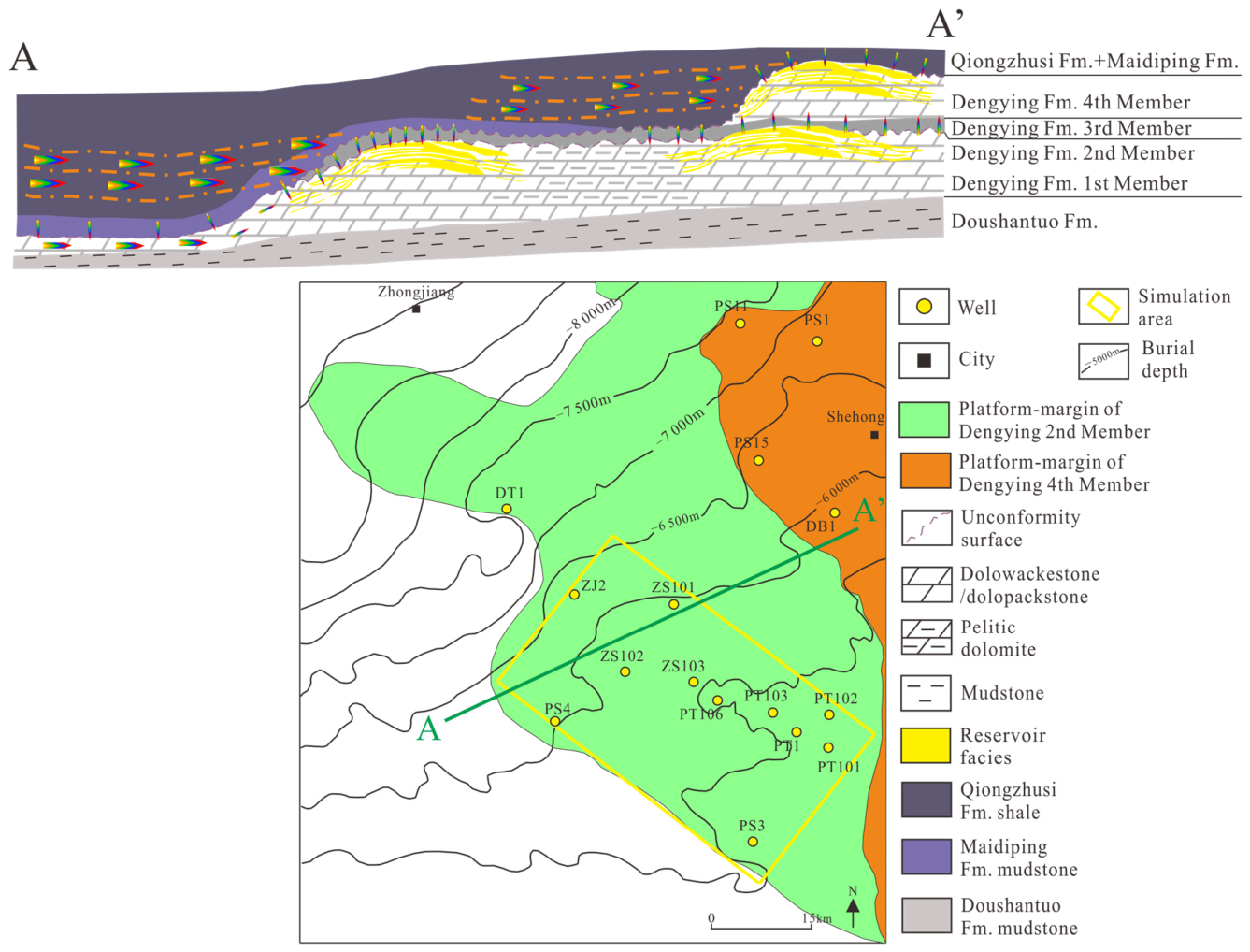
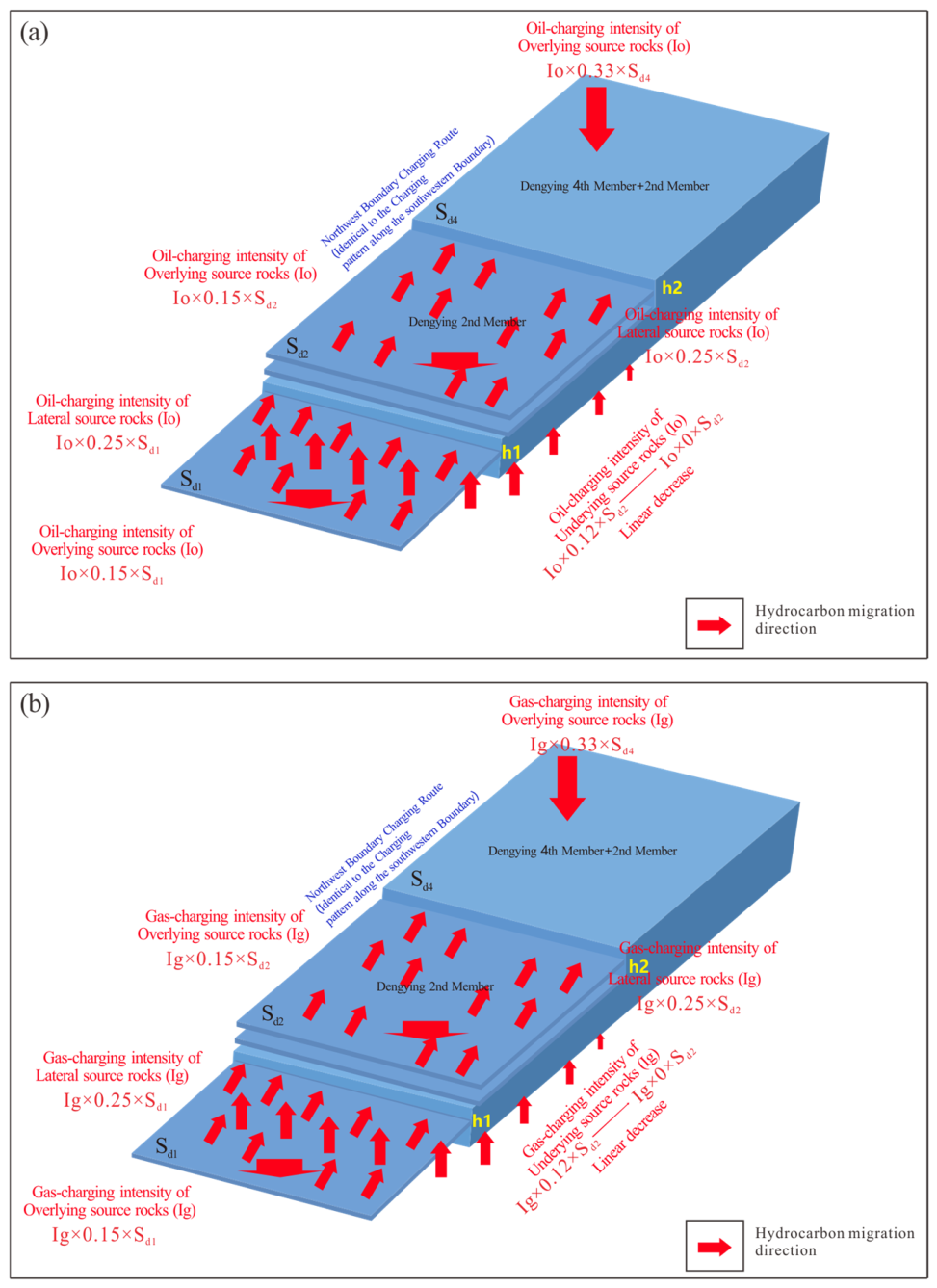
The Qiongzhusi and Maidiping Formation source rocks serve as the primary overlying hydrocarbon contributors to the Dengying 2nd Member, particularly in the direction of the structural depression. The underlying Dengying 1st Member is extensively distributed throughout the depression and has a broad capacity to receive hydrocarbons. Direct hydrocarbon indication suggests that Dengying 1st Member absorbed hydrocarbons from the overlying Maidiping Formation, thereby enhancing lateral charging to 2nd Member. As a result, hydrocarbon charging to Dengying 2nd Member is interpreted to occur through three pathways (Figure 4): (1) lateral charging from Cambrian source rocks, (2) primarily downward charging from the same source interval, and (3) potential upward charging of natural gas from Dengying 1st Member (Figure 5). The downward migration of overlying Cambrian source rocks is the most important direction. According to the excess pressure model, the boundary conditions for hydrocarbon supply to Dengying 2nd Member are further defined as follows: (1) Downward supply from the overlying Maidiping and Qiongzhusi source rock (Figure 5a): oil charging intensity during the peak accumulation stage × 0.15 × Sd2 (Sd2 means contact area between Dengying 2nd Member and source rock). (2) Lateral charging from the Maidiping and Qiongzhusi formations: oil charging intensity during the peak accumulation phase × 0.25 × Sd1 (Sd1 means contact area between Dengying 1st Member and source rock). (3) Isolated downward supply from the Maidiping Formation: oil charging intensity during the peak accumulation stage × 0.15 × Sd1. In this context, Sd1 and Sd2 denote the lateral extents of hydrocarbon charging from the source rocks, with Sd1 also representing the areas where the Maidiping Formation contributes hydrocarbons to Dengying 1st Member (Figure 5b).

6.2. Three-Dimensional Modeling and Migration Simulation

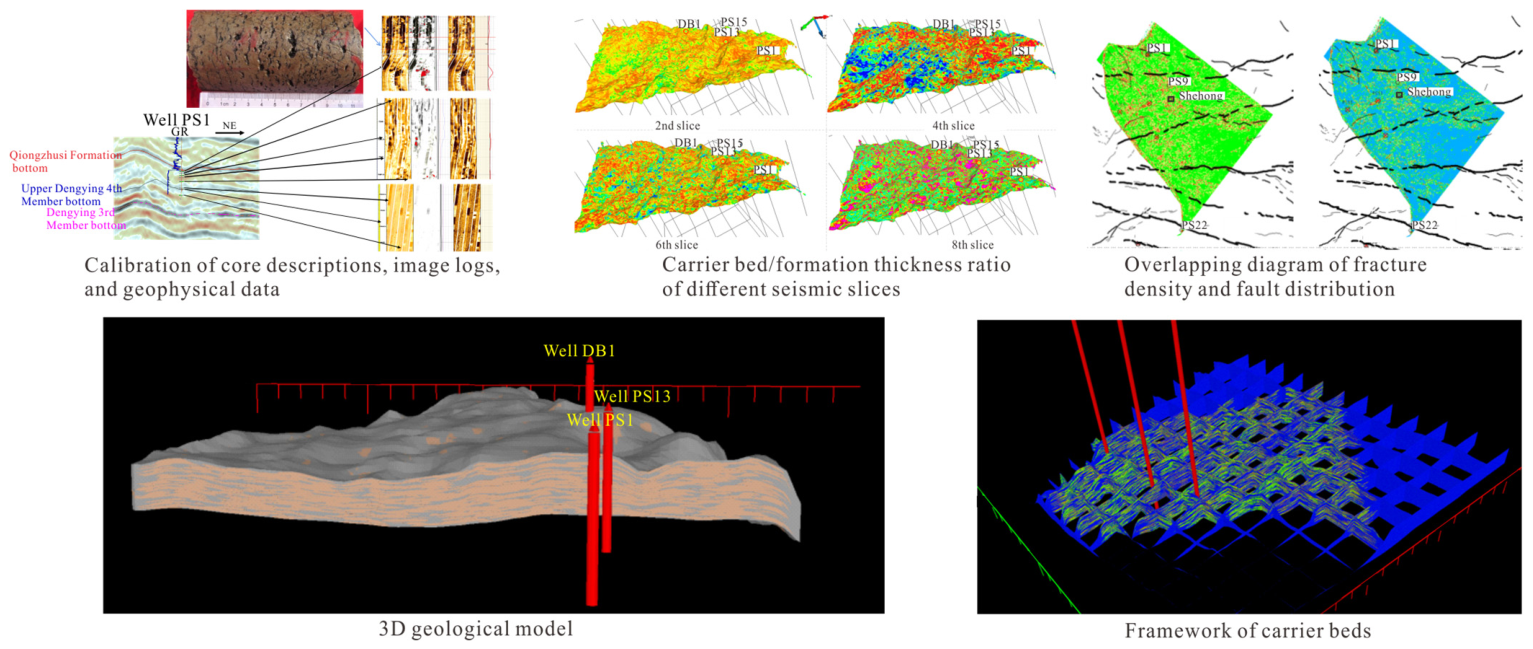
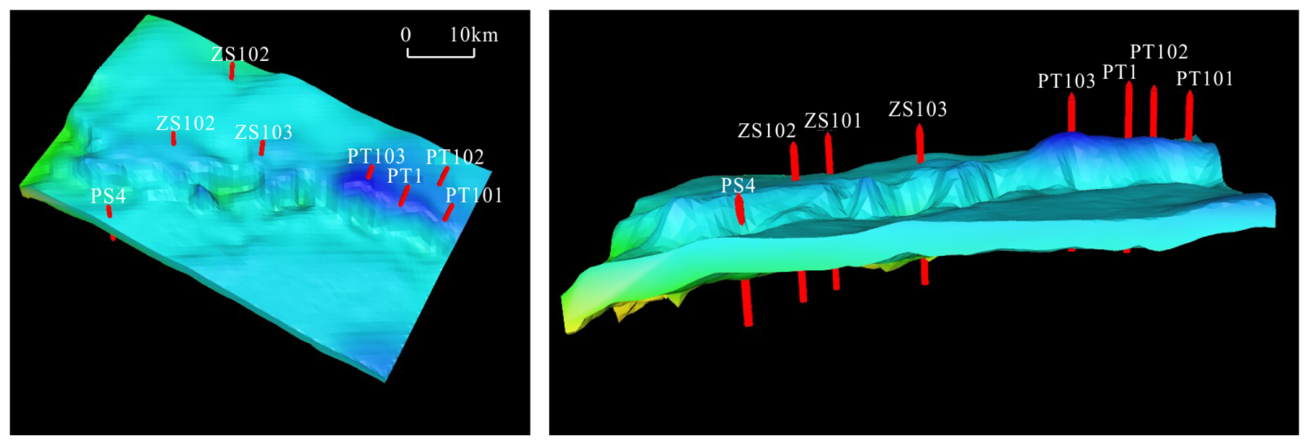
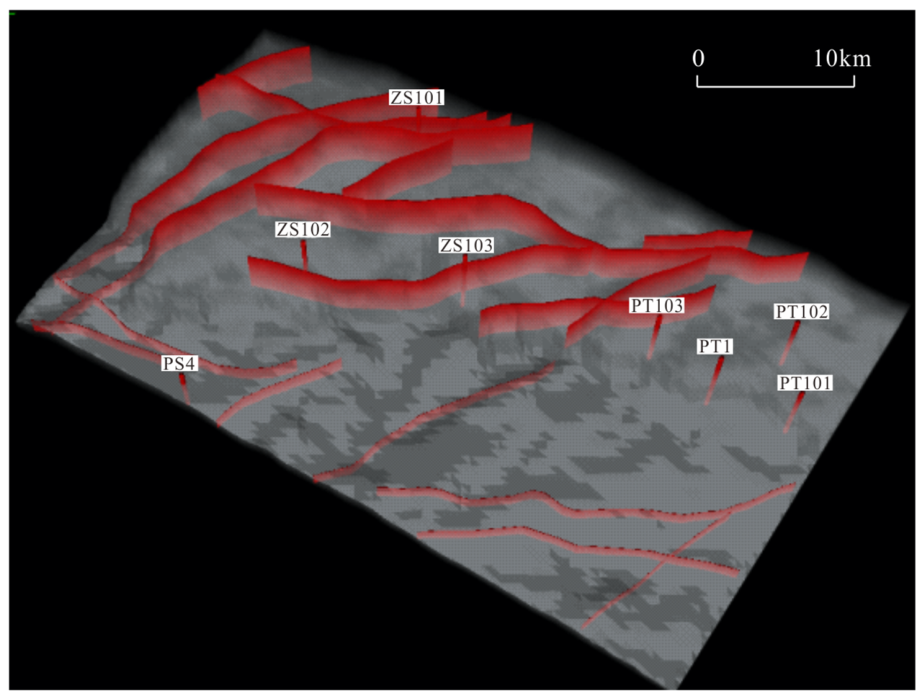
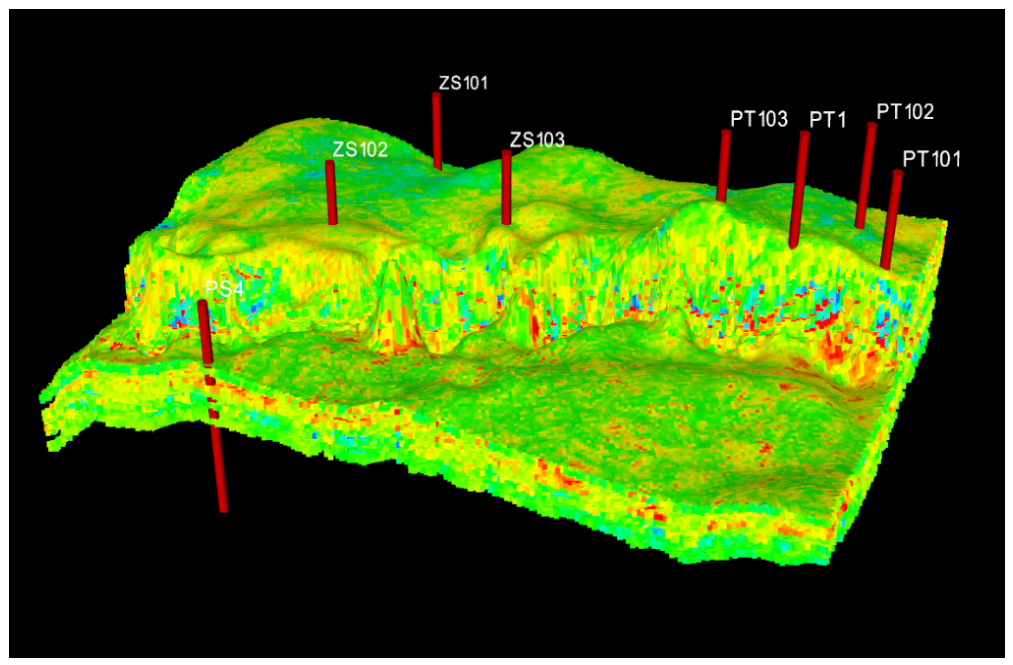
Using current and historical structural data from critical reservoir formation periods (Figure 6), this study performed structural modeling, incorporating fault and fracture analyses (Figure 7). This study integrated well and seismic data to calculate the carrier bed/formation thickness ratio, termed the carrier bed/formation thickness ratio, and developed a geometric model of the carrier bed system (Figure 8). The effective reservoir in the Dengying 2nd Member reservoir primarily comprises stacked mound–shoal complexes or shoal bodies [16]. During sedimentation, these structures were periodically exposed to surface water, undergoing freshwater leaching that enhanced porosity in their upper zones. Subsequent dolomitization and burial preserved these properties, shaping the present-day reservoir. Using porosity data from various rock facies over time, we constructed historical filling models for the carrier bed system’s internal structure (Figure 9), emphasizing mound–shoal complexes and shoal bodies. These models show that porosity and permeability in algal mound–shoal complexes gradually decline from top to bottom, transitioning to low-permeability, tight formations. These “tight formations” at the bottom constitute a barrier between different complexes.

6.2.1. Peak Hydrocarbon Migration and Accumulation Stage (222–205 Ma)

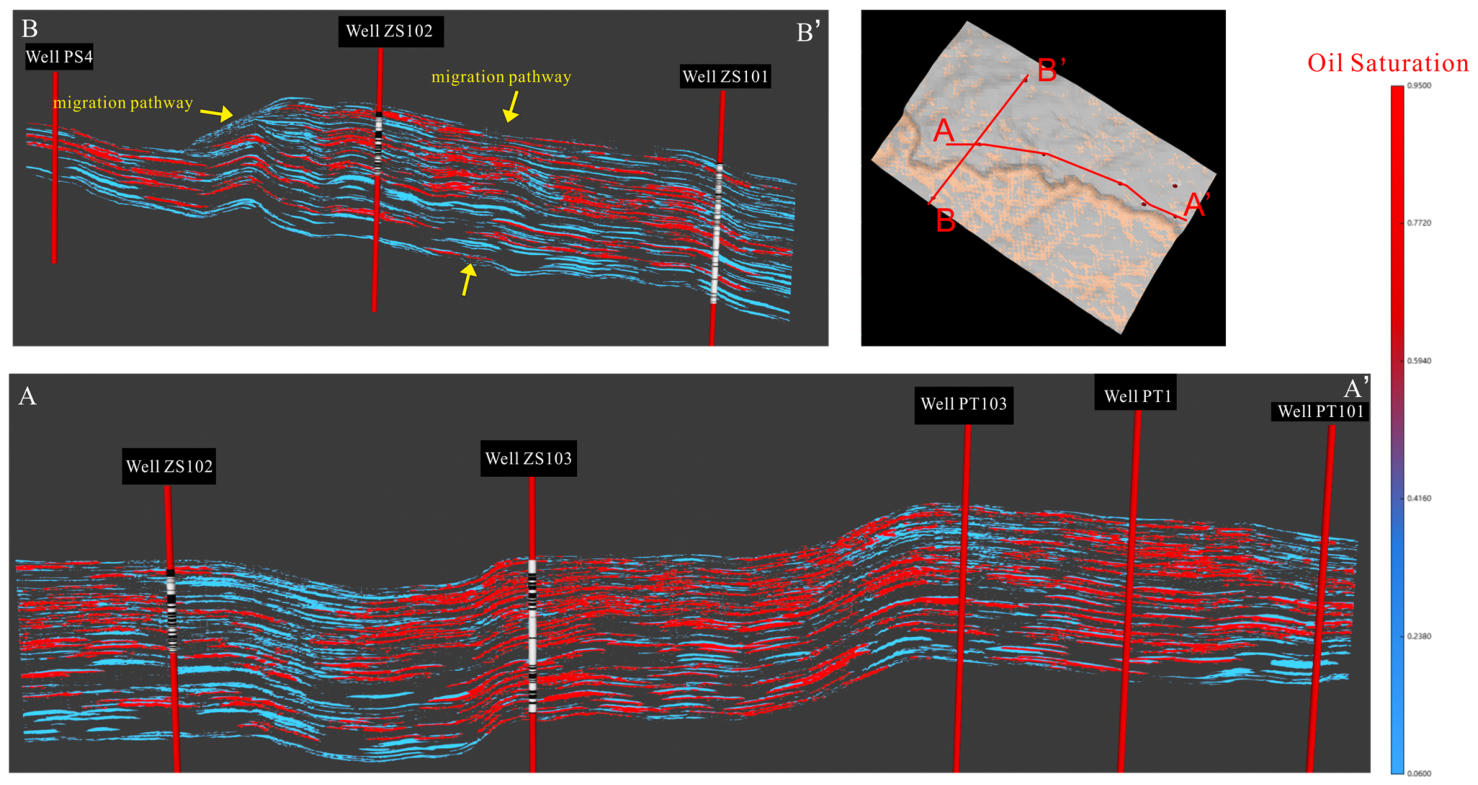
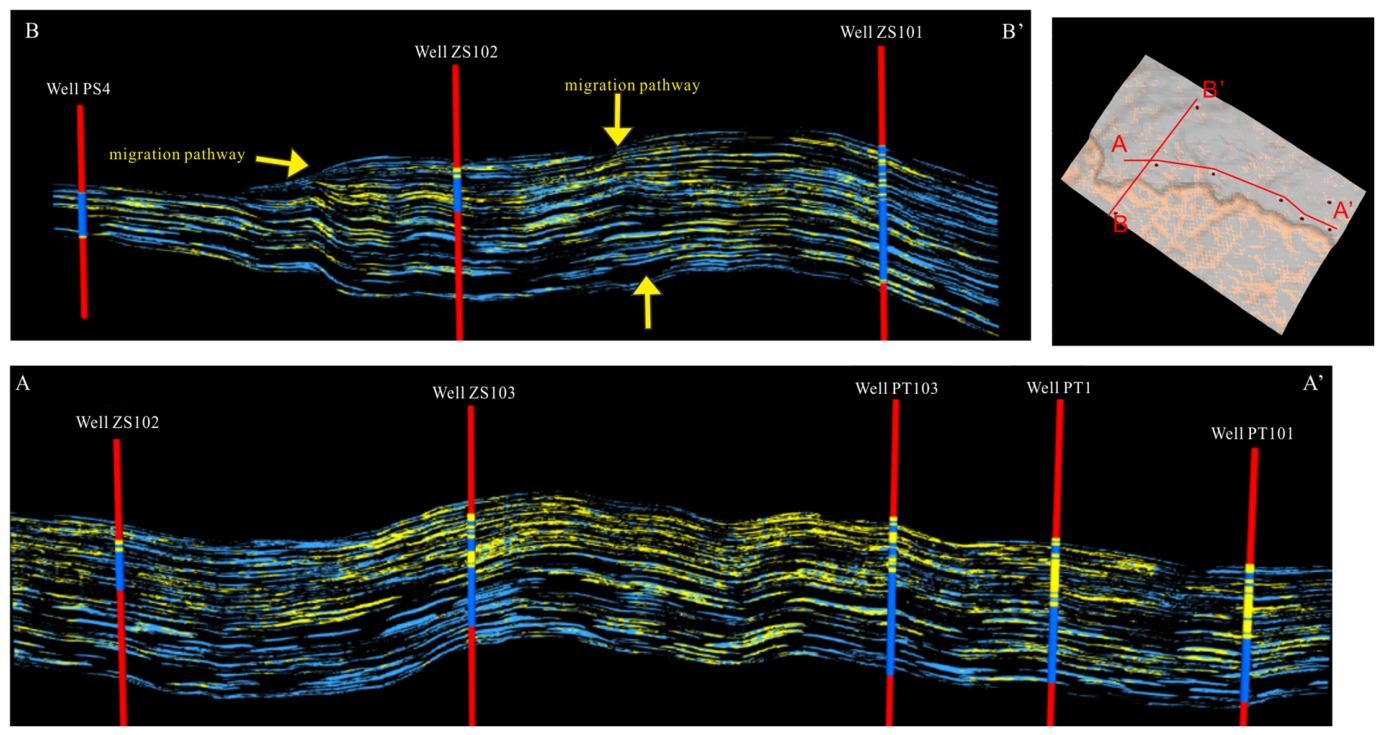
Crude oil from the Cambrian source rock migrated laterally and upward into the Dengying 2nd Member, accumulating in carrier beds with variable intensity. Oil initially accumulated in the uppermost carrier beds from the flanks, subsequently migrating downward and laterally once these layers were saturated. Carrier beds at the platform margin demonstrate high quality, characterized by elevated oil saturation and substantial accumulation volumes. Multiple water-bearing zones occur vertically within the Dengying 2nd Member, predominantly in its lower part. During this stage, fault activity was limited, and oil distribution was mainly controlled by the arrangement of reservoir units within the carrier bed system and the downward hydrocarbon charging from the source rock. Migration modeling results correspond closely with the bitumen distribution observed in drill-core reservoirs (Figure 10).

6.2.2. Oil-to-Gas Cracking Stage (125.8–106.8 Ma)

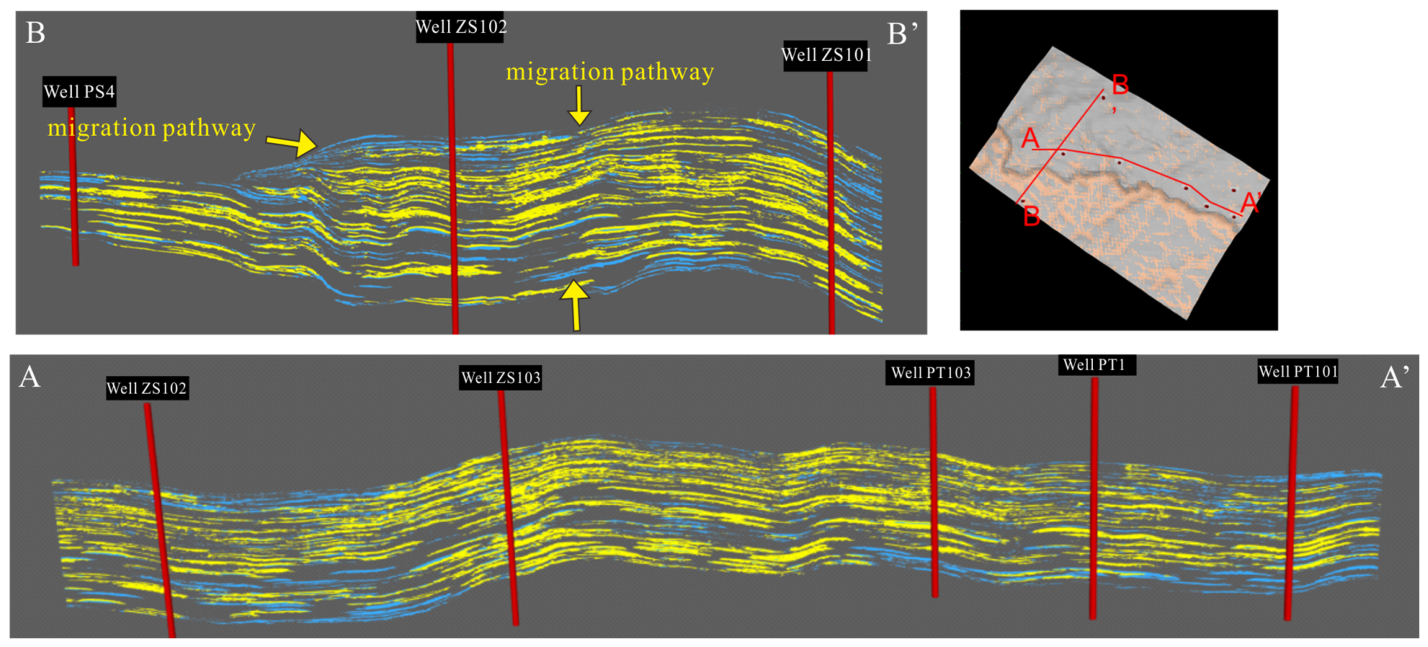
During this stage, gas derived from crude oil cracking permeated the carrier beds, its distribution controlled by their spatial arrangement. After cracking, oil in the paleoreservoir of the Dengying 2nd Member preferentially migrated into carrier beds at the reservoir margins. High gas saturation zones closely matched the paleo-reservoir’s range. Heterogeneity led to the occasional development of water-bearing zones (Figure 11).

6.2.3. Two Gas Pool Adjustment Stages (Paleogene to Neogene)

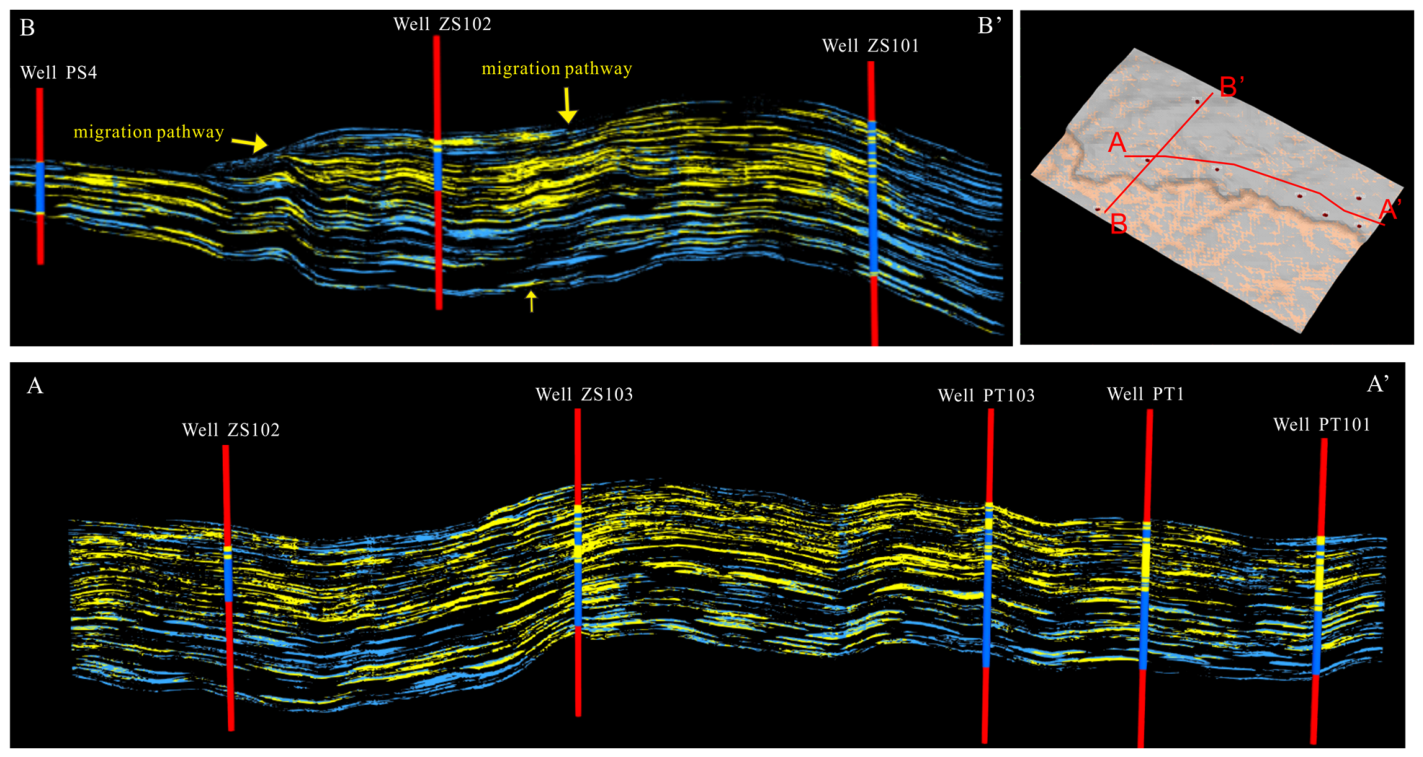
Using migration patterns and geological models from the natural gas adjustment stage, percolation theory was employed to conduct numerical simulations of natural gas migration and accumulation during the Paleogene and Neogene of the Dengying 2nd Member in the study area (Figure 12). The simulation results, presented as saturation levels, identify migration pathways and key accumulation zones of the gas pool in yellow (Figure 13). The findings indicate that multiple tectonic episodes triggered fault opening and closure, influencing the adjustment process and final reservoir configuration. Fluid-inclusion analysis of the Dengying Formation gas pool shows overpressure during oil cracking in the Anyue area and Penglai Area of the Central Sichuan Paleo-uplift, with pressure coefficients of 1.24 to 2.18. Following the Himalayan orogeny, gas dispersion in the Dengying Formation produced present-day normal-pressure gas reservoirs, with pressure coefficients ranging from 1.07 to 1.18 [20].

7. Conclusions

(1)
In the 2nd Member of the Ediacaran Dengying of the Penglai area, seven stages of diagenetic mineral deposits are identified, including dolomite, sphalerite, and quartz, and two stages of bitumen deposits. The sequence is: (1) fibrous dolomite, (2) granular dolomite, (3) fine-crystalline dolomite, (4) first-stage bitumen, (5) medium-crystalline dolomite, (6) saddle dolomite, (7) second-stage bitumen, and (8) quartz with fluorite.
(2)
The mineral deposits in the Dengying Formation of the Penglai area record four hydrocarbon accumulation events: (1) initial paleo-oil accumulation during Late Silurian, (2) peak paleo-oil accumulation during Late Triassic–Early Cretaceous, (3) oil-to-gas cracking stage during Late Cretaceous, and (4) multiple gas pool adjustments since the Paleogene.
(3)
Using a three-dimensional geological model, hydrocarbon migration and accumulation are simulated during key hydrocarbon accumulation stages. During oil generation and crude oil cracking, fault activity was limited, and hydrocarbon distribution was determined by the properties and distribution of carrier beds. Conversely, fault activity strongly influenced gas pool adjustment. The multi-stage tectonic activity leads to the opening or closure of faults, controlling the process of gas reservoir adjustment and the final pattern. Individual well areas have experienced significant adjustment and release of natural gas.

Author Contributions

Conceptualization, L.W. and X.L.; methodology, B.Z.; validation, Y.J.; formal analysis, Y.G.; investigation, L.W.; data curation, B.Z.; writing—original draft preparation, L.W. and B.Z.; writing—review and editing, Y.J. and X.L.; visualization, Y.G.; supervision, Y.J.; project administration, B.Z. All authors have read and agreed to the published version of the manuscript.

Funding

The research was supported by the National Natural Science Foundation of China (No. 42202166), and the National Natural Science Foundation of China (No. 41972165).

Data Availability Statement

Data is contained within the article.

Conflicts of Interest

Authors Luya Wu and Benjian Zhang were employed by the Exploration and Development Research Institute, PetroChina Southwest Oil and Gas Field Company. The remaining authors declare that the research was conducted in the absence of any commercial or financial relationships that could be construed as a potential conflict of interest.

References

  1. Hough, G.; Breyer, J. Carrier bed plays associated with conventional petroleum accumulations. AAPG Bull. 2021, 105, 1751–1763. [Google Scholar] [CrossRef]
  2. Sonnenberg, S. Carrier-bed plays in the Denver and Powder River Basins. AAPG Bull. 2021, 105, 1779–1796. [Google Scholar] [CrossRef]
  3. Guo, T.; Xiong, L.; Ye, S.; Dong, X.; Wei, L.; Yang, Y. Theory and practice of unconventional gas exploration within carrier beds: Insight from the breakthrough of new type of shale gas and tight gas in Sichuan Basin, SW China. Pet. Explor. Dev. 2023, 50, 24–37. [Google Scholar] [CrossRef]
  4. Wang, Z.; Jiang, C.; Yang, C.; Jiang, Y.; Gu, Y. Hydrothermal activity and its influence on hydrocarbon accumulation in deep dolomite reservoirs of the Ediacaran Dengying Formation, Sichuan Basin. Energy Geosci. 2025, 6, 100370. [Google Scholar] [CrossRef]
  5. Su, A.; Chen, H.; Feng, Y.; Zhao, J.; Nguyen, A.; Wang, Z.; Long, X. Dating and characterizing primary gas accumulation in Precambrian dolomite reservoirs, Central Sichuan Basin, China: Insights from pyrobitumen Re-Os and dolomite U–Pb geochronology. Precambr. Res. 2020, 350, 105897. [Google Scholar] [CrossRef]
  6. Jin, H. Hydrocarbon charging processes of deep fractured-vuggy dolomite reservoirs in the Ediacaran Dengying Formation, Southern Sichuan Basin, SW China. Front. Earth Sci. 2025, 13, 1710366. [Google Scholar] [CrossRef]
  7. Yang, W.; Wei, G.; Xie, W.; Jin, H.; Zeng, F.; Su, N.; Sun, A.; Ma, S.; Shen, J.; Wu, S. Hydrocarbon accumulation and exploration prospect of mound-shoal complexes on the platform margin of the fourth member of Sinian Dengying Formation in the east of Mianzhu-Changning intracratonic rift, Sichuan Basin, SW China. Pet. Explor. Dev. 2020, 47, 1174–1184. [Google Scholar] [CrossRef]
  8. Li, K.; Gong, B.; Zhang, X.; Jiang, H.; Fan, J.; Tan, Y. A comparison of hydrothermal events and petroleum migration between Ediacaran and lower Cambrian carbonates, Central Sichuan Basin. Mar. Pet. Geol. 2023, 150, 106130. [Google Scholar] [CrossRef]
  9. Fang, X.; Deng, B.; Geng, A.; Liu, S.; Wang, P.; Liang, X.; Li, Y.; Cheng, B.; Jiang, W.; Wu, L. Geochemical properties, mechanism of formation, and source of solid bitumen in the Ediacaran Dengying Formation from the central to northern Sichuan Basin, China. Mar. Pet. Geol. 2024, 159, 106573. [Google Scholar] [CrossRef]
  10. Jiang, Y.; Tao, Y.; Gu, Y.; Wang, J.; Qiang, Z.; Jiang, N.; Lin, G.; Jiang, C. Hydrothermal dolomitization in Dengying Formation, Gaoshiti-Moxi area, Sichuan Basin, SW China. Pet. Explor. Dev. 2016, 43, 54–64. [Google Scholar] [CrossRef]
  11. Gu, Y.; Zhou, L.; Jiang, Y.; Jiang, C.; Luo, M.; Zhu, X. A model of hydrothermal dolomite reservoir facies in Precambrian Dolomite, Central Sichuan Basin, SW China and its Geochemical Characteristics. Acta Geol. Sin. (Engl. Ed.) 2019, 93, 130–145. [Google Scholar] [CrossRef]
  12. Su, A.; Chen, H.; Feng, Y.; Zhao, J.; Wang, Z.; Hu, M.; Jiang, H.; Nguyen, A. In situ U–Pb dating and geochemical characterization of multi-stage dolomite cementation in the Ediacaran Dengying Formation, Central Sichuan Basin, China: Constraints on diagenetic, hydrothermal and paleo-oil filling events. Precambr. Res. 2022, 368, 106481. [Google Scholar] [CrossRef]
  13. Gu, Y.; Wang, Z.; Yang, C.; Luo, M.; Jiang, Y.; Luo, X.; Zhou, L.; Wang, H. Effects of diagenesis on quality of Dengying Formation deep dolomite reservoir, Central Sichuan Basin, China: Insights from petrology, geochemistry and in situ U–Pb dating. Front. Earth Sci. 2023, 10, 1041164. [Google Scholar] [CrossRef]
  14. Wang, H.; Jiang, Y.; Yang, C.; Zhang, B.; Gu, Y.; Luo, X.; Zhou, L.; Wang, Z. Hydrothermal silicification in Ediacaran Dengying Formation fourth member deep dolomite reservoir, Central Sichuan Basin, China: Implications for reservoir quality. Geol. J. 2023, 58, 4257–4270. [Google Scholar] [CrossRef]
  15. Luo, J.; Wang, F.; He, S.; He, Z.; Huang, Y.; Zhang, D.; Zhu, Y.; Sun, Z.; Luo, T. Characteristics of Vein-Forming Fluids in the Sinian Dengying Formation Reservoir and Its Relationship with the Hydrocarbon Accumulation Process in the Southwest and Southeast of the Sichuan Basin. Minerals 2022, 12, 443. [Google Scholar] [CrossRef]
  16. Ye, Y.; Jiang, Z.; Liu, X.; Wang, Z.; Gu, Y. Logging Identification Method for Reservoir Facies in Fractured-Vuggy Dolomite Reservoirs Based on AI: A Case Study of Ediacaran Dengying Formation, Sichuan Basin, China. Appl. Sci. 2024, 14, 7504. [Google Scholar] [CrossRef]
  17. Fu, S.; Zhang, C.; Chen, H.; Qing, H.; Chen, A.; Zhao, J.; Su, Z.; Hao, Z. Geochemistry characteristics and dolomitization mechanism of the Upper Cambrian dolomite, eastern Ordos Basin, China. Geol. J. 2020, 55, 3070–3082. [Google Scholar] [CrossRef]
  18. Li, J.; Tao, X.; Bai, B.; Huang, S.; Jiang, Q.; Zhao, Z.; Chen, Y.; Ma, D.; Zhang, L.; Li, N.; et al. Geological conditions, reservoir evolution and favorable exploration directions of marine ultra-deep oil and gas in China. Pet. Explor. Dev. 2021, 48, 52–67. [Google Scholar] [CrossRef]
  19. Fu, S.; Zhang, C.; Liu, H.; Wei, L.; Bao, H.; Ye, X.; Su, Z.; Chen, H.; Lin, L. Dolomites in a carbonate-evaporite system: The fifth member of the Middle Ordovician Majiagou Formation, Eastern Ordos Basin, China. Front. Mar. Sci. 2025, 12, 1585055. [Google Scholar] [CrossRef]
  20. Fan, J.; Jiang, H.; Lu, X.; Liu, Q.; Liu, S.; Ma, X.; Huang, S.; Zeng, F.; Tian, H.; Xie, W. Pressure evolution and hydrocarbon accumulation process of Sinian Dengying Formation gas reservoirs in the Penglai area, Sichuan Basin. Nat. Gas Ind. 2022, 42, 32–43. [Google Scholar]
  21. Li, P.; Guo, X.; Hao, F.; Zou, H.; Yu, X.; Wang, G. Paleo-oil reservoirs reconstruction and oil correlation of Changxing Formation in the Yuanba gas field, Sichuan Basin. Earth Sci. 2016, 41, 452–462. [Google Scholar]
  22. Li, L. Geochemical Study on Hydrocarbon Accumulation of the Cambrian Formation in the Middle Cambrian of the Middle Sichuan; Chengdu University of Technology: Chengdu, China, 2017; pp. 1–51. [Google Scholar]
  23. Ding, Y.; Chen, D.; Zhou, X.; Guo, C.; Huang, T.; Zhang, G. Cavity-filling dolomite speleothems and submarine cements in the Ediacaran Dengying microbialites, South China: Responses to high-frequency sea-level fluctuations in an ‘aragonite–dolomite sea’. Sedimentology 2019, 66, 2511–2537. [Google Scholar] [CrossRef]
  24. Lu, X.; Gui, L.; Wang, Z.; Liu, S.; Liu, Q.; Fan, J.; Chen, W.; Ma, X.; Jiang, H.; Fu, X.; et al. Activity time of strike-slip faults and their controlling effects on hydrocarbon accumulation in central Sichuan Basin: Evidence from U–Pb dating and fluid inclusions of cements in fault zone. Acta Pet. Sin. 2024, 45, 642–658. [Google Scholar]
  25. Wang, G.; Liu, S.; Chen, C.; Wang, D.; Sun, W. The genetic relationship between MVT Pb-Zn deposits and paleo-oil/gas reservoirs at Heba, Southeastern Sichuan Basin. Earth Sci. Front. 2013, 20, 107–116. [Google Scholar]
Figure 1. (a) Location of Sichuan Basin. (b) Coverage area of numerical simulation in this study. (c) Stratigraphic column of Ediacaran Dengying Formation.
Energies 19 03066 g001
Figure 2. Key hydrocarbon accumulation stages of Ediacaran Dengying Formation 2nd Member [20]. The determination of absolute age of mineral cement is based on this study and the reference [4,5,8,9,10,11,12,13,14,15,20,22,23,24,25].
Energies 19 03066 g002
Figure 3. Reservoir facies types in carrier bed of Ediacaran Dengying Formation. (a) Laminated dolostone, ZS101, 6268.38 m. (b) Brecciated dolostone, PT101, 5754.85 m. (c) Tectonic brecciated dolostone, PS5, 5676.11 m. (d) Karstified brecciated dolostone, PT1, 5747.37 m. (e) Fine-crystalline dolostone, ZS101, 6351.76 m. (f) Micritic-crystalline dolostone, DT1, 7601.27 m.
Energies 19 03066 g003
Figure 4. Hydrocarbon accumulation model of Ediacaran Dengying Formation 2nd Member.
Energies 19 03066 g004
Figure 5. Boundary conditions schematic for migration simulations in Ediacaran Dengying 2nd Member. (a) Peak hydrocarbon migration and accumulation stage. (b) Oil-to-gas cracking stage.
Energies 19 03066 g005
Figure 6. Detailed steps for 3D modeling for Ediacaran Dengying 2nd Member.
Energies 19 03066 g006
Figure 7. Structural model of Dengying 2nd Member before Jurassic Period.
Energies 19 03066 g007
Figure 8. Present-day fault model of Dengying 2nd Member.
Energies 19 03066 g008
Figure 9. Three-dimensional model of the carrier bed/formation thickness ratio during the peak hydrocarbon migration and accumulation (222–205 Ma).
Energies 19 03066 g009
Figure 10. Numerical simulation results of hydrocarbon migration and accumulation during the peak hydrocarbon migration and accumulation stage (222–205 Ma), Ediacaran Dengying Formation 2nd Member.
Energies 19 03066 g010
Figure 11. Numerical simulation results of hydrocarbon migration and accumulation during the oil-to-gas cracking Stage (125.8–106.8 Ma), Ediacaran Dengying Formation 2nd Member.
Energies 19 03066 g011
Figure 12. Numerical simulation results of hydrocarbon migration and accumulation during the initial gas pool adjustment stage, Ediacaran Dengying Formation 2nd Member.
Energies 19 03066 g012
Figure 13. Numerical simulation results of hydrocarbon migration and accumulation during the subsequent gas pool adjustment stage, Ediacaran Dengying Formation 2nd Member.
Energies 19 03066 g013
Table 1. Types of reservoir facies and mineral deposition sequences in carrier bed of the Dengying 2nd Member.
TypeReservoir FaciesDiagenesis Sequence
fracture–vuggy type laminated or brecciated dolostoneFD → FCD → SD → bitumen
pore–vuggy type (1)brecciated dolostoneFD → FCD → SD → bitumen
pore–vuggy type (2)tectonic brecciated dolostoneFCD → SD → Galena → bitumen
porosity type (1)karstified brecciated dolostoneFCD → MCD → SD → bitumen → Qtz
porosity type (2)fine-crystalline dolostoneLack of Mineral Deposition
tight typemicritic-crystalline dolostonebitumen
Table 2. Reconstructed paleo-porosity values for reservoir facies in carrier beds of the Dengying 2nd Member.
TypeKey Hydrocarbon Accumulation StagesPaleo-Porosity (%)
fracture–vuggy type(1) peak hydrocarbon migration and accumulation (222–205 Ma)4.84
(2) oil-to-gas cracking (125.8–106.8 Ma)4.24
(3) the first adjustment stage of the Paleogene (60–50 Ma)4.24
(4) the second adjustment stage of the Neogene (5–0 Ma)4.24
pore–vuggy type (1)(1) peak hydrocarbon migration and accumulation (222–205 Ma)2.1
(2) oil-to-gas cracking (106.8–125.8 Ma)2.1
(3) the first adjustment stage of the Paleogene (60–50 Ma)2.1
(4) the second adjustment stage of the Neogene (5–0 Ma)2.1
pore–vuggy type (2)(1) peak hydrocarbon migration and accumulation (222–205 Ma)2.18
(2) oil-to-gas cracking (106.8–125.8 Ma) 2.18
(3) the first adjustment stage of the Paleogene (60–50 Ma) 2.18
(4) the second adjustment stage of the Neogene (5–0 Ma) 2.18
porosity type (1)(1) peak hydrocarbon migration and accumulation (222–205 Ma) 1.59
(2) oil-to-gas cracking (106.8–125.8 Ma) 1.59
(3) the first adjustment stage of the Paleogene (60–50 Ma) 1.59
(4) the second adjustment stage of the Neogene (5–0 Ma) 1.59
porosity type (2)(1) peak hydrocarbon migration and accumulation (222–205 Ma) 1.66
(2) oil-to-gas cracking (106.8–125.8 Ma) 1.66
(3) the first adjustment stage of the Paleogene (60–50 Ma) 1.66
(4) the second adjustment stage of the Neogene (5–0 Ma) 1.66
Tight type (Cannot be used as a carrier bed)(1) peak hydrocarbon migration and accumulation (222–205 Ma) 0.71
(2) oil-to-gas cracking (106.8–125.8 Ma) 0.71
(3) the first adjustment stage of the Paleogene (60–50 Ma) 0.71
(4) the second adjustment stage of the Neogene (5–0 Ma) 0.71
Disclaimer/Publisher’s Note: The statements, opinions and data contained in all publications are solely those of the individual author(s) and contributor(s) and not of MDPI and/or the editor(s). MDPI and/or the editor(s) disclaim responsibility for any injury to people or property resulting from any ideas, methods, instructions or products referred to in the content.