Article

Improvement of the Thermoelectric Properties in the FeSi2 Semiconductor Through Cu and Al Doping


Graduate School of Engineering, Chiba Institute of Technology, Narashino 275-8588, Japan
Energies 2026, 19(13), 2997; https://doi.org/10.3390/en19132997 (registering DOI)
Submission received: 26 March 2026 / Revised: 13 June 2026 / Accepted: 23 June 2026 / Published: 25 June 2026
(This article belongs to the Section D1: Advanced Energy Materials)

Abstract

The nontoxic β-FeSi2 semiconductor is gaining renewed interest as a thermoelectric material for waste heat recovery. Its earth-abundant elemental composition, consisting of iron (Fe) and silicon (Si), aligns well with the United Nations Sustainable Development Goals. However, the use of the β-FeSi2 semiconductor is limited by its high electrical resistivity. To improve the thermoelectric properties of the β-FeSi2 phase, specimens of FeSi2 were doped with Cu and Al and analyzed. X-ray diffraction and thermal analysis showed that small amounts (up to at least 2%) of Cu and Al dissolved into the FeSi2 phase. Cu doping reduced the electrical resistivity of FeSi2 but also lowered the Seebeck coefficient. In contrast, Al doping did not lower the Seebeck coefficient of FeSi2, while still reducing the electrical resistivity of FeSi2. Al doping thus improved the power factor of FeSi2 with 156 μW/mK2 and 314 μW/mK2 at room temperature for the 1% and 2% Al-doped specimens, respectively. Further thermal conductivity revealed that the Al-doped FeSi2 specimens showed lower thermal conductivity than the undoped FeSi2 specimen. Unlike in the case of the electrical resistivity, the 1% Al-doped specimen showed lower thermal conductivity than the 2% Al-doped specimen. The ZT of the 1% Al-doped specimen increased from 0.021 at room temperature to 0.052 at 600 K. This value was slightly higher than that of the Mn-doped β-FeSi2 but smaller than that of the Co-doped β-FeSi2.

1. Introduction

In thermoelectric generation, thermoelectric materials directly convert waste heat into electricity. The efficiency of the conversion process is dependent on reliable and sustainable thermoelectric materials. The only practical thermoelectric material demonstrated to date is bismuth telluride (Bi2Te3). However, although this compound has been used in some cooling devices, it cannot be widely applied to thermoelectric generation due to the natural scarcity of Bi and Te. These elements are primarily produced as byproducts; Bi is a byproduct of lead smelting, and Te is a byproduct of copper smelting. Furthermore, Te is toxic. Thus, the Bi-Te compound is not suitable for mass production.
The semiconducting iron silicide β-FeSi2 has been shown to have thermoelectric properties [1,2,3,4,5,6,7,8,9,10,11,12,13], exhibiting a high Seebeck coefficient—the most important factor in thermoelectric materials. However, it has a low thermoelectric power factor due to its high electrical resistivity. Although several early-stage studies have been conducted on β-FeSi2, relatively little attention has been paid to it in recent years. Instead, research has focused on developing new thermoelectric materials, such as skutterudites (e.g., YbCo4Sb12) and Heusler compounds (e.g., (Ti, Zr)CoSb) [4,5,6,7]. However, these compounds contain rare metals such as Co and Sb. Therefore, the use of β-FeSi2, composed of nontoxic, earth-abundant elements, is attracting renewed interest as a thermoelectric material for waste heat recovery from the perspective of achieving the United Nations Sustainable Development Goals (SDGs).
In recent years, several new silicide-based thermoelectric materials have been developed, including Fe-Al-Si, Al-Mn-Si, and Cr-Si compounds [8,9,10,11,12,13]. These compounds demonstrate promising thermoelectric properties, although they are still in the development phase. Among these silicide-based thermoelectric materials, the β-FeSi2 compound has garnered renewed interest. The thermoelectric properties of β-FeSi2 have been studied, and numerous efforts have been made to synthesize it [14,15,16]. Doping β-FeSi2 with Co or Mn effectively enhances its thermoelectric properties, particularly the electrical properties [17,18,19,20,21]. Although Co-doped β-FeSi2 and Mn-doped β-FeSi2 exhibit improved thermoelectric properties compared to undoped β-FeSi2, the use of rare metals for doping is inconsistent with achieving the SDGs. Instead, doping with high-conductivity elements such as aluminum (Al) and copper (Cu) is desirable to enhance electrical conductivity. Although there are several studies on Al-doped β-FeSi2 [22,23,24], the solubilities of Al and Cu in β-FeSi2 are limited.
Herein, we advance the study of β-FeSi2 as a thermoelectric material in accordance with the SDGs. We investigate the effects of Al and Cu doping through a systematic examination of the structures and properties of Al-doped and Cu-doped β-FeSi2 specimens prepared via mechanical alloying and spark plasma sintering (SPS).

2. Materials and Methods

2.1. Sample Preparation Procedure

Elemental powders of Fe, Si, Al, and Cu (purity 99.9%) were supplied by Kojundo Chemical Laboratory Co., Ltd. (Saitama, Japan). The elemental powders were thoroughly blended using a mortar and pestle to obtain FeSi2, FeSi2 with 1–2% Cu, and FeSi2 with 1–2% Al. The powder mixtures (40 g) were subsequently poured into a steel vessel (500 mL) in an argon-filled glove box, along with hardened steel balls (400 g), corresponding to a 10:1 ball-to-powder mass ratio. The vessel was then sealed in the argon-filled glove box and placed in a high-energy ball mill (P-6, Fritsch, Idar-Oberstein, Germany) for mechanical alloying. The powder mixture was mechanically alloyed at a rotation speed of 250 rpm for up to 20 h. After mechanical alloying, the vessel was shaken several times in an argon-filled glove box to remove the powder from both the vessel wall and the balls before opening the vessel. The mechanically alloyed powder was then collected under an argon atmosphere.
The collected powder (1–2 g) was placed into a boron nitride-coated carbon die and subsequently positioned in the SPS equipment (Plasman CSP-II, S. S. Alloy, Higashi-Hiroshima, Japan). The powder was sintered under vacuum within the SPS equipment. The temperature of the carbon die was raised from room temperature to the sintering temperature of 1123 K at a heating rate of 100 K/min. It was held at this sintering temperature for 300 s under a uniaxial pressure of 100 MPa. The specimens were slowly cooled to room temperature under vacuum before being removed from the carbon die. Finally, the sintered specimens were wrapped in tantalum foil and heat-treated in a gold furnace (GFA400VN, Thermo Riko, Tokyo, Japan) at 1123 K for 6 h under an argon atmosphere.

2.2. Characterization

The mechanically alloyed powder was characterized by an X-ray diffractometer (XRD: MiniFlex600, Rigaku, Tokyo, Japan), a scanning electron microscope (SEM: JSM-IT300LA, JEOL, Tokyo, Japan), and differential thermal analysis (DTA: STA7300, Hitachi-Hightech, Tokyo, Japan). After the densities of the sintered specimens were measured by the Archimedes method with a semi-micro analytical balance (GR-120, AND, Tokyo, Japan), the sintered specimens were characterized by XRD and DTA. Before the XRD measurements, the sintered specimens were pulverized with a mortar and pestle. The XRD patterns of the powdered specimens were obtained using Cu Kα radiation. The DTA curves were obtained in an argon atmosphere at a heating rate of 20 K/min after the powdered specimens were poured into a small alumina crucible. For the thermoelectric measurements, rod-like specimens (2 × 2 × 7 mm) were cut from the sintered specimens using a low-speed diamond saw (Isomet LS, Buehler, Lake Bluff, IL, USA). The rod-like specimens were placed between the upper and lower metal blocks. Two thermocouple probes were then attached to the specimens and connected to the measuring equipment (ZEM-3, Advance Riko, Yokohama, Japan). The Seebeck coefficients and electrical resistivity of the specimens were determined under a helium atmosphere. The Seebeck coefficients (S = ΔV/ΔT) of the specimens were determined by using the two attached thermocouple probes to simultaneously measure the temperature gradient (ΔT) and the thermoelectric voltage (ΔV) as the lower metal block was heated. The electrical resistivity (R = V/I) of the specimens was determined by the standard DC four-probe technique, applying a constant current (I) to the specimens via the metal blocks and measuring the voltage (V) between the two attached thermocouple probes. The thermal conductivity (κ) of the specimens was determined in a vacuum by using a Laser Flash Thermal Constant Analyzer (Advance Riko, TC-1200RH).

3. Results and Discussion

3.1. Characterization of Undoped FeSi2

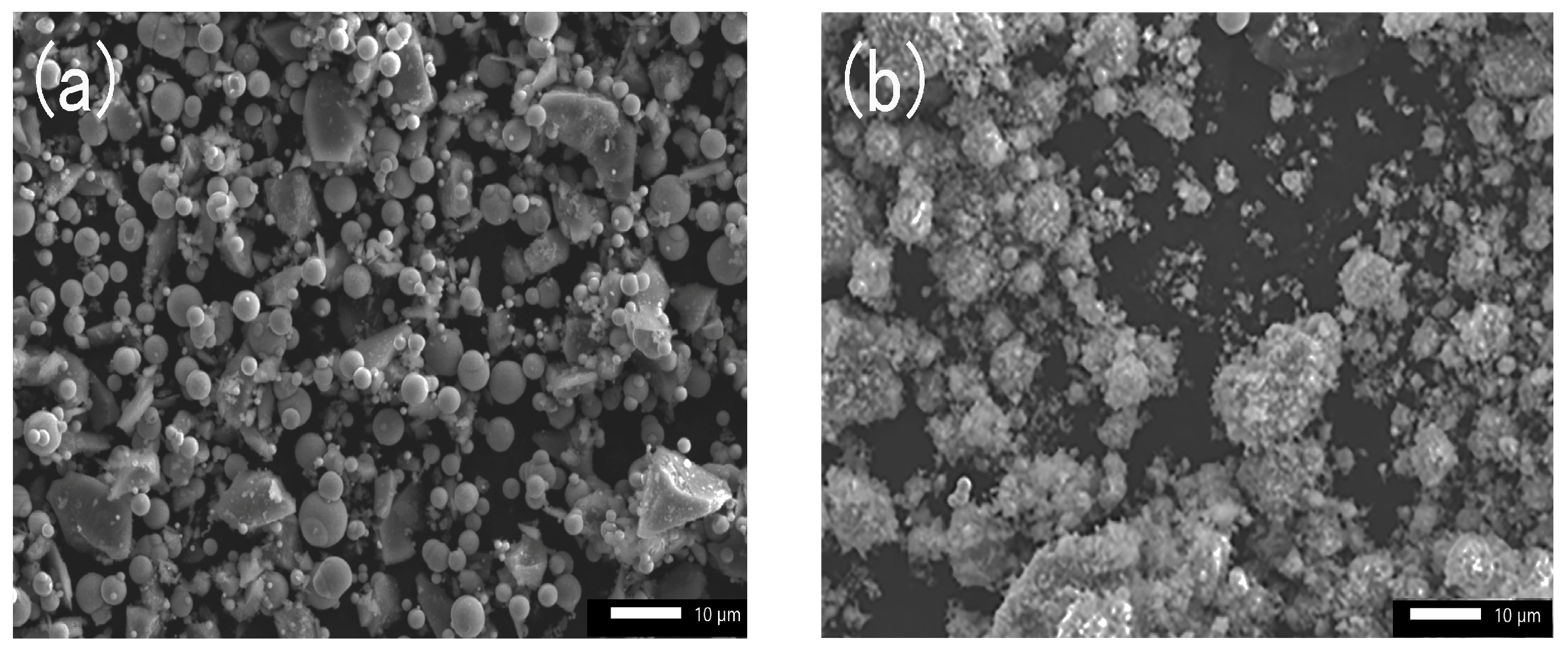
Figure 1 shows SEM micrographs of the powder mixture of Fe and Si (nominal composition of FeSi2) and the mechanically alloyed powder. Spherical powders (~3 μm) corresponding to Fe and fractured powders (~10 μm) corresponding to Si are seen in the powder mixture. Contrastingly, no spherical Fe powders or large fractured Si powders are observed in the mechanically alloyed powder; only smaller powders (around 1–2 µm) and aggregations are seen, indicating that coarse powders fracture into fine powders, which are then rewelded into coarse powders in a repeating process during mechanical alloying [25]. Similar SEM micrographs were obtained for the FeSi2 powder mixture with 1–2% Cu and 1–2% Al.
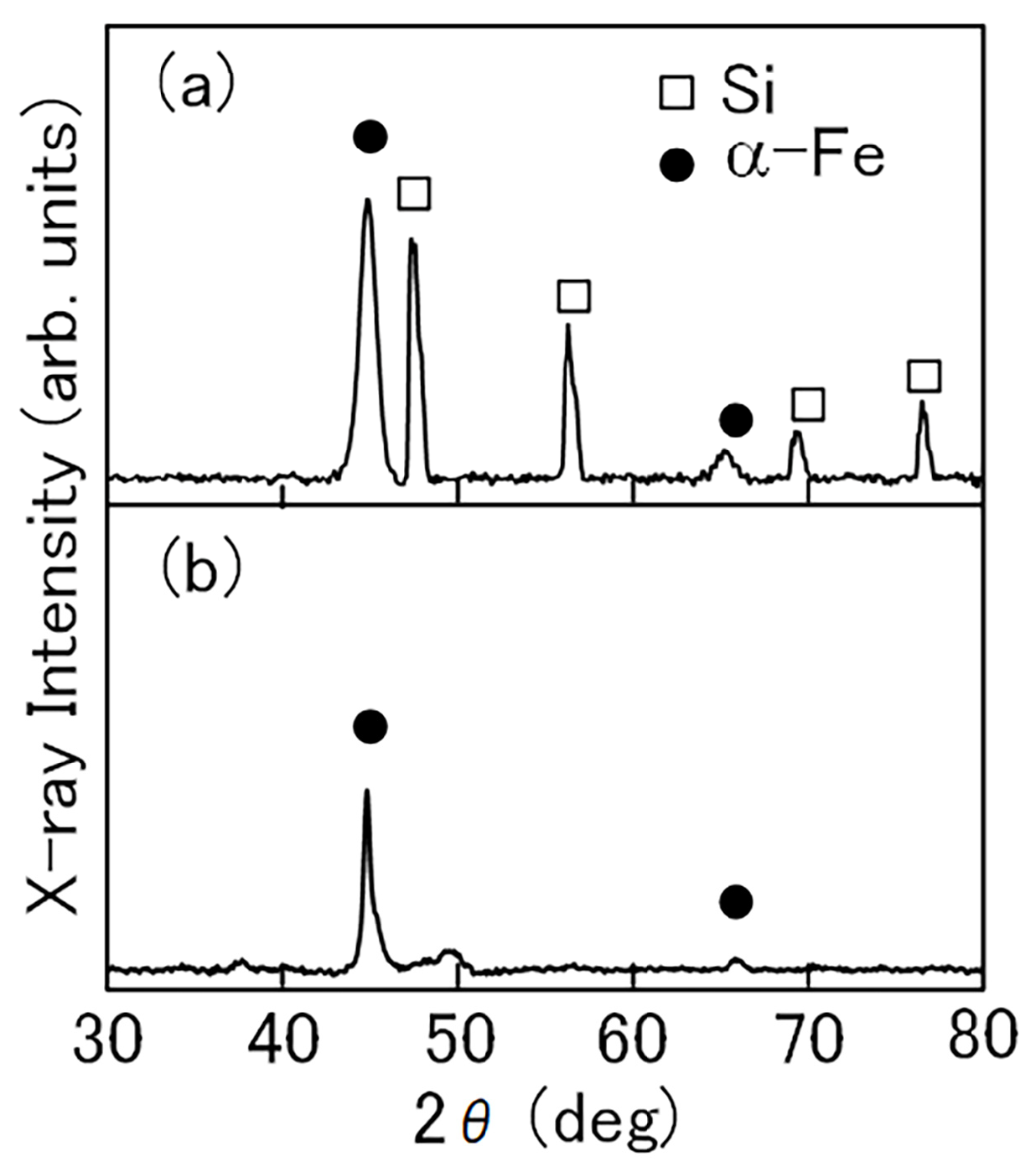
Figure 2 shows the XRD patterns of the powder mixture of Fe and Si (nominal composition of FeSi2) and the mechanically alloyed powder. The XRD pattern of the powder mixture shows clear diffraction peaks corresponding to the α-Fe and Si phases, whereas only diffraction peaks of the α-Fe phase are observed for the mechanically alloyed powder. Although the formation of the β-FeSi2 phase by mechanical alloying has been reported [26,27], it was not obtained in this study. Almost the same XRD patterns were obtained for the Cu-doped and Al-doped specimens; Cu and Al doping did not promote the formation of the FeSi2 phase during mechanical alloying.
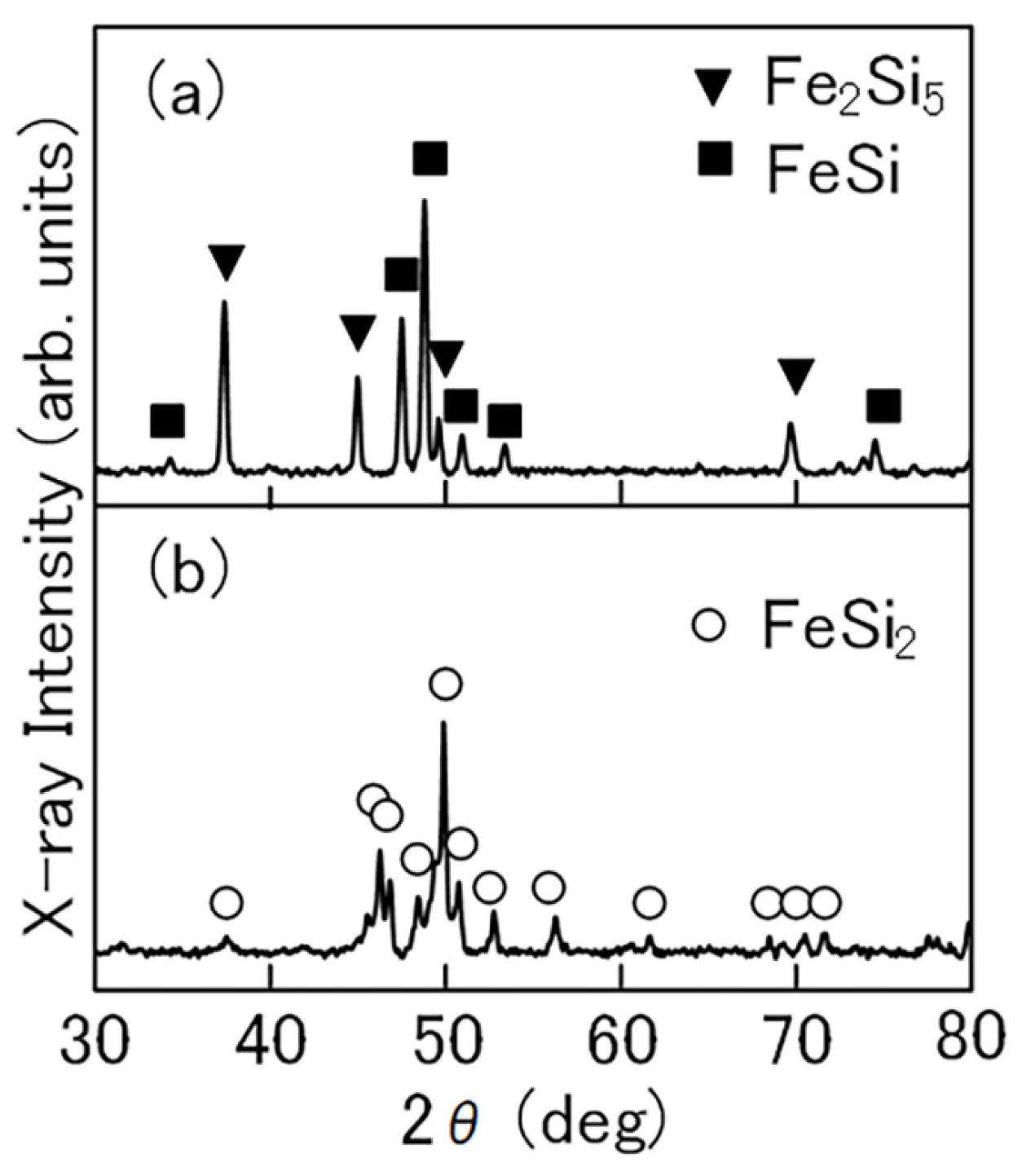
The mechanically alloyed FeSi2 powders were sintered using the SPS method and subsequently annealed. The FeSi2 specimen had a high density of 4.49 g/cm3 (about 91% of the theoretical density). The XRD patterns of the FeSi2 specimen and that annealed at 1123 K for 6 h are shown in Figure 3. Although the β-FeSi2 phase is the stable phase at the sintering temperature (1123 K), the XRD pattern of the sintered specimen shows only the diffraction peaks of the α-Fe2Si5 and ε-FeSi phases. The β-FeSi2 phase is peritectoid; this phase is formed by the peritectoid reaction (ε-FeSi and α-Fe2Si5 phases→β-FeSi2 phase) [27]. Conversely, the XRD pattern of the subsequently annealed specimen exhibits the diffraction peaks of the β-FeSi2 phase, indicating that the β-FeSi2 phase forms by the reaction between the α-Fe2Si5 and ε-FeSi phases during the annealing.
Although the specimens consisted solely of the β-FeSi2 phase, microstructural studies may reveal the presence of the ε-FeSi phase [15,18,28]. Thus, further microstructural studies are necessary to confirm that the specimens consisted solely of the β-FeSi2 phase.

3.2. Effects of Cu Doping on FeSi2

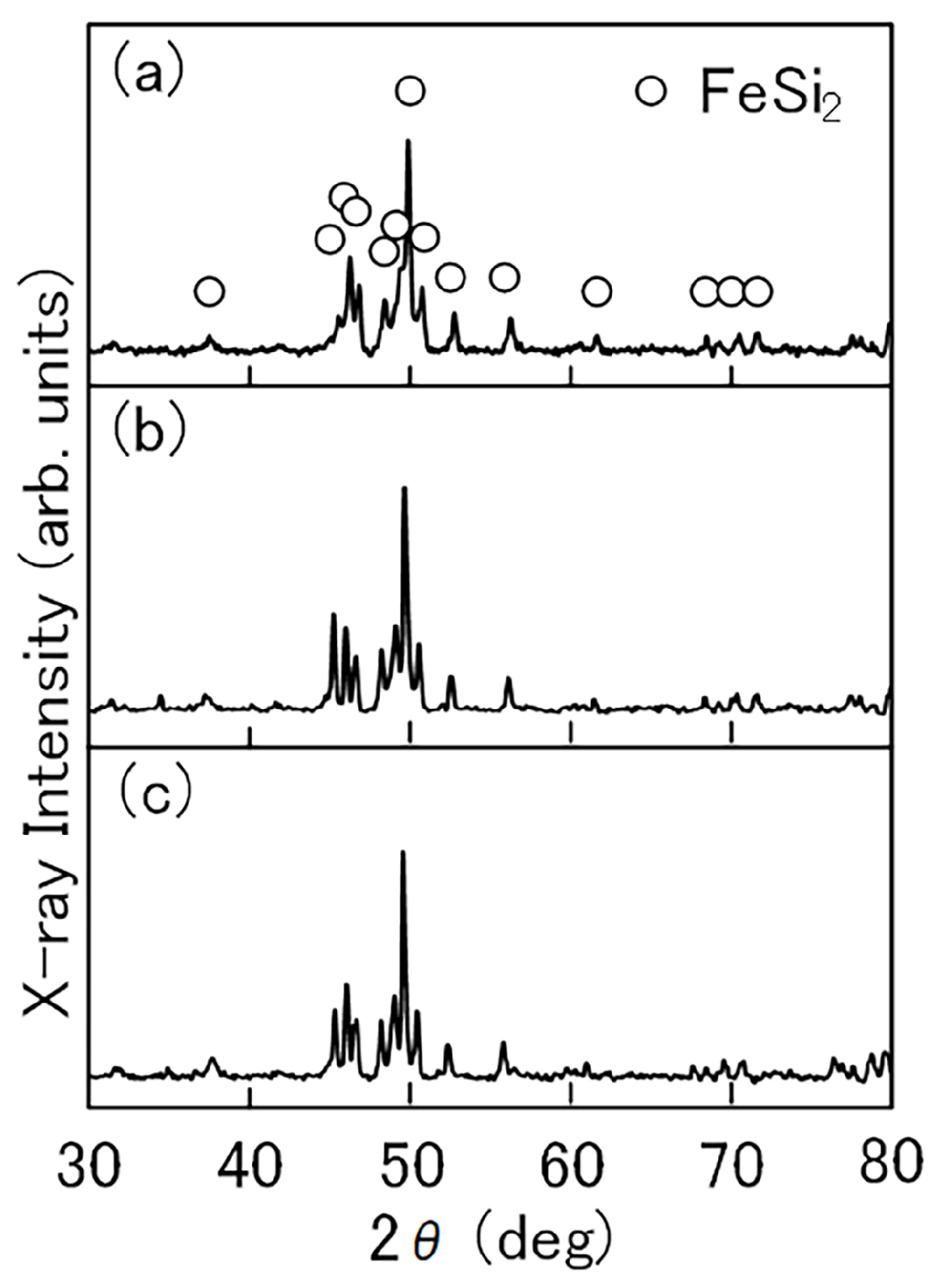
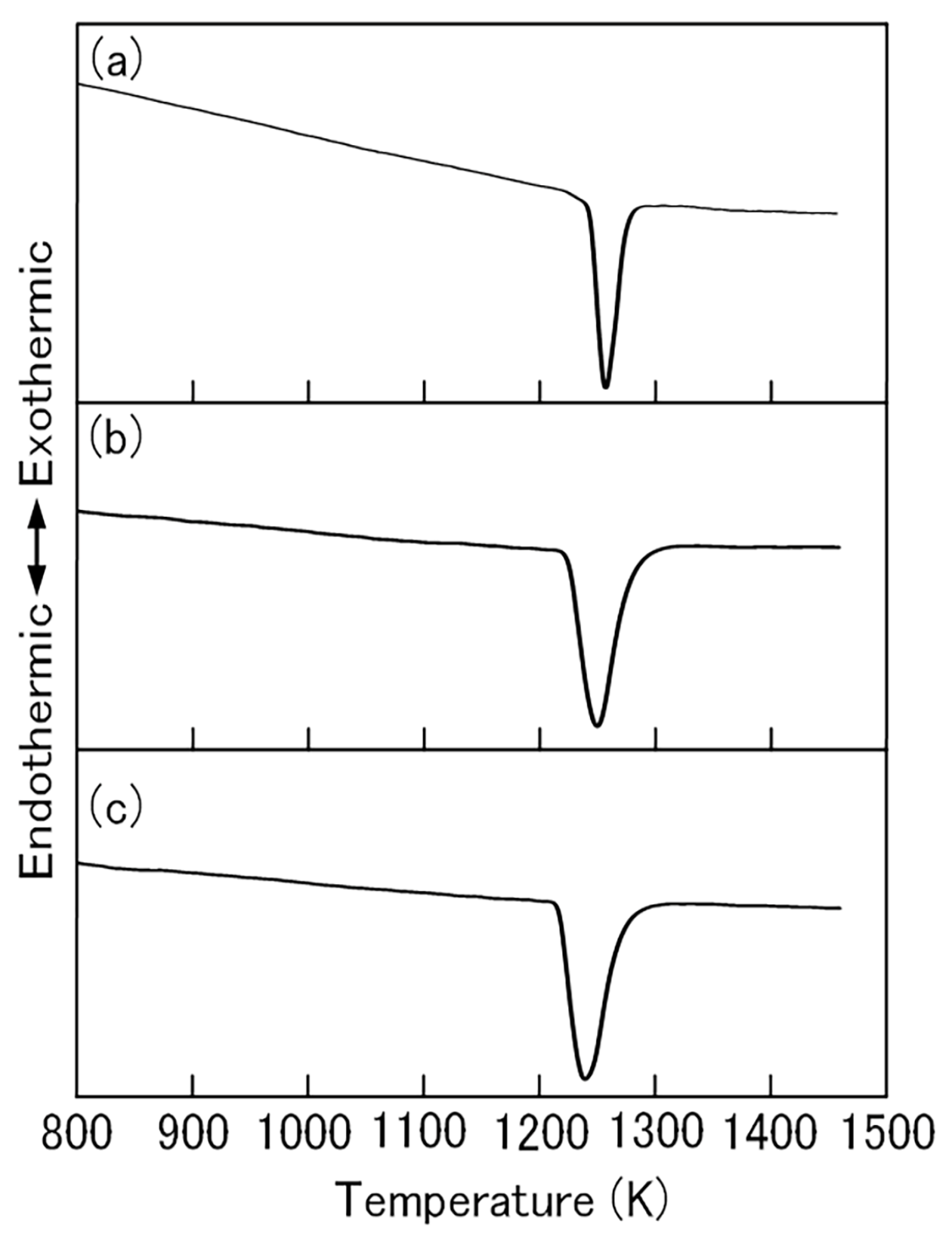
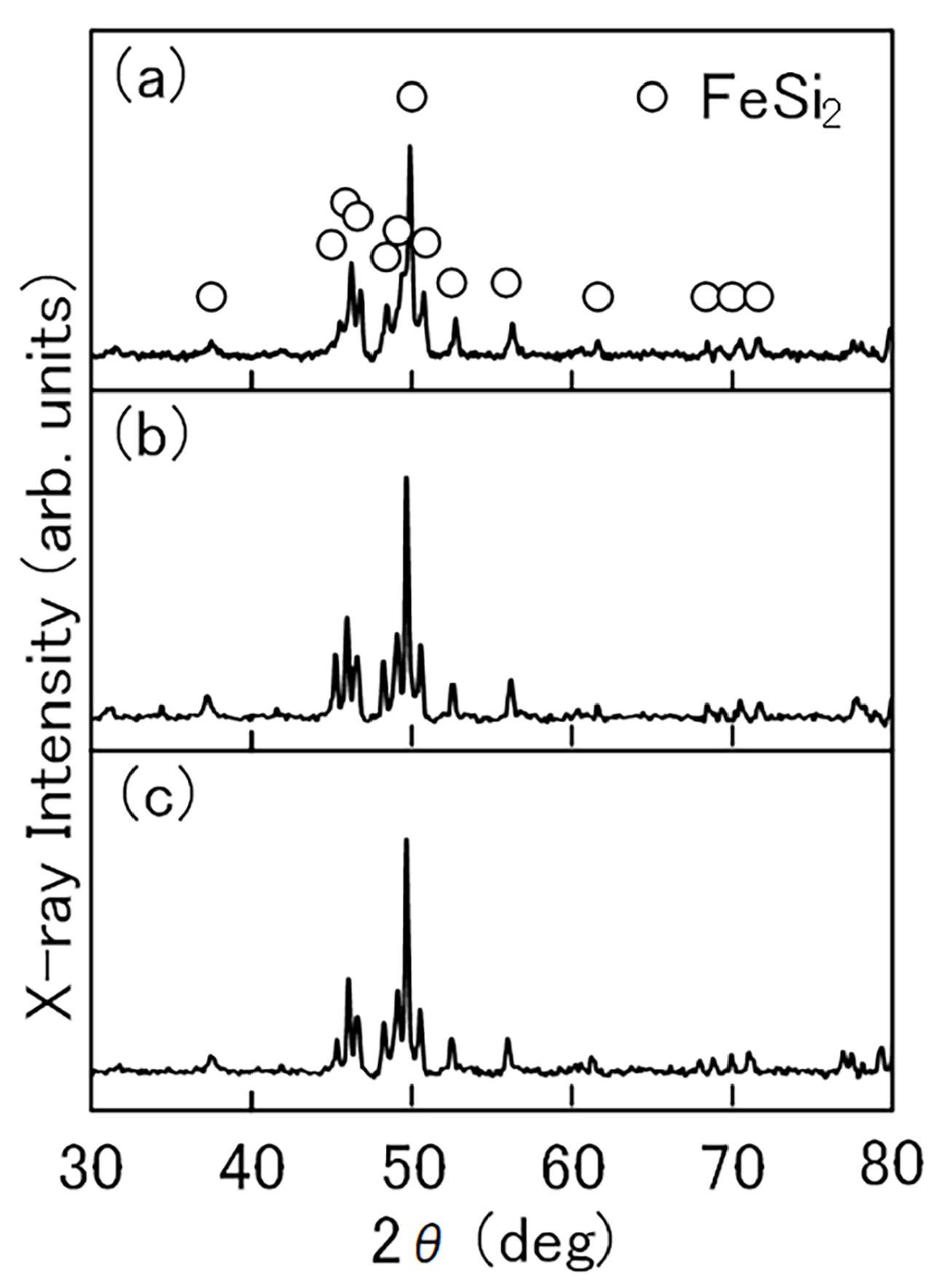
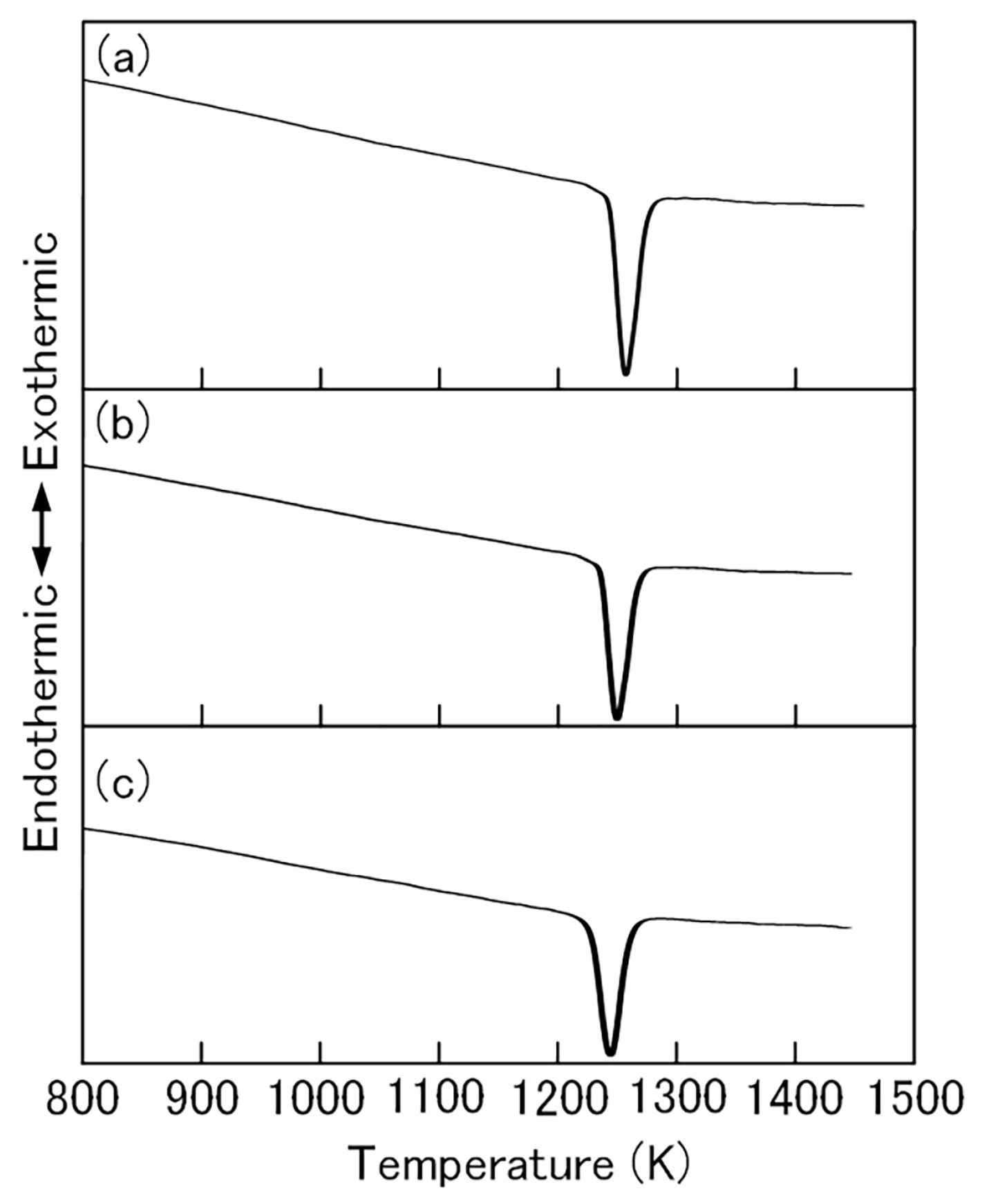
The Cu-doped specimens were prepared using the same procedure as the undoped specimens. The density of the specimens increased from 4.49 g/cm3 for an FeSi2 specimen to 4.64 g/cm3 for a 2% Cu-doped specimen. The XRD patterns and the corresponding DTA curves of the Cu-doped specimens are shown in Figure 4 and Figure 5, respectively. The XRD patterns of the Cu-doped specimens were virtually the same as those of the undoped specimens, with no clear diffraction peaks of the other phases. The DTA curves of the Cu-doped and undoped specimens exhibit one endothermic peak at around 1260 K, corresponding to the peritectoid reaction temperature (ε-FeSi + α-Fe2Si5 = β-FeSi2), confirming that the annealed specimen consisted of the β-FeSi2 phase. No melting temperature of the other phases, such as Cu, is noted in the DTA curves. However, the peritectoid reaction temperature decreases slightly with increasing Cu content. These results indicate that the Cu dopant dissolves into the FeSi2 phase.
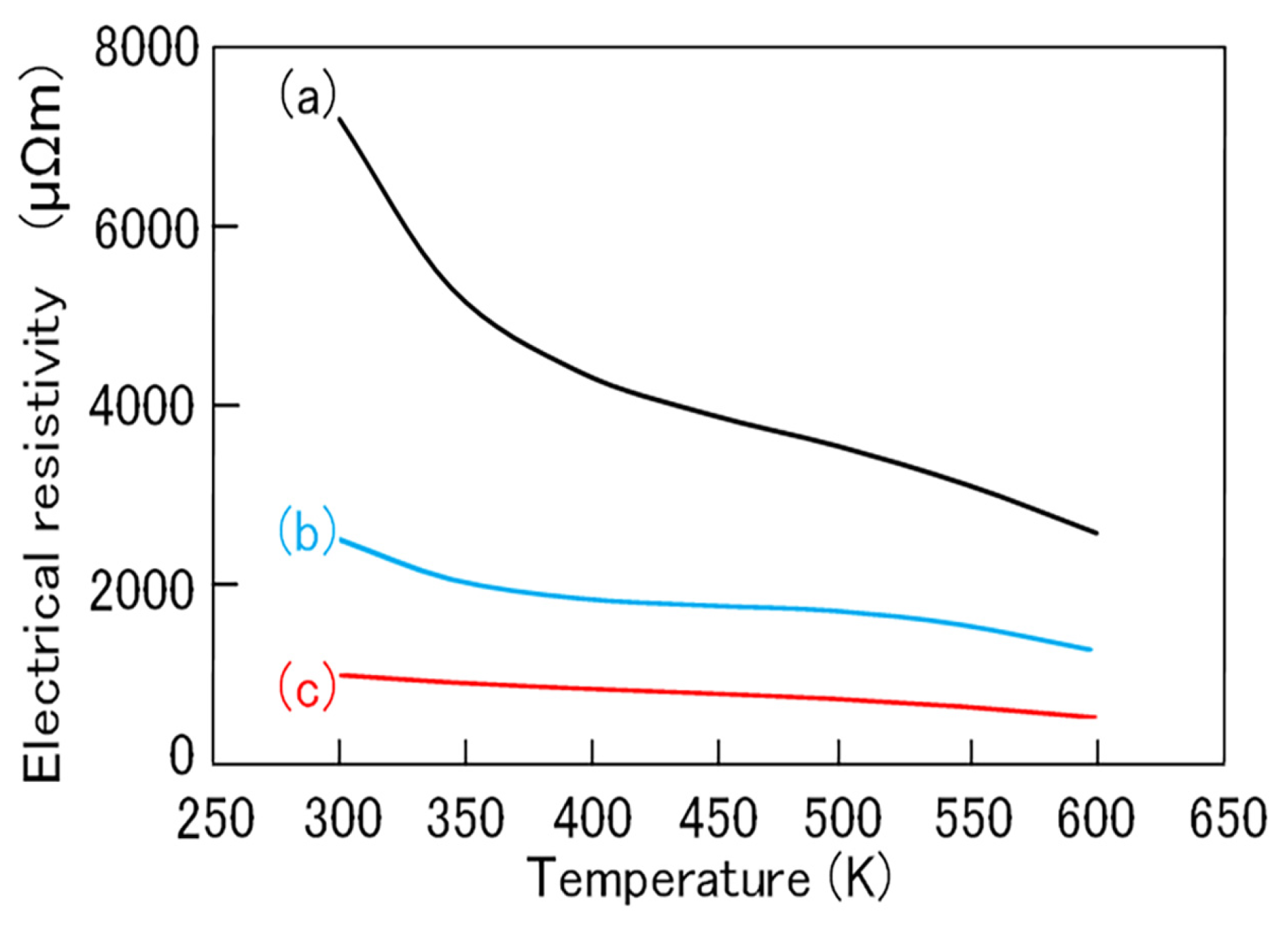
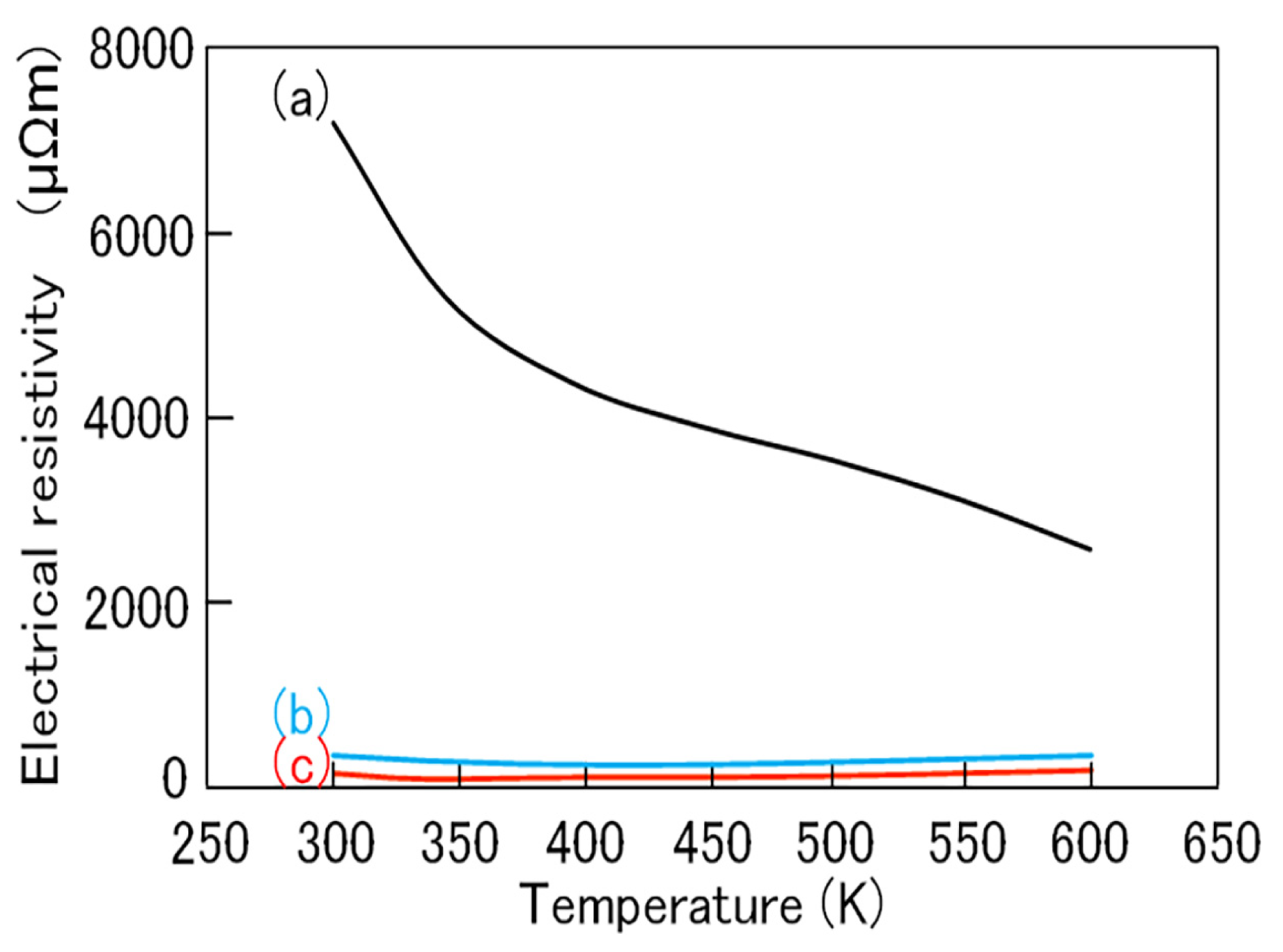
The electrical resistivity of the specimens was examined in the 300–600 K temperature range (Figure 6). The investigated temperature range corresponds to the range in which the Bi-Te specimen exhibits a high power factor (PF). The FeSi2 specimen exhibited a semiconductor-like temperature dependence, with an electrical resistivity >7000 μΩm at room temperature that then decreased with increasing temperature. Contrastingly, the electrical resistivities of the 1% and 2% Cu-doped specimens were 2180 μΩm and 869 μΩm, respectively, confirming that Cu doping effectively decreased the electrical resistivity of the FeSi2. The Cu-doped specimens also exhibited a semiconductor-like temperature dependency.
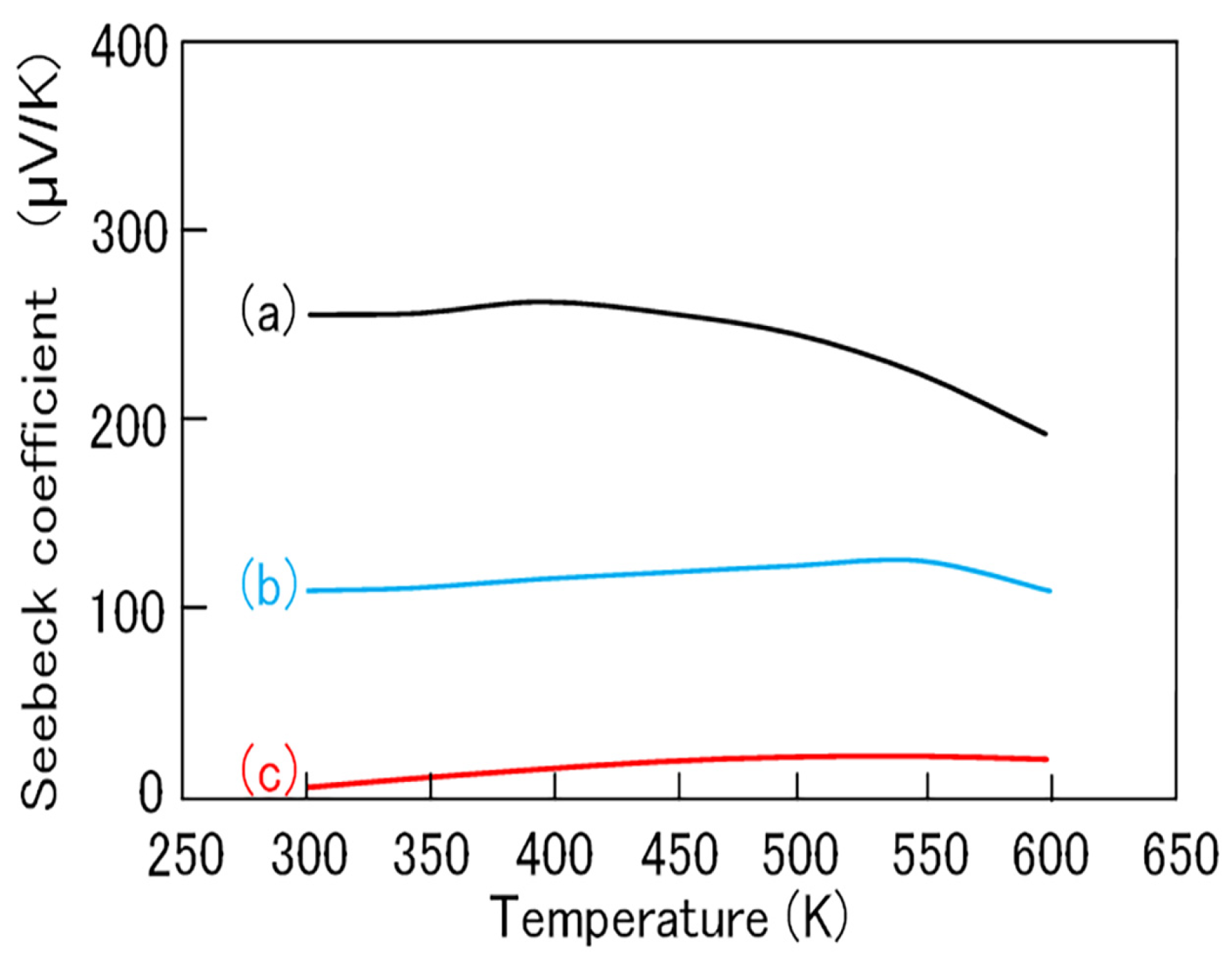
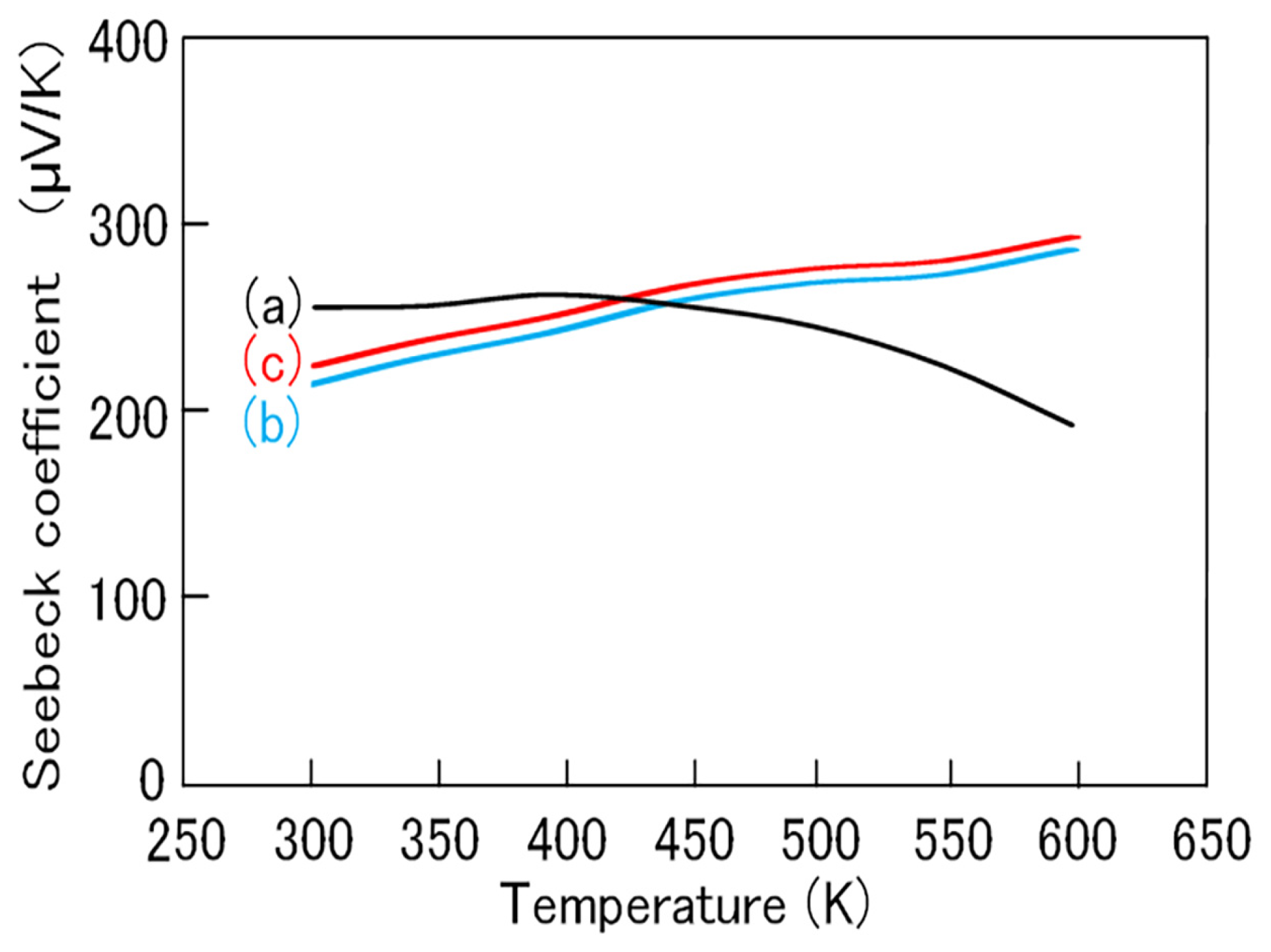
Next, the Seebeck coefficients of the specimens were examined (Figure 7). The FeSi2 specimen had a high Seebeck coefficient of 263 μV/K at room temperature, which decreased with increasing temperature. This value is comparable to that of Bi2Te3. The Seebeck coefficients of the Cu-doped specimens were smaller (112 μV/K and 15.7 μV/K at room temperature for the 1% and 2% Cu-doped specimens, respectively) than that of the FeSi2 specimen.
The power factor, PF, can be expressed as follows:
PF = S2
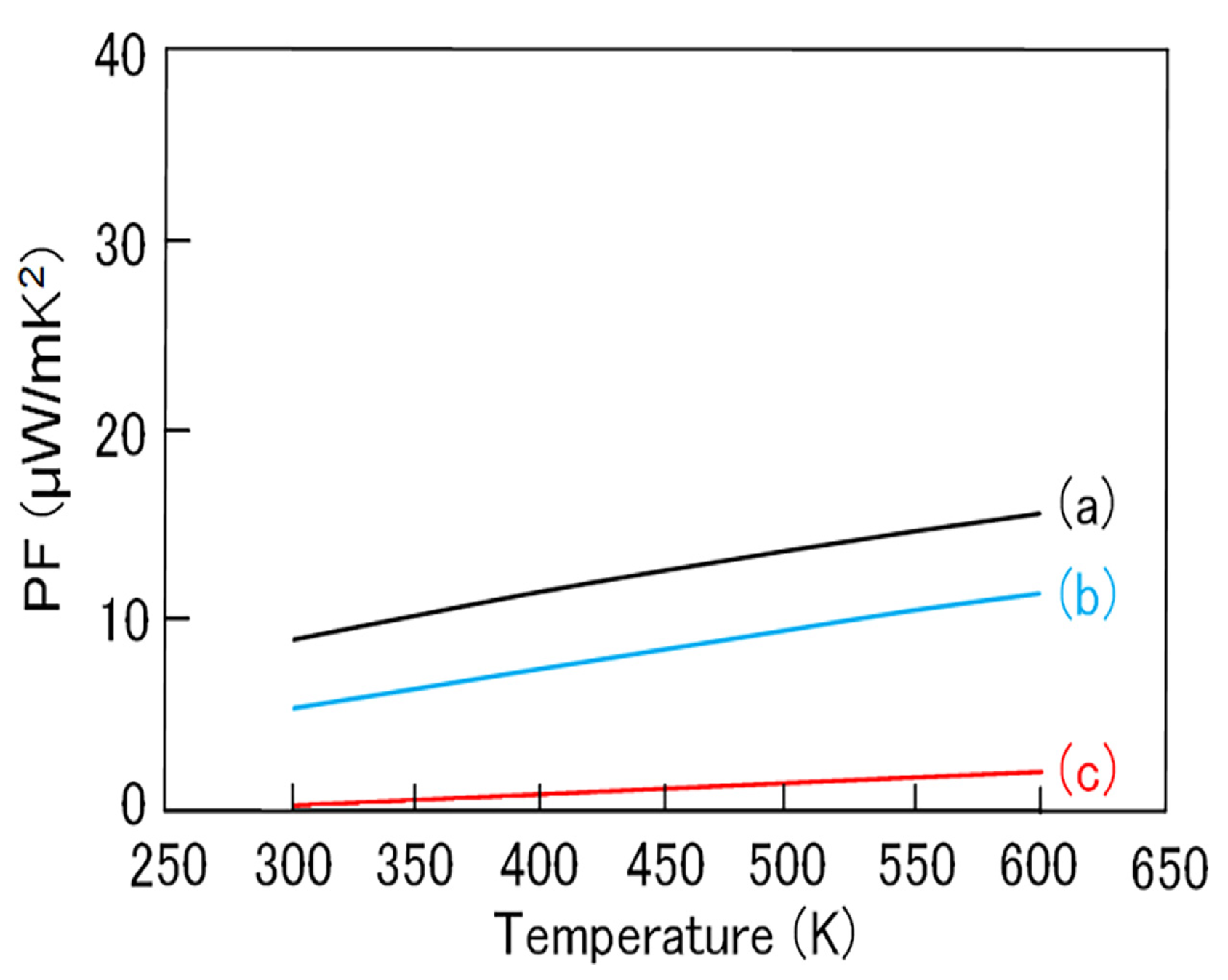
where S is the Seebeck coefficient and ρ is the electrical resistivity (Figure 8). The PF of the FeSi2 specimen was <20 μW/mK2, two orders of magnitude smaller than that of Bi2Te3. Although Cu doping effectively decreased the electrical resistivity of FeSi2, it significantly reduced the Seebeck coefficient such that the PF was smaller than that of the FeSi2 specimen. It is necessary to have a high Seebeck coefficient and low electrical resistivity to achieve a high PF.

3.3. Effects of Al Doping on FeSi2

The Al-doped specimens were prepared using the same procedure as the undoped specimens. The density of the specimens increased from 4.49 g/cm3 for an FeSi2 specimen to 4.79 g/cm3 for a 2% Al-doped specimen. The XRD patterns and the corresponding DTA curves are shown in Figure 9 and Figure 10, respectively, for the FeSi2 and Al-doped specimens. The XRD patterns of the Al-doped specimens are virtually the same as that of the FeSi2 specimen; no clear diffraction peaks of the other phases are found. The corresponding DTA curves also exhibit a similar endothermic peak, with no melting temperature observed for the other phase (such as Al). However, the peritectoid reaction temperature slightly decreased as the Al content increased. These results indicate that the Al dopant dissolves into the FeSi2 phase.
The electrical resistivities of the Al-doped specimens (Figure 11) were much smaller than that of the FeSi2 specimen: 359 and 194 μΩm at room temperature for the 1% and 2% Al-doped specimens, respectively. Although the electrical resistivity of Al was larger than that of Cu, Al doping decreased the electrical resistivity more effectively than Cu doping. However, the temperature dependence of the Al-doped specimens was not semiconductor-like; the electrical resistivity remained nearly constant. The measured electrical resistivity values of the Al-doped specimens were lower than those previously reported [21].
In contrast to Cu doping, Al doping did not decrease the Seebeck coefficient of FeSi2 (Figure 12); the Seebeck coefficients of the 1% and 2% Al-doped specimens were 236 μV/K and 247 μV/K at room temperature, respectively. Furthermore, the Seebeck coefficients increased slightly as the temperature increased. It was found that the Al-doped specimens exhibit a high Seebeck coefficient. Al doping has been found to stabilize the p-type phase of FeSi2 [22]. The FeSi2 specimens produced through mechanical alloying and spark plasma sintering (SPS) exhibited p-type thermoelectric properties, with Al doping maintaining a high Seebeck coefficient. In contrast, Cu doping stabilizes the n-type phase of FeSi2 [29]. Since the FeSi2 specimens were initially p-type thermoelectric materials, the Seebeck coefficient of the p-type FeSi2 phase decreased with the introduction of Cu doping.
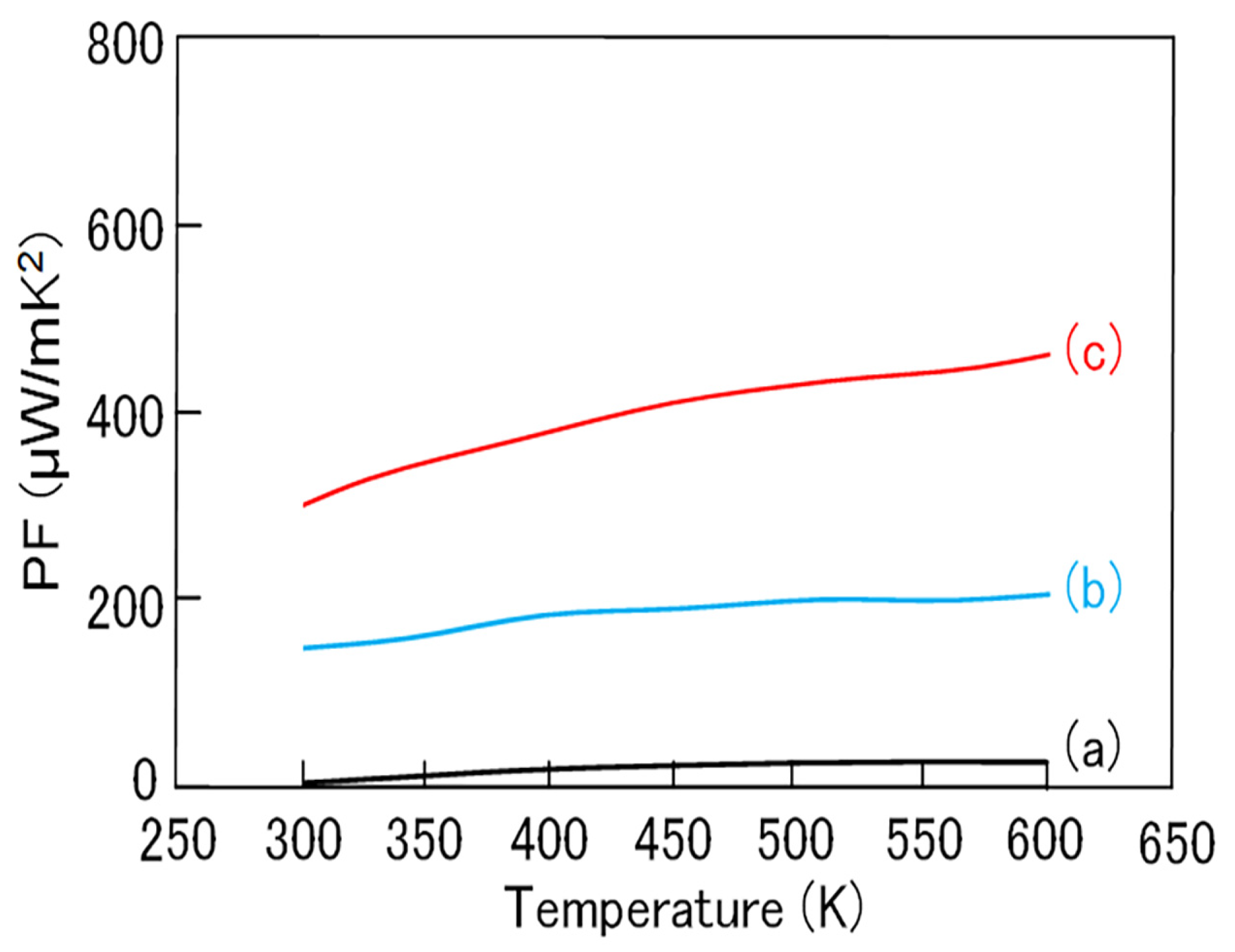
Al doping effectively decreased the electrical resistivity of FeSi2 but did not reduce the Seebeck coefficient. Thus, the PF of the Al-doped specimens was much larger than that of the undoped FeSi2 specimen (Figure 13): 156 μW/mK2 and 314 μW/mK2 at room temperature for the 1% and 2% Al-doped specimens, respectively. The PF of the 2% Al-doped specimen increased from 314 μW/mK2 at room temperature to 430 μW/mK2 at 600 K.
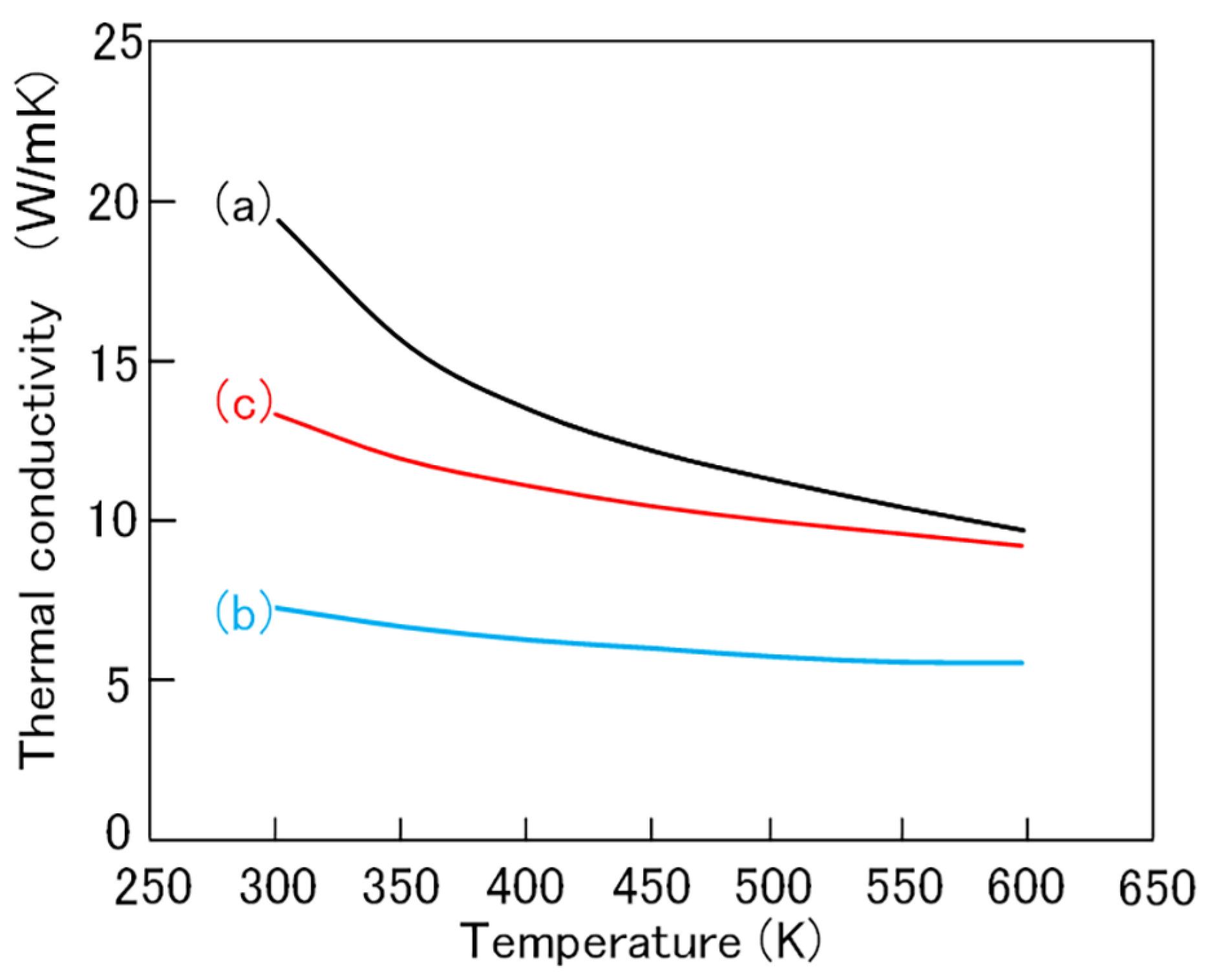
Since the Al-doped FeSi2 specimens exhibited high PF values, further studies on thermal conductivity were conducted. The Al-doped FeSi2 specimens showed lower thermal conductivity than the undoped FeSi2 specimen (Figure 14). Unlike in the case of the electrical resistivity, the 1% Al-doped specimen showed lower thermal conductivity than the 2% Al-doped specimen.
The thermoelectric performance depends on the efficiency of the thermoelectric material for transforming heat into electricity. The efficiency of a thermoelectric material depends primarily on its figure of merit, ZT.
The figure of merit, ZT, can be expressed as follows:
ZT = (PF/κ)T
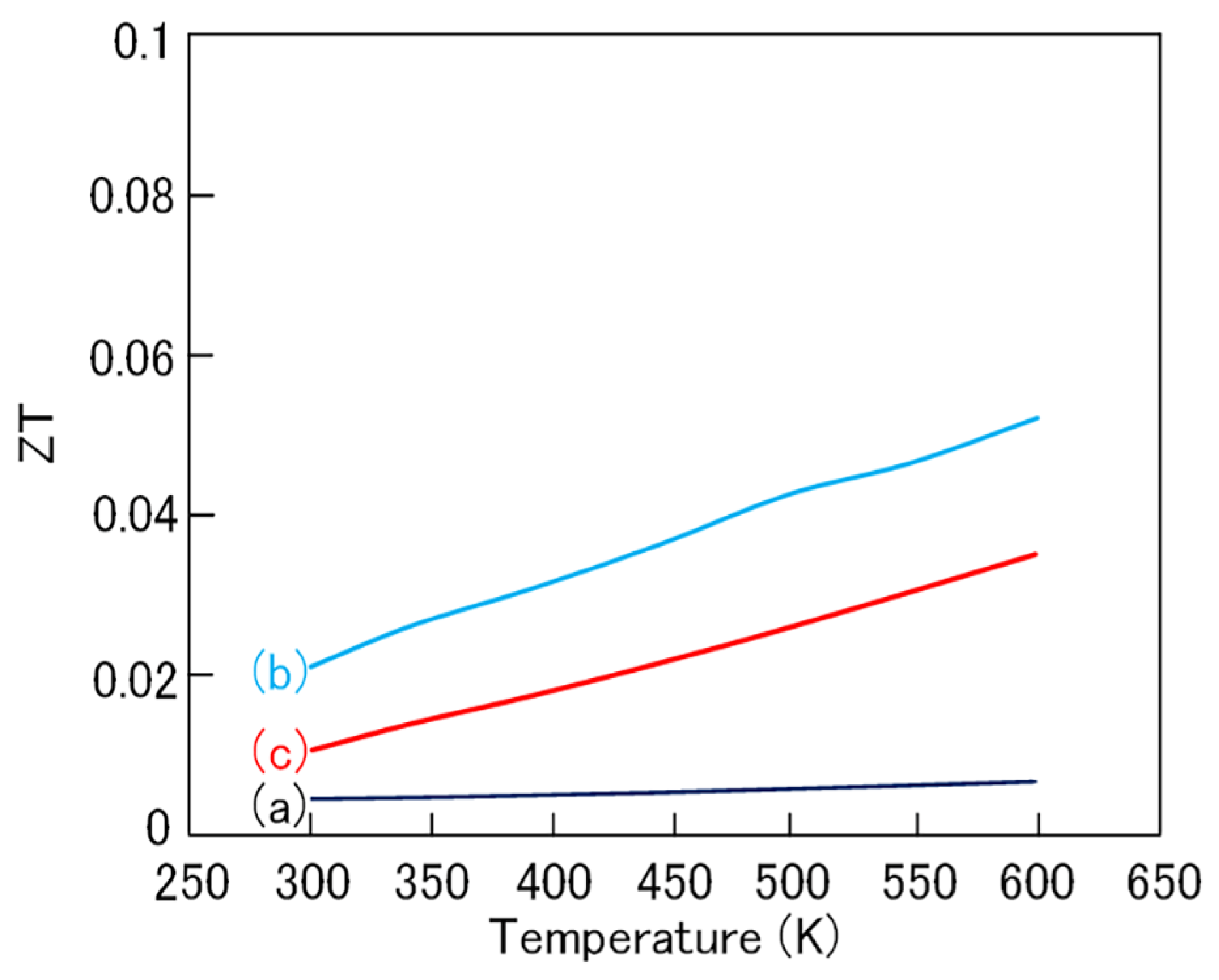
where PF is the power factor, and κ is the thermal conductivity. The figure of merit, ZT, of the specimens is shown in Figure 15. Al doping effectively increased the PFs and decreased the thermal conductivity. Thus, the ZT of the Al-doped specimens was much larger than that of the undoped FeSi2 specimen. Since the 1% Al-doped specimen showed lower thermal conductivity than the 2% Al-doped specimen, the 1% Al-doped specimen exhibited higher ZT than the 2% Al-doped specimen. The ZT of the 1% Al-doped specimen increased from 0.021 at room temperature to 0.052 at 600 K. This value was slightly higher than that of the Mn-doped β-FeSi2 (ZT~0.04 at 600 K) [30] but smaller than that of the Co-doped β-FeSi2 (ZT ~0.12 at 600 K) [31]. Further improvement of the ZT could be achieved by co-doping β-FeSi2 with Al and Co.

4. Conclusions

Cu- and Al-doped FeSi2 specimens were prepared from mechanically alloyed powders by SPS and subsequent annealing. The FeSi2 specimen had a high Seebeck coefficient (263 μV/K) but also a high electrical resistivity (>7000 μΩm), resulting in a PF. XRD and DTA studies indicated that small amounts (up to at least 2%) of Cu and Al dissolved into the FeSi2 phase. Cu and Al doping decreased the electrical resistivity of FeSi2, with Al doping more effective than Cu doping. On the other hand, Cu doping decreased the Seebeck coefficient of FeSi2, whereas Al doping did not. Thus, the PF of the Al-doped specimens was much larger than that of the undoped FeSi2 specimen: 156 μW/mK2 and 314 μW/mK2 at room temperature for the 1% and 2% Al-doped specimens, respectively. Further thermal conductivity measurements revealed that the Al-doped FeSi2 specimens showed lower thermal conductivity than the undoped FeSi2 specimen. Unlike in the case of the electrical resistivity, the 1% Al-doped specimen showed lower thermal conductivity than the 2% Al-doped specimen. The ZT of the 1% Al-doped specimen increased from 0.021 at room temperature to 0.052 at 600 K. This value was slightly higher than that of the Mn-doped β-FeSi2 but smaller than that of the Co-doped β-FeSi2.

Funding

This research was funded by a Grant-in-Aid from the Iketani Science and Technology Foundation (0361126-A).

Data Availability Statement

Data are contained within the article.

Acknowledgments

The author would like to express their sincere gratitude to the Iketani Science and Technology Foundation for their support.

Conflicts of Interest

The author declares no conflicts of interest.

References

  1. Ware, M.; McNeill, D.J. Iron disilicide as a thermoelectric generator material. Proc. Inst. Electr. Eng. 1964, 111, 178–182. [Google Scholar] [CrossRef]
  2. Birkholz, U.; Schelm, J. Electrical Investigation of the Semiconductor-to-Metal Transition in FeSi2. Phys. Stat. Sol. (b) 1969, 34, K177–K180. [Google Scholar] [CrossRef]
  3. Kojima, T. Semiconducting and Thermoelectric Properties of Sintered Iron Disilicide. Phys. Stat. Sol. (a) 1989, 111, 233–242. [Google Scholar] [CrossRef]
  4. Pang, H.J.; Chen, L.C.; Yu, H.; Qiu, P.F.; Zhong, G.H.; Peng, Q.; Chen, X.J. Hybridization-driven strong anharmonicity in Yb-filled skutterudites. Phys. Rev. B 2022, 105, 094115. [Google Scholar] [CrossRef]
  5. Binh, N.V.; Du, N.V.; Lee, N.; Kang, M.; Ryu, S.H.; Lee, M.; Seo, D.; Nam, W.H.; Roh, J.W.; Lee, S.; et al. Investigation of the Effect of Double-Filler Atoms on the Thermoelectric Properties of Ce-YbCo4Sb12. Materials 2023, 16, 3819. [Google Scholar] [CrossRef] [PubMed]
  6. Chauhan, N.S.; Bathula, S.; Gahtori, B.; Kolen’ko, Y.V.; Shyam, R.; Upadhyay, N.K.; Dhar, A. Spinodal decomposition in (Ti,Zr)CoSb half-Heusler: A nanostructuring route toward high efficiency thermoelectric materials. J. Appl. Phys. 2019, 126, 125110. [Google Scholar] [CrossRef]
  7. Pinakidou, F.; Delimitis, A.; Katsikini, M. Probing the Structural Order of Half-Heusler Phases in Sb-Doped (Ti, Zr, Hf)NiSn Thermoelectrics. Nanomaterials 2025, 15, 1037. [Google Scholar] [CrossRef] [PubMed]
  8. Fedorov, M.I.; Grigory, N.I. Silicides: Materials for thermoelectric energy conversion. Jap. J. Appl. Phys. 2025, 4, 07JA05. [Google Scholar] [CrossRef]
  9. Tsuda, S.; Yoshinari, A.; Takezawa, S.; Ohishi, K.; Nagamura, N.; Zhang, W.; Iwasaki, Y.; Takagiwa, Y. Effect of carrier doping on the electronic states of earth-abundant Fe–Al–Si thermoelectric materials. Mater. Res. Express 2023, 10, 055506. [Google Scholar] [CrossRef]
  10. Srinithi, A.K.; Sepehri-Amin, H.; Takagiwa, Y.; Hono, K. Effect of microstructure on the electrical conductivity of p-type Fe–Al–Si thermoelectric materials. J. Alloys Compd. 2022, 903, 163835. [Google Scholar] [CrossRef]
  11. Takagiwa, Y.; Isoda, Y.; Goto, M.; Shinohara, Y. Conduction type control and power factor enhancement of the thermoelectric material Al2Fe3Si3. J. Phys. Chem. Solids 2018, 118, 95–98. [Google Scholar] [CrossRef]
  12. Adachi, M.; Fujii, S.; Kiyama, M.; Yamamoto, Y.; Nishino, S.; Omprakash, M.; Yamamoto, A.; Makino, A.; Takeuchi, T. Development of amorphous bulk Al-Mn-Si for nano-structured thermoelectric materials. Mater. Today Proc. 2018, 5, 10291–10297. [Google Scholar] [CrossRef]
  13. Novikov, S.V.; Burkov, A.T.; Schumann, J. Crystallization and transport properties of amorphous Cr-Si thin film thermoelectrics. J. Electron. Mater. 2014, 43, 2420–2424. [Google Scholar] [CrossRef]
  14. Qu, X.; Lü, S.; Hu, J.; Meng, Q. Microstructure and thermoelectric properties of β-FeSi2 ceramics fabricated by hot-pressing and spark plasma sintering. J. Alloys Compd. 2011, 509, 10217–10221. [Google Scholar] [CrossRef]
  15. Abbassi, L.; Mesguich, D.; Coulomb, L.; Chevallier, G.; Aries, R.; Estournès, C.; Flahaut, E.; Viennois, R.; Beaudhuina, M. In-situ reactive synthesis of dense nanostructured β-FeSi2 by Spark Plasma Sintering. J. Alloys Compd. 2022, 902, 163683. [Google Scholar] [CrossRef]
  16. Pandey, T.; Singh, D.J.; Parker, D.; Singh, A.K. Thermoelectric properties of β-FeSi2. J. Appl. Phys. 2013, 114, 153704. [Google Scholar] [CrossRef]
  17. Nishida, I. Study of Semiconductor-to-Metal Transition in Mn-Doped FeSi2. Phys. Rev. B 1973, 7, 2710–2713. [Google Scholar] [CrossRef]
  18. Dąbrowski, F.; Ciupiński, Ł.; Zdunek, J.; Kruszewski, J.; Zybała, R.; Michalski, A.; Kurzydłowski, K.J. Microstructure and thermoelectric properties of p and n type doped β-FeSi2 fabricated by mechanical alloying and pulse plasma sintering. Mater. Today Proc. 2019, 8, 531–539. [Google Scholar] [CrossRef]
  19. Saito, T.; Asakawa, R. Production of (Fe, Co)Si2 and (Fe, Mn)Si2 thermoelectric materials by spark plasma sintering. Crystals 2023, 14, 56. [Google Scholar] [CrossRef]
  20. Tonquesse, S.L.; Verastegui, Z.; Huynh, H.; Dorcet, V.; Guo, Q.; Demange, V.; Prestipino, C.; Berthebaud, D.; Mori, T.; Pasturel, M. Magnesioreduction Synthesis of Co-Doped β-FeSi2: Mechanism, Microstructure, and Improved Thermoelectric Properties. ACS Appl. Energy Mater. 2019, 2, 8525–8534. [Google Scholar] [CrossRef]
  21. Sam, S.; Say, S.; Yamazaki, K.; Nakatsugawa, H. Strategies to improve the thermoelectric performance of iron silicide-based materials. Sci. Technol. Adv. Mater. 2025, 26, 2585555. [Google Scholar] [CrossRef] [PubMed]
  22. Rajasekar, P.; Umarji, A.M. Effect of Al-doping on suppression of thermal conductivity in Si dispersed β-FeSi2. Intermetallics 2017, 89, 57–64. [Google Scholar] [CrossRef]
  23. Sam, S.; Nakatsugawa, H.; Okamoto, Y. Improved thermoelectric performance of Co-doped β-FeSi2 by Ni substitution. Mater. Adv. 2023, 4, 2821–2830. [Google Scholar] [CrossRef]
  24. Sangwan, P.; Upadhyay, N.K.; Shyam, R.; Gupta, P.; Kumar, H.; Singh, S.; Pandey, A.; Muthiah, S. Hybrid composite approach enhancing the thermoelectric performance of p-type iron-silicide synthesized by the arc melting-spark plasma sintering technique. Hybrid. Adv. 2025, 9, 100423. [Google Scholar] [CrossRef]
  25. Suryanarayana, C. Mechanical Alloying: A Novel Technique to Synthesize Advanced Materials. Research 2019, 2019, 4219812. [Google Scholar] [CrossRef] [PubMed]
  26. Le Caër, G.; Bauer-Grosse, E.; Pianelli, A.; Bouzy, E.; Matteazzi, P. Mechanically driven syntheses of carbides and silicides. J. Mater. Sci. 1990, 25, 4726–4731. [Google Scholar] [CrossRef]
  27. Umemoto, M. Preparation of Thermoelectric β-FeSi2 Doped with Al and Mn by Mechanical Alloying (Overview). Mater. Trans. JIM 1995, 36, 373–383. [Google Scholar] [CrossRef]
  28. Li, X.; Chen, C.; Wang, T.; Guo, Z.; Wang, H.; Wang, H.; Xue, L.; Tian, J.; Sun, Y. Inclusions and phases in Fe-RE-Si steelmaking alloys and their effect on evolution of inclusions in non-oriented silicon steels. J. Rare Earths 2026, 44, 377. [Google Scholar] [CrossRef]
  29. Ito, M.; Nagai, H.; Tanaka, T.; Katsuyama, S.; Majima, K. Thermoelectric performance of n-type and p-type β-FeSi2 prepared by pressureless sintering with Cu addition. J. Alloys Compd. 2001, 319, 303–311. [Google Scholar] [CrossRef]
  30. Sam, S.; Farooq, U.; Namba, M.; Yamazaki, K.; Nakatsugawa, H. Structure relations with transport properties in p-type thermoelectric materials: Iron silicides. J. Alloys Compd. 2024, 989, 174367. [Google Scholar] [CrossRef]
  31. Cheng, J.; Gan, L.; Zhang, J.; Xi, J.; Xi, L.; Yang, J.; Deng, T.; Qiu, P.; Shi, X.; Chen, L. Thermoelectric properties of heavily Co-doped β-FeSi2. J. Mater. Sci. Technol. 2024, 187, 248–257. [Google Scholar] [CrossRef]
Figure 1. SEM micrographs of (a) the powder mixture of Fe and Si, and (b) the mechanically alloyed FeSi2 powder.
Energies 19 02997 g001
Figure 2. XRD patterns of (a) the powder mixture of Fe and Si and (b) the mechanically alloyed FeSi2 powder.
Energies 19 02997 g002
Figure 3. XRD patterns of (a) the FeSi2 specimen produced by using the SPS method and (b) after further annealing at 1123 K for 6 h.
Energies 19 02997 g003
Figure 4. XRD patterns of (a) FeSi2, (b) 1% Cu-doped, and (c) 2% Cu-doped specimens.
Energies 19 02997 g004
Figure 5. DTA curves of (a) FeSi2, (b) 1% Cu-doped, and (c) 2% Cu-doped specimens.
Energies 19 02997 g005
Figure 6. Electrical resistivity as a function of ambient temperature for the (a) FeSi2, (b) 1% Cu-doped, and (c) 2% Cu-doped specimens.
Energies 19 02997 g006
Figure 7. Seebeck coefficient as a function of ambient temperature for the (a) FeSi2, (b) 1% Cu-doped, and (c) 2% Cu-doped specimens.
Energies 19 02997 g007
Figure 8. Power factor (PF) as a function of ambient temperature for the (a) FeSi2, (b) 1% Cu-doped, and (c) 2% Cu-doped specimens.
Energies 19 02997 g008
Figure 9. XRD patterns of (a) FeSi2, (b) 1% Al-doped, and (c) 2% Al-doped specimens.
Energies 19 02997 g009
Figure 10. DTA curves of (a) FeSi2, (b) 1% Al-doped, and (c) 2% Al-doped specimens.
Energies 19 02997 g010
Figure 11. Electrical resistivity as a function of ambient temperature for the (a) FeSi2, (b) 1% Al-doped, and (c) 2% Al-doped specimens.
Energies 19 02997 g011
Figure 12. Seebeck coefficient as a function of ambient temperature for the (a) FeSi2, (b) 1% Al-doped, and (c) 2% Al-doped specimens.
Energies 19 02997 g012
Figure 13. Power factor as a function of ambient temperature for the (a) FeSi2, (b) 1% Al-doped, and (c) 2% Al-doped specimens.
Energies 19 02997 g013
Figure 14. Thermal conductivity as a function of ambient temperature for the (a) FeSi2, (b) 1% Al-doped, and (c) 2% Al-doped specimens.
Energies 19 02997 g014
Figure 15. ZT (figure of merit) as a function of ambient temperature for the (a) FeSi2, (b) 1% Al-doped, and (c) 2% Al-doped specimens.
Energies 19 02997 g015
Disclaimer/Publisher’s Note: The statements, opinions and data contained in all publications are solely those of the individual author(s) and contributor(s) and not of MDPI and/or the editor(s). MDPI and/or the editor(s) disclaim responsibility for any injury to people or property resulting from any ideas, methods, instructions or products referred to in the content.