Article

Scale-Up of Semi-Continuous Anaerobic Co-Digestion of Municipal Mixed Sludge with Fruit and Vegetable Waste: Process Performance and Stability

1
LEAF-Linking Landscape, Environment, Agriculture and Food, Instituto Superior de Agronomia, Universidade de Lisboa, Tapada da Ajuda, 1349-017 Lisboa, Portugal
2
Laboratório Associado para a Química Verde-Rede de Química e Tecnologia (LAQV-REQUIMTE), Departamento de Química, Faculdade de Ciências e Tecnologia, Universidade NOVA de Lisboa, 2829-516 Caparica, Portugal
3
Laboratório Associado Terra, Instituto Superior de Agronomia, Universidade de Lisboa, Tapada da Ajuda, 1349-017 Lisboa, Portugal
*
Author to whom correspondence should be addressed.
Energies 2026, 19(13), 2998; https://doi.org/10.3390/en19132998 (registering DOI)
Submission received: 21 May 2026 / Revised: 22 June 2026 / Accepted: 23 June 2026 / Published: 25 June 2026

Abstract

Anaerobic co-digestion (AcoD) is a promising strategy to enhance biogas production and improve the sustainability of wastewater treatment plants (WWTPs). However, information regarding process scale-up and reactor performance following the interruption of co-substrate feeding remains limited. This study evaluated the anaerobic co-digestion of municipal mixed sludge (MMS) and fruit and vegetable peel purées (FVPP) in a 10.6 L semi-continuously fed continuously stirred tank reactor (CSTR), operating under conditions representative of municipal WWTP anaerobic digesters. Mono-digestion (AMD) and co-digestion (AcoD) assays were conducted under mesophilic conditions and assessed through process performance indicators. AcoD increased methane concentration from 58.50% to 60.75%, while total volatile solids (TVS) removal efficiency increased from 41.67% to 59.84% in comparison with AMD. Total chemical oxygen demand (CODT) removal efficiency also improved from 40.82% to 56.48%. Furthermore, H2S concentrations decreased from approximately 350 ppmv during mono-digestion to 7 ppmv during co-digestion. An additional mono-digestion trial (aAMD) performed after co-substrate withdrawal achieved the highest specific methane production (0.27 L CH4/g−1 TVS) and organic matter removal efficiencies (63.73% for TVS and 67.55% for CODT, respectively). These results demonstrate that co-digestion of MMS and FVPP improves methane quality, enhances organic matter removal, and reduces H2S emissions, while maintaining stable reactor performance under scale-up conditions and after the interruption of co-substrate feeding.

1. Introduction

The global annual production of municipal sewage sludge surpasses 100 million tons in wet weight [1,2]. As urbanization continues to accelerate and centralized wastewater treatment plants (WWTPs) expand, this volume is projected to increase significantly, posing escalating challenges for safe disposal and resource recovery [3,4]. Traditional disposal methods, including incineration, landfilling, and land application, raise substantial concerns related to pathogen spread, greenhouse gas emissions, and environmental contamination with heavy metals and micropollutants. Therefore, the sustainable management of sewage sludge is a critical environmental and economic issue on a global scale, especially within the frameworks of the circular economy principle and climate neutrality objectives [5,6,7]. Addressing these challenges requires innovative approaches that prioritize environmental safety, resource efficiency, and compliance with evolving regulatory standards, ensuring that sewage sludge management aligns with sustainable development goals.
Anaerobic digestion (AD) is increasingly recognized as a sustainable technology for sludge stabilization and biogas production, offering an environmentally friendly alternative to traditional waste management practices [8,9,10,11,12]. It is a multi-step biological process in which complex organic matter is converted into biogas through the coordinated activity of different microbial groups. The process is commonly described by four main biochemical stages: hydrolysis, acidogenesis, acetogenesis, and methanogenesis. During hydrolysis, complex particulate organic matter, such as carbohydrates, proteins, and lipids, is enzymatically converted into soluble compounds, including sugars, amino acids, and long-chain fatty acids. These products are subsequently fermented during acidogenesis into volatile fatty acids, alcohols, H2, and CO2. During acetogenesis, longer-chain intermediates and volatile fatty acids are further converted mainly into acetate, H2, and CO2. Finally, methanogenic archaea convert acetate and H2/CO2 into CH4 and CO2, resulting in the production of biogas [13,14]. Nonetheless, mono-digestion of municipal mixed sludge occasionally encounters several limitations, including low carbon-to-nitrogen (C/N) ratios, diminished methane yields, instability in the digestion process, and vulnerability to inhibitory substances such as ammonia and volatile fatty acids (VFAs) accumulation [15,16]. During wastewater treatment, two primary types of sludge are generated: primary sludge (PS) and secondary sludge (SS). SS, in particular, presents management challenges due to its relatively low biodegradability [17,18]. When combined, these sludge fractions form municipal mixed sludge (MMS), which is typically subjected to anaerobic digestion (AD) for stabilization and biogas production.
To address the limitations associated with mono-digestion, anaerobic co-digestion (AcoD) has been proposed as an effective strategy. AcoD enhances nutrient balance, stimulates microbial activity, and dilutes inhibitory compounds, thereby improving biogas yields [19,20,21,22,23,24]. Among various co-substrates, food waste, especially fruit and vegetable waste (FVW), is particularly attractive due to its high water content and abundance of readily biodegradable carbohydrates such as sugars and starches. Additionally, FVW’s high C/N ratio complements the nitrogen-rich composition of sewage sludge, facilitating more balanced digestion processes [25,26].
Despite the well-documented benefits of AcoD, most research has focused on batch experiments, synthetic feedstocks, or isolated sludge types (PS or SS). Although pilot-scale studies have contributed significantly to the development of full-scale anaerobic digestion systems, challenges associated with process scale-up remain an important research topic [27,28,29]. Furthermore, some investigations rely solely on modeling approaches, such as the Anaerobic Digestion Model No. 1 (ADM1), which can be limited by complexity and data requirements [30,31,32].
Information regarding the transitional scale-up of co-digestion systems and reactor performance following the interruption of co-substrate feeding remains limited, and addressing these knowledge gaps is essential to support the practical implementation of anaerobic co-digestion in WWTPs, where fluctuations in the availability of external organic residues may occur. Therefore, this study evaluates the anaerobic co-digestion of MMS and FVW under semi-continuous operation. The main objectives were: (i) to assess process performance and stability following scale-up from a previously studied 2.1 L reactor to a 10.6 L continuously stirred-tank reactor (CSTR); (ii) to evaluate the effects of co-digestion on methane production, biogas quality, organic matter removal and process stability; and (iii) to investigate reactor behavior after the interruption of co-substrate addition, simulating conditions that may occur in full-scale WWTP operation. In addition, this study adopted an operational strategy specifically designed to reflect the constraints of full-scale WWTPs. Rather than replacing a fraction of the municipal mixed sludge with the co-substrate, as frequently considered in co-digestion studies [33,34,35], the sludge feed was maintained, and fruit and vegetable waste was added as a supplementary substrate at a ratio of 100:10 (MMS:FVW, wet basis). This approach allowed the evaluation of co-digestion under conditions that preserve the sludge treatment capacity of the WWTP while assessing the potential benefits of integrating an external organic waste stream into the anaerobic digestion process. The findings contribute to the development of strategies for real-scale implementation of anaerobic co-digestion, supporting energy self-sufficiency, reducing operational costs, promoting the sustainable valorization of urban biowaste streams, and contributing to carbon neutrality goals.

2. Materials and Methods

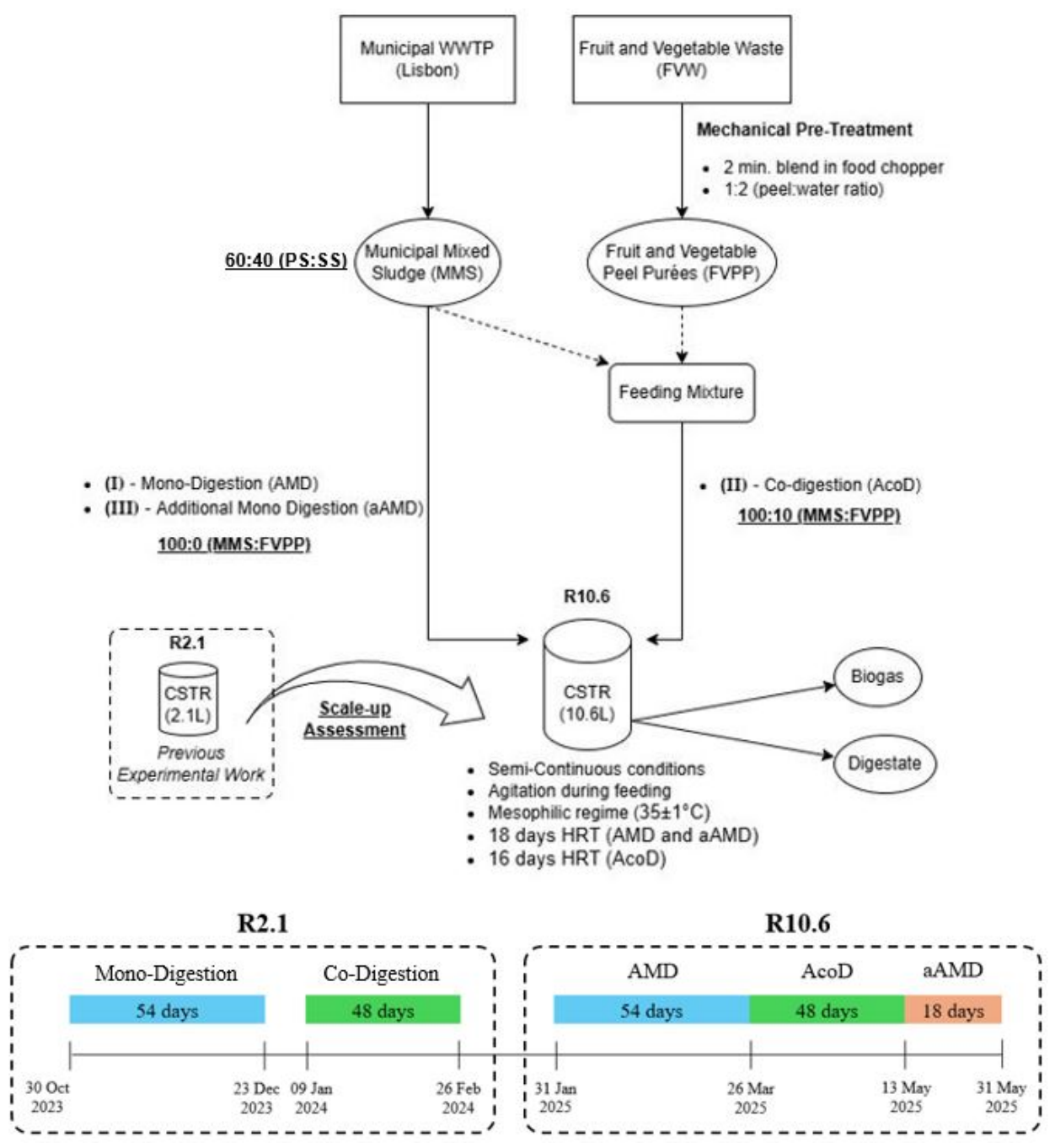
The diagram illustrated in Figure 1 depicts the sequence of activities conducted during each laboratory study to facilitate the subsequent evaluation of scaling up to a pilot laboratory phase and supports the future implementation of the process on an industrial scale.

2.1. Substrates

The MMS used in this work was collected from a municipal WWTP in Lisbon, Portugal. It was composed of a mixture of thickened primary sludge and the excess secondary sludge thickened by flotation, with an average primary-to-secondary sludge ratio of about 60:40. Samples were transported to the laboratory under refrigerated conditions. The collection was made at different times throughout the experimental period (totaling seven different samples) to ensure that each trial represented the natural temporal variability of sludge characteristics and operational conditions at the plant.
As a co-substrate, FVW was selected based on its high biodegradability and availability, and included apple peels, banana peels, and carrot peels, which were mechanically pre-treated using a food chopper (Hoffen, model PSP-H151, 350 W; Joinco Imp. e Exp., Lda., Lisboa, Portugal). Each peel type was chopped for 2 min with the addition of water at a 1:2 peel-to-water ratio (w/w), yielding fruit and vegetable peel purées (FVPP) that were prepared at the start of each co-digestion trial.
After collection and preparation, the MMS and the FVPP were stored separately under refrigerated conditions (4 °C) until their use for reactor feeding.

2.2. Trials in Reactor R2.1

The study identified by R2.1 in Figure 1 served as the baseline study for the present work. The operational conditions established and validated in R2.1 were used as the basis for the design and operation of the 10.6 L reactor (R10.6), enabling the evaluation of process performance and stability during scale-up while minimizing the influence of major changes in operating parameters. It investigated the comparison between a mono-digestion scenario with MMS and a co-digestion scenario in which fruit and vegetable peel purées (FVPP), specifically apple, banana, and carrot, were added (10% volumetric proportion). The selected FVPP proportion was based on comprehensive physicochemical analyses [20]. These analyses revealed that apple peel purée (APP) contained the highest carbohydrate content and demonstrated superior sugar preservation over time, while banana peel purée (BPP) and carrot peel purée (CPP) exhibited similar compositional profiles and degradation behaviors. Consequently, a blend comprising 40% APP, 30% BPP, and 30% CPP was selected for subsequent co-digestion experiments with the microbial mixture substrate (MMS).
Mono- and co-digestion experiments were performed using a 2.1 L continuous stirred-tank reactor (CSTR) operated under mesophilic conditions at approximately 37 ± 1 °C [36]. The hydraulic retention time (HRT) was set at 18 days for the mono-digestion assays based on the municipal WWTP from which the sludge was collected, to reproduce the operating conditions encountered in the full-scale anaerobic digesters, and 16 days for co-digestion, to account for the additional volume introduced by the FVPP, which was added to the MMS to evaluate the digestion efficiency and process stability. This approach (that was maintained during the R10.6 trials) reflects a realistic WWTP implementation scenario, where the amount of MMS fed to the reactors was maintained during both mono-digestion and co-digestion phases. Co-digestion was achieved by supplementing the baseline sludge feed with FVW at an MMS:FVW ratio of 100:10 (wet basis), rather than replacing a fraction of the sludge feed.

2.3. Trials in Reactor R10.6

In this study (identified by R10.6 in Figure 1), a larger continuous stirred-tank reactor (CSTR) with a working volume of 10.6 L was utilized. The operational conditions applied in R10.6 were intentionally selected to replicate those previously validated in R2.1, allowing the assessment of whether reactor performance, stability, and methane production could be maintained following an approximately five-fold increase in working volume. The mono- and co-digestion scenarios (I-AMD and II-AcoD) were conducted under mesophilic conditions with a temperature maintained at approximately 35 ± 1 °C (slightly lower than in the previous assays). The same volume of MMS was used across all experimental trials, and each scenario was operated for three HRTs after reaching steady-state conditions. After completing the mono- and co-digestion trials, an additional mono-digestion test (aAMD) was performed to assess the reactor performance without FVPP and to compare it with the initial conditions, simulating a realistic full-scale scenario, in which the WWTP might temporarily stop receiving the FVW. This final mono-digestion trial was designed to simulate an operational strategy that could be adopted at WWTPs, where flexibility is required to manage variations in the availability and logistics of co-substrate and sewage sludge flows.
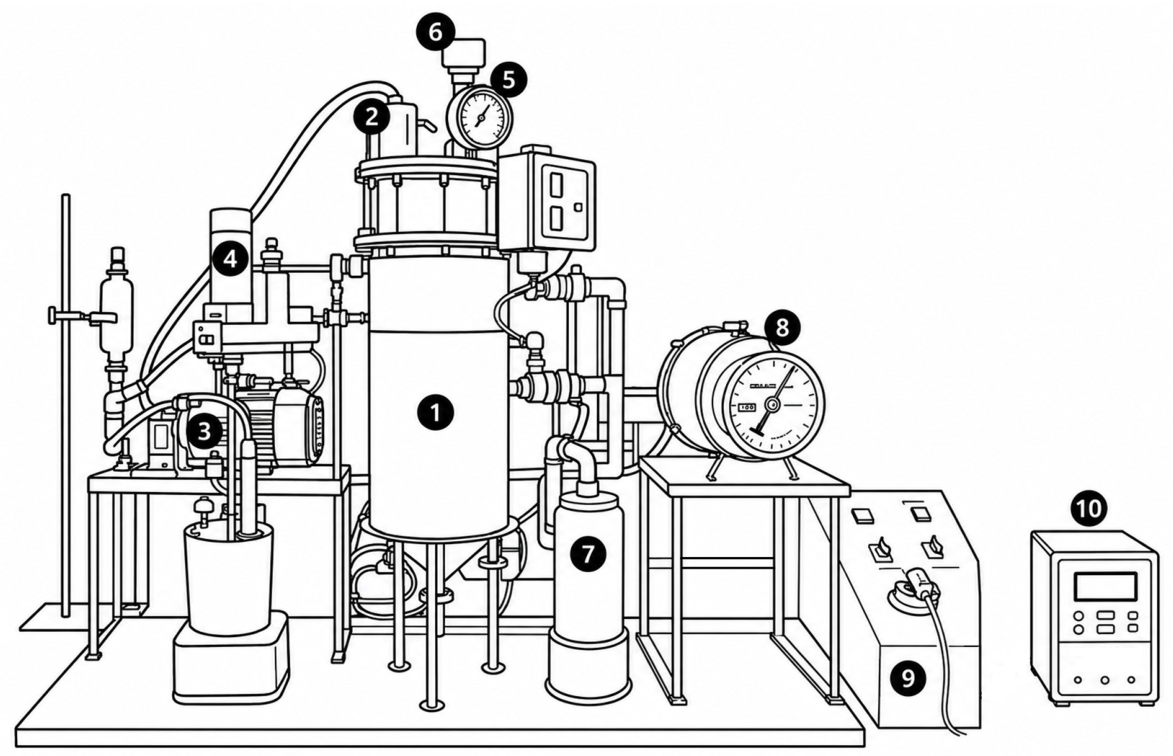
The laboratory unit comprising the CSTR of 10.6 L is shown in Figure 2. The CSTR system was equipped with a peristaltic pump (Watson Marlow, 24 W) for substrate feeding, a thermostat-controlled thermal blanket, and two stirring systems: a Janke & Kunkel IKA-Werk RE 16 SOTEL (IKA-Werke GmbH & Co. KG, Staufen im Breisgau, Germany) unit to homogenize the influent, and an RSLAB-13 (RSLAB series, China) overhead stirrer to maintain biomass mixing inside the reactor. Daily biogas production was measured with a gas meter (Bessel s.r.l., BSM-0, Perugia, Italy), while biogas composition (CH4, CO2, and H2S) was analyzed weekly using an external LMSxi Multifunction Gas Analyzer, Gas Data, Coventry, UK (not integrated in the system).
The 10.6 L reactor was fed hourly during an average daily feeding window of 6 h. During each feeding event, the influent was added in discrete portions, and the reactor was stirred only during the feeding period to promote substrate homogenization. To improve mixing, agitation was maintained for 2 min before and 2 min after each feeding event. Outside the feeding window, the mixing system remained off. No separate inoculum was added at the beginning of the study, since the reactor already contained biologically active WWTP sludge biomass, which acted as the anaerobic microbial consortium for the process. Both reactors (R2.1 and R10.6) were operated under semi-continuous feeding conditions, and substrate feeding and digestate withdrawal were performed during weekdays in order to maintain the desired hydraulic retention time and constant working volume. The operational conditions selected for both reactors were intended to reproduce, as closely as possible, the anaerobic digestion conditions found in the municipal WWTP selected for this study. In addition, the experimental parameters for the R10.6 reactor were based on those previously applied and validated in the R2.1 reactor study described by [36], allowing direct comparison between scales. This approach enabled the assessment of process scalability while minimizing the influence of changes in operational parameters on reactor performance.

2.4. Analytical Determinations

During the trials, several parameters were monitored daily, including pH and electrical conductivity (EC) of influent and digestate (measured using an XS PC 50 VioLab multiparameter with Electrode 201T DHS, Giorgio Bormac S.r.l., Modena, Italy). Reactor temperatures were also recorded. Analytical determinations included total solids (TS), total volatile solids (TVS), total and soluble chemical oxygen demand (CODT and CODS), Kjeldahl nitrogen (KjN), and ammonium nitrogen (N–NH4+) for both influent and digestate, following standard APHA methods [37]. Additional analyses included elemental composition via inductively coupled plasma optical emission spectrometry (ICP-OES, Thermo Scientific iCAP 7000 series, Thermo Fisher Scientific, Bremen, Germany), and volatile fatty acids (VFAs: formic, acetic, lactic, propionic, isobutyric, isovaleric, and valeric acids) that were quantified by high-performance liquid chromatography (HPLC, Dionex ICS-3000, Thermo Fisher Scientific, Bremen, Germany) with electrochemical detection.
Digestate alkalinity was determined as total alkalinity (TA) and bicarbonate alkalinity (BA) according to Martín-González et al. [38]. The C/N ratio was calculated by dividing the TVS by 1.724 in accordance with Cuetos et al. [39] to obtain organic carbon and then dividing it by the organic nitrogen (Norg, determined through the difference between KjN and N–NH4+). Total volatile suspended solids (TVSS) were also measured according to standard APHA methods [37]. All assays were carried out in triplicate to ensure statistical reliability.
Key indicators of AD performance and stability were calculated, including organic loading rate (OLR), gas production rate (GPR), specific gas production (SGP), specific methane production (SMP), specific energy loading rate (SELR), and removal efficiencies of TVS and CODT.

2.5. Statistical Analysis

To determine whether significant differences existed among the experimental trials regarding daily biogas production, a Kruskal–Wallis test was performed. This non-parametric alternative to one-way ANOVA was selected because key parametric assumptions, particularly normality, were not met, as confirmed by the Shapiro–Wilk, D’Agostino–Pearson, and Anderson–Darling tests. When the Kruskal–Wallis test indicated potential differences, Dunn’s post hoc test was applied for pairwise multiple comparisons to identify which trials differed significantly. This methodology ensured robust statistical inference while accommodating the non-Gaussian distribution of the dataset. All analyses were carried out using GraphPad Prism (version 5.0), and statistical significance was defined at p < 0.05.

3. Results and Discussion

3.1. R10.6 Mono-Digestion Scenario—AMD

The physicochemical characterization of the influent and the digestate samples from the R10.6 AMD scenario is presented in Table 1. As reported by Li et al. [40], the optimal pH for anaerobic digestion varies across process stages: slightly acidic conditions (5.5–6.5) are favorable for hydrolysis and acidogenesis, whereas slightly alkaline conditions (7.0–7.5) are preferable for methanogenesis. Throughout the trials, pH values remained within this range, with influent average value of 5.92 ± 0.19 and digestate average value of 7.55 ± 0.15.
The TVS/TS ratio decreased from 84.12% in the influent to 71.37% in the digestates, confirming organic matter degradation during the AD process. These values align with those reported by Ferrer et al. [41], who observed 68–77% in MMS anaerobic digestion using a 5 L CSTR. Conversely, due to the low biodegradability of MMS, mainly because of the rigid structure of sludge flocs and the presence of microbial cell walls in the secondary sludge (Lu et al. [42]), the CODS/CODT ratio increased from 5.13% in the influents to 7.29% in the digestates, reflecting the hydrolysis of particulate organic matter into a soluble fraction.
The C/N ratio of 8.74 in the influent, is in accordance with the 7.00–9.00 values reported by Silva et al. [22] for MMS digestion. These values are still below the recommended range (20:1–30:1) referred by Alehign et al. [43], confirming the relatively high nitrogen content of MMS.
Total alkalinity remained below the maximum stability threshold of 4000 mg CaCO3/L (Martín-Gonzáles et al. [38]), with values of 3245 ± 100 mg CaCO3/L. This contrasts with Wang et al. [44], who reported 4183 mg CaCO3/L for anaerobic digestion of municipal sludge without pre-treatment.
Elemental analysis of the digestate (Table S1 in Supplementary Material) revealed a consistent enrichment of all macro- and micronutrients. Major cations (K, Ca, Mg) and other macronutrients (P, S) increased in the digestate, reflecting the occurrence of organic mineralization, and the increase in Ca2+ concentration suggests its dissolution from carbonate minerals.
Phosphorus and calcium are the elements in higher concentrations, and their increments in the digestate are consistent with the hydrolysis of complex organic compounds from microbial biomass that occurs in the initial phase of the AD process. Sulphur enrichment may result from protein degradation with partial retention in soluble form. Trace metals essential for methanogenesis (Fe, Zn, Cu, Mn, and Ni) also increased, which can be due to the release from organic complexes, and heavy metals (Mo, Cr, Cd, and Pb) were detected at very low concentrations. Overall, the nutrients achieved in the digestates highlights its agronomic potential in compliance with the EU Directive 86/278/EEC [45] regarding the use for agricultural purposes concerning the mineral composition, but further assessment would be required, including evaluation of agronomic value, contaminants, hygienic safety, and compliance with applicable regulations.
The study highlights the variability in trace element concentrations, which can be influenced by factors such as sludge origin, treatment processes, and operational conditions of the WWTP. Understanding these concentration ranges is essential for assessing potential environmental impacts and for developing appropriate management strategies for the type of sludge used as substrate in the AD process.
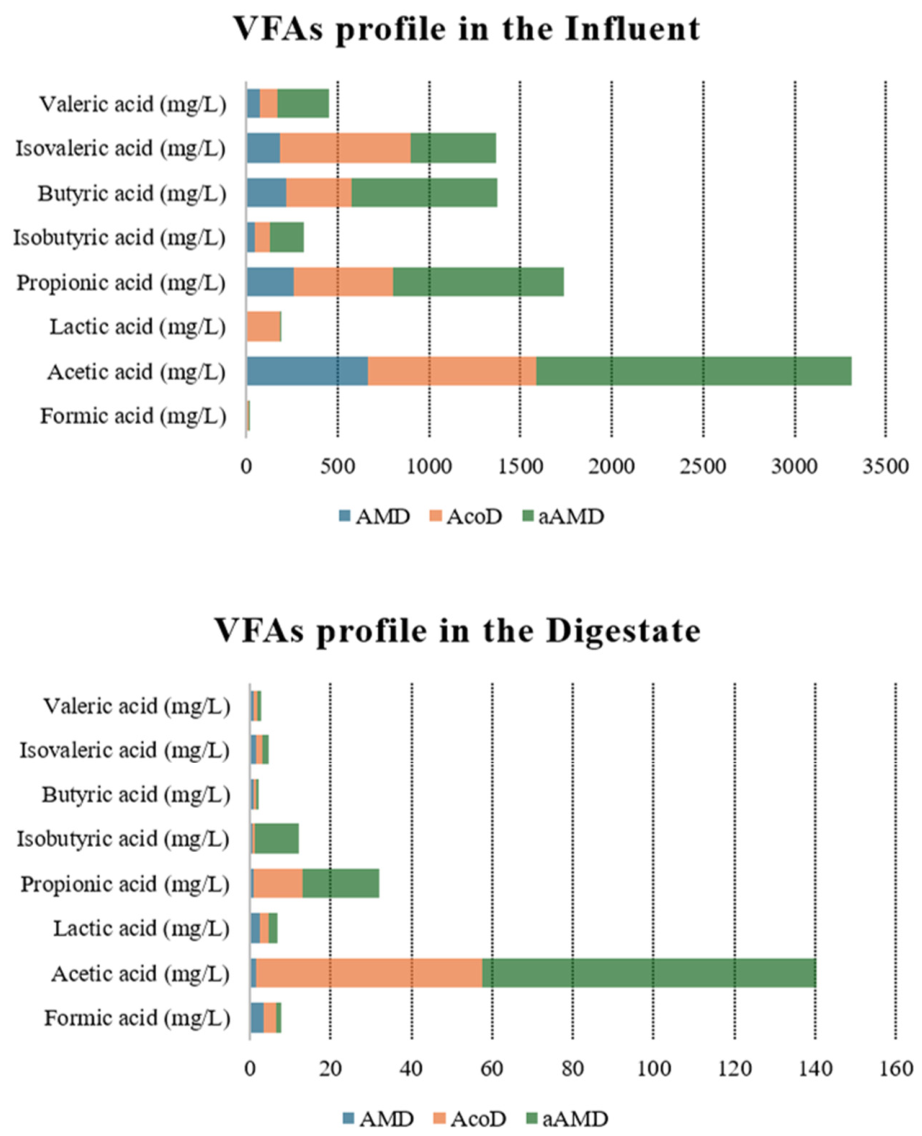
The results of VFAs concentrations in the influent and digestate for the AMD scenario are shown in Table S2 (in Supplementary Material). Influent presented concentrations of acetic acid (669 ± 89 mg/L), propionic acid (259 ± 47 mg/L), butyric acid (221 ± 35 mg/L), isovaleric acid (184 ± 39 mg/L), and valeric acid (75 ± 24 mg/L). Digestate, however, showed only residual concentrations of formic acid (3.3 ± 1.0 mg/L), indicating complete consumption during AD. This aligns with Ferrer et al. [41], who observed no VFA accumulation during 21-day AD at 38 °C.
Cumulative biogas production averaged ~107 L (Table 2), with daily production rates of 5.97 ± 1.10 L/d.
Methane content achieved 58.50 ± 2.50%, whereas H2S averaged 349.50 ppmv. This variation underscores the implications of working with real MMS samples, whose composition naturally fluctuates with changes in operational and management practices throughout the year, but the values still remain below the 500–2500 ppmv range reported by Vu et al. [46] for sewage sludge digestion, likely due to ferric chloride dosing in MMS. The removal efficiencies exceeded 41% for TVS, while CODT removal averaged 40.82%, consistent with Ferrer et al. [41], who mentioned TVS removal efficiency of 35.67%, whilst Silva et al. [22] referred to efficiencies between 37 and 53%.

3.2. R10.6 Co-Digestion Scenario—AcoD

As previously noted, in the Co-Digestion (AcoD) scenario, 10% FVPP was incorporated into the MMS volume used in the AMD scenario, resulting in an HRT of 16 days. The physicochemical characterization of the FVPP is presented in Table S3 (in Supplementary Material).
Because of its naturally acidic composition, FVW produced purées with pH values below the optimal range for anaerobic digestion, as reported by Li et al. [40]. Specifically, pH values were 4.43 ± 0.1. In terms of solids content, FVW, largely composed of readily biodegradable organic matter [47,48], exhibited higher TS and TVS concentrations than MMS in the AMD scenario (increasing from 29.54 ± 0.17 to 36.36 ± 2.3 in TS and from 24.85 ± 0.14 to 33.60 ± 1.8 in TVS). This difference was also reflected in the TS/TVS ratio, which reached 92.40% in FVPP compared with 84.12% in MMS. The COD profile further emphasized this difference. CODS represented 74.79% of the CODT, indicating that nearly three-quarters of the sample was immediately available to microorganisms, whereas MMS values were far lower (average 5.13%). In addition, FVPP had a low organic nitrogen content, resulting in relatively high C/N ratios of 81.36 ± 2.1.
The physicochemical characterization of the AcoD influent and digestate is summarized in Table 3. As expected, co-substrate addition slightly reduced the influent pH (5.46 ± 0.12 vs. AMD assay value of 5.92 ± 0.19). A decline in EC was also observed in the digestates (from 4.27 ± 0.17 mS/cm down to 3.72 ± 0.74 mS/cm). The average influent TVS concentration increased modestly under co-digestion (25.70 g/L) compared to mono-digestion (24.85 g/L). CODT also increased in the influent and decreased in the digestates, while CODS followed the same trend. Notably, the CODS/CODT ratio in the influent rose 4.7% when comparing both scenarios (5.13 to 9.82). Comparable results were reported by Silva et al. [22], who found TVS values between 21.8 and 23.9 g/L during co-digestion trials of MMS with mango peel pulp. C/N ratios increased from 8.74 ± 0.23 in the AMD to 9.52 ± 0.48 during AcoD, reflecting an average 9% improvement and underscoring the value of FVPP as a co-substrate.
The acidity of FVPP also lowered digestate alkalinity slightly (from 3245 to 2925 mg CaCO3/L), though values remained well below the 4000 mg CaCO3/L stability threshold reported by Martín-González et al. [38]. Arhoun et al. [49], by contrast, observed TA values of 3300–5800 mg CaCO3/L and BA values of 2200–4000 mg CaCO3/L during AcoD with 80% MMS and 20% FVW.
Elemental analysis during co-digestion (Table S4 in Supplementary Material) showed mineral enrichment across all parameters, with concentrations remaining below the limits established in EU Directive 86/278/EEC [45] for agricultural applications.
VFA concentrations (Table S5 in Supplementary Material) increased in comparison with the AMD scenario. In particular, the concentration of isovaleric acid in the influent was approximately four times higher than that observed in the mono-digestion trials. Additionally, FVPP contributed to elevated levels of acetic acid and introduced lactic acid, with concentrations of 180 ± 55 mg/L in the influent. This marked increase in VFA concentrations can be attributed to the higher fraction of readily fermentable organic matter from the FVPP, which increased the overall substrate load relative to MMS mono-digestion. This more easily degradable substrate likely promoted the formation of soluble intermediates before digestion, particularly acetic acid, while the presence of valeric and lactic acids may reflect the specific composition of the fruit and vegetable peels and partial pre-fermentation of the co-substrate prior to feeding. In the digestates, VFAs were present at only low or residual levels, e.g., acetic acid (56 ± 12 mg/L), propionic acid (12 ± 4 mg/L), and formic acid (3.1 ± 0.5 mg/L) were detected. This lack of VFA accumulation indicates that they were effectively metabolized and contributed to enhanced biogas production.
Li et al. [50] reported total VFAs of about 190 mg/g VS in AcoD experiments with 80% sewage sludge and 20% food waste, with butyric acid being dominant (≈110 mg/g VS), followed by propionic acid (≈30 mg/g VS) and lactic acid (≈20 mg/g VS). At higher food waste loadings (80–100%), VFAs rose further to 270–280 mg/g VS.
The cumulative biogas production (Table 4) exceeded that of the AMD scenario by approximately 6%, with average daily production surpassing 7 L.
Methane concentrations also improved (60.75 ± 1.00% vs. 58.50 ± 2.50% in AMD). Notably, H2S levels were greatly reduced, dropping from about 350 ppm in AMD to just 7 ppm in the AcoD assay. Removal efficiencies showed significant improvements: TVS removal efficiency increased from 41.67% to 59.84%, while CODT removal efficiency rose from 40.82% to 56.48%. Azarmanesh et al. [51] reported TVS removal efficiencies in the range of 39.50–85.30%. Silva et al. [22] reported biogas productions of 9.98–12.34 L with methane concentrations of 61–63% during AcoD trials using different MMS:Mango Peel Pulp ratios, under a shorter HRT of 13 days.
The improved performance observed during the co-digestion assays may be associated with the complementary characteristics of municipal mixed sludge and fruit and vegetable peel purées. The readily biodegradable carbohydrates present in the fruit and vegetable residues likely enhanced the hydrolysis stage, increasing the availability of soluble organic compounds for subsequent biological conversion. Although microbial community characterization was not performed in this study, the observed trends in VFA concentrations, methane production, and process stability indicators are consistent with the expected metabolic pathways involved in anaerobic digestion.

3.3. Scale-Up Assessment

To assess the impact of scaling up from a 2.1 L to a 10.6 L CSTR biodigester, a comprehensive comparison was conducted focusing on various performance and stability parameters, contrasting data from the earlier study (R2.1) with current results (R10.6). The comparison, specifically for the mono-digestion scenarios, is summarized in Table 5. This evaluation aims to understand how increasing reactor volume influences operational efficiency, stability, and overall process robustness, providing valuable insights for optimizing larger-scale biodigestion processes and ensuring reliable performance at increased capacities.
Overall, the present study (R10.6) achieved superior performance. GPR increased by 66%, while SGP and SMP rose by 56% and 39%, respectively. SELR remained 0.160 d−1, still below the 0.40 d−1 threshold (Evans et al. [52]) and removal efficiencies slightly decreased (less than 3%).
For the Co-Digestion (Table 6), GPR and SGP decreased from 0.77 to 0.69 L/Lreactor.d and from 0.44 to 0.39 L/g TVS, respectively. SMP remained essentially unchanged at 0.26 L CH4/g TVS, while SELR increased from 0.25 to 0.27 d−1. TVS removal efficiency improved by ~9% while CODT removal efficiency slightly decreased by ~1.8%.
Scaling up inevitably introduces operational challenges, like maintaining a stable temperature within the reactor, which may have slightly affected the microbial activity rate. Agitation also represented an important factor, since in the smaller reactor mixing was performed every 2 h, whereas in the larger one it occurred only during the feeding events, which likely resulted in less homogeneous mixing. Furthermore, multiple feedings were carried out throughout the day in the larger reactor, in contrast to the single daily feeding applied in the smaller system. The scale-up may also have increased foaming issues, likely less pronounced in the smaller reactor, which could have promoted gas entrapment, while the applied agitation intensity might not have been sufficient to release the retained gas. Nevertheless, the overall results indicate that the scale-up achieved a performance comparable to that of the smaller reactor, indicating that the increase in reactor volume did not compromise the efficiency or overall system behavior, suggesting that the process was robust to changes and maintained its functional stability.

3.4. Additional Mono-Digestion Trial—aAMD

The additional mono-digestion trial was designed as a short-term operational follow-up experiment to simulate a temporary interruption in co-substrate supply, rather than as an independent replicated scenario. Because the mono-digestion HRT was 18 days, this phase represented one complete hydraulic cycle under MMS feeding alone, providing relevant information on reactor response, stability, and recovery after the preceding co-digestion period. The physicochemical characterization of the influent and digestate is shown in Table 7.
The pH value (5.63) of the influent was between the AMD (5.92) and AcoD (5.46) scenarios, while the digestate pH (7.40) fell squarely within the optimal AD pH range (7.0–7.5) reported by Li et al. [40].
The initial TVS concentration in this additional trial was 27.27 g/L, and the final TVS concentration was 9.89 g/L, lower than the average 10.38 g/L measured during the AcoD scenario. The influent TVS/TS ratio (79.71%) was slightly lower than that of the AMD scenario (84.12%), indicating that although the organic matter content was higher, the proportion of inorganic compounds in the total sample was also greater.
Regarding COD, both CODT (49.33 g/L) and CODS (4.40 g/L) reached their highest concentrations in this trial. The CODT/CODS ratio (8.92%) was the second-highest recorded. The influent C/N ratio also stood out, with a value of 10.27, higher than in both the AMD and AcoD scenarios. Total alkalinity exceeded 3000 mg CaCO3/L (specifically 3270 mg CaCO3/L) but remained within the stability limits suggested by Martín-González et al. [38].
VFA concentrations (Table S6 in Supplementary Material) were markedly higher. The acetic acid in the influent concentration reached 1728 mg/L, the highest recorded in the study, which led to 83 mg/L being detected in the digestate (still a relatively low value, but the highest among all scenarios). Similarly, initial concentrations of propionic (938 mg/L), isobutyric (187 mg/L), butyric (798 mg/L), and valeric acids (282 mg/L) were also the highest observed. In the digestate, 19 mg/L of propionic acid and 11 mg/L of isobutyric acid were detected, along with a residual 1.4 mg/L of formic acid. Figure 3 presents the profile of the VFAs in the influent and digestate for the three scenarios.
Cumulative biogas production (Table 8) exceeded 120 L (122 L), corresponding to 6.78 L/d. Although this was the highest cumulative production recorded, average daily production remained higher under co-digestion conditions (7.10 L/d). Methane concentration increased slightly compared to the AcoD scenario (62.50% vs. 60.75%). H2S levels rose from 6.50 ppm in AcoD to 147 ppm in this trial but remained below the AMD scenario (349.50 ppm). This additional trial achieved the highest removal efficiencies overall: 63.73% for TVS and 67.55% for CODT.
This effect may be related to the preceding co-digestion period, which likely promoted adaptation of the anaerobic consortium to a more readily biodegradable substrate and enhanced overall process stability. After the return to MMS mono-digestion, the biomass may have remained in a more active metabolic state, supporting improved degradation of the incoming feed, suggesting that the reactor maintained functional resilience after the temporary interruption of co-substrate supply.
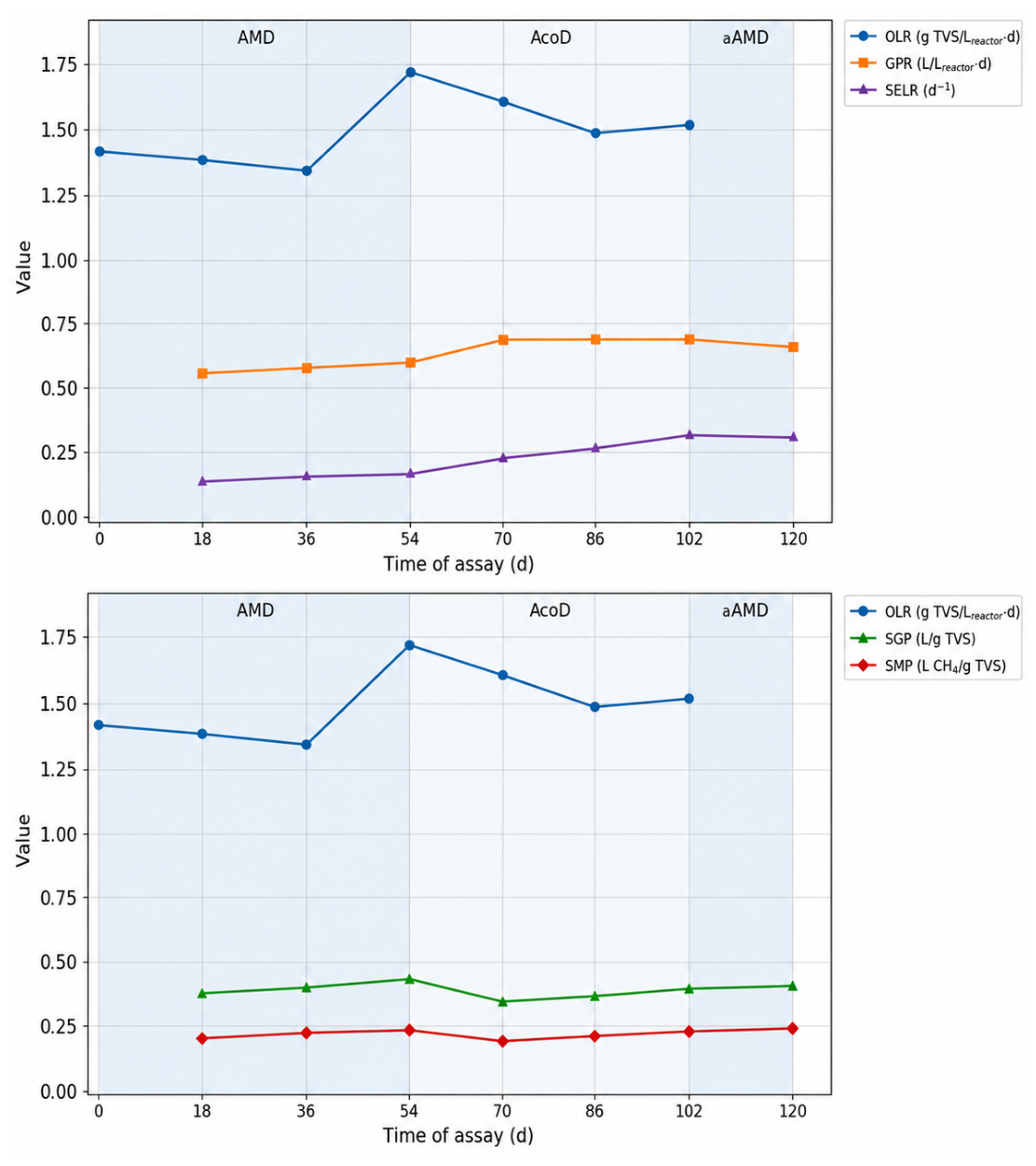
Regarding the variation in the performance and operational parameters throughout the three scenarios (Figure 4), in the AMD trials with an average OLR of 1.39 ± 0.03 g TVS/Lreactor.d, the biogas yields were the following: GPR = 0.58 ± 0.02 L/Lreactor.d, SGP = 0.42 ± 0.03 L/g TVS, and SMP = 0.25 ± 0.02 L CH4/g TVS. These results are comparable to Silva et al. [22], who obtained SMP of 0.260–0.360 L CH4/g TVS, and Ferrer et al. [41] of ~0.270 L CH4/g TVS). SELR remained below the stability threshold of 0.40 d−1 (Evans et al. [52]).
During the AcoD scenario, the average OLR was 1.61 ± 0.12 g TVS/Lreactor.d, slightly higher than the AMD scenario (1.39 g TVS/Lreactor.d), mainly due to reducing the HRT from 18 to 16 days. Consequently, the daily organic load was greater, which influenced SGP and SMP. Both indicators showed small decreases: SGP dropped from 0.42 ± 0.03 to 0.39 ± 0.03 L/g TVS, and SMP declined from 0.25 ± 0.02 to 0.24–0.02 L CH4/g TVS. In contrast, GPR improved, reaching nearly 0.70 L/Lreactor.d compared with 0.58 L/Lreactor.d in the AMD scenario. Comparable findings have been reported in the literature. Miranzadeh et al. [53] observed SMP values ranging from 0.408 to 0.440 L CH4/g TVS in AcoD of sewage sludge/mixed sludge with food waste, while Azarmanesh et al. [51] reported a wider range (0.165–0.609 L CH4/g TVS) for trials with different sludge–food waste combinations. SELR values also increased from 0.16 d−1 in AMD to 0.27 d−1 during AcoD but remained well below the 0.40 d-1 stability threshold established by Evans et al. [52].
The aAMD scenario had an OLR of 1.52 g TVS/Lreactor.d, and the GPR was 0.66 L/Lreactor.d, a value that fell between the AMD scenario (0.58 L/Lreactor.d) and the AcoD scenario (0.69 L/Lreactor.d). The SGP (0.43 L/g TVS) was similar to that of the AMD trials (average of 0.42 L/g TVS). Notably, the SMP reached the highest value (0.271 L CH4/g TVS), and the SELR (0.31 d−1) was only slightly lower than the maximum observed in this study (0.32 d−1, in the AcoD scenario).
Since the daily biogas production data did not satisfy the normality assumption necessary for ANOVA, the Kruskal–Wallis test was employed (Table S7 in Supplementary Material). Subsequently, Dunn’s post hoc test was conducted to identify specific differences between groups. This approach ensured a robust statistical analysis suitable for the data distribution, and indicates no statistically significant differences among the trials, suggesting that, although minor variations were observed, the median values did not differ significantly according to the Kruskal–Wallis test and further confirmed by Dunn’s test.
These results indicate that the reactor maintained, and even improved, its performance after the co-digestion phase, despite returning to mono-digestion conditions. The enhanced removal efficiencies suggest that residual FVPP remaining in the system may have sustained microbial activity and contributed to a more efficient degradation process. Overall, this trial demonstrates the reactor’s resilience and capacity to maintain stable operation following co-digestion, reinforcing its suitability for real-scale applications where fluctuations in co-substrate availability may occur.

4. Conclusions

This study successfully demonstrated the scale-up of anaerobic co-digestion of municipal mixed sludge and fruit and vegetable waste from a previously studied 2.1 L reactor to a 10.6 L continuously stirred-tank reactor operated under semi-continuous conditions, representative of municipal wastewater treatment plants. The results confirmed that stable reactor performance was maintained following scale-up, supporting the feasibility of implementing this co-digestion strategy at larger scales.
The addition of FVW as a supplementary co-substrate enhanced anaerobic digestion performance. Compared with AMD, AcoD increased methane concentration from 58.50% to 60.75%, improved TVS removal efficiency from 41.67% to 59.84%, and increased CODT removal efficiency from 40.82% to 56.48%. Furthermore, H2S concentrations in the biogas decreased substantially from approximately 350 ppmv to 7 ppmv, improving biogas quality. Following the interruption of FVW addition, the subsequent aAMD trial achieved the highest specific methane production (0.27 L CH4/g TVS) and TVS and CODT removal efficiencies (63.73 and 67.55%, respectively), demonstrating the resilience of the anaerobic digestion process.
Overall, the findings indicate that co-digestion of MMS and FVW is a promising strategy for enhancing methane production, improving organic matter removal, and reducing H2S emissions, while maintaining stable operation during scale-up. The proposed approach, based on supplementing rather than replacing the sludge feed, represents a practical pathway for integrating external organic residues into WWTP anaerobic digestion systems, contributing to resource recovery, energy self-sufficiency, and circular economy objectives.

Supplementary Materials

The following supporting information can be downloaded at https://www.mdpi.com/article/10.3390/en19132998/s1, Table S1: Elemental analysis of the digestate from the AMD scenario and the established EU limit range for sludge application in agriculture; Table S2: VFAs of the influent and digestate from the AMD scenario; Table S3: Physicochemical characterization of the FVPP used during the AcoD scenario; Table S4: Elemental analysis of the digestate from the AcoD scenario and the established EU limit range for sludge application in agriculture; Table S5: VFAs of the influent and digestate from the AcoD scenario; Table S6: VFAs of the influent and digestate from the aAMD scenario; Table S7: Kruskal–Wallis test for the daily biogas production (L) of the three CSTR scenarios.

Author Contributions

A.A.: Investigation, Conceptualization, Methodology, Resources, Writing—original draft. N.L.: Supervision, Conceptualization, Methodology, Resources, Writing—review and editing. M.M.: Supervision, Conceptualization, Methodology, Resources, Writing—review and editing. E.D.: Supervision, Conceptualization, Methodology, Resources, Writing—review and editing. All authors have read and agreed to the published version of the manuscript.

Funding

This research was funded by national funds from FCT—Fundação para a Ciência e a Tecnologia, I.P., through the doctoral scholarship “UI/BD/151370/2021” attributed to André Azevedo, under the project UIDB/04129/2020 (https://doi.org/10.54499/UIDB/04129/2020) and UID/04129/2025 (https://doi.org/10.54499/UID/04129/2025) of LEAF (Linking Landscape, Environment, Agriculture and Food Research Unit), LA/P/0092/2020 (https://doi.org/10.54499/LA/P/0092/2020) of Associate Laboratory TERRA and by national funds from FCT—Fundação para a Ciência e a Tecnologia, I.P., under the scope of the projects UID/50006/2025, UID/PRR/50006/2025 and LA/P/0008/2020 of the Associated Laboratory for Green Chemistry—LAQV REQUIMTE (https://doi.org/10.54499/UID/50006/2025, https://doi.org/10.54499/UID/PRR/50006/2025 and https://doi.org/10.54499/LA/P/0008/2020). The authors acknowledge Fundação para a Ciência e a Tecnologia; LEAF—Linking Landscape, Environment, Agriculture and Food Research Unit; Associate Laboratory TERRA and LAQV—Associated Laboratory for Green Chemistry—for allowing the necessary conditions for the development of the current work.

Data Availability Statement

The original contributions presented in this study are included in the article. Further inquiries can be directed to the corresponding authors.

Acknowledgments

The authors extend their heartfelt appreciation to the dedicated individuals at the WWTP, as well as the team at Águas do Tejo Atlântico, for their collaboration and assistance in making the data from the full-scale WWTP available. Also, their cooperation and willingness to share their expertise greatly enriched the research process. During the preparation of this work, the authors used ChatGPT 5.2 to proofread the manuscript, improving the grammar and style. After using this tool/service, the authors have reviewed and edited the output and take full responsibility for the content of this publication.

Conflicts of Interest

The authors declare no conflicts of interest.

Abbreviations

The following abbreviations are used in this manuscript:
aAMDAdditional anaerobic mono-digestion
AcoDAnaerobic co-digestion
ADAnaerobic digestion
AMDAnaerobic mono-digestion
APPApple peel purée
BABicarbonate alkalinity
BPPBanana peel purée
CODSSoluble chemical oxygen demand
CODTTotal chemical oxygen demand
CPPCarrot peel purée
CSTRContinuous-stirred tank reactor
ECElectrical conductivity
FVWFruit and vegetable waste
FVPPFruit and vegetable peel purées
GPRGas production rate
HRTHydraulic retention time
KjNKjeldahl nitrogen
MMSMunicipal mixed sludge
MPPMango peel pulp
N-NH4+Ammonia nitrogen
NorgOrganic nitrogen
OLROrganic loading rate
PSPrimary sludge
SELRSpecific energy loading rate
SGPSpecific gas production
SMPSpecific methane production
SSSecondary sludge
TATotal alkalinity
TSTotal solids
TVSTotal volatile suspended solids
TVSSTotal volatile suspended solids
VFAVolatile fatty acid
WWTPWastewater treatment plant

References

  1. Dubinin, Y.V.; Yazykov, N.A.; Lyulyukin, A.P.; Yakovlev, V.A. Combustion of sewage sludge in a fluidized bed of catalyst: From laboratory to the pilot plant. Waste Manag. 2025, 204, 114944. [Google Scholar] [CrossRef] [PubMed]
  2. Jobodwana, L.; Sithole, N.T. From waste to resource: Cleaner production of geopolymer bricks from sewage sludge via production parameter optimization. Constr. Build. Mater. 2025, 489, 142341. [Google Scholar] [CrossRef]
  3. Chin, M.P.V.; Chan, W.P.; Boon, Y.Z.; Yusoff, S.M.B.; Zhao, Y.; Heberlein, S.; Gu, Y.; Cai, Q.; He, M.; Oh, J.; et al. High temperature slagging gasification demonstration-scale trial of sewage sludge: Feasibility analysis towards mono treatment, operational challenges and life-cycle assessment. Waste Manag. 2025, 204, 114945. [Google Scholar] [CrossRef] [PubMed]
  4. Liu, Y.; Zhou, J.; Lu, S.; Ren, J. Towards the new era of sewage sludge management in China: Status, challenges, and perspectives. Process Saf. Environ. Prot. 2025, 198, 107201. [Google Scholar] [CrossRef]
  5. Basri, S.; Oruganti, R.K.; Panda, T.K.; Bhattacharyya, D. Beyond conventional approaches: Sustainable valorization of sewage sludge—Challenges and opportunities. Sustain. Mater. Technol. 2025, 45, e01496. [Google Scholar] [CrossRef]
  6. Chen, X.; Li, J.; Song, G.; Zhang, W.; Yang, X.; Xiong, J.; Zhu, C.; Yuan, F.; Zhang, Q. Salt risk is a key limiting factor in high-dose sewage sludge land application. Ecotoxicol. Environ. Saf. 2025, 302, 118616. [Google Scholar] [CrossRef] [PubMed]
  7. Lee, G.B.; Ahn, C.E.; Jeong, W.G.; Tsang, Y.F.; Baek, K. Environmental impact assessment of pyrolysis and incineration including end-of-life of sewage sludge by-products. Bioresour. Technol. 2025, 435, 132929. [Google Scholar] [CrossRef] [PubMed]
  8. Giwa, A.; Maurice, N.J.; Zelong, W.; Claire, M.J.; Vakili, M.; Mabi, A.; Liu, B.; Lv, F.; Memon, A.G. Advancing resource recovery from sewage sludge with IoT-based bioleaching and anaerobic digestion techniques. J. Environ. Chem. Eng. 2025, 13, 116293. [Google Scholar] [CrossRef]
  9. Lian, Q.; Qi, J.; Huang, D.; Song, W.; Yuan, J. Carbon to nitrogen ratio and organic loading rate optimization of sewage sludge and rice straw: Economic analysis and anaerobic digestion process understandings through machine learning. Energy 2025, 330, 136789. [Google Scholar] [CrossRef]
  10. Ma, Z.; Yu, L.; Wang, Z.; Tian, X.; Zheng, L.; Liu, R. Anaerobic co-digestion of winery wastewater with sewage sludge for methane production: Complementary feedstocks and potential direct interspecies electron transfer. Fuel 2025, 381, 133190. [Google Scholar] [CrossRef]
  11. Pulgarín-Muñoz, C.E.; Saldarriaga-Molina, J.C.; Castro-Valencia, J.C.; Correa-Ochoa, M.A.; Echeverry-Ruiz, J.D. Effect of the co-substrate ratio on the anaerobic co-digestion of sewage sludge and the organic fraction of municipal solid waste at pilot scale. Int. Biodeterior. Biodegrad. 2025, 198, 106008. [Google Scholar] [CrossRef]
  12. Yang, M.; Hasaer, B.; Wang, G.; Li, X.; Song, G.; Zhao, K.; Liu, R. Effect of anion on anaerobic digestion of sewage sludge: Methane production and microbial characterization. J. Environ. Chem. Eng. 2025, 13, 116303. [Google Scholar] [CrossRef]
  13. Batstone, D.J.; Keller, J.; Angelidaki, I.; Kalyuzhnyi, S.V.; Pavlostathis, S.G.; Rozzi, A.; Sanders, W.T.M.; Siegrist, H.; Vavilin, V.A. The IWA Anaerobic Digestion Model No 1 (ADM1). Water Sci. Technol. 2002, 45, 65–73. [Google Scholar] [CrossRef]
  14. Meegoda, J.N.; Li, B.; Patel, K.; Wang, L.B. A review of the processes, parameters, and optimization of anaerobic digestion. Int. J. Environ. Res. Public Health 2018, 15, 2224. [Google Scholar] [CrossRef] [PubMed]
  15. Li, P.; Zhao, H.; Cheng, C.; Hou, T.; Shen, D.; Jiao, Y. A review on anaerobic co-digestion of sewage sludge with other organic wastes for methane production: Mechanism, process, improvement and industrial application. Biomass Bioenergy 2024, 185, 107241. [Google Scholar] [CrossRef]
  16. Thakur, H.; Verma, N.K.; Dhar, A.; Powar, S. Anaerobic co-digestion of food waste and bio flocculated sewage sludge towards bio-methane production. Energy Rep. 2024, 11, 2867–2876. [Google Scholar] [CrossRef]
  17. Haroun, B.; El-Qelish, M.; Abdulazeez, M.; Khalil, A.; Kim, M.; Nakhla, G. Overcoming ammonia inhibition via biochar-assisted anaerobic co-digestion of thermally-treated thickened waste activated sludge and food waste. J. Environ. Manag. 2025, 373, 123909. [Google Scholar] [CrossRef] [PubMed]
  18. Wu, L.-J.; Ye, F.; Yang, F.; Lyu, Y.-K. Applicability of temperature-phased anaerobic digestion in enhancing methanation of high-solid sludge: Process performance, microbial community analysis and energy balance assessment. Bioresour. Technol. 2025, 431, 132614. [Google Scholar] [CrossRef] [PubMed]
  19. Al-Hamamre, Z.; Saidan, M.; Al-Addous, M. Kinetic modeling of anaerobic Co-digestion of municipal food waste and wastewater sludge. Biomass Bioenergy 2025, 202, 108199. [Google Scholar] [CrossRef]
  20. Azevedo, A.; Lapa, N.; Moldão, M.; Gominho, J.; Duarte, E. Fruit and vegetable wastes as co-substrates in anaerobic co-digestion: Effect of storage temperature on physicochemical properties and biogas production. Energy Nexus 2025, 17, 100354. [Google Scholar] [CrossRef]
  21. Zhou, J.; Ming, S.; Zhang, Y.; Liu, H.; Duan, N. Insights on anaerobic co-digestion of carbohydrate and protein at high load: Synergy evolution and inhibition transfer mechanism. Chem. Eng. J. 2025, 518, 164535. [Google Scholar] [CrossRef]
  22. Silva, I.; Gouveia, B.; Azevedo, A.; Fernandes, E.C.; Duarte, E. Anaerobic co-digestion of municipal mixed sludge and mango peel biowaste: Performance and stability analysis for different ratios. Results Eng. 2024, 22, 102142. [Google Scholar] [CrossRef]
  23. Azevedo, A.; Lapa, N.; Moldão, M.; Duarte, E. Opportunities and challenges in the anaerobic co-digestion of municipal sewage sludge and fruit and vegetable wastes: A review. Energy Nexus 2023, 10, 100202. [Google Scholar] [CrossRef]
  24. Silva, I.S.; Gouveia, B.; Azevedo, A.; Fernandes, E.C.; Duarte, E. Sewage sludge co-digestion with mango peel liquor: Impact of hydraulic retention time on methane yield and bioenergy recovery. J. Sustain. Dev. Energy Water Environ. Syst. 2023, 11, 1110454. [Google Scholar] [CrossRef]
  25. Fu, Z.; Zhao, J.; Zhong, Z.; Li, B.; Sun, Y.; Fan, H.; Wang, H.; Xie, J.; Hu, Y.; Su, Y.; et al. Novel insights into liquid digestate-derived hydrochar enhances volatile fatty acids production from anaerobic co-digestion of sludge and food waste. Chem. Eng. J. 2025, 507, 160635. [Google Scholar] [CrossRef]
  26. Luo, L.; Karimirad, R.; Wong, J.W.C. Enhanced anaerobic co-digestion of food waste and sewage sludge by co-application of biochar and nano-Fe3O4. J. Environ. Manag. 2024, 370, 122859. [Google Scholar] [CrossRef] [PubMed]
  27. Carvalheira, M.; Cassidy, J.; Ribeiro, J.M.; Oliveira, B.A.; Freitas, E.B.; Roca, C.; Carvalho, G.; Oehmen, A.; Reis, M.A.M. Performance of a two-stage anaerobic digestion system treating fruit pulp waste: The impact of substrate shift and operational conditions. Waste Manag. 2018, 78, 434–445. [Google Scholar] [CrossRef] [PubMed]
  28. Masebinu, S.O.; Akinlabi, E.T.; Muzenda, E.; Aboyade, A.O.; Mbohwa, C. Experimental and feasibility assessment of biogas production by anaerobic digestion of fruit and vegetable waste from Joburg Market. Waste Manag. 2018, 75, 236–250. [Google Scholar] [CrossRef] [PubMed]
  29. Liu, X.; Gao, X.; Wang, W.; Zheng, L.; Zhou, Y.; Sun, Y. Pilot-scale anaerobic co-digestion of municipal biomass waste: Focusing on biogas production and GHG reduction. Renew. Energy 2012, 44, 463–468. [Google Scholar] [CrossRef]
  30. Segura, T.; Zanoni, P.; Brémond, U.; Lucet-Bérille, C.; Pradel, A.; Escudié, R.; Steyer, J.-P. Modelling anaerobic digestion of agricultural waste: From lab to full scale. Waste Manag. 2025, 200, 114739. [Google Scholar] [CrossRef] [PubMed]
  31. Rocha, M.E.; Lazarino, T.C.; Oliveira, G.; Teixeira, L.; Marques, M.; Mangiavacchi, N. Analysis of biogas production from sewage sludge combining BMP experimental assays and the ADM1 model. PeerJ 2024, 12, e16720. [Google Scholar] [CrossRef] [PubMed]
  32. Mudzanani, K.E.; Phadi, T.T.; Iyuke, S.E.; Daramola, M.O. Enhancing Methane Production through Anaerobic Co-Digestion of Sewage Sludge: A Modified ADM1 Model Approach. Fermentation 2023, 9, 833. [Google Scholar] [CrossRef]
  33. Cunha, A.P.; Cammarota, M.C.; Volschan, I., Jr. Anaerobic co-digestion of sewage sludge and food waste: Effect of pre-fermentation of food waste in bench- and pilot-scale digesters. Bioresour. Technol. Rep. 2021, 15, 100707. [Google Scholar] [CrossRef]
  34. Lao-Zea, A.; Acedos, M.G.; Herrero, M.A.; Álvarez, D.; Gómez-Mancebo, M.B.; Iglesias, R.; Lorenzo, M.L.R.; Suárez, S. Anaerobic co-digestion of OFMSW and sewage sludge: Digestate valorisation into advanced CO2 capture materials. J. Environ. Chem. Eng. 2026, 14, 122070. [Google Scholar] [CrossRef]
  35. Kumari, M.; Chandel, M.K. Anaerobic Co-digestion of sewage sludge and organic fraction of municipal solid waste: Focus on mix ratio optimization and synergistic effects. J. Environ. Manag. 2023, 345, 118821. [Google Scholar] [CrossRef] [PubMed]
  36. Azevedo, A.; Moldão, M.; Duarte, E.; Lapa, N. Enhancing anaerobic co-digestion of municipal mixed sludge with fruit and vegetable waste: Insights from batch and CSTR trials. J. Water Process Eng. 2025, 79, 109009. [Google Scholar] [CrossRef]
  37. American Public Health Association; American Water Works Association; Water Environment Federation. Standard Methods for the Examination of Water and Wastewater, 24th ed.; Lipps, W.C., Braun-Howland, E.B., Baxter, T.E., Eds.; APHA Press: Washington, DC, USA, 2023. [Google Scholar]
  38. Martín-González, L.; Font, X.; Vicent, T. Alkalinity ratios to identify process imbalances in anaerobic digesters treating source-sorted organic fraction of municipal wastes. Biochem. Eng. J. 2013, 76, 1–5. [Google Scholar] [CrossRef]
  39. Cuetos, M.J.; Fernández, C.; Gómez, X.; Morán, A. Anaerobic co-digestion of swine manure with energy crop residues. Biotechnol. Bioproc. Eng. 2011, 16, 1044–1052. [Google Scholar] [CrossRef]
  40. Li, P.; Wang, Y.; Cheng, C.; Liu, X.; He, C.; He, X.; Hou, T.; Shen, D.; Jiao, Y. Investigation of interactions among major biomass components during anaerobic digestion under pH-adjustment conditions. J. Environ. Chem. Eng. 2025, 13, 115667. [Google Scholar] [CrossRef]
  41. Ferrer, I.; Passos, F.; Romero, E.; Vázquez, F.; Font, X. Optimising sewage sludge anaerobic digestion for resource recovery in wastewater treatment plants. Renew. Energy 2024, 224, 120123. [Google Scholar] [CrossRef]
  42. Lu, J.; Lu, Q.; Hu, Q.; Qiu, B. Recovery of organic matters by activated sludge from municipal wastewater: Performance and characterization. Environ. Res. 2024, 252, 118829. [Google Scholar] [CrossRef] [PubMed]
  43. Alehign, Y.L.; Negie, Z.W.; Hailegiorgis, S.M.; Alemayehu, E. Cumulative methane production and methane composition enhancement in the biogas via parametric optimization. Int. J. Energy Water Res. 2025, 9, 2001–2003. [Google Scholar] [CrossRef]
  44. Wang, J.; Sun, Y.; Zhang, D.; Broderick, T.; Strawn, M.; Santha, H.; Pallansch, K.; Deines, A.; Wang, Z.-W. Unblocking the rate-limiting step of the municipal sludge anaerobic digestion. Water Environ. Res. 2022, 94, e10793. [Google Scholar] [CrossRef] [PubMed]
  45. Council of the European Communities. Council Directive 86/278/EEC of 12 June 1986 on the protection of the environment, and in particular of the soil, when sewage sludge is used in agriculture. Off. J. Eur. Communities 1986, L 181, 6–12. Available online: https://eur-lex.europa.eu/legal-content/EN/TXT/?uri=CELEX%3A31986L0278 (accessed on 5 May 2026).
  46. Vu, H.P.; Nguyen, L.N.; Wang, Q.; Ngo, H.H.; Liu, Q.; Zhang, X.; Nghiem, L.D. Hydrogen sulphide management in anaerobic digestion: A critical review on input control, process regulation, and post-treatment. Bioresour. Technol. 2022, 346, 126634. [Google Scholar] [CrossRef] [PubMed]
  47. Gebresilasie, G.G.; Gebreslassie, M.G.; Gebresemati, M. Comparative potential of biogas production from the distillery, fruit and vegetable waste and their mixtures (digestion). Heliyon 2025, 11, e42068. [Google Scholar] [CrossRef] [PubMed]
  48. Xing, X.; Wang, X.-T.; Zhao, L.; Wang, W.; Xing, D.; Ren, N.; Lee, D.-J.; Chen, C. Anaerobic treatment of fruit and vegetable wastewater using EGSB: From strategies for regulating over-acidification to microbial community. Renew. Energy 2024, 230, 120882. [Google Scholar] [CrossRef]
  49. Arhoun, B.; Villen-Guzman, M.; Gomez-Lahoz, C.; Rodriguez-Maroto, J.M.; Garcia-Herruzo, F.; Vereda-Alonso, C. Anaerobic co-digestion of mixed sewage sludge and fruits and vegetable wholesale market waste: Composition and seasonality effect. J. Water Process Eng. 2019, 31, 100848. [Google Scholar] [CrossRef]
  50. Li, Z.; Chen, Z.; Ye, H.; Wang, Y.; Luo, W.; Chang, J.-S.; Li, Q.; He, N. Anaerobic co-digestion of sewage sludge and food waste for hydrogen and VFA production with microbial community analysis. Waste Manag. 2018, 78, 789–799. [Google Scholar] [CrossRef] [PubMed]
  51. Azarmanesh, R.; Qaretapeh, M.Z.; Zonoozi, M.H.; Ghiasinejad, H.; Zhang, Y. Anaerobic co-digestion of sewage sludge with other organic wastes: A comprehensive review focusing on selection criteria, operational conditions, and microbiology. Chem. Eng. J. Adv. 2023, 14, 100453. [Google Scholar] [CrossRef]
  52. Evans, P.; Vandenburgh, S.; Miller, T. Renewable Energy Production from DoD Installation Solid Wastes by Anaerobic Digestion; Final Report; Environmental Security Technology Certification Program and Water Environmental Research Foundation: Arlington, VA, USA, 2016; Available online: https://apps.dtic.mil/sti/tr/pdf/AD1022602.pdf (accessed on 18 June 2026).
  53. Miranzadeh, M.B.; Jafarsalehi, M.; Akram, J.; Ebrahimi, M.; Mazaheri, A.; Mashayekh, M. Boosting biogas production in the wastewater treatment plants: A narrative review on co-digestion of sewage sludge with internal and external organic waste. Bioresour. Technol. Rep. 2024, 26, 101856. [Google Scholar] [CrossRef]
Figure 1. Experimental flowchart of the semi-continuous anaerobic digestion study and timeline of the R2.1 and R10.6 experimental trials. AMD: Anaerobic Mono-digestion; aAMD: Additional Anaerobic Mono-digestion; AcoD: Anaerobic Co-digestion; CSTR: Continuous stirred-tank reactor; MMS: Municipal mixed sludge; FVW: Fruit and Vegetable Waste; FVPP: Fruit and vegetable peel purées.
Energies 19 02998 g001
Figure 2. R10.6 Lab-scale experimental setup: 1—CSTR; 2—Influent tube; 3—Peristaltic pump for the influent; 4—Stirring system for the influent; 5—Thermometer; 6—Stirring system for the CSTR; 7—Effluent tube; 8—Gas meter; 9—Lab unit control panel; 10—External biogas analyzer.
Energies 19 02998 g002
Figure 3. VFAs profile in the Influent and Digestate for the three scenarios (AMD, AcoD, and aAMD).
Energies 19 02998 g003
Figure 4. Variation in the performance and operational parameters throughout the AMD, AcoD, and aAMD scenarios.
Energies 19 02998 g004
Table 1. Physicochemical characterization of the influent and digestate from the AMD Scenario ( X ¯ ± σ; n = 3).
ParametersInfluentDigestate
pH5.92 ± 0.197.55 ± 0.15
EC (mS/cm)2.45 ± 0.524.27 ± 0.17
TS (g/L)29.54 ± 0.1720.33 ± 0.21
TVS (g/L)24.85 ± 0.1414.51 ± 0.12
TVS/TS (%)84.1271.37
CODT (g/L)36.66 ± 2.8621.67 ± 0.67
CODS (g/L)1.88 ± 0.041.58 ± 0.02
CODS/CODT (%)5.137.29
TVSS (g/L)n.q.13.19 ± 0.06
N-NH4+ (g/L)0.39 ± 0.020.97 ± 0.01
KjN (g/L)2.04 ± 0.041.74 ± 0.02
Norg (g/L)1.65 ± 0.030.77 ± 0.02
C/N8.74 ± 0.2310.97 ± 1.39
TA (mg CaCO3/L)n.q.3245 ± 100
BA (mg CaCO3/L)n.q.2940 ± 120
n.q.: not quantified.
Table 2. Biogas production and composition from the AMD Scenario ( X ¯ ± σ; n = 3).
ParameterValue
Biogas cumulative production (L)107.48 ± 3.83
Average daily biogas production (L/d)5.97 ± 1.10
CH4 (% v/v)58.50 ± 2.50
CO2 (% v/v)41.50 ± 2.50
H2S (ppmv)349.50 ± 129.50
TVS removal efficiency (%)41.67 ± 1.54
CODT removal efficiency (%)40.82 ± 3.81
Temperature of the reactor (°C)35.30 ± 1.50
Table 3. Physicochemical characterization of the influent and digestate from the AcoD Scenario ( X ¯ ± σ; n = 3).
ParametersInfluentDigestate
pH5.46 ± 0.127.43 ± 0.11
EC (mS/cm)2.20 ± 0.473.72 ± 0.74
TS (g/L)31.71 ± 0.6814.53 ± 2.23
TVS (g/L)25.70 ± 0.6410.38 ± 1.84
TVS/TS (%)81.0371.54
CODT (g/L)37.66 ± 2.416.34 ± 1.95
CODS (g/L)3.70 ± 0.20.86 ± 0.32
CODS/CODT (%)9.825.11
TVSS (g/L)n.q.9.71 ± 2.02
N-NH4+ (g/L)0.44 ± 0.020.85 ± 0.01
KjN (g/L)2.01 ± 0.021.58 ± 0.03
Norg (g/L)1.57 ± 0.010.74 ± 0.02
C/N9.52 ± 0.489.54 ± 0.09
TA (mg CaCO3/L)n.q.2925 ± 100
BA (mg CaCO3/L)n.q.2265 ± 90
n.q.: not quantified.
Table 4. Biogas production and composition from the AcoD Scenario ( X ¯ ± σ; n = 3).
ParameterValue
Biogas cumulative production (L)113.65 ± 0.62
Average daily biogas production (L/d)7.10 ± 2.01
CH4 (% v/v)60.75 ± 1.00
CO2 (% v/v)39.25 ± 1.00
H2S (ppmv)6.50 ± 4.50
TVS removal efficiency (%)59.84 ± 3.25
CODT removal efficiency (%)56.48 ± 5.58
Temperature of the reactor (°C)35.22 ± 1.03
Table 5. Mono-digestion performance and stability parameters selected for scale-up comparison between studies R2.1 and R10.6 ( X ¯ ± σ; n = 3).
ParameterR2.1
(2.1 L CSTR)
R10.6
(10.6 L CSTR)
OLR (g TVS/Lreactor.d)1.31 ± 0.201.39 ± 0.03
GPR (L/Lreactor.d)0.35 ± 0.040.58 ± 0.02
SGP (L/g TVS)0.27 ± 0.030.42 ± 0.03
SMP (L CH4/g TVS)0.18 ± 0.030.25 ± 0.02
SELR (d−1)0.16 ± 0.020.16 ± 0.01
TVS removal efficiency (%)42.81 ± 3.7541.67 ± 1.54
CODT removal efficiency (%)43.14 ± 5.0240.82 ± 3.81
Table 6. Co-Digestion performance and stability parameters selected for scale-up comparison between studies R2.1 and R10.6 ( X ¯ ± σ; n = 3).
ParameterR2.1
(2.1 L CSTR)
R10.6
(10.6 L CSTR)
OLR (g TVS/Lreactor.d)1.61 ± 0.071.61 ± 0.12
GPR (L/Lreactor.d)0.77 ± 0.070.69 ± 0.01
SGP (L/g TVS)0.44 ± 0.030.39 ± 0.03
SMP (L CH4/g TVS)0.26 ± 0.020.24 ± 0.02
SELR (d−1)0.25 ± 0.020.27 ± 0.05
TVS removal efficiency (%)51.01 ± 3.5659.84 ± 3.25
CODT removal efficiency (%)58.36 ± 3.3256.48 ± 5.58
Table 7. Physicochemical characterization of the influent and digestate from the aAMD scenario ( X ¯ ± σ; n = 3).
ParametersInfluentDigestate
pH5.63 ± 0.217.40 ± 0.15
EC (mS/cm)2.12 ± 0.533.11 ± 1.20
TS (g/L)34.21 ± 0.1413.65 ± 0.06
TVS (g/L)27.27 ± 0.069.89 ± 0.04
TVS/TS (%)79.7172.45
CODT (g/L)49.33 ± 1.3316.01 ± 1.34
CODS (g/L)4.40 ± 0.101.40 ± 0.04
CODS/CODT (%)8.928.74
TVSS (g/L)n.q8.87 ± 0.04
N-NH4+ (g/L)0.452 ± 0.010.751 ± 0.01
KjN (g/L)1.99 ± 0.011.28 ± 0.01
Norg (g/L)1.54 ± 0.010.53 ± 0.01
C/N10.2710.82
TA (mg CaCO3/L)n.q3270 ± 100
BA (mg CaCO3/L)n.q2490 ± 80
n.q.: not quantified.
Table 8. Biogas production and composition from the aAMD scenario ( X ¯ ± σ; n = 3).
ParameterResults
Biogas cumulative production (L)122.00
Average daily biogas production (L/d)6.78 ± 1.64
CH4 (% v/v)62.50 ± 0.50
CO2 (% v/v)37.50 ± 0.50
H2S (ppmv)147.00 ± 96.00
TVS removal efficiency (%)63.73
CODT removal efficiency (%)67.55
Temperature of the reactor (°C)34.38 ± 1.15
Disclaimer/Publisher’s Note: The statements, opinions and data contained in all publications are solely those of the individual author(s) and contributor(s) and not of MDPI and/or the editor(s). MDPI and/or the editor(s) disclaim responsibility for any injury to people or property resulting from any ideas, methods, instructions or products referred to in the content.