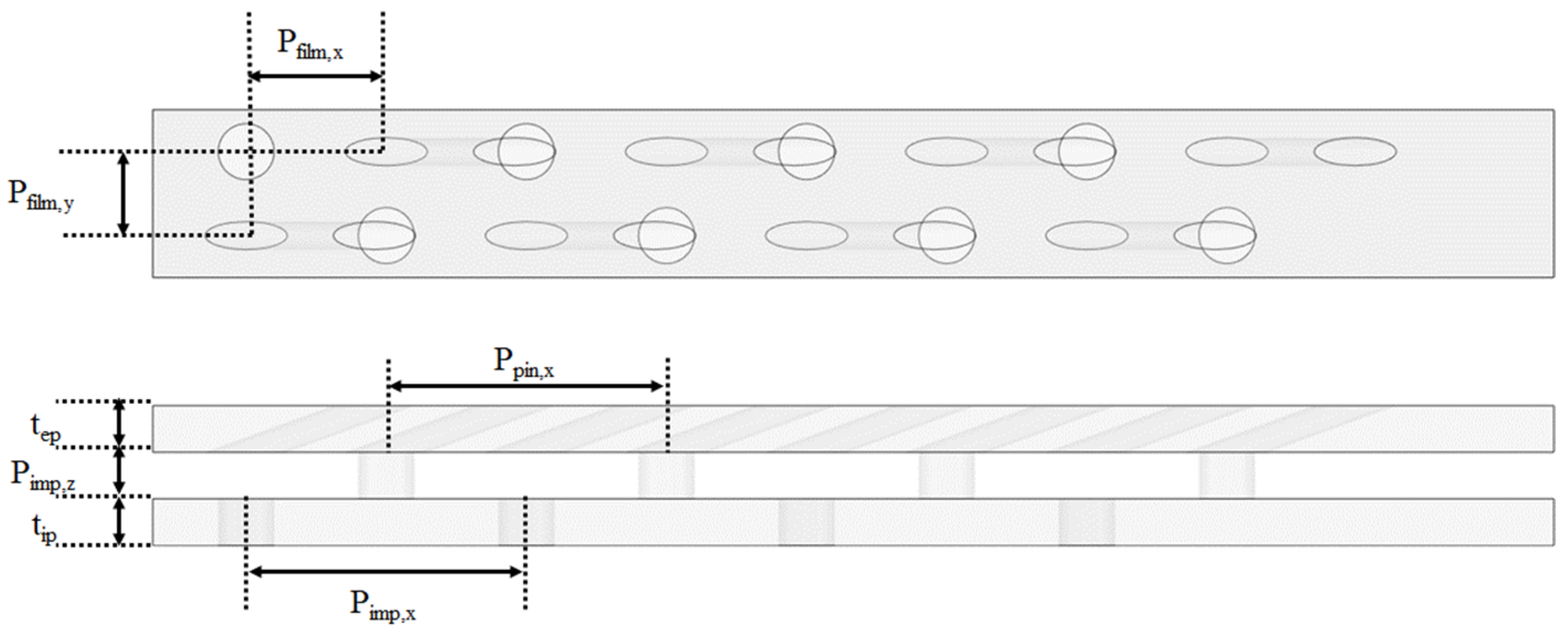
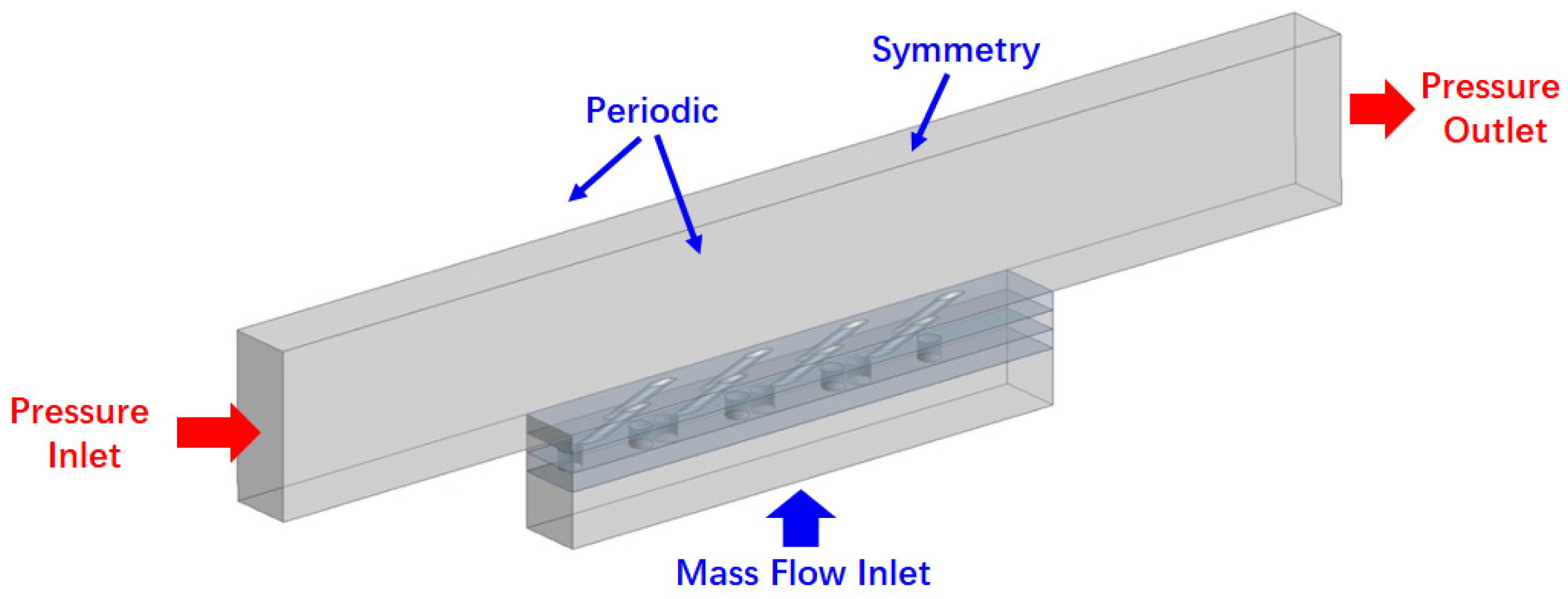
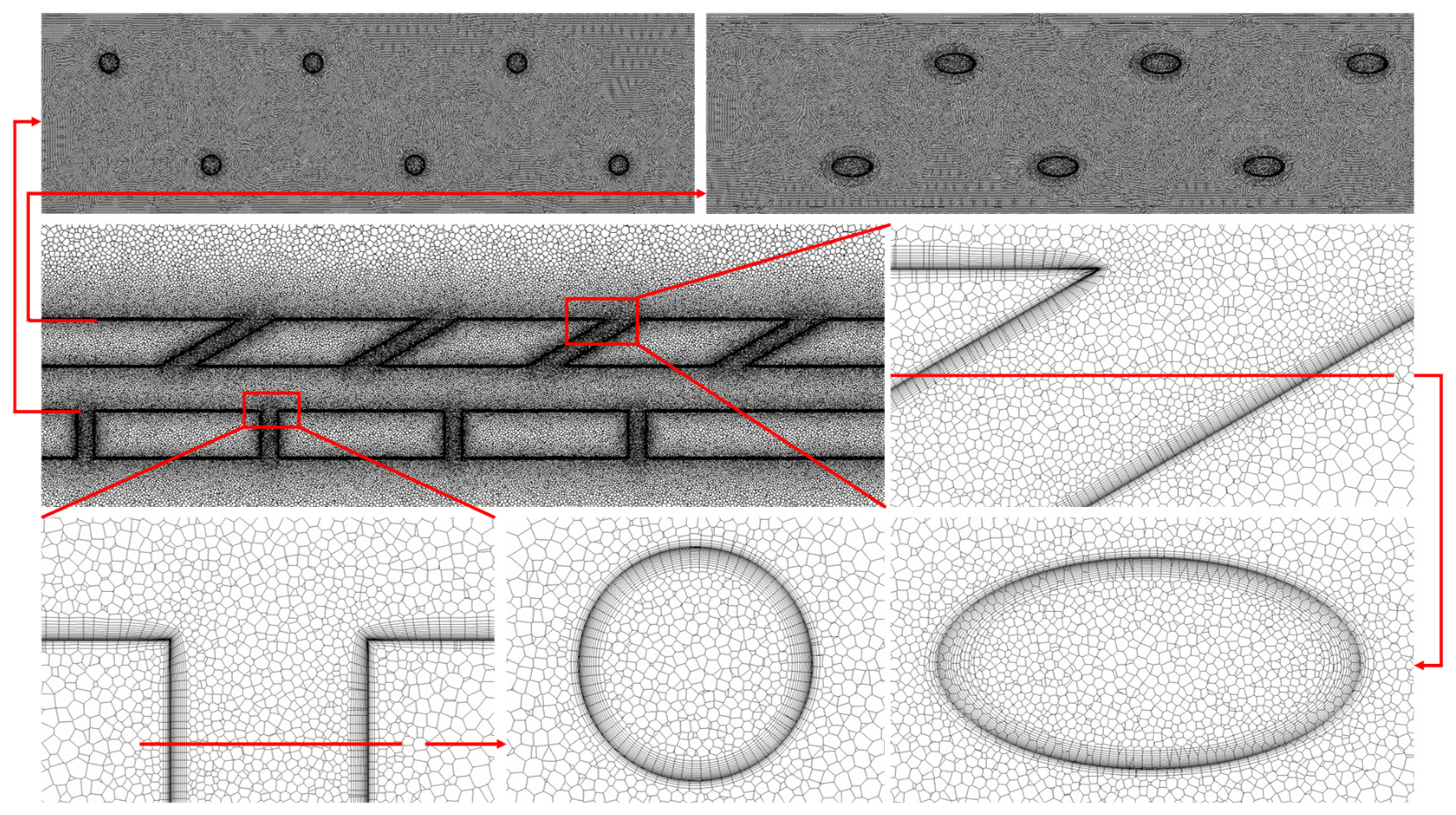
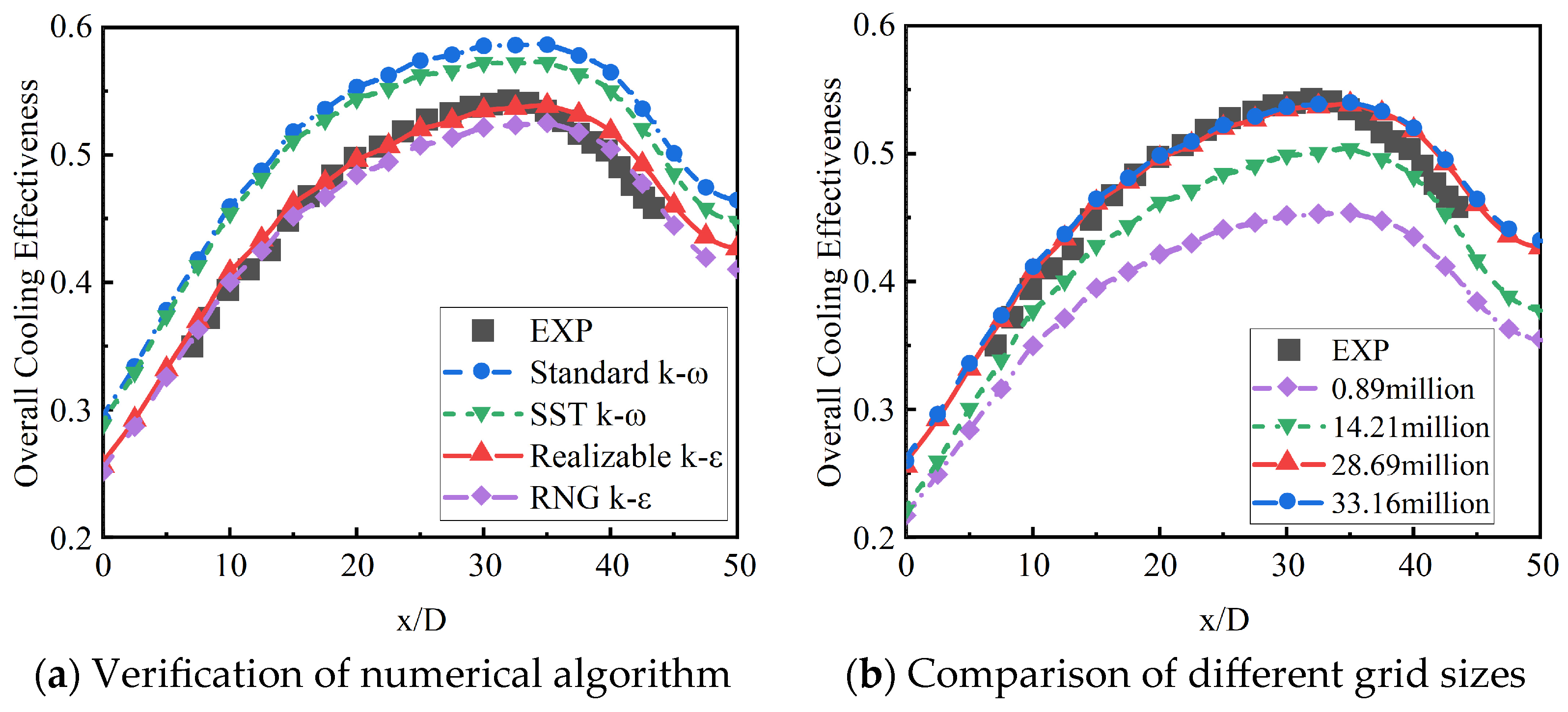
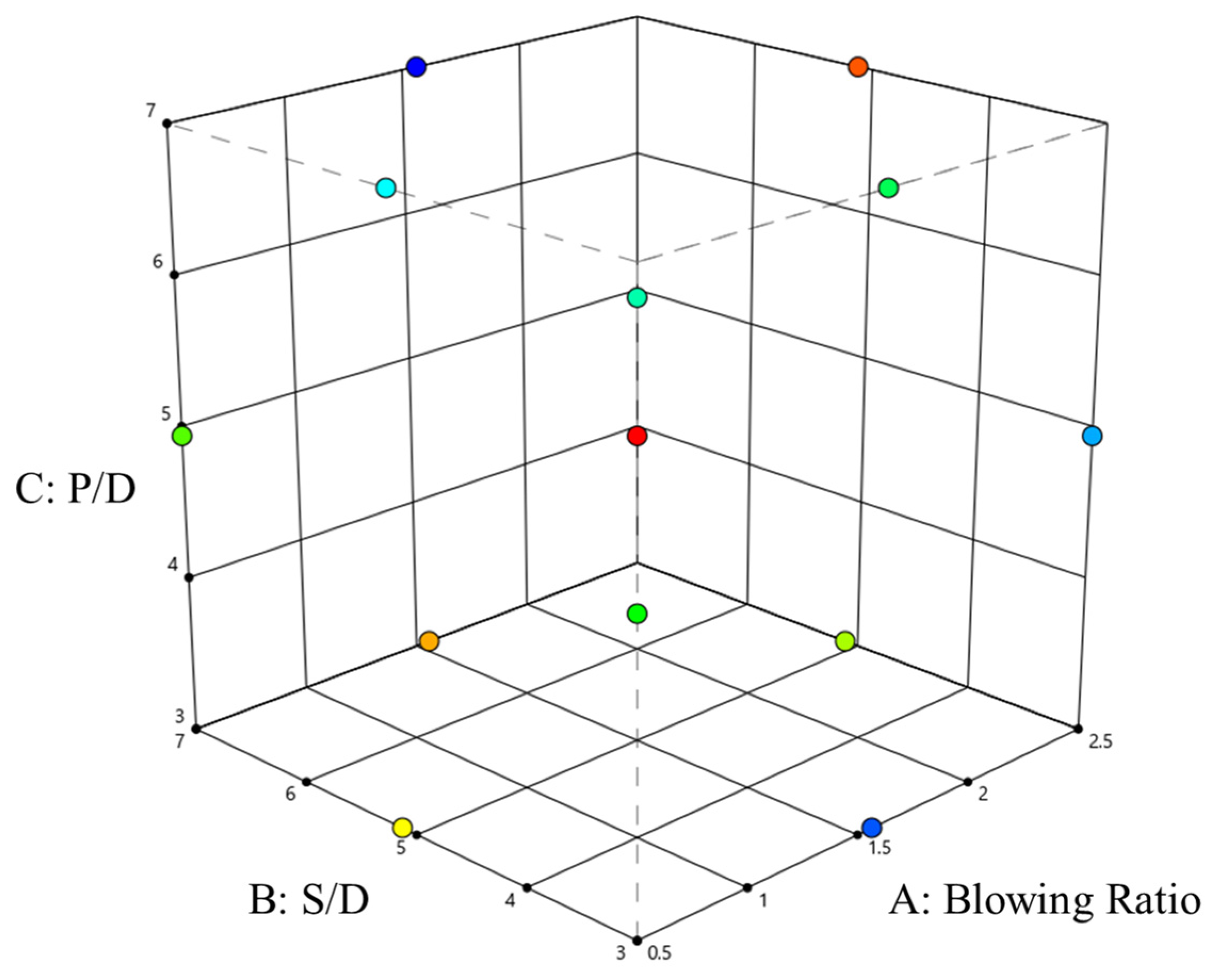
1. Introduction
The pursuit of maximal thermodynamic efficiency subjects modern gas turbines to firing temperatures well beyond the thermal limits of standard superalloys, making advanced cooling architectures indispensable [
1,
2]. Double-wall cooling structures leverage two distinct wall layers and an internal cavity to effectively break the traditional trade-off between cooling effectiveness and pressure drop, making them a cornerstone of next-generation thermal management. Experimental measurements by Kim et al. [
3] on double-wall cooling plates demonstrated that the cooling effectiveness of the double-wall structure improved by 47–141% compared to a single-layer plate.
To clarify the flow and heat transfer mechanisms of double-wall cooling structures, previous researchers have conducted extensive studies on geometric parameters and flow parameters. Regarding geometric parameters, Liu et al. [
4] explored the impact of hole distribution patterns, reporting a 24.5% boost in global cooling effectiveness when employing a hexagonal array rather than a standard in-line setup. They linked the improvement to intensified in-hole convection coupled with superior downstream film attachment. Furthermore, due to the strong complementarity between internal and external heat transfer, the choice between in-line and staggered arrangements has been shown to have a marginal impact on overall cooling performance [
5]. Murray et al. [
6] systematically examined the combined effects of multiple geometric parameters, including pedestal height and film hole spacing, finding that higher pedestals yield superior performance at high flow rates, dense hole arrays effectively prevent film lift-off, and the circular pedestal produces more temperature reduction by enhancing wall conduction. Building on the previous research, Xie et al. [
7] further revealed the decisive role of hole arrangement and impingement gap on the distribution of cooling effectiveness, demonstrating that staggered arrangements provide higher overall cooling effectiveness than an overlapped hole arrangement and that overall cooling effectiveness decreases monotonically as the impingement gap increases. Regarding the relative sensitivity of hole-spacing parameters, Wei et al. [
8] showed experimentally that the area-averaged Nusselt number on the impingement target surface is considerably more sensitive to the streamwise pitch ratio of the impingement structure than to variations in the spanwise pitch ratio, and that Nu increases linearly with Reynolds number. Courtis et al. [
9,
10] found that reducing the spanwise pitch ratio of film holes improves effusion cooling effectiveness more effectively than reducing the streamwise pitch ratio. And as porosity increases, the contribution of internal impingement cooling becomes dominant. The difference in how internal and external heat transfer metrics respond to spacing parameters suggests that evaluating overall cooling performance requires a multi-metric trade-off between streamwise and spanwise pitch. Luo et al. [
11] quantified the contribution of multiple geometric parameters using a response surface method and found that overall cooling effectiveness is primarily governed by impingement hole diameter. Furthermore, the results showed that antagonistic effects exist among parameters, such that no single-parameter isolated optimization can achieve a global optimum. The finding provides strong justification for conducting multi-parameter collaborative analysis. In terms of flow parameters, the blowing ratio fundamentally dictates the evolution of cooling mechanisms. Zhang et al. [
12] found that under high blowing ratios, swirling flow disrupts the adverse effects of kidney vortices, causing the coolant to be closer to the wall and spread laterally, thereby enhancing cooling effectiveness. Zhou et al. [
13] demonstrated that the blowing ratio fundamentally shifts the dominant cooling mechanism. At low flow rates, external film cooling effectively enhances overall performance. However, as flow rates increase, film lift-off produces a detrimental effect, at which point internal impingement cooling becomes increasingly dominant, and in-hole convective heat transfer continues to intensify with increasing flow rate. Liu et al. [
14] further clarified this mechanism, showing that as the blowing ratio increases, in-hole convective cooling progressively replaces film cooling as the dominant heat transfer pathway, with internal cooling playing a particularly critical role in enhancing heat transfer at the impingement stagnation zone. These studies demonstrate that the blowing ratio profoundly influences the overall performance of double-wall cooling structures by dynamically redistributing the contributions of internal and external heat transfer mechanisms, rather than simply enhancing or diminishing cooling in a linear manner.
By investigating geometric and flow parameters separately, the studies have clarified the isolated effects of individual variables. However, flow and geometric parameters are deeply coupled rather than acting independently, rendering single-parameter approaches inadequate to capture this complex interaction. Zou et al. [
15] demonstrated that at low blowing ratios, impingement distance and pin-fin diameter exert the most pronounced influence on overall cooling effectiveness. As the blowing ratio increases, the regulatory effect of these two geometric parameters progressively weakens, indicating that flow parameters dynamically reset the sensitivity of geometric parameters. Li et al. [
16] performed a quantitative ranking of the combined influence of multiple geometric and flow parameters using Sobol sensitivity analysis, providing a quantitative basis for multi-parameter collaborative design. Sun et al. [
17] applied the Box–Behnken response surface method and found significant differences in the interaction effects of different parameter combinations, further revealing the necessity of multi-parameter collaborative research. Ren et al. [
18] employed a multi-parameter optimization approach combining artificial neural networks and multi-objective genetic algorithms. The results show that coordinated control of multiple parameters can simultaneously improve both cooling effectiveness and thermal stress metrics, further validating the practical value of multi-parameter coupling analysis in guiding cooling structure design. The multi-objective, multi-parameter optimization framework has also been validated in broader thermal management contexts. Wang et al. [
19] applied NSGA-II combined with the TOPSIS decision method to perform multi-parameter collaborative optimization of a double-layered semi-porous-rib microchannel heat sink, using thermal resistance and pumping power as dual objective functions. The results revealed that different structural parameters contribute fundamentally differently to the performance metrics and that the overall Pareto front cannot be achieved through any single-parameter isolated optimization, offering a methodological reference for multi-objective optimization of analogous double-layer structures. Meng et al. [
20] further pointed out that the coupling between geometric configuration parameters and operating parameters constitutes the central challenge in the multi-objective design of thermal management systems, corroborating, from a broader systems perspective, the universal significance of studying geometric–operational parameter coupling.
In summary, the interaction effect of the blowing ratio, spanwise pitch ratio, and streamwise pitch ratio on double-wall cooling performance has received limited attention, leaving the underlying mechanisms and parameter importance rankings unestablished. Therefore, the present study constructs a response surface surrogate model based on conjugate numerical simulations under near-engine operating conditions, systematically investigates the multi-parameter influence mechanisms, and optimizes the cooling structure layout.
3. Effect of the Blowing Ratio on Thermal Performance
The blowing ratio is one of the critical parameters influencing film cooling performance. Variations in coolant flow rate induced by changes in the blowing ratio also affect the internal cooling performance of the impingement and pin-fins.
Taking the double-wall geometric configuration with a streamwise spacing of
S/
D = 5 and a spanwise spacing of
P/
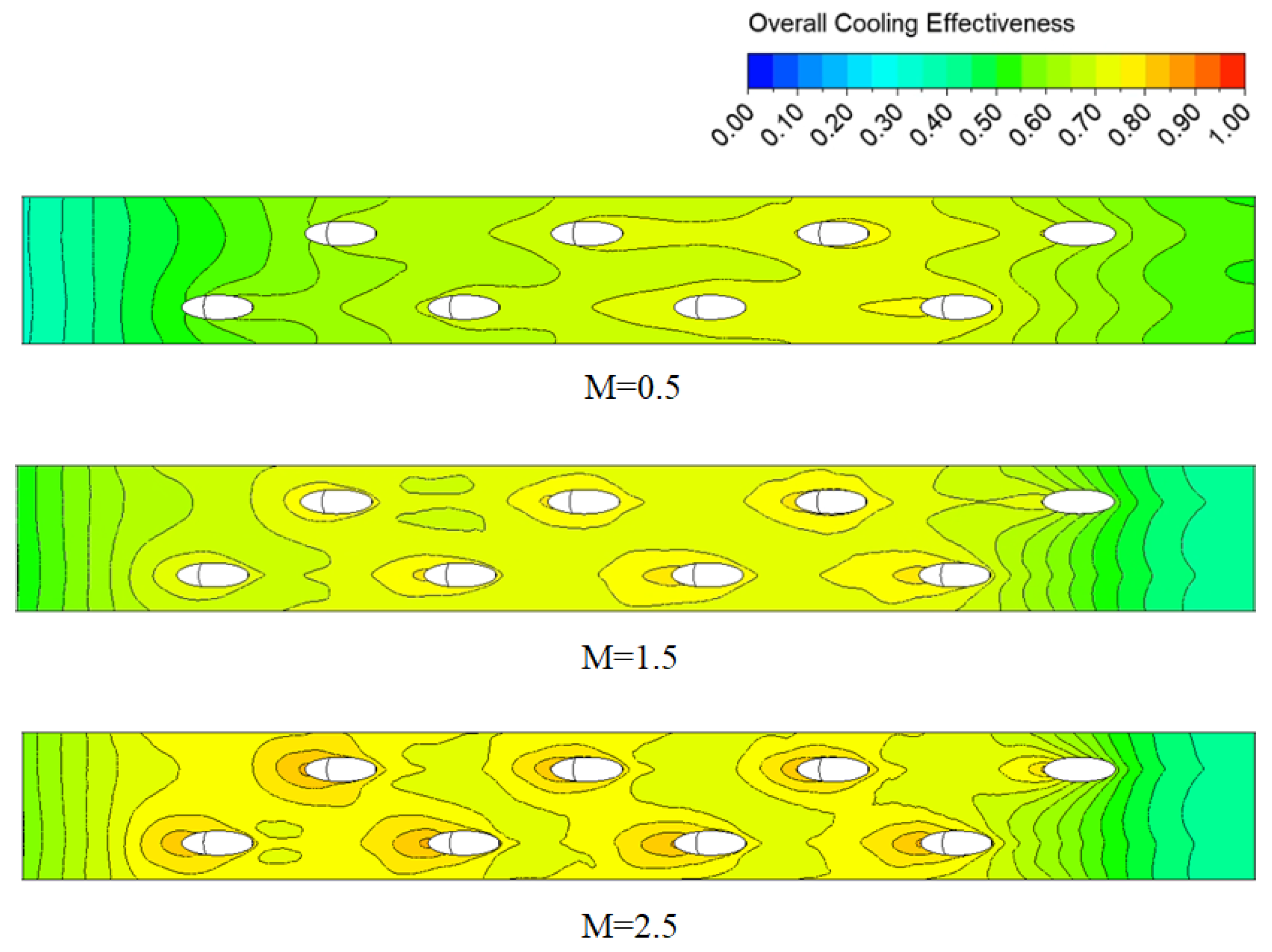
D = 3 as an example, the distribution of overall cooling effectiveness under different blowing ratios is illustrated in
Figure 6. The overall cooling effectiveness increases significantly as the blowing ratio rises. For further quantitative analysis, a region within the sample model spanning a streamwise distance of 10
Dfilm~40
Dfilm and a spanwise distance of −5
Dfilm~5
Dfilm was selected to calculate the area-averaged overall cooling effectiveness. The results, detailed in
Table 3, indicate that the area-averaged overall cooling effectiveness improves with an increasing blowing ratio, rising from 0.682 to 0.750, which corresponds to an increment of 9.97%.
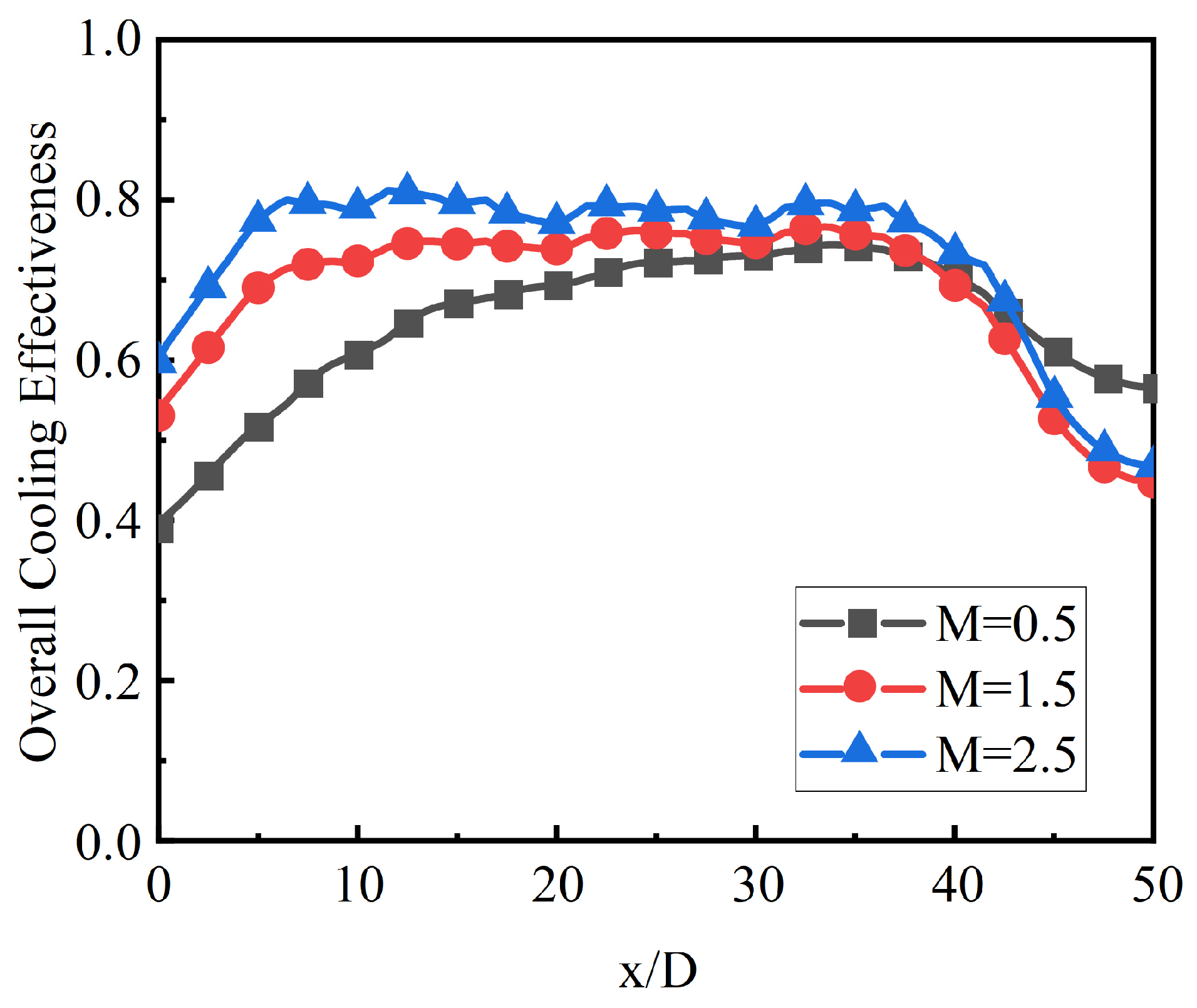
The variation of the laterally averaged overall cooling effectiveness is shown in
Figure 7. At upstream locations within a streamwise distance of 0 to 20
Dfilm, due to the synergistic effect of film coverage and internal cooling, the laterally averaged overall cooling effectiveness at a blowing ratio of 2.5 is higher than that at a blowing ratio of 0.5. At M = 0.5, with the superposition of film cooling effectiveness along the flow direction, the overall cooling effectiveness gradually increases downstream.
To evaluate the heat transfer performance on the inner wall of the cooling channel, the local Nusselt number (
Nu) was calculated. The definition of
Nu is expressed as follows:
where
qw is the local wall heat flux obtained directly from the conjugate heat transfer simulation.
d is the characteristic length, defined as the film hole diameter
Dfilm.
Tw is the local wall temperature, and
Tref is defined as the coolant inlet temperature.
λfluid is the thermal conductivity of the fluid.
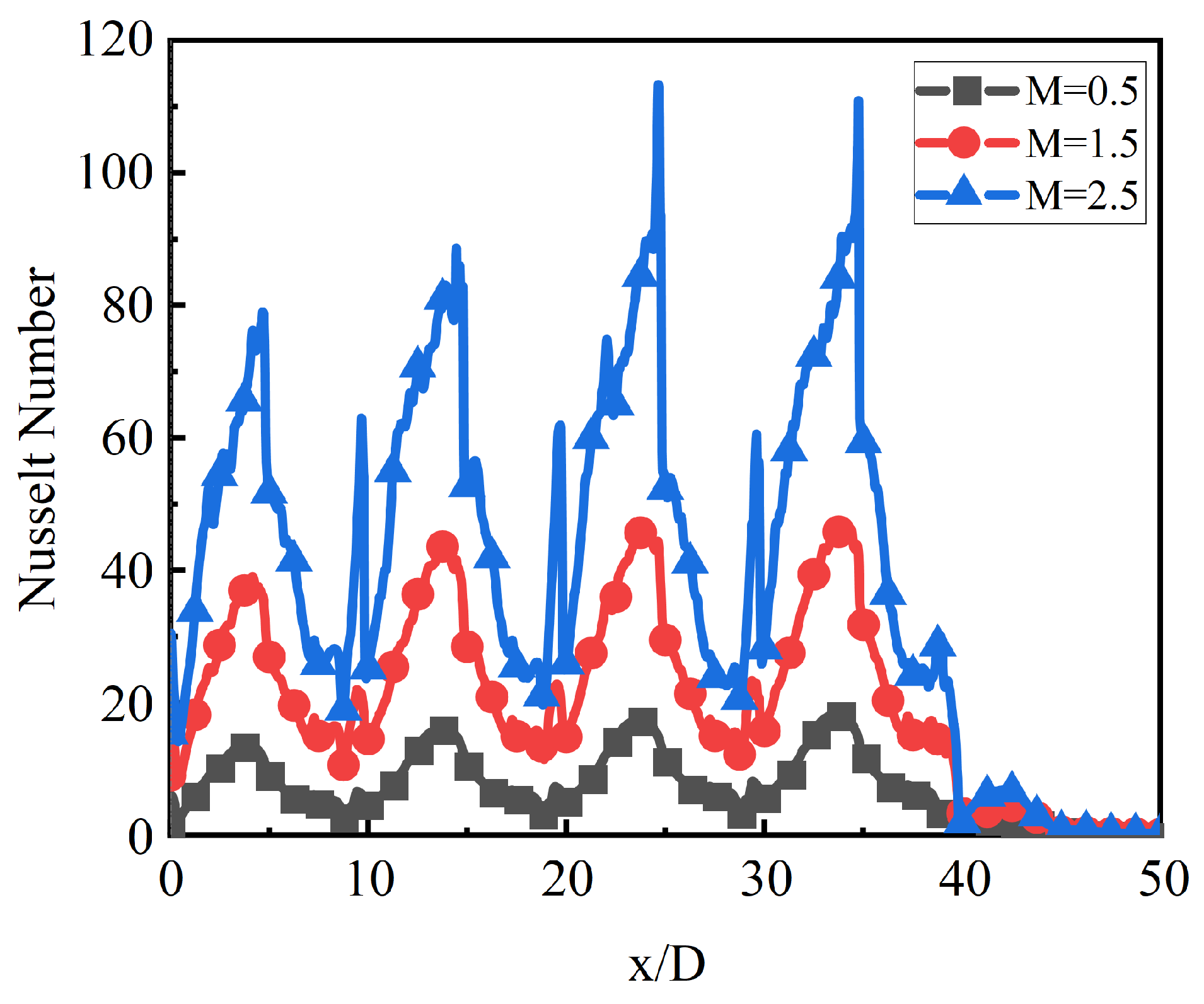
When the blowing ratio increases to 1.50, the internal cooling performance is notably enhanced. The laterally averaged Nusselt number on the impingement cooling target surface is shown in
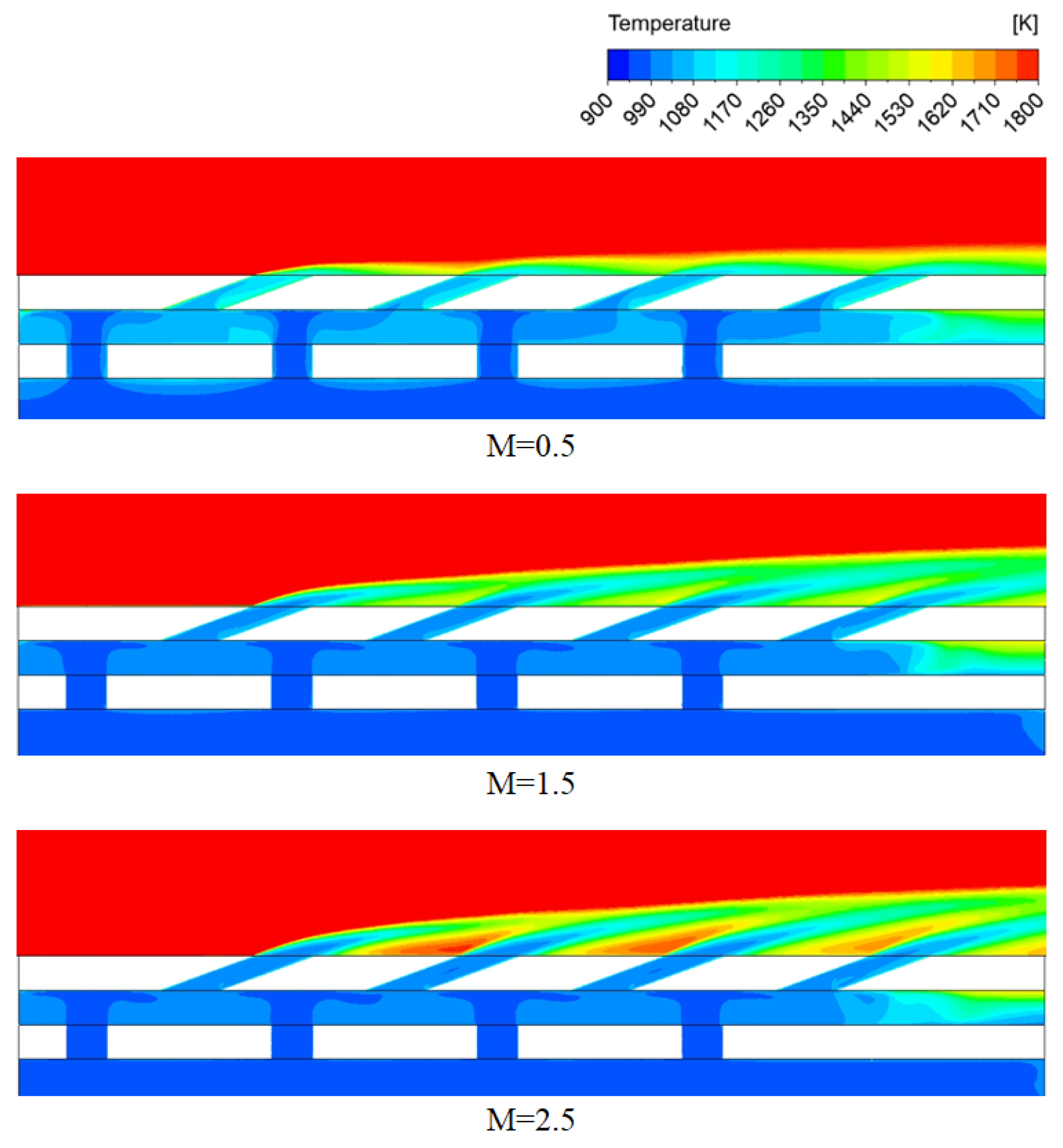
Figure 8. The intensification of internal cooling leads to the emergence of high-cooling-effectiveness regions between the spanwise film hole rows, thereby elevating the global overall cooling effectiveness. However, the film jet experiences a slight lift-off, causing a reduction in film cooling effectiveness and weakening the downstream superposition effect. Consequently, the overall cooling effectiveness upstream and downstream remains roughly at the same level. At a blowing ratio of 2.5, the film jet almost completely lifts off, leading to poor coverage shown in
Figure 9. It results in a decreasing trend of overall cooling effectiveness as the streamwise distance increases. For
x/
Dfilm > 40, the overall cooling effectiveness drops rapidly due to the presence of flow dead zones.
Regarding the uniformity index of the double-wall cooling structure, to avoid the influence of flow dead zones at the upstream and downstream locations of the cooling model, the same region spanning a streamwise distance of 10
Dfilm to 40
Dfilm and a spanwise distance of −5
Dfilm to 5
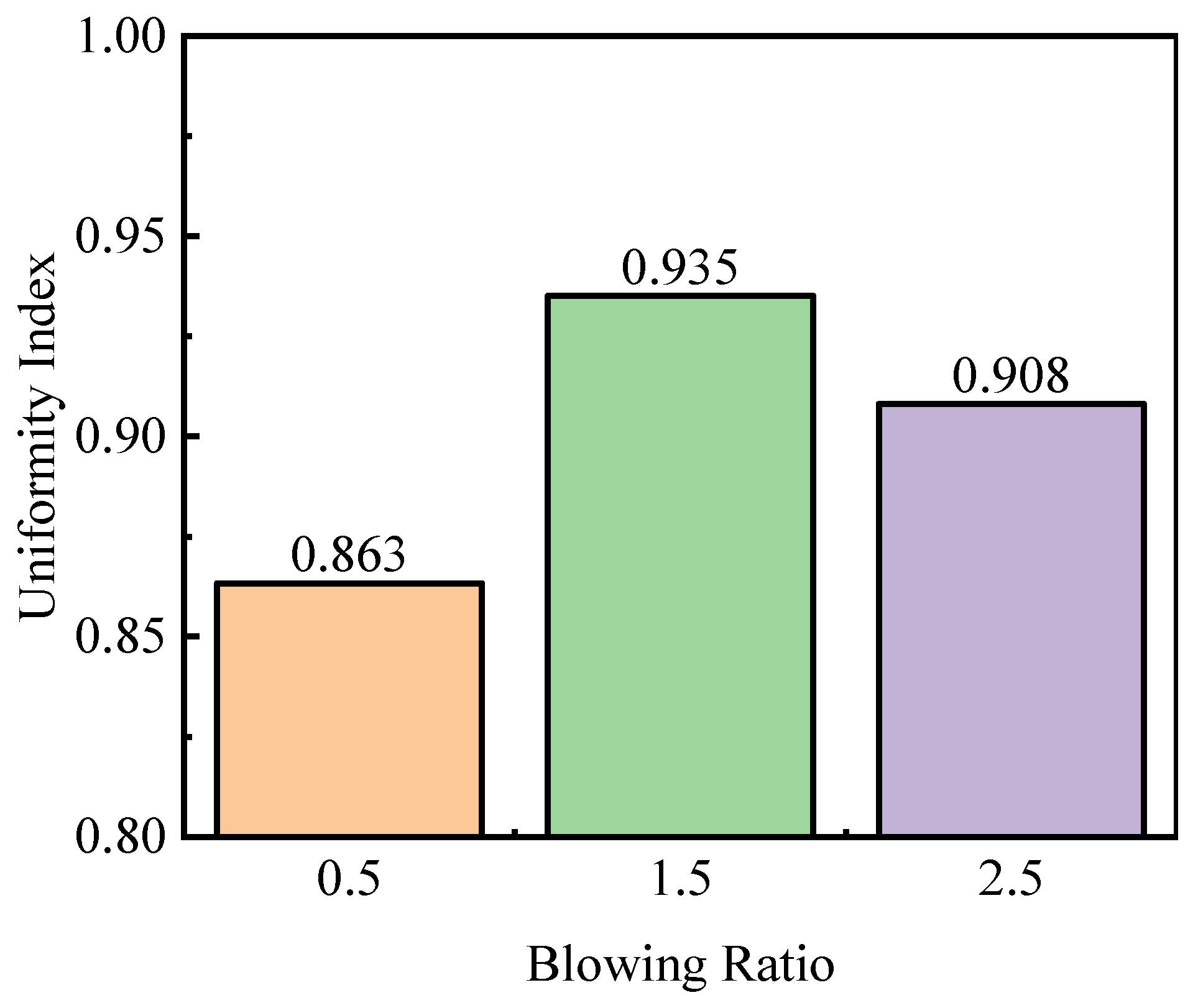
Dfilm was selected to calculate the uniformity index for each operating condition. The uniformity indices under different blowing ratios are illustrated in
Figure 10.
The variation of the uniformity index is similarly governed by the trade-off between internal cooling enhancement and external film lift-off, yet it exhibits distinct sensitivity characteristics. At lower blowing ratios, both internal and external cooling are insufficient. The significant differences in overall cooling effectiveness between upstream and downstream regions result in poor uniformity. When the blowing ratio increases to M = 1.5, the enhanced internal cooling homogenizes the temperature distribution between film rows, thereby increasing the uniformity index. However, at M = 2.5, despite further enhancement in internal cooling, film lift-off degrades downstream cooling effectiveness. It creates new streamwise temperature gradients, which conversely decrease the uniformity index.
In summary, by modulating the coolant flow rate, the blowing ratio influences the overall performance of the double-wall cooling structure primarily through the internal cooling. Under low blowing ratio conditions, both the internal cooling capacity and the film coverage effect are limited, yielding a lower overall cooling effectiveness and poor uniformity. At a high blowing ratio, the internal cooling capacity is significantly enhanced, which expands the high-cooling-effectiveness regions between the spanwise film hole rows. This enhancement improves the uniformity index by 8.34%, and the overall cooling effectiveness exhibits an improving trend, with the area-averaged overall cooling effectiveness increasing by 6.01%. Upon further increasing the blowing ratio, although the internal cooling capacity continues to strengthen, the film jet experiences severe lift-off, and the coverage deteriorates. It causes a notable decrease in the overall cooling effectiveness in the downstream region. The area-averaged overall cooling effectiveness still increases by 3.73%, while the uniformity index drops by approximately 2.89%.
The results indicate that for the double-wall cooling structure, there exists an optimal blowing ratio range that balances overall cooling effectiveness and temperature uniformity. Excessively elevating the blowing ratio diminishes the synergistic benefits of external film cooling, thereby degrading the overall cooling performance.
4. Effects of Streamwise and Spanwise Pitches on Thermal Performance
The streamwise and spanwise spacings are critical geometric parameters in double-wall cooling structures. The parameters not only directly govern cooling performance but also significantly influence the thermal stress distribution and structural reliability by altering temperature gradients and constraint conditions.
At a blowing ratio of
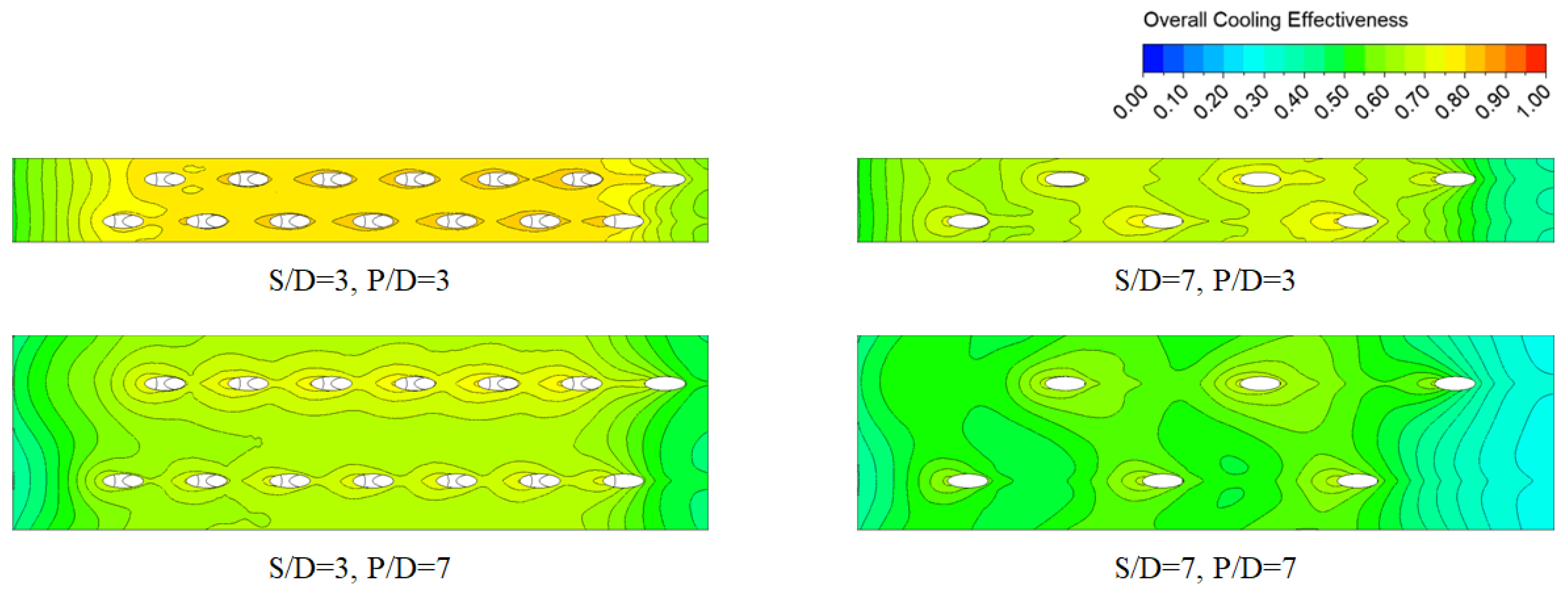
M = 1.5, the overall cooling effectiveness distribution under different spacing ratios is shown in
Figure 11. The overall cooling effectiveness decreases monotonically with the increase in both streamwise and spanwise spacings, as shown in
Table 4. The results indicate that an increase in streamwise spacing reduces the area-averaged overall cooling effectiveness by 18.87%, while an increase in spanwise spacing reduces it by 19.35%. The result indicates that spanwise spacing is the dominating parameter for overall cooling effectiveness, whereas streamwise spacing serves as a regulating parameter.
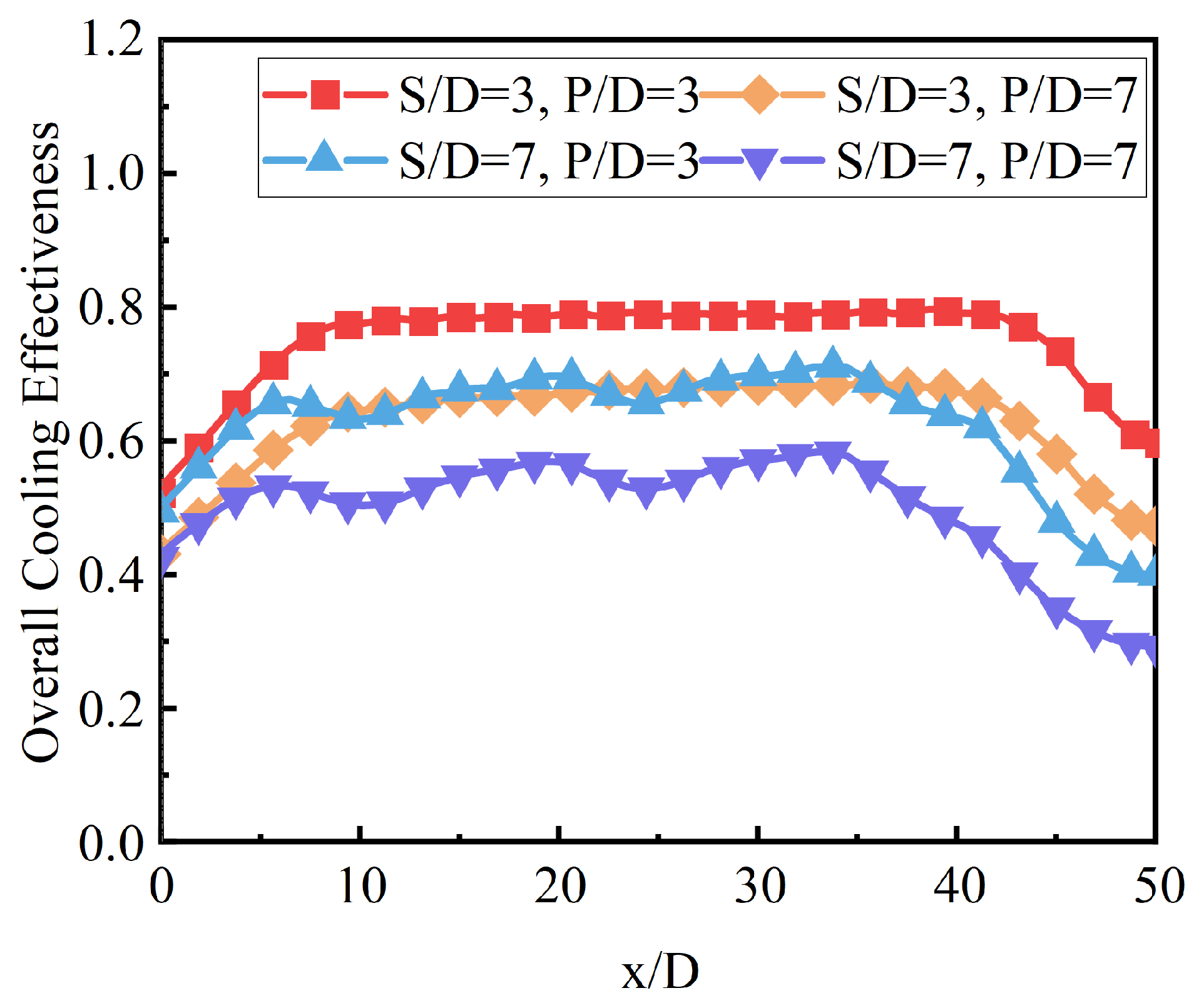
The laterally averaged overall cooling effectiveness of each geometric configuration is shown in
Figure 12. When the streamwise spacing is
S/
D = 3, the dense distribution of cooling structures creates a highly uniform overall cooling effectiveness where the laterally averaged value remains essentially constant along the streamwise direction. When the streamwise spacing increases to
S/
D = 7, it becomes difficult for the coolant to achieve uniform distribution and effective coverage, leading to a notably intensified fluctuation of the laterally averaged overall cooling effectiveness along the flow direction. When maintaining a constant streamwise spacing,
S/
D, an increase in spanwise spacing similarly exacerbates the fluctuation of the laterally averaged overall cooling effectiveness along the streamwise direction, and the impact of spanwise spacing is more pronounced than that of streamwise spacing.
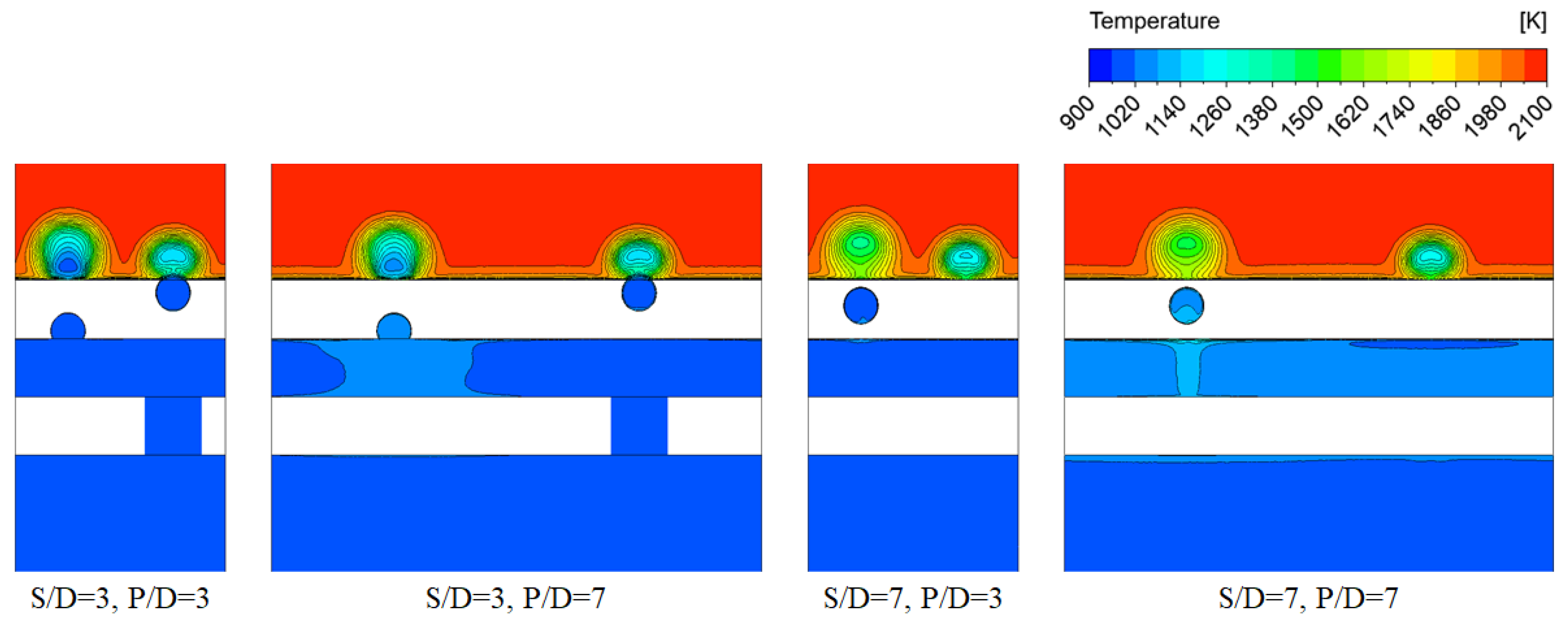
An increase in spanwise spacing reduces the overall cooling effectiveness primarily by weakening the spanwise coverage of film cooling. The cross-sectional temperature distribution at the exit of the second streamwise hole (
x/
D = 5) is shown in
Figure 13. At a spanwise spacing ratio of
P/
D = 7, the limited lateral spreading of the film jets creates under-cooled regions between adjacent coolant jets. Consequently, the high-temperature mainstream directly scours the wall, as illustrated in
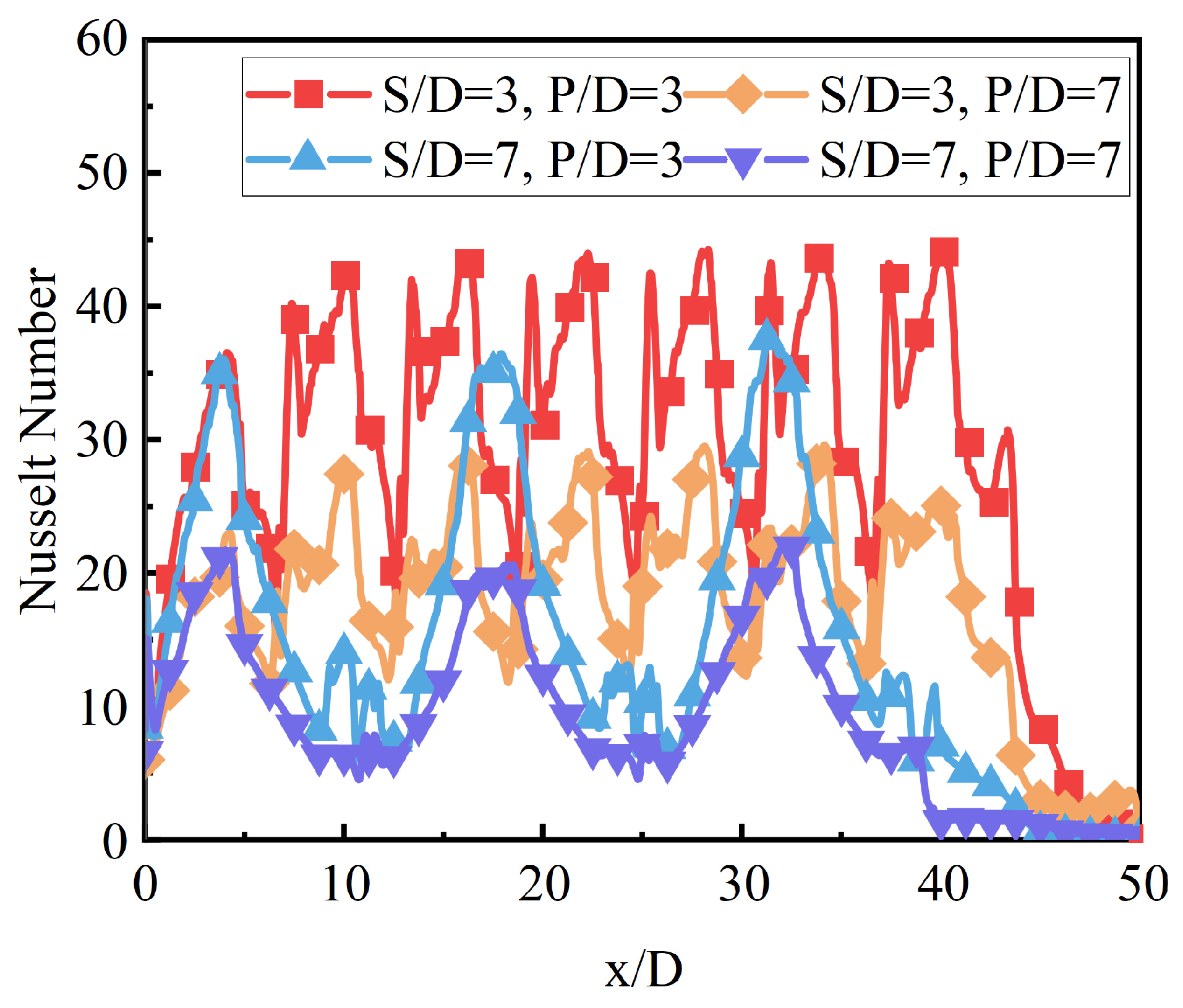
Figure 11. Within the internal cooling structure, an increase in spanwise spacing expands the low-heat-transfer regions between the impingement stagnation zones, leading to a significant reduction in the peak
Nu, as shown in
Figure 14.
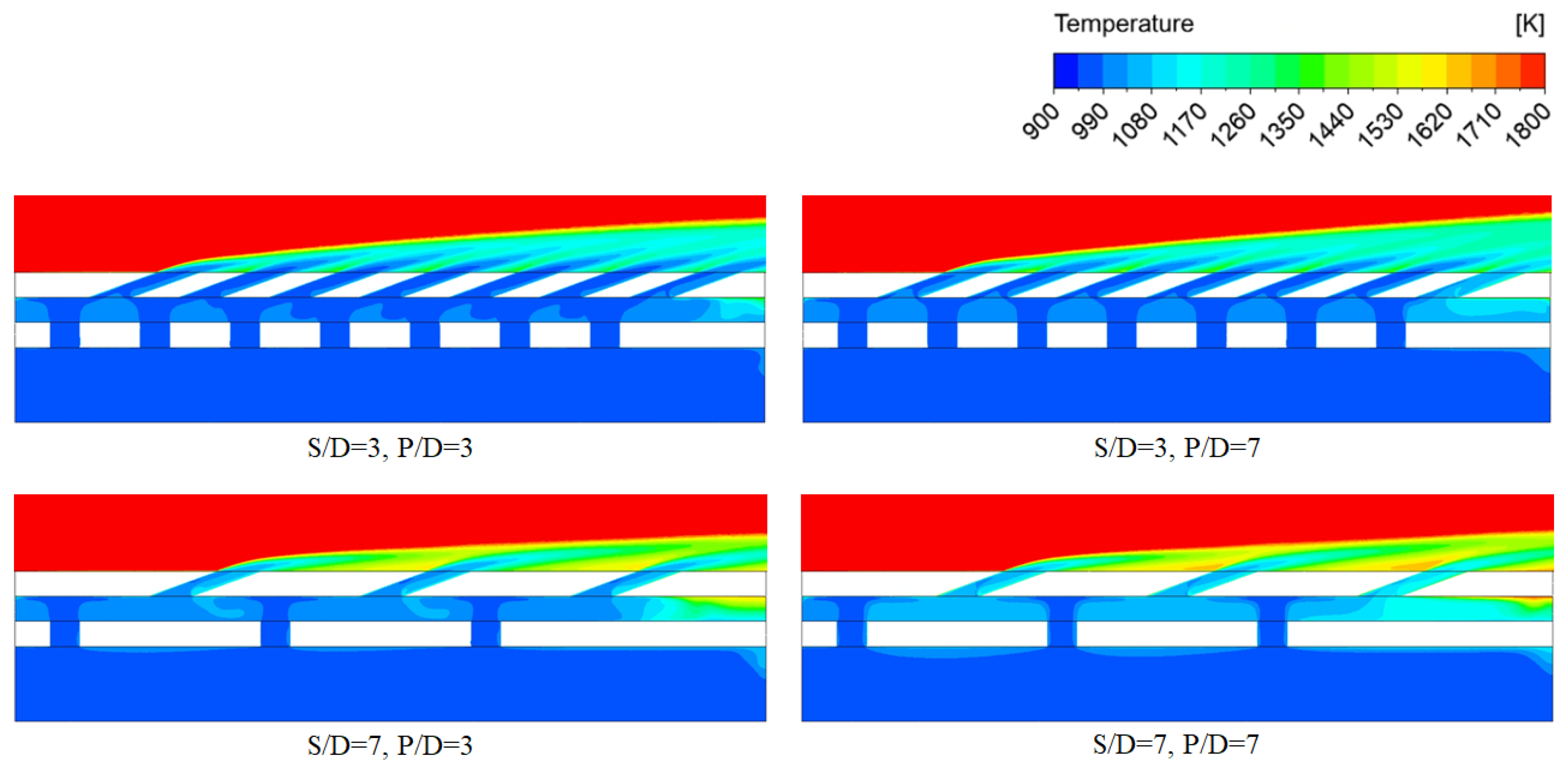
Conversely, an increase in streamwise spacing lowers the overall cooling effectiveness primarily by degrading the internal cooling capacity, as shown in
Figure 14. The increase in streamwise spacing reduces the arrangement density of internal cooling structures per unit area, and the peak
Nu is slightly reduced, leading to a weakened internal cooling performance. On the other hand, when the streamwise spacing is
S/
D = 7, the temperature between the streamwise film hole rows gradually rises, reflecting the decrease in film effectiveness along the flow direction. At
S/
D = 3, the injection of downstream film effectively compensates for the decay of upstream, maintaining a robust superposition effect between the streamwise hole rows, as illustrated in
Figure 15.
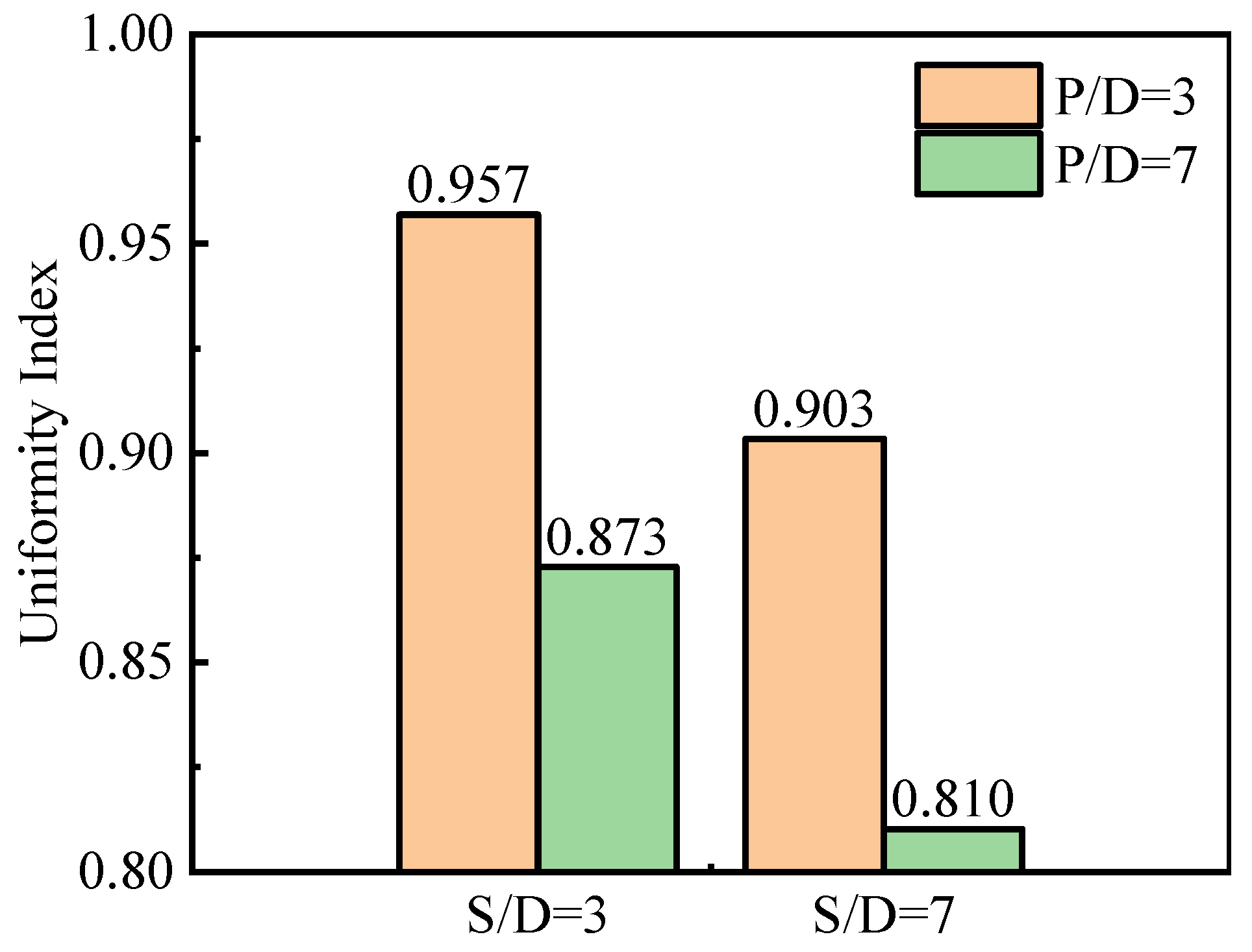
The uniformity indices under different spacing ratios are illustrated in
Figure 16. The uniformity index decreases with the increase in both streamwise and spanwise spacings, with the spanwise spacing inducing a more severe reduction in the uniformity index.
The mechanism of the uniformity index is essentially consistent with the evolution pattern of the overall cooling effectiveness. Increasing the spanwise spacing significantly lowers the uniformity index, primarily by weakening spanwise film coverage and enlarging the low-heat-transfer zones between impingement stagnation regions. Meanwhile, an increase in streamwise spacing reduces the overall uniformity index primarily by intensifying the peak-to-valley differences in the internal cooling Nusselt number. Therefore, increasing either spanwise or streamwise spacing exacerbates cooling non-uniformity, with the impact of spanwise spacing on uniformity being more pronounced.
In summary, streamwise and spanwise spacings are key geometric parameters of the double-wall structure. They collectively influence cooling effectiveness and uniformity primarily by modulating internal heat transfer and film superposition. In the design of double-wall cooling structures, reducing both streamwise and spanwise spacings helps to enhance the overall cooling effectiveness and cooling uniformity. Reasonably controlling the spacing ratio to avoid film coverage failure and internal cooling discontinuity caused by excessive spacing is critical for ensuring stable cooling performance and structural thermal matching.
5. Response Surface Models and Multi-Objective Optimization
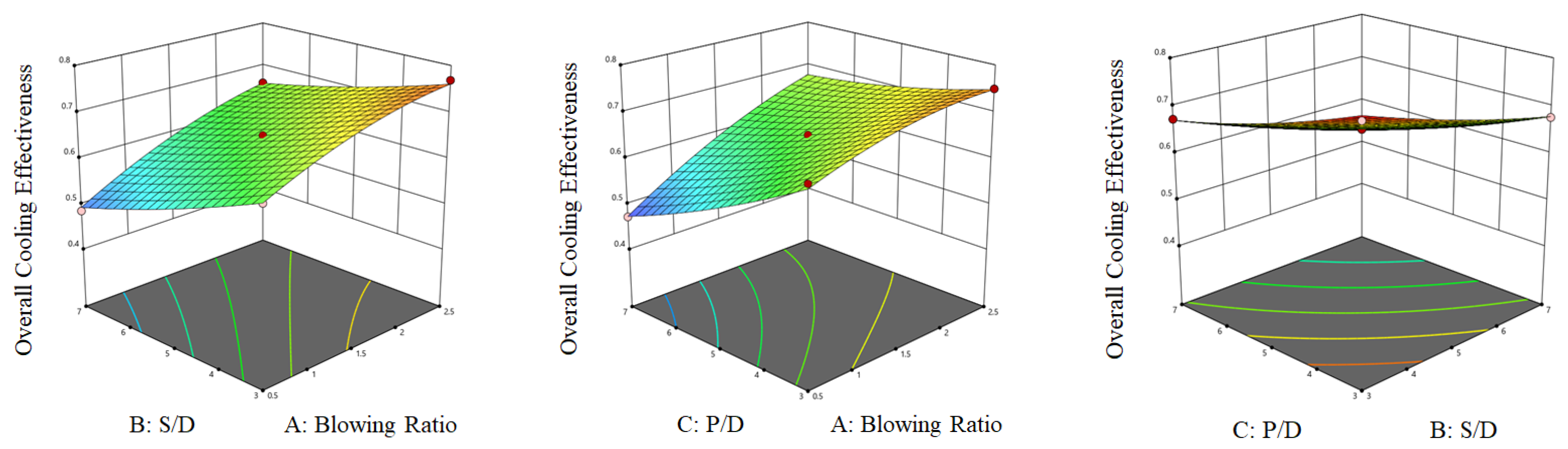
A surrogate model is constructed using the area-averaged overall cooling effectiveness as the response variable. The fitting result is expressed in Equation (7), with an
R2 of 0.9818.
The response surface model (
Figure 17) reveals how the area-averaged overall cooling effectiveness varies with each input parameter. A comparison of the regression coefficients reveals that the area-averaged overall cooling effectiveness is most sensitive to the spanwise spacing, followed by the streamwise spacing and blowing ratio. The effectiveness exhibits a positive correlation with the blowing ratio and negative correlations with both the streamwise and spanwise spacings. As established previously, due to the dominant role of the internal cooling structures in the double-wall configuration, the area-averaged overall cooling effectiveness increases with the blowing ratio. Conversely, increasing the streamwise and spanwise spacings reduces the density of cooling structures, thereby lowering the overall cooling effectiveness, with the spanwise spacing exerting a more significant influence. The maximum overall cooling effectiveness emerges at a high blowing ratio coupled with minimum structural spacings.
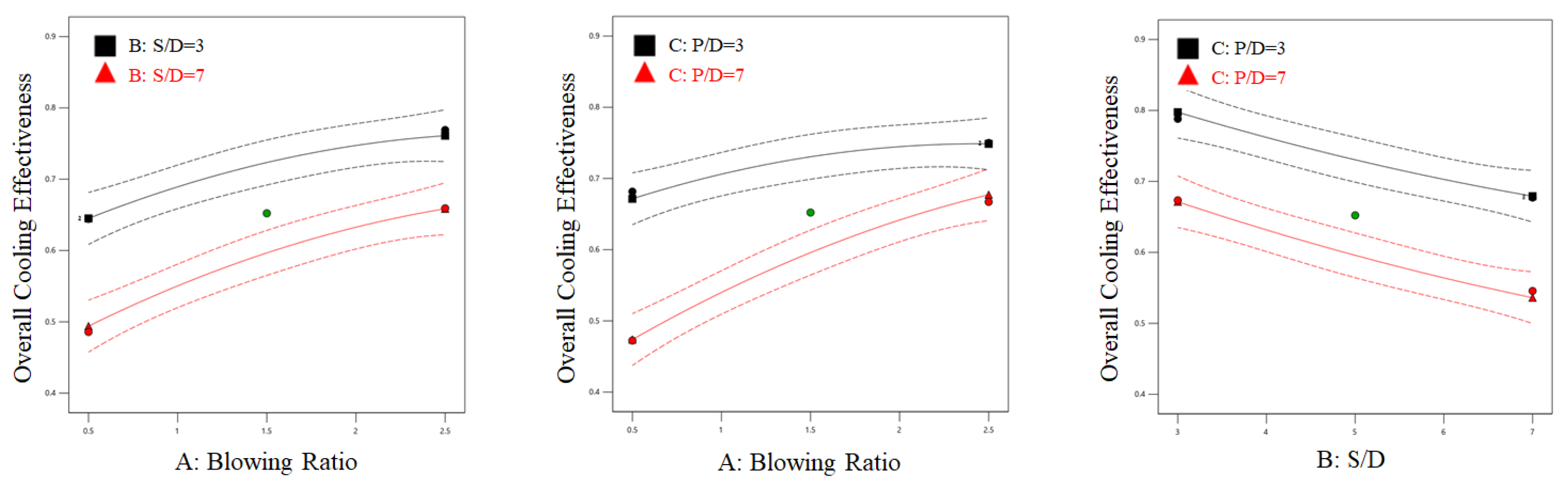
The interaction plots derived from the surrogate model enable the analysis of interactions among parameters. As shown in
Figure 18, the response curves of the area-averaged overall cooling effectiveness as a function of the blowing ratio at different streamwise spacing levels are approximately parallel. This indicates that variations in streamwise spacing have a limited effect on the magnitude of the blowing ratio’s impact, signifying a weak interaction between the two factors. In contrast, the response curves for the blowing ratio and spanwise spacing exhibit a distinctly non-parallel pattern. Under a larger spanwise spacing, low blowing ratios yield insufficient jet momentum and limited lateral spreading, creating distinct under-cooled regions between adjacent jets. As the blowing ratio increases, enhanced coolant momentum and intensified lateral diffusion significantly improve film coverage. Simultaneously, the increased coolant flow further strengthens internal cooling. The combined effect of these two factors renders the cooling effectiveness more sensitive to the blowing ratio. Under a smaller spanwise spacing, adjacent jets achieve effective spanwise coverage even at low blowing ratios. Further increasing the blowing ratio yields diminishing marginal benefits, reducing the sensitivity of the cooling effectiveness to the blowing ratio. Therefore, spanwise spacing and blowing ratio exhibit a significant interaction by synergistically modulating the spanwise coverage efficiency of the external film.
Similarly, a surrogate model was constructed using the uniformity index as the response variable. The fitted equation is expressed as Equation (8), with an
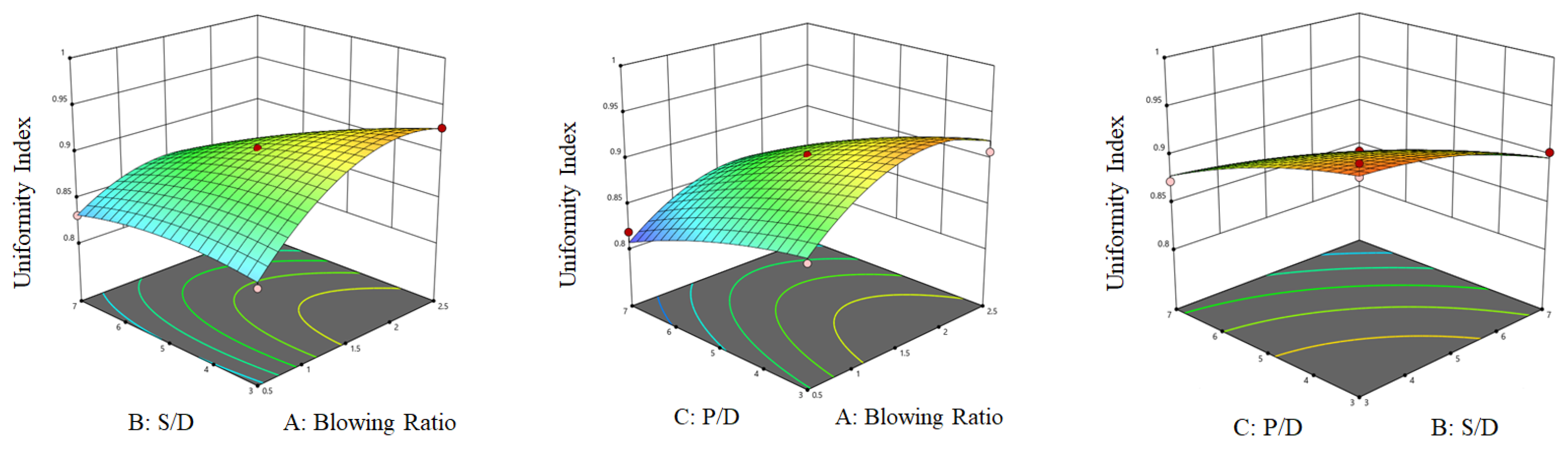
R2 of 0.9707. The response surface model is illustrated in
Figure 19.
A comparison of the regression coefficients reveals that the uniformity index is most sensitive to the blowing ratio, followed by the streamwise spacing, while the spanwise spacing has the weakest influence. The uniformity index first increases and then decreases with the blowing ratio, exhibiting a negative correlation with both the streamwise and spanwise spacings. As established previously, increased spacing elevates the difference between the peak and valley values of cooling effectiveness, directly lowering the uniformity index. Meanwhile, the influence of the blowing ratio exhibits an inflection point. A moderate increase enhances internal cooling and improves uniformity, but an excessively high blowing ratio induces film lift-off and generates localized over-cooled spots at the extremely thin wall upstream of the film hole exit, which conversely disrupts the consistency of the temperature distribution.
Unlike the area-averaged cooling effectiveness, the uniformity index is governed by the amplitude of streamwise temperature fluctuations and localized over-cooled spots. Therefore, the streamwise spacing supersedes the spanwise spacing as the secondary sensitive factor by dictating the cycle of streamwise superposition and attenuation.
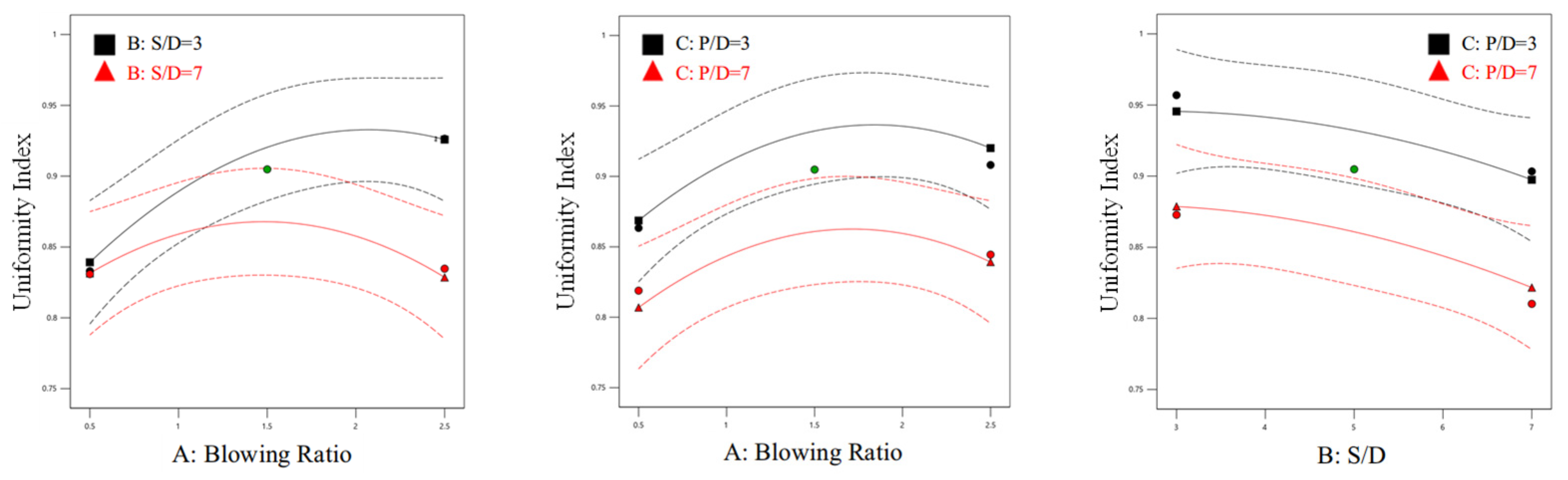
Regarding parameter interactions, a strong interaction effect exists between the blowing ratio and streamwise spacing. As shown in
Figure 20, the non-monotonic impact of the blowing ratio on the uniformity index varies significantly across different streamwise spacing levels. At a smaller streamwise spacing, adjacent film hole rows achieve effective streamwise coverage even at lower blowing ratios, causing a rapid increase in the uniformity index. As the blowing ratio further increases, the dense hole arrangement restricts the decrease in the uniformity index. Conversely, at a larger streamwise spacing, the film coverage fails to bridge the gaps between streamwise hole rows at low blowing ratios, resulting in poor uniformity. When the blowing ratio increases to approximately 1.5, the jets from adjacent rows generate continuous coverage. Simultaneously, enhanced internal cooling effectively mitigates the cooling effectiveness valleys between rows, substantially improving the uniformity index. However, as the blowing ratio continues to rise, film lift-off occurs, leading to a pronounced drop in the uniformity index at high blowing ratios. Therefore, streamwise spacing and blowing ratio exhibit a significant interaction by synergistically modulating the streamwise coverage efficiency and the relative impact of localized over-cooled spots. Other factor pairs exhibit weak interactions, exerting a limited influence on the uniformity index.
Practical applications of double-wall cooling structures demand high overall cooling effectiveness and uniform temperature distributions. Gas turbine efficiency limits strictly restrict excessive coolant consumption. A comprehensive optimization must therefore balance thermal performance against coolant mass flow. The Response Surface Methodology executed a three-objective optimization with equally weighted objectives to maximize the area-averaged overall cooling effectiveness beyond 0.75 and maximize temperature uniformity while minimizing coolant mass flow rate. The optimization identified an ideal blowing ratio of
M = 1.10, a streamwise spacing of
S/
D = 3 and a spanwise spacing of
P/
D = 3.
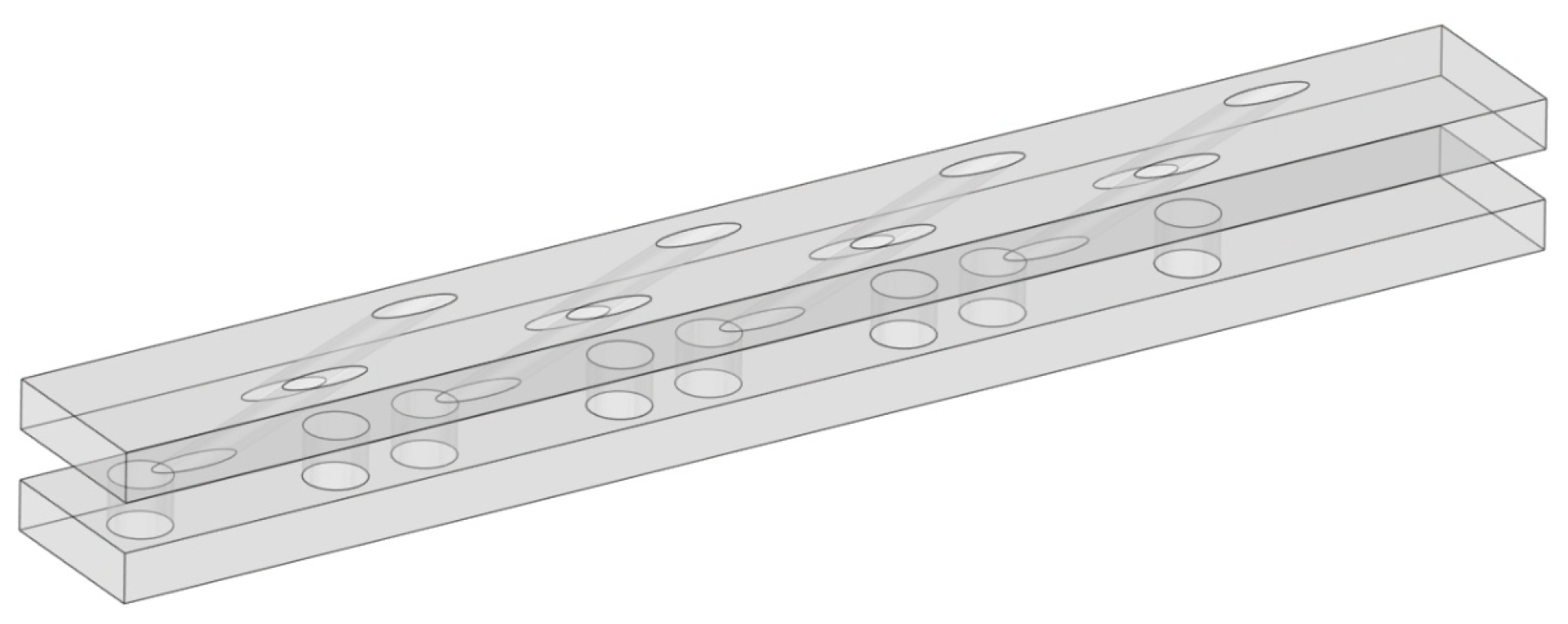
Figure 21 displays the optimized cooling structure. The optimized configuration’s moderate blowing ratio preserves the fundamental cooling performance. While the polynomial RSM exhibits reduced local fidelity in regions with steep temperature gradients, the identified optimum resides within the smoothly varying region where the surrogate model maintains high predictive accuracy. The streamwise spacing of
S/
D = 3 ensures excellent external film coverage. The highly influential spanwise spacing drops to the lowest parameter boundary of
P/
D = 3. Consequently, while the optimized configuration yields exceptional thermal performance and strictly minimizes the unit-area coolant flux, the thermal objectives drive the structural configuration toward a significantly higher spatial density of cooling units, which inherently elevates the total integrated coolant demand.
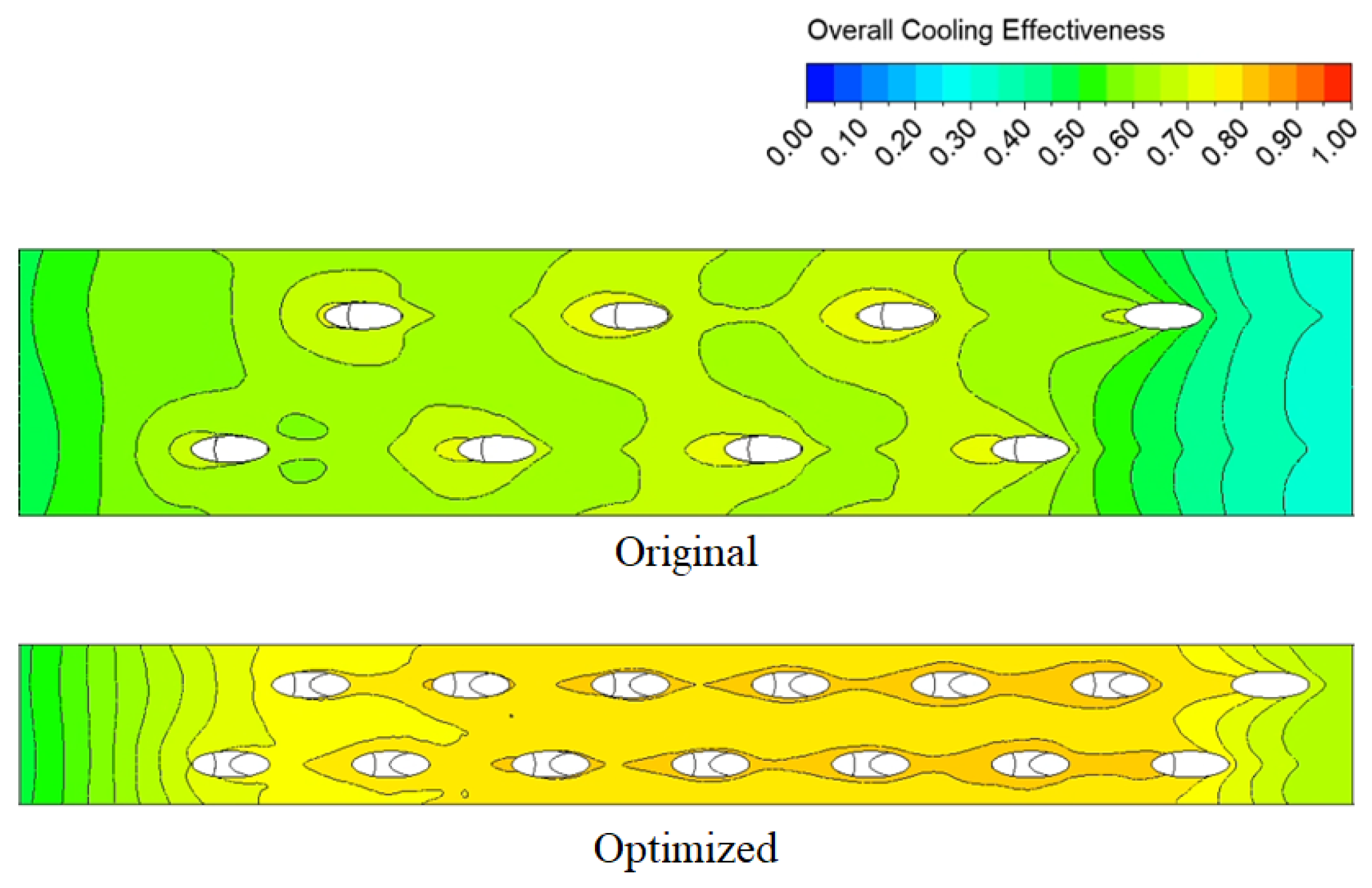
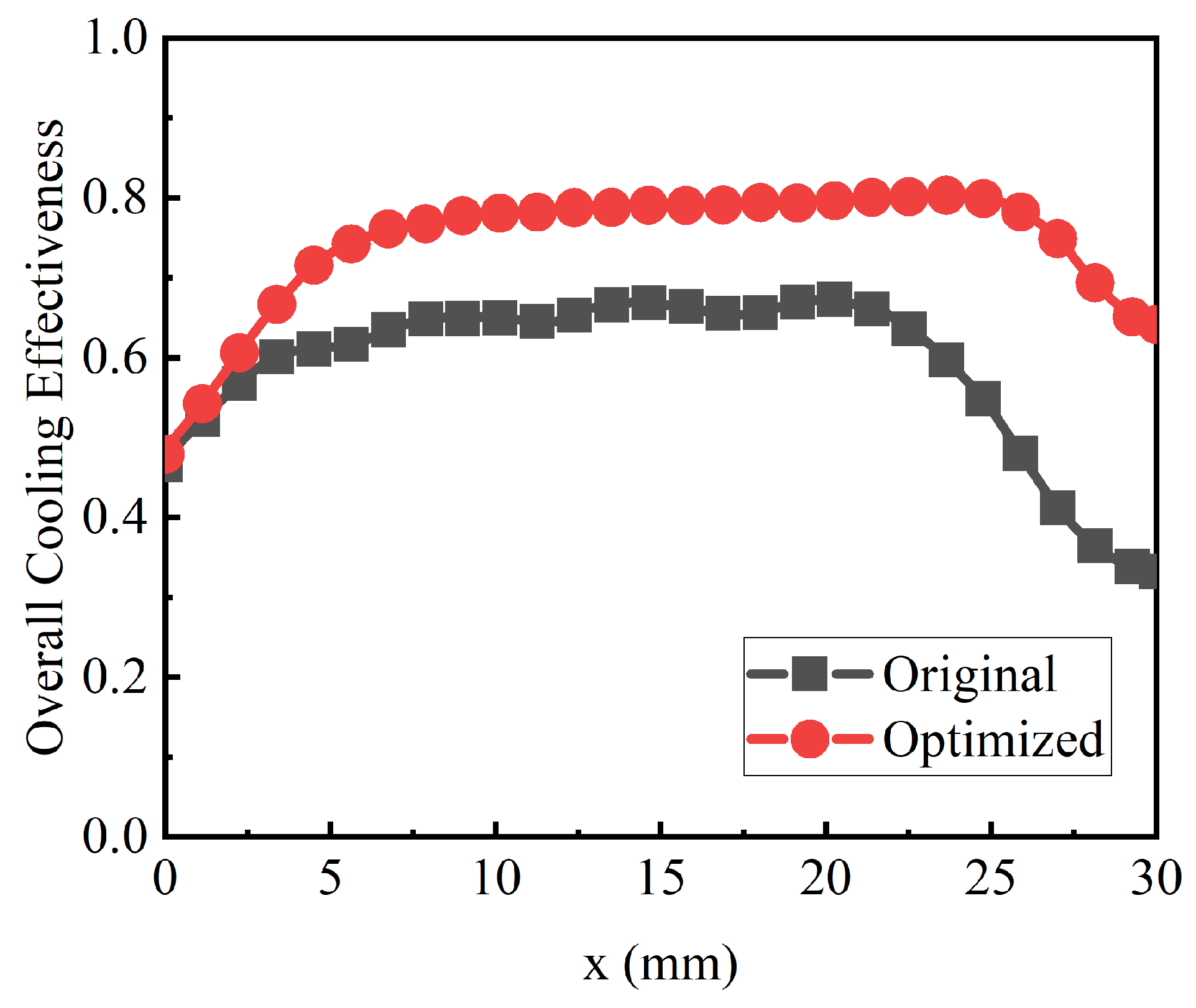
Taking the cubic center design as the original cooling configuration, under the design operating conditions, the coolant blowing ratio is 1.5, with an area-averaged overall cooling effectiveness of 0.65 and a uniformity index of 0.90. Numerical simulations were conducted on the optimal results predicted by the response surface model. For the optimized cooling structure, the area-averaged overall cooling effectiveness is 0.79, and the uniformity index is 0.95. The response surface predictions agree well with the numerical simulation results, further validating the effectiveness of the response surface model. Specifically, the predicted overall cooling effectiveness is 0.784, and the predicted uniformity index is 0.920. The prediction errors are all less than 5%. The overall cooling effectiveness distribution contours and the laterally averaged overall cooling effectiveness before and after optimization are shown in
Figure 22 and
Figure 23. Compared with the original configuration, the overall cooling effectiveness of the optimized cooling structure increased by 21.54%, and the uniformity improved by 5.56%.
Although the optimized structure requires a higher total coolant flow rate due to its increased density, this outcome demonstrates a Pareto-optimal trade-off under the equal-weighting desirability function. The substantial improvements in cooling effectiveness and uniformity offset the penalty of increased total coolant consumption. In practical applications, the objective weights can be adjusted according to specific requirements to derive a design scheme that better aligns with operational constraints. Moreover, current multi-parameter studies rely solely on steady-state conditions. As Meng et al. [
25] noted in their investigation of thermoelectric cooler pulsed currents, parameter coupling heavily impacts the robustness of steady-state optima under transient excitation. This finding suggests that the applicability of the optimal steady-state blowing ratio determined by our surrogate model to realistic unsteady engine flows requires further investigation.
In summary, this study established a response surface surrogate model targeting the overall cooling effectiveness and temperature uniformity index of a double-wall cooling unit under near-real engine conditions. An optimization design was performed on the blowing ratio and spacing ratios of the cooling structure. The optimized structure successfully achieved the optimization objectives of maximizing the area-averaged overall cooling effectiveness, maximizing temperature uniformity, and minimizing coolant mass flow rate.