Article

Comparative Numerical Analysis of Thermal–FlowCharacteristics of Heat Exchanger Channels with Different Flow Turbulization Methods Using Performance Evaluation Criteria


by
Piotr Bogusław Jasiński
*,
Piotr Szymczak
and
Krzysztof Kantyka
Institute of Turbomachinery, Lodz University of Technology, Wólczańska Str. 217/221, 93-005 Łódź, Poland
*
Author to whom correspondence should be addressed.
Energies 2026, 19(12), 2788; https://doi.org/10.3390/en19122788 (registering DOI)
Submission received: 14 May 2026 / Revised: 3 June 2026 / Accepted: 5 June 2026 / Published: 10 June 2026
(This article belongs to the Collection Advances in Heat Transfer Enhancement)

Abstract

This article presents the results of a numerical CFD study of heat exchanger channels with passive heat transfer enhancement methods. Two types of channel geometry were analyzed with different flow turbulization methods. In case I, internal micro-fins were applied to the tube wall, which disturbed the flow directly in the boundary layer; the investigated relative fin heights ranged from 0.01 h/D to 0.08 h/D, and the dimensionless longitudinal spacing varied from 0.92 L/D to 3.27 L/D. In case II, an insert with repeating drop-shaped elements was used, causing fluid turbulization in the tube core; the relative droplet diameter ranged from 0.38 d/D to 0.73 d/D, with the same longitudinal spacing as for the fins. The influence of the geometry and longitudinal spacing of the disturbance elements on the thermal–flow characteristics of such channels, namely, the friction factor, Nusselt number, and thermal efficiency evaluated using the PEC, was investigated over a Reynolds number range of 5000 to 400,000. The results show that the insert produces a larger increase in the Nusselt number, whereas the micro-finned tube generally achieves higher PEC values due to lower hydraulic losses. The results clearly indicate that, in most cases, the PEC is higher for the finned tube, particularly at low Reynolds numbers not exceeding 50,000. In turn, for the insert, the longitudinal distance between the elements, L, has a significant influence on the PEC; as L increases, the PEC also increase, reaching its maximum value for the largest L.

1. Introduction

Due to cost and simplicity, heat transfer intensification in heat flow channels is very often achieved using passive methods [1,2,3,4]. Convective heat transfer in a pipe can be enhanced in two ways, both of which are passive: (I) by applying a turbulator to the channel wall (e.g., micro-fins) or (II) by placing a special insert inside the pipe. Each of these solutions shapes the flow in a different way and influences the velocity field, temperature distribution, and pressure drop during fluid flow. In method (I), internal micro-fins were used in the tested geometry, created by crimping the outer wall around the circumference of the pipe. The asymmetrical transverse ribs inside the channel caused the fluid flow to break up in the laminar boundary layer near the pipe wall, forming micro-vortex structures, which, in turn, intensified convective heat transfer. In case (II), an insert consisting of longitudinally arranged drop-shaped elements was used, which disrupted the flow in the turbulent core of the pipe. The elements, positioned along the pipe axis, forced the fluid to bypass them and locally increase its velocity in the space between the wall and the insert, thereby enhancing heat transfer. The selected geometries are representative of the turbulence mechanisms that occur during flow in a pipe, but they could be replaced by other shapes, which would naturally yield different results under the same turbulence mechanisms.
In the literature, there are many publications concerning the aforementioned methods of intensifying heat transfer in heat exchanger channels, but studies comparing these methods are lacking. For example, Zheng et al. [5,6] investigated fins and grooves deformed in a pipe wall and their effect on the Nu number and friction factor. They varied both their longitudinal spacing and angle of inclination and used PEC to assess thermal–hydraulic performance. The results showed that higher PEC values were obtained for fins alone than for a combination of grooves and fins, whilst inclined fins and grooves performed better than straight ones. Pethkool et al. [7] experimentally investigated the thermal–flow characteristics of pipes with spirally corrugated walls. They determined the effect of the geometry of grooves indented into the wall on the Nu number, the friction factor, and the heat transfer efficiency factor for a range of Re numbers from 5500 to 60,000. The results showed an average increase in the Nu number from 123% to 232%, whilst the maximum thermal efficiency increased by approximately 2.3 times but mainly for low Reynolds numbers. Ahmed et al. [8] also numerically investigated the annular fins formed by crimping the pipe wall and the effect of changes in their shapes on the thermal efficiency in a Reynolds number range of 3000 to 17,000. The results showed that the PEC for some fin geometries was up to 40% higher compared to a smooth pipe. In [9], Elsayed et al. conducted a numerical study of a circular tube with transversely embossed ribs and grooves in the wall but with a periodically recurring section of smooth tube. A comparison of tubes with the same groove and rib dimensions showed that higher PEC values were obtained for grooved tubes. Ahmed [10] conducted numerical studies of a transversely finned tube in which the fin tips were of unequal height and formed a zigzag pattern. Ahmed investigated heat transfer and pressure drop for various fin geometry configurations as well as thermal efficiency using PEC. Due to the fact that the dimensionless height of the larger fin was quite large (e/d = 0.1), despite a significant increase in the Nu number, quite high flow resistances were also obtained, which resulted in the PEC being below unity for this geometry across the entire studied range of Re numbers (10,000–60,000). In [11], Jasiński et al. present the results of a study of a pipe with helical micro-fins having a constant twist angle of 30° and various relative micro-fin heights, e/d, ranging from 0.004 to 0.033, for Reynolds numbers of 10,000–100,000. In this study, rather unusual behavior of the friction factor was observed for all geometries. All values were significantly lower than those shown in Moody’s chart for the same relative roughness values, which indicates that the shape of the micro-fins has a significant impact on the flow behavior. On the other hand, the value of the PEC for low Reynolds numbers up to approx. 15,000–20,000 was less than unity for all geometries and increased to over one as the Reynolds number increased.
Izadi et al. [12] carried out research on the insert most similar in geometry to the one presented in this article, which was spindle-shaped and of fixed dimensions. As the main objective was to investigate the effect of the concentration of nanoparticles in a fluid on heat transfer and flow processes at a volume fraction ranging from 1% to 4%, the same insert was used as a turbulator for all the fluids under investigation. The heat exchanger performance index obtained was highest at the lowest nanoparticle concentrations. Saadat et al. [13] investigated a turbulator insert with vibrating balls mounted on a cable (vibrational ball turbulators). This insert, mounted in the pipe axis, moved transversely and periodically against the flow direction, additionally increasing the average turbulence of the flow. The study experimentally examined the influence of ball diameters, their pitch, and variable cable tension on the thermal performance factor, defined exactly in the same way as the PEC. For the tested range of Reynolds numbers, 10,000–15,000, the TPF for all tested configurations was greater than one by an average of approx. 10%, whereas for higher Reynolds numbers, it was less than one in all geometries. Samruaisin et al. [14] investigated an insert with a fairly complex geometry: V-shaped delta-wing baffle, over a range of Reynolds numbers from 6000 to 20,000. They used the aerothermal performance factor (APF) as a performance evaluation criterion, defined as the ratio of the heat transfer coefficient of the tested tube with the insert to the heat transfer coefficient of a plain tube: APF = h/hp. Due to high flow resistance, the APF for only one geometry and for the lowest Reynolds number (Re = 6000) reached a value of approximately one, whilst for the remaining inserts across the entire range of Reynolds numbers, this coefficient was less than one. B. Jia et al. [15] analyzed a slightly different mechanism of flow turbulence in solar air heaters (SAHs), where air flowed through a heat exchanger with baffles, which increased the efficiency of such an exchanger by 10–40% compared with conventional designs.
Mohamed and Younis [16] also analyzed similar drop-shaped pin fin geometries as passive elements to enhance heat transfer in compact heat exchangers. Numerical results showed that, for an L/D varying from 1.0 to 1.75 and Reynolds numbers from 5000 to 20,000, increasing the pin tail length significantly reduced friction losses, and the best overall performance was obtained for the geometry with L/D = 1.75. Similar studies of pin fin structures conducted by Shen et al. [17] showed that, in a wedge-shaped channel, elliptical and teardrop-shaped fins provided higher overall thermal–hydraulic efficiency than round and square fins, whilst diagonal round fins improved this efficiency by 8.9% compared to conventional round fins. These results confirm that optimizing the geometry requires the simultaneous consideration of the Nusselt number and pressure losses, because the solution that provides the greatest increase in heat transfer is not always the most advantageous in terms of the system’s overall efficiency.
Despite numerous studies on micro-fins and turbulence-inducing inserts, the available literature lacks a direct comparison of these two methods under identical geometric, thermal, and flow conditions. In particular, it is not sufficiently explained how the different turbulence mechanisms—local and wall-bound in the case of micro-fins and core-bound in the case of inserts—affect the final thermal–hydraulic efficiency assessed by the PEC. The aim of this study is to quantitatively compare both methods over a wide range of Reynolds numbers and to identify which geometric parameters are most significant for the optimization of the heat exchanger channel.

2. Tested Geometries

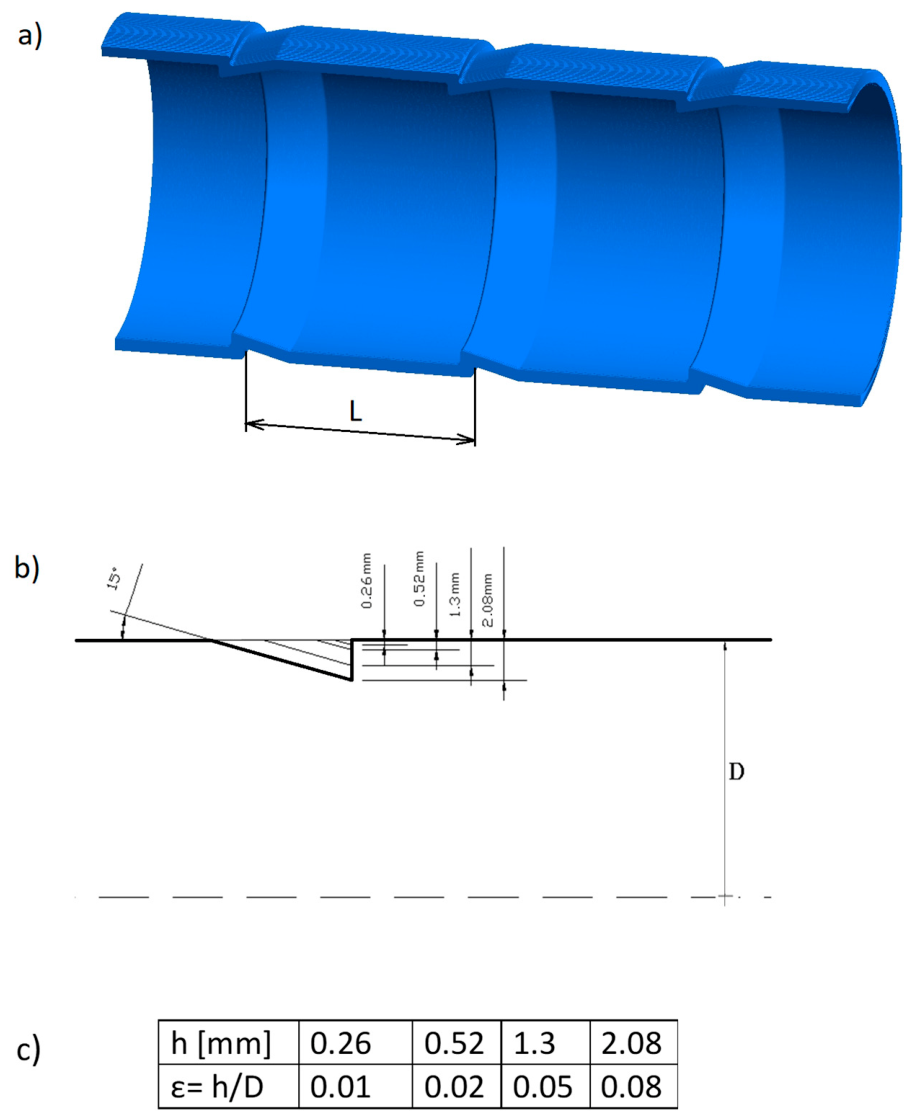
Figure 1 shows the geometry of a micro-finned pipe, together with key dimensions. As mentioned earlier, such a tube can be physically manufactured by periodically crimping the wall with a specially shaped roller. The fixed dimension of the fin was its inclination, which was 15°, whilst the variable parameters were its height h (Figure 1b) and the distance between the fins, L (Figure 1a). Four fin heights were numerically investigated at six longitudinal distances, resulting in a total of 24 different geometric configurations. Figure 1c shows a table of the absolute fin heights and the corresponding dimensionless heights, ε = h/D, for a constant pipe diameter D = 26 mm.
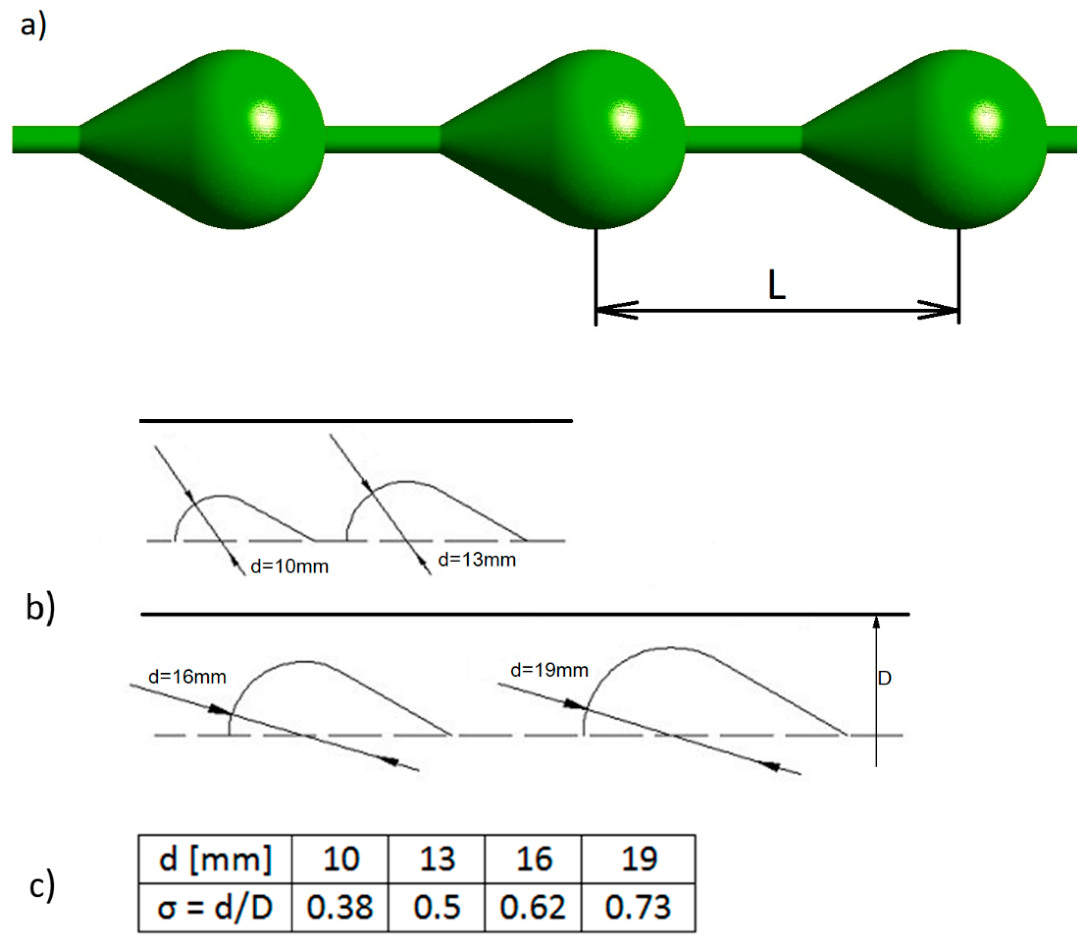
The second geometry studied is shown in Figure 2a. It consists of an insert with droplet-shaped turbulence-inducing elements, with dimensions given in the figure. The variable parameters were the droplet diameter d and, as with the micro-fins, the spacing between the elements L. The table in Figure 2c lists the tested ‘droplet’ diameters and their corresponding dimensionless values σ, expressed as the ratio of the droplet diameter to the pipe diameter. For this geometry, 4 diameters were numerically investigated for 6 longitudinal distances, resulting in a total of 24 geometric configurations.
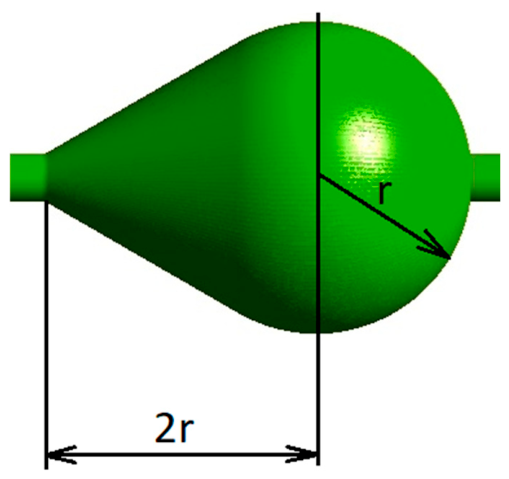
For the geometry of the insert’s turbulator element, a fixed ratio between the radius r of the spherical section and the length of the ‘tail’ was adopted as 2r, as shown in Figure 3. Other dimensional ratios were also tested, but the results differed only slightly, so the element with the most compact geometry was chosen.
In addition to the variable dimensions of the flow-disrupting elements in both geometries, shown in Figure 1c and Figure 2c, the longitudinal distance L between them was also investigated; it was the same for both geometries. The tested dimension L and the corresponding dimensionless distance, referring to the pipe diameter D = 26 mm, are given in Table 1.
As shown in Table 1, tests were carried out for 6 longitudinal distances; however, in the following part of this article, the graphs show representative results for only three dimensions of L, namely, 24 mm, 36 mm and 85 mm. It was decided to not show the remaining results, due to their similarity and proportionality to those presented in the graphs and for the sake of clarity in this presentation.

3. Numerical Model and Boundary Conditions

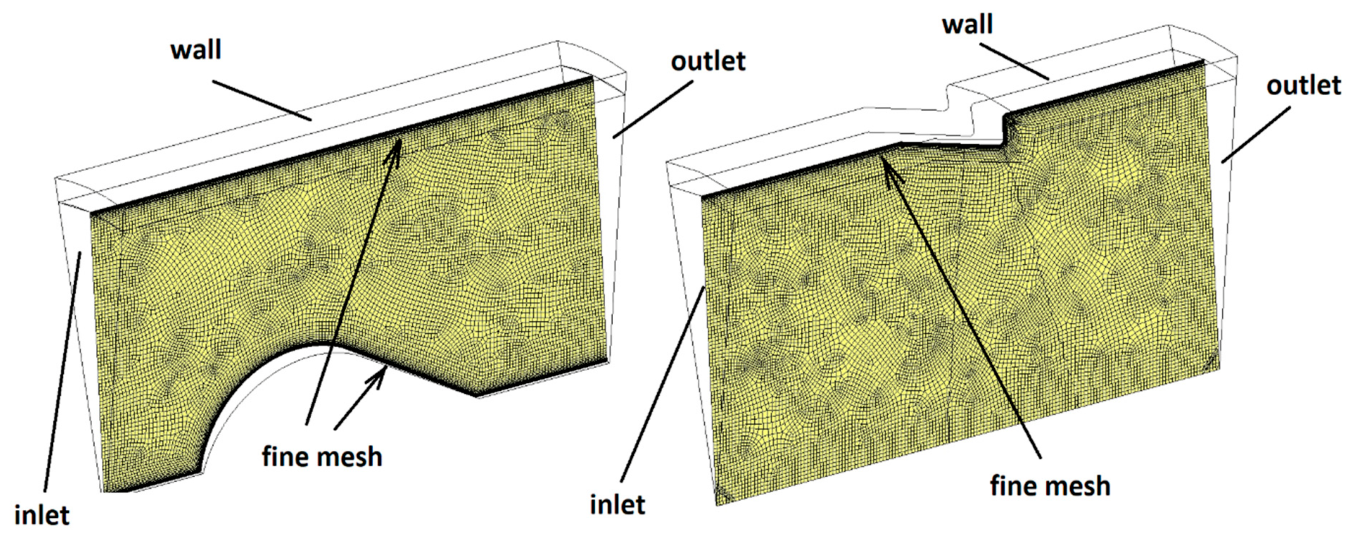
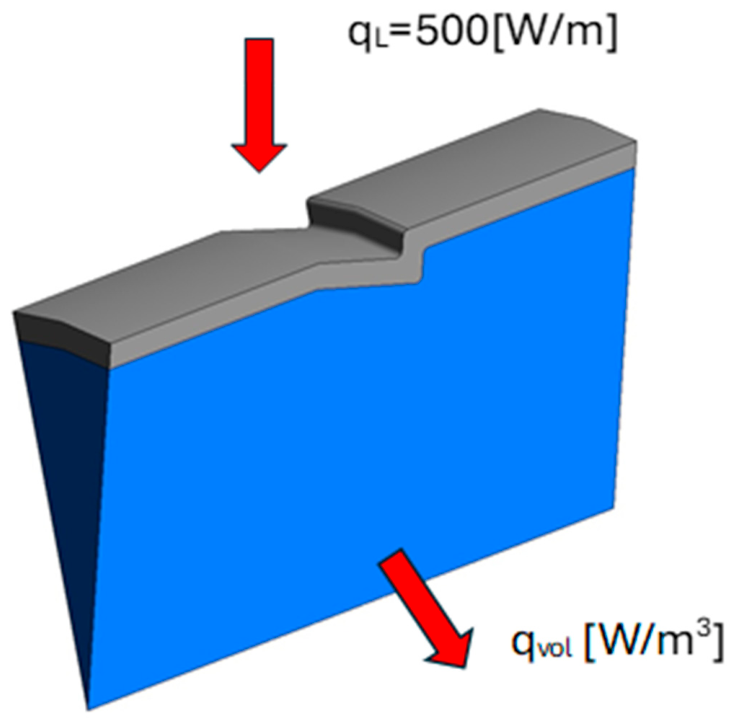
Depending on the nature and path of the fluid flow through the channel under investigation, numerical simulations often allow for the simplification of the geometry under study. For the analyzed computational cases, due to the axially symmetric flow, a pipe section with an angle of 10° and a repeating length L was used, which was representative of the entire geometry—shown in Figure 4. A symmetry boundary condition was applied to the side surfaces of this section. In order to obtain fully developed flow, translational periodicity was set at the inlet and outlet of the domain, and such flow was driven by a pressure gradient [11,18,19]. A second heat transfer boundary condition was applied to the pipe wall, namely, a constant linear heat flux qL = 500 W/m, as shown in Figure 5. To maintain the energy balance and obtain a fully developed thermal layer within the computational domain, volumetric heat dissipation qvol [W/m3] was used, equal in value to the heat supplied to the pipe wall. In all analyzed cases, water with an average volume temperature of 30 °C was used as the working fluid. For all geometries, 10 flow–heat simulations were performed in the Reynolds number range Re = 5000–400,000. The tested range of Reynolds numbers covered both the lower flow velocity range, where differences between the geometries under investigation were particularly evident, and the higher velocity range, which allowed the system’s behavior under conditions of intense turbulent flow to be assessed. The selection of such a wide range of Reynolds numbers allows for a more comprehensive analysis of the influence of geometry on the friction factor, Nusselt number, and PEC and reflects the nature of the compared turbulization methods.

3.1. Grid Independence Test

A mesh independence test was carried out for the geometries under investigation. This procedure involved performing several numerical calculations for the same geometry and with identical settings but using different computational mesh densities. The aim of this test was to select a mesh for which the results differed by less than 2% from those obtained from the next, denser mesh.
Table 2 lists the parameters of the tested meshes, which were defined by the cell size H × H × H [mm] and the corresponding volume Vcell [mm3]. This approach was determined by the variable size of the geometry, so instead of comparing the total number of mesh nodes, the average volume of a single cell was taken, which defined the average mesh density for each geometry [19].
During the calculations, the following parameters were monitored within the domain: average temperature, fluid velocity, and the y+ coefficient, which is crucial for the quality of the mesh in the boundary layer. From the test procedure, mesh D with an average cell size H = 0.4 mm and a volume Vcell = 0.064 mm3 was selected for further calculations; the velocity and temperature of this mesh differed from those of the next mesh, E, by 1% and 1.5%, respectively. Furthermore, the y+ parameter for mesh D, for all tested velocities and geometries, did not exceed a value of two, which was an appropriate value for the turbulence model used in the numerical calculations.

3.2. Turbulence Model

The numerical calculations presented in this article were performed using the shear stress transport turbulence model, also known as k-ω SST. It is one of the most widely used and best-studied models for simulating heat and flow phenomena [11]. Compared to the k-ε model, the k-ω SST model provides more accurate calculations of temperature and velocity fields in flow through a channel with internal flow disturbances due to the combination of two turbulence models. The k-ω model is used in the laminar boundary layer, whilst the k-ε model is applied in the remaining domain, i.e., the turbulent core. A special function known as the ‘blending function’ is responsible for applying the appropriate model during calculations; it switches the systems of equations of a given turbulence model to the relevant areas within the calculated geometry. For the SST model, it is also quite important to maintain the condition y+ < 2 in the calculations, which requires the presence of at least a few mesh nodes in the wall layer [20]. The y+ values were verified during the mesh independence test and remained below two for all analyzed geometries and operating conditions, which confirmed the correctness of the wall mesh layer used for the SST k-ω model.
In this study, different turbulence models were not compared; the SST k-ω model was used solely as a computational model to describe the flow, whilst the subject of the analysis was the various methods of flow turbulization resulting from the channel geometry.

3.3. Data Processing

The use of micro-fins, inserts or other passive methods that disrupt the flow within the duct enhances heat transfer, but this is always associated with pressure losses and increased flow resistance. To assess whether the use of a particular method of enhancing heat transfer is cost-effective, various evaluation methods are used, including PEC (performance evaluation criteria). The PEC method requires knowledge of the friction factors and Nusselt numbers for the pipe under investigation and a smooth pipe.
The pressure drop in the flow channel is defined by Equation (1):
Δ p = f · ρ · u av 2 2 · L D
Knowing the pressure drop Δp and the other flow parameters, the friction factor can be calculated from the results of numerical simulations using the Darcy–Weisbach Equation (2):
f = 2 · D ρ · u av 2 · Δ p L
where Δp/L = gradp [Pa/m] is the pressure gradient (which is also the boundary condition used in numerical calculations as the force driving the flow).
For a smooth pipe, the friction factor is calculated using the theoretical Blassius Equation (3) [2]:
f s = 0.3164 · R e 0.25
and the Reynolds number (4):
Re = u av · D ν
The Nusselt number, defined by Equation (5):
N u = h · D k
is calculated directly from the results of numerical simulations, based on the known values of q, Tw, Tb and the resulting heat transfer coefficient h (6):
h = q T w T b
For turbulent flow in a smooth pipe, the theoretical Nusselt number is calculated using the well-known Dittus–Boelter Formula (7) [10]:
N u s = 0.023 · R e 0.8 · P r 0.4
The thermal efficiency of a flow channel with enhanced heat transfer, compared to a smooth pipe and for the same pumping power, is expressed by the PEC, calculated from the following Equation (8) [10]:
P E C = N u / N u s f t / f t s 1 3

4. Results and Discussion

4.1. Friction Factor

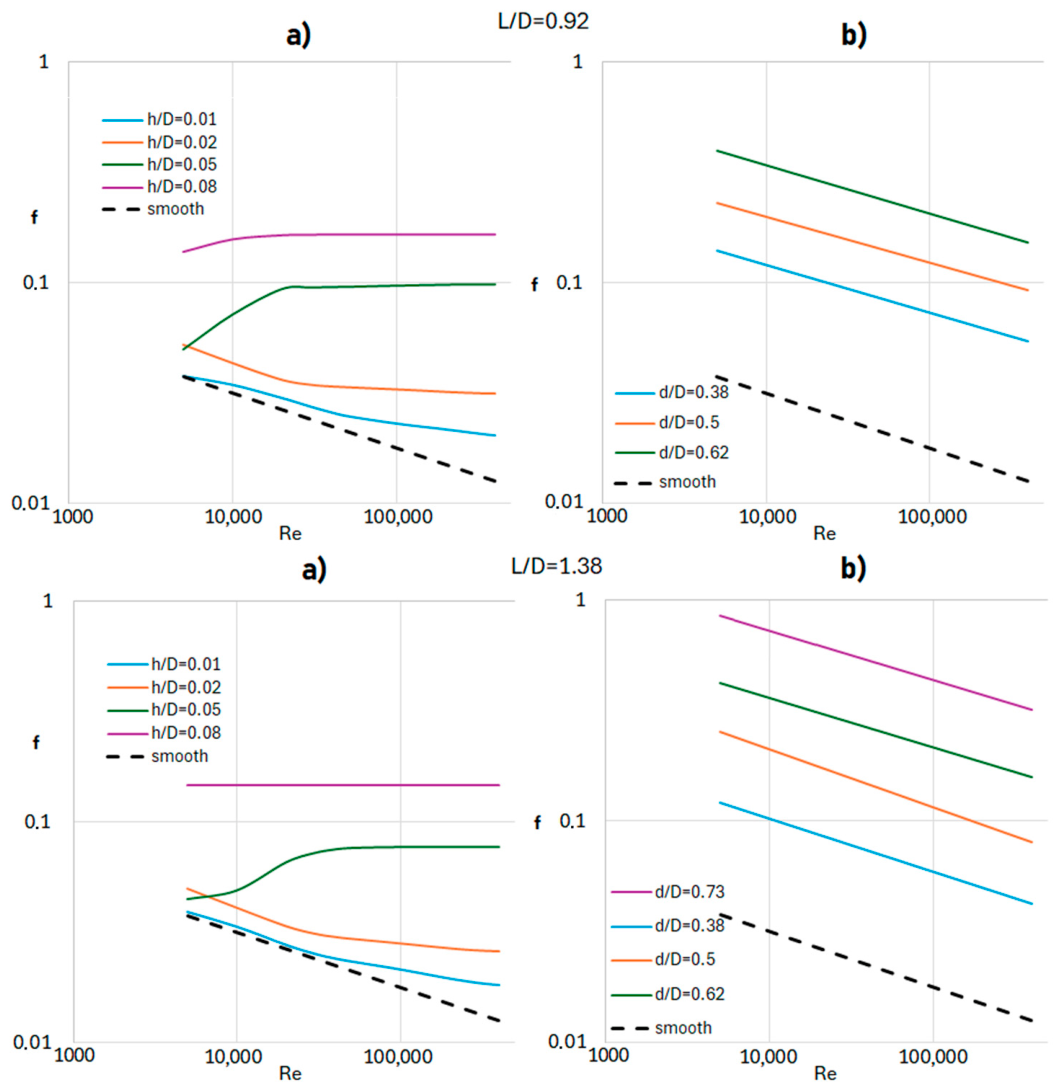
Figure 6 shows graphs of the friction factor f for three selected longitudinal lengths: L/D = 0.92, L/D = 1.38 and L/D = 3.27. The graphs on the left (a) show the flow characteristics for a pipe with micro-fins on the wall and those on the right (b) for a pipe with a drop-shaped insert. As a reference value, the friction factor for a smooth pipe calculated from Equation (3) is shown on all graphs. The graphs (a) show that the higher the ‘fin’ (i.e., the h/D ratio), the higher the friction factor values. A characteristic feature of this geometry is that the greatest flow resistances are observed for the smallest distances between the fins (L/D), and, as the longitudinal spacing of the micro-fins increases, these resistances decrease for all micro-fin heights. For the smallest (h/D), the friction factor is only slightly greater than the friction factor for a smooth pipe.
Similarly, for inserts with ‘droplet’-shaped turbulence-inducing elements, the smaller the spacing (L/D), the greater the flow resistance [21]. As their mutual distance (L/D) increases, the friction factors for all ‘droplet’ sizes (d/D) also decrease. A characteristic feature is the relative position and shape of the curves on this type of graph (double logarithmic), where, as can be seen, they are almost perfectly parallel to one another.
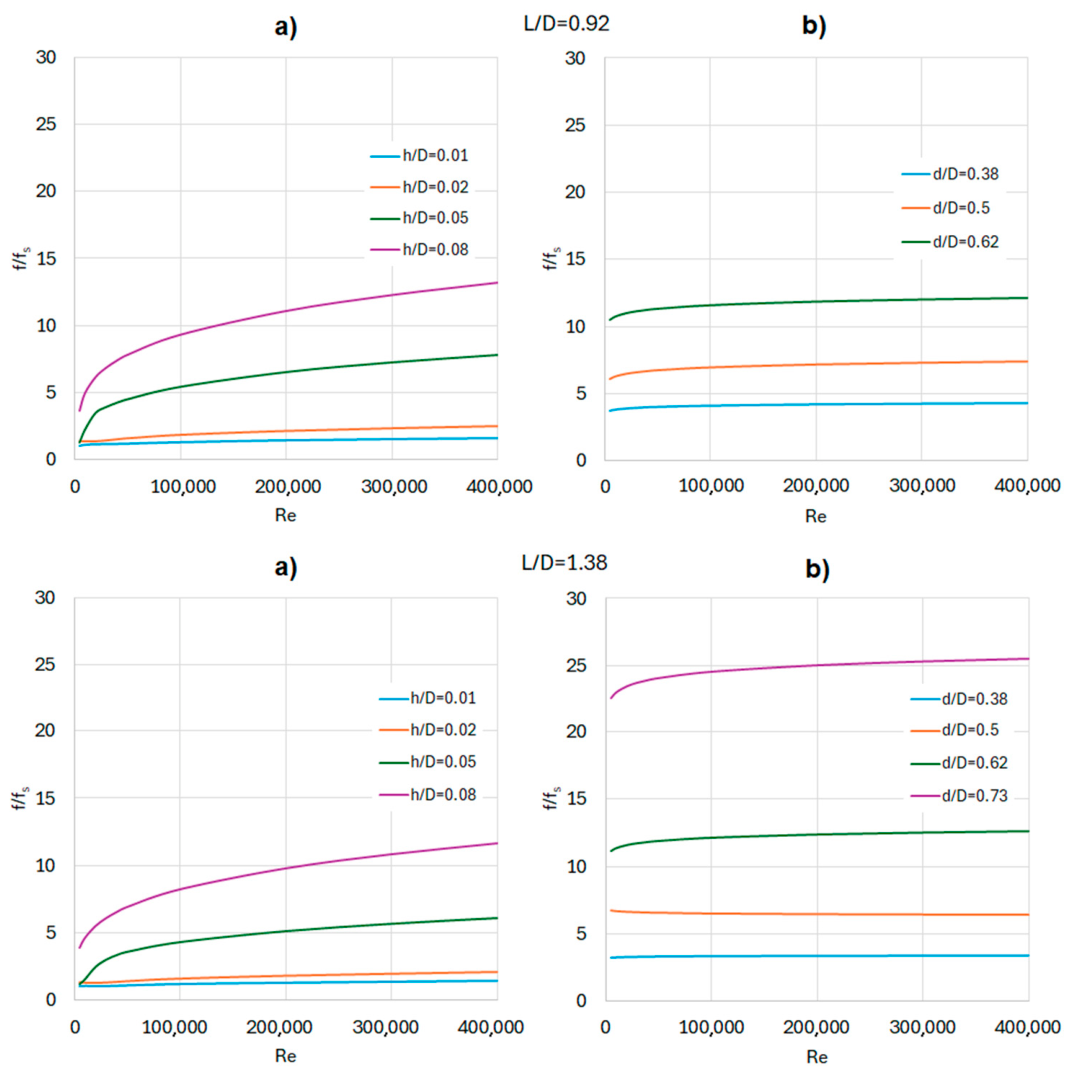
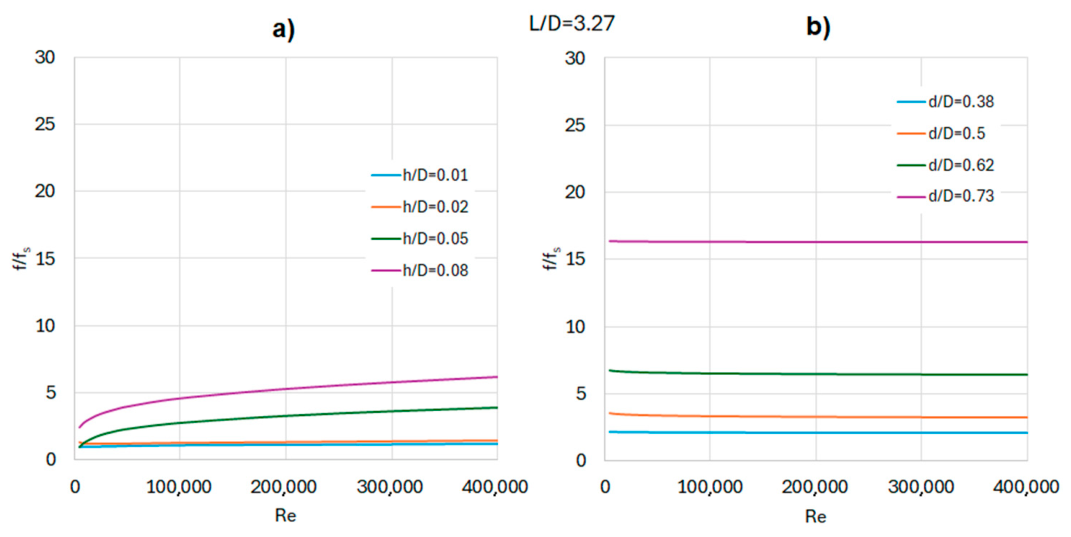
Figure 7 shows the ratio of the friction factor of the tested geometry to the reference friction factor f/fs for a smooth pipe; in other words, it illustrates the percentage increase in flow resistance following the application of a heat transfer intensifier. As in Figure 6, (a) refers to a pipe with micro-fins and (b) to a pipe with an insert. The results clearly show that the tube with an insert causes a significantly greater increase in flow resistance than the micro-finned tube for all tested turbulizing element sizes and longitudinal spacings L/D [22].
The highest f/fs values are obtained for the smallest L/D ratios and the largest micro-fin and droplet dimensions (h/D and d/D). The flow resistance increase exceeds a factor of 10 for micro-fins and may reach up to 25 times the reference value for inserts with droplet-shaped elements. In general, the insert promotes stronger turbulence throughout the entire pipe cross-section, leading to substantially higher hydraulic losses but also superior heat transfer enhancement. In contrast, micro-fins generate turbulence primarily in the near-wall region, which minimizes flow resistance but results in lower heat transfer intensification.

4.2. Nusselt Number

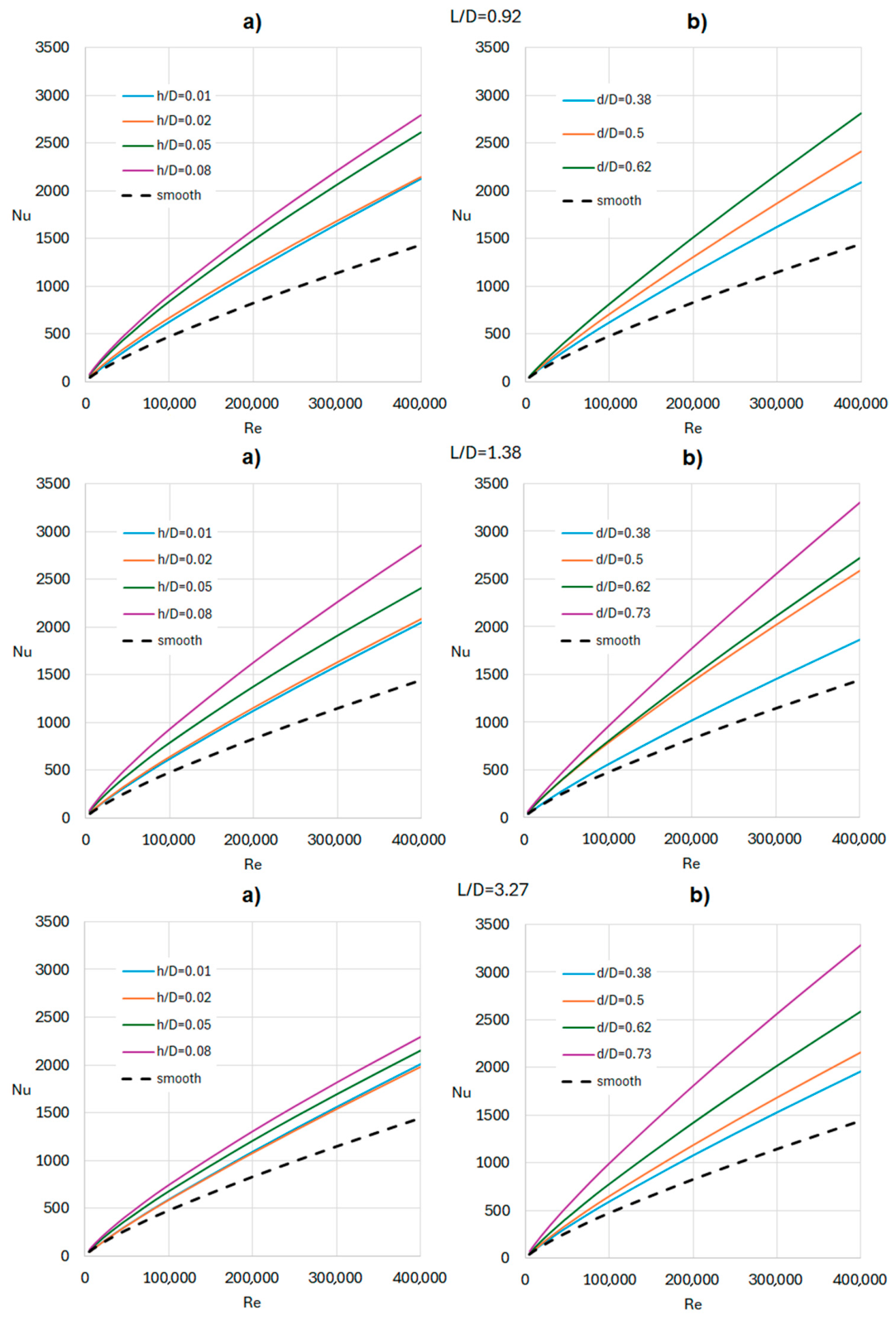
Figure 8 shows the relationship between the Nusselt number and the Reynolds number for selected longitudinal spacings of L/D = 0.92, 1.38, and 3.27. Similar to the friction factor results, the plots on the left side (a) correspond to the tube with micro-fins, while those on the right side (b) refer to the tube with the “droplet” insert. The black dashed line represents the reference Nusselt number Nus for a smooth tube, according to the Dittus–Boelter correlation (7). For both geometries, the Nusselt number increases monotonically with increasing Reynolds number. Moreover, smaller longitudinal spacings L/D of the turbulizing elements and larger element dimensions (h/D or d/D) result in higher Nu values [23]. The tube equipped with the insert achieves better heat transfer enhancement (up to approximately 30% in some cases) than the micro-finned tube, particularly for small L/D values and large droplet diameters due to fluid acceleration and intensified turbulence near the wall. A characteristic feature is that the curves retain a similar exponential trend to the reference case but are shifted upward, indicating effective turbulence enhancement without changing the scaling law.
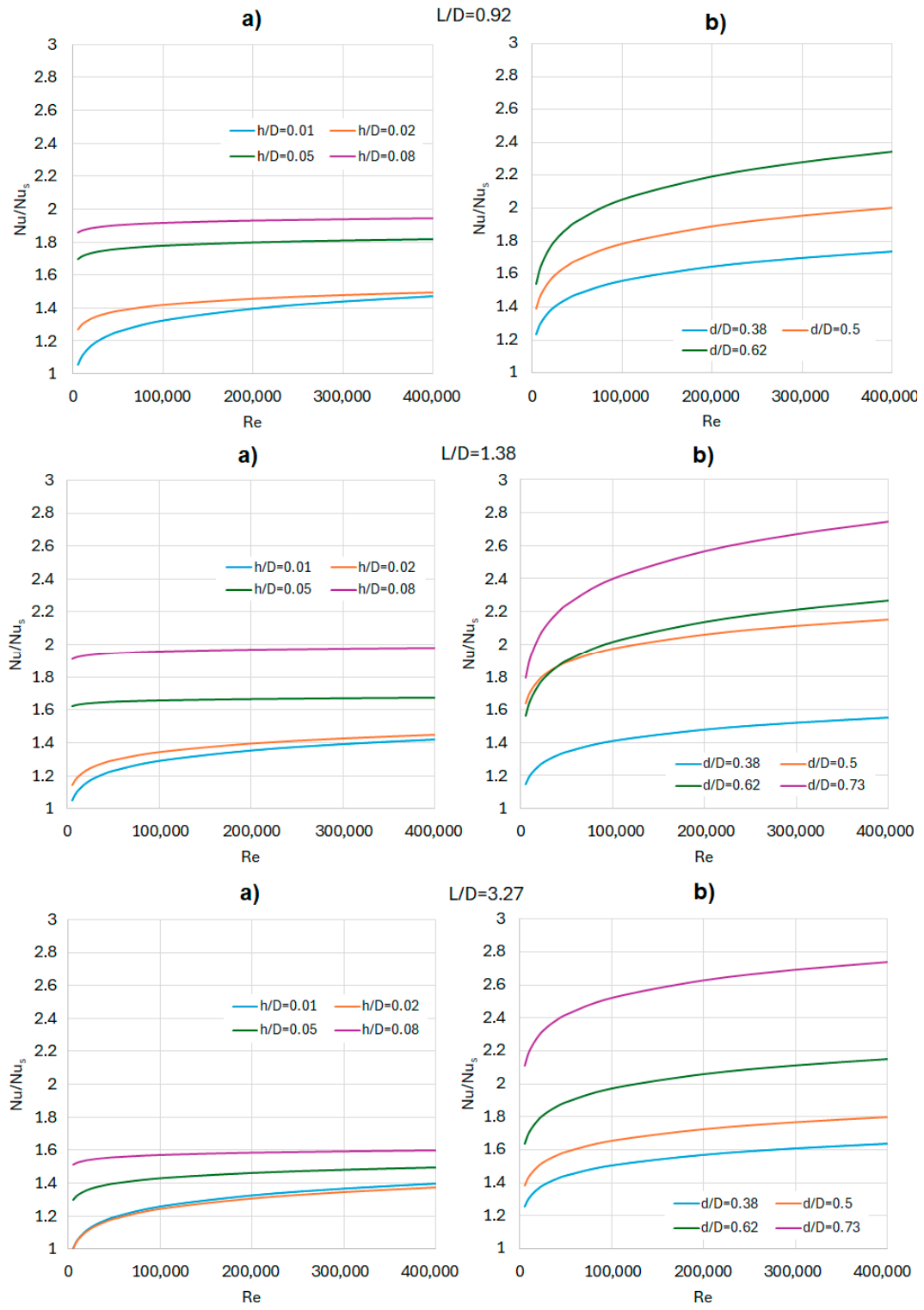
Figure 9 presents the ratio of the Nusselt number for the investigated geometry to the Nusselt number for a smooth tube Nu/Nus for selected longitudinal spacings L/D = (0.92, 1.038, 3.27). The plots in (a) show the results for the tube with micro-fins, whereas those in (b) correspond to the tube with the turbulizing insert. In both cases, the highest Nu/Nus values are observed for the smallest longitudinal spacings L/D and the largest dimensions of the disturbing elements (h/D or d/D). However, the “droplet” insert provides significantly greater heat transfer enhancement than the micro-fins, since its influence extends not only to the near-wall region but also to the turbulent core flow. The insert elements force the fluid stream to flow around them, leading to local acceleration in the annular cross-section and stronger mixing of the fluid at different temperatures. Consequently, this increases the temperature gradient near the wall and, therefore, enhances the heat transfer coefficient. In contrast, micro-fins mainly disturb the flow in the near-wall region; therefore, their effect on Nu/Nus is evident but weaker than that of the insert.

4.3. Performance Evaluation Criteria

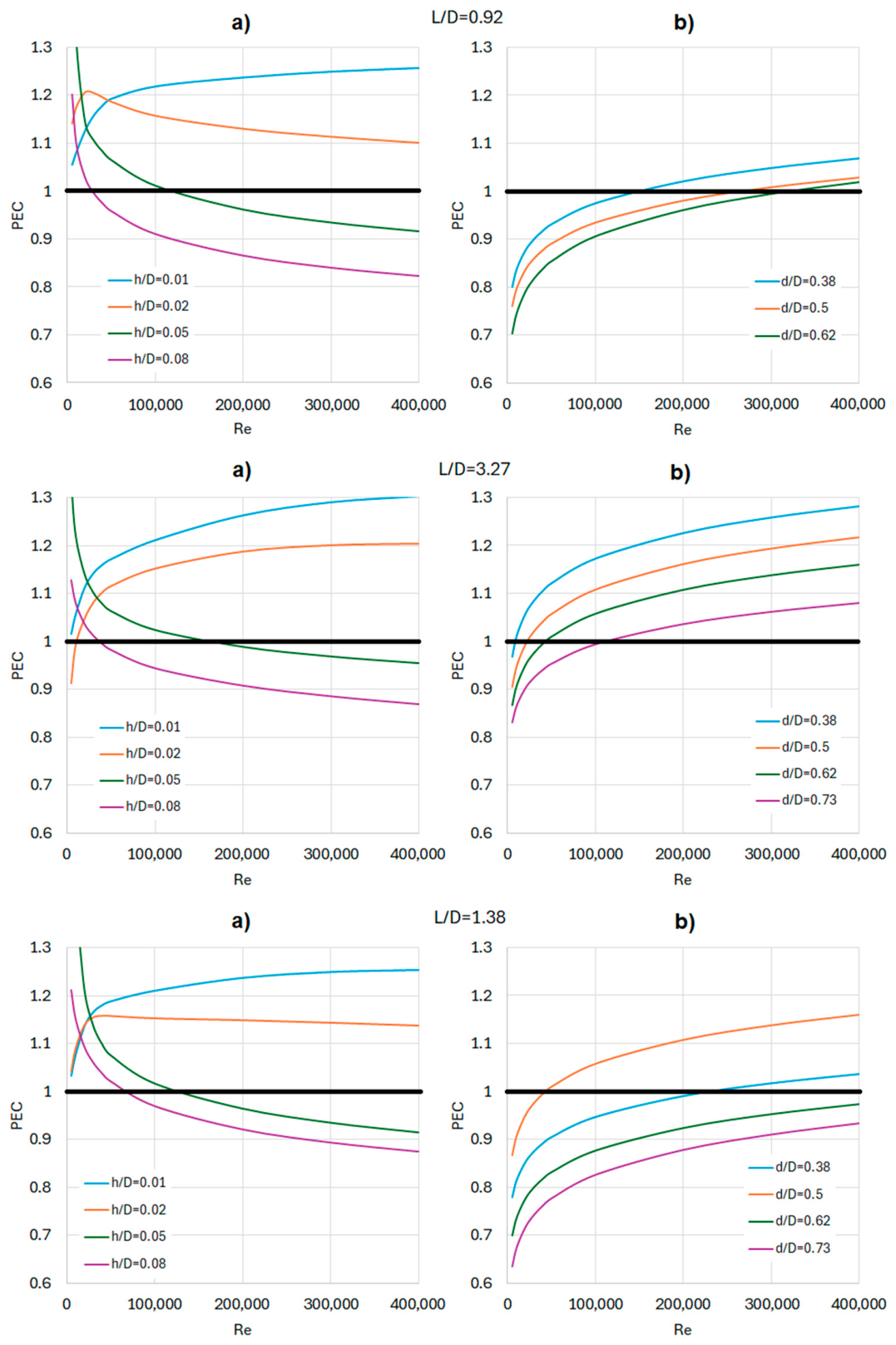
To evaluate the thermo-hydraulic performance of the investigated geometries, the PEC were determined according to relation (8), which accounts for the increase in the Nusselt number relative to the increase in the flow resistance under equal pumping power conditions. Figure 10 presents a comparison of PEC values for three selected longitudinal spacings, L/D = 0.92, 1.38, and 3.27, for both the micro-finned tube and the tube with a turbulizing insert. If the PEC exceed unity, the overall benefits of heat transfer enhancement outweigh the losses caused by the increase in flow resistance compared to a smooth tube.
The comparison of both geometries shows, however, that the micro-finned tube generally achieves higher PEC values than the tube with the insert, despite the fact that the insert provides a greater increase in the Nusselt number [24]. This indicates that the stronger heat transfer enhancement obtained with the insert is offset by the significantly larger increase in hydraulic losses. The mechanism of action of micro-fins is more localized and occurs mainly in the near-wall region; therefore, despite providing a moderate increase in heat transfer, they generate relatively lower pressure losses than the insert, which affects the entire channel cross-section.
For the two largest micro-fin heights, h/D = 0.05 and h/D = 0.08, the highest PEC values (approximately 1.5) occur at the lowest Reynolds numbers, Re < 20,000. For these geometries, regardless of the longitudinal spacing L/D, the PEC decrease significantly with increasing Reynolds number falling below unity. In contrast, for the smallest micro-fin heights, h/D = 0.01 and h/D = 0.02, the PEC increase with increasing Reynolds number, and the highest values are observed at the largest Reynolds numbers, from approximately 100,000 to 400,000. The shape of the curves and the PEC values for all geometries are similar over the entire range of L/D, indicating that the spacing of the micro-fins has only a moderate effect on this coefficient.
For all inserts with turbulizing elements (Figure 10b), the trend of the PEC’s characteristics is very similar: they reach the lowest values at low Reynolds numbers and increase with increasing Reynolds number, reaching maximum values at Re = 400,000. Compared to the micro-fins, the distance between the turbulizing elements in the insert plays a relatively important role and significantly affects the PEC’s value. As the longitudinal spacing L/D increases, the PEC value also increases, reaching its highest values for L/D = 3.27, comparable to those obtained for the smallest micro-fin heights, h/D = 0.01 and h/D = 0.02 [25].

4.4. The Effect of Geometry on the Velocity and Temperature Fields

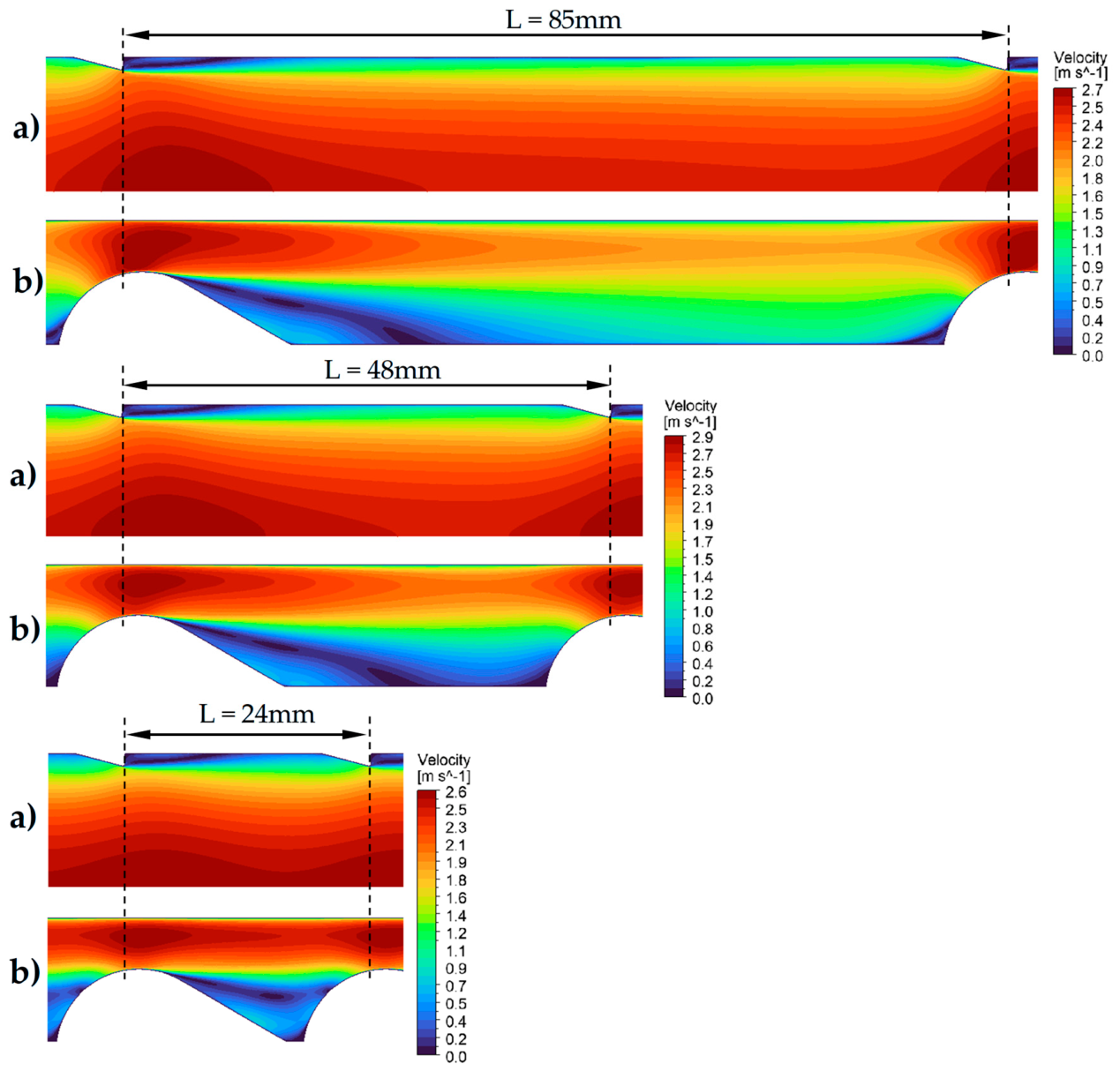
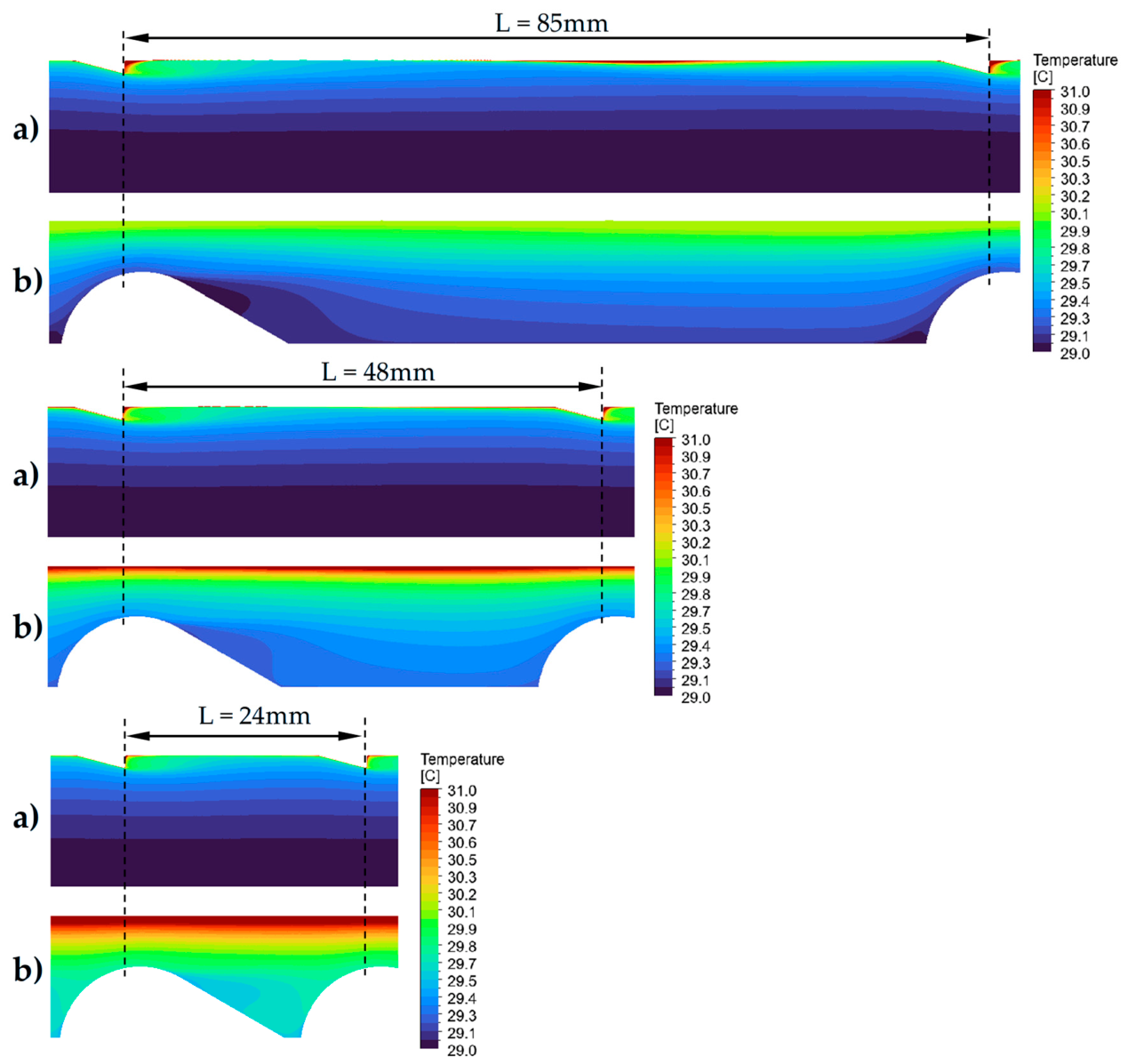
Figure 11 and Figure 12 present the velocity and temperature fields for three selected section lengths, L = 24, 48, and 85 mm, comparing the two investigated channel geometries: a micro-finned tube and a tube with a “droplet-type” turbulizing insert. The analysis of these fields allows a direct correlation of the observed phenomena, with the results presented earlier in Figure 8, Figure 9 and Figure 10. In particular, the stronger heat transfer enhancement in the case of the insert is reflected in the higher Nusselt number values in Figure 8 and the greater Nu/Nus ratios in Figure 9, which result from a different mechanism of flow–geometry interaction. The micro-fins act primarily in a local manner, near the wall, causing the periodic disruption of the boundary layer and the formation of micro-vortices. In contrast, the insert disturbs the flow structure across the entire pipe cross-section, forcing the fluid to flow around the turbulizing elements and intensifying transverse fluid mixing.
In the case of micro-fins, the velocity and temperature fields indicate their dominant influence in the near-wall region, while the core flow remains relatively ordered. This means that the increase in the heat transfer coefficient is primarily associated with the local disruption of the boundary layer rather than with disturbances in the core flow. Such a mechanism explains the moderate yet clearly noticeable increase in the Nusselt number, accompanied by a proportional rise in flow resistance, shown in Figure 6 and Figure 7. In contrast, for the droplet-type insert, the velocity fields indicate strong flow acceleration in the region between the insert and the wall as well as pronounced flow turbulization along the pipe axis. As a result, conditions are created that promote the intense generation of vortical structures between the turbulizing elements, together with fluid acceleration near the wall. This directly leads to higher Nusselt number values and higher Nu/Nus ratios compared to the micro-finned configuration.
This relationship remains consistent with the trends presented in Figure 10, where higher PEC values for the micro-finned tube indicate that this geometry provides a favorable balance between heat transfer enhancement and pumping costs. For the insert, only the largest spacing L/D = 3.27 yields PEC values comparable to those of the micro-fins, but this occurs mainly due to a reduction in the flow resistance caused by the local dissipation of fluid vortices in the region between widely spaced turbulizing elements. In general, the droplet-type insert generates a stronger increase in heat transfer but simultaneously leads to a much greater rise in flow resistance, whereas micro-fins provide a more balanced effect, limited mainly to the near-wall region.

5. Conclusions

This article presents the results of numerical calculations for two different passive methods of heat transfer intensification in a tube: micro-fins placed on the channel wall and an internal insert with droplet-shaped turbulators. Based on the analysis carried out, the following conclusions can be drawn:
  • Both analyzed geometries lead to an increase in the Nusselt number compared to a smooth pipe; however, the turbulizing insert provides greater heat transfer intensification than micro-fins, as it affects the entire flow cross-section and more strongly intensifies fluid mixing. In selected cases, the insert provides up to approximately 30% higher heat transfer enhancement than the micro-finned tube.
  • The droplet-type insert causes a significantly larger increase in flow resistance than micro-fins, which is due to the forced flow around the elements in the channel axis and, consequently, the stronger deformation of the velocity field within the entire channel. The increase in flow resistance exceeds 10 times the reference value for micro-fins and reaches up to 25 times the reference value for the insert with droplet-shaped elements.
  • For micro-fins, the influence of the longitudinal spacing L/D on the PEC values is moderate, whereas the relative height h/D and the Reynolds number range play a crucial role. For larger fin heights, the highest PEC values occur at lower Reynolds numbers, while for smaller fin heights, the PEC maximum shifts toward higher Reynolds numbers. For the two largest micro-fin heights, the maximum PEC values are approximately 1.5 and occur at Reynolds numbers below 20,000.
  • For the turbulizing insert, the effect of the spacing L/D on thermal and hydraulic performance is more pronounced than for micro-fins. As the distance between the elements increases, hydraulic losses decrease, and the PEC increases, reaching its highest values for the largest analyzed spacing, L/D = 3.27. For this case, the highest PEC values are comparable to those obtained for the smallest micro-fin heights at high Reynolds numbers.
  • The geometric optimization of the channels under investigation requires the simultaneous consideration of the Nusselt number, friction factor, and PEC, since the geometry that ensures the highest heat transfer enhancement is not automatically the most energy-efficient geometry. The results clearly show that the stronger heat transfer enhancement obtained with the insert is, in many cases, offset by substantially higher pressure losses, whereas the micro-finned tube provides a more balanced thermo-hydraulic performance over a wide range of Reynolds numbers.

Author Contributions

Conceptualization, P.B.J.; methodology, P.B.J.; validation, P.B.J.; investigation, P.B.J., P.S. and K.K.; writing—original draft preparation, P.B.J.; writing—review and editing, P.B.J., P.S. and K.K.; supervision, P.B.J. All authors have read and agreed to the published version of the manuscript.

Funding

This research received no external funding.

Data Availability Statement

Data are contained within this article.

Acknowledgments

This article was completed while the second author was the Doctoral Candidate in the Interdisciplinary Doctoral School at the Lodz University of Technology, Poland.

Conflicts of Interest

The authors declare no conflicts of interest.

Nomenclature

Dinner pipe diameter (m)
Llongitudinal spacing of turbulizing elements (m)
L/Ddimensionless longitudinal spacing (-)
hmicro-fin height (m)
h/D, εdimensionless micro-fin height (-)
ddiameter of the “droplet-type” turbulizer (m)
d/D, σdimensionless diameter of the insert element (-)
uavaverage flow velocity (m/s)
ffriction factor (-)
fsfriction factor for a smooth tube (-)
Δppressure drop (Pa)
gradppressure gradient (Pa/m)
qLlinear heat flux (W/m)
qvolvolumetric heat source (W/m3)
Twwall temperature (K)
Tbbulk mean fluid temperature (K)
hheat transfer coefficient (W/m2K)
NuNusselt number (-)
NusNusselt number for a smooth tube (-)
ReReynolds number (-)
PrPrandtl number (-)
ρfluid density (kg/m3)
νkinematic viscosity (m2/s)
PECperformance evaluation criteria (-)
y+dimensionless first-cell distance from the wall (-)
Vcellmesh cell volume (mm3)

References

  1. Sheikholeslami, M.; Gorji-Bandpy, M.; Ganji, D.D. Review of heat transfer enhancement methods: Focus on passive methods using swirl flow devices. Renew. Sustain. Energy Rev. 2015, 49, 444–469. [Google Scholar] [CrossRef]
  2. Akyürek, E.F.; Geliş, K.; Şahin, B.; Manay, E. Experimental analysis for heat transfer of nanofluid with wire coil turbulators in a concentric tube heat exchanger. Results Phys. 2018, 9, 376–389. [Google Scholar] [CrossRef]
  3. Du, J.; Hong, Y. Experimental investigation on thermal-hydraulic characteristics in a traverse rib tube fitted with regularly spaced helical tapes. Int. J. Heat Mass Transf. 2020, 154, 119726. [Google Scholar] [CrossRef]
  4. Ahmed, S.A.E.S.; Mesalhy, O.M.; Abdelatief, M.A. Flow and heat transfer enhancement in tube heat exchangers. Heat Mass Transf. 2015, 51, 1607–1630. [Google Scholar] [CrossRef]
  5. Zheng, N.; Liu, W.; Liu, Z.; Liu, P.; Shan, F. A numerical study on heat transfer enhancement and the flow structure in a heat exchanger tube with discrete double inclined ribs. Appl. Therm. Eng. 2015, 90, 232–241. [Google Scholar] [CrossRef]
  6. Zheng, N.; Liu, P.; Shan, F.; Liu, Z.; Liu, W. Heat transfer enhancement in a novel internally grooved tube by generating longitudinal swirl flows with multi-vortexes. Appl. Therm. Eng. 2016, 95, 421–432. [Google Scholar] [CrossRef]
  7. Pethkool, S.; Eiamsa-Ard, S.; Kwankaomeng, S.; Promvonge, P. Turbulent heat transfer enhancement in a heat exchanger using helically corrugated tube. Int. Commun. Heat Mass Transf. 2011, 38, 340–347. [Google Scholar] [CrossRef]
  8. Ahmed, S.A.E.S.; Ibrahim, E.Z.; Ibrahim, M.M.; Essa, M.A.; Abdelatief, M.A.; El-Sayed, M.N. Heat transfer performance evaluation in circular tubes via internal repeated ribs with entropy and exergy analysis. Appl. Therm. Eng. 2018, 144, 1056–1070. [Google Scholar] [CrossRef]
  9. Abdelkareem, M.; Abdelatief, M.A.; Ahmed, S.A.; Emeara, M.S.; Elwan, W.M. Thermal design evaluation of ribbed/grooved tubes: An entropy and exergy approach. Int. Commun. Heat Mass Transf. 2021, 120, 105048. [Google Scholar] [CrossRef]
  10. Ahmed, M.H. Investigation of the Heat Transfer and Pressure Drop in Tubes with Transverse Ribs of Zigzag Configurations. Appl. Sci. 2022, 12, 5734. [Google Scholar] [CrossRef]
  11. Jasiński, P.B.; Kowalczyk, M.J.; Romaniak, A.; Warwas, B.; Obidowski, D.; Gutkowski, A. Investigation of Thermal-Flow Characteristics of Pipes with Helical Micro-Fins of Variable Height. Energies 2021, 14, 2048. [Google Scholar] [CrossRef]
  12. Izadi, M.; Alshehri, H.M.; Hosseinzadeh, F.; Rad, M.S.; Ben Hamida, M.B. Numerical study on forced convection heat transfer of TiO2/water nanofluid flow inside a double-pipe heat exchanger with spindle-shaped turbulators. Eng. Anal. Bound. Elem. 2023, 150, 612–623. [Google Scholar] [CrossRef]
  13. Saadat, M.; Aghlichanche, A.; Ataelahi, A.; Mohammadi, O.; Shafii, M.B. Thermal study of the internal flow in a circular tube with vibrational ball turbulators. Int. J. Heat Mass Transf. 2022, 196, 123276. [Google Scholar] [CrossRef]
  14. Samruaisin, P.; Maza, R.; Thianpong, C.; Chuwattanakul, V.; Maruyama, N.; Hirota, M.; Eiamsa-Ard, S. Enhanced Heat Transfer of a Heat Exchanger Tube Installed with V-Shaped Delta-Wing Baffle Turbulators. Energies 2023, 16, 5237. [Google Scholar] [CrossRef]
  15. Jia, B.; Song, Z.; Li, X.; Hu, Z.; Li, Q. Enhancing thermal performance: The evolution and future of solar air heaters with baffles. Case Stud. Therm. Eng. 2025, 75, 107163. [Google Scholar] [CrossRef]
  16. Mohamed, A.; Younis, O. Performance of drop shaped pin fin heat exchanger with four different fin dimensions. J. Mech. Eng. Sci. 2020, 14, 6934–6951. [Google Scholar] [CrossRef]
  17. Shen, Z.; Li, Y.; Zhong, L.; Su, W. The impact of different shaped pin-fins on the flow and heat transfer in the internal cooling structure of gas turbine blades trailing edges. Can. J. Chem. Eng. 2025, 103, 4540–4553. [Google Scholar] [CrossRef]
  18. Szymczak, P.; Jasiński, P.B.; Łęcki, M. Numerical Study of the Condenser of a Small CO2 Refrigeration Unit Operating Under Supercritical Conditions. Energies 2025, 18, 2992. [Google Scholar] [CrossRef]
  19. Jasiński, P.B.; Górecki, G.; Cebulski, Z. Evaluation of the Efficiency of Heat Exchanger Channels with Different Flow Turbulence Methods Using the Entropy Generation Minimization Criterion. Energies 2025, 18, 132. [Google Scholar] [CrossRef]
  20. ANSYS-CFX Manual; v. 18.1; ANSYS: Canonsburg, PA, USA, 2017.
  21. Kapse, A.; Shewale, V. Experimental Study of Heat Transfer Augmentation Characteristics of a Tube Affected by Geometric Parameters of Coiled Spring Inserts. J. Heat Mass Transf. Res. 2024, 11, 127–138. [Google Scholar]
  22. Zhu, S.; Li, L.; Peng, Y.; Cheng, C.; Hu, W.; Hu, Z.; Jin, T. Effect of triangular ribs on the flow and heat transfer characteristics of heat exchanger tube. Therm. Sci. 2024, 28, 89–100. [Google Scholar] [CrossRef]
  23. Eiamsa-Ard, S.; Maruyama, N.; Hirota, M.; Skullong, S.; Promthaisong, P. Heat transfer mechanism in ribbed twisted-oval tubes. Int. J. Therm. Sci. 2023, 193, 108532. [Google Scholar] [CrossRef]
  24. Pan, C.; Alqahtani, A.M.; Wei, H.; Sulaiman, N.; Elsiddieg, A.M.; Ghoushchi, S. Heat transfer enhancement of a heat exchanger using novel multiple perforated magnetic turbulators (MPMT): An experimental study. Int. J. Therm. Sci. 2024, 195, 108642. [Google Scholar] [CrossRef]
  25. Vishwakarma, D.K.; Bhattacharyya, S.; Soni, M.K.; Goel, V.; Meyer, J.P. Evaluating the heat transfer and pressure drop in the transitional flow regime for a horizontal circular tube fitted with wavy-tape inserts. Int. J. Therm. Sci. 2024, 196, 108677. [Google Scholar] [CrossRef]
Figure 1. Tube with micro-fins. (a) Cross-sectional view, (b) comparison of dimensions, (c) tested height h and their corresponding relative heights ε.
Energies 19 02788 g001
Figure 2. Insert with turbulence-inducing elements. (a) View, (b) comparison of dimensions, (c) tested diameters and their corresponding relative dimensions.
Energies 19 02788 g002
Figure 3. The mutual geometric proportions of the disruptive element in the insert.
Energies 19 02788 g003
Figure 4. View of the computational domain of the pipe for the ‘drop’ and fin, together with the boundary conditions.
Energies 19 02788 g004
Figure 5. Schematic view of boundary conditions and heat balance in analyzed geometry.
Energies 19 02788 g005
Figure 6. Friction factor for selected longitudinal spacings L/D = (0.92, 1.38 and 3.27). (a) micro-finned pipe, (b) pipe with an insert.
Energies 19 02788 g006aEnergies 19 02788 g006b
Figure 7. The ratio of the friction factor of the tested geometry to that of a smooth pipe for the selected longitudinal spacing L/D = (0.92, 1.38 and 3.27). (a) Pipe with micro-fins, (b) pipe with an insert.
Energies 19 02788 g007aEnergies 19 02788 g007b
Figure 8. Nusselt number for selected longitudinal spacings L/D = (0.92, 1.38, 3.27). (a) Tube with micro-fins, (b) tube with an insert.
Energies 19 02788 g008
Figure 9. Ratio of the Nusselt number for the investigated geometry to that of a smooth tube for selected longitudinal spacings L/D = (0.92, 1.38, 3.27). (a) Tube with micro-fins, (b) tube with an insert.
Energies 19 02788 g009
Figure 10. PEC characteristics for selected longitudinal spacings L/D = (0.92, 1.38, 3.27). (a) Tube with micro-fins, (b) tube with an insert.
Energies 19 02788 g010
Figure 11. Comparison of velocity fields for selected geometries L/D = (0.92, 1.38, 3.27) at constant Reynolds number Re = 50,000. (a) Tube with micro-fins, (b) tube with an insert.
Energies 19 02788 g011
Figure 12. Comparison of temperature fields for selected geometries L/D = (0.92, 1.38, 3.27) at constant Reynolds number Re = 50,000. (a) Tube with micro-fins, (b) tube with an insert.
Energies 19 02788 g012
Table 1. Longitudinal spacing between test elements.
L [mm]242836486085
L/D0.921.081.381.852.313.27
Table 2. Average dimensions and volumes of cells in test meshes.
Grid NameABCDEF
H [mm]10.750.50.40.30.2
H3 = Vcell [mm3]10.4220.1250.0640.0270.008
uav [m/s]2.11.981.91.851.821.8
Disclaimer/Publisher’s Note: The statements, opinions and data contained in all publications are solely those of the individual author(s) and contributor(s) and not of MDPI and/or the editor(s). MDPI and/or the editor(s) disclaim responsibility for any injury to people or property resulting from any ideas, methods, instructions or products referred to in the content.