Comparative Numerical Analysis of Thermal–FlowCharacteristics of Heat Exchanger Channels with Different Flow Turbulization Methods Using Performance Evaluation Criteria


Abstract
1. Introduction
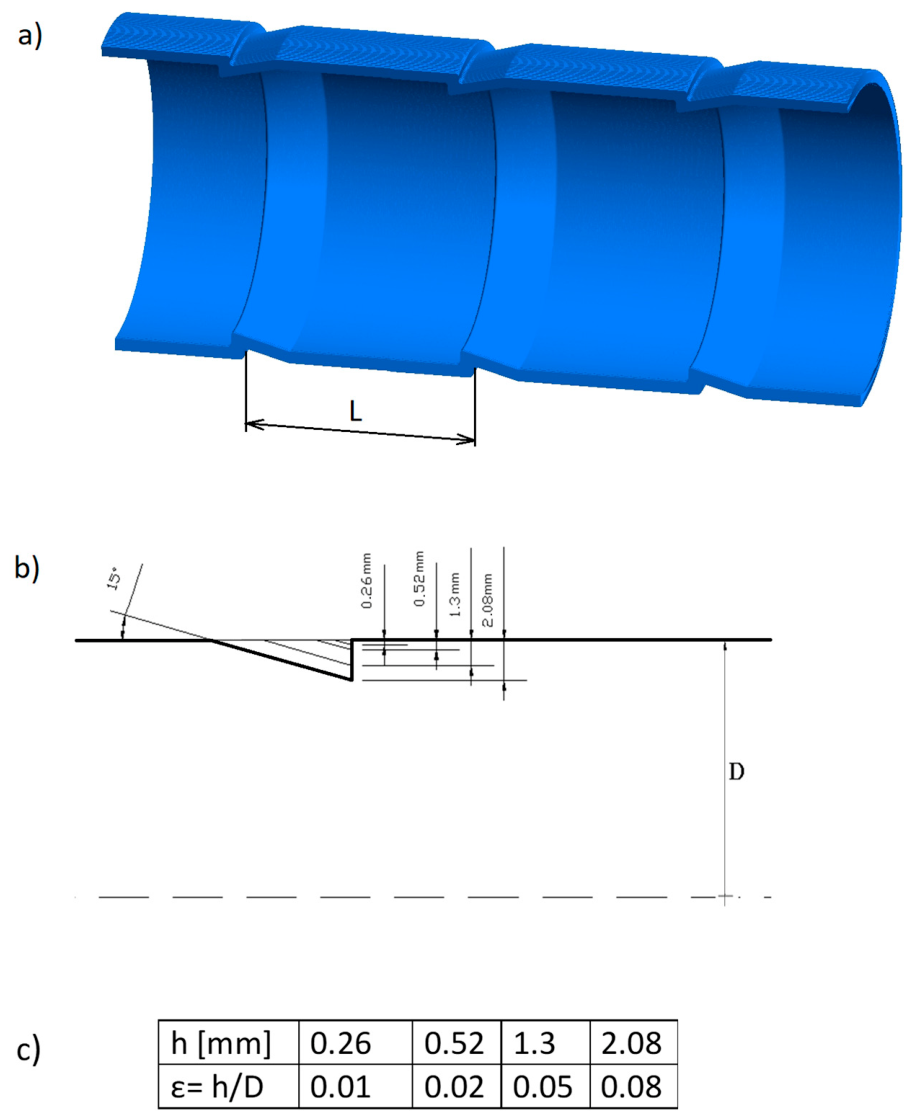
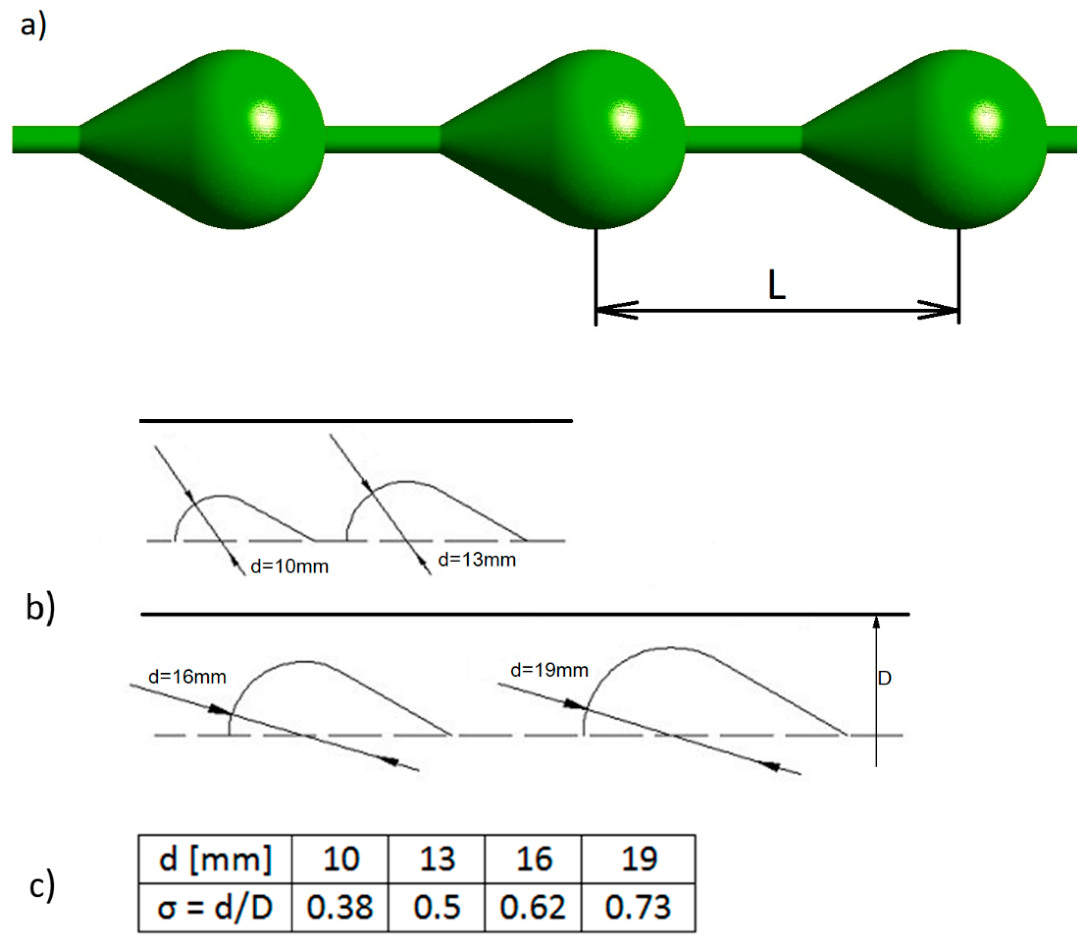
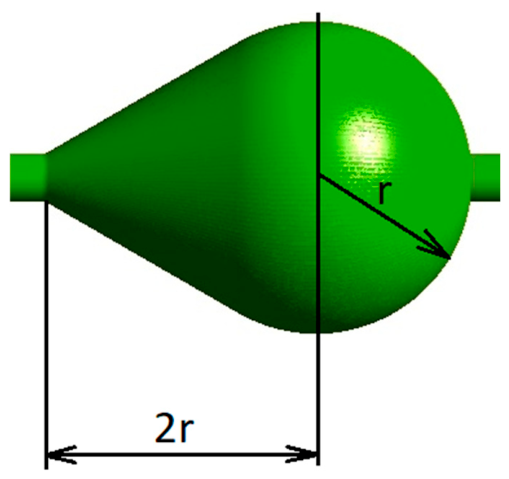
2. Tested Geometries
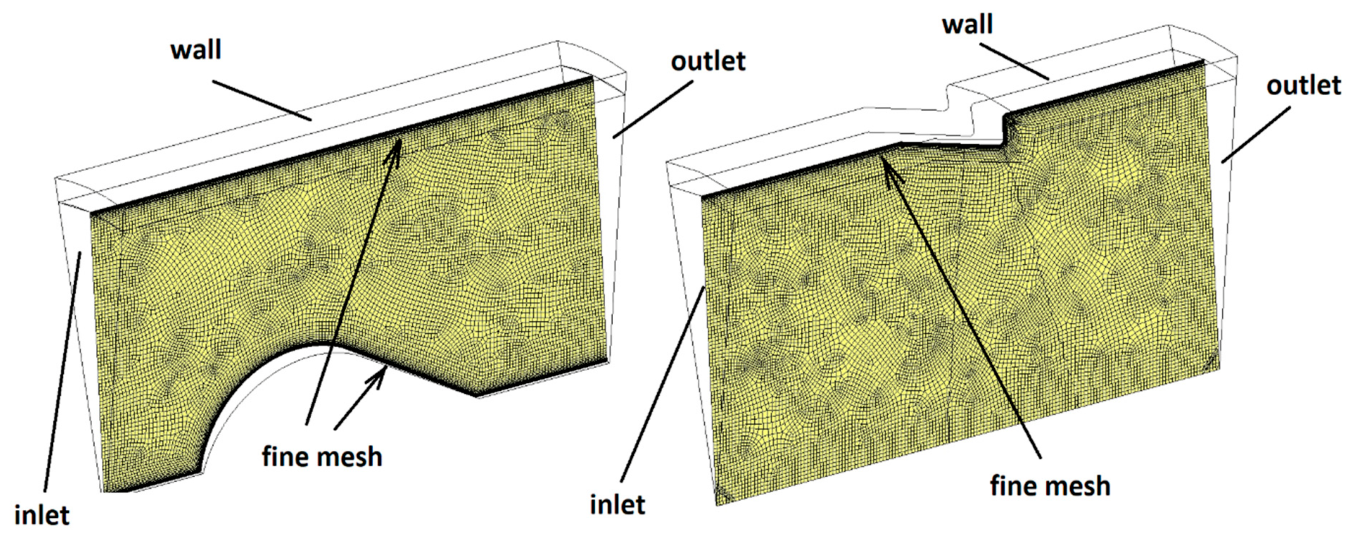
3. Numerical Model and Boundary Conditions
3.1. Grid Independence Test
3.2. Turbulence Model
3.3. Data Processing
4. Results and Discussion
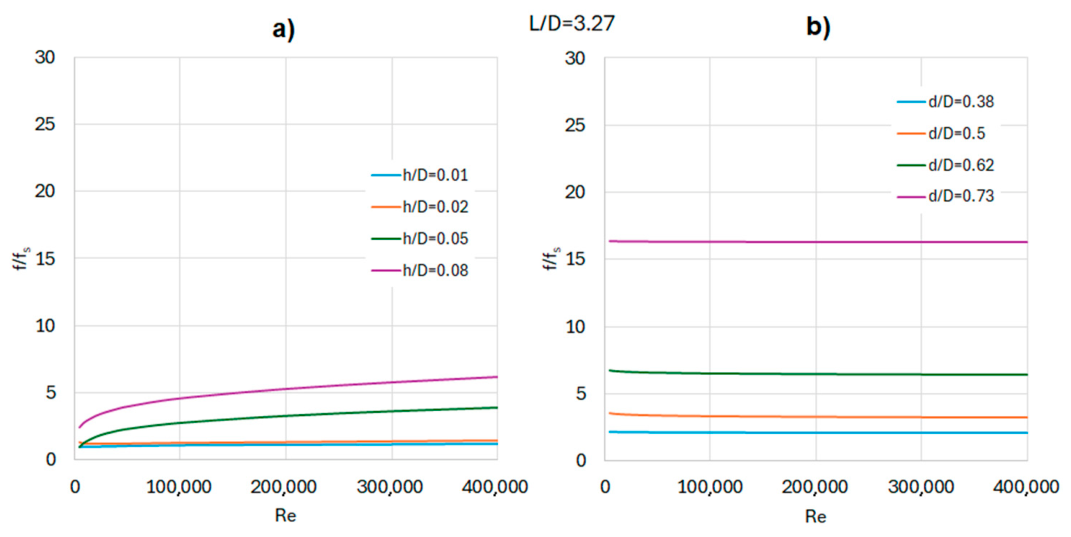
4.1. Friction Factor
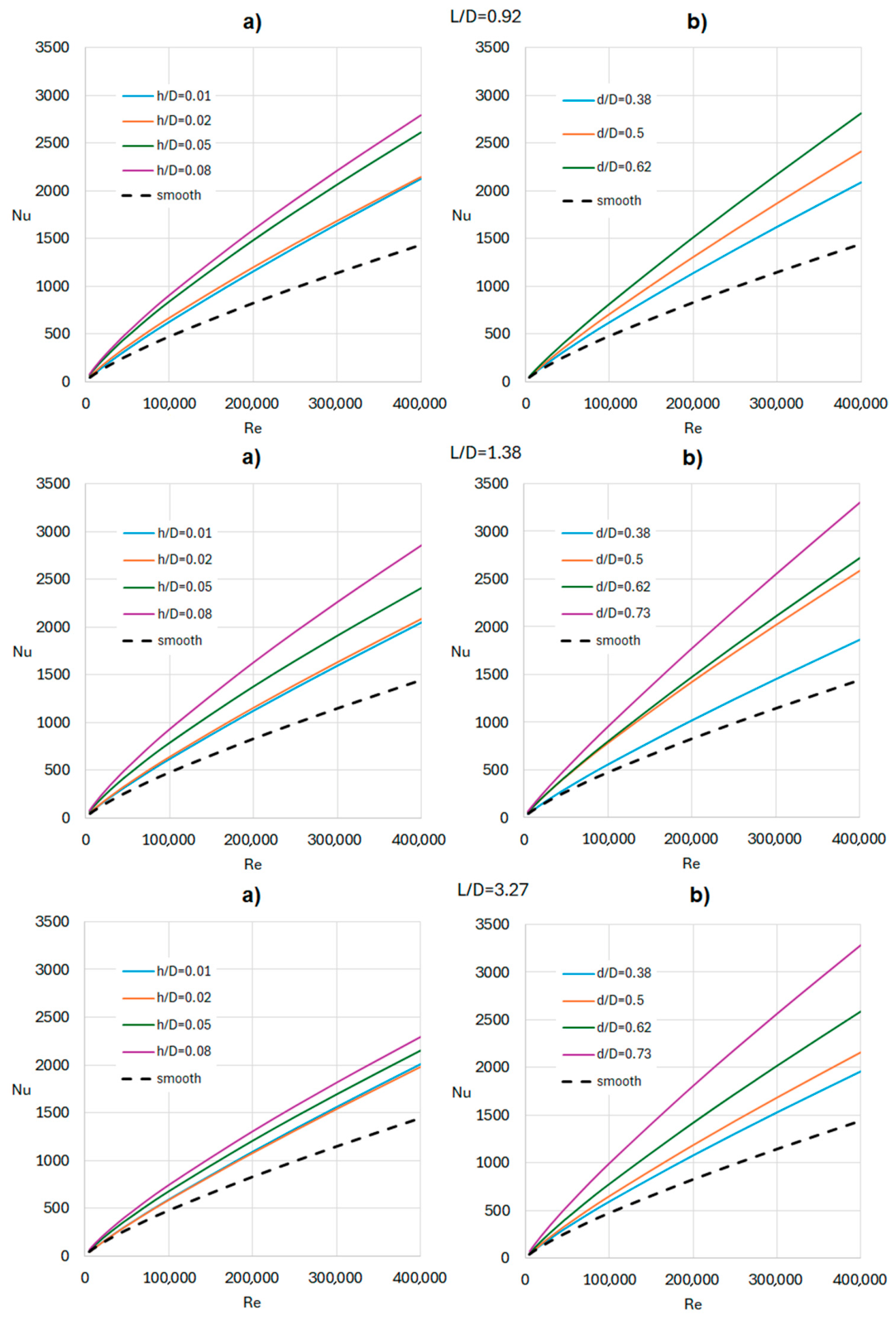
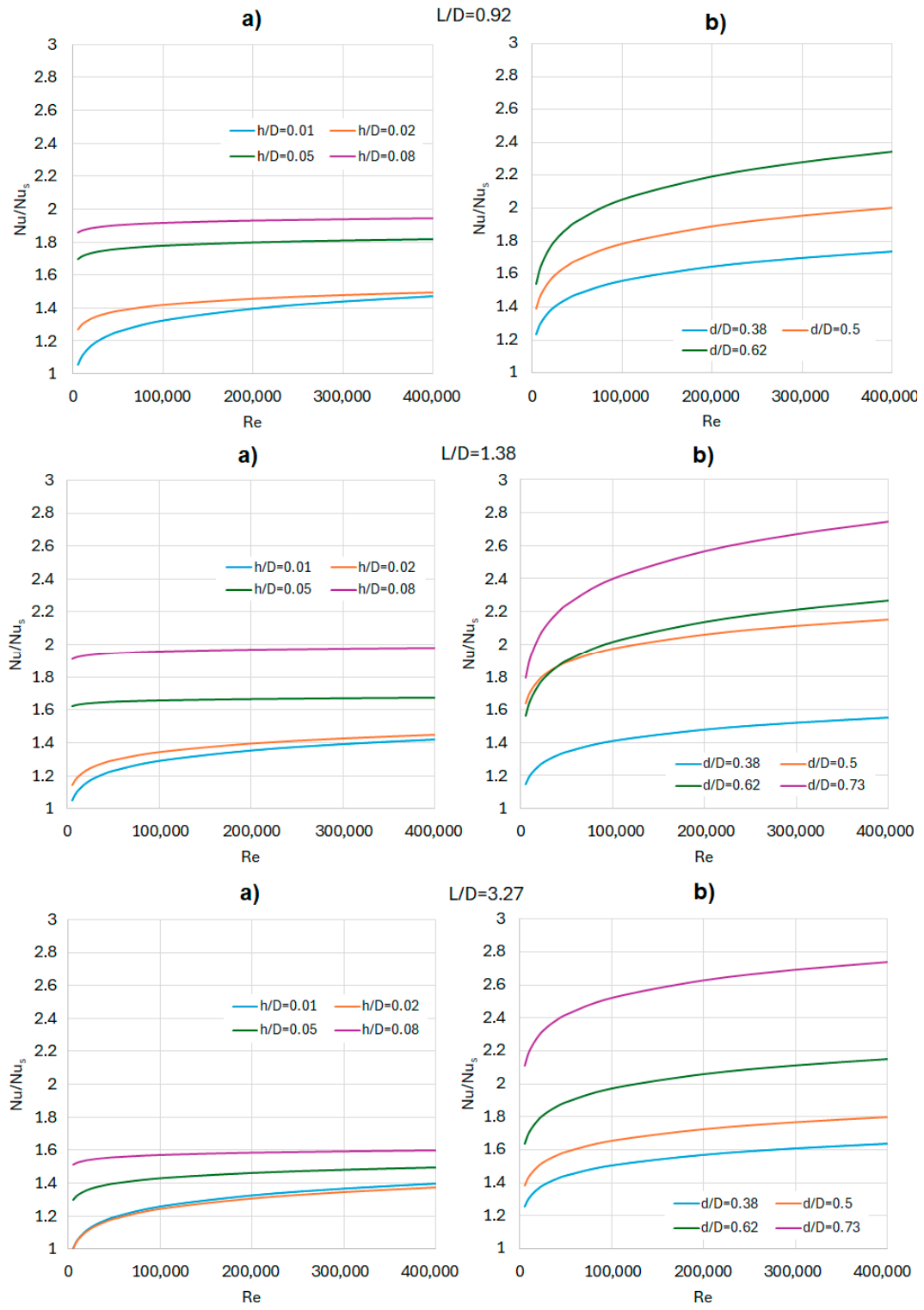
4.2. Nusselt Number
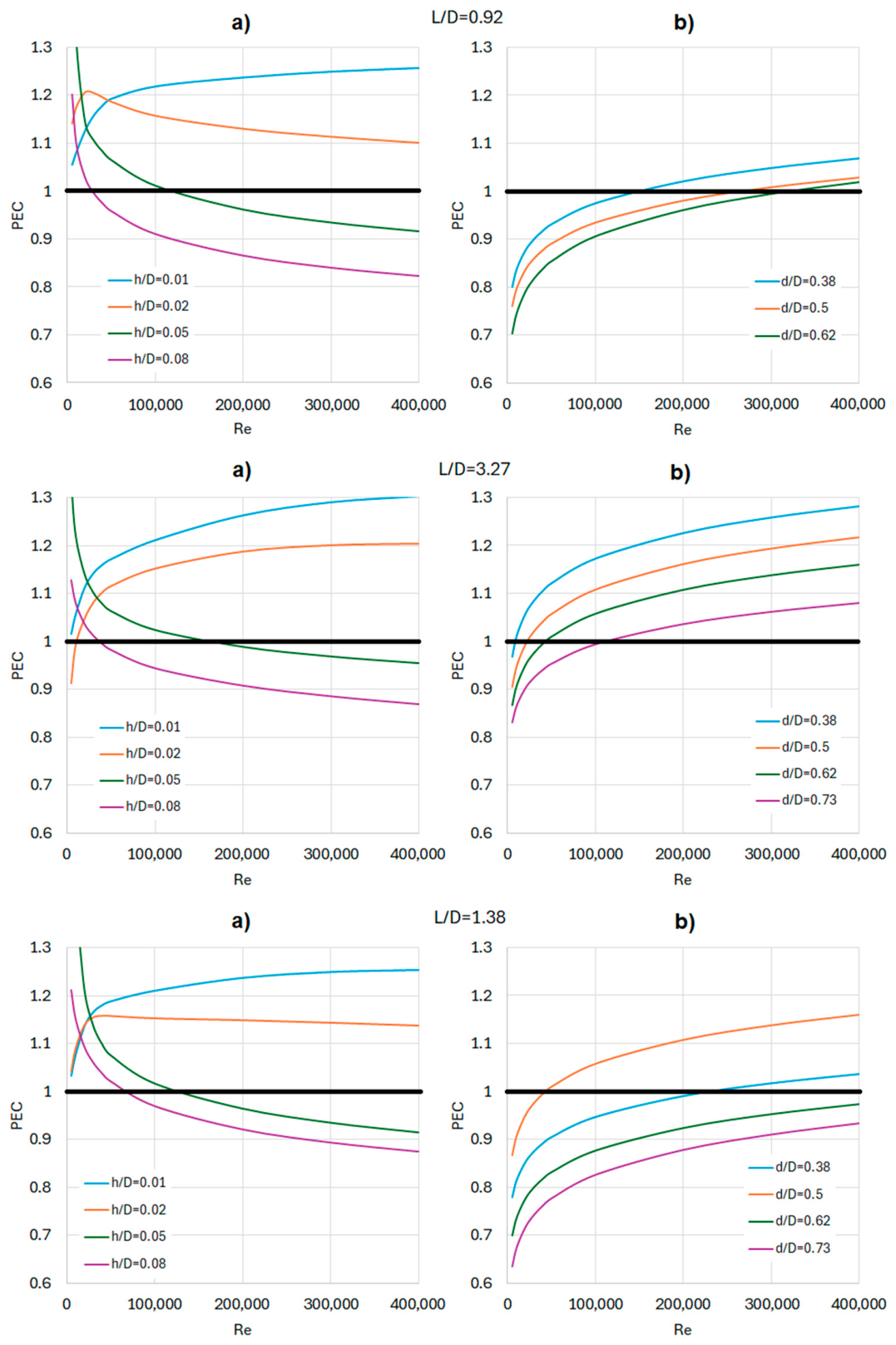
4.3. Performance Evaluation Criteria
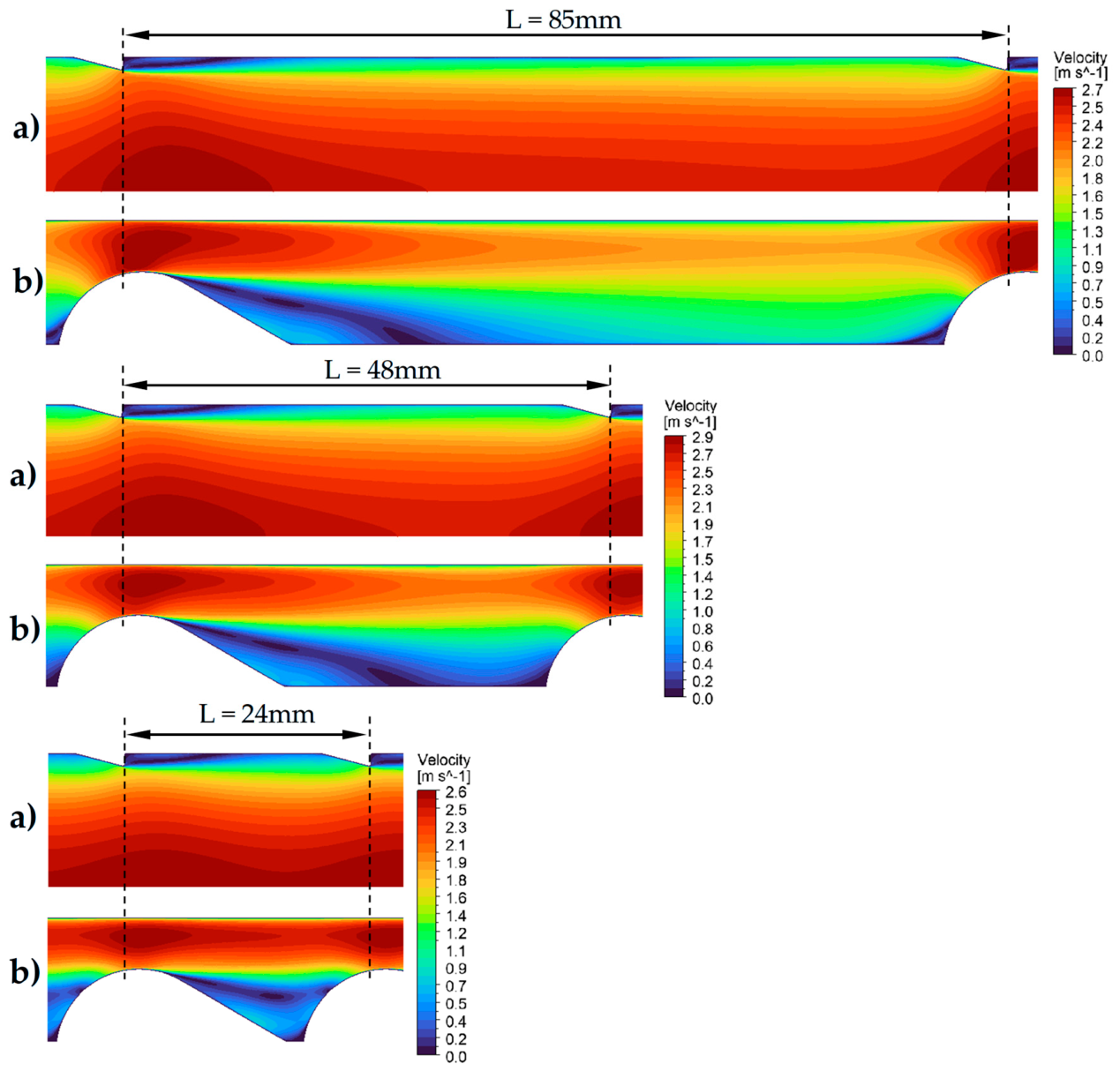
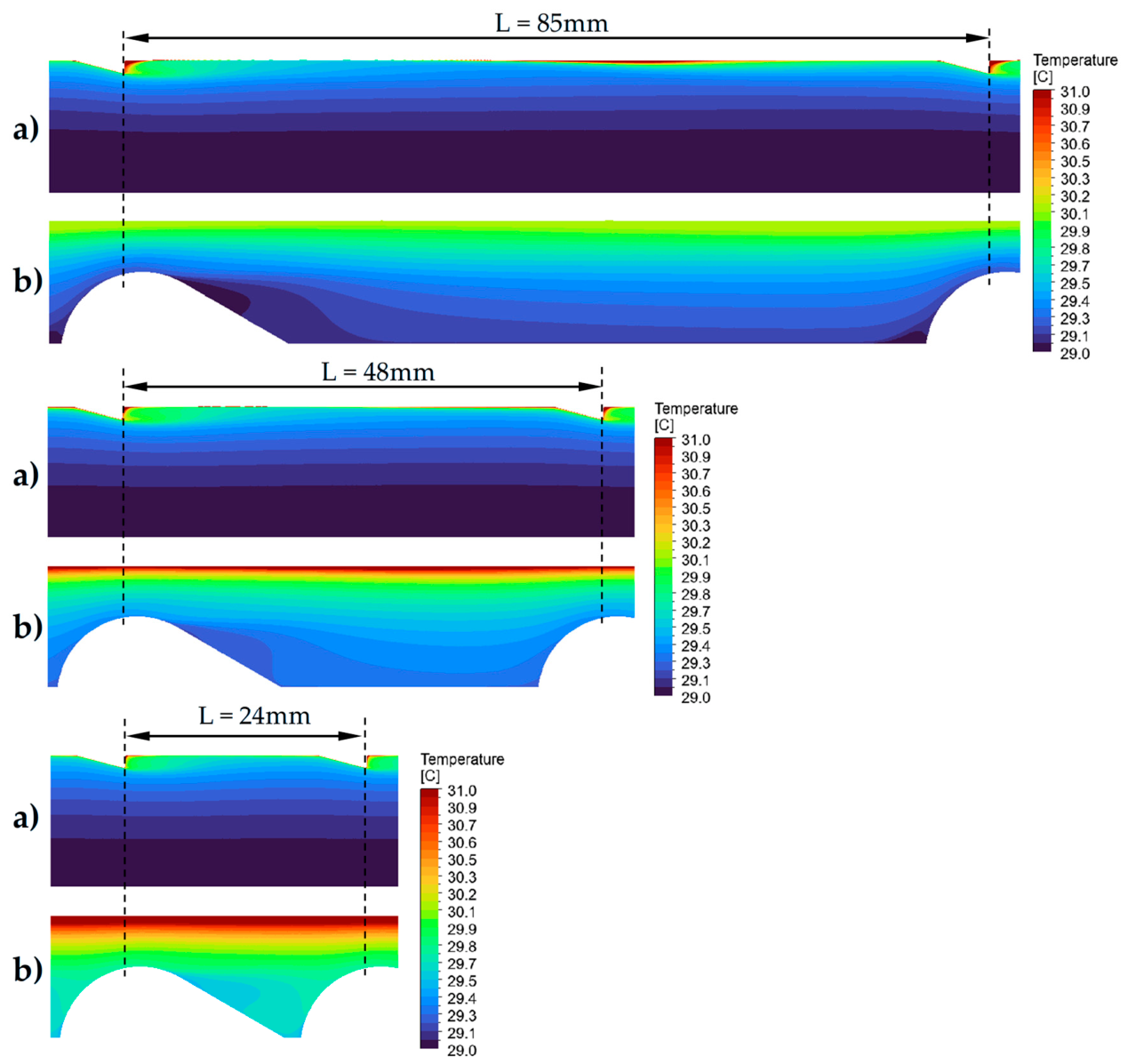
4.4. The Effect of Geometry on the Velocity and Temperature Fields
5. Conclusions
- Both analyzed geometries lead to an increase in the Nusselt number compared to a smooth pipe; however, the turbulizing insert provides greater heat transfer intensification than micro-fins, as it affects the entire flow cross-section and more strongly intensifies fluid mixing. In selected cases, the insert provides up to approximately 30% higher heat transfer enhancement than the micro-finned tube.
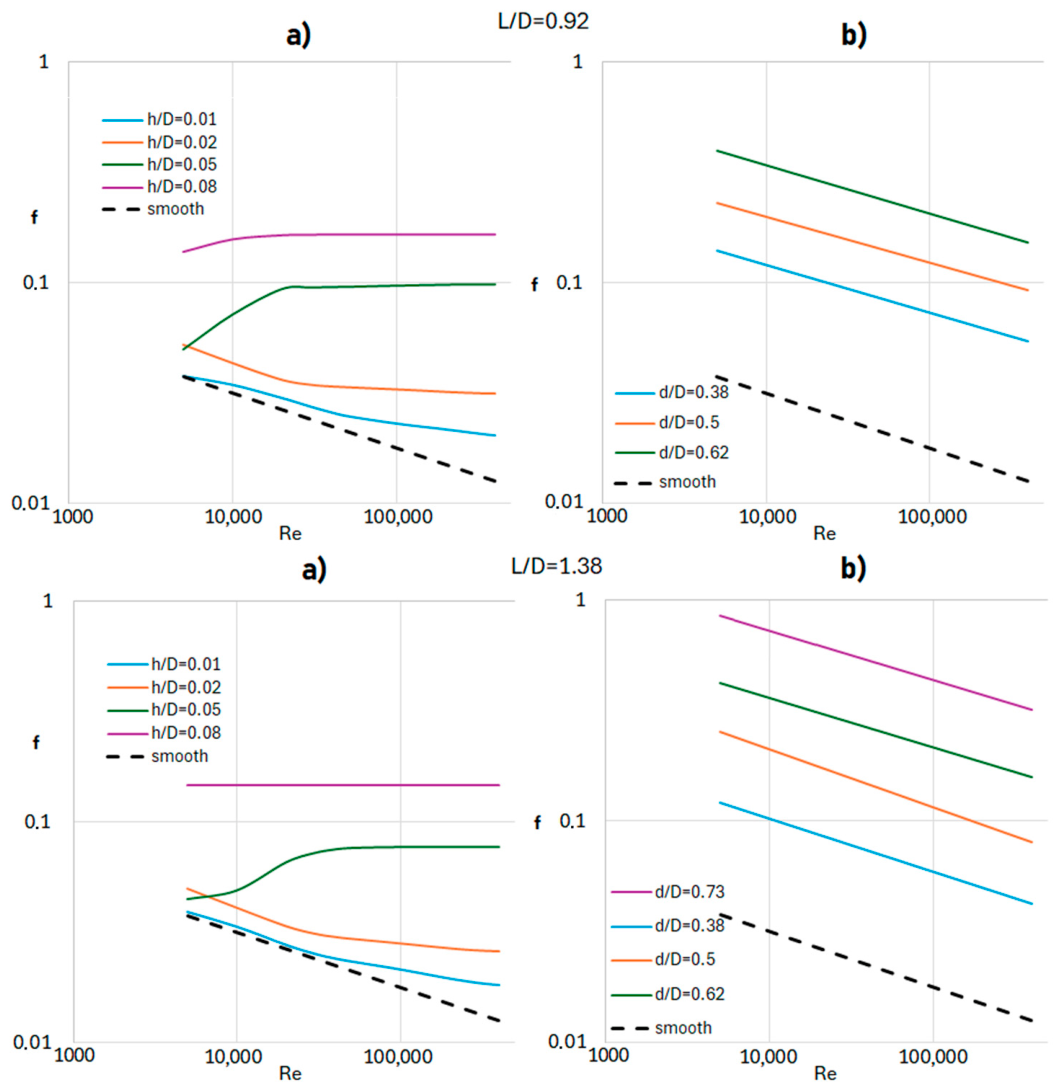
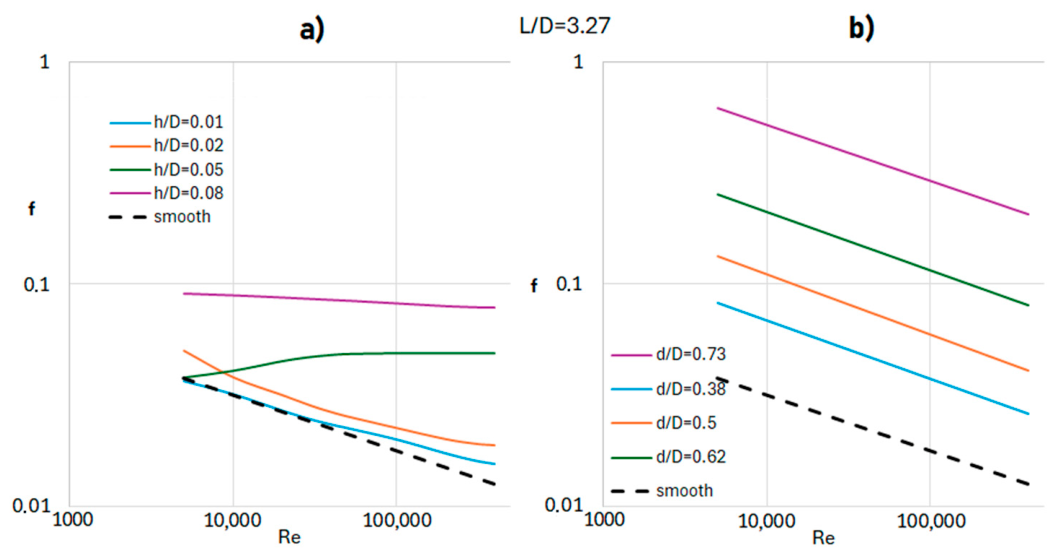
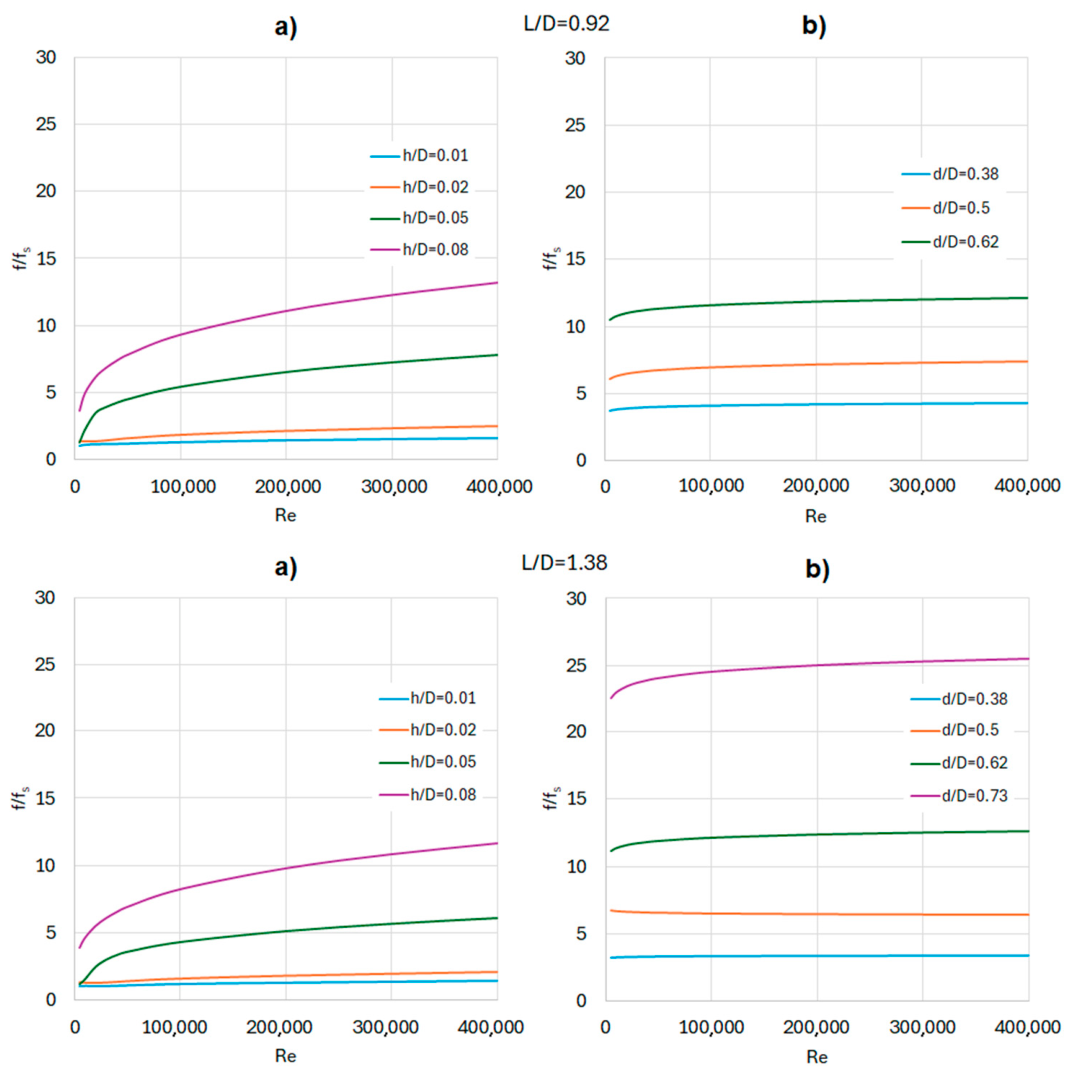
- The droplet-type insert causes a significantly larger increase in flow resistance than micro-fins, which is due to the forced flow around the elements in the channel axis and, consequently, the stronger deformation of the velocity field within the entire channel. The increase in flow resistance exceeds 10 times the reference value for micro-fins and reaches up to 25 times the reference value for the insert with droplet-shaped elements.
- For micro-fins, the influence of the longitudinal spacing L/D on the PEC values is moderate, whereas the relative height h/D and the Reynolds number range play a crucial role. For larger fin heights, the highest PEC values occur at lower Reynolds numbers, while for smaller fin heights, the PEC maximum shifts toward higher Reynolds numbers. For the two largest micro-fin heights, the maximum PEC values are approximately 1.5 and occur at Reynolds numbers below 20,000.
- For the turbulizing insert, the effect of the spacing L/D on thermal and hydraulic performance is more pronounced than for micro-fins. As the distance between the elements increases, hydraulic losses decrease, and the PEC increases, reaching its highest values for the largest analyzed spacing, L/D = 3.27. For this case, the highest PEC values are comparable to those obtained for the smallest micro-fin heights at high Reynolds numbers.
- The geometric optimization of the channels under investigation requires the simultaneous consideration of the Nusselt number, friction factor, and PEC, since the geometry that ensures the highest heat transfer enhancement is not automatically the most energy-efficient geometry. The results clearly show that the stronger heat transfer enhancement obtained with the insert is, in many cases, offset by substantially higher pressure losses, whereas the micro-finned tube provides a more balanced thermo-hydraulic performance over a wide range of Reynolds numbers.
Author Contributions
Funding
Data Availability Statement
Acknowledgments
Conflicts of Interest
Nomenclature
| D | inner pipe diameter (m) |
| L | longitudinal spacing of turbulizing elements (m) |
| L/D | dimensionless longitudinal spacing (-) |
| h | micro-fin height (m) |
| h/D, ε | dimensionless micro-fin height (-) |
| d | diameter of the “droplet-type” turbulizer (m) |
| d/D, σ | dimensionless diameter of the insert element (-) |
| uav | average flow velocity (m/s) |
| f | friction factor (-) |
| fs | friction factor for a smooth tube (-) |
| Δp | pressure drop (Pa) |
| gradp | pressure gradient (Pa/m) |
| qL | linear heat flux (W/m) |
| qvol | volumetric heat source (W/m3) |
| Tw | wall temperature (K) |
| Tb | bulk mean fluid temperature (K) |
| h | heat transfer coefficient (W/m2K) |
| Nu | Nusselt number (-) |
| Nus | Nusselt number for a smooth tube (-) |
| Re | Reynolds number (-) |
| Pr | Prandtl number (-) |
| ρ | fluid density (kg/m3) |
| ν | kinematic viscosity (m2/s) |
| PEC | performance evaluation criteria (-) |
| y+ | dimensionless first-cell distance from the wall (-) |
| Vcell | mesh cell volume (mm3) |
References
- Sheikholeslami, M.; Gorji-Bandpy, M.; Ganji, D.D. Review of heat transfer enhancement methods: Focus on passive methods using swirl flow devices. Renew. Sustain. Energy Rev. 2015, 49, 444–469. [Google Scholar] [CrossRef]
- Akyürek, E.F.; Geliş, K.; Şahin, B.; Manay, E. Experimental analysis for heat transfer of nanofluid with wire coil turbulators in a concentric tube heat exchanger. Results Phys. 2018, 9, 376–389. [Google Scholar] [CrossRef]
- Du, J.; Hong, Y. Experimental investigation on thermal-hydraulic characteristics in a traverse rib tube fitted with regularly spaced helical tapes. Int. J. Heat Mass Transf. 2020, 154, 119726. [Google Scholar] [CrossRef]
- Ahmed, S.A.E.S.; Mesalhy, O.M.; Abdelatief, M.A. Flow and heat transfer enhancement in tube heat exchangers. Heat Mass Transf. 2015, 51, 1607–1630. [Google Scholar] [CrossRef]
- Zheng, N.; Liu, W.; Liu, Z.; Liu, P.; Shan, F. A numerical study on heat transfer enhancement and the flow structure in a heat exchanger tube with discrete double inclined ribs. Appl. Therm. Eng. 2015, 90, 232–241. [Google Scholar] [CrossRef]
- Zheng, N.; Liu, P.; Shan, F.; Liu, Z.; Liu, W. Heat transfer enhancement in a novel internally grooved tube by generating longitudinal swirl flows with multi-vortexes. Appl. Therm. Eng. 2016, 95, 421–432. [Google Scholar] [CrossRef]
- Pethkool, S.; Eiamsa-Ard, S.; Kwankaomeng, S.; Promvonge, P. Turbulent heat transfer enhancement in a heat exchanger using helically corrugated tube. Int. Commun. Heat Mass Transf. 2011, 38, 340–347. [Google Scholar] [CrossRef]
- Ahmed, S.A.E.S.; Ibrahim, E.Z.; Ibrahim, M.M.; Essa, M.A.; Abdelatief, M.A.; El-Sayed, M.N. Heat transfer performance evaluation in circular tubes via internal repeated ribs with entropy and exergy analysis. Appl. Therm. Eng. 2018, 144, 1056–1070. [Google Scholar] [CrossRef]
- Abdelkareem, M.; Abdelatief, M.A.; Ahmed, S.A.; Emeara, M.S.; Elwan, W.M. Thermal design evaluation of ribbed/grooved tubes: An entropy and exergy approach. Int. Commun. Heat Mass Transf. 2021, 120, 105048. [Google Scholar] [CrossRef]
- Ahmed, M.H. Investigation of the Heat Transfer and Pressure Drop in Tubes with Transverse Ribs of Zigzag Configurations. Appl. Sci. 2022, 12, 5734. [Google Scholar] [CrossRef]
- Jasiński, P.B.; Kowalczyk, M.J.; Romaniak, A.; Warwas, B.; Obidowski, D.; Gutkowski, A. Investigation of Thermal-Flow Characteristics of Pipes with Helical Micro-Fins of Variable Height. Energies 2021, 14, 2048. [Google Scholar] [CrossRef]
- Izadi, M.; Alshehri, H.M.; Hosseinzadeh, F.; Rad, M.S.; Ben Hamida, M.B. Numerical study on forced convection heat transfer of TiO2/water nanofluid flow inside a double-pipe heat exchanger with spindle-shaped turbulators. Eng. Anal. Bound. Elem. 2023, 150, 612–623. [Google Scholar] [CrossRef]
- Saadat, M.; Aghlichanche, A.; Ataelahi, A.; Mohammadi, O.; Shafii, M.B. Thermal study of the internal flow in a circular tube with vibrational ball turbulators. Int. J. Heat Mass Transf. 2022, 196, 123276. [Google Scholar] [CrossRef]
- Samruaisin, P.; Maza, R.; Thianpong, C.; Chuwattanakul, V.; Maruyama, N.; Hirota, M.; Eiamsa-Ard, S. Enhanced Heat Transfer of a Heat Exchanger Tube Installed with V-Shaped Delta-Wing Baffle Turbulators. Energies 2023, 16, 5237. [Google Scholar] [CrossRef]
- Jia, B.; Song, Z.; Li, X.; Hu, Z.; Li, Q. Enhancing thermal performance: The evolution and future of solar air heaters with baffles. Case Stud. Therm. Eng. 2025, 75, 107163. [Google Scholar] [CrossRef]
- Mohamed, A.; Younis, O. Performance of drop shaped pin fin heat exchanger with four different fin dimensions. J. Mech. Eng. Sci. 2020, 14, 6934–6951. [Google Scholar] [CrossRef]
- Shen, Z.; Li, Y.; Zhong, L.; Su, W. The impact of different shaped pin-fins on the flow and heat transfer in the internal cooling structure of gas turbine blades trailing edges. Can. J. Chem. Eng. 2025, 103, 4540–4553. [Google Scholar] [CrossRef]
- Szymczak, P.; Jasiński, P.B.; Łęcki, M. Numerical Study of the Condenser of a Small CO2 Refrigeration Unit Operating Under Supercritical Conditions. Energies 2025, 18, 2992. [Google Scholar] [CrossRef]
- Jasiński, P.B.; Górecki, G.; Cebulski, Z. Evaluation of the Efficiency of Heat Exchanger Channels with Different Flow Turbulence Methods Using the Entropy Generation Minimization Criterion. Energies 2025, 18, 132. [Google Scholar] [CrossRef]
- ANSYS-CFX Manual; v. 18.1; ANSYS: Canonsburg, PA, USA, 2017.
- Kapse, A.; Shewale, V. Experimental Study of Heat Transfer Augmentation Characteristics of a Tube Affected by Geometric Parameters of Coiled Spring Inserts. J. Heat Mass Transf. Res. 2024, 11, 127–138. [Google Scholar]
- Zhu, S.; Li, L.; Peng, Y.; Cheng, C.; Hu, W.; Hu, Z.; Jin, T. Effect of triangular ribs on the flow and heat transfer characteristics of heat exchanger tube. Therm. Sci. 2024, 28, 89–100. [Google Scholar] [CrossRef]
- Eiamsa-Ard, S.; Maruyama, N.; Hirota, M.; Skullong, S.; Promthaisong, P. Heat transfer mechanism in ribbed twisted-oval tubes. Int. J. Therm. Sci. 2023, 193, 108532. [Google Scholar] [CrossRef]
- Pan, C.; Alqahtani, A.M.; Wei, H.; Sulaiman, N.; Elsiddieg, A.M.; Ghoushchi, S. Heat transfer enhancement of a heat exchanger using novel multiple perforated magnetic turbulators (MPMT): An experimental study. Int. J. Therm. Sci. 2024, 195, 108642. [Google Scholar] [CrossRef]
- Vishwakarma, D.K.; Bhattacharyya, S.; Soni, M.K.; Goel, V.; Meyer, J.P. Evaluating the heat transfer and pressure drop in the transitional flow regime for a horizontal circular tube fitted with wavy-tape inserts. Int. J. Therm. Sci. 2024, 196, 108677. [Google Scholar] [CrossRef]



| L [mm] | 24 | 28 | 36 | 48 | 60 | 85 |
|---|---|---|---|---|---|---|
| L/D | 0.92 | 1.08 | 1.38 | 1.85 | 2.31 | 3.27 |
| Grid Name | A | B | C | D | E | F |
|---|---|---|---|---|---|---|
| H [mm] | 1 | 0.75 | 0.5 | 0.4 | 0.3 | 0.2 |
| H3 = Vcell [mm3] | 1 | 0.422 | 0.125 | 0.064 | 0.027 | 0.008 |
| uav [m/s] | 2.1 | 1.98 | 1.9 | 1.85 | 1.82 | 1.8 |
Disclaimer/Publisher’s Note: The statements, opinions and data contained in all publications are solely those of the individual author(s) and contributor(s) and not of MDPI and/or the editor(s). MDPI and/or the editor(s) disclaim responsibility for any injury to people or property resulting from any ideas, methods, instructions or products referred to in the content. |
© 2026 by the authors. Licensee MDPI, Basel, Switzerland. This article is an open access article distributed under the terms and conditions of the Creative Commons Attribution (CC BY) license.
Share and Cite
Jasiński, P.B.; Szymczak, P.; Kantyka, K. Comparative Numerical Analysis of Thermal–FlowCharacteristics of Heat Exchanger Channels with Different Flow Turbulization Methods Using Performance Evaluation Criteria. Energies 2026, 19, 2788. https://doi.org/10.3390/en19122788
Jasiński PB, Szymczak P, Kantyka K. Comparative Numerical Analysis of Thermal–FlowCharacteristics of Heat Exchanger Channels with Different Flow Turbulization Methods Using Performance Evaluation Criteria. Energies. 2026; 19(12):2788. https://doi.org/10.3390/en19122788
Chicago/Turabian StyleJasiński, Piotr Bogusław, Piotr Szymczak, and Krzysztof Kantyka. 2026. "Comparative Numerical Analysis of Thermal–FlowCharacteristics of Heat Exchanger Channels with Different Flow Turbulization Methods Using Performance Evaluation Criteria" Energies 19, no. 12: 2788. https://doi.org/10.3390/en19122788
APA StyleJasiński, P. B., Szymczak, P., & Kantyka, K. (2026). Comparative Numerical Analysis of Thermal–FlowCharacteristics of Heat Exchanger Channels with Different Flow Turbulization Methods Using Performance Evaluation Criteria. Energies, 19(12), 2788. https://doi.org/10.3390/en19122788