Techno-Economic Assessment of Electrochemical CO2 Reduction to Ethylene: A Cu10–Sn Catalyst Case Study and Performance Targets


Abstract
1. Introduction
2. Methods
2.1. Process Modeling
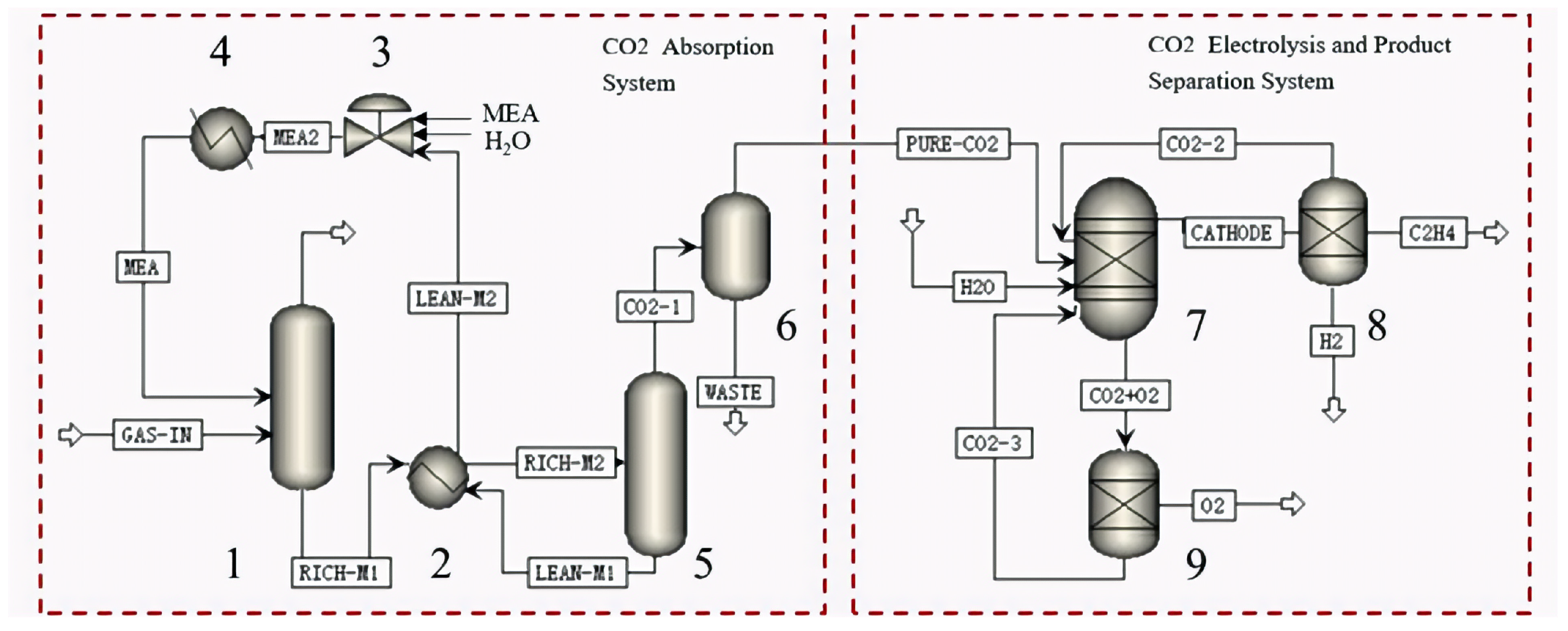
2.1.1. Process Overview
2.1.2. Unit Modeling
2.1.3. Model Assumptions
2.2. Economic Analysis Method
2.3. Energy Consumption Analysis Method
- (1)
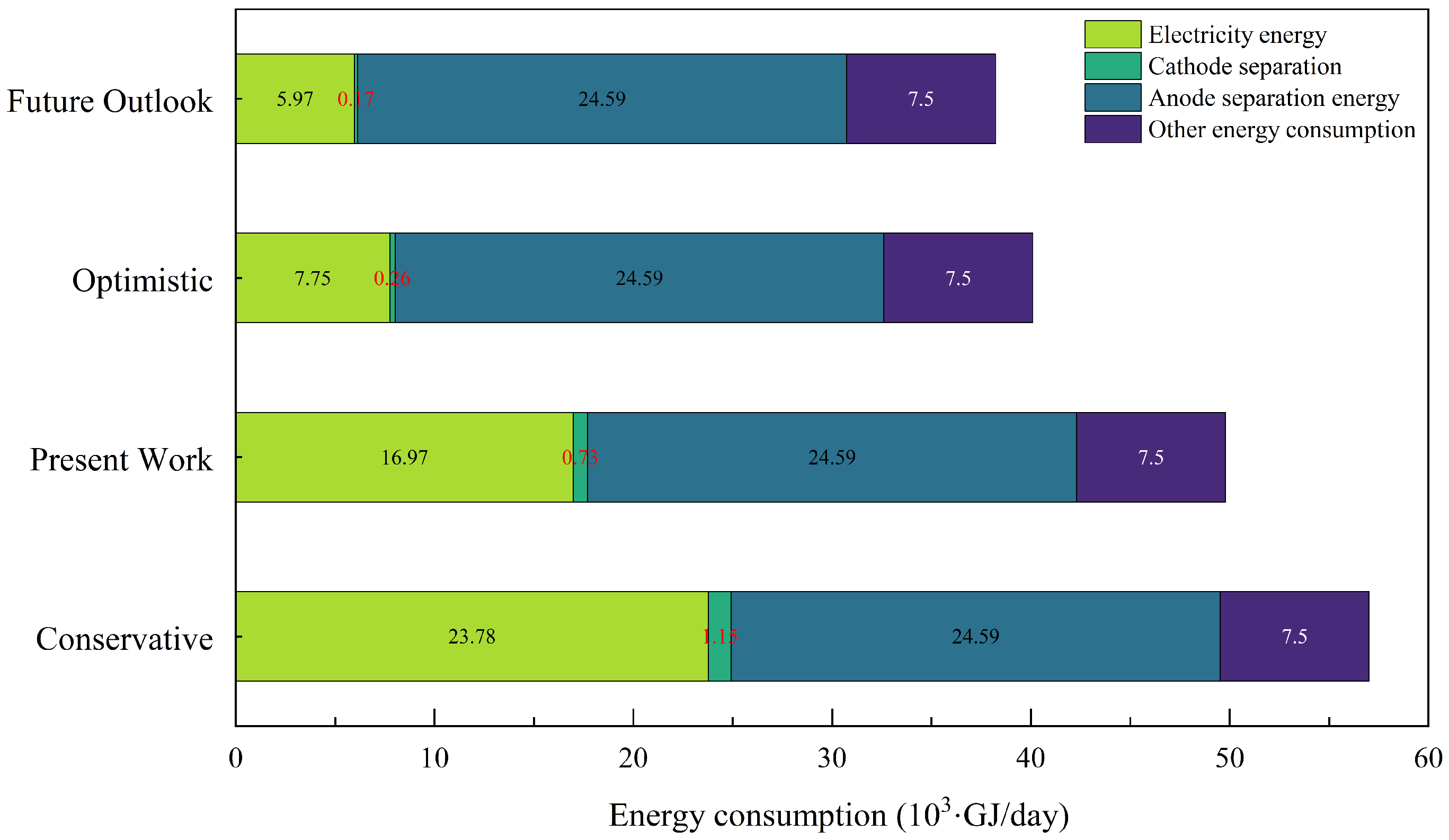
- Electrolysis energy: CO2RR occurs under ambient temperature and pressure conditions. Therefore, the primary energy consumption of this process stems from the electrical energy expended during electrolysis, expressed as:
- (2)
- Cathode separation energy: the cathode separation model employs a PSA system for biogas upgrading, with an energy consumption of 0.25 kWh/m3. Research by Moore et al. [12] indicates that in the process of producing ethylene via carbon dioxide electrolysis, the energy consumption required for downstream gas separation is approximately two orders of magnitude lower than the electrical energy consumed by the electrolyzer itself; therefore, in conceptual techno-economic analyses, it is reasonable to approximate the energy consumption of PSA compression by incorporating it into the capital cost installation factor, rather than accounting for it separately as a distinct energy consumption item. Therefore, the cathode separation energy consumption (GJ) is:
- (3)
- Anode separation energy: the anode separation employs the same CO2 absorption system as carbon capture, utilizing a MEA absorbent to separate CO2. Regarding the energy loss incurred in this process, Yue et al. [2] conducted detailed calculations for the CO2 capture stage, providing a specific value of 19.56 GJ/ton of CO2. Based on the from Equation (26), the daily CO2 mass separated by the anode can be calculated as:Therefore, the energy consumption for anode separation (GJ) is:WAnode Separation = 19.56 × manode CO2.
- (4)
- Other energy losses: for every 1 mol of C2H4 produced in the membrane electrode assembly (MEA) electrolyzer, 6 mol of CO32− is generated, causing the membrane resistance to increase fourfold. This results in an additional energy consumption of 60–90 GJ per ton of C2H4 produced [18]. Taking 75 GJ as the value, daily production of 100 tons of C2H4 would incur an additional 7500 GJ of other energy consumption.Therefore, the total energy consumption (GJ) for producing 100 tons of C2H4 daily is:
3. Results and Discussion
3.1. Material Flow Analysis
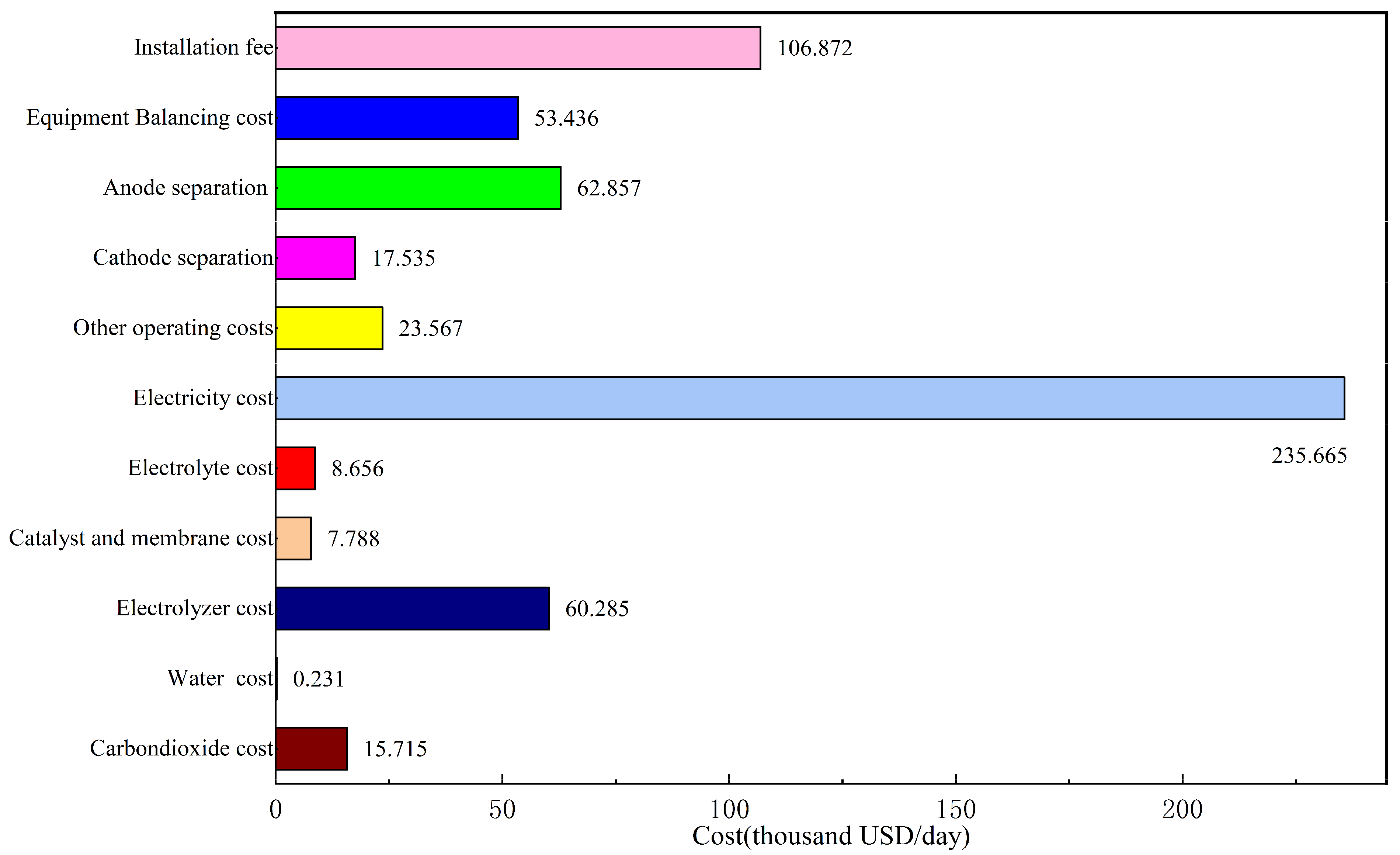
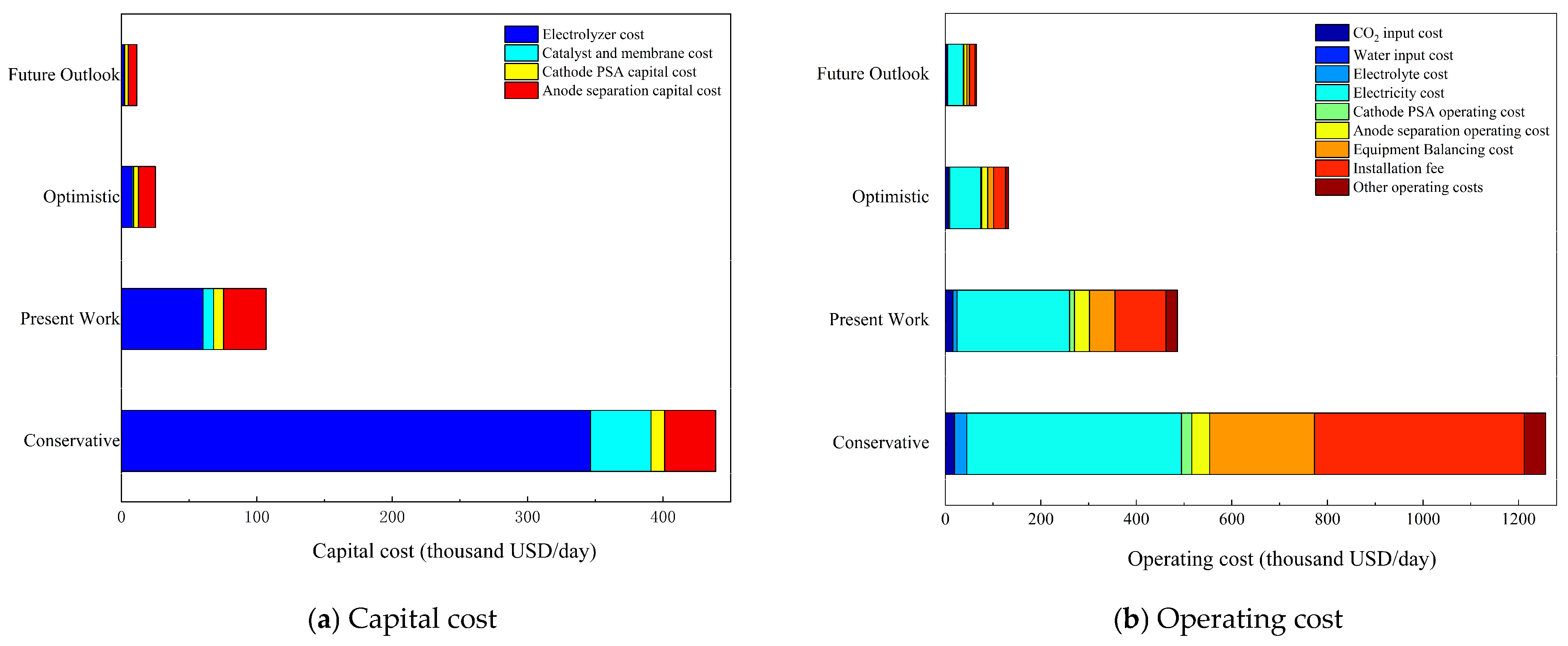
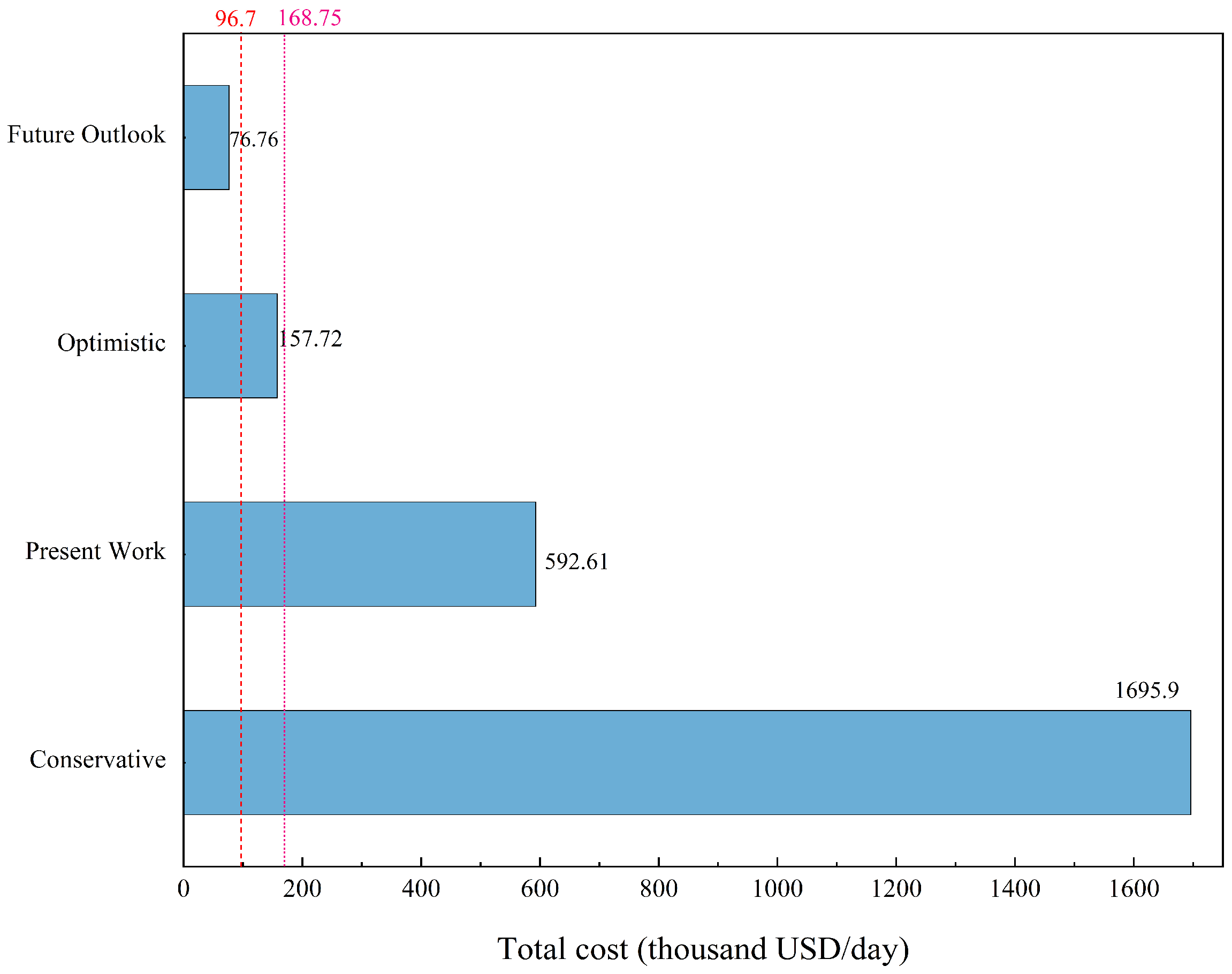
3.2. Economic Analysis
3.3. Energy Consumption Analysis
3.4. Sensitivity Analysis
4. Conclusions
- (1)
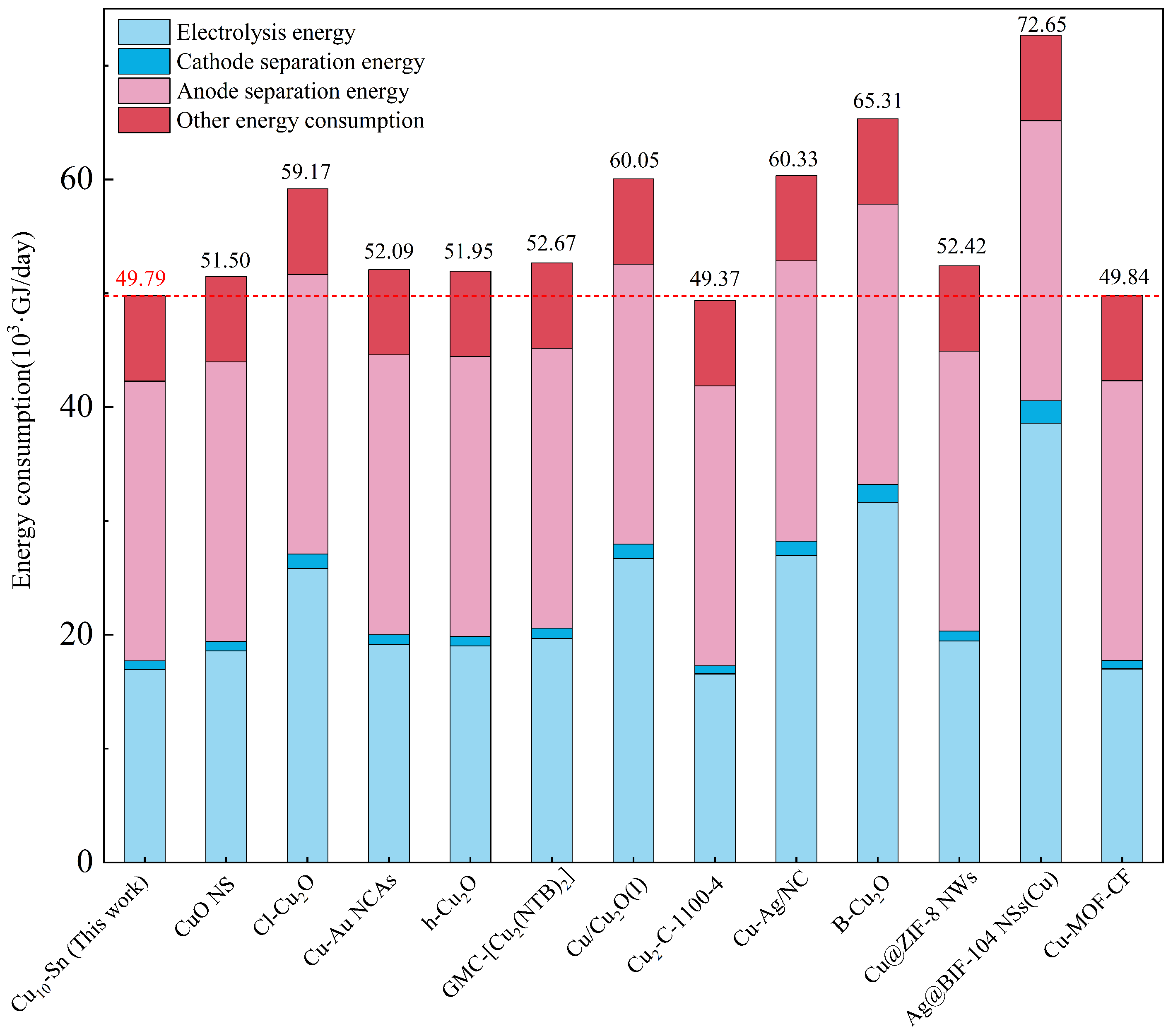
- The Cu10-Sn bimetallic catalyst developed in this work demonstrates superior techno-economic performance compared to some of the previously reported copper-based catalysts, with the lowest production cost (592.61 thousand USD/day) and relatively low energy consumption (49.79 thousand GJ/day or 13.83 million kW·h) among evaluated catalysts. This is attributed to its high Faradaic efficiency (48.74%) and current density.
- (2)
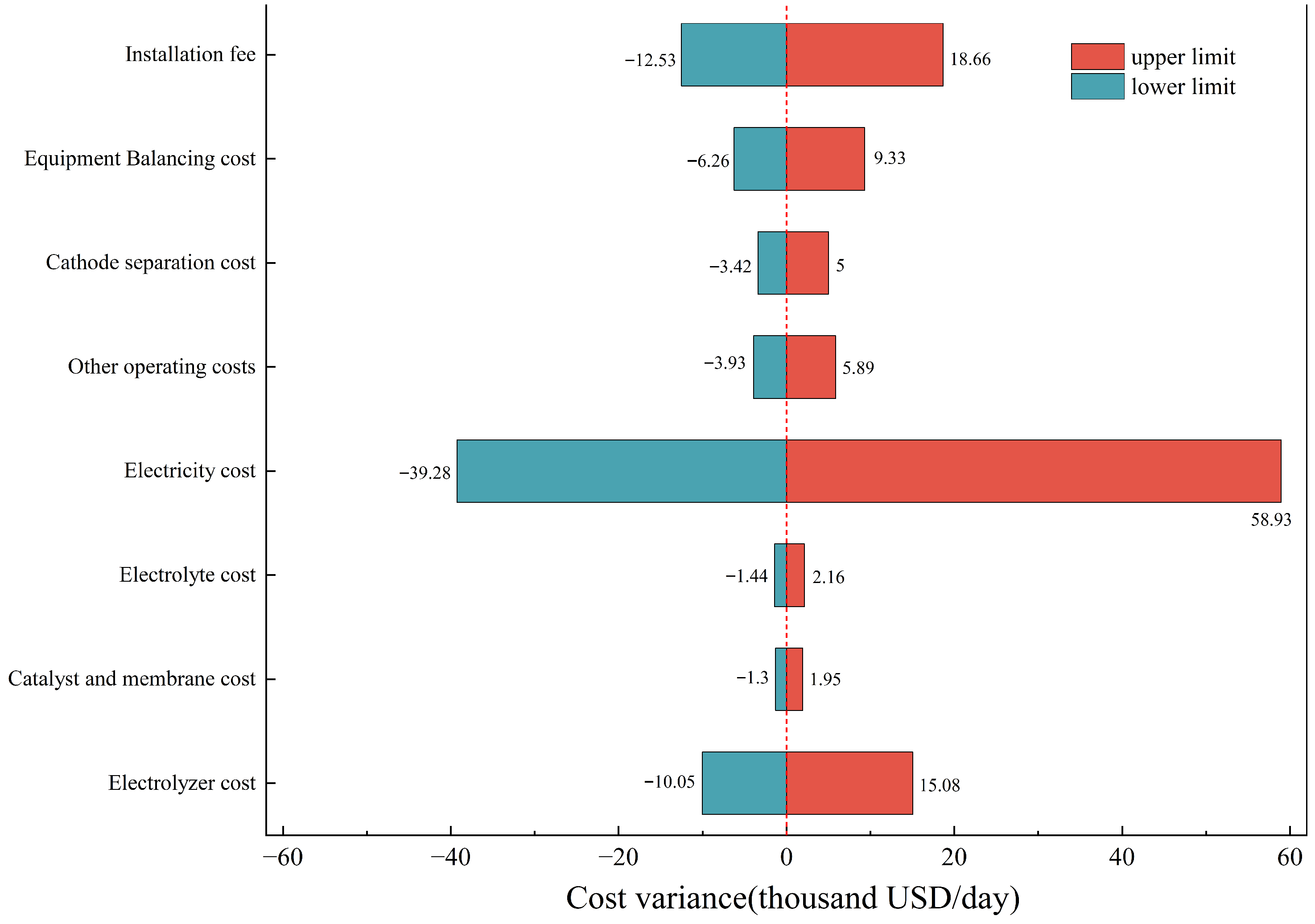
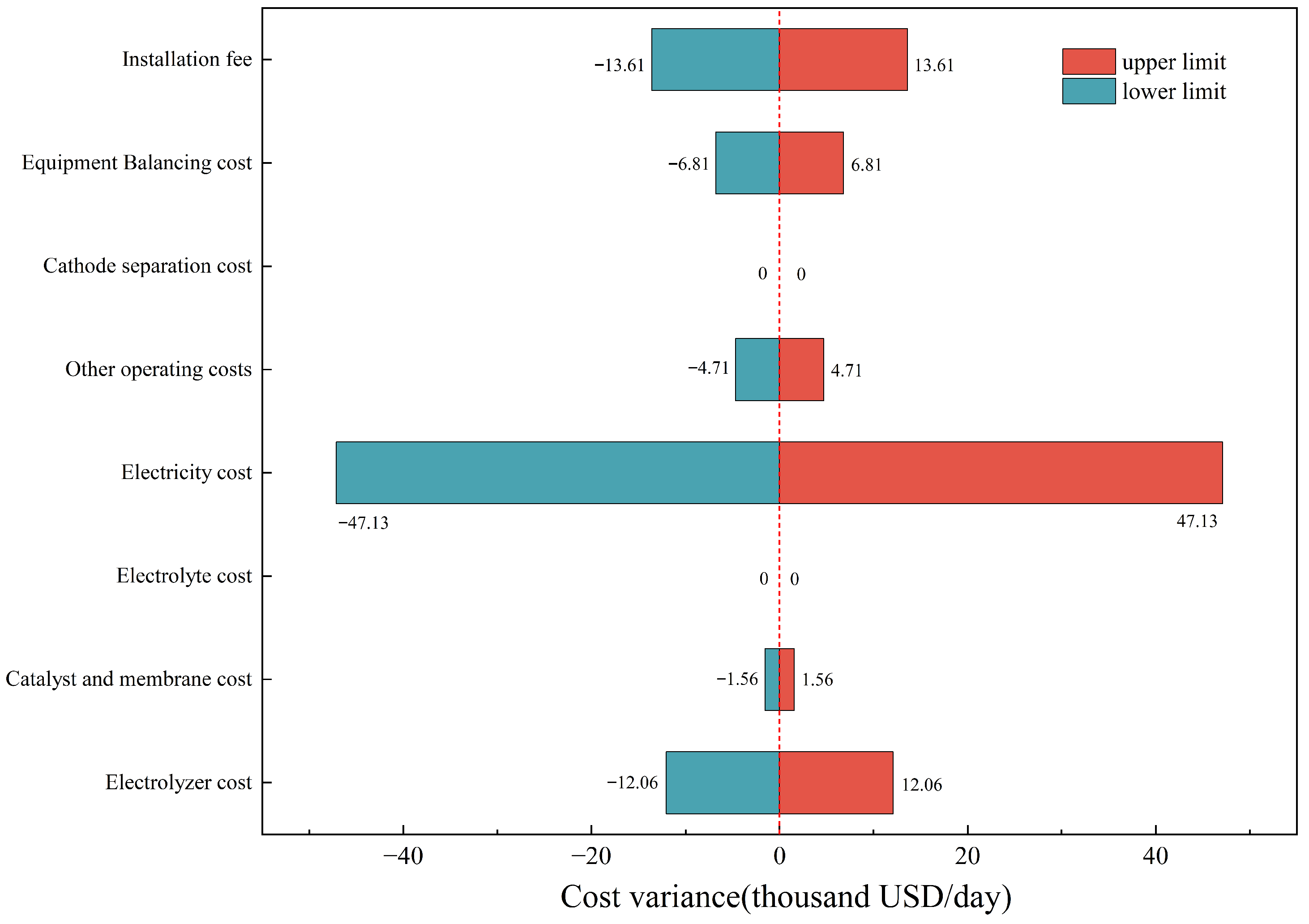
- Electricity cost is the dominant factor in CO2RR-to-C2H4 production, accounting for 39.8% of total costs in the present scenario. This highlights the critical importance of accessing low-cost renewable electricity and improving energy efficiency.
- (3)
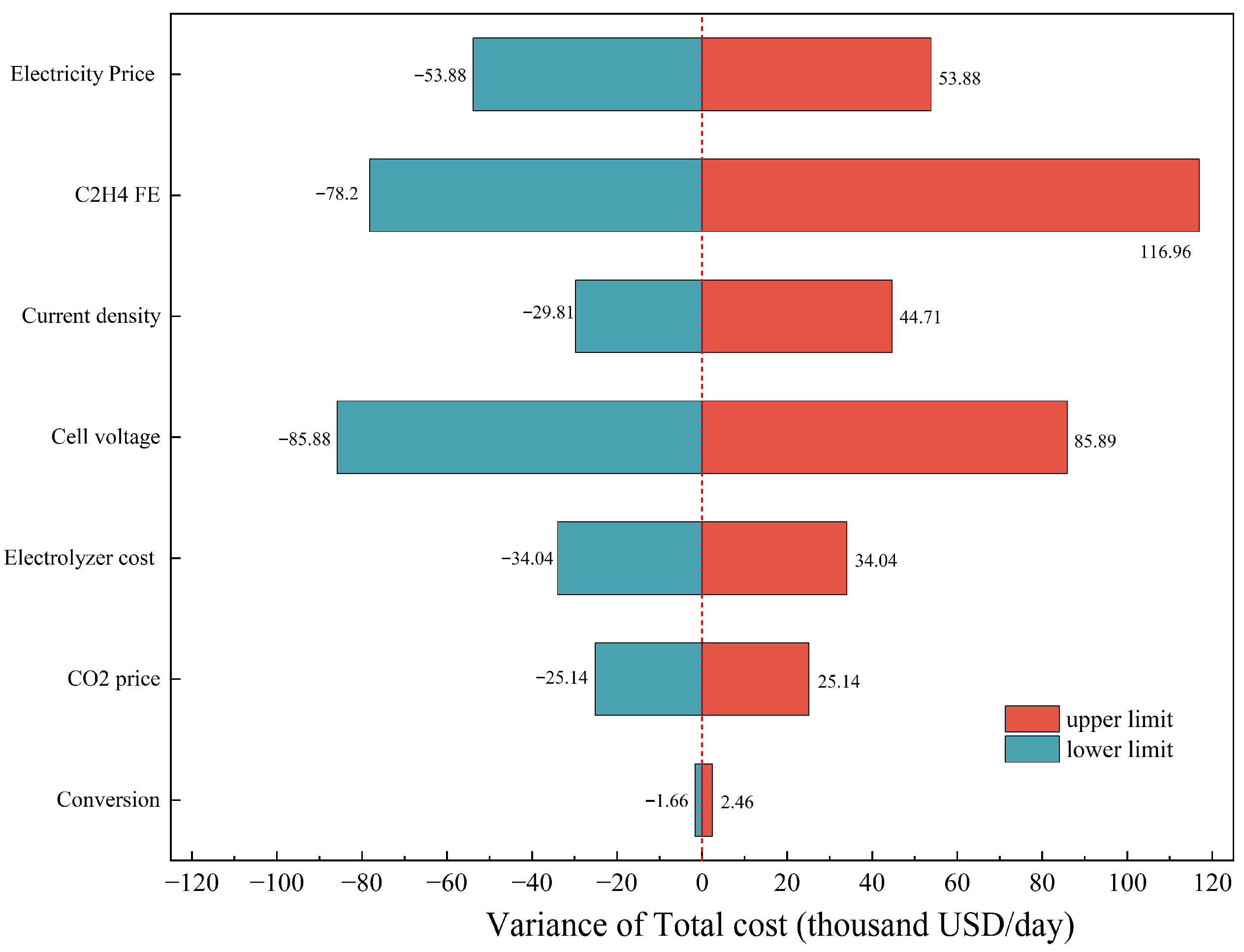
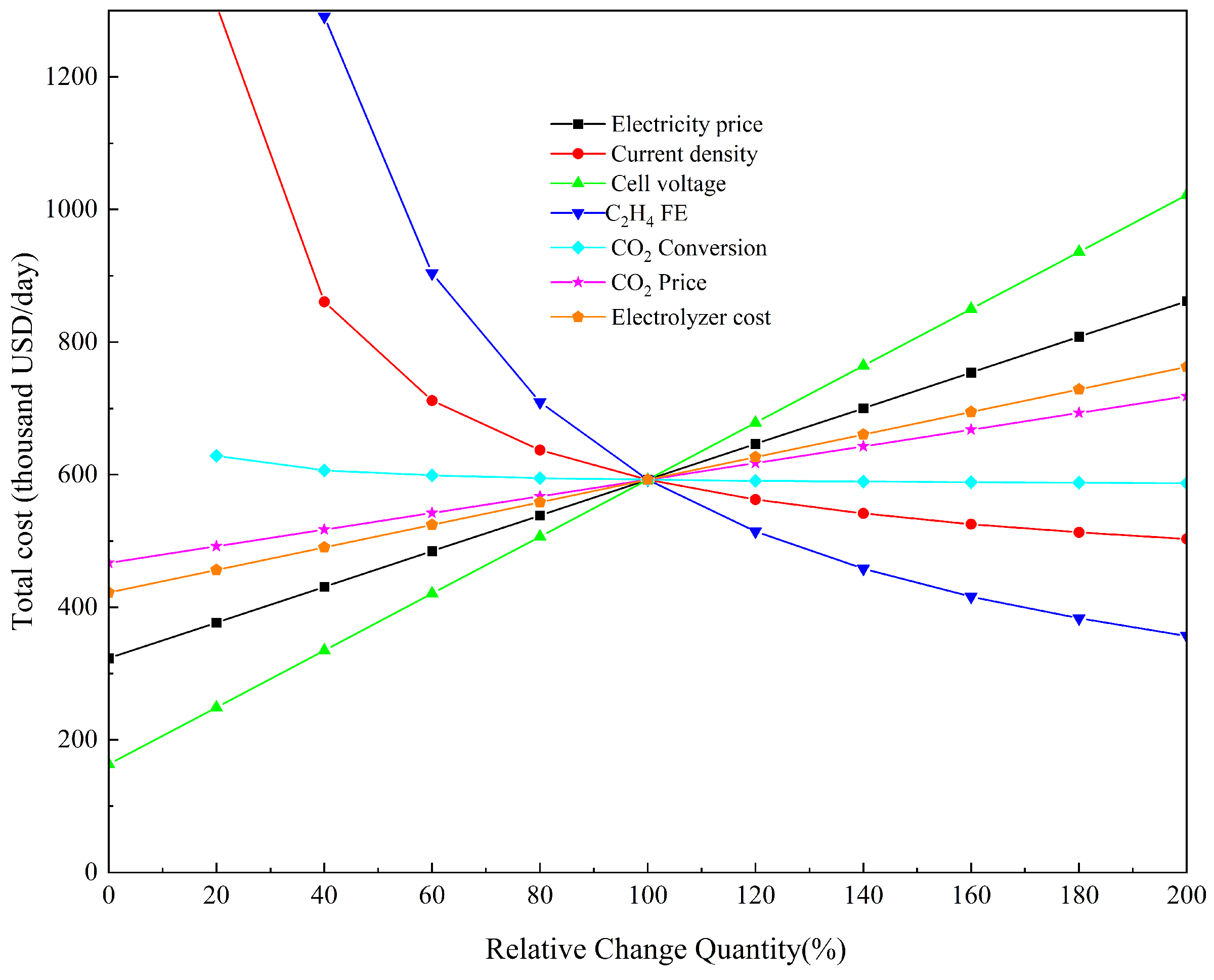
- Sensitivity analysis identifies Faradaic efficiency, cell voltage, electricity price, and current density as the key parameters affecting production costs. Improving these parameters through catalyst optimization and electrolyzer design is essential for achieving commercial viability.
- (4)
- While current technology is not economically viable for ethylene production, the future outlook scenario suggests that with continued improvements in catalyst performance and reduced electricity costs, the process could become profitable. In future projections, producing C2H4 via CO2RR could yield a profit of approximately 20,000 USD per day, and in the future, the daily profits are expected to reach 91,990 USD with the demand for ethylene increasing [32].
Author Contributions
Funding
Data Availability Statement
Acknowledgments
Conflicts of Interest
References
- Jouny, M.; Luc, W.; Jiao, F. General Techno-Economic Analysis of CO2 Electrolysis Systems. Ind. Eng. Chem. Res. 2018, 57, 2165–2177. [Google Scholar] [CrossRef]
- Yue, P.; Fu, Q.; Li, J.; Zhu, X.; Liao, Q. Comparative Life Cycle and Economic Assessments of Various Value-Added Chemicals’ Production via Electrochemical CO2 Reduction. Green. Chem. 2022, 24, 2927–2936. [Google Scholar] [CrossRef]
- Zhang, S.; Tang, W.; Yin, J.; Wang, S.; Yu, Y.; Huang, R.; Huo, E. Feasibility and Prospects of Electrocatalytic Conversion of CO2 for Chemical Feedstock Production and Renewable Energy Storage. ACS Sustain. Chem. Eng. 2025, 13, 9841–9858. [Google Scholar] [CrossRef]
- Ahmed, S.; Hussain, M.S.; Khan, M.K.; Kim, J. Innovations in Catalysis towards Efficient Electrochemical Reduction of CO2 to C1 Chemicals. J. Energy Chem. 2025, 107, 622–649. [Google Scholar] [CrossRef]
- Dinh, C.-T.; Burdyny, T.; Kibria, M.G.; Seifitokaldani, A.; Gabardo, C.M.; García De Arquer, F.P.; Kiani, A.; Edwards, J.P.; De Luna, P.; Bushuyev, O.S.; et al. CO2 Electroreduction to Ethylene via Hydroxide-Mediated Copper Catalysis at an Abrupt Interface. Science 2018, 360, 783–787. [Google Scholar] [CrossRef] [PubMed]
- Sisler, J.; Khan, S.; Ip, A.H.; Schreiber, M.W.; Jaffer, S.A.; Bobicki, E.R.; Dinh, C.-T.; Sargent, E.H. Ethylene Electrosynthesis: A Comparative Techno-Economic Analysis of Alkaline vs Membrane Electrode Assembly vs CO2–CO–C2H4 Tandems. ACS Energy Lett. 2021, 6, 997–1002. [Google Scholar] [CrossRef]
- Li, Y.; Sun, Q. Recent Advances in Breaking Scaling Relations for Effective Electrochemical Conversion of CO2. Adv. Energy Mater. 2016, 6, 1600463. [Google Scholar] [CrossRef]
- Wang, H.; Zhang, F.; Li, Y.; Pang, Y.; Zhao, X.; Song, Z.; Wang, W.; Sun, J.; Mao, Y. Sn-Modified Cu Nanosheets Catalyze CO2 Reduction to C2H4 Efficiently by Stabilizing CO Intermediates and Promoting CC Coupling. J. Colloid Interface Sci. 2025, 678, 506–514. [Google Scholar] [CrossRef]
- Choi, W.; Chae, Y.; Liu, E.; Kim, D.; Drisdell, W.S.; Oh, H.; Koh, J.H.; Lee, D.K.; Lee, U.; Won, D.H. Exploring the Influence of Cell Configurations on Cu Catalyst Reconstruction during CO2 Electroreduction. Nat. Commun. 2024, 15, 8345. [Google Scholar] [CrossRef]
- Wang, N.; Zhang, Y.; Min, Z.; Chang, B.; Wang, H.; Li, Z.; Fan, M.; Zhang, S.; Wang, J. Selective Electrosynthesis of Ethanol from CO2 Enabled by High CuI Content and Enhanced H2O Activation of Molecularly Modified Cu-Based Catalyst. J. Am. Chem. Soc. 2026, 148, 13633–13643. [Google Scholar] [CrossRef]
- Kibria, M.G.; Edwards, J.P.; Gabardo, C.M.; Dinh, C.; Seifitokaldani, A.; Sinton, D.; Sargent, E.H. Electrochemical CO2 Reduction into Chemical Feedstocks: From Mechanistic Electrocatalysis Models to System Design. Adv. Mater. 2019, 31, 1807166. [Google Scholar] [CrossRef] [PubMed]
- Moore, T.; Oyarzun, D.I.; Li, W.; Lin, T.Y.; Goldman, M.; Wong, A.A.; Jaffer, S.A.; Sarkar, A.; Baker, S.E.; Duoss, E.B.; et al. Electrolyzer Energy Dominates Separation Costs in State-of-the-Art CO2 Electrolyzers: Implications for Single-Pass CO2 Utilization. Joule 2023, 7, 782–796. [Google Scholar] [CrossRef]
- Feng, J.; Badreldin, A.; Li, Y. Electrochemical CO2 Reduction to Multicarbon Fuels and Chemicals: Progress and Prospects of Tandem Electrolyzer Strategies. Energy Fuels 2025, 39, 21175–21225. [Google Scholar] [CrossRef]
- Aui, A.; Moore, T.; Li, W.; Sarkar, A.; Duoss, E.B.; Hahn, C.; Baker, S. Net-Zero Ethylene: On the Sustainability, Economics, and Scalability of Synthetic and Fossil Production Pathways. ACS Sustain. Chem. Eng. 2025, 13, 14714–14725. [Google Scholar] [CrossRef]
- Kumar, B.; Muchharla, B.; Dikshit, M.; Dongare, S.; Kumar, K.; Gurkan, B.; Spurgeon, J.M. Electrochemical CO2 Conversion Commercialization Pathways: A Concise Review on Experimental Frontiers and Technoeconomic Analysis. Environ. Sci. Technol. Lett. 2024, 11, 1161–1174. [Google Scholar] [CrossRef]
- Jun, M.; Kwak, C.; Lee, S.Y.; Joo, J.; Kim, J.M.; Im, D.J.; Cho, M.K.; Baik, H.; Hwang, Y.J.; Kim, H.; et al. Microfluidics-Assisted Synthesis of Hierarchical Cu2O Nanocrystal as C2 -Selective CO2 Reduction Electrocatalyst. Small Methods 2022, 6, e2200074. [Google Scholar] [CrossRef] [PubMed]
- Li, F.; Thevenon, A.; Rosas-Hernández, A.; Wang, Z.; Li, Y.; Gabardo, C.M.; Ozden, A.; Dinh, C.T.; Li, J.; Wang, Y.; et al. Molecular Tuning of CO2-to-Ethylene Conversion. Nature 2020, 577, 509–513. [Google Scholar] [CrossRef]
- Ozden, A.; Wang, Y.; Li, F.; Luo, M.; Sisler, J.; Thevenon, A.; Rosas-Hernández, A.; Burdyny, T.; Lum, Y.; Yadegari, H.; et al. Cascade CO2 Electroreduction Enables Efficient Carbonate-Free Production of Ethylene. Joule 2021, 5, 706–719. [Google Scholar] [CrossRef]
- Guo, Z.; Yang, F.; Li, X.; Zhu, H.; Do, H.; Loon Fow, K.; Hirst, J.D.; Wu, T.; Ye, Q.; Peng, Y.; et al. Electrocatalytic CO2 Reduction to C2H4: From Lab to Fab. J. Energy Chem. 2024, 90, 540–564. [Google Scholar] [CrossRef]
- Qu, Y.; Zheng, W.; Wang, P.; Huang, H.; Huang, M.; Hu, L.; Wang, H.; Chen, Q. Creating Interfaces of Cu0/Cu+ in Oxide-Derived Copper Catalysts for Electrochemical CO2 Reduction to Multi-Carbon Products. J. Colloid Interface Sci. 2023, 645, 735–742. [Google Scholar] [CrossRef]
- Chen, B.; Li, W.; Xia, R.; Wang, X.; Hu, H.; Dai, H.; Guan, Q.; Wang, C.; Liu, Y.; Li, W. Constructing and Stabilizing Cu0/Cu+ Sites through Dual Chlorine-Induced Strategy for CO2 Electroreduction to C2H4. J. Colloid Interface Sci. 2025, 699, 138237. [Google Scholar] [CrossRef] [PubMed]
- Yan, Y.; Zhou, H.; Li, T.; Wang, D.; Schaaf, P.; Guo, G.; Wang, X. Bimetallic Tandem Strategy for Effective Modulation of CO2 Electrocatalytic Selectivity on Relatively Inert Cu Interfaces. Small 2026, 22, 2501125. [Google Scholar] [CrossRef] [PubMed]
- Balamurugan, M.; Jeong, H.-Y.; Choutipalli, V.S.K.; Hong, J.S.; Seo, H.; Saravanan, N.; Jang, J.H.; Lee, K.-G.; Lee, Y.H.; Im, S.W.; et al. Electrocatalytic Reduction of CO2 to Ethylene by Molecular Cu-Complex Immobilized on Graphitized Mesoporous Carbon. Small 2020, 16, 2000955. [Google Scholar] [CrossRef]
- Liu, Y.; Liu, H.; Wang, C.; Wang, Y.; Lu, J.; Wang, H. Reconstructed Cu/Cu2O(I) Catalyst for Selective Electroreduction of CO2 to C2+ Products. Electrochem. Commun. 2023, 150, 107474. [Google Scholar] [CrossRef]
- Huang, X.; Li, X.; Yan, S.; Wang, D.; Long, C.; Ying, Y.; An, P.; Guo, Z.; Li, Q.; Yang, C.; et al. Strain-Optimized Copper Dual-Atom Sites for Selective Electroreduction of Carbon Dioxide to Ethylene. Sci. Adv. 2025, 11, eads0609. [Google Scholar] [CrossRef]
- Zou, X.; Li, A.; Ma, C.; Gao, Z.; Zhou, B.; Zhu, L.; Huang, Z. Nitrogen-Doped Carbon Confined Cu-Ag Bimetals for Efficient Electroreduction of CO2 to High-Order Products. Chem. Eng. J. 2023, 468, 143606. [Google Scholar] [CrossRef]
- Yao, Y.; Zhou, Y.; Liu, X.; Li, Y.; Wang, D.; Chi, X.; Wang, X.; Zhao, R.; Zhang, H.; Sun, Y.; et al. Restraining Lattice Oxygen of Cu2O by Enhanced CuO Hybridization for Selective and Stable Production of Ethylene with CO2 Electroreduction. J. Mater. Chem. A 2022, 10, 20914–20923. [Google Scholar] [CrossRef]
- Sun, B.; Hu, H.; Liu, H.; Guan, J.; Song, K.; Shi, C.; Cheng, H. Highly-Exposed Copper and ZIF-8 Interface Enables Synthesis of Hydrocarbons by Electrocatalytic Reduction of CO2. J. Colloid Interface Sci. 2024, 661, 831–839. [Google Scholar] [CrossRef]
- Shao, P.; Zhang, H.-X.; Hong, Q.-L.; Yi, L.; Li, Q.-H.; Zhang, J. Enhancing CO2 Electroreduction to Ethylene via Copper−Silver Tandem Catalyst in Boron-Imidazolate Framework Nanosheet. Adv. Energy Mater. 2023, 13, 2300088. [Google Scholar] [CrossRef]
- Yan, T.; Wang, P.; Sun, W.-Y. Single-Site Metal–Organic Framework and Copper Foil Tandem Catalyst for Highly Selective CO2 Electroreduction to C2H4. Small 2023, 19, 2206070. [Google Scholar] [CrossRef]
- Alerte, T.; Gaona, A.; Edwards, J.P.; Gabardo, C.M.; O’Brien, C.P.; Wicks, J.; Bonnenfant, L.; Rasouli, A.S.; Young, D.; Abed, J.; et al. Scale-Dependent Techno-Economic Analysis of CO2 Capture and Electroreduction to Ethylene. ACS Sustain. Chem. Eng. 2023, 11, 15651–15662. [Google Scholar] [CrossRef]
- Sajeev, A.; Kroes, M.; Bagemihl, I.; Kortlever, R.; de Jong, W.; Ramdin, M. Process Modeling and Techno-Economic Analysis of an Integrated Large-Scale CO2/CO Electroreduction Plant to Produce C2+ Products. Ind. Eng. Chem. Res. 2026, 65, 1716–1733. [Google Scholar] [CrossRef]



| Parameter | Conservative | Present Work | Optimistic | Future Outlook |
|---|---|---|---|---|
| Production rate (ton/day) | 100 | 100 | 100 | 100 |
| Lifetime (years) | 20 | 20 | 20 | 20 |
| Operating time (days/year) | 300 | 300 | 300 | 300 |
| Electricity price [1,14,15] (USD/kWh) | 0.068 | 0.05 | 0.03 | 0.02 |
| Current density [8] (mA/cm2) | 100 | 246 | 500 | 1000 |
| Cell voltage (V) | 2.3 | 2.0 | 1.5 | 1.3 |
| C2H4 FE (%) [8,14,15] | 40 | 48.74 | 80 | 90 |
| Single-pass conversion (%) [6] | 30 | 50 | 70 | 80 |
| CO2 price [3,14] (USD/ton) | 60 | 50 | 20 | 10 |
| Electrolyzer cost [12] (USD/kW) | 1000 | 600 | 350 | 250 |
| H2O price (USD/ton) | 0.6 | 0.6 | 0.6 | 0.6 |
| Interest rate (discount rate) i (%) | 7 | 7 | 7 | 7 |
| Stream Component | Flow Rate (Tons/Day) | Notes |
|---|---|---|
| Inputs | ||
| Fresh CO2 feed | 314.29 | Stoichiometric requirement |
| Recycle CO2 | 1571.45 | From cathode separation and anode separation |
| Total CO2 to cathode | 1885.74 | Feed + recycle |
| Water input | 385.71 | |
| Outputs | ||
| C2H4 product | 100.00 | Target product |
| H2 byproduct | 45.07 | Based on FE balance (51.26% goes to H2) |
| CO2 converted | 314.29 | |
| CO2 crossover (from cathode to anode) | 1257.16 | Crossover ratio = 4 |
| CO2 recycle (cathode) | 314.29 | Unreacted CO2 recovered and recycled at the cathode |
| O2 produced (anode) | 703.44 | Based on a FE of 48.74% |
| Catalyst | FE (%) | j (mA/cm2) | Total Cost (Thousand USD/Day) |
|---|---|---|---|
| Cu10-Sn (This work) [8] | 48.74 | 246 | 592.61 |
| CuO NS [20] | 44.50 | 236 | 645.52 |
| Cl-Cu2O [21] | 32.00 | 431 | 720.08 |
| Cu-Au NCAs [22] | 43.20 | 196 | 704.12 |
| h-Cu2O [16] | 43.50 | 205 | 689.08 |
| GMC-[Cu2(NTB)2] [23] | 42.00 | 130 | 852.91 |
| Cu/Cu2O(I) [24] | 31.00 | 225 | 886.14 |
| Cu2-C-1100-4 [25] | 49.90 | 148 | 697.38 |
| Cu-Ag/NC [26] | 30.70 | 173 | 986.86 |
| B-Cu2O [27] | 26.13 | 200 | 1073.02 |
| Cu@ZIF-8 NWs [28] | 42.50 | 63.5 | 1250.79 |
| Ag@BIF-104 NSs(Cu) [29] | 21.43 | 203 | 1272.52 |
| Cu-MOF-CF [30] | 48.60 | 165 | 682.00 |
| Parameters | Lower Limit | Benchmark | Upper Limit |
|---|---|---|---|
| Electricity price (USD/kWh) | 0.04 | 0.05 | 0.06 |
| C2H4 FE (%) | 38.99 | 48.74 | 58.49 |
| Current density (mA/cm2) | 196.8 | 246 | 295.2 |
| Cell voltage (V) | 1.6 | 2 | 2.4 |
| Electrolyzer cost (USD/kW) | 480 | 600 | 720 |
| CO2 price (USD/ton) | 40 | 50 | 60 |
| Conversion (%) | 40 | 50 | 60 |
Disclaimer/Publisher’s Note: The statements, opinions and data contained in all publications are solely those of the individual author(s) and contributor(s) and not of MDPI and/or the editor(s). MDPI and/or the editor(s) disclaim responsibility for any injury to people or property resulting from any ideas, methods, instructions or products referred to in the content. |
© 2026 by the authors. Licensee MDPI, Basel, Switzerland. This article is an open access article distributed under the terms and conditions of the Creative Commons Attribution (CC BY) license.
Share and Cite
Xiao, K.; Zhou, P.; Zhao, X. Techno-Economic Assessment of Electrochemical CO2 Reduction to Ethylene: A Cu10–Sn Catalyst Case Study and Performance Targets. Energies 2026, 19, 2462. https://doi.org/10.3390/en19102462
Xiao K, Zhou P, Zhao X. Techno-Economic Assessment of Electrochemical CO2 Reduction to Ethylene: A Cu10–Sn Catalyst Case Study and Performance Targets. Energies. 2026; 19(10):2462. https://doi.org/10.3390/en19102462
Chicago/Turabian StyleXiao, Kuquan, Ping Zhou, and Xiqiang Zhao. 2026. "Techno-Economic Assessment of Electrochemical CO2 Reduction to Ethylene: A Cu10–Sn Catalyst Case Study and Performance Targets" Energies 19, no. 10: 2462. https://doi.org/10.3390/en19102462
APA StyleXiao, K., Zhou, P., & Zhao, X. (2026). Techno-Economic Assessment of Electrochemical CO2 Reduction to Ethylene: A Cu10–Sn Catalyst Case Study and Performance Targets. Energies, 19(10), 2462. https://doi.org/10.3390/en19102462