Article

A Data-Driven Parameter Inversion Method for Converter Valve Thyristor Levels Based on Time-Frequency-Domain Features

1
State Grid Shandong Electric Power Research Institute, Jinan 250003, China
2
Shandong Electric Power Company, Jinan 250001, China
3
School of Electrical Engineering, Xi’an Jiaotong University, Xi’an 710049, China
*
Author to whom correspondence should be addressed.
Energies 2026, 19(10), 2357; https://doi.org/10.3390/en19102357
Submission received: 4 April 2026 / Revised: 4 May 2026 / Accepted: 9 May 2026 / Published: 14 May 2026

Abstract

The thyristor level is the basic unit of ultra-high-voltage and extra-high-voltage direct current (DC) converter valves, and its main-circuit parameters are important indicators for characterizing the health status of converter valves. To meet the demand for efficient detection of converter valve thyristor levels, this paper proposes a parameter inversion method for converter valve thyristor levels by combining the time-frequency-domain features of valve voltage and current, temporal characteristics of feedback signals from the thyristor-level monitoring unit, and a Grey Wolf Optimizer–Backpropagation Neural Network (GWO-BPNN). First, a six-pulse converter valve circuit simulation model is established. Based on this model, the original dataset is generated using the Latin hypercube sampling (LHS) method. Wavelet packet decomposition is then used to extract time-frequency-domain features, and dimensionality reduction is carried out by comparing the coefficient of variation and explained variance ratio so as to obtain input data suitable for neural network training. A BP neural network is then trained, and the network parameters are optimized using the Grey Wolf Optimizer to improve the accuracy and convergence speed of parameter inversion. Simulation comparison results show that the GWO-BP method is more efficient than the state equation method and is suitable for efficient inversion of damping parameters in multi-level thyristor systems. After GWO optimization, the maximum inversion errors of both parameters are reduced to below 5%. Compared with BP, GA-BP, and PSO-BP, the proposed GWO-BP model provides the best overall balance between resistance-inversion accuracy and training efficiency. By further incorporating feedback feature signals, the inversion error can be reduced to 1%. The proposed method provides a new technical route for efficient detection of thyristor converter valves and has broad application prospects.

1. Introduction

High-voltage direct current (HVDC) transmission technology has become one of the most important technologies in modern power systems because of its high efficiency, reliability, and economy in long-distance, large-capacity power transmission [1,2,3,4]. As the core equipment of HVDC systems, thyristor converter valves are responsible for AC/DC conversion. The reliability of converter valves directly affects the stability and safety of the entire HVDC system. Therefore, condition detection and health assessment of their basic unit, the thyristor-level module, are of great practical significance.
In recent years, as converter valves have remained in service for longer periods, the condition assessment of thyristor modules has attracted extensive attention [5,6]. At present, testing of thyristor-level modules is mainly performed offline. Offline testing requires impedance and firing-function measurements during scheduled annual maintenance. For multi-level thyristor systems, however, this involves a heavy workload and long outage times, which adversely affect project economics. Meanwhile, with the continuous development of sensing and information technologies, real-time condition monitoring of converter valves has become an important direction in the maintenance of high-voltage equipment. Existing studies mainly focus on macroscopic condition monitoring of converter valves [7,8,9], but effective monitoring means for the electrical state of converter valve thyristors, such as blocking characteristics and damping capacitance parameters, are still lacking.
To realize accurate monitoring of the electrical state of thyristors, the key lies in accurate inversion of the critical parameters. In recent years, intelligent algorithms based on neural networks have gradually become an important research direction for parameter inversion. Neural network methods can handle complex nonlinear relationships and possess self-learning and generalization capabilities, which gives them clear advantages in large-scale, multi-parameter inversion problems. In the field of parameter inversion for power electronic converters, Ref. [10] investigated parameter inversion methods for modular power electronic converters, including failure-mechanism analysis of key components and construction of non-ideal equivalent-circuit models, a Lyapunov theory-based parameter inversion method for key components in parallel inverters, and a dual-scale convolutional neural network-based method for identifying the dc-bus capacitance of T-type cascaded ac–dc–ac converters. Furthermore, Ref. [11] proposed a dual-scale convolutional neural network for identifying the dc-bus capacitance of TMMC by extracting low-frequency and medium-frequency features of capacitor-voltage ripple, thereby improving the accuracy of capacitor condition monitoring. In addition, Ref. [12], taking the Buck converter as an example, studied a non-invasive parameter estimation method based on digital twins. A digital model of a non-ideal Buck converter was established using a fourth-order Runge–Kutta method, and an auxiliary algorithm environment based on adaptive particle swarm optimization (APSO) was built to realize data interaction between the digital model and the physical system. These studies show that the application of neural networks to parameter inversion not only broadens the research perspective of inversion methods but also provides effective technical means for solving practical engineering problems. Although neural network methods have achieved good results in the parameter inversion of power electronic converters, their application to HVDC converter valves still needs to address the inversion problem in complex multi-level thyristor systems. The dynamic coupling of complex multi-module systems makes existing methods difficult to apply directly to health monitoring and online parameter inversion of multi-level thyristor converter valves.
Ref. [13] proposed a thyristor parameter inversion method based on digital twins and particle swarm optimization, and Ref. [14] proposed a key-component parameter inversion method for thyristor converter valves based on an Elman neural network, thereby improving inversion accuracy and real-time performance. However, these studies mainly focus on small-scale thyristor systems. For complex systems with a large number of levels, neural networks still suffer from long training times and low inversion accuracy. In addition, the voltage distribution changes of modules inside a converter valve interact with one another. Once an error occurs at one level, the inversion errors of other thyristor levels also increase, resulting in reduced accuracy and amplified errors during inversion. In practical applications, converter valves are usually composed of multiple thyristor modules. Therefore, the performance of traditional inversion methods is limited and cannot meet the requirements of efficient and accurate online inversion.
Based on the limitations of existing studies, this paper proposes an online parameter inversion method using a GWO-optimized BP neural network to address the decline in inversion accuracy and the challenges of complex coupling in large-scale multi-level thyristor systems. Specifically, a six-pulse converter valve model is established to extract voltage, current, and thyristor-level feedback signals. Wavelet packet decomposition is applied to the voltage and current waveforms to extract key time-frequency-domain features and reduce dimensionality, thereby minimizing data redundancy and computational complexity. Unlike conventional PSO methods that rely on full-system state equations, Elman neural networks targeting small-scale systems, or digital twin approaches requiring complex model construction, the proposed method utilizes these integrated time-frequency features and feedback signals as inputs for GWO-BP network training. This approach effectively handles massive data volumes, significantly improving both inversion accuracy and efficiency. By achieving high-precision parameter inversion for multi-level six-pulse thyristors without requiring additional sensors, the proposed method demonstrates strong engineering practicability and provides a highly suitable solution for online real-time monitoring and fault warning.

2. Parameter Inversion Model for Converter Valve Thyristor Levels

2.1. Structure of the Thyristor Converter Valve System

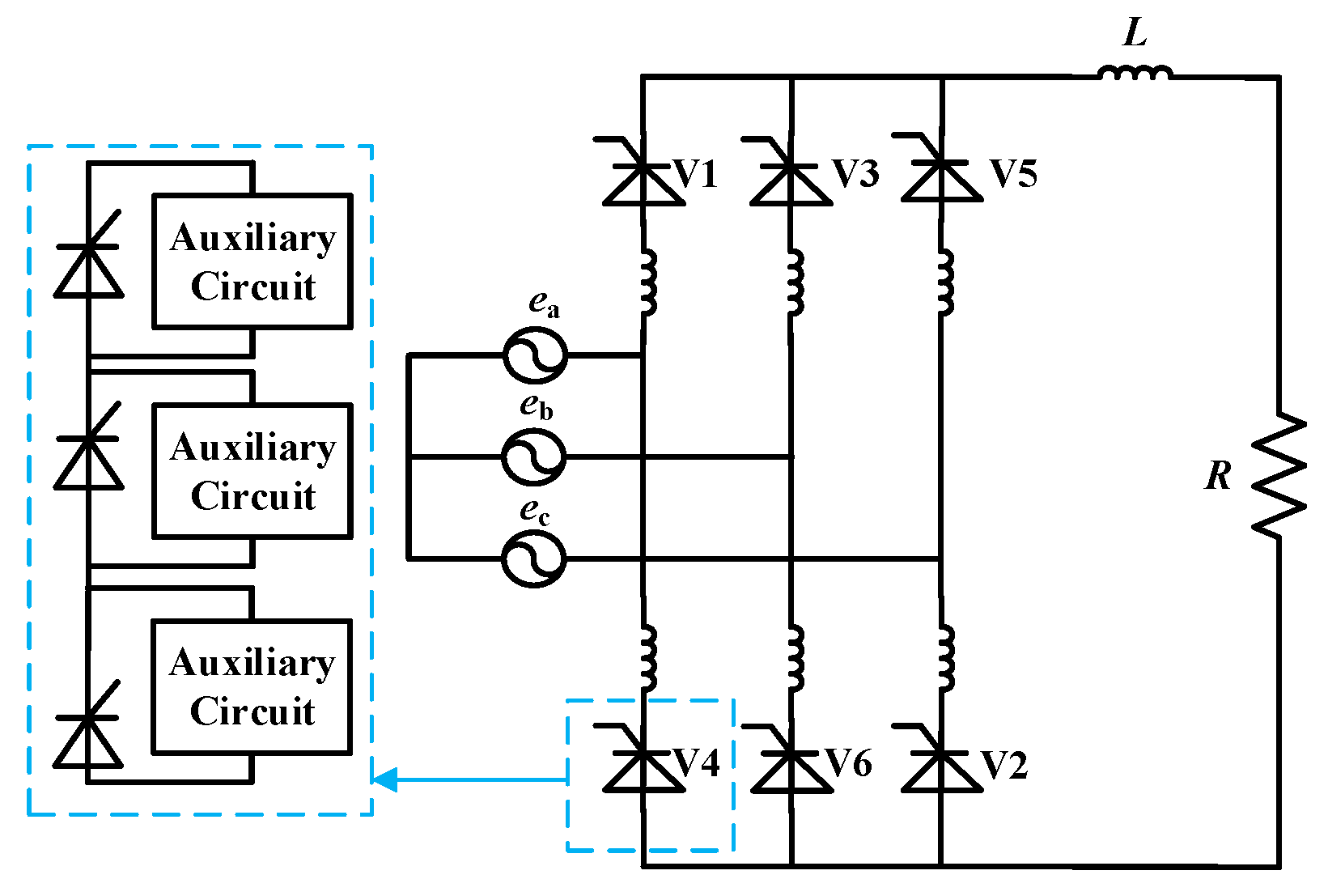
HVDC thyristor converter valves mainly adopt two structures, namely six-pulse and twelve-pulse configurations. A twelve-pulse converter valve is formed by connecting two six-pulse modules in series. Therefore, the six-pulse converter is selected as the main research object in this paper. As shown in Figure 1, L and R represent the load inductance and resistance, respectively; ea, eb, and ec denote the three-phase voltage sources; and Vi represents the thyristor converter valve bridge arm.
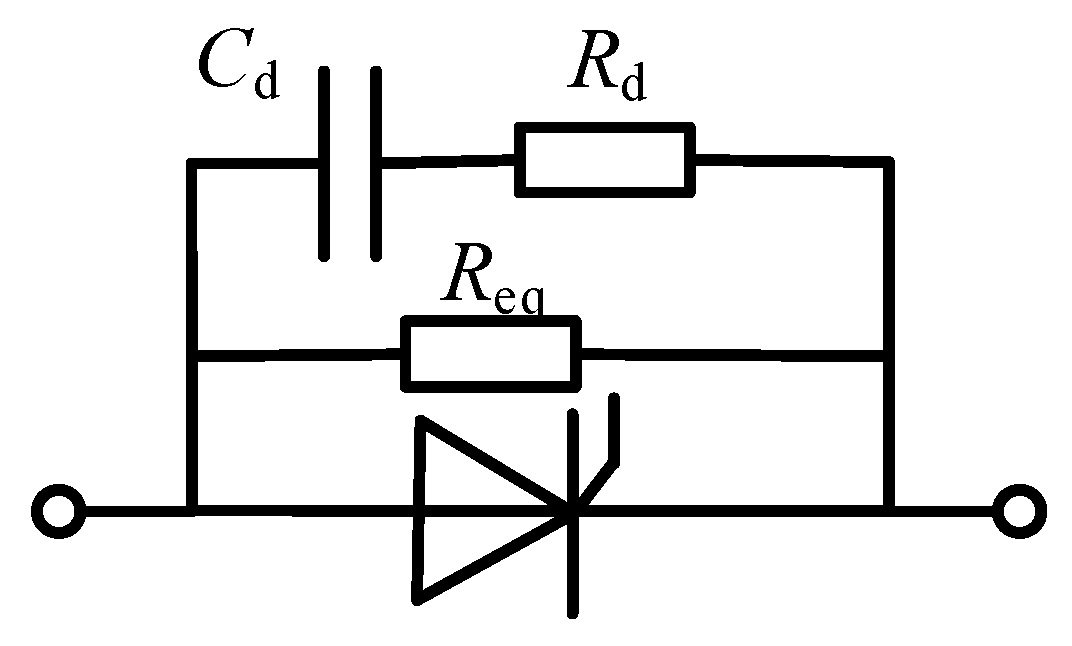
Each bridge arm of a thyristor converter valve consists of seven thyristor levels and a saturated reactor. The auxiliary circuits in Figure 1 include the thyristor-level components other than the thyristor itself. A complete thyristor level consists of a thyristor, a thyristor control unit (TCU), and damping and voltage-sharing circuits. Figure 2 shows the thyristor-level simulation model used in this paper. The damping circuit is composed of a damping capacitor Cd and a damping resistor Rd connected in series, whereas the dc voltage-sharing circuit is represented by Req.

2.2. Selection of Inversion Parameters

When multiple thyristors suffer insulation degradation, the system may face performance deterioration and fault risks, severely affecting safe operation. For a thyristor level, the main indicator of insulation degradation is reverse leakage current, which can be represented by the leakage resistance of the thyristor. Therefore, by identifying the equivalent insulation resistance formed by the parallel combination of the voltage-sharing resistor and the off-state leakage resistance of the thyristor level, the insulation degradation of the thyristor can be reflected [15].
In addition, during system operation, the damping capacitor in the damping circuit connected across the thyristor is frequently charged and discharged. The metal-film capacitor used in this circuit gradually deteriorates over time, thereby affecting the normal turn-on and operation of the thyristor. Engineering practice shows, however, that the performance of the damping resistor in the damping circuit is relatively stable.
By analyzing the variations of equivalent insulation resistance and damping capacitance in the circuit, the degradation of the circuit connected across the thyristor can be assessed [16,17]. Therefore, this paper selects the equivalent insulation resistance and damping capacitance of the thyristor level as the key electrical parameters for evaluating the thyristor health status.
A thyristor converter valve model typically consists of dozens of thyristor levels connected in series, and the variations of parameters such as equivalent insulation resistance exhibit nonlinear characteristics. Because deriving and solving the circuit state equations is highly complex, this paper adopts a data-driven parameter inversion method for more efficient inversion.
First, a power-system simulation model is built according to the actual converter valve, and the original dataset is collected using this simulation model. Since the voltage and current at both ends of a bridge arm can reflect the impedance characteristics of the entire valve, and to ensure safe and reliable operation, the thyristor control unit (TCU) of each thyristor level sends feedback signals to the valve base electronics (VBEs) when preset voltage thresholds are reached [18]. The most common signals are the forward feedback signal POS triggered when the thyristor-level voltage reaches 70 V and the negative feedback signal NEG triggered when it reaches −150 V. Therefore, the selected input data consist of the voltage and current signals at both ends of the bridge arm, together with the pulse timing of the POS and NEG feedback signals.
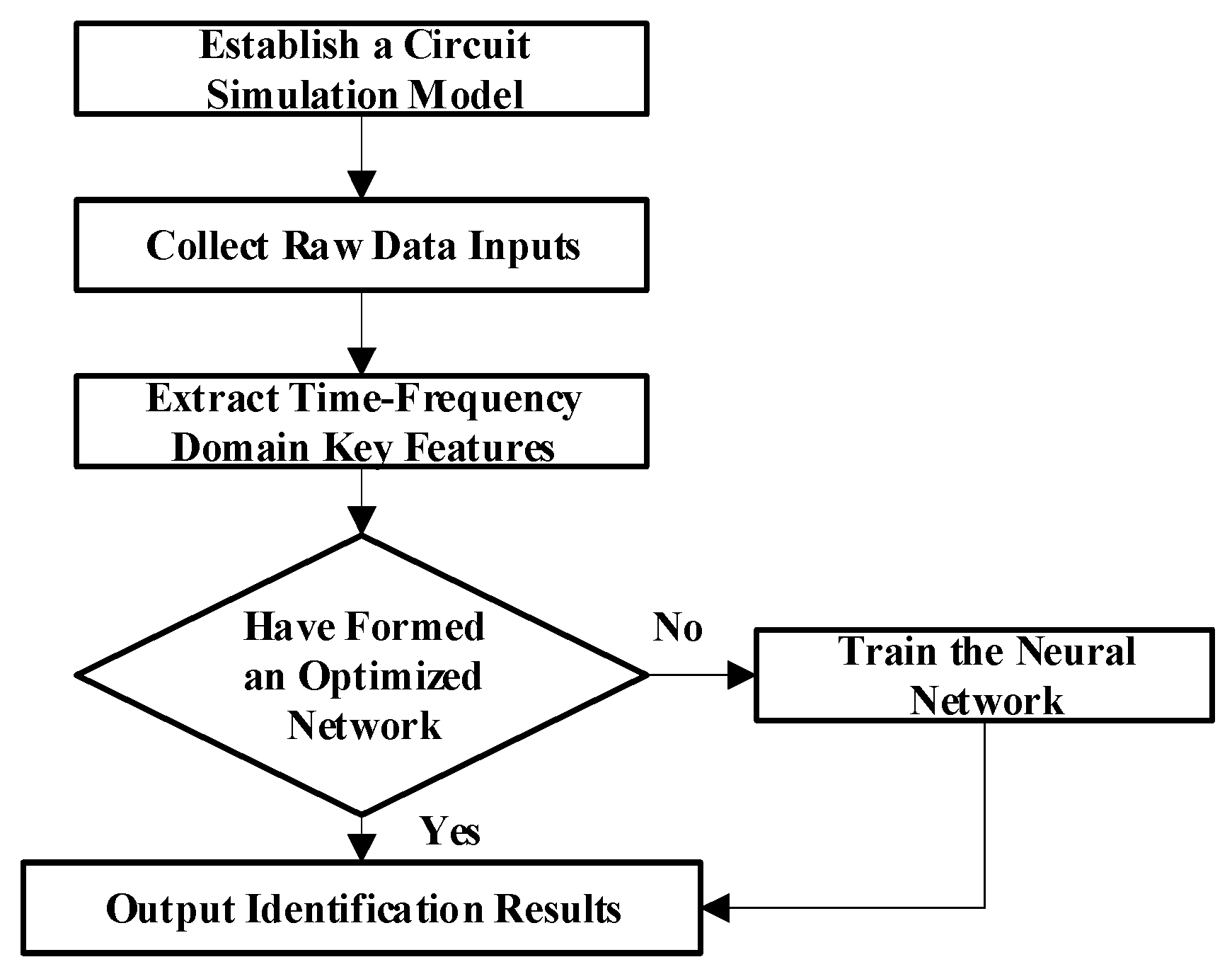
Next, wavelet packet decomposition is used to extract time-frequency-domain features from the original data so as to distill feature inputs related to parameter inversion and ensure that key characteristics of the circuit dynamic behavior are captured. After obtaining the feature inputs, a suitable network architecture is selected and trained using the original dataset and its corresponding parameter labels. Ultimately, the trained neural network can not only accurately identify the parameters of the simulation model but also be applied to practical systems having the same structure to realize accurate parameter inversion. The overall inversion framework is shown in Figure 3.

2.3. Parameter Inversion Method

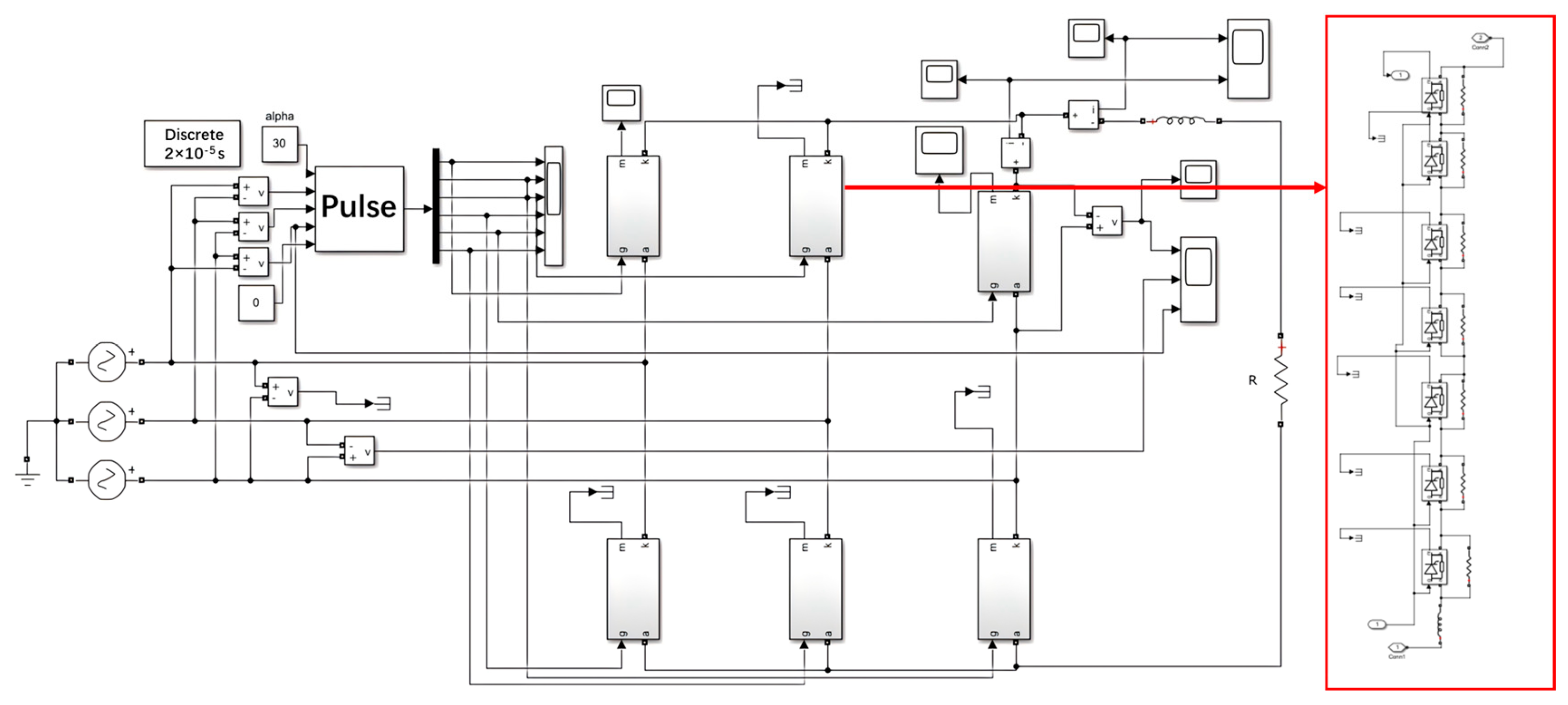
According to the six-pulse converter valve model described in Section 2.1, a Simulink circuit simulation model is established, as shown in Figure 4. Based on parameter values used in practical engineering, the simulation parameters are set as shown in Table 1.
Considering that each thyristor level is identical when their parameters are the same, the system exhibits a certain symmetry. When the parameters of only one thyristor level change, the other thyristor levels remain identical. Therefore, this paper mainly changes the parameters of the first level in the seven-level thyristor simulation model and observes the timing variations of the feedback signals for the first level and the other thyristor levels. The damping capacitance and equivalent insulation resistance of a thyristor level need to be replaced when their degradation reaches 5% and 30%, respectively [19,20].
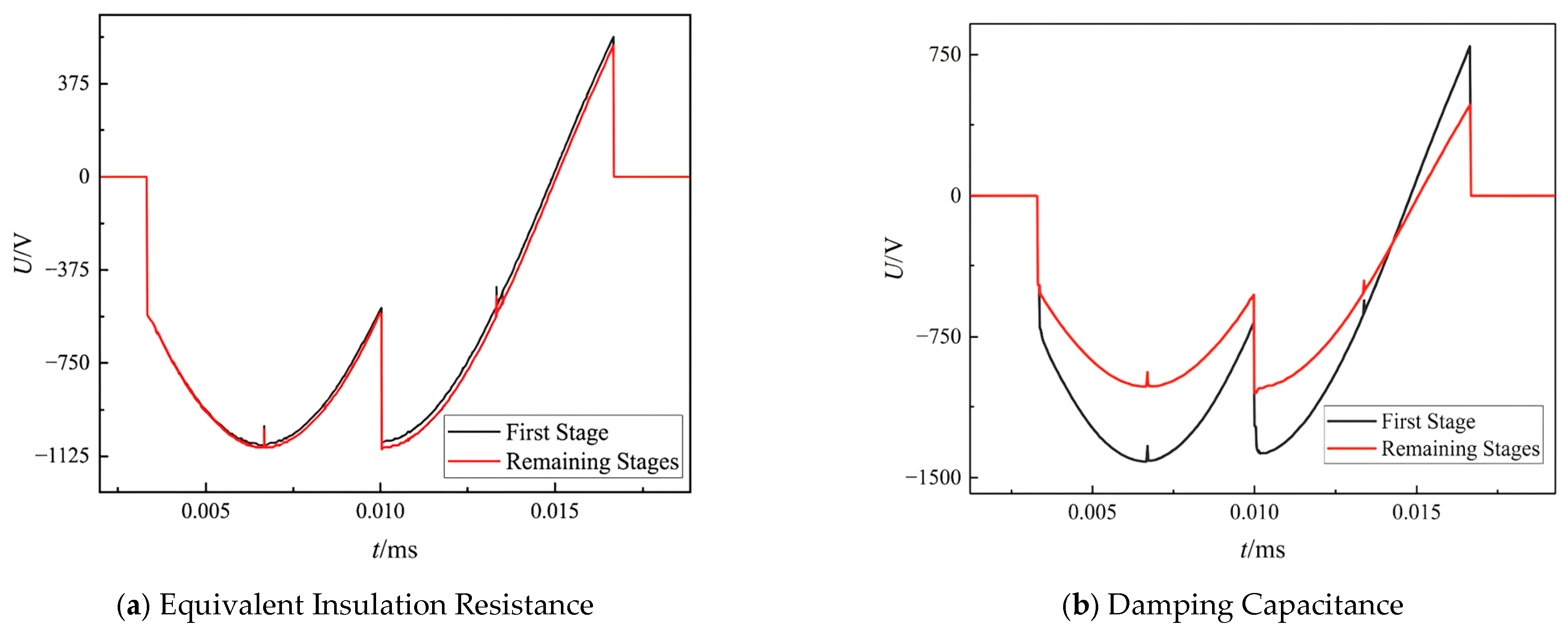
However, the 0.7 p.u. condition is introduced here only to illustrate the sensitivity of the valve-voltage distribution and feedback-signal timing to severe parameter degradation, rather than to define the neural network training domain. Accordingly, Figure 5 presents an extreme-case mechanism analysis in which both the damping capacitance and the equivalent insulation resistance are reduced to 0.7 p.u.
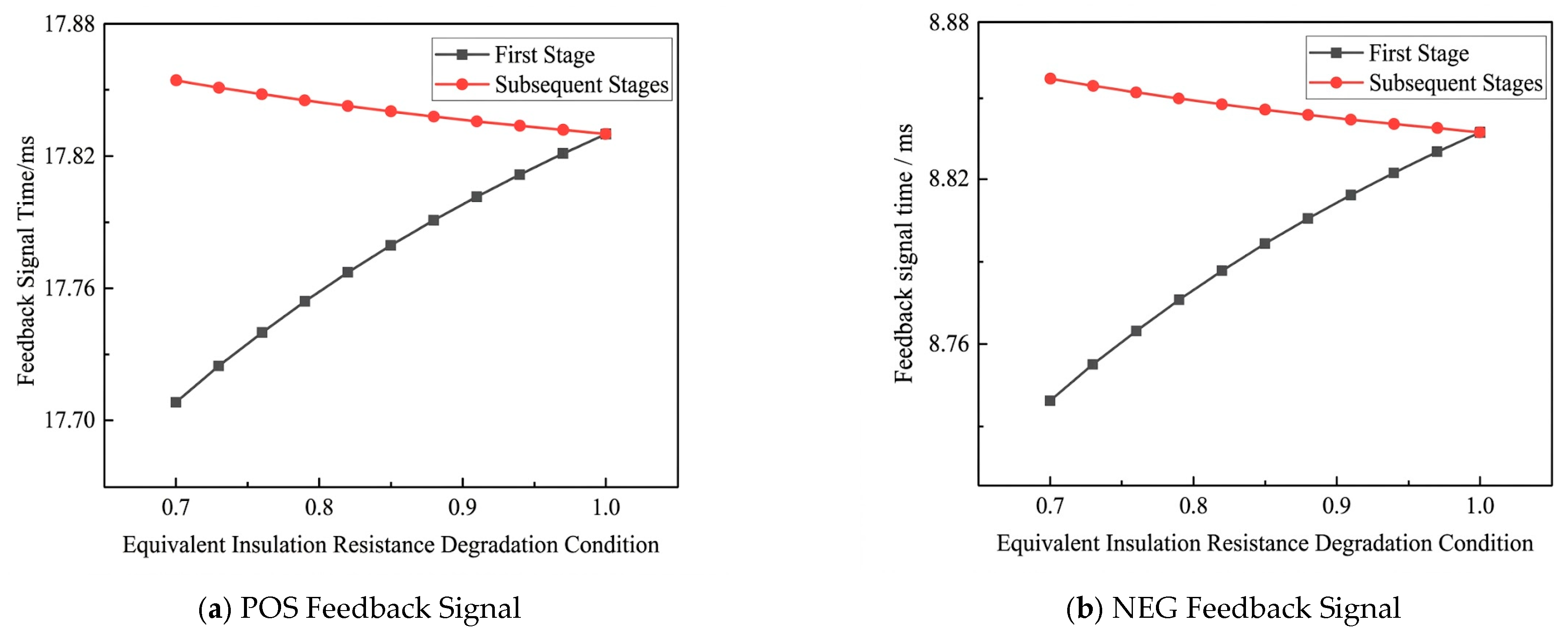
As the equivalent insulation resistance of the first level degrades from 100% to 70% in decrements of 3%, resulting in 11 cases in total, the changes in the feedback signals are shown in Figure 6. For both feedback signals, the signal of the degraded first thyristor level advances, whereas the signals of the remaining levels are delayed. This is mainly because changes in equivalent insulation resistance only alter the voltage-sharing among levels and do not affect the voltage variation rate.
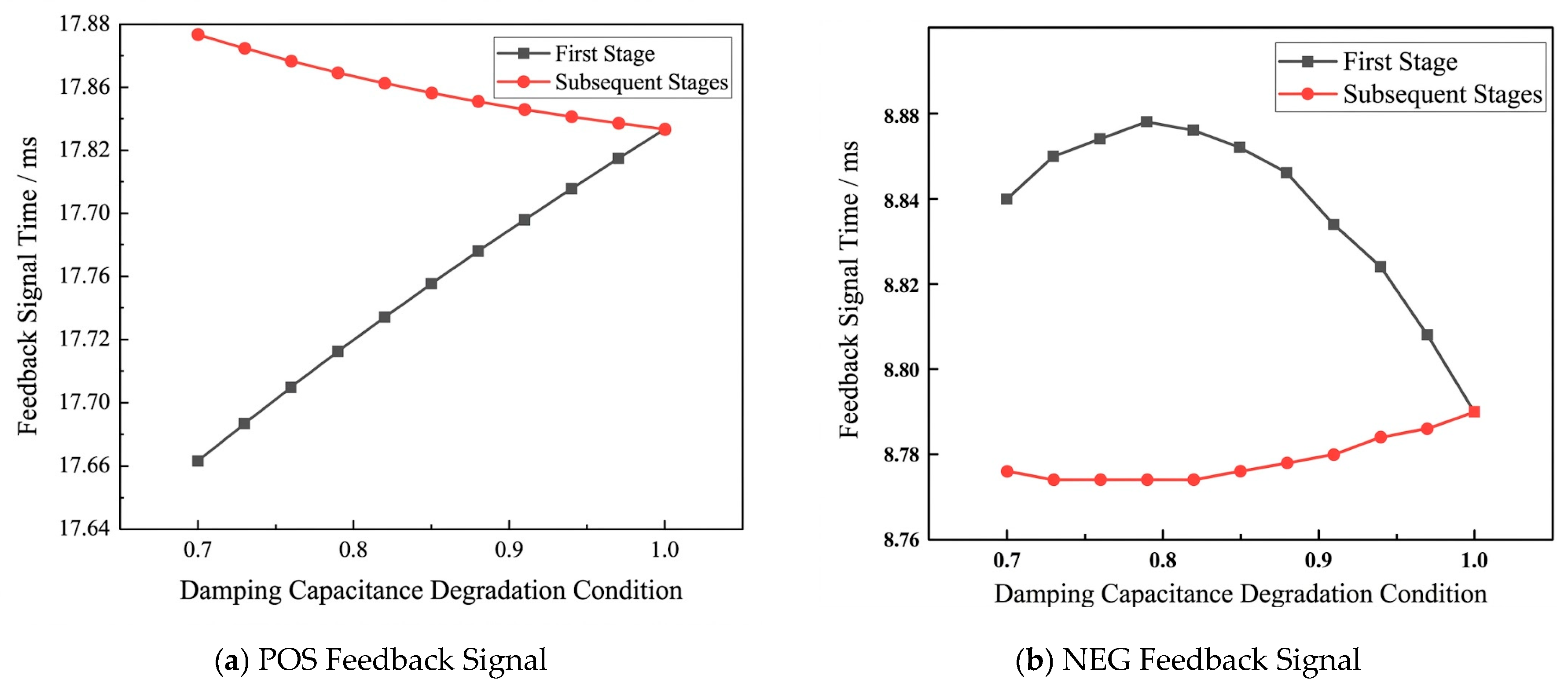
Figure 7 shows the changes in the feedback signals when the damping capacitance of the first level degrades from 100% to 70% in decrements of 3%, again resulting in 11 cases. The POS feedback signal of the first level advances, whereas the NEG feedback signal changes nonlinearly.
When the number of thyristor levels in a converter valve is large, traditional grid sampling leads to an excessive dataset size. Assuming each parameter takes 10 possible values and each converter valve arm contains n thyristor levels, the required dataset size would be 102n, which is almost impossible to realize for large numbers of levels. To reduce the data demand, LHS rather than conventional grid-like sampling is adopted. LHS is a random sampling method for multi-dimensional variable spaces. It partitions the range of each variable and performs random sampling in each interval, thereby ensuring uniform coverage of the multi-dimensional space and improving sampling efficiency and representativeness. Meanwhile, training the network using the whole valve would make the network structure complex and prone to error accumulation. Therefore, the parameters of each thyristor level are identified independently so as to simplify the model structure. It is important to note that in real multi-level converter valves, dynamic coupling exists among levels. When multiple thyristor levels degrade simultaneously, the voltage redistribution effect becomes highly nonlinear, which may introduce cross-coupling errors and reduce the inversion accuracy of the current independent identification model. However, in the context of early condition monitoring, the probability of simultaneous severe degradation occurring across multiple levels is relatively low. The proposed independent identification strategy primarily serves as an efficient and computationally viable method for isolated early fault detection. For larger-scale systems or scenarios involving complex multi-level simultaneous degradation, future work will address this by expanding the multi-dimensional sampling space to include coupled degradation scenarios and exploring decoupling network architectures to further enhance the robustness of the inversion method.
To ensure reliable prediction over a relatively wide degradation range, some margin must be reserved in the sampling range for neural network training. For neural network training, the sampling ranges are set according to practical engineering requirements, together with a limited margin around the normal operating region. Specifically, the damping capacitance is sampled from 90% to 105%, and the equivalent insulation resistance is sampled from 65% to 105%. Therefore, the trained network is intended for accurate inversion within these sampled ranges, whereas the 0.7 p.u. cases in Figure 4, Figure 5 and Figure 6 are used only for qualitative sensitivity analysis.
In the seven-level six-pulse simulation study presented in Section 2, 2000 parameter degradation combinations obtained by LHS are used in the simulation model. Because each bridge arm contains seven thyristor levels, these combinations yield a total of 14,000 original single-level samples for the simulation-based method development. To construct the datasets, these 14,000 samples were divided into training, validation, and test sets, accounting for 70%, 15%, and 15% of the total data, respectively. Crucially, to prevent information leakage and ensure independence between subsets, all seven single-level samples generated from the exact same operating condition were assigned to the same subset, guaranteeing no overlap between training and testing. Furthermore, during neural network training, feature normalization was performed using only the training set to compute the mean and standard deviation. These exact normalization parameters were subsequently applied to the validation and test sets, ensuring fair and reliable evaluation.
(1)
Selection of the Mother Wavelet
To extract useful information from the waveforms more effectively, wavelet packet decomposition is employed to decompose the voltage and current waveforms into different frequency bands, and the energy proportion of each band is taken as the feature value. Since some mother wavelets are not suitable for wavelet packet transforms, four specific mother wavelets are selected, namely Daubechies 4 (Db4), Symlet 4 (Sym4), Biorthogonal 1.5 (Bior1.5), and Coiflet 4 (Coif4). Taking the valve voltage signal measured when all thyristor levels are free of aging as an example, the performance of these four mother wavelets at the third decomposition level is compared. At the third decomposition level, the signal is decomposed into eight groups of wavelet coefficients. The ratio of the energy to Shannon entropy of each group of wavelet coefficients is calculated to evaluate the feature extraction performance. This ratio serves as a criterion for signal quality: higher energy implies more concentrated useful information, while lower Shannon entropy indicates less uncertainty or noise. Therefore, a higher ratio means the corresponding mother wavelet is more effective at extracting distinct features. The results are summarized in Table 2.
As can be seen from Table 2, the Db4 mother wavelet has the highest energy-to-Shannon entropy ratio. Therefore, Db4 is ultimately selected as the mother wavelet for analyzing the voltage and current signals of the thyristor converter valve.
(2)
Feature Dimensionality Reduction
A three-level wavelet packet decomposition is selected, yielding eight feature values for each waveform. The feature values are first indexed: the eight feature values obtained from voltage decomposition are denoted λ1–λ8, and those obtained from current decomposition are denoted λ9–λ16.
After three-level wavelet packet decomposition of the voltage and current, a total of 16 feature values are obtained. Because these 16 feature values are composed of the energy proportions of each frequency band, a certain degree of redundancy exists, and dimensionality reduction is therefore required. The feature values corresponding to changes in capacitance and resistance are then analyzed. The coefficient of variation and the explained variance ratio are two key indicators, and the results are shown in Table 3. The coefficient of variation is used to measure the degree of dispersion of the data and is calculated as the ratio of the standard deviation to the mean. In feature selection, it helps identify feature values with large fluctuations. The explained variance ratio indicates the contribution of each feature value to the total variance and reflects its importance in the data. A high explained variance ratio means that the feature contains more information and variation and is therefore a major feature. Table 3 shows the indicators for feature value dimensionality reduction.
The voltage feature set {λ1–λ8} and current feature set {λ9–λ16} are both normalized energy proportions obtained from a three-level wavelet packet decomposition; therefore, the sum of the features within each set is equal to 1. To eliminate linear dependence, one feature can be removed from each set. Considering parameter sensitivity, λ1 and λ9 have the smallest coefficients of variation in the voltage and current feature sets, respectively, under parameter degradation and are therefore discarded as redundant features with the weakest discrimination ability. In addition, λ11 exhibits a low explained variance ratio and limited contribution to parameter variation, and is therefore also removed. Consequently, the retained features are λ2–λ8, λ10, and λ12–λ16. Together with the POS and NEG timing features, the baseline input vector contains 15 elements.
(3)
Neural Network Training
Step 1: A BP neural network is a multilayer feedforward network whose basic idea is the gradient descent method [21]. Through repeated learning and training, the weights and thresholds are adjusted until the network parameters corresponding to the minimum error are determined, thereby completing training. However, BP neural networks also have some drawbacks, such as a slow training speed and difficulty in determining network parameters.
Because the inputs are the voltage and current feature values together with the feedback-signal times, whereas the outputs are the equivalent insulation resistance and damping capacitance, whose numerical ranges differ greatly, direct training can easily lead to non-convergence of the network. Therefore, the data are first normalized:
x norm = x x min x max x min y norm = y y min y max y min
Step 2: After normalization, all data fall within the interval [0, 1]. The number of neurons in the hidden layer is determined by combining empirical formulas with practical tests, and its value range is calculated by the following formulas:
n 1 = m + n + a
n 2 = m + n 2
where m is the number of neurons in the input layer, n is the number of neurons in the output layer, and a is a constant, typically ranging from 1 to 10.
Step 3: The Grey Wolf Optimizer (GWO) was first proposed by Mirjalili et al. in 2014 [22,23,24]. Its main advantages are simplicity, ease of implementation, fast convergence, and insensitivity to parameter selection, which allow it to effectively avoid local optima. Before training begins, the initial weights are optimized by the GWO algorithm. Multiple candidate weight combinations are first generated to simulate the hunting strategy of grey wolves. The first step is encircling the prey:
D = C X p ( t ) X k ( t ) X k ( t + 1 ) = X p ( t ) A D
A = 2 a r 1 a
C = 2 r 2
a = 2 2 t t max
where t denotes the current iteration number; X k ( t ) denote the positions of the alpha, beta, and delta wolves, respectively; X k ( t + 1 ) denote their updated positions; D denotes the search step; A and C are control vectors; r 1 and r 2 are random numbers in (0, 1); a is the convergence factor; and t max is the maximum number of iterations.
The prey is then attacked. Under the guidance of the three leading wolves, the ω wolves surround and hunt the prey, and the position update equations are as follows:
D α = C 1 X α ( t ) X ( t ) D β = C 2 X β ( t ) X ( t ) D δ = C 3 X δ ( t ) X ( t )
X 1 ( t + 1 ) = X α ( t ) A D α X 2 ( t + 1 ) = X β ( t ) A D β X 3 ( t + 1 ) = X δ ( t ) A D δ
X ( t + 1 ) = 1 3 i = 1 , 2 , 3 X i ( t + 1 )
where X α ( t ) , X β ( t ) , and X δ ( t ) are the current positions of the alpha, beta, and delta wolves, respectively; D α , D β , and D δ represent the search steps of the three leading wolves; and X i ( t + 1 ) ( i = 1 , 2 , 3 ) denotes the updated position of an individual grey wolf under the guidance of the alpha, beta, and delta wolves.
Finally, the weight combination with the best fitness value is selected as the initial weight of the neural network.
In neural network training, the GWO algorithm was used to optimize the initial weights of the BP network. The parameters of the GWO were set as follows: a population size of 30, maximum number of iterations of 100, fitness function defined as the mean squared error between network outputs and target values, and search limits within [−1, 1]. The stopping criterion was either reaching the maximum number of iterations or the fitness function converging below 1 × 10⁻⁹. To ensure reliability, each training session was independently repeated five times, and the best weight combination was selected for the final network training. This configuration ensures that the GWO can converge quickly while effectively avoiding local optima during weight optimization.
Step 4: The sample data are passed from the input layer to the hidden layer, and the output of the hidden layer is calculated through an activation function. The Sigmoid function is selected as the activation function.
h j = f ( i = 1 r w i j x i + b j   )
Step 5: The output of the hidden layer is further processed by the activation function of the output layer. Since parameter inversion is a regression problem, a linear activation function is used in this paper.
y k = g ( j = 1 n v j k h j + c k )
Step 6: The loss function is established as the mean square error (MSE) based on the sum of squared differences between the network output and the target value:
E = 1 2   k = 1 m ( y k y ^ k   ) 2
Step 7: By calculating the gradient of the error, the weights and biases between the input layer and hidden layer and between the hidden layer and output layer are adjusted:
Δ w i j = η E w i j
Δ v j k = η E v j k
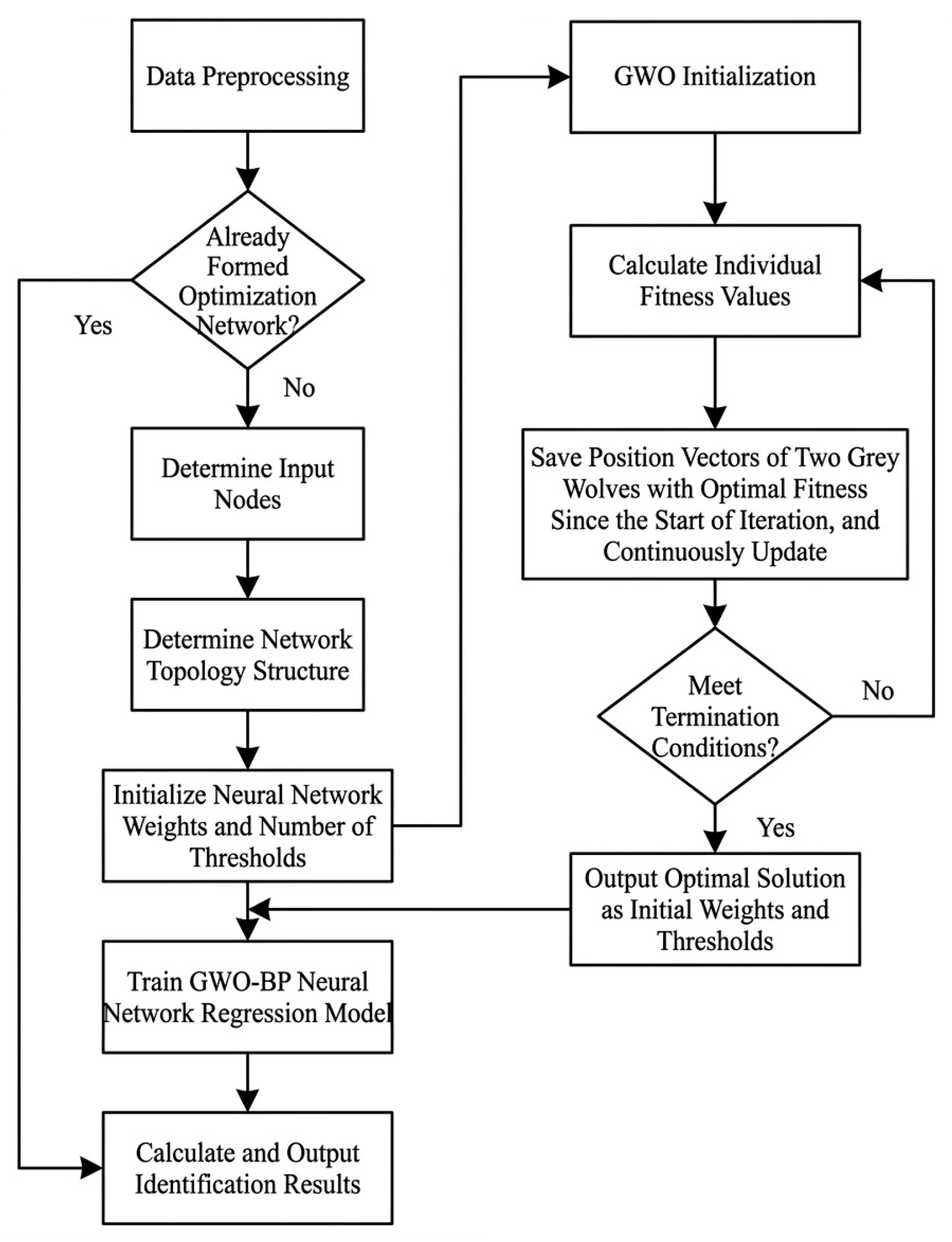
Step 8: The above steps are repeated until the parameter inversion accuracy requirement is met or the maximum number of training iterations is reached. The network model is then successfully trained. The training flowchart is shown in Figure 8.
Based on the baseline input–output requirements, the number of input nodes in the neural network is set to 15, the number of output nodes to 2, and the estimated hidden node range was 5 to 15. Within this range, simulations were conducted for different hidden node numbers, recording the training and validation mean squared errors and training time. Table 4 shows that with 10 hidden nodes, both the training and validation errors reached a low level while keeping training time reasonable. Fewer than 10 nodes resulted in insufficient network capacity and higher errors, whereas more than 10 nodes offered limited error reduction but a significantly longer training time. Therefore, 10 hidden nodes were selected to balance network accuracy and training efficiency. The maximum number of iterations was set to 1000, the error threshold to 1 × 10⁻⁹, and the learning rate to 0.01. In this way, the input dataset after parameter feature extraction was used to train the neural network. To ensure the reproducibility of the computational performance and to provide a fair basis for comparing the inversion and training times, all neural network training and parameter inversion simulations were executed on a workstation. The hardware environment consisted of an Intel Core i7-13700K processor (Intel Corporation, Santa Clara, CA, USA) and 16 GB of RAM. The algorithms were implemented and tested using MATLAB R2023a (MathWorks, Natick, MA, USA) running on a Windows 11 operating system (Microsoft Corporation, Redmond, WA, USA). All execution times were recorded under standard conditions without other computationally intensive background tasks.


3. Experimental Validation and Results

3.1. Experimental Platform and Dataset Construction

To validate the feasibility of the proposed parameter inversion method under practical measurement conditions, a scaled-down experimental platform based on a three-level thyristor single-phase half-wave converter was constructed. The main circuit utilizes press-pack thyristors (Model KP03XY8500, Xi’an Peric Power Electronics Co., Ltd., Xi’an, China). Although this platform cannot fully reproduce the electrical scale of the seven-level six-pulse converter valve studied in Section 2, it preserves the key mechanisms relied upon by the inversion framework, including the series-level voltage distribution, parameter-dependent damping-branch transients, loop-current response, threshold-triggered feedback-signal timing, and practical acquisition effects such as sampling delay and measurement noise. It should be noted that the platform does not replicate the full six-pulse commutation process, seven-level arm coupling, high-voltage insulation stress, saturated-reactor effects, valve-hall electromagnetic interference, thermal coupling, or stray parameter distribution.
Nevertheless, the scaled-down experiment effectively validates the proposed feature extraction and parameter inversion framework at the mechanism level, because the key features on which the method depends—voltage and current waveforms and feedback signals sensitive to parameter variations—are preserved. Therefore, the experiment demonstrates the practical performance of the method in capturing parameter-dependent characteristics, extracting key time-frequency information, and achieving accurate neural network inversion, providing a reasonable basis for its engineering feasibility.
In the experimental validation, the samples collected from the three-level experimental platform were also divided into training, validation, and test sets, maintaining the same proportion and anti-leakage principle as in the simulation data. All samples generated under the same operating condition were assigned to the same subset to ensure independence between training and test data and prevent information leakage. Normalization was performed using only the training set and applied to the validation and test sets to ensure fair evaluation of the experimental results.
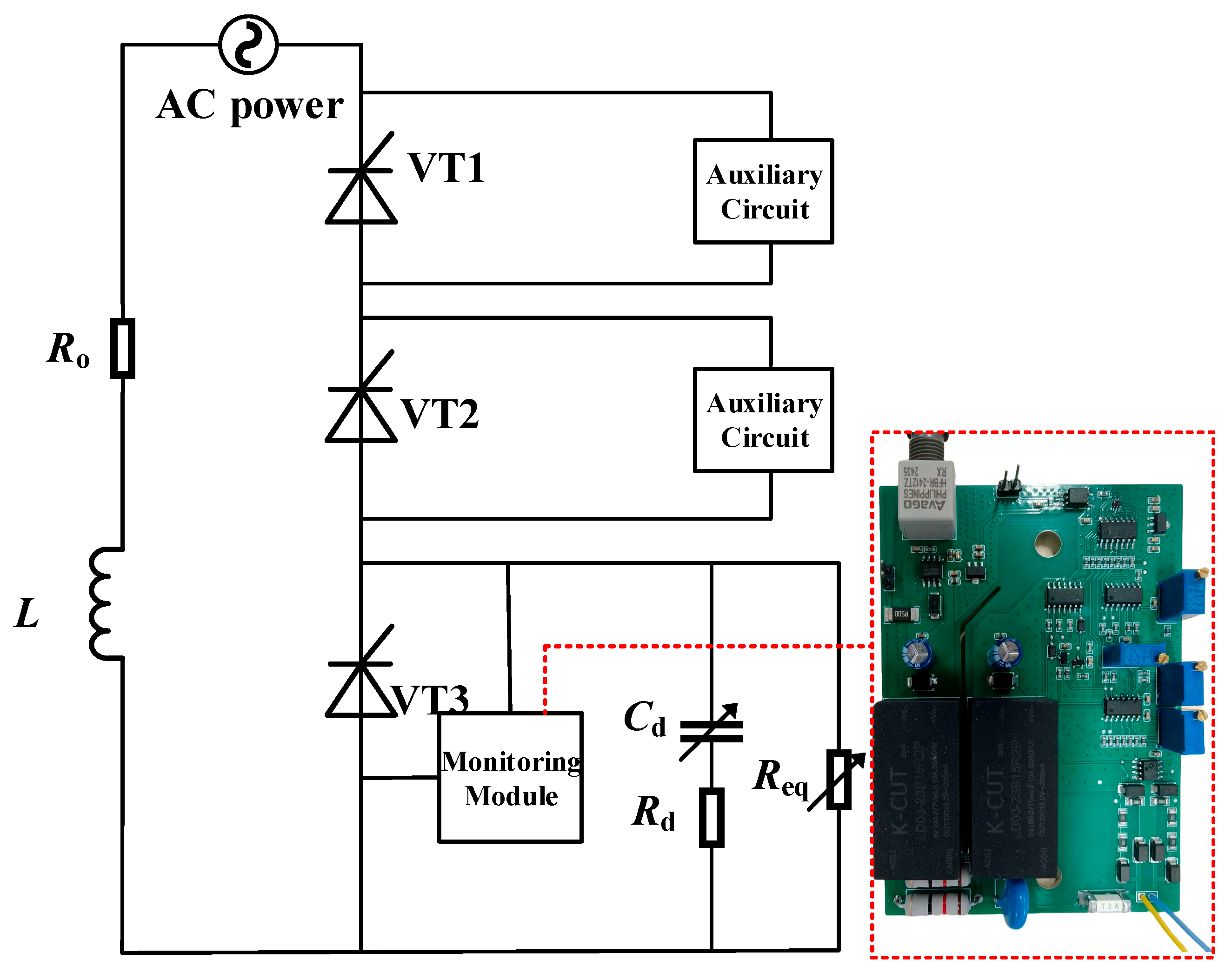
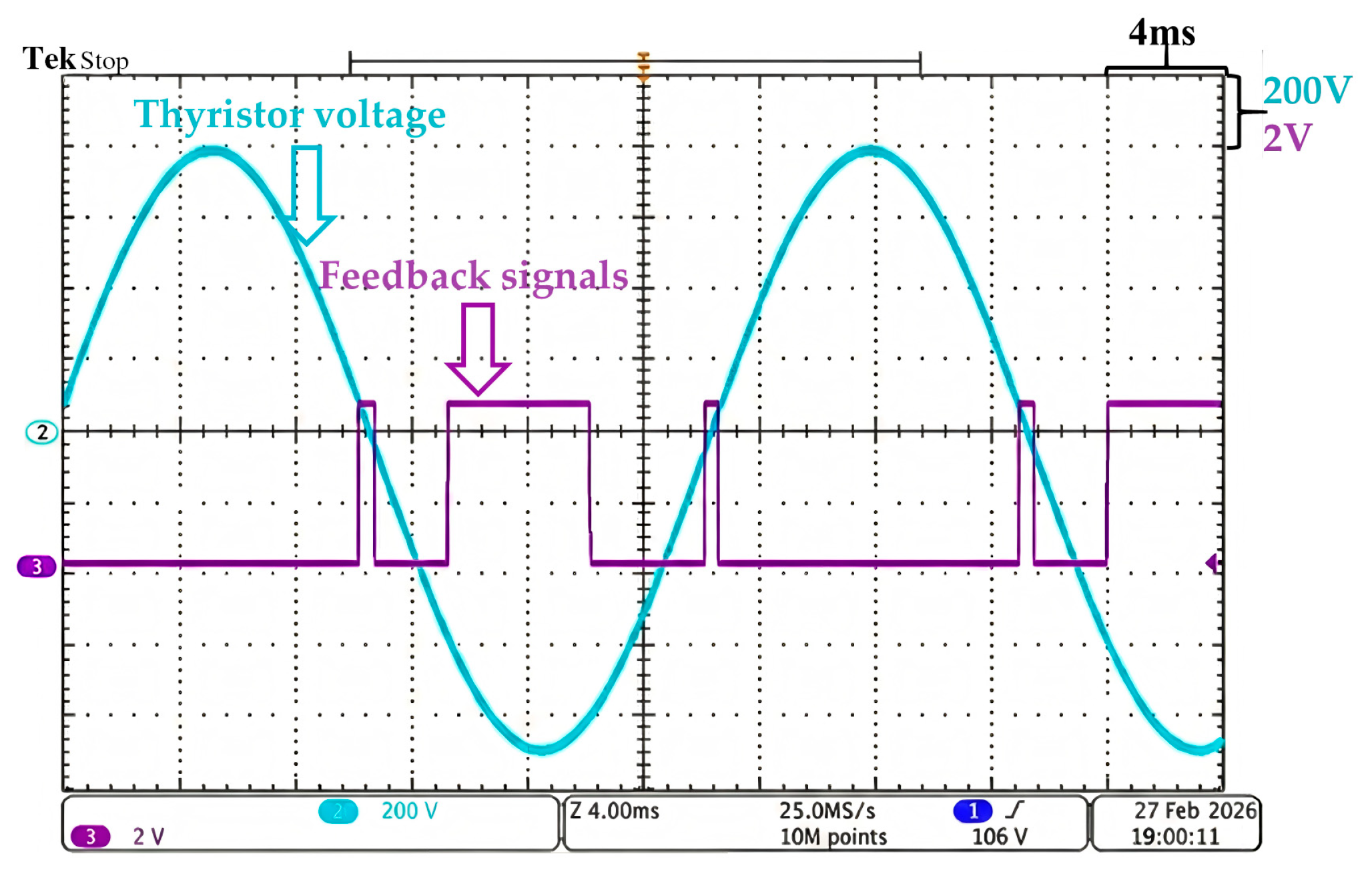
As shown in Figure 9, the platform mainly consists of a main circuit, a thyristor-level monitoring module, a data acquisition unit (MDO3024 oscilloscope, Tektronix, Beaverton, OR, USA), and an adjustable parameter module (custom-built in our laboratory). Specifically, visual call-outs have been added to Figure 9 to highlight that the ‘Monitoring Module’ in the left-hand schematic corresponds to the physical PCB on the right. The primary function of this PCB is to extract energy from the thyristor voltage to generate the corresponding feedback signals. The equivalent insulation resistance and damping capacitance of each thyristor level can be flexibly adjusted through a variable resistor board and a variable capacitor board, respectively. The waveform outputs of the thyristor-level monitoring module are illustrated in Figure 10.
To achieve a balance between sample-space coverage and experimental feasibility, the Latin hypercube sampling (LHS) method was employed to construct the datasets used for the scaled-down experimental validation in this section. These datasets are independent of the 2000-combination seven-level simulation dataset described in Section 2.3 and are used only for the three-level experimental platform verification. Specifically, both the experimental training set and the platform-matched simulation training set contain 200 bridge-arm operating conditions, which correspond to 600 single-level samples after expansion for the three-level bridge arm. In addition, the experimental validation set contains 50 bridge-arm operating conditions, yielding a total of 150 single-level samples. For each operating condition, the bridge-arm voltage, loop current, and feedback signals generated by the monitoring module were synchronously acquired.
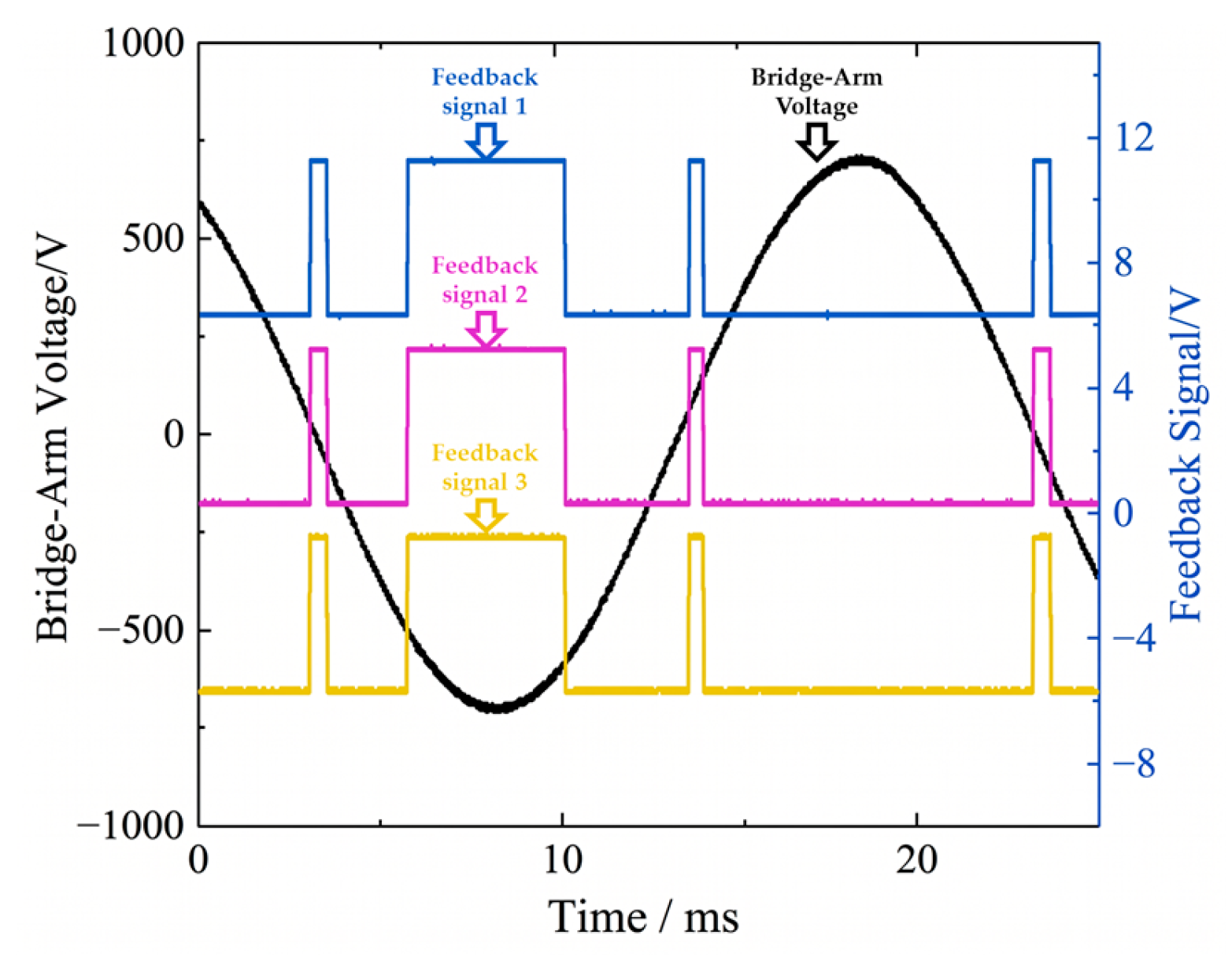
Typical waveforms of the bridge-arm voltage and feedback signals are shown in Figure 11. The raw measurements were then processed through effective-cycle extraction, outlier removal, time alignment, and normalization. Subsequently, the wavelet packet features of the bridge-arm voltage and current, together with the temporal features of the feedback signals, were extracted and used as the inputs to the neural network.

3.2. Experimental Validation Results of the Parameter Inversion Model

To ensure a fair comparison, both the experimentally trained model and the simulation-trained model adopted the same GWO-BP neural network architecture and training strategy described in the previous section. It should be noted that the simulation-trained model here is trained using the platform-matched 200-condition three-level simulation dataset introduced in Section 3.1, rather than the 2000-combination seven-level simulation dataset used for the method study in Section 2.3. The model trained using the experimental training set is denoted as Exp-GWO-BP, whereas the model trained using the simulation training set is denoted as Sim-GWO-BP. Both models exhibited stable convergence during training. However, although the simulation-trained model converged slightly faster, the experimentally trained model achieved higher inversion accuracy on the experimental validation set.
Table 5 presents the parameter inversion results of the two models on the experimental validation set. For the Exp-GWO-BP model, the mean relative errors of the equivalent insulation resistance and damping capacitance are 1.31% and 0.82%, respectively, while the corresponding maximum relative errors are 3.54% and 2.11%. These results indicate that the proposed method can still achieve accurate inversion of the key thyristor-level parameters under real experimental conditions. In comparison, the inversion error for damping capacitance is lower than that for equivalent insulation resistance, suggesting that the features associated with equivalent insulation resistance are more sensitive to measurement noise and other non-ideal factors.
To evaluate the robustness of the proposed method under practical measurement conditions, Gaussian noise with a peak amplitude of 3% was added to the voltage, current, and feedback signals in both the simulation and experimental inputs. The noisy signals were then processed through feature extraction and input into the GWO-BP neural network for parameter inversion. Table 6 indicates that even with noise interference, the increase in maximum and mean relative errors remained below 6%, and the inversion accuracy remained high. This test demonstrates that the proposed method is robust against measurement noise and can reliably operate in practical engineering applications.
Although the Sim-GWO-BP model exhibits slightly higher errors than the experimentally trained model, the maximum relative errors of both identified parameters remain below 5%, demonstrating that the model trained with simulation data still possesses satisfactory cross-platform generalization capability under the scaled-down experimental platform and controlled measurement conditions.
These experimental results verify the feasibility of the proposed method under practical measurement conditions on a scaled-down platform. Further validation on a full-scale multi-level converter valve platform is still needed before the quantitative error levels are directly extended to engineering converter valves.

3.3. Effect of Inversion Strategies on the Inversion Results

The proposed method is compared with the state equation method based on PSO and with the Elman neural network method [13,14], and the results are shown in Table 7.
Compared with the PSO-based method, it can be seen that the neural network method significantly shortens the parameter inversion time while maintaining basically the same inversion accuracy, which helps improve the efficiency and engineering feasibility of parameter inversion for converter valve thyristor levels. In addition, when the number of levels is large, the proposed method yields significantly better inversion results than system inversion based on the PSO method. The Elman neural network method has a relatively large inversion error and mainly investigates the feasibility of parameter inversion for a two-level thyristor system. It enumerates every possible case for every parameter of each thyristor level, which leads to a huge number of required data points when the number of levels is large. Moreover, the error gradually increases as the number of levels increases, and extra sensors are also required. Without the need for additional sensors, the proposed method can effectively identify parameters in systems with many levels, substantially control the inversion error, and improve the overall stability and accuracy of the system.

3.4. Effect of Neural Network Methods on the Inversion Results

To evaluate the overall performance of the GWO-BP neural network selected in this paper, it is compared with the commonly used BP, GA-BP, and PSO-BP neural networks. The inversion results are expressed in terms of the maximum relative error, and the training time of the neural networks is also included. The results are shown in Table 8.
As shown in Table 6, the three optimized BP networks (GA-BP, PSO-BP, and GWO-BP) all outperform the conventional BP network. Among them, GWO-BP achieves the lowest maximum relative error for equivalent insulation resistance (2.23%) and the shortest training time among the optimized networks (102 min), whereas PSO-BP yields the lowest maximum relative error for damping capacitance (0.11%). Therefore, GWO-BP is adopted in this study because it offers the best overall trade-off between inversion accuracy and training efficiency rather than the best value for every individual metric.

3.5. Effect of Feedback-Signal Combinations on the Inversion Results

For thyristor monitoring modules based on different technical routes, such as the thyristor voltage monitoring board (TVM), thyristor control unit (TCU), and gate unit (GU), the types of generated feedback signals may also differ [25,26,27]. These feedback signals characterize the voltage state of the thyristor level under different operating conditions, and different feedback-signal combinations will affect the inversion performance of the model to different degrees. Therefore, analyzing the influence of different feedback-signal combinations on inversion performance is of certain reference value for the design and modification of feedback signals in engineering thyristor monitoring modules. In addition to the POS and NEG signals considered above, a high-voltage feedback signal HV generated when the thyristor-level voltage reaches a value near the negative voltage peak is also considered as an additional input for network training, so as to characterize waveform features under different thyristor turn-off conditions. When the additional HV timing feature is included, the input dimension increases from 15 to 16.
When different feedback-signal combinations are used as inputs, the neural network training results are as shown in Table 9. By adding the high-voltage signal HV to characterize the operating state of the thyristor-level voltage under different conditions, more transient feature information is introduced to enhance sensitivity to the degradation of the damping capacitance and equivalent insulation resistance. After the HV signal is added as an input, the inversion accuracy for the equivalent insulation resistance is improved.

4. Conclusions

This paper proposes a data-driven method for identifying the health-status parameters of converter valve thyristor levels based on time-frequency-domain features. First, a six-pulse converter valve circuit simulation model is established, and the bridge-arm voltage, current, and thyristor-level feedback signals are collected by means of LHS sampling to generate the original dataset. Then, wavelet packet decomposition is used to extract features from the original data, thereby obtaining time-frequency-domain features that can effectively characterize the voltage and current states of the converter valve bridge arm. Next, dimensionality reduction is performed by comparing the coefficient of variation and explained variance ratio so as to obtain efficient input data suitable for neural network training. Subsequently, a BP neural network is trained using the reduced-dimension data, and the network parameters are optimized by the GWO algorithm to improve inversion accuracy and convergence speed. Finally, the results show that the BP neural network optimized by the GWO algorithm can achieve a significant improvement in accuracy in the inversion of health-status parameters for converter valve thyristor levels. The main conclusions are as follows:
(1)
Through simulation verification based on the six-pulse converter valve model, the proposed GWO-BP neural network provides superior overall performance compared to the PSO-based method and the Elman neural network. It offers a favorable balance between inversion accuracy and training efficiency, keeping the maximum inversion errors of both identified parameters below 5%. Furthermore, simulation analysis indicates that the inversion accuracy can be further improved by incorporating an additional high-voltage (HV) feedback signal.
(2)
Through verification on the reduced-scale three-level experimental platform, the practical feasibility of the proposed method was successfully demonstrated. The method exhibited robustness under practical measurement conditions, maintaining high inversion accuracy with maximum relative errors below 6% even after introducing measurement noise. This proves its capability to reliably capture parameter-dependent characteristics in physical hardware.
(3)
Regarding possible future extensions, while the proposed method performs well for isolated early fault detection, future work will focus on extending this framework to full-scale multi-level converter valves. This includes expanding the multi-dimensional sampling space to address dynamic cross-coupling effects under simultaneous multi-level degradation scenarios, exploring decoupling network architectures, and integrating real-time data-acquisition technology for more intelligent equipment management.

Author Contributions

Conceptualization, Y.Z. and D.X.; methodology, M.L.; software, C.L.; validation, J.R., J.D. and C.L.; formal analysis, B.X.; investigation, L.P.; resources, Y.Z.; data curation, L.P.; writing—original draft preparation, D.X.; writing—review and editing, M.L.; supervision, Y.Z. All authors have read and agreed to the published version of the manuscript.

Funding

This work was supported by the Science and Technology Project of the State Grid Shandong Electric Power Company (Project No. 520626250007, Name: Research and Application of High-efficiency Detection and Condition Assessment Technology for Multi-thyristor Level of HVDC Transmission Converter Valve).

Data Availability Statement

The research conclusions presented in this article were independently completed by the author. All research data can be provided to relevant researchers upon reasonable request.

Acknowledgments

The authors would like to thank all individuals and institutions that provided support and assistance during the course of this research.

Conflicts of Interest

Authors Yingfeng Zhu, Donglin Xu, Junqi Ding, Chenhao Li and Jie Ren were employed by the company State Grid Shandong Electric Power Research Institute. The remaining authors declare that the research was conducted in the absence of any commercial or financial relationships that could be construed as a potential conflict of interest.

References

  1. Zhao, W. HVDC Transmission Engineering Technology; China Power Express: Beijing, China, 2004. [Google Scholar]
  2. Tang, G.; Pang, H.; He, Z. R&D and application of advanced power transmission technology in China. Proc. CSEE 2016, 36, 1760–1771. (In Chinese) [Google Scholar] [CrossRef]
  3. Hammons, T.J.; Woodford, D.; Loughtan, J.; Chamia, M.; Donahoe, J.; Povh, D.; Bisewski, B.; Long, W. Role of HVDC transmission in future energy development. IEEE Power Eng. Rev. 2000, 20, 10–25. [Google Scholar] [CrossRef]
  4. Tiku, D. DC power transmission: Mercury-arc to thyristor HVdc valves [History]. IEEE Power Energy Mag. 2014, 12, 76–96. [Google Scholar] [CrossRef]
  5. Guo, X.; Li, X.; Wang, Q.; Li, P. Status and thoughts on the development of UHVDC transmission technology. New Power Syst. 2024, 2, 237–250. (In Chinese) [Google Scholar]
  6. Lan, Y.; Liu, W.; Lan, T.; He, Q.; Sheng, C. Considerations and practices of UHVDC converter’s digitalization. Electr. Power Inf. Commun. Technol. 2024, 22, 1–9. (In Chinese) [Google Scholar]
  7. Li, J.; Zhang, K.; Chang, Z.; Zhao, Y. Design and experimental study of an optical-fiber temperature-measurement system for HVDC converter valves. Power Electron. 2016, 50, 80–83. (In Chinese) [Google Scholar] [CrossRef]
  8. Li, G.; Liu, S.; Xu, F.; Zhou, Z. Temperature monitoring of valve-hall equipment in flexible DC converter stations. Electr. Power Constr. 2013, 34, 92–94. (In Chinese) [Google Scholar] [CrossRef]
  9. Shen, C. Research on Condition-Based Maintenance Strategies for Smart Grids Based on Online Monitoring. Master’s Thesis, North China Electric Power University, Baoding, China, 2017. (In Chinese) [Google Scholar]
  10. Zhou, J. Research on Non-Intrusive Parameter-Inversion Technology for Modular Power Electronic Converters. Master’s Thesis, Nanjing University of Science and Technology, Nanjing, China, 2023. (In Chinese) [Google Scholar]
  11. Dai, Z.; Zhang, D.; Liu, S.; Guo, R.; Chen, L.; Wang, C. Double-Scale Convolutional Neural Network for Parameter Identification of DC-Link Capacitor in TMMC. Power Supply 2024. Available online: https://link.cnki.net/urlid/12.1420.TM.20240426.1836.091 (accessed on 4 May 2026). (In Chinese)
  12. Luo, Z. Research on Parameter-Estimation Methods for Power Electronic Converters Based on Digital Twins. Master’s Thesis, Beijing Jiaotong University, Beijing, China, 2022. (In Chinese) [Google Scholar]
  13. Wang, X. Research on Circuit-Parameter Inversion Methods for Converter-Valve Thyristor Levels. Master’s Thesis, Xi’an Jiaotong University, Xi’an, China, 2023. (In Chinese) [Google Scholar]
  14. Pang, L.; Zhang, T.; Wang, X.; Zhang, K.; Liu, L. Parameter identification of key components of thyristor converter valve based on wavelet packet key feature extraction and Elman neural network. IET Gener. Transm. Distrib. 2023, 17, 947–961. [Google Scholar] [CrossRef]
  15. Liu, L.; Jia, Z.; Wang, X.; Pang, L.; Yu, Y. Study on influence of deterioration of converter valve parameters on timing characteristics of monitoring signals of thyristor level control unit. Adv. Technol. Electr. Eng. Energy 2024, 43, 43–54. (In Chinese) [Google Scholar] [CrossRef]
  16. Du, Y.; Pan, L.; Zhu, L.; Ji, S. AC and DC voltage degradation characteristics of metallized film capacitors. Electr. Power Eng. Technol. 2020, 39, 151–158. (In Chinese) [Google Scholar] [CrossRef]
  17. Cheng, L.; Li, Z.; Wang, J.; Liu, W.; Li, S. Failure study of metallized film capacitors under the coupled action of HVDC electric field and harmonics. Proc. CSEE 2023, 43, 8955–8965. (In Chinese) [Google Scholar] [CrossRef]
  18. Zheng, X. Brief analysis of the function of the TVM thyristor-voltage monitoring board in valve protection. Power Electron. 2016, 50, 84–85+92. (In Chinese) [Google Scholar]
  19. DL/T 351-2019; Guide for Maintenance of Thyristor Converter Valves. China Electric Power Press: Beijing, China, 2019. (In Chinese)
  20. GB/T 26215-2023; Capacitors for Damping and Absorption Circuits of Converter Valves in HVDC Transmission Systems. Standards Press of China: Beijing, China, 2023. (In Chinese)
  21. Rumelhart, D.E.; Hinton, G.E.; Williams, R.J. Learning representations by back-propagating errors. Nature 1986, 323, 533–536. [Google Scholar] [CrossRef]
  22. Mirjalili, S.; Mirjalili, S.M.; Lewis, A. Grey Wolf Optimizer. Adv. Eng. Softw. 2014, 69, 46–61. [Google Scholar] [CrossRef]
  23. Jiang, X.; Wang, B.; Chen, Y.; Zhang, J. Optimization of operation and maintenance plan for offshore wind farms based on an improved grey wolf algorithm. Shandong Electr. Power Technol. 2026, 53, 36–46. (In Chinese) [Google Scholar] [CrossRef]
  24. Zhang, H.; Chen, H.; Liu, C. Optimization reconstruction of active distribution networks based on an improved differential grey wolf algorithm. Shandong Electr. Power Technol. 2023, 50, 7–13. (In Chinese) [Google Scholar]
  25. Xia, D.; Du, J.; He, X.; Shi, S.; Zhang, C. Research progress on the reliability of thyristor power devices. Autom. Instrum. 2024, 07, 16–21. (In Chinese) [Google Scholar] [CrossRef]
  26. Ze, M.; Liao, M. Triggering and monitoring system of thyristor valves for fault current limiters. Trans. China Electrotech. Soc. 2010, 25, 191–195+206. (In Chinese) [Google Scholar] [CrossRef]
  27. Yang, H. Research on fault-testing methods for TCU units of HVDC converter valves. Technol. Innov. Appl. 2022, 12, 129–132. (In Chinese) [Google Scholar]
Figure 1. Schematic diagram of the six-pulse converter valve model.
Energies 19 02357 g001
Figure 2. Circuit model of a thyristor level.
Energies 19 02357 g002
Figure 3. Diagram of the parameter inversion framework.
Energies 19 02357 g003
Figure 4. The detailed MATLAB/Simulink circuit simulation model of the converter-valve system.
Energies 19 02357 g004
Figure 5. Voltage distribution of thyristor levels when the equivalent insulation resistance and damping capacitance each degrade to 0.7 p.u.
Energies 19 02357 g005
Figure 6. Changes in feedback signals during insulation resistance degradation.
Energies 19 02357 g006
Figure 7. Changes in feedback signals during damping capacitance degradation.
Energies 19 02357 g007
Figure 8. Training flowchart of the GWO-BPNN.
Energies 19 02357 g008
Figure 9. The experimental platform.
Energies 19 02357 g009
Figure 10. The waveform of the thyristor-level monitoring module.
Energies 19 02357 g010
Figure 11. Typical waveforms of the bridge-arm voltage and feedback signals.
Energies 19 02357 g011
Table 1. MATLAB/Simulink simulation parameters.
System ParametersSource Voltage/kVFrequency/HzFiring Angle/deg
605030
Load Resistance/ohmSmoothing Inductance/mHNumber of Thyristor Levels
1001507
Thyristor-Level Model ParametersVoltage-Sharing Resistance/kohmDamping Capacitance/uFDamping Resistance/ohm
100130
Table 2. Energy-to-Shannon entropy ratios of different mother wavelets.
Decomposition NodeEnergy-to-Shannon Entropy Ratio
Db4Sym4Bior1.5Coif4
cfs300.33250.35420.32120.2234
cfs310.14530.22320.09780.0287
cfs320.23220.09870.19940.0876
cfs330.18990.05430.25110.2235
cfs340.32980.09860.12770.1654
cfs350.33650.31680.13980.2377
cfs360.22340.33170.35660.2133
cfs370.00320.11450.22780.1123
Overall Ratio0.17870.15310.14940.0886
Table 3. Feature value dimensionality reduction indicators.
Feature ValueCapacitance VariationResistance Variation
Coefficient of
Variation/%
Explained Variance Ratio/%Coefficient of
Variation/%
Explained Variance Ratio/%
λ10.0000026.1250.00000016.125
λ20.0008340.1220.0002480.122
λ30.0018860.1250.0001180.125
λ40.001470.1250.0001180.125
λ50.0001660.1250.0000800.125
λ60.004760.1260.0002080.126
λ70.00030.1260.0001230.126
λ80.0018660.1260.0000090.126
λ90.0548646.1250.0001026.125
λ101.2518565.9000.0020505.900
λ111.2590040.1270.0024700.126
λ121.2247150.3030.0055040.303
λ131.253950.2960.0023680.296
λ141.2295220.5060.0034650.506
λ151.2538810.3180.0023580.318
λ161.2446890.4270.0027230.427
Table 4. Comparison of neural network results under different numbers of hidden nodes.
The Number of Hidden NodesMaximum Relative Error/%Training Time
Equivalent Insulation ResistanceDamping Capacitance
56.770.5451 min
83.160.1977 min
102.230.12102 min
152.170.12146 min
Table 5. Parameter inversion results on the experimental validation set.
ModelIdentified ParameterMean Relative Error/%Maximum Relative Error/%RMSE/p.u.
Exp-GWO-BPEquivalent insulation resistance1.313.540.0123
Damping capacitance0.822.110.0057
Sim-GWO-BPEquivalent insulation resistance1.684.360.0151
Damping capacitance1.102.780.0069
Table 6. Parameter inversion results under noisy conditions.
ModelIdentified ParameterMean Relative Error/%Maximum Relative Error/%RMSE/p.u.
Exp-GWO-BPEquivalent insulation resistance1.664.510.0211
Damping capacitance1.212.750.0096
Sim-GWO-BPEquivalent insulation resistance2.265.790.0281
Damping capacitance1.633.690.0131
Table 7. Comparison of results under different inversion strategies.
MethodMaximum Relative Error/%Inversion Time/s
Equivalent Insulation ResistanceDamping Capacitance
PSO Optimization Algorithm4.330.1510,694
Elman Neural Network5.2313.200.34
GWO-BP Neural Network2.230.120.34
Table 8. Comparison of neural network results under different optimization algorithms.
Machine Learning ModelMaximum Relative Error/%Training Time
Equivalent Insulation ResistanceDamping Capacitance
BP3.860.3743 min
GA-BP2.260.22324 min
PSO-BP2.410.11230 min
GWO-BP2.230.12102 min
Table 9. Inversion results for different input feedback-signal combinations.
Input Feedback-Signal CombinationMaximum Relative Error/%Number of Iterations
Equivalent Insulation ResistanceDamping Capacitance
POS, NEG2.230.12203
POS, NEG, HV0.730.10124
Disclaimer/Publisher’s Note: The statements, opinions and data contained in all publications are solely those of the individual author(s) and contributor(s) and not of MDPI and/or the editor(s). MDPI and/or the editor(s) disclaim responsibility for any injury to people or property resulting from any ideas, methods, instructions or products referred to in the content.