Article

Wave Energy Potential Assessment Along the Coast of Oman
by
Abdullah Al-Badi
1,*,
Jamal AlHinai
2,
Abdulmajeed Al Wahaibi
3 and
Sultan Al-Yahyai
4
1
Department of Electrical & Computer Engineering, College of Engineering, Sultan Qaboos University, Muscat 123, Oman
2
Numerical Weather Prediction (NWP), Research and Development Meteorology, Civil Aviation Authority, Muscat 111, Oman
3
Mechanical & Industrial Engineering, Department of Engineering, University of Technology and Applied Sciences, Muscat 133, Oman
4
Code Academy, Muscat 211, Oman
*
Author to whom correspondence should be addressed.
Energies 2026, 19(10), 2356; https://doi.org/10.3390/en19102356
Submission received: 22 March 2026 / Revised: 30 April 2026 / Accepted: 5 May 2026 / Published: 14 May 2026
(This article belongs to the Section A3: Wind, Wave and Tidal Energy)

Abstract

The primary aim of this research is to assess the wave energy potential along the coast of Oman especially coasts facing Arabian Sea and Indian ocean by analyzing the wave energy distribution and time series of wave heights, obtained through numerical modeling over a three-years period. The study focuses on evaluating the spatial, seasonal, monthly, and directional variability of wave power and energy at multiple coastal locations. The spatial analysis reveals a clear trend of increasing wave power in the southeastern coast, toward the open Indian Ocean, where stronger wind conditions prevail. The monthly analysis indicates that mean wave power peaks during the summer months (June to August), coinciding with the southwest Indian monsoon season, which significantly enhances wave activity along the southern coastline. To simulate and analyze wave characteristics, wave data were obtained from the Global Ocean Waves Analysis and Forecast product provided by Copernicus Marine, which is based on the MFWAM (a third-generation wave model) developed by Météo-France. This dataset enabled the generation of high-resolution data on wave height, period, and direction, providing a comprehensive understanding of wave energy dynamics across the study area. Results indicate that the majority of the annual wave energy is contributed by significant wave heights ranging from 1 to 4 m, suggesting that waves in this range contribute most of the annual wave energy resource in the study area. These findings provide a characterization of the wave energy resource along the coast of Oman and identify the locations and seasons with relatively higher wave energy potential. The results can support future device-specific feasibility studies and technology selection for wave energy development in the region.

1. Introduction

The rising global energy demand and reliance on traditional energy production have caused significant environmental issues. To combat this, recommendation by the Climate Change Committee (CCC) in May 2019 set a goal of net-zero emissions by 2050. Renewable energy sources, such as solar, wind, and ocean energy are key to achieving this target, though they currently contribute by 13.3% of the global energy mix [1]. Among them, wave energy stands out as a highly promising option due to its consistency and minimal environmental impact [2,3,4]. Wave energy is a promising clean and renewable resource, especially since much of the global population lives near coastlines. However, it has yet to reach commercial viability.
The amount of energy transferred depends on wind speed, duration, and the distance it travels over water [5]. The most energetic wave regions are the western coasts of the Americas, Europe, and New Zealand. Ideal wave energy sites are typically in mid to high latitudes and deep waters (over 40 m), with power densities reaching 60–70 kW/m [6]. However, only about 2% of the world’s coastlines exceed 30 kW/m in power density, giving an estimated technical potential of 500 GW with 40% efficiency [7]. Wave energy power is more reliable than other renewable resources such as solar and wind energy since the power density is more (2–3 kW/m2) compared with wind (0.4–0.6 kW/m2) and solar (0.1–0.2 kW/m2) [8]. Waves and ocean currents are well-known renewable energy sources found in the sea. Estimates of wave energy potential across the world’s oceans have been conducted using models, satellite observations, and buoy data [9,10,11]. Harnessing this energy presents a promising alternative to help meet future energy demands.
Choosing the right locations for wave energy extraction is key to improving the efficiency of Wave Energy Converters (WECs). While earlier focus was on areas with high average wave power, recent studies highlight the importance of temporal stability, as locations with more consistent, though lower, wave energy are often more effective [12]. Research also shows that both the type and design of WECs should be tailored to specific depths and locations [13,14].
In this context, different types of wave energy converters have been developed for wave energy extraction under different environmental conditions [15,16]. Among them, overtopping-based devices are important because they can combine wave energy conversion with coastal protection [15]. The Overtopping Breakwater for Energy Conversion (OBREC) is an overtopping structure integrated into a traditional rubble-mound breakwater, where incoming waves overtop a frontal ramp and fill a reservoir located above the mean sea level. The stored water is then released through a low-head turbine to generate electricity [15]. The relatively simple geometry of OBREC, which mainly consists of a single frontal ramp and a reservoir, makes it suitable for integration with both new and existing coastal structures [15,16]. For this reason, OBREC is considered a promising concept for reducing infrastructure costs while also providing the conventional function of wave protection [15,16].
Another overtopping-based concept is the DFOC, which is an onshore wave energy converter designed to provide both coastal protection and energy generation [17]. This concept is based on wave overtopping and includes an adjustable slope, which allows the structure to adapt its hydraulic behavior under different wave conditions [17]. Experimental investigation of this system showed that the adjustable-slope configuration can support overtopping-based energy capture while also acting as a protective coastal structure [17]. These examples show that wave energy conversion is not limited to one single technology, and that different converter types can be selected depending on the wave climate, site conditions, and project objectives.
Wave energy potential is considerable, with global estimates ranging between 1 and 10 terawatts, comparable to current global energy use [18]. Although energy is lost as waves move toward the shore, both nearshore and offshore areas are suitable for wave farms. Economic factors, including resource availability, equipment costs, and connection infrastructure, typically influence the location of these farms. Wave energy converters (WECs) efficiency will depend on wave height and period, which provide the majority of the energy [19]. As a result, waves with long periods (around 7–10 s) and large amplitudes (approximately 2 m) typically carry energy fluxes ranging from 40 to 70 kW per meter of wave front. However, as waves approach the shore, their average energy intensity decreases due to interaction with the seabed. This loss of energy in nearshore areas can be offset by natural processes like wave refraction or reflection, which can focus and concentrate wave energy [4].
In addition to refraction and reflection, other coastal wave dynamic processes can also influence wave energy distribution in nearshore and semi-enclosed environments. One important mechanism is harbor resonance, in which incident wave energy can be accumulated and amplified inside bays or harbor basins under resonant conditions [20,21]. Another relevant process is Bragg reflection, which occurs when surface waves interact with periodic seabed topography such as sandbars or sand waves, and strong reflection can occur when the surface wavelength is approximately twice the wavelength of the bottom undulations [20,21]. Recent studies showed that such periodic topography can significantly modify the amount of wave energy transmitted shoreward and can also affect oscillatory behavior in semi-enclosed basins [20,21]. In particular, it was shown that Bragg resonant reflection can alleviate harbor resonance by reducing incident-wave energy entering the basin, although it may also reflect radiated wave energy back toward the harbor, so the overall effect depends on the balance between these processes [20]. More recent work further showed that Bragg reflection can effectively alleviate not only the main resonant mode, but also the overall harbor response under irregular wave groups, confirming the importance of wave–topography interaction in coastal wave-energy distribution [21]. These studies provide useful theoretical background for wave resource assessment because they show that local bathymetry and resonance effects can influence how wave energy is spatially redistributed near the coast. Additionally, climate change and its impact on wave patterns could influence the long-term potential of wave energy, prompting further studies on its future viability [12].
Compared to other renewable energy sources, particularly solar and wind, wave power offers several significant advantages. Wave power has a much higher energy density, exceeding that of wind and solar by more than tenfold [22,23]. Wave power also demonstrates superior availability, reaching up to 90%, in contrast to the typical 20–30% availability of wind and solar energy [8]. Wave energy technologies generally have minimal environmental impact [24]. Wave energy can also be integrated with existing wind or solar power systems, serving as a complementary resource to help stabilize power output and reduce variability [25]. Lastly, wave energy is more predictable, which enhances flexibility in regional or national energy management and planning [26].
Wave power development faces several key challenges. Variability in wave height, direction, and phase makes it difficult for energy converters to operate efficiently across the full range of wave conditions [4]. During severe weather events like hurricanes, structural loads on wave energy devices can reach up to 100 times the normal levels. In addition, converting the slow and irregular motion of waves (around 0.1 Hz) into usable electricity is difficult, as it typically requires increasing the frequency by a factor of about 500 to match generator requirements [4]. Therefore, evaluating the wave energy resource is a fundamental requirement for effective strategic planning of its use and for the design of wave energy conversion devices.
Recent studies further highlight the importance of wave energy as a renewable resource and show that its benefits are not limited to electricity generation only. Wave farms can serve a dual purpose by generating renewable energy and providing coastal protection through wave attenuation and reduction in shoreline erosion [27]. A recent long-term assessment showed that a wave farm retained up to 278,427 m3 of sediment over 20 years and reduced erosion by 42%, while also producing 562.3 MWh annually per device with a capture efficiency of 49.9% [27]. This indicates that wave energy is important not only from the energy supply point of view, but also from the environmental and coastal management perspective.
Previous research has also emphasized that wave resource assessment is a necessary step before selecting suitable locations for wave energy converters. A long-term wave energy assessment based on ERA5 wave reanalysis over a 42-year period (1979–2020) presented the spatial and seasonal distribution of wave energy resources along the Chinese coastline [28]. That study showed that the annually mean wave energy density was mainly in the range of 6–12 kW/m, while winter and autumn were the most energetic seasons, with values around 20 kW/m in some areas. The study also validated the ERA5 data against 39 buoys, showing good agreement, which supports the use of long-term reanalysis datasets for wave resource assessment [28]. These studies further support the need for wave resource assessment in different coastal regions and justify the present investigation along the coast of Oman.
Oman’s coastline is influenced by two connected but distinct marine environments: the Gulf of Oman (semi-enclosed and strongly affected by regional wind systems) and the Arabian Sea/Indian Ocean (open-ocean exposure and swell influence). This setting produces strong seasonal and spatial variability in waves and, therefore, in wave energy potential along the coast [29,30]. In the wider region, monsoon-driven conditions play an important role in shaping wave climate and the distribution of wave energy hotspots [12,29,31].
Several studies in the Gulf of Oman confirm that the wave-energy climate is highly seasonal and strongly linked to monsoon conditions. Saket and Etemad-Shahidi assessed wave energy along the northern coasts of the Gulf of Oman using a 23-year hindcast (1985–2007) and validated the wave model results using buoy and ADCP data. According to their model evaluation, the SWAN model was able to simulate the Buoy data with 27.2% MAPE and 0.84 correlation coefficient. They reported that the most energetic waves are mainly associated with the Indian Ocean monsoon period (June–August), and they emphasized the importance of describing sea states for WEC selection [29]. Reference [30] analyzed the temporal–spatial variation in wave energy and nearshore hotspots using an 11-year modeled dataset. Their results show a clear spatial pattern in which wave power generally increases toward areas with stronger Indian Ocean influence, and they found the highest monthly mean wave power during July–August, confirming strong seasonal forcing [30]. In this study, SWAN model performed very well to simulate the wave power with Bias of −0.236 KW/m and 0.908 KW/m RMSE.
Beyond historical variability, reference [12] investigated the future variability of wave energy in the northern Gulf of Oman using a high-resolution CMIP6 framework under the high-emission pathway SSP5–8.5. In their approach, near-surface wind fields from the CNRM-CM6-1-HR climate model were used to force a third-generation wave model, and a statistical bias-correction method based on the Weibull distribution was applied to improve the wind input before wave simulation. Their study highlighted that wave energy sustainability should not be judged only by mean wave power, but also by using multiple criteria such as accessibility, availability, and exploitable storage. Using these criteria, they reported that future wave power under Shared Socio-economic Pathway (SSP5–8.5) may increase by about 21–45% compared with historical simulations, suggesting that wave resources in the study area can remain sustainable under climate change conditions [12].
In addition to resource mapping, regional work has evaluated device performance under local sea states. Reference [6] assessed the performance of the Sea-wave Slot-cone Generator (SSG), which is an overtopping wave-energy device that converts wave energy based on the overtopping principle, and they emphasized that using real wave conditions is necessary instead of relying only on hypothetical waves and geometry variations. In their study, the CFD code Flow-3D was applied, and the numerical model was first calibrated and evaluated using available experimental data to ensure the reliability of the simulations. After that, real wave conditions of the Persian Gulf and Oman Sea were imposed through for the coasts a JONSWAP spectrum in the numerical modeling. Their results showed that the hydraulic efficiency of the SSG was low for wave heights below 0.5 m, while the nominal efficiency exceeded 60% for wave heights above 1 m, indicating better performance under more energetic wave conditions. They also reported that the most optimal conditions were obtained for incident waves with a height of about 2 m and a period of 5.6 s, where the nominal efficiency reached 97% and the hydraulic performance was maximized. These findings support the importance of matching local wave climate (wave height and period ranges) with the operating range of WECs when evaluating feasibility in the region [6].
Furthermore, marine renewable energy studies in the Persian Gulf and Gulf of Oman are not limited to waves; Reference [11] assessed ocean-current power density using numerical simulation, confirming broader regional interest in marine energy resources and the need for careful characterization before deployment [11]. Afsharian et al. also reviewed tidal and wave energy in Iran’s southern waters and emphasized that resource assessment is a prerequisite for selecting optimum sites and supporting planning and cost justification [32].
Research conducted over this region [11,12,29,30,31,32] focus on Gulf of Oman, Persian Gulf and Iranian costs. This research deals with wave energy in deep water along the coastal area of Oman facing both Gulf of Oman, Arabian Sea and Indian Ocean. Wave data were obtained from the Global Ocean Waves Analysis and Forecast product provided by Copernicus Marine, which is based on the MFWAM model developed by Météo-France [33]. The analysis provides an Oman-focused assessment of the spatial and seasonal variability of wave power and is intended as a wave resource characterization study to support future detailed, device-specific assessments. Furthermore, this study used higher temporal solution (3 hourly) compared to 6 hourly wind data used in [11]. Similarly higher spatial resolution was used 0.08° compared to 0.25° ERA5 wind components used in [12].

2. Methodology

The methodology adopted in this study consists of several sequential steps to ensure a comprehensive evaluation of wave energy potential along the southern coasts of Oman. These steps include defining the study area, acquiring and processing wind and wave data from the Global Ocean Waves Analysis and Forecast product provided by Copernicus Marine, which is based on the wave model MFWAM developed by Météo-France [33], calculating wave power, and analyzing its spatial and temporal variability. The approach is structured to capture the current wave energy, thereby providing valuable insights for sustainable wave energy exploitation in the region.

2.1. Study Area

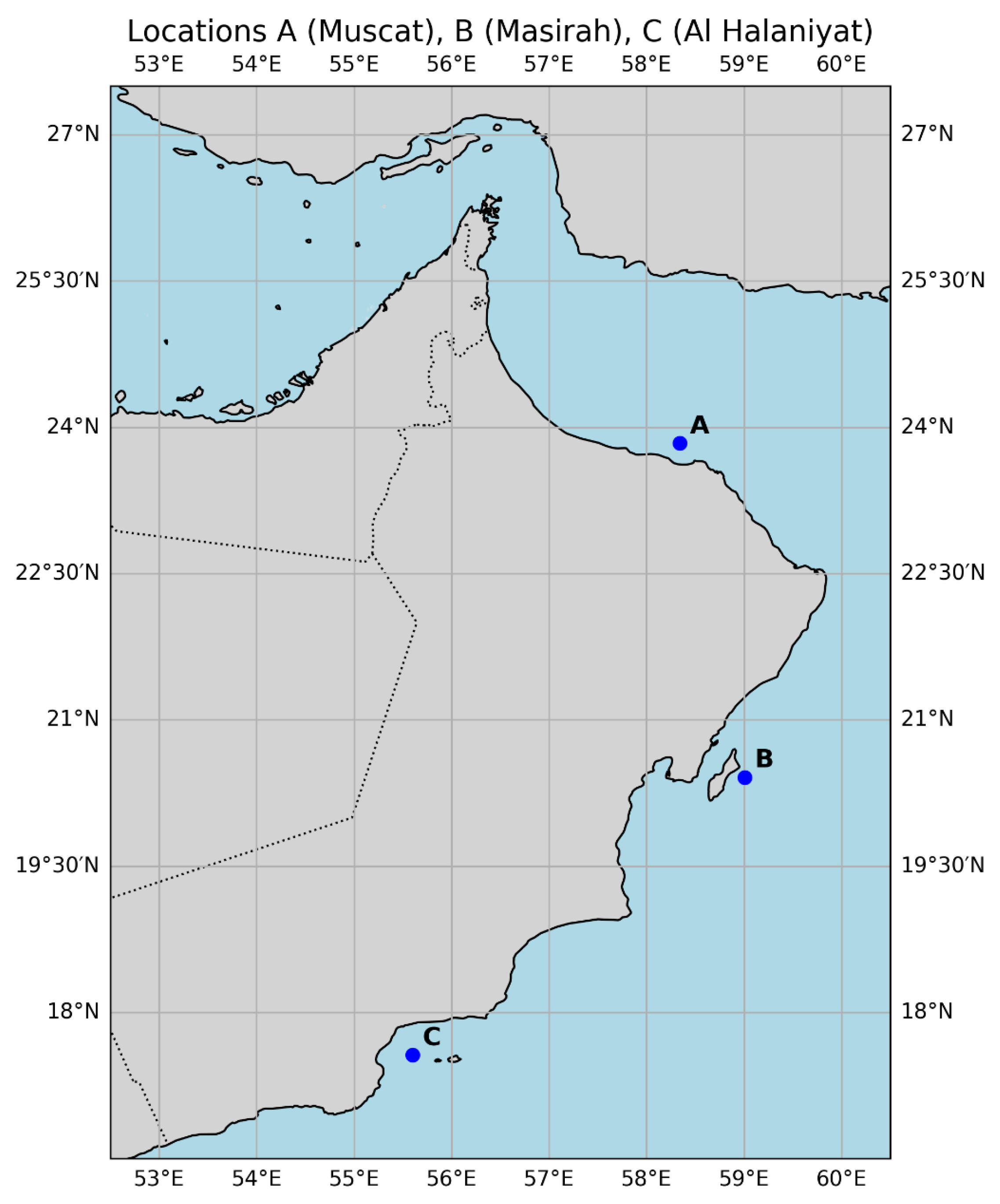
The coast of Oman extends from the Arabian Gulf to the Arabian Sea, encompassing the Gulf of Oman and part of the Arabian Sea. It connects to the Indian Ocean via the Arabian Sea and serves as a vital global waterway. The Gulf stretches approximately 545 km in length, with a width ranging from 56 km at the Strait of Hormuz to 370 km. These waters are strongly influenced by the seasonal monsoon system, particularly the southwest monsoon during the summer months (June to August), which contributes to increased wave activity, with the strongest average wind speeds occurring in July [29]. The region is characterized by complex bathymetry and varying shoreline orientation, both of which influence wave propagation and energy distribution. Wave data for the region (52.5° E–60.5° E and 16.0° N–27.5° N) were obtained from the Global Ocean Waves Analysis and Forecast product provided by Copernicus Marine, which is based on the MFWAM model developed by Météo-France [33]. This area has not been extensively studied in terms of wave energy potential, despite its exposure to consistent oceanic wave patterns originating from the Indian Ocean. The domain was discretized using a uniform grid with resolution, around 9 km. To analyze the wave energy characteristics over different regions along the coast, three points were taken along the coast, the first one (A) near the capital city (Muscat), the second one (B) near Masirah Island, and third one (C) near Al-Halaniyat Island, as shown in Figure 1. Table 1 presents the geographical coordinates, water depths, and distances from the coast for the three locations.

2.2. Mathematical Background

The wave power per unit crest length in deep water is estimated using the following equation [33,34,35]:
P = 0.49 H s 2 T e
where P is the wave power (kW/m), H s is the significant wave height (m), and T e is the mean energy period (s). This expression is derived from deep-water wave theory, starting with the total wave energy per unit surface area, which includes both potential and kinetic components:
E = 1 8 ρ g H s 2
where ρ is the water density, assumed to be 1025 kg/m3, and g is the acceleration due to gravity, taken as 9.81 m/s2. The group velocity for deep-water waves is given by
C g = g T e 4 π
Multiplying the wave energy per unit area by the group velocity yields the wave power per unit crest length:
P = E   C g = 1 8 ρ g H s 2 g T e 4 π = ρ g 2 H s 2 T e 32 π
Substituting the standard values for ρ and g , the coefficient evaluates to approximately 0.49, resulting in the practical form used in this study (Equation (1)).

2.3. Numerical Model and Data Analysis

This study utilized wave data from the Global Ocean Waves Analysis and Forecast product of the Copernicus Marine Service, produced by the operational global ocean analysis and forecast system of Météo-France. This system operates at a spatial resolution of 1/12°, delivering daily analyses and 10-day forecasts of global ocean surface wave conditions. The dataset provides 3-hourly instantaneous fields of integrated wave parameters from the total spectrum, including significant wave height, mean period, mean direction, and Stokes drift as well as partitioned components for wind waves, primary swell, and secondary swell.
The global wave forecasting system is based on the MFWAM (a third-generation spectral wave model) developed by Météo-France. MFWAM employs the ECWAM-IFS-38R2 computing code with dissipation terms developed by Ardhuin et al. [36] and was significantly upgraded in November 2014 through advances from the European research project MyWave [37]. Bathymetry is derived from the 2 min gridded global topography dataset ETOPO2/NOAA. The native model grid is irregular, with variable spatial resolution, while near the equator the grid spacing is approximately 1/10°. However, the Copernicus Marine dataset used in this study is provided on a regular grid with a spatial resolution of approximately 1/12°, and all analyses were conducted using this consistent resolution.
The operational MFWAM system is driven by 6-hourly wind analyses and 3-hourly wind forecasts from the IFS-ECMWF atmospheric model. The wave spectrum is discretized into 24 directions and 30 frequencies ranging from 0.035 Hz to 0.58 Hz. Altimeter data are assimilated every 6 h to improve accuracy. The system generates four analyses per day and provides a 10-day forecast initialized at 00:00 UTC. A swell partitioning method is applied to separate the spectrum into primary and secondary swell components.
Wave parameters extracted from this dataset including significant wave height, energy period, direction, and directional energy flux were processed to calculate wave power on monthly and seasonal timescales. Spatial maps, wave roses, and directional spectra were generated to visualize the distribution and propagation of wave energy along the southern coast of Oman. Temporal stability was assessed using SVI and MVI indices, and exploitability ratios were computed to identify high-potential zones for wave energy harvesting.
According to the MFWAM verification work presented at [38], MFWAM served as the primary ground truth for significant wave height estimation, demonstrating superior performance over other models such as WW3. Operating at 1/12-degree spatial resolution (same as our resolution), MFWAM enabled highly accurate sea state parameter estimation with RMSE values of 0.33–0.38 m using linear regression and improved to 0.245/0.273 m for wv1/wv2 imagettes when enhanced with Support Vector Machine techniques.

3. Results and Discussion

The analysis was conducted over a period of approximately three years (2023–2025). Wave power, calculated every three hours, was averaged across different months, seasons, and years.

3.1. Factor to Assess the Stability and Suitability of Resources

3.1.1. Wave Height and Direction

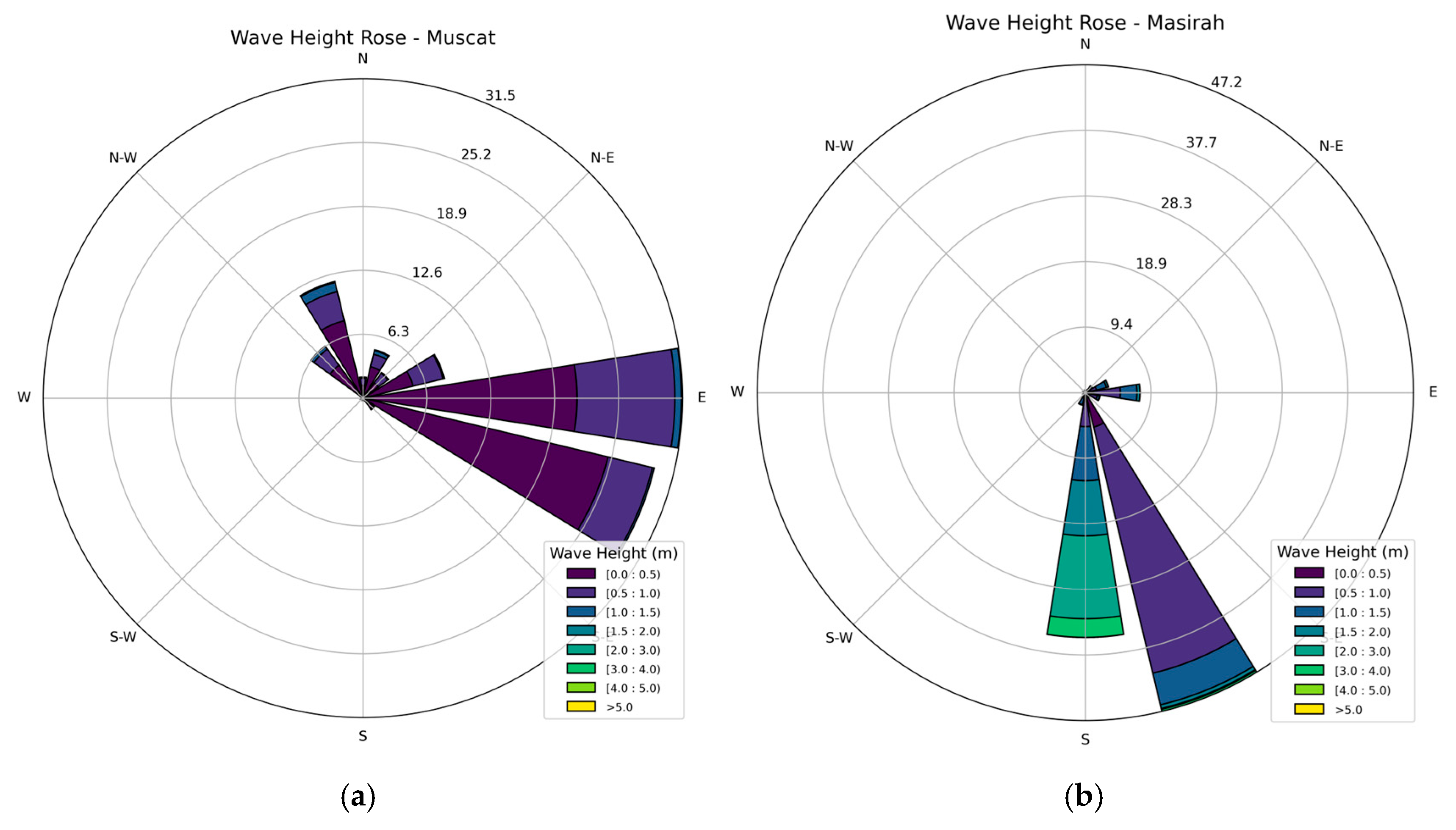
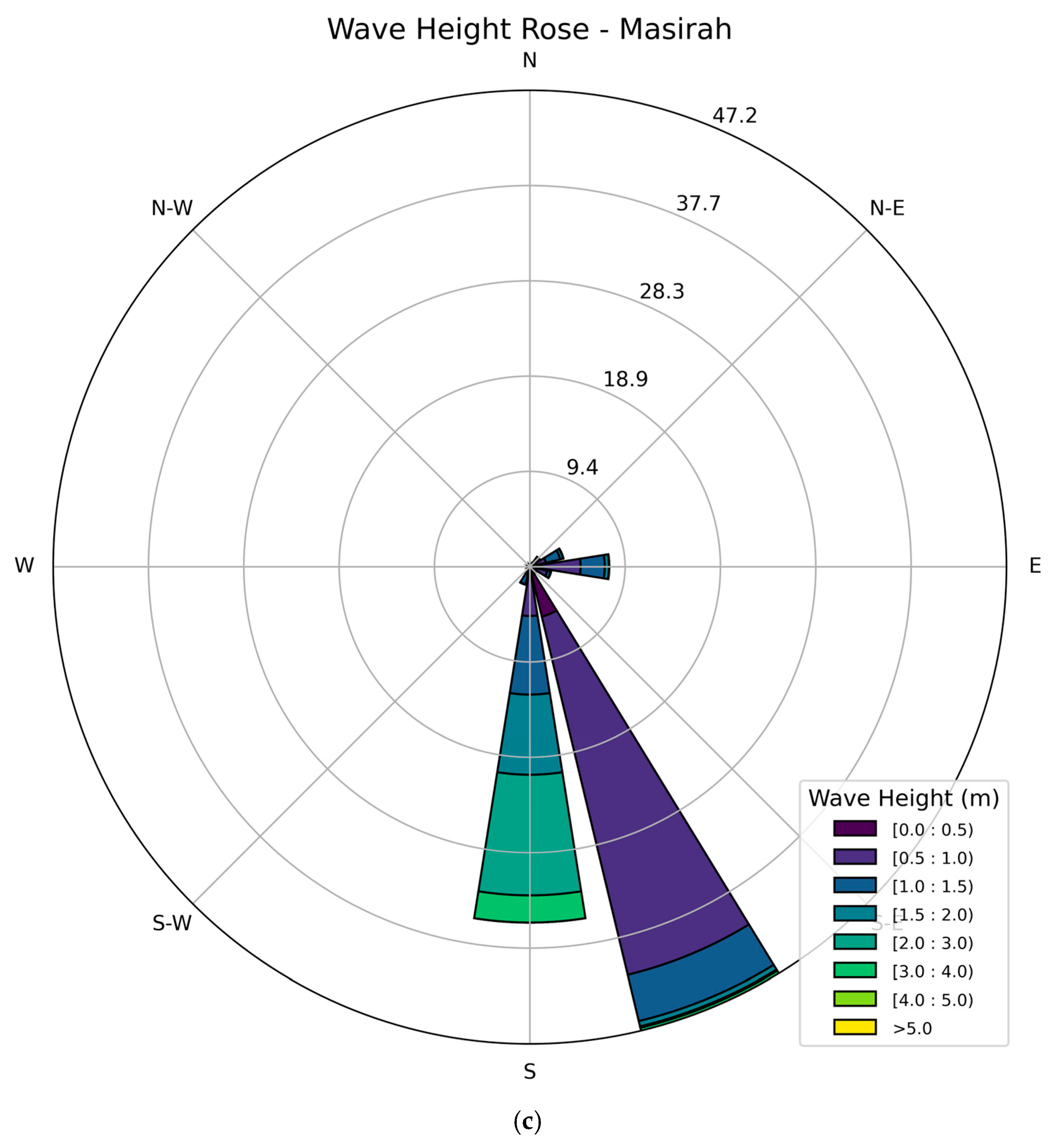
Figure 2 presents wind rose diagrams that illustrate the directional distribution of wave power at the three study locations: Muscat, Masirah, and Al Halaniyat. These diagrams provide important insight into the dominant wind regimes responsible for wave generation and, consequently, the spatial variability of wave energy potential along the Omani coast.
At Muscat, the prevailing wind direction is mainly from the east (E), with a directional spread extending from the southeast (SE) toward the east. This pattern indicates that the local wave climate is primarily influenced by winds originating over the Arabian Sea and propagating westward toward the coast. Because of the relatively limited fetch and the lower intensity of these winds, the resulting sea state is moderate. The average significant wave height is approximately 1 m, and the peak wave power reaches about 31.2 kW/m. Although this level of wave energy is lower than that observed at the southern sites, the relatively consistent wind direction suggests reduced variability and more stable wave conditions, which may be advantageous for reliable and predictable energy extraction and for reducing structural fatigue on wave energy converters.
In contrast, Masirah exhibits a markedly different wind regime. The wind rose indicates dominant winds from the south (S) and southeast (SE), which correspond to the southwest monsoon system that prevails during the summer months. These monsoon-driven winds are stronger and more persistent, providing a longer effective fetch and generating significantly higher wave activity. Wave heights at this location exceed 3 m, and the peak wave power reaches approximately 46.2 kW/m. This substantial increase in energy potential highlights Masirah as a strong candidate for seasonal wave energy harvesting, particularly during the monsoon period when the resource is at its maximum. However, the pronounced seasonality of the wind regime should be considered in system design and energy yield assessments.
A similar but more energetic pattern is observed at Al Halaniyat. The dominant wind directions again originate from the south and southeast, reflecting the strong influence of the southwest monsoon. Due to its more exposed geographic position in the Arabian Sea and its greater fetch length, Al Halaniyat experiences the most energetic sea states among the three sites. Significant wave heights exceed 3.5 m, and the peak wave power reaches 64.5 kW/m, representing the highest energy potential in the study. This finding indicates that Al Halaniyat offers exceptional opportunities for large-scale wave energy deployment, particularly during the summer monsoon season when wave conditions are most energetic.
Overall, the wind rose analysis demonstrates a pronounced spatial gradient in wave energy potential along the Omani coastline, which is primarily governed by regional wind systems, coastal orientation, and exposure to the Arabian Sea. The southern locations, particularly Masirah and Al Halaniyat, are strongly influenced by the southwest monsoon, a large-scale seasonal wind system that generates sustained and energetic wind fields over long fetch distances. These conditions promote the formation of high-energy swells that travel toward the coast with limited obstruction, resulting in significantly greater wave heights and wave power levels. The persistence and strength of these winds also imply a higher degree of resource reliability during the monsoon season, which is a key factor in estimating annual energy production and capacity factors for wave energy converters.
In contrast, Muscat is located in a relatively sheltered region of the northern coastline, where the influence of the southwest monsoon is weaker and the fetch length is shorter. Consequently, the local wave climate is dominated by moderate wind regimes and smaller wind-generated seas rather than large, long-period swells. This leads to lower wave power levels but also introduces the potential advantage of reduced extreme sea states. From an engineering perspective, such conditions may translate into lower structural loads, reduced survivability requirements, and potentially lower installation and maintenance costs. Therefore, although Muscat exhibits lower peak wave energy, it may still be suitable for smaller-scale or nearshore wave energy technologies designed for moderate wave climates.
The observed spatial variability has important implications for technology selection and deployment strategies. High-energy sites such as Al Halaniyat may be better suited for robust offshore wave energy converters designed to operate efficiently in energetic sea states, whereas moderate-energy sites like Muscat could support nearshore or hybrid systems that prioritize reliability and ease of maintenance. Furthermore, the seasonal nature of the monsoon-driven resource suggests that hybrid renewable systems combining wave energy with solar or wind power could improve the overall stability of energy supply throughout the year.
From a planning and policy perspective, these spatial differences highlight the importance of adopting a region-specific approach to wave energy development in Oman. Rather than applying a uniform deployment strategy, site-specific resource assessments and techno-economic analyses are essential to identify optimal locations and appropriate technologies. Such an approach will help maximize energy yield, minimize costs and risks, and support the long-term sustainability of wave energy as a viable component of the national renewable energy portfolio.

3.1.2. Wave Period

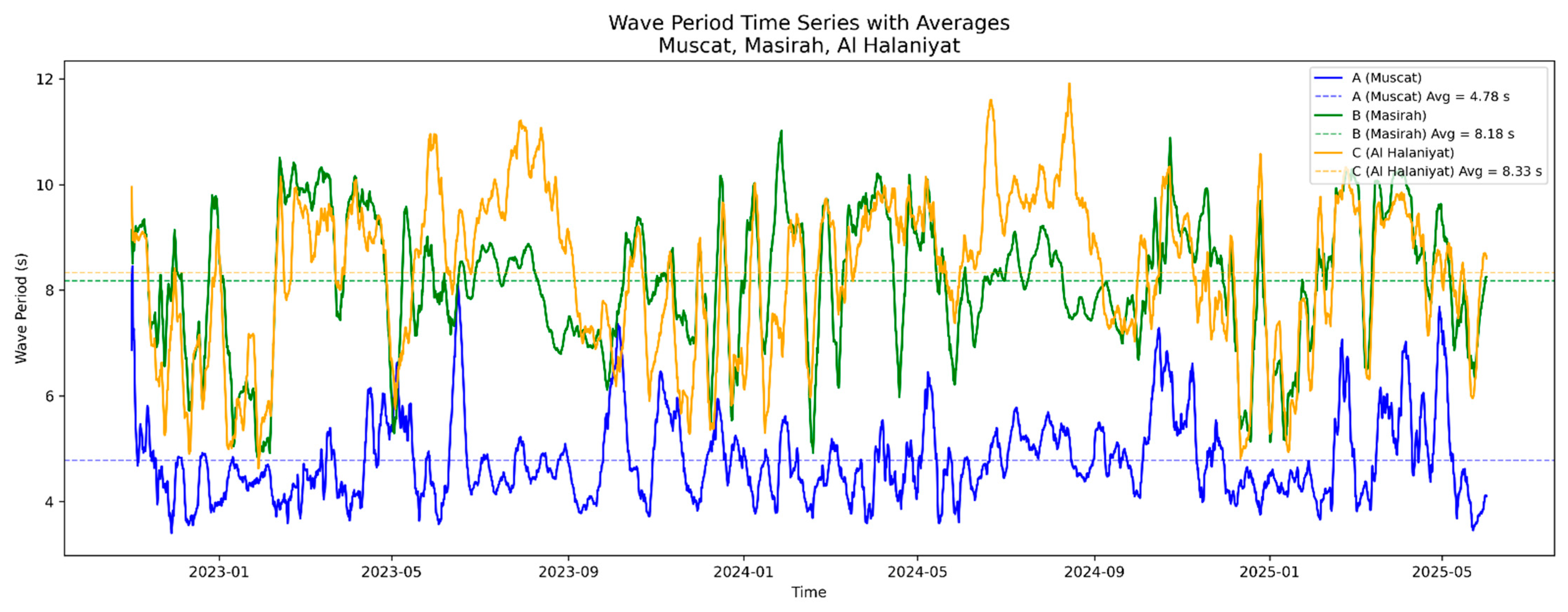
The variation in wave periods across the three study locations is illustrated in Figure 3. Among these sites, Al Halaniyat records the highest average wave period of approximately 8.3 s, indicating a relatively longer and more energetic wave climate in this region. Masirah follows closely, with an average wave period of about 8.1 s, suggesting similarly favorable conditions for wave energy extraction. In contrast, Muscat exhibits a markedly shorter average wave period of around 5 s, which may reflect more localized wind–wave generation and reduced energy potential compared to the other two sites. These differences in wave period are important, as longer periods generally correspond to higher wave energy flux and, consequently, greater suitability for energy conversion systems.

3.1.3. Wave Power

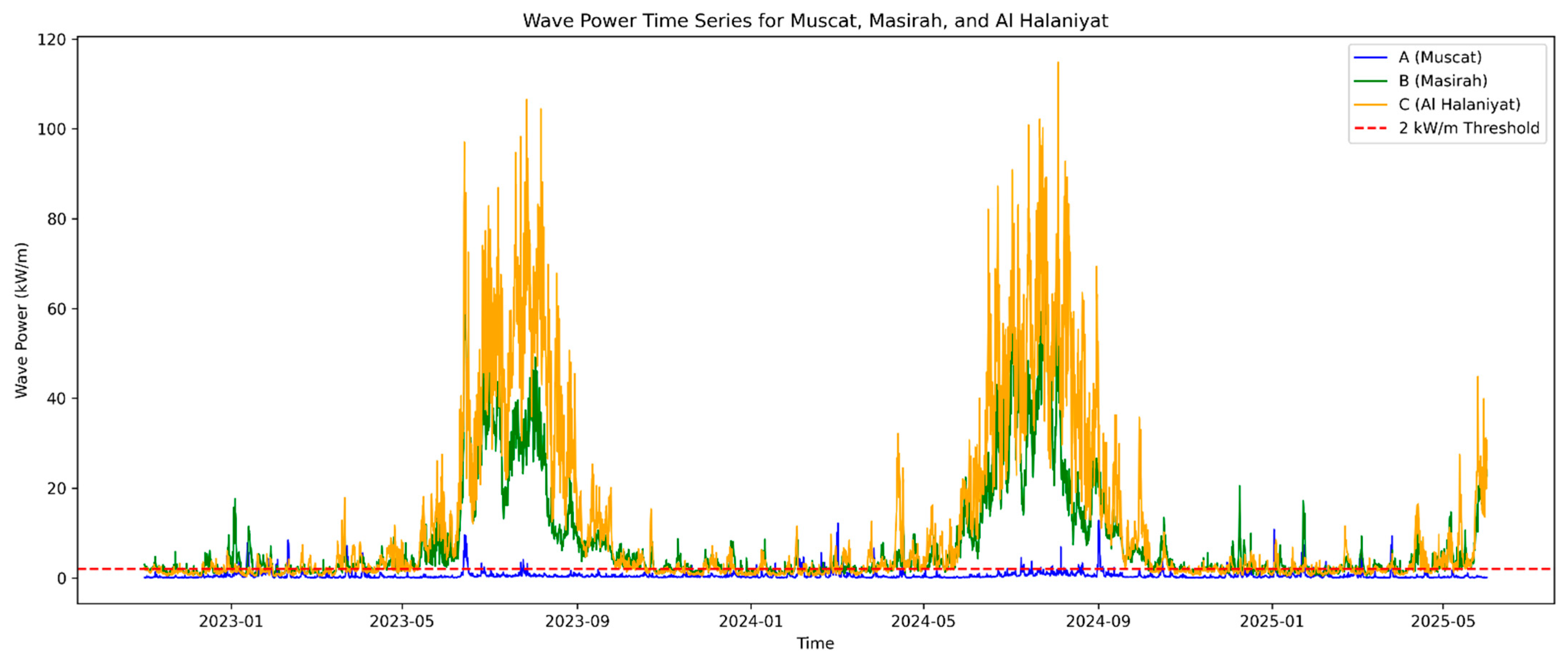
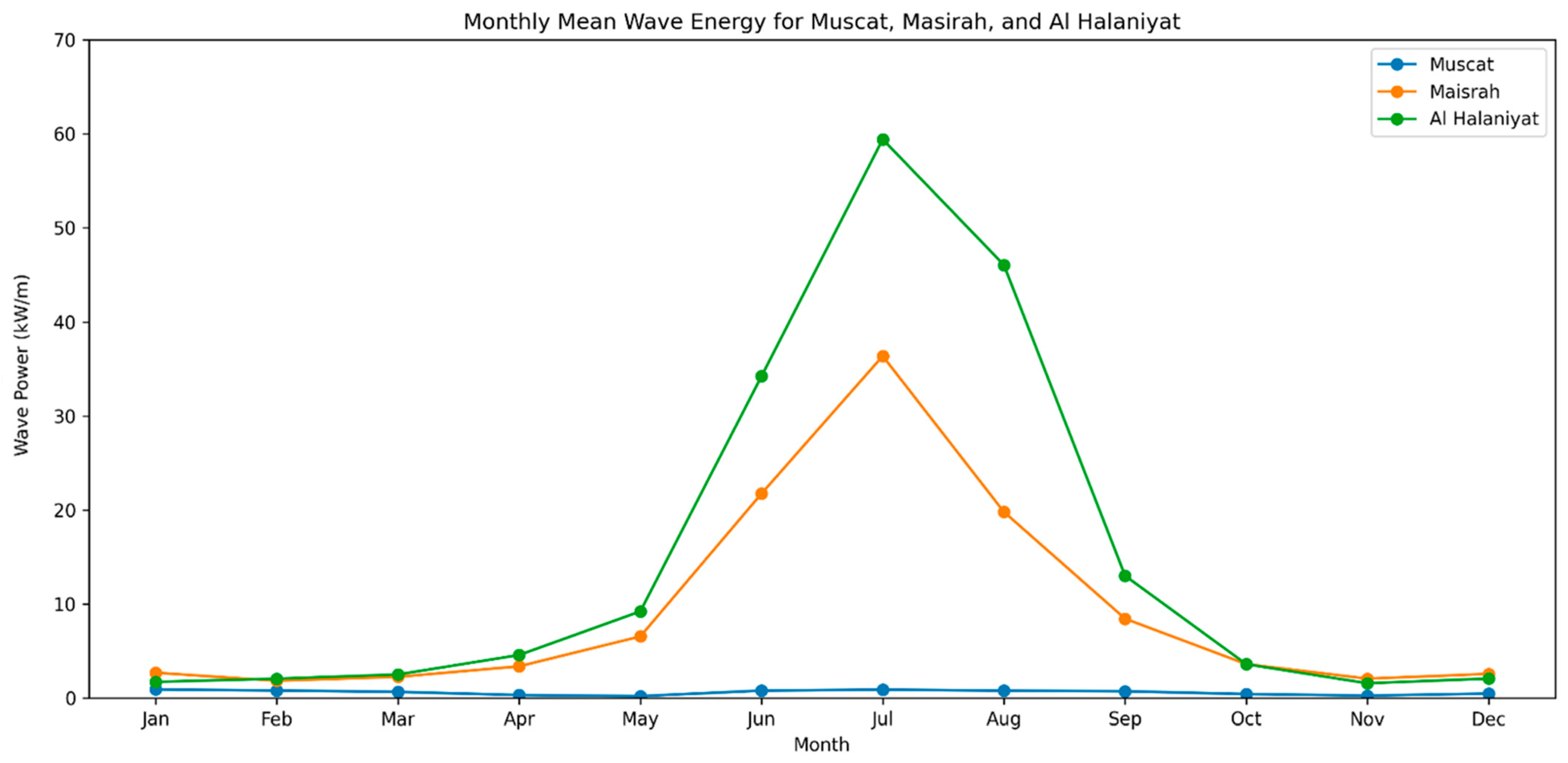
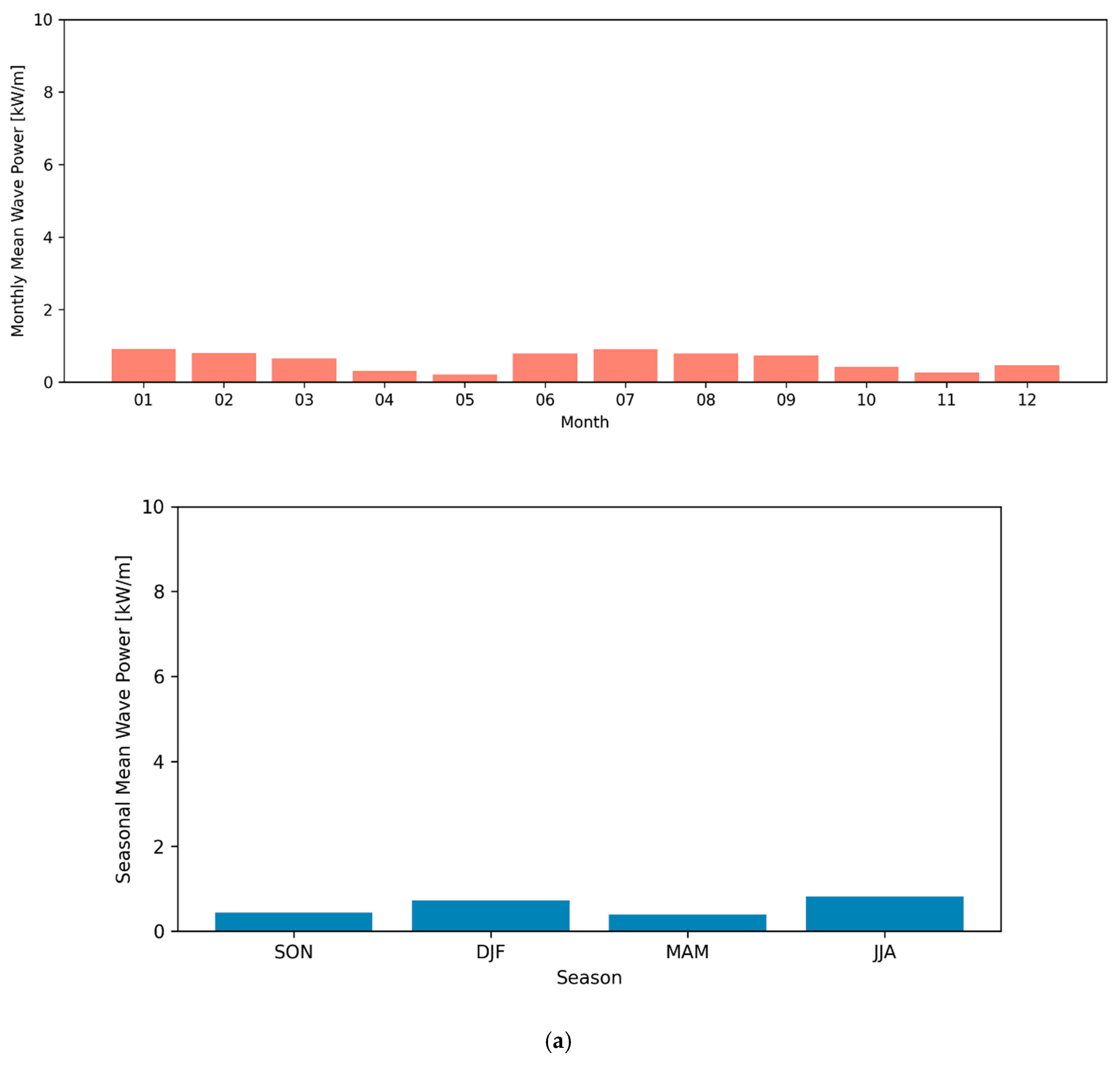
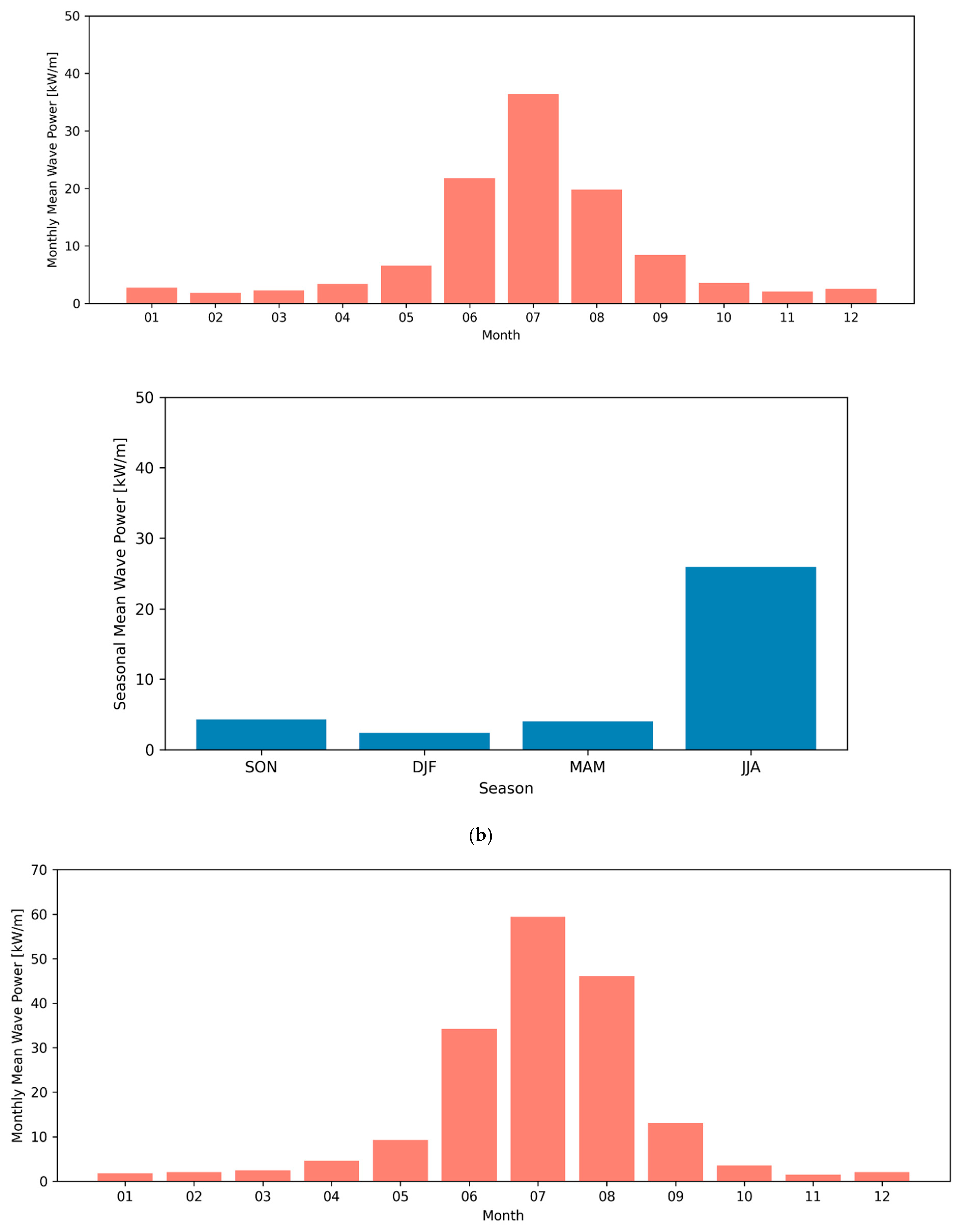
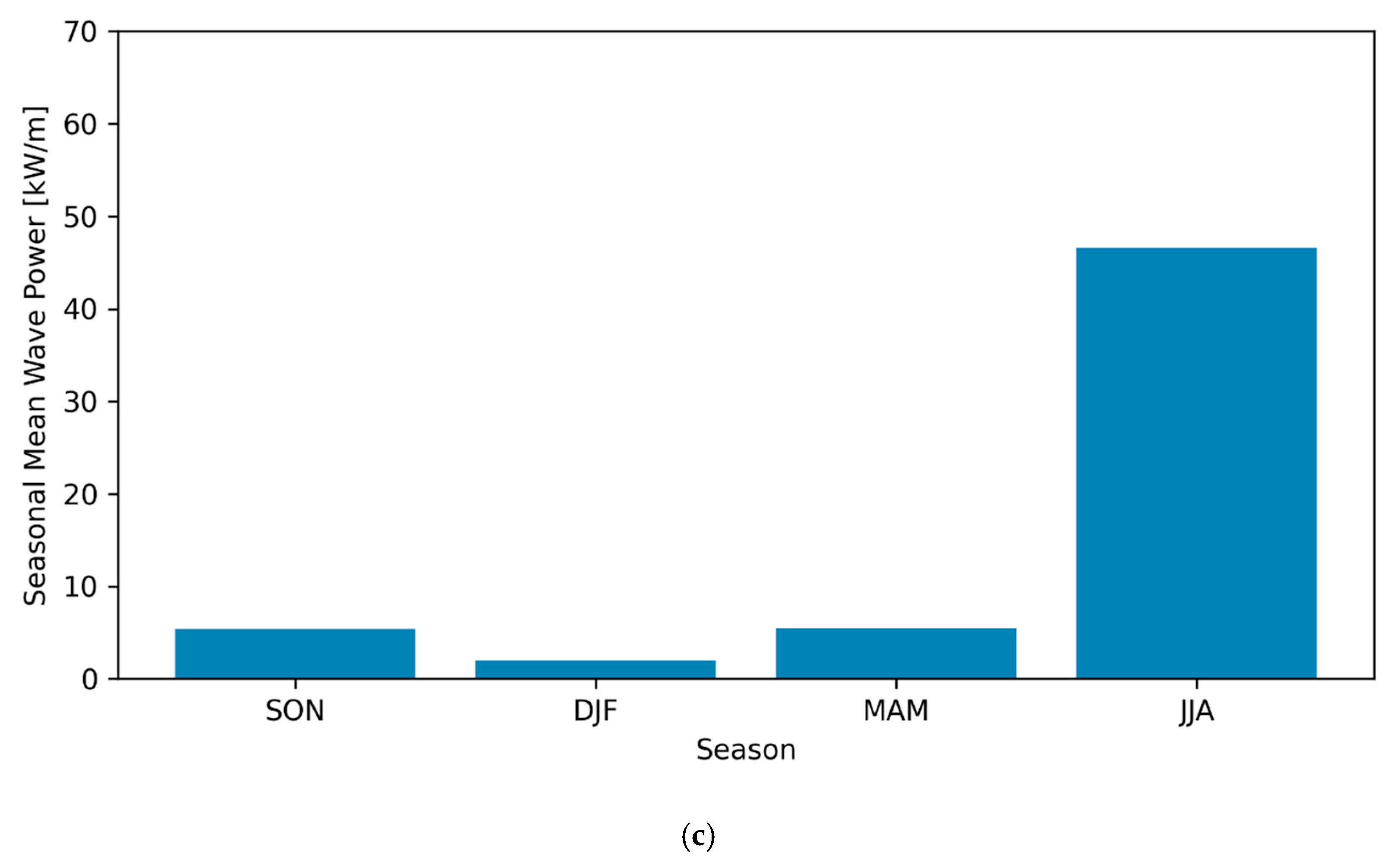
The hourly wave power time series for the three locations over a three-year period (2023–2025) is presented in Figure 4. The data clearly show that wave power is significantly higher during the summer months, primarily due to the influence of the southwest monsoon. Wave power reaches approximately 35 kW/m at Masirah, and 50 kW/m at Al Halaniyat indicating a strong seasonal variation and substantial energy potential during the monsoon season. The summary of the monthly mean wave power at three locations for three years is presented in Figure 5. The seasonal and monthly mean wave power over three years at each location are shown in Figure 6.

3.1.4. Seasonal Spatial Distribution

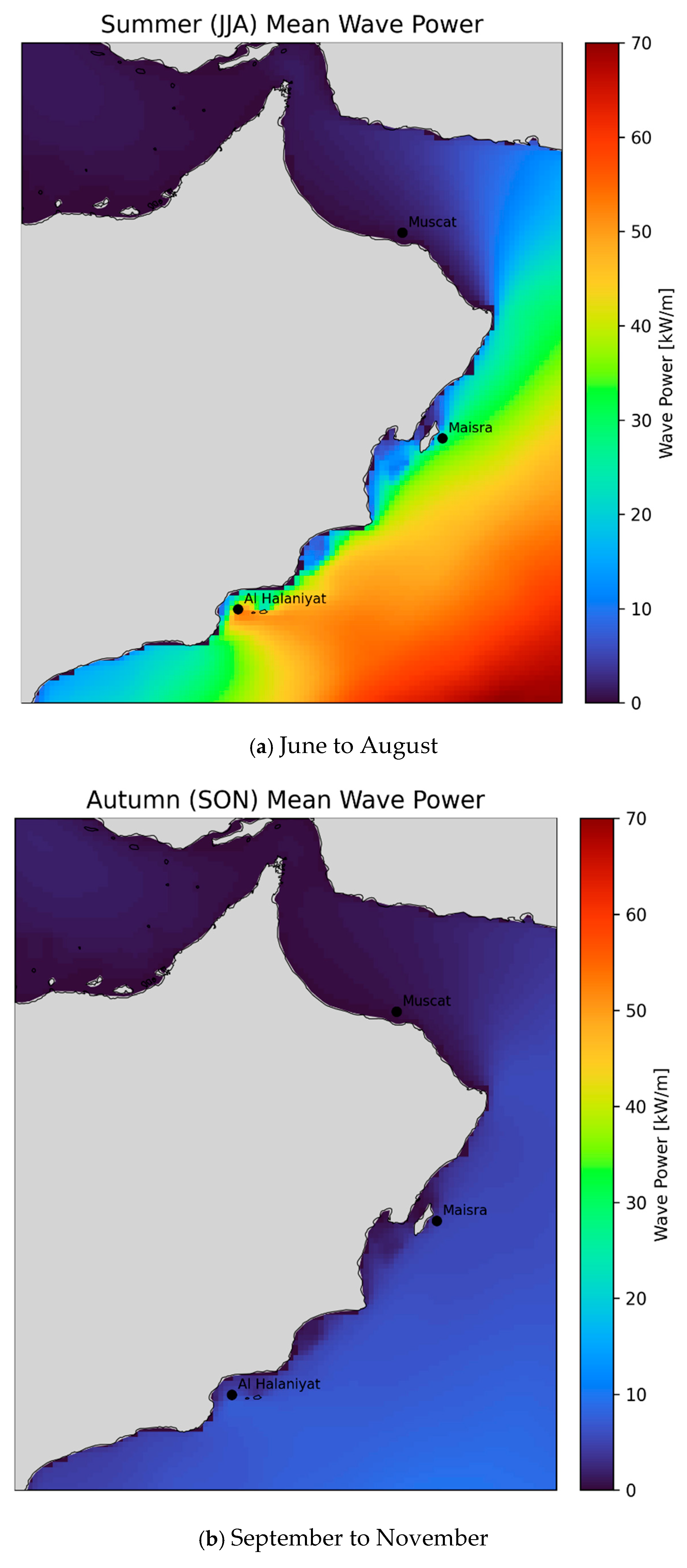
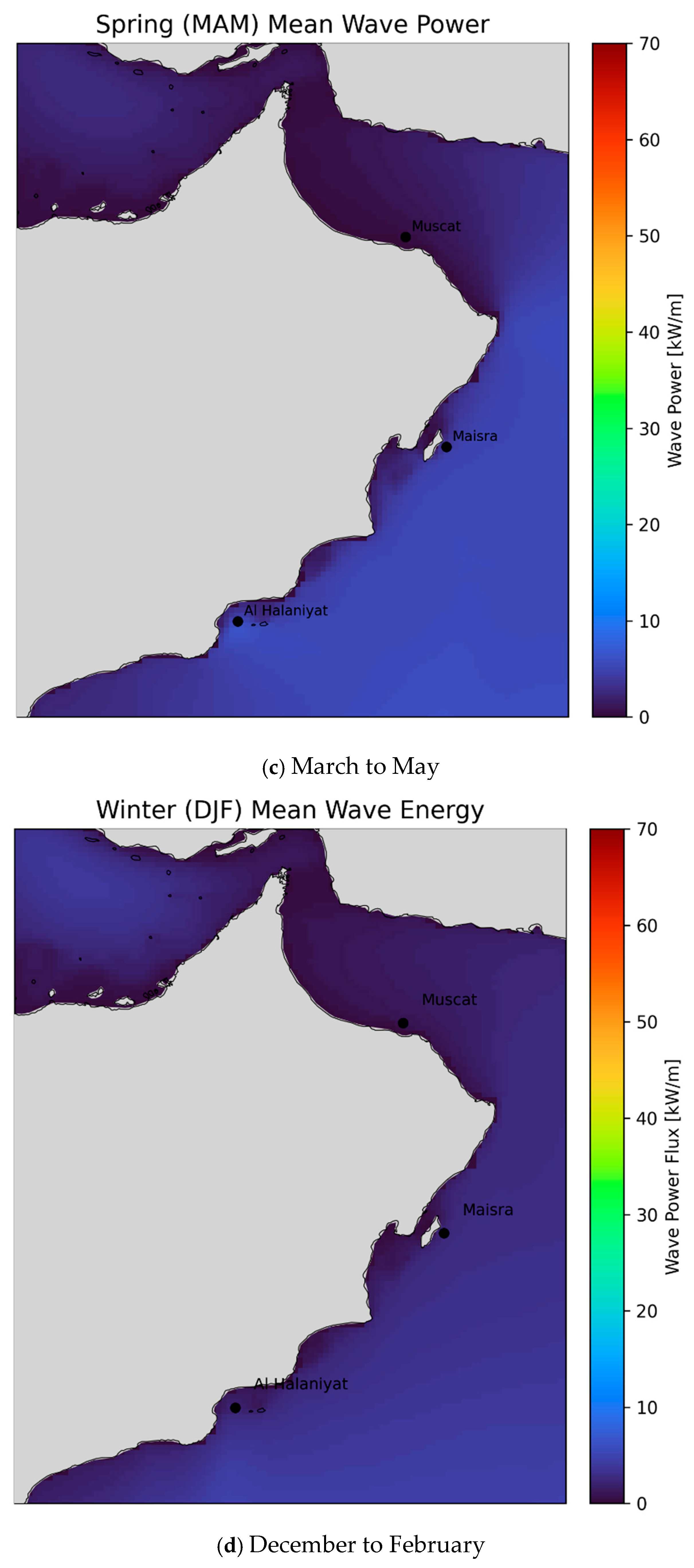
Seasonal wave power in the region is largely influenced by the prevailing wind conditions, which vary throughout the year. Figure 7 illustrates the spatial distribution of long-term mean wave power (in kW/m) across the four main seasons: summer, post-summer, winter, and post-winter. A distinct peak in wave energy potential is observed during the summer season, with mean wave power values reaching up to 60 kW/m. This significant increase is primarily driven by the strong southwesterly monsoon winds that dominate the region during this period.
In contrast, the remaining seasons—post-summer, winter, and post-winter—are characterized by relatively calm wind conditions, resulting in considerably lower wave power levels. Notably, the highest mean wave power during summer is concentrated along the southern coast of Oman, highlighting this area as a particularly promising zone for seasonal wave energy harvesting.

3.1.5. Exploitability

The concept of exploitability is central to determining the feasibility of wave energy harvesting. Exploitability is defined as the ratio between exploitable energy (Ee) and total wave energy storage (Et) per unit area, averaged over three years.
E x p l o i t a b i l i t y = E e E t
E e = P a v g   ×   t e
E t = P a v g   ×   t t
where t t represents the total number of hours in a year, t e denotes the total number of hours during which the energy exceeds a specified threshold and P a v g   is the annual mean wave power. A threshold of 2 kW/m was recommended and applied in Refs. [39,40,41,42,43]. Extreme wave conditions corresponding to significant wave heights Hs ≥ 4 m are excluded from the analysis to avoid the influence of non-operational and potentially damaging sea states. In this paper, a threshold of Hs = 4 m is selected based on typical operational limits of wave energy converters, beyond which devices enter survival modes or cease energy production [42]. The exploitability of the three locations are presented in Table 2. The results clearly demonstrate that both Masirah and Al Halaniyat exhibit reasonable exploitability percentages, indicating a strong potential for harnessing wave energy in these regions. This high exploitability reflects the consistency and magnitude of the wave power resource, which, when combined with the favorable site-specific conditions, supports the technical and economic feasibility of deploying wave energy conversion systems. Consequently, both locations can be considered promising candidates for further detailed assessments, pilot-scale installations, and eventual large-scale implementation of wave energy projects.

3.1.6. Seasonal and Monthly Variability Indices

Seasonal ( S V I ) and Monthly ( M V I ) Variability Indices are employed to evaluate the temporal stability during the three-year period, and defined as
S V I = P S 1 P S 4 P a v g  
M V I = P M 1 P M 12 P a v g  
where P S 1 and P M 1 denote the mean wave power during the most energetic season and month, respectively, while P S 4   and P M 12 correspond to the least energetic ones. In general, higher mean wave power and lower MVI and SVI values indicate greater temporal stability.
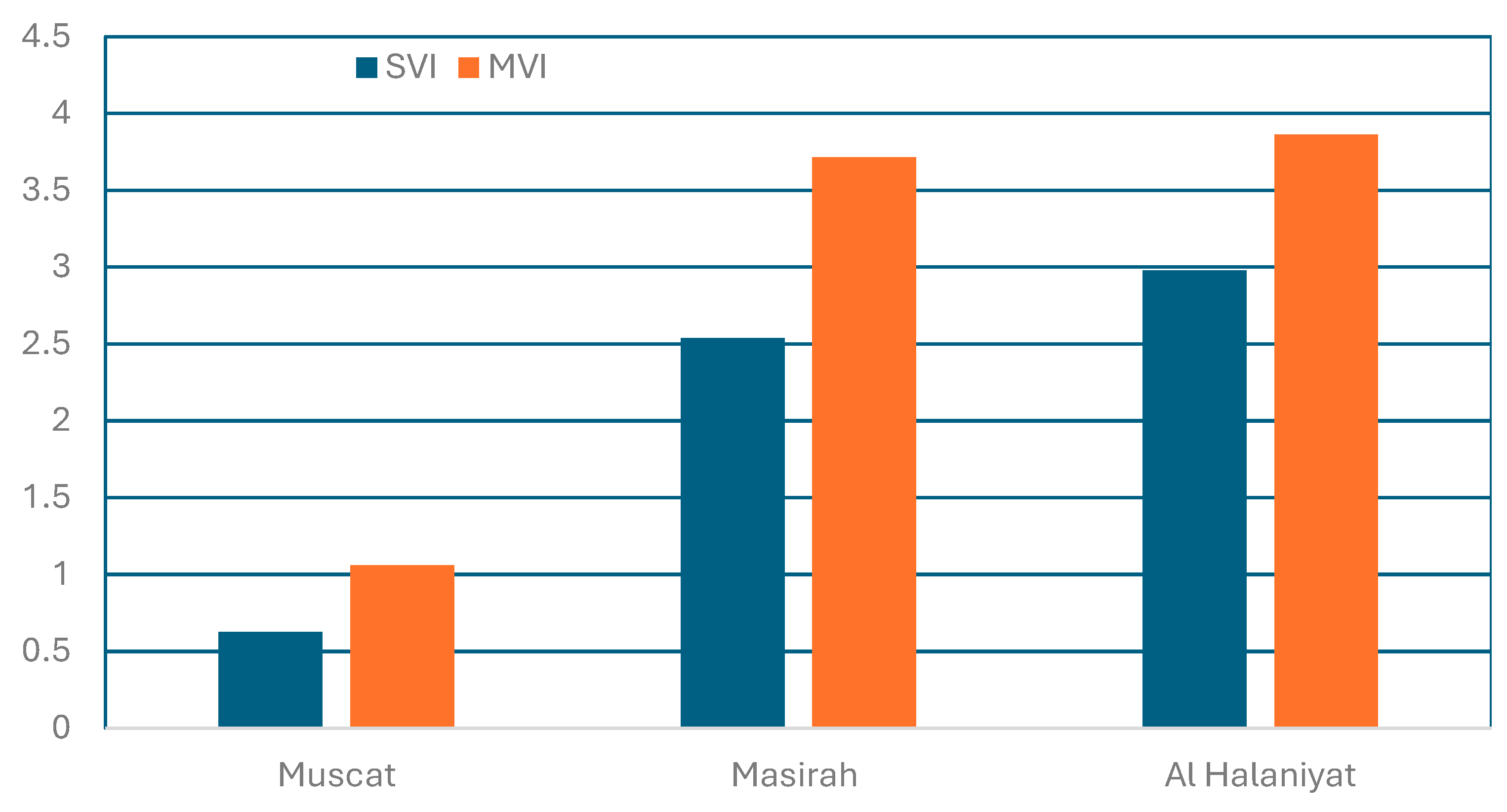
Based on the results presented in Figure 8, Muscat demonstrates the most stable wave energy conditions in terms of both monthly and seasonal variability. This conclusion is supported by its lowest Mean Variability Index (MVI) and Seasonal Variability Index (SVI) values among the three study locations. Low MVI and SVI values indicate that wave conditions fluctuate less over time, resulting in a more predictable and steady wave climate. From an engineering and operational perspective, such stability is highly desirable because it simplifies power forecasting, improves grid integration, and reduces the risk of large fluctuations in energy output. Consistent sea states also tend to reduce mechanical stress on wave energy converters, potentially lowering maintenance requirements and extending device lifespan. However, the key limitation of Muscat lies in its relatively low wave energy resource. Despite the favorable stability characteristics, the annual wave power levels remain modest compared with the southern sites. This creates a trade-off between reliability and resource magnitude. While Muscat may be suitable for pilot projects, nearshore installations, or small-scale deployments aimed at demonstrating technology performance, it is less attractive for large-scale commercial wave energy production due to its lower overall energy yield.
In contrast, Masirah and Al Halaniyat exhibit significantly higher MVI and SVI values, indicating greater temporal variability in wave conditions. This increased variability reflects the strong seasonal influence of the southwest monsoon, which drives substantial changes in wind speed, wave height, and wave power throughout the year. From a technical standpoint, higher variability introduces challenges related to system design, survivability, and energy forecasting. Wave energy converters deployed in these regions must be capable of operating efficiently across a wider range of sea states and must be designed to withstand energetic conditions during peak seasons.
Despite these challenges, the higher variability at Masirah and Al Halaniyat is accompanied by a major advantage: substantially greater wave energy potential. Both locations experience a pronounced surge in wave power during the summer months, when the southwest monsoon intensifies wind speeds over the Arabian Sea and generates long-period, high-energy swells. During this period, wave power reaches its annual maximum, significantly increasing the potential energy yield from wave energy systems.
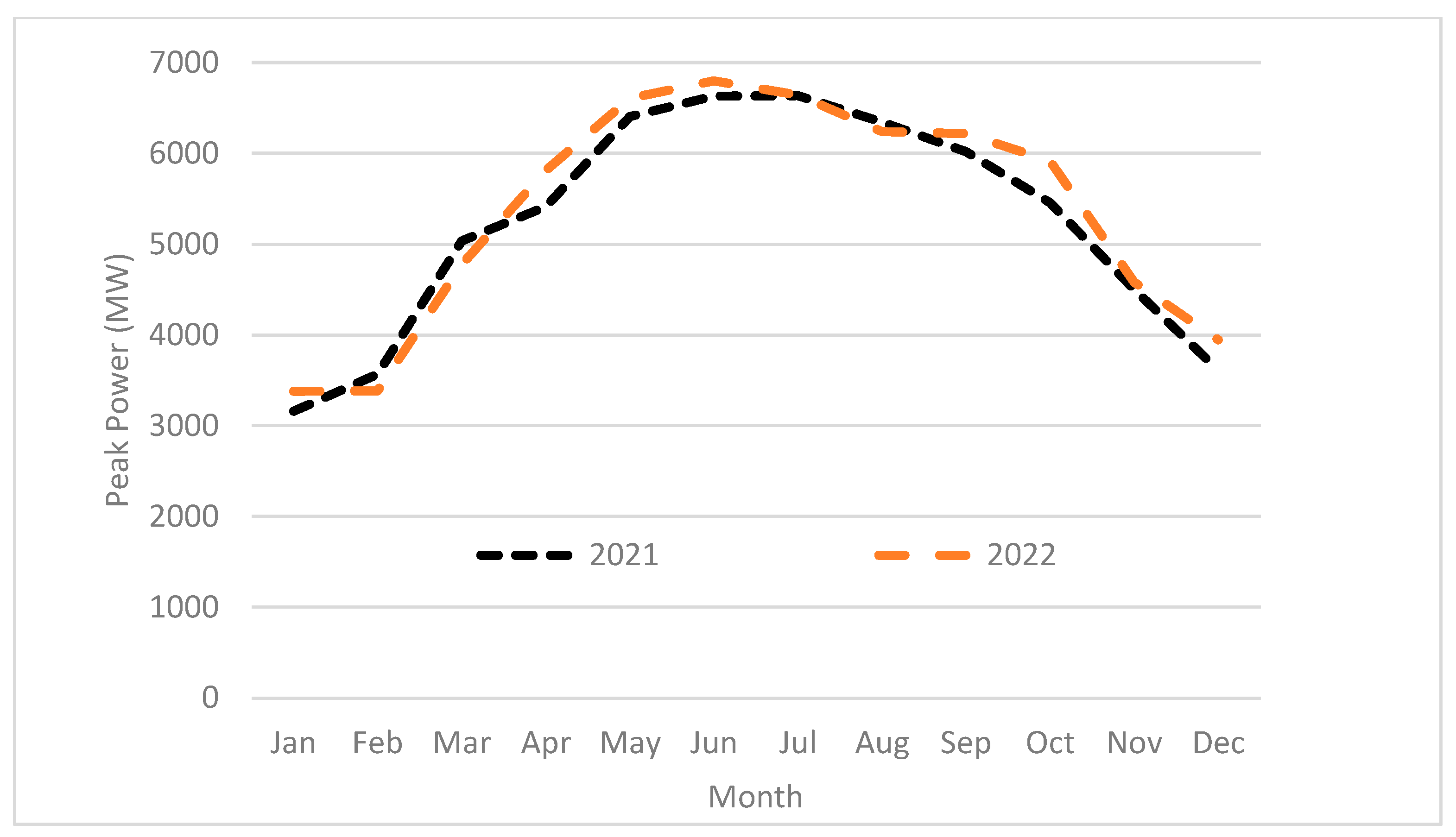
Importantly, this seasonal peak in wave energy availability coincides with regional electricity demand patterns. In Oman, electricity consumption rises sharply during the summer due to extensive use of air conditioning and cooling systems. The peak power demand in Oman grid system for 2021 and 2022 is shown in Figure 9 [43]. The alignment between peak wave energy availability and peak electricity demand enhances the practical value of wave energy in these southern locations. By supplying additional renewable power during high-demand periods, wave energy could help reduce reliance on conventional generation, improve grid stability, and support energy diversification strategies. Therefore, although Masirah and Al Halaniyat exhibit higher variability than Muscat, their strong seasonal resource and alignment with demand patterns make them highly attractive for seasonal wave energy harvesting. These findings highlight the importance of considering both resource magnitude and variability when evaluating the suitability of wave energy sites and suggest that a diversified deployment strategy across multiple locations may offer the most balanced and resilient approach for wave energy development in Oman.

4. Conclusions

  • This study assessed the wave energy potential along the coast of Oman using three years of high-resolution numerical wave modeling based on generated wind data. The spatial, seasonal, monthly, and directional variability of wave power was analyzed over the region and detailed for three representative locations: Muscat, Masirah, and AlHalaniyat. The three years data might show limitations in this study and require longer simulation period to conclude long term feasibility, planning. However, the results revealed a strong spatial gradient in wave energy, increasing toward the southern coast and the open Indian Ocean, with peak energy observed during the summer monsoon season (June to August).
  • Among the three locations, AlHalaniyat showed the highest wave energy potential, with peak wave power reaching up to 64.5 kW/m during summer. Masirah also exhibited strong seasonal energy, while Muscat displayed the most stable wave conditions in terms of monthly and seasonal variability, although with lower energy magnitudes. The calculated Seasonal and Monthly Variability Indices (SVI and MVI) highlight the trade-off between energy stability and magnitude, with Muscat being more stable but less energetic, and the southern locations being more energetic but seasonally variable.
  • The exploitability analysis further confirmed that while year-round energy production may be limited in Muscat, the southern coasts, particularly during summer, offer promising conditions for seasonal wave energy harvesting. The majority of exploitable energy was found in wave heights ranging from 1 to 3 m, which aligns with the operational range of many existing Wave Energy Converters (WECs).
  • The results show that the southeastern coast of Oman and the summer monsoon period have relatively higher wave energy potential from a wave resource perspective. However, device-specific feasibility requires additional analysis, including power matrix evaluation, capture-width estimation, water-depth compatibility, survivability, and techno-economic assessment.
  • In conclusion, Oman’s southern coastline—especially near Al Halaniyat and Masirah—presents substantial potential for wave energy development, particularly as a seasonal energy source that can help meet the region’s rising energy demand during the summer months. These findings provide valuable guidance for future strategic planning, site selection, and system design of wave energy projects in the region. Further work is recommended to explore techno-economic feasibility, environmental impacts, and long-term variability under climate change scenarios.
This work can be extended by longer simulation period to cover the large interannual variability over the monsoon area. In addition, it can be extended by conducting technical wave energy analysis over the three locations by using WEC devices simulation to estimate the potential annual energy yield and capacity factor for the promising sites. Furthermore, higher resolution bathymetry and model data can be used for better near-shore dynamic representation. Machine learning models such as LSTM or GRU Neural Networks can also be used to train the model on larger historical data to better predict future variability in future research development.

Author Contributions

Conceptualization, A.A.-B. and S.A.-Y.; Methodology, A.A.-B., A.A.W. and S.A.-Y.; Software, J.A. and A.A.W.; Formal analysis, A.A.-B. and S.A.-Y.; Investigation, A.A.-B. and A.A.W.; Writing—review and editing, A.A.-B. and A.A.W. and S.A.-Y. All authors have read and agreed to the published version of the manuscript.

Funding

This research received no external funding.

Data Availability Statement

The data presented in this study are available on request from the corresponding author due to legal reason.

Conflicts of Interest

The authors declare no conflict of interest.

Abbreviations

The following abbreviations are used in this manuscript:
CCCClimate Change Committee
DFOCDual-Function Overtopping Converter
ERA5The fifth generation ECMWF (European Center for Medium-Range Weather Forecasts) atmospheric reanalysis of the global climate.
Imagettesare small, individual radar images of the ocean surface.
WECWave Energy Converters (WECs).
WW3Third-generation numerical spectral wave model
wv1Wave Mode 1
wv2Wave Mode 1
RMSERoot Mean Square Error
PWave Power
H s Significant Wave Height
T e Mean Energy Period
C g Group Velocity for Deep Water
E x Exploitability Ratio
EeExploitable Energy Per Unit Area
EtTotal Wave Energy Storage Per Unit Area
SVISeasonal Variability Index
MVIMonthly Variability Index
SWANSimulating Waves Nearshore (numerical wave model)
MFWAMMétéo-France Wave Model (third-generation spectral wave model)
ECWAM-IFS-38R2European Center Wave Model—Integrated Forecasting System, cycle 38R2
ETOPO2/NOAA2-Minute Gridded Global Relief Data/National Oceanic and Atmospheric Administration
IFS-ECMWFIntegrated Forecasting System—European Center for Medium-Range Weather Forecasts
UTCCoordinated Universal Time
ρ Water Density
g Acceleration Due to Gravity

References

  1. Renewables 2024 Global Status Report. Available online: https://www.ren21.net/gsr-2024/ (accessed on 1 January 2025).
  2. Iglesias, G.; López, M.; Carballo, R.; Castro, A.; Fraguela, J.A.; Frigaard, P. Wave energy potential in Galicia (NW Spain). Renew. Energy 2009, 34, 2323–2333. [Google Scholar] [CrossRef]
  3. Leijon, M.; Bernhoff, H.; Berg, M.; Ågren, O. Economical considerations of renewable electric energy production especially development of wave energy. Renew. Energy 2003, 28, 1201–1209. [Google Scholar] [CrossRef]
  4. Clément, A.; McCullen, P.; Falcão, A.; Fiorentino, A.; Gardner, F.; Hammarlund, K.; Lemonis, G.; Lewis, T.; Nielsen, K.; Petroncini, S.; et al. Wave energy in Europe: Current status and perspectives. Renew. Sustain. Energy Rev. 2002, 6, 405–431. [Google Scholar] [CrossRef]
  5. Charlier, R.H.; Justus, J.R. Ocean Energies: Environmental, Economic and Technological Aspects of Alternative Power Sources; Elsevier Science: Amsterdam, The Netherlands, 1993. [Google Scholar]
  6. Khalifehei, K.; Azizyan, G.; Gualtieri, C. Analysing the Performance of Wave-Energy Generator Systems (SSG) for the Southern Coasts of Iran, in the Persian Gulf and Oman Sea. Energies 2018, 11, 3209. [Google Scholar] [CrossRef]
  7. Pérez-Collazo, C.; Greaves, D.; Iglesias, G. A review of combined wave and offshore wind energy. Renew. Sustain. Energy Rev. 2015, 42, 141–153. [Google Scholar] [CrossRef]
  8. López, I.; Andreu, J.; Ceballos, S.; de Alegría, I.M.; Kortabarria, I. Review of wave energy technologies and the necessary power-equipment. Renew. Sustain. Energy Rev. 2013, 27, 413–434. [Google Scholar] [CrossRef]
  9. Wacher, A.; Nielsen, K. Mathematical and numerical modeling of the AquaBuOY wave energy converter. Math.-Ind. Case Stud. J. 2008, 2, 16–33. [Google Scholar]
  10. Cornett, A.M. A Global Wave Energy Resource Assessment; ISOPE: Goyang, Republic of Korea, 2008; p. 9. [Google Scholar]
  11. Akhyani, M.; Chegini, V.; Bidokhti, A.A. An appraisal of the power density of current profile in the Persian Gulf and the Gulf of Oman using numerical simulation. Renew. Energy 2015, 74, 307–317. [Google Scholar] [CrossRef]
  12. Pourali, M.; Kavianpour, M.R.; Kamranzad, B.; Alizadeh, M.J. Future variability of wave energy in the Gulf of Oman using a high resolution CMIP6 climate model. Energy 2023, 262, 125552. [Google Scholar] [CrossRef]
  13. Majidi, A.G.; Bingölbali, B.; Akpınar, A.; Rusu, E. Wave power performance of wave energy converters at high-energy areas of a semi-enclosed sea. Energy 2021, 220, 119705. [Google Scholar] [CrossRef]
  14. Ulazia, A.; Esnaola, G.; Serras, P.; Penalba, M. On the impact of long-term wave trends on the geometry optimisation of oscillating water column wave energy converters. Energy 2020, 206, 118146. [Google Scholar] [CrossRef]
  15. Contestabile, P.; Crispino, G.; Di Lauro, E.; Ferrante, V.; Gisonni, C.; Vicinanza, D. Overtopping breakwater for wave Energy Conversion: Review of state of art, recent advancements and what lies ahead. Renew. Energy 2020, 147, 705–718. [Google Scholar] [CrossRef]
  16. Kralli, V.E.; Vicinanza, D.; Anagnostou, M.; Mavrakos, G.; Iglesias, G. Optimal design of overtopping breakwater for energy conversion (OBREC) systems using the harmony search algorithm. Front. Energy Res. 2019, 7, 80. [Google Scholar] [CrossRef]
  17. Boodoo, A.; Imai, Y. Experimental investigation of a novel adjustable-slope onshore overtopping wave energy converter for coastal protection and energy generation. Energy Convers. Manag. X 2025, 28, 101400. [Google Scholar] [CrossRef]
  18. Panicker, N.N. Power resource potential of ocean surface wave. In Proceedings of the Wave and Salinity Gradient Workshop, Newark, DE, USA, 24–26 May 1976; pp. J1–J48. [Google Scholar]
  19. Iglesias, G.; Carballo, R. Wave power for La Isla Bonita. Energy 2010, 35, 5013–5021. [Google Scholar] [CrossRef]
  20. Gao, J.; Ma, X.; Dong, G.; Chen, H.; Liu, Q.; Zang, J. Investigation on the effects of Bragg reflection on harbor oscillations. Coast. Eng. 2021, 170, 103977. [Google Scholar] [CrossRef]
  21. Gao, J.; Hou, L.; Liu, Y.; Shi, H. Influences of Bragg reflection on harbor resonance triggered by irregular wave groups. Ocean Eng. 2024, 305, 117941. [Google Scholar] [CrossRef]
  22. Guo, B.; Ringwood, J.V. A review of wave energy technology from a research and commercial perspective. IET Renew. Power Gener. 2021, 15, 3065–3090. [Google Scholar]
  23. McCormick, M.E. Ocean Wave Energy Conversion; Wiley: New York, NY, USA, 1981. [Google Scholar]
  24. Copping, A.E.; Hemery, L.G.; Overhus, D.M.; Garavelli, L.; Freeman, M.C.; Whiting, J.M.; Gorton, A.M.; Farr, H.K.; Rose, D.J.; Tugade, L.G. Potential environmental effects of marine renewable energy development—The state of the science. J. Mar. Sci. Eng. 2020, 8, 879. [Google Scholar] [CrossRef]
  25. Weiss, C.; Guanche, R.; Ondiviela, B.; Castellanos, O.F.; Juanes, J. Marine renewable energy potential: A global perspective for offshore wind and wave exploitation. Energy Convers. Manag. 2018, 177, 43–54. [Google Scholar] [CrossRef]
  26. Sasaki, W. Predictability of global offshore wind and wave power. Int. J. Mar. Energy 2017, 17, 98–109. [Google Scholar] [CrossRef]
  27. Boodoo, A.; Cross, J.S.; Ridgewell, C.; Kortelainen, V.; Vuorinen, M.; Harouna-Mayer, A. Long-term impacts and design considerations of dual-purpose wave farms for energy generation and coastal protection. Appl. Energy 2025, 401, 126805. [Google Scholar] [CrossRef]
  28. Sun, P.; Xu, B.; Wang, J. Long-term trend analysis and wave energy assessment based on ERA5 wave reanalysis along the Chinese coastline. Appl. Energy 2022, 324, 119709. [Google Scholar] [CrossRef]
  29. Saket, A.; Etemad-Shahidi, A. Wave energy potential along the northern coasts of the Gulf of Oman, Iran. Renew. Energy 2012, 40, 90–97. [Google Scholar] [CrossRef]
  30. Kamranzad, B.; Chegini, V.; Etemad-Shahidi, A. Temporal-spatial variation of wave energy and nearshore hotspots in the Gulf of Oman based on locally generated wind waves. Renew. Energy 2016, 94, 341–352. [Google Scholar] [CrossRef]
  31. Tucker, M.J.; Pitt, E.G. Waves in Ocean Engineering. 2001. Available online: http://books.google.combooks?id=0v5RAAAAMAAJ (accessed on 5 February 2025).
  32. Afsharian, B.; Shiea, M. A Review of Tidal and Wave Energy in Southern Waters of Iran. J. Mar. Sci. 2020, 2, 23–27. [Google Scholar] [CrossRef]
  33. Copernicus Marine Service. Global Ocean Waves Analysis and Forecast (GLOBAL_ANALYSISFORECAST_WAV_001_027) [Dataset]; Météo-France: Paris, France; Mercator Ocean International: Toulouse, France, 2023. [Google Scholar]
  34. Hughes, M.G.; Heap, A.D. National-scale wave energy resource assessment for Australia. Renew. Energy 2010, 35, 1783–1791. [Google Scholar] [CrossRef]
  35. Renewable Energy and Alternate Use Program (U.S.). Technology White Paper on Wave Energy Potential on the U.S. Outer Continental Shelf; U.S. Department of the Interior: Washington, DC, USA, 2006.
  36. Ardhuin, F.; Magne, R.; Filipot, J.-F.; Van der Westhyusen, A.; Roland, A.; Quefeulou, P.; Lefèvre, J.M.; Aouf, L.; Babanin, A.; Collard, F. Semi empirical dissipation source functions for wind-wave models: Part I, definition and calibration and validation at global scales. J. Phys. Oceanogr. 2010, 40, 1917–1941. [Google Scholar] [CrossRef]
  37. E.U. Copernicus Marine Service Information. Global Ocean Waves Analysis and Forecast. 2024. Available online: https://data.marine.copernicus.eu/product/GLOBAL_ANALYSISFORECAST_WAV_001_027/description (accessed on 13 February 2025).
  38. Andrey, P.; Björn, T.; Stefan, W.; James, I.; Sven, J. Multiparametric sea state fields from synthetic aperture radar for maritime situational awareness. Remote Sens. Environ. 2022, 280, 113200. [Google Scholar]
  39. Kamranzad, B.; Hadadpour, S. A multi-criteria approach for selection of wave energy converter/location. Energy 2020, 204, 117924. [Google Scholar] [CrossRef]
  40. Zheng, C.W.; Li, C.Y.; Chen, X.; Pan, J. Numerical forecasting experiment of the wave energy resource in the China sea. Adv. Meteorol. 2016, 2016, 5692431. [Google Scholar] [CrossRef]
  41. Zheng, C.W.; Pan, J.; Li, J.X. Assessing the China Sea wind energy and wave energy resources from 1988 to 2009. Ocean Eng. 2013, 65, 39–48. [Google Scholar] [CrossRef]
  42. Penalba, M.; Ulazia, A.; Ibarra-Berastegui, G.; Ringwood, J.; S´aenz, J. Wave energy resource variation off the west coast of Ireland and its impact on realistic wave energy converters’ power absorption. Appl. Energy 2018, 224, 205–219. [Google Scholar] [CrossRef]
  43. The Authority for Public Services Regulation (APSR). Annual Report. 2022. Available online: https://apsr.om/pages/reports-1-lb/ (accessed on 13 February 2025).
Figure 1. The study area along Oman coast.
Energies 19 02356 g001
Figure 2. The rose of wave power at the three locations; (a) Muscat (23.8° N, 58.3° E), (b) Masirah (20.4° N, 59° E), and (c) Al Halaniyat (17.5° N, 55.6° E).
Energies 19 02356 g002aEnergies 19 02356 g002b
Figure 3. The variation in wave periods across the three locations.
Energies 19 02356 g003
Figure 4. Hourly Wave power for three years at three locations.
Energies 19 02356 g004
Figure 5. Monthly mean wave power for three years at three locations.
Energies 19 02356 g005
Figure 6. Seasonal and monthly mean wave power for three years at three locations; (a) Muscat, (b) Masirah, (c) Al Halaniyat.
Energies 19 02356 g006aEnergies 19 02356 g006bEnergies 19 02356 g006c
Figure 7. Spatial distribution of long-term mean wave power (kW/m) for the four seasons.
Energies 19 02356 g007aEnergies 19 02356 g007b
Figure 8. MVI and SVI values for the three locations were averaged over a three-year period.
Energies 19 02356 g008
Figure 9. The peak power in Oman for two years.
Energies 19 02356 g009
Table 1. Geographical coordinate, water depths and distance from the coast for the three locations.
LocationGeographical CoordinatesWater Depth (m)Distance from the Coast (km)
Muscat(58.3, 23.8)10023
Masirah(59.0, 20.4)10011
AlHalaniyat(55.6, 17.5)10032
Table 2. Exploitable wave power.
ParameterMuscatMasirahAlHalaniyat
P a v g (kW/m)0.69.0714.18
E t (kWh/m)525679,453124,216.8
t t (h)876087608760
t e (h)153.521081914
E e (kWh/m)92.119,12027,141
Exploitability %1.75%24.1%21.85%
Disclaimer/Publisher’s Note: The statements, opinions and data contained in all publications are solely those of the individual author(s) and contributor(s) and not of MDPI and/or the editor(s). MDPI and/or the editor(s) disclaim responsibility for any injury to people or property resulting from any ideas, methods, instructions or products referred to in the content.