1. Introduction
A thyristor is a core device in the field of power electronics, consisting of a PNPN four-layer semiconductor structure with three PN junctions formed inside [
1,
2]. The high doping concentration and reasonably designed base thickness enable the thyristor to have high current-carrying capacity and the ability to withstand high-voltage characteristics. In addition, thyristors exhibit good switching response speed and controllability through gate triggering [
3,
4]. These excellent performances make it particularly suitable for applications with high voltage, high power, and high requirements for device controllability, such as high-voltage direct current transmission (HVDC) [
5,
6]. However, thyristors need to frequently withstand complex electric and thermal stresses in HVDC systems. During long-term operation, the performance degradation of the PN junction and packaging structure inside the device will gradually occur, leading to the degradation of switching response characteristics, as well as voltage blocking and current carrying capability, which may cause serious failure accidents such as valve pole lockout and commutation failure [
7,
8,
9,
10,
11]. Therefore, studying the failure modes and degradation mechanisms of HV thyristors is of great significance for ensuring the safe and stable operation of HVDC projects.
Considering the importance of the stability of HV thyristor characteristics in the transmission system, many scholars have conducted extensive research on its aging process. There are currently two main types of aging research, one is to measure the characteristic parameters of thyristors in service [
7,
12]. This method can ensure that the aging stress of the device is consistent with the engineering environment, but it is not conducive to grasping the degradation process of thyristor characteristics. Another approach is to conduct single stress aging experiments in laboratory environments, mostly focused on the effects of electrical stress [
13,
14,
15] or thermal stress [
16]. However, in actual converter valve engineering, thyristors are often subjected to combined electrical and thermal stress [
5]. Some studies have considered the combined effects of the two, but the thermal stress was applied by high temperature chamber [
11,
17], which is inconsistent with the conditions in actual converter valve engineering and cannot effectively simulate the degradation process of thyristors under actual operating conditions. Therefore, a systematic study should be conducted on the degradation behavior of thyristors using stress conditions from practical engineering.
In order to further explore the reasons for the degradation of thyristor characteristics, many researchers have conducted in-depth research on the degradation mechanism of thyristor characteristics. Research has shown that under surge current conditions, thermal runaway and local overheating are prone to occur inside the device, leading to material degradation, deterioration of reverse recovery characteristics, and ultimately failure [
18,
19]. It can be seen that thermal stress-induced failure is one of the main degradation mechanisms of thyristors [
20]. In addition, the motion characteristics of charge carriers are key parameters that affect the on-state and turn-off performance of semiconductor devices, and changes in their lifetime and other parameters will affect the characteristic parameters of thyristor devices [
11,
21,
22]. The changes in the minority carrier lifetime, carrier mobility, and concentration of silicon wafers can lead to the degradation of the reverse recovery characteristics of thyristors [
23,
24,
25]. However, the above research is mainly limited to explaining the degradation mechanism from the perspective of external features, and is not sufficient to explain it clearly. Although some scholars have attempted microscopic analysis through simulation techniques [
19,
26] or scanning electron microscope (SEM) [
27,
28,
29] in terms of methodology, there is still a lack of systematic conclusions on the degradation mechanism of thyristor characteristics.
To address the aforementioned issues, this article studies the degradation laws and failure modes of reverse leakage current, reverse recovery characteristics, and on-state voltage of HV thyristors under electric thermal combined stress through simulated aging experiments. Next, the failed thyristors were disassembled to analyze their structural characteristics using electron microscopy and other methods. Based on the observed structural characteristics of failed thyristors, further simulations were carried out using Silvaco software (Version 5.0.10.R) to focus on the changes in the minority carrier lifetime of chips. The microscopic mechanisms underlying the degradation of various characteristic parameters of HV thyristors were discussed and summarized.
2. Experimental Setup
2.1. Experimental Platform
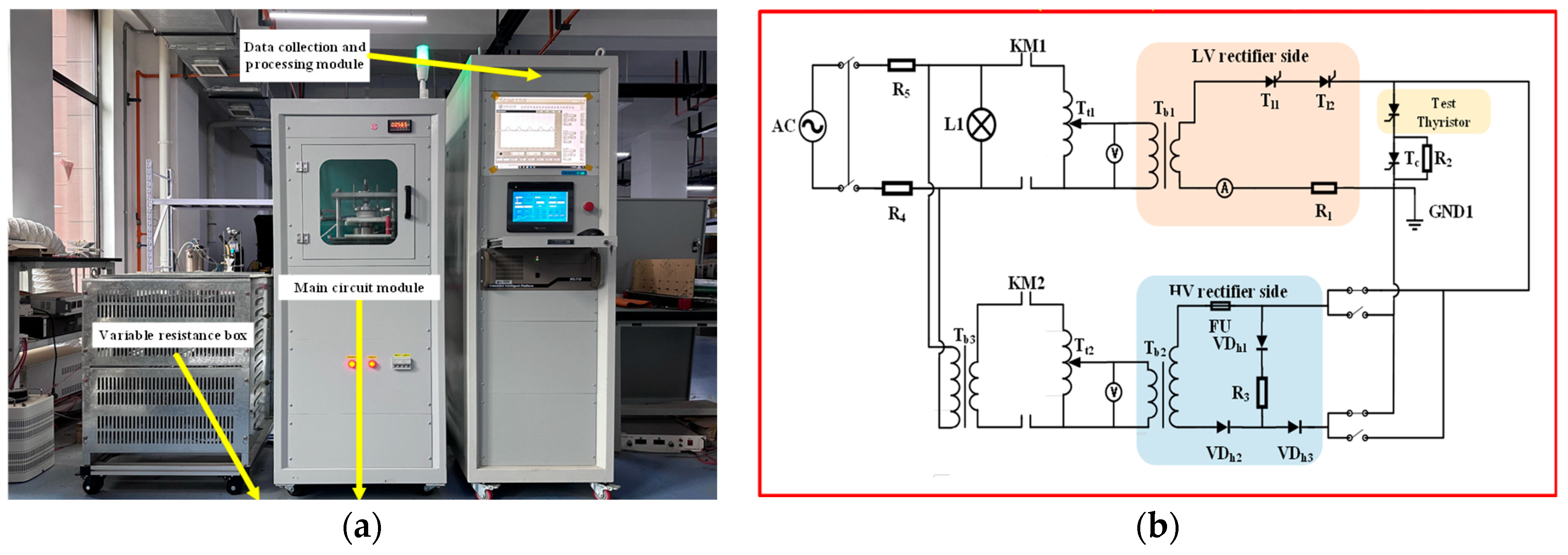
The schematic diagram of the main circuit for accelerating aging of thyristors and a photo of the platform are depicted in
Figure 1. The main circuit for accelerated aging of thyristors mainly consists of the following parts: the low-voltage rectifier side, which steps down the mains voltage and performs rectification through two thyristors, is designed to generate high forward current when the tested thyristor is in the on state; the high-voltage rectifier side, which boosts the mains voltage and rectifies it through thyristors, is used to apply reverse high-voltage stress when the tested thyristor is in the off state. The synthetic power supply equipment was home-made.
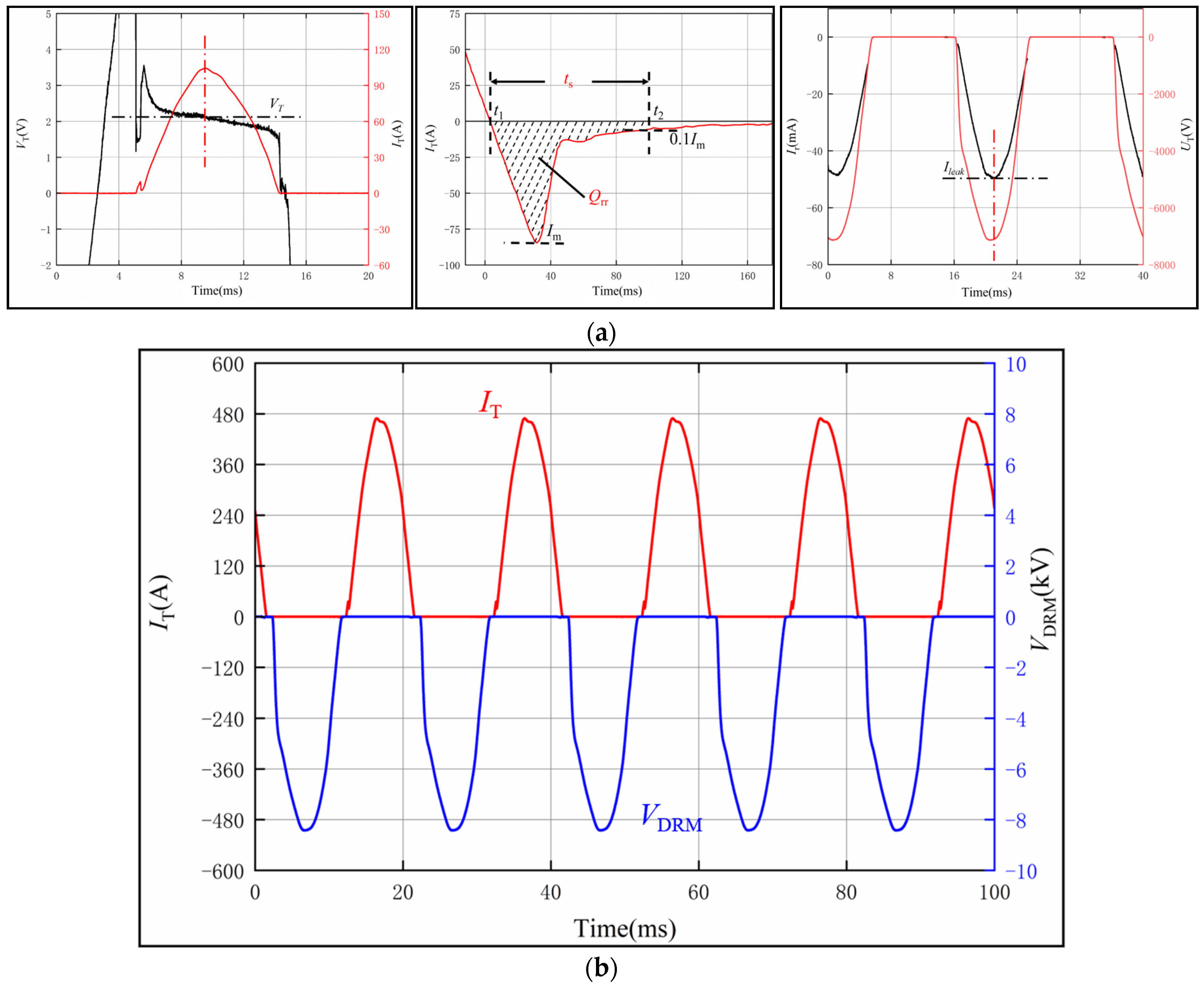
Figure 2 shows the typical current and voltage waveforms recorded during the accelerated aging experiment.
Figure 2a shows a schematic diagram of the measured waveform and processing method of the thyristor characteristics in the measurement section. The waveform of the on-state voltage measurement is shown in the first figure in
Figure 2a. When the on-state current
IT reaches its peak, the corresponding thyristor voltage drop is selected as the on-state voltage
VT. The waveform of the reverse recovery characteristic measurement is shown in the second figure of
Figure 2a. The waveform of the reverse leakage current measurement is shown in the third figure of
Figure 2a, with the peak current representing the reverse leakage current
Ileak. As shown in
Figure 2b, the test platform can apply periodic alternating stress to the tested thyristor within a single 50 Hz power-frequency cycle (20 ms): the positive half-cycle applies a sinusoidal half-wave forward current with an amplitude of up to +500 A to simulate the on-state operating conditions of the thyristor in the converter valve, and the negative half-cycle applies a reverse high voltage with an amplitude of up to −8 kV to simulate the reverse blocking operating conditions of the device. This periodic on-state conduction and reverse blocking operation is consistent with the actual operating mode of thyristors in HVDC converter valves, and the thermal stress generated by the on-state current loss and reverse leakage current loss during the cycle can accurately simulate the junction temperature fluctuation of the device in actual engineering. In addition, the waveform also verifies that the platform can realize the non-overlapping timing of forward current and reverse voltage, avoiding the simultaneous application of high voltage and high current that may cause sudden avalanche breakdown of the device, ensuring the stability of the accelerated aging process.
2.2. Characteristic Detection Method
During the aging process of thyristors, their conduction characteristics, blocking characteristics, and reverse recovery characteristics are typical indicators that characterize the aging state of the device [
7]. Among these indicators, reverse leakage current is the core characteristic parameter of a thyristor’s reverse blocking performance and also a key indicator for assessing the degree of device aging and degradation. When the thyristor operates at its rated reverse blocking voltage, the internal PN junction is in a reverse-biased state, ideally exhibiting only a very small saturation leakage current. However, when the device undergoes long-term electro-thermal-stress cycles leading to aging, the number of interface state defects in the PN junction increases, the moisture-resistant insulation performance of the passivation layer degrades, and lattice dislocations and damage appear in the chip body. These factors can result in a significant order-of-magnitude increase in reverse leakage current, directly reflecting the failure risk of the device’s blocking capability. Based on this, the on-state voltage, reverse leakage current, reverse recovery charge and reverse recovery time are recorded. When in the on state, the voltage probe is used to extract the voltage on both sides of the thyristor, and the difference is used to obtain the on-state voltage value. In the reverse blocking state, the tested thyristor is applied with a rated reverse DC voltage, and its internal PNPN structure presents an extremely high reverse impedance (up to MΩ level under ideal conditions). The sampling resistor R2 is connected in series with the tested thyristor in the reverse high-voltage loop, ensuring its impedance is far lower than the reverse impedance of the thyristor. According to Kirchhoff’s current law for series circuits, the current flowing through R2 is almost equal to the reverse leakage current of the tested thyristor. In addition, a surge current is generated through an L-T-R resonant circuit, and the reverse recovery current after zero crossing is collected. The reverse recovery characteristic parameters are obtained using the following equations.
In the formula: t1—time corresponding to the reverse recovery current dropping to zero/μs; t2—time corresponding to the decrease in reverse recovery current to 0.1 times the peak value/μs; ts—reverse recovery storage time of the thyristor, which characterizes the duration of the carrier extraction phase in the device’s reverse recovery process/μs; iT—instantaneous value of the reverse recovery current flowing through the thyristor during the turn-off process/A; and Qrr—reverse recovery charge of the thyristor. Qrr is the core parameter characterizing the reverse recovery characteristics of the thyristor. Physically, it is defined as the total charge extracted from the device during the reverse recovery process, i.e., the time integral of the reverse recovery current when the thyristor switches from the forward conduction state to the reverse blocking state. Under the same operating conditions, a smaller Qrr indicates a faster reverse recovery speed, lower switching loss, and better reverse recovery characteristics of the thyristor.
Measurement parameters are divided into real-time monitoring parameters and periodic measurement parameters. The real-time monitoring parameters are the temperature of the thyristor shell and the reverse leakage current. By monitoring the shell temperature, unexpected fluctuations in the operation status of the thyristor can be avoided. The parameters measured periodically include the reverse recovery characteristics and on-state voltage of the thyristor. The initial parameters of the thyristor are measured at the beginning of the experiment, and then the experiment is paused every 48 h until it stops.
2.3. Test Procedure
The experimental platform can conduct an electric thermal combined aging experiment on one thyristor at a time. There are a total of 8 thyristors in the experiment, with device models KP03XY8500 (Xi’an Peri Power Semiconductor Converter Technology Co., Ltd., Xi’an, China) and numbers from M1 to M8. In the preliminary experiment, when the voltage stress of the thyristor is greater than 8 kV, and the temperature stress is greater than 130 °C, the junction temperature of the thyristor becomes difficult to control, which leads to rapid electrical breakdown of the thyristor, and it cannot record sufficient effective data for research. Therefore, the maximum stress set in this experiment is 7 kV/130 °C, and four sets of stress levels are set below: 7 kV/130 °C, 7 kV/120 °C, 6 kV/130 °C, and 6 kV/120 °C, respectively. These facilitate the study of the effects of changes in temperature stress and voltage stress on the aging of thyristors.
This experiment did not set a definite ending time. According to the thyristor failure criteria shown in
Table 1, the experiment was stopped when any of the characteristic parameters exceeded the pre-defined failure threshold.
3. Analysis of Failure Modes of Thyristors
This section presents the degradation process of reverse leakage current, on-state voltage, and reverse recovery characteristics of eight thyristors under four stress levels in aging experiments, and analyzes the failure modes of thyristors.
3.1. Experimental Results
The experimental results of thyristor devices under four sets of stress are shown in
Table 2. It can be seen that the lifespan of the two thyristors under each stress group is roughly the same, but as the temperature and voltage stress increased, the lifetime of the thyristors decreased rapidly.
3.2. Degradation Law of On-State Voltage
On-state voltage refers to the voltage drop between the anode and cathode of a thyristor during forward conduction, which mainly reflects the losses during the operation of the thyristor. In the aging experiment of thyristors simulating the operating conditions of converter valves,
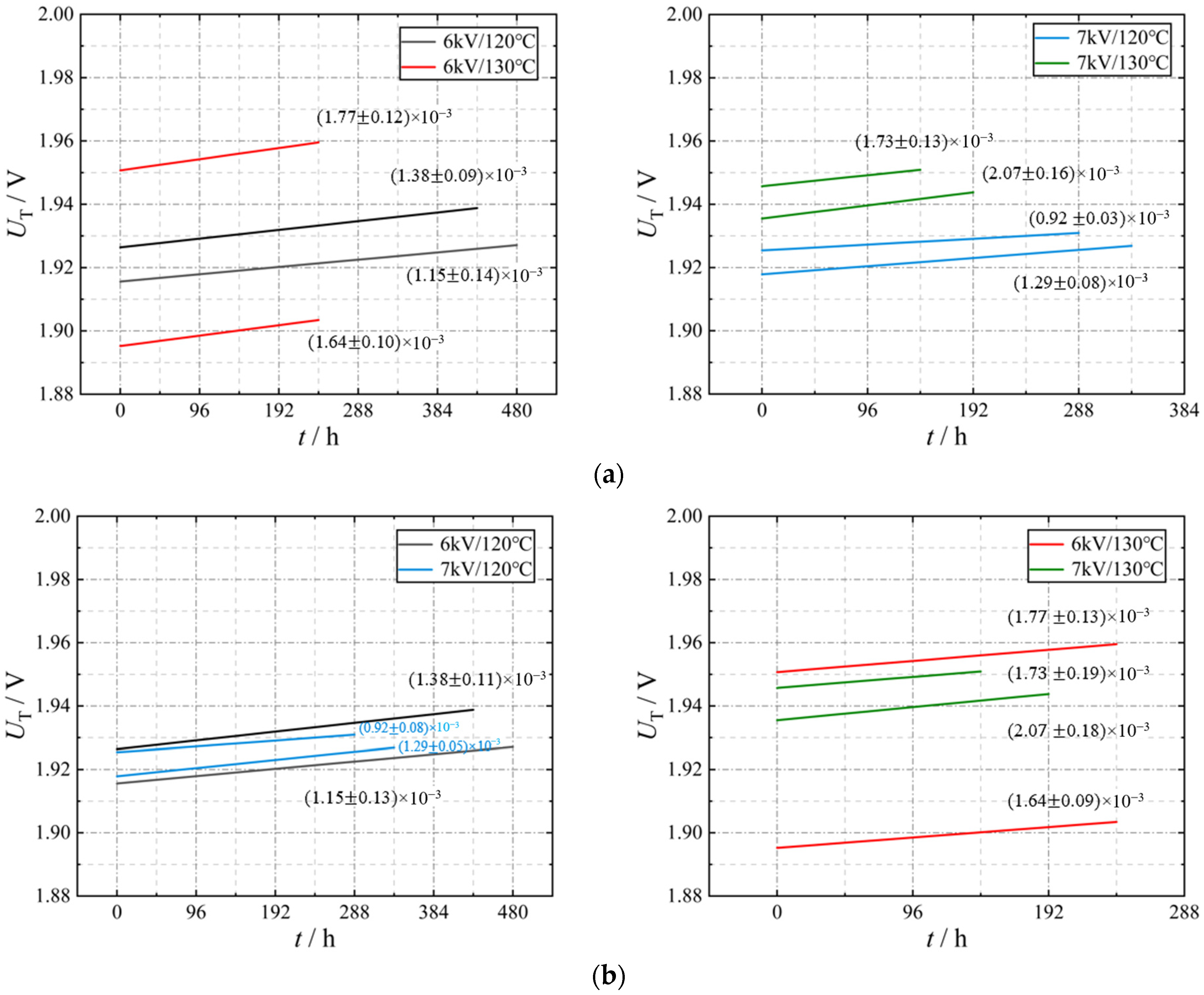
Figure 3 shows the effects of different temperatures and voltage stresses on the degradation of the thyristor on-state voltage. The solid line in the figure represents the result of the linear fit of the experimental data, with the slope and experimental uncertainty indicated in the figure.
The results show that the on-state voltage of all tested thyristors exhibits a monotonic, slight increase with aging time. Notably, the degradation rate of on-state voltage at 130 °C is more pronounced than that at 120 °C. In contrast, under the same operating temperature, voltage stress has no significant effect on the degradation rate of on-state voltage. Therefore, it can be inferred that the junction temperature of the thyristor in the converter valve is the main factor affecting its on-state voltage degradation rate. As the temperature increases, the degradation of the on-state voltage of thyristors becomes more significant.
3.3. Degradation Law of Reverse Recovery Characteristics
The reverse recovery process is the process by which the non-equilibrium charge carriers accumulated in the thyristor under operating conditions disappear and restore its blocking ability. In engineering, the reverse recovery characteristic is generally used to reflect the turn-off time of the thyristor in the converter valve. The reverse recovery characteristics are mainly related to the consistency of the turn-off timing of thyristors connected in series on the same valve arm. If the reverse recovery characteristics of each thyristor are highly dispersed, overvoltage stress will be generated on the thyristor that turns off quickly, which is not conducive to the long-term stable operation of the thyristor. In severe cases, it may even lead to commutation failure and cause DC transmission system shutdown accidents.
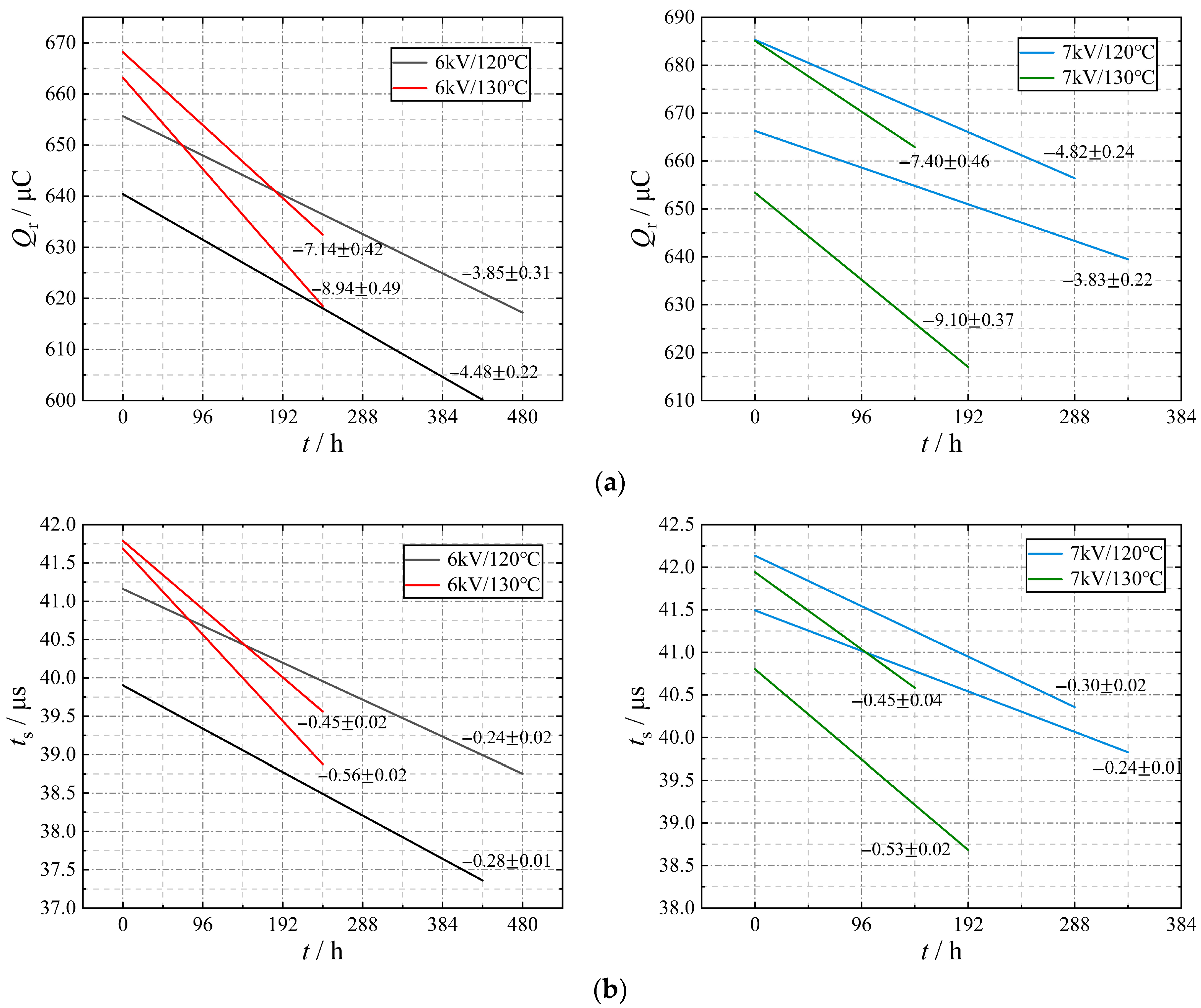
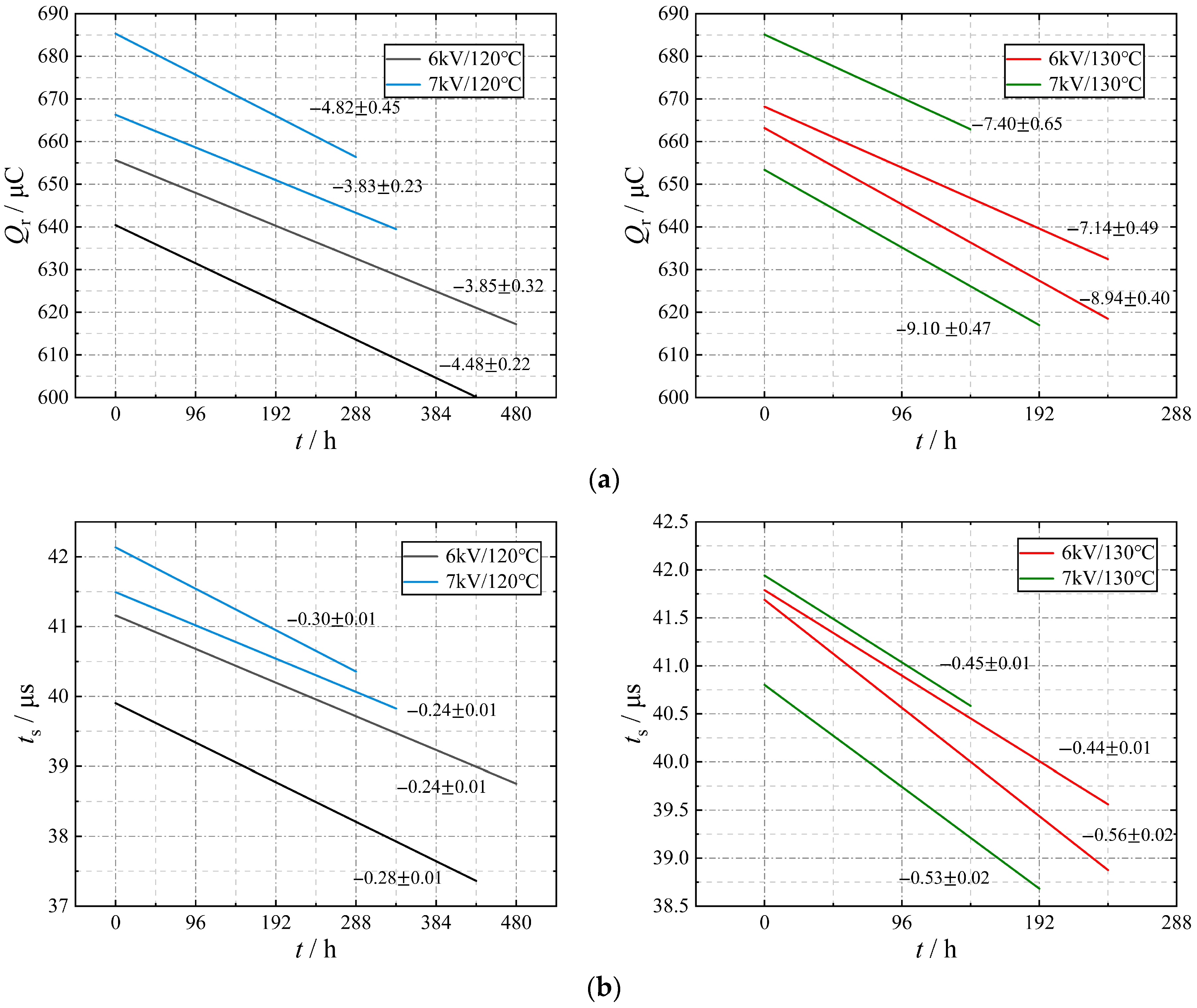
The comparison of the degradation law of the reverse recovery characteristics of the thyristor in the converter valve under the same voltage stress and different temperature stress is shown in
Figure 4. The solid line in the figure represents the result of the linear fit of the experimental data, with the slope and experimental uncertainty indicated in the figure. It can be seen that the reverse recovery charge and storage time showed a decreasing trend throughout the entire experimental period. From the perspective of degradation rate, the higher the aging temperature, the more obvious the degradation of reverse recovery characteristics.
The degradation laws of the reverse recovery characteristics of the thyristor of the converter valve under the same temperature and different voltages are shown in
Figure 5, respectively. The solid line in the figure represents the result of the linear fit of the experimental data, with the slope and experimental uncertainty indicated in the figure. It can be seen that the degradation rate of the reverse recovery characteristics of the thyristor of the converter valve is roughly the same under different voltage stresses. Therefore, it can be considered that the degradation rate of the reverse recovery characteristics of thyristors during normal operation is mainly related to temperature stress and its level, and is not directly related to the magnitude of voltage stress.
3.4. Degradation Law of Reverse Leakage Current
Under the same conditions, the leakage current of silicon semiconductor devices is much larger than that of general dielectrics, often reaching several milliamps at device operating temperatures. This is because semiconductor devices often experience unstable leakage current in high-temperature and high-voltage environments. The increase in leakage current will lead to an increase in thyristor losses, disrupt the thermal equilibrium state of the thyristor, and further reduce the voltage resistance level of the thyristor or cause thermal damage. Therefore, the discussion on the leakage current of thyristor devices is of great significance for improving the voltage resistance and stability of the devices.
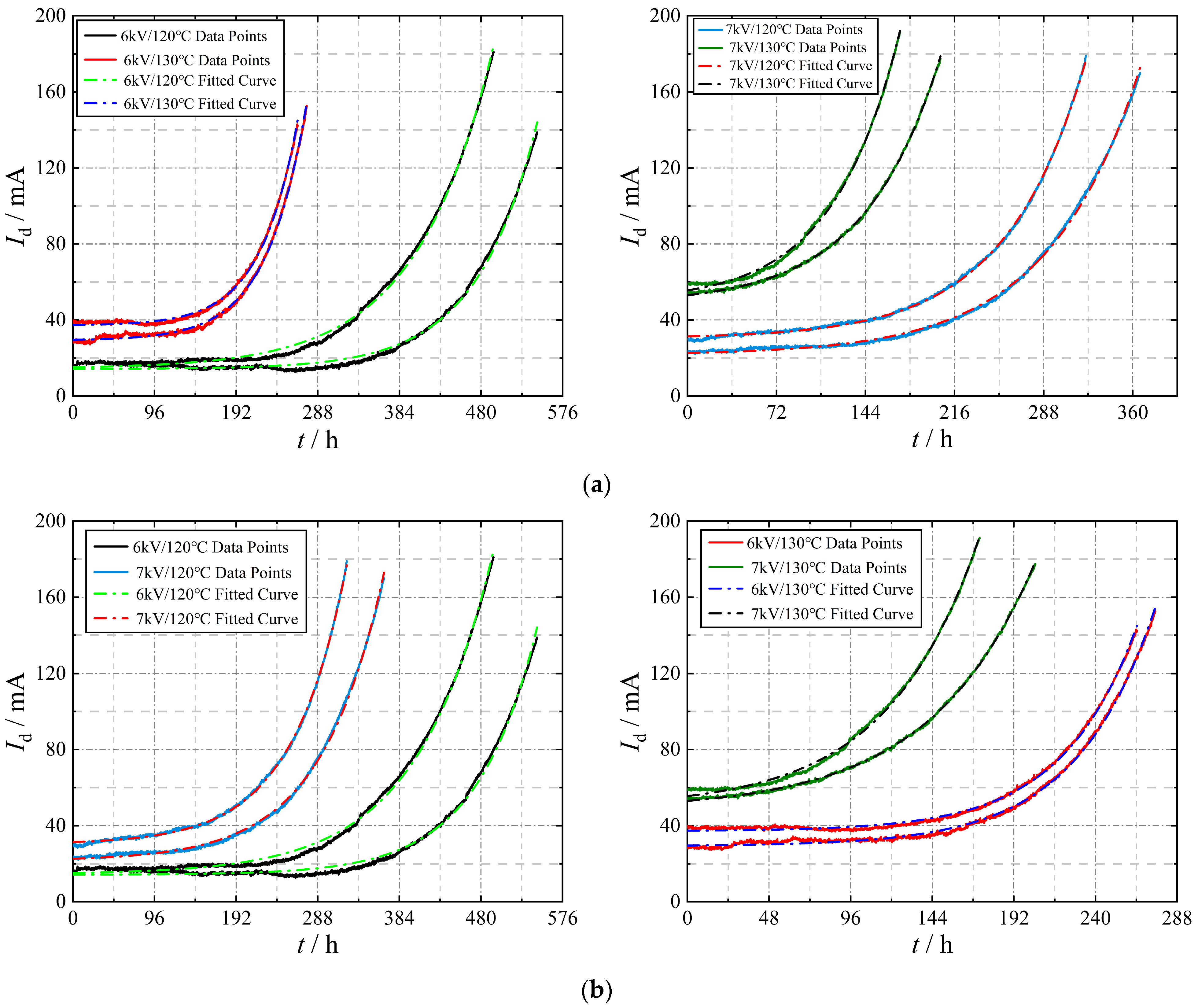
The degradation law of reverse leakage current of thyristors under simulated operating conditions of converter valves is shown in
Figure 6. The dashed line in the figure represents the curve of the data points fitted exponentially. It can be seen that in the early stage of the aging experiment, the reverse leakage current of thyristors remained stable or increased slightly. In the later stage of the experiment, it will increase exponentially, and the increase in temperature or voltage stress will accelerate the aging process of thyristors. After the experiment, various characteristics of the thyristor were tested, and it was found that the cause of thyristor failure was reverse blocking failure. Therefore, it can be inferred that the rapid increase in reverse leakage current is one of the main manifestations before the failure of the thyristor in the converter valve. Besides that, it should be noted that the insulation degradation is a gradual process with the shape of an exponential function.
3.5. Failure Mode of Thyristor
To further determine the failure mode of the experimental thyristors, the leakage current, reverse recovery characteristics, and on-state characteristics of each failed thyristor were measured after the experiment, and compared with the initial values, as shown in
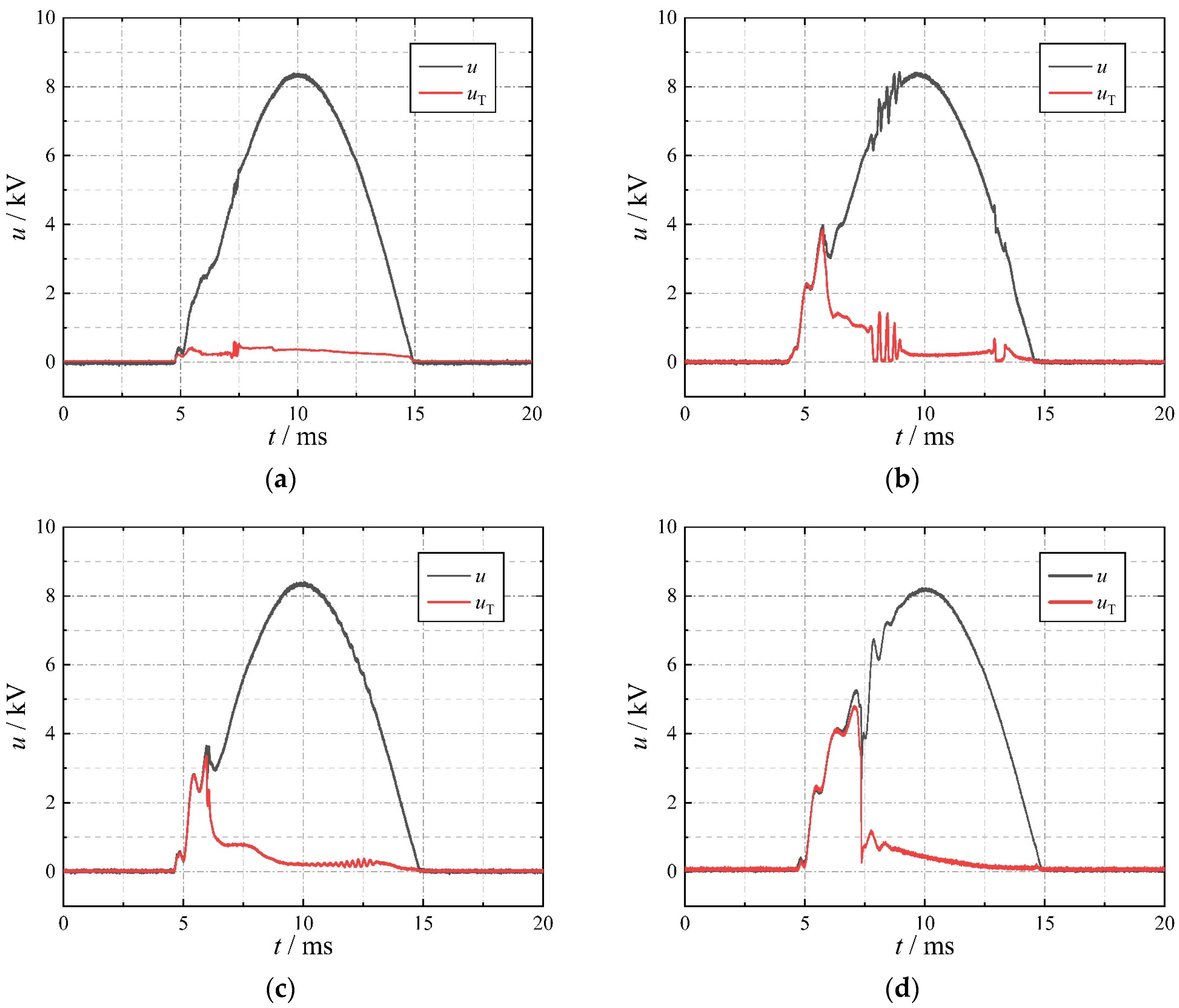
Table 3. It can be seen that the reverse leakage current of the failed thyristor exceeds the threshold, while other characteristics are within the normal range. Taking four thyristors as an example, their reverse blocking ability was measured, and the measurement results are shown in
Figure 7. In the figure,
u represents the supply voltage, and
uT represents the voltage across the thyristor. It can be seen that the remaining blocking ability of the thyristors shows an upward trend with the increase in stress. The reverse blocking ability of thyristor M1 is almost completely lost, while thyristors M3, M5, M7, etc., although unable to reach the standard withstand voltage level, still maintain a certain degree of reverse blocking ability. It is speculated that when the stress is low, the thyristor chip has sufficient time to gradually develop from local electrical breakdown to a stable state through thermal breakdown. However, when the stress increases, the thyristor often undergoes electrical breakdown when the remaining blocking ability is high, thus maintaining a certain blocking ability. In summary, it is inferred that the continuous increase in reverse leakage current is the main manifestation before the failure of thyristors, and reverse blocking failure is the main failure mode of thyristors. The underlying mechanism of the degradation of thyristor characteristics will be further analyzed below.
4. Structural Characteristics Analysis
In order to further understand the failure mechanism of thyristors under electric thermal combined stress, we disassembled the failed thyristors and observed the microstructure characteristics of the chip using a field emission scanning electron microscope (FE-SEM), energy dispersive spectrometer (EDS), and polarizing microscope.
4.1. Disassembly and Analysis of Thyristor
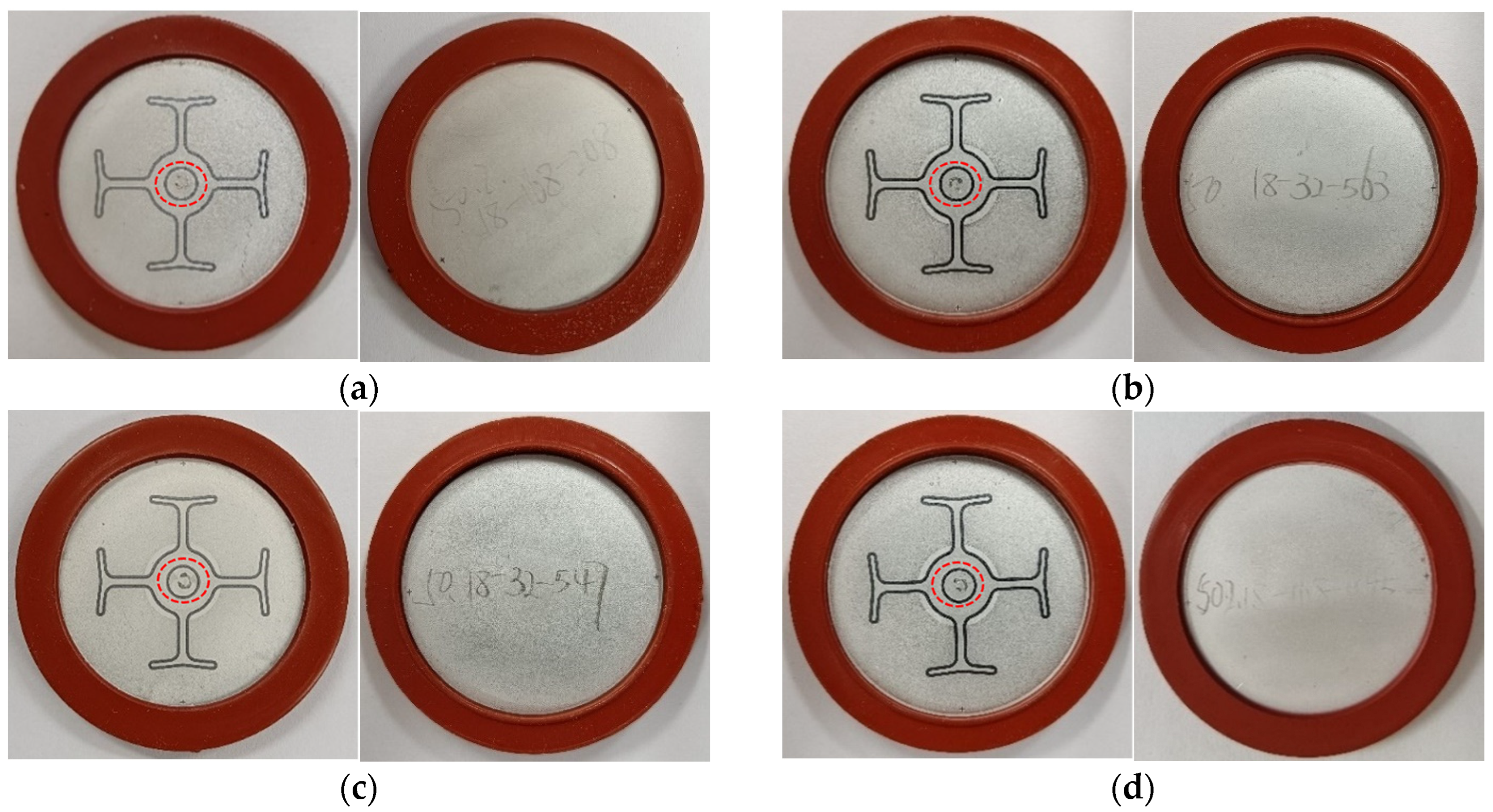
Due to the fact that all thyristors exhibited the same failure mode in the experiment, this section selected some thyristors for disassembly and analysis. The bare silicon wafer structure obtained by removing the aluminum film on the surface of the thyristor chip numbered M5 using chemical methods is shown in
Figure 8. The selected thyristor numbers are M1, M3, M5, and M7.
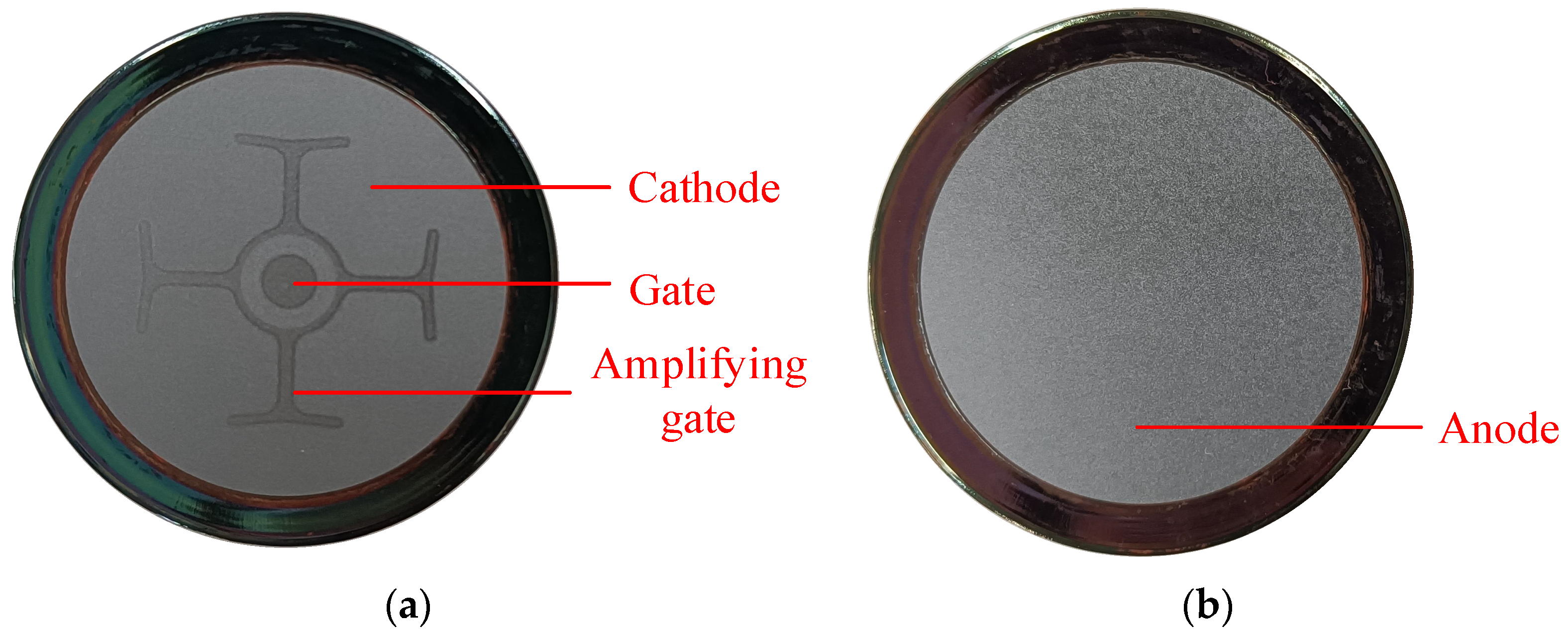
Figure 9 shows the surface states of the cathode and anode of four thyristors. It can be seen that there is no obvious penetrating damage on the anode and cathode surfaces of the thyristor chip, and only slight burn damage occurs at the gate region. In this study, “burn damage” is defined as the irreversible thermally induced structural damage of the thyristor chip under combined electric and thermal stress, which is mainly caused by local excessive Joule heat generated by leakage current and switching current, including ablation of the surface aluminum metallization layer, melting and void formation of the monocrystalline silicon wafer, lattice dislocation and damage, and element diffusion at the electrode–semiconductor interface. The observation results show that the burn damage was more severe in devices subjected to higher electric and thermal stress levels.
There are two main reasons for the damage to the gate region of thyristors: one is that the gate region of thyristors is usually electrically connected to a molybdenum sheet using a compression spring. Under high pressure, the aluminum film on the surface of the gate region is prone to lateral migration and local accumulation. The second reason is that the thyristor switches between conducting and blocking states for a long time during operation, and the conducting process of the thyristor is that the gate first conducts and then extends to the entire cathode surface. Therefore, during operation, the gate will accumulate more heat. The combination of the above two factors makes it easy for the gate region of thyristors to be damaged, and may even lead to the phenomenon of thyristor triggering failure.
4.2. Observation Results of FE-SEM
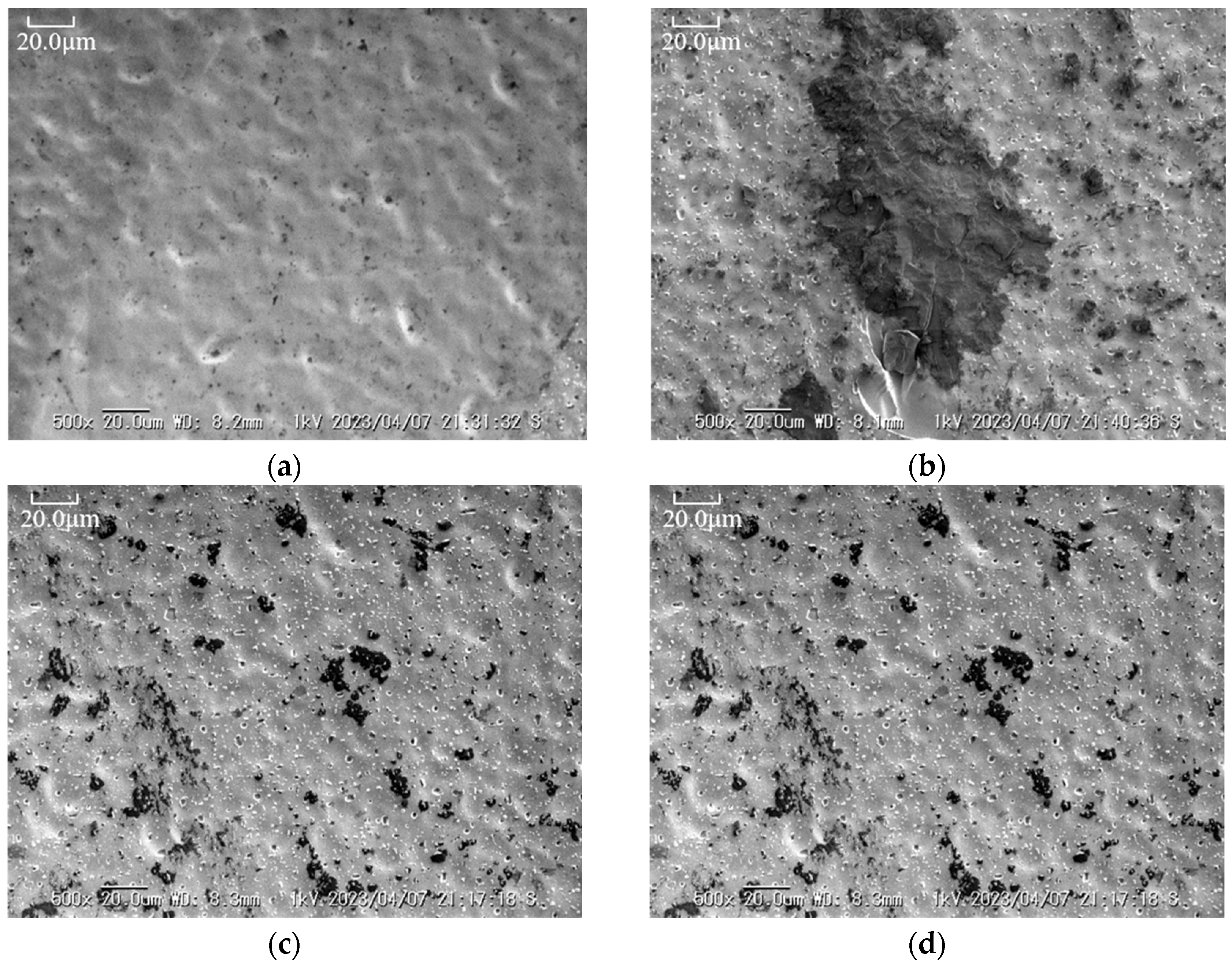
We observed the surface morphology of the silicon wafers using FE-SEM and compared it with pristine silicon wafers, as shown in
Figure 10. It can be seen that compared to pristine silicon wafers, the gate region of aged silicon wafers has a larger area of burn damage, and the cathode and anode surfaces also have burn damage and voids. The local thermal stress and surface damage associated with the above aging characteristics can lead to an increase in lattice defects or interface states within the silicon wafer, thereby reducing the minority carrier lifetime of semiconductor materials.
4.3. Analysis Results of EDS
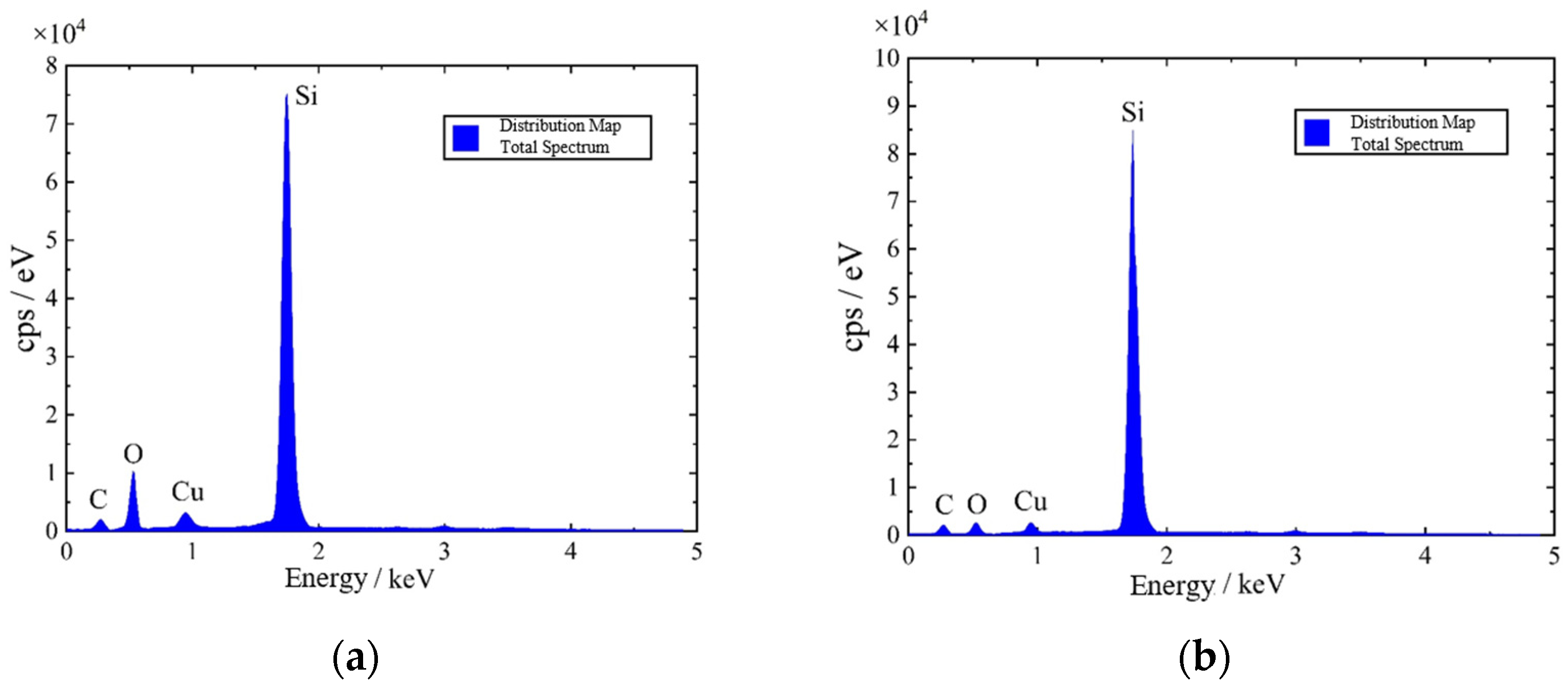
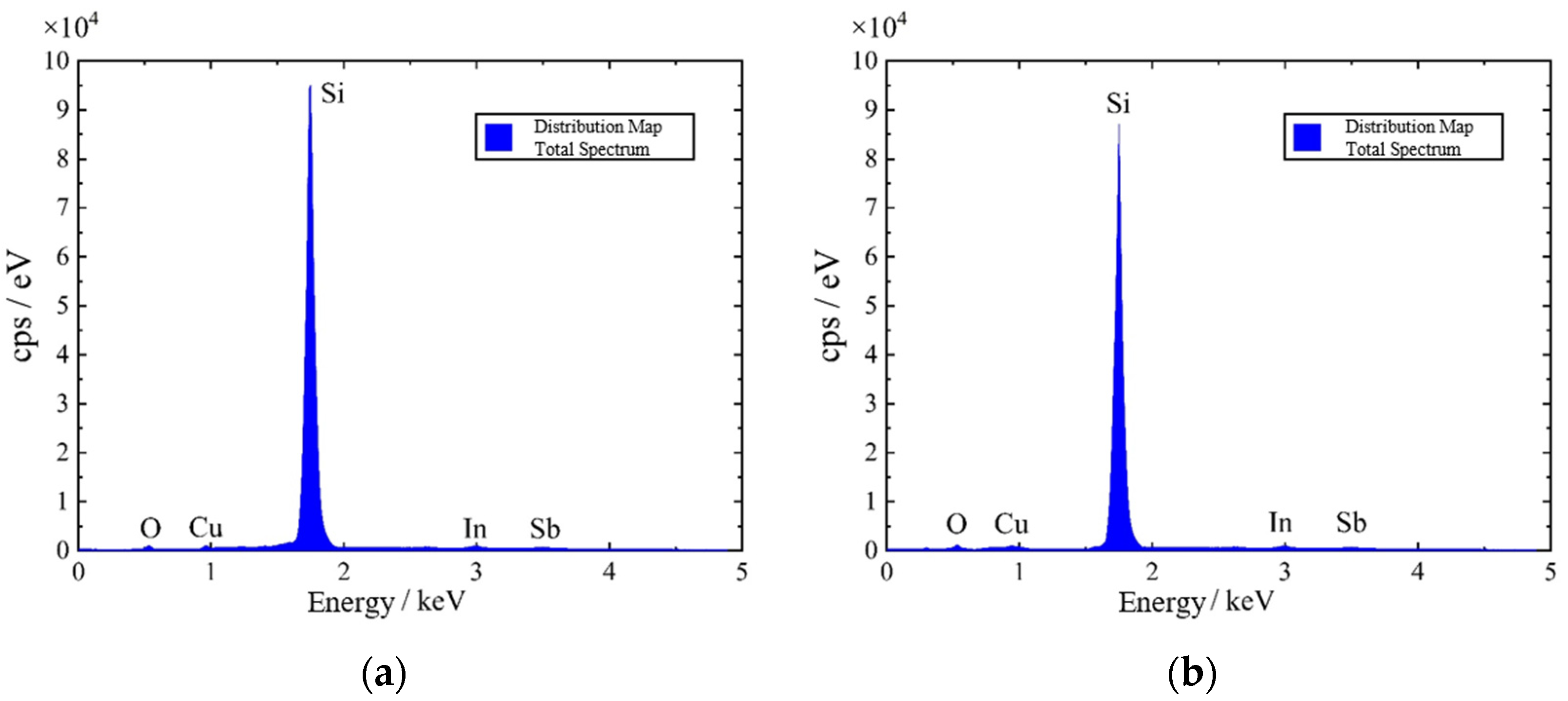
To investigate whether impurities are introduced into silicon wafers during the aging process, two thyristors, M5 and M7, with obvious reverse recovery characteristics and on-state voltage degradation, were selected. The elemental composition of the silicon wafer surface and cross-section was studied using EDS. The results are shown in
Figure 11 and
Figure 12. The vertical axis of the EDS spectra uses cps/eV as the unit, which is the normalized X-ray signal intensity defined as the effective photon counts detected by the silicon drift detector (SDD) per second per 1 eV energy interval. Its value reflects the quantity of the elements. This normalization eliminates the systematic error caused by different spectrum channel width settings, ensuring the comparability of spectral data between different samples. It can be seen that, in addition to common C, O, and Si elements and a small number of Sb and In elements doped in the silicon wafer, impurities are present on both the surface and cross-section of the silicon wafer, with copper being the most abundant. The copper element is a common deep-level impurity in silicon wafers. Due to its energy level located near the bandgap center line, it has a strong ability to capture electrons and holes, which can easily cause recombination of electrons and holes. Therefore, it is also known as a recombination center impurity. The recombination rate (the rate at which electrons and holes recombine through defect energy levels in the semiconductor band gap) is dominated by the recombination centers introduced by impurities and lattice defects, while the direct band-to-band recombination of carriers plays a negligible secondary role. Therefore, due to the increase in recombination centers, the minority carrier lifetime of thyristors will also decrease.
4.4. Observation Results of Polarizing Microscope
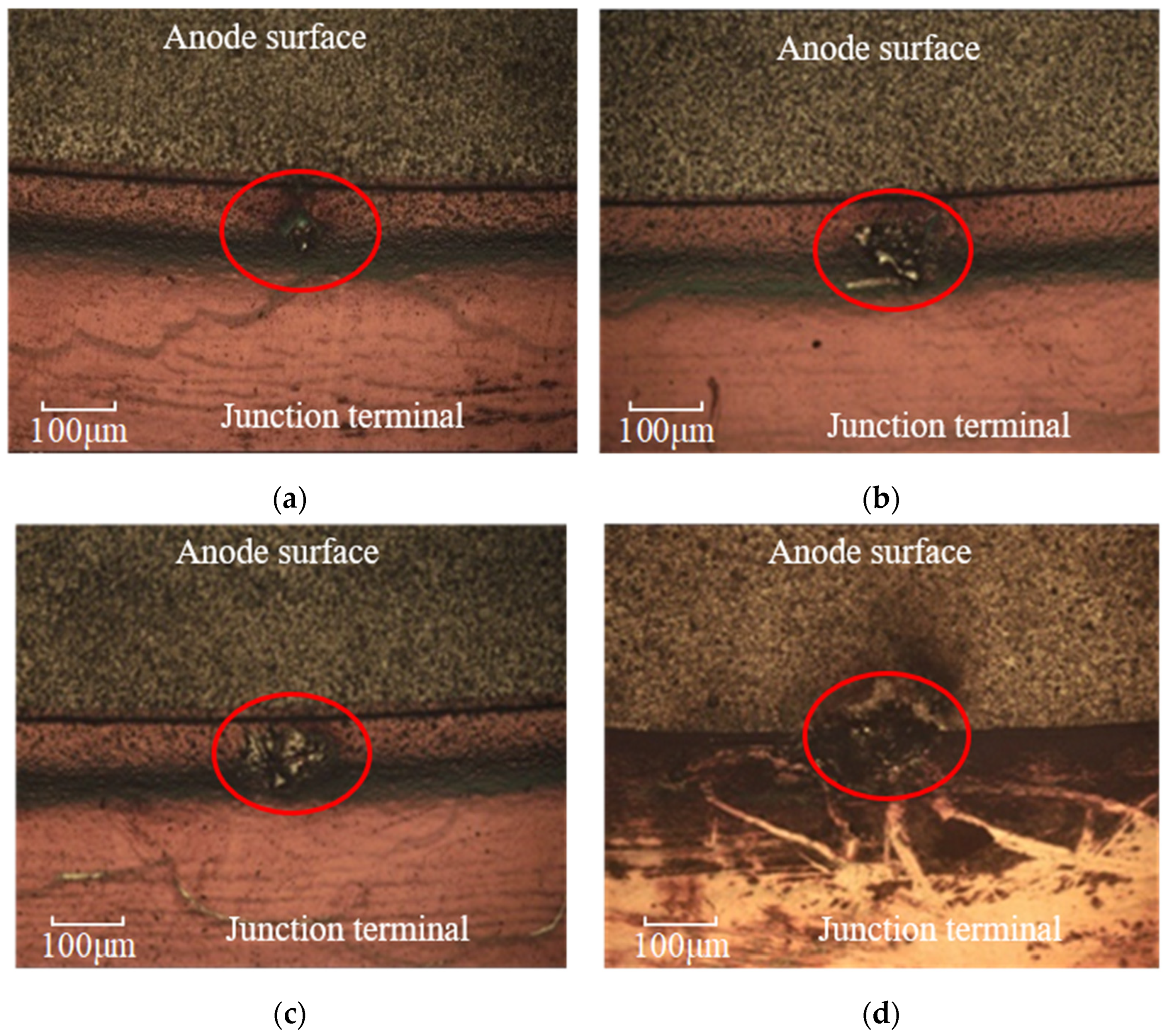
To study the degradation and failure mechanism of thyristor blocking characteristics, the chip was observed under an optical microscope. It can be seen that there is a significant penetrating thermal breakdown phenomenon at the edge of the anode surface of the chip, as shown in
Figure 13. This structural damage can cause local melting or impurity diffusion in the semiconductor junction region, which not only damages the internal crystal structure and reduces the minority carrier lifetime of the silicon wafer but also affects the blocking performance of the thyristor.
In summary, after aging, the gate region of the thyristor silicon wafer is extensively burned, and copper elements are enriched on the surface and cross-section of the silicon wafer. In addition, there is thermal breakdown at the edge of the anode surface of the chip, which can cause lattice defects and increase the density of interface states, enhance the recombination process of charge carriers, and lead to a decrease in the minority carrier lifetime and the blocking ability of the chip, thereby affecting the stability of the thyristor characteristic parameters.
5. Simulation Analysis
Through the discussion in the previous section, it is easy to find that the minority carrier lifetime is an important factor affecting the degradation of thyristor characteristic parameters. This chapter will further explain the micro mechanism of thyristor characteristic parameter degradation based on Silvaco software simulation results.
5.1. Simulation Model Establishment
To clarify the microscopic mechanism of the influence of minority carrier lifetime on thyristor characteristic parameters, Silvaco TCAD software (Version 5.0.10.R, 8.2.0) was used for device modeling and numerical simulation [
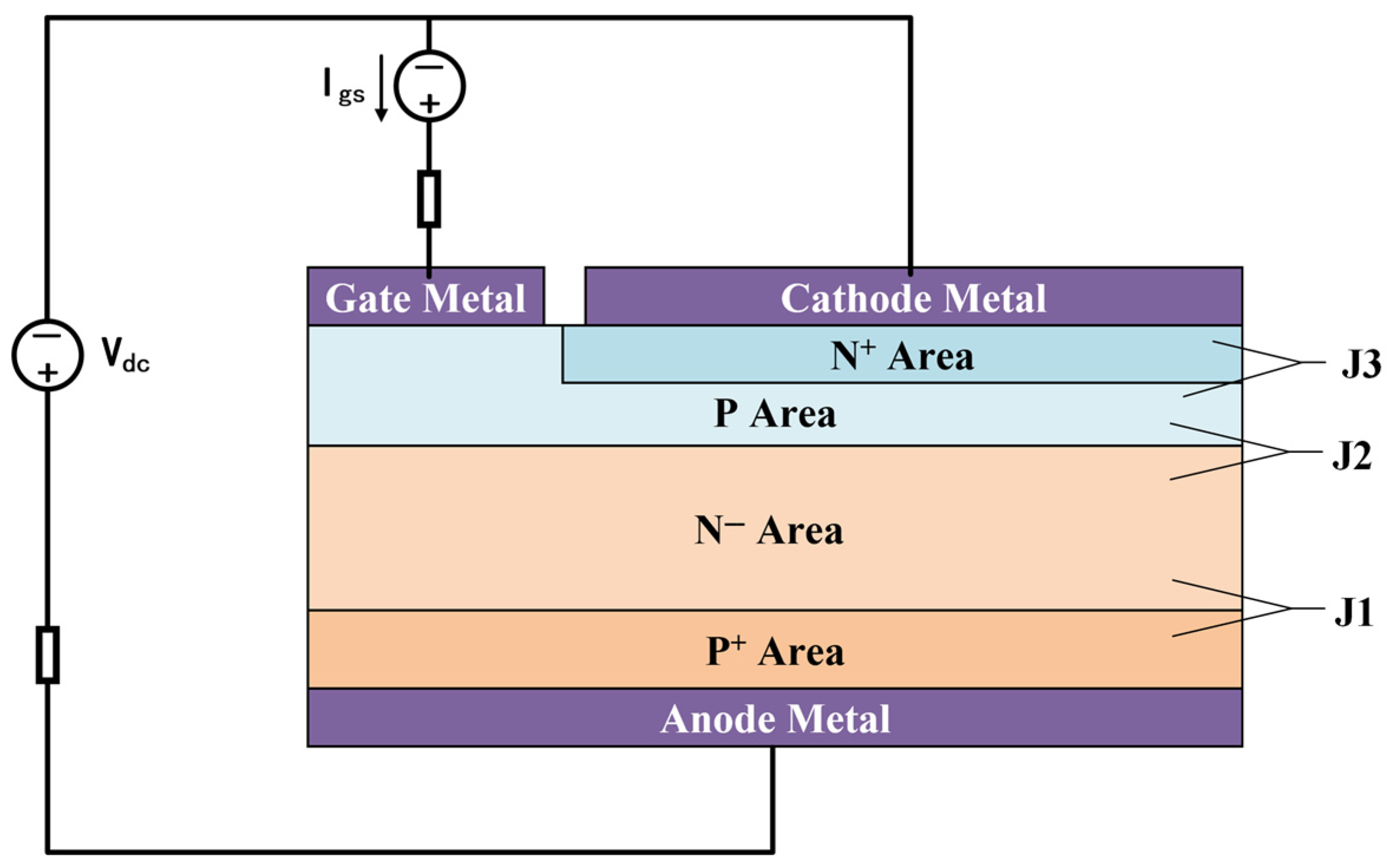
30]. According to the actual chip structure provided by the device manufacturer, a two-dimensional thyristor simulation model was established, as shown in
Figure 14. The model includes the classic PNPN four-layer structure of the thyristor, with three PN junctions marked as J1 (P
+ region/N
− region junction), J2 (N
− region/P region junction), and J3 (P region/N
+ region junction). The doping parameters of each region are set as follows: the N
− region adopts uniform doping with a doping concentration of 10
13 cm
−3; the P region adopts Gaussian doping with a peak doping concentration of 10
16 cm
−3 at the cathode surface; and the P
+ region and N
+ region both adopt Gaussian doping with a peak doping concentration of 10
20 cm
−3 at the surface.
5.2. On-State Voltage Degradation Mechanism
In terms of device structure, the on-state voltage drop of a thyristor can be roughly composed of three parts: junction voltage drop Vj, bulk voltage drop Vbulk, and contact voltage drop Vcontact. Among them, the potential difference established at the junction of the P and N regions maintained by Vj is used to maintain carrier injection. Vbulk comes from the Ohmic loss caused by the bulk resistance of the semiconductor material when current flows through the neutral region of the thyristor (such as the P+ region and N+ region). Vcontact comes from the Schottky barrier or Ohmic contact resistance formed at the interface between the metal electrode and the semiconductor material. Due to the thick base region, Vbulk and Vj of high-voltage thyristor devices are significant, and Vcontact can be almost ignored.
Based on the large injection, the injected carriers completely submerge the J
1 and J
2 junctions, and
Vj1 and
Vj2 can be ignored. The calculation formula for the on-state voltage drop of the thyristor is as follows:
In the formula: k—Boltzmann constant/(J/K); T—temperature/K; q—electron charge/C; J—current density/(A/cm2); n20—average concentration of N− region/cm−3; Wn2—N− region width/μm; ni—intrinsic carrier concentration/cm−3; D—bipolar diffusion coefficient during large injection/(cm2/sec); W′—total width of P1N1P2 area/μm; μ—carrier mobility/cm2·V−1·s−1; L = —bipolar diffusion length/μm; —minority carrier lifetime in the N− region/μs.
From (3), it can be analyzed that during the aging process of thyristors, due to the increase in impurities and internal defects, effective recombination centers will be formed internally, and the bipolar diffusion length L will be significantly reduced. The bipolar diffusion length L is proportional to the square root of the minority carrier lifetime
τq. Below, we will conduct a simulation study on the mechanism of carrier lifetime on the degradation of on-state voltage during aging. The calculation formula of the on-state voltage drop is derived from the classic thyristor device physics model, and the detailed derivation process and theoretical basis can be found in the classic monograph [
2] and the existing research [
22].
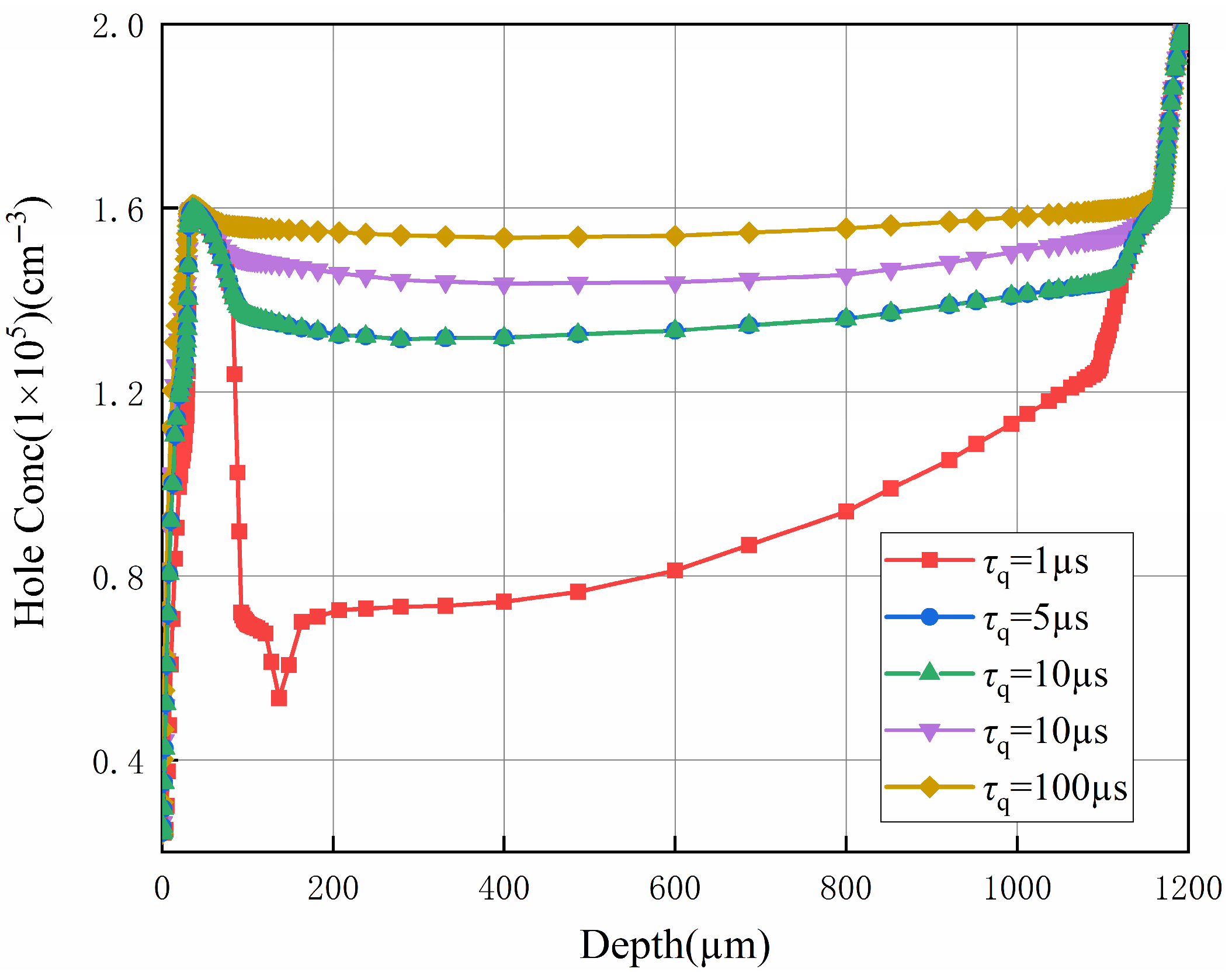
The hole concentration distribution of thyristors with different minority carrier lifetimes obtained from simulation is shown in
Figure 15. The concentration gradient of holes significantly steepens at the junction of J
1 and J
3, causing a change in the distribution of electric field strength in the drift region. The high concentration gradient leads to the expansion of the space charge region, causing both
Vj and
Vbulk to rise, resulting in a larger on-state voltage.
5.3. Reverse Recovery Characteristic Degradation Mechanism
The thyristor turn-off process exhibits a typical two-stage characteristic: the device turns off, beginning at the carrier depletion stage of the J
3 junction, and is limited by the highly doped P-based region and cathode short-circuit structure design. The reverse withstand voltage of the J
3 junction is only 10–20 V. At this time, the reverse current continues to increase until the J
1 junction enters the depletion stage, and the device begins to withstand the reverse voltage
VR. As the reverse recovery current reaches its peak (determined by the carrier extraction rate), the remaining carriers in the current path are quickly extracted, and the current value decays exponentially to zero, finally completing the turn-off process. This physical mechanism determines the strong correlation between the reverse recovery characteristics of thyristors and the carrier lifetime. The characteristic time of the reverse recovery process can be estimated by the following empirical formula:
where
tq is the characteristic time of the reverse recovery process,
k is the scaling coefficient related to the device structure and doping parameters, and
τq is the minority carrier lifetime. It can be seen that the reverse recovery time is approximately proportional to the minority carrier lifetime. When the carrier lifetime decreases, it means that the existence time of non-equilibrium carriers is shortened, resulting in a decrease in the reverse recovery time.
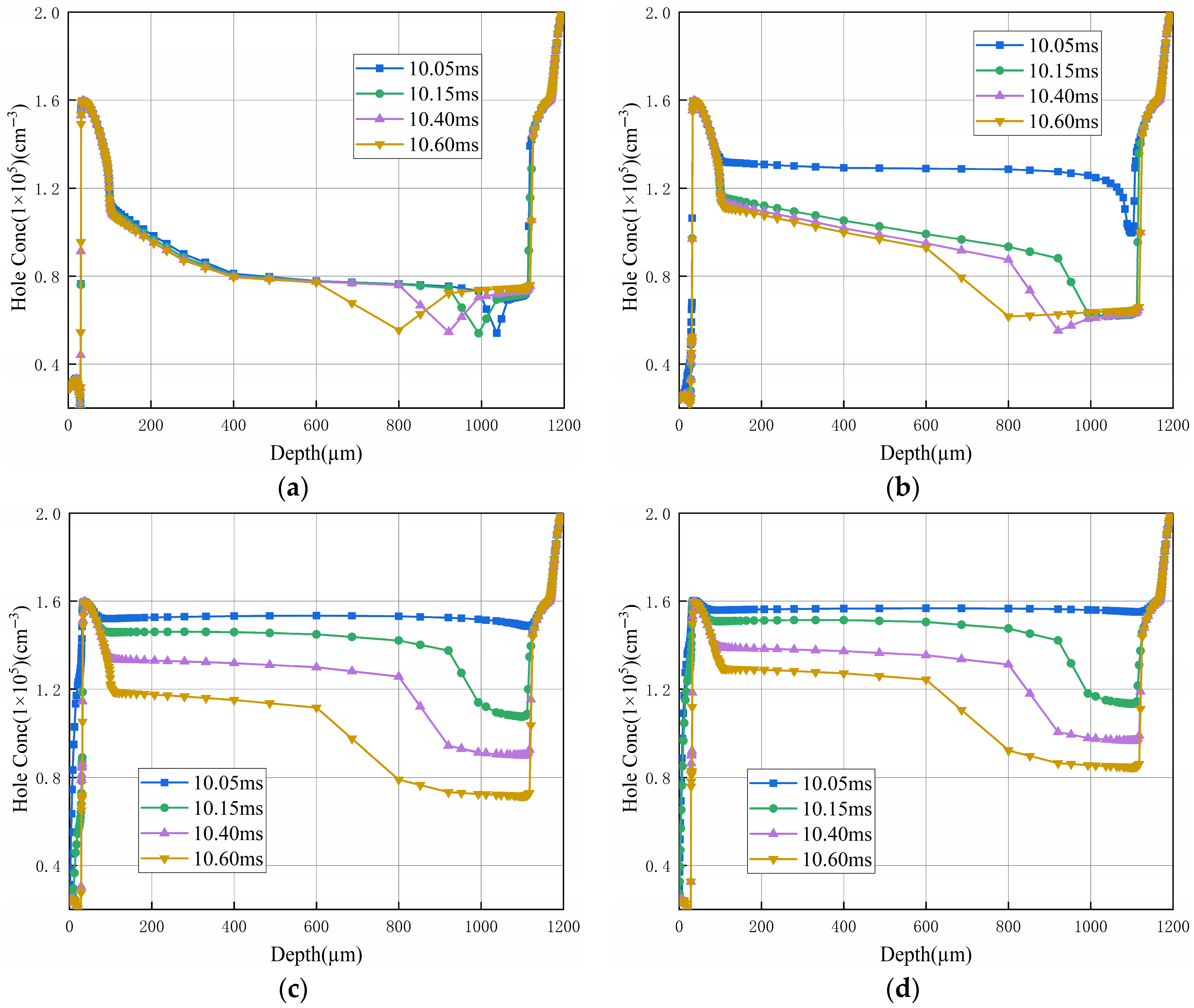
We have further simulated the reverse recovery process of the device and investigated the hole concentration distribution at different time points during the reverse recovery process under different minority carrier lifetime conditions, as shown in
Figure 16. It can be seen that the shorter the carrier lifetime, the more significant the gradual decrease in the overall hole concentration on both sides, with more significant changes near the anode. As the reverse recovery process progresses, the hole concentration in the N-base region of the thyristor gradually decreases, which will weaken the ability of plasma transport within the thyristor. The rate and pattern of changes in hole concentration over time vary under different carrier lifetimes. The longer the carrier lifetime, the greater the amplitude of changes in hole concentration, and the more obvious the trend of changes. For the same reverse recovery time, the longer the carrier lifetime, the higher the overall concentration of holes in the thyristor body. Based on the above analysis, it can be concluded that the reduction in carrier lifetime will lead to a decrease in non-equilibrium carrier concentration, thereby reducing the ability of plasma transport, shortening the reverse recovery process time of thyristors, and reducing the amount of reverse recovery charge.
5.4. Degradation Mechanism of Reverse Leakage Current
When the thyristor is in a reverse bias state, the applied reverse voltage will further expand the depletion region of the PN junction, thereby forming a strong electric field in that region. This strong electric field will have a significant drift effect on the minority carriers that originally existed inside the device, causing them to quickly move along the direction of the electric field. Minority carriers pass through the depletion region driven by an electric field, causing some electrons or holes to overcome the potential barrier, thereby forming a portion of the leakage current under reverse bias, known as reverse leakage current. Specifically, the reverse leakage current can be roughly described using the following relationship:
In the formula, q—the charge of the carrier; Dp/Dn—hole/electron diffusion coefficient; Lp/Ln—hole/electron diffusion length; ni—carrier concentration; and ND/NA—doping concentration.
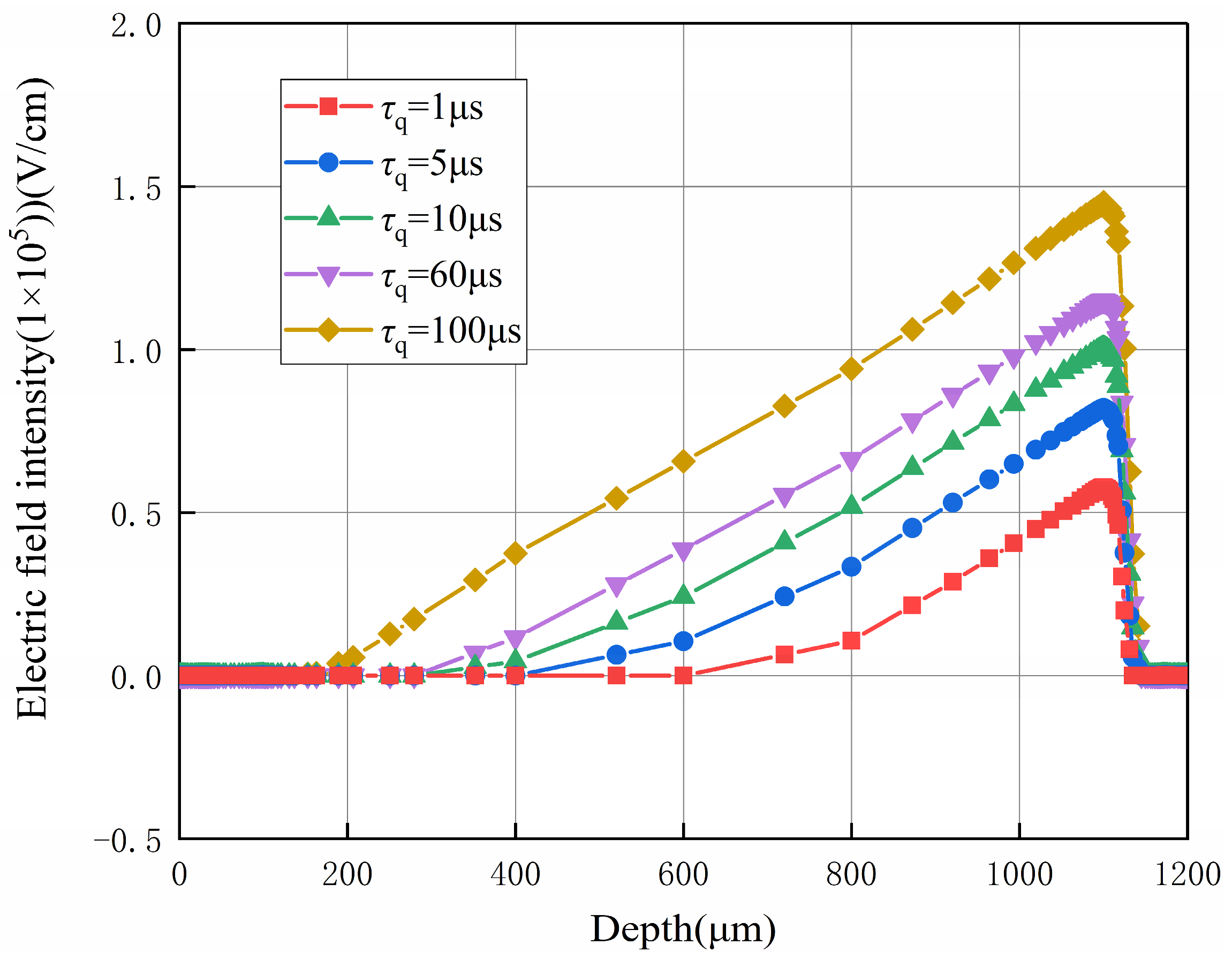
The Silvaco software is used to simulate the electric field distribution in thyristors with different carrier lifetimes under blocking conditions, as shown in
Figure 17. Based on the above simulation results and formula analysis, it can be found that as the carrier lifetime decreases, the internal electric field strength gradually decreases and the reverse leakage current density increases.
Based on the observation results of optical microscopy, this phenomenon can be explained by the following aspects: (1) Although the carrier lifetime decreases, the defects introduced by aging also increase the generation rate of carriers. Under reverse bias conditions, these defects act as carrier generation centers, promoting the generation of thermally excited carriers and increasing reverse leakage current. (2) As the electric field strength decreases, the drift velocity of carriers decreases. In order to maintain the current, the carrier concentration needs to increase, which enhances the thermal excitation effect and further increases the leakage current. (3) Surface leakage current is an important component of thyristor leakage current. The decrease in carrier lifetime, lattice defects, interface density changes, and thermal breakdown phenomena can introduce additional surface leakage current paths.