2. Methodology
2.1. Estimation of Second-Life Battery Potential
This subsection presents a deterministic cohort model developed to project the availability of second-life batteries in Greece over the period 2020–2050. The model tracks successive annual cohorts of electric vehicles, a fraction of which release their batteries for repurposing into small-scale stationary energy storage systems upon reaching the end of their first life in automotive applications.
It is assumed that each EV cohort purchased in year
remains operational in the vehicle for
years (first life). After this period, the corresponding batteries become available for a second life, lasting
years. The parameter
(0–1) denotes the fraction of batteries that are technically and economically suitable for reuse. Moreover, it is assumed that the average usable capacity (in kWh) of each second-life battery is
. This capacity is related to the initial nominal capacity
through the average state of health
of the battery throughout its second life:
The total battery capacity
created per year
, as a result of the retired battery market, is expressed as:
The first term denotes the annual battery capacity potential created due to the end of their automotive life of batteries. It is actually dependent on the number of EVs sold a period ago expressed as . The second term denotes the battery capacity potential exiting second life and is sent to recycling. It is dependent on the EV sales that were done years ago; in other words, from the EVs sold years ago and have just exhausted their second life period.
The total battery capacity
over a N-year period
, from the 1st
to Nth year
is calculated as:
2.2. Illustrative Example
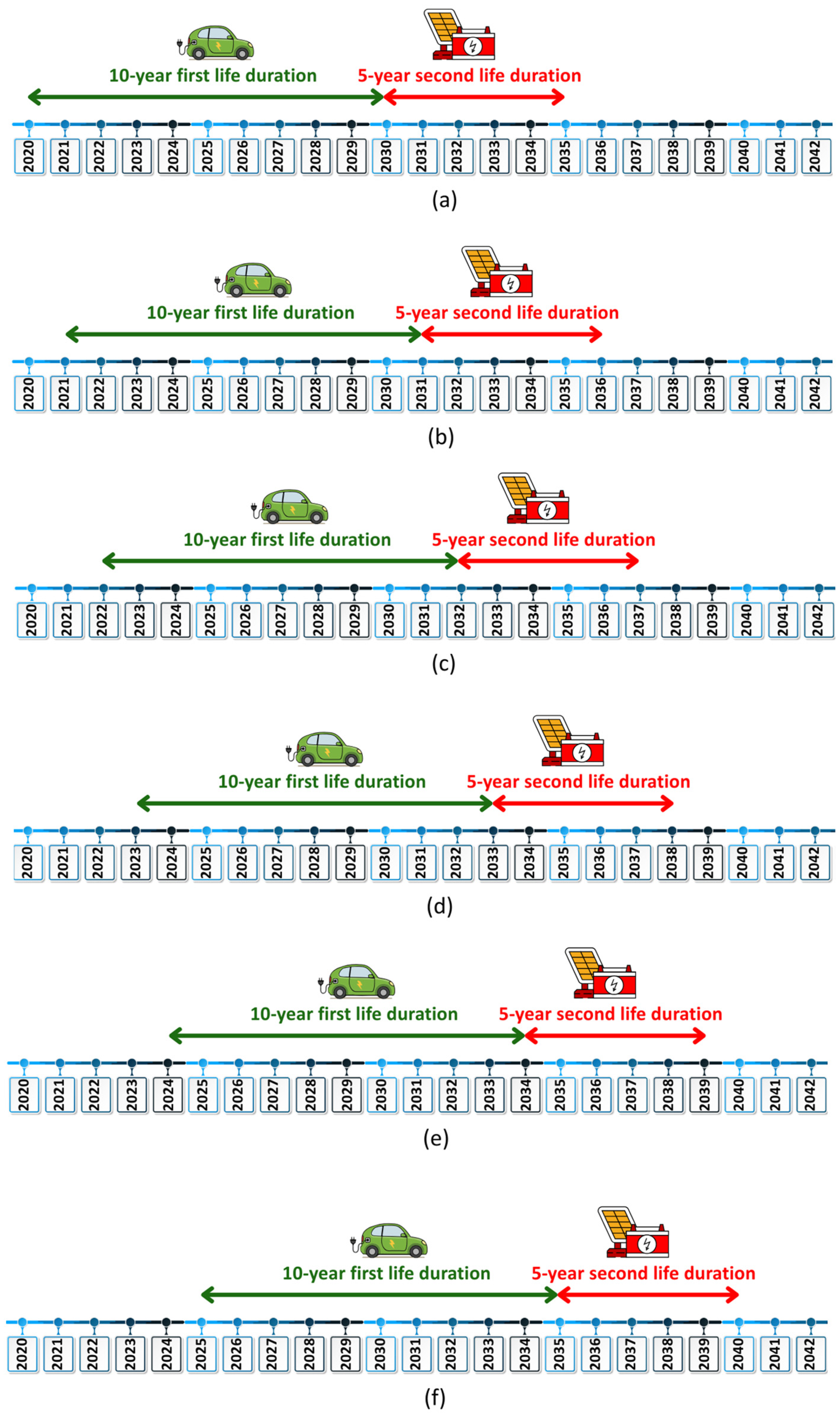
Figure 1 illustrates the temporal evolution of EV batteries as they transition from their first life in mobility to their second life in stationary energy storage applications. The process is initiated in 2020, which is considered the first year of substantial EV deployment in Greece. During the 10-year first-life period (indicated by the green arrow), batteries operate within electric vehicles and gradually degrade due to normal driving and charging patterns. At the end of this first-life stage, the batteries are retired from vehicular use and become available for repurposing in stationary applications. Once repurposed, they enter a second-life phase of five years (indicated by the red arrow), during which they provide energy storage capacity to support photovoltaic self-consumption systems. After completing this second-life period, the batteries exit the power system.
This time-shifted process gives rise to a continuous, overlapping rotation of battery cohorts. Each year, a new cohort of retired EV batteries enters the stationary storage pool, thereby increasing the total available storage capacity. Simultaneously, after a fixed number of years, earlier second-life cohorts reach the end of their useful life and are withdrawn. As a result, the net number of active second-life batteries entering the system in any given year is determined by the balance between annual inflows and outflows.
To illustrate this mechanism, in the year 2030, the stationary system receives the entire cohort of batteries originating from EVs sold in 2020
while no batteries are yet removed, since there were no second-life batteries in operation prior to 2030. The same condition applies for the period 2031–2034, when only inflows occur. In 2035, the first cohort of second-life batteries reaches the end of its stationary lifetime, as shown in
Figure 1a. Therefore, both inflow and outflow take place simultaneously, and the net battery addition is given by the difference between the batteries originating from 2025 sales (
Figure 1f green vector) and those originating from 2020 sales (
Figure 1a red vector), namely
.
After some years following the stabilization of EV sales, the annual battery inflow will become equal to the annual outflow, leading to a steady-state regime in which the net number of batteries entering the system every year will be zero. In this case, all newly retired batteries will be used exclusively to replace exhausted second-life batteries, and thus the total battery capacity of the system will remain constant.
2.3. Determining the PV Capacity Unlocked per kWh of Second-Life Battery
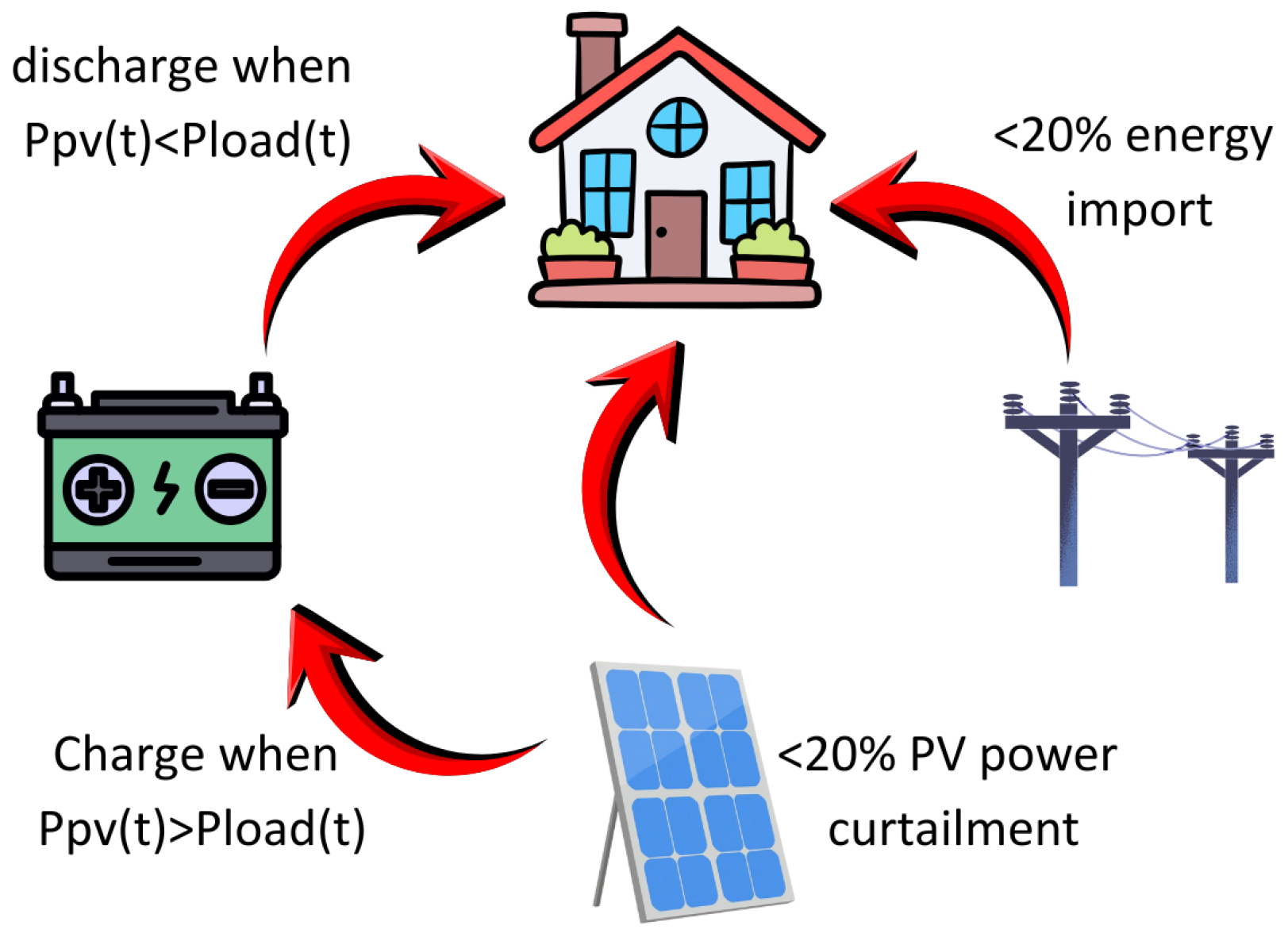
To quantify the PV capacity that can be supported per kWh of second-life battery, a one-year time-series simulation framework was developed using hourly residential load data and hourly per-unit PV generation. The analysis assumes a zero feed-in configuration, whereby any surplus PV energy that cannot be absorbed by the battery is curtailed. The objective is to identify the combinations of PV and battery capacities that simultaneously satisfy three operational constraints: (i) zero export to the grid, (ii) annual PV curtailment not exceeding 20% of total PV generation, and (iii) imported grid energy not exceeding 20% of the annual residential demand.
Figure 2 illustrates the power flow management of zero feed-in scheme with the constraints imposed on the import and curtailed PV energy.
For each candidate PV capacity
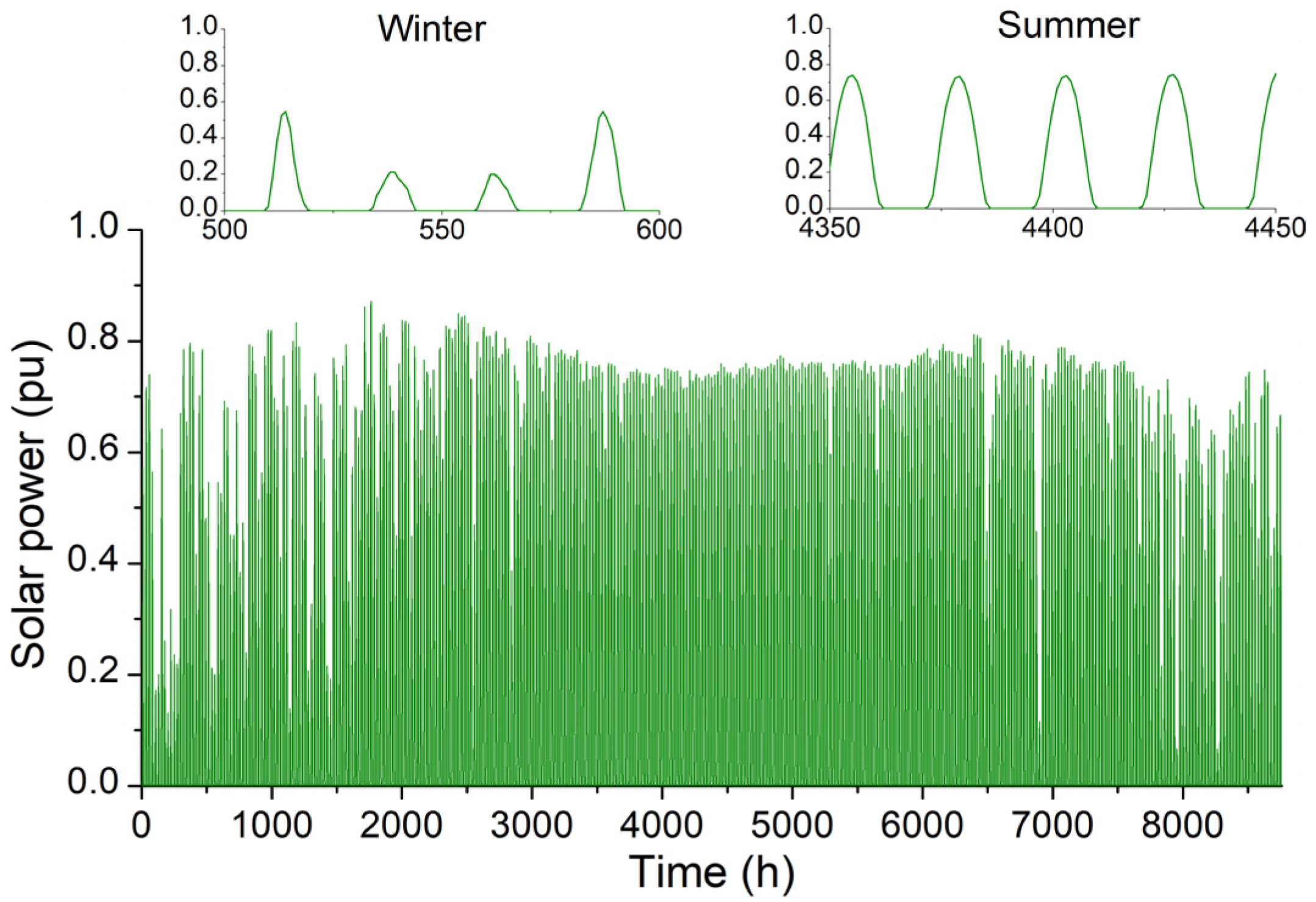
, the corresponding hourly PV output is computed as:
where
denotes the hourly per-unit PV profile at time
, as shown in
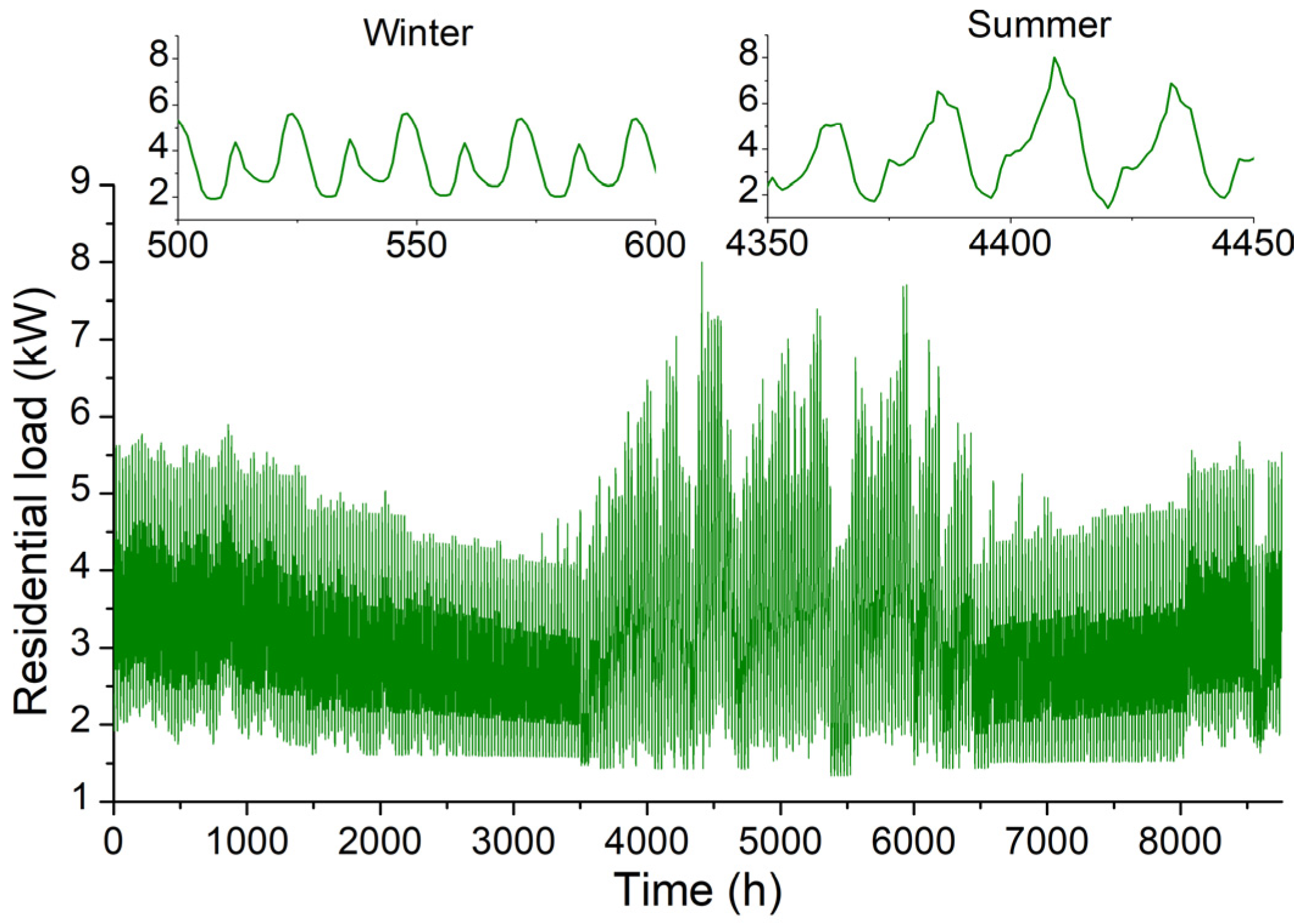
Figure 3. The net power balance relative to the residential load
shown in
Figure 4, is defined as:
determines whether, at each hour, surplus PV must be stored in the battery or whether the battery must discharge to support the load. A simple state-of-charge (SoC) model is used to update the battery energy content based on charging and discharging decisions, while strictly enforcing the zero feed-in requirement. When , the battery absorbs as much of the surplus as its remaining capacity permits; any residual surplus constitutes curtailed energy. Conversely, when , the battery supplies energy until its SoC reaches zero, and any remaining deficit is supplied by the grid.
The annual PV curtailment fraction is then computed as
where
is the annual curtailed PV energy and
is the annual PV generation. Similarly, the grid import fraction is evaluated as
where
is the annual imported energy from the grid and
is the annual load energy demand.
A pair
is deemed feasible only if Equation (8) are satisfied:
By sweeping a wide range of PV capacities and battery sizes, a feasible region is obtained that satisfies all operational constraints. Among all feasible solutions, the pair
that corresponds to the lowest
PV and battery capacity
—and therefore the lowest investment cost—is retained. Thus, the ratio
represents the PV capacity unlocked per kWh of second-life battery. The algorithm mentioned above is summarized below, as Algorithm 1:
| Algorithm 1: Algorithm for calculating the ratio between PV and battery capacity in a typical zero feed-in scheme |
Input: hourly residential load , hourly per-unit PV production , candidate PV sizes , candidate battery sizes , curtailment limit (20%), grid energy import limit (20%).
- 1.
For each , compute hourly PV output: - 2.
For each battery size , simulate one year of battery operation under zero feed-in:
If , charge the battery up to its remaining capacity; curtail excess. If , discharge the battery; import remaining deficit from the grid.
- 3.
Compute annual PV curtailment fraction and annual import fraction . - 4.
Mark as feasible if both ≤ 20%. - 5.
Among all feasible pairs, find the one that leads to the lowest PV and battery cost, i.e., and - 6.
The ratio represents the PV capacity unlocked per kilowatt-hour of second-life battery.
|
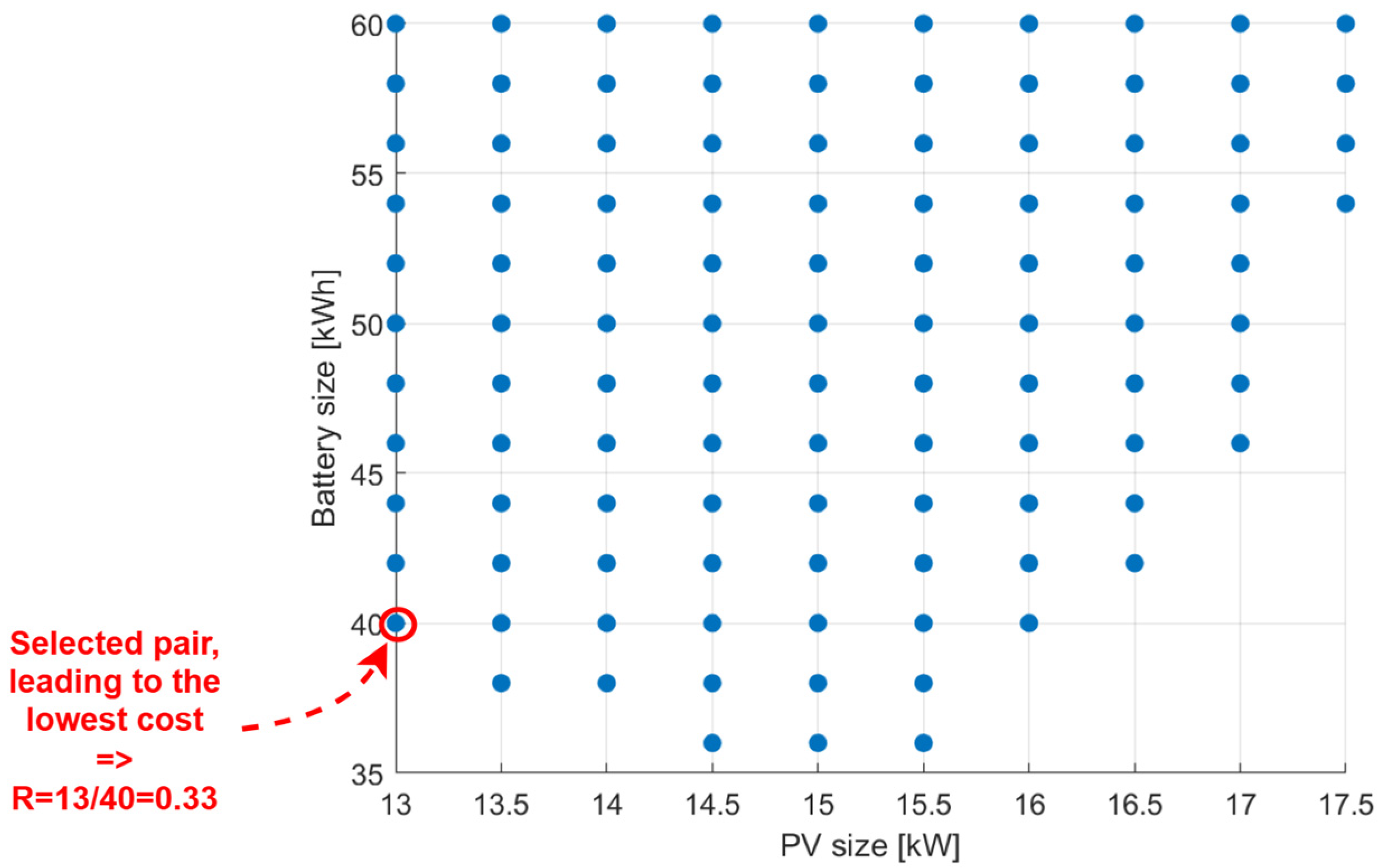
Figure 5 illustrates all feasible PV–battery combinations that satisfy simultaneously the zero feed-in constraint and the
≤ 20% constraint. Among the feasible solutions, the pair
represents the lowest-cost configuration, as it requires the smallest PV and battery capacity. This operating point yields a ratio
, meaning that each kilowatt-hour of second-life battery can unlock approximately 0.33 kW of PVs under a zero feed-in scheme. This ratio is subsequently used as the fundamental parameter linking the photovoltaic capacity with the cohort-based batteries net inflow.
3. Case Study
The purpose of this section is to quantify the evolution of second-life EV batteries in Greece and to estimate the corresponding PV capacity that can be unlocked under the zero feed-in framework. The analysis covers the period 2020–2050 and evaluates three EV adoption trajectories: 10%, 15%, and 20% annual growth.
The case study assumes lithium-ion EV batteries are representative of the dominant chemistries in the European market, primarily NMC and LFP. The analysis does not distinguish between specific cell formats or pack architectures; instead, it employs an aggregated representation based on typical nominal capacities and second-life SoH values reported in the literature. This keeps the results broadly applicable across different EV models.
Table 1 summarizes the key technical parameters used to model second-life battery availability and capacity, drawing from Refs. [
3,
5,
26,
27,
28,
29]. These include the repurposing eligibility factor (α), the average nominal capacity of new EV batteries [
29], and the assumed first-life and second-life durations. The table also reports the average second-life SoH set at 70%, corresponding to typical entry (≈80% SoH) and retirement (≈60% SoH) conditions for repurposed batteries [
3,
5,
26,
27,
28]. These values are literature-based parameters rather than raw national statistics and serve as fixed inputs to the cohort-based framework presented in
Section 2.
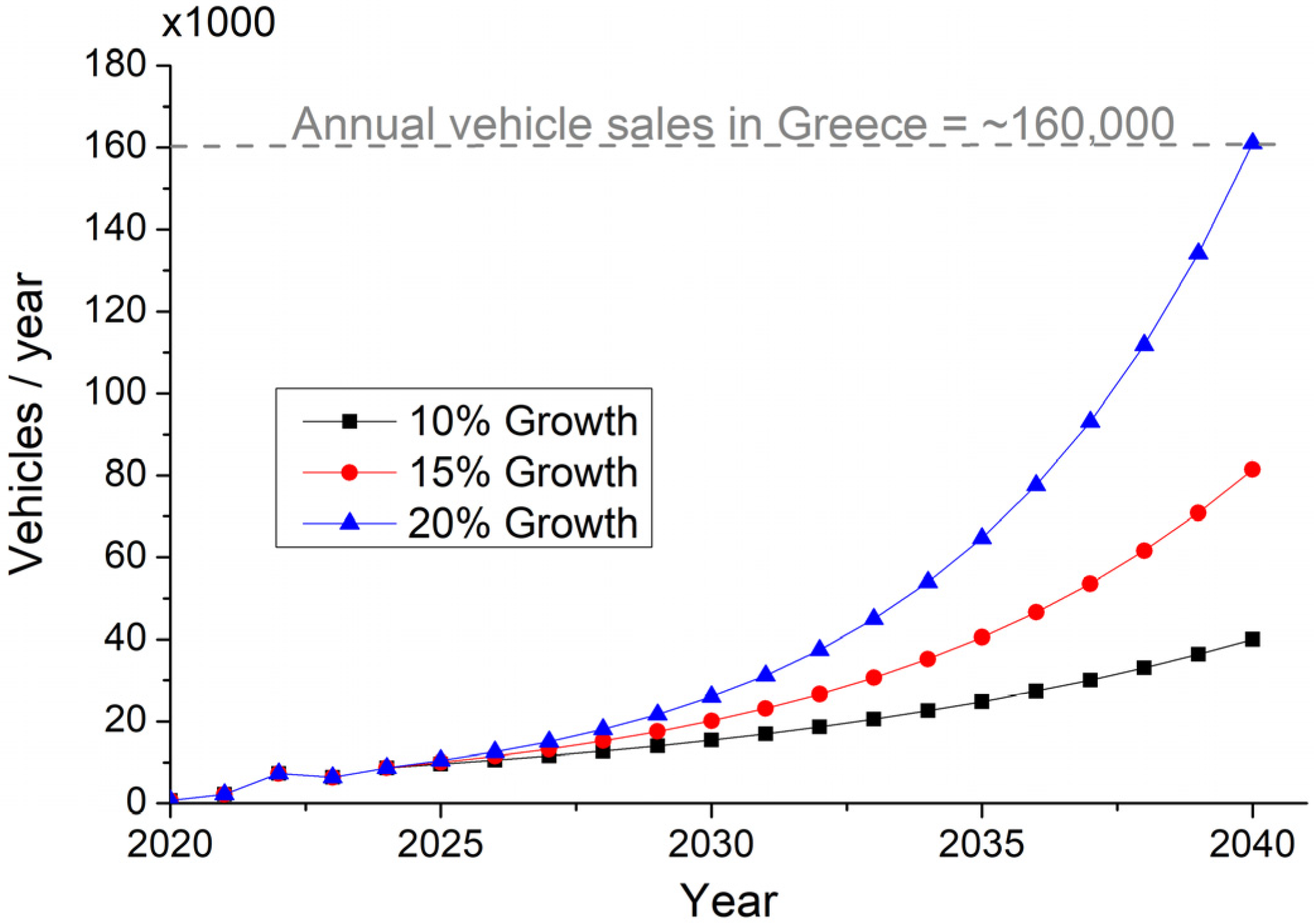
Figure 6 illustrates the annual number of EVs sold under the three growth scenarios, which serves as the fundamental reservoir from which second-life batteries eventually emerge. These EV sales trajectories determine both the magnitude and the timing of future battery retirements once the repurposing eligibility factor
and the mean first-life duration
of
Table 1 are applied. From 2020 to 2024, vehicle sales are identical across all scenarios, as they are based on reported market data. The scenarios begin to diverge after 2024, following different growth assumptions. Under the most conservative scenario, EV sales are estimated to reach approximately 40,000 units in 2040, corresponding to around 25% of total annual vehicle sales. In the intermediate scenario, sales are projected to increase to about 81,500 units in 2040, representing approximately 51% of total annual vehicle sales. Under the most optimistic scenario, EV sales could approach 161,000 units by 2040, potentially covering the entire annual vehicle demand (in Greece, annual sales of new passenger and heavy-duty vehicles in 2024 were approximately 160,000 units [
30]).
Table 2,
Table 3 and
Table 4 summarize the year-by-year evolution of second-life batteries for each scenario (10%, 15%, and 20% annual growth). For every year (1st column), starting from 2030, which is the first year that SLBs enter the stationary system, the model identifies: (i) the year of origin of the battery cohort (2nd column); (ii) the inflow of batteries reaching the end of their first life (3rd column) considering 50% repurposing eligibility factor according to
Table 1; (iii) the year of origin of battery outflow (4th column); (iv) the outflow of batteries completing their second life (5th column); (v) the resulting net battery flow (6th column); and (vi) the corresponding second-life capacity (7th column) assuming an 70% mean state of health of SLB
. To facilitate readability, the tables have been visualized in
Figure 7,
Figure 8 and
Figure 9. Under all scenarios, the first year in which SLBs enter the system is 2030, originating from EVs sold in 2020. EV sales prior to 2020 in Greece were negligible and are therefore omitted from the analysis. The first year with non-zero SLB outflow is 2035, also linked to the 2020 sales cohort, reflecting the assumed 10-year first-life period and the subsequent 5-year second-life duration.
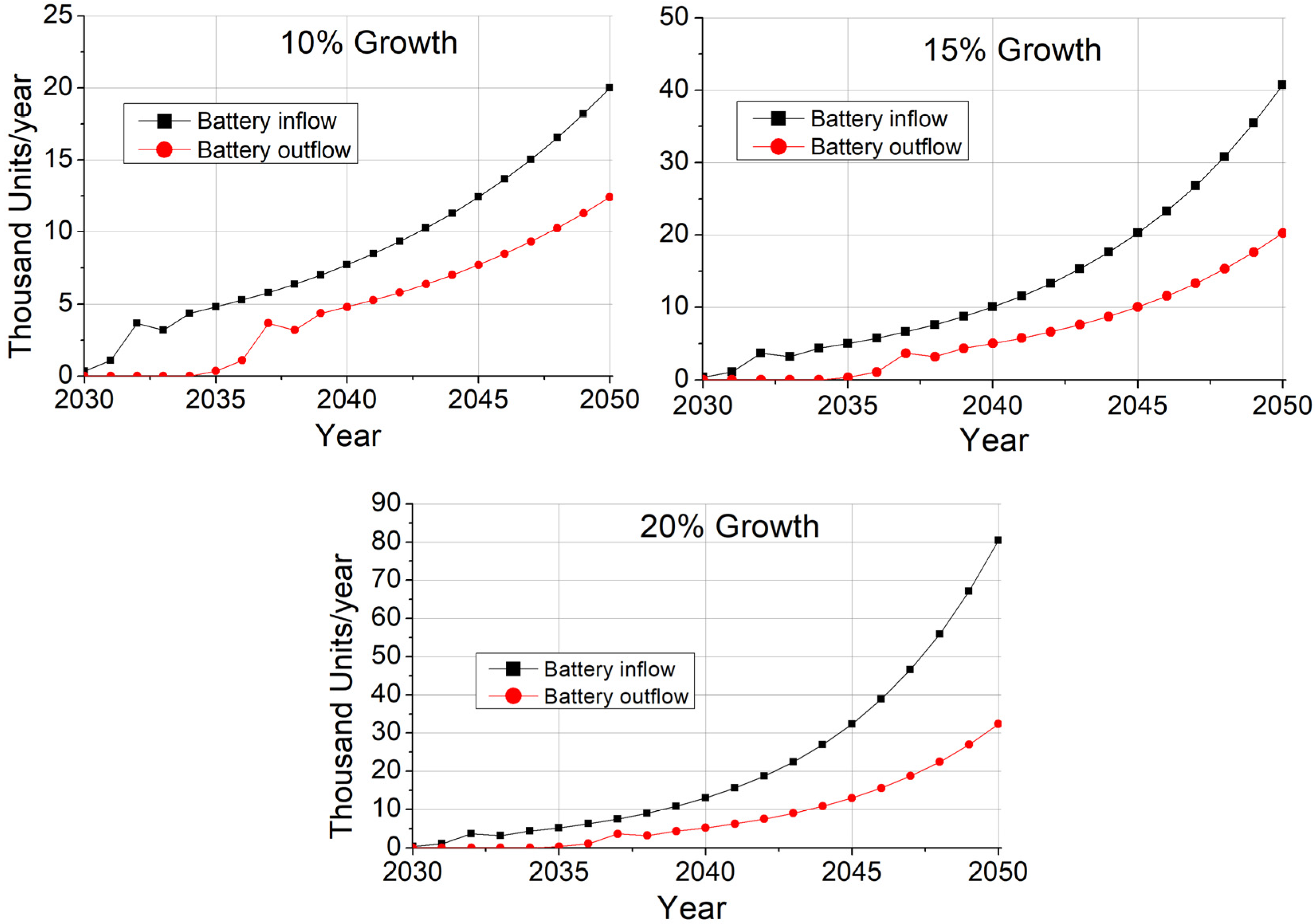
Figure 7 presents the annual inflow and outflow of battery cohorts for all EV growth scenarios throughout the analysis horizon. A noticeable step-change appears in 2035, marking the first year in which SLBs reach the end of their stationary lifespan and begin to exit the system. Both inflow and outflow steadily increase thereafter, driven by the rising trend in EV sales and the growing market penetration of electric vehicles [
31]. It can be observed that the battery outflow follows the inflow with a five-year time lag, reflecting the assumed second-life operational duration. Given that the inflow will continue to rise until 2050, it is expected that the net flow of batteries entering the system will continue to increase every year until the examined period. Consequently, the available SLB fleet is not expected to stabilize before 2050. More generally, stabilization of the SLB stock occurs only after EV sales stabilize and sufficient time has elapsed for both first-life and second-life phases to be completed. For example, if EV sales were to plateau after 2040, the size of the available SLB fleet would be expected to stabilize around 2055—when annual inflows and outflows become equal—following the combined duration of the first-life and second-life periods.
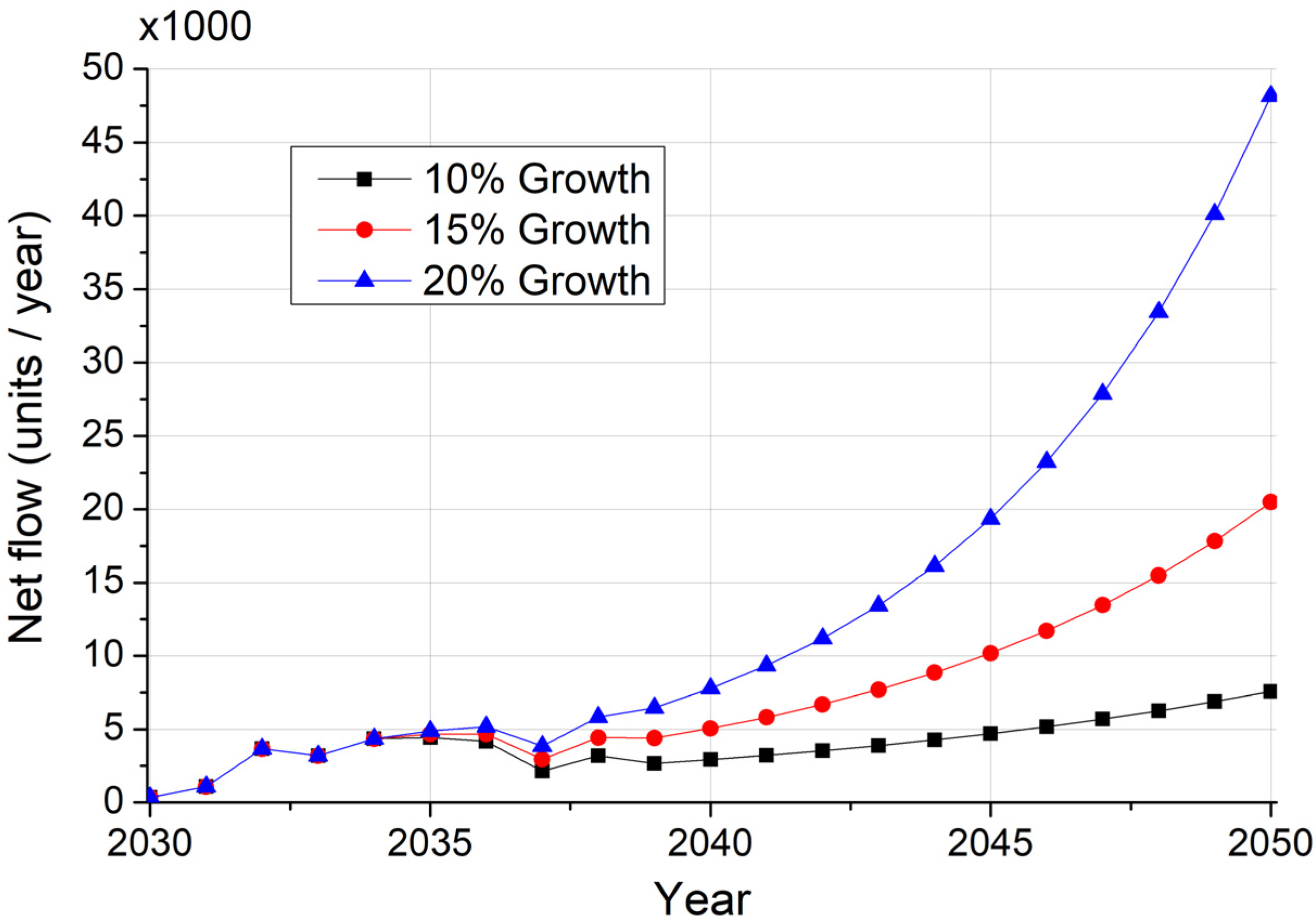
Figure 8 illustrates the net annual battery flow, defined as the difference between inflow and outflow, confirming the continuous expansion of the second-life battery pool over time. Under the most conservative scenario of 10% annual EV growth, the net flow reaches approximately 7584 units per year by 2050. In the moderate 15% growth scenario, the net inflow rises to about 20,485 units, while in the most optimistic 20% scenario, it accelerates substantially, reaching nearly 48,151 units per year.
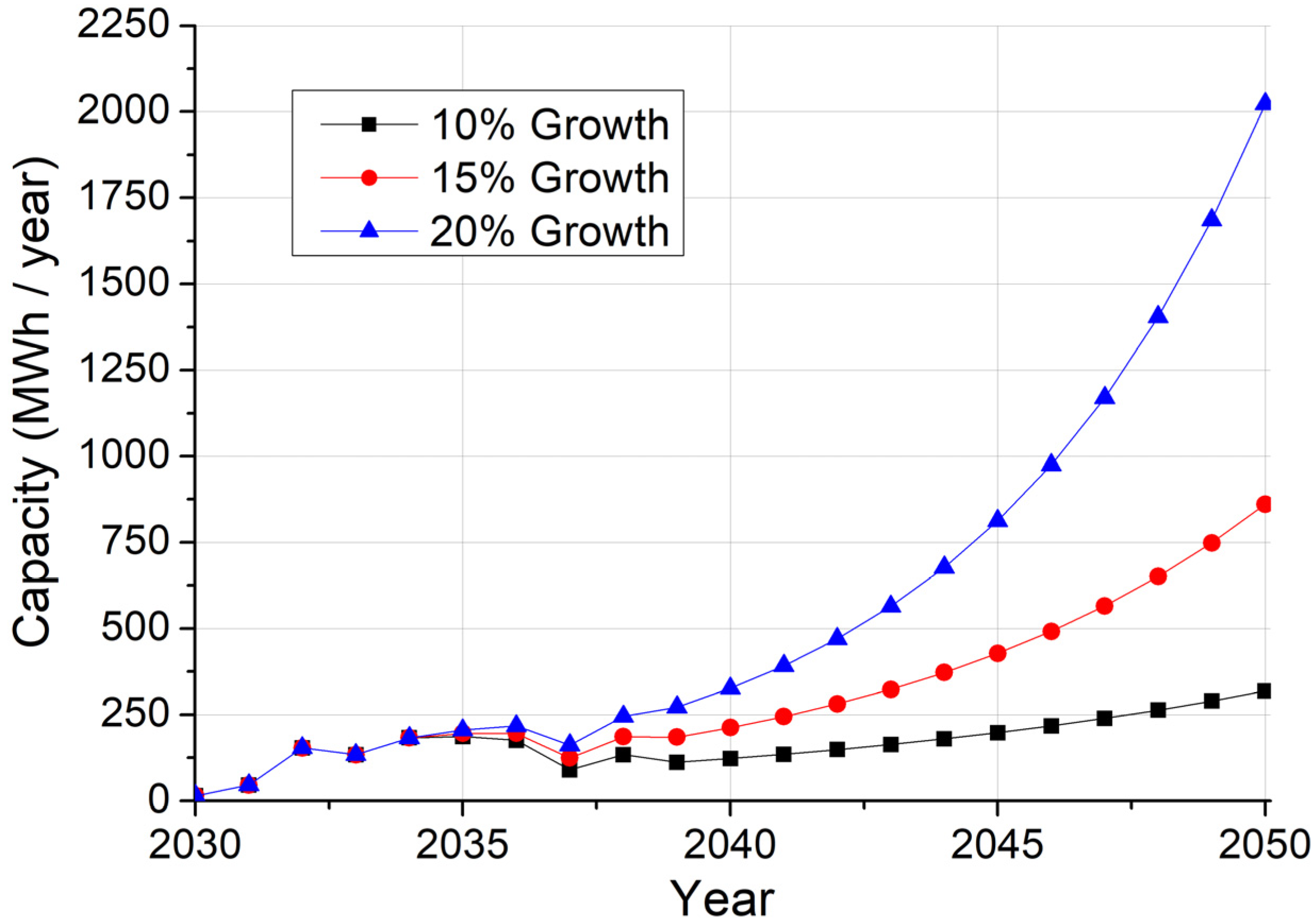
Figure 9 presents the net annual second-life battery capacity entering the stationary power system over the analysis period for each EV growth scenario. A steadily increasing trend is observed in all cases. Under the high-growth 20% scenario, approximately 0.32 GWh, 0.81 GWh, and 2.0 GWh of new second-life battery capacity are added to the system in the single years 2040, 2045, and 2050, respectively. This pronounced growth reflects the rapid expansion of EV sales occurring roughly a decade earlier. Even under the conservative 10% growth scenario, a substantial amount of second-life battery capacity—122 MWh, 198 MWh, and 320 MWh—is projected to become available in 2040, 2045, and 2050, respectively, confirming the significant long-term contribution of retired EV batteries even under modest market growth assumptions.
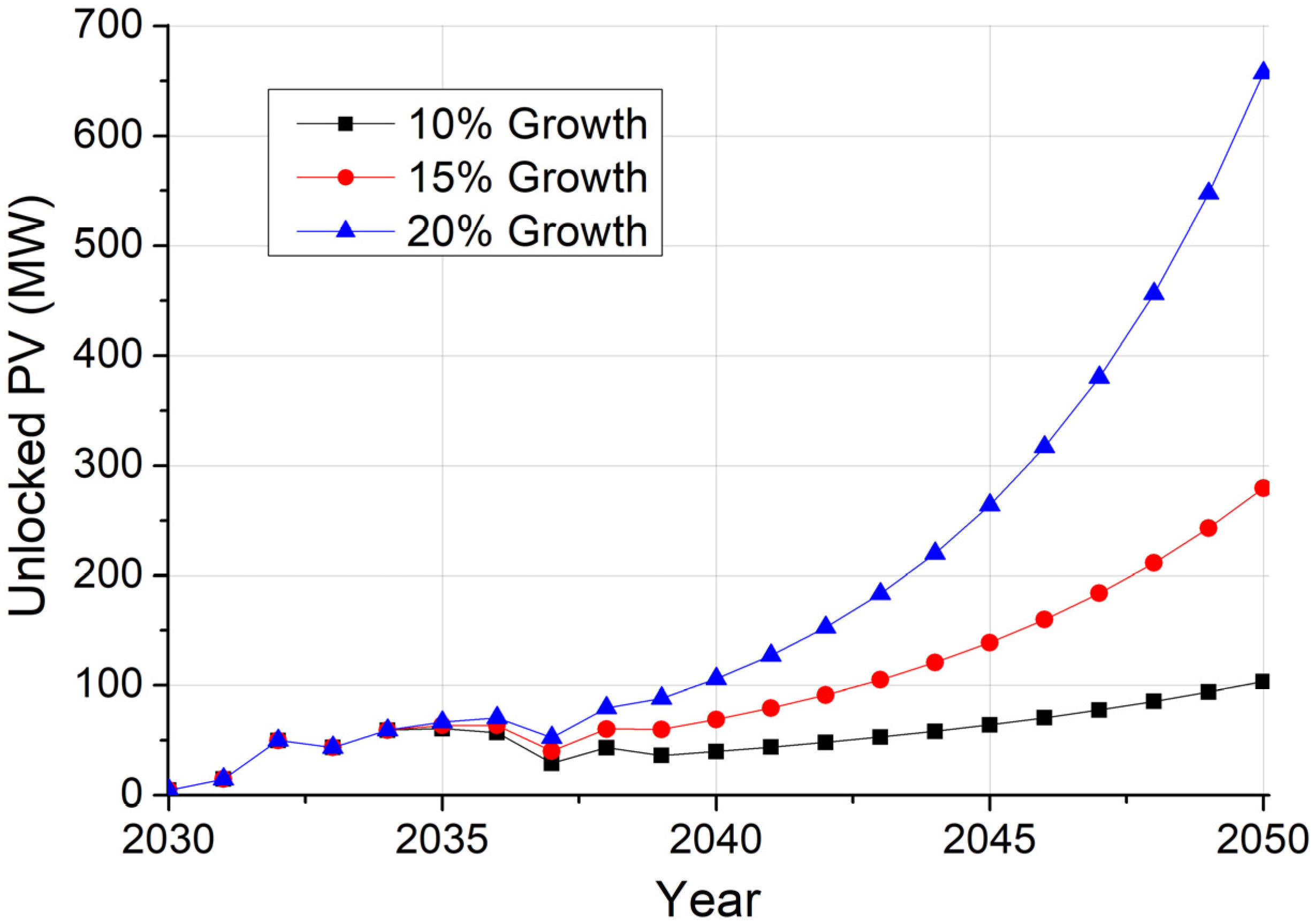
Figure 10 shows the annual PV capacity that can be unlocked by these batteries in zero feed-in schemes, using the PV-to-storage ratio derived in
Section 2.3 (i.e.,
). The results indicate that under the 10% EV growth scenario, only in the single years 2040, 2045, and 2050 alone, SLBs could enable approximately 41 MW, 65 MW, and 105 MW of additional photovoltaic capacity, respectively. Under the 20% growth scenario, the corresponding unlocked PV capacities increase substantially to approximately 107.8 MW, 268 MW, and 667 MW in the same years. These findings highlight the central conclusion of the study: second-life EV batteries can act as a significant enabler of new PV deployment, with the potential to unlock hundreds of megawatts of solar capacity depending on the growth of EV sales.
Finally,
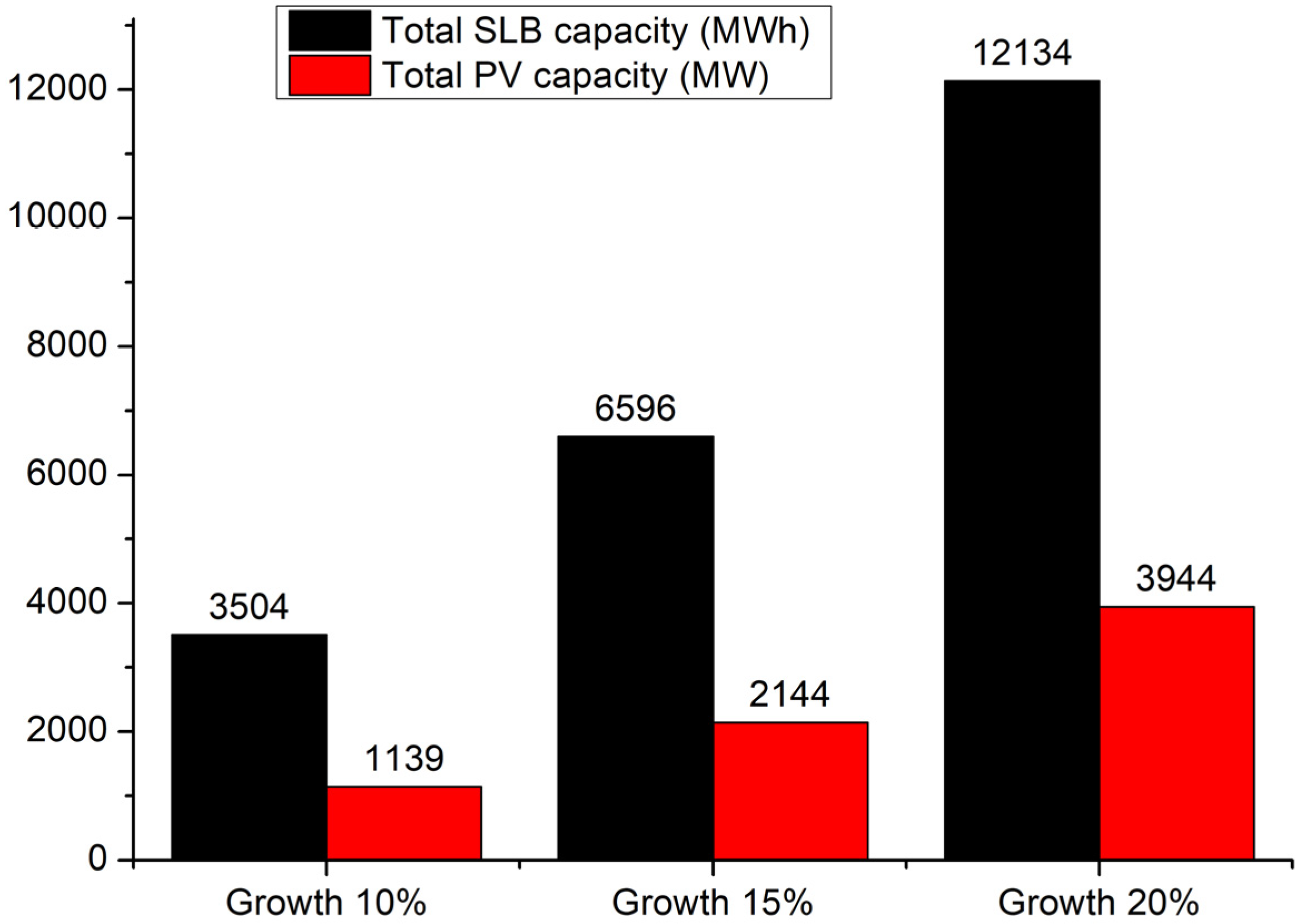
Figure 11 presents the cumulated second-life battery capacity
and the corresponding unlocked PV potential over the 20-year period 2030–2050. The metric
represents the cumulative sum of all SLB cohorts across the analysis horizon and is computed using Equation (3). The total PV capacity enabled by this storage potential is derived by multiplying
with the PV-to-storage ratio
, according to
Section 2.3. As shown, the cumulative SLB potential reaches approximately 3.5 GWh, 6.6 GWh, and 12.1 GWh under the 10%, 15%, and 20% EV growth scenarios, respectively. This storage potential constitutes a substantial contribution toward the national target of 66 GWh of installed storage capacity by 2050 [
32]. When translated into additional PV capacity unlocked between 2030 and 2050 under the zero feed-in scheme, it corresponds to approximately 1.1 GW, 2.1 GW, and 3.9 GW. For comparison, the current peak demand of the Greek power system is about 10 GW [
33], whereas Greece’s national target for installed renewable energy capacity by 2050 is approximately 65 GW [
34]. These results indicate that second-life batteries alone could meaningfully support Greece’s long-term decarbonization and renewable energy integration objectives.
4. Economic Evaluation of Zero Feed-In Schemes Using Second-Life Batteries
The economic feasibility of zero feed-in schemes employing SLBs is evaluated here from the customer’s perspective. The assessment is carried out by comparing four (4) fundamental and commercially relevant photovoltaic configurations, as described below.
In the first case, the entire residential load is supplied by the grid (indexed as “no PV”), and the LCOE is equal to the retail electricity price:
The second configuration corresponds to a net-metering scheme, under which the prosumer offsets annual consumption with annual PV production. Since net imports are zero, the LCOE reflects only the annualized investment and operational cost of the PV system:
where all variables are defined in the Nomenclature.
The third and fourth configurations implement a zero feed-in scheme, using either SLBs or new lithium-ion batteries. In this arrangement, PV generation is either self-consumed or stored, and exports to the grid are prohibited. The LCOE for each battery technology
is given by:
The capital recovery factor is defined as:
The input data used in the economic evaluation are shown in
Table 5, including the retail electricity price, CAPEX and OPEX assumptions, discount rate, and battery replacement schedule.
Table 6 lists the PV and storage sizes and the annual grid imports resulting from the operational simulations. For both zero feed-in configurations, the pair
is adopted from the technical assessment in
Section 2.3, which yields a curtailment level of 6.04% and grid imports equal to 19.82% of the annual load.
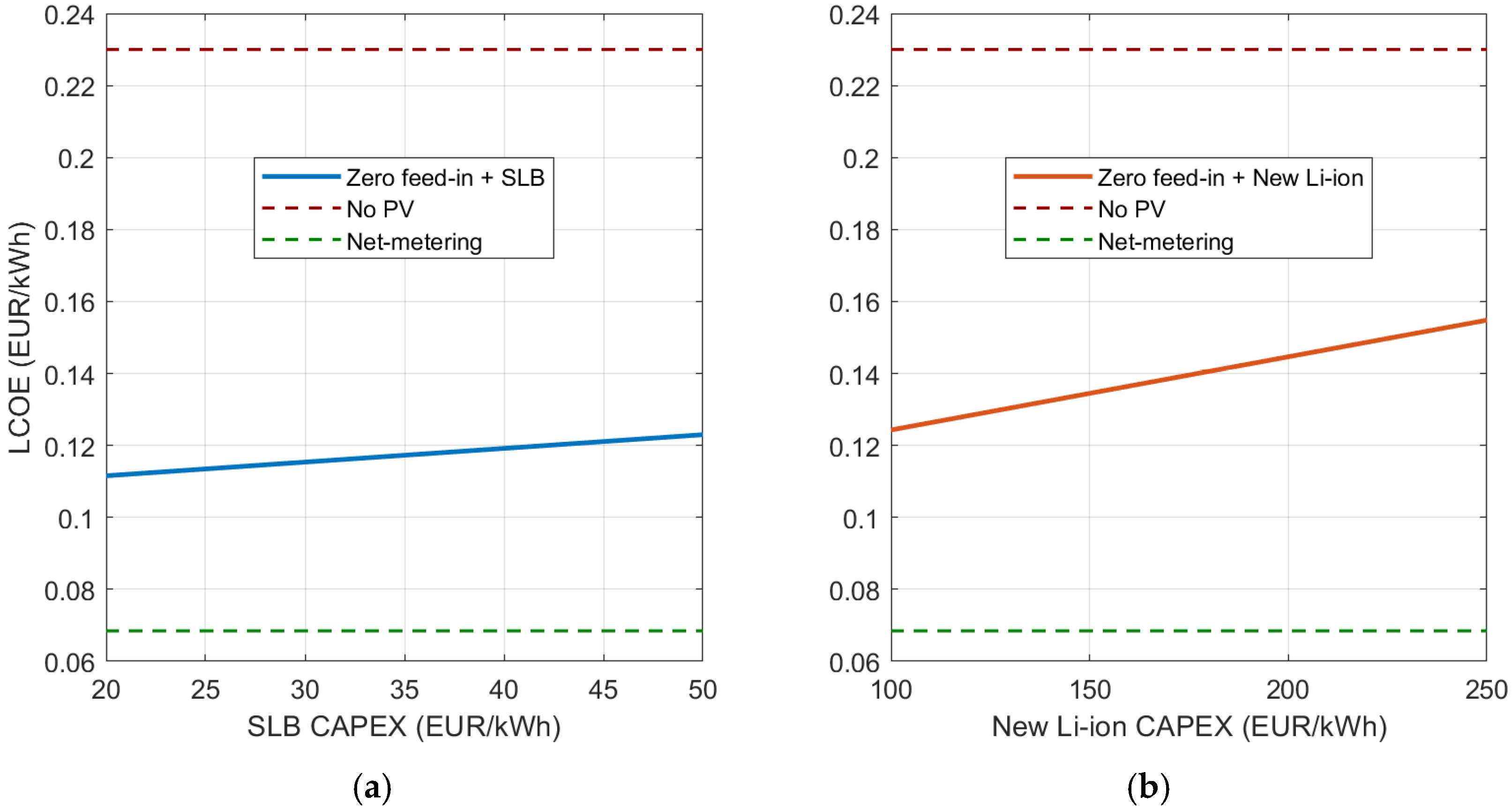
Figure 12 presents the resulting LCOE for the two zero feed-in configurations across their respective battery CAPEX ranges. Net-metering yields the lowest LCOE; however, it has been discontinued in Greece [
35] and several other countries [
36] due to the pronounced mismatch between photovoltaic generation and consumption and the associated operational burden on distribution networks. The two zero feed-in configurations exhibit very similar LCOE levels despite the markedly different battery cost ranges (20–50 EUR/kWh for SLBs and 100–250 EUR/kWh for new lithium-ion batteries), as the longer lifetime of new batteries partially offsets their higher upfront cost by reducing the number of replacements over the project horizon.
Although the purely economic difference between the two storage options is small, SLBs offer additional advantages that are not fully captured by LCOE alone. By extending the useful life of EV battery packs prior to recycling, SLBs reduce demand for newly manufactured cells, mitigate raw material extraction, and lower lifecycle environmental impacts. In this context, SLBs emerge as a particularly attractive option for zero feed-in applications, where moderate cycling requirements allow residual battery capacity to be effectively utilized. In contrast, new batteries remain advantageous in applications prioritizing longer uninterrupted lifetimes and higher technical robustness, like mobile applications.
Table 5.
Economic Input Parameters.
Table 5.
Economic Input Parameters.
| Electricity Price (kWh) | PV CAPEX | PV Lifetime | SLB Lifetime | New Li-Ion Lifetime | Discount Rate (r) |
|---|
| 0.23 EUR/kWh [37] | 1220 EUR/kW [1] | 25 years | 5 years | 12.5 years | 5% |
Table 6.
Techno-economic results of the four configurations.
Table 6.
Techno-economic results of the four configurations.
| | No PV | Net Metering | Zero Feed-In (SLB) | Zero Feed-In (New) |
|---|
| PV capacity (kW) | 0 | 15.25 | 13 | 13 |
| PV CAPEX (EUR) | 0 | 18,603 | 15,860 | 15,860 |
| Battery Capacity (kWh) | 0 | 0 | 40 | 40 |
| Battery replacements | 0 | 0 | 4 | 1 |
| Imported Grid Energy (kWh) | 27,430 | 0 | 5437 | 5437 |
5. Discussion
A key advantage of the zero feed-in scheme is that it avoids the operational challenges currently facing utility-scale solar. Today, transmission system operators (TSOs) in Greece frequently impose curtailments on large PV plants, limiting output during periods of grid congestion and thereby restricting the national PV potential. In contrast, the zero feed-in configuration requires no export to the grid; hence, the PV generation supported by SLBs imposes no additional burden on the transmission system [
38,
39,
40,
41]. Moreover, zero feed-in schemes are far less bureaucratic than feed-in or net-metering schemes, which significantly simplifies the permitting process and can accelerate their large-scale deployment.
Despite strong potential of SLBs, several technical and regulatory challenges must be addressed. Using SLBs in new stationary systems introduces significant complexity for battery-management systems (BMSs). Unlike new battery packs, retired EV batteries exhibit heterogeneous degradation histories, diverse chemistries, unequal aging patterns, and often incomplete first-life cycling data. Consequently, BMSs must integrate advanced diagnostic algorithms, robust balancing functions, and adaptive control strategies capable of managing modules with non-uniform capacities and impedances. Enhanced protections against thermal runaway, accelerated aging, and unexpected failure modes are also essential—particularly as SLB installations proliferate in residential environments [
42,
43].
Beyond BMS-related issues, the absence of standardized testing, certification, and safety assessment procedures remains one of the most significant obstacles to large-scale SLB deployment. Currently, no uniform regulatory framework governs the repurposing and integration of SLBs, leading to inconsistencies between manufacturers and system integrators [
44]. The lack of standardized State-of-Health metrics, missing or incomplete data from the first-life automotive operation, and uncertainty regarding liability and insurance coverage all hinder investor confidence and market scalability [
45,
46]. Additionally, EV battery packs vary widely in size, cell format, voltage architecture, and thermal management design, which complicates disassembly and makes standardized repurposing procedures difficult to implement [
12]. These inconsistencies increase labor requirements and reduce economies of scale for second-life integration. Moreover, there is currently a shortage of qualified technicians trained to safely dismantle high-voltage battery packs, assess their health, and reconfigure modules into new applications. The lack of specialized skills and certified facilities not only adds cost but also raises safety concerns, all of which limit the speed at which second-life solutions can be deployed. Addressing these challenges—through standardization, training programs, and clearer industry guidelines—will be essential for unlocking the full potential of SLBs.
6. Conclusions and Future Research
This study quantified the long-term potential of SLBs to support additional PV deployment in Greece under the emerging zero feed-in regulatory framework. A deterministic cohort model was developed to estimate the annual storage potential created by SLBs, considering several parameters, such as EV sales, first- and second-life duration, and repurposing eligibility. This potential was then linked to a high-resolution operational simulation that determines the PV capacity that can be hosted per kilowatt-hour of SLB in residential zero feed-in schemes. The combined framework provides an integrated national-scale estimate of the PV potential that could be unlocked by retired EV batteries over 2020–2050. The results demonstrate that SLBs represent a substantial and steadily growing resource. Depending on the EV adoption trajectory, Greece is expected to accumulate approximately 3.5 GWh, 6.6 GWh, and 12.1 GWh of SLB capacity by 2050 under the 10%, 15%, and 20% EV growth scenarios, respectively. Using a PV-to-storage ratio of 0.33 kW/kWh (typical for zero feed-in schemes), this corresponds to an additional 1.1 GW, 2.1 GW, and 3.9 GW of PV capacity that can be unlocked solely through SLBs until 2050. From a policy perspective, the results highlight the importance of developing clear SLB certification standards, supporting repurposing infrastructure, and aligning regulatory frameworks with the emerging availability of second-life storage.
Despite the promising findings, the study has some limitations, including the use of average battery characteristics and simplified degradation assumptions. Future work could explore heterogeneous EV battery chemistries, capacities, and degradation paths [
47]. Finally, an important avenue for future research is the systematic assessment of the actual cost of SLBs. Current literature provides highly inconsistent cost estimates, reflecting uncertainty in how SLBs will be priced once large-scale repurposing markets emerge. Factors such as transportation, diagnosis, disassembly, module testing, refurbishment, integration, warranties, and end-of-life responsibilities are treated differently across studies, resulting in wide cost ranges. Developing a transparent cost framework that identifies and quantifies these drivers would be essential for evaluating the economic viability of SLBs relative to new lithium-ion systems and alternative storage technologies.