Review

Harnessing Energy and Engineering: A Review of Design Transition of Bio-Inspired and Conventional Blade Concepts for Wind and Marine Energy Harvesting


by
Revathi Ramakrishnan
,
Mohamed Kamra
and
Saeed Al Nuaimi
*
Department of Mechanical and Aerospace Engineering, United Arab Emirates University, Al Ain 15551, United Arab Emirates
*
Author to whom correspondence should be addressed.
Energies 2026, 19(1), 47; https://doi.org/10.3390/en19010047
Submission received: 28 September 2025 / Revised: 27 October 2025 / Accepted: 3 November 2025 / Published: 22 December 2025
(This article belongs to the Collection Wind Turbines)

Abstract

The growing demand for sustainable energy has driven innovation in wind and marine turbines, where the conventional airfoils, though reliable, perform poorly in unsteady flows. This review explores the transition of blade design from conventional to bio-inspired blade designs. Although several studies have explored the use of biomimetic principles for turbine blade designs, this review highlights the core biological strategies successfully translated into engineering designs to improve aerodynamic and hydrodynamic performance. In addition, it emphasizes the critical role of interdisciplinary integration, linking biology, material science, and engineering, in advancing and enabling the practical realization of biomimetics in energy systems. This narrative review consolidates the trends, gaps, and underexplored opportunities in the current literature on biomimetics. Theoretically, it elevates bio-inspired design from descriptive analogy into a predictive framework grounded in natural efficiency mechanisms; practically, it articulates a framework for transforming biological design into robust, highly efficient, and commercially viable turbine systems. Further, the review highlighted a persistent gap between experimental advances and commercial deployment, underscoring the lack of scalable manufacturability and techno-economic validation.

1. Introduction

The intensification of climate change and global warming exacerbated by the rapid global population and increasing industrial demands has accelerated the depletion of conventional fossil fuel reserves [1,2,3]. This has underscored the urgent need for a strategic transition toward a suitable and diversified global energy portfolio, with a strong emphasis on renewable or sustainable energy sources to support a greener and more environmentally responsible future. Renewable energy such as biomass [4], solar [5,6], geothermal [7], hydropower [8], and wind [9,10] are increasingly recognized for their potential to operate in decentralized and off-grid energy systems.
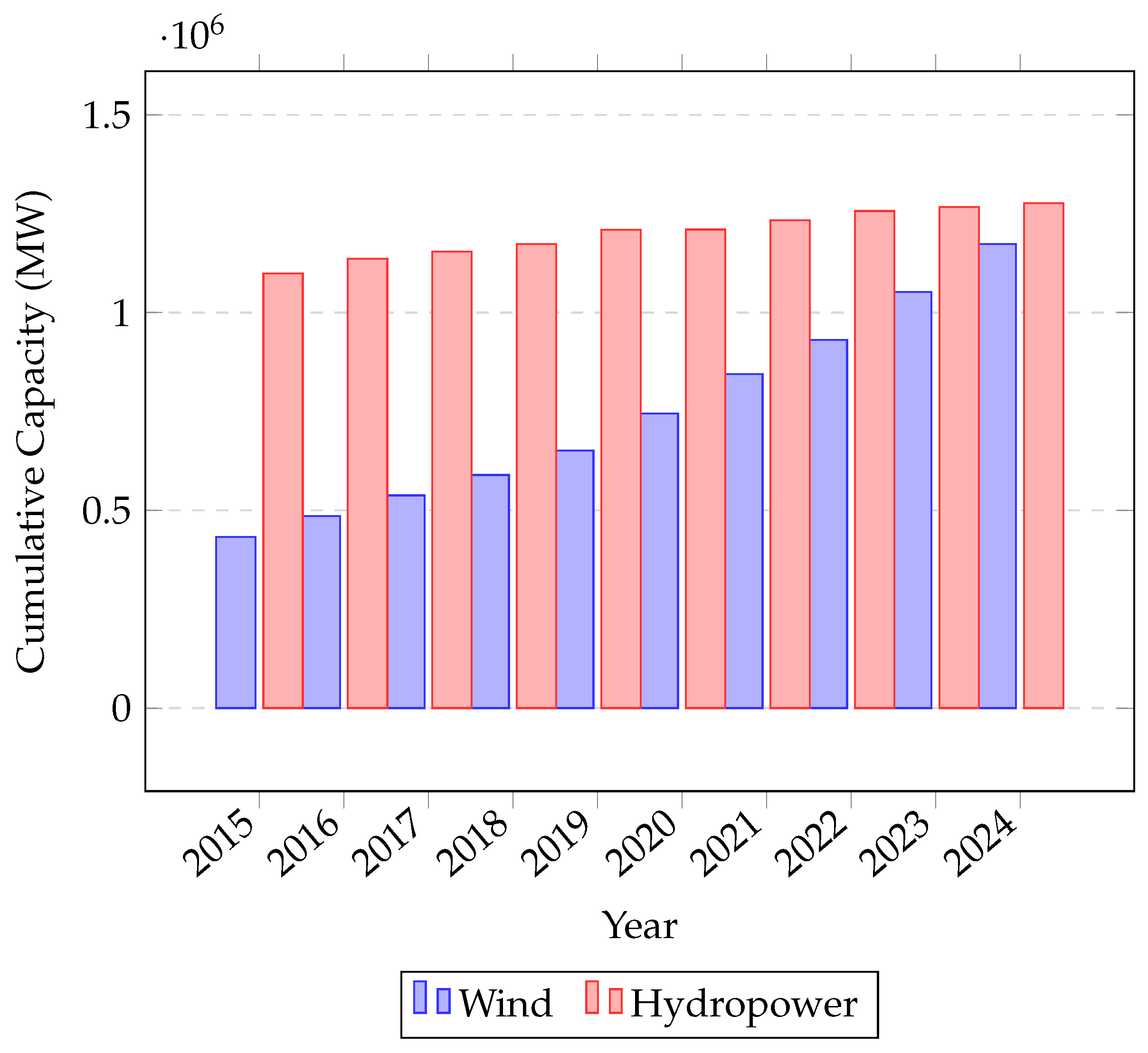
According to the technical paper published by the World Wind Energy Association (WWEA) [11] and the International Renewable Energy Agency (IRENA) [12], global cumulative wind power reached 1174 GW, while hydroelectric capacity totaled 1443 GW, maintaining its position as the largest source of renewable energy worldwide (Figure 1).
In recent decades, engineers and researchers have progressively turned to nature as a source of inspiration to address complex design challenges through innovative, efficient, and sustainable solutions [10,12,14]. During 3.8 billion years of evolution, the biological system has demonstrated extraordinary efficiency, adaptability, structural optimization, and resilience traits that align closely with the development of modern energy technologies. The ingenuity of natural systems has captivated human imagination for centuries, as evidenced by early conceptual explorations ranging from mythological figures such as Daedalus and Icarus to Leonardo da Vinci’s anatomical sketches of bird-inspired flying machines [15]. This nature-driven design philosophy is well encapsulated in the field commonly known as biomimetics, bionics, or bioinspiration, which involves translating natural forms, architecture, and mechanisms or even adopting functional features into innovative engineering solutions to improve aerodynamic and hydrodynamic performance, and enhance their energy conversion efficiency [15,16,17]. As a result, biomimetics has emerged as a multidisciplinary domain that bridges biology with fields such as materials science, robotics, and renewable energy [17].
In the context of renewable energy, turbine blade design follows one of these three strategies: using traditional airfoil profiles such as NACA for their predictable performance, modifying existing conventional airfoil (e.g., camber, thickness, curvature) to enhance aerodynamic response under varying conditions, or adopting bio-inspired designs modeled after natural forms such as fish tail [18], bird wings, [19], seeds [20], etc.
Traditionally, turbine aerodynamics and hydrodynamic analysis has predominantly utilized well-established standard airfoil profiles such as those from NACA series [21,22,23,24], S series [25], DU series [26], etc. These conventional profiles have served as the foundation for both wind and hydrokinetic analysis [19]. Among these, symmetric airfoils were studied in greater numbers than their non-symmetric counterparts [27], mainly due to the variation in performance exhibited by asymmetric profiles at different azimuth positions during turbine rotation [23]. Although their performance and efficiency are well studied under ideal steady-state conditions, these profiles often underperform in real-world scenarios such as low Reynolds numbers, transient flow behavior, and dynamic stall phenomena [15]. In light of these limitations, the second design methodology that focuses on the geometric modification of conventional airfoils was adopted [3]. This includes altering characteristics such as blade curvature, leading edge contours [28], trailing edge contours [21], and blade thickness [27]. These adaptations aim to optimize blade performance by improving flow behavior in a variety of operating conditions, particularly under dynamic stall and variable inflow angles, thus enhancing overall aerodynamic efficiency [3,17].
Although geometric modifications to standard airfoils have yielded measurable improvements in performance, their effectiveness remains limited under conditions of highly unstable or low Reynolds number, frequently encountered in vertical axis turbines and small-scale hydrokinetic systems [29]. As a result, researchers have increasingly explored alternative approaches that go beyond conventional aerodynamic optimization. This has led to the emergence of the third and increasingly dominant design strategy: the integration of bio-inspired or biomimetic concepts into blade design. This approach, as mentioned above, draws inspiration from the naturally evolved aerodynamic and hydrodynamic mechanisms found in biological organisms. Examples include the motion of the fish tail [29], the structure of bird wings [12,19], insects [30,31], and the passive flight mechanisms observed in seeds [32], leaves [33], and floral elements [34].
Bio-inspiration can be applied by embedding specific aerodynamic characteristics of nature into conventional airfoil designs or by completely replicating the geometry and motion of natural forms to develop novel turbine blades that perform effectively under complex and unsteady flow conditions [20,30,35]. These principles are now being systematically incorporated into wind and hydrokinetic turbines through features such as leading edge tubercles [32], morphing surfaces [3], and flexible trailing edges to improve aerodynamic and hydrodynamic performance. An increasing volume of experimental and computational evidence supporting these innovations reflects a broader recognition that nature-derived geometries offer scalable, efficient, and sustainable solutions for the next generation of renewable energy technologies [15]. Among all these types, bio-inspired approaches are gaining prominence because of their ability to improve performance in unstable environments with a low Reynolds number [36].
In parallel, hydrokinetic turbine design has increasingly embraced bio-inspired blade geometries derived from aquatic organisms to improve flow adaptability, vibration resistance, and debris tolerance. Features such as passive flexibility and adaptive curvature enable efficient energy capture in complex riverine and tidal conditions, positioning these designs as promising alternatives to conventional hydrofoils.
Despite growing interest in this field, a comprehensive understanding of how nature-inspired mechanisms are currently being adopted, evaluated, and optimized in engineering systems remains fragmented across disciplines. To bridge this gap, this review is guided by the following research questions:
1.
What are the fundamental biological strategies that have been translated into engineering designs to improve aerodynamic and hydrodynamic performance?
2.
How does interdisciplinary integration contribute to the advancement and practical realization of biomimetic energy systems?
3.
What are the key challenges in scaling up biomimetic designs for real-world deployment?
4.
What trends, gaps, and underexplored opportunities exist in the current literature on biomimetic strategies and conventional airfoils in aerodynamic and hydrodynamic systems?
The literature review study is structured in thematic patterns that reflect the study on conventional, modified, and bio-inspired airfoils. The data set was collected from peer-reviewed journals, conferences, and technical reports. Recurring claims or research found across a wide spectrum of researchers are therefore interpreted as representing emerging consensus or dominant research trajectories.
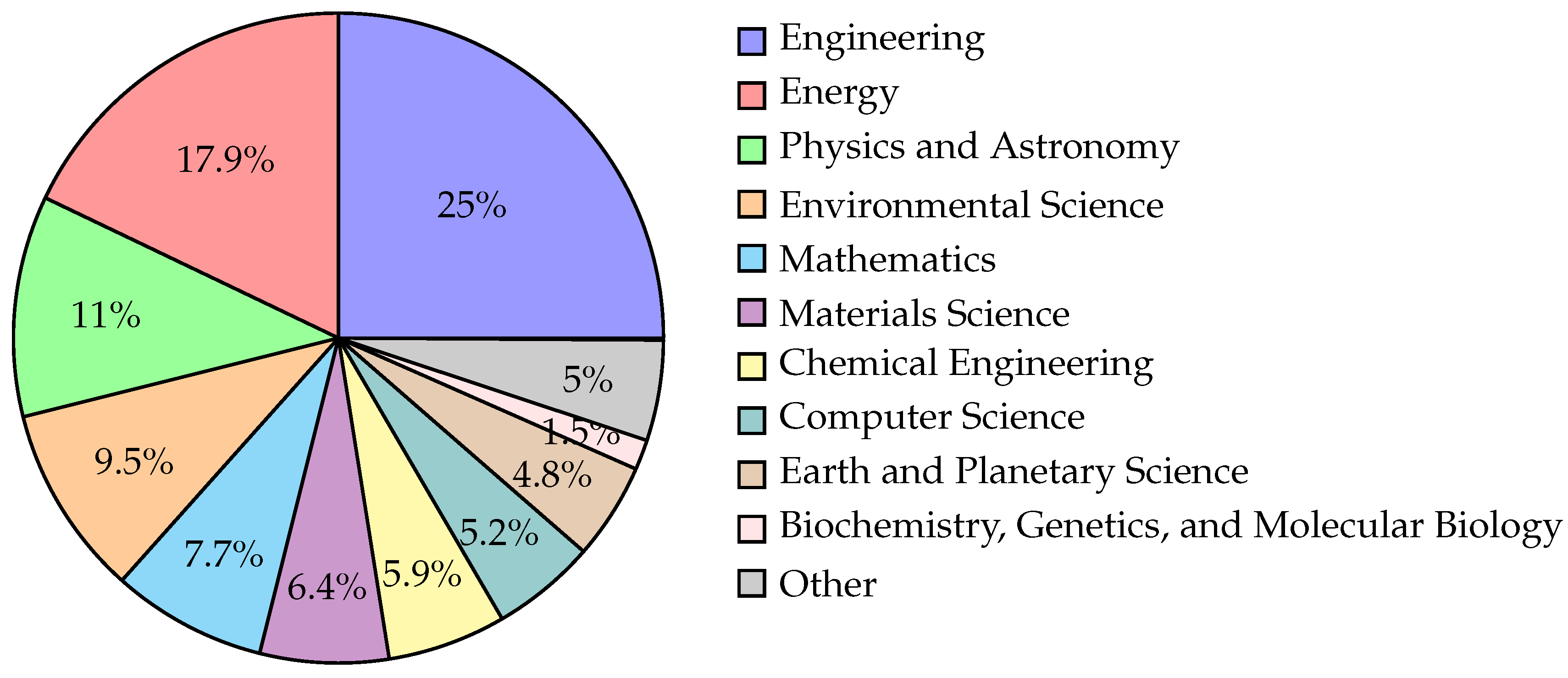
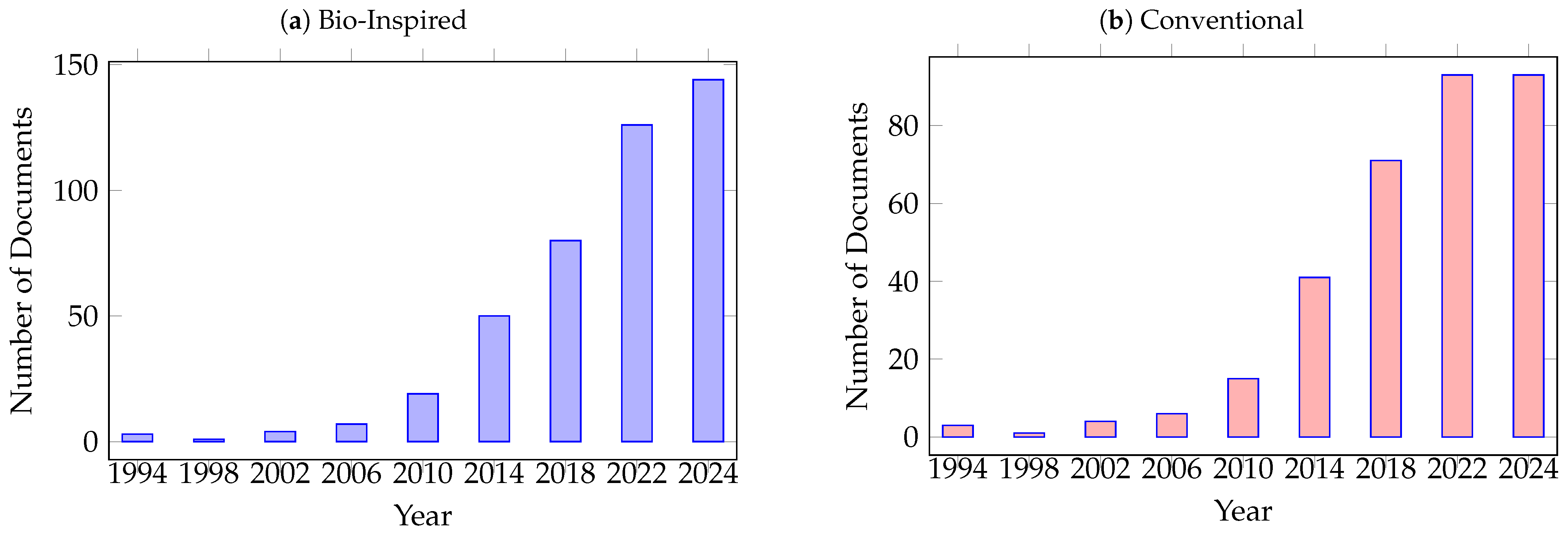
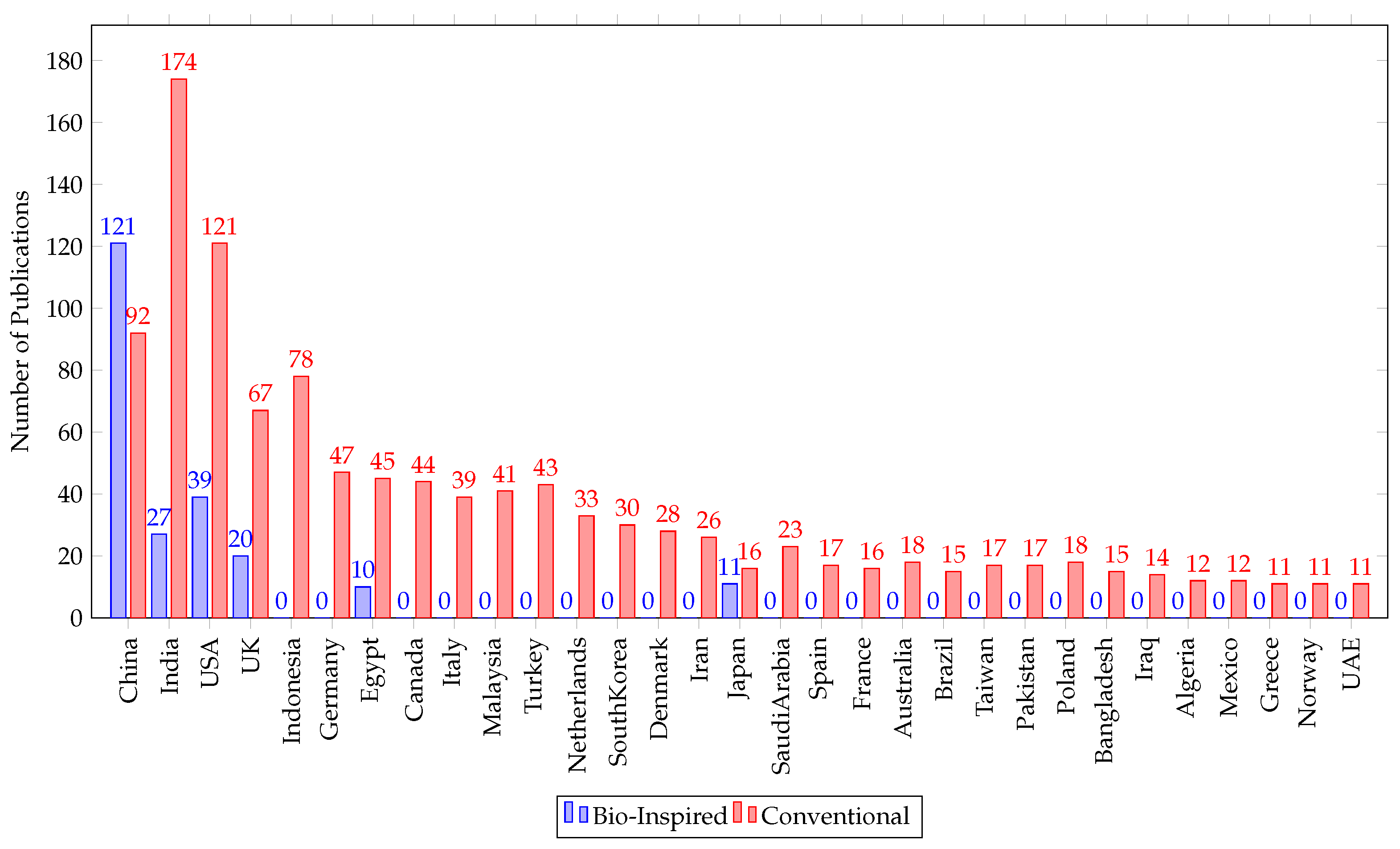
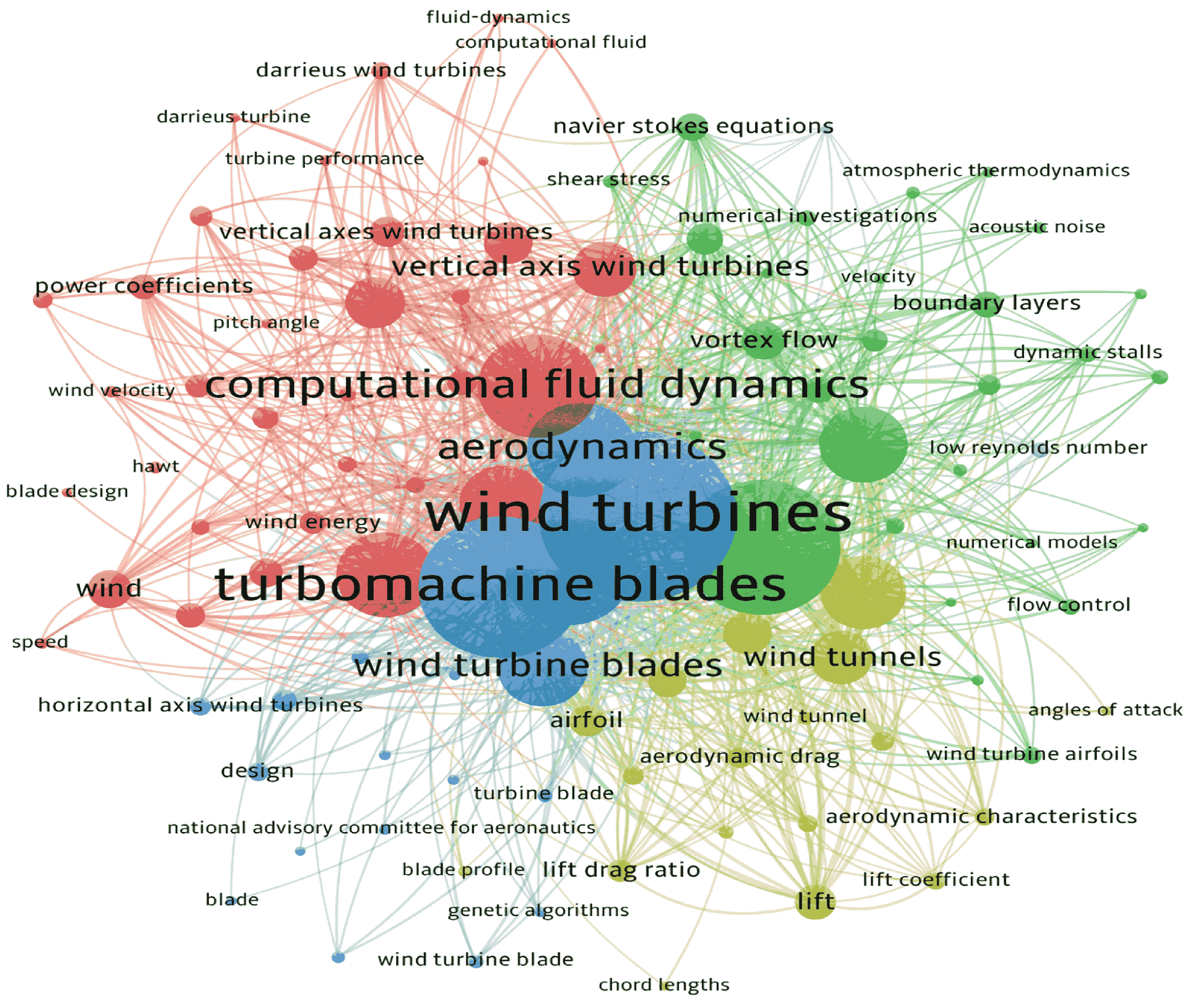
The collective insight from Figure 2, Figure 3, Figure 4 and Figure 5 reveals dynamic and rapidly evolving turbine research. On the basis of the retrieved documents, it is evident that the research was focused more within the engineering and energy domains, where biomimetics and aerodynamics are the most actively explored areas. Furthermore, research related to conventional turbines held a dominant position until 2004; thereafter, bi-oinspired innovation gained momentum, which after 2006 almost exceeded the traditional turbine by 2024 (Figure 3). These trends indicate a global shift towards bio-inspired turbine design; however, adoption remains geographically uneven. For instance, several countries, such as the United Kingdom, Germany, and Indonesia, are active in conventional research but show limited bio-inspired output (Figure 5). In addition, the accompanying keyword network (Figure 4) clearly demonstrates an imbalance within material science, revealing a dense clustering around computational and aerodynamic themes but a relative paucity of research on durability, material resilience, structural integrity, and scalable fabrication.
In general, this research ecosystem constitutes a novel interdisciplinary framework that integrates engineering, materials science, and biology to develop a robust and efficient wind and hydrokinetic turbine.

2. Design Principles and Typologies of Wind and Water Turbine

Wind turbine blades operate on the principle of conversion as they extract the kinetic energy of the wind via rotors and convert it into mechanical energy through aerodynamic forces such as lift and drag [3,34]. The effectiveness of this conversion is influenced by various parameters such as blade shape and geometry, installation site, wind characteristics, size variation, etc. [17]. However, it is technically impossible to extract the entire wind energy, as stopping the airflow would prevent it from entering the swept rotor area; therefore, according to Betz’s limit, only 59.3% of the kinetic energy in the wind can be extracted [37].

2.1. Comparison Between HAWTs and VAWTs

Wind turbines are categorized into two types based on the axis of rotation: Horizontal Axis Wind Turbine (HAWT) and Vertical Axis Wind Turbine (VAWT) [34,38,39]. HAWT consists of a horizontal rotor axis aligned parallel to the wind [40], while VAWT has a vertical rotor axis that allows it to capture the wind from any direction [16]. Although VAWTs are capable of capturing wind from all directions, HAWTs dominate the market mainly due to their higher aerodynamic efficiency and their better scale to withstand stronger wind conditions [38]. A detailed comparison of these types is tabulated in Table 1.
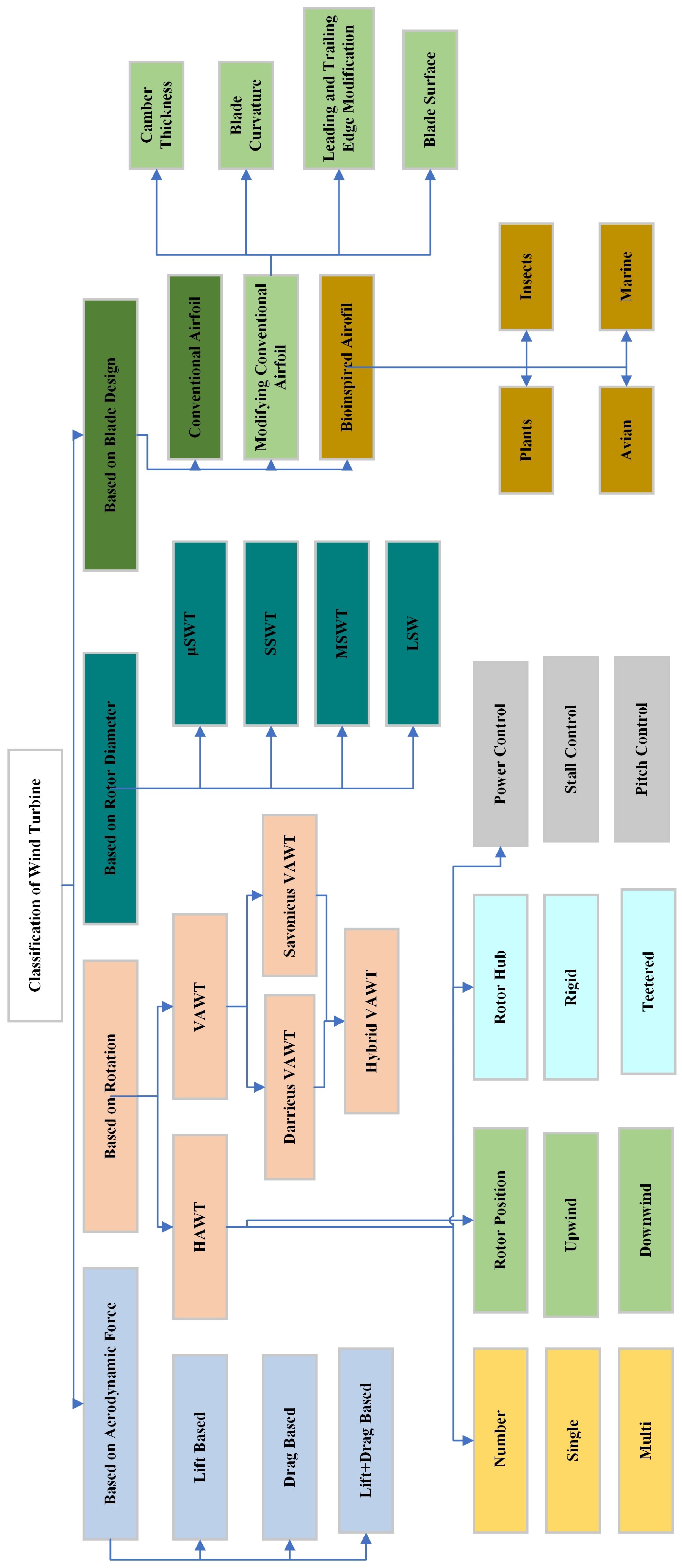
VAWTs are broadly categorized into two types based on aerodynamic forces: lift-based, known as Darrieus VAWT, and drag-based, known as Savonius VAWT. The lift-based VAWT features airfoil blades to induce lift at higher operational speeds, whereas the drag-based VAWT depends on flow resistance (drag forces) to rotate, thereby enabling self-starting capability but at lower efficiency [44]. Modern hybrid designs combine the characteristics of the Darrieus type and the Savonius type to enhance their operational performance under varying wind conditions, as investigated in [45]. The choice between turbine types is determined by specific application requirements [41,42,43], site wind characteristics [46], and efficiency considerations [15]. A concise classification of the types of wind turbines is illustrated in Figure 6.

2.2. Research Methods

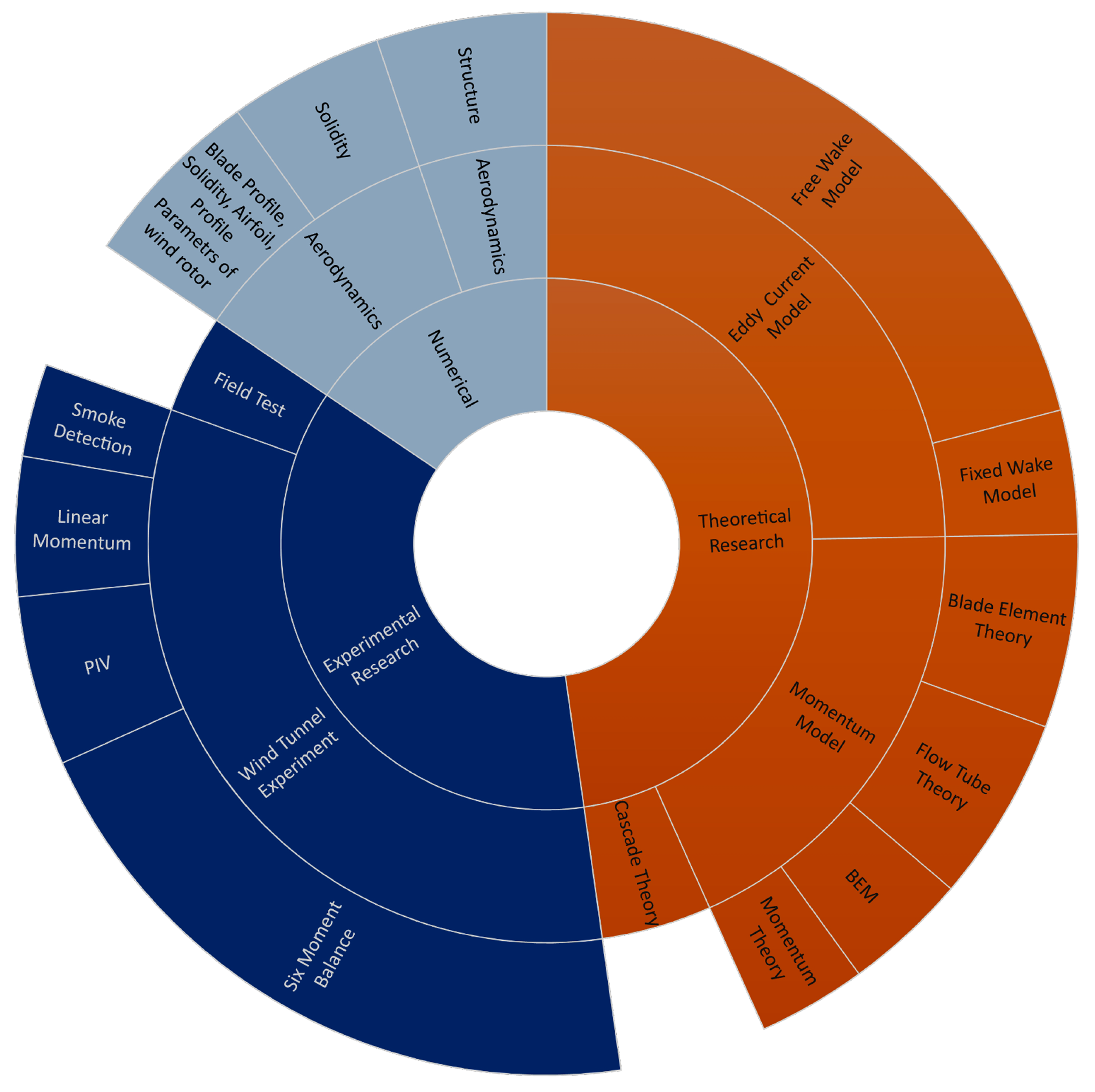
Figure 7 illustrates the main research approaches used in wind turbines, such as theoretical, experimental, and numerical methods.
Theoretical methods are analytical approaches [47] that are used to evaluate the scaling relationships and overall performance. These approaches include classical analytical models such as the eddy current model to study the effect of magnetic and electrical effects, the momentum model for flow analysis, and the cascade model to predict the velocity deficit and turbulence wake [3,47,48]. However, their drawback lies in assumptions such as steady flow [49], which limit their accuracy when applied to bio-inspired geometries consisting of intrinsic and curved features. Therefore, these methods are limited to turbines with low rotor solidity and tip speed ratio.
The experimental method involves physical testing of the models to validate the prediction. These include wind tunnel testing, particle image velocimetry (PIV), etc., to enable direct visualization of flow separation, wake patterns, and vortex structures [19,24,40,43,50]. Although these techniques are simple and produce reliable results, they are limited by the high experimental cost and inefficient in conducting full-scale wind tunnel experiments, as flow phenomena vary with scale [40]. In light of these limitations, numerical approaches have gained prominence as a necessary means to conduct detailed flow analysis.
The numerical method employs Computational Fluid Dynamics (CFD) to analyze aerodynamic characteristics and optimize turbine performance. With the advantages of low testing cost, design optimization and improved flow visualization, studies using this method have accelerated over the past two decades [21,48]. The integration of CFD with fluid structure interaction (FSI) models bridges the gap between analytical simplicity and experimental complexity [51]. However, these numerical results are highly dependent on the turbulence model, grid resolution, and boundary conditions and therefore require physical environment validation [24].
A synergistic combination of these three research methods is used in the design of bio-inspired turbine blades to improve the precision of the research. Theoretical analysis establishes the basic governing principles and key dimensional relations; numerical simulations elucidate parameter sensitivity and optimize geometry [20], and experimental tests confirm aerodynamic and structural integrity in the physical environment [40]. This comprehensive approach ensures that bio-inspired designs are aerodynamically effective and mechanically feasible, making them scalable for industrial deployment [20,52].
Wind turbines and hydro turbines operate on a similar aerodynamic principle; however, the contrasting fluid densities determine their scale, blade shape, and area of operation [53].
Conventionally, Darrieus turbines are used as wind turbines, but the same basic principles apply for hydrofoils. The Darrieus water turbine is operated by a lifting force, which is obtained due to the pressure difference when the water flows over the blade profile [54]. The water turbine works according to the principle of extracting the kinetic energy of flowing water and converting it into mechanical energy [53]. The smaller water turbine with a robust structure produces better efficiency but faces challenges such as cavitation and long-term durability in the marine environment [54,55]. The higher energy density allows smaller turbine sizes to generate comparable power. In contrast, wind turbines with larger swept areas tend to produce better efficiency.

2.3. Conventional Airfoils and Their Modifications

2.3.1. Conventional Airfoil

Conventional airfoils were developed primarily for aerospace applications in the early twentieth century and have significantly influenced both the modern wind turbine and the marine turbine. These traditional blades were first implemented in HAWT, where comprehensible performance enabled efficient scaling and enhanced design precision [56].
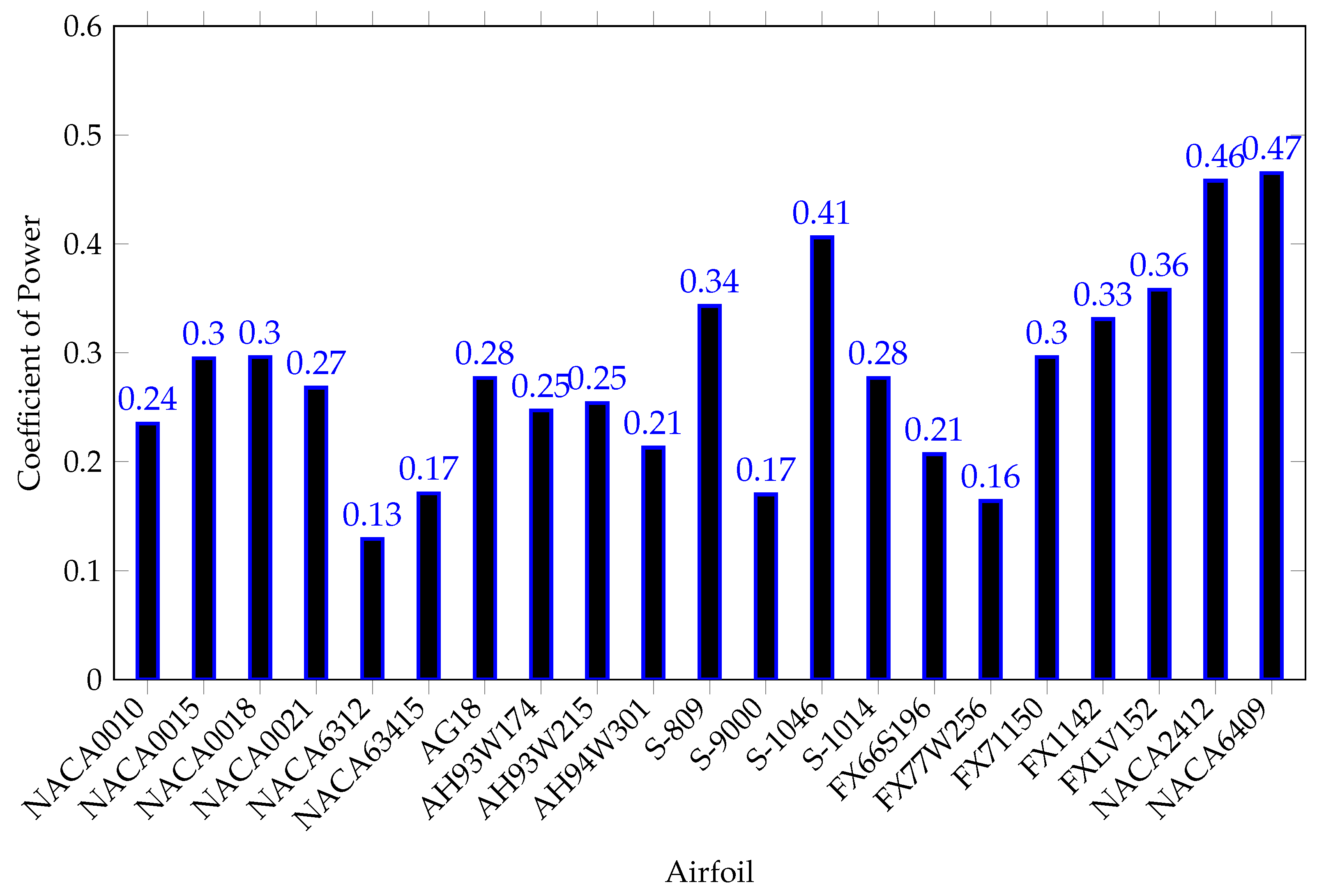
Drawing upon this foundation, technical researchers have conducted comprehensive comparative studies to evaluate the suitability of different airfoil profiles for wind energy applications. For example, in [57], the author investigated four-digit airfoils of various symmetric (NACA 0012,0015,0018,0021) and asymmetric profiles (NACA 4418,0018,1418,2418,3418) comparing their power efficiency and force coefficients. However, the study did not account for 3D aerodynamic effects or structural mechanisms, thus limiting practical feasibility. Based on this study, Mahato. A et al. [23] compared the aerodynamic performance between NACA 0012 and NACA 4418 airfoils, reporting that NACA 4418 stalls earlier at 16°, while NACA 0012 stalls at 18°. Extending such comparative approaches, Tokul and Kurt [58] investigated between NACA 2412 and NACA 6409, revealing power coefficients of 0.458 and 0.465, respectively, considering only the glide ratio, the power coefficient, and the aerodynamics using Q blade software. Furthermore, Abdallah A. et al. [59] numerically investigated a straight-bladed Darrieus VAWT with NACA 0015 profiles at a TSR of 2.5 and obtained a peak Power Coefficient ( C P ) of 0.36, with a peak torque in the upstream rotation and a negative torque in the downstream sector. Although this study effectively captured unsteady aerodynamic effects, the work lacked experimental validation and explored only a limited TSR range, restricting its applicability to real-world operations. Most of the wind turbine analyzes were performed in steady-state 2D aerodynamics, neglecting unsteady effects, 3D flow, and rotational augmentation, leading to overestimated performance. The performance of the conventional airfoil is shown in Figure 8.

2.3.2. Modified Conventional Airfoil

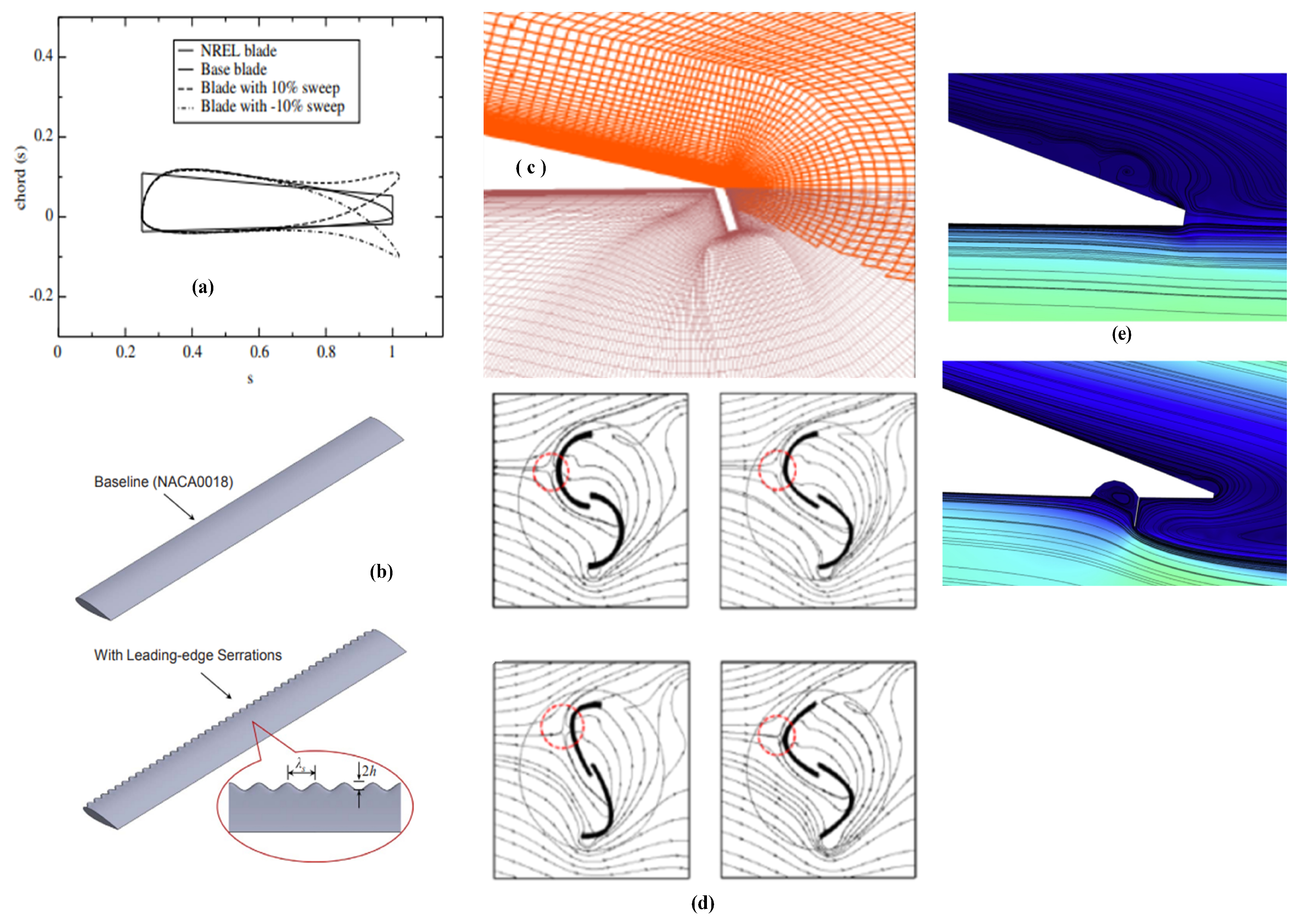
The geometry of the blades plays an important role in the lift generation of wind turbines. However, the primary challenge arises from the stall phenomenon that develops when the angle of attack exceeds the critical threshold [1]. Previous studies have shown that altering the classical shape of airfoils by introducing design features such as a vortex generator, spherical ball, protrusion on the surface, etc., can improve the momentum of the turbine blades, thus improving lift generation and delaying the start of the stall [38]. Applying the same vein, by embedding a flap configuration on the trailing edge of DU 06W 200 at 5 and 10 degrees, has improved performance by 11.9% and 8.7%, respectively [26], and incorporating sinusoidal serration at the leading edge (Figure 9b) of VAWT increased the power coefficient by 18.7% and the supposed dynamic stall of 75°–160° azimuth [60]. Beyond sectional modification, blade tip modification (Figure 9a) was performed using the NREL blade with a straight axis and with ±10% sweep, dihedral or winglet, and the results demonstrated that power capture is improved from an aerodynamic point of view; however, structural penalties must be explored [61].
Another approach involves incorporating flaps on the trailing edge to delay flow separation; however, their performance is dependent on its height and operation condition. In paper [62], the installation of the Gurney flap (Figure 9c) on the trailing edge further increased the power, particularly for the high-solidity turbine. Chen et al. [63], further investigated the use of a plain and serrated shape gurney flap on a NACA 0021 airfoil, demonstrating that SGF effectively reduced trailing edge vortices, while PGF increased the lift with increased induced drag. This is because the serrated profile induces a secondary pair of vortices in the normal plane, breaking the columnar vortex structure, thereby reducing the drag. Furthermore, in [64], the author focused on the physics of VAWT airfoil modification by introducing a semicircular inward dimple and a small Gurney flap on the pressure-side (lower) surface of a NACA 0015 profile as shown in Figure 9e, using RSA (Response Surface Approximation).
The optimized profile increased the tangential force and improved the time-averaged torque relative to the baseline airfoil, with a light dynamic stall. However, performance sensitivity was highly dependent on flap height and dimple placement [64]. A similar study on blade performance using a Savonius turbine has also provided an improvement in power [65]. Souad et al. [66] studied the influence of phase shift angle (PSA) on the aspect ratio (AR), and the results showed that a 50% increase in the aspect ratio improves the power coefficient by 200%. In addition to this, studies that examined the variation in overlap ratio with the presence of a central shaft have shown an improvement in the performance of Savonius turbines [67].
Figure 9. Modification of conventional airfoil: (a) tip modification [61]; (b) leading edge serration [60]; (c) gurney flap to trailing edge [62]; (d) blade shape modification [65]; (e) gurney flap at trailing edge and semi-circle on the lower surface [64].
Energies 19 00047 g009
Building on shared aerodynamics and hydrodynamics characteristics, researchers have pivoted to marine-based systems, extending the same comparative logic to hydrokinetic rotors. This gap has shifted attention toward water-based systems, where different design priorities, such as self-starting capability and resilience in harsh flow environments, play a central role.
Savonius water turbine [68] has been studied for its reliability in small-scale renewable electricity generation within rivers, tidal channels and irrigation canals. For instance, in [68], the influence of channel bends in the performance of Savonius was studied by considering their potential in agricultural channels. Further, geometric parameter that influence the aerodynamic efficiency of the Savonius hydrokinetic turbine is discussed in [69]. In addition to this, Mohd Badrul Salleh [70], investigated the effect of the deflector blade on self-starting speed and identified that the three-blade deflector blade performed less compared to the two-blade deflector. Alongside this, increasing the aspect ratio reduces the influence of the three-dimensional flow effects and therefore resembles more closely the result obtained in the two-dimensional turbine [55]. Yi Zhu et al. [71] studied the effect of tip speed ratio by integrating CFD with FSI studies and revealed that the maximum deformation occurred more at the outer plate of the endplate. Based on this, Emil et al. [72] performed an optimization technique to find the optimal shape and position of the deflector plate. The other geometric modifications included varying the cross-sectional area of the blades [73], the deflector configuration [74], the diameter varying in different angular positions [75], and the collar modification [76], aspect ratio [55].
Taken together, all of these insights and the findings underscore that optimizing blade geometry and flow augmentation principles advance the efficiency of the Savonius hydrokinetic turbine. However, despite these advances, a holistic understanding of the combined effect of different geometric alterations in the practical field remains limited. For example, changing blade count and diameter achieved a power efficiency of 0.21 [76] and a cambered hydrofoil of 0.26, surpassing the traditional profile [76]. Similarly, varying the size or cross-sectional area or by incorporating inner blades improved their performance compared to the semi-circular design [69,73,77].
On the other hand, Darrieus water turbines, being lift-based turbines, offer higher efficiency potential, but require advanced modeling approaches to capture their complex unsteady flow behavior [55]. In [78], the author modified NACA 633018 to study the fluid structure interface of a Darrieus turbine under varying flow conditions and obtained a power coefficient between 0.05–0.37. In addition, Ramin et al. [79] investigated the effect of the number of blades count on the aerodynamic performance of the small-scale HAWT using the S814 profile and found that four blades demonstrated better efficiency.

2.4. Bio-Inspired Airfoil

In this section, the predominant natural sources that have inspired advances in the field have been studied on the basis of their aerodynamic characteristics, such as their ability to improve lift, reduce drag, and control flow separation [17].

2.4.1. Harnessing Aquatic Inspiration

The principles derived from biological systems in an aquatic environment have become a coherent source of inspiration to advance the technologies of wind energy [80]. Marine organisms such as humpback whales and other aquatic species exhibit distinctive morphological characteristics, most notably tubercle flippers, hydrodynamic body profiles, and fin-shaped appendages, which enable exceptional fluid dynamic efficiency [15]. Translating these evolutionary adaptations into blade design has significant potential to improve lift, postpone stall onset, and improve overall aerodynamic efficiency. These design strategies define a novel framework to overcome the limitations inherent in conventional blade geometries, thus enhancing the efficiency and sustainability of wind energy systems.
The subsequent section presents an in-depth examination of marine-derived bioinspiration, highlighting the rationale for their adaptation, their functional mechanisms, and apparent performance improvements (Figure 10).
(a)
Inspiration from Fish’s Fins and Tubercles
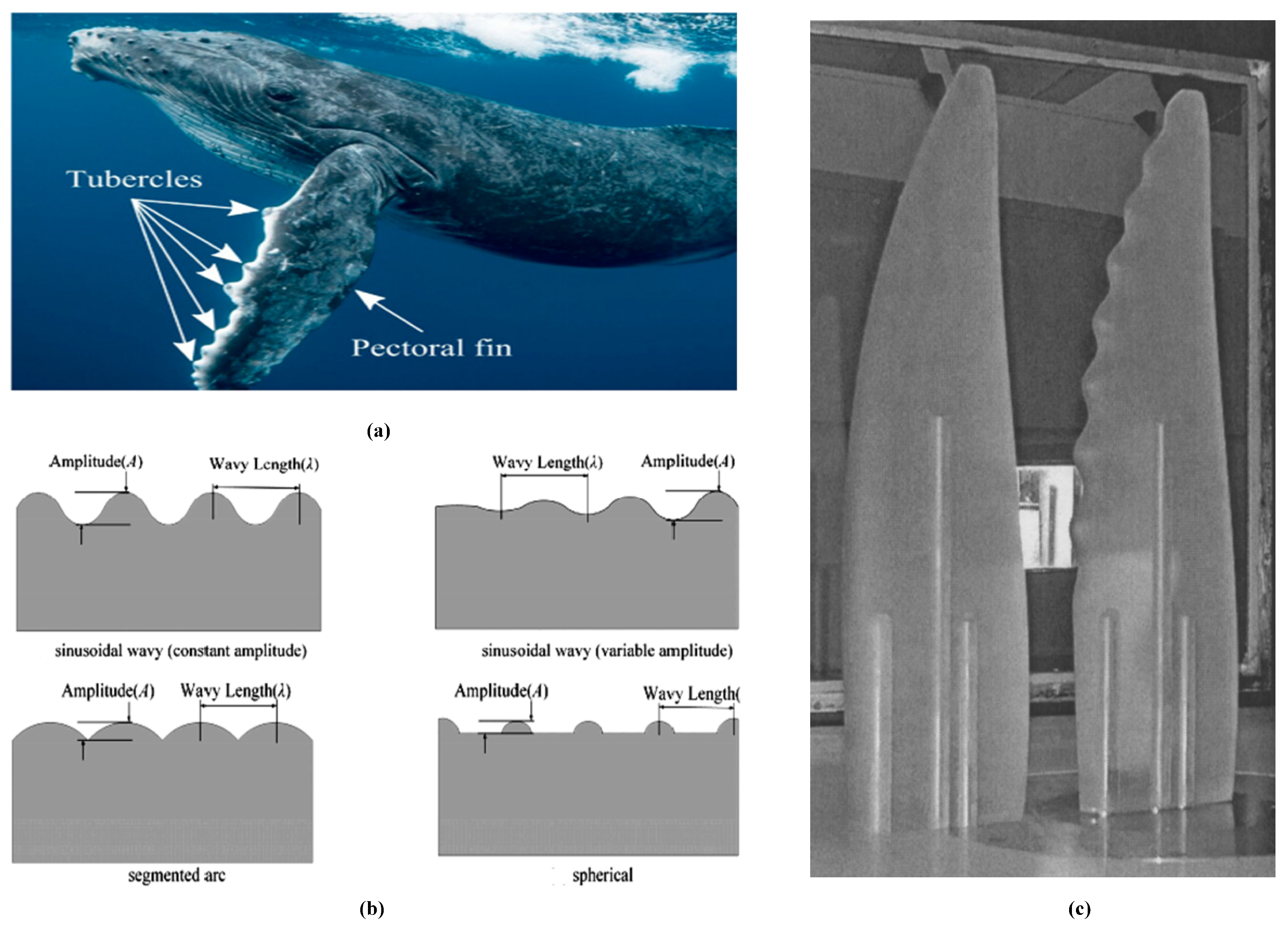
Megaptera Novaengliae, widely known as humpback whales, a species of baleen whale, have exceptional underwater acrobatic maneuvers to catch its prey. This is because whales possess cutting-edge bumps, known as tubercles, on their pectoral fins, which significantly improve maneuverability and hydrodynamic efficiency [82]. The implementation of tubercles on the leading edge of wind turbines has facilitated significant interest in the field of research and industrial application [82,83].
The incorporation of leading-edge tubercles in the design of wind turbine blades draws inspiration from the pectoral fins of humpback whales, which possess distinctive bumps that enhance hydrodynamic efficiency [29]. These tubercles modify the incoming airflow, creating alternating regions of high and low velocity along the blade span, which, in turn, generate stable vortices that energize the boundary layer. This mechanism delays the onset of stalling by maintaining flow attachment at higher angles of attack, thereby expanding the operational range of the blade. This was performed experimentally by D. S. Miklosovic et al. [82]. The result demonstrated that the incorporation of leading tubercles into the NACA 0020 airfoil delayed the onset of the stall by approximately 40%, while simultaneously improving the lift and reducing the drag. Based on these insights, Guo-Yuan Huang et al. [84] conducted an experimental study to evaluate the aerodynamic impact of the leading edge by modifying the SD 8000 airfoil on small-scale HAWT blades using two types of model: a 3D static blade and a rotating rotor blade model. The results indicate that the leading-edge protuberances improved the low-TSR performance by delaying stall; however, at high rotational speed, the protuberances offered no significant advantage.
Building on the concept of leading edge protuberances, Hongjie Hu et al. [36] compared the NREL Phase VI standard blade and its modified counterparts, considering 12 cases. These modifications included constant-amplitude (sinusoidal wavy), variable-amplitude (sinusoidal wavy), segmented arc, and spherical configurations, applied through both partial and full leading edge modification, to systematically assess their aerodynamic characteristics. The findings demonstrated that the variable-amplitude tubercles increased the torque by 7% with segmented arc and variable-amplitude designs that further enhanced the torque, and the spherical tubercles outperformed others at high speeds. In parallel, a computational study on the NREL Phase VI blade parametrically investigated humpback whale pectoral fin-inspired tubercles by varying amplitude, wavelength, and spanwise coverage [81]. The findings revealed that although tubercles reduce performance at wind speeds below 7 m/s, extending the tubercle pattern over more than 60% of the blade span eliminated backflow at higher speeds (10 m/s). Furthermore, the use of small-amplitude wavelength ratios maintained turbine efficiency, with tubercles contributing to stall delay, reduced suction side pressure, and improved lift generation at elevated wind speeds. Bolzon et al. [85] recommended promising results for refined flow control strategies by embedding tubercle geometries in NACA 0021 for the formation of asymmetric vortex and drag modulation. Furthermore, in [86], modifying NACA 4420 and NACA 4412 with a wavy leading edge resulted in up to 33% higher power coefficient, 24% greater thrust and nearly 90% more power output under low wind conditions at 2.5 m/s. Another high-potential study of spanwise geometric modifications was performed on the NACA 0022 profile in [87], where aerodynamic performance was improved by mitigating dynamic stall and enhancing flow attachment, increased the maximum power coefficient by 10–15% compared to the conventional straight blade design. Although these studies have addressed aerodynamic efficiency, only a few have examined their energy conversion efficiency. Ahmad and Zafar [88] built a hybrid VAWT incorporating leading edge tubercles that significantly improved the power coefficient to 0.475, thus improving self-starting capability and maintaining positive static torque coefficients across all azimuth positions.
Yoon et al. [18] further investigated the hydrodynamic characteristics of the wavy leading edge in wings with low aspect ratio by varying the waviness ratio of the NACA 0020 airfoil. The result indicated that the modified blade generated a higher lift in the post-stall region; however, the onset occurred earlier than in the conventional airfoil, except for the blade with the least waviness ratio. Meanwhile, Kim et al. [89] varied the wavelength while keeping the amplitude constant and observed that the modified blade did not experience a lift drop compared to the conventional airfoil, to be defined as stall; however, beyond stall, both configurations showed no difference. Vimal et al. [90] incorporated wavy edge vanes inspired by humpback whales. By maintaining the pitch and varying the length, wavelength, and placement of waves on the outer edge, inner edge, and both edges, a conventional wave was achieved. Comparison analysis revealed that the wavy edge improved overall turbine performance by improving self-starting capability and eliminating negative torque.
(b)
Inspiration from Fish Scales to Forest Canopies
In a study conducted by Khder et al. [91] has shown that bio-inspired surface micropatterns, such as riblets and fish scales, applied to 3D-printed HAWT blades, can significantly improve aerodynamic efficiency. Among these, fish scale textures achieve up to 78% higher power coefficients at optimal tip speed ratios. Similarly, the scales of the grass carbs have distinct microstructural characteristics that allow them to exhibit two morphologies: one characterized by smooth ridges and troughs and another rough type with elevated crescents and flat bases [92]. These features help reduce drag by regulating the balance between flow separation and surface friction, where the ridged morphology aids in smoother flow, while crescent-shaped textures enhance turbulence control [92,93,94]. The experimental findings demonstrate that grass carp scales can reduce drag by approximately 2.8 to 6.7% at low flow speeds.

2.4.2. Inspiration from Plant Kingdom

The morphofunctional traits of trees and plants have long served as a foundation for the realm of biomimetic engineering, particularly within the context of sustainable energies. Their naturally evolved morphologies combined with aerodynamic efficiency, flexibility, and self-adaptation make them ideal references for turbine blade innovation [34,50]. The subsequent subsections outline botanical inspiration.
(a)
Inspiration from flowers and leaves
Plants have inspired several innovative designs in wind and water turbine applications due to their evolved aerodynamic and hydrodynamic efficiencies [10]. Biomimetic blades modeled after leaves such as lotus [50], water lily [34], cabbage leaves [95], etc., emulate the curvature and flexibility of natural leaves, enabling the turbine blade to operate at varying wind speeds, thereby enhancing their aerodynamic performance. In wind energy, leaf-inspired blades replicate the curvature, venation, and flexibility of natural leaves, which help optimize lift generation, reduce drag, and adapt to varying wind speeds. For example, certain broad leaves naturally twist and bend in high wind, preventing structural damage, a principle applied in bio-inspired vertical axis wind turbines (VAWTs) for passive load control [33]. In addition, the use of an internal biomimetic rib of leaves in the supporting structure of the turbine has further improved stability and stiffness, although localized stress concentration was observed [96]. In water turbines, aquatic plants with flexible fronds or kelp-shaped structures demonstrate efficient energy extraction from slow-moving currents. Their shape and motion have been adapted to develop low-speed current turbines with improved starting torque and reduced risk of cavitation [95]. In addition, lotus, lily, and cabbage leaves [95] have superhydrophobic surfaces that prevent water droplets from wetting them, which contain micro- and nanostructures [97,98,99,100].
In engineering, research on floral elements has been a source of inspiration in the development of blade geometry, as well as lightweight but resilient materials [34].
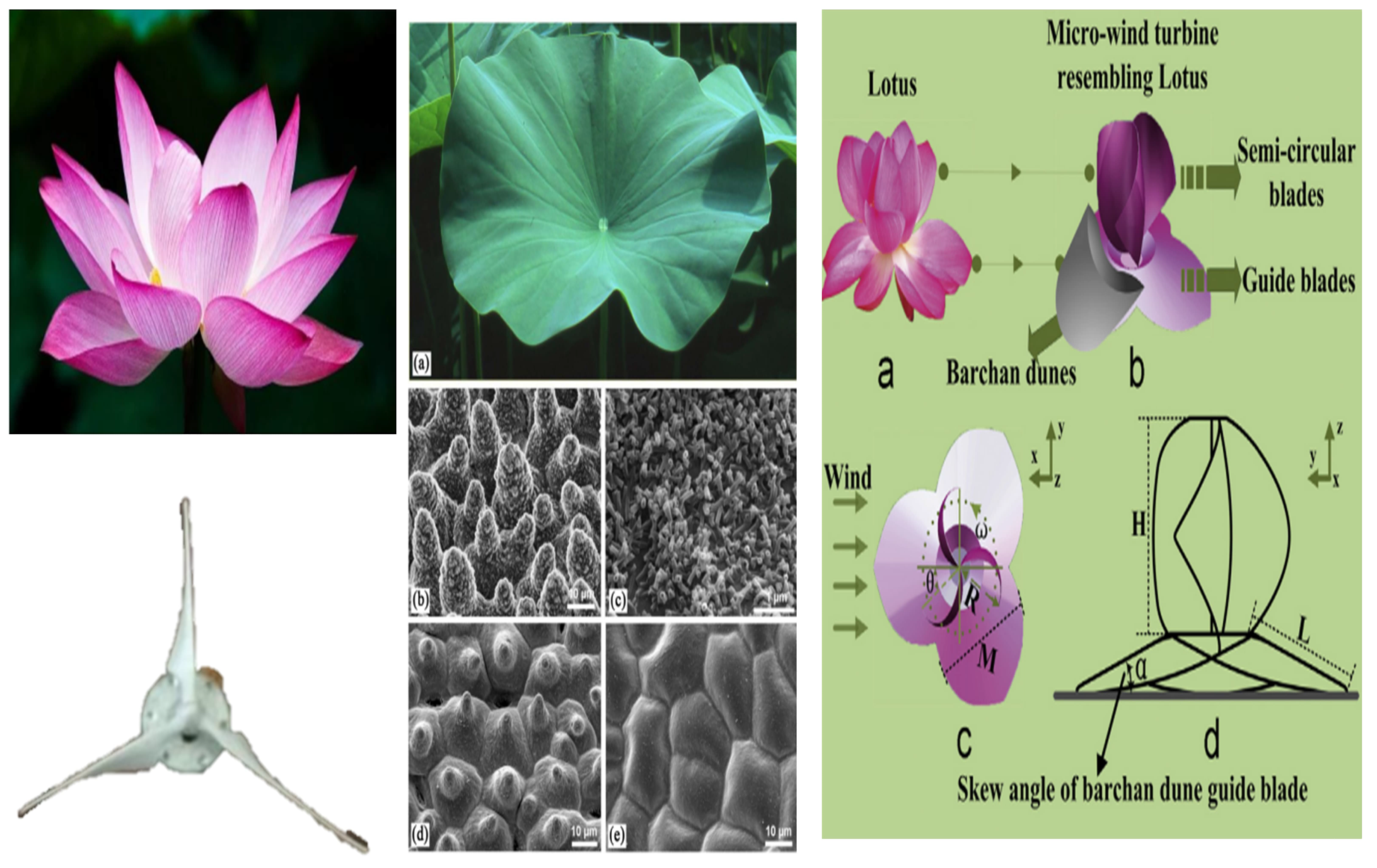
Islam et al. [50] developed a three-bladed HAWT inspired by the Sacred Lotus flower (Nelumo Nucifera) by modifying the NACA 2412 airfoil. The result revealed that the bio-inspired structural design has improved performance by 31.7% (refer Figure 11left). In addition, in [101], a lotus-shaped microwind turbine was designed consisting of a guide blade and semicircular blades. The guide blades sculpt the incoming wind, while the semicircular blades were used to drive the shaft. The degree of barchan dune was varied. The findings indicate that changes in the angle of inclination of the barchan dune guide blades between α = 15° and 25° exert negligible influence on rotor performance, suggesting a stable aerodynamic response in this range. These findings illustrate the way natural geometries can be harnessed in engineering to achieve optimized aerodynamic stability.
(b)
Textured Surface Inspiration from Plants
The working environment also plays a key role in the efficiency of wind turbine operation. Contamination of the turbine blade on the suction side reduces power efficiency, thus increasing drag and reducing lift [102]. The lotus leaf consists of microstructures that help reduce contamination and preserve aerodynamic efficiency. This leaf has a superhydrophobic surface, and therefore water droplets are prevented from wetting its surface due to the presence of micro- and nanostructures [95]. The close arrangement of the surface asperities detaches the formation of large droplets by easily rolling off, giving rise to a characteristic known as the “Lotus effect” [95,103,104].
These effects have been a source of exploration in wind turbine applications to improve water repellency and mitigate icing on blade surfaces [105]. For example, in [106], turbine blades coated with epoxy paint and silica nanoparticle-based superhydrophobic demonstrated enhanced water resistance due to air retention within the surface cavities, thus mimicking the surface of the lotus leaf. Effective drag mitigation requires minimizing both surface roughness and contact angle hysteresis to produce highly refined hydrophobic textures [107]. Furthermore, the intrinsic and flexible leaf structure (form) allows for adaptive bending and passive twisting (mechanism), which improves lift and reduces drag by evenly stabilizing the flow and aerodynamic loads. Therefore, the integration of hydrophobic surface design into wind turbine blades offers strong potential for aerodynamic enhancement. For small-scale turbines operating under transient conditions, a drag reduction of up to 50% can be achieved through air-to-air contact over substantial portions of the surface, coupled with turbulence-induced boundary layer modification [100].
Like lotus, rice leaves [104,108,109,110] also exhibit a superhydrophobic nature due to the presence of longitudinal striations, transverse sinusoidal ridges, and hierarchically arranged micropapillae [104]. However, they are parallel aligned, unlike the lotus leaf, allowing for droplet movement along the leaf length and creating a riblet-like drag reduction similar to that of shark skin [104]. This nature of the leaves reduces the viscous drag and enhances their self-cleaning antifouling performance [110].
In pursuit of improving the aerodynamic efficiency of the turbine, several studies have explored bio-inspired designs that included a combination of one or more bio-inspired features. Ashwindran et al. [111] analyzed a two-dimensional drag-based VAWT, inspired by the combination of albatross wings, tulip petals, and pitcher plant cavity vanes. However, the result obtained showed very low Cp values of 0.029 at λ = 0.2 and 0.025 at λ = 0.3) and negative power extraction at higher TSRs, caused by sharp edges and asymmetric geometry inducing adverse pressure and flow separation. Building on this foundation, the same author [112] conducted a comparative numerical study incorporating two bio-inspired characteristics. The first design (lift-driven) integrated the features of maple seed and Epilobium hirsutum, integrated to an airfoil profile of NREL S819, while the second design (drag-driven) integrated a spiral phyllotaxis geometry, and the third design (hybrid configuration) featured albatross, tulip and pitcher plant. The result obtained demonstrated that the first design achieved the highest Cp, followed by the second design, while the third design performed poorly compared to the conventional airfoil at high RPM due to the adverse pressure on the blades.

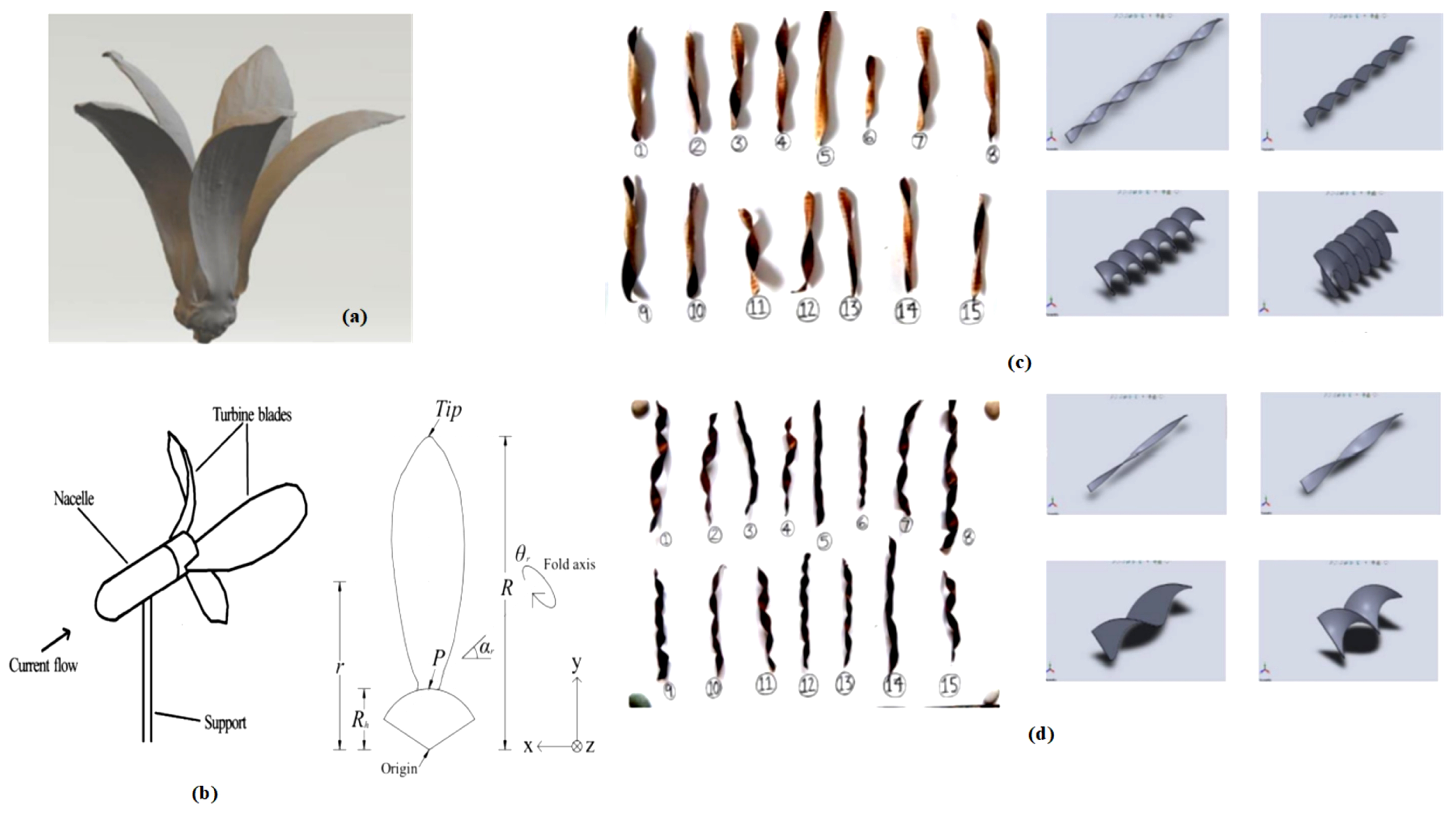
2.4.3. Inspiration from Tree Seeds

The natural autorotative and helical mechanisms of tree seeds exhibit enhanced aerodynamic stability and lift generation during descent. These flight behaviors provide valuable guidelines for designing efficient and self-starting wind turbines.
(a)
Inspiration from Maple Seed
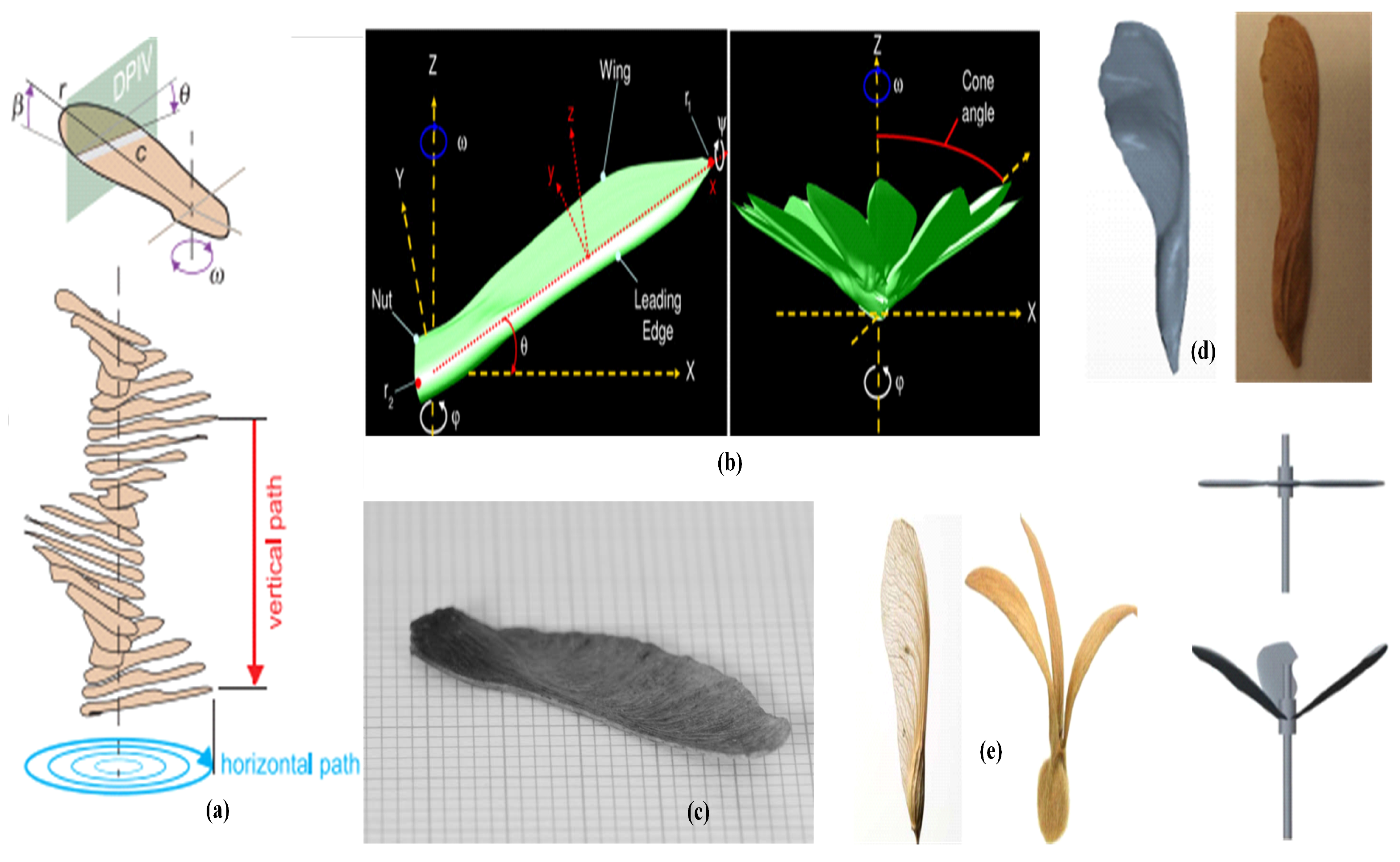
The maple seed (Figure 12) has several aerodynamic features that make it attractive for wind energy applications. Their formation of stable Leading Edge Vortices (LEV) guarantees a high lift-to-drag ratio, thus ensuring a steady descent and extended flight duration [113]. Additionally, their auto-rotative motion is inherent in self-stabilization by minimizing the oscillation during the descent [114,115]. All of these aerodynamic features promote energy efficiency, which is significant for energy harvesting [116].
Research on maple seed-inspired wind turbines has focused primarily on computational fluid dynamics (CFD), numerical simulations, and scaled prototype testing to assess aerodynamic performance and design feasibility. Various turbulence models have been applied to investigate the unstable aerodynamics of blades derived from maple seed geometry. These studies emphasize the distinctive flight mechanisms of the seed, such as helical autorotation, wind dispersal efficiency, and stable descent [117,118,119].
In [117], the author demonstrated through dynamically scaled experiments that maple seeds achieve slow and steady autorotation due to the formation of leading edge vortices (LEV), which improve the lift-to-drag ratio, findings that align with Holden et al. [113,120] who confirmed their aerodynamic potential for turbine applications. Subsequent investigations have consistently shown that the autorotative motion contributes to aerodynamic stability by suppressing oscillations, while the persistence of LEVs enables a high lift-to-drag ratio and prolonged energy extraction. Holden et al. [120] reported through three-dimensional CFD that helical blades modeled after maple seeds could attain a power coefficient (Cp) of 0.59, close to the Betz limit. Further, Timothy et al. [118] experimentally analyzed seeds of Acer platanoides (Norway maple) and analyzed the role of vortex shedding in delaying flow separation and improving energy capture. Dang et al. [116] employed the Taguchi method to optimize aerodynamic forces and angle of attack, further validating the practical applicability of this bio-inspired design.
Beyond aerodynamics, structural evaluations have reinforced the engineering suitability of maple-seed-inspired geometries. Prathik et al. [121] developed a biomimetic cambered airfoil based on the morphology of maple seed. Similar to [112], Cory Seidel [32] performed a structural FEA to impart additional lift to the NACA 0012 profile using nine combinations of bio-inspired structure, including extended normal, maple seed shape, triplaris samara seed shape and whale tubercles. The results demonstrated that the biologically shaped blades demonstrated structurally viable stress and deformation responses; however, the study was limited to dynamic fluidic structure and aerodynamic performance metrics, leaving a deeper future investigation.
(b)
Inspiration from Borneo Camphor, Bauhinia variegata, and Mimosa Seeds
Subsequently, researchers have changed the focus of aerodynamic characteristics assessment of other bio-inspired seeds such as Borneo Camphor seed [122,123], Petra volubilus seed, Bauhinia variegata, and Mimosa [124].
The structure of the Borneo Camphor seed, as shown in Figure 13, resembles a shuttlecock, with a nut that is surrounded by five wings. Due to the conical structure of the seed, they can orient themselves to face airflow during descent, allowing for auto-rotation [122]. These autorotations tend to extend the wind outward, thereby enlarging the rotor span, subsequently increasing the lift and reducing drag. Yung-Jeh Chu et al. [122] biomimicked these characteristics by scanning the seed and designed a wind turbine that served efficiently compared to the baseline SD8000 profile. A similar study conducted using a marine turbine in [125], achieved a power coefficient of 0.38; however, it required a higher self-starting torque, imposing higher structural loads, thereby requiring stronger materials and active control systems.
To overcome the limitation of self-starting torque in VAWTs, helical seed pods such as Bauhinia Variegata and Mimosa were used as shown in the figure. In paper [124], the author demonstrated a clear methodology for translating biological geometry by varying the diameter-to-height ratio and the height pitch-to-height ratio. The result indicated that a single-bladed helical rotor with d/h = 0.27 and p/h = 0.7 could start at 2 m/s, which makes it suitable for urban environments with turbulent low-speed winds. However, the study was limited to the analysis of single blade static stand-still torque and does not account for dynamic and multi-parameter performance, leaving a substantial gap in their application in real-world applications.
However, the omission of dynamic multiparameter performance evaluation leaves a substantial gap for future studies to integrate comprehensive aerodynamic, structural, and environmental analysis into bio-inspired VAWT design.

2.4.4. Inspiration from Aerial

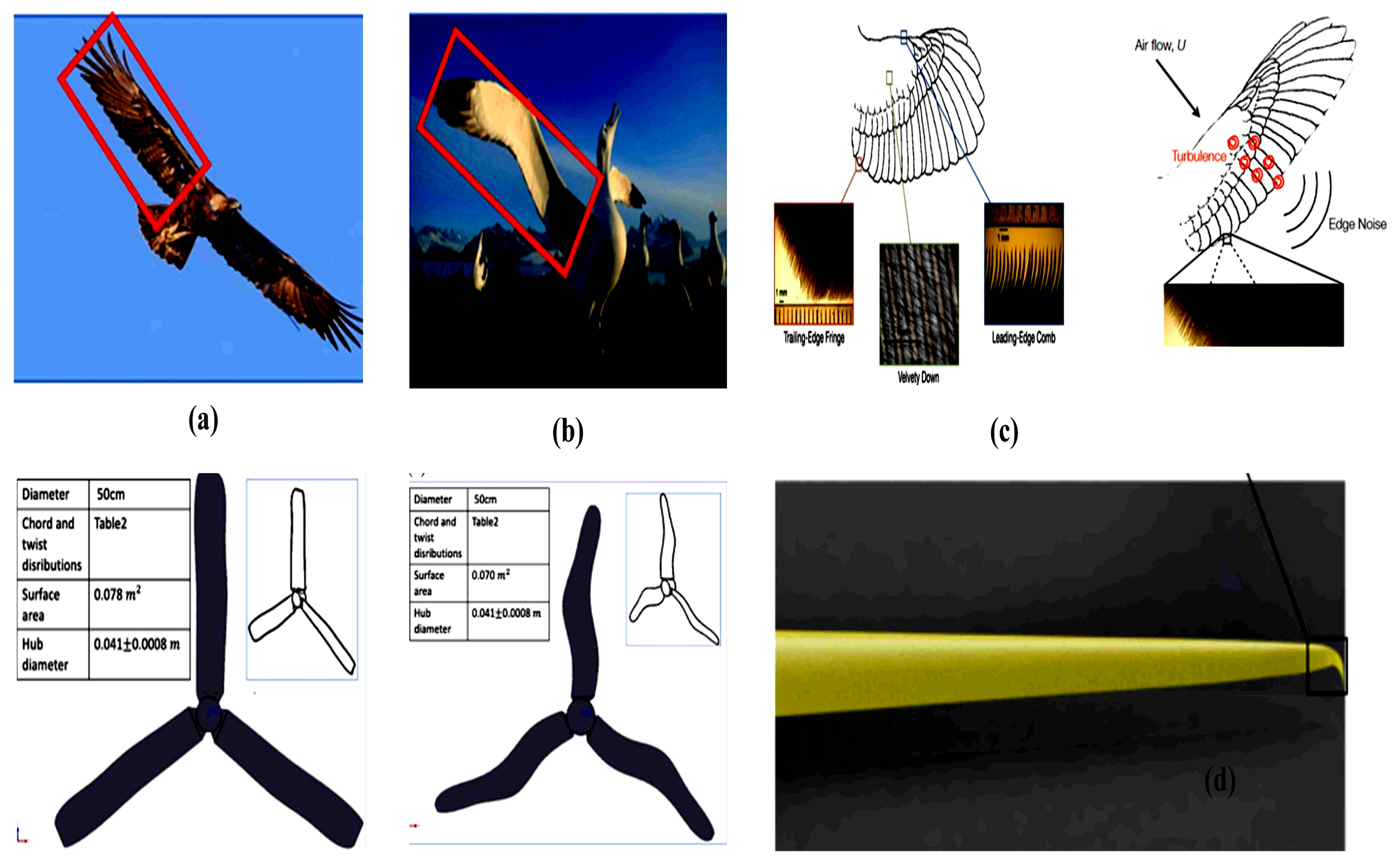
Avian flight mechanics is a perfect example of the solution inspired by nature to reduce drag and improve lift. The feathers present in the wingtips of birds are bent and separated, helping them to hover, soar, and perch precisely. From the past literature, it is evident that flight strategies vary significantly between species, reflecting an intelligent and efficient way to adapt to different aerodynamics and ecological demands (Figure 14).
The shape of the Avian’s wing is similar to that of an airfoil with a cambered surface, indicating that the upper surface exhibits a higher degree of curvature than the lower surface [34]. Contemporary research has proven that the structure of the avian wings of large birds such as seagulls and andean condors (vultur gryphus) [12], erganser, golden eagle [30,35], and owls [126] have proven to be effective in the application of wind turbines. For instance, vultur gryphus glide without flapping their wings, covering a large distance of approximately 170 km in 5 h, although these birds are the heaviest among soaring scavengers. Based on these findings, in [12] the author has retrofitted the andean condor-inspired winglet to the DU 10 MW wind turbine, which has averaged 10% of power production compared to the baseline.
Figure 14. Avian-inspired turbine blades: (a) golden eagle-inspired blade [30]; (b) albatross-inspired turbine blade [30]; (c) owl characteristics [127]; (d) andean condor-inspired wingtip [12].
Energies 19 00047 g014
The golden eagle displays advanced flight capabilities, such as hovering, perching, and hunting. Using these remarkable flight mechanics, Di Tang et al. [35] investigated the aerodynamic role of the secondary feather. The author used a three-dimensional scan of the golden eagle and combined the feather with the S809 airfoil in such a way that the secondary part of the feather can move or rotate relative to the primary part. The findings highlight that secondary feathers with rapid pitch-up mechanisms substantially improve maneuverability, providing valuable design inspiration for next-generation unmanned aerial vehicles (UAVs). Upon evaluating this mechanism, Yossri et al. [30] developed a HAWT featuring an obtuse-angled V-shaped turbine blade with tip feathers resembling the golden eagle’s gliding configuration and obtained a power coefficient of 4.5 W.
While raptors such as the golden eagle offer insights into maneuverability and localized lift enhancement, seabirds such as the albatross provide lessons in endurance and efficiency. Albatross are oceanic seabirds that specialize in dynamic flight over long distances. Their key design features include a high aspect ratio with a mid-span curvature allowing for lift redistribution, making the turbine blade suitable for operating in mid-range turbulence under steady wind flow conditions [30]. The integration of albatross-inspired wings into DU 06 W200 has ensured good stability by delaying stall, as it avoids early recirculation and flow separation, ensuring a smooth transition [26].
In addition, nocturnal birds, such as owls, present another dimension to bio-inspired design by focusing on silent flight and noise reduction. The study of the aerodynamic characteristics of many species of owls during flight has been a subject of interest in both sustainable energies and aircraft technology due to their asymmetrical and anatomical characteristics [126,128]. In [127], the author performed a detailed analysis of the morphological and structural analysis of the barn owl wings and observed that these species have a comb-like structure along the leading edge, a fringe-like arrangement along the trailing edge, and soft down feathers covering the wings and legs, allowing them to generate lift and glide silently [129].

2.4.5. Insects

Traditional wind turbines are built to operate within a narrow operating range centered around their optimal working point. This limitation poses challenges when exposed to variable wind conditions, leading to energy loss and structural damage.
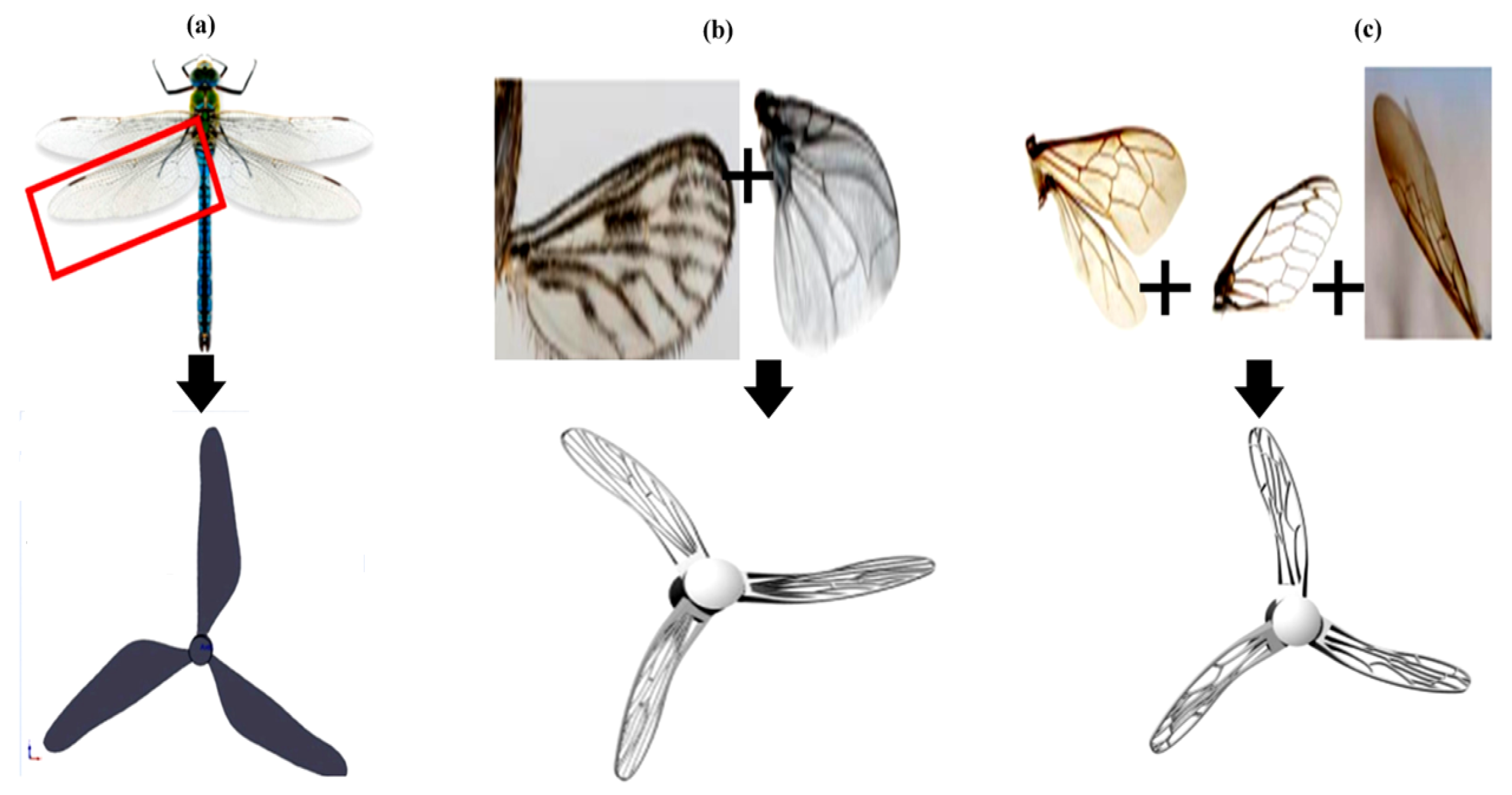
Under the influence of incoming flow velocity, insects use their ability to change the pressure forces to increase the force without adding energy (Figure 15) [130]. In the same way, the wind turbine can also be flexible. The potential of insect-inspired energy generation in the wind turbine is explained in [130].
Cognet et al. [52] investigated the adaptability of the elastic blade, mimicking the flying flights of an insect, and obtained a 35% through passive adaptation without utilizing additional energy input. Segev et al. a [130] conducted a similar study using two designs: one inspired by the wings of cicada, bee and wasp reflecting the inspiration from the cross-vein structure and macrostructure shape, while the second design was inspired from mosquito and fly wings, inspired due to their longer veins extending flight duration. The results demonstrated improvement in RPM; however, these designs posed a serious threat due to reduced strength compared to traditional blades. To address this issue, the author recommended optimizing profile parameters such as blade shape, vein design, thickness, and curvature to improve overall efficiency. Furthermore, Zheng et al. [131] performed a computational analysis to study the effect of butterfly wings by analyzing wind deformation through wing twist and camber effect. Shenglin Dai [132] designed a trabecular core inspired by the beetle elytron to optimize the buckling resistance of the wind turbine. A beetle’s elytron consists of a lightweight rib architecture that provides an excellent blueprint for enhancing the structural stability and buckling resistance. The results demonstrated a significant load bearing capacity; however, this study was limited to only uniaxial load.
Extending this line of research to other insect species, the dragonfly demonstrates an even more remarkable mechanism, as it can rotate its wings along multiple axes, making this species an exceptional flyer with superior performance, allowing it to hover and glide for extended periods at low wind speeds [30,31]. This versatility, combined with the intricate structural design, plays a crucial role in their remarkable aerial capabilities by delaying the stall by trapping and controlling the vortices, and thus minimizing mass and making the design suitable for lightweight structures [30]. Building on this natural inspiration, Mulligan [133] modified the turbine blades by incorporating a span-wise configuration with flexible blades, delaying stall by increasing the lift-to-drag ratio and reducing stress. However, similar to the observation made by the author in [130], these dragonfly-inspired turbine blades possess structural stability and material durability.

3. Research Findings and Conclusions

The integration of bionic principles with the development of sustainable energy constitutes a revolutionary frontier in the advancement of renewable energy technologies. This review of the literature has analyzed the evolution from conventional to bio-inspired concepts for both wind and marine energy systems. Table 2 summarizes various bionic augmented devices, their influence on flow mechanisms, and the associated aerodynamic benefits. Although well established, traditional airfoils face performance limitations under unsteady flow conditions, prompting a shift toward modifying geometry parameters or incorporating bio-inspired features into the design can enhance the system’s overall performance.
Theoretically, bio-inspired design advances form mechanism performance, connecting biological mechanisms to enhance performance. In practice, it illustrates strategies for translating natural design principles into scalable and structurally efficient turbine technologies. Despite substantial progress in the field of bio-inspired turbines, research focusing on turbine applications in large-scale industries is limited, raising concerns about their engineering problems and manufacturability.
Taken together, previous studies confirm that airfoil choices strongly govern overall turbine performance, but also share recurring limitations, as mentioned below.
1.
Most research predominantly centers on steady-state 2D aerodynamics, neglecting unsteady effects, 3D flow, and rotational augmentation, ultimately leading to overestimated performance.
2.
Despite substantial progress in biomimicry, most research on marine turbines remains hindered by methodological and conceptual limitations.
3.
Most hydrokinetic studies are based on design principles derived from wind turbines; however, the large density difference between air and water introduces challenges such as scaling inconsistencies, cavitation, and increased structural load. These differences limit the direct applicability of wind-derived models and highlight the need for water-specific design and performance investigations.
4.
Existing studies often restrict operating ranges by focusing on a limited set of aerodynamic parameters (e.g., lift, drag, angle of attack, velocity) while neglecting structural and environmental effects. This raises concerns about their reliability under real-world operating conditions.
5.
A comprehensive understanding of the combined effects of geometric modifications, structural dynamics, and environmental influences remains limited. Current studies largely investigate these factors in isolation, yielding fragmented insights rather than holistic solutions.
6.
Continued reliance on biologically augmented conventional airfoils, rather than employing high-fidelity geometries scanned directly from natural models, constrains both the realism and achievable performance of bionic designs.
7.
Although the biomimetic design exhibited notable performance efficiency, its commercial deployment remains constrained because of its complex and intrinsic designs, raising concerns about its structural durability and manufacturing costs.
8.
The advancement of adaptive wind and marine blades capable of dynamically adapting to environmental conditions remains limited. Bridging this gap, particularly through the integration of artificial intelligence, presents a pathway toward renewable energy systems that are not only more efficient and sustainable but also inherently adaptive, resilient, and capable of intelligent performance optimization.
Bionic blade concepts promise substantial aerodynamic and hydrodynamic performance, yet their large-scale application remains limited. Bridging these shortcomings requires advances in additive manufacturing, composite materials, and integrated multidisciplinary optimization. In addition, application of machine learning-based bionic or traditional blade shape optimization can facilitate data-driven refinement of blade geometries. Furthermore, integrating smart materials such as morphing polymers, piezoelectric composites, etc., catalyzes activation of deformation control under varying wind conditions.
Collectively, these patterns signify a research transition from conventional aerodynamic studies to an interdisciplinary framework that combines the principles of biology, materials science, and intelligent systems engineering. This review contributes to a broader transition towards nature-inspired engineering, paving the way for next-generation sustainable energy solutions.

Author Contributions

Conceptualization, R.R., S.A.N. and M.K.; original draft preparation and writing review R.R.; S.A.N. supervision. All authors have read and agreed to the published version of the manuscript.

Funding

This research was funded by the United Arab Emirates University, Grant Code (G00005444).

Data Availability Statement

This literature review is based solely on published studies. All information used in the synthesis is presented in the manuscript.

Conflicts of Interest

The authors declare no conflict of interest.

References

  1. Roy, S.; Das, B.; Biswas, A. A comprehensive review of the application of bio-inspired tubercles on the horizontal axis wind turbine blade. Int. J. Environ. Sci. Technol. 2023, 20, 4695–4722. [Google Scholar] [CrossRef]
  2. Siram, O.; Saha, U.K.; Sahoo, N. Blade design considerations of small wind turbines: From classical to emerging bio-inspired profiles/shapes. J. Renew. Sustain. Energy 2022, 14, 042701. [Google Scholar] [CrossRef]
  3. Li, Y.; Yang, S.; Feng, F.; Tagawa, K. A review on numerical simulation based on CFD technology of aerodynamic characteristics of straight-bladed vertical axis wind turbines. Energy Rep. 2023, 9, 4360–4379. [Google Scholar] [CrossRef]
  4. Mignogna, D.; Szabó, M.; Ceci, P.; Avino, P. Biomass energy and biofuels: Perspective, potentials, and challenges in the energy transition. Sustainability 2024, 16, 16. [Google Scholar] [CrossRef]
  5. Georges, S.; Slaoui, F. Case study of hybrid wind-solar power systems for street lighting. In Proceedings of the 2011 21st International Conference on Systems Engineering, Las Vegas, NV, USA, 16–18 August 2011; pp. 82–85. [Google Scholar] [CrossRef]
  6. Falope, T.; Lao, L.; Hanak, D.; Huo, D. Hybrid energy system integration and management for solar energy: A review. Energy Convers. Manag. X 2024, 21, 100587. [Google Scholar] [CrossRef]
  7. Dolatabadi, S.H.; Ölçer, A.I.; Vakili, S. The application of hybrid energy system (hydrogen fuel cell, wind, and solar) in shipping. Renew. Energy Focus 2023, 46, 197–206. [Google Scholar] [CrossRef]
  8. Schmitt, R.J.P.; Rosa, L. Dams for hydropower and irrigation: Trends, challenges, and alternatives. Renew. Sustain. Energy Rev. 2024, 199, 114839. [Google Scholar] [CrossRef]
  9. Abdelkareem, M.A.; Radi, M.A.; Mahmoud, M.; Sayed, T.S.; Salameh, T.; Alqadi, R.; Kais, E.C.A.; Olabi, A.G. Recent progress in wind energy-powered desalination. Therm. Sci. Eng. Prog. 2024, 47, 102286. [Google Scholar] [CrossRef]
  10. Pioro, I.P.; Makarem, M.A.; Zvorykin, C.O. Wind energy utilization and sustainability. In Encyclopedia of Renewable Energy, Sustainability and the Environment; Elsevier: Amsterdam, The Netherlands, 2024; Volume 1, pp. 211–222. [Google Scholar] [CrossRef]
  11. World Wind Energy Association (WWEA). WWEA Annual Report 2024: A Challenging Year for Windpower; Technical Report; World Wind Energy Association: Bonn, Germany, 2025; Available online: https://wwindea.org/AnnualReport2024 (accessed on 2 November 2025).
  12. Bahambary, K.R.; Kavian-Nezhad, M.R.; Komrakova, A.; Fleck, B.A. A numerical study of bio-inspired wingtip modifications of modern wind turbines. Energy 2024, 292, 130561. [Google Scholar] [CrossRef]
  13. International Hydropower Association. 2025 World Hydropower Outlook; Technical Report; International Hydropower Association: London, UK, 2025; Available online: https://www.hydropower.org/publications/2025-world-hydropower-outlook (accessed on 2 November 2025).
  14. Kinzel, M.; Mulligan, Q.; Dabiri, J.O. Energy exchange in an array of vertical-axis wind turbines. J. Turbul. 2012, 13, N38. [Google Scholar] [CrossRef]
  15. Omidvarnia, F.; Sarhadi, A. Nature-Inspired Designs in Wind Energy: A Review. Biomimetics 2024, 9, 90. [Google Scholar] [CrossRef]
  16. Roga, S.; Bardhan, S.; Kumar, Y.; Dubey, S.K. Recent technology and challenges of wind energy generation: A review. Sustain. Energy Technol. Assessments 2022, 52, 102239. [Google Scholar] [CrossRef]
  17. Naqash, T.M.; Alam, M.M. A State-of-the-Art Review of Wind Turbine Blades: Principles, Flow-Induced Vibrations, Failure, Maintenance, and Vibration Suppression Techniques. Energies 2025, 18, 3319. [Google Scholar] [CrossRef]
  18. Yoon, H.S.; Hung, P.A.; Jung, J.H.; Kim, M.C. Effect of the wavy leading edge on hydrodynamic characteristics for flow around low aspect ratio wing. Comput. Fluids 2011, 49, 276–289. [Google Scholar] [CrossRef]
  19. Parra, H.G.; Ceron, H.D.; Gomez, W.; Gaona, E.E. Experimental Analysis of Oscillatory Vortex Generators in Wind Turbine Blade. Energies 2023, 16, 4343. [Google Scholar] [CrossRef]
  20. Herrera, C.; Correa, M.; Villada, V.; Vanegas, J.D.; Garcia, J.G.; Londono, C.N.; Perez, J.S. Structural design and manufacturing process of a low scale bio-inspired wind turbine blades. Composite Structures 2019, 208, 1–12. [Google Scholar] [CrossRef]
  21. Abdalkarem, A.M.; Ansaf, R.; Muzammil, W.K.; Ibrahim, A.; Harun, Z.; Fazlizan, A. Preliminary assessment of the naca0021 trailing edge wedge for wind turbine application. Heliyon 2023, 9, e21193. [Google Scholar] [CrossRef] [PubMed]
  22. Karmakar, S.D.; Rahman, S.M.; Chattopadhyay, H. Performance analysis of vertical axis wind turbine using naca0017 airfoil section. In Fluid Mechanics and Fluid Power (Vol. 3); Bhattacharyya, S., Verma, S., Harikrishnan, A.R., Eds.; Springer Nature: Singapore, 2023; pp. 19–24. [Google Scholar] [CrossRef]
  23. Mahato, A.; Singh, R.K.; Barnwal, R.; Rana, S.C. Aerodynamic characteristics of NACA 0012 vs. NACA 4418 airfoil for wind turbine applications through CFD simulation. Mater. Today Proc. 2023. [Google Scholar] [CrossRef]
  24. Elsakka, M.M.; Ingham, D.B.; Ma, L.; Pourkashanian, M. Comparison of the computational fluid dynamics predictions of vertical axis wind turbine performance against detailed pressure measurements. Int. J. Renew. Energy Res. 2021, 11, 276–293. Available online: https://www.ijrer.org/ijrer/index.php/ijrer/article/view/11755 (accessed on 2 November 2025). [CrossRef]
  25. Mohamed, M.H. Performance investigation of H-rotor Darrieus turbine with new airfoil shapes. Energy 2012, 47, 522–530. [Google Scholar] [CrossRef]
  26. Andrade, A.X.; Zargar, O.A.; Lin, T.; Juan, Y.H.; Shih, Y.C.; Hu, S.C.; Leggett, G. Can bird, cetacean, and insect inspired techniques improve the aerodynamic performance of DU 06 W 200 airfoil applied in vertical axis wind turbines? Aust. J. Mech. Eng. 2024, 23, 588–627. [Google Scholar] [CrossRef]
  27. Mazarbhuiya, H.M.S.M.; Biswas, A.; Sharma, K.K. Blade thickness effect on the aerodynamic performance of an asymmetric NACA six series blade vertical axis wind turbine in low wind speed. Int. J. Green Energy 2020, 17, 171–179. [Google Scholar] [CrossRef]
  28. El-Askary, W.A.; Burlando, M.; Mohamed, M.H.; Eltayesh, A. Improving performance of H-type NACA 0021 Darrieus rotor using leading-edge stationary/rotating microcylinders: Numerical studies. Energy Convers. Manag. 2023, 292, 117398. [Google Scholar] [CrossRef]
  29. Demırcı, V.; Kan, F.E.; Seyhan, M.; Sarıoğlu, M. The effects of the location of the leading-edge tubercles on the performance of horizontal axis wind turbine. Energy Convers. Manag. 2025, 324, 119178. [Google Scholar] [CrossRef]
  30. Yossri, W.; Ben Ayed, S.; Abdelkefi, A. Evaluation of the efficiency of bioinspired blade designs for low-speed small-scale wind turbines with the presence of inflow turbulence effects. Energy 2023, 273, 127210. [Google Scholar] [CrossRef]
  31. Salami, E.; Ward, T.A.; Montazer, E.; Ghazali, N.N.N. A review of aerodynamic studies on dragonfly flight. Proc. Inst. Mech. Eng. Part C J. Mech. Eng. Sci. 2019, 233, 6519–6537. [Google Scholar] [CrossRef]
  32. Seidel, C.; Jayaram, S.; Kunkel, L.; Mackowski, A. Structural Analysis of Biologically Inspired Small Wind Turbine Blades. Int. J. Mech. Mater. Eng. 2017, 12, 19. [Google Scholar] [CrossRef]
  33. Vogel, S. Drag and reconfiguration of broad leaves in high winds. J. Exp. Bot. 1989, 40, 941–948. [Google Scholar] [CrossRef]
  34. Regassa, Y.; Dabasa, T.; Amare, G.; Lemu, H.G. Bio-inspired design trends for sustainable energy structures. In IOP Conference Series: Materials Science and Engineering; IOP Publishing: Bristol, UK, 2023; Volume 1294, p. 012044. [Google Scholar] [CrossRef]
  35. Tang, D.; Fan, Z.; Lei, M.; Lv, B.; Yu, L.; Cui, H. A combined airfoil with secondary feather inspired by the golden eagle and its influences on the aerodynamics. Chin. Phys. B 2019, 28, 034702. [Google Scholar] [CrossRef]
  36. Hu, H.; Lu, B.; Luo, D.; Rong, R.; Yang, X. CFD analysis of different leading edge tubercles on the aerodynamic performance of NREL phase VI wind turbine blades. Energy 2025, 334, 137721. [Google Scholar] [CrossRef]
  37. Srivastava, P.; Kansal, S.; Talwalkar, A.; Harish, R. CFD analysis on the influence of angle of attack on vertical axis wind turbine aerodynamics. In IOP Conference Series: Materials Science and Engineering; IOP Publishing: Bristol, UK, 2021; Volume 850, p. 012027. [Google Scholar] [CrossRef]
  38. Lee, K.Y.; Cruden, A.; Ng, J.H.; Wong, K.H. Variable designs of vertical axis wind turbines—A review. Front. Energy Res. 2024, 12, 1437800. [Google Scholar] [CrossRef]
  39. Krishnan, A.; Al-Obaidi, S.M.; Hao, L.C. A comprehensive review of innovative wind turbine airfoil and blade designs: Toward enhanced efficiency and sustainability. Sustain. Energy Technol. Assessments 2023, 60, 103511. [Google Scholar] [CrossRef]
  40. Bai, C.-J.; Wang, W.-C. Review of computational and experimental approaches to analysis of aerodynamic performance in horizontal-axis wind turbines (HAWTs). Renew. Sustain. Energy Rev. 2016, 63, 506–519. [Google Scholar] [CrossRef]
  41. Vadhyar, A.; Sridhar, S.; Reshma, T.; Radhakrishnan, J. A critical assessment of the factors associated with the implementation of rooftop VAWTs: A review. Energy Convers. Manag. X 2024, 22, 100563. [Google Scholar] [CrossRef]
  42. Rezaei, F.; Paraschivoiu, M. Computational study of the effect of building height on the performance of roof-mounted VAWT. J. Wind Eng. Ind. Aerodyn. 2023, 241, 105540. [Google Scholar] [CrossRef]
  43. Ali, M.; Gherissi, A.; Altaharwah, Y. Experimental and simulation study on a rooftop vertical-axis wind turbine. Open Eng. 2023, 13, 20220465. [Google Scholar] [CrossRef]
  44. Noman, A.A.; Tasneem, Z.; Sahed, M.F.; Muyeen, S.M.; Das, S.K.; Alam, F. Towards next generation Savonius wind turbine: Artificial intelligence in blade design trends and framework. Renew. Sustain. Energy Rev. 2022, 168, 112531. [Google Scholar] [CrossRef]
  45. Budea, S.; Simionescu, Ş.M. Performances of a Savonius-Darrieus Hybrid Wind Turbine. In Proceedings of the 2023 11th International Conference on Energy and Environment (CIEM), Bucharest, Romania, 26–27 October 2023; pp. 1–5. [Google Scholar] [CrossRef]
  46. Johari, M.K.; Jalil, M.A.A.; Shariff, M.F.M. Comparison of horizontal axis wind turbine (HAWT) and vertical axis wind turbine (VAWT). Int. J. Eng. Technol. 2018, 7, 74–80. Available online: https://www.researchgate.net/publication/328448645_Comparison_of_horizontal_axis_wind_turbine_HAWT_and_vertical_axis_wind_turbine_VAWT (accessed on 2 November 2025). [CrossRef]
  47. Nebiewa, A.M.; Abdelsalam, A.M.; Sakr, I.M.; El-Askary, W.A.; Abdalla, H.A.; Ibrahim, K.A. Static load and structural analysis of a small horizontal axis wind turbine blade: Experimental and theoretical studies using the fluid-structure interaction method. Renew. Energy 2026, 256, 124385. [Google Scholar] [CrossRef]
  48. Fazlizan, A.; Muzammil, W.K.; Al-Khawlani, N.A. A Review of Computational Fluid Dynamics Techniques and Methodologies in Vertical Axis Wind Turbine Development. Comput. Model. Eng. Sci. 2025, 144, 1371–1437. [Google Scholar] [CrossRef]
  49. Jin, X.; Zhao, G.; Gao, K.; Ju, W. Darrieus vertical axis wind turbine: Basic research methods. Renew. Sustain. Energy Rev. 2015, 42, 212–225. [Google Scholar] [CrossRef]
  50. Abdelrahman, I.A.; Mahmoud, M.Y.; Abdelfattah, M.M.; Metwaly, Z.H.; AbdelGawad, A.F. Computational and Experimental Investigation of Lotus-inspired Horizontal-Axis Wind Turbine Blade. J. Adv. Res. Fluid Mech. Therm. Sci. 2021, 87, 52–67. [Google Scholar] [CrossRef]
  51. Da Silva Medeiros, I.; de Lima, D.M. Structural performance of direct foundations of onshore wind turbine towers considering SSI: A literature review. Renew. Sustain. Energy Rev. 2025, 217, 115742. [Google Scholar] [CrossRef]
  52. Cognet, V.; Courrech du Pont, S.; Dobrev, J.; Massouh, F.; Thiria, B. Bioinspired Turbine Blades Offer New Perspectives for Wind Energy. Proc. R. Soc. A Math. Phys. Eng. Sci. 2017, 473, 20160726. [Google Scholar] [CrossRef]
  53. Karre, R.K.; Srinivas, K.; Mannan, K.; Prashanth, B.; Prasad, C.R. A Review on Hydro Power Plants and Turbines. In AIP Conference Proceedings; AIP Publishing LLC: Melville, NY, USA, 2022; Volume 2418, p. 030048. [Google Scholar] [CrossRef]
  54. Rehman, W.; Rehman, F.; Malik, M.Z. A Review of Darrieus Water Turbines. In Proceedings of the ASME 2018 Power Conference collocated with the ASME 2018 12th International Conference on Energy Sustainability and the ASME 2018 Nuclear Forum, Lake Buena Vista, FL, USA, 24–28 June 2018. V002TI2A015. [Google Scholar] [CrossRef]
  55. Li, G.; Wu, G.; Tan, L.; Fan, H. A Review: Design and Optimization Approaches of the Darrieus Water Turbine. Sustainability 2023, 15, 11308. [Google Scholar] [CrossRef]
  56. Hansen, M.O.L. Aerodynamics of Wind Turbines, 2nd ed.; Earthscan: London, UK, 2008. [Google Scholar]
  57. Rogowski, K.; Hansen, M.O.L.; Banga, G. Performance Analysis of a H-Darrieus Wind Turbine for a Series of 4-Digit NACA Airfoils. Energies 2020, 13, 3196. [Google Scholar] [CrossRef]
  58. Tokul, A.; Kurt, Ü. Comparative performance analysis of NACA 2414 and NACA 6409 airfoils for horizontal axis small wind turbine. Int. J. Energy Stud. 2023, 8, 879–898. [Google Scholar] [CrossRef]
  59. Abdallah, A.; Williams, M.A.; Zidane, I.F. Elevating Wind Energy Harvesting with J-shaped Blades: A CFD-driven Analysis of H-Darrieus Vertical Axis Wind Turbines. PRoceedings Int. Marit. Logist. Conf. Marlog 13 Towards Smart Green Blue Infrastruct. Arab. Acad. Sci. Technol. Marit. Transp. 2024, 233–248. [Google Scholar] [CrossRef]
  60. Wang, Z.; Zhuang, M. Leading-edge serrations for performance improvement on a vertical-axis wind turbine at low tip-speed-ratios. Appl. Energy 2017, 208, 1184–1197. [Google Scholar] [CrossRef]
  61. Chattot, J.J. Effects of blade tip modifications on wind turbine performance using vortex model. Comput. Fluids 2009, 38, 1405–1410. [Google Scholar] [CrossRef]
  62. Chakroun, Y.; Bangga, G. Aerodynamic Characteristics of Airfoil and Vertical Axis Wind Turbine Employed with Gurney Flaps. Sustainability 2021, 13, 4284. [Google Scholar] [CrossRef]
  63. Chen, L.; Yang, P.; Zhang, B.; Chen, L. Aerodynamic Enhancement of Vertical-Axis Wind Turbines Using Plain and Serrated Gurney Flaps. Appl. Sci. 2023, 13, 12643. [Google Scholar] [CrossRef]
  64. Ismail, M.F.; Vijayaraghavan, K. The effects of aerofoil profile modification on a vertical axis wind turbine performance. Energy 2015, 80, 20–31. [Google Scholar] [CrossRef]
  65. Ramarajan, J.; Jayavel, S. Performance Improvement in Savonius Wind Turbine by Modification of Blade Shape. J. Appl. Fluid Mech. 2022, 15, 99–107. [Google Scholar] [CrossRef]
  66. Tayari, S.; Bouabidi, A.; Louhichi, B.; Ennetta, R. Experimental Investigation of the effects of the Phase-Shift Angle on the Performance of a Savonius Wind Turbine. Results Eng. 2025, 28, 107703. [Google Scholar] [CrossRef]
  67. Hosseini, S.E.; Salehi, F. Analyzing overlap ratio effect on performance of a modified Savonius wind turbine. Phys. Fluids 2023, 35, 125131. [Google Scholar] [CrossRef]
  68. Shanegowda, T.G.; Shashikumar, C.M.; Veershetty, G.; Vasudeva, M. Numerical analysis of Savonius hydrokinetic turbine performance in straight and curved channel configurations. Energy Nexus 2025, 17, 100382. [Google Scholar] [CrossRef]
  69. Salleh, M.B.; Kamaruddin, N.M.; Mohamed-Kassim, Z. Savonius hydrokinetic turbines for a sustainable river-based energy extraction: A review of the technology and potential applications in Malaysia. Sustain. Energy Technol. Assessments 2019, 36, 100554. [Google Scholar] [CrossRef]
  70. Salleh, M.B.; Kamaruddin, N.M.; Mohamed-Kassim, Z. The effects of a deflector on the self-starting speed and power performance of 2-bladed and 3-bladed Savonius rotors for hydrokinetic application. Energy Sustain. Dev. 2021, 61, 168–180. [Google Scholar] [CrossRef]
  71. Zhou, Y.; Yang, L.; Guo, M.; Kang, C.; Kim, H.B. Effect of tip speed ratio on dynamic structural characteristics of Savonius hydrokinetic rotor. Ocean. Eng. 2025, in press. [CrossRef]
  72. Kerikous, E.; Thévenin, D. Optimal shape and position of a thick deflector plate in front of a hydraulic Savonius turbine. Energy 2019, 189, 116157. [Google Scholar] [CrossRef]
  73. Shashikumar, C.M.; Kadam, A.R.; Parida, R.K. Numerical studies on the performance of Savonius turbines for hydropower application by varying the frontal cross-sectional area. Ocean Eng. 2024, 306, 117922. [Google Scholar] [CrossRef]
  74. Mosbahi, M.; Ayadi, A.; Chouaibi, Y.; Driss, Z.; Tucciarelli, T. Performance study of a Helical Savonius hydrokinetic turbine with a new deflector system design. Energy Convers. Manag. 2019, 194, 55–74. [Google Scholar] [CrossRef]
  75. Shanegowda, T.G.; Shashikumar, C.M.; Gumptapure, V.; Madav, V. Numerical studies on the performance of Savonius hydrokinetic turbines with varying blade configurations for hydropower utilization. Energy Convers. Manag. 2024, 312, 118535. [Google Scholar] [CrossRef]
  76. Osama, S.; Emam, M.; Ookawara, S.; Ahmed, M. Enhancing the performance of vertical axis hydrokinetic Savonius turbines using a novel cambered hydrofoil profile for rotor blades. Ocean Eng. 2024, 292, 116561. [Google Scholar] [CrossRef]
  77. Shanegowda, T.G.; Shashikumar, C.M.; Gumptapure, V.; Vasudeva, M. Comprehensive analysis of blade geometry effects on Savonius hydrokinetic turbine efficiency: Pathways to clean energy. Energy Convers. Manag. X 2024, 24, 100762. [Google Scholar] [CrossRef]
  78. Fleisinger, M.; Vesenjak, M.; Hriberšek, M. Flow Driven Analysis of a Darrieus Water Turbine. Stroj. Vestn.-J. Mech. Eng. 2014, 60, 769–776. [Google Scholar] [CrossRef]
  79. Alipour, R.; Alipour, R.; Kolloor, S.S.R.; Petrů, M.; Ghazanfari, S.A. On the Performance of Small-Scale Horizontal Axis Tidal Current Turbines. Part 1: One Single Turbine. Sustainability 2020, 12, 5985. [Google Scholar] [CrossRef]
  80. Khedr, A. Bio-mimicry in the aerodynamics of small horizontal axis wind turbines. Sustain. Energy Technol. Assessments 2025, 76, 104260. [Google Scholar] [CrossRef]
  81. Ke, W.; Hashem, I.; Zhang, W.; Zhu, B. Influence of leading-edge tubercles on the aerodynamic performance of a horizontal-axis wind turbine: A numerical study. Energy 2022, 239, 122186. [Google Scholar] [CrossRef]
  82. Miklosovic, D.S.; Murray, M.M.; Howle, L.E.; Fish, F.E. Leading-edge tubercles delay stall on humpback whale (Megaptera novaeangliae)flippers. Phys. Fluids 2004, 16, L39–L42. [Google Scholar] [CrossRef]
  83. Hasan, A.S.; Abousabae, M.; Hamad, S.A.; Amano, R.S. Experimental and Numerical Investigation of Tubercles and Winglets Horizontal Axis Wind Turbine Blade Design. J. Energy Resour. Technol. 2023, 145, 011302. [Google Scholar] [CrossRef]
  84. Huang, G.Y.; Shiah, Y.; Bai, C.J.; Chong, W. Experimental study of the protuberance effect on the blade performance of a small horizontal axis wind turbine. J. Wind Eng. Ind. Aerodyn. 2015, 147, 202–211. [Google Scholar] [CrossRef]
  85. Bolzon, M.D.P.; Kelso, R.M.; Arjomandi, M. Formation of vortices on a tubercled wing, and their effects on drag. Aerosp. Sci. Technol. 2016, 56, 46–55. Available online: https://www.sciencedirect.com/science/article/abs/pii/S1270963816302383 (accessed on 2 November 2025). [CrossRef]
  86. Quesada-Bedoya, L.F.; Lebrun-Llano, D.; Espitia-Mesa, G.; Tamayo-Avendaño, J.M.; Osorio-Gómez, G. Aerodynamic Comparison of Conventional and Bioinspired Turbines for Enhanced Wind Energy Applications in Low Wind Conditions. In E3S Web of Conferences; EDP Sciences: Les Ulis, France, 2025; Volume 612, p. 01001. [Google Scholar] [CrossRef]
  87. Prakash, P.; Laws, P.; Mitra, S.; Mishra, N. Bioinspired swept-curved blade design for performance enhancement of Darrieus wind turbine. Phys. Fluids 2024, 36, 085189. [Google Scholar] [CrossRef]
  88. Ahmad, M.; Zafar, M.H. Enhancing vertical axis wind turbine efficiency through leading edge tubercles: A multifaceted analysis. Ocean Eng. 2023, 288, 116026. [Google Scholar] [CrossRef]
  89. Kim, M.J.; Yoon, H.S.; Jung, J.H.; Chun, H.H.; Park, D.W. Hydrodynamic characteristics for flow around wavy wings with different wave lengths. Int. J. Nav. Archit. Ocean Eng. 2012, 4, 447–459. [Google Scholar] [CrossRef]
  90. Patel, V.; Patel, R. Experimental investigations to improve the performance of the Savonius hydrokinetic turbines using wavy edge vanes. Appl. Ocean Res. 2025, 161, 104606. [Google Scholar] [CrossRef]
  91. Khder, A.; Panthi, K.; Ahmed, W.U.; Castellani, F.; Iungo, G.V. Riblets and scales on 3D-printed wind turbine blades: Influence of surface micro-patterning properties on enhancing aerodynamic performance. J. Wind Eng. Ind. Aerodyn. 2025, 266, 106188. [Google Scholar] [CrossRef]
  92. Wu, L.; Jiao, Z.; Song, Y.; Ren, W.; Niu, S.; Han, Z. Water-trapping and drag-reduction effects of fish Ctenopharyngodon idellus scales and their simulations. Sci. China Technol. Sci. 2017, 60, 1111–1117. [Google Scholar] [CrossRef]
  93. Wu, L.; Jiao, Z.; Song, Y.; Liu, C.; Wang, H.; Yan, Y. Experimental investigations on drag-reduction characteristics of bionic surface with water-trapping microstructures of fish scales. Sci. Rep. 2018, 8, 12186. [Google Scholar] [CrossRef]
  94. Hamilton, B.W.; Tutunea-Fatan, O.R.; Bordatchenkov, E.V. Drag reduction by fish-scale inspired transverse asymmetric triangular riblets: Modelling, preliminary experimental analysis and potential for fouling control. Biomimetics 2023, 8, 324. [Google Scholar] [CrossRef]
  95. Jin, M.; Xing, Q.; Chen, Z. A Review: Natural Superhydrophobic Surfaces and Applications. J. Biomater. Nanobiotechnol. 2020, 11, 110–149. [Google Scholar] [CrossRef]
  96. Yan, Y.; Tang, H.; Li, C.; Yang, Y. Biomimetic design optimization for support structure of offshore wind turbine subjected to coupled wind and wave loadings. Thin-Walled Struct. 2026, 218, 114061. [Google Scholar] [CrossRef]
  97. Gose, J.W.; Golovin, K.; Boban, M.; Tuteja, A.; Perlin, M.; Ceccio, S.L. Characterization of superhydrophobic surfaces for drag reduction in turbulent flow. J. Fluid Mech. 2018, 845, 560–580. [Google Scholar] [CrossRef]
  98. Xu, P.; Sui, X.; Wang, S.; Liu, G.; Ge, A.; Coyle, T.W.; Mostagimi, J. Superhydrophobic ceramic coatings with lotus-leaf-like hierarchical surface structures deposited via suspension plasma spray process. Surf. Interfaces 2023, 38, 102780. [Google Scholar] [CrossRef]
  99. Wang, C.; Guo, Z. A comparison between superhydrophobic surfaces (SHS) and slippery liquid-infused porous surfaces (SLIPS) in application. Nanoscale 2020, 12, 22398–22424. [Google Scholar] [CrossRef]
  100. Solomon, B.R.; Khalil, K.S.; Varanasi, K.K. Drag reduction using lubricant-impregnated surfaces in viscous laminar flow. Langmuir 2014, 30, 10970–10976. [Google Scholar] [CrossRef] [PubMed]
  101. Wang, Y.F.; Zhan, M.S. Effect of barchan dune guide blades on the performance of a lotus-shaped micro-wind turbine. J. Wind Eng. Ind. Aerodyn. 2015, 136, 34–43. [Google Scholar] [CrossRef]
  102. Chauhan, P.; Ja’fari, M.; Jaworski, A.J. A numerical study of horizontal axis wind turbine blade contamination: Aerodynamic and sustainable impacts. Renew. Energy 2026, 256, 124033. [Google Scholar] [CrossRef]
  103. Jia, O.; Perot, B.; Rothstein, J.P. Laminar drag reduction in microchannels using ultrahydrophobic surfaces. Phys. Fluids 2004, 16, 4635–4643. [Google Scholar] [CrossRef]
  104. Bixler, G.D.; Bhushan, B. Bioinspired rice leaf and butterfly wing surface structures combining shark skin and lotus effects. Soft Matter 2012, 8, 12139–12143. [Google Scholar] [CrossRef]
  105. Wei, K.; Yang, Y.; Zuo, H.; Zhong, D. A review on ice detection technology and ice elimination technology for wind turbine. Wind Energy 2020, 23, 433–457. [Google Scholar] [CrossRef]
  106. Karmouch, R.; Ross, G.G. Superhydrophobic wind turbine blade surfaces obtained by a simple deposition of silica nanoparticles embedded in epoxy. Appl. Surf. Sci. 2010, 257, 665–669. [Google Scholar] [CrossRef]
  107. Luo, Y.; Wang, L.; Green, L.; Song, K.; Wang, L.; Smith, R. Advances of drag-reducing surface technologies in turbine blades based on boundary layer control. J. Hydrodyn. 2015, 27, 473–487. [Google Scholar] [CrossRef]
  108. Liu, K.; Lei, J. Bio-inspired design of multiscale structures for function integration. Nano Today 2011, 6, 155–175. [Google Scholar] [CrossRef]
  109. Sun, Y.; Gao, X.; Li, J.; Chen, Y. Comparative study on wettability of typical plant leaves and biomimetic preparation of superhydrophobic surface of aluminum alloy. In MATEC Web of Conferences; EDP Sciences: Qingdoi, China, 2018; Volume 142, p. 04004. [Google Scholar] [CrossRef]
  110. Bhushan, B. Rice leaf and butterfly wing effect. In Biomimetics. Biological and Medical Physics, Biomedical Engineering; Springer: Cham, Switzerland, 2018; pp. 383–422. [Google Scholar] [CrossRef]
  111. Ashwindran, S.N.; Azizuddin, A.A.; Oumer, A.N. A Rudimentary Computational Assessment of Low Tip Speed Ratio Asymmetrical Wind Turbine Blades. Int. J. Integr. Eng. 2020, 12, 89–103. [Google Scholar] [CrossRef]
  112. Ashwindran, S.N.; Azizuddin, A.A.; Oumer, A.N. Comparative CFD power extraction analysis of novel nature inspired vertical axis wind turbines. In IOP Conference Series: Materials Science and Engineering; IOP Publishing: Bristol, UK, 2020; Volume 863, p. 012059. [Google Scholar] [CrossRef]
  113. Holden, J.; Caley, T.M.; Turner, M.G. Maple Seed Performance as a Wind Turbine. In Proceedings of the 53rd AIAA Aerospace Sciences Meeting, AIAA, Kissimmee, FL, USA, 5–9 January 2015. AIAA 2015-1304. [Google Scholar] [CrossRef]
  114. Lee, S.J.; Lee, E.J.; Sohn, M.H. Mechanism of autorotation flight of maple samaras (Acer palmatum). Exp. Fluids 2014, 55, 1718. [Google Scholar] [CrossRef]
  115. Varshney, K.; Chang, S.; Wang, Z.J. The kinematics of falling maple seeds and the initial transition to a helical motion. Nonlinearity 2012, 25, C1–C16. [Google Scholar] [CrossRef]
  116. Dang, H.S.; Lai, H.N. Investigating the design parameters of maple seed’s aerodynamic force by Taguchi method to apply to wind turbine blades. In Proceedings of the 2018 4th International Conference on Green Technology and Sustainable Development (GTSD), Ho Chi Minh City, Vietnam, 23–24 November 2018; IEEE: Piscataway, NJ, USA, 2018; pp. 110–113. [Google Scholar] [CrossRef]
  117. Lentink, D.; Dickson, W.B.; Leeuwen, J.L.V.; Dickinson, M.H. Leading edge vortices elevate lift of autorotating plant seeds. Science 2009, 324, 1438–1440. [Google Scholar] [CrossRef]
  118. Molteno, T.C.A. Nature’s wind turbine: The measured aerodynamic efficiency of spinning maple seeds approaches theoretical limits. Bioinspiration Biomimetics 2022, 7, 161. [Google Scholar] [CrossRef]
  119. Nave, G.K.; Hall, N.; Somers, K.; Davis, B.; Gruszewski, H.; Powers, C.; Collver, M.; Schamale, D.G., III; Ross, S.D. Wind dispersal of natural and biomimetic maple samaras. Biomimetics 2021, 6, 23. [Google Scholar] [CrossRef]
  120. Holden, J.R. Experimental Testing and Computational Fluid Dynamics Simulation of Maple Samara Flight Performance Analysis in Wind Turbine. Master’s Thesis, University of Cincinnati, Cincinnati, OH, USA, 2016. Available online: https://etd.ohiolink.edu/acprod/odb_etd/ws/send_file/send?accession=ucin1481031621058525&disposition=inline. (accessed on 27 September 2025).
  121. Pratik, V.; Narayanan, U.K.; Kumar, P. Design analysis of vertical axis wind turbines using biomimicry. J. Mod. Mech. Civ. Eng. Technol. 2021, 8, 1–11. Available online: https://zealpress.com/index.php/jmmet/article/view/322/288 (accessed on 2 November 2025). [CrossRef]
  122. Chu, Y.J.; Lam, H.F.; Peng, H.Y. A Thin Cambered Bent Biomimetic Wind Turbine Blade Design by Adopting the 3D Wing Geometry of a Borneo Camphor Seed. Energy Proc. 2022, 28. [Google Scholar] [CrossRef]
  123. Peng, H.; Chu, Y.; Lam, H.; Liu, H.; Sun, S. Static aerodynamic analysis of bio-inspired wind turbine efficiency: Modeling Borneo camphor seed blade designs and their parallel plate arrangements. Energy Convers. Manag. 2025, 331, 119681. [Google Scholar] [CrossRef]
  124. Venkataraman, P.; Manabendra, M.D. Numerical investigation of stand-still characteristics of a bio-inspired vertical axis wind turbine rotor. In IOP Conference Series: Materials Science and Engineering; IOP Publishing: Bristol, UK, 2018; Volume 377, p. 012014. [Google Scholar] [CrossRef]
  125. Chu, Y.J. A new biomimicry marine current turbine: Study of hydrodynamic performance and wake using software OpenFOAM. J. Hydrodyn. 2016, 28, 125–141. [Google Scholar] [CrossRef]
  126. Tian, W.; Yang, Z.; Zhang, Q.; Wang, J.; Li, M.; Ma, Y.; Cong, Q. Bionic Design of Wind Turbine Blade Based on Long-Eared Owl’s Airfoil. Appl. Bionics Biomech. 2017, 2017, 8504638. [Google Scholar] [CrossRef] [PubMed]
  127. Sagar, P.; Teotia, P.; Sahlot, A.D.; Thakur, H.C. An analysis of silent flight of owl. Mater. Today Proc. 2017, 4, 8571–8575. [Google Scholar] [CrossRef]
  128. Sesalim, D.; Naser, J. Effects of an Owl Airfoil on the Aeroacoustics of a Small Wind Turbine. Energies 2024, 17, 2254. [Google Scholar] [CrossRef]
  129. Graham, R.R. The Silent Flight of Owls. J. R. Aeronaut. Soc. 1934, 38, 837–843. [Google Scholar] [CrossRef]
  130. Segev, T.; Roberts, T.; Dieppa, K.; Scherrer, J. Improved Energy Generation with Insect-Inspired Wind Turbine Designs: Towards More Durable and Efficient Turbines. In Proceedings of the 2017 IEEE MIT Undergraduate Research Technology Conference (URTC), Cambridge, MA, USA, 3–5 November 2017; pp. 1–4. Available online: https://ieeexplore.ieee.org/document/8284198 (accessed on 2 November 2025).
  131. Zheng, L.; Hedrick, T.L.; Mittal, R. Time-Varying Wing-Twist Improves Aerodynamic Efficiency of Forward Flight in Butterflies. PLoS ONE 2013, 8, e53060. [Google Scholar] [CrossRef] [PubMed]
  132. Dai, S.; Wang, Y.; Zhou, X.; Liu, Y.; Zhang, X. Physical-data driven hybrid modelling for structural optimization of buckling resistance of wind turbine blades bio-inspired by beetle elytron. Compos. Struct. 2025, 373, 119634. [Google Scholar] [CrossRef]
  133. Mulligan, R. Bio-Inspired Aerofoils for Small Wind Turbines. Renew. Energy Power Qual. J. 2020, 18, 753–758. [Google Scholar] [CrossRef]
Figure 1. Cumulative installation capacity of wind and hydropower (MW) [11,13].
Energies 19 00047 g001
Figure 2. Subject area distribution of documents.
Energies 19 00047 g002
Figure 3. Trends in Publications of Top Countries: Bio-Inspired vs. Conventional Airfoils (1994–2024).
Energies 19 00047 g003
Figure 4. Networks illustration for keywords on turbine.
Energies 19 00047 g004
Figure 5. Country-wise Comparison of Bio-Inspired vs. Conventional Airfoil Publications.
Energies 19 00047 g005
Figure 6. Classifications of Wind Turbine.
Energies 19 00047 g006
Figure 7. Research Methods.
Energies 19 00047 g007
Figure 8. Coefficient of Power Generated by Airfoil (VAWT-NACA0010 to FXLV 152) [25] and (HAWT-2412,6409 [58]).
Energies 19 00047 g008
Figure 10. Modification of humpback whale: (a) wing characteristics [81]; (b) leading edge turbercle modification [36]; (c) smooth left and scalloped right humpback whale flip [82].
Energies 19 00047 g010
Figure 11. Lotus-inspired wind turbine: (left) Nelumo Nucifera and its inspired turbine blade [50]; (center) lotus and its superhydrophobic characteristics [95]; (right) lotus-shaped micro wind turbine [101].
Energies 19 00047 g011
Figure 12. Characteristics of maple seed and design: (a) autorotation [117]; (b) helical motion [115]; (c) spinning [118]; (d) maple seed as wind turbine [113]; (e) bio-inspired maple seed model [32].
Energies 19 00047 g012
Figure 13. Aerial-inspired turbine blade: (a) Borneo Camphor and their three dimensional model in wind turbine application [122]; (b) Dryobalanops aromatica seed in marine turbine application [125]; (c) Bauhinia Variegata [124]; (d) Mimosa [124].
Energies 19 00047 g013
Figure 15. Insect-inspired turbine blades: (a) dragon-fly wing [30]; (b) geometric characteristics inspired by mosquito wing [130]; (c) bee, cicada and wasp wings [130].
Energies 19 00047 g015
Table 1. Comparison between Horizontal-Axis Wind Turbines (HAWTs) and Vertical-Axis Wind Turbines (VAWTs).
FeatureHAWTVAWT
Axis Orientation [15]HorizontalVertical
Wind Direction [16,40]UnidirectionalOmnidirectional
Location [41,42,43]Top of towerGrounded
Aerodynamic MechanismLiftLift or drag
MaintenanceComplicatedSimple
Suitable LocationMountain, isolated locationUrban building, highways
Self-startingUsually goodOften needs assistance/modifications
NoiseGenerates noiseLess noise
Table 2. Bio-inspired augmentations: flow mechanisms and benefits.
Augmenting DevicesEffect on FlowBenefits
Whale tuberclesRestrict spanwise/radial flowDelays stall
RibletsReduced formation of large vorticesReduces skin-friction drag
WingletsReduced formation of large vorticesReduces induced drag; enhances aerodynamic performance
Serrated trailing-edge Gurney flap (SGF)Serrations induce secondary vortices that break columnar trailing-edge vorticesReduced drag with maintained lift
Plain trailing-edge Gurney flap (PGF)Increases circulation and effective camberHigher lift but with greater induced drag
Inward semicircular dimple + small Gurney flapAlters local pressure distribution; enhances tangential forceReduces or eliminates light dynamic stall
Leading-edge sinusoidal serrations (VAWT)Modulate leading-edge shear layer; suppress dynamic stall over azimuthIncreased power coefficient; reduced dynamic-stall extent
Tip modifications (sweep/dihedral/winglet)Control tip vortices and redistribute lift along the spanImproved aerodynamic power capture
Grass carpRidges promote attached flow; crescent roughness manages turbulenceDrag reduction
Lotus leafAir retention in surface cavities reduces wetting and skin frictionWater repellency, anti-icing potential, drag mitigation
Rice-leaf ribletsGuide droplets/flow along span; riblet-like boundary-layer controlViscous drag reduction; self-cleaning/antifouling
OwlDisrupts coherent eddies and smooths near-edge flowNoise reduction
Golden eagleLocally adjusts camber and delays separation during rapid pitch-upImproved manoeuvrability and torque
AlbatrossRedistributes lift and reduces induced lossesEnhanced flight duration
Andean condorReduces tip-vortex strength and induced dragIncreased power efficiency
DragonflyPassive twist/camber traps and controls vorticesStall delay, increased lift to drag ratio, lightweight design potential
Butterfly wingFavourable pressure distribution and vortex trappingHigher lift to drag ratio and delayed stall
Cicada, bee, wasp wing structureVeins channel and stabilize flow; structural reinforcementIncreased RPM
Mosquito+fly long wingStabilizes leading-edge vortices and prolongs autorotation effectsImproved energy-extraction window
Maple seedStable leading-edge vortex (LEV), self-stabilizing autorotationHigh lift to drag, low-Re performance
Borneo camphor seed (shuttlecock)Autorotation expands effective rotor span; faces flow during descentImproved lift to drag ratio and aerodynamic efficiency
Bauhinia/MimosaHelical seed-podStart-up at 2 m/s
Disclaimer/Publisher’s Note: The statements, opinions and data contained in all publications are solely those of the individual author(s) and contributor(s) and not of MDPI and/or the editor(s). MDPI and/or the editor(s) disclaim responsibility for any injury to people or property resulting from any ideas, methods, instructions or products referred to in the content.