Overview of the Energy Conservation and Sustainable Transformation of Aerospace Systems with Advanced Ejector Technology

 , and
, and
Abstract
1. Introduction
2. Performance Parameters Related to Ejector Technology in the Aerospace Field
3. Research Progress of Ejector Technology in Aircraft Engine Systems
3.1. Performance Study and Application of the Steady-State Ejector
3.1.1. Mixer Ejectors Adopted in Aircraft Engines
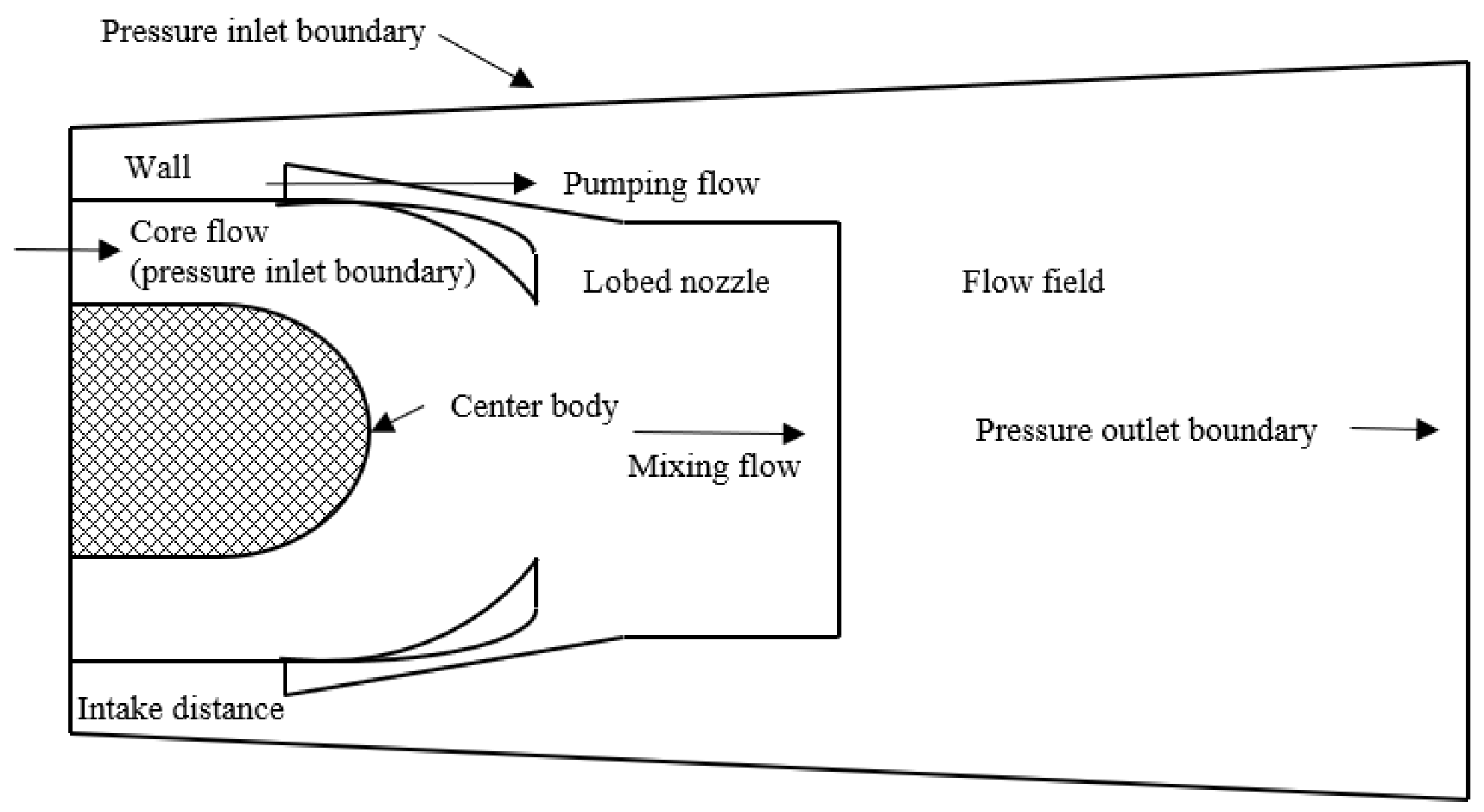
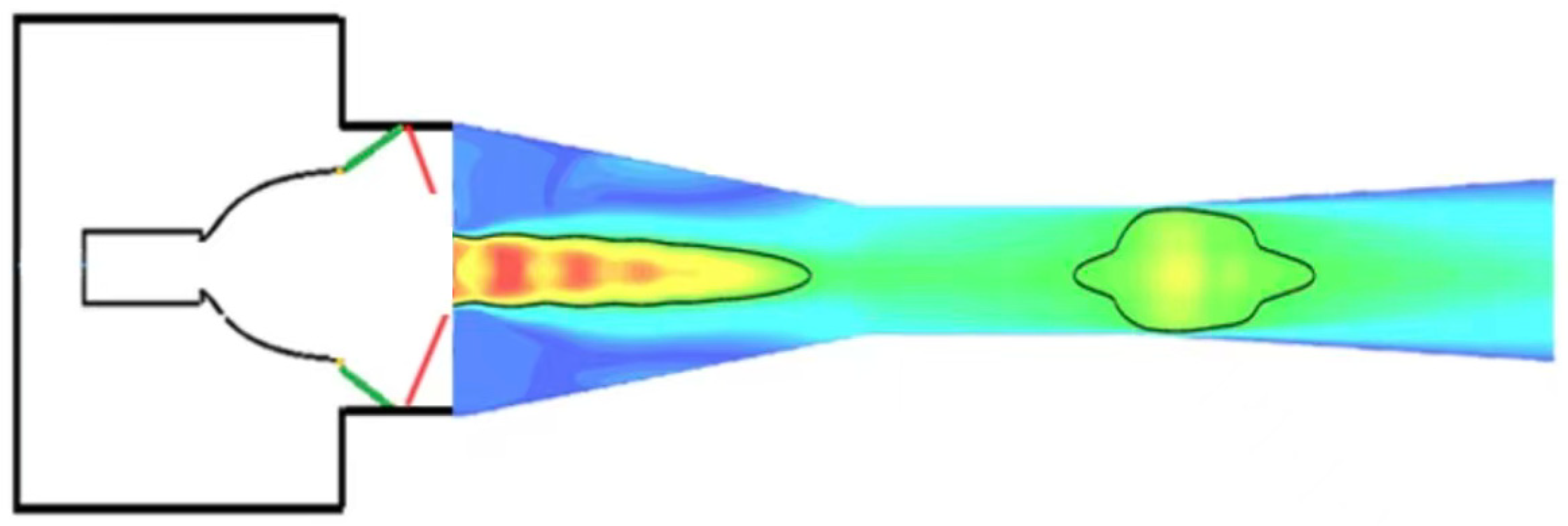
3.1.2. Lobed Mixer Ejector
3.2. Research on the Performance of an Unsteady (Pulse) Ejector
3.2.1. Pulse Detonation Engine-Driven Ejector
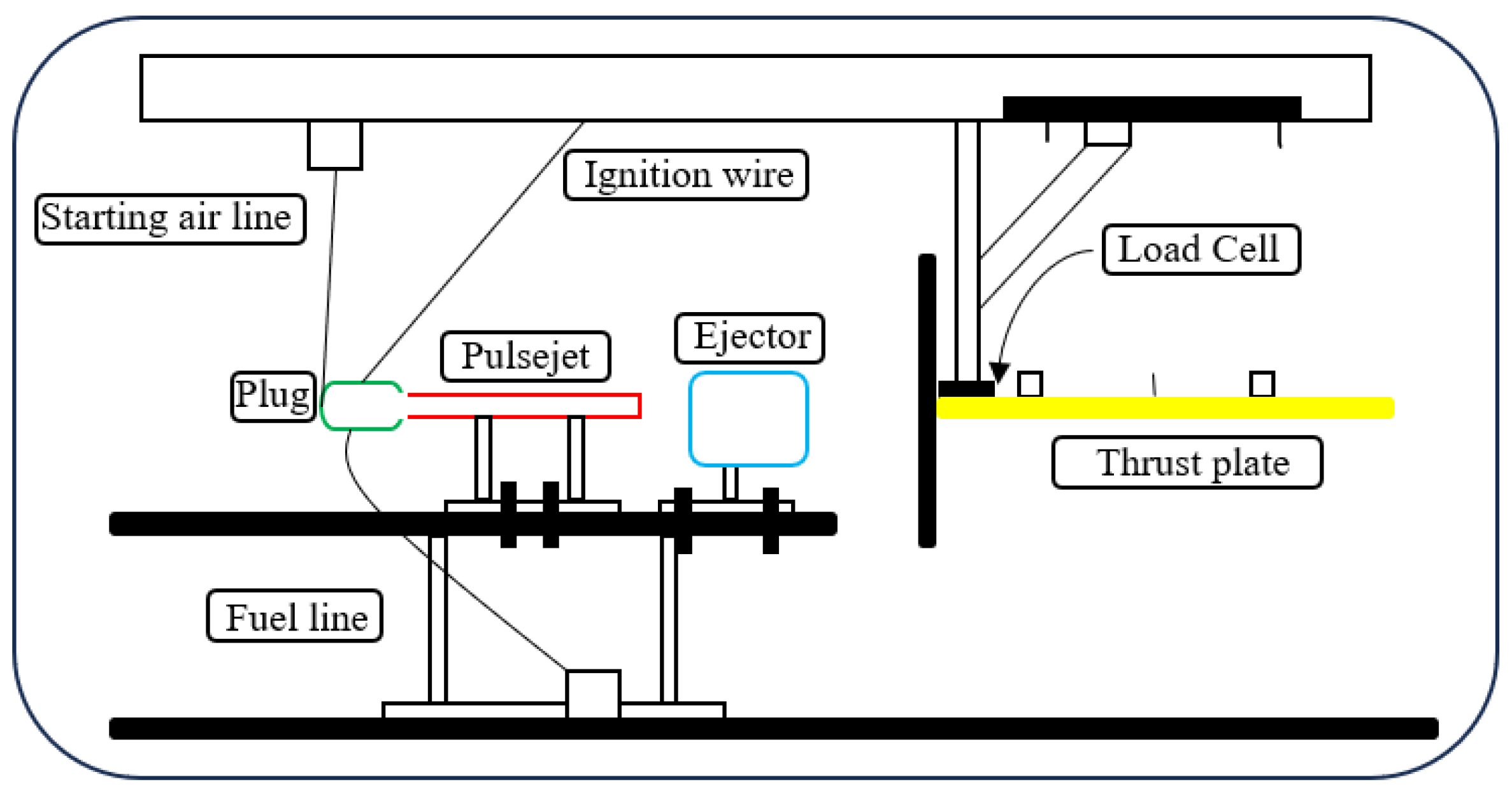
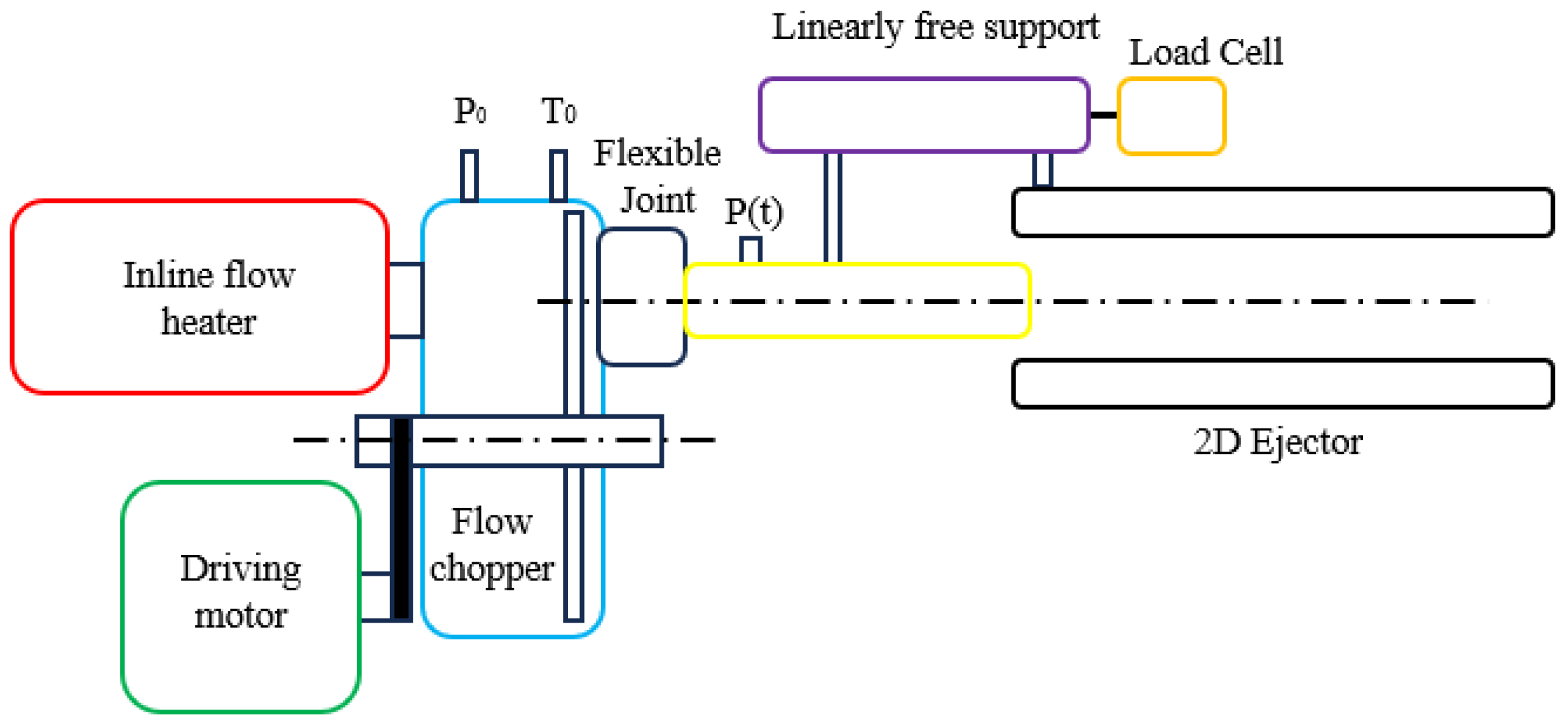
3.2.2. Ejector Driven by Pulsed Jet
4. Application and Energy-Saving Optimization of Ejector Technology in HATF
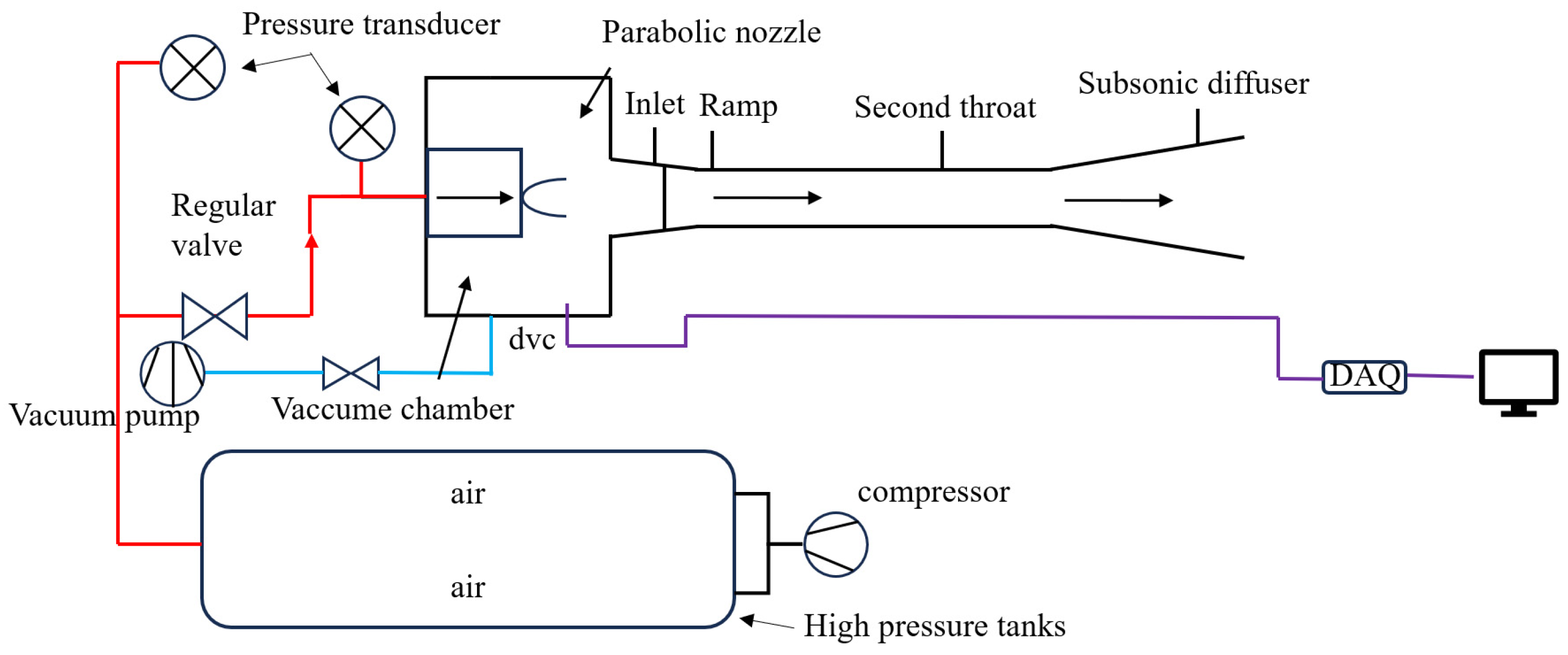
4.1. Studies on the Flow Characteristics and Stability of the Ejector in the HATF
4.1.1. Flow Mode Conversion and Separation Mechanism of the Ejector
4.1.2. Startup Behavior of the Diffuser and Unsteady Flow
4.2. Research Progress on Design and Optimization Methods of the Ejector
4.2.1. Geometric Optimization of the Nozzle and Diffuser of the Ejector and Its Impact on Energy Efficiency
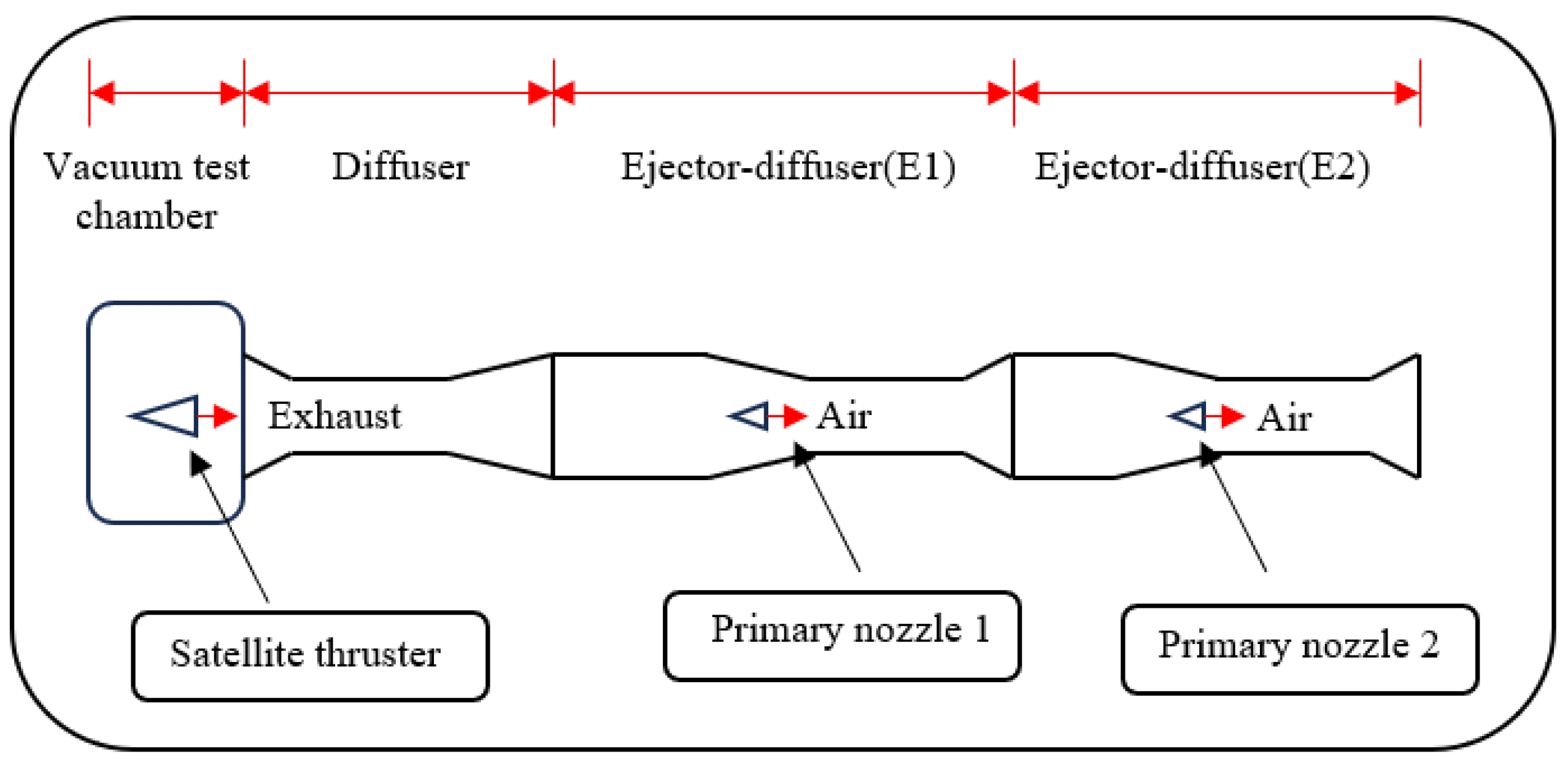
4.2.2. Design of a Multi-Stage Ejector System and Vacuum Maintenance Performance
5. Research and Application of Ejector Technology in RBCC Engines
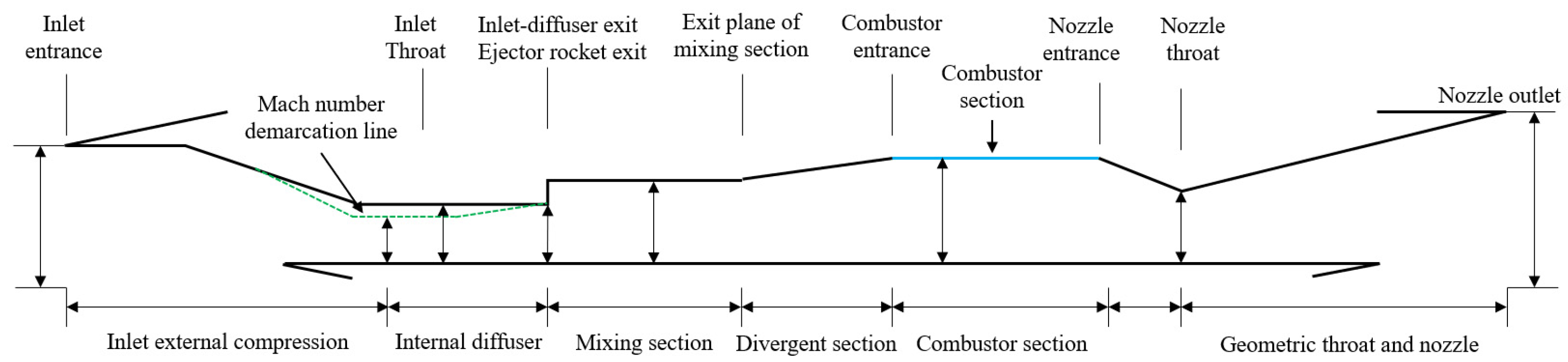
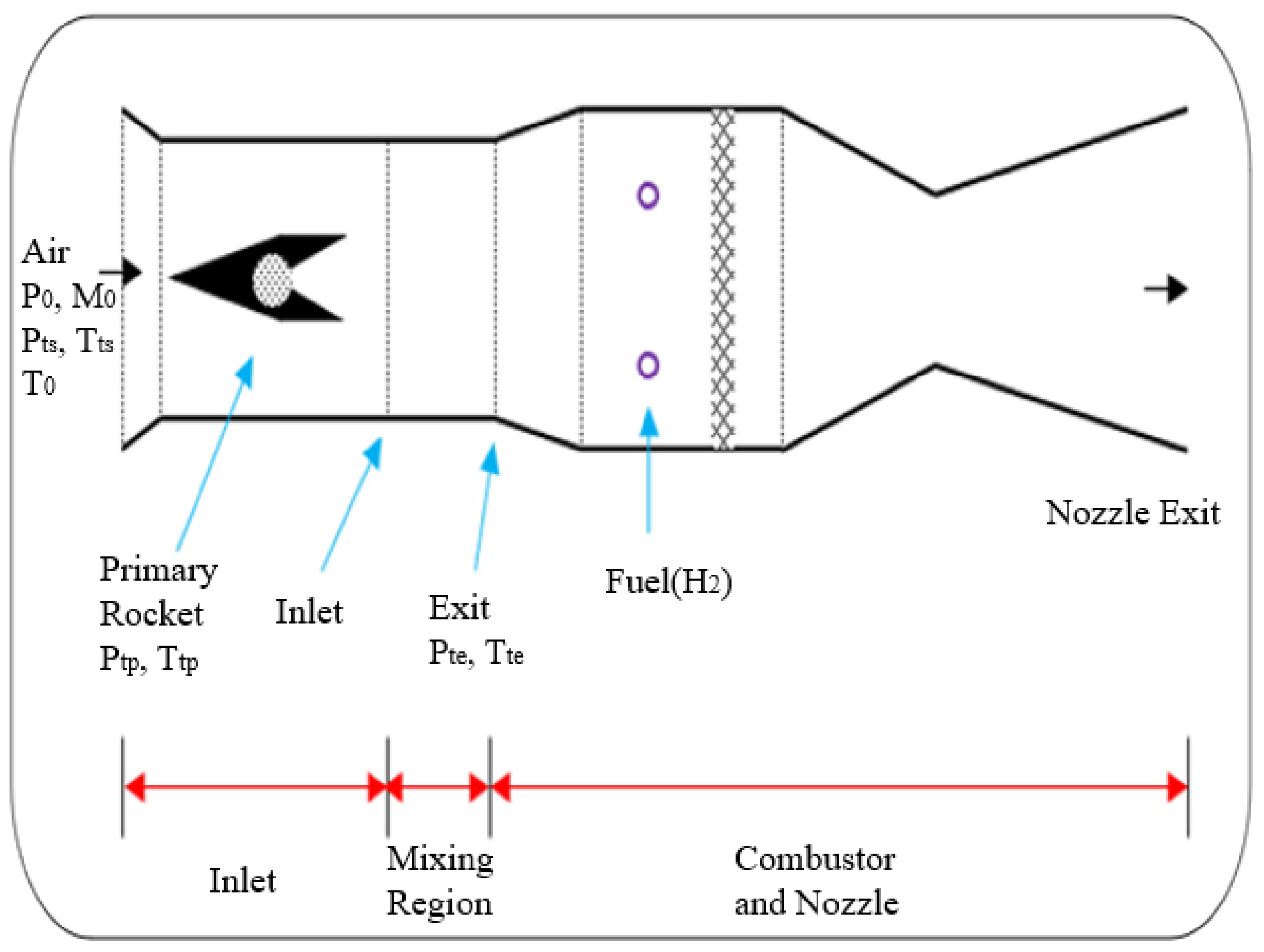
5.1. Research on the Application of Ejector Technology in RBCC Engines
5.1.1. Theoretical and Experimental Research on the Characteristics of Ejector Mode
5.1.2. Ejector Geometric Parameters and Multi-Objective Optimization Design
5.2. Working Characteristics of Rocket Ejector and Technology of Enhanced Mixed Flow
5.2.1. Working Characteristics and Modal Conversion Mechanism of the Rocket Ejector
5.2.2. Mixing Enhancement and Flow Control Technologies for Rocket Ejectors
6. Other Applications of Ejectors in the Aerospace Field
6.1. Application of Ejectors in Component Cooling and Infrared Radiation Suppression
6.2. Application of Ejectors in Fuel Economy Optimization
6.3. Application of Ejectors in Noise Control
7. Summary and Prospects
Author Contributions
Funding
Data Availability Statement
Conflicts of Interest
Nomenclature
| A | [-] | Area |
| [-] | Mass flow rate | |
| [N] | Thrust per unit area of ejector mode | |
| [kg/s] | Specific impulse | |
| [Pa] | Pressure coefficient | |
| [m/s2] | Acceleration of gravity | |
| u | [m/s] | Velocity |
| P | [Pa] | Pressure |
| [-] | Thrust augmentation | |
| ER | [-] | Entrainment ratio |
| R | [J/(kg·K)] | Gas constant |
| Th | [N] | Thrust |
| AR | [-] | Area ratio |
| St | [-] | Strouhal number |
| Greek letters | ||
| [-] | Bypass ratio | |
| [-] | Specific heart ratio | |
| [kg/m3] | Density | |
| Subscripts | ||
| a | Air entrained | |
| m | Mixter | |
| R | Rocket | |
| t | Throat | |
| s | Suction flow | |
| p | Motive flow | |
| 0 | Freestream condition | |
| 1 | Nozzle exit | |
| mix | Mixed fluid | |
| amb | Ambient condition | |
| Superscripts | ||
| * | Stagnation conditions | |
| Abbreviations | ||
| CFD | Computational fluid dynamics | |
| CVN | Chevron nozzle | |
| HATF | High altitude test facility | |
| LMN | Lobed mixer nozzle | |
| LMN-SC | Lobed mixer nozzle with split cut | |
| PDE | Pulse detonation engine | |
| RBCC | Rocket-based combined cycle | |
| SPL | Sound pressure level | |
| STED | Second throat exhaust diffuser | |
| SFC | Specific fuel consumption | |
| TOP | Thrust optimized parabolic |
References
- Bahman, N.; Alalaiwat, D.; Abdulmohsen, Z.; Al Khalifa, M.; Al Baharna, S.; Ahmed Al-Mannai, M.; Younis, A. A critical review on global CO2 emission: Where do industries stand? Rev. Environ. Health 2022, 38, 681–696. [Google Scholar] [CrossRef]
- Mohammed, R.H.; Qasem, N.A.A.; Zubair, S.M. Enhancing the thermal and economic performance of supercritical CO2 plant by waste heat recovery using an ejector refrigeration cycle. Energy Convers. Manag. 2020, 224, 113340. [Google Scholar] [CrossRef]
- Takeya, Y.; Miwa, S.; Hibiki, T.; Mori, M. Application of steam injector to improved safety of light water reactors. Prog. Nucl. Energy 2015, 78, 80–100. [Google Scholar] [CrossRef]
- Li, Y.; Huang, H.; Shen, S.; Guo, Y.; Yang, Y.; Liu, S. Application Advances and Prospects of Ejector Technologies in the Field of Rail Transit Driven by Energy Conservation and Energy Transition. Energies 2025, 18, 3951. [Google Scholar] [CrossRef]
- Khafaji, H.K.; Shahsavand, A.; Shooshtari, S.H.R. Simultaneous optimization of crude oil refinery vacuum distillation column and corresponding ejector system. Energy 2024, 294, 130702. [Google Scholar] [CrossRef]
- Li, D.; Groll, E.A. Transcritical CO2 refrigeration cycle with ejector-expansion device. Int. J. Refrig. 2005, 28, 766–773. [Google Scholar] [CrossRef]
- Sadeghi, M.; Yari, M.; Mahmoudi, S.M.S.; Jafari, M. Thermodynamic analysis and optimization of a novel combined power and ejector refrigeration cycle—Desalination system. Appl. Energy 2017, 208, 239–251. [Google Scholar] [CrossRef]
- Aidoun, Z.; Ameur, K.; Falsafioon, M.; Badache, M. Current Advances in Ejector Modeling, Experimentation and Applications for Refrigeration and Heat Pumps. Part 1: Single-Phase Ejectors. Inventions 2019, 4, 15. [Google Scholar] [CrossRef]
- Cican, G.; Frigioescu, T.; Crunteanu, D.; Cristea, L. Micro Turbojet Engine Nozzle Ejector Impact on the Acoustic Emission, Thrust Force and Fuel Consumption Analysis. Aerospace 2023, 10, 162. [Google Scholar] [CrossRef]
- Dai, Z.; Li, B.; Elbel, S. Advances in ejector research for multi-effect thermal vapor compression desalination. Renew. Sustain. Energy Rev. 2025, 208, 115010. [Google Scholar] [CrossRef]
- Rahimi-Ahar, Z.; Hatamipour, M.S. Exergy analysis of thermal desalination processes: A review. Clean Technol. Environ. Policy 2024, 26, 1335–1362. [Google Scholar] [CrossRef]
- Yadav, V.K.; Sarkar, J.; Ghosh, P. Recent advances and future outlook on solar-powered ejector refrigeration and associated multi-generation systems. J. Therm. Anal. Calorim. 2024, 149, 7869–7889. [Google Scholar] [CrossRef]
- Gruber, S.; Rola, K.; Urbancl, D.; Goričanec, D. Recent Advances in Ejector-Enhanced Vapor Compression Heat Pump and Refrigeration Systems—A Review. Energies 2024, 17, 4043. [Google Scholar] [CrossRef]
- Barbosa, F.C. Ultra High Bypass Ratio Engine Technology Review—The Efficiency Frontier for the Turbofan Propulsion; SAE Technical Paper Series; SAE International: Warrendale, PA, USA, 2022. [Google Scholar]
- Mishra, R.K. The trend of bypass ratio in aero engines: An overview. J. Aerosp. Sci. Technol. 2022, 74, 79–89. [Google Scholar] [CrossRef]
- Pei, X.; Wang, X.; Liu, J.; Zhu, M.; Dan, Z.; He, A.; Miao, K.; Zhang, L.; Xu, Z. A review of modeling, simulation, and control technologies of altitude ground test facilities for control application. Chin. J. Aeronaut. 2023, 36, 38–62. [Google Scholar] [CrossRef]
- Presz, W.; Werle, M. Multi-Stage Mixer/Ejector Systems. In Proceedings of the 38th AIAA/ASME/SAE/ASEE Joint Propulsion Conference & Exhibit, Indianapolis, IN, USA, 7–10 July 2002; American Institute of Aeronautics and Astronautics: Reston, VA, USA, 2002. [Google Scholar]
- Gould, A.; Courty, J.C.; Sillen, M.; Elsholz, E.; Abbas, A. The AVTAC project–a review of European aerospace CFD. In Proceedings of the European Congress on Computational Methods in Applied Sciences and Engineering (ECCOMAS 2000), Barcelona, Spain, 11–14 September 2000. [Google Scholar]
- Shi, L.; Zhao, G.; Yang, Y.; Qin, F.; Wei, X.; He, G. Experimental study on ejector-to-ramjet mode transition in a divergent kerosene-fueled RBCC combustor with low total temperature inflow. Aerosp. Sci. Technol. 2020, 99, 105734. [Google Scholar] [CrossRef]
- Shi, L.; Yang, Y.; Yang, X.; Ran, R.; Qin, F.; He, G. Experimental and numerical study on reinforcement mechanism of embedded rocket on back pressure resistance of RBCC inlet at starting stage. Aerosp. Sci. Technol. 2022, 123, 107487. [Google Scholar] [CrossRef]
- Tokudome, S.; Kobayashi, K. Experimental Study on Rocket-Ejector Systems. In Proceedings of the 14th AIAA/AHI Space Planes and Hypersonic Systems and Technologies Conference, Canberra, Australia, 6–9 November 2006; American Institute of Aeronautics and Astronautics: Reston, VA, USA, 2006. [Google Scholar]
- Han, S.; Peddieson, J.; Gregory, D. Ejector Primary Flow Molecular Weight Effects in an Ejector-Ram Rocket Engine. J. Propuls. Power 2002, 18, 592–599. [Google Scholar] [CrossRef]
- Chen, H.; Cai, C.; Jiang, S.; Zhang, H. Numerical modeling on installed performance of turbofan engine with inlet ejector. Aerosp. Sci. Technol. 2021, 112, 106590. [Google Scholar] [CrossRef]
- Tillman, T.G.; Paterson, R.W.; Presz, W.M. Supersonic nozzle mixer ejector. J. Propuls. Power 1992, 8, 513–519. [Google Scholar] [CrossRef]
- O’Sullivan, M.N.; Krasnodebski, J.K.; Waitz, I.A.; Greitzer, E.M.; Tan, C.S.; Dawes, W.N. Computational study of viscous effects on lobed mixer flow features and performance. J. Propuls. Power 1996, 12, 449–456. [Google Scholar] [CrossRef]
- Schmidt, R.; Hupfer, A. Design and numerical simulation of ejector nozzles for very small turbojet engines. CEAS Aeronaut. J. 2021, 12, 923–940. [Google Scholar] [CrossRef]
- Han, Y.; Wang, X.; Sun, H.; Zhang, G.; Guo, L.; Tu, J. CFD simulation on the boundary layer separation in the steam ejector and its influence on the pumping performance. Energy 2019, 167, 469–483. [Google Scholar] [CrossRef]
- Sadasivan, S.; Arumugam, S.; Chandran, R.J.; Aggarwal, M. Effects of Influencing Factors on the Performance and Morphology of Shock Waves in Ejectors: A Review. Int. J. Mod. Phys. C 2023, 34, 2350142. [Google Scholar] [CrossRef]
- Zhu, Y.; Jiang, P. Experimental and numerical investigation of the effect of shock wave characteristics on the ejector performance. Int. J. Refrig. 2014, 40, 31–42. [Google Scholar] [CrossRef]
- Hunter, C.; Presz, W.; Reynolds, G. Thrust augmentation with mixer/ejector systems. In Proceedings of the 40th AIAA Aerospace Sciences Meeting and Exhibit, Reno, NV, USA, 14–17 January 2002; American Institute of Aeronautics and Astronautics: Reston, VA, USA, 2002. [Google Scholar][Green Version]
- Khalid, S.; Sokhey, J.; Chakka, P.; Pierluissi, A. Ejector/Engine/Nacelle Integration for Increased Thrust Minus Drag. In Proceedings of the 46th AIAA/ASME/SAE/ASEE Joint Propulsion Conference & Exhibit, Nashville, TN, USA, 25–28 July 2010; American Institute of Aeronautics and Astronautics: Reston, VA, USA, 2010. [Google Scholar]
- Xu, Z.; Tang, H.; Cong, J.; Chen, M. An efficient multi-fidelity simulation method for adaptive cycle engine ejector nozzle performance evaluation. Aerosp. Sci. Technol. 2022, 124, 107568. [Google Scholar] [CrossRef]
- He, Y.; Shi, X.; Ji, H. Optimal Design of Ejector Nozzle Profile with Internal and External Integrated Flow. Aerospace 2024, 11, 184. [Google Scholar] [CrossRef]
- Wang, J.; Li, Y.; Li, J.; Li, C.; Zhang, Y.; Ning, X. A gas-atomized spray cooling system integrated with an ejector loop: Ejector modeling and thermal performance analysis. Energy Convers. Manag. 2019, 180, 106–118. [Google Scholar] [CrossRef]
- Dai, B.; Zhao, R.; Liu, S.; Xu, T.; Qian, J.; Wang, X.; Yang, P.; Wang, D. CO2 system integrated with ejector and mechanical subcooling: A comprehensive assessment. Appl. Therm. Eng. 2023, 234, 121269. [Google Scholar] [CrossRef]
- Gullo, P.; Hafner, A.; Cortella, G. Multi-ejector R744 booster refrigerating plant and air conditioning system integration—A theoretical evaluation of energy benefits for supermarket applications. Int. J. Refrig. 2017, 75, 164–176. [Google Scholar] [CrossRef]
- Shan, Y.; Zhang, J.; Huang, G. Experimental and Numerical Studies on Lobed Ejector Exhaust System for Micro Turbojet Engine. Eng. Appl. Comput. Fluid Mech. 2011, 5, 141–148. [Google Scholar] [CrossRef][Green Version]
- Zhang, S.; Fu, B.; Sun, L. Investigation of the Jet Characteristics and Pulse Mechanism of Self-Excited Oscillating Pulsed Jet Nozzle. Processes 2021, 9, 1423. [Google Scholar] [CrossRef]
- Paxson, D.; Wilson, J.; Dougherty, K. Unsteady Ejector Performance: An Experimental Investigation Using a Pulsejet Driver. In Proceedings of the 38th AIAA/ASME/SAE/ASEE Joint Propulsion Conference & Exhibit, Indianapolis, IN, USA, 7–10 July 2002; American Institute of Aeronautics and Astronautics: Reston, VA, USA, 2002. [Google Scholar][Green Version]
- Allgood, D.; Gutmark, E.; Hoke, J.; Bradley, R.; Schauer, S. Performance Studies of Pulse Detonation Engine Ejectors. J. Propuls. Power 2008, 24, 1317–1323. [Google Scholar] [CrossRef]
- Shehadeh, R.; Saretto, S.; Lee, S.; Santoro, R. Thrust Augmentation Measurements for a Pulse Detonation Engine Driven Ejector. In Proceedings of the 40th AIAA/ASME/SAE/ASEE Joint Propulsion Conference and Exhibit, Fort Lauderdale, FL, USA, 11–14 July 2004; American Institute of Aeronautics and Astronautics: Reston, VA, USA, 2004. [Google Scholar]
- Yungster, S.; Perkins, H. Multiple-Cycle Simulation of a Pulse Detonation Engine Ejector. In Proceedings of the 38th AIAA/ASME/SAE/ASEE Joint Propulsion Conference & Exhibit, Indianapolis, IN, USA, 7–10 July 2002; American Institute of Aeronautics and Astronautics: Reston, VA, USA, 2002. [Google Scholar][Green Version]
- Debnath, P.; Pandey, K.M. Numerical studies on detonation wave in hydrogen-fueled pulse detonation combustor with shrouded ejector. J. Braz. Soc. Mech. Sci. Eng. 2023, 45, 104. [Google Scholar] [CrossRef]
- Debnath, P.; Pandey, K.M. Numerical analysis of detonation combustion wave in pulse detonation combustor with modified ejector with gaseous and liquid fuel mixture. J. Therm. Anal. Calorim. 2021, 145, 3243–3254. [Google Scholar] [CrossRef]
- Changxin, P.; Wei, F.; Qun, Z.; Cheng, Y.; Wenjuan, C.; Chuanjun, Y. Experimental study of an air-breathing pulse detonation engine ejector. Exp. Therm. Fluid Sci. 2011, 35, 971–977. [Google Scholar] [CrossRef]
- Debnath, D.P.; Pandey, K. Numerical Investigation of Detonation Combustion Wave in Pulse Detonation Combustor with Ejector. J. Appl. Fluid Mech. 2017, 10, 725–733. [Google Scholar] [CrossRef]
- Wilson, J.; Paxson, D. Unsteady Ejector Performance: An Experimental Investigation Using a Resonance Tube Driver. In Proceedings of the 38th AIAA/ASME/SAE/ASEE Joint Propulsion Conference & Exhibit, Indianapolis, IN, USA, 7–10 July 2002; American Institute of Aeronautics and Astronautics: Reston, VA, USA, 2002. [Google Scholar][Green Version]
- Wilson, J.; DeLoof, R. A Simple Model of Pulsed Ejector Thrust Augmentation; NASA: Washington, DC, USA, 2003.
- Wilson, J. Effect of Pulse Length and Ejector Radius on Unsteady Ejector Performance. J. Propuls. Power 2007, 23, 345–352. [Google Scholar] [CrossRef]
- Choutapalli, I.; Alkislar, M.; Krothapalli, A.; Lourenco, L. An Experimental Study of Pulsed Jet Ejector. In Proceedings of the 43rd AIAA Aerospace Sciences Meeting and Exhibit, Reno, NV, USA, 10–13 January 2005; American Institute of Aeronautics and Astronautics: Reston, VA, USA, 2005. [Google Scholar]
- Choutapalli, I.M.; Krothapalli, A.; Alkislar, M.B. Pulsed-Jet Ejector Thrust Augumentor Characteristics. J. Propuls. Power 2012, 28, 293–306. [Google Scholar] [CrossRef]
- Li, L.; Tian, H.; Liu, K.; Wu, Y.; Wang, X.; Liang, X.; Shu, G. Optimum pressure control with three controllable ejectors of a CO2 multi-ejector refrigeration system. Int. J. Refrig. 2024, 157, 172–185. [Google Scholar] [CrossRef]
- Zhou, Y.; Fan, D.; Zhang, B.; Li, R.; Noack, B.R. Artificial intelligence control of a turbulent jet. J. Fluid Mech. 2020, 897, A27. [Google Scholar] [CrossRef]
- He, Y.; Deng, J.; Zheng, L.; Zhang, Z. Performance optimization of a transcritical CO2 refrigeration system using a controlled ejector. Int. J. Refrig. 2017, 75, 250–261. [Google Scholar] [CrossRef]
- Fouladi, N.; Afkhami, S.; Pasandideh Fard, M. Starting transient analysis of second throat exhaust diffuser in high-altitude test of a thrust optimized parabolic nozzle. Phys. Fluids 2023, 35, 66132. [Google Scholar] [CrossRef]
- Zhou, J.; Wu, R.; Yu, H.; Lin, J.; Zhan, H.; Liu, S.; Wang, Z. Numerical simulation of unsteady airflow organization and cold island effect in air source heat pump unit. Case Stud. Therm. Eng. 2025, 74, 106757. [Google Scholar] [CrossRef]
- Kim, C.; Kim, S.; Jeon, J.; Kim, S.; Lee, K. Design and analysis of a supersonic diffuser for altitude testing of upper-stage liquid rocket engines. Aerosp. Sci. Technol. 2023, 142, 108662. [Google Scholar] [CrossRef]
- Singer, G.; Pinsker, R.; Stelzer, M.; Aggarwal, M.; Pertl, P.; Trattner, A. Ejector validation in proton exchange membrane fuel cells: A comparison of turbulence models in computational fluid dynamics (CFD) with experiment. Int. J. Hydrogen Energy 2024, 61, 1405–1416. [Google Scholar] [CrossRef]
- Al-Rbaihat, R.; Saleh, K.; Malpress, R.; Buttsworth, D.; Alahmer, H.; Alahmer, A. Performance evaluation of supersonic flow for variable geometry radial ejector through CFD models based on DES-turbulence models, GPR machine learning, and MPA optimization. Int. J. Thermofluids 2023, 20, 100487. [Google Scholar] [CrossRef]
- Fouladi, N.; Farahani, M.; Mirbabaei, A.R. Performance evaluation of a second throat exhaust diffuser with a thrust optimized parabolic nozzle. Aerosp. Sci. Technol. 2019, 94, 105406. [Google Scholar] [CrossRef]
- Lee, C.; Choi, K.; Kim, C.; Han, S. Computational investigation of flow separation in a thrust-optimized parabolic nozzle during high-altitude testing. Comput. Fluids 2020, 197, 104363. [Google Scholar] [CrossRef]
- Afkhami, S.; Fouladi, N.; Pasandideh Fard, M. Experimental and numerical investigation of transient starting of pre-evacuated exhaust diffuser in high altitude ground test. Aerosp. Sci. Technol. 2023, 133, 108111. [Google Scholar] [CrossRef]
- Arun Kumar, R.; Rajesh, G. Flow transients in un-started and started modes of vacuum ejector operation. Phys. Fluids 2016, 28, 56105. [Google Scholar] [CrossRef]
- Otterstatter, M.; Meyer, S.; Heister, S.; Dambach, E. Design of an Altitude-testing Facility for Lab-scale Propulsion Devices. In Proceedings of the 43rd AIAA/ASME/SAE/ASEE Joint Propulsion Conference & Exhibit, Cincinnati, OH, USA, 8–11 July 2007; American Institute of Aeronautics and Astronautics: Reston, VA, USA, 2007. [Google Scholar]
- Yeom, H.; Yoon, S.; Sung, H. Flow dynamics at the minimum starting condition of a supersonic diffuser to simulate a rocket’s high altitude performance on the ground. J. Mech. Sci. Technol. 2009, 23, 254–261. [Google Scholar] [CrossRef]
- Sung, H.; Yeom, H.; Yoon, S.; Yoon, S.; Kim, S.; Kim, J. Investigation of Rocket Exhaust Diffusers for Altitude Simulation. J. Propuls. Power 2010, 26, 240–247. [Google Scholar] [CrossRef]
- Kumaran, R.M.; Sundararajan, T.; Manohar, D.R. Performance Evaluation of Second-Throat Diffuser for High-Altitude-Test Facility. J. Propuls. Power 2010, 26, 248–258. [Google Scholar] [CrossRef]
- Bharate, G.; Kumar, R.A. Starting transients in second throat vacuum ejectors for high altitude testing facilities. Aerosp. Sci. Technol. 2021, 113, 106687. [Google Scholar] [CrossRef]
- Jo, S.; Han, S.; Kim, H.J.; Yim, K.J. Numerical Study on the Flow and Heat Transfer Characteristics of a Second Throat Exhaust Diffuser According to Variations in Operating Pressure and Geometric Shape. Energies 2021, 14, 532. [Google Scholar] [CrossRef]
- Kumaran, R.M.; Sundararajan, T.; Manohar, D.R.; Dason, D. Modeling of Two-Stage Ejector for High-Altitude Testing of Satellite Thrusters. AIAA J. 2012, 50, 1398–1408. [Google Scholar] [CrossRef]
- Manikanda Kumaran, R.; Sundararajan, T.; Raja Manohar, D. Simulations of High Altitude Tests for Large Area Ratio Rocket Motors. AIAA J. 2012, 51, 433–443. [Google Scholar] [CrossRef]
- Kim, C.; Park, C. Numerical Analysis of Ejector Flow Performance for High-Altitude Simulation. Aerospace 2025, 12, 380. [Google Scholar] [CrossRef]
- Chao, L.; Guo, H.; Xu, Y.; He, Y.; Liang, G. Performance prediction method of multi-stage steam ejector system in high-altitude simulation test. AIP Adv. 2025, 15, 55212. [Google Scholar] [CrossRef]
- Daines, R.; Segal, C. Combined Rocket and Airbreathing Propulsion Systems for Space-Launch Applications. J. Propuls. Power 1998, 14, 605–612. [Google Scholar] [CrossRef]
- National Research Council. Evaluation of the National Aerospace Initiative; The National Academies Press: Washington, DC, USA, 2004. [Google Scholar]
- Mcconnaughey, P.K.; Femminineo, M.G.; Koelfgen, S.J.; Lepsch, R.A.; Ryan, R.M.; Taylor, S.A. NASA’s Launch Propulsion Systems Technology Roadmap; NASA: Washington, DC, USA, 2012.
- Lin, B.; Pan, H.; Shi, L.; Ye, J. Effect of Primary Rocket Jet on Thermodynamic Cycle of RBCC in Ejector Mode. Int. J. Turbo Jet-Engines 2020, 37, 61–70. [Google Scholar] [CrossRef]
- Lu, X.; He, G.; Liu, P. Ascent Trajectory Design Method for RBCC-powered Vehicle. Acta Aeronaut. Astronaut. Sin. 2010, 31, 1331–1337. [Google Scholar]
- Lehman, M.; Pal, S.; Santoro, R. Experimental investigation of the RBCC rocket-ejector mode. In Proceedings of the 36th AIAA/ASME/SAE/ASEE Joint Propulsion Conference and Exhibit, Las Vegas, NV, USA, 24–28 July 2000; American Institute of Aeronautics and Astronautics: Reston, VA, USA, 2000. [Google Scholar]
- Kanda, T.; Kato, K.; Tani, K.; Kudo, K.; Murakami, A. Experimental Study of a Combined-Cycle Engine Combustor in Ejector-Jet Mode. J. Propuls. Power 2007, 23, 1153–1159. [Google Scholar] [CrossRef]
- Yang, Q.; Shi, W.; Chang, J.; Bao, W. Maximum thrust for the rocket-ejector mode of the hydrogen fueled rocket-based combined cycle engine. Int. J. Hydrogen Energy 2015, 40, 3771–3776. [Google Scholar] [CrossRef]
- Wang, H.; Yang, Q.; Xu, X. Effect of thermal choking on ejection process in a rocket-based combined cycle engine. Appl. Therm. Eng. 2017, 116, 197–204. [Google Scholar] [CrossRef]
- Luo, F.; Qu, Z.; Long, Y.; Chen, W.; Hou, J.; Wei, B. Thermodynamic performance modeling, optimization and numerical simulation of RBCC ejector mode. Propuls. Power Res. 2024, 13, 207–232. [Google Scholar] [CrossRef]
- Nie, S.; Qin, F.; Ye, J.; Wei, X.; He, G. Investigation on sea-level thrust gain in ejector mode of rocket-based combined cycle engine. Acta Astronaut. 2025, 228, 1042–1055. [Google Scholar] [CrossRef]
- Dong, Z.; Sun, M.; Wang, Z.; Chen, J.; Cai, Z. Survey on key techniques of rocket-based combined-cycle engine in ejector mode. Acta Astronaut. 2019, 164, 51–68. [Google Scholar] [CrossRef]
- Etele, J.; Parent, B.; Sislian, J.P. Analysis of Increased Compression Through Area Constriction on Ejector-Rocket Performance. J. Spacecr. Rocket. 2007, 44, 355–364. [Google Scholar] [CrossRef]
- Tomioka, S.; Takegoshi, M.; Kudo, K.; Kato, K.; Hasegawa, S.; Kobayashi, K. Performance of a Rocket-Ramjet Combined-Cycle Engine Model in Ejector Mode Operation. In Proceedings of the 15th AIAA International Space Planes and Hypersonic Systems and Technologies Conference, Dayton, OH, USA, 28 April–1 May 2008; American Institute of Aeronautics and Astronautics: Reston, VA, USA, 2008. [Google Scholar]
- Dong, Z.; Sun, M.; Wang, Z.; Cai, Z.; Gu, R. Numerical investigation on flow and mixing characteristics inside a converging-diverging mixing duct of rocket-based combined-cycle engine in ejector mode. Aerosp. Sci. Technol. 2020, 106, 106102. [Google Scholar] [CrossRef]
- Ye, J.; Meng, T.; Yan, L.; Zhang, Z.; Nie, S.; Qin, F.; Wei, X. Investigation of the influence mechanism of geometric throats in variable-geometry rocket-based combined-cycle combustors. Aerosp. Sci. Technol. 2023, 140, 108455. [Google Scholar] [CrossRef]
- Etele, J.; Sislian, J.P.; Parent, B. Effect of Rocket Exhaust Configurations on Ejector Performance in RBCC Engines. J. Propuls. Power 2005, 21, 656–666. [Google Scholar] [CrossRef]
- Yan, D.; Liu, X.; He, G.; Martinuzzi, R. Ejector mode performance improvement of rocket-based combined cycle engine designed for dual-ramjet mode. Aerosp. Sci. Technol. 2022, 126, 107637. [Google Scholar] [CrossRef]
- Song, Z.; Li, H.; Wei, X.; Ye, J.; Zhu, S.; Qin, F.; He, G. Numerical study on the influence of plug nozzle expansion ratio on RBCC engine performance in ejector mode. Aerosp. Sci. Technol. 2025, 165, 110499. [Google Scholar] [CrossRef]
- Jahingir, M.N.; Huque, Z. Design Optimization of Rocket-Based Combined-Cycle Inlet/Ejector System. J. Propuls. Power 2005, 21, 650–655. [Google Scholar] [CrossRef]
- Pastrone, D.; Sentinella, M.R. Multi-Objective Optimization of Rocket-Based Combined-Cycle Engine Performance Using a Hybrid Evolutionary Algorithm. J. Propuls. Power 2009, 25, 1140–1145. [Google Scholar] [CrossRef]
- Klink, P.; Ogawa, H. Investigation on the performance and feasibility of RBCC-based access-to-space via multi-objective design optimization. Acta Astronaut. 2019, 157, 435–454. [Google Scholar] [CrossRef]
- Cramer, J.; Greene, M.; Pal, S.; Santoro, R. RBCC ejector mode operating characteristics for single and twin thruster configurations. In Proceedings of the 37th AIAA/ASME/SAE/ASEE Joint Propulsion Conference and Exhibit, Salt Lake City, UT, USA, 9–11 July 2001; American Institute of Aeronautics and Astronautics: Reston, VA, USA, 2001. [Google Scholar]
- Lin, B.B.; Pan, H.; Qin, F. Effects of Fuel-lean Primary Rocket on Bypass Ratio in RBCC Ejector Mode. In Proceedings of the 50th AIAA/ASME/SAE/ASEE Joint Propulsion Conference, Cleveland, OH, USA, 28–30 July 2014; American Institute of Aeronautics and Astronautics: Reston, VA, USA, 2014. [Google Scholar]
- Shi, L.; Liu, X.; He, G.; Qin, F.; Wei, X.; Yang, B.; Liu, J. Numerical analysis of flow features and operation characteristics of a rocket-based combined-cycle inlet in ejector mode. Acta Astronaut. 2016, 127, 182–196. [Google Scholar] [CrossRef]
- Chen, J.; Li, P.; An, B.; Sun, M.; Liang, C.; Wang, T.; Wang, J.; Li, M.; Xie, Y.; Yao, Y. Numerical study on throttling characteristics of RBCC engines in ejector mode. Case Stud. Therm. Eng. 2024, 55, 104150. [Google Scholar] [CrossRef]
- Huang, W.; Yan, L.; Tan, J. Survey on the mode transition technique in combined cycle propulsion systems. Aerosp. Sci. Technol. 2014, 39, 685–691. [Google Scholar] [CrossRef]
- Shi, L.; Zhao, G.; Yang, Y.; Gao, D.; Qin, F.; Wei, X.; He, G. Research progress on ejector mode of rocket-based combined-cycle engines. Prog. Aerosp. Sci. 2019, 107, 30–62. [Google Scholar] [CrossRef]
- Boccaletto, L.; Dussauge, J.P. High-Performance Rocket Nozzle Concept. J. Propuls. Power 2010, 26, 969–979. [Google Scholar] [CrossRef]
- Gu, R.; Sun, M.; Cai, Z.; Li, P.; Huang, Y. Numerical modeling and experimental investigation on the rocket-ejector system with limited mixer length. Acta Astronaut. 2021, 182, 13–20. [Google Scholar] [CrossRef]
- Gu, R.; Sun, M.; Cai, Z.; Chen, J.; Li, P.; Dong, Z.; Wang, T.; Yao, Y.; Huang, Y. Experimental study on the rocket-ejector system with a throat in the secondary stream. Aerosp. Sci. Technol. 2021, 113, 106697. [Google Scholar] [CrossRef]
- Wang, K.; Li, F.; Zhao, K.; Zhou, T. Numerical study on the lobed nozzles for enhancing the mixing and combustion performance of rocket-based combined cycle engine. Energy Rep. 2022, 8, 6645–6658. [Google Scholar] [CrossRef]
- Loka, M.; Robichaud, M.; Di Bartolomeo, W.; Loe, D.; Sowers, D. Aerodynamic optimization of the exhaust-ejector system on the tiltrotor using Navier-Stokes analysis. In Proceedings of the 38th Aerospace Sciences Meeting and Exhibit, Reno, NV, USA, 10–13 January 2000; American Institute of Aeronautics and Astronautics: Reston, VA, USA, 2000. [Google Scholar]
- Zhang, J.; Wang, C.; Yang, S.; Cheng, F.; Geng, J.; Yang, Z.; Lyu, Y.; Yu, L. Research on performance of multi-nozzle ejector for aeroengine air system. Therm. Sci. Eng. Prog. 2023, 38, 101651. [Google Scholar] [CrossRef]
- Shi, X.-J.; Ji, H.-H. Infrared radiation characteristics of axisymmetrical ejector convergent nozzle in turbofan engine. J. Aerosp. Power 2015, 30, 784–792. [Google Scholar]
- Chen, H.; Zhang, H.; Xi, Z.; Zheng, Q. Modeling of the turbofan with an ejector nozzle based on infrared prediction. Appl. Therm. Eng. 2019, 159, 113910. [Google Scholar] [CrossRef]
- Chen, H.; Cai, C.; Luo, J.; Zhang, H. Quasi One-Dimensional characteristic analysis of ejector nozzle for turbofan propulsion system. Appl. Therm. Eng. 2024, 239, 122112. [Google Scholar] [CrossRef]
- Zhao, K.; Okolo, P.; Neri, E.; Chen, P.; Kennedy, J.; Bennett, G.J. Noise reduction technologies for aircraft landing gear-A bibliographic review. Prog. Aerosp. Sci. 2020, 112, 100589. [Google Scholar] [CrossRef]
- Torija, A.J.; Self, R.H. Aircraft classification for efficient modelling of environmental noise impact of aviation. J. Air Transp. Manag. 2018, 67, 157–168. [Google Scholar] [CrossRef]
- Kracik, J.; Dvorak, V. Secondary flow choking in axisymmetric supersonic air ejector with adjustable motive nozzle. Appl. Therm. Eng. 2022, 204, 117936. [Google Scholar] [CrossRef]
- Henderson, B.; Huff, D. A history of jet noise research at the National Aeronautics and Space Administration. J. Acoust. Soc. Am. 2021, 150, 1346–1369. [Google Scholar] [CrossRef]
- Zaman, K.Q.; Bridges, J.E.; Castner, R.S.; Fagan, A.F. An investigation of a mixer-ejector nozzle for jet noise reduction. In Proceedings of the 25th AIAA/CEAS Aeroacoustics Conference, Delft, The Netherlands, 20–23 May 2019; American Institute of Aeronautics and Astronautics: Reston, VA, USA, 2019. [Google Scholar]



| Researcher (Year) | Operating Conditions | Key Findings and Thrust Gain | Energy Efficiency and the Significance of Saving Energy |
|---|---|---|---|
| Presz et al. (2002) [30] | The ratio of the outer shell outlet area to the main nozzle outlet area is approximately 2 (low area ratio) to 2.9 (moderately high area ratio). | The static thrust gain is 5% to 7%, and the cruise thrust loss is about 4%. In practice, the net gain is significant due to the reduction in drag caused by boundary layer suction. | The installation environment and flight state have a great impact on the net thrust, and the overall energy efficiency could be improved after optimization. |
| Khalid et al. (2010) [31] | Mach number range: static sea level to hypersonic (e.g., 0.4, 0.6, 0.8). Secondary flow inlet to main nozzle throat area ratio: 67%. | The net thrust enhancement is 24% at sea level. The net enhancement exceeds 10% with the integration of boundary layer suction at high altitude, and the enhancement is only 2.3% at high Mach numbers. | The potential for energy conservation is significant during long-duration flights at high altitudes, while performance significantly deteriorates at high speeds. |
| Chen et al. (2021) [23] | Mach number range: 0.6~1.5 (subsonic and supersonic). Nozzle design based on quasi-1D flow theory with main nozzle throat Mach number = 1. | The installed thrust is enhanced by 28.5%, fuel consumption is reduced by 6%, and the flow ratio error is less than 1%. | Overflow resistance is reduced by optimizing the flow matching, which leads to decreasing fuel consumption and improving fuel economy. |
| Xu et al. (2022) [32] | Mach number range: 0~2.0. Key diameters: main nozzle outlet 0.642 m, shell shoulder point 0.695 m, shell outlet 0.970 m. | The subsonic thrust coefficient is 0.9895. The coefficient is decreased with the Mach number in the acceleration state. Suction effects exert an impact on airflow distribution and fan stability. | Revealing the coupling relationship between geometric adjustment and working state, providing a basis for control rate design, and avoiding energy waste. |
| He et al. (2024) [33] | The flight Mach number is 1.05. | The throat AR has the greatest impact on the thrust coefficient. The maximum net thrust coefficient is increased by 46.674% after optimization. | The net thrust could be significantly enhanced by the collaborative optimization of geometric parameters, and the improvement of energy efficiency is contributed indirectly. |
| Shan et al. (2011) [37] | The variations in the beam expansion angle (5°, 8.5°, 13°, 17°) and the intake distance (10 mm, 15 mm, 20 mm). | The peak thrust gain is 3.55% when the expansion is 8.5°, the loss is 1.34% at 17°, and the thrust gain is 2.99% in the 5° configuration experiment. | There exists an optimal expansion angle that could balance the thrust gain and flow loss, which is particularly important for the energy consumption control of microengines. |
| Schmidt & Hupfer (2021) [26] | Main nozzle configurations: standard ring, sawtooth, wave-plate mixer variants. Combined with a ramjet nozzle area ratio of 1.77. | In ejection mode, the thrust enhancement reaches 9%, with a secondary mass flow ratio of 1.2. The enhancement increased to 8% after installing the diffuser. | Enhancing momentum exchange is the key path to achieving efficient thrust enhancement in micro engines, and it also improves propulsion efficiency. |
| Researcher (Year) | Operating Conditions | Key Findings and Initiating Behaviors | Energy Efficiency and Engineering Significance |
|---|---|---|---|
| Fouladi et al. (2019) [60] | Geometric design parameters: nozzle expansion ratio 34.707, diffuser inlet area ratio 45.593, second throat area ratio 1.7. | Pre-vacuuming shortens the start-up time of the diffuser by 50~70% and eliminates abnormal transition; the numerical simulation shows that the abnormal increase in the vacuum chamber pressure by 17.6% is due to the restricted shock wave separation. | The significant reduction in the start-up time directly lowers the energy consumption of the vacuum system, demonstrating the remarkable advantages of the pre-vacuuming technology in enhancing the experimental efficiency. |
| Lee et al. (2020) [61] | Geometric parameter: nozzle expansion ratio of 94.5. | During the startup stage, there is a three-stage transition. The gap between the ejector and the diffuser affects the separation mode, and an abnormal transition is observed during the shutdown stage. | The asymmetric flow path specific to high altitude experiments has been revealed, providing a basis for gap design and avoiding energy loss caused by unstable flow. |
| Afkhami et al. (2023) [62] | Geometric parameters: nozzle expansion ratio 34.7, diffuser inlet area ratio 45.6, second throat area ratio 1.2, diffuser outlet area ratio 4. | Combining high nozzle pressure slope with pre-vacuum could eliminate restricted shock wave separation, significantly shortening the startup time; the initial pre-vacuum pressure value has a relatively minor impact on the startup. | The optimization of the startup is jointly constrained by the dynamic pressure of the nozzle and its geometric structure, and a systematic matching is required to achieve energy-saving operation. |
| Fouladi et al. (2023) [55] | Geometric parameters: nozzle expansion ratio 34.7, diffuser throat area ratio 1.7. | Increasing the ejector pressure to 34 bar could shorten the startup time by approximately 23% and suppress pressure fluctuations; the non-starting condition shows periodic fluctuations. | Pressure increase could suppress oscillations and reduce the auxiliary energy consumed to compensate for the fluctuations, but the higher pressure itself brings additional energy consumption that should be considered. |
| Kumaran et al. (2010) [67] | Geometric and flow parameters: nozzle area ratio 55, exit Mach number 4. Geometric ranges: diffuser-to-nozzle throat diameter ratio 3.42~10.27, radial clearance 0.0174~0.087, axial clearance −0.087~0.087. | The second tracheal diameter is the most sensitive parameter. There exists an optimal tracheal diameter ratio (approximately 4.11 times the nozzle tracheal diameter) that results in the lowest startup pressure; radial and axial clearances cause unstart backflow. | The optimal tracheal diameter ratio could directly reduce the startup energy demand and decrease the load of the compressor unit or vacuum pump, which is one of the design goals for achieving energy-saving operation. |
| Kumar et al. (2016) [63] | Geometric parameters: diffuser-to-primary pipe outlet height ratio 2.82, diffuser length-to-diameter ratio range 2.5~12.8. | Optimizing the diffuser structure enables stable flow at back pressures lower than 200 mbar, allowing for complete expansion within the ejector. | The ability to operate stably at lower back pressures reduces reliance on the downstream vacuum system, contributing to a reduction in the overall energy consumption of the experimental system. |
| Jo et al. (2021) [69] | Geometric parameters: diffuser inlet length ratio 0 or 1, second throat length ratio 3~8, expansion section length range 0~644 mm. | The inlet length ratio = 1 ensures the full development of the plume; the second tracheal length ratio ≥ 7 is required to ensure the full development of the supersonic flow. | Define key geometric thresholds to avoid additional energy consumption caused by unstable phenomena such as flow separation and shock oscillation. |
| Researcher (Year) | Operating Conditions | Key Findings and Initiating Behaviors | The Significance and Limitations of Energy Efficiency |
|---|---|---|---|
| Lehman (2000) [79] | Simulated flight at Mach 1 and 1.9. Nozzle geometry: throat height 2.54 mm, exit height 15.2 mm. Tested DAB and SMC configurations. | Achieve thermal congestion and maintain a stable mixing length | Verify the feasibility of the ejector mode; however, the difference in mixing efficiency affects the actual energy efficiency |
| Han (2002) [22] | Free-stream Mach number range: 0.01 to 3.0. Ejector area ratio range: 6 to 30. | Low molecular weight working fluid has a higher specific impulse, while high molecular weight provides greater thrust. | There is a trade-off between thrust and specific impulse. Low-molecular-weight working fluids could help improve fuel utilization efficiency |
| Kanda (2007) [80] | Entrance throat: 46.3 mm (contraction ratio 2.04). Exit throat: 74 mm (contraction ratio 1.13). Average exit cross-section Mach number: 1.0. | The average combustion efficiency is 0.8. Increasing the mixture ratio could enhance the intake performance | The increase in combustion efficiency reduces the loss of unburned fuel. However, high chamber pressure could inhibit the intake capacity |
| Yang et al. (2015) [81] | Analysis based on mainstream conditions at Mach numbers 2.0, 2.5, and 3.0. | There exists an optimal injection ratio that maximizes the thrust | Avoid excessive or insufficient jet ratios that lead to energy waste, and improve the efficiency of energy conversion |
| Wang et al. (2017) [82] | Flight Mach number: 2.0. Key geometric parameters: inlet throat area 0.14 m2, secondary flow inlet area 0.15 m2, mixing tube outlet area 0.20 m2. | The heat congestion increases the back pressure and suppresses the air ejection | The design requirements to be optimized to reduce the inhibition of thermal congestion on the intake flow and to avoid energy loss |
| Lin et al. (2020) [77] | Main rocket chamber pressures: 9.4 MPa and 25.6 MPa. Corresponding nozzle expansion ratios: 6 and 20. | The bypass ratio has increased by 35.5%, and the exhaust gas pressure ratio has risen by 12.5% | Significantly enhance fuel utilization efficiency and power output, reflecting the optimization of energy conversion efficiency |
| Luo et al. (2024) [83] | Flight Mach number range: 0 to 2.0. Geometric parameters: inlet contraction ratio 3.22, rocket nozzle area ratio 5.00, mixing section area ratio 26.87, nozzle throat area ratio 0.875. | Thrust gain and specific impulse increase, but there is a trade-off among the targets | Multi-objective optimization requires balancing thrust and energy consumption to avoid energy waste caused by the pursuit of a single performance metric |
| Nie et al. (2025) [84] | Sea-level static condition (Mach 0). Throat area ratio: 1.8. Mixing section length: 4 × hydraulic diameter of rocket nozzle outlet. | Theoretical thrust gain is 25.2%, but the actual value is 15.9% | The geometric throat optimization combustion system reduces energy loss, but the actual gain is limited by the flow resistance |
| Challenges | Research Pathways | Key Technologies | Expected Outcomes |
|---|---|---|---|
| Performance Degradation at High Speeds: Net thrust gain of hybrid ejectors is significantly reduced under high-subsonic and cruise conditions. Excessive expansion angles in lobed mixers lead to flow losses and thrust reduction. | Multi-Physics Integration and Intelligent Control: Develop coupled simulation frameworks and adaptive control systems to enable real-time optimization across varying flight conditions. | 1. Coupled CFD–Structural–Thermal Models 2. Adaptive Geometric Control Systems 3. Digital Twin Platforms for System Validation | Wide-Speed-Range Adaptive Ejectors: Enable sustained high thrust gain and low aerodynamic loss across the entire flight envelope, improving overall propulsion efficiency. |
| Unsteady Startup Behavior in Altitude Test Facilities: Diffuser startup is characterized by shock train oscillations and pressure fluctuations. Pre-vacuum effectiveness is limited by nozzle dynamics and geometric constraints. | Transient Modeling and Advanced Control: Establish high-fidelity transient models and robust control strategies to stabilize startup and off-design operation. | 1. Real-Fluid and 3D Unsteady Flow Models 2. Turbulence–Combustion Interaction Models 3. Active Flow and Pressure Control Algorithms | Fast-Start, Low-Energy Altitude Test Systems: Achieve rapid, stable diffuser startup with minimal auxiliary energy consumption, enhancing test facility efficiency. |
| Mode Limitations and Performance Trade-offs in RBCC Engines: Thermal choking in ejector mode restricts secondary air entrainment. Performance is constrained by combustion efficiency, flow losses, and multi-objective trade-offs. | Multi-Mode Coordination and Enhanced Combustion: Optimize mode transition processes and develop advanced mixing and combustion strategies for wide-range operability. | 1. Mode Transition Control Logic 2. Enhanced Mixing Devices (Lobed Nozzles, Geometric Throats) 3. Advanced Combustion Schemes. | Seamless Multi-Mode RBCC Propulsion: Realize efficient and smooth transitions between propulsion modes, ensuring high reliability and reduced fuel consumption across the flight trajectory. |
| Performance Compromises in Auxiliary Functions: Cooling and infrared suppression lead to thrust penalty and increased fuel consumption. Noise reduction is limited and may exacerbate mechanical noise propagation. | Multi-Objective System Optimization and Advanced Materials: Pursue integrated design optimization balancing stealth, thermal management, and propulsion, supported by new materials and structures. | 1. Multidisciplinary Design Optimization 2. Lightweight, High-Temperature Composite Materials 3. Innovative Cooling and Acoustic-Lined Structures | High-Efficiency, Low-Signature Exhaust Systems: Deliver optimized performance integrating effective cooling, significant noise and infrared signature reduction, and maintained propulsion efficiency. |
Disclaimer/Publisher’s Note: The statements, opinions and data contained in all publications are solely those of the individual author(s) and contributor(s) and not of MDPI and/or the editor(s). MDPI and/or the editor(s) disclaim responsibility for any injury to people or property resulting from any ideas, methods, instructions or products referred to in the content. |
© 2025 by the authors. Licensee MDPI, Basel, Switzerland. This article is an open access article distributed under the terms and conditions of the Creative Commons Attribution (CC BY) license.
Share and Cite
Li, Y.; Huang, H.; Liu, S.; Ge, C.; Huang, J.; Shen, S.; Guo, Y.; Yang, Y. Overview of the Energy Conservation and Sustainable Transformation of Aerospace Systems with Advanced Ejector Technology. Energies 2026, 19, 221. https://doi.org/10.3390/en19010221
Li Y, Huang H, Liu S, Ge C, Huang J, Shen S, Guo Y, Yang Y. Overview of the Energy Conservation and Sustainable Transformation of Aerospace Systems with Advanced Ejector Technology. Energies. 2026; 19(1):221. https://doi.org/10.3390/en19010221
Chicago/Turabian StyleLi, Yiqiao, Hao Huang, Siyuan Liu, Caijing Ge, Jing Huang, Shengqiang Shen, Yali Guo, and Yong Yang. 2026. "Overview of the Energy Conservation and Sustainable Transformation of Aerospace Systems with Advanced Ejector Technology" Energies 19, no. 1: 221. https://doi.org/10.3390/en19010221
APA StyleLi, Y., Huang, H., Liu, S., Ge, C., Huang, J., Shen, S., Guo, Y., & Yang, Y. (2026). Overview of the Energy Conservation and Sustainable Transformation of Aerospace Systems with Advanced Ejector Technology. Energies, 19(1), 221. https://doi.org/10.3390/en19010221