A Systematic Review of Multi-Objective Optimisation Building Energy Retrofit, with a Focus on Hot-Humid Climate Regions

Abstract
1. Introduction
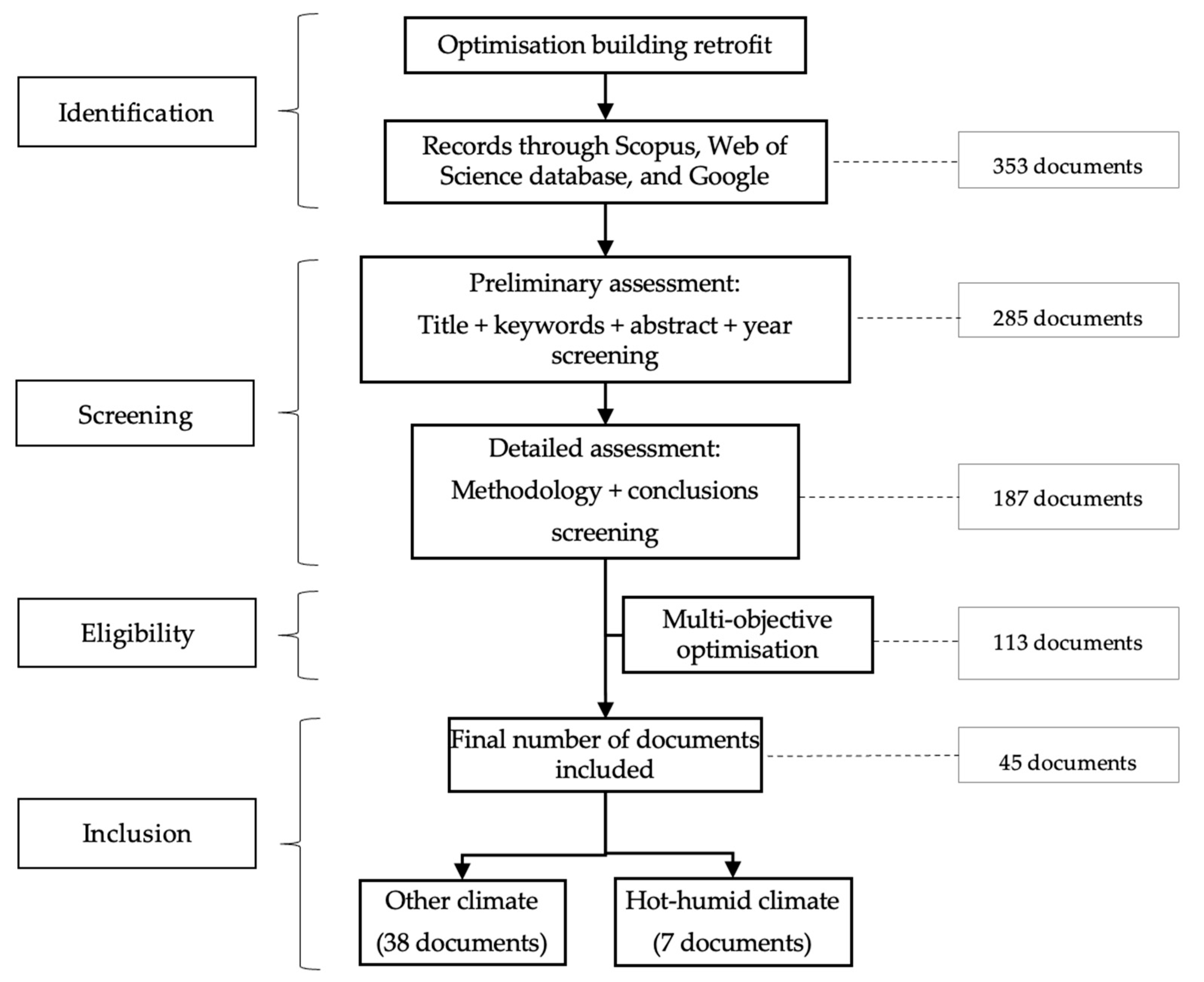
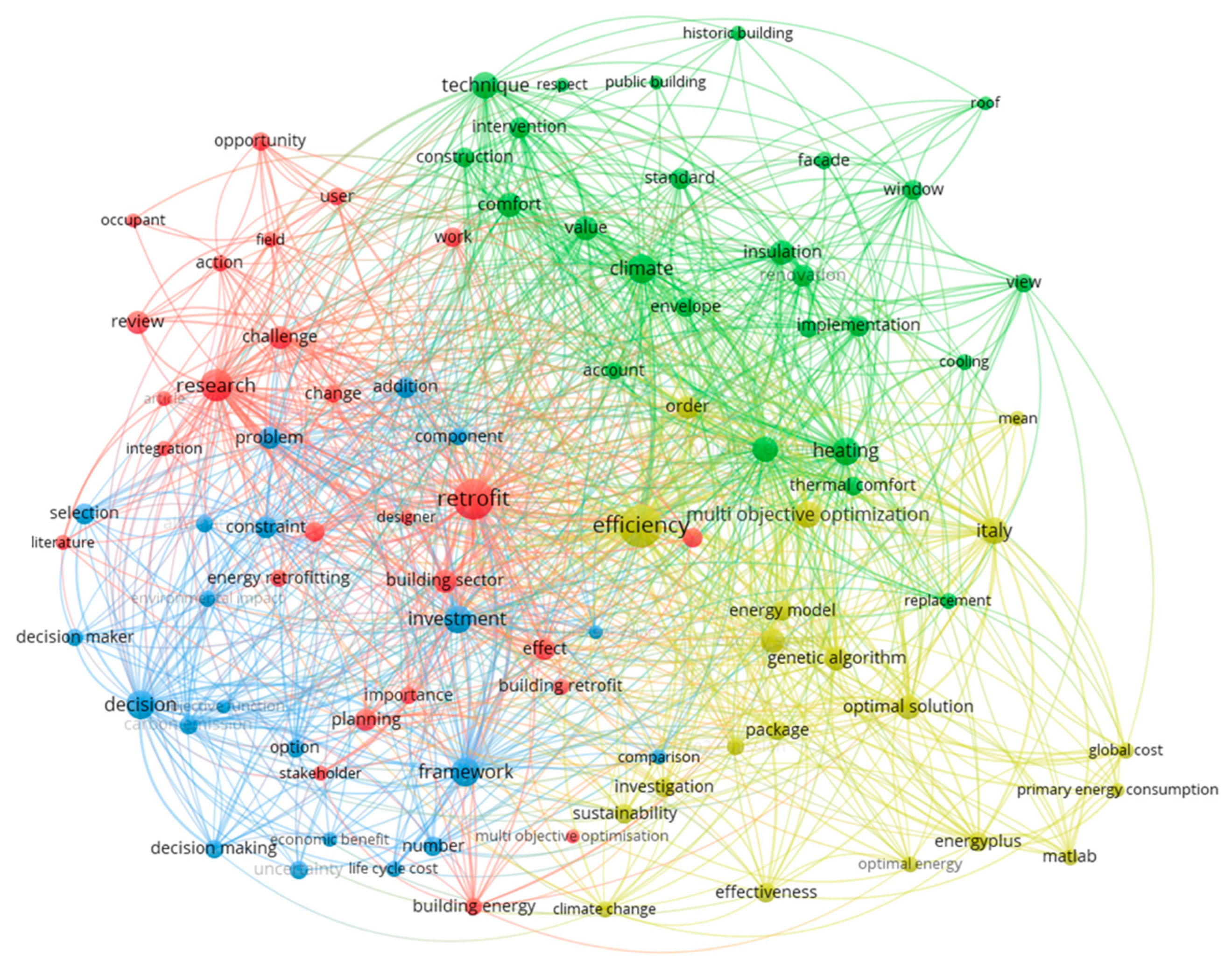
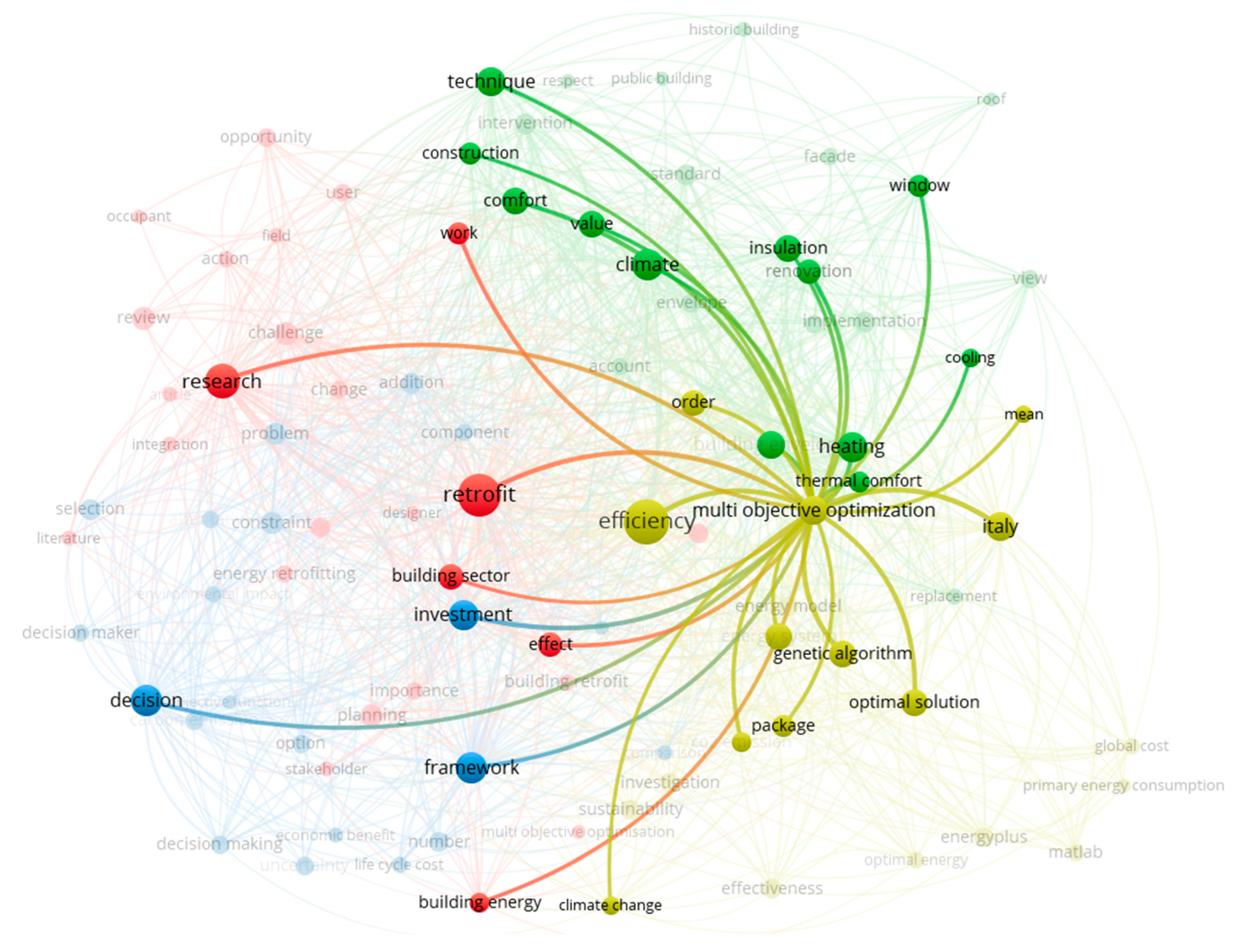
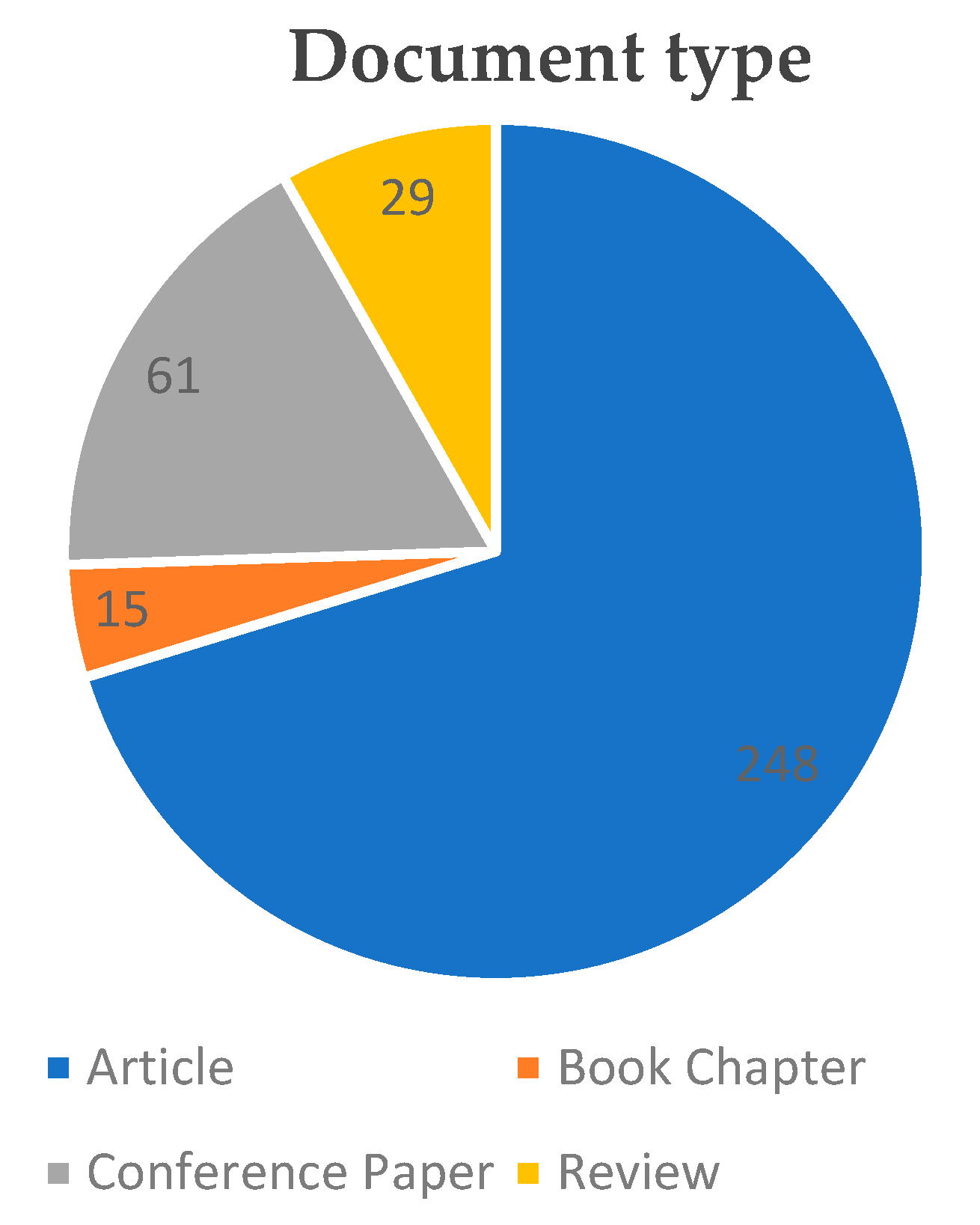
2. Methodology
3. Results
3.1. Multi-Objective Optimisation
3.1.1. Objective Functions
3.1.2. Pareto Front
3.1.3. Decision Variables
3.1.4. Constraints
3.2. Existing Review in Multi-Objective Optimisation Building Energy Retrofit
3.3. Previous Study of Multi-Objective Optimisation Building Energy Retrofit
3.4. Characteristics of Effective Retrofit Strategies in Hot-Humid Climates
3.4.1. Passive Strategies
3.4.2. Glazing and Shading
3.4.3. Active Strategies
3.4.4. Renewable and Integrated Systems
3.4.5. Energy-Management and Building-Automation Systems
3.4.6. Occupant-Behaviour Interventions
3.5. Multi-Objective Optimisation Retrofit Studies in Hot-Humid Climate

| Authors | Year | Case studies | Location | Methods | Software | Decision Matrix Objectives | Energy Efficiency Measures (EEMS) | ||
|---|---|---|---|---|---|---|---|---|---|
| Economic | Environmental | Social | |||||||
| Lu et al. [31] | 2021 | School of Design and Environment, National University of Singapore | Singapore | Calibration; cost–benefit analysis decision-making for building energy efficiency retrofit | IES-VE Appro profiles ApacheSim Vistapro | Investment Cost (IC); Net Present Value (NPV); Benefit–Cost Ratio (BCR); life cycle cost (LCC) | Life Cycle Sustainability Evaluation (LCSE) | - | HVAC; lighting equipment; façade (windows, wall, roof, openings) |
| Naves et al. [47] | 2021 | Residential building, seven storeys | Brazil, at Rio de Janeiro (23° S Latitude) | Multi-objective optimisation | TRNSYS 18 Simulation Studio, GenOpt (Generic Optimisation Program) | life-cycle cost (LCC) and payback period | PV energy (production, consumption, and surplus), grid energy consumption | - | PV; grid; chiller; thermal energy storage |
| Ongpeng et al. [52] | 2022 | National Engineering Center, University of the Philippines, four floors | Philippines | Weighing method; AHP compromise ranking method; VIKOR | DesignBuilder | Investment Cost (IC) Payback Period | Damage to Ecosystem Quality Depletion of Natural Resources Energy Potential | Damage to Human Health | Building envelope; mechanical system; electrical system; on-site generation |
| Seghier et al. [48] | 2022 | Office Building University Teknologi Malaysia | Malaysia | NSGA-II | Autodesk Revit, Visual Scripting: Dynamo, NSGA II: MATLAB | Minimise retrofit cost | Minimise OTTV | - | Walls; windows |
| Balasbaneh et al. [51] | 2022 | The room’s windows | Malaysia | Multi-criteria decision-making (MCDM) | EnergyPlus | Cost of each alternative | Operation energy usage; global warming potential (GWP) emission; embodied energy | - | Windows |
| Ardiani et al. [49] | 2024 | Office Building | Jakarta, Indonesia | NSGA-II | DesignBuilder | - | Minimising cooling energy | Reducing discomfort hours | Window-to-wall ratio, glazing type, window blind type, and shading type |
| Gonzales et al. [50] | 2024 | Low-rise apartment building | Panama | NSGA-II | DesignBuilder | Minimise life-cycle cost | Minimise net primary energy | - | Glazing type; local shading type; cooling operation schedule; external wall construction; site orientation; PV application |
3.6. Cross-Study Patterns of Retrofit Effectiveness in Hot-Humid Climates
4. Discussion and Conclusions
| Authors | Year | Case Studies | Location | Methods | Software | Decision Matrix Objectives | Energy Efficiency Measures (EEMS) | ||
|---|---|---|---|---|---|---|---|---|---|
| Economic | Environmental | Social | |||||||
| Asadi et al. [53] | 2012 | Semi-detached house (one family) built in 1945 | Portugal | Objective function; Thchebycheff programming formulation change; building data from the Portuguese building thermal code (RCCTE) | Bintprog function in MATLAB | Investment cost | Energy for heating, cooling, and water heating | - | Window type: external wall insulation, roof insulation, and solar collector type |
| Asadi [54] | 2012 | Residential building | Portugal | NSGA-II | TRNSYS, GenOpt and a Tchebycheff optimisation technique developed in MATLAB | Retrofit cost | Energy savings | Thermal comfort | External wall insulation materials, roof insulation materials, window type, and solar collector type. |
| Asadi et al. [25] | 2014 | School building | Coimbra, Portugal | Genetic Algorithm and Artificial Neural Network | TRNSYS, MATLAB | Retrofit cost | Energy consumption | Thermal discomfort hours | Building envelope parameters (including external wall and roof insulation materials, and window type) and the HVAC system type. |
| Shao et al. [55] | 2014 | Three-storey office building | Aachen, Germany | Non-dominated Sorting Genetic Algorithm-II (NSGA-II) | House of Quality | Initial investment cost (IC) | Annual operational energy, annual emission GWP, annual energy consumption, envelope air leakage, and climate | Indoor air quality; thermal comfort | Wall insulation, roof insulation, floor insulation, renewable insulation materials, improve building tightness, glazing insulation, advanced envelope technologies, heating/cooling system, building automation system, and photovoltaics |
| Penna et al. [26] | 2015 | 12 sets of residential buildings | Italy | Genetic Algorithm-II (NSGA-II) | MATLAB TRNSYS 17 | Investment cost (IC), net present value (NPV), energy cost (EC), maintenance cost (MC), replacement cost (RC), residual value (RV), and government incentives | Energy performance heating | Weighted discomfort time (WDT) | Wall insulation, roof insulation, floor insulation, glazing system, heating generator, and mechanical ventilation with heat recovery |
| Carli et al. [56] | 2015 | Public building | Bari, Italy | Pareto frontier | MATLAB with the Global Optimization Toolbox | the cost and its payoff | Reduction in electrical energy consumption, reduction in methane consumption, reduction in water consumption | Increase in occupants’ internal comfort | Energy efficiency, sustainability, and thermal comfort |
| Solmaz et al. [57] | 2016 | Public school building | Izmir, Turkey | Sensitivity analysis; Multi-objective optimisation | Sketch-up Open Studio; Simlab; MATLAB; GenOpt | Net present value (NPV) | Heating and cooling savings | - | Exterior walls, windows, shading, ground floor, and roof |
| Almeida [58] | 2016 | School buildings | Portugal | Multi-objective optimisation | DesignBuilder and ANN (Artificial Neural Networks) | Life-cycle cost (LCC) | Energy efficiency | Occupants’ thermal comfort | External wall U values, roof U values, window U values, the total solar energy transmittance of windows, and air change rate (ACR) |
| Camporeale et al. [59] | 2017 | Housing blocks | Seville | Genetic algorithm and Pareto rank | Rhinoceros, Grasshopper, and Galapagos; EnergyPlus through DIVA | Net present value (NPV) | Heating and cooling demand | - | Building shape, envelope U values, and window-to-wall ratio (WWR) |
| Kim et al. [60] | 2017 | General hospital building | Korea | Multi-objective optimisation | ILOG CPLEX STUDIO 6.0 | Retrofit cost | Energy savings | - | Sets of external wall windows and insulation, roof insulation, and solar energy collectors |
| Ascione [61] | 2017 | Educational building | Benevento, South Italy | NSGA-II smart exhaustive sampling; Cost-optimal analysis | Energy Plus and MATLAB | Investment cost, global cost | Minimise thermal energy demand for space heating (TEDh) and space cooling (TEDc); annual percentage of discomfort hours (DH) | Thermal comfort | Thermal envelope, HVAC systems and equipment, and renewable energy sources |
| Jafari and Valentin [24] | 2018 | Ranch-style home | Albuquerque, NM | A genetic algorithm optimisation | eQuest (Quick Energy Simulation Tool) | Initial investment cost (IC), energy consumption cost (EC), maintenance and replacement cost (MR), property tax (TX), and resale value benefit (RV) | - | - | |
| Bandera et al. [62] | 2018 | University building | Spain | NSGA-II | Energy Plus jEPlus | - | Minimum energy demand required for heating and cooling, minimise the exergy required, and maximise the energy available | - | Façade, roof, roof skylight, and windows |
| Bonamente et al. [63] | 2018 | Fire station | Cuneo, Italy | NSGA-II | Termolog EpiX8 | Minimise discounted cost | Minimise thermal energy consumption, minimise electric energy consumption, and minimise GHG emissions | Maximise comfort level | Building insulation, heat generator, thermal distribution system, terminal units, heating control system, electrical systems, solar thermal collectors, and photovoltaic plant |
| Bosco et al. [64] | 2018 | Office building | Rome, Italy | NSGA-II | IDA-ICE and MOBO | Total investment cost | Annual total energy consumption | Annual discomfort hours | Four possible wall insulations, five roof insulations (in three possible thicknesses), and five possible windows, with different set-points for the heating curve |
| Rosso et al. [30] | 2020 | Residential building, three floors | Rome, Italy | Active-archive Non-dominated Sorting Genetic Algorithm-II (aNSGA-II) | EnergyPlus; Python version 3.6.8 | Investment cost (IC) and energy cost (EC) | Energy demand and CO2 emissions | - | Glazing system, opaque vertical envelope insulation system, opaque horizontal envelope insulation system, opaque envelope finishing, layer optics characteristics, solar shading, sun space, closing the courtyard, closing the ground floor, solar thermal collectors, photovoltaic panels, and tilt angle of the thermal and photovoltaic panels |
| Pilechiha et al. [28] | 2020 | The office building’s windows | Tehran, Iran | Pareto Frontier and a weighted sum | Daylighting: Grasshopper plug-ins: Ladybug and Honeybee Energy simulation: Energy Plus and Open Studio | - | Minimise energy consumption and maximise the daylight | Visual comfort (absence of glare) | Wall materials, glazing systems, and window size |
| Rogeau et al. [65] | 2020 | Virtual building stocks | Rhone district in France | Single objective optimisation | R and RStudio version 3.5.3, and solved with the ILOG IBM CPLEX solver | Net present cost (NPC) and profitability | Energy demand and reduction in GHG emission | - | Building envelope and building heating systems |
| Aghamolaei et al. [66] | 2020 | Typical dwellings | Yazd, Iran | Parametric Sensitivity Analysis (PSA) multi-objective optimisation NSGA II | JEPlus and JEPlus-EA | - | Greenhouse gas emissions (GHG) | Improving indoor thermal comfort | - |
| Amani [67] | 2020 | Residential apartment building | Tehran, Iran | Multi-objective optimisation NSGA-II Euclidean distance method | DesignBuilder SimaPro | - | Minimise annual energy consumption and minimise global warming potential | - | Insulation system of the external wall |
| Amiri [68] | 2020 | A three-story residential building | Montreal, Canada | Bi-objective optimisation | Analytic hierarchy process (ANP) for multiple criteria decision-making (MCDM) | Minimise cost | Maximise utility | - | Passive energy technologies (e.g., window improvement, external wall insulation, internal wall insulation, vapour barrier, and weather barrier) |
| Ciardiello et al. [69] | 2020 | Residential apartment block | Rome, Italy | Active-archive non-dominated sorting genetic algorithm (aNSGA-II) | SketchUp, Open Studio, Energy Plus | Annual energy cost and investment cost | Total energy demand and CO2 emissions | - | Insulation on the opaque envelope and transmittance of the glazing system, the optic characteristics of the finishing layer of the external envelope, the presence or absence of brise-soleil and sunspaces on the loggias and in the greenhouse in the courtyard, and photovoltaic and solar thermal panels. |
| Chang et al. [70] | 2020 | Two apartments and two wooden houses | North Sumida, Tokyo, Japan | Multi-objective optimisation under uncertainties | Grasshopper in Rhinoceros 3D, Honeybee plugin, MATLAB | Payback period | CO2 emission and energy balance | Discomfort hours | Building envelope design |
| Qu et al. [29] | 2021 | Late nineteenth-century Victorian house | United Kingdom | NSGA-II | Energy Plus | Initial investment cost and payback period | Energy savings and annual energy consumption | - | Glazing system, airtightness, and thermal insulation |
| Hong et al. [71] | 2021 | Low-rise office building | Shanghai, China | NSGA-II, Linear Programming Techniques for Multidimensional Analysis of Preference (LINMAP) | Rhinoceros, Grasshopper plugins, namely Ladybug and honeybee, Octopus | - | Minimising energy demand | Maximising daylight availability | Thermochromic glazing |
| Cao et al. [72] | 2021 | Residential building | Northern Anhui, China | Multi-objective optimisation | DesignBuilder | Retrofit cost | Energy saving | Thermal comfort | External wall insulation layer and setting the roof insulation layer) |
| Tavakolan et al. [34] | 2022 | Single-family residence 240m2 | Iran | NSGA-II | Building simulation: Energy Plus NSGA-II; MATLAB | Net present value (NPV), investment cost (IC), present value of electricity, natural gas, renewable energy, discounted payback period (DPP) | Primary energy consumption (PEC) | - | Wall Insulations, roof insulations, improving airtightness, window glazing, heating system, cooling system, and photovoltaic panels |
| Merlet et al. [27] | 2022 | Social housing stock; three apartment blocks are representative of the whole building’s stock | Paris, France | NSGA-II integration of temporality in optimisation, implementation of sequencing, and implementation of phasing | EnergyPlus in Design Builder DEAP Phyton | Cost | Heating demand and overheating | - | Window properties and wall properties |
| Swedberg [73] | 2022 | Multi-family residential projects | Humid Continental Climates (Dfb subtype) | Multi-objective design optimisation (MODO) NSGA-II | EnergyPlus, jEPlus, and jEPlus+EA | - | Minimise heating demand | Overheating-degree-hour (OHDH) | Exterior wall, slab, roof, airtightness, glazing (SHCG), and overhang depth |
| Aram [74] | 2022 | Educational building | Tehran, Iran | TOPSIS for retrofit measures | jEPlus, DesignBuilder | Minimise investment cost | Minimise heating and cooling load | - | Building envelopes, insulation, renewable energy, intelligent devices for managing energy consumption, indoor quality, and energy-efficient appliances |
| Abdelaziz et al. [75] | 2023 | Villa archetype | Egypt | Multi-objective optimisation | - | Life-cycle cost (LCC) | Life-cycle carbon footprint (LCCF) | - | Insulating external walls and roofs, upgrading existing windows, efficient lighting system, HVAC system, and solar PV cells |
| Ciardiello et al. [76] | 2023 | Social housing building | Rome, Italy | Active-archive non-dominated Sorting Genetic Algorithm (aNSGA-II) | Rhinoceros, Grasshopper, EnergyPlus | Investment and operational costs | Minimising energy consumption and CO2 emissions | - | Adding mid and internal thermal insulation to the external cavity walls, adding internal thermal insulation to the loggia walls, adding external thermal insulation to the roof, changing solar reflectance of the finishing layer of the roof, changing windows, closing the loggias with operable glazing, adding solar shading in the loggias, and closing the open ground floor with operable glazing |
| Pazouki et al. [77] | 2023 | A seven-story academic building | Tehran, Iran | Multi-objective Decision-Making | DesignBuilder | Project profitability and maintenance costs | Energy-saving | - | The lighting system, roof insulation, wall external insulation, and PV installation |
| Abdeen et al. [20] | 2024 | Two-storey residential villa | UAE | Non-dominated sorting genetic algorithm (NSGA-II) | DesignBuilder | - | Annual energy consumption | - | Wall and roof insulation, glazing, infiltration rate, window shading, and setpoint and setback temperatures |
| Gea-Salim et al. [78] | 2024 | Heritage museum | Salta City, Argentina | multi-objective optimisation NSGA-II | EnergyPlus, JEPlus + EA software (OpenStudio SketchUp) | - | Annual energy consumption | Discomfort hours | Air renewals, internal wall insulation, external wall insulation, window type, and roof insulation |
| Dehghan and Amores [33] | 2025 | Residential building | Sari, Iran | NSGA-II | EnergyPlus, jEPlus + EA software | - | Primary energy consumption and greenhouse gas emissions | Indoor air quality, predicted percentage of dissatisfied, and visual discomfort hours | Heating and cooling setpoints, air infiltration rates, insulation types, window selections, airflow rates, and HVAC systems |
| Aruta et al. [35] | 2025 | Residential buildings | Italy | NSGA-II | MATLAB, DesignBuilder | Global cost saving and incentive variables | Primary energy saving | - | External wall thermal insulation, external roof thermal insulation, glazing, boilers, and air conditioning |
Author Contributions
Funding
Data Availability Statement
Conflicts of Interest
References
- United Nations Environment Programme. Global Status Report for Buildings and Construction: Beyond Foundations—Mainstreaming Sustainable Solutions to Cut Emissions from the Buildings Sector; 9789280741315; United Nations Environment Programme: Nairobi, Kenya, 2024. [Google Scholar]
- Arinaldo, D.; Prasojo, H.; Tampubolon, A.P.; Simamora, P.; Kurniawan, D.; Marciano, I.; Adiatma, J.C. Indonesia Energy Transition Outlook 2021; Institute for Essential Services Reform (IESR): Jakarta, Indonesia, 2021. [Google Scholar]
- Ma, Z.; Cooper, P.; Daly, D.; Ledo, L. Existing building retrofits: Methodology and state-of-the-art. Energy Build. 2012, 55, 889–902. [Google Scholar] [CrossRef] [Scilit]
- Feng, W.; Zhang, Q.; Ji, H.; Wang, R.; Zhou, N.; Ye, Q.; Hao, B.; Li, Y.; Luo, D.; Lau, S.S.Y. A review of net zero energy buildings in hot and humid climates: Experience learned from 34 case study buildings. Renew. Sustain. Energy Rev. 2019, 114, 109303. [Google Scholar] [CrossRef] [Scilit]
- Lee, M.S.N.; Mohamed, S.; Omar, R.; Sarpin, N.; Shafii, H.; Adaji, A.A.; Abas, M.A. Investigation of Energy Risk in Pre-Construction Stage: A Qualitative Approach. Int. J. Real Estate Stud. 2021, 15, 39–45. [Google Scholar] [CrossRef] [Scilit]
- Han, X.; Chen, J.; Huang, C.; Weng, W.; Wang, L.; Niu, R. Energy Audit and Air-Conditioning System Renovation Analysis on Office Buildings Using Air-Source Heat Pump in Shanghai. Build. Serv. Eng. Res. Technol. 2013, 35, 376–392. [Google Scholar] [CrossRef] [Scilit]
- Hong, Y.; Ezeh, C.I.; Deng, W.; Hong, S.H.; Peng, Z. Building energy retrofit measures in hot-summer–cold-winter climates: A case study in Shanghai. Energies 2019, 12, 3393. [Google Scholar] [CrossRef] [Scilit]
- Hong, T.; Yang, L.; Hill, D.; Feng, W. Data and Analytics to Inform Energy Retrofit of High Performance Buildings. Appl. Energy 2014, 126, 90–106. [Google Scholar] [CrossRef] [Scilit]
- Lee, S.H.; Hong, T.; Piette, M.A.; Sawaya, G.; Chen, Y.; Taylor-Lange, S.C. Accelerating the Energy Retrofit of Commercial Buildings Using a Database of Energy Efficiency Performance. Energy 2015, 90, 738–747. [Google Scholar] [CrossRef] [Scilit]
- Jradi, M. The Trade-Off Between Deep Energy Retrofit and Improving Building Intelligence in a University Building. E3s Web Conf. 2020, 172, 18002. [Google Scholar] [CrossRef] [Scilit]
- Bruce, T.; Zuo, J.; Rameezdeen, R.; Pullen, S. Factors Influencing the Retrofitting of Existing Office Buildings Using Adelaide, South Australia as a Case Study. Struct. Surv. 2015, 33, 150–166. [Google Scholar] [CrossRef] [Scilit]
- Fasna, M.F.F.; Gunatilake, S. Outsourcing Energy Retrofitting of Hotel Buildings: The Decision-Making Process. Matec Web Conf. 2019, 266, 01016. [Google Scholar] [CrossRef] [Scilit]
- Jordan, S.; Hafner, J.; Kuhn, T.E.; Legat, A.; Zbašnik-Senegačnik, M. Evaluation of Various Retrofitting Concepts of Building Envelope for Offices Equipped with Large Radiant Ceiling Panels by Dynamic Simulations. Sustainability 2015, 7, 13169–13191. [Google Scholar] [CrossRef] [Scilit]
- Hashempour, N.; Taherkhani, R.; Mahdikhani, M. Energy performance optimization of existing buildings: A literature review. Sustain. Cities Soc. 2020, 54, 101967. [Google Scholar] [CrossRef] [Scilit]
- Page, M.J.; McKenzie, J.E.; Bossuyt, P.M.; Boutron, I.; Hoffmann, T.C.; Mulrow, C.D.; Shamseer, L.; Tetzlaff, J.M.; Akl, E.A.; Brennan, S.E.; et al. The PRISMA 2020 statement: An updated guideline for reporting systematic reviews. PLoS Med. 2021, 18, e1003583. [Google Scholar] [CrossRef] [PubMed]
- Seyedzadeh, S.; Pour Rahimian, F.; Oliver, S.; Rodriguez, S.; Glesk, I. Machine learning modelling for predicting non-domestic buildings energy performance: A model to support deep energy retrofit decision-making. Appl. Energy 2020, 279, 115908. [Google Scholar] [CrossRef] [Scilit]
- Malatji, E.M.; Zhang, J.; Xia, X. A multiple objective optimisation model for building energy efficiency investment decision. Energy Build. 2013, 61, 81–87. [Google Scholar] [CrossRef] [Scilit]
- Chiandussi, G.; Codegone, M.; Ferrero, S.; Varesio, F.E. Comparison of multi-objective optimization methodologies for engineering applications. Comput. Math. Appl. 2012, 63, 912–942. [Google Scholar] [CrossRef] [Scilit]
- Costa-Carrapiço, I.; Raslan, R.; González, J.N. A systematic review of genetic algorithm-based multi-objective optimisation for building retrofitting strategies towards energy efficiency. Energy Build. 2020, 210, 109690. [Google Scholar] [CrossRef] [Scilit]
- Abdeen, A.; Mushtaha, E.; Hussien, A.; Ghenai, C.; Maksoud, A.; Belpoliti, V. Simulation-based multi-objective genetic optimization for promoting energy efficiency and thermal comfort in existing buildings of hot climate. Results Eng. 2024, 21, 101815. [Google Scholar] [CrossRef] [Scilit]
- Attia, S.; Hamdy, M.; O’Brien, W.; Carlucci, S. Assessing gaps and needs for integrating building performance optimization tools in net zero energy buildings design. Energy Build. 2013, 60, 110–124. [Google Scholar] [CrossRef] [Scilit]
- Evins, R. A review of computational optimisation methods applied to sustainable building design. Renew. Sustain. Energy Rev. 2013, 22, 230–245. [Google Scholar] [CrossRef] [Scilit]
- Nguyen, A.T.; Reiter, S.; Rigo, P. A Review on Simulation-Based Optimization Methods Applied to Building Performance Analysis. Appl. Energy 2014, 113, 1043–1058. [Google Scholar] [CrossRef] [Scilit]
- Jafari, A.; Valentin, V. Selection of optimization objectives for decision-making in building energy retrofits. Build. Environ. 2018, 130, 94–103. [Google Scholar] [CrossRef] [Scilit]
- Asadi, E.; Silva, M.G.d.; Antunes, C.H.; Dias, L.; Glicksman, L. Multi-objective optimization for building retrofit: A model using genetic algorithm and artificial neural network and an application. Energy Build. 2014, 81, 444–456. [Google Scholar] [CrossRef] [Scilit]
- Penna, P.; Prada, A.; Cappelletti, F.; Gasparella, A. Multi-objectives optimization of Energy Efficiency Measures in existing buildings. Energy Build. 2015, 95, 57–69. [Google Scholar] [CrossRef] [Scilit]
- Merlet, Y.; Rouchier, S.; Jay, A.; Cellier, N.; Woloszyn, M. Integration of phasing on multi-objective optimization of building stock energy retrofit. Energy Build. 2022, 257, 111776. [Google Scholar] [CrossRef] [Scilit]
- Pilechiha, P.; Mahdavinejad, M.; Rahimian, F.P.; Carnemolla, P.; Seyedzadeh, S. Multi-Objective Optimisation Framework for Designing Office Windows: Quality of View, Daylight and Energy Efficiency. Appl. Energy 2020, 261, 114356. [Google Scholar] [CrossRef] [Scilit]
- Qu, K.; Chen, X.; Wang, Y.; Calautit, J.; Riffat, S.; Cui, X. Comprehensive energy, economic and thermal comfort assessments for the passive energy retrofit of historical buildings—A case study of a late nineteenth-century Victorian house renovation in the UK. Energy 2021, 220, 119646. [Google Scholar] [CrossRef] [Scilit]
- Rosso, F.; Ciancio, V.; Dell’Olmo, J.; Salata, F. Multi-objective optimization of building retrofit in the Mediterranean climate by means of genetic algorithm application. Energy Build. 2020, 216, 109945. [Google Scholar] [CrossRef] [Scilit]
- Lu, Y.; Li, P.; Lee, Y.P.; Song, X. An integrated decision-making framework for existing building retrofits based on energy simulation and cost-benefit analysis. J. Build. Eng. 2021, 43, 103200. [Google Scholar] [CrossRef] [Scilit]
- Shao, T.; Wang, J.; Wang, R.; Chow, D.; Nan, H.; Zhang, K.; Fang, Y. Multi-Objective Optimization for the Energy, Economic, and Environmental Performance of High-Rise Residential Buildings in Areas of Northwestern China with Different Solar Radiation. Appl. Sci. 2024, 14, 6719. [Google Scholar] [CrossRef] [Scilit]
- Dehghan, F.; Porras Amores, C. Simulation-Based Multi-Objective Optimization for Building Retrofits in Iran: Addressing Energy Consumption, Emissions, Comfort, and Indoor Air Quality Considering Climate Change. Sustainability 2025, 17, 2056. [Google Scholar] [CrossRef] [Scilit]
- Tavakolan, M.; Mostafazadeh, F.; Jalilzadeh Eirdmousa, S.; Safari, A.; Mirzaei, K. A parallel computing simulation-based multi-objective optimization framework for economic analysis of building energy retrofit: A case study in Iran. J. Build. Eng. 2022, 45, 103485. [Google Scholar] [CrossRef] [Scilit]
- Aruta, G.; Ascione, F.; Bianco, N.; Mauro, G.M. Incentive policies for building energy retrofit: A new multi-objective optimization framework to trade-off private and public interests. J. Clean. Prod. 2025, 498, 145142. [Google Scholar] [CrossRef] [Scilit]
- He, Q.; Ng, S.T.; Hossain, M.U.; Augenbroe, G. A Data-Driven Approach for Sustainable Building Retrofit—A Case Study of Different Climate Zones in China. Sustainability 2020, 12, 4726. [Google Scholar] [CrossRef] [Scilit]
- Kwame, A.B.O.; Troy, N.V.; Hamidreza, N. A multi-facet retrofit approach to improve energy efficiency of existing class of single-family residential buildings in hot-humid climate zones. Energies 2020, 13, 1178. [Google Scholar] [CrossRef] [Scilit]
- Alhuwayil, W.K.; Mujeebu, M.A.; Algarny, A.M.M. Impact of External Shading Strategy on Energy Performance of Multi-Story Hotel Building in Hot-Humid Climate. Energy 2019, 169, 1166–1174. [Google Scholar] [CrossRef] [Scilit]
- Shari, Z.; Mohamad, N.L.; Dahlan, N.D. Building Envelope Retrofit for Energy Savings in Malaysian Government High-Rise Offices: A Calibrated Energy Simulation. J. Teknol. 2023, 85, 1–15. [Google Scholar] [CrossRef] [Scilit]
- Ayodele, T.T.; Taki, A.; Oyinlola, M.; Subhes, B. A review of retrofit interventions for residential buildings in hot humid climates. Int. J. Environ. Sci. Dev. 2020, 11, 251–257. [Google Scholar] [CrossRef] [Scilit]
- Boostani, H.; Hançer, P. A Model for External Walls Selection in Hot and Humid Climates. Sustainability 2018, 11, 100. [Google Scholar] [CrossRef] [Scilit]
- Lau, A.K.K.; Salleh, E.; Haw, L.C.; Sulaiman, M.A. Potential of Shading Devices and Glazing Configurations on Cooling Energy Savings for High-Rise Office Buildings in Hot-Humid Climates: The Case of Malaysia. Int. J. Sustain. Built Environ. 2016, 5, 387–399. [Google Scholar] [CrossRef] [Scilit]
- Xianlin, S.; Gou, Z.; Lau, S. Cost-Effectiveness of Active and Passive Design Strategies for Existing Building Retrofits in Tropical Climate: Case Study of a Zero Energy Building. J. Clean. Prod. 2018, 183, 35–45. [Google Scholar] [CrossRef] [Scilit]
- Yao, R.; Costanzo, V.; Li, X.; Zhang, Q.; Li, B. The Effect of Passive Measures on Thermal Comfort and Energy Conservation. A Case Study of the Hot Summer and Cold Winter Climate in the Yangtze River Region. J. Build. Eng. 2018, 15, 298–310. [Google Scholar] [CrossRef] [Scilit]
- Bay, E.; Martinez-Molina, A.; Dupont, W.A. Assessment of natural ventilation strategies in historical buildings in a hot and humid climate using energy and CFD simulations. J. Build. Eng. 2022, 51, 104287. [Google Scholar] [CrossRef] [Scilit]
- Karyono, T.H. Bandung Thermal Comfort Study: Assessing the Applicability of an Adaptive Model in Indonesia. Archit. Sci. Rev. 2011, 51, 60–65. [Google Scholar] [CrossRef] [Scilit]
- Naves, A.X.; Esteller, L.J.; Haddad, A.N.; Boer, D. Targeting energy efficiency through air conditioning operational modes for residential buildings in tropical climates, assisted by solar energy and thermal energy storage. Case study Brazil. Sustainability 2021, 13, 12831. [Google Scholar] [CrossRef] [Scilit]
- Seghier, T.E.; Lim, Y.-W.; Harun, M.F.; Ahmad, M.H.; Samah, A.A.; Majid, H.A. BIM-based retrofit method (RBIM) for building envelope thermal performance optimization. Energy Build. 2022, 256, 111693. [Google Scholar] [CrossRef] [Scilit]
- Ardiani, N.A.; Sharples, S.; Mohammadpourkarbasi, H. A case study of the multi-objectives optimisation of an office energy retrofit in Indonesia’s hot-humid climate. In Proceedings of the 37th PLEA Conference, Wroclaw, Poland, 25–28 June 2024. [Google Scholar]
- Gonzalez, F.; Ortega, M.; Solano, T.; Austin, M.C. Solutions for net-zero energy-oriented renovation of buildings: Case of a low apartment building in tropical climate. In Proceedings of the 2024 9th International Engineering, Sciences and Technology Conference, IESTEC, Panama City, Panama, 23–25 October 2024; pp. 366–371. [Google Scholar]
- Balasbaneh, A.T.; Yeoh, D.; Ramli, M.Z.; Valdi, M.H.T. Different alternative retrofit to improving the sustainability of building in tropical climate: Multi-criteria decision-making. Environ. Sci. Pollut. Res. 2022, 29, 41669–41683. [Google Scholar] [CrossRef] [Scilit]
- Ongpeng, J.M.C.; Rabe, B.I.B.; Razon, L.F.; Aviso, K.B.; Tan, R.R. A multi-criterion decision analysis framework for sustainable energy retrofit in buildings. Energy 2022, 239, 122315. [Google Scholar] [CrossRef] [Scilit]
- Asadi, E.; da Silva, M.G.; Antunes, C.H.; Dias, L. Multi-objective optimization for building retrofit strategies: A model and an application. Energy Build. 2012, 44, 81–87. [Google Scholar] [CrossRef] [Scilit]
- Asadi, E.; da Silva, M.G.; Antunes, C.H.; Dias, L. A multi-objective optimization model for building retrofit strategies using TRNSYS simulations, GenOpt and MATLAB. Build. Environ. 2012, 56, 370–378. [Google Scholar] [CrossRef] [Scilit]
- Shao, Y.; Geyer, P.; Lang, W. Integrating requirement analysis and multi-objective optimization for office building energy retrofit strategies. Energy Build. 2014, 82, 356–368. [Google Scholar] [CrossRef] [Scilit]
- Carli, R.; Dotoli, M.; Pellegrino, R.; Ranieri, L. Using multi-objective optimization for the integrated energy efficiency improvement of a smart city public buildings’ portfolio. In Proceedings of the IEEE International Conference on Automation Science and Engineering, Gothenburg, Sweden, 24–28 August 2015; pp. 21–26. [Google Scholar]
- Solmaz, A.S.; Halicioğlu, F.H.; Günhan, S. An Approach for Making Optimal Decisions in Building Energy Efficiency Retrofit Projects. Indoor Built Environ. 2016, 27, 348–368. [Google Scholar] [CrossRef] [Scilit]
- Almeida, R.M.S.F.; De Freitas, V.P. An insulation thickness optimization methodology for school buildings rehabilitation combining artificial neural networks and life cycle cost. J. Civ. Eng. Manag. 2016, 22, 915–923. [Google Scholar] [CrossRef] [Scilit]
- Camporeale, P.E.; Mercader Moyano, M.d.P.; Czajkowski, J.D. Multi-objective optimisation model: A housing block retrofit in Seville. Energy Build. 2017, 153, 476–484. [Google Scholar] [CrossRef] [Scilit]
- Kim, J.; Son, D.; Jeong, B. Two-Stage Integer Programing Model for Building Retrofit Planning for Energy Saving in South Korea. Sustainability 2017, 9, 2087. [Google Scholar] [CrossRef] [Scilit]
- Ascione, F.; Bianco, N.; De Masi, R.F.; Mauro, G.M.; Vanoli, G.P. Energy retrofit of educational buildings: Transient energy simulations, model calibration and multi-objective optimization towards nearly zero-energy performance. Energy Build. 2017, 144, 303–319. [Google Scholar] [CrossRef] [Scilit]
- Bandera, C.F.N.; Mardones, A.F.M.; Du, H.; Trueba, J.E.; Ruiz, G.R. Exergy as a measure of sustainable retrofitting of buildings. Energies 2018, 11, 3139. [Google Scholar] [CrossRef] [Scilit]
- Bonamente, E.; Brunelli, C.; Castellani, F.; Garinei, A.; Biondi, L.; Marconi, M.; Piccioni, E. A life-cycle approach for multi-objective optimisation in building design: Methodology and application to a case study. Civ. Eng. Environ. Syst. 2018, 35, 158–179. [Google Scholar] [CrossRef] [Scilit]
- Bosco, F.; Lauria, M.; Puggioni, V.A.; Cornaro, C. A Full Automatic Procedure for the Evaluation of Retrofit Solutions of an Office Building Towards NZEB. In Proceedings of the 2018 IEEE International Conference on Environment and Electrical Engineering and 2018 IEEE Industrial and Commercial Power Systems Europe, EEEIC/I and CPS Europe, Palermo, Italy, 12–15 June 2018. [Google Scholar]
- Rogeau, A.; Girard, R.; Abdelouadoud, Y.; Thorel, M.; Kariniotakis, G. Joint optimization of building-envelope and heating-system retrofits at territory scale to enhance decision-aiding. Appl. Energy 2020, 264, 114639. [Google Scholar] [CrossRef] [Scilit]
- Aghamolaei, R.; Ghaani, M.R. Balancing the impacts of energy efficiency strategies on comfort quality of interior places: Application of optimization algorithms in domestic housing. J. Build. Eng. 2020, 29, 101174. [Google Scholar] [CrossRef] [Scilit]
- Amani, N.; Kiaee, E. Developing a two-criteria framework to rank thermal insulation materials in nearly zero energy buildings using multi-objective optimization approach. J. Clean. Prod. 2020, 276, 122592. [Google Scholar] [CrossRef] [Scilit]
- Amiri Fard, F.; Nasiri, F. A bi-objective optimization approach for selection of passive energy alternatives in retrofit projects under cost uncertainty. Energy Built Environ. 2020, 1, 77–86. [Google Scholar] [CrossRef] [Scilit]
- Ciardiello, A.; Rosso, F.; Dell’Olmo, J.; Ciancio, V.; Ferrero, M.; Salata, F. Multi-objective approach to the optimization of shape and envelope in building energy design. Appl. Energy 2020, 280, 115984. [Google Scholar] [CrossRef] [Scilit]
- Chang, S.; Castro-Lacouture, D.; Yamagata, Y. Decision support for retrofitting building envelopes using multi-objective optimization under uncertainties. J. Build. Eng. 2020, 32, 101413. [Google Scholar] [CrossRef] [Scilit]
- Hong, X.; Shi, F.; Wang, S.; Yang, X.; Yang, Y. Multi-objective optimization of thermochromic glazing based on daylight and energy performance evaluation. Build. Simul. 2021, 14, 1685–1695. [Google Scholar] [CrossRef] [Scilit]
- Cao, W.; Yang, L.; Zhang, Q.; Chen, L.; Wu, W. Evaluation of rural dwellings’ energy-saving retrofit with adaptive thermal comfort theory. Sustainability 2021, 13, 5350. [Google Scholar] [CrossRef] [Scilit]
- Swedberg, N. Robust Optimisation of Building Retrofits for Present versus Future Climate Scenarios in Humid Continental Climates (Dfb subtype) to Reduce Heating Demand and Mitigate Future Overheating Risk. In Proceedings of the E3S Web of Conferences, Boston, MA, USA, 1 December 2022. [Google Scholar]
- Aram, K.; Taherkhani, R.; Šimelytė, A. Multistage Optimization toward a Nearly Net Zero Energy Building Due to Climate Change. Energies 2022, 15, 983. [Google Scholar] [CrossRef] [Scilit]
- Abdelaziz, F.; Raslan, R.; Symonds, P. Life Cycle Optimisation Study for Retrofitting an Archetype Building in New Cities in Egypt. In Proceedings of the Building Simulation 2023: 18th Conference of IBPSA, Shanghai, China, 4–6 September 2023; pp. 3178–3185. [Google Scholar]
- Ciardiello, A.; Dell’Olmo, J.; Rosso, F.; Pastore, L.M.; Ferrero, M.; Salata, F. An Innovative Multi-objective Optimization Digital Workflow for Social Housing Deep Energy Renovation Design Process. In Urban Book Series; Springer Science and Business Media Deutschland GmbH: Berlin/Heidelberg, Germany, 2023; pp. 111–121. [Google Scholar]
- Pazouki, M.; Bozorgi-Amiri, A. Mathematical Modeling and Simulation Validation in Optimizing Multi-objective Energy Systems Performance. In Handbook of Smart Energy Systems; Springer: Berlin/Heidelberg, Germany, 2023; Volume 1–4, pp. 873–894. [Google Scholar]
- Gea-Salim, C.; Flores-Larsen, S.; Hongn, M.; Gonzalez, S. A Framework for Multi-Objective Optimization in Energy Retrofit of Heritage Museums: Enhancing Preservation, Comfort, and Conservation Conditions. Heritage 2024, 7, 7210–7235. [Google Scholar] [CrossRef] [Scilit]


| Topic | Keywords | Number of Documents | Documents in English (2010–2025) |
|---|---|---|---|
| Optimisation building retrofit | (optimization OR optimisation) AND retrofit AND building | 1007 | 997 |
| (optimization OR optimisation) AND energy AND retrofit AND building | 803 | 796 | |
| (optimization OR optimisation) AND “energy retrofit” AND building | 368 | 353 |
| Keyword | Terms Grouped with the Keyword |
|---|---|
| Buildings | building; building energy efficiency; building stock |
| Energy efficiency | energy saving; energy performance; energy savings; building energy performance |
| Retrofit | building retrofit; building renovation; building energy retrofit; building retrofitting; energy retrofit; retrofitting; existing buildings; existing building; renovation energy retrofits; refurbishment; energy-efficient retrofit; energy retrofitting; deep energy retrofit; retrofits; building refurbishment; energy renovation; retrofit measures; green retrofit; green retrofitting; retrofit scenarios; retrofitting strategies; deep renovation; deep retrofit; energy efficiency retrofit; sustainable building renovation; sustainable building upgrade; zero energy building renovation; building energy renovation; building envelope retrofits; cost-optimal retrofit; façade retrofit; retrofitting measures; social housing retrofit; sustainable retrofit; thermal retrofit; renovation strategies; residential building retrofit; retrofit interventions |
| Optimisation | Multi-objective optimisation; multi-variable optimisation; multi-criteria optimisation; multiple-objective decision-making; multi-criteria decision-making; Multi-Objective Particle Swarm Optimisation (MOPSO). Pareto optimisation; Pareto front; Pareto optimal solutions, objective functions; decision variables; constraints, Optimal trade-off; optimal retrofit solutions/options/decision/measures |
| Genetic algorithm (GA) | Multi-criterion GA, Pareto GA, multi-objective GA; two-objective GA; Non-dominated Sorting Genetic Algorithm II (NSGA-II) |
| Thermal comfort | Adaptive thermal comfort; indoor thermal comfort; outdoor thermal comfort |
| Hot-humid climates | tropics; tropical climates, hot and humid climate; hot and humid climates; hot/warm and humid climates |
| Sources Title | Count | |
|---|---|---|
| 1 | Energy and Buildings | 47 |
| 2 | Applied Energy | 25 |
| 3 | Energies | 21 |
| 4 | Sustainability (Switzerland) | 18 |
| 5 | Journal of Building Engineering | 16 |
| 6 | Energy | 15 |
| 7 | Sustainable Cities and Society | 11 |
| 8 | Building and Environment | 11 |
| 9 | Renewable and Sustainable Energy Reviews | 7 |
| 10 | Journal of Cleaner Production | 8 |
| 11 | Energy Procedia | 6 |
| 12 | E3S Web of Conferences | 5 |
| 13 | Buildings | 5 |
| Objectives | Criteria | ||
| Environmental | Economic | Social | |
| Minimise energy consumption | Payback period | Thermal comfort | |
| Minimise energy demand | Initial investment cost | Visual comfort | |
| Maximise energy savings | Cost-saving | Indoor environmental quality (IEQ) | |
| Minimise damage to ecosystem quality | Net present value (NPV) | Weighted discomfort time (WDT) | |
| Minimise depletion of natural resources | Energy cost (EC) | Heritage conservation | |
| Maximise energy potential | Maintenance cost (MC) | Acoustic comfort | |
| Minimise OTTV | Replacement cost (RC) | ||
| Minimise CO2 emissions | Residual value (RV) | ||
| Minimise global warming potential | Government incentives | ||
| Minimise embodied emissions/energy | Life-cycle cost (LCC) | ||
| Component | Content | Description/Rationale |
|---|---|---|
| OBJECTIVES | Cooling energy reduction, life-cycle cost minimisation, OTTV reduction, reduction in thermal discomfort hours, CO2/primary energy reduction (when included) | Objectives in hot-humid regions strongly emphasise cooling load control and economic performance, reflecting persistent high temperatures and humidity. OTTV is regionally mandated in several tropical countries. |
| OPTIMISATION MEASURES | Envelope and Solar Control: glazing SHGC/U-value, window-to-wall ratio (WWR), external shading (fins, overhangs, blinds); HVAC and Operations: cooling setpoints (increased by 1–2 °C), occupancy- and schedule-based control, ventilation strategy tuning; Energy Systems: photovoltaics (PV) ± storage, efficient chiller operation. | Measures reflect the climatic need to limit solar heat gain, manage internal gains, and moderate cooling demand. Operational measures often outperform physical upgrades in cost-effectiveness. |
| CLIMATE-SPECIFIC CONSTRAINTS | High latent loads and humidity control requirements, reduced night-time cooling potential, high external humidity and infiltration sensitivity, solar exposure and glare constraints, urban heat-island. effects, common tropical building archetypes (e.g., large glazing areas). | These constraints shape optimisation search spaces and explain why certain measures—like shading and glazing optimisation—are consistently selected by MOO algorithms. |
| DOMINANT PATTERNS EMERGING FROM REVIEWED STUDIES | Operational optimisation frequently outperforms technology-only retrofits, solar heat-gain control has greater impact than insulation thickness, PV integration often appears on the Pareto front under high cooling loads, low-SHGC glazing and shading yield high consensus as effective interventions. | These patterns provide generalised design guidance and represent insights not offered in previous retrofit optimisation reviews. |
| TYPICAL HIGH-IMPACT MEASURES (CONSENSUS ACROSS STUDIES) | Increase cooling setpoints by 1–2 °C, add external shading or improve shading geometry, use low-SHGC glazing, optimise AC and lighting schedules. | Consistently identified as effective in case studies from Singapore, Malaysia, Indonesia, Brazil, Panama, and the Philippines. |
| MODERATE/CONTEXT-SPECIFIC MEASURES | PV + storage (context-dependent economics), wall/roof insulation (limited effect unless façade heavily sun-exposed), green roofs/façade greening (effective but rarely Pareto-optimal). | Helps readers understand relative performance without overstating numerical results. |
Disclaimer/Publisher’s Note: The statements, opinions and data contained in all publications are solely those of the individual author(s) and contributor(s) and not of MDPI and/or the editor(s). MDPI and/or the editor(s) disclaim responsibility for any injury to people or property resulting from any ideas, methods, instructions or products referred to in the content. |
© 2025 by the authors. Licensee MDPI, Basel, Switzerland. This article is an open access article distributed under the terms and conditions of the Creative Commons Attribution (CC BY) license.
Share and Cite
Ardiani, N.A.; Mohammadpourkarbasi, H.; Sharples, S. A Systematic Review of Multi-Objective Optimisation Building Energy Retrofit, with a Focus on Hot-Humid Climate Regions. Energies 2026, 19, 122. https://doi.org/10.3390/en19010122
Ardiani NA, Mohammadpourkarbasi H, Sharples S. A Systematic Review of Multi-Objective Optimisation Building Energy Retrofit, with a Focus on Hot-Humid Climate Regions. Energies. 2026; 19(1):122. https://doi.org/10.3390/en19010122
Chicago/Turabian StyleArdiani, Nissa Aulia, Haniyeh Mohammadpourkarbasi, and Steve Sharples. 2026. "A Systematic Review of Multi-Objective Optimisation Building Energy Retrofit, with a Focus on Hot-Humid Climate Regions" Energies 19, no. 1: 122. https://doi.org/10.3390/en19010122
APA StyleArdiani, N. A., Mohammadpourkarbasi, H., & Sharples, S. (2026). A Systematic Review of Multi-Objective Optimisation Building Energy Retrofit, with a Focus on Hot-Humid Climate Regions. Energies, 19(1), 122. https://doi.org/10.3390/en19010122