


Abstract
The European Union’s energy transition is based on three fundamental pillars, the realisation of which is intended to achieve climate neutrality by 2050. These pillars comprise the decarbonization of the economy, the development of renewable energy sources (RES), and the improvement of energy efficiency. The prevailing decarbonization trend involves a systematic reduction in the use of fossil fuels across the economy and their replacement with energy derived from low-emission and renewable sources. These objectives pose a significant challenge, particularly for countries such as Poland, where electricity generation remains predominantly reliant on hard coal and lignite. In recent years, a substantial reduction in CO2 emissions has been observed in the energy sector, primarily due to the increasing share of renewables in the electricity generation mix. The main energy companies, most of which are majority-owned by the State Treasury, have developed specific strategies to meet these targets. This article analyses the strategic documents of domestic energy companies together with other publicly available sources. Based on these documents, projections have been developed regarding the decommissioning of individual generating units in public power plants and combined heat and power facilities fuelled by hard coal and lignite. Scenario-based analyses were then conducted, drawing on these projections and assumptions, to assess the potential scale of CO2 emission reductions from the domestic energy sector through to 2050.
1. Introduction
The decarbonisation of European economies, as set out in key strategic documents such as the European Green Deal, is prompting major changes to the operational strategies of energy companies. Using coal in power plants involves many uncertainties, particularly given the impact of environmental regulations. Consequently, energy companies are deciding to phase out fossil fuels.
The European Union (EU) has adopted an ambitious climate strategy, which is being implemented through the ‘Fit for 55’ package. The package’s primary goal is to reduce greenhouse gas (GHG) emissions by 55% by 2030 compared to 1990 levels. However, the ability to achieve these targets varies among Member States due to differences in economic structures, energy mixes and national policy frameworks.
In 2023, Europe experienced unprecedented growth in renewable energy generation alongside a significant decrease in the use of fossil fuels. Coal-based electricity production in the European Union decreased by 26% (−116 TWh), reaching a historic low of 333 TWh [1]. Poland is a nation poised for further reductions in coal-based electricity production and associated CO2 emissions.
In recent years, electricity generation from hard coal in Poland has decreased significantly. Production totalled 87.8 TWh in 2019, falling to around 76.6 TWh in 2023 and dropping further below 69.2 TWh in 2024 [2,3,4]. This sharp reduction in hard coal-fired power plant activity has led to a corresponding decrease in coal consumption within the sector, falling from 36 million Mg in 2019 to 30 million Mg in 2023 [2,3,4]. A comparably steep decline has occurred in lignite-based electricity generation (falling from 41.6 TWh to 34.7 TWh). During this period, total CO2 emissions from the national public power sector decreased from around 127.3 million tonnes to 103.0 million tonnes, representing a decline of over 19% [5].
The generation of electricity from hard coal and lignite is being replaced by renewable energy sources. Over the last five years, the share of renewable energy sources in energy production has increased by 27.9 TWh. This increase is due to the expansion of renewable energy capacity from 7.5 GW to 31.8 GW between 2023 and 2024 [4].
However, it should be noted that mining remains a strategically important industry in Poland. In 2021, a Social Agreement was signed to guarantee the continued operation of most mines until the end of 2049. This agreement regulates the pace of transformation in the mining sector, i.e., it defines the principles for the gradual closure of hard coal mines in Poland [6].
This article attempts to assess the prospects for operating domestic hard coal- and lignite-fired power plants, taking into account shutdown plans announced in national energy groups’ strategic documents. The objective of this article is therefore to evaluate potential reductions in CO2 emissions within the national power system in light of the ongoing energy transformation.
2. Literature Review
The literature on the transition to climate-neutral energy systems in EU countries, particularly with regard to reducing CO2 emissions in the power generation sector, comprises a variety of studies focusing on decarbonisation strategies, the challenges of phasing out coal, and scenario-based projections. A significant body of research examines the EU’s push for decarbonisation through coal phase-out, highlighting its impact on emissions, electricity prices and power production. Several Central and Eastern European countries have embarked on the energy transition path more quickly, and analyses of their coal phase-out have previously been conducted, with complete transitions expected within the next few years.
These analyses include studies on decarbonisation through the gradual decommissioning of coal-fired power plants as part of Green Deal initiatives for sustainable development. According to the Agora report, the requisite emission reductions in the power sector can only be achieved by predominantly replacing coal with solar PV and wind energy. Specifically, phasing out the remaining 38 GW of coal capacity across six countries (Bulgaria, the Czech Republic, Germany, Poland, Romania and Slovenia) would require the deployment of 100 GW of PV and wind capacity [7]. Analyses have been conducted from both the perspective of the entire European system [8] and of individual member states.
For example, Keles and Yilmaz [9], analyse the effects of Germany’s coal phase-out, demonstrating that a systematic reduction in fossil fuel dependency can lead to substantial cuts in CO2 emissions while also influencing market dynamics. For instance, it can stabilise electricity prices through increased renewable energy integration. This study highlights the feasibility of transitioning to low-emission sources and provides a comparative benchmark for coal-dependent economies such as Poland. Germany’s goals include achieving climate neutrality by 2045, phasing out coal by 2038 (potentially accelerating to 2030), and increasing the share of renewables in the electricity mix to 80% by 2030 and 100% by 2035. Key targets include reducing GHG emissions by 65% by 2030 and by 88% by 2040 (relative to 1990 levels), expanding renewable capacity to 115 GW of solar PV, 30 GW of offshore wind and ~160 GW of onshore wind by 2030, and developing a hydrogen economy with 10 GW of electrolyser capacity by 2038 [10].
Analyses of decarbonisation strategies were also conducted in the Czech Republic. Ocelík et al. [11] examined the drivers of inter-organisational collaboration in the coal phase-out and identified policy incentives as key to overcoming conflicts in mining regions. An International Energy Agency (IEA) review outlines several scenarios, ranging from a ‘reference’ scenario involving maintaining the 2030 renewables targets, to an ‘ambitious’ scenario involving exiting coal by 2033 with enhanced deployment of PV and wind. The review projects a reduction in coal capacity from 10.7 GW in 2019 to 2.9 GW by 2038, and a reduction in generation from 39.4 TWh to 9.4 TWh [12]. The country’s main energy group, ČEZ Group, plans to reduce its reliance on coal to 25% of its generation by 2025 and to 12.5% by 2030. It aims to phase out coal completely by 2038 and to achieve carbon neutrality by 2050, while simultaneously expanding its energy services [13]. The EP Holding group advocates an even faster timeline, targeting a coal exit by 2030 and net-zero Scope 1 & 2 emissions by 2050, alongside methane reductions [14]. These goals have also been included in the updated National Energy and Climate Plan of the Czech Republic [15,16].
Similar analyses are also being conducted for Poland. Ember’s report on Poland’s energy sector in 2023 [1] highlights a notable decline in coal usage and record-breaking renewable energy generation. This illustrates how external factors, such as the gas crisis, have temporarily interrupted, but not halted, the EU’s coal exit trajectory. However, Poland’s heavy reliance on hard coal and lignite poses significant challenges to achieving climate neutrality. Brauers et al. [17] examine the political economy of coal in Poland, identifying factors such as economic dependencies and social influences that impede the rapid reduction in coal, as well as barriers like policy inertia and lobbying. This analysis reveals that, while EU pressures accelerate change, domestic resistance from state-owned energy companies complicates the transition. Similarly, Pepłowska [18] focuses on the role of the coal sector in Poland’s path to climate neutrality. She argues that targeted strategies for decommissioning coal-fired units are essential for meeting the 2050 targets and could have positive effects on air quality and economic diversification. Instrat’s report on the decarbonisation of energy-intensive industries builds on this, highlighting that the power sector is responsible for around 15% of Poland’s emissions and advocating for the accelerated adoption of renewable energy sources (RES) to achieve an 80% reduction in CO2 emissions by 2040 [19].
Gutowski and Maciejczak [20] employ a scenario-based approach to model the development of Poland’s power sector towards carbon neutrality. They project pathways involving the phasing out of coal-fired units and an increased reliance on renewable energy sources (RES), in order to align with EU decarbonisation objectives. Forum Energii [21] also presented an analysis of Poland’s prospects of achieving climate neutrality by 2050. The results of this analysis show that a system based on renewables incorporating green hydrogen could achieve near-total emission reductions in the energy sector. Hassan et al. [22] offer an innovative perspective on integrating conventional and renewable resources to attain coal neutrality in Poland. They examine utilisation rates and climate impacts to propose hybrid models that accelerate CO2 reductions. Finally, Wojtaszek et al. [23] provide a comparative analysis of energy policies up to 2050 in Poland and other countries, emphasising the necessity of ambitious RES deployment targets to overcome coal dependence.
In this context, this work, which analyses the latest business strategies of Polish energy companies, makes an additional contribution by supplementing and further specifying previous research. The forecasts published in the business strategies, together with the projections presented in national strategic documents, formed the basis of an original analysis of the decommissioning schedules of generating units.
The strategies of national energy companies, which clearly indicate a path away from coal, were published at the end of 2024 and in 2025. The TAURON Group Strategy for 2025–2035 [24], announced in December 2024, sets climate neutrality as its primary objective, to be achieved through the progressive phase-out of coal-fired generation units in power segment and the decarbonisation of heating assets (including cogeneration installations). The strategy anticipates the complete phase-out of coal by the end of 2030, while also planning for the separation of a 910 MW unit at Jaworzno into an independent entity that is expected to continue operating until at least 2036.
Unveiled on 9 January 2025, the ORLEN Strategy 2035 [25], focuses on asset decarbonisation, the energy transition, and intra-group company integration. The strategy projects the decommissioning of the Ostrołęka B power plant by 2030, as well as the complete elimination of coal utilisation in combined heat and power (CHP) plants, including Siekierki and Żerań, by the end of 2035.
Similarly, the Enea Capital Group’s development strategy until 2035 [26], disclosed on 29 November 2024, outlines the framework and assumptions for the company’s sustainable and secure energy transformation. The execution of this strategy presupposes a reduction in coal-fired capacity from 5.7 GW to 3.8 GW by 2029, followed by a further reduction to 1.3 GW by 2035.
Finally, the PGE Group Strategy to 2035 [27], presented on 12 June 2025, prioritises investment in emission-free technologies alongside the decommissioning of coal-fired power plants. According to the document, electricity production from coal is set to fall by more than half by 2030 (from 44 TWh in 2025 to 15 TWh), dropping further to 4.5 TWh by 2035 and reaching zero after 2040. Coal combustion in the district heating segment is to be phased out by 2030.
Projections of installed capacity in coal-fired (hard coal and lignite) generation units, as well as coal demand in the power sector, have also been published in strategic documents shaping Poland’s energy policy. At the national level, the currently applicable documents are:
- The PSE Forecast, which includes information on the decommissioning of generation units agreed with the Transmission System Operator [28];
- Poland’s Energy Policy until 2040 [29], which presents projections of energy demand and coal consumption for power generation purposes—available in Annex No. 2 to the document under the “PEP Forecast” scenario;
- The National Energy and Climate Plan [30] in which coal demand projections have been published.
However, due to rapidly changing external and internal conditions, the documents are no longer up to date (despite preparations for updates, the final versions have not been published), hence the results presented in this paper provide insight into the decarbonization pathways of the Polish electricity generation sector, as they are based on grassroots actions taken by the largest energy companies to achieve climate neutrality by 2050. (and often this horizon is much shorter).
3. Methods
The methodology used in this article to predict reductions in CO2 emissions from Poland’s electricity and heat generation sector up to 2050 required specific analyses of the relevant demand segments. These were the public power plant and public combined heat and power (CHP) plant subsectors, which together are the largest consumers of hard coal and lignite in Poland.
For these two pivotal subsectors, where hard coal consumption (in both power plants and CHPs) and lignite consumption (in power plants only) are dedicated to electricity and heat production, fuel demand forecasts were developed at the level of individual public power plants and individual public CHPs with an installed electric capacity of over 50 MWe. Smaller cogeneration units were incorporated in an aggregated manner.
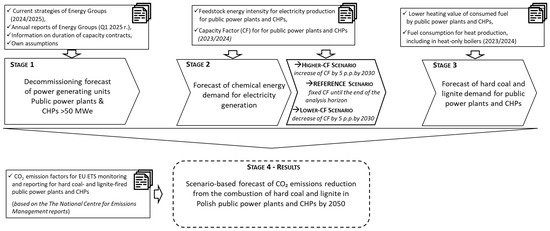
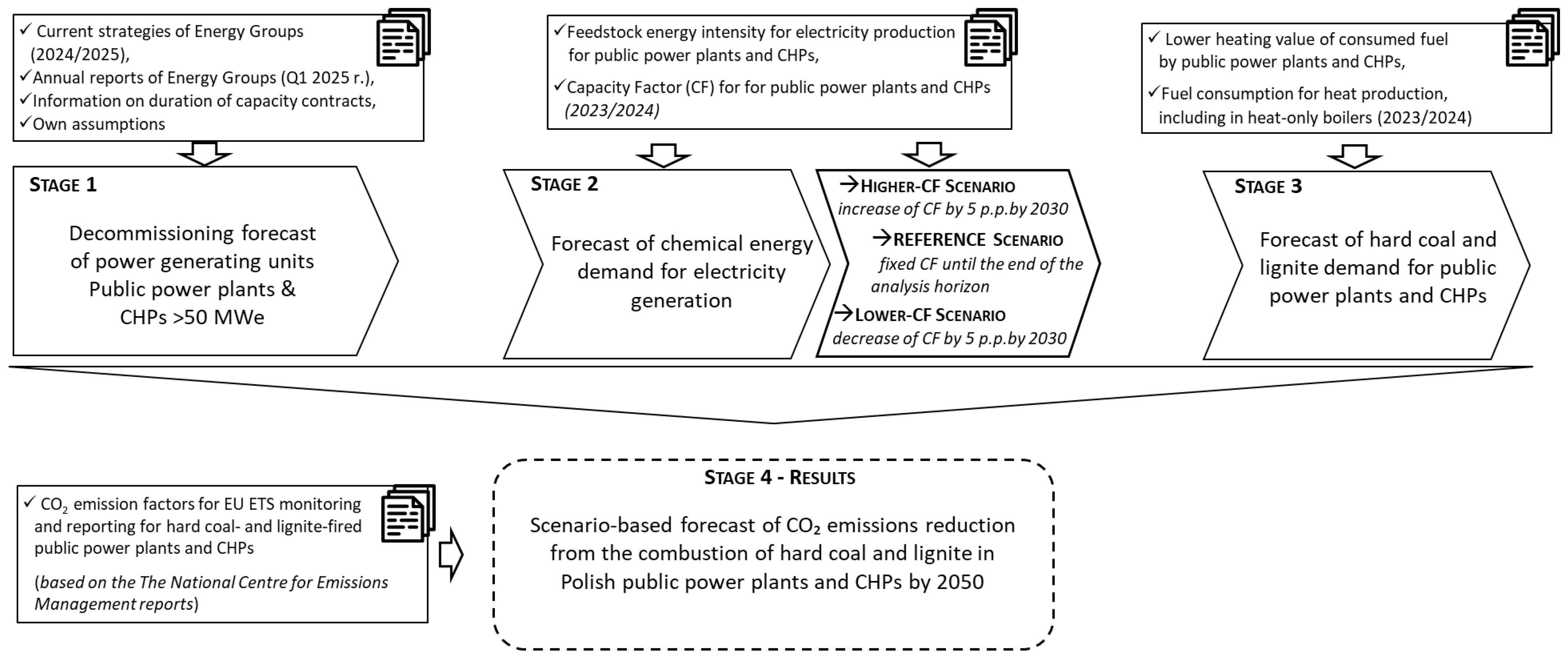
The general framework of the applied research approach/methodology is presented in Figure 1.
Figure 1.
General framework of the applied research methodology. Source: own elaboration.
In the energy sector, the basis for the forecasts described and discussed in Section 4 of the manuscript was a prediction of the decommissioning schedules for individual power-generating units in public power plants CHPs.
The following data and information were used to develop this prediction:
- current strategies of Energy Groups (2024/2025);
- annual reports of Energy Groups published in Q1 2025;
- information on long-term capacity market contracts that have been concluded, including CO2 emission constraints/limits that contracted coal units must meet from 2026 onwards (in line with Regulation (EU) 2019/943 of the European Parliament and of the Council of 5 June 2019 on the internal market for electricity);
- authors’ own assumptions.
The next step was to develop a forecast of chemical energy demand for electricity production, accounting for the technical parameters characterising the operation of each generating unit.
This was based on the following parameters:
- feedstock energy intensity for electricity production in 2023 [3],
- annual electricity production for 2023 with adjustments for 2024 [3],
- installed/achievable electric capacity of individual power generating units [3,31],
- capacity factor (CF) for 2023 with adjustments for 2024 [3,32].
The subsequent stage in determining the demand volumes for hard coal and lignite relied on the following data:
- the net calorific value of fuel fired in individual generating units [3,31],
- coal consumption volumes in steam boilers at public power plants and CHPs used for heat production in 2023, adjusted for 2024 [3,32],
- coal consumption volumes in heat-only boilers at public CHPs for 2023, adjusted for 2024 [3,32].
The final stage of the research involved forecasting CO2 emissions from the combustion of hard coal and lignite by Polish public power plants and CHPs up to 2050.
In addition to the outputs of previous stages, CO2 emission factors were adopted for hard coal and lignite consumed in public power plants and CHPs. These factors were taken from the reference indicators published by the National Centre for Emissions Management (KOBiZE) for EU ETS monitoring and reporting purposes [33].
It should be emphasised that capacity factor of the public power plants and CHPs—averaging in 2023 roughly 34.7% for hard-coal-fired power plants, 31.0% for public CHPs, and about 48% for lignite-fired power plants—has declined in recent years due to the advanced technical wear of these assets and, above all, the ongoing transformation and decarbonization of the sector, which has led to a substantial penetration of distributed/prosumers’ photovoltaic and wind installations.
These installations necessitate temporary shutdowns of conventional generating units, particularly in summer under favourable weather conditions. In this context, investments in flexible, dispatchable capacity (i.e., gas-fired units) and electricity storage become particularly important. The economics of electricity production also play a key role, primarily in the short run in terms of variable costs such as fuel and CO2 allowances, so there may be periods when coal-based generation is more profitable than gas-based generation. Furthermore, decommissioning selected hard coal- and lignite-fired capacity could positively impact the operating hours of remaining coal-fired units, particularly when natural gas prices are high and weather conditions are poor.
In light of the uncertainty surrounding the future operation of coal units in the electricity market, particularly with regard to the utilisation of existing capacity, which influences electricity and heat output, as well as fuel demand and CO2 emissions, fuel demand forecasts for hard coal and lignite in the public energy sector were developed under three scenarios: REFERENCE, LOWER-CF and HIGHER-CF.
These scenarios differ in terms of how capacity factor (CF) is treated in unit-level calculations.
- REFERENCE (REF) scenario—the average 2023 CF (adjusted for 2024) is held constant throughout the forecast period from 2025 to 2050,
- LOWER-CF scenario—CF is reduced by 5 percentage points relative to the reference level by 2030 (linear decline), and is then held constant until 2050,
- HIGHER-CF scenario—CF is increased by 5 percentage points relative to the reference level by 2030 (linear rise), and then is held constant until 2050.
As a result of compiling and analysing all the necessary data and information, adopting the stated assumptions and performing calculations consistent with the adopted research approach and methodology, a forecast was developed of CO2 emission reductions from the combustion of hard coal and lignite in Polish public power plants and CHPs up to 2050, under the specified analytical scenarios. Estimated CO2 emissions were compared to reference levels set for 2024 based on statistical information published in the annual bulletin of Emissions of environmental pollutants in public power plants and combined heat and power plants [4].
4. Result and Discussion
This section presents and discusses the results obtained using the methodology described in the previous section. The first part focuses on presenting the forecast for the decommissioning of power capacity in domestic coal-fired (hard coal and lignite) power plants and CHPs. This is followed by a scenario-based forecast of fuel consumption for electricity and heat production by coal-fired and CHP plants, as well as a forecast of CO2 emission reductions relative to 2024 levels resulting from the decarbonisation of the Polish power sector in accordance with energy companies’ strategies.
4.1. Decommissioning of Hard Coal- and Lignite-Fired Power Generation Units
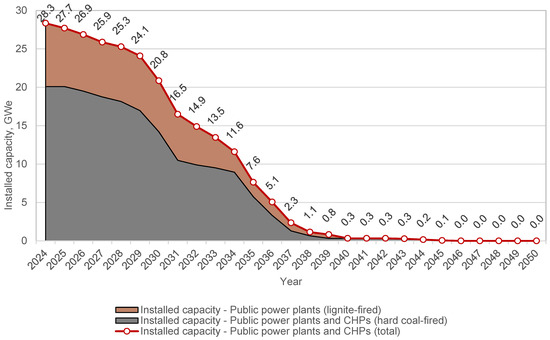
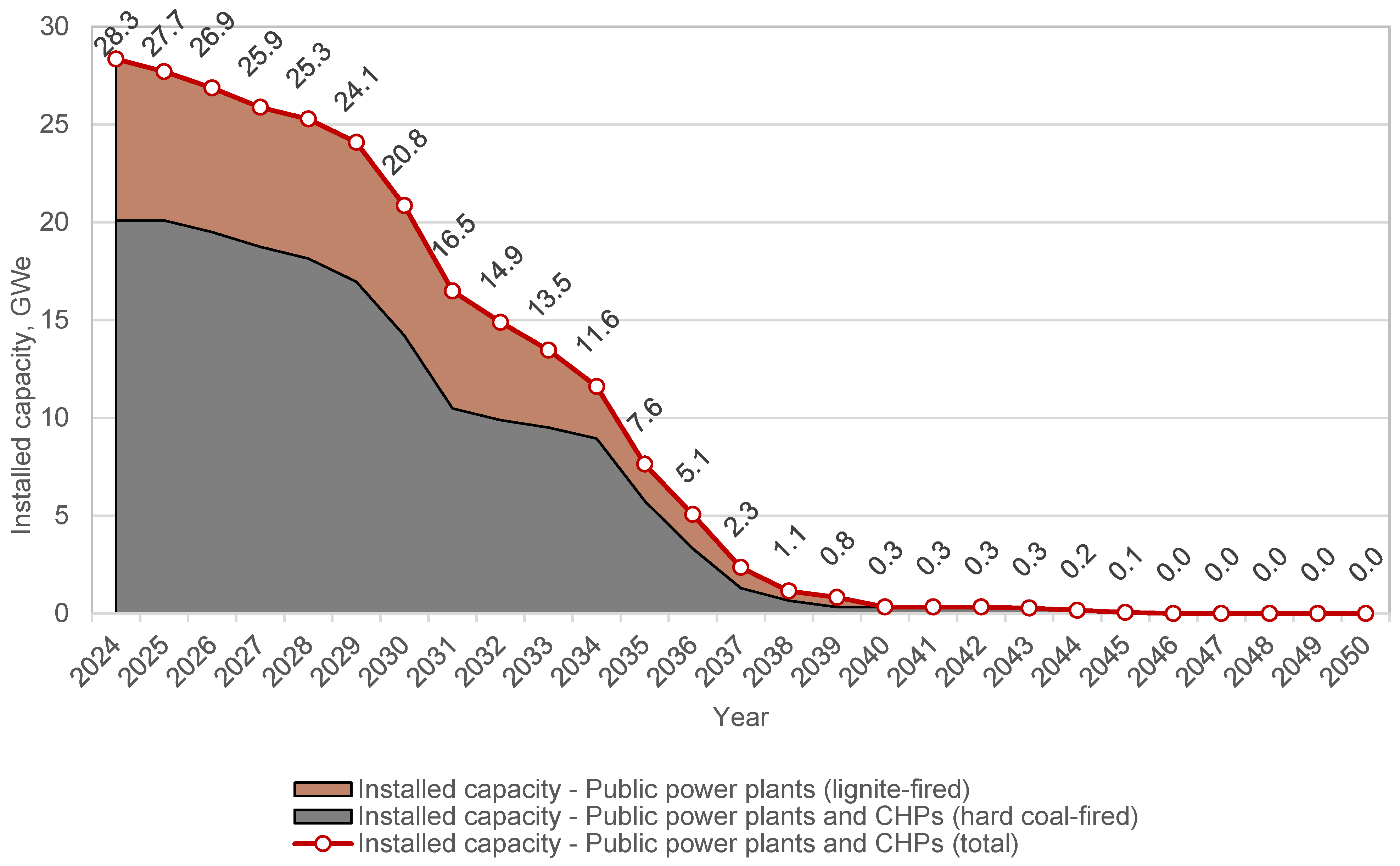
Forecasts of power capacity decommissioning resulting from energy companies’ adopted business strategies indicate that the decline in capacity in domestic power plants will be relatively small by 2029. This is primarily due to a lack of alternatives: gas-fired power stations intended to replace coal-based sources are under construction and are expected to be commissioned between 2026 and 2030, and in years after that period (depending on the support mechanisms) depending on the support mechanisms. A second reason is the functioning capacity market mechanism in Poland and the active capacity contracts for coal-fired power plants. A detailed description of how this capacity remuneration mechanism functions in Polish conditions can be found in [34,35,36].
After 2030, however, the forecast decline in installed capacity is expected to be much more dynamic. From 2030 to 2035, for example, capacity is projected to fall from 20.8 GW to 7.6 GW (Figure 2). Between 2035 and 2045, only the newest units commissioned in the second decade of the 21st century and those with the highest efficiency (rating around 45%) are expected to remain in operation.
Figure 2.
Forecast of installed capacity levels of hard coal- and lignite-fired public power plants and CHPs in 2024–50. Source: own elaboration.
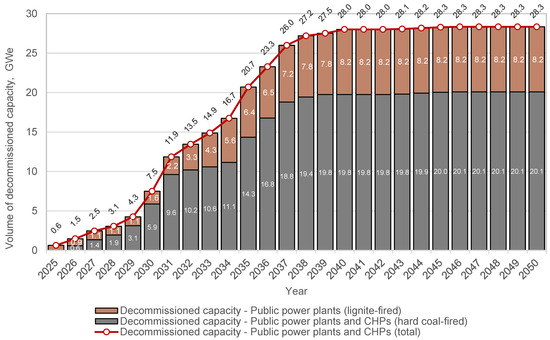
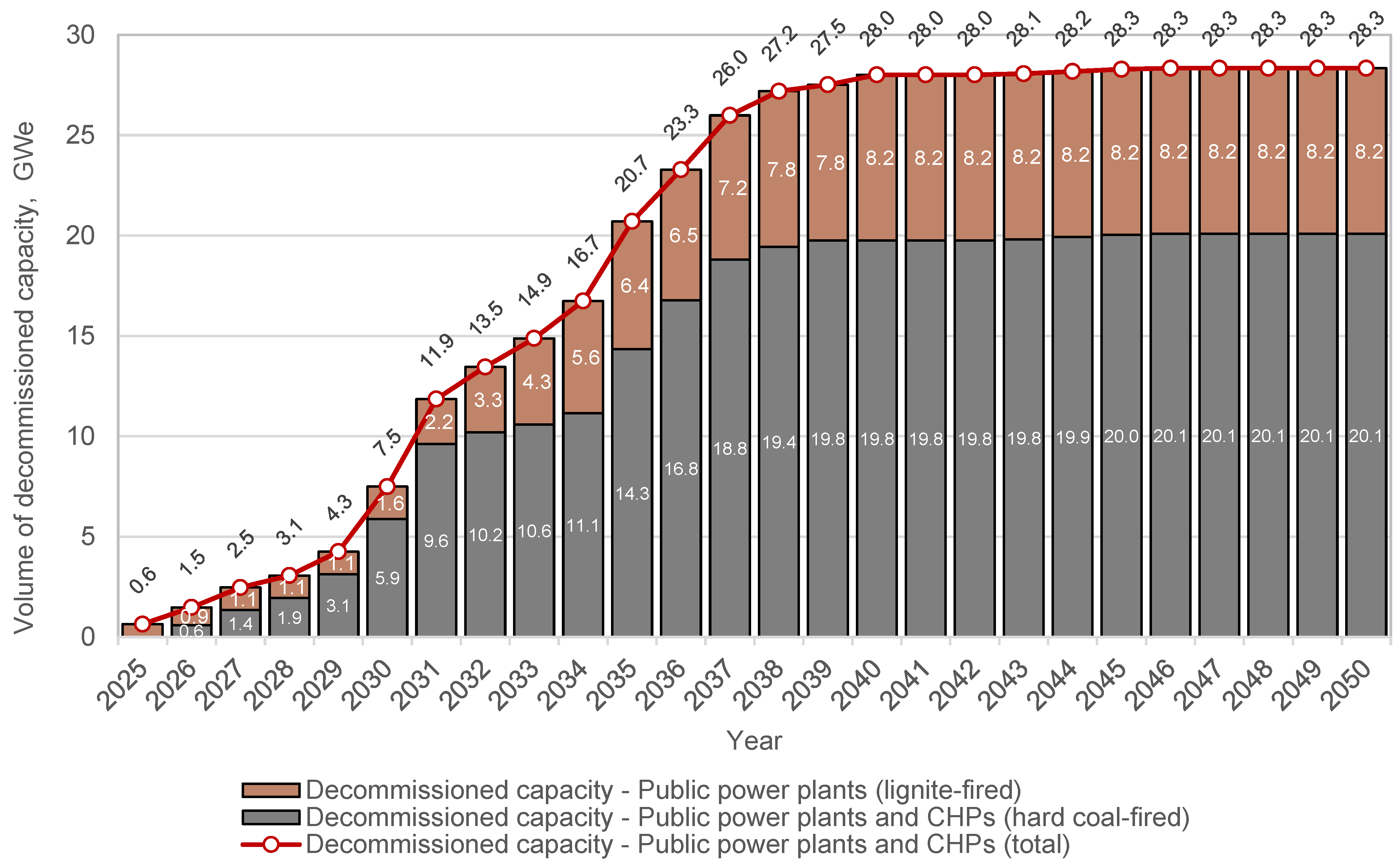
As previously mentioned, the pace of decommissioning of hard-coal-fired units is relatively moderate in the initial years of the analysis due to the existing capacity contracts (Figure 3). The largest decline in generating capacity occurs in the years 2029–31 and 2034–36, after those contracts expire.
Figure 3.
Forecast of aggregated decommissioning capacity of hard coal- and lignite-fired power plants and CHPs in 2024–2050. Source: own elaboration.
The highest rate of lignite-fired unit decommissioning is evident in the period 2031–35 and is linked to the announced phase-out of coal units at the country’s largest power plant in Bełchatów. The last lignite-fired unit is scheduled for shutdown by 2040.
4.2. Forecast of Fuel Consumption for Energy and Heat Production
Based on the decommissioning schedules presented for generating units, the forecasted capacity decline and the other assumptions described in the methodology section, a forecast was developed for hard coal and lignite consumption. This was prepared under three scenarios: in addition to the reference scenario (REF), scenarios assuming a decrease or increase in the capacity factor in subsequent years were included (Lower-CF and Higher-CF).
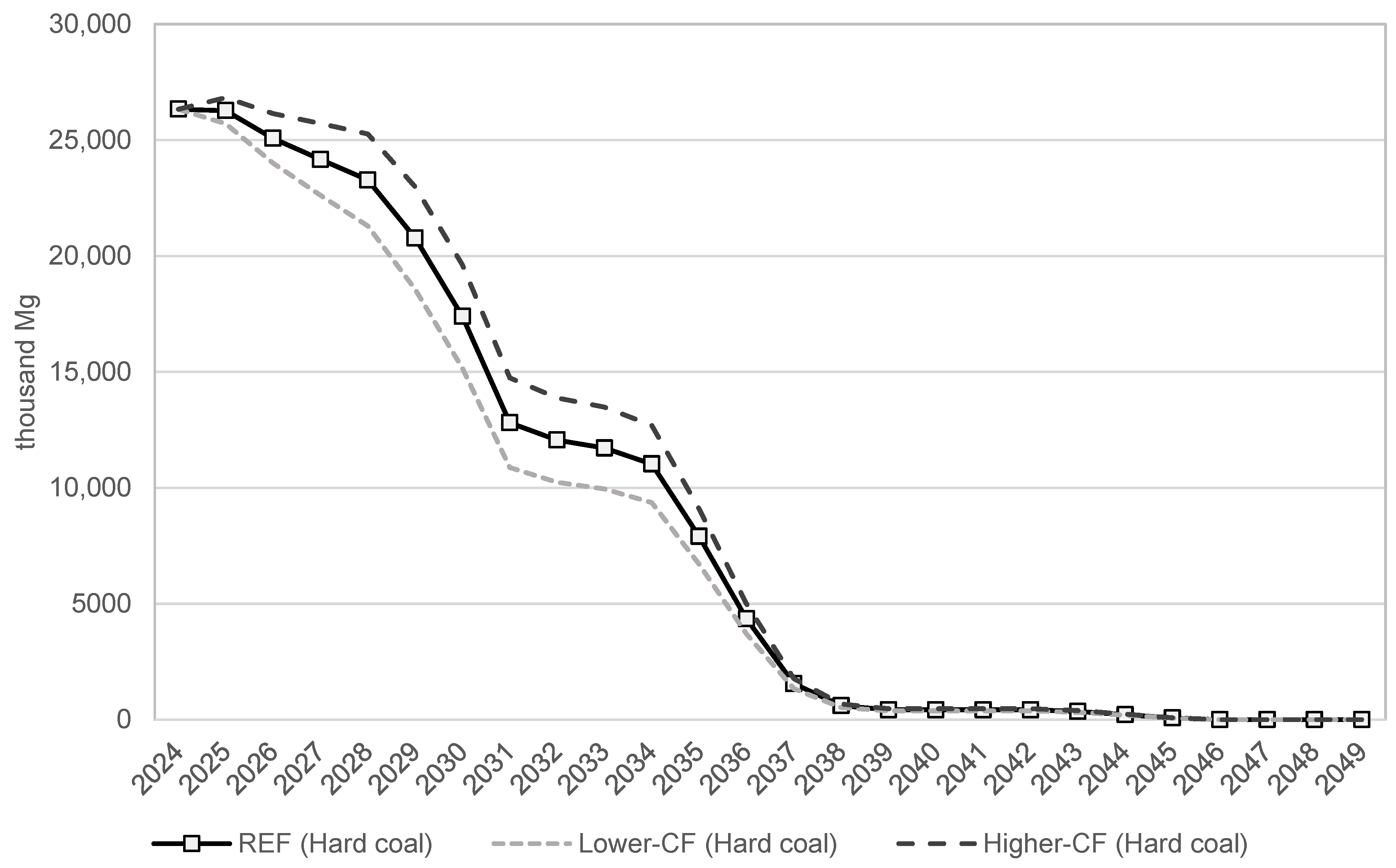
In the case of hard coal, consumption above 25 million Mg is only maintained until 2026 in the REF scenario (Figure 4). An increase in the capacity factor would enable consumption to remain above this level until 2028. The forecasted consumption in the REF scenario is 20.8 million Mg in 2029, dropping to just 12.8 million Mg by 2031 due to the projected decommissioning of units. From 2038 onwards, hard coal is expected to be used only in power plants owned by private enterprises and in combined heat and power plants, with consumption not exceeding 0.7 million Mg.
Figure 4.
Forecast of hard coal consumption (public power plants and CHPs) under assumed scenarios. Source: own elaboration.
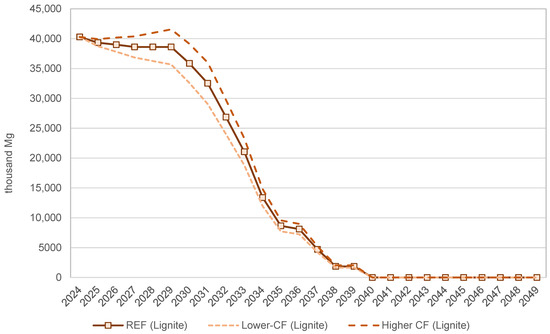
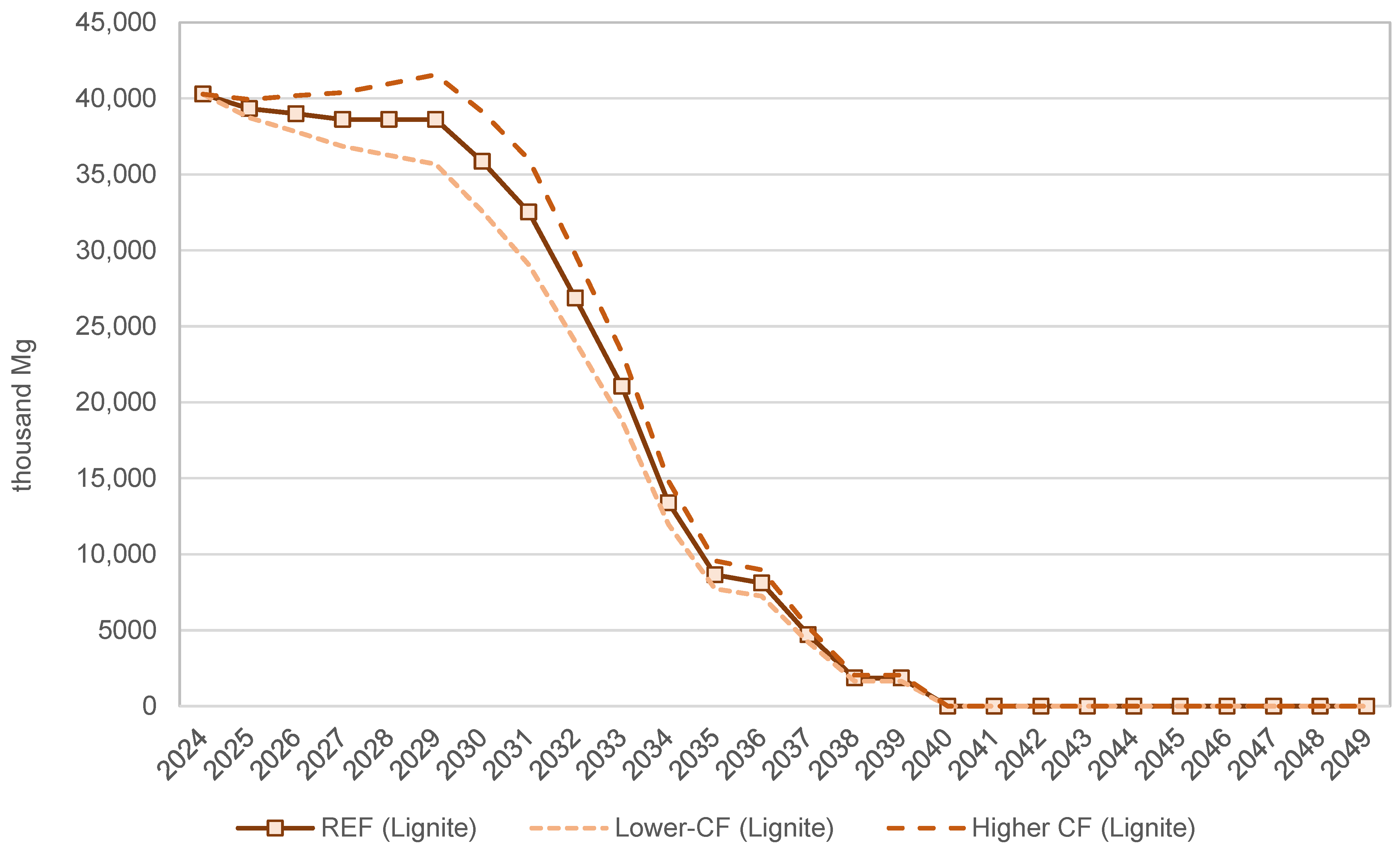
The developed forecast in the REF scenario indicates that annual lignite consumption will remain above 35 million Mg until 2030 (Figure 5). With an increased capacity factor, this level of consumption could be sustained until 2031. However, in the period 2031–35, a clear decline in consumption is visible due to the decommissioning of successive lignite-fired power generation units, reaching 9.5 million Mg in 2035. This decline is naturally linked to the phase-out of domestic open-pit lignite mines. By 2040, demand for lignite may fall to zero.
Figure 5.
Forecast of lignite consumption (public power plants) under assumed scenarios. Source: own elaboration.
4.3. Reduction in CO2 Emissions
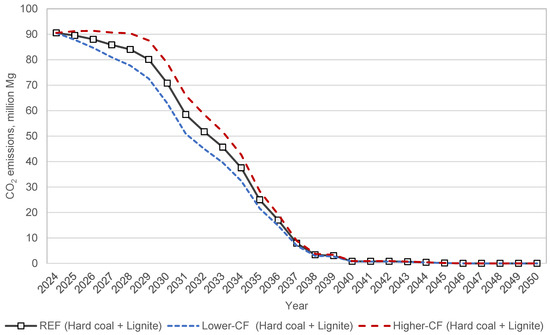
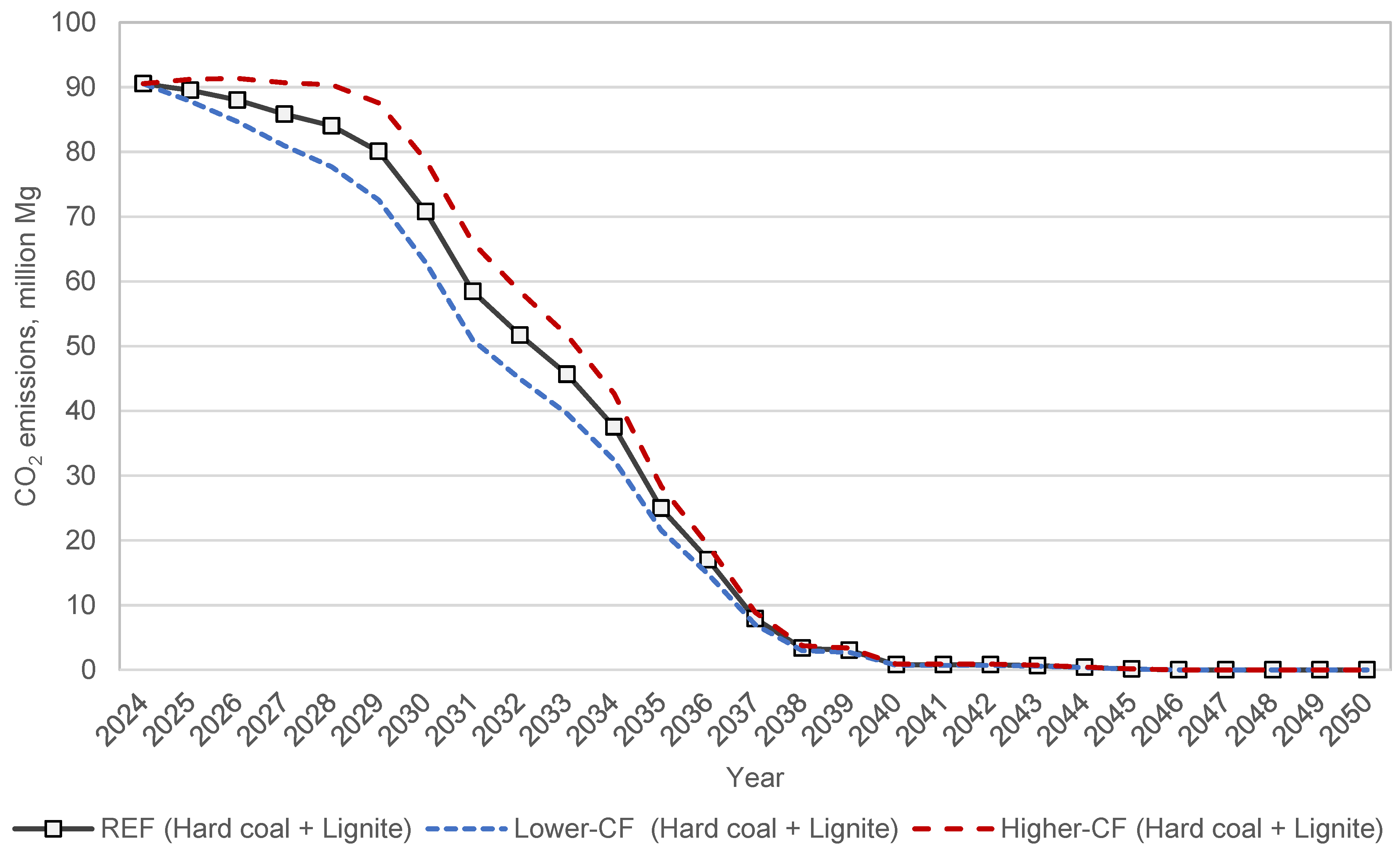
The demand forecasts for hard coal and lignite presented above directly impact the level of CO2 emissions in subsequent years. Baseline CO2 emissions from domestic coal-fired power stations amounted to 90.5 million Mg in 2024 (Figure 6).
Figure 6.
CO2 emission level by 2050 under assumed scenarios. Source: own elaboration.
According to the REF scenario, these levels should fall to around 80 million Mg by 2029. However, higher utilisation of coal-fired units during this period (the Higher-CF scenario) could result in annual emissions of around 90 million Mg being maintained until 2029. However, the results of the Lower-CF scenario, which assumes a decrease in capacity factor values, suggest that CO2 emissions could amount to 72.5 million Mg in 2029.
In the following years (after 2030), a dynamic reduction in emissions is forecasted in each of the scenarios. CO2 emissions associated with the production of electricity and heat in coal-fired power plants and CHPs in 2037, depending on the scenario, are projected to be only 7.0–8.9 million Mg, with the reference value being at the level of 7.9 million Mg.
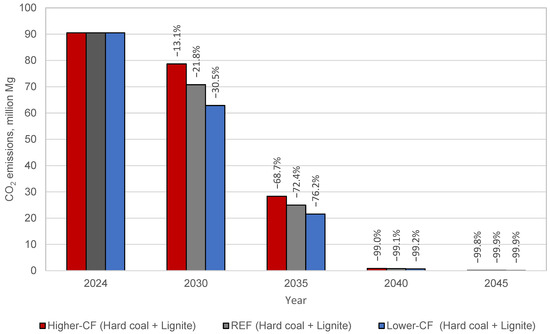
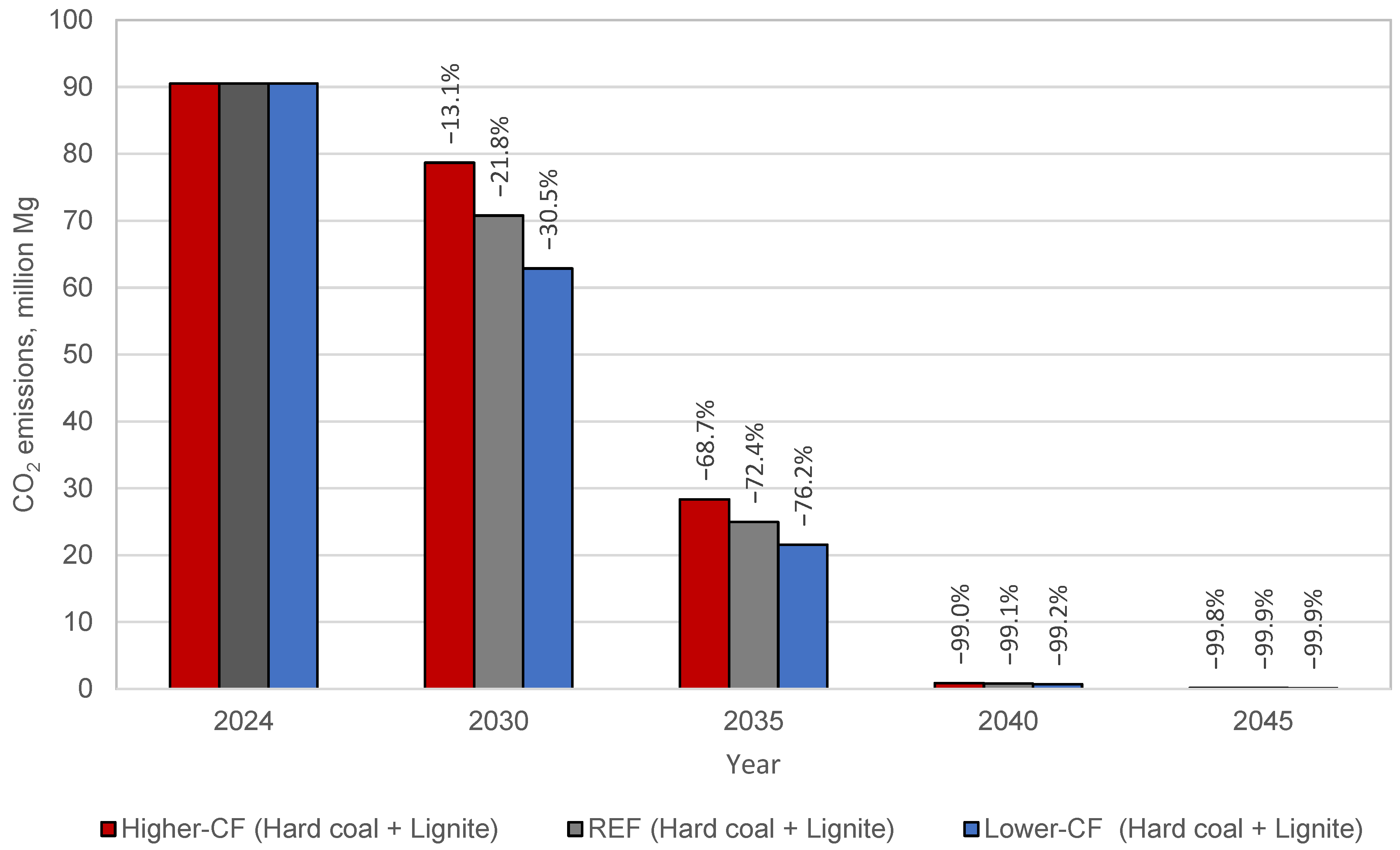
Figure 7 shows the reduction in CO2 emissions in five-year periods relative to the baseline value from 2024 onwards. Depending on the scenario, the forecasted emission reduction is expected to range between 13.1% and 30.5% as early as 2030, with an expected value of 21.8% in the reference scenario. The period from 2030 to 2035 is projected to see the largest decline in coal demand, and consequently the greatest reductions in CO2 emissions. In the REF scenario, the reduction relative to the baseline value is expected to reach 72.4%. From 2040 onwards, a reduction in emissions of almost 100% compared to 2024 levels is anticipated.
Figure 7.
Reduction in CO2 emission level by 2050 compared to the 2024 level in five-year periods under assumed scenarios. Source: own elaboration.
5. Conclusions
This paper uses Poland as a case study to present the path of energy transformation and forecast reductions in CO2 emissions. Despite its significant dependence on fossil fuels, and the fact that much of its electricity is produced using hard coal and lignite, Poland’s decarbonisation plans are ambitious. These plans suggest that, by 2040, the production of electricity and heat in coal-fired public power plants and CHPs—and consequently CO2 emissions—will be close to zero.
From 2025 to 2029, there will be a moderate transformation due to the lack of a viable alternative for producing electricity and heat, as well as existing capacity market contracts. Currently, more than a dozen gas-fired power units are under construction in Poland, and these will soon allow the decommissioning of the vast majority of coal-fired capacities. Consequently, although the decline in coal consumption and reduction in emissions are clear and dynamic, this will be limited until 2030 due to insufficient dispatchable capacity in the system.
According to the strategic plans of domestic energy companies, the 2030s may be a period of accelerated transformation. The planned decommissioning of generating units will positively impact CO2 emissions. These plans are consistent with EU regulatory expectations.
However, it should be noted that the decline in coal consumption does not align with the social agreement concluded with the mining sector. This could cause social unrest within the mining industry. While the closure date for the last hard-coal mine in Poland has been set for 2049 [6], the business strategies of power plant owners suggest that demand for coal will drop significantly in the 2030s.
It should be emphasised that the results of CO2 emission reduction forecasts presented in the article, resulting from the planned decommissioning of power plants and professional combined heat and power plants, do not mean that the emissions of the entire Polish economy will fall by exactly the same volume. In the national power system, despite the intensive development of renewable energy sources in recent years (primarily PV installations), as well as the planned development of nuclear energy (the first units may be commissioned around 2038), there will be a need to replace decommissioned coal-fired units with other flexible and dispatchable conventional units that will be able to effectively balance, stabilise, and ensure the security of electricity supply to end users in a system with a high level of weather-dependent RES. As noted earlier, this role is to be played by large-scale gas-fired power plants and CHPs, which are currently under construction or in the investment planning stage. Although the CO2 emissions of these units are relatively low, especially compared to lignite, estimating the level of CO2 emissions from these gas units at this stage may be complicated and requires appropriate and further research. What follows from the fact that some of the planned gas-fired power plants will use CCGT technology and will operate on a baseload basis, some of the new investments will be cogeneration units, partly dependent on the needs of the local heating system, and the remaining units are planned as peak sources, operated only at selected hours of the year.
The energy transition in Poland is a dynamic process that often outpaces the plans and assumptions set out in strategic documents and policies, which only confirms the need for ongoing research in this area. Energy companies themselves provide valuable insight into this process, as their actions are driven by the economics of electricity and heat production, as well as by the need to adapt to the market environment and environmental requirements in order to continue operating in a carbon-neutral economy.
Author Contributions
Conceptualization. P.K., M.M., M.F. and J.K.; methodology. P.K. and M.M.; software. P.K., M.M. and M.F.; formal analysis. P.K., M.M., M.F. and J.K.; data curation. P.K., M.M. and M.F.; writing—original draft. P.K., M.M., M.F. and J.K.; writing—review and editing. P.K., M.M., M.F. and J.K.; visualization P.K., M.M. and M.F. All authors have read and agreed to the published version of the manuscript.
Funding
This research received no external funding.
Data Availability Statement
The data presented in this study are available on request from the corresponding author due to legal restrictions.
Acknowledgments
This study was conducted within the statutory research activity of the Mineral and Energy Economy Research Institute of the Polish Academy of Sciences.
Conflicts of Interest
The authors declare no conflicts of interest.
References
- EMBER. EU Fossil Generation Below 25% for the First Month Ever. 2024. Available online: https://ember-energy.org/latest-insights/eu-fossil-generation-below-25-for-the-first-month-ever/ (accessed on 17 November 2025).
- Polish Electricity Statistics. Polish Power Industry 2019, Annual Bulletin; Energy Market Agency: Warsaw, Poland, 2020. [Google Scholar]
- Polish Electricity Statistics. Polish Power Industry 2023, Annual Bulletin; Energy Market Agency: Warsaw, Poland, 2024. [Google Scholar]
- TSO Report. Summary of Quantitative Data on the Operation of the Polish Energy System in 2024; Polskie Sieci Elektroenergetyczne (PSE): Warsaw, Poland, 2025; Available online: https://www.pse.pl/dane-systemowe/funkcjonowanie-kse/raporty-roczne-z-funkcjonowania-kse-za-rok/raporty-za-rok-2024 (accessed on 17 November 2025).
- EMITOR. Emissions of Environmental Pollutants in Public Power Plants and Combined Heat and Power Plants; Energy Market Agency: Warsaw, Poland, 2024; ISSN 1232-2537. [Google Scholar]
- Malec, M. The Prospects for Decarbonisation in the Context of Reported Resources and Energy Policy Goals: The Case of Poland. Energy Policy 2022, 161, 112763. [Google Scholar] [CrossRef] [Scilit]
- Agora Energiewende and Enervis. Phasing Out Coal in the Eu’s Power System by 2030, a Policy Action Plan. 2021. Available online: https://www.agora-energiewende.org/fileadmin/Projekte/2020/2020_09_EU_Coal_Exit_2030/A-EW_232_EU-Coal-Exit-2030_WEB.pdf (accessed on 17 November 2025).
- Paraschiv, L.S.; Paraschiv, S.; Alexandru, S. Decarbonizing Europe’s Energy System through the Phase-out of Coal-Fired Power Plants Under the Green Deal Initiatives for Sustainable Development. Manag. Environ. Qual. Int. J. 2025, 1–21. [Google Scholar] [CrossRef] [Scilit]
- Keles, D.; Yilmaz, H.Ü. Decarbonisation through Coal Phase-out in Germany and Europe—Impact on Emissions, Electricity Prices and Power Production. Energy Policy 2020, 141, 111472. [Google Scholar] [CrossRef] [Scilit]
- IEA Energy Policy Review. Germany 2025 Report. 2025. Available online: https://www.iea.org/reports/germany-2025 (accessed on 17 November 2025).
- Ocelík, P.; Diviák, T.; Lehotský, L.; Svobodová, K.; Hendrychová, M. Facilitating the Czech Coal Phase-Out: What Drives Inter-Organizational Collaboration? Soc. Nat. Resour. 2022, 35, 705–724. [Google Scholar] [CrossRef] [Scilit]
- IEA Energy Policy Review. Czech Republic 2021 Report. 2021. Available online: https://www.iea.org/reports/czech-republic-2021 (accessed on 17 November 2025).
- CEZ Group. Vision 2030. 2021. Available online: https://www.cez.cz/sustainability/en/vision-2030 (accessed on 17 November 2025).
- EP Holding. Our Energy Transistion. 2025. Available online: https://www.epholding.cz/en/our-energy-transition/ (accessed on 17 November 2025).
- Ministry of Industry and Trade of the Czech Republic. The National Energy and Climate Plan of the Czech Republic. 2024. Available online: https://mpo.gov.cz/en/energy/strategic-and-conceptual-documents/the-national-energy-and-climate-plan-of-the-czech-republic--285295/ (accessed on 17 November 2025). (In Czech)
- Tkach, D. The Czech Republic’s National Energy and Climate Plan: Pathways to decarbonization, energy, security, and industrial transformation. Econ. Financ. Manag. Rev. 2025, 3, 4–12. [Google Scholar] [CrossRef] [Scilit]
- Brauers, H.; Oei, P.Y. The Political Economy of Coal in Poland: Drivers and Barriers for a Shift Away from Fossil Fuels. Energy Policy 2020, 144, 111621. [Google Scholar] [CrossRef] [Scilit]
- Pepłowska, M. Climate Neutrality in Poland: The Role of the Coal Sector in Achieving the 2050 Goal. Polityka Energ.—Energy Policy J. 2025, 28, 113–126. [Google Scholar] [CrossRef] [Scilit]
- Kubiczek, P.; Smoleń, M. Three Challenging Decades Scenario for the Polish Energy Transition Out to 2050; Instrat: Warsaw, Poland, 2024. [Google Scholar]
- Gutowski, A.; Maciejczak, M. Development of the Polish Power Sector Towards Energy Neutrality—The Scenario Approach. Energies 2024, 17, 2763. [Google Scholar] [CrossRef] [Scilit]
- Forum Energii. Poland: Climate Neutrality by 2050. Electrification and Sector Coupling. 2020. Available online: https://www.forum-energii.eu/en/poland-climate-neutrality-by-2050-electrification-and-sector-coupling (accessed on 17 November 2025). (In Poland)
- Hassan, M.W.; Manowska, A.; Kienberger, T. A breakthrough in achieving carbon neutrality in Poland: Integration of renewable energy sources and Poland’s 2040 energy policy. Energy Rep. 2025, 13, 653–669. [Google Scholar] [CrossRef] [Scilit]
- Wojtaszek, H.; Miciuła, I.; Modrzejewska, D.; Stecyk, A.; Sikora, M.; Wójcik-Czerniawska, A.; Smolarek, M.; Kowalczyk, A.; Chojnacka, M. Energy Policy Until 2050—Comparative Analysis Between Poland and Germany. Energies 2024, 17, 421. [Google Scholar] [CrossRef] [Scilit]
- Tauron. TAURON Group Strategy 2025–2035. 2024. Available online: https://www.tauron.pl/tauron/relacje-inwestorskie/prezentacje (accessed on 17 November 2025). (In Poland)
- ORLEN. ORLEN Group 2035 Strategy; ORLEN: Warsaw, Poland, 2025; Available online: https://www.orlen.pl/pl/o-firmie/strategia (accessed on 17 November 2025). (In Poland)
- ENEA. ENEA Group Development Strategy Until 2035 Presentation. 2024. Available online: https://ir.enea.pl/informacje-dla-inwestorow/zalacznik/2753547 (accessed on 17 November 2025). (In Poland)
- PGE. Energy for a Secure Future. Flexibility. PGE Group’s 2035 Strategy. 2025. Available online: https://www.gkpge.pl/grupa-pge/o-grupie/poznaj-strategie (accessed on 17 November 2025). (In Poland)
- TSO. Transmission Network Development Plan for 2025–2034; Polskie Sieci Elektroenergetyczne (PSE): Warsaw, Poland, 2024; Available online: https://www.pse.pl/-/projekt-nowego-planu-rozwoju-sieci-przesylowej-na-lata-2025-2034-uzgodniony (accessed on 17 November 2025). (In Poland)
- Ministry of Climate and Environment. Energy Policy of Poland Until 2040 (EPP2040); Ministry of Climate and Environment: Warsaw, Poland, 2021. Available online: https://www.gov.pl/web/ia/polityka-energetyczna-polski-do-2040-r-pep2040 (accessed on 17 November 2025). (In Poland)
- Ministry of Climate and Environment. The National Energy and Climate Plan (KPEiK); Ministry of Climate and Environment: Warsaw, Poland, 2019. Available online: https://www.gov.pl/web/klimat/krajowy-plan-na-rzecz-energii-i-klimatu-na-lata-2021-2030---wersja-2019-r (accessed on 17 November 2025). (In Poland)
- Energy Market Agency. Public Thermal Plants and CHP Plants Catalogue as of 31/12/2024; Energy Market Agency: Warsaw, Poland, 2025; ISSN 1899-1920. [Google Scholar]
- Ministry of Climate and Environment. The Statistical Information on Electricity, Monthly Bulletin, Jan–Dec 2024; Energy Market Agency: Warsaw, Poland, 2024; ISSN 1232-5457. [Google Scholar]
- Calorific Values (CV) and CO2 Emission Factors (EC) in 2022 for Reporting Under the Emissions Trading System for 2025. Available online: https://www.kobize.pl/uploads/materialy/materialy_do_pobrania/monitorowanie_raportowanie_weryfikacja_emisji_w_eu_ets/WO_i_WE_do_monitorowania-ETS-2025.pdf (accessed on 17 November 2025). (In Poland)
- Kaszyński, P.; Komorowska, A.; Zamasz, K.; Kinelski, G.; Kamiński, J. Capacity Market and (the Lack of) New Investments: Evidence from Poland. Energies 2021, 14, 7843. [Google Scholar] [CrossRef] [Scilit]
- Komorowska, A.; Kaszyński, P.; Kamiński, J. Where does the capacity market money go? Lessons learned from Poland. Energy Policy 2023, 173, 113419. [Google Scholar] [CrossRef] [Scilit]
- Kaszyński, P. The impact of the capacity remuneration mechanism on the decarbonisation of the energy sector in Poland in the context of the future demand for natural gas for electricity production. Gospod. Surowcami Miner.-Miner. Resour. Manag. 2025, 41, 55–71. [Google Scholar] [CrossRef] [Scilit]
Disclaimer/Publisher’s Note: The statements, opinions and data contained in all publications are solely those of the individual author(s) and contributor(s) and not of MDPI and/or the editor(s). MDPI and/or the editor(s) disclaim responsibility for any injury to people or property resulting from any ideas, methods, instructions or products referred to in the content. |
© 2025 by the authors. Licensee MDPI, Basel, Switzerland. This article is an open access article distributed under the terms and conditions of the Creative Commons Attribution (CC BY) license.