Article

Validation of CFD Analysis on Flow and Combustion Characteristics for a GP3 Rotary Engine

Department of Mechanical Engineering, Inha University, Incheon 22212, Republic of Korea
*
Author to whom correspondence should be addressed.
Energies 2025, 18(4), 758; https://doi.org/10.3390/en18040758
Submission received: 27 December 2024 / Revised: 1 February 2025 / Accepted: 2 February 2025 / Published: 7 February 2025

Abstract

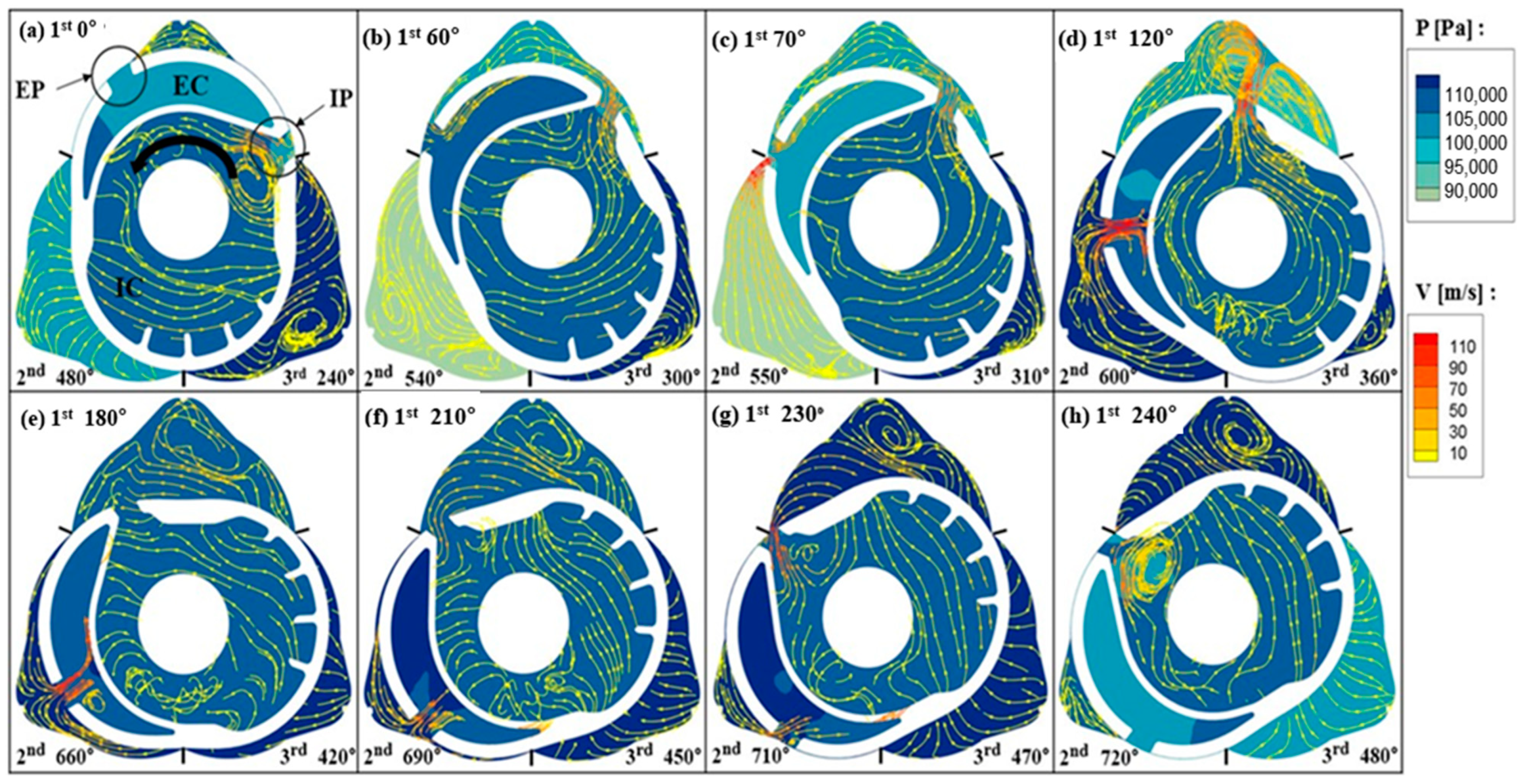
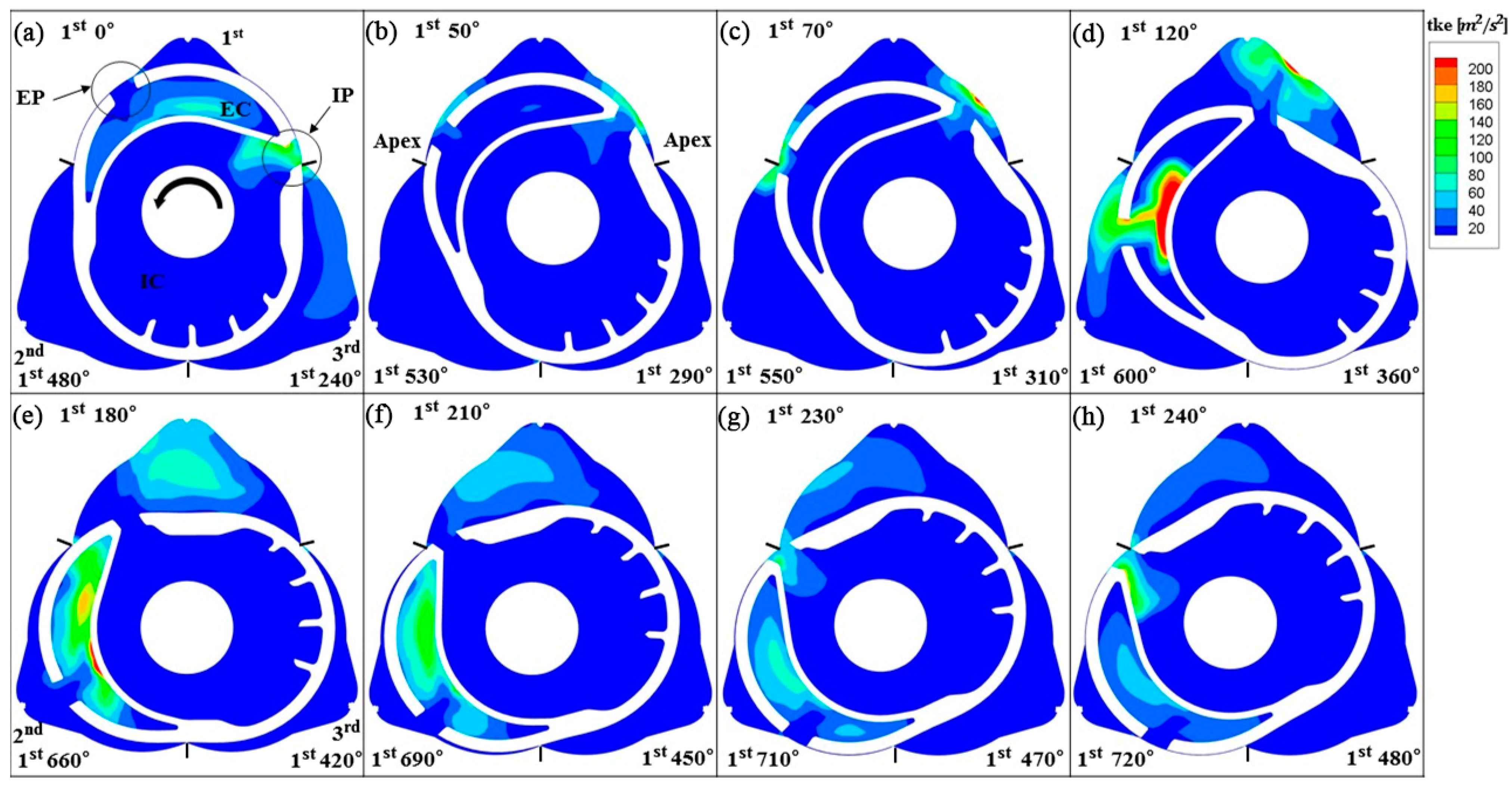
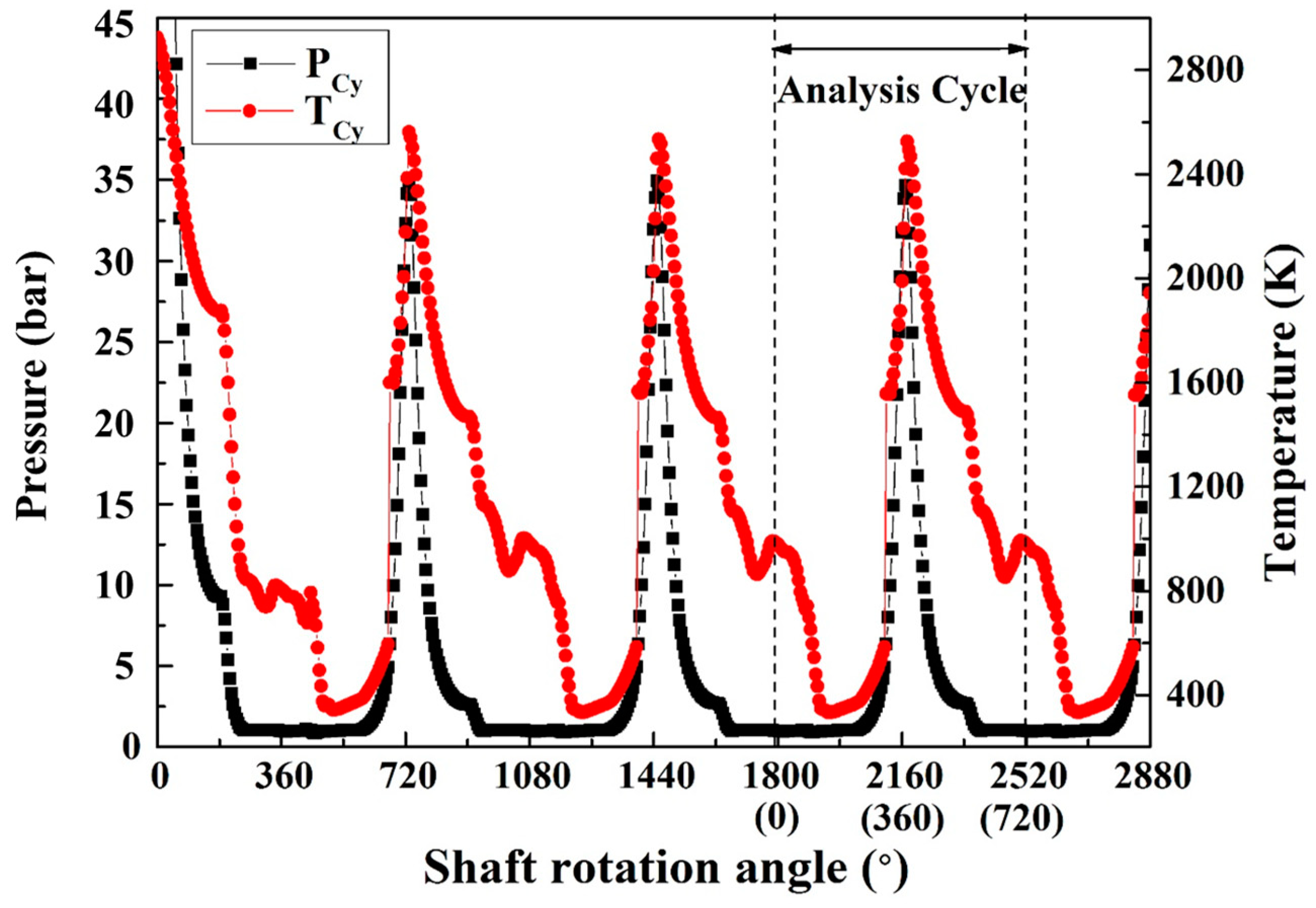
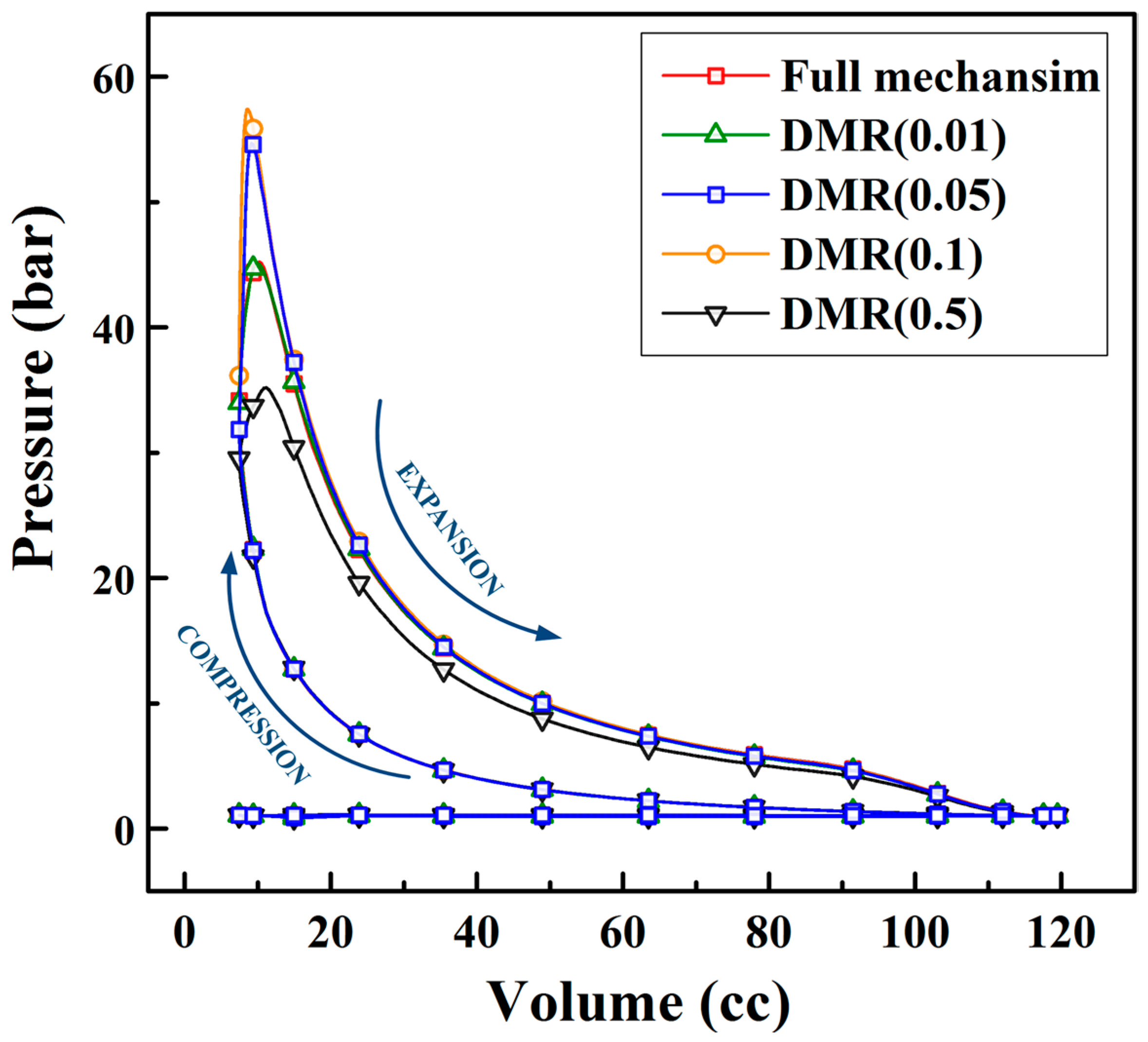
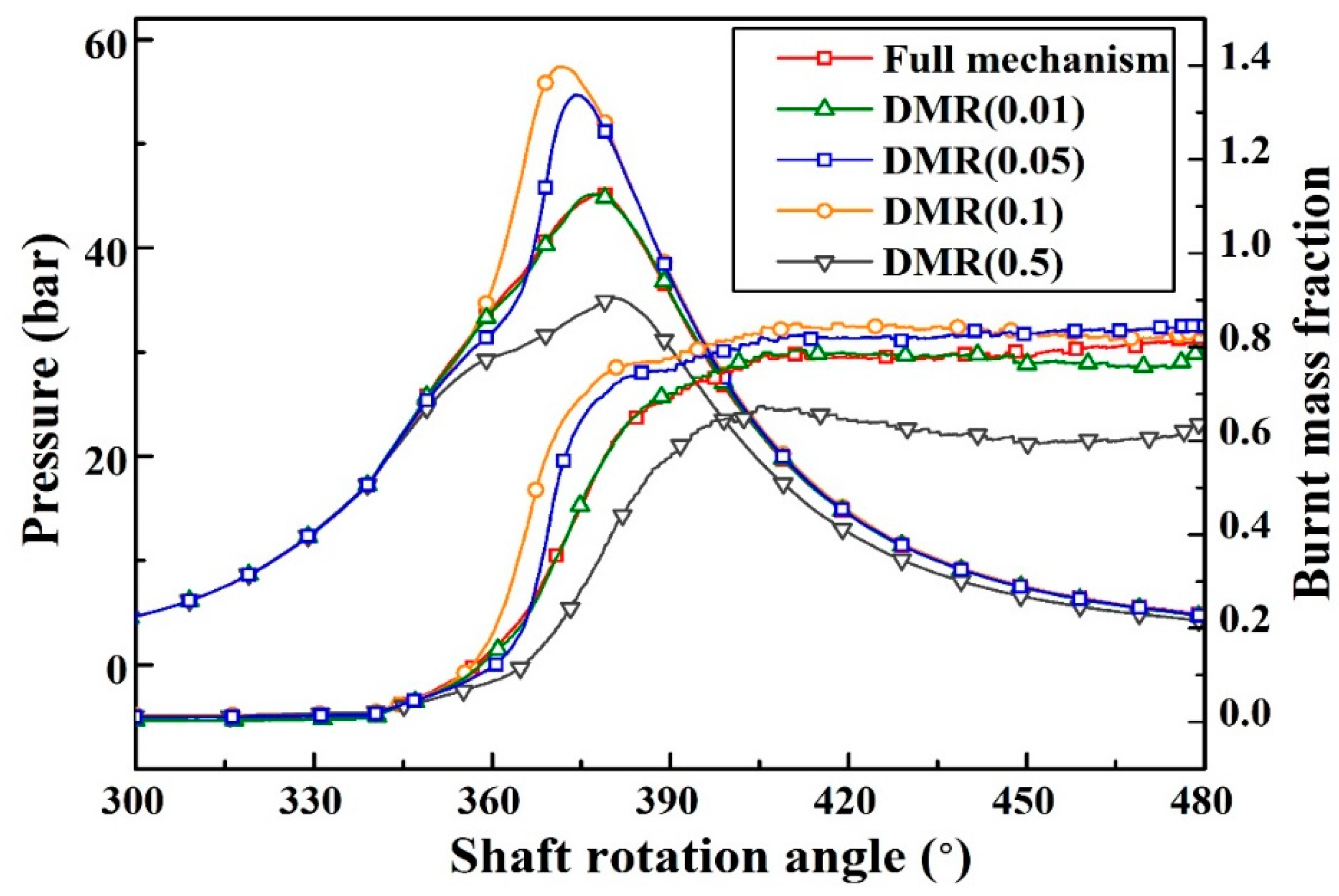
This study performed a 3D CFD analysis on a GP3 rotary engine to determine the stroke and flow characteristics and examine the thermal- and flow-related design factors’ validity. The 3D CFD analysis was performed using the CONVERGE program, utilizing the automatic grid generation function based on the 3D engine design drawing, which is suitable for a rotating rotary engine geometry. The target species and error tolerance were selected based on the GRI-Mech 3.0 full reaction mechanism to validate the reaction model and define a reasonable range of target species and error tolerances. The RNG k-ε turbulence and SAGE combustion models were also employed to analyze the four-stroke characteristics for the GP3 engine by visualizing the internal flow. The various outcomes confirmed the rotary engine’s unique characteristics and were reasonably interpreted to validate the engine design factors. In particular, the EGR phenomenon in the intake and exhaust port overlap area and the interference phenomenon in the port overlap area between adjacent cylinders are unique to the engine, and were rationally analyzed to more accurately predict the engine’s performance. The results of this study regarding the flame quenching regions indicated power and efficiency, and the emission characteristics can be used to validate the design parameters.
Keywords: GP3 rotary engine; GRI-Mech 3.0; housing and rotor; motoring condition; CFD analysis; flow characteristic; EGR GP3 rotary engine; GRI-Mech 3.0; housing and rotor; motoring condition; CFD analysis; flow characteristic; EGR