Article

Pressurized Chemical Looping Flue Gas Polishing via Novel Integrated Heat Exchanger Reactor
Department of Chemical and Biological Engineering, University of Ottawa, 161 Louis Pasteur Street, Ottawa, ON K1N 6N5, Canada
*
Authors to whom correspondence should be addressed.
Energies 2025, 18(24), 6393; https://doi.org/10.3390/en18246393 (registering DOI)
Submission received: 1 November 2025 / Revised: 2 December 2025 / Accepted: 3 December 2025 / Published: 6 December 2025
(This article belongs to the Special Issue New Advances in Carbon Capture and Clean Energy Technologies)

Abstract

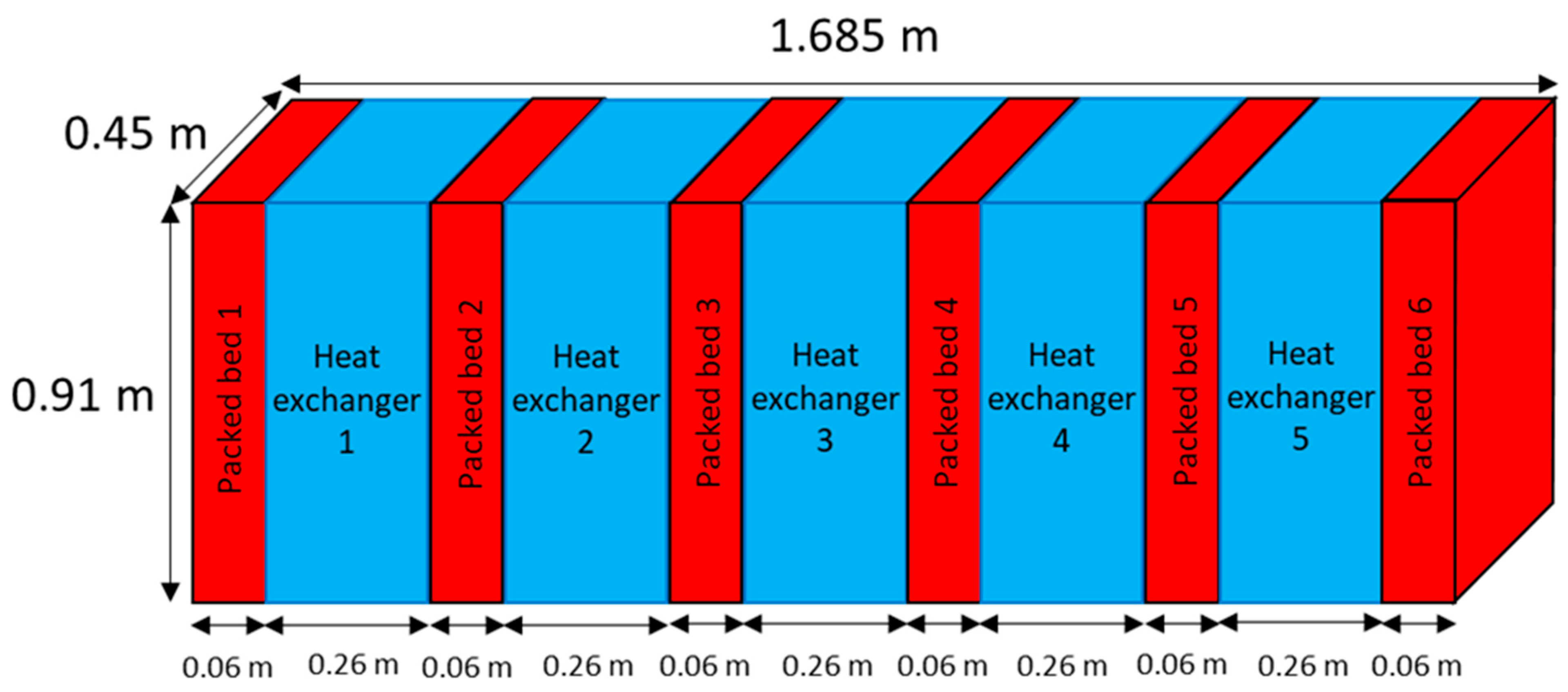
Pressurized chemical looping combustion (PCLC) provides the benefit of simplifying the carbon capture process by generating a flue gas stream with high CO2 concentration. However, flue gas polishing is required to remove the residual impurities for pipeline transport. The intensified heat exchanger reactor (IHXR) is a promising method for flue gas polishing while maximizing useful heat recovery that incorporates alternating catalytic packed beds with interstage cooling via printed circuit heat exchangers (PCHE). This work offers a design process for an IHXR capable of polishing a flue gas stream from a 100 MWth natural gas-fired PCLC unit while recovering 1.6 MW of useful heat in the form of saturated steam at 180 °C. Simulation work performed in Aspen HYSYS was used to determine the polished flue gas outlet species concentrations as well as the required number and size of the packed bed sections. The PCHEs for interstage cooling were sized via a thermal circuit approach. The final IHXR consists of six packed beds at 0.06 m in length and five PCHEs at 0.265 m in length, combining to a total IHXR length of 1.685 m. The height and width of the IHXR is shared between the packed beds and PCHEs at 0.91 m and 0.45 m, respectively. The resulting IHXR is capable of recovering heat at a rate of approximately 2.3 MW/m3.

1. Introduction

Carbon capture, utilization, and storage (CCUS) is a proposed framework to reduce the carbon footprint of industrial processes in Canada [1]. One CCUS technology is pressurized chemical looping applied to combustion (PCLC). PCLC generates heat by using a dual fluidized bed configuration of air reactor (AR) and fuel reactor (FR), where a metal oxide (MeO) oxygen carrier reacts with fuel in the fuel reactor before being cycled into the air reactor for oxidation [2]. The FR uses hydrocarbon fuels, typically natural gas, to react with the oxygen provided by the oxygen carrier to produce a flue gas stream that mainly consists of unconverted fuel, CO2, H2O, and trace impurities such as CO [2]. This promising alternative for natural gas combustion thus produces flue gas with low N2 content without using energy-intensive cryogenic air separation for its oxidizer, such as in oxy-fuel combustion [3].
The flue gas exiting the PCLC unit still requires polishing prior to transportation due to strict pipeline specifications for the composition of CO2 streams. This work adheres to the Alberta Carbon Trunk Line (ACTL) pipeline specification, limiting CH4 and CO content to below 1 mol% each [4]. The intensified heat exchanger reactor (IHXR) is the proposed technology for flue gas polishing which removes unconverted fuel from PCLC flue gas through catalytic combustion via alternating adiabatic packed beds while providing interstage cooling and heat recovery through compact printed circuit heat exchangers (PCHEs). PCHEs are currently deployed in high intensity heat transfer operations, such as supercritical-CO2 Brayton cycles, with numerous works detailing their performance analysis through both numerical and experimental means, making it an excellent unit operation for interstage cooling between adiabatic packed beds [5,6]. The intensified compact design offered by the IHXR was previously used in an energy-intense operation for the catalytic deoxygenation of oxy-fuel combustion flue gas, making it a promising method for PCLC flue gas polishing [3,7].
Figure 1 depicts the top view of the process, reactant, and utility plates that make up a single repeating IHXR unit [7]. Each repeating unit consists of a total of four plates in the order of process, reactant, process, and utility, and it is enclosed at the top by a final utility plate for the complete layout of the IHXR [7]. The process fluid is the PCLC flue gas following water vapour removal and this stream enters the packed bed section through the process plate. The reactant fluid is the O2 stream injected into each packed bed section to enable combustion. Although this implies that there is still a requirement for an O2 stream, it is significantly lower than for oxy-fuel-fired combustion units. The utility fluid is used to cool the process gas after a desired extent of reaction is reached in each packed bed section. The packed bed and heat exchanger sections will share the same height and width as a function of the number of repeating PCHE units and flow channels, respectively, and the length of the two different section types will be sized separately.
The objective of the work is to determine the number and length of packed bed sections in the IHXR to maximize useful heat recovery while meeting the required CO2 transportation pipeline specifications for PCLC flue gas, and to determine the subsequent PCHE heat exchanger lengths to facilitate useful heat recovery.

2. Process Description

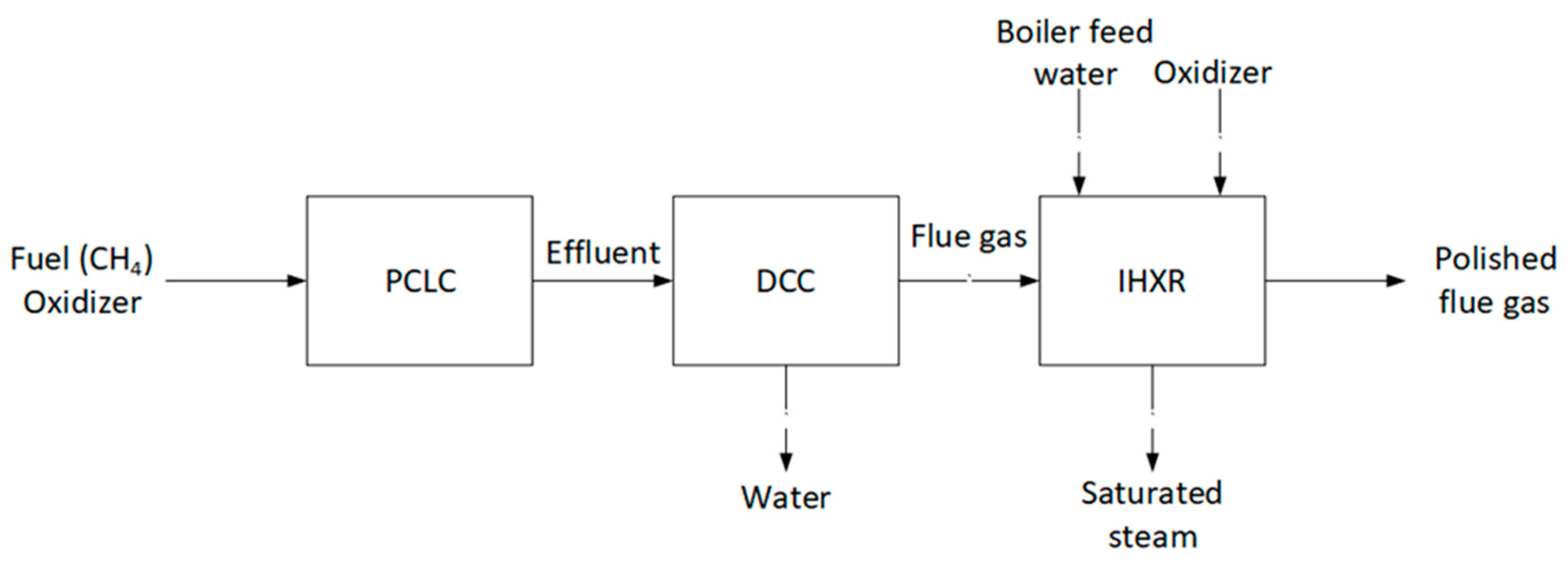
Flue gas exiting the PCLC unit first enters a direct contact cooler (DCC) where the flue gas is cooled to condense most of the water vapour content. Figure 2 shows the location of the IHXR relative to the PCLC unit.
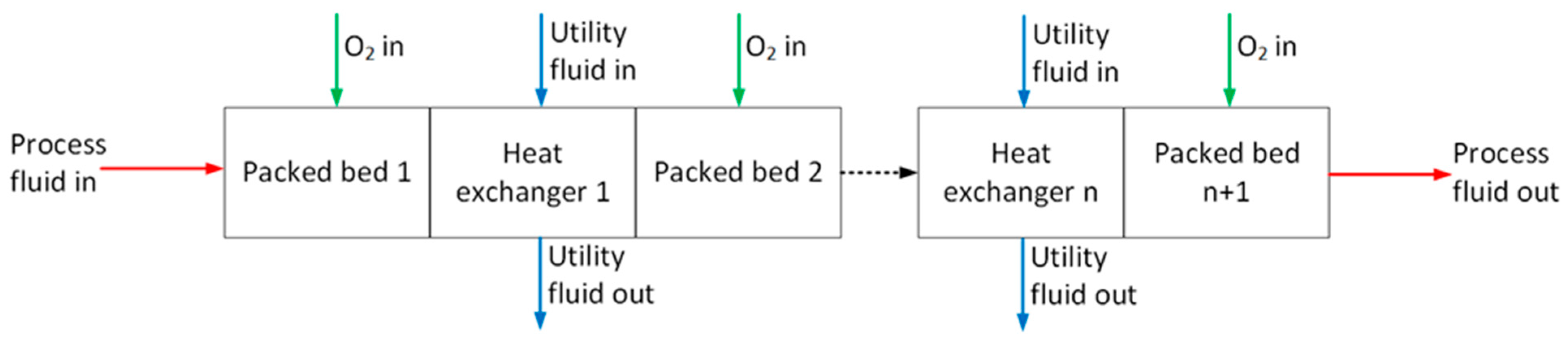
Following the DCC, flue gas first enters a pre-heating heat exchanger to be brought up to reaction conditions of T = 350 °C and P = 665 kPa. Figure 3 shows the layout of the IHXR without the pre-heating heat exchanger, where the process fluid is the PCLC flue gas ready for polishing, and the utility fluid is boiler feed water entering at T = 76 °C and leaving as saturated steam at T = 180 °C and P = 1001 kPa. The pre-heating heat exchanger is not part of this design study as its configuration may change depending on how the recovered heat from this process is allocated. Equal amounts of O2 are injected into each packed bed section at the same conditions of the inlet process fluid.
The complete ACTL CO2 pipeline specifications used as the guideline for the polished flue gas composition in this study are given in Table 1.

3. Methodology

3.1. PCLC Flue Gas Composition

The stream composition used for this study is for a 100 MWth natural gas-fired commercial-scale PCLC unit, amounting to a flue gas flow rate of 22,955 kg/h. The expected stream composition from the PCLC unit is given in Table 2 and denoted as the base case. The base case was then expanded into an “upper limit” case in which the CH4 conversion in the PCLC unit is reduced from 98.5% to 97%, which raises the CH4 removal requirement in the IHXR unit.

3.2. Gibbs Equilibrium Study

The desired pathway for flue gas polishing via the IHXR is through catalytic combustion, where the reaction exotherm is recovered as useful heat. As such, it is desired to combust as much CH4 and CO as possible to maximize useful heat recovery. However, catalytic reaction mechanisms with similar species as the PCLC flue gas mainly concern hydrogen production via steam reforming or automotive exhaust emission control [8,9]. For reforming reactions, both the hydrogen production and the associated endotherm are undesirable for the IHXR. For automotive exhaust control, it is atypical for reaction conditions with such high CO2 concentration as well as elevated reaction pressure.
No adequate reaction kinetic systems were found for the desired scope after a thorough search; thus, the analysis of the catalytic combustion process was divided into two parts. The first involves using the Gibbs equilibrium reactor from Aspen HYSYS to determine the number of packed bed sections required to bring the flue gas to the recommended pipeline specifications while maximizing useful heat recovery; the second involves using CO combustion kinetics in a plug flow reactor model to size the packed bed sections. Given that CO has a higher autoignition temperature than CH4, it is reasonable to assume that CH4 reacts with O2 more readily than CO [10]. Therefore, final sizing of the packed bed sections in the IHXR is based on the length required to remove the CO content from the flue gas.
The Gibbs reactor model in Aspen HYSYS was used to determine the equilibrium conversion of the reacting system at each packed bed section, with the outlet of the final packed bed section to have removed as much CH4 and CO as possible to maximize useful heat recovery. Reactors with multiple adiabatic packed beds typically operate at the highest allowable temperatures to facilitate fast reaction rates, and the number of packed bed sections was determined based on a design constraint recommending limiting the temperature rise per adiabatic packed bed to 50 °C [11]. The maximum temperature rise was increased to 75 °C per packed bed for the upper limit case to retain the same number of packed beds as the base case. The upper limit case is expected to be a temporary increase in CH4 concentration caused by a process upset. Therefore, the IHXR will not undergo a complete redesign to accommodate the short period with increased operating temperature since the CH4 concentration is expected to return to baseline afterwards.
Stagewise adiabatic combustion of CH4 and CO enables precise temperature control to allow the reaction to occur at thermodynamically favourable conditions and to mitigate catalyst deactivation [12]. Stoichiometric amounts of O2 required for near-complete removal of CH4 and CO were evenly distributed and injected into each packed bed.
HYSYS heat exchangers were selected to simulate the interstage PCHEs where boiler feedwater was used as the utility fluid. Heat duty and the relevant properties of both process and utility fluid were obtained from the simulated unit operation.

3.3. Kinetic Modelling Study

Each bed in the multi-stage reactor was assumed to have the same length. The bed length was determined using the final packed bed inlet concentration derived from the equilibrium study because the last state has the lowest concentration driving force. It is therefore reasonable to expect this stage to require the longest bed length. Consequently, the length estimate from the upper limit case was used to provide a conservative estimate, and this result was used across all packed bed sections for both cases. It is important to note that, although the operating conditions are selected to provide a conservative estimate of the packed bed length, the fast CO combustion kinetics may still underestimate its length as it does not take into account interactions of CO with other species in reactions such as water–gas shift and reverse steam reforming. Stoichiometric amounts of O2 to remove the remaining CO in the final packed bed section were used. CO combustion kinetics for a 0.154 wt% Pd catalyst supported on 20% CeO2 and 80% Al2O3 obtained from Yao et al. was used [7]. The rate equation (Equation (1)) is written as follows:
R = k P O 2 m P C O n
where k represents the reaction rate constant, P O 2 and P C O are the partial pressures of O2 and CO, and superscripts m and n are the reaction orders of O2 and CO. The reaction rate constant is of Arrhenius type and can be calculated by Equation (2).
k = A · e E a R T  
The kinetics were modified to a 50 μm thick active catalytic wash coat diluted to 0.01% of the original catalyst concentration to create a catalyst pellet 3 mm in diameter to both reduce the diffusion distance and to adjust to the increased reaction pressure and CO concentration in the IHXR. The pre-exponential factor was thus adjusted to reflect the presence of a wash coat using Equation (3). Table 3 lists the relevant packed-bed plug flow simulation parameters.
A = V c o a t V p a r t i c l e · A  

3.4. PCHE Design Study

This section provides the approach to determine the required heat exchanger lengths for both the base and upper limit case studies. Each exchanger section follows the same structure as shown in Figure 1. Equal distribution of O2 in the packed bed sections ensures low heat duty variance across all heat exchangers; therefore, it is sufficient to size one exchanger section and apply that sizing for all sections of the IHXR.

3.4.1. Determination of Convective Heat Transfer Coefficients

The thermal circuit method was used to size the heat exchanger sections. All gas streams are composed of at least 95 mol% CO2 and thus the thermodynamic properties of pure CO2 at the desired conditions were used as an estimate of the properties of the overall gas stream. Gnielinski’s correlation (Equation (4)) for forced internal turbulent flow was used to calculate the gas-side Nusselt number [13]:
N u D = f 8 · ( R e D 1000 ) · P r 1 + 12.7 f 8 1 2 · P r 2 3 1
where f is the Darcy friction factor calculated by Equation (5).
f = 0.79 ln R e D 1.64 2  
The gas-side convective heat transfer coefficient (h) was then calculated from the Nusselt number (Equation (6)).
N u D = h · D h k
The boiling-side convective heat transfer was estimated to be magnitudes greater than that of the gas side, and thus the boiling side heat transfer resistance is considered negligible. Therefore, the heat exchanger design only considered conduction through the walls and gas-side convection in the calculation of the overall heat transfer coefficient of the thermal circuit [14].

3.4.2. Thermal Circuit Design

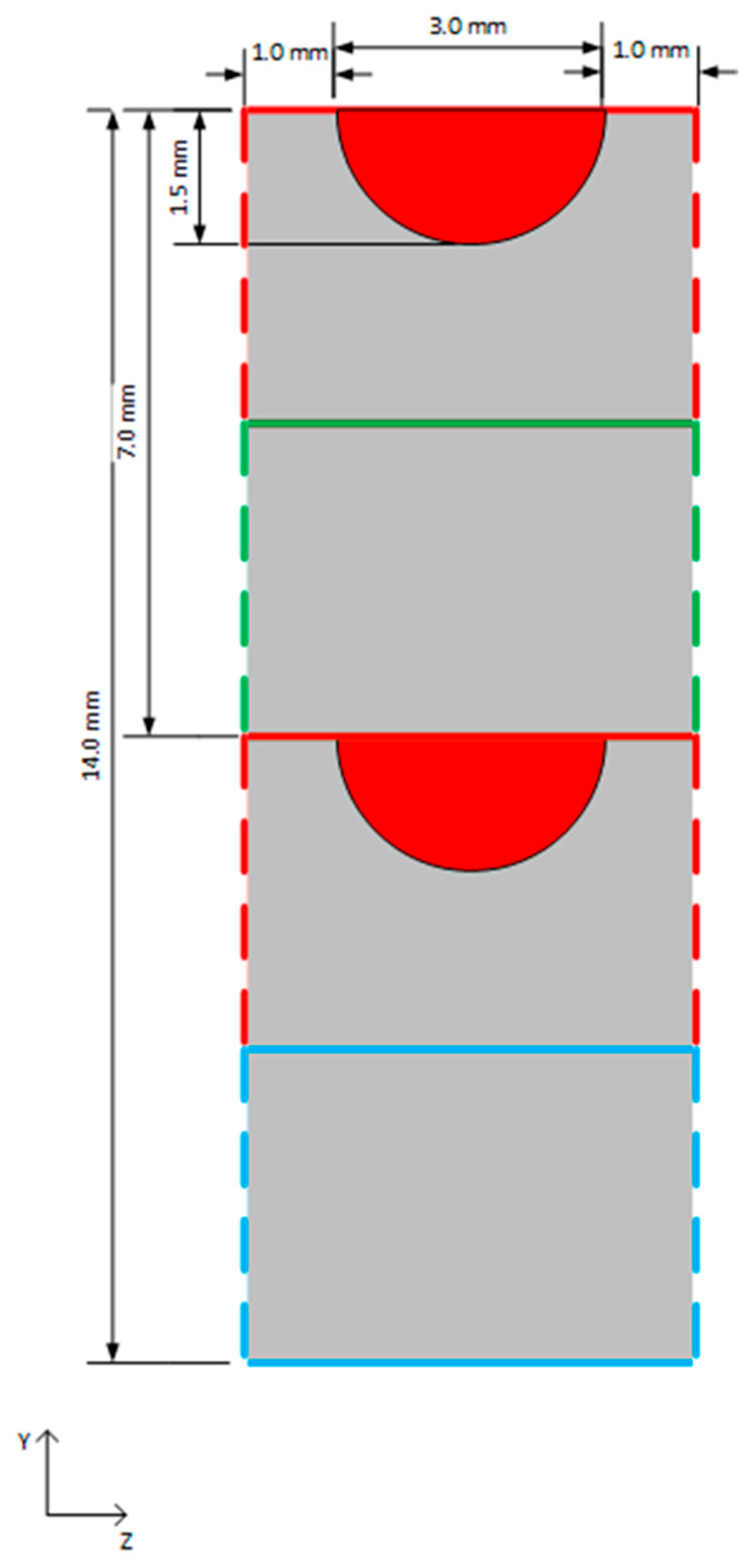
Figure 4 shows the make up of one repeating PCHE unit with one flow channel and the relevant dimensions. The dimensions are based on calculations regarding the mechanical design of PCHEs presented in a white paper from the PCHE manufacturer Heatric [15]. For this study, both the dimensions of the complete PCHE in the y-direction and z-direction were fixed, in which their values were dependent on the number of repeating units, number of process channels, channel diameter, and channel thickness.
This study uses a PCHE design consisting of 52 repeating units and 90 side-by-side process channels corresponding to a height and width of 0.91 m and 0.45 m, respectively. To determine each of the interstage PCHE lengths in the x-direction after each reaction section, the convective resistance (Equations (7) and (8)) from the process fluid and conduction resistance at the process plate interface was calculated:
R c o n v , 1 = 1 h · π D 2 · L · #   c h a n n e l s  
R c o n v , 2 = 1 h · D · L · #   c h a n n e l s
Equation (7) is used to account for the semi-circular channel contact area, whilst Equation (8) accounts for the flat region below the base of the plate as the contact area. Equation (9) describes the conduction resistance ( R c o n d ) calculation.
R c o n d = t k · π D 2 · L + D · L 2 · #   c h a n n e l s  
where k is the thermal conductivity taken at 16.3 W/m∙k for 316 stainless steel at around 340 °C [16]. With both resistances calculated, the product of the overall heat transfer coefficient and required heat transfer surface area was then calculated via Equation (10).
U A = 1   2 × R c o n d + R c o n v , 1 + R c o n v , 2
The log-mean temperature difference (LMTD) was then calculated by Equation (11):
T l m = ( T h o t , i n T c o l d , o u t ) ( T h o t , o u t T c o l d , i n ) l n T h o t , i n T c o l d , o u t T h o t , o u t T c o l d , i n
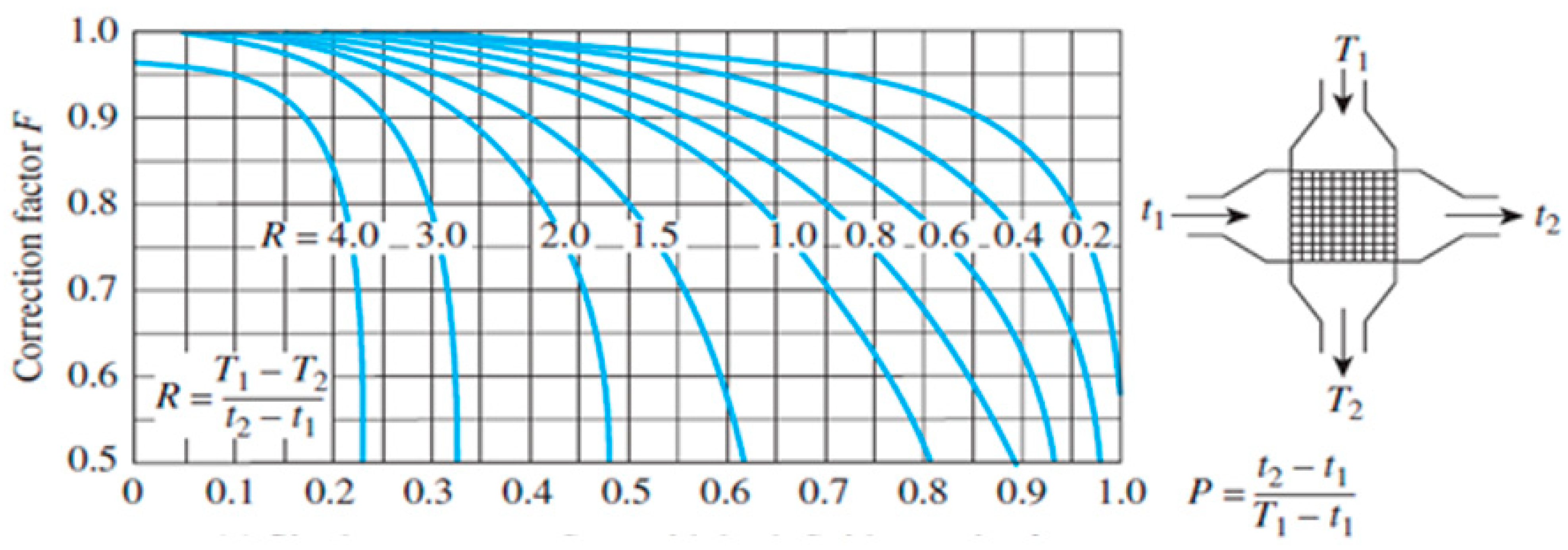
The LMTD correction factor for cross-flow was estimated using Figure 5, where R is the temperature ratio between the process and utility fluid, and P is the effectiveness parameter. For this study, the correction factor F is 0.97–0.99.
Lastly, the heat transfer rate is calculated using Equation (12):
Q = U A F T l m
The heat exchanger length L, which is embedded in the UA calculation, was varied until the calculated heat duty Q matches the simulation by Aspen HYSYS in the Gibbs equilibrium study.

4. Results and Discussion

4.1. Outlet Composition and Number of Packed Beds

Carrying out the equilibrium modelling study described in Section 3.2, it was determined that six bed sections are required for the base and upper limit cases to combust nearly all CH4 and CO whilst adhering to their respective 50 °C and 75 °C temperature rise constraints. Table 4 shows the equilibrium outlet conditions for each reactor from the base case stream composition. Equal amount of O2 is supplied to all packed beds to simplify the process control strategy. The sum of all injected O2 results in stoichiometric combustion of both CH4 and CO. It is noteworthy that the CH4 and CO content reaches acceptable levels for pipeline transport after the first reactor, but further removal was carried out for maximum useful heat recovery culminating in the final six bed design.
Table 5 shows the equilibrium outlet conditions for each reactor from the upper limit case stream composition. The upper limit case reaches pipeline specifications after four packed bed sections, and like the base case, effectively all CH4 and CO is removed by the sixth reactor outlet.
The outlet N2 content was found to be above the 1 mol% recommended from the ACTL pipeline specifications, which is due to air slippage within the PCLC unit. However, as other inert gases such as CH4 are removed, the total inert content is well below the recommended concentration of 4 mol%. Note that small amounts of hydrogen gas are created within the reactor from the water–gas shift reaction, which is then consumed before the exit.

4.2. Required Packed Bed Section Length

A packed bed section length of 0.06 m was calculated to produce the desired extent of reaction for both the base and upper limit cases. This length ensures nearly complete CH4 and CO oxidation by estimating the required length for complete CO combustion, matching equilibrium species fractions predicted by the Gibbs reactors. Table 6 shows the inlet and outlet CO concentrations and the required amount of O2 for its stoichiometric combustion for the final packed bed section in the base and upper limit cases, as well as the simulated pressure drop per packed bed.

4.3. Required Heat Exchanger Section Length

The designed PCHE lengths and temperature conditions for both the base and upper limit case stream compositions are given in Table 7. The required PCHE section lengths to reduce temperature by approximately 50 °C for the base case and 75 °C for the upper limit case were 0.19 m and 0.265 m, respectively. Furthermore, the hydrodynamic entrance length for both exchanger sections was determined to be 0.025 m, or approximately 13% of the base case exchanger length and 10% of the upper limit case exchanger length. This value implies that in both scenarios the gas flow field fully develops early in the exchanger, which is an important factor as the applied convective heat transfer correlation assumes fully developed flow.
The heat exchanger designs are to accommodate for the largest temperature change within the IHXR and will be adopted for all heat exchanger sections to account for any potential increase in reaction exotherm due to a change in CH4/CO concentration.

4.4. Final IHXR Design

Combining the results from Section 4.2 and Section 4.3, the final IHXR design is illustrated by Figure 6. The dimensions from the upper limit case are ultimately adopted for a conservative design estimate of the required heat exchanger lengths. As gas phase heat transfer is rate limiting, the additional heat transfer area from the longer heat exchanger sections can help accommodate for process changes resulting in abnormally high amounts of CH4 and CO. Different exotherms produced from different flue gas inlet compositions can be addressed by changing the inlet pressure of the boiler feed water to adjust the heat exchange capacity.
Operating at base compositions with flue gas flow rate of 22,955 kg/h, approximately 1.6 MW of heat can be recovered as saturated steam at 180 °C and 1001 kPa at a flow rate of approximately 3835 kg/h. This saturated steam is of the same quality and condition as that generated from the PCLC process, which could be combined to serve as additional industrial heating or can be utilized for pre-heating the initial packed bed section or the various O2 fuel streams. Although the recovered heat is small compared to the 100 MW PCLC, purification of the flue gas is required, and this technology can improve efficiency while purifying the flue gas stream.

5. Conclusions

A preliminary design of an IHXR for polishing PCLC flue gas prior to CCUS was developed. Process simulations via Aspen HYSYS were used to first determine the gas phase composition exiting each packed bed section of the IHXR and then to size both the packed bed and heat exchanger sections. The equilibrium, kinetic, and thermal analyses provide a scalable framework for designing PCLC flue gas polishing systems.
The final IHXR is made up of six packed bed sections and five heat exchanger sections. Each packed bed section is 0.06 m in length, and each heat exchanger section is 0.265 m in length. The overall dimensions of the IHXR are 1.66 m × 0.91 m × 0.45 m in length, height, and width. The resulting IHXR design was able to recover approximately 1.6 MW of heat (approximately 2.3 MW/m3 IHXR) in the form of saturated steam at 180 °C and 1001 kPa at a flow rate of approximately 3835 kg/h. The recovered heat amounts to approximately 1.6% of the fuel input of the PCLC process. These dimensions correspond to the upper limit case, with a higher-than-expected inlet CH4 concentration coming from the PCLC unit, to allow for a conservative heat exchanger design for removing potential unexpected exotherms.
The limiting factor regarding the applicability of the study is the choice of reaction kinetics. The packed bed design relies on using a CO combustion reaction kinetic meant for automotive exhaust, which does not have the same operating conditions nor the same CO concentration as PCLC flue gas. Specific combustion catalysts for CH4 and CO removal from PCLC flue gas need to be developed to ensure that the design is accurate and the polished flue gas can meet the ACTL pipeline specifications. Once the appropriate catalysts have been made available, the procedure outlined in this work can be repeated for a more accurate IHXR design.

Author Contributions

Conceptualization, H.G., M.P., J.H., and A.M.; Formal analysis, H.G. and M.P.; Funding acquisition, J.H. and A.M.; Investigation, H.G. and M.P.; Methodology, H.G., M.P., J.H., and A.M.; Project administration, J.H. and A.M.; Software, H.G. and M.P.; Supervision, J.H. and A.M.; Visualization, H.G. and M.P.; Writing—original draft, Matthew and H.G.; Writing—review and editing, H.G., J.H., and A.M. All authors have read and agreed to the published version of the manuscript.

Funding

Funding from the Natural Sciences and Engineering Research Council of Canada (NSERC) through RGPIN-2020-04078 (Macchi) and RGPIN-2022-03189 (Haelssig) is gratefully acknowledged.

Data Availability Statement

Dataset available on request from the authors.

Conflicts of Interest

The authors declare no conflict of interest.

Nomenclature

DFlow channel diameter [m]
DhFlow channel hydraulic diameter [m]
fDarcy friction factor [-]
GMass flux [kg/m2]
hConvective heat transfer coefficient [W/(m2·K)]
kThermal conductivity [W/(m·K)]
LHeat exchanger length [m]
PrPrandtl number = c p μ / k [-]
PPressure [kPa]
QHeat exchanger duty [W]
RThermal resistance [K/W]
ReDReynolds number in the flow channel = G D h / μ [-]
tIHXR plate thickness [m]
TTemperature [°C]
μ Dynamic viscosity [Pa·s]

References

  1. Energy Innovation Program—Carbon Capture, Utilization and Storage RD&D Call. Available online: https://natural-resources.canada.ca/funding-partnerships/ccus-rdd-call (accessed on 28 April 2025).
  2. Furlong, A.J.; Bond, N.K.; Pegg, M.J.; Hughes, R.W. Evaluation of dust and gas explosion potential in chemical looping processes. J. Loss Prev. Process Ind. 2024, 89, 105277. [Google Scholar] [CrossRef]
  3. Ge, H.; Furlong, A.J.; Champagne, S.; Hughes, R.W.; Haelssig, J.B.; Macchi, A. Modelling and Design of a Novel Integrated Heat Exchange Reactor for Oxy-Fuel Combustion Flue Gas Deoxygenation. Energies 2024, 17, 1474. [Google Scholar] [CrossRef]
  4. Enhance Energy Inc.; North West Redwater Partnership. Alberta Carbon Trunk Line Summary Report for 2014; Government of Alberta: Edmonton, AB, Cananda, 2014.
  5. Liu, H.; Liu, M.; Liu, S.; Tang, Y.; Liu, R.; Fei, J.; Zan, Y.; Zheng, R.; Huang, Y. Prediction of supercritical CO2 flow and heat transfer behaviors in zigzag-type printed circuit heat exchangers by improved POD-GABP reduced order model. Appl. Therm. Eng. 2025, 267, 125763. [Google Scholar] [CrossRef]
  6. Park, J.H.; Kwon, J.G.; Kim, T.H.; Kim, M.H.; Cha, J.-E.; Jo, H. Experimental study of a straight channel printed circuit heat exchanger on supercritical CO2 near the critical point with water cooling. Int. J. Heat Mass Transf. 2020, 150, 119364. [Google Scholar] [CrossRef]
  7. Alain, A.E.; Ge, H.; Champagne, S.; Haelssig, J.; Macchi, A.; Hughes, R.W. Modelling of an intensified heat exchange reactor for flue gas polishing in a 600 kWth pressurized chemical looping pilot plant. In Proceedings of the 7th International Conference on Chemical Looping, Banff, AB, Canada, 29 September–2 October 2024. [Google Scholar]
  8. Halabi, M.; de Croon, M.; van der Schaff, J.; Cobden, P.; Schouten, J. Modeling and analysis of autothermal reforming of methane to hydrogen in a fixed bed reformer. Chem. Eng. J. 2008, 137, 568–578. [Google Scholar] [CrossRef]
  9. Yao, Y.-F.Y. The oxidation of CO and hydrocarbons over noble metal catalysts. J. Catal. 1984, 87, 152–162. [Google Scholar] [CrossRef]
  10. Methane. Available online: https://www.inchem.org/documents/icsc/icsc/eics0291.htm (accessed on 28 April 2025).
  11. Turton, R.; Shaeiwitz, J.A. Chemical Process Equipment Design; Prentice Hall: Boston, MA, USA, 2017. [Google Scholar]
  12. He, L.; Fan, Y.; Bellettre, J.; Yue, J.; Luo, L. A review on catalytic methane combustion at low temperatures: Catalysts, mechanisms, reaction conditions and reactor designs. Renew. Sustain. Energy Rev. 2020, 119, 109589. [Google Scholar] [CrossRef]
  13. Gnielinski, V. New Equations for Heat and Mass Transfer in Turbulent Pipe and Channel Flow. Int. Chem. Eng. 1976, 16, 359–367. [Google Scholar]
  14. Hesselgreaves, J.E.; Law, R.; Reay, D.A. Compact Heat Exchangers: Selection, Design and Operation; Butterworth-Heinemann: Cambridge, MA, USA, 2017. [Google Scholar]
  15. Le Pierres, R.; Southall, D.; Osborne, S. Impact of Mechanical Design Issues on Printed Circuit Heat Exchangers. In Proceedings of the SCO2 Power Cycle Symposium, Boulder, CO, USA, 24–25 May 2011. [Google Scholar]
  16. Material Properties: 316 Stainless. Available online: https://trc.nist.gov/cryogenics/materials/316Stainless/316Stainless_rev.htm (accessed on 20 August 2025).
  17. Cengel, Y.A.; Ghajar, A.J. Heat and Mass Transfer; McGraw-Hill Education: New York, NY, USA, 2015. [Google Scholar]
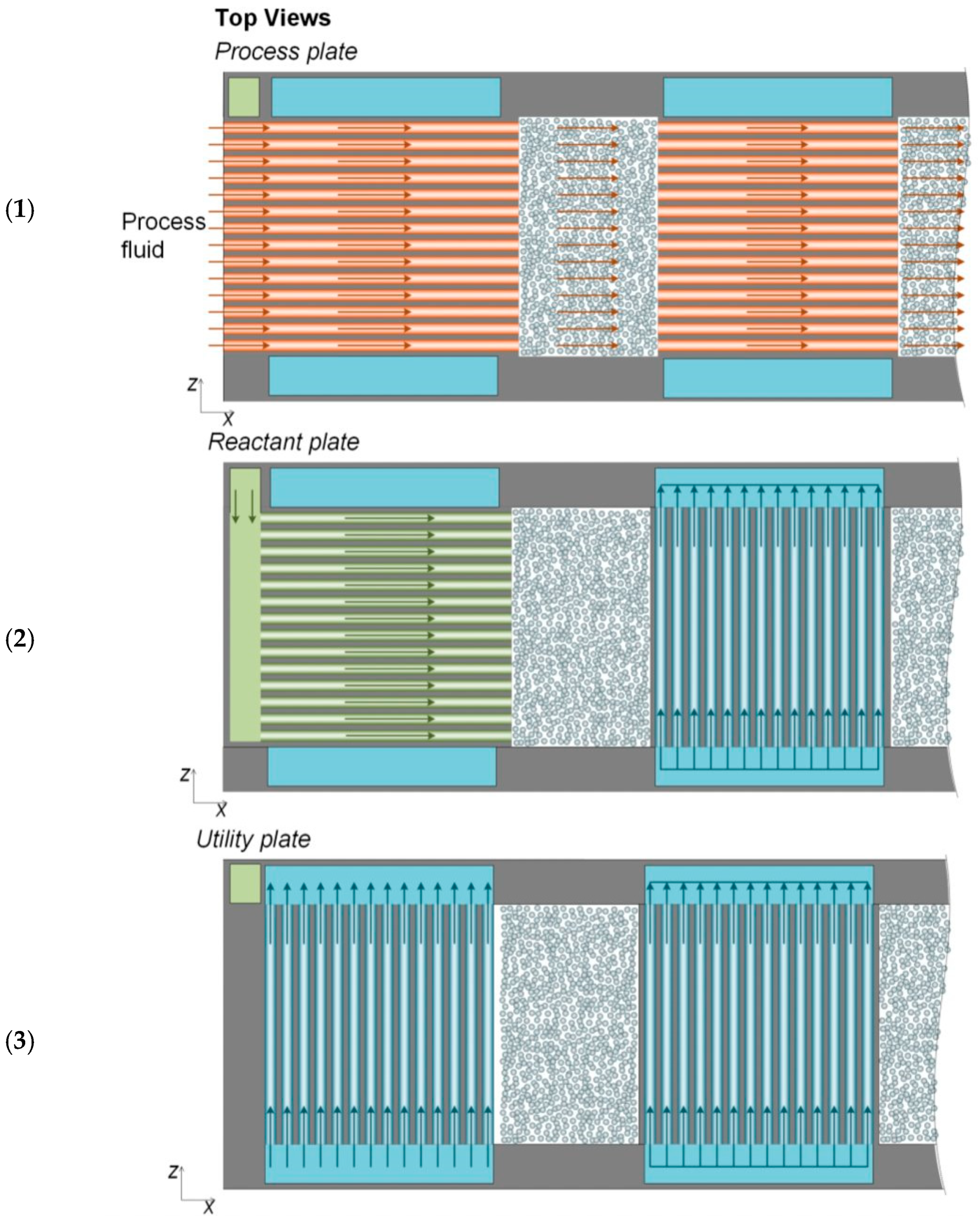
Figure 1. Top view of IHXR unit, where plates from top to bottom are (1) process plate, (2) reactant plate, and (3) utility plate [3].
Energies 18 06393 g001
Figure 2. Block flow diagram of PCLC process and pathway to downstream CCUS.
Energies 18 06393 g002
Figure 3. Simplified IHXR layout.
Energies 18 06393 g003
Figure 4. Front view of the repeating PCHE unit: red, process plate; green, reactant plate; and blue, utility plate [3].
Energies 18 06393 g004
Figure 5. LMTD correction factor for unmixed cross-flow flow pattern [17].
Energies 18 06393 g005
Figure 6. Final design configuration and dimensions of the IHXR unit.
Energies 18 06393 g006
Table 1. ACTL pipeline specifications for CO2 transportation [4].
SpeciesRequirement (mol%)
Minimum CO295
Maximum CH41
Maximum CO1
Maximum H21
Maximum O20.1
Maximum N21
Maximum Hydrocarbons2
Maximum Inert (N2, Ar, CH4)4
Table 2. Base case stream composition, 98.5% CH4 conversion in PCLC (left); upper limit stream composition, 97% CH4 conversion in PCLC (right).
SpeciesInlet Feed (kmol/h)SpeciesInlet Feed (kmol/h)
CH46.16CH412.32
CO2503.64CO2497.48
CO7.29CO7.29
H2O17.19H2O17.19
Hydrogen0.00Hydrogen0.00
Oxygen0.00Oxygen0.00
Nitrogen6.33Nitrogen6.33
Table 3. Process simulation parameters and kinetic parameters for packed bed sizing [7].
Flue gas flow rate22,955 kg/h
Reaction temperature/pressure350 °C/665 kPa
Reactor hydraulic diameter0.72 m
Properties of Pd/CeO2/Al2O3 catalyst
Particle density4643 kgcat/m3cat
Particle diameter0.003 m
Bed void fraction0.55
Activation energy62,760 kJ/kmol
Pre-exponential factor3.14 × 107 kmol CO2/m3cat·s·bar2
m0.6
n0.7
Table 4. Species equilibrium concentrations at each reactor outlet in base case study.
Composition—Dry Basis (%)Reactor 1Reactor 2Reactor 3Reactor 4Reactor 5Reactor 6
Methane0.950.740.510.290.090.00
CO296.5296.8097.0897.3997.8998.79
CO0.860.720.610.510.370.00
Hydrogen0.390.380.370.340.270.00
Oxygen0.000.000.000.000.000.00
Nitrogen1.201.201.201.201.201.21
Additional Info
O2 injection rate (kmol/h)2.662.662.662.662.662.66
Outlet T (°C)397.1394.1393.3393.3394.0399.7
Table 5. Species equilibrium concentrations at each reactor outlet in upper limit case study.
Composition—Dry Basis (%)Reactor 1Reactor 2Reactor 3Reactor 4Reactor 5Reactor 6
Methane1.721.270.870.480.140.00
CO295.0995.5396.0996.7197.4598.80
CO1.391.341.180.980.700.00
Hydrogen0.610.670.680.640.510.00
Oxygen0.000.000.000.000.000.00
Nitrogen1.191.191.191.191.191.20
Additional Info
O2 injection rate (kmol/h)4.714.714.714.714.714.71
Outlet T (°C)417.0422.9424.7425.4426.9437.0
Table 6. PFR model kinetic study results for the last packed bed section.
Gibbs Reactor Inlet ConditionsLength (m)O2 Injection (kmol/h)Inlet CO (kmol/h)Outlet CO (kmol/h)Pressure Drop (kPa)
Base case0.060.981.960.007.11
Upper limit case0.061.873.730.007.62
Table 7. PCHE results for base case and upper limit HEX case studies.
CH4
Conversion
Exchanger Length
(m)
Entrance Length
(m)
Inlet Gas
Temperature
(°C)
Outlet Gas
Temperature
(°C)
98.50.190.025397350.0
970.2650.025427350.0
Disclaimer/Publisher’s Note: The statements, opinions and data contained in all publications are solely those of the individual author(s) and contributor(s) and not of MDPI and/or the editor(s). MDPI and/or the editor(s) disclaim responsibility for any injury to people or property resulting from any ideas, methods, instructions or products referred to in the content.