Article

Research on the Alternating Current Properties of Cellulose–Innovative Bio-Oil Nanocomposite as the Fundamental Component of Power Transformer Insulation—Determination of Nanodroplet Dimensions and the Distances Between Them


1
Department of Electrical Devices and High Voltage Technology, Lublin University of Technology, 38a, Nadbystrzycka Street, 20-618 Lublin, Poland
2
Department of High Voltage and Power Engineering, West Pomeranian University of Technology, 37, Sikorskiego Street, 70-313 Szczecin, Poland
3
Energo-Complex Sp. z o.o., 9, Lotników Street, 41-949 Piekary Śląskie, Poland
4
Department of Electric Power Engineering and Renewable Energy, Opole University of Technology, 76, Prószkowska Street, 45-758 Opole, Poland
5
Lublin University of Technology, 38d, Nadbystrzycka Street, 20-618 Lublin, Poland
*
Author to whom correspondence should be addressed.
Energies 2025, 18(23), 6311; https://doi.org/10.3390/en18236311 (registering DOI)
Submission received: 19 October 2025 / Revised: 18 November 2025 / Accepted: 28 November 2025 / Published: 30 November 2025
(This article belongs to the Section F: Electrical Engineering)

Abstract

The paper presents measurements of frequency dependence of conductivity and real components of complex permittivity of a nanocomposite consisting of electrical pressboard, bio-insulating oil and water nanodroplets with moisture content ranging from 0.6 wt.% to 5 wt.%. Bio-oil meets high environmental requirements—it is fully biodegradable, and its combustion products are significantly less harmful than those of mineral oil. In addition, the use of bio-oil reduces the carbon footprint of power transformer production. The quantum mechanical phenomenon of electron tunnelling between potential wells created by water nanodroplets was used to analyze the experimental results obtained. The study determined the effect of moisture content on the relative relaxation time values. On this basis, the number of water molecules in nanodroplets, their diameters and the concentration of nanodroplets depending on moisture content were determined. The distances over which electrons tunnel in moist pressboard impregnated with bio-oil were determined. These values are the expected values of the probability distribution of the distance between neighbouring nanodroplets. The values of the number of water molecules in nanodroplets are also the expected values of the probability distribution of the number of molecules in nanodroplets. It has been established that during many years of transformer life, several parallel processes occur as the moisture content in bio-oil-impregnated pressboard increases. One of them involves the accumulation of water molecules collected in the pressboard in nanodroplets. The second is an increase in the concentration of nanodroplets. The third is an increase in the average number of water molecules in nanodroplets.

1. Introduction

Power transformers are a fundamental component of the power system. The fault-free operation of transformers ensures system stability and reliability in the supply of energy to consumers. Moreover, for over 100 years, the most commonly used material for the insulation of power transformers has been cellulose impregnated with mineral insulating oil in the form of paper or pressboard [1,2]. Cellulose materials provide the required electrical strength and serve as a mechanical structure for electrical and magnetic circuits. Oil has three basic functions. The first is to contribute to insulation in oil channels. The second is to impregnate cellulose, which prevents it from ageing. The third function is to cool the active parts of the transformer [3,4].
Challenges related to environmental protection and reducing the rate of global warming are forcing manufacturers to reduce their carbon footprint. As a result, we can expect to see the gradual elimination of petroleum-based mineral oil, which is currently used in transformer insulation [5,6,7,8]. It will be replaced, among other things, by plant-based bio-oils. An excellent example of such an oil is the innovative Nynas NYTRO BIO 300X. This oil is produced by Nynas AB Raffinaderivagen, Sweden, and is currently used in the manufacture of power transformers [9]. Nynas NYTRO BIO 300X bio-oil has been used in the manufacture of numerous transformers ranging from medium to high voltages. Examples of some of these applications are described in several publications, see, for example [5,10,11,12]. Therefore, in the coming years, there will be a problem with reliable diagnostics of the condition of power transformer insulation containing bio-oil. As is well known, FDS diagnostics are based on so-called reference characteristics. This means that reference relationships for the AC parameters of bio-oil-impregnated electrical pressboard should be developed.
During the transformer manufacturing process, cellulose insulation is dried under reduced pressure to a moisture content not exceeding 0.8 wt.% [2,13]. Next, the transformer is filled with degassed oil. During many years of transformer life, there is a gradual increase in moisture content in the liquid–solid insulation. According to the US Standard [14], once the moisture content exceeds 2.5 wt.%, the ageing processes in cellulose accelerates. However, when the moisture content approaches the so-called critical level of approximately 5 wt.% [15,16,17,18], catastrophic failure may occur. Therefore, the moisture content of cellulose must be checked regularly.
Currently, electrical methods are the most used to determine the moisture content of power transformer insulation consisting of pressboard and mineral oil. These include methods using time domain measurements such as PDC (Polarisation Depolarisation Current) [19,20,21] and RVM (Return Voltage Measurement) [22,23,24] methods, and the FDS (Frequency Domain Spectroscopy) method using frequency relationships [25,26,27,28]. Moreover, several companies manufacture specialized FDS impedance meters designed for transformer insulation diagnostics [29,30]. FDS meters are equipped with software that allows moisture content to be estimated based on measurement results. The degree of moisture is determined based on so-called reference relationships. These relationships were determined based on laboratory measurements of pressboard with specified degrees of moisture, impregnated with mineral oil.
Based on measurements of NYTRO BIO 300X bio-oil, it was determined that the actual component of complex permeability (hereinafter referred to as permeability) at a frequency of 50 Hz is approximately 1.92. Permeability is one of two material components determining the tangent of the loss angle. This value is almost 15% lower than that for mineral oil—2.2. This alone means that the use of innovative NYTRO BIO 300X oil in transformers requires the determination of reference characteristics for pressboard impregnated with bio-oil.
A series of studies determined the reference characteristics of moistened pressboard impregnated with bio-oil [31,32]. Moreover, in papers [31,33], it was established that in a nanocomposite of pressboard impregnated with insulating oil–water nanodroplets, conductivity occurs due to the quantum-mechanical phenomenon of electron tunnelling. It was established that tunnelling occurs between water nanodroplets. In a nanocomposite of pressboard–bio-oil–water nanodroplets, the random distribution of nanodroplets causes a probability distribution of the distances between neighbouring nanodroplets. The expected values of the distances between nanodroplets have a significant impact on the values and relaxation times of conductivity, real and imaginary components of complex permittivity, and the tangent of the loss angle of the paper–oil insulation of power transformers. Therefore, the aim of this study was to determine the dimensions of nanodroplets based on frequency-dependent conductivity relationships and the expected distributions of distances between nanodroplets in a pressboard containing 0.6 wt.% to 5wt.% water impregnated with Nynas NYTRO BIO 300X bio-oil.
In conclusion the aim of this study was to determine the dimensions of nanodrops based on frequency-dependent conductivity relationships.

2. Materials and Methods

For the measurements, six pressboard samples were prepared with moisture contents of 0.6 wt.% and from 1 wt.% to 5 wt.% in 1 wt.% increments. For each moisture content, measurements were taken at temperatures ranging from 20 °C to 70 °C in 10 °C steps. In our previous publications [31,32], we determined the so-called reference characteristics of moisture-containing pressboard impregnated with bio-oil. The reference characteristics consist of conductivity, real and imaginary components of complex permittivity, and loss tangent. The preparation of the moistened samples followed a standard procedure described in numerous publications (see, for example, [34,35,36,37]). The samples were dried in a vacuum chamber at a pressure below 1 hPa and a temperature of 80 °C for 72 h. After drying, the moisture content in the samples was determined using the Karl Fischer titration method [38], yielding approximately 0.6% by weight. After removal from the vacuum chamber, the mass of each sample was measured, and considering the residual water content after drying, the target mass corresponding to the desired moisture level was calculated. The sample was then left exposed to air to absorb ambient moisture. During the moistening process, the mass of the sample was continuously monitored. Once the target mass was reached, the sample was immersed in Nytro Bio 300X oil, which terminated the moistening process. Next, the sample was impregnated in a hermetically sealed vessel filled with bio-oil at a temperature of 45 °C for 14 days. After the impregnation process was completed, the sample was placed in a three-electrode measuring capacitor, which was then inserted into a glass vessel filled with bio-oil in a volume not exceeding ten times that of the sample. The vessel was hermetically sealed and placed in a thermostat. Once the measurement temperature stabilized, frequency domain spectroscopy (FDS) measurements were performed, starting from a frequency of 5000 Hz and ending at 10−4 Hz. The use of this standardized procedure for preparing bio-oil-impregnated, moistened pressboard samples enables a direct comparison of the results obtained in this study with those reported for mineral-oil impregnation in numerous publications (see, for example, [36,39,40,41,42]).

3. Fundamentals of the Quantum-Mechanical Phenomenon of Electron Tunnelling in a Pressboard–Bio-Oil–Water Nanodroplet Nanocomposite

In the case of conductivity via electron tunnelling between water nanodroplets, which are nearest neighbours, several factors affecting the rate of this process must be taken into account. As is well known (see, for example, [43,44]) the conductivity in the case of tunnelling between potential wells—nearest neighbours—is described by the following equation:
σ f = σ 0 exp 2 R B r exp Δ E σ k T ,
where σ(f)—conductivity, σ0—numerical coefficient, r—distance over which the electron tunnels, RB—Bohr radius of the tunnelling electron, ΔEσ—activation energy, k—Boltzmann constant, T—temperature.
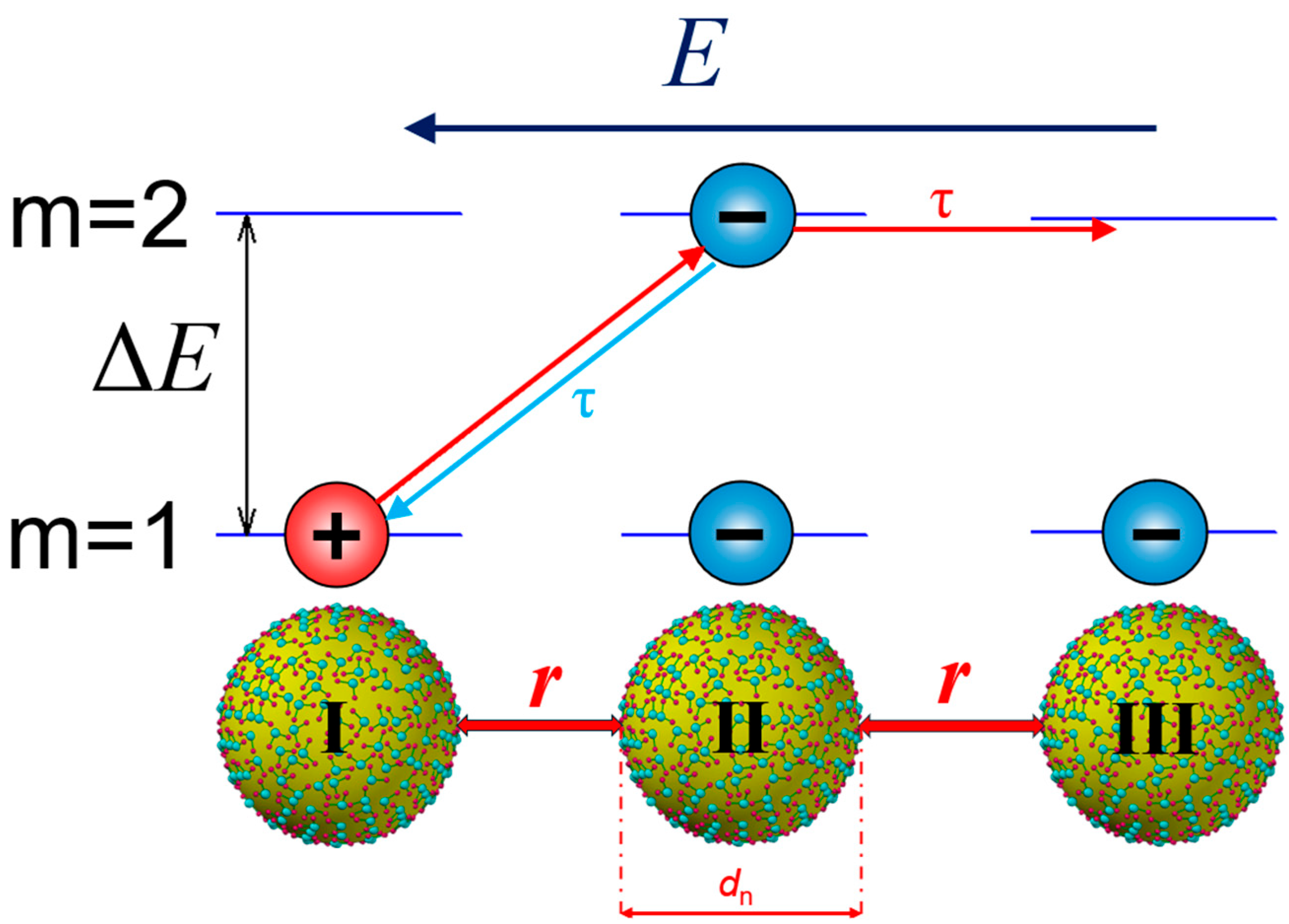
From Equation (1) it follows that one of the factors is the activation energy of conductivity, ΔEσ. Figure 1 illustrates the electron states in adjacent nanodroplets.
From the figure, it is evident that an electron cannot tunnel from one nanodroplet to another without a change in its energy. This results from the Pauli exclusion principle, which states that no more than one electron can occupy a given energy state. Since in a nanodroplet the ground state with m = 1 is occupied by an electron, tunnelling can occur only to the lowest unoccupied state m = 2. To accomplish this, the electron requires additional thermal energy ΔE, referred to as the activation energy. After tunnelling from well I to well II, an electric dipole is formed. Under certain conditions, with a sufficiently high concentration of dipoles, this may lead to additional thermally activated polarization. The electron remains in well II for a certain period, known as relaxation time. The existence of relaxation time arises from the fact that the electron acquires energy in the form of phonons, which does not exactly match the value of ΔE. For the electron to settle at the energy level with m = 2 after tunnelling, it must release the excess energy. This process is called thermalization and requires a certain time, referred to as relaxation time. After relaxation time, the electron may undergo one of two possible subsequent tunnelling events. In the first case, the electron may tunnel to well III, which results in the generation of a direct current (DC). In the second case, the electron returns to well I. Such tunnelling is associated with the occurrence of alternating current (AC) and the disappearance of the dipole. The model outlined above was developed in publications [33,45]. This model describes both AC and DC conductivity as well as the polarization of nanocomposites with a dielectric matrix–conductive inclusion structure.
The relaxation time is the second significant factor determining the material parameters of nanocomposites. The formula for the relaxation time was derived in [33]:
τ f = τ 0 exp 2 R B r exp Δ E τ k T
In the papers [31,33] it was established that the position of the frequency dependence of conductivity is influenced by two temperature-related factors. The activation energy of conductivity, ΔEσ shifts the curve along the Y-axis with temperature changes, as expressed by Equation (1). The activation energy of the relaxation time, ΔEτ, shifts it along the X-axis, as described by Equation (2).
The third parameter determining conductivity due to electron tunnelling is the so-called Bohr radius, RB, which appears in Equations (1) and (2). The Bohr radius RB defines the rate of decay of the square of the electron wave function outside the three-dimensional potential well, described by the first exponential in Equations (1) and (2). The larger the value of RB, the greater the distance over which the electron can tunnel.
The fourth factor determining the tunnelling phenomenon is the distance r, over which the electron tunnels, as described in Equations (1) and (2). It is easy to calculate in the case of tunnelling between potential wells created, for example, by individual dopant atoms in semiconductors. In this case, the average distances between the wells, i.e., nearest neighbours, are practically equal to the distances between the centre of mass of the dopant atoms and amount, according to [43] to:
R N 1 / 3 ,
where N—concentration of dopant atoms per unit volume.
In the case of nanodroplets in pressboard impregnated with insulating oil, the situation becomes more complex. The number of water molecules in the nanodroplets, denoted as n, is not known. Consequently, the average distance between the centre of mass of the nanodroplets is given by:
R n N n 1 / 3
A nanodroplet has a certain diameter dn, which depends on the number of water molecules it contains. The distance over which an electron tunnels between two nanodroplets, which are nearest neighbours, is given by, see Figure 1:
r = R n d n
For individual water molecules in pressboard with a mass fraction of water X, the average distance between the centre of mass of the potential wells is given by:
R X = N 1 3 = X ρ 100 u M H 2 O 1 3 ,
where X—water content in pressboard expressed as mass percent, ρ—density of water, u—atomic mass unit, MH2O = 18—molecular mass of water.
When water molecules aggregate into nanodroplets, the average distance between their centre of mass is given by:
R n = X ρ 100 u n M H 2 O 1 3 = n 3 R X ,
where n—the average number of water molecules in a nanodroplet.
For further calculations, Equation (7) will be transformed into the form:
R n = X ρ 100 u n M H 2 O 1 3 = 100 u n M H 2 O X ρ 1 3
The diameter of the nanodroplets is given by:
d n = 6 u n M H 2 O π ρ 1 3
By substituting into Equation (5) the values of Rn, Equation (8) and dn, Equation (9) we can calculate the average distance over which electrons tunnel between nanodroplets:
r = R n d n = u n M H 2 O ρ 1 3 100 X 1 3 6 π 1 3
By multiplying and dividing Equation (10) by 100 X 1 3 and we obtain:
r = R n d n = 100 u n M H 2 O ρ X 1 3 1 6 X 100 π 1 3
By comparing Equations (8) and (11), we can write:
r = R n d n = n 3 R X 1 6 X 100 π 1 3
From Equation (12), it follows that the formation of nanodroplets containing, on average, n water molecules leads, first, to an increase by a factor of n 3 in the distance over which electrons tunnel. Second, due to the simultaneous increase in the diameter of the nanodroplets compared to a single water molecule, a correction factor, shown in parentheses in Equation (12), must be considered. This factor reduces the distance over which electrons can tunnel.
In the case of classical percolation, caused by conductive inclusions in contact with each other, a percolation channel forms with increasing concentration of the conductive phase only when the distance between the inclusions is zero. From Equation (12), it follows that such a distance between nanodroplets is achieved when the term in parentheses in this equation becomes zero:
1 6 X 100 π 1 3 = 0
This corresponds to a moisture content of approximately 52%. This value represents the percolation threshold, which is close to the values observed for matrices composed of conductive spheres of macroscopic dimensions with various structures, such as square, triangular, and more complex arrangements. The percolation threshold values, determined based on computer simulations for these matrices range from approximately 0.4 to 0.6, depending on the geometry of the matrices [46,47,48,49,50,51,52,53].
In the case of electron tunnelling, the formation of a percolation channel does not require the nanodroplets to be in direct contact. It is sufficient for the nanodroplets to be separated by a dielectric with nanometre-scale thickness. It can be seen, that in the studied nanocomposite—pressboard containing water nanodroplets, impregnated with bio-oil—the percolation threshold is Xc ≈ 1.4%. Comparing this value with the percolation threshold of approximately 52%, determined from Equation (13), indicates that the experimental percolation threshold is about 35 times lower. This implies that in cellulose–insulating oil–water nanodroplet composites, the percolation phenomenon manifests much earlier than in classical conductivity scenarios in composites with macroscopic conductive inclusions. Percolation in the studied nanocomposites, which leads to direct current flow, begins at significantly lower concentrations of conductive inclusions than required for contact between nanodroplets. This further confirms the validity of applying the quantum-mechanical phenomenon of electron tunnelling to analyze conductivity in cellulose–oil composites containing moisture, which are a fundamental component of power transformer insulation.

4. Determination of the Relative Relaxation Times Based on the Frequency Dependence of Conductivity

From AC measurements, the relaxation times cannot be determined directly. To estimate them, we will use Equations (1) and (2), along with the experimentally established finding reported in [40] that, in the case of a nanocomposite pressboard impregnated with mineral oil or bio-oil containing water nanodroplets, the values of these two activation energies are identical within the limits of experimental uncertainty:
Δ E A W Δ E σ Δ E τ ( 1 . 02627 ± 0 . 01606 ) eV
and do not depend on temperature, frequency, or moisture content.
We will take into account, that firstly, the activation energies of both phenomena—conductivity and relaxation—are identical, as expressed by Equation (14). Secondly, both phenomena occur in the same material with a moisture content of X%. This means that the average distance r over which electrons tunnel is the same for both conductivity and relaxation time. In this case, the value of the Bohr radius is also identical. To determine the relaxation times, we will multiply Equations (1) and (2):
σ f τ f = σ 0 exp 2 R B r exp Δ E A W k T τ 0 exp 2 R B r exp Δ E A W k T = σ 0 τ 0
From Equation (15), it follows that:
τ r e f f = σ 0 τ 0 σ f
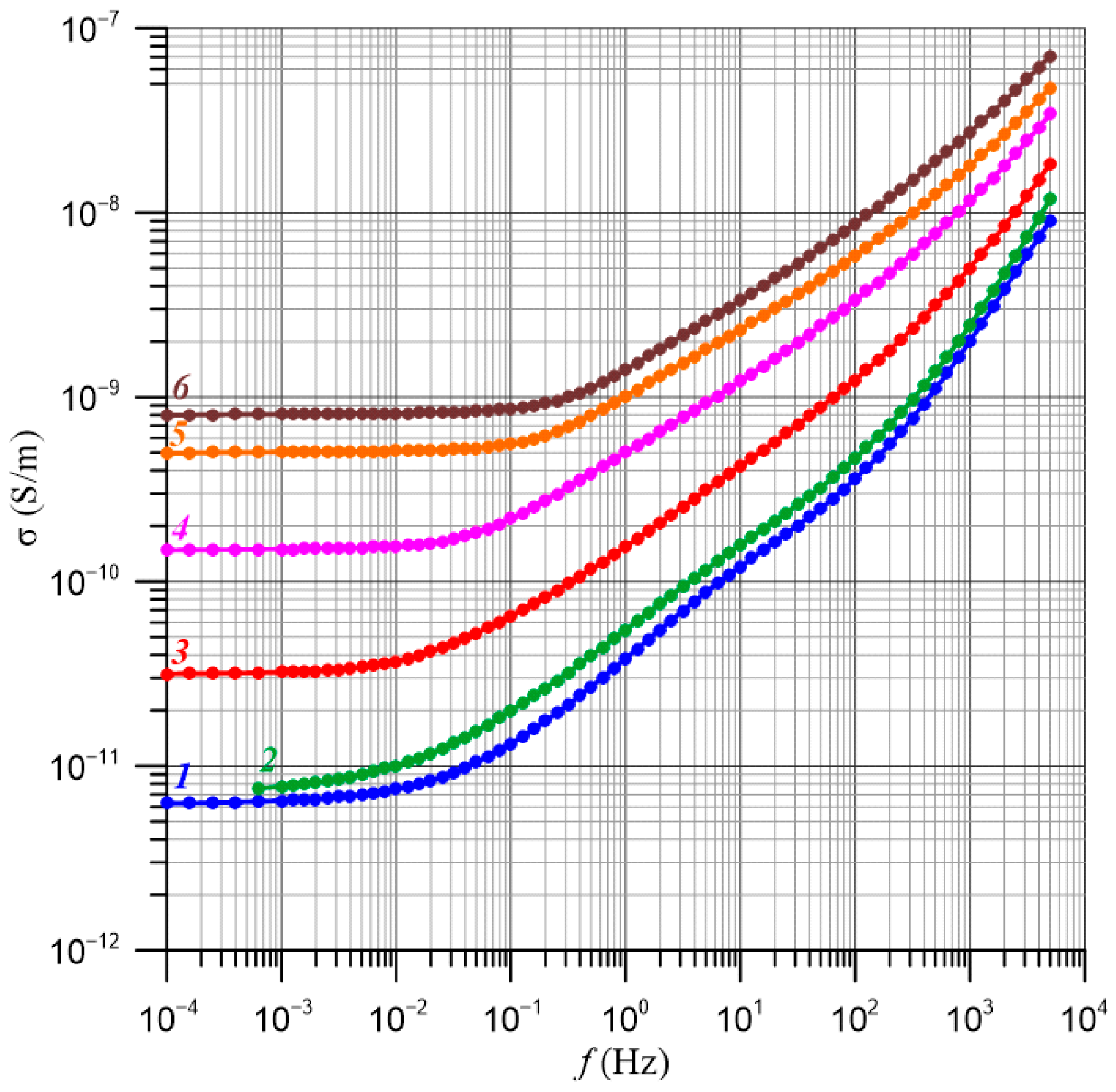
As follows from Equation (16), the value of the relaxation time can be determined with an uncertainty corresponding to an unspecified constant σ0τ0. The value of σ(f) can be determined experimentally (see, for example, Figure 2). The experimental value of σ(f), which appears in the denominator of Equation (16), implicitly includes the value of σ0. This means that by applying Equation (16) together with the experimentally determined dependence σ(f), we can calculate the value of τ(f) with an accuracy limited by the constant factor τ0. As shown in Equation (2), this factor does not depend on temperature T, frequency f, or moisture content X. This relationship can be expressed as follows:
τ 0 = c o n s t ( T , f , X )
In Equation (1) for conductivity, the second exponential term appears, the value of which depends on temperature. From Equation (1) it follows that, in order to eliminate the influence of temperature on the calculation results of the relaxation times according to Equation (16), it is necessary to select the same temperature TC for different moisture contents in pressboard:
σ f , X , T C = c o n s t = σ 0 exp 2 R B r exp Δ E σ k T C
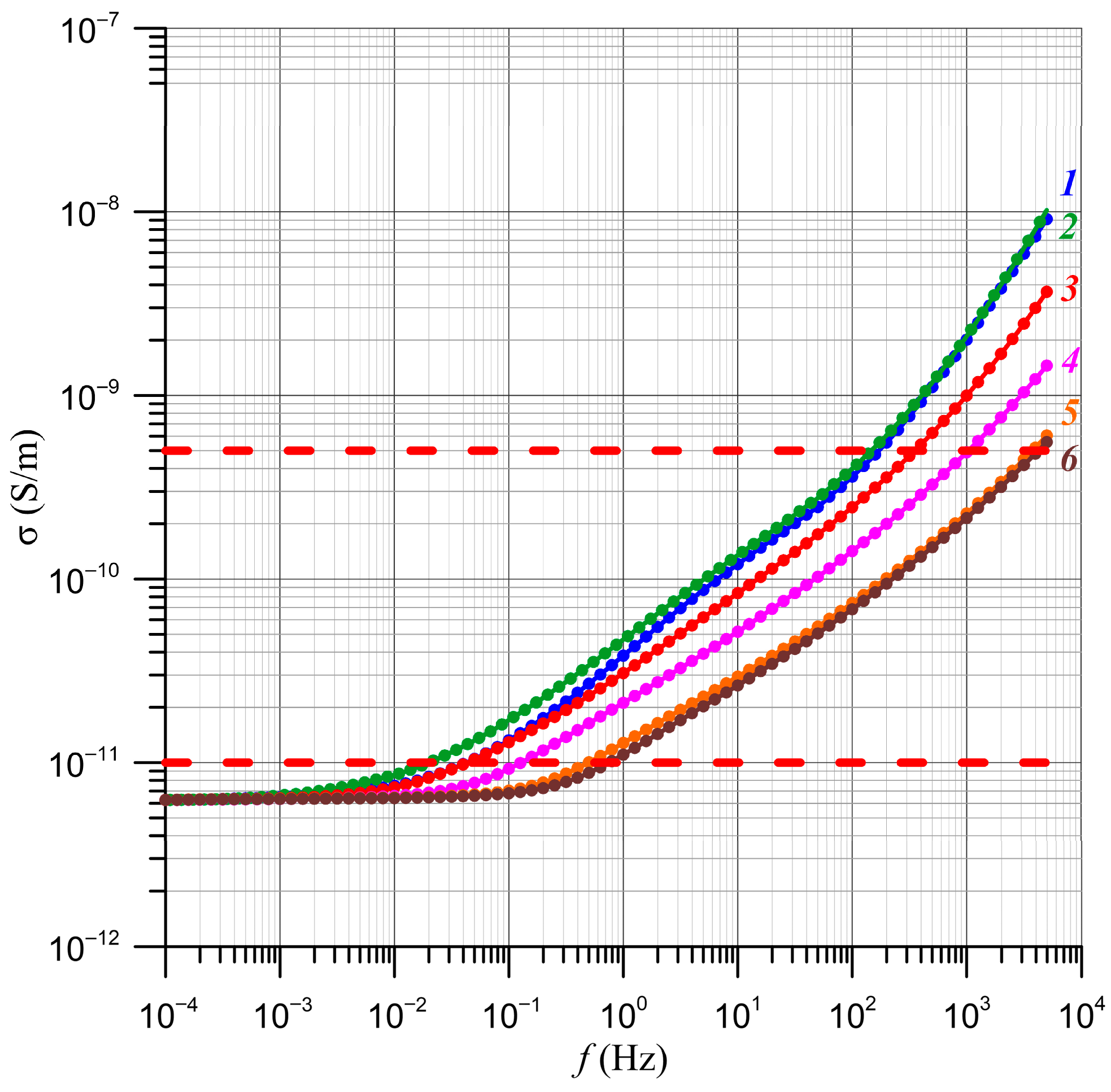
Figure 2 shows the experimental frequency dependences of conductivity for pressboard samples with moisture contents ranging from 0.6% to 5%, measured at a temperature of 70 °C. Any temperature within the range of 20 °C to 70 °C could be selected. The temperature of 70 °C was chosen because it is close to the temperature occurring during transformer operation under load. Equation (19) allows the results obtained for a temperature of 70 °C to be converted to any other temperature.
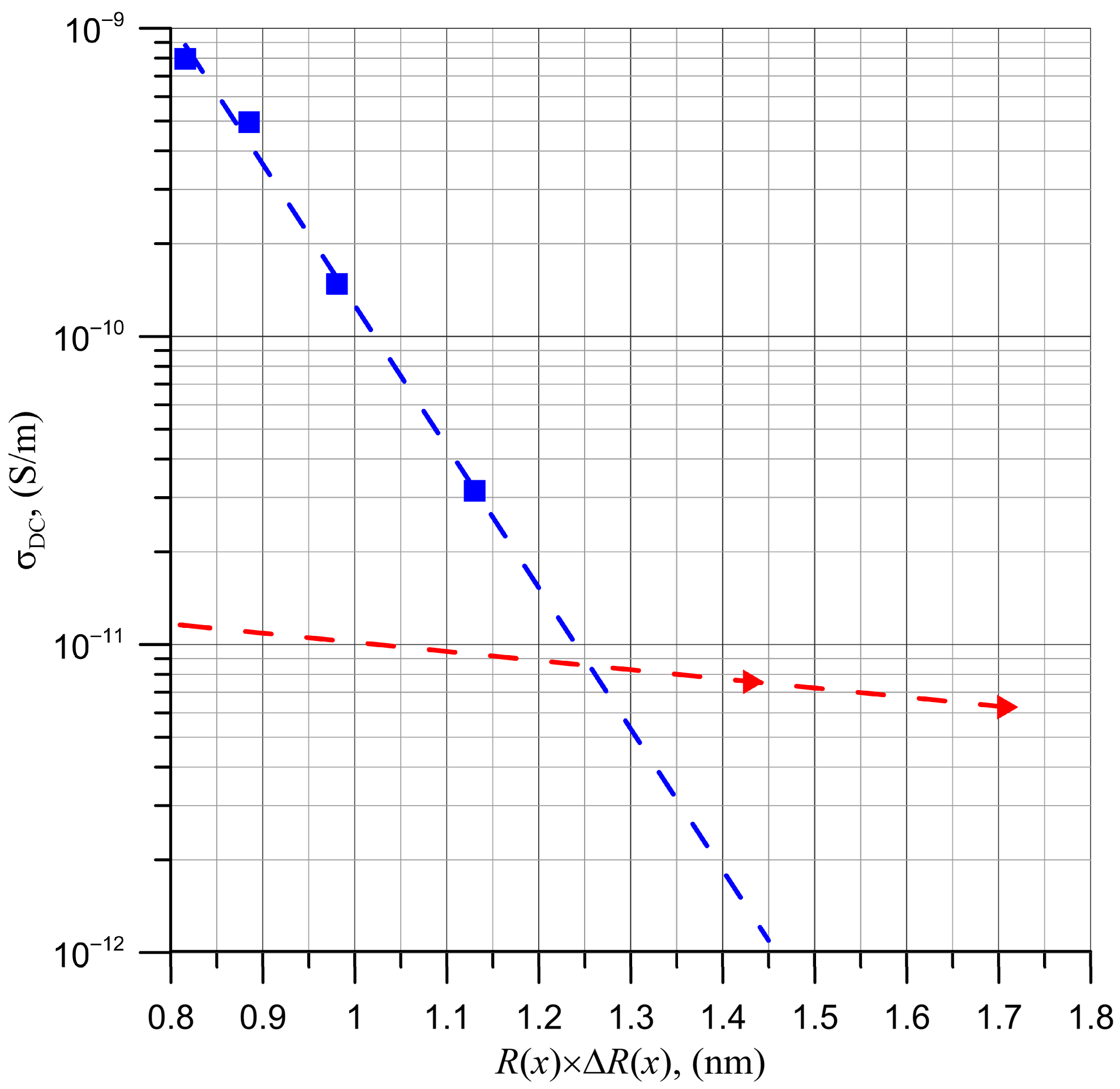
From Figure 2, it can be seen, that in the low-frequency region, the conductivity is independent of frequency. This corresponds to DC conductivity. Based on the values of the DC conductivities, their dependence on the distance between water molecules R(X) was determined using Equation (6). The results are presented in Figure 3.
From Figure 3, it can be seen, that for water contents X from 0.6% to 1%, the DC conductivity is nearly constant. Such a change in moisture content practically does not affect the conductivity. For moisture contents X ≥ 2%, an increasing trend is observed. When the moisture content changes from 2% to 5% (a 2.5-fold increase), the DC conductivity rises by approximately 26 times, much faster than linearly. The approximation lines for both σ DC dependencies intersect at a point corresponding to a moisture content of approximately XC ≈ 1.4%. Moisture contents of 0.6% and 1% are below the percolation threshold. For higher values, a rapid increase in conductivity begins, caused by electron tunnelling. The intersection of the flat and rapidly increasing segments can be considered the percolation threshold. From Figure 2, it is also apparent that with increasing moisture content, the DC conductivity curves shift to higher conductivity values. This is because of moisture content on conductivity, as described by Equations (1) and (7). In a certain frequency range, conductivity starts to increase, marking the transition from DC to AC conductivity. The onset of this increase shifts to higher frequencies as moisture content increases. This is caused by a reduction in the relaxation times, as described by Equation (2).
To determine the relative relaxation times, the curves shown in Figure 2 were shifted in the low-frequency region to the curve at X = 2%, which is above the percolation threshold. The results of this operation are presented in Figure 4. In this frequency range, the conductivity is a constant value and does not depend on the relaxation time [31].
Such a shift allowed for the elimination of the influence of conductivity changes related to moisture content on the position of the curves. The position of the shifted curves in Figure 4 is affected solely by the dependence of the relaxation time on moisture content, described by the following equation:
τ r e f f , X , T C = c o n s t = τ 0 σ 0 σ ( f , X , T C = c o n s t ) = τ 0 H exp 2 R B r ,
where H = σ 0 exp Δ E σ k T C .
With increasing moisture content, the relaxation time decreases, causing the σ(f) curves to shift toward higher frequencies. The shift is proportional to the inverse of the relaxation time:
2 π f r e f σ = 1 τ r e f σ
Equation (19) contains as-yet unknown values of r, described by Equation (10), as well as the Bohr radius RB. Therefore, for the calculation of relative relaxation times, Equation (19) can be rewritten in the following form:
τ r e f f , X , T = c o n s t = τ 0 H exp [ K σ , X R X ] ,
where R(X) described by Equation (6).
By taking the logarithm of Equation (21) and considering Equation (20), we obtain:
ln [ τ r e f σ ] = ln [ 2 π f r e f σ ] = ln H τ 0 + K σ , X R X
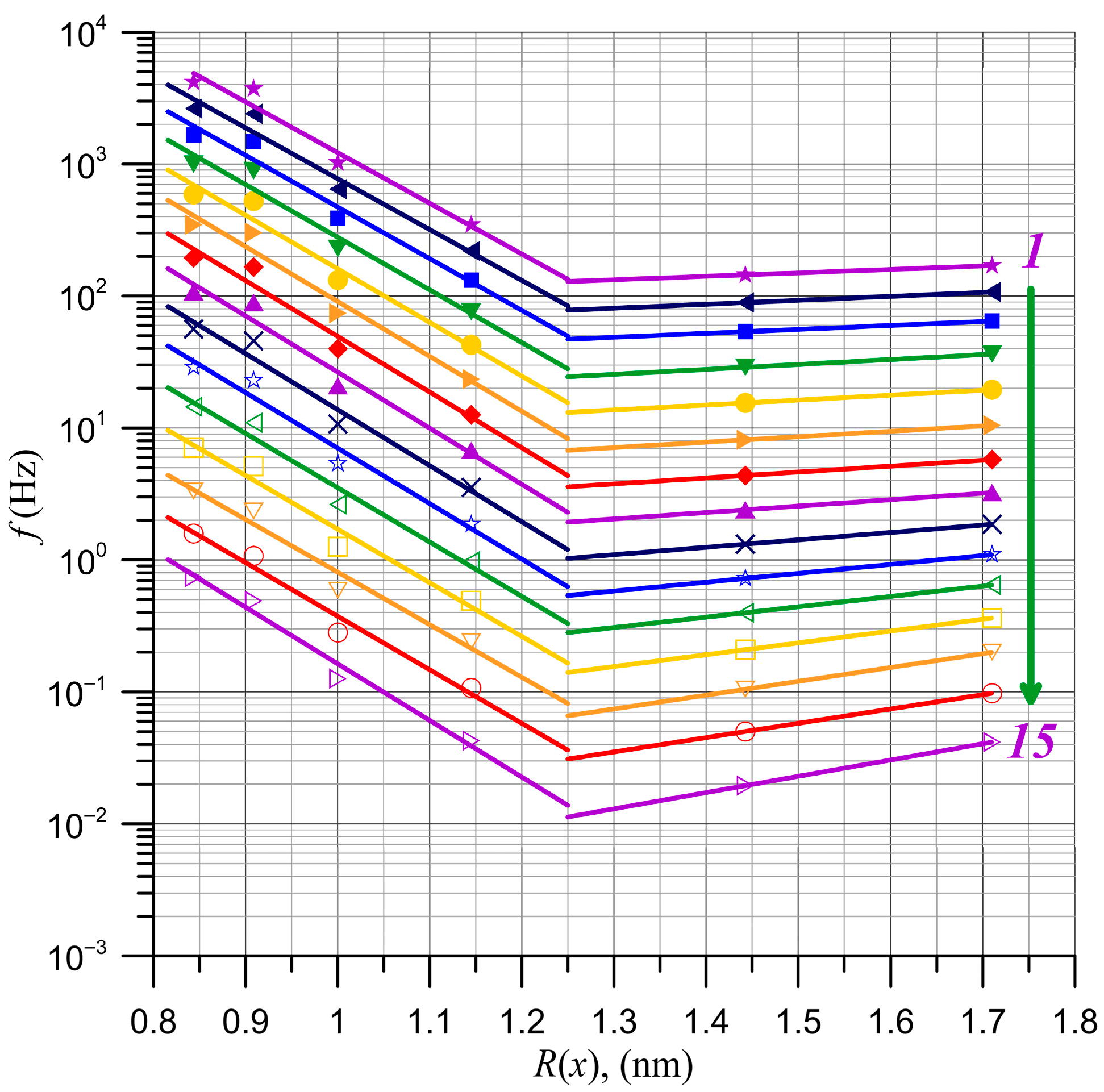
To determine the coefficient K(σ,X) from Equation (21), a conductivity range was selected from Figure 4 that includes the curves for all moisture contents X, indicated by dashed lines. Within this range, 15 conductivity values σi were chosen, listed in Table 1. For each of these values, the frequencies f(σi,R(X)) at which the selected conductivity σi occurs for each moisture content were determined. Based on these data, the dependencies of f(σi) on R(X) were plotted, as shown in Figure 5.
From Figure 5, it can be seen that, like to the case of DC conductivity (Figure 3), for moisture contents from 0.6% to 1% the dependencies are weak. These contents are below the percolation threshold, which has little effect on the relaxation time values. For moisture contents above 1%, a rapid increase in AC conductivity is observed, caused by changes in the relaxation time. Linear approximations of the obtained dependencies were performed. Based on the approximating equations, 15 values of the coefficients K(σi) were determined and are listed in Table 1.
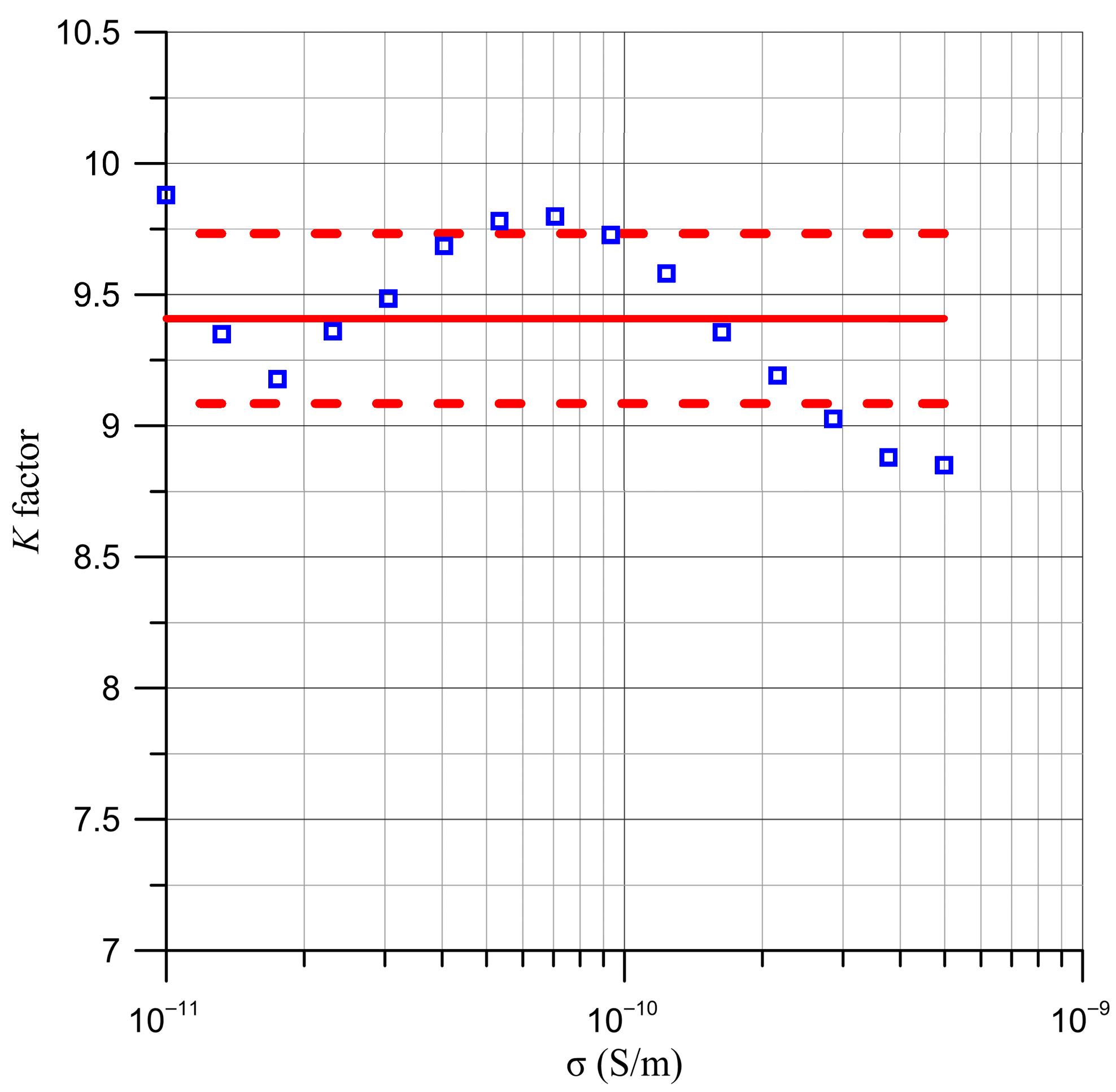
The values of the determination coefficients R2 indicate a high accuracy of the approximation. Based on the 15 residual values of the coefficients Ki, the mean value and standard deviation were calculated, resulting in K(σ,X) ≈ (9.409 ± 0.3239). The accuracy of determining K(σ,X) is high, with an uncertainty of only ±3.44%. Figure 6 shows the values of K(σ,X), K(σ,X) ± ∆K(σ), and the 15 residual values K(σi).
From Figure 6, it can be seen, that most of the residual values fall within the range defined by K(σ,X) ± ∆K(σ). Only 4 residual values slightly exceed this range. This indicates that the parameter K(σ) can be considered constant over a wide range of frequencies and water contents in the nanocomposite.
By comparing Equations (19) and (21), we obtain:
K σ , X R X = 2 R B r
In this equation, there are two known values. The value of K(σ,X) is given in Table 1. The value of R(X) can be calculated using Equation (6). The value of r involves the unknown number of molecules in the nanodroplets, n. As is known, a water molecule consists of a doubly negative oxygen ion and two positive hydrogen ions, which do not have free electrons. This means that electron tunnelling between water nanodroplets occurs from an oxygen ion on the surface of one nanodroplet to an oxygen ion on the surface of a neighbouring nanodroplet. From Equation (23), it follows that to determine the average number of molecules n, the Bohr radius RB of the oxygen ion is needed. To determine this, we will use the Bohr radius of the doubly negative oxygen ion known from X-ray studies. Its value, see for example [54], is R(O−2) = 0.139 nm. This value was determined from X-ray studies of crystalline compounds such as Al2O3, Fe2O3, and others, where oxygen ions are one of the fundamental, and often dominant, components. It should be noted that the X-ray radius R(O−2) is the same for different crystals. Its value does not depend on the other elements present in the crystal and is a characteristic property of the oxygen ion. In the case of pressboard–oil–water nanocomposites, water nanodroplets are not the main component and occur as impurities due to their low concentration. For example, in pressboard impregnated with mineral oil, nanodroplets contain on average about 200 molecules [55]. This means that for a water content of 5%, the concentration of nanodroplets is only 5%/200 ≈ 0.025%, which is typical for impurities. For impurities, the Bohr radius increases proportionally to the high-frequency real component of the complex permittivity of the medium in which the impurities are embedded [56]. This implies that:
R B = R O 2 ε
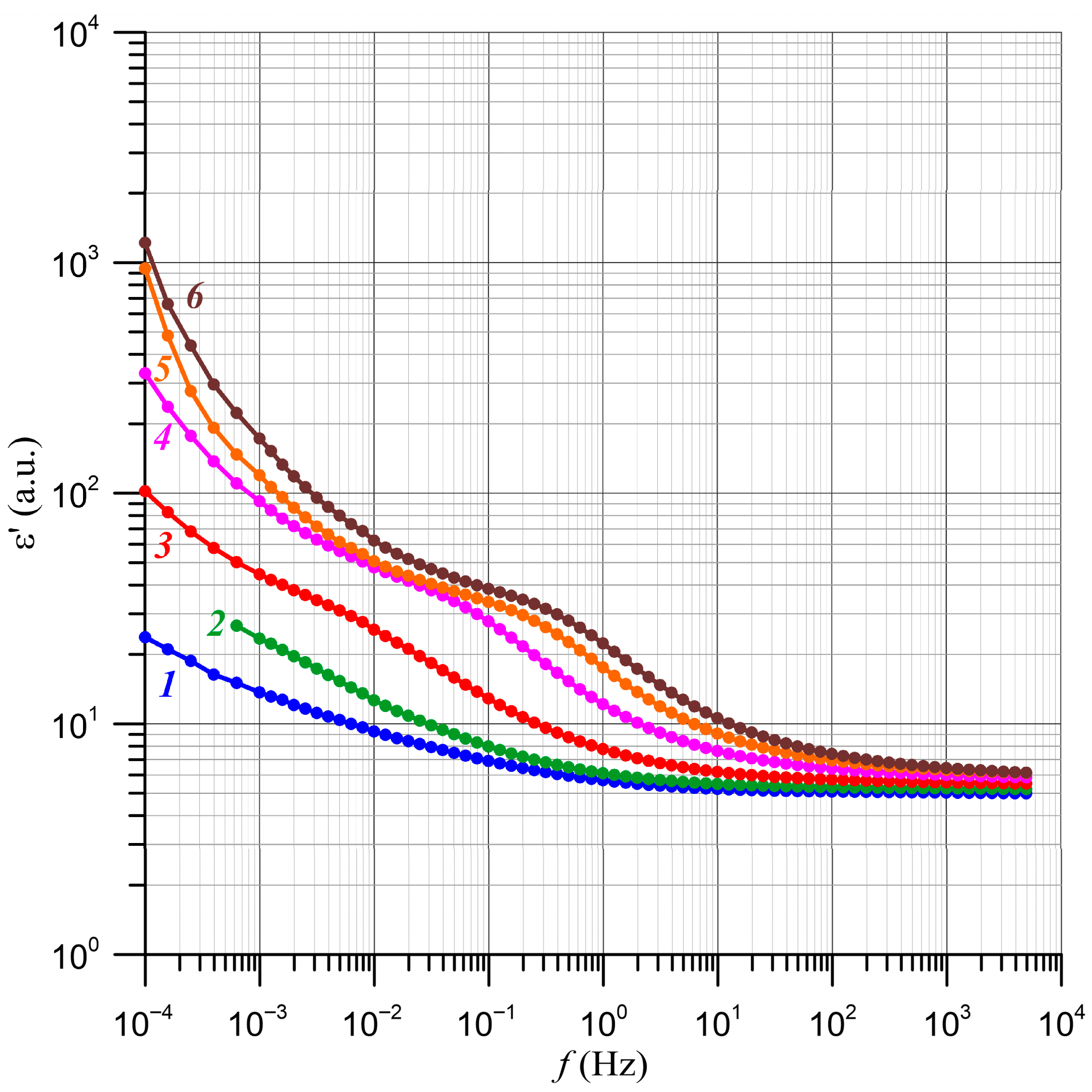
To determine the high-frequency permittivity, measurements of the frequency dependence of permittivity were performed for moisture contents ranging from 0.6% to 5%. The measurement results are presented in Figure 7 for a temperature of 70 °C.
From Figure 7, it can be seen, that the dependencies exhibit two stages of permittivity decrease. The first occurs in the low-frequency region. The second stage appears for moisture contents above the percolation threshold and is located in the higher frequency range. After the second stage, permittivity stabilizes at approximately 5.5 ± 0.5, depending on the water content. This value should be taken as the high-frequency permittivity of the pressboard–bio-oil–water nanodroplet composite. By substituting this value and the Bohr radius of the oxygen ion R(O−2) into Equation (24), we obtain a Bohr radius RB ≈ (0.764 ± 0.0764) nm.
In this way, all the parameters necessary for determining the relative relaxation times, described by Equations (21) and (22), have been established.

5. Determination of Nanodroplet Parameters

The results presented below were developed for moisture contents of X ≥ 2 wt.%, that is, above the percolation threshold. This is due to the fact, that below the percolation threshold, the influence of moisture on the electrical properties of the pressboard–bio-oil–water nanodroplet nanocomposite is very weak. Using the previously determined values of K(σ,X), RB, R(X), and r, it is possible to calculate the number of water molecules in the nanodroplets. For this purpose, the values of K(σ,X), RB, and r are substituted into Equation (23), yielding:
K σ , X R X = 2 R B n 3 R X 1 6 X 100 π 1 3
To determine the average number of molecules in the nanodroplets, Equation (25) was transformed:
n = K σ , X R B 2 3 1 6 X 100 π 1 3 3
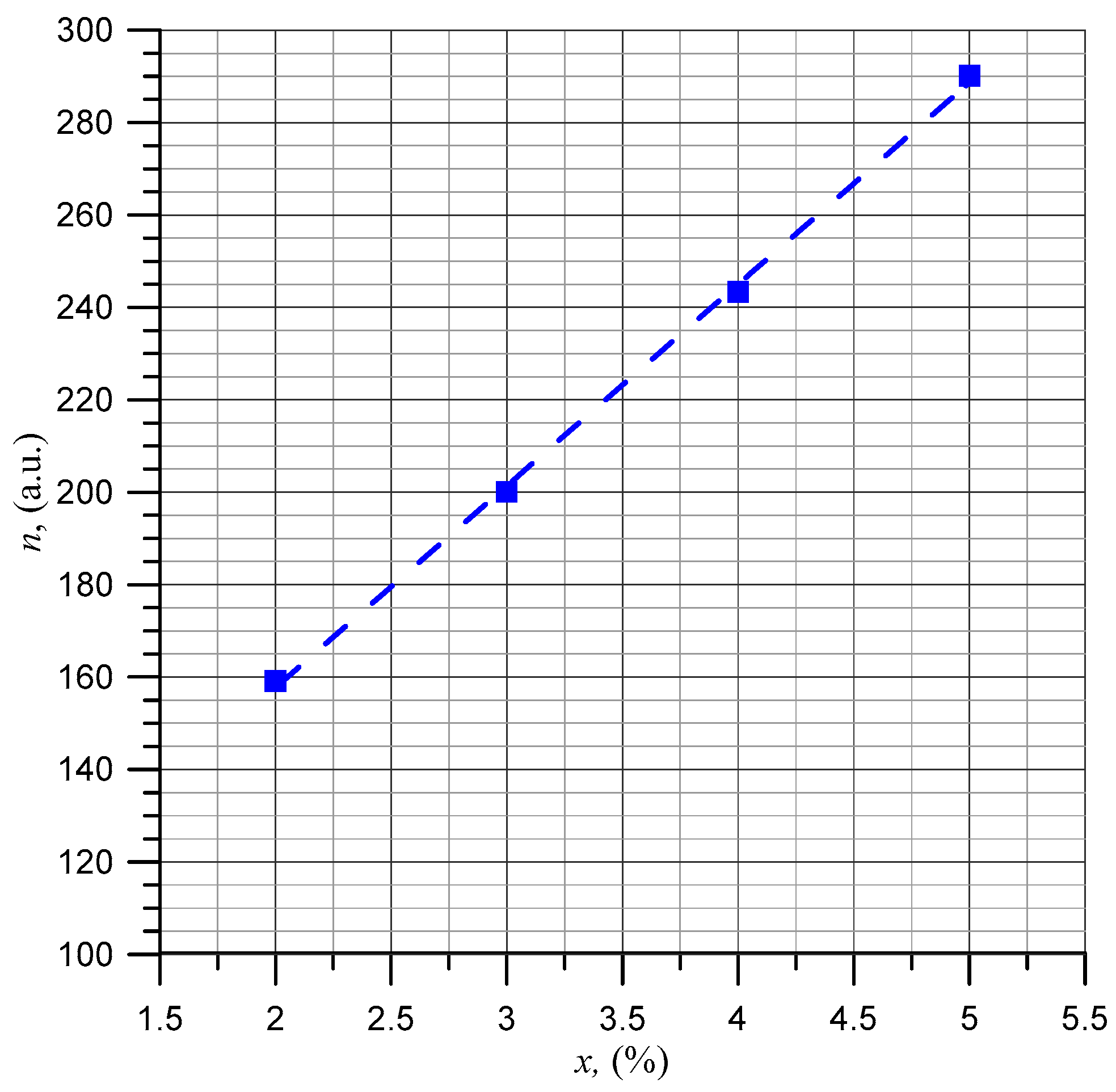
By substituting the numerical values of K(σ,X) and RB into Equation (26), the average number of water molecules in the nanodroplets was calculated as a function of the total water content. Figure 8 shows the relationship between the number of water molecules and the moisture content X.
As can be seen in Figure 8, the number of molecules in the nanodroplets increases linearly with the increase in water content in the composite. However, the growth rate is slower than the rate of increase in total moisture content. When X increases from 2% to 5% (i.e., 2.5 times), the number of water molecules in nanodroplets increases from approximately 160 to about 290—that is, only by a factor of 1.81.
Using the dependence of the average number of water molecules in nanodroplets shown in Figure 8, other parameters describing the tunnelling phenomenon in the pressboard–bio-oil–water nanocomposite can be determined.
From Equation (6), the total number of water molecules in the pressboard with water content X can be calculated:
N = X ρ 100 u M H 2 O
By dividing Equation (27) by the average number of water molecules in a nanodroplets (Equation (26)), one obtains the concentration of nanodroplets as a function of moisture content:
N n a n o = N n = X ρ n 100 u M H 2 O
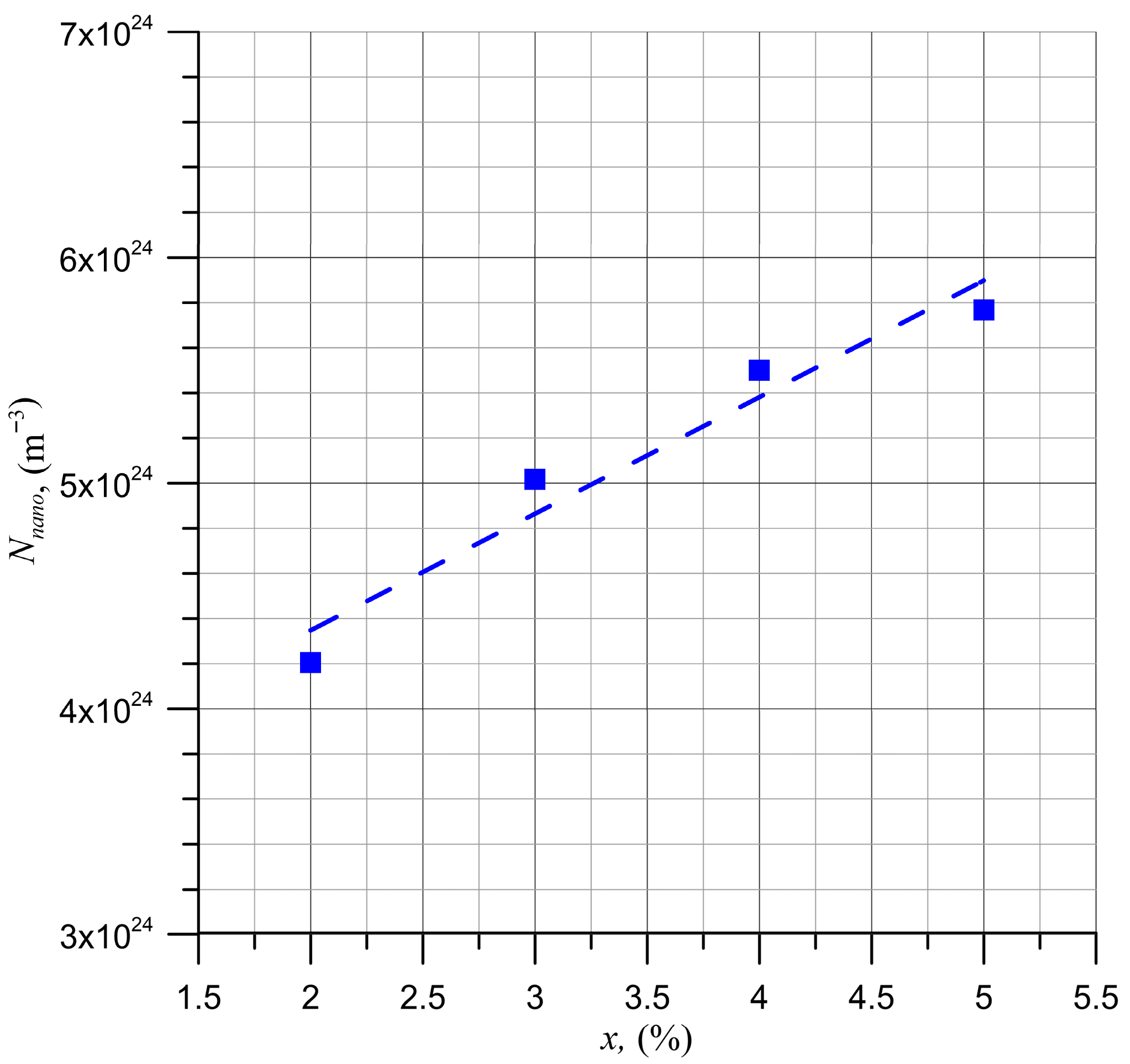
Figure 9 shows the dependence of nanodroplet concentration on the water content in pressboard.
From Figure 9, it follows that with an increase in water content in the composite, the concentration of nanodroplets increases linearly. Here, as with the number of molecules per nanodroplet (Figure 8), the increase occurs slightly more slowly than the growth in moisture content. When the moisture content increases from 2% to 5%, the concentration of nanodroplets rises from approximately 4.2 × 1024 m−3 to about 5.8 × 1024 m−3, that is, by about 1.4 times.
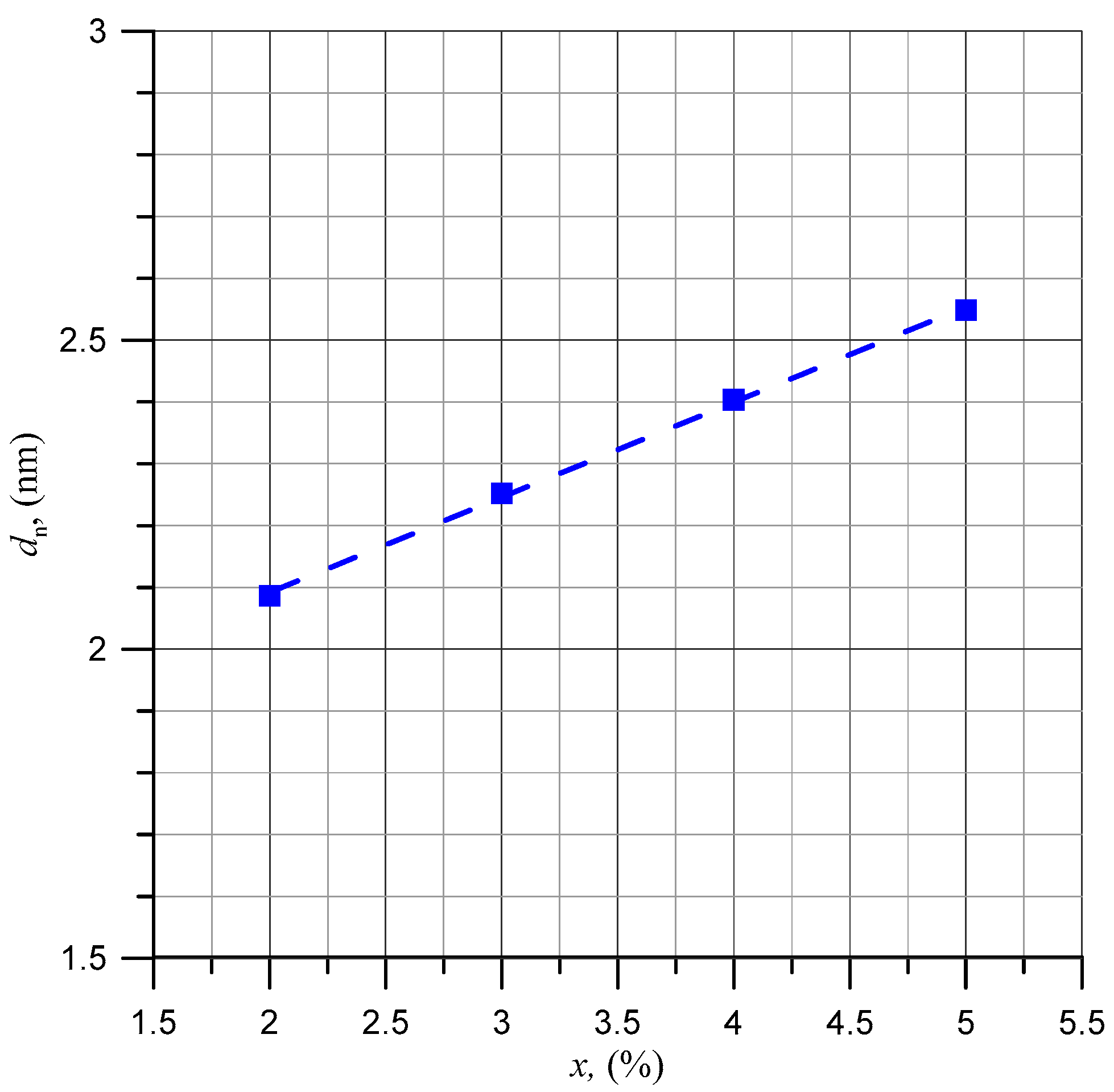
From Equation (9) and the previously determined number of water molecules per nanodroplet, the nanodroplet diameters were calculated. Figure 10 shows their dependence on the water content.
As seen in Figure 10, the increase in water content in the composite has only a slight effect on nanodroplet size.
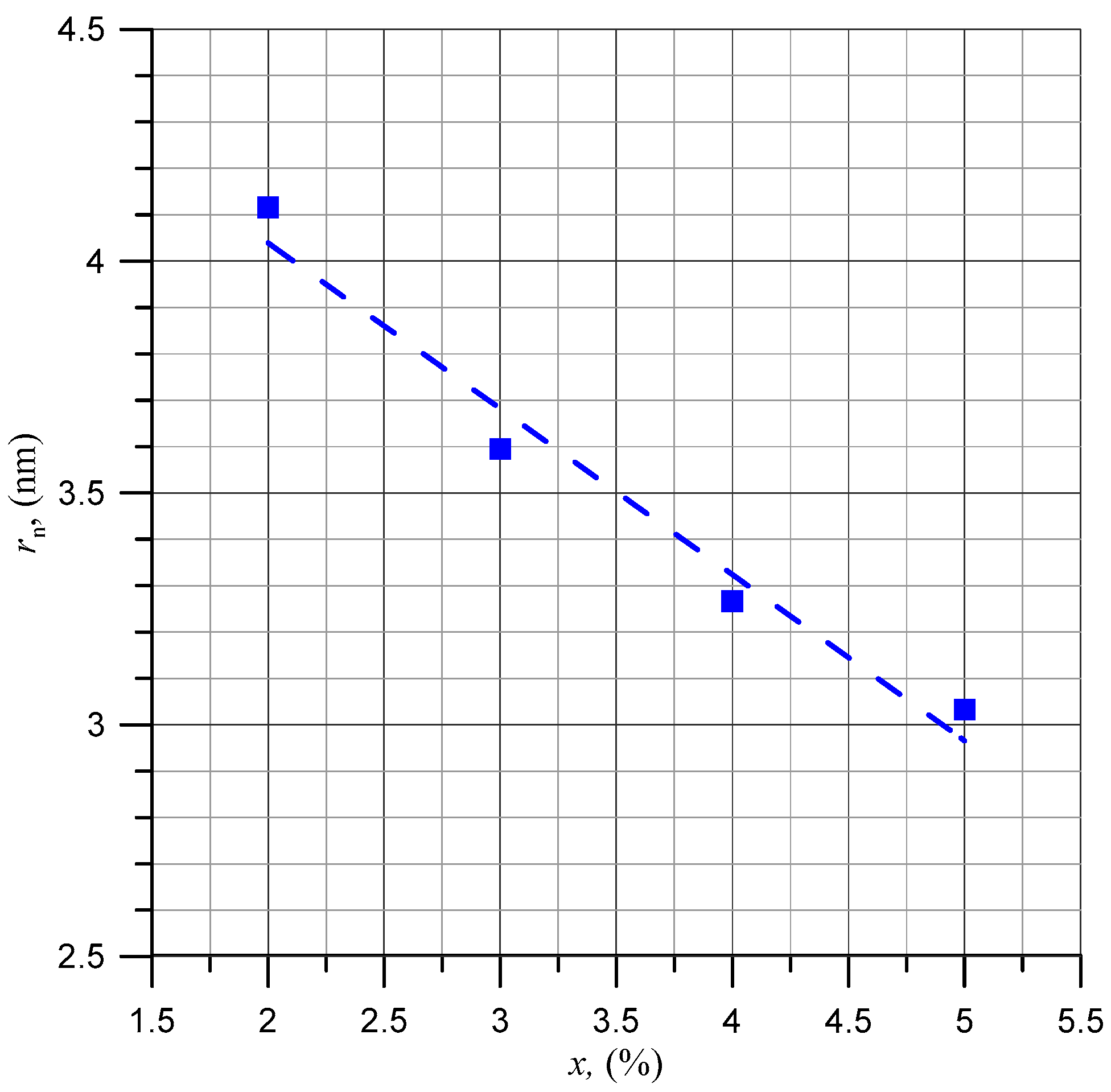
With increasing moisture, growth is observed in the number of water molecules per nanodroplet (Figure 8), their diameters (Figure 10), and their concentration (Figure 9). These changes affect the distance over which electrons tunnel. Using Equation (12) and the determined average number of molecules in nanodroplets, the average tunnelling distance r was calculated as a function of water content. Figure 11 presents this dependence.
From Figure 11, it follows that as the moisture content in the pressboard–bio-oil–water nanodroplet nanocomposite increases, the distance over which electrons tunnel between adjacent nanodroplets decreases. This enhances the tunnelling rate, resulting in an increase in conductivity (Equation (1)) and a reduction in relaxation times (Equation (2)).
It is well known that during the long-term operation of power transformers, the water content in oil-impregnated pressboard gradually increases. The initial moisture content of cellulose is about 0.8% [13,57] and slowly rises to 5% or even higher.
This process occurs as follows: moisture penetrates the transformer and dissolves in the oil. The oil then transfers the moisture to the pressboard, where it is absorbed by the cellulose. This is because the solubility of water in cellulose is nearly 1000 times greater than in oil [2].
From the analysis of the results presented in Figure 8, Figure 9, Figure 10 and Figure 11, the following conclusions can be drawn regarding the moistening process of cellulose impregnated with bio-oil during transformer operation. As the moisture content increases, three parallel processes occur. One involves the accumulation of water molecules within the pressboard in the form of nanodroplets. The second is the increase in nanodroplet concentration. The third is the rise in the average number of water molecules per nanodroplet. It should be noted that the distances between nanodroplets determined in this study are only mean (expected) values of the probability distribution of distances between neighbouring nanodroplets. This means that the actual distances between adjacent nanodroplets, across which electrons tunnel, may be both smaller and larger than the expected values obtained for different moisture contents. Due to the high concentration of nanodroplets, the probability distribution of these distances, according to the central limit theorem, may be normal or approximately normal. A similar situation applies to the probability distribution of the number of molecules within nanodroplets. The values of the number of water molecules n determined in this study represent expected values of the probability distribution of the number of molecules in nanodroplets.

6. Conclusions

Measurements were taken of the alternating current electrical properties of a nanocomposite consisting of electrical pressboard, bio-insulating oil and water nanodroplets with a moisture content of 0.6% to 5%. Moreover, bio-oil meets high environmental requirements—it is fully biodegradable, and its combustion products are significantly less harmful than those of mineral oil. Therefore, this means that a failure of a transformer with bio-oil will have a much lower impact on the environment than in the case of mineral oil. The quantum mechanical phenomenon of electron tunnelling between potential wells created by water nanodroplets was used to analyze the experimental results obtained.
The study determined the impact of moisture content on relative relaxation time values. Consequently, on this basis, the number of water molecules in nanodroplets, their diameters and concentration depending on moisture content were determined.
The distances at which electrons tunnel in damp pressboard impregnated with bio-oil were determined. It was established that the distances between nanodroplets determined in the study are only average (expected) values of the probability distribution of distances between neighbouring nanodroplets. Moreover, due to the high concentration of nanodroplets, the probability distribution of distances, in accordance with the central limit theorem, may be normal or close to normal. In contrast, a similar situation occurs for the number of water molecules in nanodroplets. The values of the number of water molecules n determined in this study are the expected values for the probability distribution of the number of molecules in nanodroplets.
It has been established that during many years of transformer life, as the moisture content in the bio-oil-impregnated pressboard increases, three parallel processes occur. One of them involves the accumulation of water molecules collected in the pressboard into nanodroplets. The second involves an increase in the concentration of nanodroplets. The third is an increase in the average number of water molecules in nanodroplets.
The random distribution of nanodroplets in the pressboard causes a probability distribution of the distance between neighbouring nanodroplets. Therefore, the dimensions of the nanodroplets and the expected values of the distances between them have a significant impact on the relaxation times of conductivity, the real and imaginary components of complex permittivity, and the tangent of the loss angle of the paper–oil insulation of power transformers.

Author Contributions

Conceptualization, K.K. and P.Ż.; methodology, K.K., T.N.K., V.B., P.O., M.Z., M.S., P.M., A.C. and P.Ż.; software, K.K., V.B., and P.O.; validation, T.N.K., M.S., A.C. and P.Ż.; formal analysis, K.K., T.N.K., V.B., P.O., M.Z., M.S., P.M., A.C. and P.Ż.; investigation, K.K., V.B., P.O. and M.Z.; resources, K.K.; data curation, K.K., V.B., P.O. and M.S.; writing—original draft preparation, K.K. and P.Ż.; writing—review and editing, T.N.K.; visualization, K.K.; supervision, K.K., T.N.K. and P.Ż.; project administration, K.K. and T.N.K.; funding acquisition, K.K., T.N.K., V.B., and P.O. All authors have read and agreed to the published version of the manuscript.

Funding

The research was supported from the state budget within the programme of the Ministry of Education and Science entitled ‘Science for Society II’ project no. NdS-II/SP/0173/2024/01 total project value PLN 1,462,590.80 as well as partly from a subsidy from the Ministry of Science and Higher Education for the Lublin University of Technology as funds allocated for activities in the scientific disciplines of Automation, Electronics, Electrical Engineering and Space Technologies (grants: FD-20/EE-2/701, FD-20/EE-2/702, FD-20/EE-2/703 and FD-20/EE-2/705).

Data Availability Statement

The original contributions presented in this study are included in the article. Further inquiries can be directed to the corresponding author.

Conflicts of Interest

Authors Marek Szrot, Pawel Molenda were employed by the company Energo-Complex, Sp. z o.o. The remaining authors declare that the research was conducted in the absence of any commercial or financial relationships that could be construed as a potential conflict of interest.

References

  1. Krause, C. Power transformer insulation—History, technology and design. IEEE Trans. Dielectr. Electr. Insul. 2012, 19, 1941–1947. [Google Scholar] [CrossRef]
  2. Oommen, T.V.; Prevost, T.A. Cellulose insulation in oil-filled power transformers: Part II—Maintaining insulation integrity and life. IEEE Electr. Insul. Mag. 2006, 22, 5–14. [Google Scholar] [CrossRef]
  3. Amoiralis, E.I.; Tsili, M.A.; Kladas, A.G. Transformer design and optimization: A literature survey. IEEE Trans. Power Deliv. 2009, 24, 1999–2024. [Google Scholar] [CrossRef]
  4. Fofana, I.; Wasserberg, V.; Borsi, H.; Gockenbach, E. Retrofilling conditions of high-voltage transformers. IEEE Electr. Insul. Mag. 2001, 17, 17–30. [Google Scholar] [CrossRef]
  5. Fritsche, R.; Geissler, M.; Pukel, G.; Wolmarans, C. The Use of a Bio-Based Hydrocarbon Insulating Liquid in Power Transformers. In Proceedings of the IEEE 21st International Conference on Dielectric Liquids (ICDL), Sevilla, Spain, 29 May–2 June 2022. [Google Scholar] [CrossRef]
  6. Ye, W.; Wang, Z.; Chu, H.; Liu, G.; Qiao, X.; Feng, Y.; Zhang, J. Comparison of the basic properties of bio-based hydrocarbon liquids and mineral oils: A molecular dynamics structure and physicochemical properties synergistic Analysiss. Chem. Phys. Lett. 2025, 873, 142172. [Google Scholar] [CrossRef]
  7. Ye, W.; Liu, G.; Wang, Z.; Hao, J.; Dai, X.; Zhang, J. Electronic Properties of Bio-based Hydrocarbon Liquids Under Extreme Electric Fields: Molecular Insights Into Its Excellent Impulse Insulation Properties Based on DFT and First Principles. IEEE Trans. Dielectr. Electr. Insul. 2025. [Google Scholar] [CrossRef]
  8. Stuchala, F.; Rozga, P.; Malaczek, M.; Staniewski, J. Comparative Analysis of Selected Insulating Liquids Including Bio-Based Hydrocarbon and GTL in Terms of Breakdown and Acceleration Voltage at Negative Lightning Impulse. IEEE Trans. Dielectr. Electr. Insul. 2024, 31, 2443–2450. [Google Scholar] [CrossRef]
  9. NYTRO® BIO 300X—The New Bio-Based Alternative from Nynas. Transform. Technol. Mag. 2020, 46–51. Available online: https://www.powersystems.technology/community-hub/in-focus/nytro-bio-300x-the-new-bio-based-alternative-from-nynas.html (accessed on 5 October 2025).
  10. Wolmarans, C.; Feischl, T.; Radić, I.; Maljković, V. Factory Acceptance Test of a 40 MVA power transformer filled with a bio-based & biodegradable hydrocarbon insulating liquid. In Proceedings of the 41st CIGRE International Symposium, Ljubljana, Slovenia, 21–24 November 2021. [Google Scholar]
  11. Wolmarans, C.; Gamil, A.; Al-Abadi, A.; Milone, M.; Jornaan, J.; Hellberg, R. Type Testing of 80 MVA Power Transformer witha New Bio-Based, Biodegradable and Low Viscosity Insulating liquid. In Proceedings of the CIGRE Session 2022, Paris, France, 28 August–2 September 2022; p. 11125. [Google Scholar]
  12. Wolmarans, C.; Pahlavanpour, B.; Kalkan, G. Improving the sustainability and performance of power transformers with a bio-based hydrocarbon. In Proceedings of the Polaris Conference 2022, Glasgow, UK, 8–9 November 2022; pp. 1–4. [Google Scholar]
  13. Gielniak, J.; Graczkowski, A.; Moranda, H.; Przybylek, P.; Walczak, K.; Nadolny, Z.; Moscicka-Grzesiak, H.; Feser, K.; Gubanski, S. Moisture in cellulose insulation of power transformers—Statistics. IEEE Trans. Dielectr. Electr. Insul. 2013, 20, 982–987. [Google Scholar] [CrossRef]
  14. Facilites Instructions, Standards and Techniques. Transformer Diagnostics; US Department of The Interior Bureau of Reclamation: Washington, DC, USA, 2003; Volume 3–31.
  15. Lelekakis, N.; Martin, D.; Guo, W.; Wijaya, J.; Lee, M. A field study of two online dry-out methods for power transformers. IEEE Electr. Insul. Mag. 2012, 28, 32–39. [Google Scholar] [CrossRef]
  16. Martin, D.; Perkasa, C.; Lelekakis, N. Measuring paper water content of transformers: A new approach using cellulose isotherms in nonequilibrium conditions. IEEE Trans. Power Deliv. 2013, 28, 1433–1439. [Google Scholar] [CrossRef]
  17. Prevost, T.A.; Oommen, T.V. Cellulose insulation in oil-filled power transformers: Part I—History and development. IEEE Electr. Insul. Mag. 2006, 22, 28–35. [Google Scholar] [CrossRef]
  18. Subocz, J. Przewodnictwo i Relaksacja Dielektryczna Warstowywch Układów Izolacyjnych; Uczelniane, W., Ed.; Zachodniopomorski Uniwersytet Technologiczny (Szczecin) Wydaw; Uczelniane Zachodniopomorskiego Uniwersytetu Technologicznego w Szczecinie: Szczecin, Poland, 2012; ISBN 8376631136/9788376631134. [Google Scholar]
  19. Hao, J.; Liao, R.; Chen, G.; Ma, Z.; Yang, L. Quantitative analysis ageing status of natural ester-paper insulation and mineral oil-paper insulation by polarization/depolarization current. IEEE Trans. Dielectr. Electr. Insul. 2012, 19, 188–199. [Google Scholar] [CrossRef]
  20. Mishra, D.; Haque, N.; Baral, A.; Chakravorti, S. Assessment of interfacial charge accumulation in oil-paper interface in transformer insulation from polarization-depolarization current measurements. IEEE Trans. Dielectr. Electr. Insul. 2017, 24, 1665–1673. [Google Scholar] [CrossRef]
  21. Zenker, M.; Kierczyński, K. The influence of electric field intensity on the activation energy of the DC conductivity the electrical pressboard of impregnated with synthetic ester. In Proceedings of the Photonics Applications in Astronomy, Communications, Industry, and High-Energy Physics Experiments 2017, Wilga, Poland, 28 May–6 June 2017; Romaniuk, R.S., Linczuk, M., Eds.; SPIE: Bellingham, WA, USA, 2017; Volume 10445, p. 104455Q. [Google Scholar]
  22. Fofana, I.; Yéo, Z.; Farzaneh, M. Dielectric response methods for diagnostics of power transformers. Recent Adv. Dielectr. Mater. 2009, 19, 249–299. [Google Scholar]
  23. Zhang, S.L. The simulation analysis of transformer recovery voltage by field and circuit method based on PSO algorithm. In Proceedings of the 12th International Conference on the Properties and Applications of Dielectric Materials (ICPADM), Xi’an, China, 20–24 May 2018; pp. 610–613. [Google Scholar] [CrossRef]
  24. Zhang, T.; Li, X.; Lv, H.; Tan, X. Parameter Identification and Calculation of Return Voltage Curve Based on FDS Data. IEEE Trans. Appl. Supercond. 2014, 24, 1–5. [Google Scholar] [CrossRef]
  25. Blennow, J.; Ekanayake, C.; Walczak, K.; García, B.; Gubanski, S.M. Field experiences with measurements of dielectric response in frequency domain for power transformer diagnostics. IEEE Trans. Power Deliv. 2006, 21, 681–688. [Google Scholar] [CrossRef]
  26. Fan, X.; Liu, J.; Lai, B.; Zhang, Y.; Zhang, C. FDS Measurement-Based Moisture Estimation Model for Transformer Oil-Paper Insulation Including the Aging Effect. IEEE Trans. Instrum. Meas. 2021, 70, 6006810. [Google Scholar] [CrossRef]
  27. Wen, H.; Cheng, L.; Jiang, Y.; Zhu, T.; Chen, Z.; Dai, X.; Gao, C. Influence of Water Molecules on Polarization Behavior and Time–Frequency Dielectric Properties of Cellulose Insulation. J. Electr. Eng. Technol. 2021, 16, 1559–1571. [Google Scholar] [CrossRef]
  28. Zhao, H.; Mu, H.; Zhang, D.; DIng, N.; Wu, Y.; Zhang, G.; Tian, J.; Liang, Z. Analysis of FDS Characteristics of Oil-Impregnated Paper Insulation Under High Electric Field Strength Based on the Motion of Charge Carriers. IEEE Trans. Dielectr. Electr. Insul. 2021, 28, 1153–1161. [Google Scholar] [CrossRef]
  29. Megger. IDAX 300/350—Insulation Diagnostic Analyzers; Megger: Dover, UK, 2019. [Google Scholar]
  30. OMICRON Electronics Asia Limited. DIRANA—The Fastest Way of Moisture Determination of Power- and Instrument Transformers and Condition Assessment of Rotating Machines; OMICRON electronics Asia Limited: Shanghai, China, 2018. [Google Scholar]
  31. Zukowski, P.; Kierczynski, K.; Rogalski, P.; Okal, P.; Zenker, M.; Pajak, R.; Szrot, M.; Molenda, P.; Koltunowicz, T.N. Research on the Influence of Moisture in the Solid Insulation Impregnated with an Innovative Bio-Oil on AC Conductivity Used in the Power Transformers. Energies 2024, 17, 5164. [Google Scholar] [CrossRef]
  32. Koltunowicz, T.N.; Kierczynski, K.; Rogalski, P.; Okal, P.; Pahlavanpour, B.; Wolmarans, C.; Pajak, R.; Zenker, M.; Szrot, M.; Molenda, P.; et al. Measurements of mechanical, thermal and electrical parameters for insulating bio-oils used in the power industry. Fuel 2025, 397, 135463. [Google Scholar] [CrossRef]
  33. Żukowski, P.; Kierczyński, K.; Kołtunowicz, T.N.; Rogalski, P.; Subocz, J. Application of elements of quantum mechanics in analysing AC conductivity and determining the dimensions of water nanodrops in the composite of cellulose and mineral oil. Cellulose 2019, 26, 2969–2985. [Google Scholar] [CrossRef]
  34. Liu, J.; Fan, X.; Zhang, Y.; Lai, B.; Jiao, J. Analysis of low-frequency polarisation behaviour for oil-paper insulation using logarithmic-derivative spectroscopy. High Volt. 2021, 6, 460–469. [Google Scholar] [CrossRef]
  35. Fofana, I.; Hemmatjou, H.; Meghnefi, F.; Farzaneh, M.; Setayeshmehr, A.; Borsi, H.; Gockenbach, E. On the frequency domain dielectric response of oil-paper insulation at low temperatures. IEEE Trans. Dielectr. Electr. Insul. 2010, 17, 799–807. [Google Scholar] [CrossRef]
  36. Ekanayake, C.; Gubanski, S.M.; Graczkowski, A.; Walczak, K. Frequency Response of Oil Impregnated Pressboard and Paper Samples for Estimating Moisture in Transformer Insulation. IEEE Trans. Power Deliv. 2006, 21, 1309–1317. [Google Scholar] [CrossRef]
  37. Moranda, H.; Moscicka-Grzesiak, H. A Particularly Dangerous Case of the Bubble Effect in Transformers That Appeared in a Large Mass of Pressboard Heated by Mineral Oil. Energies 2025, 18, 380. [Google Scholar] [CrossRef]
  38. EN 60814:1997; Insulating liquids—Oil-Impregnated Paper and Pressboard—Determination of Water by Automatic Coulometric Karl Fischer Titration. iTeh, Inc.: Newark, DE, USA, 1997.
  39. Koch, M.; Tenbohlen, S.; Krüger, M.; Kraetge, A. A Comparative Test and Consequent Improvements on Dielectric Response Methods. In Proceedings of the 15th International Symposium on High Voltage Engineering (ISH 2007), Ljubljana, Slovenia, 27–31 August 2007. [Google Scholar]
  40. Gubanski, S.M.; Blennow, J.; Karlsson, L.; Feser, K.; Tenbohlen, S.; Neumann, C.; Moscicka-Grzesiak, H.; Filipowski, A.; Tatarski, L. Reliable Diagnostics of HV Transformer Insulation for Safety Assurance of Power Transmission System REDIATOOL—A European Research Project. In Proceedings of the Paris Session 2006, Paris, France, 20–22 November 2006; CIGRE: Paris, France, 2006. [Google Scholar]
  41. Zhang, D.; Yun, H.; Zhan, J.; Sun, X.; He, W.; Niu, C.; Mu, H.; Zhang, G.J. Insulation condition diagnosis of oil-immersed paper insulation based on non-linear frequency-domain dielectric response. IEEE Trans. Dielectr. Electr. Insul. 2018, 25, 1980–1988. [Google Scholar] [CrossRef]
  42. Żukowski, P.; Kołtunowicz, T.N.; Kierczyński, K.; Rogalski, P.; Subocz, J.; Szrot, M.; Gutten, M.; Sebok, M.; Jurcik, J. Permittivity of a composite of cellulose, mineral oil, and water nanoparticles: Theoretical assumptions. Cellulose 2016, 23, 175–183. [Google Scholar] [CrossRef]
  43. Mott, N.F.F.; Davis, E.A.A. Electronic Processes in Non-Crystalline Materials, 2nd ed.; Clarendon Press: Oxford, UK; New York, NY, USA, 1979; ISBN 9780198512882. [Google Scholar]
  44. Ravich, Y.I.; Nemov, S.A. Hopping conduction via strongly localized impurity states of indium in PbTe and its solid solutions. Semiconductors 2002, 36, 1–20. [Google Scholar] [CrossRef]
  45. Żukowski, P.; Kołtunowicz, T.; Partyka, J.; Węgierek, P.; Komarov, F.F.; Mironov, A.M.; Butkievith, N.; Freik, D. Dielectric properties and model of hopping conductivity of GaAs irradiated by H+ ions. Vacuum 2007, 81, 1137–1140. [Google Scholar] [CrossRef]
  46. Deng, R.; Ning, Y.; Jones, E.R.; Cunningham, V.J.; Penfold, N.J.W.; Armes, S.P. Stimulus-responsive block copolymer nano-objects and hydrogels: Via dynamic covalent chemistry. Polym. Chem. 2017, 8, 5374–5380. [Google Scholar] [CrossRef]
  47. Goudarzi, Z.; Parvin, N.; Sharifianjazi, F. Formation of hydroxyapatite on surface of SiO2–P2O5–CaO–SrO–ZnO bioactive glass synthesized through sol-gel route. Ceram. Int. 2019, 45, 19323–19330. [Google Scholar] [CrossRef]
  48. Tseng, K.H.; Chung, M.Y.; Chang, C.Y. Parameters for Fabricating Nano-Au Colloids Through the Electric Spark Discharge Method with Micro-Electrical Discharge Machining. Nanomater 2017, 7, 133. [Google Scholar] [CrossRef]
  49. Billas, I.M.L.; Châtelain, A.; De Heer, W.A. Magnetism of Fe, Co and Ni clusters in molecular beams. J. Magn. Magn. Mater. 1997, 168, 64–84. [Google Scholar] [CrossRef]
  50. Jönsson, B.J.; Turkki, T.; Ström, V.; El-Shall, M.S.; Rao, K.V. Oxidation states and magnetism of Fe nanoparticles prepared by a laser evaporation technique. J. Appl. Phys. 1996, 79, 5063–5065. [Google Scholar] [CrossRef]
  51. Charitidis, C.A.; Georgiou, P.; Koklioti, M.A.; Trompeta, A.F.; Markakis, V. Manufacturing nanomaterials: From research to industry. Manuf. Rev. 2014, 1, 11. [Google Scholar] [CrossRef]
  52. Daraio, C.; Jin, S. Synthesis and Patterning Methods for Nanostructures Useful for Biological Applications. In Nanotechnology for Biology and Medicine; Fundamental Biomedical Technologies ((FBMT)); Springer: New York, NY, USA, 2012; pp. 27–44. [Google Scholar] [CrossRef]
  53. Zhang, S.; Sun, D.; Fu, Y.; Du, H. Recent advances of superhard nanocomposite coatings: A review. Surf. Coat. Technol. 2003, 167, 113–119. [Google Scholar] [CrossRef]
  54. Van Vlack, L.H. Materials Science for Engineers; Addison-Wesley Publishing Company: Boston, MA, USA, 1970; ISBN 978-0201080742. [Google Scholar]
  55. Zukowski, P.; Kołtunowicz, T.N.; Kierczyński, K.; Subocz, J.; Szrot, M.; Gutten, M. Assessment of water content in an impregnated pressboard based on DC conductivity measurements theoretical assumptions. IEEE Trans. Dielectr. Electr. Insul. 2014, 21, 1268–1275. [Google Scholar] [CrossRef]
  56. Shklovskii, B.I.B.I.; Efros, A.L.A.L. Electronic Properties of Doped Semiconductors; Springer Series in Solid-State Sciences; Springer: Berlin/Heidelberg, Germany, 1984; Volume 45, ISBN 978-3-662-02405-8. [Google Scholar]
  57. Raetzke, S.; Koch, M.; Krueger, M.; Talib, A. Condition Assessment of Instrument Transformers Using Dielectric Response Analysis. Elektrotech. Inftech. 2016, 1–11. [Google Scholar] [CrossRef]
Figure 1. Adjacent water nanodroplets and the energy states of the valence electron. The possible directions of electron tunnelling are indicated by arrows.
Energies 18 06311 g001
Figure 2. Frequency dependence of the conductivity of the pressboard–bio-oil–water nanodroplet composite for water contents: 1—0.6 wt.%, 2—1 wt.%, 3—2 wt.%, 4—3 wt.%, 5—4 wt.%, 6—5 wt.%. Measurement temperature: 70 °C.
Energies 18 06311 g002
Figure 3. Dependence of DC conductivity on the distance between water molecules R(X), determined for different water contents using Equation (6).
Energies 18 06311 g003
Figure 4. Frequency dependence of the conductivity of the pressboard–bio-oil–water nanodroplet composite for water contents: 1—0.6 wt.%, 2—1 wt.%, 3—2 wt.%, 4—3 wt.%, 5—4 wt.%, 6—5 wt.%, shifted along the Y-axis to match the conductivity for 2% water content at a frequency of 10−4 Hz. Measurement temperature: 70 °C.
Energies 18 06311 g004
Figure 5. Dependencies of the frequencies f(σi,R(X)) on the distance between water molecules. The numbers next to the curves correspond to the numbers in Table 1.
Energies 18 06311 g005
Figure 6. Dependence of the values K(σ,X), K(σ,X) ± ∆K(σ), and the 15 residual values K(σi).
Energies 18 06311 g006
Figure 7. Frequency dependence of the permittivity of the pressboard–bio-oil–water nanodroplet composite for water contents: 1—0.6 wt.%, 2—1 wt.%, 3—2 wt.%, 4—3 wt.%, 5—4 wt.%, 6—5 wt.%. Measurement temperature: 70 °C.
Energies 18 06311 g007
Figure 8. Dependence of the average number of water molecules in nanodroplets on the percentage of water content in the composite.
Energies 18 06311 g008
Figure 9. Dependence of the concentration of water nanodroplets on the percentage of water content in the composite.
Energies 18 06311 g009
Figure 10. Dependence of nanodroplet diameter on the percentage of water content in the composite.
Energies 18 06311 g010
Figure 11. Dependence of the electron tunnelling distance on moisture content in the nanocomposite.
Energies 18 06311 g011
Table 1. Residual conductivity values, K coefficients, and determination coefficients R2.
No.σiK(σi)R2
15.00 × 10−108.8500.8749
23.78 × 10−108.8790.8612
32.86 × 10−109.0260.8708
42.16 × 10−109.1920.8677
51.64 × 10−109.3570.8645
61.24 × 10−109.5810.8726
79.35 × 10−119.7280.8815
87.07 × 10−119.7980.8910
95.35 × 10−119.7800.9018
104.04 × 10−119.68609127
113.06 × 10−119.4850.9330
122.31 × 10−119.3610.9494
131.75 × 10−119.1780.9575
141.32 × 10−119.3490.9689
151.00 × 10−119.8800.9703
Average9.4090.9052
Std. Dev.0.32390.03895
Disclaimer/Publisher’s Note: The statements, opinions and data contained in all publications are solely those of the individual author(s) and contributor(s) and not of MDPI and/or the editor(s). MDPI and/or the editor(s) disclaim responsibility for any injury to people or property resulting from any ideas, methods, instructions or products referred to in the content.